Themes in the Historical Research
An index of the context pages
which provide greater depth to the Farndale story
|
Return
to the Home Page of the Farndale Family Website |
The
story of one family’s journey through two thousand years of British History |
The
83 family lines into which the family is divided. Meet the whole family and
how the wider family is related |
Members
of the historical family ordered by date of birth |
Links
to other pages with historical research and related material |
The
story of the Bakers of Highfields, the Chapmans, and other related families |
The Time
Traveller’s Journey through North Yorkshire
The
History of the North York Moors, Ryedale, York, Cleveland and beyond |
The main source for the narrative of
Farndale family history is the Farndale Story.
There are a lot of supporting pages providing context for the family story.
This page provides direct access to the wider historical pages of the website.
The History of
Britain, and England, with a focus on Yorkshire.
The website now provides a series of
detailed chronology which provide access to the national story of England,
focused on the perspective of Yorkshire.
|
Understanding
the landscape |
The context of the
Palaeolithic Period or the Old Stone Age
A global context
to the prehistory of Yorkshire Before about
10,000 BCE |
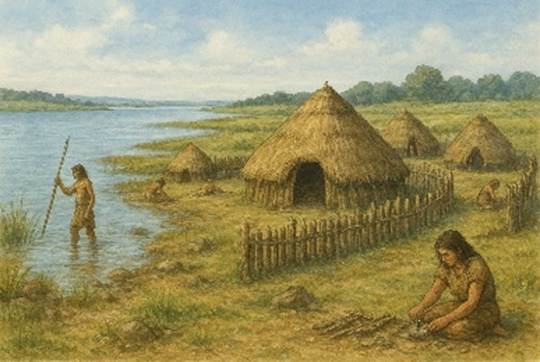
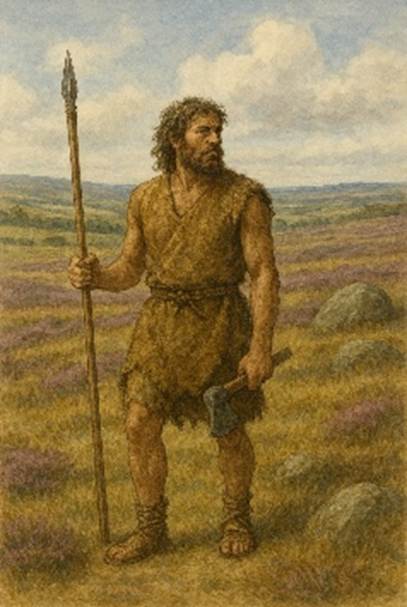
The vicinity of Farndale in the Mesolithic Period
The age of hunting folk in tune with the land 10,000 BCE to 3,000 BCE |
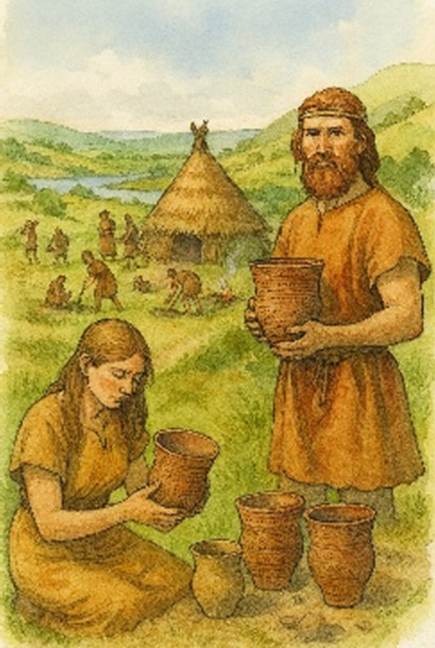
The vicinity of
Farndale in the Neolithic Period, the New Stone Age
The age of early farmers who brought early settlement, religious
beliefs and new structures to Ryedale 3,000 BCE to 1,800 BCE |
The vicinity of
Farndale in the Bronze Age
The Beaker Folk who introduced metal working 1,800 BCE to 700 BCE |
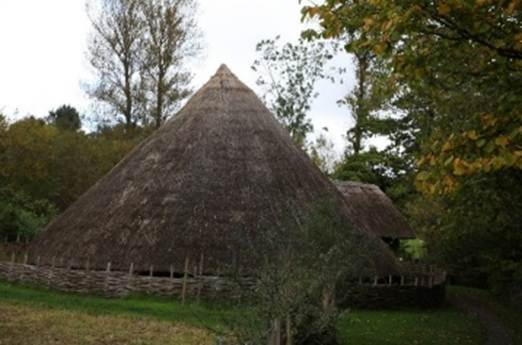
The vicinity of
Farndale in the Iron Age
The Celtic Brigantes folk who formed proto kingdoms 700 BCE to 70 CE |
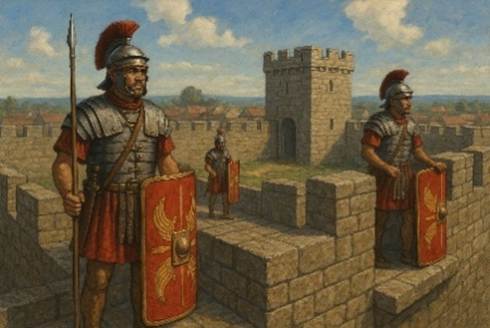
Roman Yorkshire (70 to 400 CE)
A
chronology of the Roman association with Yorkshire |
|
400 to 866 CE The
Beowulf kings of Deira, Bernicia and Northumbria |
Sixth and
Seventh Centuries CE When
Northern England was the European centre of knowledge and learning |
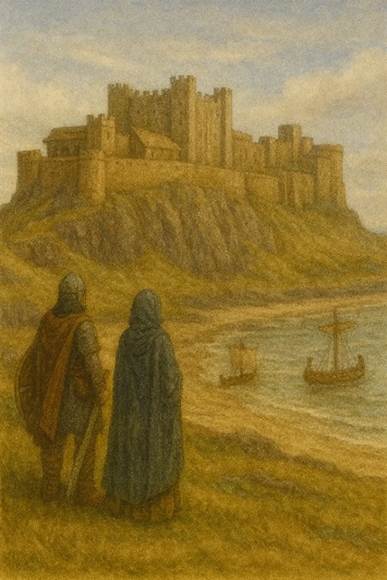
The
Anglo-Saxon-Scandinavian Period
866 CE to 1042 The Scandinavian influence on Yorkshire after the Viking raids
from 793 CE and the assault of the Great Heathen Army |
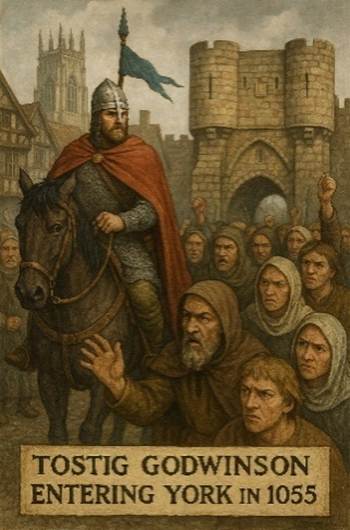
Anglo Saxon Kings
immediately before the Norman Conquest
1042 to 1066 The eventful years immediately preceding the Norman Conquest |
|
|
|
|
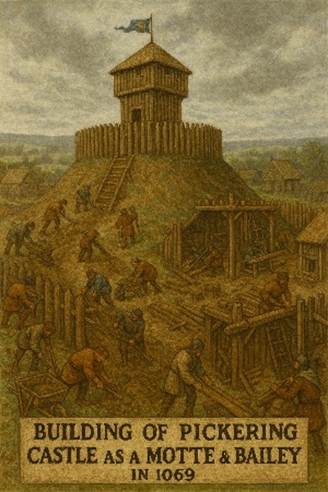
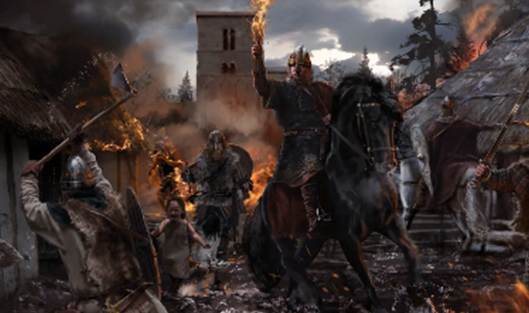
1066 to 1154
The
English story after its domination from northern France
Regime Change |
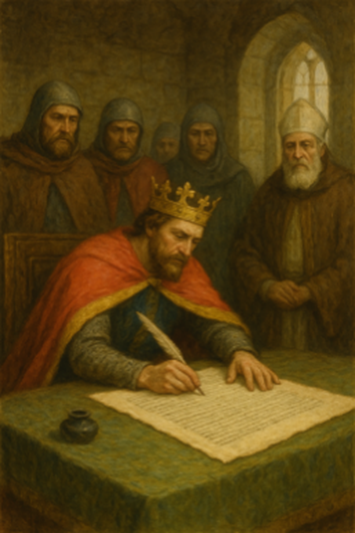
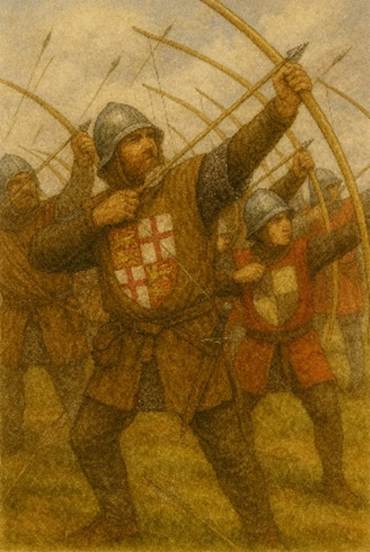
1154 to 1399 England
in the Middle Ages |
The Houses of
Lancaster and York
1399 to 1485 The Lancastrian coup and the Wars of the Roses Richard of
Gloucester’s Northern Interests
The future Richard III’s interests in Yorkshire and northern
Britain |
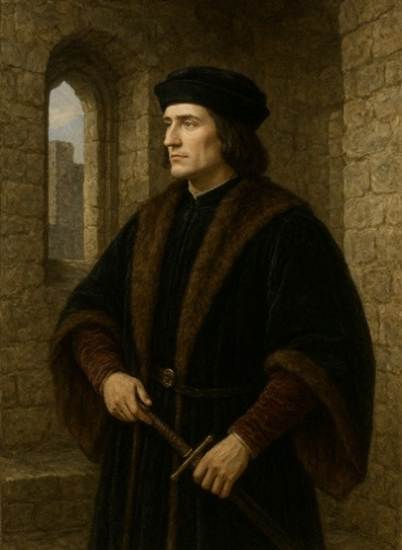
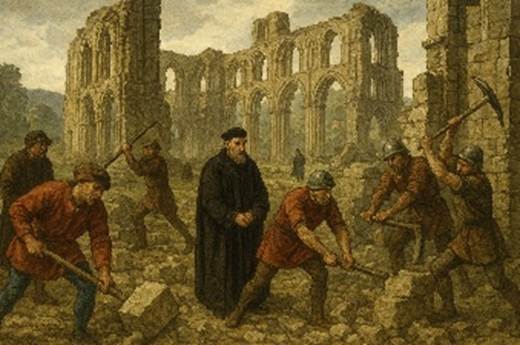
1485 to 1603 Sixteenth century England |
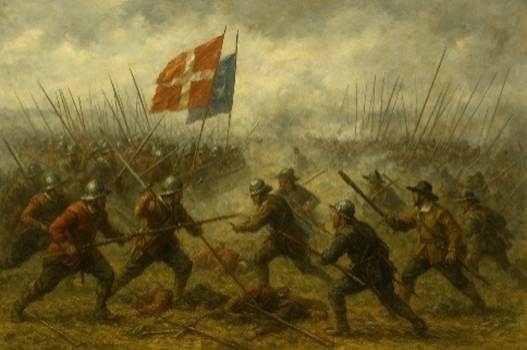
1603 to 1714 Seventeenth
century England |
The period of the
House of Hanover
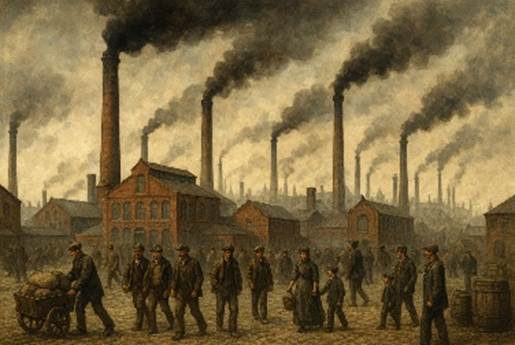
1714 to 1901 Eighteenth
and Nineteenth century Britain |
The modern period of the House of Saxe
Coburg Gotha and the House of Windsor
From 1901 Britain
in the modern age |
Historical themes
Other
pages provide context on general themes.
|
|
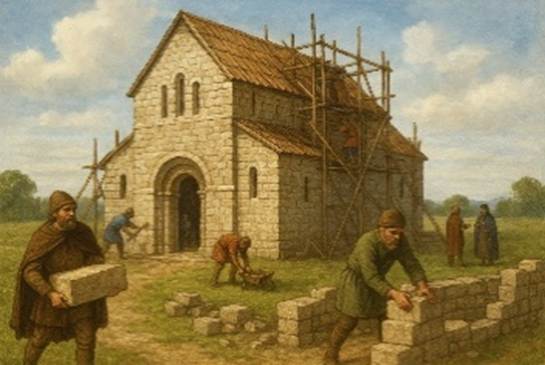
The Church and religion
|
|
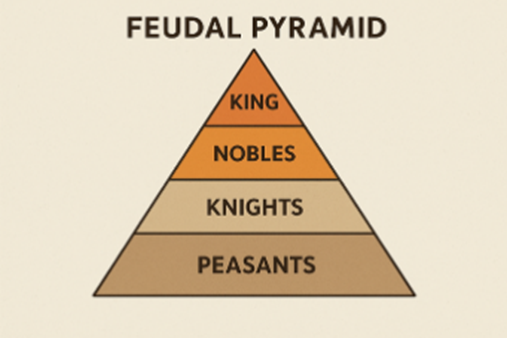
Rural lifestyles from the Norman Conquest |
|
||
|
|
|
|
|
|
|
|
|
The education of our forebears
|
The life of children in seventeenth century
to Victorian Yorkshire |
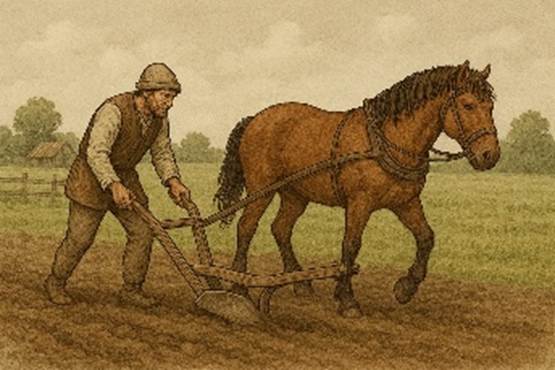
How agricultural practices changed over
time |
Our family history includes experiences of
high infant mortality in Victorian times, often extreme poverty, and struggle |
The
evolution of medical care |
A story of aspiration and achievement |
Opportunities for work as servants in
households |
|
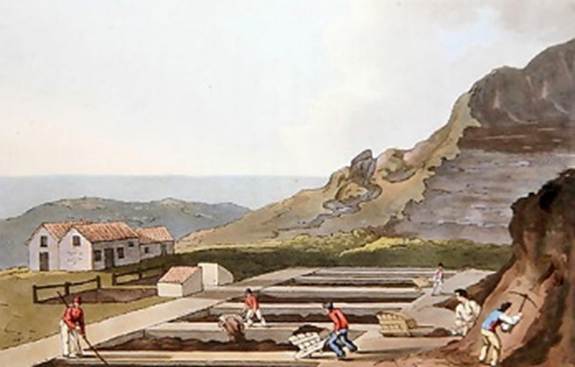
The alum trade in Cleveland |
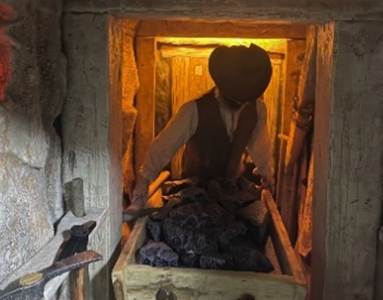
The engine of Cleveland’s Victorian
development was its mineral supply, particularly its ironstone. Individuals
in the Farndale Story worked in an extensive network of mines throughout the
area
The ruined site of the Kilton mine |
|
|
The pioneering spirit that dominated the
family’s story from the mid nineteenth century |
Exploring the role of religions of various
denominations and the evolution of intellectual ideas on the Farndale Story |
|
|
|
|
|
|
|
|

Research Methods
Other pages focus on research and
methodology.
|
Some notes on the sources and methods used
to compile and bring alive the lineage of a family A reflection of the importance of records
of births, deaths and marriages, and census records, but some ideas about how
to build on that framework to create stories and pathways through regional
and national history |
A recognition of some restrictions to
genealogical research before 1500, but some ideas to help overcome the
constraints |
Some thoughts on the relationship between
genealogical methods with historical research, to uncover the full picture |
Some reflections on new approaches to
genealogy and historical research to allow families to come into contact with
their deep ancestral history |
Telling
the story of Our Female Ancestors
The historical record is not properly
representative of our female ancestors. As a historian it is important to
found our narrative on the evidence which exists. However by reflecting on
the existing evidence, and applying a fresh analysis, we can recover the
story of the Farndale women, even though the underlying evidence has not
recorded everything they did |
The Story of the Farndale Story
Building the story over two generations |
|
|
The family history is remarkably complete.
We explore here where it has been necessary to rely on the most probable
narrative where certainty has been impossible |
This needs a bit more descriptive work
and in time should be helpful to others conducting genealogical research,
particularly for Yorkshire families. |
Surnames and how they assist in research. |
|
|
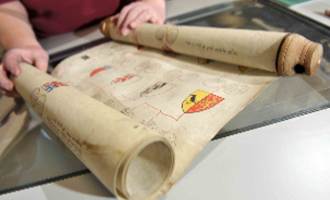
Perspective Laying our Ancestors Back into the sun
The genealogist’s ambition |
Perspective
Peering through chambers to our ghostly
beginnings |
Historical
Figures of Yorkshire
Other pages focus on individuals
relating to Yorkshire’s history.
|
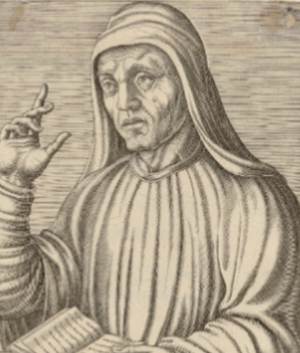
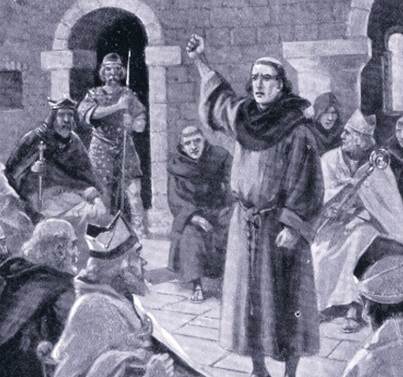
The Lindisfarne monk and East Saxon Bishop who founded
Lastingham |
This
life of Bede and the history of Monkwearmouth-Jarrow, providing context for
the founding of Lastingham and Kirkdale, and the work of Alcuin and the York
scholars |
The world of Ecgberht and Aethelbert,
successors to Bede, and their pupil Alcuin, who took York’s powerhouse of
knowledge to the court of Charlemagne to pioneer the European educational
system |
|
The powerful figure at the heart of the
aristocracy, who rebuilt Kirkdale and put our ancestral lands firmly onto the
national political stage |
|
|
|
The Anglo-Saxon saga that transports
us to the lives of the post Roman folk of England |
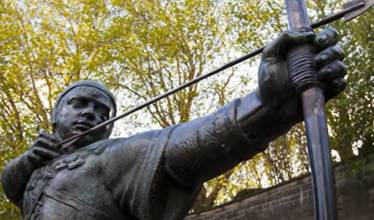
The
legend of Robin Hood explored for its Yorkshire roots, and the Farndale
connection with the legends, first as the class of poachers who gave rise to
the inspiration, and later their fifteenth century descendants who lived in
the place where the stories emerged |
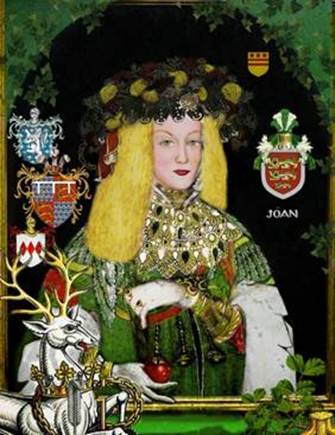
en son temps la plus belle de tout la roiaulme d'Engleterre et la
plus amoureuse The most glamorous owner of Farndale |
|
1728 to 1779
The
association of James Cook with Cleveland, Whitby, Great Ayton, the Farndale ancestral lands,
and individuals of the Farndale Story |
|
|
Family Trees
Other pages are the family trees of
royal and noble families for further context.
|
The descendants of Nigel D’Aubigny to whom
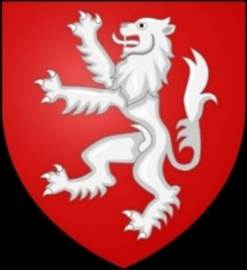
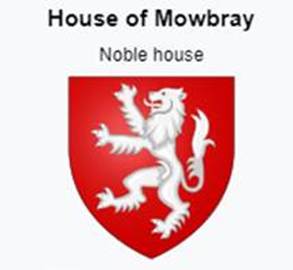
our ancestors owed their allegiance in the twelfth century The Genealogy of House Mowbray The
Mowbray Family Tree |
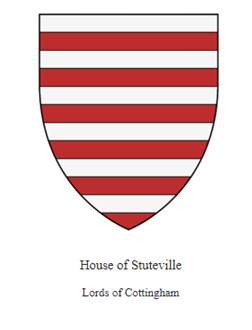
The
narrative History of the Stutevilles The descendants of Robert de Stuteville to
whom our ancestors owed their allegiance in the eleventh and then from the
late twelfth century The Genealogy of
House Stuteville
A
Family Tree of the De Stuteville Family in Yorkshire |
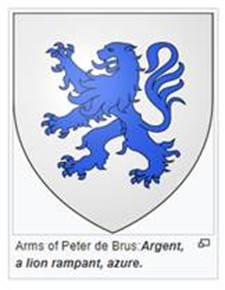
The baronial Yorkshire family from whom
later Scottish Kings would derive and who dominated the early history of our
later Cleveland home A family tree of the House Brus, the Lords
of Skelton and Annandale, and the family relationship to the Kings and Queens
of England and Scotland |
This history of the family who influenced
the Wars of the Roses in whose seat our ancestors lived The
Genealogy of House Neville The Family tree of the House Neville and
its relationship to the King Makers and royal dynasties of the later Middle
Ages |
The
Duchy of Lancaster and the Honour and Forest of Pickering The surprising association of our early
family history with the House of Lancaster The Family Tree of the House Lancaster The genealogy of the Lancastrian estate |
|
|
|
The Royal Line and the Noble Houses The
relationship between the Royal Dynasties of England and the Noble Houses who
directly influenced our family history |
The immediate ancestors and descendants of Joan of Kent |
The Scottish Royal
Family Tree The relationships
that bound Scotland and England and the Brus family |
The people who dominated our ancestral
lands |
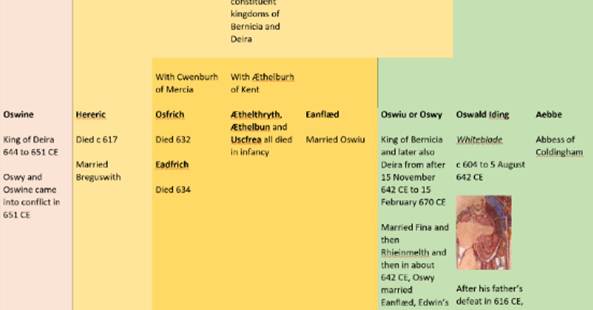
Family tree of the Kings of Northumbria
The family tree showing the succession of the Kings and Earls
of Deira, Bernicia Northumbria |
|
|
|
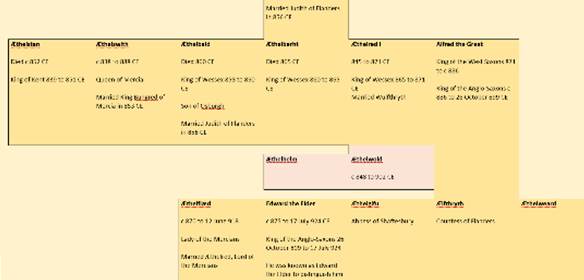
The Genealogy of the House Wessex
The family tree of
the Kings of Wessex, the Anglo-Saxons, and the English |
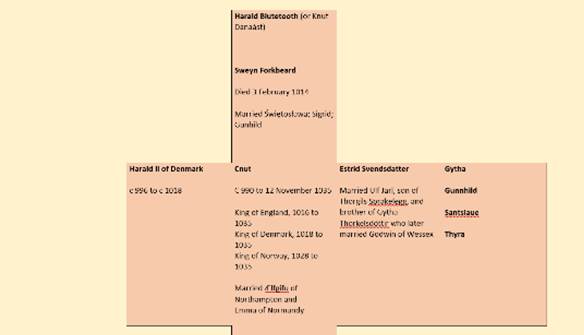
The Genealogy of Sweyn Forkbeard and Cnut
The family tree
showing the relationship of Sweyn Forkbeard and Cnut to the Godwinsons and Edward the Confessor |
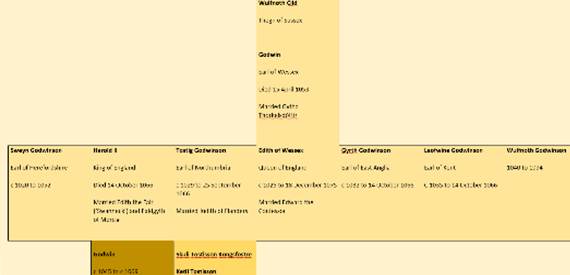
The family tree of
Earl Godwin and his sons |
The English and
British Royal Family Tree from the Normans The family tree of the lines of royal succession from 1066 to the
present |
A Family tree to explain the Lancastrian usurpation and the Wars
of the Roses The
dynastic struggles of the Plantagenets, leading to the Wars of the Roses, the
events of which our ancestors were direct witnesses |
|
|
Places
Other pages focus on places.
|
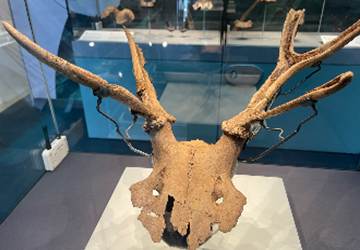
The richest Mesolithic suite in Britain, a
few miles south of Scarborough, on the edge of the ancient Lake Pickering,
only 30 km from Farndale |
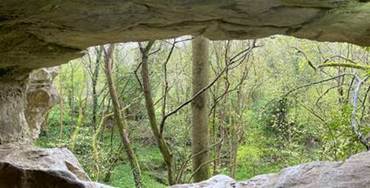
Underground caves, only 15 km from
Farndale, which were the home of the Bronze Age Beaker Folk |
A massive Iron Age promontory Hill Fort
only 20 km from Farndale |
Isurium
Brigantum (Aldborough) The Roman Regional Capital of the lands
around Kirkdale |
A
Roman Villa on palatial scale just south of Kirkdale |
A Roman Villa only 2km from Kirkdale in the
heart of our ancestral lands |
The ancient
routes across the moors
Exploring
the ancient tracks and roads across the moors around Farndale |
|
The sixth century
royal tribute centre of the Bernician Kings |
|
|
|
|
|
|
|
|
The
founding of a Celtic Christian monastery by Cedd, 2 km from the entrance to
Farndale |
A History of Helmsley to about 1500 |
Danby at the turn of
the fourteenth century |
|||
|
Introduction to Kirkdale and its Minster For
those particularly interested in Kirkdale, this introductory page is the
place to start |
Kirkdale from its founding in about 685 CE
to the beginning of the Scandinavian period in about 800 CE
Ornate sarcophagus
lids and Saxon artefacts to be found in Kirkdale Minster and embedded into
its walls which will transport you to the Eighth century CE |
Anglo-Saxon-Scandinavian Kirkdale Kirkdale in the Anglo-Saxon-Scandinavian
period from about 800 CE to 1066, with a brief summary of its history through
to 1500
A unique treasure whose secrets transport
us into the world of the eleventh century upon which you can stare today,
imagining direct ancestors who did the same a thousand years ago |
|
|
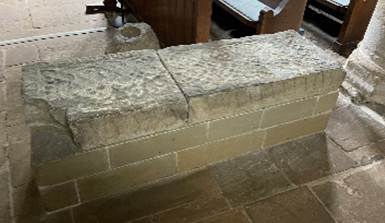
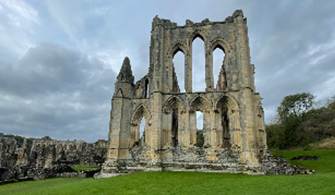
The breathtaking abbey
ruins that must have been held in astonished awe by our forebears when the
abbey broke through the soil of Ryedale, adjacent to Farndale, in only a
couple of decades before it started to take control of swathes of those lands |
|
|
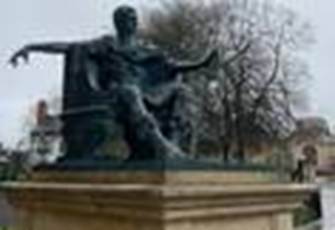
The Roman Capital of northern England where
Constantine was proclaimed Emperor |
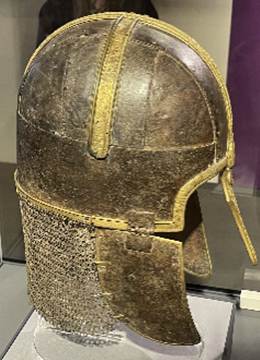
Deirian
and Northumbrian York, a political, cultural and educational Hub on the
European stage |
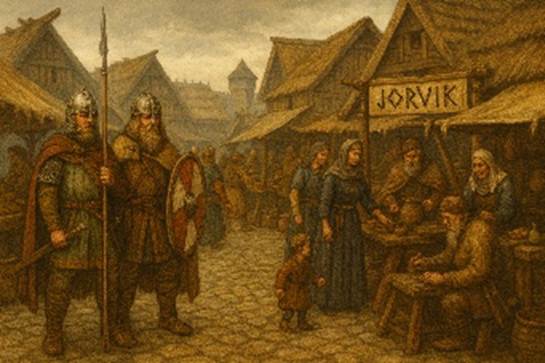
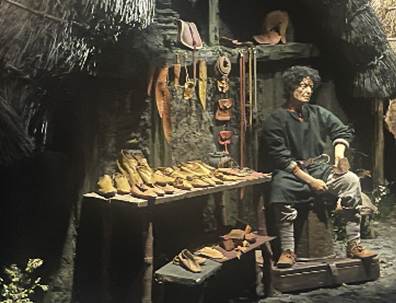
The Scandinavian centre of northern England |
A
History of York after the Norman Conquest
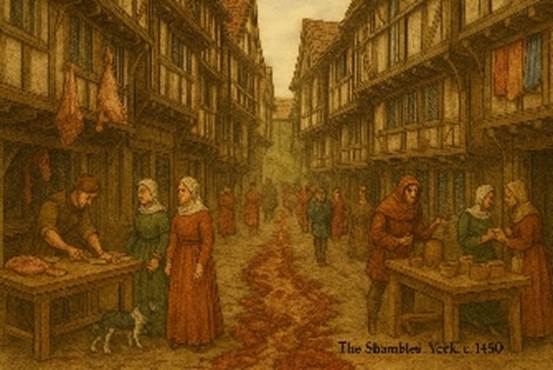
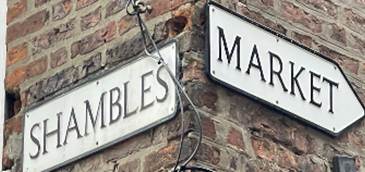
The street of the Medieval Butchers |
|
|
|
|
The History of Doncaster to 1500 The History of pre industrial Doncaster
from its Roman inception as Danum to the end of the sixteenth century Medieval Doncaster and its
minster
The Victorian Parish
church (later Minster) of Doncaster rebuilt in 1853, but on the site of the
earlier Parish church of which William Farndale was chaplain and later vicar
in the years after the Black Death |
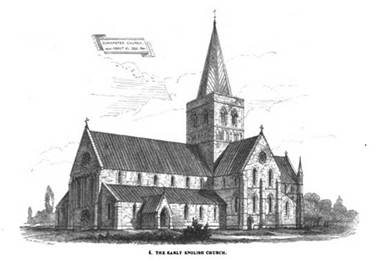
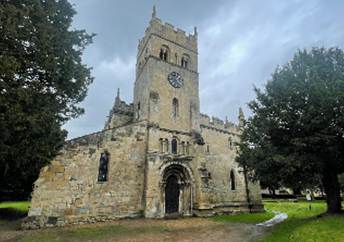
St Mary Magdalene Church, Campsall
The church in
Barnsdale forest of which the literary character of the Middle Ages, Robin
Hood, wrote I made a chapel in Bernysdale, That
seemly is to se, It is of Mary Magdaleyne, And therto would I be. Nearby sites
associated with Robin Hood including Robin Hood’s Well at the side of the A1 The history of the village of Campsall
north of Doncaster, where we find our ancestors in the sixteenth century |
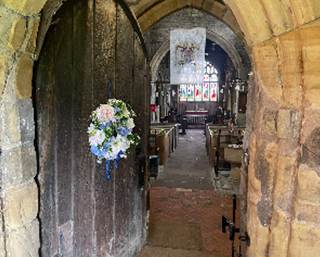
The
history of a small village and church just south of Doncaster, where William
Farndale held land |
A history of
Kirkleatham and Wilton, the place where our family first settled in Cleveland |
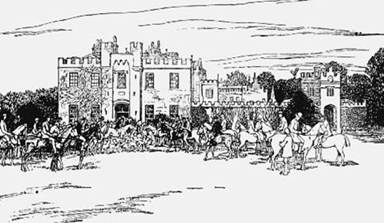
The History of Sheriff Hutton to 1500
A history of Sheriff Hutton which will take
you to the lands of the Nevilles and Richard III during the Wars of the Roses
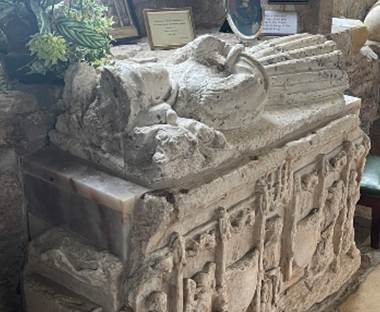
The Church of St
Helen and the Holy Cross and the Chapel of St Nicholas, the heart of the
Neville lands, and place of the alabaster effigy of the young son of Richard
III |
||
|
|
A history of Skelton and its old church.
The Farndales arrived in Moorsholm in the Parish of Skelton in about 1588 and
lived there through the tumultuous years of the Civil War |
Three generations of
Kilton Farndales in one place. A side trip to
nearby Boosbeck and Skelton take you to the gravestones two later
generations. Take in Wensley and you’ll find two more recent generations. Seven generations of
the family in one short drive |
The story of the lost village of Kilton and
its sylvan landscape A journey around
modern Kilton, of farms, a ruined castle and a small village of Kilton Thorpe
to capture the essence of the two century home of Farndales
The ruined site of the Kilton mine |
|||
|
|
Stories
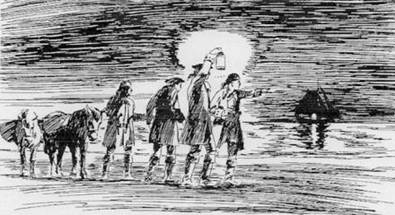
of smugglers, led by my great x3 grandfather known as the King of the
Smugglers, and the undoubted involvement of our forebears
Have fish and chips in the Ship Inn, and
you will be in the home of John Andrew’s smuggling trade, once connected by
an underground passage to the white house on the hill where my great x3
grandfather lived Saltburn by the Sea, Victorian new town John
Farndale focused much of his writing on the new seaside town of Saltburn by
the Sea, built beside the Old Saltburn of smuggling repute. It was a place of
Victorian optimism and inspiration, driven by the arrival of the railways and
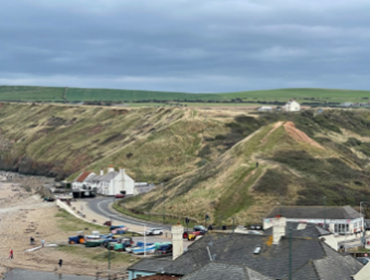
the richness of Cleveland’s ironstone deposits Huntcliff, Saltburn by the Sea Find a vantage point on the towering Hunt
Cliffs to look down over Saltburn and Cat Nab, and the alum mines. It was
here, John tells us, that when a French Napoleonic ship threatened out to
sea, a band of local women dressed in red along the cliffs to make the French
believe that an army of redcoats was ready to welcome any attack |
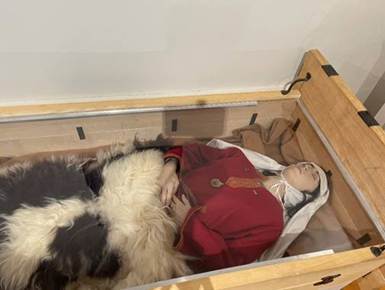
The burial ground of a Saxon princess who
lay for thirteenth centuries overlooking the Hill of Witches where the Craggs
line of Farndales would later make their home |
||||
|
|
|
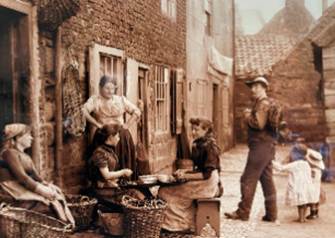
A history of Whitby at the height of its
maritime power in the eighteenth and nineteenth century, home to several
large Farndale families. A look back to the Anglo Saxon history of
Whitby in the time of Celtic and Roman Christianity
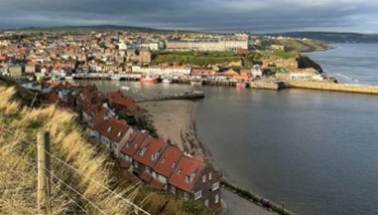
The place of Dracula
inspiration where many Farndales have been buried, provides a vantage point
over Whitby, and its maritime activity |
|
The home from the
early eighteenth century of a large section of our family |
||
|
|
|
|||||
|
|
A visit to Great Ayton where many members
of the family lived, and a side trip to the James Cook Monument |
The moorland farm
where a family of twelve grew up |
||||
|
|
|
|
|
|
|
|
|
A History of
Richmond and West Gilling |
|
|
|
|
||
|
|
|
|
|
|
||
|
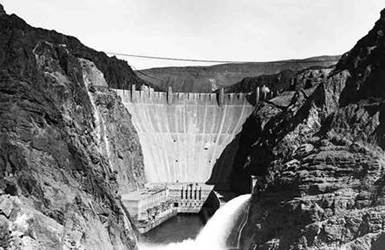
The story of the Hoover Dam, with which Jim
Farndale was associated |
|
|||||
|
|
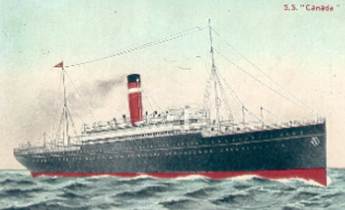
Atlantic crossings at the time of Titanic
The story of five brothers and two sisters
who crossed the Atlantic in the age of Titanic to emigrate to Canada |
|
Follow links to locations associated with our family, to find more
information about each location and our ancestors associated with each
location. |
Historical
events which impacted on Yorkshire’s history
Other
pages focus on historical events.
|
|
|
The
momentous agreement at Whitby, 30 km northeast of Farndale, which resolved incompatibilities
between Roman and Celtic Christian traditions, and placed Britain onto the
European stage |
|
|
|
|
|
A study of the nature of poaching in
Pickering Forest The
1334 to 1339 Eyre of Pickering Forest The itinerant court
which picked up about 40 years of prior business. |
|
|
|
|
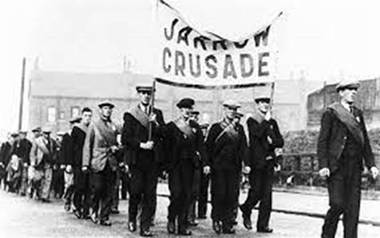
The story of the Jarrow March of 1936, of
which Johnny Farndale, was the youngest member |
|
|
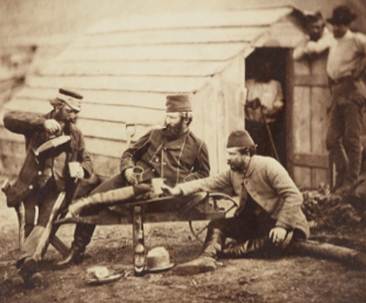
The
Crimean War through the perspective of John Farndale, who took part in the
long campaign |
The
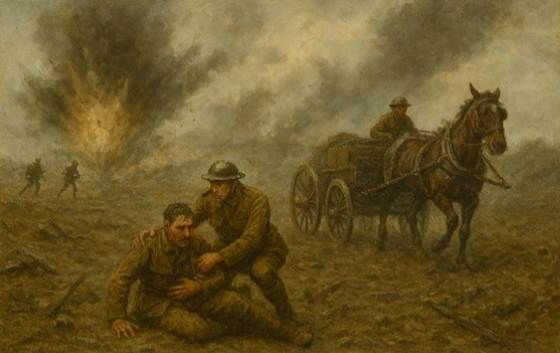
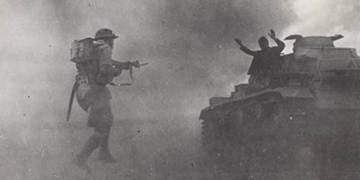
context of the First World War to the Farndale Story |
The
context of the Second World War |
|
|
|
|
Wider
Context
Other
pages provide wider context.
|
|
|
|
|
|
|
|
Themes
relating to the Farndale family
There
are also themes which relate specifically to the Farndale family.
|
The pioneering spirit that dominated the
family’s story from the mid nineteenth century |
|
|
|
|||
|
Our military ancestors. |
Our ancestors who emigrated out of Farndale and ultimately across the
globe. |
Our farming ancestors. |
Our mining ancestors. |
Farndale Sailors. |
A geographical perspective of the Farndales. |
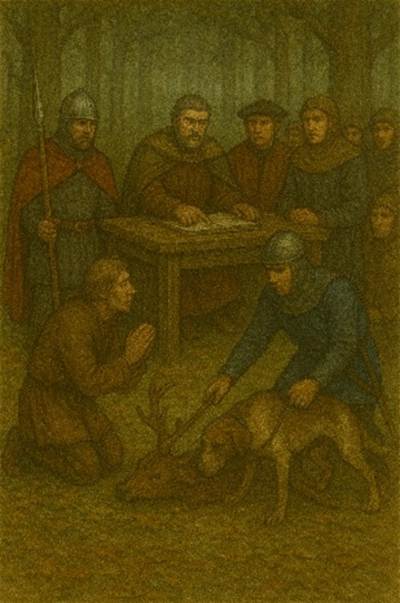
The law makers v
the law breakers. From policemen to poachers. |
|
The second Branch
of the Ontario Farndales |
|
|
|
Miscellaneous
There are some miscellaneous pages.
|
HMS Farndale, a
Type II, Hunt-class Escort Destroyer in World War II For more
information on this website about HMS Farndale, click here |
An
explosive blend of Farndale firepower |
|
|
A pseudonym
author. |
|

Older pages
There are also some older pages which are now generally
superseded by the evolution of the wider website, but still available. These
pages are not being maintained or updated.
|
A shorter
narrative history of the family |
Timeline 1 covers the period
1000 CE to 1600. Timeline 2 covers the period
1600 to date. |
The earlier
history and pre-history of the region. A history of
Yorkshire in the eleventh century. |
Martin Farndale started to wrote some historical notes which are
still available but are now largely superseded by the website: The Farndale
History Part 1 – The Beginnings – The Middle Ages – 1154 to 1400. The Farndale
History Part 2 – The fifteenth and sixteen centuries – 1400-1600. |