The Anglo-Saxon Burial Ground at
Street Houses overlooking Carlin How and Craggs Hill
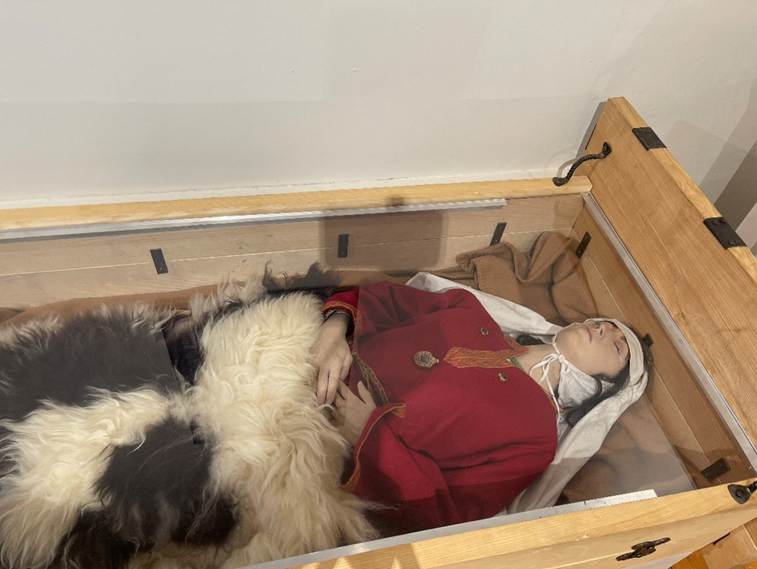
The burial ground of a Saxon princess
who lay for thirteenth century overlooking the Hill of Witches where the Craggs
line of Farndales would later make their home
|
The
Street Houses Farm Excavations
Further detail about the
Neolithic, Bronze Age, Iron Age, Roman-British and Anglo-Saxon
archaeology at Street Houses Farm |
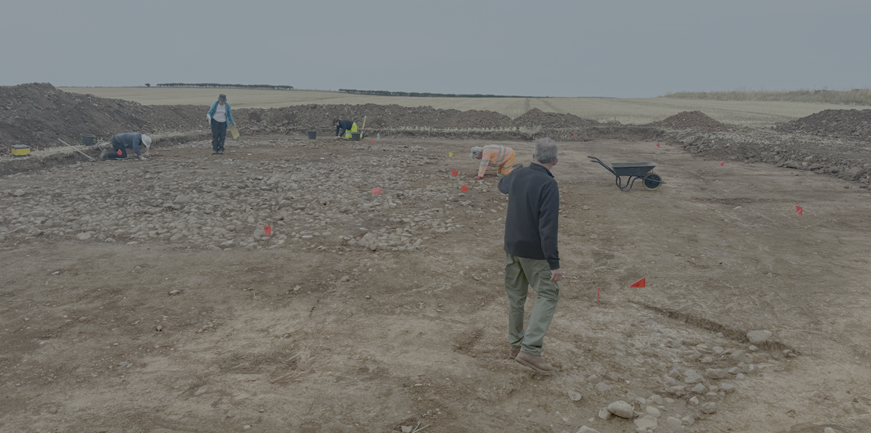
The place
of Saxon Ghosts
An
aristocratic burial ground at Street
House near Loftus and Carlin How, in Cleveland,
dates to about 650 CE, a period of transition from paganism to Christianity in
England. This location would have been just within the northern border of Deira.
The cemetery
was superimposed on a prehistoric monument and there lay a high
ranking woman on a bed surrounded by 109 graves.
The royal
princess watched over Carlin How, the hill of witches, for thirteen
centuries until she was excavated in 2005. In Victorian times, the Craggs line of Farndales would make
Craggs Farm at Carlin How, their home, in this place of Saxon ghosts.
The
Saxon noblewoman died between 650 and 700 CE. There were no remaining bones in
the grave, but she has been identified as a female of an elite class by the
jewellery and other treasures. She was laid to rest on a wooden bed which was
placed into the earth. The grave was then fitted with a timber structure which was
built over the top of the mound. This practice is referred to as a bed burial.
Similar practices in Kent might suggest that this family had some link to the
East Saxons.
Evidence
of elite burial in Deira has come to light spectacular in a late 7th century
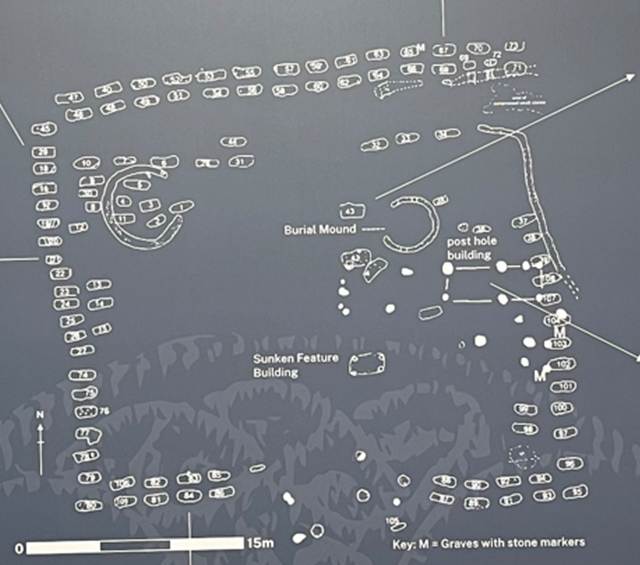
cemetery of unique layout at Loftus in the Cleveland hills. Some 109 graves are
known, with more than 80 set out in four neat rows, two of them double rows, to
form an open rectangle, almost square, of 36 metres by 34 metres. Within the
open area is a ditched mound, thought to be a mausoleum, some small buildings and, possibly the primary feature, a rarely seen case of an
individual laid out on a wooden bed. The rite of bed burial and grave goods,
including a scallop shaped pendant of gold and garnet, suggest a high status female; a nearby grave, thought to be that of a
male, may be associated with her.[1]
A
Cleveland Treasure
The cemetery
was only used for a short period of time and is focused on one burial near the centre
of the cemetery, known as grave 42. The objects from this grave were the first
indication to archaeologists that this was the site of the burial of an
important person. Grave 42 contained three gold pendants, each one unique in
northern England. The female had been placed on a wooden bed with iron fittings
and decoration. Bed burials are very rare and had only been found previously in
southern England.
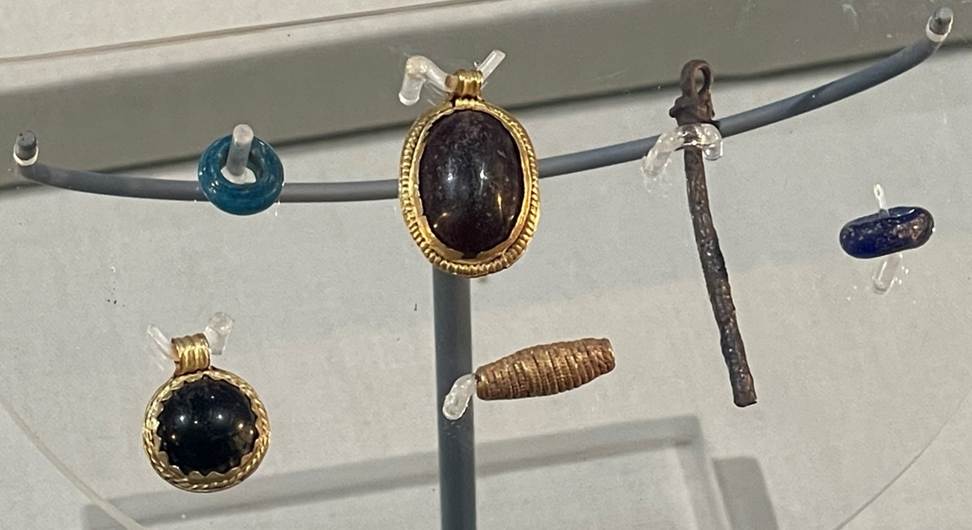
The grave contained
some extraordinary objects including three golden pendants, two glass beads, a
gold wire and part of a jet hairpin.
The most
extraordinary object is a shield shaped golden pendant. Nothing like it has
been found amongst Anglo Saxon archaeological artefacts apart from the Sutton
Hoo treasures. The pendant is made of gold with 57 small red gemstones sitting
on a thin gold alloy foil. The pendant may have been made from gold coins from
the continent that had been debased.
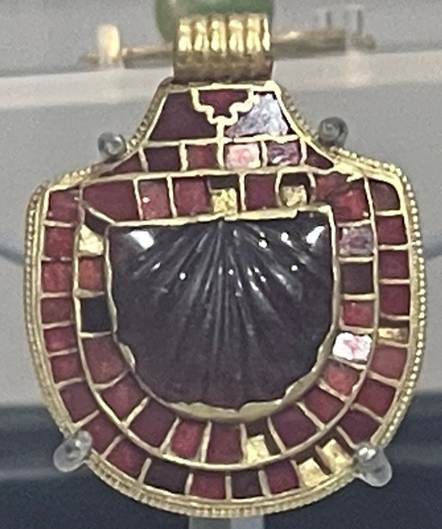
The remarkable
grave jewellery to be seen today at Kirkleatham museum
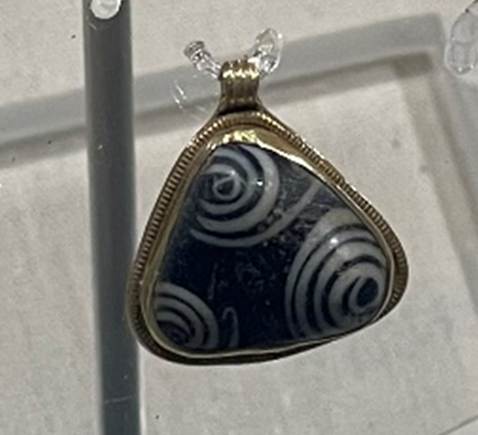
Close to the
bed burial place of the princess, in a nearby grave, a pendant was found, with
a reused Iron Age bead as its centrepiece, surrounded by gold, carefully
crafted to fit its triangular shape.
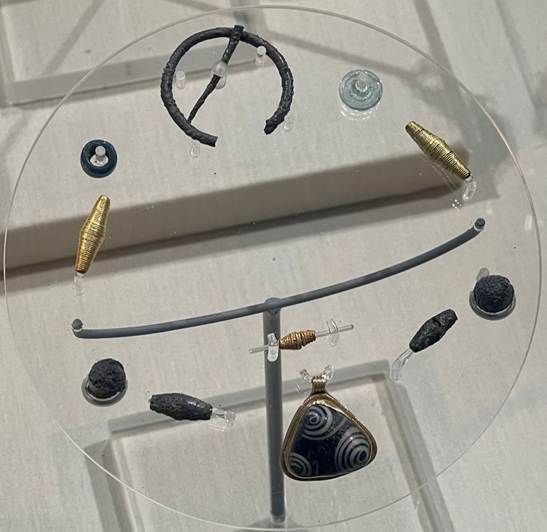
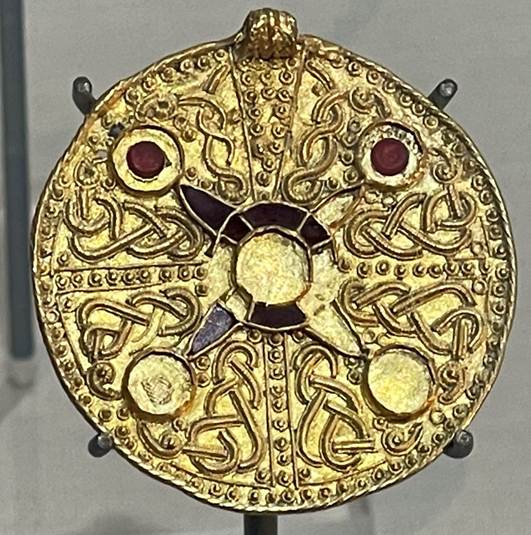
Another
remarkable piece was this magnificent golden pendant, which was probably
created between 630 to 650 CE in a workshop in Kent. It was found in the bed
burial grave, together with other treasures, including four glass beads, one
adorned with gold wire, and a small gold cylinder that acted as a spacer. These
items together were probably worn on a chain.
It may have been an amulet, worn as a charm for religious purposes.
There are only a small number of bed burials
in England including two at the royal cemetery at Sutton Hoo in Suffolk. There
is another example at the Prittelworth burial site in Essex, which was recreated
at the Chalke History
Festival in 2024.
The bed was placed in a chambered tomb with a
low mound marking the site of the grave. Other graves define the extent of the
burial area which forms an irregular square 36 metres by 34 metres. There are
two buildings within the cemetery, one possibly a mortuary house where the
princess from grave 42 may have been laid prior to her burial. The cemetery was
created within an earlier Iron Age enclosure dating to about 200 CE and the
link to the past may have been deliberate.
Grave 42 is
the richest single Anglo-Saxon grave in the North East
defined by the quantity and quality of the material found.
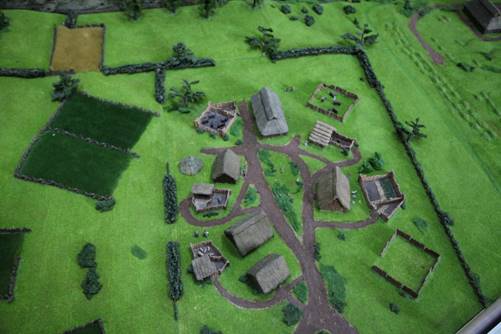
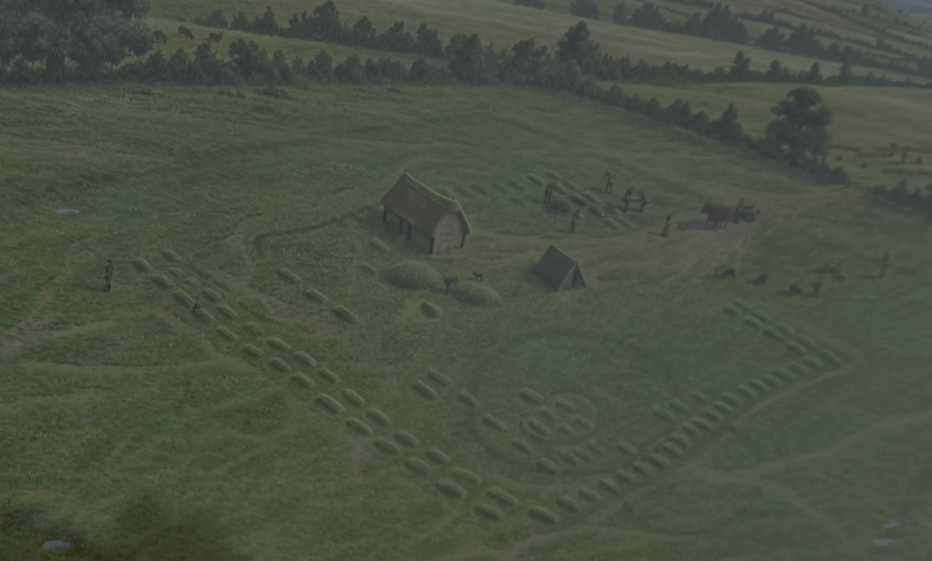
This
diorama at the Kirkleatham Museum represents the Royal Saxon settlement
excavated at modern day Street House.
or
Go Straight to Chapter 4 – Anglo
Saxon Kirkdale