The Known Unknowns
The family history is remarkably
complete. We explore here where it has been necessary to rely on the most
probable narrative where certainty has been impossible
|
The Observation of Donald Rumsfeld
Recognising
what we know and what we don’t know. |
From
science to story telling
Genealogy begins
as a scientific enterprise. Whilst the first step in a genealogical journey
begins by gathering stories from relatives, it quickly becomes necessary to
build increasingly complicated family trees. The primary tools in that exercise
are records of births, marriages and deaths, made possible by the start of
parish records in the mid sixteenth century, and cross checking these with
census records, which show how families knit together, and where they lived.
Modern search resources, such as those provided by Ancestry
and Find
my Past, mean much of the work can be done from a home computer.
However the
listing of names and how they relate to each other is only a first step. In
themselves, family trees are not very interesting. What is more interesting is
the stories of the individuals who make up those trees. The more interesting research begins when the
family tree is complete, or as complete as it can be, and the time comes to
turn to other records, like military records, medieval records of freemen or
poachers and by turning to newspaper articles, with an exploration of the
history of the places where groups of the family lived.
Rory
Stewart’s 2024 podcast on BBC Sounds, The History of Ignorance,
is a call to combine the scientific approach with imagination and an artistic approach, to
complete the narrative. Genealogy becomes most interesting, and more useful,
when it is a roadmap through history, and a source of inspiration and pattern,
building upon the scientifically created underlying data, to tell a narrative
of the family and its experiences.
Standards
of proof
In 2002
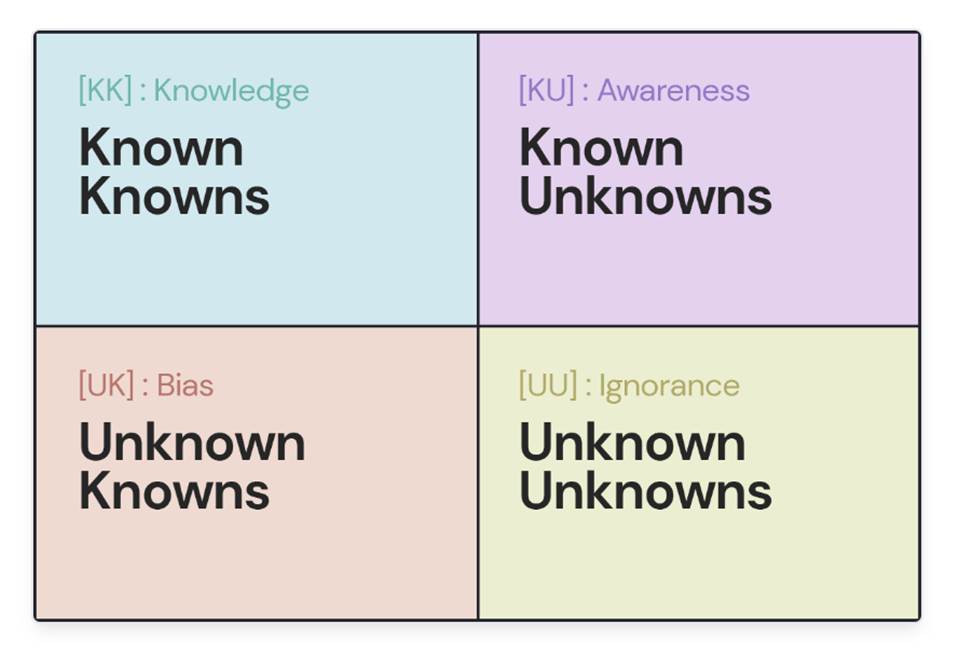
Donald Rumsfeld made his well known observation that as we know, there are
known knowns; there are things we know we know. We also know there are known
unknowns; that is to say we know there are some things we do not know. But
there are also unknown unknowns—the ones we don't know we don't know.
It becomes
increasingly obvious in genealogical research that it is possible to find known
facts from written records, but it is inevitable that no genealogist, nor
historian, is able to tell an entire history with certainty, particularly as
the story is pressed backward through time.
Parish
records from the sixteenth century allow many families to be assembled to a
near complete family record from that time, though inevitably with gaps where
records no longer exist. From the nineteenth century, census records provide
the additional information which makes the exercise much easier, but census
records are also not always complete. Where there is a record of an individuals
birth, marriage, death or circumstances in a census year, it is possible to be
pretty certain of that fact.
Even before
the sixteenth century, the richness
of medieval sources, means that significant elements of a family story can
be synthesised with perseverance.
Sometimes
the known facts can be glued together with other facts, to build up the matrix
of the family story.
It is
generally impossible to achieve absolute certainty about a family story, but it
is still possible to use intelligence and imagination to fill gaps and to build
up the picture of the whole.
As a lawyer
I tend to aspire in the first place to the higher standard of proof and to
establish facts beyond reasonable doubt. It is generally possible to
find records of births, deaths and marriages or census records and other
material, which make building block facts near certain (accurate to about a 99%
test as the legal test requires). The law also accepts a lower standard of
proof, generally adopted in civil cases, to establish facts on a balance of
probabilities, to show that they are more likely than not (about 51%
likely). That is the test I fall back to when the first ambition is unachievable.
I think the genealogist should aspire in the first place to prove facts on the
higher legal test, but then to complete the narrative, by using the known facts
to build the most probable narrative. Over time, by working through facts and scenarios,
it is possible to build a remarkably accurate picture, even when the documentary
evidence is more scant.
The known
unknowns in the Farndale Story
Generally the Farndale Story and the underlying
details of Family
Lines and individual records, for the period after 1560, is now based on a
pretty solid historical record. Much of the picture for this modern era of the
Farndale history meets the test of known knowns. There are errors and many of
them are recognised, needing more work to steadily make the history more and
more accurate. In a genealogy of this size, there will inevitably be mistakes.
The most
significant known unknown in the story of the modern Farndale impacts on the Ampleforth Line and all
those who descend from it. That large section of the family descend from Elias Farndale
(1733 to 1783) who lived in Thirsk and whose son moved to Yearsley. The trouble is that I have not been able to
find a birth record and can’t therefore put his parentage beyond doubt. My
preferred theory is that he was a son of William Farndale
of the Brotton 1 Line. William
Farndale married Mary Butrick in 1724 and their son, George Farndale
was born in 1725 at Stainton, southwest of Middlesbrough. That would reconcile
with a window between say 1727 to 1735 during which time Elias might have been
born to that family. Weighing up the facts that are available, that seems to be
the most probable explanation. The analysis might need to change in time, or it
might be correct.
I have
similarly pooled the historical evidence concerning Nicholas
Farndale and Agnes
Farndale, and their children William
Farndale and Jean Farndale,
to explain the most probable course of events that led our family who seems to
have been living around Campsall north of Doncaster in 1564, but probably moved
north to Cleveland shortly afterwards. There is also still some uncertainty
that George
Farndale, through whom the line then descends, was William and Margaret’s
son. If I am correct then all modern Farndales descend through a common
ancestor in George and Margery, and then back through William and Margaret, and
then Nicholas and Agnes, back to the Farndales of Campsall and Doncaster. This
analysis is based on a probable interpretation of the evidence, but it could be
wrong. More evidence might still come to light to cause an adjustment to this
narrative.
The
narrative of the family story before the sixteenth century is necessarily based
on the most probable interpretation of evidence. From a significant weight of
medieval evidence which is available, I have compiled the earliest family tree of
the family. It is inevitable that it will contain errors. Yet the exercise is
helpful because it provides a likely narrative for the family story. The facts
upon which the family tree is based are known knowns, based on historical
evidence. It is very likely that the early family tree provides a relatively
good picture of how these known stories, and the individuals who were their
actors, relate to each other and to the modern family.
Before the
thirteenth century, it is impossible to identify individual people who might
have been our ancestors. Yet the relationship of the place where they first
adopted the name to an estate which was an area of stability and agriculture
back to Roman times, means that by telling the story of the place, we are
almost certainty continuing our family story.
We start
with known knows, and as we pass back through history, it is inevitable that we
encounter the unknown. That does not prevent the story from continuing, but it
means that there are more gaps to tell, in weaving together the family story.