The First Family Tree
The Farndale Family from about 1230
to about 1500
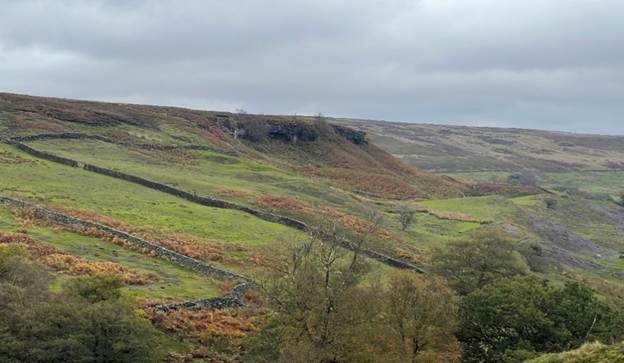
Early references to the dale of
Farndale
|
Searching for our earliest recorded
ancestors We cannot know the precise relationships between
the individuals who comprised our early ancestry before the sixteenth
century. From the thirteenth century, surnames were only starting to be used
to define families in a modern sense and the records did not record details of
births, deaths and marriages. However the rooting or our name to a small valley
in rural Yorkshire, provides us with a beacon linked to a particular place.
This focuses our search geographically. The uniqueness of the name also helps
searches of the medieval records. It turns out there are numerous sources in the medieval records which tell
of multiple events tied to many different individuals, which help to piece
together our story. Occasionally the records even tell us the make up of small family groups. |
The Model Using that evidence it is possible to build a
plausible model to fit the evidence of which we know. It appears that the earliest members of our family
who took the Farndale name were the settled inhabitants of Farndale itself;
their restless sons who poached in the royal forests; and the pioneers who
later left Farndale not so long after its early cultivation, to settle in new
places. The genealogical table below is a likely model, based
on extensive medieval evidence, of how our early family might have looked. It
will not be completely accurate. You can change assumptions and find a
different model to define our early ancestors’ relationships to each other.
However it is the result of careful analysis of the known facts. We have documentary evidence of each of
these individuals and their stories. The aspect of this model that might be
subject to some fluidity, is how they mesh together. With a few exceptions, the evidence we have does
not provide dates of birth or death, but provides snapshots in time which
help to build their stories. The dates given to individuals below are
therefore nominal, but are an interpretation of the evidence we do have. |
The Wider Community of Farndale You can also meet the
whole known community of Farndale in the thirteenth and fourteenth
centuries. |
The
Ancestry of the Farndale Family
|
|
The context
of the Palaeolithic Period or the Old Stone Age
Before about 10,000 BCE |
The vicinity of Farndale
in the Mesolithic Period
10,000
BCE to 3,000 BCE |
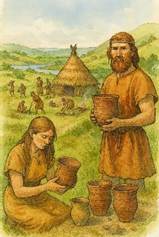
The vicinity of Farndale in the Neolithic Period, the New
Stone Age
3,000
BCE to 1,800 BCE |
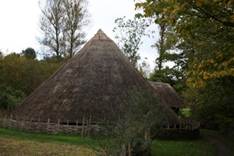
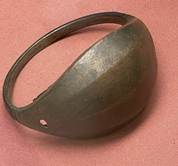
The vicinity of Farndale in the Bronze Age
1,800
BCE to 700 BCE |
The vicinity of Farndale in the Iron Age
700
BCE to 70 CE |
The vicinity of Farndale
and Roman Britain
70 CE to 400 CE |
|
|
|
|
|
|
|
|
|
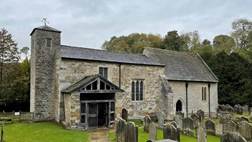
The vicinity of Farndale in the Anglo Saxon period
400
CE to 794 CE |
The vicinity of Farndale in the Anglo Saxon Scandinavian
Period
793
CE to 1066 |
|
|
Medieval
Sources A Bibliography of source material
used in this research |
|
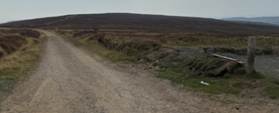
The ancient
routes across the moors
Exploring
the ancient tracks and roads across the moors around Farndale |
|
The wider story of our ancestors |
|
An Ancient History of the lands around
Farndale
The Portal to the History of the dale before it was
called Farndale |
The Game of
Thrones and the Estate of Kirkbymoorside
Kirkbymoorside
in a game of chess from 1066 |
|
|
|
|
|
|
|
|
|
|
|
|
|
|
|
|
|
|
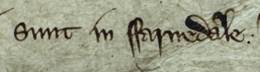
The first reference to Farndale
Rievaulx Cartulary, 1154 |
|
|
|
|
|
|
|
|
|
|
|
|
|
|
Farndale in 1276
The Inquisition Post Mortem of Lady Joan de
Stuteville provides evidence of the extent of cultivated land by the mid
thirteenth century |
Farndale in 1282
The Inquisition Post Mortem of Baldwin Wake
provides evidence of a rapidly expanding community |
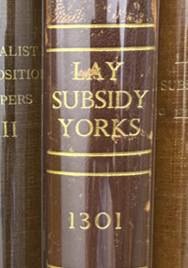
Farndale in 1301
Detailed evidence of the inhabitants of Farndale is
provided by the 1301 Yorkshire Subsidy, a tax imposed to fund the Scottish
Wars |
We cannot know whether
Simon, John, Nicholas, Robert, Gilbert, Hugh and Alfred were brothers from
the same family or each representative of different families We explore here where
their ancestors, who we cannot identify individually, might have come from |
|
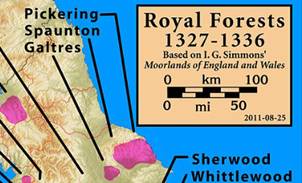
The Forest of Farndale as a royal
forest and monastic supply base 1128 to 1255
The Crown’s insistence on a Royal Forest and gifts
of clearings in Farndale to monastic houses |
The cultivation and early history of
Farndale c 1220 to 1400
|
|
|
|
|
|
|
|
|
|
|
|
|
c 1255 to c 1334
Perhaps the first significant person we
can identify who bore the Farndale name He paid the highest rent of 7s 9d in Farndale
in the 1301 Subsidy, suggesting as miller, he was the wealthiest inhabitant Simon had a servant, John, in 1301 We know of four sons, two of whom left
the dale to seek their fortunes elsewhere, and two of whom became regular
poachers, for which they were fined and outlawed |
John the Miller of Farndale c 1256 to c 1330
John appears in the records as John the
Miller through the misdeeds of his poacher sons. He may have been John, the
servant of Simon the miller in 1301, who eventually became a more substantial
partner in the business, with both men later being referred to as the
miller. He
may have been Simon’s brother, or his servant or a business partner, or all
of those things He
also had poaching sons. |
Nicholas
of Farndale and of Ellrischaye c 1254 to c 1335
Probably a tenant farmer
who paid a significant rent in 1301 |
Adam de Ellerschae C 1235 to c 1300 Paid rent of 20s in the mid thirteenth
century May have been Nicholas’ father. |
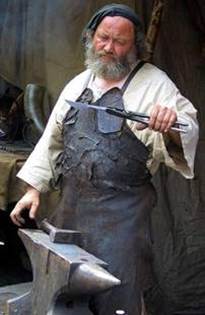
Robert the Smith of Farndale c 1260 to c 1340
The
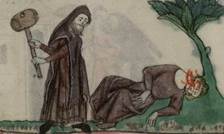
Smith of Farndale, whose son William probably continued his business and whose
son Walter later moved to a village near Scarborough, where he was murdered
in 1327 |
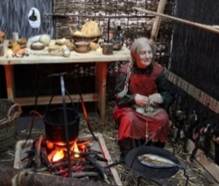
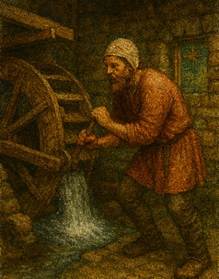
Medieval
Mills
The
context of the mill industry in Yorkshire and the evidence of mills in
Farndale |
Gilbert of
Farndale c 1235 to c 1300 Possibly oldest person bearing the
Farndale name of whom we have a written record |
Hugh of Farndale
c
1260 to c 1330 Perhaps
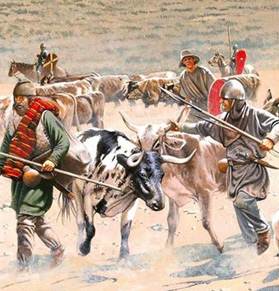
an early farmer of the dale, whose son Henry was fined for letting six oxen,
two bullocks and two beasts of burden wander into the royal forest of
Pickering |
Alfred de Farndale
c 1258 to c 1325 An obscure member of the community who
we know only through his son’s appearance in court in 1334 |
|
|
|
Go under |
|
|
|
|
Go Under |
Go under |
|
|
Richard de
Farndale * c 1275 to c 1345
John had a gift of land in Marton in
1300 However he was excommunicated for
stealing on 12 August 1316 From 1323 he was in trouble for a
string of poaching offences |
John de
Farndale * c 1277 to c 1350
Released
from excommunication on 23 February 1324,
he was involved in several poaching incidents in the 1330s |
Thomas de
Farndale c 1280 to c 1350
Excommunicated
for stealing on 12 August 1316 |
William the
Smith of Farndale c 1284 to c 1350
William probably continued a family business
at the Smithy which was probably located at Low Mill William and
his sons enjoyed a spot of poaching, but his sons took poaching to a new
level and were later engaged in violent raiding expeditions |
Walter de Farndale
* c 1277 to 1327
His oxen strayed in Pickering Forest in
1310, for which he was fined He later moved to Cayton near
Scarborough, where he was murdered |
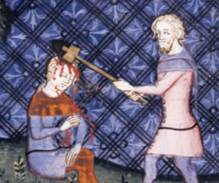
Roger the Miller of Farndale, the ‘Hard
Bear’ * c 1255 to c 1345
The miller of Farndale who probably
worked at High Mill A poacher by 1293 who was probably the
person described as burly as a bear |
John Shepherd
of Farndale
c 1280 to c 1365 John had a groom, Roger, and animals which
included nine oxen, and at least three cattle In the 1330s he was a guarantor for
several poachers who needed bail |
Peter of Farndale c 1275
to c 1335 His son
was a poacher |
|
|
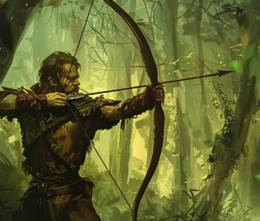
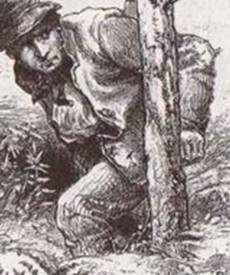
Desperate
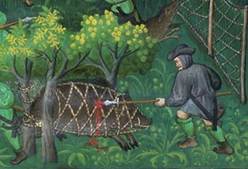
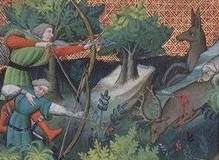
times and illegal hunting In
1315, one of Britain's worst storms halved the crop yield and half a million died
as a result. Thus, the price of crops increased driving many to hunt
illegally. Folk took to hunting but where they did so in royal forests, such
as Pickering, it was a criminal offence. Such men must have been skilled
bowmen, potentially also those who may be called upon to fight for their
king. But when they hunted in the royal forests they were criminals. The
hunters were chased by the king's foresters and were often caught, tried,
fined and sometimes excommunicated or outlawed. Such exploits sparked the
legend of Robin Hood. |
From
Nicholas of Farndale |
|
|
|
Alice de Farndale
*
c 1278 to c 1340 Perhaps
the first female member of the family who can be identified Had one cow, worth 3s taken from her in
Pickering Forest in 1310 |
De Willelmo filio Rogeri * c 1276 to c 1340 Paid 3s 11d tax in 1301 |
|
|
|
|
|
|
|
|
|
From
Hugh of Farndale Henry
of Farndale * c
1285 to c 1350 Had
6 oxen, 2 bullocks and 2 beasts of burden, worth 38s
taken from him in Pickering Forest in 1310 |
|
|
|
The Poachers of Pickering Forest The story of the fourteenth century
family who were the poachers of Pickering Forest. |
|
The Duchy of Lancaster and the Honour
and Forest of Pickering |
|
|
The 1334 to 1339 Eyre of Pickering
Forest The itinerant court which picked up
about 40 years of prior business. |
The Start of the Hundred Years War 1337
to 1340 |
|
|
|
De Waltero de Ellerscaye
Paid 2s 2d tax in 1301 |
Adam de Farndale * c 1280 to c 1350
Paid a fine as guarantor
of a poacher who didn’t turn up at court |
Alan de Farndale * c 1282 to c 1350
A poacher
who was also fined for the misdeeds of others |
|
|
|
|
|
|
|
Thomas
Wake’s Planning Dispute regarding Farndale and the Founding of a House of
Friars 1325,
1347 |
Farndale
after 1400 The
dale in the Late Middle Ages |
|
Walter de Farndale
c
1300 to c 1370 Vicar
of Haltwhistle, Lazonby, Illisahaghe
hospital, Upmeadon, Chelmsford |
John de Farndale *
c 1295 to c 1350 A poacher and fined as the guarantor of
other poachers who didn’t turn up to court |
Nicholas de
Farndale * c 1296 to c 1350 Fined as a guarantor of poachers who
didn’t turn up to court |
|
|
|
|
|
|
|
|
|
|
|
|
|
Adam de Farndale * c 1274 to c 1350
Adam was accused of murder by the
victim’s wife Agnes, and found himself in court on many poaching charges |
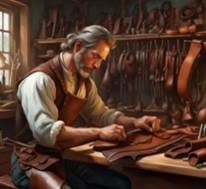
John de Farndale * c 1278 to 1372
John left Farndale and settled in Egton
for a while, before returning via Farndale to live in Rosedale for many
years, where he farmed 6 acres In 1336 he took a loan of £8 and
perhaps shortly afterwards set up a business as a saddler in York, of which
city he later became a freeman |
Robert Farndale * c 1282 to c 1345
A regular poacher, eventually outlawed |
De Willelmo de Farndale
c 1279 to c 1340 A
tenant in Danby in 1301 |
|
William
Farndale of Sheriff Hutton
c1332
to c1397 A
chaplain of Darley near Harrogate, pardoned for the death of John de
Spaldington, he later moved to Sheriff Hutton where his family found themselves
in Neville lands during the Hundred Years War and the Wars of the Roses |
The
Fair at Farndale 1350 |
Farndale
Folk 1350 to 1400 More
poaching stories from Farndale |
|
|
|
|
|
|
|
Go
under |
|
|
|
|
Nicholas of Farndale * c 1292 to c 1350 Had 6 oxen and one cow, worth 27s
seized in Pickering Forest in 1310 Gave evidence on 3 October 1334
regarding the Westgill boys |
|
Dispersal The story of those who left the dale,
including those who took the first steps of the pioneering Farndale family. |
|
John de Farndale * c 1315 to c 1390
John Farndale was another of the family
poachers. He slew a hart in Leashow in 1331, promised to behave in 1334,
but took a hind and calf in Rotemir in 1336. Then,
in 1384, having raised his game to a new scale, he took part in a major
cattle rustling expedition in Northumberland, assaulting and threatening the
landlord’s servants |
William the Smith of Farndale the
Younger * c 1317 to c 1375
|
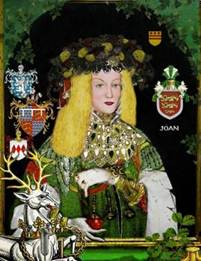
Joan
the Fair Maid of Kent
en son temps la plus belle de tout la roiaulme d'Engleterre et la
plus amoureuse The
most glamorous owner of Farndale |
|
Robert of Farndale * c 1300 to c 1360
Another prolific poacher, eventually
outlawed |
|
|
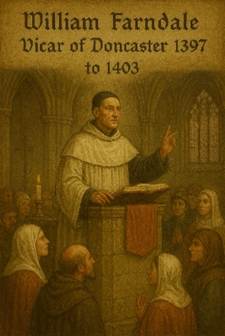
William
Farndale
c
1330 to c1415 Vicar
of the Parish of Doncaster from 1397 to 1403 Landholder
at Loversall |
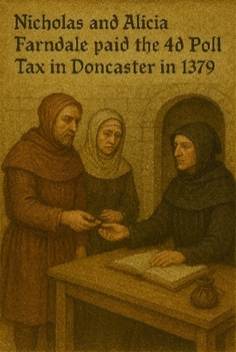
Nicholaus
de ffarnedale
c
1332 to c1400 Paid
the 1379 Poll Tax in Doncaster Married
Alicia |
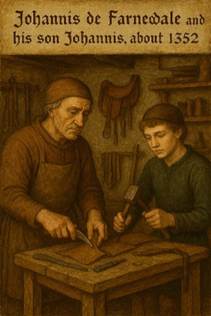
Johannes
de Farndell
c
1334 to c 1405 Freeman
of York
by patrimony in 1397 |
John Farndale c 1360 to c 1450
On 14 April 1445, by then residing at Stillington, County Durham, he answered a hearing on trespass in County
Durham. |
From William Farndale |
|
|
From Alfred de Farndale Roger de Farndale c 1280 to c 1340 Son of Alfred de Farndale Was a
guarantor but had died by a hearing on 3 October 1334 |
|
The
Black Death By
1349, merchant ships transported rats carrying the black death to Britain. The
black death soon swept through the villages in the south and then the north
of Britain. Soon it swept through most
villages in Britain. |
An
end of serfdom and the growth of a new middle class Due
to the lowered population, there was a food excess which was sold for profit
to create a new middle class and a more prosperous nation. As more tax was
demanded of these merchantmen from their lords a resistance grew; leading to
the peasants' revolt. The rebels marched on London. And
so whilst the rebel leaders were executed, the changed circumstances meant
that serfdom was slowly replaced in England, giving rise to an alternative
path to many of the European nations |
Unknown
Family Born
1360s? Doncaster? |
Helen
Farndale c
1359 to c1420 |
Richard
Farndale
c
1362 to c 20 December 1435 Veteran
Soldier with Richard II, Henry IV and Henry V in Scotland and France |
Agnes
Farndale c
1363 to c1420 |
William
Farndale c
1365 to c1440 Sheriff Hutton
and Gowthorpe |
|
|
|
|
|
|
|
|
|
|
|
|
|
|
Unknown
Family Born
1390s? Doncaster? |
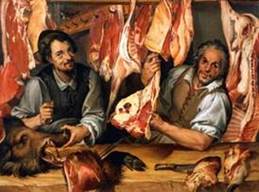
John
de Farondell
c
1352 to c 1425 Archer
in the wars with Scotland in 1383 to 1389 Likely
lived in York Butcher
and freeman of York in 1408 Likely
trader in the Medieval Shambles, the street of butchers |
Henry
Farendon c
1354 to c 1414 Man
at Arms with Thomas Mowbray in the wars with Scotland in 1389 |
William
Faryndon c
1356 to c 1416 Archer
with Thomas Mowbray in the wars with Scotland in 1389 |
|
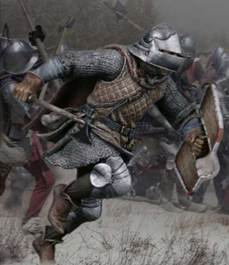
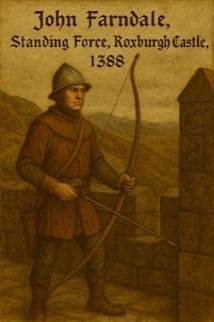
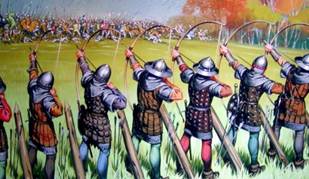
English
Archers
An
English tradition of archery provided the basis for a formidable force that
fought at Agincourt in October 1415 under the inspiring leadership of Henry
V. The massing of the longbow allowed the victories at Crecy,
Poitiers and Agincourt due to the ranged advantage and the high rate of fire.
|
After
the release from serfdom of the English rural classes after the Black Death
and the Peasants’ Revolt, the English forces were loyal to their homeland,
which they had an interest to defend. The
coincidence of a family forced to a life of poaching in fourteenth century
Pickering Forest; part of the armies of archers and men at arms during the
Hundred Years’ War; and living in the place where the Robin Hood
stories were first captured in writing, evidences that archery was at the
centre of their world. |
|
|
|
Unknown
Family Born
1410s? Doncaster? |
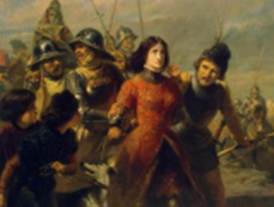
Davy Farndyn
c 1390 to c 1450 Another veteran soldier who fought
extensively in France and was a soldier in Rouen during the trial and
execution of Joan of Arc |
Robert Farendon c 1395 to c 1460 A man at arms at Meulan
in 1435 |
Margorie Farndale c 1409 to c 1480 Witness
to the Wars of the Roses from the lands of the Nevilles and Richard III |
Agnes
Farndale c
1411 to c 1482 Witness
to the Wars of the Roses from the lands of the Nevilles and Richard III |
Alice
Farndale c
1413 to c 1483 Witness
to the Wars of the Roses from the lands of the Nevilles and Richard III |
|
|
|
|
William
Farndale c
1435 to c 1490 In
c1495, his widow Rose Farndale sued to recover land left to her by William
from John Reignold Probably
no family |
Unknown
Family Born
say 1438 Probably
Doncaster |
Unknown
Family Born
say 1445 Probably
Doncaster |
?? |
|
|
|
|
|
|
|
|
|
|
|
|
|
|
|
|
|
Robert
Farndale c
1460 to c 1530 Rector
at South Stoke, Sussex in 1500 and presented to the College of the Holy
Trinity in 1508 |
Thomas
fyndaille c
1484 to c 1554 In
Lythe in 1524 |
John
Farndale c
1485 to c 1550 May
have married Margaret who died on 19 January 1571 Doncaster |
|
|
Alice (nee
Pratt) Farndale 1507 to 1547 Alice Pratt must have married a
Farndale Southcliffe near York |
|
|
|
|
|
|
|
|
|
|
|
|
|
|
|
|
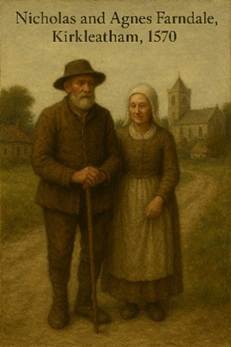
Nicholas
Farndale
c 1512
to 6 August 1572 Campsall north of Doncaster, Kirkleatham, Wilton |
Margery
Farndale c
1515 to 13 January 1572 Doncaster |
William
Farndale c
1520 to 7 March 1597 Fenwick
and Mosely Grange, Moss, both near Campsall |
Symon
ffarnedale (Simon Farndale) c 1535 to c 1600 Southcliffe near York |
Isabell de Farndale c 1537 to c 1607 Southcliffe near York |
|
|
|
|
|
|
|
|
|
|
|
|
|
|
|
|
|
George
Farndale c
1552 to c 1610 Married
Alice Graye on 25 November 1582 Moss
near Campsall |
Edward
Farndale 23
May 1564 to c 1620 Moseley
Grange, Moss near Campsall |
|
|
|
|
|
|
|
|
|
|
|
|
Wylson, Wife of Farndale c 1515 to c 1575 Westerdale She may have been a wife who lived in
Farndale, rather than a widow of a Farndale It seems unlikely there was still a
Farndale descendant living around Farndale by this time. |
|
|
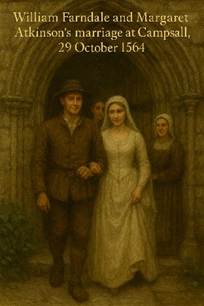
William
Farndale
c 1539
to 24 January 1606 Married
Margaret Atkinson at Campsall on 29 October 1564 Doncaster,
Campsall, Wilton, Skelton |
Jean
Farndale c 1540 Married
Richard Fairley in Kirkleatham on 16 October 1567 Kirkleatham,
Wilton |
|
John
Farndale 1584?
to 17 May 1584 Moss
near Campsall |
Agnes
Farndale 1584?
to 22 May 1584 Moss
near Campsall |
|
|
|
|
|
|
|
|
|
|
|
|
|
|
|
The
Modern Farndale Family |
The
Fairley Family |
|
|
|
|




or
Go to the Farndale
Family Lines page