Thomas
of Farndale
c
1280 to c 1350
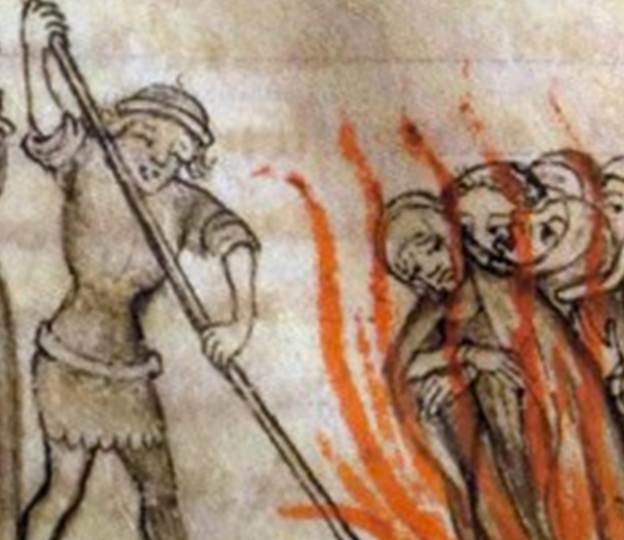
The Medieval
Inhabitants of Farndale
Excommunicated
for stealing
FAR00023
|
Return to the Home Page of the Farndale Family
Website |
The story of one family’s journey through two
thousand years of British History |
The 83 family lines into which the family is divided.
Meet the whole family and how the wider family is related |
Members of the historical family ordered by date of
birth |
Links to other pages with historical research and
related material |
The story of the Bakers of Highfields, the Chapmans,
and other related families |
Dates are in red.
Hyperlinks to other pages are in dark blue.
Headlines are in brown.
References and citations are in turquoise.
Context and local history are in purple.
1280
John may have been born in or about 1280 in Farndale, probably in the mill
at Low Mill. He was the son of John the
miller (FAR00021B). He was probably of a similar age to
Richard de Farndale (FAR00016).
1282
By 1282, on the
death of the landlord Baldwin Wake, the cultivated acreage in Farndale had
risen to 768 acres in only six years (FAR000020). There were 90 bondmen by this time in
Farndale. This must have represented a planned campaign of settlement and
activity in the dale must have been noisy and constant at this time.
1316
Richard de Farndale (FAR00016) and
Thomas of Farndale (FAR00023),
were excommunicated for stealing on 12 August 1316. (Patent Rolls). This relates to Pickering Castle
and may have arisen from an earlier poaching incident.
Given
at York 12 August 1316.
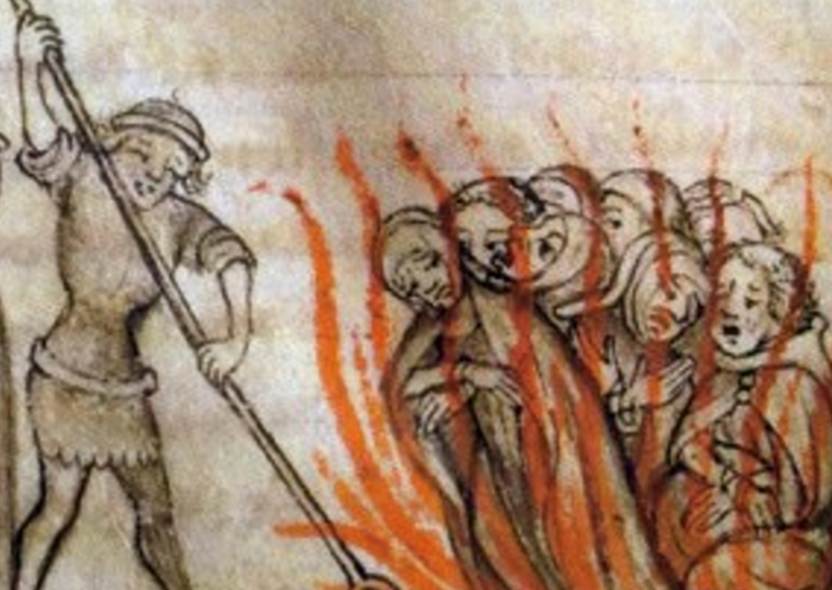
We don’t know the nature of their crime. It seems to have been a crime
under canon law, which therefore involved the church in the first instance, and
in their sentence of excommunication, and was sufficiently serious that the
church felt it necessary to involve the secular authorities when the pride of
the rebels could not be quashed.
Under canon law, excommunication was the most serious sanction the
Church had to wield against those who disobeyed its laws. Gratian's Decretum (c 1140), which contained the basic
texts of the canon law, described excommunication as equivalent to handing a
person over to the Devil. Later medieval canonists echoed and amplified
this sentiment in their descriptions of the consequences of the sanction. It
cut the excommunicate off from the Church's sacraments and from most contacts
with other Christians
In England there was an additional penalty of imprisonment for standing
obdurately excommunicate for more than forty days. This seems to explain the
duration and the language used above.
In the eyes of medieval canonists, these consequences made it necessary
that imposition of the sentence of excommunication was governed by a series of
procedural requirements for the valid imposition of the sanction. Sentences of
excommunication could be imposed only by a proper official, acting in his
judicial capacity, normally the bishop of the diocese where the person lived or
his deputy. Excommunication required proper citation of the persons involved
and provision for them to be heard in their own defence. Imposition of the
sentence had to be accompanied by certain prescribed formalities, including
judicial deliberation and a written document.
|
Excommunication
in the Middle Ages
There is a podcast in the Gone Medieval series on the impact, or
sometimes lack of impact, of excommunication. King John was excommunicated in
1307 and initially at least ignored it. |
1350
He might have lived to about 1350.
|
How do Richard and Thomas Farndale relate to the
modern family? It is not possible to be accurate about the early family tree,
before the recording of births, marriages and deaths in parish records, but
we do have a lot of medieval material including important clues on
relationships between individuals. The matrix of the family before about 1550
is the most probable structure based on the available evidence. If it is accurate, then both Richard and Thomas
Farndale were related to the thirteenth century ancestors of the modern
Farndale family, but are not on the direct line of later modern Farndales. |