John
the Miller of Farndale
c
1256 to c 1330
The Medieval
Inhabitants of Farndale
FAR00021B
|
Return to the Home
Page of the Farndale Family Website |
The story of one
family’s journey through two thousand years of British History |
The 83 family lines
into which the family is divided. Meet the whole family and how the wider
family is related |
Members of the
historical family ordered by date of birth |
Links to other pages
with historical research and related material |
The story of the
Bakers of Highfields, the Chapmans, and other related families |
Dates are in red.
Hyperlinks to
other pages are in dark
blue.
Headlines are in brown.
References and
citations are in turquoise.
Context and local
history are in purple.
We know about
John the Miller of Farndale because he appears regularly in the records as the
father of sons who were punished under the draconian forest laws, generally for
poaching offences. All three of them seem to have been excommunicated for their
offences.
1240s
and 1250s (before John was born)
Farndale was
first cleared for agriculture from perhaps about 1220 (FAR00004A). So although we don’t know about John’s
parents, it might be supposed that they were the hard grafters who first broke
up the forest in the dale and started farming. As Farndale was an extension of
the existing estate of Kirkbymoorside, John’s grandparents and his ancestors
before them, were likely to have come from the land at the northern edge of the
Vale of York, perhaps in the ancient agricultural lands around Kirkdale. These
lands were part of the same landholdings and estate as Farndale.
He may have been
a brother of Simon the Miller of Farndale (FAR00021) or John may
have been of a different family.
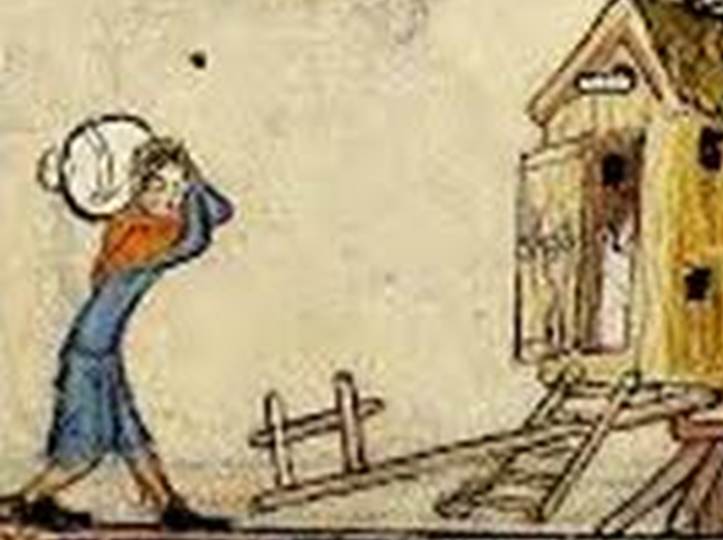
The two early
mills might have been constructed in about the 1240s. It would have been the
most costly piece of infrastructure in the dale and the cost of its
construction would have been borne by the Stuteville landowners, at the time
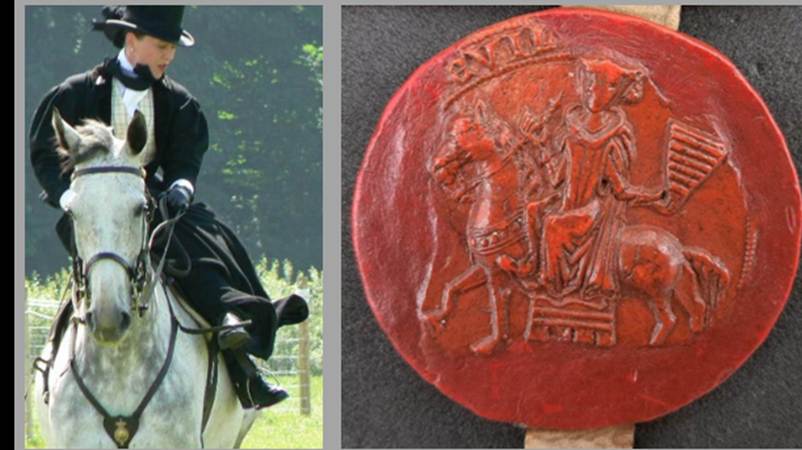
Joan de Stuteville, the Lady of Liddell. Joan’s seal bore the image of a lady
riding side-saddle, a style which she is reputed to have been the first to
adopt. Perhaps she was occasionally seen riding through the dale in that
fashion. The landlord would have collected a hefty rent from the tenants and
millers of the water mills. We know that Joan was collecting eleven marcs per annum from the two water mills in the mid Twelfth
century. A marc was two thirds of a pound, or 13s 4d.
By the mid
thirteenth century, Farndale was a thriving community with two watermills. It is likely
that the principal watermill was at modern Low Mill, with another probably
smaller mill, a little upstream, at High Mill.
Perhaps John’s
family moved into the dale from perhaps the ancient agricultural lands around
Kirkdale, to clear the dale, and John might have eventually started working as
the second miller of Farndale, a little further up the River Dove, or he might
have been Simon’s servant assistant, both men later being referred to as ‘the
miller of Farndale’.
There is an
undated Yorkshire Deed from about the mid thirteenth century: Grant by
Nicholas Devias, being in good health and lawful
power (in mea bona sanitate et ligia
potestafe) to Alice his wife, for life, of an annual
rent of 10 li, which lady Joan de Stotevile gave him
for his service, namely, 20s. from the land in Farndale, held of him by Adam de
Ellerschae, and eleven marcs
from his two water-mills in Famedale, and two and
a half marcs from his water-mill in Brauncedale, payable half-yearly at Michaelmas and Easter.
Paying yearly at Christmas one silver penny for all service, etc. Witnesses,
Sir Richard Foliot, Sir Adam Newmarch [de Novo mercato), Sir Henry Biset, Sir Thomas de Hetun, William de Pligt Peter de Giptun, Clement de Nortun, Robert
de Slucropt, Colin de Nortun
and many others.
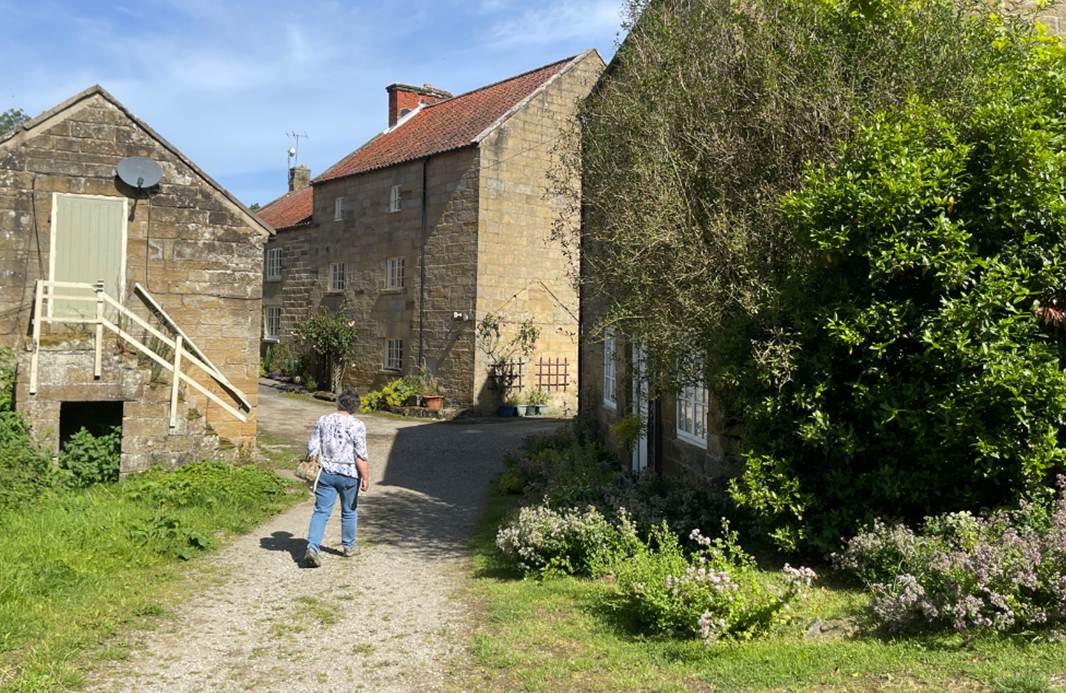
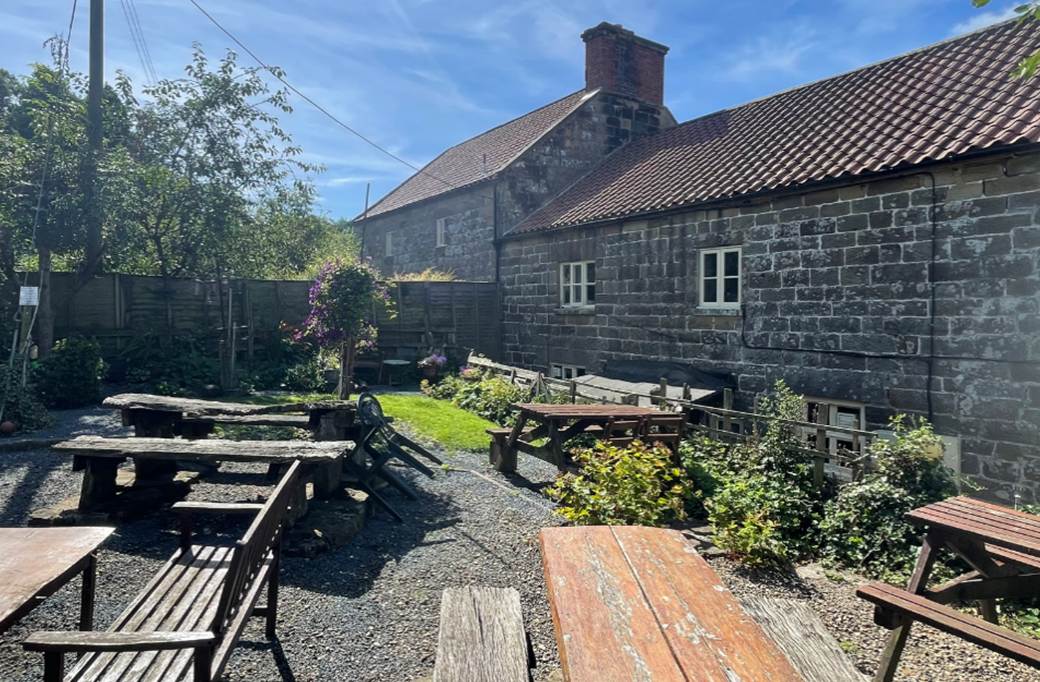
The
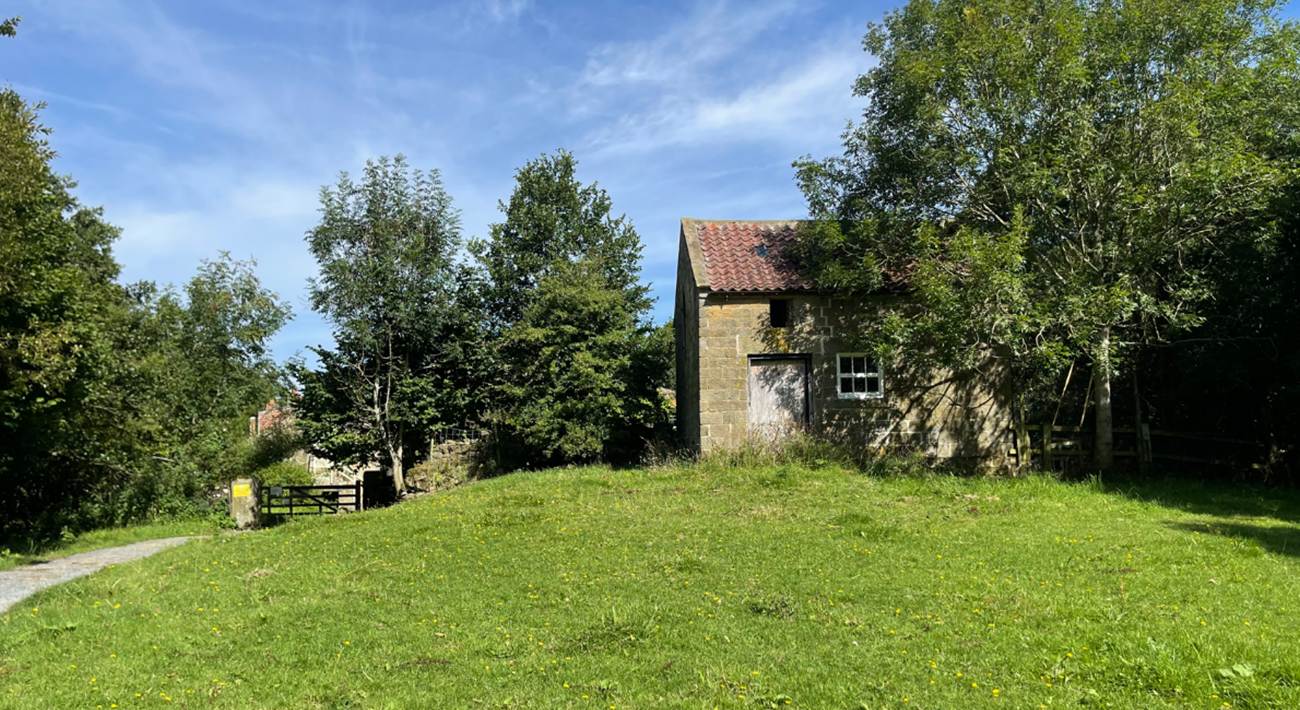
location of the now disused High Mill, now known better for the Daffy Café.
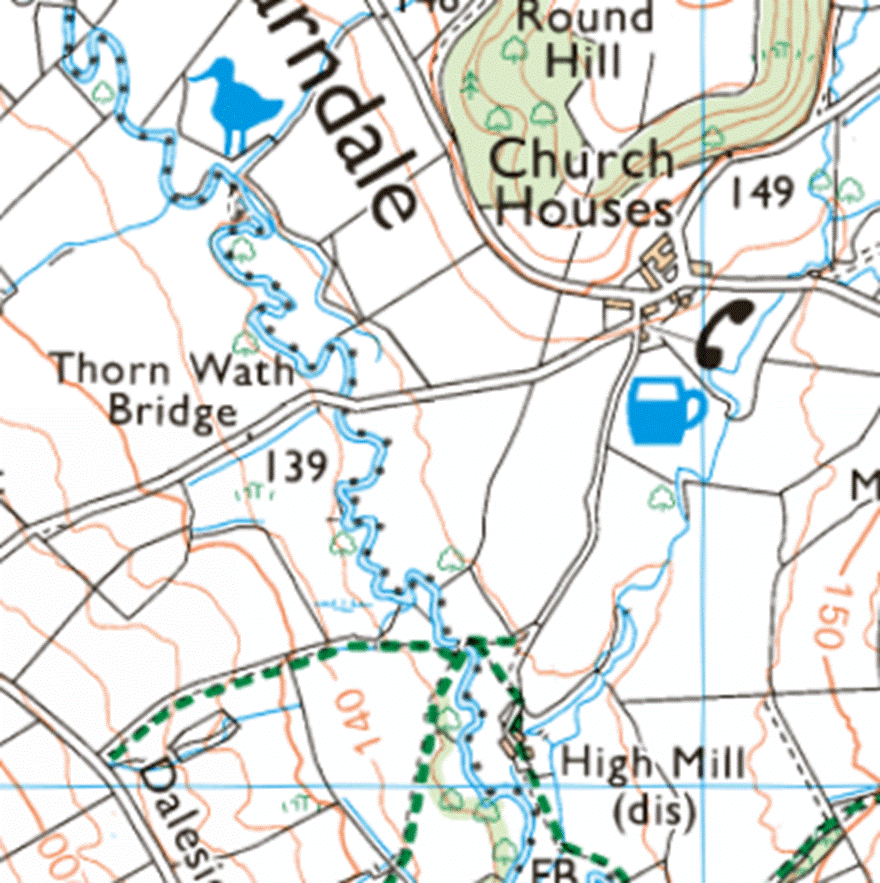
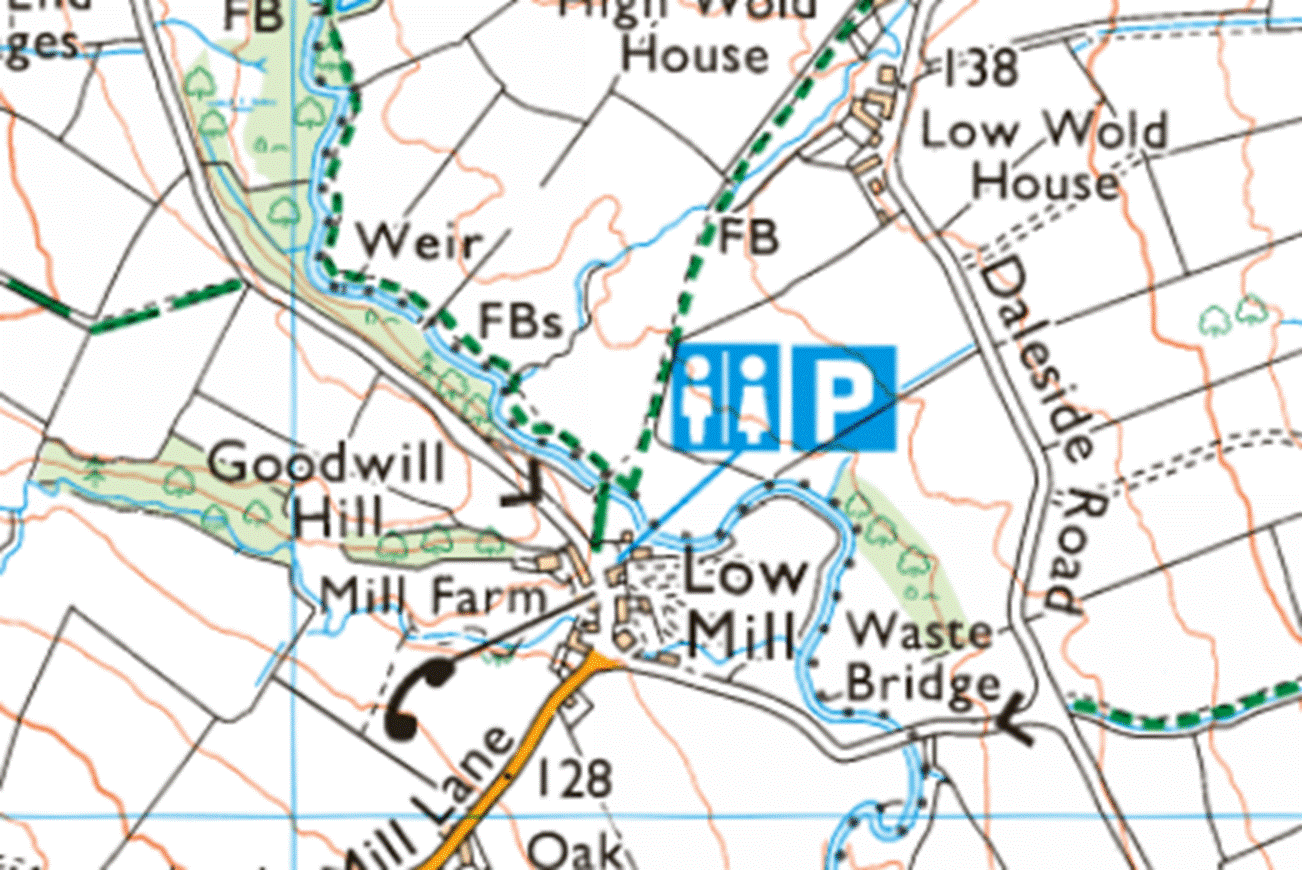
The River
Dove would have provided an optimal source of power for milling. There was a
nineteenth century watermill at High Mill on Mill Lane
south of Church Houses, Farndale, which is almost certainly the site of an earlier mill. The
hamlet of Low Mill was also the site of an earlier mill on the River Dove and
is located where the fast flowing West Gill Beck flows down from the high
ground to meet the River Dove. Both these mills were located centrally within
the valley. There are also remains of a watermill at Low Elm
House in
neighbouring Bransdale.
|
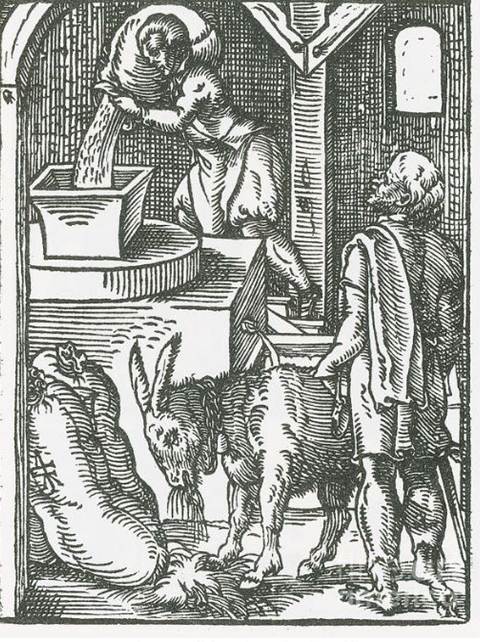
Medieval milling and the mills of Farndale. |
c 1256
There is no record
of John’s birth or of his early life. We first hear of John in 1323 as the
father of Richard, who had been caught poaching. In 1300, Richard, if the same
person, had a gift of land. We might therefore suspect that Richard was born in
say 1275, so that John may have been born in say 1256.
c 1275
We cannot know
when or who Simon married. Given the likely dates of the births of his
children, it seems possible that he would have married in about 1275,
when he might have been about 19.
His perhaps
eldest son, Richard de Farndale (FAR00016), might have been born that year.
1276
By 1276, at the
time of the death of Joan Stuteville, about 545 acres of Farndale was under
cultivation (see FAR00017). The bonded tenants paid a standard rent of
1s per acre. By that time there were seven cottars in Farndale and further
occupation at Duthenwayt, probably in the area of the
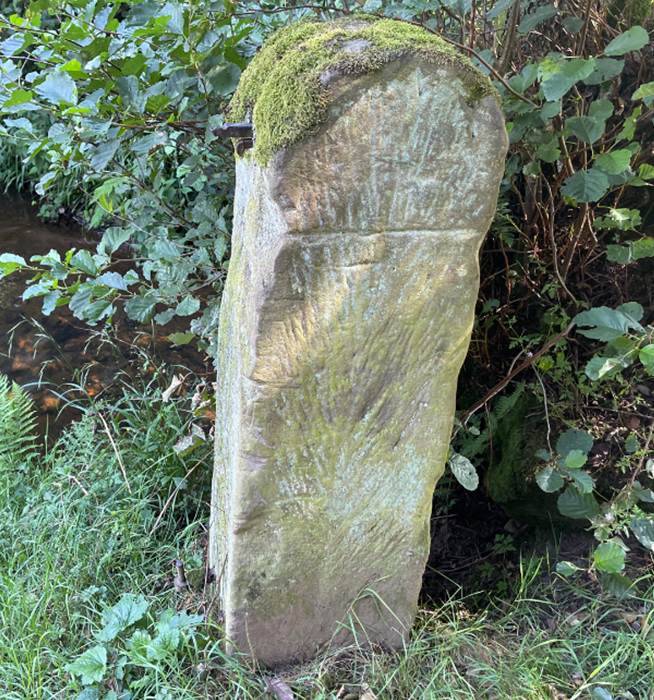
Duffin Stone today, up the western side of the dale. John was likely to
have been part of a community of villeins, tilling the land, and paying high
rents to the Stuteville landowners.
c 1277
John the Miller’s
son, John de Farndale (FAR00016A), might have been born in about 1277.
c 1280
John’s son Thomas
Farndale (FAR00023), might have been born in about 1280.
Richard and
Thomas faced an order of excommunication for stealing in 1316 and John was
released from another excommunication order in 1324.
1282
By 1282, on the
death of Joan’s son, Baldwin Wake, the cultivated acreage in Farndale had risen
to 768 acres in only six years (FAR000020). There were 90 bondmen by this time in
Farndale. This must have represented a planned campaign of settlement and activity in the
dale must have been noisy and constant at this time. Activity at the mill must
have been hectic.
By this time,
whilst it is possible that John the Miller was a miller in his own right at
High Mill, an alternative theory is that he worked with Simon the Miller (FAR00021) at Low Mill.
1301
There is no
mention of John the Miller in the Lay Subsidy of 1301 for Farndale (FAR00029). It is however
interesting to note that Simon the Miller (FAR00021), who may or may
not have been his brother, had a servant called John and a possible theory is
that John was working under Simon by this time at Low Mill, as his servant
assistant, and the two men were later both referred to as ‘the millers of
Farndale’. Perhaps over time John worked with Simon more as a partner, than as
his servant. The fact that later records often referred to the misdeeds of
their sons together, might support this theory.

On 1 July 1323 Adam (FAR00025), son of
Simon the miller of Farndale (FAR00021), and Richard (FAR00016), son of John the miller (FAR00021B), with three
other unknown men, came into Pickering Forest in a place called Petrenedle, and took two deer. When confronted by the
forester, they had sent away one deer, which the foresters carried to Pickering
Castle, but the poachers carried away the other deer. The Eyre Court had a long
period when it did not sit and the case did not come to be heard until 3
October 1334 (some eleven years later) when they did not appear and the sheriff
was ordered to apprehend them. Later, Adam and Richard came before the justices
and asked to pay for licence to make concord for their offence so that they
could be redeemed. Adam paid £1 6s 8d and Richard paid £2 for this licence, and
they found mainpernors (or guarantors) for these
amounts (The Great Cowcher of the Duchy of Lancaster, The National
Archives, DL42/1 Folio 217, DL 42/1/23/U22 folios 217 to 218v, Close Rolls 22 August 1323, 17 Edward II page 15 and 16, North Riding Records Yorks, The Honour and Forest of
Pickering, 1894, Volume II at page 217 to 218).
There
are full details of this incident at another webpage.
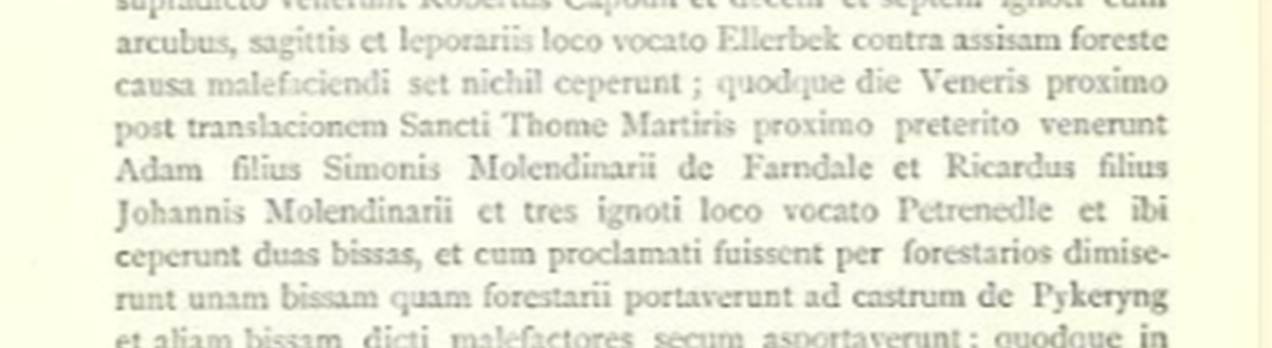
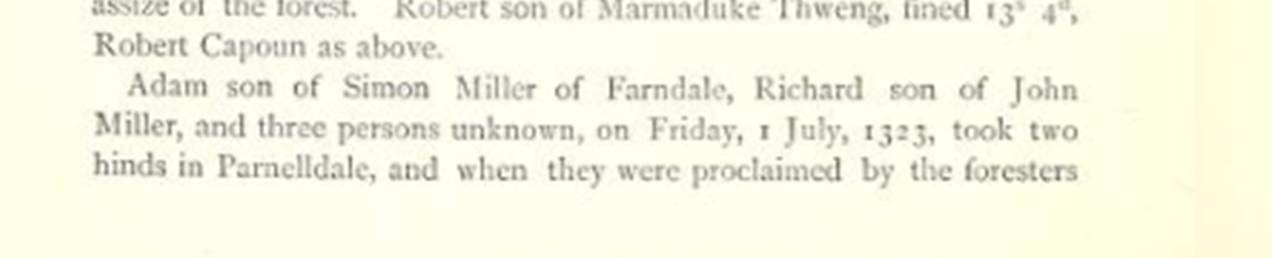
In this record, we have another early record of Simonis Molendinarii (Latin for a Miller). Simon was probably
an old man by this time.
1330
John the Miller of Farndale might have died in about 1330, by
which time he would have been in his seventies. It may be that later refences
to his sons as sons of John the Miller, were references to a person who had
died by then.
3 October 1334
A
hearing of the itinerant Eyre Court (FAR00015B),
picking up cases from several decades previously, took place at Pickering on 3
October 1334 (The Duchy of Lancaster Records, from the North Riding
Record Society, The Honour and Forest of Pickering, Edited by Robert
Bell Turton, Volume IV, 1897, page xiii).
At the hearing Richard (FAR00016), son of John the miller of
Farndale (FAR00021B) and Adam (FAR00025), son of Simon the miller of Farndale (FAR00021) had trespassed and hunted in Pickering
Forest, others including Adam (FAR00022A), son of Nicholas de Farndale (FAR00006), and John (FAR00016A), son of John the miller (FAR00021B) and John Wraghby of Farndale (WRA00001) mainperned (provided guarantees) for their
appearance (The Great Cowcher of the Duchy
of Lancaster, The National Archives, DL42/1 Folio 227, 227v, DL 42/1/35/U7 folios 337 to 338v).
Under medieval forest law, mainpernors
were individuals who acted as guarantors for others, ensuring they appeared in
court to answer for alleged offenses against forest law. These offenses
primarily involved the king's hunting rights and the protection of forest
resources like timber and vegetation. Mainpernors
essentially vouched for the accused's future appearance in court, preventing
them from fleeing justice within the forest jurisdiction.
Mainpernors (“guarantors”) were fixed including John (FAR00016A), son of John the miller (FAR00021B) was fined 2s as mainpernor
of Richard (FAR00016), son of John the miller of Farndale (FAR00021B), also indicted for hunting; John (FAR00016A), son of John the
miller (FAR00021B) was also fined 2s as mainpernor
of Adam (FAR00025), son of Simon the
miller (FAR00021), also indicted for hunting; Nicholas Brakenthwayt
was fined 2s as mainpernor of Richard (FAR00016), son of John the miller of Farndale (FAR00021B), also indicted for hunting; Alan de Braghby
was fined 3s as mainpernor of Richard (FAR00016), son of John the miller of
Farndale (FAR00021B), also indicted for hunting; John de Braghby
was fined 20d as mainpernor of Richard (FAR00016), son of John the miller of Farndale (FAR00021B), also indicted for hunting. (The Great Cowcher of the Duchy of
Lancaster, The National Archives, DL42/1 Folios 336v and 337, DL 42/1/35/U6, Folio 335v-336v (not on public
record)).
On 3 October 1334, as mainpernor
(guarantor) Richard (FAR00016), son of John (FAR00021B), and Adam (FAR00025), son of Simon the miller of Farndale (FAR00021),
Nicholas de Rippingale was fined 5s because
they did not turn up (The Great Cowcher of
the Duchy of Lancaster, The National Archives, DL42/1 Folios 342v).
There
are full details of this hearing at
another webpage.
A number of individuals from Farndale were fined following prior
indictments for poaching in 1334 and not turning up at the Eyre. They paid bail
or had bail paid for them (North Riding Records, Volume IV by the North Yorkshire Record
Society, the Honour and Forest of Pickering, 1897, page 23, 28, and 34 not on line
but I have a physical copy).
|
Date of Hearing |
Notional date of Offence |
Payer |
Guarantor (malpernor) |
Poacher |
Amount of Fine |
|
3 October 1334 |
c 1320 |
John Alberd |
Richard (FAR00016) son of
John the Miller of Farndale (FAR00021B) |
3s 4d |
|
|
3 October 1334 |
c 1321 |
William the Smith (FAR00037) |
William the Smith (FAR00037) |
2s |
|
|
3 October 1334 |
c 1325 |
Walter Trusseleygh |
Adam (FAR00025) son of Simon
the Miller of Farndale (FAR00021) |
Nicholas de Repyngale |
5s |
There are further details of these offences at another
webpage.
There was a list of offences committed
since the commencement of the Eyre in about 1336 which Richard (FAR00016) son
of John Miller of Farndale (FAR00021B), and Adam (FAR00025) son
of Simon Miller of Farndale (FAR00021)(The Great Cowcher of
the Duchy of Lancaster, The National Archives, DL42/1 Folio 204v, DL 42/1/23/U14 folios 203 to 205 and North Riding Records Yorks
Volume II, The Honour and Forest of Pickering, page
119).