c
1255 to c 1334
The wealthiest tenant in Farndale in 1301
Possibly the earliest direct ancestor in the written record of the modern
family
The Medieval
Inhabitants of Farndale
FAR00021
|
Return to the Home Page of the Farndale Family
Website |
The story of one family’s journey through two
thousand years of British History |
The 83 family lines into which the family is divided.
Meet the whole family and how the wider family is related |
Members of the historical family ordered by date of
birth |
Links to other pages with historical research and
related material |
The story of the Bakers of Highfields, the Chapmans,
and other related families |
Dates are in red.
Hyperlinks to other pages are in dark blue.
Headlines are in brown.
References and citations are in turquoise.
Context and local history are in purple.
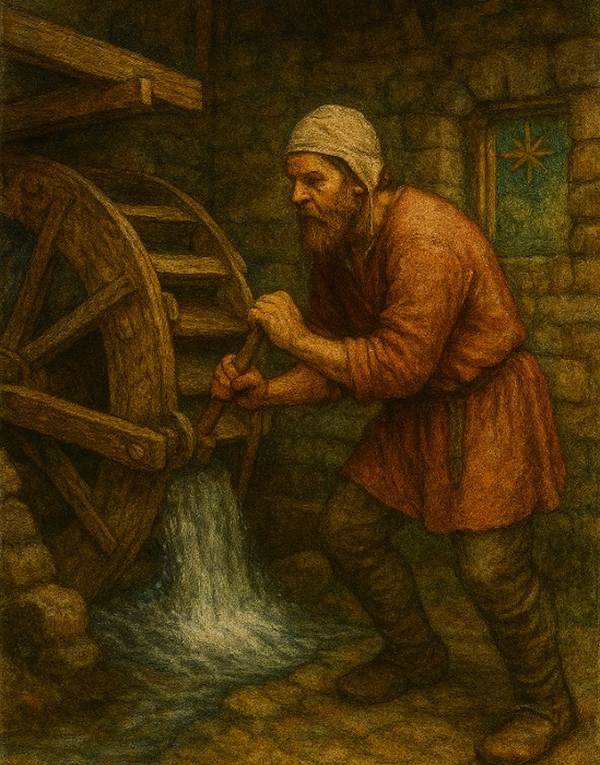
Simon the Miller of Farndale is the first significant person to
have adopted the name Farndale. In 1301 he paid the most tax in the dale, as
its miller. He appears regularly in the records as the father of sons who were
punished under the draconian forest laws, generally for poaching offences.
Whilst it is impossible to be certain, a possible model for the ancestry of the Early Farndales means that he is a candidate for the first direct ancestor of the modern family of whom we have a record.
1240s
and 1250s (before Simon was born)
Farndale was
first cleared for agriculture from perhaps about 1220 (FAR00004A). So although we
don’t know about Simon’s parents, it might be supposed that they were the hard
grafters who first broke up the forest in the dale and started farming. As
Farndale was an extension of the existing estate of Kirkbymoorside, Simon’s
grandparents and his ancestors before them, were likely to have come from the
land at the northern edge of the Vale of York, perhaps in the ancient
agricultural lands around Kirkdale. These lands
were part of the same landholdings and estate as Farndale.
The two early mills might have been constructed in about the
1240s. It would have been the most costly piece of infrastructure in the dale
and the cost of its construction would have been borne by the Stuteville
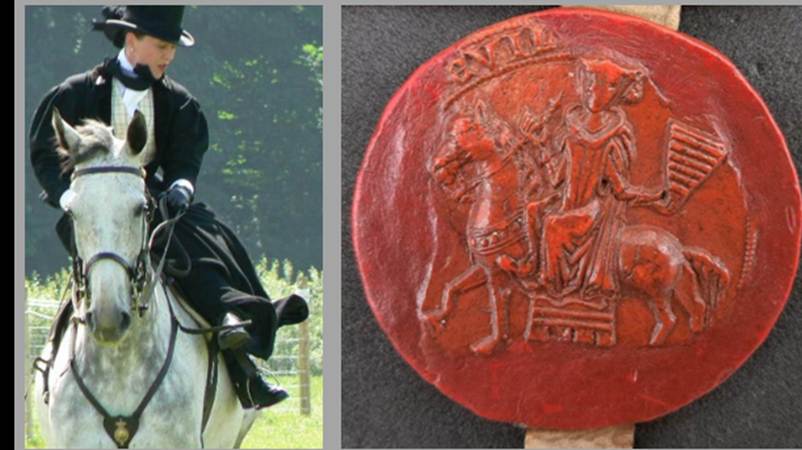
landowners, at the time Joan de Stuteville, the Lady of Liddell. Joan’s seal
bore the image of a lady riding side-saddle, a style which she is reputed to
have been the first to adopt. Perhaps she was occasionally seen riding through
the dale in that fashion. The landlord would have collected a hefty rent from
the tenants and millers of the water mills. We know that Joan was collecting
eleven marcs per annum from the two water mills in
the mid Twelfth century. A marc was two thirds of a pound, or 13s 4d.
By the mid thirteenth century, Farndale was a thriving community
with two watermills. It is likely that the principal watermill was
at modern Low Mill, with another probably smaller mill, a little upstream, at
High Mill.
It seems likely that the mill at Low Mill was first operated by
Simon’s father, in the very early days as the dale was being cleared for
agriculture. Perhaps Simon’s family moved into the dale from perhaps the
ancient agricultural lands around Kirkdale, to clear the dale, but quickly
diverted to become the principal millers of the dale.
There is an undated Yorkshire Deed
from about the mid thirteenth century: Grant by Nicholas Devias, being in
good health and lawful power (in mea bona sanitate et
ligia potestafe) to Alice
his wife, for life, of an annual rent of 10 li, which lady Joan de Stotevile
gave him for his service, namely, 20s. from the land in Farndale, held of him
by Adam de Ellerschae, and eleven marcs from his
two water-mills in Famedale, and two and a half marcs from his water-mill in Brauncedale,
payable half-yearly at Michaelmas and Easter. Paying yearly at Christmas one
silver penny for all service, etc. Witnesses, Sir Richard Foliot, Sir Adam
Newmarch [de Novo mercato), Sir Henry Biset, Sir
Thomas de Hetun, William de Pligt Peter de Giptun, Clement de Nortun, Robert de Slucropt, Colin de Nortun
and many others.
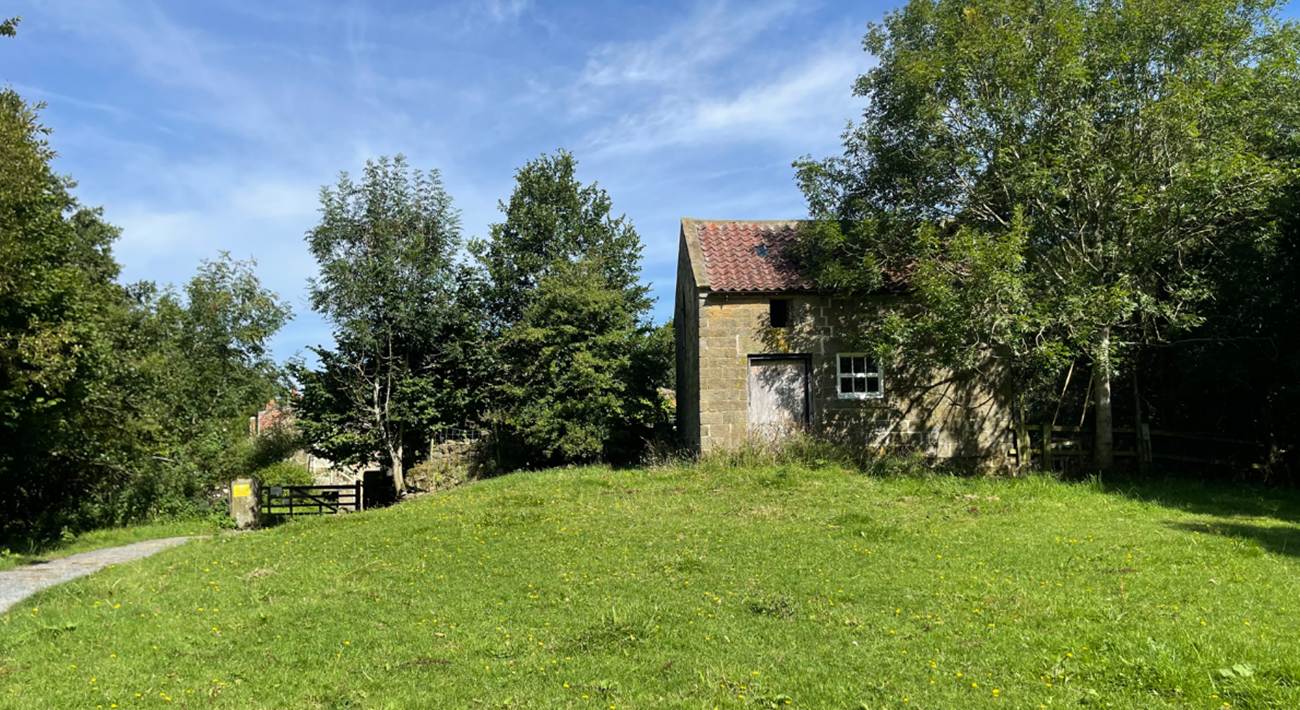
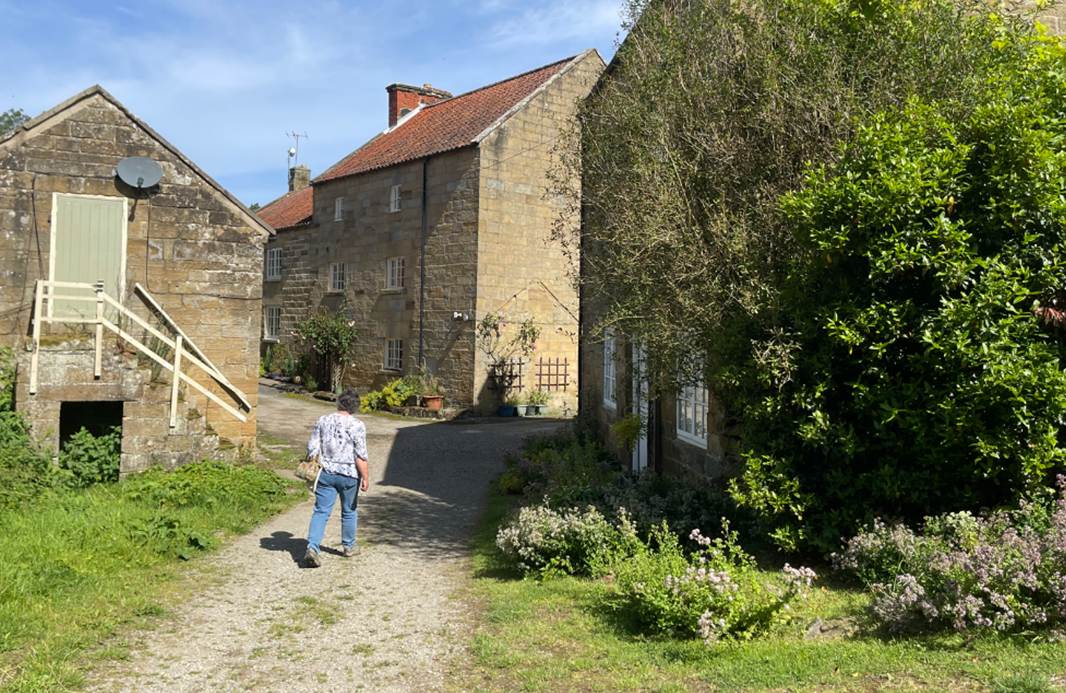
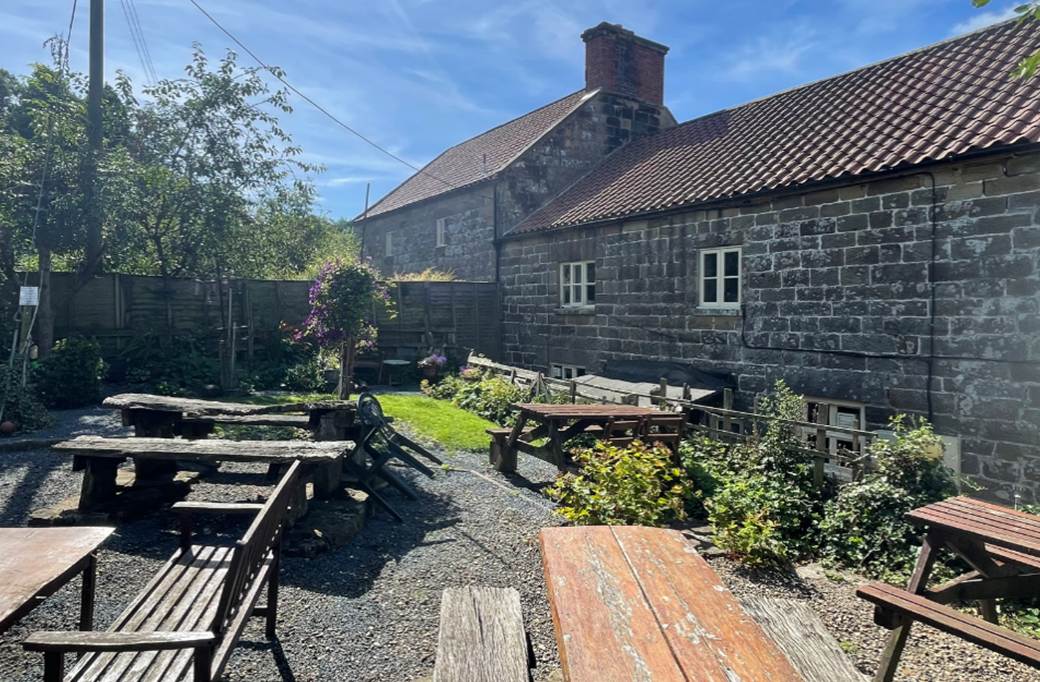
The location of the now disused High
Mill, now known better for the Daffy Café.
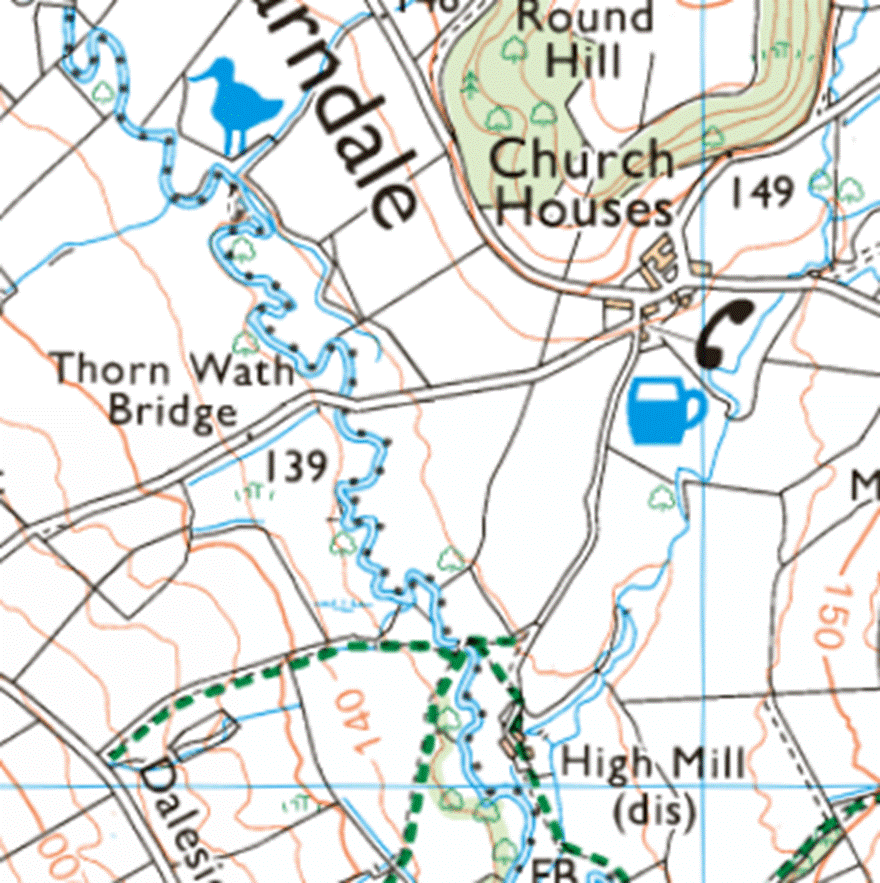
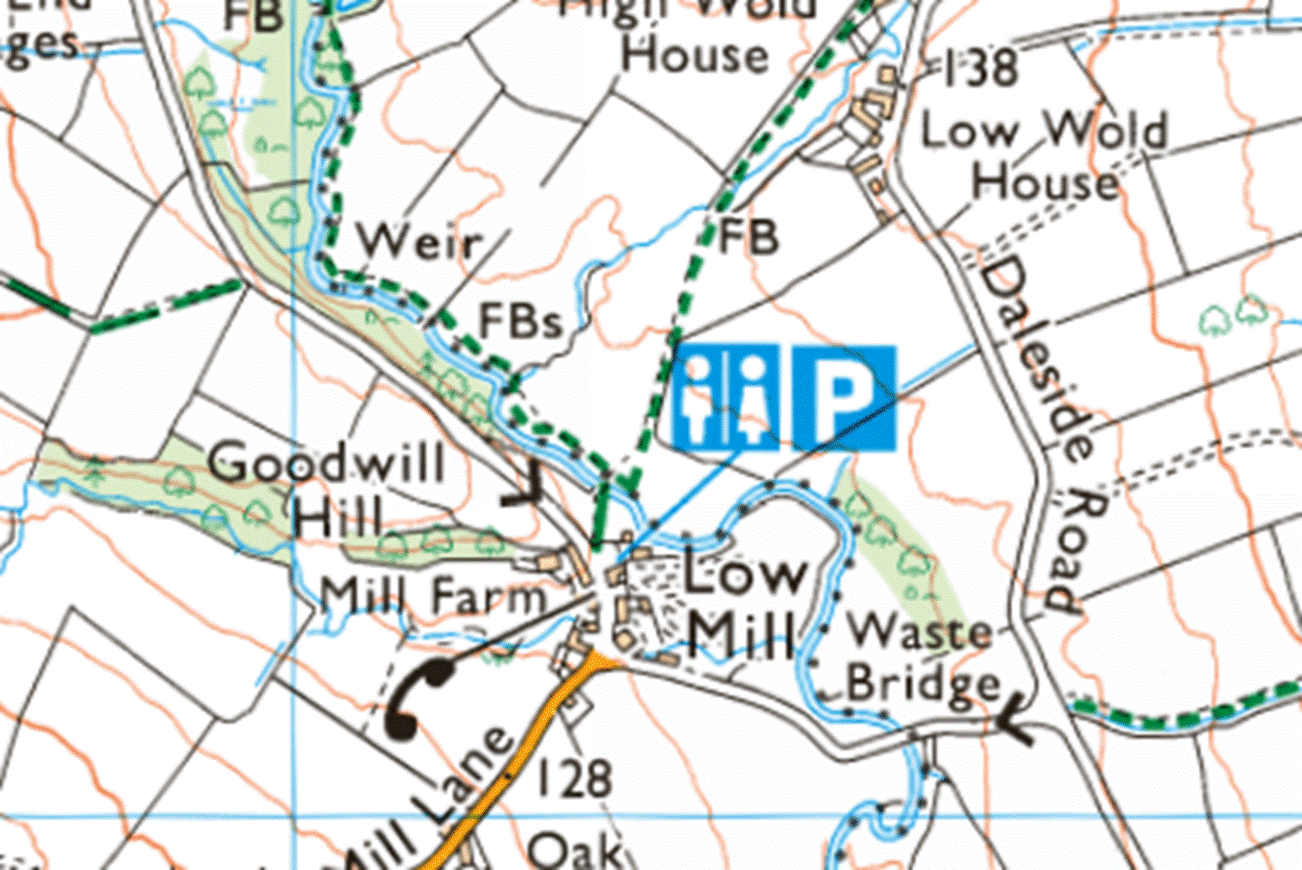
The River Dove would have provided an
optimal source of power for milling. There was a nineteenth century watermill at High Mill on Mill Lane south of Church Houses, Farndale, which is almost certainly the site
of an earlier mill. The hamlet of Low Mill was also the site of an earlier mill
on the River Dove and is located where the fast flowing West Gill Beck flows
down from the high ground to meet the River Dove. Both these mills were located
centrally within the valley. There are also remains of a watermill at Low Elm House in neighbouring Bransdale.
|
Medieval
milling and the mills of Farndale. |
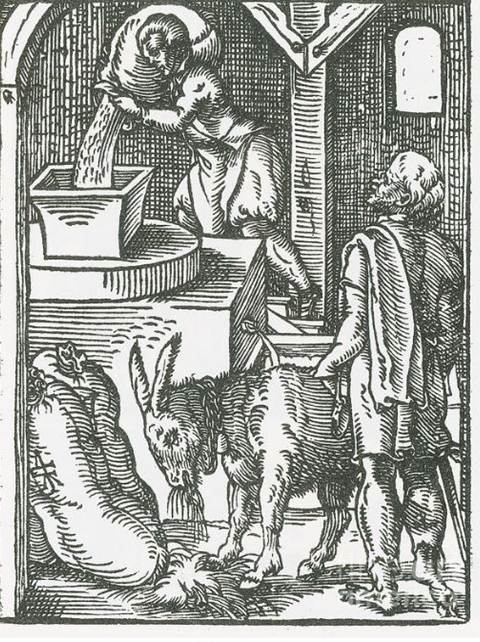
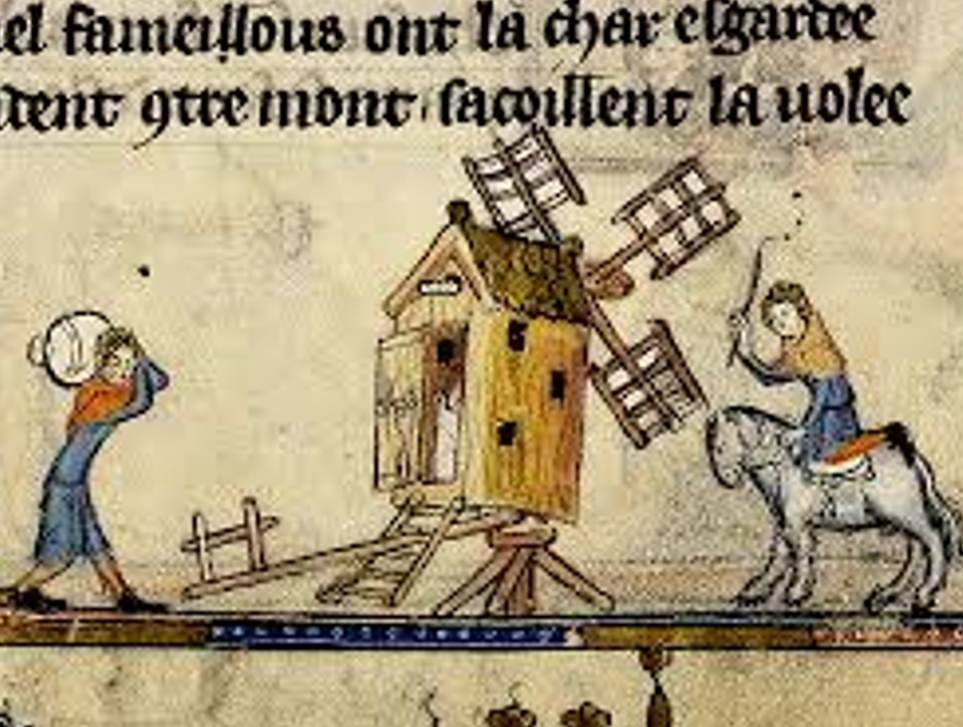
There is no record of Simon’s birth or of his early life. By 1301,
as the wealthiest person living in the dale, he might have been in his mid forties. So we might guess that he was born in about 1255. Perhaps
he was born in his father’s watermill, which may have been a structure of
cutting edge technology, built only a decade or so previously. The mill was
likely to have been at Low Mill, and this might have been the heart of the
medieval Farndale community.
By 1276, at the time of the death of Joan Stuteville, about 545
acres of Farndale was under cultivation (see FAR00017). The bonded tenants paid a standard rent of 1s per acre. By that
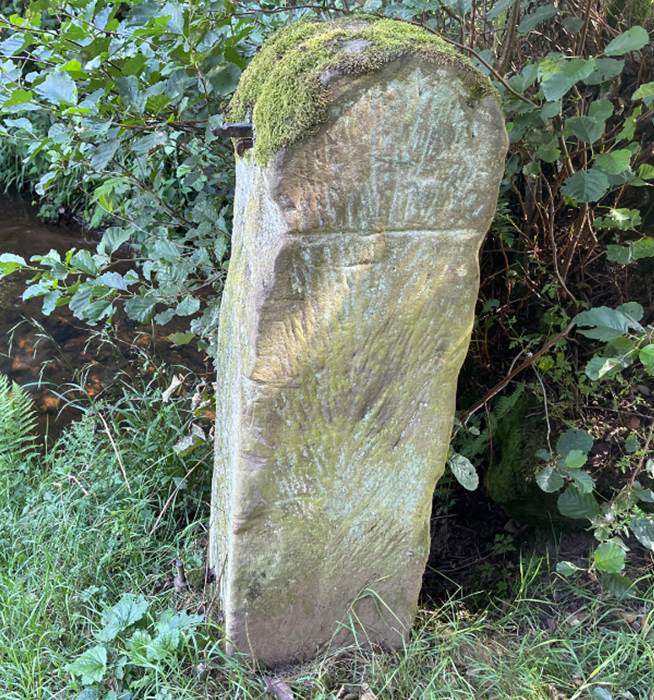
time there were seven cottars in Farndale and further occupation at Duthenwayt, probably in the area of the Duffin Stone today,
up the western side of the dale. Simon’s parents were likely to have been part of a community of
villeins, tilling the land, and paying high rents to the Stuteville landowners.
We cannot know
when or who Simon married. Given the likely dates of the births of his
children, it seems possible that he would have married in about 1276,
when he might have been about 21.
c 1278
Perhaps their eldest son, John (Johanne) de Farndale (FAR00030), son of Simon
of Farndale, might have been born in about 1278. John moved out of Farndale to Egton by 1301 on the
northern side of the moors, and then back to Rosedale, before taking a
substantial loan in 1347, from which he became a saddler and freeman of York.
He is a likely candidate for the direct line to the modern Farndale family.
c 1279
William (Willelmo) de Farndale, (FAR00013), might have been born in about 1279. William moved to Danby by 1301.
c 1280
Adam de Farndale (FAR00025), son of Simon
the Miller of Farndale might have been born in about 1280. Adam later appears
in the poaching records.
Robert Farndale,
(FAR00031), son of Simon
the Miller of Farndale might have been born in about 1280. Robert was a
prolific poacher in the 1330s, who was outlawed.
By 1282, on the
death of Joan’s son, Baldwin Wake, the cultivated acreage in Farndale had risen
to 768 acres in only six years (FAR000020). There were 90
bondmen by this time in Farndale. This must have represented a planned campaign
of settlement and activity in the dale must have been noisy and
constant at this time. Activity at the mill must have been hectic.
It seems likely that Simon the Miller was the first or one of the first
millers of the principal mill at Low Mill, and it seems possible
that he had taken on the family business from his father.
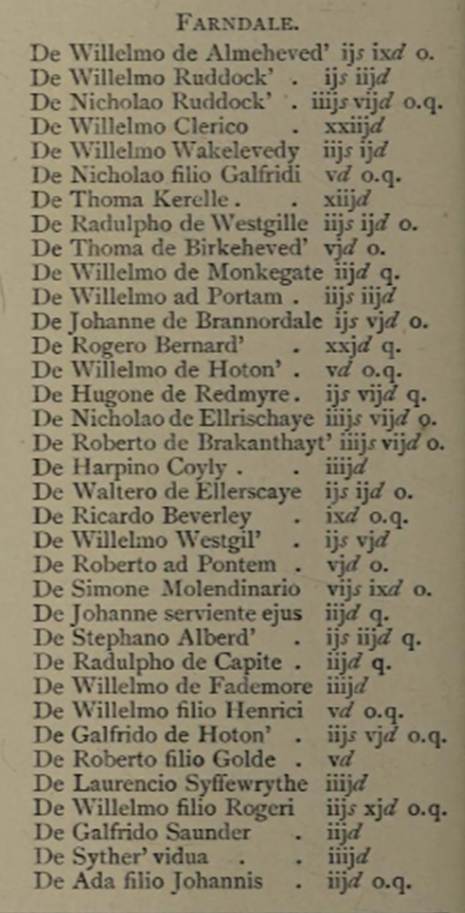
Simon Molendinario (“the Miller”) paid 7s and 9d in
the Lay Subsidy of 1301 (FAR00029). This was more rent than anyone in Farndale. Furthermore he had
a servant,
called John (serviente
ejus, ‘his servant’, perhaps a person who helped
Simon’s work as a miller) who paid 3d in the subsidy. John may later have also
been referred to as John the miller (FAR00021B),
and may have been his brother or his employee who became a more substantial
part of the Low Mill business in time.
The person who paid the highest tax was De Simone Molendinario. Molendinum is the Latin for mill. So it seems very
likely that this was the same person. Simon would have been about 37 in 1301 if
we are right about his year of birth. Simon paid the highest amount of tax at
7s 9d.
Millers were important members of
fourteenth century society. Everyone ate bread, and grain had to be ground into
flour. This could be done by hand, using a quern, but it was very time-consuming. Mills powered by water or wind allowed
grinding at scale. The quality of the flour from a mill was also better, being
more finely ground and containing less grit.
Mills were expensive to build.
Watermills needed ponds, weirs and leats to provide
enough water moving quickly enough to turn the millstone. The millstone itself
had to be cut properly before it could be used. Generally the mill could only
be built by the lord of the manor. For the lord of a manor a mill provided a
source of income. His villein class had to pay to have their grain ground and
they were not allowed to grind it themselves. Many did so secretly, however,
using a domestic quern, which had to be well-hidden. If they were caught they
would be fined and the quern confiscated or destroyed. This monopoly was
resented by the peasants. During the Peasants’ Revolt in 1381 some men forced
their way into St Albans Abbey where confiscated millstones had been set into
the parlour floor. The millstones were dug up and broken into pieces.
Windmills were invented towards the
end of the twelfth century. They were used in flat areas where the water did
not move fast enough to turn a wheel.
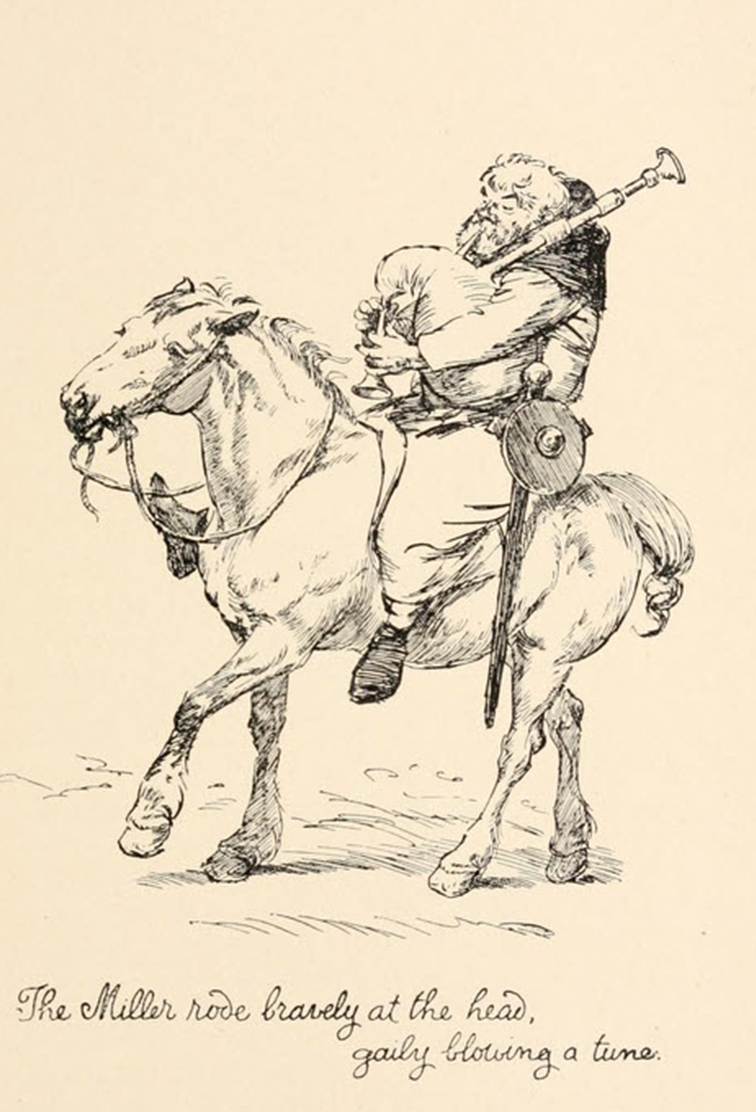
The most famous miller of the
fourteenth century was the one in Chaucer’s Canterbury Tales. He is described
in the Prologue as being a brute. He was tall, wide, and strong enough to break
a door down with his head, and the winner of every wrestling contest he
entered. He had a hairy wart on the end of his nose. He stole from his
customers and overcharged them. His tale is lewd, and humorous.
Simon the Miller’s worth in
moveable goods was therefore £5 16s 3d.
Using the National Archives
Currency Converter, this might be a value of
about £4,200 today in moveable good, or the value of six horses.
The
mill must have been constructed with funds of the landowner, descendants of the Stuteville
family (by then Thomas Wake, the
Second Baron Wake of Liddell in 1301), and Simon was likely to have been a
tenant who paid a significant rent to Thomas Wake. As he is likely
to have been the miller at the more substantial Low Mill, his share of the
annual rent from the two mills of eleven marcs, was
likely to have been the higher share of the eleven marcs
total, say six marcs or £4.
As a
miller, at the heart of the community of Farndale, operating the most advanced
piece of commercial machinery at the time, Simon the Miller was likely to have
received a substantial income from the farmers of Farndale who required his
services. He was likely to have been income rich (though with a hefty sum then
diverted to his landlord), whilst building up a moveable wealth which may be
modest by modern standards, but was likely to have been envied by others in the
dale.
We
might imagine a model whereby he received an annual income from operating the
mill of say £8, with a deduction of £4 to pay his rent, and annoying
impositions of national taxes, like his payment of 7s 9d in 1301, together with
the costs of operating the mill. He must also have required to pay his servant
John. As we shall see, the folk of Farndale were surrounded by royal forests,
under the possession of the House of Lancaster (see FAR00015A), and ancient rights of common grazing and hunting had
been stripped from the indigenous population since the Norman Conquest. The
draconian forest laws were imposed vigorously and prolifically and must have
represented another substantial financial burden.
At this
stage, perhaps counter intuitively, the Farndales were within the remit of the
House Lancaster, though their descendants of Sheriff Hutton by the time of the
Wars of the Roses would be firmly within the world of the House Neville,
staunch supporters of the Yorkists. The Lancastrian family had estates in
Yorkshire as well as in Lancashire and elsewhere. The distinction between the
Lancastrians and the Yorkists would become more focused when the Lancastrian
John of Gaunt’s son, Henry Bolingbroke, took back his Lancastrian lands and
seized the throne from Richard II (himself a descendant of the Stutevilles),
becoming Henry IV, and the Yorkists later emerged as a competing claim to the
throne during the problematic reign of Henry VI. Even from the time of Simon
the Miller, the Lancastrians are better perceived as House Lancaster, with
property in many places, than a geographical base.
The
moveable goods which Simon the Miller owned and against which he was taxed,
might have substantially comprised his business possessions, with some modest
family cooking and domestic possessions alongside. Although he may have had a
far more substantial turnover than the other folk of the dale, he may not have
been so wealthy in the residue of funds he had left to feed his family.

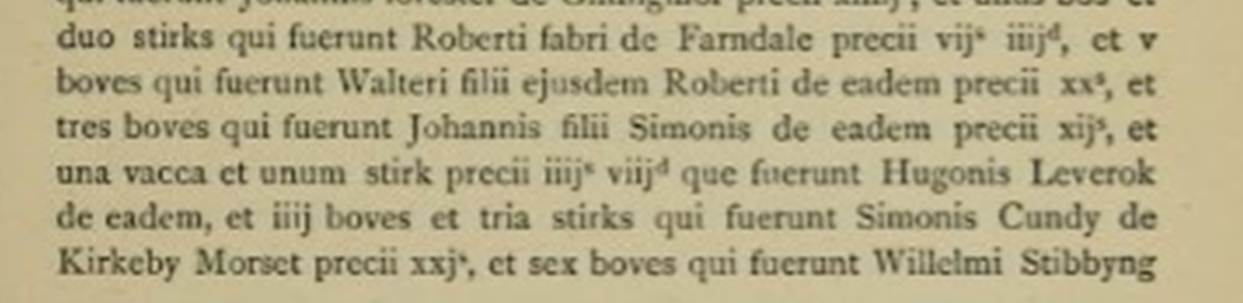
A number of local folk had taken draught
beasts into Pickering Forest in the reign of Edward III in 1310 or 1311, where
the draught animals were forbidden to wander. Some pasturages were reserved for
the use of the King where there was no right in common and here, cattle were agisted at a fixed price, to be paid to the bailiff.
These sums were collected by the agisters, of whom there were two in each ward,
men of substance it seems by their assessments in the Lay Subsidies.
Not the least of the profits derived from the possession of a
forest was that arising from the agistment of cattle in waste grounds. (The Duchy of
Lancaster Records, from the North Riding Record Society, The Honour and
Forest of Pickering, Edited by Robert Bell Turton, Volume IV, 1897, page
xxvii).
There was a lengthy list of those individuals from Farndale found by the agisters in about
1310 with their cattle in the forests. Thomas Wake, the Lord of Liddell, whose
tenants they were, said the price had already been paid and the tenants should
be discharged of the matter. Amongst those fined were John (FAR00030), son
of Simon of Farndale (FAR00021)
who had
3 oxen, worth 12s agisted (North Riding Records Yorks Volume III,
The Honour and Forest of Pickering, 1894, Edited Robert Bell Turton, page 61, The Great Cowcher
of the Duchy of Lancaster, The National Archives, DL42/1 Folio 273, 273v, DL 42/1/23/U64 folios 273 to 274v).
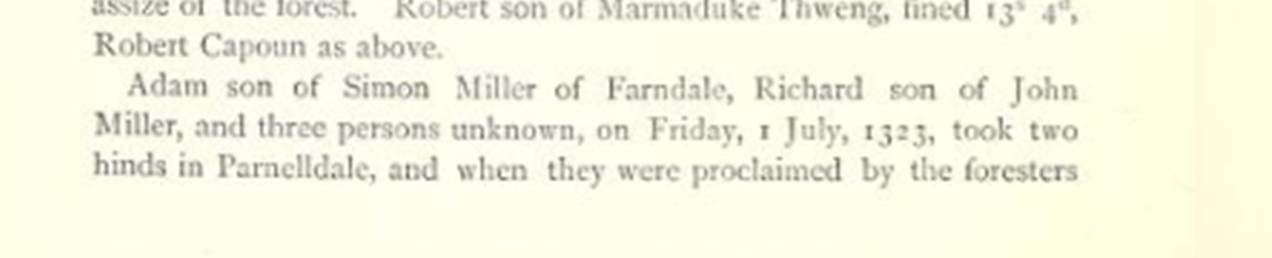
1 July 1323
On 1 July 1323 Adam (FAR00025), son
of Simon the miller of Farndale (FAR00021), and Richard (FAR00016), son of John the miller (FAR00021B) (who was
probably Simon’s fellow miller either from the High Mill or working as Simon’s
servant at Low Mill), with three other unknown men, came into Pickering Forest
in a place called Petrenedle, and took two deer. When
confronted by the forester, they had sent away one deer, which the foresters
carried to Pickering Castle, but the poachers carried away the other deer. The
Eyre Court had a long period when it did not sit and the case did not come to
be heard until 3 October 1334 (some eleven years later) when they did not appear
and the sheriff was ordered to apprehend them. Later, Adam and Richard came
before the justices and asked to pay for licence to make concord for their
offence so that they could be redeemed. Adam paid £1 6s 8d and Richard paid £2
for this licence, and they found mainpernors (or
guarantors) for these amounts (The Great Cowcher of the Duchy of Lancaster, The National
Archives, DL42/1 Folio 217, DL 42/1/23/U22 folios 217 to 218v, Close Rolls 22 August 1323, 17 Edward II page 15 and 16, North Riding Records Yorks, The Honour and Forest of
Pickering, 1894, Volume II at page 217 to 218).
There
are full details of this incident at another webpage.
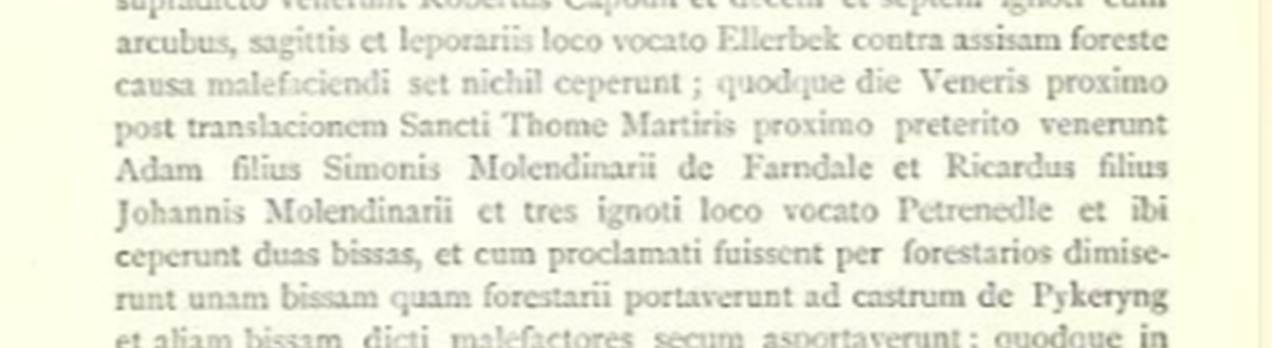
In this record, we have another early record of Simonis Molendinarii (Latin for a Miller). Simon was
probably an old man by this time.
1332
On 24 September 1332, Robert Farndale (FAR00031) son of Simon of Farndale (FAR00021), and Robert son of Peter of Farndale, (FAR00008), were caught killing and carrying off a hart in the
forest at a place called Flaskes (Patent Rolls, North Riding
Records, York, The Honour and Forest of Pickering, Volume II, The Coucher Book of the Duchy of Lancaster Records, page
66). Robert was outlawed.
There are full details of this incident at
another webpage.
13 March 1334
Nicholas of Farndale (FAR00022),
gave bail for Roger (FAR00013A) son
of Gilbert of Farndale (FAR00018) who had been caught poaching in 1334
and 1335. Robert (FAR00031) son of Simon the miller of Farndale (FAR00021) and Robert (FAR00012),
son of Peter of Farndale (FAR00008)
were co-offenders (North Riding Records Yorks Volume III, The Honour and Forest of Pickering).
There are full details of
this incident at another webpage.
3 October 1334
A hearing of the itinerant Eyre Court (FAR00015B),
picking up cases from several decades previously, took place at Pickering on 3
October 1334 (The Duchy of Lancaster Records, from the North Riding
Record Society, The Honour and Forest of Pickering, Edited by Robert
Bell Turton, Volume IV, 1897, page xiii).
At a hearing at Pickering before Justices Richard Willoughby and John de
Hambury on 3 October 1334, a long list of offenders
included Robert (FAR00031), son of Simon of Farndale (FAR00021), Roger del Milne of Farndale (FAR00013A), Robert (FAR00012), son of Peter de Farndale (FAR00008), Walter Blachose (BLA00001), Ralph del Heued (HEU00002), who were ordered for apprehension by the sheriff by
Easter 1335 (The Great Cowcher of the Duchy
of Lancaster, The National Archives, DL42/1 Folio 276v to 277v).
Justices of the Common
Pleas were a later judicial position within the Court of Common
Pleas of England and Wales, under the Chief Justice. The Common Pleas
was the primary court of common law within England and Wales, dealing
with common pleas (civil matters between subject and subject).
Sir Richard Willoughby (c 1290 to
1362) was the son of Sir Richard Willoughby of
Willoughby-on-the-Wolds, a lawyer, who served as Chief Justice of the Bench in
Ireland from 1323-1325. Richard attended Parliament in 1324 and inherited the
estate from his father the following year. Richard was a successful lawyer and
increased his wealth greatly by his legal career. He was appointed one of the
justices of Common Pleas in 1328 and served between 6 March 1328 to 22 December
1330; 9 October 1340 to November 1341; and 20 November 1343 to 1357. He was one
of the justices of King's Bench in 1330. He was briefly Chief Justice between
1338-1340, but was demoted and charged with corruption. He threw himself on the
King's mercy and was pardoned on payment of 1200 marks. In 1343 he was
re-appointed as a justice, and served until 1357. Sir Richard was buried at
Willoughby-on-the-Wolds, where there is a monumental effigy.
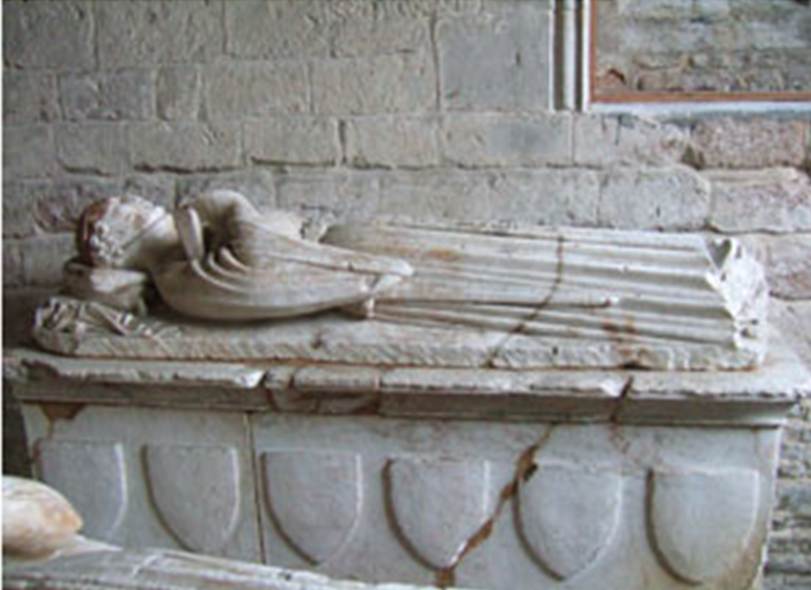
The monument to
Sir Richard Willoughby, judge in chief over the Farndale poachers
Under medieval forest law, mainpernors
were individuals who acted as guarantors for others, ensuring they appeared in
court to answer for alleged offenses against forest law. These offenses
primarily involved the king's hunting rights and the protection of forest
resources like timber and vegetation. Mainpernors
essentially vouched for the accused's future appearance in court, preventing
them from fleeing justice within the forest jurisdiction.
Richard (FAR00016), son of John
the miller of Farndale (FAR00021B) and Adam (FAR00025), son of Simon the miller of
Farndale (FAR00021) had trespassed
and hunted in Pickering Forest, others including Adam (FAR00022A), son of Nicholas de Farndale (FAR00006), and John (FAR00016A), son of John the miller (FAR00021B) and John Wraghby
of Farndale (WRA00001) mainperned (provided guarantees) for their
appearance (The Great Cowcher of the Duchy
of Lancaster, The National Archives, DL42/1 Folio 227, 227v, DL
42/1/35/U7 folios 337 to 338v).
Mainpernors (“guarantors”) were
fixed including Alan (FAR00011), son of Nicholas de Farndale (FAR00006) was
also fined 40d as mainpreneur for the hunting
offences of Adam (FAR00025), son
of Simon the miller of Farndale
(FAR00021).
Nicholas Laverock was also fined 20d as mainpernor of
Adam (FAR00025), son of
Simon the miller
(FAR00021), also
indicted for hunting. John
(FAR00016A), son of John the miller (FAR00021B) was
also fined 2s as mainpernor of Adam
(FAR00025), son
of Simon the miller
(FAR00021), also
indicted for hunting. Nicholas Brakenthwayt was also fined 2s as mainpernor of Adam
(FAR00025), son of Simon the miller
(FAR00021), also
indicted for hunting. Alan de Braghby was fined 2s as
mainpernor of Adam
(FAR00025), son of
Simon the miller
(FAR00021), also
indicted for hunting. John de Braghby was also fined 20d as mainpernor
of Adam (FAR00025), son of
Simon the miller
(FAR00021), also
indicted for hunting. (The Great
Cowcher of the Duchy of Lancaster, The National Archives, DL42/1 Folios 336v
and 337, DL
42/1/35/U6, Folio 335v-336v (not on public record)).
As mainpernor (guarantor) Richard (FAR00016), son of John (FAR00021B), and Adam
(FAR00025), son of Simon the miller of Farndale
(FAR00021), Nicholas de Rippingale was fined 5s because
they did not turn up. (The Great Cowcher of
the Duchy of Lancaster, The National Archives, DL42/1 Folios 342v).
There are full
details of this hearing at another
webpage.
A number of individuals from Farndale were fined following prior
indictments for poaching in 1334 and not turning up at the Eyre. They paid bail
or had bail paid for them (North Riding Records, Volume IV by the North Yorkshire Record
Society, the Honour and Forest of Pickering, 1897, page 23, 28, and 34 not on line but I have a physical copy).
|
Date of Hearing |
Notional date of Offence |
Payer |
Guarantor (malpernor) |
Poacher |
Amount of Fine |
|
3 October 1334 |
c 1321 |
John Alberd |
Adam (FAR00025) son of Simon
the Miller of Farndale (FAR00021) |
3s 4d |
|
|
3 October 1334 |
c 1325 |
Walter Trusseleygh |
Adam (FAR00025) son of Simon
the Miller of Farndale (FAR00021) |
Nicholas de Repyngale |
5s |
There are further details
of these offences at another webpage.
It seems that Simon’s son’s Robert and Adam both faced
the arbitrary justice of the forest laws catching up with them for a number of
poaching offences, and whilst actings as mainpernor
or guarantor seems to have been a reciprocal activity, a significant number of
Farndale folk were fined as guarantors for Adam’s non
appearance. Perhaps the folk of Farndale were growing wearisome at the
antics of their miller’s family by this time.
It seems likely that Simon, who would
have been about 80 by 1335, had died by then. Perhaps the fact that the later
judicial references to Simon’s sons as the son of Simon of Farndale from 1335,
rather than Simon the Miller of Farndale in 1334, mean that he died an old miller
in about 1334. His sons don’t
appear to have carried on his business. Eighty was of course a ripe age in
medieval Yorkshire, and he may have died sooner than this, his sons being
referred to by reference to their deceased parent.
The Eyre Court then continued to sit at regular
intervals until 1338 or 1339.
In the case
last heard on 3 October 1334, at a hearing at Pickering, again before Justices
Richard Willoughby and John de Hambury at Easter
1335, a long list of offenders including Robert (FAR00031), son
of Simon of Farndale (FAR00021), Roger del Milne of Farndale (FAR00013A), Robert (FAR00012), son of Peter de Farndale (FAR00008), Walter Blachose (BLA00001), Ralph del Heued (HEU00002), had still not been apprehended and
were ordered for apprehension by the sheriff by the Tuesday three weeks after
Michaelmas 1335 (ie by Tuesday 17 October 1335)(The Great Cowcher of the Duchy of Lancaster, The National
Archives, DL42/1 Folio 277v to 278v).
Were he to find them the sheriff was ordered to take
steps in such a way that he has their bodies here at this day to make
satisfaction to the earl about their redemption for trespasses of hunting
whereof they are convicted before the said justices by the foresters, verderers
and other ministers.

There are full
details of this incident at another webpage.
17 October 1335
In the case last heard in April 1335,
at a hearing at Pickering, again before Justices Richard Willoughby and John de
Hambury in October 1335, a long list of offenders
including Robert (FAR00031), son of Simon of Farndale (FAR00021), Roger del Milne of Farndale (FAR00013A), Robert (FAR00012), son of Peter de Farndale (FAR00008), Walter Blachose (BLA00001), Ralph del Heued (HEU00002), had still not been apprehended. As a
follow up, on 10 February 1337, the original judicial panel of Richard
Willoughby and John de Hambury were to be replaced by
the King by a new judicial panel comprising two of Richard de la Pole, Robert
de Hungerford and John de Hambury (The Great Cowcher of the Duchy of Lancaster, The National
Archives, DL42/1 Folio 279 to 280v).
William de la Pole (c.1290-1366) and
his brother Richard (died in 1345) built a wool business in Hull, Yorkshire.
From there they became closely connected with the Royal court, lending large
amounts of money which delivered interest as high as 22%.
In 1336 there was a list of offences
committed since the commencement of the Eyre and these included Adam (FAR00025) son of Simon Miller of Farndale (The Great Cowcher of the Duchy
of Lancaster, The National Archives, DL42/1 Folio 204v, DL 42/1/23/U14 folios 203 to 205
and North Riding Records Yorks Volume II, The Honour and Forest of Pickering, page 119).
13 February 1337
In the case last heard on 17 October
1335, at a hearing at Pickering, before Justices John de Hambury
and Richard de la Pole in February 1337, the case of Robert (FAR00031), son of Simon of Farndale (FAR00021), and others was heard again. They had still not been apprehended. The
King ordered at Leicester on 1 October 1337 that a fresh writ be issued by
Monday next after the feast of St Andrew the Apostle (The feast is on 30
November) with an adjourned hearing to Wednesday next after Ascension (39 days
after Easter) 10 Edw. III (The Great Cowcher
of the Duchy of Lancaster, The National Archives, DL42/1 Folio 280v to 282, North Riding Records Yorks, The Honour and Forest of Pickering,
1894, Volume
II at page
119).
1 December 1337
The same case involving Robert was
heard again on 1 December 1337. They had still not
been apprehended. (The Great Cowcher of the Duchy of
Lancaster, The National Archives, DL42/1 Folio 282 to 283v).
16 March 1338
The same case was heard again on 16
March 1338. They had still not been
apprehended. (The Great Cowcher of the Duchy of Lancaster, The
National Archives, DL42/1 Folio 283v to 284v).
21 September 1338
The same case was heard again on 21
or 28 September 1338. They had still not been apprehended. (The Great Cowcher of the Duchy of Lancaster, The National
Archives, DL42/1 Folio 284v to 286).
5 April 1339
The same case was heard again on 5
April 1339. They had still not been apprehended. (The Great Cowcher of the Duchy of Lancaster, The National
Archives, DL42/1 Folio 286 to 287).
14 or 21 September 1339
The same case was heard again on 14
or 21 September 1339. They had still not been apprehended. Exacerbated at the
lack of progress in apprehending the gang, the sheriff was ordered to hunt for
them from county to county and if they were still not found, they were to be
outlawed (The Great Cowcher of the Duchy of Lancaster, The
National Archives, DL42/1 Folio 287 to 289v).
Simon’s son Robert, like Robin Hood, seems to have become an
outlaw, for his forest offences.
|
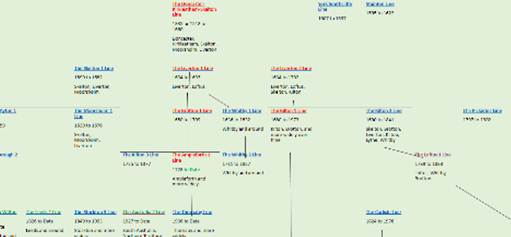
How does Simon the Miller of Farndale
relate to the modern family? It is not possible to be accurate about the early family tree,
before the recording of births, marriages and deaths in parish records, but
we do have a lot of medieval material including important clues on
relationships between individuals. The matrix of the family before about 1550
is the most probable model based on the available evidence. Simon the miller of Farndale may be the first
direct relative of the modern Farndale family, whose son may have been John
de Farndale, who left the dale and eventually settled in York. It seems
likely that it would have been the younger sons of the wealthiest inhabitant
of the dale in 1301 who left the dale with sufficient resource to have
relative success themselves in founding the permanent line of the family. |