c 1281 to c 1350
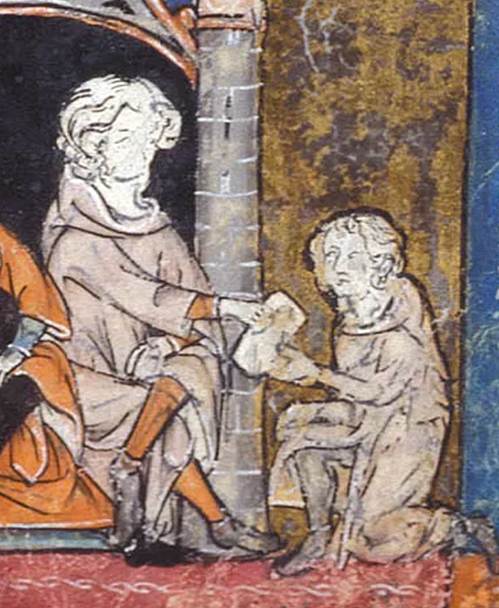
The Medieval
Inhabitants of Farndale
FAR00022A
|
Return to the Home Page of the Farndale Family
Website |
The story of one family’s journey through two
thousand years of British History |
The 83 family lines into which the family is divided.
Meet the whole family and how the wider family is related |
Members of the historical family ordered by date of
birth |
Links to other pages with historical research and
related material |
The story of the Bakers of Highfields, the Chapmans,
and other related families |
Dates are in red.
Hyperlinks to other pages are in dark blue.
Headlines are in brown.
References and citations are in turquoise.
Context and local history are in purple.
1280
Adam, son of
Nicholas Farndale (FAR00006)
might have been born in about 1280.
3 October 1334
A hearing of the itinerant Eyre Court (FAR00015B),
picking up cases from several decades previously, took place at Pickering on 3
October 1334 (The Duchy of Lancaster Records, from the North Riding
Record Society, The Honour and Forest of Pickering, Edited by Robert
Bell Turton, Volume IV, 1897, page xiii).
At the hearing before Justices Richard Willoughby and John de Hambury, a long list of offenders included Richard (FAR00016), son of John the miller of Farndale (FAR00021B) and Adam (FAR00025), son of Simon the miller of Farndale (FAR00021) who had
trespassed and hunted in Pickering Forest. Others including Adam (FAR00022A), son of Nicholas
de Farndale (FAR00006), and John (FAR00016A), son of John the
miller (FAR00021B) and John Wraghby
of Farndale (WRA00001) mainperned (provided guarantees) for their
appearance (The Great Cowcher of the Duchy
of Lancaster, The National Archives, DL42/1 Folio 227, 227v, DL
42/1/35/U7 folios 337 to 338v).
The offence was
clearly many years before as one or more of the mainpernors
had died.
Justices of the Common
Pleas were a later judicial position within the Court of Common
Pleas of England and Wales, under the Chief Justice. The Common Pleas
was the primary court of common law within England and Wales, dealing
with common pleas (civil matters between subject and subject).
Sir Richard Willoughby (c 1290 to
1362) was the son of Sir Richard Willoughby of
Willoughby-on-the-Wolds, a lawyer, who served as Chief Justice of the Bench in
Ireland from 1323-1325. Richard attended Parliament in 1324 and inherited the
estate from his father the following year. Richard was a successful lawyer and
increased his wealth greatly by his legal career. He was appointed one of the
justices of Common Pleas in 1328 and served between 6 March 1328 to 22 December
1330; 9 October 1340 to November 1341; and 20 November 1343 to 1357. He was one
of the justices of King's Bench in 1330. He was briefly Chief Justice between
1338-1340, but was demoted and charged with corruption. He threw himself on the
King's mercy and was pardoned on payment of 1200 marks. In 1343 he was
re-appointed as a justice, and served until 1357. Sir Richard was buried at
Willoughby-on-the-Wolds, where there is a monumental effigy.
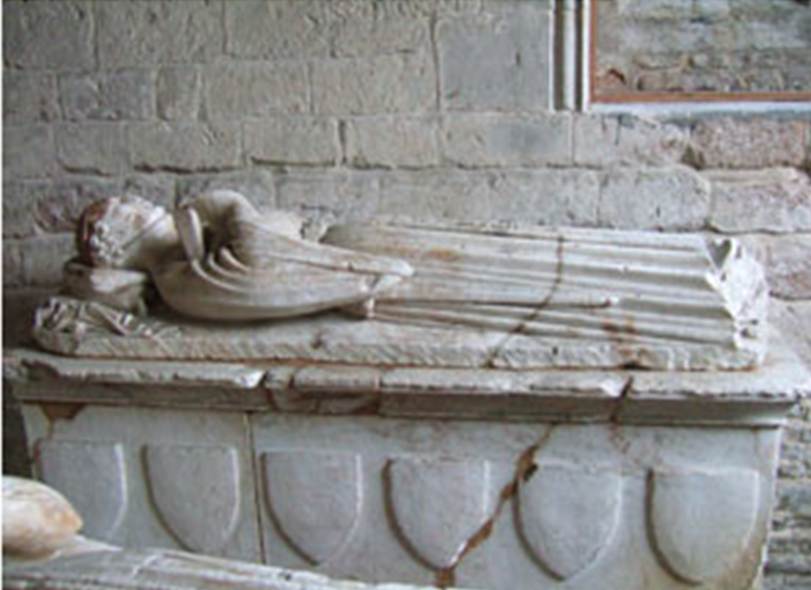
The monument to
Sir Richard Willoughby, judge in chief over the Farndale poachers
Under medieval forest law, mainpernors
were individuals who acted as guarantors for others, ensuring they appeared in
court to answer for alleged offenses against forest law. These offenses
primarily involved the king's hunting rights and the protection of forest
resources like timber and vegetation. Mainpernors
essentially vouched for the accused's future appearance in court, preventing
them from fleeing justice within the forest jurisdiction.
1350
If Adam lived to about 70, he might have lived to about 1350.