The Eyre Court
|
Return to the Home Page of the Farndale Family
Website |
The story of one family’s journey through two
thousand years of British History |
The 83 family lines into which the family is divided.
Meet the whole family and how the wider family is related |
Members of the historical family ordered by date of
birth |
Links to other pages with historical research and
related material |
The story of the Bakers of Highfields, the Chapmans,
and other related families |



A
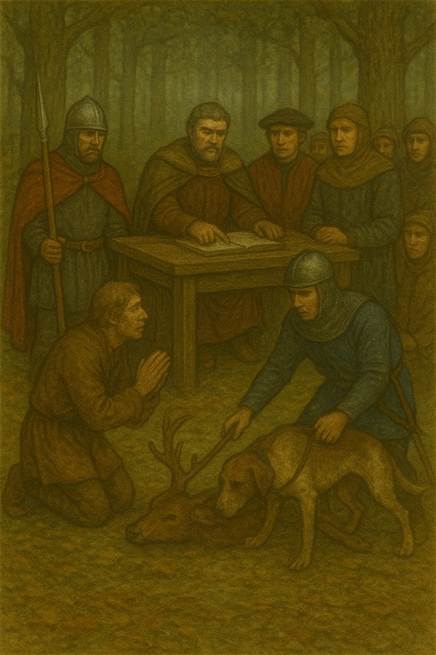
general eyre (from the old French eire,
meaning a journey) was a medieval royal court in England. It was held by
itinerant judges sent out from Westminster to travel across counties and hear
both civil and criminal pleas, inspect local administration, and enforce royal
law.
Henry II took a grip on a court
system in a muddle. He developed a system of travelling eyres for royal judges
to travel around the country. The old French word erre,
means journey. The eyre justices (or sometimes just ‘justices’) were judges of the
twelfth and thirteenth centuries who were sent out from the central courts at
Westminster Hall around the counties of England (not Chester nor Durham). Generally they travelled out every seven years, but the
interval changed from time to time.
The first eyre was in 1166, when
Henry II appointed Geoffrey de Mandeville and Sir Richard de Lucy. Six eyres
were appointed in 1176. The eyres were the primary source for local justice
until the reign of Edward II.
“Henry’s policy of asserting the
legal rights of the Crown did not make him popular. Eyres were sudden,
frightening descents that not only tried legal cases, but generally asserted
royal power, including by aggressive imposition of higher taxes and feudal
extractions” (Robert Tombs, The English and
their History, 2023, 66).
Thery considered a miscellany of
cases, known as ‘pleas’ arising during the period since the last eyre. Lawsuits
were generally called civil pleas, and criminal cases were called crown pleas. They
also dealt with crown pleas which related to offences against the King’s own
property. From 1278, they were involved in the King’s claims for land held by
local noblemen (the quo warranto process). The general eyres also had a role in
supervising local government.
These records tend to be very
formal and written in Latin. The records are full of technical and legal terms
and abbreviations.
Agreements reached in land
disputes can be found in feet of fines.
The records are held as rolls of
parchment, made up of lengths known as membranes, stitched together. In the
early days there was a single roll for each county, but over time more rolls
were needed.
The National Archives holds Courts
of law records from the medieval period: general eyres 1194-1348.
The earliest surviving eyre roll
dates from 1194 and the last eyre to produce any records was in Kent in 1348.