The Duchy of Lancaster and the Honour and Forest of
Pickering
The Medieval
Inhabitants of Farndale
FAR00015A
|
Return to the Home
Page of the Farndale Family Website |
The story of one
family’s journey through two thousand years of British History |
The 83 family lines
into which the family is divided. Meet the whole family and how the wider
family is related |
Members of the
historical family ordered by date of birth |
Links to other pages
with historical research and related material |
The story of the
Bakers of Highfields, the Chapmans, and other related families |
Dates are in red.
Hyperlinks to
other pages are in dark
blue.
Headlines are in brown.
References and
citations are in turquoise.
Context and local
history are in purple.
|
The Family Tree of the House Lancaster The genealogy of the
Lancastrian estate |
Edmund Crouchback
1267
Edmund, 1st Earl of Lancaster (16 January 1245 – 5 June 1296),
also known as Edmund Crouchback, was a member of the royal Plantagenet Dynasty
and the founder of the first House of Lancaster.
On 30 June 1267, Edmund became the Earl of Lancaster following the
title's creation by Henry, and he was granted the royal demesne lands in
Lancashire, along with the lordships of Lancaster, Newcastle-under-Lyme and
Pickering.
This powerful earldom established the Lancastrian branch of the
Plantagenet dynasty.
Edmund had gained a reputation as a ruthless and formidable
warrior. With these acquisitions, he became the most influential peer in
England. Even upon becoming king, Edward I was not worried about Edmund's
powerful position or the affairs of most of the baronage because of Edmund's
unwavering loyalty to him.
On 30 June 1267 Edmund Crouchback knelt before
his father, King Henry III, to accept the charter which made him Earl of
Lancaster. He rose as the possessor of lands in almost every corner of England,
from Lancashire to Huntingdon and the Welsh Marches. This grant marked the
beginning of the Lancastrian interest in Yorkshire, for it included the Honour
and Forest of Pickering, together with the manor of Scalby (R. Somerville, History of the Duchy of Lancaster I,
1265-1603 (1953), Pastoral Farming on the
Duchy of Lancaster’s Pickering Estate in the Fourteenth and Fifteenth
Centuries, Bryan Waites, Yorkshire Archaeological Journal, Volume 49, page
77).
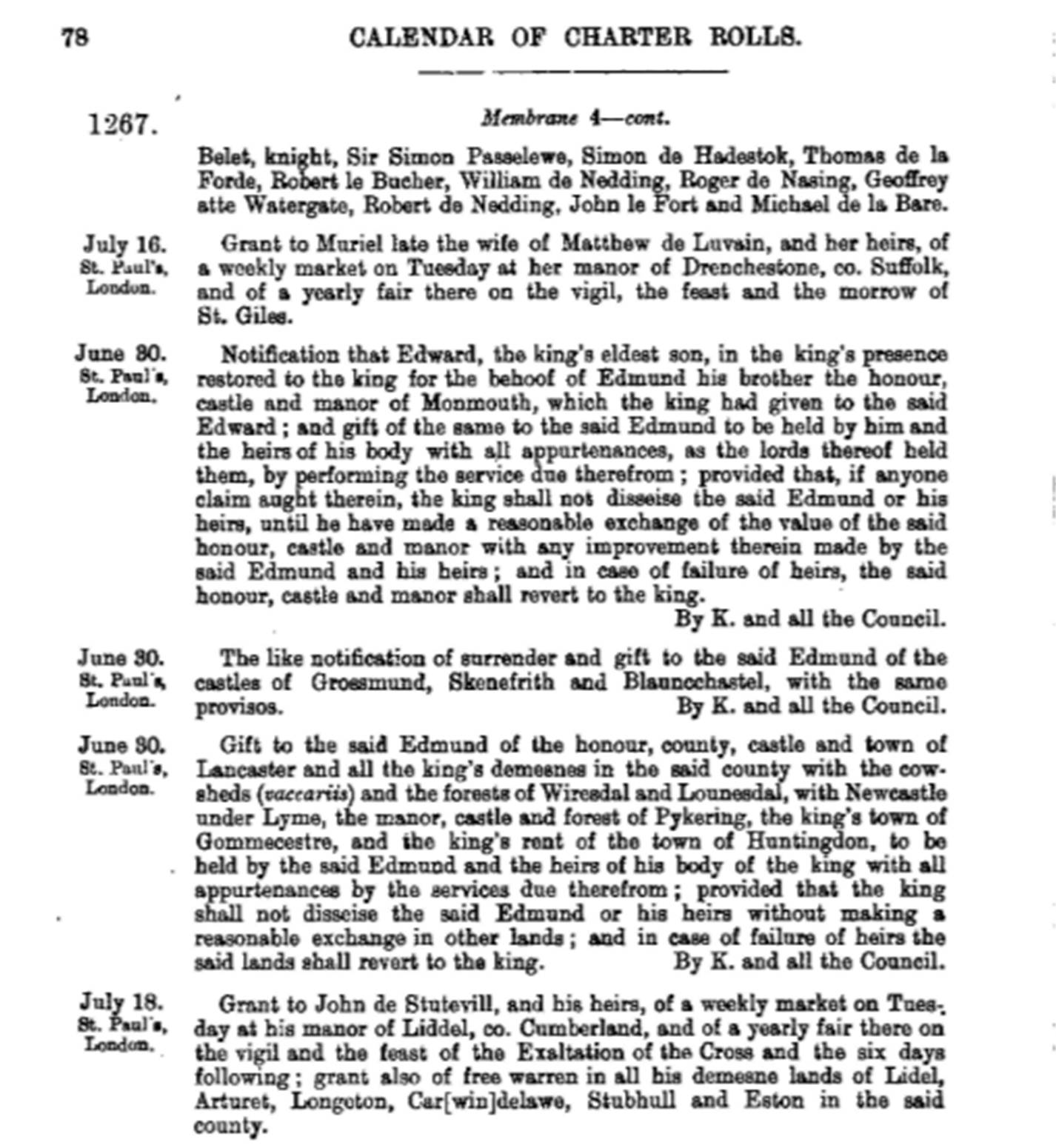
(Calendar of Charter Rolls, Volume 1,
Henry III to Edward I, 1257 to 1300 page 78)
On 30 June 1267 Edmund Crouchback knelt before
his father, King Henry III, to accept the charter which made him Earl of
Lancaster. He rose as the possessor of lands in almost every corner of England,
from Lancashire to Huntingdon and the Welsh Marches. This grant marked the
beginning of the Lancastrian interest in Yorkshire, for it included the Honour
and Forest of Pickering, together with the manor of Scalby.
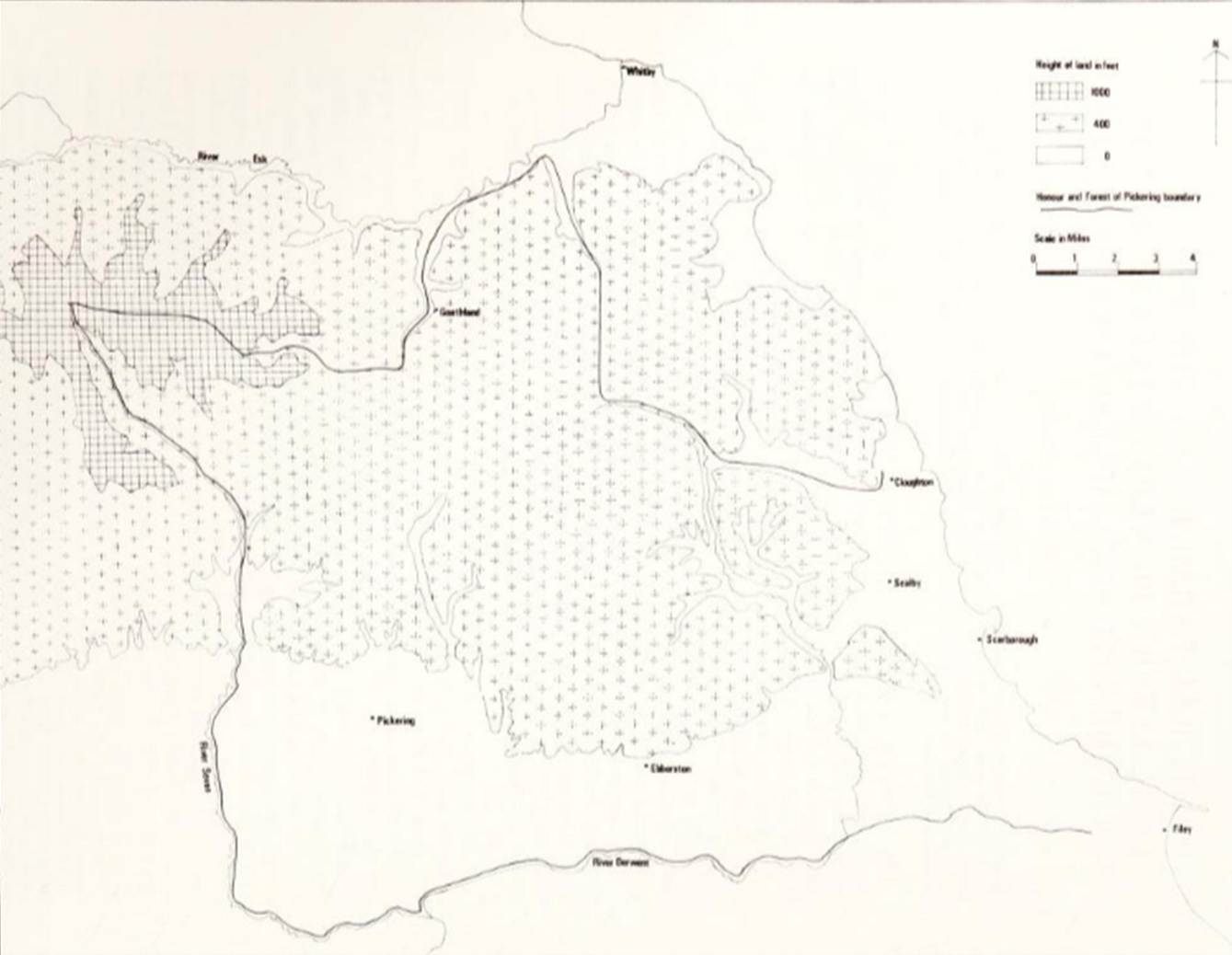
The Honour extended over a wide and diverse
area: from the River Derwent in the south almost to Eskdale 16 miles to the
north, and from the River Seven in the west to the coast 20 miles to the east.
It included moorland over 1,000 feet in height, which gradually declined
southwards to be replaced by the fertile dip slopes of Corallian limestone; the
site of a series of prosperous villages of which Pickering was the chief.
Further southwards still the meadowland and carrland of the Derwent valley
stood out in contrast.
This diversity makes the Duchy estate
peculiarly suitable for study, because an insight into both demesne and tenant
farms is possible. Thus, besides being able to examine Duchy sheep farming, the
historian can see the economy of the whole area covered by the Honour. Since
the Honour was so large a part of the North-East of England, it is evident that
any conclusions reached about the economy within it will be very significant
for the region as a whole.
The evidence for Duchy farming is contained in
the Reeve’s accounts for 1313 to 1314, the Keeper’s Accounts for 1325 to 1327, Reeves
and Bailiff’s accounts for 1377 to 1378; and the Coucher Book of the Duchy.
(Pastoral
Farming on the Duchy of Lancaster’s Pickering Estate in the Fourteenth and
Fifteenth Centuries, Yorkshire
Archaeological Journal, Volume 49, 1977, pages
77 to 86).
1285
It will be seen that Edward, in the year 1285,
granted to his brother Edmund the right of having, upon request made in
Chancery, Justices of the Forest wherever the King appointed such for his own
forests, and granted to him also the fines and ransoms paid in respect of the
offences tried by them.
“Know ye that we have granted for ourselves
and our heirs to our brother Edmund, that he and his heirs may for ever have
upon request made in chancery, Justices to be appointed by us and our heirs to
hold, according to the Assize of the Forest, pleas of the forests, which our
brother holds of the gift of our father King Henry, as oft as it may happen
that we and our heirs send our Justices to hold such like pleas in accordance
with the custom of our realm ; and that they may for ever have Justices, to be
appointed by us and our heirs as oft as need shall require, to hear and
determine according to the law and custom of our realm all offences committed
against them in chaces and parks, so that our brother and his heirs may have
the ransoms, fines, amercements, and all other profits arising from the said
pleas and offences in the same manner as we and our heirs would, if the said
forests, chaces, and parks had been in our hand. Westminster, 25 May, 1285.”
The first Forest Eyre, mention of which is
made in the following pages, took place under a commission to Alexander de
Kirketon and Ralph de Dacre, dated the 10th of June 1280.
It does not appear that another Eyre took
place until the commencement of the reign of Edward III. Between the 26th and
30th of May, 1334, the King was residing at Pickering Castle, probably as the
guest of Henry Earl of Derby. It may have been on this occasion that the
project of sending Justices to hold Pleas of the Forest was mooted, for on the
following 12th of June, 1334 [Rot. Pat. 8 Ed. III., pt. i, m. 2] a commission
is directed amongst others to Robert de Aston and Robert de Sadington to hold
the pleas. This was evidently withdrawn, and the commission under which the
pleas were eventually held is dated 17th August, enrolled on Rot. Pat. 8 Ed.
III., pt. 2, m. 17 and corresponds with that printed on p. 50. On Rot. Pat. 8
Ed. III., pt. 2, m. 20, we find a commission, dated 8 Oct., to Henry de Hambury
and Robert de Sadington, which, after reciting that Robert de Hungerford is
prevented by the King's business from attending, appoints one of them to act in
his place.
The President of the Court appears to have
been Richard Willoughby. His name appears first, and he was in addition the
most important of the Judges, having been a Justice of the Common Pleas, and
also either Chief Justice of the King's Bench or acting Chief Justice under
Scrope. Unfortunately his record is not clean. In 1340 he was arraigned before
Parning, Sadington (who was at one time to have been his colleague at
Pickering) and Scot, Justices, on the charge of corruption.
(North Riding
Records Yorks, The Honour and Forest of Pickering, 1894, Volume
II at
page xxxiii and 226).
Besides these confirmations, Edmund received
by a grant in fee in the same year 1285 an important privilege, rarely given,
in being allowed to have his own justices to hold pleas according to the assize
of the forest in the forest of Pickering and those in Lancashire which Henry
III had given him. From the time that Edmund had these forests it was intended
that they should be held as free chases, and not as forests, so that the forest
laws would not operate in them to their full extent. But after the grant of the
privilege in 1285 they were subject to the whole body of the forest laws, like
royal forests. With the grant of this privilege went also the fines and
amercements arising from its exercise. Henceforth, from time to time and at the
request of the earls of Lancaster, justices were appointed for the forest eyre
in their forests.
(R F Somerville, History of the Duchy of Lancaster, 1953-1970, page 14)
Henry III
gave the royal manor, castle and forest of Pickering to his second son, Edmund
Crouchback, Earl of Lancaster. On Edmund's death, his possessions passed to his
eldest son, Thomas, who became the most powerful subject of his weak cousin
Edward II. (The Early History of the North Riding, William Edwards MA, 1924, Chapter 9, Thomas, Earl of Lancaster)
The Duchy of Lancaster
Records
The National Archives DL42
References are a collection of Cowchers and
Cartularies. Medieval coucher books, also
spelt cowcher books, were large, elaborate registers or cartularies used
to record land transactions, legal agreements, and other important documents
related to a specific institution, such as a monastery or duchy. They served as
a comprehensive record of land ownership, rights, and privileges.
The National Archive’s DL42/1,
the Great cowcher or caret
regum, comprises
evidence of title for the Duchy of Lancaster. It focuses on
land and property transactions, including details about the landscape and the
nature of tenure across the duchy's estates.
This volume also consists of
transcriptions relating to forest pleadings of Lancaster and Pickering dated 8
Edward III to 12 Edward III (that is, 1334 to 1340). This was an itinerant eyre court held in Pickering in
the 1330's looking back to previous offences dating back as far as the 1280s.
For further details of the Cowcher and
the Lancastrian estates see R F Somerville, History of the Duchy of Lancaster, 2 vols (London, 1953-1970) –
for instance at Volume 1 page 8.
All these records are
in Latin, but the National Archives have produced a spreadsheet translation in
excel form of the contents, which they have kindly shared with me. The records
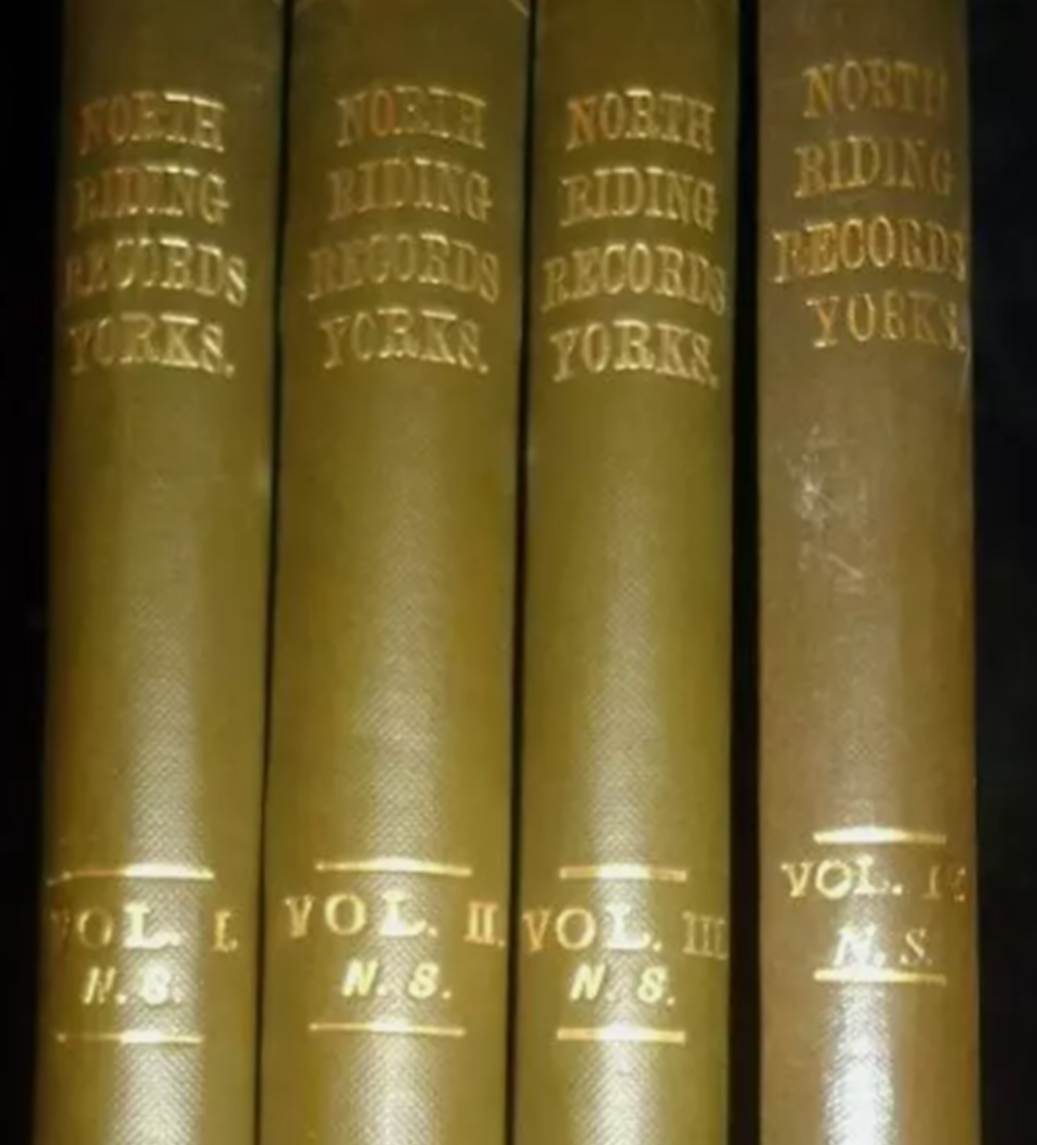
are also available in a now out of print series North
Riding Records Yorks, The Honour and Forest of Pickering, 1894,
Volumes I to IV, of which Volume II
and Volume III is
available on line and I have physical copies of
Volumes I and IV.
There is also an explanation of the Coucher
Book in North Riding Records Yorks, The Honour and
Forest of Pickering, 1894, Volume
II at
page
xxx.
The Duchy of Lancaster itself has notes
for research.
There is a
separate page of my Research Notes on the extracts
regarding the people of Farndale referred to in the Great Coucher.
1292
28 August 1292,
Pickering. Gift to Edmund, the king’s brother, and Henry his son, of the
castle, town and honour of Monmouth and of the castles of Grossmont, Skenefrith
and White Castle and the manors of Redleye and Menstrewrth, and all the lands
which the said Edmund formerly had beyond the Severn, all which the said Edmund
formerly surrendered to the king, to be held by the said Edmund for his life by
the services which he rendered before the said surrender, with remainder to
Henry his son and the heirs of his body and successive remainders to Thomas and
John, the brothers of the said Henry, and the heirs of their bodies, remainder
to any other heirs of the body of the said Edmund and the heirs of their
bodies, remainder to the king and his heirs. (Calendar of Charter Rolls, Volume 1,
Henry III to Edward I, 1257 to 1300 page 78).
1295
20 August 1295. To the sheriff of York. Whereas the king
granted by his letters patent, to Edmund, his brother, that he and his heirs
should have for ever in the chancery of the king and his heirs certain justices
by the king's letters to hold the pleas of the forests that Edmund has of the
late king's gift, as often as the king and his heirs should send justices to
hold such pleas in the king's forests, and that Edmund and his heirs should
have the ransoms, fines and amercements and all other things arising from the
said pleas in the same way as the king would have had them if the forests were
in his hands : the king orders the sheriff to cause the fines that divers men
of that county have made before William Wyther and Roger Brabazon, Edmund's
justices, lately assigned by the king to hold pleas of his forest of Pykering,
in that county, in their eyre, and the ransoms and amercements in which such
men fell before the said justices, to be levied, according to the estreats of
the eyre delivered, or to be delivered, to the sheriff by the justices, and to
cause Edmund to have them, in accordance with the king's grant aforesaid (Close Rolls of the reign of Edward I, 1288 to 1296, page 421).
Thomas, 2nd Earl
of Lancaster
1298
Thomas, 2nd Earl of Lancaster (c
1278 to 22 March 1322), was the son of Edmund Crouchback and Blanche of
Artois. He succeeded to that earldom in 1298, together with those of Leicester
and Derby, to which were added the earldoms of Lincoln and Salisbury on the
death of his father-in-law in 1311. He also had royal connections, of which
being first cousin to Edward II was only one. Their comparative youth is worth
mentioning; Edward was only 23 when he became king, at which time the earl was
30.
‘Some description of the three protagonists,
Lancaster, Gaveston, and the king, and of how they interacted, seems desirable
if only to suggest how it was that by 1322 the king could have Lancaster
executed as a traitor, whereas immediately afterwards the populace could think
him worthy of canonisation.
Lancaster was unquestionably the greatest of
the magnates, being, after the king, the richest landowner in England, with
vast estates in Lancashire, the Midlands, and Yorkshire, in which last was
situated his principal residence, Pontefract Castle. These properties were well
managed, and could be defended by the earl’s private army. In addition, he was
Steward of England, an office whose prerogatives seemed to comprise whatever
suited Lancaster at the moment. All this, coupled with his great wealth, made
him, after an initial, and perhaps surprising, friendly relationship with the
king and Gaveston, from about 1309 the natural leader of any opposition to the
king.
(The Cult of St
Thomas of Lancaster and its iconography,
John Edwards, Yorkshire Archaeological Journal, Volume 64, 1992, page
103).
1299
25 November 1299, Beverley. To the sheriff of York. Order to
cause a verderer for the forest of Thomas, earl of Lancaster, at Pykering
to be elected in place of Bernard de Bergh, whom the king has amoved from
office because he is insufficiently qualified, as the king learns upon
trustworthy testimony (Close
Rolls of
the reign of Edward I, 1296 to 1302, page 328).
1301
18 December 1301, Linlithgow. To the sheriff of York. Order to
cause a regard to be made in the forest of Thomas, earl of Lancaster, at
Pykering before the coming of the justices of the Forest, so that the regard
shall be made before the Purification next (Close Rolls of the reign of Edward I, 1296 to 1302, page 571). The same formula for a regard in 1305 was used (Close
Rolls of the reign of Edward I, 1302 to 1307, page 341).
1305
28 March 1305, Westminster. As the king has caused his cities,
boroughs, and demesnes throughout England to be tallaged, he orders … Thomas,
earl of Lancaster, addressed to the sheriff of York, for his manors of
Esingwold and Pykering … to have a
reasonable tallage of his tenants … if they were at any time the demesnes of
the king or of his progenitors and if they have been wont to be tallaged hithe
(Close Rolls of the reign of Edward I, 1302 to 1307, page 252).
A tallage was a land tax. The statute of 1297, De Tallagio non Concedendo, limited royal power to levy tallage, and was cited as a
statute in the preamble to the Petition of Right in 1628, which offered
protection against royal overreach. No Tallage or Aid shall be taken or
levied by Us or our Heirs in our Realm, without the good will and Assent of
Archbishops, Bishops, Earls, Barons, Knights, Burgesses, and other Freemen of
the Land.
1307
It has been said of Edward II, who became king
in 1307, that ‘like his father, he had good looks and bodily strength, but
unlike Edward I he had little intelligence ... he depended so completely on
“favourites” that his morals, as well as his strength of will, came into
question’.
Though the earls liked to disparage his birth,
Piers, or Peter, Gaveston was the son of a minor Gascon noble, and had given
such an excellent impression to Edward I that the latter had made him one of
the ten royal wards, who were the official companions of the king’s heir,
Edward of Caernarvon. Their relationship was already such that Gaveston was
banished by the old king in 1307, but on such favourable terms to Gaveston as
to suggest that it was his own son that Edward I regarded as blameworthy. The king
died in the same year and on his accession Edward II began his doubtless
unwitting antagonisation of the magnates by immediately recalling Gaveston and
creating him earl of Cornwall, an earldom meant to be reserved for members of
the royal family; then, the king’s own niece was chosen to be Gaveston’s bride;
and when the king went to France for his own marriage, the offence of the
nobles was augmented by his appointing as regent, not one of them, but
Gaveston. Of the properties given by the king to Gaveston, a good proportion
were in Yorkshire, comprising the castle and honour of Knaresborough, the
manors of Aldborough and Roecliffe, the manor of Borstwick, and the castle and
manor of Skipton-in-Craven. The fact that they were in the same county as
Pontefract suggests that any incidental irritation this might have caused to
Lancaster would not have come amiss to the king and Gaveston.
Thus from the start there were these various
manifestations of the king’s obsession with extravagant generosity. It was also
folly of the king to allow Gaveston to make the barons the subject of his wit
publicly, while their detestation of him must have been heightened by the fact
that Gaveston could not be accused of effeminacy; ‘he could unhorse his enemies
in the lists as neatly as he could bestow a wounding insult.’6 Though
Gaveston’s overbearing conduct at the coronation of Edward II in 1308 gave great
offence, what probably brought the enmity of the barons against Gaveston to a
head was his control, which they thought ought to be theirs, over the extremely
valuable and all-pervasive royal patronage.
(The Cult of St
Thomas of Lancaster and its iconography,
John Edwards, Yorkshire Archaeological Journal, Volume 64, 1992, page
103).
1309
15 May 1309, Westminster. … since it is now found from an
inspection of the book called Domesday that the soke of the said manor of
Wilton pertains to the manor of Pykering, now in the hands of Thomas earl of
Lancaster by inheritance, whereby it appears that the manor of Wylton is not
held of the king but of the said earl Thomas as of the manor of Pykering (Close Rolls of the reign of
Edward II, 1307 to 1313, page 111).
1310
After a short banishment of Gaveston to
Ireland in 1308, where he seems to have acquitted himself creditably, the final
attempt to exile him was begun by the magnates, supported by Archbishop
Winchelsey, and now thoroughly antagonised by the king and his favourite,
submitting to Edward in 1310 a long list of grievances and compelling him to
agree to the setting up of a committee called the Lords Ordainers, of whom
Lancaster was a leader. They produced Ordinances comprising 41 articles, the
20th of which required the banishment of Gaveston (and others) ‘as an open
enemy of the king and his people.’
(The Cult of St
Thomas of Lancaster and its iconography,
John Edwards, Yorkshire Archaeological Journal, Volume 64, 1992, page
104).
1311
The Earl
possessed, in his own right, the earldoms of Lancaster, Leicester and Derby,
and in 1311 gained the earldoms of Lincoln and Salisbury on the death of his
father-in-law, Henry Lacy. He was a cousin of the King of England, uncle of
Queen Isabella, and brother-in-law of the King of France. He is an excellent
example of the ‘over mighty subjects’ who formed so graver danger to the royal
power in the Middle Ages. ‘I do not believe’, says William of Malsbury, ‘that
any duke or count of the Roman Empire could do so as much with the revenues of
his estates as the Earl of Lancaster.
Although
his own interests were his first concern, Lancaster may be regarded as the
champion of the barons’ cause against the royal power, which was steadily
limiting their rights and privileges. Many of the old Norman families had lost
much of their land, and some had disappeared altogether. But some of those that
remained had become stronger, owing to the consolidation of a number of
baronies in one hand, and these were anxious to secure independence of the
Crown, such as the great French feudatories enjoyed. Lancaster and his friends
claimed to be peers of the sovereign, and in an indenture drawn up between
Edward II and Lancaster at Leake in 1318, provision was made that if
Lancaster's representatives disagreed with the decision of the King's counsel to
which they were summoned, they might appeal to the peers in Parliament, who
should have the power of redressing grievances.
The
possession of Pickering forest and manor gave Thomas of Lancaster great power
in the North Riding. He could raise a large army from his tenants and from the
forest officials and rangers. His supporters aided him against the King, and
compelled the King’s tenants in Pickering Lythe to serve him. Is probable that
the grave danger from many officials and servants required to supervise the
forest was one reason why the kings generally kept forests in their own hands.
The earl
treated the people of Pickering with severity. He refused to allow his
subtenants to receive the fines paid by brewers for breaches of the Assize of
Beer, although they were legally entitled to receive them. He compelled the
inhabitants to attend his manorial courts more often than the law required, and
refused to issue the usual rates of attendance.
(The Early History of the North Riding, William Edwards MA, 1924, Chapter 9, Thomas, Earl of Lancaster)
Gaveston left the country in early November,
1311, but there is some evidence that he was found to be spending Christmas
with the king at Windsor, whereupon the excommunication threatened by
Winchelsey took effect. The king and Gaveston thereafter went north in the hope
that Robert the Bruce would safeguard Gaveston if he stayed in Scotland, but
this came to nothing. It is not necessary for present purposes to detail all
the marches and counter-marches, save to mention that Lancaster played an
active part in the obstruction, militarily, of the king.
(The Cult of St
Thomas of Lancaster and its iconography,
John Edwards, Yorkshire Archaeological Journal, Volume 64, 1992, page
105).
1312
It all ended on 19 June, 1312, notwithstanding
an oath of safety given to Gaveston by Pembroke, and after Gaveston had been kidnapped
by Warwick, with Lancaster having Gaveston beheaded on one of the earl’s
estates by two members of his retinue, who presented their master with the
severed head; the earl claimed to have acted under the authority of the
Ordinances. Gaveston’s death left Pembroke feeling that his honour had been
impugned, while the king’s grief and rage, coupled with the part Lancaster had
already played in circumscribing the king’s functions under the Ordinances,
made him regard Lancaster as his greatest enemy, upon whom he was determined to
wreak his revenge when this became possible.
(The Cult of St
Thomas of Lancaster and its iconography,
John Edwards, Yorkshire Archaeological Journal, Volume 64, 1992, page
105).
1313
But the
visits of the Earl and his Countess to Pickering were not unmixed evils. Their
splendid trains brought much trade to the little town, and many of the chief
men of the neighbourhood shared their lavish hospitality. The Countess spent 12
months in 1313 to 1314 in Pickering, and her expenses for Pantry, Buttery and
Kitchen came to £285 13s 4 ½ d for this, while the total expenditure of the
earl in the year 1313 amounted to £7,957 13s 4 ½ d, which must be multiplied by
at least 30 to give the modern equivalent.
Thomas of
Lancaster supported the claim of the barons to be the councillors of the king,
and strongly opposed the favourites to whom the king gave his confidence. On
the accession of Edward II, he had been appointed steward of England, but with
a within a few months Piers Gaveston, a greedy Gascon knight, became the King's
trusted advisor, and the influence of Lancaster and the barons declined
accordingly.
Gaveston
was created Earl of Cornwall, married the King's niece, and gained great
possessions. The king left everything to him and men complained ‘that there
were two kings in our Kingdom, one the king in name, and the other the king in
reality’. The barons, already angry at Gaveston's promotion, were infuriated by
the nicknames he bestowed upon them. Lancaster was the Mummer; the Earl of
Pembroke, the Jew; the Earl of Warwick, the black dog. ‘If he called me dog’,
growled Warwick, ‘I will take care to bite him’.
In 1308,
the barons of whom Lancaster was one of the leaders, compelled the king to
banish Gaveston to Ireland, but he was soon recalled. Lancaster's
father-in-law, the Earl of Lincoln, acted as peacemaker and reconciled the Earl
and Gaveston. But the gross misgovernment, for which Gaveston was mainly
responsible, continued, and in 1310, Lancaster and his friends came to
Parliament in battle array, demanded the dismissal of Gaveston and appointed
ordainers to draw up a new scheme of government. The Ordinances which the king
was compelled to accept in the next year established a limited monarchy. The
barons secured control of the appointment of the chief officials; the king was
forbidden to make war, levy an army, or to leave the country without the
consent of Parliament. Gaveston was declared ‘a public enemy of the King and
kingdom’, and was ‘to be forthwith exiled, for all time and without hope of
return’.
In November
1311 Gaveston went to Flanders. He soon returned, and in January 1312 joined
the King at York. Edward welcomed his favourite with open arms, and issued a
proclamation that Gaveston's exile was illegal, and that he had returned by the
King's orders. Gaveston's earldom and lands were restored.
The barons
took up arms. The Earl of Lancaster, Pembroke, Hereford, Arundel, Warwick, and
later Warenne swore to maintain the Ordinances. Archbishop Winchelsea
excommunicated Gaveston. Lancaster marched on York, which Edward had fortified
in expectation of an attack, but the King and Gaveston did not await his
arrival. They had alienated the people of the neighbourhood by ravaging the
country and failed to raise an army. They therefore fled to Newcastle, closely
followed by Lancaster and Henry de Percy. At Tynemouth they embarked, leaving
behind their horses, jewels and luggage, which Lancaster seized. From Tynemouth
they sailed to Scarborough and took refuge in the castle, of which Gaveston had
been appointed governor. The King thought that the castle could hold out
against the baronial forces, paid his brother Peter an affectionate farewell,
and hastened to York to secure aid. Lancaster stationed his forces between
Scarborough and Knaresborough to intercept Gaveston if he broke through the
besieging army; Pembroke, Warren and Percy besieged Scarborough. Gaveston tried
to hold the castle with a small garrison, but was compelled to surrender within
a fortnight owing to failure of provisions. Hereford promised to protect him
from harm and to give him an opportunity of pleading his cause before
Parliament. But Warwick, taking advantage of the absence of Hereford, seized
Gaveston, and imprisoned him in Warwick Castle. He fell on his knees before
Lancaster and begged, ‘Gentle Earl, have mercy on me!’ But the earl had no
pity, ‘Take him away. By God! Let him be led away!’ He was soon afterwards
beheaded on Blacklow Hill. Lancaster shares the blame of the murder. It was
committed on his property and in his presence, and he refused to listen to the
victim’s piteous appeals for mercy. Among those who supported Lancaster on this
occasion with Sir Robert Colville of Ingleby Arncliffe, who afterwards received
the royal pardon.
For a time
civil war seemed imminent. Lancaster took to the field with an army of 1,000
heavy armoured cavalry and large number of lightly armed footmen. But in
October 1313 he and Warwick submitted to the King at Westminster Hall and
received a pardon.
(The Early History of the North Riding, William Edwards MA, 1924, Chapter 9, Thomas, Earl of Lancaster)
1314
The
reconciliation between the Earls and the King was merely nominal. They refused
to join the king in his expedition against Bruce in 1314, although they sent
him soldiers and when, after the disaster of Bannockburn, Edward returned in
disgrace to York, men noted that the army that Lancaster had collected at
Pontefract was greater than the army of the king.
The Battle
of Bannockburn made Lancaster supreme, and the death of his father-in-law, the
Earl of Lincoln, in 1311, had removed the only influence that could restrain
him. He now assumed command of the royal forces.
(The Early History of the North Riding, William Edwards MA, 1924, Chapter 9, Thomas, Earl of Lancaster)
At this time, Robert the Bruce’s constant
raids on northern England made the king decide that a successful campaign
against him might do much to restore his own status, and enable him to deal
with Lancaster. The latter, however, further offended the king by refusing to
join him personally in the campaign, and by sending only the minimum of troops
required by his feudal obligations. The king’s army suffered a humiliating
defeat at Bannockburn in 1314, though the king is said to have fought like a
lion, having to be dragged from the battlefield, as otherwise he would have
been killed.
(The Cult of St
Thomas of Lancaster and its iconography,
John Edwards, Yorkshire Archaeological Journal, Volume 64, 1992, page
105).
Sheep
Farming in the Duchy lands at Pickering
By 1314 it
is clear that a well organised system of sheep farming was in operation. This
was to be expected since all the Duchy possessions seemed to be carefully
administered by a hierarchy of local and regional officials who ‘imparted a
unity of control that was further exercised by the council’. The Dukes of
Lancaster, too, seem to have played a much more active part in running their
estates than was at one time supposed.
Sheep
farming took the predominant place in the economy of the Honour. While the
demesne lands of the Duchy were let to farm early in the fourteenth century,
and remained so, sheep farming was retained in Duchy hands until as late as
1434 when the pastures were leased and flocks disposed of. This retention of
sheep farming stresses the suitability of the area for this activity. Nowhere
else on any of the Duchy estates had sheep farming remained the direct activity
of the Earl of Lancaster. The persistence of demesne farming in the Pickering
estate in a period characterised by leasing elsewhere becomes more significant
when it is recollected that monastic farmers, too, in this region, clung more
tenaciously to their lands and flocks than did their counterparts in other
parts of England.
Though the
Pickering flocks were organised on a centralised system, very similar to those
of the Peak district with a stock-keeper (sometimes also the Bailiff)
responsible for buying and selling sheep, superintending their pasture and
collecting wool, the scale of farming appears to have been smaller.
The Duchy authorities
concentrated on the production of wool. They sold all the wool produced and
obtained high prices for the best quality.
But sheep
farming had many uses; that was the essence of their value. The accounts show
that besides serving the principal function of wool producers, they supplied
skins and pelts which were a profitable source of income to the Duchy. There
are indications too that the milk of the ewes was the nucleus of a small
dairying industry, additionally important because, as far as the evidence
shows, no cattle were kept on the estate.
The
organisation which seemed implicit in the well developed wool industry and
perhaps in the dairying concerns of the Duchy is, in fact, proven by the
accounts.
The
stockmaster was always an official of the Duchy until the flocks were disposed
of in the fifteenth century. The accounts of the late fourteenth and early
fifteenth centuries contain frequent references to him and though details of
sheep under his control are few, expenses entailed in shearing and management
recur.
Four
shepherds were required to manage the flocks of over 1,000 sheep. Temporary
labour was employed in particularly busy times, especially for shearing — ‘the
great moment of the sheep farmer’s year’. Then such phrases as To men assisting
the shepherd and watching the sheep on the High Moors’ recur frequently.
Sometimes lads were hired to watch the lambs.
Two main
areas were utilised as sheep pasture: the valleys which cut through the gentle
dip slope north and east of Pickering, and the High Moors.
The pasture
of the High Moor was important both to the Duchy and to residents in the
Honour. The Duchy accounts show that by the early fourteenth century settlement
of the High Moors had advanced quickly, particularly in the Goathland;
Allantofts area; moorland well over 900 feet high.
During the
early fourteenth century, the valley pastures, mainly Dalby Dale seemed to be
largely used by the Duchy flocks.
The
preponderance of sheep in the
agister records of 1334 to 1335 over any other animal is a remarkable
feature however, and in itself demonstrates the universal importance of sheep
farming within the Honour. The number of pigs taken was fairly considerable,
especially in certain places. At Seamer, for example, 50 had been taken, at
Langdale 36 and many in Scalby Hay (particularly those of the Prior of
Bridlington). The numbers of cattle are low, possibly because, unlike sheep,
they were not allowed to wander unattended. It is interesting to remember
however that little reference to cattle farming, or indeed any cattle at all,
was found on the Duchy demesne. In fact, the area covered by the Honour of
Pickering was not cattle country.
The Duchy
had however one other important pastoral activity besides sheep farming: its
specialised stud-farm. The stud-farm was located in an area of about 2 square
miles north of Pickering, called Blansby Park.
The stud
was supervised by the Keeper of the Mares who no doubt worked in liaison with
the Park Keeper.
There was a
certain distinctiveness about the Pickering estate which derived partly from
its careful organisation, specialisation and its long history. The intricate
hierarchy of officials conducting the estate’s business was so contrived that
management of regional estates and of the Duchy as a whole dovetailed perfectly.
(Pastoral Farming on the Duchy of Lancaster’s Pickering
Estate in the Fourteenth and Fifteenth Centuries, Yorkshire Archaeological Journal, Volume 49, 1977, pages 77 to 86).
1316
The
Parliament of 1316 awaited his arrival before commencing their work, and
resolved that ‘the Lord King should do nothing grave or arduous, without the
advice of the Council, and the Earl of Lancaster should hold the chief place in
the Council’. For two years Lancaster governed the country, and is justly
condemned for his utter failure. The old feeling between the King and the Earl
continued. ‘Whatever please the King, The Earls servants strove to overthrow,
and whatever pleased the Earl was declared by the King's servants to be
treasonable’. Lancaster failed to maintain order or to protect the north
against the Scots. He joined the King in his unsuccessful expedition to Berwick
in 1319, but men said that he had taken a bribe from Bruce and had done all he
could to help his ally. The suspicion was strengthened when, in later Scottish
raids, Lancaster's estates were left unravaged by order of the King of the
Scots.
(The Early History of the North Riding, William Edwards MA, 1924, Chapter 9, Thomas, Earl of Lancaster)
1321
King Edward
gradually strengthened his position. In 1321 Lancaster compelled him to dismiss
his new favourites, Hugh Despenser and his son, but this was the Earl’s last
success. The next year Edward displayed unusual vigour. Lancaster's ally, Roger
Mortimer, submitted to the King at Shrewsbury. Edward then marched into
Yorkshire, where Lancaster's chief power lay. A royal proclamation was issued
in February authorising the sheriffs to ‘raise the posse of the country if
necessary, as certain magnates and others are going about the country, taking
the King’s castles and towns of his faith, faithful servants, wounding and
beating and slaying certain of the King’s men and servants, and stealing the
clothing, jewels, beasts and other goods and chattels of the King’s men and
subjects’.
Lancaster
collected his forces at Pontefract. He was joined by the Earl of Hereford and
Roger Clifford, and by a large number of local men led by Gilbert of Ayton,
Nicolas de Meynell of Whorlton, Henry de Percy of Topcliffe, John de Fauconberg
of Skelton, John de Mowbray of Thirsk and Philip Darcy.
The Earl
fell back on the King's approach and resolved retire to his castle of
Dunstanburgh in Northumberland, one of the latest of the purely military
castles in England, which he had built expressly as a refuge in the event of
defeat, and, if necessary, to withdraw to Scotland, where he was sure of a kind
reception from Robert. On Tuesday 16 March 1322, he reached Boroughbridge,
where he hoped that he might rest safely one night. But the wooden bridge over
the Swale was held by Royal Army, under Sir Andrew Harclay, Warden of the
Western Scottish Marches, who cut off Lancaster’s retreat by placing dismounted
knights and spearman at the northern end. The adjoining ford was guarded by
other spearman, and Harclay’s archers., posted on rising ground, commanded
bridge and ford. Lancaster's attempts to win over Harclay failed. The battle
began, and both parties ‘fought like lions’. The Earl of Hereford led the
charge against the bridge. Lancaster tried to force the ford. Hereford was
slain by a Welsh spearman who hid beneath the bridge and slew him with a spear
thrust between the planks. The archers checked Lancaster and he retired to the
little town of Boroughbridge. During the night the rebel forces were weakened
by desertion, while Harclay received further help from Simon de Ward, the High
Sheriff of Yorkshire, who had raised the men of the county in obedience to the
King's proclamation. Lancaster, seeing that all was lost, took refuge in the
Chapel of St. James in the marketplace, saying, ‘Good Lord, I render myself to
Thee, and put myself into Thy mercy’. But he was dragged from the sanctuary,
and his defeated followers fled hither and thither, the residue of the baron’s
party were pursued from place to place and to the churchhold was no reverence
given. The father pursued the son, the son, the father. The captives were
deprived of their weapons, clad in old clothes and imprisoned. The Earl,
stripped of his armour and dressed in the livery of one of his servants, was
taken to York., where the citizens pelted him with snowballs and shouted ‘Sir
traitor! You are not welcome’. The most important prisoners received a mock
trial at Pontefract, one of Lancaster's own castles. Lancaster was not allowed
to defend himself, and was condemned to death of the traitor because he had
‘ridden through the land with banners displayed against the King's peace’. On
22nd of March he was dressed in the clothes of a penitent, mounted on a lean
white horse and led to a little hill outside the walls. His head was turned
towards Scotland where his friends had come from. A Dominican Friar accompanied
him to the place of execution, ‘Fair, Father’, begged the Earl, ‘abide with me
until I am dead, for my flesh quaketh for dread of death’. There he was
beheaded in sight of a jeering crowd, ‘a villain of London, after striking
twice or thrice, cut off his head’. He was the first Prince of royal blood who
was executed in England.
John de
Mowbray, had been knighted for valiant service in Scotland, and had acted as
governor of Scarborough Castle, but his past services did not excuse his
support of Lancaster. According to one account, he escaped from the battle, was
captured while fleeing towards his castle of Upsall and beheaded on a tree
trunk in a lane, which was afterwards
called Chophead Loaning. His limbs and armors and armour were hung on a
neighbouring oak. As a matter of fact, he was hanged at York and buried in the
Dominican church. Clifford ‘sore wounded on the head with an arrow’, was hanged
in chains on the keep of York Castle, which has since become known as
Clifford's Tower. Sir John de Eure was beheaded and over 28 Knights and barons
were hanged. Sir Nicholas de Percy and Sir John Maltravers eluded their
pursuers and fled beyond the seas. Sir Nicholas Stapleton's life was spared,
but he was fined 2,000 marks. Sir Philip Darcy received a free pardon.
The lands
of some of the rebels were confiscated. Edward II, for a time, kept in his own
hands the manor and castle of Pickering, and gave Mowbray’s manor of Wodehall
and the town of Thirsk to John of Brittany, Earl of Richmond, who throughout
the troubles of the time had been, like the Earl of Lincoln, a leader of the
Moderate Party.
1322
The King's opportunity for revenge on
Lancaster at last arose quite by accident. The Queen had been insulted in
October 1321 at Leeds Castle, Kent, for the avenging of which the King found
himself with an unexpectedly strong military support, and succeeded in taking
the castle. Now that the King had a victorious army behind him, his next target
could be Lancaster. Edward, ‘shrewdly chilled any possible northern sympathy
for the Earl by accusing him of intrigue with the Scots’. Now that the end of
Lancaster's period of greatness was insight, it became clear that he had not
succeeded in inspiring much loyalty, The inevitable conflict ended at
Boroughbridge, near Ripon, where, by a combination of prior desertions, ill
luck, and the loss of his infantry commanders, Lancaster was obliged to
surrender to the king’s general on 17 March 1322. He was taken as a prisoner to
his own castle at Pontefract, to be convicted of treason, based on his recent
battles with the King's army and on many other counts, including being in
league with the Scots, having been tried by the King. And at least seven of his
peers, who acquiesced without demure. He was beheaded outside Pontefract on 22
March, the execution was a bad piece of work, and was affected not only after a
number of attempts had been made at decapitation.
Though condemned as a traitor by the king, yet
‘men were ready to see Lancaster as a second de Montfort, the Ordinances which
he had championed as a second Great Charter’ who ‘had died in conflict with a
king whom none could respect ... For the unhappy subjects of Edward II, earl
Thomas thus became a symbol of resistance ... the upholder of ancient liberties
against new-fangled tyranny.’
Surprisingly soon after his death, Lancaster
became a ‘political saint’. Thus, within six weeks of his death news of
miracles at his tomb were brought to Edward II at the York parliament. No
particulars of the exact nature of the miracles appear to be available, but
presumably they would be the usual sort of miraculous cures. After the king
had sent an envoy to confirm these miracles (perhaps he was incredulous) an
armed guard was sent to Pontefract to close the priory church. The king’s
action was no doubt prompted by the realisation that one result would be the
growth of a cult which would be used for propaganda of an anti-royalist nature.
The priory church having been closed, ‘the weeping crowds ... then transferred
their devotion to the place of Lancaster’s execution.’ These were not purely
local manifestations such as might have been expected from the earl’s doubtless
numerous dependents in Pontefract; about the same time an unspecified miracle
connected with Lancaster occurred in old St. Paul’s church in London. Some
authors say it happened at an image of Lancaster in that church, while others
say the site of the miracle was at ‘the tablet which the earl had set up in St.
Paul’s to commemorate the king’s affirmation of the Ordinances strong evidence
of the popular connection between Lancaster’s name and the reforms.’ The
present writer suggests that both may be right and that the earl would have
seen nothing untoward in celebrating his triumph over the king by both setting
up a memorial tablet and ensuring that it included a statue of himself. The
various manifestations do much to confirm Lancaster’s popularity with the poor,
who, though this is often overlooked, were also part of the opposition to
Edward II.
(The Cult of St
Thomas of Lancaster and its iconography,
John Edwards, Yorkshire Archaeological Journal, Volume 64, 1992, page
106).
Henry, 3rd Earl of
Lancaster
On Thomas’ death,
he was succeeded by his brother, Henry of Lancaster.
1326
But within
a few years restoration was made. In 1326, Edward II granted Pickering to his
‘Beloved cousin Henry, Earl of Lancaster’, the younger brother of Earl Thomas.
In 1327, the fines imposed were remitted, and Parliament declared that
Lancaster's quarrel was just. Mowbray's wife and son were released from the
Tower where they had been imprisoned after Boroughbridge and his father's
possessions were restored to the young John de Mowbray by Edward III.
The people
forgot the misgovernment and possible treachery of Earl Thomas. They remembered
that he had tried to limit the absolute power of the King, and that he always
faithfully supported the Church. The tragedy of his death excited their pity,
and in the excess of their sympathy they honoured him as a saint. It was said
that miracles were wrought at his tomb, that a dead child laid upon it had been
restored to life, that mad men who touched it were made sane, that the blind
receive their sight. Images of the Earl were worshipped. A Guild, the Blessed
Thomas of Lancaster was founded in his honour and in 1320 Edward III petitioned
the pope to canonise the earl. The petition failed, and the worship of
Lancaster's images was forbidden.
(The Early History of the North Riding, William Edwards MA, 1924, Chapter 9, Thomas, Earl of Lancaster)
1327
23 April 1327,
Stamford. To the treasurer and barons of the exchequer. Order to cause the
aforesaid earl Henry (of Lancaster and Leicester, brother and heir of
Thomas, late earl of Lancaster) to be discharged and acquitted of the issues
of the castle and honour of Lancaster, the castle and honour of Tuttebury, the
castle and honour of Pykeryng, the manor of Melbourne, co. Derby, the manor
of Staynford, co. Berks, the custody whereof the late king committed to him on
7 December, in the 20th year of his reign, and of the issues of the manor of
Beltesford and Donynton, co. Lincoln, Hertyndon, Croudecote and Wirkesworth,
co. Derby, Esyngwold, Hoby, and Berley, co. York, Passenham, co. Buckingham,
Rydelynton, co. Rutland, Bagworth and Lindrich, eo. Leicester, the custody
whereof the late king committed to him by other letters patent on 20 December,
from the dates of the aforesaid commissions thereof to him, and to cause him to
have all issues and arrears of ferms of the lands of the aforesaid earl Thomas
for which answer has not yet been made to the king or to his father, as the
king has taken Henry's homage for his said brother's lands, and has ordered
them to bo delivered to him, and has also granted to him all issues and arrears
of ferms thereof for which answer has not yet been made to him or to his father.
(Close Rolls of the reign of Edward III, 1327 to 1330, page 78).
27 September
1326, To the treasurer and barons of the exchequer. John de Eaucomberge
Lincoln. has shewn the king, by petition before liim and his council, that Hugh
le Despenser, the younger, lately caused by his lordship the said John to be
indicted at Pykeryng' in the late king's presence for taking a hart and a hind
in the forest of Pykeryng', and caused him to be taken for that reason and kept
in prison until he had made line with Hugh for the late king's use in 100
marks, of which sum he paid 10 marks to the exchequer, and he has prayed the
king to cause the remainder of the sum to be released to him, especially as he
was indicted thereof contrary to the law and custom of the realm : as the
alleged trespass was made in the forest of Pykeryng', which was then
in the late king's hands by reason of the quarrel of Thomas, late earl of
Lancaster, and it was ordained in the late parliament at Westminster that
the king shall not have the issues of lands of those who were of the said
quarrel for which answer has not been made to him or to the late king, and
because John was indicted before another than the keeper of the forest,
contrary to the law and assize of the forest, the king orders the treasurer and
barons to view the estreat of the fine aforesaid delivered at the exchequer,
and if they find that John was indicted before another than the keeper of the
forest, they are to cause him to be discharged of the arrears of the aforesaid
100 marks, which were lately attermined to him at the exchequer. (Close Rolls of the
reign of Edward III, 1327 to 1330, page 166).
The king was himself deposed and murdered in
1327 and in that year ‘petition was made in Parliament for an approach to Rome
in respect of a possible canonisation (of Lancaster), since this had already
been anticipated by popular acclaim.’ On 28 February, 1327, Edward III wrote to
the Pope requesting the earl’s canonisation; which request was never granted
although repeated in 1330 and 1331, after which the matter seems to have been
allowed to drop. It may seem odd that the new king should have agreed to make
these representations in relation to a man convicted of treason to his father;
one view on this point is that ‘it suited the policy of Edward III ... to
foster the public’s memory of Edward II’s “murder” of Thomas of Lancaster and
his reign of despotic injustice.’ but another opinion is that ‘Edward III had
bowed to public feeling and parliamentary petition with repeated efforts to
procure a papal inquiry into the reputed miracles of the earl.’ The present
writer suggests that the latter interpretation is more likely; after all,
Edward III was only 15 at the time of the first petition and was then still
under the tutelage of his mother, queen Isabella, and Mortimer. (The Cult of St Thomas of Lancaster and its iconography, John Edwards, Yorkshire Archaeological Journal, Volume
64, 1992, page
107).
1345
Thomas, 3rtd Earl
of Lancaster died on 22 September 1345. He was succeeded by his son, Henry of
Grosmont.
1349
8 November 1349,
Westminster. To the sheriff of York. Order to cause four verderers to be
elected in Henry earl of Lancaster's forest of Pykeryng, to be elected
in place of Thomas de Thornef, Nicholas Halden, Walter Derlyng and Alan de
Cloghton, deceased (Close Rolls of the reign of Edward III, 1349 to 1354, page 115).
Henry of Grosmont, Duke of
Lancaster
1351
Henry of Grosmont
was a trusted captain to King Edward III during the early phases of the Hundred
Years' War. He distinguished himself with victory in the Battle of Auberoche.
He was a founding member and the second knight of the Order of the Garter in 1348,
and in 1351 was created Duke of Lancaster.
The title of duke
was new to England, but Edward saw no reason why his greatest lords should not
have the same high rank as those of France. The second Englishman he promoted,
after his own eldest son who became duke of Cornwall at the age of sux, had been
Grosmont, whose earldom of Lancaster became a dukedom
in 1351 in recognition of his royal blood, inherited from his great grandfather
Henry III, and his devoted service to the Crown. (The Eagle and the Hart, The Tragedy of Richard II and
Henry IV, Helen Castor, 2025, page 35).
His name derives
from his birthplace at Grosmont Castle in Grosmont, Monmouthshire, not from
Grosmont north of Pickering.
1353
13 November 1353, Westminster. To
the treasurer and barons of the exchequer. Whereas at the suit of Henry earl
of Lancaster by his petition before the king and his council in parliament,
asserting that Henry III by his charter gave to Edmund, the earl's father,
whose heir he is, the castle, town and forest of Pikeryng and the manor of
Scalleby with the fees and all other appurtenances, for him and the heirs of
his body, in which forest one Roger Bygod then held a bailiwick called '
Scallebybaillie,' at a rent of 4 marks 10s. yearly to the manor of
Pikeryng, as service due thereto, and although Roger attorned himself to Edmund
for that rent from the time of the grant, and Edmund was seised thereof until
Roger was amoved therefrom for divers trespasses, by process held before the
justices in eyre for pleas of the Forest, and the bailiwick was taken into
Edmund's hand as forfeit, yet the treasurer and barons, pretending that the
said rent ought to pertain to the king from the time of the said grant, exact
the arrears thereof from the earl, the king ordered the treasurer and barons to
view the said charter and if they found by inspection of the rolls and
memoranda of the exchequer that the rent and arrears had been exacted and that
the bailiwick pertained to the said forest from the time of the grant, then to
discharge the earl of the said rent and arrears, informing the king if there
was any cause why they should not do so ; and they returned that they had found
in a charter of Henry III dated 27 May in the 40th year of the reign, enrolled
in the exchequer, that the said king granted to Hugh le Bygod for his
homage and service and for 10 marks of gold, all the bailiwick of Hays (de
haia) in the forest of Scalleby and all the lands and rents in Pikeryng which
Osbert son of Ralph de Bulbek held of that king and which Osbert surrendered to
the king in his court for the use of Hugh, to whom Osbert previously granted
the same, to hold in chief in fee and inheritance at a rent of 4 marks 10s.
yearly at the exchequer for every service, for which Osbert used previously to
render 4 marks yearly, and that the said rent and 81/. of the arrears thereof
were exacted at the exchequer under the name of Roger le Bygod, Hugh's son and
heir for that bailiwick, from the said 27 May ; and they found in another
charter of Henry III, dated 30 June in the 51st year of his reign, which the
earl showed in the exchequer, that Henry granted to Edmund his son the
manor, castle and forest of Pikeryng and the manor of Scalleby, for himself
and the heirs of his body, no mention being made in the said charters or in the
rolls and memoranda that the bailiwick at that time pertained to the forest of
Pikeryng or that any service was due to the manor of Pikeryng, and they found
nothing of the attornment to Edmund, of any rent for the bailiwick made by
Roger, or of any other seisin of Edmund of the said rent or bailiwick or of the
forfeiture of the bailiwick in the form aforesaid, and afterwards Henry son and
heir of Henry earl of Lancaster informed the king that although it was found by
inquisition taken at the suit of Roger son of John le Bygod in the
exchequer that the bailiwick from time out of mind has been parcel of the manor
of Pikeryng, and that Roger attorned himself to Edmund for the said ferm, and
Edmund recovered the bailiwick against Roger on account of trespasses committed
by Roger in the said forest, and that Edmund, Henry and Thomas his sons, earls
of Lancaster, held the bailiwick as appurtenant to the manor of Pickeryng and
the said Henry son of Henry now holds it so, without Roger son of Hugh having
anything therein ; yet the treasurer and barons have exacted the said ferm and
arrears from Henry son of Henry, and subsequently at his suit the king ordered
them to view the process held before them upon the premises and the inquisition
taken thereupon and if they found that the bailiwick was parcel of the said
manor, that Roger attorned himself and that Edmund was seised of the bailiwick
as aforesaid and that Henry son of Henry ought not to be charged with the ferm
as aforesaid, then to discharge the said Henry, Roger and Roger of that ferm
and of the arrears thereof, provided that answer should be made to the king
therefor before the grant to Edmund, and to certify the kiDg if there was any
cause why they should not do this ; and they returned that they did not proceed
to the said discharge because the charter of Henry III to Edmund his son
containing that the king gave him the castle, manor and forest of Pikeryng and
the manor of Scalleby with appurtenances, makes no mention of the said ferm,
which, as it seems to them, was at that time and long before an entity by
itself due to the king and not pertaining to the manor of Pikeryng but arising
from the said bailiwick, although the bailiwick was annexed previously to the
manor as parcel thereof, so that the said entity could not be transferred from
the king to another by any general words among the appurtenances of the manor,
and no attornment thereof could be made to any but the king without his grant
and order making mention thereof, of which grant and order nothing has yet been
shown in the exchequer, and no other rolls are found there of the record and
process before the justices for pleas of the forest, before whom it is supposed
above that Roger was convicted and amoved from the bailiwick, or of the manner
of the forfeiture of the bailiwick, and if such forfeiture happened, it
pertained to the king, especially of a tenement held of him and not of another
; and the king having viewed the said certificate and the whole affair having
been examined at divers times before the council, it seemed to them that the
said ferm and the homage and service of the tenant of the said bailiwick are an
entity by themselves after the said grant to Edmund and before, separate from
the manor of Pikeryng and from the said ferm, and nothing is found in the
process whereby it may appear that the ferm or the homage and service aforesaid
were granted to Edmund or to his heirs : the king therefore orders the
treasurer and barons of the exchequer to proceed to render judgment upon the
said process in accordance with the decision of the council (Close Rolls of
the reign of Edward III, 1349 to 1354, page
567 to 569)
1360
28 April 1360,
Reading. … Henry duke of Lancaster as of his castle and honour of Pykeryng
… (Close Rolls of the reign of Edward III, 1360 to 1364, page 28).
1361
Henry of Grosmont
died on 23 March 1361.
John of Gaunt
Henry of Grosmont
had two daughters. The eldest was Maud of Lancaster (4 April 1340 – 10 April
1362), who married William I, Duke of Bavaria in 1352. The younger was Blanche
of Lancaster (25 March 1345/1347 – 12 September 1368), who married her third
cousin John of Gaunt (1340–1399), the third of five surviving sons of Edward
III.
Blanche was
universally admired. She was tall and fair, like her father; ‘young and
beautiful’, wrote Jean Friossart, a member of the queen’s household in the
1360s, ‘vivacious, happy, fresh and charming, gentle and sincere, modest in
manner’. The success of the young couple’s relationship, like that of Gaunt’s
parents before them, was measured in the rapid expansion of their family. (The Eagle and the Hart, The Tragedy of Richard II and
Henry IV, Helen Castor, 2025, page 36).
Gaunt inherited
Lancaster's possessions, and he was granted the ducal title the following year,
but it was not until 1377, when Edward was largely incapacitated, that Gaunt
was able to recover the palatinate rights for the County of Lancaster.
John of Gaunt was
raised to duke of Lancaster to replace Henry Grosmont, Edward’s friend and
general, who had died, probably of plague, in 1361, aged fifty one. Gaunt had
married Gronsmont’s daughter Blanche of Lancaster, at Reading Abbey in 1359,
and on his father in law’s death he had inherited in its entirety one of the
largest and most important networks of estates in England. He thus brought back
into the immediate royal family the inheritance of Edward II’s nemesis Thomas
of Lancaster, which played a vital role in maintaining order and security in
the north of England, where the Scottish border wsas
such a regular area of distraction and warfare. (The Plantagenets, The Kings
who made England, 2012, Dan Jones, page 508).
1366
Sheep farming was
considerable in the north east both on lay and monastic estates and the area’s
wool producing capacity was correspondingly great. (Medieval
Assessments and Agricultural Prosperity in North East Yorkshire 1292-1342, B Waites, Yorkshire Archaeological Journal, Volume 44,
1972, page 144; Moorland
and Valeland Farming in North East Yorkshire: the monastic contribution in the
thirteenth and fourteenth centuries, St. Anthony’s Press, York, 1967; Pastoral
Farming on the Duchy of Lancaster’s Pickering Estate in the Fourteenth and
Fifteenth Centuries, Yorkshire Archaeological Journal, Volume 49, 1977, pages 77 to 86).
The Duchy of
Lancaster Pickering estates were the counterpart of the great de Fortibus
estates just over the other side of the Yorkshire Wolds, in Holderness. The
former had the Moors as its sheep run, the latter the marshes of the sea plain.
The role of the layman in wool production is constantly in danger of being
underestimated. It is always the monasteries, and especially the Cistercians,
which spring to mind in connection with sheep and wool. However, the de
Fortibus estates had at least 7,000 sheep on them in the late thirteenth
century, more than Whitby Abbey and only a few thousand less than Meaux Abbey.
Professor Power wisely stressed, too, the possible importance of peasant
flocks. Together with those of the lay magnates these must have equalled or
exceeded that of the monasteries. This was a development which grew rather than
decreased as the fourteenth century passed. Thomas de Westhorpe, for example,
owned over 2,700 sheep on his lands in the Vale of Pickering in 1366. At the
same time Whitby Abbey had only 1,307 sheep on its estates. Thomas was,
moreover, certainly not a magnate. He seems to have been one of the rising
class of local dealer and wool grower, which was so noticeable elsewhere but
apparently so rare in the north east. As the monastic share in wool production
fell, the lay share seems to have increased. This process was marked after the
critical years of the mid-fourteenth century. (The monasteries of north east Yorkshire and the medieval
wool trade, Yorkshire Archaeological
Journal, Volume 52, 1980, page 112).
1368
Blanche of
Lancaster died.
1371
John of Gaunt married
Constanza, daughter of the exiled Pedro of Castile and styled himself My lord
of Spain, with ambitions to recover his wife’s inheritance. The established a
Catilian secretariat at their home, the Savoy.
1373
John of Gaunt and
Constanza were 14 years apart, and their marriage did not bring the closeness
of the relationship with Blanche of Lancaster. Gaunt found solace in his
children’s governess Katherine Swynford, widow of Sir
Hugh Swynford, a Lincolnshire landowner in Gaunt’s service. They had their
first son John Beaufort in 1373, given the name Beaufort after a French
lordship that had once been part of the Lancastrian estates.
1386
In 1386 at the
Wonderful Parliament a faction of noblemen took the teenaged King Richard to
task for the inadequacies of his leadership … The three leaders of the
noble faction were Arundel, Warwick and Gloucester (Henry
V, Dan Jones, 2024, page 38 to 39).
They demanded that Richard’s unpopular chancellor was sacked. Richard fought
back the following year and tried to have the noblemen punished as traitors.
However the noblemen who came to be known as the Appellants, issued an Appeal
of Treason declaring that the real traitors were Richard’s favourites, Robert
de Vere and Michael de la Pole. Civil War threatened. It was at this stage that
Henry Bolingbroke and Thomas Mowbray joined the cause against the King’s
advisers. By 1388 the King has been separated from his favourite advisers, but
he did not forget the incident.
Henry Bolingbroke
of the House Lancaster was the powerful Lord of the Pickering Estate. Thomas
Mowbray was the feudal superior of the Kirkbymoorside estate, and therefore of
Farndale, albeit by this stage the Stutevilles had the real interest in those
lands.
1391
24 April 1391,
Westminster. [Order for election of a verderer] to the sheriff of York in
regard to William de Anlaby, Westminster, a verderer in John duke of
Aquitaine and Lancastre's forest of Pykeryuge (Close Rolls of the
reign of Richard II, 1389 to 1392, page 224).
1397
In 1397, Richard
II called a parliament, threatened by his personal bodyguard of Cheshire
archers, to have revenge on the Appellants of 1386. It was the Revenge
Parliament. The older Appellants, Arundel, Warwick and Gloucester, were tried
for treason. The wily John of Gaunt acted as Steward of England and did the
King’s bidding, no doubt to preserve the interests of the House Lancaster whose
hands were not clean of the 1386 affair. The three men were found guilty of
treason. Arundel was beheaded on tower hill, his body said to have remained
standing after the act for the time it takes to say a paternoster.
Gloucester was imprisoned in Calais by Mowbray and smothered with a pillow.
Warwick adopted a more cowardly stance, and was exiled to the Isle of Man.
Bolingbroke and Mowbray escaped the King’s wrath, by their duplicity in the
act.
In December 1397
Mowbray feared that they were not safe from Richard’s wrath and confided his
fears in Henry Bonlingbroke. Henry asked his father, Gaunt, what he should do.
Gaunt, to protect the Lancastrian interests, told the King.
The King heard
opposing versions of the story from Bolingbroke and Mowbray. The two men asked
that the matter be resolved in a duel.
1398
The duel is the
subject of the opening Act of Shakespeare’s Richard II. It took place on 16
September 1398. As the two men prepared to begin their attacks, Richard called
a halt and retired for two hours. He emerged to order that the duel would not
proceed, but instead Bolingbroke was exiled for 10 years and Mowbray for life.
Shakespeare has
Bolingbroke despair at the whim of an unpredictable King, How long a time
lies in one little word! Four lagging winters and four wanton springs End in a
word: such is the breath of kings.
1399
Perhaps in
despair at the waning fortunes of the House Lancaster, John of Gaunt was at his
deathbed the following year. Shakespeare paints a picture of his despair in one
of the best remembered scenes at Gaunt’s deathbed.
Methinks I am a
prophet new inspired, And thus expiring do foretell of him: His rash fierce
blaze of riot cannot last, For violent fires soon burn out themselves; Small
showers last long, but sudden storms are short;
He tires betimes
that spurs too fast betimes; With eager feeding food doth choke the feeder. Light
vanity, insatiate cormorant, Consuming means, soon preys upon itself.
This royal throne
of kings, this sceptered isle, This earth of majesty, this seat of Mars, This
other Eden, demi-paradise, This fortress built by Nature for herself Against
infection and the hand of war, This happy breed of men, this little world, This
precious stone set in the silver sea, Which serves it in the office of a wall
Or as a moat defensive to a house, Against the envy of less happier lands; This
blessed plot, this earth, this realm, this England, This nurse, this teeming
womb of royal kings, Feared by their breed, and famous by their birth, Renowned
for their deeds as far from home, For Christian service and true chivalry, As
is the sepulchre in stubborn Jewry Of the world’s ransom, blessed Mary’s Son,
This land of such dear souls, this dear dear land, Dear for her reputation
through the world, Is now leased out—I die pronouncing it— Like to a tenement
or pelting farm.
England, bound in
with the triumphant sea, Whose rocky shore beats back the envious siege Of
wat’ry Neptune, is now bound in with shame, With inky blots and rotten
parchment bonds That England that was wont to conquer others Hath made a
shameful conquest of itself.
Ah, would the
scandal vanish with my life, How happy then were my ensuing death!
After Gaunt’s
death the House Lancaster lands were taken back by Richard II.
After Gaunt’s
death King Richard has decided not to allow Bolingbroke to claim his
inheritance as duke of Lancaster. He is taking the lands into temporary royal
management. He has forbidden Bolingbroke from taking over the hereditary
Lancastrian post of steward of England, granting it instead to their one
surviving uncle, Edmund Langley, duke of York. And he has extended
Bolingbroke’s term of banishment to liofe. Under the
terms of this harsh new royal decree, Henry’s father will never have Gaunt’s
titles or estates. He will never return to England. (Henry V, Dan
Jones, 2025, page 61).
Henry Bolingbroke, Henry IV
In June 1399,
Henry Bolingbroke landed at Ravenspur, a port on the Humber Estuary, and then
at Bridlington to reclaim his confiscated inheritance as Duke of Lancaster
after being banished by King Richard II. This landing marked the beginning of a
campaign that ultimately led to Henry deposing Richard and being crowned King
Henry IV.
He bypassed York,
stopped at Pickering and Pontefract, and then moved on to Doncaster, where he
met with powerful local magnates like the Earls of Northumberland and
Westmorland. Bolingbroke then continued his advance, ultimately leading to his
confrontation with King Richard II at Flint Castle.
Sir David
Roucliffe, a figure with connections to Pickering Castle, was involved in the
political manoeuvring around Richard II's seizure of the Duchy of Lancaster and
Bolingbroke's exile. Richard II had initially tried to undermine Bolingbroke's
supporters, including Sir David, but Bolingbroke's return and subsequent rise
to power shifted the balance.
Welsh Wars
1402
Harry Hotspur
(Percy) – Hotspur Revolt –
1403
Battle of
Shrewsbury 1403
Henry IV made
orders under seal of his duchy of Lancastre regarding the lordship of Pikeryng
on 3 June 1403 (Close Rolls of the reign of Henry IV, 1402 to 1405, page 65).
1405
At the end of May
1405, Archbishop Scrope found himself at the head of an army of 8,000 men,
facing a large loyalist army on Shipton Moor. Scrope disbanded his force in
exchange for a truce but was immediately arrested. The King himself travelled
to the Archbishop's Palace near York for the trial.
Ralph Neville
arrested Scrope – on Lancastrian side
Henry IV
‘leprosy’ after archishop’s death
140*
Percys and Duke
of Northumberland – Berwick – first use of cannon on British soil – Alnwick??
1408
Battle with
Percys – Bramham Moor (late Farndale groom) - The Battle of Bramham Moor on 19
February 1408 was the final battle in the Percy Rebellion of 1402
…
1450
By 1450, the costs
of the war along with extravagant costs of the royal household of Henry VI created
a royal debt of £372,000 against an annual income of £5k. Debt had been
tolerated at times of military success, but at times of such distress, it was a
serious political problem. The King’s Duchy of Lancaster was by far the
largest estate in England. And yet Henry was broke. (The Hollow Crown: The Wars of the Roses and the Rise of
the Tudors, Dan Jones, 2015, page 105).
There is a separate page about poaching in Pickering Forest.