Farndale after 1400
The Fifteenth and Sixteenth centuries
Farndale in the Later Middle Ages
FAR00004C
|
Return to the Home Page of the Farndale Family
Website |
The story of one family’s journey through two thousand
years of British History |
The 83 family lines into which the family is divided.
Meet the whole family and how the wider family is related |
Members of the historical family ordered by date of
birth |
Links to other pages with historical research and
related material |
The story of the Bakers of Highfields, the Chapmans,
and other related families |
Dates are in red.
Hyperlinks to
other pages are in dark
blue.
Headlines are in brown.
References and
citations are in turquoise.
Context and local
history are in purple.
1400
In 1400 the estate of
Kirkbymoorside passed out of the Wake family when the line ended in three
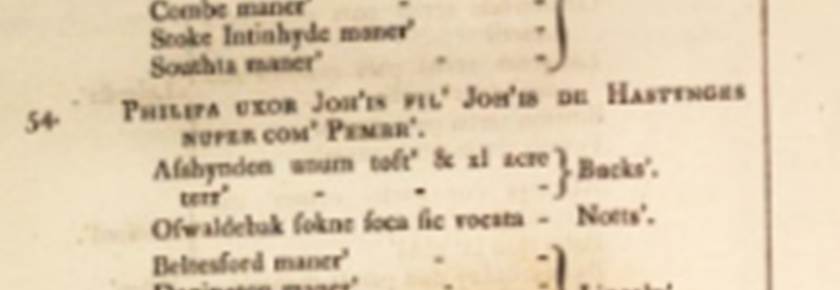
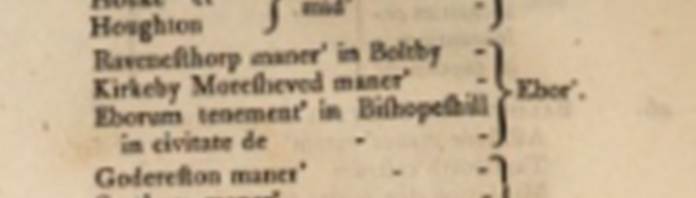
heiresses. In 2 Henry IV the Inquisition Post Mortem of Philipa (Calendarium inquisitionum
post mortem sive escaetarum,
Volume 3 (1377 to 1413), page
276).
1403
12 November 1403,
Westminster. To the escheator in Yorkshire. Order to remove the king’s hand
and meddle no further concerning third parts of the manors of Threske, Hovyngham and Kirkeby Malesarde, with the members and appurtenances (Close
Rolls of the reign of Henry IV, 1402 to 1405, page
210).
1410
At Kirkby Moorside bondsmen and
cottagers paid Michaelmas tax, gave their tenth pig, paid 'gersumes' and gave '‘merchet' for their daughters. Villein farmers lived by
such customs. As late as 1410 a villein moving into Farndale was
obliged to return to his place of origin by its manor court. Freeholders
could move, and a lively land market had developed in their properties.
Many were of that broad class, often of knightly descent from which the knights
were drawn. Many a minor manor lord never saw knighthood, while some
freeholders already had taxable wealth comparable with those who did. All lived
on a grain diet, with ale as their drink. Peas and beans made puddings and pigs
were widely kept. Hens and geese occur and nuts were valued. Meat was scarce,
though more was eaten as time passed, but fish was relatively cheap. The prob!em was to survive the winter and the all too frequent
pestilences. (Life in Ryedale in the 14th century, J H Rushton, Ryedale Historian,
Volume 8, 1976, page 19).
1415
10 May 1415 at
Westminster. Margaret, the widow of William de Roos
of Hamelake was given livery of the church of Kirkeby
Misterton at £30 a year (Close Rolls of the reign of Henry V, 1413
to 1419, page
209).
1416
In the Inquisition Post
Mortem of Alice, Widow of Thomas Earl of Kent, Kirkby Moorside, of the Earl
Marshal by knight service, annual value £40 4s 9d (Calendar of Inquisitions Post Mortem, Volume 20, Henry V
(1413–1418), Folio 614).
The said Alice held nothing in chief in her demesne as of fee, but she
held in dower for life, after the death of the said Thomas and by his
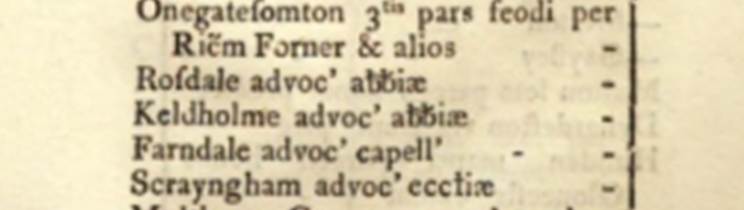
endowment, the manors of Kyrkeby Moresheved, … The said Alice also held (as above) [1/3]
of the advowson of the abbeys [sic] of nuns at Rosdale
and Keldholme, presenting on every third vacancy, each worth yearly (when it
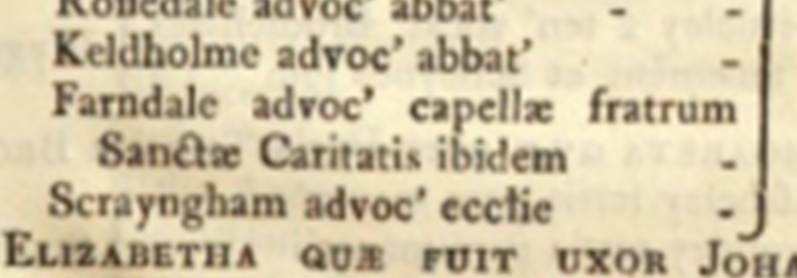
happens) 100s; the advowson of the chapel of the Brethren [Fratrum] of Holy Charity in Farnedale,
worth 10s a year; of the church of Scraynghton,
26 worth . . . , to the said manors of Kirkeby Moresheved
and Botercram belonging, which manors, etc … the
manor of Kirkeby Moresheved is worth £ . . 6s 9d, and
is held of the Earl Marshal by knight service (Inquisitions
post mortem relating to Yorkshire, of the reigns of Henry IV and Henry V, page 126).
Elizabeth nee Latimer, because she was the
wife of John Neville, had an interest in Farndale and the Chapel of the brother
of holy charity there in 1 Henry VI (Calendarium inquisitionum post mortem
sive escaetarum, Volume 4 (1413 to 1485), page 73).

By
1422, however, when Henry VI came to the throne, Farndale had been assigned to
Elizabeth Nevill, and for close on a hundred and fifty years the Nevilles, as
Earls of Westmorland, were lords of the manor. It is unlikely, however, that
changes 'at the top' materially affected the tenor of the daily life of the
Farndale inhabitants. Like so many of their compatriots during this period they
spent most of their time in agricultural pursuits as do their 20th Century
descendants. There is no evidence either from the configuration of the ground
or from the 18th Century field names that the three-field system of agriculture
so beloved of school text books historians, ever operated in Farndale. The
chief crop was probably barley which they took to one or other of the two mills
in the dale. In the 1301 Lay Subsidy Roll only one miller is mentioned - Simon
- but by 1334 there were two and in 1553 when John Wood made his will he wrote
- "also I give to the mendyng of the upper mylne bridge iiij pence and to
the mending (sic) of the nether mylne bridge iiij pence" (Notes on the History of Farndale
in the Middle Ages, Arthur H Whitaker,
Ryedale Historian, Volume 2, 1966, page 60).
1423
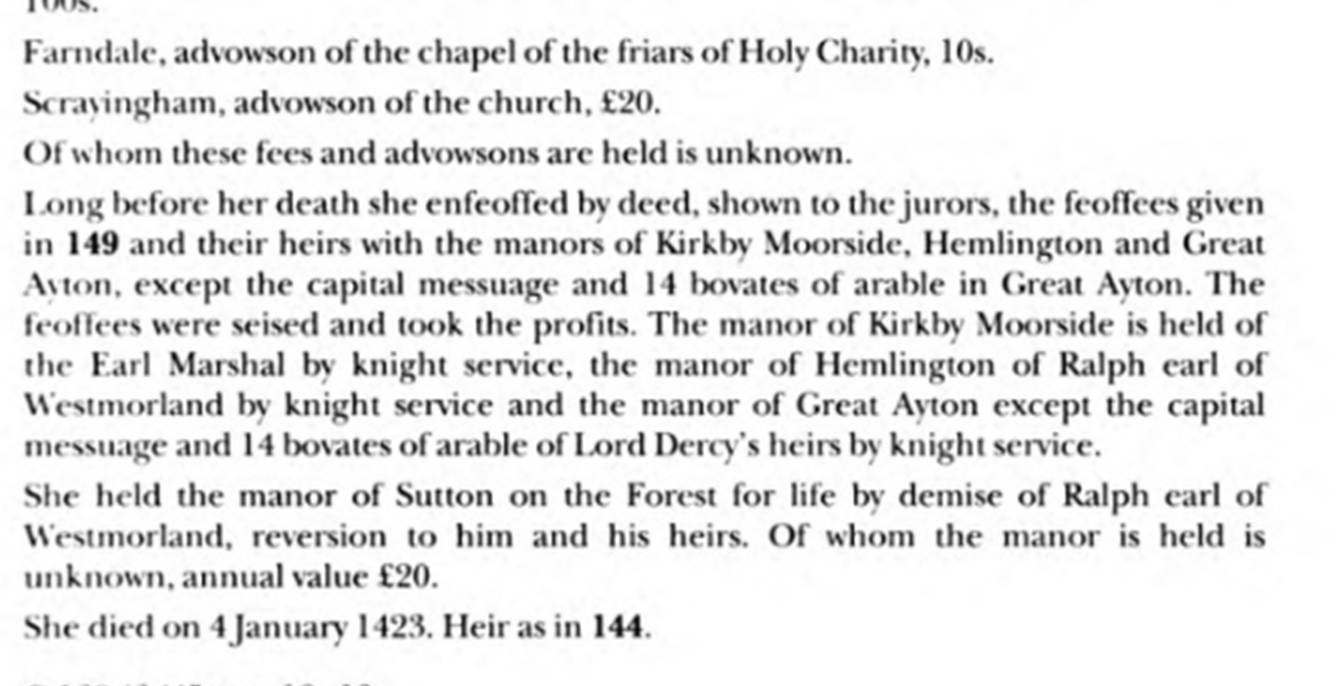
On the death of Elizabeth, widow of John de Neville
her Inquisition Post Mortem included referenec to the Chapel of Holy Charity at
Farndale (Calendar of
Inquisitions Post Mortem, Volume 22 (Henry VI, 1422-1427), Folio
153).
1424
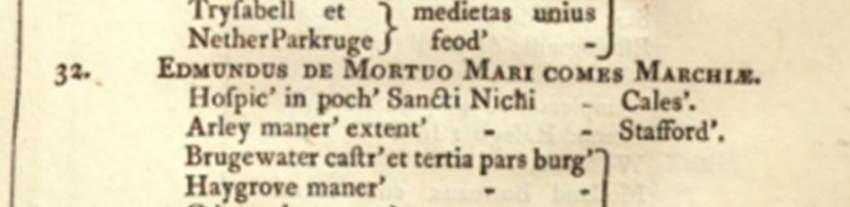
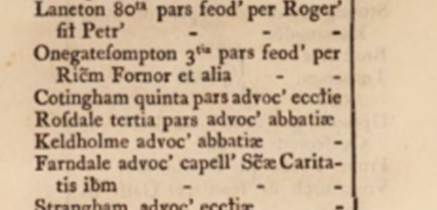
The
chapel was listed again in 3 Henry VI (Calendarium inquisitionum post mortem
sive escaetarum, Volume 4 (1413 to 1485), page
89 and page 98)
1484
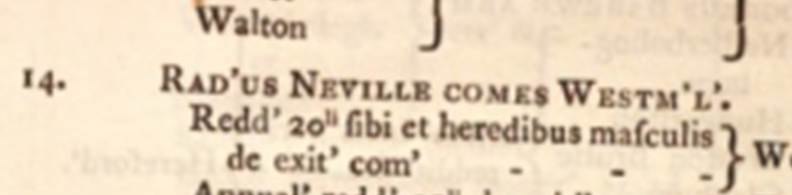
In the second year of the reign of Richard III, Ralph Neville, the
First Earl of Westmoreland had an interest in Kirkbymoorside (Kyrkby Moresheved)
and the manor Farndale (Calendarium inquisitionum post mortem sive escaetarum, Volume 4
(1413 to 1485), page
419).
1490
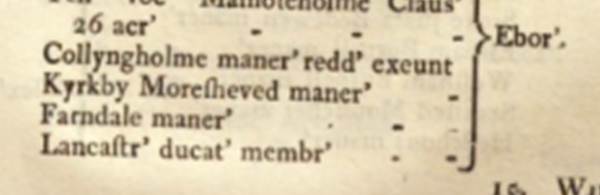
Kirkbymoorside
(Kirkeby Moreshed) was held by fealty (Calendar of inquisitions
post mortem, Henry VII, Volume 1, Folio
500).
1500
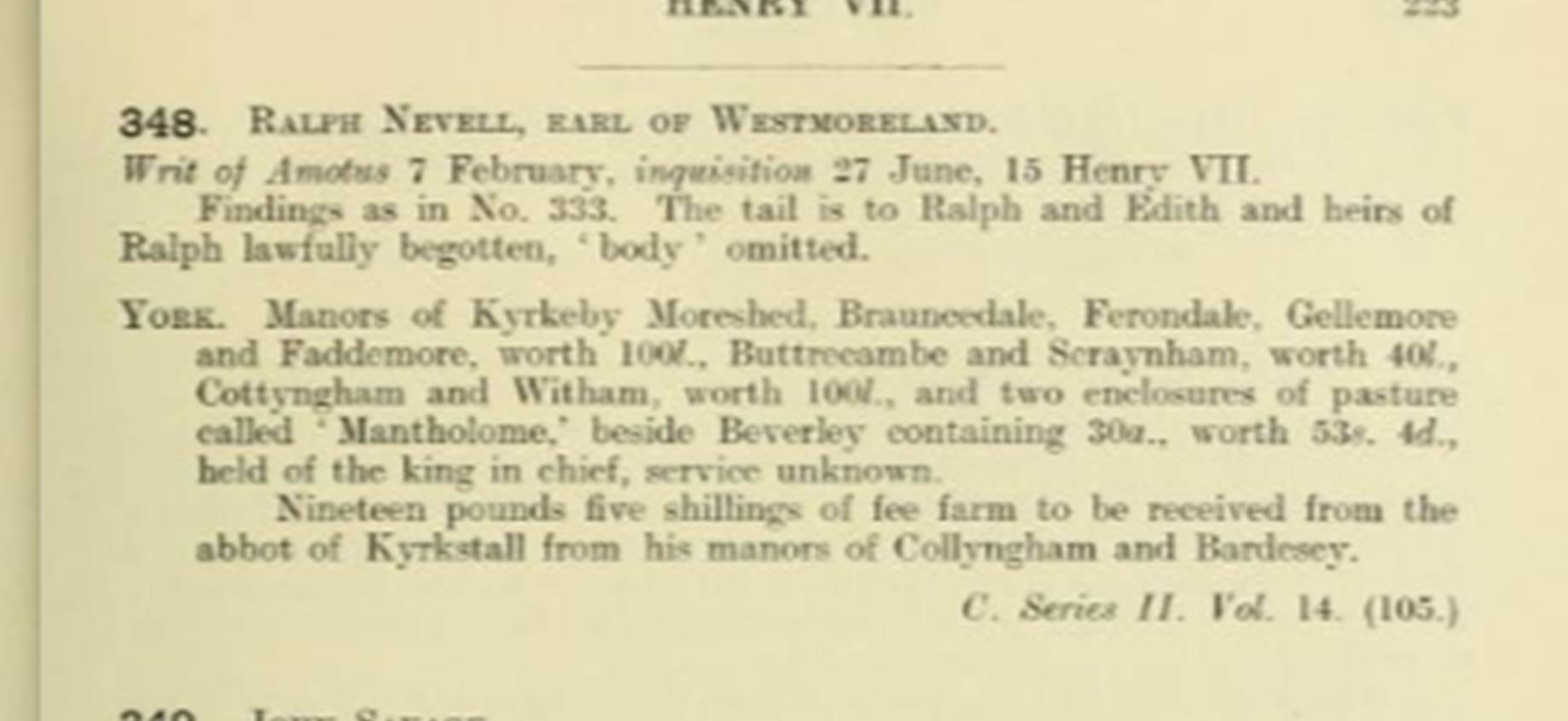
Kirkbymoorside
and Farndale (Ferondale) were manors which had been held by Ralph Neville, the
Earl of Westmoreland, as recorded in a Writ of Amotus (a replacement for an
earlier writ) (Calendar of inquisitions post mortem, Henry
VII, Volume 2, Folio
348). Ralph Neville, the first Earl of Westmoreland lived until 1425, so
this
1539
In the
reign of Henry VIII, 1539, Farndale could supply for the King “83 men, archers
and bill men, horsed and harnessed or men on foot without horse”. This was the
third highest in total in the whole of Ryedale and Walton. (Raymond Hayes, Farndale, 1961, unpublished, page 35).
1553
In 1553 when John Wood made his will he wrote - "also I give
to the mendyng of the upper mylne bridge iiij pence and to the mending (sic) of the nether mylne bridge iiij pence" The 'upper mylne' is the present
site of High Mill, situated just below Church Houses, and the 'nether mylne' is, of course, the present Low Mill. Both these
mills operated well into this century. They were naturally watermills, built on
the banks of the Dove, but in 1560 there were also in the manor of Kirkby
Moorside six windmills (Feet of Fines,
Michaelmas Term 1560, 2 & 3 Elizabeth) and it would be
interesting to know if any of them were built in Farndale. (Notes on the History of
Farndale in the Middle Ages, Arthur H Whitaker,
Ryedale Historian, Volume 2, 1966, page 60).
In 1553 John Wood gave “to the medyng
of the upper mylne bridge 8d and the same to the mendying of the nether mylne
bridge.” The upper mill is the one at Church Houses and the nether mill, not as
AHW stated, the present Low Mill, but the mill on West Gill Beck. (Raymond Hayes, Farndale, 1961,
unpublished, page 11).
1570
Humberston’s Survey of 1570 described 71 tenements in Farndale, 40 on the east side and 31 on
the west, together with two mills and a few cottages paying altogether just
over £54 in rent. He observed that the townes, hamlettes, and dales of Farnedale,
Braundesdale, Fadmore, and Gyllymore were inhabyted with
many welthy and substancyall
men, and haue very good fermes
whereas the towne of Kyrkeby
is a market towne, inhabyted
all with pore people (Yorkshire Archaeological
Journal, 1893, Vol 17, p146).
In 1569,
after the rebellion known as the Rising of the North had been crushed, the
estate of the Earl of Weastmoreland was forfeited to the Crown – he had
succeeded the Wake manor. In the survey known as Humberston’s at the time of
Elizebeth I his account of the manor contains: “The said lordship … extendeth
into the towns, hamlets and dales of Farndale, Bransdale, Fadmoore and
Gillamoor and is inhabited by many wealthy and substantial men and they have
very good farms by reason of great large commons and moors.” Who were those
substantial and wealthy men of Farndale? Perhaps the first was Simon the Miller
in 1301 paying tax as much as paid by ten men of Bransdale, and greatly in
excess of the majority in Ryedale. William Thornborough of Farndale was
appointed as tax commissioner in 1446; he must have been a man of substance,
and William Folanceby, who left two torches and two ewes to Farndale chapel, in
1537 bequeathed “two furred gownes, one whiote and one black lamb, a sword, a
velvet doublet and his nbest horse, and a russet gown”. These possessions were
not those of a peasant farmer in the sixteenth century. (Raymond Hayes, Farndale, 1961, unpublished, page 35).
When, in 1569,
the rebellion known as the Rising of the North had been crushed, the estates of
its leaders amongst whom the Earl of Westmorland was one, were forfeited to the
crown. Three commissioners were appointed by Elizabeth to survey these estates and
this survey has become known by the name of the chief of these commissioners as
Humberston's Survey. His account of the manor of Kirkby is full of interest,
one of the most significant things being the clear contrast in wealth between
the inhabitants of the dales and the town of Kirkby itself.
“The said
Lordship extendeth into the towns, hamlets and dales
of Farndale, Bransdale, Fadmore and Gillamoor... and is inhabited with many wealthy and
substantial men and they have very good farms by reason of the great and large
commons and wastes; and all the tenants except the town of Kirkby hold their
farms and tenants by indenture for terms of years … and the town of Kirkby is a
market town inhabited all with poor people and they hold their cottages by copy
of court roll....... and they have no lands or other commodities to their
cottages''.
(Notes on the History of Farndale in the Middle Ages, Arthur H Whitaker, Ryedale Historian, Volume 2,
1966, page
61).
1604
1604, Trinity
Term, 2 Jas 1, Geo Haggard, quer, Christr Wood and Jane his wife, def. Messuage and lands in Fadmore and Farndale (Yorkshire
Fines for the Stuart Period, Volume 1 (1603 to 1614),
Edited by William Brigg, Yorkshire Archaeological Society Record Series, volume
53, 1915, page 26 (Folio 33)).