Richard Farndale
c 1362 to c 20 December 1435
A
medieval soldier who fought in the armies of Richard II, Henry IV and Henry V
We few, we happy few, we band of brothers …
FAR00044
|
Return to the Home Page of the Farndale Family
Website |
The story of one family’s journey through two
thousand years of British History |
The 83 family lines into which the family is divided.
Meet the whole family and how the wider family is related |
Members of the historical family ordered by date of
birth |
Links to other pages with historical research and
related material |
The story of the Bakers of Highfields, the Chapmans,
and other related families |
Dates are in red.
Hyperlinks to
other pages are in dark
blue.
Headlines are in brown.
References and
citations are in turquoise.
Context and local
history are in purple.
|
|
Tales of
archers and men at arms who fought with Richard II, Henry IV and Henry V and
an observation post in the home of the Nevilles and Richard III from which to
view the Wars of the Roses |
1362
Richard Farndale,
son of William and Juliana Farndale (FAR00036),
may have been born in Sheriff Hutton in about 1362.
If he was in his
early seventies when he died, then he may have been born in about 1362 which
also reconciles with an age of about 35 when his father died and left him as an
executor to his will in 1397.
The Professional Soldier
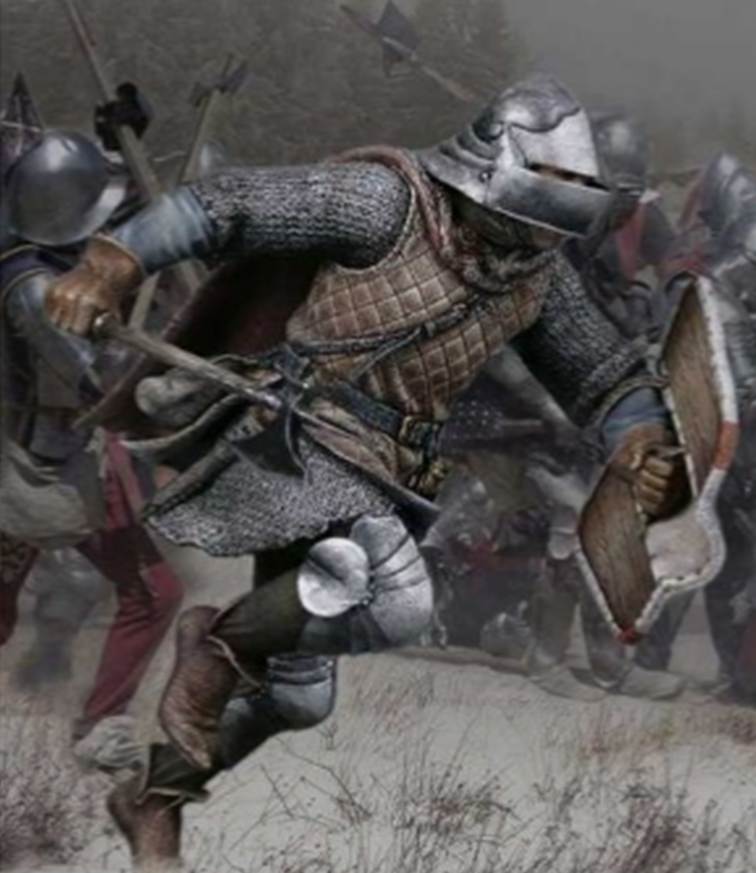
We know from his
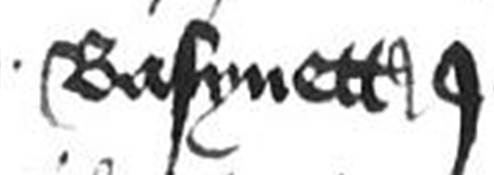
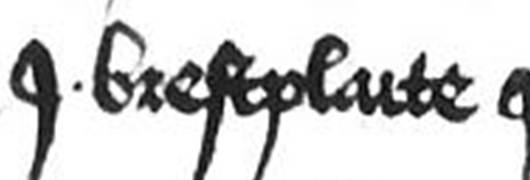
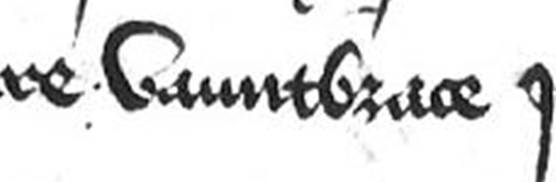
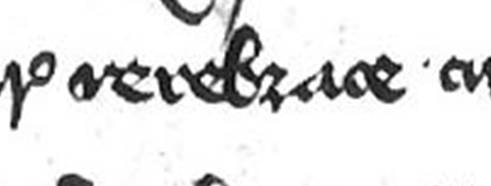
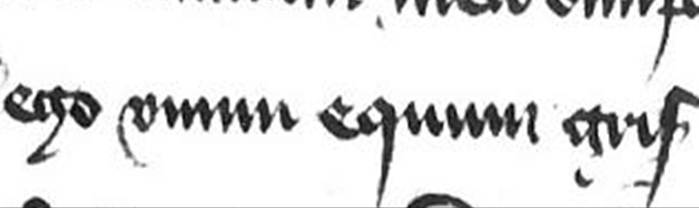
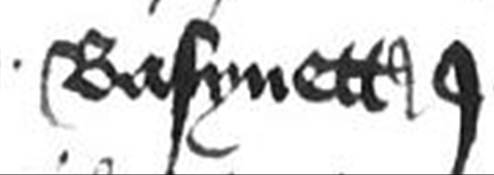
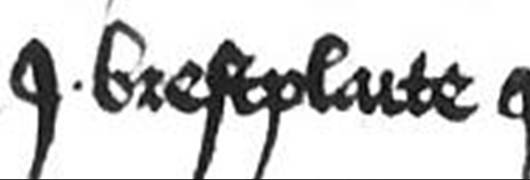
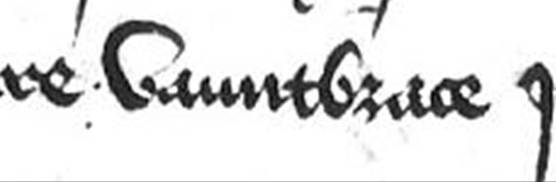
will in 1435, that Richard Farndale bequeathed a grey horse with saddle and
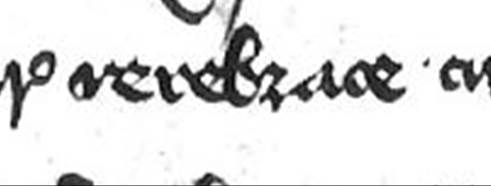
reins and his armour, comprising a bascinet, a breast plate, a pair of vembraces and a pair of rerebraces
with leg harness. He appears to have been impressively armed for military
service when he died, so it seems likely that he pursued a military career.
His grey Horse
His bascinet His
breastplate
His vambraces His rerebraces
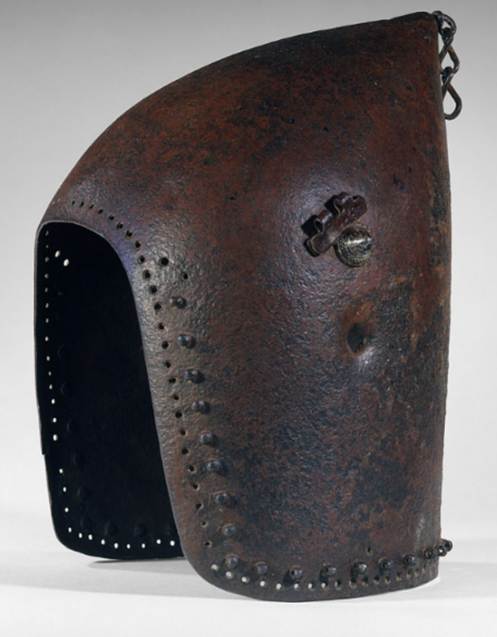
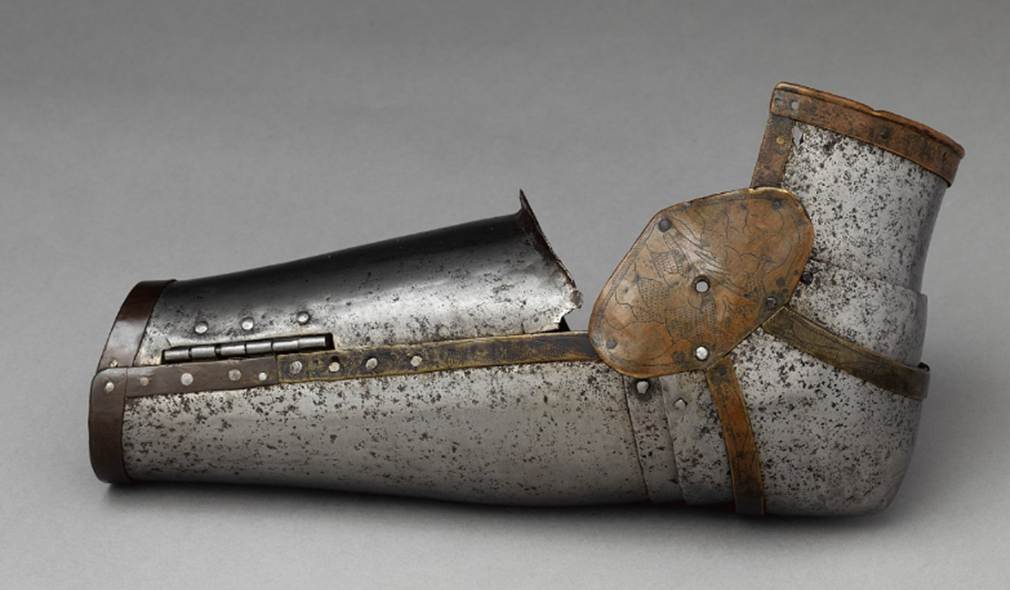
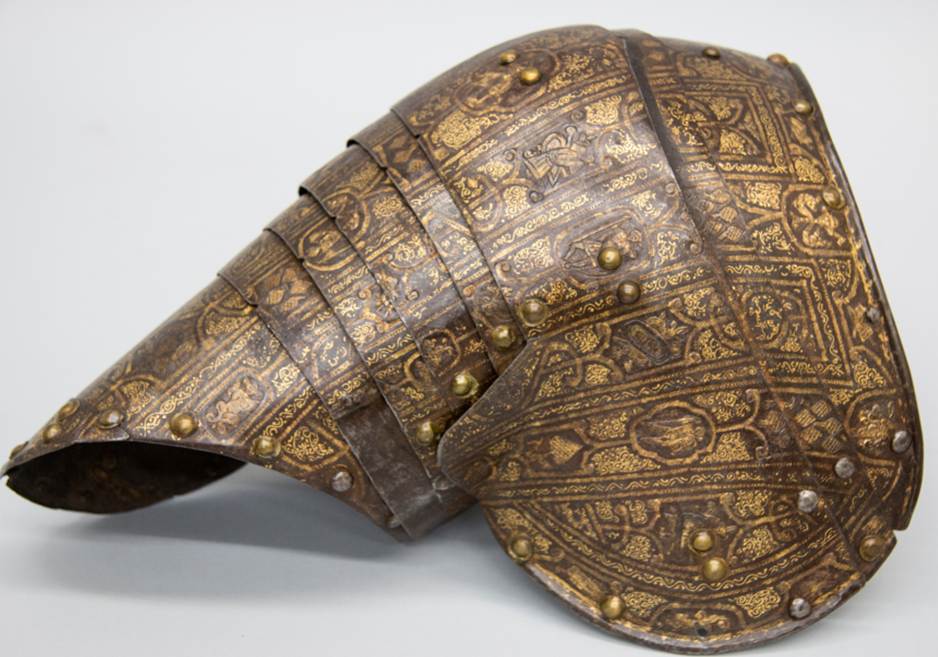
A bascinet was a
medieval combat helmet Vembraces or vambraces were armoured forearm guards A rerebrace
was a piece of armour designed to protect the upper arms (above the elbow)
So he was well
armoured by the time he died in 1435.
|
The armour of a medieval Man and Arms
A
flavour of the armour of a medieval man at arms. I suggest you mute the
sound. |
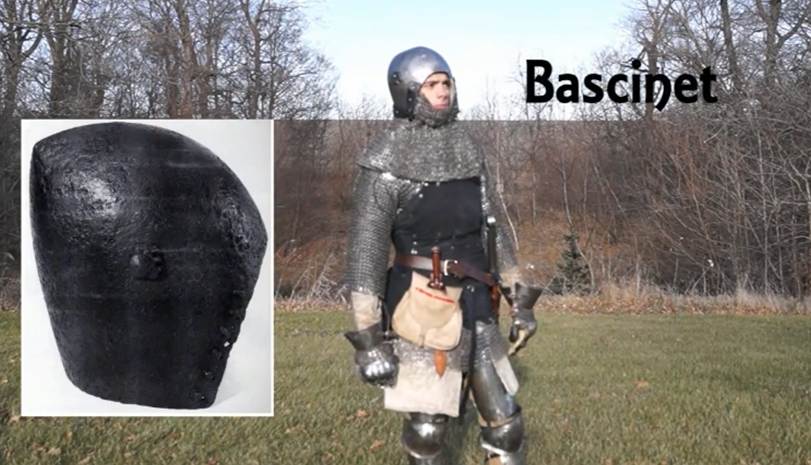
Before
the Hundred Years War, warfare was rooted to the principles of chivalry, and
common soldiers were but pawns in the battles of the chivalric age. By the
1320s experienced soldiers fought on foot alongside commoners. Ideas of feudal
service were replaced by a concept of professional soldiers, who undertook
operations contrary to the chivalric code including ambush, siege, raids,
looting, burning, rape. The archers were the prime example of new commoner
forces, firing arrows which could easily penetrate knights’ armour. The
commoners were given opportunities to accumulate significant wealth through war
booty, and ransoms, as well as their pay.
The
Hundred Years' War (1337 to 1453) was a conflict between the Kingdoms of
England and France coinciding with a civil war in France during the Late Middle
Ages. It emerged from feudal disputes over the Duchy of Aquitaine and was
triggered by a claim to the French throne made by Edward III of England.
The Hundred
Years War with France lasted from 1337 to 1453. Before the Hundred Years War,
warfare was rooted to the principles of chivalry, which focused the exploits of
the nobility. By the 1320s experienced soldiers fought on foot alongside
commoners. Ideas of feudal service were replaced by professional soldiers, who
undertook operations contrary to the chivalric code including ambush, siege,
raids, looting, burning, rape. The archers were the prime example of new
commoners’ forces, firing arrows which could easily penetrate knights’ armour.
The commoners were given opportunities to accumulate significant wealth through
war booty, and ransoms, as well as their pay.
It seems likely
that Richard Farndale was a professional soldier who lived through the middle
phase of the Hundred Years War. As a professional soldier, he was likely to
have been at the point of national effort at each phase of the War.
The evidence for
his York cousins’ participation in the Hundred Years War is explored in a separate webpage.
Richard’s linkage to the records of variously spelt Richard Farendon is
reinforced by the evidence of his will, which shows him to have been a military
man and almost certainly a professional soldier. It is also supported by his
home at the heart of the Neville family in Sheriff Hutton, and evidence of the
Nevilles lands, and of York being a prime recruiting landscape for the various
armies of the period.
The
Reign of Richard II (1377 to 1399)
1380
saw England in the midst of a crisis in the French Wars in the time of Richard
II. The Peasant’s Revolt of 1381 arose due to high taxes required to fund the
French Wars. Richard II was not a popular King, and the cost of these French
wars were not welcomed at home.
Cutting his teeth with some
chevauchee warfare in Brittany
Common
during the Hundred Years War, the chevauchée was an armed raid into
enemy territory. With the aim of destruction, pillage, and demoralization, chevauchées were generally conducted against
civilian populations. It was a medieval scorched earth policy.
1380
There was a Richard
Farnham or Farneham, listed in records of medieval
soldiers, who joined an expedition to France as an archer on 28 June 1380
under the captaincy of Sir William Windsor, and the command of Thomas of
Woodstock, Duke of Gloucester (The National
Archives E101/39/7, No 1 m4 and E101/39/7, No 4 m1, Particulars of the account
of William de Wyndesore, engaged in the expedition to Brittany, with retinue
rolls, 3 to 4 Richard II, on pouch of 5 rolls). It is not certain that
this was him, because the spelling of the surname is different, but this was a
time of fluidity in surname spellings. Given his military equipment listed in
his will, 55 years later, it seems likely that Richard would have started a
military career at about this time. He would have been about 18 or so at this
time. Whilst we cannot be certain, it is possible, perhaps even quite likely,
that this was Richard in his early military exploits in France.
1380 was in
the midst of a crisis in the French Wars in the time of Richard II. The
Peasant’s Revolt of 1381 arose due to high taxes required to fund the French
Wars. Richard II was not a popular King, and the cost of these French wars were
not welcomed at home.
Richard’s
commander, Thomas of Woodstock had been in command
of a large campaign in northern France that followed the War of the Breton
Succession of 1343 to 1364. During this campaign John IV, Duke of Brittany had
tried to secure control of the Duchy of Brittany against his rival Charles of
Blois.
John
returned to Brittany in 1379, supported by Breton barons who feared the
annexation of Brittany by France. An English army was sent under Woodstock to
support his position. There were concerns about the safety of a longer shipping
route direct to Brittany so the army was ferried instead to the English
continental stronghold of Calais in July 1380.
As
Woodstock marched his 5,200 men east of Paris, they were confronted by the army
of Philip the Bold, Duke of Burgundy, at Troyes, but the French had learned
from the Battle of Crécy in 1346 and the Battle of Poitiers in 1356 not to
offer a pitched battle to the English. Eventually, the two armies simply
marched away. French defensive operations were then thrown into disarray by the
death of King Charles V of France on 16 September 1380.
Woodstock's
chevauchée (medieval scorched earth warfare) continued westwards largely
unopposed, and in November 1380 he laid siege to Nantes and its vital bridge
over the Loire towards Aquitaine.
However,
he found himself unable to form an effective stranglehold, and urgent plans
were put in place for Sir Thomas Felton to bring 2,000 reinforcements from
England. By January, though, it had become apparent that the Duke of Brittany
was reconciled to the new French king Charles VI, and with the alliance
collapsing and dysentery ravaging his men, Woodstock abandoned the siege.
1381
24 March 1381,
Westminster. To the sheriffs of London. Writ of supersedeas, by mainprise of
Andrew Brewer and Thomas Padynton of Middlesex, John Edward and Robert Roderham
of London, in favour of William Gammel master of the
hospital of St. John Baptist Bruggewater, Richard Chedeseye, Roger Gelhampton,
William Chamberlein, Richard Fardell, John Palfreyman, William Webbe and
Thomas Duffeld clerk at suit of John Blake clerk averring threats ; and order
to set the defendants free. (Close Rolls of the
reign of Richard II, 1377 to 1381, page
505).
A possible Ireland Posting
In
1386, Sir John de Stanley was appointed to be deputy to Robert de Vere, Duke of
Ireland. He quelled an insurrection that year. He was later made justiciar of
Ireland and returned there in October 1389. He proved to be an active chief
governor, campaigning in Ulster, Meath, and Munster, but complaints were sent
to England about his conduct and he was replaced as justiciar in October 1391.
1389
On 21 October
1389 a Richard Farnworth or Farnysworth was an
archer in Sir John Stanley’s Standing Force in Ireland, listed on the muster
Roll (The National Archives E101/41/18, m10d, m17,
m23). It is possible that this was our Richard Farndale.
. Richard II had assumed full control of the
government on 3 May 1389, and this was a period of fragile peace. Sir John Stanley KG (c 1350 to 1414) of Lathom,
near Ormskirk in Lancashire, was Lord Lieutenant of Ireland and titular King of
Mann, the first of that name. John
Stanley had been appointed as deputy to Robert de Vere, Duke of Ireland in 1386
after an insurrection created by friction between Sir Philip Courtenay, the
English Lieutenant of Ireland, and his appointed governor James Butler, 3rd
Earl of Ormond. Stanley led an expedition to Ireland on behalf of de Vere and
King Richard II to quell it. He was accompanied by Bishop Alexander de Balscot
of Meath and Sir Robert Crull. Butler joined them upon their arrival in
Ireland. Because of the success of the expedition, Stanley was appointed to the
position of Lord Lieutenant of Ireland, Alexander to Chancellor, Crull to
Treasurer, and Butler to his old position as Governor. In 1389 Richard II
appointed Stanley as Justiciar of Ireland, a post he held until 1391. He was
heavily involved in Richard's first expedition to Ireland in 1394 to 1395. It
is possible that Richard was involved in these campaigns in Ireland.
Sheriff Hutton in the heart
of Neville lands
1397
Seventeen
years after the French campaign in which Richard Farndale likely took part,
Ralph Neville, Lord of Sheriff Hutton, supported Richard II's proceedings
against Richard’s former commander Thomas of Woodstock in an early sign that
the King’s rule was unsafe. By way of reward Ralph Neville was created Earl of
Westmorland on 29 September 1397. However Ralph had married the daughter of the
Lancastrian John of Gaunt, and by the end of the century the Nevilles had
switched to oppose Richard II and to support a new Lancastrian dynasty.
Towards the end
of Richard II’s reign, Ralph Neville, John
Neville’s son, supported Richard II's proceedings against Richard’s
former commander Thomas of Woodstock and the Lords
Appellant, and by way of reward was created Earl of Westmorland on 29 September
1397. Richard Farndale was an inhabitant of Sheriff Hutton in the lands
of Ralph Neville.
Joint
administration of his father’s Will was
granted on 13 March 1397 or 1398, so he may have been about 35 then. Richard
received a legacy of 4 li (or £4), his father’s small sword with all his
knives, and with his mother the residue of his father’s goods. He was made an
executor of the will with his mother.
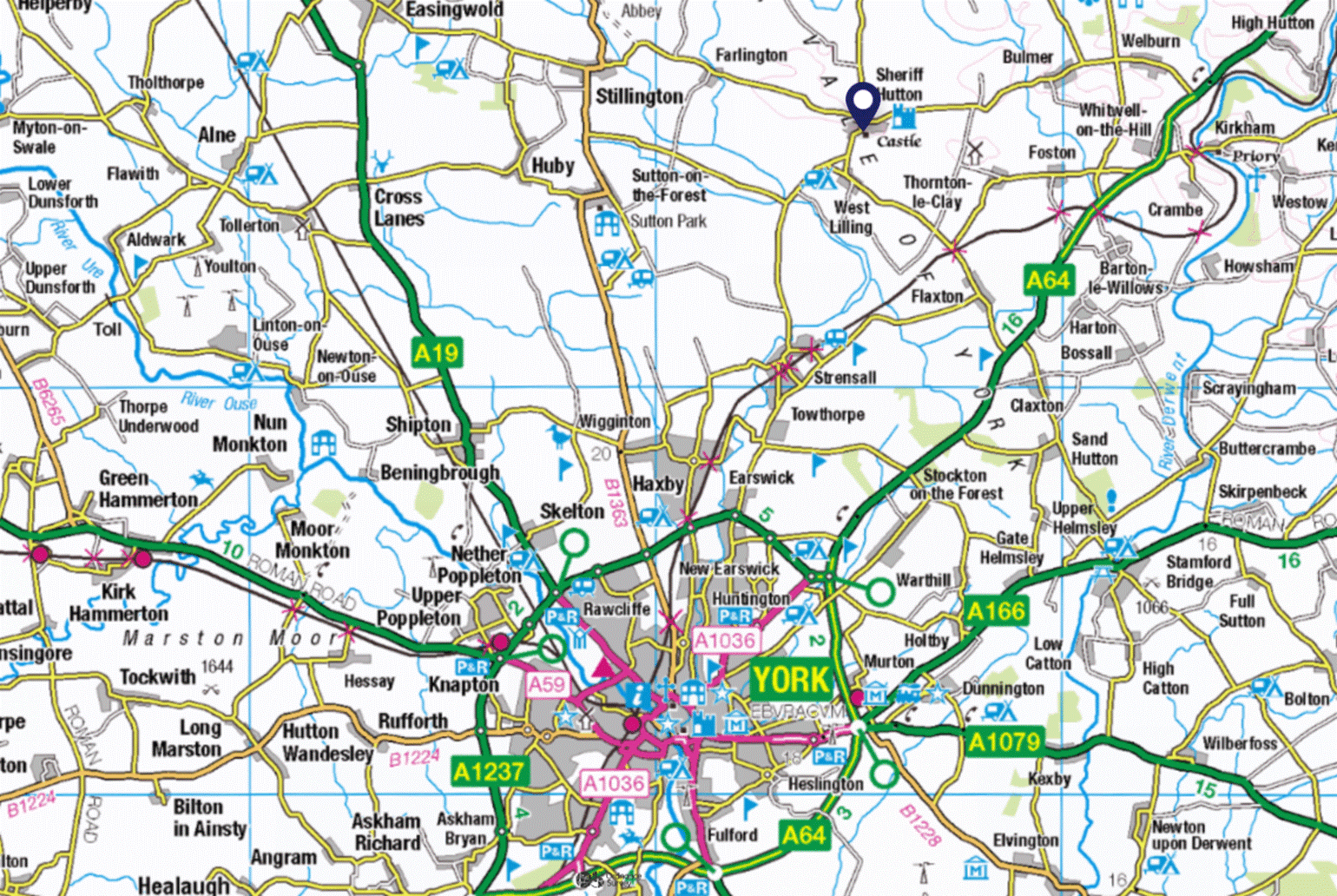
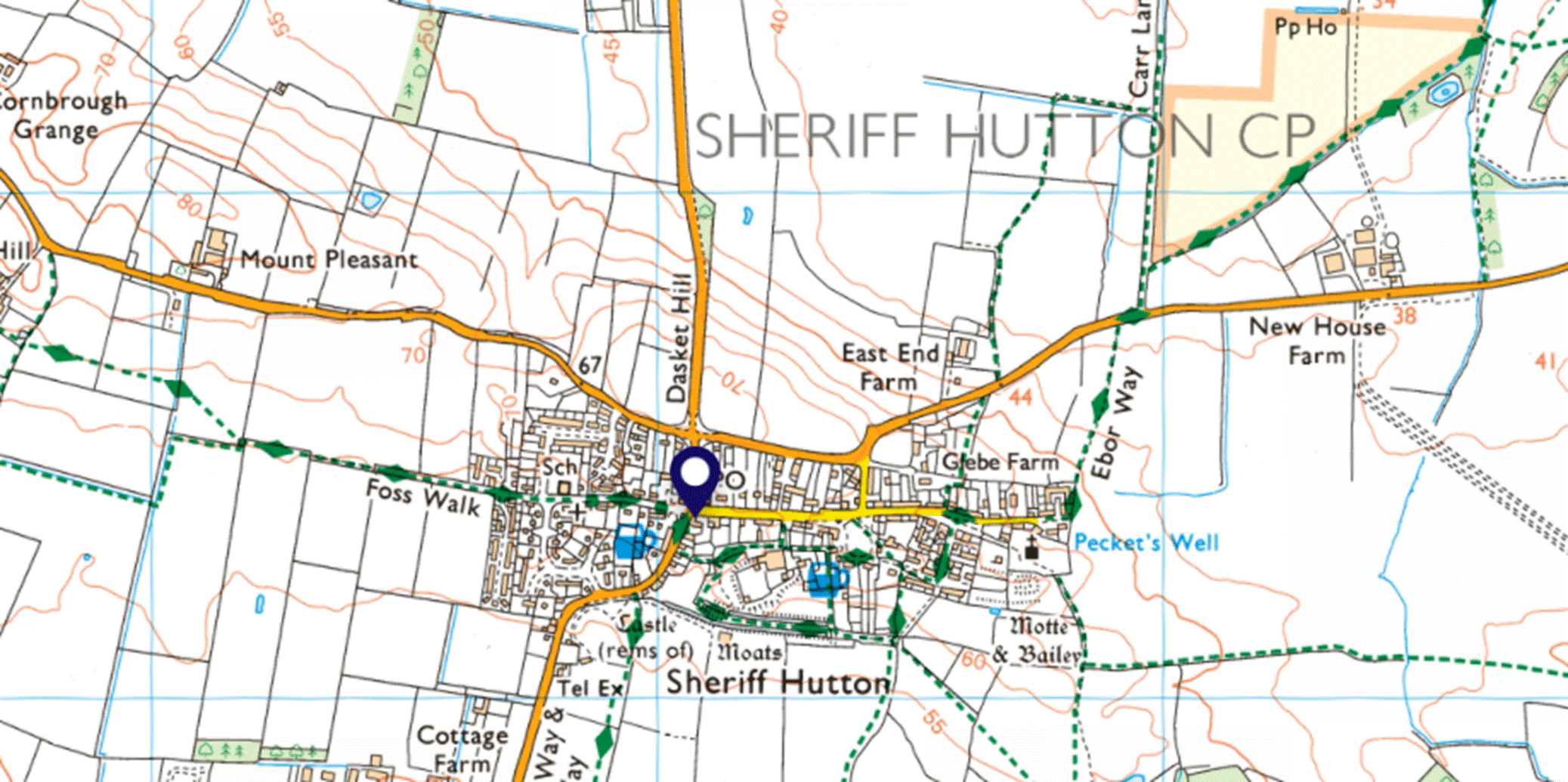
Sheriff Hutton (Shyrefhoton)
Richard was
living in the heart of the Neville lands, which was a perfect platform for the
next phase of his military career.
Given the likely
ages of his children, perhaps he married at about this time. There is no
mention of his wife who may have pre-deceased him.
1398
His father
died in 1398 and Richard was an executor with his mother, Juliana and
beneficiary of his father’s will made on 23 February 1398. He received a legacy
of £4 and, with his mother and sister Helen, the residue of his father’s
estate. He was probably about 40 years old. It might have been with these
inherited funds that he bolstered his military armoury.
The
Reign of Henry IV (1399 to 1413)
Henry
Bolingbroke had been exiled by Richard II after his dispute with Thomas Mowbray
in 1398. When his father, John of Gaunt, died in February 1399, Richard II took
back the Lancastrian lands into the hands of the Crown.
In
1399, Henry Bolingbroke, exiled by King Richard II, invaded England with the
intention of reclaiming his confiscated inheritance as the Duke of Lancaster.
He landed in Yorkshire in July and quickly gained support from powerful nobles
and barons. Richard II was in Ireland at the time, and upon his return, found
himself deposed and imprisoned by Henry. Henry then seized the throne, becoming
King Henry IV, and was crowned in October.
The Lancastrian
lands included Pickering (see FAR00015A) at the heart of the Richard’s Farndale
ancestral home. This must have been a momentous and unsettling time as the folk
of Yorkshire began to join Henry’s invasion.
The
Nevilles, specifically Ralph Neville, the Earl of Westmoreland, were instrumental
in supporting Henry Bolingbroke's successful bid to become King Henry IV in
1399. This support was largely due to the close ties the Neville family had
with John of Gaunt, Henry's father, and the marriage of Ralph Neville to
Gaunt's daughter, Joan.
It seems
therefore that the Farndales were very much Team Lancaster at this time.
Henry IV’s Invasion of
Scotland in 1400
1400
The
English invasion of Scotland of August 1400 was the first military campaign
undertaken by Henry IV of England after deposing his cousin Richard II. Henry
IV urgently wanted to defend the Anglo-Scottish border, and to overcome his
predecessor's legacy of failed military campaigns.
A
large army was assembled slowly and marched into Scotland. No pitched battle
attempted, and the King did not try to besiege Scotland's capital, Edinburgh.
Henry's
army left at the end of the summer after only a brief stay, mostly camped near
Leith, near Edinburgh, where it could maintain contact with its supply fleet.
The campaign ultimately accomplished little except to further deplete the
King's coffers.
This
was the last campaign led by an English King on Scottish soil.
There was a Richard
Farendon who was archer and man at arms in a Scottish Expeditionary Force
who appeared in Retinue
Lists on 24 June 1400 (The National Archives
E101/42/16, m34, Retinue roll of various persons, probably for Henry IV's
Scottish expedition, 43 membranes). It seems probable that this was
our Richard Farndale. By this time he would have been in his late thirties. He
held his horse and armour until his death in 1435, so it seems likely that he
became an experienced soldier who may have joined the many armies of this time,
when called upon to do so. The Nevilles were key players in national affairs,
so it seems likely that he would have been encouraged to join national armies
when called to do so.
Although
Henry had announced his plans at the November 1399 parliament, he did not
attempt a winter campaign, but continued to hold quasi-negotiations in which
he must have felt the Scots were profoundly irritating. At the same time,
it appears that the House of Commons was not keen on the forthcoming war, and,
since extravagance had been a major complaint against Henry's predecessor,
Henry was probably constrained in requesting a subsidy. At this point,
parliament was clearly still opposed to a Scottish war, and may even have
believed a possible French invasion the imperative issue.
In
June 1400, the King summoned his Duchy of Lancaster retainers to muster at
York, and they in turn brought their personal feudal retinues. At this point,
with the invasion being obvious to all, the Scots attempted to re-open
negotiations. Although Scottish ambassadors arrived at York to meet the king around 26 June, they
returned to Scotland within two weeks.
Although
the army was summoned to assemble at York on 24 June, it did not approach
Scotland until mid-August. This was due to the gradual arrival of army supplies
(in some cases, with much delay — the King's own tents, for example, were not
dispatched from Westminster until halfway through July). Alfred
Lawson Brown (The English Campaign in Scotland, British Government and
Administration: Studies Presented to S. B. Chrimes,
Cardiff: University of Wales Press, H Hearder and H R
Lyon, (eds), 1974, pages. 40 to 54) suggested that Henry was well
aware of the delays these preparations would cause the campaign. At some point
before the army left for Scotland, the muster was met by the Constable of
England, Henry Percy, Earl of Northumberland, and the Earl Marshal, Ralph Neville,
Earl of Westmorland. Individual leaders of each
retinue present were then paid a lump sum to later distribute in wages to their
troops. Men-at-arms received one shilling a day, archers half that, but
captains and leaders do not appear to have been paid at a higher rate.
Richard Farendale
of Shyrefhoton came from Sheriff Hutton in the lands of Ralph
Neville, so there is strong evidence that this was the same person as Richard
Farendon who joined these Scottish Wars.
Indeed there was
also a Thomelyn Farnham who was an archer under the
command of Robert Neville in the same Retinue List on 24 June 1400 (The National Archives E101/41/1, m54) and whilst I
have not found sufficient evidence to link Thomelyn
to the Farndale family, this co-entry with Richard does help to reinforce the
linkage between this body of soldiers and the Sheriff Hutton Nevilles.
The
army left York on 25 July 1400 and reached Newcastle-upon-Tyne four days later;
it was plagued by shortages of supplies, particularly food, of which more had
had to be requested before even leaving York. As the campaign progressed, bad
weather exacerbated the problem of food shortages, and Brown
speculated that this was an important consideration in the short duration of
the expedition.
It
has been estimated that Henry's army was around 13,000 men, of which 800
men-at-arms and 2,000 archers came directly from the Royal Household. This was
"one of the largest raised in late medieval England;" Brown notes
that whilst it was smaller than the massive army assembled in 1345 (that would
fight the Battle of Crécy), it was larger than most that were mustered for
French service. The English fleet also patrolled the east coast of Scotland in
order to besiege Scottish trade and to resupply the army when required. At
least three convoys were sent from London and the Humber, the first of which
delivered 100 tonnes of flour and ten tonnes of sea salt to Henry's army in
Scotland.
Henry
crossed the border in mid-August. Henry took care not to ravage or pillage the
countryside on their march through Berwickshire and Lothian. This was in marked
contrast to previous expeditions, and C Given-Wilson (Henry
IV, 2016) compares it specifically to the devastation wreacked in the last Scottish campaign by Richard II in
1385. This he puts this down to the presence in the English army of the earl of
Dunbar, whose lands they were. Brown has suggested the king
envisaged a punitive expedition with either a confrontation or such a chevauchée
that the Scots would be eager to negotiate. In the event, they offered no
resistance as the English army marched through Haddington.
However,
Henry's army never progressed further than Leith from where the army could keep
in physical contact with the supporting fleet. Henry took a personal interest
in his convoys, at one point even verbally instructing that two Scottish
fishermen fishing in the Firth of Forth were to be paid £2 for their
(unspecified) assistance. However, Henry never besieged Edinburgh Castle where
the Duke of Rothsay was ensconced. By now, Brown says, Henry's campaign had
been reduced to a war of words.
By
29 August 1400, the English army had returned to the other side of the border.
Richard must
have married at about this time, perhaps in about 1400. We don’t know the name
of his wife, as she is not mentioned in his will and might have died before he
did. Mysteriously Richard bequeathed a substantial sum of 40s and his bed to a
lady called Joan Brantyng in his will in 1435. It might be possible that Joan
was his wife and later remarried. Perhaps this was a more recent acquaintance
after his wife had died.
Richard had
three daughters, Margorie
perhaps born in about 1409, Agnes born in about 1411
and Alice born in
about 1413. They would each witness the Wars of the Roses from the heart of the
Neville lands.
1402
Although
the 1400 campaign ended the Wars directly into Scotland, the Scottish Wars
continued with encounters south of the Border. Shakespeare’s play Henry IV
Part 1 opens with word brought to the King in about 1402, a few years in to
the new Lancastrian dynasty of Henry Bolingbroke, son of John of Gaunt, then
Henry IV, of the Wars with Wales and Scotland.
The
Battle of Holmedon Hill was a battle between English
and Scottish armies on 14 September 1402 in Northumberland. The battle was
recounted in Shakespeare's Henry IV, part 1.
Here
is a dear, a true-industrious friend, Sir Walter Blunt, new lighted from his
horse, Stained with the variation of each soil Betwixt that Holmedon
and this seat of ours, And he hath brought us smooth and welcome news. The Earl
of Douglas is discomfited; Ten thousand bold Scots, two-and-twenty knights, Balked
in their own blood, did Sir Walter see On Holmedon’s
plains. Of prisoners Hotspur took Mordake, Earl of Fife and eldest son To
beaten Douglas, and the Earl of Atholl, Of Murray, Angus, and Menteith. And is
not this an honorable spoil? A gallant prize? Ha,
cousin, is it not? (Henry IV Part 1, Shakespeare, Act 1, Scene 1)
We
don’t know whether Richard was still part of the army at this stage, but we get
a Shakespearean flavour of these times.
The reign of Henry V (1413 to 1422)
Henry V was crowned in 1413.
1414
Chevauchee in Normandy
1413
had been a dreadful year in France. This provided an early opportunity for
Henry V since French military resources were wasted in civil strife.
Since
1412 the duchy of Guyenne (around Bordeaux) had been garrisoned by an English
expeditionary force. There was a temporary lull in the Hundred Years War, but
this remained a period of Phoney war in France.
During
their time in Guyenne, the English have repeatedly ravaged the countryside,
extorted huge cash payments from the Armagnac dukes, and captured valuable
prisoners. The soldiers who have enjoyed eighteen months robbing and plundering
the please south west are coming to view France as a place where an
enterprising English soldier might go and make a fortune. They share this
realisation with hundreds of independent English mercenaries who are elsewhere
in the French Kingdom, hiring themselves out to both sides of the civil war (Dan
Jones, Henry V, 2024, page 130).
This
was a time of opportunity for English professional soldiers.
It is possible
that Richard Farndale may have engaged in this period of phoney war.
The Harfleur and Agincourt
Campaign of 1415
1415
In
August 1415, Henry V's invasion force, consisting of thousands of men and
horses, crossed the English Channel. The Armada sat offshore from the coast of
Normandy on 14 August 1415 sending ashore only a small recce party to bring
back intelligence on the battle picture. On 17 August 1415 at around 6am Henry
sends the order to his men to begin their landing. Barges and skiffs are
lowered into the saltwater. Sailors begin carefully rowing them between the
deadly rocks. Minutes later the first Englishmen are wading onto the land Henry
claims for his own (Dan Jones, Henry V, 2024, page 256).
The
English army landed unopposed on the Normandy coast and began their campaign by
besieging the town of Harfleur.
It is possible
that, as a veteran soldier, Richard might have fought in Henry V’s Agincourt
campaign. He may have reached his early fifties by this time. There was a Richard
Farndon garrisoned at Harfleur in 1417, an archer, so this may have been
Richard stationed at Harfleur in the expeditionary force into France following
the Agincourt campaign. There was also a Richard Farendon who was a man
at arms enlisted under Richard Woodstock’s command in 1421.
The
men at arms and archers who fought at Agincourt generally ranged in age from
their late teens to their late 40s. While the majority of men-at-arms were
likely older, the archers were often younger, with some as young as 16. Older
soldiers did fight at Agincourt. The eligibility for military service specified
all men between the ages of 16 and 60. At the time of Agincourt English armies
intended for service overseas were raised mostly by contract (or indenture),
and probably would have consisted primarily of volunteers rather than feudal
levies providing their forty days of service to their lord or king. So the bulk
of this army probably consisted of men in their late twenties and early
thirties, along with younger teenage recruits and older veterans.
The
principal consolidated source for participation in the Agincourt campaign is
the University of Southampton databases on the English Army in 1415 in their
database on the Soldier in Medieval England.
I haven’t yet found Richard Farndale in the list of known soldiers
at Agincourt. Sir Nicholas Harreis’ History of
the battle of Agincourt, and of the expedition of Henry the Fifth into France,
in 1415; with The roll of the men at arms, in the English army, 1832
includes a Roll of the men at arms at Agincourt, p394. There is
no Richard Farndale listed, unless he was Richard Fulshull (p336), a Lancer in
the retinue of the Earl of Marche, or Richard Fythian (p344). It doesn’t seem
likely that these were the same man.
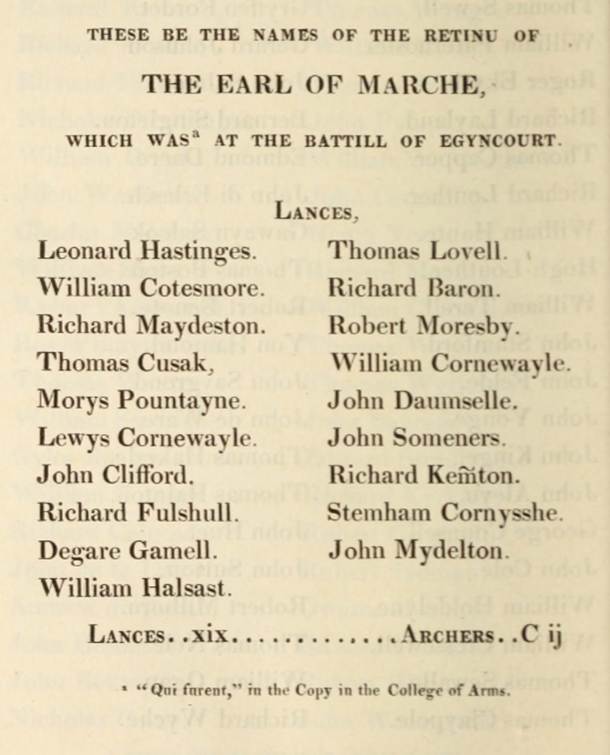
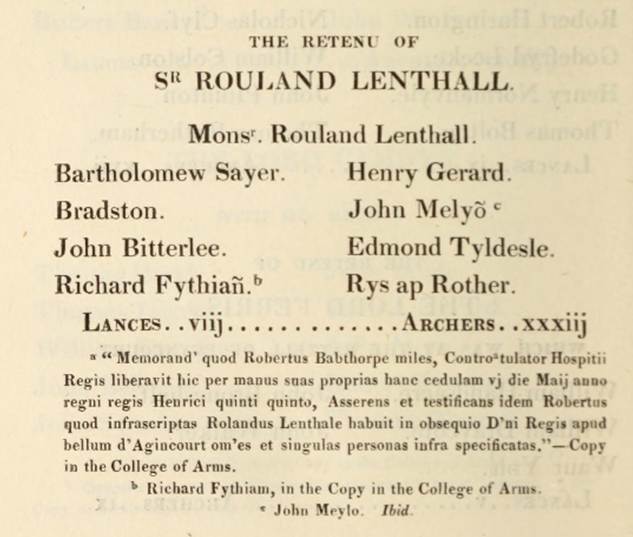
But to these lists of named individuals were unnamed lists of
lances and archers, so he could have been amongst these ordinary unlisted
soldiers. And if he wasn’t at Agincourt, he may have been in the other battles
in those French campaigns. Living firmly within the Neville lands, it seems
likely that he would have fought in the King’s battles with France. The family
also originated from the lands of the wife of the Black Prince and the lands of
the Stutevilles and the Mowbrays.
He still had his armour when he died and left his will in 1435 so
it is likely that he would have fought in Henry V’s French campaigns.
In weighing up Richard’s likely participation in these campaigns:
·
As a professional soldier, still in possession of his armour at
his death, Richard was likely to have been part of these campaigns.
·
His home of Sheriff Hutton, in the heart of the Neville lands, was
a prime location for recruitment.
·
He was however probably in his early fifties by the time of Henry
V’s campaigns, though veterans of that age did serve, particularly professional
soldiers.
·
A possibility is that he didn’t participate in the rigours of the
Agincourt campaign, but was enlisted as an older veteran in the later phases,
initially to garrison Harfleur and later in the campaigns beyond Normandy in
1421.
·
It is also possible that Richard Farndale served through Henry V’s
campaigns in France and that the surviving documentary evidence provides a
snapshot of this.
Richard Farndale was descended from the poachers
of Pickering Forest only a hundred years previously. It was such men who certainly
inspired the stories of Robin Hood and whose
archery skills would foresee the bowmen of army that would one day fight at
Agincourt.
We cannot be certain about Richard’s part in these campaigns, but
it is probable that he had some involvement, and as a professional soldier, he
may have been involved throughout this epic period of English history.
Background to Agincourt
After the Norman Conquest, the King of England was a
subject of the King of France for his Norman holdings. The Dukes of Normandy
were frequently in dispute with their neighbours, including the Dukes of
Brittany. By the thirteenth century, the French noble lines were eager to drive
out the English from their Norman lands. During John’s reign, the English lost
their Norman lands, and from the reign of Henry III, there was a desire to win
back the Norman lands. Edward III died in 1377 having failed to do so, his son
the Black Prince having died in 1376, leaving Richard II as King, to be
overthrown by Henry IV of the Lancastrian line, whose reign was marred by
constant civil war.
When Henry V became King in 1413, his ambitions to
restore English interests in France also had the benefit to unite the warring
factions at home.
The Agincourt campaign
In 1415, the 29 year old Henry V launched his
invasion of Normandy. He landed not on the wider French lands, but in Normandy,
reinforcing his ambitions to restore the lands which the English believed to be
theirs. He landed with an army of about 12,000 men.
This was an invasion of Normandy some five hundred
years prior to the Normandy landings of 1944.
A quarter of those were men at arms, who wore heavy
armour and had a horse. Men at arms were paid 1s to 2s a day, depending on
their status.
Three quarters of the force were archers, paid only
6d a day. They were cheaper, and acted as a force multiplier. They were armed
with the longbow. They could fire arrows at rapid rates (12 to even 20 arrows a
minute), accurately over long distances.
Henry’s army initially besieged the town of
Harfleur, which is modern day Le Havre, at the mouth of the Seine, the launch
site of previous Viking raids on Paris. There was a long siege at Harfleur,
and Henry V directed the siege himself, using artillery effectively against the
walls. The inhabitants of Harfleur eventually surrendered.
The assault on Harfleur is the subject of
Shakespeare’s legendary depiction.
Once more unto the breach, dear
friends, once more, or close the wall up with our English dead! In peace
there’s nothing so becomes a man as modest stillness and humility, but when the
blast of war blows in our ears, then imitate the action of the tiger, stiffen
the sinews, summon up the blood, disguise fair nature with hard-favored rage, then lend the eye a terrible aspect, let it
pry through the portage of the head, like the brass cannon, let the brow o’erwhelm it as fearfully as doth a gallèd
rock o’erhang and jutty his confounded base, swilled
with the wild and wasteful ocean.
Now set the teeth, and stretch the
nostril wide, hold hard the breath, and bend up every spirit to his full
height. On, on, you noblest English, whose blood is fet
from fathers of war-proof, fathers that, like so many Alexanders, have in these
parts from morn till even fought, and sheathed their swords for lack of
argument. Dishonor not your mothers. Now attest that
those whom you called fathers did beget you. Be copy now to men of grosser
blood and teach them how to war.
And you, good yeomen, whose limbs were made in England,
show us here the mettle of your pasture. Let us swear that you are worth your
breeding, which I doubt not, for there is none of you so mean and base that
hath not noble luster in your eyes.
I see you
stand like greyhounds in the slips, straining upon the start. The game’s afoot.
Follow your spirit, and upon this charge cry “God for Harry, England, and Saint
George!”
(Henry V, Shakespeare, Act 3, Scene 1,
The Gates of Harfleur)
|
Henry V inspires his
army. |
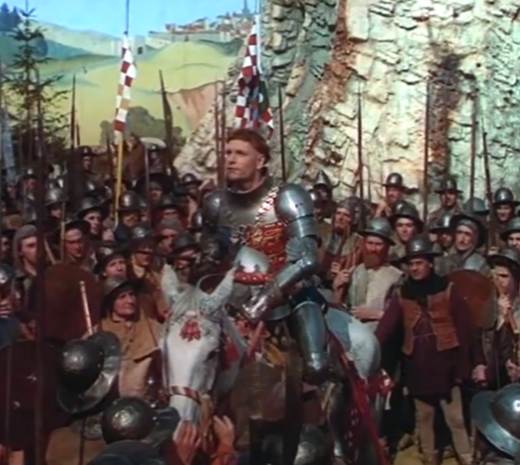
Might
Richard Farndale have been witness to such a speech?
The roar of the English cannon that open fire on
Harfleur once peace has been rejected will be remembered with dread for many
years afterwards. ‘From every side’, write Henry’s chaplain, ‘our king with his
guns … pounded the barbicans and the walls and the towers.’ (Dan
Jones, Henry V, 2024, page 259; Gesta
Henrici Quinti, Taylor and Roskill eds, page 39).
The siege of Harfleur ended in September as the
campaigning season was coming to an end. Nevertheless despite the risks of
campaigning so late in the year, Henry V decided to march home through Normandy
via Calais, perhaps to demonstrate his new hold on Normandy. He challenged the
rather pacific and lazy Dauphin to single combat, which was declined. Henry
left perhaps 1,200 men to garrison Harfleur and had lost perhaps 2,000, so he
had perhaps between 6,000 to 9,000 soldiers to march inland. In reacting to the
threat, the French would muster over 12,000, with some suggestions that their
number was much higher than that.
Henry V had hoped for a swift march to Calais, but
the French army blocked the English advance on the Somme. Suddenly, things
appear bleak. Ahead of Henry’s army lies the wide and now impassable obstacle
of the river Somme, guarded on its northern bank. To the rear is gathering a
large, fresh enemy army, fired by indignation at what the English have done in
Harfleur. To his left is the sea. (Dan Jones, Henry V, 2024, page 271).
After an exhausting diversion, the English
eventually crossed at an unopposed ford upriver.
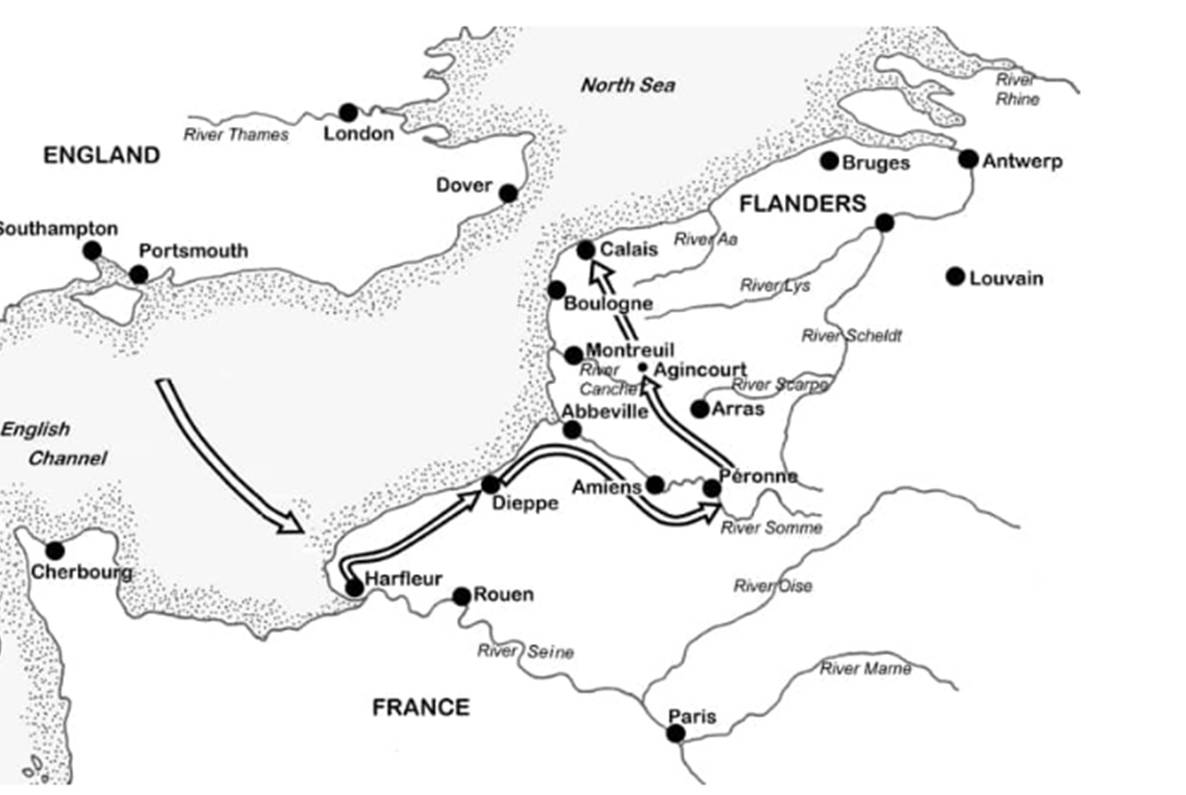
This was to be an encounter on the Somme five
hundred years prior to the grisly battles of the First World War in which many
Farndales participated, including Private (later Lance Corporal) George Weighill Farndale
and G333852 Private George Farndale.
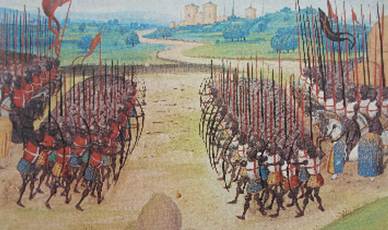
The armies eventually met around 45 miles south of
Calais, at Agincourt. Henry placed his bowmen in a V shape on either
flank. The longbowmen were a known threat to the French. A tradition evolved
after the battle that the French threatened to cut off the middle two fingers
of any bowmen captured to stop them firing again, and the archers responded to
the French with the defiant V sign. The French planned to take the archers with
their cavalry, but Henry ordered his archers to take the initiative to advance
until they were in range and then fire into the French horses and soldiers,
depriving them of the opportunity.
Once again the encounter was later imagined by
Shakespeare’s imagination of Henry V’s inspiring words at the dawn of the
battle.
We would not die in that man’s
company that fears his fellowship to die with us. This day is called the feast
of Crispian. He that outlives this day and comes safe home will stand o’ tiptoe
when this day is named and rouse him at the name of Crispian. He that shall see
this day, and live old age, will yearly on the vigil feast his neighbors and say “Tomorrow is Saint Crispian.” Then will
he strip his sleeve and show his scars. Old men forget; yet all shall be
forgot, but he’ll remember with advantages what feats he did that day. Then
shall our names, familiar in his mouth as household words, Harry the King,
Bedford and Exeter, Warwick and Talbot, Salisbury and Gloucester, be in their
flowing cups freshly remembered. This story shall the good man teach his son,
and Crispin Crispian shall ne’er go by, from this day to the ending of the
world, but we in it shall be remembered.
We few, we happy few, we band of
brothers, for he today that sheds his blood with me shall be my brother; be he
ne’er so vile, this day shall gentle his condition; and gentlemen in England
now abed shall think themselves accursed they were not here, and hold their manhoods cheap whiles any speaks that fought with us upon
Saint Crispin’s day.
|
Henry V’s rally at
Agincourt. |
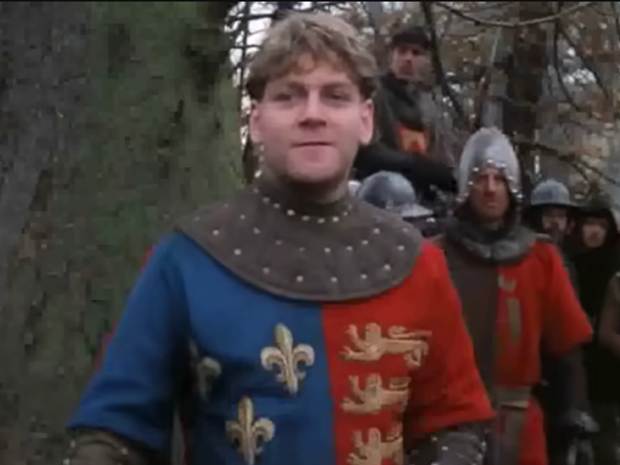
Could Richard Farndale have been
amongst the happy few, the band of brothers? If he was not, he must have known
those who were.
The French lost perhaps 10,000 whilst the English
were said to have lost only 100 to 200. Amongst the dead was Richard Duke of
York, father of Richard of York who would become to nemesis of the
Lancastrians, but at this stage the Yorkists were loyal to the King.
After the victory, Henry marched to Calais and
besieged the city until it fell soon afterwards, and the King returned in
triumph to England in November and received a hero's welcome. The brewing
nationalistic sentiment among the English people was so great that contemporary
writers described first hand how Henry was welcomed
with triumphal pageantry into London upon his return. These accounts also
describe how Henry was greeted by elaborate displays and with choirs following
his passage to St Paul's Cathedral.
Support for the King meant that Parliament eagerly
voted new taxes to fund further campaigns against the French. Agincourt also
fomented support for the new Lancastrian dynasty.
1417
The 1417 Normandy
campaign
The victorious conclusion of Agincourt, from the
English viewpoint, was only the first step in the campaign to recover the
French possessions that Henry felt belonged to the English crown. Agincourt
also held out the promise that Henry's pretensions to the French throne might
be realized. Henry V returned to France in 1417 to establish his reconquest of
Normandy.
Henry V’s second invasion of France was delayed from
its original target of May 1417. Harfleur was the target of a naval blockade by
French forces. This blockade was an attempt to regain control of the
strategically important town, which was crucial for English operations in
France. The English, under the command of the Duke of Bedford, successfully
broke the blockade in a naval battle, securing Harfleur and preventing its loss.
On 1 August Henry and his army land in Normandy,
about twenty miles south of Harfleur, on the opposite, southern side of the
Seine. The town closest to their landing point is called Touques,
and at the first sight of the English, its citizens surrender without a fight. (Dan Jones, Henry V, 2024, page 308).
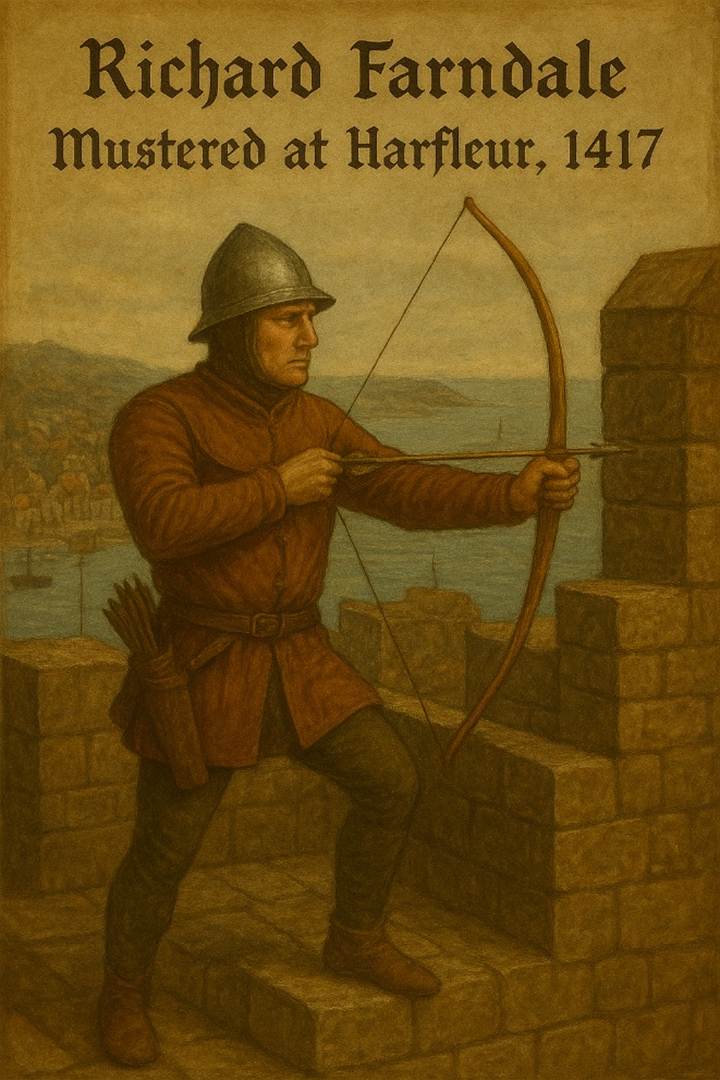
Richard Farndon was an archer
mustered in the Garrison at Harfleur under Thomas Beaufort, Earl of Dorset and
Duke of Exeter in 1417 (The National Archives
E101/48/17, Imperfect muster roll of the
garrison of Harfleur, 5 Henry V in eleven membranes). The Siege
of Harfleur from 17 August to 22 September 1415 had preceded the Battle
of Agincourt on 25 October 1415. It was at the gates of Harfleur that Henry
V had delivered his inspiring speech in 1415.
Richad Farndon
was part of the garrison at Harfleur by 1417. It is possible that he had been
at the siege in 1415 and had stayed there, as part of the garrison. If so, he
may have been inspired by Henry’s speech, if there was such a speech as
Shakespeare later wrote, at the gates of Harfleur in 1415.
On the other
hand, he may have joined the post Agincourt campaign in 1417. It might be that
after the losses sustained during the 1415 campaign, older veteran soldiers
were called upon to fill gaps in the ranks, which might make sense of Richard
forming part of the post Agincourt garrison at Harfleur.
The 1417 record
of Richard Farndon at Harfleur might indicate that Richard Farndale, who we
know from his will was a military man, was an old veteran fighting in those
campaigns, either part
of the 1415 Agincourt campaign and continuing in the wars that followed, or
joining the English force after Agincourt in their subsequent campaign up to
1421.
Richard
Farndale was descended from the poachers of Pickering Forest only a hundred years previously. It
was such men who certainly inspired the stories of Robin Hood and whose archery skills would foresee the bowmen of
ordinary folk who would one day fight at Agincourt.
Richard
might have been about 58 years old by this stage, so if he was part of a
medieval army, he would have been an old soldier. However if it was he who had
fought in France in 1380 and in Scotland in 1400, it is likely that this old
soldier had become a campaign warrior. His impressive armoury which he left at
his death suggests an old campaigner who had risen to possess the armoury of a
man at arms. He seems to have alternated between being an archer and a man at
arms.
Henry
went on to capture Caen and secure Lower Normandy in this phase of his
campaigns from 1417 to 1418.
By
July 1418 he had reached Rouen, which surrendered on 13 January 1419.
The
victory at Agincourt had inspired and boosted English morale, while it caused a
heavy blow to the French as it further aided the English in their conquest of
Normandy and much of northern France by 1419. The French, especially the
nobility, who by this stage were weakened and exhausted by the disaster, began
quarrelling and fighting among themselves. This quarrelling also led to a
division in the French aristocracy and caused a rift in the French royal
family, leading to infighting. In the Burgundian-Armagnac rivalry, the
Burgundian John the Fearless was murdered by a joint plot by the Armagnacs and
the dauphin, and a monk later commented that it was through the hole in his
skull that the English entered the noble Kingdom of France.
With John the Fearless dead, Henry remarked that I
shall now surpass all my ambitions.
By October 1419, Henry’s army had secured bridges
across the Seine close to Paris, giving him control of access into the city.
Margorie Farndale (executor to Richard’s will) might have been born in about 1419 (FAR00049). Her birth date
is estimated, so whilst she could have been conceived during some home leave if
Richard was engaged throughout the Agincourt campaign, or her year of birth
might have been different if Richard was campaigning throughout.
1420
By 1420, a treaty was signed between Henry V and
King Charles VI of France, known as the Treaty of Troyes, which acknowledged
Henry as regent and heir to the French throne and also married Henry to
Charles's daughter Catherine of Valois. Like Henry’s father, the French heir
apparent, the dauphin, was written out of his inheritance.
The Treaty of Troyes, signed on 21 May 1420, in Troyes, was a crucial
agreement during the Hundred Years' War. It stipulated that Henry V of England
would inherit the French throne upon the death of King Charles VI of France,
thus uniting the two crowns under a single ruler. This treaty aimed to resolve
the conflict by creating a double monarchy where England and France would be
ruled by the same king, Henry V and his heirs.
… the dauphin and the Armagnacs have been
disinherited and abused in the terms of the Treaty of Troyes. But they have not
been written out of existence. They still hold half of France, which as regent
of the kingdom, Henry now has a responsibility to bring back to obedience. (Dan
Jones, Henry V, 2024, page 352).
Following Henry’s marriage, the summer at first
proceeds in a straightforward fashion, as his army sweeps through the
countryside, smoking dauphinists from their dens (Dan
Jones, Henry V, 2024, page 353).
By June 1420 the town of Sens had surrendered. The
army then took Montereau.
There followed the siege of Melun between July and
November 1420. In 1420 the town of Melun surrendered to King Henry V. The siege
had rumbled on since June and had been fairly dramatic at times, with close
combat taking place literally beneath the walls as the besiegers and the
garrison dug mines and countermines in an attempt to bring the siege to an end.
James I of Scotland was present at the siege, brought to France in 1420 to be
Henry's trump card against the Scots serving on the Continent.
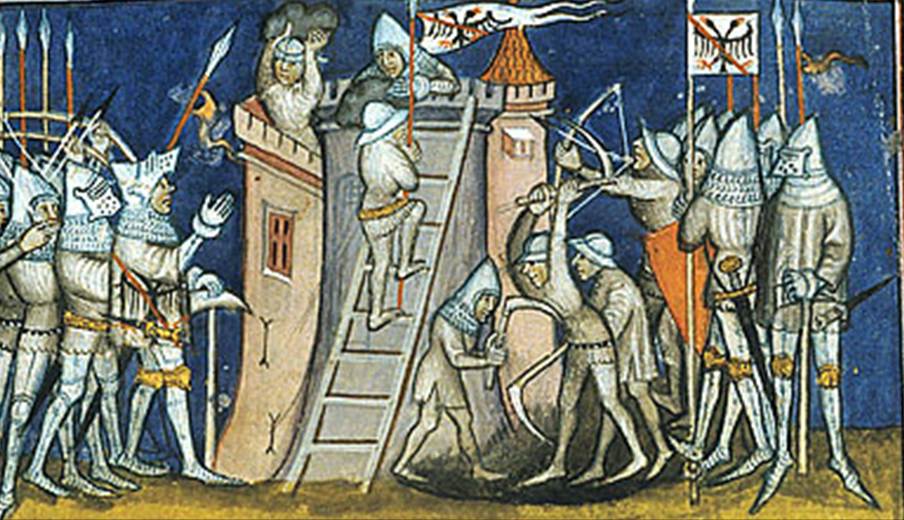
Siege of Melun from a late 14th century
manuscript
By 1 December 1420, Henry V entered Paris along with
Charles VI and the royal entourage. He returned to England in February 1421.
1421
Agnes Farndale, Richard’s second daughter, might
have been born in about 1421 (FAR00050).
The 1421 Campaign in
France
In early Spring 1421, Henry’s brother Thomas, the
Duke of Clarence, who had been left to command the Anglo-Burgundian region of
France, had decided that it was time for a little chevauchee action, and took
about half the English troops into dauphinist Anjou.
He turned back at Angers, which he found too well defended, but soon
encountered a large force of French and Scottish troops.
The Battle of Bauge saw the defeat of the Duke of Clarence and his
English army by the Scots and French army of the Dauphin of France. The battle
took place on 22 March 1421. The Duke of Clarence, King Henry V’s younger
brother commanded the English army. The Earl of Buchan commanded the
Franco-Scottish army. The English army numbered around 4,000 men, of whom only
around 2,500 men took part in the battle. The Franco-Scottish army comprised
5,000 to 6,000 men.
After the English defeat at Bauge, Henry returned to
France, and reinforced his army. He landed at Calais on 11 June 1421. He
knows he will be in France for at least six months, since this is the length of
the contracts he has struck with the troops he brings (Dan Jones, Henry V, 2024, page 376).
His first action was to relieve Chartres, which was
being besieged by the dauphin. After a brief visit to Paris, his army then
mustered at Mantes on 9 July 1421. Henry then led his army to the dauphinist castle at Dreux, to the west of Paris. The King
besieged and captured Dreux quite easily, and then went south, capturing Vendôme and Beaugency before
marching on Orléans to draw out the dauphin’s army.
With the autumn approaching he moved north again in
late September to Meaux with more than 20,000 soldiers, a strategically
important dauphinist stronghold, which he sieged. The
siege was long and costly, with disease significantly impacting his forces. During
all his time in France, Henry has seldom had such thin resources, nor faced
such stubborn opponents, as he does at the siege of Meaux (Dan Jones, Henry V, 2024, page 378). The French garrison was commanded by a
singularly vicious lord known as the bastard of Vaurus.
The siege of Meaux was fought from October 1421 to
May 1422. Henry and his fellow commanders, the earls of March and Warwick
and Thomas Beaufort, duke of Exeter, are better versed in siege craft than
almost any men alive. They seize the suburbs of Meaux and blockade the city by
land and water. They dig trenches and mines and set up cannon and catapults.
They detach troops to go out into the surrounding area and reduce other
outposts of enemy troops. (Dan
Jones, Henry V, 2024, page 378).
Richard Farendon
or Farndon
appeared again in the list
of medieval soldiers, as part of a Standing Force in France as a foot
soldier (Man at arms) and as an archer, under Richard Woodville the elder (1385
to 1441) and Richard Beauchamp, Earl of Warwick (The
National Archives E101/49/37, m4, Particulars of the account of Richard
Wydeville, Seneschal of Normandy and captain of Gisors
and la Tour de Chaumont, with muster rolls, 8 to 9 Henry V, in eleven
membranes.).
Richard Beauchamp, 13th Earl of Warwick held high
command at sieges of French towns between 1420 and 1422, at the sieges of Melun
in 1420, and of Mantes, to the west of Paris, in 1421-22. The more significant
siege was of Meaux to the east of Paris.
Many allies of King Henry were there to help him in
the siege. Arthur III, Duke of Brittany, recently released from an English
prison, came there to swear allegiance to the King of England and serve with
his Breton troops. Duke Philip III of Burgundy was also there, but many of his
men were fighting elsewhere.
Casualties began to mount in the English army,
including John Clifford, 7th Baron de Clifford who had been at the siege of
Harfleur, the Battle of Agincourt, and received the surrender of Cherbourg.
Also killed in the siege was 17-year-old John Cornwall, only son of famous
nobleman John Cornwall, 1st Baron Fanhope. He died
next to his father, who witnessed his son’s head being blown off by a
gun-stone.
The English also began to fall sick rather early
into the siege, and it is estimated that one sixteenth of the besiegers died
from dysentery and smallpox while thousands died thanks to the courageous
defence of the men-at-arms inside the city.
On 6 December 1421 back in London, Henry and
Catherine’s son is born, the future Henry VI.
As the siege continued, Henry himself grew sick,
although he refused to leave until the siege was finished. Good news reached
him from England that on 6 December, Queen Catherine had borne him a son and
heir at Windsor.
On 9 May 1422, the town of Meaux surrendered,
although the garrison held out. Under continued bombardment, the garrison gave
in as well on 10 May, following a siege of seven months. The Bastard of Vaurus was decapitated, as was a trumpeter named Orace, who
had once mocked Henry. John Fortescue was then installed as English captain of
Meaux Castle.
It seems likely that Richard Farndale took part in some or all of
these siege campaigns around Paris in 1421.
If these records are indeed Richard Farndale of Sheriff Hutton,
then he appears to have been an old soldier who campaigned with Henry V, and
perhaps built up his small wealth on campaign.
The summer is blisteringly hot and disease is
everywhere. An epidemic of smallpox in Paris infects more children than anyone
can count. (Dan Jones, Henry V,
2024, page 385) At Meaux Henry had
already been suffering some of the symptoms of camp sickness, which had
troubled him sufficiently then that he brought a doctor from England to attend
him.
The dauphin offered one more opportunity for pitch
battle south of Paris, but the dauphin once again evaded a direct encounter. On
his return to Paris Henry stumbles and his end is close.
The
reign of Henry VI (1422 to 1461 and 1470 to 1471)
Henry
V died in 1422 and left a nine month old baby son, Henry VI. The
inter noble rivalry would soon pick up again.
Henry VI had no father to guide
him to Kingship and he relied on his advisors. He became timid and passive and
focused on religion. At this point in history, the nobility needed strong
leadership to control their ambitions. After the expensive battles in France,
financial resources were depleted. The young king was easily controlled by the
rival noble families.
This unpopularity would ferment
displeasure with the Lancastrian dynasty, which under Henry V had been so
popular, and would stir up a Yorkist uprising.
The Yorkist cause was most
strongly supported by the Nevilles of Sheriff Hutton. Cecily Neville married
Richard, Duke of York, the main protagonist of the Yorkist cause. Their son,
Edward IV would found the Yorkist dynasty in 1461. Richard Neville, Earl of
Warwick, the King Maker, was the main political strategist to the Yorkist
cause, at least in the early stages of the Wars of the Roses.
Richard
was perhaps about 60 by this time, too old perhaps to take an active role
himself. However he lived in Sherif Hutton, at the heart of the cauldron that
started to bubble amongst the Yorkists. As a proud old soldier of Henry V he
was likely to have been appalled at the failures of Henry VI, stirred on no
doubt by his landlords, the Nevilles. In the last dozen years of his life, we
can imagine Richard over dinner with his daughters spitting with rage at where
things had got to under Henry VI, and yearning for the new glamour of the
Yorkist cause. In an old chest in his bedroom perhaps, his armour of bascinet,
breastplate and arm and leg fittings must have lain. His grey horse rested in
the stables. He probably would have put them on and rode out with the Nevilles
if he had been asked to do so.
However at
this stage Henry VI was just a young King, not yet a hopeless adult one and the
Wars of the Roses did not kick off until 1455, twenty years after Richard’s
death. He would leave his three daughters to live through the years of Yorkist
and Lancastrian rivalry. We only know their names. Perhaps they were passive
witnesses to the events which would follow. Perhaps their husbands and their
sons engaged in those Wars. We don’t know.
Richard’s
armour was bequeathed to the church, to pay for his funeral. Perhaps when the
civil war kicked off, they were taken by some other man at arms who likely
fought with the Yorkists, under the Neville banner.
1423
Alice Farndale, his third daughter, might have
been born in about 1423 (FAR00051).
1430
There was a Richard
Fare … (the rest of the name is unreadable) engaged as a man at arms on
foot with the English Navy at the Siege of Chateau Gaillard, under the command
of John Matthew on 2 March 1420 (Bibliothèque
Nationale de France, MS. Fr. 25769, no. 471). There was also a Richard
Farndon who was an archer at the gate of the Garrison of Rouen under
Richard Beauchamp, Earl of Warwick, listed in the muster roll on 28 May 1430 (Bibliothèque Nationale de France, MS. Fr. 25769, no. 492).
It is unlikely, though possible, that this was him.
Château Gaillard is a medieval
castle overlooking the River Seine. The castle changed hands several times in
the Hundred Years' War. Étienne de Vignolles, a routier or
mercenary known as La Hire, recaptured Château Gaillard for the French
in 1430. However, the English were revived by the capture and execution of Joan
of Arc, and although by then the war was turning against them, a month later
they captured Château Gaillard again. In 1449 the French king captured Château
Gaillard from the English king definitively, and from then on it remained in
French ownership.
Richard Beauchamp, 13th Earl of
Warwick KG (1382 to 1439) was an English medieval nobleman and military
commander. He was given responsibility for the education of the infant Henry
VI. He acted as superintendent of the trial of Joan of Arc.
In 1430, Joan of Arc was
captured at Compiègne by the Burgundians, allies of
the English. She was then transferred to Rouen, where she was tried for heresy
by Bishop Pierre Cauchon and ultimately burned at the stake in 1431. The trial
and execution took place during the English occupation of Rouen during the
Hundred Years' War.
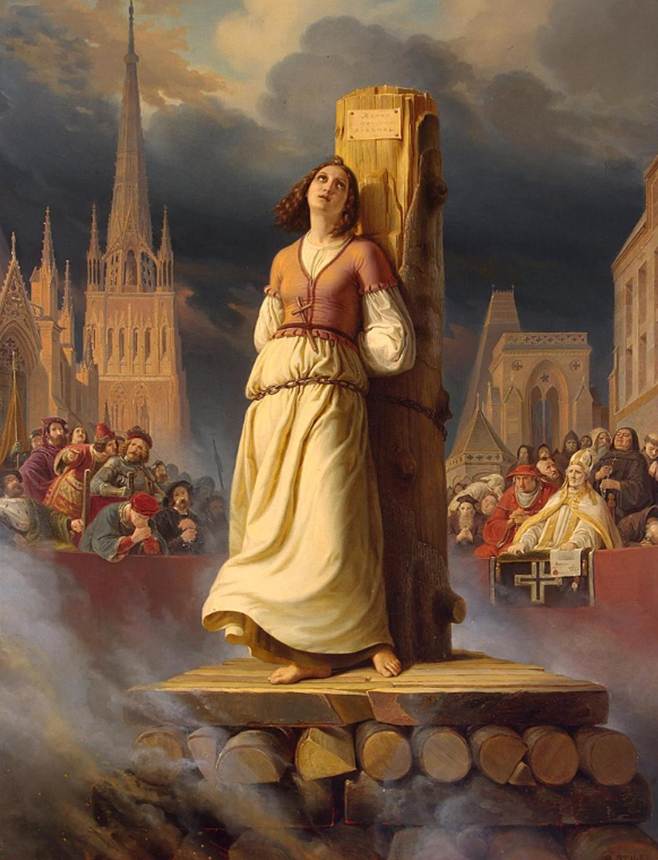
Joan of Arc, burnt at the stake
in Rouen, 30 May 1431, a painting by Hermann Stilke
Might
Richard, by then in his late sixties, have witnessed the end of Joan of Arc? It is perhaps
unlikely.
1435
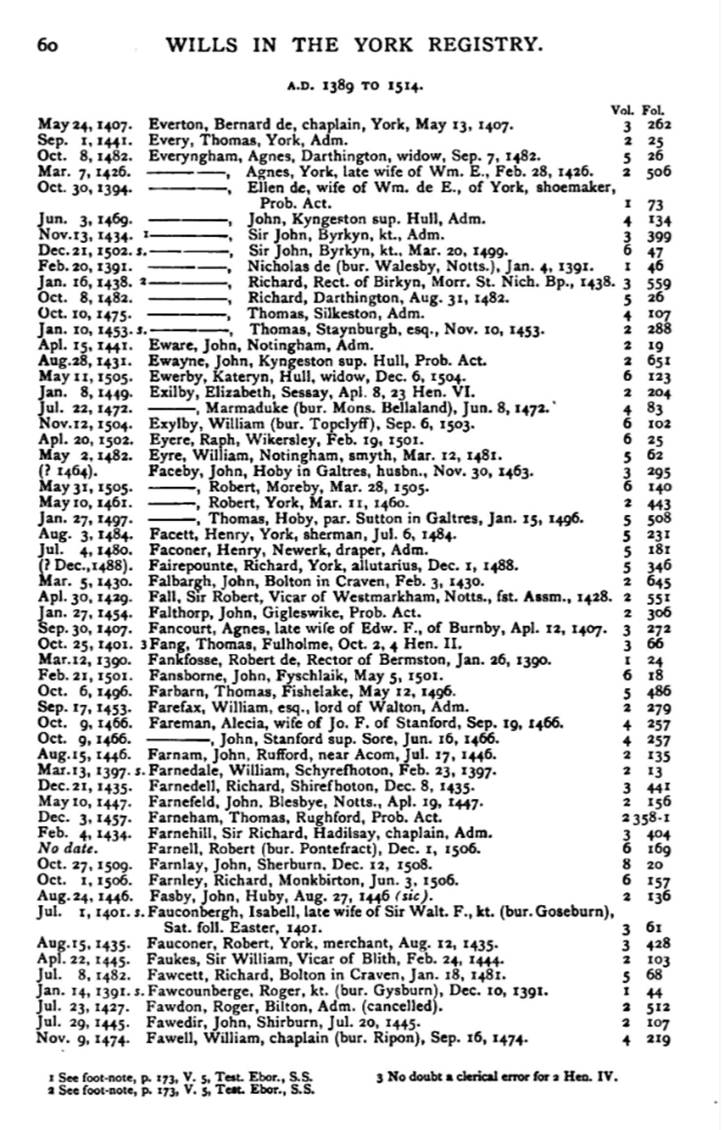
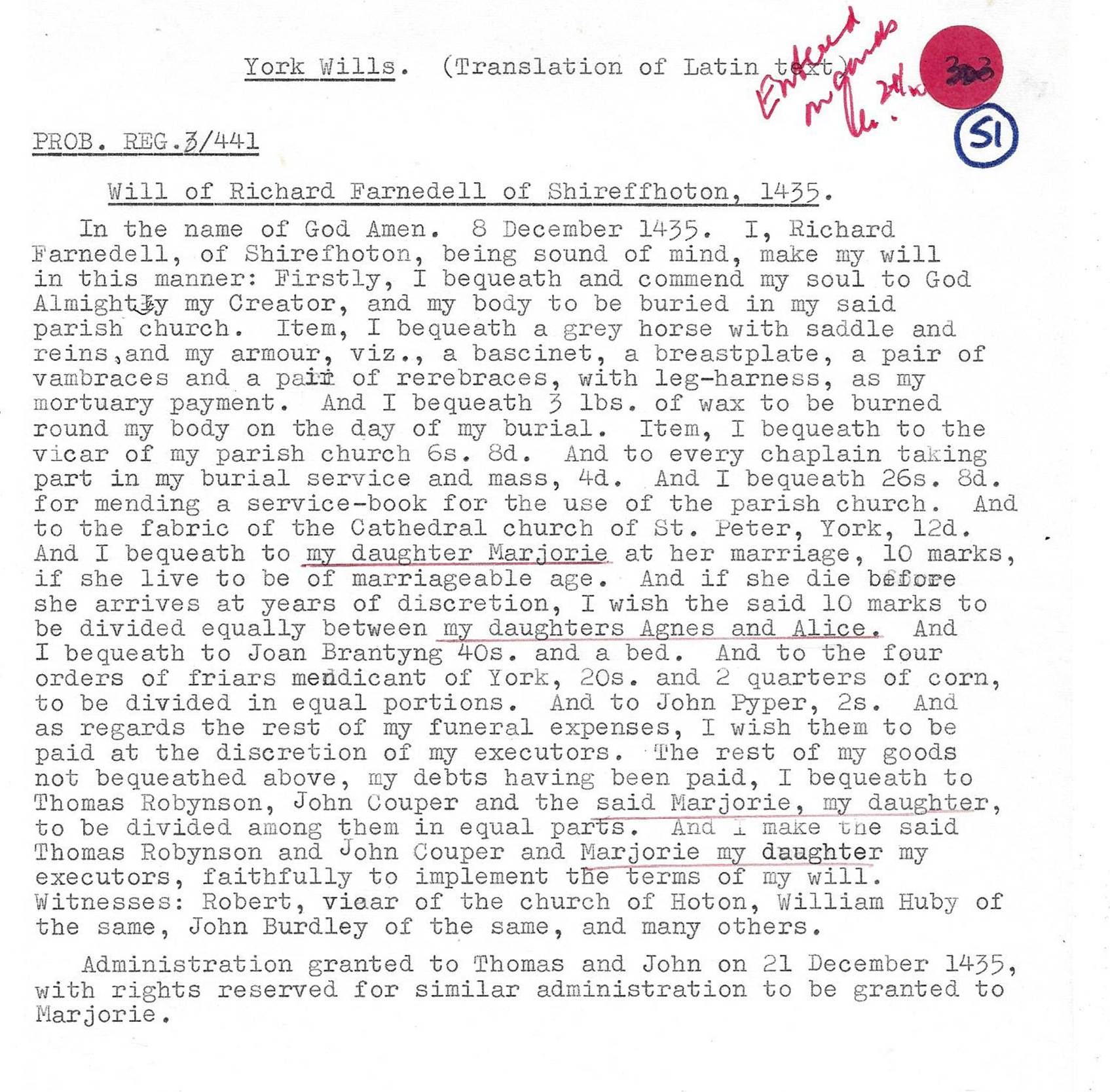
The Will of Richard Farendale, proved at
Sherifhoton 21 Dec 1435.
‘In the name of God Amen, 8th December 1435. I Richard Farndell
being of sound mind make my will in this manner. Firstly, I bequeath and
Commend my soul to God Almighty, My Creator, and my body to be buried in my
said Parish Church.
Item. I bequeath a grey horse with saddle and
reins and my armour, viz: a bascinet, a breast plate, a pair of vembraces and a
pair of rerebraces with leg harness as my mortuary payment. And I bequeath 3
lbs of wax to be burned around my body on the day of my burial.
Item. I bequeath to the Vicar of my Parish Church
6s 8d and to every chaplain taking part in my burial service Mass, 4d.
And I bequeath 26s 8d for mending a service
book for the use of the parish church.
And to the fabric of the Cathedral Church of
St Peter York, 12d.
And I bequeath to my daughter Margorie at her
marriage 10 marks, if she live to be marriageable age. And if she die before
she arrives at her years of discretion, I wish the said 10 marks to be divided
equally between my daughters Agnes and Alice.
And I bequeath to Joan Brantyng 40s and a bed.
And to the four orders of friars mendicant of
York 20s and two quarters of corn to be divided in equal portions.
And to John Pyper 2s.
And as regards the rest of my funeral
expenses, I wish them to be paid at the discretion of my executors.
The rest of my goods, not bequeathed above, my
debts having been paid, I bequeath to the said Margorie, my daughter, to be
divided among them in equal parts.
And I make the said Thomas Robynson and John
Couper and Margorie my daughter, my executors, faithfully to implement the
terms of my will.
Witnesses; Robert, Vicar of the Church of Hoton,
William Huby of the same, John Burdley of the same and many others.’
Administration was granted to Thomas and John on
21 December 1435 with rights reserved for similar administration to be granted
to Margorie.
(Translated from Latin text of Will held at York. Prob. Reg. 3/441).
Richard Farndale therefore died between 8 and 21
December 1435.
York Prerogative & Exchequer Courts, Will;
Language: Latin; Will date: 8 Dec 1435; Probate date: 21 Dec 1435; Reference code: ProbReg 3; Folio: 441r, York Medieval
Probate Index, 1267-1500
(York Wills)
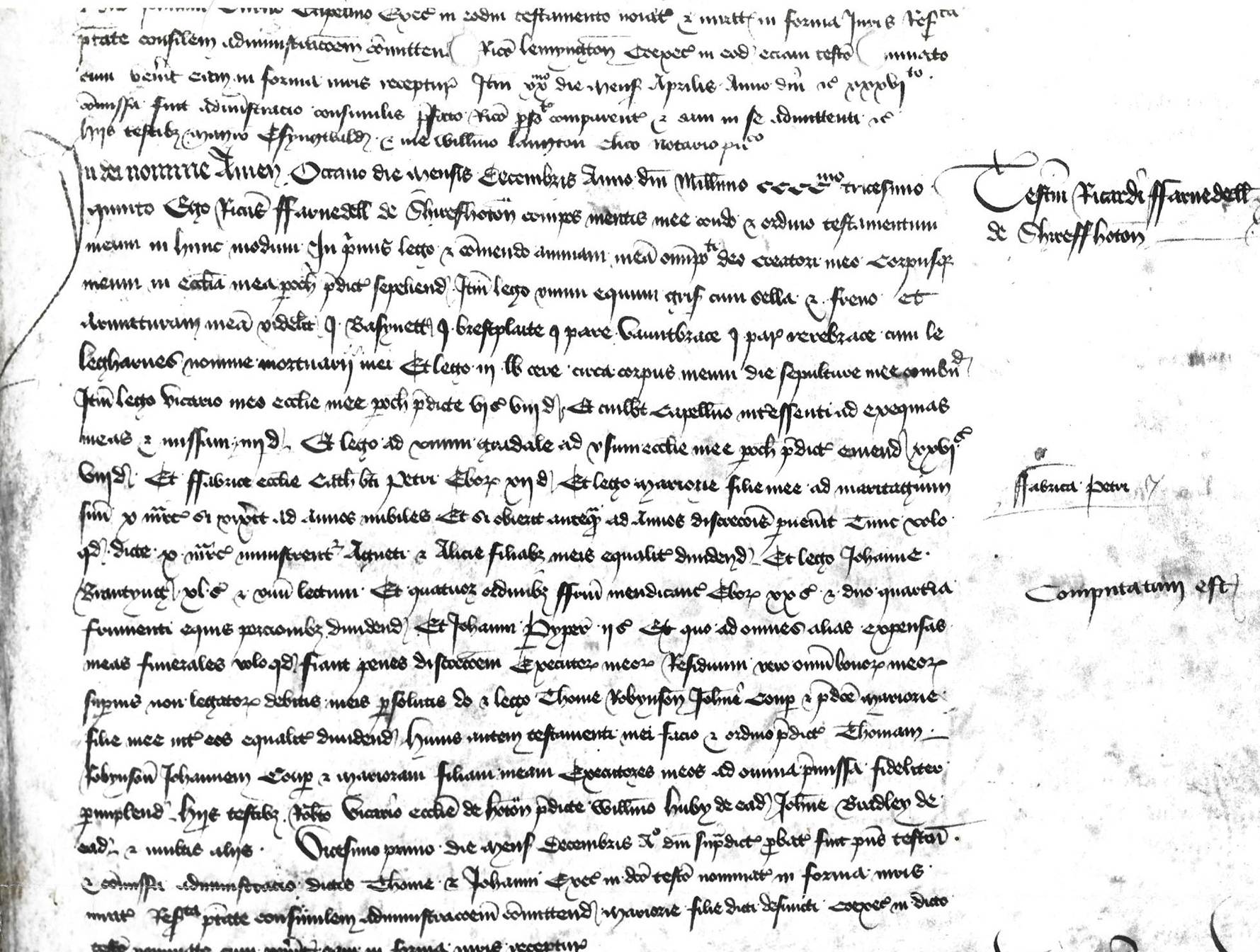

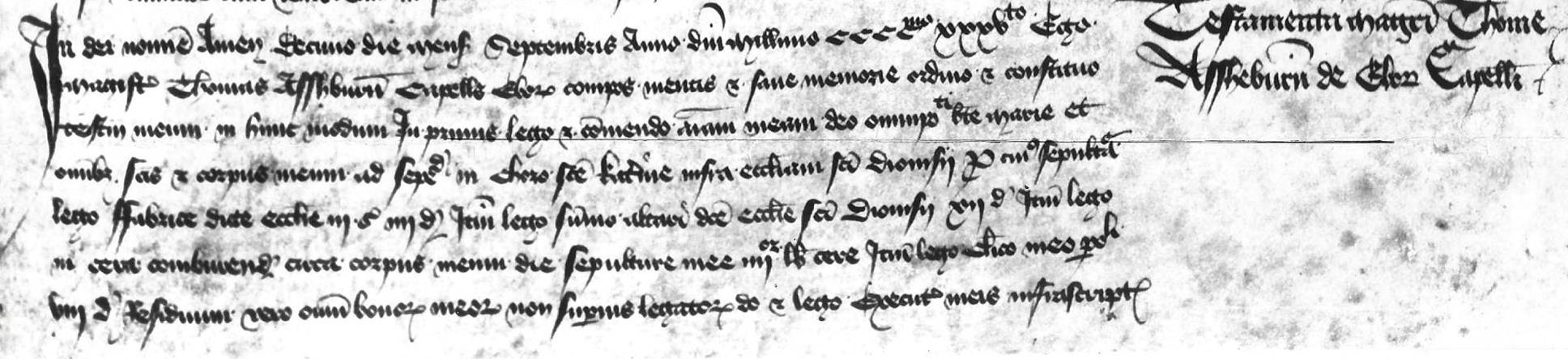
Richard’s Armour and horse:

His grey Horse
His bascinet His
breastplate
His vambraces His rerebraces
|
|
|
|
|
|
|
|
|
|
|
|
|
|
|
|
|
|
|
|
|
|
|