William Farndale of Sheriff Hutton
c 1332 to 1398
The Medieval
Inhabitants of Farndale
FAR00036
|
Return to the Home Page of the Farndale Family
Website |
The story of one family’s journey through two
thousand years of British History |
The 83 family lines into which the family is divided.
Meet the whole family and how the wider family is related |
Members of the historical family ordered by date of
birth |
Links to other pages with historical research and
related material |
The story of the Bakers of Highfields, the Chapmans,
and other related families |
Dates are in red.
Hyperlinks to
other pages are in dark
blue.
Headlines are in brown.
References and
citations are in turquoise.
Context and local
history are in purple.
Geographical
locations are in green
Cayton,
near Scarborough or near Harrogate (see below)
1332
William
Farnedale of Shyrefhoton was a relatively wealthy man when he died
on about 13 March 1398, leaving his will. If he lived to about 65, he was born
in about 1332.
William Farnedale
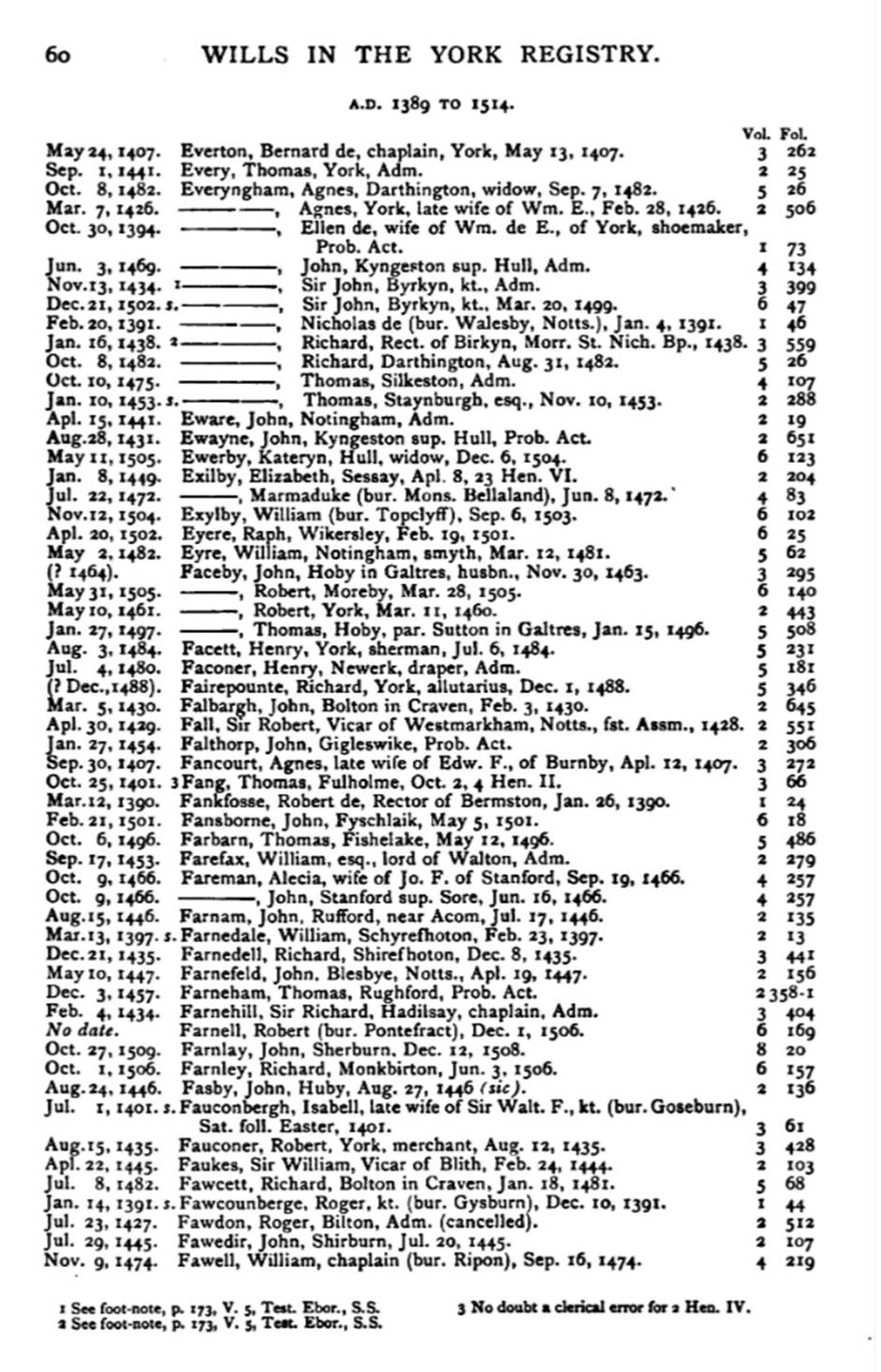
of Shyrefhoton’s Will was proved on 13 March 1398. If
he was 65 at the time, then he was born about 1332 (York Wills). He might have been the son
of Walter de Farndale (FAR00015), the itinerant vicar. If so, this may have
been when they were living at Cayton.
His
grandfather was probably Walter de Farndale of Cayton, one of the early family
pioneers who had left the dale of Farndale but adopted its name. Walter de
Farndale of Cayton was killed, probably murdered, by Hugh of Lebreston, for which Hugh was later pardoned on 24 May
1328, but on condition that he joined an expedition against the Scots. It seems
most likely that William was born in Cayton, the family home at that time.
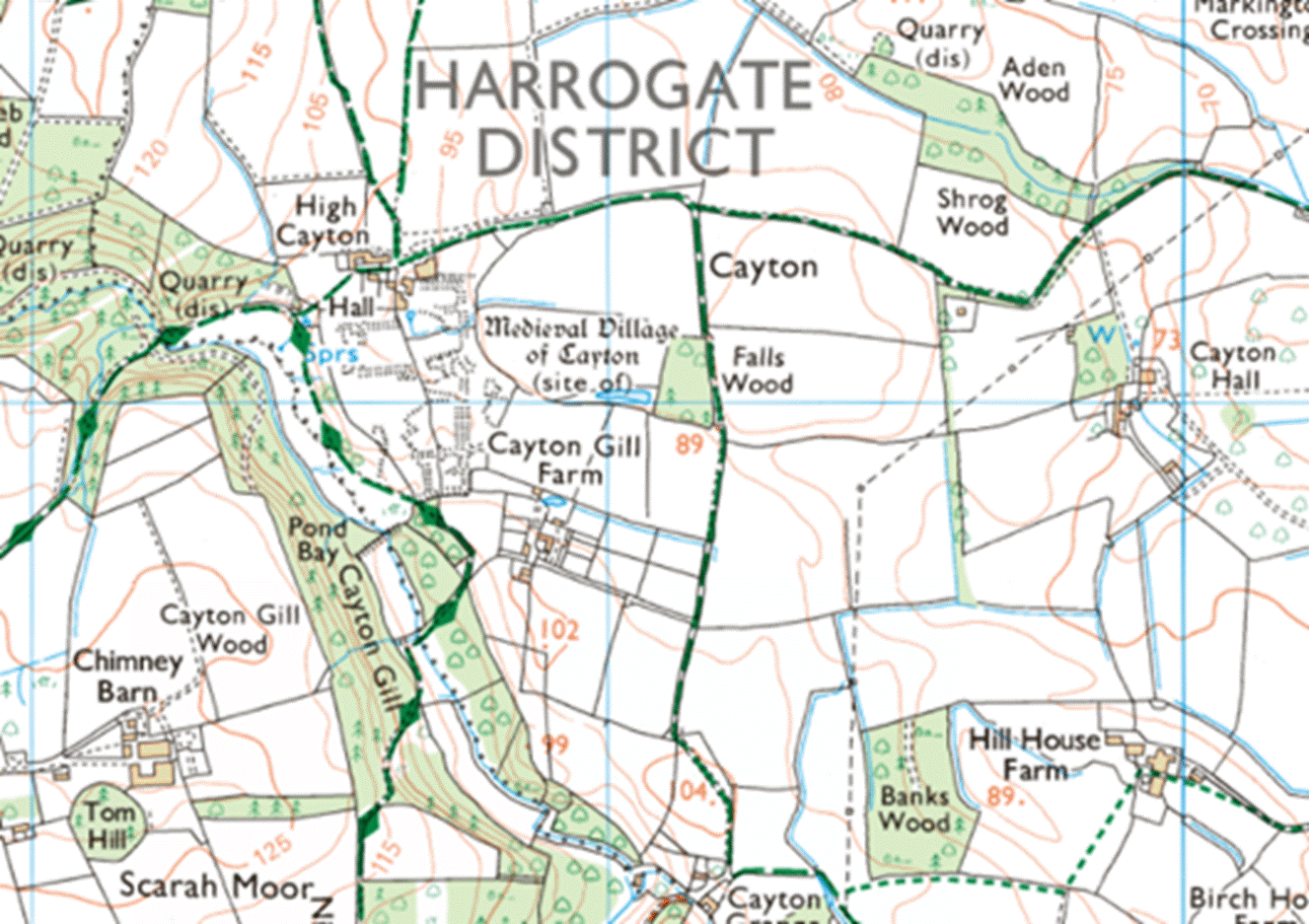
Cayton was probably the medieval village about 10 kilometres north of
Harrogate.
Hoo
St Werburgh, Kent
1335
The family may
have moved to Hoo St Werburgh in Kent, where Walter was the vicar.
Haltwhistle,
Northumberland
1338
The family then moved to Haltwhistle in Northumberland, where Walter became the
vicar.
By 1338
William’s father, Walter de Farndale the Younger, had joined the clergy and was
the vicar at Haltwhistle, near Hexham in Northumberland. From there his father
took an ecclesiastical post at Layzonby near Carlisle
and afterwards moved south to vicarage in the south of England and around
London.
It seems
likely that William stayed with his grandparents, perhaps his mother, and was
brought up at Cayton. The Harrogate Cayton was a monastic grange,
with a speciality in fish farming. In common with much of the north of England, the grange was devastated by
attacks by the Scots in the early part of the fourteenth century. By 1363
Cayton was still in a parlous state and the abbey decided to convert it, along
with eight other granges, into a secular vill and
rent it out to lay tenants.
Elishaw Hospital, Elsdon and Leysingby near Carlisle
1340
The family moved to Elishaw
Hospital in the Parish of Elsdon, Northumbria, where Walter was the Master.
1341
The family moved
to Leysingby Hospital near Carlisle, where Walter was
the Master.
1342
The family moved back to Elishaw
Hospital in the Parish of Elsdon, Northumbria, where Walter was the Master
again.
Derleye and Caleys,
near Harrogate
1347
Walter Farndale
moved south to Eltham, Carlisle and London. It may have been at this time that William
left home to make his own life. He may have moved to the area around Harrogate.
He seem to have initially followed his father into the church.
1356
The Will refers
to Juliana Farndale, his wife. If he was 24 when he married then they may have
married in about 1356.
On 15 October 1358, a pardon was given by the Sergeant at Arms to
William Attwode for having enfeoffed John de Banaby
and William Farndale, chaplains of the Manor of Derleye,
held in chief, and then re-entered into the Manor, which they quitclaimed to
him without the King’s licence and grant that he shall retain the same fee. (Patent Rolls).
So William Farndale was chaplain of Derleye
by 1358. Derleye is probably a reference to
Darley, which is a place about ten kilometres northwest of Harrogate, six
kilometres north of the Lancastrian, John of Gaunt’s castle. There are no other
places which are similarly named to Derleye in
Yorkshire.
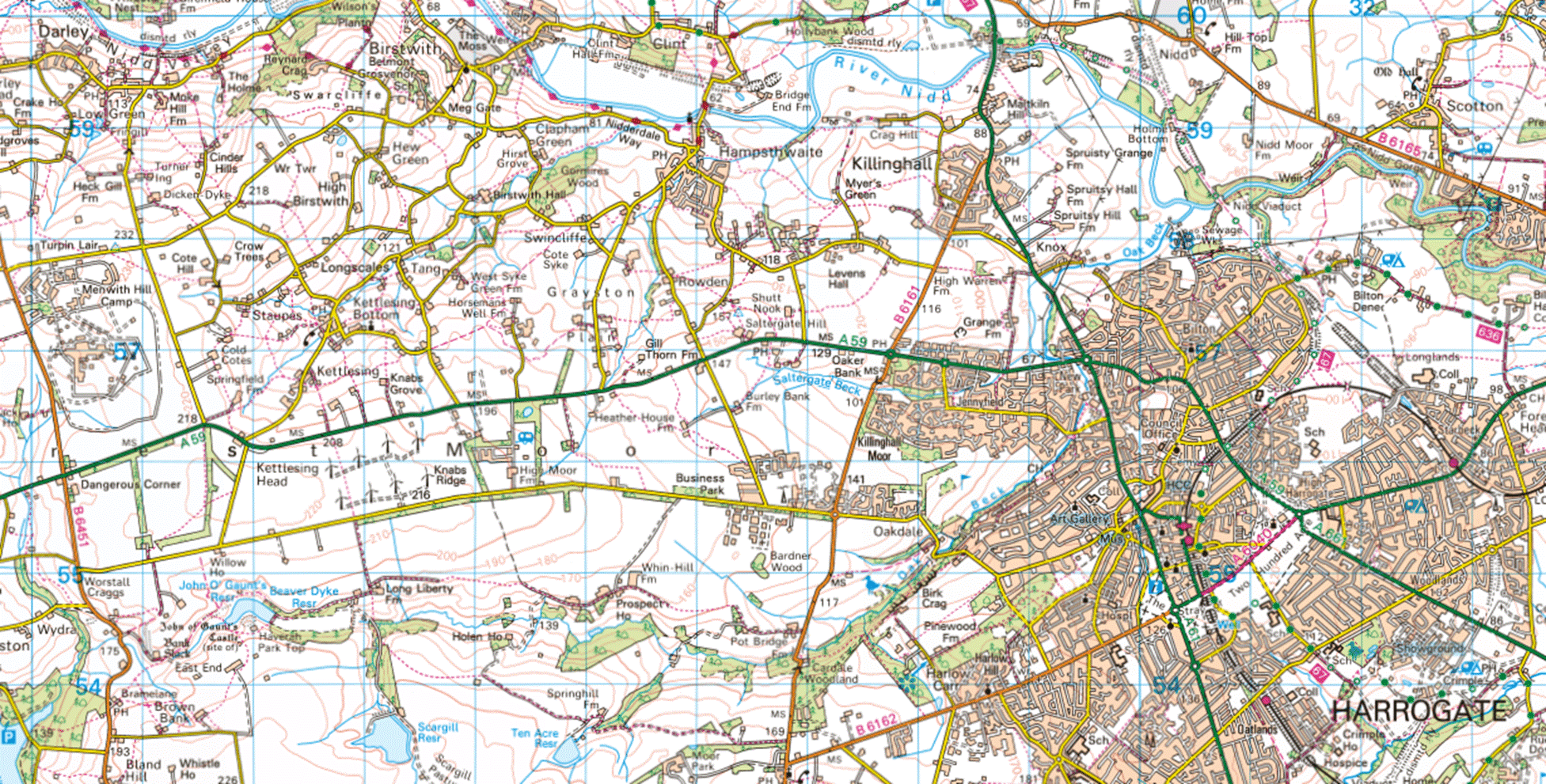
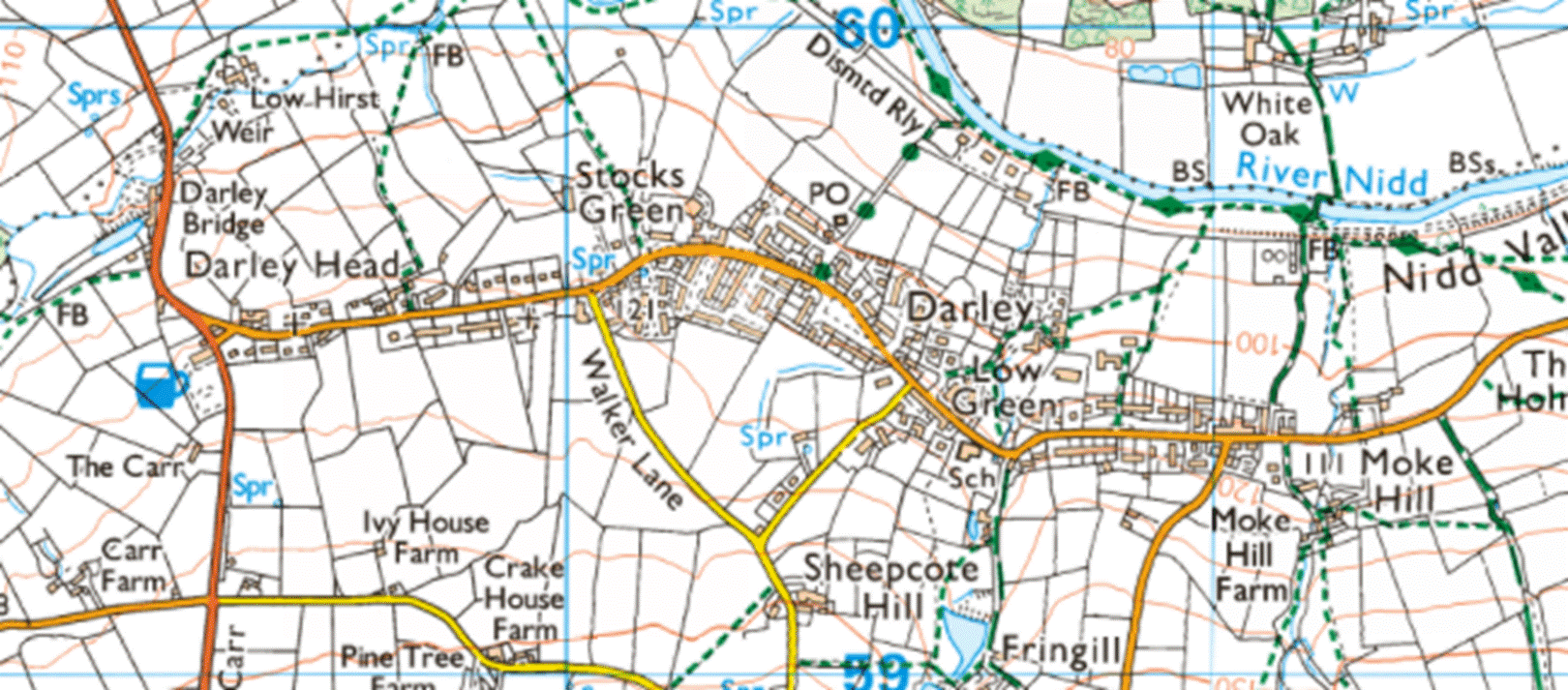
It is interesting to note that only 10 km northeast of Darley is the
medieval village of Cayton. It might be recalled that William’s grandfather,
Walter de Farndale of Cayton (FAR00014A), was murdered by Hugh de Faulkes of
Lebreston. Cayton is a village south of Scarborough,
only 2 kilometres from Lebberston. So the obvious
conclusion is that there was a neighbourly dispute involving the inhabitants of
two neighbouring villages. However since Walter’s grandson, William later chose
to live at Darley, near the medieval village also known as Cayton, there is also
a logic to the Harrogate Cayton being the family home of this part of the
family.
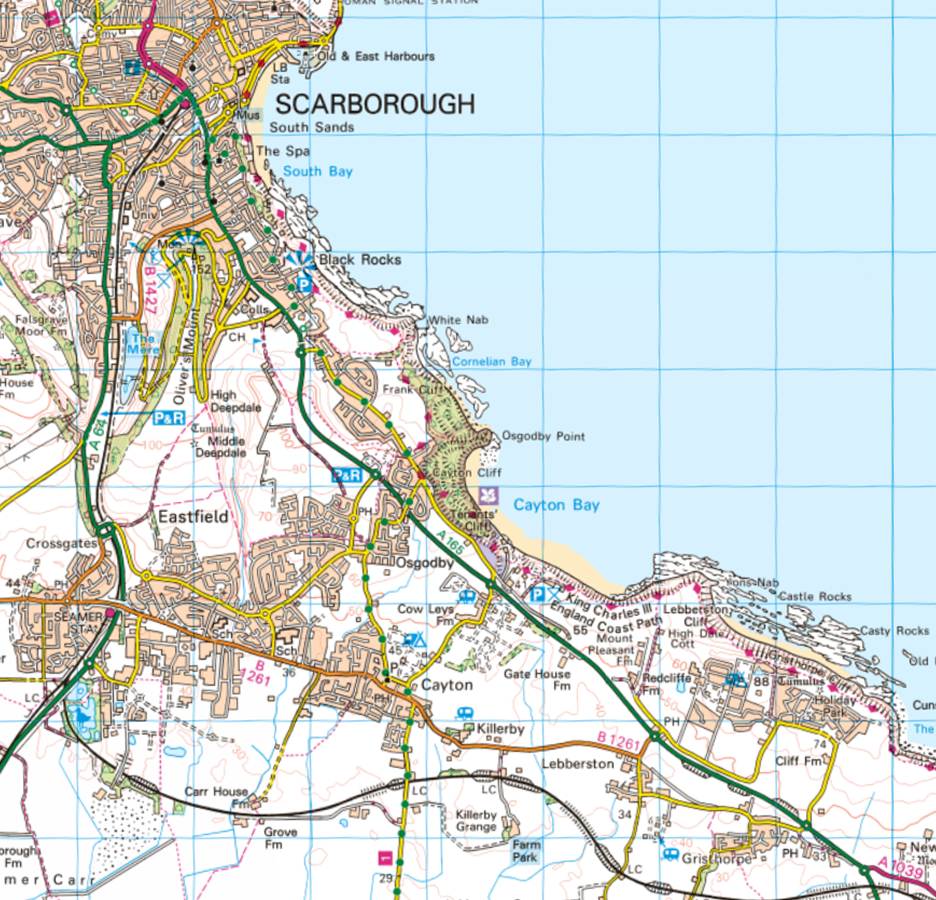
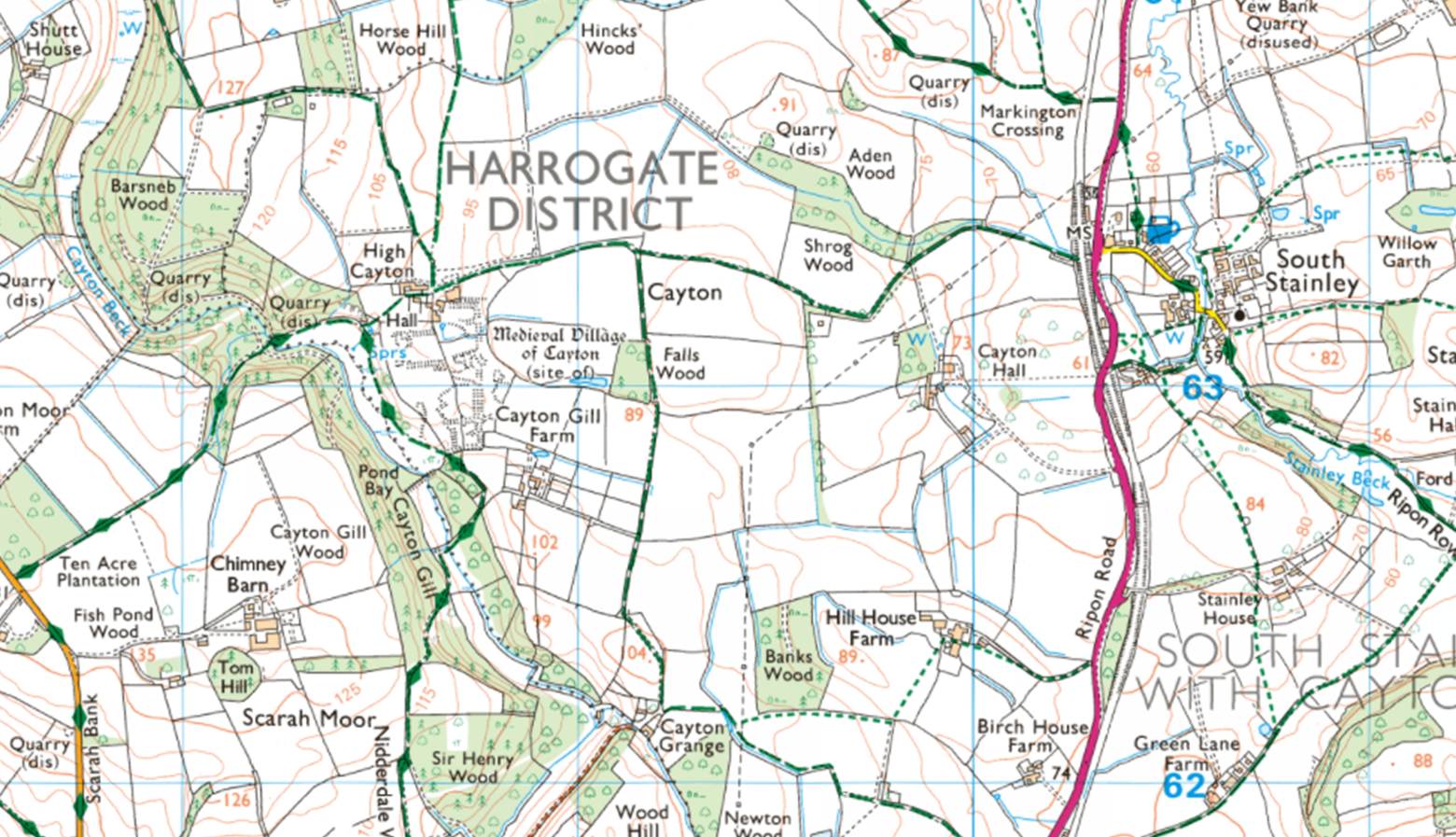
The Scarborough Cayton
The Harrogate Cayton
So if William was indeed Walter, the vicar’s son, who by 1358 was a
vicar in the south of England, it is not unlikely that William, the chaplain of
Darley, was his son. If his grandfather was the murdered Walter of Cayton, this would tend to suggest a
reference to the Harrogate Cayton.
1359
Helen Farndale, (FAR00045)
William and Juliana’s daughter, might have been born in
about 1359.
1362
Richard Farndale, (FAR00044)
William and Juliana’s son, who he made his executor and therefore must have
been of mature age, say about 35, might have been born in about 1362 and became a
medieval veteran soldier in the armies of Richard II and Henry V.
1363
Agnes Farndale, (FAR00046)
William and Juliana’s daughter, might have been born in about 1363.
1365
William Farndale, (FAR00052), who may also have been William and Juliana’s daughter, might
have been born in about 1365.
1370
On
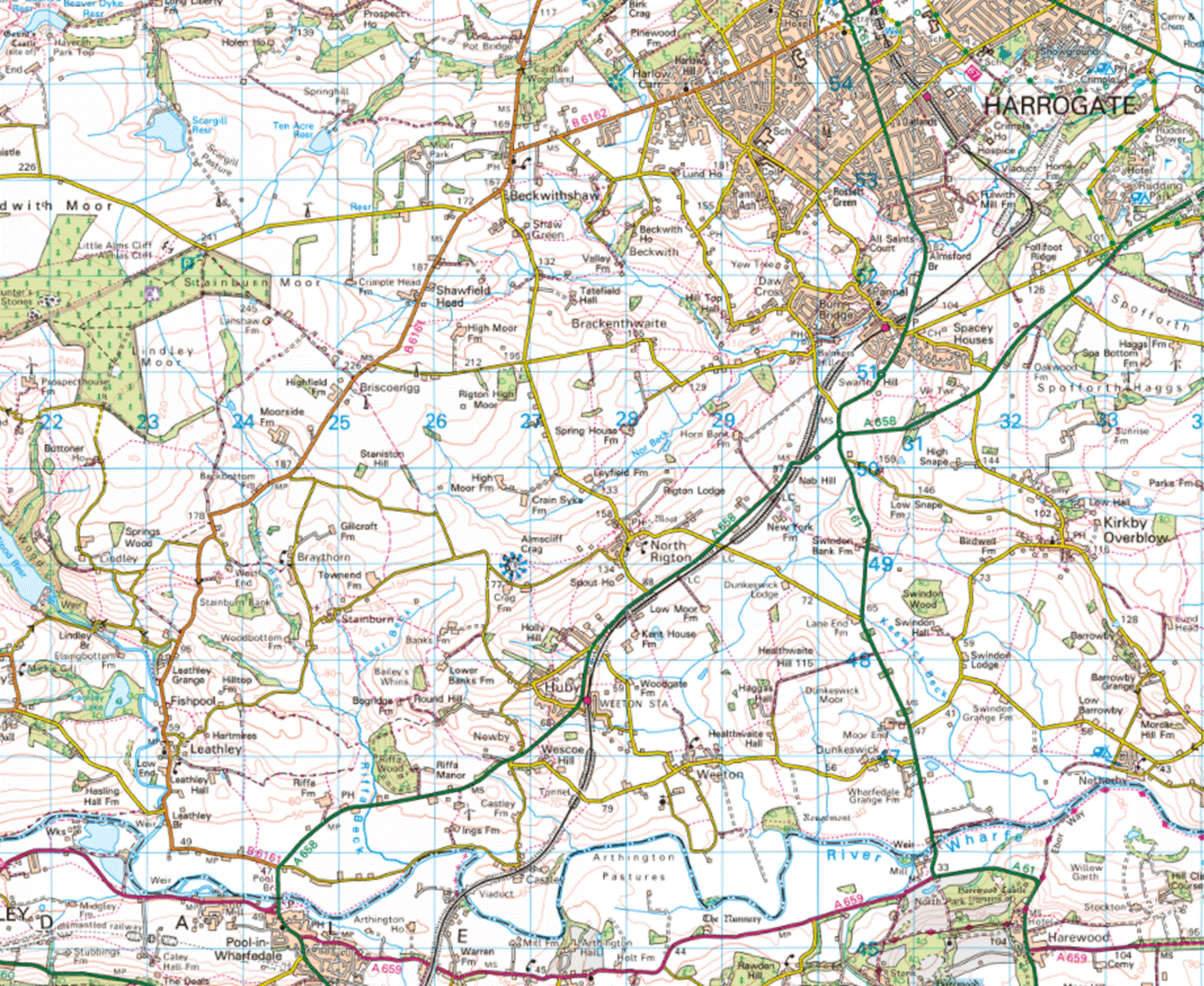
7 May 1370, a pardon was granted to William Farndale of the King’s suite at Caleys for the death of John de Spaldyngton whereof
he is indicted of any consequent outlawry. Spaldington is a place about twenty
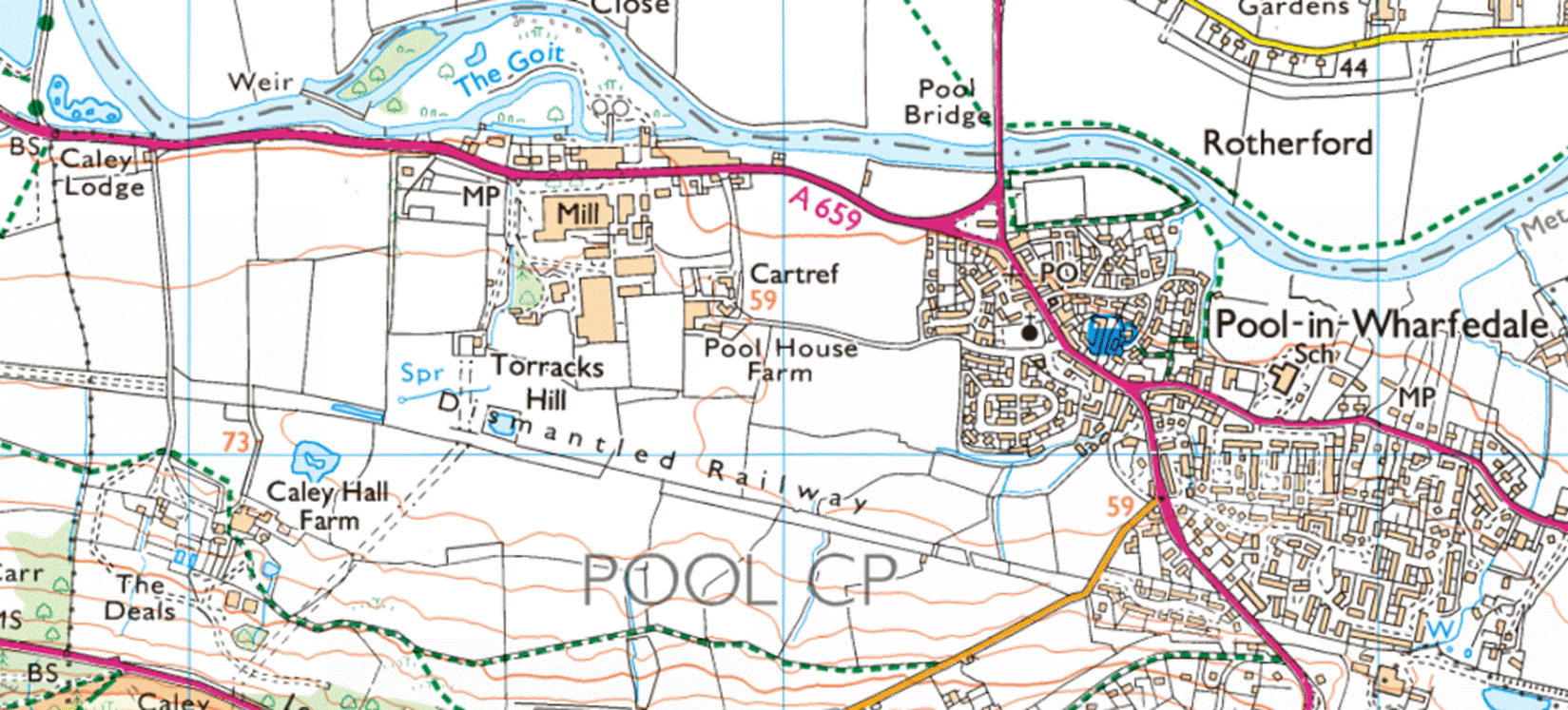
kilometres southeast of York. Caleys is more
difficult to identify, but there is a location, about ten kilometres southwest
of Harrogate, called Caley Hall. Since this is in the vicinity of both Cayton
and Darley, this seems quite likely to be another reference to William.
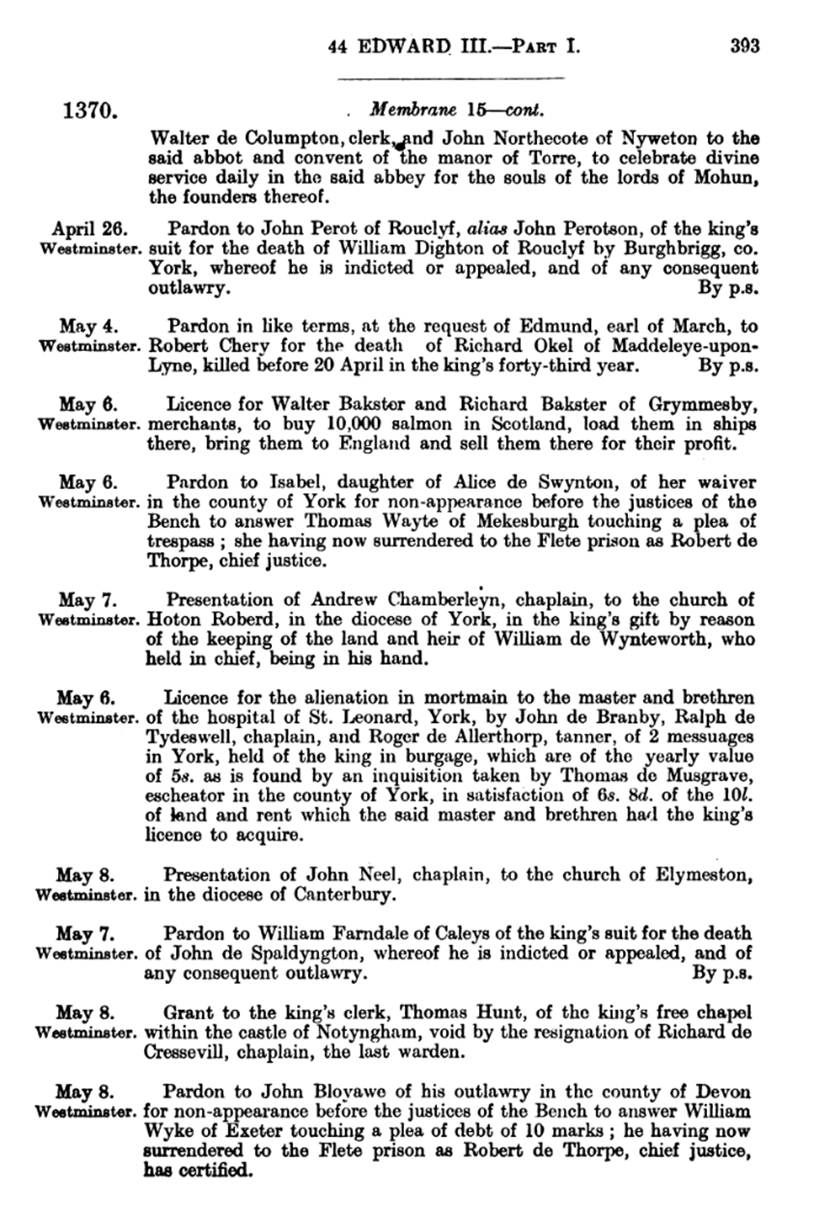
On 7 May 1370, a pardon was granted to William Farndale of the
King’s suite at Caleys for the death of John de Spaldyngton whereof he is indicted of any consequent
outlawry. The
index states ‘Farndale, William of Calais.
If William was 38
at the time then this could be this William.
There is the following reference in the Patent Rolls, 7 May 1370, 44 Edward III Part 1, page 393: May 7, Westminster. Pardon to William
Farndale of Caleys of the king’s suit for the death
of John de Spaldyngton, whereof he is indicted or appealed, and of any
consequent outlawry. By p.s.
(Calendar of Patent Rolls, 44 Edward III – Part I, page 393).
The index refers to Farndale, William of Calais, but this
is almost certainly an error in the indexing.
Spaldington is about 20
kilometres southeast of York.

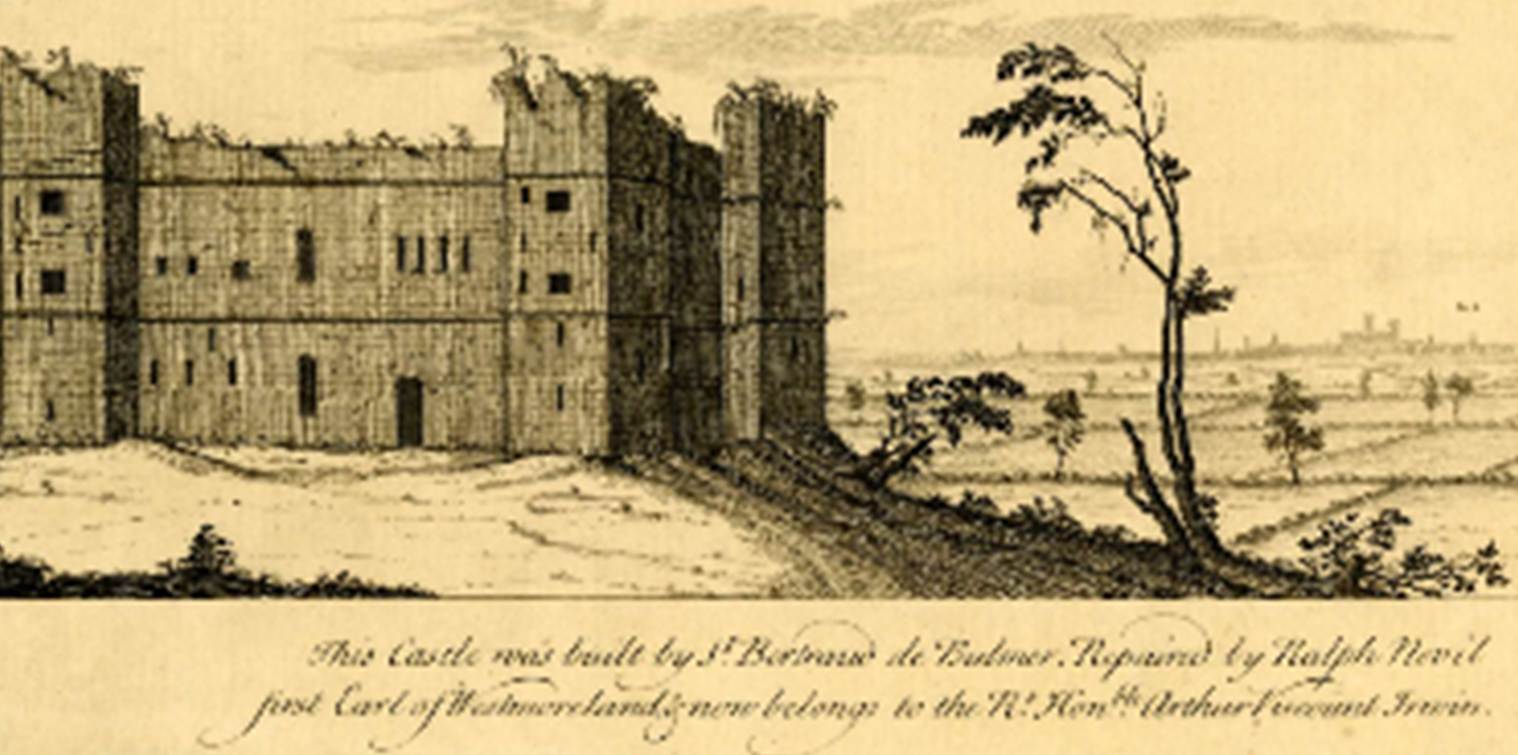
Sheriff Hutton
1372
It was perhaps at
about this time that William and his family decided to move, and settled in Sheriff
Hutton, the home of the Nevilles along with Raby and Middleton Castle. He
would move his family into the centre of English political affairs, through the
period of the Hundred Years War and on to the Wars of the Roses, in which the
Nevilles would play a central role. In doing so, this part of a family that had
been firmly rooted in the Yorkshire interests of House Lancaster at Pickering,
would place itself at the heart of a family that would play a key role in
establishing the Yorkist dynasty, though belatedly realigning with the
Lancastrians.
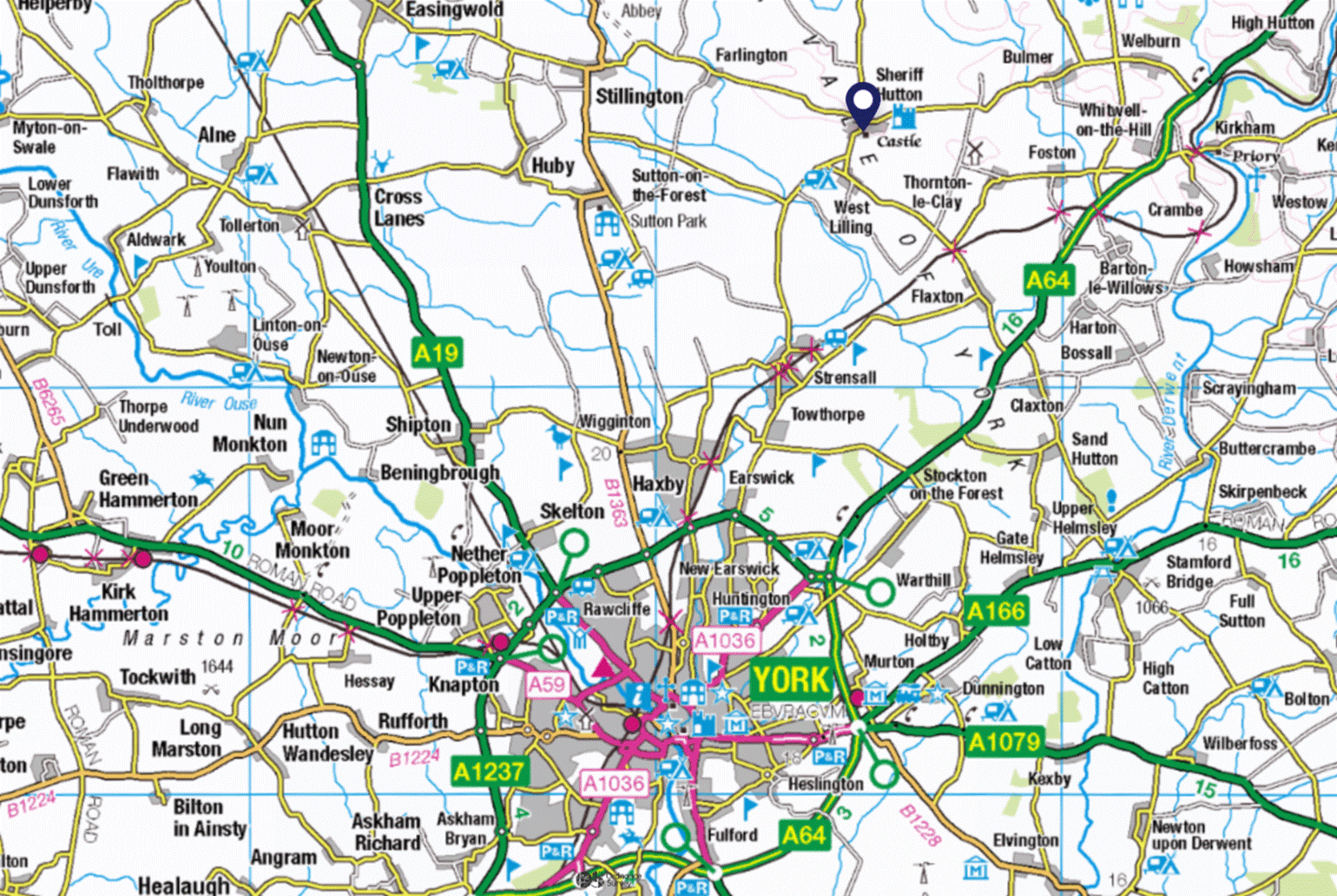
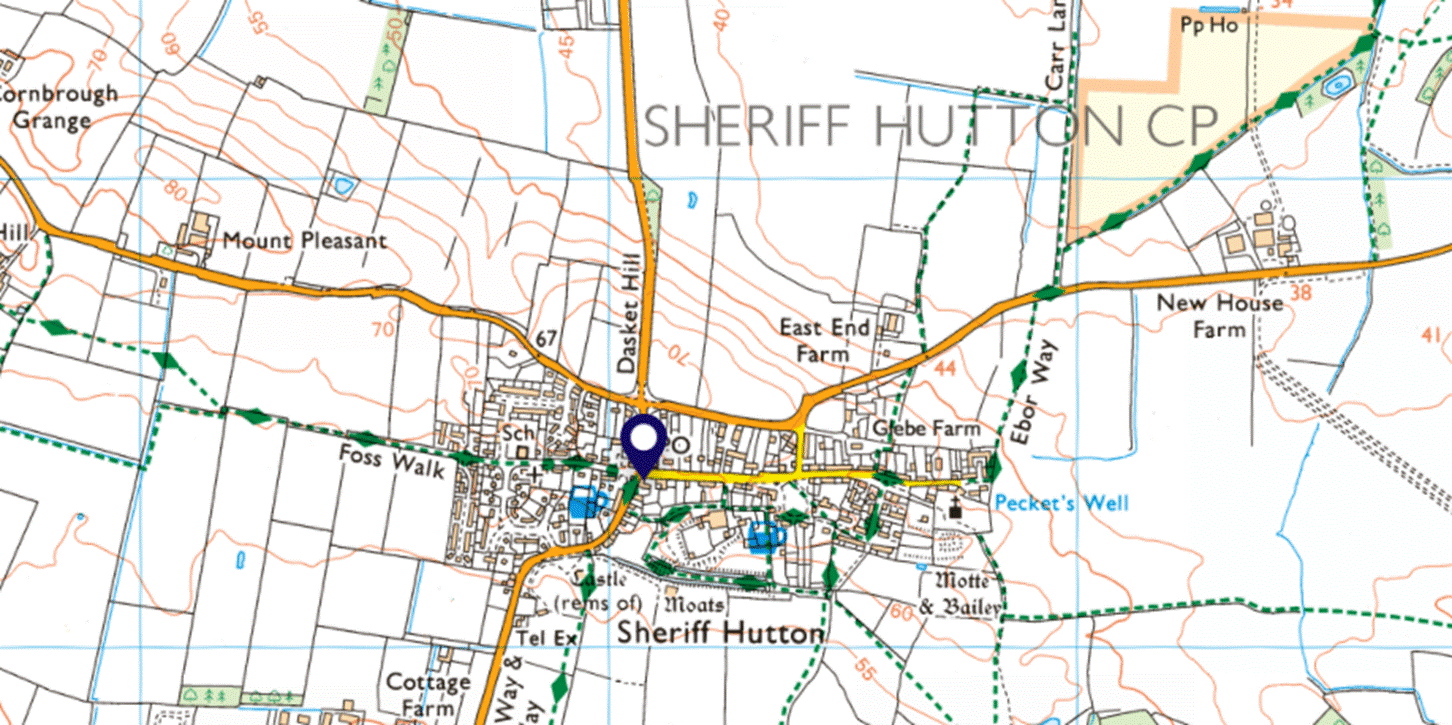
Sheriff
Hutton (Shyrefhoton)
He may have continued in some ecclesiastical role, by then about forty, though
he was not the vicar of St Helen’s Church. Certainly his will suggests a close
association with the church. He was clearly invested in the continued upkeep of
the church of St Helen’s.
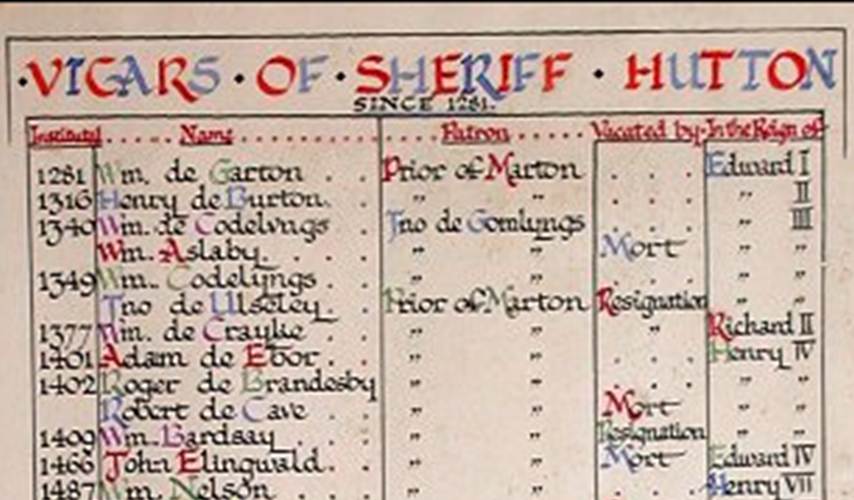
There were
certainly other ecclesiastical roles, such as chaplains of the altar,
held by Mutsrolli and Ulram
in the 1350s (The National Archives E 326/11354, E
328/239, CPR 1354-8, page 510) and other chaplains such as
William Codelyng in 1340 (York Registry 5A f 105
(recto) entry 4) and Robert Mustroill of Bubwith
(Bubwyth), chaplain, as the first chantry priest
of St Mary (York Registry 10 f 163 (verso) entry 4)
along with other
records.
1398
William Farndale, died between 23 February 1398 when he made his Will and 13
March 1398 when administration of the Estate was given to Richard Farndale (FAR00044), his warrior son, and William Huby.
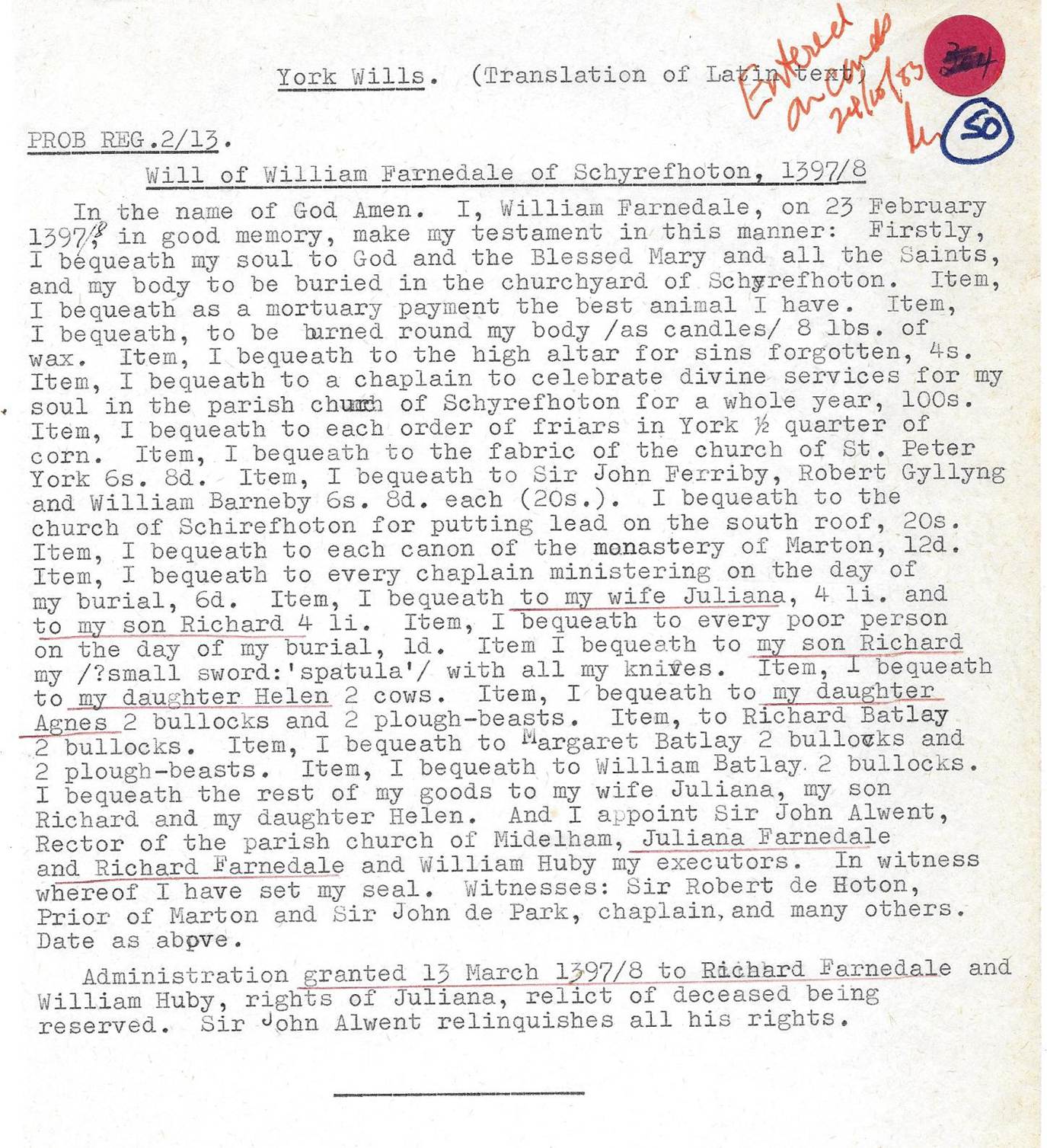
Will of William Farnedale, of Schyrefhoton, proved
1398:
In the name of God Amen. I, William Farnedale, on 23 February
1397/8, in good memory, make my testament in this manner.
Firstly, I bequeath my soul to God and the Blessed Mary and all
the Saints, and my body to be buried in the Churchyard at Schyrefhoton.
Item, I bequeath as mortuary payment, the best animal I have. I
bequeath to be burned around my body, as candles, 8lbs of wax.
Item, I bequeath to the High Altar for sins forgiven, 4s.
Item, I bequeath to a Chaplain to celebrate divine services for my
soul in the Parish Church of Schyrefhoton for a whole
year, 100s.
Item, I bequeath to the fabric of St Peter’s York, 6s 8d.
Item, I bequeath to Sir John Ferriby, Robert Gyllyng and William
Barneby, 6s 8d each (20s).
I bequeath to the Church of Schirefhoton
for putting lead on the south roof, 20s.
Item, I bequeath to each Canon of the Monastery of Marton 12d.
I bequeath to every Chaplain ministering on the day of my funeral,
6d.
Item, I bequeath to my wife Juliana, 4li and to my son Richard,
4li.
Item, I bequeath to every poor person on the day of my burial 1d.
Item, I bequeath to my son Richard my small sword with all my
knives.
Item, I bequeath to my daughter Helen, two cows.
Item, I bequeath to my daughter, Agnes 2 bullocks and two plough
beasts.
Item, I bequeath to Richard Batlay 2 bullocks,
Item, I bequeath to Margaret Batlay 2 bullocks and 2 plough
beasts.
I bequeath the rest of my goods to my wife Juliana, my son Richard
and my daughter Helen.
And I appoint Sir John Alwent, Rector of the Parish Church of Midelham, Juliana Farndale, Richard Farndale and William
Huby, my executors.
In witness whereof I have set my seal. Witnesses: Sir Robert de
Hoton, Prior of Marton and Sir John de Park, Chaplain and many others, date as
above.
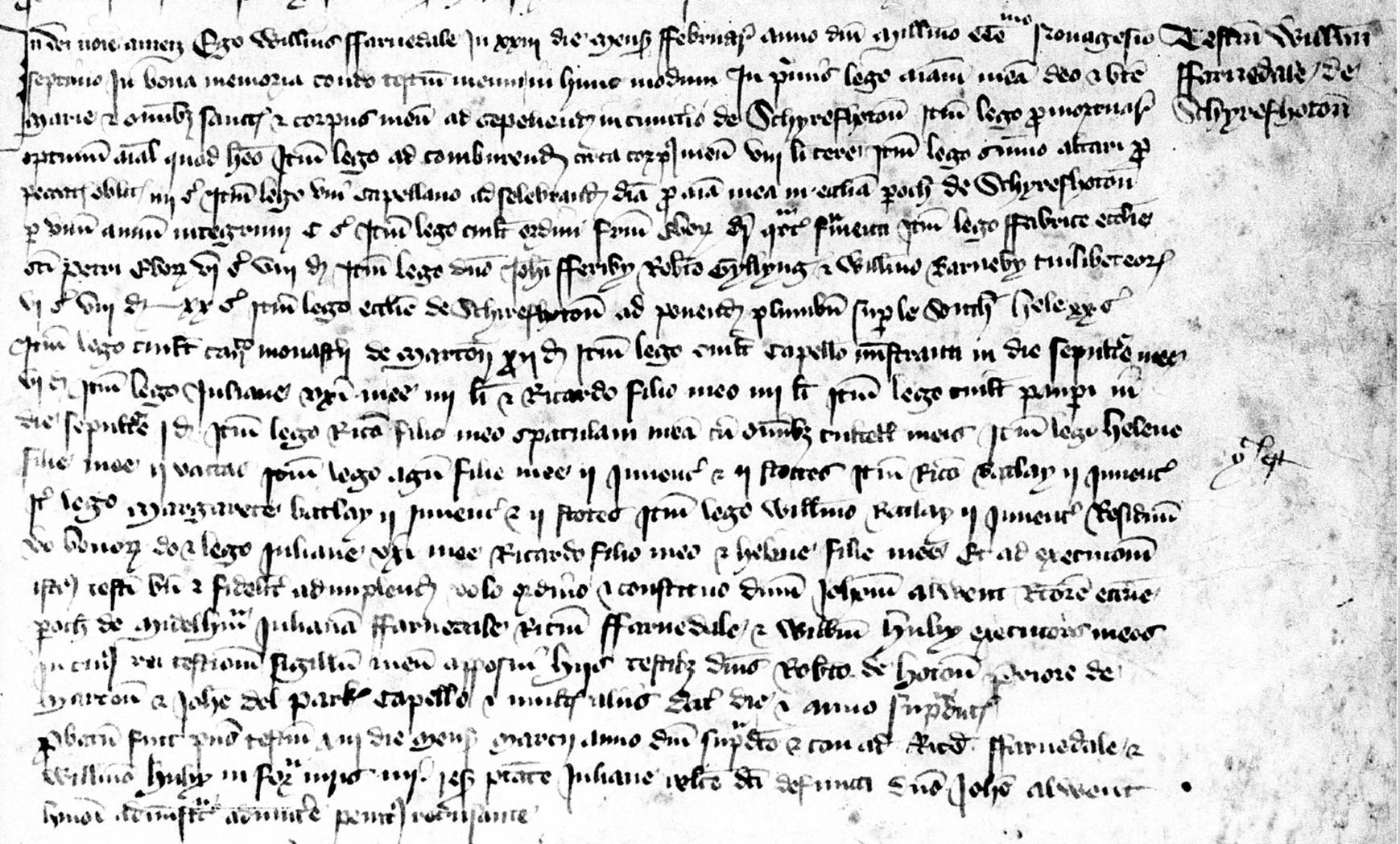
Administration
granted 13 March 1397 to Richard Farndale and William Huby, rights of Juliana,
relict of the deceased, being reserved. Sir John Alwent relinquishes all his
rights.
(Translation of the Latin text of the Will held at York Prob Reg: 2/13) (York Medieval Probate Index, 1267-1500, York Prerogative
& Exchequer Courts, Will; Language: Latin; Will date: 23 Feb 1397; Probate
date: 13 Mar 1397).

|
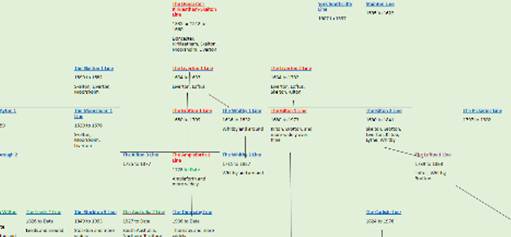
How does William Farnedale of Schyrefhoton
relate to the modern family? It is not possible to be accurate about the early family tree,
before the recording of births, marriages and deaths in parish records, but
we do have a lot of medieval material including important clues on
relationships between individuals. The matrix of the family before about 1550
is the most probable structure based on the available evidence. If it is accurate, William Farnedale of Schyrefhoton, was related to the thirteenth century
ancestors of the modern Farndale family, and was part of the Sheriff Hutton Line.
He was related to the original family who lived in the dale and then left for
new lands. He was possibly a second cousin of the Doncastrian
Farndales, from whom the modern family probably descends. |