John Farndale
c 1315 to c 1390
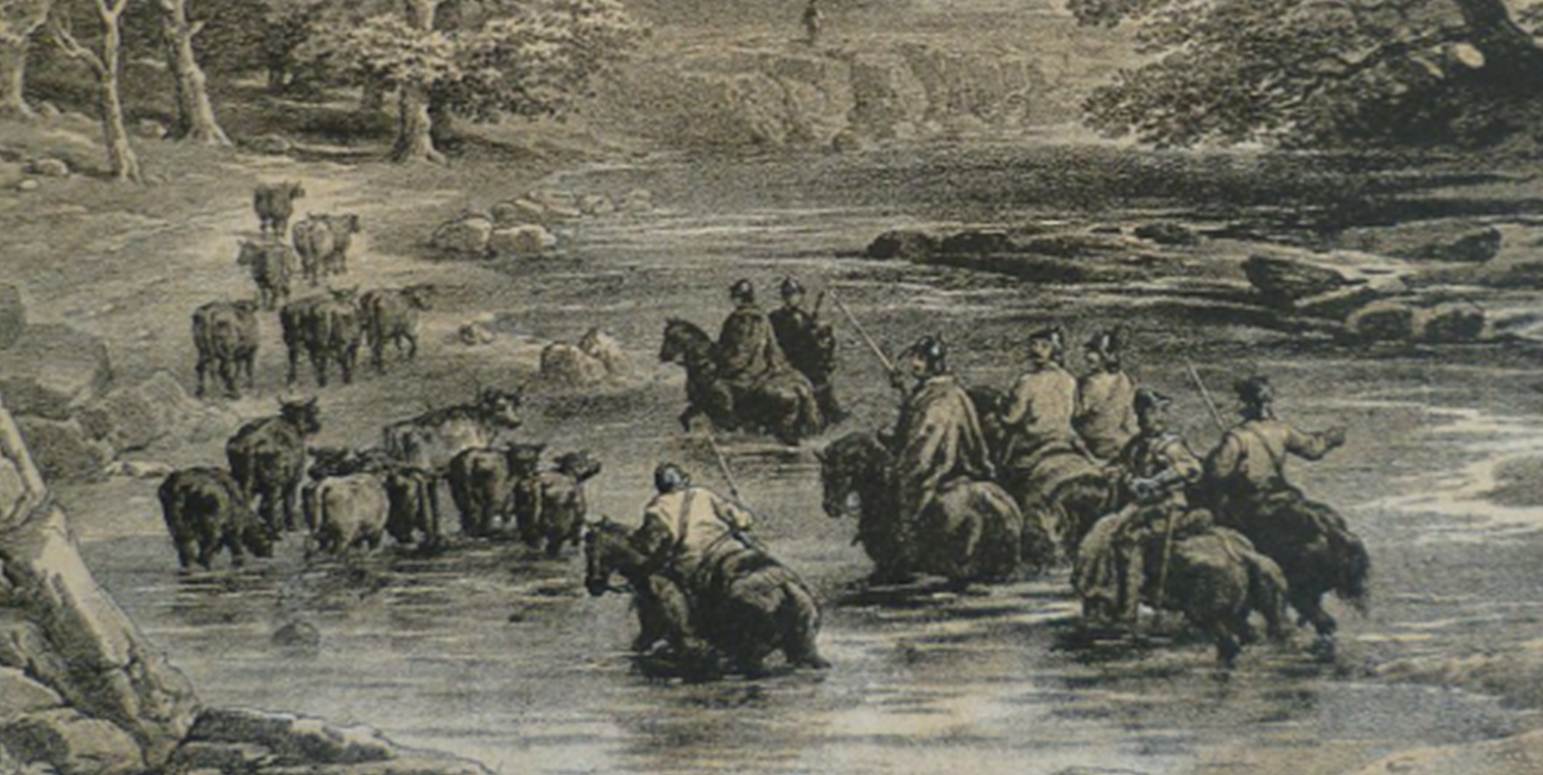
The Medieval
Inhabitants of Farndale
Party
to a major livestock haul
FAR00042A
|
Return to the Home Page of the Farndale Family
Website |
The story of one family’s journey through two
thousand years of British History |
The 83 family lines into which the family is divided.
Meet the whole family and how the wider family is related |
Members of the historical family ordered by date of
birth |
Links to other pages with historical research and
related material |
The story of the Bakers of Highfields, the Chapmans,
and other related families |
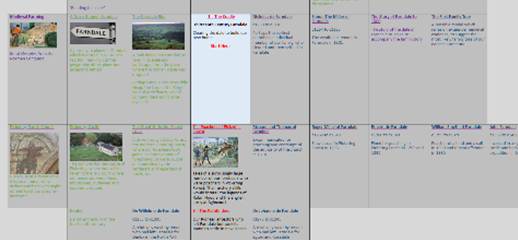
Dates are in red.
Hyperlinks to
other pages are in dark
blue.
Headlines are in brown.
References and
citations are in turquoise.
Context and local
history are in purple.
1315
John Farndale, the son of William the Smith of Farndale (FAR00037), may have been
born in about 1315.
The Hart at Leasehow
John (FAR00042A), son of
William Fabri (the Smith) of Farndale (FAR00037), and
many others captured a young hart at Leasehow, with
bows and arrows and hounds. John might have been about 16 at this stage.
See details and
research notes.
The Coucher Book also tells of how Thomas de Hamthwaite,
Robert de Bolton, Richard of Helmsley, John de Skipton, Robert Moryng, Abraham
Milner, Stephen Moye, and Peter son of Henry, with others unknown, on Thursday,
7th of March, 1331, went to a place called Hamclifbek,
with two leporariis (gazehounds or greyhounds), and
belonging to John de Kilvington and Robert Spink, and with bows and arrows, and
there slew one soar and one hind and one stag, and were fined, etc. In the same
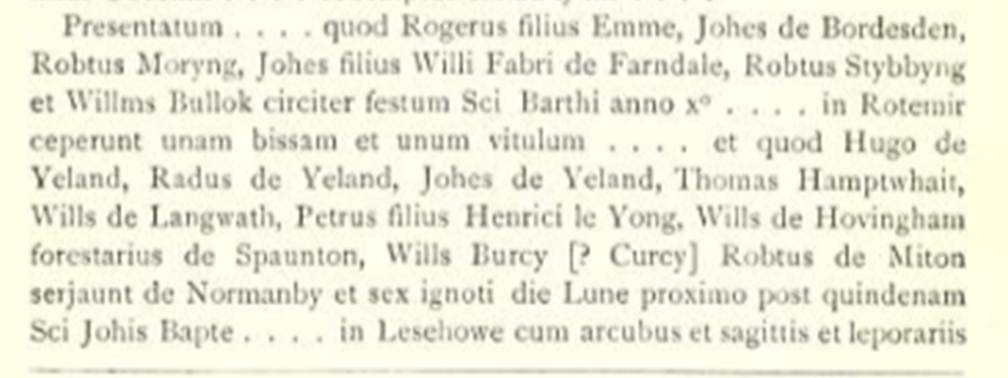
folio we have an account of how Roger son of Emma, John de Bordesden, Robert
Moryng, John son of William Fabri (Smith) of Farndale, Robert Stybbing,
and William Bullock, about the feast of S. Bartholomew, captured one hind and
one calf at Rotemir and Hugh de Yeland
and John de Yeland, Thomas Hampthwait, William de Langwath, Peter son of Henry
Young, William de Hovingham, forester of Spaunton,
William Burcy (or Curcy), Robert de Miton, sergeant
of Normanby, and six others unknown, captured at Leasehow,
with bows and arrows and hounds, a young hart.
On or about Monday to Wednesday 17 to
19 June 1332, Roger son of Emma, John de Bordesden, Robert Moryng, John (FAR00042A), son of William the Smith of Farndale (FAR00037), Robert Stybbyng, and William Bullok had some
involvement in offences at Pickering Forest when
· One deer and one calf were taken at Rutmoor;
· One deer calf with one black dog of Thomas de
Hamptwhait and one dun dog of William de Langwath,
were taken at Raindale;
· One deer was taken at Rawcliffe;
· One four-year-old stag was caught at at Lesehowe with bows and arrows
and greyhounds;
· One stag with one black dog were taken at Leshowe; and
· One stag was hunted at Hartoft and game was
carried away.
(The Great Cowcher
of the Duchy of Lancaster, The National Archives, DL42/1 Folio 224).
Under the Pleas of the Forest there
was a hearing on the Monday next after Michaelmas 8 Edw. III (1334 to 1335).
Michaelmas is 29 September each year. The next Monday in 1334 was 3 October
1334.
3
October 1334
On 3 October 1334, John (FAR00042A),
son of William le Smyth of Farndon (FAR00037) became mainpernor (guarantor)
of 4 individuals (The Great Cowcher of the
Duchy of Lancaster, The National Archives, DL42/1 Folios 342v, North Riding Records Yorks, The Honour and Forest of Pickering,
1894, Volume
II at page
148).

This appeared after a heading, The arresters of those
indicted and convicted of the offense of hunting in this forest, that from now
on they will behave well and will not commit any offenses in the aforesaid
forest.
The Rotemir
Incident
He was not however good to his
word, since on about 24 August 1336, during the period when the Eyre of the mid
1330s was sitting, a number of men including John (FAR00042A), son of William the Smith of Farndale (FAR00037) took hind and calf in Rotemir (North Riding Records Yorks, The Honour and Forest of
Pickering, 1894, Volume
II at
page
115, The Great Cowcher of the Duchy of Lancaster, The National Archives, DL 42/1/35/U26, Folio 223v to 225)
See details and research notes.
" Richard
Mosyn, of that part of Rossedale which belongs to the
Abbot of S. Mary's (i.e. Rosedale West), William Troten of Spaunton,
Roger del Mulne of Farndale, Robert son of Peter of Rossedale, Walter Blackhous of
Farndale, went on a Monday in January to some unknown place within the forest
and killed a soar and slew a hart with bows and
arrows." All are outlawed.
The Coucher Book, folio 224, tells how two men, on Thursday
next after the feast of S. Lucy the Virgin, went to Mulfosse,
in Hartoft, and there slew one hind. How
" Thomas de
Hamthwaite, Robert de Bolton, Richard of Helmsley, John de Skipton, Robert
Moryng, Abraham Milner, Stephen Moye, and Peter son of Henry, with others
unknown, on Thursday, 7th of March, 1331, went to a place called Hamclifbek, with two leporariis
(gazehounds or greyhounds), and belonging to John de Kilvington and Robert
Spink, and with bows and arrows, and there slew one soar and one hind and one
stag, and were fined, etc."
In the same folio
we have an account of how " Roger son of Emma, John de Bordesden, Robert
Moryng, John son of William Fabri (Smith) of Farndale, Robert
Stybbing, and William Bullock, about the feast of S. Bartholomew, captured
one hind and one calf at Rotemir." How
" Hugh de Yeland and John de Yeland, Thomas
Hampthwait, William de Langwath, Peter son of Henry Young, William de
Hovingham, forester of Spaunton, William Burcy (or Curcy), Robert de Miton, sergeant of Normanby, and six
others unknown, captured at Leasehow, with bows and
arrows and hounds, a young hart," and so on.
(History of the Parish of Lastingham)
10 December 1384 and 21 August 1385
The Cattle Rustlers
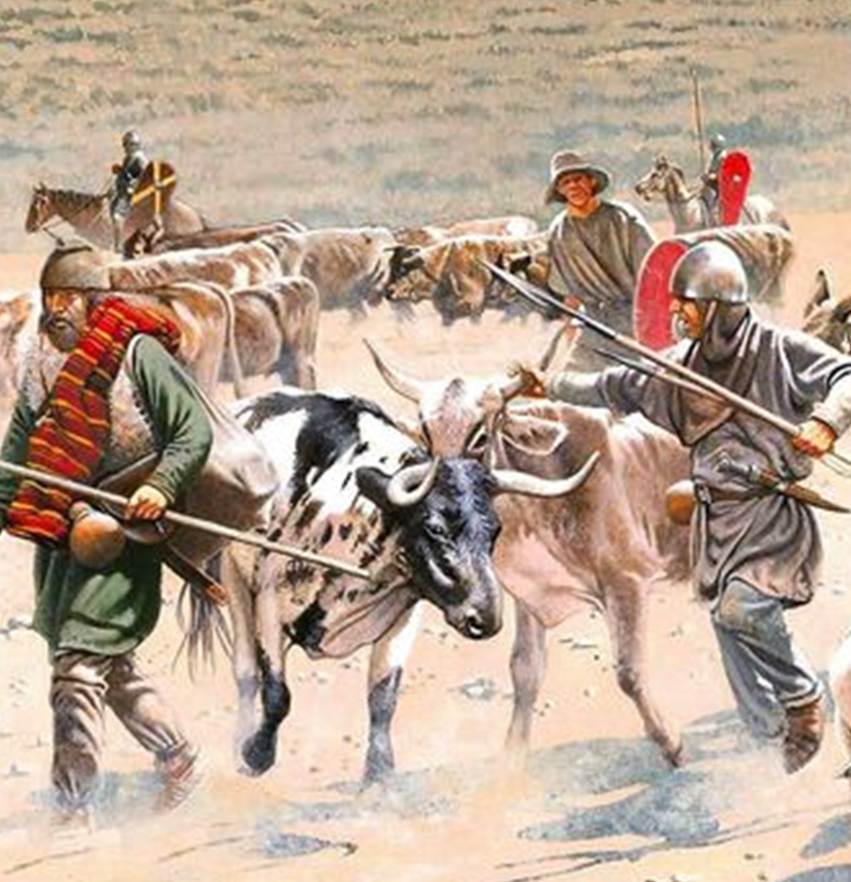
There was a significant cattle and horse rustling expedition in
1384 involving John Farndale.
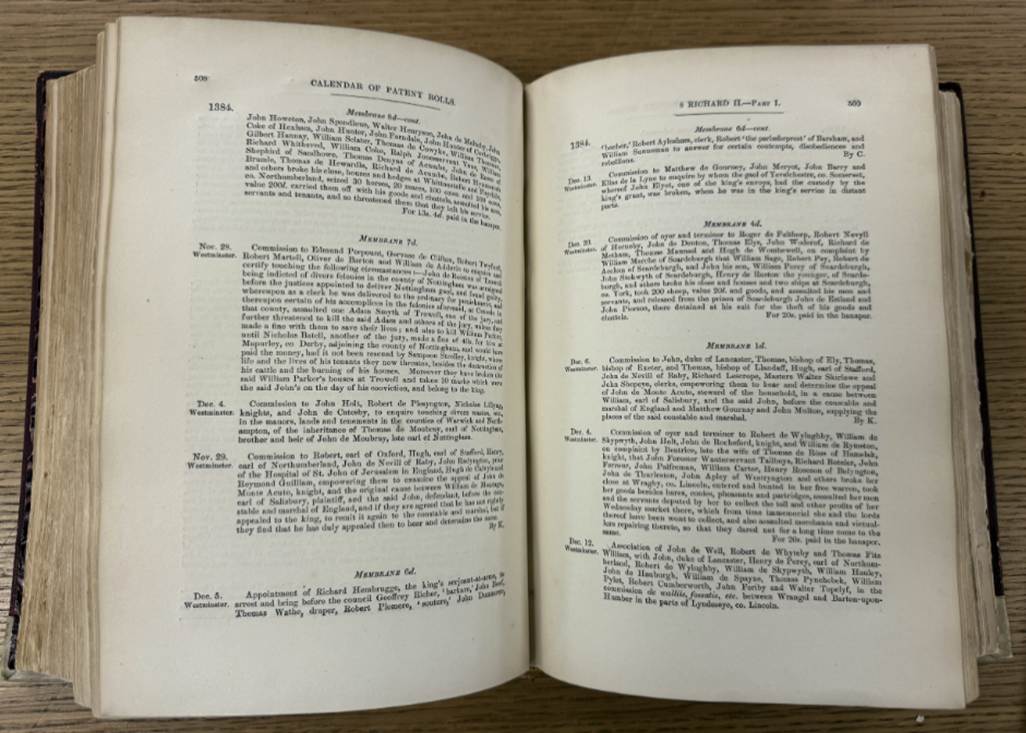
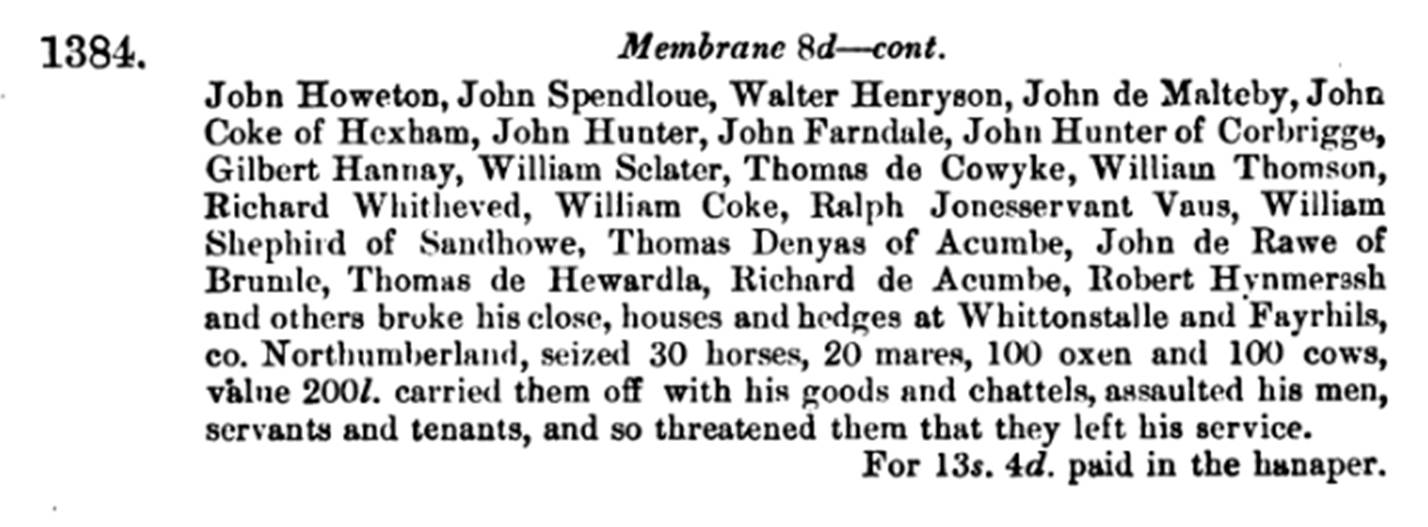
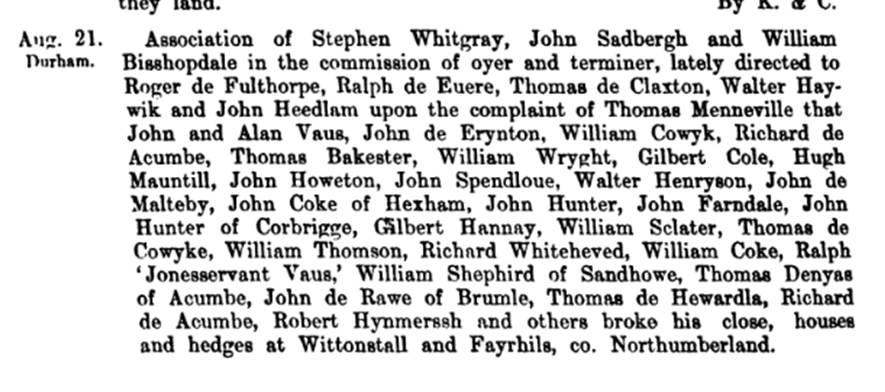
On 10 December 1384, at Westminster, a Commission of Oyer and Terminer investigated
a serious raid in which various individuals including John Farndale (FAR00042A)
broke their close, houses and hedges at Wittonstalle
and Fayrhils, Co Northumberland and seized 30 horses,
20 mares, 100 oxen and 100 cowes valued at £200 and
carried them off with goods and chattels, assaulted his men, servants and
tenants and so threatened them that they left his service (Calendar of Patent
Rolls,1381-1385, 8 Richard II Part I – page 507 and 508).
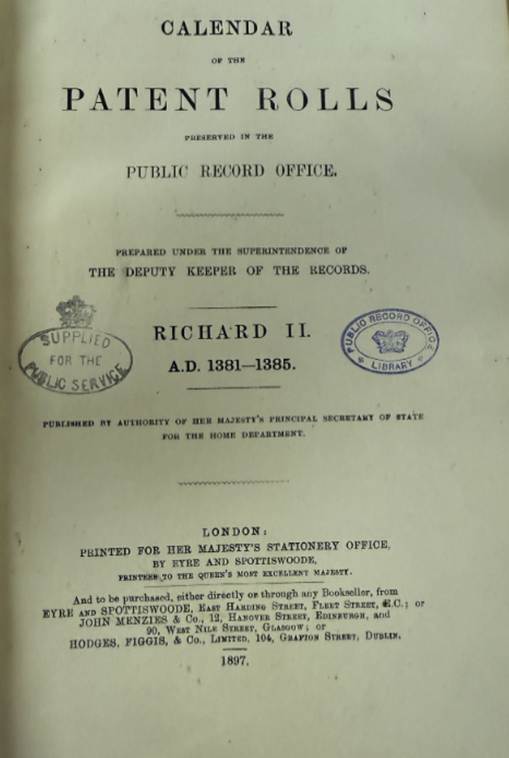
The matter was also the subject of a commission at Durham on 21
August 1385 (Calendar of Patent Rolls, 9 Richard II, page 80,). Commission of Oyer and Terminer….John
Farndale, and others broke their close, houses and hedges at Wittonstalle and Fayrhils, Co
Northumberland.’
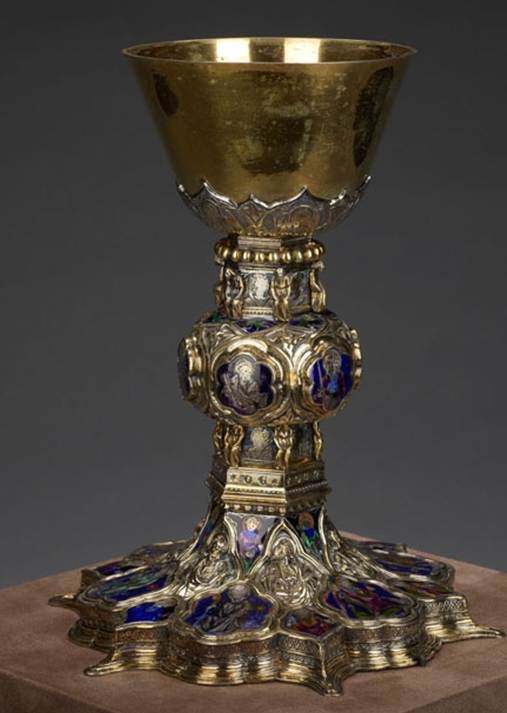
A hanaper is a drinking
vessel, so perhaps there was a collection pot for the fines.
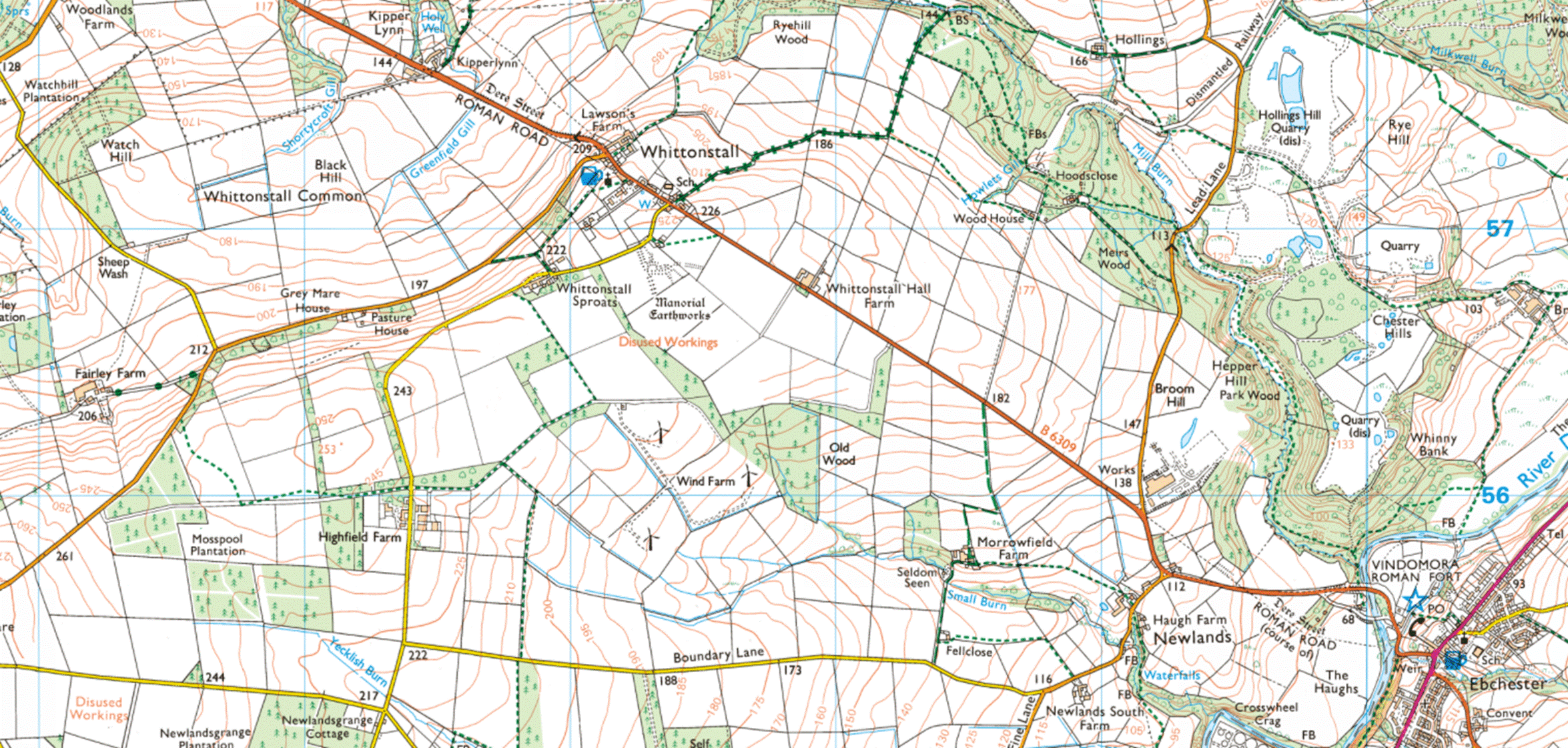
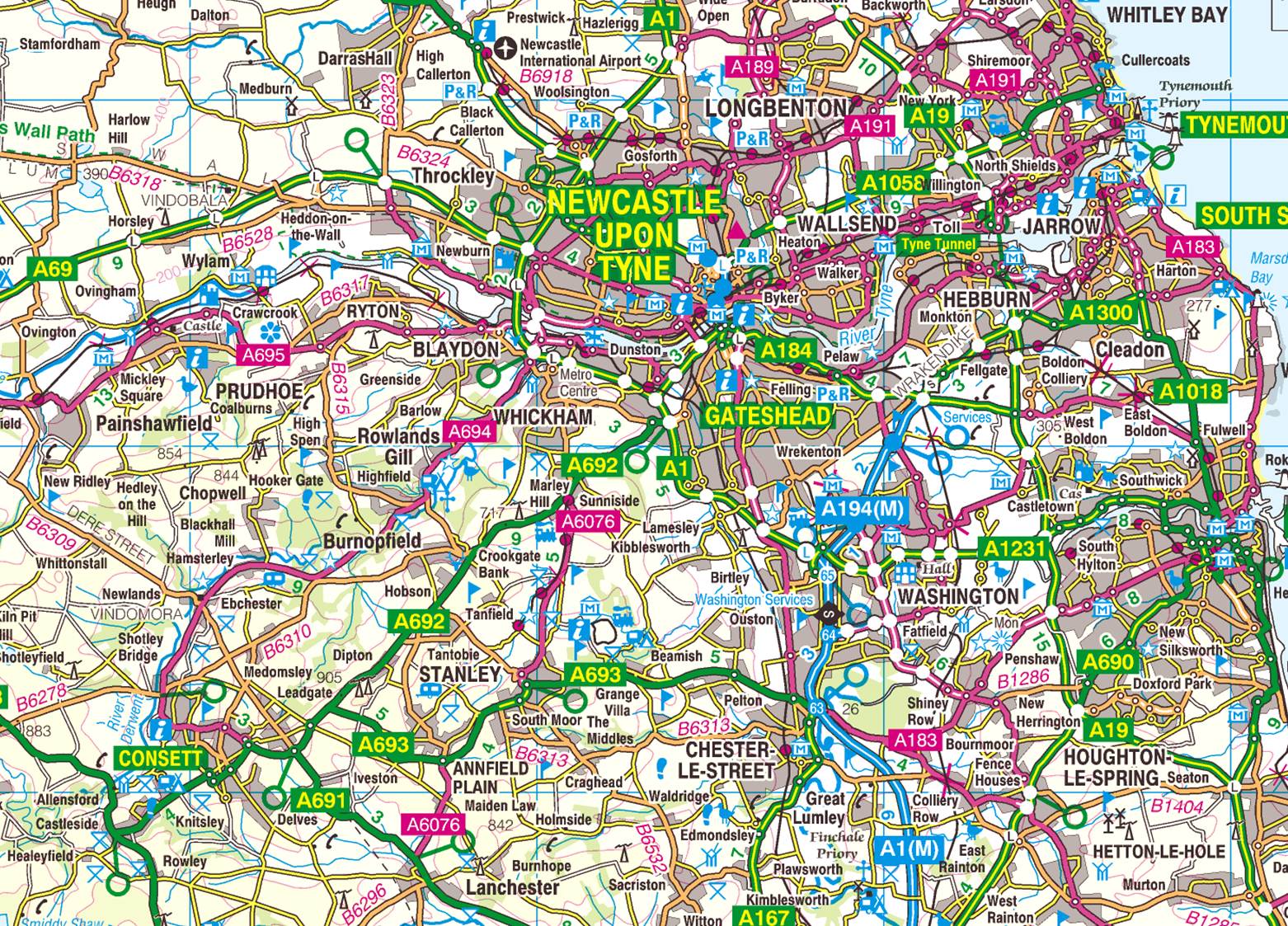
Whittonstall is about 20 kilometres southwest of Newcastle, near Consett, on the line
of the Roman Dere Street, only two kilometres from the site of the Roman fort
of Vindomora. The location of Fayrhils
is uncertain, but may be linked Fairley, which is adjacent to Whittonstall.
So this seems to have been a family
who had left Farndale, but engaged in criminal activity at scale in County
Durham.
It is notable that John was referred
to as John Farndale by this stage, not John of Farndale, so his family seem to
have fully adopted the name by then, a sign perhaps that they had left the dale
of Farndale far behind and were now inhabitants of a new place.
The scale of the rustling expedition
is breathtaking. Perhaps the poaching tradition, initially driven by famine and
hunger, had turned into something akin to organised crime, a foretaste of the Border Reivers who were starting to harass the border areas at about the same time.
£200 in 1480 would have purchased 141
horses or 526 cows, the wages of a skilled tradesmen for about 18 years, an
equivalent twenty first century value of £140,000.

Whittonstall
See details and research notes.
1390
John Farndale may have lived to about 1390.
|
How does John Farndale relate to the
modern family? It is not possible to be accurate about the early family tree,
before the recording of births, marriages and deaths in parish records, but
we do have a lot of medieval material including important clues on
relationships between individuals. The matrix of the family before about 1550
is the most probable structure based on the available evidence. If it is accurate, then John descended from William
the Smith, who was related to the thirteenth century ancestors of the modern
Farndale family, but this line of poachers and cattle rustlers seems to have
disappeared by about the fifteenth century. |