Nicholas farndaile
1512 to 6 August 1572 (buried)
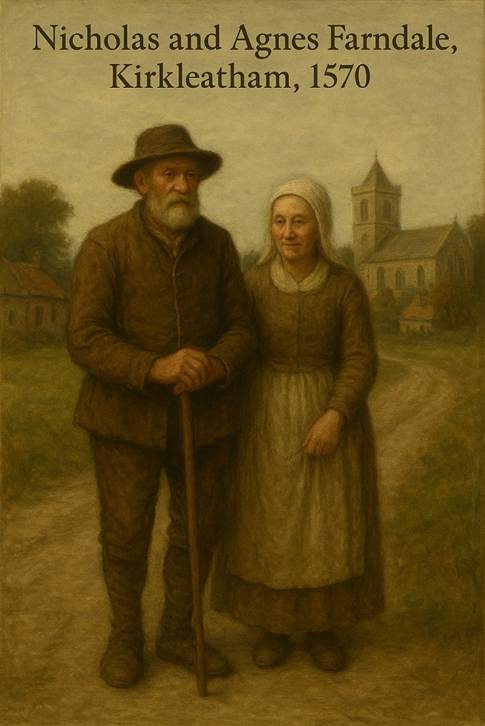
The most likely paternal and maternal ancestors of modern Farndales, who
died in Kirkleatham having emigrated with their family into Cleveland
Direct paternal and maternal
ancestors of the modern Farndale family, who moved eighty miles north from
Campsall to Kirkleatham in about 1565.
FAR00059
|
Return to the Home
Page of the Farndale Family Website |
The story of one
family’s journey through two thousand years of British History |
The 83 family lines
into which the family is divided. Meet the whole family and how the wider
family is related |
Members of the
historical family ordered by date of birth |
Links to other pages
with historical research and related material |
The story of the
Bakers of Highfields, the Chapmans, and other related families |
If you have
traced yourself back to here, you can go back still further in time to explore the early
Farndales and then follow the Farndale
Story.
Headlines of
Nicholas Farndale’s life are in brown.
Dates are in red.
Hyperlinks to
other pages are in dark
blue.
References and
citations are in turquoise.
Context and local
history are in purple.
All we know about Nicholas Farndale is that he was buried in Kirkleatham on 6 August 1572. But we can
piece together a great deal more about him, from the wider evidence.
1512
If he was buried
in 1572, then say he was aged 60 when he was buried, then he was born in about
1512.
1537
We also know from Kirkleatham Parish records that Agnes farndaile
(FAR00060) was
buried in Kirkleatham
on 23 January 1586. So it doesn’t seem too much of a
leap to suppose that Agnes was Nicholas’ wife. If Agnes was 70 when she was
born, then perhaps Agnes was born in about 1516.
I have seen
another person’s family tree that refers to Agnes as Agnes Null. I’m not sure
if someone has seen evidence that her maiden name might have been Null. I
haven’t found any evidence of her maiden name.
If Nicholas was
about 25 when they married, and Agnes was about 21, then maybe they married in
about 1537.
They may have
been married around Doncaster,
perhaps Campsall,
for reasons which will be explained below.
1539
We have
previously linked Nicholas and Agnes to the following siblings:
William Farndale (FAR00063),
who may have been born in around 1539 in or around Doncaster.
Doncaster
Parish records show his marriage in Campsall in 1564.
Jean Farndale (FAR00064), who may have been born in around 1540 in
or around Doncaster. Kirkleatham
Parish Records show her marriage in Kirkleatham in
1567.
It seems very
likely that Jean was their daughter, given she was married in Kirkleatham in
1567, five years before we know that Nicholas died in Kirkleatham.
For
the purpose of family continuity, the real question is whether William was also
their son. The link to William at first seems a bit tenuous, as the link to Kirkleatham is
not obvious. However there are reasons why the link is
likely.
· We don’t know
when William was born, but from the date of his marriage, this was probably
about 1539. That would make sense if he was Jean’s sister. We know he married
Margaret Atkinson (or possibly Kiddall) in 1564 in
Campsall, which is near Doncaster.
· Skelton
and Kirkleatham
are about 5 miles apart and the same parish.
· There are three
children who married between 1588 and 1598, two in in Skelton.
(1) Jane, married in Skelton in 1588; (2) George who married in Skelton
in 1595; and (3) Eln or Eleanore, married at Wilton,
near Kirkleatham in
1598. Eln married Peter Atkinson, and it seems likely
that she was a cousin or otherwise related through her mother’s family –
Margaret’s maiden name was Atkinson. So the family might have moved from Campsall near Doncaster
to Wilton near Kirkleatham
after William had married Margaret Atkinson in 1564 because that is where
Margaret’s family lived.
· So if William who
married in Campsall
is also William who died in or near Skelton,
then it is very likely that these are his children, with Margaret.
· So William
married near Doncaster in
1564, but was in Skelton
for the birth of his first child in 1588. Skelton
is about 5 miles from Kirkleatham, so
there may be some interchangeability in the records here. He then died in or
near Skelton
in 1606.
So looking carefully at the records we have regarding Nicholas, his
potential children and grandchildren, we can build a timeline. We know that
from the second half of the sixteenth century, the Farndale ancestors were
predominantly living in the Cleveland area. So this timeline gives an
explanation as to how early Farndales left the dale and moved south, with a group living around Doncaster, and how and when the Doncaster Farndales moved to
Skelton/Kirkleatham in the mid sixteenth century to establish the lines of
Farndales across Cleveland.
Campsall, Doncaster, 1512 to 1564
Nicholas Farndale might have lived in or around Doncaster from when he was born in about 1512.
He met Agnes, who might have come from around Doncaster too. They would have married in about 1537. If so, they probably
married around Doncaster, perhaps in the same church in Campsall, where William later married.
William was born in about 1539. Jean was born in about 1540. Let’s
assume they were still living around Campsall, Doncaster then.
We then know that William married at the church at Campsall, the same church where Robin Hood is reputed to have married Maid
Marion by later legend, in 1564.
Cleveland Bound
This is what I think probably happened.
Nicholas was probably born in about 1512, assuming he
lived until he was about 60, perhaps a little earlier. I think he was probably
a descendant of Nicholaus and
Alicia Farndale who we have already met in Doncaster and I think his
family had probably moved just north of Doncaster to Campsall, or somewhere
nearby in Barnsdale Forest.
Since Nicholas and Agnes both died in Kirkleatham in
1572 and 1586, they were almost certainly married. So
Nicholas probably married Agnes in or around Campsall, probably in about 1537
when Nicholas was 25. Agnes might have been about 21, so born in about 1516. I
have seen a suggestion that Agnes’ maiden name was Null, but I’ve not managed
to verify that.
I suspect that William Farndale was their eldest son,
born in about 1539.
I am pretty sure that Jean Farndale (who we know
married in Kirkleatham in 1567) was their daughter, born in about 1540.
We know that William Farndale married Margaret
Atkinson at St Mary Magdalene Church in Campsall on 29 October 1564. If we are right about this
narrative, he would have been about 25 years old.
I think the family then moved eighty miles north to
Kirkleatham and I think that is probably because Margaret’s family came from
Wilton, a small village two kilometres south of Kirikleatham.
This may have been very shortly after they married, so perhaps in 1564 or 1565.
Nicholas Farndale would have been about 52 at this
stage, so perhaps they moved north because the newly married William and
Margaret decided to settle in Margaret’s homelands.
Two years later, on 16 October 1567, Jean Farndale
married Richard Fairley, an established Scottish family who, by that time had a
large family in and around Kirkleatham.
By 1568, Nicholas and Agnes had their first
grandchild, Jane Farndale who late married
Valentine Wraye. In about 1570, their grandson George Farndale was born and he
is the grandson who took the family lineage forward to the modern family. They
also had a granddaughter Eln Farndale, born in about
1573. Eln married et Atkinson, who we know came from
Wilton. It seems very likely that Pet Atkinson was part of the same family,
perhaps a cousin, as her mother. Margaret Atkinson. Whilst the medieval church
banned marriage within four degrees of consanguinity, cousin marriage was
pretty common in small agricultural communities and there are several examples
in the Farndale family including Martin Farndale who married his
cousin Ruth Farndale in 1929. Their
fourth grandchild, Isabell Farndale, died at birth
in 1592.
Nicholas died in 1572 and he was buried in
Kirkleatham on 6 August 1572. Agnes lived for another fourteen years and was
buried on Kirkleatham on 23 January 1586.
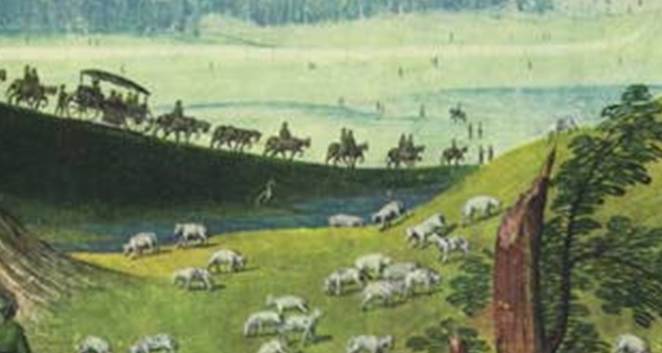
Moving north, between 1564
and 1567
Between 1564 and
1567, the family moved to the Skelton/Kirkleatham area. One
possibility is that Agnes came from there. For whatever reason, they moved to Kirkleatham.
Kirkleatham,
1567 to 1586
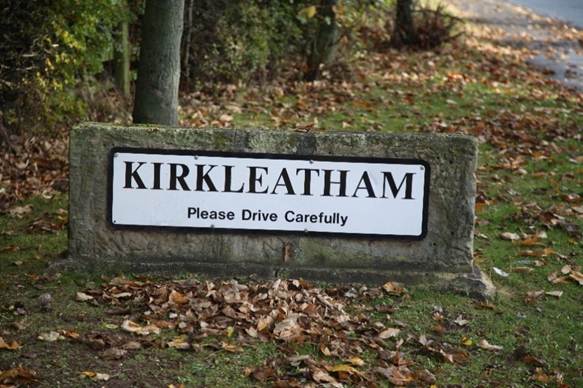
In
1567, Jean married Richard Fairly at Kirkleatham, where we know Nicholas and Agnes both died. Richard Fairley had
a bit of a pedigree. So perhaps another reason for the move north is that Jean
moved to the neighbourhood of her new husband, and the whole family moved north
at about the same time.
They then lived
in Kirkleatham, which was
perhaps more the Fairly home, and the Atkinson home, than the Farndale home
before then.
William’s three
children were born in Kirkleatham between 1568 and
1573.
We then know that
Nicholas died in Kirkleatham in 1572, and
Agnes died there in 1586.
William died in Skelton in 1606 and was buried there.
Going back further from
Nicholas
If
this theory is correct, and it all fits pretty neatly, then this places the direct
known relatives of certainly most, and probably all Farndales today to the Doncaster/Campsall area between about 1512 and 1564.
Modern Farndales are almost certainly related to each other. There
is some doubt about the link of the Ampleforth
Line and the Lines that trace from it, back from 1733 when Elias was
born, nut it is likely they were also descendants of the Cleveland Farndales.
That is exciting because we then know that Sir William Farndale (FAR00038)(about 1335 to about 1420), was the Vicar of Doncaster parish church between 1396 and 1402. Sir is simply the
title used by vicars at the time. We have guessed he might have lived between
about 1335-1420. He owned land for a period at Loversall just south of Doncaster. Of course the span between 1402 and
1512 means that there must have been some generations between,
but could this have been the same family. It seems most likely that all
living Farndales are descended from this group living in or around Doncaster from about 1396 to 1564.
So the probable common ancestry of all those modern folk who are
descended from the Farndale family is:
1. Farmers from
around Kirkdale moved into Farndale the place in about 1230;
2. Individual people
started to move out of Farndale and use the name Farndale;
3. Families started
to emerge using the name of Farndale (increasingly without the ‘de’) more
permanently including the Sheriff
Hutton Line and the York 1 Line – these might well have included our direct ancestors (the
probability increases as the information improves);
4. The direct line
to modern Farndales focused around Doncaster from at least 1335 to about 1564;
5. Between 1564 and
1567, the family moved to the Skelton area in Cleveland;
6. From 1512, and
certainly from 1570, we know beyond doubt who our ancestors were;
7. Cleveland, and
particularly the areas of Skelton, Kirkleatham, Moorsholm, Loftus, Brotton and eventually Kilton become the home of the Farndales from 1564 to the Victorian age.
If that is right, then we trace our ancestry directly back to
1512, have some pretty good guesses about links to folk coming out of Farndale
from about 1330, and then know that they in turn descended from the villeins put into Farndale to assart and clear
the land to farm from about 1230. Before that our ancestors were plucked from the cauldron and primeval mass of
Bronze Age Beaker Folk, Iron Age Settlers, Brigantes, Roman, Anglo Saxons, and Scandinavians that had roamed the moors and Dales of Yorkshire since about
9,000 years BCE.
1572
We know from
the Parish records of Kirkleatham Church that Nicholas farndaile was buried in the parish of Kirkleatham, in Cleveland, near Skelton on 6 August 1572 (Kirkleatham
Parish Records).


Nicholas farndaile was buried at Kirkleatham
on 6 August 1572 (Kirkleatham
Parish Records). Nicholas Farndaile - died about 1572 and buried at
Kirkleatham, Yorkshire on 6 August 1572 at the age of 60.
(Extracted from the Yorkshire,
England, Extracted Church of England Parish Records, 1538-1837 (Parish
Register of Kirkleatham, 1559-1812, Vol 59; Author: Transcr & Ed: J Charlesworth; Publication
Year: 1917)
That is the only sure
fact we know about Nicholas. Everything else is an assessment of the wider
evidence to attempt to ascertain the most likely circumstances on a balance of
probabilities.
We also know that
Agnes Farnedaile, was buried 23 January 1586 at Kirkleatham (England, Select Deaths and Burials, 1538-1991; England
Deaths and Burials, 1538-1991)
They were both buried at St
Cuthbert Church, Kirkleatham.

St Cuthbert’s Church in the village
of Kirkleatham was built in 1763 on the site of a much earlier
church, thought to have dated from 800 AD. The site of the church is believed
to have been used as a resting place for the body of St Cuthbert on
its journey to Durham, his final resting place. The Turner Mausoleum,
attached to the earlier church, was built in 1740, by the renowned architect
James Gibbs. St Cuthbert’s Church is a Grade I listed building.
Our common ancestor
If we are correct in the analysis above, then
although there are some educated guesses in linking Nicholas to his
descendants, it seems a fair conclusion that Nicholas is the person to whom
most Farndales, and probably all, today can directly trace their ancestry. It
is probable that there is some link further back to William of Doncaster.
Once you have established your ancestor somewhere in this line, you will then
be able to trace yourself back to Nicholas.
Nicholas is probably my Great, Great, Great, Great, Great, Great, Great, Great,
Great, Great, Great Grandfather. He is probably something similar
to all members of the modern Farndale family.
|
How do Nicholas and Agnes Farndale
relate to the modern family? We cannot be sure, but it is probable that Nicholas
and Agnes Farndale are the paternal and maternal ancestors of all modern Farndales. If
we have pieced the jigsaw together correctly, then Nicholas was a descendant
of Nicholaus
and Alicia Farndale of Doncaster, brother of William Farndale
the Vicar of Doncaster. There are some branches of the family (including
the Ampleforth Line) about which there is some doubt of the direct ancestry. However it seems most likely that they are a common link
to the whole family. |