Moorsholm
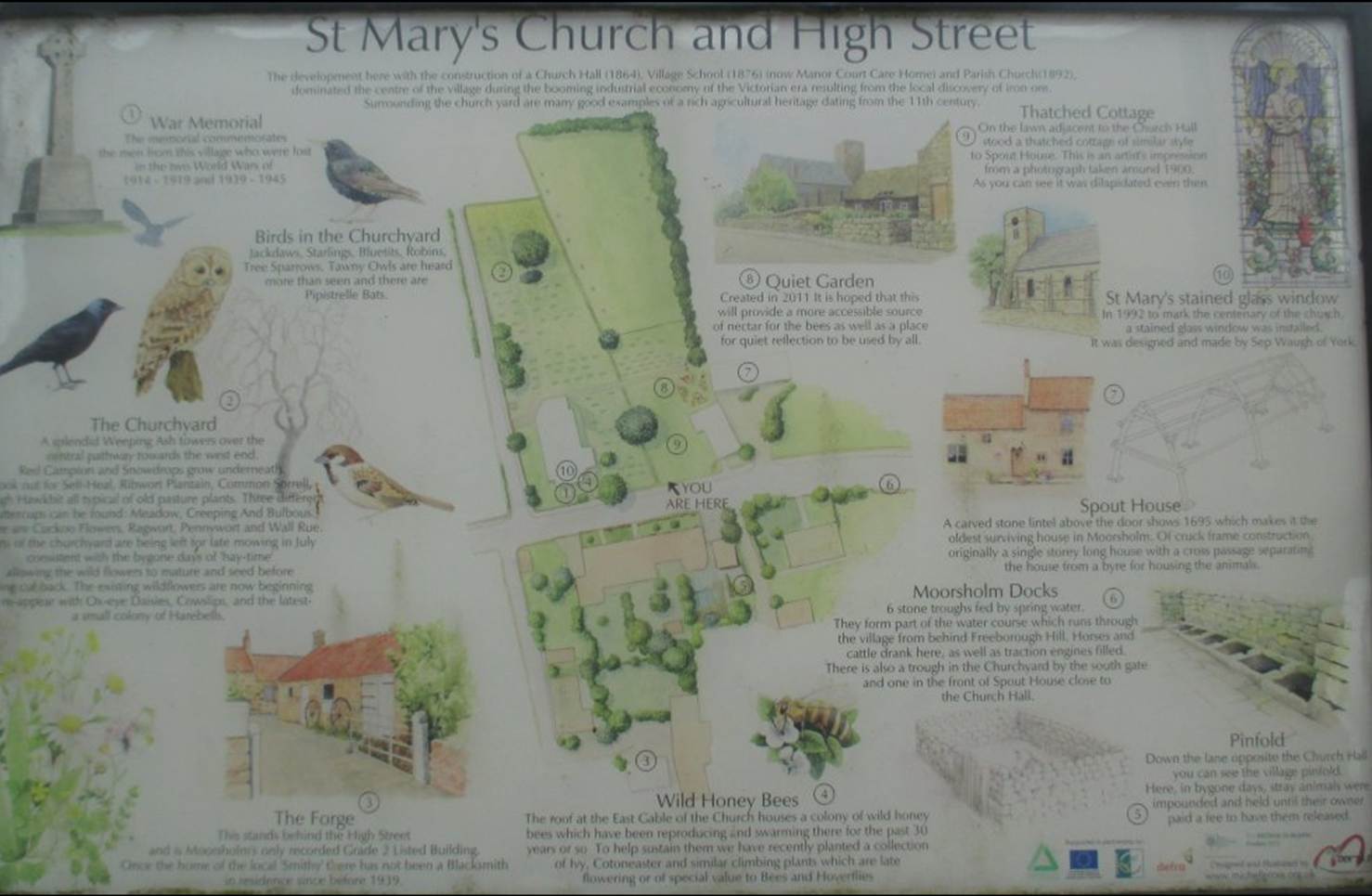
A Guide to the History of Moorsholm, including the Farndale
family’s association with the village
|
Return to the Home Page of the Farndale Family
Website |
The story of one family’s journey through two
thousand years of British History |
The 83 family lines into which the family is divided.
Meet the whole family and how the wider family is related |
Members of the historical family ordered by date of
birth |
Links to other pages with historical research and
related material |
The story of the Bakers of Highfields, the Chapmans,
and other related families |
Introduction
Dates are in red.
Hyperlinks to
other pages are in dark
blue.
Headlines of the
history of Moorsholm are in brown.
References and
citations are in turquoise.
Contextual
history is in purple.
This webpage about
Boosbeck has the following section headings:
· The Farndales of
Moorsholm
· Moorsholm, an
overview
·
Moorsholm
Timeline
·
Photographs
of Moorsholm today
·
Bibliography
The Farndales of Moorsholm
The following
Farndales were associated with Moorsholm: William Farndale (FAR00071);
George Farndale (FAR00073);
John Farndale (FAR00376);
William Farndale (FAR00642);
Elizabeth Farndale (FAR00654);
Bessie Farndale (FAR00824);
Ernest Farndale (FAR00841);
Edith Farndale (FAR00870);
Rubina Farndale (FAR00873);
John Farndale (FAR00880);
Ernest Farndale (FAR00981);
Herbert Farndale (FAR01031)
See also The Moorsholm 1 Line.
Moorsholm, an overview
Moorsholm is
a village in the unitary authority of Redcar and
Cleveland and the ceremonial county of North Yorkshire,
England.
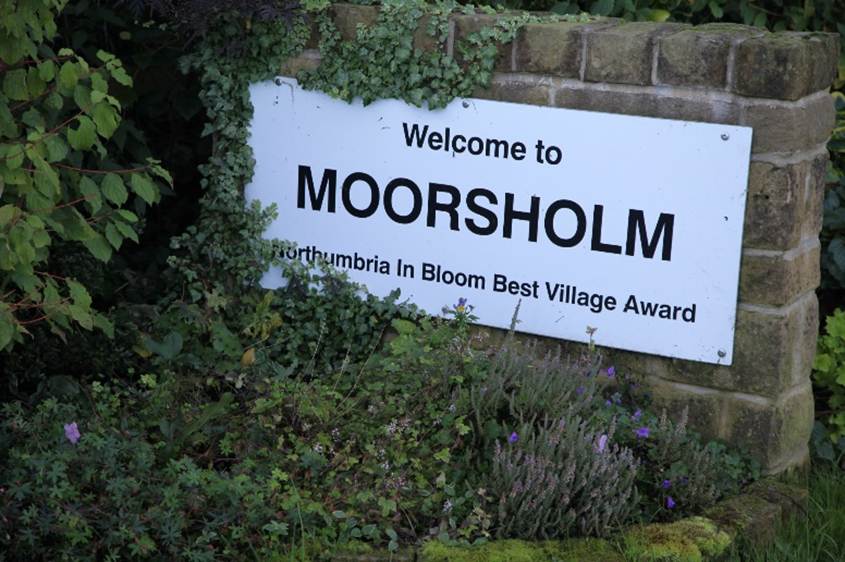
Moorsholm is 8km
from Saltburn-by-the-Sea between the North York Moors and
the North Sea. Because of its proximity to the North Sea coast the area
was vulnerable, historically, to attack by invaders.
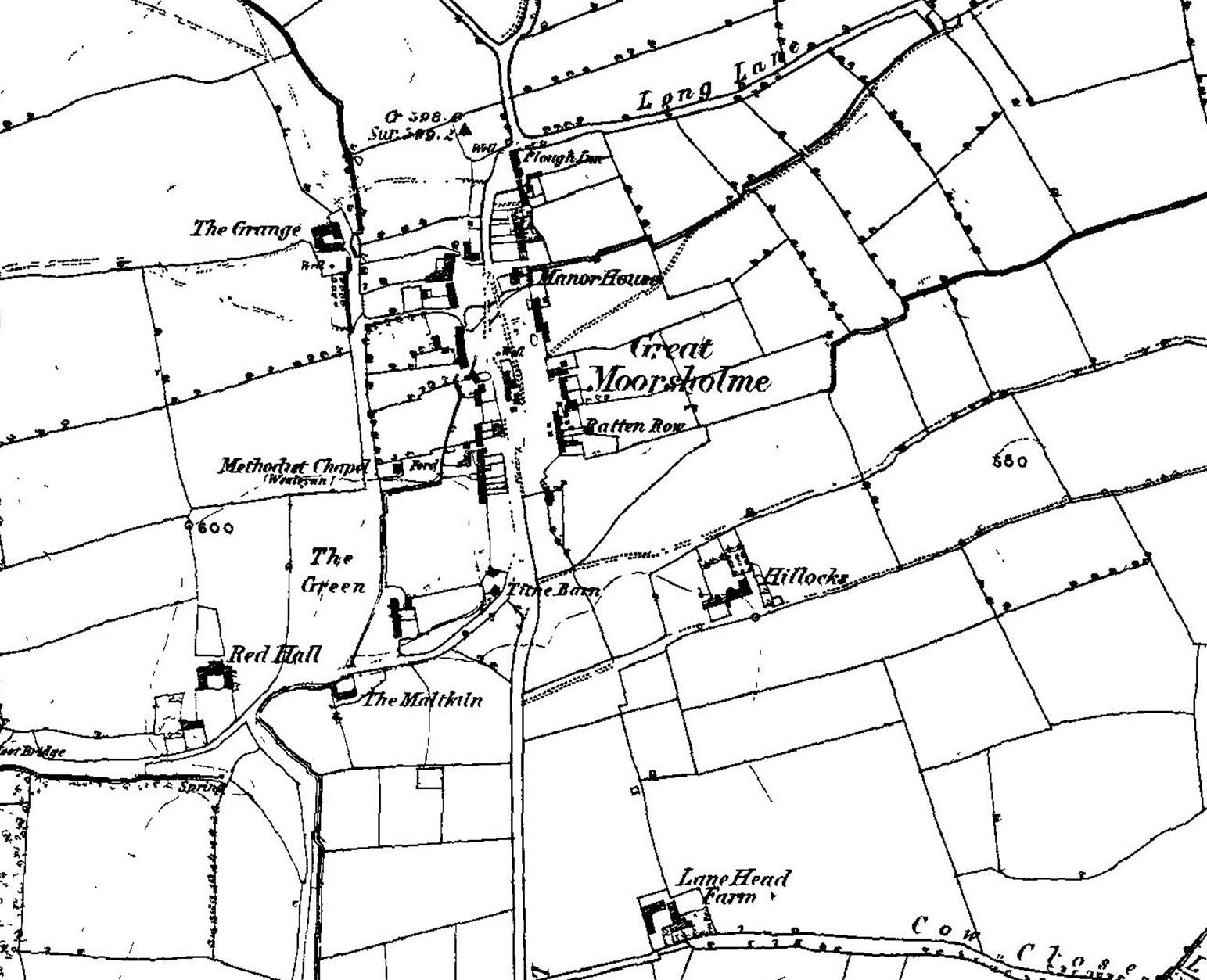
Great Moorsholm,
1857
The name of
Moorsholm is of Viking origin with the suffix holm, which meant
a settlement, being affixed to the location of the village by the moors:
so meaning settlement by the moors. It has been interpreted as ‘flat land in a
valley’. The village used to be called Great Moorsholm to distinguish it from a
farm called Little Moorsholm, which is the other side of the Hagg Beck Valley
to the north. 'Little Moorsholm' is a title now more commonly applied to a more
modern housing estate between that farm and Lingdale.
The settlement
was mentioned in the Domesday book as Morehusum, belonging to
the Earl of Morton and later the de Brus family, and from them
descended to the Thwengs, Lumleys, and others. It was a planned
mediaeval village built along a main street with crofts and their
associated tofts on each side.
In 1923, the
ancient parish of Skelton, included the townships of Great Moorsholm and
Stanghow. The whole parish covered 11,803 acres, of which 2,219 acres was
arable land, 4,657 acres permanent grass and 578 acres woods and plantations.
In the north the parish formed a kind of peninsula between the Skelton and
Millholme Becks, which have very steep banks, whence the land slopes downwards,
rising again towards the centre and also towards the south of the parish, where
there are wide stretches of moorland (Victoria County History – Yorkshire, A History of the
County of York North Riding: Volume 2, Parishes: Skelton).
Great Moorsholm
formed the south-eastern part of the parish. The manor-house was near the
centre of the village east of the main street, while St. Mary's Church, two
Methodist chapels and a school were on the opposite side of the street.
West of the
village is Swindale Beck, at the junction of which with Dale Beck is Moorsholm
Mill, probably on the site of that mentioned in 1697.
Between the river
and Stanghow lies Swindale, first mentioned in 1272, with which the
13th-century 'Swinelandes' were identified. Further south is Swinsow Dale, to
the south-west of which is Freeborough Hill.
About 1 mile
(1.6 km) to the south of Moorsholm is the landmark of Freeborough Hill, a detached natural hill
which is conical in shape.
Moorsholm Timeline
Bronze Age
There is evidence
of Bronze Age settlement around 2000 BCE.
1060
In the reign of
Edward the Confessor Uctred had a 'manor' of 3 carucates at Great Moorsholm (Morehusum,
in the eleventh century.; Magna Moresum, Moryshum, in the
thirteenth century; Michell Morison in the fourteenth century)
1086
After the Norman
Conquest Moorsholm was held of the Count of Mortain by Richard. The half
carucate among the king's lands in 1086 shortly afterwards became part of the
Brus fee to which the Mortain lands were added later. The land was then held by
the Danbys.
The
Fief of Kilton Proper contained the two manors of Kilton, the two manors of
Torp or Kilton Thorpe, the manor of Little Moorsholm, and the soke of South
Lofthouse.
The
Mortain Manor of Little Moorsom was a small manor granted by one of the early
lords of Kilton in subinfeudation to a family who took their name from the
place, and were known as the de Alia Moresums. Their residence stood on the
site now occupied by the house known as Little Moorsholm Farm. This family were
benefactors, with the consent of their over-lords, to the Priory of Guisborough
and the hospital of Hutton.
The
manor was of no great value. “ Est apud Lyttel Moresom unium messuagium,” i.e.
the farmstead of the Alia Moresoms, “ et una carucata terrae debilis et morosae
” — the moors seem to have extended further southwards than they do to-day — “
continens lx acras de quibus duae partes possunt quoet anno seminari cum
utroque semine precium acre iid et tertia pars inde jacet quolibet anno in
warecto et pastura inde nichil valet quia jacet in communi.” (Inq. p. m. Wm. de
Thweng, 1341.)
(Kilton Castle, William M L’Anson, Yorkshire
Archaeological Journal, Volume 22, 1913, page 59).
We cannot be quite so sure that Little
Moorsholm originally formed part of this fee. In Domesday this small manor of
one caracute was held by Richard de Surdeval of the fee of the Count of
Moratin. Its history in the twelfth centuryt however is not very clear; but it
may possibly have been subinfueded with the Kilton property, for when we next
hear of it, in 1257, it iis in the hands of Mamaduke de Thweng, the then lord
of Kiolton. Admittedly this evidence is late, but it does at least show that
Little Moorsholm formed part of the Kilton fee before the Brus partition of
1272. (The Origin and Early History of the Kilton Fee, W Hebditch, 1939, Yorkshire Archealogical Journal,
Volume 34, page 298).
1272
Great Moorsholm passed
to Lucy wife of Marmaduke de Thweng of Kilton, which it followed in descent
until 1609, when John Lord Lumley died seised, his heir being his nephew
Splandrian Lloyd.
1600
Various grants of
land in Skelton and Moorsholm were made to the priory of Guisborough in early
times by the lords of the manor and their undertenants. These lands may have
constituted the grange granted in 1600 to Edward Carey by Queen Elizabeth; its
further history has not been traced.
1607
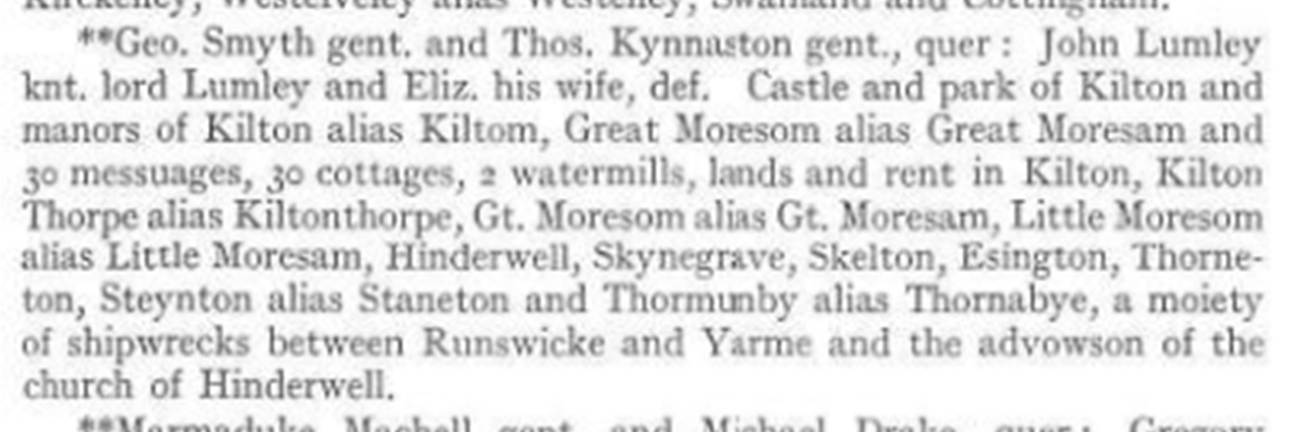
1607, Easter
Term, 5 Jas 1
(Yorkshire Fines for the Stuart Period, Volume 1 (1603 to 1614), Edited by William Brigg,
Yorkshire Archaeological Society Record Series,
volume
53, 1915, page 65 (Folio 72)
1609
After this the
manor seems to have been in the hands of the Crown for a time, various estates
here being held in chief by different people.
1611
1611, Michaelmas
Term, 9 Jas 1 Zachariah Steward ‘sacre theologie doctor’, quer: Geo
Tockettts esq and Roger Tocketts gent (son and heir apparent of said Geo) and
Jane his wife, def. Messuage, 7 cottages and lands at Great Moresom (Yorkshire Fines for the Stuart Period, Volume 1 (1603 to 1614), Edited by William Brigg,
Yorkshire Archaeological Society Record Series,
volume 53, 1915, page 162 (Folio 169)).
Jas Lyones, Thos Ellerbie, John Calvert, Wm Parkine and Barth
Castell, quer: Geo Tockettts esq and Roger Tocketts gent (son and heir apparent
of said Geo) and Jane his wife, def. Six messuages, 3 cottages and lands in
Great Moresom (Yorkshire
Fines for the Stuart Period, Volume 1
(1603 to 1614), Edited by William Brigg, Yorkshire Archaeological Society
Record Series, volume 53, 1915,
page 167 (Folio 174)).
1612
1612,
Michaelmas Term 10 Jas 1, Rich Potter quer: John Calverte and Grace his
wife, def. Messuage, cottage and lands in Great Moresome. Warranty against Geo
Tocketts gent and Roger Tocketts gent, and their heirs. (Yorkshire Fines for the Stuart Period, Volume 1 (1603 to 1614), Edited by William Brigg,
Yorkshire Archaeological Society Record Series,
volume
53, 1915, page 187 (Folio 194)).
Michl
Yonge and Zachariah Stewart STP, quer: Jas Lyonas and Jane his wife, def.
Messuage and lands in Great Moresom. Warranty against Geo Tockettes esq and his
heirs and against Roger Tockettes son and heir apparent of said Geo and his
heirs. (Yorkshire Fines for the Stuart Period, Volume 1 (1603 to 1614), Edited by William Brigg,
Yorkshire Archaeological Society Record Series,
volume
53, 1915, page 192 (Folio 199)).
1632
Rights to coal
mines and quarries and view of frankpledge were appurtenant to the manor in
1632.
1633
The estate was
held by Philip Wheath in 1633 and called a manor in 1636 when his son Joseph
had livery of it.
1696
In 1696 William
Tullie and his wife Anne, who held Kilton, made a conveyance of lands in Great
Moorsholm to Samuel Diggle, which seems to indicate that the manor again
followed the descent of Kilton.
1806
In 1806 John
Wharton of Skelton and Kilton was lord also of this manor, after which it
follows the descent of the manor of Skelton.
1892
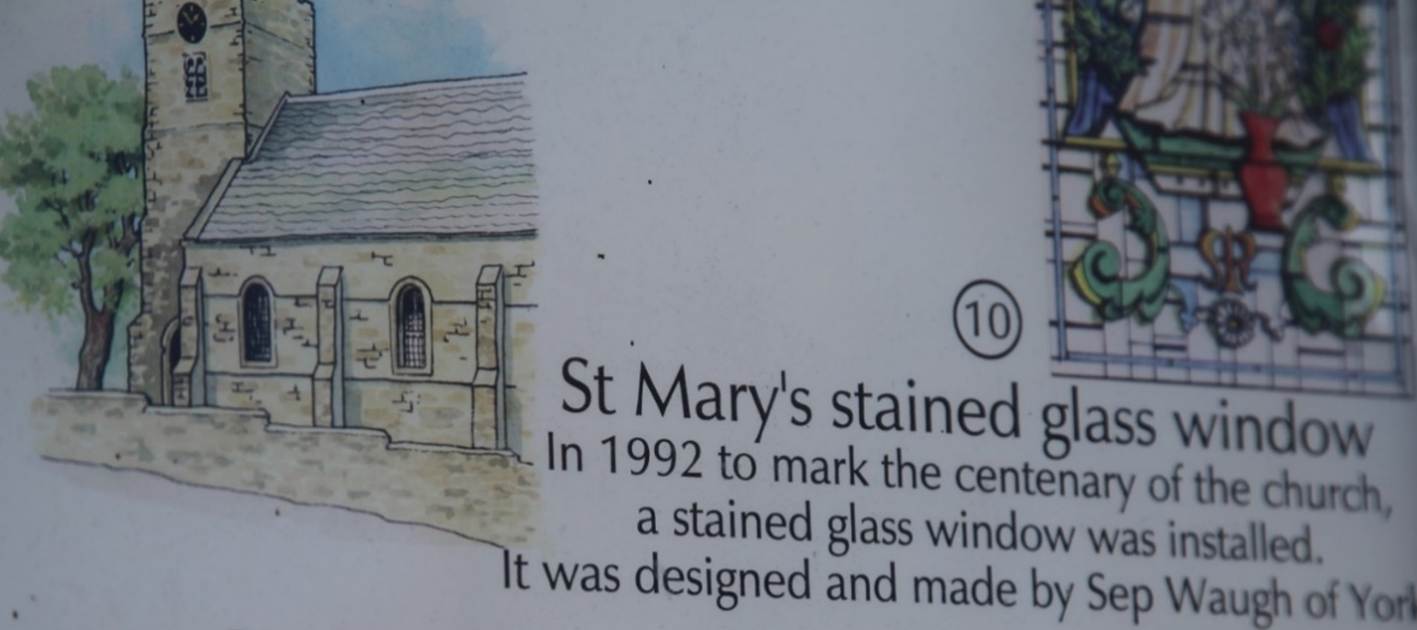
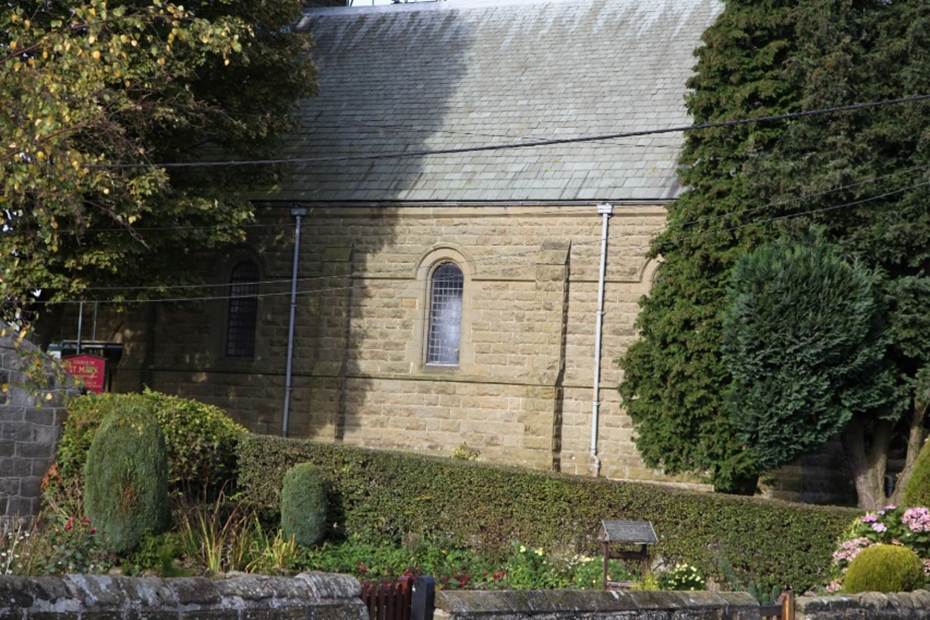
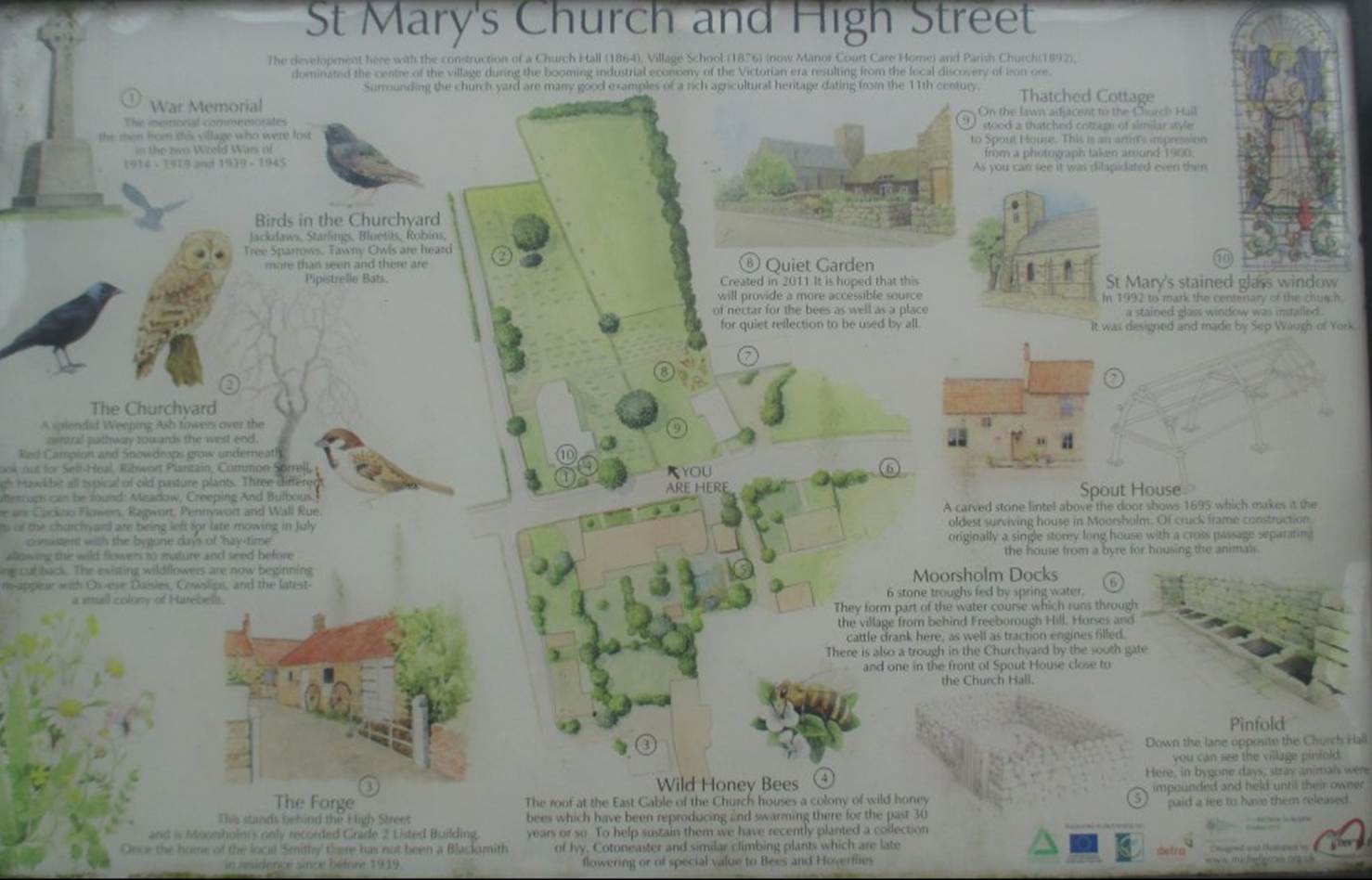
The church of St
Mary, Moorsholm, was built in 1892 and is of stone in 12th-century style. It
consists of chancel, nave and west tower.
1957
The Memorial Hall
was built as a war memorial in 1957 and is used as the doctors’ surgery and
meeting room.
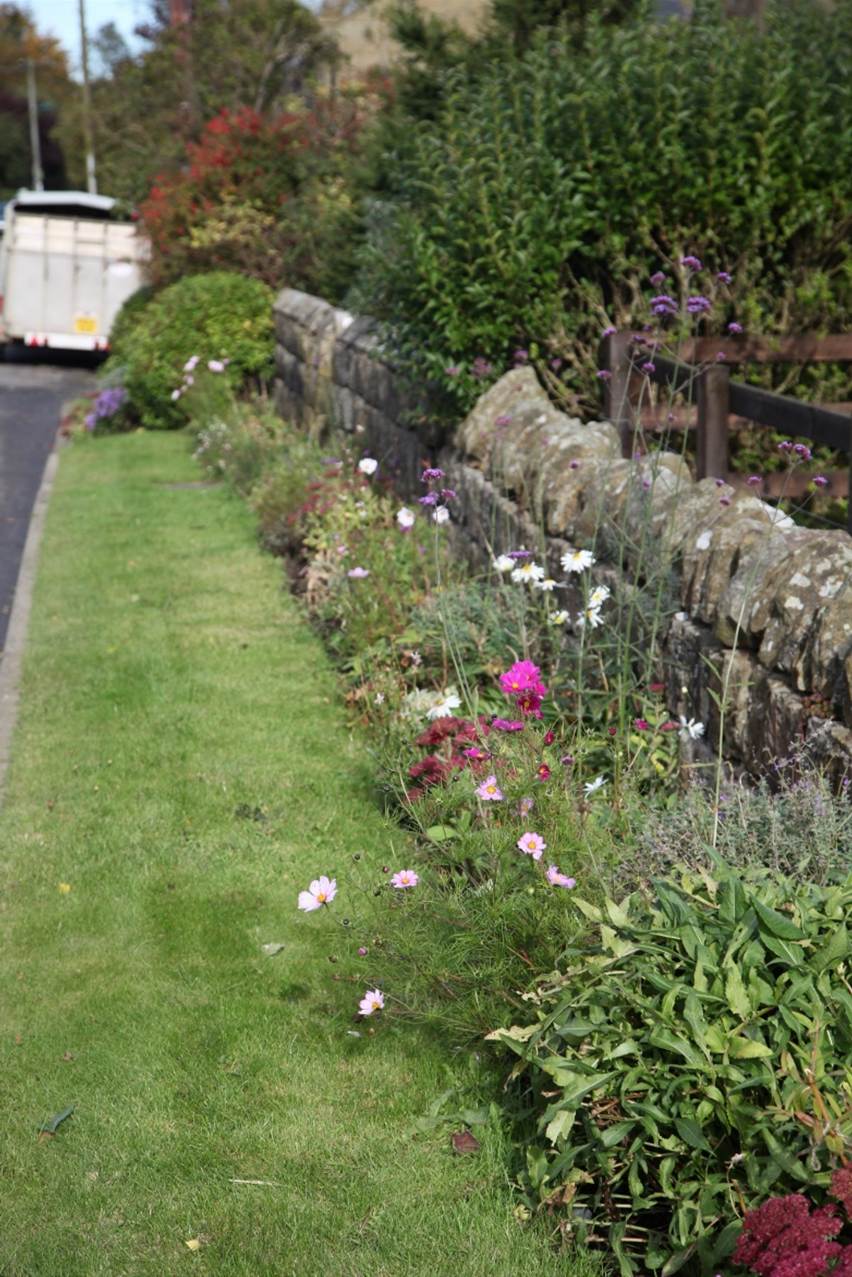
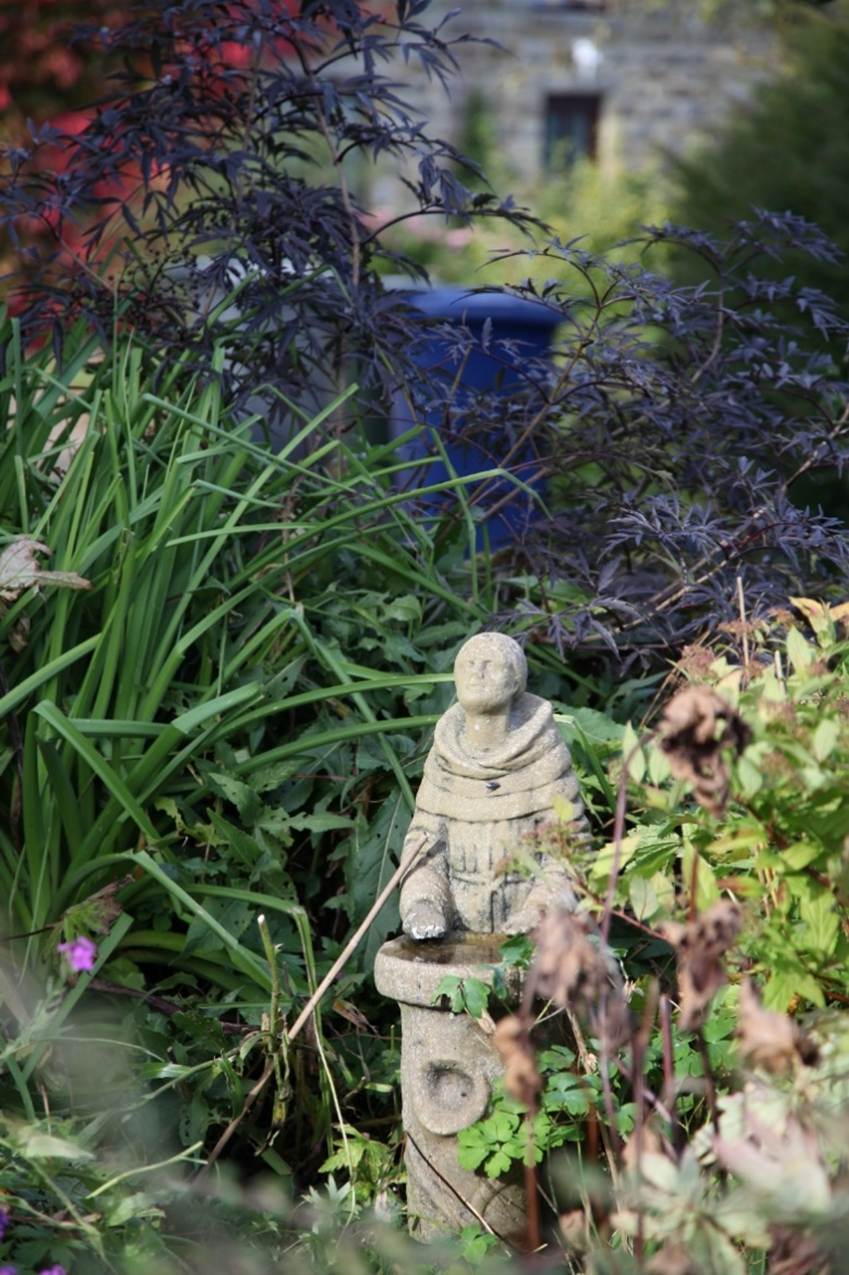
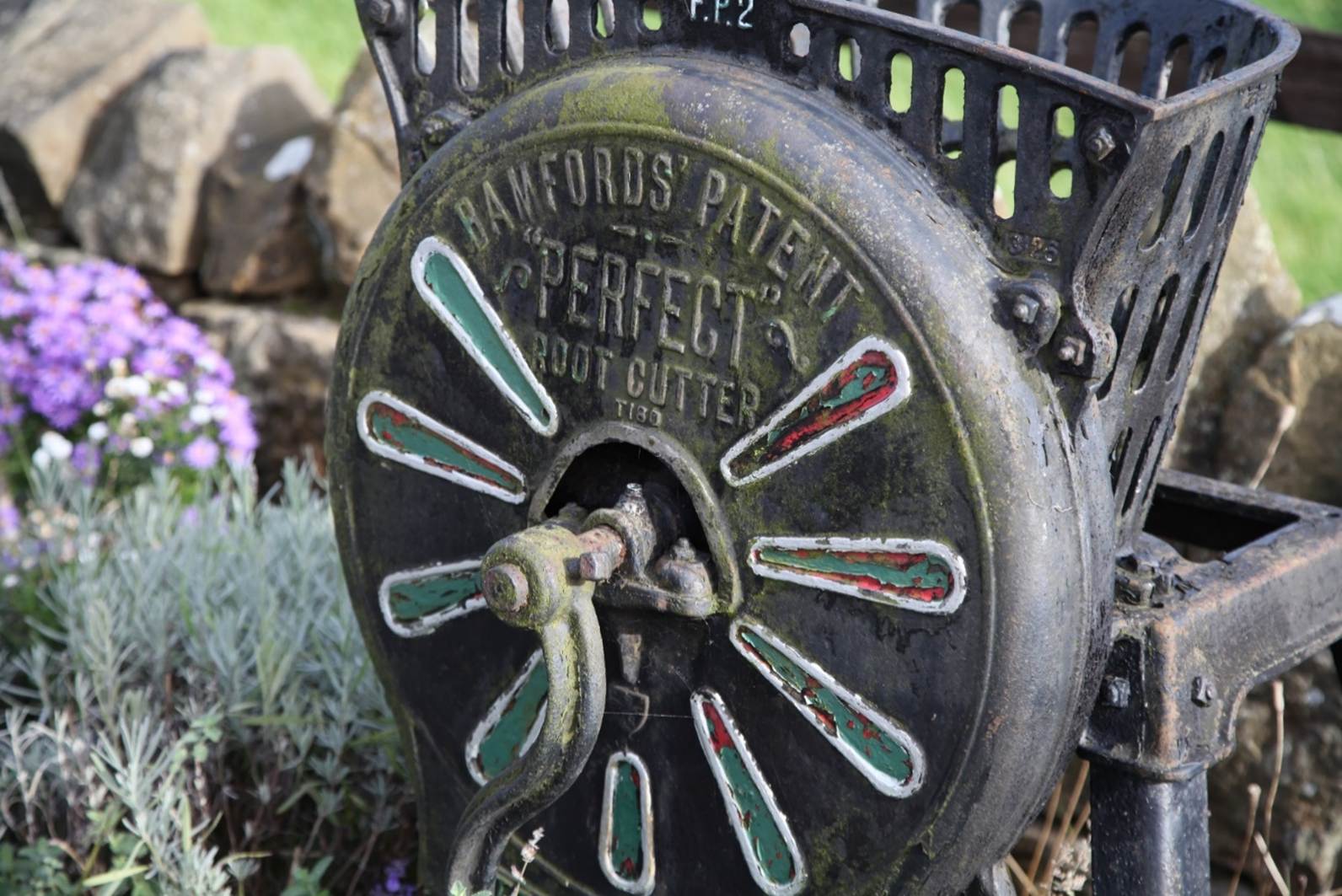
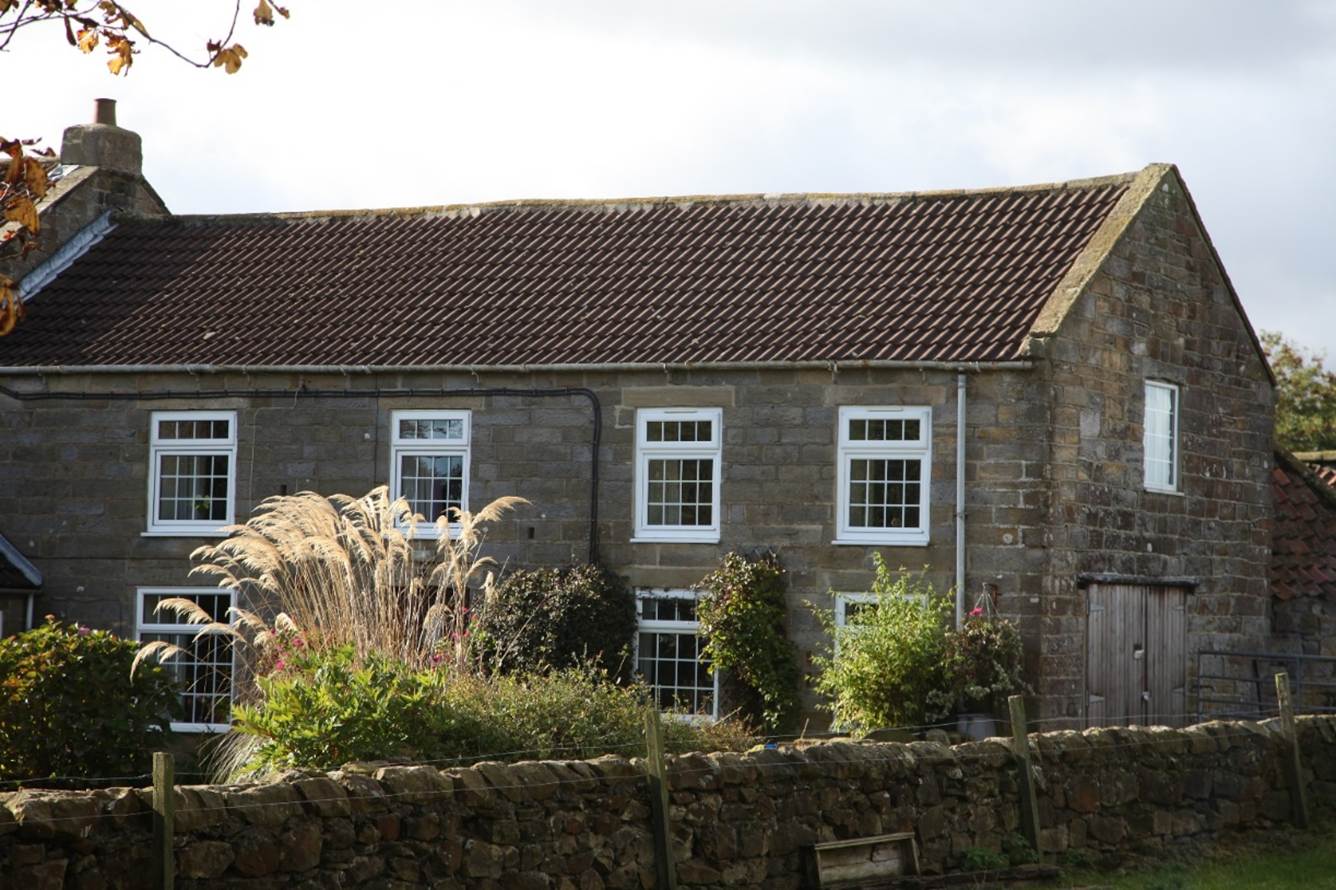
Photographs of Moorsholm
today
Bibliography