A History of Kilton, North Yorkshire
A history of Kilton and Kilton Thorpe in North Yorkshire from
prehistoric times to a thriving Georgian agricultural community, through a
period of Victorian change, to the twenty first century
No place can equal Kilton for loveliness standing as it does in the midst of sylvan scenery, beautiful landscape and
woodland scenery and what a perfume of sweet fragrance from wildflowers,
particularly the primrose-acres that would grace any gentleman’s pleasure
ground for beauty and for loveliness. Kilton, as it is situated, is fitted only
for a prince (John Farndale, 1864)
|
Return to the Home Page of the Farndale Family
Website |
The story of one family’s journey through two
thousand years of British History |
The 83 family lines into which the family is divided.
Meet the whole family and how the wider family is related |
Members of the historical family ordered by date of
birth |
Links to other pages with historical research and
related material |
The story of the Bakers of Highfields, the Chapmans,
and other related families |

Kilton was the heart of the Farndale family story for
two hundred and fifty years.
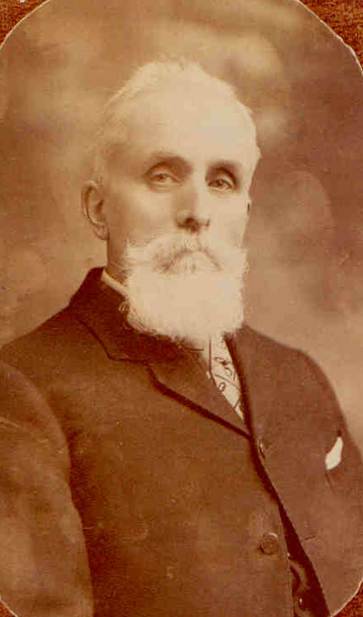
Charles Farndale of Kilton Lodge
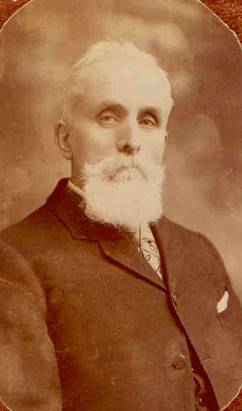
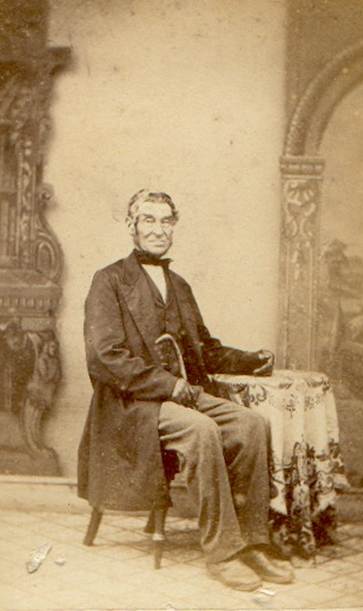
John Farndale who wrote about
Kilton in the late nineteenth century
This page provides a chronological history of Kilton, with
detailed research notes, for all those with an interest in this remarkable
place. If you find this page helpful, or if you have further information to
share, please email the author, Richard Farndale, at rcfarndale@hotmail.com.
For ease of navigation:
Chapter headings
and sub headings are in brown.
Dates are in red.
Links to other
pages are in dark blue.
References and
citations are in turquoise. References
include links
to the original source material, where available.
Introduction
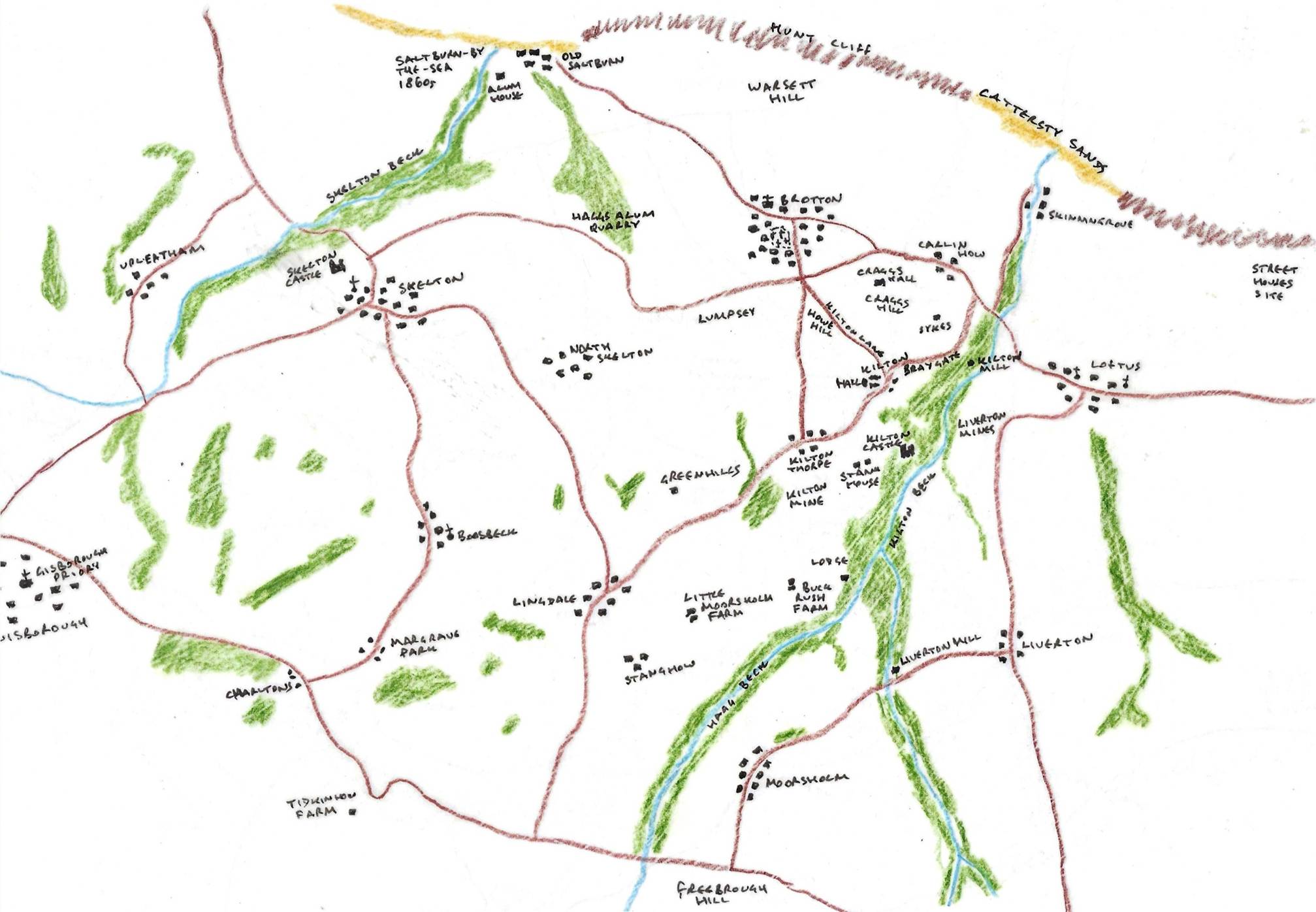
Kilton is a lost settlement, with a remarkable history, in the civil
parish of Lockwood (Lockward Parish
information), within the borough of Redcar and Cleveland (Redcar and Cleveland Council, Mapit
boundary map) in the County of North Yorkshire, in medieval times within
the Wapentake of Langbaurgh. Once a thriving settlement, Kilton today comprises
mostly farmland, with a small residential settlement at Kilton Thorpe. To the east is the narrow ravine
of the Kilton Beck Valley through which the Kilton Beck flows towards the sea
at Skinningrove. In the midst of the heavily wooded
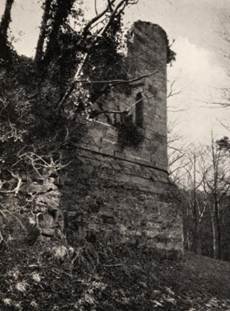
area of that valley lie the ruins of Kilton
Castle. About two kilometres to the north is the town of Brotton and Carlin How and Craggs Farm. To the south of Kilton Thorpe there are the scrag heaps and
disused buildings of the industrial graveland of the old ironstone mines.
Hidden behind a contemporary agricultural scene, lie clues to Bronze Age
and Anglo-Saxon Settlement; Norman fortification; a thriving Georgian village;
and profound agricultural change in the nineteenth century.
My great x3
grand-uncle, John Farndale wrote
that no place can equal Kilton for loveliness, standing as it does, in the
midst of sylvan scenery, beautiful landscape and woodland scenery, and what a
perfume of sweet fragrance from wild flowers,
particularly the primrose-acres that would grace any gentleman’s pleasure ground
for beauty and for loveliness. Kilton, as it is situated, is fitted only for a
prince.
We believe Kilton
had the pre-eminence of many of its neighbouring villages. We knew no poachers,
no cockfighters, no drunkards, or swearers. Kilton people were church-going
people, yet, on a Sunday afternoon, what hosts of young men and young women
mustered for play, their song was:
There is little
Kilton, lies under yon hill,
Lasses anew lad,
come when you will;
They’re witty, they’re
pretty, they’re handsomely bound,
A lo! for the
lasses in Kilton town
(Farndale, John. 1870. The History
of Kilton With a Sketch of the Neighbouring
Villages By the Returned Emigrant. Middlesborugh: Burnett and Hood).
He also wrote
that Kilton stands unrivalled for its antiquity, and its beautiful scenery
cannot be excelled. The brightest and fairest scenes in Italy cannot be
compared to the lovely prospects which Nature displays in this secluded part of
Cleveland. This place stands on a ridge of rich loamy land, with Huntcliffe on the north, known to all sea-men.
On the east is the beautiful bay of Skinningrove and the hall of A C Maynard
Esq, formerly the residence of F Easterby Esq.
Skinningrove was once a noted place for smuggling. On the north
west is Old Saltburn which was formerly considered the King of the
Smuggling World. Near which is New Saltburn, about to become one of the most
fashionable sea bathing places on the eastern coast, thanks to the enterprising
gentlemen who conduct the railway operations in this neighbourhood, and who are
the public’s benefactors, in a commercial, social point of view, and are
indeed, in every sense of the word, the friends of the people. (A Guide to Saltburn by the Sea and the Surrounding
District, With remarks on its picturesque scenery,
Fifth Edition, Dedicated to John Thomas Wharton Esq of Skelton, By John Farndale.
Late of Skelton Castle Farm, Darlington, Printed by Charles W Hird, 1864, page
11).
Kilton
was of great interest with a great hall, stable, plantation, and ancient
stronghold in ruins (Kilton Castle). It is still a small place he says
and he described how many have left it and made their name. (John Farndale’s Memoires)
In
1913, in a less romantic style, William L’Anson wrote that the Kilton Beck,
which flows into the North Sea at Skinningrove, rises some five or six miles
inland, in a wild and lonely region of moorland 800 to 900 feet above sea
level, and taking, with many windings, a northerly course, and being augmented
by the waters of two or three other becks, flows rapidly seawards down a
beautiful and picturesque dingle or ravine. In fact Kilton Beck flows from
two higher becks which join about one kilometre upstream from the castle: Hagg
Beck which drains from Moorsholm Moor and Liverton Beck. Liverton Beck becomes
Mill Beck further upstream and is fed by Stubdale Beck which flows from
Liverton Moor and Skate Beck which flows from Gerrick Moor. Some four miles
from its source, in one of a series of
bold and graceful curves, it sweeps round the foot of a precipitous headland
projecting outwards some 180 feet above the beck on the left or western side of
the ravine. On the summit of this narrow ridge, which seems specially designed
by nature for the site of a small medieval fortress, Pagan Fitz-Walter, the
second holder of what subsequently became known as the Fief of Kilton in the
Barony of Percy, founded, in the reign of King Stephen, the little-known castle
of Kilton. (Kilton Castle, William M
L’Anson, Yorkshire Archealogical
Journal, Volume 22, 1913, page 55). It was
in fact more likely to have been Robert de Brus who built Kilton Castle, in the
time of King Stephen.
Within
the fiefdom, later the estate, and now the farmlands of Kilton, there are
antique features, which each hide a rich history.
This
chronology is accompanied by separate pages which explore aspects of Kilton and
its history in further detail.
|
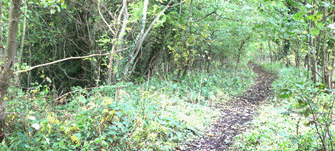
The medieval settlement with Iron
or Bronze Age roots, referred to in the Domesday Book alongside Kilton |
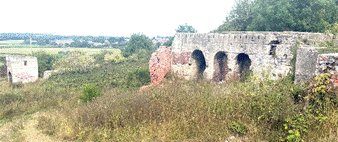
In romantic and picturesque grandeur,
few ruins in England can equal this venerable relic of antiquity. |
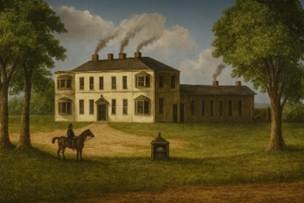
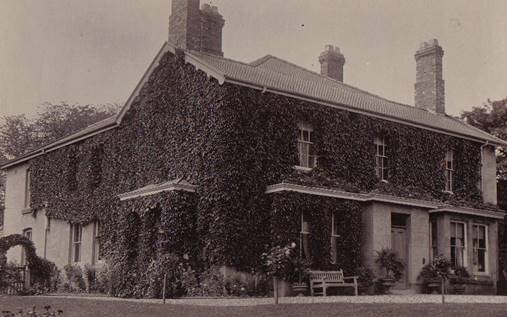
The Georgian Hall, the centre of
the community, later rebuilt |
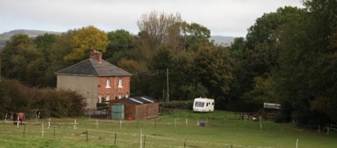
A medieval farmstead which evolved
into an important Victorian farm |
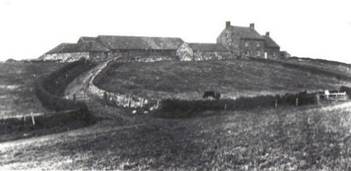
A medieval farmstead, which is
still a farm today |
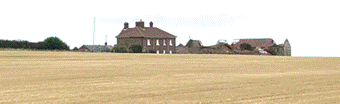
An antique farmstead on Kilton’s
central landscape |
|
The dense woodland to the east of
Kilton with very steep slopes to Kilton Beck, and which hides the medieval
castle |
A mill is noted at Kilton in 1323 and 1344. |
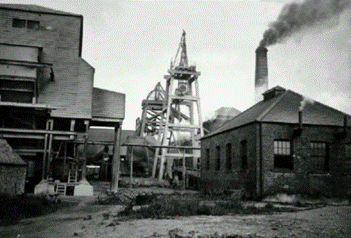
The ironstone mine which operated
from 1871 to 1963 |
A site of medieval agriculture and
a mine from 1881 to 1954 |
Three fields which lie on a
medieval trackway from Kilton |
The remarkable detail from the
1767 Estate Map showing a stage in the gradual evolution into modern Kilton |

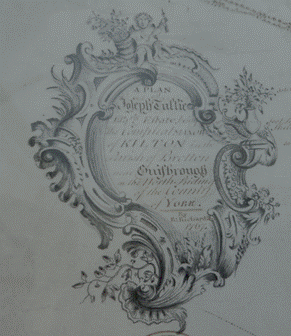
A Chronological History of
Kilton
There is evidence
of dispersed settlement in the vicinity of Kilton dating to prehistoric times.
9,600
to 4,000 BCE
Mesolithic Hunters
The Mesolithic is
the period prior to the commencement of farming, when hunters and gatherers
roamed to plains and hills of Yorkshire. Tools of stone and flint show that
humans were in this area, surviving by hunting and making temporary camps.
There is
extensive evidence of Mesolithic activity in the vicinity of the North York
Moors particularly in the uplands and in the watery world of the Vale of
Pickering, including at Star Carr.
Mesolithic finds in Cleveland evidence Mesolithic activity, though the finds
are more limited. See for instance Daniels, Robert.
2015. The
Mesolithic in North East Yorkshire. Tees
Archaeology.
Flint scatters
and arrowheads, including a 5,000-year-old ripple-flaked oblique arrowhead
discovered near the Carr Ponds on the Eston Hills, evidence human activity,
hunting, and travel routes across the northernmost edge of the uplands
overlooking Teesside (Neolithic Journey, Eston
Hills arrowhead is well-travelled!, Cleveland
Archaeology Trust; Ice and Fire, Eston Hills
Rescue Archaeology, Spencer Carter, 2017).
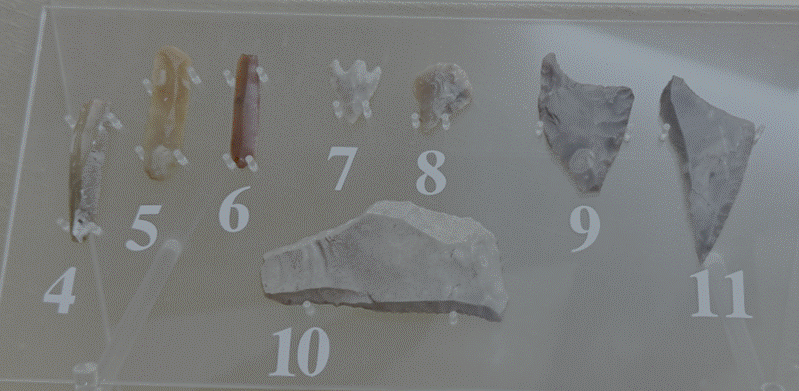
Flint tools (Dorman Museum, Middlesbrough)
Skeletons of wild
ox and deer have been found in peat bogs just a few miles from Skelton and have
been dated to around 7,000 BCE. It has been suggested that layers of charcoal
are the result of human activity (Skelton-in-Cleveland
History, 12,000 BC to 410 AD, the Late Bill Danby).

Hammer-axe of
Greenstone, from a ‘houe’ on Skelton moors
There have been
some Mesolithic finds of flints around Seamer Carrs
to the west of Stokesley (not to be confused with Seamer Carr near Star Carr), including a tranchet
flint axe (Rowe, Peter. 2015. Hunting
the Hunter-Gatherers, Mesolithic Teesside, Historic England),
but no concentration which might indicate seasonal camps.
Mesolithic
visitors in this area may have been seasonal visitors to small lakes in this
area. As the weather improved during the later Mesolithic period there was
increased activity across the uplands, including around the Upleatham Hills. (Spratt, D A. 1979. The Archaeology of
Cleveland).
Steve
Sherlock,
during his archaeological excavations at Street Houses Farm in September 2026
explained that most of the region was forested during the Megalithic. It seems
likely that there may have been Mesolithic activity along the coast. There is
no evidence yet of Mesolithic activity at Kilton, though it seems likely that
the area may have begun to encounter human activity, through dense forest and
perhaps in clearings.
c 3,800
BCE
Neolithic
Farming and industry
The many burial
sites or howes on the hills around Skelton
provide the first substantive evidence of humans in these parts. Neolithic
people began farming and living in settled communities. They clearly believed
in an afterlife and buried their dead in long barrows,
communal tombs covered with a mound of stones. These graves are found on high
ground and thought to be connected with sun and
ancestor worship. Cremation had often taken place and the remains buried with
items of jewellery, weapons and articles of daily life.
In Cleveland,
these more permanent settlements began primarily to emerge on the coast, with
access to seaborne transport.
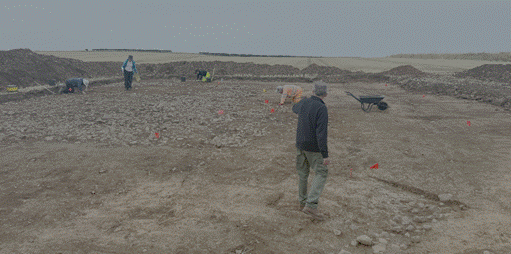
There have been
extraordinary Neolithic finds excavated Street Houses Farm site, only four
kilometres to the northeast of Kilton, above the cliffs overlooking the North
Sea. The excavations at Street Houses began in the 1930s by William Hornsby. A
Neolithic cairn was excavated by Blaise Vyner in 1981. Further sites were excavated
by Steve Sherlock from 2014 and the work is ongoing. The excavations include a
ring ditch, a possible Neolithic house, a mortuary complex and a cairn. This coastal
hilltop site is a regionally significant centre of early Neolithic life dating
to approximately 3,800 BCE. Evidence of hearths, broken pottery, and storage
pits suggests this is the earliest Neolithic salt-making site discovered in
Britain. Because salt was a highly valued, essential commodity for preserving
meat and dairy through the winter, this site suggests that early farmers
operated a more efficient, larger-scale cattle economy than previously thought.
A multiphase Neolithic cairn with a burnt timber façade and mortuary structure
was used for the deposition of cremated human remains. A Late Neolithic
palisaded ritual monument known as the Wossit
is located a short distance from the cairn. This roughly 6,000-year-old Neolithic
hub predates Stonehenge by over two millennia and is among the earliest found
in Western Europe. The activity at nearby Street Houses is indicative of
agricultural activity in the vicinity.
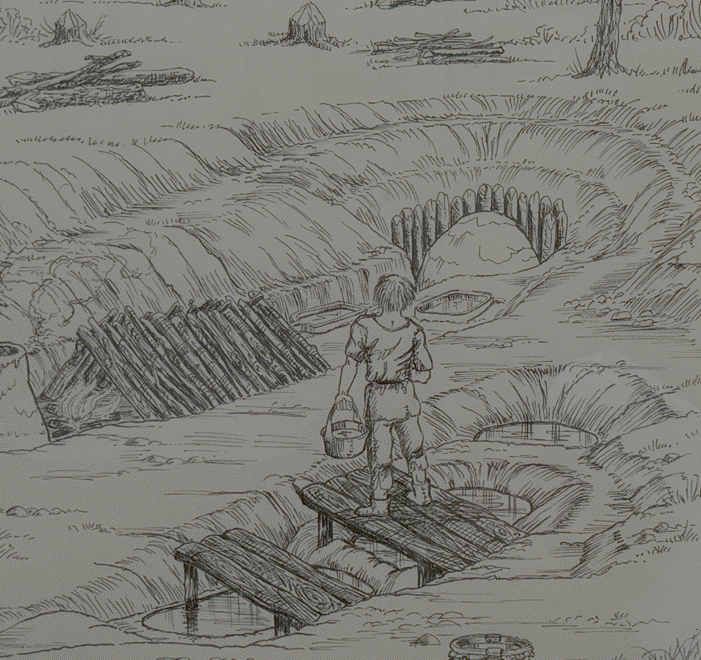
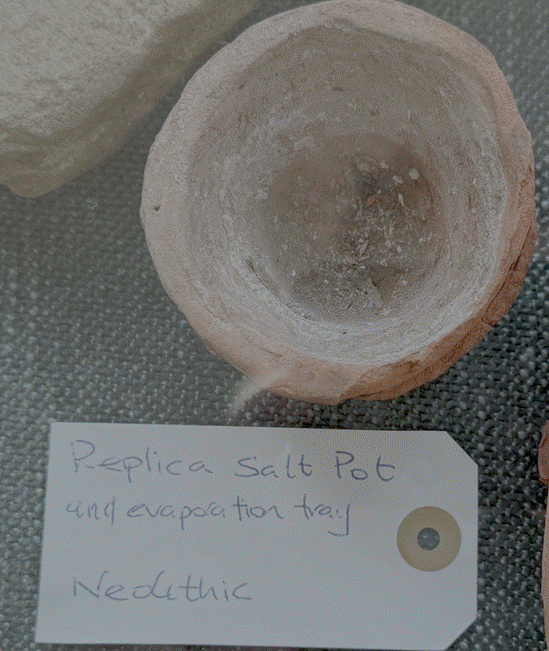
Salt making at
Street Houses
The rich history
of the Street Houses Farm site, so close to Kilton, which must have been a
significant influence on Kilton’s earliest history, is told in more detail on a
separate page.
|
The Street Houses Farm
Excavations
Further
detail about the Neolithic, Bronze Age, Iron Age, Roman-British
and Anglo-Saxon archaeology at Street Houses Farm |
Kilton and its
relationship to Street Houses and Warsett Hill, also showing the location of
the Roman signal station
c 1500
BCE
The
Bronze Age Settlement Pattern
The largest single group of
prehistoric monuments in the county of Cleveland is the Bronze Age burial
mounds. Although there are remains of over 100 of these mounds within the county,
their distribution is markedly restricted to the high land, usually over 150
metres OD, to the South of the River Tees. Within this area, the main
concentration of burial mounts is on the present day moor lands of the
Cleveland and Eston Hills. (Crawford,
G M. 1990. Bronze Age Burial Mounds in Cleveland. Cleveland County
Council).
Whilst the Street
Houses site close to Kilton continued to be a centre of Bronze Age
significance, evidence of human activity emerged in Kilton.
On Kilton Lane south
of Brotton at NZ 695188, adjacent to Craggs Hill, is Howe Hill. This was the
site of an Early Bronze Age barrow. Here a burial was discovered in a tree
trunk coffin. The coffin had decayed badly when it was discovered and the
remains of a skeleton was associated with the coffin, with bones and a
brachycephalic (ie unusually short and wide) skull.
The tree trunk coffin was similar to another found on Gristhorpe cliff between Scarborough and Filey. Similarities
with coffins in Denmark suggested these were incomers, though this has since
been doubted. It may be that these were individuals who were simply using local
forest resources, similarly but independently from Danish practice.
Nevertheless, the coffins are suggestive of dugout canoes, which may indicate
that these were indeed incomers across the North Sea, or folk used to travel on
waterways. They may have been sea-faring folk. The resource required to shape such
a coffin was significant, suggesting domination by significant beliefs. In the
barrow there were many cupstones, including one where there were hollows within
rings.
The site was
excavated by William Hornsby and Richard Stanton in 1917. The Dorman Museum in
Middlesbrough displays important Bronze Age barrow artifacts, including log
coffins from the Loose Howe mound excavation at the head of Rosedale and local prehistoric
finds curated by former museum curator and archaeologist Frank Elgee.
Surveys by
antiquarians and archaeologists like G M Crawford in 1980 noted the fading
profile of the site. It is now barely visible as a low swell beside the Brotton
to Kilton road.
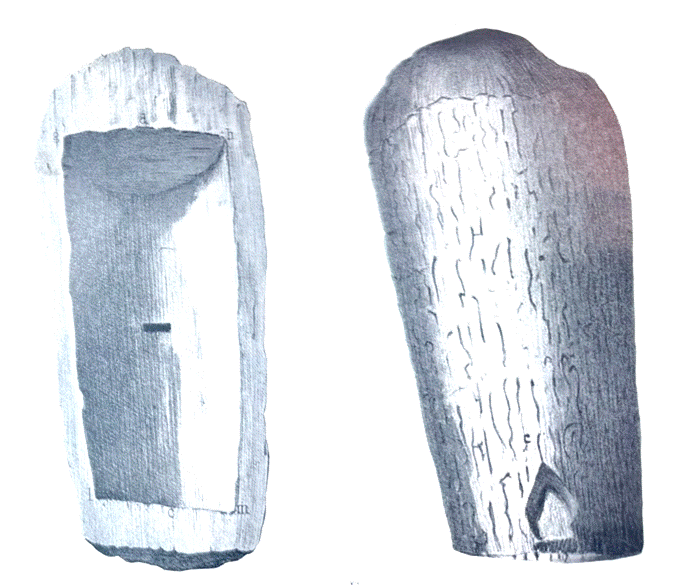
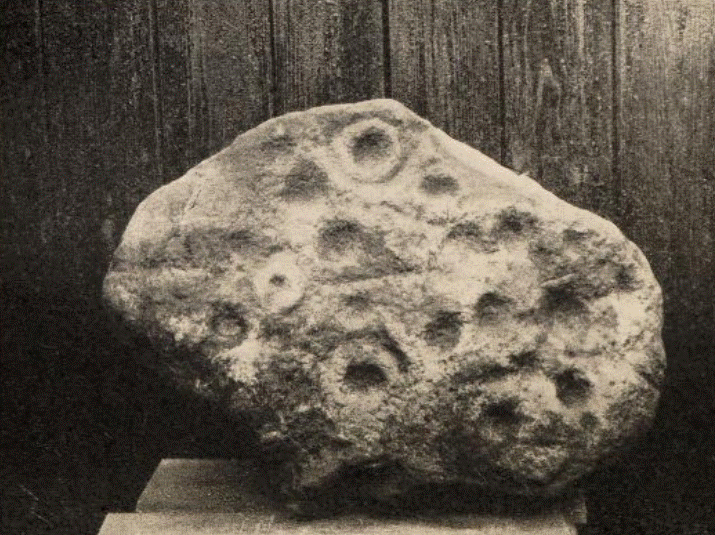
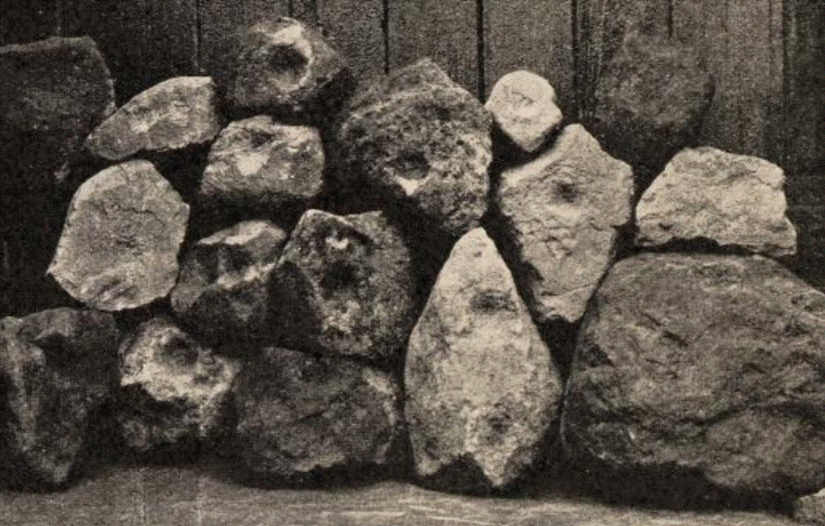
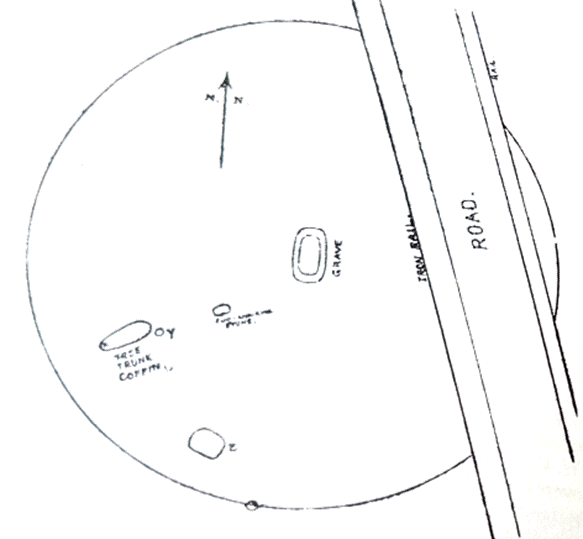
Tree-trunk
coffin, Gristhorpe
Cup and ring stone, Howe Hill, Kilton Eight
stones with cup marks, Howe Hill, Kilton Barrow at Howe Hill,
Kilton
(Elgee, Frank. 1930. Early Man in North-East
Yorkshire. Gloucester: John Bellows. Page 73-76).

Cup and Ring Stone from Howe
Hill (Dorman Museum,
Middlesbrough)
Early men certainly knew
this beautiful part of England, for a coffin hollowed out of the trunk of a
massive oak which had been split lengthwise was found at Brotton in a barrow at
a place the local people called Howe Hill. In the coffin was the skeleton of a Bronze
Age man who lived in the district, 2000-1,500 BC. A second barrow was
discovered on the summit of Brotton Warsett Hill, to the east of Saltburn.
Around the barrow was a circular wall of stones, one foot high, and about three
feet in width. The body had been cremated and a food vessel placed over it.
There was also another vessel on the south side of the barrow. (Horton, Minnie C. 1979. The Story of
Cleveland, History, anecdote and legend. Cleveland County Libraries. Page
373).
This carved stone from the
Neolithic period, possibly up to 8,000 years old, was found at a barrow at Howe
Hill in 1913. Many hundreds of stones with hemishephrical depressions
surrounded by rings have been found on the North Yorkshifre Moors. Their meaning
is unknown. We can only speculate that they may have marked significant events
such as births or deaths. (Dorman
Museum, Middlesbrough)

A dug out canoe discovered
in 1926 in the River Tees oppositie Thormanby High Wood, at a depth of 7 to 8
feet below the sand. The canoe is approximately 3,000 years old and was hewn
from a single oak trunk, showing a high level of workmanship, and there are
still traces of the fire which helped to hollow it out. The bottom is pierced
with three circular holes, each fitted with a cylindrical plug, which were
probablyu used to drain out any water when it had been brought on land. (Dorman Museum, Middlesbrough)
Another seven barrows were
found at nearby Warsett Hill on the cliffside north of Brotton, a group of
seven hillocks in the Beacon Field. It has been suggested that the Warsett
ridge was part of a natural line of communication between the moors and the
sea. There may have been a line of barrows of which Howe Hill may be a rare
survivor. Howe Hill may have been a part of a ritual landscape. A large slice
of the Howe Hill barrow was cut off when the road was built. As well as the cup
and ring stone, there was a pile of stones with cup markings. The cups probably
had religious significance. (Hornsby,
William and Stanton, Richard. 1918. British Barrows near Brotton in
Yorkshire Archaeological Journal Volume 24 Page 263-268).
The seven Warsett Hill
mounds were opened up by Canon Atkinson and later excavated in 1917 by W
Hornsby and R Stanton. These mounds occupied a central ridge and were
intervisible. The large barrow at Howe Hill is now only visible as a low swell in
an arable field at 140 metres above Ordnance Datum (“OD”, measured from the
Newlyn Tidal Observatory in Cornwall, roughly equating to mean sea level). The
barrow would have originally measured about 20 metres in diameter. Howe Hill
had been excavated by Hornsby and Stanton in 1914. (The Burial
Mounds at Brotton and Boulby in Crawford, G M. 1990. Bronze Age Burial
Mounds in Cleveland. Cleveland County Council pages 18-22).

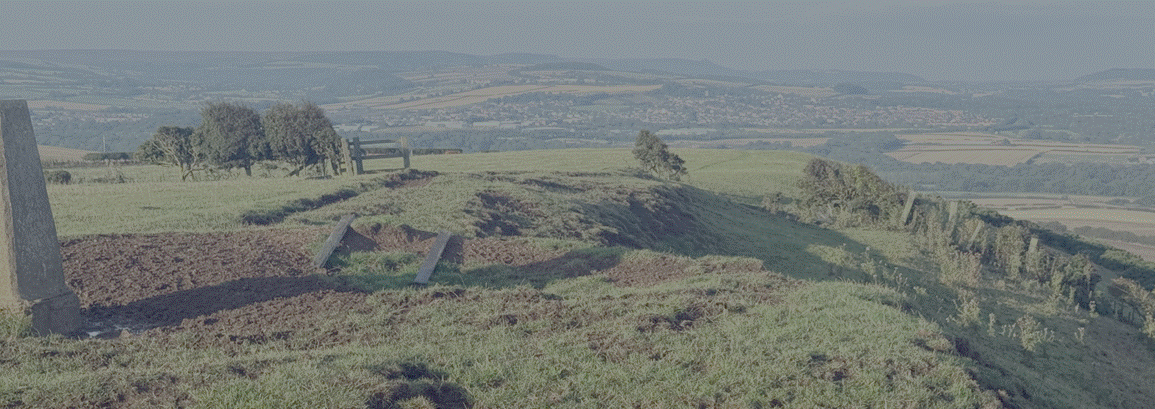
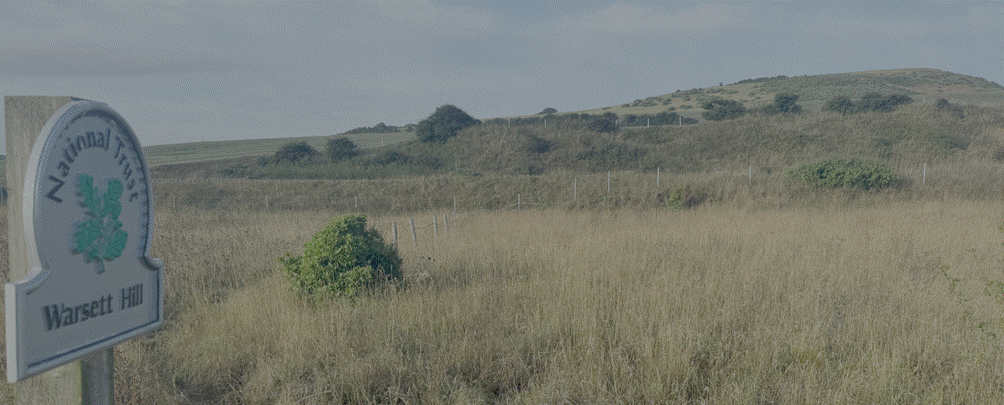

Warsett Hill 2026 (by the
author)
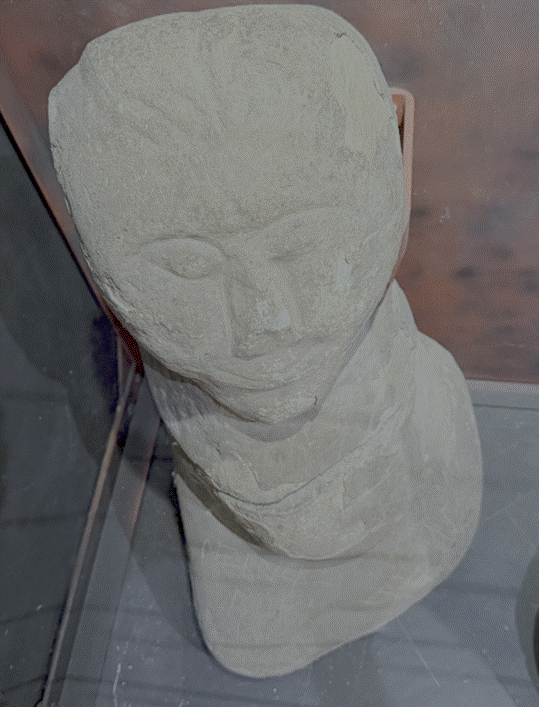
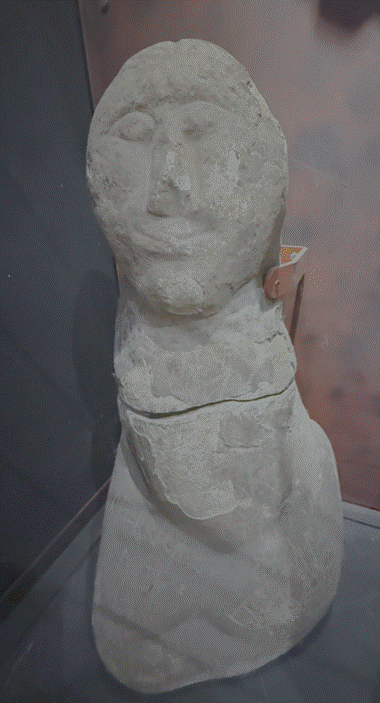
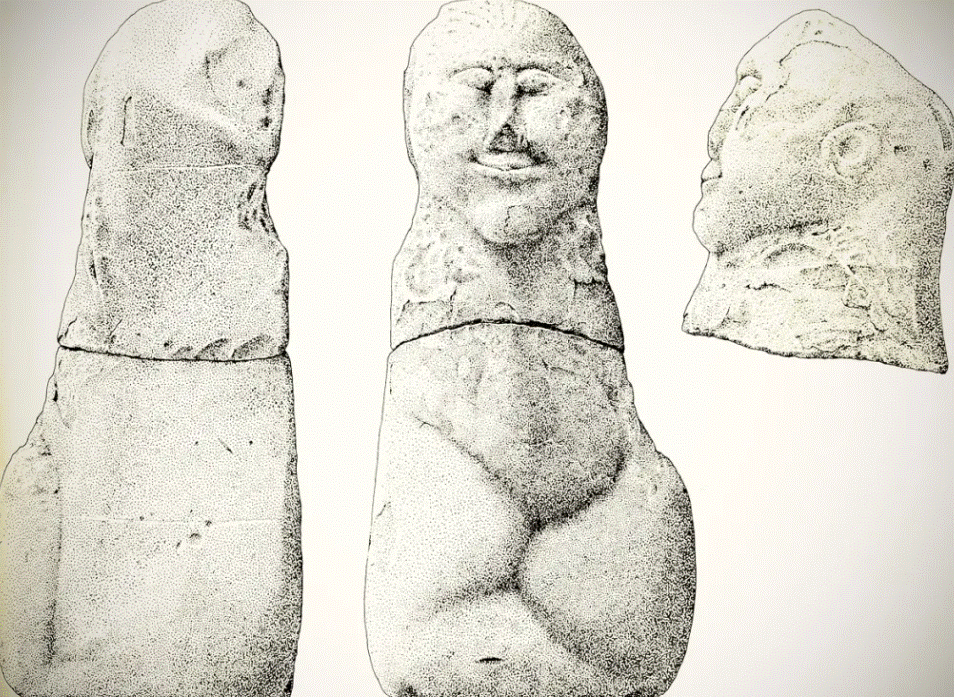
This fertility statue is an
unusual monument carved during the Bronze Age, up to 4,000 years ago, found on
Saltburn beach. The form seems to be a pregnant woman and may have been a
tribal fertility symbol or deity. (Dorman Museum,
Middlesbrough)
The figure was reputedly
found at the foot of Huntcliff in 1886 and was placed on a pedestal outside of
the nearby Ship Inn. In 1980 it was moved to the Dorman Museum in Middlesbrough
where it can be seen on display. Headley Swain commented that the Saltburn figure
probably qualifies as Celtic through default, although it could possibly be of
Romanesque origin. (The
Smell of Water, Swain, Headley (1995), Talking heads: three ‘Celtic’ heads
from East Cleveland in Moorland Monuments, CBA Research Report 101).
600 BCE
Iron
Age Settlement
An initial
pattern of dispersed settlement of individual farmsteads emerged in prehistory,
which led, by the Iron Age, to increased nucleation or concentration into a
tightly clustered settlement (Robert Daniels. 1990.
Kilton: A Survey of
Moorland Fringe Township in Medieval Rural Settlement in North East England. Architectural and Archaeological
Society of Durham and Northumberland Research Report No 2, edited by B E Vyner,
page 33).
The use of iron for tools
and weapons was introduced. Some historians say tribes of Celts displaced their
predecessors at about this time. There were perhaps intermittent movements of
people across the North Sea, as this was to be the pattern for the future. The
use of iron made it possible to farm the heavier soils of the lowlands. There
is no evidence of settlements in the earlier Iron Age period, which would have
been of timber and thatch, but the Iron Age people built earthworks on high
positions for defence and remains of these can still be seen.
100 BCE
The Tees valley was
a place of agricultural revolution during the Iron Age. Agricultural practices,
such as crop choice and processing, varied geographically, reflecting distinct
subregional identities and differing scales of arable production. (van der Veen, Dr. Marijke. 1992. Crop
Husbandry Regimes: An Archaeobotanical Study of Farming in Northern England
1000 BC - AD 500, Sheffield Archaeological Monographs 3).
A 2002 archaeological
excavation at Kilton Thorpe revealed a regionally significant Later Iron Age
open village with no enclosing bank or ditch (2002.
Sherlock, Stephen. An Archaeological Excavation at Kilton Thorpe, Nr
Brotton. Johnson, P, & Sherlock, SJ. Excavation of an Iron Age open
settlement at Kilton Thorpe, Brotton. 2010. Sherlock, Stephen John. An
Examination of Late Prehistoric Settlement in North East England with Specific
Emphasis on the Settlements of the Tees Valley. University of Leicester, School of
Archaeology and Ancient History). The Iron Age village at Kilton Thrope Lane comprised of ten
prehistoric houses and was identified as an open village characterised by
roundhouses, boundary ditches, and evidence of mixed agriculture including
cereal processing and livestock management with no enclosing bank and ditch. Internal
partitions divided the site into zones across an area of half a hectare. Finds
included 334 sherds of pottery and briquetage, a
quernstone and evidence of ironworking. The site, which dates from c 50 BCE to
c 50 CE (radiocarbon dated to circa 317–174 cal BCE
through to 90 cal BCE–cal
210 CE, indicating continuity into the early Roman period), contained evidence
of up to ten roundhouse timber structures and a local salt industry. The Kilton Thorpe
site is an important benchmark for Late Prehistoric settlement in North East England. In contrast to earlier enclosed
farmsteads, it represents a more open village-style community that eventually
emerged across the Tees Valley. Excavations on the site produced notable
finds, including coarse pottery associated with on-site salt production.
The site, covering
approximately 0.5 hectares, yielded handmade pottery, rotary querns, and briquetage associated with small-scale salt production.
This might suggest
a long association with the salt industry at Street Houses.
A small archaeological
excavation took place in August 2002 at Kilton Thorpe, 0.5 km south of
the village of Brotton in North Yorkshire. The excavation was on the site of an
Iron Age village that is thought to date from 100 BC. The site was
located west of Kilton Thorpe Lane; it was originally discovered in 2000, with
further excavations taking place in 2001. (Sherlock, Stephen J
(2002), An Archaeological Excavation at Kilton Thorpe, near Brotton,
Excavations during August 2002).

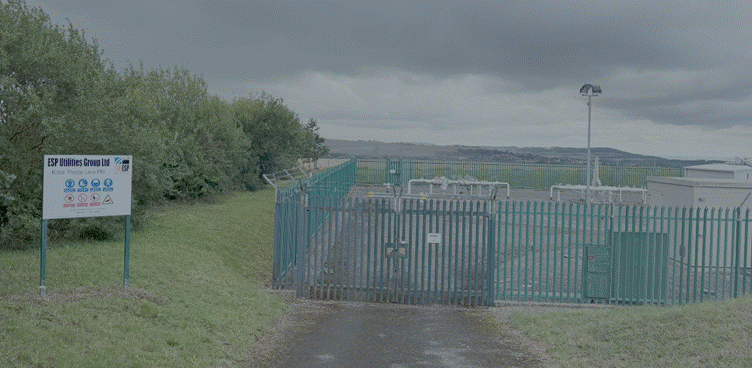
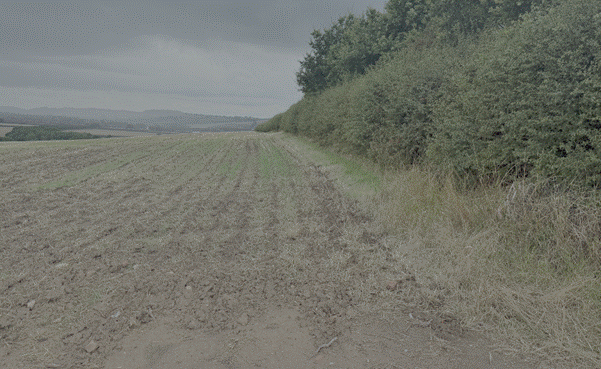
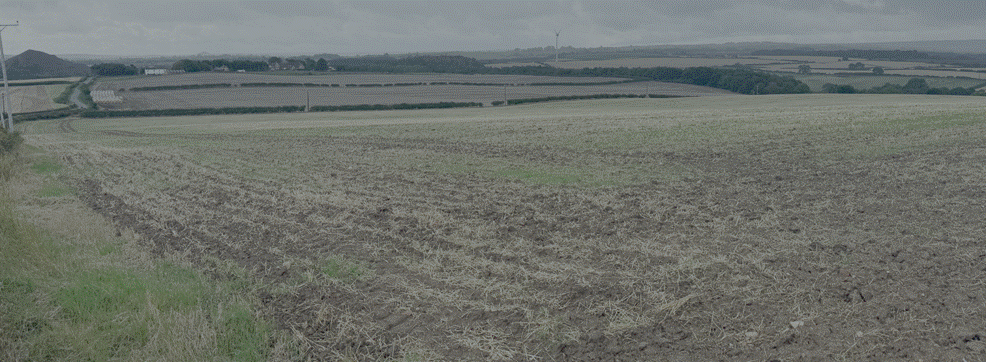
Site of Kilton Thorpe Iron
Age Village, taken 2026 (by the author)
The Pressure Regulating
Installation owned and operated by ESP Utilities Group Limited is a secure,
specialised above-ground assembly of gas utility infrastructure. It safely
drops the high or medium pressure of natural gas coming from the upstream distribution
network down to a stable, low pressure.
The Iron Age village at Kilton Thorpe
Lane comprised ten prehistoric houses and could be considered
to be an open village in the sense that it is not enclosed by a
substantial bank and ditch. Whilst enclosed Iron Age villages have been
recognised by aerial photographs south of the River Tees and as
earthworks on moorlands as at Great Ayton Moor, open villages like
Kilton Thorpe are rare in North East Yorkshire.
The earlier excavations in 2000 and 2001 had been restricted in area to the
extent of the development, but it was clear that the Iron Age village extended
beyond these developments to both the north and the south. The excavation in
2002 was sited 6 m south of the area excavated in 2000, in the adjoining
field to see if the village extended much further to the south. (Sherlock, Stephen J
(2002), An Archaeological Excavation at Kilton Thorpe, near Brotton,
Excavations during August 2002).
The excavation has found the
southern limit of the Iron Age village whilst the excavation has found the
ditches and features found in 2000 continued to the south, demonstrating that
the ditches and features found in the area opened in 2002. However, no further
structures were found in the area opened in 2002. Furthermore
two trial trenches, 2m wide extended south from the limit of the excavation for
a further 12m and they did not reveal any further features. The features discovered
in the excavation are thought to represent a driveway and ditches that were
part of a prehistoric landscape that formed an entrance to the village. The
driveway may well have been created as part of a process of organising and
managing the Iron Age landscape. The driveway would have allowed access into
the village from the surrounding fields and communities. There was ceramic from
the driveway ditches and some evidence for prehistoric cereals form the soil
samples within the ditches. However, the small amounts of pottery and cereals
would suggest that these features are on the edge of the settlement rather than
at the nucleus. Driveways and tracks leading into Iron Age villages have been
recognised elsewhere, at Thorpe Thewles a trackway led from the south towards
the unenclosed settlement (Heslop, DH (1987), The Excavation of an Iron
Age Settlement at Thorpe Thewles, Cleveland 1980 to 1982, CBA Research Report
65, London, figure 34). Recent excavations at Long Newton
have exposed a series of ditches that delimit a trackway leading from a stream
northward to the possible settlement (Sherlock forthcoming). One feature of
note is the relationship of the southern gully 20 to driveway boundary 47 the
alignment is similar and they both terminate at the same point on the west, this is similar to a feature
excavated in 2001. The excavations in 2001 exposed a long ditch with a narrow
gully, feature 168, adjacent on the same alignment. In the case of the ditch
and gully excavated in 2001 it was proved that the narrow ditch 168, was cut by
the larger boundary ditch. The suggestion is that ditch 168 was earlier and may
have been marking out boundaries that were later reflected and respected when a
more substantial boundary was created (Sherlock and Vyner (2001), Brotton-Boulby Pipeline, The Iron Age Settlement at Kilton Lane,
Brotton. Tees Valley Archaeology, page 5). It is suggested that
gully 20 excavated in 2002 may form a similar function to gully 168 in 2001, in
that it is an earlier feature that the later farmers could respect and use. The
date of feature 20 is unknown although it could still be Iron Age in date for
two reasons. Firstly the gully is respected in terms
of alignment possibly because it is still in use as a boundary, secondly whilst
no dating material was recovered from this ditch, Iron Age pottery was found in
feature 168, the comparable ditch to the north. (Sherlock, Stephen J
(2002), An Archaeological Excavation at Kilton Thorpe, near Brotton,
Excavations during August 2002).
The excavation has
established the southern limits of an open style of Iron Age village similar to that at Thorpe Thewles (Heslop, DH (1987), The
Excavation of an Iron Age Settlement at Thorpe Thewles, Cleveland 1980 to 1982,
CBA Research Report 65, London). The settlement here at
Kilton Thorpe is thought to date to the Late Prehistoric period although there are
no recognisable Romano-British influences. The radio-carbon dates for the site
excavated in 2000 range from 2230 + or - 55 (OxA10518) to 1955 + or - 45 (OxA 10655), whilst the ceramic evidence is in accord with
those dates. There are other unenclosed Iron Age settlements in the area at
Roxby and on Percy Rigg, but they are different in that they lack the evidence
for cereal production. At Roxby four prehistoric roundhouses were recorded
adjacent to a track that is thought to be a long distance
route from the North York Moors to the coast (Inman et al. 1985). The site on
Percy Rigg noted an unenclosed settlement of five houses, only two of which are
thought to have been contemporary, Percy Rigg is also adjacent to a long distance moorland track (Close, R (1972),
Excavation of Iron Age Hut Circles at Percy Rigg, Kildale, Yorkshire
Archaeological Journal, Volume 44, pages 23 to 32). There
are Iron Age sites nearer to Kilton Thorpe that add to our knowledge about the immediate
landscape around the parish of Skelton and Brotton. During the creation of the
Skelton‑Brotton bypass in 1999
traces of Iron Age fields were discovered approximately 500m north of the
present site (ASUD, 1999). A further site is known from aerial photography at
Craggs Hall; here a subrectangular enclosure has been
recognised (Vyner, personal commication). The
gas pipeline from Brotton–Boulby Potash Mine was sited in the field to the south of the cropmark where trial
excavations in 2001 revealed a single linear gully containing Iron Age pottery
(Sherlock
and Vyner (2001), Brotton-Boulby Pipeline, The Iron
Age Settlement at Kilton Lane, Brotton. Tees Valley Archaeology). The
Craggs Hall enclosure is undated but similar cropmark enclosures at Thorpe
Thewles and Foxrush Farm, Redcar have proved to be
Iron Age upon excavation. Clearly the site village at Kilton Thorpe is part of
a landscape that is intensively occupied by the end of the Iron Age (70 AD).
The Tees Valley has been intensively farmed since Late Prehistoric times (Haselgrove, CC (2001), The
Later Bronze Age and Iron in the Lowlands, in Past, Present and Future, The
Archaeology of Northern England, pages 45 to 69, Architectural and
Archaeological Society of Durham and Northumberland, Research Report Number 5,
page 57) as is suggested by the evidence from the Sites and
Monuments Record for Teesside that shows there are 90 known Iron Age sites within
the former area of Cleveland County. The excavations at Kilton Thorpe should
perhaps be seen as an opportunity to glean an insight into the Iron Age
landscape south of the River Tees. In this respect there is still further work
to do before the wealth and economy of the area is fully understood. Two
further questions that need to be resolved in connection with the site at
Kilton Thorpe are how much further to the north does the site extend and how does
this site relate to the other sites in the immediate area to the NE. The first
question could be resolved by further excavations to the N of the area
excavated in 2001 to find the limit of the Iron Age settlement; this could then
provide a plan to show the extent and limits of the known site. In the longer
term a programme of fieldwork at Craggs Hall may provide dating, environmental
and cultural material that will allow comparisons to be made with the site at
Kilton Thorpe. (Sherlock, Stephen J (2002), An Archaeological Excavation at
Kilton Thorpe, near Brotton, Excavations during August 2002).
The 2000 and 2001
excavations relate to the same site, namely an Iron Age village which, over
the two campaigns of excavation, have presented evidence for at least nine
prehistoric roundhouses. The Northern Archaeological Associates excavations
revealed six circular structures within boundaries and fields that were
adjacent to Kilton Thorpe lane (Abramson, P (2001), An Iron Age Settlement at Kilton Thorpe,
Cleveland, Teesside Archaeological Society Bulletin, Volume 6, pages 4 to 8). The structures all
had entrances facing east as is common in Iron Age buildings whilst one of the
buildings, structure 1, had remains of a hearth and possibly a floor surface.
The principal finds from the excavation were prehistoric pottery and a quern,
or corn grinding stone. Unfortunately metalwork and bone
did not survive, possibly because of the acidic soil, however, evidence was
recovered for the cultivation of cereals and it was
possible to obtain radiocarbon dates for the site that date the occupation from
about 200 BC.
The excavations in
2001 revealed evidence for a further three round houses with a suggestion of a
fourth ring ditch very near Kilton Thorpe lane. In addition to the houses
further field boundaries were revealed, the most prominent of which seems to form
an enclosure or boundary ditch that at one time delimited the site.
Interestingly, two of the round houses found in 2001 were outside the enclosure
and it seems the enclosure ditch had been backfilled and then an open
settlement extended across the hillside. A similar feature was noted at the
Iron Age village at Thorpe Thewles (Heslop, DH (1987), The Excavation of an Iron Age Settlement at
Thorpe Thewles, Cleveland 1980 to 1982, CBA Research Report 65, London) during the later phase
of occupation of the site, c 100 BC. The finds from the second year at Kilton
Thorpe were similar to those in 2000, namely
prehistoric pottery and some pieces of Flint. Two finds were of particular
interest, a shale or jet spindle whorl and a piece of decorated stone found in
a post hole in House 2. The evidence for plants and cereals suggested that this
site was a self-sufficient producer site, particularly of spelt wheat, whilst
for heath grasses was also found.
The excavations over two
seasons have demonstrated that a substantial Iron Age farmstead existed at
Kilton Thorpe and the full extent of the site has yet to be established. A
recent national survey of the British Iron Age (Hazelgrove etal
(2001), Understanding the British Iron Age, an Agenda for Action) has identified
priorities for action in studying Iron Age settlement. Among the
recommendations are to examine what is happening beyond the enclosure or
settlement and to obtain more carbon dates from sites. There are other questions
that need to be answered such as what relation what is the
relationship between adjacent sites and to try to understand more about
the settlement within the enclosure. Some of these research questions can be
addressed by excavation outside the areas currently excavated at Kilton Thorpe.
(Sherlock, Stephen J (2002), Excavations
at Kilton Thorpe in 2002).
The best preserved of
the roundhouses was Structure 1 situated on the east edge of the site and continuing
beyond the limit of the excavation area. The circular ditch measure c 6 m in
diameter and within this the remains of a hearth and several postholes were
recorded. A small, heavily disturbed area of sandstone cobbles in the extreme
eastern area of the structure may have been the only surviving trace of a floor
surface, The entrance to the structure may have been from the southeast, a
feature probably common to the neighbouring houses in the southern part of the
site.
It is tempting to view
the site as comprising a group of single phase
structures each situated within its own irregular enclosure. The relatively
short period of use implied by a single phase of activity contrasts with the
evidence from the Iron Age site at Thorpe Thewles (Heslop, DH (1987), The Excavation of an
Iron Age Settlement at Thorpe Thewles, Cleveland 1980 to 1982, CBA Research
Report 65, London), some 30 km to the west where the complex stratigraphy
clearly pointed to multiple phases of construction. At Catcote,
3km southwest of Hartlepool (Long, CD (1988), The Iron Age and Romano British Settlement at Catcote, Hartlepool, Cleveland, Durham Archaeological
Journal, Volume 4, pages 13 to 55), the site was occupied for more than 600
years, spanning the Iron Age and Romano-British periods. It is of course
possible that at Kilton Thorpe evidence for re-use of the site has been
destroyed by ploughing, or, the settlement ‘shifted’
and earlier or later phases of the site await discovery in the surrounding
fields. Indeed, several hundred metres to the north of the site a large
enclosure, measuring 90m by 80m was sample excavated during the construction of
the Skelton to Brotton bypass (Wardle, S (2000), Skelton-Brotton Bypass: Archaeological
excavation undertaken on behalf of Redcar and Cleveland Borough Council,
Northern Archaeology Associates 00/15). Although no evidence of settlement
activity was recorded in the enclosure, it was considered to
be of Iron Age or Romano-British date and its proximity to the Kilton
Thorpe Iron Age settlement suggests a possible relationship between the two
sites.
Fortunately at Kilton Thorpe not
all of the deposits had been truncated and, unusually
for Iron Age sites in the region, a sizable assembly of pottery was recovered
from the site. Blaise Vyner has undertaken an assessment of the assemblage
prior to a more detailed analysis. His provisional findings are very
interesting. Kilton Thorpe has provided one of the largest assemblages of later
prehistoric pottery to be recovered from excavation in Yorkshire and northeast England, and is of particular value
because of the paucity of other Iron Age pottery assemblages from northeast
Yorkshire. The assemblage appears to belong to the middle or later part of the pre Roman Iron Age, dating perhaps from the 4th or 5th
century BC. The absence of Romano British pottery suggests that activity in the
excavated area had ended by the 1st century AD.
Although limited by
comparison with the extensive assemblage from Thorpe Thewles, nevertheless the
pottery assemblage from Kilton Thorpe is larger than all other Tees Valley Iron
Age assemblages. Existing pottery assemblages include the mainly Iron Age material
from Eston Nab, as well as later pottery from Dixons Bank, Nunthorpe. Both
sites lie some to the north of Kilton. Apart from a few small assemblages from
the sites on the moorland fringe, among them Percy Rigg and Great Ayton Moor,
there is little in the way of local comparative material. In terms of size,
this collection of pottery finds its best comparator in the recently excavated
assemblage from Brampton, North Yorkshire. The material thus represents an
important addition to knowledge of later prehistoric settlement and ceramics in
the area.
Kilton Thorpe is one
of only a handful of excavated Iron Age sites in Cleveland.
(Abramson, P (2001), An Iron Age Settlement
at Kilton Thorpe, Cleveland, Teesside Archaeological Society Bulletin, Volume
6, pages 4 to 8).
c 50
BCE to c 50 CE
In the wider
Cleveland area, Iron Age farmsteads and enclosures reflect dispersed settlement
patterns on fertile boulder clay soils, with pollen evidence suggesting forest
clearance and arable expansion from the late Bronze Age onward.
A pottery assemblage from Kilton Hall included the lower part of a
handmade Iron Age cooking jar (Robert Daniels.
1990. Kilton: A Survey of Moorland Fringe Township in Medieval Rural
Settlement in Northeast England. Architectural and Archaeological Society
of Durham and Northumberland Research Report No 2, edited by B E Vyner, page 43).
The Crag Bank
Iron Age and Romano-British settlement is a significant archaeological site
located in Kildale. The inhabitants practiced mixed farming with evidence of
iron smelting and smithing, and large numbers of beehive quern stones used for grinding
grain. Occupation began in the Late Iron Age, the settlement continued to be
used into the Romano-British period. (Close, RS,
Hayes, RH and Spratt, DA. 1975. Romano-British Settlements at Crag Bank and Lounsdale, Near Kildale North Riding in Yorkshire
Archaeological Journal Volume 47, pages 61-68).
70 CE
Romano-British
activity
This area was
part of the realm of the Brigantes, which stretched from the Peak district
north to the Tyne and coast to coast. At first the Brigantes accepted a client
state position under the Romans but later tensions
mounted leading to the Roman march north.
In about 71 CE,
the Roman legions
were ordered North, made their headquarters at Eboracum (York) and
defeated the Brigantes at Stanwick, near Richmond. Forts were established at
Malton, Catterick and Aldbrough. Northern England was
to remain under Roman rule for the next 350 years.
Second
Century CE
Roman influences
in the Cleveland region included low-level farmstead occupation and integration
into local networks, though no major Roman sites have been identified in or
around Kilton. The area's peripheral position relative to military routes like
Dere Street limited intensive development, with continuity from Iron Age
practices evident in artefact assemblages lacking finewares
or coins.
It seems likely that
Iron Age folk continued to live much as before the Roman occupation,
increasingly abandoning the moors which had become less fertile. Nevertheless the Roman army had insatiable appetite for
goods taken to market and tribal warfare between tribal bands was likely to
have been supressed (Spratt,
D A. 1979. The Archaeology of Cleveland).
Wade’s Causeway was constructed in the early
second century which may have increased communication to the areas north of the
moors.
Third
Century CE
There are no
known Roman villas in Cleveland, but the third century CE probably brought
peace and greater prosperity. A third century CE copper alloy Roman cavalry
helmet was found at Guisborough. The deities depicted on the brow-plate include
Victory, Mars and Minerva. (British Museum number 1878,0910.1;
Dim, David and Kaminski, Jaime. 2017. The Production and Deposition of the
Guisborough Helmet in Arms and Armour Volume 14, pages
1-33; Archaeologist
on a mission to raise awareness of Guisborough discovered historic Roman helmet,
16 September 2017, Darlington and Stockton Times). Whilst there were Roman
period settlements in the area, these were probably more continuations of the
Iron Age culture in this area. This was far from Roman military activity.
Fourth
and Fifth Centuries CE
Its relative
isolation may have meant that Cleveland was not so directly impacted by the
Roman withdrawal as the area south of the moors towards Eboracum (York).
Cleveland had formed part of the military zone of Roman Britain but had
never enjoyed the same degree of wealth and civilisation that had been widespread
in the southern part of the country. It did not offer a particularly tempting
prospect for those seeking booty, and in the 5th
century may well have suffered more from internal disputes than external
threats. (Spratt, D A.
1979. The Archaeology of Cleveland).
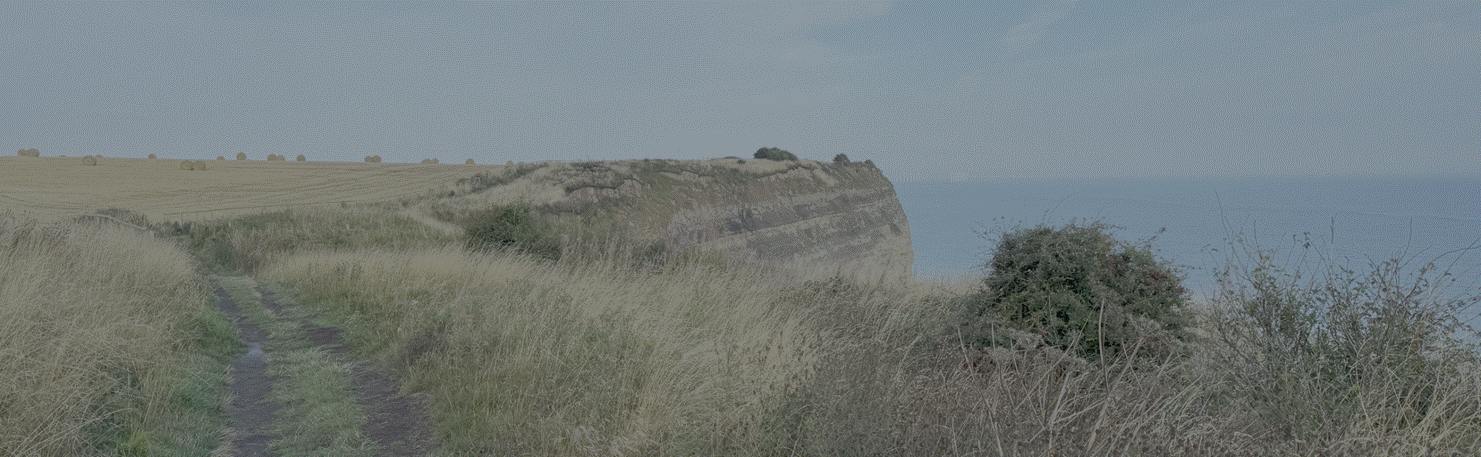
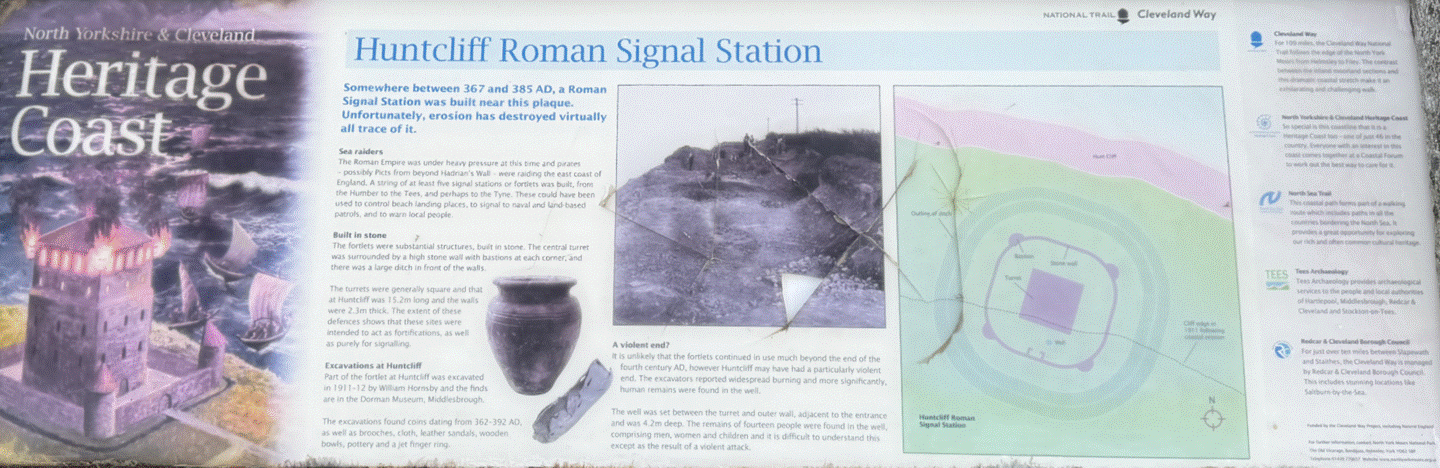
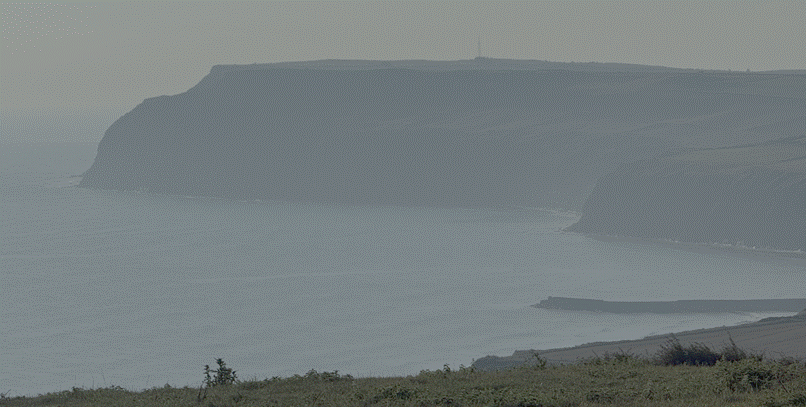
Roman coastal
Signal Station at Huntcliff (by the author, 2026)
Huntcliff Roman
Signal Station. Somewhere between 367 and 385 AD, a
Roman Signal Station was built on Huntcliff. Unfortunately, erosion has destroyed
virtually all trace of it. The Roman Empire was under heavy pressure from sea
raiders attacking from beyond Hadrian’s Wall and along the east coast of
England. Among a number of signal stations were built,
from the Humber to the Tees, and perhaps to the Tyne. These could have been
used to send messages by means of visual and land-based communication. The
fortlets were small structures, built in stone. The central tower was surrounded
by a high stone wall with bastions at each corner; all were topped with timber
fighting platforms. The turrets were generally square and the fortlets were
manned by small garrisons of soldiers. Life was probably hard and monotonous,
with duties including maintenance of the fortlet, lookout, and signalling. Part
of the fortlet at Huntcliff was excavated in 1911–12 by William Hornsby and R.
H. Forster. The excavations found coins dating from 367–392 AD, bowls, jars, and
a large iron knife. It is unlikely that the fortlets continued in use much
beyond the end of the fourth century AD; however, Huntcliff may have had a
particularly violent end. The excavators reported widespread burning and more
significantly, human remains were found in the well. The well was set between
the tower and outer wall, adjacent to the entrance, and was 24m deep. The
remains of fourteen people were found in the well, comprising men, women, and
children, and it is difficult to understand this except as the result of a
violent attack. (North Yorkshire and Cleveland
Heritage Coast).
Anglo-Saxon
Kilton
The site of
Kilton Thorpe, a place of occupation since the Iron Age, continued to be
occupied as a settlement (Medieval
settlement and open field system at Kilton Thorpe, National Heritage List 1019915 listed in 2001 at NZ
689176).
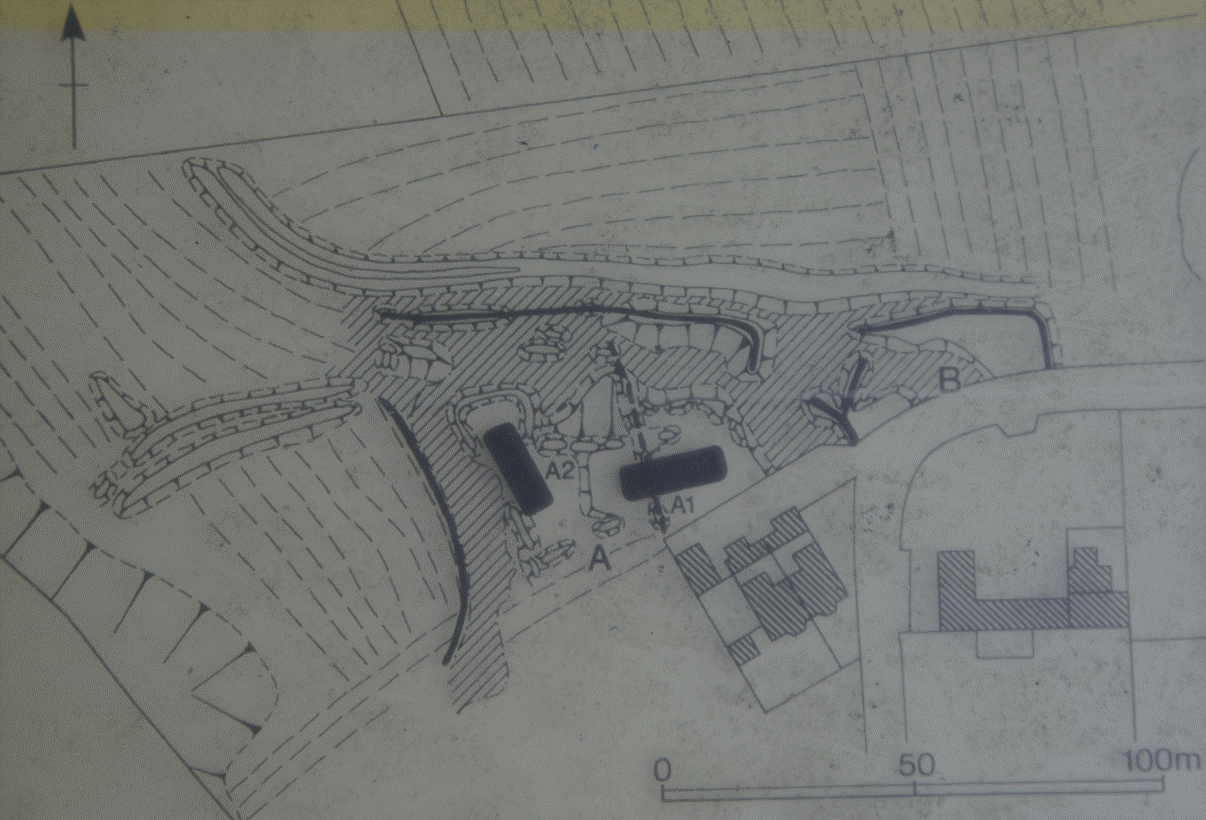
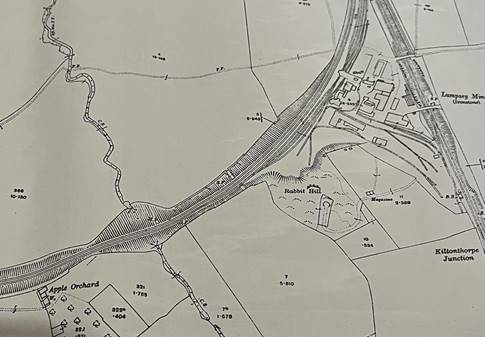
Ridge and farrow
corrugation at Kilton, taken in 2016
The earthworks at
Kilton Thorpe are complicated and it should be remembered that they are the
remains of at least 500 years of activity. In addition
the construction of the present road and buildings have destroyed a large
portion of the remains making it difficult to interpret what survives. It is
suggested that the earthworks are those of two farmsteads A and B and that A
has at least two phases of earthworks. The lighter hatched areas are low-lying eroded
pathways through and around the farmsteads. The boundaries around the farms
were probably a mixture of hedges and fences and farm A has two routes out into
the fields, one of which is shared with B. A central area within A contains
platforms on which buildings probably stood. A1 was probably the earliest site
and a later farmstead A was reduced in size and a new boundary and building
established A2. The main buildings in the farmsteads would have been
longhouses, about 20 metres long and 7 metres wide with a central doorway. To
one side of the doorway was the living room of the family, while the other side
would have been used as a cattle byre creating medieval central heating. The
longhouses would be of crock construction with thatched roofs and low clay and
stone walls and their possible position is shown on
the plan of the earthworks. A map of 1765 shows the present road at Kilton Thorpe.
The medieval farms had probably been abandoned by the 17th century. (Local information at Kilton Thorpe).
The medieval landscape at Kilton evolved from farmstead to hamlet
to village, each associated with areas of ridge and furrow reflecting the
agricultural economy. Milling emerged at Kilton mill to the north
east. The road from Brotton to Kilton is almost certainly of medieval
origin. Apart from the wooded valleys to the east, the whole area was
cultivated at some stage. (Robert Daniels. 1990. Kilton:
A Survey of Moorland
Fringe Township in Medieval Rural Settlement in North
East England. Architectural and Archaeological Society of Durham and
Northumberland Research Report No 2, edited by B E Vyner, page 33, page 41).
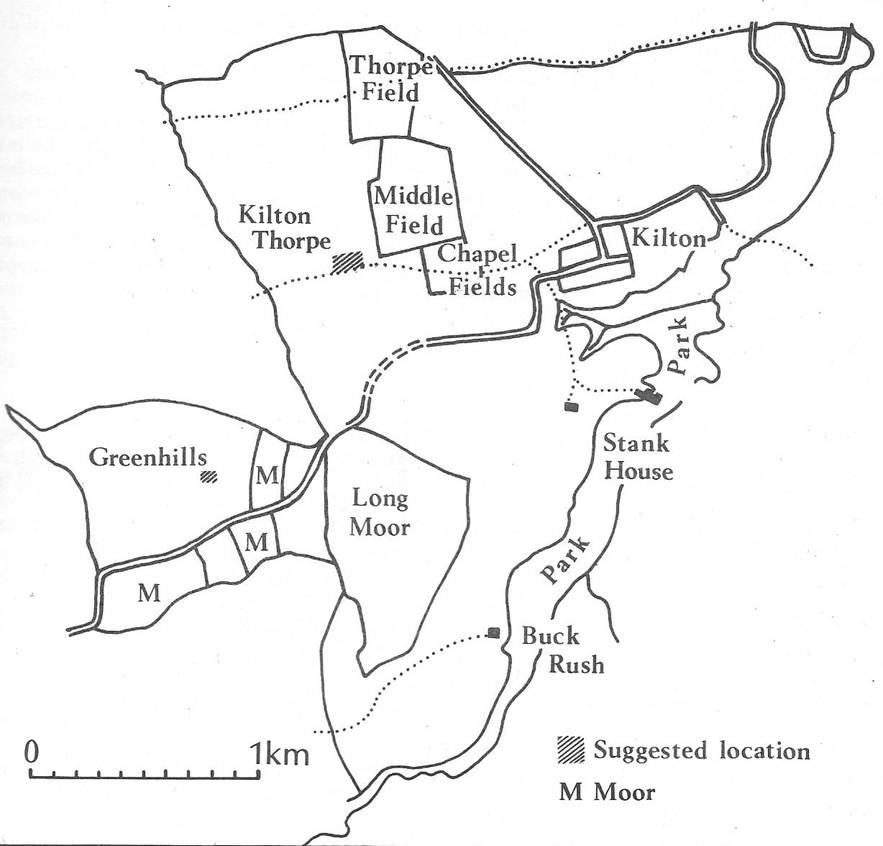
Reconstruction
of the medieval landscape of Kilton (Robert
Daniels. 1990. Kilton: A Survey of Moorland Fringe Township in Medieval
Rural Settlement in North East England.
Architectural and Archaeological Society of Durham and Northumberland Research Report
No 2, edited by B E Vyner, page 49)
By the mid sixth
century cultural corelands emerged in the lands of
Deira and Bernicia, in agricultural heartlands in such places as the Lower Tyne
Valley and the Vale of Pickering, which had once formed the Romano-British
landscape (Roberts, Brian. 2010. Northumbrian
Origins and Post Roman Continuity: an exploration in Finds from the Frontier:
Material Culture in the 4th – 5th centuries, Council for Archaeology Research
Report 162, page 123). The kingdom of Deira comprised the lands south of
the Tees which stretched over the moors and across the vales to the Yorkshire
Wolds (P Hunter Blair. 1949. The boundary
between Bernicia and Deira in Archaeologia
Aeliana, Series 4, Volume 27, pages
46 to 59). The future Kilton found itself in the borderlands between the
composite kingdoms of Deria and Bernicia, which over time fused into
Northumbria.
In about 650 CE,
in the northern lands of Deira which Norsemen would later rename Cliff-land, a
high-status woman was buried at the
Street House site in a lavish bed burial, overlooking the sea, with her
exquisite jewellery (Kirkleatham Museum. Street House
Exhibition. Adams, Max, and Colm O’Brien. 2025.
Northumbria AD 367–867. Edinburgh: Birlinn.
Page 105). This
Anglo-Saxon aristocrat, perhaps a Deiran princess, reflected the richness of an
emerging Northumbrian culture. The Anglo-Saxon
Street House Burial is evidence of the continuing importance of the nearby
site on the coast.
An isolated fifth
to sixth century bronze penannular brooch, perhaps Romano-Brittonic from the
transitional age to Anglo-Saxon dominance, was found at Yarm and there were
finds of burials and cremations at Hob Hill near Saltburn, perhaps an outlying
group of settlers in the far north of Deira (Anglo-Saxon
Teeside, Tees
Archaeology, 2020; Spratt,
D A. 1979. The Archaeology of Cleveland; Gallagher, DB. 1987. The Anglo-Saxon
Cemetery at Hob Hill, Saltburn in Yorkshire Archaeological Journal, Volume
59, pages 9-29). The Dorman Museum has
artefacts excavated from the Anglo-Saxon cemetery at Hob Hill.
865 CE
Scandinavian
influence
From place name
evidence Cleveland was one of the areas of Northumbria most densely settled by
the Vikings. It
was they who gave the name Cleveland to the area, though judging from later
saga references, it extended from the River Tees to Scarborough in the south.
(Spratt, D A. 1979. The
Archaeology of Cleveland). The name Cleveland appears to derive from the Old English word clifa land or the Old Norse Kliflond. The Vikings named it land of cliffs
because of the dramatic, steep terrain of the coastline where the hills from
the North York Moors meet the North Sea. The name was deeply embedded in the region's history and it was recorded in the 12th-century Orkneyinga Saga.
When the brothers
Paul and Erlend had succeeded to the government of the Orkneys, King Harald
Sigurdson (Hardradi) came from Norway with a large
army. He first touched Hjaltland; from thence he went
to the Orkneys, and left there his Queen Ellisif, and their daughters Maria and
Ingigerd. From the Orkneys he had many troops; both the Earls went with him on
the expedition. He went from Orkney to England and landed at a place called Klifland (Cleaveland), and took Skardaborg
(Scarborough). Then he touched at Hallarnes
(Holderness), and had a battle there, in which he was victorious. The Wednesday
next before Matthiasmas (20th September) he had a
battle at Jórvík (York) with the Earls Valthióf and Mórukári. Mórukári was slain there (Hjaltalin,
Jon A and Goudie, Gilbert (translated from Icelandic). 2018. The Orkneyinga Saga. Chapter 24)
Located on the edge
of the North York Moors and vulnerable to North Sea coastal raids, the hamlet
at Kilton remained a quiet farming settlement. It was situated near the deep
ravine of Kilton Beck, a steep valley that later made an excellent defensive
position. The settlement was recorded in the Domesday Book as Chitun. Chitune is
probably derived from Old English cild tūn, sometimes cilda-tun
meaning farmstead associated with the young men or freemen. Place-names
ending in -ton suggest an Anglo-Saxon foundation, likely dating back to
the arrival of Germanic tribes in the 5th to 7th centuries. Another
interpretation of the name points to an Old English/Old Norse translation of narrow-valley
farm. The name may be a combination of Old English and Old Norse. The Ch-
shifted to K- under Scandinavian linguistic influence. The name Kilton
may be derived from Norse language and may therefore refer to a farm settlement
in a narrow valley. The suffix -ton was later commonly adopted or "Scandinavianised" into the local lexicon following
Viking invasions and the establishment of the Danelaw in the ninth and tenth
centuries.
Kilton Thorpe is
mentioned in the Domesday Book as Thorpe. Thorpe is a Scandinavian word for a
small settlement and the use of this name indicates
that there were a number of Scandinavian farmers in
the area. Thorpe names are very common in Yorkshire and medieval clerks added
the Kilton element to the name as a distinction. Since there were many Thorpes in
northern England, the settlement became known as Kilton Thorpe. The use of the
name Thorpe suggests that Kilton was a more important settlement.
Freeborough Hill is a prominent, conical
landmark near Moorsholm. While the hill itself is a
natural geological formation, its distinctive shape made it a focal point for
prehistoric communities, and the surrounding Moorsholm landscape is rich with Bronze
Age barrows and ancient activity, including the Black Howes.
Early names suggest the hill may have been called Freyasberg or
Freya's Hill, dedicating it to the Norse goddess of love and war but it may
derive from Old Norse frithborh, referring to a frankpledge or surety in
legal assemblies, possibly suggesting its early use as a meeting or boundary
site. John Hall Stevenson of Skelton Castle later mischievously raised
speculation that Freebrough Hill was immortal Arthur's tomb.
1086
Norman
Conquest
When recorded in
the Domesday Book in 1286, Chitune (Powell-Smith, Anna. Open Domesday. Kilton)
comprised a principal settlement of 2 ploughlands, with 8 acres of meadowland,
which was held by Thorkil prior to the Conquest and directly by King William
after the Conquest. It was described as wasteland before and after the
Conquest.
Chitune also comprised
0.5 ploughlands, held by Uhtred prior to the Conquest and Count Robert of
Mortain after the Conquest.


Kilton Thorpe (Torp)
was recorded separately as two separate holdings each of one ploughland (Powell-Smith, Anna. Open Domesday. Kilton Thorpe).
As with Chitune, the first was held by Thorkil
prior to the Conquest and then by King William; and the second was held by
Uhtred prior to the Conquest and later by Count Robert of Mortain. Again this land was described as waste before and after the
Conquest.


Hence it is
apparent that in 1087, with the exception of one bovate in Stanghow, half a
carucate in Great Moorsholm, two carucates and a half at Kilton Thorpe, and
three carucates at Kilton, which were in the King’s hands, and of the Kilton
portion of which Torchil was the tenant, the entire
parish or district of Skelton, comprising thirty two carucates all but one
bovate, had been granted to Robert, Earl of Mortain, and was held of him by
Richard de Surdeval. (Atkinson, Rev J
C. History of Cleveland Ancient and Modern. Volume 1. Barrow in Furness:
J Richardson. Page 317).
Robert Earl of Mortain
Lands in both
Kilton and Kilton Thorpe were thus held for the King by the Count of Mortain.
Robert, Earl of Mortain and Cornwall, son of William the Conqueror’s mother by Herlewine de Conteville and so half brother of William, was granted 215 manors in
Yorkshire many in Cleveland. He subinfeudated many manors in Cleveland to Richard de Surdeval. The House Mortain later lost possessions due to
conspiracy against William 1088, but Surdeval kept
his manors as tenant in chief. It has been suggested that it was Surdeval who built Skelton Castle.
Robert, Count of Mortain (c 1031 to 8
December 1090) was the half brother of William the Conqueror and one of the
greatest landholders in England after the Conquest, holding some 797 manors. He
is known to have faught at the Battle of Hastngs and is pictured in the Bayeux
Tapestry at Pevensy seated with his brothers William and Odo.
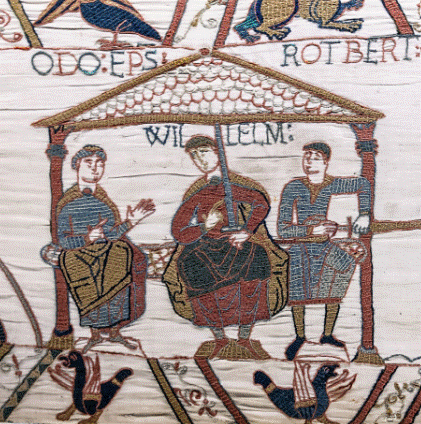
From the Bayeux Tapestry
In 1069, together with Robert of Eu,
Robert led an army against a force of Danes in Lindsey and effected great
slaughter against them (George Edward Cokayne. 1913. The
Complete Peerage of England Scotland Ireland Great Britain and the United Kingdom,
Extant Extinct or Dormant, Volume 3, Edited. Vicary Gibbs. London: The St.
Catherine Press, Ltd. Page
428).
Nearby Broctune, later Brotton, was a settlement of 11
ploughlands with 9 villages, 1 lord’s plough team and 4 men’s plough teams,
with 22 acres of meadow. It was also in the possession of Uhtred before the
Conquest and Richard of Sourdeval in 1086 with Robert
of Mortain as his tenant in chief. (Powell-Smith,
Anna. Open Domesday. Brotton).
Other settlements in the locality, all within the Hundred
of Langbaugh, were Loftus and Little Moorsholm
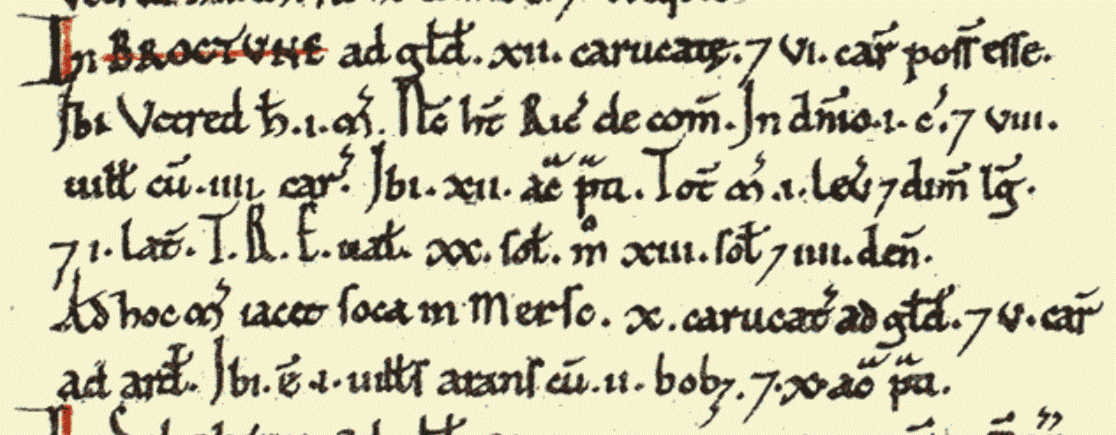


Domesday
Book tells us that in 1086 the King held land at both Kilton and Kilton Thorpe.
In Kilton Thorpe there was a small manor of two and a half carucates, and at
Kilton there was a manor containing three carucates of land and eight acres of
meadow. The Count of Mortain also held land there. In Kilton Thorpe he had a
small manor of one and a half carucates, and in Kilton one carucate.
(The Origin and Early
History of the Kilton Fee, W Hebditch,
1939, Yorkshire Archealogical Journal, Volume 34, page 297).
We cannot be
quite so sure that Little Moorsholm originally formed part of this fee. In
Domesday this small manor of one caracute was held by Richard de Surdeval of
the fee of the Count of Mortain. Its history in the twelfth century however is
not very clear; but it may possibly have been subinfueded with the Kilton
property, for when we next hear of it, in 1257, it is in the hands of Mamaduke
de Thweng, the then lord of Kilton. Admittedly this evidence is late, but it
does at least show that Little Moorsholm formed part of the Kilton fee before
the Brus partition of 1272. (The Origin and
Early History of the Kilton Fee, W
Hebditch, 1939, Yorkshire Archealogical Journal, Volume 34, page
298).

Little Moorsholm
Farm to the south of Kilton, 2026
Following the
Norman Conquest, Kilton emerged as an agricultural township tied to the nearby
parish of Brotton, with lands passing after 1088 from the exiled Count of
Mortain to Robert de Brus I, who consolidated holdings in Cleveland as part of
his barony centered at Skelton.
1090
Robert was succeeded by his son, William de Mortain (c 1084). From
childhood, he harboured a bitter dislike for his cousin Henry I and proudly
demanded from him not only his father's earldoms of Mortain and Cornwall, but
his uncle Odo, Bishop of Bayeux's Earldom of Kent. William of Malmesbury
described him as a person of shameless arrogance. The king kept putting
off William's demands for the earldom of Kent and instead offered him the hand
of Mary of Scotland, Queen Matilda's sister, which William promptly rejected.
He rebelled against the King with Robert de Belleme, but they were finally
defeated on 24 April 1106 at the Battle of Tinchebrai.
William was imprisoned for many years in the Tower of London, and in 1140
became a Cluniac monk at Bermondsey Abbey, across the River Thames from the
Tower of London. (George Edward
Cokayne. 1913. The Complete Peerage of England, Scotland, Ireland, Great
Britain and the United Kingdom, Extant Extinct or Dormant, Volume 3,
Edited. Vicary Gibbs. London: The St. Catherine Press, Ltd. Page 428).
On the death of Earl Robert of Mortain his son William succeeded
him in his earldoms of Moreton in Normandy, and Cornwall. In 4 Henry I (1104)
the King ‘seized upon all his possessions in England, razed his castles to the
ground and banished him from the realm’ for rebellious practices. In 1106 he
was taken prisoner in open war in Normandy and sent to England ‘there to be
secured during his life. After which, the King, causing his eyes to be put out,
bestowed his Earldom of Moreton on Stephen of Blois. (Atkinson, Rev J C. History of Cleveland
Ancient and Modern. Volume 1. Barrow in Furness: J Richardson. Page 317).
Robert de Brus (and
the potential interest of Alan de Percy)
1100
When William de Mortain was banished for conspiracy, it seems that
both villages at Kilton, the two and a half carucates, another five and a half
carucates and eight acres of meadow passed to Robert de Brus. The land around
Kilton and Skinningrove was given to the de Brus family, who had arrived
in England in or about 1094. At this time the manor of Little Moorsholm also formed part
of the Kilton Fee. That of Great Moorsholm did not join the Kilton Fee until
1272. It seems too that the Soke of South Loftus, six carucates of land, joined the Kilton Fee soon after the
Domesday survey. North Loftus was much bigger and was part of the Chester Fee.
Robert de Brus
is first named during the period 1094 and 1100, as a witness to a charter of
Hugh earl of Chester which is of very dubious authenticity (Chartulary of Whitby, n 25), granting
the church of Flamborough to the church of Whitby. Possibly the earl of Chester
about 1100-1104 enfeoffed Robert of certain portions of his Cleveland fee in
Lofthouse, Upleatham, Barwick, Ingleby, and other places. During the period
1103-1106 Robert de Brus attested with Ralph Paynell and 16 others a charter of
William, count of Mortain, to the abbey of Marmoutier. In 1109, at a council of
all England held at Nottingham, he attested the charter of Henry I confirming
to the church of Durham certain possessions which the men of Northumberland had
claimed. During the period 1109-1114 he was in possession of the lands late of
Orm, Turbern, Ulchil, Chetel, Ravenchil, and other English thegns in Borgescire
(Claro) wapentake and, as chief lord, consented to the gift made to the monks
of Marmoutier by Ralph Mauleverer, his tenant, of the chapel of Allerton
Mauleverer. About the same period he attested the charter of Henry I, issued at
Woodstock, confirming the above gift. When the Lindsey Survey was made
(1115-1118) he was in possession of the fee which William Taillebois had held
at the date of the Great Survey, namely Turvert’s manors in West Ashby, near
Horncastle, and Alford. It is a strong presumption from these circumstances
that Henry I had given Robert his Yorkshire fee soon after the battle of
Tinchebrai (28 September 1106). The enrolment of the details of this fee in the
Great Survey does not appear to have taken place until after 1120, because a
reference therein to Robert Fossard seems to indicate that Nigel Fossard, the
Domesday tenant in chief, was then dead, and that event did not occur until
after 1120. About the year 1131 Brus was in the retinue of Henry I at Lions, in
Eure. About the same time he attested with his 3 knights, Roger de Rosel, Guy
de Lofthus and Robert Francais, a confirmation of Alan de Percy to the monks of
Whitby. (Farrer. 1915. Early Yorkshire Charters. Volume 2. Page 11).
Farrer
included Kilton and Kilton Thorpe within the Brus fee before 1129, lands
formerly held by the Count of Mortain and Richard de Surdeval (Farrer. Early Yorkshire Charters. Volume 2. Page 19).
It is thus probable that as early as 1100 Robert de Brus
I held as tenant in chief that part of Kilton and Kilton Thorpe which in 1086
had belonged to the Count of Mortain (The Origin and Early History of the Kilton Fee, W Hebditch, 1939, Yorkshire Archeaological Journal,
Volume 34, page 297).
It is generally thought however that Robert de Brus received his Yorkshire fee
after the Battle
of Tinchebrai in 1106 (see
Farrer above). The Brus family thus came to hold large estates based on Skelton, Danby and in Kildale. (strike through text
shows elements of references which appear, with the benefit of contemporary
analysis, to be in error).
Castleton was the
centre of the de Brus estates in Cleveland, an estate which comprised 40
villages, which may explain why a large defensive work was constructed at
Castleton whilst a smaller ringwork was constructed at Castle Fevington, near Yarm (Cleveland). Sometime shortly
after 1104 Robert de Brus received the Skelton estate (Cleveland) from
Henry I, and the principal de Brus seat moved to Skelton from Castleton. (Excavations
at Castle Hill, Castleton, SJ
Sherlock, Volume 64, 1992, Yorkshire Archaeological Journal, Volume 64,
1992, page 41).
By the early 12th century, the
settlement at Kilton focused on mixed farming around farmsteads in Kilton Dale,
supported by meadow and ploughlands.
A medieval moor
edge settlement emerged around the large 13 carucate manor of Skelton, together
with a smaller manor of Moresum. However the township of Kilton had a slightly
different history from the rest of the Brus fee. (Barry Harrison. 1990. New Settlements in the North
Yorkshire Moors 1086-1340 in Medieval Rural Settlement in North East England. Architectural and Archaeological
Society of Durham and Northumberland Research Report No 2, edited by B E Vyner,
page 28).
On Farrer’s analysis, relying on a later
grant by Ilger of Kilton of land in Kirkleatham, by the mid twelfth century,
Kilton and Kirkleatham were part of the Kilton fee held by Brus. The greater
part of Kilton and Kirkleatham was held by Ilger de Kilton of the fee of Brus,
namely of that part of the fee of Brus which belonged at the Survey to the fee
of Mortain and previous to that had belonged to Uctred of Cleveland (Farrer. 1915. Early Yorkshire Charters. Volume 2. Page 67, Folio 722
and notes, see also page 68 Folio 723
and 724).
In this context the Kilton fee or
the Fief of Kilton refers to the whole landholding of the person, rather
than the place which later became Kilton itself. On Hebditch’s analysis, the Kilton
fee was a composite fee derived from more than one overlord. Kilton and Kilton
Thorpe was held until 1272 of the de Brus House. Kirkleatham was Westlidun
in the Domesday Book and later Lyum. In the Domesday Book Kirkleatham
had been divided between the King, Earl Hugh of Chester’s Fee, the Count of
Mortain’s Fee and William de Percy’s fee. The Kirkleatham lands were held
partly of the Percys but primarily of the de Brus overlords. (The Origin and Early History of the Kilton Fee, W Hebditch, 1939, Yorkshire Archealogical Journal, Volume
34, page 304).
The original fee comprised Kilton and Kilton Thorpe, part of Kirkleatham and
posssibly Little Moorsholm.
It appears that the Kirkleatham elemtn
of the Kilton fief led to an erroneous assumption of Kilton’s association with
the Percys.
1106
William L’Anson believed that by 1106, the township of Kilton had
become part of the holdings of the Percys (L’Anson, William
M. 1913. Kilton Castle in Yorkshire Archeaological Journal, Volume 22, page 57) (“The L’Anson Model”).
W Hebditch later
provided an alternative model, that the fee passed to the Brus line, with whom
it remained until 1272 (“The Hebditch Model”). He suggests that the only
part of the fee held of the Percys was the Kirkleatham property (The Origin and Early History of the
Kilton Fee, W Hebditch,
1939, Yorkshire Archealogical Journal, Volume 34, page 305).
Hebditch argued that soon after the
Domesday Survey, North Loftus (Lochtusum), which formed an extensive
soke including Liverton, Guisborough, Markse and Kirkleatham, formed part of
the fee of the Earl of Chester. Hebditch argues that rather than subinfeuding
his Loftus property to William de Percy, he actually enfoeffed Robert de Brus,
or the greater part of it.
To understand these arguments, the
relevant Percy genealogy is as follows:
|
|
|
William de Percy Willame als gernons (‘with whiskers’) Died 1096, buried at Antioch Arrived after the Conquest Appears in the Domesday Book of 1086 as a
significant landowner, holding 30 knight's fees, including some lands which
had belonged to a Saxon lady, whom, as very heire
to them, in discharging of his conscience, he later married First Feudal Baron of Topcliffe Hugh Lupus, on becoming Earl of Chester, transferred
to him his great estate of Whitby, where he re-founded the Abbey of St.
Hilda's, and appointed his brother Serlo de Percy the first prior. Married Emma de Porte |
|
|
|
|
|
|
|
|
|
|
|
Alan de Percy Died 1130 to 1135 Second Feudal Baron Founder of the Kilton fee according to L’Anson Married Emma de Ghent |
Walter de Percy |
Richard de Percy Lord of Dunsley |
William de Percy Monk Second Abbot of the re-founded Whitby |
|
|
|
The powerful English House of Percy, Earls of Northumberland
were descended via an early thirteenth century female line, and the Dukes of
Northumberland via an eighteenth century female line
|
|
|
|
|
|
William de Percy
was a smaller tenant in capite (tenant in
chief holding directly from the King) in Cleveland at the time of the survey.
His son Alan de Percy, the second feudal baron, was granted significant
additions to the Percy estates in Cleveland, principally from the lands of the
Earl of Mortain. From these additions, the L’Anson Model
suggested that Alan de Percy founded the Fief of Kilton in the Barony of
Percy in about 1106 and that the fief of Kilton was granted to a certain
Walter, who was probably a member of the Percy family, or closely allied to
them. (L’Anson, William M. 1913. Kilton Castle in
Yorkshire Archeaological Journal, Volume 22, page 57). This was disputed by Hedditch. L’Anson’s analysis is
probably wrong.
L’Anson thought that Walter
subdivided the fiefdom into (1) the Fief of Kilton proper; (2) the Lordship of
Hinderwell; and (3) the Lordship of Kirkleatham. In the Fief of Kilton there
were the manors of Kilton Thorpe and Little Moorsholm
the Soke of South Loftus.
According to L’Anson, there was a
subinfeudation under the Percy family around 1106, establishing the Kilton Fee
with manors at Kilton and Kilton Thorpe aggregating several carucates. William de Percy,
first feudal baron of the most historic of our great English houses, “the
founder of a great name, whose genuine bearers soon passed away,” says Freeman
(iv, p. 297), “ but which has been, like
that of the Caesars, artificially handed on to later times,” was one of the
smaller tenants-in-capite in Cleveland at the time of
the Survey (Kilton Castle, William
M L’Anson, Yorkshire Archealogical
Journal, Volume 22, 1913, page 57). The
fief was divided into three portions, viz.: — (i) The
Fief of Kilton proper ; (2) the Lordship of Hinderwell ; (3) the Kirkleatham property. The Fief of
Kilton Proper contained the two manors of Kilton, the two manors of Torp or
Kilton Thorpe, the manor of Little Moorsholm, and the soke of South Lofthouse. (Kilton Castle,
William M L’Anson, Yorkshire
Archealogical Journal, Volume 22, 1913, page 58). The
Kilton fief proper, therefore, consisted in all of six manors, five lying on
the west and one on the east side of the Kilton beck, and aggregating in all
fifteen carucates of land. (Kilton Castle, William M L’Anson, Yorkshire Archealogical Journal, Volume 22, 1913, page 60).
L’Anson
suggested that the newly-founded fief of Kilton was
granted by Alan, second feudal Baron de Percy, to a certain Walter, to be held
by knight service. Of Walter we know nothing whatever. (Kilton Castle, William
M L’Anson, Yorkshire Archealogical
Journal, Volume 22, 1913, page 63). This
is probably also in error.
Kilton
and Kilton Thorpe undoubtedly formed the basis of the Kilton Fief. No further
proof of this is needed than the fact that at a very early date we find a small
feudal castle established at Kilton as the capital messuage of the fee
(The Origin and Early
History of the Kilton Fee, W Hebditch,
1939, Yorkshire Archealogical Journal, Volume 34, page 297).
The
Hedditch Model corrected the L’Anson analysis. We are now in a position to
go back and re-read, in the light of what we have ascertained, Mr. I’Anson’s
account of the composition of the fee. The first and most obvious correction to
be made is the statement about the overlordship of Kilton. As we have indicated,
the Kilton fee was a composite fee held of more than one overlord, and to
describe it as “The Fief of Kilton in the Barony of Percy” is completely
misleading. At Kilton and Kilton Thorpe the overlord was until 1272 a Brus. The
only part of the fee which was held of the Percys, and not of the Brus lordship
as Farrer suggests, was the Kirkleatham property. The second point that emerges
is that the original fee was much smaller than we have been led to imagine. Kilton
and Kilton Thorpe, part of Kirkleatham, and perhaps Little Moorsholm — these
are the only properties we have any valid authority for including in the Kilton
fee. (The Origin and Early History of the
Kilton Fee, W Hebditch, 1939, Yorkshire
Archealogical Journal, Volume 34, page
304).
The Brus genealogy is reproduced on
a separate webpage.
1119
In 1119, Robert de Brus founded the
Augustinian priory of St Mary at Gisborough. The priory is generally spelt
Gisborough, in contrast to its town of Guisborough. It became one of the
richest monastic foundations in England with grants from the crown and bequests
from de Brus, other nobles and gentry and local people. This was a period of
religious revival. Known as regular canons, the monasteries who followed the
Rule of St Augustine of Hippo were distinct from other monks whose lives were
governed by the rather stricter Rule of St Benedict. Robert appointed his
younger brother William as the first prior at Gisborough.
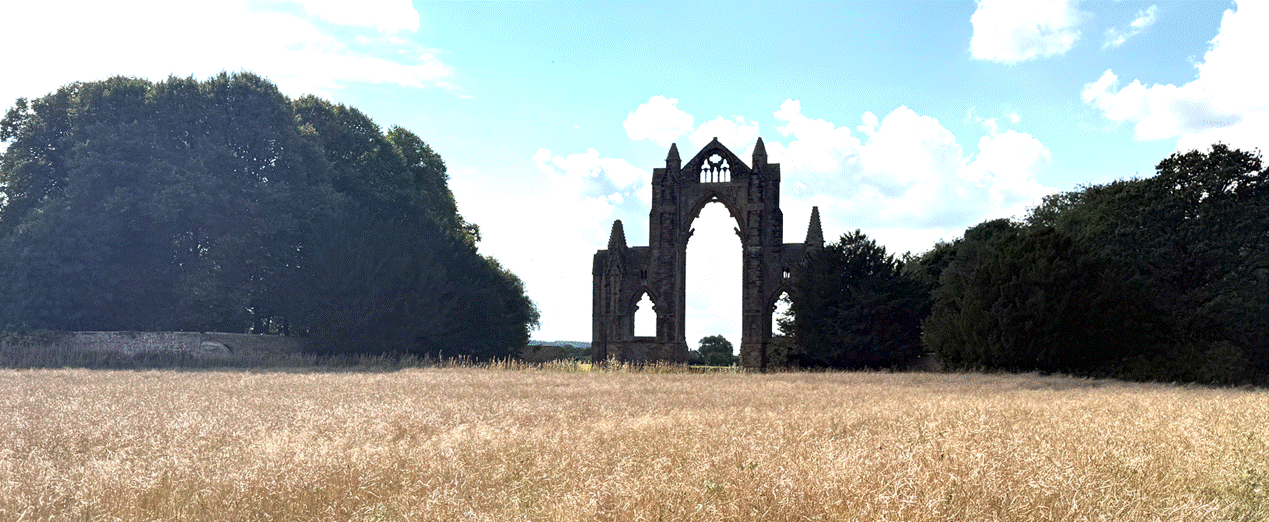
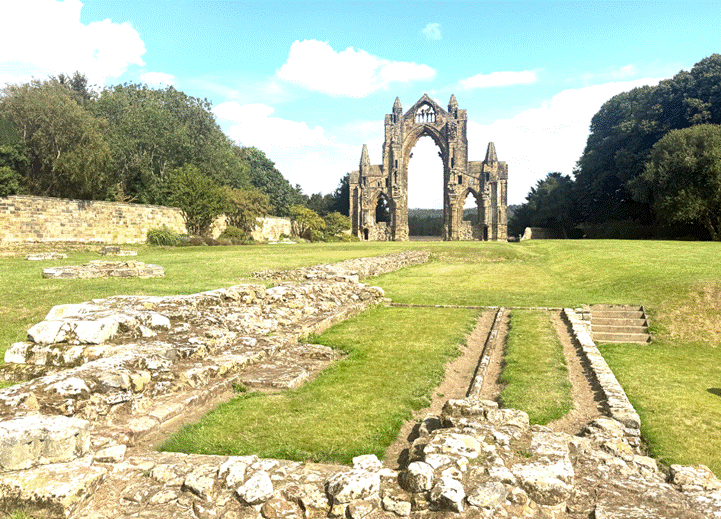
Gisborough Abbey, 2026 (by the author)
As his wealth grew, Bruce established an
Augustinian Priory at Gisborough in Yorkshire, which the family continued to
patronise right up until the early 14th century. Indeed, so important was this
abbey to them that, despite their conventional piety, they never established another
ecclesiastical foundation, even in Scotland, after they settled across the
border. Gisborough Priory, it would seem, stole their hearts. (Robert the
Bruce, the Champion of a Nation, Stephen Spinks, 2024 page 35).
1129
After he founded Gisborough Priory, in
1129 Robert de Brus granted to it the whole of Kirkleatham, that is to say,
nine carucates of land with that part of Coatham which is adjacent to it and
all other things appurtenant, and the tithe of my demese of Kirkleatham (Gisborough Chartulary, Volume 1 page
3. See also Volume 2, page
96). It seems likely that the
nine carucates of land at Kirkleatham corresponds with the nine carucates held
by Mortain, which came into the hands of Robert de Brus.
I
have also given to the aforementioned brothers the whole of Lyum
(Kirkleatham), namely, nine carucates of land with that part of Cotum (Coatham,
near Redcar) which adjoins it, and all other things pertaining to it, as
well as the tithe of my demesne of Lyum, and the churches of Mersc, Burnnus,
Scheltona, Daneby, Uplyum, Staintona, Levintona, and the church of Hert, and
Strantona, with all their appurtenances and lands.
1135
Hebditch
concluded that the de Brus family held Kilton directly. L’Anson’s
model seems to have erred in suggesting that the fee was subinfeudated to Walter
and then to Pagan Fitzwalter. Hebditch rejected this, arguing that there is
nothing whatever to indicate [Walter Fitz-Pagan] was ever lord of Kilton
(The Origin and Early History
of the Kilton Fee, W
Hebditch, 1939, Yorkshire Archealogical Journal, Volume 34, page 306).
In the 1130s to 1140s, land grants to
Gisborough Priory, founded by de Brus in 1119, fostered medieval growth, including
donations from early lords like Pagan de Thweng for church foundations and
agricultural tenements, solidifying Kilton's role within feudal manors of the
de Brus honor. This period marked the village's crystallisation around a
central farmstead site, later associated with Kilton Hall, emphasizing arable
and pastoral economies in the dale.
It may be that Richard de Surdeval
continued as sub-tenant to Robert de Brus. Evidence from charters involving Robert
de Brus indicates that his wife Agnes was an heiress of the Surdeval
family. Her exact parentage is not known. She may have been an unrecorded
daughter of Richard de Sourdeval, who held many manors in the Yorkshire region.
Alternatively, she may have been a daughter of either Richard's son Robert, or
his daughter Matilda Maude de Sourdeval who married
Ralph (Radulf) Paynel, Sheriff of Yorkshire. In
1086 the Yorkshire lands of the Mortain fee were divided between two tenants,
Nigel Fossard and Richard de Surdeval, who later held them in capite after their forefeiture
either by Count Robert in 1088 or his son William in 1106. The majority of the Surdeval share elsewhere in Yorkshire subsequently passed
to Ralph Payne, probably through marriage to Richard's daughter, Maud; and
although there is no clear evidence for the means by which Robert de Brus
received his own, smaller, Cleveland share of Surdeval
lands, there are several pointers to suggest that they also came through a
judiciously arranged marriage, undoubtedly with the connivance of the king.
(Blakely, Ruth Margaret. 2000. The Brus family
in England and Scotland 1100-c.1290. Doctoral thesis, Durham
University).
Kilton Castle was built in about 1135 to 1140,
initially in timber on a narrow rocky promontory overlooking Kilton Beck. This was the original timber castle, later
reconstructed in stone in about 1190 to 1200. The fortification
capitalised on the site's natural defences, including steep southern slopes and
a western neck of land suitable for a defensive ditch. Whilst L’Anson suggested that Kilton Castle was probably
founded by Pagan Fitzwalter, a tenant under the early Norman overlords with
connections to the de Percy and de Brus families, it was more likely to have been
built directly by the House de Brus, or by the sub-tenants, the Surdevals.
Relying on the
error of L’Anson, Minnie Horton suggested that
Fitzwalter built Kilton Castle between 1135 and 1140. His descendants took the
name of Kilton and held the castle until 1213. (Horton, Minnie C. 1979. The Story of
Cleveland, History, anecdote and legend. Cleveland County Libraries. Page
379).
Rather, it is more likely
that Kilton castle is of great antiquity, affording fine specimens of the Norman
architecture, and was probably built by Robert de Brus, about the same as
Skelton castle, viz the reign of King Stephen (Ord, John
Walker. 1846. History and Antiquities of of Cleveland. London: Simpkin
and Marshall. Page 270). Indeed Skelton Castle was built in
about 1140.
This was during the period
of the
Anarchy between the Empress Matilda and Stephen.
L’Anson’s ideas set out below,
are probably therefore wrong, though there are elements of his description of
the building of the castle which are helpful.
Pagan
Fitz-Walter, the second holder of the fief, married a daughter of Robert
Fossard, feudal baron of Mulgrave, who bore the arms Sable, a bend or. Pagan's
brother-in-law, William Fossard, was one of the chief commanders of the
Anglo-Norman army at the famous Battle of the Standard. His son William left a
daughter and heiress, Joanna, who married Robert de Turnham, who, in turn, left
a daughter and heiress, who married Peter de Mauley I. (Kilton
Castle, William M L’Anson, Yorkshire
Archealogical Journal, Volume 22, 1913, page 63).
Pagan is
principally noted as being the founder of Kilton Castle. The original capital
of the fief was probably at Seaton, but the intestinal warfare and utter
anarchy which prevailed at this time appear to have led Pagan to abandon his
father’s manor-house, and to select for the site of a new residence the
promontory already described as existing on his manor of Kilton. Here, between
1135 and 1140, he founded the castle of Kilton, which subsequently gave name
not only to the fief but to the family who held it. Pagan probably felled the
trees within bow-shot of the promontory, roughly
hewing them into shape for the erection of the palisade. He then enclosed the
summit of the ridge by a strong stockade of vertical-pointed beams driven well
into the ground and firmly strengthened behind. The eastern and southern
facades were effectually guarded by their precipitous slopes
; on the north, where the ground fell away steeply but not actually
precipitously, the palisading would be probably from 20 to 25 feet in height
and of great strength ; on the west a great ditch or
fosse was carried right across the neck of the promontory until it merged into
the ravine on either side, completely cutting it off from the adjacent ground.
As bearing upon the subsequent reconstruction of the castle by Sir William de
Kylton, it is important to notice that the usual “Motte” or artificial mound,
is conspicuous by its absence. Probably Pagan considered that the great natural
strength of the site made the formation of a “Motte” unnecessary. There is
practically no doubt that the “palace”, i.e. the hall, kitchen, private apartments,
etc., was situate at the eastern end of the promontory, the stabling,
outhouses, etc., at the western end. The site was one which could easily and
economically be made practically impregnable, and a castle such as that founded
by Pagan could be erected in a very short time. For instance, it is recorded
that the erection on Baile Hill, at York, of such a castle by William the
Conqueror occupied only eight days. Probably nearly all the so-called
“adulterine” castles, variously estimated at from 700 to 1,000 in number,
hastily run up in the reign of Stephen, were after the style of Pagan’s castle
of Kilton. Pagan had issue five sons, Walter, Osbert, Galfridus, Adam, and
Richard, and two daughters, Helya and Matilda (Cartulary of Guisborough Priory. Volume 2.
Translated 1889. Folios 865 and 866 at page
147). He
was probably buried at Hinderwell in the church he had built. Walter Fitz-Pagan,
third holder of the Kilton fief, Pagan’s eldest son and heir, does not appear
to have held the fief for any great length of time. He gave a bovate of land at
Kilton to the Priory of Guisborough (Cartulary of Gisborough Priory. Volume 2. Translated 1889.
Folio 868, page
149). He was succeeded by his brother, Osbert. (Kilton Castle, William
M L’Anson, Yorkshire Archealogical
Journal, Volume 22, 1913, page 64).
In time, the
medieval township comprised the villages at Kilton and Kilton Thorpe,
farmsteads near Stank House and Buck Rush and perhaps Greenhills, together with
the castle. The castle had its own fishponds, park and gardens and would have
created work and boosted the local economy. The main occupation would have been
mixed farming, producing cereals and raising sheep and cattle. The strips of the
medieval farms can still be seen in the corrugations of ridge and furrow which
survive in the area. Each of these strips would have had cereals grown on them
which were harvested by hand. Ridge and furrow is
created by a team of oxen ploughing up one side of each strip and turning the
soil towards the centre and then returning down the other side, again turning
the soil towards the centre. The curved shape is thought to be the result of beginning
to swing the team of oxen around ready to turn them. Blocks of ridge and furrow
were called furlongs and at the end of each furlong there would be a headland
where the plough was lifted from the soil and turned around. Crop rotation was
normally by furlong and people whose livestock strayed into the crops would
have been fined. The landscape of the township has seen three major changes,
The first probably occurred in the twelfth century when the village of Kilton was
reestablished as a planned settlement of two opposing rows of farmsteads. The
earthworks at Kilton Thorpe probably date from this period as does the castle
and the field system. In the eighteenth century the medieval fields were
enclosed and the farmsteads moved to their present positions. In the nineteenth
century the opening of Kilton and Lumpsey Ironstone
mines had a significant impact on the landscapes and brought the railways to
the township. (On site information at Kilton
Thorpe)
The castle may be of significance in assigning
a date to the establishment of the two-row settlement at Kilton, since it may
be that the construction and subsequent works on the castle were a catalyst in
bringing the quantity of resources and people into the area to justify and
enable the establishment of a planned village. (Robert Daniels. 1990. Kilton: A Survey of Moorland
Fringe Township in Medieval Rural Settlement in Northeast England.
Architectural and Archaeological Society of Durham and Northumberland Research
Report No 2, edited by B E Vyner, page 47).
The debate about the early lordship of Kilton was
passionately argued in the early twentith century. Historians
disagree. Who was the actual founder of the ancient
fortress is a question even more perplexing than that of its foundation. The
historians, Graves and Ord, in their works on Cleveland history, describe
Kilton as a part of the Brus barony, and the latter writer assigns the building
of the castle to Robert De Brus, in the reign of King Stephen. A later
historian, the Reverend JC Atkinson, questions the accuracy of this statement,
and asserts that there is no proof that Kilton was ever in the hands of the
Brus family, and furthermore declares that the family of Thweng
were in possession of the castle and manor many years before and the partition
of the skeleton estates in 1271. (Northern
Weekly Gazette, 26 May 1906). It seems to be sufficiently clear now that
the de Brus model is correct.
William Camden touched on the topic in 1607. Beneath Sken-grave
is situate Kilton Castle within a parke, which
belonged sometime to the habitation of the Thwengs,
whose patrimonie descended to the Barons of Lumley,
Kilton, and Daubeneie. And there joineth
almost close unto Skelton Castle, appertaining to the ancient family of the
Barons Brus, who derive their descent from Robert Brus the Norman. The said
Robert had two sonnes, Adam Lord of Skelton and
Robert of Anandale in Scotland, from whom is
descended the roiall stem of Scotland. But Peter Brus
the fifth Lord of Skelton died without issue, and left his sisters to inherite: namely Agnes, wife to Walter Falconberg; Lucie,
wedded to Marmaduke Thweng, of whom is come the Baron Lumley; Margaret, married
to Robert Ros; and Laderina to John Belle-eau, men in
that age of honorable reputation. The heires successively of Walter Falconberg flourished a long
time, but in the end by a femall the possessions came
to Sir William Nevil, who was a redoubted Knight for martiall
proesse, and by King Edward the Fourth advaunced to the title of Earle of Kent. And his daughters
were bestowed in marriage upon Sir John Coigniers, Nicholas Bedhowing, and
Richard Strangwaies. (William Camden. 1607. Britain,
or, a Chorographicall Description of the most
flourishing Kingdomes, England, Scotland, and Ireland.
Yorkshire, East and North Ridings, Section 44).
1140
It is therefore
probably in error that it was suggested by L’Anson in
1913 that by 1140 Walter Fitz-Pagan’s son Osbert had began the stone construction from the local
orange-brown sandstone. It was suggested that it was he who assumed the name de
Kilton. It seems more likely that the stone construction dated to about 1190.
It is more likely that the castle was built by Richard de Surdeval, as tenant
to Robert de Brus.
Again L’Anson’s analysis is reproduced here,
but is probably in error.
Osbert de Kylton,
fourth holder of the fief, who was the first to assume the surname of de Kylton. He bore the arms Azure, a cross patee
or. These arms were subsequently borne by Sir Simon Warde, High Sheriff of
Yorkshire in the time of Edward II. There does not appear to have been any
connection between the families of Kylton and Warde,
but the former family was extinct by the time of Edward II. In 1875, a seal of
this Osbert, showing the family arms, and bearing the inscription, “Sigillum Osberti de Kiltune,” was in the possession of a
Mr. Corner, wine merchant, of Whitby. The natural strength of the castle would
be so great that Osbert would probably be in no great hurry to replace his
father’s palisading by permanent walling. But the substitution of masonry for
perishable stockading was a natural and logical sequence, and would take place
gradually, yet within a comparatively short period of the foundation of the
fortalice.
It may be that by
1160 Osbert had rudely walled in the entire promontory, the stones used being poor and small, and the workmanship indifferent.
Roughly speaking, this walling would occupy the lines of the original
stockading. The theory of masonry foundations was, however, so little
understood at this time, and the sides of the promontory were so steep that it
was probably found necessary, even previous to the commencement of the
reconstruction in 1190 by Sir William de Kylton, to rebuild, or at any rate
strengthen, this walling. But Osbert was quite content, in all probability, to
reside in the wooden “palace” erected by his father, merely replacing the
timber curtain by one of masonry.
He gave two
oxgangs and a toft in Kirkleatham and two bovates of land at Ivilton to the Priory. He married a daughter, name unknown,
of Conan Fitz-Henry, a feudatory of the Earl of Richmond, who bore the arms
Argent, a cross engrailed gules (Nicholas, Nicholas Harris. 1829.
Rolls
of Arms of the Reigns of Henry III and Edward III, page
19). He died about 1170, and was buried in the west end of the north
aisle of the chancel of Guisborough Priory, and a permanent memorial, which
evidently survived the destruction of the Priory Church by fire in June, 1289, appears to have been erected over his grave. Leaving
no issue, he was succeeded by his brother, Adam de Kylton. (Kilton Castle, William
M L’Anson, Yorkshire Archealogical
Journal, Volume 22, 1913, page 65).
It
seems likely that there was an organisation of the farmland at Kilton, Stank
House, Buck Rush and Greenhills.
Plantagenet
England
1166
Ilger de Kilton
In 1166 the
subtenant of Kilton was Ilger de Kilton and remained so
until 1190. According to Hebditch, the Kilton fee was not subinfeudated until
about this time, though it may be that it remained subinfeudated to the Surdevals in the interim. The fact that Ilger
had adopted the Kilton name by this time indicates that he held the Kilton fee.
Bearing in mind that part of the Kirkleatham lands were held by the Percys, it
seems likely that Ilger de Kilton’s father was in
fact Roer, if in the Carta Willelmi
de Percy he is Ilgerus filius Roeri
(Carta Willelmi de Percy in
The Red Book of the Exchequer, page
425) It is possible that Ilger’s father Roer was
the first sub-tenant, though this is speculation. (The Origin and Early History of the Kilton Fee, W Hebditch, 1939, Yorkshire Archealogical Journal,
Volume 34, page 306).
This link with the Percy interest in Kirkleatham seems to have led to the error
regarding the association of Kilton with the Percys.
There are few
references to Ilger de Kilton, and none relating
to his forebears. He had 6 sons, of whom only Roger and William need be
noticed. Roger, son of Ilger de Kilton, gave land in
Coatham to Byland (Egerton MS 2823,
the Chartulary of Byland Abbey), and it is probable that he was father
of Matilda by whom these manors were carried to the family of Thweng. The references to William de Kilton, apart from
those in the chartularies of Byland and Gisborough, are rendered of doubtful
value by the fact that there was a Durham family of the name contemporary with
the Cleveland family. In 1195 William de Chilton proffered to have the right of
a knight’s fee in Great and Little Chilton (co. Durham), against Jordan de Heirun and Alan de Chilton, by the pledge of Henry de Percy
and Alan de Wilton. In 1202, as William “de Kilton,” he paid 3m of this fine by
the hand of the sheriff of York, and after that the balance was to be demanded
in Yorkshire by the receivers of the bishopric. This may or may not have been
William de Kilton of Kirkleatham. The latter was dead towards the end of John’s
reign, and Matilda his niece and heir was the wife of Richard de Hauterive at Michaelmas, 1220. In Hilary term following
Richard and Matilda claimed the advowson of the church of Kirkleatham against
the prior of Guisborough, and afterwards recovered it on the ground that William
de Kilton, uncle of Matilda, had made his gift of the church to the canons when
on his death-bed. In January,
1229, Matilda was the wife of Robert de Thweng, her former husband being dead,
apparently without issue. Michael, prior of Gisborough, at that date granted to
Robert and Matilda their seisin of the presentation of the church. Their son
Marmaduke presented to it in me and held Kilton, Kirkleatham and 14 carucate in Moorsholme in 1284-5. Early in the
reign of John an agreement was made between the canons of Guisborough and
William de Kilton touching a chantry in the chapel of Kilton. Osbert de Kilton,
brother of the said William, gave to Guisborough 2 bovates in Kilton, and Adam,
another brother, confirmed the gift. In 1231 the prior of Guisborough, Robert
Buscel and Adam de Kilton were bringing a plea of mort d’ancestor
against Matilda, wife of Robert de Thweng. (Farrer. Early Yorkshire Charters. Volume 2. Page 67)
We are now in a position to state that the earliest sub-tenant
about whom we have any authoritative evidence is Ilger
de Kilton, and that he may well be the person referred to in the carta of
William de Percy in 1166. The descent and history of the later members of this
family present few difficulties. (The Origin and Early History of the Kilton Fee, W Hebditch, 1939, Yorkshire Archealogical Journal,
Volume 34, page 307).
This seems the best analysis, except that there was likely to have been an
interim sub-tenancy interest of the Surdevals.
In early times
Kilton gave a surname to a family, of whom Ilger de
Kilton, an early benefactor to Guisborough, (Cartulary
of Guisborough Priory. Volume 2. Translated 1889. Page
147) was succeeded by his son William, (Cartulary
of Guisborough Priory. Volume 2. Translated 1889. Pages 108–9,
148)
who was living in 1219 (Cartulary of Gisborough
Priory. Volume 2. Translated 1889. Page
96; Coram Rege R. Hen. III, no. 51, m. 9.).
Adam de Kylton, the
fifth holder of the fief. He confirmed Osbert’s gifts to the Priory (Cartulary of Gisborough Priory. Volume 2.
Translated 1889. Page
147),
and married a daughter of William de Tameton, the Seneschal to Peter de Brus,
who bore the arms Sable, a lion rampant or, and who was related to the famous
Mowbray family. He was succeeded by his son, Sir Ilgerus
de Kylton, the sixth holder of the fief, who gave, with the consent of William,
his eldest son and heir, two oxgangs of land in Kirkleatham to the Priory of
Guisborough (Cartulary
of Gisborough Priory. Volume 2. Translated 1889. Folio 771 at page
108). He
married a daughter of Alan de Wilton, and had issue five sons — William, Adam,
Osbert, Ralph, and Richard (Cartulary of Gisborough Priory. Volume 2. Translated 1889. Folios
745 to 747 at page
147, Folios 865 and 866 at page
147).
He died about 1186, and was probably interred in
Kirkleatham Church. (Kilton Castle, William M L’Anson, Yorkshire Archealogical Journal, Volume 22, 1913, page 66).
It
is interesting that Adam de Kilton married the daughter of the Seneschal
(a senior administrative official in a medieval household or estate,
functioning as a chief steward) of Peter de Brus.
The gifts to Gisborough Priory, and the
continued associations with the House Brus tend to support the Hebditch Model,
suggesting that the tenant in capite remained the de Brus family during
the early phase of Kilton’s history.
The sub-tenancy of the Kilton Fee
The sub-tenancy holding the Kilton Fee
thus answered to the House Brus as the tenant in capite, in turn
answering to the King, though L’Anson, probably erroneously, suggested the
overlord was the House Percy.
To help make sense of the alternative
analyses of the L’Anson Model of 1913 and the Hebditch Model of 1939, the genealogical table below shows the
sub tenancy of the Kilton fee. The evidence favours the Hebditch
Model. It is likely that the L’Anson elements of the genealogy
below are in error.
|
|
|
|
Walter Possibly a member of the Percy family or
closely allied to them according to L’Anson. |
|
|
|
|
|
|
|
Pagan Fitzwalter (according to L’Anson model) The second holder of the Kilton Fee
according to the L’Anson Model |
|
|
|
|
Walter Fitzpagan (according to L’Anson model) The third holder of the Kilton Fee
according to the L’Anson Model According to Hebditch, he may have
been a small freeholder on the manor of Kilton |
Osbert |
Galfridus |
Adam |
Richard |
Helya |
Matilda |
|
|
|
|
|
|
|
|
|
|
|
|
|
|
Richard de
Surdeval c 1023 to 1090 May have contined as sub-tenant of the
Kilton Fee from the Conquest |
|
|
|
|
|
|
|
Matilda (Maud) de
Surdeval c 1065 Married Ralph Paynel |
|
|
|
Osbert de Kilton (according to L’Anson model) L’Anson says he assumed the name
Kilton The fourth holder of the Kilton Fee
according to the L’Anson Model |
Adam de Kilton (according to L’Anson model) The fifth holder of the Kilton Fee
according to the L’Anson Model |
Roeri (according to Hebditch model) See reference to Ilgerus filius
Roeri |
|
|
|
|
|
|
|
|
|
|
|
|
|
|
|
|
|
|
|
|
|
|
|
|
|
|
|
|
|
|
Ilger de Kilton Died c 1190 Subtenant of Kilton by 1166 and until
1190 The sixth holder of the Kilton Fee
according to the L’Anson Model The Earliest sub tenant of Kilton
according to the Hebditch Model The name and family of Ilger’s wife
are unknown |
|
Matilda Married Ellis |
|
|
|
|
|
|
|
|
|
|
|
William de Kilton Died before 1219 Referred to as son and heir in grant
by Ilger de Kilton to the Canons of Guisborough of two bovates at Kirkleatham
(Cartulary of
Gisborough Priory. Volume 2. Translated 1889. Page 108-109;
Farrer. Early Yorkshire Charters. Volume 2. Page 67) Married Alice (who later married
Robert de Laceles) Granted the church of Kirkleatham to
Guisborough Priory between 1195 and 1206 |
Osbert de Kilton Granted two bovates and a toft in Kilton
to Guisborough Priory and witness to the grant of his brother William (Cartulary of Gisborough Priory.
Volume 2. Translated 1889. Pages 147,
97) |
Ada or Adam Confirmed his brother Osbert’s grant (Gisborough Chartulary 147,
97) |
Ralph Witnessed William’s grant (Gisborough Chartulary 97) |
Richard Witnessed William’s grant (Gisborough Chartulary 97) |
Robert Referred to as the brother of Wiiliam
de Kilton in an agreement between Marmaduke de Thweng and the Prior of Guisborough
in 1251 (Gisborough Chartulary 149) |
Roger Mentioned by Farrer who says he
granted land in Coatham to Byland (Farrer. Early
Yorkshire Charters. Volume 2. Page 67) |
|
|
|
|
|
|
|
|
|
|
|
|
|
|
|
Matilda or Maud Niece of William, possibly the
daughter of Roger It was probably she who succeeded
William of Kilton Married Richard de Autrey (Alta Ripa)
(no issue) There was a plea by Richard de Autrey
and Matilda in 1219 regarding a third part of five bovates and 12 acres in
Kirkleatham, of which William de Kilton, formerly husband of the said Alice,
was sometime seised (Farrer. Early Yorkshire Charters.
Volume 2. Page
68-69) In 1221 Matilda and Richard de Autrey
raised a question of their right to the advowson of Kirkleatham (Cartulary of Gisborough Priory.
Volume 2. Translated 1889. Page
99) Married Robert de Thweng in c 1226 |
|
|
|
|
|
|
|
The Thweng Dynasty See below |
1190
In about 1190 to
1200, the Kilton family rebuilt Kilton Castle in stone, transforming it into a keepless enceinte castle, relying instead of a keep
on robust curtain walls and the promontory's topography for protection. Enceinte
(from Latin incinctus meaning girdled,
surrounded) is a French term that refers to the main defensive enclosure of
a fortification. For a keepless castle, protection is
provided by the main defensive line of wall towers and curtain walls enclosing
the position. The stone construction used local orange-brown sandstone rubble
faced with ashlar blocks, marking an early example of such design in northern
England.
Kilton Castle
functioned primarily as a fortified manor house and caput (head) of the
Kilton fief, held by knight's service under the de Brus overlords, encompassing
manors such as Kilton, Kilton Thorpe, Little Moorsholm, and the soke of South
Loftus, valued at 3 to 7 knights' fees.
Ilger’s heir was William
de Kilton. Ilger of Kilton, by the counsel
and consent of William my heir, to God and the Church of St. Mary of
Guisborough, and to the brethren serving God there, two oxgangs of land in Lyum
[ie Kirkleatham], namely, those that belonged to
Uchtred Long, in free, quit, pure, and perpetual alms, which they claimed
against me by the command of the Lord King. Witnesses: Alan of Wilton, Ivo of
Seaton, Robert of Maltby, Walter of Stainsby, Robert of Hestdwie, Eustace of
Busby, Ernald son of Muriel, John of Tocketts, Roger of Thornton, Robert of
Thorpe, Roger Cat, Peter of Upleatham, Hugh of Heslerton,
Geoffrey of Boulby. (Translated from the Latin: Cartulary of Gisborough
Priory. Volume 2. Translated 1889. Page
108-109).
The castle was
probably finished by William de Kylton between 1190 and 1200. The castle, constructed around 1190 from local sandstone
by either the De Brus family or the de Kiltons was designed as an impregnable baronial fortress to protect
surrounding lands from incursions, incorporating features like a moat, towers,
bastions, and curtain walls. It included a Chantry Chapel of St Peter, built by
Sir William de Kylton.
Sir William de Kylton, [seventh holder of the fief], was
the most famous of the de Kyltons, and practically
the builder of the castle, the remains of which we see to-day. Under the iron
ride of the second Henry, special licences to build castles, or to add to the
defences of existing structures, had to be obtained. When, however, Richard I
came to the throne, in order to raise money for his
expedition to the Holy Land, he granted these licences with reckless
indifference, and when he had departed many were built or strengthened without
the formality of obtaining any licence at all. Kilton was one of these castles.
In 1190, it was merely a more or less strongly
walled enclosure, without rectangular, shell, or Juliet keep, and with a
“palace” constructed of timber. Consequently, William was not hampered by
important existing buildings of a permanent character. He, therefore, in his
reconstruction, merely made the best use of the natural features of the site,
not strictly following any of the former principles of castellation. But the
structure he erected may be considered a fair example of the earlier class of
castles of the Enceintric or Keepless
type, the predecessors of the magnificent Concentric, or, as they are commonly
called, Edwardian fortresses. So far as the writer is aware, and he has visited
every castle between the Trent and the Tweed, Kilton is the earliest example in
the north of England of a castle of the Enceintric
type, just as the neighbouring castle of Danby is the earliest example of the
fortress-palace type. Both the magnificent Norman castle of Newark-on-Trent and
the formidable fortress of Cockermouth are keepless,
but they cannot be classed as Enceintric, as they are
devoid of the bold flanking towers which are the main feature of this class,
whilst Alnwick, another Norman castle, which possesses flanking towers of the
drum variety, is really a fortress of the shell-keep type.
The main characteristic of the Enceintric
type was that the keep was abandoned altogether, or, as in some of the earliest
examples, retained in the Juliet form, but relegated to the position of being
the largest of the flanking mural towers; and this new class of fortress
depended for its defence on a lofty and massive wall of enceinte completely
enfiladed, where necessary, by projecting apsidal, cylindrical, or
three-quarter round towers of bold external but little internal projection.
This particular type of castle can only
properly be studied in Wales or on the Welsh border, where the earliest and
finest examples are to be found. Carreg Cennan,
standing on a terrific precipice with a drop of some 500 feet, perhaps the most
picturesque castle in the world. Caergwrle, Chirk,
Carew, Castroggy, Grosmont,
Pencoed, Elanfair, the beautiful castle of Manorbier, and the gloomy, grim, gaunt Whitecastle,
are well known examples.
Sir William reconstructed the whole of Kilton with
the exception of the extreme western end. He appears to have commenced
operations at the eastern end, rebuilding the private apartments there, or
rather replacing the timber rooms by permanent structures of masonry. There was
probably a small Norman tower at the north-east angle; this he replaced by a
very fine apsidal Early English tower, which is now the most interesting
portion of the ruins. About the same time he erected a
large rectangular mural tower, approximating in shape to a rectangular keep, in
the centre of the northern fagade. In a later or more
perfect example of the Enceintric castle, the latter
tower would probably have been apsidal or cylindrical, and not rectangular in
shape. The north-east tower is set at an angle to the other portions of the
eastern fagade, which may have been caused by the
presence at this angle of more permanent structures than at any other part of
the fortalice. The whole of this work was apparently done between 1190 and
1200, and a chantry chapel, dedicated to Saint Peter, appears to have been
erected along the northern curtain between the north-east tower and the
northern rectangular tower, which is described in the charters referring to it (Cartulary of Gisborough Priory.
Volume 2. Translated 1889. Page 111-112 and 148) as being “infra castellum de Kylton.”
(“within his castle at Kilton”)
(Kilton Castle,
William M L’Anson, Yorkshire
Archealogical Journal, Volume 22, 1913,
page 66).
It was from Sir William de Kylton that the Prior and Canons of
Guisborough extorted the long-coveted grant of the advowson of Kirkleatham
Church. More than half the present parish of Kirkleatham was then the property
of the Priory, but the patronage of the parish church was in the hands of the
de Kyltons (Kilton Castle, William
M L’Anson, Yorkshire Archealogical
Journal, Volume 22, 1913, page 69).
Ord in the History of Cleveland wrote that as a fortress, it must have proved
impregnable previous to the introduction of artillery; being placed on a high
jutting eminence, surrounded by steep precipices, except to the west, where the
ditches, foss, inner vallum, and traces of the
barbican gate are distinctly observable (Ord, John Walker. 1846. History and Antiquities of of
Cleveland. London: Simpkin and Marshall. Page 270). The castle was
built on a promontory of rock above Kilton Beck with steep valley walls
plunging about 90 metres down to the Beck. The ground on the far side of the
Beck rose to a similar height, but sufficiently distant from the castle to be a
threat. To the west was a narrow strip of land protected by a deep ditch on
either side. Ord in the History of Cleveland considered the castle to be the “most powerful
baronial fortress in Cleveland.” Within the inner ward the Castle had a
Great Hall, kitchens, a private chapel and the apartments of the Lord of the
Manor. In time, the Castle had gardens, and a fishpond. However
the Castle was unusual by not having a Keep, which may have caused it to be
obsolete by the fourteenth century.
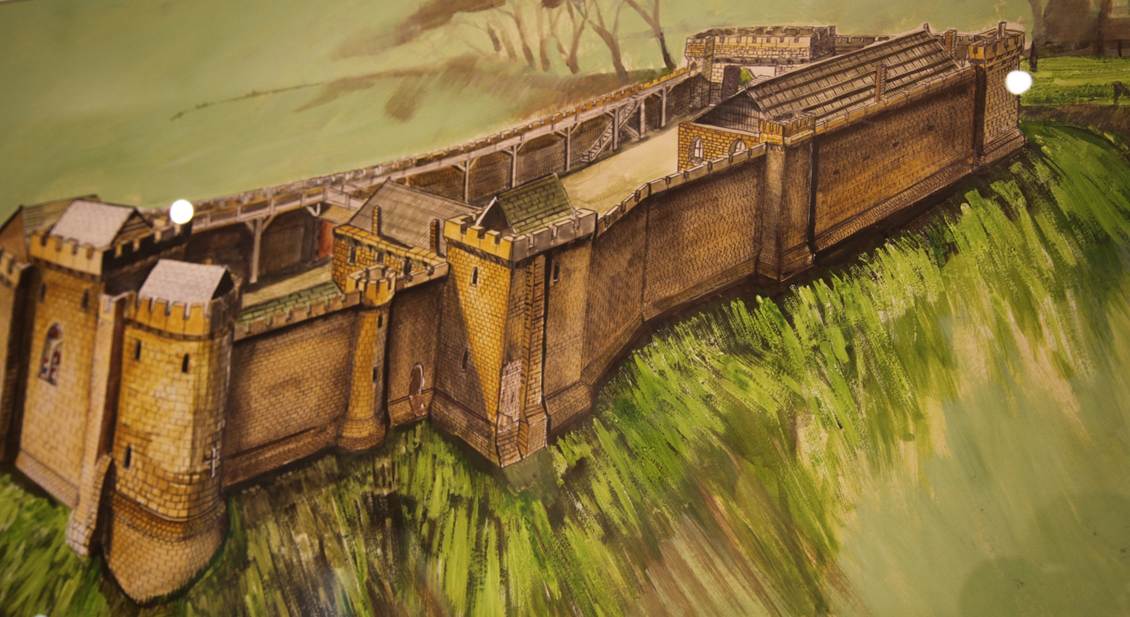
Kilton Castle, in
the collection at Kirkleatham Museum
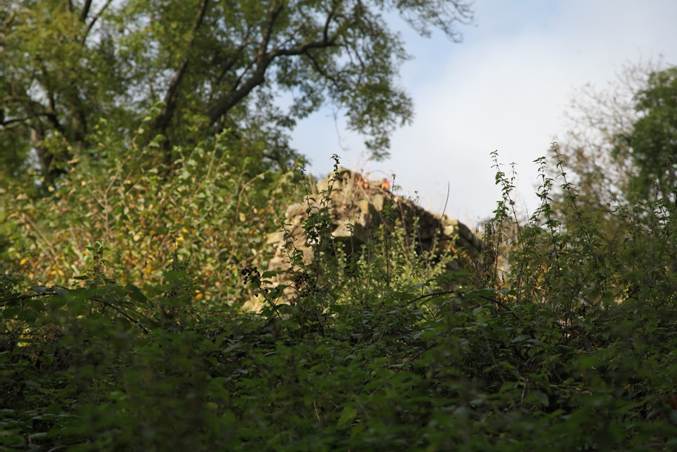
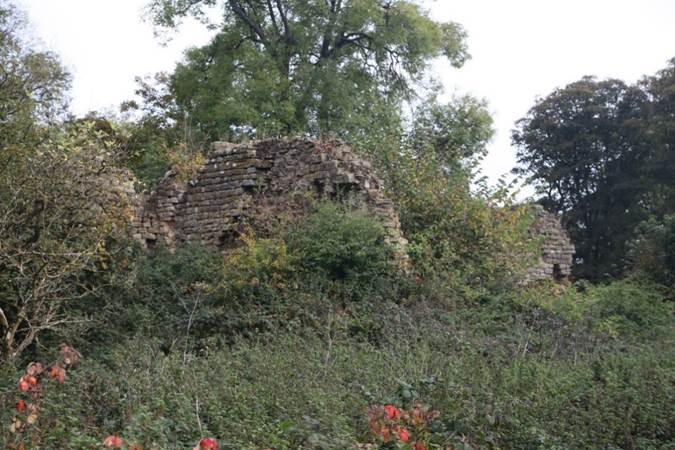
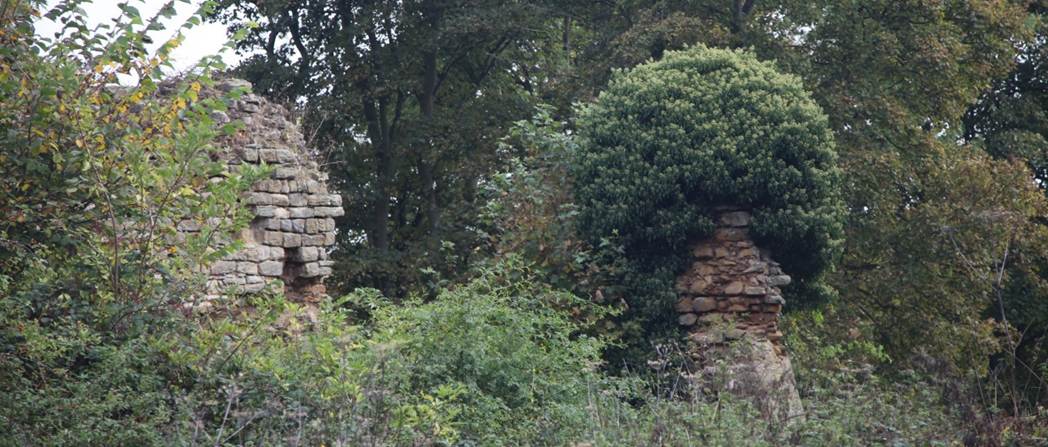
Kilton
Castle in 2016 (sleeping silently within Kilton woods)
1200
Willemus
de Kilton was recorded in 1200 (The Great Roll of the Pipe, John (1200
to 1201), page
58).
1213
The de Autrey Family
William's heir
was his niece Maud, who married first Richard Hawtrey (de Alta Ripa), by whom apparently she had no issue, and secondly Robert de Thweng,
who was her husband in January 1228–9 (Cartulary of Gisborough Priory. Volume 2. Translated 1889.
Page 99 to 100 – this reference may not be right).
For eight years
from 1213 the Hauterive family held the fief as
tenants of the Percys. (Horton,
Minnie C. 1979. The Story of Cleveland, History, anecdote and legend.
Cleveland County Libraries. Page 379). Richard de Autrey (Alta Ripa) had married
Matilda de Kilton, but they had no issue.
Sir Richard de
Alta Ripa, who, in right of his wife, became the ninth holder of the
fief, was descended from Sir Joceline de Alta Ripa, a nephew of the Joceline de
Loraine (son of Godfrey, Duke of Loraine, and Count of Brabant, and brother of
Queen Adeliza, second wife of Henry I), who married Agnes, one of the daughters
and heiresses of William, third feudal baron de Percy. Josceline of Loraine
assumed the name of Percy, but retained his paternal arms, or a lion rampant
azure. His nephew, Josceline de Alta Ripa, assumed the ancient arms of the Percies, Azure, five fusils in fesse or (Sussex Archaeological Society, vi [1853], p. 36). (Kilton Castle, William
M L’Anson, Yorkshire Archealogical
Journal, Volume 22, 1913, page 71).
1215
Peter de Mauley
tried to besiege the castle between 1215 and 1216 when Sir Richard de Autrey
(sometimes Hauterive, sometimes de Alta Ripa)
occupied the castle. But Sir Richard de Alta Ripa, Sir William’s successor,
immediately upon his accession, would appear to have become involved in a feud
with Peter de Malo Lacu, or de Mauley, Baron of Mulgrave, the chief adherent in
this part of Yorkshire of King John. He may have found this particular portion
of the fortalice already pulled down with a view to its reconstruction, and
instead of rebuilding it of new and excellent material to match the remainder
of the structure, he apparently, in a very hurried way, put it together again,
using up the old materials in this rebuilding. He constructed a large block of
buildings, probably used as barracks and stabling, on the site of the original Norman
stabling at this point. This work was probably done about 1214 (Kilton Castle, William
M L’Anson, Yorkshire Archealogical
Journal, Volume 22, 1913, page 69).
De Mauley was a Poictevin, and as a boy attracted the attention of King
John, then Prince, who, taking a great fancy to him, persuaded his mother, a
widow, to permit the boy to accompany him to England (Chronicon de Melsa (Chronicle of the Monastery of Meaux),
Volume 1, page 105). As it is by no means improbable that Kilton
Castle, about 1215-1216, was actually besieged by de
Mauley, it can hardly be out of place to briefly mention the methods of attack
and defence which would probably be employed. Owing to the great natural
strength of the site, we may take it that no commander would attempt a coup de
main, unless he were prepared to lose a disproportionately large number of men
in the attack. The southern and eastern facades were unapproachable, owing to
the precipices guarding them; the northern facade, where the slope was somewhat
less steep, was thoroughly enfiladed by boldly projecting mural towers; the
western facade, the weakest part of the fortalice, was very short in length,
and the besieged could, therefore, mass a number of men at this point, and it
was guarded by outworks, an outer ward, and a deep fosse. In
order to attack the castle with any hope of success, siege engines would
have to be employed. According to Camden, when King John besieged Bedford
Castle he brought into action seven large Trebuchets, one of which was
sufficiently large to throw heavy mill-stones into the castle; when the Dauphin
lay siege to Berkhampstead, in 1216, eight of these
machines were used, and the artificial platforms of earth on which they stood
still remain; and when, in 1224, Henry III attacked Bedford, his train of
artillery contained two Beffrois and seven
Trebuchets. The Trebuchet was the most formidable engine used in a siege at
this time; it weighed from five to ten tons. A wooden arm, sometimes exceeding
40 feet in length, was pivoted into a substantial timber framework, so that a
long and a short portion projected on either side. To the shorter arm a heavy
weight, contained in a swinging cradle, was affixed, which, of course, raised
the longer arm into the vertical position. When the latter was drawn downwards
the weight was raised, and on a sudden release the long arm swept upwards in a
curve, and threw the missile, sometimes weighing as much as 2 cwt., hurtling
through the air for a distance of 300 yards. Accuracy
of aim was, naturally, difficult, otherwise this powerful engine could have
done tremendous damage. Even as it was, it was superior as a siege engine to
any cannon of the time of the Civil War, and should
one of its missiles crash into a “ bretasche,”
it would smash it to pieces, and it could destroy the battlemented parapet of
the wall of enceinte. In addition to the well-known cross-bow,
the besiegers would be provided with arbalists, a similar but more powerful
weapon, which shot iron-tipped darts; with espringols,
weapons throwing with some degree of accuracy gigions
or stone balls, and which were actuated by the sudden release of a compressed
spring. The Ram, a heavy beam suspended by chains from the crossbar of a timber
structure, used to batter the walls, could only with difficulty have been
brought to the foot of the northern and western curtains at Ivilton.
The men working it were protected by a pent-house,
called the "Snail”, which had a roof of heavy beams. To defend the walls
against this engine, the besieged would let down sacks filled with straw or
wool by chains from the battlements. The Beffroi, or
movable tower, could only with very great difficulty have been used against
Kilton, and then only on the north and west sides. It was a tall wooden tower
on wheels, of the same or a greater height than the wall against which it was
placed. One of these was used at the siege of Barnborough
by William Rufus. The defenders would be well provided with cross-bows,
arbalists, and espringols. Wooden platforms, hastily
run up, would be placed in suitable positions along the interior of the
curtains. The summits of the towers would carry timber galleries or “bretasches”, supported in position by heavy wooden beams
inserted into holes in the masonry made for that purpose, with sloping roofs
resting on the summit of the battlements. These galleries were loopholed for
the use of the cross-bow, contained holes
in the floor through which stones, etc,, could be
dropped on the enemy beneath, and were entered from the battlements of the
tower. They were not permanent structures, but were
hastily rigged up in case of anticipated attack. A castle such as Kilton,
throughout the whole period of its habitation, would be practically
impregnable, provided it were efficiently garrisoned and provisioned, and as
the baronial party in this part of Yorkshire was strong enough to compel the
royal forces to raise a siege, the attack, if such an attack did take place, on
the castle by de Mauley, whether merely a coup de main or a properly organised
siege, would, in all probability, be unsuccessful. (Kilton Castle, William
M L’Anson, Yorkshire Archealogical
Journal, Volume 22, 1913, page 73).
After King John’s
death in 1216, a settlement was agreed between de Mauley and de Autrey.
In 1217, after
the death of John, Alta Ripa made his peace with the royal representatives, and
his feud with de Mauley came to an end. In the same year, Alice, Sir William's
widow, married Sir Robert de Lascell, Knt.,1 and in the following year brought
an action against the new lord of Kilton and his wife with regard to her dower in
Kirkleatham (Coram Rege
Rolls of Henry III, Number 51, Membrane 9).
The Prior of
Guisborough appears to have attempted to obtain a confirmation from Sir Richard
de Alta Ripa of William de Kylton’s gift of the advowson of Kirkleatham, but
met not only with a direct refusal, but with the intimation that so soon as his
wife (Matilda de Ivylton) came of age, he would contest the validity of the
grant. In April, 1221, Matilda came of age, and she
and her husband at once raised the question of the ownership of the advowson,
contending that when Sir William made the grant he was
of unsound mind (Cartulary
of Guisborough Priory. Volume 2. Translated 1889. Folio
75, 2a – this reference seems to be wrong). The Prior denied this, and produced his deeds of gift and King John’s
confirmation (Coram Rege
Rolls of Henry III, Number 14,
Membrane 256). No decision appears to have been arrived at, and as
Sir Richard died in the following year (1222) without issue, the question
remained unsettled. Sir Richard was probably interred in the chancel of
Kirkleatham Church. The fief again, for the second time in eight years,
reverted to the overlord, and de Percy at once gave the widow and
heiress, then under 22 years of age, in marriage to Robert de Thweng, the
grandson of one of his knights, Sir Marmaduke de Thweng, Lord of Thwing, in the
East Riding. (Kilton
Castle, William M L’Anson, Yorkshire
Archealogical Journal, Volume 22, 1913,
page 74).
1219
There was a plea by Richard de Autrey
and Matilda in 1219 regarding a third part of five bovates and 12 acres in Kirkleatham,
of which William de Kilton, formerly husband of the said Alice, was sometime
seised (Farrer. Early Yorkshire Charters. Volume 2. Page 68-69).
1221
In 1221 Matilda and Richard de Autrey
raised a question of their right to the advowson of Kirkleatham (Cartulary of Gisborough Priory. Volume 2.
Translated 1889. Page
99)
The
evidence from the Cartulary of Guisborough Priory is worth collating here,
since it evidences the interests of the Kilton brothers in Kilton. The
association with Gisborough also tends to suggest the de Brus family
overlordship.
Osbert
of Kilton, to God, etc., along with my body, two
bovates of land in Kilton—namely, those which Geoffrey son of Freyesand
held, together with that toft, the buildings, and all other things pertaining
to that toft (which belonged to Helys and Matilda, my aunt) in the same village—with
all appurtenances, liberties, and easements pertaining to the aforesaid bovates
of land both within and outside the village, in wood and open land, in meadows
and pastures, and in all liberties and easements, as free, pure, and perpetual
alms. Moreover, Adam of Kilton, my brother, and his heirs shall warrant the
aforesaid two bovates, with all their appurtenances, to the aforementioned
Canons of Guisborough against all men, and shall acquit and defend them from
all secular services, customs, and exactions. To this Adam and his heirs,
indeed, I have given three bovates of land (less three acres) in the same
village, so that they may warrant and defend the aforesaid two bovates of land
to the aforesaid Canons in perpetuity against all men. Witnesses: Henry son of
Conan, Eudo de Humet, Richard de Hutton, William de Hamerton, Richard de
Levington, William de Camera, Patrick de Westerdale, Robert Esturmi, Richard the
Cook, Thomas de Guisborough, Robert de Kethou, William and Wido the Clerks,
Adam de Kilton, Alan de Parco, and many others. (Cartulary of Gisborough Priory. Volume 2. Translated
1889. Page
147).
Adam
de Kilton [confirms] to God and the
Canons of Guisborough the gift which Osbert de Kilton, my brother, made to
them of two bovates of land in Kilton, together with his body [for burial];
namely, those which Geoffrey son of Freyesand held, along with the toft and all
buildings and everything else pertaining to that toft—which formerly belonged
to Elias and Matilda, my aunt—in the same village. [He grants] the land, with
all appurtenances, liberties, and easements pertaining to the aforesaid two
bovates of land—both within the village and outside it—in free, pure, and
perpetual alms, just as is set forth in the charter of my brother Osbert which
they hold regarding this matter . . . Witnesses: William de Tanton, Henry son
of Conan, Eudo de Humet, Richard de Hutton, William de Hamerton, Richard de
Levington, William de Camera, Patrick de Westerdale, Robert Esturmy, Thomas de
Guisborough, Richard the Cook, Robert de Kethov, Guy the Clerk, and many others. (Cartulary of Gisborough Priory. Volume 2. Translated
1889. Page
147).
To
all the faithful of Christ who shall see or hear these letters, Alexander, by
the grace of God Abbot of Melsa, and Master Milo the Canon, and Master William
the Precentor of Beverley, send greetings in the Lord. Let it be known to you
all that the case pending before us by the mandate of the Lord Pope—between the
Canons of Guisborough and William de Kilton concerning the chantry of the
Chapel of Kilton—has been settled by an amicable agreement in this manner: namely,
that the aforesaid Canons have granted to the aforesaid William and his heirs
two oxgangs of land in Thorp and three in Kilton, to be held with all
appurtenances—lands which were anciently assigned to the mother church of
Skelton for the purpose of maintaining a chantry three times a week in the
aforesaid Chapel. The terms are these: namely, that the aforesaid William and
his heirs shall sufficiently and honorably provide the necessities for the
chaplain and clerk continuously ministering in the said Chapel, as well as
whatever is necessary for the celebration of divine services. And if, by
chance, he or his heirs should cease to provide these necessities, the Chapel
shall cease to hold divine services. Furthermore, it shall be the particular
right of the aforesaid Canons to appoint, install, and remove—at their own
discretion—a suitable chaplain for the aforesaid Chapel; this chaplain shall
provide them with sufficient security and a pledge of fidelity regarding the
faithful preservation of the mother church of Skelton from loss. Nor shall the
said chaplain perform or receive any parochial dues, other than those related
to the divine services he celebrates in the Chapel. Moreover, the oft-mentioned
William, having taken a solemn oath in person, swore that neither by himself
nor through his agents would he seek any means or device whereby the possession
of the aforesaid Chapel by the said Canons might be in any way disturbed;
rather, he would preserve intact, to the best of his ability, all tithes and
revenues belonging to the mother church of Skelton—a pledge which the other
parishioners also confirmed with a similar oath—so that the mother church would
suffer no loss or detriment. As for the parishioners of Kilton, [they
acknowledged] the synod through the agency of the aforesaid Canons... They
shall make satisfaction annually. Moreover, in order that this peaceful
agreement may maintain firm stability for the future, we have fortified it with
the protection of our seals. The parties have done likewise. Witnesses: the
Chapter of Beverley, Ralph, Parson of Lyum, Osbert, Parson of Hylderwell,
Robert Engelram, William Wirfac, William de Braythewat, Alexander de Cotum, and
many others. (Cartulary of Gisborough Priory.
Volume 2. Translated 1889. Page
147-148).
Be
it known to all to whom the present writing shall come, that in the year of
grace 1250 First, in the Octave of St. Martin, an agreement was reached between
John, Prior, and the Convent of Guisborough on the one part, and Marmaduke
de Thweng on the other, namely: that the said Prior and Convent gave,
granted, and demised at fee-farm to the aforesaid Marmaduke and his heirs three
bovates of land with appurtenances in Kilton—two of which they held by
the gift of Osbert de Kilton, and the third by the gift of Walter son of Pagan—and
one bovate of land with appurtenances in Little Moorsholm, which Alan the Clerk
formerly held; and an annual rent of four shillings and one *scepp* of salt
from two bovates of land in Liverton, which Uchtred Long formerly held; and one
and a half acres lying between the croft of the said Marmaduke on the one part and
Westbeck on the other. To hold to the aforesaid Marmaduke and his heirs freely,
quietly, and honourably, rendering therefor annually to the aforesaid Prior and
Canons twenty-six shillings sterling at two terms, namely: thirteen shillings
at Pentecost and thirteen shillings at the Feast of St. Martin in Winter.
Provided that if the aforesaid Marmaduke or any of his heirs should fail to pay
the aforesaid farm-rent at the aforesaid terms, it shall be lawful for the
aforesaid Prior and Canons [to distrain upon] the aforesaid lands and rents,
and likewise half a carucate of land with appurtenances in Liverton—namely,
four bovates, of which Robert son of Adam held two (lying between the land of
the aforesaid Prior, which Ralph son of Thomas held, on the one part, and the
land of Nicholas de Fulthorpe on the other) and the other two bovates...
William de Kylton held one of these, and his brother Robert the other; they lie
between the land of the aforesaid Prior, which Alan Bulloc held—on one side,
and the land of Ralph de Lyum on the other; [they have the right] to distrain
at their own discretion until full satisfaction has been made to them regarding
the unpaid rent and any damages sustained on this account. Furthermore, it
shall be lawful for the aforesaid Marmaduke to enclose the aforesaid acre and a
half and join it to his croft. Moreover, the Prior and Convent shall warrant
the aforesaid lands, with their appurtenances, to the aforesaid Marmaduke and
his heirs in perpetuity against all men, in return for the aforesaid rent. In
witness whereof, both parties have mutually affixed their seals to this document. (Cartulary of Gisborough Priory. Volume 2. Translated
1889. Page
149-150). This is where L’Anson assumed
the prior sub-tenancy of Walter Fitzpagan.
Archbishop of York
and Primate of England by the grace of God, to all the sons of Holy Mother
Church to whom this present writing shall come, greeting in the Lord. Let it be
known to you all that we, out of regard for divine charity, upon the
presentation of William, Knight of Kilton, and upon the resignation of
Ralph, Parson of Lyum [ie Kirkleatham], to have given
and granted to our beloved clerk, Peter Ward, the church of Lyum with
all its appurtenances, and to have instituted him as parson therein. Provided,
however, that the aforesaid Ralph shall hold the said church for his entire
lifetime as a perpetual vicarage, paying annually to the aforesaid Peter Ward,
the parson, by way of a pension, all the tithes of fish from Cotum and of grain from Huverby
belonging to the church of Lyum. And so that our gift may remain valid and firm
in the future, I have confirmed the same church to the said Peter Ward by the
authority of this present charter. Witnesses: T., Prior of Thurgarton;
Alan, Canon of Ripon; William, Chaplain; Jordan, Chaplain; Master Ralph de Kyme; Master Gregory; Master John of York; Master Richard
de Turri; Master Ralph de Hampton; Nigel, Clerk; Thomas Baldevin; Thomas de
Ebinford; Michael de Burgo; Henry de Swinlington; Roger de Ledesham; John
Thalavat; William his brother; and others. (Cartulary
of Gisborough Priory. Volume 2. Translated 1889. Page
98).
On the morrow of the
Ascension, 5 Henry III (21 May 1221). An assize comes to recognize which
patron, in time of peace, presented the parson—who is now dead—to the church of
Lithum [ie Kirkleatham],
which is vacant, etc., the advowson of which Richard de Alta Ripa and
Matilda his wife claim against the Prior of Gisborough.
The Prior appears, etc., and says that an assize ought not to be held on this
matter, because William de Kilton—Matilda’s uncle, whose heir she is—gave that
church to him; and in support of this, he produces a charter of the said
William, which testifies that William gave them, along with his body [for
burial], the gift of the church of Livum and whatever
right he held in it, etc. He also produces a charter of King John, which
confirms that gift to them as having been reasonably made, etc., and he asks
that they warrant that gift to him. Richard and Matilda
his wife appear and say that William’s charter ought
not to prejudice them, because it was made on his deathbed and at a time when
he was not of sound mind. The Prior says that the charter was made while
William was in full legal capacity and in perfect health—at a time when he had
the power to grant it—and he puts himself on the witnesses and the country
regarding this. Richard and Matilda do likewise. Let a jury be summoned,
consisting of the witnesses named below (agreed upon by both parties) and
twelve free and lawful men of the [same] neighborhood,
etc., to determine whether the said William gave them that church while in full
legal capacity and whether the charter they hold was indeed his, etc. A day is
appointed for them to appear before the Lord King at York upon his arrival,
etc., and the jury is to appear then. And Matilda appoints her husband Richard
in his place, and the Prior appoints William de Bolleby
and John de Scipton in his place (Coram Rege Hen. III, No. 14, m. 25). In the
Octave of St. Hilary, 18 Hen. III (Jan. 14–20, 1228–9), at York: Michael, Prior
of Guisborough—who had brought a writ of right concerning the right of advowson
of the Church of Lythe against Robert de Tweng and
Matilda his wife—appears by his attorney and requests leave to withdraw from
his writ; this is granted, and he concedes to the aforesaid Robert and Matilda
their seisin regarding the presentation to the same Church. And therefore Robert and Matilda are to have a writ to the
Archbishop of York, [directing] that, notwithstanding the objection, etc.
(Ibid. No. 85, m. 4) (Cartulary of Gisborough
Priory. Volume 2. Translated 1889. Page
99).
See also the translation in Tweddell, George
Markham. 1872. The
people's history of Cleveland and its vicinage. Stokesley: Tweddell
& Sons. Page 121 especially page
2 on the gift of Lyum (Kirkleatham).
1228
Sir Robert de Thweng, ‘Will
Wither’
In 1222 Richard
Hawtrey (or de Autrey) died and his widow, still aged only 22, was given by the
owner of Kilton Castle, Sir William de Kylton, to Sir Robert de Thweng (1205
to 1268) through marriage to Matilda de Kylton, niece of Sir William de Kylton
and widow of Richard de Autrey. This coincided with a dispute with the prior of
Guisborough about the ownership.
The fief then
passed via marriage to the de Thweng family around
1228, when Robert de Thweng wed Matilda, niece of Sir William de Kylton, under
grant from overlord William de Percy. Robert's descendants, including Marmaduke de
Thweng (d. 1283) and his son Marmaduke II (summoned to Parliament 1307–1322),
elevated the estate's status through royal service and inheritance of de Brus
lands in 1272, residing at Kilton until around 1309.
It seems a fair
deduction from the facts given above, that Maud, the niece and heiress of
William de Kilton, son of Ilger de Kilton (Cartulary of Gisborough Priory. Volume 2.
Translated 1889. Page
108)
married first Richard de Alta Ripa, by whom she had no issue, or at least no
issue male, and secondly Robert de Thweng, by whom she must have had issue, as
both Kilton and Kirkleatham were in possession of the Thweng
family at the time of Kirkby’s Inquest (The survey
of the county of York, taken by John de Kirkby, commonly called Kirkby's
inquest. Translated 1867. Page
125),
where the editor has wrongly identified Lithum with
Upleatham. Four of William de Kilton’s brothers, Adam, Osbert, Ralph, and
Richard, are mentioned in this chartulary (Cartulary of Gisborough
Priory. Volume 2. Folios 745 -747, 865, and 866: see above) but there is no
evidence to show which, if any, was Maud de Thweng’s father. She was only just
of age when the first action about the advowson was brought in May, 1221, as in the preceding Michaelmas an action against
her and her first husband, Richard de Alta Ripa, was adjourned until she should
be of age (Coram Rege
Rolls of Henry III, Number 2, membrane 105). (Cartulary of Gisborough Priory. Volume 2. Translated
1889. Page 100 note
2).
The parentage and
descent of Robert de Thweng is far from certain. He undoubtedly derived his
name from Thwing in the East Riding, where his descendant Marmaduke, son of
Marmaduke de Thweng, held lands in 1284-5 (The
survey of the county of York, taken by John de Kirkby, commonly called Kirkby's
inquest, page
56). It seems most probable that originally the Thwengs
came from the county of Durham. Their arms, three popinjays or parrots, bear a
strong resemblance to those of the FitzMarmadukes,
Barons of Horden in Durham, and they themselves held the manor of Lund, near
Beverley, of the Bishop of Durham, which seems to have come to them through
the Darels (No. 1089p). The earliest mention of the
family I have come across is contained in a Coram Rege Roll for Trinity Term, 7
John (1205), about the advowson of the church of Legsby
(Leggebi) in Lincolnshire, which it was alleged had
been given to the Priory of Sixhills by Robert, son
of Robert de Tueng, a gift which had been confirmed by Robert (de Chesney),
Bishop of Lincoln, 1147-1166 (Abbreviatio Placitorum, page
48: The Abbreviatio Placitorum,
a 19th-century printed calendar of early English judicial records,
typically covers Curia Regis (King's Court) pleas spanning the reigns of
Richard I through Edward II (1189–1327)). There is no other evidence connecting the Thwengs with Legsby, so it is not
certain that this Robert de Tueng was ancestor of the
Yorkshire family of the same name. (Cartulary of
Gisborough Priory. Volume 2. Translated 1889. Page 100 note
2).
1232
Sir Robert
possessed a full share of the great bodily strength, the physical beauty, and
the wonderful charm of manner which for generations seems to have distinguished
his house. "Juvenis elegans et miles strenuus”, (an elegant young man and a vigorous soldier)
says Matthew Paris of him (Chronica Major a, Rolls
Edition, iii, 217). But he was like the rest of his race, hot - tempered
and determined, and finding that he could obtain no satisfaction from the
Legate, he was at length driven to desperation by the intrusion of a Papal
nominee into his advowson of Kirkleatham. Gathering together
a picked body of his retainers, and accompanied by several youths of his own
age, he played havoc with the property of the Romish clergy who had, against
the wishes of lay patrons, been installed in many benefices in the north of
England. From Trent to Tweed these usurpers were visited, their houses and
barns destroyed, and themselves maltreated. Assuming the nickname of “Will
Wither”, he grew more daring as time went on, making ceaseless warfare on all
connected with the Romish Curia, taking of their superfluity and giving
liberally to the poor. When pressed, he would retire to his practically
impregnable castle of Kilton, which was filled with rich goods taken from
wealthy monastic houses. There is no evidence of any value that Robin
Hood was ever more than a mere creation of the popular imagination, and it was
probably the actions of such a man as the youthful lord of Kilton which led to
the creation of this mythical personage. Sir Robert's exploits made him
well-known throughout the whole of the north of England. The Legate, annoyed by
the failure of his efforts to capture him, at length excommunicated Sir Robert,
who at once appealed to the northern nobles. The Lords Percy, Nevill,
Fitz-Randolph, de Vesci, de Mauley, de Menyll, de Roos, and de Brus, with some twenty knights, assembled at
Kilton Castle at the request of Sir Robert, who was formally appointed their
accredited ambassador to the Pope. This meeting was probably one of the most
important and picturesque events in the history of Kilton Castle. Sir Robert,
armed with letters from all the leading northern nobles to the Pope, Gregory
IX, undertook a journey to Rome, and as a result of an interview with His
Holiness, the Papal Legate and the Archbishop of York received strict orders
from Rome that in the future they should refrain from any interference with the
rights of the lay patrons. So far as the advowson of Kirkleatham was concerned,
we learn from Coram Rege, Hen. Ill, No. 35, M. 4,
that it was formally restored to Sir Robert and Matilda his wife. (Kilton Castle, William
M L’Anson, Yorkshire Archealogical
Journal, Volume 22, 1913, page 76).
After an attempted
appeal to Rome, the frustrated Sir Robert rebelled and raided church property
in about 1232, using the nickname Will Wither, or William the Angry. It
is said that he then distributed the spoils, Robin Hood like, to
the poor. He was excommunicated in consequence, but
was supported by other local noble families including the Houses of de Brus,
Percy and Neville. Another appeal to Henry III met with royal support and Pope
Gregory IX was persuaded to rule in his favour. The rebellion came to an end. (Dictionary of National Biography, page
362).
Marmaduke de
Thweng’s son Robert was a man of some celebrity in his day. Matthew Paris,
under the year 1282 (Matthew Paris’ Chronica Majora
(Rolls Edition) Volume 3, page
217), speaks of him as “juvenis elegans
et miles strenuus ex partibus Anglie aquilonaribus originem preclaram ducens" (a
refined young man and vigorous soldier, tracing his distinguished lineage to
the northern parts of England), and says that he, under the nickname of Will
Wither, was one of the most prominent leaders in destroying the 8 of the Romans
who were farming the benefices which had been granted them by the Pope. The
cause of Thweng’s fierce hostility against the
adherents of the Roman Curia in this country was the intrusion of a Papal
nominee into his advowson of Kirkleatham, called by Matthew Paris Luthunum and Luhumum. So strongly
did he feel on this subject, that he declared he preferred to be unjustly
excommunicated, rather than be deprived of his benefice against right. This
case raised such an outcry in England, that in a letter to the Pope from the
magnates of the country complaining of the Papal infringements of the rights of
lay patrons, it was brought forward as an illustration of the way in which
foreigners were against the patrons’ wishes intruded into English benefices (Matthew Paris’ Chronica Majora (Rolls Edition), Volume
3, page 609). (Cartulary of
Guisborough Priory. Volume 2. Translated 1889. Page 100 note
2).
In 1222 Percy gave
Matilda de Kilton, widow of Sir Richard de Hauterive in marriage to Sir Robert
de Thweng. Sir Robert has been called the district’s Robin Hood. When Pope
Gregory II took advantage of the weak Henry III to strengthen his power in
England, he made such heavy demands for money from the clergy that the King’s
brother declared ‘England is like a vineyard with a broken hedge, all steal the
grapes.’ At this time the pope also demanded that Italian priests should be
presented to English livings. About 1229 a priest from Italy was appointed to
Kirkleatham Church of which Sir Robert de Thweng rightly claimed the advowson.
He appealed to the Papal Legate, the Archbishop of York and the Prior of
Gisborough, but received no satisfaction. Under the assumed name of Will
Withers he gathered a band of Norman knights and their retainers around him and
took matters into his own hands. This determined band pillaged the property of
the Italian clergy between the Tweed and the Trent, and brought back rich
spoils to Kilton Castle. These they distributed to the poor. Because of these
raids Sir Robert was excommunicated. This meant that he would no longer be
allowed to take Holy Communion, a prospect that appalled him for he was a
devout churchman and if he died he would be buried in unconsecrated ground. The
band of knights met and decided that Sir Robert should make the long journey to
Rome to see the Pope personally. This he did. The Pope reciognisd the justice
of his plea, and the advowson was restored to him. (Horton, Minnie C. 1979. The Story of
Cleveland, History, anecdote and legend. Cleveland County Libraries. Page
379).
Robert de Thweng
was noted for his opposition to the foreign ecclesiastics sent to England in
the reign of Henry III and went on a successful mission to Rome for the redress
of the matter. (Dictionary of
National Biography, page
362)
Kilton Castle
will always be associated with the name of Thweng.
Sir Robert, who at the age of 20 became the 10th lord of the Kilton fief
in right of his wife, seems to have at first borne the arms, Argent, a fesse
gules between three popinjays gules, or “Scutum album cum fessa
rubea et paginibus rubeis”, as the shield is described by Matthew Paris, Chronica Majora, Rolls Edition, vi, 477.
But he afterwards altered the colouring of the parrots, and his descendants
have always borne the famous arms, Argent, a fesse gules between three
popinjays vert, now borne by his representative, the present Earl of
Scarbrough. Sir Robert was the eldest son and heir of Sir Robert de Thweng,
knight, who held the fief of Lund in the East Riding under the Percy family (by
his wife Emma, heiress of Dunekin d’Arel,
Lord of Lund, who bore the arms, Azure, a lion rampant or, crowned argent), and
the grandson of Sir Marmaduke de Thweng, Lord of Thwing, in the East Riding. It
seems highly probable that the Thwengs, the Fitz-Marmadukes of Horden, co. Durham, and the Lumleys of Lumley, co. Durham, were all descended from
Marmaduke, the favourite illegitimate son (often described as the nephew) of
Ranulph Flambard, the famous Bishop of Durham and Chancellor of England,
favourite of William Rufus. There is a striking similarity in the arms of the
three families, and all three held their original lands under the Bishops of
Durham, if not directly then from the Percies, who
held under the bishops. The Fitz-Marmadukes, who may be said
to have been the hereditary Seneschals of the Prince-Bishops of Durham, bore
the arms, Argent, a fess gules bearing three popinjays argent
; and although the Lumleys claim an entirely
mythical descent from a line of Saxon princes, their original arms, Gules, six
popinjays argent, lead one to imagine, especially as parrots are a most unusual
bearing, that their descent was the same as that of the Thwengs.
Sir Marmaduke de Thweng, Robert’s grandfather, was probably a son of Sir Marmaduke
de Thweng, of Thwing, and his wife one of the original Nevills of Raby, and took a prominent part in the civil wars of the
time of John as an ardent supporter of the baronial party, but in 1217 made his
peace with the royal representatives (Rotuli Litterarum Clausarum, Close
Rolls, Volume 1, 274). In
1226, or four years after the marriage of his grandson, he was appointed one of
the Justices Itinerant in Yorkshire (Ibid., ii, 138). He died in 1230 at the age
of 71, and his son Robert, lord of Lund, having predeceased him, the ancestral
estates and also the kef of Lund passed to his
grandson Robert, already in right of his wife, lord of Kilton. All three kefs, aggregating seven knights’ fees (Percy Chartulary, No.
403, pages 131-132), were held under the Percies,
and the castle of Kilton becoming the capital of the combined kefs, now entered upon the period of its greatest
importance. Immediately upon coming into possession of Kilton, Robert appealed
to the Archbishop of York with reference to the disputed advowson of
Kirkleatham. The Archbishop referred him to the
Legate, the Legate to the Archbishop, the Archbishop to the Prior of
Guisborough, and for some months these princes of the Church played an
exasperating game of shuttle-cock with the young lord
of Kilton. (Kilton
Castle, William M L’Anson, Yorkshire
Archeaological Journal, Volume 22, 1913,
page 75).
The
owners of Kilton Castle had the right to appoint a priest to the wealthy church
at Kirkleatham. The Prior of Guisbrorough was desperate to gain this right and
his Canons had abused their spiritual position to persuade Sir William de
Kylton to sign the church over to them, when he thought he was dying.
Immediately on obtaining the signature a messenger was dispatched to King John
for him to confirm the gift. Recovering from his illness Sir William repudiated
the gift, declaring that it was extorted from him when his mind was unhinged.
In 1222 the Castle of Kilton came into the hands of Robert de Thweng through
his marriage to Matilda, niece of Sir William de Kylton, the previous holder.
Robert de Thweng was the grandson of Marmaduke de Thweng, one of the most
powerful lords of Yorkshire at the beginning of the 13th century. On
Marmaduke’s death in 1230, Robert inherited all of his lands, in total seven
knights fees and Kilton which became the centre of this powerful estate. Robert
de Thweng was handsome, charming, passionate and stubborn. He could not
tolerate the acts of the Prior of Guisborough and he appealed to the Archbishop
of York for justice. The Archbishop passed the petition to Papal Legate (Pope’s
representative) in England. The Papal Legate passed the petition back to the
Archbishop who then passed it to the Prior of Guisborough! The Prior of
Guisborough passed it back to the Archbishop and so on. A papal nominee was
appointed to the Church at Kirkleatham, a foreign clergyman, somebody
interested only in lining his pocket. Robert de Thweng had had enough. He
gathered together a body of local nobles and waged war on the foreign clergy
who were milking the church in Yorkshire. Using the name of ‘Will Wither’ he
burnt tithe barns, attacked the foreign clergy, re-distributed the ill gotten
wealth to the poor and made his name feared throughout Yorkshire. His
headquarters throughout this time was Kilton Castle. The Papal Legate, Cardinal
Otho, excommunicated Sir Robert. This was serious for Robert de Thweng; under
excommunication he could lose his lands. He appealed to the great northern
nobility. In 1227 they came to Kilton:- Lords Percy, Nevill, Fitz-Randolph, de
Vesci, de Maulay, de Menyll, de Roos and de Brus accompanied by twenty lesser
knights. These were the people who ruled the north of England, not the King or
the Church but this awesome group of nobles. They had common cause with Robert.
He was one of them, and if his rights were under attack, theirs could be too.
Sir Robert was entrusted with letters to the Pope setting out their grievances
and making clear the power they wielded. Sir Robert de Thweng of Kilton Castle
went to Rome and had an audience with Pope Gregory IX. He returned armed with strict instructions to the Papal
Legate, the Archbishop of York and the
Prior of Guisborough that they should restore his property to him and no longer
interfere in the rights of the great nobles. In 1229 the advowson of
Kirkleatham was restored to Sir Robert de Thweng and ‘Will Wither’ disappeared
into history. (The Story of
Robert de Thweng: a local Robin Hood in Medieval
Teeside, Tees Archaeology, Archaeological
Booklet No 5, Page
12)
Kilton
Castle hosted assemblies like the 1232 gathering of northern barons to oppose
papal interference.
1233
Sir Robert
appears to have been the intimate personal friend of
Peter, 1st Baron de Mauley of Mulgrave, already mentioned as the enemy of Alta
Ripa. In 1233, de Mauley, who had been given the custody of the royal castle of
Devizes (Close Rolls, 18 Henry Ill, m. 31, page
361), appointed Robert to the post of constable of this castle,
which office he appears to have held for three years, spending, perhaps, three
months of the year at Devizes.
Lord Peter de
Brus III married Hillaria, eldest daughter of Peter de Mauley I, and had issue
five children. According to Dugdale and the Brus pedigree the marriage took
place in 1237, when Hillaria would probably be about
20 years of age. The five children were born between that date and October, 1241, when Peter de Brus III died, and was interred
in the south aisle of the chancel of Guisborough Priory.
Peter de Mauley
the younger, eldest son and heir of Peter de Mauley I, had married a sister of
Peter de Brus III, so the two families were very closely connected. In 1241,
Peter de Mauley I left England for the Holy Land (Yorkshire
Inquisitions, Volume 1, page 12),
and the barony of Mulgrave and the lordship of Doncaster passed to his son
Peter, who became the second Baron de Mauley.
(Kilton Castle, William M L’Anson, Yorkshire Archaealogical Journal, Volume 22, 1913, page 78).
1242
Robert
de Thweng went on a crusade, returning in 1242, (Dictionary
of National Biography, page
362) in which year he acknowledged that he had given the manor of
Kilton to his son Marmaduke and his wife Lucy de Brus, (Cartulary of Guisborough Priory. Volume 2.
Translated 1889. Page
101 notes)
sister and co-heir of Peter de Brus. (Dugdale's
Monasticon Anglicanum, Volume 6, page
268).
In
1242 he acknowledged that he had given his son Marmaduke the manors of Lithum
and Kilton with their appurtenances, except the advowsons of the church of
Lithum and the chapel of Kilton, to dower Lucia de Brus, Marmaduke’s wife
(Coram Rege Henry III, early records of the
Court of King's Bench dating to the
reign of King Henry III (1216–1272), Number 7, membrane 7).
In
1242, Peter de Mauley II arranged with Sir Robert de Thweng that Marmaduke,
Robert’s eldest surviving son and heir, then 17 years of age, should marry his
niece, Lucia, the second daughter of Peter de Brus III, who, at this time
cannot have been more than two or three years of age. The custody of all the
children had been given to de Mauley II, who, as the husband of Joan de Brus,
was in a double sense the uncle of the orphans. In 1242, Sir Robert gave the
whole of the Kilton fief, with the exception of the lordship of Hinderwell and
the advowsons of the church of Kirkleatham and of the chapel of St. Peter, “
infra castellum de Kilton,” to his son Marmaduke to dower Lucia de Brus (Coram Rege Henry III, early records of the Court of
King's Bench dating to the reign of King Henry
III (1216–1272), No. 7, m. 7). Whether the marriage took place at once, the
bride being some three years old, and the bridegroom between 16 and 17, is uncertain;
probably it was celebrated a few years later. However this may be, Robert, the
eldest child of the marriage, was born and baptised at Kilton Castle in 1255,
his mother being then between 15 and 16 years of age. The most probable date of
the marriage is 1247, when Marmaduke, on the death of his father, entered into
full possession of the whole of the Thweng property.
(Kilton Castle, William M L’Anson, Yorkshire Archealogical Journal, Volume 22, 1913, page 78).
1247
Marmaduke de Thweng
With Marmaduke de
Thweng, who follows next, we stand on surer ground. In 1199 he was one of the
sureties of Richard Malebisse, who had got into serious trouble with the King
for the murder of the Jews at York, in a sum of fifteen marcs
; and in 1208 was bound in ten marcs for Richard de Scal’, a William de Thweng, his brother (No. 438), being
bound at the same time in five marcs (Rotuli de Oblatis et Finibus, pages 41,
462). In 1205 he
paid three marcs to have such seisin of three bovates
of land in Lund, of which he had been disseised by Henry de Puteaco, as he had
on the day on which he was put in the King's prison, unless he had done
anything afterwards he ought not (Ibid. 807). The
crime which brought him into trouble was homicide. In 1204 he paid 100s. to be
allowed to be in the custody of twelve lawful men until the arrival of the
Justices; and again, in the same year, Robert, son of Roger, R[oger], Constable of Chester, and Peter de Brus, paid a fine
of forty marcs for having Marmaduke de Thweng in
their custody, and undertook that he should cause no tumult in the country
(Ibid. 221, 282). He seems to have sided with the Barons in the disorders in
John’s reign, as in 1217 he made his peace with the King (Rotuli Litterarum Clausarum, Close Rolls, Volume
1, page 374). Nine years later he and William de Tameton were Justices
Itinerant in Yorkshire (Ibid. ii. 188). In 1227 an agreement was entered into
between Sir Marmaduke de Thweng and William Constable, son of Robert Constable
of Holderness (Willelmum Constabularium,
filium Roberti Constabularii
de Holdernesse), about a bovate of land in demesne
(in dominio) in Kilham (Killum), and the service of
six carucates there, which Marmaduke had given to William in frank marriage
with his daughter Cecilia (Dodsworth MSS. c. 80). In 1280 Marmaduke de Thweng,
one of the Coroners of Yorkshire, was ill (Close
Roll 14 Henry, membrane 1, Part 11 membrane 3). In the same year he
appointed his son Robert, and Robert de Esington, as his attorneys against Geoffrey
de Neville and Mabel his wife, in a plea of the death of ancestor (in placito mortis antecessoris); at
the same time offering the King 100s. to cause his parceners, John de
Amundeville and John de Atton, to be summoned to take part in the suit (Yorkshire Assize Rolls. 15 Hen. 111. membrane 22).
As we hear nothing more of Marmaduke it is permissible to suppose that he died
about this date, 1280. (Cartulary of Gisborough Priory.
Volume 2. Translated 1889. Page 100 note
2).
In 1242 Robert de Thweng
acknowledged that he had given his son Marmaduke the manors of Lithum and Kilton with their appurtenances, except the
advowsons of the church of Lithum and the chapel of
Kilton, to dower Lucia de Brus, Marmaduke’s wife (Coram Rege
Rolls of Henry III, Number 7,
membrane 7). This throws the marriage of Marmaduke and Lucia much
earlier than supposed. Robert was still alive in 1246, when he was plaintiff in
a fine about the advowson of the church of Hinderwell [Hyldreswell] in which
Adam de Seton was deforciant, whereby it was agreed that after the death of the
then Parson, John de Newark, the presentation should be alternate, Robert
presenting the first (Pedes Finium Ebor, a
final concord or feet of fine recorded in Yorkshire during the 25th to 30th
years of the reign of King Henry III (1240–1246, Folio 246). He must
have died shortly after this, as in 1257 his son Marmaduke had & grant of freewarren in the demesne lands of his manors of Tuenge,
Lyum, Kylton, Morsum, and
Thorpe (now Kilton Thorpe), and elsewhere; a market on Thursdays at his manor
of Lunt, and & fair on the eve, day, and morrow of All Saints (Nov. 1); a
market on Wednesdays at his manor of Tuenge, and a fair on the eve, day, and
morrow of the Translation of St. Thomas the Martyr (July 7); a market at his
manor of Cotum on Wednesdays, and a fair on the eve,
day, and morrow of St. Lawrence (Aug. 10) (Charter
Roll. 41 Henry III, membrane 8). As early as 1251 he had a demise of
lands in Kilton and Kirkleatham, from the Priory of Guisbrough,
which were released to him in 1270 (Nos. 868 and 779). In 1271 he acquired in
right of his wife, Lucia de Brus, the manor of Danby and other valuable
estates, as her share of the inheritance of Peter de Brus 111., his wife's
brother. He and his wife in 1275 made an arrangement
with Walter de Faucumberg and Agnes his wife, the
eldest sister of Peter de Brus, about the right to the advowson of the Priory
of Guisbrough (Vol. i. p.
98). He was dead before 1284-5, when ‘heres Marmaduci de Thwenge" was in
the King’s custody (The survey of the county of
York, taken by John de Kirkby, commonly called Kirkby's inquest. Translated 1867. Page
127). (Cartulary of Gisborough
Priory. Volume 2. Translated 1889. Page 100 note
2).
When Sir Robert
died in about 1247, the castle passed to his son, Marmaduke de
Thweng, who had married Lucia de Brus in
about 1247 and had been born and baptised at Kilton Castle in 1225. When
her brother Peter de Brus
died childless in 1271 his four surviving sisters shared his 30.5 knight’s fees
of which nineteen were held in chief. Lucia inherited the manors of Danby,
Yarm, Brotton, Skinningrove and other places in Yorkshire. (Horton, Minnie C. 1979. The Story of
Cleveland, History, anecdote and legend. Cleveland County Libraries. Page
379).
Sir
Robert died at the manor house of Thwing in 1247, at the age of 45, and was
interred in the chancel of Thwing Church, where many of his family were buried.
He had issue five sons, Robert, who died young ; Marmaduke, who succeeded him;
Richard, Thomas, and Gawen. Marmaduke, 1st feudal Baron de Thweng of
Danby, eldest surviving son and heir of Sir Robert de Thweng, was born and
baptised at Kilton Castle in 1225. As a boy of sixteen he became lord of the
castle and of the Kilton and Kirkleatham portions of the Kilton fief, valued at
three knights' fees, and subsequently married Lucia de Brus, second daughter of
Peter de Brus III by his wife, Hillaria de Mauley. On his father’s death in
1247 he inherited the whole of the Thweng property, which, according to the
Percy Chartulary (No. 403), was valued at seven knights’ fees. “ Lund, Thweng, Kilton, Thorpe, Lythum, etc., a tenir par
les services de sept feez de chivaler.” He was, therefore, a
man of considerable importance, holding as much land as many a feudal baron in
capite, and Kilton, as the capital of these fiefs, was necessarily a well-known
castle at this time. (Kilton Castle,
William M L’Anson, Yorkshire
Archealogical Journal, Volume 22, 1913,
page 79).
1254
There
was an inquiry regarding land at Kilton held by Roger, son of Stephen and
William Gamel in 1254. For Roger son of Stephen and his associate. Since it has
been established by an inquest that six bovates of land with appurtenances in
Kilton Thorpe, of which Roger son of Stephen holds four bovates and William
Gamel holds two, are not part of the king's serjeanty of Pickering, the Sheriff
of York has been ordered to cause the said Roger and William to have full
seisin of the same six bovates of land with appurtenances, which had been taken
into the king's hand because it was alleged that the land belonged to the said royal
serjeanty. Witnesses as above. By H. de Bath. (Close Rolls of the reign of Henry III, 1253 to 1254, page
57).
1255
Marmaduke’s
eldest son Robert was born at Kilton Castle in 1255, then came seven
more sons and five daughters, the last born in 1276.
The sub-tenancy
of the Thwengs and the Lumleys
|
|
|
|
|
|
Thweng coat of arms |
|
|
|
|
|
|
|
|
|
|
|
|
|
|
Robert de Thweng Will Wither Married Matilda de Kilton 1202 to 1247 |
|
|
|
|
|
|
|
|
|
|
|
|
|
|
|
|
|
|
|
|
|
|
|
|
|
|
|
|
Robert de Thweng Died Young |
Marmaduke de Thweng Born and baptised at Kilton Castle in 1225 First feudal Baron de Thweng
of Danby Married Lucia de Brus (c 1223 to after 29 March
1282), second daughter of Peter
de Brus II, in about 1247 At this point the Thweng’s
sub-tenancy merged with the Brus tenancy in capite
extinguishing the mesne lordship |
Richard |
Thomas |
Gawen |
|
|
|
|
|
|
|
|
|
|
|
|
|
|
|
|
|
|
|
|
|
Robert de Thweng Born at Kilton Castle in 1255, died 12 May 1279 at
Kilton Eldest son and heir Married Matilda, daughter of Roger de Merlay of Morpeth Castle in about 1266 Died in 1279 leaving only a daughter Lucia |
Born at Kilton Castle in 1256, died at Kilton on 23 April 1323 Later first Parliamentary Baron de Thweng When his niece Lucia died in January 1347,
ownership of Kilton passed to Lucia’s Uncle, Marmaduke Thweng Faught his way out after the chaos of the Battle of
Stirling Bridge in 1297 Faught at Bannockburn, but did not flee Married Isabel de Ros |
Hillaria Born at Kilton, 1258 Eldest daughter, |
Galivanus Born at Kilton, 1259 Third son |
John Born at Kilton, 1261 Fourth son |
Edmund Born at Kilton, 1263 Fifth son |
Matilda Born at Kilton, 1265 Second daughter |
Richard Born at Kilton, 1267 Sixth son |
Alicia Born at Kilton, 1268 Third daughter |
Peter Born at Kilton, 1270 Seventh son |
Johanna Born at Kilton, 1271 Fourth daughter |
William Born at Castleton, 1273 Eighth son |
Roger Born at Castleton, 1274 Ninth son |
Margery Born at Castleton, 1276. Youngest daughter Margery, named after her aunt, Margery or Margaret
de Brus (who married Robert de Roos) Became the second wife of Ralph, Lord Nevill of
Raby and Middleham |
|
|
|
|
|
|
|
|
|
|
|
|
|
|
|
|
Lucia de Thweng Born at Kilton Castle on 24 March 1279. Only Child.
Died 8 January 1347. Became a ward of King Edward I. Grew up in Kilton
Castle under the protection of her uncle Sir Marmaduke de Thweng. In 1294 Edward I gave her
in marriage to Sir William Latimer IV, against her will and that of her uncle
(who wanted her to marry Marmaduke Junior). In 1305 Latimer divorced Lucia on the grounds of
her adultery. In 1313 Lucia married Sir Robert de Everingham, who
was killed in the Scottish Wars three years later. In 1320, then aged 41, Lucia married her third
husband Sir Bartholomew de Fanacourt. He outlived her. Lucia had illegitimate children by Marmaduke de
Thweng and Nicholas de Meynell. |
Marmaduke de Thweng 1274 to 1297 Affair with his cousin, Lucia de Thweng |
William de Thweng Died in 1341 Succeeded to Kilton on his father’s death in 1323 Arrested the alleged murderer of Edward II in
Naples William’s widow Katharine obtained
dower in November 1341 on William’s death The decline of Kilton Castle probably
began on his death |
Robert de Thweng Born c 1277, died before May 1344 Parson of Warton in Kendale,
Lancashire On Katharine’s death, Kilton
passed to Robert. He probably never took up residence there. No issue |
Thomas de Thweng Born at Kilton Castle in 1283,
died 1374 Also a priest, Rector of Lythum
(Kirkleatham) from the age of 9 Succeeded to Kilton on the death of Robert The last of the Thweng
Lords of Kilton No issue |
Lucy or Lucia de Thweng Married Sir Robert Lumley |
Margaret de Thweng Married Sir Robert Hilton |
Katherine de Thweng Married Sir Ralph d’Aubenie |
|
|
|
|
|
|
|
|
William de Latimer C 1275 to 1340 Lucia had an illegitimate son with Marmaduke during
her first marriage, known as William de Latimer III William instituted a somewhat belated inquiry into
the question of his legitimacy and on 1 July 1328 a convenient finding was
arrived at: William, the reputed son of Sir William le Latimer not illegitimate |
|
|
|
|
|
|
|
|
|
|
|
|
|
|
|
|
|
|
|
|
|
|
|
|
|
|
|
|
|
|
|
Marmaduke Lumley Thomas granted the reversion of Kilton to his
nephew Marmaduke Lumley Died within months of assuming the Kilton fee in
1374 |
Robert de Lumley Born at Kilton Castle in 1358, died at Danby Castle
on 12 December 1374 Marmaduke de Lumley’s eldest son and heir, and the
great-grandson of Marmaduke, first Parliamentary Baron de Thweng
’of Kilton Succeeded his great-uncle, Thomas, last Baron de Thweng of Kilton, in 1374 |
Ralph de Lumley
Painting in Leeds Castle of Ralph Lumley with
Richard II Born at Kilton Castle in 1361, executed in 1400 Lord of Kilton in 1374 Built Lumley Castle, Chester-le-Street Still in his minority and custody passed to John, Lord Nevill of Raby and
Middleham, who also erected Sheriff Hutton
Castle Assumed the Thweng arms
of his mother Married Eleanora, daughter of John, Lord Nevill of
Raby Administrator under Richard II and stripped of
titles for rebelling against Henry IV Ultimately executed |
Thomas Lumley |
William Lumley |
Isabel Lumley Married the knight, W Fulthorp |
|
|
|
|
|
|
|
|
|
|
|
|
|
|
|
|
|
|
|
|
|
|
|
|
|
|
Sir Thomas Lumley Died a minor in 1400, implicated in his father’s
treason |
John Lumley Born 1383 Restored in blood by Act of Parliament in 1411 and
was Lord of Kilton from 1432 Married Felicia, daughter of the knight, Sir Mathew
Redman |
Died 1450 Educated at Cambridge Lord High Treasurer of England |
Catherine Lumley Died 1461 Married Sir John Chideock of Devon |
Elizabeth Lumley Married Adam Tyrwitt of Ketleby |
|
|
|
|
|
|
|
|
|
|
|
|
|
|
|
|
|
|
|
|
|
|
|
|
|
|
Thomas Lumley 29 September 1408 to 1 April 1485 Became Lord Lumley in 1461 on the reversal of the
attainder of his grandfather for his support to Edward IV Governor of Scarborough Castle Married Margaret Harington, daughter of the
Constable of Liverpool Castle |
|
|
|
|
|
|
|
|
|
|
|
|
|
|
|
|
|
|
|
|
|
|
|
|
|
|
|
|
|
|
|
|
|
|
|
|
|
|
|
|
|
|
|
|
|
|
|
|
|
|
|
|
|
|
|
|
|
|
|
|
|
|
|
|
|
|
|
|
|
|
|
|
|
|
1445 to 1508 Had the fee by 1506 Sheriff of Northumberland Married Elizabeth Thornton, daughter of Roger
Thornton, a merchant of Newcastle-upon-Tyne |
|
|
|
|
|
|
|
|
|
|
|
|
|
|
Thomas Lumley Died in lifetime of his father Married a natural daughter of Edward IV, Elizabeth
Lucy |
Ralph Lumley |
Roger Lumley |
|
|
|
|
|
|
|
|
|
|
|
|
|
|
|
|
|
|
|
|
|
|
|
|
|
|
|
Richard Lumley Married Alice, the daughter of John Conyers of Hornly Castle Died seised on 26 May
1510 when his son, John was 18 |
|
|
|
|
|
|
|
|
|
|
|
|
|
|
1493 to 1544 Faught at Flodden Married Joan, the daughter of Henry, Lord Scroope of Bolton Involved in the Pilgrimage of Grace insurrection Received livery of his lands on 18 July 1515 |
|
|
|
|
|
|
|
|
|
|
|
|
|
|
|
|
|
|
|
|
|
|
|
|
|
|
|
|
|
George Lumley Assumed the Kilton estate on his marriage to Jane,
daughter of Richard Knightly of Upton, Northamptonshire in 1524 |
|
|
|
|
|
|
|
|
|
|
|
|
|
|
Executed for his participation in the Pilgrimage of Grace (the Yorkshire
based uprising of 1536 protesting against Henry
VIII’s break with the Catholic Church). Found guilty of treason and executed The Crown took possession of Kilton in 1537 when
the castle was a gaunt, grim and ivy ruin. The castle became a source for
local building material |
|
|
|
|
|
|
|
|
|
|
|
|
|
|
|
|
|
|
|
|
|
|
|
|
|
|
|
|
|
1534 to 1609 Was restored to Kilton In the reign of Elizabeth John Lumley was suspected
of plotting in favour of Mary Queen of Scots and was imprisoned in the Tower
between 1570 and 1573 |
Jane Lumley Married Geffery Markham |
Barbara Lumley Married Humphrey Lloyde |
|
|
|
|
|
|
|
|
|
|
|
|
|
|
|
|
|
|
|
|
|
|
|
|
|
|
|
Kilton was afterwards in the possession of a branch
of the Thweng family, but it is not clear how they
related to the ancient barons of Thweng |
|
Rev Dr Lloyde In 1723 claimed the barony of Lumley |
|
|
|
|
|
|
|
|
|
|
|
|
|
|
|
|
|
|
|
|
|
|
|
|
|
|
|
Marmaduke Thweng of Ratsey Perhaps held Kilton during the reign of Henry VII |
|
|
|
|
|
|
|
|
|
|
|
|
|
|
|
|
|
|
|
|
|
|
|
|
|
|
|
|
|
Richard Thweng Married Margaret |
|
|
|
|
|
|
|
|
|
|
|
|
|
|
|
|
|
|
|
|
|
|
|
|
|
|
|
|
|
Edmund Thweng Married Anne, daughter of Thomas Middleton |
|
|
|
|
|
|
|
|
|
|
|
|
|
|
|
|
|
|
|
|
|
|
|
|
|
|
Marmaduke Thweng Living in 1612 Married Dorothy who was from Appleby in
Nottinghamshire Held Kilton |
|
John Thweng |
|
Robert Thweng |
|
|
|
|
|
|
|
|
|
|
|
|
|
|
|
|
|
|
|
|
|
|
|
Batholemew Thweng Living on 22 October 1612 Held Kilton |
|
Ralph Thweng |
|
Elizabeth Thweng |
Dorothy Thweng |
Ann Thweng Married Marmaduke Johnston |
|
|
|
|
|
|
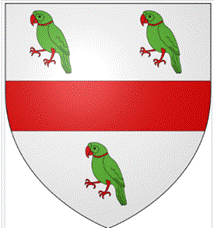
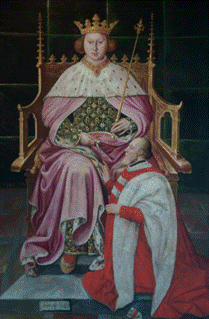
Thomas Thweng,
whose daughter and heiress married William Tullie (see genealogical table below
which picks this up) may have descended from one of this generation.
For the latter
part of this genealogical table, see Ord, John Walker. 1846. History and Antiquities of of
Cleveland. London: Simpkin and Marshall. Page 269.
1257
Kilton
Castle served as an administrative and military centre, controlling local
resources including mills (valued at 30 shillings annually by the 1320s), with
warrens, markets, and fairs granted in 1257 and 1292.
In 1257,
Marmaduke had a grant from King Henry III of free warren in the demesne
lands of his manors of Thwing, Lyum, Kylton, Morsum, and Thorp; a market on Thursdays at his manor of Lund,
with a fair on the eve, day, and morrow of All Saints (Nov. 1st) ; a market on
Wednesdays at his manor of Thwing, together with a fair on the eve, day, and
morrow of the Translation of Saint Thomas the Martyr (July 7th); a market at
his manor of Cotum on Wednesdays, together with a
fair on the eve, day, and morrow of St. Laurence (August 10th).
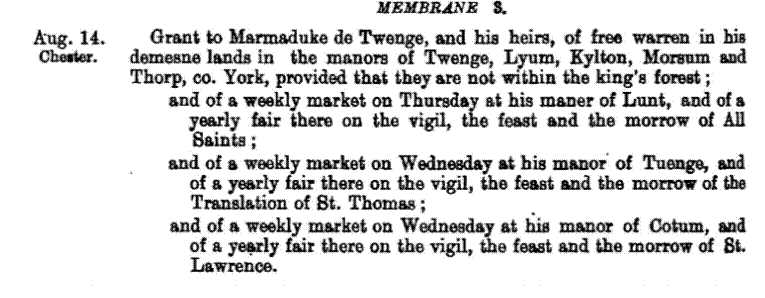
(Kilton Castle, William M L’Anson, Yorkshire Archealogical Journal, Volume 22, 1913, page 79, Calendar of Charter Rolls, Volume 1, Henry
III, 1226 to 1257, page
472).
1270
The
castle's chapel received a 1270 chantry grant, underscoring its ecclesiastical
role within the fief (Kilton
Castle, Gatehouse Gazetteer).
A chantry was granted to an existing chapel at the site.
Let
it be known to all the faithful of Christ who shall see or hear this writing
that, in the year of grace 1270, at the Nativity of the Lord, an agreement was
reached between Ralph, Prior of Guisborough, and the Convent of the same place,
on the one part, and Marmaduke de Twenge, on the other … The aforesaid Prior
and Canons also granted to the aforementioned Marmaduke and his heirs a chantry
within his castle of Kilton, on the condition that the aforesaid Marmaduke and his
heirs, in return for the offerings to be made therein in the future by
themselves, their free household, and passing guests, shall pay annually on All
Saints' Day, upon the altar of the mother church of Skelton, six pence of
silver. All greater and lesser tithes, as well as all other rights whatsoever
belonging to the said mother church, are reserved to that church except for the
aforesaid offerings from the said Marmaduke, his heirs, and all their men,
which in any way pertain to the aforesaid mother church. Furthermore, the
aforesaid Marmaduke released, on behalf of himself and his heirs, any
agreements whatsoever previously made between his ancestors and the Canons of
Guisborough regarding the chantry of the chapel of Kilton, such that the Prior
and Convent of Guisborough shall henceforth in no way be bound by such
agreements against their will. For fuller evidence of this matter, the
aforesaid Prior and Convent have affixed the seal of their Chapter to this
chirograph on the one part, and the aforesaid Marmaduke has affixed his seal on
the other. Witnesses: Sir John de Bulmer, John de Tocotes, Nicholas de
Fulthorp, William de Fulthorp, Stephen son of Richard, Ralph Mart’, John Terri,
Matthew de Glaphou, John de Redmershill, and others.
(Cartulary of Gisborough Priory. Volume 2.
Translated 1889. Page
113).
One
of the towers of the castle is said to date from the thirteenth century after
the castle had been acquired by the Twengs (Pettifer,
Adrian (1995), Kilton Castle in English Castles, Suffolk: Boydell
Press, page 292).
1271
Late
in 1271, or early in 1272, Marmaduke took up his residence in the old Brus
castle on the Danby lordship, giving Kilton to his eldest son, Robert. The
reasons for this removal were, perhaps, mainly sentimental, for the Brus castle
was probably not superior either as a fortress or a residence to that at
Kilton. But whilst at the latter place Marmaduke was merely the most powerful
of the Percy feudatories, at Castleton he was a great baron, holding his lands
in capite. The sporting advantages of the Castleton residence also probably
appealed to him, for he seems to have taken little or no interest in public
affairs, devoting his time to the management of his extensive estates and to outdoor
sports and pursuits. The castle at Castleton was only some six miles south of
Kilton, and had been founded by Adam de Brus in the reign of Stephen. Like
Kilton, it was one of the numerous “adulterine” fortresses erected during the
civil wars of the period, but the original stockading would appear to have been
replaced by masonry at a much earlier date than was the case at Kilton.
(Kilton Castle, William M L’Anson, Yorkshire Archealogical Journal, Volume 22, 1913, page 82).
By 1272 on the
death of Peter de Brus III, Moorsholm, Stanghow and Girrick
seem to have been appurtances of Skelton populated by
bondmen each holding a bovate of land, cottagers and a small number of
substantial freeholders with larger holdings. (Barry
Harrison. 1990. New Settlements in the North Yorkshire Moors 1086-1340 in
Medieval Rural Settlement in North East England.
Architectural and Archaeological Society of Durham and Northumberland Research
Report No 2, edited by B E Vyner, page 28).
1271
Sir Robert
de Thweng
Sir
Robert de Thweng, eldest son and heir of Marmaduke, feudal Baron de Thweng of
Danby, was born and baptised at Kilton Castle in 1255. In 1271, at the age of
16, he married Matilda, third and youngest daughter and co-heiress of Roger
III, last feudal Baron de Merlay, of Morpeth Castle, Northumberland.
1272
This
Kilton Fee remained in the overlordship of the House Brus until 1272.
In
1272, following the death of Peter III de Brus, Lord of Skelton and Cleveland,
1241 to 1272, his four sisters became co-heiresses of the de Brus estates.
Agnes,
the eldest, married Walter de Fauconberg and took, as her share, the manors and
castle of Skelton, Marske, Upleatham and Kirkleatham. Lucia, the second sister,
married Marmaduke de Thweng of Kilton castle, taking with her the manors of
Yarm, Danby and Brotton.
The
death of Peter de Brus II in 1271 without a male heir led to the de Brus estate
being divided among four sisters, with the Danby, Wolvedale, Lealholm
(Yorkshire), Brotton and Skinningrove estates (Cleveland) being given to Lucia,
married to Marmaduke de Thweng of Kilton (Cleveland). The Danby estate passed
via their son Robert to his daughter, Lucia de Thweng, who in 1296 married
William le Latimer. The couple had a new castle built for the Danby estate, some
3 miles east of Castleton. Danby Castle is thought to date from between 1300
and 1305. 6 If this is the case the ‘ruined peel’ referred to in 1335 must
refer to the Castle Hill, Castleton, establishment
(Excavations at Castle Hill, Castleton, SJ
Sherlock, Volume 64, 1992, Yorkshire Archaeological Journal, Volume 64, 1992,
page 42).
On
the occasion of his marriage, Kilton Castle was handed over to Robert by his father,
the latter removing to Castleton (Kilton Castle, William M L’Anson, Yorkshire Archealogical Journal, Volume 22, 1913, page 84).
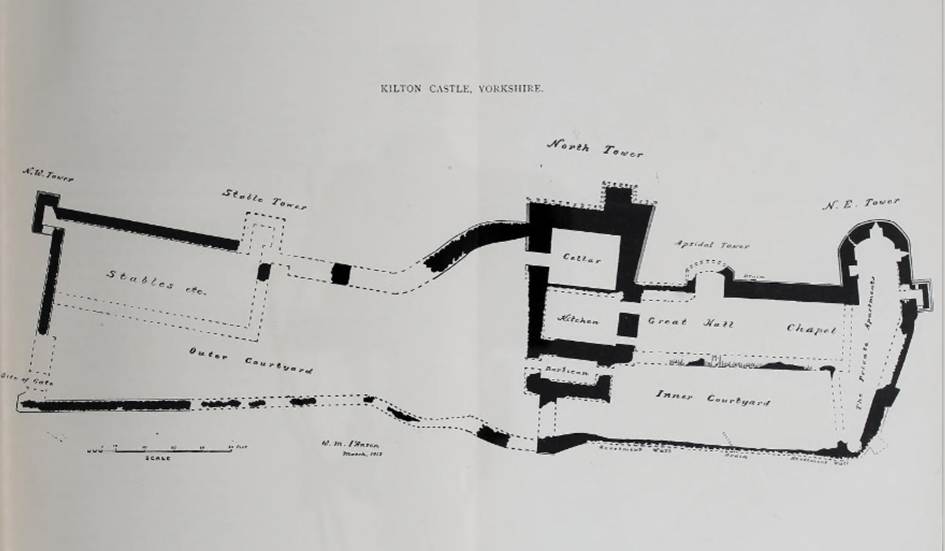
The layout of the medieval Kilton Castle depicted in 1913 (Kilton Castle, William
M L’Anson, Yorkshire Archealogical
Journal, Volume 22, 1913, page 103)
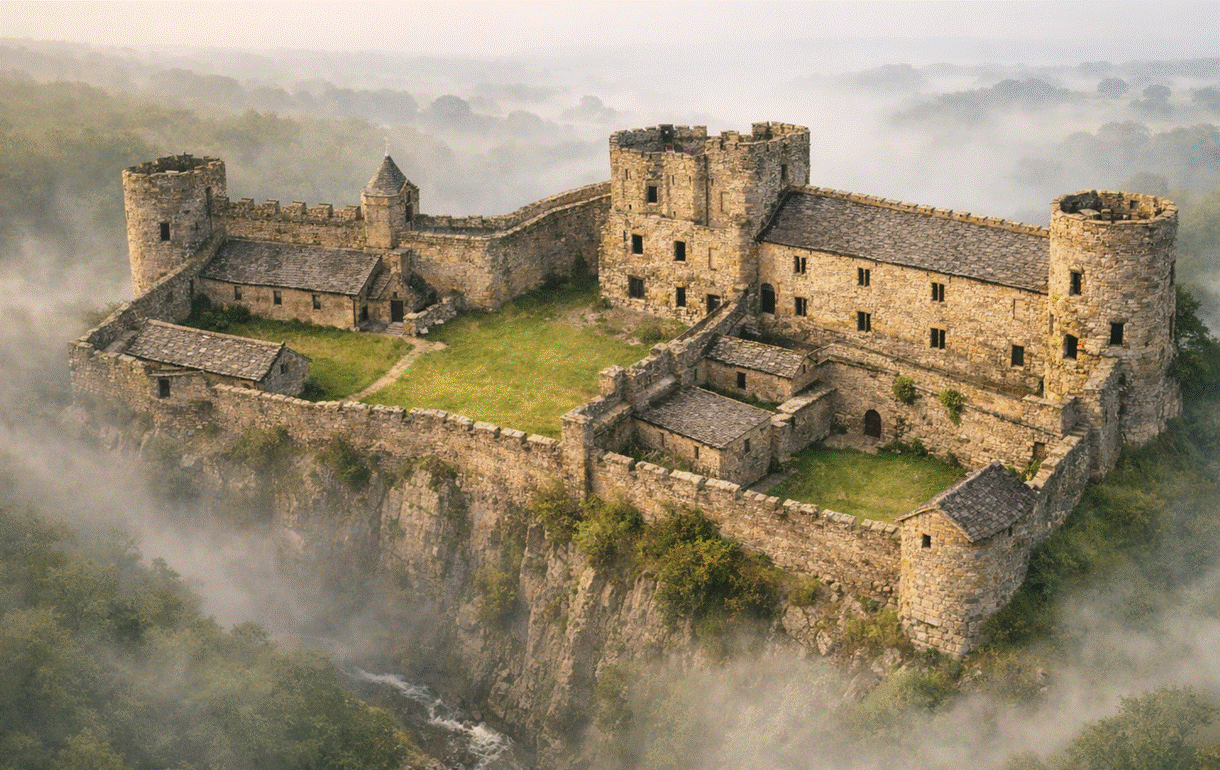
The medieval Kilton Castle re-imagined using
artificial intelligence
When
a tenant in capite acquired or merged into the tenure of their immediate
sub-tenant, the intermediate feudal layer, the mesne lordship, was
extinguished. A mesne lordship was an intermediate lordship, holding
land from a superior lord, but who also acted as a lord to their own
sub-tenants. This middle status derived from the Old French word mesne
(meaning middle).
The
sub-tenant was elevated to hold their land directly from the Crown, becoming a
tenant in capite themselves.
The
House Fauconberg were now tenants in capite of the separate Skelton and
Kirkleatham.
1279
Marmaduke de Thweng
So Marmaduke’s
second son, Marmaduke the Younger, born in Kilton Castle in 1256 had
moved to Danby, and Kilton had passed to the eldest son Robert who died in 1279
leaving only a daughter Lucia.
However in 1279, Robert,
Marmaduke’s eldest son, died, leaving an only daughter and heiress, Lucia.
Marmaduke then, with perhaps the royal consent, and certainly with that of Lord
Percy, arranged that the ancestral estates of the Thweng
family, viz. the fiefs of Kilton, Thwing, and Lund should, after his death,
pass to his second son, Marmaduke, and that Lucia, Robert’s heiress, should
only succeed to the property which had come into possession of the Thwengs by the Brus partition of 1271. He then handed over
to Marmaduke, who some years previously had married Isabella, daughter of Sir
Robert de Roos, Knt., of Ingmanthorpe,
the whole of the Kilton fief, with the exception of the
lordship of Hinderwell. Marmaduke I died in the same
year, and was interred, with all the pomp and ceremony befitting the joint
patron of the house, in the north aisle of the chancel of Guisborough Priory. In all probability, a monument bearing effigies of himself
and his wife was erected over his tomb. (Kilton Castle, William M L’Anson, Yorkshire Archealogical Journal, Volume 22, 1913, page 83).
The
sole issue of the marriage of Robert and Matilda was a daughter and heiress,
Lucia, born at Kilton Castle on the Friday before Palm Sunday, 1279 (Yorkshire Inquisitions, Yorkshire Archaeological Society
Record Series Volume 23, 1898, page 170).
Robert died in May, 1279, the age of 24, and was interred in the north aisle of
the chancel of Guisborough Priory. Lucia de Thweng, the only daughter and
heiress of Sir Robert de Thweng, of Kilton Castle, by his wife, Matilda de
Merlay, was born at Kilton Castle on the 24th March, 1279, and baptised on Palm
Sunday in the chapel of St. Peter, “ infra castellum de Kilton,” by Alan,
private chaplain of the castle. There were present at the ceremony Sir Richard
de Thweng, the infant’s great-uncle ; Peter Mariscallus, a knight in the Percy
service ; Richard le Estyvor ; Lucia, the infant’s grandmother, wife of Marmaduke,
1st Baron de Thweng of Danby ; and the infant’s great-aunt, Margery (de Brus),
widow of Robert, Lord de Roos. Lucia’s father died a few weeks after her birth,
and her mother, who never seems to have recovered from the illness which
followed the birth of her daughter, died in June of the same year, at the age
of 16. On the death of her grandfather, in December, 1279, Lucia became one of
the chief heiresses in Yorkshire and a ward of King Edward I. This well-descended
heiress was related to the de Mauley, de Brus, de Merlay, and de Roos families,
and the custody of her person was given to her uncle, Sir Marmaduke, then 22
years of age, who was now lord of the ancestral Thweng estates. (Kilton Castle, William M
L’Anson, Yorkshire Archealogical
Journal, Volume 22, 1913, page 85).
1284
Marmaduke was dead by 1284–5, when this manor passed
by settlement to Marmaduke his second son by Lucy de Brus. (The survey of the county of York, taken by John de
Kirkby, commonly called Kirkby's inquest. Translated 1867. Page 125; Cartulary
of Guisborough Priory. Volume 2. Translated 1889. Page 146.). The younger Marmaduke fought in the Scottish wars
in the reign of Edward I, and after the battle of Stirling was put in charge of
the castle there. (Dictionary of National
Biography, page 362).
1285
Kirkby's Inquest,
a survey of English counties commissioned by Edward I and directed by John de
Kirkby, was primarily conducted and compiled in the year 1285. It wrote of
Kilton, Brotton, Lythum (which may have referred to
Upleatham), Morsum (Great Moorsholm) and Danby, They
also state that the status of the vills of Kilton,
Brotton, Lithum, Morsum,
and Danby, with their appurtenances, was altered by the late Marmaduke de
Twinge the elder, who held them, in that, whereas they were accustomed to pay a
common amercement, they have refused to pay it for the past ten years. (The survey of the county of York, taken by John de
Kirkby, commonly called Kirkby's inquest. Translated
1867. Page
125).
Marmaduke
de Thweng was holding 5 carucates in Kilton. Marmeduke de Tweng holds in Lyth 6 carucates, also in Kilton 5
carucates, hence 11 carucates (Page
238). Lucy, daughter and heiress of Robert (son of Marmaduke) de Twenge,
and grand-daughter of Lucy, sister and co-heiress of
Peter de Brus. The proof of age of "Lucia, filia
et haeres Roberti de Twenge, et consanguinea et lucres Marinaduci de Twenge, defunctoruni," was taken March 17th, 1294-5. The
jurors say that "praedicta Lucy a nata fuit apud Kylton in Clyveland die Veneris proxima
ante Dominicam Palmarum, anno regni regis Edwardi septinio,
et die Dominica proxima sequente
baptizata in capella Sancti
Petri ejusdem villse per Alanum,
capellanum Marmaduci de
Twenge, militis, prsesentibus
domino Ricardo de Twenge, Petro Mariscallo, Ricardo Le Estyvor, Lucya, uxore Marmaduci de Twenge, et
Marjoria de Brus" (Cal. Gen., ii., 513).
Lucy de Twenge married, first, Sir William le Latimer, junior, from whom she
was divorced about 1312 (Sir William Dugdale's The
Baronage of England, Volume 2, Page
37), secondly, Robert de Everingham, and, lastly, Sir Bartholomew de
Fanacourt. Some curious particulars relating to this lady, who died in 1346 (Episcopal Registers of William Zouche, Archbishop of
York, 310 b), are given in the Fasti Eboracenses
(Lives and Legacies of the Acrhbishops
of York, Volume 1,
page 377). (Page
307 note d). Kilton Thorpe in the possession of
Marmaduke de Thweng (Page
328).
Lucia de Thweng
In 1285,
after Marmaduke’s death, Lucia de Thweng (born in Kilton castle in 1279
and baptised in the castle chapel) inherited her father’s lands, initially
through the custody of the King, until she came of age. This heir was his
granddaughter, Lucia, his son and heir Robert having predeceased him, of whom a
full account is given in Cartulary of
Gisborough Priory. Volume 1. Translated 1889. Page
123. (Cartulary of Guisborough
Priory. Volume 2. Translated 1889. Page 100 note
2).
Kilton
chapel apparently contained a chapel within its precints, in conection with
which it is recorded in Dugdale’s Baronage that Lucia, daughter of Robert de
Thweng, and afterwards wife of William le Latimer, was born at Kilton Castle on
the Friday preceding Palm Sunday, 1279, and was christened on Palm Sunday in the
chapel of St Peter there, Sir Robert de Thweng, Peter de Marescale, Richard de
Estyvour, the Lady Lucie, wife to Sir Marmaduke de Thweng and brother to the
infant’s father, and Lady Margerie de Brus being present. This chapel is also
mentioned in the Inquisition held after his death on the estates of Thomas de
Thweng. It is worthy of notice that the old church at Brotton is dedicated to
St Peter, as were two earlier churhces on the same site, both of which were
under the patronage of the Lords of Kilton. (Northern Weekly Gazette, 26 May 1906).
Lucia
de Thweng was born at Kilton Castle on 24 March 1279. She was the only child of
Robert de Thweng and his wife Matilda, daughter of Roger de Merlay of Morpeth
Castle. Lucia’s parents died while she was still just a baby and she became a
ward of King Edward I. She grew up in Kilton Castle under the protection of her
uncle Sir Marmaduke de Thweng. She would have been taught the social arts which
young ladies of high status were expected to learn. In 1294 King Edward I gave
her in marriage to Sir William Latimer. In 1305 Latimer divorced Lucia on the
grounds of her adultery. In 1313 Lucia married Sir Robert de Everingham, who
was killed in the Scottish Wars three years later. In 1320, then aged 41, Lucia
married her third husband Sir Bartholomew de Fanacourt. He outlived her.
Lucia
had illegitimate children by Marmaduke de Thweng and Nicholas de Meynell. Lucia
spent her childhood at Kilton Castle. After her first marriage she lived at the
old castle in Castleton, at Danby Castle, and then at the Latimers’ manor house
at Brunne in the East Riding. For a time she lived with her lover Peter de
Mauley at Mulgrave Castle, and then with another lover, Nicholas de Meynell at
Whorlton Castle. She spent her later years with her second and third husbands
either at Kilton Castle, or at her manor house at Brotton. Lucia’s hand in marriage
was sought by many barons of Yorkshire and beyond, as she was the heiress to a
quarter of the de Brus estates. She is known in history as being the mistress
of several northern barons as well as for marrying three of them. One divorce
and three marriages was an unusual life story for a member of the northern
aristocracy. Lucia died at her manor house at Brotton on 8 January 1346, at the
age of 67. (Cleveland
& Teeside Local History Society)
Young
Lucia, who had been born at Kilton Castle on 24 March 1279, became a ward of
the King, while custody of her peson was given to her uncle Sir Marmaduke
Thweng of Kilton Castle, a soldier who was highly esteemed in his day and
became Baron de Thweng. All her life young Lucia had had, as her close
compaion, her cousin Marmaduke whom she idolised but, in her sixteenth year,
the King gave her in marriage to William de Latimer, the son of his friend the
Lord of Corby. Lucia and her young lover resisted the King’s command but to no
avail, However, after the marriage, her husband found that the defiant Lucia
was expecting a child to Marmaduke. She stayed with her husband a year, and
then returned to Kilton Castle and lived with Marmaduke, but their happiness
was short-lived for the handsome young knight had to march with his father and
his troops to join the King’s army in Scotland. In 1297, the English met the
Scots at Stirling where they were utterly defeated by William Wallace.
Marmaduke was killed. His father, Baron de Thweng, found himself the only
person in command of the English side. According to Surtees, when all was lost,
the Baron cut a way for himself and his men through the Scottish lines, for he
was a man of immense strength and splendid physique. After his troops got to
safety, he seized the bridge over the Forth and set it alight to prevent the
Scots from pursuing the remnants of the disordered English army. After
Marmaduke’s death, she returned to her husband. Marmaduke’s son was named
William de Latimer III, but a few weeks after his birth the Lord of Corby, his
grandfather, received a grant for life from the King of the Lordship of Derby,
on the grounds of the child’s illegitimacy. The Scottish
wars were still being waged, and now Lucia’s husband, William de Latimer was
forced to march north. In 1304, while he was away fighting, Lucia went to live
first with Peter de Manley at Mulgrave and then with Nicholas de Meynell, Lord
of Whorlton, by whom she had a son, Nicholas de Meynell Nothus (bastard), who
became heir to his mother for the Manor of Yarm. He died before her at the age
of 27, and the Manor passed to his daughter Elizabeth. Lucia’s lover, Nicholas
de Meynell, never married. Lucia was divorced by William de Latimer in 1313 [probably
1305] and then she married Sir Robert de Everingham, but he too was killed
in Scotland. She made her last matrimionial venture in 1320 by marrying Sir
Bartholemew de Fanacourt, a Frenchman. (Horton, Minnie C. 1979. The Story of Cleveland, History,
anecdote and legend. Cleveland County Libraries. Page 380).
The
White Lady
Kilton
was also a place of many old stories and also I remember the time that The
White Lady of Kilton Castle was seen there frequently in a very ghostly apparel.
She was often seen just around the bend from the farm where the Pond was and
some many years earlier had been a Blacksmiths shop. If you drive past the Hall
entrance by about 50 yards and turn right, on the left was the area I speak of. The white lady thing went on for a long time
until it was solved. It was generally seen by motorist going around the bend
and as they did the White Lady ran along the hedgeback beyond the pond.
Eventually is was realised that if you stopped dead, so also did the White
Lady. If you set off again, so did she.
It was of course the Car Headlamps reflection off the pond and onto the
hedgeback behind. I personally saw this
phenomina. Mind it was fun and lasted quite a while. Some had very scary
moments. The story of the White Lady is
however worth reading. Lucia de Thweng was born in Kilton Castle, and as an
heiress of considerable wealth she was made a ward of the King, in the care and
protection of her uncle. She was brought up in the company of Marmaduke, her
cousin. He was also Lucia's lover. When she was 16 years old Lucia was given in
marriage by the King to William le Latimer, the son of one of his friends.
After their marriage William found out that Lucia was pregnant with Marmaduke's
baby. She returned to Kilton Castle to live with Marmaduke but their happiness
was short lived. At the Battle of Stirling in 1297 Marmaduke lost his life. Lucia
returned to her husband, and Marmaduke's son was named William le Latimer. The
Scottish war was still raging and William le Latimer was ordered to march north
to join the King's army. No sooner had he set off, than Lucia went to live with
Peter de Li Manley at Mulgrave Castle. Then she went and lived with Nicholas de
Meynell at Whorlton Castle. Here she had another illegitimate son, Nicholas de
Meynell Nothus. Not surprisingly, when William le Latimer returned from the war
he divorced Lucia. She then married Sir Robert de Everingham; he too was killed
in the Scottish war. Her fourth husband was Sir Bartholomew de Fanacourt. Lucia
died in her manor house at Brotton. During her lifetime she gained the title
'The man eater of Cleveland', usually an appellation given to 20th century film
stars. A shimmering figure in flowing white robes has been seen walking along
Kilton Lane. Is this the ghost of Lucia looking for her lost loves? It is not
surprising that the history of the de Thwengs overshadows the village of
Kilton. Some of the local lads at the time said they would love to meet her
(she was however a Man eater)? The mind boggles? I think I would have erred to
the side of safety. She went through too many husbands and some of them had
dreadful futures. So in future when you drive these old country lanes, remember
you are travelling the roads of a wonderful historical era. It is not just
Kilton Lane, it is a domain of by gone Kings and rulers. I love my area and the
history associated with it. (Derick Pearson, Nostalgic
North Riding, 22 February 2022).
1292
24 May 1292,
Westminster. Grant to Marmaduke de Twenge, and his heirs, of free warren in
all the demesne lands of his manors of Twenge, Lyum, Kilton, Morsum, Thorp, Holm in Holdernes,
Oketon, Rottese and Lunt, co.
York; grant also of a weekly market on Thursday at his manor of Lunt, and of a
yearly fair there on the vigil, the feast and the morrow of All Saints; grant
also of a weekly market on Wednesday at his manor of Twenge, and of a yearly
fair there on the vigil, the feast and the morrow of the translation of St.
Thomas the martyr; and of a weekly market on Wednesday at his manor of Cotum, co. York, and of a yearly fair there on the vigil,
the feast and the morrow of St. Lawrence.
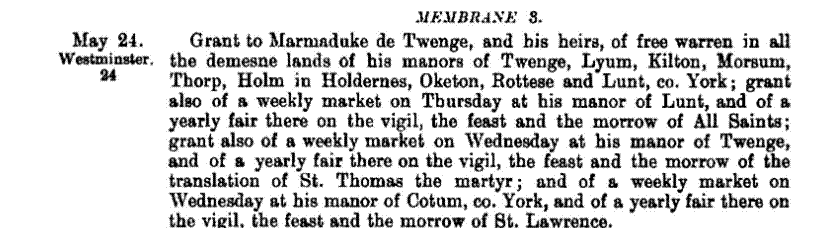
(Calendar of Charter Rolls, Volume 1, Henry
III to Edward I, 1257 to 1300 page
428).
1294
Lucia
spent her childhood at Kilton, and in August, 1294, when fifteen years and five
months old, she was given in marriage by the King to Sir William le Latimer,
Junior, the eldest son of a brave but needy and avaricious soldier, William le
Latimer, Senior, a personal friend of the King, who had taken a very prominent
part in the Welsh wars. (Kilton Castle,
William M L’Anson, Yorkshire
Archealogical Journal, Volume 22, 1913,
page 85).
William
Latimer, Junior, and his wife resided first at the old Brus castle on the Danby
lordship; but the proximity of Lucia's cousins at Kilton led him to move to the
manorhouse at Brunne, which had also, as had everything he possessed, come to
him through his wife (Kilton Castle,
William M L’Anson, Yorkshire Archealogical
Journal, Volume 22, 1913, page 86).
At
hearings in 1294, proof of Lucy’s age was ascertained.
Writ
dated at Westminster, 28 October, 22nd year (1294), and directed to Thomas de
Normanville. Proof of age of Lucy, daughter and heir of Robert de Tuenge,
and cousin and heir of Marmeduke de Tuenge, taken at Scelton in Clyvelande,
co. York, on the morrow of the Epiphany, 23 Edw. (7 January 1294-5), by Sir
William de Roseles, Sir Richard de Tuenge, Sir Ingeram de Bovynton, John de
Redemershil,'' Roger Daunay, William le Venur, William de Ebor., Adam de
Levynthorpe, Robert de Leysingby, William Humet, William de Wardhouw, and Peter
Marshal (marescall) who say upon their oath that the said Lucy was born at
Kilton in Clyveland on Friday before Palm Sunday, 7 Edw. (24 March, 1278-9),
and on Palm Sunday in the same year was baptized in St. Peter's chapel there
by Alan, chaplain of Sir Marmeduke de Tuenge; Sir Richard de Tuenge, Peter
Marshal, Richard le Estywur, lady Lucy, wife of Marmeduke de Tuenge, and
Margery de Brus then present. William le Latimer," who held certain lands
and tenements of the said Lucy's inheritance, was called and came not, but one
Robert Bussel, his bailiff, comes and shows, or says nothing, why the lands and
tenements of her inheritance ought not to be restored to her. William de Layburne
and Walter de Rokeslee came not, because they hold nothing of her inheritance
in the county of York.
A
writ dated at Aberconewey, 22 January, 23rd year (1294-5), and directed to the
same Thomas de Normanville. Whereas the return concerning the proof of age is
insufficient, because no mention is made of the age of the heir, or whether or
not William de Leyburne and Walter de Rokeslee were warned to be present at the
inquiry. Proof of age of Lucy, daughter and heir of Robert de Twenge, and cousin
and heir of Marmaduke de Twenge, taken at Kyrkebrunne, on
Thursday after the feast of St. Gregory the Pope, 23 Edw. (17 March, 1294-5)
before Thomas de Normanvile, by Roger de Aunay of Uplythome, Adam de
Levingtorpe, William le Hunter of Levington, Peter Marshal (mariscalluni) of
Skelton, John de Crauncewyke, Thomas Scott of Etton, Robert Rolande, Hugh de
Colvile, Thomas de Cardoyl, Thomas de Wymundthorpe, William de la Gerge and Roger
le Sumenor of Lokynton ; who say upon their oath that the said Lucy was born at
Kylton in Clyvelande, on Friday before Palm Sunday, 7 Edw. (24 March, 1278-9),
and on the Sunday following (26 March), baptized in the chapel of St. Peter in
the same town, by Alan, chaplain of Marmaduke de Twenge, knight, in presence of
Sir Richard de Twenge, Peter Marshal, Richard le Estyvor, Lucy wife of
Marmaduke de Twenge and Marjory de Brus. She was fifteen years old on Friday before
Palm Sunday, 22 Edw. (9 April, 1294), and she will be sixteen years old on
Friday before Palm Sunday, in the 23rd year (25 March, 1295). [M.s].
The
aforesaid William de Layburne warned to come to this inquiry was solemnly
called and came not. Walter de Rokesley was warned and called, and one Walter
de Throkynge, his attorney, came in his stead, and said that whereas William de
Layburne, to whom the king had committed the custody of the manor of Kyrkebrunne
with appurtenances up to the lawful age of the heir of Robert de Twenge,
committed the manor for the said time to Walter de Rokesley, who was in good
and peaceful seisin for two years and more ; the said Lucy, Thomas le Latimer,
and others unknown, entered into the same on Monday before the feast of St.
Martin in winter in the 21st year of the king's reign (9 Nov., 1293), and
ejected Walter against the peace, and although the age of Lucy was not proved ;
and they took all the issues of the manor up to the quinzaine of the
Purification of the B.V.M. next ensuing (i6 Feb., 1293-4), in contempt of the
king, and to the damage of ;£6o to the said Walter. At which day he was
reseised of the manor by the king's writ and Thomas de Normanvile, the king's
escheator, and so he was seised from that date up to Thursday before the feast
of St. Bartholomew, in the 22nd year (17 Aug., 1294), when William, son of
William le Latymer, and Lucy his wife, Thomas Latimer, and others unknown,
entered the manor by force and arms, and violently ejected Walter, taking all
his corn and goods and all the issues of the manor from that day up to the
octaves of St. Michael (6 Oct.) next ensuing, in contempt of the
king and to the damage of £20 to the said Walter, who was then reseised of the
manor by the king's writ and the said Thomas, his escheator, but on the morrow
was violently ejected by the said William and Lucy his wife, and others
unknown. These took and carried away all the issues up to Tuesday after the
feast of- St. Martin following (i6 Nov.), in contempt of the king and to the
damage of ;£30 to Walter, at which day he was the third time reseised by the
king's writ and by the said escheator, and by the view of William de Midleton
the king's bailiff, and other freemen. He was so seised up to Friday before the
feast of St. Nicholas, 23rd year (3 Dec, 1294), when more persons unknown, from
Skamstone and Kyrkebrunne, on the part of the said William and Lucy, entered
the manor by force and arms, broke the doors of the hall and grange, took
Walter's corn and goods, ejected him, and beat and ill-treated Walter de
Throkynge (his attorney). Therefore he says that the lands' and tenements which
are of the said Lucy's inheritance ought not to be restored to her until
satisfaction be had to the king for contempt, and to Walter for damages for the
said William and Lucy his wife, who are yet in seisin of the manor.
(Yorkshire inquisitions of the reigns of Henry III. and
Edward I, translated 1892, page 170
to 172, Brown, William. 1898. Yorkshire Archaeological
Society Record Series Volume 23. Yorkshire Inquisitions in the reigns of Henry
III and Edward I, Volume 2, page 170 to 172)
Proof
of age, taken at Scelton in Cleveland, on the morrow of the Epiphany, 23 Edw.
I.The jury say that the said Lucy was born at KUton in Cljrsreland on Friday
before Pabn Sunday, 7 Edw. I., and on Palm Sunday in the same year was baptized
in the chapel of St. Peter in the same town by Alan, chaplain of Sir Marmaduke de
Tueng [alias de Tweng] in the presence of Sir Richard de Tueng, Peter
Marescall, Richard le Estywur [alias le Estivor], lady Lucy the .wife of
Marmaduke de Tueng and Margery de Brus.
William
le Latimer who held lands &c. of the said Lucy's inheritance, being called
did not come, but Robert Bussel his bailiff came and said nothing why the same
should not be restored to her.
William
de Layburn and Walter de Rokeslee did not come because they hold nothing of the
inheritance of the said Lucy in the county. Writ (ad melius inquirendum), the
previous inquisition being insufficient because it makes no mention of the age
of the said Lucy nor whether William de Layburn and Walter de Rokeslee, who
held lands &c. of the inheritance by the king's commission, were warned to
be present, 22 Jan. 23 Edw. I.
Proof
of age, taken at Kyrkbrun on Thursday after St. Gregory, 23 Edw. I. The jury
say that the said Lucy was born at Kylton on Friday before Palm Sunday, 7 Edw. I,
was baptized the Sunday following (as above), was 15 years of age on Friday
before Palm Sunday, 22 Edw. I, and will be 16 on Friday before Pahn Sunday, 23
Edw. I.
Willam
de Layburn, being warned, came not; Walter de Rokesley was warned and Walter de
Throkyng his attorney came and said that although Wilham de Layburn, to whom
the king had committed the wardship of the manor of Kyrkbruim until the lawful
age of the heir of Robert de Tweng, had committed the same to Walter de Rokesley,
who for two years had peaceful seisin, yet on Monday before St. Martin, 21 Edw.
I. the aforesaid Lucy, Thomas le Latimer and others unknown, ejected him and
took the issues of the manor until the quinzaine of the Purification following
in contempt of the king and to the said William's damage of 60l; on which day
Walter was re-seised by the king's writ, and remained in seisin until Thursday
before St. Bartholomew, 22 Edw. I, when Willam son of William Latymer, Lucy his
wife, Thomas Latymer and others unknown violently ejected him, and took all the
issues &c. until the octave of St. Michael following, to his damage of 20I.
&c., when the said Walter was re-seised by the king's writ : on the morrow
he was violently ejected by the said William and Lucy and others, who took aU
the issues until the feast of St. Martin foUowing to his damage of 30l, when he
was re-seised by the king's writ by the escheator and by view of William de
Midleton, the king's baUiff, and others. He remained so seised until Friday
before St. Nicholas, 23 Edw. I. when several persons unknown from the towns of
Skamston and Kyrkbrunn, on behalf of the said William and Lucy, entered by
force and broke the doors of the hall and grange, took his corn and goods and
ejected him and beat and ill-treated Walter de Throkyng, his attorney.
Wherefore he says, the lands &c., of the inheritance of the said Lucy ought
not to be restored to her, untU they have satisfied the king for the contempt,
and the said Walter for his loss. The said WiUiam and Lucy are stiU in seisin
of the manor.
(Calendar of Inquisitions Post Mortem, Volume 3, (Edward I, 1291 to 1300), Folio
213, page 139)
1297
During
the 13th and 14th centuries, Kilton Castle supported Scottish border
conflicts, with lords mustering forces there for campaigns such as the Battle of
Stirling Bridge in 1297.
1300
In 1300, the Latimers abandoned to decay the old feudal fortress of
Castleton, and commenced what is now known as Danby Castle, some two miles east
of the original stronghold. (Kilton
Castle, William M L’Anson, Yorkshire
Archeaological Journal, Volume 22, 1913,
page 86).
1301
We
get a flavour of the inhabitants of Kilton Thorpe below the level of tenants in
capite and their immediate sub-tenants in 1301. Those paying tax for the
funding of Edward I’s Scottish wars in 1301 in Kilton Thorpe were listed in the
Yorkshire Subsidy. The inhabitants were John de Westbec who paid 5s 7d;
Benedict de Thorp who paid 4s 4d; Alexandro the Chaplain who paid 2s 11d;
Richard de Harters who paid 3s 10d; John V who paid 2s 3d; William the son of
Robert who paid 18d; Nicholas de Lennox who paid 13d; Thomas of Thorpe who paid
3s 4d; and Roger de Lofthouse who paid 2s 1d.
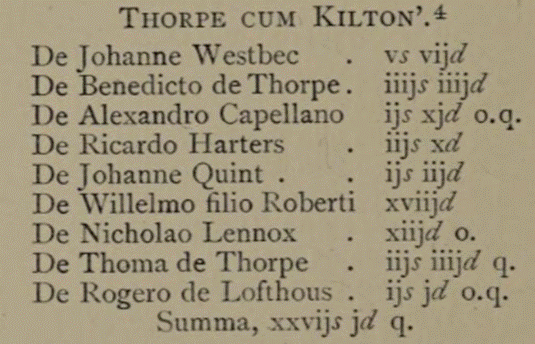
(Brown,
William. 1894. Yorkshire Archaeological Society Record Series Volume 21,
page 44. Yorkshire
Lay Subsidy being a fifteenth collected in 1301 in the reign of Edward I).
1304
In
1304, when her husband was fighting in Scotland, Lucia fled from Brunne and
became the mistress of young Peter de Mauley, afterwards the notorious Peter V.
(Kilton Castle, William M L’Anson, Yorkshire Archealogical Journal, Volume 22, 1913, page 87).
Lucia,
his wife, residing at his manor house of Brunne, com. Ebor, was taken away
(with divers goods there) by certain unknown persons. Whereupon the King sent
his Precept to the Sheriff of Yorkshire to make strict search for her
throughout all that county, commanding him, in case he did find her out, he
should, if need were, raise the power of the county, and carry her back to Brunne
(William Dudgale).
But
Lucia never returned to her husband. From Mulgrave she went to Kilton and from
Kilton to Whorlton, where she became the recognised mistress of Nicholas, Baron
de Menyll of Whorlton, one of the most violent and warlike of the northern
nobles. Lucia was now 26 years of age. (Kilton Castle, William M L’Anson, Yorkshire
Archealogical Journal, Volume 22, 1913,
page 87).
1305
Lucia had thus married,
against her will, to William de Latimer, but they were divorced in 1305
after Lucia famously eloped with a Knight. William le Latimer then applied
for and obtained a divorce. (Kilton Castle, William M L’Anson, Yorkshire Archealogical Journal, Volume 22, 1913, page 88).
Marmaduke de Thweng
Lucia returned to
Kilton Castle, though it is possible that even by this date, the castle was
falling into ruin. Lucia (who died in January 1347) by design avoided
the de Thweng estates falling to her own sons, and
ownership of Kilton passed to Lucia’s Uncle, Marmaduke Thweng, the First
Baron Thweng.
Marmaduke, the
first Parliamentary Baron de Thweng of Kilton Castle,
was second son of Marmaduke, feudal baron of Danby, by his wife, Lucia de Brus,
and was born at Kilton Castle in 1256. He married, in 1273, at the age of 17,
Isabella, daughter of Sir Robert de Roos, of Ingmanthorpe, Knt., and on his brother’s death, six years later,
took up his residence at Kilton Castle (Kilton Castle, William M L’Anson, Yorkshire Archealogical Journal, Volume 22, 1913, page 88).
Marmaduke took a
prominent part in the Scottish wars of the period. He was present at Newcastle
when Baliol did homage to King Edward I for the Crown (1292),
and took part in the capture of Berwick (March 30th, 1296).
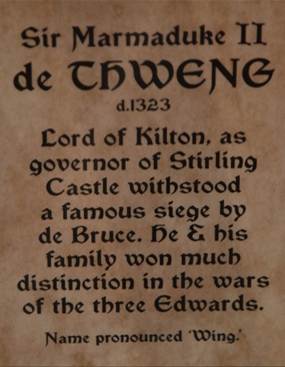
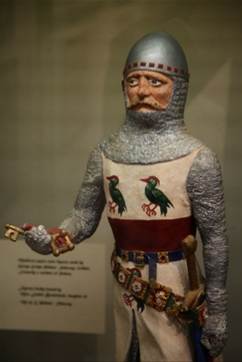
From
the collection at Kirleatham Museum. Marmaduke II de Thweng
played a prominent part in the Scottish wars and a major part in the Battle of
Stirling on 11 September 1297 where his eldest son Marmaduke was killed.
Marmaduke was
summoned to Parliament as a baron in 22 Edward I (1294), and regularly from 35
Edward I to 16 Edward II.
From 1295 until
1307 Marmaduke spent nearly the whole of his time in Scotland, returning at
intervals to Kilton for a short visit.
Besides Robert,
Marmaduke had a younger son, Marmaduke, who carried on the male line (No. 864).
This Marmaduke distinguished himself very much in the Scotch wars. “Strenuissimus ille miles" (that most
vigorous soldier) he is called by Walter of Hemingburgh
(Chronicle of Walter of Guisborough, chronicler and
Augustinian canon, Volume 2, page 188,
this may not be the right page) in his account of the battle of
Stirling, when the English were utterly defeated by William Wallace. The minute
particularity with which this battle is described renders it probable that the
account was derived from an eye-witness, possibly Thweng himself, whose seat, Kilton Castle, was not far from
the Priory. At the Battle
of Stirling Thweng seems to have been the only
person in authority on the English side who kept his head. When all was lost he cut a way through the Scotch army for himself and his
followers, as he was a man of great strength and very tall, ‘‘fortis robore et staturs procere” (strong in physique and of tall stature),
and seized the bridge over the Forth, which he caused to be burnt,
and thus
prevented the Scotch from pursuing the disordered English army. A little
episode in this battle is worth repeating. Whilst Marmaduke was cutting his way
to the bridge, his nephew was wounded and stunned, and his horse killed under him,
but he managed to stagger on his feet and call out, “Master, save me". To
which Thweng replied, “Get up behind me”, ‘I
cannot," was the answer, ''because my strength is failing”. Then a
companion, Thweng’s esquire, dismounted, and helped him up, and said to Thweng,
“I will follow you, master, wherever you go", and followed him to the
bridge, and they were thus both saved. It is pleasant to think that such a
brave feat met with a proper reward. After the battle Thweng
was left by the English general, the Earl of Warrenne,
in command of the Castle of Stirling, with a promise that he should be relieved
within ten weeks. This promise was not observed, and the next year (1298) he
was obliged to surrender to Wallace, who treacherously imprisoned him in
Dumbarton (Chronicon de Melsa (Chronicle of the Monastery of Meaux), Volume
2, pages 269,
270). He
was still alive and in possession of Kirkleatham in 1315-16 (The survey of the county of York, taken by John de Kirkby,
commonly called Kirkby's inquest, page
328). (Cartulary of Guisborough Priory. Volume 2. Translated
1889. Page 100 note
2).
1307
After 1307 he
does not appear to have again visited Scotland, and at the age of 51 settled
down to a life of ease at his castle of Kilton, where he appears to have kept up
considerable state. But two years later (1309) his wife, Isabella de Roos, died, and was interred in the north aisle of the
chancel of Gisborough Priory. Marmaduke then retired to his manorhouse
of Thweng, giving up Kilton Castle to his eldest
surviving son, William. (Kilton
Castle, William M L’Anson, Yorkshire
Archealogical Journal, Volume 22, 1913,
page 93).
1314
During
the reign of Edward II in his eighth regnal year, Kyrkelythum and Kylton. 3
knights fees, whereof 10 carucates make a fee, held by Marmaduke de Thweng
(Calendar
of Inquisitions Post Mortem, Volume 5,
(Edward II 1307 to 1316). Page 323).
1321
In 1321, when 65
years of age, and in very feeble health, Marmaduke made a formal grant of the manors
of Kirkleatham and Kilton, together with the castle of Kilton, to William (Kilton Castle, William
M L’Anson, Yorkshire Archealogical
Journal, Volume 22, 1913, page 93).
1323
William de
Thweng
Marmaduke
died in 1322 or 1323, being succeeded by his grandson William, (Calendar of Inquisitions Post Mortem, Volume 6, Folio 407
page 239) whom two years previously he had enfeoffed of the manor (Chancery Inquisitions Post Mortem from the 16th year of
the reign of King Edward II (1322–1323), number 51).
It was, I
believe, Marmaduke
de Thweng’s son, William de Thweng, who avenged the death of Edward II. The
Meaux Chronicler (Chronicon de Melsa (Chronicle
of the Monastery of Meaux), Volume 2, page 855) states that Sir Thomas Gurnard [Gurney],
who murdered Edward II, fled beyond the sea, “sed per
dominum Willelmum de Thwenge, militem, longe lateque quesitus captus est, et, pro nimio dolore
causa vindicte in ipsum exercende,
victui parcens mortuus est
in mari, sed t&men mortuus in Angliam est reductus"
(However, he was sought far and wide and captured by Sir William de Thwenge, a
knight; then, overcome by intense grief and a desire for vengeance against
himself, he refused food and died at sea, though his body was nonetheless
brought back to England) (Cartulary of Guisborough
Priory. Volume 2. Translated 1889. Page 100 note
2).
Marmaduke
died in April, 1323, at the age of 67, and was interred near his wife in the
north aisle of the chancel of Guisborough Priory
(Kilton Castle, William M L’Anson, Yorkshire Archealogical Journal, Volume 22, 1913, page 93).
The Inquisition Post Mortem for Marmaduke de Thweng listed the manor alias manors (extent given), held of Henry de Percy by knight's service; whereof two years before his death the said Marmaduke enfeoffed William de Tweng (Calendar of Inquisitions Post Mortem, Volume 6, (Edward II, 1316 to 1327). Folio 407 page 239). Robert Daniels referred to a reference in this Inqusition that there is in the same place of the rent of the free men per annum £8 8s … and there is at Thorp of rent of the free holders per year 10s though I have not found this reference (Robert Daniels. 1990. Kilton: A Survey of Moorland Fringe Township in Medieval Rural Settlement in North East England. Architectural and Archaeological Society of Durham and Northumberland Research Report No 2, edited by B E Vyner, page 48).
The castle would have
provided economic opportunities for the surrounding countryside. When the
Castle was inhabited, there was a village of some size occupying the site of
the modern farmstead of Kilton Hall, some 600 metres north
west of the Castle. There was a park attached the castle which was
described in 1323 as “… a certain park without beasts of the chase in which
there was no profit apart from herbage thereof …” Attached to the castle in
1323 was a certain park without beasts of the chase in which there is no profit
apart from the herbage thereof (The National
Archives, C 134/75/18 16 Edward II).
Adjacent to the
Castle, medieval Kilton comprised both Kilton and Kilton Thorpe and there were
farmsteads at Stank House, Buck Rush and Greenhills. The farming was probably
of a mixed nature, growing cereals and rearing sheep and cattle. Teams of oxen
ploughed up one side of each strip and turned the soil towards the centre creating
the ‘ridge and farrow’ corrugations which are still visible today. Blocks of
ridge and farrow were called furlongs and at the end of each strip was a
headland, where the ploughs were lifted from the soil and turned around.
Kilton Mill is a
historic, Grade II listed former watermill in Loftus, Redcar and Cleveland,
situated along Mill Lane and Kilton Beck. Though it no longer operates as a
mill, the buildings remain. A mill has been recorded at this location dating back
to 1323, originally serving the medieval Kilton Castle. The surviving mill
building and outbuildings, built in the 19th century, straddle Kilton Beck. (Kilton
Mill, National Heritage List).
There was milling
at Kilton Mill. The road from Brotton to Kilton probably dates to the medieval
period as the ridge and furrow archaeology is consistent with this. The road from
Kilton to Kilton Thorpe is also medieval. The amount of ridge and farrow in the area of Kilton suggests that almost all the land was
cultivated.

A mill is noted at Kilton in 1323 and 1344 when it was worth 30s per annum. The 1767 map shows a mill perhaps in the approximate location of the medieval mill. (Robert Daniels. 1990. Kilton: A Survey of Moorland Fringe Township in Medieval Rural Settlement in North East England. Architectural and Archaeological Society of Durham and Northumberland Research Report No 2, edited by B E Vyner, page 39).
1327
Marmaduke’s son
William de Latimer III instituted a somewhat belated inquiry into the question
of his legitimacy. On 1 July 1328 a convenient finding was arrived at:
‘William, the reputed son of Sir William le Latimer not illegitimate’ (Fasti Ebor 337n). Remembering that his
grandfather had received Danby on the grounds that he was Marmaduke’s son, the
findings must have been a surprise. (Horton, Minnie C. 1979. The Story of Cleveland, History,
anecdote and legend. Cleveland County Libraries. Page 381).
25 March 1307.
An order to cite
Sir Nicholas de Meynell and Lucia, daughter of Sir Robert de Tweng, to answer
to a charge of adultery. A very singular story. Nov. 2, 1305, the chapter of
York announce that William de Latimer has been ex-communicated at the instance
of dame Lucy, daughter of Sir Robert de Tweng. Sept. 4, 1309, commission to
receive the purgation of dame Lucy de Tweng, wife of Sir "William de Latymer,
knight, for
adultery and incest with Sir Nicholas de Meynyl. On the Friday after the Epiphany,
1309, Meynyl and the lady enter into a bond to pay 40l. each to dan Henry de
Botelford, the keeper of the fabric at York. On July 8, previously, Meynyl as a punishment had been fined
10l by the archbishop. The frailty of Lucy de Tweng
cast a doubt
upon the legitimacy of her husband's son, but on July 1, 1328, it was found out,
upon a formal enquiry, that Sir William, the reputed son of Sir William de Latymer,
was not illegitimate, but the son of Latimer and Lucy de Tweng. (Fasti Eboracenses, Lives and
Legacies of the Archbishops of York, Volume 1,
page 377).
York. Quindene of Martinmas, i Edw.
Ill, 1327. William de Thweng, quer., Bartholomew
Fanacourt and Lucy his wife, def., of the manors of Thweng,
Lund, Kilton, Lythum, and Great Moresum,
and the advowson of the church of the manor of Lithum:
To hold to William and his heirs. Quit-claim and
warranty by deforciants for themselves and the heirs of Lucy. William gave 100
marks. (Feet of Fines for Yorkshire, YAS Series Volume 42, page 4)
William was
summoned to Parliament as a baron from 18 Edward II to 15 Edward III, but to
the last summons he is noted on the roll “mortuus
est.”
He is principally
noted as the avenger of the horrible and dastardly murder of the unfortunate King
Edward II, and much may be forgiven him on this
account. Sir Thomas Gourney, who devised and executed the crime, fled abroad,
and for a long time escaped justice, “ sed per dominum Willelmum de Thweng, militem, longe lateque quaesitus captus est, et, pro nimio dolore
causa vindictae in ipsium exercendae victui parcens mortuus est in mari, sed tamen mortuus
in Angliam est retuctus ” (Chronica Monasterii de Melsa
(Chronicle of the Monastery of Meaux), Volume
2, Page 355).
“But he was captured by Lord William de Thweng, a knight, and, having been
sought far and wide, he was spared food for the sake of revenge against them,
and died at sea. However, he was brought back to England dead.” (Kilton Castle, William
M L’Anson, Yorkshire Archealogical
Journal, Volume 22, 1913, page 94).
Lay
Subsidy Rolls, 1327 for Langburgh included records of the taxpaying inhabitants
of Kilton and Kilton Thorpe, as well as Brotton and Skelton:



(Walker,
J W. 1929. Yorkshire Archaeological Society Record Series Volume 74. Miscellaneous Volume 2,
including Lay Subsidy Rolls I Edward III North Riding of Yorkshire and the City
of York, page
146).
1333
John Bertram
of Kilton acknowledged that he owed John Sturmy of Dromundeby 20 marks to be levied, in default of payment, of
his lands and chattels in county York (Close
Rolls of
the reign of Edward III, 1333 to 1337, page
111).
1340
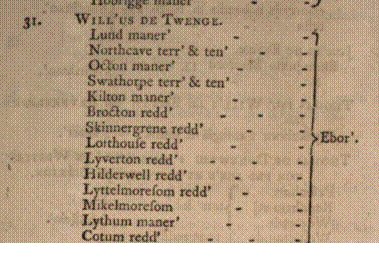
(Calendarium inquisitionum post
mortem sive escaetarum, Volume 2 (1327
to 1377), page
95)
1341
William de Thweng
died without issue in 1340–1, his widow Katharine obtaining dower in November
1341 (Chan Inq pm 14 Edw.
III (1st nos.), no. 31; Cal. Close, 1341–3, p. 320); his brother and
heir Robert, parson of Warton in Kendale, Lancashire, (Chan.
Inq. p.m. 14 Edw. III (1st nos.), no. 31.) died before May 1344, and was
succeeded on the death of Katharine by his brother Thomas, also a priest. (Chan Inq pm 18 Edw. III (1st
nos.), no. 45)
The
decline of Kilton Castle probably began on the death of William de Thweng. Kilton Castle
seems to have been abandoned and by 1341 it was described as small and
worthless.
The First Baron’s
son died without heir, and his grandson was killed at the Battle of Stirling
Bridge.
Robert de Thweng
William died 14 Edward
III (1341) and was interred in the chancel of the Priory Church of Handale, two miles east of the castle, a Benedictine
nunnery founded in 1133 by William de Percy, of which not a trace now remains,
although, according to Graves, the west end of the chapel was still standing in
1808. From his death the decline of Kilton Castle may be said to date. By his
wife, Catherine de Furnival, he left no issue, and the barony passed to his
brother Robert. (Kilton
Castle, William M L’Anson, Yorkshire Archealogical
Journal, Volume 22, 1913, page 94).
Robert
was a priest and didn’t take up residence at Kilton. He died in 1344 and his
brother, the 62 year old Thomas, the last Thweng Lord of Kilton, Rector
of Kirkleatham, followed Robert, but was more attached tio Kirkleatham.
On 19 November
1341, in the Inquisition Post Mortem of William
de Thweng in 14 Edward III, Kilton was described as the decayed manor held
by Sir Henry de Percy by knight’s service (Calendar of Inquisitions Post Mortem, Volume 8, (Edward III, 1336 to 1347), page
201 (Folio 277)).
The Lumleys
Thomas granted
the reversion of Kilton to his nephew Marmaduke Lumley, (Chan Inq pm 7 Ric. II, no. 168;
Feet of F. Yorks. 21 Edw. III, no. 53; Cal. Pat. 1343–5, p. 252) son of
his sister Lucy who had married Sir Robert Lumley, (Chan.
Inq. p.m. 7 Ric. II, no. 168) while some rights here were also assigned
to his niece Elizabeth, wife of William de Botreaux, daughter of his sister
Katharine. (Chan. Inq. p.m. 7 Ric. II, no. 168).
Leaving the question of its
founder and the debatable point as to whether or no Kilton Castle came to
Marmaduke de Thweng by his marriage with Lucia, sister to Peter de Brus, we may
continue its history with more certainty by stating that, after remaining in the
Thweng family for many generations, it passed, in the forty eighth year of the
reign of Edward III, by marriage of Lucy, daughter of Marmaduke de Thweng, to
Robert de Lumley. In the first year of
Henry IV, Sir Ralph, Lord Lumley, joined the Earls of Kent, Salisbury and other
noblemen in the insurrection for the restoration of the deposed king, Richard
II, and being slain in battle his lands were adjudged forfeit to the crown.
Five years later his second son, John, upon doing homage, had the lands restored
to him. The Lumleys, thus restored, remained Lords of Kilton until Sir George
was beheaded as one of the chief leaders in the rebellion known as the
Pilgrimage of Grace, and the castle along with other estates passed by
attainder to the crown. (Northern Weekly
Gazette, 26 May 1906).
The castle
reached peak occupancy under the Thwengs in the early
fourteenth century, but began declining by mid-century due to economic shifts, such
as reduced feudal obligations in peacetime, dispersal of family holdings among
heiresses after William de Thweng's death without issue in 1341, and the
impacts of the Black Death, rendering it a decayed manor by 1345
inquisitions.
The old castle of
Kilton was greatly neglected, and although Catherine, the widow of William,
Lord Thweng, continued to reside there in strict seclusion until her death in
1349, she probably only occupied a few rooms, the remainder of the structure being
practically allowed to go to ruin. From 1349 1358 the castle remained
untenanted, but in the latter year Sir Marmaduke de Lumley, Knt., who had been
Prior of St. John of Jerusalem in Ireland, and who some two years previously
had married Margaret Holland, took up his residence there without, however,
making any alterations in the gloomy old structure, which was now hopelessly
out of date. (Kilton Castle, William
M L’Anson, Yorkshire Archealogical
Journal, Volume 22, 1913, page 96).
Purely
fortress castles of the type of Kilton were now as completely out-of-date as
was the chain-mail armour of their builders. Never comfortable to live in, with
draughty great halls, cramped and inadequate private apartments, and gloomy
chambers, they had been tolerated in the days of the early Plantagenets,
because of their defensive properties. But with the establishment of an efficient
administration of justice, combined with a growing demand for greater comfort
and even of luxury, they were now a complete anachronism, and those, such as
Castleton, which had not been abandoned altogether, had been converted, like
Raby, into residences where comfort, cheerfulness, and luxury were more
considered than defensive properties. An entirely new style of castle had now
come into vogue, the great fortress-palaces of which Bolton-in-Wensleydale is such
a stately and imposing example. This magnificent structure, commenced in 1379
by Richard, Lord Scrope, was completed in 1396 at a cost, according to Leland,
of £12,000, equivalent to over £130,000 of modern money. These new palaces were
rectangular buildings, erected round a quadrangle or courtyard, with large
towers at the angles. (Kilton Castle,
William M L’Anson, Yorkshire
Archealogical Journal, Volume 22, 1913,
page 98).
A
watermill was appurtenant to the manor in 1341 (Calendar
of Inquisitions Post Mortem, 14 Edw. III (1st nos.), no. 31).
1344
In
the Inquisition Post Mortem of Robert de Thweng on 3 May 1344 in 18 Edward III,
his fee included Certain tenements (extents given), including at Kilton a
little castle and two parts of a little park, held of the said Henry de
Percy by knight's service. The yearly value of the manors of Kilton and Lythum
with their members is less by £7 7s. than it used to be, because the said Robert,
long before his death, by his writing granted to Katherine, late the wife of
William de Tweng, divers lands &c. in the said manors, to hold in dower, in
allowance of divers knights' fees in the said county, which ought to have
belonged to her in dower ; and the said Katherine, by virtue of the said gift,
is still seised of the said lands &c. She also holds in dower a third part
of the said manors and tenements, which third part after her death ought to pertain
to the heirs of the said Robert. Edmund de Tweng holds for his life, of the
grant of the said Robert, the manor of Octon, together with certain tenements
in Swathorp and Twenge, which after his death ought to pertain to the heirs of
the said Robert. (Calendar of Inquisitions Post
Mortem, Volume
8, (Edward IIII, 1336 to 1347), page
369 (Folio 525)).
Robert Daniels took from this Inquisition, regarding Kilton
Castle, at Kilton a certain little castle and nothing of value within the
walls and ditches that is able to be repaired for less
than 41s per annum, inferring that the site had been abandoned by this
time. (Robert
Daniels. 1990. Kilton: A Survey of Moorland Fringe Township in Medieval
Rural Settlement in North East England.
Architectural and Archaeological Society of Durham and Northumberland Research
Report No 2, edited by B E Vyner, page 37).
A
watermill was appurtenant to the manor in 1341 (Calendar
of Inquisitions Post Mortem, 18 Edw. III (1st nos.), no. 45).
By about this time Kilton Castle had fallen into disrepair and it seems likely that the lands and wider settlement of Kilton entered into a period of decline.
1347
Once
the impregnable stronghold of the De Thweng’s, Kilton Castle fell into
disrepair and by 1347 had only one occupant – Catherine de Thweng, a widow –
and later in the same century, it was described as being
totally abandoned. Even less of Kilton castle exists today, despite its Ancient
Monument status. Peter Appleton provided information regarding the de Thweng’s: “In 1272, Peter de Brus III died without male
heir. His four sisters became co-heiresses of the de Brus estates in north-east
Yorkshire. Lucia de Brus married Marmaduke de Thweng and had, as her portion of
the estates, the manors of Yarm, Danby and Brotton. The latter included the
township of Kilton. Her older sibling, Agnes, received the manors of Skelton, Marske,
Upleatham and Kirkleatham, whilst her younger siblings, Margaret and Laderina, received respectively, the barony of Kendal and
the manor of Carlton-in-Cleveland.” (Kilton Castle, East
Cleveland Image Archive).
Following
the abandonment of Kilton Castle by the mid-14th century, the settlement
entered a prolonged period of decline influenced by broader economic shifts,
including changing trade routes and agricultural depressions that diminished the
area's feudal importance.
Lucia died at her Manor
House at Brotton in January 1347. Her husband was her sole executor and legate.
The Langbaugh Liberty passed to her cousin John de Fauconberg. On Sir
Bartholemew’s death in 1352, his brother succeeded to Skinningrove and other
lordships, but he forfeited them by rebellion and they were taken into the
King’s hands until, in 1359, they were granted to Robert de Routh and William
of Everington (Horton,
Minnie C. 1979. The Story of Cleveland, History, anecdote and legend.
Cleveland County Libraries. Page 381).
1349
The
Black Death struck the area in 1349-1352 with terrible ferocity. The mortality
was so great, it is said that ‘the living scarce had strength to bury the dead.
The little graveyard around the Parish Church [at Brotton] had to be enlarged,
and by the time the plague had passed, two thirds of the population of
Cleveland had perished. (Horton,
Minnie C. 1979. The Story of Cleveland, History, anecdote and legend. Cleveland
County Libraries. Page 374).
1352
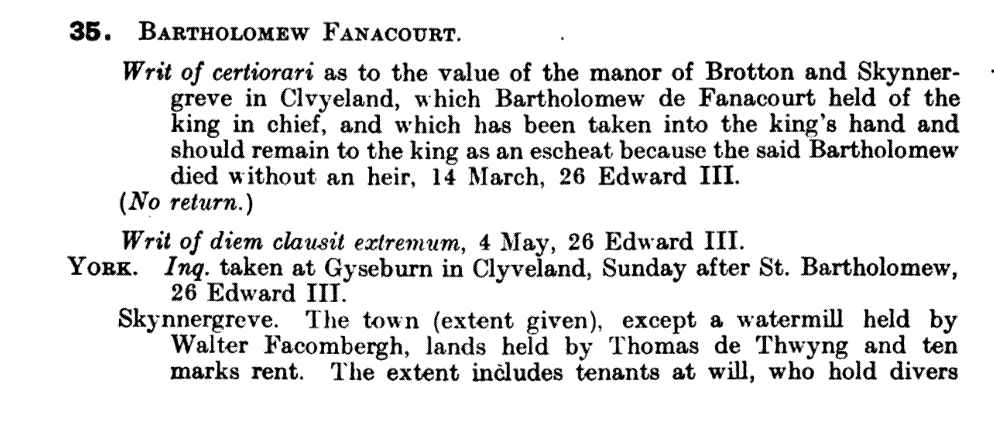
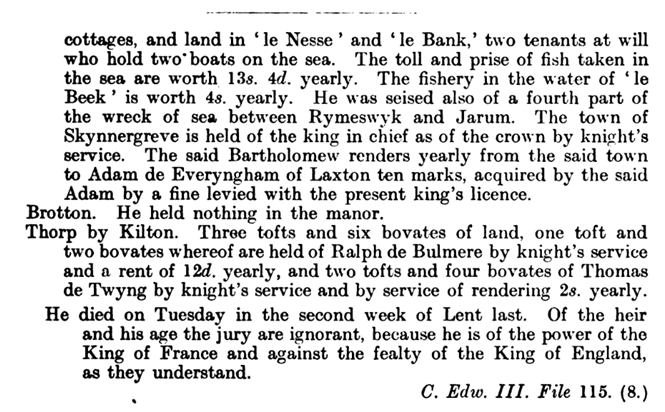
(Calendar of Inquisitions Post
Mortem, Volume 10,
(Edward III, 1352 to 1361), Folio
35).

(Calendar
of Inquisitions Post Mortem, Volume
10, (Edward III, 1352 to 1361), Folio 43 page 27).
1367
In
the Inquisition Post Mortem of Ralph Bulmer, tenements
of Kilton Thorpe were held of Ralph Neville (Calendar of Inquisitions
Post Mortem, Volume 12, (Edward III, 1365 to
1370), page
98).
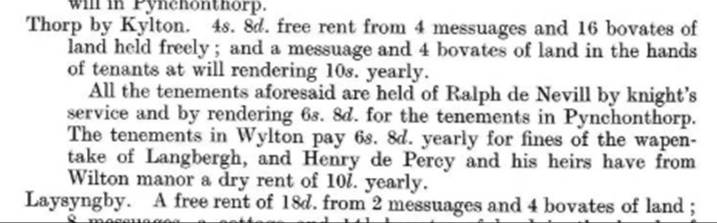
In
the Inquisition Post Mortem of Ralph Neville, the lands at Sheriff Hutton and
Kilton Thorp were listed (Calendar
of Inquisitions Post Mortem, Volume
12, (Edward III, 1365 to 1370), page
136 and 137).
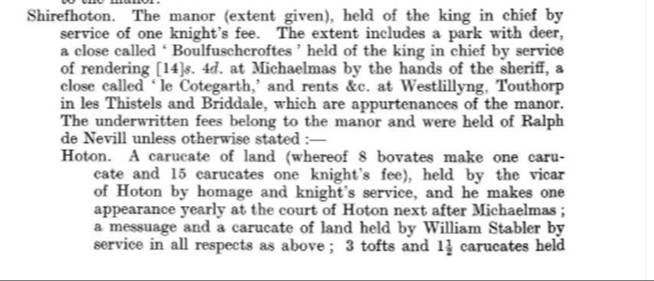

In
the Inquisition of Henry de Percy:


Hilton
is not a reference to Kilton, but the association with Kirkleatham might be
relevant.
(Calendar
of Inquisitions Post Mortem, Volume 12,
(Edward III, 1365 to 1370), page 225)
1370
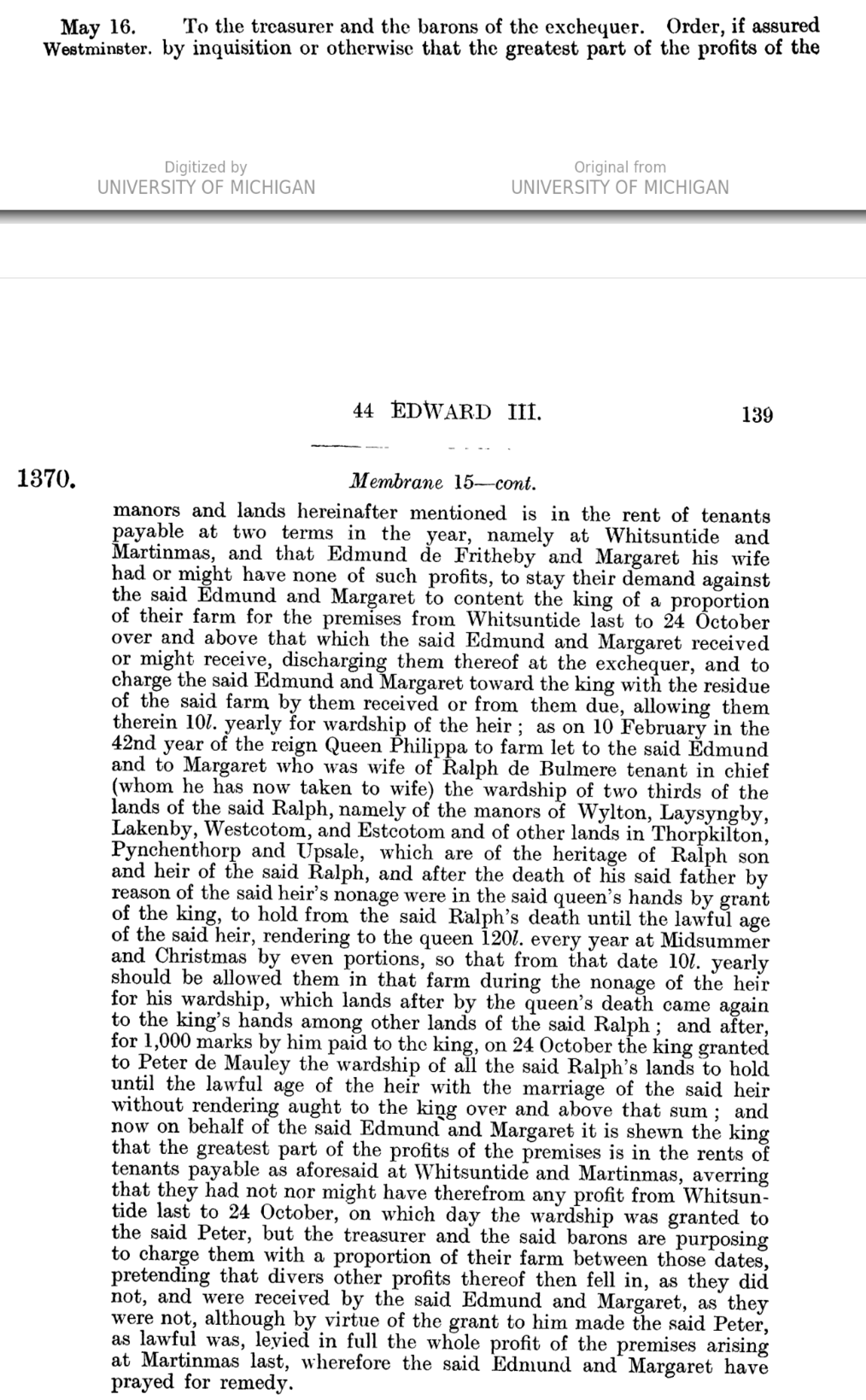
(Close
Rolls of the reign of Edward III, 1369
to 1374, page
139)
1374
Thomas
died in June 1374. (Chan Inq pm 48 Edw. III (1st
nos.), no. 68) Robert Lumley, son of Marmaduke, died a minor in the
following December, (Chan Inq pm 49 Edw. III, pt. ii,
no. 5) his brother and heir Ralph being also a minor. (Chan Inq pm 7 Ric. II, no. 168).
Robert
de Lumley, Marmaduke de Lumley’s eldest son and heir, and
the great-grandson of Marmaduke, first Parliamentary Baron de Thweng ’of
Kilton, was born at Kilton Castle in 1358, and succeeded his great-uncle,
Thomas, last Baron de Thweng of Kilton, in 1374.
(Kilton Castle, William M L’Anson, Yorkshire Archealogical Journal, Volume 22, 1913, page 96).
He,
however, never entered into full possession, dying at Danby Castle on the
Sunday before the Nativity (24th December), 1374.
Ralph de Lumley
Ralph de Lumley
followed him.
Ralph
did away with the expensive chantry chapel at Kirkleatham, and about 1398
dissolved the chantry chapel of St. Peter within the castle of Kilton, a sure
sign that no further extended residence was contemplated there. But he seems to
have lived at Kilton between 1389 and 1398, when Lumley Castle was in course of
construction, but, naturally, made no alterations to it. (Kilton Castle, William M L’Anson, Yorkshire Archealogical Journal, Volume 22, 1913, page 99).
Thomas
de Thweng’s Inquisition Post Mortem on 6 June in 48 Edward III listed Kylton.
The castle, with the hamlets of Lyverton, Thorp by Kylton, Skelton and
Esyngton, held of Henry de Percy, knight, by knight’s service; Skynnergreve. A tenement
and 2 bovates of land, held of Adam de Everyngham, knight, by knight’s service.
Brotton. A messuage and 4 bovates of land, similarly held; Hilderwell. A toft,
with the advowson of the church, held of Henry de Percy, knight, by knight’s
service; Lythum. The manor, with the hamlet of Cotom and the advowson of the
church of Lythom, similarly held. (Calendar of Inquisitions Post Mortem, Volume 14, (Edward III, 1374 to
1377), page
56 (Folio 58)).
Robert
son of Marmaduke de Lumley’s Inquisition Post Mortem on 6 June in 48 Edward III
listed the
tenements in Lythum, Mersk, Hildirwell and Lund are held of Henry de Percy,
those in Brotton of the heirs of Peter de Bruys, those in Skynnergreve of the
heirs of Walter Fauconberge, those in Lyverton of the heirs of Lucy Latymer,
those in Northcave of the fee of Stotevill, those in Swaythorp of the fee of
Chauncy, those in Thorp by Kylton of the fee of Bulmer, and those in Thweng of
John de Percy of Kildale, all by knight’s service.
(Calendar of Inquisitions Post Mortem, Volume
14, (Edward III, 1374 to 1377), Folio
76).
1376
John
Bertrom of Kilton was accused of poaching and assault (Patent
Rolls of the reign of Edward III, 1374
to 1377, page 326).
1382
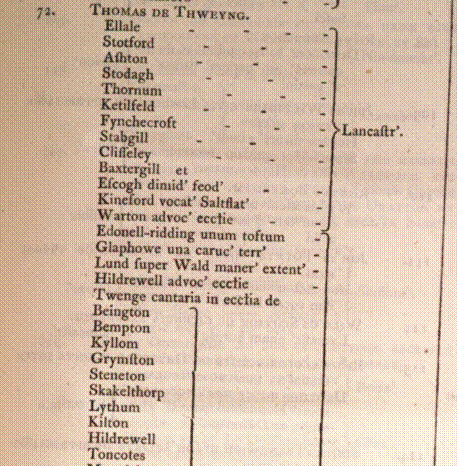
(Calendarium inquisitionum post mortem sive escaetarum, Volume 3 (1377
to 1413) page 51)
1388
On
the Inquisition of John de Neville of Raby, Knight on 23 October 12 Richard II,
Wilton in Cleveland. Two-thirds of the manor, held by Randolf de Bulmer, knight,
by service of 1 1/2 knight’s fees, with Thorp by Kilton, held by service of
rendering 6s. 8d. yearly and Wilton in Clyveland with Thorp by Kylton.
One fee and a moiety of a fee, held by Ralph de Bulmer, knight. (Calendar
of Inquisitions Post Mortem, Volume
16, (Richard II, 1384 to 1392), Folio
736 and 750).
1389
In
1389, Ralph Lumley obtained a licence from Bishop Robert Skirlaw, and in 1392 another
from King Richard II, to convert his manor-house at Lumley into a castle, and
in the former year he commenced the erection of the present fortress-palace of
Lumley. Ralph did away with the expensive chantry chapel at
Kirkleatham, and about 1398 dissolved the chantry chapel of St. Peter within
the castle of Kilton, a sure sign that no further extended residence was
contemplated there. But he seems to have lived at Kilton between 1389 and 1398,
when Lumley Castle was in course of construction, but, naturally, made no
alterations to it. (Kilton Castle, William M
L’Anson, Yorkshire Archealogical
Journal, Volume 22, 1913, page 98).
1396
In
1396 Elizabeth de Botreaux granted her rights in Kilton to this Ralph Lumley,
Lord Lumley, her kinsman, (Close, 20 Ric. II, pt.
i, m. 32 d) who, having taken part in the insurrection to restore Richard
II, was slain in a skirmish at Cirencester in January 1399–1400 and attainted.
(G.E.C. Peerage, v, 176; Chan. Inq. p.m. 1 Hen. IV,
pt. ii, no. 2b.)
The
Houses of Lancaster and York and the Wars of the Roses
1400
Ralph
Lumley’s eldest son Sir Thomas died a minor in 1400, (Chan
Inq pm 5 Hen. IV, no. 30) and the second son John, who succeeded, was
restored in blood in 1412. (G.E.C. Peerage, v, 176).
1401
Thomas
Holland, the former 3rd Earl of Kent and Duke of Surrey, formally forfeited his
lands in 1401. Following his failed rebellion (the Epiphany Rising) to restore
Richard II to the throne, he was executed in 1400. Parliament subsequently
declared him a traitor in January 1401, legally confiscating his possessions.
In the Inquisition regarding this forfeiture, there was reference to Ralph de
Lumley holding lands including the castle and manor of Kilton (Calendar
of Miscellaneous Inquisitions (chancery), Volume 7, 1399
to 1422, Folio
54).
1403
The
Inquisition Post Mortem on Thomas Lumley, a ward to the King, provided:
Ralph
de Lomley, chivaler, on the day of his forfeiture was seised in fee tail, to
him and the heirs of bis body, of the castle and manor of Kilton and the
manor of Lythum with Cotum, the advowson of the church of Lythum and that of
the church of Hildrewel on alternate vacancies, and 2s rent out of a meadow in the
territory of Hildrewelle, called Windmillenheng, with all the homages …
Ralph
was also seised of one messuage, 17 tofts and 13 oxgangs of land in Great
Morsom, of the gift of the said Marmaduke de Thweng and Lucy his wife, to the
aforesaid Marmaduke their son and the heirs of his body [as above] ; held of
the King by knight service, worth yearly £4 clear. Also one oxgang and 12 acres
of land with 2 tofts in the vill and territory of "Petit" Morsum, by
gift as above ; held of the King by knight service, worth yearly 30s. clear.
Also 8 messuages and 16 bovates of land in the vill of Thorpe near Kilton,
Brocton, Skynnergreve and Lyverton, by gift as above ; held of the King by
knight service, and worth yearly 50s clear.
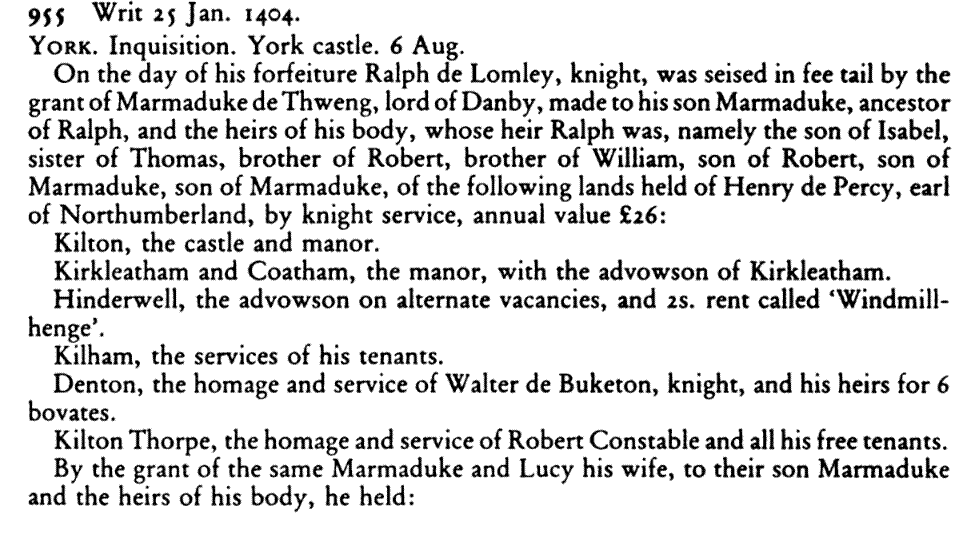

(Inquisitions post mortem relating to Yorkshire, of the reigns of Henry IV
and Henry V, page
38 and 39, Calendar of Inquisitions Post Mortem, Volume
18, (Henry IV, 1399 to 1405), Folio
955).
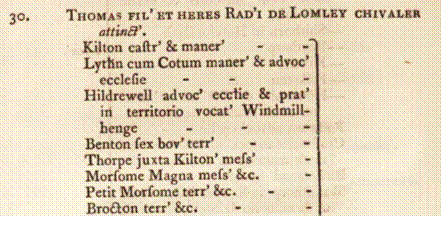
(Calendarium inquisitionum
post mortem sive escaetarum, Volume
3 (1377 to 1413), page 296)
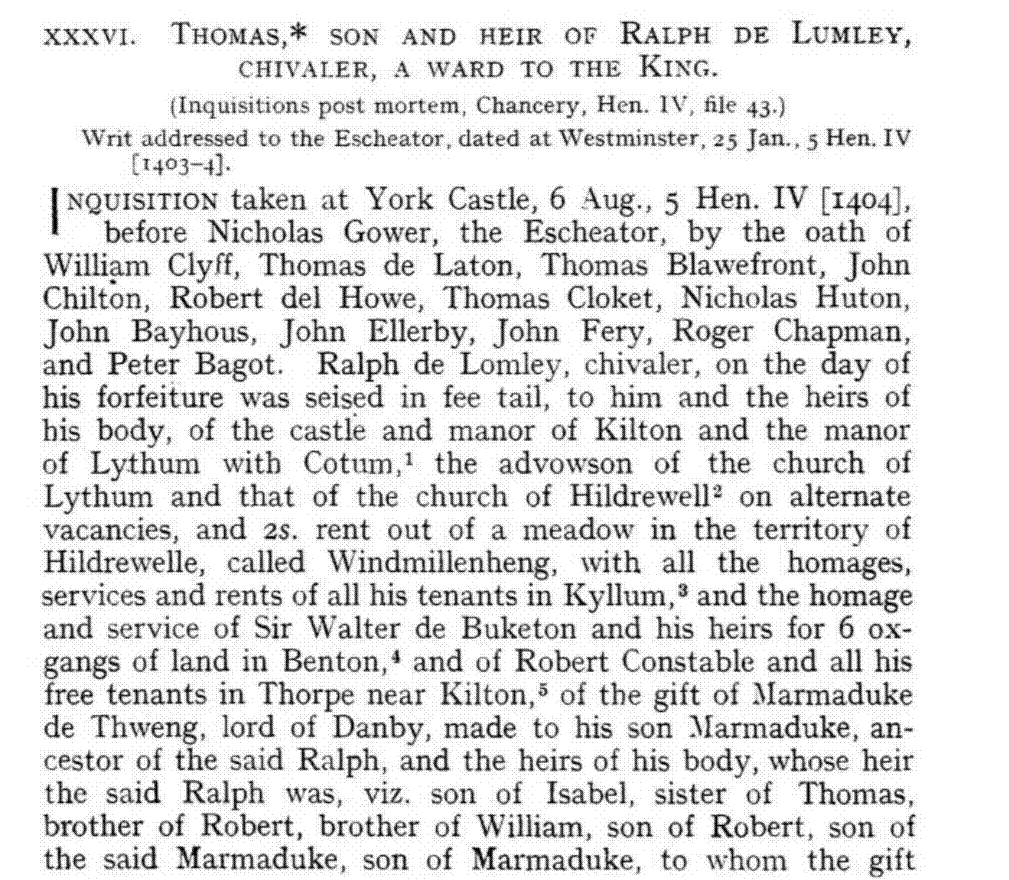
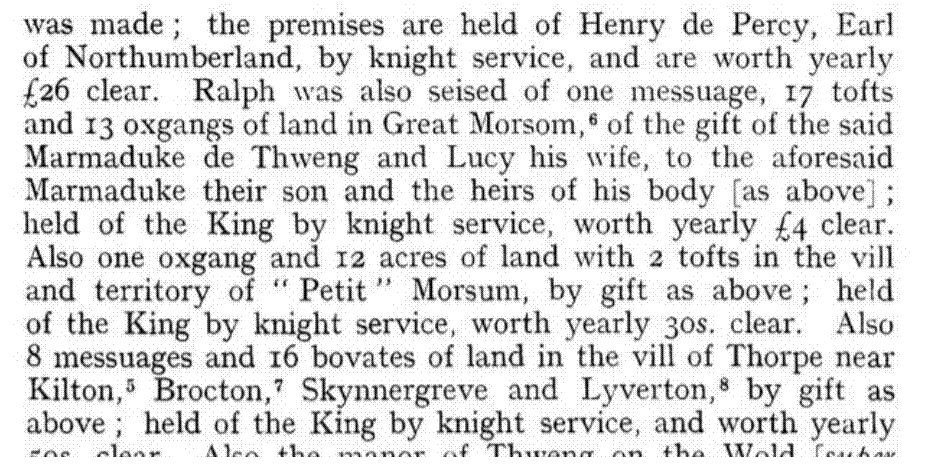
(Inquisitions post mortem relating to Yorkshire, of the reigns of Henry IV
and Henry V,
Yorkshire Archaeological Society Record Series Volume 59, Volume 5, page 38 and 39)
1406
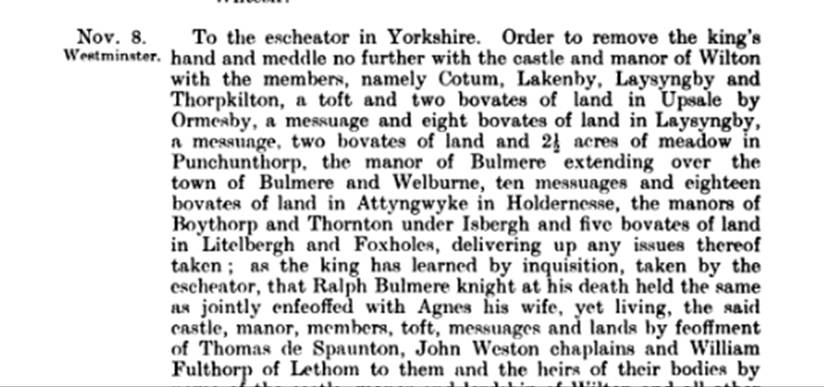
(Close
Rolls of the reign of Henry IV, 1405 to 1409, page
164 and see also Close Rolls of the reign of Henry IV, 1409
to 1413, page
27).
Inquisition
on Ralph Bulmer, knight and Ralph his son:
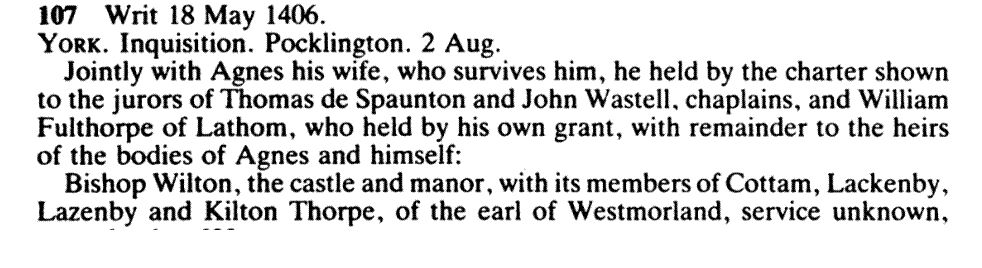
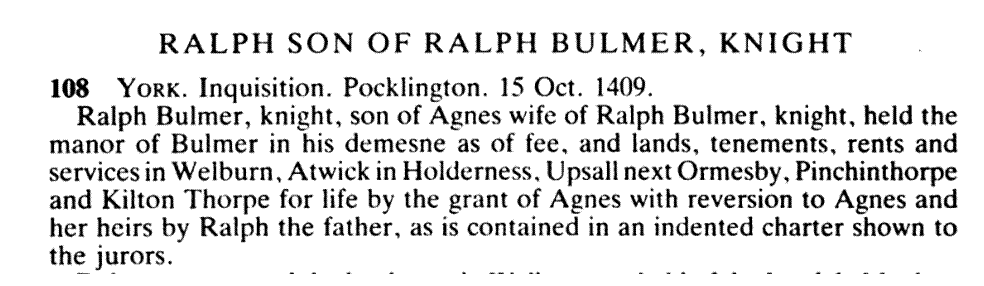

(Calendar
of Inquisitions Post Mortem, Volume
19, (Henry IV, 1405 to 1413), Folios 107
to 109)
(Inquisitions
post mortem relating to Yorkshire, of the reigns of
Henry IV and Henry V, Yorkshire Archaeological Society Record Series
Volume 59, Volume 5, page
51)
1407
Inquisition
of Joan, wife of Thomas Faucomberg, knight:

(Calendar
of Inquisitions Post Mortem, Volume
19, (Henry IV, 1405 to 1413), Folios 107
to 109 and 387).
Sir
Thomas Fauconberg, successor to the House Brus and Lord of Skelton, Marske,
Upleatham and Kirkleatham died in 1407. In 1403, the estate, by reason of Sir
Thomas’s insanity, was put into the custody of King Henry IV who, later, placed
it in the custody of Robert and John Conyers. His son Walter de Fauconberg also
died in 1407. His grandaughter, also Joan Fauconberg, inherited the estate as
an infant. She was described as an ‘idiot’ from birth. The castle passed, via
her marriage, to her husband, Sir William Neville, who was made Earl of Kent by
Edward IV in 1461. They made alterations to the castle in 1428.
There
is a suggestion in this Inquisition on Thomas Faconberg’s death, that Kilton
had become part of the interests of the Skelton lordship by this time. It may be
that the situation was fluid.
1409
Inquisition
of Ralph Bulmer, 11 October 1409:
(Inquisitions
post mortem relating to Yorkshire, of the reigns of
Henry IV and Henry V, Yorkshire Archaeological Society Record Series
Volume 59, Volume 5, page 84).
1410
On
28 March 1410 a pardon was granted to Thomas, a servant of Walter Faucomberg for
the death of William Porter of the castle of Kilton on Sunday 2 February 1410
after vespers before the gate of the castle (Patent Rolls of
the reign of Henry IV, 1408
to 1413, page 184).
1420
At
John Lumley’s death in 1420 (Chan. Inq. p.m. 10
Hen. VI, no. 42) his heir was his son Thomas. (Chan.
Inq. p.m. 10 Hen. VI, no. 42).
1461
Thomas Lumley
Thomas
became Lord Lumley in 1461 on the reversal of the attainder of his grandfather.
1480
Thomas
Lumley died in about 1480 and was succeeded by his son George. (The Complete Peerage of England, Scotland, Ireland, Great
Britain and the United Kingdom, Volume 5, pages
176-177)
Tudor
Kilton
1506
William
Burton of Hagnes held 4 bovates of land in Thwyng, worth 13s 4d, held of George
Lumley, knight, lord de Lumley, as of his manor of Kylton, by service of
rendering 6d. yearly (Calendar of inquisitions post mortem, Henry VII, Volume 3, Folio
262).
F
1507
Thomas
son of George Lord Lumley died in the lifetime of his father, (The Complete Peerage of England, Scotland, Ireland, Great
Britain and the United Kingdom, Volume 5, pages
176-177; Chan. Inq. p.m. (Ser. 2), xxi, 77) who was therefore
succeeded by Richard his grandson in 1507. (Chan.
Inq. p.m. (Ser. 2), xxi, 77)
George
Lumley, knight, had the fee of Kilton by a gift made by Marmaduke de Thweng (Calendar of inquisitions post mortem, Henry VII, Volume 3, Folio 432).
Writ
1 December, inquisition 23 February, 23 Henry VII.
Long
before his death he was seised in fee tail of the under-mentioned manor and
castle of Kylton and manors of Lethom, Cothom and Twenge by virtue of a gift
thereof made by Marmaduke de Twenge to Marmaduke de Twenge, his son, in tail.
After the death of Marmaduke the son the premises descended to the said George
Lumley as his kinsman and heir, to wit, son and heir of Thomas Lumley, knight,
son and heir of John Lumley, knight, son and heir of Ralph Lumley. knight, son
and heir of Isabel daughter and heir of Robert Twenge son and heir of the said
Marmaduke the son.
He
was also seised in fee of the xinder-mentioned third part of the hamlet of
Rotsey, towns of Great Morsom and Thornton in Cleveland, hamlet of Little
Morsom with Glaphowe, and manor of Hempholme.
By
his charter indented dated 12 September, 22 Henry VII. he gave all the premises
to Henry Lescrope of Bolton and William Conyers of Conyers, knights, Thomas
Lambton and Ralph Melott. esquires, John Raughton. clerk, James Hayton, clerk,
and William Thorpe, clerk, Robert Clergenett and Simon Emreson, to hold to them
and their heirs to the use of himself and his heirs and for the performance of
his last will. Afterwards, by his deed indented dated 12 December, 22 Henry
VII. he made his last will and directed that his said feoffees should stand
seised of the premises to his use during his life, and after his death
successively to the use of Richard Lumley. esquire, and the heirs male of his
body, the heirs male of the body of Thomas Lumley, esquire, deceased, the heirs
male of his own body, and his own right heirs.
He
died 13 November, 23 Henry VII. Richard Lumley, esquire, then aged 30 years and
more, is his kinsman and heir, to wit, son and heir of Thomas Lumley, deceased,
his son and heir.
York.
Manor and castle of Kylton and manors of Lethom and Cothom, worth £50,
held of Henry, earl of Northumberland, services unknown.
Manor
of Twenge, worth £48, held of the heirs of John Percy of Kyldale, services
unknown.
Manor
of Hempholme, worth £25, held of the provost and chapter of St. John of
Beverley, services unknown.
Moiety
(sic) of the hamlet of Rotsey, worth 46s 8d, held of the king in chief by
knight-service.
Towns
of Great Morsom and Little Morsom and Glaphowe, worth £4, held of the king in
chief by knight-service.
Manor
(sic) of Thornton, worth £6, held of the heirs of Margaret de Roos, services
unknown.
In
the Inquisition of William Burton of Hagnes on 28 June 1506:

(Calendar of
inquisitions post mortem, Henry
VII, Volume
3, Folio 432 and Folio 262)
1510
Richard Lumley
died seised in 1510, (Chan
Inq pm xxv, 114.)
1524
John Lumley
Richard Lumley’s
his son John in 1524 settled the Kilton manor on his son George on his marriage
with Jane daughter of Richard Knightley. (Chan Inq pm clxxiii, 44)
1537
The castle stayed
in the hands of the Lumley family until 1537 when George Lumley
was executed for his participation in the Pilgrimage of Grace (the
Yorkshire based uprising of 1536 protesting against
Henry VIII’s break with the Catholic Church). The Crown then took possession of
the castle and certainly by the end of the sixteenth century, the castle was in
total ruin.
The
history of Kilton Castle subsequent to 1389 need not detain us long. John,
7th Lord Lumley, married Joan, daughter of Henry, Lord Scrope of Bolton,
and his son, George Lumley, was one of the principal leaders in the
Pilgrimage of Grace, being executed for his share in that adventure.
When,
in 1537, the Crown took possession of Kilton Castle, the old fortalice was a
mere shell. The long neglect of 140 years had told its tale. Roofless, ivy
clad, its timber floorings long since rotted away, trees and shrubs growing in
the courtyard and right up to the walls, it stood gaunt and grim, a mouldering
memorial of a long dead past.
(Kilton Castle, William M L’Anson, Yorkshire Archealogical Journal, Volume 22, 1913, page 99).
By 1537 when the
Crown took possession of Kilton Castle it was a gaunt, grim, ivy clad ruin.
Thereafter it was used as a local source of building material.
By the 16th
century, the castle stood as a ruined structure, its stone quarried for local
buildings, while the surrounding village contracted significantly,
transitioning from a medieval community of farmsteads and trades to dispersed
farmland. (Victoria County History, North Riding of
Yorkshire, Vol.2, 1923).
In a deposition of
Dr John Pykering on 2 June 1537, he gave evidence that he went to Loftus and
then to Kilton to the Lord Lumley (Letters and
papers, foreign and domestic, of the reign of Henry VIII :
preserved in the Public Record Office, the British Museum, and elsewhere in
England, 1862, Volume 12, Part 2, Folio
12).
1538
George Lumley was
attainted and executed in 1538 for joining in the insurrections of 1536 and
1537 (Dictionary of National Biography, page
272); John Lord Lumley then settled the estates on his grandson John
son of George, (Chan. Inq. p.m. (Ser. 2), clxxiii,
44) who in 1547 was also restored in blood. (Chan.
Inq. p.m. (Ser. 2), clxxiii, 44; Pat. 1 Mary, pt. vi, m. 10).
1554
(Patent Rolls of
the reign of Philip and Mary, 1553
to 1554, page
157 to 159)
1570
In the reign of
Elizabeth John Lumley was suspected of plotting in favour of Mary Queen of
Scots and was imprisoned in the Tower between 1570 and 1573. (Dictionary of National Biography page
273).
1573
The map drawn by
Humfrey Lhuyd of Denbigh, shortly before his death in 1568, has been described as
the first modern map of England and Wales. It was published at Antwerp by
Ortelius in his Additamentum Theatri Orbis Terr arum, 1573. It included a crude
depiction of Cleveland, which included Guisborough and Skelton.
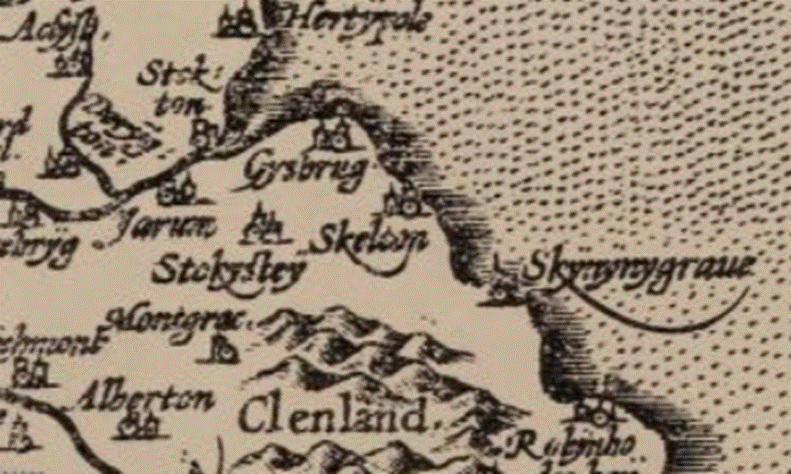
Seventeenth
Century Kilton
John Lumley made conveyances of the manor at various dates, (Feet of F. Div. Co. Trin. 39 Eliz.; East. 5 Jas. I; Pat.
27 Eliz. pt. viii, m. 53) but was still lord in 1607, (Recov. R. Mich. 5 Jas. I, m. 32).
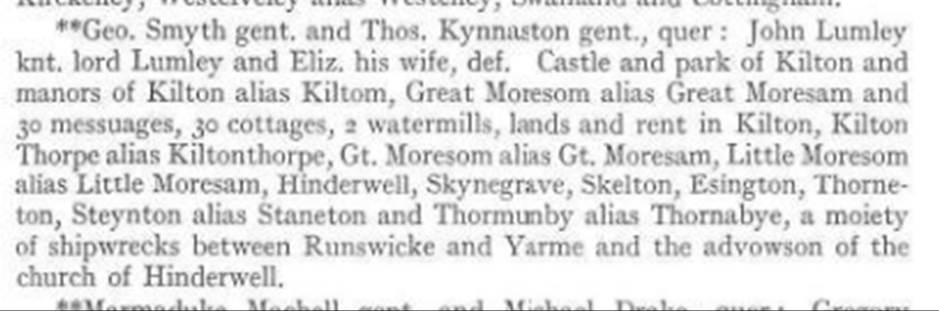
1607, Easter Term, 5 Jas 1
(Yorkshire
Fines for the Stuart Period, Volume 1
(1603 to 1614), Edited by William Brigg, Yorkshire Archaeological Society
Record Series, volume 53, 1915, page 65 (Folio 72).
Mercator’s Map of the British Isles (the first edition
of the Atlas Minor, conceived by publisher Jodocus Hondius in 1607, created to
make Gerardus Mercator’s pioneering folio maps more accessible) of 1607 included
a reference to Kilton, as well as Skelton and Guisborough.
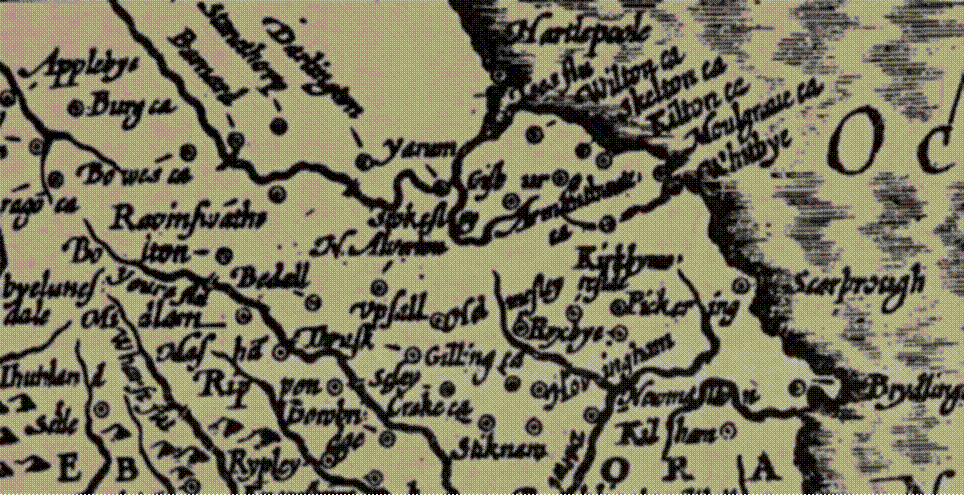
The map suggests
the continuing principal role of Kilton, the site of the ruined castle, in
seventeenth century Cleveland.
1609
John Lumley died seised in 1609, succeeded by his nephew Splandrian
Lloyd, son of his sister Barbara. (Chan. Inq. p.m.
(Ser. 2), cccxi, 109)
1616
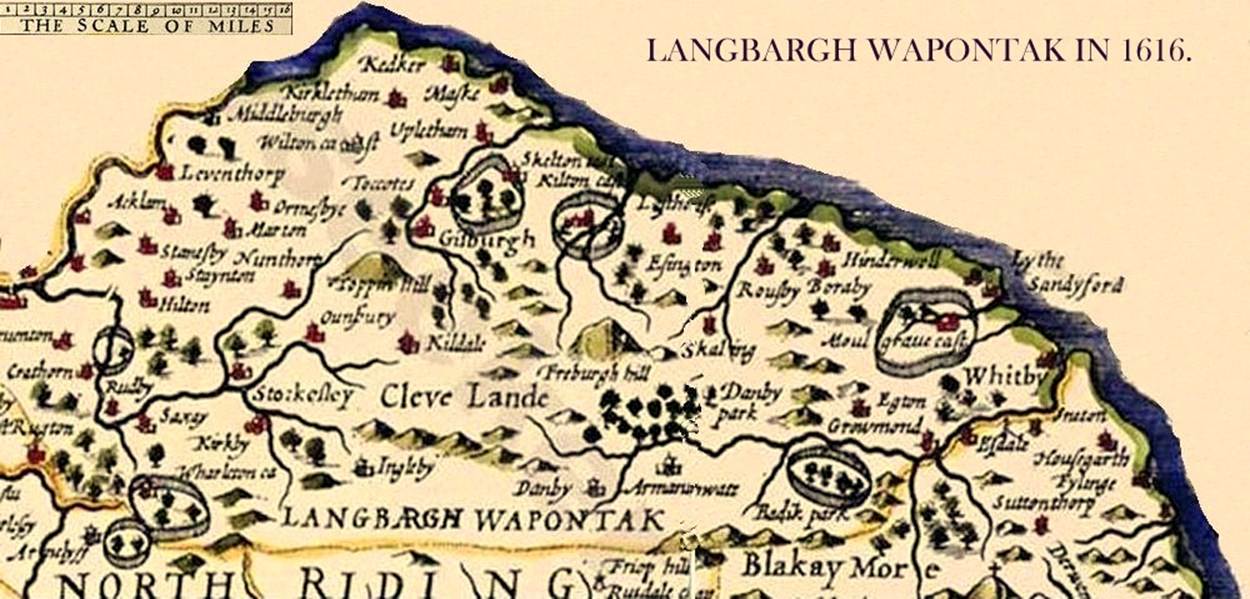

John
Speed’s 1616 North Riding of Yorkshire map, showing the
Langbaurgh (Langbargh) Wapentake
This early
seventeenth century map engraved for John Speed’s The
Theatre of the Empire of Great Britaine (1611–1612), was later
issued in the 1616 edition of the atlas.
1622
Michael Drayton’s
map of 1622 showed a crude depiction of Cleveland which included only
Guisborough.
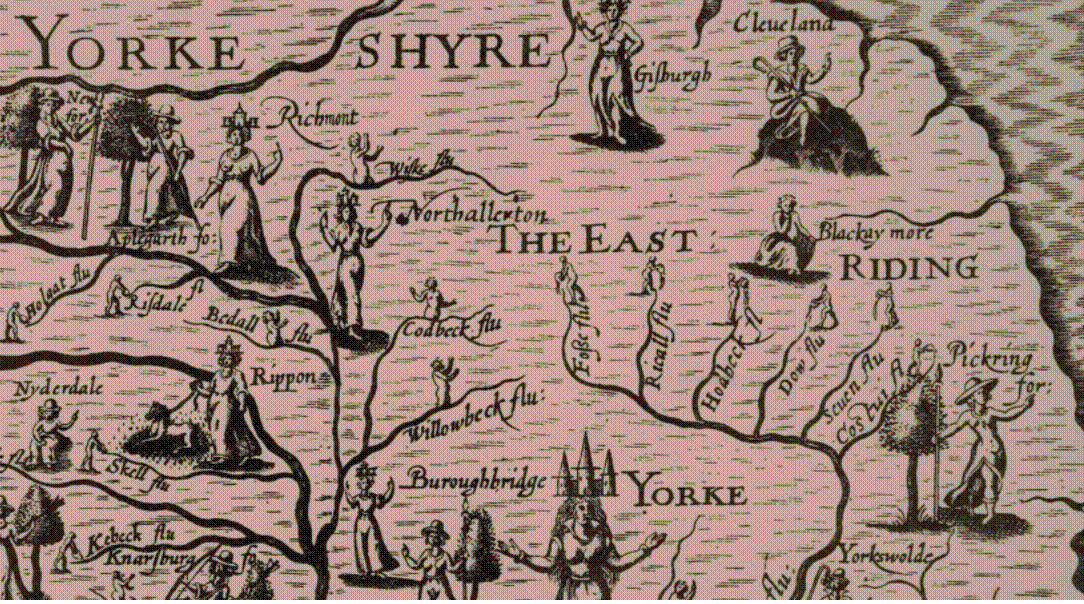
1635 to
1657
To review papers
of Fairfax of Gilling which include papers relating to Kilton 1635 to 1657 (North Yorkshire County Records Office ZDV(F)).
1643
J. van Langeren’s map of 1635 was reprinted in 1643 to show
distances to London and included reference to Kilton.

Civil
War Kilton
There is a story
that Kilton Castle was besieged and destroyed by Cromwell but this but a
legend, since the castle had been uninhabited for 240 years. The story that
Oliver Cromwell attacked Kilton Castle in North Yorkshire is a popular local
myth that is historically impossible. Kilton Castle was in a ruinous state by
the 14th century and was abandoned by the 16th century. The English Civil War
did not begin until 1642. By the time Oliver Cromwell rose to military prominence,
Kilton Castle had been a deserted, crumbling ruin for generations. It held no
strategic value, housed no Royalist garrison, and was never subjected to a
Roundhead siege or bombardment. It was common across England, and Yorkshire in
particular, for local folklore to attribute any heavily ruined medieval
structure to the destructive forces of Oliver Cromwell. During and after
the Civil War, Parliament ordered the slighting or intentional destruction
of many active Royalist strongholds to prevent them from being used as
fortresses again. Examples in Yorkshire included Skipton Castle and Pontefract
Castle. Because Cromwell became the ultimate symbol of this wartime
destruction, communities over the centuries mistakenly blamed his armies for
the decay of castles like Kilton, which actually just
succumbed to natural abandonment and time.
There is an
interesting local tradition relating to the castle which is worth putting on record.
As related to the writer when a boy, unfortunately nearly twenty years ago, it
ran as follows :“Kilton Castle was destroyed by Oliver
Cromwell. He came into Cleveland with a large army and a train of artillery,
but had great difficulty in finding the castle, which was then held by a party
of Royalists. After much marching and countermarching, Cromwell and his men, as
evening approached, rested on the side of a hill. As they rested, across the
stillness of the evening air came the gentle tinkle of a bell ringing for
vespers. Cromwell at once sent forward scouts to localise the sound. They returned, and announced that they had discovered it came
from the castle chapel. Having thus found the castle, he advanced to the
attack, and after a long siege, in which he lost many men, succeeded in taking
it, and then blew it up with gunpowder” (Kilton Castle, William M L’Anson, Yorkshire Archealogical Journal, Volume 22, 1913, page 100).
In A Guide to Saltburn by the Sea and the Surrounding
District, With remarks on its picturesque scenery,
Fifth Edition, Dedicated to John Thomas Wharton Esq of Skelton, By John Farndale.
Late of Skelton Castle Farm, Darlington, Printed by
Charles W Hird, 1864, John Farndale therefore recounted this mythical
story when he wrote When Cromwell came that way, He heard the bell at noon;
Fixed his cannon as they say, And brought the castle
down.
In his poem about
the castle, John Farndale acknowledged its ruinous state.
All ruins are lovely when o’er them is cast
The green veil of ivy to shadow the past;
When the rent and the chasm fearfully yawned,
By the moss of the lichen are sweetly adorned.
When the long grass doth carpet the desolate
halls.
And trees have sprung up in the old, withered
walls,
And woven a curtain of loveliest green,
Where once the rich folds of the damask were
seen.
But such thoughts are unheeded while idly we
gaze,
On the desolate grandeur of earlier days;
‘Tis the wreck that is lovely, the wider the
rent
The fuller the view of the landscape is lent.
The wind that now sighs through the tenantless
hall
No thoughts of loved voices to memory call;
All ruins are lovely when o’er them is cast
The green veil of ivy to shadow the past.”
(John Farndale)
In Farndale, John. 1870. The History
of Kilton With a Sketch of the Neighbouring
Villages By the Returned Emigrant. Middlesborugh: Burnett and Hood,
John Farndale wrote: Camden, in speaking of Kilton and Kilton Old Castle, as
Farndale has it in his Guide to Saltburn by the Sea, says “It is situated in a
park belonging to the ancient families of Thweng
and Lumley’s. Baron Lumley, of Kilton Castle, died in battle, having joined
the Earl of Kent and others to restore King Richard, then deposed. Kilton
Manors, for there were two, became forfeited to the crown, but restored to
the Thwing’s and Lumbley’s, by Henry IV, and by marriage to Wm Tulley Esq., who died at Kilton Hall, and was interred in Brotton
Church 1741, aged 72 years. Then to Dr Waugh, of Carlisle, and next in kin to
the Misses Waugh, who sold the estate to Miss Wharton, of Thirsk Hall, a rich
old lady, and this lady presented it as a gift to her nephew, J Hall Wharton Esq., MP, and now it is the property of JT Wharton Esq., of Skelton Castle. At the above date Kilton Hall was
then a beautiful building, much admired. Mr Ord, in giving a description of
Kilton Castle, says “Few ruins in England can equal this venerable relic of
antiquity – as a fortress it must have proved impregnable previous
to the introduction of artillery. Standing on a high triangular
precipice unapproachable except on the west, and here it was defended by
a moat and draw bridge, and large massive gate way
doors”
1647
Yet there was
royalist activity associated with Kilton during the civil war.
George Thweng of
Kilton (born around 1600, active through 1649) was an English Royalist
landowner from Yorkshire who took up arms for the King during the English Civil
War. He fought in arms for the Royalist cause during the conflicts of the
1640s. Recorded in the Yorkshire composition papers, his delinquency for
supporting the king led him to take the Oath in November 1645. He later took the
parliamentary Covenant before Mr. Barton on 27 April 1645 and formally
submitted his petition to compound for his estate on 10 January 1647. He was
part of the ancient Thweng family associated with
Kilton Castle in Cleveland, Yorkshire. He married Ann Gascoigne, daughter of
Sir John Gascoigne of Barnbow and Parlington,
Baronet.
George Thweng of
Kilton. His delinquency that he was in arms but took the Oath Nov. 1645, he
petitioned 10 Jan 1647, took the Covenant before Mr Barton 27 Apr. 1647. He is seized
in fee of the manor of Kilton with the demesnes in the parish of Skelton worth
yearly 25li 12s 8d, of the manor of Heworth and of lands in the parish of St.
Cuthbert, York worth yearly 200 li. He hath household stuff and cattle worth
30li. He owes 6ooli all which moneys the compounder deposeth
were borrowed by him towards the payment of the purchase of the manor of
Kilton. He owes more to several persons 1200 li.
Petition of Ann, the
wife of George Thwing, gentleman. It is prayed that she may have her part
allowed her by ordinance of Parliament of her husband’s lands at Heworth and of
the moiety of her husband’s manor of Kilton and that she may be admitted tenant
to the residue upon reasonable terms whereby she and her children may be
enabled to subsist.
19 Feb. 1646.
Ordered by the Standing Committee for the North Riding. Let the sequestrators
allow the petitioner the 5th part of the profits of her husband’s estate and also certify to this board the value of the land.
(Clay, John William. 1895. Yorkshire Archaeological
Society Record Series Volume 18. Yorkshire Royalist Composition Papers. Volume 2, pages 184 to 185).
1676
A playing card
pack of maps of the counties of England and Wales in 1676 included a card
depicting Yorkshire, which showed Kilton.
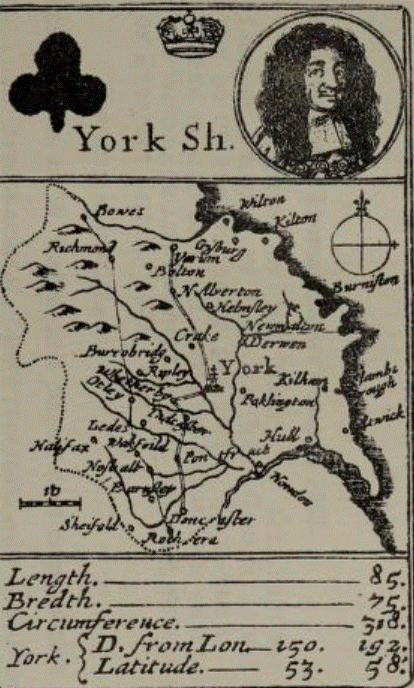
1669
By 1669 Kilton was
again in the possession of a branch of the Thweng
family. In that year Alphonso Thweng and Thomas Thweng, probably his son, made
a settlement of the manor. (Feet of F. Yorks. 21 Chas. II; Recov. R. Mich. 21 Chas. II, m. 180) Thomas
Thweng left a daughter and heir Ann (Graves,
Cleveland, 371); she apparently married first Chichester Graham, who
in 1691 and 1693 held the manor in right of his wife Ann. (Feet of F. Yorks. Trin. 3 Will. and Mary; Trin. 5 Will.
and Mary) She was certainly married to William Tullie by 1696, when
it was conveyed, probably in trust, to Samuel Diggle. (Feet of F. Yorks. Trin. 8 Will. III) William
Tullie died without issue in 1741, (Graves,
Cleveland, 371) and was succeeded by his nephew Joseph Tullie, (Graves, Cleveland, 371) from whom the estate
passed to the Rev. Dr. Waugh, chancellor of Carlisle. (Graves, Cleveland, 371). (The wapentake of Langbaurgh (east): Brotton, in A History of the County of York North Riding: Volume
2, ed. William Page (London, 1923), British History Online pages
326-332).
Kilton was
afterwards in the hands of a branch of the Thweng to
William Tullie, who, dying without issues in 1741, left the property to his
nephew, Joseph Tullie, from whom it descended to Dr Waughr, Chancellor of
Carlisle, whose daughters and co-heiresses sold it to John Wharton, ancestor of
the present proprietor, Mr WHA Wharton. (Northern Weekly
Gazette, 26 May 1906)
|
|
|
|
Alphonso Thweng? See also genealogical table above |
|
|
|
|
|
|
|
|
|
|
|
|
|
|
|
Thomas Thweng |
|
|
|
|
|
|
|
|
|
|
|
|
|
|
Chichester Graham Held the Manor of Kilton from 1691 to 1693 |
Ann Thweng Died 7 September 1719 Sole daughter and heir of Thomas Thweng Married Chichester Graham and later William Tullie |
William Tullie Died 26 May 1741 Married Ann Thweng by 1696 Held the Manor of Kilton Died without issue |
Brother of William Tullie |
|
|
|
|
|
|
|
Joseph Tullie Held the Manor of Kilton from 1741 Joseph Tullie’s Estate Plan was drawn up in 1767 Described as Lord of the Manor of Kilton in 1771
and gifted a gilt chalice to Brotton church in 1773 |
|
|
|
|
|
|
|
|
|
|
|
|
|
John Hall Stevenson
1718 to 1785 Lord of Skelton, 1733 to 1785 Married Anne
Stevenson and added Stevenson to his surname John was an author and friend of Laurence Sterne, who
wrote The Life and Times of Tristram Shandy, Gentleman He had a reputation for throwing wild parties for his
friends (including Lawrence Sterne, Zachary Moore and Panty Lascelles) who
were known collectively as the Demoniacs He was something of a hypochondriac and wouldn’t get out
of bed if there was an east wind blowing. The story goes that Sterne paid a
youth to fix the weathervane, so it never showed an east wind. The
castle at this time was in a state of disrepair, earning for itself the
nickname Crazy Castle |
|
Rev Dr Waugh Chancellor of Carlisle Estate of Kilton passed to Rev Dr Waugh after
Joseph Tullie |
|
|
|
|
|
Joseph William Hall Stevenson 1742 to 1786 Lord of Skelton, 1785 to 1786 |
|
Dr. Waugh's daughters sold Kilton Estate to John
Wharton Descent thereafter followed the manor of Skelton It is suggested that this was before 1807, but it
seems likely that this was in or about 1790. |
|
|
|
|
|
John Wharton (born Hall Stevenson)
21 June 1765 to 29 May 1843 Lord of Skelton, 1788 to 1843 He acquired the Kilton estate, probably in about 1790 There was a sale at Skelton Castle to raise funds in
1818 Ran up large debts and on 6 December 1827, he was
confined in Fleet Debtors Prison, London Landowner and MP |
Rev William Hall Wharton, MA, Vicar of Gilling Married Charlotte, daughter of Thomas, first Lord Dundas |
|
|
|
|
|
|
|
John Thomas Wharton
9 March 1809 to 1 March 1900 Lord of Skelton, 1843 to 1900 |
James Charles Wharton |
|
|
|
|
|
|
William Henry Anthony Wharton
14 November 1859 to 12 December 1938 Lord of Skelton, 1900 to 1938 Married Harriot Emily Yeoman Commanding Officer of the 4th Battalion Yorkshire
Regiment, the Green Howards, prior to the outbreak of the First World War |
Philip Thomas Wharton |
|
|
|
|
|
|
Margaret Winsome Ringrose-Wharton
3 October 1894 to 4 February 1991 Lady of Skelton, 1938 to 1991 Married Captain Christopher Hilyard Ringrose. Mrs Ringrose Wharton took an active part in running the
estate and supported many activities in the local community. There were no children from this marriage and so the
estate passed to Anthony |
Lawrence Humphrey Wharton |
|
|
|
|
|
|
|
Major Anthony Charles Philip Wharton DL
10 August 1946 to 9 January 2026 Lord of Skelton, 1991 to 2026 Following the death of Major Anthony Charles Philip
Wharton DL on 9 January 2026, the individual expected to inherit the family's
ultimate lineage of the Skelton and Gilling Estates remains publicly
unannounced |
|
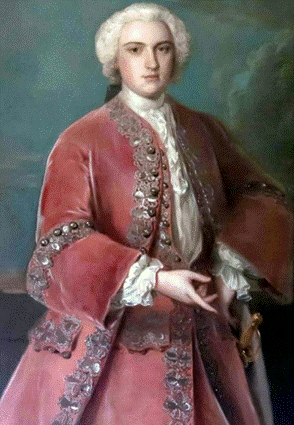
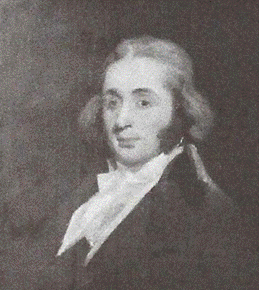
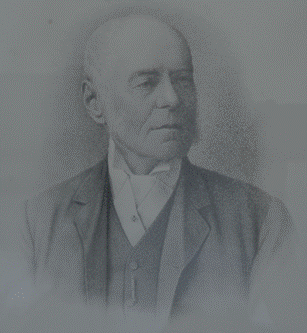
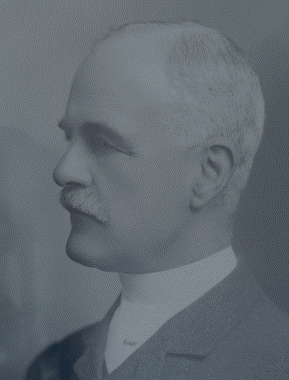
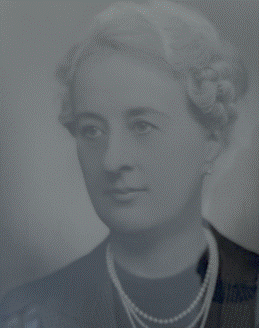
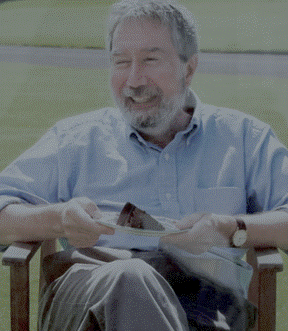
1680
Through the
fifteenth to eighteenth centuries, open fields were enclosed, reducing the
number of small holdings and consolidating land into larger agricultural units,
with Kilton Hall, built around 1680, emerging as the central farmstead amid the
shrinking population (Joseph Tullie’s Estate Plan,
1767; The Impact of Agricultural Change on the Rural Community - a case
study of Kilton circa 1770-1870 by Janet Dowey).
Thomas Thweng and William
Tulley or Tullie
About 1680 a Mr
Thomas Thweng purchased the Castle from the Crown, probably a descendant of a
junior branch of the family. He certainly did not live there
and it was probably he who built the original Kilton Hall some one mile away
from its stone. His only daughter Ann married Mr William Tullie and at the east
end of the chancel of old Brotton church (now no more) was a large memorial
which said "Sacred memory of William Tullie of Kilton in this county,
Esq, who departed this life 27 May 1741 aged 72 and is interned underneath this
monument. He married Ann sole daughter and heiress of Thomas Thweng of Kilton
Castle in this county, Esq, by whom he left no issue."
1692
On 12 September
1692 there was a conveyance of a burgage cottage on the East Row of
Northallerton by Timothy Baxter of Northallerton, weaver and his son and heir
Francis Baxter of Kilton Lodge, weaver to Henry Harrison of Northallerton,
weaver (North Yorkshire County Record Office ZBA
1/20/4).

1694
William Brown,
late of Kilton, a farmer and packer of butter for sale, was indicted in the
Quarter Sessions at Stokesley on 14 August 1694 for selling ten firkins of
butter in Whitby that were deficient in weight by four pounds at 4d per pound (North Yorkshire County Record Office QSB
1694 6/42).
Eighteenth
Century Kilton
In the eighteenth century, the medieval fields
were enclosed, and the farmsteads had moved to their present locations.
1705
The
Farndales and Kilton
By about 1705,
Kilton was the home of the Farndale family for almost two hundred and fifty
years. By the late seventeenth century and in the sixteenth and early
seventeenth centuries there were Farndales at Liverton,
Moorsholm, Skelton and Kirkleatham. John Farndale wrote of the late
eighteenth century: My children’s children comprise the sixth generation of
our family that has lived at Kilton estate upwards of two hundred years. (A Guide to Saltburn by the Sea and the Surrounding
District, With remarks on its picturesque scenery,
Fifth Edition, Dedicated to John Thomas Wharton Esq of Skelton, By John Farndale.
Late of Skelton Castle Farm, Darlington, Printed by Charles W Hird, 1864).
The steward always called old J Farndale to the vice-chair, he being old, and the oldest tenant. Farndale’s was the most
numerous family, and had lived on the estate for many
ages…. here we have chronicled
something like a genealogy of a race of people once throng the streets of
Kilton, but where are they now to be found? Many of
them have gone to their everlasting reward, yet a few, a small few, remain unto
this day (Farndale, John.
1870. The History of Kilton With a Sketch of the Neighbouring Villages By the
Returned Emigrant. Middlesborugh: Burnett and Hood).
The Farndale
association with Kilton probably started in around 1705, with the arrival of John Farndale, probably when he married
into the Bennison family of Kilton.
|
27 June 1680 to 56 October 1757
The first Farndale of Kilton |
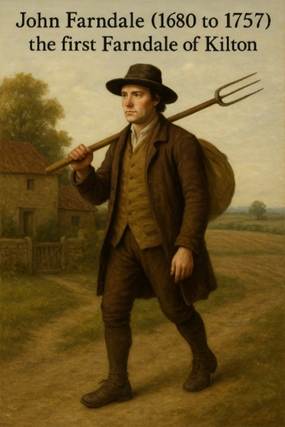
There were three
families of the Farndale family at Kilton, the large Kilton 1 Line,
the Kilton 2 Line and the Kilton 3 Line.
1707
Roger Todd of
Kilton Thorpe, a yeoman, was indicted for assaulting Frances Fairfax at Kilton
Thorpe on 9 June 1707, the offence witnessed by a number of
witnesses and ignoramus (North Yorkshire
Records Office QSB
1707 6/19).
1729
Peter Keer’s map
of 1651 was updated by Van de Aa in 1729 and included reference to Kilton C,
which may have been a reference to the ruined castle.
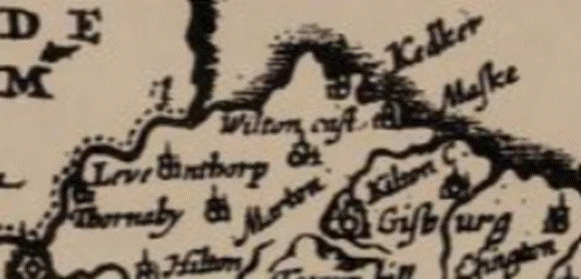
Joseph Tullie
1741
At the east end [of Brotton’s church] is
a large mural monument in blue marble, "Sacred to the memory of William
Tullie, of Kilton, Esq., who departed this life 26 May, 1741, aged 72, and is
interred underneath. He married Ann, sole daughter and heiress of Thomas
Thweng, of Kilton Castle, Esq., by whom he left no issue: she died Sept. 7,
1719, and is buried in the same vault as her husband. Joseph Tullie, of Kilton,
Esq., impressed with a due sense of his many amiable qualities, caused this
marble to be erected, to perpetuate the memory of one whom he affectionately
loved and whom all should imitate." (Ord, John Walker. 1846. History and Antiquities of of
Cleveland. London: Simpkin and Marshall. Page 267)
1754
The Newcastle Courant, 30 March 1754: To be Sold. Now
Growing at Kilton, within two miles of the Sea, near Guisborough, in
Cleveland, Yorkshire. A Large Quantity of full groan Oak, Ash and Elm etc. For
further particulars, inquire of William Jackson of Guisborough, who will fell
said trees.
1759
The beginnings of Methodism in
Kilton
The current
owners of Kilton Hall tell me that John Wesley, the co-founder of methodism,
once preached at Kilton Hall.
Pending that
information, I have not seen a historical record or entry in John Wesley’s
journals confirming that he preached at Kilton Hall. Whether Wesley preached at
Kilton Hall, he was very active in the immediate region. He travelled through
the area and preached nine times in the nearby market town of Guisborough,
beginning in July 1759, as well as in Loftus and the marketplace in Stokesley. Local residents from the Kilton and Skelton areas frequently
travelled to these nearby towns to hear him speak. The locality of Kilton and
across Cleveland, there are deeply rooted connections to early Methodism.
Subsequent generations in Kilton became fiercely committed Wesleyans. Local
families, such as the Farndales of Kilton Hall Farm, were prominent local
preachers and circuit stewards in the Loftus and Staithes Wesleyan Circuit
during the eighteenth and nineteenth centuries.
Local Wesleyan
Methodist services were originally held in a village cottage. After economic
changes led to the consolidation of the estate's smaller farms and the emptying
or demolition of local streets, the local Methodist community adapted. For many
subsequent years, the Methodist services in Kilton were held in the spacious
farm kitchen of Charles Farndale at Kilton Hall Farm, also referred to as
Kilton Lodge. The Farndale family maintained a long-standing, dominant tradition
of local leadership within the Wesleyan Church circuit in Cleveland.
1767
The Eighteenth
Century Nucleation
The nucleated settlement pattern which began in prehistory had
failed with the ruin of the castle. In due course there was another period of
nucleation which was mapped by the estate map of 1767. By this time there was
an attempt to increase the intensity of cultivation of the land by creating new
farms and laying out new roads. (Robert Daniels.
1990. Kilton: A Survey of Moorland Fringe Township in Medieval Rural
Settlement in North East England. Architectural
and Archaeological Society of Durham and Northumberland Research Report No 2,
edited by B E Vyner, page 33).
Three maps
provide the main sources for this period – the Estate Map of 1767, the Tithe Map of 1844 and the first
Edition Ordinance Survey 6 inch map of 1856 (see
below).
An
estate map of Kilton was commissioned by Joseph Tullie and surveyed by R
Richardson in 1767 and the original map is held by Skelton and Gilling Estates.
The 1767 Estate Map shows an enclosed
landscape, with the various tenancies marked. All the fields were named and
tracks and paths were marked. The map shows marked changes from the medieval
landscape. The 1767 map shows a landscape which, while containing much of the
medieval past, had undergone a dramatic transformation. Enclosure of the medieval
fields had taken place and probably partly as a result of
this the number of farmsteads had increased from perhaps five in the medieval
period to eight in 1767. An estate village had been established at Kilton, a
hunting lodge at Buck Rush and a number of new
buildings had been built. In addition, two new roads had been constructed, the
first linking Brotton to Kilton Thorpe and cutting through the enclosure
boundaries of Middle Field; the second running from Kilton Lane to the new farm
at Stank House, which continued on to the Lodge and
Buck Rush. The latter survives much as built and is a fine example of a broad c
18th century road which contrasts markedly with its medieval
predecessors.
The landscape had undoubtedly been
deliberately reorganised yet again. It is particularly interesting to note the
re-establishment of a major village at Kilton and the similarity of the plan
formed to its medieval predecessor and, indeed, to see that this attempts to create
a major nucleation within the Township was as unsuccessful as its predecessor.
It may be that the forces at work were much the same, the prosperity of the
post medieval village being dependent on the hall at its head in much the same
way as the medieval village may have been dependent on the castle.
The date of the reorganisation is not known,
it was certainly post medieval and probably post enclosure. Unfortunately
the date of enclosure is not known either. However, the complete appearance of the
estate village when set against its decayed nature in 1845 might suggest that
the reorganisation had taken place not long before.
(Robert Daniels. 1990. Kilton: A Survey of Moorland Fringe Township in Medieval Rural Settlement in North East England. Architectural and Archaeological Society of Durham and Northumberland Research Report No 2, edited by B E Vyner, page 53).
The
following are extracts from the estate plan of 1767 (“Joseph
Tullie’s Estate Plan”), with many thanks to Tony Nicholson for his help
and annotations and to Skelton and Gilling Estates for allowing me access to
the princiapl estate map (Joseph Tullie’s Estate
Plan 1767 is held by Skelton and
Gilling Estates and hangs on the office walls. The estate today has over
11,000 acres of land and owns over 200 houses, which it still lets to tenants).
|
The detail from the 1767 Estate Map is now shown on a
separate page. |
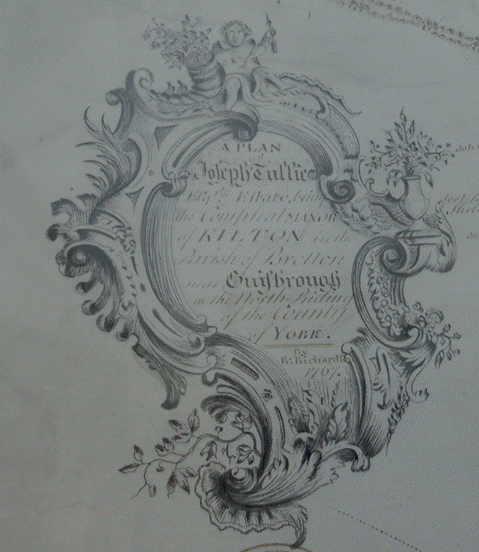
The
1767 map shows a landscape which, while containing much of the medieval past,
had undertaken a dramatic transformation. Enclosure of the medieval fields had
taken place and probably partly as a result of this the number of farmsteads
had increased from perhaps five in the medieval period to eight in 1767. An
Estate village had been established at Kilton, a hunting lodge at Buck Rush, and
a number of new buildings had been built. In addition, two new roads had been
constructed, the first linking Brotton to Kilton Thorpe and cutting through the
enclosure boundaries of Middlefield, and the second running from Kilton Lane to
the new farm at Stank House, which continued on to the Lodge and Buck Rush. The
last of these roads survives much as built and is a fine example of a broad
eighteenth century road which contrasts markedly with its medieval
predecessors.
The
Kilton of 1767 was very different from medieval Kilton. While some of the
medieval properties either side of Kilton Lane had buildings on them, the
village had been moved to the north. A finer state village had been created,
with a street and green and two rows of cottages facing each other across it. A
post mill was shown at the western end of the South row.
The 1767 map
shows a complex of at least three buildings, wrongly labelled as Wilton Mill. The
mill building is shown extending over the stream and the wheel may have been
contained within a housing.
1770
Adam's
Weekly Courant, 11 December 1770 reported on Mr Turner’s Hounds. The hunt
founded by the smuggler, Andrew Turner, later the Roxby and Cleveland
Foxhounds, which passed through Kilton.
1771
The start of a
constant battle between landowners and tenants and poachers may have started
with a report by the Newcastle Chronicle, or,
General Weekly Advertiser, 24 August 1771: Whereas the Game and Fish
within the Lordship or Manor of Kilton, in the North Riding of the County of
York, have, of late years, been greatly destroyed in the night and at other
times, by poachers and other persons, without the leave of Joseph Tullie Esquire,
Lord of the said Manor; Notice is hereby given, that all unqualified persons
killing game or fish within the said Lordship, will be prosecuted with the
utmost rigour: and it is particularly requested that no gentleman will hunt,
shoot, or fish within the said Lordship, without Leave in Writing of the said
Mr Tullie.
1773
Rev Dr
Waugh
There
is a 1773 estate map which is unhelpful in its depiction of Kilton, but
includes some representation of Craggs. It doesn’t reach the area of the main
village and Hall.
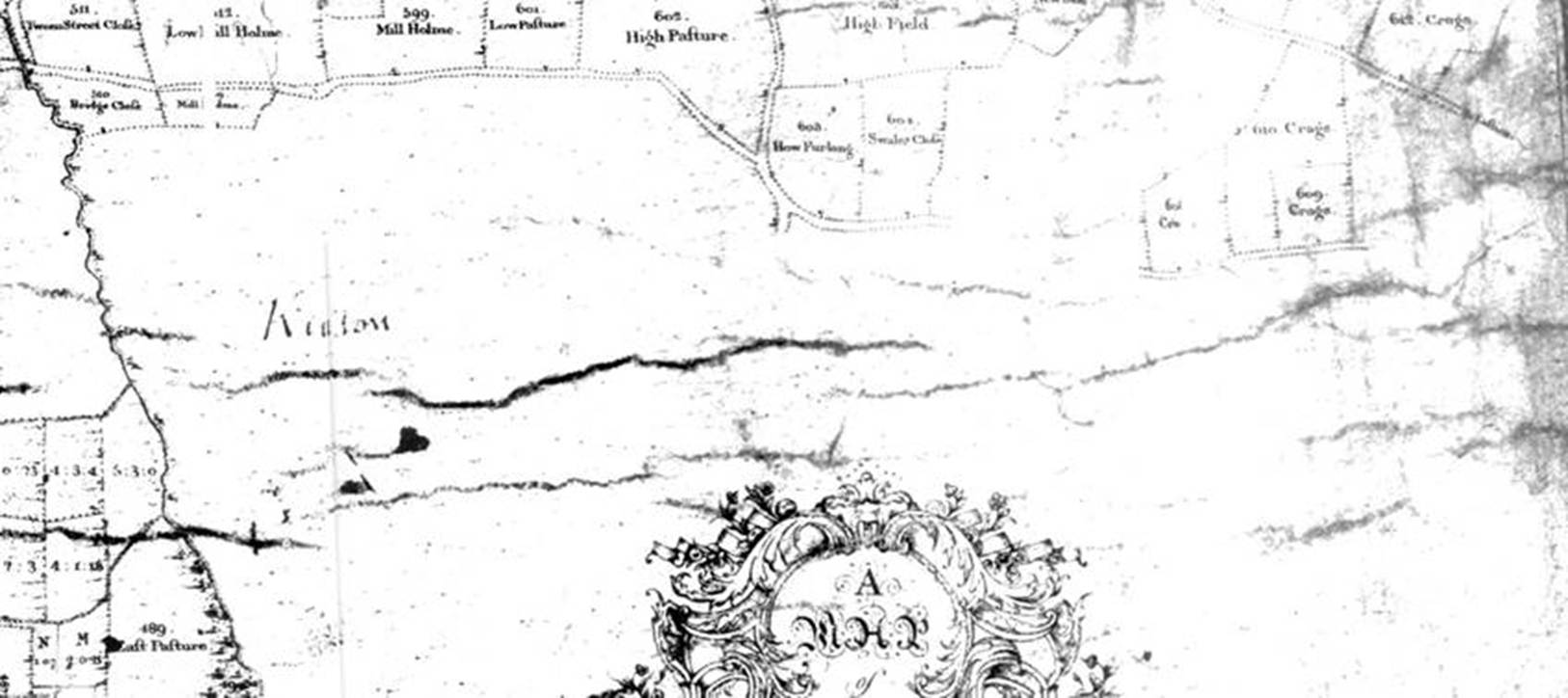
Extract from A map of an Estate belonging to
John Hall Stephenson Esq lying at Skelton and Brotton in Cleveland in the North
Riding of the County of York, produced in
1773 after a survey by Watson and Seagrave (Kindly provided by Tees
Archaeology)
The
street and green at Kilton village were not a thoroughfare, and only gave
access to the hall and there is no trace either on the ground or maps of there
ever having been a thoroughfare. The new two row settlement cut existing
property boundaries.
John Farndale was a tenant of Craggs Farm on the Wharton Estate
in 1773, but also had an alum business in Old Saltburn. My
Grandfather, who was a Kiltonian, employed many men at his alum
house, and many a merry tale have I heard him tell of smugglers and their
daring adventures and hair breadth escapes (John Farndale. 1864. Guide to Saltburn by the Sea and the
Surrounding District with remarks on its picturesque scenery, also online).
The author John Farndale’s grandfather,
this John Farndale was this website author’s great x5 grandfather.
|
Old Farndale of Kilton 28 February 1724 to 24 January 1807
The patriarch
of the Kilton Farndales, regaler of smuggler tales, alum merchant and farmer |
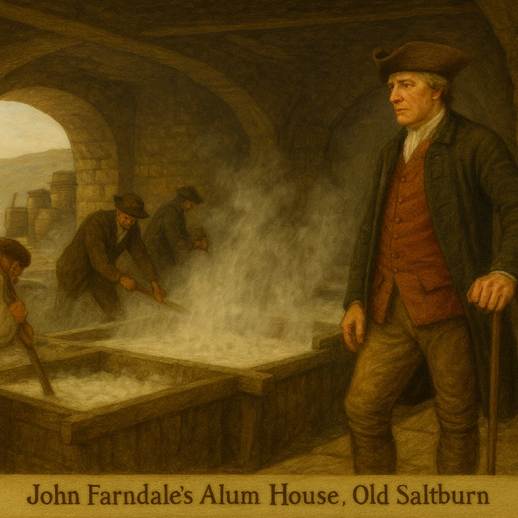
Joseph Tullie of
Kilton Castle gifted a massive silver gilt flagon paten and chalice in 1773 to
the church of St Margaret, Brotton (Cleveland
Standard, 29 July 1949).
1778
A new bridge was
planned in 1778. The Newcastle Chronicle, 18 July
1778: LOFTHOUSE BRIDGE. Any person willing to contract for the
building of a Carriage Bridge over the brook dividing the townships of
Lofthouse and Kilton, near to the highway leading from Kilton to Lofthouse
aforesaid, may deliver in a plan and proposals as soon as possible, to Mr
Lawson of Stokesley. Mr Farquharson of Lofthouse will show the place where the
intended bridge is to be erected.
1786
In Farndale, John. 1870. The
History of Kilton With a Sketch of the
Neighbouring Villages By the Returned Emigrant. Middlesborugh: Burnett and Hood, John Farndale imagined his return to Kilton after years of
absence when he recalled:
… some one hundred and twenty parents and children, besides men-servants and women-servants; I remember ten farmers
occupant of some seven hundred acres of land, and now it’s absorbed into one
large farm, by laying field to field, and adding farm to farm. Surely this
gentleman must be Lord of Kilton Manors, for formerly it comprised two Manors.
Then he asked, where are all those respected farmers? Had they and their sons
to find a home in some far-away land, and to perish out of sight? I see in the
book recorded and registered in olden time, the names of farmers who once
occupied this great farm – R and W Jolly, M Young, R Mitchell; W Wood, J
Harland, T Toas, J Readman, J Farndale, S Farndale, J and W Farndale, all these
tenants once occupied this great farm; now blended into one.
I remember what a muster at the Kilton rent days, twice a year,
when dinner was provided for a quarter of a hundred tenants, Brotton,
Moorsholm, Stanghoe, those paid their rents at Kilton;
and were indeed belonging to the Kilton Court, kept here also, and the old
matron proudly provided a rich plum pudding and roast beef; and the steward
also a jolly punch bowl, for it was a pleasure to him to take the rents at
Kilton, the day before Skelton rent day. The steward always called old J
Farndale to the vice-chair, he being old, and the
oldest tenant. Farndale’s was the most numerous family, and
had lived on the estate for many ages.
Kilton had many mechanics, and here we had a public
house, a meeting house, two lodging houses, and a school house, to learn our ABCs, from which sprang two eminent school masters,
who became extremely popular; we had a butcher’s shop, we had a London
tailor and is apprentice, and eight other apprentices more; we had a rag
merchant and a shop which sold song books, pins, needles, tape and thread;
we had five sailors, two soldiers, two missionaries, besides a number of
old people, aged 80, 90 and 100 years. But last, not least, Wm Tulley Esq., who took so much interest in the old castle –
planted its orchard, bowling green, and made fish ponds,
which were fed by a reservoir near the Park House, Kiltonthorpe, Kilton Lodge, together with all these
improvements around the castle, which are now no more.
In A Guide to Saltburn by the Sea and
the Surrounding District, With remarks on its
picturesque scenery, Fifth Edition, Dedicated to John Thomas Wharton Esq of
Skelton, By John Farndale. Late of Skelton Castle Farm, Darlington, Printed by Charles W Hird, 1864, John
Farndale wrote of the late eighteenth century:
Kilton formerly
contained a few tradesmen – namely two joiners, two coopers, two weavers,
one butcher, a publican, a water miller, a rag merchant, an old man with nine
children, two sailors, and a banker’s cashier. At one time it had four
sailors – one was taken prisoner in the French War, an old man, aged
87, and yet living – another, a missionary to the French prisoners, died in
France, aged 87, a noble fellow, was formerly in the Life
Guards. Seventy years ago Kilton had eight
farmers; it now has only one. It had then fifty four
children, now only seven – then twenty four parents,
now only five – and then nine old men and women rom eighty to one hundred and
five years of age. The inhabitants of this village, as may be expected, were long
lived; most of the old men were of the giant tribe, their ages averaging at
death eighty seven years. My children’s children
comprise the sixth generation of our family that has lived at Kilton estate
upwards of two hundred years.
In former days
the inhabitants of this district were Jacks, and Toms, and Mats; now they are
either Misters or Esquires, and thick as mushrooms around us. In those days
there were no Mistresses or Ladies among them, they were all Dames – there wore no silk gowns, no veils, no crinolines, no bustles;
but home spun garments, giving employment to the inhabitants, warmth and
comfort to the wearers, and lasting for fifty years. Specimens at home.
John Farndale recalled one family named Swales
noted for oddness and singularity of manners. When they dined together they all
dipped into one dish. The parent once called out for bread, exclaiming “I eat
bread to every thing.” A
little urchin answered “Now, Fadder, thou lies, thou doesn’t eat bread to cake!”
When the old man died, a large multitude gathered at his funeral. He was
brought through Kilton to Brotton to be buried, and this youth was noticed last
at the grave side, and looking into the grave he at length broke the silence
and said “Farewell, fadder!” and a second time he
said, “Farewell, fadder!” and a third time, with all
his might, making the welkin ring, he exclaimed, “Farewell, fadder!”
and then left the graveside with a sad heart and a sorrowful countenance. The end
of this rough, untutored fellow was untimely. In an evil hour his cart
overturned over him, and two nights and a day he lay dying. The following lines
he intended for his tombstone:-
“Whea lies here? Whea dye think?
Poor Willy Swales, he loved a drop o’ drink.
Drink to him as you pass by,
For poor Willy Swales was always dry.”
There was another
servant of my father’s, named Ralph Page, equally as singular as Willy
Swales. As Ralph was once busily ploughing, a French Privateer, threatening land
at Skinningrove, fired into the town. Those in the district who had guns
assembled on the cliffs and fired a volley in return. To intimidate the
enemy the women mustered strong and attired in red cloaks and shouldering
sticks, to represent a body of soldiers, they stood far away in the
distance. Ralph took little notice of the privateer, not bothering his head
either with the French or the English, only they let him be, when a young woman
passing in haste, cried out “Ralph, French is landing.”. Ralph, turning round,
with the greatest coolness replied, “Then run yam, and sup all’t
cream,” and unconcerned he ploughed away as though nothing was the matter.

The next day the
king’s cutter arrived, and the privateer and her had an engagement, when the
Frenchmen were beaten and the vessel taken, to the great joy of the inhabitants
of the surrounding district.
Here let me
narrate one anecdote more or a man whom I well knew, and who lived and died at Moorsholm. There was an assize trial at York, about a water course running under ground, and Paul,
for that was the man’s name, who was a fine upright fellow, with a high brow
and a bluff face, had to appear as a witness on the occasion. When Paul went
into the witness box, the counsellor on the opposite side having silenced a
man of letters, very promptly said to Paul, as he stared at him, “Well Mr
Baconface, and what have you to say on the subject?” “Whya.”
Replied Paul, with a significant grin, “If my bacon face and thy calf face were
boiled together they wad mak
good broth!” The councillor looked abashed, and the whole court roared with
laughter. The counsellor recvering his self possession, then tried to put Paul into a fix about
the watercourse by inquiring what he knew about it, and in a triumphant
tone of voice he said, “And how, my man, do you know that the same water ran out
of the course that ran into it?” “How did I know that?” reiterated Paul, “Whya, I tuek care thou sees t’
muddy watter before it went in, and it cam out muddy.” The court
enjoyed a hearty laugh, and the result was, the learned councillor lost his
cause.
1790
Old Johnny Farndale, known sometimes as Old
Farndale of Kilton, was a patriarch of Kilton in his old age. The Squire
reflected on how he would be missed when he was gone.

They balanced
accounts, over a bottle of Hollands gin, and after eulogising each other, the
squire would rise and say, “Johnny, when you are gone, there will never be such
another Johnny Farndale”. (Farndale,
John. 1870. The History of
Kilton With a Sketch of the Neighbouring
Villages By the Returned Emigrant. Middlesborugh: Burnett and Hood).
John Wharton
Dr. Waugh's daughters sold [Kilton Estate] to John Wharton (Graves, Cleveland, 371) before 1807, (Graves, Cleveland, 371) and henceforth it
followed the descent of the manor of Skelton, Mr. William Henry Anthony
Wharton being the present lord of the manor. (The
wapentake of Langbaurgh (east): Brotton,
in A History of the County of York North Riding: Volume 2, ed. William Page
(London, 1923), British History Online pages
326-332).
The estate descended,
via Mr Tullie’s nephew, to the Rev Dr Waugh whose legatees sold it to Squire
Wharton of Skelton Castle. (Horton, Minnie
C. 1979. The Story of Cleveland, History, anecdote and legend. Cleveland
County Libraries. Page 373).
John Wharton (21
June 1765 – 29 May 1843) was a British landowner and member of Parliament. He
was the eldest son of Joseph William Hall-Stevenson of Skelton, John Wharton
succeeded his father in 1786, inheriting the ruinous Skelton Castle. He demolished
the old Skelton Castle and between 1788 and 1817 built a similarly named Gothic
country house in its place. By 1829 he was in debt and spent the next 14 years
in the Fleet Debtors Prison, where he died childless in 1843. He had married
Susan Mary Anne, the daughter of General John Lambton of Lambton, County
Durham. He had two daughters who both predeceased him and was succeeded by his
nephew, John Thomas Wharton.
John Thomas Wharton,
to whom John Farndale’s book is dedicated, was born in York on 9 March 1795 and
died at Tadcaster on 25 September 1871, aged 76. His uncle, John Wharton died
childless and in poverty in 1843 and Skelton devolved to John Thomas Wharton of
Gilling.
John Wharton of
Skelton Castle was the Squire of Kilton.
It
was in or about 1790 that John Wharton (born John Hall Stevenson) acquired the
estate of Kilton. Concurrently, he demolished the old Skelton Castle and between
1788 and 1817 and built a similarly named Gothic country house in its place.
John
Wharton
1793
Johnny’s
grandson, the author John Farndale spent
his childhood in Kilton before leaving, but later wrote extensively of Kilton
as it emerged from rural tranquility through a period of profound change.
|
15 August 1791 to 28 January 1878
A man of enigmatic complexity who wrote extensively
and has passed down stories of our family and of industrial change in early
Victorian Yorkshire |
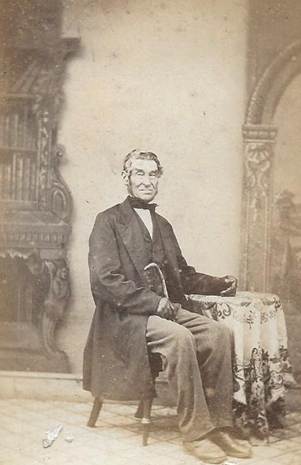
My first
remembrance began in my nurse's arms when I could not have been more than 1 1/2
years old; a memory as vivid as if it were yesterday. She took me out on St
Stephen's Day 1793 into the
current Garth (a small enclosure) with a stick and 'solt'
to kill a hare. A great day at the time.
On 25 July 1793 the
coroner, Thomas Smith of Stokesley, gave a verdict on a female ‘bastard child’
as stillborn (North Yorkshire Record Office QSB
1794 2/16/3).
1794
Yet
another John Farndale was farming in Kilton by 1794.
|
5 October 1755 to 26 October 1829 Known as Farndale
Junior until his father died in 1807 |
Mr Wharton had a
bay colt called Kilton at York races in 1794 (Hull
Advertiser, 23 August 1794), suggesting he had an interest in Kilton by
say about 1790. He may well have named one of his racehorses after his
acquisition of the estate.
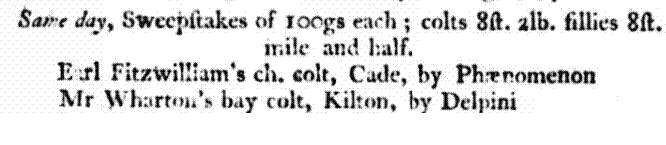
1795
Kilton Hall stood
at the end of the rows of cottages in Kilton village. The old hall was sketched
for John Farndale’s book.
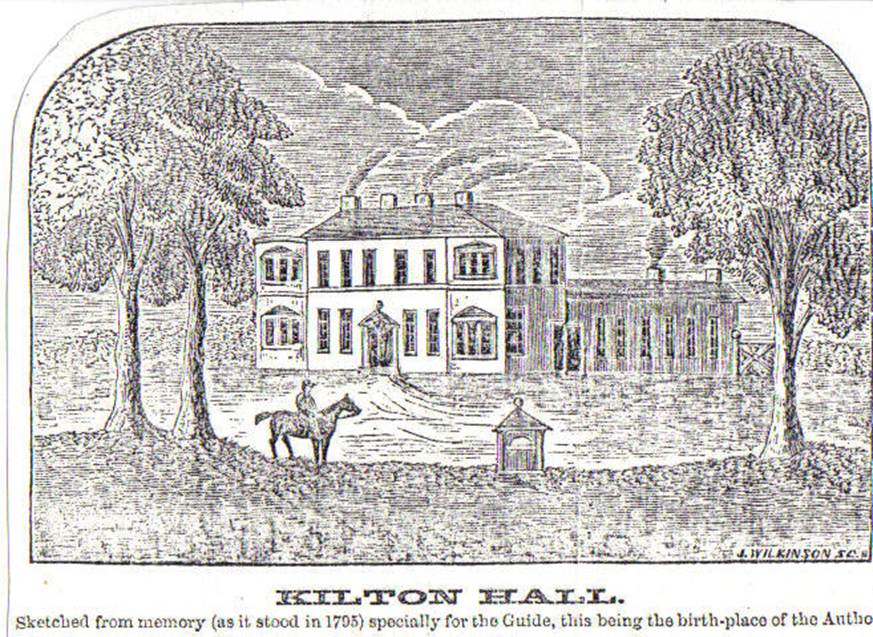
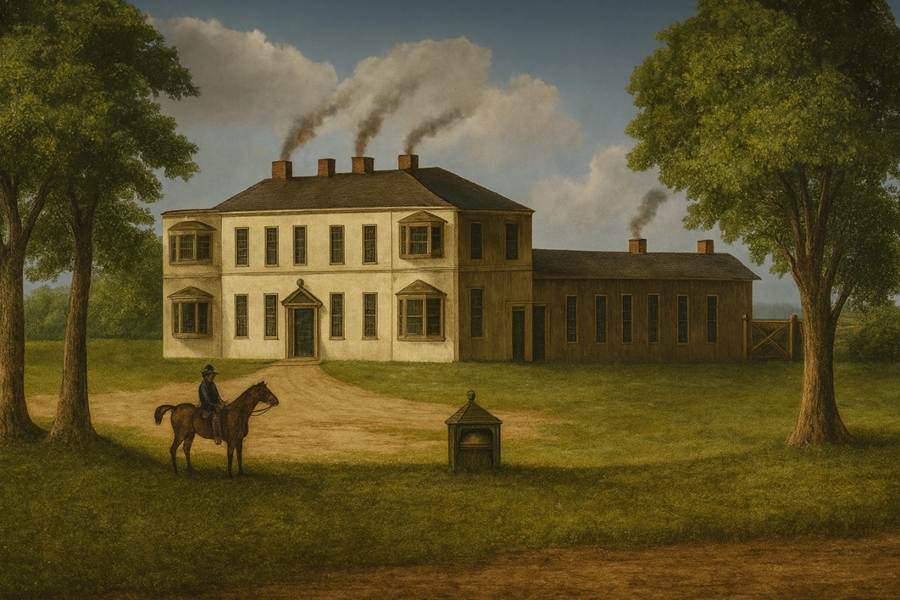
Kilton Hall, Sketched from memory (as it stood in
1795) specially for John Farndale’s Guidebook The same image coloured by AI
1797
On 24 January
1797, William Swales, a labourer, and Joseph Ellerby of Skinningrove, were
convicted of using a gun to kill game without a licence on 26 December 1796 at
Kilton. The case was heard at Kirkleatham. (North
Yorkshire County Records Office QSB 1797 2/10/3
and 4).
North Riding of
North Yorkshire
Be it remembered
that on the twenty fourth day of January in the year of our Lord 1797 at
Kirkleatham in North Yorkshire in the North Riding of the County of York,
William Swales of Stanghow in the said North Riding of York, labourer was duly
convicted before Mr John Fawcett Esq, one of his Majesty’s Justices of the
Peace in and for the said Riding for that the said William Swales on the twenty
sixth day of December now last past, at Kilton in the said Riding did use a
certain Engine called a Gun for the Destruction of Game without having obtained
a Certificate required by law for that purpose contrary to the form of the
Statute and I do declare and adjudge that the said William Swales hath
forfeited for his said offence the sum of twenty pounds of lawful money of
Great Britain to be distributed as the Law decides. Given under my hand and
seal the day and year first above mentioned
John Fawcett
A similar
declaration was given regarding Joseph Ellebry.
Also in 1797,
Robert French, a labourer, late of Kilton was indicted for felony, for stealing
half a peck of oats valued at 6d from Ralph Crosier, a yeoman at Kilton on 25 June
1797. Ralph Crozier and his servants Richard Page and James Robinson, Esther
Bell, as well as Robert French, John Robinson, and Lewis Arnill gave evidence.
(North Yorkshire County Records Office QSB
1798 2/6/6 and 2/7/7).
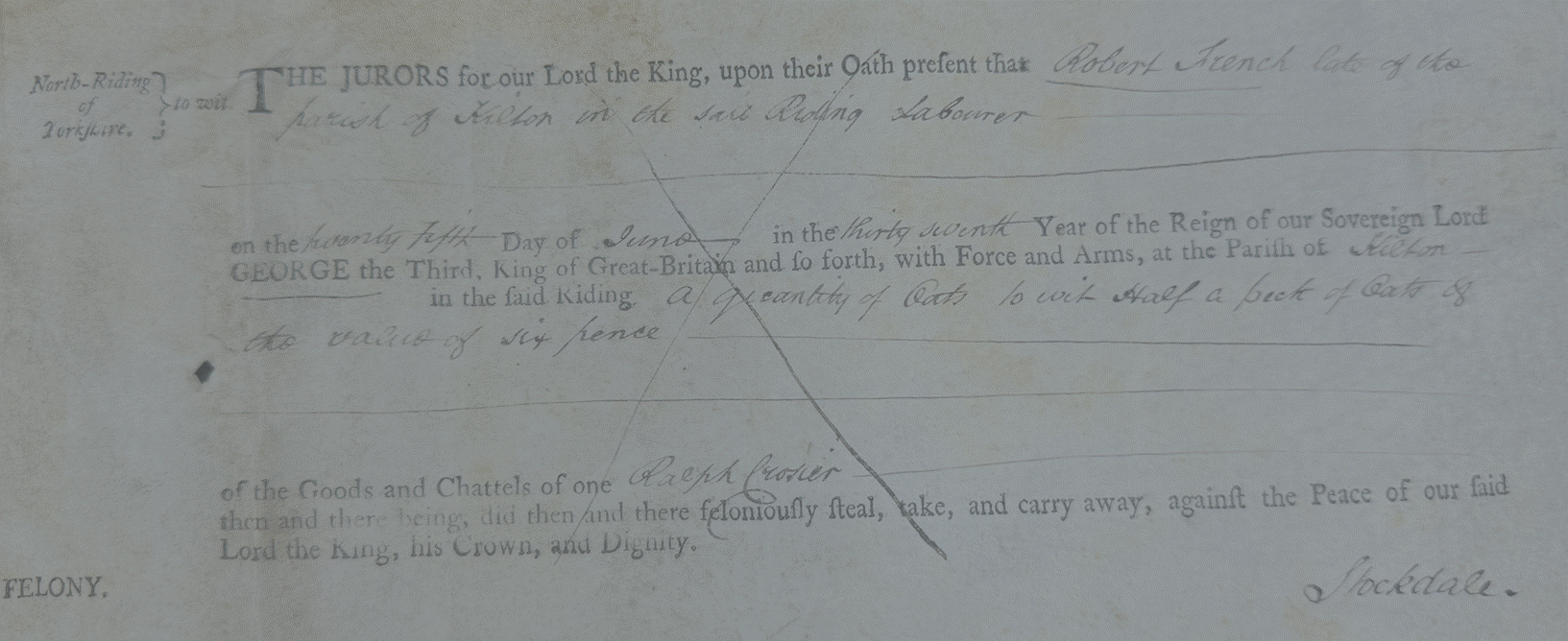
On 30 October
1797, Robert French of Kilton Lodge, a labourer, and John French of Westow, a
tanner, were cited to give evidence as to whether Thomas French, the millwright
of New Malton was the father of the ‘bastard’ child of Mary Armstrong, a single-woman of Henderskelfe (North Yorkshire County Records Office QSB
1798 4/11/2).
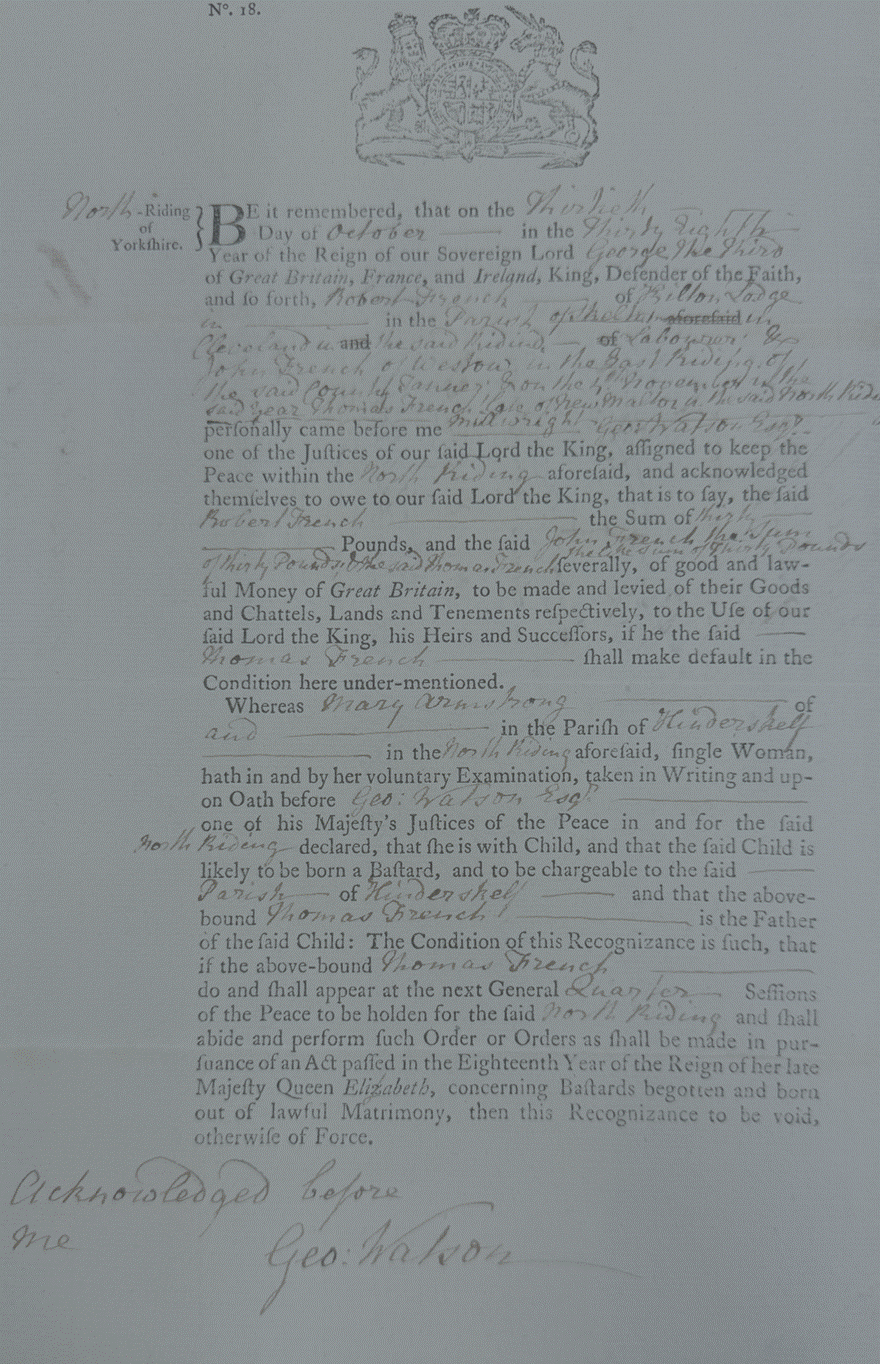
1798
In 1798, 1816, 1817,
1818, in the Return of Alehouse Keeper’s Recognizances, Ralph Newbiggin was
recorded as the alehouse keeper at Kilton (North
Riding County Records Office QSB
1798 4/12/8, QSB
1816 4/12/4, QSB
1817 4/12/7, QSB
1818 4/12/4).
1799
The Hull Advertiser, 19 January 1799: Education.
Miss Greens’ respectfully acquaint their friends and the public that their
school opens again on Monday 21, at Kilton Lodge, near Guisborough, where
YOUNG LADIES are taught every branch of useful and ornamental education on the
following terms: Entrance £1 1 0. Board, English grammar, and every kind of
needle work £16 16 0. Writing and arithmetic £1 1 0. Geography £1 1 0. Use of
pianoforte £1 4 0. Use of drawers £0 5 0. Each Young Lady to bring a pair
of sheets, two towels, spoon, knife and fork, or pay one Guinea for the use of
them.
Kilton of this
time was summarised in a case study:
The most predominant family at Kilton was the Farndales,
their ancestry ages old. Its most
distinguished member John Farndale wrote numerous books on the area. Kilton,
the village itself had been a thriving community consisting of a public
house, a meeting house, two lodging houses and a schoolhouse, from which sprang
two eminent schoolmasters. A butcher's shop, a London tailor and his
apprentice and eight others, a rag merchant, a shop which sold some books,
pens, needles, tape and thread. Five sailors, two soldiers, two missionaries
plus a number of very old people.
The picture John Farndale paints is of a peaceful
rural community who boasted of no poachers, no cockfighters, no drunkards or
swearers. A church going people who met together on a Sunday afternoon. Kilton
at that time had nearly 20 houses and a population of 140 men, women and
children, a Hall, stables, plantation and the old Castle plus 12 small farms.
When John wrote these books he was speaking of a time long since gone (the
early nineteenth century), he listed each family that lives lived within the
village.
Robert Jolly was a farmer and a staunch Wesleyan. After his death his farm was
carried on awhile by his sons. This being the time of Nelson's death (1805),
John goes on to say that there was great reformation in Kilton estate,
"the little farms were joined together, about 150 acres each. Every farmer
had to move to a new farm. The sons of Robert Jolly each moved away at this
time, one became a lifeguard to George III and the other eventually became a
minister. William Bulmer was another native of Kilton and married with nine
children, he made his living buying and selling, but all his children moved
away into 'respectable' situations."
Many of the farmers were weavers too, one in particular, George Bennison, had
two looms plus his land and also prepared a colt for Northallerton fair once a
year stop. The children of these farmers continually moved away from the
district and agriculture. John Farndale says "and
now they disappear, but where are they gone, I know not". John Tuke says
"it is observable, but in those families which have succeeded from
generation to generation to the same farm, the strongest attachment to old
customs prevails. For conduct and character, the farmer under survey must
deservedly rank high among their fellows in any part of England, they are
generally sober, industrious and orderly; most of the younger part of them have
enjoyed a proper education, and give a suitable one to their children, who, of
both sexes, are brought up in habits of industry and economy. Such conduct
rarely fails meeting its reward; they who merit, and seek it, obtain
independence, and every generation, or part of every generation, may be seen
stepping forward to a scale in society somewhat beyond the last."
However Thomas Hardy in his book "Tess of the D'Urbervilles", states
"all mutations so increasingly discernible in village life did not
originate entirely in the agricultural unrest. A depopulation was going
on." The village life which Hardy talks about had previously
"contained" side by side with agricultural labourers an
"interesting and better informed class".
These included a carpenter, a Smith, shoemaker, huckster "together with
nondescript workers" in addition to the farm labourers. A group of people
who "owed a certain stability of aim and conduct to the fact of their
being life-holders or copyholders or occasionally small freeholders." When
the long holdings fell in they were rarely again let
to identical tenants, and they were usually pulled down, if they were not
needed by the farmer or his workers. "Cottagers who were not directly
employed on the land were looked upon with disfavour, and the banishment of some
starved the trade of others, who were thus obliged to follow." Families
such as these had formed the backbone of the village life in the past who were
the depositories of the village traditions, had to seek refuge in the large
centres; the process, designated by statisticians as the tendency of the rural
population towards the large towns being really the tendency of water to flow
uphill when forced by machinery.
Early
Nineteenth Century Kilton
In the 19th century, Kilton largely bypassed
the direct impacts of the Industrial Revolution, remaining focused on
agriculture despite nearby ironstone mining in East Cleveland, which introduced
temporary economic activity but did not alter the village's rural character.
1800
On 24 December 1800 John Readman, a tailor of
Brotton was summarily convicted for using snares to take a pheasant in Kilton
on 10 November 1800.
1801
In 1801 the nearby town of Brotton had only 77
houses and 373 occupants, but it became embroiled in the industrial revolution
after the discovery of ironstone.
The population of Kilton was 129. Population of Kilton in
1801, 129 (Ord, John
Walker. 1846. History and Antiquities of Cleveland. London: Simpkin and
Marshall. Page 271).
In 1801 the inhabitants of
Stanghow were indicted for failing to upkeep the highway from Stanghow to the
Glapa Farmhouse of Robert Gill to Kilton Lane from 10 April 1801 (North Yorkshire County Records Office 1802
3/6/8).
1805
At the age of 14, after celebrating
the victory of Trafalgar in 1805, John Farndale was found dangling head foremost
down the draw well hanging by the buckle of his shoe. I
remember a draw well stood near the house of my father’s foreman. One day I
was looking into this well at the bucket landing, when I fell head foremost.
The foreman perceiving the accident, immediately ran to the well to witness, as
he thought, the awful spectacle of my last end. I had on at the time a pair of
breeches, with brass buckles on my shoes (silver ones were worn by my father and others), and to
his great astonishment, he found me not immersed in water at the bottom of the
well, but dangling head foremost from the top of a single brass buckle, which
had somehow caught hold. Since this accident I have ever been thankful for my
wonderful deliverance, I am now an old man, yet I hope my humble production
will by many be found worthy of perusal.
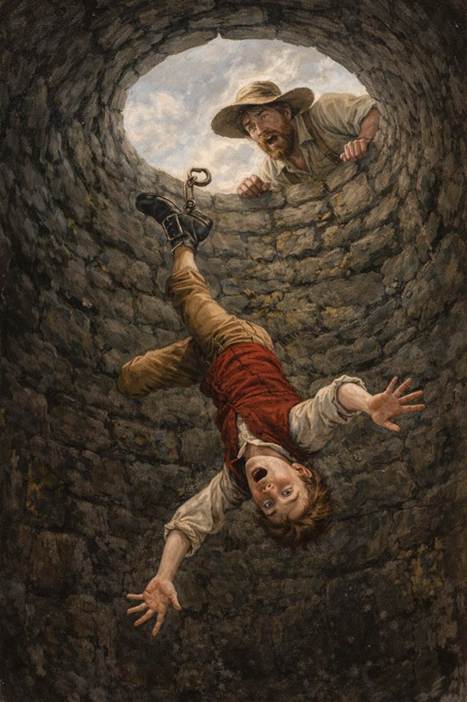
He
remembered "an old relation of my
father". There were numerous
Farndales in Kilton at that time. He
criticised his elder brother George
as a prodigal son, claiming that John was the son at home with his father,
but this was probably just sibling rivalry. But John describes how he got up to many frolics and had some narrow escapes, although he was
no drunkard or swearer.
His parents,
he said, were strict Church people and kept a strict look out. I became
leader of the (Brotton) church signers, clever
in music and he immodestly claimed that he excelled his friends. He
had a close friend, a musician in the church choir. One day he met him and said
he had been very ill and had been reading a lot of books including Aeleyn's Alarum and others which nearly
made my hair stand on end. Alleyn’s Alarm was a pious text from the time,
which no doubt follows a tradition of somewhat threatening alarums
since the seventeenth century.
His friend told him that he was going to alter his way of life and if John
would not refrain from his revelries, he would be obliged to forsake your
company. That was a nail in a sure place. I was ashamed and grieved as I
thought myself more pious than he. Now I began to enter a new life as suddenly
at St Paul's but with this difference, he was in distress for three days and
nights but for me it was three months. He fasted all Lent and described his
torment. How often I went onto the hill with my Clarinet to play my
favourite tune.
John was clearly competitive and determined to be better than his peers at
whatever challenges came his way. He therefore embarked on a phase of
competitive piety. It appears to have been no more than a phase, since we have
evidence of him picking up on his revelries again before long.
His companion lived a mile away, probably in Brotton,
and they met half way every Sunday morning at 6am for prayer. He remembered
well meeting in a corner of a large grass field. George Sayer began and he
followed. When they finished they opened their eyes to see a rough farm lad
standing over us, no doubt a little nervous. Next day this boy said to
others in the harvest field 'George Sayer and John Farndale are two good lads
for I found them in a field praying.' On the following Sunday they moved
to a small wood and met under an oak tree and met an old man who wanted to join
them. As usual George began and John continued when the old man began to roar
in great distress.
In 1805 the inhabitants of Kilton were indicted for failing to repair the
highway between Kilton and Moorsholm after 27 December 1804 (North Yorkshire County Records Office QSB
1805 1/6/14). There was a motion for respite in the matter in 1805
until John Hidgson, surveyor of Ugthorpe and Ralph Mitchell of Kilton could
prove that the repairs were being done (North
Yorkshire County Record Office QSB
1805 4/9/10, QSB
1806 2/9/9, QSB
1806 3/9/4, QSB
1807 1/9/10). On 6 October 1806 it was noted that the roads at
Stanghow and Kilton were said to be in good repair, but could not be certified
by two justices until the spring (North Yorkshire
County Records Office QSB
1806 4/9/6). On 3 April 1807, after an application had been made to
the two justices, they certified that they had been unable to attend for the
purpose (North Yorkshire County Records Office QSB
1807 2/13/1).
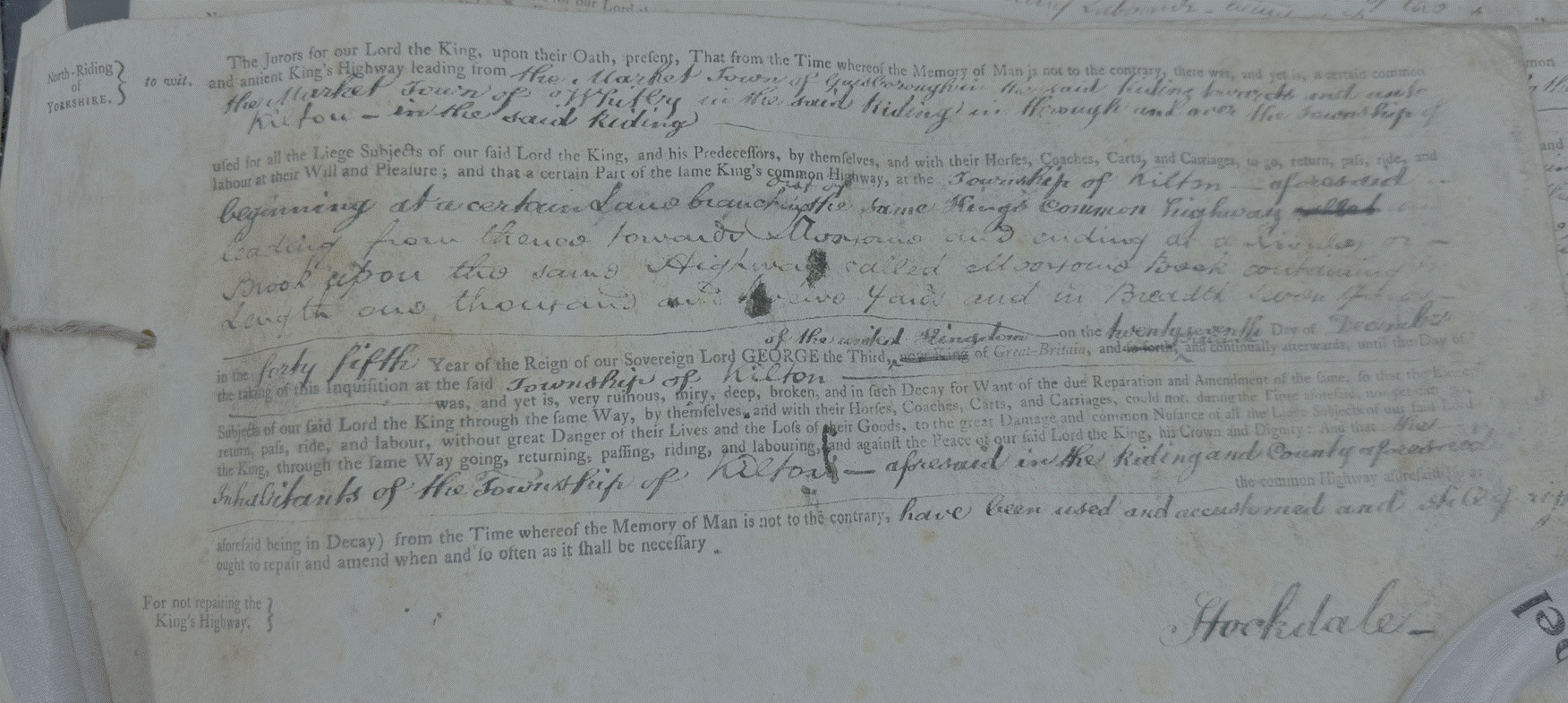
1806
The Yorkshire
Herald and the York Herald, 21 Jun 1806, Sat ·Page 3 reported the death
of George Thompson of Kilton on 29 May 1806 who had been master of a ship, the
Glory, of 98 guns, who had been involved in more than 25 engagements across
the world during his life.
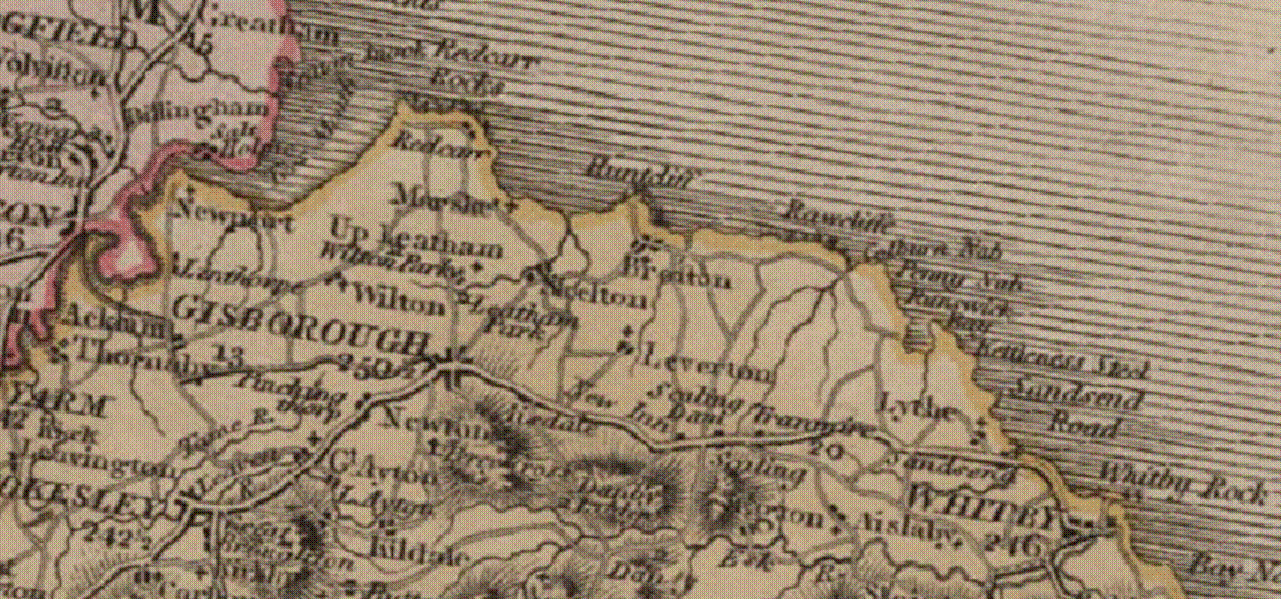
C Smith Map of Great Britain, 1806
1807
Old Johnny Farndale
died in Kilton on 24 January 1807 and is buried at Old Brotton churchyard.
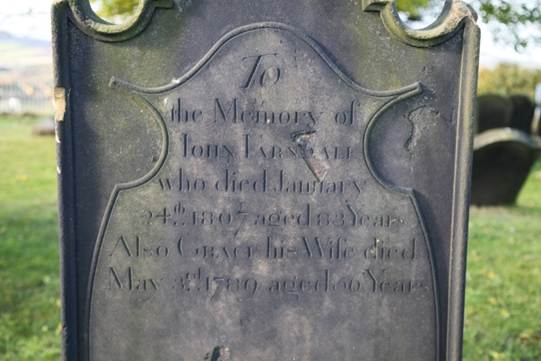
1808
At a little distance from the village towards
the south, on the brink of a natural precipice, washed by a small mountain rivulet,
stand the remains of Kilton Castle, the baronial residence of the ancient
family of Thwengs; but the edifice is now in so
ruinous a state as to render it impossible to form any idea of its former
strength and magnificence. From the foundations of the outer walls, it seems to
have been in the form of a parallelogram, inaccessible on the east, north, and
south, and fortified by a deep fosse or ditch on the west, the only entrance
was probably kept by a drawbridge. The situation of the castle is romantic and
retired (Graves,
History of Cleveland , 1808, pp. 370-372).
1809
We have a snapshot of the
tenant farmers in Kilton in 1809. The Skelton and
Kilton Terrier in 1809 provided a detailed record of the tenanted
farmland in 1809. A terrier is a record of field names, with reference
number, land use, acreage, value per acre and rent. The Kilton Terrier included
records of the landholdings of William Bennison, George Bennison, William Farndale,
Robert Solley, Robert Barker, Ralph Newbiggin, William Stephenson, Ralph
Mitchell, John
Farndale, and William Wood. The Skelton and
Gilling Rent book for 1810 provides further comparative evidence.
|
Evidence
from the Terrier and Rent Books of 1809 and 1810 which provide a snapshot of
the tenants of the Kilton part of the estate |
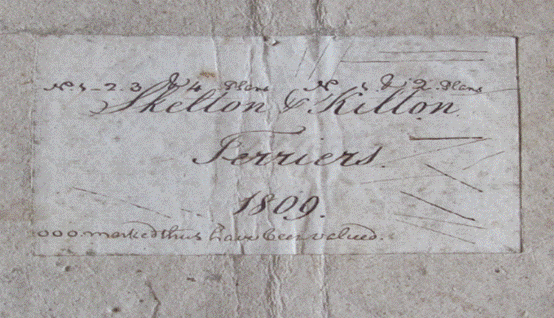
William Farndale, the son of old Johnny Farndale, was farming in
Kilton in 1809, a tenant of 110 acres. John Farndale his son wrote And now
we come to our grandfather’s and father and mother, William and Mary Farndale,
and their seven children’s birth place; farmers and merchants of wood, rods,
coals, salting bacon; church people. And those premises are held by our
youngest brother, held from generation to generation this two hundred years.
Springing from this roof may be said to be forty Farndales of this last
generation.’ William Farndale pulled down the old Kilton Lodge, connected with
the, by then, ruined Kilton Castle, to build the new family home. ‘ connected
with the castle is Kilton Lodge which my father pulled down to build a new
house.’ The original farmstead of Stank House was built of the stone of Kilton
Castle. In the east wall of the outbuildings is a large carved stone which
would appear to have once born a coat of arms, now completely obliterated.
(Farndale, John. 1870. The History of Kilton With a Sketch of the Neighbouring Villages By the
Returned Emigrant. Middlesborugh: Burnett and Hood).
Yet another John Farndale was a also tenant
in Kilton in 1809.
|
Farmer of
Kilton and a merchant of wood, rods, coals, salting bacon; a churchgoer |
|
24 March 1750 to 23 October 1828
|
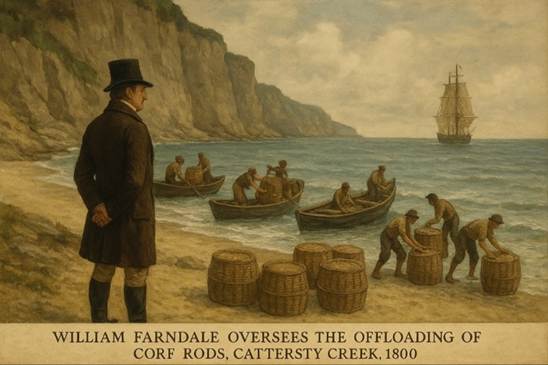
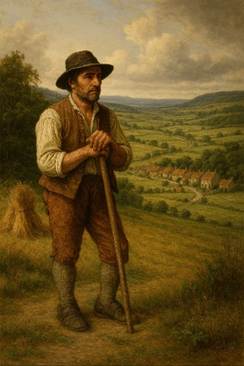
1810
Mary Farndale of
Kilton, the widow of William Farndale
(1727 to 1777) lived to the age of 98 and was recorded in Bailey’s Records
of Longevity in 1857. (Bailey, Thomas. 1857.
Records of longevity : with an introductory discourse
on vital statistics. Page
160).
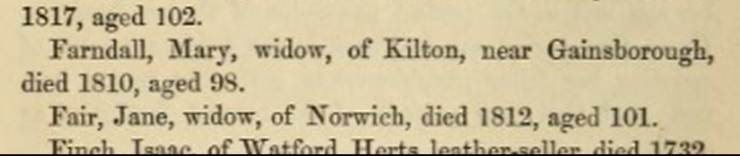
1811
Population of Kilton in
1811, 101 (Ord, John
Walker. 1846. History and Antiquities of of Cleveland. London: Simpkin and
Marshall. Page 271).

In 1811 Jane Wood, aged 100
and Dorothy Page, aged 106, both died at Kilton, leaving their 80 year old
servant (Hull
Advertiser, 29 June 1811). This was a village of long lasting folk.
The case of Mary Richardson
of Kilton was heard in the Christmas Quarter Sessions in 1811 (North Yorkshire County Records Office QSB
1811 1/8).
North Riding
The Information of Mary
Richardson, taken in the said Riding and taken before me John Stanly Esquire
one of His Majesty’s Justices of the Peace for the said Riding this 7th day of
November 1786.
Who saith that she lives as
a servant in Husbandry with Mr. Matthew Young of Kilton in the said Riding
aforesaid. That on Saturday evening last she was milking in a parlour belonging
to the said Matthew Young adjoining the highway leading from Brotton in the
said Riding to Kilton aforesaid. That on going out of the said field in the
said Highway near the gate he forced a small parcel lying on the turnpike. That
he carried the same to her Mistress’ house, the said Matthew Young’s wife who
opened the same but in their it for making presence and it contained a piece of
Cotton. That her Mistress was then not well and when they were milking that her
Mistress bid her to put it home which she did and tied it on the table and after
that denied that this information. That this morning their Mistress informed
her she was gone to Guisborough and to bring the Cotton.
A Bond of Indemnity of £100
was paid by William Barker, Kilton, yeoman, and Robert Barker, his father,
yeoman to Thomas Pulman and Benjamin Taylor churchwardens and Thomas Hudson and
Thomas Atkinson overseers the poor of
Guisbrough to maintain ‘bastard’ child or children of Mary Andrew, late
of Lofthouse (The National
Archives PR/GU/1/7/49
held at Teesside Archives).
1812
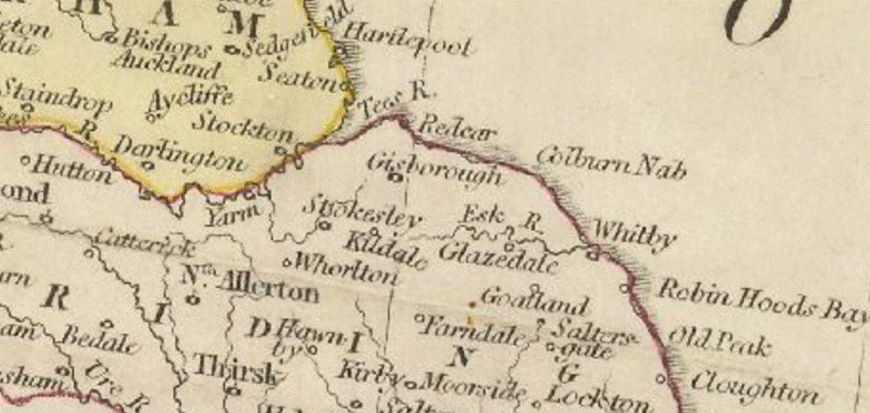
R Wilkinson, The British Isles, 1812
The wife of
Alderman Wormald of York died, aged 56, at Kilton in 1812 (Hull Advertiser, 31 October 1812).
1815
In 1815,
by then aged 24, the author, John Farndale was celebrating the victory at
Waterloo in Brotton where he led the singing as they
burned an effigy of Napoleon. From Kilton How Hill we have a fine view of
the German ocean, Skinningrove, Saltburn, Huntcliff, Roe-cliff, Eston Nab,
Roseberry Topping, Handle Abbey and Danby beacon. Here, too, at not much
distance from each other, may be seen no fewer than five beacons, formerly
provided with barrels of tar to give the necessary alarm to the people if
Buonaparte at that period had dared to invade our peaceful shores. After the
great battle of Waterloo, and Buonaparte had been taken prisoner, that glorious
event was celebrated at Brotton by parading his effigy through the street and burning it before Mr R
Stephenson’s hall, amidst the rejoicings of high and low, rich and poor, who
drank and danced to the late hour. The author formed one of a band of musicians
that played on the occasion, and he composed a song commemorating the event,
which became very popular in that part of the country. Brotton never before or
since saw the like of that memorable day.
I
am grateful to Dr Tony
Nicholson who has explained that the hall was built by the
Stephenson family in the 1780s after they had made a fortune as woodmongers,
trading in timber as a fuel source, and then when timber became scarce, in
coal. With the money from this trade, Robert bought a third of the manor of
Brotton, and then built ‘Stephenson’s Hall’.
Regarding
John Farndale’s account of the wild celebrations at Brotton after the battle of
Waterloo, Tony elaborated that the old gentleman, Robert Stevenson, provided
barrels of ale and a band of musicians, headed by John Farndale, who then sang
and danced till dawn.
The church has been greatly
improved, new slated roof and a most radical change in the interior; the old
pews and pulpit are all gone, and from the walls Our Fathers’ prayer; the
Belief; the ten commandments, in the xx chapter of Exodus, saying “I am the
Lord thy God which brought thee out of the land of Egypt, out of the house of
bondage; thou shalt have none other gods before me.” Had I not seen those well
known tablets of young Squire Easterby, of Skinngrove Hall, and Wm Tulley , Esy
of Kilton Hall, on beautiful white marble, I should have been at a loss to have
known the old church again. I looked at the place where the old pulpit stood,
and I remembered the ministers that once preached Jesus and the resurrection,
among them my old master, the Rev Wm Barrick, of Lofthouse, - he would descend
from the pulpit and join in the chorus of some twenty voices, 57 years gone,
when I had the happiness to be their chieftain. The parishioners had … most
gladly … and paraded down the mid street at the celebration of the great battle
of Waterloo, and burned before Mr Stephenson’s Hall, when barrels of ale were
given to the frantic multitudes, and the old gentlemen danced and sang until
day break, and here we find young Farndale, once dangling at the mouth of
the well, with his bugle and clarionet, the chief musician to the old
gentleman, and who had also composed the following lines for the occasion
His poem to the celebration of Waterloo went
as follows:
|
Hail! Ye
victorious heroes, England’s
dauntless saviours, ye Who on
the plains of Waterloo, Won that
glorious victory. |
It was a
day the world may say, When Napoleon
boldly stood, Upon the
plains of the Waterloo, There flowed
rivulets of blood. |
Before
the foe he bravely fought, And when
he’d all but won the day, Would it
were night, or Blucher up, Our hero
Wellington did say. |
But now
behold in effigy, Him to
whom kings such homage paid, Napoleon
mounted on a mule As
though he were on grand parade, Behold
with joy all England sings, Brotton too is up and gay, The
band, the flag, the ball, the dance Ne’er
ceased till the break of day. |
(Farndale, John. 1870. The History of Kilton With a Sketch of the Neighbouring Villages By the
Returned Emigrant. Middlesborugh: Burnett and Hood).
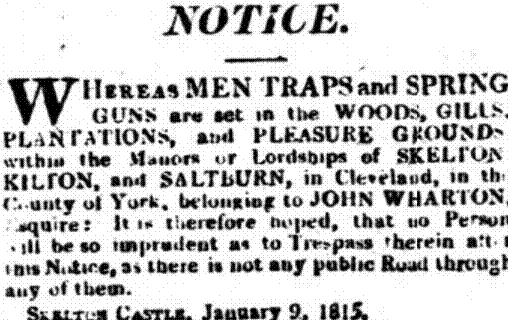
There
was a warning against trespass after man traps were laid at Kilton in 1815 (York Herald, 21 January 1815).
1817
The Yorkshire Herald and the York Herald, 22 Nov 1817, Page 3
reported that the Roxby and Cleveland Foxhounds were to meet at Kilton Mill
Monday 24 November 1817. There were many similar notices over the following
years. The Roxby and Cleveland Hounds were formed by the notorious smuggler, John Andrew of the White House at Saltburn. There was a similar notice
in York Herald, 13 November 1819.
At a coroner’s
inquest held at Kilton on 9 September 1817, it was concluded that Arthur Beadle
had died by the visitation of God (North Yorkshire
County Records Office QSB 1818 2/16/2).
1818
There was a sale
at Skelton Castle to raise funds in 1818. John Wharton was beginning to find
himself impecunious.
1821
According to Ord, Kilton’s
population was 100 in 1821. Population of Kilton in 1821, 100. (Ord, John Walker. 1846. History and
Antiquities of of Cleveland. London: Simpkin and Marshall. Page 271).
1822
The
Topographical Dictionary of Yorkshire by Thomas
Langdale of 1822 described Kilton, in the parish
of Skelton, east division of the wapentake and liberty of Langbaraugh, 7 miles
from Guisbrough, 15 from Stokesley, 16 from Whitby, population 129. Kilton
Thorpe was also listed with the same description, but no population was given.
On
2 April 1822, witness evidence was given by John Newbegin of Kilton, a yeoman
and James Cushner a wheelwright of Skelton against a maintenance order for the
‘bastard’ son of Dinah Walton of Kilton, a single-woman of Kilton who had been
born on 25 January 1822 (North Yorkshire County
Record Office QSB
1822 2/7/17).
1823
The Yorkshire Herald and the York Herald 22 Nov 1823, Sat,
Page 1 reported that man traps and spring guns had been set in the
woods, plantations and pleasure grounds of John Wharton Esq at Skelton, Kilton,
Brotton and Great Moorsholm to stop trespassers.
1824
The rateable
returns for Kilton are held by North Yorkshire
County Record Office QFR(V)
8/16.
There was a
motion to respite an order made in a case between the churchwardens and
overseers of Kilton (appellants) and the churchwardens and overseers of Whitby
(respondents) on 13 July 1824 (North Yorkshire
Records Office QSB
1824 3/9/14).
On 13 April 1824,
there was a removal order from Whitby to the township of Kilton concerning
Richard Sweeting (the illegitimate child of Jane Sweeting), his wife Abigail
and their children Richard aged 6, Jane aged 4 and John aged 25 days since
Richard Sweeting had not gained any legal settlement to remain in Whitby, but
the order was suspended since Abigail was ill (North
Yorkshire County Record Office, QSB
1824 3/11/11).
1825
The Yorkshire Herald and the York Herald 11 Jun 1825, Sat,
Page 3 gave notice of the diversion of a part of the highway at
Skinningrove and Kilton leading from the market town of Guisborough to
Lofthouse, of a length of 344 yards and 15 feet in breadth, and for making a
new highway more commodious to the Public to replace that section from a
lane at Kilton and Lofthouse and extending south east
and north east through and over the lands of John
Wharton Esq and John Maynard.
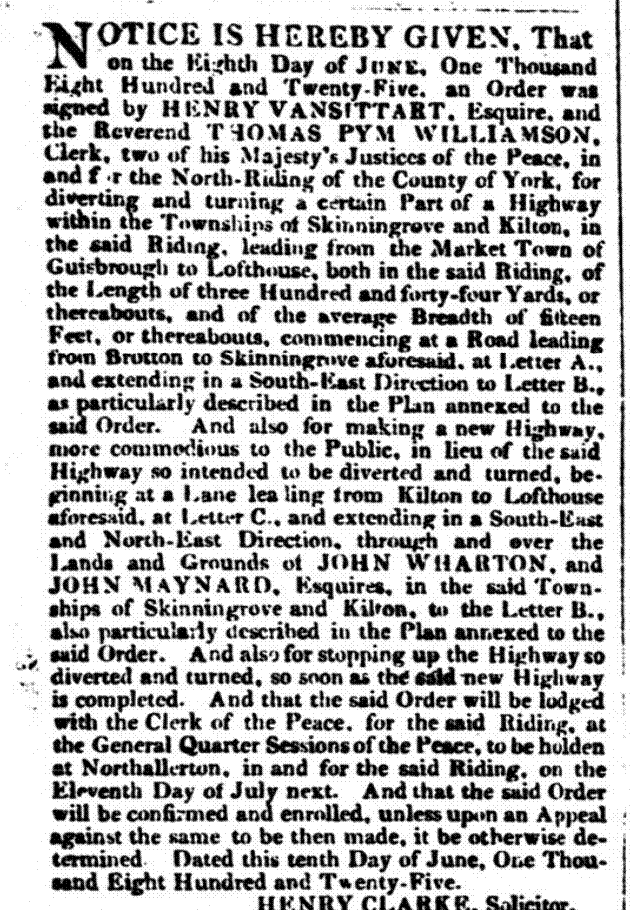
1827
John Wharton ran
up large debts and on 6 December 1827, he was confined in Fleet Debtors Prison,
London
1831
Ord recorded Kilton’s
population in 1831 at 80. Population of Kilton in 1831, 80. (Ord, John Walker. 1846. History and
Antiquities of of Cleveland. London: Simpkin and Marshall. Page 271).
1833
There were
general elections in 1832 and 1835. The Yorkshire
Herald and the York Herald 14 Sep 1833, Sat ·Page 1 gave notice that the
three gentleman appointed to revise the list of voters
for the North Riding of the County of York would come to Guisborough on 11
October 1833 in order to revise the list of voters for a number of towns
including Kilton and Brotton.
1835
Consolidation
of the estate
By 1845 the village was in decay. There was no
indication of the post mill and new sets of buildings had begun to develop to
the east of the road. The tithe map of 1845 showed the estate village in decay
and it is obvious that the reorganised landscape was not being sustained. The eighteenth century nucleation had not taken root and by the
early nineteenth century its failure was followed by the consolidation of the
estate. The township reverted to a dispersed pattern of individual farmsteads.
(Robert Daniels. 1990. Kilton: A Survey of Moorland Fringe
Township in Medieval Rural Settlement in North East
England. Architectural and Archaeological Society of Durham and
Northumberland Research Report No 2, edited by B E Vyner, page 33). The lodge had disappeared as had the buildings at the
earthworks at Stank House and two of the farms within the western arm of the
township. Land use by 1845 was predominantly arable, as it had been in the
medieval period, but there seems to have been more pasture then at the height
of medieval cultivation.
The Yorkshire Herald and the York Herald 5 Sep 1835, Page 1 gave
notice that a Commissioner had been appointed to execute An Act of for
Inclosing Lands in the Manor of Skelton, in Cleveland, in the County of York
and in doing so the Kilton Road was to be divided and enclosed. The Act of 1813
was passed for the enclosing of the lands of the manor of Skelton
and the Commissioner was appointed to make inquiries and examine witness living
within the manor boundaries.
Victorian
and Industrial Kilton
In the nineteenth
century, the opening of the Kilton and Lumpsey
ironstone mines, and the arrival of the railway into the township, had a major
impact on the landscape.
The Kilton John Farndale knew and loved had
changed beyond belief. Several of the very old and larger states were less
crowded than they had been; where a better cultivation had taken place, the
small cottages had given way gradually to shape a farm worthy of the person
having such money to improve it. A lot of the field structures and hedges were
still in place, only some of the hedges had been taken out to make bigger
fields. The hedge structure at Kilton was probably there 50 years before John
Farndale was born. In one instance a hedge appears to have been put in to
divide a field. Some of the reasons for the demise of
Kilton were the industrial revolution, which was the need to centralise
craftsmen from the small villages, a revolution in farming methods and farming
machinery, a wholesale destruction of the village for the town. The Napoleonic
Wars had an influence on the price of farm produce, the price of food was kept
at a fairly high level during the war but after the
war finished the price of grain fell to one of its lowest levels along with
falling meat prices, and disastrous harvests. Farming methods were needed to
get the harvest in quicker. This finally led the landlord to enlarge the farms
and bring in a farmer with money to modernise the farm. The mechanisation of
farming policies on the one hand and the progressive quantity of urban
factories on the other, combined to drastically alter that rural life. Taking
into consideration also the turnpike roads, the invention of the railway and
the canal networks it is obvious that economic and
technological forces were bringing far reaching changes. During the period when
enclosure was in progress, "the revolution in agricultural methods",
there was moderately steady process of new village creation, a considerable
upsurge within the 18th century. Enclosure or amalgamation of the Kilton
village farms, probably happened in the late 1860s, thus was the complete
destruction of the village. Kilton became a victim not only of the "Monstre farm" but also of the Industrial Revolution. (Impact of
Agricultural Change on the Rural Community - a case study of Kilton circa
1770-1870, Janet Dowey).
John Farndale bid
a sad farewell to the old Kilton.
And now dear Farndale, the best of friends must
part,
I bid you and your little Kilton along and final
farewell.
Time was to all our precious boon,
Time is passing away so soon,
Time knows more about his vast eternity,
World without end oceans without shore.
John
Farndale. 1870
However he had a quiet
respect for the innovation and new opportunities.
Now much has changed, we oft
times have looked and looked again, but no corner of this large farm has been
neglected. Witness, this rich stack yard of 100 acres of wheat, the staff of
life, and 100 more, oats, beans, peas, hay, clover, potatoes and turnips piled
up against the winter storms. In the fold are housed 100 head of sheep, a
stable with 14 farming horses, besides the young horses, pigs and geese in
abundance, carts, wagons, ploughs and harrows and all implements.
1839
The Yorkshire Gazette, 2 November 1839 reported that
Hannah Mitchell of Kilton won a sovereign for the best cheese made out of the district at the Whitby Cheese Fair.
The inhabitants
of Great Moorsholm were indicted for failing to repair the highway between
Great Moorsholm and the corner of Kilton Low road,
extending to Kilton township (North Yorkshire
County Records Office QSB
1839 2/6/26).
1840
Kilton, a small neat village, 6 miles NE by E of Guisborough, has in
its township 80 inhabitants and 1,510 acres of land, all the property and
lordship of John Wharton Esq and formerly belonging to the ancient family of Thweng, who had a castle here, of which some traces still
remain. Directory: Jph Newbegin, vict;
Thos Robson, miller; and Matthew and Martin Farndale, George Jennings, George
Moore, Thomas Raw & Joseph Thompson, farmers. (White’s History, Gazetteer and Directory for 1840 for
Yorkshire, East and West Ridings). By 1840, Martin
Farndale and at that stage his brother Matthew Farndale
who would later emigrated to Australia were
predominant farmers of Kilton.
The inhabitants
of the North Riding of Yorkshire were indicted for failing to repair Kilton
Mill Bridge, which had been in disrepair since 1 January 1840 (North Yorkshire County Records Office QSB 1840
2/6/3, 2/13
and 3/13).
There was a report by the Bridge-Master on 20 October
1857 (North Yorkshire County Records Office QSB
1857 4/14/4).
1841
Kilton had a
population of 86. Population of Kilton in 1841, 86; acres, 1510; rental, £1,922. (Ord, John Walker. 1846. History and
Antiquities of of Cleveland. London: Simpkin and Marshall. Page 271).
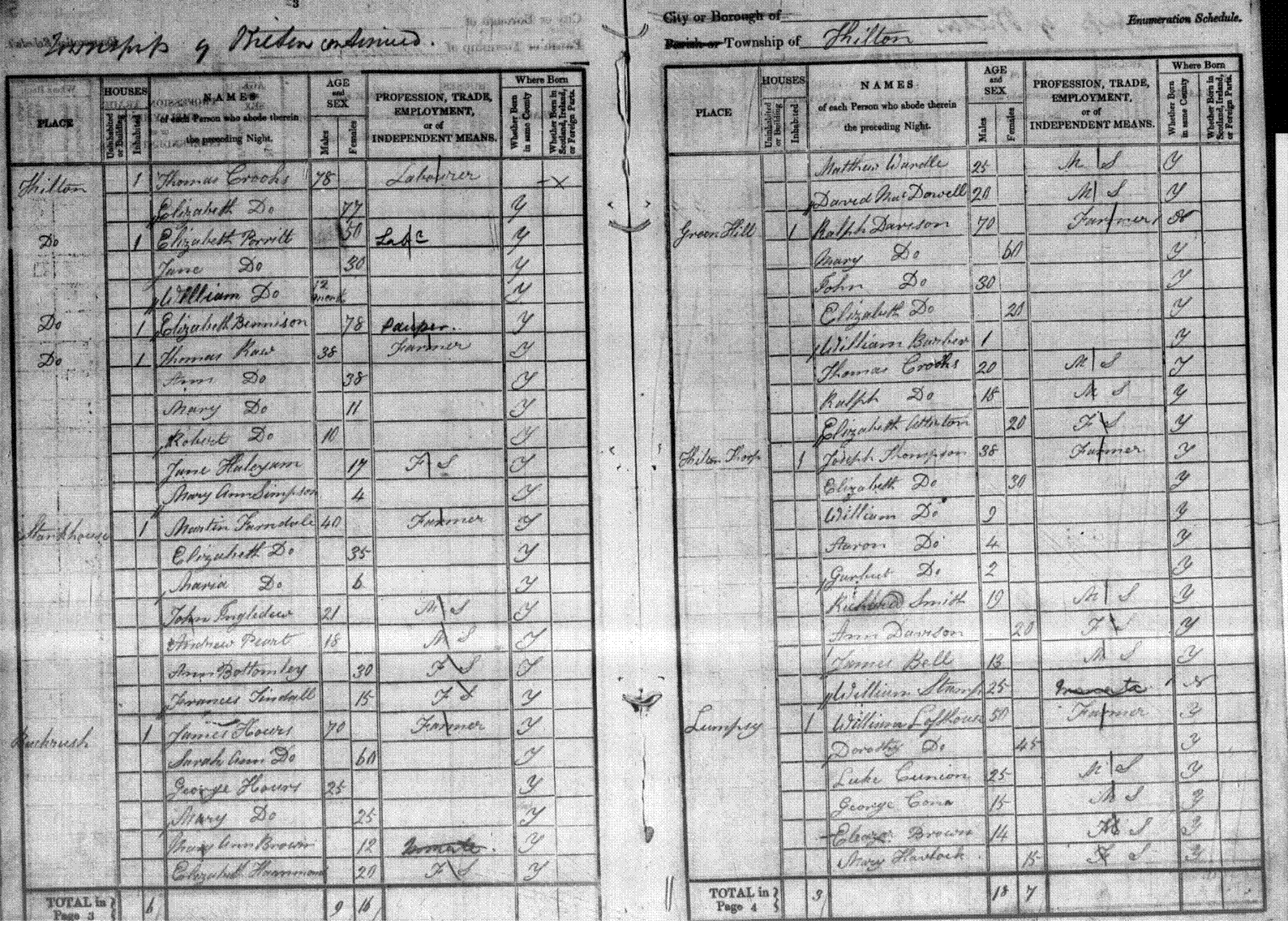
The Hours family lived at
Buckrush Farm, the Farndales at Stank House, the Davisons at Green Hill Farm,
the Thompsons at Kilton Thorpe and William Lofthouse at Lumpsey (1841 Census).
1843
John
Thomas Wharton
John Wharton died and the
Skelton and Kilton estates passed to his nephew, John Thomas Wharton.
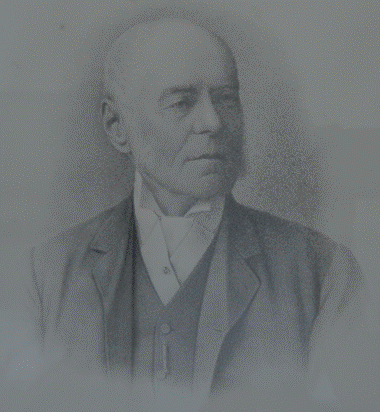
John Thomas Wharton
1844
Skelton Enclosure Map 1844 (North Yorkshire County Records Office Guide
No 3, Maps and Plans available for consultation, QDD(D) S, MIC 1579).
The 1844 tithe
map and census revealed a sparse population of around 80-90 residents,
primarily engaged in farming (Tithe Map &
apportionment for Kilton, The National Archives Reference PR/BRP/9/1, held at Teesside
Archives).
|
The
tenant farmers and population of Kilton in 1844 |
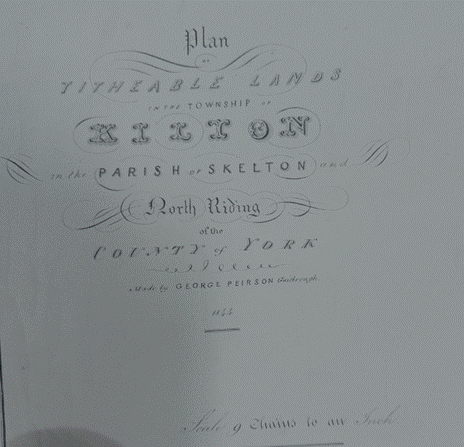
The
Tithe Map of 1845 shows the estate village in decay and it is obvious that the
re-organised landscape was not being sustained. The Lodge had disappeared as
had the building at the earthworks at Stank House and two of the farms within
the western arm of the township. The township was reverting to an intensity of
settlement very similar to that evidenced in the medieval period. The Tithe Map
also provides a picture of land use, showing which settlements were farming
which areas of land. Land use in 1845 was predominatly arable, but there seems
to have been more pasture than at the height of medieval cultivation. The
information about the land farmed from each unit is useful in confirming those
areas which fell within the remit of Greenhills, Buck Rush and Stank House.
Those defined in 1845 were probably little different from the medieval. The
same would apply to Lumpsey, if it is indeed a medieval farmnstead. Kilton and
Kiltoin Thorpe are more problematical, their combined areas may be the same as the
medieval but the boundary between the two runs along the post-medieval road
from Brotton to Kilton Thorpe. (Robert Daniels. 1990. Kilton: A Survey of Moorland
Fringe Township in Medieval Rural Settlement in North
East England. Architectural and Archaeological Society of Durham and
Northumberland Research Report No 2, edited by B E Vyner, page 55).
1845
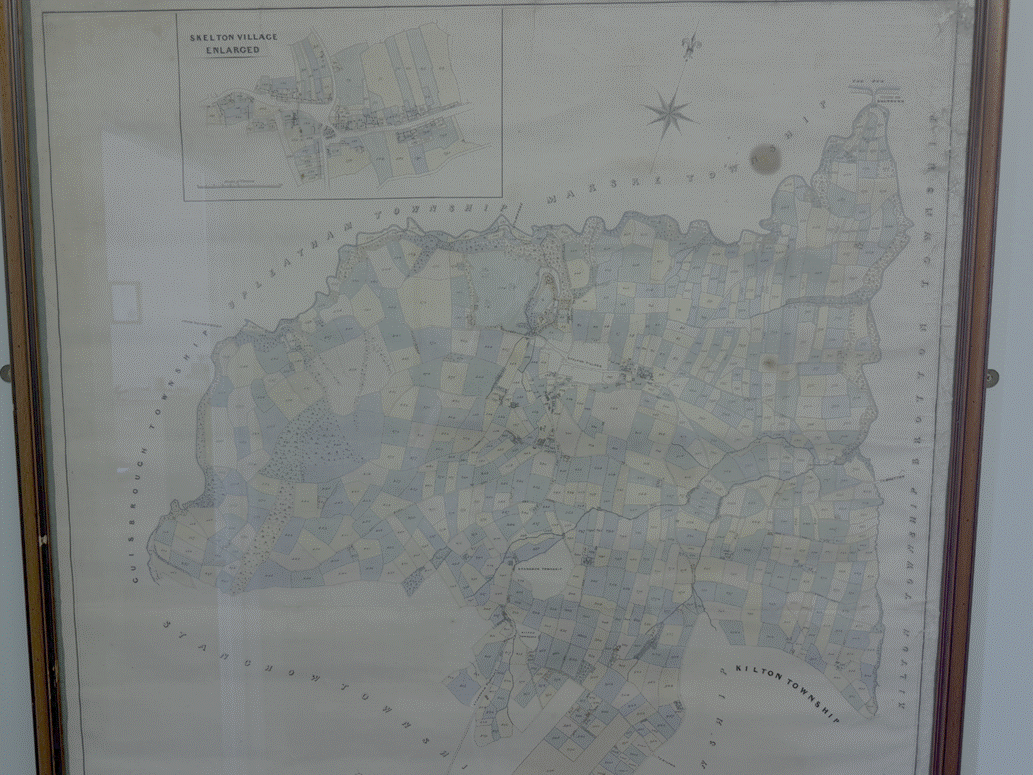
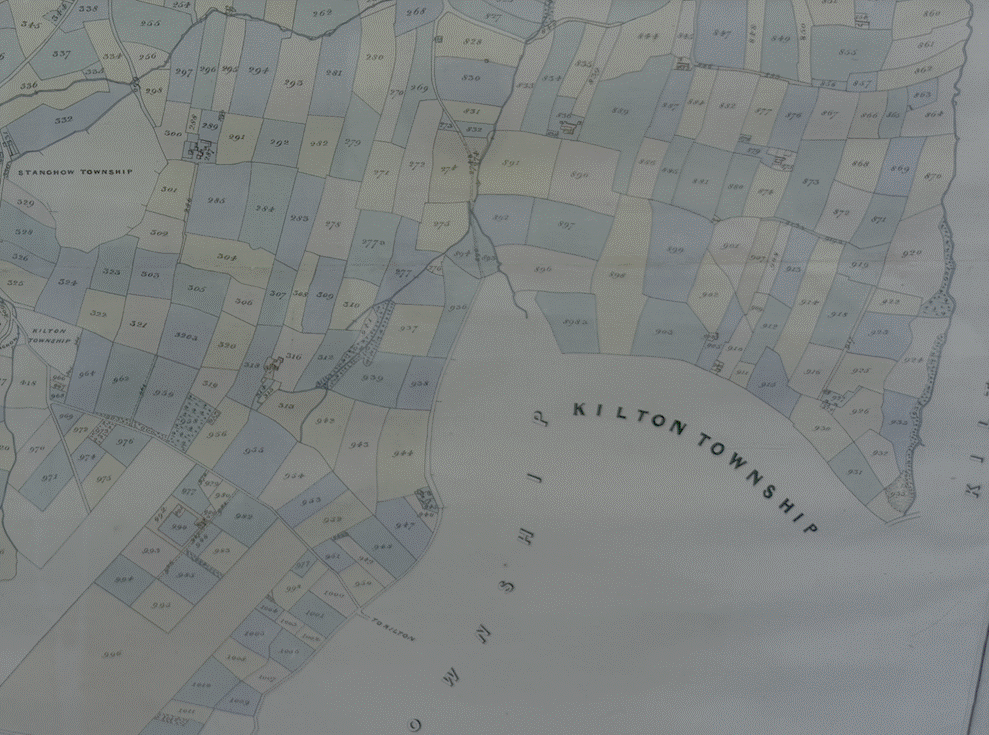
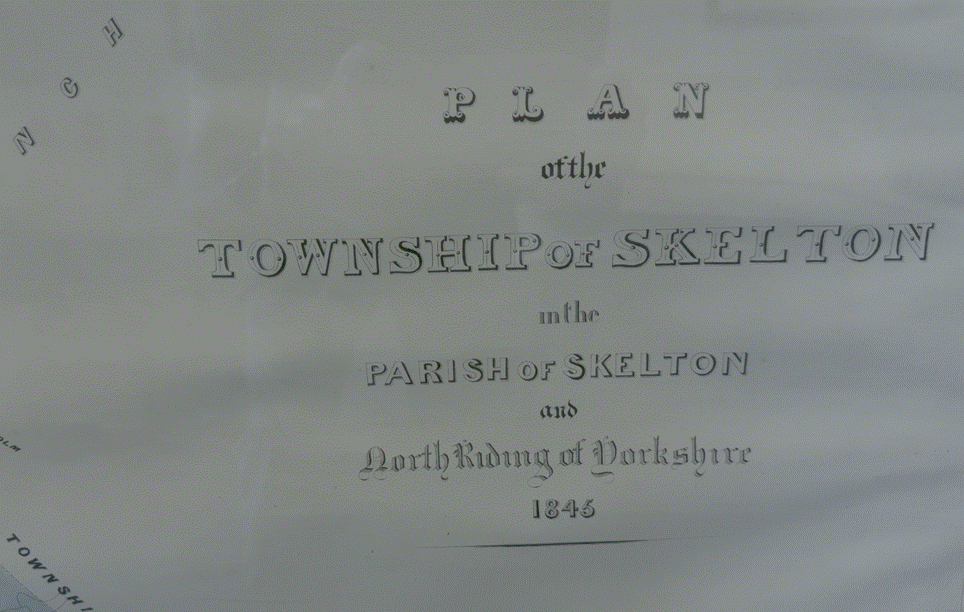
Skelton Enclosure Map 1845 (Skelton and Gilling Estate Office Records)
The mill complex changed little by 1845, but by
1856 it had grown with the addition of a courtyard farm.
(Robert Daniels. 1990. Kilton: A Survey of
Moorland Fringe Township in Medieval Rural Settlement in North East England. Architectural and Archaeological
Society of Durham and Northumberland Research Report No 2, edited by B E Vyner,
page 55).
1846
In 1846, in the village
is a small inn, on which it is inscribed the wretched doggrel: “Joseph
Newbegun, And by a licence he trusts he shall, Cheer all your hearts with the
very best Yall”. Notwithstanding the boast of the Kilton scribe, his ale proved
if possible still worse than his rhymes. (Ord, John Walker. 1846. History and Antiquities of of
Cleveland. London: Simpkin and Marshall. Page 271).
In 1846, Ord also
wrote of the ruined Kilton Castle. Standing among the tottering fragments,
we gazed upon a vast forest expanse, embrowned with the sombre hues of
declining autumn, which fitly harmonised with the calm magnificence of the
scene: at our feet rolled the rapid mountain-torrent along a
deep, rocky channel; the perpendicular declivities frowning gloomily beneath,
were rendered impervious with nettles, brambles, moss-grown crab-trees, and
prickly furze; whilst at the further boundary of the wood, Freeburgh's conical
mount soared in solitary majesty, like some guardian monarch of the woods and
vales. Near at hand, nestling in its sylvan nook, was the pretty village of Skinningrave, looking on the sea; Lofthouse was perched
aloft before us, with its rural hunting-box in the woods, and graceful poplars
dividing the hedge-rows; and, far as the eye could reach, stretched mountain
and moorland, forest and vale; such as minstrel's eye might of old love to
contemplate from turret and tower of the now mouldering pile. (Ord, John Walker. 1846. History and
Antiquities of of Cleveland. London: Simpkin and Marshall. Page 268 to 270).
The rateable
returns for Kilton are held by North Yorkshire
County Record Office QFR(V)
27/8.
The Skelton and
Gilling Estate Records include details of half yearly rents due at Lady Day and
30 June 1846:

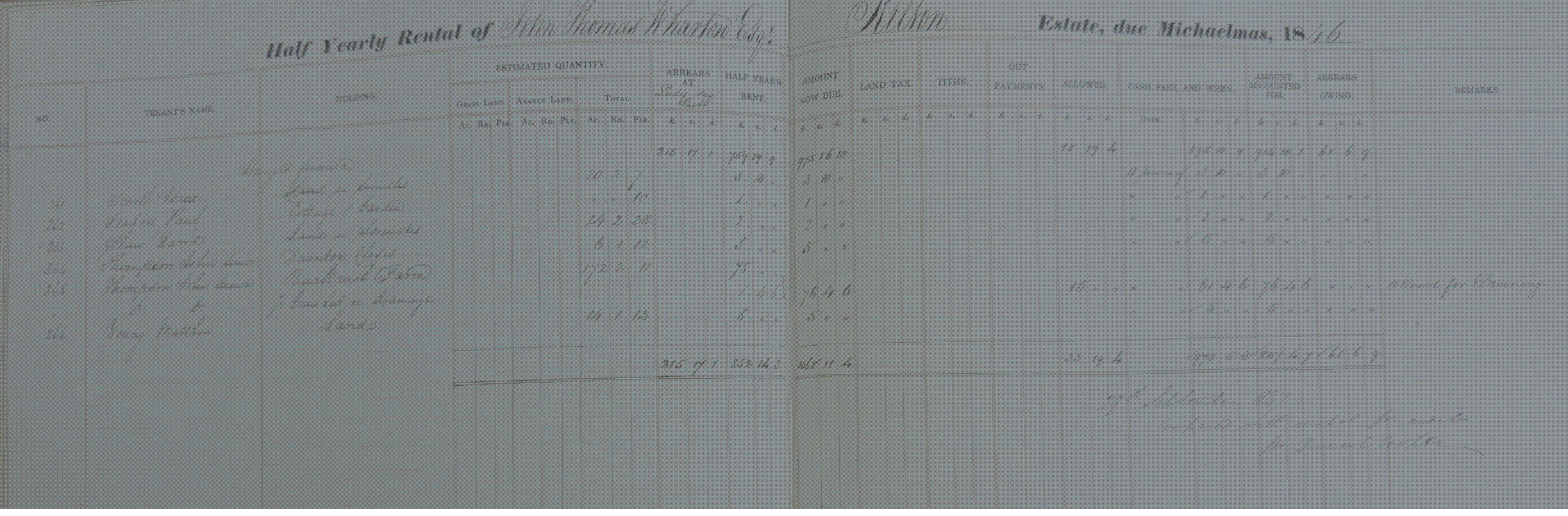
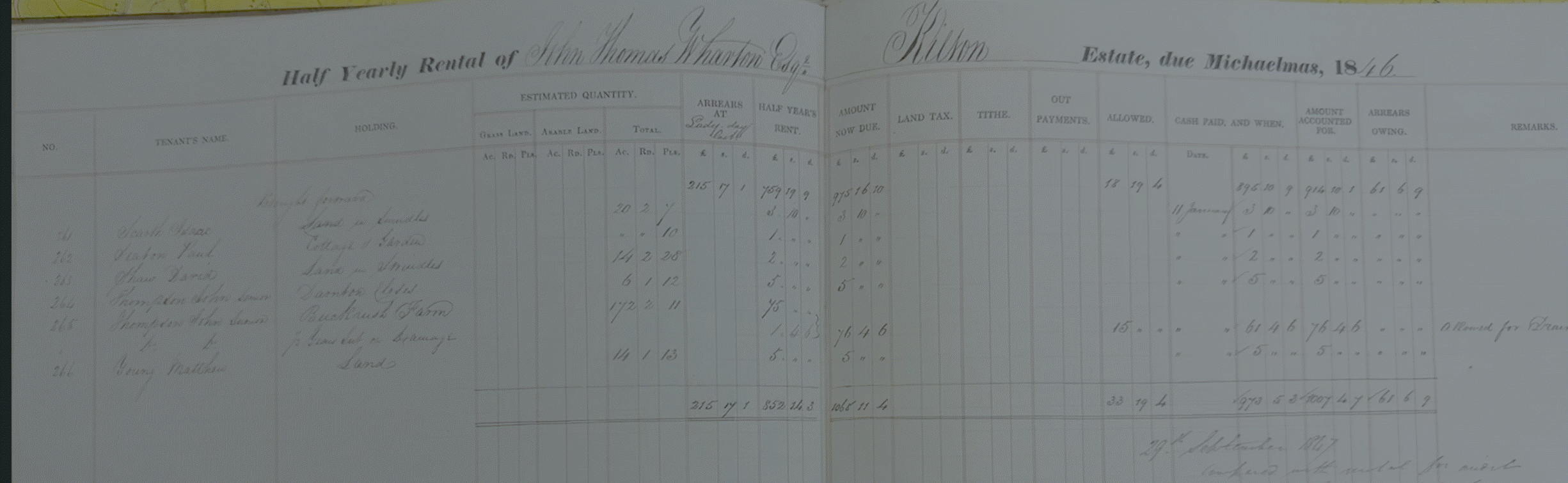
1851
In
1851, Kilton had a population of 83. Martin Farndale farmed at Kilton Hall.
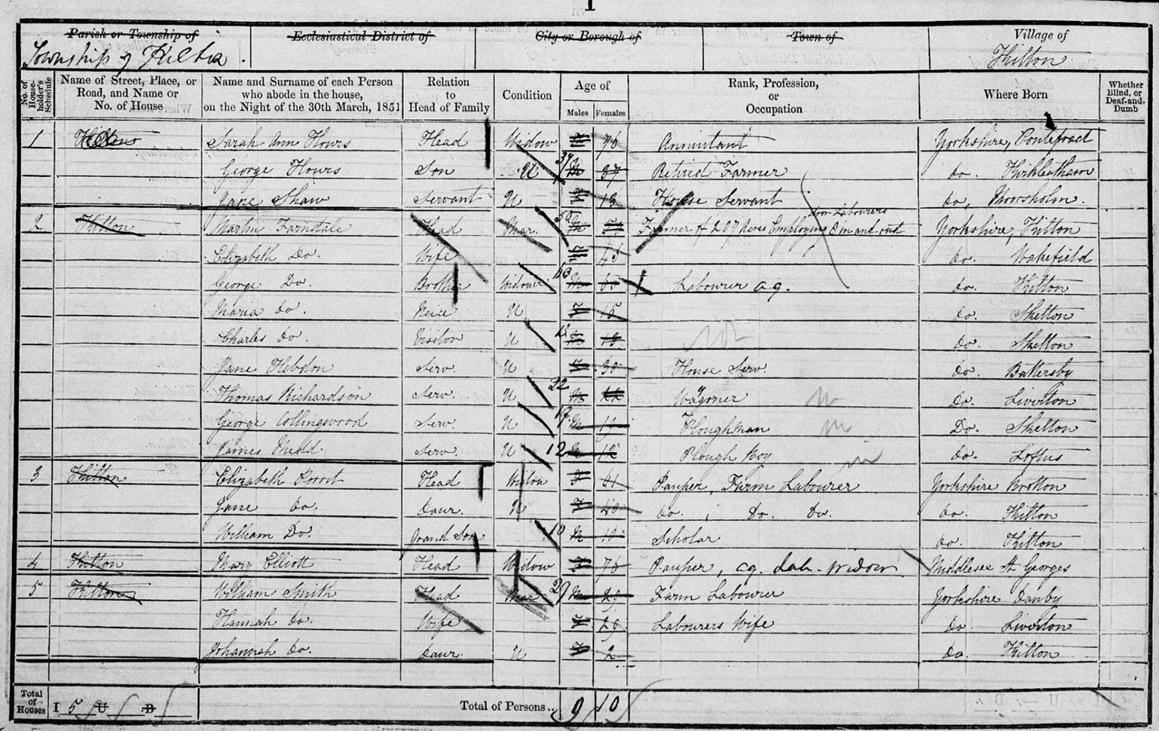

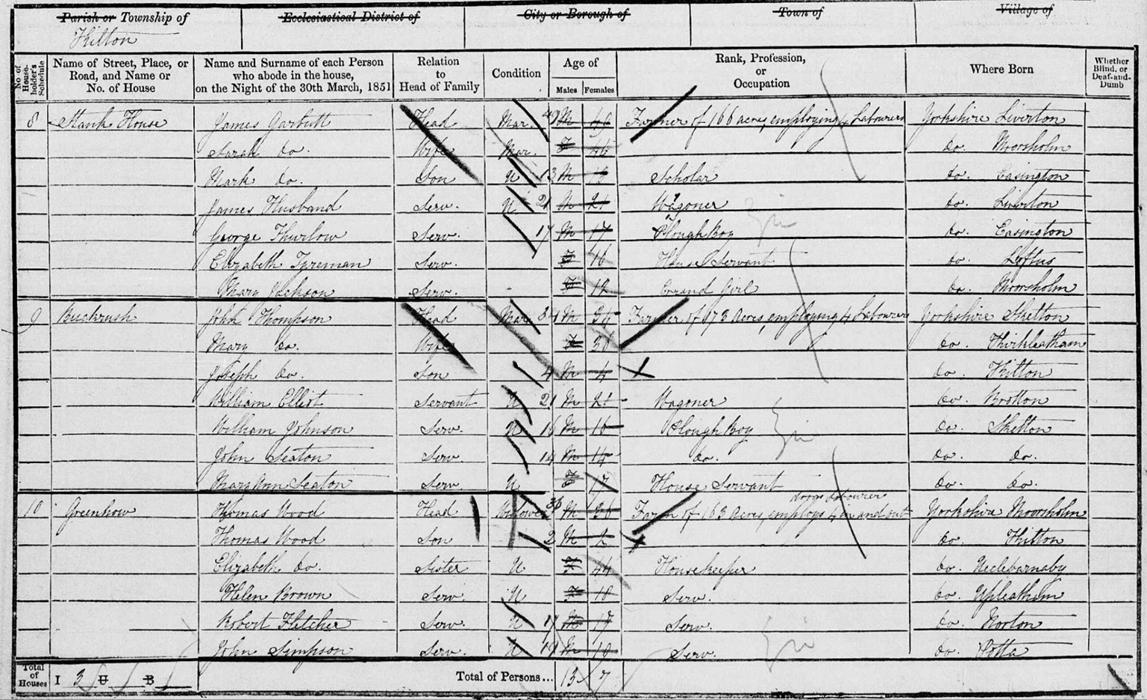

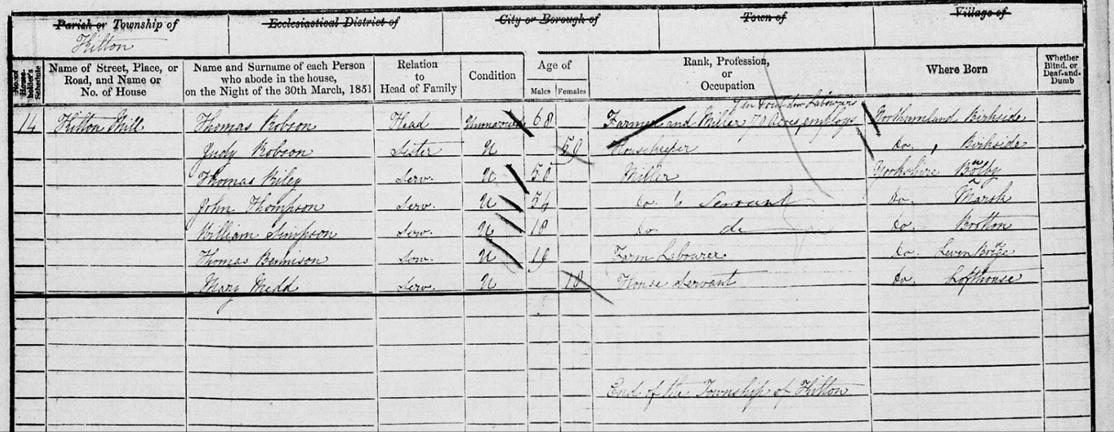
(1851 Census)
The
Skelton and Gilling Estate Records include details
of drainage costs (for which the landlord would have been responsible for
reimbursement) between 1851 and 1854 which included the interests of Martin
Farndale, James Garbutt, James Taylor, John Porritt and William Wood, who were
tenant farmners at that time.
1853
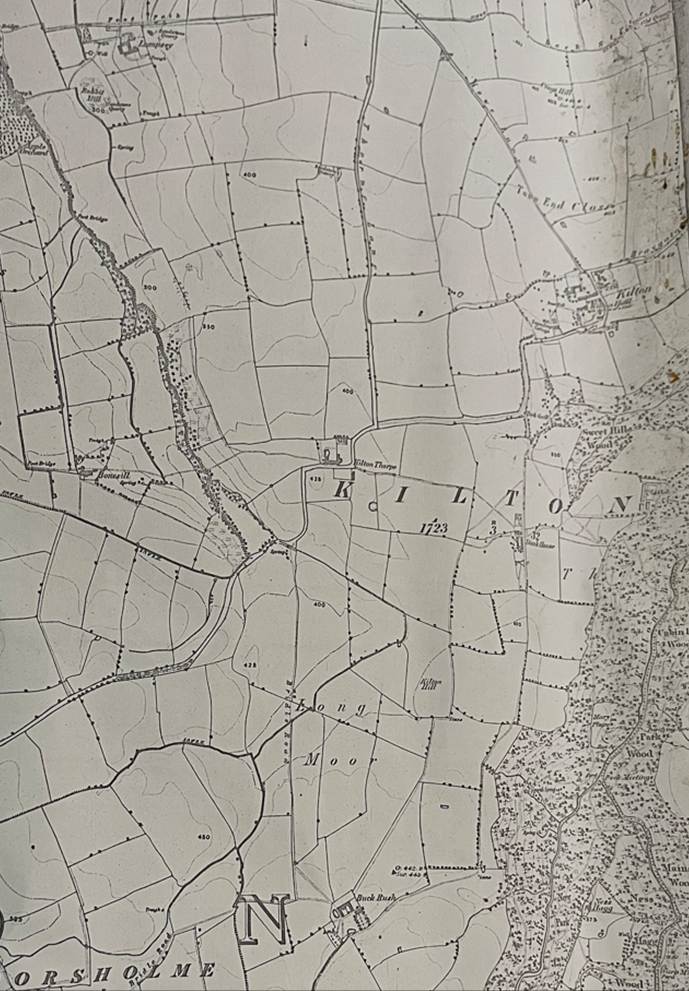
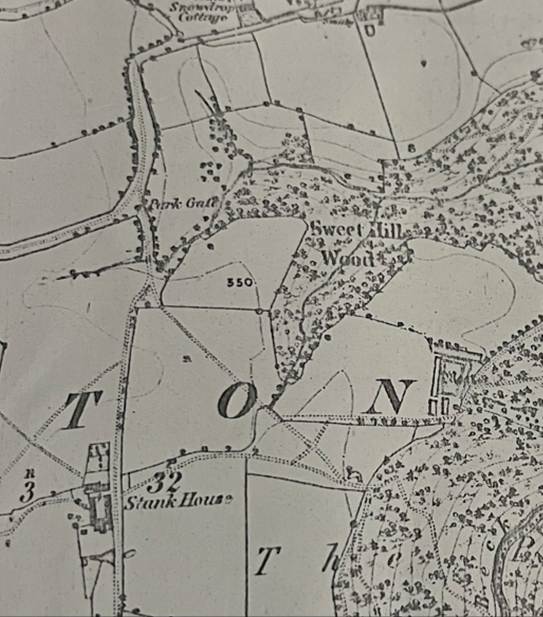
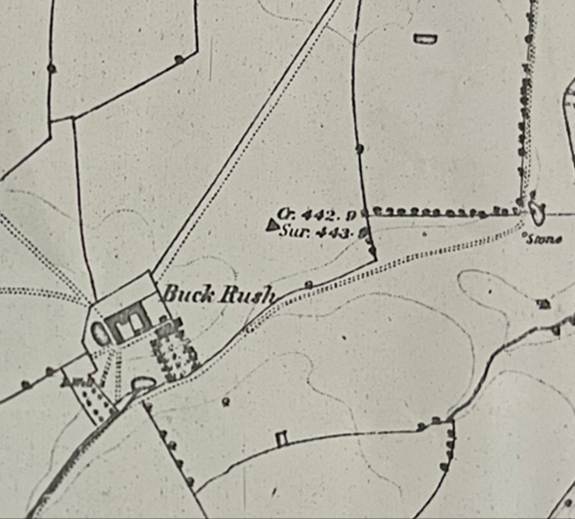
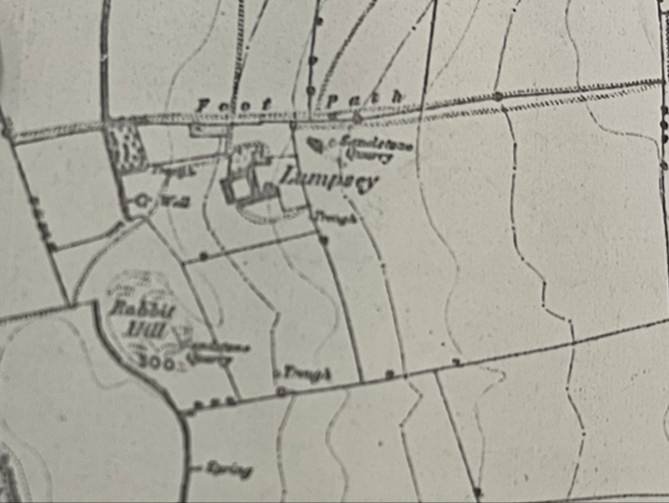
Kilton
1853 showing Kilton, Lumpsey (top left) and Buck Rush (bottom centre)
A
series of summary convictions were recorded from 1853.
|
Date |
Person(s) |
Offence |
Where case heard |
North Yorkshire County Record Office
Reference |
|
27 September 1853 |
Richard Child of Kilton, miller |
On 5 September 1853, having a one-stone weight and a two-stone weight in
his mill that were not according to the standard of the Exchequer |
Guisborough |
|
The
Skelton and Gilling Estate Records include
details of payment to John Walton for blacksmith works in 1852 in the sum of 3s
6d and Mrs Garland for work in 1852 in the sum of £2 4s 9d, both relative to
Kilton Hall Farm.
1856
An
1856 map showed the decline of Kilton was continuing. A courtyard farm under
development in the north row and the present kilton Hall Farm had been built to
the South of the village, probably indicating the absence of the landowner and
the establishment of a substantial tenant farm.
Little change
seems to have taken place between 1845 and 1856, the decay of the estate
village continued but the only significant occurrence seems to have been the
development of courtyard farms.
(Robert Daniels. 1990. Kilton: A Survey of
Moorland Fringe Township in Medieval Rural Settlement in North East England. Architectural and Archaeological
Society of Durham and Northumberland Research Report No 2, edited by B E Vyner,
page 55).
Following the
failure of the re-organisation of the landscape in the 18th century a
consolidation took place in the 19th century, perhaps between 1870
and 1893, and certainly between 1856 and 1893.
The attempt to foster a village at Kilton was abandoned and a single, if
substantial, farm was established. The financing of these measures may well
have been derived from the ironstone mines, but there is little else to
indicate the impact of industrialisation on the landscape. (Robert Daniels. 1990. Kilton: A Survey of Moorland
Fringe Township in Medieval Rural Settlement in North
East England. Architectural and Archaeological Society of Durham and
Northumberland Research Report No 2, edited by B E Vyner, page 55).
The
1856 Map of Kilton, surveyed in 1853:
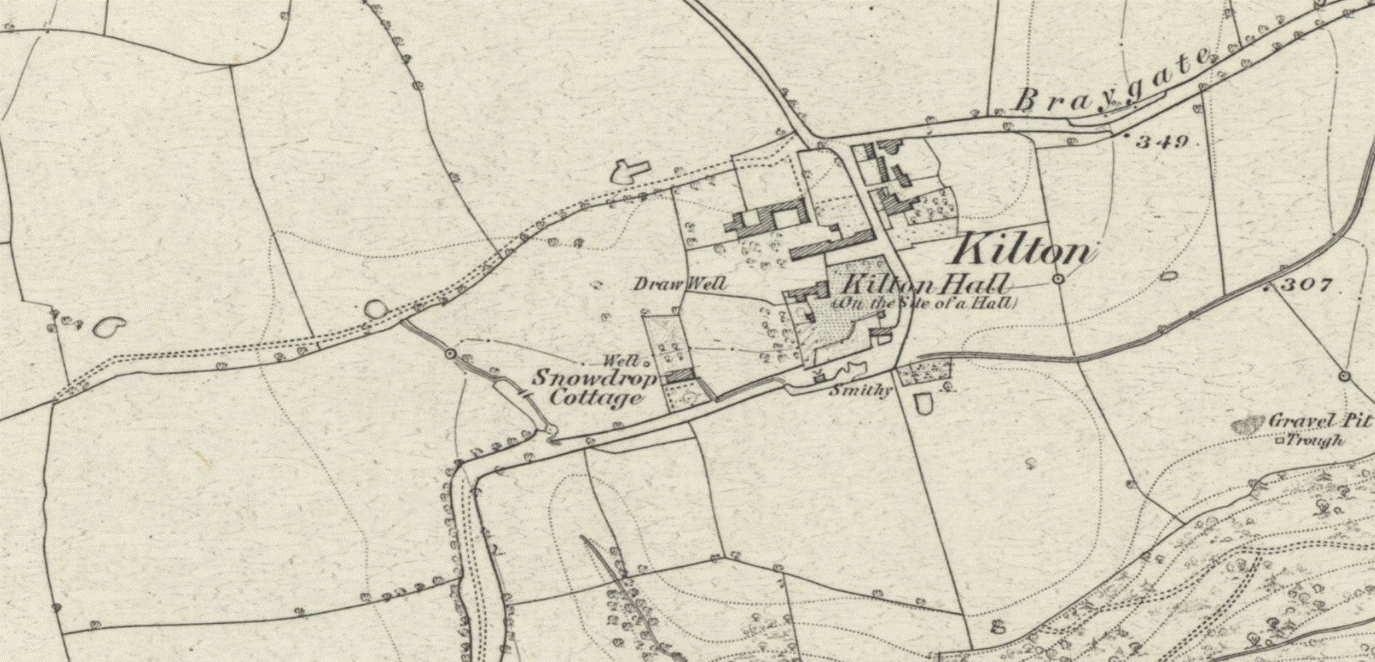
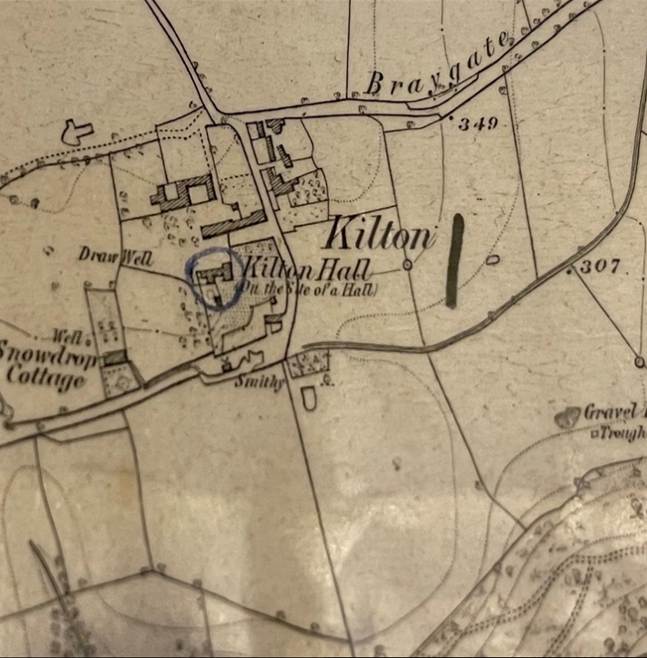
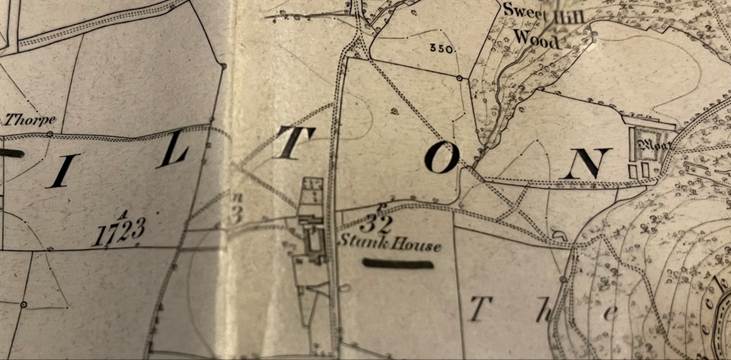
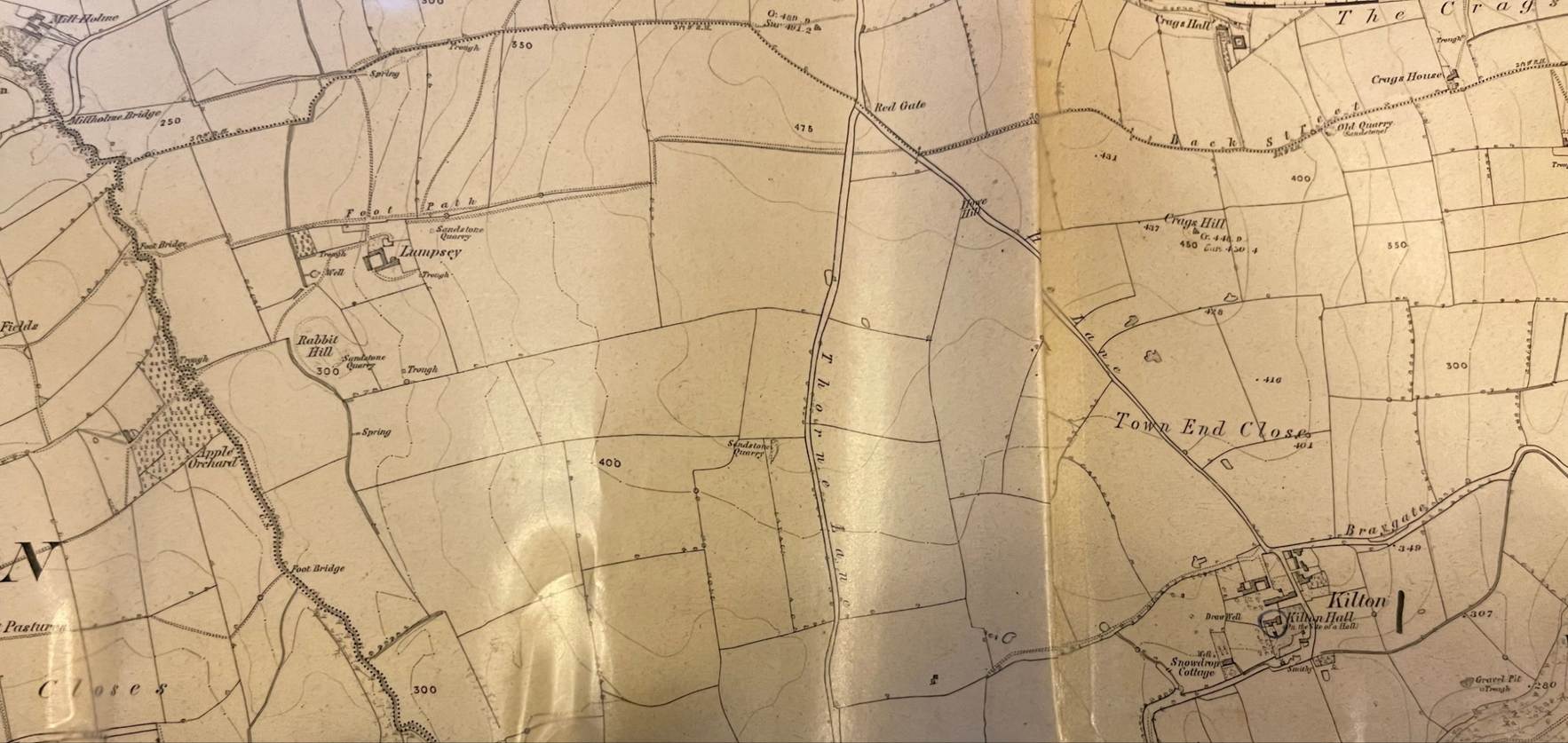
There
is a copy of the 1856 edition Ordnance Survey map which includes Kilton showing
the position of boreholes (The National Archives U.SG/8/1
held at Teesside Archives).
1857
In
a Report by the Bridgemaster on 20 October 1857 (North
Yorkshire County Records Reference QSB 1857 4/14/4), he reported that I
halted at Kilton Mill Bridge on the road to Skinnigrove, no damage had been
done to the foundations of this Bridge, but the old cracks in the arch had
opened.
1858
There
is a bundle of leases and corresspondence between 1858 to 1891 relating to J T
Wharton relating to various mining interests (The
National Artchives BS/BB/4/1/57
held at Teesside Archives).
The
Skelton and Gilling Estate Records include
details of ironstone worked in 1858.
1860
|
Date |
Person(s) |
Offence |
Where case heard |
North Yorkshire County Record
Office Reference |
|
24 December 1860 |
Henry Wilson of Loftus, labourer; Matthew Johnson of Lofts, labourer;
Frank Marley of Loftus, labourer; George Agar of Loftus, labourer |
On 9 December 1860 for taking a salmon from Kilton Beck belonging to
John Thomas Wharton esquire of Skelton Castle and the Earl of Zetland |
Guisborough |
QSB
1861 2/10/9/4 to 7 |
The Skelton and Gilling Estate Records include details
of half yearly rents due at Lady Day 1860:
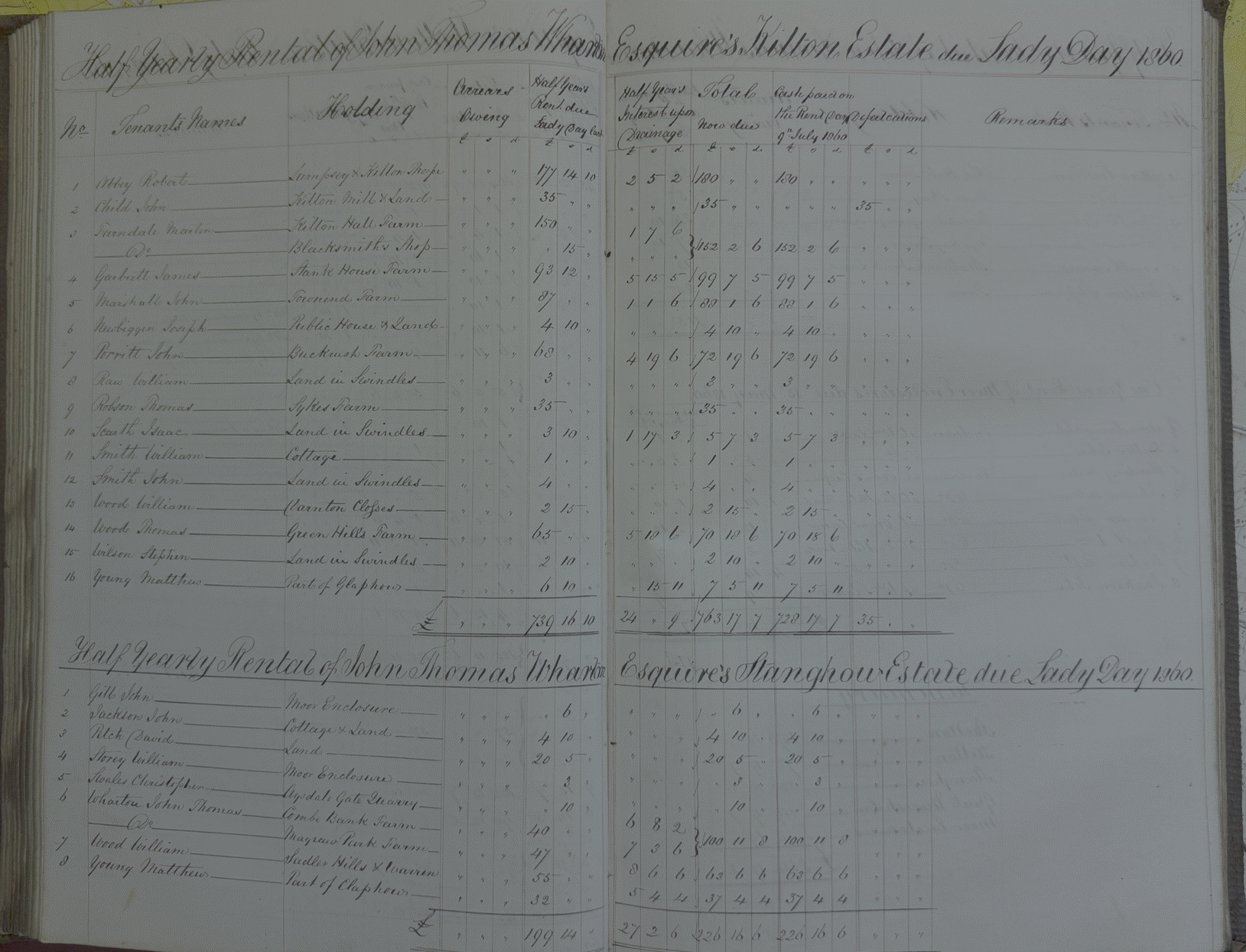
1861
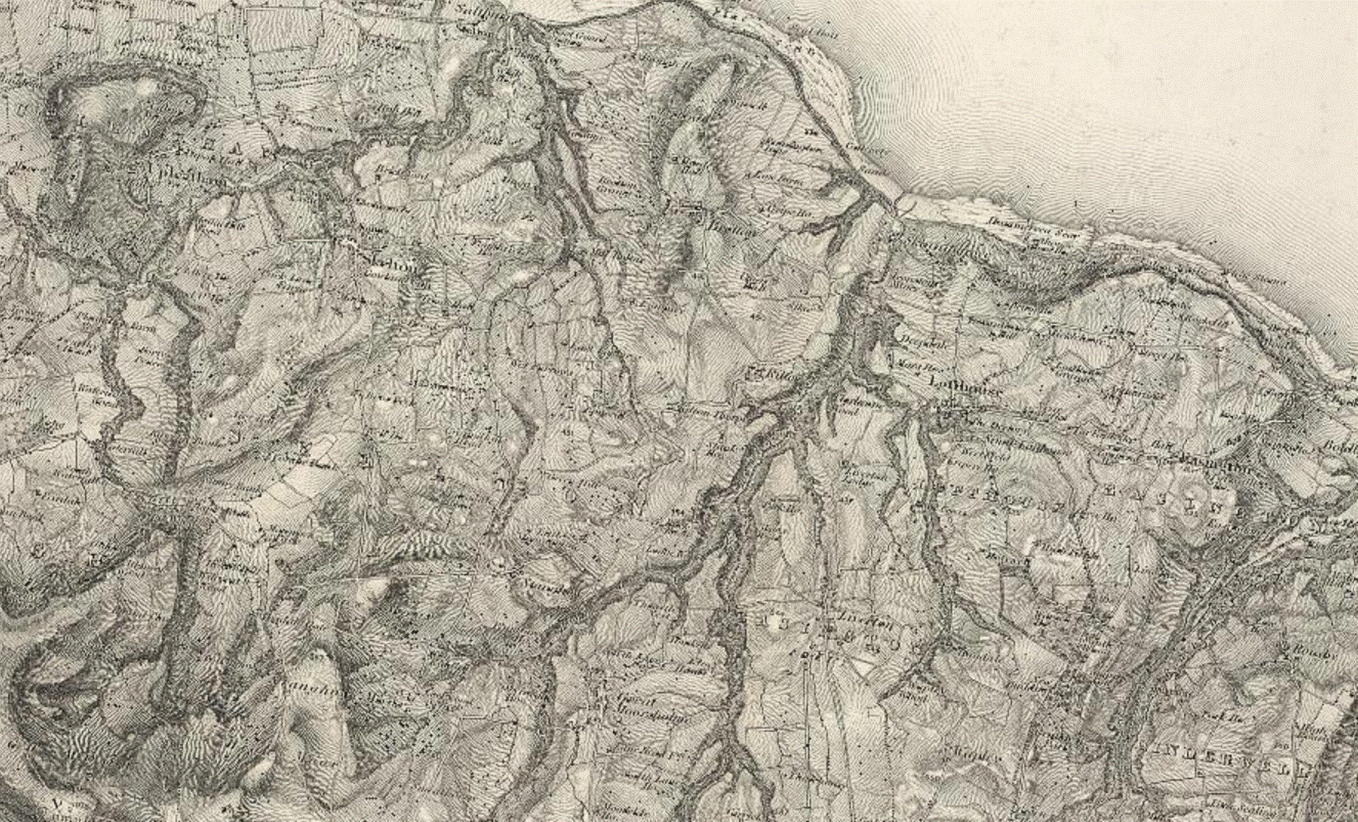
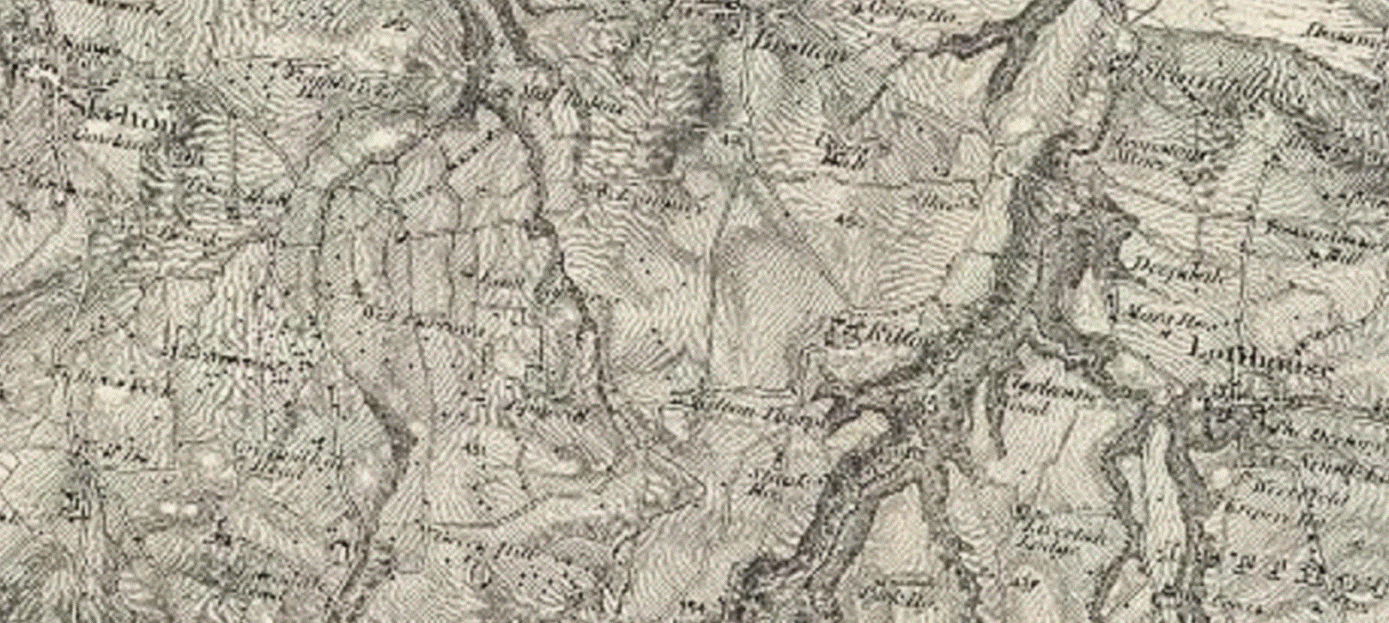
Ordnance Survey First Series, 1861
By 1861, William’s son, Martin Farndale
was a farmer of 210 acres with 8 employees at Kilton Hall Farm.
|
11 August 1798 to 22 June
1885
A Farmer of 600 acres |
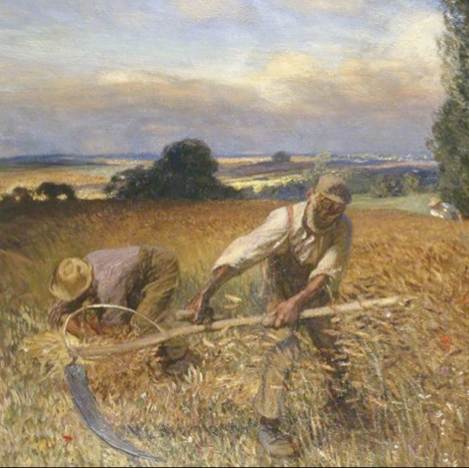
The population of Kilton was grew slightly to 93, mainly due to expanding
families.
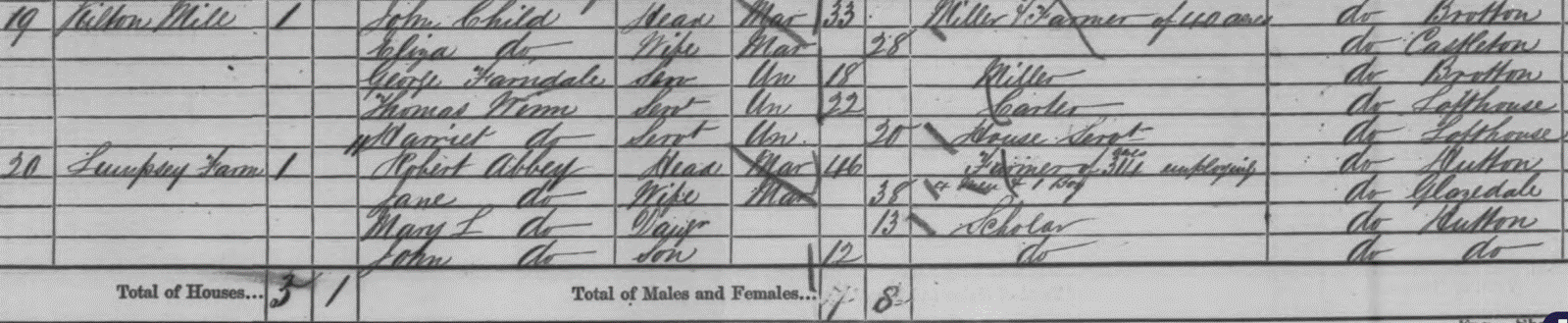

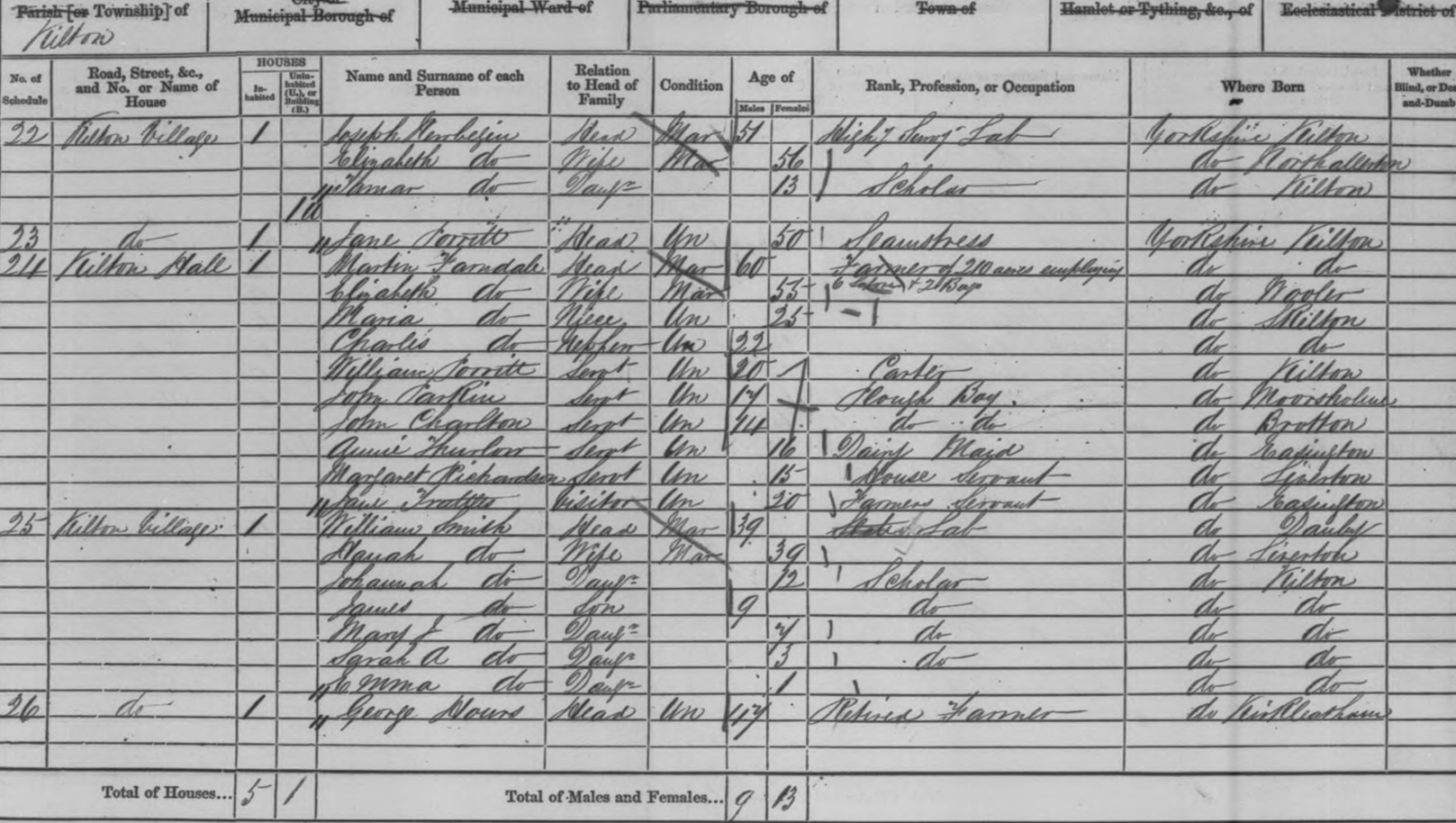

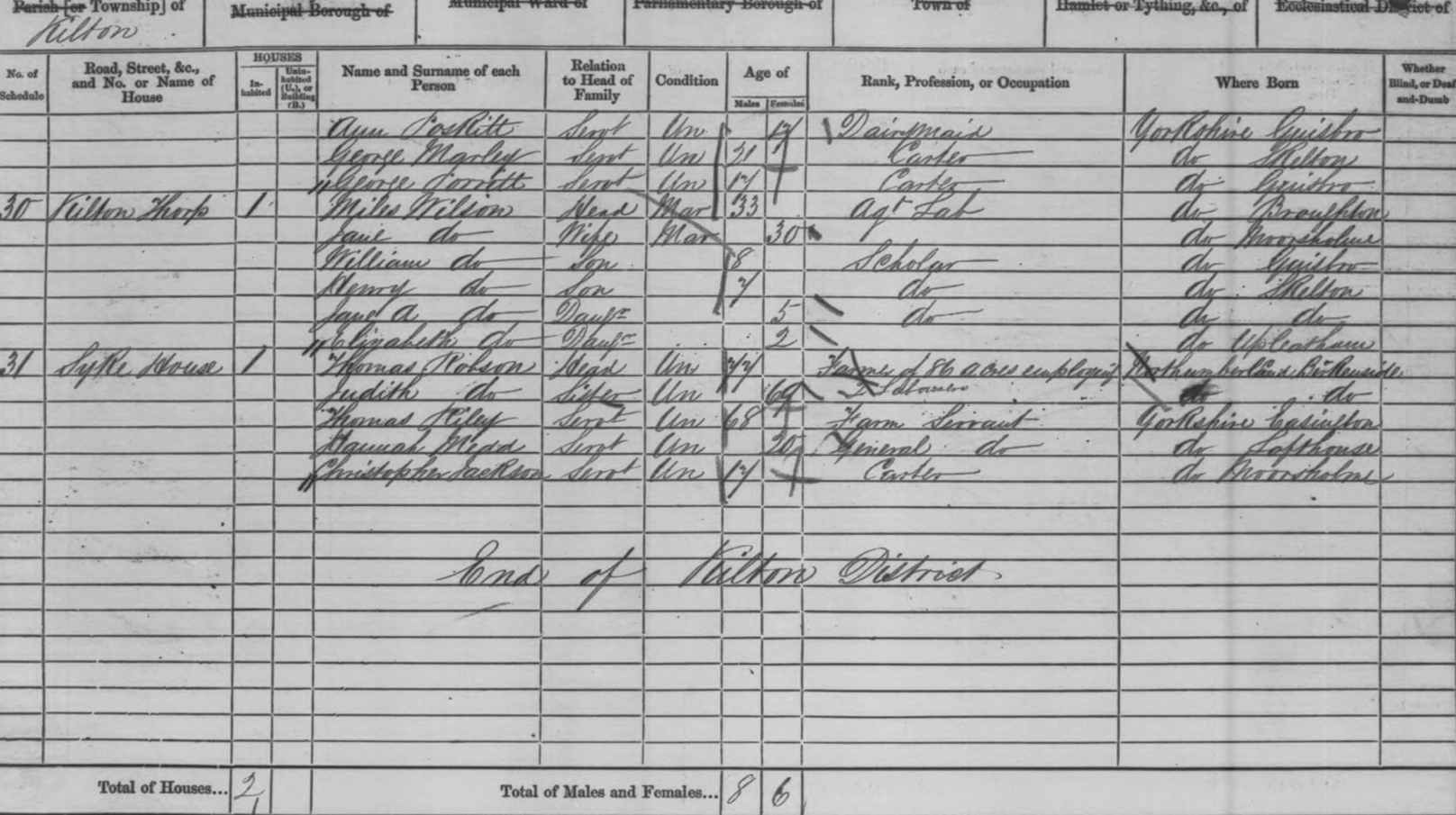
(1861 Census)
A certain Mr Jolly had been wonderfully blessed by hearing John Wesley
preach and conduct worship … .he asked Mr Wesley to
come to Little Kilton and preach there. To a man like Mr Jolly this did not
seem an exceptional or unreasonable request. Had he not been to Scarborough,
Whitby, Stokesley and even Guisborough, his umbrella is still at Guisborough as
a treasured relic of his visit there, then why not Kilton? But Wesley, busy man
as he was, one only has to read his journal to realise
how busy, found this impossible. Not to disappoint the enthusiastic Mr Jolly,
one of the helpers in the Wesley team was detailed to come. So
the first Methodist service in this area was conducted in the kitchen of Kilton
Hall, the actual date being uncertain. The spacious kitchen of Kilton Hall
became a hallowed place and many who attended the ervices
were blessed and helped, and entered
into a new Christian experience. Luike My
Jolly they wanted others to share in this new found
life and so decided that a more permanent place should be sought,.
A little cottage in the mining village of Brotton was acquired for the purpose
and was certified for worship on 18 January 1861. The cottage still stands, a stone’s throw away and almost opposite the present
chapel. (Wainwright, Greta
(1966), Brotton Methodist Church, 1866 to 1966).
1862
|
Date |
Person(s) |
Offence |
Where case heard |
North Yorkshire County Record
Office Reference |
|
25 November 1862 |
Joseph Robinson of Brotton, labourer |
On 11 November 1862 for stealing hazel sticks value 1s from a wood
belonging to and occupied by John Thomas Wharton of Skelton esquire in
Kilton; with costs paid to Francis Walkington of Skelton police constable |
Guisborough |
|
1865
|
Date |
Person(s) |
Offence |
Where case heard |
North Yorkshire County Record
Office Reference |
|
6 June 1865 |
John Burke of Kilton, labourer |
On 23 May 1865 for being drunk and riotous in the street in Brotton |
Guisborough |
|
|
11 July 1865 |
James Mullen |
On 23 June 1865 for stealing a dog, the property of John Thomas Wharton
esquire in Kilton |
Guisborough |
|
Various leases and supplemental leases relating to the Wharton’s
ironstone royalties by Bolcklow Vaughan Co Ltd
between 1865 to 1925 relate to Kilton mine (The
National Archives BS/BV/5/1/6
held by Teesside Archives) .
1866
Formerly a township in the parish of Brotton, Kilton became a separate
civil parish, the ecclesiastical parish of Kilton, in 1866 (A Vision of Britain,
Kilton Parish, Formal
Status; F. Youngs. 1991. Local Administrative Units: Northern England.
London: Royal Historical Society).
The new Wesleyan Chapel at Brotton was opened on 25 May 1866 by Reverend
JH Beech, Chairman of the District. The Kilton Society now held a preaching
service quarterly, and for all other services came to Brotton. The Farndale
family, occupants of Kilton Hall, walked the distance regularly, rain, snow or
shine. (Wainwright, Greta (1966), Brotton
Methodist Church, 1866 to 1966).
On 14 June 1866 Thomas Wood, farmer of Kilton, was summoned to appear on
a jury on the Traverse Jury in the Midsummer sessions in 1866 (North Yorkshire County Records Office QSB 1866 3/1/80).
|
Date |
Person(s) |
Offence |
Where case heard |
North Yorkshire County Record
Office Reference |
|
1 May 1866 |
James Clough and Isaac Allan of Brotton, miners |
On 21 April 1866 or trespassing in the daytime in search or pursuit of
game on the land of John Thomas Wharton esquire occupied by John Porritt in
Kilton |
Guisborough |
QSB
1866 3/10/7/36 and 37 |
|
16 June 1866 |
William Ford, late of Leeds, hawker |
On 14 June 1866 for assaulting William Judson of Skelton farmer in
Kilton |
Guisborough |
|
|
7 August 1866 |
John Porritt, farmer of Kilton |
On 7 August 1866 for maliciously damaging a gate post, the property of
Robert Etty |
Guisborough |
|
1867
|
Date |
Person(s) |
Offence |
Where case heard |
North Yorkshire County Record
Office Reference |
|
19 November 1867 |
John Charlton of Brotton, blacksmith |
On 19 November 1867 for catching three salmon in Kilton Beck during the
close season |
Guisborough |
QSB
1868 1/10/8/23 and 26 |
1868
|
Date |
Person(s) |
Offence |
Where case heard |
North Yorkshire County Record
Office Reference |
|
3 November 1868 |
Robert Garbutt of Skelton, miner |
On 28 October 1868 for trespassing in the daytime in search or pursuit
of game on land belonging to and occupied by John Thomas Wharton esquire in
Kilton |
Guisborough |
|
|
22 December 1868 |
George Shimmings of Brotton, miner |
On 15 December 1868 for trespassing in search or pursuit of game on land
belonging to John Thomas Wharton esquire and occupied by Thomas Hall in
Kilton |
Guisborough |
|
1869
Martin Farndale
had been summoned for permitting eleven heifers to stray on the highway, in the
township of Kilton, but he claimed to have a right of 28 years standing, the
case was dismissed, the bench having no jurisdiction. (York Herald’s Report of Petty Sessions on 6 November 1869).
|
Date |
Person(s) |
Offence |
Where case heard |
North Yorkshire County Record
Office Reference |
|
20 April 1869 |
George Robinson of Brotton, labourer |
On 9 April 1869 for trespassing in search or pursuit of game on land
belonging to John Thomas Wharton esquire and occupied by Thomas Hall in
Kilton |
Guisborough |
|
|
8 June 1869 |
Robert Melvin of Kilton, labourer |
On 29 May 1869 for being drunk and riotous in the street in Loftus |
Guisborough |
|
|
27 July 1869 |
James Hall of Brotton, miner and William Hinson of Brotton, blacksmith |
On 24 July 1869 for assaulting John Porritt of Kilton farmer in Kilton |
Guisborough |
QSB
1869 4/10/9/70 and 71 |
1870
Kilton developed
as a township tied to feudal land tenure, with its manor once belonging to T.
Wharton, Esq, and real property valued at £1,787 in the 1870s, when the
population stood at 93 residents across 13 houses.
There were
further farm amalgamations between 1870 and 1893 demolishing the remnants of
the eighteenth century estate village to make way for
brick farm buildings (Kilton: A Survey of a
Moorland Fringe Township by Robin Daniels, 1990).
Kilton, a
township in Brotton parish, N. R. Yorkshire; 6 miles NE of Guisbrough.
Acres, 1,643. Real property, £1,787. Population, 93. Houses, 13. The manor
belongs to T. Wharton, Esq. A castle was built here,
in the time of King Stephen, by Robert de Bruce; passed to the Thwengs; and is now an extensive ruin, amid fine woods (John Marius Wilson. 1870. Imperial Gazetteer of
England and Wales, Volume
3, page
1102).
|
Date |
Person(s) |
Offence |
Where case heard |
North Yorkshire County Record
Office Reference |
|
21 June 1870 |
Thomas Brown |
On 18 June 1870 for trespassing in search of game on land belonging to
John Thomas Wharton esquire in Kilton |
Guisborough |
|
|
13 September 1870 |
Joseph Henderson of Kilton, miner |
On 1 September 1870 for being quarrelsome and disorderly in Moorsholm on
the licensed premises of Thomas Johnson of Moorsholm and refusing to leave
when asked by the said Thomas Johnson |
Guisborough |
|
|
4 October 1870 |
Thomas Davidson and James Wright of Brotton, miners |
On 25 September 1870 for maliciously damaging trees and underwood
growing in a plantation belonging to John Thomas Wharton esquire in Kilton |
Guisborough |
QSB
1870 4/10/8/119 and 120 |
|
25 October 1870 |
Samuel White of Liverton, William Garnall, Thomas Whaite, William and
John Robinson of Brotton, miners |
On 16 October 1870 for trespassing in the daytime in search of game on
land belonging to and occupied by John Thomas Wharton esquire in Kilton |
Guisborough |
QSB
1871 2/10/8/1 to 6 |
Plan and section
of proposed railway to Kilton Ironstone New Winning in 1870 (The National Archives U.SG/8/6,
U.SG/8/7
held at Teesside Archives).
1871
The first mine in
Cleveland had opened in Skinningrove on 7 August 1848. The mining of ironstone
at scale in Cleveland followed the discovery two years later of the Main
Seam at Eston by John Vaughan and John Marley. Underground mining started
shortly afterwards. An iron rush led to some forty mines being established
within two decades, supplying about a third of Britain's iron by the 1870s.
Over half a million tons of ironstone was raised annually by the mid-1850s. Early
mining relied on the labour-intensive pillar and stall method using picks and blasting powder. The
boom caused a mass population influx, with workers arriving from across Britain
and Ireland to live in purpose-built pit villages like California at Great
Ayton, Skinningrove, and Eston. It was inevitable that the indigenous rural
population, including at Kilton, would see an influx of mine workers and some
would be drawn to the mines themselves for work.
Kilton mine began operating
in 1871 after sinking two 700-foot shafts and continued, intermittently until
1963. A mine also opened on Craggs hill in 1871 and at adjacent Carlin How in
1873. Craggs operated until 1893 and Carlin How, which came to be called Duck
Hole because of the wet working conditions, until 1924.
There is a Plan
showing land given up to Kilton Ironstone Co by Bell Bros at Kilton (National Archives, U.SG/8/37,
held at Teesside Archives).
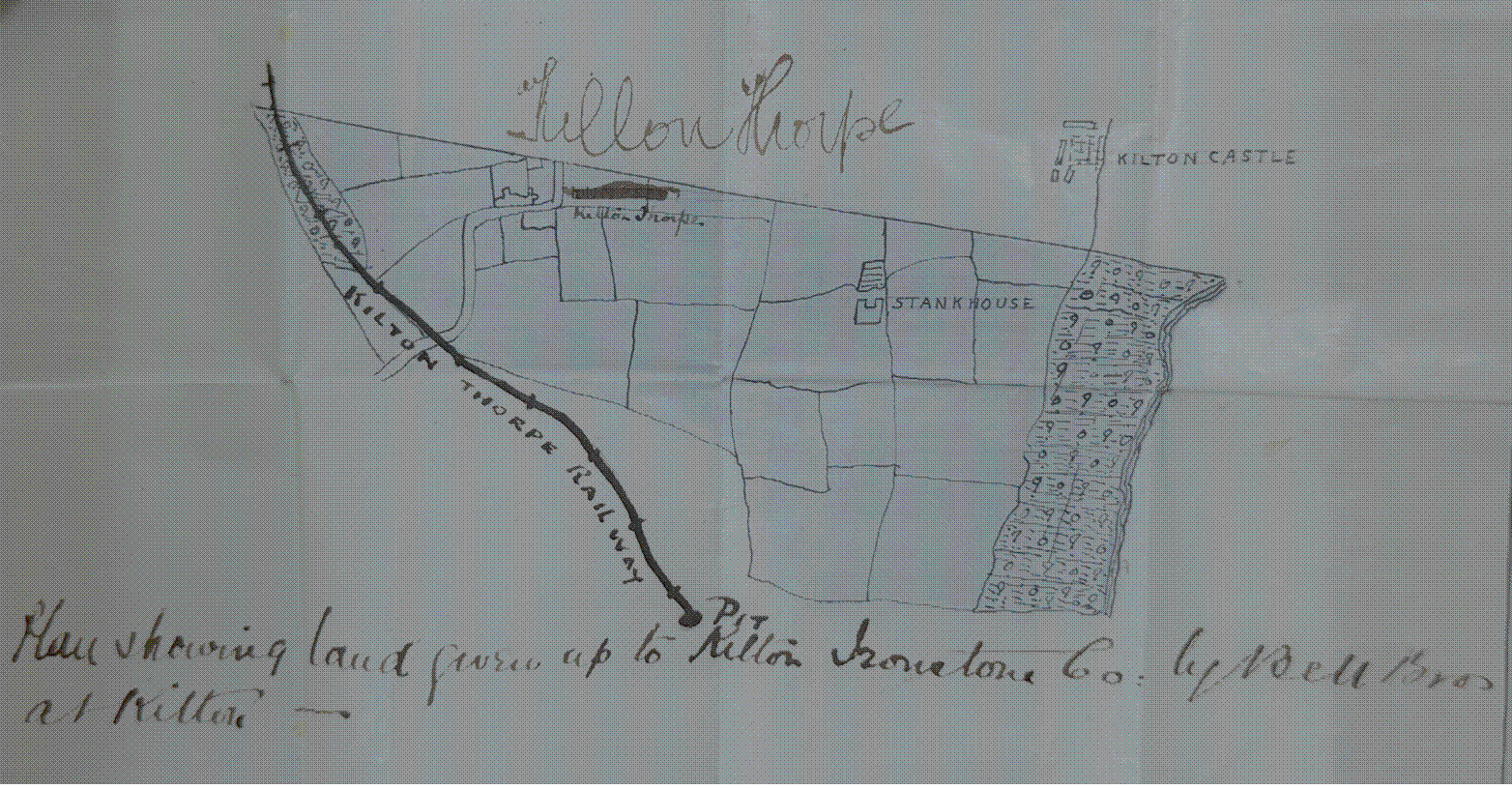
There are copies
of leases dated 7 January 1871 of ironstone from J T Wharton of Skelton Castle
to various ironmasters, of ironstone and iron ore in Kilton and Great Moorsholm
(National Archives, U.SG/1/2,
held at Teesside Archives).

Martin
Farndale was still at Kilton Hall Farm, by then a farmer of
600 acres with 16 employees. The population of Kilton was growing, particularly
with the arrival of a large number of ironstone
miners.
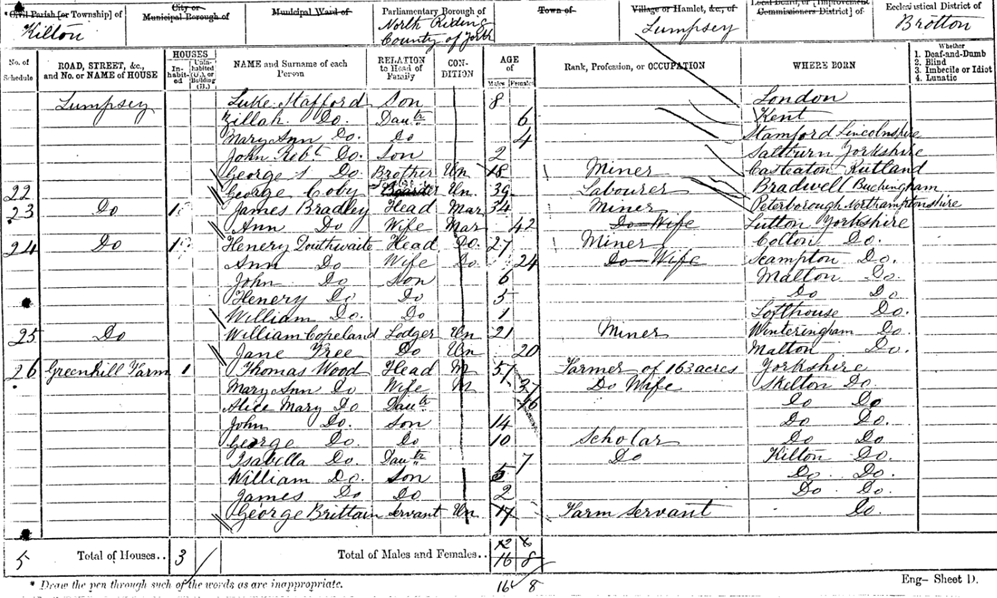
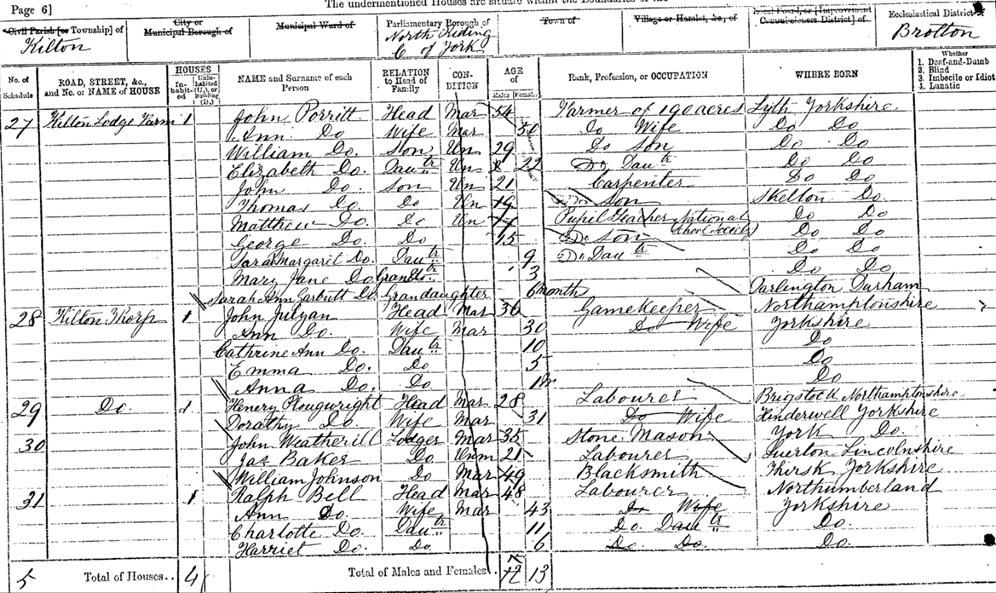
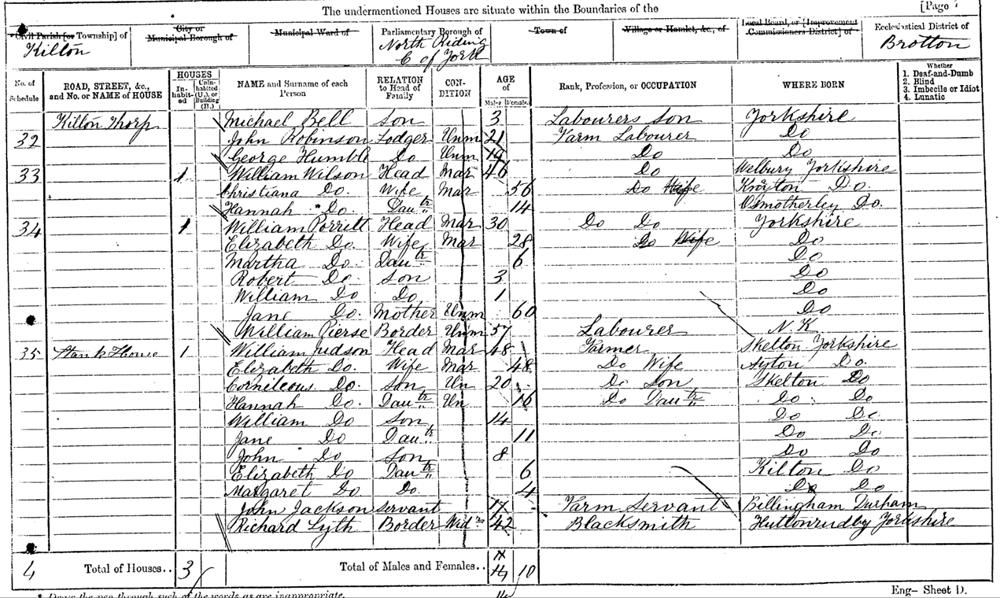
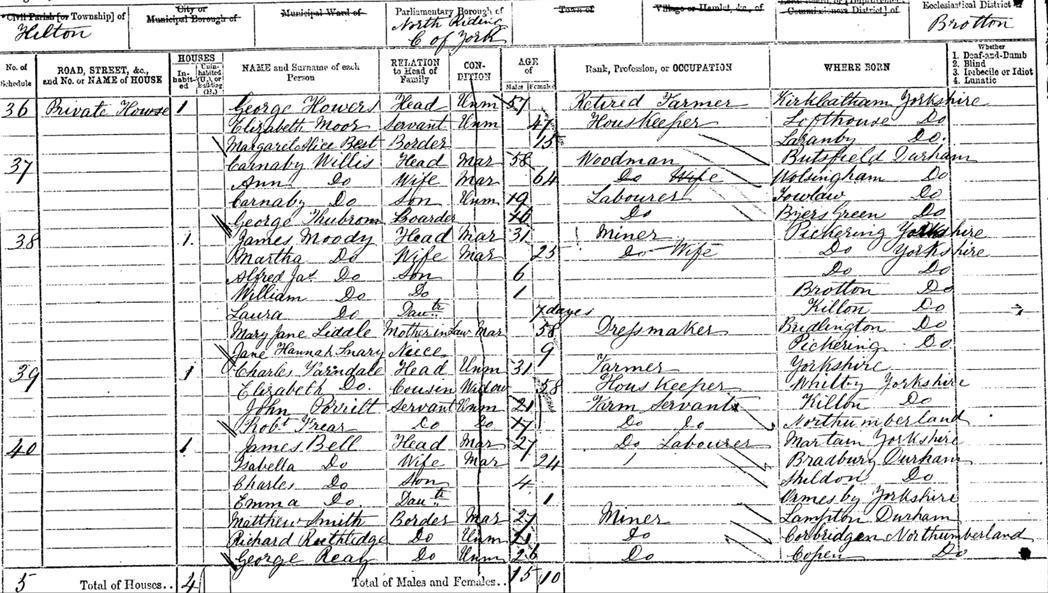
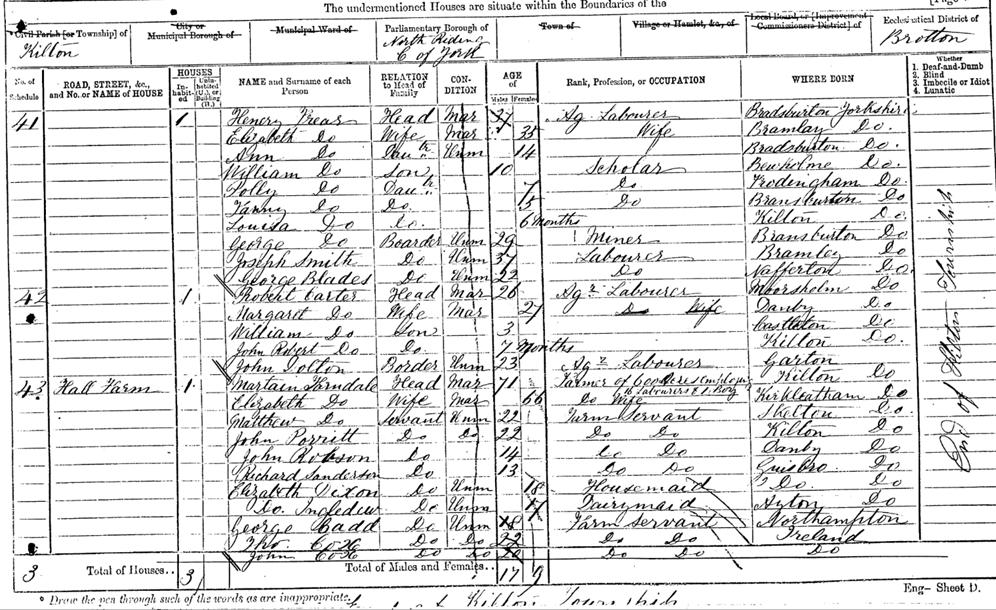
(1871 Census)
|
Date |
Person(s) |
Offence |
Where case heard |
North Yorkshire County Record
Office Reference |
|
21 February 1871 |
Levi Porritt of Kilton, miner |
On 6 February 1871 for being the owner of a dog that chased a sheep, the
property of Anthony Lax Maynard esquire, causing two-poundsworth of damage in
Skinningrove |
Guisborough |
|
|
4 July 1871 |
William Whitfield and John Topkins of Brotton, miners |
On 24 June 1871 for assaulting William Mapson of the township of Kilton,
miner, in Brotton |
Guisborough |
QSB
1871 4/10/8/48 to 49 |
|
10 October 1871 |
Charles Lowe of Kilton, deputy |
On 7 October 1871 for maliciously
damaging the door of the house occupied by John Smith of Kilton deputy |
Guisborough |
|
There are
Conditions for a lease of Ironstone Royalty in Kilton and Moorsholm June 1870;
with terms for proposed lease of land upon the Kilton Estate to the proposed
North Cleveland Ironstone Company Ltd relating to their South Loftus Royalty
for railway purposes and relating plan. The Conditions are dated 4 March 1871.
(The National Archives U.SG/1/1
held at Teesside Archives).
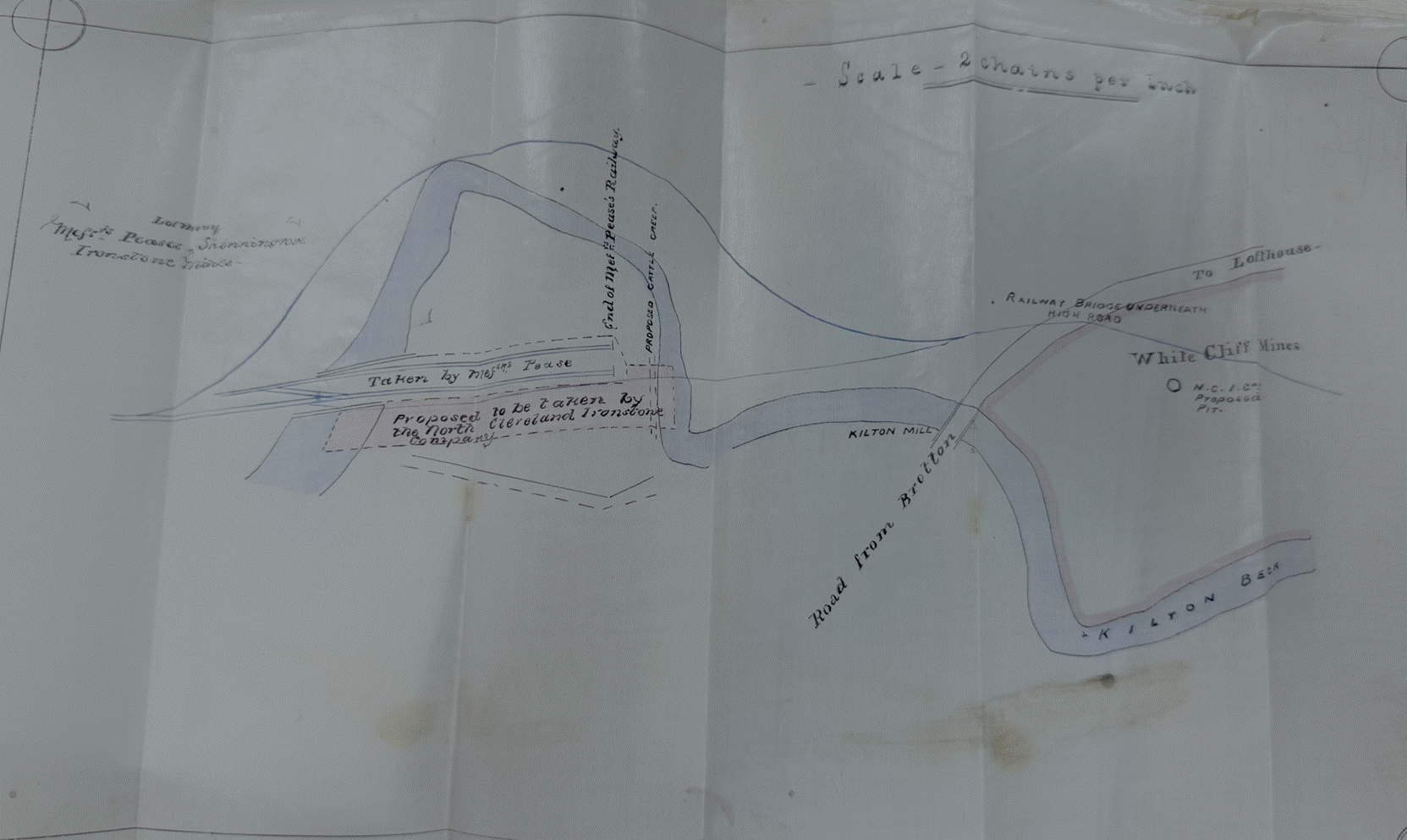
1872
In Kelly’s Post Office Directory of 1872: Kilton
is a township, 6 miles north east by eat of
Guisborough, and one south from Brotton. Here was formerly a castle of which
but few traces remain. Here are church schools, recently erected and supported
by John Thomas Wharton esq who is lord of the manor and landowner. The
population in 1861 was 93; in 1871, 222; acreage 1,723; gross estimated rental
£1,731; rateable value £1,593. Kilton’s commercial activity included
Farndale, Martin & Charles, farmers ; Garbutt,
John, miller, Kilton Mill; Judson, William, farmer, Stank House; Kilton Iron
Stone Co; Porritt, John, farmer, Buckrush; and Wood
Thomas, farmer, Greenhow.
John Farndale
imagined his return to Kilton after years of absence when he took the well known lane down to Kilton,
when at Howe Hill, and seeing a towering chimney above all; what misgivings now
trouble his unprepared, peaceful breast. But when he neared his father’s
homestead, and no place of it could be found, he moved forward, and looking right
and left, he saw some twenty cottages and farmsteads, and
behold that beautiful hall and stables that once graced this little town had
all disappeared. And he would have enquired had there not been some
eruption or some hostile invasion, or had the city not been burnt to ashes, for
said he, here are marks of violence and desperation. But “I know nobody no not
I, and nobody, nobody here cares for me,” and he lifted up
his voice and wept aloud. And he began to examine the book of records, and
genealogies of former days, days of his fathers’, and of his youth. (Farndale, John. 1870. The History
of Kilton With a Sketch of the Neighbouring
Villages By the Returned Emigrant. Middlesborugh: Burnett and Hood).
The picturesque
scenery, however, in this neighbourhood still retains its loveliness, and the
late John Wharton, Esq., of Skelton Castle, did much
to improve its beauty. On every side where there was any waste land he planted it with wood to a great extent, and a large number of larches and oaks then planted, I planted
with my own hands. On visiting this place lately, what was my astonishment on
perceiving that many of these larches were cut and measured fifty cubic feet,
while the oaks were in thriving condition and measured twenty
four cubic feet. The site of these plantations is delightful, as they
are finely sheltered from the piercing north winds. The scenery of these
woodlands, together with the woods of Lady Downs and the Earl of Zetland,
appear so truly picturesque from Kilton height that it is utterly impossible
for my pen to describe it. Beyond these woodlands rise in view the village of
Lofthouse, with the Alum Works, and the seat of the late Sir Robert Dundas.
These works are now superintended by William Hunton Esq.,
an old school fellow of mine. A little further on lies Easington and Boulby Alum Works, conducted by G Westgarth, Esq., a gentleman much respected. Still further, situate on
the sea shore, stands the well known fishing village of Staithes, formerly
proverbial for the roughness and rudeness of its inhabitants. Though rough,
however, they were then as they are now a hardy, kind, and hospitable people,
who obtain a living by braving the perils of the great deep. Poor Thrattles, once reckoned the King of Staithes, and who was
a good fellow, is now no more, and the place is much changed since bis days.
But the reader, perhaps may not care about lingering at Staithes, so we shall
take our stand again on Kilton How Hill, from whence may be seen the most
delightful scenery in the district. (A Guide to
Saltburn by the Sea and the Surrounding District, With
remarks on its picturesque scenery, Fifth Edition, Dedicated to John Thomas
Wharton Esq of Skelton, By John Farndale. Late
of Skelton Castle Farm, Darlington, Printed by Charles W Hird, 1864).
In 1872, Martin Farndale was
involved in setting up a new Urban Sanitary District for the Guisborough Union
area (Daily Gazette for Middlesbrough, 16 October
1872).
|
Date |
Person(s) |
Offence |
Where case heard |
North Yorkshire County Record
Office Reference |
|
23 January 1872 |
Henry Turner of Middlesbrough, labourer |
On 18 January 1872 for trespassing in the daytime in search of game on
land belonging to John Thomas Wharton esquire in Kilton |
Guisborough |
|
|
20 August 1872 |
Watson Whittaker of Kilton, engine driver and William Whittaker of
Eston, fireman |
On 8 August 1872 for maliciously damaging trees growing in a plantation belonging
to and occupied by John Thomas Wharton esquire in Kilton |
Guisborough |
QSB
1872 4/10/7/119 to 120 |
|
24 September 1872 |
George Thorpe and John William Dearden |
On 21 September 1872 for assaulting Elizabeth Johnson of Kilton
singlewoman in Kilton |
Guisborough |
QSB
1873 1/10/9/29 and 30 |
|
1 October 1872 |
George Bishop, Robert and Joseph Peacock and Philip Richards of Carlin
How, drivers; Ursula Richards and Helen Richards of Brotton; John Atterton,
George Wicks and John Hansford of Liverton, miners; Elizabeth Atkinson,
Esther Charlton of Loftus |
On 16 September 1872 for maliciously damaging trees growing in a plantation,
the property of John Thomas Wharton esquire in Kilton |
Guisborough |
QSB
1873 1/10/9/38 to 61 |
|
3 December 1872 |
Edward Annis of Kilton, miner |
On 28 October 1872 for trespassing on the Cleveland Railway, having been
warned not to do so by one of the servants of the North Eastern Railway
Company in Kilton |
Guisborough |
|
|
10 December 1872 |
Edward Reed of Kilton, labourer |
On 8 December 1872 for being drunk and riotous in the street in Brotton
and for assaulting Richard Jones, a labourer of Brotton |
Guisborough |
QSB
1873 2/10/6/19 and 35 |
There was a
conveyance of a site for Kilton Thorpe National School by John Thomas Wharton
in 1872 (The National Archives PR/BRP/7/1,
held at Teesside Archives).
1873
Contemporaneous with
the global Long Depression, Britain's agricultural depression was caused by the
dramatic fall in grain prices that followed the opening up of the American
prairies to cultivation in the 1870s and the advent of cheap transportation
with the rise of steamships. British agriculture did not recover from this
depression until after the Second World War. In 1882 Charles George Milnes
Gaskell wrote that the vast increase in the carrying power of ships, the
facilities of intercourse with foreign countries, [and] the further cheapening
of cereals and meat meant that economically and politically the old landed class were no longer lords of the earth. The
depression also accelerated Britain's rural depopulation. The 1881 census
showed a decline of 92,250 agricultural labourers since 1871, with an increase
of 53,496 urban labourers. Many of these had previously been farm workers who migrated
to the cities to find employment. Between 1871 and 1901 the population of
England and Wales increased by 43% but the proportion
of male agricultural labourers decreased by over one-third. According to Sir
James Caird in his evidence to the Royal Commission on the Depression in Trade
and Industry in 1886, the annual income of landlords, tenants and labourers had
fallen by £43M since 1876. No other country witnessed such a social
transformation and British policy contrasted with those adopted on the
Continent. Every wheat-growing country imposed tariffs
in the wake of the explosion of American prairie wheat except Britain and
Belgium. Subsequently, Britain became the most industrialised major country
with the smallest proportion of its resources devoted to agriculture.
From this point
we find extensive records of Martin Farndale being
involved in criminal proceedings against poachers, trespassers and damage causers
on his land. Since this was a time of depression, we might have some sympathy
with those who were acting out of desperation and remember Martin’s ancestors,
who had been fined,
outlawed and excommunicated, around Pickering Forest, for poaching in the
King’s forest. On the other hand, we must recognise the difficulty for farmers
in protecting their livelihood. What we can conclude is that these were
difficult time, as from this point, we start to see large numbers of cases
brought by Martin the criminal courts to protect his livelihood.
There was a ploughing and hedge-cutting competition on Martin Farndale’s
land at Kilton in 1873 (The Whitby Gazette, on 18
January 1873).
|
Date |
Person(s) |
Offence |
Where case heard |
North Yorkshire County Record
Office Reference |
|
3 June 1873 |
William Jones of Skinningrove, miner |
On 11 May 1873 for trespassing in the daytime in search of game on land
belonging to John Thomas Wharton esquire and occupied by Martin Farndale |
Guisborough |
|
|
10 June 1873 |
John Wilson of Kilton, engine driver and Thomas Roberts of Kilton, miner |
On 27 May 1873 for trespassing in search of game on land belonging to
Viscount Downe and occupied by Daniel Walker in Liverton |
Guisborough |
QSB
1873 3/10/7/172 and 173 |
|
22 July 1873 |
Isaac and David Himpey, labourers and John Atkinson, quarryman all of
Boosbeck |
On 13 July 1873 for trespassing in the daytime in search or pursuit of game
on land belonging to John Thomas Wharton esquire and occupied by John Porritt
in Kilton |
Guisborough |
QSB
1873 4/10/7/62 to 66 |
|
9 September 1873 |
Robert Johnson of Brotton and William Green, John Bowler, George Waite
of Carlin How, all miners |
On 27 August 1873 for trespassing
in the daytime in search of game on land belonging to John Thomas Wharton esquire
and occupied by Martin
Farndale |
Guisborough |
QSB
1874 1/10/7/43 to 51 |
|
4 November 1873 |
John Taylor, joiner of Brotton |
At 12 o’clock midnight on 3 November 1873 for taking a rabbit in a close
of land occupied by Martin Farndale |
Kilton |
|
|
15 November 1873 |
Samuel Kirk of Kilton, miner |
On 21 October 1873 for wilfully obstructing Francis Baker of the
township of Ingleby Greenhow in the execution of his duty as station master
of the North Eastern Railway Company at Ingleby Greenhow |
Stokesley |
|
|
16 December 1873 |
Joseph Carter and William Adams of Carlin How, miners |
On 10 December 1873 for trespassing in the daytime in search or pursuit
of game on land belonging to John Thomas Wharton esquire and occupied by Martin Farndale |
Guisborough |
QSB
1874 2/10/6/13 and 22 |
There are various
notes on leases including relative to Kilton and Lumpsey
mines between 1873 and 1926 (The National Archives U.SG/1/3
held at Teesside Archives).
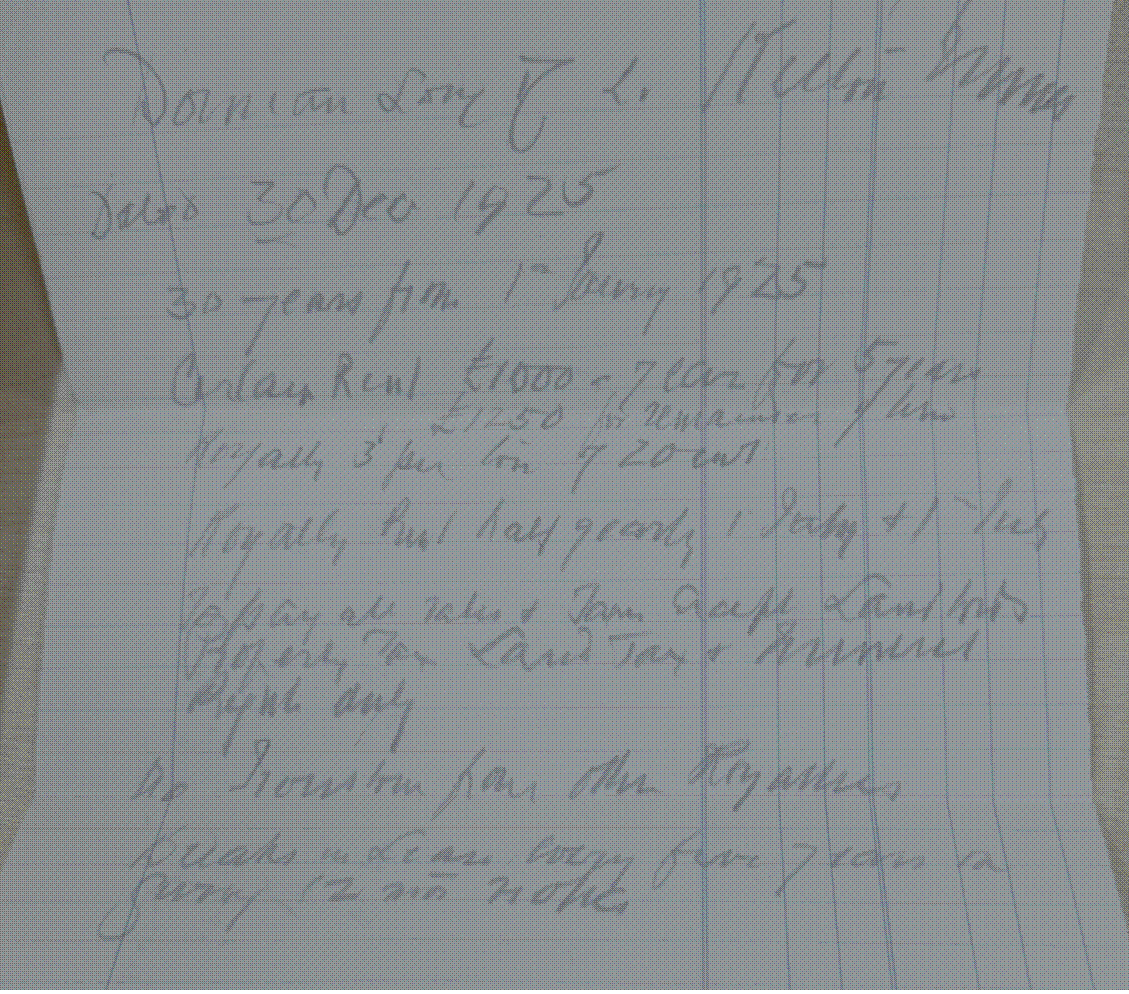
There was correspondence
in 1873 between H French of Middlesbrough and E B Hamilton of
Saltburn-by-the-Sea regarding the transport of slag from Newport to Kilton and
Stanghow mines (The National Archives U.SG/9/4
held at Teesside Archives).
1874
|
Date |
Person(s) |
Offence |
Where case heard |
North Yorkshire County Record
Office Reference |
|
13 January 1874 |
Richard Craze of Kilton, miner |
On 28 December 1873 for assaulting Alfred Bentley of the township of
Kilton platelayer in Kilton |
Guisborough |
|
|
13 January 1874 |
John Hedley of Kilton, engineman |
On 6 January 1874 for assaulting Isaac Hopper of the township of Kilton
engineman in Kilton |
Guisborough |
|
|
17 February 1874 |
James Gallagha of Liverton, labourer |
On 8 February 1874 for trespassing in the daytime in search or pursuit
of game on land belonging to and occupied by John Thomas Wharton esquire in
Kilton |
Guisborough |
|
|
17 February 1874 |
Thomas Burgess of Carlin How |
On 14 February 1874 for
maliciously damaging the fence of a field occupied by Martin Farndale
in Kilton |
Guisborough |
|
|
24 March 1874 |
Joseph Playford of Lumpsey, labourer |
On 14 March 1874 for being drunk and riotous in the street at Brotton |
Guisborough |
|
|
14 and 21 April 1874 |
James Ford, John Hawkey and George Payne of Lingdale Lane, navvies |
On 29 March 1874 for trespassing in the daytime in search of game on
land belonging to John Thomas Wharton esquire and occupied by William Judson
in Kilton |
Guisborough |
QSB
1874 3/10/5/86 and 87 and 109 |
|
5 May 1874 |
John Hicks of Kilton, miner |
On 14 April 1874 for trespassing in the daytime in search of game on
land belonging to John Thomas Wharton esquire and occupied by Thomas Hall in
Kilton |
Guisborough |
|
|
9 June 1874 |
William Green of Liverton, miner; William Jeffrey and William Waters,
sinkers of Stanghow; and William Kates of Lumpsey |
On 1 June 1874 for trespassing in
the daytime in search of game on land belonging to John Thomas Wharton
esquire and occupied by John Garbutt in Kilton |
Guisborough |
QSB
1874 3/10/5/211 to 236 |
|
2 June 1874 |
Thomas Bennett of Kilton, driver; Luke and Thomas Stafford of Lumpsey,
also drivers |
On 28 May 1874 for maliciously damaging trees growing in a wood belonging
to William Hodgson Barrow esquire in Brotton |
Guisborough |
QSB
1874 4/10/6/10 to 12 |
|
9 June 1874 |
John Hicks the Younger, William Jones, Joseph Williams and Arthur Holmes |
On 21 April 1874 for keeping two
dogs while only having a licence for one or one dog without a licence; on the
information of John Edgar officer of excise; all at Kilton |
Guisborough |
QSB
1874 4/10/6/17 to 21 |
|
7 July 1874 |
William Freeman of Kilton, sinker |
On 26 June 1874 for being drunk in the street in Brotton |
Guisborough |
|
|
21 July 1874 |
William Hedger of Kilton, labourer |
On 20 July 1874 for being drunk and riotous in the street in
Skinningrove |
Guisborough |
|
|
22 September 1874 |
Joseph Playforth of Kilton, miner |
On 13 September 1874 for being drunk in the street in Brotton |
Guisborough |
|
|
19 May 1874 |
William Jones of Skinningrove, miner |
On 13 May 1874 for trespassing in the daytime in search or pursuit of
game on land belonging to John Thomas Wharton esquire and occupied by Martin Farndale |
Guisborough |
|
|
28 July 1874 |
Ann Henderson of Kilton, wife of Edward Henderson |
On 22 July 1874 for being drunk in the street at Brotton |
Guisborough |
|
|
15 September 1874 |
George Moore and William Clarke of Skinningrove, miners |
On 13 September 1874 for trespassing in the daytime in search of game on
land belonging to John Thomas Wharton esquire and occupied by Mr Martin Farndale
in Kilton |
Guisborough |
QSB
1875 1/10/7/135 and 136 |
|
29 September 1874 |
Thomas Stanway of Boosbeck, miner |
On 29 September 1874 for stealing apples from the orchard belonging to
Mr Martin
Farndale in Kilton |
Guisborough |
|
|
3 November 1874 |
Thomas Stafford of Kilton |
On 2 November 1874 for being drunk in the street in Brotton |
Guisborough |
|
|
10 November 1874 |
Thomas Pettitt of Kilton, sinker |
On 8 November 1874 for assaulting John Porritt of the township of Kilton
farmer in Kilton |
Guisborough |
|
|
24 November 1874 |
John Porritt of Kilton, farmer |
On 16 November 1874 for being drunk and riotous in the street in Carlin
How |
Guisborough |
|
|
15 December 1874 |
Rebecca Fletcher of Kilton, wife of Edward Fletcher of Kilton, hind |
On 11 December 1874 for assaulting Isabella, wife of James Bell of the
township of Kilton, hind |
Guisborough |
|
|
15 December 1874 |
Edward Fletcher of Kilton, hind |
On 11 December 1874 for assaulting James Bell of the township of Kilton hind |
Guisborough |
|
|
22 December 1874 |
Charles and Thomas Stafford of Kilton, miners and Samuel Emmett of
Kilton, sinker |
On 14 December 1874 for being drunk or drunk and riotous in the street
in Brotton, Thomas at the Royal Hotel licensed to Ann Glover |
Guisborough |
QSB
1875 2/10/7/37, 47 and 53 |
|
29 December 1874 |
Robert Gurd of Kilton, bricklayer |
On 18 December 1874 for being drunk in the street in Brotton |
Guisborough |
|
The
Skelton and Gilling Estate Records include
details of half yearly rents due at Michaelmas 1874:

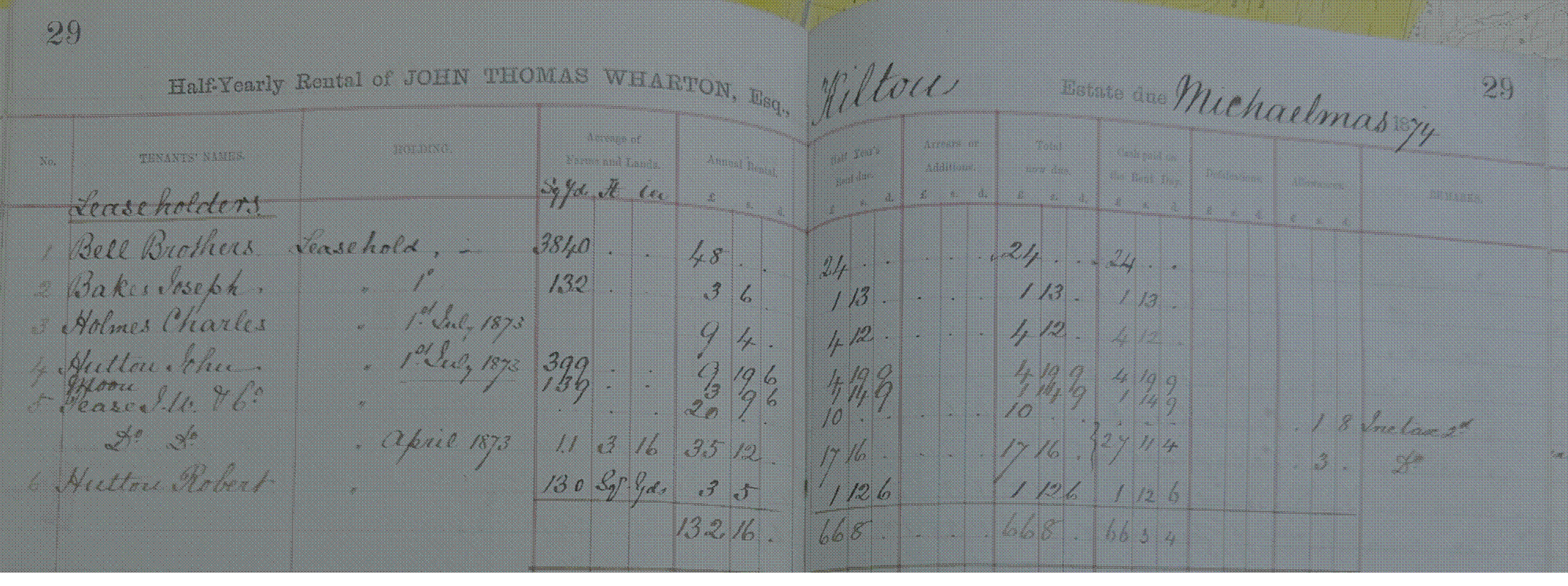
1875
Kilton Mine,
opened in 1875 after sinking two 700-foot shafts, operated intermittently until
the early twentieth century, contributing to local employment but closing after
brief periods due to operational challenges, with its shale heap remaining a
visible legacy.
John Porritt of
Kilton, farmer; Robert Harrison of Stockport, inspector of police; and James
Cooke of Guisborough, police constable, were cited to give evidence on 6
September 1875 in a case against John George Kershaw for stealing a hose
belonging to John Porritt of Kilton (North
Yorkshire County Record Office QSB
4/7/17 and QSB
1875 4/8/17).
|
Date |
Person(s) |
Offence |
Where case heard |
North Yorkshire County Record
Office Reference |
|
14 January 1875 |
John
Farndale of Kilton, labourer |
On 26 December 1874 for being drunk and riotous on the street in Carlin
How |
Loftus |
|
|
14 January 1875 |
Charles Stafford of Kilton, miner |
On 5 January 1875 for being drunk in the street at Brotton |
Loftus |
|
|
22 April 1875 |
James Lambert of Kilton, sinker |
On 8 April 1875 for assaulting
William Elders of Kilton sinker in Kilton |
Loftus |
|
|
13 May 1875 |
Henry Cooper of Carlin How, miner |
On 5 May 1875 for trespassing in the daytime in search of game on land
belonging to John Thomas Wharton esquire and occupied by John Garbutt in
Kilton |
Loftus |
|
|
13 May 1875 |
William Clarke and George Moore of Skinningrove, miners |
On 4 May 1875 for trespassing in the daytime in search of game on land
belonging to John Thomas Wharton esquire and occupied by Martin Farndale
in Kilton |
Loftus |
|
|
24 June 1875 |
Thomas Breckon of Loftus |
On 16 June 1875 for assaulting William Judson of Kilton farmer in Loftus |
Loftus |
|
|
3 November 1875 |
William Clarke |
On 13 September 1875 for keeping a dog without a licence; on the
information of Frederick Miles officer of excise |
Guisborough |
|
|
31 August 1875 and 9 September 1875 |
Thomas Broxholm of Kilton, miner |
On 28 August 1875 or being drunk and riotous in the street in Brotton
and for assaulting Thomas Severs of the township of Brotton in the execution
of his duty as a police constable and for refusing to leave the house of John
Simpson beerhouse keeper when asked by the said John Simpson |
Guisborough and Loftus |
QSB
1875 4/10/7/179 and 180 and QSB
1876 1/10/7/34 |
|
9 September 1875 |
Elizabeth Holt of Kilton, married woman |
On 31 August 1875 for maliciously damaging with intent to steal a
quantity of peas and beans growing in a field, the property of Martin Farndale
of Kilton farmer |
Loftus |
|
|
14 October 1875 |
John Baxter of Skinningrove, miner asnd John Hall and John Hindson of
Brotton, miners |
On 26 and 29 September 1875 for maliciously damaging the underwood in a
plantation, the property of John Thomas Wharton esquire in Kilton |
Loftus |
QSB
1876 1/10/7/82 and 83 |
|
14 October 1875 |
Ann Ward of Lumpsey, wife of Joseph Ward, miner |
On 30 September 1875 for damaging a waggon, the property of the North Eastern
Railway Company used for conveying minerals from Kilton Mine |
Loftus |
|
|
14 October 1875 |
Thomas Broxholm of Kilton, miner |
On 9 October 1875 for being drunk in the street at Brotton |
Loftus |
|
1876
|
Date |
Person(s) |
Offence |
Where case heard |
North Yorkshire County Record
Office Reference |
|
22 June 1876 |
John Baker and Samuel Stevens, bricklayers and William Moment, miner,
all of Lingdale Lane |
On 4 June 1876 for trespassing in the daytime in search of game on land
belonging to John Thomas Wharton esquire and occupied by Thomas Hall |
Loftus |
|
|
14 September 1876 |
Robert Foster and Anthony Ward both of Kilton, joiners, and William
Silvester and Richard Annear both of Brotton, miners |
On 4 September 1876 for trespassing on the daytime in search of game on
land belonging to John Thomas Wharton esquire and occupied by Martin Farndale
in Kilton |
Loftus |
|
|
26 October 1876 |
William Coates and Adam Silverwood both of Brotton, miners |
On 15 October 1876 for maliciously damaging underwood growing in a
plantation, the property of John Thomas Wharton esquire in Kilton |
Loftus |
|
|
26 October 1876 |
Thomas Bennett and William Gurd, both of Lumpsey, labourers |
On 15 October 1876 for maliciously damaging the fence of a field occupied by William Judson
in Kilton |
Loftus |
|
There is a Plan
of the Kilton Ironstone Company's Mines in about 1876 (The
National Archives U.SG/8/10,
held at Teesside Archives).
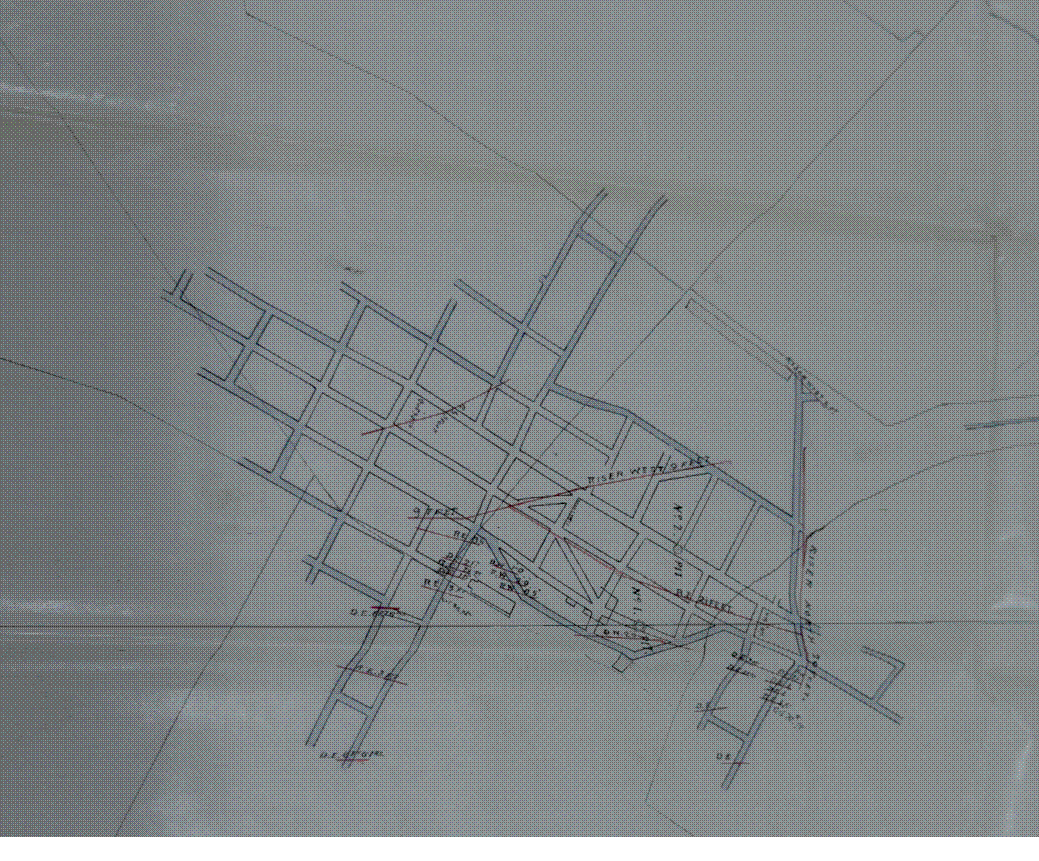
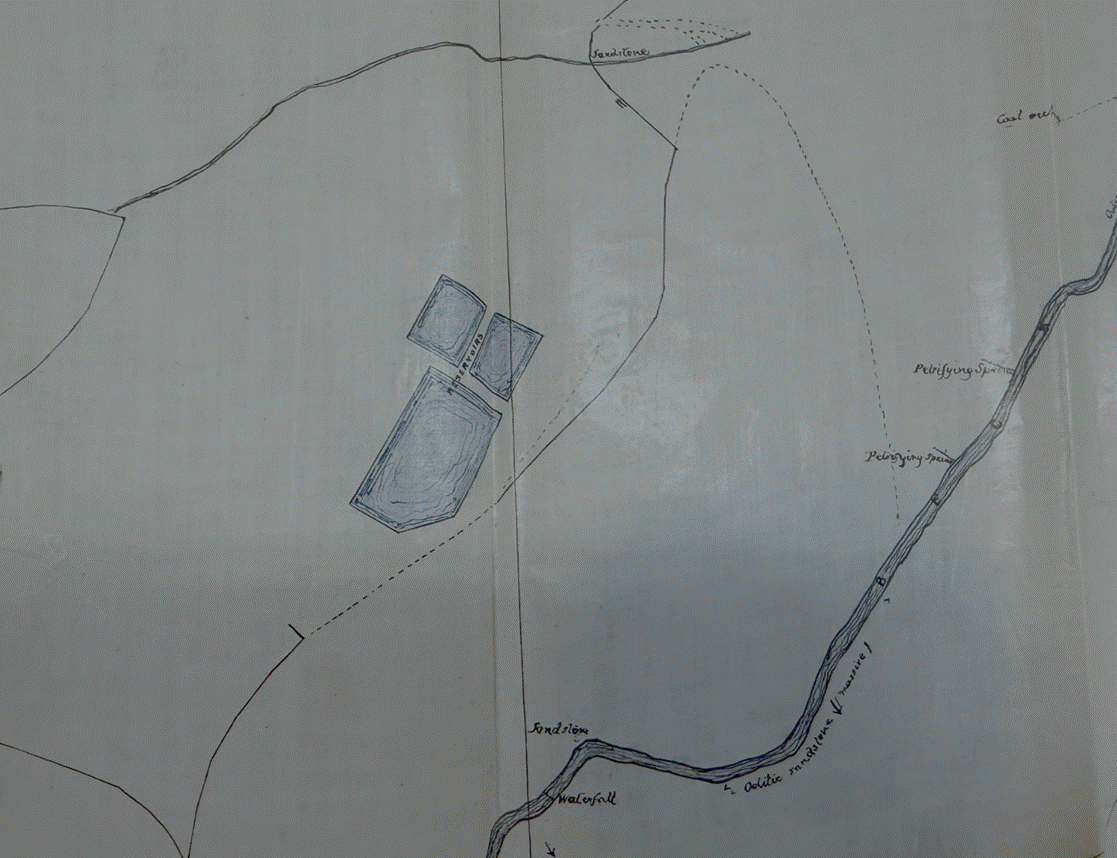
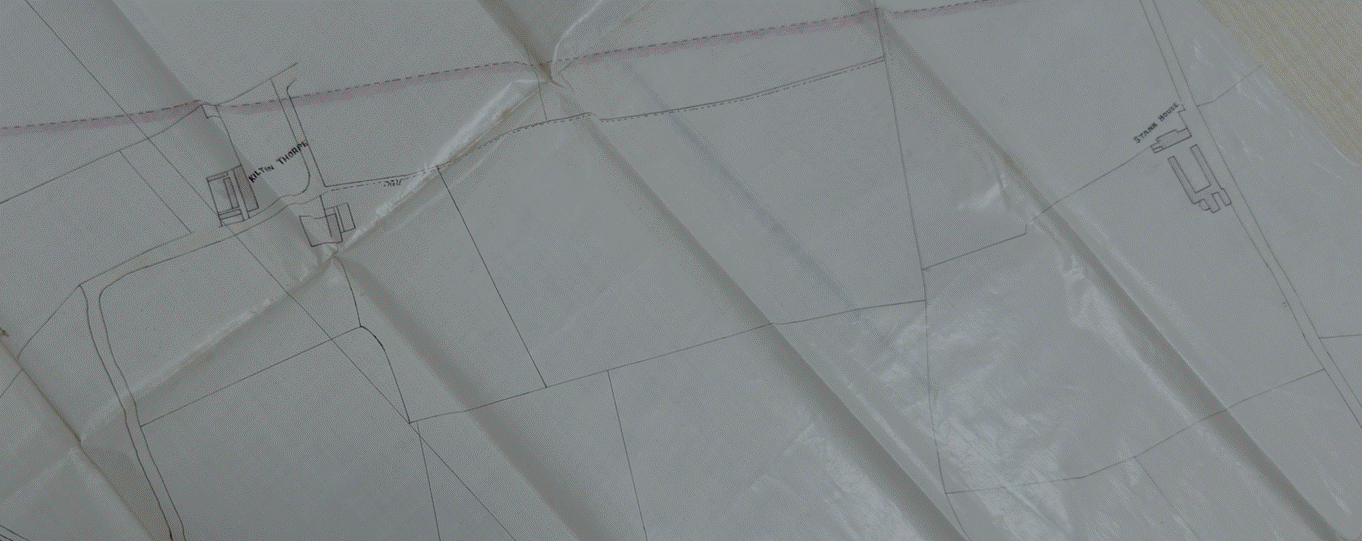
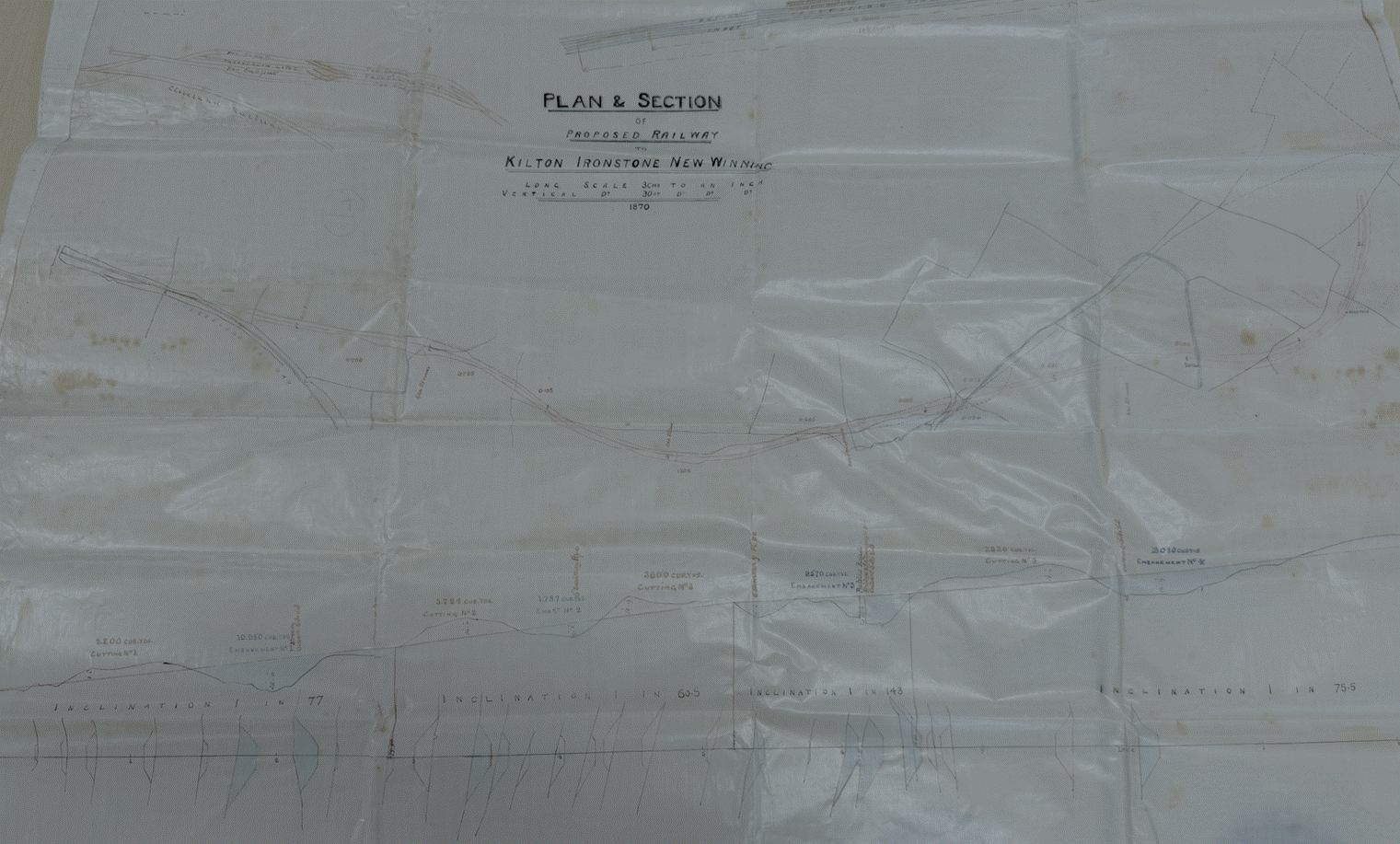
The
Skelton and Gilling Estate Records include
details of half yearly rents due at Lady Day 1876:
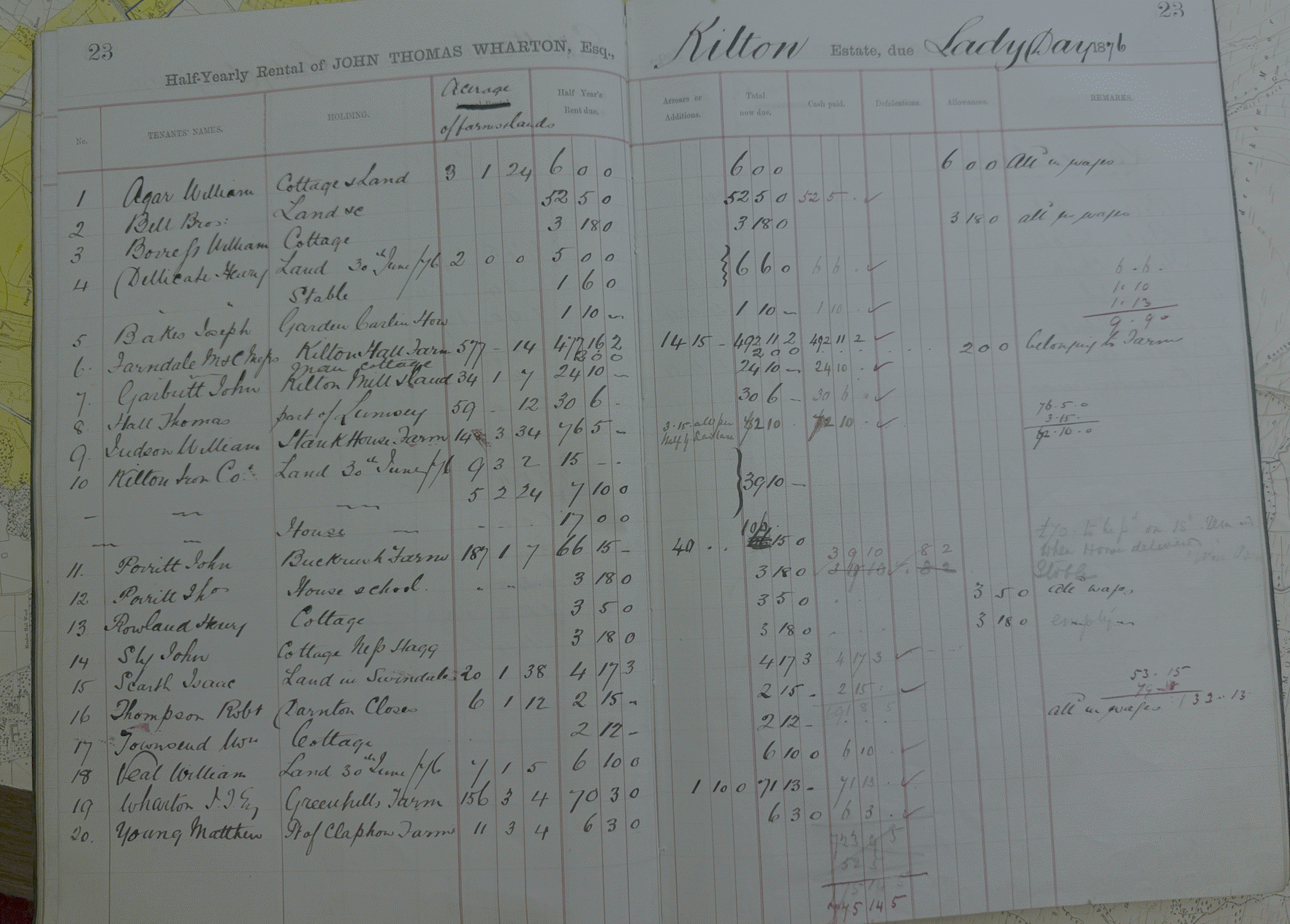
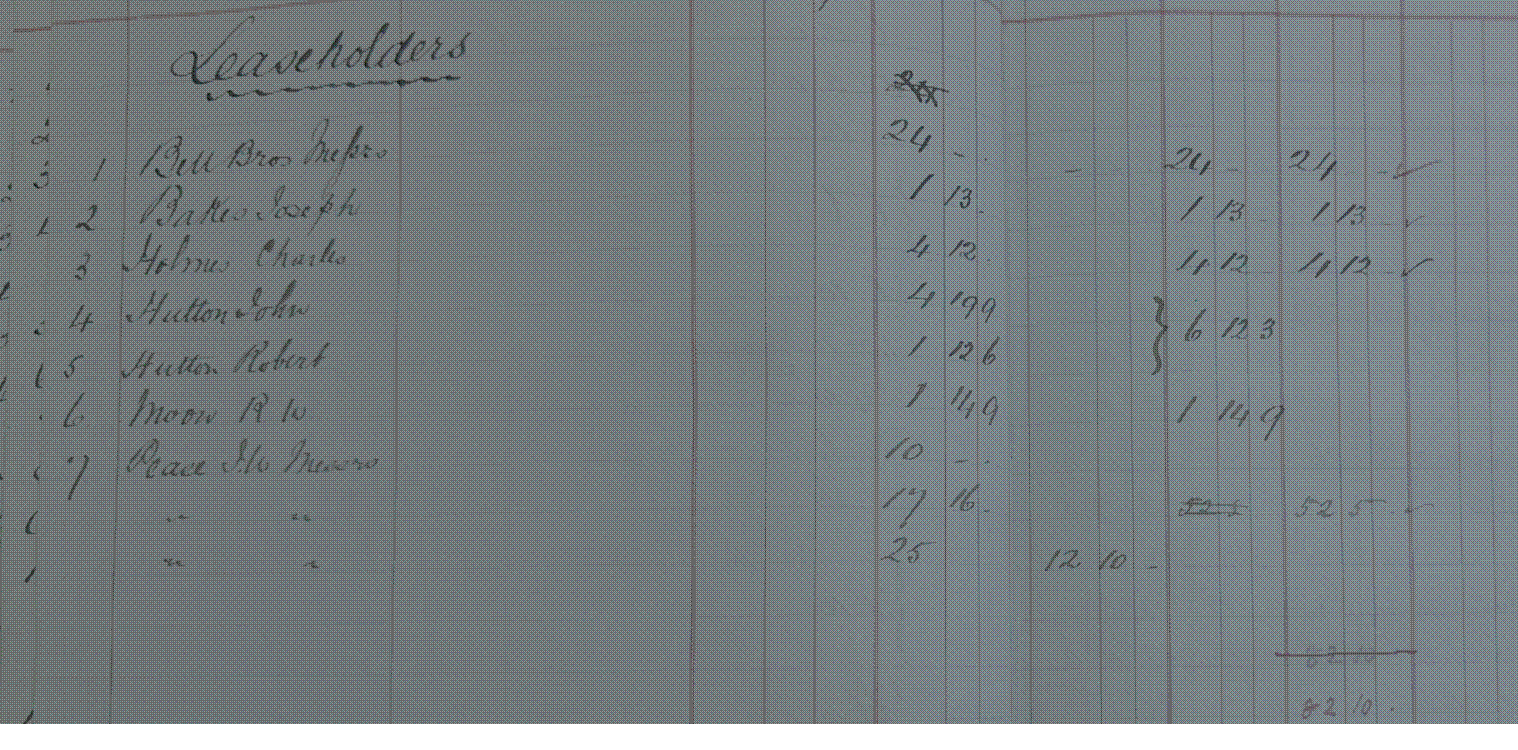
1877
In August 1877 Martin Farndale’s
services were recognised as a Guardian of 38 years since the inception of the
Guisborough Board of Guardians (The Yorkshire
Gazette, on 27 October 1877).
|
Date |
Person(s) |
Offence |
Where case heard |
North Yorkshire County Record
Office Reference |
|
9 April 1877 |
George Barker and Frederick Teeseman of Kilton, labourers |
On 22 March 1877 for being 40
yards from the cart he was driving in Thornaby Road, Thornaby and not having
control of the horse drawing it |
South Stockton |
QSB
1877 3/1012/3 and 4 |
1878
Martin Farndale suffered
an outbreak of pleuro-pneumonia on his Kilton farm in October 1878 (The Northern Echo, on 25 October 1878, The Daily Gazette for Middlesborough,
on 30 October 1878, The Newcastle Courant,
on 1 November 1878, Leeds Mercury on 1
November 1878, the Leicester Advertiser, 9
November 1878. Pleuro-pneumonia is a lung disease of cattle and sheep.
It causes an inflammation of the lungs. The disease is caused by the bacterium mycoplasma
mycoides. Fever, thirst, loss of appetite, and difficult breathing are
signs of the disease. The Contagious Diseases (Animals) Act 1878 was passed by
Benjamin Disraeli's Conservative government after a select committee was appointed
in 1877 to investigate animal diseases. The resulting Act established central
rather than local control over all outbreaks of animal disease. The
agriculturist Jacob Wilson considered the Act an undoubted benefit conferred
upon the agricultural interest by the Conservative Government. It was
opposed by the Radicals.
1879
Commercial activity in Kilton included Martin and Charles
Farndale, farmers; John Garbutt, miller, Kilton mill; William Judson, farmer, Stank
House; Kilton Iron Stone Co; John Porritt, farmer, Buckrush;
Thomas Wood, farmer, Greenhow (Kelly’s Post Office
Directory 1879).
The Primitive
Methodist Society held their annual picnic on Saturday in a field belonging
to end to Mr Farndale at Kilton. The weather was fine
and there was a good number present. The usual games were indulged in, and all
seemed to thoroughly enjoy themselves. (The
Northern Weekly Gazette, 12 July 1879).
In 1879, Matthew Farndale
took the farm at Craggs and his descendants, the Craggs Line of Farndales, farmed
there until well into the twentieth century.
The
Skelton and Gilling Estate Records include
details of half yearly rents due at Michaelmas and 31 December 1879:
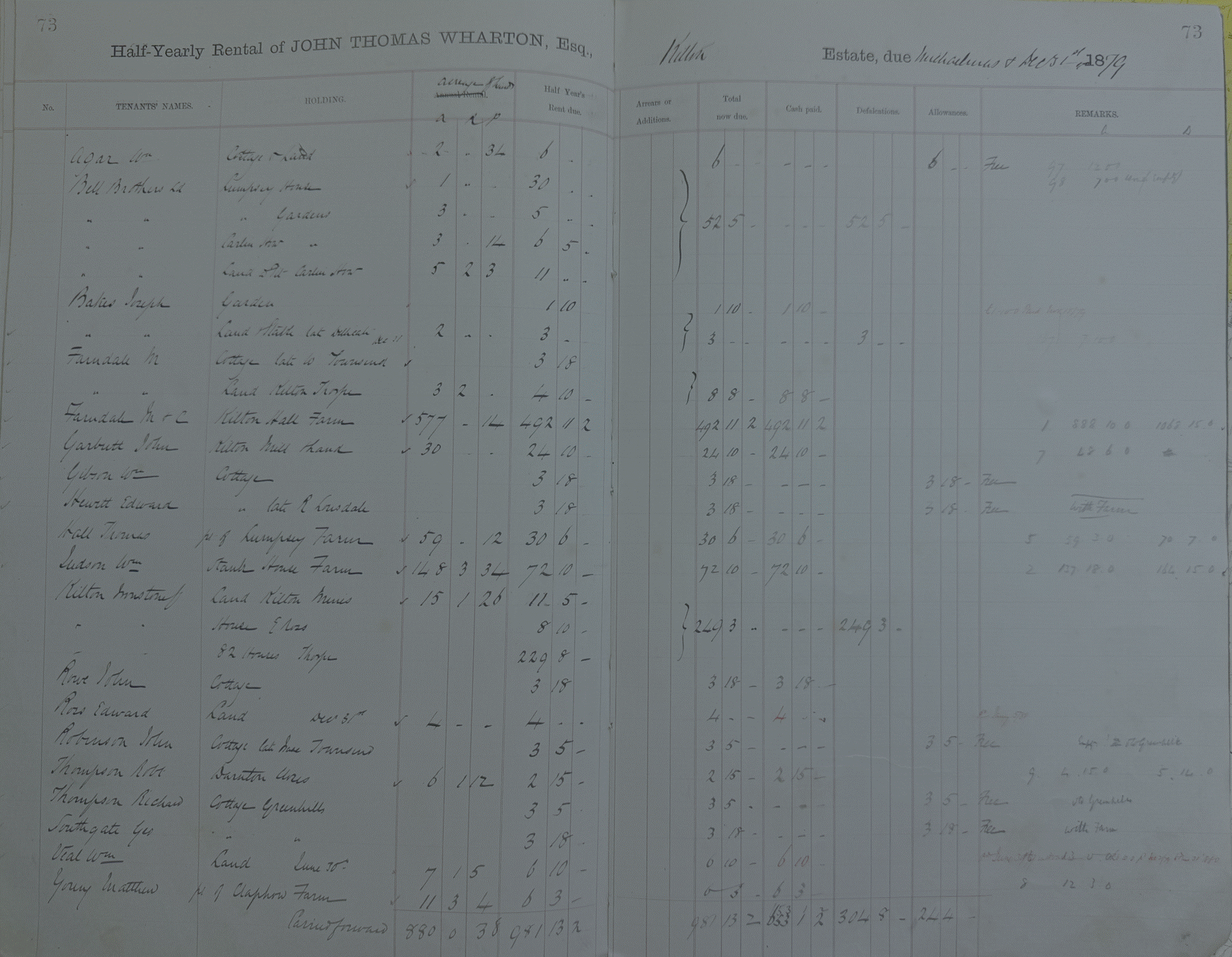
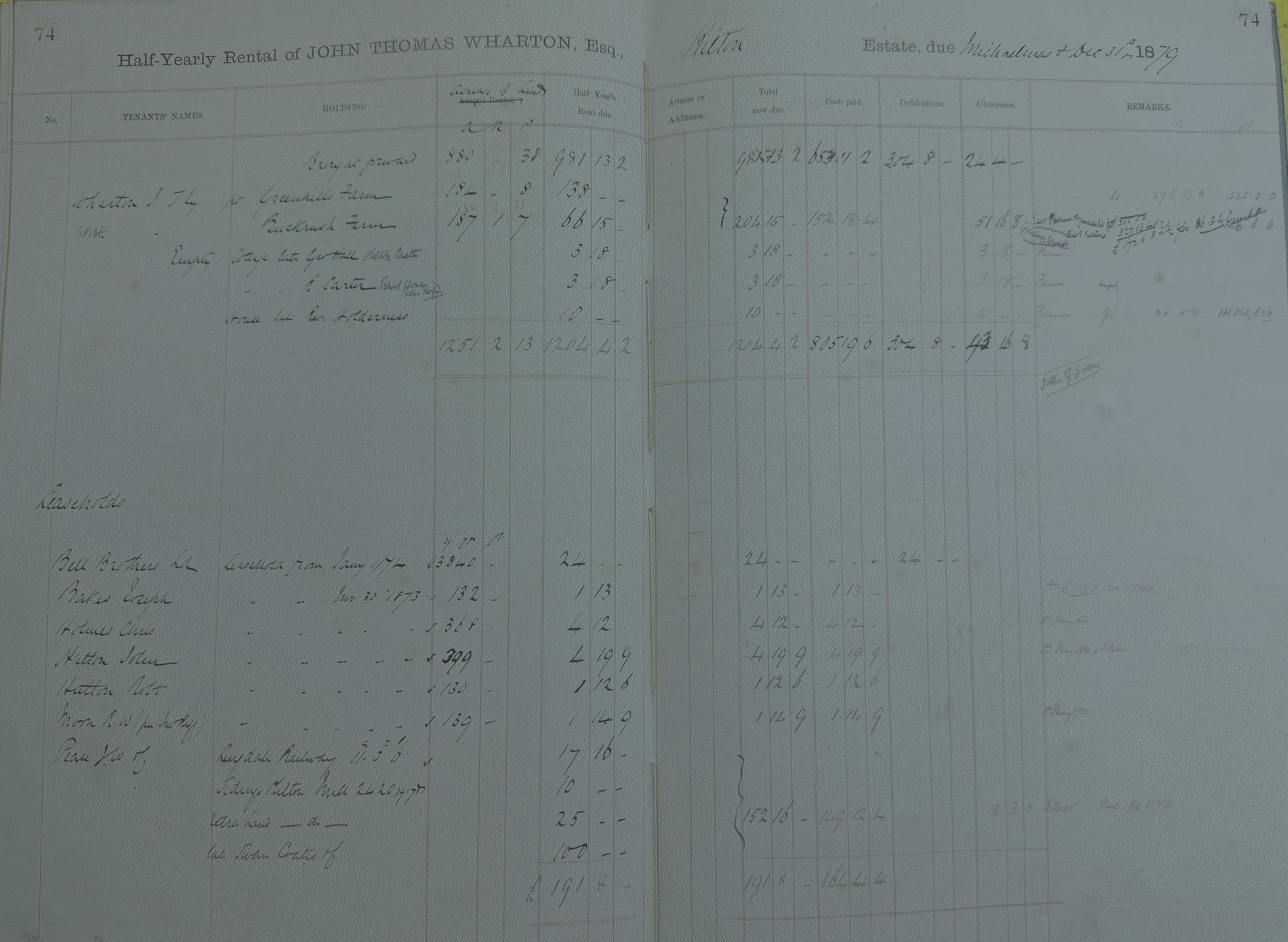
1880
About 1880 the
late Mr. J. T. Wharton, of Skelton Castle, who appears to have taken a considerable
interest in the preservation of the ruin of Kilton Castle, repaired the
footings and base of the north-east tower, part of the eastern curtain, and the
fragment of walling at the east end of the stabling. Since that date the ruin
has been strictly preserved. It is now the property of Mr. W. H. A. Wharton, of
Skelton Castle, the master of the Cleveland hunt, who is descended from the old
baronial house of De Brus of Skelton through his great-grandmother, Margaret,
Lady Dundas (wife of Sir Lawrence Dundas, Bart.), who was a daughter of Major
Alexander Bruce of Kennet, a direct descendant of both the royal house of
Scotland and of the Brus barons of Skelton (Bruce pedigree). Historically, the
Whartons have no connection with Kilton. They are descended from an ancient
family of that name who, in the late Plantagenet period, were settled at
Wharton, in Westmorland. (Kilton Castle, William M L’Anson, Yorkshire Archealogical Journal, Volume 22, 1913, page 115).
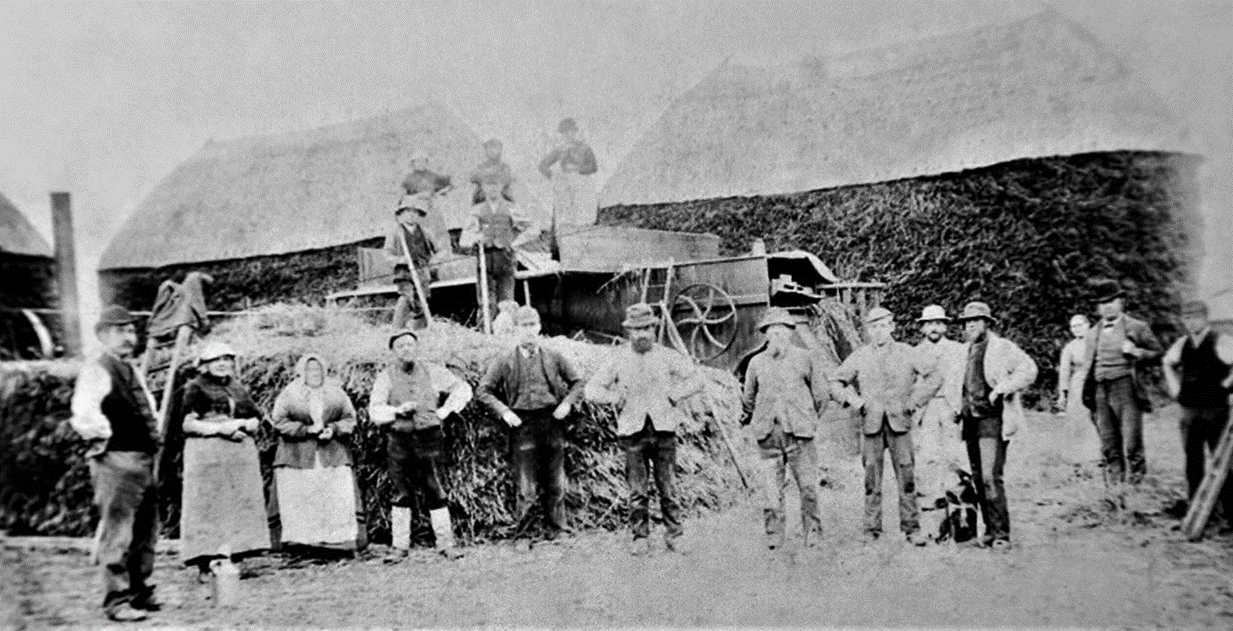
Agricultural
workers for George Lancaster at Kilton Hall in the late 1880s
The
20th century brought administrative mergers and rural transformations to
Kilton, which forms part of Lockwood civil parish.
John
Garbutt of Kilton Mill, miller took a building lease at Loftus for 99 years (North Yorkshire County Records Office ZNK
V 3/3/28).
A
Counterpart Lease for 10 years was granted from Martin Farndale of Kilton,
farmer to Bell Brothers Limited of Middlebrough of the dwellinghouse called
Brotton House and the garden for £32 yearly (The
National Archives U/AA/1/41
held at Teesside Archives).
1881
In 1881, Charles Farndale
was the farmer at Kilton Hall Farm (1881 Census).
|
Charles took over the farming
of Kilton Hall Farm where he farmed 577 acres |
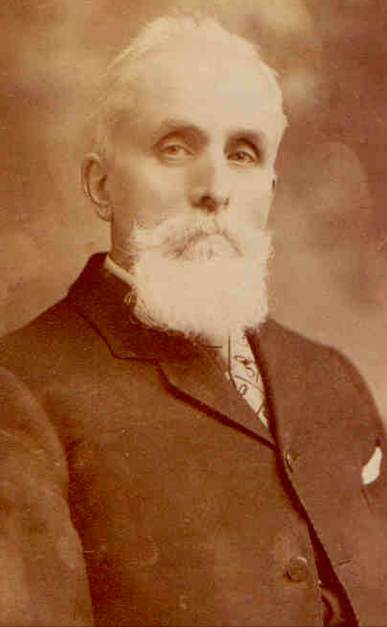
Lumpsey mine, at the
site of the old farm, was active from 1881 to 1954.
The population had by then grown significantly, mainly due to the mines.
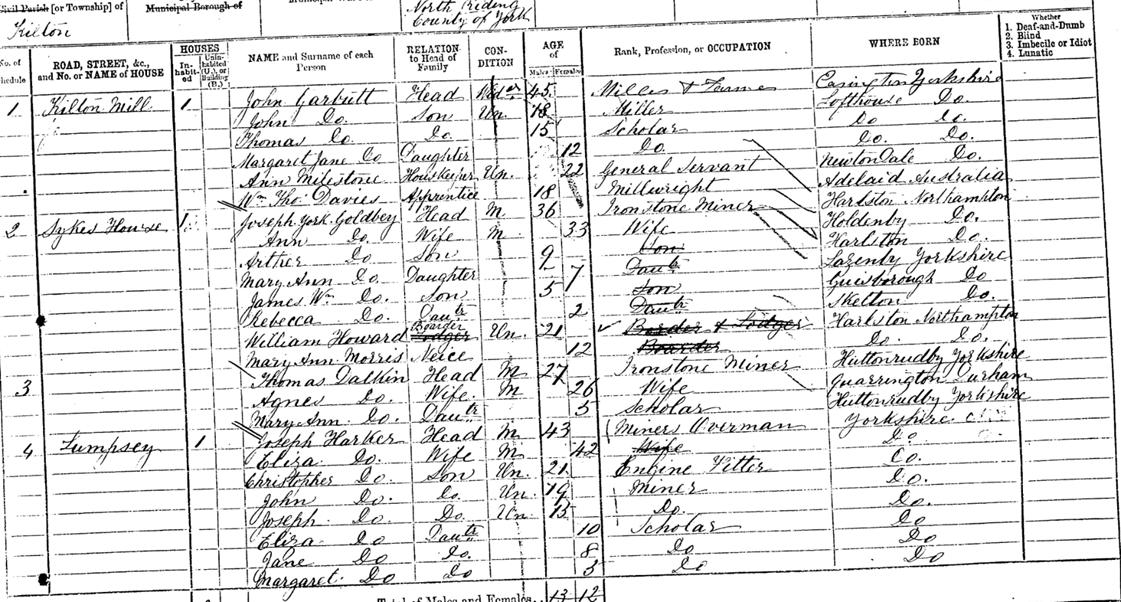
Lumpsey was heavily
populated with miners:


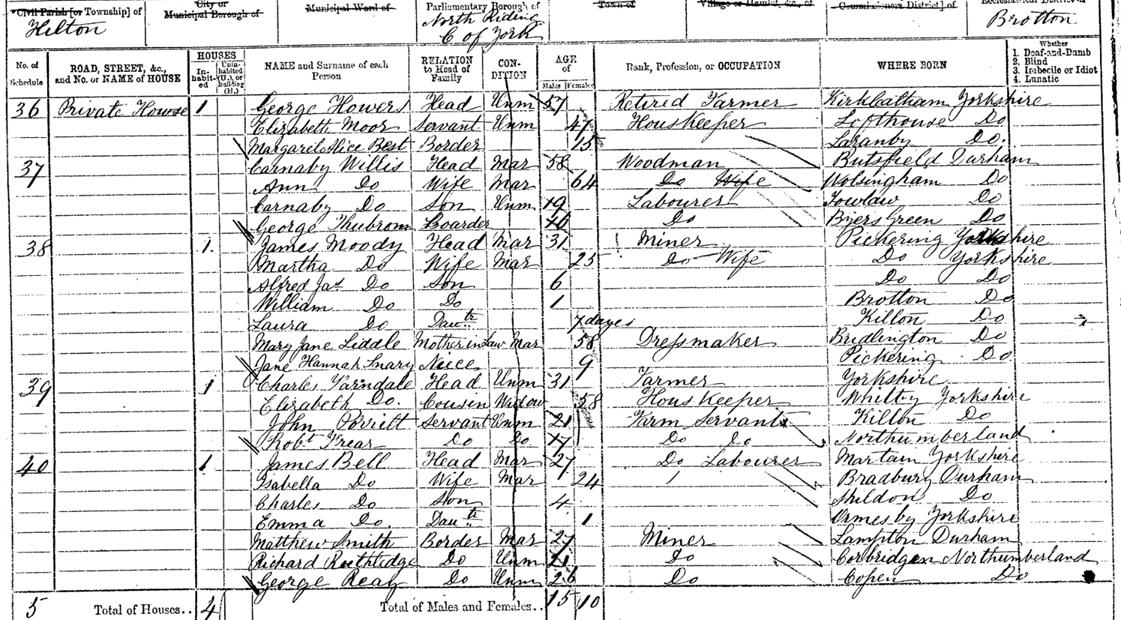
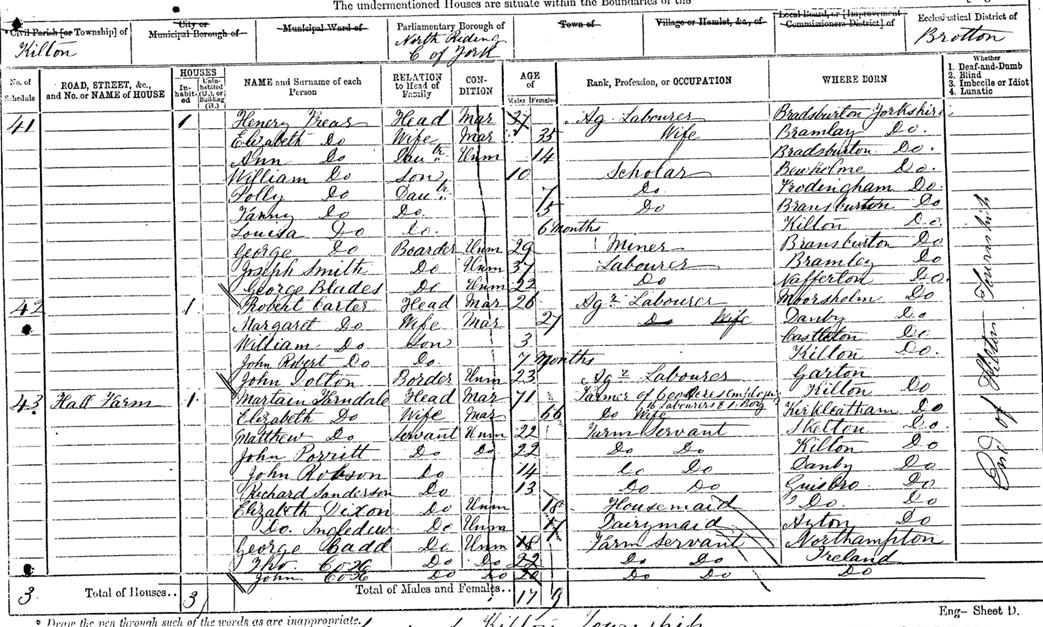
(1881 Census)
|
Date |
Person(s) |
Offence |
Where case heard |
North Yorkshire County Record
Office Reference |
|
13 May 1881 |
Luther Bugdall and Thomas Arnold of Brotton, miners |
On 24 April 1881 for maliciously damaging a lock on a bogie on the
Kilton branch of the North Eastern Railway, the property of the North Eastern
Railway Company |
Loftus |
|
|
27 May 1881 |
Alfred Howard of Liverton, labourer |
On 17 May 1881 for maliciously damaging an ash tree growing on land
belonging to John Thomas Wharton esquire in Kilton |
Loftus |
|
|
26 August 1881 |
John Speck, Charles Speck and George Arnold all of Brotton |
On 21 August 1881 for maliciously damaging beans growing in a field
occupied by Martin
Farndale and Charles Farndale
in Kilton |
Loftus |
|
|
26 August 1881 |
Elizabeth Raw of Kilton, married woman |
On 10 August 1881 for assaulting Elizabeth Porritt of the township of
Kilton married woman |
Loftus |
|
|
14 October 1881 |
Elizabeth Mason and Sarah Pearson of Liverton |
On 10 August 1881 for maliciously damaging the trees and underwood
growing in a wood belonging to John Thomas Wharton esquire in Kilton |
Loftus |
|
|
28 October 1881 |
Thomas Hartgrove of Redcar horse dealer |
On 7 October 1881 for being the owner of nine horses found straying on
the highway in Kilton |
Loftus |
|
|
23 December 1881 |
Benjamin Cavell, James Billam, Arthur Cavell, Charles Johns, Samuel
Rouse, William Wallis, Henry Hastell, William Gilbert and Richard Turner all
of Skinningrove |
On 19 December 1881 for maliciously damaging a holly tree growing in a
wood belonging to John Thomas Wharton esquire in Kilton |
Loftus |
|
Papers relating to the appeal by the North Eastern
Railway Company against rate assessments including notices relative to Kilton,
1881 to 1882 (North Yorkshire County Records Office
QSB
1882 1/9/18 and QSB
1882 3/9/22)
1882
|
Date |
Person(s) |
Offence |
Where case heard |
North Yorkshire County Record
Office Reference |
|
5 September 1882 |
Thomas Beedle, joiner, Benjamin Smith, miner, Thomas Battersby, miner,
Harry Worth, miner, and William Gill, miner, all of North Skelton |
On 27 August 1882 for maliciously
damaging the fences on land belonging to and occupied by John Thomas Wharton
esquire in Kilton |
Guisborough |
|
|
9 October 1882 |
Elizabeth Porritt married woman, Elizabeth Cherry singlewoman and Mary
Ann Glenright singlewoman, all of Brotton |
On 26 September 1882 for maliciously damaging the underwood growing in a
wood called Kilton Wood belonging to John Thomas Wharton esquire |
Loftus |
|
|
14 August 1882 |
Thomas Tippett, servant, James Mitchell, driver, Robert Newbiggin,
driver and George Tilley, leader, all of Brotton |
On 6 August 1882 for maliciously damaging beans growing in a field
occupied by Charles
Farndale in Kilton |
Loftus |
|
|
27 November 1882 |
James Gray of Carlin How miner |
On 9 November 1882 for maliciously damaging grass and underwood growing
in a wood, the property of John Thomas Wharton esquire in Kilton |
Loftus |
|
1883
|
Date |
Person(s) |
Offence |
Where case heard |
North Yorkshire County Record
Office Reference |
|
26 January 1883 |
William Jolly of Kilton labourer |
On 13 January 1883 for being drunk in the street in the township of
Brotton |
Loftus |
|
|
24 April 1883 |
William Gregory of Great Moorsholm engineer |
On 8 April 1883 for maliciously damaging grass growing in Kilton Wood,
belonging to and in the occupation of John Thomas Wharton esquire in Kilton |
Guisborough |
|
|
28 September 1883 |
Thomas Butterworth, Alfred Partridge and Richard Bacon all of Carlin How |
On 16 September 1883 for maliciously damaging beans growing in a field
occupied by Charles
Farndale in Kilton |
Loftus |
|
|
23 November 1883 |
Thomas Hudson of Loftus a miner employed at Carlin How Mine |
On 9 and 10 November 1883 for contravening one of the rules by unramming
a charge of powder which had misfired in Kilton |
Loftus |
|
|
28 December 1883 |
John Duncalf, William Bacon, Henry Lantsbury and Alfred Partridge all of
Carlin How, drivers |
On 18 December 1883 for maliciously damaging a holly tree in Kilton
Wood, the property of John Thomas Wharton esquire |
Loftus |
|
Kilton Mill road diversions including stopping-up of a highway leading through
the farmyard of John Garbutt at Kilton Mill and plan dated June 1884 showing
the diversion of the road at Kilton Mill (North
Yorkshire County Records Office QSB
1887 2/13, QSB
1887 2/13/1, QSB
1887 2/14/21, QSB
1887 3/13, QSB
1887 3/13/1).
1884
|
Date |
Person(s) |
Offence |
Where case heard |
North Yorkshire County Record
Office Reference |
|
13 June 1884 |
George Cox of Carlin How cartman |
On 5 June 1884 for tethering a horse on Kilton Lane |
Loftus |
|
|
12 September 1884 |
Charles Foster of Carlin How, a boy |
On 4 September 1884 for assaulting Mary Cryer of the township of Carlin
How |
Loftus |
|
|
12 September 1884 |
Thomas Butterwick of Carlin How, driver |
On 4 September 1884 for assaulting Edith Eleanor Dale of the township of
Carlin How, singlewoman |
Loftus |
|
|
8 August 1884 |
David Shaw of Moorsholm cartman |
On 27 July 1884 for being the owner of two horses found straying on the
highway in Kilton |
Loftus |
|
1885
The local
landowner, J T Wharton, allowed a 50% land rental for the half year because of
the Agricultural depression, which received the thanks of the fraternity of
tenant farmers (The Daily Gazette for Middlesbrough,
13 January 1885).
The
concession was marked by the tenants in an illuminated scroll now held by the
Skelton and Gilling Estate Office. Amongst others, it was signed by
Martin and Charles Farndale.
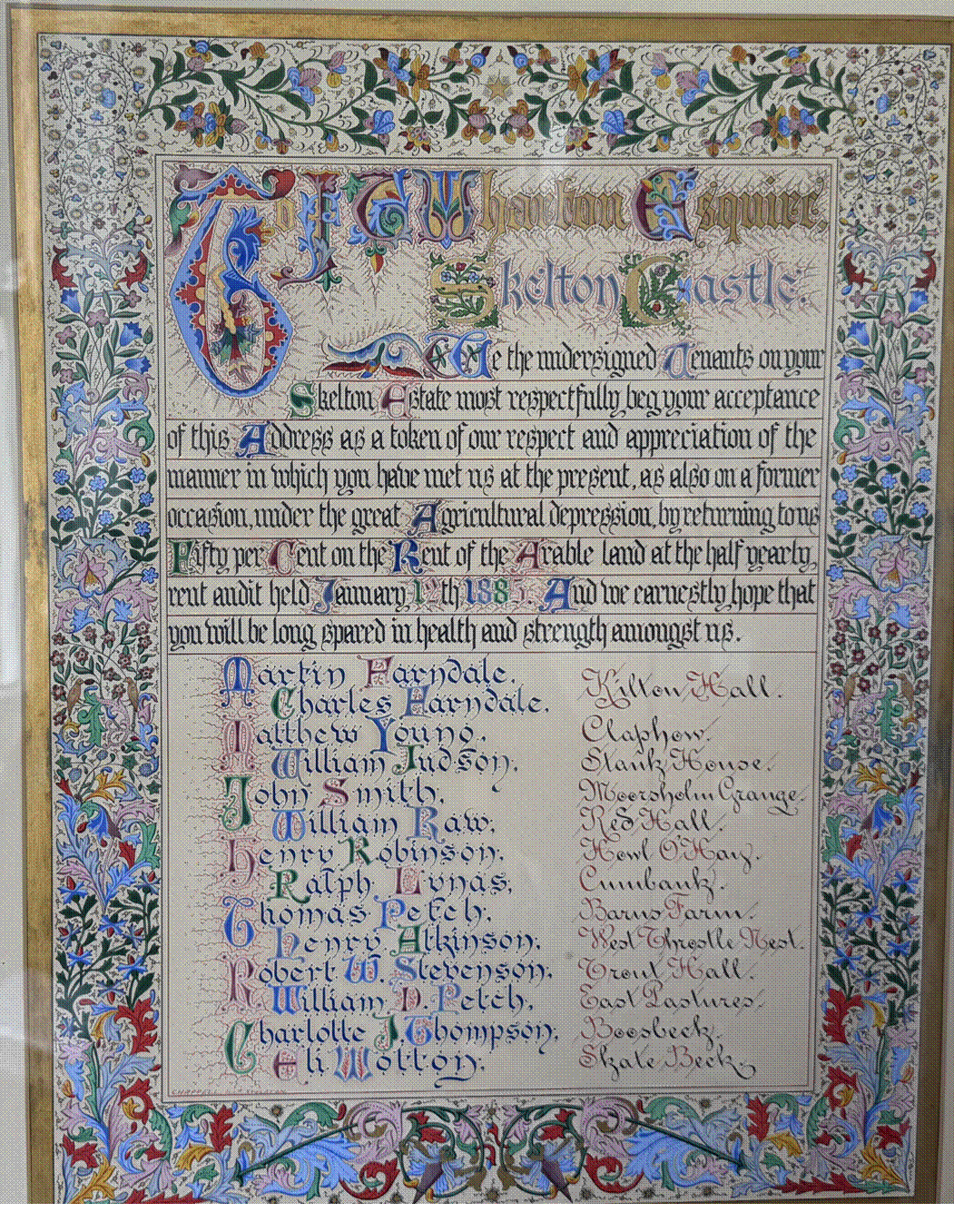

To J T Wharton Esquire Skelton Castle
We the undersigned Tenants on your
Skelton Estate most respectfully beg your acceptance of this Address as a token
of our respect and appreciation of the manner in which you have met us at the present,
as also on a former occasion, under the great Agricultural Depression, by
remitting ten per Cent on the Rent of the Arable Land at the half yearly rent
audit held January 12th 1885. And we earnestly hope
that you will be long spared in health and strength amongst us.
Martin Farndale, Charles Farndale, Matthew Young, William Judson, John Smith, William Raw, Henry Robinson, Ralph Lynas, Thomas Petch, Henry Atkinson, Robert W Stevenson, William H Petch, Charlotte J Thompson, Elizabeth Wotton
|
Date |
Person(s) |
Offence |
Where case heard |
North Yorkshire County Record
Office Reference |
|
23 January 1885 |
John Lantsbury and Edward Hanson both of Carlin How, miners |
On 17 January 1885 for trespassing in the daytime in search of game on
land belonging to John Thomas Wharton esquire and occupied by Martin Farndale
in Kilton |
Loftus |
|
|
24 April 1885 |
William Brown of Liverton, engine driver and Henry Lantsbury, Thomas
Hestlewood and Albert Jordan all of Carlin How |
On 29 March 1885 for maliciously damaging the trees and underwood
growing in Kilton Wood, the property of John Thomas Wharton esquire in Kilton |
Loftus |
QSB 1885 4/10/8/5 and 6 |
|
24 April 1885 |
John Hutton labourer and Arthur Partridge, both of Carlin How |
On 13 April 1885 for maliciously damaging the grass growing in a field
in the occupation of John Garbutt in Kilton |
Loftus |
|
|
8 May 1885 |
George Smith of Kilton, miner |
On 2 May 1885 for being drunk and riotous in the street in the township
of Brotton |
Loftus |
|
|
24 July 1885 |
Thomas Gilbert, Edward Hanson and Joseph Hore all of Carlin How |
On 8 July 1885 for maliciously damaging underwood and young trees
growing in a wood belonging to John Thomas Wharton esquire in Kilton |
Loftus |
|
|
28 August 1885 |
William Cate and Richard Cate both of Brotton, labourers |
On 3 August 1885 for wilfully damaging underwood in a plantation called
Merry's Gill, the property of John Thomas Wharton esquire in Kilton |
Loftus |
|
There is a memory of all the family coming to worship (at the Methodist chapel in Brotton), all except the youngest,
Ernest, and he being only two was left in the care, or
so it was thought, of an experienced person. Evidently the little chappie didn’t
relish this, so he followed on behind. When he reached the end of Kilton Lane
he was lost. Someone seeing him crying, and knowing where the family was, took
him to the chapel. So distressed was he and yet so relieved to be with the
family that, needless to say, he was never left behind
again. Little Ernest died when only 2 ½ years old, but the elder members of the
family remember the incident well. (Wainwright,
Greta (1966), Brotton Methodist Church, 1866 to 1966).
1886
|
Date |
Person(s) |
Offence |
Where case heard |
North Yorkshire County Record
Office Reference |
|
8 January 1886 |
John Henry Hutton, Henry Lantsbury, and George Wright of Carlin How and
John Plews and Frederick Glover of Brotton |
On 17 December 1885 for maliciously destroying a holly tree in Kilton Wood,
the property of John Thomas Wharton esquire |
Loftus |
|
|
8 January 1886 |
Arthur Cumberland and John Lewis of Loftus labourers |
On 15 December 1885 for maliciously damaging underwood growing in Kilton
Wood, the property of John Thomas Wharton esquire |
Loftus |
|
|
14 May 1886 |
Edward Hanson of Brotton, miner |
On 24 April 1886 for trespassing in the daytime in search of conies on
land belonging to John Thomas Wharton esquire and occupied by Charles Farndale
in Kilton |
Loftus |
|
|
14 May 1886 |
Richard Cate of Brotton miner |
On 13 April 1886 for maliciously damaging underwood growing in a wood
called Merry Gill, the property of John Thomas Wharton esquire in Kilton |
Loftus |
|
|
14 May 1886 |
Paul Willows, Joseph Hewry and James Watts of Loftus |
On 2 May 1886 for maliciously damaging underwood and young trees growing
in a wood, the property of John Thomas Wharton esquire in Kilton |
Loftus |
|
|
8 October 1886 |
William Richardson of Carlin How miner |
On 23 Serptember 1886 for trespassing in the daytime in search of game
on a piece of land belonging to John Thomas Wharton esquire and occupied by Charles Farndale
in Kilton |
Loftus |
|
|
8 October 1886 |
Arthur Rispin and Vincent Vodden both of Skinningrove |
On 30 September 1886 for
maliciously damaging underwood growing in Kilton Wood, the property of John
Thomas Wharton esquire in Kilton |
Loftus |
|
1887
There
was a significant sale of horses, stock and farm tools at Charles Farndale’s farm in April 1887. Perhaps this was due to the
agricultural depression, or perhaps it was just part of a general management
scheme (The North Star (Darlington), on 4
April 1887).
|
Date |
Person(s) |
Offence |
Where case heard |
North Yorkshire County Record
Office Reference |
|
26 August 1887 |
Frederick Glover miner and Thomas Barker labourer both of Brotton |
On 21 August 1887 for maliciously damaging a quantity of turnips growing
in a field belonging to and occupied by John Thomas Wharton esquire in Kilton |
Loftus |
|
The
Skelton and Gilling Estate Records include
details of half yearly rents due at Lady Day and 30 June 1887:
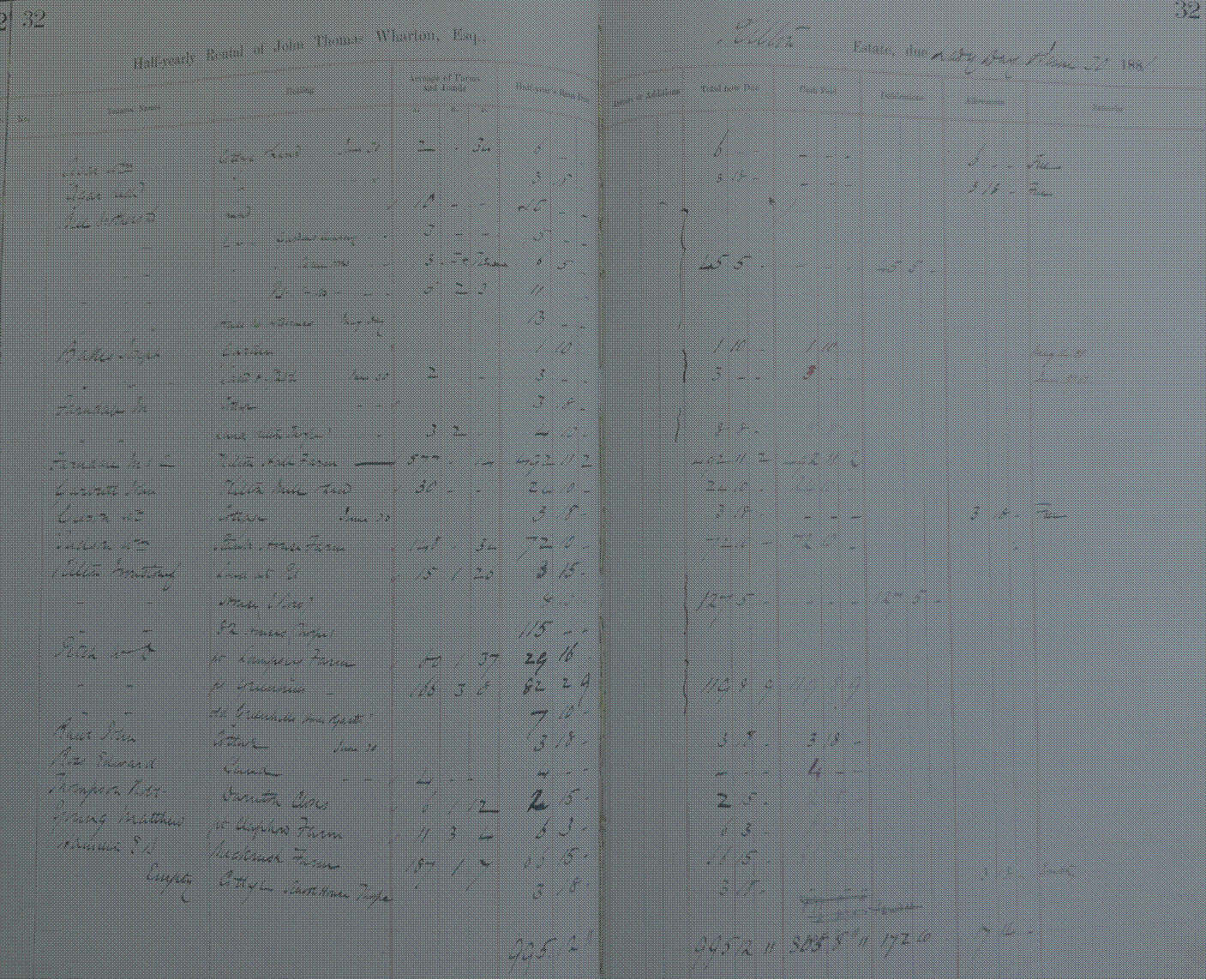

1888
Kilton in 1888:
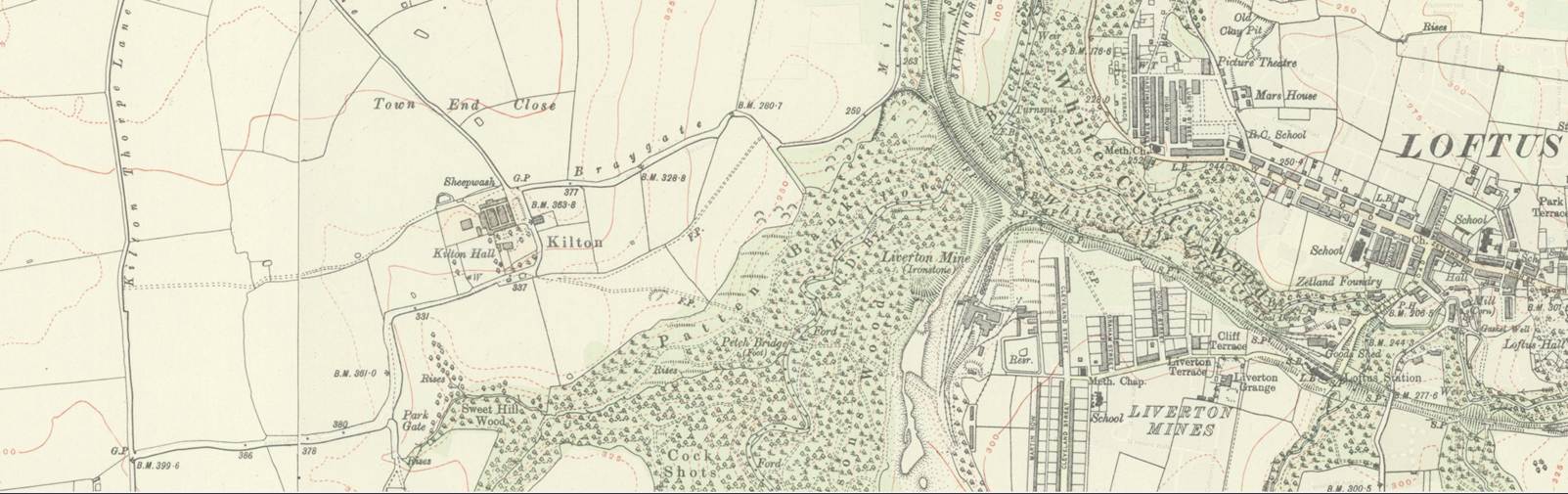
|
Date |
Person(s) |
Offence |
Where case heard |
North Yorkshire County Record
Office Reference |
|
9 March 1888 |
George Smith, Richard Cate and John Walker all of Brotton, miners |
On 4 March 1888 for trespassing in the daytime in search of game on land
occupied by John Thomas Wharton esquire in Kilton |
Loftus |
|
|
13 April 1888 |
John Garbutt the younger of Kilton, miller |
On 22 March 1888 for assaulting Eliza Welford of the township of Kilton
housekeeper |
Loftus |
|
|
11 May 1888 |
John Wright miner and John Saunders labourer both of Lingdale |
On 4 May 1888 for trespassing in the daytime in search of game on land
belonging to John Thomas Wharton esquire and occupied by William Petch in
Kilton |
Loftus |
|
|
13 July 1888 |
Charles Massingham of Loftus miner |
On 29 June 1888 for assaulting James Flinn of Kilton police constable in
the execution of his duty in Kilton |
Loftus |
|
|
26 October 1888 |
John Henry Hutton, Robert Butterwick and William Dack all of Carlin How,
miners |
On 14 October 1888 for maliciously damaging apples growing in an orchard
occupied by and belonging to John Thomas Wharton esquire in Kilton |
Guisborough |
|
1889
|
Date |
Person(s) |
Offence |
Where case heard |
North Yorkshire County Record
Office Reference |
|
8 March 1889 |
Richard Morgan of North Skelton, miner |
On 19 February 1889 for wilfully damaging young trees growing on land
called Merry Gill Wood belonging to and occupied by John Thomas Wharton of
Skelton Castle esquire in Kilton |
Loftus |
|
1890
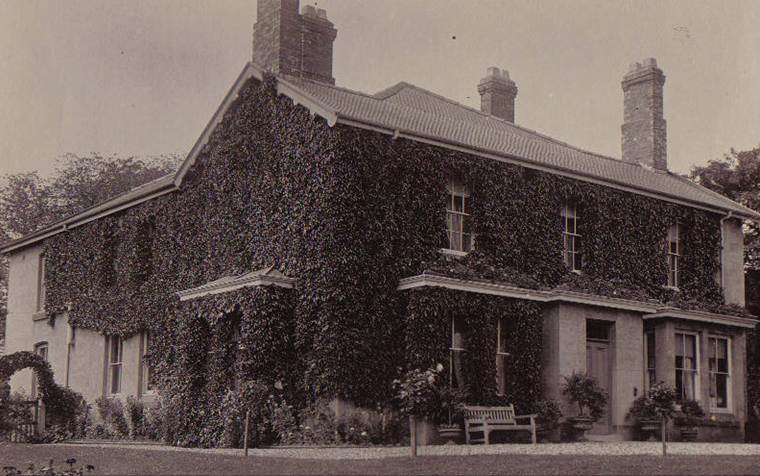
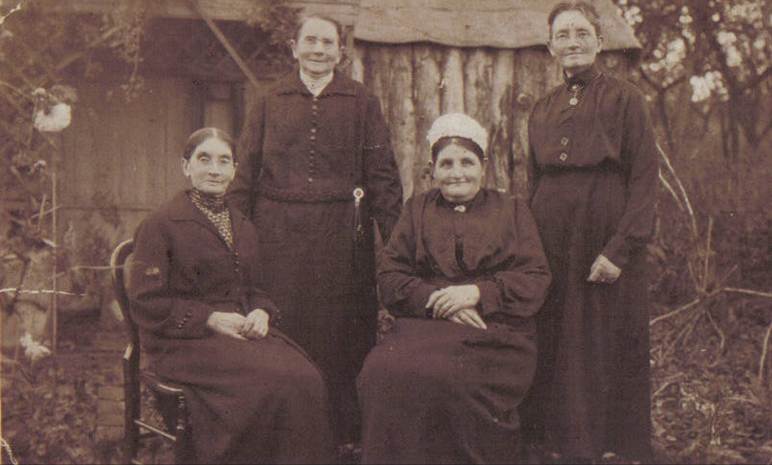
The new Kilton
Hall in about 1890 Four Farndale
sisters at time of Charles Farndale' family at Kilton Lodge in about 1890
Owing to repairs to Kilton Hall at this time, Mr Charles Farndale moved
up to Kilton Lodge. This was intended to be a temporary move, but he never
returned. Another Methodist family, Mr and Mrs Charles
Bell moved into the Hall, and many are the memories of garden parties etc held
there. Open air concerts, with the piano placed near the windows, and yours of
the gardens and farm were great features of those pleasant afternoons and
evenings. The Farndales carried on their enthusiasm for Methodism up to Kilton
Thorpe, then a thriving mining village, but now a place where only a few houses
remain inhabited. The school, now in ruins, never used for its intended
purpose, was used for Methodist services for a short time, but Brotton, with
its larger congregation, was the bigger attraction. So
the Sunday morning and evening trek to Brotton was still a feature of the
Kilton society but it remained a separate body for finance, class tickets and quarterly
assessment until December 1938. (Wainwright,
Greta (1966), Brotton Methodist Church, 1866 to 1966).
1891
By 1891, Kilton had a much larger population with large numbers of miners
living at Bell’s Pit, Carlin How, Stevenson Street, Dixon Street, Hood
Cottages. Bell's Pit, officially known as North Loftus Mine, known colloquially
as the Duck Hole due to its notoriously wet working conditions, was an
ironstone mine located in Carlin How, but was associated with Kilton in the
census. Stevenson Street was located in Carlin How, an
ironstone mining village also associated with Bell’s Pit. This large population
was therefore separate to the agricultural community.
Hood's Cottages were a group of estate workers' dwellings located in the
rural settlement of Kilton, but was associated mostly
with miners in the 1891 census.
There was also a station master at Station House; blacksmiths, milkmaids,
as well as:
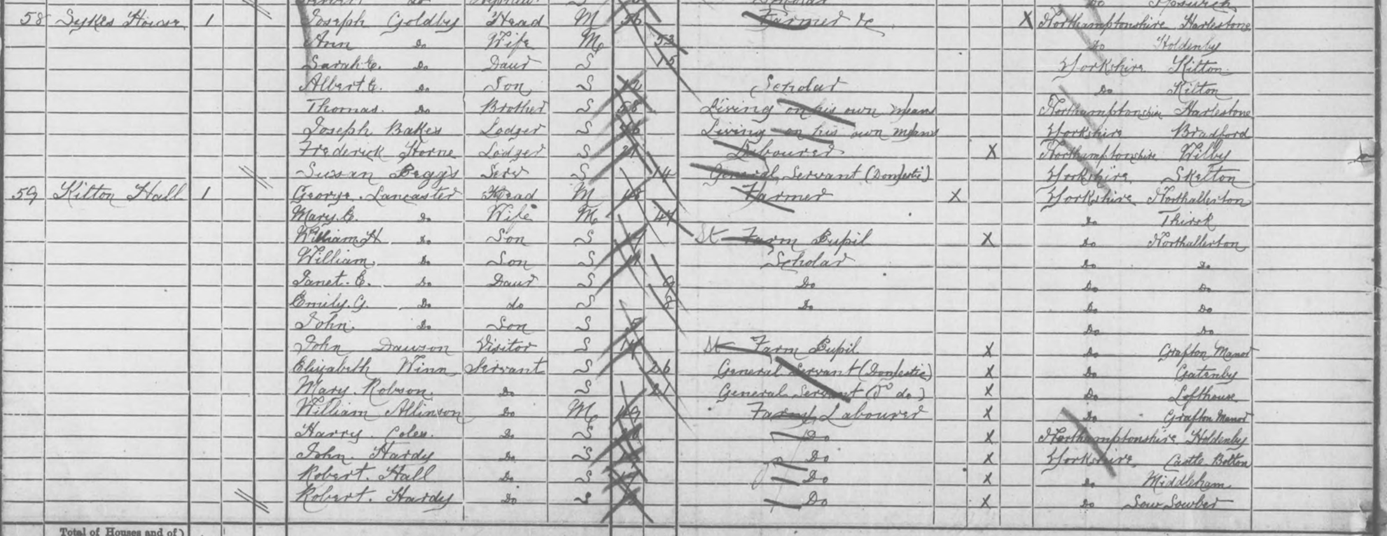
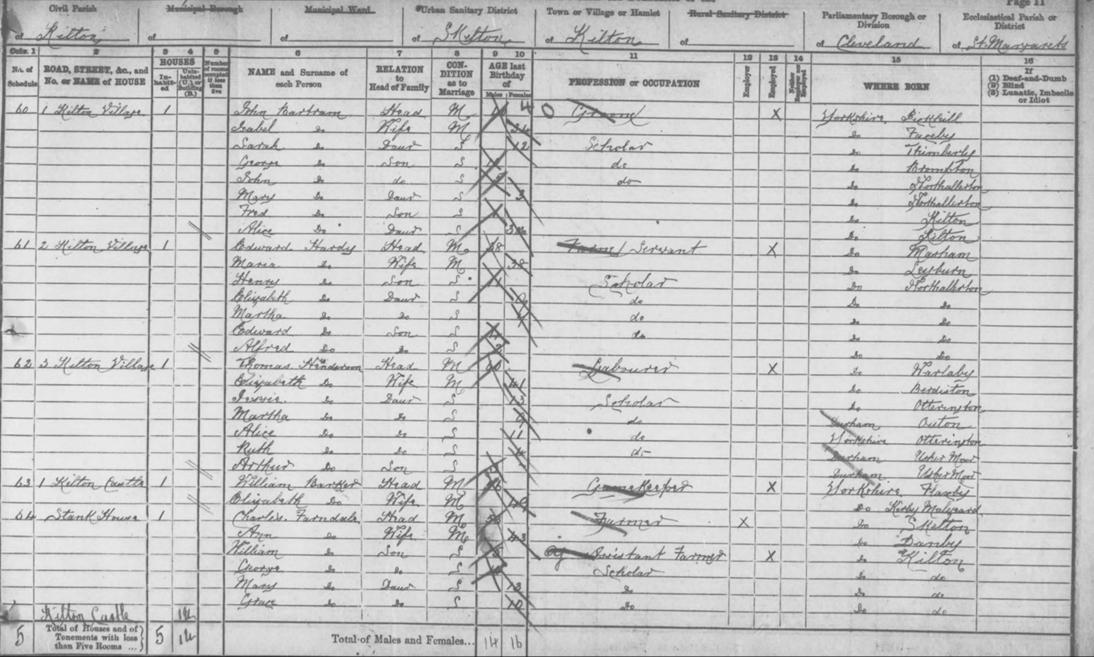
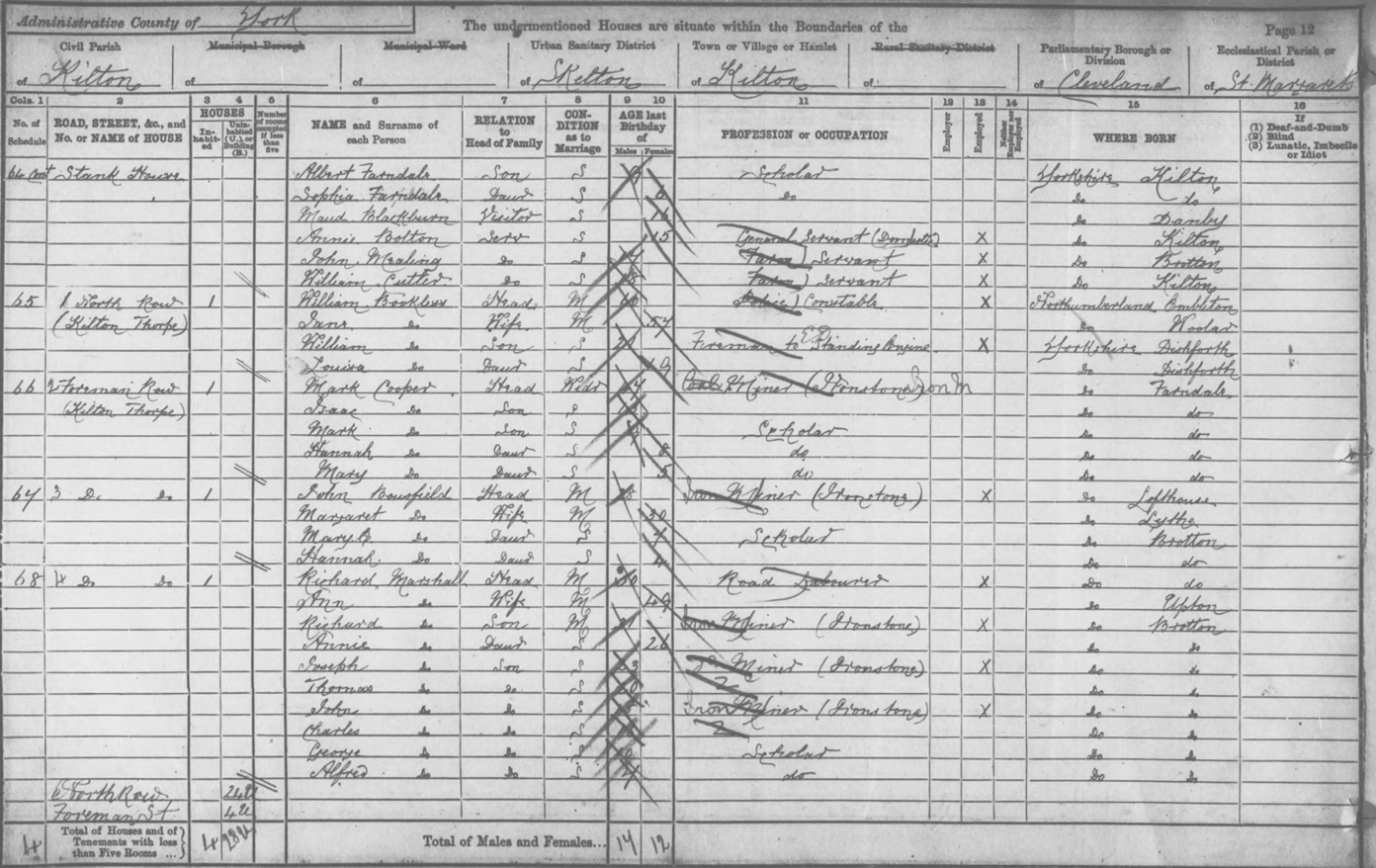
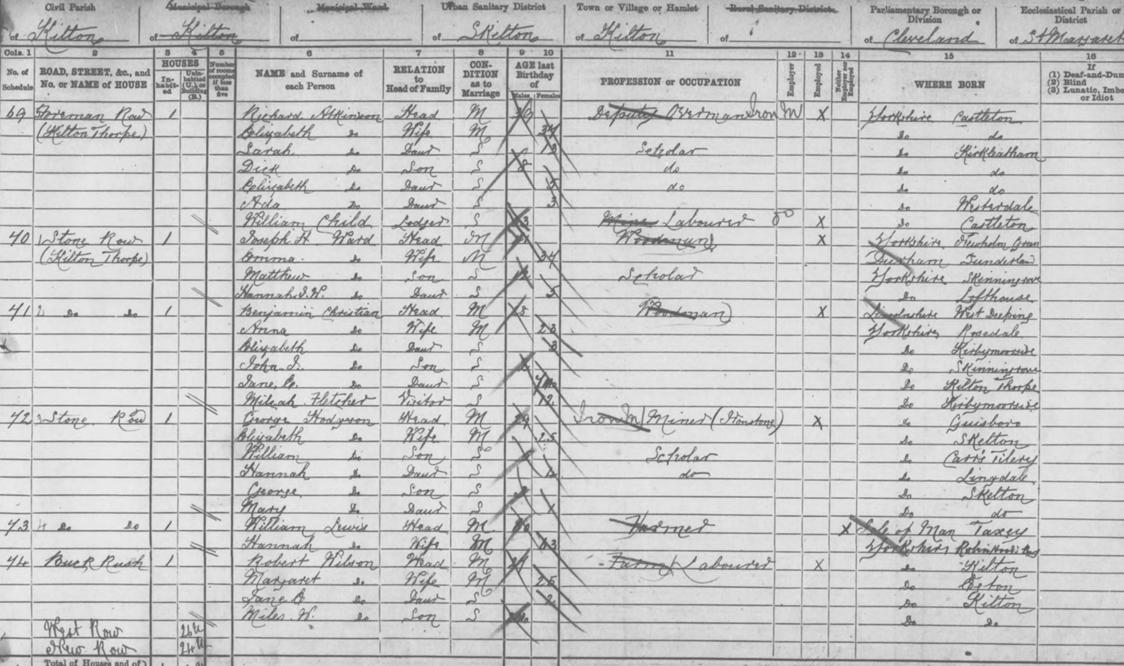
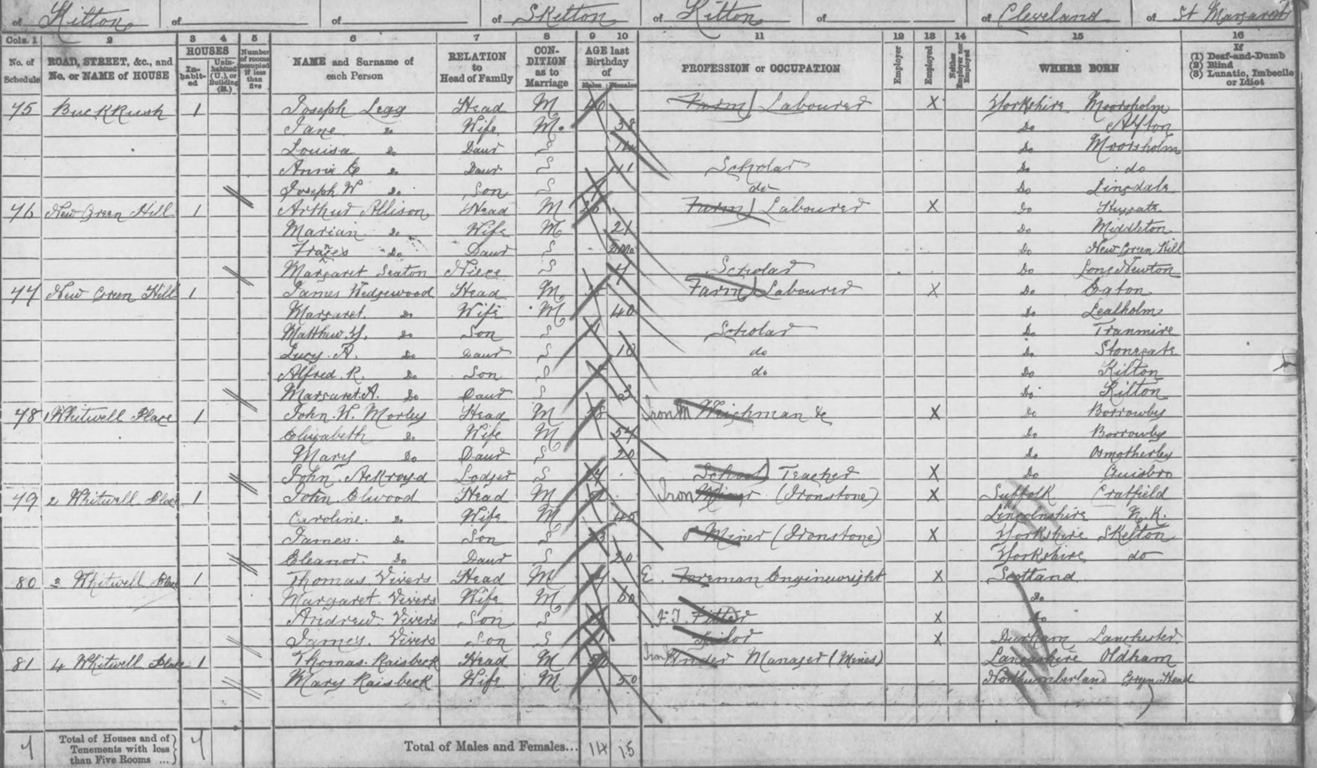
This was now a sizeable population in the area of
Kilton.
(1891 Census)
1892
There was a Lease of Ironstone Mines in the township of Kilton and parish
of Skelton between John Thomas Wharton and Bell Brothers Limited for the term
of 39 years for the surface rent of double the agricultural value of the lands
being no less than £2 per acre and £6,000 for the yearly number of 270 000 tons
weight of raw ironstone, also 1d per ton of raw ironstone raised for wayleave
and 5 1/3d per ton of raw ironstone as a royalty. With conditions. An attached
letter from J. T. Wharton to Bell Brothers Limited concerned deductions of
rates dated 1 January 1892. An annexed Memorandum dated 3 July 1907 concerned a
sale of three pieces of land under lease, this property thereby becoming void
in the lease. (The National Archives BS/BB/4/1/4,
held at Teesside Archives).
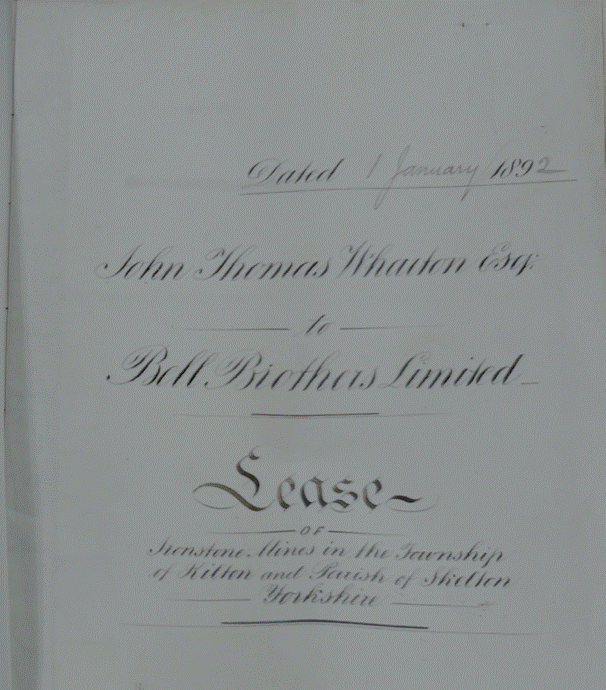
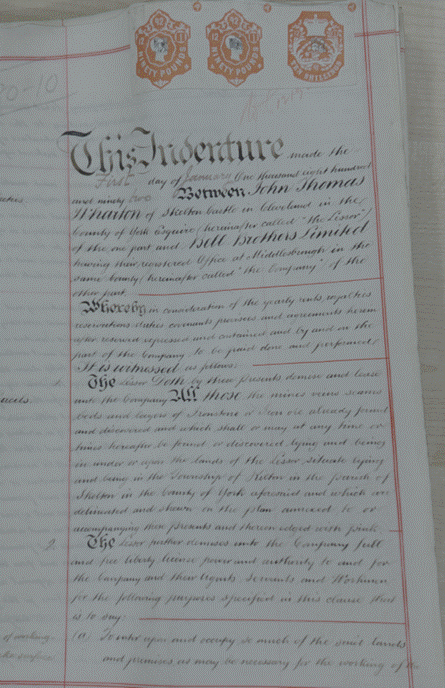
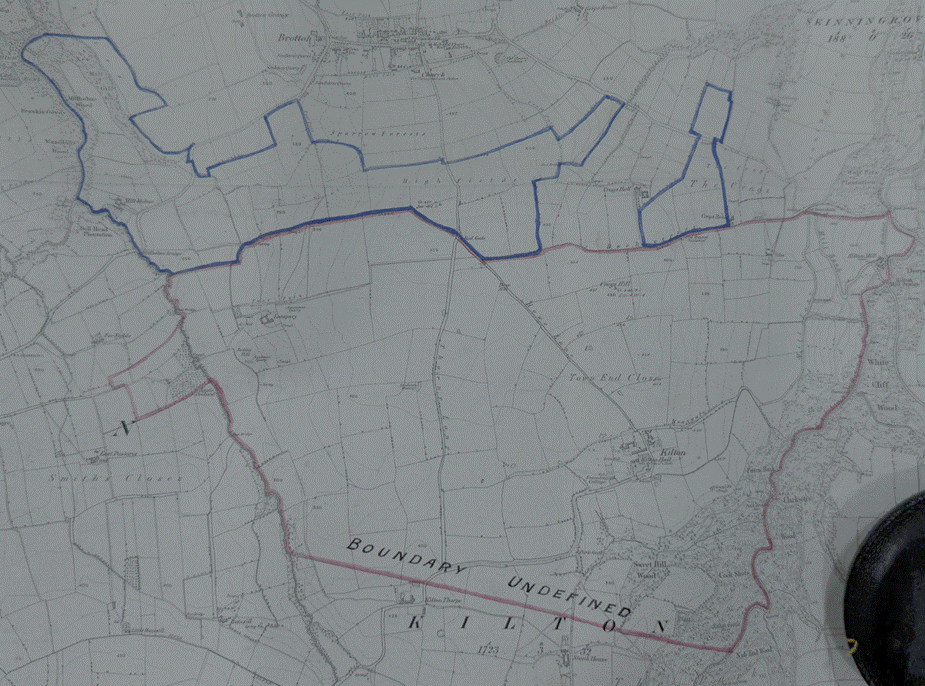
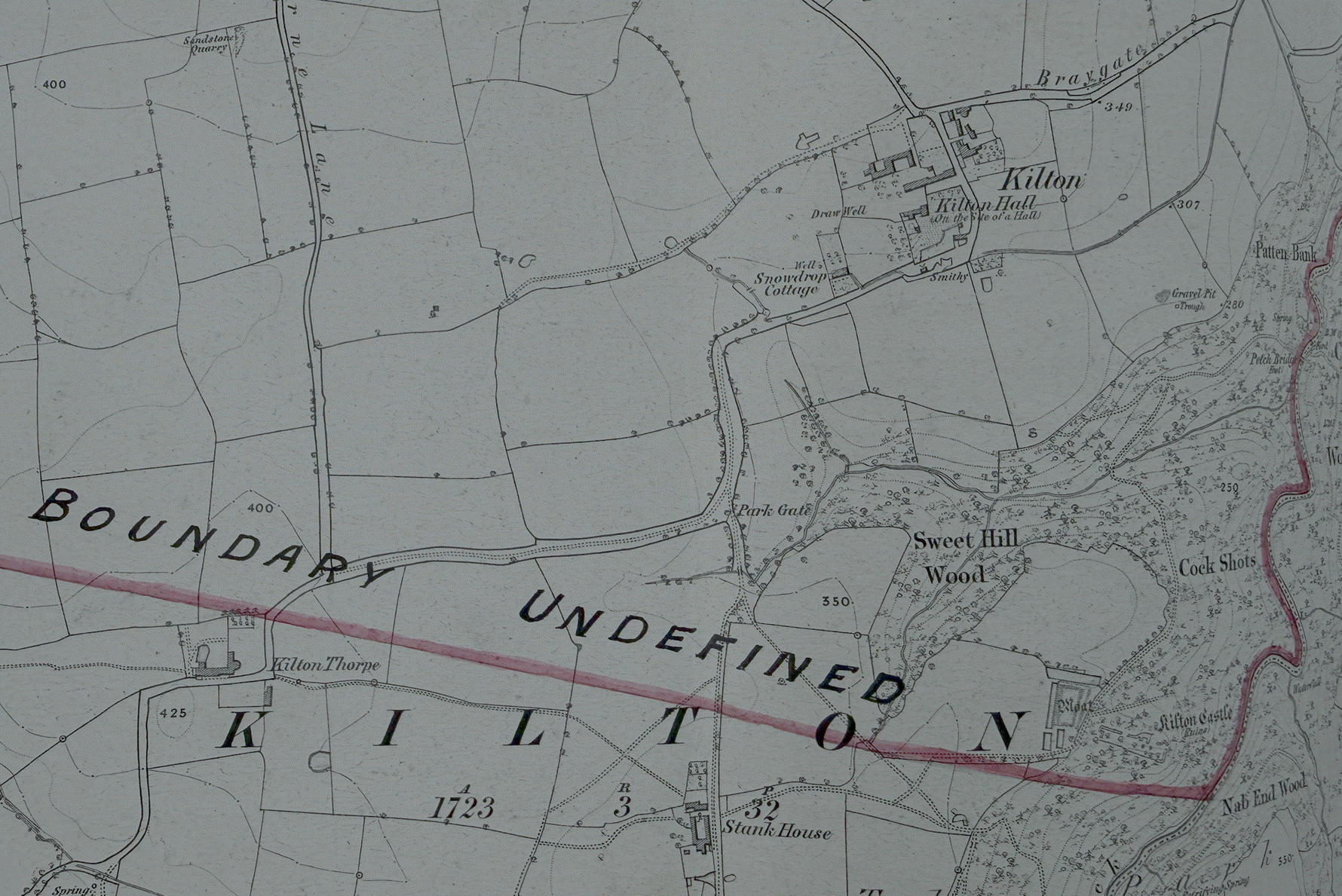
There was an Agreement with plan dated 22 October 1892 as to mining near
the Kilton Viaduct between Bell Brothers Limited and The North
Eastern Railway Company specifying distances and that any resulting
damage to the viaduct will not be compensated. (The
National Archives BS/BB/4/1/6,
held at Teesside Archives).
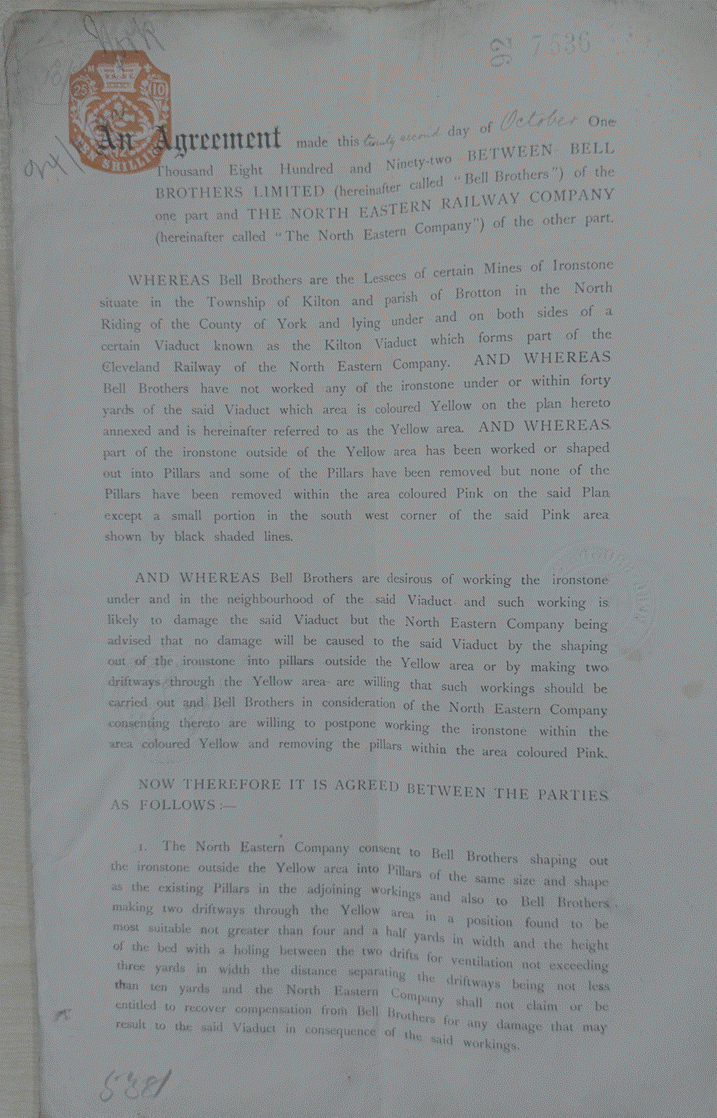
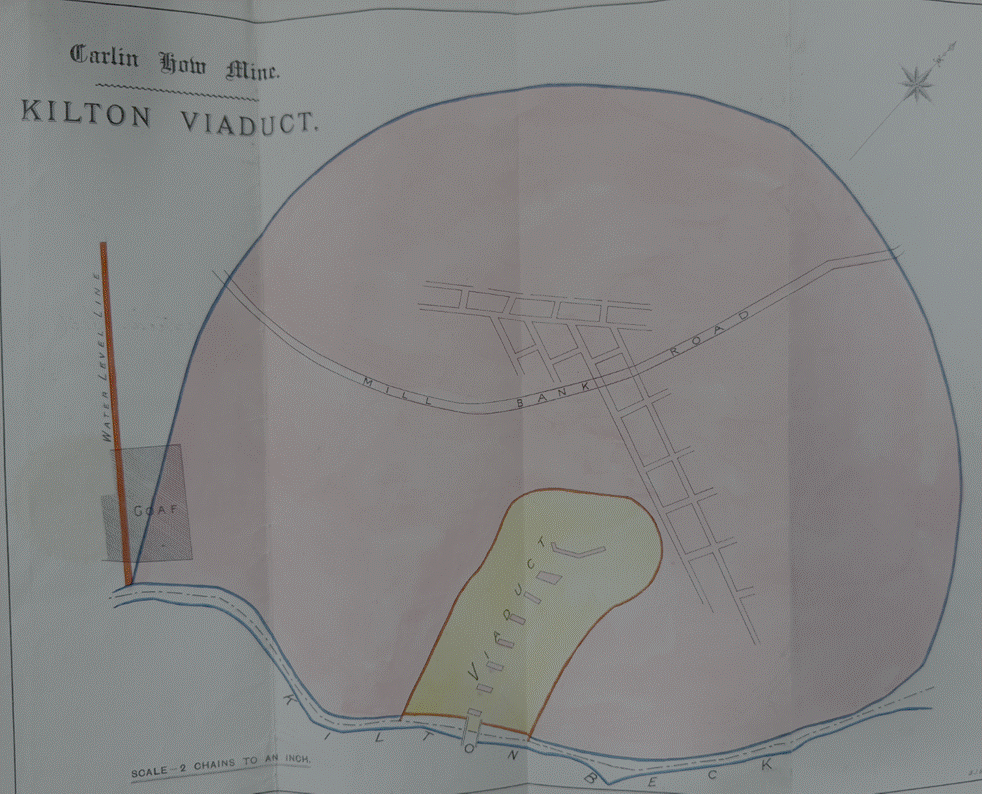
1893
Kilton in 1893:
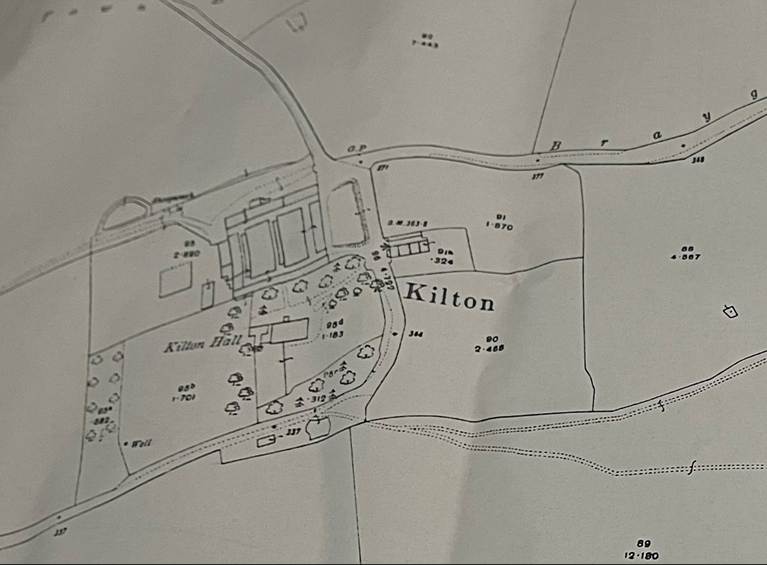
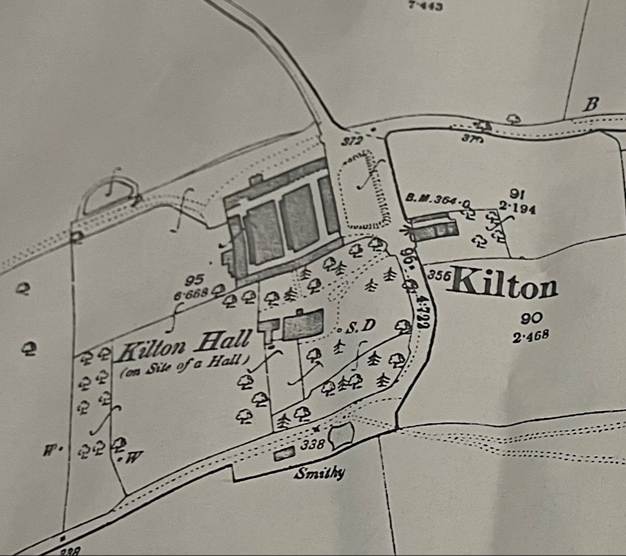
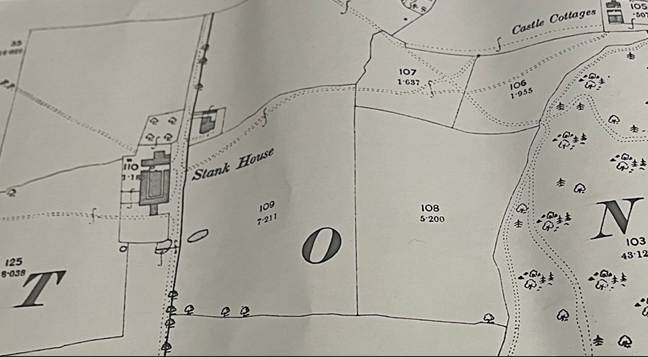
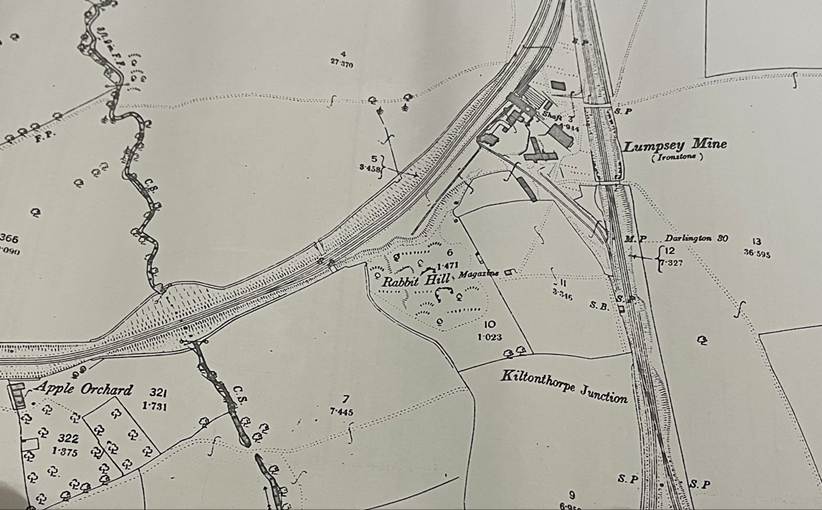
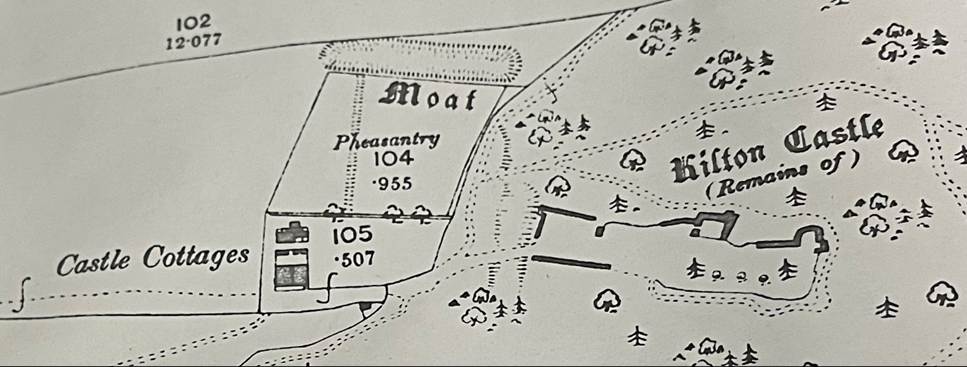

Substantial changes occurred at Kilton in the late nineteenth century.
The estate village was demolished and a range of brick built
farm buildings were constructed over the site of the village. These buildings
served Kilton Hall Farm, which was the only domestic dwelling to the west of
the road. On the opposite side of the road, a row of estate cottages were built in the same architectural style as the
outbuildings.
Following the failure of the reorganisation of the landscape in the
eighteenth century, a consolidation took place in the nineteenth century,
perhaps between 1870 and 1893 and certainly between 1856 and 1893. The attempt
to foster a village at Kilton was abandoned and a single, substantial farm was
established. To the west, Greenhills Farm moved from its position on the
western boundary into the centre of its area. Elsewhere within the Township
farmhouses were renewed and a state cottages built.
The financing of these measures may well have been derived from the ironstone
mines, but there is little else to indicate the impact of industrialisation on
the landscape. The estate and Township were not dependent on industry and so
the landscape of Kilton survived the closing of the mines extremely well and
the Township today is primarily an agricultural landscape, almost completely
given over to crop production.
There are a few areas of grassland which coincide with the original
medieval earth works.
Craggs operated until
1893 and Carlin How, which came to be called Duck Hole because of the
wet working conditions, until 1924.
1894
The
Skelton and Gilling Estate Records include
details of half yearly rents due at Lady Day and 30 June 1894:
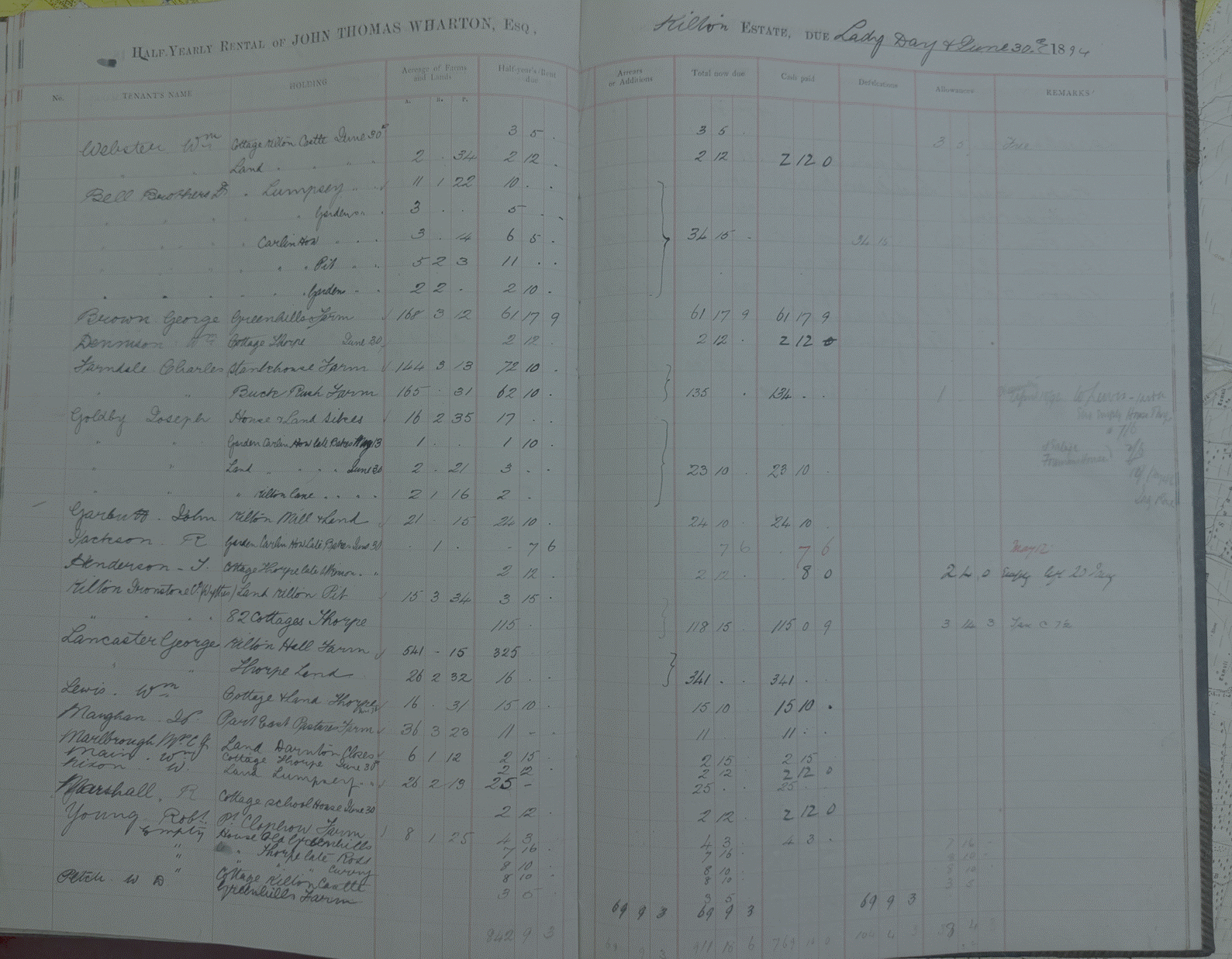
1896
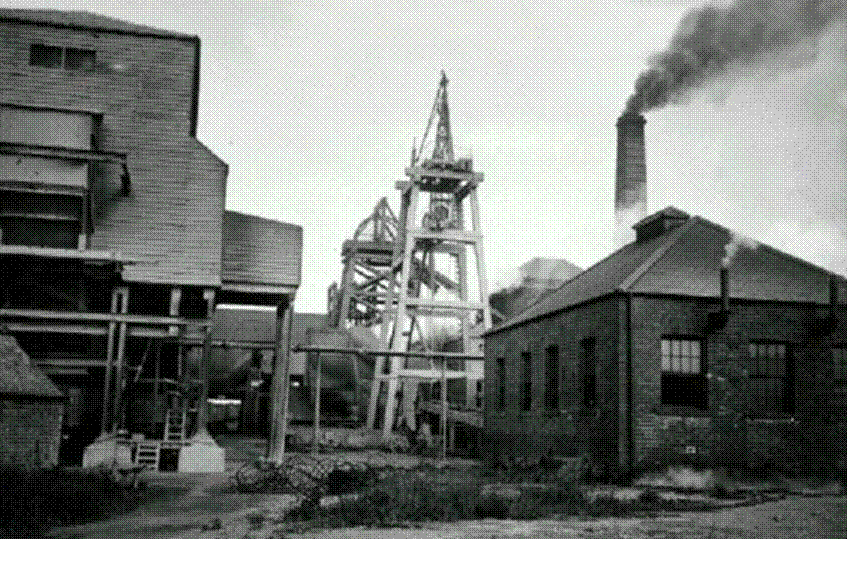
Kilton Mine, 1896
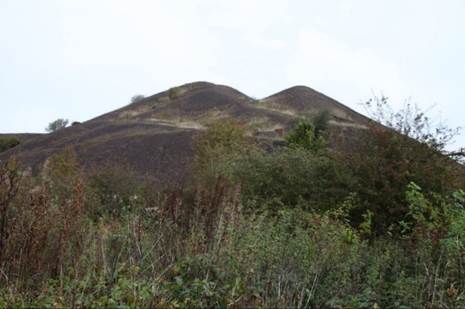
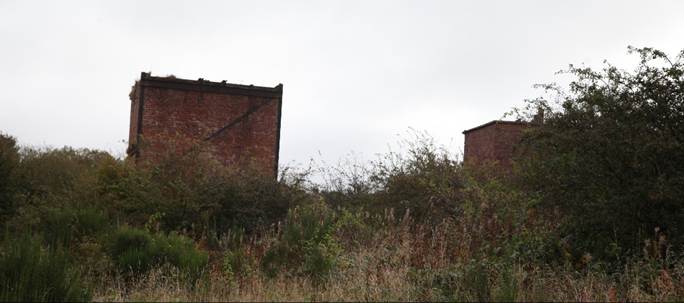
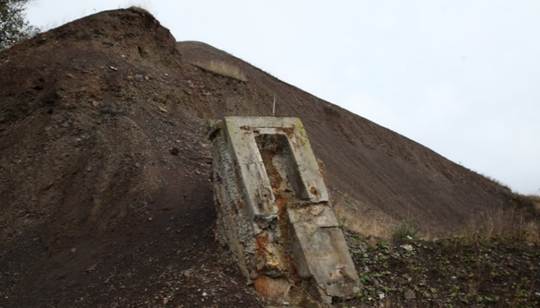
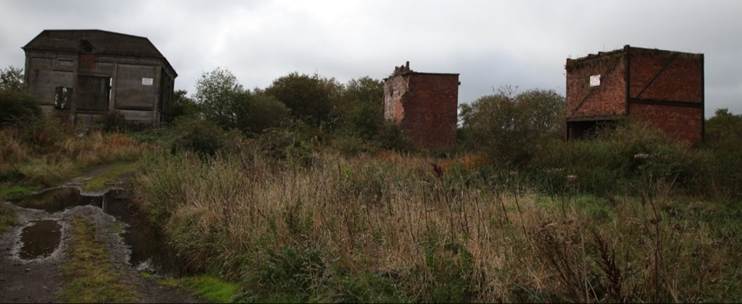
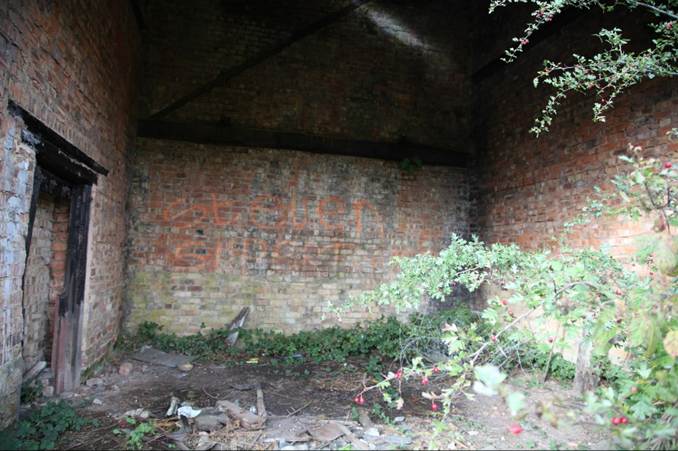
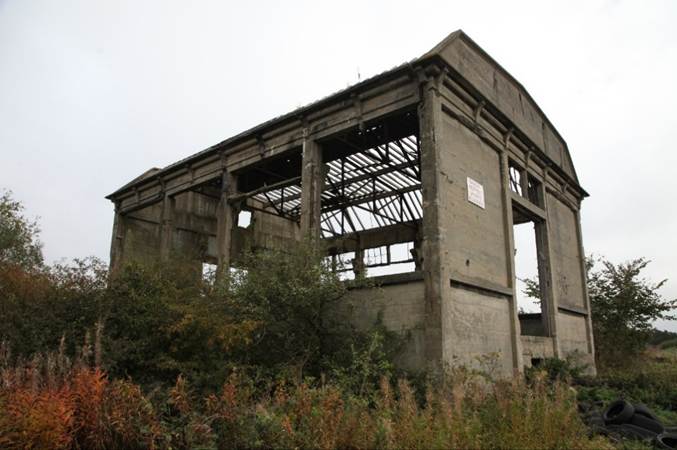
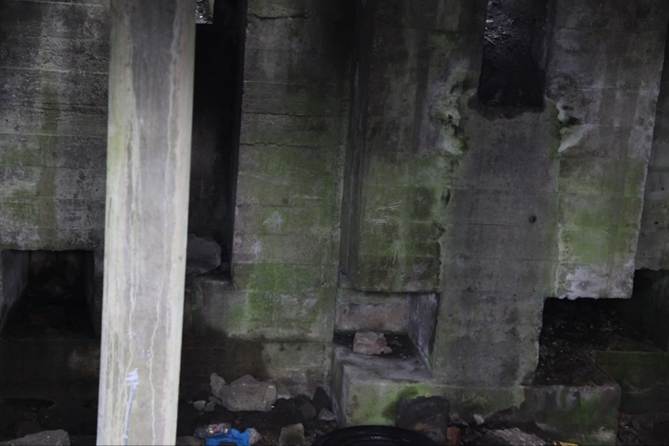
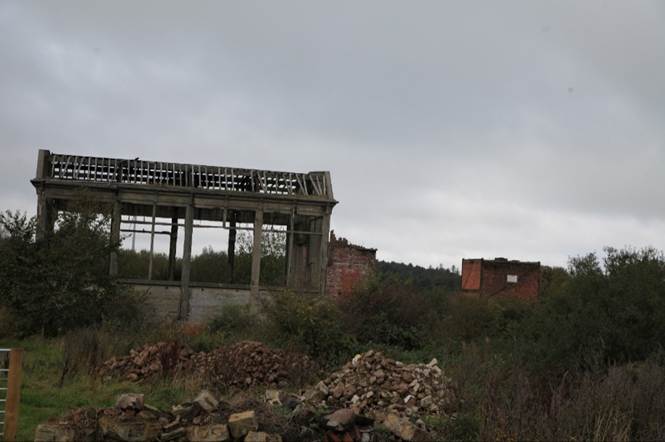
The remains of
the mine works at Kilton in 2016
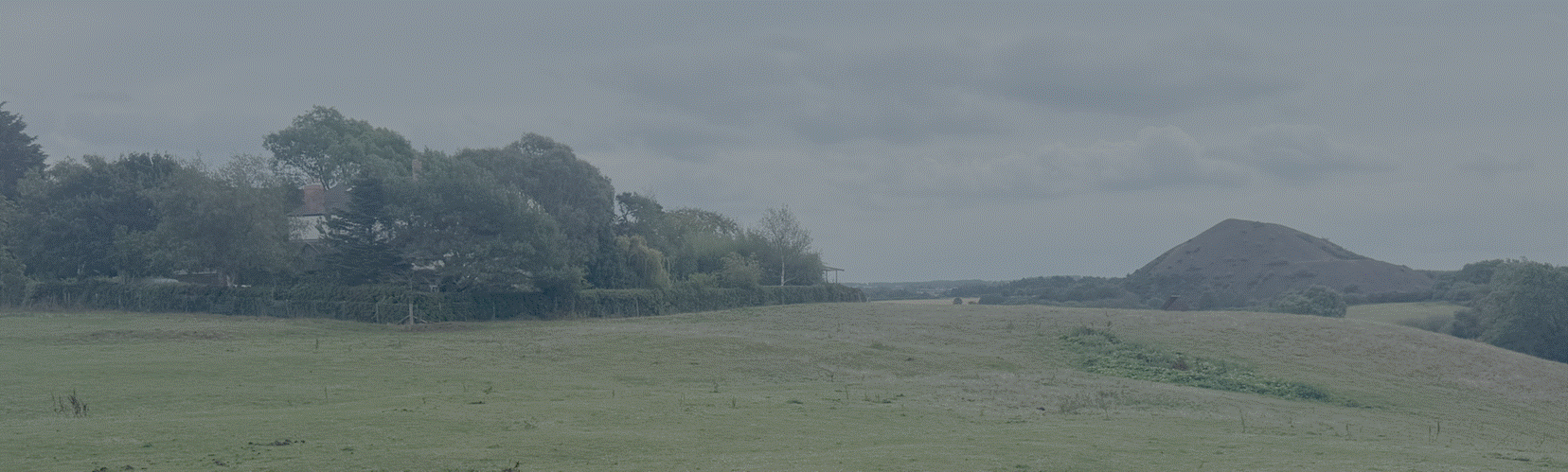
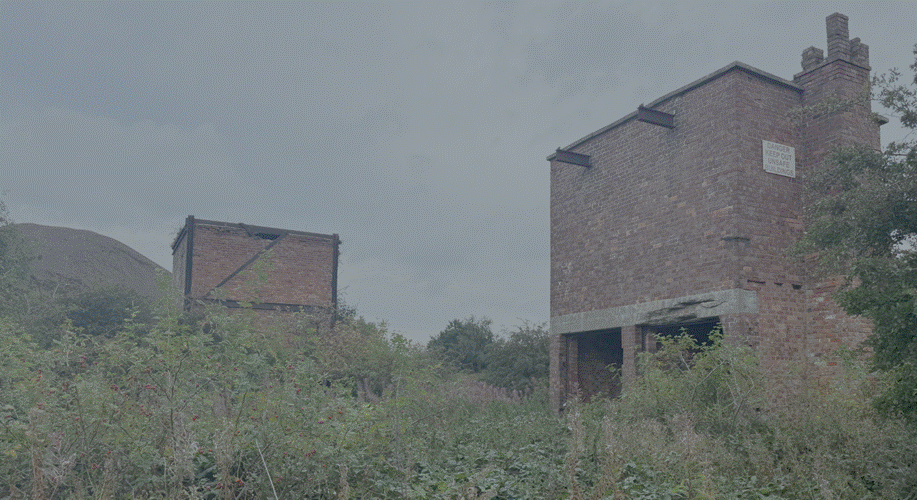
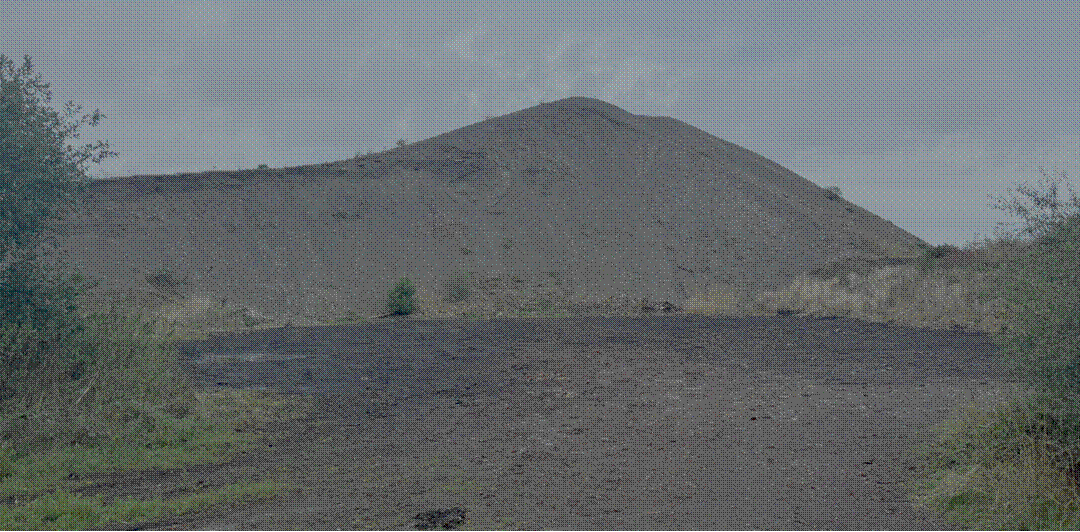
The old mine
works at Kilton in 2026
1899
In
1899, a vacancy for a ploughboy was advertised. Ploughboy (strong) Wanted, about
17, to go with horses. Apply Charles Farndale,
Kilton Lodge, Brotton (Daily Gazette for Middlesbrough, on 27 November 1899).
There
are Monthly Returns of Ironstone Wrought including at Kilton Mines from January
to December 1899 (The National Archives U.SG/6/17
held at Teesside Archives).
Twentieth
Century Kilton
1900
William
Henry Anthony Wharton
John Thomas Wharton died on
1 March 1900 and the Skelton and Kilton estates passed to his son, William
Henry Anthony Wharton
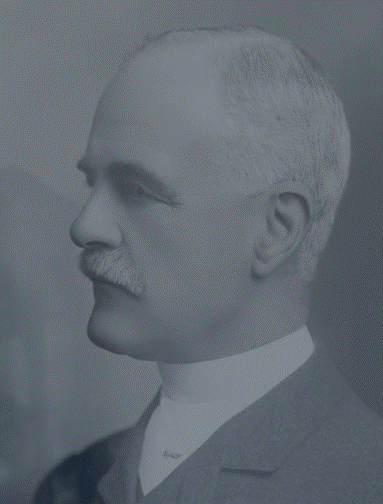
William
Henry Anthony Wharton
The
Skelton and Gilling Estate Records include
details of half yearly rents due at Lady Day and 30 June 1900:
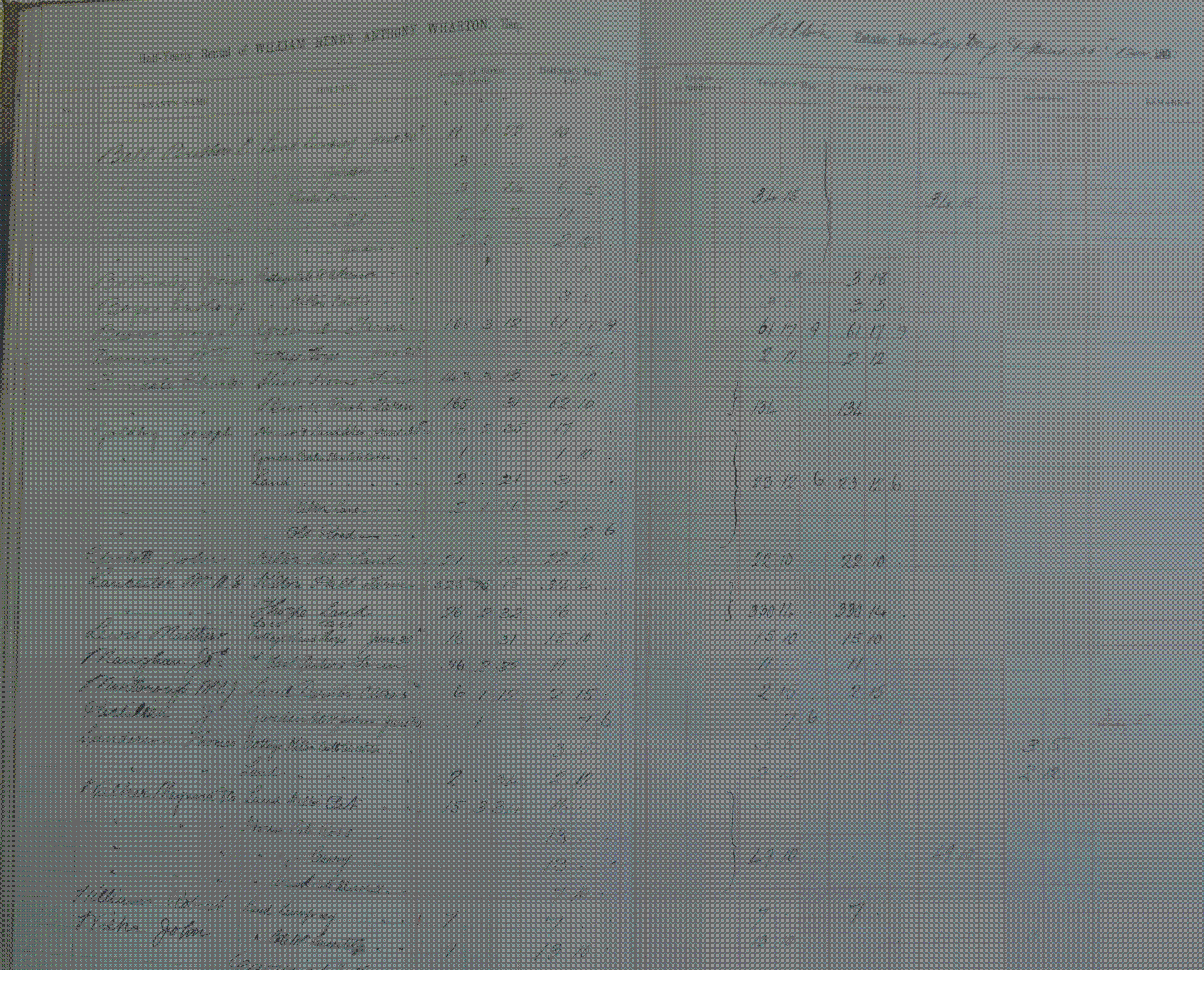
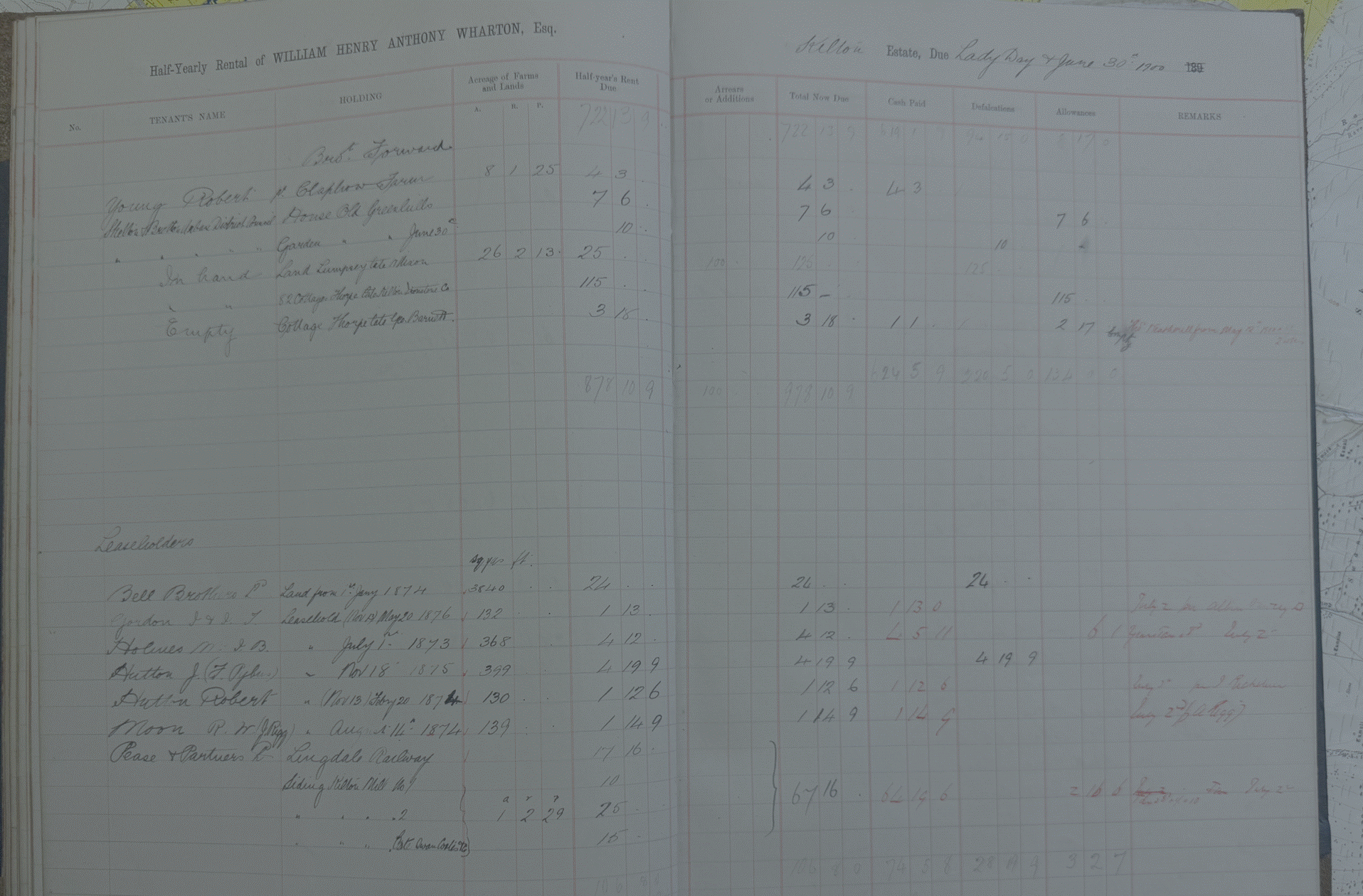
1901
In 1901, Charles Farndale
aged 63 was living at Stank House on the Kilton
estate (1901 Census).
Bell’s
Pit Yard, Dixon Street and other locations had very sizeable populations of
miners. The population of Kilton was very large by 1901, but with two distinct
sub-populations of miners and agricultural workers, though of course many
agricultural workers, or younger sons of large families, found work in the
mines.
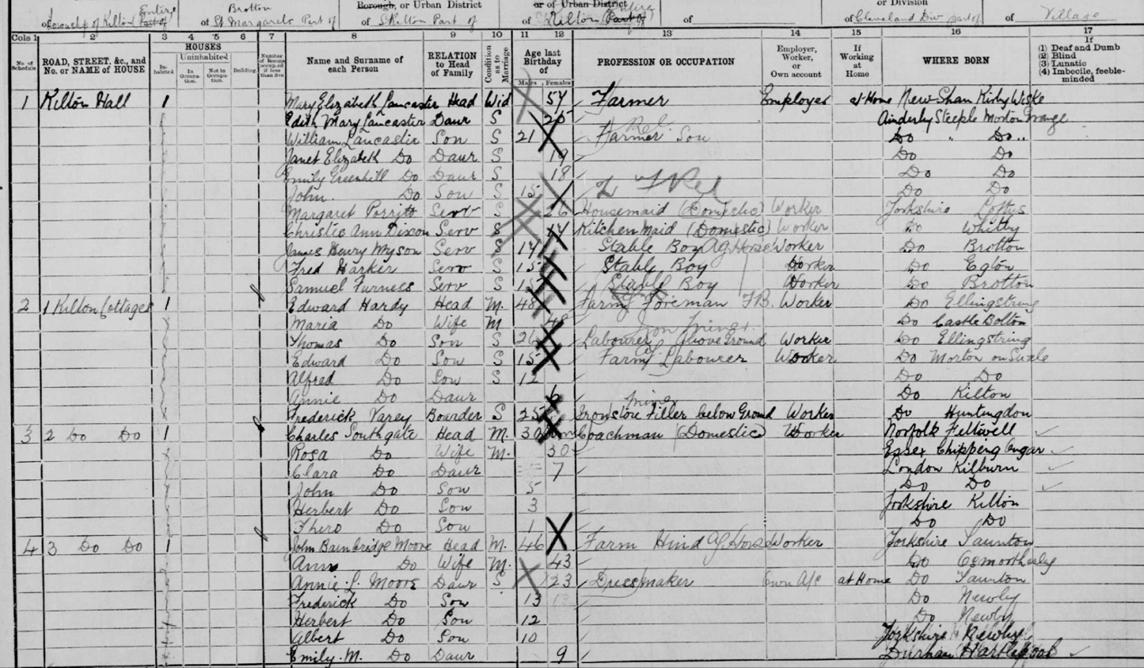
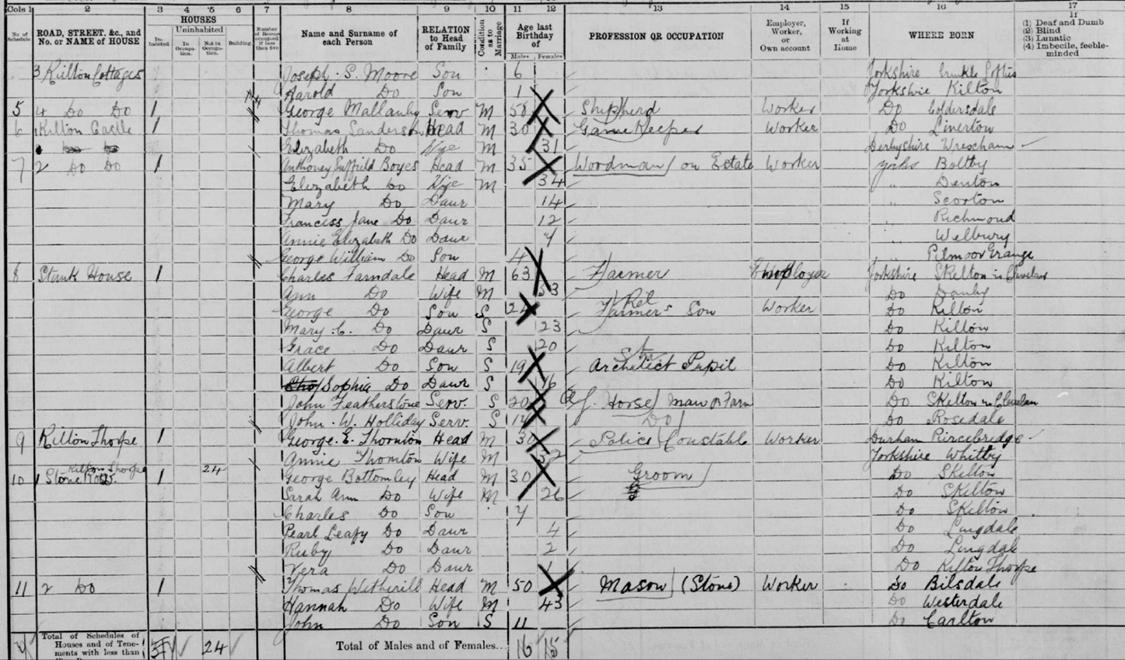
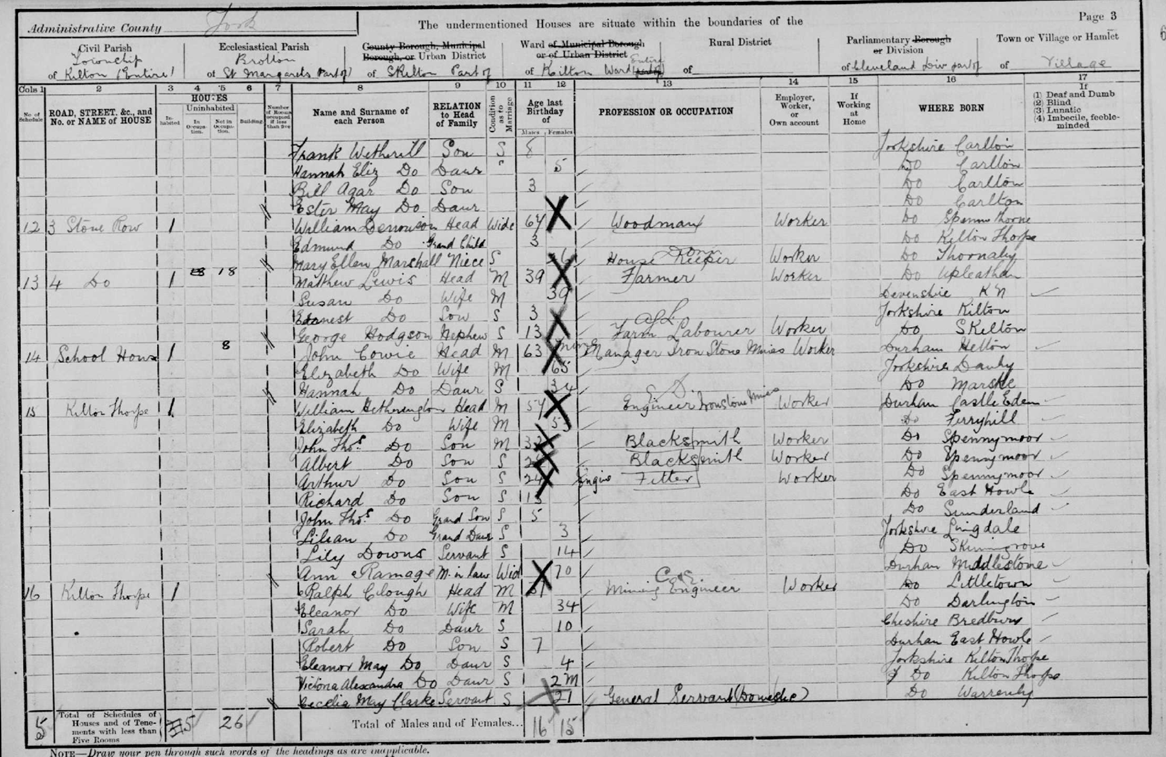
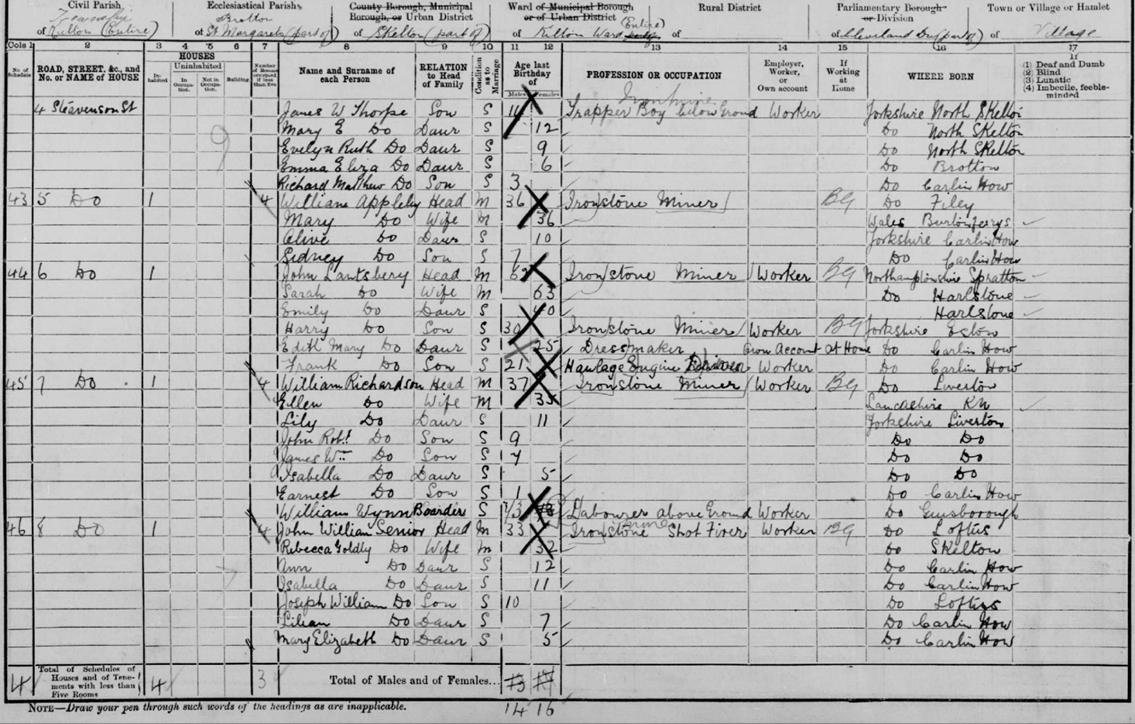
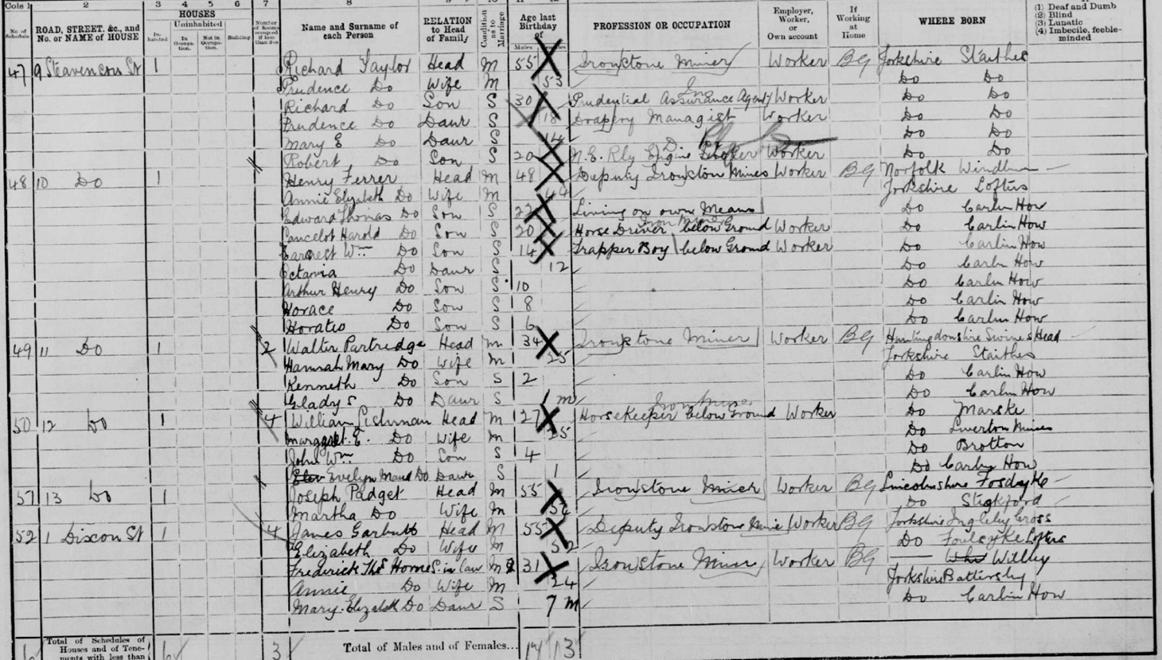

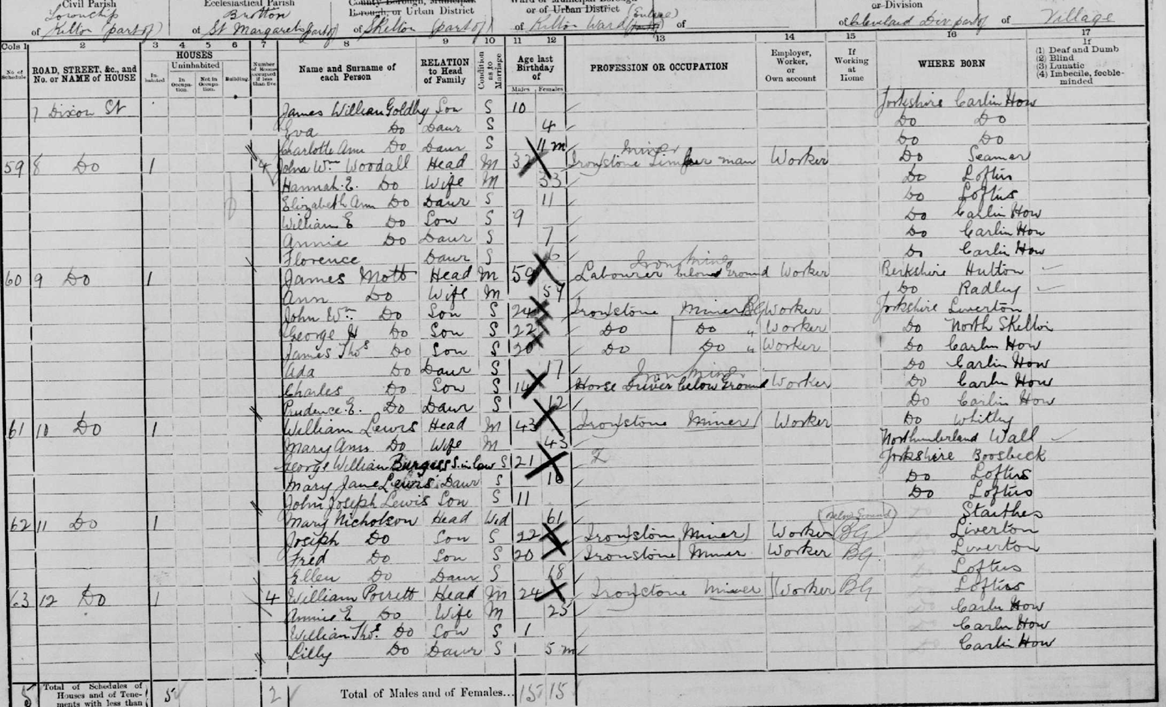
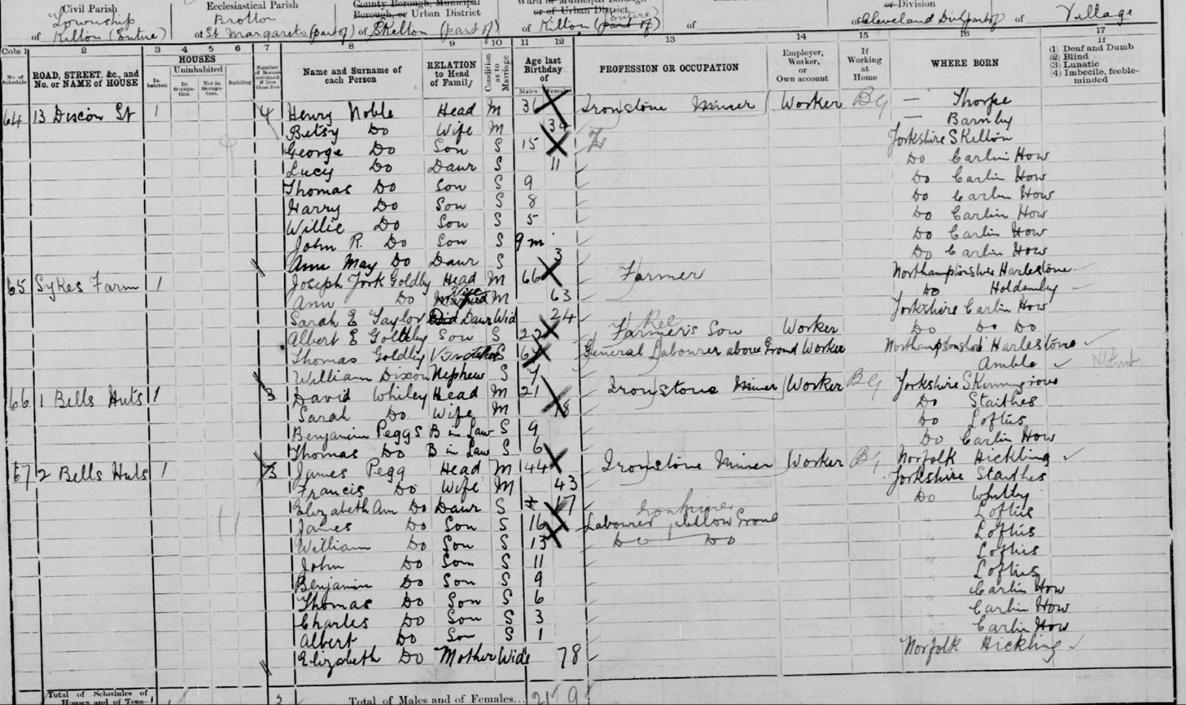
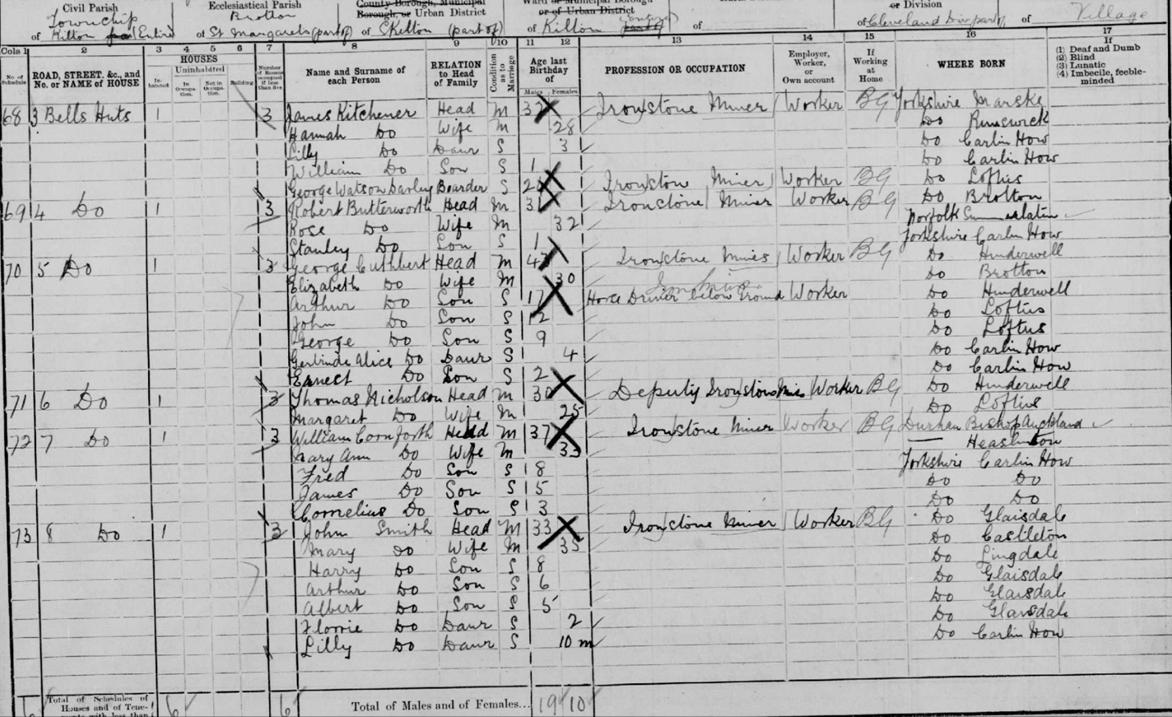
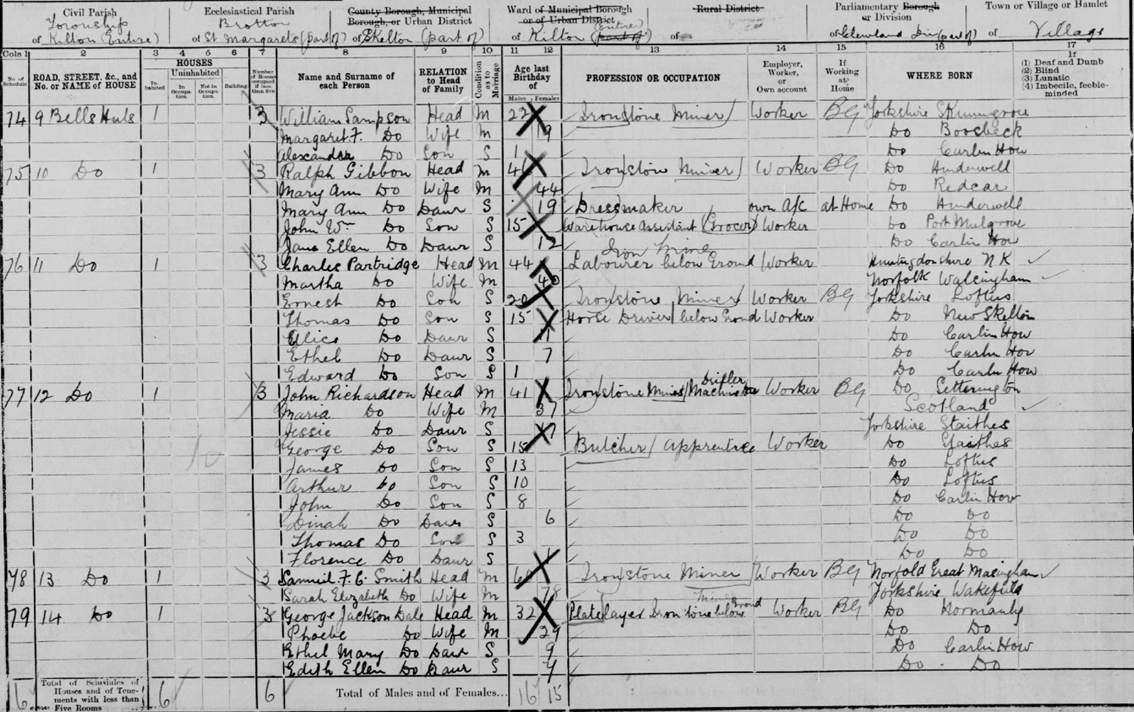
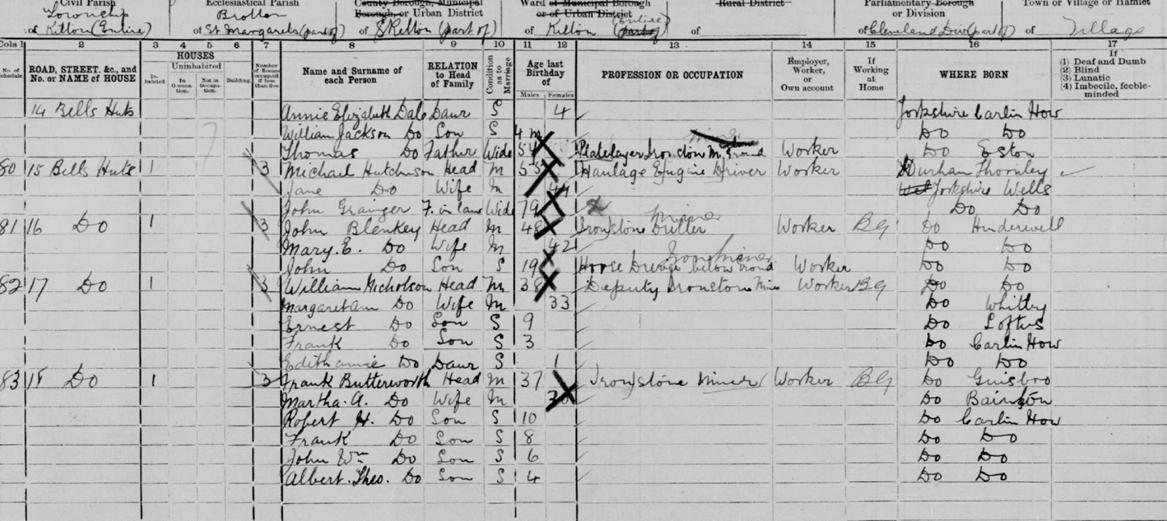
(1901 Census)
There
was an Agreement dated 31 October 1901 as to ironstone under and adjoining
Kilton Viaduct made between Bell Brothers Limited and The North Eastern Railway
Company (see also National Archives BS/BB/4/1/6
of 1892) to leave ironstone shown on attached plan in yellow untouched but to
work those shown in blue and green, with detail over removal of pillars, etc.
with the payment of 10 pence per ton of ironstone unworked and to William Henry
Wharton Esq. the sum of 5 1/3 pence per ton. There is also a copy of letter
from Bell Brothers acknowledging receipt of payment dated 7 November 1901. (The National Archives BS/BB/4/1/22
held at Teesside Archives).
There
are monthly returns of ironstone wrought including for Kilton Mine between
January and December 1901 (The National Archives U.SG/6/18
held at Teesside Archives).
There
was an Address from the Owners, Workmen and Officials of
the Brotton, Carlin How, Huntcliff, Kilton, Lumpsey and North Skelton Mines and
other friends in the District to Sister Arabella, Marton in April 1901 (The National Archives H/BR/3/3
held at Teesside Archives).
A
Wesley Guild was formed in the early 1900s with Misses Mary and Grace Farndale,
active workers, and Mr W Hedley as energetic secretary for many years. This
formed a great part of the church’s life, often the schoolhouse being filled to
capacity each Thursday evening in the winter. Concert parties from
Middlesbrough and aroudn are well remembered. The grand leadership of Mr Hedley
played a big part in the enjoyment and thrill of the Guild. How he cared for
the young folk was shown for instance in the times he took them in his little
car to his home to share in parties and family fellowship. During the years of
the great depression 1921 to 1932 free concerts were held to help the men, and
many happy nights were spent in the schoolroom with Mr Hedley as main organiser.
(Wainwright, Greta (1966), Brotton Methodist Church, 1866 to 1966).
1902

Ordnance Survey Revised 1902
Charles Farndale
continued a long tradition of involvement with the local Wesleyan Church. But
the Kilton of Wesley's time was a very different place to the deserted village
of today. It could then boast of crowded streets and many shops. It was
evidently a place “Where health and plenty cheered the labouring swain” and where
oft times “All the village train, from labour free, led up their sports beneath
the spreading tree”. But alas.as in the case of sweet Auburn “All these charms
are fled and desolation saddens all thy green”.
Wesleyan services were held in a cottage until through certain changes, whole
streets were left empty, and have sent since being
demolished. For very many years services have been held in the spacious farm
kitchen of Mr C Farndale, Kilton Lodge, which was also that of his father
before him. Methodism in the neighbourhood and the cause of righteousness
generally owes much to the high Christian character and active interest in all
good works displayed by this devoted Methodist family. Here the preachers have
always found a hearty welcome and ministers and others who know the circuit
spent under this hospitable roof. (The
Methodism in Cleveland, The Methodist Recorder 17 April 1902).
The
Farndales. Perhaps now is the place for a quotation from the Methodist
Recorder. In 1902 Reverend SH Terrill wrote of the Farndale family, “Methodism
in this neighbourhood and the cause of righteousness generally owes much to the
high character and active interest in all good works displayed by this devoted
family. Here the preacher found a hearty welcome.” Many remember, before the
bus service, the preacher from Staithes coming on a Saturday afternoon by train
and staying on Saturday and Sunday nights at Kilton Lodge, returning home
Monday morning. All this would have been impossible had not the family been
marvellously saved from extinction by a narrow escape. Mr John Farndale,
grandfather of Mr Charles and Mr Matthew, when a little lad fell headlong into
a deep well. The little boy was discovered suspended by the buckle of his show.
That shoe buckle alone intervened between life and death. What vast issues hang
on the merest trifles! Cragg Hall next comes into our history.
This is where Mr Matthew Farndale farmed, and where many happy Sunday School
picnics were held. How well such incidents as drawing water from the well near
the door are thrillingly remembered. When his son Herbert Farndale took over,
garden parties became a regular feature, and occasionally public worship was
held in the new Cragg Hall when the lounge was filled to
capacity with 60 to 70 worshippers. Recently barbeques have been taken there,
and the last remembered social event was a dance in one of the barns organised
by the young people in aid of the Mission House Nigeria appeal fund. (Wainwright, Greta (1966), Brotton
Methodist Church, 1866 to 1966).
Vincent Grainger worked with the Farndales at Kilton in the early 1900s
and became a member of the family. In about 1985 he made a sound recording about Charles Farndale and his family and Kilton at that time. He left Kilton in 1912 and
emigrated to Canada. Here is a transcript of his memoires of Kilton at the turn
of the twentieth century:
Regarding
Kilton Hall, when I was with the Farndales, a man by the name of Charlie Bell
had that farm. It was quite a large farm, at least it was in those days, but of
course not today, but at least there was around 500 acres. And across the road
from the farm entrance there were four cottages, all in a block, where he had
four married men working for him. And he had at least 200 head of cattle of
various sizes. And I think, as far as my memory allows me, he had at least 300 sheep.
And I believe, if I got this straight, that when Charlie Bell was quite a young
man, he came there and worked on that farm. And that is one fact that I'm not
too sure about. And he was a very successful farmer. And that's about all that
I really have on Kilton Hall.
When
I was at the Farndales there were a few people living at Kilton Thorpe and one
of them was the constable and I'm not sure of this fact
but I believe at one time there used to be a school. There wasn't a post office
or a store. But a girl, it was a girl that used to walk all the way from
Brotton, which was at least two and a half miles, I'd say, and bring the mail
to us. And that was, we got it daily, I think, as far as my memory will serve
me, but as you well know, long time back since I was there. Well, when I was
there, unless they'd come there after my time, there wouldn't be that many
people living there. There were very few. The one man I do know that lived
there was the, in fact there might have been both of them,
was the outside manager of the mine and the inside manager. Some of these
people would be mine workers. They walked quite a piece, three or four miles,
some of those chaps, and they used to come right by Farndale's house and up to
the mine. It was between the two farms but didn't interfere whatsoever with the
farming operations.
The
Squire owned all the farms and he got royalty out of
all those mines right through the Cleveland area. He was a very good landlord.
As a matter of fact I was twice down the mine that was
between the two farms on the Farndale property. They were down 750 feet and in
those mines they weren't like the coal mines they had
much higher ceiling and they had used draft horses
shires at that time and they had quite a number of horses down there and a barn
and stable and everything, and it was quite an operation. The way they brought
the iron stones onto the surface, well, you call them lifts, I guess, but they were
large. They loaded the iron stone into little bogies
and they were pulled to the pit head and then loaded onto the, well, elevator,
whatever you want to call it, and it brought up the surface 760 feet up. And
that's how they got the iron out. So it was quite an
operation. Oh, yes, it was throughout the Cleveland area. There were mines all
through there. And then they were sort of owned, then each one would be owned
by whoever owned the land that it was on. But the Squire owned the land and he'd get, as I already mentioned, he'd get a
royalty. But the operation of it was by companies.
I
also remember Matthew Farndale of Craggs Farm and his son Herbert, now dead,
but I knew him quite well. Matthew's elder brother, Martin, was living at
Tidkinhow Farm near Guisborough, only a few miles from Kilton Lodge. His son
Alfred was the youngest of 12, and seven of them settled in Alberta. I didn’t
know Tidkinhow.
Charles
Farndale actually had eight children, but some of them
died very young. As a matter of fact, the first one only lived two years from 1873
to 1875. And let's see, there's another one, Ernest, 1883 to 1885, so they died
just as little children. I understand that Charles died in
18 March 1914, and there's a memorial to him in Brotton Churchyard and Ann,
that was his wife's name, died in 1934.
Regarding
Kilton Hall, it was a very large house, as were all the farm homes at that
time. And one thing, it was pretty well surrounded by
trees that didn't stand out in the open like Kilton Lodge did. And one thing I remember
about, there were quite numerous farm buildings. But one thing that stands out
in my memory, in one cow byer, as they call them, there were 24 milk cows,
short horn breed. And there were milk cows too, but there were a bunch of
calves, and these calves were kept in a pen away back up the yard from there
and I'll never forget the stampede that took place when it was time for them to
go for their breakfast. They opened the gate and they came out of this pen helter-skelter
and down the aisle there, alleyway and into that barn. There were two doors to
go in the barn. And I'm not positive about this one, but if my memory serves
me, and of course, as it's a long time back, but I think they were really cows,
they were real milkers. One of them, I think, was even suckling 3 calves, and
quite a number of them were suckling 2. And it was
remarkable how the calves used to get to the right cow practically every time.
(From Tweddell, George
Markham. 1872.
The
people's history of Cleveland and its vicinage. Stokesley:
Tweddell & Sons).
The
barns and farm buildings were built of brick, but the Farndales’ farm
buildings, not the house, farm buildings were built of stone that they used
from what they called Kilton Castle, and it was on the edge. There was a wood
that ran along the edge of Farndales Farm and there used to be a castle there
and there were still a few of the ruins left there but apparently the farm
buildings at Farndales were built of stone that they took from that old castle.
The castle must have been quite a fair size because of all those buildings, all
of them were built of stone. All the farm buildings, the outbuildings, not the
houses. Buck Rush, I forget, I think that was a brick building.
There
wasn't a gardener in sight. We clipped the hedges and I might mention that
coming in off the turnpike, as they call them in England, there was quite a
drive up to Farndale's house and there were hedges on both sides and we used to
keep them clipped and around the house. There was a very nice hedge but that
was all done by us but as far as who looked after the lawn and that kind of
thing, I can't remember that part. I think the girls did that and probably the
garden too because I never did any gardening or even learned how, but I've
clipped miles a hedge, I might say, in my time. It's one skill that I wouldn't
have to put to use on the prairies anyway. I guess I
probably didn't clip another hedge until I retired from the farm in Canada and
moved to Ontario.
Regarding
their supplies from, like their groceries, they used to shop in Brotton. They
kept the butcher supplied in Brotton. Sometimes we would take, usually we took
one or maybe two cows, up to Brotton. We used to walk them up there and to the
butcher and of course that's where we got our meat. Yes, it was a fair-sized
town, you know, and there was stalls there. We got our staple foods there.
Well, when I was in England, the last time I was living there in 1912, there
used to be a butcher come around once a week with me and a pony and cart and
that's how they used to get the beef there. There wasn't a store, I don't
think, in that bit of a village. I can't remember one anyway.
After
I left for Canada, I didn't, of course, hear from them for years. I spent a
week or two there when I was over in the winter of '65, '25 and '26. That's
when I gave that talk at Brotton.
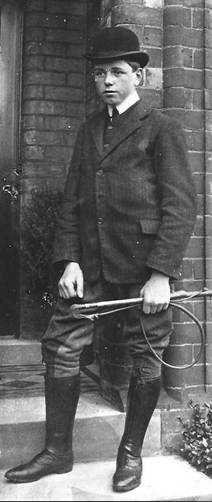
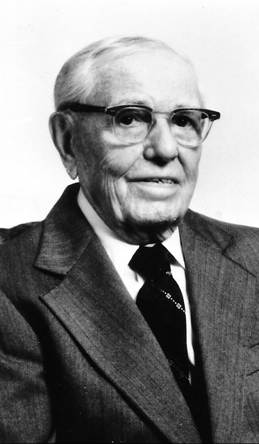
Vincent Grainger
aged 16 Vincent
Grainger August 1985 (aged 93)
1905
Review
Bolckow Vaughan and Co. Ltd. - 'Wharton, W.H.A., Walker, Maynard & Co.
Ltd.: Kilton Mine' 1905 (The National Archives BS/BV/3/2/1/225
held at Teesside Archives).
1907
Additional
lands including at Kilton appeared on the North Eastern
Railway Plan in 1907 (North Yorkshire Record Office QDP(M)
334).
There
was an agreement dated 10 August 1907 between Bell Brothers Limited and The North Eastern Railway Company to build an embankment within
4 years for the railway replacing the viaduct. Bell Brothers were to leave
unworked all areas marked blue and purple on map for this purpose and, until
completion all marked pink, green and yellow. After completion, areas marked
green and yellow may be worked for the sum of £1,091 12s 6d. Blue and purple
areas, in lieu of being untouched were to be be
compensated by the Railway company. (The National Archives BS/BB/4/1/32,
held at Teesside Archives).
There
was an agreement dated 12 September 1907 between Cleveland and Durham Electric
Power Limited and Bell Brothers Limited for supplying electric current until 31
December 1931 or until determination of lease (not earlier than 15 years) for
use at Carlin How Mine at Kilton the sum of 7/8 penny per unit (The
National Archives BS/BB/4/1/33
held at Teesside Archives).
1908
Picnic at Kilton
Lodge about 1908. Vincent Grainger, Ann
and Charles Farndale, George Farndale, Grace
Farndale, an unknown person
and Mary Farndale (also
coloured by AI)
1910
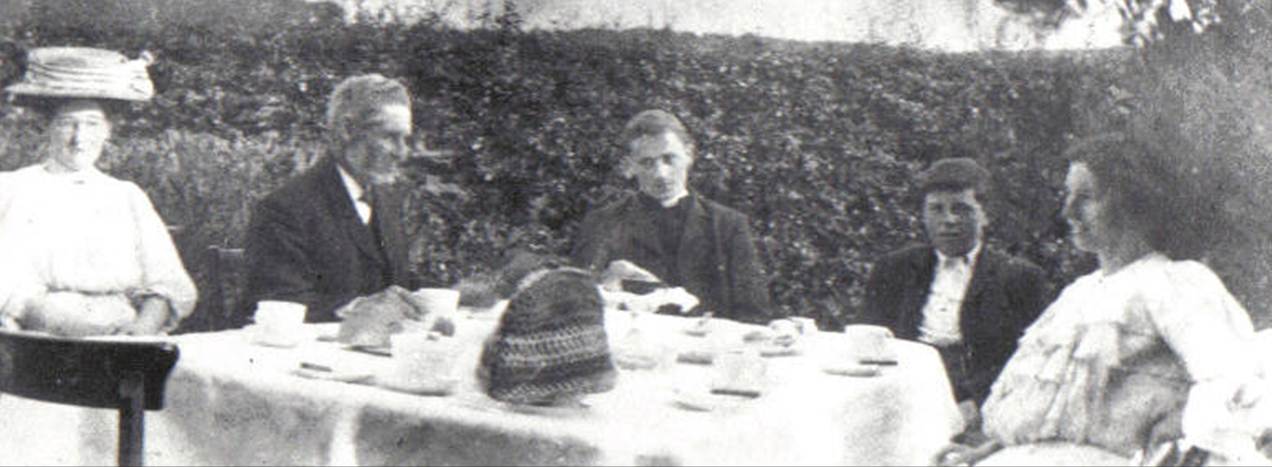
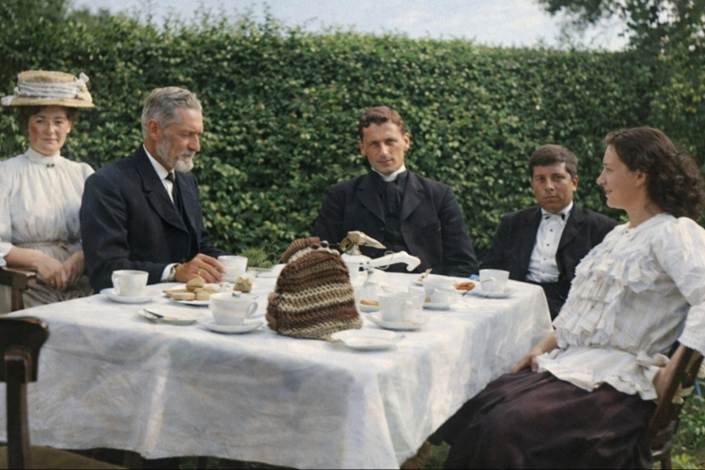
Kilton Tea Party
about 1910 - Mrs Ann Farndale, Charles
Farndale, visiting vicar (The Rev W Slader, O Wardley or W Nicholson perhaps?),
Vincent Grainger (who worked on the farm) and Grace
Farndale (also coloured by AI)
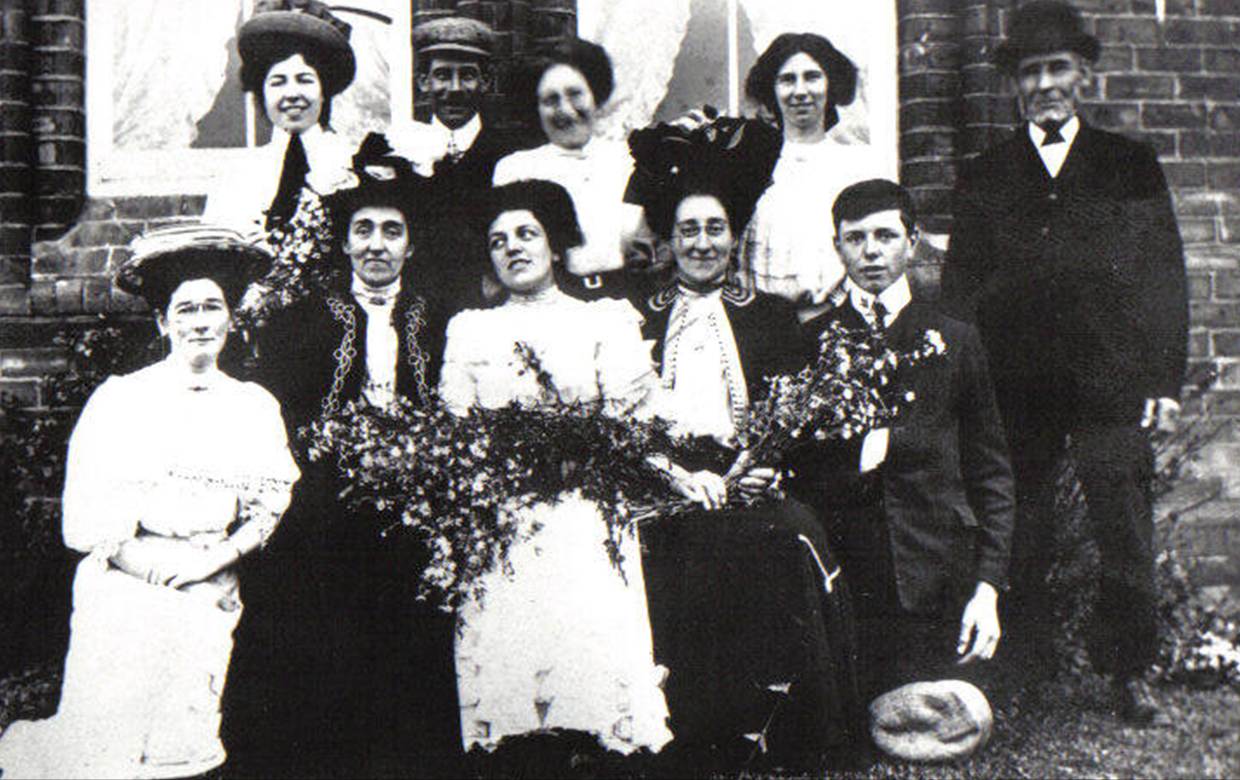
Kilton Lodge
about 1910 - Back row: unknown person, George Farndale, unknown
person, Grace Farndale,
Charles Farndale - Front row: Ann Farndale, three unknown people, Vincent
Grainger
Under
the provisions of the Finance (1909 to 1910) Act, 1910, the Commissioners of
the Inland Revenue were instructed to cause a valuation to be made of all
the land in the United Kingdom. The valuation books for North Yorkshire,
also known as Domesday Books after their only comparable precedent, are deposited
at the Record Office. They include the names of the owners and occupiers of
land, a description of the property and its situation, a reference to the
series of valuation maps. These maps are not available at the North Yorkshire
County Record Office but are held by The National Archives, Kew, the original
gross value with deductions for buildings and other structures and the original
full site value with deductions for public rights of way, rights of common,
easements etc. The records include Kilton. (North Yorkshire County Records
Office NG/V).
There
is a Plan of workings at Kilton between 1910 and 1915 (The
National Archives U.SG/8/28
held at Teesside Archives).
1911
Charles Farndale
was working in partnership at Kilton Lodge with his son, George Farndale by 1911 (1911 Census). Charles
Farndale, 73, still lived at Stank House. Mary Farndale and Grace Farndale helped with dairywork. Albert Farndale was
an architect and two others were working on the farm.
|
24 August 1876
to 14 February 1970
The last Farndale of Kilton |
From 1911, census
records separated into individual households. There were still very large
mining populations at such places as Dixon Street. Charles Farndale, 73,
farmer, still lived at Stank House, Kilton with Ann Farndale, 63; George
Farndale, farmer’s son and partner, 34; Mary E Farndale, 33, farmer’s daughter,
dairywork; Grace Farndale, farmer’s daughter, dairywork; Albert Farndale, architect and two others
working on farm. (1911 Census).
1912
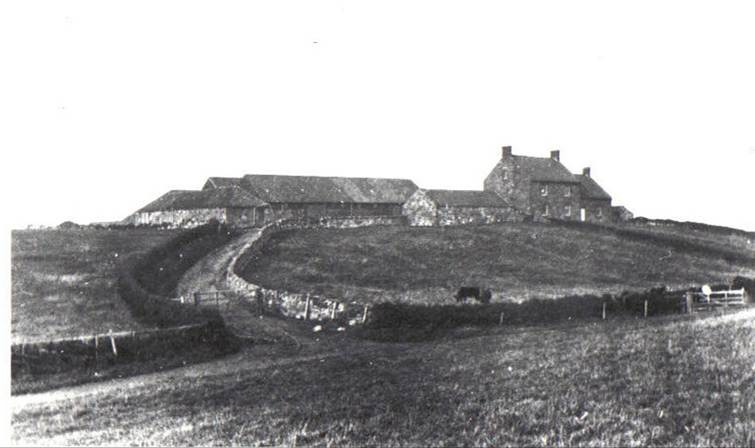
Buck
Rush Farm about 1912 (it was part of Kilton Lodge Farm under Charles Farndale)
George Farndale
joined a subscription to relieve striking miners in 1911 (Teesside Weekly Herald, 6 April 1912).
Valuation List
for Kilton Parish, 1912 to 1926 (National Archives DC/SB/20/2
held at Teesside Archives).
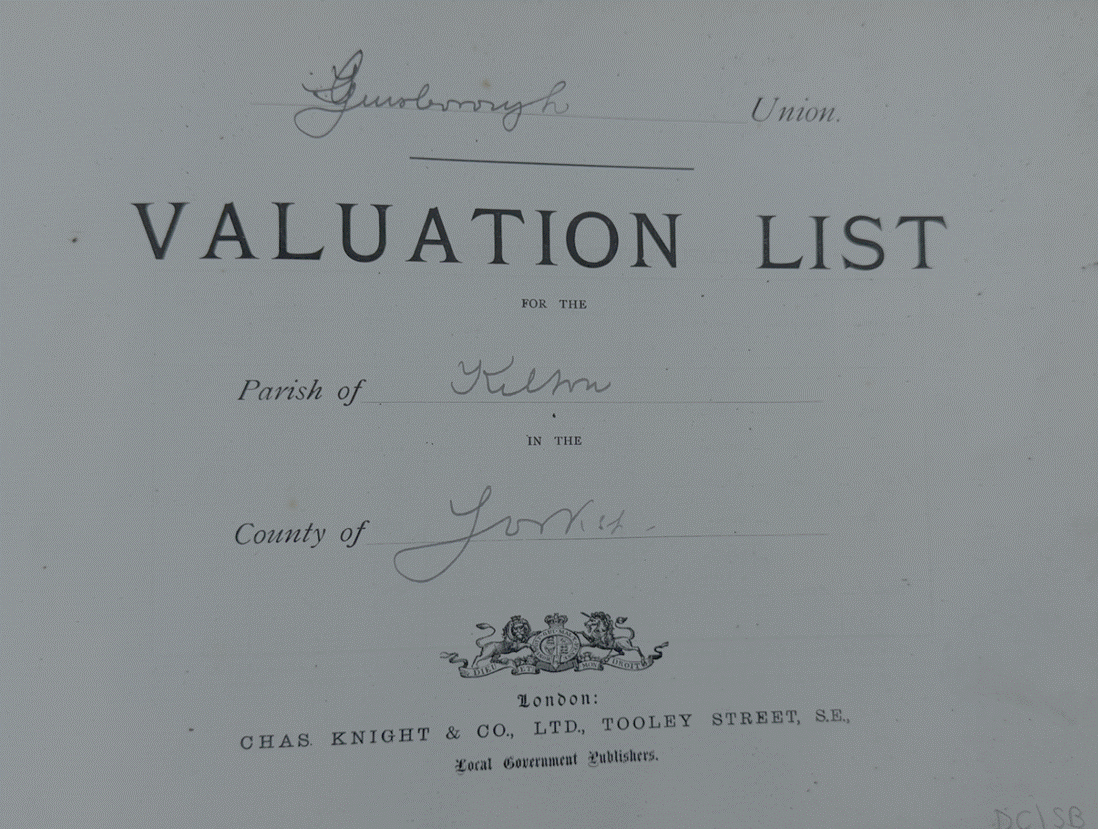
The entries
include Charles Bell at Kilton Hall; Charles and George Farndale at Stank House
and Buck Rush; William Hutchinson at Green Hills, Joseph Maugham at Lumpsey, and James Richardson at Kilton Mill. Bell Brothers
operated the mines at Lumpsey and Carlin How. The
record can be consulted for a more detailed list of the population at that
time.

1913
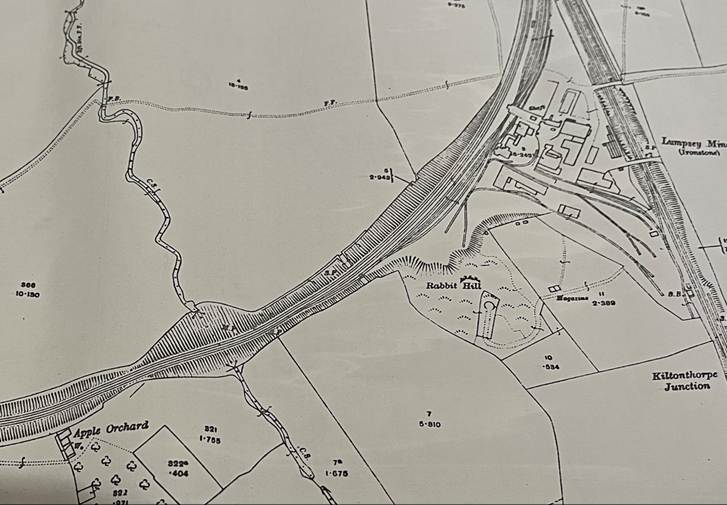
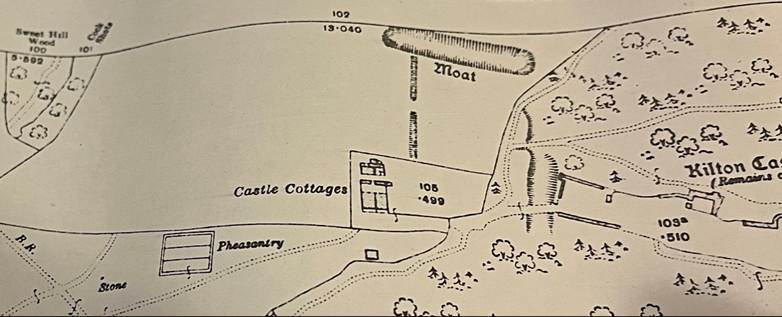
Lumpsey Mines in
1913
The remains of Kilton castle in 1913
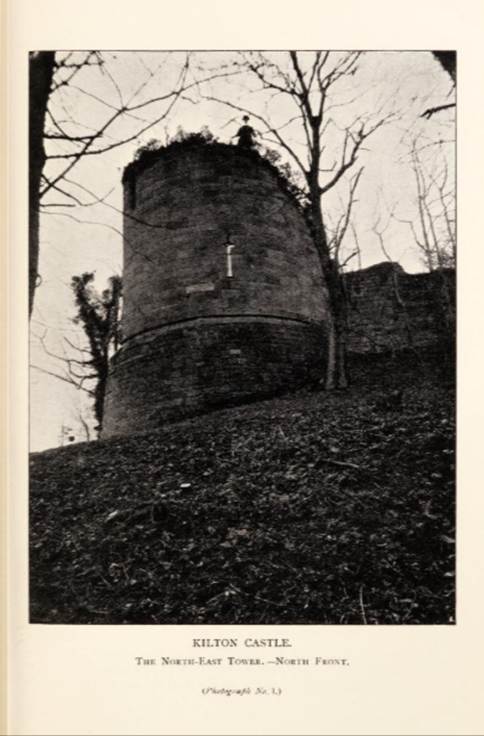
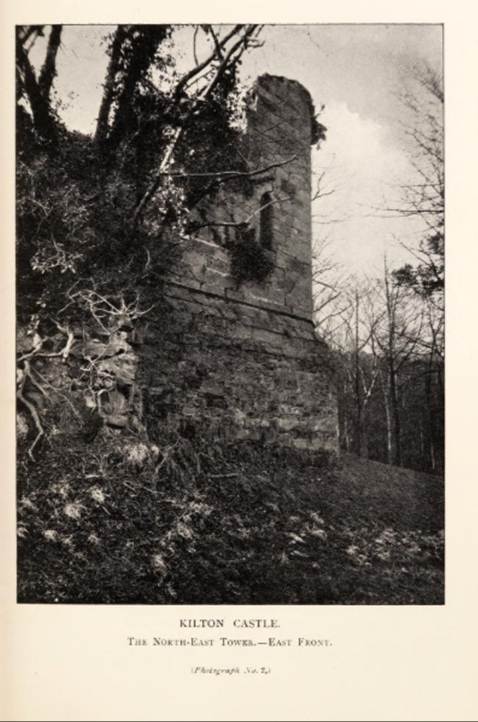
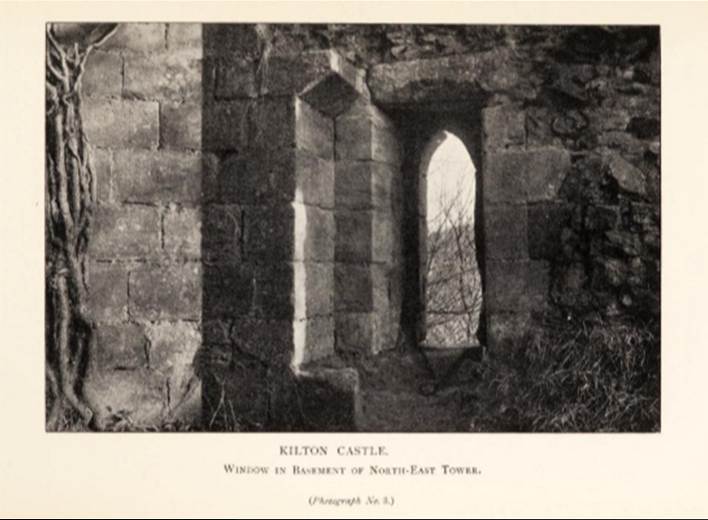
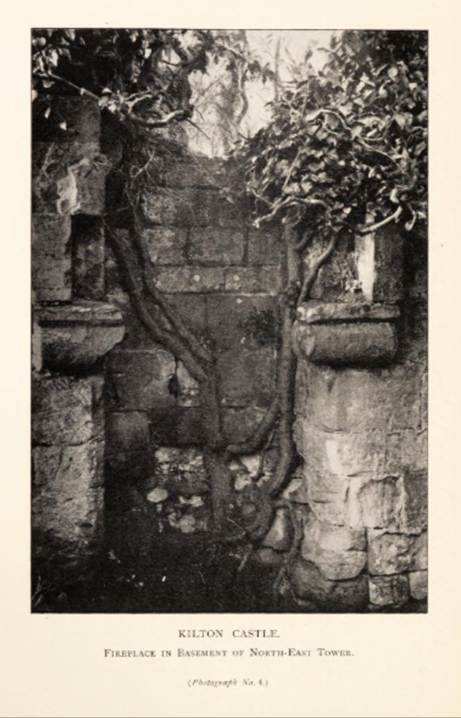
Kilton Castle in
1913 (Kilton Castle, William M L’Anson, Yorkshire Archealogical Journal, Volume
22, 1913, pages 102 to
125)
L’Anson
described Kilton in 1913, observing that in feudal times, when the castle
was inhabited, there was a village of some size occupying the site of the modern
substantial farmstead known as “Kilton Hall”, and the land adjoining it, some
700 yards north-north-west of the castle. This village is now represented only
by the Hall and three modern brick cottages, but the fields to the north of the
site are still described on the Ordnance Survey as “Town End Close”, whilst the
lane which leads to Kilton Mill (some half-mile north-east) is still known as
“Braygate" and is so described on the Ordnance Map. This hamlet would be
very pleasantly situate with a delightful southerly exposure, and protected
from the north and east winds by rising ground. The present hall occupies the
site of a Georgic house, which itself stood on the site of a still older
manor-house, probably built of stone brought from the ruins of the castle. In
1853, according to the survey of that date, the old Georgic village still
existed, as indeed it did until some forty years ago, there being live old houses,
one ivy-clad structure being known as “Primrose Cottage”, a smithy (which still
exists, but is not used), and the old hall. Two wells, connected with these old
houses, still remain. Approaching the site of this village from the north down
Howe Lane over Town End Close, the road is some 470 feet above sea-level.
Magnificent views are obtained, a perfect panorama of mountain, moor, and
woodland being spread out before our eyes, with stupendous sea-cliffs rising to
a height of some 600 feet sheer above the waters of the northern sea. This view
is now marred to some extent by signs of industrial activity; but sixty years
ago, before the opening out of the Cleveland ironstone mines, it must have been
one of the most picturesque, most lonely, and most sparsely inhabited stretches
of country in the county. The road dips down to the site of the village, which
is some 330 feet above sea-level. It then turns at right angles westward, and
climbing a slight rise turns southwards, to what is still known as “ Park
Gate,” the original entrance to the park surrounding the castle. At the foot of
a short steep bank this ancient road diverges, the portion on our left leading to
Stank House Farm, which lies some 500 yards west of the castle. The original
road, now only a footpath, leads across the fields to the ruins of the castle,
leaving Sweet Hill Wood on our left. (Kilton
Castle, William M L’Anson, Yorkshire
Archealogical Journal, Volume 22, 1913, page 102).
There was
correspondence concerning projected sewerage works near Kilton Mill in 1913 (The National Archives DC/SB/4/29,
held at Teesside Archives).
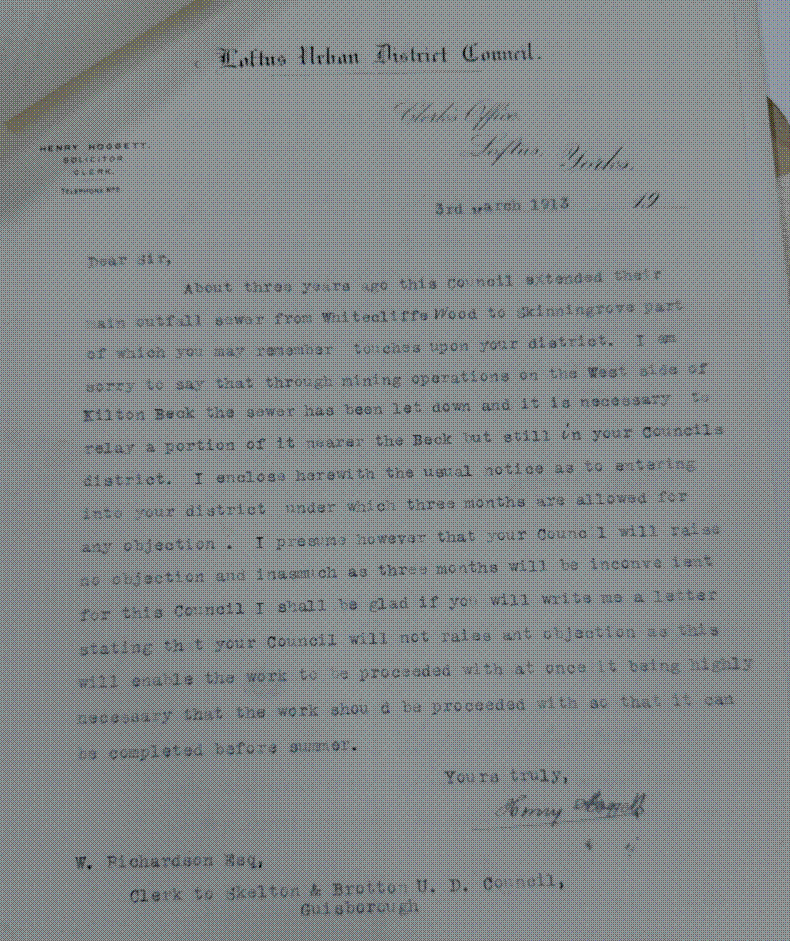

The
Skelton and Gilling Estate Records include
details of half yearly rents due at Lady Day and 30 June 1913:

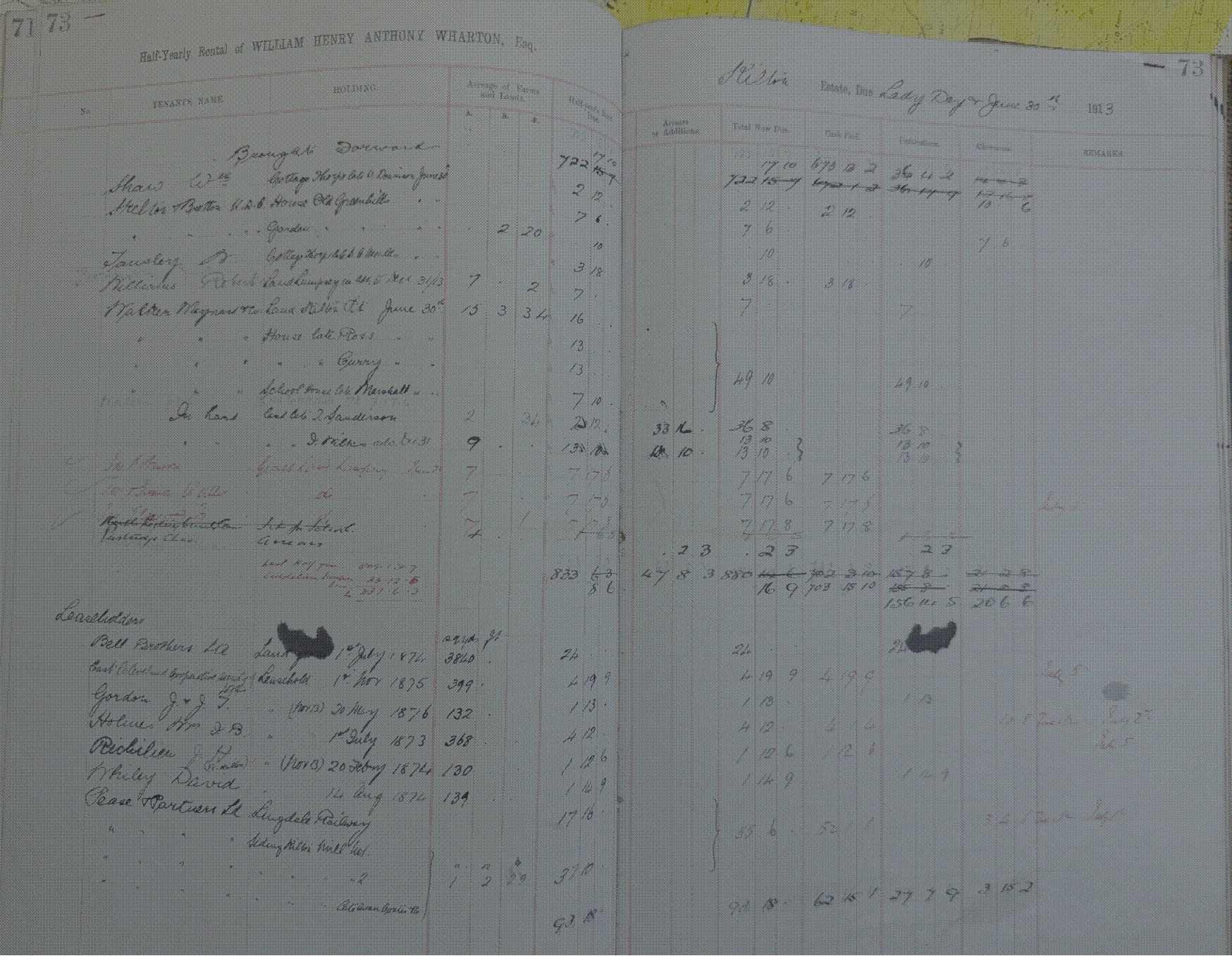
First
World War
1914
Charles Farndale,
of Kilton Lodge died age 76 and was buried at Brotton
on 21 March 1914.
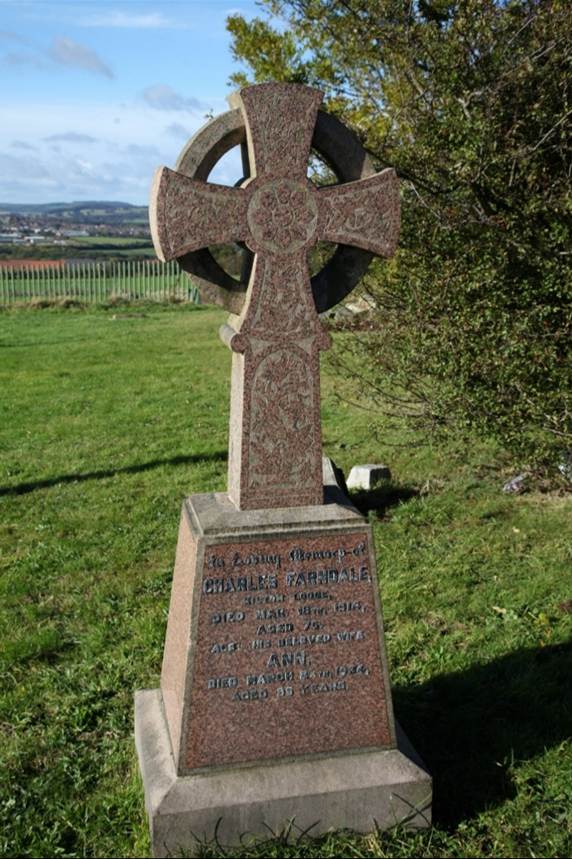
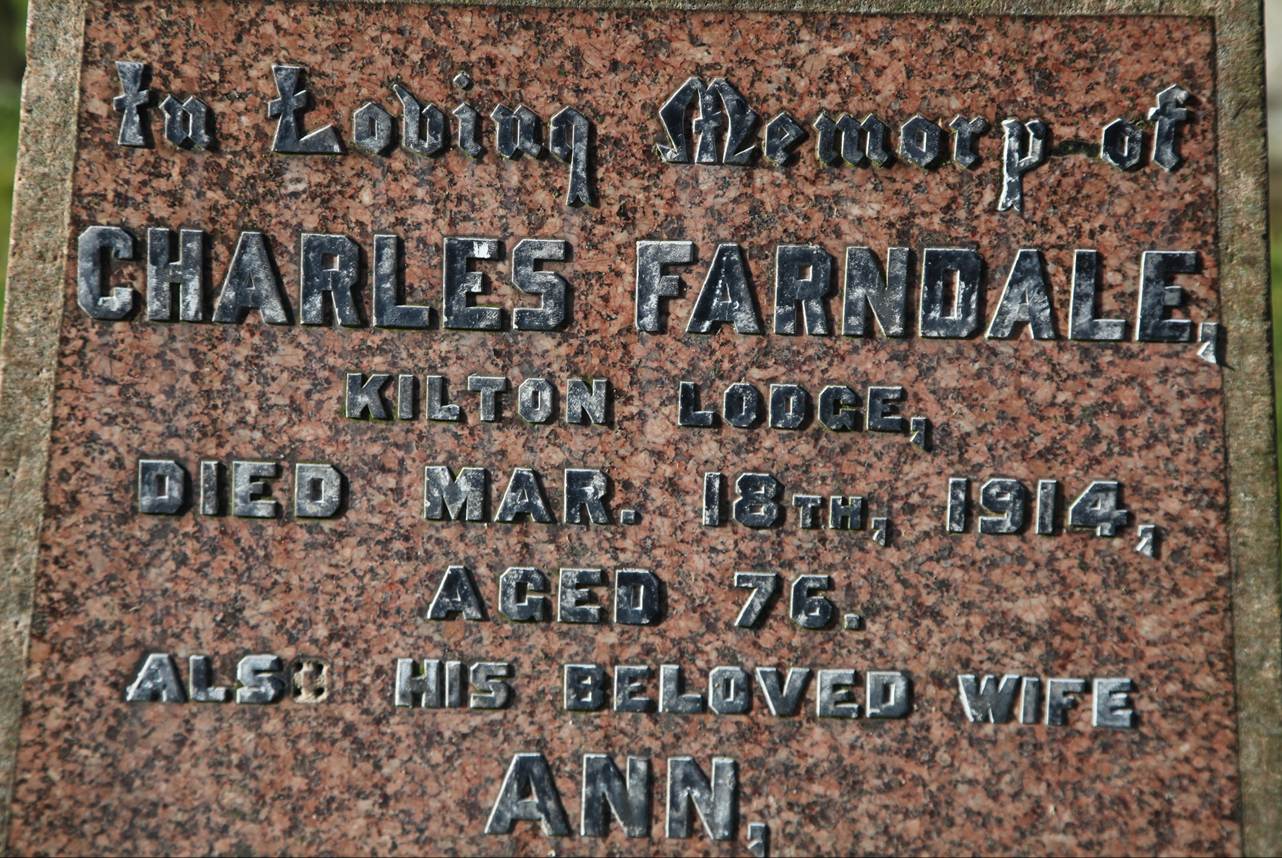
1915
Private Frederick Harker served in 10th Battalion, Yorkshire Regiment. He was born in Kilton Thorpe, enlisted in Whitby, and resided in Staithes. He was killed in action on 26 September 1915, and is commemorated on the Cabaret-Rouge British Cemetery in Souchez, France. (North Yorkshire War Memorials, Staithes).
1916
Herbert
Farndale, of Craggs Hall Farm, won the military medal for bravery in 1916
on the Somme. The website author has his medals.

Herbert Farndale of Craggs
An appeal tribunal heard an appeal against conscription regarding John
William Andrew, aged 18 of 1 Liverton Road, Loftus. The appeal was raised by his
father and employer, T E Andrew. Evidence was given that T E Andrew was the
only saddler between Skelton and Whitby, supported various farms, and worked
for Cargo Fleet ironstone mines of the Skinningrove Iron Company, engaged in
munitions and the East Cleveland Cooperative. Without his son, who had just
become useful, he couldn’t adequately perform his work. However
the Tribunal thought the son should join the army and
the appeal was dismissed on 4 November 1916. (North
Yorkshire County Record office NRCC/CL
9/1/1996).
Kilton mine was operated by Bell Brothers Limited from 1916 to 1922.
1917
Conditional exemption for three months was given to a Carlin How mines
check-weighman; and conditional exemption was also granted to a farmhand at
Buck Rush, Kilton. In supporting the appeal Mr G Farndale said
the man was the only skilled man he had on both farms. He was two men short on
the farm now. (Whitby
Gazette, 27 April 1917).
Another appeal tribunal heard an appeal against conscription regarding
John Sanderson, aged 35 of 7 Whitby Road, Loftus on 6 July 1917 and 26 October
1917. He gave evidence that I have for some time been carting for the
hutments for Messrs McAlpines. Now it is finished I have been asked by Messrs
Bell Bros. Ltd. Of Lumpsey Mines Pit to do their
carting work and I am fully engaged in doing this, carting timber for pit
props. This work is likely to last a long time and there are three pits to keep
going, Lumpsey, Carlin Howe and Kilton. It has taken
me some seven years to get together and if I have to
go it means selling up everything I have and there is no-one to carry it on.
The appeal was allowed and he was exempted until 1 October 1917 and later to 31
March 1918, conditional on remaining in present occupation loading timber for
mines. (North Yorkshire County Record office NRCC/CL
9/1/3816, NRCC/CL
9/1/4368).
There was an Agreement dated 13 March 1917 as to working ironstone in the
Kilton mine under a portion of the Kilton Thorpe Branch between Messrs Bell Brothers
Limited and The North Eastern Railway Company for the
sum of £36 5s 7d from 1 January to 30 September 1916 with subsequent accounts
each year, including conditions and liability for damages. (The National Archives BS/BB/4/1/41
held at Teesside Archives).
1918
An appeal tribunal heard an appeal against conscription regarding James William
Cook, a newsagent, stationer and assistant overseer of Brotton on 7 November
1918. The National Service representative gave evidence that I contend that
it is not in the national interest that this man should be retained in civil
life as a newsagent and stationer and consider that he would be more usefully
employed in military service. The local tribunal had previously granted a
three-month exemption to 6 February 1919 on the grounds that Cook would suffer
serious hardship as he is fully employed in his present occupation which in
addition to that of a newsagent and stationer includes a sub-post office. He is
also the assistant overseer for the Parish of Kilton and having regard to his
age 43 and the fact that he is now attached to the anti-aircraft battery at
Brotton, the tribunal were of opinion that in view of the present state of
affairs the man was doing very useful work at home. The case was not heard
(North Yorkshire County Record office NRCC/CL
9/3/84).
There was an Agreement dated 9 July 1918 as to working ironstone in the
Kilton Mine under a portion of the Kilton Thorpe Branch between Messrs Bell
Brothers Limited and The North Eastern Railway Company including conditions and
liability, the account to be made to 31 Dec 1918 (The
National Archives BS/BB/4/1/42
held at Teesside Archives).
Inter
War Years
1919
Shortly after the war, new roles were advertised for Kilton farms.
Wanted young man, as horseman, for farm work. Apply J Farndale, Kilton Lodge,
Brotton (North Star (Darlington), 12 June 1919).
Wanted, Strong Youth, for Farm Work. Apply George Farndale
(North Star (Darlington), 21 June 1919).
1920
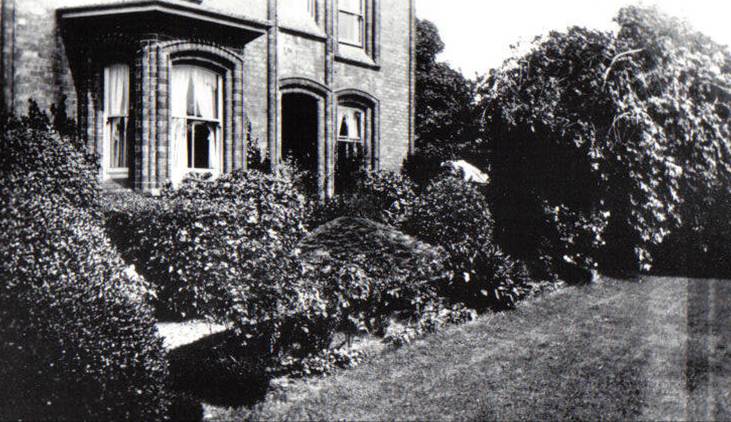
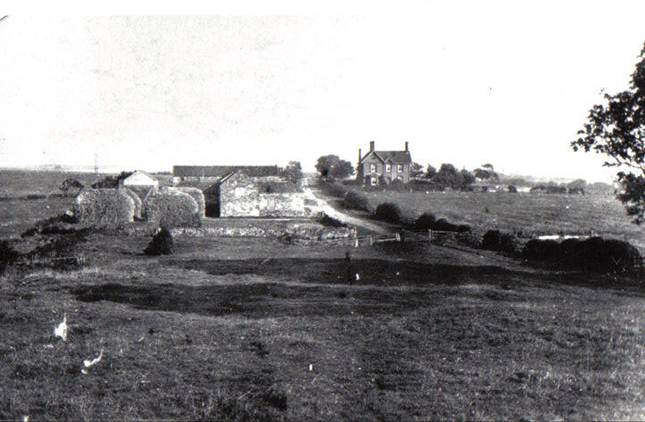
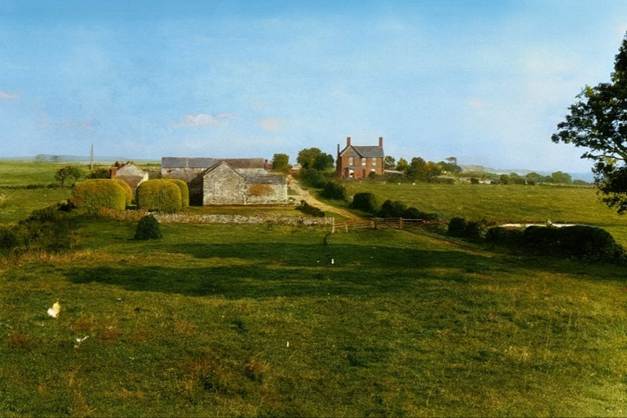
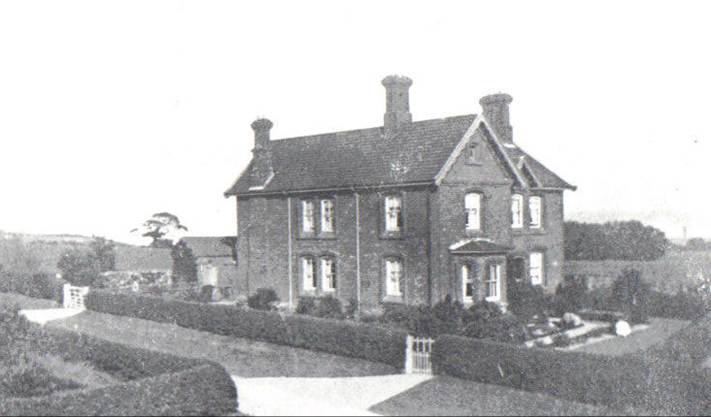
Kilton
Lodge Farm in about 1920
1921
In 1921, there was still a very large population of miners at Bell’s Huts
and Carlin How. Davison Johnson lived at Kilton Castle cottages and was a
Police Constable with North Riding Constabulary. Frank Hector was a game keeper
working for Colonel Wharton also at Kilton Castle cottages. At Kilton Thorpe,
William Shaw worked as a forester for Colonel Wharton; William Hedley was a mechanical
engineer working for the mines; and Joseph Henry Ousely was a mines overman. (1921 Census Records).
1922
The
Skelton and Gilling Estate Records include
details of half yearly rents due at Lady Day and 30 June 1922:
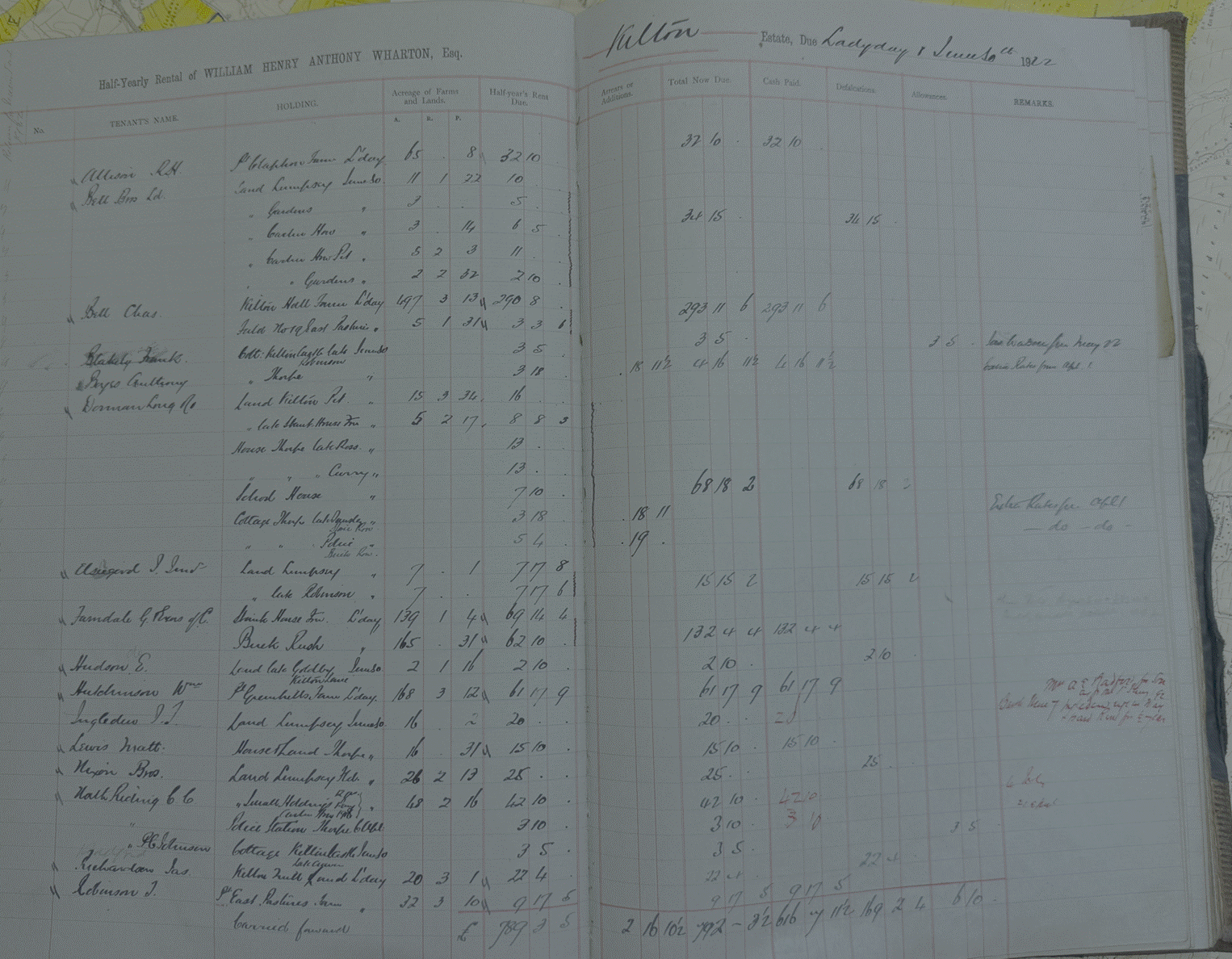
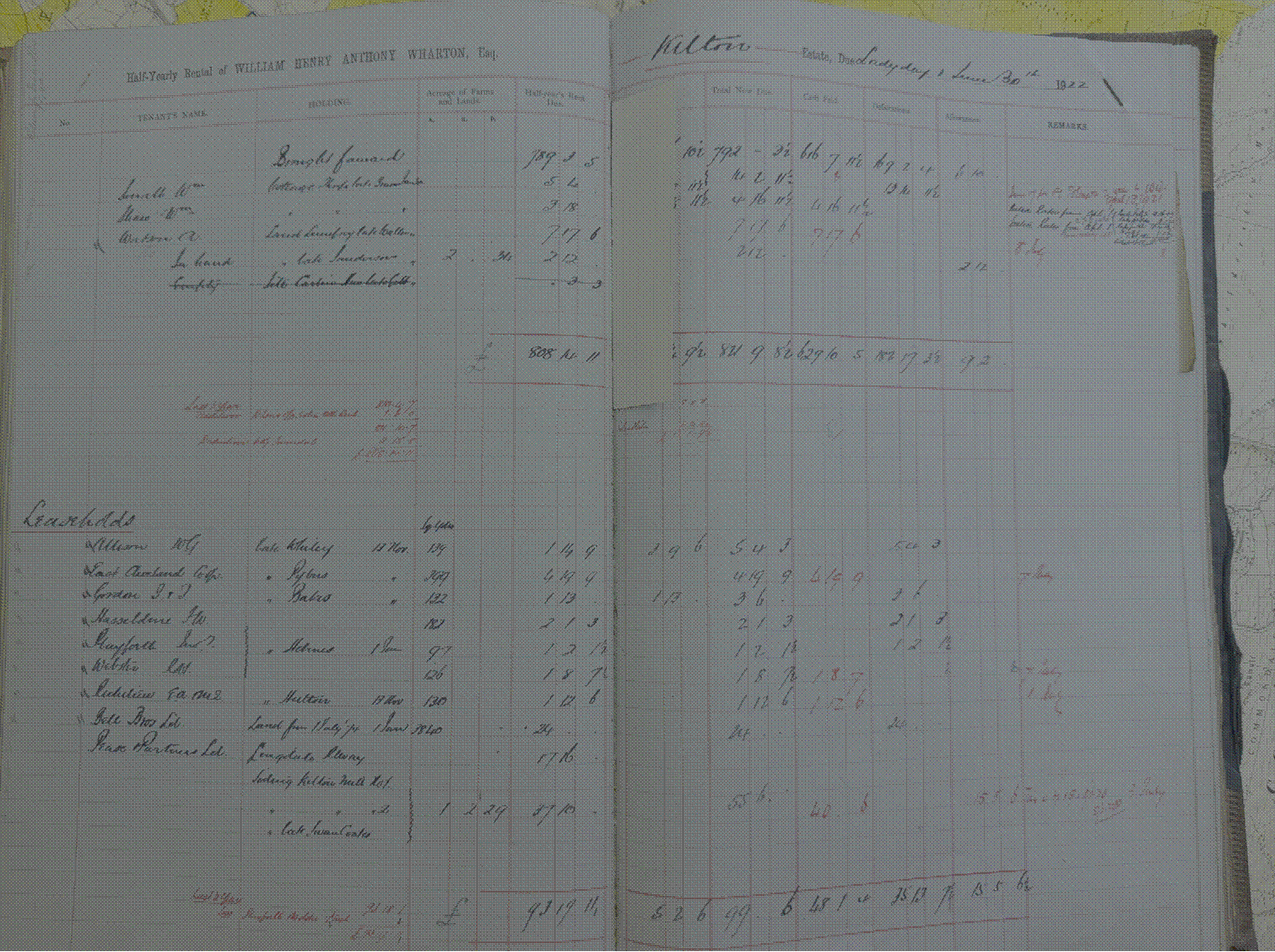
1923
The mine was operated by Dorman, Long & Company
Limited from 1923 until 1954.
There are a series of plans drawn up to give notice of Dorman Long's
plans to mine under railway lines, including at Kilton. The plans were drawn as
part of the procedure stipulated by the Mines (Working Facilities and Support)
Act 1923. (The National Archives BS/DL/9/2/3/1/26
held at Teesside Archives).
The history of Dorman Long and Co Ltd between 1889 to 1970 is contained
in 152 boxes of papers (The National Archives BS/DL
held at Teesside Archives).
1925
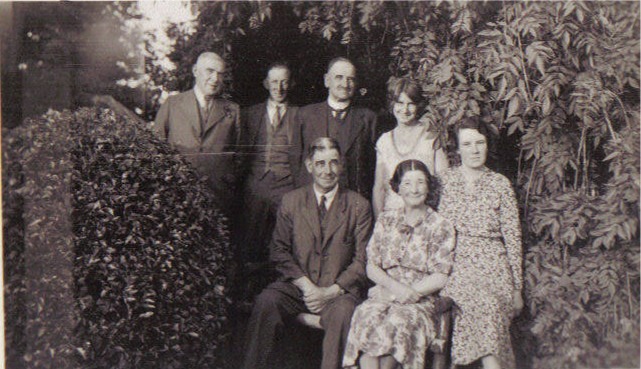
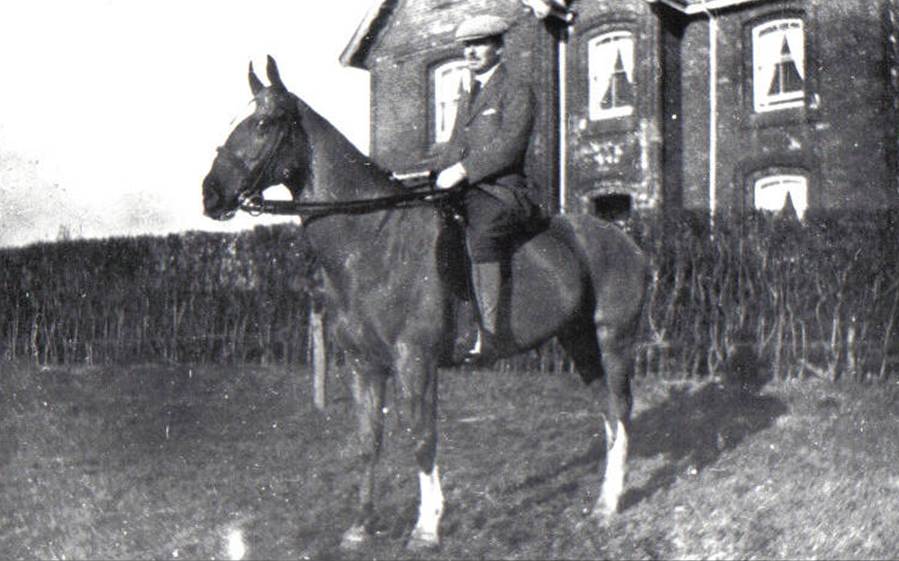
Kilton Lodge about 1925 - George Farndale and Grace Farndale sitting
Photo of George Farndale taken about 1925
There is a record of Ironstone worked from Kilton Mine for half year
ending 30 June 1926 (The National Archives U.SG/6/22
held at Teesside Archives) and 31 December 1925 (The National Archives U.SG/6/25
held at Teesside Archives).
1926
There is a record of Ironstone worked from Kilton Mine for half year
ending 30 June 1926 (The National Archives U.SG/6/30
held at Teesside Archives) and 31 December 1926 (The National Archives U.SG/6/34
held at Teesside Archives).
There is a Notice to Make Returns relative to Mineral Rights Duties, for
1926 to 1927 issued to Col. W.H.A. Wharton dated 5 October 1926, regarding
Kilton Mine, Leased by Dorman Long and Co. Ltd (The National Archives U.SG/5/13
held at Teesside Archives).
1927
There are some rough notes regarding royalties at Lumpsey,
North Skelton, South Skelton, Kilton and Stanghow (The
National Archives U.SG/12/18
held at Teesside Archives).
There is a record of Ironstone worked from Kilton Mine for half year
ending 30 June 1927 (The National Archives U.SG/6/35
held at Teesside Archives) and 31 December 1927 (The National Archives U.SG/6/36
held at Teesside Archives).
In the period from Michaelmas to 31 December 1927 the rent paid at Kilton
to William Henry Anthony Wharton included, amongst others:
George Farndale as executor for Charles Farndale paid rent for Stank
House Farm (139 acres, 1 rood and 4 perches, £69 14s 4d), Buck Rush Farm (165
acres, 1 rood and 31 perches, £62 10s 0d), Pheasant Pen Field Castle (2 acres,
1 rood and 34 perches, £2 12s 0d) and the Old Railway (£2 10s 0d).
An acre was the primary unit of land area. A rood was a
quarter of an acre. A perch was a 160th of an acre or
a 40th of a rood.
E Hudson paid rent for land of the late Goldby, Kilton Lane (3 acres, 1
rood and 7 perches, £2 10s 0d).
William Hutchinson paid rent for Greenhills Farm (171 acres, 3 rood and
34 perches, £61 17s 9d).
A V Neal paid rent for a Cottage, Castle, of the late J Watson (£3 5s
0d).
Nixon Brothers paid rent for land at Lumpsey
Field (26 acres, 2 rood and 13 perches, £25 0s 0d).
North Riding County Council paid rent for small holdings at Carlin How
held for 12 years from 1 January 1916 (48 acres, 2 rood and 16 perches, £42 10s
0d), and the police station at Kilton Thorpe (£3 10s).
PL Ford paid rent for a cottage at Kilton Castle (£3 10s).
Jas Richardson, executors, paid rent for land at Kilton Mill (20 acres, 3
rood and 1 perches, £22 4s 0d).
Jas Ruddock, executors, paid rent for part of the land at Lumpsey (3 acres, 3 rood and 29 perches, £5 17s 6d).
J Robinson paid rent for East Pastures Farm (32 acres, 3 rood and 20
perches, £5 4s 0d).
(Rental accounts for Kilton, 31 December
1927, Skelton and Gilling Estates
records)
1928
The general rate book for the parishes of Brotton, Kilton and Moorsholm
dated October 1928 (The National Archives DC/SB/22/18
held at Teesside Archives). The full records can be consulted for a
detailed list of those living in Kilton.
The Farndale entries are:




There is a record of Ironstone worked from Kilton Mine for half year
ending 30 June 1928 (The National Archives U.SG/6/37
held at Teesside Archives) and 31
December 1928 (The National Archives U.SG/6/38
held at Teesside Archives).
1929
There are copies of mining leases between 1929 to 1940 by William Henry
Anthony Wharton of Skelton Castle to Bolckow Vaughan and Co. of ironstone in
Skelton Stanghow and Kilton 23 Nov. 1929; from W.H.A. Wharton esq. to Dorman
Long and Co. of ironstone mines in the township of Kilton known as the Lumpsey Mine 31 March 1932; from Mrs. H.M. Young and others
to Mrs. M.W. Ringrose Wharton and others of ironstone mines under Hollybush
Farm, Skelton, 31 Dec. 1940 (The National Archives U.SG/1/5
held at Teesside Archives).
There is a record of Ironstone worked from Kilton Mine for half year
ending 30 June 1929 (The National Archives U.SG/6/39
held at Teesside Archives) and 31 December 1929 (The National Archives U.SG/6/40
held at Teesside Archives).
1930s
In
the 1930s, Lockwood absorbed adjacent areas, including Kilton, streamlining
local governance amid declining rural populations.
Ironstone
worked from Kilton Mine during the half year ending 30 June 1930, Dorman Long
and Co Ltd (The National Archives U.SG/6/42
held at Teesside Archives).
1931
Kilton
parish recorded a population of 140 residents.
There
are Statements of Ironstone drawn by Dorman Long and Co Ltd from South Skelton
Mine and Kilton Mine for January and February 1931 (The
National Archives U.SG/6/47
held at Teesside Archives).
1933
On
18 August 1833, there was a Coroner’s Inquest at Kilton on the body of William
Archer, aged 80 (North Yorkshire Records Office C/3/4/1
(1933/42)).
There
are Accounts for the ironstone mines and quarries at Kilton and Lumpsey worked
by Dorman Long (The National Archives BS/DL/4/5/15/5
held by Teesside Archives).
1934
There
are journals with entries for Kilton mine between October 1934 to March 1964 (The National Archives BS/DL/4/18
held at Teesside Archives).
1935
The
Skelton and Gilling Estate Records include
details of half yearly rents due at Lady Day and 30 June 1935:
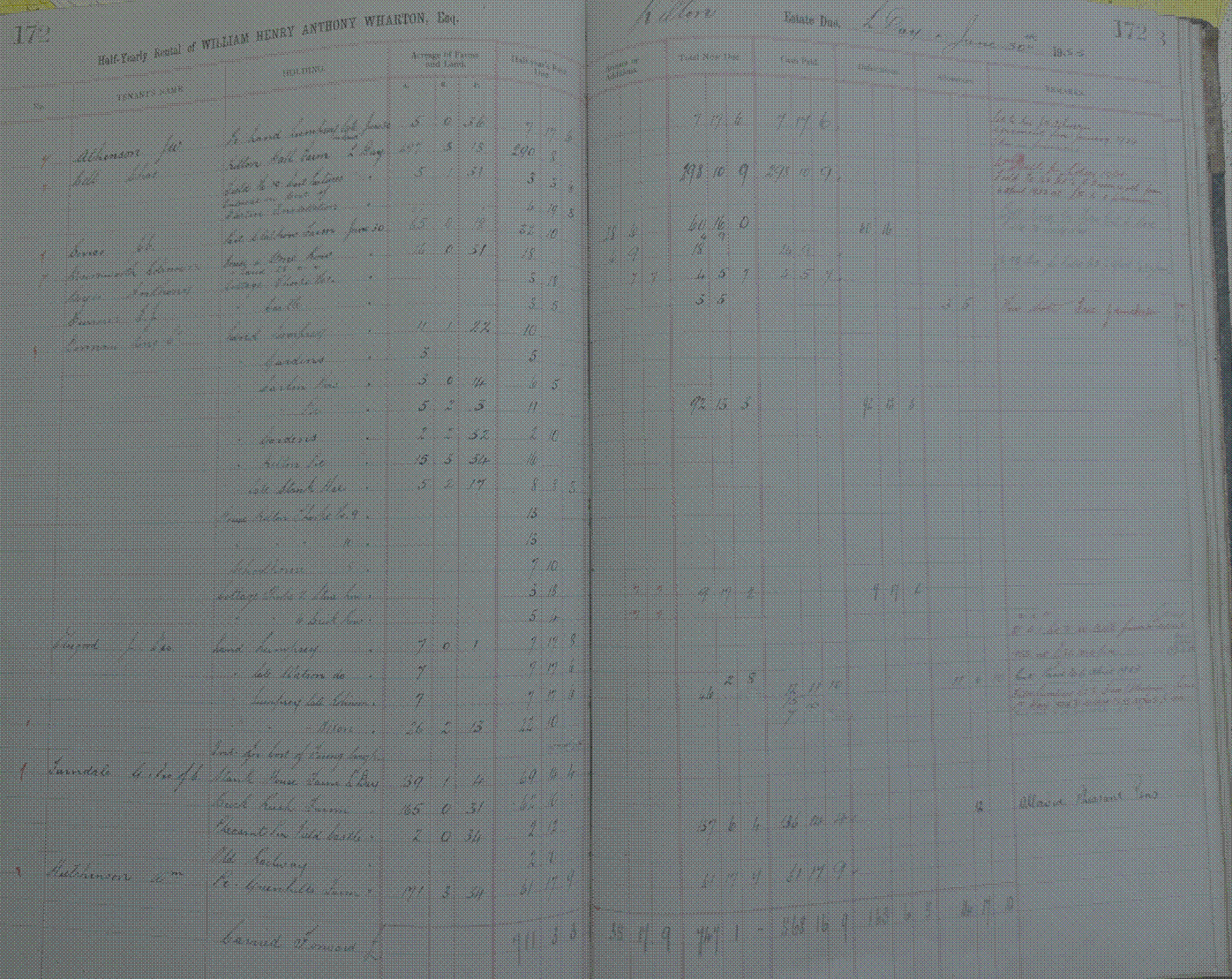
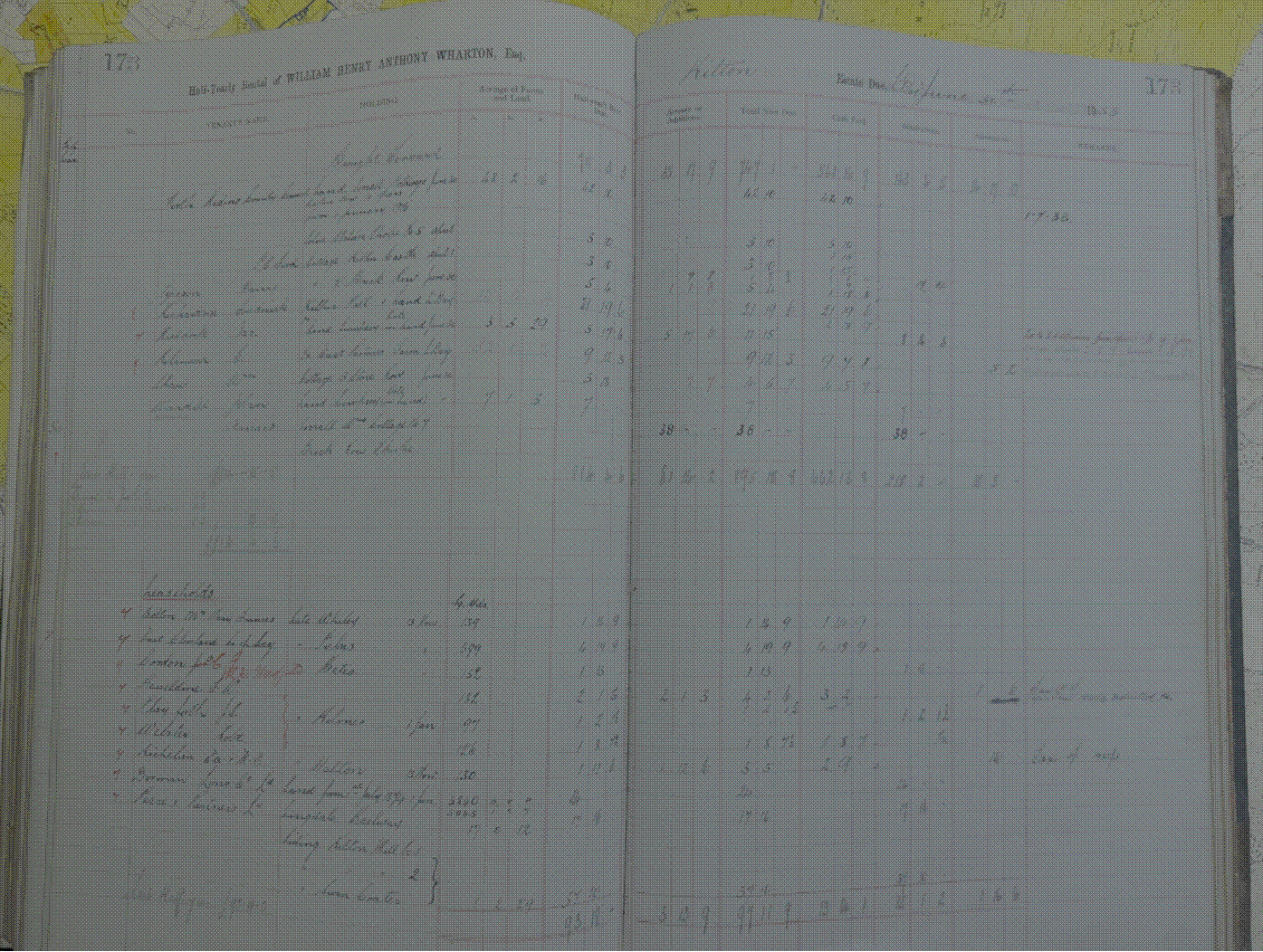
1938
R
Richardson submitted a plan for a wooden shed on Kilton Lane in June 1938 (National Archives
DC/SB/PL/490
held at Teesside Archives).
Margaret
Winsome Ringrose-Wharton
William
Henry Anthony Wharton died on 12 December 1938 and the Skelton and Kilton
Estates passed to his daughter, Margaret Winsome Ringrose-Wharton.
Margaret
Winsome Ringrose-Wharton
Second
World War
1939
In 1939, George Farndale was living at
Stank House in Kilton, with his sister Grace Farndale (1939 Register). They continued to be involved with the local
Wesleyan Church.
1940
In 1940 George Farndale sold the stock at
Kilton and this was the end of the Farndale association with Kilton. He and his
sister Grace Farndale moved to Saltburn and George Farndale died
there in 1970.
For over a
century the Farndale family have been associated with the Loftus and Staithes
Wesleyan Circuit, a connection which is soon to be severed by the removal of Mr
George Farndale from Kilton Lodge to Saltburn. A member of the third generation
of the well known family, Mr
Farndale has been a circuit official for over 20 years, and a steward for
seven. His grand father was a local preacher in the
circuit for a number of years, and the late Charles
Farndale upheld the family tradition by serving for the major period of his
life as circuit official and steward. In the outlying districts of the circuit
Mr George Farndale has worked equally hard, and stands
as Trustee for many of the circuit chapels. (Daily Gazette for Middlesbrough, 8 March 1940).
Herbert
Farndale still farmed at Craggs Hall Farm and became a councillor.
This is Carlin How
football field. The goal is the Kilton Lane end of the pitch and in the
distance at the left end of the houses can be seen Lower Cragg Hall farm. To
the left of that and higher can be seen Upper Cragg Hall farm buildings and
house among the trees. Herbert Farndale owned this when we were youngsters. I
believe one of the teams was a Skinningrove works team. I lived in that left
hand house in the late 1940s and we could watch the matches over our garden fence.
This was what was fondly known as Bells Huts and is behind what is now the
Bullet and Bayonet on Kilton lane. The foundry now stands exactly where that
row of houses was. (Derick Pearson)
Post War Kilton
1945

British War Office, Ordnance Survey, 1945
The area now consists of individual farms with the
exception of the small hamlet at Kilton Thorpe, the school of which has
since been converted into a private dwelling. The estate workers’ cottages at Kilton
and adjacent to the castle remained in use by the estate. The steep sided
valley of Kilton Beck became heavily wooded. There was some small-scale
quarrying in the valley, but this was unobtrusive.
Earnings records for North Skelton, Lumpsey and
Kilton from 1944 to 1950 are available (National
Archives U/IM/1/4
held at Teesside Archives).
1948
There is an Ordnance Survey map including Kilton showing ironstone mines,
with manuscript notes (The National Archives U.SG/8/33
held at Teesside Archives).
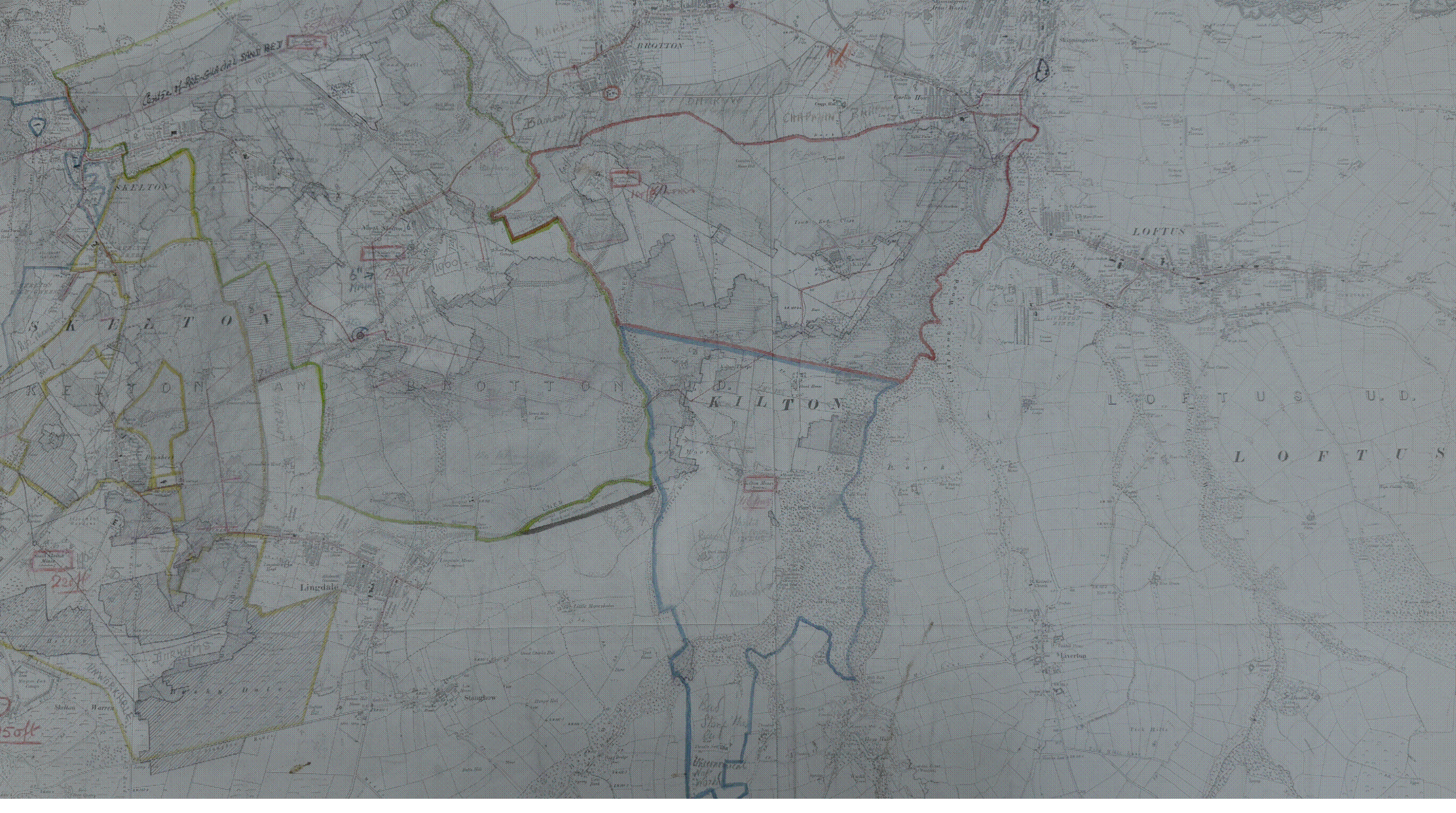
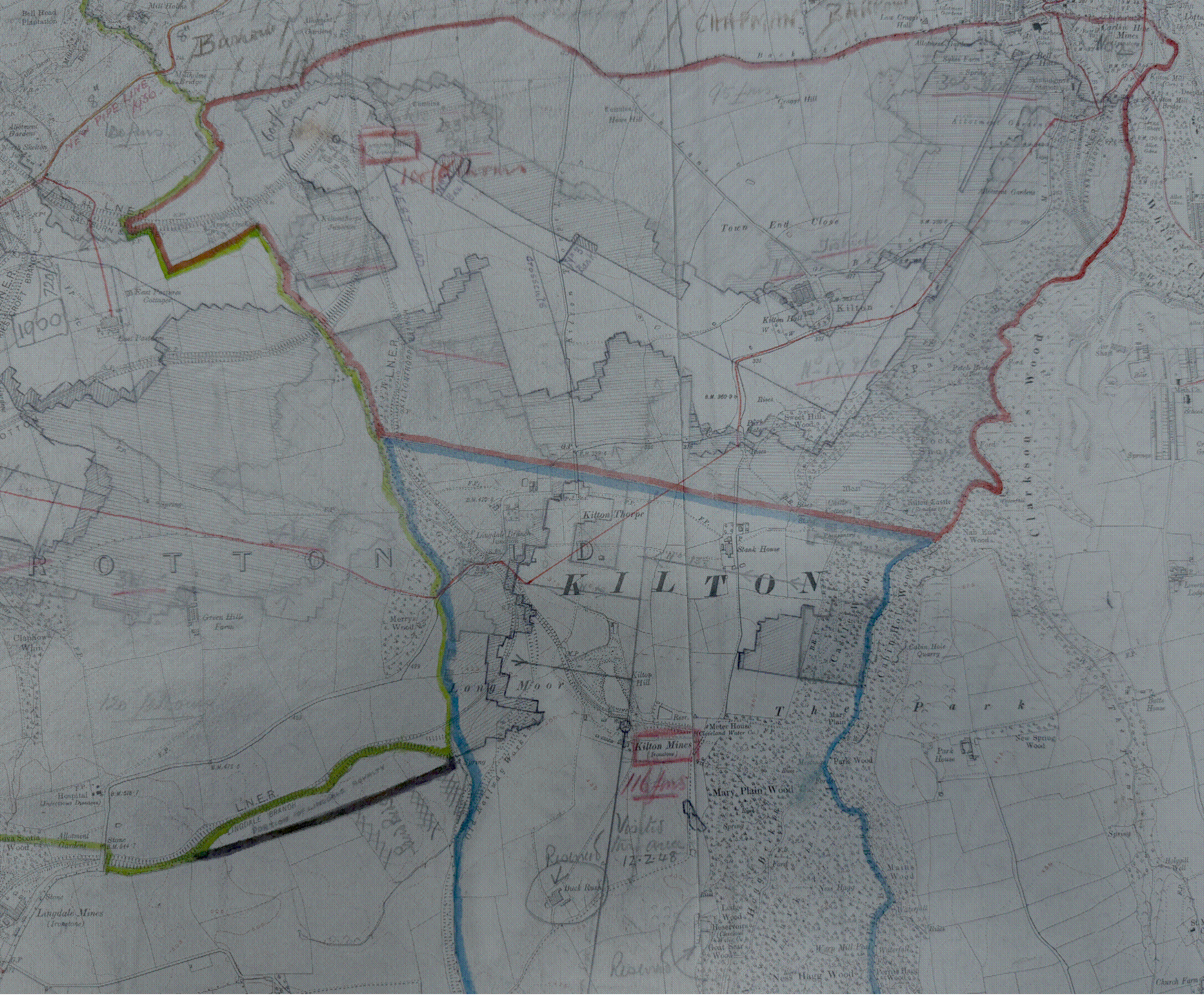
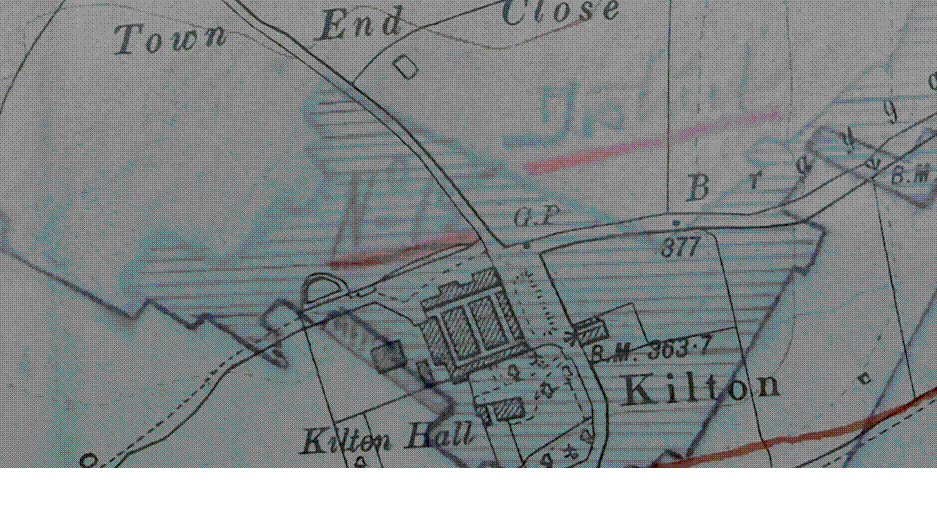
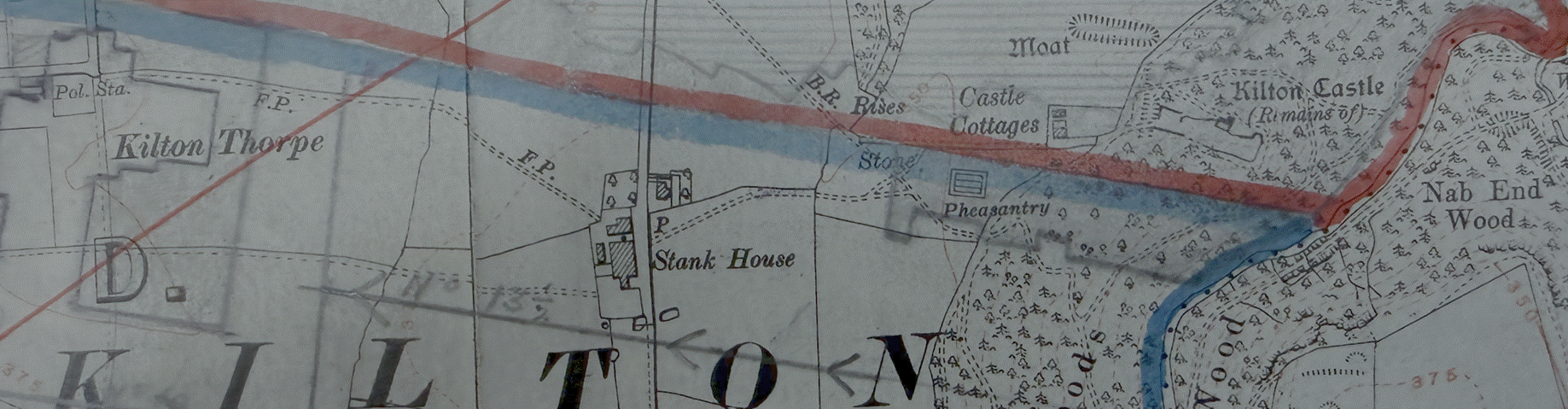
1950s
Post-World
War II rural depopulation affected Kilton, with farming modernisation reducing
tenancies, but this was partially offset by growing tourism drawn to the castle
ruins and surrounding dale landscape.
Kilton
Hall not far from Brotton and Carlin How. When I was very young it was called
Bells farm and Braygate Bank close by on the way to Carlin How was also called
Bells bank. That was followed by the Family called Blacketts. Hence the farm
became Blacketts and also Braygate bank became Blacketts bank.They were there
many years and as children we would go Potato picking there or at Farndales
Farm (High Cragg Hall) just over the hill towards Brotton Bank. Then there was
inter marriage between the Blacketts and Halls and eventually the farm became
Halls farm with a gent called Ramsey at first then later Richard (his son I
believe) having the farm for many years.
The Braygate bank however was not referred to as Halls Bank as far as I
know. It was a place where there are quite a few photos of Church / Chapel
people as far back as the late 1800s. They had some arrangement for outings at
the farm. Tony Nicholson would know as I have photos of his family members at
Kilton Hall. (Derick Pearson, Nostalgic
North Riding, 22 February 2022).
For
the period from Michaelmas to 31 December 1950, the rent paid at Kilton to Mrs
Margaret Winsome Ringrose-Wharton included, amongst others:
J
Blacket paid rent for Kilton Hall Farm (507 acres and 14 perches, £750).
An acre was the primary unit of land area. A rood was a
quarter of an acre. A perch was a 160th of an acre or
a 40th of a rood.
Jos
Bonas paid rent for Park Claphow Farm (65 acres, 18 perches, £65).
R
Bosworth paid rent for Buck Rush Farm (181 acres, 2 roods, 32 perches, £156),
instalment on electric light (£7), Field 143 at Kilton Hall (17 acres, 31
perches), house and land at Stone Row (20 acres, 2 roods, 27 perches, £41) and
a cottage at 7 Brick Row (£15 12s).
Carlin
How Allotment Association paid 1s for the easement and office buildings and
paid rent for allotments (48 acres, 2 roods, 16 perches, £93 11s).
S
Chapman paid rent for land at Lumpsey (5 acres and 36 perches and 3 acres 3
roods and 29 perchaes for late Bosworth, £18).
W
R Cross paid rent for access rights (1s).
Dorman
Long and Company paid rent for land at Lumpsey, Gardens, Kilton Pit, late Stank
House, Carlin How, Bells Huts, No 9 Kilton Thorpe, No 10 Kilton Tjorpe, No 8
Kilton Thorpe (School House), for a pipeline from Lumpsey Mine into Millholme
Beck, lighting and cottages at 2 Stone Row and 6 Brick Row.
J
G Hind paid rent for land at Kilton Mill (20 acres, 1 rood, 34 perches, £60).
G
W Hutchinson paid rent for Stank House farm (146 acres, 3 roods, 3 perches,
£176 8s) and instalment on electrical lighting (£5 15s).
(Rental accounts for Kilton, Michaelmas and 31 December
1950, Skelton and Gilling Estates
Records)
1951
The
Kilton civil parish population was 250 residents (A
Vision of Britain Through Time, Kilton Parish).
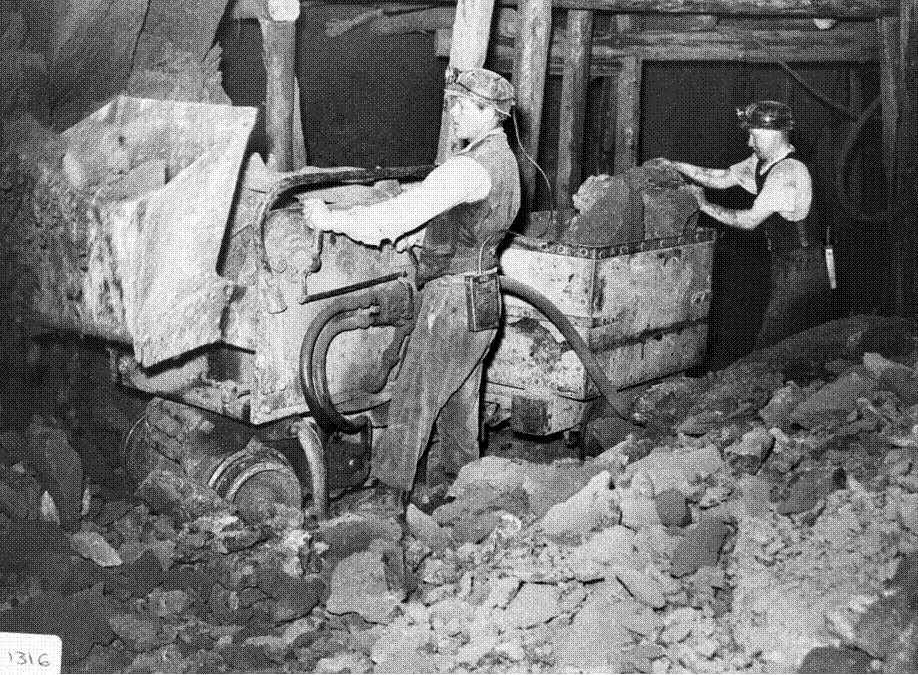
Photograph
taken on 11 July 1951 of two men loading ironstone into wagons at Kilton mine,
working for Dorman Long & Co Limited (Teesside
Archives)
1954
Kilton mine was operated by Dorman, Long (Steel)
Limited until it closed in 1963. Mines, Collieries and
Quarries Plans of Kilton Mine (Dorman, Long (Steel) Limited) of about this time show the area of Kilton mine
worked out and those still to be worked out (The
National Archives BS/DL/9/2/3/1/20, held at Teesside Archives).
Mine
and Quarries Ledger, Kilton, North Skelton (Dorman Long (Steel) Limited) (The National Archives BS/DLS/3/2/2/24, held at Teesside Archives).
There
is a photograph taken on 11 July 1951 of two men loading ironstone into wagons at
Kilton Mill working for Dorman Long & Co Ltd (The
National Archives BS/DL/7/2/1/1/469
held at Teesside Archives).
1960
Three
Mines, Collieries and Quarries Plans of Kilton Mine (Dorman Long (Steel)
Limited) of about 1960 include the ventilation plan, and the main seam plan.
The main seam plan is complete with a drawing of shaft section of the mine (The National Archives BS/DLS/3/2/2/24, held at Teesside Archives).
Copy
plan showing the layout of mines across the Cleveland ironstone mining area
including Kilton and Lumpsey (The National Archives
BS/DL/9/2/3/1/25,
held at Teesside Archives).
1963
The ironstone mining finished in the 1960s and has left behind the great spoil
heap at Kilton mines. The earthworks of the railways, built to service the
mines, still survive along with a solitary signal post which is set to halt.
Ironstone
mining ceased in 1963, leaving the area to revert to agriculture and woodland,
while recent conservation efforts have focused on preserving the Grade I listed
castle remains and Kilton Dale's heritage features through scheduled monument
protection.
Because
the estate and township was not dependant on industry it
has survived the closing of the mines extremely well and the township today is
primarily an agricultural landscape, almost completely given over to crop
production. There are a few areas of grassland which coincide with the medieval
earthworks. Settlement in the township consists of
individual farms with the exception of the small
hamlet at Kilton Thorpe, the school of which is now being converted into a
private dwelling. The estate workers cottages at Kilton and adjacent to the
castle are still in use by the estate. The steep sided valley of Kilton Beck is
still heavily wooded, with some plantation and some relict woodland. There is
some evidence of small scale quarrying in the valley,
but this is unobtrusive. The ironstone mining finished in the early 1960s and
has left behind the great spoil heap at Kilton mines. The earthworks of the
railways, built to service the mines, still survive along with a solitary signal
post set to halt. (Robert Daniels. 1990. Kilton:
A Survey of Moorland Fringe Township in Medieval Rural Settlement in North East England. Architectural and Archaeological
Society of Durham and Northumberland Research Report No 2, edited by B E Vyner,
page 56).
1964
There
was an acquisition of land for road improvement at Carlin How on 13 March 1964
(The National Archives U.OME(3)/342 held at Teesside Archives).
1965
Herbert
Farndale retired from farming at Craggs Hall Farm.
1967
G
L Hannah began to restore the derelict Kilton
Mill, then 300 years old, and converted it into a residential property.
Two
sets of excavations were undertaken at Kilton Castle, first in the 1920s and
then between 1967 and 1969 under Dr Alan Aberg of the University of Leeds (Aberg, F A (Ed) (1979), Medieval Moated Sites;
bronze spout from Kilton Castle, in the Antiquities Journal, pages 411-12,
Council for British Archaeology Research Report Number 17). At this time
consolidation work rescued the castle from falling further into disrepair.
There were 250 boxes of unrecorded late twelfth to fifteenth century pottery
from Alan Aberg’s excavations which may still need assessment (Irving, Anne (2011) A Research framework for post
Roman ceramic studies in Britain, Medieval Pottery Research Group
Occasional Paper No 6, page
31). Hedley Swain did a survey of the fabric of Kilton Castle in the 1980s.
1968
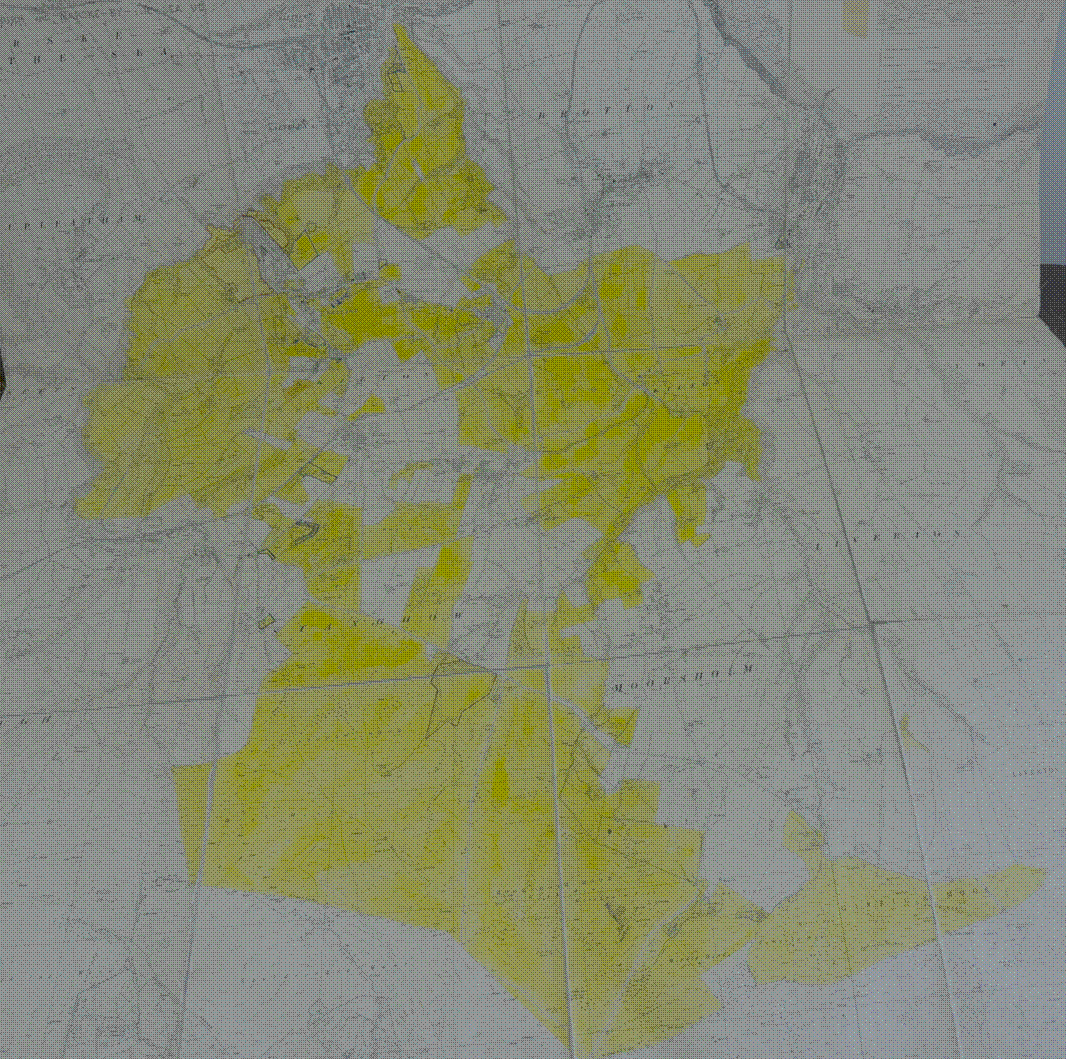
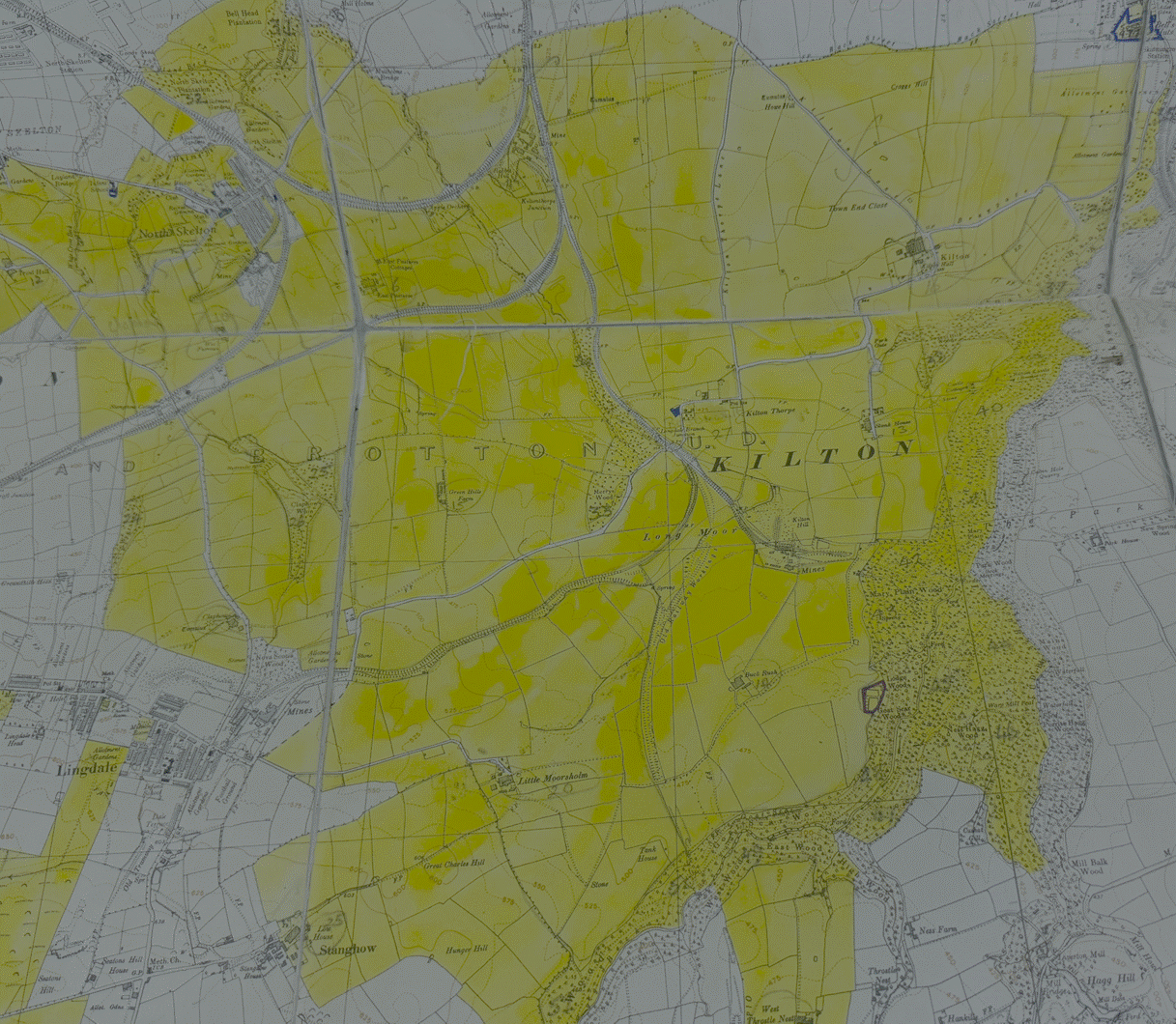
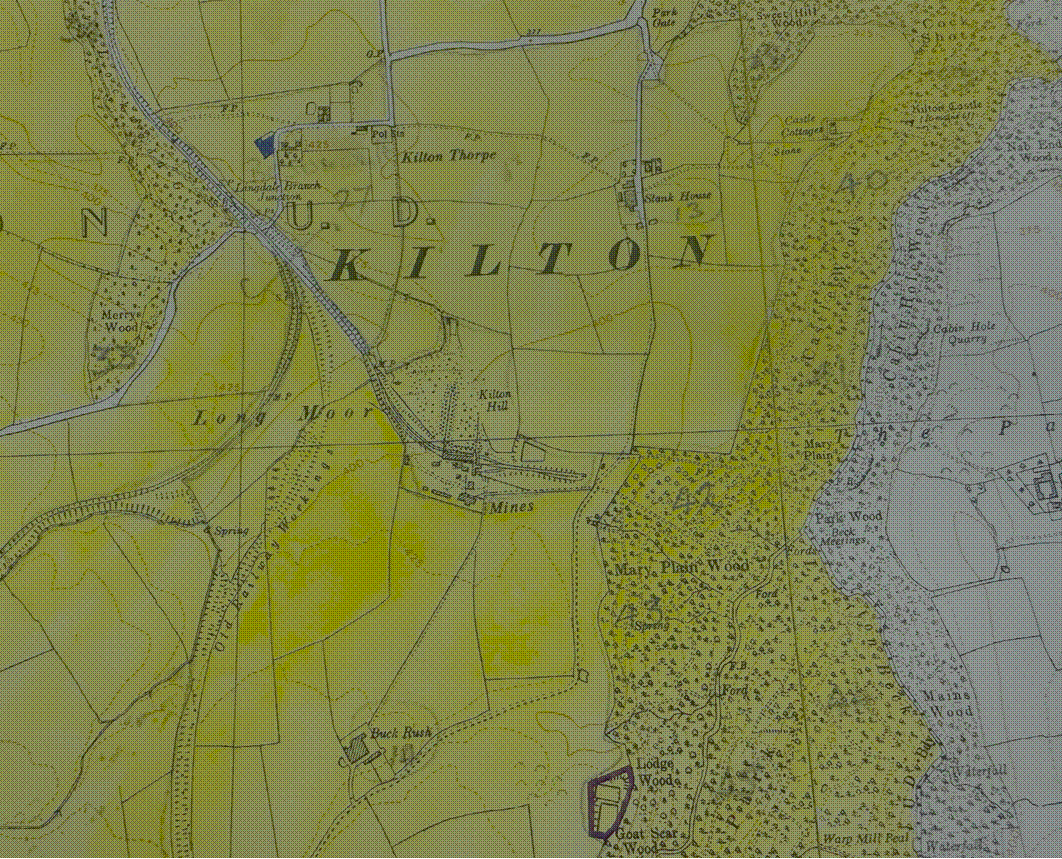
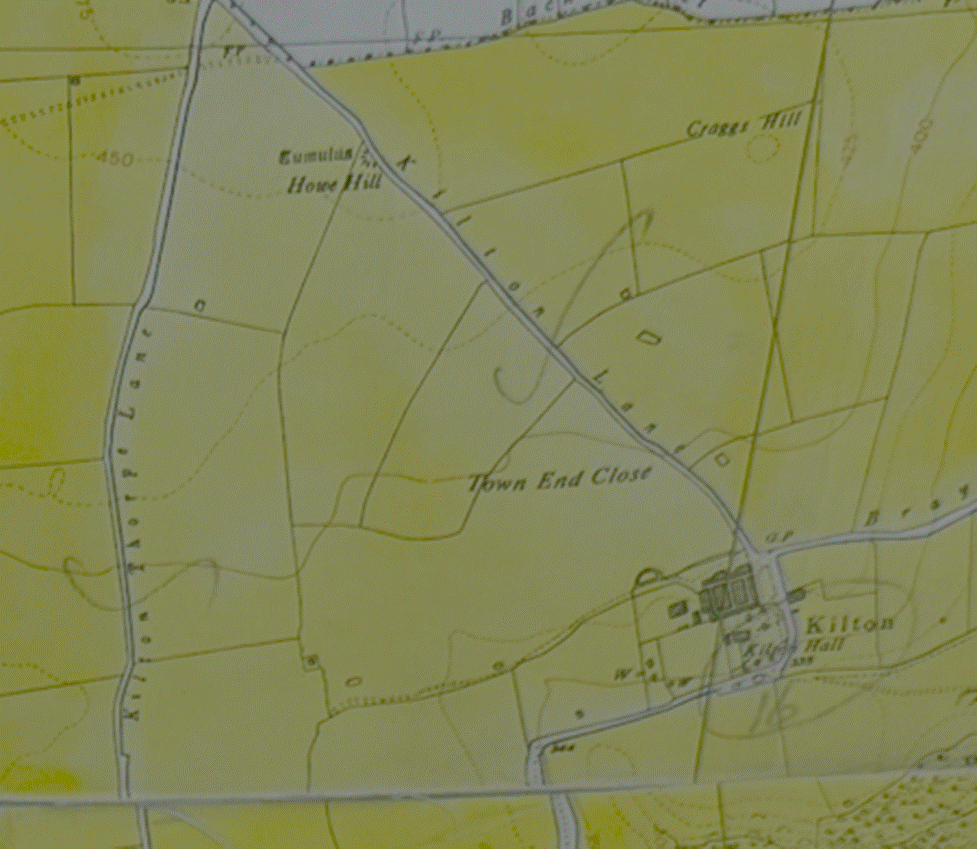
Estate
Map of Kilton, 21 February 1968 (Skelton and Gilling Estate Records)
1974
The
1974 local government reorganization transferred the area from the North Riding
of Yorkshire to the new county of Cleveland, later becoming part of Redcar and
Cleveland unitary authority in 1996. From 1974 the former civil parish of
Kilton was abolished (Cleveland Registration
District, civil parishes, Kilton).
1980
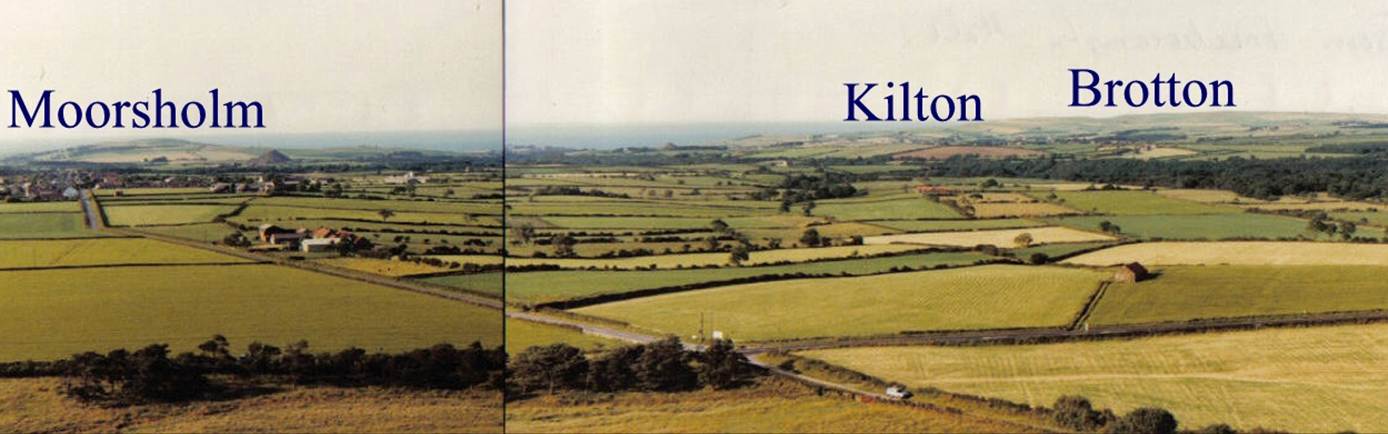
Countryside at
Kilton in 1980
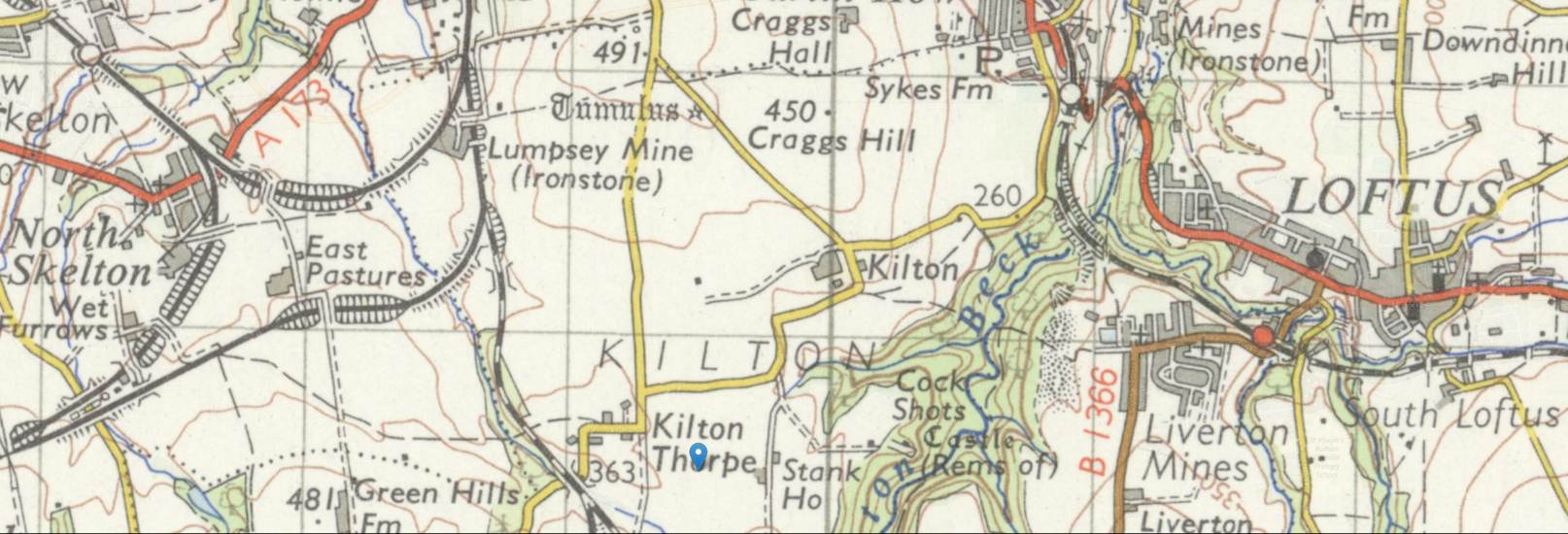
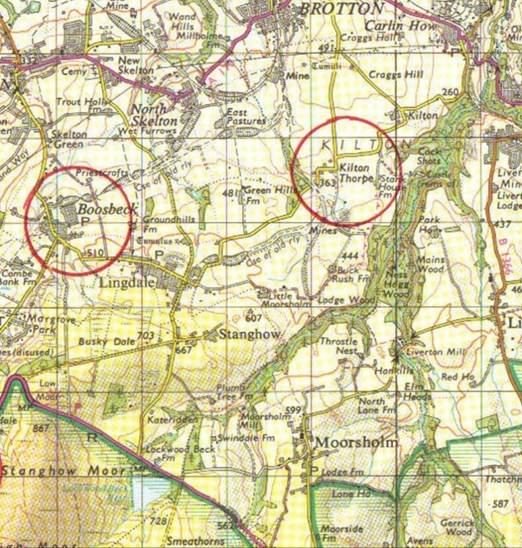
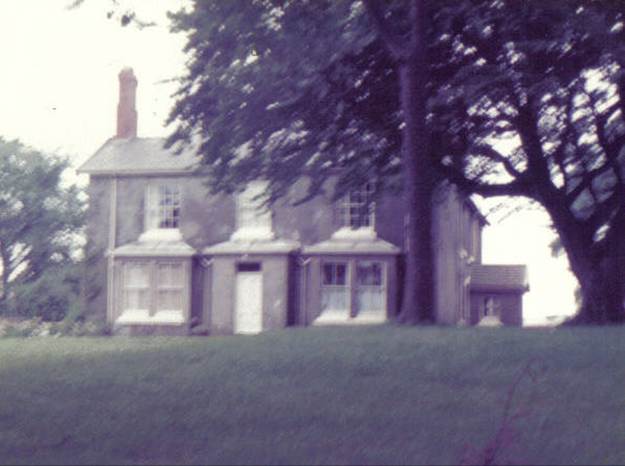
Kilton Hall, 1980
1990
A large nineteenth century mill with
its outbuilding still stands on Kilton beck and may occupy much the same
location as its medieval predecessor. It is no longer used for milling
purposes. (Robert
Daniels. 1990. Kilton: A Survey of Moorland Fringe Township in Medieval
Rural Settlement in North East England.
Architectural and Archaeological Society of Durham and Northumberland Research
Report No 2, edited by B E Vyner, page 55).
1991
Major Anthony Charles
Philip Wharton DL
Margaret Winsome Ringrose-Wharton died
on 4 February 1991 and the Skelton, Gilling and Kilton estate passed to the
great great grandson of John Wharton, Major Anthony
Charles Philip Wharton DL.

Anthony Charles
Philip Wharton
Kilton
into the Twenty First Century
2016
Construction of a single 1,500 kilowatt inshore wind turbine took place
around in mid 2016, with archaeological surveys
noting local medieval and pre-Roman historical traces in the surrounding soil
during work (The Windpower, Kilton
Thorpe Lane) after objections in 2014 (Plan
for 100m wind turbine near Brotton unanimously kicked out by councillors, Teesside News, 27 November 2014).
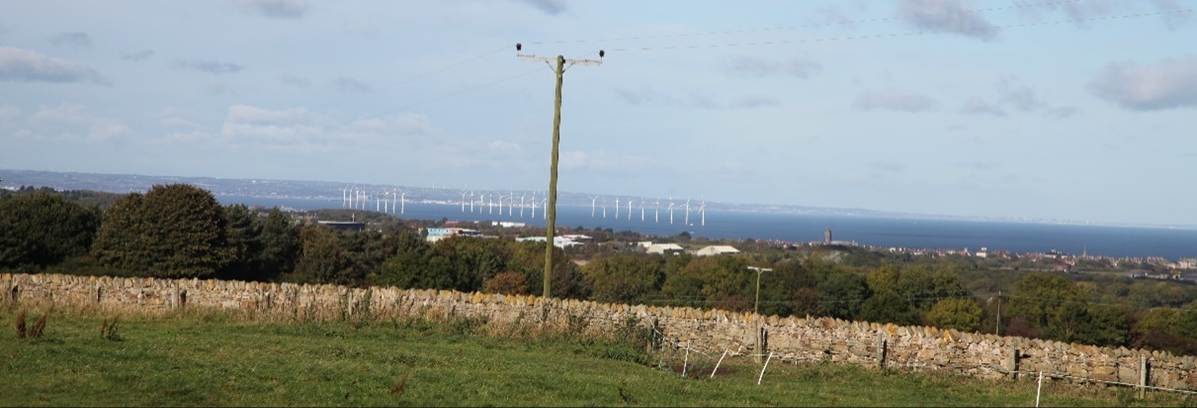
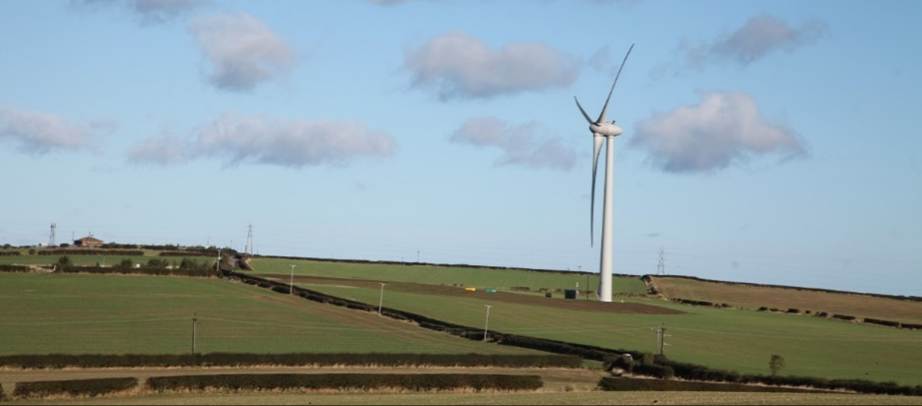
The
countryside at Kilton in 2016
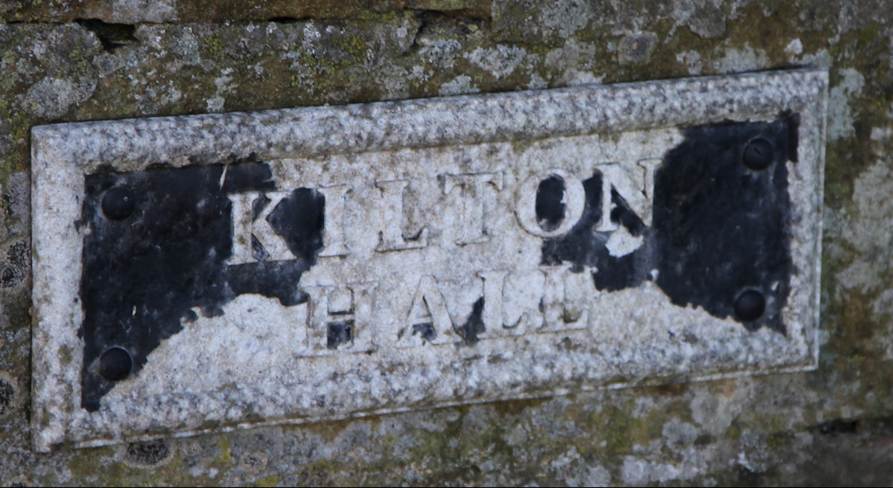
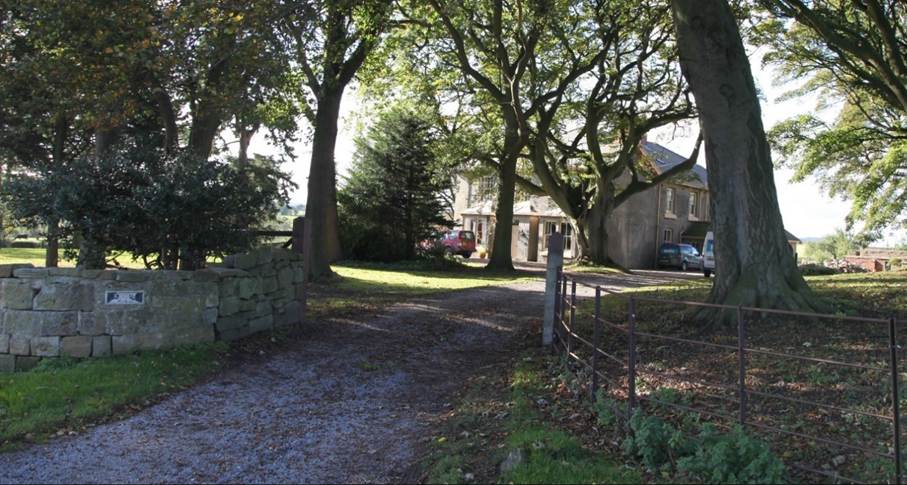
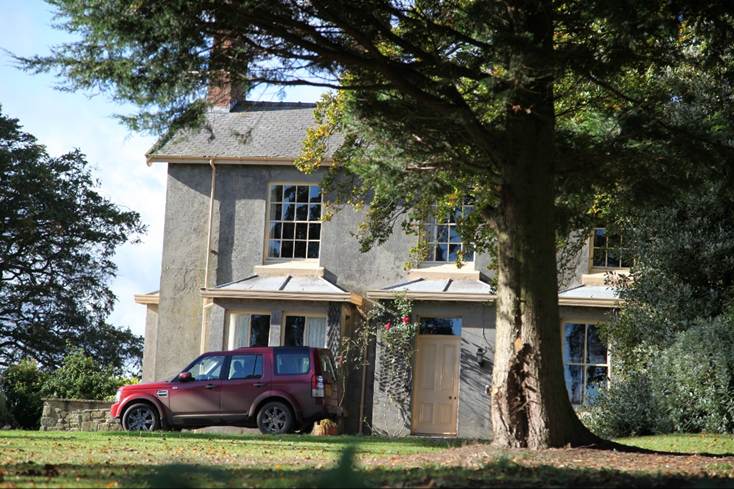
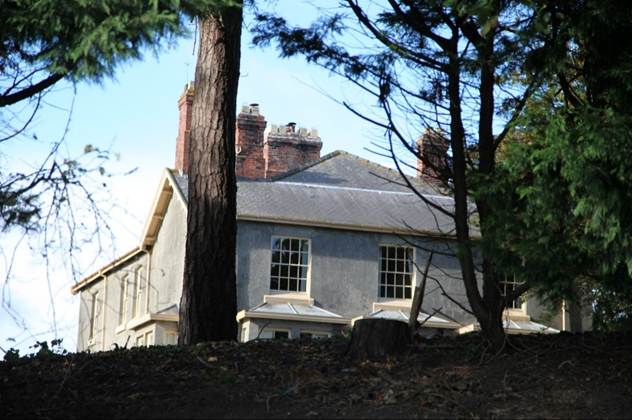
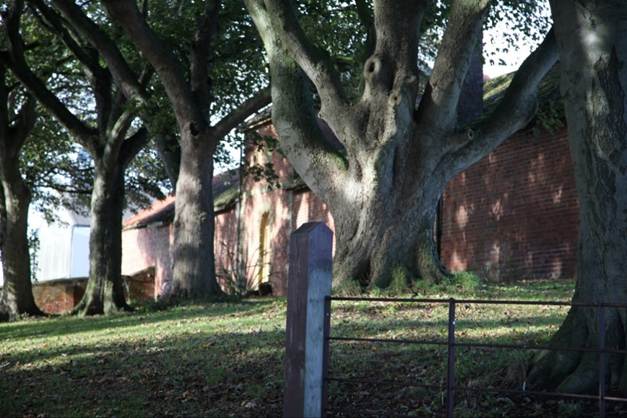
Kilton Hall in 2016
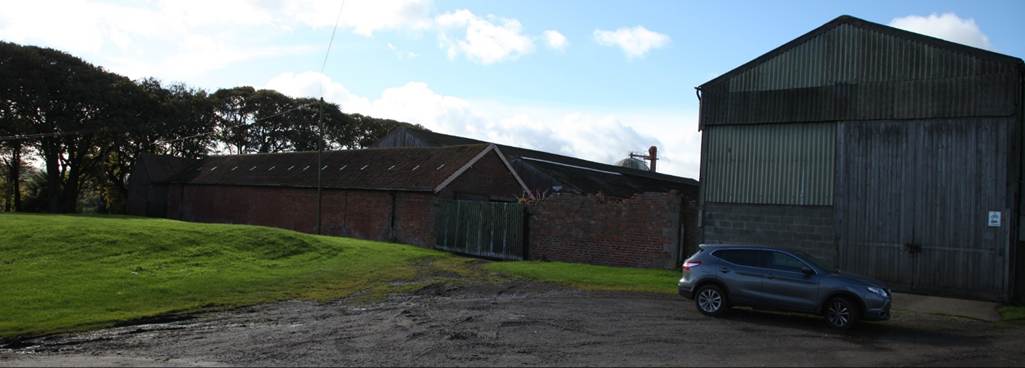
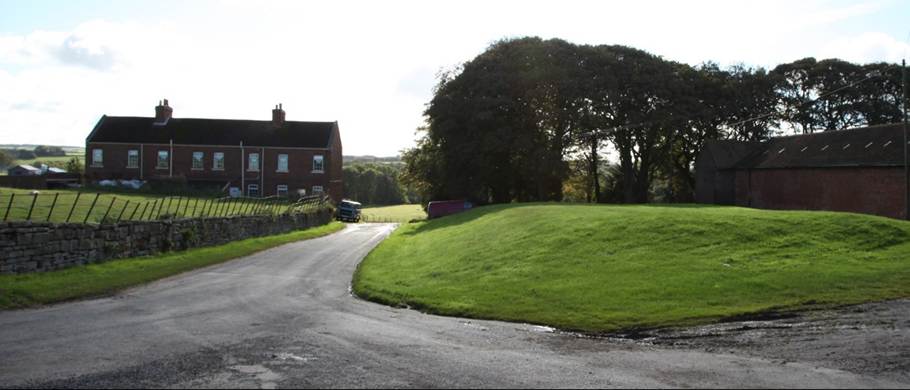
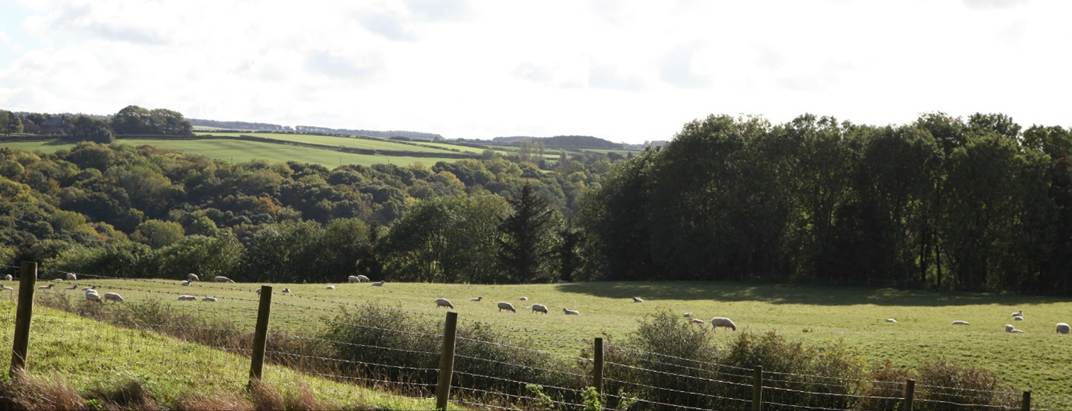
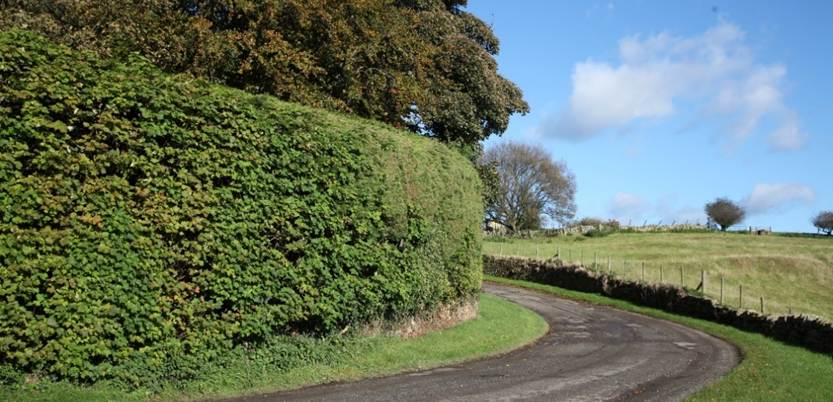
2021
The
2021 UK census recorded that the civil
parish of Lockwood (including Kilton) had a population of 316.
2026
Today,
Kilton is a quiet rural hamlet within the North York Moors National Park's
influence zone, supporting eco-tourism and arable farming on holdings like the
243 hectare (600 acre) Kilton Hall Farm (see How
three farmers are building fresilience to their businesses, Farmers Weekly, 19
September 2024).
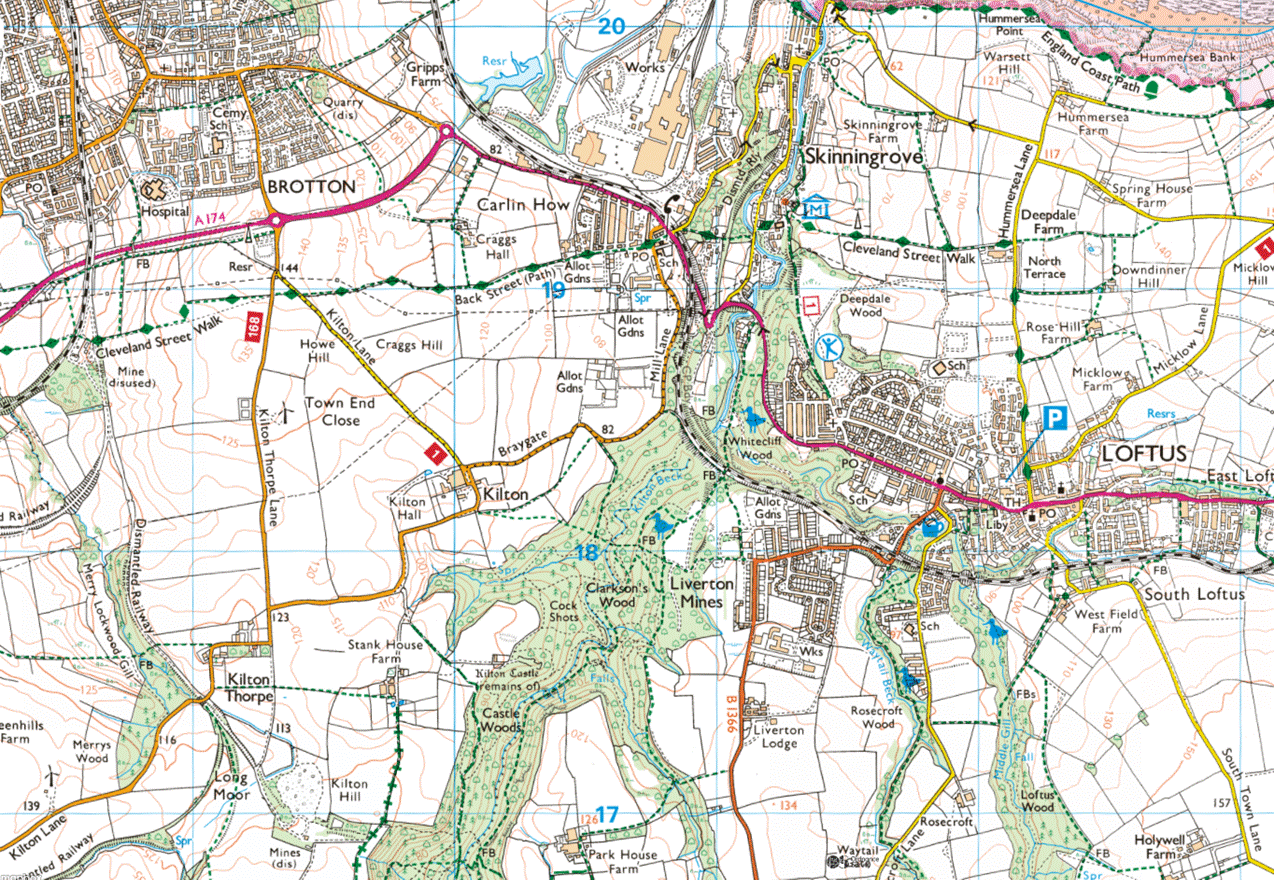
Major
Anthony Charles Philip Wharton died on 9 January 2026. His heir remains to be
announced.
Bibliography
The Skelton and
Gilling Estate hold an extensive record of diaries, maps, rent records and
other details, which record the history of Kilton.

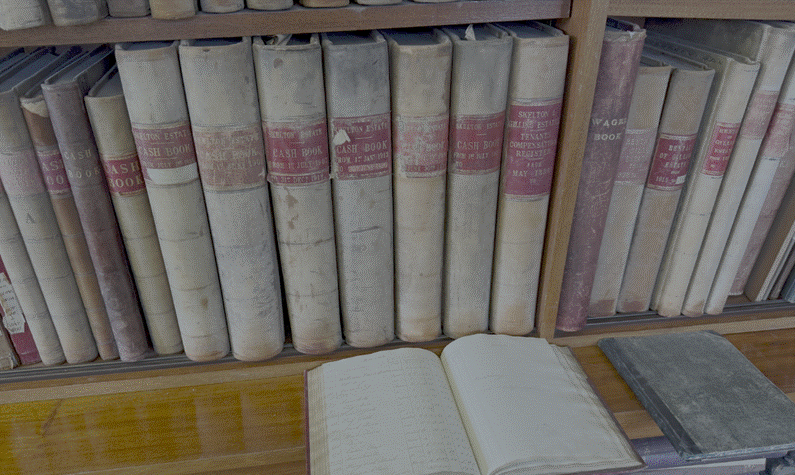
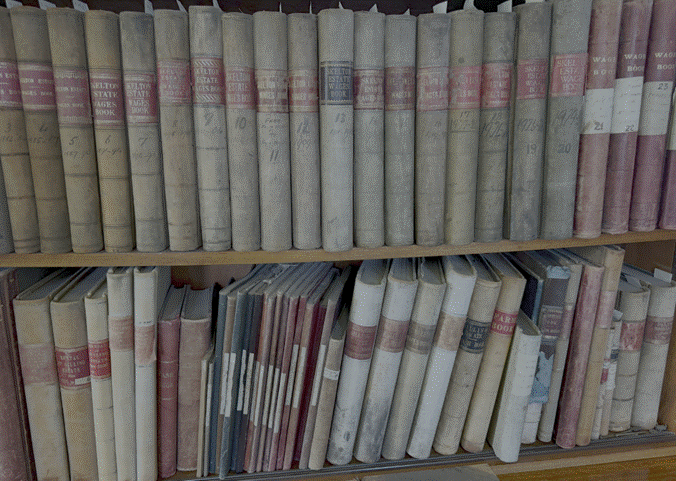
Adamson, Philip (2001), An Iron Age settlement
at Kilton Thorpe, Cleveland in Teeside Archaeological Society Bulletin,
Volume 6, pages
4 to 8.
L’Anson, William M (1913), Kilton
Castle in Yorkshire Archeaological Journal, Volume 22,
page 55.
Atkinson, Rev J C (1874), History
of Cleveland Ancient and Modern, Volume 1, Barrow in Furness: J Richardson.
Brotton
Howe, Brotton, Cleveland, North Yorkshire, The Northern Antiquarian.
Crawford, G M (1990), Bronze
Age Burial Mounds in Cleveland, Cleveland County Council.
Danby, Bill, Ice Age to
Romans and Anglo-Saxons
and Vikings in Skelton-in-Cleveland
in History.
Daniels, Robin (1990), Kilton:
A Survey of a Moorland Fringe Township in Medieval Rural Settlement in
North-East England, page 33.
Dowey, Janet. Impact of
Agricultural Change on the Rural Community - a case study of Kilton circa
1770-1870.
Elgee, Frank (1930), Early
Man in North-East Yorkshire. Gloucester: John Bellows.
Farndale,
John (1870), The History of Kilton, With a
Sketch of the Neighbouring Villages, By the Returned Emigrant, Dedicated to
the Rev William Jolley. Toronto, Canada, America, Middlesbrough, Burnett &
Hood, “Exchange” Printing Offices.
Farndale,
John (1864), Guide
to Saltburn by the Sea and the Surrounding District, With
remarks on its picturesque scenery, Fifth Edition, Dedicated to John
Thomas Wharton Esq of Skelton. Late of Skelton Castle Farm, Darlington, Printed
by Charles W Hird.
Graves, Rev John (1808),
The
History of Cleveland. Carlisle: F Jollie and Sons.
Hebditch, W (1939), The Origin and
Early History of the Kilton Fee in Yorkshire Archealogical Journal, Volume
34, page 296.
Historic England, North
Yorkshire Moors and Cleveland Hills. National Charatcter Area 25.
Hornsby, William and
Stanton, Richard (1918), British Barrows near Brotton in Yorkshire
Archaeological Journal Volume 24 Page 263-268.
Horton, Minnie C (1979), The
Story of Cleveland, History, anecdote and legend, Cleveland County
Libraries.
Map of an Estate belonging to John Hall Stevenson Esq lying at Skelton and Brotton in Cleveland in the North Riding of Yorkshire produced in 1773 after a survey by Watson and Seagrave, copy held by Tees Archaeology.
Ord, John Walker (1846), History
and Antiquities of of Cleveland. London: Simpkin and Marshall.
Sherlock Stephen J and Vyne,
Blaise E (2001), Brotton-Boulby Pipeline, The Iron
Age Settlement at Kilton Lane, Brotton, Report by Tees Valley Archaeology.
*
Sherlock, Stephen J (2002), Excavations
at Kilton Thorpe in 2002.
Sherlock, Stephen J (2002), An
Archaeological Excavation at Kilton Thorpe, near Brotton, Excavations during
August 2002.
Sherlock, Stephen John
(2010), An
Examination of Late Prehistoric Settlement in North East England with Specific
Emphasis on the Settlements of the Tees Valley, University of
Leicester, School of Archaeology and Ancient History.
Sherlock, Stephen J (2012), Late
Prehistoric Settlement in the Tees Valley and Northeast England, Tees
Archaeology Monograph Seies Volume 5, Hartlepool. *
Sherlock, Stephen J (2012), A
Royal Anglo-Saxon Cemetery at Street House, Loftus, Northeast Yorkshire,
Tees Archaeology Monograph Seies Volume 6, Hartlepool. *
Sherlock, Stephen J (2019), A
Neolithic to Late Roman Landscape on the Northeast Yorkshire Coast: Excavations
at Street House, Loftus 2004 to 2017, Tees Archaeology Monograph Seies
Volume 7, Hartlepool. *
Sherlock, Stephen J (2021), Early
Neolothic salt production at Street House, Loftus, northeast England in Antiquity,
Volume 95, pages 648 to 669. *
Sherlock, Stephen J (2025), A
Romano-British Saltern at Street House, Loftus, Northeast Yorkshire in Durham
Archaeological Journal Volume 24, pages 85 to 95.
Spratt, D A (1979), The
Archaeology of Cleveland. Middlesbrough Borough Council.
Spratt, DA (1982), Prehistoric
and Roman Archaeology of North-East Yorkshire. British Aarchaeological
Reports British Series 104.
Surtees Society (1894), Cartulary
of Guisborough Priory. Durham: Andrews and Co.
Tullie, Joseph (1767). Joseph Tullie’s Estate Plan. A map of an Estate belonging to John Hall Stephenson Esq lying at Skelton and Brotton in Cleveland in the North Riding of the County of York, hangs on the Wall as Skelton and Gilling Estates Office.
Tweddell, George Markham
(1872), The
people's history of Cleveland and its vicinage, Stokesley: Tweddell
& Sons.
Victoria County History
(1923), The
wapentake of Langbaurgh (east): Brotton in A History of the County of
York North Riding: Volume 2, ed. William Page. London. British History Online https://www.british-history.ac.uk/vch/yorks/north/vol2/pp326-332.
Vyner, Blaise E (2000), Report
on the Iron Age and Roman Period Pottery Assemblage Excavated from Kilton
Thorpe, Cleveland, Report for Northern Archaeology Associates. *
Vyner, Blaise E (2001), The
Pottery in the Iron Age Settlement at Kilton Lane, Brotton, Report by Tees
Valley Archaeology. *
Vyner, Blaise (2024), An
Indication of Northern Souls: Revisiting the ‘Territory of Ritual’ in
Offa’s Dyke Journal, Volume 6, page
10-53.
Wilson, Chris Scott and
Butler, Ray (1984), Cleveland’s History. *
* indicates articles not yet
reviewed by the author.