Star Carr
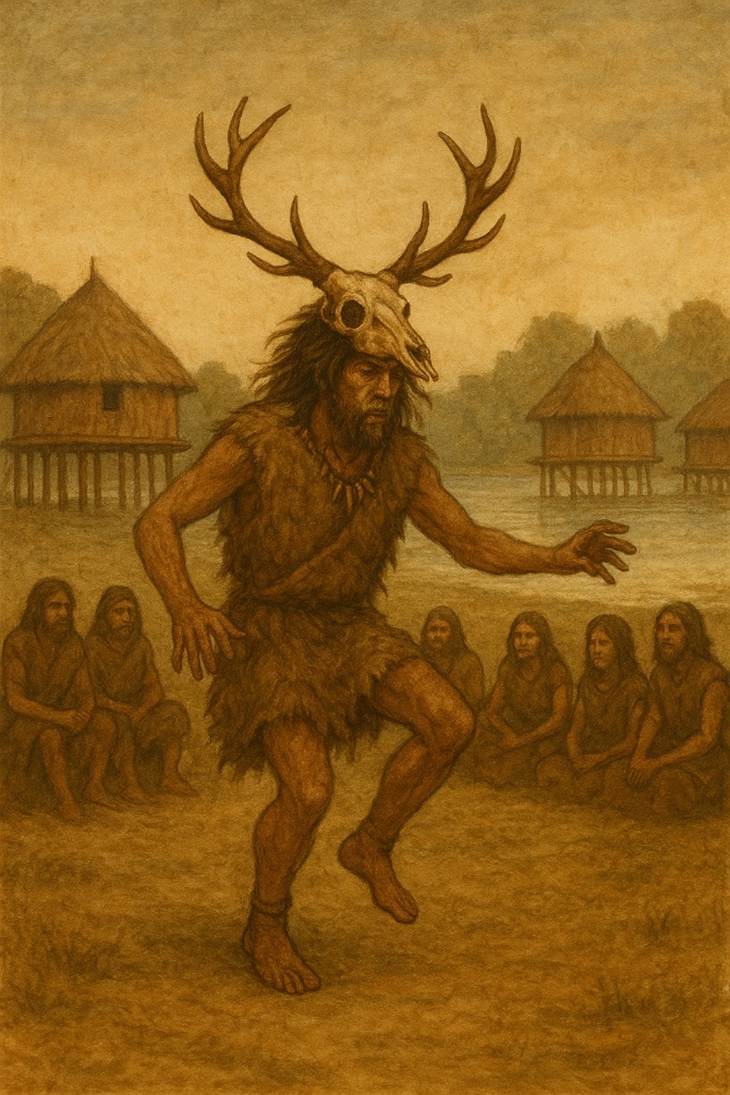
The richest Mesolithic site in
Britain, a few miles south of Scarborough, on the edge of the ancient Lake
Pickering, only 30 km from Farndale
|
Return to the Home Page of the
Farndale Family Website |
The story of one family’s journey
through two thousand years of British History |
The 84 family lines into which the
family is divided. Meet the whole family and how the wider family is related |
Members of the historical family
ordered by date of birth |
Links to other pages with historical
research and related material |
The story of the Bakers of
Highfields, the Chapmans, and other related families |
The Time Traveller’s Journey through North Yorkshire
The
History of the North York Moors, Ryedale, York, Cleveland and beyond |


Directions
As you drive
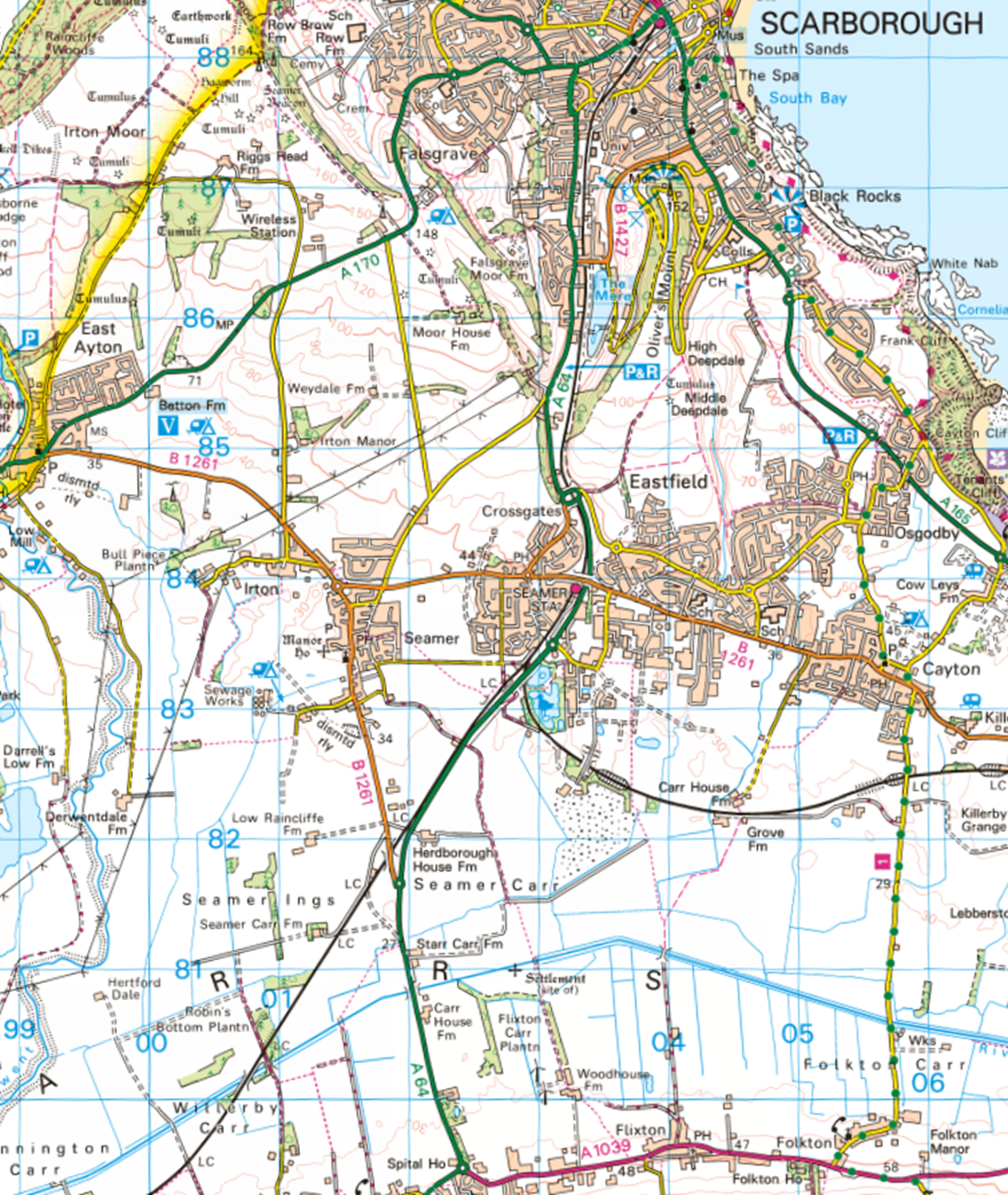
south from Scarborough on the A64, you pass through Seamer and then pass Herdborough House Farm. A little further on that road, on
the left (east) side, there is a potato farm at Star Carr. It is easy enough to
park your car there, close to the point where the River Hertford crosses under
the road. You can then walk up the line of the canal-like River Hertford for
about a kilometre to a bridge. The field on the other side of the river is the
site of excavation of Starr Carr, the best preserved Mesolithic site in
Britain.
There is not
much to see now. You will find yourself looking across to an arable field where
perhaps a tractor might follow its parallel paths. However if you take some
time to understand the community that lived here, at the edge of an ancient
lake, about nine thousand years ago, you might allow your imagination to see
through the mists of time to a different world.
Perhaps
before visiting the site at Star Carr, or afterwards as takes your fancy, you
should visit the exhibition of artefacts at Scarborough
Museum or the Yorkshire
Museum in York.
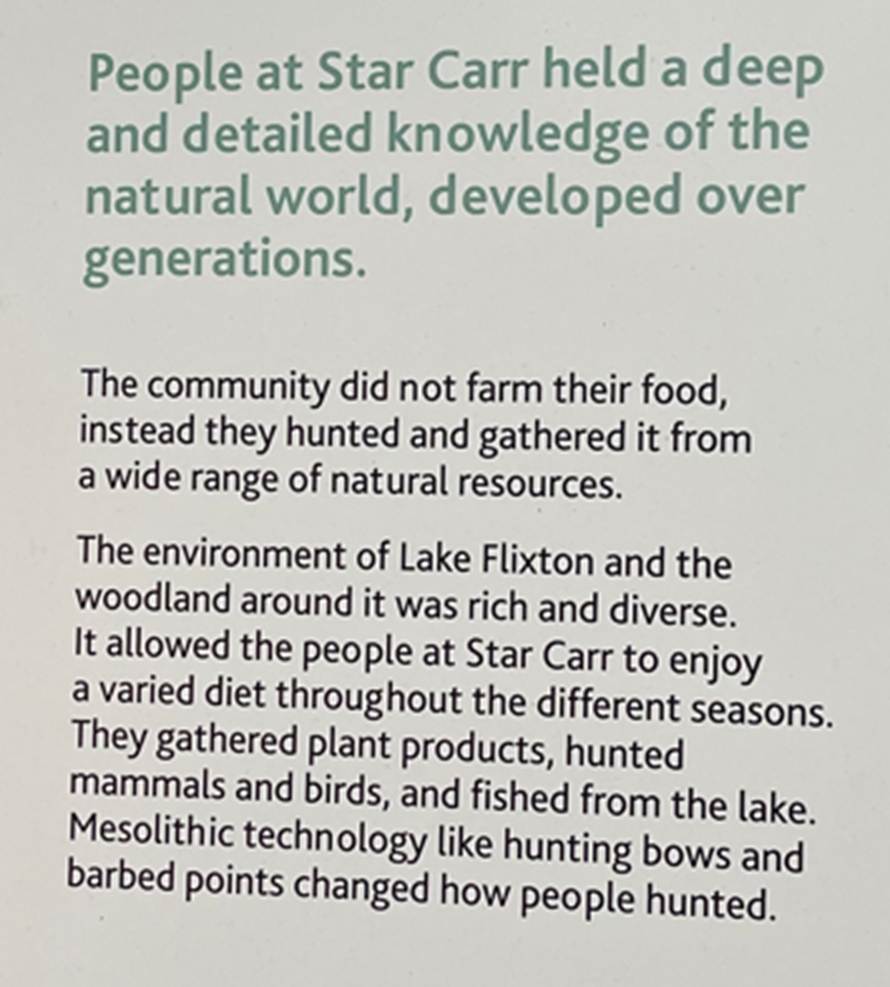
Neolithic Lake
People
The first
people appear to have settled in the area of the North Yorkshire Moors about
10,000 years ago. They were hunters, hunting wild animals in the forests that
covered the moors. On the North York Moors relics of early hunting, gathering
and fishing communities have been found as a widespread scattering of flint
tools and the barbed flint flakes used in arrows and spears. The earliest known
evidence of human presence in the area of the Vale of Pickering dates back to
the Mesolithic (Middle Stone Age) period. During the 5,000 years following the
arrival of the first migrants the climate improved steadily and a richer
natural vegetation started to cover the land including birch, hazel, elm, pine
and oak trees.
The last
glaciation had left a series of smaller lakes and meres and a vast deposit of
mud on the bed of Lake Pickering as the river Derwent, rushing through Kirkdale Gorge,
drained the Vale. Around the meres life had once abounded, reed swamps fringed
the shores and aquatic plant life grew in profusion. The higher land was
densely forested by birch willow and later hazel as the climate warmed.
In 1947 John
Moore of the Scarborough and District Archaeological Society discovered flints
which in turn led to excavations by Professor J G D Clark near Flixton at Star
Carr. On the eastern fringe of the long lost Lake Pickering, long after the
larger waters had drained away and the area had become productive agricultural
land, he discovered the remains of human occupation dating to 9,000 YBP beneath
the pasture. He excavated in the peat where once a lake shore had been and
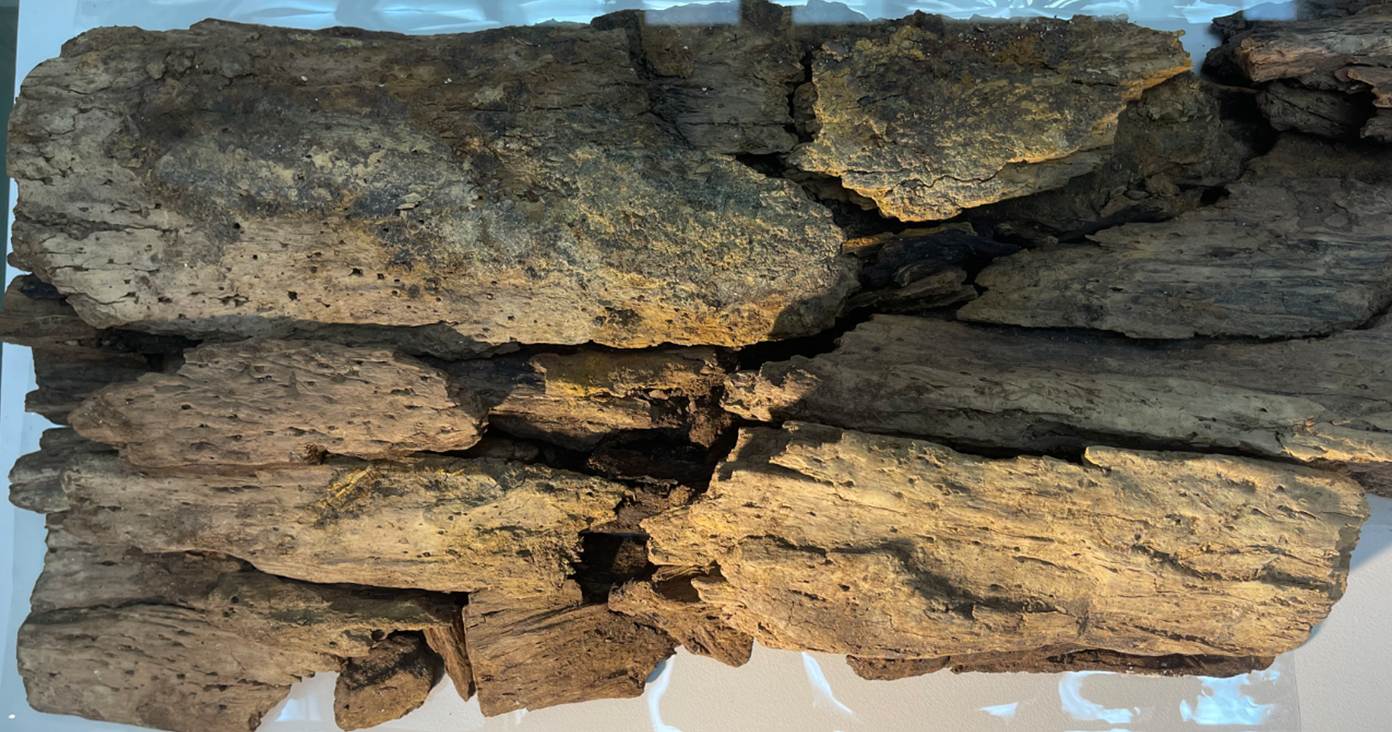
named the area Lake Flixton. There he found a platform of felled beech trees
and on it some 16,000 pieces of flint, stone and amber beads, worked bone,
antler points, implements and numerous bones of animals which had been hunted
for food and for their skins.
Star Carr
near Seamer south of Scarborough in the area called The Carrs
is the most important settlement discovered from this period. Due to
waterlogged conditions, a considerable quantity of organic remains, as well as
flint tools, have survived. This is Britain’s best known Mesolithic site. The
site, on the eastern shores of the ancient glacial Lake Pickering, was
surrounded by birch trees, some of which had been cleared and used to construct
a rough platform of branches and brushwood. Lumps of turf and stones had been
thrown on top of this construction to make a village site. The site was
probably visited from time to time by about four or five families who were
engaged in hunting, fishing and gathering wild plants as well as manufacturing
tools and weapons and working skins for clothes.
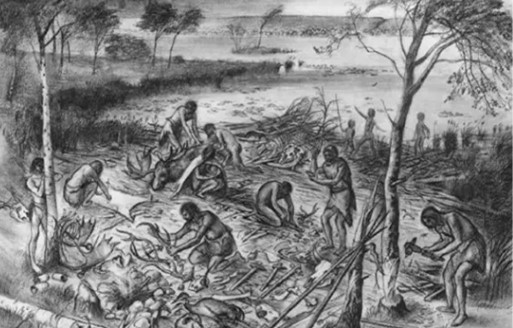
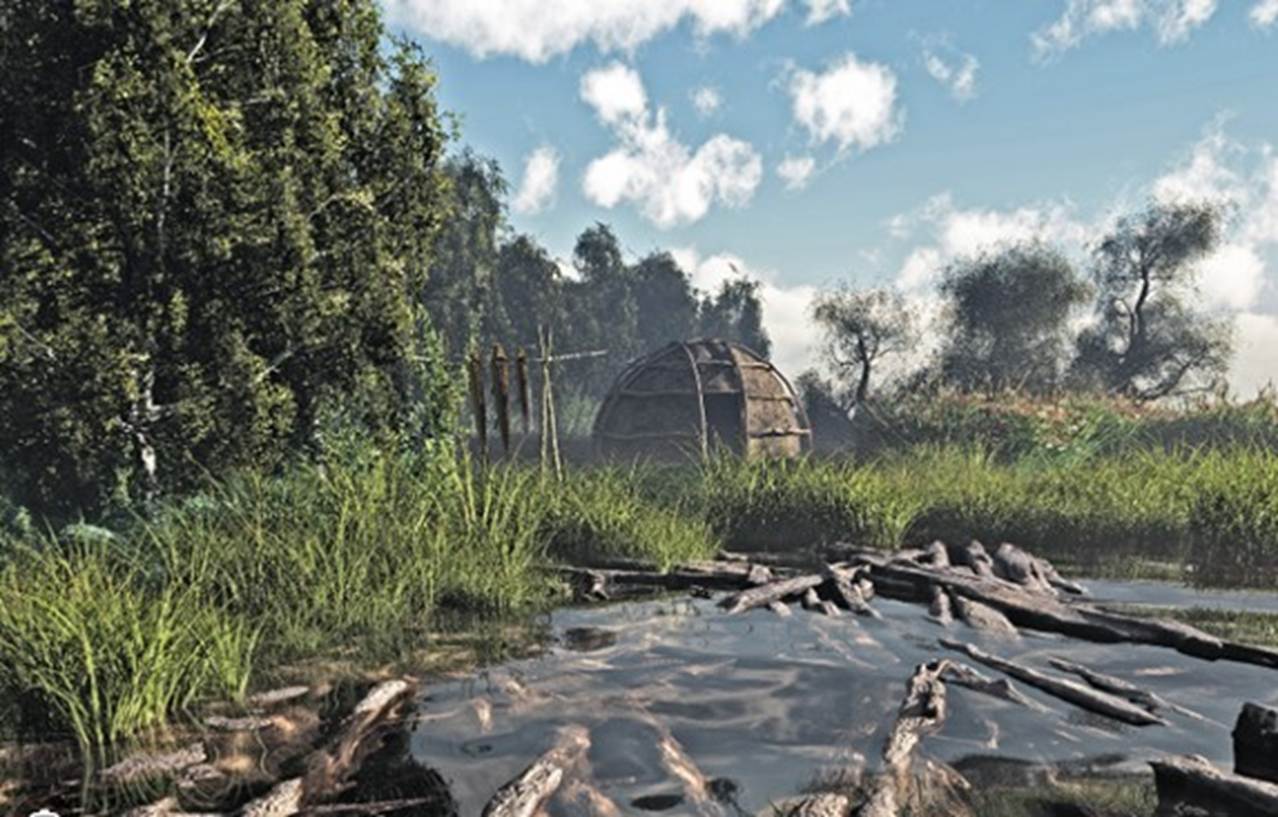
The
Mesolithic group which settled at Star Carr lived in tents made from animal
skins which were erected on wooden platforms around the edge of a large
ice-dammed lake.
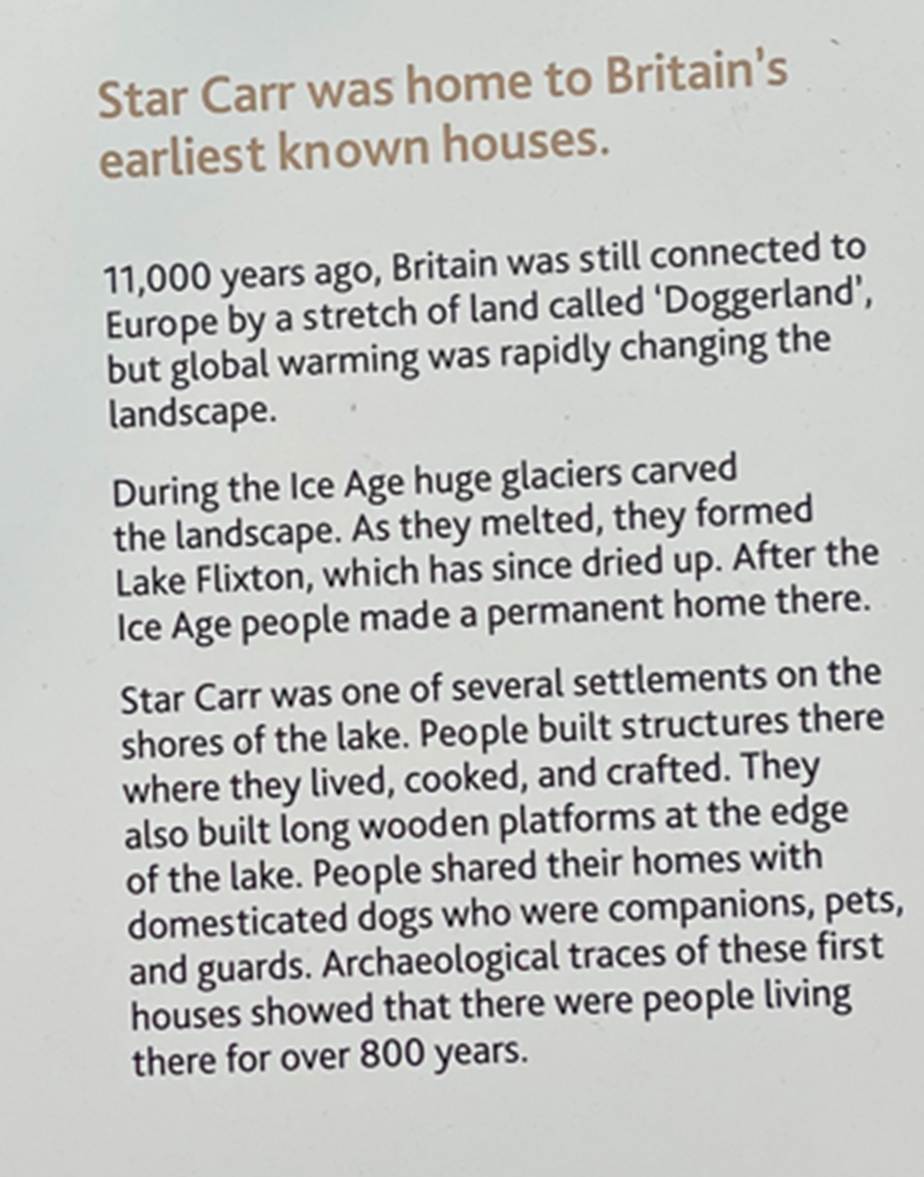
The
site was occupied during the early Mesolithic archaeological period,
contemporary with the preboreal and boreal
climatic periods. Though the ice age had ended and temperatures were close to
modern averages, sea levels had not yet risen sufficiently to separate Britain
from continental Europe.
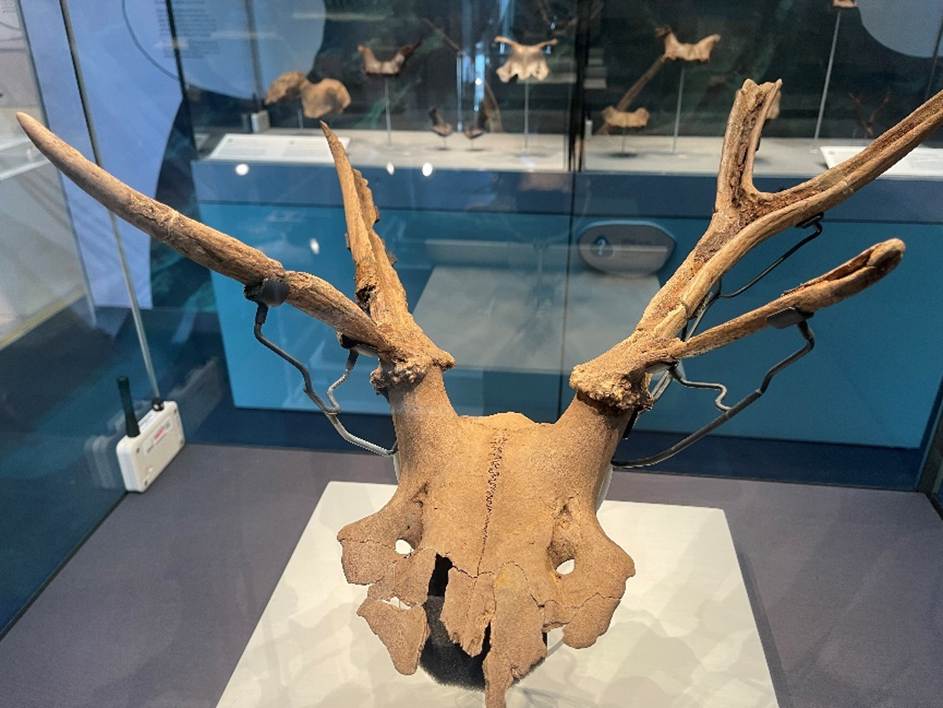
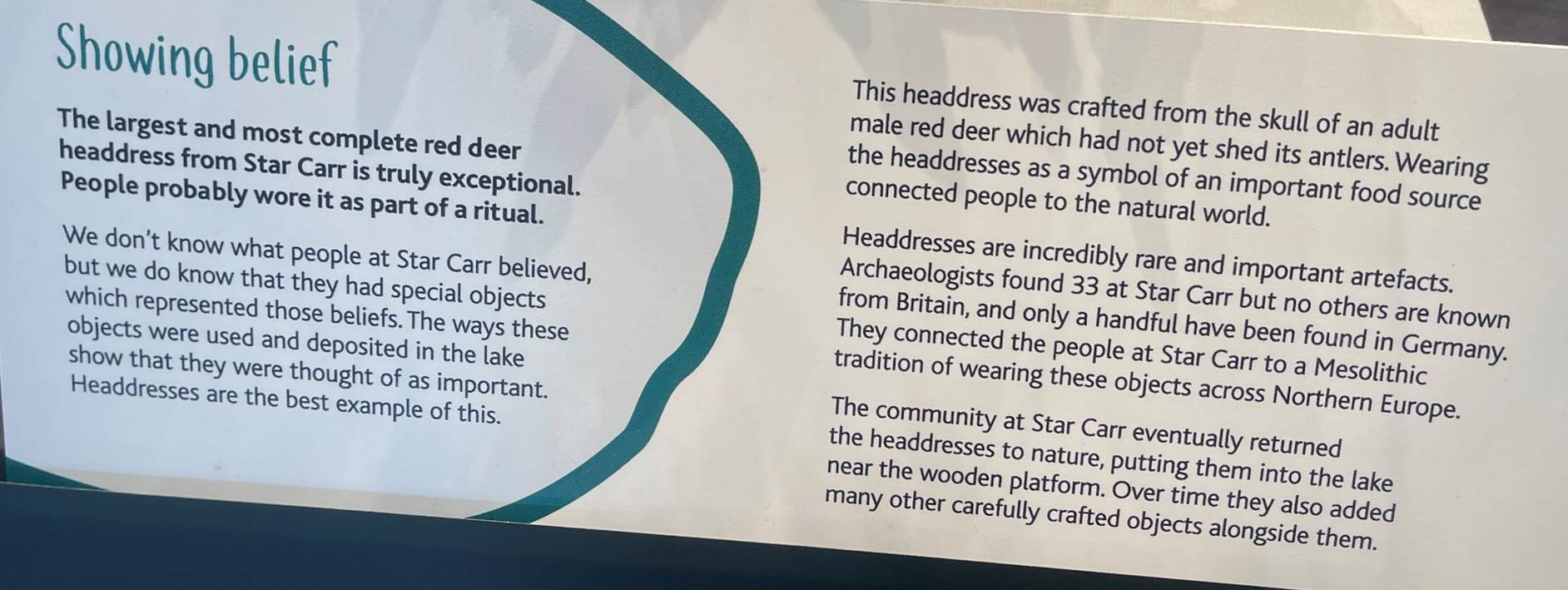
Amongst
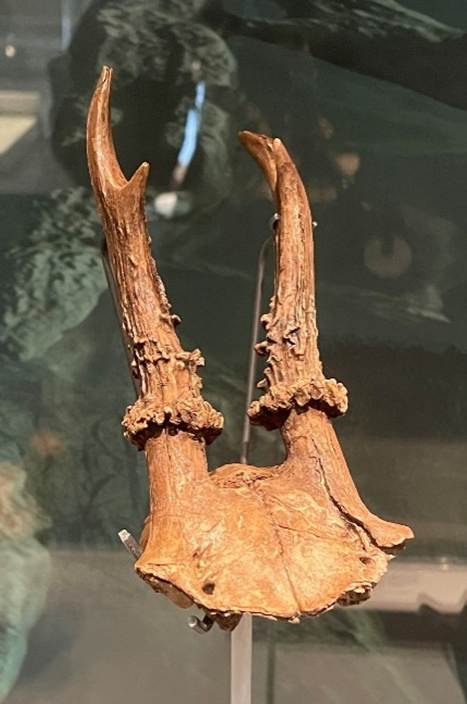
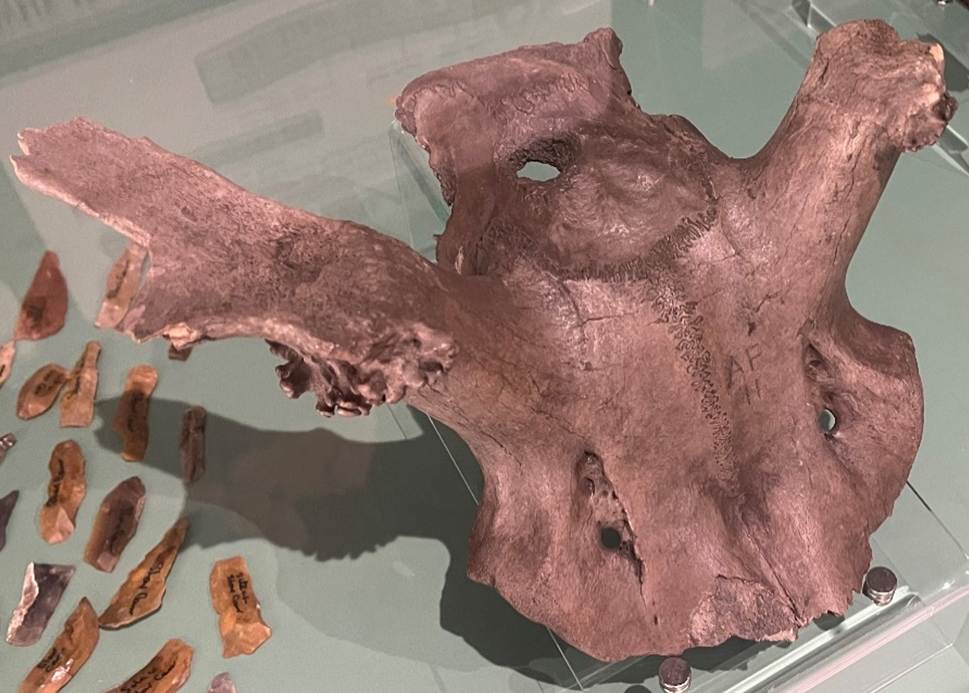
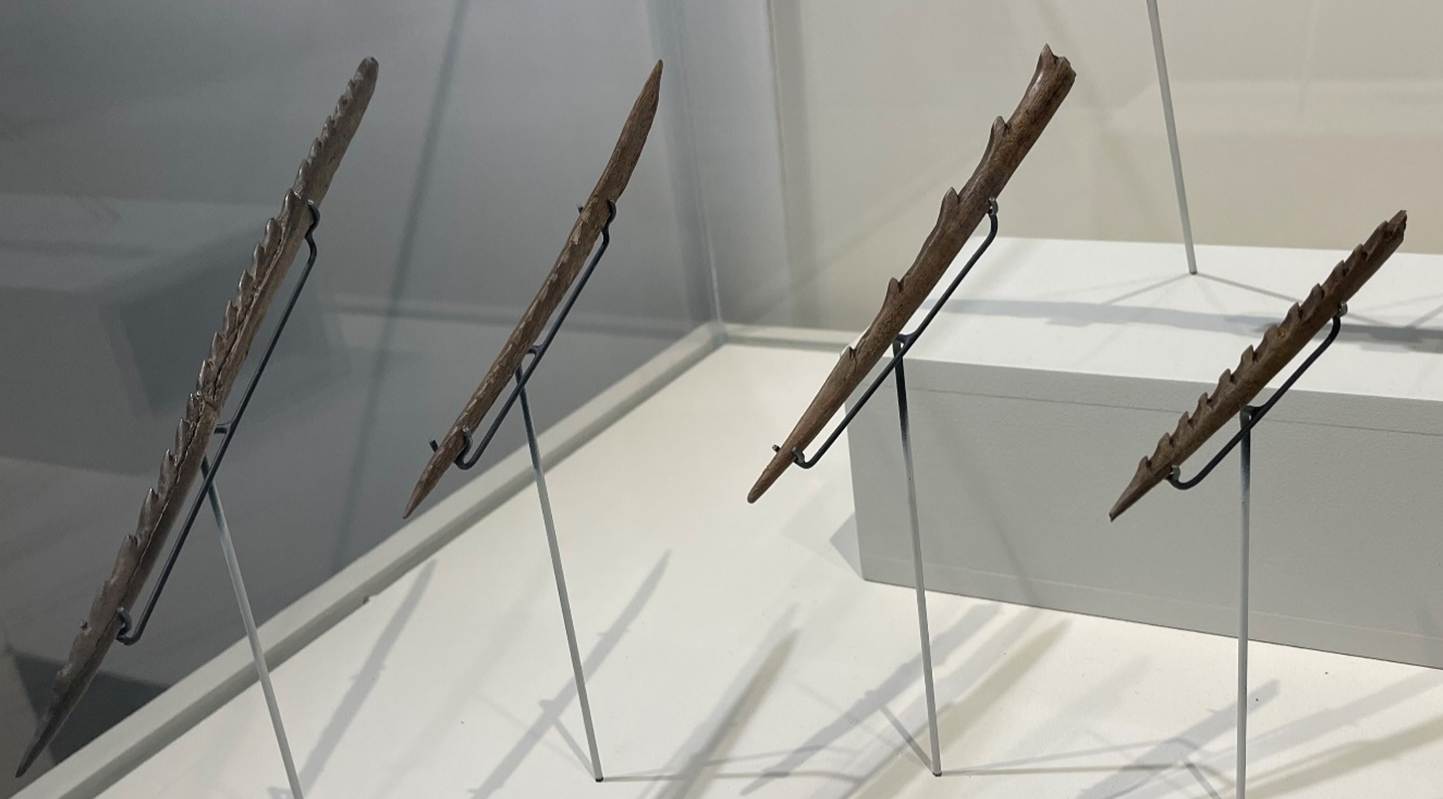
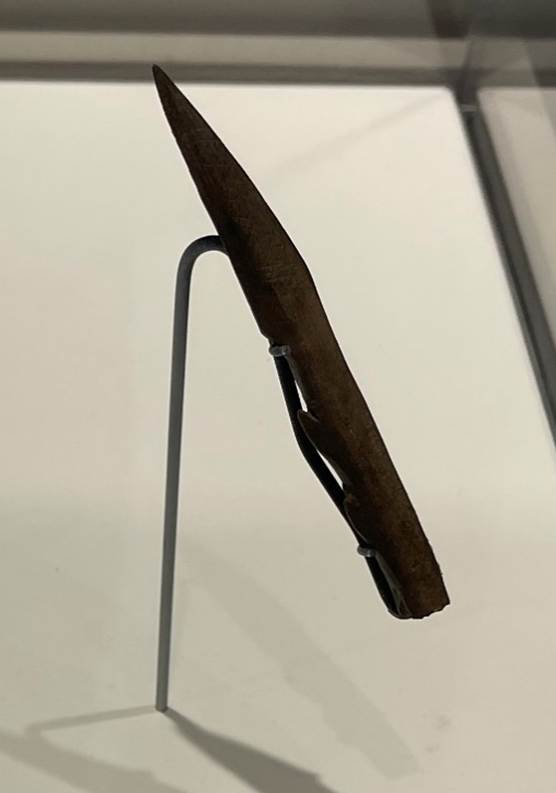
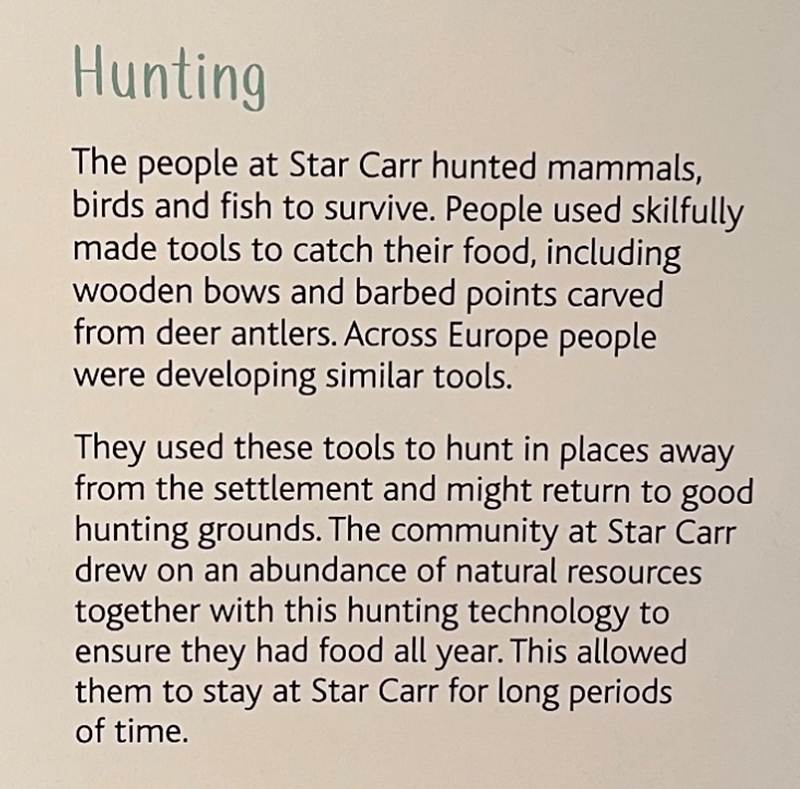
the finds were twenty one red deer stag skull caps which may have been
head-dresses and nearly two hundred projectile, or harpoon, points made of red
deer antler. These organic materials were preserved in waterlogged peat.
Normally all that remains on Mesolithic sites are stone tools.
The
first settlers in Star Carr built a camp within the birch forest, close to the
lake on a peninsula, with willow and aspen trees along the shore. The
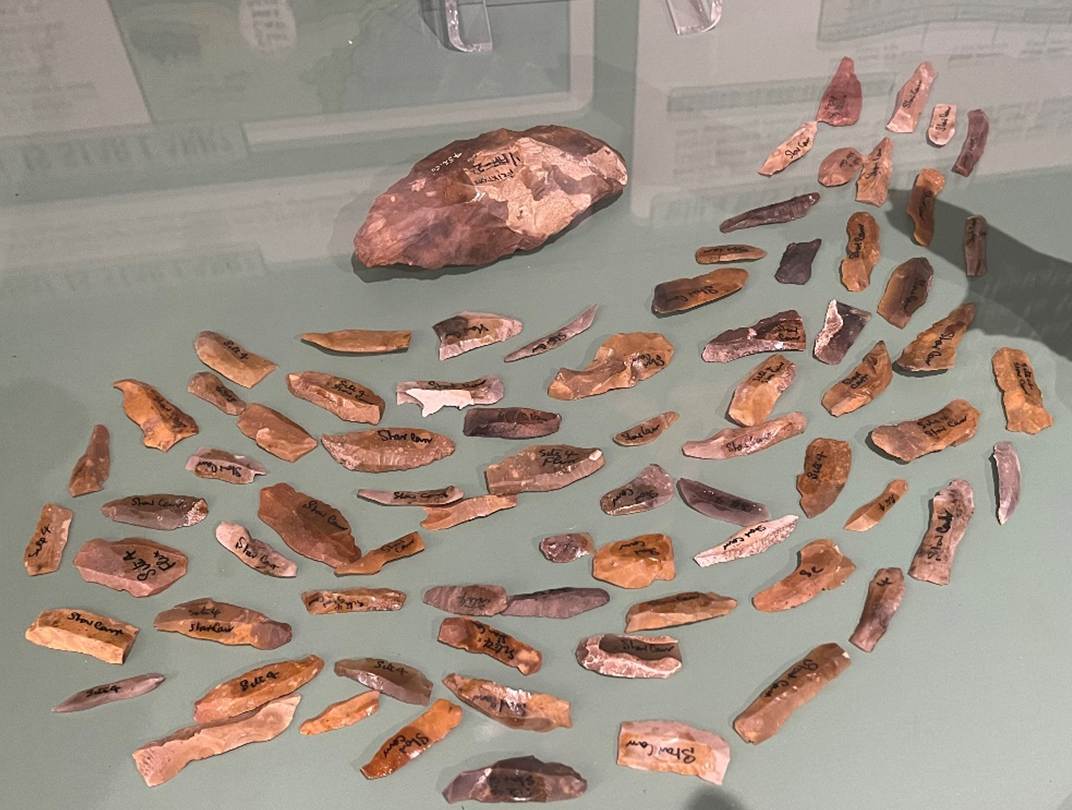
settlement continued in constant use for two or three hundred years. A large
number of worked flints have been recovered in the area showing a variety of
different tools were produced. They would have been used for wood and antler
working, hide processing, for cutting and working plant material, and for
butchering animals.
A shore side
platform was perhaps used in the form of a landing stage between water and
shore. The canoes, paddles, spears, harpoons, mattock handles, and bows and
arrows, were all fashioned in wood. Hunting took place away from the
settlement, sometimes by boat and involved a wide range of animals. Aurochs and
deer were largely hunted in woodland, or by the water when they came to drink.
Beavers would have been hunted around the lake. Family groups would roam the
countryside collecting nuts, edible plants, fruit, and gathering raw materials
for the manufacturer of artefacts such as baskets.
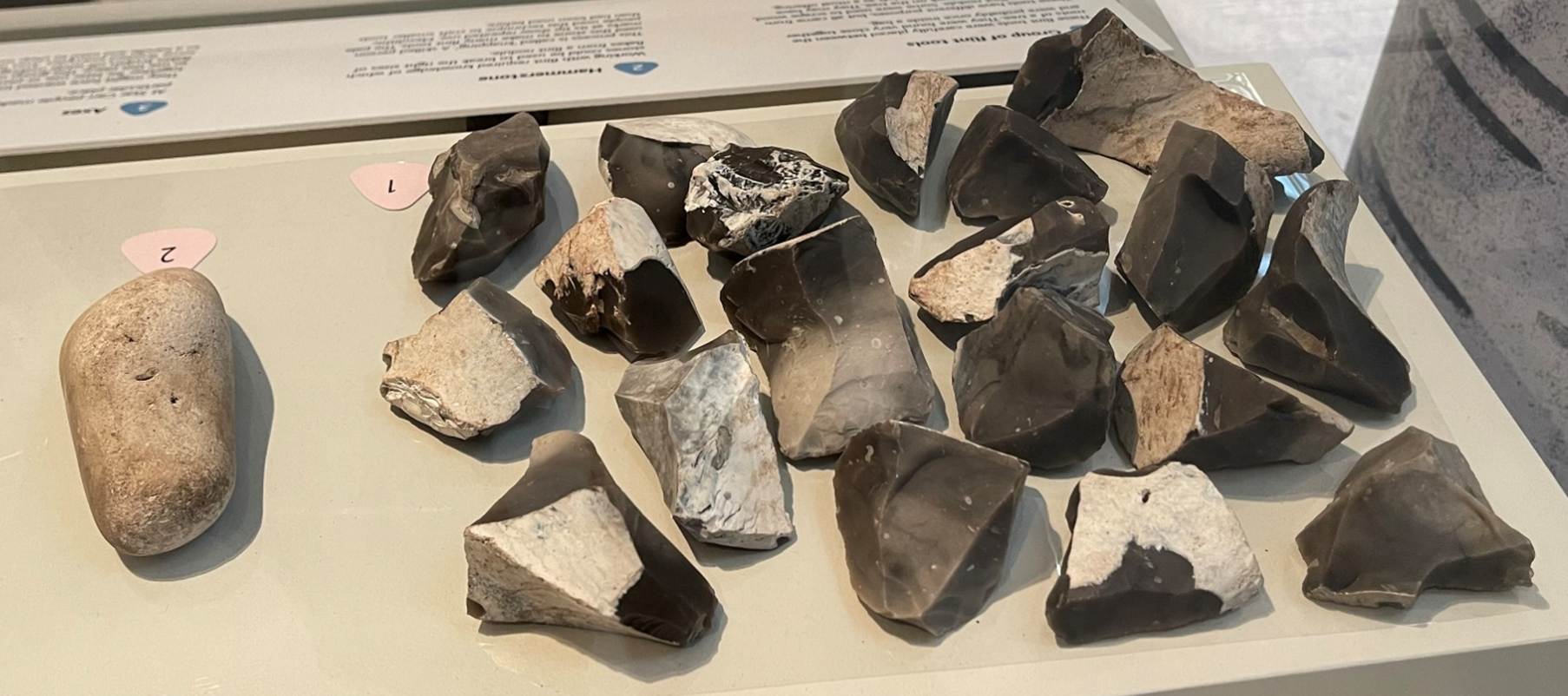
Star Carr
people might have travelled fifteen miles to gather suitable flintstones from
the coast, often walking through dense birch woodland. The camp site would have
been buzzing with the noise of flintstones being knapped, arrows tipped and
fletched and bows painstakingly fashioned into weapons.
Burnt
stones have revealed where groups of families sat about a fire to cook, share
food and tell stories.
This was a
place where people would have experienced familiarity through their senses.
This would have been a damp and swampy region with strong pungent smells from
the water side reeds, the cooking food, from freshly killed game being gutted
and skinned and from the aroma of skins curing and of the leather and heavy
woven clothing being worn.
or
Go Straight to Chapter 6 – the
Primeval Swamp