Act 3
A Roman imperial inheritance
71 CE to 410 CE

Beadlam, Hovingham,
and the lands which would later become Kirkdale and Chirchebi, in the
imperial age of Rome
It is
clear that within a radius of some 15 to 20 km of Kirkdale there is complex
archaeologically derived evidence of secular and religious activity from at
least the pre Roman period[1].
The lands south of Farndale and the
North York Moors were stable and settled for much of their early history,
nestled for protection at the edge of the North Yorkshire high lands. The
association of the estate lands where our family originated, with Roman villas
of Beadlam and Hovingham and the regional centre of Isurium Brigantum, and with the provincial capital of Eboracum, means that we can continue our
story to Roman imperial Britain.
Because we know that the Farndale
family emerged into recorded history in a distinct place - a wooded valley in
the dales flowing south from the North York Moors - we are able to continue to
explore the likely path of our ancestors further back in historical time. We
know that by the Norman Conquest, the wild forested lands of Farndale were part
of the great estate of Chirchebi and within that estate there were
settled lands nestled into the northeast corner of the Vale of Pickering, as
the agricultural plains met the lower dales. The settled lands of our family
were focused around the place that later came to be known as Kirkdale. So although the name Kirkdale would
not emerge until well after the founding of an Anglo-Saxon church there in the
seventh century CE, in the Farndale Story we can call those lands Kirkdaleland.

A Roman soldier sips from the Hodge
Beck in Kirkdaleland in the third century CE
Whilst the family’s genes emerged from
the primeval swamp of the stone, bronze and iron ages, which were the subject
of Act 2 of our story, by around 100 CE some of our earliest ancestors are likely
to have lived in the settled lands of Kirkdaleland as those lands fell
into the Roman orbit. By that time those ancestral lands became a place of
settlement, agriculture and stability. There is every reason to suppose that
our family story shares the story of Kirkdaleland from the time those
lands were tamed by the Brigantes and then controlled by the Romans.
We embark on the next stage of our
historical path in the time of the Roman Empire, when Kirkdaleland was a
northern region of a unified territory that stretched to Assyria and
Mesopotamia in the east and to North Africa to the south. This was a time when
our ancestors’ world was of breathtaking territorial breadth. Our family’s
journey is only a perspective on one family’s travels through its own history,
which happens to closely follow the fortunes of England and later Britain.
There were countless families in other places across the globe following
different histories, with equally dramatic stories of other national paths.
As we follow our own path of course
we find a route through our own national experience, but when we use our twenty
first century eyes, we have the privilege of understanding that story within a
global perspective. As the Roman world touched the North York Moors, it came
within the experience of remarkable civilisations stretching as far as India,
which would spread its numbers and conception of zero, as well as its gold,
back westwards[2].
So now, we can continue the story of
this particular family, by finding ourselves in the midst of a western empire,
whose stretch had reached the agricultural lands of Kirkdaleland.
Scene 1 – Arrival
Empire
In Virgil’s Aeneid,
Jupiter announced that I have set upon the Romans bounds neither of time nor
space[3].
Prior to the Roman occupation of
Britain at scale, Julius Caesar, having expanded northwards and fighting his
wars in Gaul, was drawn to an early, but limited invasion of southern Britain.
He landed in Kent in 55 BCE and again in 54 BCE with a force about 50,000
strong and advanced to the Thames. Though he met a disunited resistance, he
withdrew quickly to deal with the ongoing threat to the Roman army in Gaul[4]. The invasion had only impacted
on a small part of Britain and to the north it was unlikely to have been
noticed.
With distant memories of a half hearted invasion of Britain by Julius Ceasar
in 54 BCE, the Roman Empire by the early first century CE, had adopted an
aggressively imperialistic stance. In the decades before 43 CE, trade between Britain and Northern Gaul
had been increasing. The power struggle following the death of Cunobelinus
in 41 CE, exploited by his enemies such as the Iceni, provided a fresh
opportunity for Rome. The Roman empire was primarily
motivated by direct access to Britain’s resources including wheat, slaves,
copper, tin, lead, silver and gold. Britain produces gold, silver, and other
metals, the prize of conquest[5]. The Charterhouse Lead Mines[6] in Somerset were in operation by at
least 49 CE, evidencing the Roman motivation to exploit Britain’s resources,
the fruit of their invasion.
The Romans came to Britain, to stay,
from 43 CE when the Emperor Claudius (41 to 54 CE) rapidly annexed the south
and east of the country. The Romans found diversity in those who they
subjugated, with differing views regarding the benefits of Roman occupation.
Claudius’ invasion force was massive for the period, about 40,000 troops[7]. Claudius succeeded by a combination of military ruthlessness with
political pragmatism. He found support with tribal groups who saw advantage, in
the opportunities of Roman influence, to see their enemies subdued.
In the first
decade after the invasion the Romans advanced into the south and west
territories of Britain with a slow and steady pace, building fortifications and
infrastructure including a network of roads, as they advanced. The west was a
priority for access to tin and other resources. They then turned to Wales, a
source of gold.
Initially the Romans didn’t venture north of the Humber and
Don, but traded with the Parisii, and followed a complicated political path with the Brigantes.
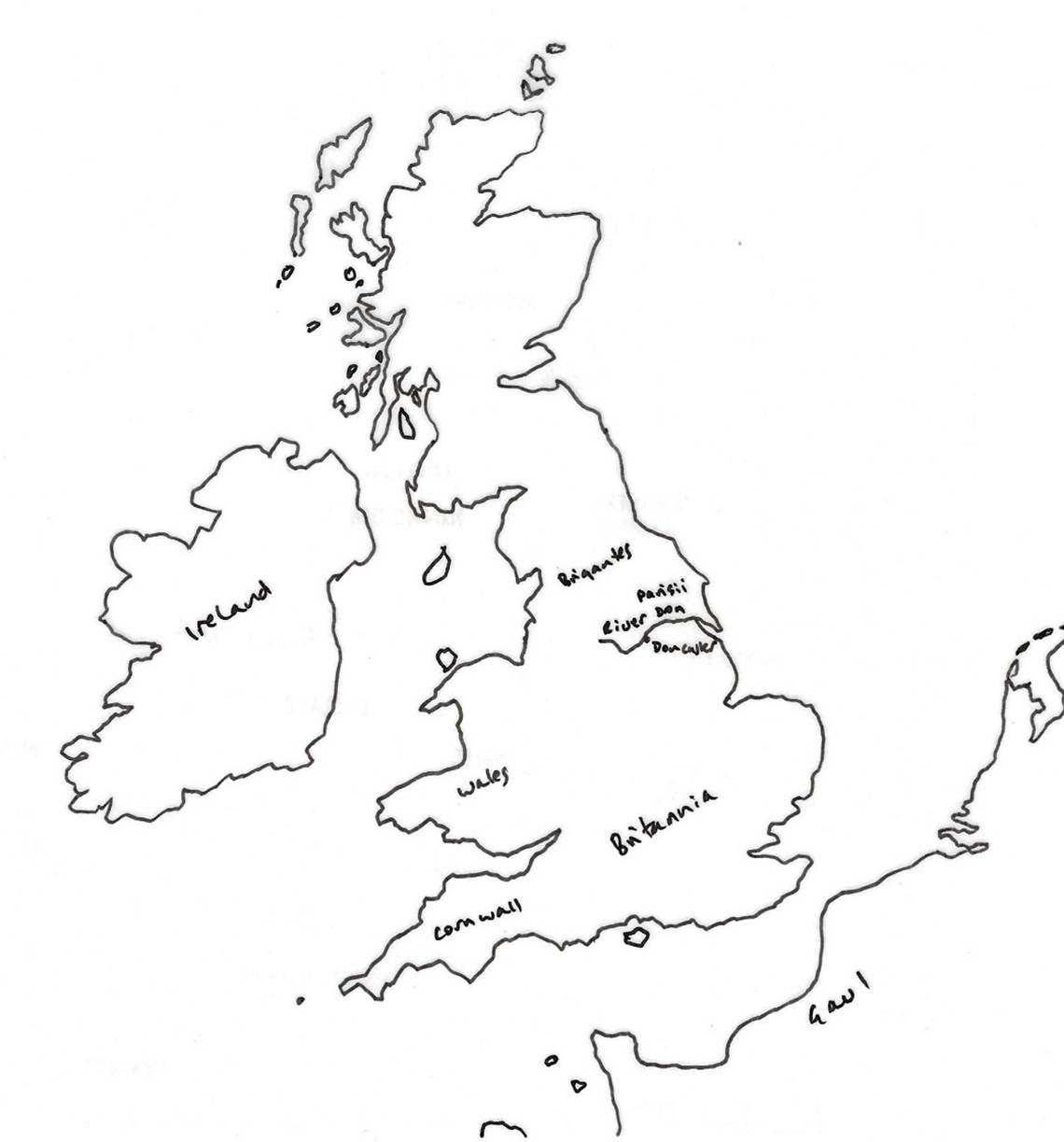
Nero was succeeded by Vespasian (69
to 79 CE) at the end of the Year of the Four Emperors[8]. Vespasian was the commander of the
Syrian Army, and had served in the army in Britain under Claudius. He appointed
Gneaus Julius Agricola (40 to 93 CE) as his general.
Agricola extended the Roman occupation across large swathes of Britain.
Agricola’s biography, The Agricola, was written by his son in law Tacitus[9].
Roman experience around the
Mediterranean was of city states and centralised groups, who were susceptible
to defeat on the death or subjugation of their leaders. However in northern
Britain they encountered a region where large stable political units were less
usual. The Romans referred to the people who lived in the Vale of York, the
moors and the dales, and across the Pennines, as the Brigantes. They
appear to have treated them as a centralised group, but this was probably a
mistake. The Brigantes may have been a loose grouping of hill people,
which the Romans might have mistaken as a tribal name.
Nevertheless there was a political
power base in the region with its centre in the large fortified oppidum
at Stanwick, west of Darlington[10]. The Stanwick Hoard was found in the Melsonby area in 1845 and the more
recent Melsonby Hoard was found in 2021[11]. Claudius had formed an alliance with Queen Cartimandua,
who Tacitus referred to as Queen of the Brigantes. She and her husband Venutius were, according to Tacitus, loyal to Rome. In 51
CE, Caratacus, leader of the Catuvellaunians[12], had sought sanctuary with Cartimandua, but she had handed him over to
the Romans.
When Cartimandua had a relationship
with her armour Bearer, Vellocatus, her husband Venutius began a civil war against her in 57 CE, but
Cartimandua was protected by the Roman Ninth Legion. In 69 CE, during a period
of instability under Emperor Nero, Venutius attacked
again and Cartimandua fled leaving Venutius in
control of the region and in conflict with Rome.

In 71 CE,
Nero’s successor Vespasian sent an army under Quintus Petillius Ceralius to
march north and occupy Brigantes and Parisii territory[13]. The Ninth Legion erected a large
camp near where Malton, northeast of York, stands today. They also built a fort
at Roecliffe, near to modern Aldborough, which was occupied between about 71 to 85 CE. Roecliffe was one of a string of forts along the line of
the modern A1, which provided the main Roman transport corridor.
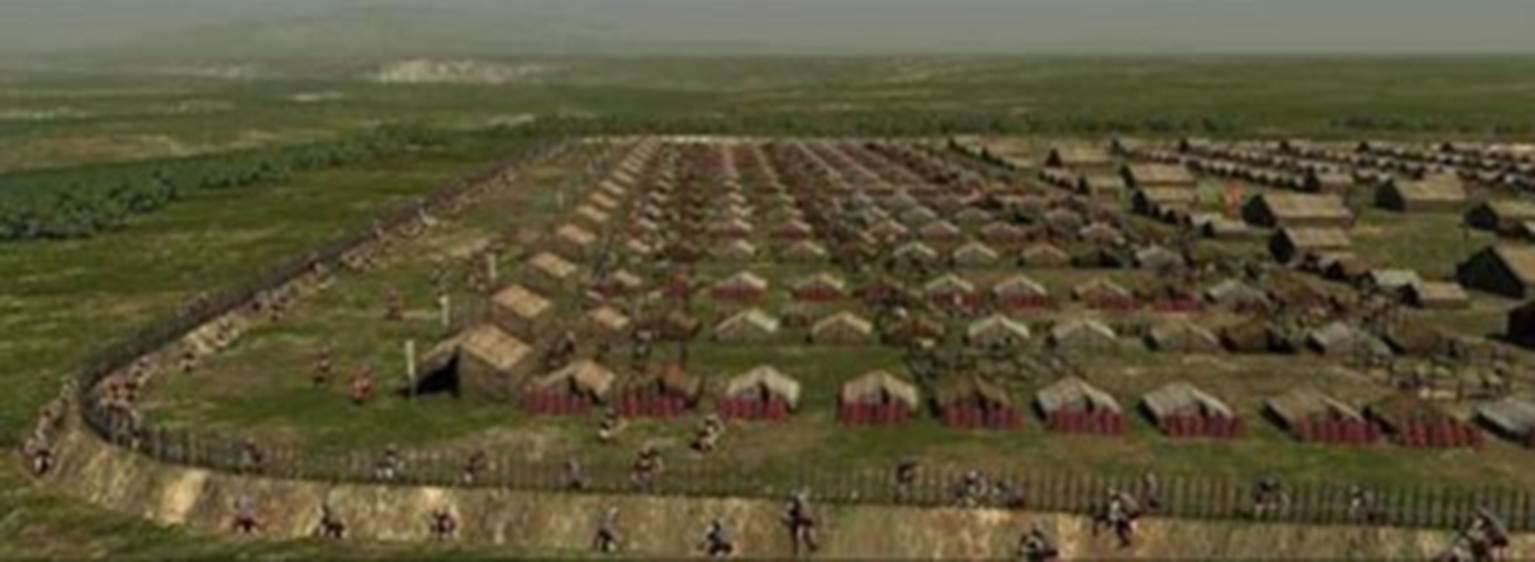
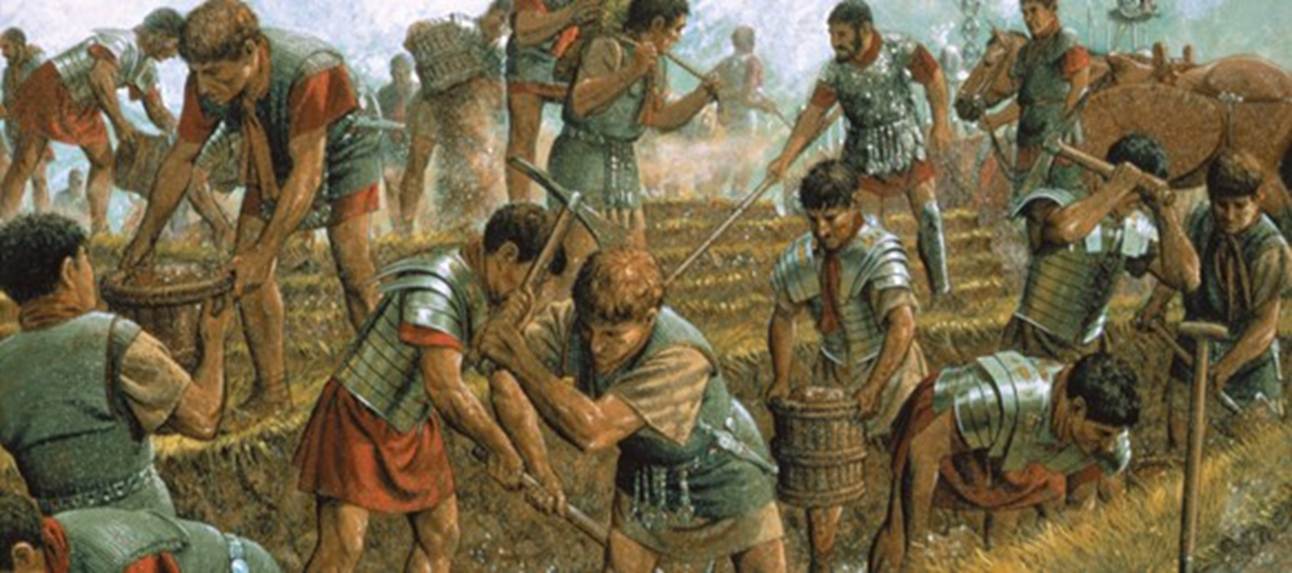

A large military camp was constructed by the Romans as Eboracum, modern day York, in about 71 CE.
Following the military invasion which
was carried forward by Agricola to the extreme north, came the Romanisation of
Yorkshire[14].
Agricola
was made consul and governor of Britannia in 77 CE. Domitian (81
to 96 CE), who succeeded Titus (79 to 81 CE), completed Agricola’s campaigns,
but was distracted by imperial interests elsewhere, so withdrew from the areas
furthest to the north, which would lead in time to the reconciliation of Roman
occupation to the wall which would later be fortified as Hadrian’s Wall.
Urban settlements grew around the
Roman fortifications at Eboracum and Malton. Eboracum in time became the Roman provincial
capital. The Emperors Hadrian, Septimius Severus, and Constantius I all held
court in Eboracum during their various campaigns. Constantine the Great
was proclaimed emperor there. To the south Roman urban settlements grew around
fortifications at Calcaria, Tadcaster, and Danum,
Doncaster.
Roman domination was absolute.
Tacitus’ imagined words of a defeated Caledonian commander, perhaps best
reflect the mastery of Rome over the subjugated. We, at the furthest limits
both of land and liberty, have been defended to this day by the remoteness of
our situation and of our fame. The extremity of Britain is now disclosed; and
whatever is unknown becomes an object of magnitude. But there is no nation
beyond us; nothing but waves and rocks, and the still more hostile Romans,
whose arrogance we cannot escape by obsequiousness and submission. These
plunderers of the world, after exhausting the land by their devastations, are
rifling the ocean: stimulated by avarice, if their enemy be rich; by ambition,
if poor; unsatiated by the East and by the West: the only people who behold
wealth and indigence with equal avidity. To ravage, to slaughter, to usurp
under false titles, they call empire; and where they make a desert, they call
it peace[15].
|
Roman Yorkshire (70 to 400 CE)
A chronology of
the history of Roman Yorkshire focused on York, Ryedale and the North York
Moors, with source material |
Scene 2 – Ancestral Lands
The
family ancestral lands of Kirkdaleland
After the shock and awe of the first century CE, the years
passed, and the lands of north east Britain settled into easy going provincial
domains, drawing on the benefits of international communications. The nightmare
years had passed. Urban settlement emerged where native folk could learn some
Latin, and take some part in local government.[16]
Urban settlements grew around the
Roman fortifications at Eboracum and Malton. Eboracum in time
became the Roman provincial capital. To the south Roman urban settlements grew
around fortifications at Calcaria, Tadcaster,
and Danum, Doncaster. A vicus was a civilian settlement that
developed outside a Roman fort, a mining operation, or other official site.
These settlements housed various people attracted by the military presence,
such as traders, craftspeople, and the families of soldiers, and were crucial
for supplying the garrison with goods and services. The economic success of a vicus
was directly linked to the fort.
It is now suggested that there was a less
marked division between the fort on the north side of the river and the
civilian settlement to the south and it may have been more fluid[17]. The
strategic siting of York had lasting effects on the subsequent history of
Yorkshire, as it became a pivotal point of the all important
northern road system when the conquest moved up country. York connected Ermine
Street, coming up from the south, with the most important forts: Calcaria (Tadcaster), Isurium Brigantium (Aldborough), Cataractonium
(Catterick) and, in time, all marching camps and forts established in the
Pennines right up to Hadrian’s Wall. Roads from York also went east, to Brindlington on the coast, and to Delgovicia
(probably Malton)[18].
Roman influence then stretched into the lands
around Eboracum. The dwelling sites creep down onto the sides of the
Vale of York, potters move onto low ground to live near their clay, into the
woods to live near their fuel. Following the Roman occupation comes rudimentary
industry; the roads tempt villages to ribbon development; farmsteads are built
in park land, or even in woodland clearings; minerals were exploited; and
recognisable towns spring up.
Above all, Yorkshire requires a capital; and a
capital distinguished by its unparalleled position as a road centre in the
plain. It is emphatically not a primitive citadel. Although the civil
development of Roman Yorkshire is a very modest thing compared to the full
blown Romanization of the south, it should be disassociated from the military
conditions of further north. The presence of the army undoubtedly provided a
stimulus and a system of this communication; but civil life in Yorkshire was
not dependent on the army in the sense that it was unsafe to live far from
military protection. It is too widely spread for that. The best known villas
lie all more than 10, and mostly over 20 miles from York. Although, in view of
recent discoveries, it is hazardous to argue that there are no military remains
on the wolds just because we can see none, still
Millington, Kilham, Grindall, Harpham, and Bishop Burton are at least 15 miles
away from any known military sites, while the band of small finds stretching
along the mouths of the dales, far from the forts in the interior, show that
there was civil life on the low ground to the west.[19]
The lands of Kirkdaleland are only
about twenty five kilometres north of the major Roman regional capital, Eboracum (York). Kirkdaleland was a peripheral
region, but with connections to the wider political world. During the Roman
period, Kirkdaleland was in the Roman hinterland. By the late Roman period,
Kirkdaleland was probably part of a stable, well regulated
area with dispersed settlement, probably dependent on major villa based estates
such as at Beadlam and Hovingham.
Eboracum would have become increasingly accessible from Kirkdaleland during the
Roman period, with the construction of new roads[20]. The significance of Ryedale was reinforced by the extensive Roman road
network. Thurkilesti was an ancient road from
Cleveland across the North York Moors which passed close to the west side of
Kirkdale and on to Welburn, just south of the Kirkdale ford and to Hovingham
where it later joined the Roman roads[21]. Wade’s
Causeway ran from Malton across Wheeldale Moor towards Whitby[22]. A Roman road ran from Malton to the Vale of York via the Coxwold and Gilling gap
where it joined Hambleton Street which stretched from Bernicia to Lincoln.
|
Isurium
Brigantum (Aldborough) The Roman Regional Capital of
the lands around Kirkdale |
|
A Roman Villa on palatial
scale just south of Kirkdale |
|
A Roman Villa only 2km from
Kirkdale in the heart of our ancestral lands |
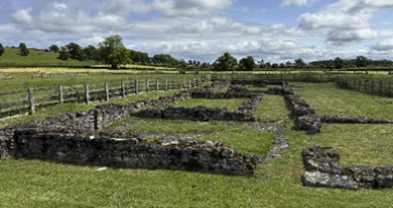
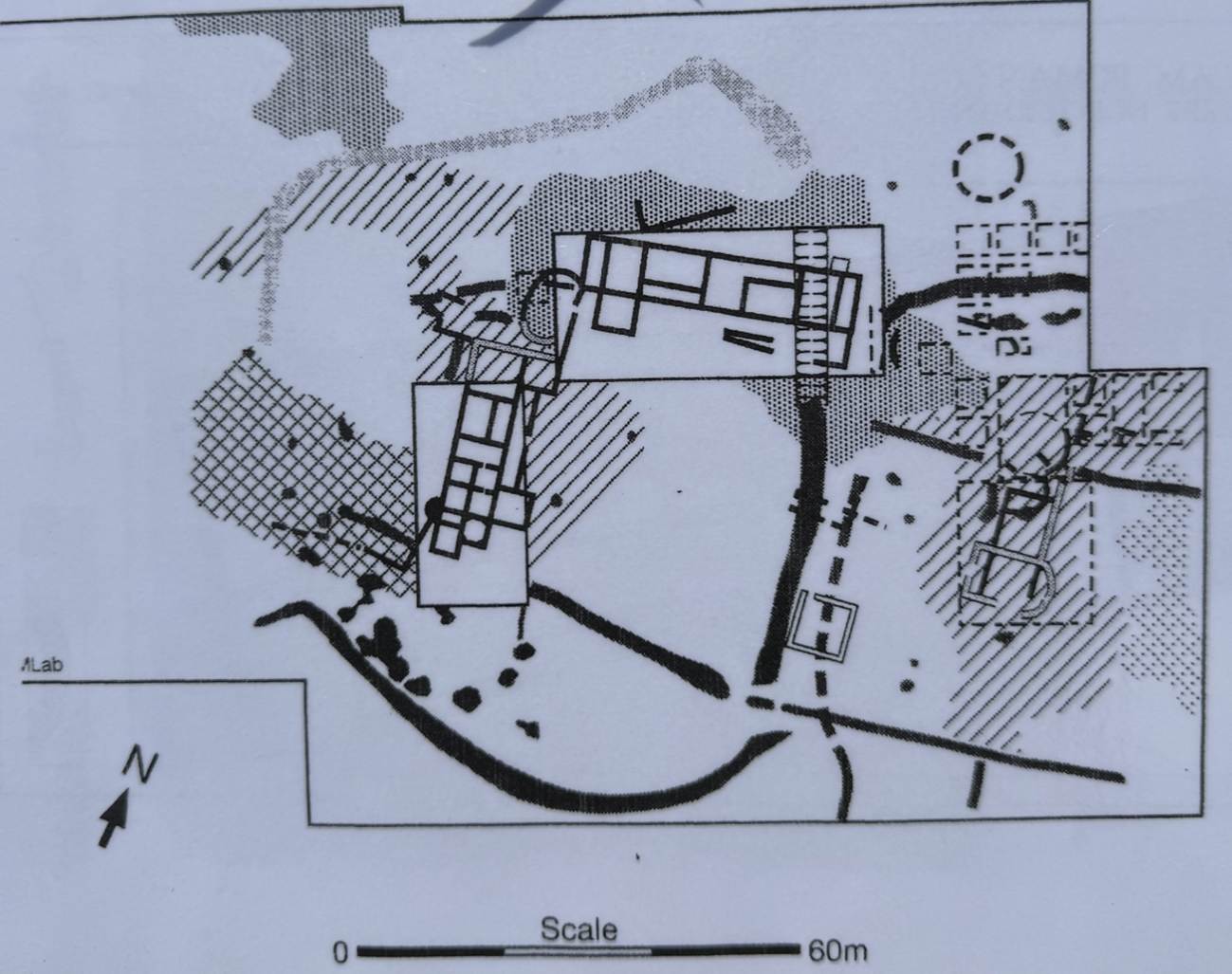
Only two kilometres
to the west of Kirkdale the Roman villa of Beadlam,
discovered in the 1960s, consisted of about thirty rooms, probably constructed
in about 300 CE and occupied until about 400 CE[23]. The northern range, the residential
villa, remains visible above the ground, and can be viewed by appointment with
English Heritage[24]. The west and east ranges were
reburied after the excavations.

The mosaic from the main residential range now housed in the Historic
Scotland Archaeological warehouse in Helmsley
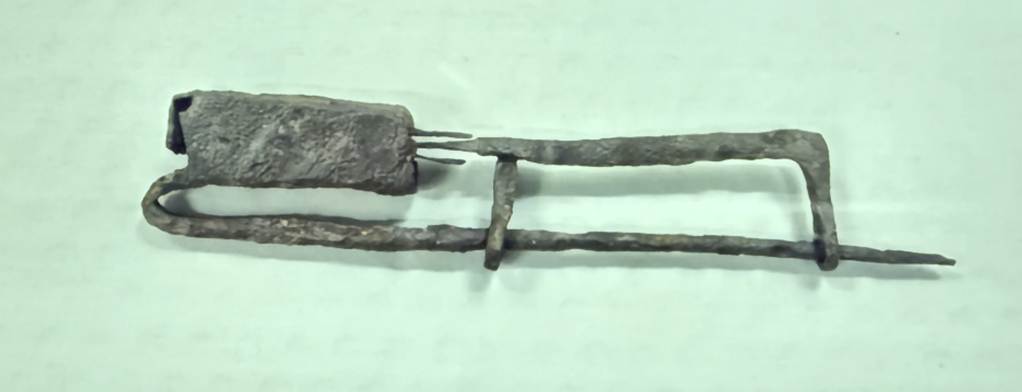
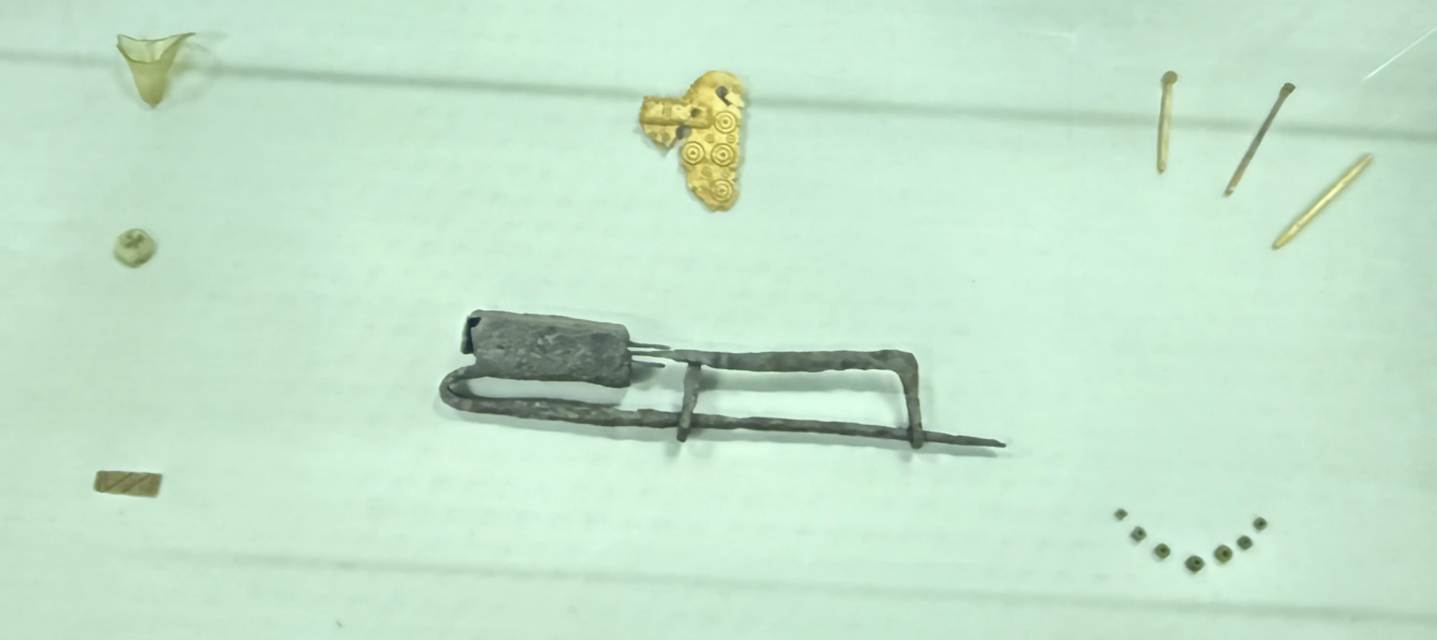

A padlock
suggesting the security of valuable items Artefacts from the villa
Part of a comb

Hypocaust
flue
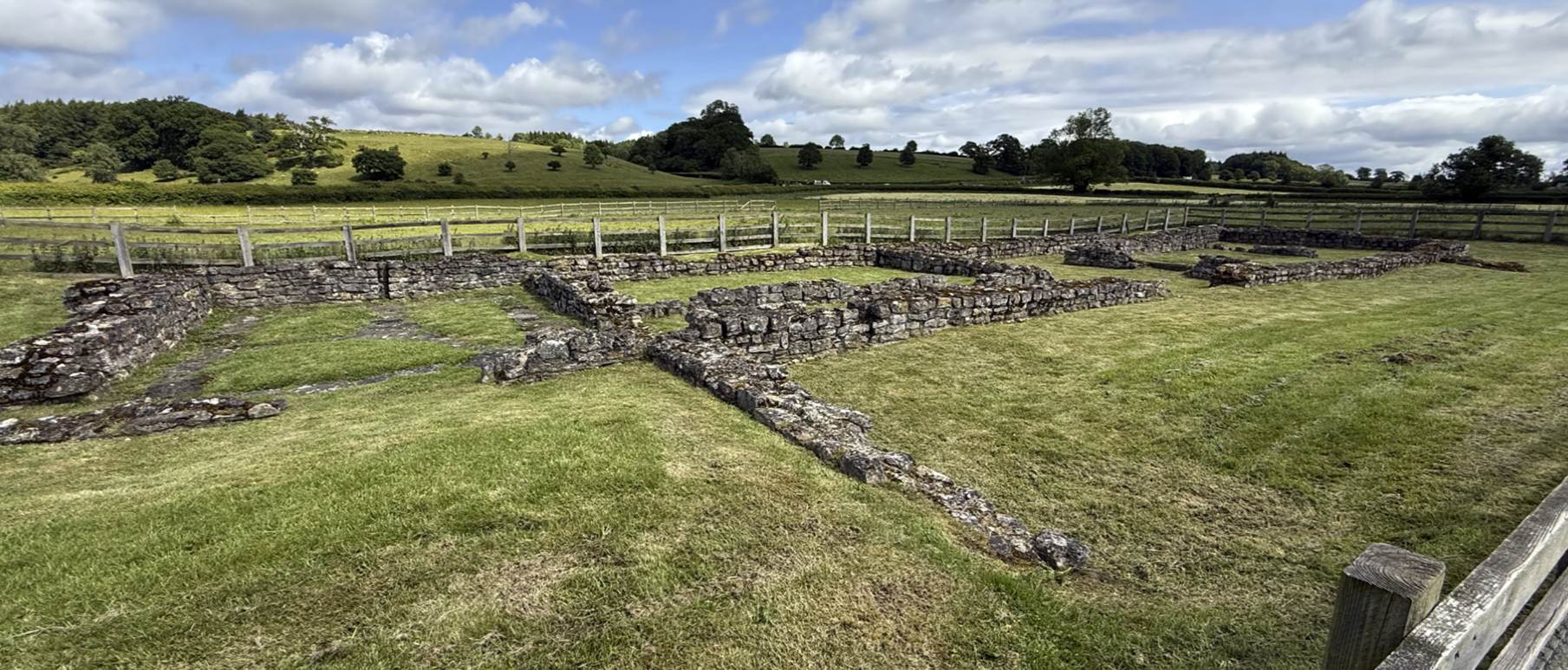

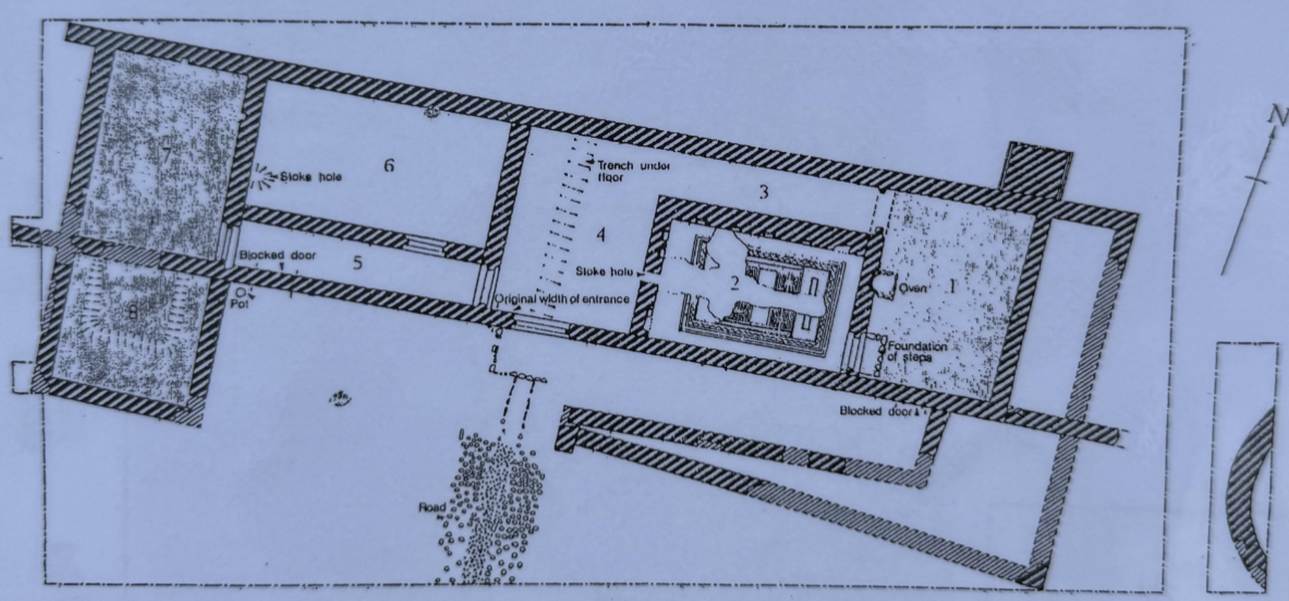
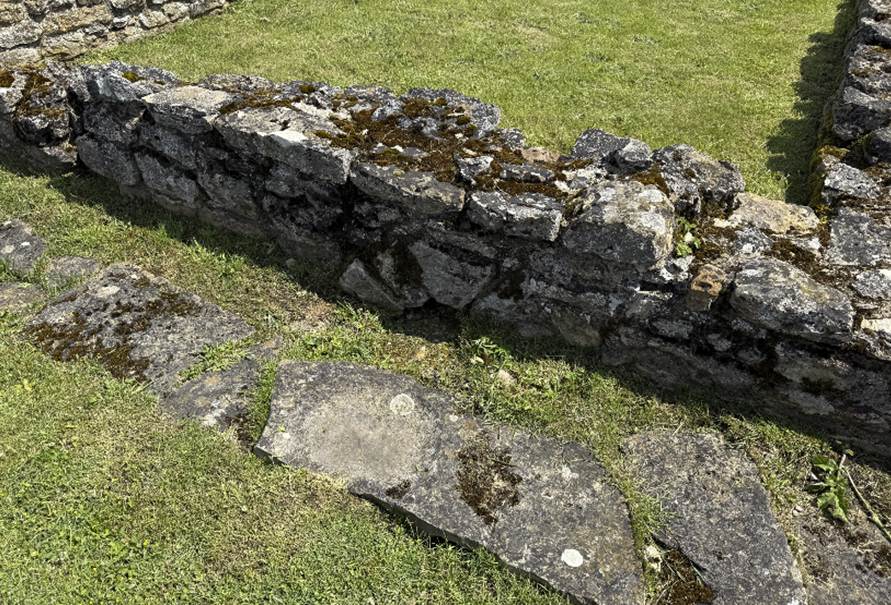

The main
villa building
Since the
excavation of the villa at Langton, it has been recognised that agricultural
pursuits were carried on in Roman times in those parts of the country which had
previously been described as the military, as opposed to the civil zone. Indeed
it is natural to find the production of cereal crops being carried on in
suitable areas near to the great military centres. Few villas in Yorkshire have
received full excavation; there are, however, sites where fragmentary remains
have been noticed at various times, which point more to a civil than to a
military occupation; it is now permissible to assume that these represent a
fairly widespread farming community, serving primarily the needs of the
garrison based on the legionary fortress at York.[25]

The fourth
century CE was a time when elite Romano Britains were investing in private
villas. An enclosure ditch and walled compounds for livestock pre-dated the
villa, which suggests the site was in use earlier.
Beadlam lay
within the region formerly controlled by the kingdom of the Brigantes.
After the Roman conquest, the region was administered from the newly built
Roman town of Isurium Brigantum, modern Aldborough, near Boroughbridge. Isurium was a strategic regional capital on the main
transport corridor of Dere Street and along that transport corridor to the
south was Calcaria, Tadcaster; Lagentium, Castleford; and Danum,
Doncaster.
|
The Roman Capital of northern
England where Constantine was proclaimed Emperor |
It’s possible
that any Roman presence at Kirkdale itself might have been related to a place
for the burial of the dead from Beadlam. Roman
villas were probably the centres of great estates, especially close to
Roman roads. They probably had contracts with the army. Some may have employed
slaves and although there is no evidence there may have been communities in
servitude in the north especially around Eboracum. The villas would have
produced food well above subsistence levels.
Hovingham was a Roman villa, perhaps on a palatial scale[26], about ten kilometres southwest from
Kirkdale. Hovingham might have had very extensive holdings, which could have
embraced a wider estate including Beadlam and Kirkdaleland. As well as Hovingham and Beadlam,
there are examples such as the winged and corridored
villa at Rudston in East Yorkshire[27],
with exhibits in Hull museum; Dalton Parlours villa[28], near
Collingham, West Yorkshire; and Holme House at the Tees[29]
crossing of Dere Street near Darlington. Although villas may have sometimes
been the residences of veterans, these Yorkshire villas were more likely to
have been native landowners, living and dining in the Roman way.
Villas at Appleton le Street, Blandsby Park and Langton indicate that
Ryedale was a major agricultural producer in the Roman period. The landscape of
the Vale of Pickering was likely to have been well settled. Agricultural
produce would have been required at significant scale to support the northern
Roman army.
In the Roman
period, the area around Kirkdale probably included a small number of dominant
settlements in this area of rural hinterland. The population would have been
within the military and administrative orbits of Roman interests.
The richer
inhabitants of the empire lived in villas with dozens of rooms, frescoed walls,
mosaic floors, indoor plumbing and underfloor heating. They drank imported wine
and worked with imported olive oil. They were often the heart of large estates
owned by the wealthy Romano British.
For much of
the population life was not so easy. The extreme wealth depended upon the
exploitation of the majority of the population. For every winner under Roman
rule there were a hundred losers[30]. Yet slavery was not new and had been part of Celtic society.
The Roman economy arguably brought wide benefits. Agricultural productivity was
improved by the introduction of a heavy plough that turned the soil replacing
an inferior model which simply scratched the surface. The population grew to
between 2 and 6 million. Roman towns had better sanitation, with drains and
sewers. Literacy became more widespread; at one time every soldier in the army
was literate, though the requirement was dropped in time. The empire and its
benefits seemed eternal.
Rome’s
First Economic Cycle
Although Britain was not a wealthy
province, an exceptionally large army was stationed there; over 40,000 men at
its height, costing about a sixteenth of the total imperial budget. Large sums
were spent by the imperial administrators. There was a vast outlay of state
funding. The volume of trade reached a level not seen for another millennium
and a half. British towns were smaller. London peaked at about 30,000 compared
to Rome’s million. Yet British towns still had the same amenities of grid
planned streets, aqueducts, baths, amphitheatres and forums. This in turn
created massive amounts of wealth.
This first economy could not be
sustained in the longer term. New threats on the Rhine and Danube and from
Pythia (Persia) caused a reduction in troop numbers over time. Coastal piracy
increasingly disrupted trade, including the Samian pottery trade from Gaul and
olive oil trade from Spain.
By 300 CE about two thirds of London’s
early buildings had decayed or been demolished. Yet urban life continued. York
followed the same pattern. Eboracum at its peak was both a military
garrison town and a cosmopolitan centre. Second century funerary inscriptions
evidenced individuals in York from France, Sardinia and Greece. Skeletons are
of North African origin. Goods flooded into York in the early third century,
but over time this trade declined, even though splendid houses and state
building projects continued.[31]
Rome’s Second Economic
Cycle
Rome’s first
economic cycle was followed by a second, smaller economy, based on private
wealth. As imports became scarce in the face of barbarian threats and piracy,
local goods started to take their place. Beer drinking replaced wine drinking
and very slowly British potters started to substitute for Samian wear. This was
a very different economy to before. A new provincial economy emerged, which in
turn gave rise to a wealthy and Romanicised elite. Whilst we don’t know the
name of any of the owners of villas of this period, this new elite class lived
in large villas and took opulent houses in the towns, even though the towns
were in decline. It was these private spaces that came to dominate the new
social structure.
The new
Roman-native oligarchy saw deep social stratification along with phenomenal
prosperity. Villas developed large entertainment rooms to impress friends and
allies. Lavish private display allowed the elite to flaunt lovely wall
paintings and tendered gardens. This was an unequal society. An archaeological
site near Dorchester at Poundbury led
to the excavation of about 1,200 fourth century Britons. Despite the prosperity
evidenced by villas, many of these skeletons showed signs of hard physical
labour, with injuries caused by wear and strain and spines and shoulders
evidencing heavy work.
The economy
shifted from the core to the periphery. Alongside the older urban centres,
smaller and less pretentious smaller towns emerged. They were grubbier
manifestations of empire and housed workshops, manufacturing and extractive
industry.
Agriculture
saw a simultaneous revolution and estate owners invested significantly in their
rural properties. This was a period of the reorganisation of rural buildings,
enclosures and fields. Coins and mass produced ceramics appeared in rural
villas in greater quantities than previously. There was a shift in cropping
techniques. Cereals including the Roman staple spelt were more
intensively farmed. Bread wheat first appeared. Larger plough beasts were
imported to pull heavier ploughs. There was a proliferation of barns and
granaries.
The period
between about 290 to 360 CE saw the high water mark of romanitas in
Britain. It was the most Roman period of British history. Most people had
access to Roman style goods. Although there were local variations across the
empire, there was a common Roman culture from North Africa to York.
This
prosperity was founded on the ability of a substantial part of the population
to purchase and sell large amounts of often low value goods. [32]
Into the Second Century CE
In about 120 CE, the Ninth Legion was replaced in York by the
Sixth Legion, and both the fort and the civilian settlement were rebuilt in
stone. The Sixth Legion was largely
involved in building Hadrian’s Wall.
Emperor Hadrian, who was of Spanish origin, visited the settlement
at Eboracum during his journey to build his border wall. Men from York’s
Sixth Legion built Hadrian’s Wall to separate the Romans from the barbarians.
At its height a massive force was stationed on the wall, perhaps 50,000 men,
then about 10% of the imperial army. Hadrian’s
Wall was begun in 122 CE and its length was 117 kilometres. Soldiers were
garrisoned along the line of the wall in large forts, smaller milecastles, and
intervening turrets. In addition to the wall's defensive military role, its
gates may have been customs posts.
Septimius
Severus
In 208 Severus himself arrived in Britain with
his two sons, Caracalla and Geta, in order to prosecute more vigorously the
campaigns against the northern tribes (and also, we may guess, to make a final
decision about the northern frontier). They remained until the death of Severus
at York in February 211, when his sons returned to Rome. The record of an
imperial palace at York, if it is to be believed, suggests that this was
probably the headquarters for the campaigns in Scotland, though both Corbridge and
South Shields were important as supply-bases. In these circumstances it would
scarcely be surprising if the neglected fortress at York had its defences
refurbished on the arrival of the emperors or, even more probably, in
preparation for their visit. There is no real indication that there was a plan
to re-occupy Scotland before 208, and if Caerleon was being rebuilt by 209, as
seems likely, it would be logical to expect similar activity at York. [33]
For the
African Emperor whose interests stretched from North Africa and Parthia to
bring the imperial court to Britain must have been caused by a significant
event. It seems probable that it was preceded by difficulties defending the
line of Hadrian’s Wall and possibly even a string of Roman defeats. That in
turn might have arisen from a depletion in Roman army strength in recent years.
Septimius Severus had defeated his rival Decimus Clodius Albinus at the Battle
of Lugdonum (Lyon) in 197 CE when Albinus, as
Governor of Britian, had mobilised the British legions in an attempt to seize
the empire[34]. It may be that the Roman military
strength in Britain had not been replenished in the intervening period. This
may also have been a period of early coastal raiding, which later led to the
construction of the first Roman coastal signal stations.
Emperor Septimius Severus, who was of Libyan origin, arrived in Eboracum
with a very large retinue of civil servants and soldiers, including the
Praetorian Guard, as a base for his campaigns against the Caledonians to the
north. Whilst we know Severus was in York and died there, this did not
necessarily mean that he had established an imperial presence and built a
palace. Yet he took his court and the imperial family, his wife Julia Domna and
his sons Caracalla and Geta. Fragments of about 50 head pots have been found in
York, perhaps modelled on the glamorous Julia Domna. The focus of the Roman
Empire must have been on York at this time.
From Eboracum, the warrior emperor who had built his
reputation in his Pythian and North African campaigns, and rushed to Britain to
quash rebellion there, planned a campaign to strengthen Hadrian’s Wall and to
invade Caledonia. With a force of 57,000 soldiers, he marched north and
established forward camps at Cramond near Edinburgh and beyond. His ruthless
campaign of 209 CE was followed by a genocidal campaign in 210 CE.[35]
During his stay 208 to 211 CE, the Emperor Severus (reigned 193 to
211 CE) proclaimed York capital of the province of Britannia Inferior (‘the
lower’), and it is likely that it was he who granted York the privileges of a colonia
or city.
A Severan Coin was found near Helmsley[36].
Severus died in York in February 211 CE
and Caracalla and Geta became co-emperors. On Severus’ death the idea of a
northern conquest was dropped and the army fell back to Hadrian’s Wall. After a
bloody succession squabble in Rome, Caracalla had Geta killed and reigned from
211 to 217 CE.
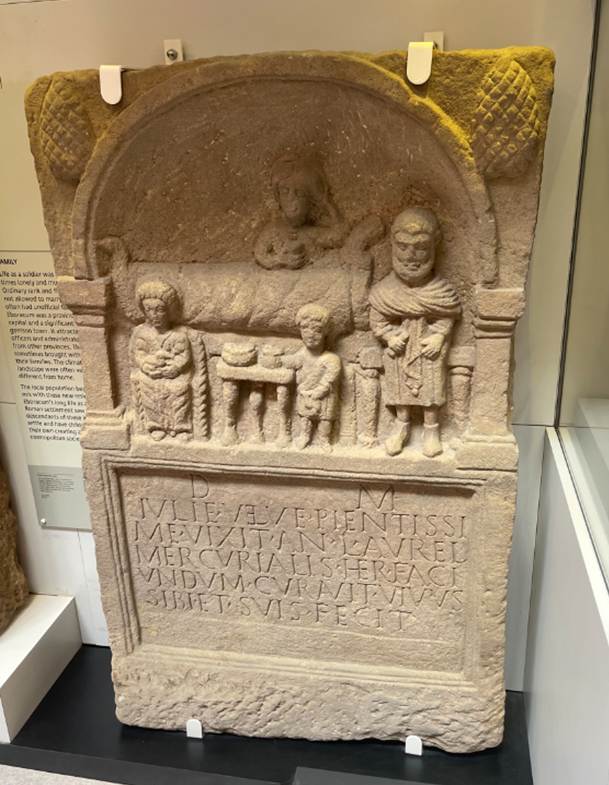
Tombstone (200 to 300 CE) of Julia Velva.
Her heir Aurelius Mercurialis would gather at the tomb on the anniversary of
her death and would have believed she could take part[37].
A Roman
Port Key
Frank Elgee’s hypothesis was that Bronze Age habitation of the
moors above Farndale had created a sterile environment by the Roman period
which would not have been voluntarily settled, so that area was then abandoned[38]. It is also likely that early Neolithic and Bronze Age settlement
of the moors was during a period when the lowlands were swampy and flooded, but
by the later Bronze Age, the agricultural plains of the Vale of Pickering and
York became a more attractive place for settlement. By Roman times, much of the
extent of the moors was likely to have been wild and deserted, providing
relatively easy routes for long distance travel, but not for extensive
settlement. Soldiers or travellers used paths to travel across the moors.
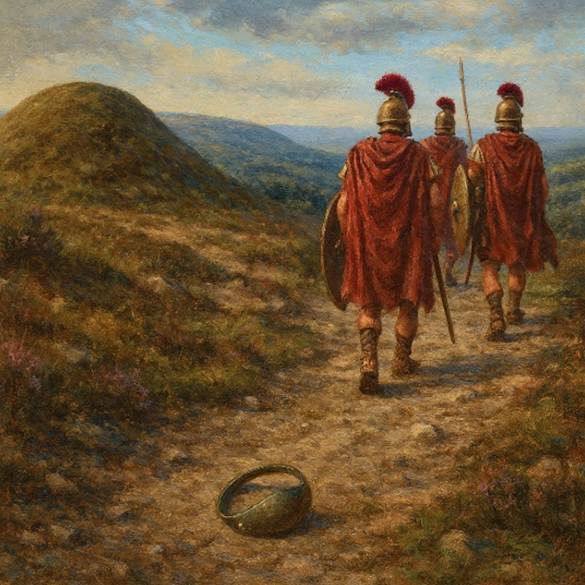
One day in
the second or third century CE, a Roman soldier dropped his arm purse, close to
a prehistoric cairn, above and overlooking Farndale.
It was later found in 1849 and is currently to be seen displayed in the British
Museum[39]. When the Roman looked over Farndale
it remained a wild forested place.
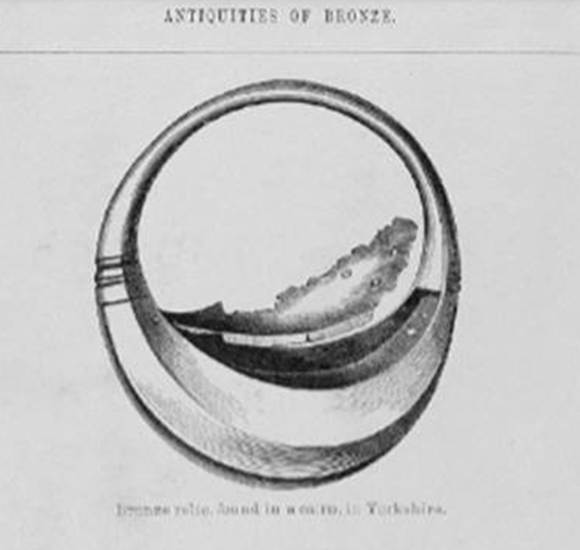
An
interesting find was made in the neighbourhood in 1849 by a labourer engaged in
removing stones for walling from a cairn on the moor to the west of the dale.
He found near the bottom of the cairn a bronze arm purse with a corroded lid.
The spring or bolt were lost, but the adjustment holes remained. The purse
contained nothing but a sort of decayed paper ash. Examples of these purses
have been found near the Roman wall containing Roman coins of the 1st century
AD. The Farndale specimen, now in the British Museum, may have been lost from a
Roman villa or, perhaps more likely, it was the treasured possession of a local
whose ashes were placed in it and buried in the can. No dwelling of these early
days has yet been found on Horn Nab, though three trial trenches were dug in
likely places.[40]
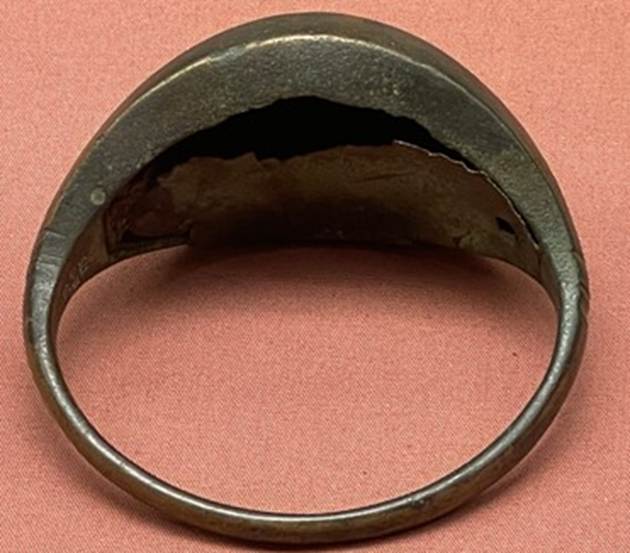
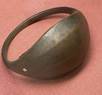
The Roman
arm purse was probably found in the cairn on Horn Nab. Roman copper alloy arm-purses were worn by soldiers. British examples
include finds from Corbridge, South Shields, a site near Housesteads
on Hadrian’s Wall, Colchester, and this one found at Farndale. As it was found
above Farndale, it doesn’t evidence Roman activity within the dale, but it does
suggest patrolling or civilian activity across high moorland tracks,
overlooking the dale. Go and see this purse in the British Museum and you’ll be
in direct contact with the land of our ancestors, two millennia ago.
|
A Roman
arm purse which can be seen in the British Museum in London today, found in
about the second century CE by a cairn overlooking Farndale, which will
transport you back 2,000 years |
Raymond Hayes suggested the only other
Roman artefact from the vicinity of Farndale was a single coin of Antonius
Pius, AD 139, found in Douthwaite at the Lowna end of
the dale.[41]
Yet Raymond Hayes also reported on the find of a Romano-British glass bangle at Stony Rigg, north of Farndale[42]. On lower ground to the south, close to the entrance to Farndale, between Hutton-le-Hole and Spaunton and Lastingham, Roman remains suggest that Romano-British people were living in a clearing between tracts of forest and moorland, on a settlement site which may have been occupied in Neolithic through to Iron Age periods[43]. Roman coins from Skiplam were kept at Welburn Hall[44]. It was believed that the nearby Roman military fortification at Cawthorn[45] was built for practice rather than for operational military use, although no evidence exists to prove that the forts were simply practice works and the scale of the remains alone would tend to disprove this. The camps date to the late first or early second century CE.
Three
Romano-British sites have been discovered in the vicinity of Kildale at Pale
End, Lonsdale Valley, and Crag Bank, the largest concentration of
Romano-British settlements on the North York Moors. Kildale was an important
location on the eastern route into the Esk valley.
The location was sheltered and a good place for cultivation in the lower ground
of the dale. There is evidence that during the Roman period the indigenous
population were able to move from the increasingly unfertile slopes down into
the more fertile lower ground. In Romano-British and later times the farmers
were obliged to clear and till the lower ground because the uplands had become
of little agricultural value.[46]
Third
Century CE
Marcus Antonius Gordianus, who would later become the short lived
emperor Gordian I, served as the governor of Britannia Inferior, based
in Eboracum. Inscriptions found in Concangis
(Chester-le-Street), dated to 216 AD, bear his name
and provide epigraphic evidence of his governorship, and also his involvement
in the construction of a bath-house and aqueduct. Some inscriptions from his
time as governor were later erased, suggesting some form of imperial
displeasure after he left the post.
The Roman Anarchy, or the Crisis of the Third Century
(235 to 284 CE), was a period of near collapse of the Roman Empire caused by
civil wars, foreign invasions, economic depression, and political instability.
This era of soldier emperors saw military leaders seize power through
force, which led to constant warfare and the Roman Empire split into three
competing entities: the main Roman Empire, the Gallic Empire, and the Palmyrene
Empire. The impact must have been felt in Roman Yorkshire. By the mid third century
raiders began to attack Britain’s southern and eastern coasts from Germania,
a catch all at this stage for the region beyond the Roman empire. Although army
numbers were reduced there was investment in physical defences as a string of
fortresses were built along the eastern and southern coasts. By the 270s CE,
emperors began to treat the provinces of Britannia and Gaul as their own
personal empire, referred to as the Gallic Empire. The Roman Empire might have
split apart at that stage.
The Roman Anarchy ended with the rise of Diocletian in 284 CE, who
restored order and implemented reforms.
Yet life in towns and cities went on much as before and new villas
continued to be built. By the third century CE, whilst the bulk of the rural
population continued to speak Celtic tongues, a new often urban nobility had
emerged, speaking and writing in Latin. Once educated they could find careers
in urban government as curiales (councillors)
and inhabit houses with engineered water supplies not seen again after the
empire ended until the nineteenth century. The Four Seasons mosaic at the
Yorkshire museum was laid down in about 268 CE[47].
Well into the early fourth century, the empire in Britain seemed everlasting.
Some of the grandest villas were built in the early fourth century.
The network of forts were built by legionaries but staffed by
auxiliary troops. Caracalla had granted full citizenship to everyone within the
boundaries of the Roman empire, possibly as a means to spread the tax net. The
nature and status of auxiliaries was therefore changing from when forts were
first built.
Derventio
(Malton) was the largest fort in the area of Yorkshire outside Eboracum.
It was defended through the second and third centuries with no period of
abandonment. In the mid second century it significantly expanded. There was
substantial manufacture of metal and pottery work. There was a large vicus
and a town house[48].
There was an inscribed building stone from a goldsmith.
Cataractonium
(Catterick)[49]
on Dere Street on the River Swale was one of the most enduring Roman
settlements. It seems to have been regarrisoned and rebuilt as the frontier
became less predictable. There was a substantial mansio,
or large residential building, possibly with ornate gardens. It was one of the
most substantial forts in Yorkshire.
In rural areas, archaeological sites have tended to focus around
known Roman roads, but other sites probably spread more widely. Many
settlements would have started as round houses and in third to fourth
centuries, Roman architecture appeared.
Carausius, a Menapian from Belgic Gaul,
was a skilled sailor who rose to command the Classis Britannica, the
Roman Channel fleet, tasked with eliminating Frankish and Saxon pirates. In 286
CE, he declared himself emperor of a breakaway Britannic Empire,
encompassing Britain and parts of northern Gaul, which he ruled for seven
years. His usurpation is known as the Carausian
Revolt (286 to 296 CE). He fell in league with the pirates and ran his
Britannic Empire as a pirate kingdom.
By 286 CE the Roman empire was so vast that it was split into two
(the Diarchy, which lasted from 285 to 293 CE) and with a couple of exceptions
there were always two emperors, with two separate armies. The western empire
comprised Italy, Spain, Gaul and Britain. The eastern empire comprised the
Balkans, Greece, Palestine and Egypt. It became advantageous to begin
succession planning during an emperor’s lifetime and the practice began of the
Emperors of each of the western and eastern empires, to carve out a junior
territory, ruled by junior emperors marked for succession. The two empires
therefore further divided to the territories of four rulers (the Tetrarchy, 293
to 305 CE). The senior emperors tended to style themselves Augustus, and
the junior emperors as Caesar. In the west, Marcus Aurelius Valerius
Maximianus (Maximian, ‘Augustus’), who had been Diocletian’s subordinate
emperor, appointed Constantius I Chlorus (‘Caesar’), as his junior emperor
based in Eboracum. Diocletian was Augustus and Galerius was Caesar
in the east.
By about 300 CE the force on Hadrian’s Wall had been reduced to
about a third of its peak. This had a wider impact across Britain where public
buildings and monuments fell into disrepair. London’s population plummeted in
this period.
Constantine
Constantius I Chlorus, who was of Serbian origin, was
junior emperor or Caesar in the west to Marcus Aurelius Valerius
Maximianus, his Augustus. He had control as Caesar over Britannia
and parts of Gaul. He may have visited Eboracum a number of times during
his reign as Caesar. In 305 CE Maximianus and Diocletian suddenly abdicated,
within three days of each other, which must have been a coordinated plan. It
was an unprecedented event. Diocletian, who was severely ill, was the driving
force behind the dual abdication, aiming to set a precedent for non-violent,
planned succession. It was expected that as Constantius rose to be Augustus,
the senior emperor of the western Roman empire; his son Constantine would be Caesar,
the junior emperor. However Constantine was passed over, and two henchmen of
Galerius, the eastern emperor, were made Caesars instead. This seems to
have been a political move by the eastern empire.
However Constantius had already called for Constantine
to join him in Britannia. There seem to have been continued problems in
northern Britannia because of Pictish raiding, which
explains Constantius’ presence there. Constantine managed to get to his father
from Greece, to reach Eboracum just in time. We don’t know for certain
that the following events happened in Eboracum, but they probably did.
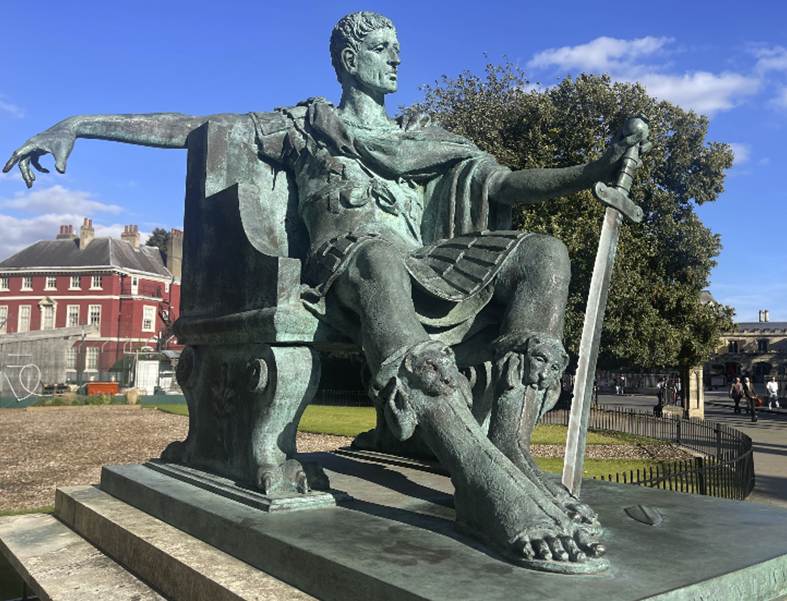
As
Constantine arrived, Constantius died on
25 July 306 CE. Constantius Chlorus became the second emperor
to die in York. Although
Constantine had been passed over, his father’s troops proclaimed him as emperor
there and then, also on 25 July 306 CE, immediately following the death of his
father, and not as Caesar under the Tetrarchy system, but as a full
emperor, Augustus of the western empire. Constantine, who reigned from
306 to 337 CE, was hailed as Imperator and Augustus, an act of
military acclamation. The soldiers who made the proclamation were probably the
soldiers of the 6th Legion, but probably also including auxiliaries, possibly
and surprisingly including German mercenaries who may have served with
Constantine’s father. The proclamation may have been within the walls of the
fortress at Eboracum, perhaps within the basilica, or
headquarters building, though there is no direct evidence of that.

Whilst
there is no direct evidence of the proclamation of Constantine in York, there
is evidence that it was the legion in York and other troops in the north who
declared for Constantine.

The eastern emperor Galerius refused to recognise
Constantine as Augustus but recognised the lesser title of Caesar
of the western empire, which Constantine initially accepted. He spent the
following years consolidating his power in Britain, Gaul, and Spain, and
engaged in a series of civil wars with his rivals within the Tetrarchy. Constantine
would have a profound impact on the city of York, the path of Britannia,
and on global politics.
Galerius had been a key instigator of the Diocletianic Persecution of Christians in 303 CE. A pivotal
moment came in 312 CE when Constantine defeated Maxentius near Rome at the Battle
at the Milvian Bridge, a victory he attributed to the Christian God after a
reported divine vision. There is a story of vision in the sky of a Christian
symbol, which he told his troops to paint as a sign onto their shields. This
may have been part of a political move to consolidate the empire under his
control. It was a political strategy that gave him significant power and
legitimacy. Many historians argue that it was a calculated move to unify the
Roman Empire under a single, powerful religion, using the support of a growing
Christian population to cement his authority. He was a ruthless commander and
emperor. While he was only baptised on his deathbed, his reign initiated the
evolution of the empire into a Christian state and pushed Christianity into the
mainstream of Roman culture. He elevated the status of Christianity throughout
the Roman world.
In 313 CE Constantine and Licinius issued the Edict of
Milan, which decreed official tolerance for Christianity throughout the empire,
ending state-sponsored persecution and restoring confiscated church property.
A religious hierarchy was created that could support Roman
administration.
In 314 CE, after Constantine had gained control over
Rome, a Council of the Church was held in Arles[50], and there was reference to the attendance of Eborius, Bishop of Eboracum[51]. This evidences that there was a bishop and church in
York by the early fourth century CE. Besides this written record, there is no
written evidence of Christianity in Britain until the time of Bede. The Council at Arles was called to resolve
a dispute about the church in North Africa and also referred to the presence of
Restitutus of London and Adelfius
of Lincoln or Colchester.
In York, there is very limited evidence of Roman
Christianity. Indeed there is only fragmentary evidence of Christianity in
northern Britain during the Roman period. A roof tile, tegula, found
under York minster, with the Roman Christian Chi-Rho symbol, from fourth
century York is one of the earliest known examples of the Chi-Rho symbol
being used, potentially predating the official acceptance of Christianity in
the Roman Empire. There is an example of a possible, though debated, Christian
burial identified under Sycamore Terrace in York. The Ivory Bangle Lady’s
burial is dated to the late Roman period. The evidence for possible Christian
belief comes from an openwork mount found in her stone coffin that reads Hail,
sister, may you live in God, and the tentative link to Christianity rests
on the reference to a single God[52].
Constantine eventually defeated his last
remaining co-emperor, Licinius, in 324 CE, becoming the sole ruler of the
entire Roman Empire. Constantine convened and presided over the first
ecumenical council of Christian bishops at Nicaea in 325 CE. This council
produced the Nicene Creed, a foundational statement of Christian belief
intended to unify the differing doctrinal views within the Church. In 330 CE
Constantine built a new imperial residence in the East centred on a New Rome
which came to be called Constantinople and later Byzantium.
Scene 3 – The End of Empire
Breakup
During the
fourth century the empire faced a new threat from the warlike Picts[53] in the north. At first this amounted to no more than the odd
incursion. In 343 CE, after repeated repairs to Hadrian’s Wall, the emperor
Constans led an expeditionary force to confront the Picts.
However the
problems which had started to beset the Roman empire were not primarily
problems amongst the Roman-British population. By this time the folk of Britain
had been lapping up the benefits of the Roman empire. New threats came from the
east, which necessitated a deflection of Roman defensive effort from Hadrian’s
wall to a new chain of Saxon shore forts, constructed along the southern
shorelines during the time of the military commander, Marcus Aurelius Mausaeus
Carausius. The eastern threat deflected Roman legions away from Britain at a
time when barbarian raiders threatened Britain itself and penetrated the Roman
lines of defence.[54]
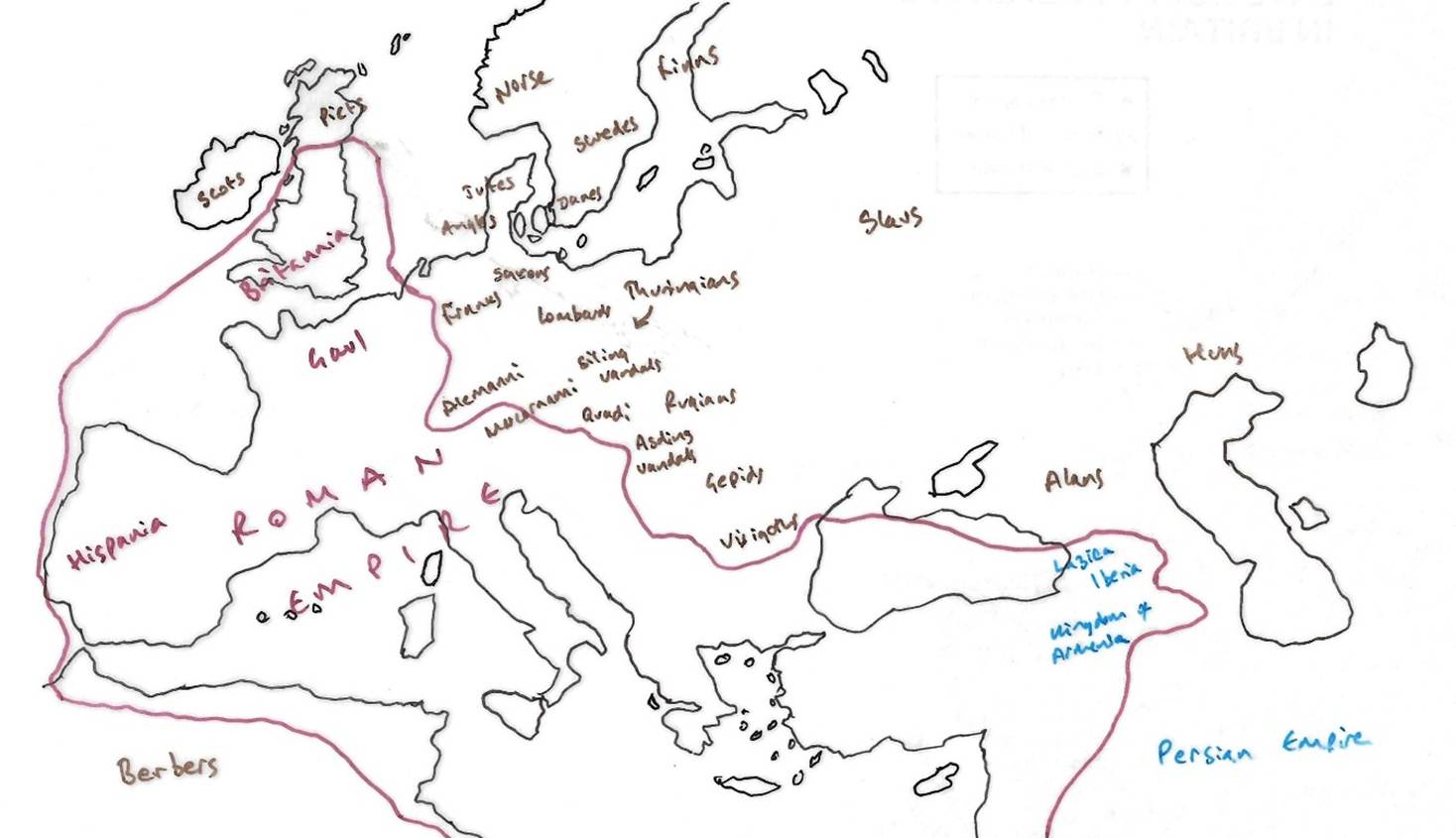
By the 360s
CE there was an increasing threat to Britain from the Scots and Atacoti of Ireland, a Germanic tribe originally from
the Rhine area. The Scots come from Ireland, in future to settle in
Scotland giving their name to the northern lands of mainland Britain. So these
must have been seaborne raids, crossing from Ireland.

From the 360s
CE the economy of the Romano British elite faltered and in time collapsed. The
principal rooms of villas across the country were showing signs of decline from
the 360s. Grand dinner parties were disappearing. Smaller estates failed first,
then larger ones. The organised industry started to fail. In York the front of
buildings started to encroach onto public roads, which would not have been
permitted by earlier civic authorities.
In 367 CE
during the reign of Emperor Valentinian I (364–375 CE) there was a coordinated
attack, a barbarian conspiracy, from the Saxons and Franks across the
North Sea; the Picti, the painted
people, from Scotland; and the Gaelic Dál Riata or Scotii from Hibernia, Ireland. Villas were
burned. Towns were cut off. There was widespread looting. A number of
commanders were killed or captured including the Comes Nectaridus,
commander of the Saxon Shore, who was killed, and the Dux Britanniarum Fullofaudes who
was captured. The Roman military structure in Britain temporarily collapsed,
with some soldiers deserting. The countryside fell into anarchy with widespread
looting.
There was an
army mutiny in the face of increased threats to the empire. Order was restored
by a force from the Continent, but Britain never really recovered from this
crisis.
Alarmed by
the near loss of Britain, Valentinian, who was campaigning against the Alamanni
in Gaul, dispatched a series of generals to stabilise the situation. The initial
attempts by Severus and Jovinus were ineffective, prompting Valentinian to
appoint the highly capable general Theodosius, later known as Count Theodosius
and father of the future emperor, to the command in 368 CE.
The
archaeological evidence of these raids is limited. It was thought that there
was evidence of raiding destruction around Malton with extensive abandonment in
the late fourth century, but it is now believed this might simply be evidence
of more gradual abandonment.
However at Traprain Law, East Lothian, there are significant finds of Pictish activity. The treasure trove found there is
likely to be tribute paid by the Romans or booty from a raid on Lowland
Britannia[55]. There is an example of a Chi Roh
monogram, so the hoard includes some Christian evidence. The hoard, buried into
the side of the hill also includes Germanic war gear, including Germanic
buckles and strap ends, which suggests that by the late fourth or early fifth
century Germanic mercenaries were engaged with the Roman army, their war gear
being taken in battle by the Picts, or perhaps that some were mercenaries
working with the Picts. Indeed we know that the troops who had proclaimed
Constantine as emperor in 306 CE included Germanic soldiers.
In other
words by the mid fourth century, Germanic people were regularly travelling to
Britain to serve as mercenaries. The indication is that the threat to northern
Britain came from the Picts and Scots, not, at least in the
fourth century CE, from Germanic invaders. The Picts were likely to have
been raiding down the east coast as well, which may explain the extensive
coastal fortifications.
The coastal fortifications on the Saxon shore were enhanced and
defensive coastal forts and signal stations were constructed along the
Yorkshire coast at Flamborough (fourth century CE)[56],
Filey (late fourth century CE)[57],
Scarborough[58],
Ravenscar (constructed about 370 CE)[59],
Whitby (Dictium)(late fourth century CE)[60],
Goldsborough (late fourth century CE)[61],
and Huntscliff (constructed about 367 CE)[62].
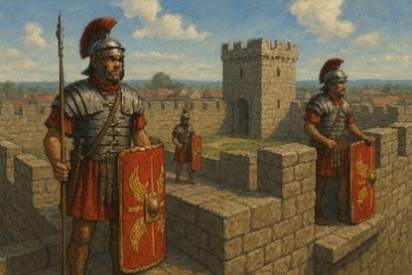
The towers of the signal stations are thought to have been
eighteen metres tall from the archaeology. An inscription at Ravenscar is a
commemoration of the construction of the camp and tower and there is reference
to the commander of the tower and soldiers tasked with interception. The system
seems to have operated like Hadrian’s wall with signal stations providing early
warning to rapid reaction forces, a more efficient use of resource. The signal
stations were probably able to withstand a fair bit of attack themselves until
the signal had been given. It was previously assumed that the signal was made
by the lighting of beacons, but such a system might have been unreliable along
a coast with frequent mists. It may be that after a sighting, the stations sent
a swift mounted messenger.

Other signal stations not yet found, or fallen
with coastal erosion into the sea, may have spread south to the Humber and also
further to the north.
There is also evidence of signal stations across the moors through
the Pennines along the Staymore Road, such as the
Bowes Moor Signal Station, keeping communication routes alive[63].
By 375 CE the occupation of villas had
declined by a third, suggesting that the wealthier classes were hard hit by the
new barbarian threats. The nomadic Huns from central Asia posed a threat to the
wider Roman empire, a wild race, moving without encumbrances, and consumed
by a savage passion to pillage the property of others[64].
In 376 CE, a
large number of Goths, a settled people of the eastern Roman frontier, who were
fleeing the Huns, requested entry into the Roman Empire. They were given refuge
in imperial territory, but Roman officials mistreated the Goths, stealing from
them. The Visigoths were the Germanic people who emerged from the Gothic
tribes in the Balkans and moved into the Roman Empire.
Tensions led
to a full scale battle at Adrianople when two thirds of the eastern Roman army,
about 10,000 men, were killed along with the eastern emperor Valens. The loss
of the army at Adrianople severely weakened Roman military strength and
manpower.
Western
troops were sent eastwards to fill gaps in the eastern defences. Grain was
shipped from Britain to feed imperial troops. The draining of resource away
from Britain was relentless and substantial.
Theodosius I
then allowed the larger scale settlement of the Goths within the empire's
borders, and many were conscripted into the Roman army. This created a large,
powerful, and often unreliable barbarian element within the military. One
Gothic survivor, who survived these years but felt embittered toward Rome, was
Alaric.
In 383 CE
the Roman army in Britain revolted and the Spanish military commander of Britain,
Magnus Maximus became leader of a breakaway western empire at Trier. He lasted
five years but was defeated by the eastern emperor Theodosius. Maximus took
many soldiers from Britain to fight with him on the Continent. The Roman
military force in Britain was being depleted and reposted to the Continental
theatre of operations.
Theodosius I
had been Western Roman Emperor since 379 CE, through the Gothic War and ruled
the Eastern and Western Empires for three years, but died in 395 CE dividing
the empire again. His son Arcadius succeeded him in the Eastern Empire, and
Honorius in the Western Empire. Honorius (393 to 423 CE) was Western Roman
Emperor, initially as Caesar, but as Augustus from 395 CE, during
the final period of chaos, barbarian invasions, and political instability,
culminating in the Sack of Rome by Visigoths in 410 CE. Initially a child
emperor, he relied on powerful regents like Flavius Stilicho, a powerful
Vandal-Roman general and de facto ruler of the Western Roman Empire
between 395 and 408 CE, serving as regent for Emperor Honorius. He successfully
defended Italy against barbarian invasions, defeating Gothic leader Alaric, but
his Vandal heritage and ambition led to accusations of treason, culminating in
his execution in 408 CE, which hastened Rome's decline and led directly to the
Visigoths' sack of the city two years later. His execution in 408 CE triggered
further crises, including massive incursions by Germanic tribes across the
Rhine and Danube frontiers and the final abandonment of Britain.
It is
difficult to reconstruct the state of Eboracum at the end of the fourth
century. The road inside the walls, the intervallum,
was being repaved and refurbished at end of fourth century, but not to the same
quality. The Via Principalis and Via Praetoria were similarly
repaired during this late period. Sections previously full of barrack blocks
had become open spaces, which suggests a reduction in the size of the garrison.
Even if there was still reference to the 6th Legion, it may not have been of
its former size and quality. The walls were probably falling into disrepair and
there is evidence of hasty repair work. The multangular tower and the bulky
towers along the walls would have been difficult to maintain, with constant
masonry work required. The so called ‘Anglian’ Tower is probably misnamed and
dates to the late stage of Roman occupation and the archaeology reveals the
likely repair of a previously collapsed tower.
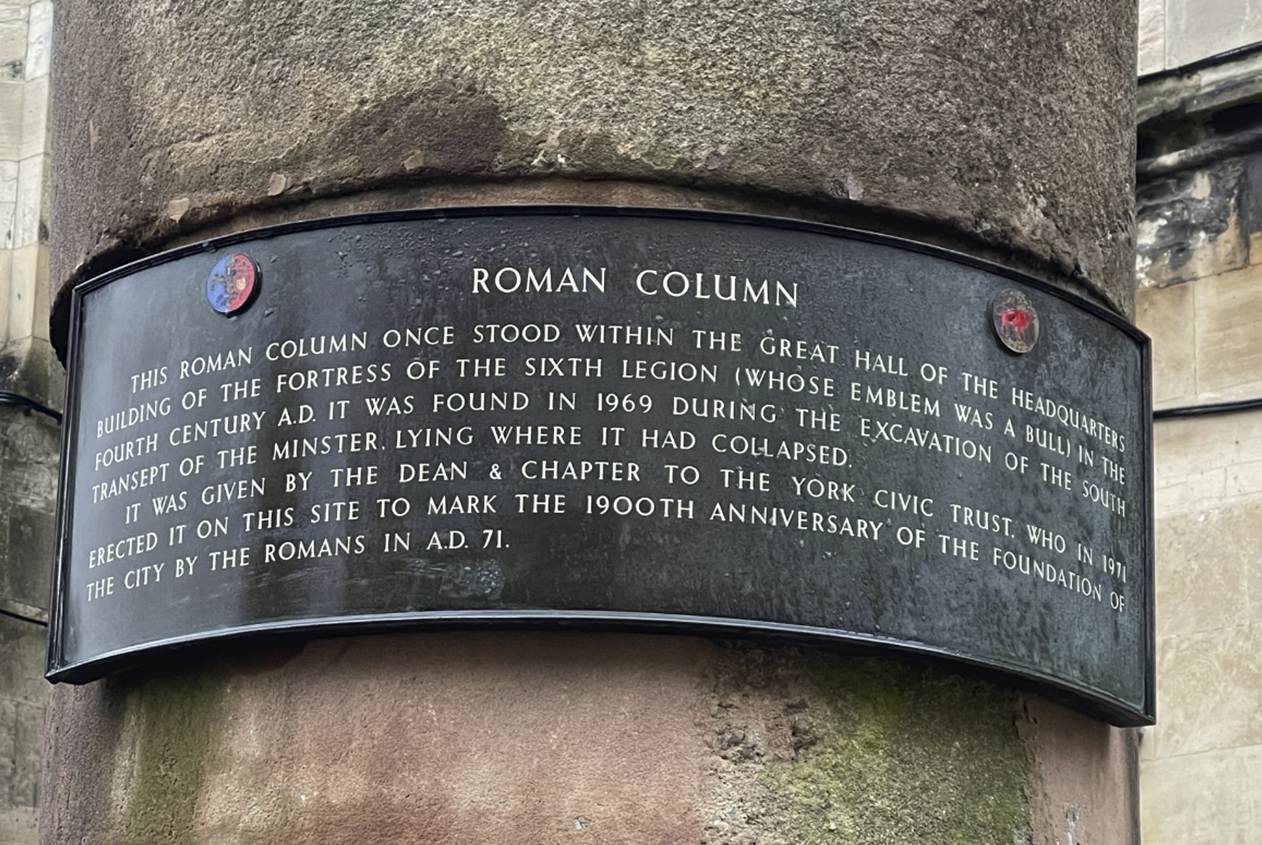
At the heart
was of the Roman camp was the principia, the central headquarters
building and the most important structure, housing the military unit's
standards, shrine, pay office, and strongroom for funds. It served as the
administrative and spiritual heart of the garrison and was located at the
intersection of the fort's main roads. Facing at the rear of the courtyard was
the biggest building, the basilica, a large tall aisled hall for public
meetings. The whole body of a legion could probably have assembled to hear an
address within. The column outside York Minster is one of the columns of this
aisled hall. The basilica was certainly still in use at end of fourth
century, but it is hard to say who by. Animal bones found at corners of the
hall might evidence butchery or feasting. The evidence suggests that by the end
of the fourth century, the basilica was not used for its original
intention. By the beginning of the fifth century, the evidence shows no further
activity. It is not known how long it stood. The columns might have fallen soon
after Roman withdrawal, or lasted to the sixth century CE.

There was
another coordinated and sustained attack by Picts, Scots and
Saxons between 396 to 398 CE.
There were
economic consequences of the military crisis. Generations of farmers who had
produced food for town markets, faced violence, looting and cattle and sheep
droving. Urban life been in decline since the early fourth century. The ruined
and empty city of York reverted over the following decades to marshland,
evidenced by fossils of beetles, wetland froghoppers and field mice.
Coin minting
in London had ceased by 388 CE on the death of Magnus Maximus. The year 402 CE
was the last year that Roman coins appeared in significant numbers in the
archaeological record. This probably coincided with a period of general
discontent in the army, since there were no longer enough coins to pay them.
Most coins of this period show evidence of degrading by clipping, or shearing
off silver from their edges, in an attempt to make money go further.
Emperor
Honorius moved the Western Roman Empire's capital from Milan to Ravenna in 402
CE due to severe threats from invading Gothic tribes, particularly from Alaric.
Ravenna, surrounded by marshes and connected by sea, offered better
defensibility and naval access to the East. It became the seat of power for the
Western Empire until its final fall in 476 CE, and served as a crucial
political and cultural hub.
In 406 to
407 CE, Germanic tribes including Vandals, Alans, and Suebi
crossed the frozen Rhine into Gaul, creating a major crisis for the Western Roman
Empire as the army in Britain rebelled in 406 CE. They proclaimed Marcus as
their ‘emperor’ in summer, Gratian in autumn, and four months later an ordinary
soldier called Constantine when British troops, eager to fight these invaders
on the continent, proclaimed their own emperor, Constantine III. Constantine
III then took nearly all available mobile Roman soldiers from Britain to Gaul
to bolster his forces, effectively stripping the province of its primary
defence. This mass
departure left Britain militarily exposed, and facing increased barbarian
incursions from Picts and Scots.
The
Visigoths, led by Alaric, felt they were not being treated fairly by the Roman
government. In 408 CE, the Roman government massacred many Gothic women and
children in the cities, causing some 30,000 Goth soldiers in the Roman army to
mutiny and join Alaric.
By 408 CE
Britain was facing invasion by Germanic raiders too. The exasperated Britons
themselves rose to revolt from Roman rule and live on their own, no longer
obedient to Roman laws. They armed themselves, and ran many risks to
ensure their own safety[65]. Yet the severing of its links with
the Roman empire put Britain into free fall. The archaeological record is
clear. Quality pottery and ironmongery such as nails disappeared. Society
collapsed. It was probably the most dramatic period of social and economic
collapse in British history[66]. As the state failed, civil society
dissolved. The population was subject to pillaging, looting and robbery.[67]
The Hoxne hoard, discovered in Suffolk in 1992[68], comprised silver tableware, animal
and human figures, bowls, dishes, pepper pots, 584 gold coins and over 14,000
silver coins. The coins were minted between 407 and 408 CE. 98.5% of the silver
coins had been clipped. They were buried in about 408 CE in a climate of fear,
but with some vain hope that one day they could be retrieved.
Military
weakness led to economic crisis, reflected by an increase in cattle and sheep
rustling.
In 410 CE
Rome was sacked by the Visigoths, led by Alaric. From this time the empire was
run from Constantinople. The year 410 CE was a momentous year for the fate of
Britain. Civilisation collapsed very rapidly. The trauma can only be imagined.
The immediate threat came from the northern regions of Germany, Denmark,
Jutland and Lower Saxony.
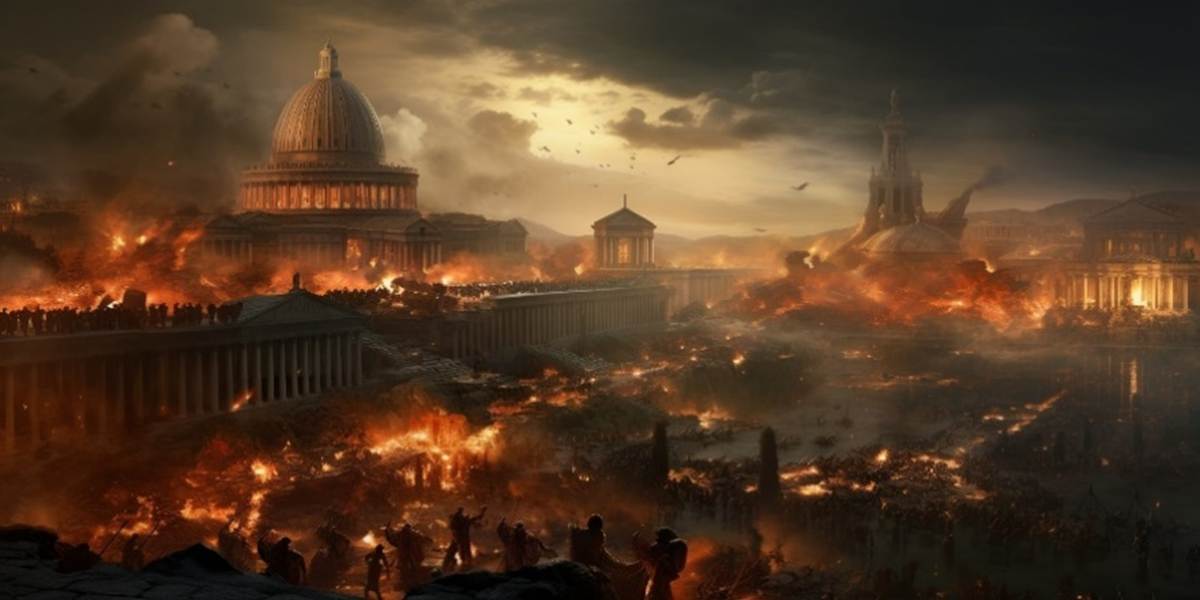
Roman
control of Britain had ceased by this time. The English translation of the Rescript
of Honorius, passed down by the sixth century Byzantine historian Zosimus,
reflects that Honorius advised Britons to look after their own defence.
The Rescript repealed
the law which prohibited citizens in Britain from carrying arms in
demilitarised lands where the people relied upon the Pax Romana. In
effect the Rescript rescinded Roman rule over Britain. It was issued in
the same year as the sack of Rome by the Goths.
The Rome
which fell in Britain at the beginning of the fifth century was only a distant
relative of the Rome that had conquered and colonised it[69].
John Everett
Millais depicted a romantic image of the Romans Leaving Britain[70], as a tortured Roman soldier saying
farewell to his Celtic lover. It is unlikely to be representative of the
traumatic reality.

The
Romano-British kingdom rapidly broke up into smaller kingdoms. In time, Ebrauc (York) would become the capital of a new
kingdom.
Some of the villas across Britain may still
have been functioning after 410 CE. Many areas of Yorkshire, away from Roman
settlements, had probably never been particularly Romanised. A traveller a mile
or two into the country may have found that little had changed. The bypass
excavations at Catterick (Roman Cataractonium)
suggest that while the Roman military garrison may have ceased formal
operations around 410 CE, the site was not immediately abandoned[71].
Instead, the civilian settlement continued to be occupied into the fifth and
sixth centuries, with evidence of a transition to a post-Roman, possibly
Anglo-Saxon, community. There is some evidence of continuity at Malton. The
coastal signal stations which were probably constructed after 367 CE were
robust structures and there is no evidence of their destruction in the early
fifth century. The remains of barn owls, a species not found in places of human
habitation, suggest that the signal stations were abandoned with no troops
stationed there. The archaeology doesn’t evidence a sudden cataclysmic
invasion.
However by 420 CE most of Britain’s
villas had been abandoned and towns were empty. There were still people living amongst
the ruins who had been born in a world ordered by Roman material culture.
However there was no longer a Roman Britain in which to live.[72]
In the humorous minds of Sellar and Yeatman, the withdrawal of the
Roman legions left Britain defenceless and subjected Europe to that long
succession of Waves of which History is chiefly composed[73].
The Anglo Saxon poem, The Ruin, described the remains of a Roman
town, during the chaotic centuries which followed[74]. Wondrously ornate is the stone of
this wall, shattered by fate, the precincts of the city have been crumbled and
the work of giants is rotting away. The roofs have rushed to earth, towers in
ruins. Ice at the joints has unroofed the barred gates. Sheared, the scarred
storm walls have disappeared; the years have gnawed them from beneath. A grave
grip holds the master crafters, decrepit and departed, in the ground’s harsh
grasp, until one hundred generations of human-nations have trod past.
Subsequently this wall, lichen-grey and rust-stained, often experiencing one
kingdom after another, standing still under storms, high and wide, it failed.
The wine halls moulder still, hewn as if by weapons penetrated.

From
this point, our family story will follow the trail from the aftermath of Empire
Britain to the birth of the English nation, the spread of Christianity, and the
remarkable ambit of York which became a powerhouse of
intellectual achievement in the Anglo Saxon age and disseminated knowledge and
teaching techniques via the court of the Holy Roman Emperor, Charlemagne across
Europe. When we pick up the story again after 1200, we will then meander our
way through Plantagenet England, to the industrial age, which we will
experience from the heart of the lands of mills and mines. The family will
spread to become farmers across the new worlds of the British empire and will
fight in the terrible wars of the twentieth century.
Before that
we have a journey of many centuries through the rebuilding of civilisation in
the new Anglo Saxon world.
Go Straight to Act 4 – Anglo
Saxon Kirkdale
or
|
This
is a new experiment. Using Google’s Notebook LM, listen to an AI powered
podcast summarising this webpage. This should only be treated as an
introduction, and the AI generation sometimes gets the nuance a bit wrong.
However it does provide an introduction to the themes of this page, which are
dealt with in more depth in the text. |