Whitby
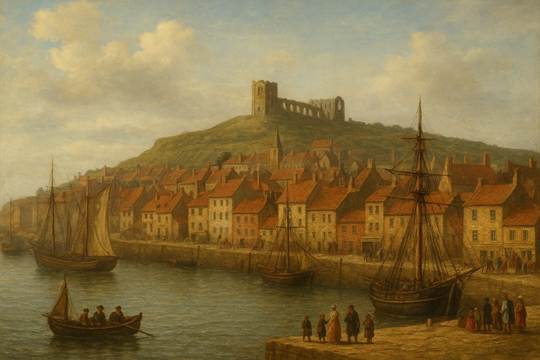
Historical and geographical information
|
Return to the Home Page of the Farndale Family
Website |
The story of one family’s journey through two
thousand years of British History |
The 83 family lines into which the family is divided.
Meet the whole family and how the wider family is related |
Members of the historical family ordered by date of
birth |
Links to other pages with historical research and
related material |
The story of the Bakers of Highfields, the Chapmans,
and other related families |
Dates are in red.
Hyperlinks to
other pages are in dark
blue.
Headlines are in brown.
References and
citations are in turquoise.
Contextual
history is in purple.
This webpage
about the Whitby has the
following section headings:
·
Farndale
family history and Whitby
· Whitby, overview
· Timeline of
Whitby history
· Whitby today
· Dracula
· Bibliography
The Farndales of Whitby
The Whitby 1 Line are the descendants
of John Farndale,
born 1636 (FAR00087) who started a line of
Farndales in Whitby by the 1660s. John was the first of the Whitby Farndales.
His son Thomas
Farndale, born 1682 (FAR00118) was a carpenter in Whitby. His
grandson, Francis
Farndale, born 30 September 1711 (FAR00135) was a carpenter of Whitby.
His grandson Giles
Farndale (FAR00137) served in the Royal Navy. It seems very likely that he
was press-ganged at Whitby, probably in 1740 when he would have been 27 years
old. His grandson John
Farndale, born 1711 (FAR00136) lived in Whitby and sailed with Captain
Cook and the Whitby 2 Line were
the descendants of John.
The Whitby 3 Line were the descendants
of William Farndale (FAR00157),
1743-1777, master mariner of Whitby. His son Robert Farndale (FAR00197)
1772-1796 was a ship’s carpenter.
The Whitby 4 Line were the descendants
of John Farndale (FAR00198),
born 1774, a carpenter of Whitby. His son John Farndale (FAR00244)
1802-1837 was a painter, farmer, then master mariner of Whitby. His grandson
William Farndale (FAR00289)
1825-1887 was a master mariner of Whitby whose wife Ann nee Brown ran a lodge
house. His grandson Thomas Farndale (FAR00300), born
1828 was a ship’s broker’s clerk. His grandson John Christopher Farndale (FAR00308), born
1830 was a master mariner of Whitby who later moved to Cambridgeshire.
His granddaughter
Mary Ann Farndale (FAR00320),
born 1822 was a shawl and bonnet maker of Whitby. The Whitby 5 Line were the descendants
of John Farndale (FAR00210),
born 1788, a farmer. His son William Farndale (FAR00257)
became an innkeeper at Egton
Many of the fifth
generation of the Whitby 1 Line
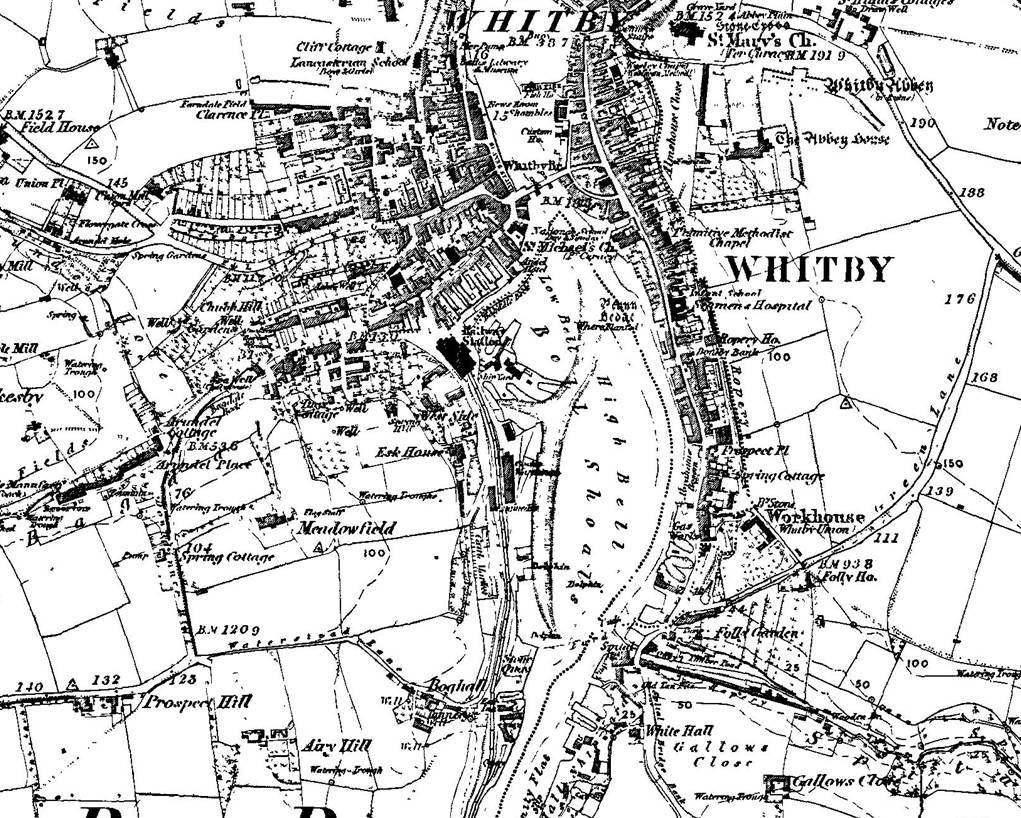
worked in the Flowergate area of Whitby.
Other Farndales
associated with Whitby were: Ann Farndale (FAR00100A); Mary
Farndale (FAR00142);
William Farndale (FAR00152);
Ann Farndale (FAR00165);
Hannah Farndale (FAR00174);
Elizabeth Farndale (FAR00175);
Mary Farndale (FAR00186);
Mary Farndale (FAR00190);
John Farndale (FAR00196);
William Farndale (FAR00207);
Hannah Farndale (FAR00211);
Francis Farndale (FAR00212A);
Margaret Farndale (FAR00213);
Wilson Farndale (FAR00227);
John Farndale (FAR00230);
William Farndale (FAR00243);
John Farndale (FAR00265),
a sailor of Whitby; Mary Farndale (FAR00298); Peter
Wallis Farndale (FAR00343);
Hannah Farndale (FAR00348);
Elizabeth Farndale (FAR00350A);
Mary Jane Farndale (FAR00352);
Sarah Farndale (FAR00357);
Mary Ann Farndell (FAR00359);
John Farndale (FAR00365);
Jane Ann Farndale (FAR00371);
John William Farndale (FAR00501);
Louisa Farndale (FAR00518);
Mary Farndale (FAR00526);
Sarah Ann Farndale (FAR00556);
Hannah Farndale (FAR00567);
Sarah Ann Farndale (FAR00568);
Annie Elizabeth Farndale (FAR00599);
Catherine Jane Farndale (FAR00601);
Frank Farndale (FAR00616);
Mary Alice Farndale (FAR00630);
Annie Farndale (FAR00637);
George Farndale (FAR00646A),
Served in East Yorkshire Regiment in World War 1; Ethel Farndale (FAR00658); Joseph
Salvatori Farndale; (FAR00705);
Alice Jane Farndale (FAR00753);
Doris S Farndale (FAR00789);
Violet Farndale (FAR00849);
Miriam W Farndale (FAR00905);
Jean Farndale (FAR00907);
Lydia A Farndale (FAR00991)
References to the
Farndale family in Whitby baptismal registers, 1768 to 1789 include 1769
October 28th Farndale, Elizabeth (FAR00193)
daughter of William and Elizabeth (sailor) born 12 October Whitby; 1772 October
26th Farndale, Robert (FAR00197) son of
William and Elizabeth sailor born 11 October Whitby; 1786 February 5th
Farndale, Francis (FAR00206) son
of Thomas and Jane Carpenter born 3rd February Whitby ; 1786 April 18th
Farndale, William (FAR00207)
illegitimate son of Frances spinster born 11th April Whitby; 1788 January 27th
Farndale, William (FAR00209) son
of Thomas and Jane carpenter born 22 November Whitby; 1789 July 16th Farndale,
Margaret (FAR00213)
illegitimate daughter of Frances spinster born 2nd May Whitby.
Whitby
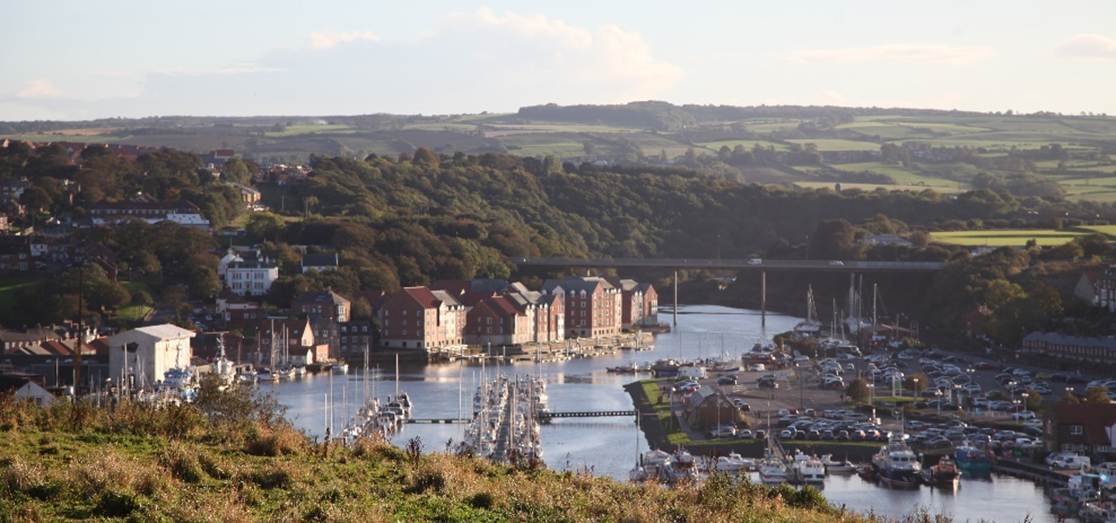
Whitby is a
seaside town, port and civil parish in the Scarborough
borough of North Yorkshire, England. Situated on the east coast
of Yorkshire at the mouth of the River Esk,
Whitby has a maritime, mineral and tourist heritage. Its East Cliff is home to
the ruins of Whitby Abbey, where Cædmon, the earliest
recognised English poet, lived.
The fishing port
emerged during the Middle Ages, supporting
important herring and whaling fleets, and was
where Captain Cook learned seamanship.
Tourism started
in Whitby during the Georgian period and developed with the arrival of the
railway in 1839. Its attraction as a tourist destination is enhanced by the
proximity of the high ground of the North York Moors national park
and the heritage coastline and by association with the horror
novel Dracula. Jet and alum were mined
locally, and Whitby Jet, which was mined by the Romans and Victorians, became
fashionable during the 19th century.
Whitby was called
Streanæshalc, Streneshalc,
Streoneshalch, Streoneshalh,
and Streunes-Alae in Lindissi in records of the 7th and
8th centuries. Prestebi, meaning the
"habitation of priests" in Old Norse,
is an 11th century name. Its name was recorded as Hwitebi
and Witebi, meaning the "white
settlement" in Old Norse, in the 12th century, Whitebi in the 13th century and Qwiteby in the 14th century.
Whitby timeline
160 CE
Ancient
History identifies this part of the East Coast with the earliest system of
military roads laid out by the Romans. Dunsley Bay,
three miles north of Whitby Pier, is the "Dunus
Sinus" mentioned by Ptolemy, who compiled no fewer than eight books on the subject of Geography, about the year A.D. 160. This road
commenced at York, passing by Malton, Great Barugh, Cropton, and the Roman
Camps of Cawthorn, thence across the vast expanse of moors to Egton, the route
(Wade's Causeway) passing the stone cross, known as Malo or Mauley Cross, and
terminating at Dunsley. Along its course we find at
the present day continuous traces of camps, trenches,
and tumuli. (Ryedale
and North Yorkshire antiquities, George Frank, 1888, page 223).
200 CE
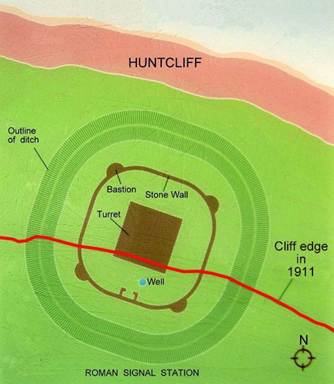
Until recently
the only evidence of the Roman presence in this area was a soldier’s helmet and
a few coins, which were found at Guisborough and the Signal Station on
Huntcliff.
656 CE
The earliest
record of a permanent settlement is in 656, when as Streanæshealh it
was the place where Oswy, the Christian king of
Northumbria, founded the first abbey, under the abbess Hilda.
A monastery was founded at Streanæshealh in AD 657 by
King Oswiu or Oswy of Northumbria, as an act of thanksgiving,
after defeating Penda, the pagan king of Mercia.
At its foundation, the abbey was an Anglo-Saxon 'double monastery' for men and
women. Its first abbess, the royal princess Hild,
was later venerated as a saint. The abbey became a centre of learning and
here Cædmon the cowherd was
"miraculously" transformed into an inspired poet whose poetry is an
example of Anglo-Saxon literature. The abbey became the leading royal
nunnery of the kingdom of Deira,
and the burial-place of its royal family.
Its
monastery founded as early as 655, which for 200 years occupied a position of
greater importance and prosperity than any similar institution in the country,
a state of things ruthlessly terminated by the above landing of the Danish
marauders.
St.
Hilda's Abbey has furnished the subject of so many pens, that a short sketch of
its antiquities must suffice. Its original foundation was invested with
romance, for King Oswy (Oswiu) ruler of this district, Northumbria, having
embraced the Christian faith, on being attacked by his southern neighbour,
Penda, the pagan King of Mercia, courted the Divine favour by a vow, that if he
came off victorious he would dedicate his infant daughter to God, and give much
of his large possessions for the foundation of monasteries. Having defeated the
pagan hosts, he proceeded to carry out his vow by placing Ethelfleda in the
monastery of Heruteu (Hartlepool) of which Hilda was the abbess.
This
was in the year 655, and it must be mentioned that Hilda was the daughter of
King Edwini, whose family were all baptised under the missionary influence of
Paulinus, thus she was one of the first Christians of these parts.
"Strenaeshalh" was one of the royal sites set apart by
King Oswy for a monastery, which St. Hilda commenced to erect, moving to it
with her infant charge in 657, but still retaining supervision of Herutu her former house. It is on record, that her
learning, piety, and virtue, placed this monastery above all others as a
religious seminary, and in 664, only seven years from its commencement, the
important Synod met here to decide the long vexed
question of the proper reckoning and keeping of Easter.
(Ryedale and North Yorkshire antiquities, George Frank,
1888, page
224).
The Victoria County History – Yorkshire, A History of the
County of York North Riding: Volume 2 Parishes, Whitby, 1923: The
Saxon history of the town begins with the introduction of Christianity into
Northumbria. King Edwin and his kinswoman Hilda, then a child, were baptized in
627. Edwin's successor Oswy had vowed to grant lands for monastic purposes if
he should defeat the pagan Penda, and it was possibly in connexion with his
victory at Winwaed (655) that Hilda obtained
possession of her lands at Whitby and built the monastery. Here King Edwin's
headless body, which had lain since 633 at Hatfield, was brought for burial,
and here the famous synod of 'Streoneshalch' was held
in 664.
664 CE
The Synod of
Whitby was held there in 664. The famous synod established
the Roman date of Easter in Northumbria at the expense of the Celtic one
867 CE
The monastery was
destroyed between 867 and 870 in a series of raids
by Vikings from Denmark under their
leaders Ingwar and Ubba. Its site
remained desolate for more than 200 years until after the Norman Conquest
of 1066.
The Victoria County History – Yorkshire, A History of the
County of York North Riding: Volume 2 Parishes, Whitby, 1923: Streoneshalch was laid waste by Danes in successive inroads
(867–70) under Ingwar and Ubba, and was said to have
remained desolate for more than 200 years ; but the existence of 'Prestebi' at the Domesday Survey may point to the revival
of religious life in Danish times. The Danish town of Whitby was presumably of
some importance, as close to it was apparently held the Danish Thing, and
nearly all the places in the district in 1086 bore Danish names. Whitby was geldable before the Conquest at the large sum of £112.
It
was in this bay one portion of the Danish fleet under Hinguar
and Hubba, disembarked in the year 876, commanded by the latter warrior, while Hinguar selected " Peak " as his landing place,
(already mentioned, seven miles south from this point,) erecting a standard
with a raven pourtrayed upon it, from which the spot
is still known as Raven Hill. (Ryedale and
North Yorkshire antiquities, George Frank, 1888, page
223).
1074
In
Norman times this venerable pile was re-constructed by Reinfrid,
who obtained a grant of it from William de Percy with whom he had been a
companion in arms under the Conqueror. This Reinfrid,
satiated with war, betook himself to a monastic life at Evesham in
Worcestershire, from which place accompanied by three other monks, he travelled
forth on a religious pilgrimage to the north in 1074.
It is
at this point we become acquainted with Abbot Stephen, Reinfrid
taking the title of Prior. Under their rule the Abbey began to assume collossal proportions, which with the general development
and improvement of its adjoining lands, aroused the cupidity of their former
benefactor, William de Percy, and he endeavoured to regain possession of it.
This treacherous conduct, coupled with the assaults of pirates and robbers, so
despoiled the place, that those who were fortunate enough to escape with their
lives, fled for shelter to the secluded and deserted monastery at Lastingham.
This they began at once to restore, obtaining grants of land in the
neighbourhood. Stephen remained there but a short time, whence he removed to
York, and under the patronage of Alan, Earl of Bretagne, began to found St.
Mary's Abbey, of which he was first Abbot.
Fortunately Stephen has left us a narrative of his life,
now in the Bodleian Library, from which we trace the remaining remnant of the
Whitby flock to Hackness. It was on a journey to this
place, that Reinfrid was accidentally killed at Orm's
Bridge as already recorded, being succeeded by Serlo de Percy, who, after
sojourning at Hackness till 1100, returned with most
of his flock to Whitby, where he died.
(Ryedale and North Yorkshire antiquities, George Frank,
1888, page
224).
1078
Another monastery
was founded in 1078. It was in this period that the town gained its current
name, Whitby (from "white settlement" in Old Norse).
The first recorded use of the name Whitby in the eleventh century is unlikely
to have been more than a hundred or so years old, since its origin in
Scandinavian.
After the
Conquest, the area was granted to William de Percy who, in 1078
donated land to found a Benedictine monastery dedicated to St
Peter and St Hilda.William de Percy's gift
included land for the monastery, the town and port of Whitby and St Mary's
Church and dependent chapels at Fyling, Hawsker, Sneaton, Ugglebarnby, Dunsley, and Aislaby, five
mills including Ruswarp, Hackness with two mills and two churches.
1128
In about 1128
Henry I granted the abbey burgage in
Whitby and permission to hold a fair at the feast of St Hilda on 25 August. A
second fair was held close to St Hilda's winter feast at Martinmas. Market
rights were granted to the abbey and descended with the liberty.
1539
Whitby Abbey
surrendered in December 1539 when Henry VIII dissolved the
monasteries.
1540
In 1540 the town
had between 20 and 30 houses and a population of about
200. The burgesses, who had little independence under the abbey,
tried to obtain self-government after the dissolution of the monasteries.
The king ordered Letters Patent to be drawn up granting their
requests, but it was not implemented.
1550
In 1550
the Liberty of Whitby Strand, except for Hackness,
was granted to the Earl of Warwick who in 1551 conveyed it
to Sir John York and his wife Anne who sold the lease to the Cholmleys.
1580
In the reign
of Elizabeth I, Whitby was a small fishing port.
At the end of the 16th century Thomas
Chaloner visited alum works in the Papal States where he observed that the
rock being processed was similar to that under
his Guisborough estate. At that time alum was important for medicinal
uses, in curing leather and for fixing dyed cloths and the Papal States and
Spain maintained monopolies on its production and sale. Chaloner secretly
brought workmen to develop the industry in Yorkshire, and alum was produced
near Sandsend Ness 5 km from Whitby in the reign of James
I. Once the industry was established, imports were banned and although the
methods in its production were laborious, England became
self-sufficient. Whitby grew significantly as a port as
a result of the alum trade and by importing coal from the Durham
coalfield to process it.
1635
In 1635 the
owners of the liberty governed the port and town where 24 burgesses had the
privilege of buying and selling goods brought in by sea.
1700
Shipbuilding in
Whitby increased very rapidly during the 18th century. In 1700 113 sailboats of
small tonnage were constructed. By 1734, 130 ships of 80 tonnes and upwards
were built and by 1776: 251 ships of 80 tonnes and upwards.
It was the coastal trade which absorbed the majority of
these ships and in particular, the coal trade. Coal
was shipped at Newcastle, Sunderland and Shields for London and the east coast
ports, the main part being for the Capital. It was imported into Whitby both
the domestic use and in the alum works. In 1690, 60 tons of kelp were shipped
from Berwick on Tweed to Whitby for use in the manufacture of alum and
presumably this was not an isolated instance as the alum trade persisted
throughout the century in various states of economic decline and recovering.
1701 to
1713
The War of
Spanish succession.
1731
In 1731 Whitby
imported coals from Newcastle and Sunderland and wine, linen, nails, firkin
staves, bricks, clog wheels (cart wheels of thick
plank without spokes), and timber from Hull. There were also three cargoes of
miscellaneous goods from London. 27 shipments left the port that year, one of
alum for Newcastle, one of alum for Alloa and 25 for London which consisted of
alum, dried fish and butter. (Willan).
1739
The War of
Jenkins Ear
1740 to
1748
The War with
Austrian succession
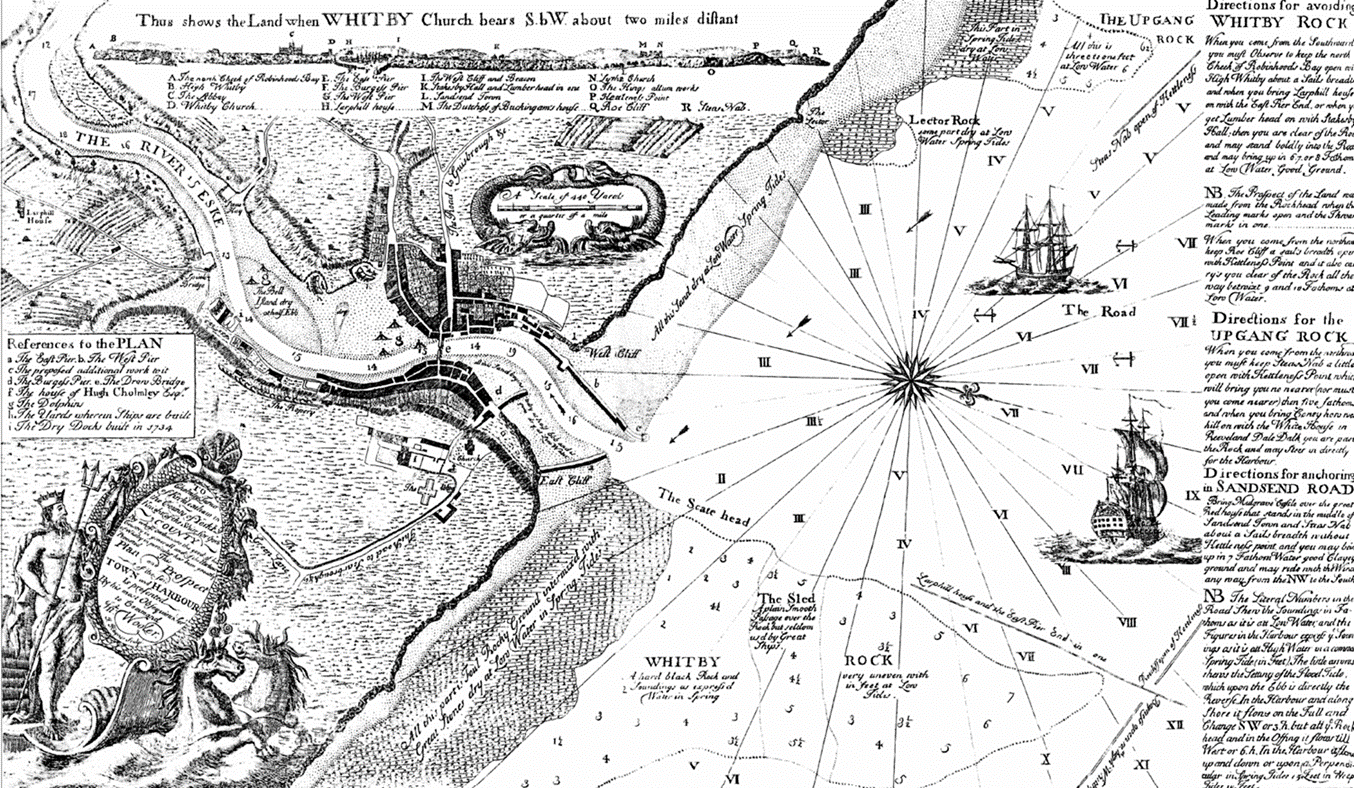
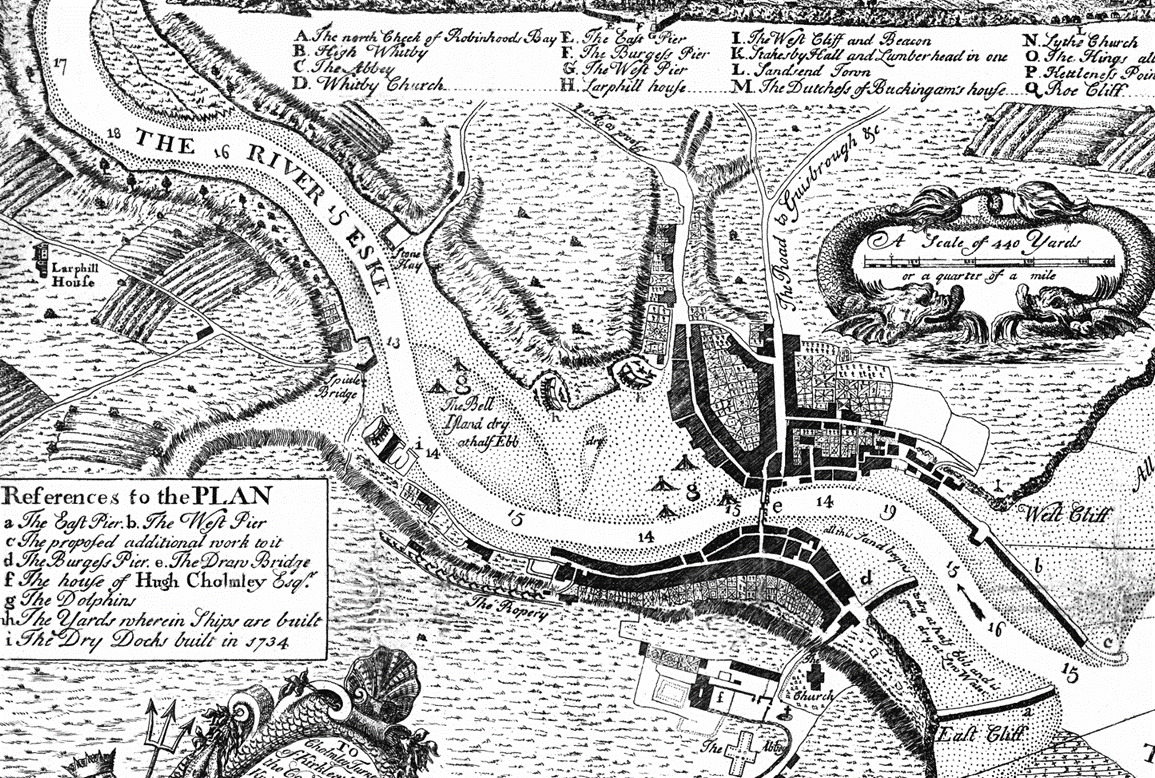
John Wooler’s
plan of the town and harbour at Whitby in 1740
1750
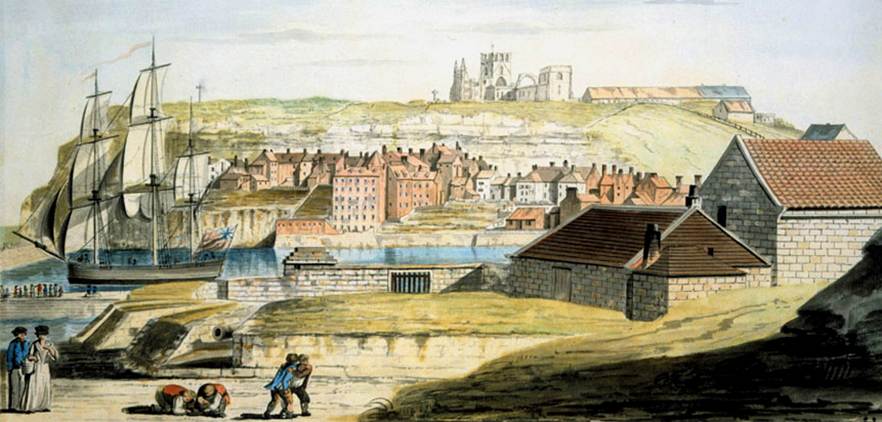
Whitby about 1750
1751 to
1757
War in India.
1753
Whale fishing
began in Whitby in 1753 and the vessels were sometimes
used in the coal trade during the autumn and winter months and then adapted for
whaling in the summer. In 1753 the first whaling ship set sail
to Greenland and by 1795 Whitby had become a major whaling port.
Because of the
increase in shipbuilding, large quantities of timber came into the town. Most
of it was from the Baltic direct or via Hull along the coast. Whitby registered
ships traded with the Baltic from Hull and London and were also engaged in the
trade in the West Indies, Mediterranean, America and the East Indies. So Whitby seamen employed on locally owned ships would have
picked them up at ports around the country.
There are vague
hints that certain Whitby merchants were involved with the slave trade but no
definite evidence has come to light and certainly nothing to connect the port
with slave ships.
Luxury goods such as wine, tea, coffee, sugar,
spices, currents, raisins, fine dress materials and tobacco would come along
the coast from London or Hull.
One final use to which would be ships were put is
that of transport vessels in time of war. The Navy board commandeered the
privately owned vessels and paid well for their use, granting adequate
recompense in the event of loss. The crew would not fare so well if they were
all pressed into the Royal Navy.
1756 to
1763
Seven years’ war
with France.
1776 to
1783
American War of
Independence.
1764
Whitby benefited
from trade between the Newcastle coalfield and London, both by shipbuilding and
supplying transport. In his youth the explorer James Cook learned his
trade on colliers, shipping coal from the port. HMS Endeavour,
the ship commanded by Cook on his voyage to Australia and New Zealand, was
built in Whitby in 1764 by Tomas Fishburn as a coal carrier named Earl of
Pembroke. She was bought by the Royal Navy 1768, refitted and renamed.
1778
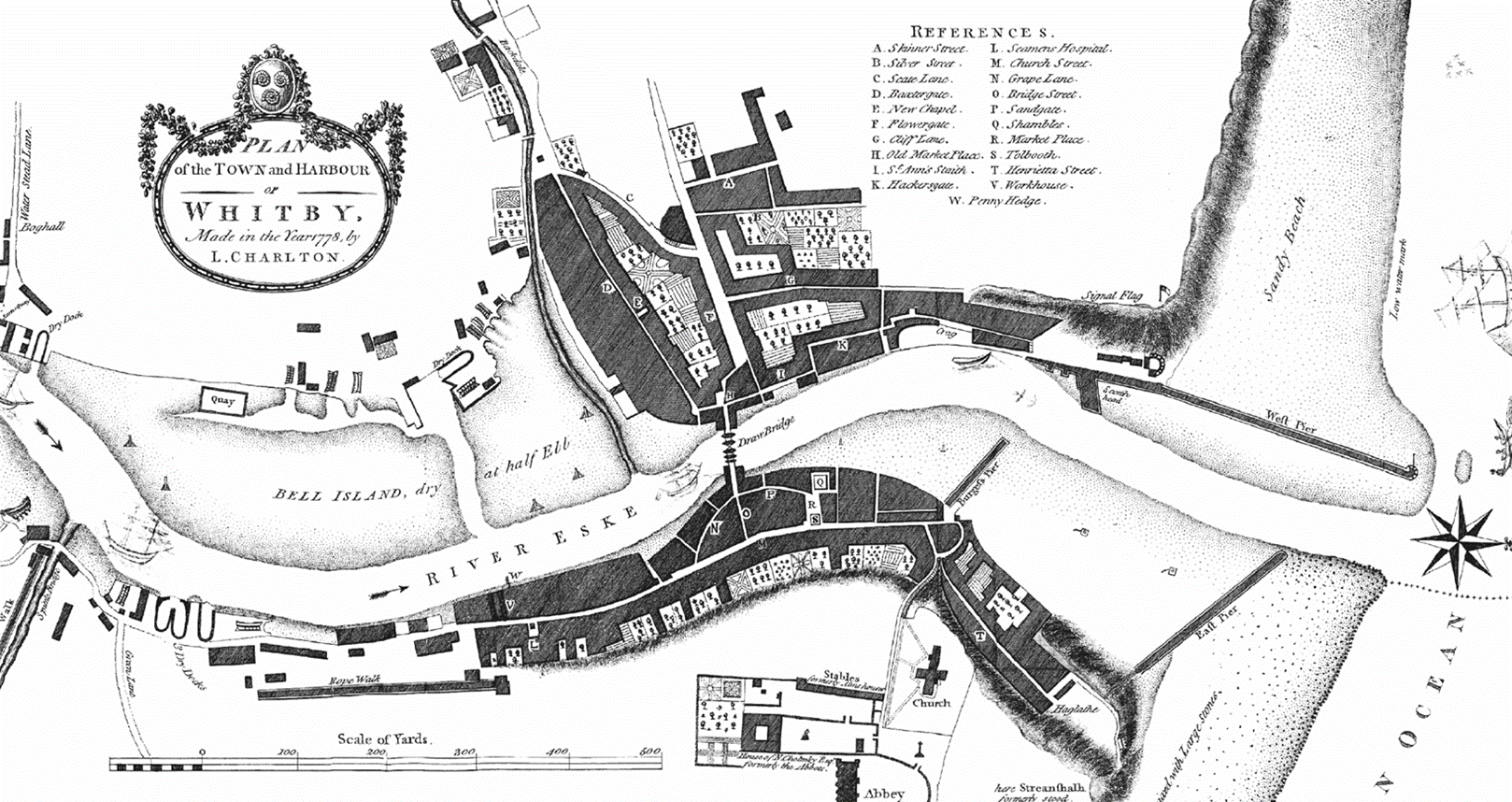
Lionel Charlton’s
map of 1778
1790
Whitby grew in size and wealth, extending its activities to
include shipbuilding using local oak timber. In
1790–91 Whitby built 11,754 tons of shipping, making it the third largest
shipbuilder in England, after London and Newcastle. Taxes on imports
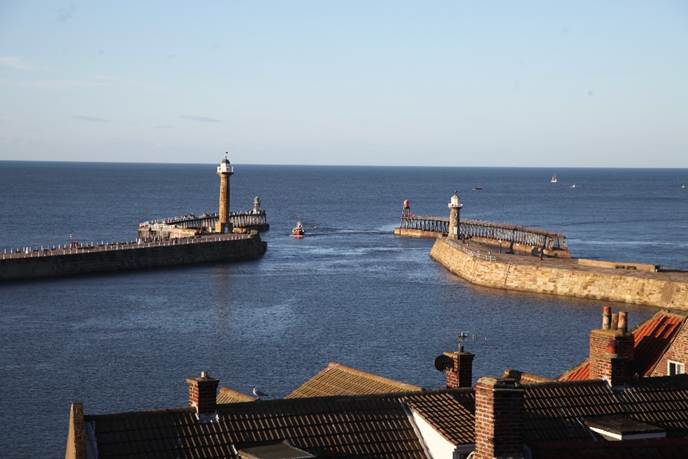
entering the port raised money to improve and extend the town's twin piers,
improving the harbour and permitting further increases in trade.
Whitby developed
as a spa town in Georgian times when
three chalybeate springs were in demand for their medicinal and tonic
qualities. Visitors were attracted to the town leading to the building of
"lodging-houses" and hotels particularly on the West Cliff.
Young gives the
imports for 1790 as timber, hemp, flax, ashes (for soap), and iron. He makes no
mention of coal that must have featured high on the list. Exports were
sailcloth (7,300 bolts), butter (1,309 firkins), hams and bacons (21 tonnes
19cwts 3 qts 10 lbs), oats (4,094 qts)
ad leather (33,615 lbs). Alum and whale oil, blubber,
whale fins and whale bone also formed part of the export trade.
1793 to
1815
Napoleonic Wars
1814
Whitby’s most
successful whaling year was 1814 when eight ships caught 172 whales, and
the whaler, the Resolution's catch produced 230 tons of oil. The
carcases yielded 42 tons of whale bone used for 'stays' which
were used in the corsetry trade until changes in fashion made them
redundant. Blubber was boiled to produce oil for use in lamps in four
oil houses on the harbourside. Oil was used for street lighting until the
spread of gas lighting reduced demand and the Whitby Whale Oil and Gas Company
changed into the Whitby Coal and Gas Company. As the market for whale products
fell, catches became too small to be economic and by 1831 only one whaling
ship, the Phoenix, remained.
1837
Burgage tenure
continued until 1837, when by an Act of Parliament, government of the town was
entrusted to a board of Improvement Commissioners, elected by the ratepayers.
The 1837 Poo Law
valuation of Whitby was a list of every property in the township of Whitby in
Yorkshire in the year 1837, that is 2,435 houses, tenements, shops, offices and
other places. The valuation included the occupier of the property, its owner, a
description and its rateable value.
In 1834, the New
Poor Law came into operation in England and Wales. As part of this, parishes
were grouped into Poor Law Unions. These were administered locally by a Board
of Guardians, elected by each parish or township, and answerable to a central
Poor Law Commission, based in London. Those families who could not fend for
themselves were either given money or food to sustain themselves (known as
out-relief) or were taken into a Union Workhouse, where the workhouse master
and his staff would take care of their immediate needs. However, the workhouse
was segregated by sex and the inmates were expected to
perform laborious tasks in return for their food and lodging, so this was an
option that the poor avoided whenever possible. The funds to pay for the relief
of the poor were collected from the population of the township or parish,
according to the value of the property they occupied. The value of each
property, or more particularly, the rent it would fetch if rented for a year,
was assessed. The local Board of Guardians would decide how much they needed in
each year and each householder was liable for a proportion of this, depending
on the annual rateable value of his property.
In 1837, the Board of Guardians for the Whitby
Union came to the conclusion that the rateable values
that they had been using prior to that date was out of date. They requested
permission from the Poor Law Commission to conduct a new valuation. When this
was granted, in order to record the annual rateable value
of each property, the Board of Guardians appointed a valuer. He wrote a list of
properties with their owners, occupiers and their rateable values, presumably
by walking around the town and interviewing people. This list was published by
a local printer so that people could check that their rateable value was
correct and also that no-one else was being charged
too low a rate. A copy of the list was sent to the Poor Law Commission
and it is that copy that I have transcribed.
A transcription has been made by me in the
National Archives at Kew. The original record is at the National Archives at
Kew, in reference MH12/14656. This is a large volume, ordered approximately in
date order. It contains the correspondence sent to the Poor Law Commissioners
regarding the Whitby Union and copies of their responses, from 1834 to 1843.
The valuation is towards the end of the 1837 section. More information
relating to the National Archives and how to view the documents they hold can be
found on their website
1839
In 1839,
the Whitby and Pickering Railway connecting Whitby
to Pickering and eventually to York was built,
and played a part in the town's development as a tourism
destination.
George Hudson,
who promoted the link to York, was responsible for the development of the Royal
Crescent which was partly completed. For 12 years from 1847, Robert
Stephenson, son of George Stephenson, engineer to the Whitby and Pickering
Railway, was the Conservative MP for the town promoted by Hudson as a
fellow protectionist.
1855
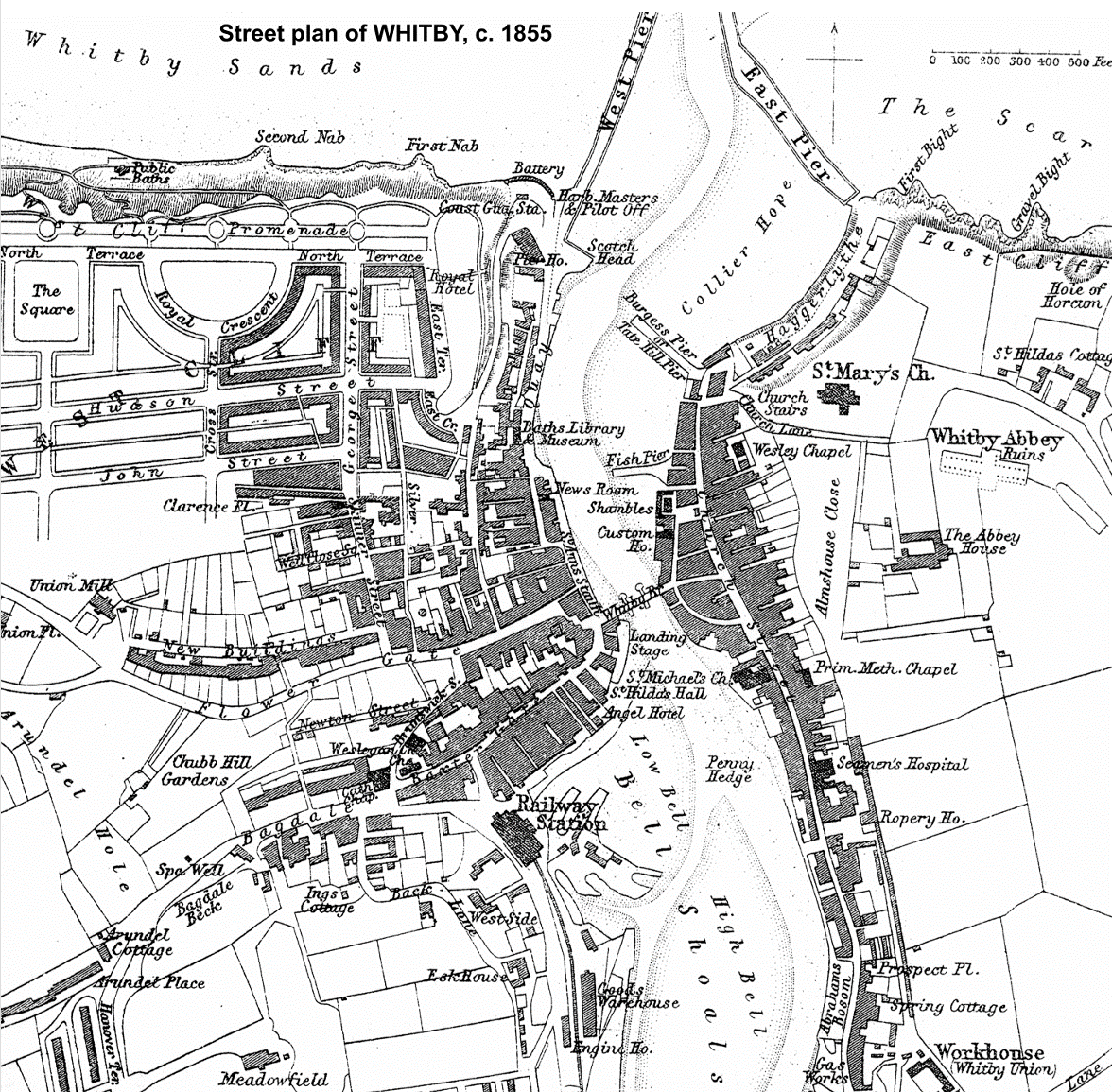
1857
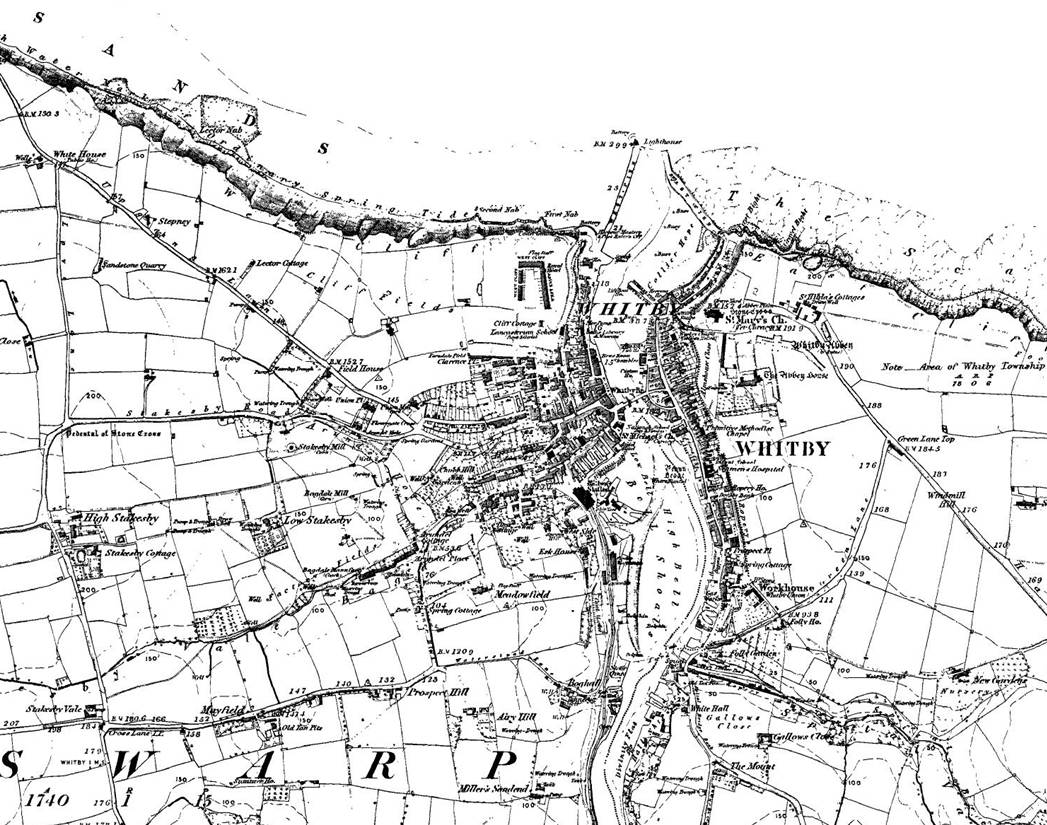
1861

Whitby town from
Abbey Terrace, sketched on 3 October 1861
1871
The advent of
iron ships in the late 19th century and the development of port facilities
on the River Tees led to the decline of smaller Yorkshire harbours.
The Monks-haven launched in 1871 was the last wooden ship built Whitby and a year later the harbour was silted
up.
From the mid 19th century all of Whitby 's major traditional
industries, wailing, alum, shipbuilding and fishing, faced the growing
challenge of changing markets add new technological innovation. It was a town
in relative decline.
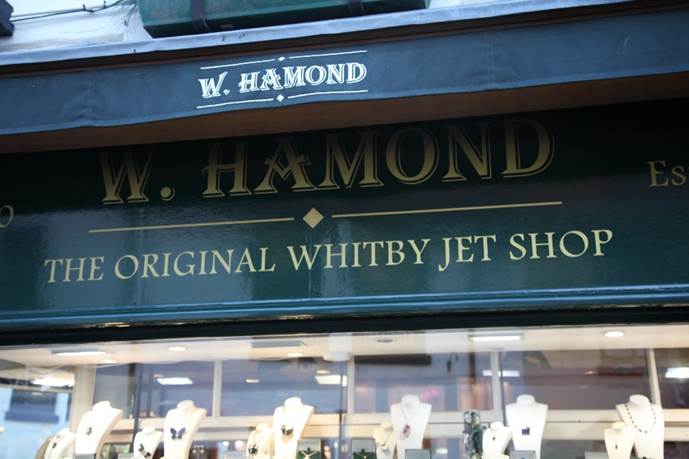
The
black mineraloid jet, the compressed remains of ancestors of
the monkey-puzzle tree, is found in the cliffs and on the moors and has been
used since the Bronze Age to make beads. The Romans are known to have
mined it in the area. In Victorian times jet was brought to Whitby by pack
pony to be made into decorative items. It was at the peak of its popularity in
the mid-19th century when it was favoured for mourning jewellery
by Queen Victoria after the death of Prince Albert.
1880s
Whitby became a
town of two halves.
There was the
impressive grandeur of the West side of the river Esk
which housed the professional classes and accommodated a growing tourist
industry.
In contrast, the
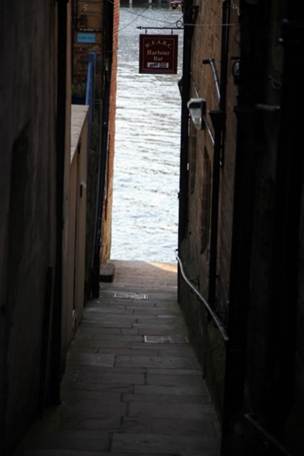
east side of the river was a place of gross inequality of income and wealth. It
was in large part a ghetto of small houses, stacked together lining narrow
streets and yards clinging to the east side cliffs. It provided accommodation
for the poor of Whitby, the destitute, the unemployed, the unskilled and
skilled artisans, who provided the labour for the towns remaining shipbuilding
and fishing industries and serviced the growing needs of the west side
residents.
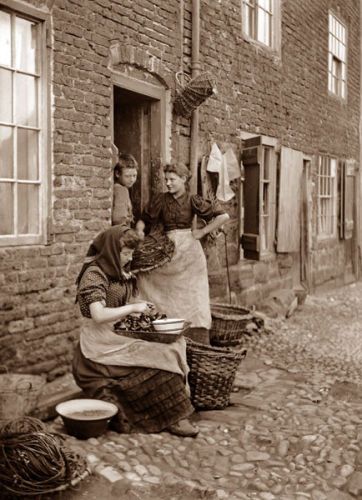
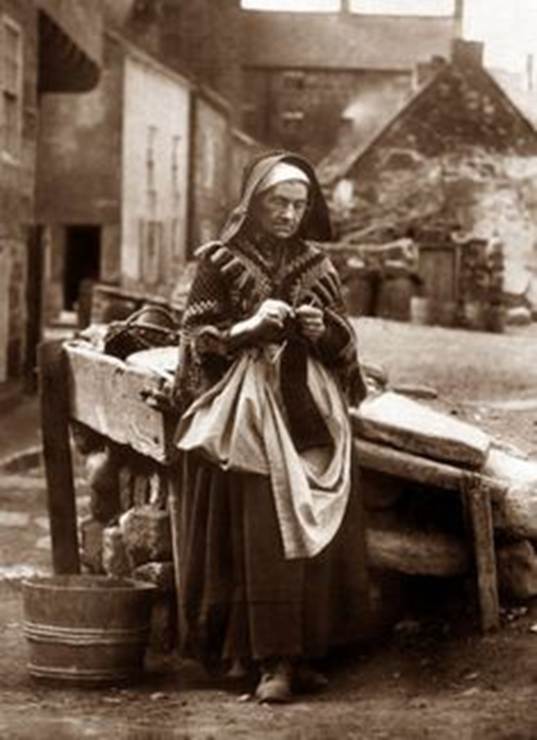
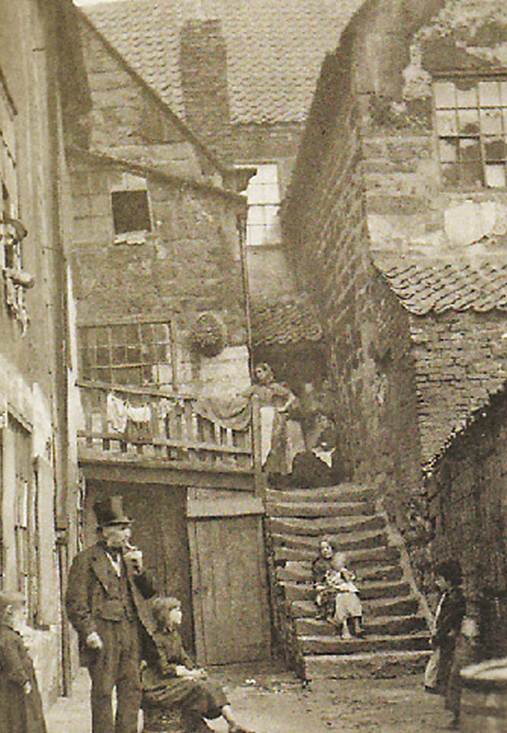
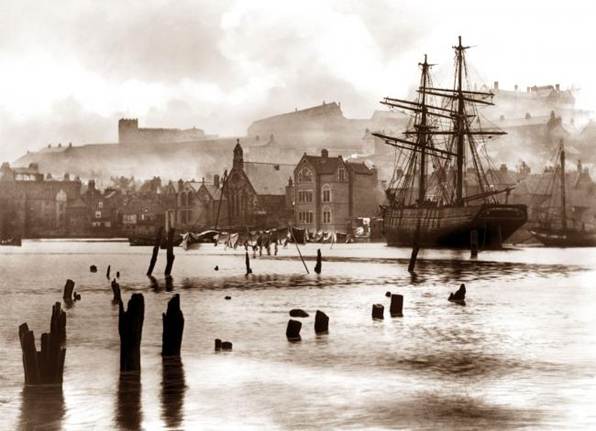
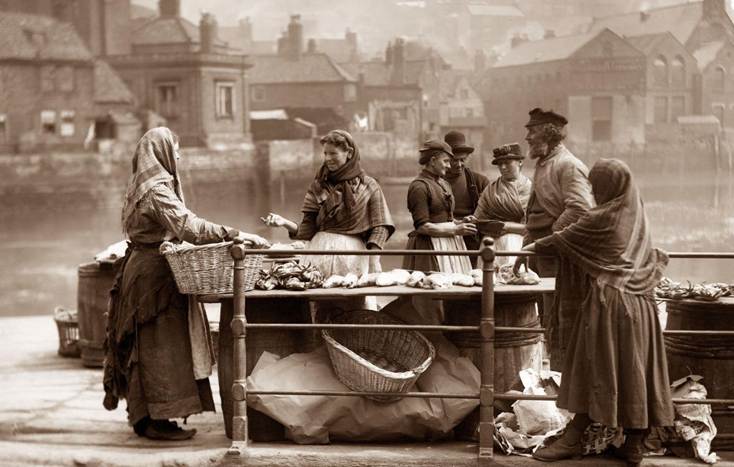
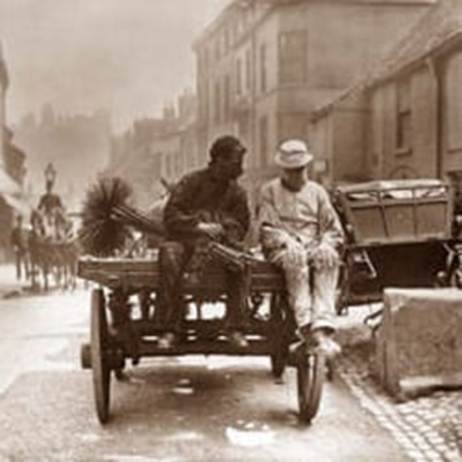
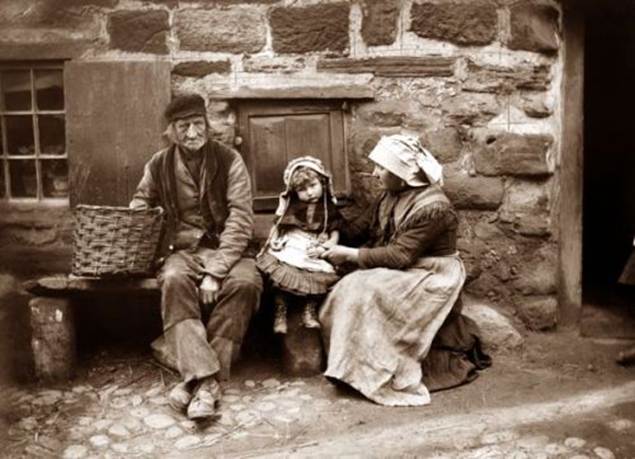
Flowergate, late nineteenth century
From the middle
and the north part of Skinner street several rows of neat houses ascend towards
the west, at right angles: these, with a cross row at the top, parallel to the
street, receive the common appellation of Farndale fields the former name of the
ground which they occupy, and originally derived from the family name Farndale.
(Young, Rev George. 1817. A History of Whitby
and Streoneshalh Abbey. Whitby: Clark and Medd. Page
509).
1891
In 1891 the
census records showed an average age of Whitby's population of 13,414 to be just
27 years old. There were extremely high levels of infant mortality among those
who lived on the east side of the town.
1914
On 30 October
1914, the hospital ship Rohilla was sunk,
hitting the rocks within sight of shore just off Whitby at Saltwick Bay. Of the 229 people on board, 85 lost their
lives in the disaster; most are buried in the churchyard at
Whitby.
In a raid on
Scarborough, Hartlepool and Whitby in December 1914, the town was shelled
by the German battlecruisers Von der Tann and Derfflinger. In the final assault on the Yorkshire coast
the ships aimed their guns at the signal post on the end of the headland.
Whitby Abbey sustained considerable damage in the attack which lasted ten
minutes. The German squadron responsible for the strike escaped despite
attempts made by the Royal Navy.
1919
The Whitby Gazette of 31 January 1919 published a letter
objecting to dark, damp and crowded housing on the east side, declaring them to
be far worse than the London slums in the East End and advocating that: “The
unhealthy houses be pulled down, the streets widened, and that Whitby shall be
made into a place of health and beauty... then will be the time for artists to
paint Whitby with its red tiled roofs that are water tight.”
1955
During the early
20th century the fishing fleet kept the harbour busy and few cargo boats used the port. It was revitalised as a result of a strike at Hull docks in 1955 when
six ships were diverted and unloaded their cargoes on the fish quay.
1964
Endeavour Wharf,
near the railway station, was opened in 1964 by the local council.
1971
The number of
vessels using the port in 1972 was 291, increased from 64 in 1964. Timber,
paper and chemicals are imported while exports include steel, furnace-bricks
and doors. The port is owned and managed by Scarborough Borough Council since
the Harbour Commissioners relinquished responsibility in 1905.
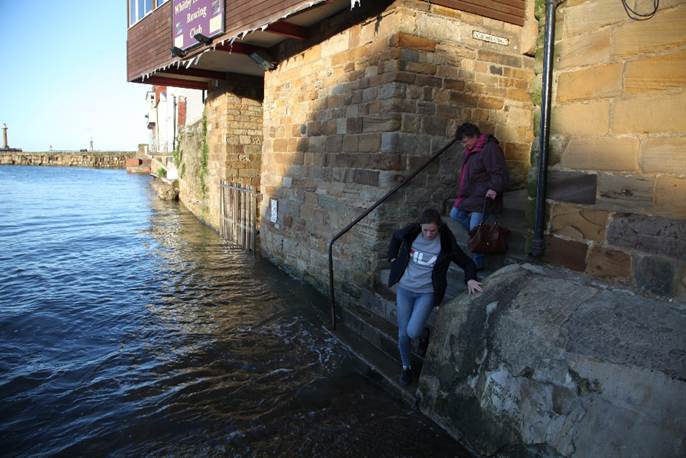
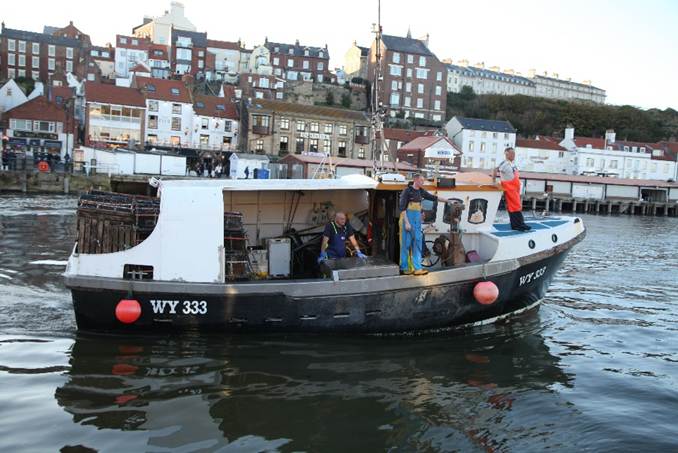
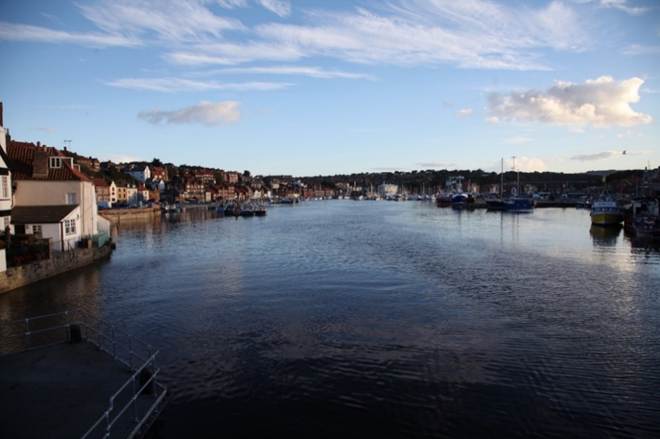
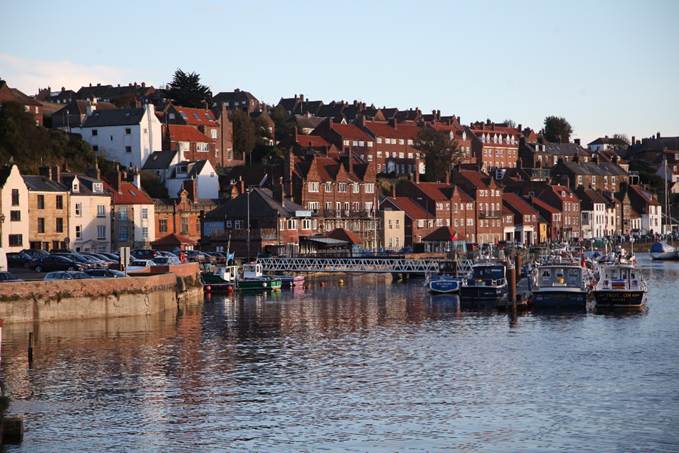
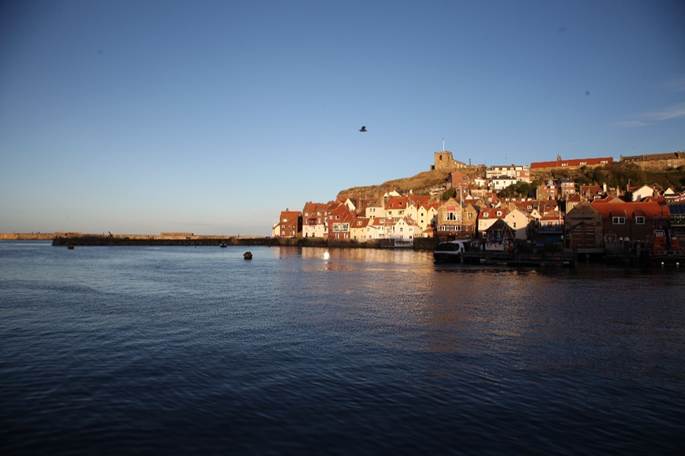
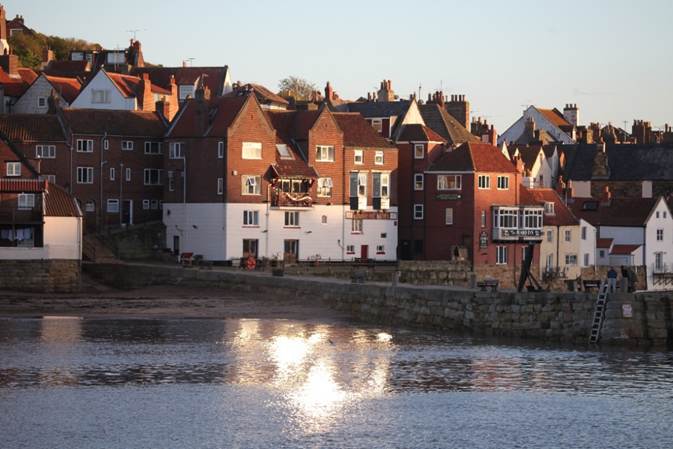
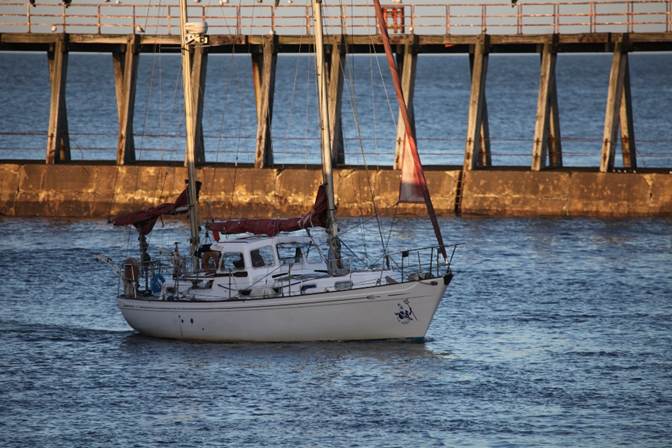
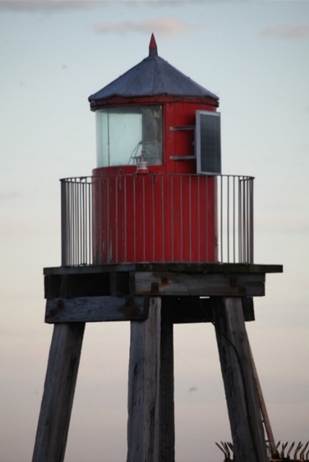
Whitby today
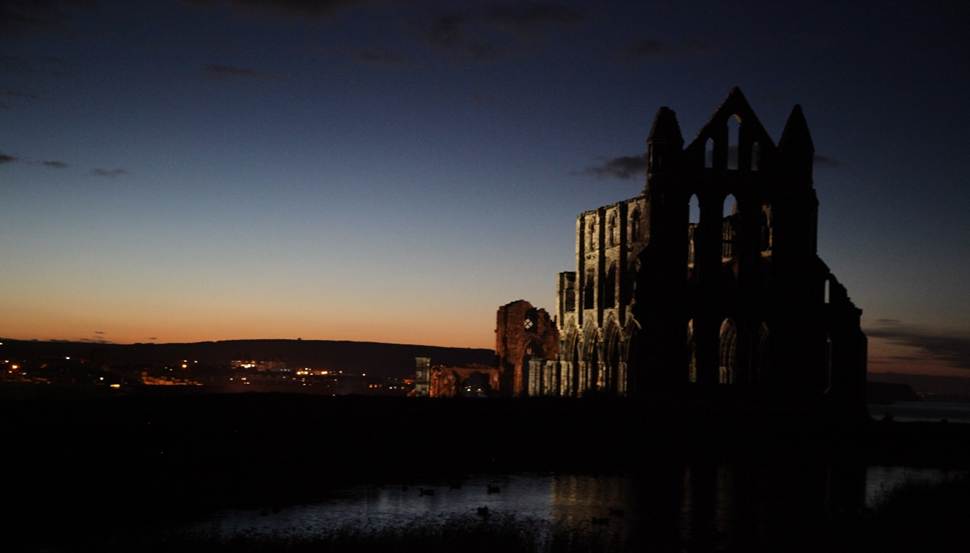
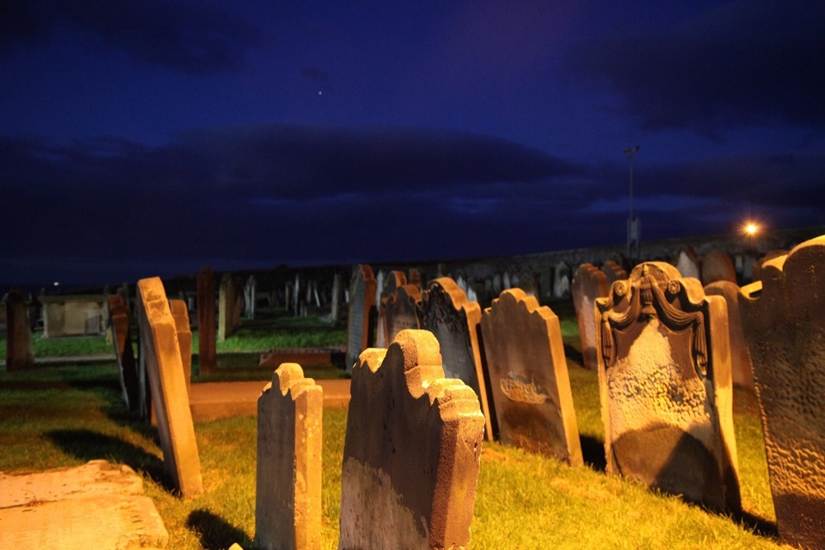
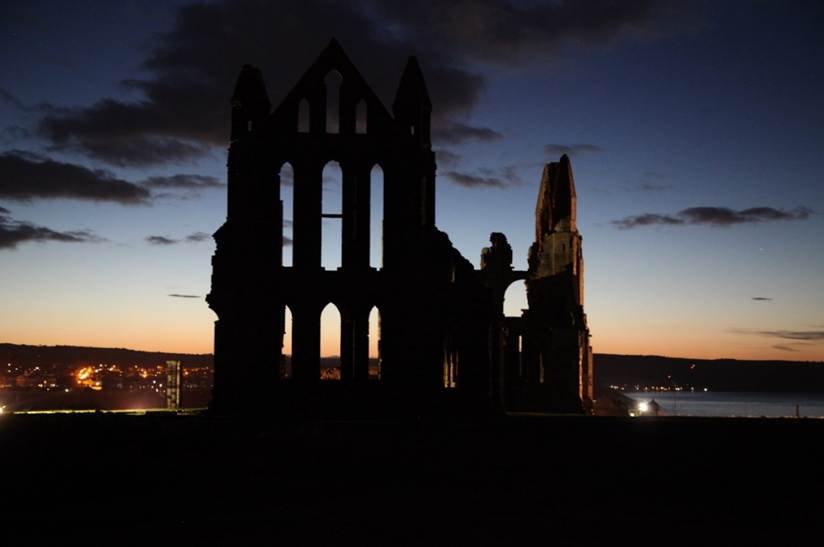
Bram Stoker arrived at Mrs Veazey’s guesthouse at 6 Royal
Crescent, Whitby, at the end of July 1890.
As the business manager of actor Henry Irving, Stoker had just completed a
gruelling theatrical tour of Scotland. It was Irving who recommended Whitby, where
he’d once run a circus, as a place to stay. Stoker, having written two novels
with characters and settings drawn from his native Ireland, was working on a
new story, set in Styria in Austria, with a central character called Count Wampyr.
Stoker had a week on his own to explore before being joined by his
wife and baby son. Mrs Veazey liked to clean his room each morning, so he’d
stroll from the genteel heights of Royal Crescent down into the town. On the way,
he took in the kind of views that had been exciting writers, artists and
Romantic-minded visitors for the past century.
The favoured Gothic literature of the period was set in foreign
lands full of eerie castles, convents and caves. Whitby’s windswept headland,
the dramatic abbey ruins, a church surrounded by swooping bats, and a long
association with jet, a semi-precious stone used in mourning jewellery, gave a
homegrown taste of such thrilling horrors.
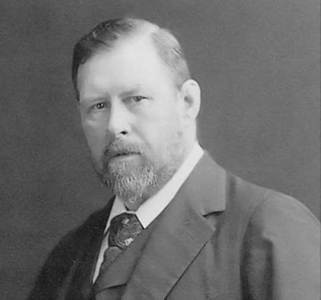
Bram
Stoker photographed in about 1906
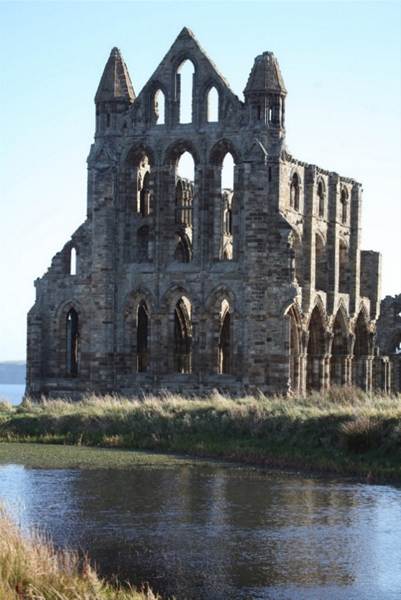
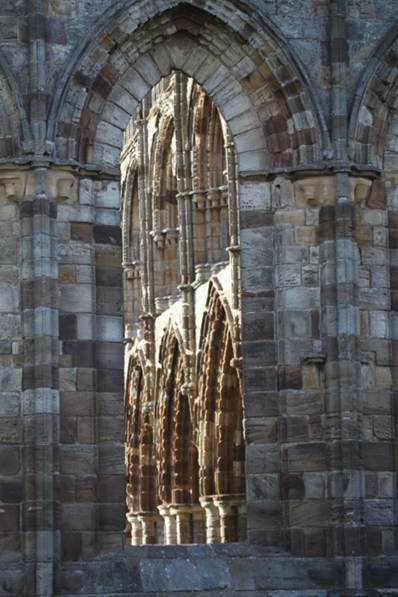
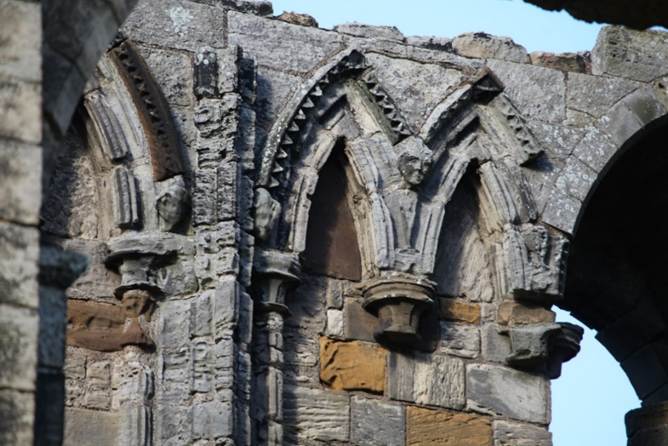
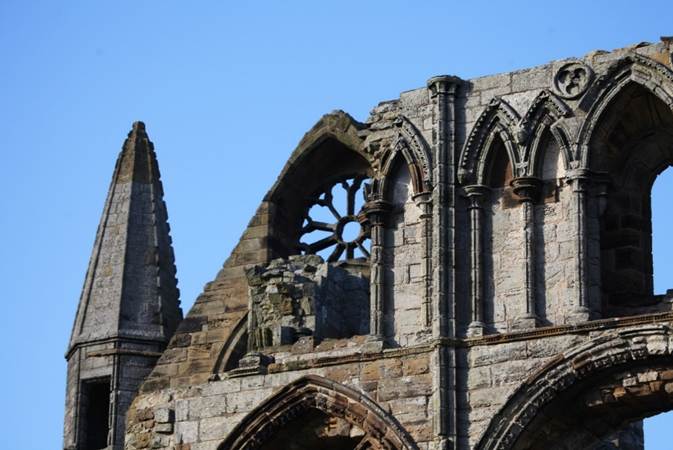
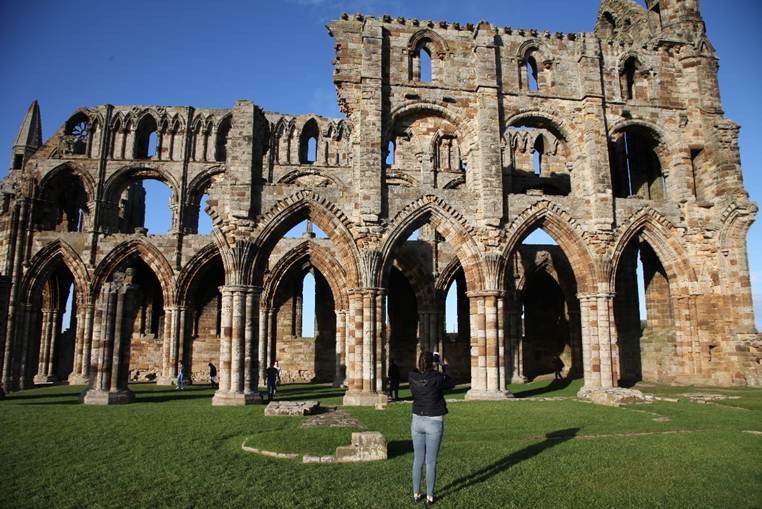
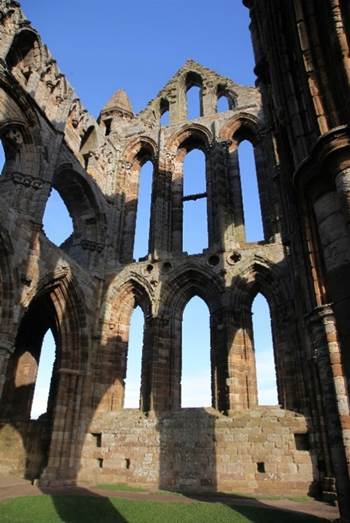
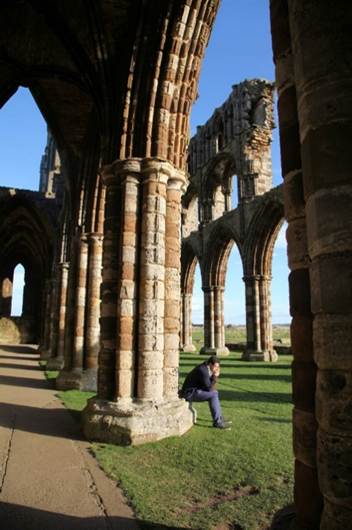
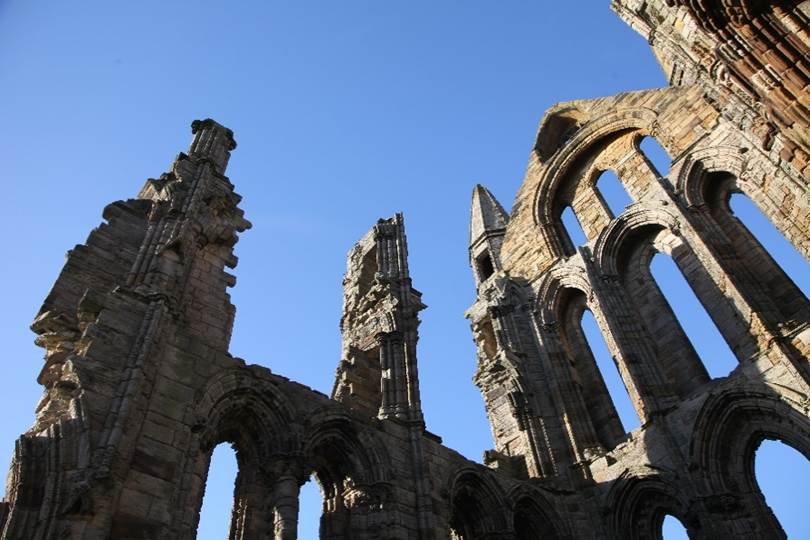
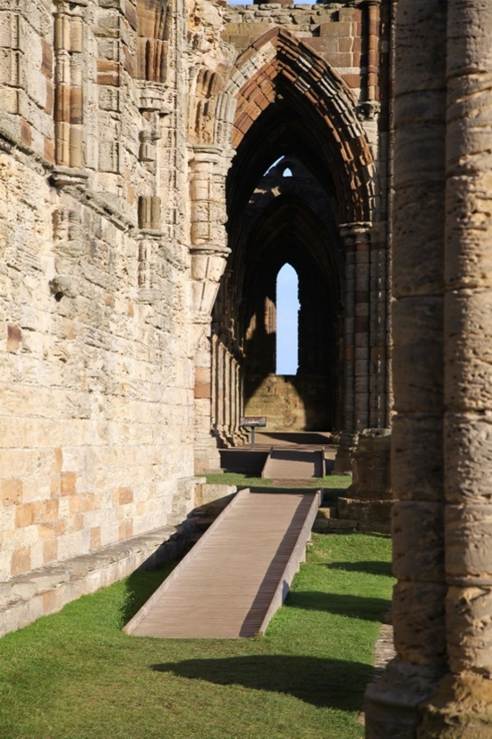
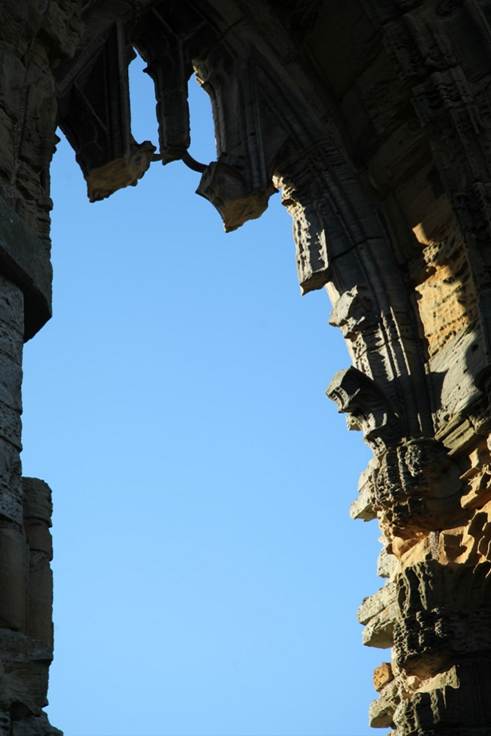
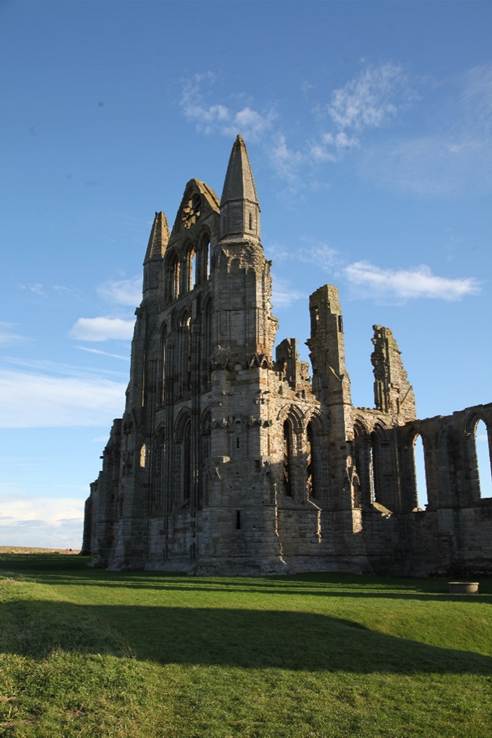
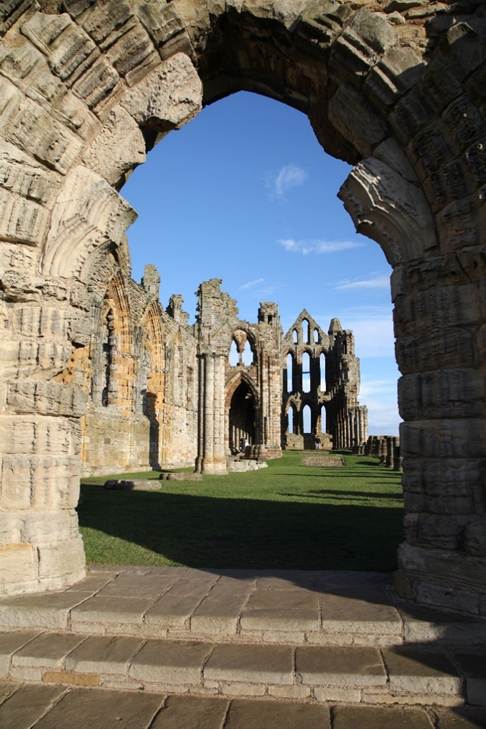
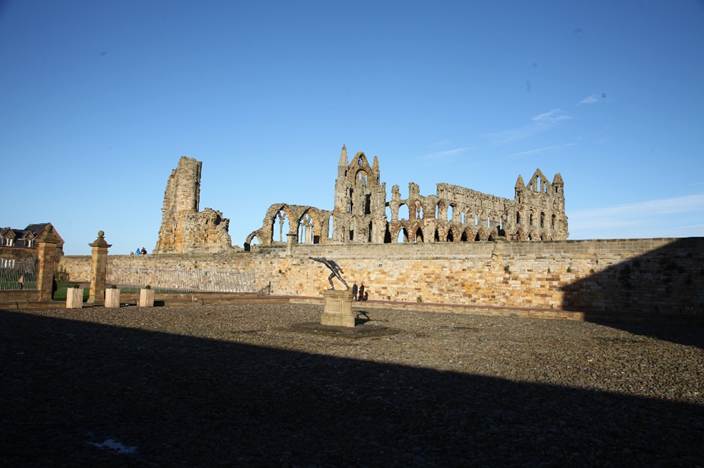
High above Whitby, and dominating the whole town, stands Whitby Abbey, the ruin of a
once-great Benedictine monastery, founded in the 11th century. The medieval
abbey stands on the site of a much earlier monastery, founded in 657 by an
Anglian princess, Hild, who became its
first abbess. In Dracula, Stoker has Mina Murray, whose experiences form the
thread of the novel, record in her diary: Right over the town is the ruin of
Whitby Abbey, which was sacked by the Danes … It is a most noble ruin, of
immense size, and full of beautiful and romantic bits; there is a legend that a
white lady is seen in one of the windows.
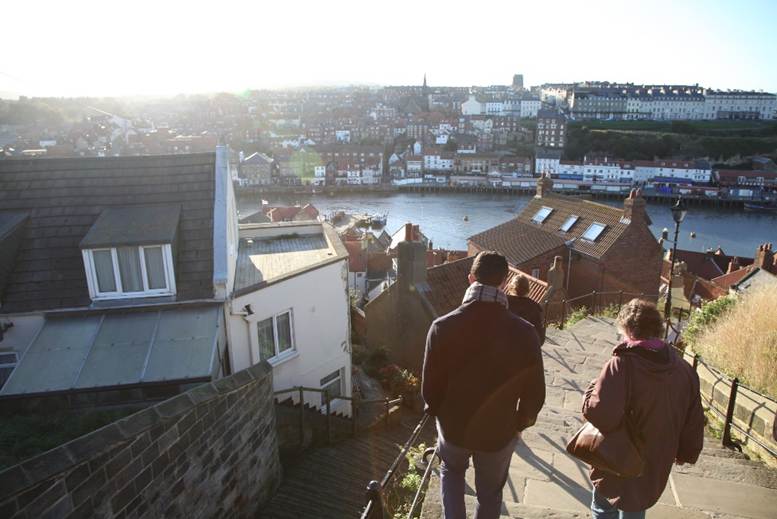
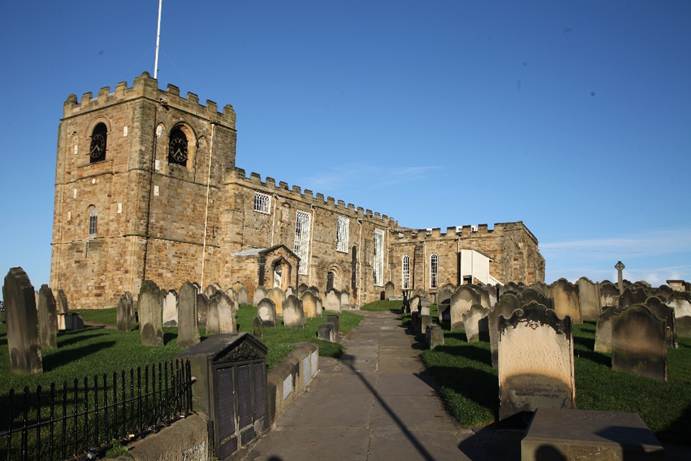
Below the abbey stands the ancient parish church of St Mary,
perched on East Cliff, which is reached by a climb of 199 steps. Stoker would have
seen how time and the weather had gnawed at the graves, some of them teetering
precariously on the eroding cliff edge. Some headstones stood over empty
graves, marking seafaring occupants whose bodies had been lost on distant
voyages. He noted down inscriptions and names for later use, including
‘Swales’, the name he used for Dracula’s first victim in Whitby.
On 8 August 1890, Stoker
walked down to what was known as the Coffee House End of the Quay and entered the
public library. It was there that he found a book published in 1820, recording
the experiences of a British consul in Bucharest, William Wilkinson, in the
principalities of Wallachia and Moldavia (now in Romania). Wilkinson’s history
mentioned a 15th-century prince called Vlad Tepes who was said to have impaled
his enemies on wooden stakes. He was known as Dracula. the ‘son of the dragon’.
The author had added in a footnote: Dracula in the Wallachian language means
Devil. The Wallachians at that time … used to give this as a surname to any
person who rendered himself conspicuous either by courage, cruel actions, or
cunning.
While staying in Whitby, Stoker would have heard of the shipwreck
five years earlier of a Russian vessel called the Dmitry, from Narva.
This ran aground on Tate Hill Sands below East Cliff, carrying a cargo of
silver sand. With a slightly rearranged name, this became the Demeter from Varna
that carries Dracula to Whitby with a cargo of silver sand and boxes of earth.
So, although Stoker was to spend six more years on his novel
before it was published, researching the landscapes and customs of
Transylvania, the name of his villain and some of the novel’s most dramatic
scenes were inspired by his holiday in Whitby. The innocent tourists, the
picturesque harbour, the abbey ruins, the windswept churchyard and the salty tales
he heard from Whitby seafarers all became ingredients in the novel.
In 1897 Dracula was
published. It had an unpromising start as a play called The Undead,
in which Stoker hoped Henry Irving would take the lead role. But after a test
performance, Irving said he never wanted to see it again. For the character of
Dracula, Stoker retained Irving’s aristocratic bearing and histrionic acting
style, but he redrafted the play as a novel told in the form of letters, diaries,
newspaper cuttings and entries in the ship’s log of the Demeter.
The log charts the gradual disappearance of the entire crew during
the journey to Whitby, until only the captain is left, tied to the wheel, as
the ship runs aground below East Cliff on 8 August, the date that marked
Stoker’s discovery of the name ‘Dracula’ in Whitby library. A ‘large dog’
bounds from the wreck and runs up the 199 steps to the church, and from this
moment, things begin to go horribly wrong. Dracula has arrived.
Bibliography
Whitby in the time of Cook, Catalogue to the expedition at the Captain Cook Memorial Museum, 2018.
A Picture of Whitby and its environs, Rev. George Young D.D, 1840. You can get a copy
from Yorkshire CD Books.
Coals from Newcastle,
Roger Finch, Terence Dalton, Lavenham, Suffolk, 1973.
Young, Rev George. 1817. A History of Whitby and Streoneshalh
Abbey. Whitby: Clark and Medd.
The English
coasting trade 1600 – 1750, T S Willan, Manchester University, 1938.
History of Whitby,
two volumes, George Young, Clark and Medd, Whitby, 1817.
The Voyages of Captain Cook, Anthony Cornish, 2008.
A short history
of England, G M
Trevelyan, 1942.
Richard
Weatherill. 1908. The
Ancient Port of Whitby and Its Shipping. Whitby: Horne and Son, Haithi Trust. (J T Farndale was a subscriber)