Eboracum (York)
The Roman Capital of northern England
where Constantine was proclaimed Emperor
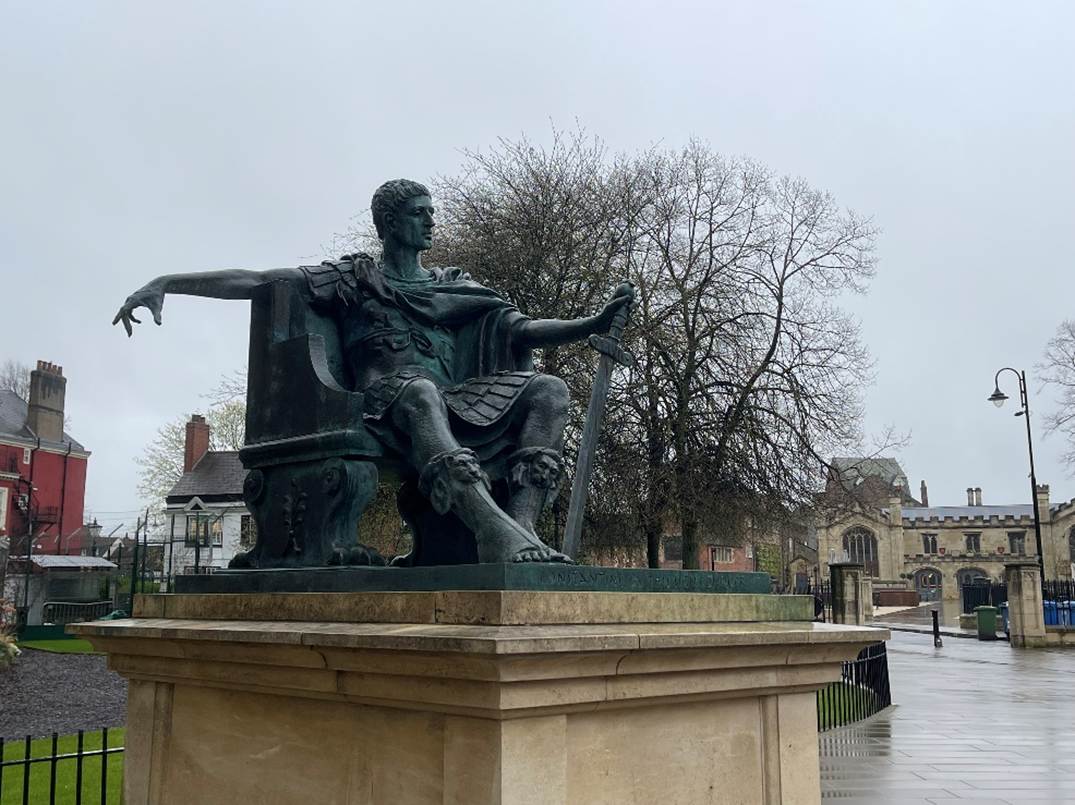
There is an
accompanying York chronology, with references
to source material.
The Eagle
of the Ninth
The Romans
came to Britain, to stay, from 43 CE. Initially the Romans didn’t venture north
of the Humber and Don, but traded with the Parisii
and Brigantes. The area of modern York was part of the lands of a Celtic
tribal confederation, the Brigantes.
Cartimandua
was the Brigantes’ queen. Her position was threatened by an open revolt by her
husband, Venutius. It may have been this revolt that provided a purpose for
Roman intervention.
In 71 CE the
new Roman Governor, Quintius
Petillius Ceralius marched north from Lincoln to occupy Brigantes
and Parisii territory. The
Ninth Legion, known as Hispana, erected a large camp at Delgovicia,
near where Malton, to the northeast of York, stands today.
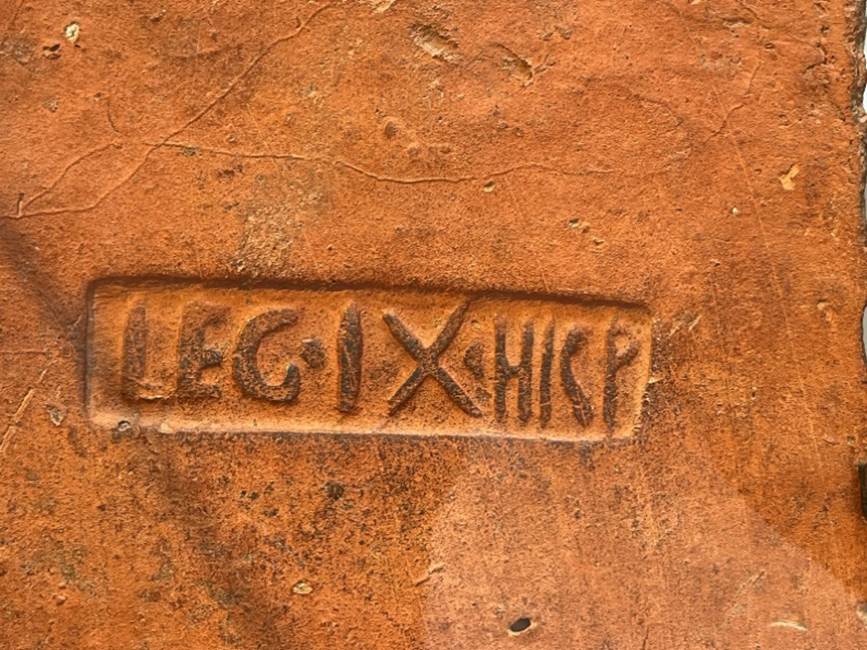
Legionary
Tile, 70 to 120 CE (Yorkshire Museum)
The area of
modern York was an ideal site for a fort in a potentially neutral zone between
the Brigantes and the Parisii. A larger
military camp was therefore constructed by the Romans on an elevated plateau
beside the Ouse, and it became known as Eboracum, the ‘place of the
yews’. The River Ouse provided a navigable route for supplies through the
Humber Estuary. Other rivers such as the Foss and Derwent were navigable by
smaller vessels. The river systems also provided natural lines of defence. The
Romans initially built an earth and timber fort on the north east side of the
Ouse, which formed the basis for York’s city centre today. Eboracum
became the base of some 5,000 legionaries who made up the Ninth Legion.
The
Ninth Legion was at York from 71 CE to about 120 CE. It disappeared from
the records after about 120 CE and the legion was once thought to have been
wiped out in about 108 CE in northern Britian. The story was immortalised in
Rosemary Sutcliff’s 1954 novel, The Eagle of the Ninth.
However later evidence of the Ninth Legion from Nijmegen suggests that the
Legion had a later fate on continental Europe.
Soldiers
stationed in Eboracum came from across northern Europe, though only a
small number came from Italy and very few from Rome itself. The Ninth and later
their replacement the Sixth Legions had been previously stationed in Spain,
Africa, Germany and Pannonia.
The standard
bearer, Lucius Duccius Rufinus was a 28 year old soldier from Viennes in France who died in Eboracum.
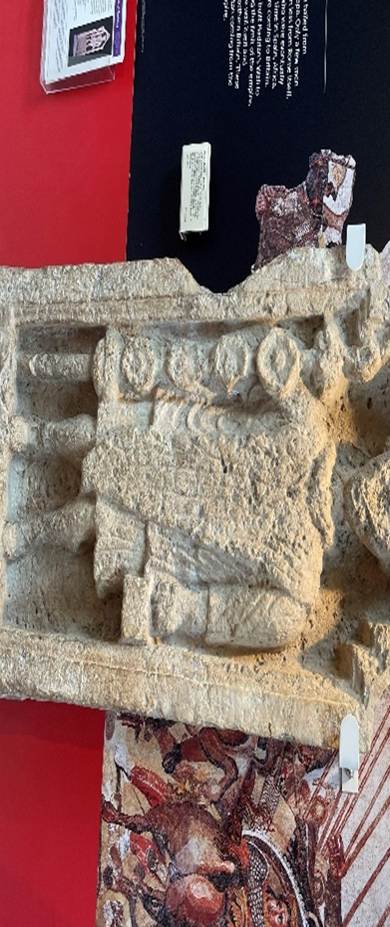
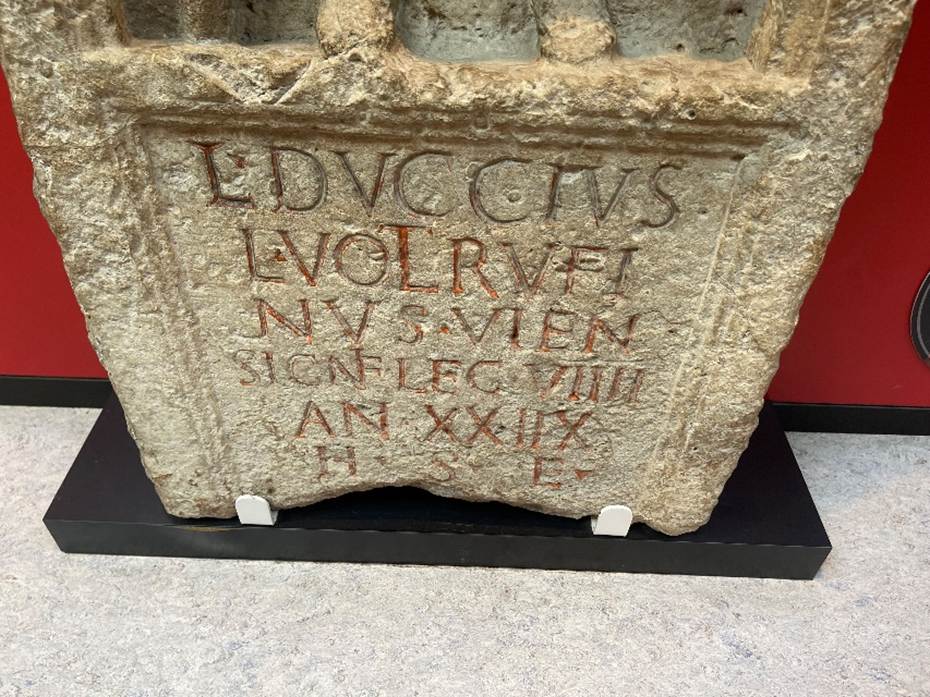
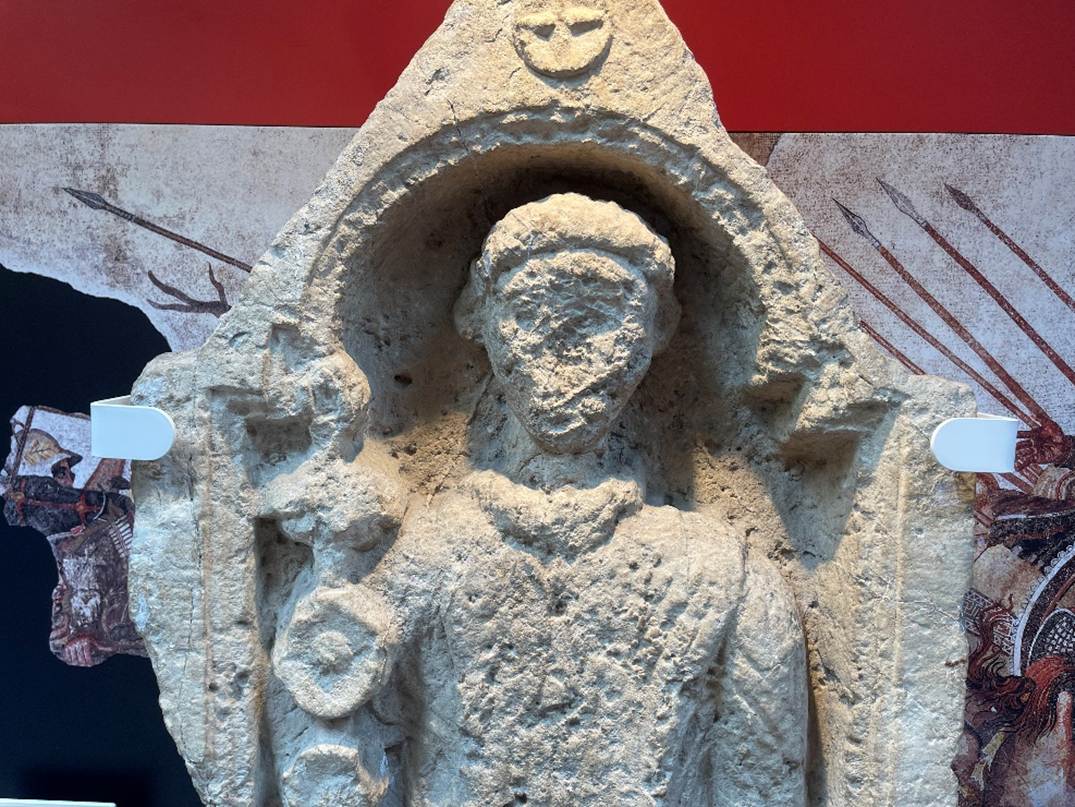
Lucius
Duccius Rufinus, a 28 year old standard bearer from Viennes,
France (Yorkshire Museum, found in Mickelgate, York)
The
imperial metropolis
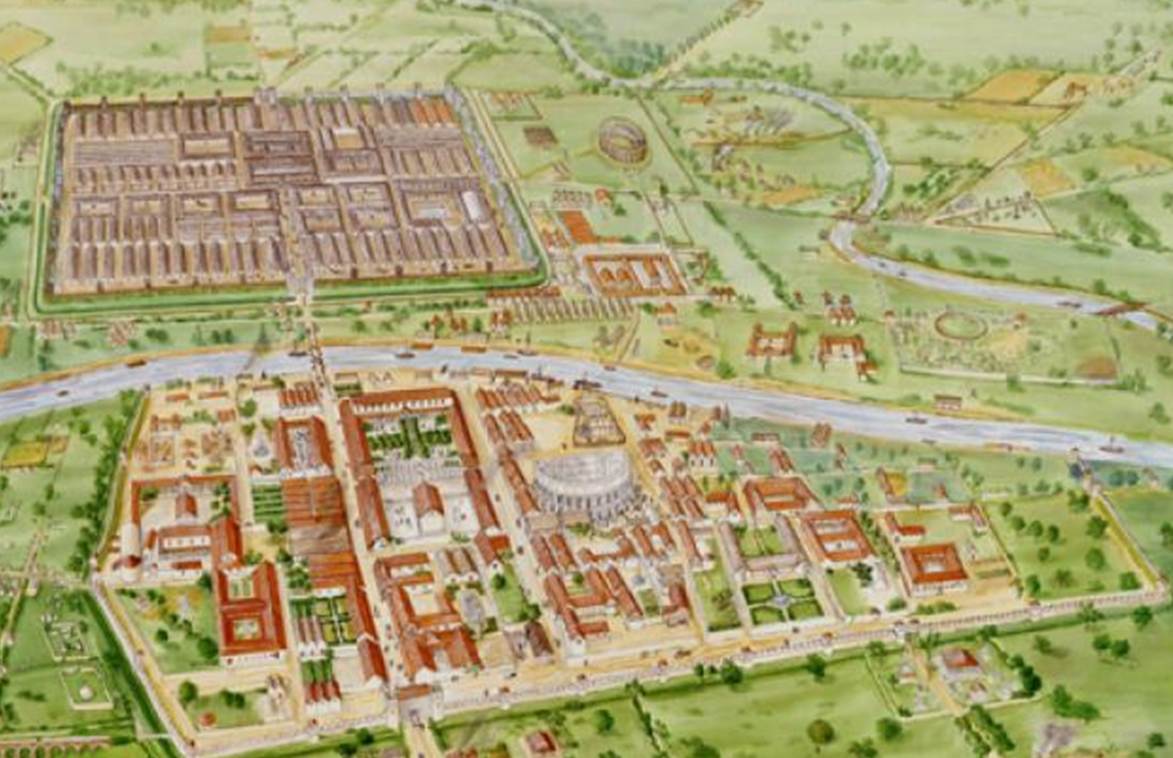
As this
fortress grew in importance, a civilian settlement developed on the opposite
bank of the river. The civilian settlement provided
shops and craftsmen and other services.
It has long been recognised that the
defences of the legionary fortress of York contain evidence for five different
building periods.
· The first, of earth revetted with turf, is readily assignable to c. 71 under
the governor Petilius Cerealis; excavations in York
have yielded a certain amount of material which may be as much as 20 years
earlier than this, but this need not relate to the legionary fortress as we
know it. It may indicate the activities of troops sent into Brigantian
territory in support of Queen Cartimandua, as they were on two occasions before
71 ; or it may be a sign that we should look for native Brigantian
occupation beneath the lowest levels of the legionary fortress. It seems
unlikely that a legionary garrison was planted at York before the final
expulsion of Cartimandua in 69 or 70.
· The second defence was an enlarged
and strengthened version of the first, still built in earth and turf ; it is
normally assigned to c 85, under Iulius Agricola or his immediate successor.
· Period III, which involved the
building of a stone wall in front of the earth rampart, is dated to the reign
of Trajan by an inscription of the Ninth Legion of 107-8.
· Period IV, a rebuilding of this stone
wall, is generally assigned to the great rebuilding of the northern defences of
Britain associated with the reign of Septimius Severus, necessitated by the
destruction of 196-7.
· Similarly Period V has been ascribed
to Constantius Chlorus, rebuilding after a destruction in 296.
· LP Wenham has suggested that there is
a later period still, in the middle of the fourth century, when there were
additions to the earth rampart, even though a rebuilding of the stone wall was
not necessary.
(Septimius Severus and the
Defences of York, Michael G Jarrett, Yorkshire Archaeological Journal,
Volume 41, 1966, page 516)
Urban
settlements grew around the Roman fortifications at Eboracum, Malton and
Stamford.
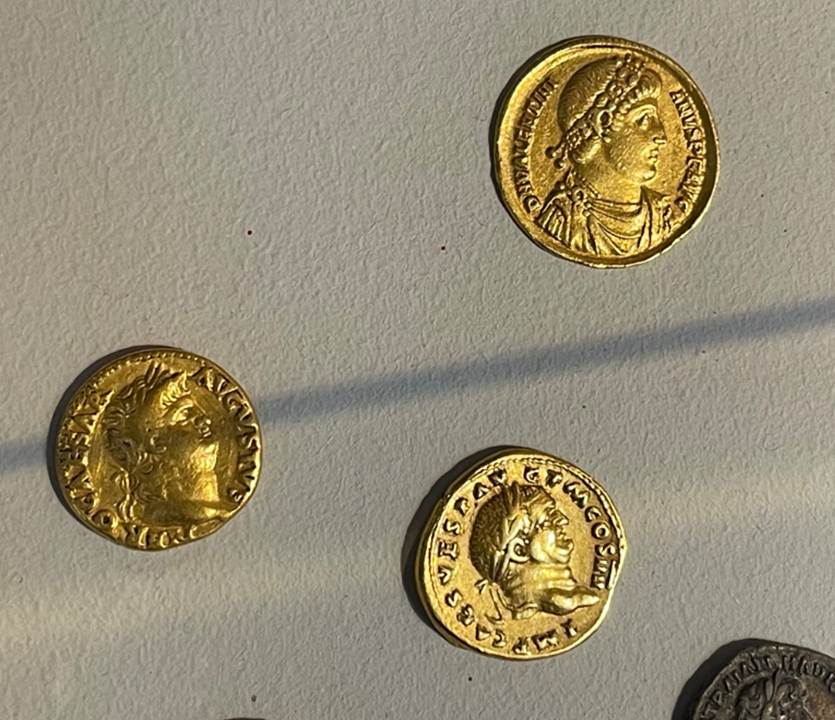
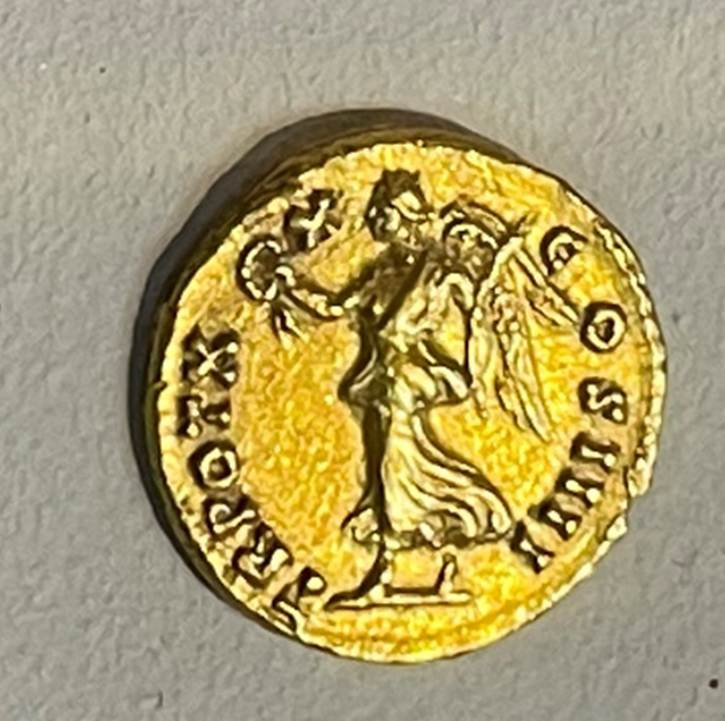
Roman
coinage (The Yorkshire Museum)
The civilian
settlement was just across a bridge or reached by ferry. Soldiers from the
fortress could relax there and soldiers and officers sometimes lived in
residential properties or large private houses alongside the civilian
population. The early civilian settlement comprised camp followers and the
families of the legionaries. Civilian settlement south west of the Ouse grew
significantly in the mid second century CE. A forum emerged at its centre and a
public bath house. There were likely to have been multiple temples where cults
were celebrated including to the gods of the classical pantheon as well as
deceased emperors. There is evidence of worship of the cult of the Egyptian
goddess Isis, with ideals of rebirth after death. The cult of Mythras was popular in Britain, a Persian sun god, engaged
in a struggle between good and evil. In all Mythraic
temples the god displayed a similar pose slaying a bull from which the blood of
life flowed.
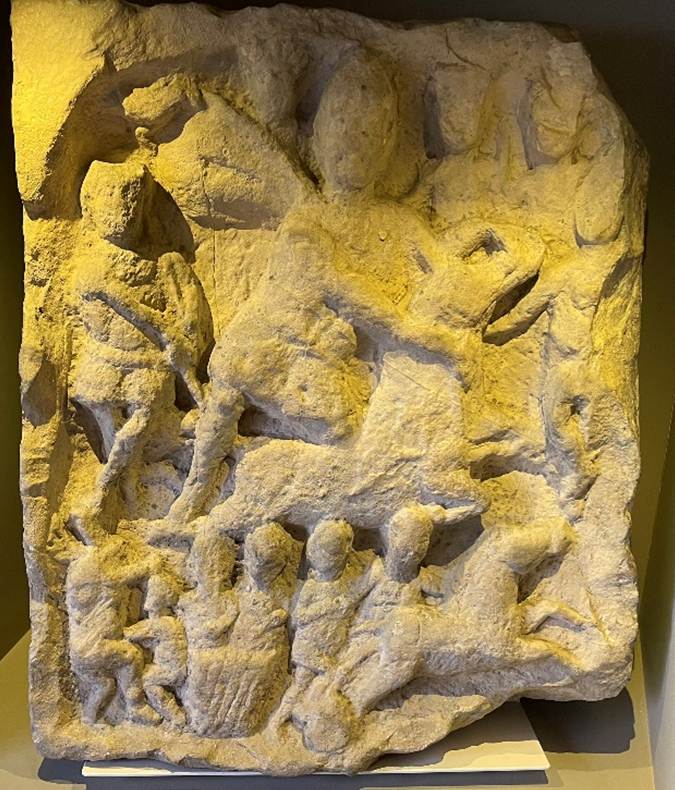
The cult
God Mythras (Yorkshire Museum, from Micklegate)
The
population of civilian Eboracum probably reached about 5,000.
The heart of
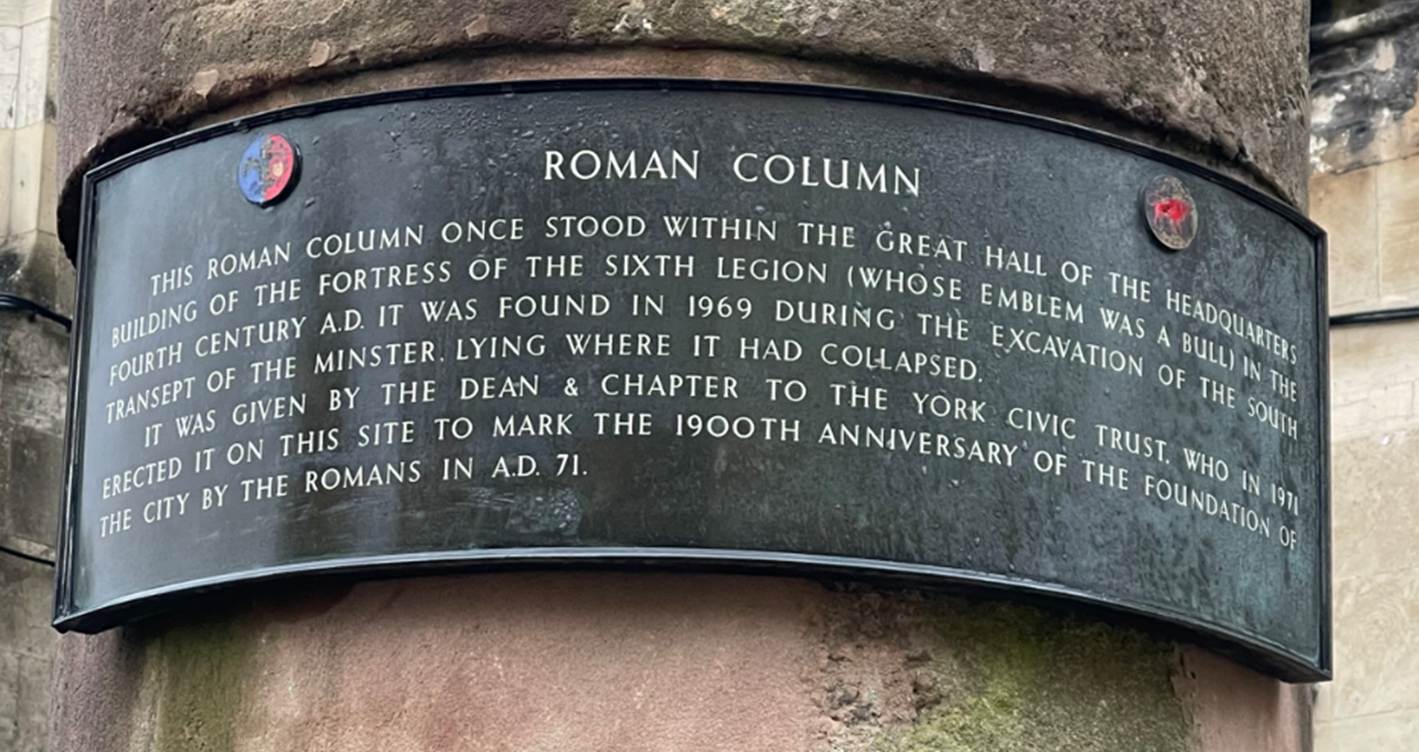
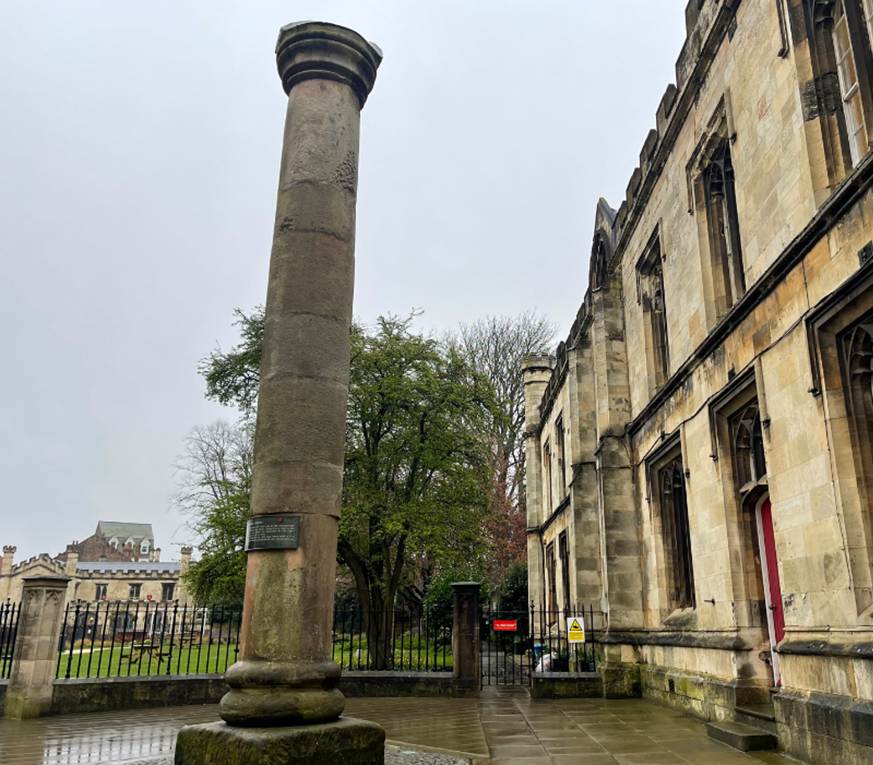
the Roman fortress was the principia, the Headquarters. A large
courtyard was surrounded by long buildings on three sides and the larger aisled
hall of the basilica on the fourth. The remains of the Roman Basilica
can be seen in the undercroft of York Minster, and
the remains of a bathhouse in the cellar of the Roman Bath pub. The Roman sewer
lies about 4 metres below Church Street and is of significant scale.
The
principal road
leading to York passed through Lindum (Lincoln) and Danum (Doncaster) to Calcaria (Tadcaster) before turning northeast to Eboracum.
The route then continued north to Isurium Brigantum
(Aldborough) and Cataractonium (Cattrick) and, in time, to the line of Hadrian’s Wall.
Other roads joined Eboracum to Delgovicias
(Malton) and to the coast at Bridlington. The roads provided a swift means for
movement of troops as well as supply routes, supported by the river network for
heavier traffic.
The Vale of
York was richly agricultural and provided cereals and bread to maintain the
army. Supplies were also imported and local craftsman made pottery and other
items in the city.
The Sixth
Legion Victrix
In about 120
CE, Hadrian replaced the Ninth Legion with the Sixth
Legion Victrix (“the Victorious Sixth Legion”), and both the fort and the
civilian settlement were rebuilt in stone.
Emperor
Hadrian (of Spanish origin) visited the settlement during his journey to build
his border wall. Men from York’s Sixth Legion began to build Hadrian’s Wall
from 122 CE. Twenty years later, from 142 CE, they were involved in the
building of the Antonine Wall. Whilst the focus of the Sixth Legion’s activity
was focused in construction of defences to the north over many decades, by the
end of the second century CE, they were back in Eboracum and began a
period of significant reconstruction of the fortress. This included projecting
towers which advanced military technology solutions by allowing archers to fire
along the line of the fortress walls.
Legio VI
was awarded the honorary title of Britannica by Commodus in 184 CE
following his own adoption of that title.
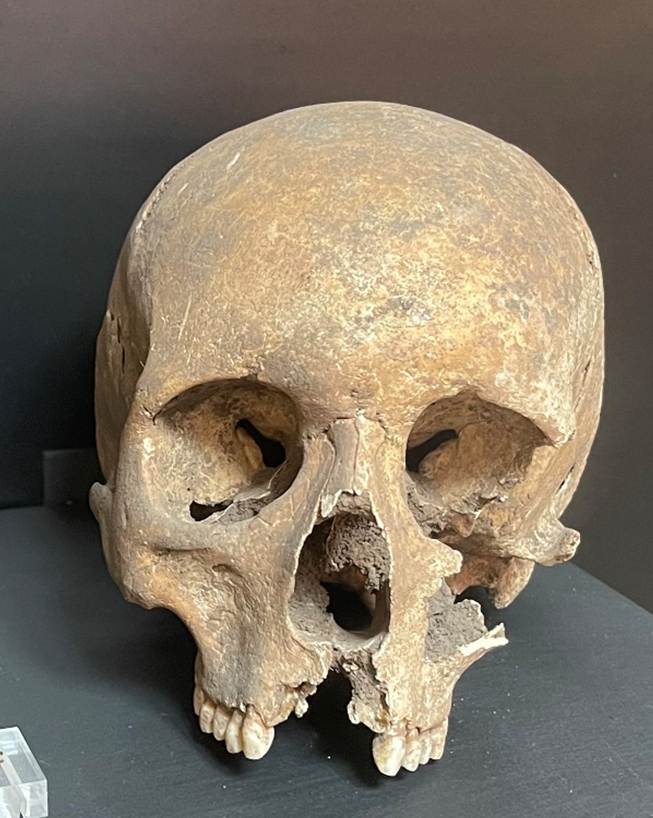
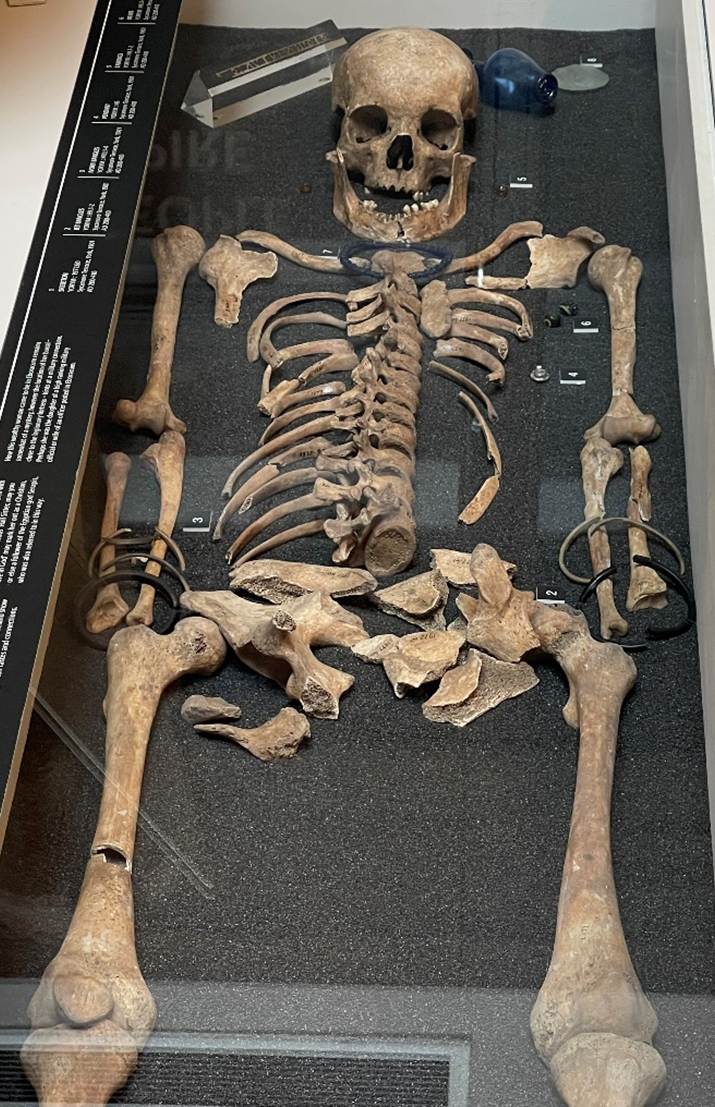
Skull of a
man in his fifties buried between York and Calcaria
(Tadcaster) (Yorkshire Museum).
Skeleton of a wealthy lady found close to the River Ouse, found
accompanied by unusual and expensive objects
(Yorkshire Museum).
Emperors
in Eboracum
During his
stay between 207 CE and 211 CE, the Emperor Septimius Severus (of Libyan
origin) proclaimed York capital of the province of Britannia Inferior,
and it is likely that it was he who granted York the privileges of a 'colonia'
or city. Severus was attended by a very large retinue of civil servants and
soldiers, including the Praetorian Guard. He also brought his wife, Julia
Domna, and their sons Caracalla and Geta. The Emperor Severus was at York while
he was conducting campaigns against the Caledonians. Accounts of his death make
some obscure references to York's topography and mention a temple of Bellona
and a domus palatina. It was at York that
Severus dated a rescript dated 5 May 210 headed Eboraci.
Severus died in York on 4 February 211 CE. He was probably cremated outside
Eboracum, but was not buried there but taken to Rome. Severus’s sons Geta and
Caracalla returned to Rome and after a bloody succession squabble Geta was
murdered and Caracalla became emperor.
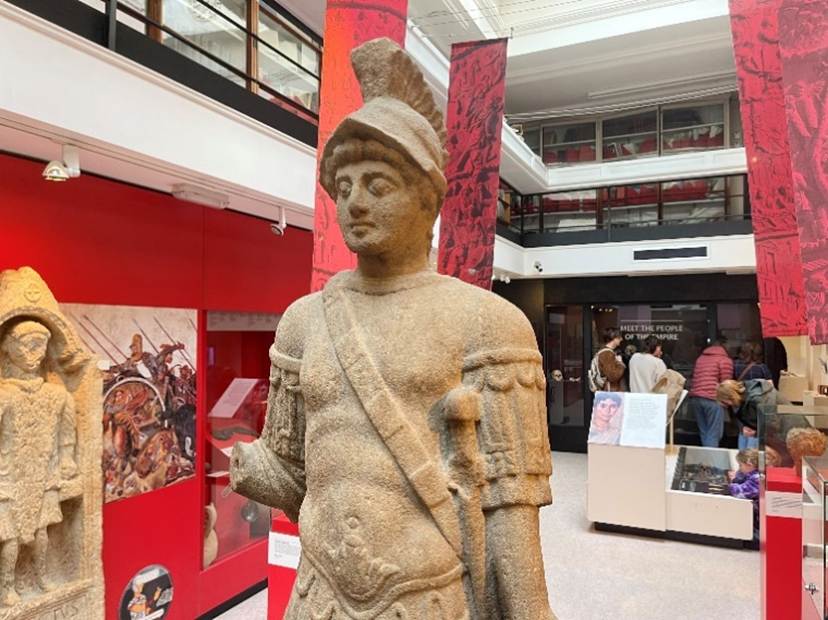
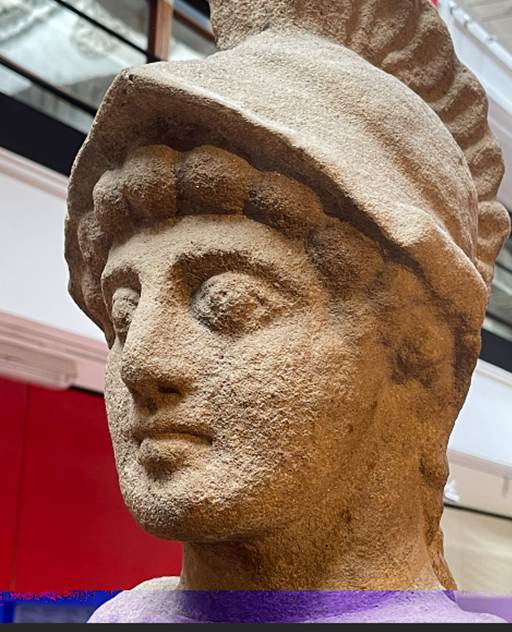
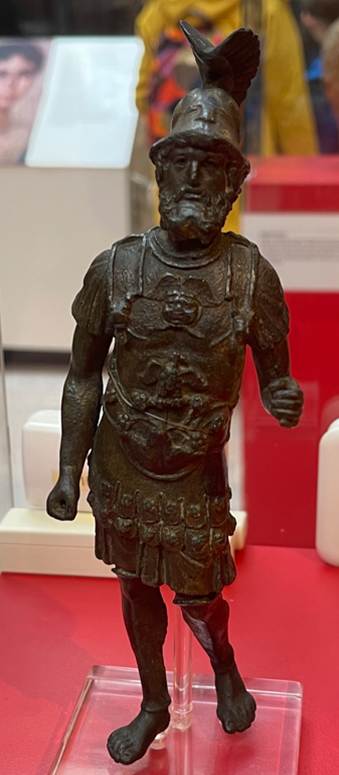
Sandstone
statute of Mars 300 to 400 CE (Nunnery Lane, York, now at The Yorkshire
Museum)
Diocletian
(284 to 305 CE) reasserted imperial authority and established a new
governmental system known as the Tetrarchy, by which four emperors would govern
the western and eastern empires, one senior (known as Augustus) and one junior
(known as Caesar). Britain had been the subject of a revolt by a Roman naval
commander, Carausius in 285 CE whose successor was defeated in 296 CE by
Constantius I who by then was Caesar in the west.
Constantius
I (Constantius Chlorus, of Serbian origin) became the second emperor to die
during his stay in Eboracum on 25 July 306 CE. He was accompanied by his
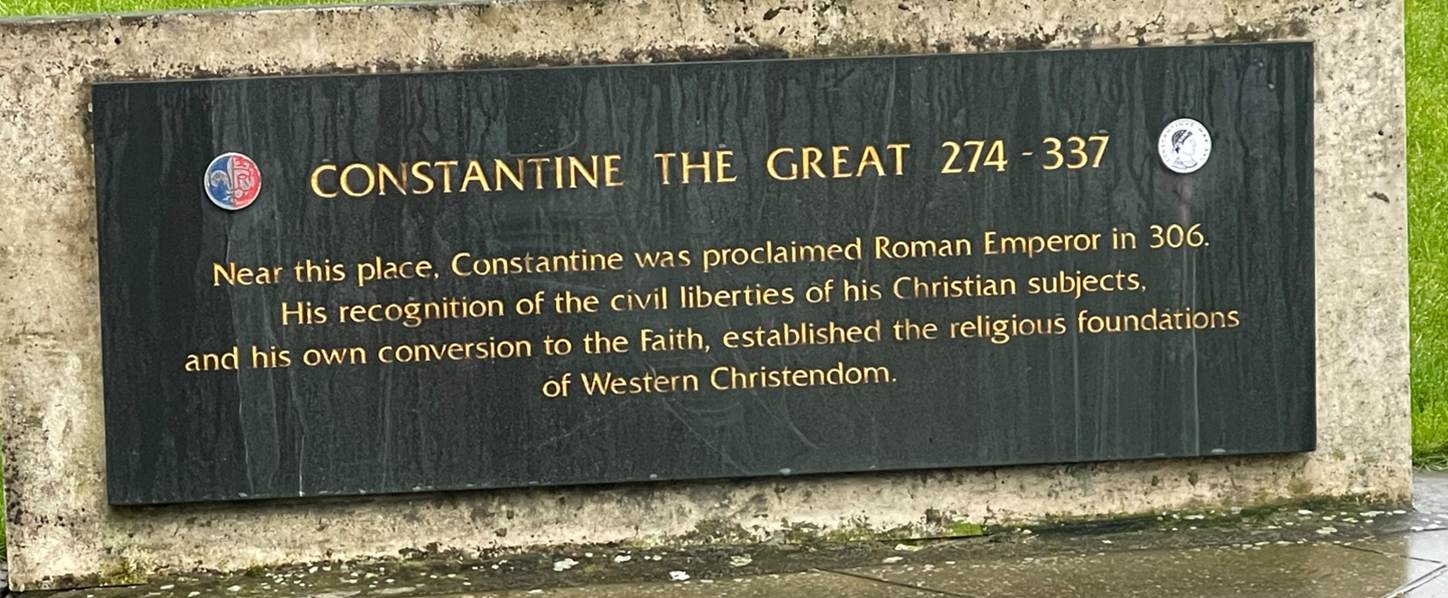
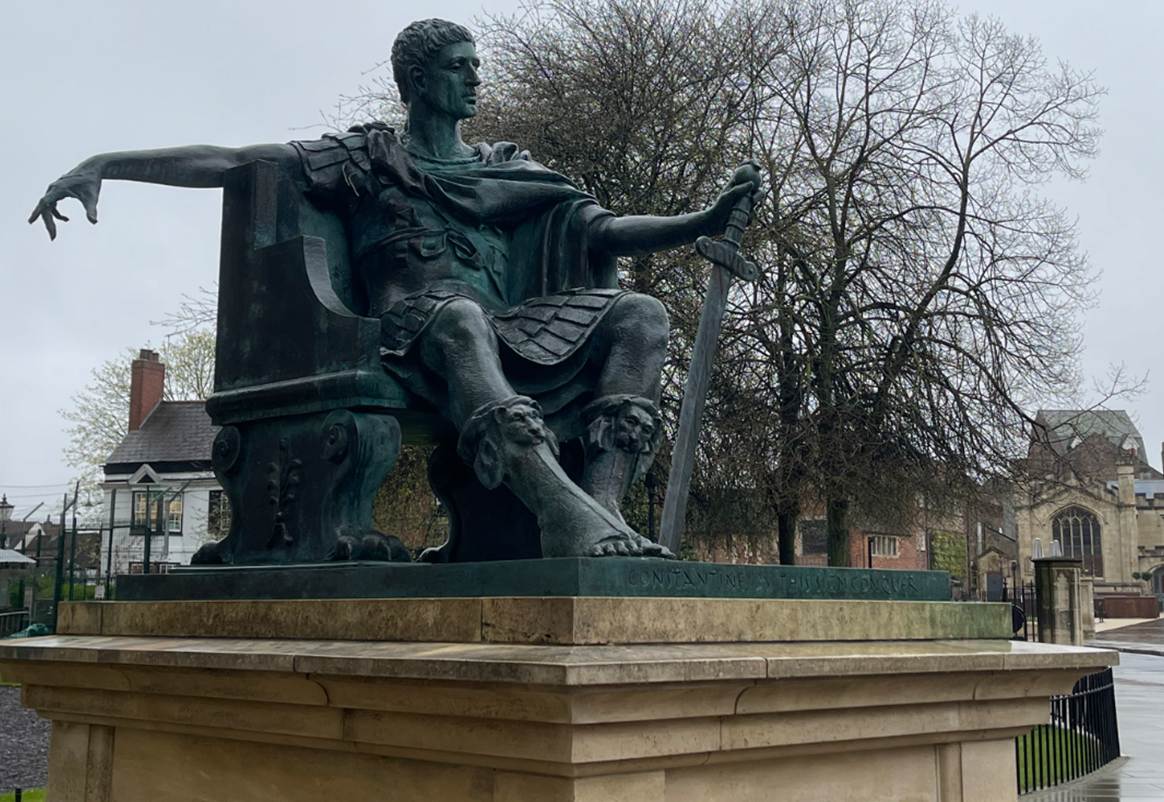
son Constantine who was proclaimed Emperor by the troops based in the fortress.
Constantine would have a profound impact on the city and on global politics.
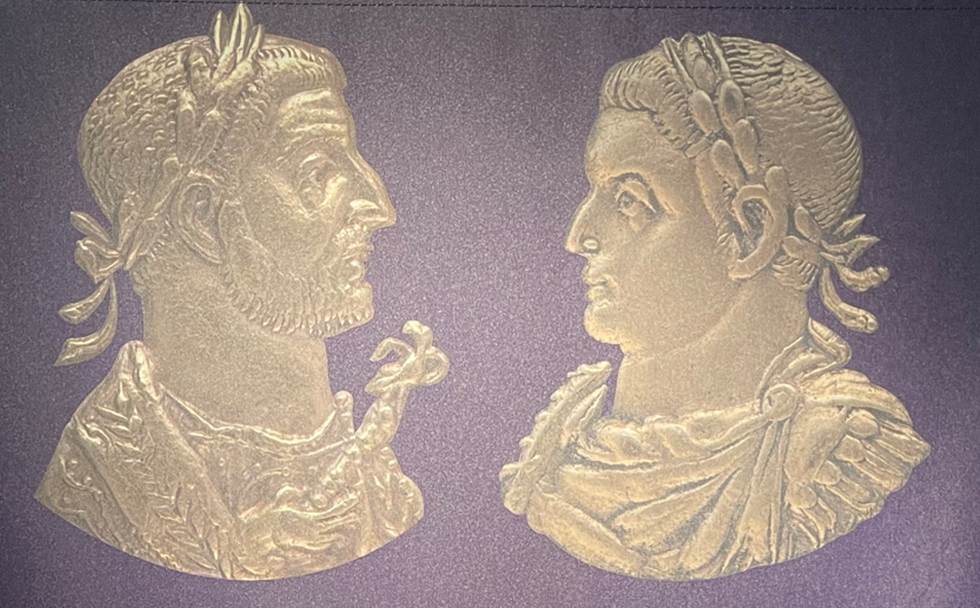
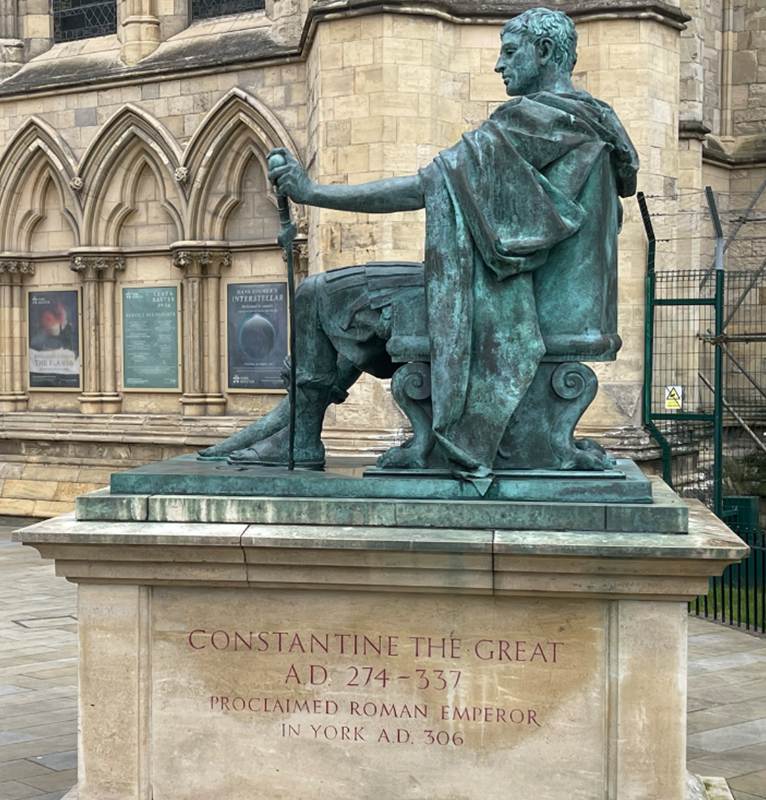
Constantius
and Constantine (Yorkshire Museum)
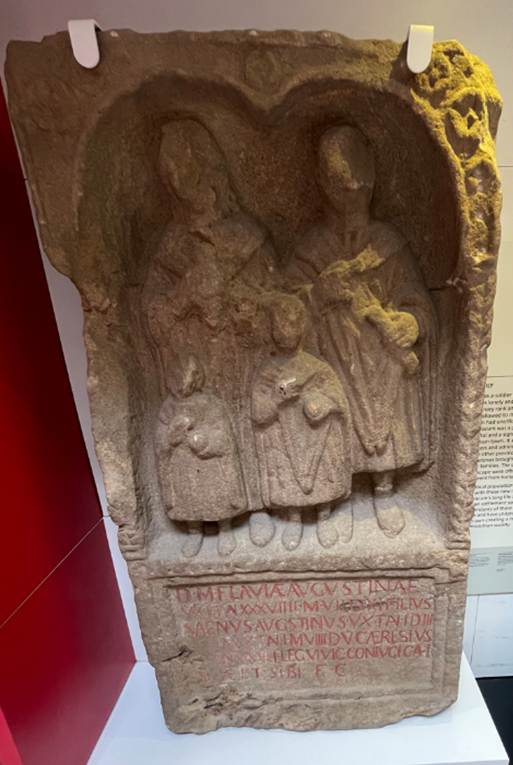
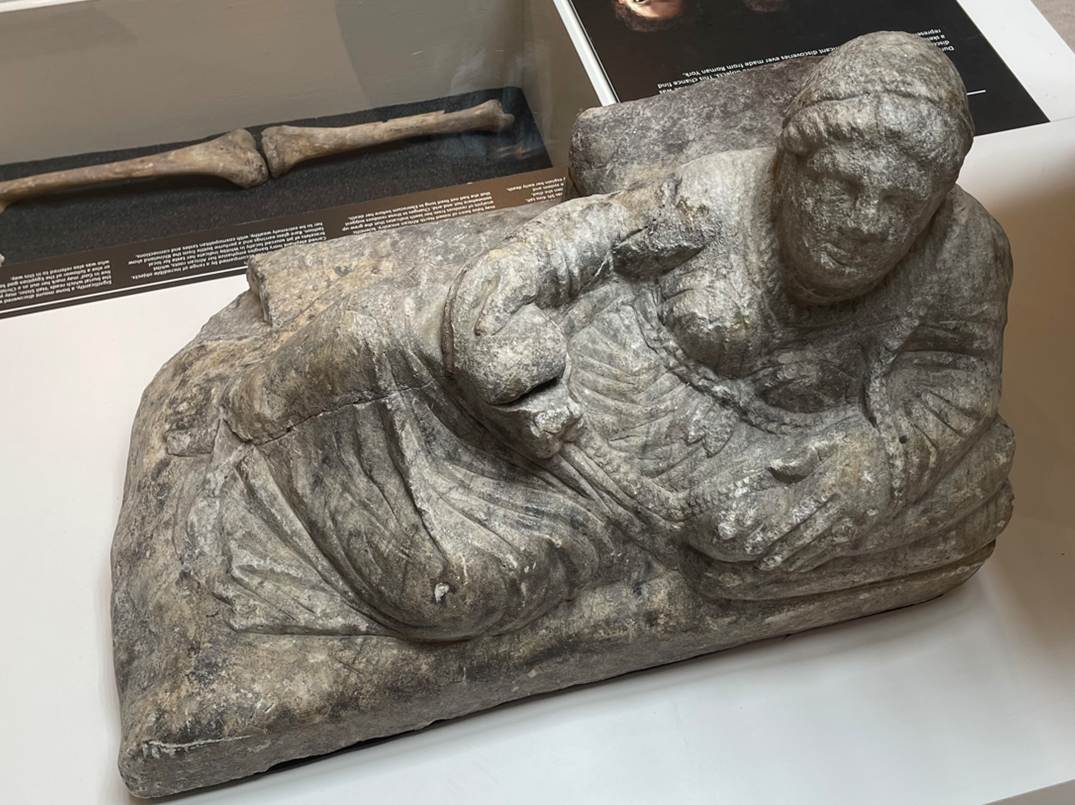
The
veteran soldier Caereslus Augustinus had lost his
wife. Flavia Augustina and his two children. This stone carving (119 to 410 CE)
seems to depict his idea of how they might have grown up as a family, had they
lived. (Yorkshire Museum)
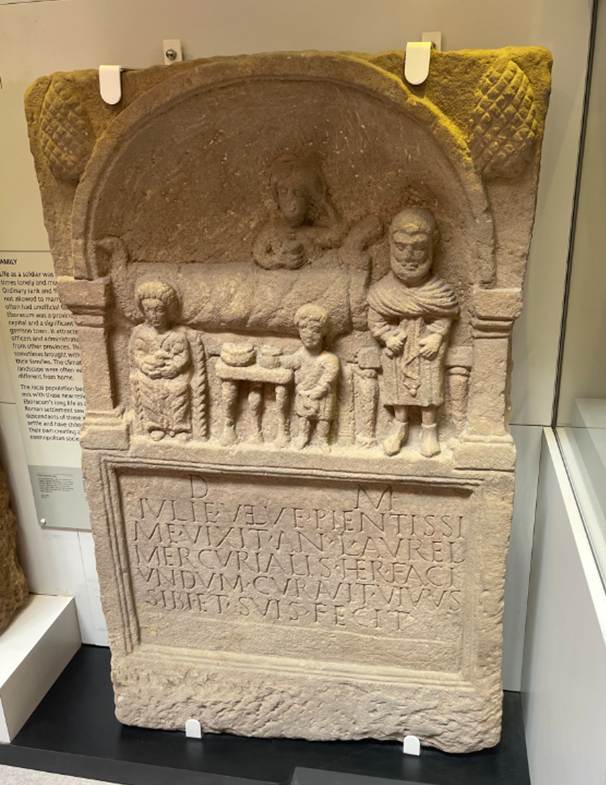
Tombstone
(200 to 300 CE) of Julia Velva. Her heir Aurelius Mercurialis would gather at
the tomb on the anniversary of her death and would have believed she could take
part. (Yorkshire Museum).
Constantine
returned to continental Europe and gradually asserted his authority over his
rivals, emerging as the supreme imperial ruler by 324 CE.
Constantine
I “the Great” supported Christianity, and in 313 CE issued an edict of
religious tolerance. Eboracum had its first bishop, Eborius,
appointed in 314 CE who attended the Council at Arles to represent Christians
from the province that year. By 391 CE Christianity had become so dominant that
Emperor Theodosius banned other religions.
The
increasing centralisation of Eboracum and its demand for supplies of
food was likely to have enriched landowners across the Vales of York and
Pickering. This stimulated the many villas from the area including at Hovingham and Beadlam. The
growth in commerce is evidenced by imported goods such as tableware from Gaul
and beakers and jars from the Rhinelands. The region
was able to export grain and agricultural products as well as jet from the Whitby area.
The Void
The Roman
Empire was under increasing pressure from the mid third century, but Britannia
seems to have avoided the worst of the unrest at first. However inflationary
pressures and disruption of trade must have been felt across the empire. Eboracum
nevertheless remained a provincial capital and military base throughout the
fourth century. However the size of the garrison appears to have been reduced
as the fourth century went on. Britannia was probably still reasonably peaceful
and prosperous until the last twenty years of the fourth century. By the early
fifth century, it was no longer a part of the empire. This dramatic change must
have been devastating to the indigenous population, experiencing a protected
and relatively prosperous lifestyle, which turned to chaos and threat within a
generation. At the turn of the fifth century, Eboracum was deserted and
much of the city abandoned. The trauma experienced by our ancestors of that
period can only be imagined.
While the
Roman colonia and fortress were on high ground, by 400 CE the town was
victim to occasional flooding from the Rivers Ouse and Foss. York declined in
the post-Roman era. The population shrank, trade declined, and buildings were
abandoned.
or
Go Straight to Chapter 5 – Roman Kirkdale
Or explore: