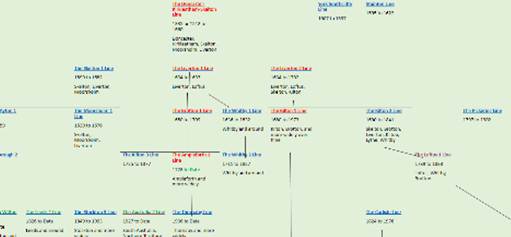
This is an
extract from the First Family Tree showing a known family relationship
|
Return to the Home
Page of the Farndale Family Website |
The story of one
family’s journey through two thousand years of British History |
The 84 family lines
into which the family is divided. Meet the whole family and how the wider
family is related |
Members of the
historical family ordered by date of birth |
Links to other pages
with historical research and related material |
The story of the
Bakers of Highfields, the Chapmans, and other related families |
Three John Farndales, who were likely
to have been father, son and grandson, were all made freemen of York.
The Freedom of the City can be
obtained in three different ways. First, by servitude; that is when the
applicant has served his full time as an apprentice in his trade before he can
be enrolled. Second, is by patrimony; that is when the children of a Freeman
claim their freedom as their heritage. Third, is by redemption; that is by the
order of the Mayor and Court of Aldermen, which means that the Freedom is given
without payment and as a reward for services rendered to the City. Fees have
varied from time to time. In the very earliest Chamberlains account books the
charge for those who had served their apprenticeship was 3s 4d or 6s 8d but
there are cases when only 20d was charged. In cases of poverty no charge was
made. Each Freeman had to take the ‘Oath of Fealty.’
No person could carry on a trade in
the City without first obtaining his Freedom.
Many sons took their father’s names.
The de was generally dropped
during the reign of Henry IV (1399 to 1412).
The evidence for
this Line is explored in another webpage.
You
can follow the hyperlinks in blue text to reach the webpage of each individual, where
you can read about their lives in more detail.
|
|
John
de Farndale * c 1278 to 1372
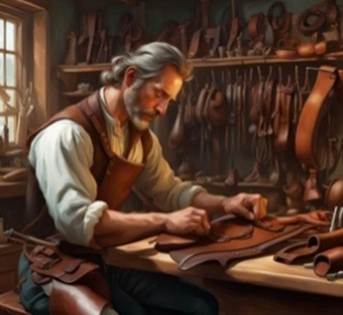
John left Farndale
and settled in Egton for a while, before returning via Farndale to live in
Rosedale for many years, where he farmed 6 acres In 1336 he took a
loan of £8 and perhaps shortly afterwards set up a business as a saddler in
York, of which city he later became a freeman |
|
|
|
|
|
|
|
|
|
|
|
|
|
|
|
|
|
|
|
|
|
|
|
|
|||
|
William Farndale c1330 to c1415
Vicar of the Parish of Doncaster
from 1397 to 1403 Landholder at Loversall |
Nicholaus de ffarnedale
c1332 to c1400 Paid the 1379 Poll Tax in Doncaster Married Alicia |
Johannes de Farndall c1334 to c1405 Freeman of York
by patrimony in 1397 |
|
|
|
|
|
|
|
|
|
|
The Modern Farndale Family |
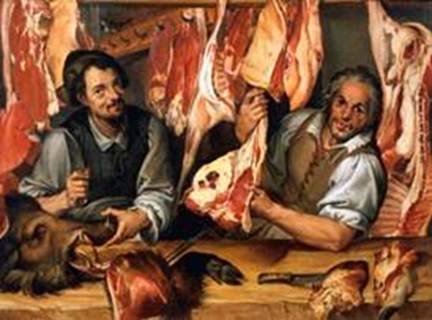
John de Farondell
c 1352 to c 1425 Archer in the wars with Scotland in 1383 to 1389 Likely lived in York Butcher and freeman of York
in 1408 Likely trader in the Medieval Shambles, the street
of butchers |
Henry Farendon c 1354 to c 1414 Man at Arms with Thomas Mowbray in
the wars with Scotland in 1389 |
William Faryndon c 1356 to c 1416 Archer with Thomas Mowbray in
the wars with Scotland in 1389 |
|
|
|
|
|
|
|
|
|
|
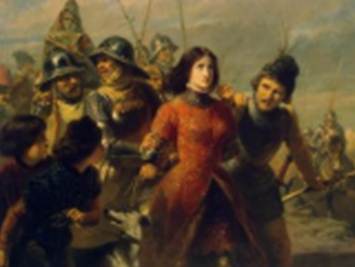
Davy
Farndyn or Farendon
c 1390 to c 1450 Another veteran soldier
who fought extensively in France and was a soldier in Rouen during the trial
and execution of Joan of Arc |
Robert
Farendon c 1395 to c 1460 A man at arms at Meulan in 1435 |
There are no
obvious records of members of the family still bearing its name remaining in
York after the early fifteenth century. The Subsidy Roll for York and Ainsty (Yorkshire Archaeological Journal, Volume 4, 1876, page
170), during the reign of Henry VII in 1523 listed only Robert Farand
at the Villa of Walton in York who paid 5s on goods of £10 (page
196). It seems likely that he was of a different family, and this line of
the family were no longer at York, with some descendants having moved to
Doncaster.