The Genealogy of the Kingdoms of Deira, Bernia and
Northumbria
The
Family Tree of the Kings of Deira and Bernicia and their merger into the
Kingdom of Northumbria
|
Return to the Home Page of the Farndale Family
Website |
The story of one family’s journey through two thousand
years of British History |
The 83 family lines into which the family is divided.
Meet the whole family and how the wider family is related |
Members of the historical family ordered by date of
birth |
Links to other pages with historical research and
related material |
The story of the Bakers of Highfields, the Chapmans,
and other related families |
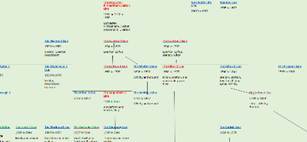
Headlines are in brown.
Dates are in red.
Hyperlinks to
other pages are in dark
blue.
References and
citations are in turquoise.
Context and local
history are in purple.
Geographical
context is in green.
This page is accompanied by a History of the Deira, Bernia and Northumbrian Kingdoms.
|
|
|
Deira |
|
|
|
|
Bernicia |
|
|
|
|
|
|
|
|
|
|
|
|
|
|
Yffa or Yffi First known King of Deira |
|
|
|
|
Ida First known King of Bernicia, c
559 to 571 CE |
|
|
|
|
|
|
|
|
|
|
|
|
|
Ælfric 589 CE to 604 CE King of Deira 589 CE to 604 CE He fled into
exile when Deira was conquered by Æthelfrith |
Ælla Yffing c 560 to 589 CE King of Deira 569 to 589 CE When Pope Gregory the Great
encountered two pale-skinned Deirans at a slave market in Rome he is said to
have remarked that they were "not Angles, but angels, if they were
Christian” and when he heard that the King of Deira was Ælla
he said "Alleluia should be sung in that land" |
|
|
|
Aethelric Iding King of Bernicia c 580 to 584 CE |
Glappa King of Bernicia in 571 CE Adda King of Bernicia c 572 to 580; Theodoric King of Bernicia. c 584 to 591 Ocg Eadric |
|
|
|
|
|
|
|
|
|
|
|
|
|
Osric King of Deira, Late 633 to
summer 634 CE Edwin was
succeeded by Osric, son of Edwin's paternal uncle Ælfric,
in Deira He reverted to paganism, but was
killed by Cadwallon |
Æthelric King of Deira 589 CE to 593 CE |
|
Edwin (or Eadwine) Yffing 586 to 633 CE
King of Deira and Bernicia from
after 12 April 616 to 12 October 633 CE Married Cwenburh of Mercia Married Æthelburh, a
Christian Princess from Kent in 625 CE Edwin converted
to the Christian religion, along with his nobles and many of his subjects in
627 CE and was baptised at Eoforwic where he built the first wooden church Edwin was
killed at the Battle
of Hatfield Chase, near Doncaster,
on 12 October 633 CE by Cadwallon of Gwynedd and Penda of Mercia After the
Battle of Hatfield Chase, Northumbria was split into its constituent kingdoms
of Bernicia and Deira |
|
Acha Yffing Married Æthelfrith who reigned
over Bernicia and then Northumbria from 592 to 616 CE |
Æthelfrith Iding King of Bernicia 592 to 616 CE King of Bernicia and Deira 604
to 616 CE Married Bebba of Alt Clut Married Acha
Yffing It may have been
Æthelfrith who destroyed an army of Britons at the Battle
of Catraeth (Catterick) in about 600 CE He was killed
at the Battle of the River Idle
in 616 CE by Rædwald,
King of East Anglia (under whose protection Edwin the Exile remained) |
Ælfred, Theobald, Ecgulf |
|
|
|
|
With Cwenburh of Mercia |
With Æthelburh of Kent |
|
With Acha |
With Acha |
With Bebba |
|
|
Oswine King of Deira 644 to 651 CE Oswy and Oswine came into
conflict in 651 CE |
Hereric Died c 617 Married Breguswith of Kent |
Osfrich Died 632 Had a son, Yffi who died in infancy
in Francia Eadfrich Died 634 |
Æthelthryth, Æthelbun (twins) and Uscfrea
all died in infancy |
Eanflæd Married Oswiu |
Oswiu or Oswy King of Bernicia and later
also Deira from after 15 November 642 CE to 15 February 670 CE Married Fina (daughter
of Colmán Rimid) and then Rhieinmelth (daughter of Rhun of Rheged) and then in about 642 CE, Oswiu married Eanflæd,
Edwin’s daughter, Abbess of Whitby |
Oswald Iding Lamnguin, Whiteblade c 604 to 5 August 642 CE
After his
father’s defeat in 616 CE, he fled northwards to the Gaelic kingdom of Dál
Riata. He converted to Christianity Married Cyniburh King of Bernicia and Deira after
12 October 633 to 5 August 642 CE Oswald defeated and killed
Cadwallon and united Northumbria once more He spread the new Christian
religion through Northumbria and was later venerated as a saint A raid by Wessex and Mercia in 909
CE took Oswald’s bones from Bardney Abbey in the Kingdom of Lindsey and
buried them in the new St Oswald’s Priory in Gloucester |
Earnfrith King of Bernicia 633 to 634 CE Son was Talorcan
King of the Picts Aebbe Abbess of Coldingham |
|
|
|
|
With Rhieinmelth |
With Eanflæd |
With Eanflæd |
With Fina |
|
|
|
|
Hild Abbess of Hartlepool and Whitby |
Hereswith Nun of Chelles Married Æthelric of East Anglia, nephew
of Rædwald of Kent This may have been Edwin of Northumbria
gaining influence over East Anglia (even though Rædwald who died in 624 CE
had been his protégé) so that Northumbria became the more dominant Bretwalda
kingdom, particularly since at the same time Edwin himself married the
Kentish queen Æthelburh |
Alhfrith was sub
King of Deira under his father Oswiu, from 656 until c 664 Married Cyneburh,
daughter of Penda of Mercia Ealhflæd Married Paeda
of Mercia |
d 20 May 685 CE Deira Sub-King 664 to
670 CE, then King of Northumbria from 1 to 17 September 670 until his death in 20 May 685 Married Æthelthryth, Abbess of
Ely and later Iurminburh |
Deira sub-king 670 CE to
679 CE Killed in battle against
the Mercians at the Battle of the Trent in 679. Ælfflæd Sent to Hartlepool Abbey under Hild
after Oswiu’s victory over Penda Later Abbess of Whitby Osthryth Married Æthelrd of Mercia |
King of Northumbria from
after 14 December 685 to 704 CE or 14 December 705 Known to the Irish as Flann Fina A man of learning. Some
of his works and some letters written to him survive. His reign was
relatively peaceful, marred by disputes with Bishop Wilfrid |
King of Deira 651 to 654 CE |
|
|
|
|
|
|
|
|
|
|
|
|
|
Ælfwyn |
Ealdwulf King of East Anglia 655 to 663
CE |
|
|
d 717 CE King of Northumbria 704
to 705 CE Aldfrith’s son Osred was
a child when his father died, and it is assumed that Eadwulf I usurped the
throne. His ancestry is not known He seems to have been exiled to
either Dál Riata or Pictland. |
Aldfrith’s line possibly had
Deiran affinities Osred I c 697 to 716 CE King of Northumbria 14
December 705 to 716 CE The son of Aldfrith,
Osred did not directly succeed his father as Eadwulf I seized the throne, but held it for only a few
months. Osred reached his
majority in 715 or 716, and within a very short period he was killed |
Osric d 9 May 729 King of Northumbria from
after 23 April 718 to 9 May 729 Bede reports little of
Osric's reign, but records that comets were seen at his death, a sign of ill
omen |
Offa |
|
|
|
|
|
|
|
|
|
|
|
|
|
The Lioualdings (The descendants of Leodwald) A branch descended from Ida of
Bernicia Probably had Bernician
affinities |
|
|
|
|
|
|
|
|
Cudwine Obscure father of Coenred (Annals of Ulster) |
|
|
Eata |
|
|
|
|
|
|
|
|
|
|
|
|
|
|
|
|
|
|
|
|
|
|
|
|
|
|
Coenred d 718 CE King Northumbria 716 to 718 He descended
from Ida of Bernicia, and was the first of his branch of the family to rule
Northumbria |
Ceolwulf Cudwining d 765 CE Ceolwulf abdicated and
entered the monastery at Lindisfarne Bede described him as
the most glorious king |
Eadberht of Northumbria d 768 CE King of Northumbria 738
to 758 CE Eadberht son of Eata was
a descendant of Ida of Bernicia. His brother was Ecgbert, who became
Archbishop of York, teacher of Alcuin He faced internal
opposition from rival dynasties and at least two of his rivals were killed
during his reign In 758 CE he abdicated
in favour of his son Oswulf and became a monk at York |
Ecgbert Archbishop of York |
|
|
|
|
|
|
|
|
|
|
|
|
|
|
|
|
|
Osgifu Daughter of Eadberht Married Alhred |
Oswulf d 24 July 759 King of Northumbria 758
to 759 CE Oswulf was murdered the year after
he became King by his bodyguards at Market Weighton on 24 July 759 |
|
Challengers to the Lioualdings (Æthelwald
Moll’s ascendancy is not recorded; his power centre seems to have been in
Deira – he may have been a descendant of Oswine of Deira) Æthelwald
Moll King of Northumbria 759
to 765 CE Æthelwald Moll seized the throne
after Oswald’s murder Married Ædeldryd at Catræth in 761 CE He was King for seven
years until he was deposed by Alhred. After his
removal from the throne Æthelwald became a monk,
perhaps involuntarily |
|
Not of the Lioualding
line and probably not of the Ida
lineage, but probably a Berncian with a power base
in the lower Tyne (his son Osred was carried to Tynemouth to be buried there) Alhred King of Northumbria 765
to 774 CE Æthelwald Moll was deposed in 765
and Alhred became king. Married Osgifu in 768 CE
who may have been a daughter of Oswulf to strenghtn
a possible dynastic alliance with the Lioualdings Little is said of his
reign in the Anglo-Saxon Chronicle other than that he became king, and was
then deposed and exiled in 774 CE |
|
|
|
|
|
|
|
|
|
|
|
|
|
|
King of Northumbria 789
to 790 |
c 767 to 788 King of Northumbria 779
to 788 CE Ælfwald was probably the son of
Oswulf, and grandson of Eadberht His sons, Oelf
and Oelwine were seized at York and killed
in 791 CE by Æthelred |
|
King of Northumbria 774
to 779 and 790 to 796 The son of Æthelwald
Moll, he was murdered on 18 April 796 by Wada |
|
|
|
|
|
|
|
Ælfwald II Possibly King of Northumbria 806
to 810 CE |
|
|
|
|
|
|
|
|
c790 – c 830 King of Northumbria 796
to 806 (possibly a second reign from 810 until 811) In 798, early in his
reign, Eardwulf fought a battle at Billington Moor against a nobleman called
Wada, who had killed King Æthelred. Wada was defeated and driven into exile In 801, Eardwulf led an
army against Coenwulf of Mercia, perhaps because of Coenwulf's support for
other claimants to the Northumbrian throne In 806 CE Eardwulf was
deposed and went into exile |
|
d 799 King of Northumbria
during 796 Osbald a violent man and
most likely a murderer. On 9 January 780, he killed Bearn, the son of King Ælfwald by burning him to death at Selectune
(possibly Silton, North Yorkshire) He was a friend of
Alcuin who often sent him letters of advice, urging him to give up his
extravagant way of life. Alcuin told him, disapprovingly that Luxury in
emperors means poverty for the people He ruled for 27 days
before being abandoned by the royal household and deserted by his people. He
went into exile in Lindisfarne |
|
|
|
|
|
|
|
King of Northumbria c
811 to c 840 Eanred's reign saw the
appearance of the styca, a new style of small coin which replaced the
earlier sceat |
|
|
|
|
|
|
|
|
|
d 862 CE Son of Eanred King of Northumbria c
840 to c 848 CE There was an
interruption in 844 CE when Rædwulf usurped the
throne, but was killed the same year fighting against the Vikings Æthelred was
assassinated, but nothing more is known of his murder |
|
|
|
d 21 March 867 King of Northumbria c
848 to 862 CE Osberht became king
after Æthelred son of Eanred was murdered |
King of Northumbria 862
to 866 CE Osberht was replaced as
king by Ælla. While Ælla
is described in most sources as a tyrant, and not a rightful king, one source
records that he was Osberht's brother The Great Heathen Army
marched on Northumbria in the late summer of 866 CE, seizing York on 21
November 866 Ragnarssona þáttr (The Tale of Ragnar's sons)
provides legendary accounts of the Viking conquest of York. This associates
the semi-legendary king of Sweden Ragnar Lodbrok and his sons, Hvitserk,
Björn Ironside, Sigurd Snake-in-the-Eye, Ivar the Boneless, and Ubbe. According
to the stories, Ragnar was killed by Ælla, and the
army which seized York in 866 was led by Ragnar's sons who avenged his death
by subjecting Ælla to the blood eagle |
|
|
|
|
|
|
|
|
|
|
|
|
Ivar the Boneless |
Halfdan Ragnarsson Viking overlord of Northumbria
866 to 867 CE Halfdan Ragnarsson and his brother
Ivar the Boneless were the Viking leaders of the Great Heathen Army which
invaded England in 865 They sought revenge against
Northumbria for the death of their father, who was supposedly killed by Ælla of Northumbria While Halfdan only ruled
Northumbria directly for about a year in 876, he placed Ecgberht on the
throne as a client-king |
|
Ecgberht I Client King of Northumbria 867
to 872 CE Symeon of Durham recorded that After
these events, the pagans appointed Egbert king under their own dominion;
Egbert reigned for six years, over the Northumbrians beyond the Tyne He was probably the Great
Heathen Army's tax collector and likely belonged to one of the several
competing royal families in Northumbria In 872, Symeon of Durham wrote
The Northumbrians expelled their king Egbert, and their Archbishop Wulfhere.
That year Northumbria rebelled against the Great Heathen Army and their
collaborators and expelled Ecgberht I and Wulfhere of York |
|
Ricsige Client King of Northumbria 873
to 876 The Great Heathen Army came
north against the Northumbrians in 873 CE. There was a destruction of
monasteries |
|
Ecgberht II Bamburgh and northern
Northumberland 876 CE to an unknown date Ecgberht probably only reigned
over the northern parts of Northumbria as Symeon recorded Ricsige,
king of the Northumbrians, died, and Egbert the second reigned over the
Northumbrians beyond the river Tyne |
|
|
|
|
|
|
|
|
|
|
|
|
|
|
|
Interregnum Halfdan was killed in Ireland in
877 CE whilst trying to regain control over Dublin, a land he had ruled since
875 CE There was an interregnum after
Halfdan died until Guthred became king in 883 |
|
|
|
|
|
|
|
|
|
|
|
|
|
|
|
|
|
|
Guthred Hardacnutsson c 844 to 24 August 895 CE Norse king of Northumbria c 883
to 895 CE Guthred was probably the first
Christian Viking King of York He seems to have defeated a
large invasion by the Scots |
|
Siefredus or Sigfrith Norse King of Northumbria c 895
to 900 CE A number of silver coins bearing the
inscription Siefredus Rex were found as part of a
Northumbrian hoard He may have pirated the coast of
Wessex from the land of the Northumbrians with a large fleet, ravaged twice
and afterwards sailed back to his own homeland |
|
Cnut Norse King of Northumbria c 900
to 905 CE About 3,000 silver coins bearing
the inscription CNVT REX were found as part of the Cuerdale
Hoard in Cuerdale, Lancashire. Cnut of Northumbria is not the
same person as the future King Cnut |
|
|
|
|
|
|
|
|
|
|
|
|
|
|
Æthelwold Æthelwold was the son of Æthelred, the king
of Wessex from 865 to 871. Following his father's death, in 871, his uncle
Alfred the Great became king. When Alfred died in 899. Alfred's son Edward
the Elder ascended the throne of Wessex. However, Æthelwold
made a bid for power, seizing his father’s old estate in Wimbourne.
Edward's forces besieged Æthelwold's position,
forcing him to flee. He went to York, where the locals accepted him as king,
in 901. He was killed in 902, which
ended the challenge to Edward’s rule |
|
Ragnall I Jorvik (York) 914 to 921 CE The folk of York were unhappy
with Ragnall. They therefore promised obedience to Æthelflæd,
Lady of the Mercians in early 918, but the negotiations were ended prematurely
by her death in June of that year. Later in his reign, Ragnall
submitted to Edward as overlord, but was allowed to keep his kingdom. |
Sitric Cáech
(Sihtric) Scandinavian Northumbria 921 to
927 CE Sitric was a kinsman of Ragnall, and another Scandinavian leader expelled from
the Kingdom of Dublin, in 902. Sitric, however had
returned to Ireland to retake Dublin and become their king. Then in 920 he
travelled to York and joined Ragnall where in 921 Ragnall died and Sitric
replaced him as king. Sitric raided Davenport, Cheshire, in
violation of the terms of submission agreed between Ragnall
and Edward the Elder. Edward was replaced by his son
Æthelstan, and although the annals indicated that Sitric
was reluctant to submit to Edward, he submitted to Æthelstan
at Tamworth in January 926. Part of the agreement was that Sitric should marry Æthelstan's sister Eadgyth and that
he should be baptised. He seems to have repudiated Christianity and rejected
his bride shortly afterwards. |
|
Gofraid ua Ímair Scandinavian Northumbria 927 CE Sitric Cáech
died in 927 and Gofraid left for Northumbria,
delegating authority in Dublin to his sons. This upset the sons of Sitric, who allied with a "son of Helgi" and
seized Limerick. This act began a period of conflict between the
Hiberno-Scandinavian of Dublin and Limerick which would last until 937. Gofraid's attempt to rule in Northumbria was unsuccessful
and he was driven out by Æthelstan of England
within six months |
|
|
|
|
|
|
|
|
|
|
|
|
|
|
Æthelstan King of the Anglo Saxons 927 to
939 CE Æthelstan was King of the Anglo-Saxons
from 924 to 927 and King of the English from 927 to 939 The new title reflects that in
927 CE, Æthelstan conquered the Scandinavian
Kingdom of York, previously part of the Northumbrian Kingdom Æthelstan is widely considered one of the
greatest Anglo-Saxon kings for his efforts to consolidate the English kingdom
and the prosperity his reign brought His reign was prosperous and
legal and economic reform, but there were frequent clashes with the Scots and
the Vikings In 934 Æthelstan
travelled to York to give them a large area of land in modern Cumbria,
probably a bribe for the continued loyalty of Northumbria In the ‘great war’ at the Battle
of Brunanburh in 937, Aethestand routed a coalition
of the King of Dublin and York (Olaf Guthfrithsson, Scotland (Constantine)
and Strayhclyde (Oswain) Æthelstan died in 939, and soon
afterwards the Vikings' retook of York |
Rex Anglorum After the death of Sihtric,
Aethelstan, whose sister was Sihtric’s widow, seized the opportunity to
invade the Scandinavian York. He thereby united the Kingdoms of Mercia,
Wessex and Northumbria There followed an important
meeting at Eamont Bridge near Penrith, near ancient earthworks of King
Arthur’s round table and Mayburgh Henge, between
the rivers Lowther and Eamont, where roads converged from all directions. The
Anglo Saxon Chronicle records that kings from across
Britain converged here on 27 July 927 CE at a meeting which is generally
taken to be the founding of the Kingdom of England |
Scandinavian Rule 939 to 944 CE When Æthelstan
died in 939, the Scandinavian leader Olaf Guthfrithson arrived from Dublin
and took over Northumbria with minimal opposition. Coins minted at York
during his reign show the Raven motif In 940, his cousin Olaf Cuaran
joined him in York. It is probable that Olaf Guthfrithson died in 942 and was
replaced by Olaf Cuaran. Then in 943 the Anglo-Saxon Chronicle says that Olaf
Cuaran was baptised, with Edmund as sponsor, and that same year, another king
of Northumbria, was named as Ragnall Guthfrithson
and he was confirmed also with Edmund as sponsor. Both Olaf and Ragnall were
called king, but it is uncertain whether they were co-rulers or rival kings |
|
English rule 944 to 947 CE In 944 CE Edmund was able to
expel the Scandinavian leaders from Northumbria Eadred was the half-brother of Æthelstan and full brother of Edmund, all of whom were
sons of King Edward the Elder. Eadred inherited Northumbria, but like Edmund
lost it soon afterwards |
|
Eric of York (possibly Eric
Bloodaxe) King of Northumbria 947–948 CE,
952–954 CE Eric expelled Anglo-
Scandinavian rulers of Northumbria in 947 CE, who then regained the land in
948 or 949. Eric took back the throne in 952, only to be deposed again in 954 Eric was the last Scandinavian
king of Northumbria and his authority only extended to the southern kingdom
of York Scandinavian domination came to an
end when Eadred's forces killed Eric Bloodaxe at the Battle of Stainmore in 954 The whole area was then governed
by earls, from the local nobility, who were appointed by the kings of
England. |
|
|
|
|
|
|
|
|
|
|
|
|
|
|
|
|
|
Oswulf I of Bamburgh Earl of Northumbria 954 to c 963
CE When Eadred finally regained
control in 954, he appointed Oswulf earl of the
whole of Northumbria. By the twelfth century Oswulf
was held responsible for the death of Northumbria's last Norse king, Eric of
York |
|
Eadwulf II “Evil Child” of
Bamburgh Earl of Northumbria c 963 CE |
St Brice’s Day Massacre 1002 In 975 CE Edgar, son of Edmund
and King of England died suddenly. The succession was contested between his
two sons Edward and Æthelred. Edward became king but was killed under
suspicious circumstances in 978 CE Æthelred replaced him as ruler
and in 1002 he was told that the Danish men in his territory "would
faithlessly take his life, and then all his councillors, and possess his
kingdom afterwards". In response, he ordered the deaths of all Danes living
in England. The orders were carried out on 13 November 1002 (now known as the
St Brice's Day massacre) This provoked the King of
Denmark, Sweyn Forkbeard, to invade England in 1003. The onslaught continued
until 1014 when Æthelred and his family were driven into exile and Sweyn was
installed as king of England. However he only
reigned for five weeks before he died |
|
|
|
|
|
|
Ealdred |
|
|
|
|
|
|
|
|
|
Waltheof of Bamburgh Earl of Northumbria c 994 to
1006 Waltheof was high-reeve or
ealdorman of Bamburgh, son of Ealdred, and the grandson of Oswulf I He was father of Uhtred the
Bold, Ealdorman of Northumbria The name Waltheof remained in
his family when Earl Siward married his great-granddaughter and named his son
Waltheof Ealdorman Waltheof was
too old to fight and remained in his castle at Bamburgh. Ealdorman Ælfhelm of York also took no
action. Waltheof's son Uhtred, acting for his father, called together an army
from Bernicia and Yorkshire and led it against the Scots. The result was a
decisive victory for Uhtred. Local women washed the severed heads of the
Scots, receiving a payment of a cow for each, and the heads were fixed on
stakes to Durham's walls. Uhtred was rewarded by King Æthelred II with the ealdormanry of Bamburgh even though his father was still
alive |
|
|
|
|
|
|
|
|
|
|
|
|
|
|
|
|
|
King of England 1016 to
1035 After Sweyn's death, his
son Cnut became the leader of the Danish army. Æthelred returned to England
and drove Cnut out of England and back to Denmark. Then in 1015, Cnut
relaunched his campaign against the English In 1016 Æthelred died
and was succeeded by his son, Edmund Ironside. Edmund and his forces were
decisively beaten by Cnut at the Battle of Ashingdon.
After the battle, Cnut made a treaty with Edmund whereby Edmund would be King
of Wessex and Cnut would rule the rest of England Edmund Ironside died a
few weeks later. Cnut then became king of all England. He divided England
into four semi-independent earldoms using a system of governance based on the
Scandinavian system of the time. Northumbria was not well integrated into the
rest of the country |
|
Uhtred of Bamburgh, “the
Bold” Earl of Northumbria 1006
to 1016 Uhtred was the son of
Waltheof I, ruler of Bamburgh (Bebbanburg), whose
family the Eadwulfings had ruled for over a century Uhtred was murdered,
probably on Cnut's orders. His death by assassination was described in De obsessione Dunelmi and has been
interpreted as the beginning of a blood feud |
|
|
|
|
|
|
|
|
|
|
|
|
|
|
|
|
Erik of Hlathir Earl of Northumberland
1016 to 1033 Cnut appointed his most trusted
followers as earls, with the Norwegian Erik of Hlathir
appointed to the Earldom of Northumbria |
|
d 1055 Earl of Northumbria 1033
to 1055 Siward became the last
Scandinavian Earl of Northumbria when he succeeded Erik in about 1033. He
governed for 22 years without too much difficulty Siward strengthened his
position in northern England by marrying Ælfflæd, the daughter of Ealdred,
Earl of Bamburgh. After killing Ealdred's successor Eadulf in 1041, Siward
gained control of all Northumbria He supported Cnut's
successors Harthacnut and Edward with military aid and counsel,
and probably gained control of the middle shires of Northampton and
Huntingdon by the 1050s. There is some evidence that he spread Northumbrian
control into Cumberland In the early 1050s,
Siward turned against the Scottish King Mac Bethad
mac Findlaích ("Macbeth"). Despite the
death of his son Osbjorn, Siward defeated Mac Bethad in battle in 1054. This
was later immortalised in William Shakespeare's Macbeth Siward died in 1055,
leaving one son, Waltheof |
|
Tostig Godwinson Earl of Northumbria 1055 to 1065 Tostig was the third son
of the Anglo-Saxon nobleman Godwin, Earl of Wessex and Gytha Thorkelsdóttir, the daughter of Danish chieftain Thorgil Sprakling In 1051, Earl Godwin's
opposition to Edward's policies had brought England to the brink of civil
war. The Godwins' opposition convinced Edward to
banish them in 1051 The banished Godwin
family, including Gytha and Tostig, together with Sweyn and Gyrth, sought refuge with his brother-in-law the Count of
Flanders. They returned to England the following year with an armed force.
They gained support and demanded that Edward restore Tostig's earldom Three years later in 1055,
Tostig became the Earl of Northumbria on the death of Earl Siward He was on intimate terms with
his brother-in-law, Edward the Confessor, and in 1061
he visited Pope Nicholas II at Rome in the company of Ealdred, archbishop of
York The Vita Edwardi, otherwise sympathetic
to Tostig, records that he had 'repressed the Northumbrians with the heavy
yoke of his rule' He was often absent and
may have shown a lack of leadership against the raiding Scots. Their king was
a personal friend of Tostig, and Tostig's
unpopularity made it difficult to raise local levies to combat them. He
resorted to using a strong force of Danish mercenaries (housecarls) as his
main force, an expensive and resented policy. The housecarls' leaders were
later slaughtered by rebels On 3 October 1065, the
thegns of York and the local nobility descended on York and occupied the
city. They killed Tostig's officials and supporters, then declared Tostig
outlawed for his unlawful actions. They replaced him with Morcar, brother of Edwin of
Mercia |
|
Earl of Northumberland
1065 to 1066 The northerners
choice of new earl was accepted by Edward After Edward the
Confessor's death in 1066, Tostig’s brother, Harold Godwinson became King of
England. He visited York early in his reign and according to the Anglo-Saxon
Chronicle returned to Westminster at Easter 1066 |
|
|
|
|
|
|
|
|
|
|
|
|
|
|
|
Norman Rule In September 1066 Tostig
returned with his ally, Harald Hardrada of Norway. On the 20 September 1066
the allies defeated the northern earls, Morcar and
Edwin at the Battle of Fulford. The people of York submitted to Tostig and
Hardrada who did not occupy the city Five days later Tostig and
Hardrada were defeated and killed, by Harold Godwinson, at the Battle of
Stamford Bridge Shortly after William of
Normandy landed at Pevensey on 28 September and on 13 October Harold of
England fought his last battle on the Sussex coast at Hastings |
|
|
|
|