The House Stuart
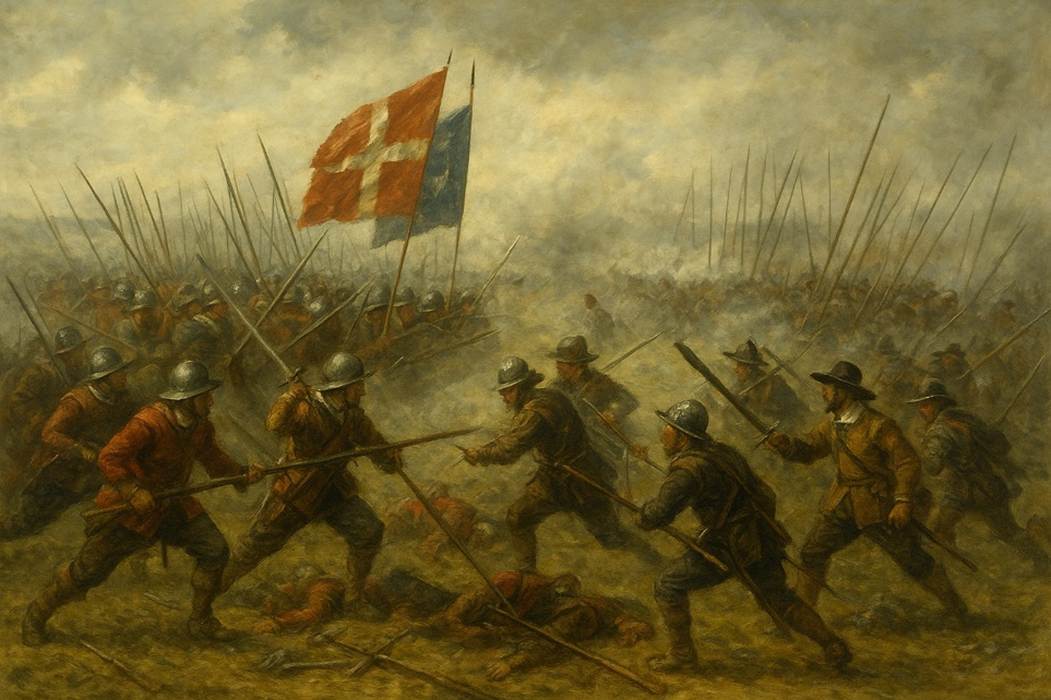
1603 to 1714
The
Stuart Dynasty, the English Civil War, the Commonwealth, the Protectorate and
the Restoration
|
Return to the Home Page of the Farndale Family
Website |
The story of one family’s journey through two
thousand years of British History |
The 83 family lines into which the family is divided.
Meet the whole family and how the wider family is related |
Members of the historical family ordered by date of
birth |
Links to other pages with historical research and
related material |
The story of the Bakers of Highfields, the Chapmans,
and other related families |
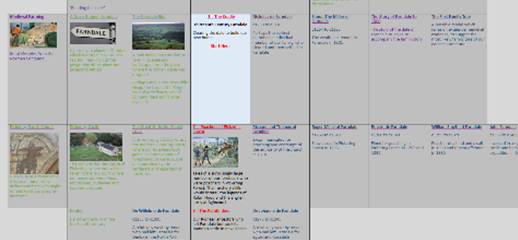
Headlines are in brown.
Dates are in red.
Hyperlinks to
other pages are in dark
blue.
References and
citations are in turquoise.
Context and local
history are in purple.
Geographical
context is in green.
The Stuart Line,
1603-1714
Stuart is the English spelling of the Scottish Stewarts.
James I, 1603-1625
The lack of an heir left by Elizabeth meant that the son of Mary,
Queen of Scots and Henry Stewart, Lord Darnley, the 37 year of James VI of
Scotland, with his protestant upbringing, was welcomed with relief.
On 24 March 1603, James VI, King of Scotland, was proclaimed King
of England (as James I) in London by the English Privy Council, shortly after
the death of the childless Elizabeth I. The Union of the Crowns created
a personal union where one monarch ruled two separate kingdoms, each retaining
its own parliament, laws, and church. James’ ambition was to make Scotland and
England a single Great Britain and he introduced a union flag, and common
coinage. A new 22 shilling piece bore the motto, faciem
eos in gentem unam, I
will make them one nation.
The Union of the
Crowns did not prevent Scottish invasions, and the establishment of plantations
of Scottish and English settlers in Ulster was unpopular in Ireland.
James’
eccentricities were widely mocked, though not hated. Many of these stemmed from
his tumultuous childhood. He tolerated religious diversity, but he had a
fixation on the threat of witches and dark magic, which was amplified after a
storm delayed his wife's journey to Scotland in 1589, an event blamed on
sorcery. He personally participated in the interrogation of accused witches
during the North Berwick trials and wrote a book on the subject, Daemonologie in 1597, which served as a manual for
witch-hunters and influenced cultural works like Shakespeare's Macbeth.
He had a weak and ungainly walk, often leaning on the shoulders of attendants.
He was notoriously lavish with money, honours, and gifts.
James held a firm
belief in the absolute power of the monarchy, considering himself answerable
only to the divine. This unwavering belief put him at odds with the English
Parliament, which sought to check royal power and control national finances.
There was a bubonic
plague outbreak in London which coincided with James’ accession to the throne. It was one of the most severe outbreaks,
killing about a quarter of London's population. In response, authorities
implemented quarantine measures, including shutting down theatres, quarantining
infected houses, and creating a book of orders for plague control.
1604
In 1604 there
were 3,512 deaths from the plague in York, which represented a mortality rate
of about a third of York’s estimated population of 10,000. This was the worst
plague in York's history.
James had a
strong dislike for tobacco and was one of history's first anti-smoking
campaigners. He wrote a pamphlet, A Counterblaste
to Tobacco in 1604, in which he described smoking as a custom loathsome
to the eye, hateful to the nose, harmful to the brain, dangerous to the lungs.
1605
The Gunpowder
Plot
Disappointed by
James’ lack of momentum to restore Catholic freedoms, this was a plot of young
Catholic gentlemen to blow up the entire seat of government by a planned
explosion of 367 barrels of gunpowder under the House of Lords. The Gunpowder
Plot in which Guy Fawkes and other Catholic associates conspired to blow up
King James VI and I and England’s Parliament was perhaps inspired by the
attempt to blow up James’ father, Darnley, in Edinburgh in 1567.
Born in York in
April 1570 to Protestant parents, Fawkes was raised in the Church of England.
After his father
died when Fawkes was eight, his mother remarried a Catholic named Dionis
Bainbrigge. This, along with his education at St. Peter's School in York where
some staff and students came from recusant Catholic families, influenced his
conversion to Catholicism as a teenager. Facing persecution for his faith,
Fawkes left England in 1593 to fight for the Catholic Spanish army against the
Protestant Dutch in the Eighty Years' War. He gained a reputation as a brave
and skilled soldier, becoming an expert in the use of gunpowder and adopting
the Italian version of his name, Guido.
In 1604, Fawkes
was recruited by Robert Catesby, the plot's mastermind, who sought a military
expert unknown to the English authorities to help with the assassination plan.
The conspirators
leased a cellar directly beneath the House of Lords. Fawkes was tasked with
procuring and guarding 36 barrels of gunpowder and lighting the fuse during the
State Opening of Parliament on 5 November 1605.
An anonymous
letter warned a Catholic nobleman, Lord Monteagle, to stay away from Parliament
that day, leading to a search of the cellars. In the early hours of 5 November,
Fawkes was discovered with the gunpowder and arrested. He initially gave a
false name, John Johnson, but was eventually identified.
Fawkes was
tortured on the rack at the Tower, enduring several days of pain before
confessing and revealing the names of his co-conspirators. He was tried for
high treason, found guilty, and sentenced to execution by being hanged, drawn,
and quartered. On 31 January 1606, to avoid the agony of the execution, Fawkes
jumped from the gallows ladder and broke his neck, dying instantly.
The plot was not
generally supported by the Catholic population and so it did not lead to a
period of general persecution.
1606
The adoption of
the first Union Flag occurred in 1606 by royal decree of James I, three years
after the Union of the Crowns, was intended to symbolise the regal union
between the separate kingdoms of England and Scotland. The flag combined the St
George’s Cross of England and the St Andrew’s Cross of Scotland. Wales was
already a principality of England by this time and was considered to be
represented within the English flag, so it was not given a separate emblem in
the design.
Virginia and
Jamestown
James I granted a
proprietary charter to two competing branches of the Virginia Company, the
Plymouth Company and the London Company. By the terms of the charter, the
Plymouth Company was permitted to establish a colony of 160 km square between
the 38th parallel and the 45th parallel, roughly between Chesapeake Bay and the
current Canadian border. The London Company was permitted to establish a colony
between the 34th parallel and the 41st parallel, between Cape Fear and Long
Island Sound. In the area of overlap, the two companies were not permitted to
establish colonies within one hundred miles of each other. During 1606, each
company organised expeditions to establish settlements within the area of their
rights.
1607
The London
Company hired Captain Christopher Newport to lead its expedition. On 20 December
1606, he set sail from England with his flagship, the Susan Constant,
and two smaller ships, the Godspeed, and the Discovery, with 105
men and boys, plus 39 sailors. After an long voyage of 144 days, they arrived
at the mouth of the Chesapeake Bay and came ashore at the point where the
southern side of the bay meets the Atlantic Ocean, an event that has come to be
called the First Landing. They erected a cross and named the point of
land Cape Henry in honour of Henry Frederick, Prince of Wales, the eldest son
of King James. On 14 May 1607 Jamestown
was founded in Virginia and was the first permanent English colony in the
Americas.
1611
John Speed’s The Theatre
of the Empire of Great Britain included the first set of county maps of
England and Wales. Published in 1611 or 1612, it combines cartography with
historical information on counties and towns. It was dedicated to James I to
promote the idea of a unified British Empire.
The publication
of the King James Bible provided the English speaking world with a scholarly
and universally accepted English translation of the Bible.
1612
On 6 November
1612, James’ eldest son and heir, Henry
Frederick died of typhoid fever. His unexpected death was a national tragedy, as
he was a popular and promising heir. His younger and physically weaker brother,
Charles, became the new heir apparent.
1616
William
Shakespeare died at New Place, his large family home in Stratford-upon-Avon, on
23 April 1616, at the age of 52.
1618
In 1618, the
Company of Adventurers of London Trading to the Ports of Africa was granted a
monopoly by James I for trade with Gynney
and Bynney (Guinea and Binnay).
Despite suffering financial difficulties, the company's early activities
focused on establishing a trade presence and gaining a monopoly on exporting
goods from West Africa to England. However, the company faced early opposition,
and its monopoly was declared a grievance by Parliament in 1624.
The Thirty Years'
War (1618 to 1648) broke out in Prague and renewed the Papish threat from the
Continent. It was fought primarily in central Europe, a religious struggle
between Catholics and Protestants, but evolved into a wider political war for
dominance among European powers. It began with the Defenestration of Prague. It
is generally divided into four phases: the Bohemian, Danish, Swedish, and
French. The Habsburgs crushed religious and political liberties. English and
Scottish Protestants enthusiastically supported the European Protestants,
rather as in the Spanish civil war of the 1930s, and a significant part of the
gentry thereby gained military experience. There is an In
Our Time podcast, the Thirty Years War.
1620
By 1620,
religious minorities were attracted to the new colonies in America. The Pilgrim
Fathers sailed for America on the Mayflower to establish Plymouth Colony
in Massachusetts. There is an In Our Time podcast about
the Pilgrim Fathers and
why their 1620 voyage on the Mayflower has become iconic in the American
imagination.
Jacobite rebels, reprieved slaves, the imperious (who sold
bondage to pay for passage) and those offered transportation as an alternative
to the gallows, emigrated to America. The immigrant population in America doubled
every 25 years. The settlers were self consciously
English and later British.
1621
James sought to
stay out of the Thirty Years War. When Parliament petitioned for war with
Spain, James insisted that Parliament’s privileged rested solely upon his will.
James wished instead to gain closer ties with Europe through a suitable
marriage of his son Charles. By staying aloof, England profited from trade with
both sides.
1625
In 1625, Charles
married Louis XIII’s sister, the Catholic princess, Henriette Marie. Despite an
initial rocky relationship, they grew close after the assassination of the Duke
of Buckingham in 1628 and had nine children together, including two future
kings, Charles II and James II. The marriage was controversial due to Henrietta
Maria's Catholicism, and she remained unpopular, eventually fleeing to France
in 1644 during the Civil War.
Charles I, 1625-1649
Like his father,
Charles saw parliament as archaic.
Charles had a
natural reserve and was instinctively secretive. His skills as a politician and
statesman were inept.
Charles struggled
with three principal issues: (1) Religious struggles and hardly anyone wishing
to keep things as they were; (2) Elizabeth had kept peace by avoiding the
unpopularity of raising onerous taxes, which left a problem for her successors
exacerbated by inflationary pressures; (3) How to govern the three very
different kingdoms with Catholicism was spreading in Ireland and Calvinism in
Scotland.
1626
Around 1626, Mrs
Thomasin Farrer noticed a stream of iron-rich, acidic water bubbling from the
cliffs in the South Bay at Scarborough. She tasted it and found it had
beneficial health properties. Scarborough began to develop from a fishing town
to England’s first seaside resort, based on the benefits of taking the
waters.
1629
Charles was
outraged by Parliament’s refusal to agree to taxation and their criticism of
his religious policies. He ordered the Commons to adjourn, but the MPs held the
speaker down and locked the door to keep out the royal messenger, whilst
passing resolutions criticising the Kling’s policy. This has given rise to the
ceremony of Black
Rod, establishing an independence from executive power which is rarely used
in practice.
The Eleven Years
Tyranny
Charles’ Personal
Rule, also known as the Eleven Years' Tyranny, was the period from 1629
to 1640 when King Charles I ruled as an autocratic absolute monarch without
recourse to Parliament. Charles claimed that he was entitled to do this under
the royal prerogative and that he had a divine right. There is an In Our Time podcast, the Divine Right of Kings.
Parliamentary taxation only accounted for about 7% of the Crown’s revenue at
this time, the rest coming from feudal dues, local rates, fines etc and Charles
increased this income by an aggressive use of the royal prerogative and the
extension of ship money which was supposed to be an emergency levy to
fund naval defences.
The absence of
Parliament cooled the political temperature.
Charles
strengthened military and naval defences.
His Book of
Orders required local magistrates to report to him regularly and he ordered a
protection of common rights against landowners.
1630
The estimated
population of England in 1630 was approximately 5.2 million people. The
population of England and Wales combined was estimated at around 5.6 million.
Public
stagecoaches began to operate within a radius of about thirty miles of London.
The coaches took
their name from the stages or stopping points along a route, typically
every 10 to 15 miles. At these coaching inns, fresh horses were provided, and
passengers could get refreshments.
Charles faced a
serious religious challenge, with a growing intensity of feeling about
religion.
The parish had
become the social cohesion of local communities, about 500 to 600 folk bound
together, which reflected the social and political as well as religious
hierarchy.
Puritanism
Puritanism was
the name given to the godly by their opponents. They were mostly
Calvinists who followed the theological tradition of the reformer John Calvin.
They believed in the sovereignty of God, predestination, and the authority of
the Bible and that God controlled everything that happened. In some ways they
reinforced existing hierarchies. Their followers amongst the gentry imposed
strict order on the idle and drunk. They also appealed to subversives, who saw
themselves as godly with a right to oppose and reprimand their ungodly
superiors. Their beliefs caused psychological stress in the religious
complications of the realm.
Arminianism
Arminianism took
its name from Jacobus Arminius, and favoured free will, in direct opposition to
the Puritans. They did not see the Catholics as a false religion. This was the
focus of Charles I and William Laud, the Archbishop of Canterbury. There were
fears that Charles was getting to close to Catholicism and this was reinforced
by his Queen Henrietta Maria’s practice of her Catholicism.
Charles tended to
be tolerant of religious matters and no one burned for heresy during his reign.
Indeed 1569 to 1642 was a time when there was no rebellion.
Meantime
Scotland, a more turbulent and militarised society, had been left to govern
itself since 1603 and there was a growth of a Calvinist model of Scottish
Presbyterianism, run by committees of lay elders and clergy and without the
rule of bishops.
1637
In 1637,
Archbishop Laud ordered the use of Cranmer‘s Book of Common Prayer by the
Church of Scotland, which came to be known as the Scottish Prayer Book or Laud’s
Liturgy. It aimed to align Scottish worship more closely with the High Anglican
practices favoured by King Charles I and Laud, moving away from the established
Presbyterian traditions of the Kirk. In July 1637, there was outrage and
resistance at St Giles in Edinburgh.
1638
The Covenanters
By 1638 a
committee of lairds, burgesses and ministers had drafted a Covenant to uphold
the Scottish kirk and resist popery. The Covenanters were seen as rebels
by Charles. There is an In Our Time podcast, the Covenanters, Scottish
Presbyterian pledges to advance their beliefs in the face of episcopacy and
Roman Catholicism, and their impact across Britain and Ireland.
1640
By 1640, Charles
needed funds. He had no option but to call a parliament in April 1640. It
refused the taxes he needed and he dissolved it.
In August 1640 a
Covenanter army from Scotland invaded and came as far south as Yorkshire. The
Covenanters, led by the experienced General Alexander Leslie, launched a
pre-emptive strike, crossing the River Tweed into England with a force of
around 20,000 men on 20 August 1640. After
the Battle of Newburn Ford, the occupation of northern England placed immense pressure on Charles
I, who was running low on funds and unable to dislodge the Covenanters.
In October 1640,
Charles was forced to negotiate the interim Treaty of Ripon, agreeing to pay
the Scottish army's daily expenses while they continued to occupy the northern
counties pending a final peace settlement. Unable to raise the necessary funds on his
own, Charles was compelled to recall the English Parliament in November 1640,
the first full Parliament since 1629.
The Long
Parliament
Charles was
forced to call another parliament, which was also to some extent forced upon
him by leading critics of royal policy. Since it lasted on and off for 20
years, including during the Civil War, it was later called the Long Parliament.
The most
influential challenger to royal policy was John Pym, a Puritan from Somerset
who refused to fund the King's war and instead found opportunity in the new
circumstances.
Pym entered into
discussions with the Scots and their demands against popery and royal tyranny
and used their leverage to make their own demands. They impeached Thomas
Wentworth, Earl of Strafford and voted his death by a Bill of Attainder.
His last
words were I wish that every man would lay his hand on his heart and
consider seriously whether the beginnings of the people's happiness should be
written in letters of blood.
1641
The Protestation
Oath required adult males to declare allegiance to the King, Parliament and the
Protestant religion. About a third of the returns, known as Protestation Returns,
survive. The oath aimed to unite Protestants.
The Protestation
Returns for Yorkshire detail English men over 18 who swore an oath of loyalty
to the true Protestant religion and Parliamentary liberties. These
returns are organised by parish within Yorkshire's three ridings and are
valuable for local historians and genealogists studying population, surname
distribution, and individuals who refused or were absent for the oath.
In October 1641
there was rebellion in Ireland. Angered by the plantations, there was a cycle
of extreme violence, matched only in Europe at the time by events which were
occurring in Ukraine. The rebellion escalated into the Irish Confederate Wars.
The violence from
Scotland and in Ireland raised the possibility of civil war in England.
The
parliamentarians wanted to raise an army to deal with the violence in Ireland.
However they had lost faith in Charles.
The Commons drew
up the Grand Remonstrance, a lengthy assault
on Charles whole reign. It criticised the King's use of prerogative, illegal
taxation, and his ministers, blaming a Catholic conspiracy for many
problems and calling for ministers to be approved by Parliament and for church
reform. Passed by a narrow margin on 22 November 1641, it was a major
propaganda tool for Parliament and escalated tensions.
There was also concern
in the general population about the extremism of the Puritans in parliament. Charles
was therefore welcomed in a triumphal march into London on 26 November 1641.
1642
Thus encouraged,
on 4 January 1642, Charles took a bodyguard and armed courtiers to Parliament
to arrest Lord Kimbolton and five
MPs. However they were tipped off and escaped.
Charles’ action
provoked hostility in the streets.
Charles left
London 5 days after this humiliation.
In his absence
John Pym and his allies pushed through in March 1642 the Militia Ordinance (not an Act
because it never received the Royal Assent), which placed the command of each
county's armed forces in the hands of their supporters.
Charles issued
his own commissions of array assigning his followers to organise their own
armed forces in the counties.
The seeds of
civil war were sown.
English Civil War
(1642–1651)
As the Civil War
broke out, there was no established armed force on either side, so each side
began to raise an armed force in order to strengthen their bargaining position.
Parliament voted on 12 July 1642 to raise a force under the command of the
Third Earl of Essex and required an oath of allegiance. The King issued
commissions of array to allow the
raising of militias and raised his flag at Nottingham on 22 August 1642.
Each side seized
towns, strongpoints and military stores. The King was locked out of the largest
military depot at Hull.
Counties
petitioned for compromise. Counties such as Yorkshire dragged their feet.
It is too
simplistic that the war was just a fight between liberty on the part of the
Parliamentarians against the tyranny of Stuart absolutism. Nor was it primarily
about class struggle. The ancient peerages tended to back the Parliamentarians
as they disliked the novelties of Stuart government. Religion was the clearest
dividing line, but religious spectrums were fluid and nearly everyone belonged
to the Church of England. A third of Puritans in 1643 were Royalist. Instead
there was division everywhere and every town and village and many families were
divided. Most fought because they were conscripted. Families split. There were
shifting coalitions and people changed sides.
The
Parliamentarians didn’t seeing themselves as fighting against the King, but
rather rescuing him from his own councillors.
Officers were
mainly gentlemen. Each side carried banners into battle which provided focus
for rally. Parliamentarian banners tended to be religious, Royalist banners
were more subdued. The terms Cavalier and Roundhead dated from
1640.
Royalist Wales
and Cornwall were the only solid regional loyalties who sided with the King and
even in East Anglia and London there were many royalists. Shropshire weavers
who traded with the Mediterranean tended to be royalist. William Davenport
called on his Cheshire tenants to support the King, but most did not wish to
challenge the Parliamentarians and the Earl of Derby, Lord Lieutenant of
Cheshire found some of his tenants turned against him. (Robert Tombs, The English and their History, 2023, 221 to 226).
All theatres
closed to prevent public disorder.
In August 1642,
there were early outbreaks of fighting at Colchester.
The first Battle of Edgehill in Warwickshire on 23 October 1642 was
inconclusive.
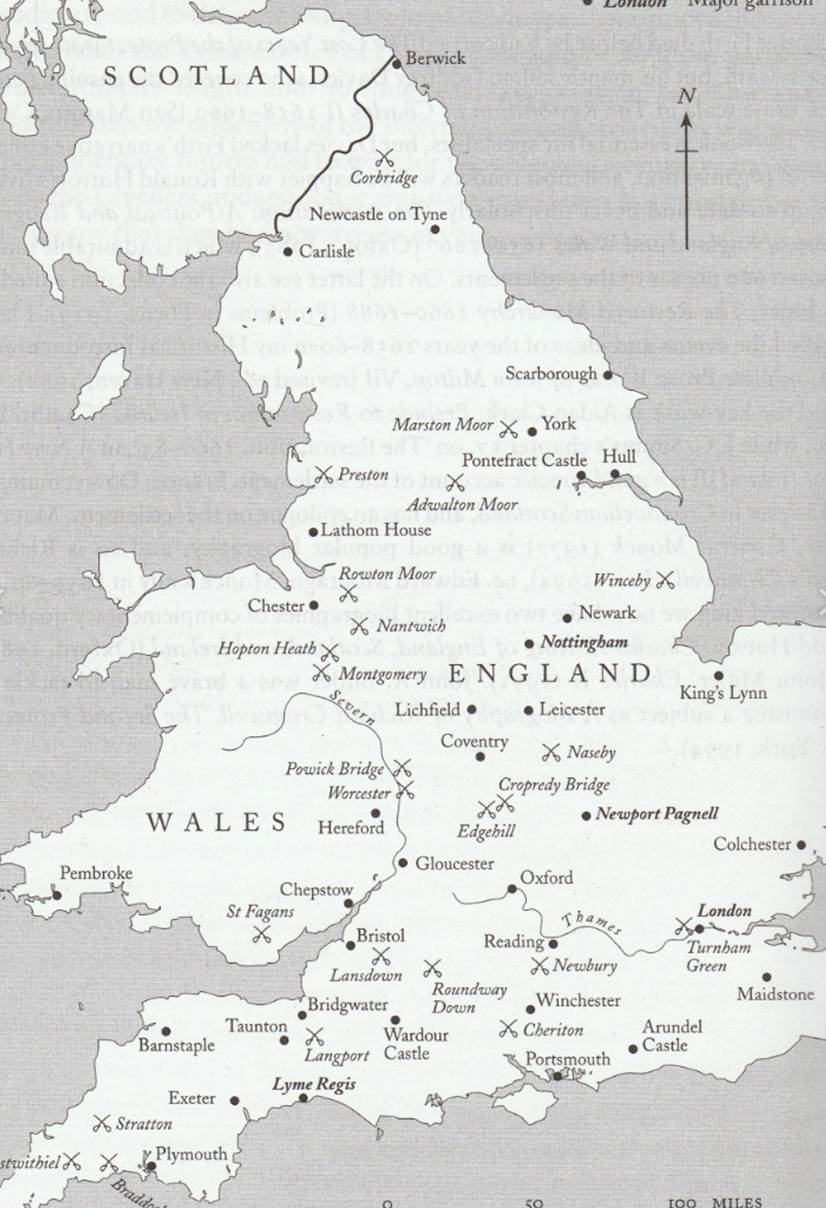
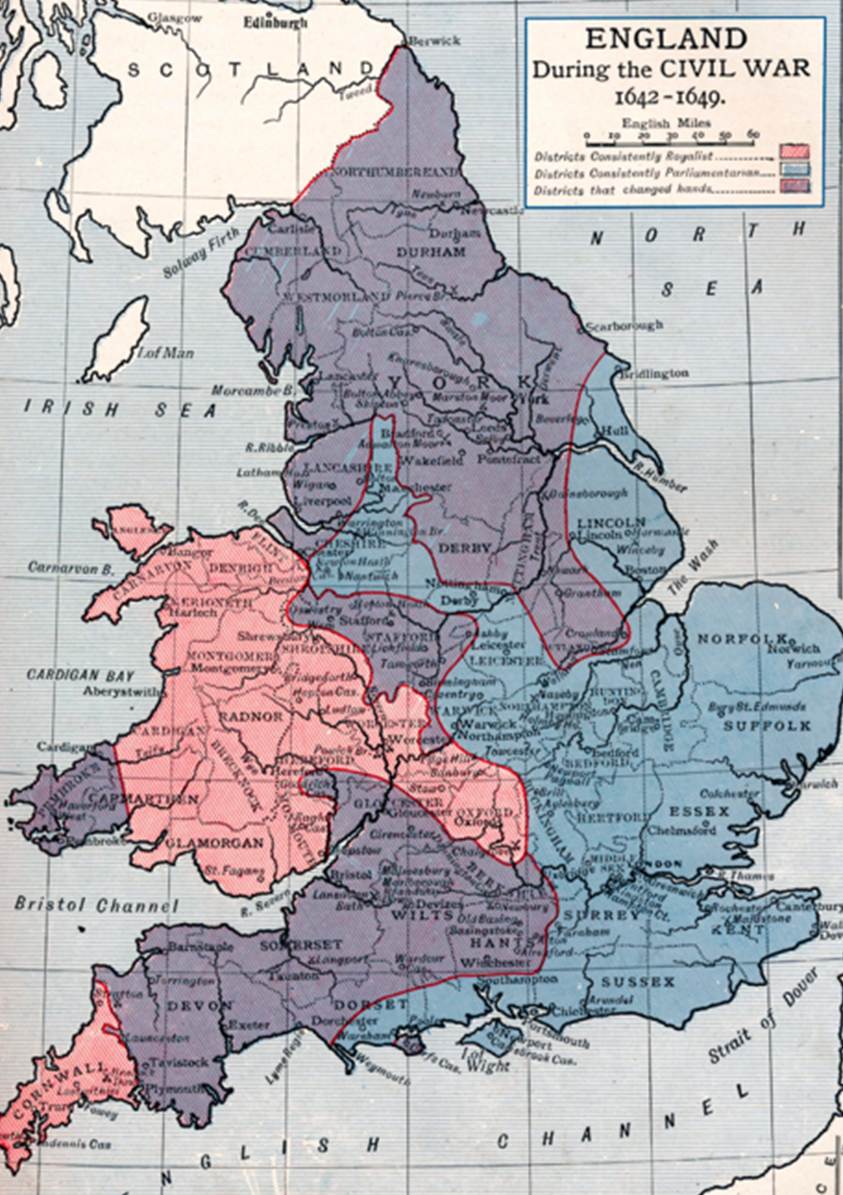
The Battles of
the Civil War
After Edgehill
Charles marched on London, but was halted at Turnham Green on 13 November 1642. He
withdrew to Oxford which became the Royalist base.
During the early
phase of the War the Royalists had military superiority although the
Parliamentarians had London. The Royalists had more popular support, better
leadership and more sophisticated tactics.
1643
The Royalists
took Bristol, an important port town, in July 1643.
The Battle of Roundway Down,
near Devizes, was fought on 13 July 1643. The Royalists won a costly victory.
The First Battle of Newbury was fought on
20 September 1643. After a long march, Essex surprised the Royalists and forced
them away from Gloucester before beginning a retreat to London. Charles rallied
his forces and pursued Essex, overtaking the Parliamentarian army at Newbury and
forcing them to march past the Royalist force to continue their retreat.
Reasons for the Royalist failure to defeat the Parliamentarians include
shortage of ammunition, the relative lack of professionalism of their soldiers
and the tactics of Essex.
In desperation,
the Parliamentarians negotiated with the Scottish Convention and in September
1643 agreed a Solemn League and Covenant, an
agreement between the Scottish Covenanters and the leaders of the English
Parliamentarians, bringing the two nations close to union. On 17 August 1643,
the Church of Scotland (the Kirk) accepted the Covenant and on 25
September 1643 so did the English Parliament and the Westminster Assembly.
1644
By 1644, there
were eight armies fighting in fifteen regional theatres.
In January 1644,
21,500 Scots marched into England under Alexander Leslie, the First Earl of
Leven. The military balance was reversed.
The Second Battle of Newbury was fought on
27 October 1644, in Speen, adjoining Newbury in Berkshire. The battle was
fought close to the site of the First Battle of Newbury, which took place in
late September the previous year.
The Royalists
were defeated by Parliamentary troops at the Battle of Marston Moor, which was
fought on 2 July 1644. The combined forces of the English Parliamentarians
under Lord Fairfax and the Earl of Manchester and the Scottish Covenanters
under the Earl of Leven defeated the Royalists commanded by Prince Rupert of
the Rhine and the Marquess of Newcastle.
During the summer
of 1644, the Covenanters and Parliamentarians had been besieging York, which
was defended by the Marquess of Newcastle. Rupert had gathered an army which
marched through the northwest of England, gathering reinforcements and fresh
recruits on the way, and across the Pennines to relieve the city. Rupert’s
force of 17,000 men faced an Allied force of 27,000. The convergence of these
forces made the ensuing battle the largest of the civil wars.
On 1 July, Rupert
outmanoeuvred the Covenanters and Parliamentarians to relieve the city.
On 2 July 1644,
he sought battle with them even though he was outnumbered. He was dissuaded
from attacking immediately and during the day both sides gathered their full
strength on Marston Moor, an expanse of wild meadow west of York. Towards
evening, the Covenanters and Parliamentarians themselves launched a surprise
attack. After a confused fight lasting two hours, Parliamentarian cavalry under
Oliver Cromwell routed the Royalist cavalry from the field and, with Leven's
infantry, annihilated the remaining Royalist infantry.
Over 6,000 died
in probably the largest battle fought on British soil.
After their
defeat the Royalists effectively abandoned Northern England, losing much of the
manpower from the northern counties of England (which were strongly Royalist in
sympathy) and also losing access to the European continent through the ports on
the North Sea coast. Although they partially retrieved their fortunes with
victories later in the year in Southern England, the loss of the north was to
prove a fatal handicap the next year, when they tried unsuccessfully to link up
with the Scottish Royalists under the Marquess of Montrose.
Parliament had
control over northern England.
As the war
dragged on a peace movement emerged. The clubmen of the
countryside were bands of local defence vigilantes who tried to protect their
localities against the excesses of the armies of both sides in the war. They
sought to join together to prevent their wives and daughters being raped by
soldiers of both sides, themselves being forcibly conscripted to fight by one
side or the other, their crops and property being damaged or seized by the
armies and their lives threatened or intimidated by soldiers, battle followers,
looters, deserters or refugees. As their name suggests, they were mostly armed
with cudgels, flails, scythes and sickles fastened to long poles. They were
otherwise unarmed.
In November 1644
Parliament offered peace terms. After the alliance with Scotland, these terms
included the establishment of Scottish Presbyterianism and waging war against
the Irish Catholics and in Europe. These terms were rejected.
In December 1644,
a New
Model Army of 22,000 men was formed by the Parliamentarians
under Lord General Sir Thomas
Fairfax. This was England’s first professional army. There was a new
officer corps. The Self Denying Ordinance removed MPs from military command,
though with the notable exception of the MP Oliver Cromwell, who was given
command. The army was detached from civilian society. Harsh discipline was
imposed with penalties for drunkenness and blasphemy.
Sir Thomas
Fairfax came from came from a Yorkshire gentry family. The Fairfaxes
were among Parliament's leading supporters in northern England.
1645
In 1645, the war
intensified. An Act of Attainder condemned the imprisoned Archbishop Laud who
was beheaded on 10 January 1645.
The Battle of Naseby took place on 14 June
1645, near the village of Naseby in Northamptonshire. The Parliamentarian New
Model Army, commanded by Sir Thomas Fairfax and Oliver Cromwell, destroyed the
main Royalist army under Charles I and Prince Rupert. Defeat ended any real
hope of royalist victory, although Charles did not finally surrender until May
1646.
The Battle of Langport took place on 10
July 1645, near Langport in Somerset. Following its success at Naseby in June,
the New Model Army under Sir Thomas Fairfax destroyed the last Royalist field
army, led by Lord Goring. Parliamentarian victory allowed them to besiege the Royalist
port of Bristol, which surrendered in September. The last Royalist field army
was decimated.
One of the last
royalist positions was at Basing House, which was bombarded and stormed by
Oliver Cromwell on 16 October 1645.
Nevertheless the
Civil War was marked by a degree of restraint. Encounters were generally
followed by negotiation. Surrender terms were generally respected and civilians
tended not to be harmed.
Charles was
handed over and initially held in Leicester.
At this stage,
Charles still held a relatively strong negotiating position. Public opinion
remained relatively pro Royalist.
There was
factionalism amongst the Parliamentarians. The Scottish Alliance had brought
with it the threat of an authoritarian system based on Scottish
Presbyterianism. A faction of Independents emerged within the Parliamentarians
who sought liberty of conscience. Many in the Army supported the Independents.
The New Model
Army was becoming a problem. Its cost and the need for taxation was causing
resentment. The army was coming to be hated by the civilian population. But
disbanding it was also a problem with significant arrears of pay, amounting to
£3M. The army itself was seeking their own terms including protection from
being sent to fight in Ireland and indemnity from prosecution for acts during
the war.
However Charles
remained stubborn and fatally overplayed his hand.
1647
In July 1647, the
army commanders offered conciliatory terms, Heads of Proposals, which included
tolerance for the Anglicans. Charles was initially conciliatory, but eventually
rejected the terms. Charles was taken to Hampton Court.
Active political
debates were started in political instability following the end of the civil
war. The Putney
Debates were held from 28 October to 8 November 1647 which discussed such
ideas as every man that is to live under a government ought first by his own
consent to put himself under that government. There is an In Our Time podcast on the Putney Debates of
1647, when factions of the New Model Army considered a possible new
constitution for England.
The Levellers
came to prominence at the end of the Civil War, led by John
Lilburne, and were most influential immediately before the start of the
Second Civil War (1648–49). Leveller views and support were found in the
populace of the City of London and in some regiments in the New Model Army. The
Levellers wanted limited government, though Lilburn denied that he wanted to level all men’s estates.
Their ideas were presented in their manifesto, Agreement of the People.
In contrast to the Diggers, the Levellers opposed common
ownership, except in cases of mutual agreement of the property owners. They
were committed to popular sovereignty, extended suffrage, equality before the
law and religious tolerance. The hallmark of Leveller thought was its
populism, as shown by its emphasis on equal natural rights, and their practice
of reaching the public through pamphlets, petitions and vocal appeals to the
crowd. Cromwell tried to ally with the Levellers.
In general these
emerging radical ideas tended not to envisage democratic freedoms, since they
recognised a need for strong central authority and high taxation.
In 1647, the London
Corporation of the Poor was established by an ordinance to provide relief
and employment for the poor, leading to the creation of workhouses to
employ and punish the poor and vagrants. The Corporation secured two former royal
properties, Heydon House and the Wardrobe building, to set up its initial
workhouses.
Charles escaped
from Hampton Court on 11 November 1647 and fled to Carisbrooke House on the
Isle of Wight.
1648
The Second Civil War (1648
to 1649)
Fighting broke
out again In London, Kent, South Wales and East Anglia. The main struggle was
at Colchester. The Royalists captured Berwick.
In June 1648
Royalists sneaked into Pontefract castle and took control. The Castle was an
important base for the Royalists, and raiding parties harried Parliamentarians
in the area. Oliver Cromwell led the final siege of Pontefract Castle in
November 1648. Charles I was executed in January, and Pontefract's garrison
came to an agreement and Colonel Morrice handed over the castle to Major
General John Lambert on 24 March 1649. Following requests from the townspeople,
the grand jury at York, and Major General Lambert, on 27 March Parliament gave
orders that Pontefract Castle should be totally demolished & levelled to
the ground and materials from the castle would be sold off. Piecemeal
dismantling thereafter may have further contributed to the castle's ruined
state.
A Royalist
Scottish army invaded in July 1648, but were crushed by Cromwell who then
marched into Scotland and forced the removal of royalist sympathisers from the
Edinburgh government.
The army and the
Parliamentarians concluded that they could not trust Charles. The army also
decided that they needed to bring Parliament to heel.
On 6 December
1648, Colonel Thomas Pride occupied the Place of Westminster and arrested 41
MPs. Pride’s Purge then reduced the House to 150 MPs acceptable to the
army, reducing it to a rump. The Rump Parliament was the English
Parliament which followed. The army then demanded their right to try the King.
The Thirty Years
War in central Europe ended with the Peace of Westphalia, which weakened the
Holy Roman Empire, recognised the independence of the Netherlands and
Switzerland, established modern state boundaries, and shifted political power
in Europe.
1649
On 20 January
1649, the trial of Charles I began at Westminster Hall. The president was John
Bradshaw, who wore an armoured hat. Charles was charged with unlawfully
using an unlimited and tyrannical power. Most people saw the trial as
illegal and sacrilegious. Sir Thomas Fairfax kept away. When his name was
called, his wife replied from the public gallery, He has more wit than to be
here.
Charles refused
to recognise what he saw as an arbitrary and illegal court. He commented for
if power without law may make laws, I do not know what subject he is in England
that can be sure of his life, or anything that he calls his own.
Only 59 of the
135 members of the court would sign the death warrant. Noone would write out
the order itself, so Cromwell did so. There
is an In Our Time podcast on the trial of Charles I,
recounting the high drama in Westminster Hall and the ideas that led to the
execution.
A scaffold was
erected outside the banqueting house. On 30 January 1649, wearing two shirts to
stop him shivering and suggesting fear in the cold air, Charles made his final
speech. Truly I desire liberty and freedom as much as anybody whatsoever,
but … liberty consists in having government … It is not their having a share in
the government … a subject and a sovereign are clear different things.
He was beheaded
at two o’clock.
The Commonwealth, 1649 to 1653
England became a
Republic by an Act of 150 MPs of the Rump Parliament. The proclamation of a
successor to Charles was forbidden. The Rump Parliament became sovereign. The
speaker became the Head of State. It became high treason to deny Parliament’s
authority.
There is an In Our Time podcast on
the Interregnum (1649
to 1660) between the execution of Charles I and restoration of Charles II
including the impact in Scotland and, infamously, Ireland. There is another In Our Time podcast on how English republicanism has
developed from Cromwell to the present day, and examines whether it is embedded
as a sentiment deep within the culture of England.
Ireland was
considered to belong to the new British State. Scotland came under military
government of General Monck.
The Regicide
prompted religious fervour. The largest group were the Quakers.
The Diggers
appeared in Surrey in April 1649, led by Gerrad Winstanley, who condemned land
ownership from the days of the Norman yoke. Lord General Fairfax concluded that
they were not dangerous. The Fifth
Columnists led by Major Generals Overton and Harrison, drew support from
London labourers and servants. The Muggletonians
founded by Lodowick Muggleton, foresaw the end of the
world. The Adamites were biblical fundamentalists. These new sects were feared
by many.
Mutinies started
in the army, including in Oxfordshire in May 1649.
In 1649, Thomas Hobbes, a Royalist in exile in Paris, wrote Leviathan, which he later presented to Charles II. Its premise was that
humans originally lived in a barbarous state of nature, but emerged by yielding
individual rights to an all powerful sovereign. In
practice he upset both camps and copies of Leviathan were burned in Oxford. It
has subsequently been regarded as a masterpiece of political philosophy,
insofar as it is regarded as a statement on the sovereignty of the state and
the law rather than the person of a prince.
On the Parliamentary side of the argument, John Milton (including Paradise Lost), Sir Henry Vane, the Younger and Algernon Sidney wrote their treatises.
Charles II was
proclaimed king in Edinburgh and Dublin, though he did not become the
undisputed king of England until the Restoration in 1660.
In August 1649,
Oliver Cromwell arrived in Ireland with a potent armed force. He began to
besiege Royalist held ports. The Republicans stormed Drogheda
on 11 September 1649. There was similar slaughter in Wexford in October 1649. After
capturing the strongpoints, the Republicans fought a guerilla war against bands
of toraigh, or Tories and there was
devastation and epidemics. An Act for the Settlement of Ireland gave rise to
the confiscation of land from the Catholic gentry redistributed to 5,000
soldiers and investors.
1650
In September
1650, Cromwell turned to Scotland and destroyed the Scottish army at the Battle
of Dunbar.
1651
In January 1651,
Charles was crowned at Scone and led his remaining Scottish army into England. The
Battle of Worcester ended the English Civil War. The Scottish army
was defeated and Charles fled. Charels’ wanderings became legendry. He was
harboured in Shropshire and Staffordshire. He hid in the royal oak at
Boscobel House in Shropshire. He escaped to France through Dorset disguised as
a servant by Jane Lane.
It is suggested
that 86,000 were killed in the Civil War and 129,000 died from disease.
Relative to population size, about 4 to 5 million, these losses were heavier
than in the First World War.
In 1651 the
Navigation Acts gave a near monopoly of trade to British ships.
1652
The First
Anglo-Dutch War, fought mostly at sea. It arose over trade disputes, primarily
caused by England's Navigation Act of 1651, which aimed to limit Dutch
shipping. After initial English attacks on Dutch merchant ships, and a series
of battles, the English navy gained dominance, although the Dutch inflicted
damage using privateers. The war ended with the Treaty of Westminster in 1654, through
which the Dutch paid compensation and agreed to abide by the Navigation Act,
while a secret clause excluded the House of Orange from being Stadtholder.
1653
The Protectorate, 1653-1660
The army grew
impatient with the Rump Parliament. On 20 April 1653, General Cromwell called
on his soldiers to break up the debate (“I will put an end to your prating”)
and installed the Sanhedrin of the Goldy, Barebone’s Parliament, but it did not
much change matters.
In December 1653,
the Instrument
of Government, made Oliver Cromwell a reluctant Lord Protector. The
'Instrument of Government' (the new written constitution of 1653) placed great
power in the executive formed by the 'Protector' (the role of national governor
set out in the Instrument) and the 'Council of State', many of whose members
were military commanders.
Oliver
Cromwell was known for trickiness and hypocrisy., He was though a
conciliator and he sought consensus. He favoured freedom of conscience and
respect for other religious beliefs, but not for Catholics. He did not however
have long term vision.
The Protectorate
was a godly dictatorship, backed by the army. Cromwell said that it was for
the people’s good, not what pleases them. Niceties of law and procedure had
to give way to the direction of authority. Its strength came from the dominance
of the military and from having more funds available than the Stuart Kings.
The first public
stagecoach services reached Yorkshire in 1653, with the initial London to York
route beginning then. Regular service between these two cities was established by a
stage company in 1706.
1654
In 1654 Cromwell
made peace with the Dutch and French and launched an attack on Spain.
1655
British captured
Jamaica from the Spanish. However his forces were defeated at Santo Domingo,
fought between April 23, 1655 to April 30, 1655 at the Spanish Colony of Santo
Domingo. A force of 2,400 Spanish troops led by Governor Don Bernardino Meneses
y Bracamonte, Count of Peñalba, successfully resisted
a force of 13,120 troops and 34 ships of the English Commonwealth Navy led by
Admiral Sir William Penn.
The Rule of the
Major Generals. From 1655 Cromwell ordered that each County in England be
governed by a Major-General. This was a form of military government which was
an attempt to provide better law enforcement in the country as well as to
reform the nation’s morals. One of their responsibilities was to punish those
who had fought for the King. They were to punish all manner of vice. Including
drunkenness, wearing and fornication. It was a repressive regime. Racehorses,
fighting cocks, bears and dogs were banned.
Nothing sickened the people of the rule of the Sergeant Majors so
much as their cruel habit of examining little boys vice voce. For this purpose
the unfortunate children were dressed in their most uncomfortable satins and
placed on a stool. The Sergeant Major would then ask such difficult questions
as “How’s your father” and “Animal, Vegetable or Mineral?” and those who could
not answer were given a cruel medicine called Pride’s Purge. All this was called the Commonwealth and was right but repulsive (1066 and all that, Walter Sellar and Robert Yeatman, 1930).
A Decimation Tax at
the rate of 10% of income was imposed on former royalists.
The sanctions on
Catholics inspired more fury than terror.
1657
In March 1657, Cromwell
was offered kingship, but he refused. This may be seen as a restraint of his
ambition, but it would probably have restricted is powers.
1658
Oliver Cromwell
died suddenly in September 1658. His son Richard Cromwell was easily persuaded
not to assume his succession.
1659
In May 1659, the
army recalled the Rump Parliament, but only 42 turned up and it ceased to
function. For a week the nation had no central government.
1660
In February 1660
General George Monck arrived in London from his post in Scotland. Monck called
on MPs to resume their seats and to begin a transition to monarchy.
Charles II in
Holland issued a conciliatory Declaration
of Breda. The Declaration promised a general amnesty, liberty of
conscience, a fair settlement of land disputes, and payment for the army in
return for his restoration to the throne. It was a moderate and conciliatory
document that addressed major issues of the time and left the specifics to be
decided by a future, free Parliament. This convinced many that the monarchy
could be restored.
Charles II, 1660 to 1685
On 8 May 1660 a
Convention Parliament unanimously declared that Charles II had been the lawful
King of England since the moment of his father's execution in January 1649.
This public declaration officially marked the end of the Interregnum and
the restoration of the monarchy. There is an In
Our Time podcast about the reign of Charles II which discusses whether the Restoration brought
peace and prosperity to England or was an unstable period that culminated in
revolution.
On 25 May 1660
Charles arrived in Dover on his flagship Naseby, renamed Royal Charles.
The Commonwealth
had left huge debts.
In August 1660
the Act
of General Pardon, Indemnity and Oblivion recognised changes in ownership
of land, and gave an amnesty covering the Civil War except for the surviving
regicides, of whom nine were executed in the coming years and Cromwell’s body
dug up, hanged and beheaded.
Most of Charles’ witty remarks were of an unbridled nature and
therefore (fortunately) not memorable. He instituted however a number of witty
Acts of Parliament. Amongst these were (1) The Act of Indemnity and Oblivion,
which said that everyone should pay an indemnity to the King and then forget
that he had paid it; (2) The Act of Uniformity, which said that everyone had to
be the same as everyone else; (3) The Five Mile Act, which said that no
schoolmasters or clergymen were to go within five miles of each other (this was
obviously a Good Thing); (4) The Corporation Act, which said that everyone had
to be as fat as possible (except Nell Glyn). After each of these Charles became merrier still and though
some of them, particularly the Corporation Act, were considered rather unfair,
he made up by passing a new Habeas Corpus Act which said that all people might
keep their bodies, and thus everyone was contented. Later, Charles became even
merrier and made a Declaration of Indulgence saying that people could do
anything they liked and a Test Act was passed soon after to see if they had
done it (and if so, what) (1066 and all that, Walter Sellar and Robert Yeatman, 1930).
The Royal Society
was founded on 28 November 1660 by a group of twelve natural philosophers,
physicians, and mathematicians who met at Gresham College in London after a
lecture by astronomer Christopher Wren. The aims of the Society were to promote
discussion about scientific subjects.
Samuel Pepys’ diary began in January 1660. The
diary, which ran from 1660 to 1669, detailed major historical events like the
coronation of Charles II, the Great Plague and the Great Fire of London and everyday
details of his personal and professional life as a Royal Navy administrator.
The diary is considered a crucial historical document for its detailed,
eyewitness observations on politics, social life, and the economy of the period.
The Tenures Abolition
Act abolished the feudal system of land tenure in England, replacing feudal
obligations like military service and wardship with a system of monetary
payment to the Crown. It converted all future land tenures granted by the King
into free and common socage, which simplified landholding and diminished
the feudal system by ending burdens like wardship and the requirement of
providing knights' service. In return, the Act provided the King with a fixed
annual revenue, partly from a tax on alcohol.
A poll tax was
levied on all men and women over 16 years old annually until 1697. It was a
graduated tax designed to raise immediate funds for the disbanding the New
Model Army, which had served the Commonwealth during the English Civil War. It
was a levy assessed by social rank and estate rather than a flat, universal
rate. With higher rates paid by the gentry, unmarried persons over the age of
16 paid 12d (1s).
The Standing Army
and the Royal Navy
The first regular
standing army established. Before 1660, England did not have a permanent,
professional army in peacetime, relying instead on local militias. During the
English Civil War, Parliament had created the New Model Army. However, after
the war, this powerful army came to dominate politics during the Interregnum,
leading to public anxiety over military rule, high costs, and fears that an
army under a monarch's control could be used to suppress Parliament, so the New
Model Army was disbanded. Concurrently, Charles II, who had seen the advantages
of a standing army during his exile in Europe, established a new royal force
for his own security and to maintain order. This new army was the first
permanent, professional military establishment in English history that existed
in peacetime. The
English Army was officially created by royal warrant on 26 January 1661,
although the initial steps began in late 1660. The new force was small, initially
about 5,000 men known as the King's Guards and Garrisons. It
incorporated loyal Royalist units that had served Charles in exile including the
King's Troop of Horse Guards, now The Life Guards.
The English Navy
became the Royal Navy. The Royal Navy's formation in 1660 was the formal establishment of
a modern, permanent naval force by Charles II after the English Restoration. He
inherited the large fleet from the interregnum period and used royal
authority and parliamentary legislation to define and institutionalise the
navy, linking its development closely to the English state and laying the
foundation for the modern professional navy.
1661
The Corporations
Act 1661 excluded religious dissenters from town government. It restricted
public offices in England to members of the Church of England, requiring
officials of municipal corporations to take an oath and repudiate the Solemn
League and Covenant.
1662
The Quaker Act of
1662 was an Act of the Parliament of England that aimed to suppress the Quaker
religious movement and other nonconformist groups by mandating an unconditional
oath of allegiance to the King and restricting their religious assemblies.
The Act of
Uniformity 1662 required all clergymen, college fellows, and schoolmasters to
accept the revised Book of Common Prayer. By August 1662, more than one
thousand ministers had refused to conform to the Act of Uniformity and were ejected
from the Church of England. The Book of Common Prayer included a prohibited
marriage list, A Table of Kindred and
Affinity, wherein whosoever are related are forbidden by the Church of England
to marry together, which prohibited marriages between a wide range of
individuals related by blood (consanguinity) and marriage (affinity).
The Poor Relief
Act 1662, also known as the Settlement Act severely restricted the mobility of
poor people by legally assigning them to a specific parish responsible for
their financial support if they required poor relief. The provisions also made
it easier to evict newcomers if a complaint was made within forty days of their
arrival. This reduced the mobility of the poorer classes and discouraged the
search for work elsewhere.
The Hearth Tax of
1662, also known as chimney money, was a property tax levied in England
and Wales to provide a stable, perpetual source of income for the newly
restored Charles II. The tax was widely unpopular and a significant source of
contention throughout its existence until its repeal in 1689. The Hearth Tax was
paid at the rate of 1s to be paid twice a year at Michaelmas (29 September) and
Lady Day (25 March) for every hearth or stove in all domestic buildings. From
1663, hearths were listed.
The surviving
Hearth Tax records, particularly those from 1662 to 1666 and 1669 to 1674 when
direct government control meant better record keeping, are an invaluable source
for historians and genealogists. They provide a near census of householders,
offering insights into seventeenth century population distribution, social
structure, and wealth inequality based on house size.
Charles sold the
recently acquired Dunkirk to his cousin, King Louis XIV of France, for five
million livres (around £320,000). Dunkirk had been captured from the Spanish by
a combined Anglo-French force in 1658, during the English Commonwealth period
under Oliver Cromwell, and was awarded to England as part of a peace
settlement. Following the Restoration of the monarchy in 1660, possession of
Dunkirk passed to Charles II. Charles II's decision to sell the town was driven
primarily by financial necessity.
1663
The first turnpike road on the Great
North Road was established in 1663, authorised by a Parliamentary Act in
1663, between Wadesmill in Hertfordshire and Stilton
in Huntingdonshire. This act allowed a section of the road to be financed by
tolls collected at turnpike gates, with the revenue used for road upkeep,
marking the beginning of a system that would later expand to improve and maintain
Britain's road network.
Over the next hundred
years turnpikes were introduced along the length of the Great North Road from
London to Edinburgh stimulating investment and facilitating faster travel.
Along with improvements in road building, vehicle design and horse breeding,
the turnpikes played a role in growth of the stage coach network, reduced
freight costs and provided a baseline for industrial growth. They also caused a
lot of resentment amongst those forced to pay tolls.
1664
The Conventicle
Act forbade religious meetings of more than five people to discourage non
conformity. About 1,000 ministers (a sixth) and 2,000 clergy and teachers were
ejected from their posts. The act was part of the Clarendon Code and aimed to
suppress religious nonconformity.
The Second Anglo
Dutch War, 1664 to 1667, was a primarily naval conflict driven by commercial
rivalry, which ultimately ended in a Dutch victory sealed by the humiliating
English financial collapse which followed the Great Plague and the Great Fire
of London and the successful Dutch Raid on the Medway.
Impressment into
the Royal Navy began as a legal right claimed by the Crown to force seafaring
men into service, first formally regulated in Elizabethan times under laws like
the Naval Act of 1563. In 1664, impressment into the Royal Navy became a formal system
for conscripting men to meet manpower needs, especially during wartime. Press
gangs of naval officers and thugs would forcibly seize eligible men of
seafaring habits aged 18 to 55, including merchant sailors, from ports and
taverns to crew warships. While legal sanction for impressment existed much
earlier, this period saw the practice vigorously enforced through physical
coercion to fill naval ranks.
1665
The Great Plague was the last
major epidemic of the bubonic plague in England, killing an estimated 100,000
people in London alone, about a quarter of the city's population. Caused by the
bacterium Yersinia pestis, spread by rat fleas, it devastated the
capital before subsiding in the cold winter of 1665 to 1666 and ending around
the time of the Great Fire of London in September 1666. During Charles II’s
reign the Great Plague happened in London. This was caused by some rats which
had left a sinking ship on its way from China, and was very fortune for the
Londoners, since there were too many people in London at the time, so that they
were always in bad health (1066 and all that,
Walter Sellar and Robert Yeatman, 1930).
The Oxford
Gazette (which later became the London Gazette) was first published on 7 November
1665, in Oxford, after Charles II and his court relocated there to escape the
Great Plague of London. It was established as the official, authoritative
government newspaper to provide reliable news and counter the scurrilous
gossip and rumour prevalent in unlicensed pamphlets.
1666
The Great Fire of
London was
a blaze that swept through London from September 2 to 6 September 1666,
starting in a bakery on Pudding Lane. Fuelled by dry conditions and a strong
wind, it destroyed 13,200 houses, 87 churches, 4 bridges, landmarks like the
medieval St Paul's Cathedral, as well as treasures if art and literature leaving
most of the city in ruins and 250,000 people homeless. The fire was eventually
stopped by creating firebreaks, and London was rebuilt using more fire resistant
materials like stone and brick. There is an In Our
Time podcast on the
Great Fire of London in 1666 and how the city rose from the ashes. In
the following year, therefore, London was set on fire in case anyone should be
left over from the Plague, and St Paul’s Cathedral was built instead. This was
a Good Thing and was the cause of Sir Christopher Wren, the memorable architect
(1066 and all that, Walter Sellar and Robert
Yeatman, 1930).
The Burial in
Wool Act mandated that all corpses be buried in woollen shrouds to boost the
English wool industry, as linen and silk imports were perceived as a threat.
Exceptions were made for plague victims and the poor, and non-compliance
resulted in a £5 fine. The Act was strengthened in later amendments, requiring
an affidavit to be sworn before a Justice of the Peace to confirm the burial
was in wool. The Act was not repealed until 1814.
The Battle of Medway was a Dutch raid on the English fleet at
Chatham during the Second Anglo-Dutch War, resulting in a humiliating English
defeat. The Dutch navy broke through defences, destroyed or captured over a
dozen English ships, and towed the flagship, HMS Royal Charles, back to
the Netherlands as a trophy. The raid caused panic in London and forced Charles
II to sign the Treaty of Breda and end the war.
The earliest surviving Royal Navy ship muster books date back to
1667 and are preserved as historical records for pay and accounting purposes.
They are considered the closest equivalent to formal service records for
ordinary seamen before a standardised system was established in the mid nineteenth
century.
John Milton's Paradise
Lost was first published in 1667 as a ten book epic poem in blank verse. It
recounts the biblical story of the Fall of Man, from Satan's rebellion
to Adam and Eve's expulsion from the Garden of Eden. The publication was released
in late October 1667, with a revised and expanded second edition in 1674, which
rearranged the narrative into twelve books.
1670
The estimated
population of England in 1670 was about 5.4 million people. This was a time of
low overall population growth, bordering on stagnation, after steady growth
earlier in the seventeenth century.
European politics
started to dominate domestic affairs again. Charles was close to France and
admired the young Louis XIV. He was attracted by Catholicism which promised the
absolute dignity of Kings.
1671
The Board of
Customs was established in England and Wales in 1671 by Charles II, primarily
to replace the inefficient and often corrupt farming system for
collecting customs revenues. Under the farming system rights were rented
to individuals or syndicates (known as farmers) for a fixed annual fee. The
new system intended a more systematic and efficient collection of duties, which
were a crucial source of revenue for the Crown. The new system aimed to reduce
widespread corruption and evasion of duties, particularly through smuggling,
which was a persistent problem.
The Board of
Customs operated as a separate department until it was eventually merged with
the Board of Excise in 1909 to form the Board of Customs and Excise.
1672
The Test Act 1672,
An act for preventing dangers which may happen from popish recusants, required
all public employees to take an oath of allegiance. They also had to sign a
declaration explicitly denying the Roman Catholic doctrine of transubstantiation,
the belief that the bread and wine in the Eucharist become the actual body and
blood of Christ. It barred Roman Catholics and Protestant nonconformists from
holding any civil or military office under the Crown.
Charles II signed
the Treaty of Dover with France in anticipation of a joint war against the
Dutch. England was duped into lending aid to French aggression.
In 1672 a French
army attacked the Dutch Republic, with English naval support. During the Third
Anglo Dutch War, the army was increased to 10,000. Parliament refused to
finance the Dutch war and peace was signed in 1674. Charles prorogued
Parliament and relied on French subsidies, assuring Louis of his continuing
support. In this context there was a revival of anti papal
feelings.
Popery was as
much a political idea as a religious one. Feelings were aimed as much against
France as Catholicism.
1675
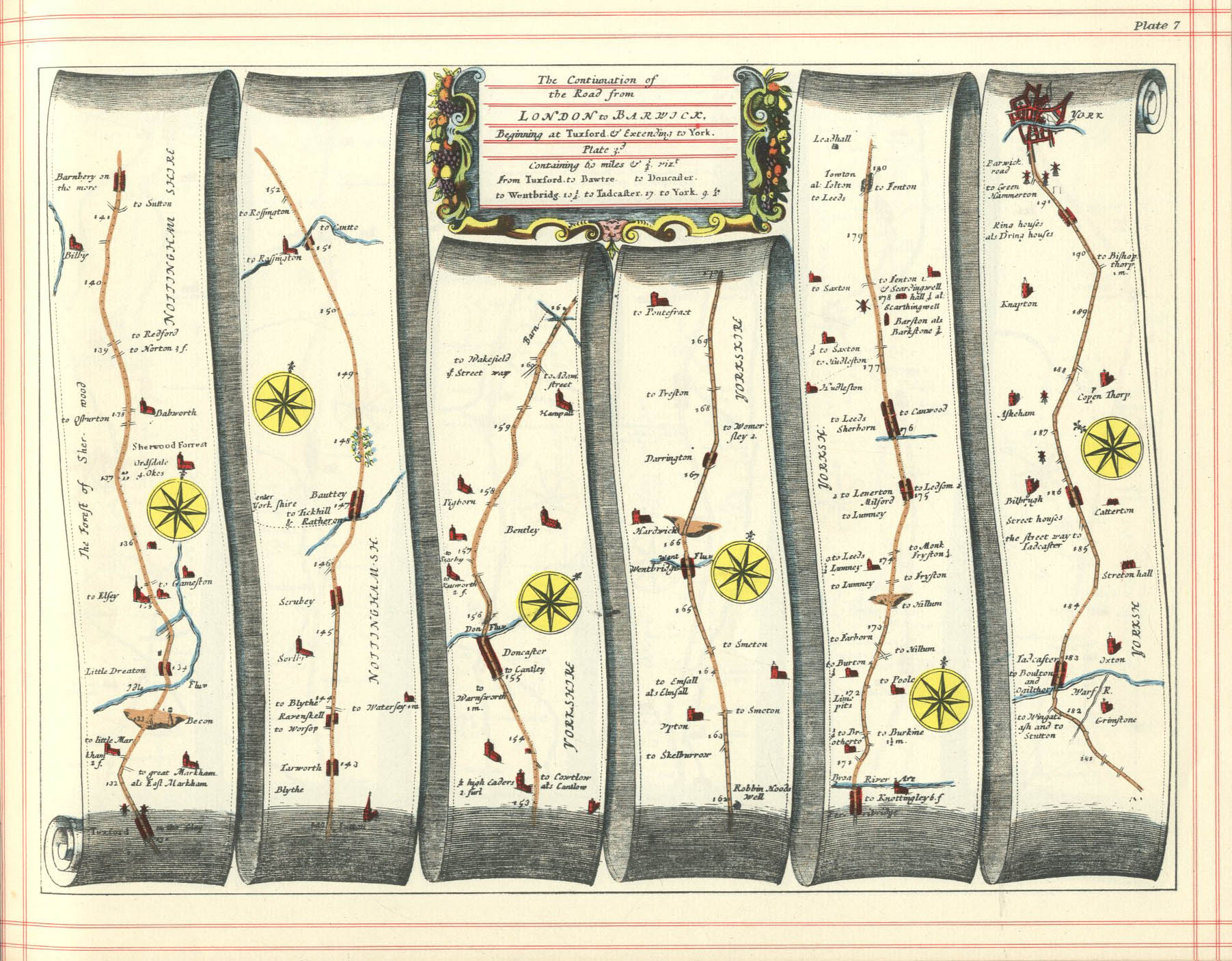
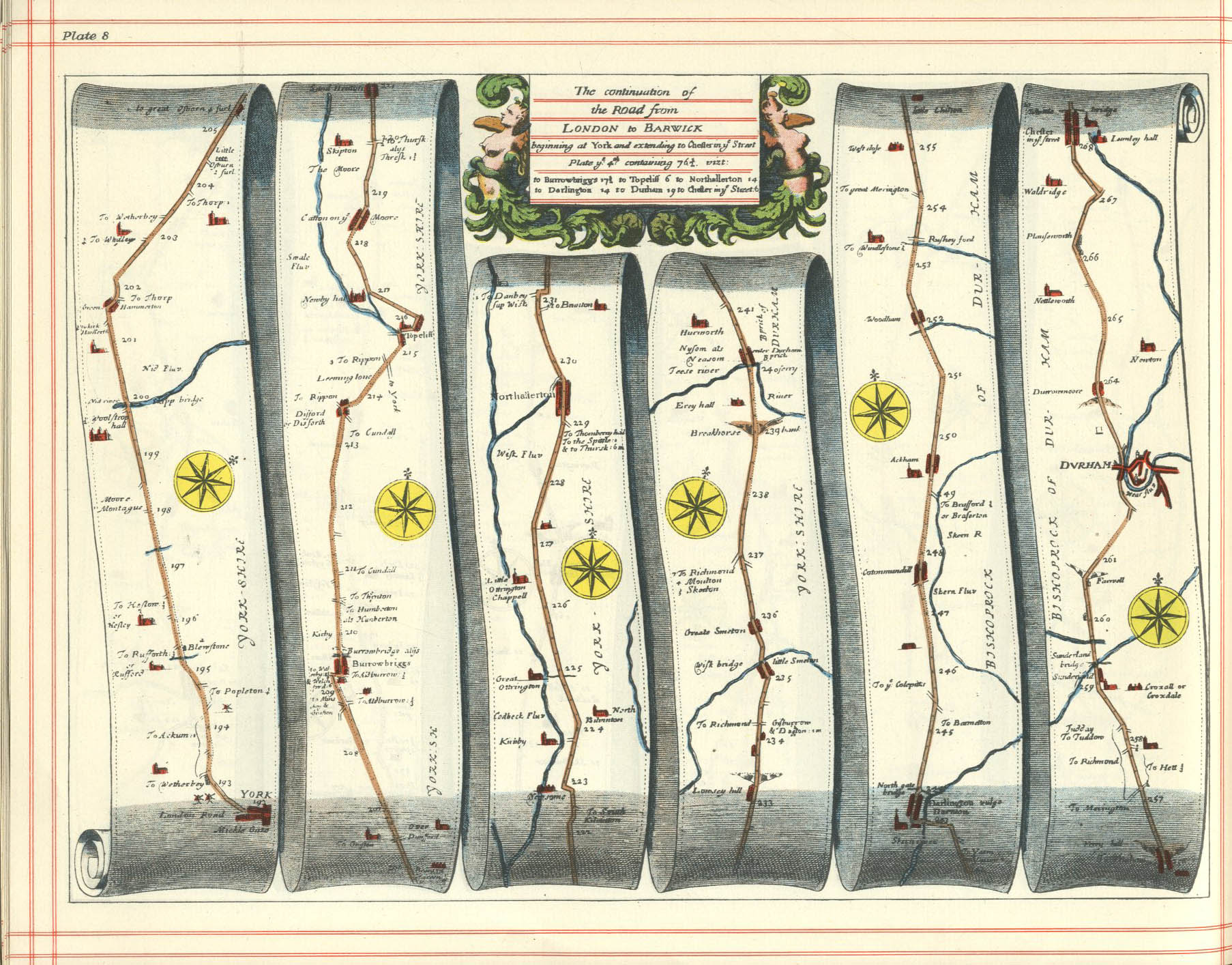
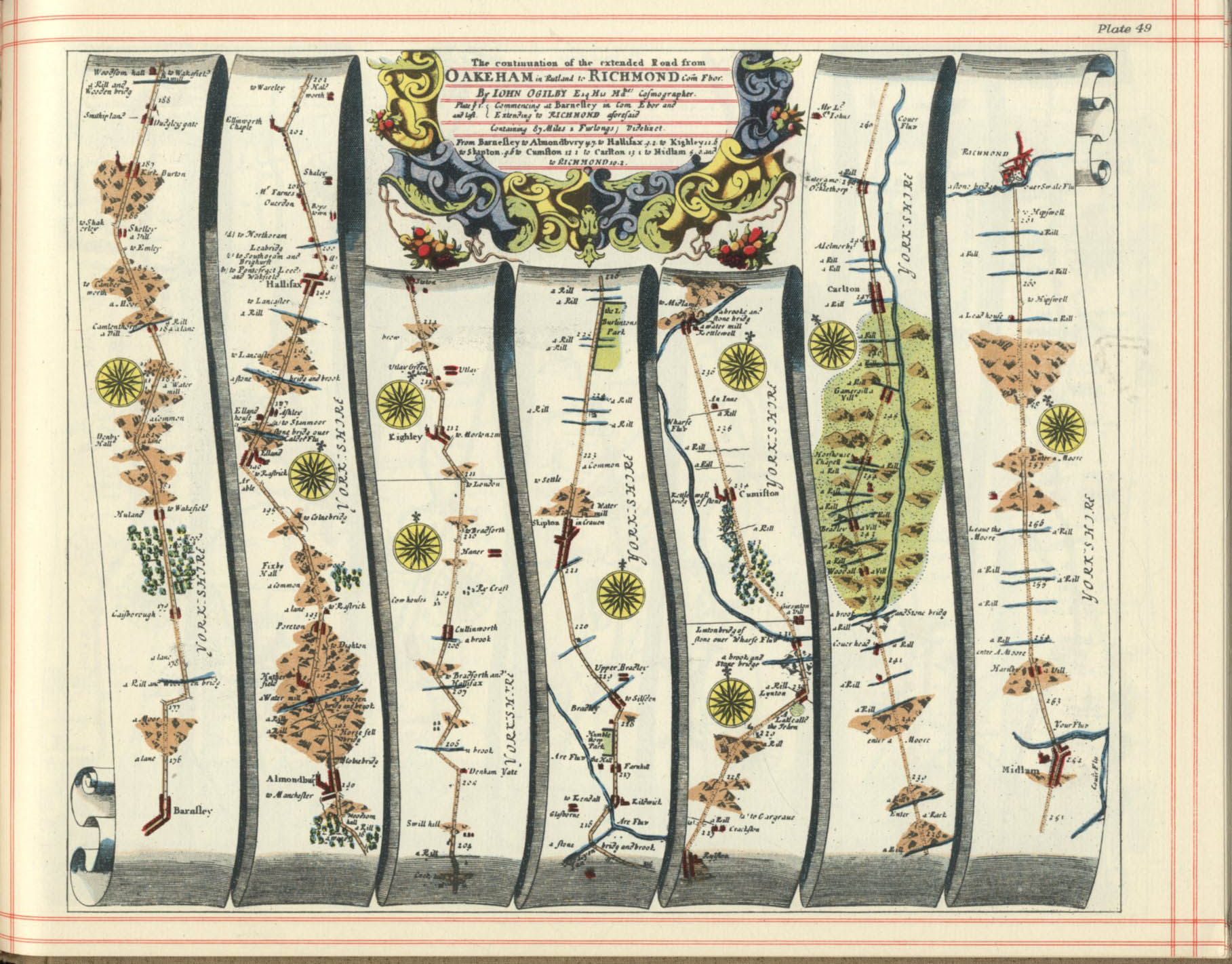
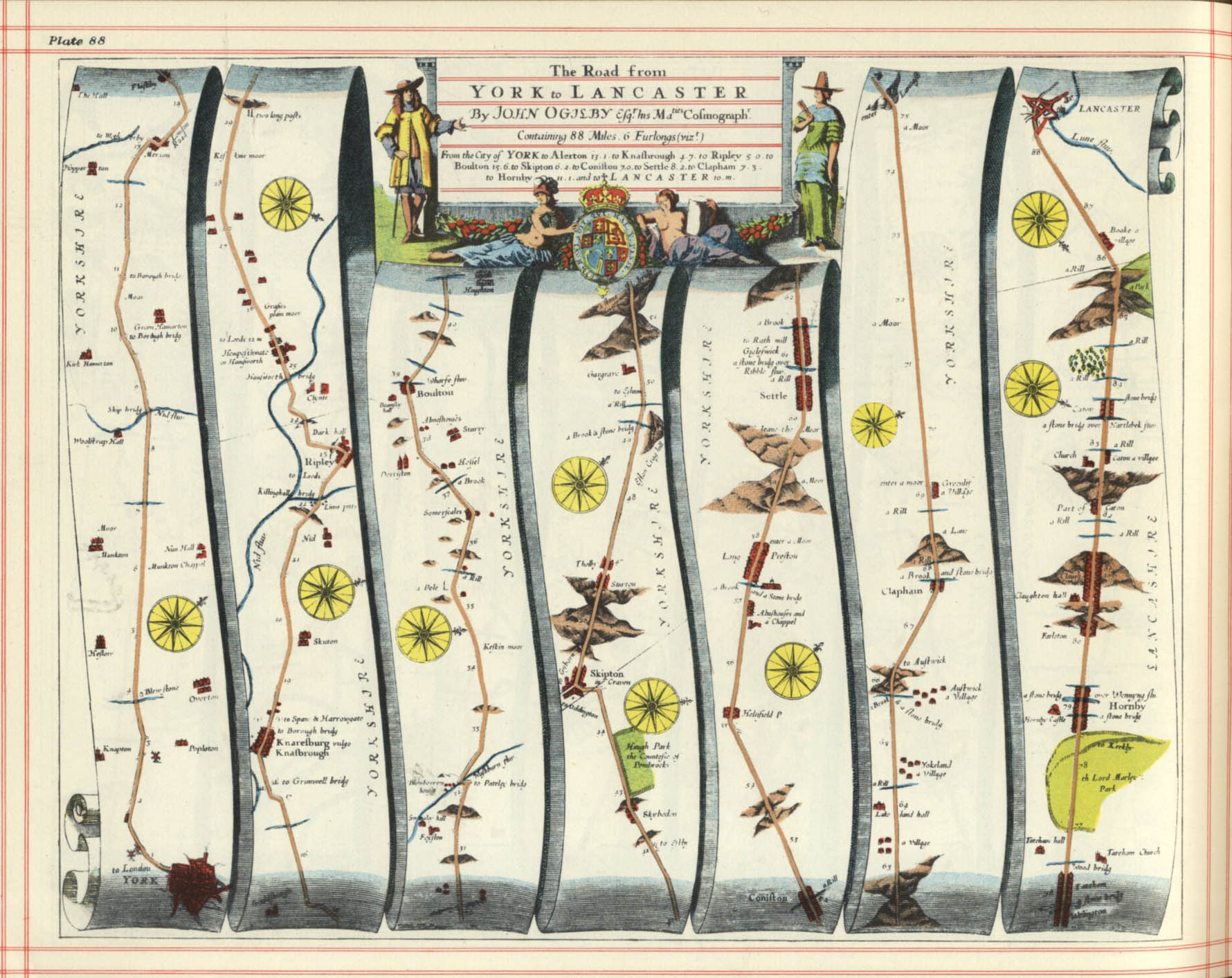
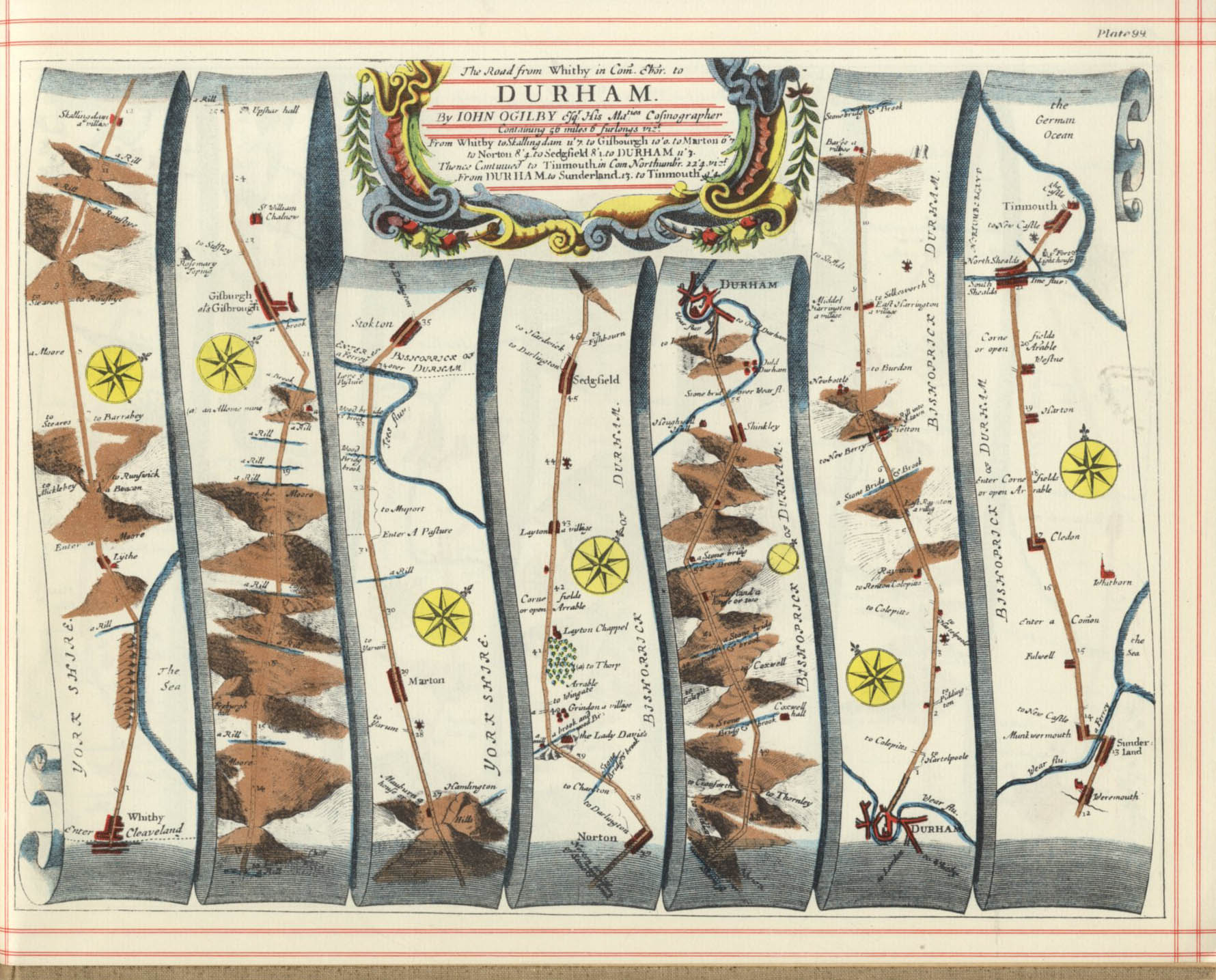
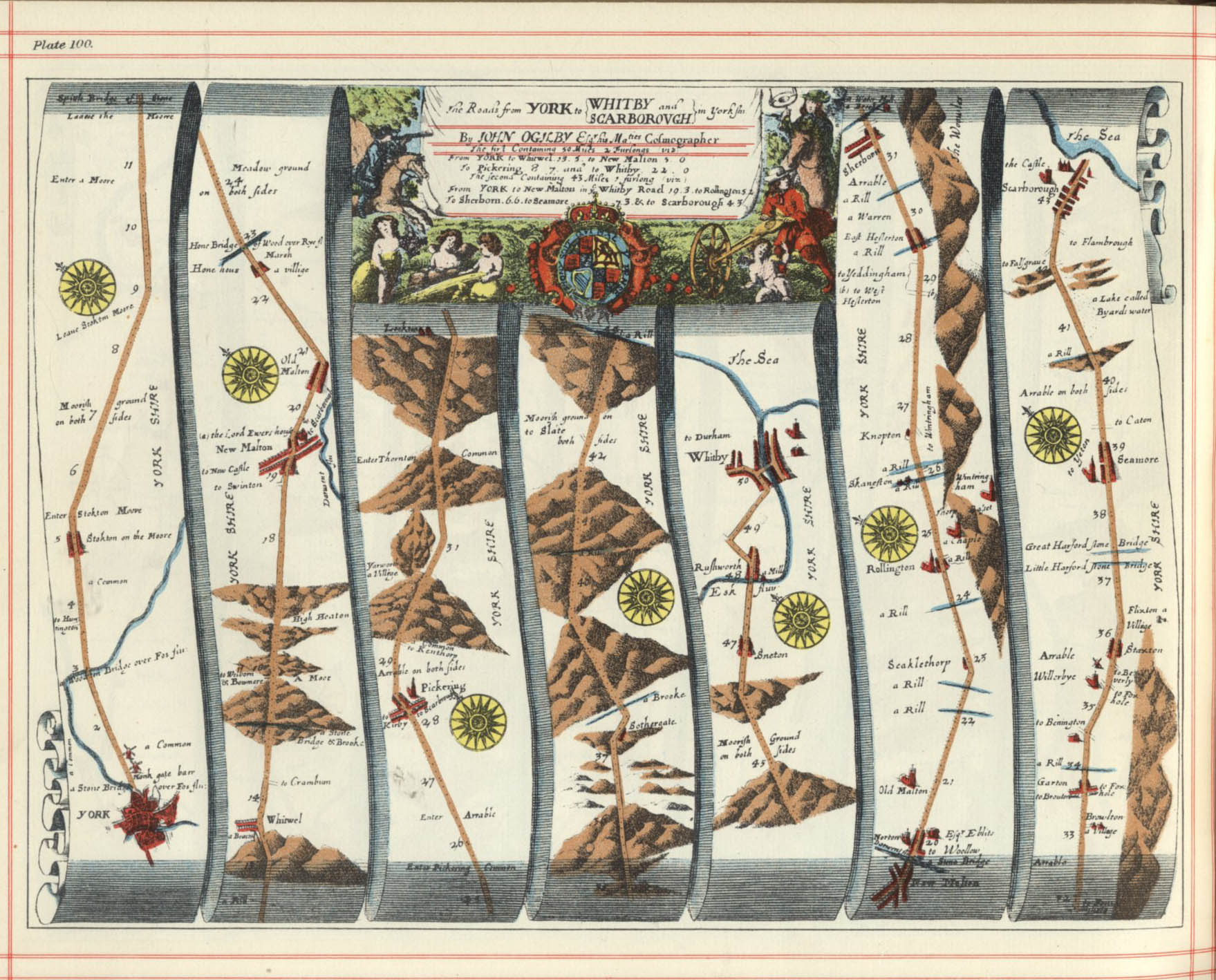
John Ogilby’s Britannia Illustrata
included 100 strip maps of roads in England and Wales. Plate 7 covers
Tuxford to York via Doncaster. Plate 8 covers
York to Chester le Street via Northallerton. Plate 49 covers
Barnsley to Richmond. Plate 88 covers
York to Lancaster. Plate 99 covers
Whitby to Tinmouth via Lythe, Guisborough and Durham. Plate 100 covers
York to Scarborough via New Malton, Pickering and Whitby.
1678
Dissenters went underground. John
Bunyan, imprisoned for illegal teaching, wrote the Pilgrim’s Progress,
a work on Puritan piety.
The Titus Oates plot in August 1678 amounted to a conspiracy theory suggesting a
popish plot with French support to assassinate Charles. Catholics were executed
for treason. The Earl of Shaftsbury took the lead and demanded the exclusion of
Catholics from Parliament. Shaftsbury also sought to exclude Charles’ brother,
James from the throne, who left for Brussels. There is an In Our Time podcast on Titus
Oates and his Popish Plot.
1679
The Exclusion Crisis was a political struggle from 1679 to 1681 over whether to exclude
the King's brother and heir presumptive, James, Duke of York, from the thrones
of England, Scotland and Ireland because he was Catholic. Whilst the matter of
James's exclusion was not decided in Parliament during Charles II's reign, it
would come to a head only three years after James II took the throne, when he
was deposed in the Glorious Revolution of 1688. Finally, the Act of
Settlement 1701 decided definitively that Catholics were to be excluded from
the English, Scottish and Irish thrones, now the British throne.
Shaftesbury urged Charles to make his illegitimate son also James,
Duke on Monmouth, a Protestant, his heir. James Scott, 1st Duke of Monmouth, 1st Duke of Buccleuch, KG, PC (9 April
1649 – 15 July 1685) was a Dutch-born English nobleman and military officer.
Originally called James Crofts or James Fitzroy, he was born in Rotterdam in
the Netherlands, the eldest illegitimate son of Charles II of England with his
mistress Lucy Walter.
Two new parties
formed. The Tories were opposed to the exclusion of James II. The derogatory
term Tory came from the toraigh, the Irish
Catholic rebels. The Country Party, who were soon to be called the
Whigs, supported the exclusion. The derogatory term Whig came from the whiggamore, Scottish Presbyterian rebels.
The Civil War
camps were the foundation of the evolution of British politics and a trend
towards what has later been referred to as a Whig History.
This was also the
start of the Age of
Enlightenment or the Age of Reason.
1680
Headstones began
to be widely used to mark a place of burial. Individual, upright headstones
becoming prevalent in churchyards and cemeteries, moving beyond the previous
practice of unmarked graves for the majority of the population.
The Great Comet
was first identified by telescope. It was a spectacular, long-period, sungrazing comet that was widely observed across England,
most notably by leading scientists like Isaac Newton and John Flamsteed.
In his seminal
work Philosophiæ Naturalis Principia
Mathematica (1687), Newton used the comet's trajectory to demonstrate that
comets, like planets, follow predictable, conic-section orbits, a parabolic
orbit in this case, around the Sun under the influence of gravity.
1681
The first English
settlers arrived in Pennsylvania. The first inhabitants of the region that
became Pennsylvania were Native American tribes, primarily the Lenape
and Susquehannock. The first European settlers were Swedes and Finns in
1643, followed by the Dutch, and finally the English under William Penn in
1681. The
English seized all Dutch territory in 1664. In 1681, King Charles II granted a
massive land charter to William Penn to repay a debt owed to Penn's father.
Penn, a Quaker, established the Province of Pennsylvania as a haven for
religious freedom, attracting diverse groups including English quakers, German
immigrants and Scots-Irish.
1682
Charles appealed
for loyalty and Shaftesbury fled overseas.
John Locke wrote two
Treatises of
Government, asserting the right to resist monarchs. He asserted that
legitimate government arises from a social contract where people consent to be
ruled to protect their natural rights including to life, liberty, and property.
The work refuted the divine right of kings, advocating instead for a government
with a separation of powers and a government that ultimately serves the people.
He held that the people have the right to resist and overthrow a government
that fails to protect their rights or becomes tyrannical.
There was a
backlash against the Whigs, a direct consequence of their failed attempts to
pass the Exclusion Bill, which aimed to prevent the Catholic Duke of York, James,
from succeeding to the throne. The Tory Reaction was characterized by Charles
II's campaign of political and legal repression against leading Whigs and
Dissenters, effectively allowing him to rule without Parliament.
Celia Fiennes travelled
extensively around England between 1685 and 1712, covering every county by
horseback, often side-saddle. Her journeys, which included a Great Journey
to Newcastle and Cornwall, were meticulously documented in her journals. She
recorded her observations of rural and urban landscapes, on certain English
towns, stately homes, industries like mining, and local customs, providing
valuable historical insights into seventeenth century England.
1683
The Great Frost
of 1683 to 1684 was the most severe freeze ever recorded in England, part of a
period known as the Little Ice Age. It caused widespread hardship but
also led to the most famous of the River Thames frost fairs, a temporary
carnival on the frozen river.
1685
Charles II died on
6 February 1685 after a sudden illness that began with an apoplectic fit four
days earlier. He was 54 years old and was succeeded by his openly Catholic
brother, James, Duke of York..
James II, 1685 to 1689
The accession of
the Catholic James II and VIII stirred the old issues that had plagued the
century up all over again.
Titus Oates was
formally exposed as a fraud and convicted of perjury in May 1685, after the
Catholic James II succeeded his brother Charles II to the throne. The hysteria
surrounding the Popish Plot he fabricated in 1678 had largely faded by
1681.
James had
ambition to make England a Catholic state. He was more authoritarian than
Charles, but less intelligent. Protestantism was being eliminated across Europe
in Italy, Spain, Hungary and France.
Almost
immediately there was a Whig-Protestant attempt on the throne, led by the Duke
of Monmouth. Monmouth’s
Rebellion was defeated at the Battle
of Sedgemoor in Somerset.
The Bloody
Assizes followed. Lord Justice Jefferies heard 1,336 cases. The first batch
were hung, drawn and quartered, and James then made them all suffer the bloody
executions.
Parliament was
alarmed at the threat of another civil war. James was appeased with money and
an army.
James then
legalised Catholicism in law.
Concurrently in
Europe, Louis XIV revoked the Edict of Nantes of 1598 which had guaranteed the
French Protestants a freedom to practice their religion. 50,000 protestant
refugees, the Huguenots, flooded into England.
1687
The Settlement
Act of 1662 was amended so that it was necessary to establish settlement by
occupying property valued at over £10 per annum for more than 40 days.
1688
James allowed
Catholics to freely practice their religion by the Declaration of Indulgence of
1688.
On 10 June 1688
James II and his second wife, Mary of Modena, had a son, James Francis Edward
Stuart, who was baptised a Catholic. This meant that James’ policies would not
end with his death.
Meantime,
Princess Mary, James’ daughter with his first wife, Anne Hyde, was now aged 26
and wife of Willem II van Oranje, William of
Orange, leader of the resistance against France. Another war was looming
between France and Holland.
On 30 June 1688,
five Whigs and two Tories, later called the
Immortal Seven, wrote to Willem and promised support if he intervened to
secure a free Parliament. On 19 October 1688 the biggest seaborne invasion
force before D Day sailed from the Dutch Republic and after a couple of
abortive attempts, reached Torbay with 463 ships, 5,000 horses and a
multinational force of 20,000. The force marched on London to confront James’
larger force of 53,000.
The Second Interregnum 1688
to 1689
Fearful of
another civil war, there was hesitation. Towns and counties started to turn
against James. Rather than rally popular support, James abandoned his troops.
The Glorious
Revolution
The Glorious
Revolution was the overthrow of James II, replaced by his Protestant daughter
Mary II and her husband, William of Orange. This event led to the establishment
of a constitutional monarchy in England, where Parliament's power was
significantly enhanced over the monarch. It was called glorious because
it was largely bloodless and marked a major turning point in the development of
British democracy and parliamentary supremacy. There is an In Our Time podcast on the Glorious Revolution of
1688. With the benefit of retrospect, the Glorious Revolution began a
somewhat calmer period that the centuries that had preceded it.
There remained
rival claimants to the thrones of the three nations and the Dutch war against
France, into which England was now drawn, meant that Louis XIV had an interest
to reignite the old tensions in Scotland and Ireland.
This was the
start of a war with France that lasted 127 years until 1815, sometimes called the
Second Hundred Years War. This period of war with France comprised the Nine
Years War 1688 to 1697; the War of Spanish Succession
1701 to 1713; the Seven Years War 1755 to 1763; the French Revolutionary War 1792 to 1802; and the Napoleonic Wars 1803 to 1815.
It was from this
point that Britain started to appear more prominently on the global stage. The
English language spread, as did the culture and manners of Britain. London
started to become more cosmopolitan, a global bazaar. Economically,
politically, culturally, Britain became a major player in world history.
Although
generally welcomed as a solution, William was not widely accepted and
Archbishop Sancroft refused to crown William and Mary or to swear allegiance to
them. The Church and the Tories were still strong supporters of the divine
right of the Stuarts, while the Whigs gave support to the new regime.
This conflict
between Whigs and Tories became institutionalised. Generally each camp was
evenly represented within the elite. Party politics spread to counties and
boroughs and news and propaganda circulated in the coffee houses.
The Nine Years War 1688 to 1697 was a major
conflict between France, led by Louis XIV, and a European coalition known as the
Grand Alliance, which included England, the Dutch Republic, Spain, Savoy,
and the Holy Roman Empire. Sparked by French territorial expansion into the
Rhineland, the war involved extensive campaigns across Europe and led to King
William's War in North America and the Williamite War in Ireland.
The conflict concluded with the Treaty of Ryswick, which resulted in no
significant territorial gains for either side and ended hostilities but left
underlying tensions unresolved.
1689
A Convention
Parliament met in January 1689.Willem and Mary were declared regents.
William was dour
and taciturn. He spoke English imperfectly and spent much of his reign outside
England. He didn’t feel the English people were created for him, or him for
them. However he had overwhelmingly changed the course of English and British
history by his perilous invasion and his anti French
alliance prevented France from becoming the dominant force in Europe.
The House of Stuart and
Orange, 1689 to 1714
William III and Mary,
1689-1702
In response to
the 1688 revolution, the French invaded Ireland in March 1689 with a naval
squadron, led by James II. The intention was to invade Scotland from Ireland
and thence to London.
In 1689, the
English government passed an act to encourage domestic gin consumption,
primarily driven by a desire to support English agriculture and weaken France
during wartime. The legislation aimed to replace imported French brandy with
domestically produced gin. A 1690 Act followed the 1689 measures, which
effectively broke the monopoly of the London Guild of Distillers, allowing
almost anyone to distil spirits by simply giving public notice ten days in
advance. There is an In Our Time podcast on the Gin Craze in the 18th
Century and the moves to control it.
Steps were taken over the next few years to reinforce the Crown’s
subjection to law and to have Parliament take the centre stage of state.
A
series of legislative acts established a constitutional monarchy, permanently
shifting the balance of power from the Crown to Parliament and ensuring the
monarch was subject to the law. The challenges of concurrent wars meant that
Parliament was more than every relied upon to provide ever increasing taxation
needs.
Parliament has met every year since 1689.
The Bill of Rights 1689 embraced a right of
petition; free debate in Parliament; freedom of election; trial by jury; the
right to bear arms; and the frequency of Parliament.
The wars promoted a requirement for a larger more professional
army, evolving out of the New Model Army of Cromwell. Civil War was an
incentive for the control of military force and military service was not
popular. This meant that there was increased reliance upon a professional army,
honed for serious fighting.
The Mutiny
Act 1689 made the army’s existence dependant upon
Parliament’s consent.
1690
James met William
at the Battle
of the Boyne on 1 July 1690. This was a European battle, with
French, Dutch, English, German, Irish and Danish soldiers. The invading force
was defeated. However the guerilla war continued. Penal Laws were passed in
Dublin to break up the Jacobite aristocracy.
1692
The Massacre
at Glencoe was the brutal, state sanctioned murder of at least 38 members
of the Clan MacDonald by government troops whom they had hosted for nearly two
weeks. It took place on 13 February 1692, in the remote Scottish Highlands
valley of Glencoe, and remains a potent symbol of betrayal in Scottish history.
To pacify the
still loyal Jacobite Highland clans, the new government under King William
demanded all chiefs swear an oath of allegiance by 1 January 1692, promising a
pardon and money to those who complied and punishment to those who did not.
The chief of the
Glencoe MacDonalds, MacIain, was late in taking the oath. This was partly due
to delays in receiving permission from the exiled King James and then a
procedural issue, as no magistrate was available at Fort William to receive the
oath. He finally swore allegiance on 6 January 1692, believing it had been
accepted. John
Dalrymple, the Master of Stair and Secretary of State for Scotland, seized upon
this delay to make an example of the lawless MacDonalds of Glencoe. He
secured an order, counter-signed by King William, to extirpate that sect of
thieves. In
late January 1692, about 120 government soldiers from the Earl of Argyll's
Regiment of Foot, commanded by Captain Robert Campbell of Glenlyon,
were billeted in Glencoe. For almost two weeks, the soldiers were housed and
fed by the MacDonalds in accordance with the strict Highland code of
hospitality. On
the evening of 12 February, Campbell received written orders to fall upon
the Rebells, the McDonalds of Glenco,
and putt all to the sword under Seventy. At dawn on 13 February, the soldiers
turned on their unsuspecting hosts. MacIain was shot dead in his bed. At least
38 members of the clan were murdered, including men, women, and children. Many
more died of exposure in the bitter winter weather after fleeing into the
mountains as their homes were burned.
The Royal
Hospital at Chelsea was established to provide a dignified retirement and care
home for British Army veterans who were broken by age and war. The King
was inspired by the Hôtel des Invalides in Paris and wanted to honour
the service of his soldiers.
During the 1690s
the Whigs set up a new Country Party which promoted resentment of ever
increasing taxes, and found some favour from Tories. It feared that despotism
was being replaced by corruption. The party would later become the Whig Party.
In the early to middle 1700s it was taken up by opponents of the Whig Walpole
ministry, which they claimed was acting tyrannically and against the interest
of the British nation and its people.
1694
The Bank of
England was founded by the Scot, William Paterson, in 1694 by a Royal
Charter to raise £1.2 million for the government to fund the war against
France. It was based on the Bank of Amsterdam. Public investors, including King
William and Queen Mary, bought shares in the new Governor and Company of the
Bank of England, which lent the money to the Crown at an 8% interest rate.
The bank received its charter in exchange for this funding and was given
privileges that allowed it to function as the government's banker and issue
banknotes, a pivotal step in the development of modern central banking. It
immediately acted to prevent a debt crisis to save a collapsed in government
credit.
The Triennial
Act 1694 required general elections to take place every three years.
The eldest
daughter of James II, William’s Queen, Mary, died childless in 1694.
1695
There was large
scale emigration from Scotland following famine. Many settled in Ireland.
In 1695 the
Darien Scheme aimed to establish a Scottish colony in Panama, called Caledonia.
The scheme's architect, Scottish
financier William Paterson, a co-founder of the Bank of England, proposed
establishing a settlement in Darien, a location he believed was the ideal door
of the seas and the key of the universe for an overland trade route
between the Atlantic and Pacific oceans. This ambitious plan aimed to make
Scotland a major global commercial power, bypassing the treacherous route
around Cape Horn. It was funded by the Company of Scotland, established by a
Scottish Parliament act in 1695.
In 1696, an Act of Parliament required county sheriffs to maintain
an official record of voters in parliamentary elections, formalising a practice
that previously had been sporadic. The primary goal was to minimise election
fraud and resolve disputes over the results.
Another offshoot of concurrent warfighting was the spiralling of
taxes, which trebled between 1688 and 1713. In 1696 an Inspector General was
appointed to levy customs and excise duties. The Land Tax created in 1688 was
administered locally by JPs.
A Window Tax replaced the Hearth Tax and led to widespread
bricking up of windows. It was a property tax to raise revenue for the
government without creating a controversial income tax. It charged a flat rate
per house plus an additional variable tax based on the number of windows.
The practice of taxing natural light is widely
believed to be the origin of the phrase daylight robbery. Despite growing criticism, the tax remained in place for 155 years
until it was finally repealed in 1851 and replaced by a general house duty.
There is a perception of eighteenth century administration as
corrupt, but there is no real evidence of that and in contrast to Continental
Europe, there was a tendency to trust and accept the administration, accepting
the need for national defence, albeit reluctantly. Taxation
was generally regarded as fair and compliance was high.
However taxation
alone was not sufficient. Public debt grew from £3M in the 1680s to £100M in
1760. This was the catalyst for a new more efficient financial system.
Simple IOUs were
replaced by more sophisticated long term low interest bonds. In the 1690s,
there were studies of Dutch and Venetian banking systems. Parliament’s
guarantee made default unlikely, as long as land lasts and beer is drunk,
there was little worry of default. Domestic and foreign savers were eager to
lend. The rate of interest fell from 14% in 1693 to 3% in 1731. Britain became
a fiscal military state. New professions arose such as bankers and lenders
emerged. (The English
and their History, Robert Tombs, 2023, pages
307-308).
1697
The Poor Relief
Act 1697, sometimes referred to as the Badging Act, established specific,
strict requirements for individuals and families receiving parish assistance in
England, intended to stigmatise dependency and deter people from seeking aid
unless absolutely desperate. Paupers were required to wear badges.
The inscription
of waymarkers, particularly the Guide Stoops, was
mandated from 1697, requiring basic directional information, the names of
nearby towns or locations and the distances to them, often in miles.
1698
The First Darian Expedition
in 1698 comprised five ships carrying around 1,200 settlers which sailed from
Leith in July 1698 and arrived in November. They established Fort St Andrew and
the settlement of New Edinburgh, but the colonists were ill-prepared for the
tropical climate and conditions. Agriculture proved difficult, the trade goods,
like combs and wigs, were useless for trading with local Kuna people,
and disease including malaria, dysentery and yellow fever, spread rapidly. William
III had ordered English colonies not to assist them to avoid conflict with
Spain. Facing starvation, disease, and a lack of support, the surviving
settlers abandoned the colony after just eight months.
The Darian Scheme
was a catastrophic failure. Over 2,000 settlers died, and the financial losses
effectively bankrupted Scotland's economy. The disaster had major political ramifications
and it weakened Scottish resistance to a full union with England. As part of
the negotiations for the Act of Union 1707, England agreed to compensate the
Darien investors for their losses with a payment, known as the Equivalent,
of nearly £400,000. This financial incentive helped secure support for the
Union in the Scottish parliament, leading to the creation of Great Britain. The
institution established to manage this compensation eventually became the Royal
Bank of Scotland.
1699
Unaware of the
first expedition's failure, a second Darian Scheme fleet carrying over 1,000
more people arrived in November 1699 to find the settlement deserted. They
attempted to rebuild but faced the same problems, in addition to an eventual
Spanish siege and blockade. The remaining colonists surrendered and left in March
1700.
The first
recorded slave ship to sail from England left Liverpool in 1699, the Liverpool
Merchant. The voyage marked the beginning of Liverpool's deep and
profitable involvement in the transatlantic slave trade, which would grow
rapidly over the following decades.
The Standing Army
was limited to 7,000 native born men.
1701
The estimated
population of England in 1700 was 5.2 to 5.65 million people. This was a time
of relatively slow or stagnant population growth following the rapid expansion
of the late sixteenth and early seventeenth centuries. There was a period of
stagnation or very slow growth until the mid-eighteenth century.
Another
succession crisis arose in 1701. The eldest daughter of
James II, William’s Queen, Mary, had died childless in 1694. The heir was James II’s younger daughter, Mary’s sister, Anne,
who was an Anglican and therefore acceptable to many. After Anne, the successor
to the throne would have been the Catholic descendants of James II by his
second marriage.
The Act of Settlement in June 1701
(which remains in force) excluded the many Catholic claimants to the throne in
favour of a granddaughter of James I, the Electress
Sophia of Hanover. So whilst the Stuart Queen Anne would succeed William, the
throne was set in due course to become Hanoverian.
The War of Spanish Succession 1701 to 1714 was a major European conflict
triggered by the death of the Spanish King Charles II without an heir. It
pitted the House of Bourbon against the House of Habsburg, with France backing
the Bourbon candidate Philip of Anjou and the Grand Alliance, including
England, the Dutch Republic, and the Holy Roman Empire, supporting the Habsburg
candidate, Archduke Charles. The war was fought over who would control the vast
Spanish Empire and was a struggle to maintain the European balance of power,
particularly to prevent the Spanish empire falling to the French. Enormous
armies fought bloody battles across lengthy lines of defence, anticipating the
horrors of the First World War.
1702
William died on
1702 after falling off his horse in Richmond Park.
Queen Anne, 1702-1714
Anne was the last
true Stuart Queen. She has been misogynistically described as popular, plump
and unthreatening, but she made broad political decisions and was the last
monarch to try to refuse consent to legislation. Her reign transformed the
monarchy into the symbolic, popular and familiar institution that it became.
The first daily
newspaper, the Daily
Courant, was published in Fleet Street on 11 March 1702. It was a single-page,
factual publication focused solely on foreign news, with advertisements on the
reverse side. It began to allow readers to form their own opinions. It later
merged with the Daily Gazetteer.
1704
The Battle of Blenheim on 13 August 1704 was
a decisive victory for the Grand Alliance (English, Dutch, and Austrian forces)
led by the Duke of Marlborough and Prince Eugene of Savoy, over the
Franco-Bavarian army. This pivotal event in the War of the Spanish Succession
saved Vienna from a threatened capture, prevented the collapse of the alliance,
and shattered the myth of French invincibility. The Allied victory was a result
of superb strategic coordination, logistics, and battlefield tactics. John Churchill, later the
Duke of Marlborough, an outstanding general, led a largely German army into
southern Germany. The defeat of the French army was the first French defeat for
generations and the first significant victory since 1588.
A Deeds Registry
was established in Wakefield as the first public registry of its kind in England, primarily to
provide reliable evidence of land ownership in the West Riding of Yorkshire. It
soon comprised over a million records of property ownership, followed by
records in the East Riding in 1708 and North Riding in 1735.
1706
Marlborough’s
victory at the Battle of Ramillies on 12 May 1706
was a decisive
victory for the Grand Alliance forces against the French army. As significant
as Blenheim, Marlborough used a tactical ruse, creating a weak point in his
line and a strong centre to lure the French into reinforcing their flanks. He
then concentrated his attack on the now weakened French centre, leading to a
complete rout and the capture of most of the Spanish Netherlands. The
consequence was to exclude France from the Spanish Netherlands and led to the
later fall of the fortress at Lille.
1707
The Act of Union
established the Kingdom of Great Britain. The Glorious Revolution had unleashed
in Scotland a violent contest between the Calvanists
focused in the Lowlands and the Episcopalians focused in the feudal Highlands. The
disastrous Darian Project had involved Scotland in war with Spain, when England
was at peace with Spain. The colony collapsed in 1699. The Act of Settlement of
1701 did not apply in Scotland. The government in England brought things to a
head and forced a choice between union or separation. The Act of Union 1707 was passed in both
parliaments, in Westminster without a vote. The wish of James VI and I a
century before, the unification of a United Kingdom of Great Britain with a
single Parliament at Westminster, was realised. Ireland remained a separate
kingdom. There was little controversy and it was felt, certainly south of the
border, that nothing need change.
Scottish
intellectuals, including Hume, Smith and Boswell played an active role in the
Enlightenment in the eighteenth century. Scotland retained a separate legal and
education system, and its own religious establishment.
As long as
England had existed the lands to the north had played an important part in its
politics, especially during the Civil War. It was hoped that Union would
stabilise matters. The union established a common market and single sovereign
Parliament. However there remained religious boundaries, an established
Presbyterian Church in Scotland; Catholicism and then Methodism in Wales; and cultural
divisions.
There was no
ambition to create a single nation. This gave rise over time to a mixed
identify of English and British. The idea of Britishness mostly emerged in
imperial contexts and in institutions like the army.
At this stage the English colonies were not as significant to the
new Britain as the colonial interests of Spain, Portugal and Holland. There was
nothing yet to suggest a British imperial destiny. The priority was national
security and the growth of maritime trade. There remained an element of fear,
especially for France. British overseas interests had a commercial interest, in
the hands of chartered trading companies, the East
India Company, chartered in 1600; the London company and the Plymouth
Company, charted in 1606; and the Ohio Company chartered in 1747.
(Robert Tombs, The English and their History, 2023, 329 to
330, 335 to 336).
The Sacheverell
affair of 1709 to 1710 reflected ongoing religious tensions. Henry Sacheverell
was a high church Tory Anglican who preached two sermons that described what he
saw as threats to the Church of England. The threat from Catholics was dealt
with in three minutes, but the rest of the one and a half hour sermon was an
attack on Nonconformists and the false brethren who aided them in
menacing Church and State. His target was the Whig party. His sermons brought
to the fore the tensions that existed between Whig and Tory across the country
at that time. Sacheverell was tried by the House of Lords at Whig instigation, and
accused of preaching against the Glorious Revolution of 1688. The House found
that his sermons should be publicly burned and he should be banned from
preaching for three years. This made him a martyr in the eyes of many Tory
supporters, and triggered the riots.
1708
The earliest
artillery muster rolls predate the formal establishment of the Royal Artillery
in 1716, and were pay lists and accounts managed by the Board of Ordnance.
The winter of
1708 to 1709, known in England as the Great Frost, was the coldest
European winter in 500 years. The extreme cold, which began in late 1708 and
intensified in January 1709, persisted for three months and caused widespread
devastation and economic ruin.
1709
The Battle of Malplaquet
on 11 September 1709 in the Spanish Netherlands, was the bloodiest battle of
the War of the Spanish Succession, resulting in a narrow victory for the Allied
army led by the Duke of Marlborough and Prince Eugene over the French forces
commanded by Marshal Villars. It was a costly victory for the Allies, who
suffered over 20,000 casualties to the French 11,000 to 14,000. The death toll
was comparable to the first day of the Somme. The losses led to a decline in
Marlborough's popularity. Despite the heavy losses, the Allies captured of the
French town of Mons allowed them to continue their invasion of France.
Suspicions grew
about how the Whigs were pursuing the war and there were suspicions that it was
being pursued for personal gain. There was also alarm at the significant wealth
built up by Marlborough.
Poor harvests
across Europe, following the Great Frost, led to bread riots in Britain.
1710
A pro peace Tory
government was formed. An idea emerged that Britain’s best interest was to
create a balance of power in Europe, and not necessarily weaken France
too much. However France, as a universal monarchy with intentions to reimpose
Stuart rule to Britain, continued to be the significant threat.
1712
Thomas Newcomen’s
steam driven piston engine provided efficient pumping of mines. It was the first
practical and commercially successful atmospheric steam engine. It was
primarily designed to pump water out of deep mines, enabling the mining of more
coal and minerals and becoming a key driver of the Industrial Revolution.
1713
The Tories were
not committed to the war with France. They tended to take the Country Party
view against high taxation. They unilaterally concluded an armistice with
France, the Treaty
of Utrecht. Spain ceded Gibraltar and France ceded Newfoundland to Britain.
The Spanish Netherlands were ceded to the Habsburgs. There followed a long
truce into the 1720s and 1730s.
1714
Queen Anne died
in August 1714.
Following the
process of the Act of Settlement 1701, the electoral prince of Hanover, George
Ludwig von Braunschweig - Luneburg, became George I.