The Ryedale Windy Pits

Underground caves,
only 15 km from Farndale, which were home of the Bronze Age Beaker Folk
|
Return
to the Home Page of the Farndale Family Website |
The
story of one family’s journey through two thousand years of British History |
The 84
family lines into which the family is divided. Meet the whole family and how
the wider family is related |
Members
of the historical family ordered by date of birth |
Links to
other pages with historical research and related material |
The
story of the Bakers of Highfields, the Chapmans, and other related families |
The
Time Traveller’s Journey through North Yorkshire
The History of the North York Moors,
Ryedale, York, Cleveland and beyond |



Dates are in red.
Hyperlinks to other pages are in dark blue.
Headlines are in brown.
References and citations are in turquoise.
Context and local history are in purple.
BCE - Before the common or current
era. The contemporary equivalent of BC.
CE -
Common or current era. The contemporary equivalent of AD.
You
may not be able to visit all the windypits due to
access issues or private land but you might be able to ask the landowner.
Location
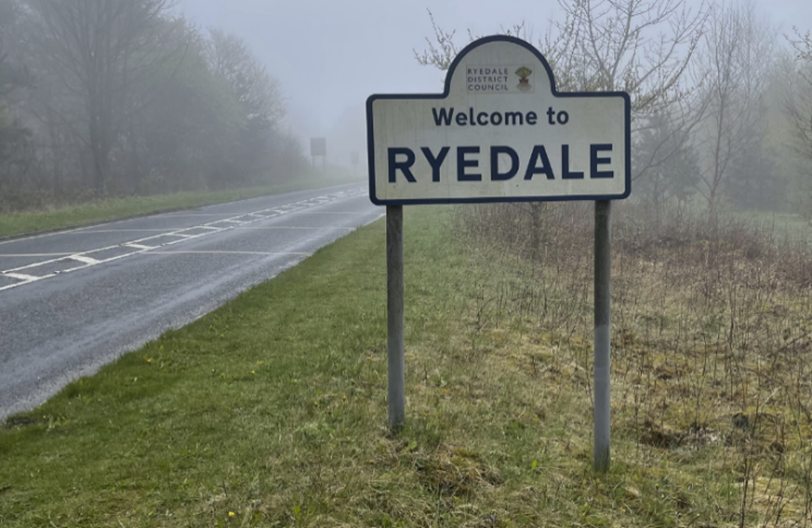
The Ryedale
Windy Pits are archaeologically significant natural underground features
within the North York Moors National Park. The windypits are a series of fissures in the Hambleton
hills, near Helmsley, located on the western slope above the river Rye.
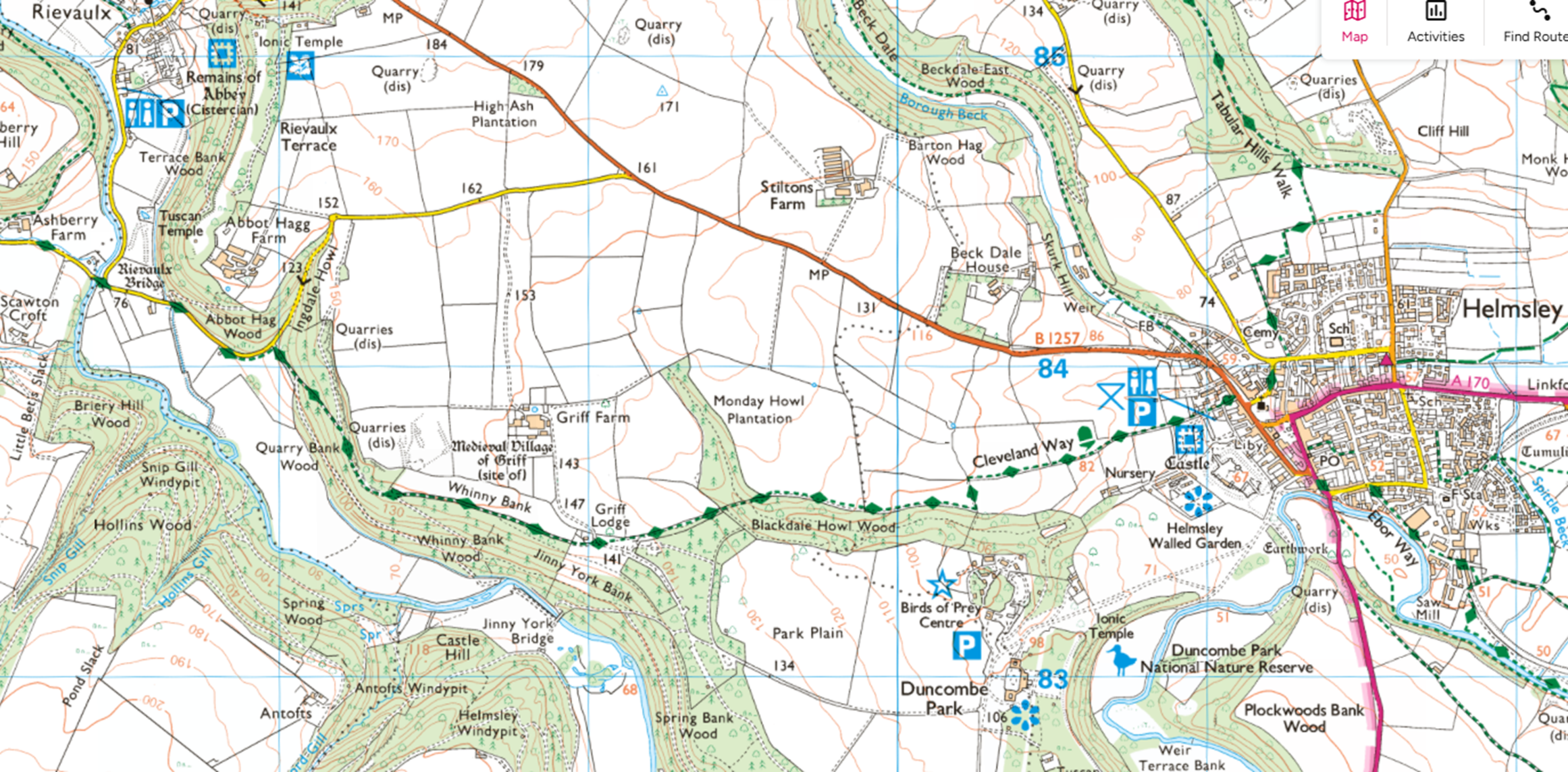
You can walk
along the Cleveland Way between Helmsley and Rievaulx Bridge. Some of the windypits lie within the estate of Duncombe Park, and if you want to
visit the windypits you should contact the estate
office in advance for permission. I found a route to the Jinny York Bridge and
across a sheep field to the forested hills where the windypits
still hide within the woods.
The home
of the Beaker Folk
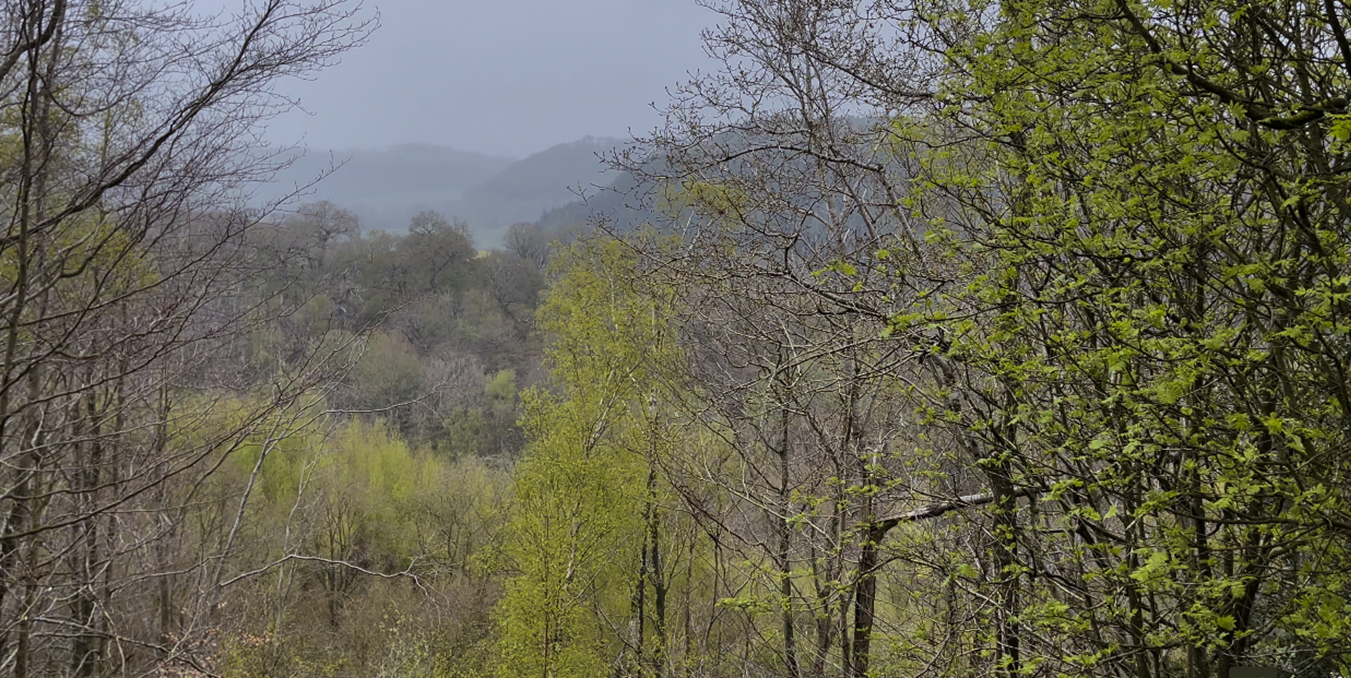
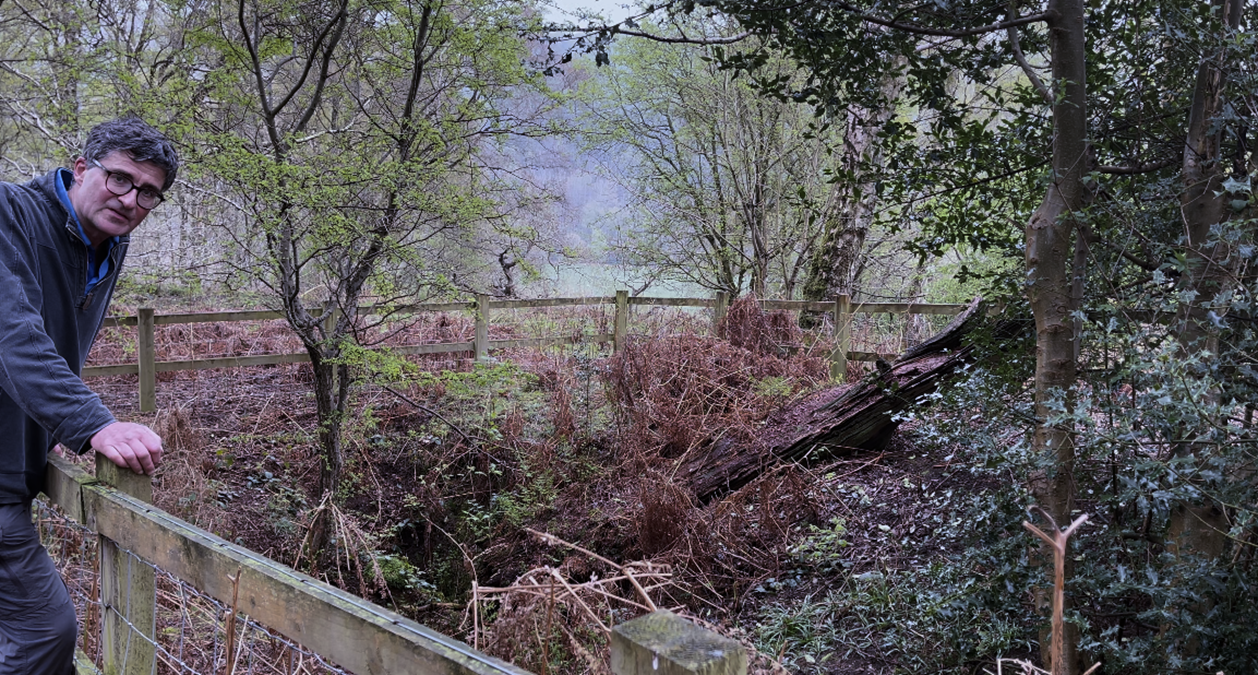
Human remains were first discovered in the Ryedale
Windy Pits, in the nineteenth Century by William Buckland, discoverer of the Kirkdale Cave. There is evidence that at least one
of the human remains had been scalped suggesting ritual sacrifice.
The human remains from the Windypits are Late Neolithic or Early Bronze Age burials
due to their association with the Beaker pottery and flint tools found in the
chambers of the fissures.
Warm or cold air rises from the fissures
and comes into contact with the air outside the entrance. In winter a steamy
vapour rises eerily in puffs or jets from the holes.
There are
over 40 known windy pits, but only four windy pits have known significant
archaeological deposits. These are Antofts, Ashberry,
Bucklands and Snip Gill.
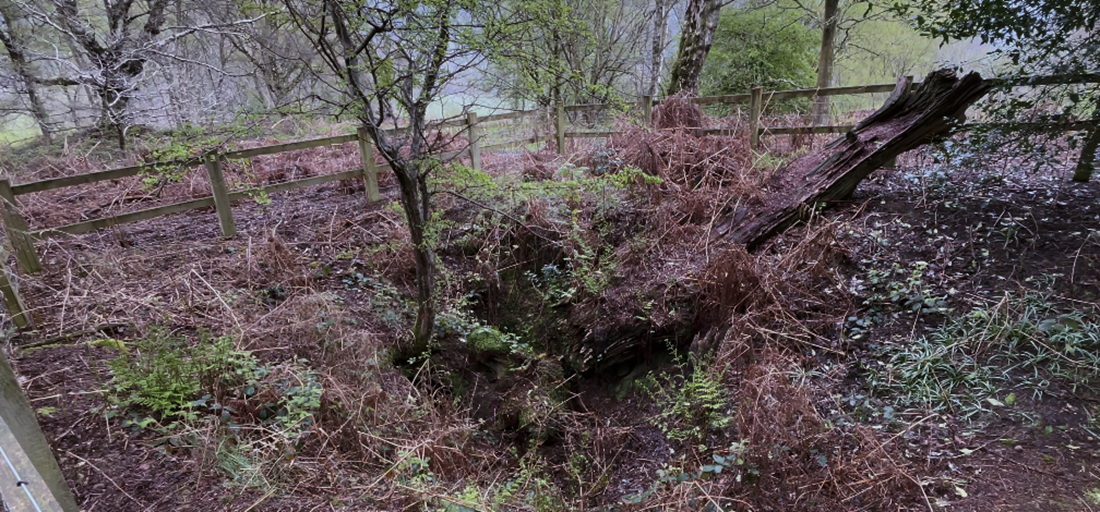
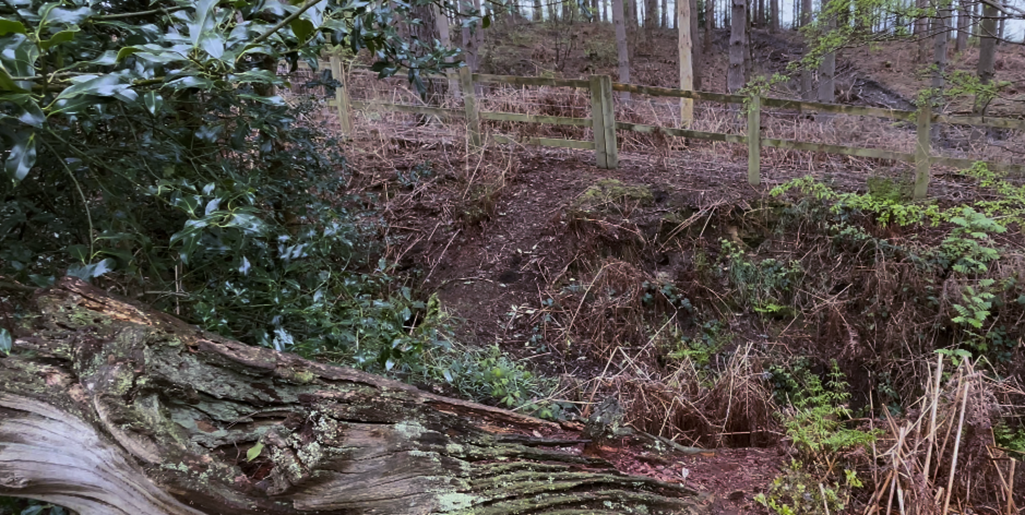
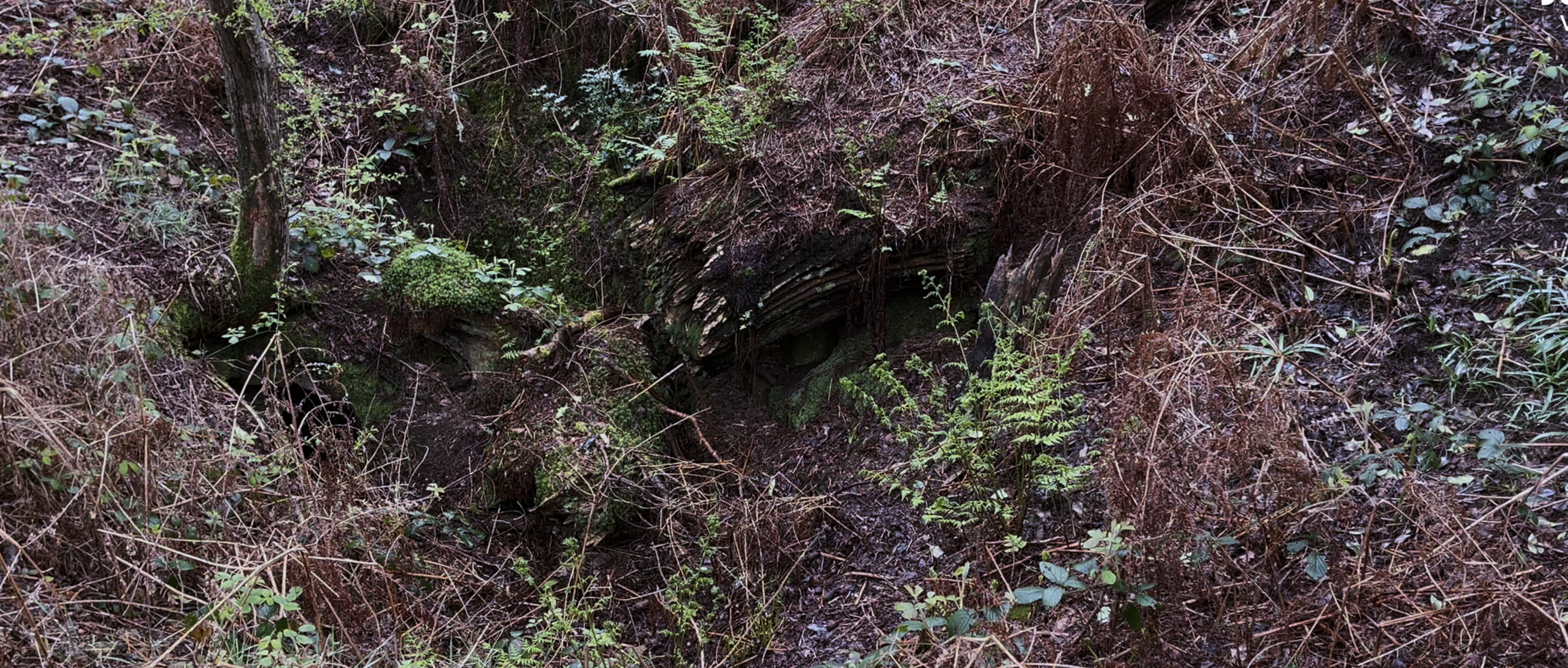
The windy
pits have strange vertical shafts with occasional horizontal chambers rising
within the limestone cliffs. They are accessed from the surface through small
openings in the woodland floor. The near vertical shafts are sometimes seventy
feet deep. In all the skulls and bones of at least eight people were found in Antofts and animal bones from pigs, wild boar, red deer,
roe deer, sheep, goat and dog as well as four or five beakers have also been
found. The human remains include the skull of an elderly woman with a fatal
wound inflicted by a long sharp, metal weapon and many disarticulated human
bones.
Bronze age hoards of axes cast in bronze have been found at Keldholme
and Gillamoor. There are barrows and tumuli such as at Whinny Hill Farm near
Kirkbymoorside and Keldholme and a road in the centre of Kirkbymoorside, Howe
End, circles the site of a howe, a large round mound which contained several
burial sites.
The
group of fissures known as the Windypits are all on
or near the main valley of the Rye, from Duncombe Park to Arden, northwest of
Hornby (A History of Helmsley Rievaulx
and District,
editor, J McDonnell, 1963, page 16). Windypit is a local term which
describes the warm or cold air which, during periods of cold weather, rises
from the fissures as mist-like steam. In the sixties there were still
only eight major windypit-type fissures known in
Ryedale, and four minor cavities (A History of Helmsley Rievaulx and District, editor, J McDonnell, 1963,
page 17). Since then about 40 windypits have been identified.
The Ryedale Windy Pits are
archaeologically significant natural underground features within the North
York Moors National Park. This series of fissures in the Hambleton hills, near
Helmsley, is located on the western slope above the River Rye. Warm or cold air
rises from the fissures and comes into contact with the air outside the
entrance. In winter a steamy vapour rises in puffs or jets from the holes.
There are over forty known windy pits, but only four windy pits have known
significant archaeological deposits. These are Antofts,
Ashberry, Buckland’s and Slip Gill. The windy pits have strange vertical shafts
with occasional horizontal chambers rising within the limestone cliffs. They
are accessed from the surface through small openings in the woodland floor. The
near vertical shafts are sometimes 70 feet deep. In all the skulls and bones of
at least eight people were found in Antofts and
animal bones from pigs, wild boar, red deer, roe deer, sheep, goat and dog as
well as four or five beakers have also been found. The human remains include
the skull of an elderly woman with a fatal wound inflicted by a long sharp,
metal weapon and many disarticulated human bones.
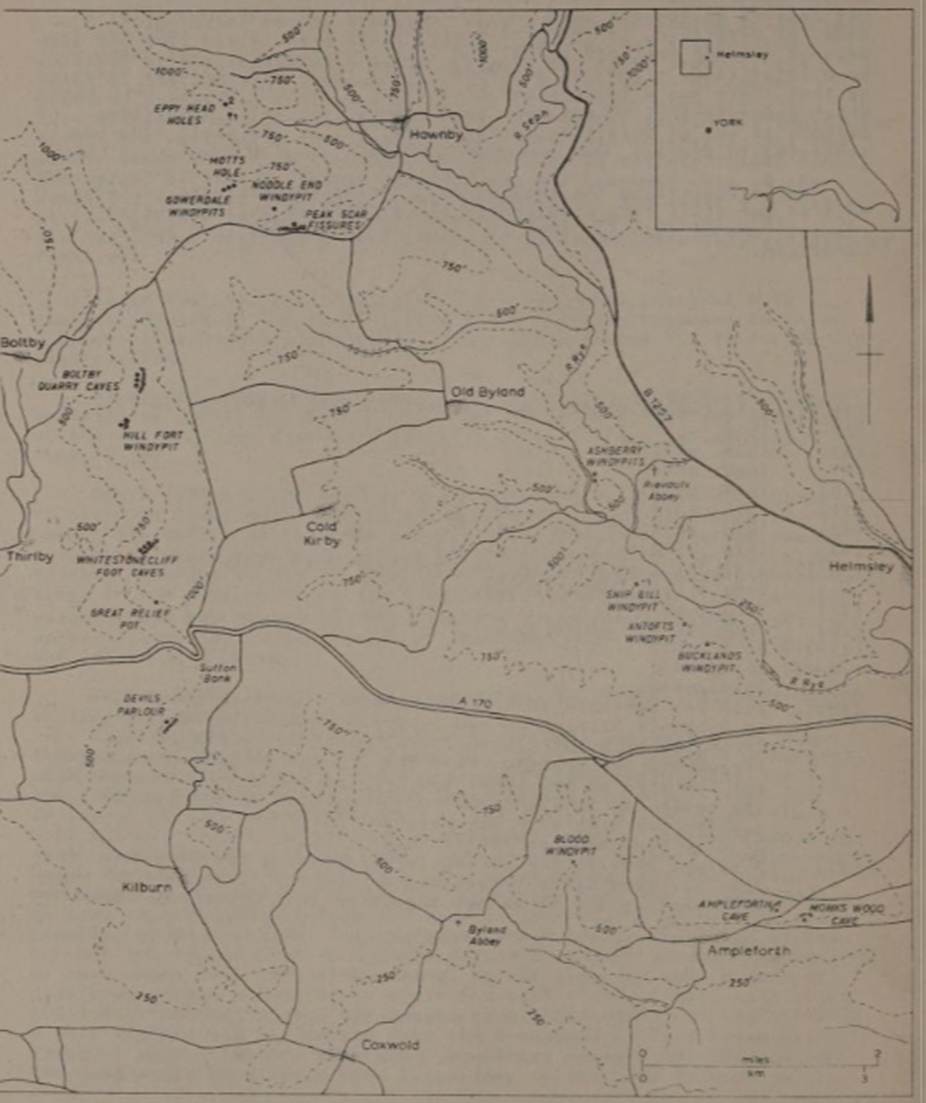
The
Ryedale Windypits
(The Discovery and Exploration of
the North Yorkshire Windypits, Roger C Cooper, The Ryedale
Historian, Volume 9, 1978, page 11).
Describing Buckland’s Windypit, Rev William Buckland explained
that the newly discovered fissure in Duncombe Park … has within its the
remains of animals of existing species only, and these in a much more recent
and perfect state of preservation than the bones at Kirkdale. It is a great irregular crack
or chasm in the solid limestone rock, which forms a steep and lofty cliff on
the south side of the valley of the Rye, being the most beautiful valley of
denudation which descends from Rievaulx Abbey through Duncombe Park to the town
of Helmsley. The crack was probably formed by the subsidence of part of the
cliff towards the valley, and terminates upwards near the edge, in a small
aperture about 20 feet long and three or four feet broad, which is almost
concealed and overgrown with bushes, and which, being nearly at right angles to
the edge of the cliff, lies like a pitfall across the path of animals that pass
that way. It descends obliquely downwards and presents several and irregular
lateral chambers the floors of which are strewed over with loose, angular
fragments of limestone, fallen from the sides and the roof, and with dislocated
skeletons of animals that have from time to time fallen in and perished.
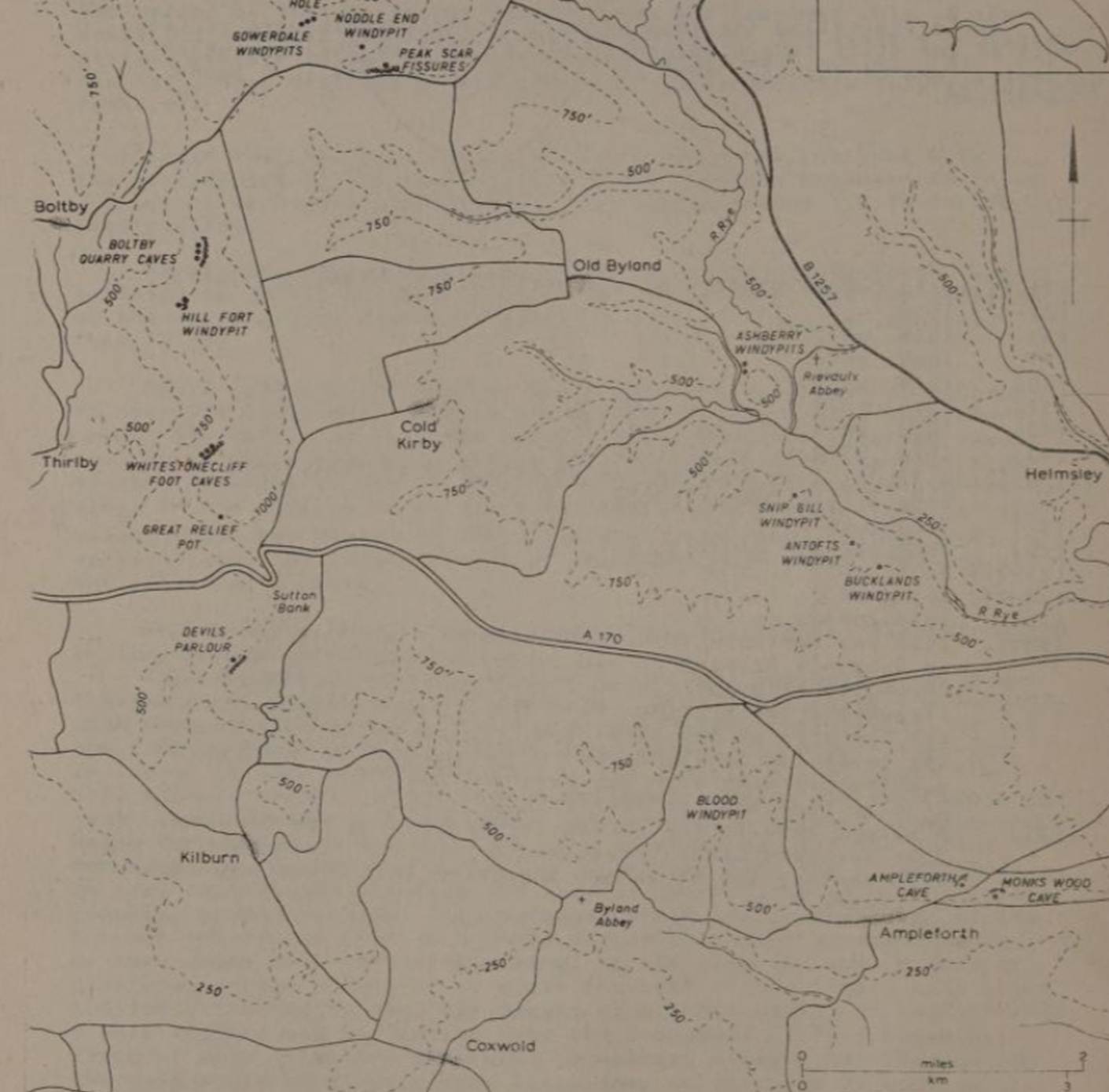
To the immediate west of
Helmsley, Buckland’s or Helmsley Windypit
(SE 587828) is on Castle Hill in Duncombe Park and 500 metres to its west is Antofts
Windypit (SE 587829). Snip or Slip
Gill Windypit (SE 575 835), one of the
largest fissures, is within this group, closer to Rievaulx. On Ashberry Hill
overlooking Rievaulx is Ashberry
Windypit (SE 570850). The MSG (Mr Sparkler’s
Glory) Hole (SE535854) is near Old Byland.
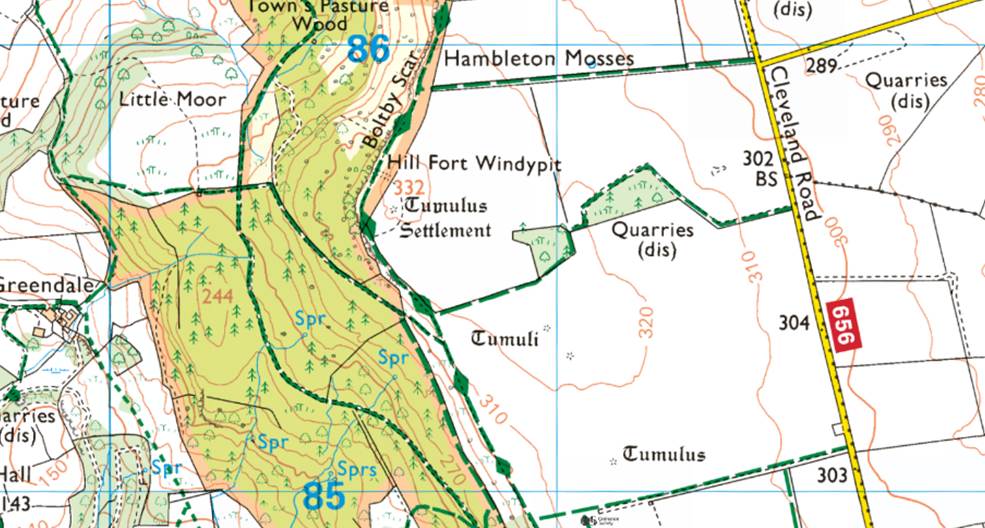
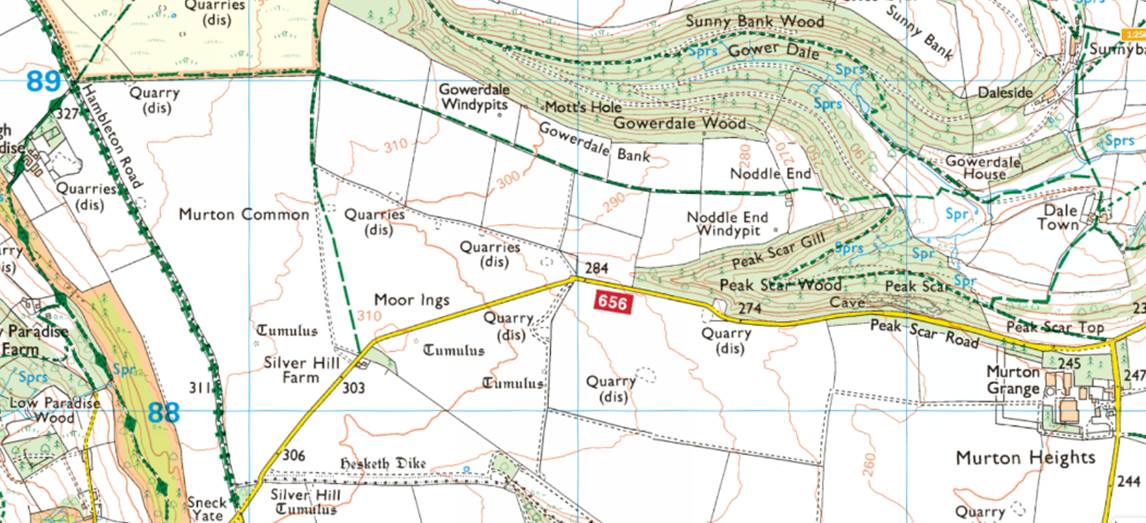
Further west from Helmsley
and north of Sutton Bank are Hill Fort Windypit
(SE 506857), which is easily visited on a footpath quite close to the Cleveland
Road, and the Gowerdale Windypits (SE
517889) and Noddle End Windypit (SE 526 885) on Gowerdale
Bank.
Blood Windypit (SE 565799) on Wass Moor near
Byland Abbey. Old
Fat and Past It Pot (“OFAPI”)(SE 869850) is in Dalby Forest.
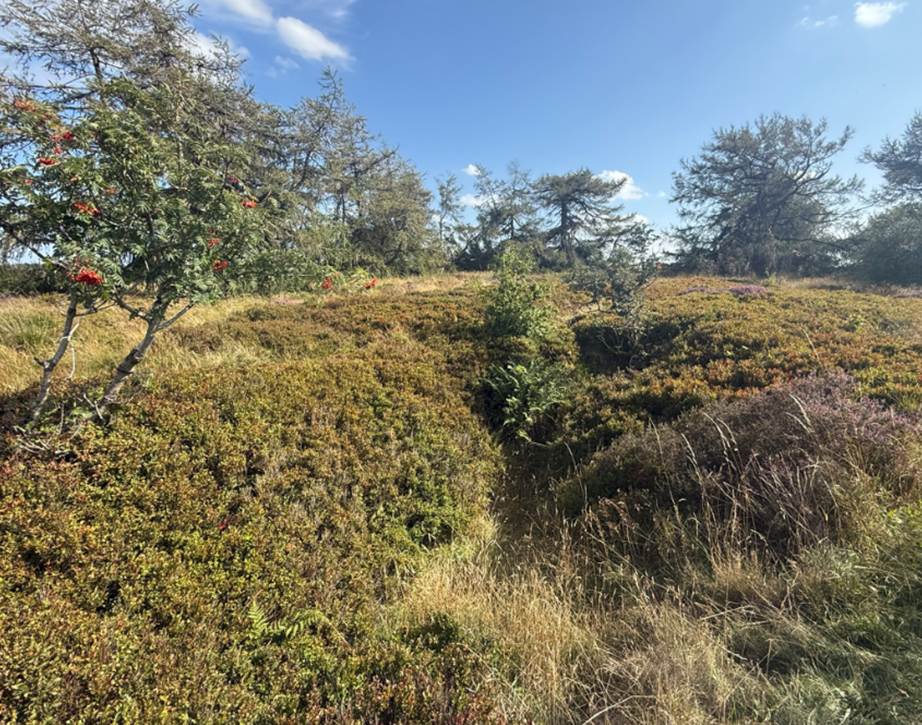
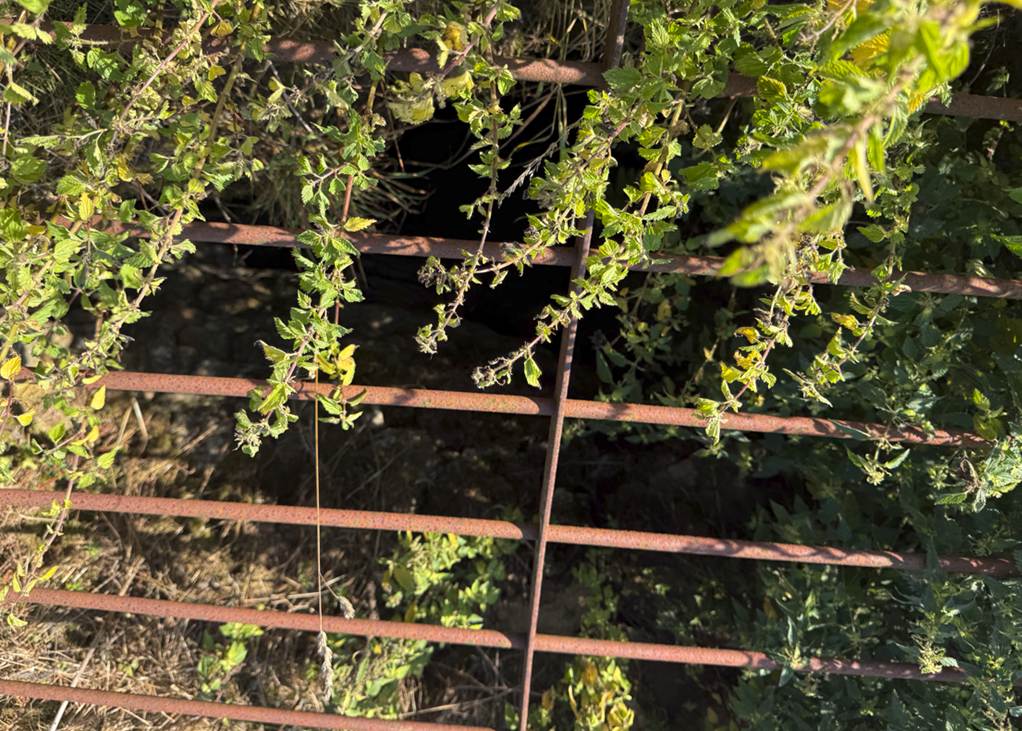
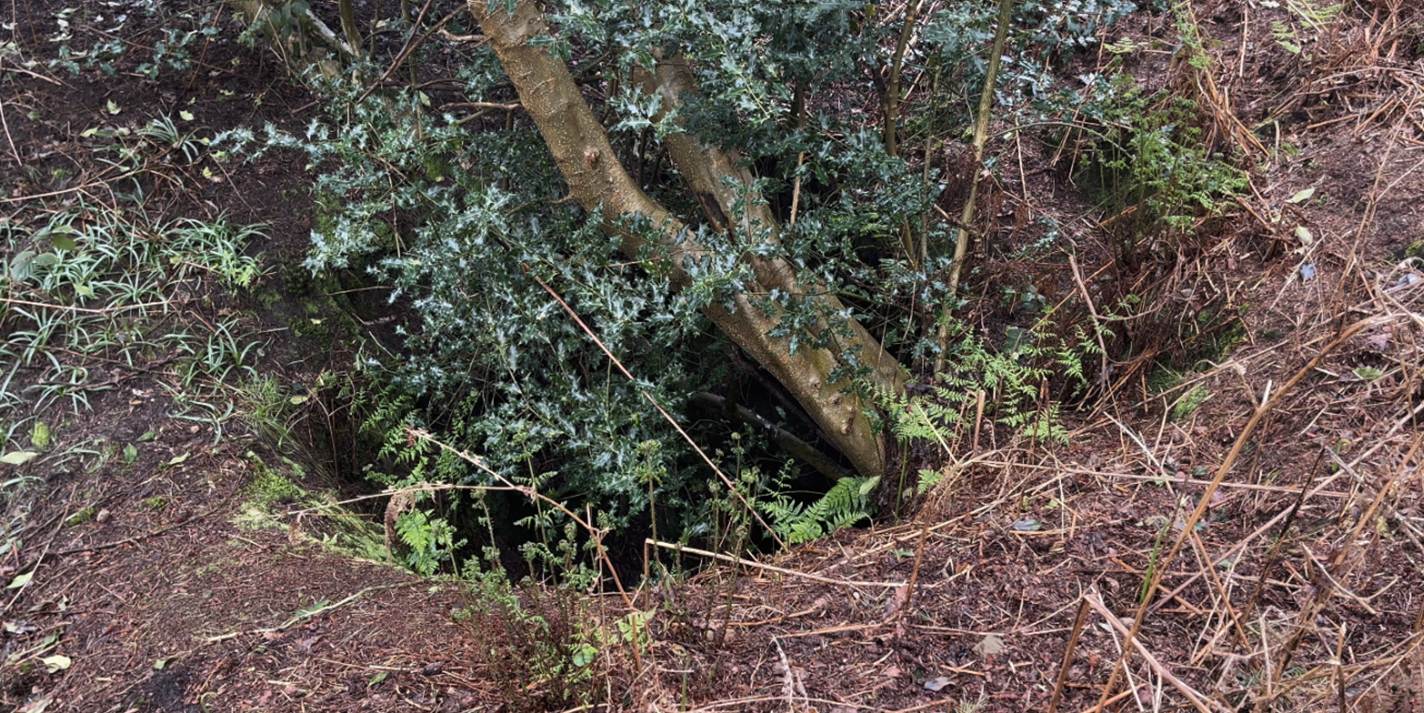
Hill
Fort Windypit on Boltby
Scar Gowerdale windypit
Helmsley or Buckland’s Windypit
Antofts windypit is close to the Aldwine toftes referred to in the twelfth century Rievaulx Cartulary.
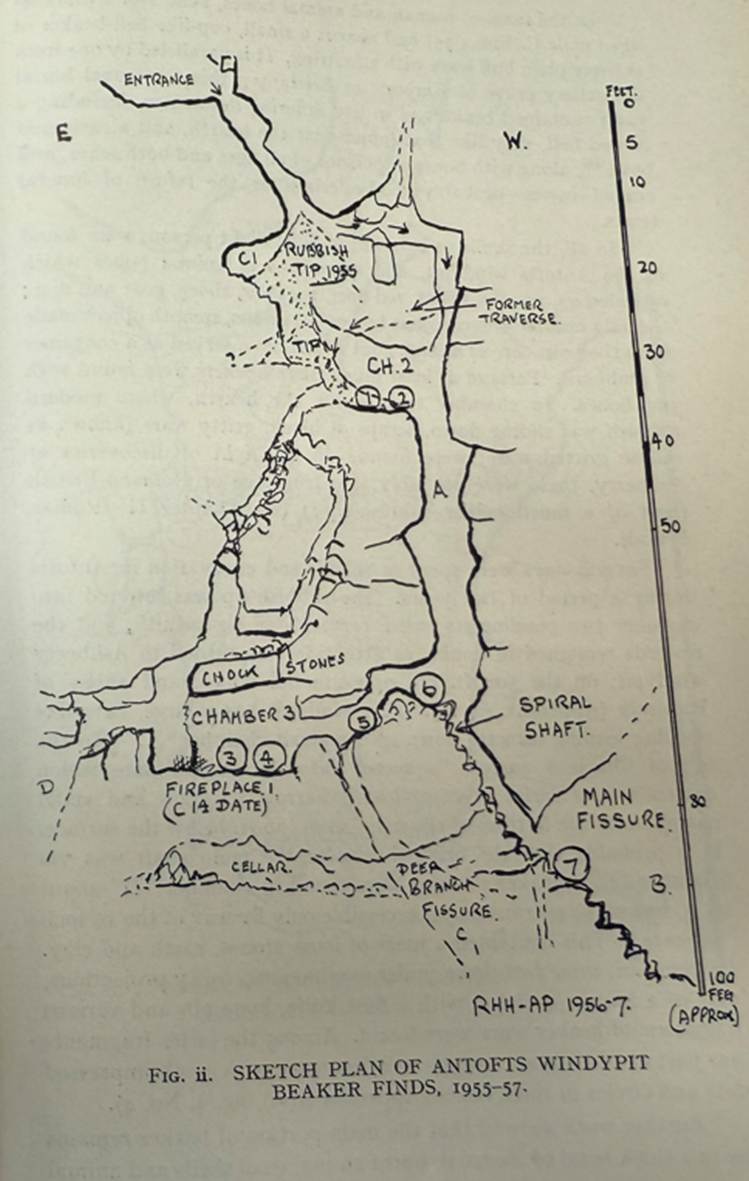
Eighty feet under the ground was found the skull and part of the
skeleton of a middle aged female with other human and animal bones, in a
confused mass of boulders wedged on top of a vertical spiral shaft. The
fissure then narrowed through smoothed boulders, where people had crawled, into
a smaller chamber with a floor of jammed boulders or chockstones and a large
slab forming a roof to prevent the dripping of the moisture of the cave. Here a
fire had been lit and around the hearth lay ox bones, broken to extract marrow,
and split by the heat of the cooking pot. Further away were the bones of pig
and sheep and the skull and jaw of a badger. Snail shells and marine shells
cloaked in charcoal, close to the hearth. On the stone floor were a flint
scraper and knife and there was a small corded bell-beaker. Radio carbon dating
suggested an antiquity of 3,750 +/- 150 years, placing the finds in the period
c 1,500 to 1,800 BCE. (A History of Helmsley Rievaulx and District, editor, J McDonnell, 1963,
page 20).
In
the Ryedale Windypits, a total of 14 Beakers have so
far been recovered, and it is likely that more will come to light. There is a
Handled Beaker H (FV) from Snip Gill Windypit, four All-Over-Cord Beakers and
two plain Beakers from Antofts Windypit,
5 All-Over-Cord Beakers and a European Bell Beaker from Asherry
Windypit and 1 All-Over-Cord from Buckland’s Windypit. (Three
Beakers from the Hambleton Hills, Raymond A Varley, Yorkshire Archaeological
Journal, Volume 45, 1973, page
172).
or
Go Straight to Chapter 6 – the
Primeval Swamp