Farndales and the sea
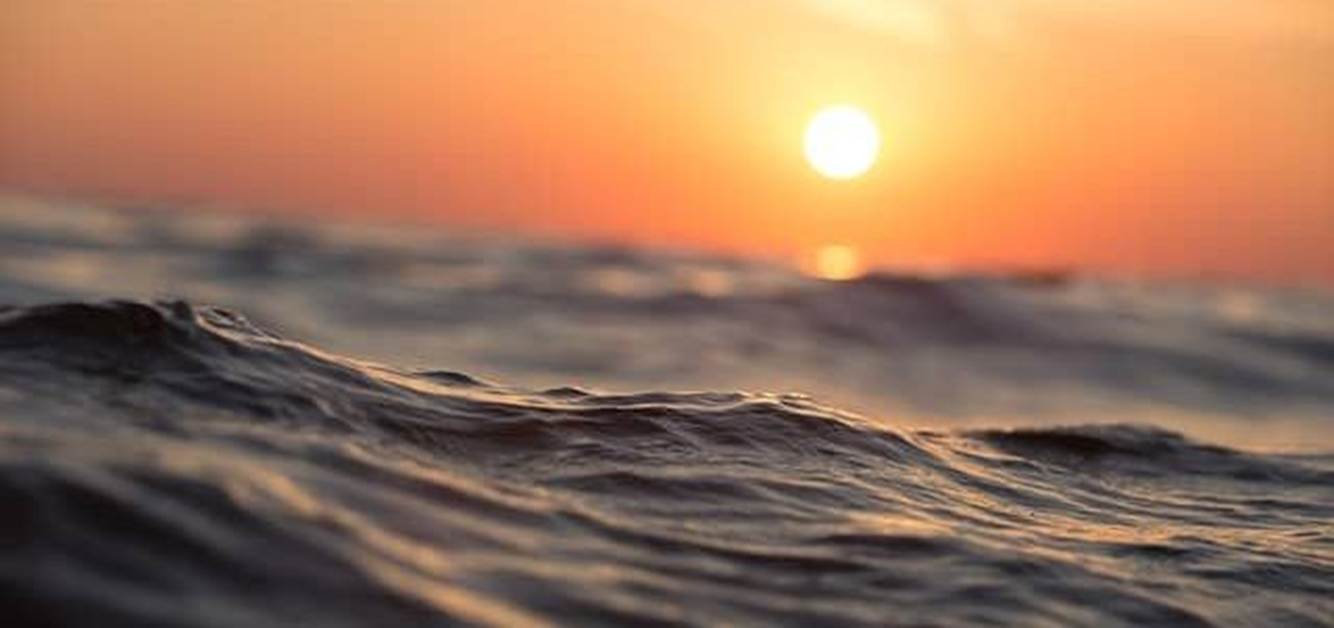
Several Farndales were seamen, generally associated with
Whitby
|
Return to the Home Page of the Farndale Family
Website |
The story of one family’s journey through two
thousand years of British History |
The 83 family lines into which the family is divided.
Meet the whole family and how the wider family is related |
Members of the historical family ordered by date of
birth |
Links to other pages with historical research and
related material |
The story of the Bakers of Highfields, the Chapmans,
and other related families |
Hyperlinks to other pages are in dark blue.
Headlines are in brown.
References and citations are in turquoise.
Context and local history are in purple.
This webpage is
divided into the following sections:
· Farndales and the
Sea
·
Brigs
·
The Royal Navy in 1740
·
The Master Mariner
·
HMS Farndale
1253
Scarborough
gained a new charter in 1253 giving the burgesses a right to build a high and
low water harbour.
Small ships of the time could
penetrate well inland.
Whitby
and Scarborough fish regularly reached York.
Redcar and the salt port of Coatham secured fairs and markets and there were boats
at Skinningrove.
Farndales and the Sea
John
Farndale, (FAR00136)
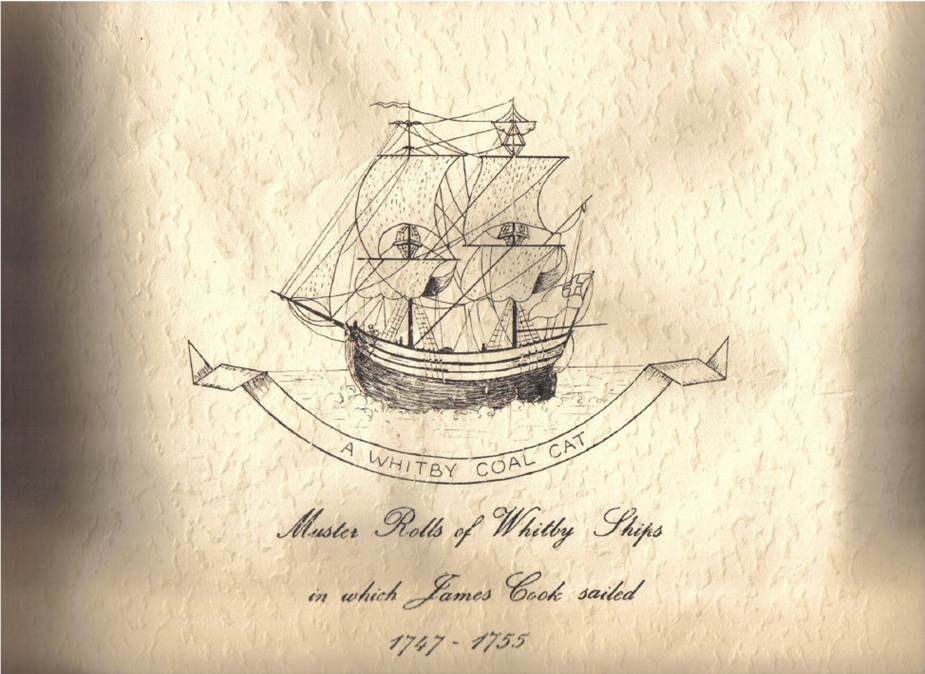
lived in Whitby and sailed with James Cook. He was a
seaman named in a list of 42 of the crew of The Friendship of Whitby on
10 Nov 1753 when James Cook was Mate. John would
be about 42 years old in 1753.
Giles
Farndale (FAR00137)
served in the Royal Navy. It seems very likely that he was press-ganged at Whitby, probably in 1740 when he would have been 27 years
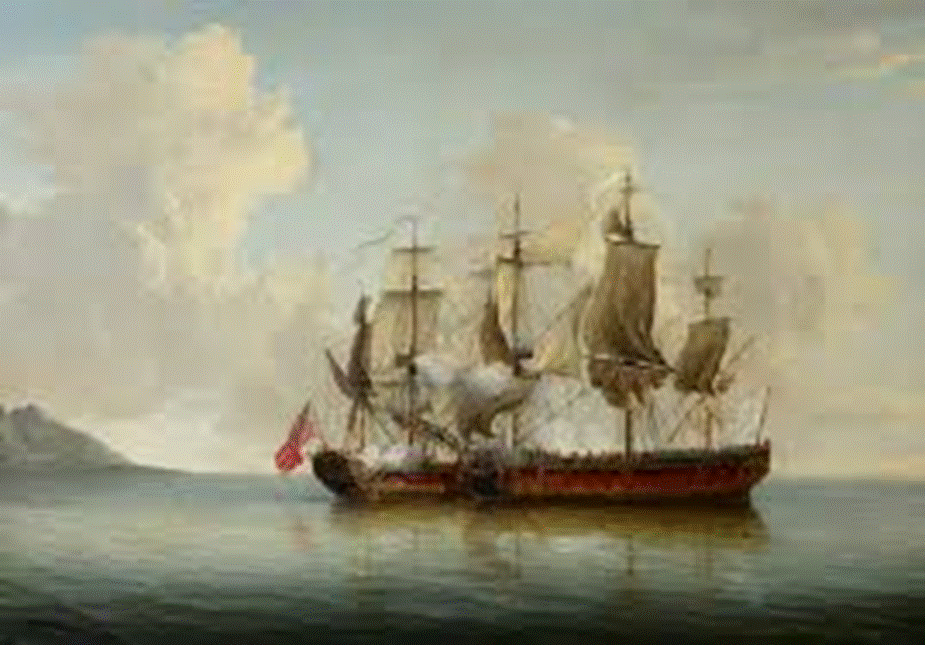
old. The Muster Book for HMS Experiment, a brig with a compliment of
130, shows Giles Farndell as No 101 Able Seaman, impressed on 29 Jun 1740. He
is present at every muster until 9 May 1741 when he is marked ‘DD’ (Discharged
Dead). No circumstances are recorded which probably means that he died of
sickness on 9 May 1741. The ‘Experiment’ was commissioned under Captain Hughes
at Deptford between Mar and Jun 1740. On 29 Jun 1740 the ‘Experiment’ was at
The Nore, where Giles Farndell (or Farndale; he is listed under both names in
different Muster Books), came on complement. From there she sailed for Port
Royal, Jamaica where she arrived on 15 September 1740. From there until June
1741 the ship was either in Port Royal, at sea, or in Cartagena. He must have
taken part on the War of Jenkins’ Ear in the Spanish Main.
HMS
Experiment taking the Telemaque, 8 July 1757
William
Farndale (FAR00157)
became a master mariner. He captained the collier Abigail and Martha in
1767. He died at the age of 34 in 1777 and may well have died at sea.
John
Farndale (FAR00198)
was born in 1773 and was probably the son of William Farndale (FAR00157).
After he died, his widow, Dinah, sought a pension through the Royal Hospital at
Chelsea, so John probably served in some capacity with the Royal Navy.
Robert
Farndale (FAR00197),
the son of William Farndale (FAR00157), was
a ship’s carpenter of Whitby, but died aged only 23.
John
Farndale (FAR00244)
was a master mariner who was captain of the William and Nancy by 1826.
There are a large number of records of his voyages along the east coast. He
died aged only 35.
John Farndale (FAR00265), was a
sailor of Whitby.
William Farndale (FAR00289) was a
Master Mariner of Whitby who captained the William
and Nancy like his father. He traded along the east coast.
John Christopher Farndale The Younger (FAR00308) was a
Master Mariner of Whitby. He got into some trouble as
an apprentice mariner in 1845 when he went absent and was sent to Northallerton
gaol for a month of hard labour. By 1853 he was captain of the John Stewart
and a master mariner. He captained several different ships and regularly traded
along the east coast regularly calling at Wisbech in Cambridgeshire where he
met his first and second wife. He regularly sailed to ports in the Baltic,
including St Petersburg. He was witness to an assault on the high seas. He died
at sea in a storm in the Bay of Biscay.
Thomas Farndale (FAR00300) was a
ship’s broker’s clerk in Whitby.
Henry Farndale (FAR000495) was
working as a sailor by the age of 22 and later worked as an Able Seaman in the
merchant navy for Mercantile Marine, Eagle Oil Transport Company in Hartlepool. He probably served in the Royal; Navy
Reserve on HMS Pembroke in 1916.
Thomas Harry Farndale (FAR00699)
service No Z/6840 served in the Royal Navy Reserve in London in the first World
War. He was a telegraphist.
Clarence
Farndale (FAR00850)
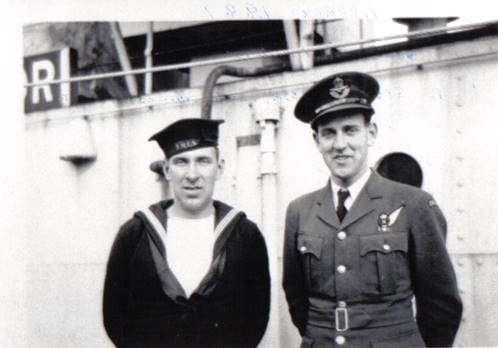
served in the Royal Canadian Navy from 1939 to 1966.
The Collier Trade
More research to follow.
Brigs
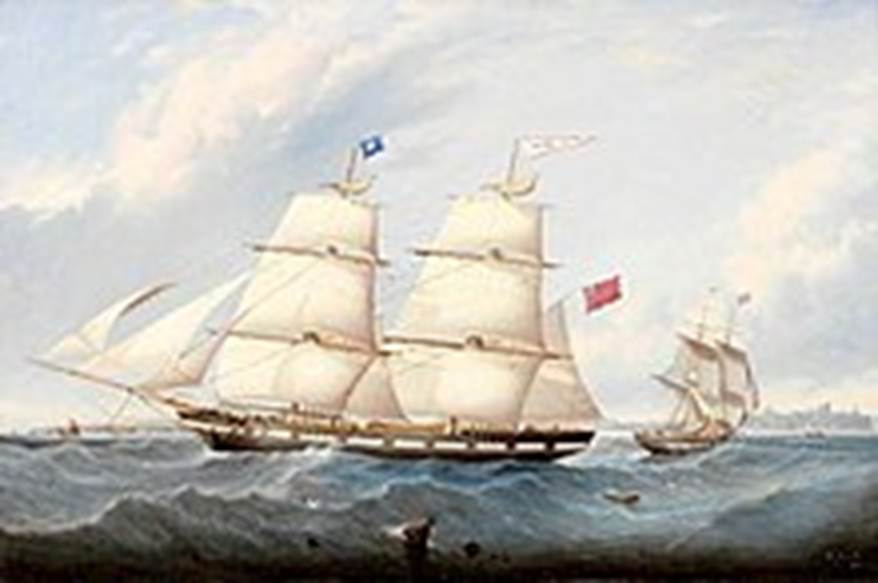
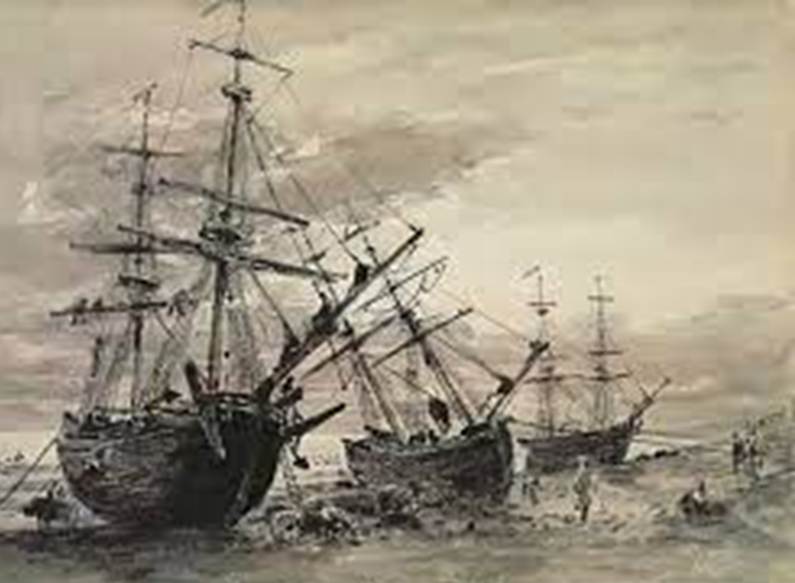
The Mary, a Brig of South Shields painted in 1855
The Royal Navy in 1740
More research to follow.
The Royal Navy in the
Napoleonic era
During
the Napoleonic Wars, the Royal; Navy became a unique navy of 600 ships and
135,000 men. Between 1793 and 1815 it lost a single ship of the line, but
captured or destroyed 139 enemy ships.
This rise to
supremacy of the seas was a complex and expensive project.
·
There were vast naval dockyards at Portsmouth, Plymouth and
Chatham.
·
HMS Victory cost £400,000 over her lifetime, the annual budget of
a small state.
·
A medium sized battleship would require timber the equivalent of
3,00 to 4,000 mature trees. Baltic and Canadian pine was imported and capturing
or destroying enemy timber supplies became an important strategy.
·
There were enormous workshops for the manufacturer of rope and
rigging.
·
A small naval squadron had more artillery firepower than used at
Austerlitz.
·
There were brewers, butchers, bakers, salters and coopers.
Blockades of French ports were tightened and
naval personnel learned to spend long periods at sea. Admiral
Collingwood, from Northumberland, died in the Mediterranean in 1810, having
not set foot ashore for 8 years.
The
Royal Navy grew a culture of aggression. The French navy became fearsome of the
Royal Navy. Equipped with large calibre short range guns from the 1780s, its
firepower inflicted heavy casualties. The prospect of being boarded was no less
intimidating and the Royal Navy had a formidable reputation as hand to hand
fighters.
Warships
needed large crews – 1,000 strong for a battleship of the line. A pool of
sailors was provided by the merchant navy. However the Royal Navy rarely
achieved numerical supremacy.
The
Impress Service or the Press Gangs operated widely, particularly in Liverpool.
British
sailors were toughened by lengthy spells at sea and were led by a meritocratic
and experienced officer class. Discipline was tough, but there was fairness and
equality of treatment between officers and ratings. Warships were generally
safer and cleaner than merchant ships. Food and drink was fresh and plentiful,
about 5,000 calories a day.
The
British secured bases around the globe – Gibraltar, Malta, Halifax, Bermuda,
Jamaica, Antigua, St Helena, Cape Town, Mauritius, Bombay, Calcutta, Sydney.
(Robert Tombs, The English and
their History, 2023, 404 to ).
The Master Mariner
A master mariner is a licensed mariner who
holds the highest grade of seafarer qualification; namely, an unlimited
master's license. Such a license is referred to as unlimited because it
has no limits on the tonnage, power, or geographic location of the vessel that
the holder of the license is allowed to serve upon. A master mariner would
therefore be allowed to serve as the master of a merchant ship of
any size, of any type, operating anywhere in the world, and it reflects
the highest level of professional qualification amongst mariners and deck
officers.
The
term master mariner has been in use at least since the thirteenth
century. In guild or livery company terms, a master mariner was a master craftsman in
this specific profession just as a master carpenter of master butcher.
There are also
various other levels of master's certificates, which may be restricted or
limited to home trade/near coastal voyages and/or by gross tonnage.
The holder of a restricted master's certificate is not referred to as a
"master mariner".
In the British Merchant Navy a master mariner who
has sailed in command of an ocean-going merchant ship will be titled captain. A professional seafarer who holds a
restricted or limited master's certificate who has sailed in command of a ship
(i.e. appropriate to the size, power or geographic limits of their certificate)
can also be titled captain.
Where the
movements of ships were recorded in the shipping news and other media, the name
of the ship was followed by the name of the Captain.
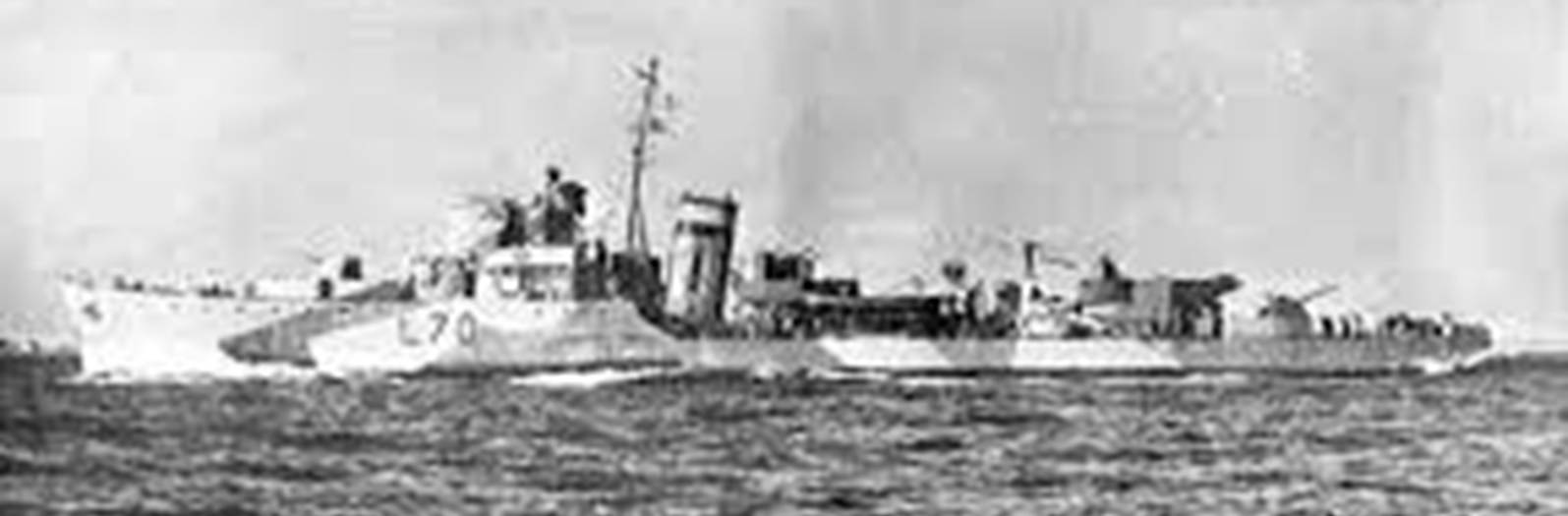
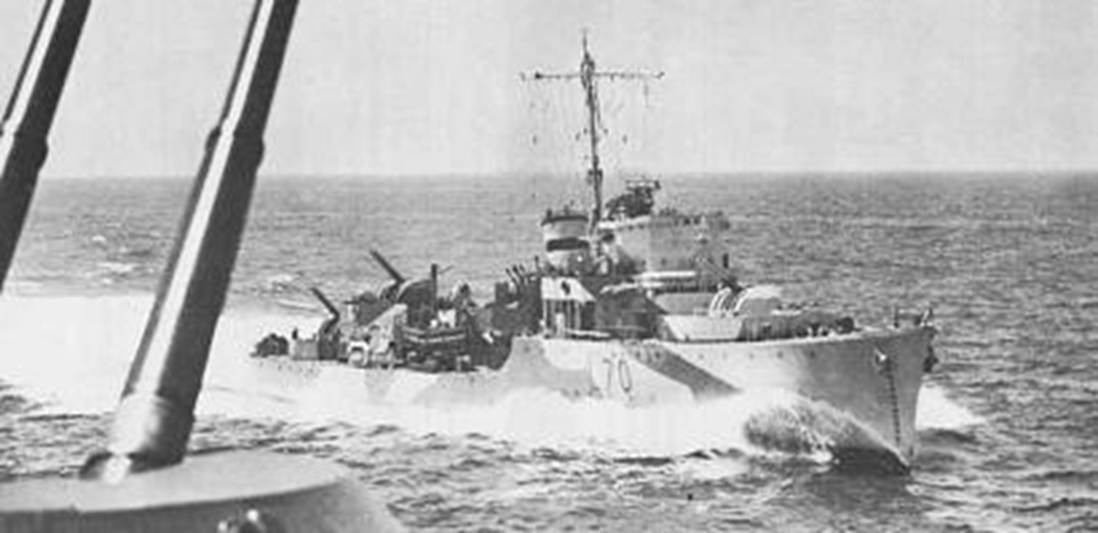
HMS Farndale
HMS
Farndale was a Type II, Hunt-class Escort Destroyer. It was involved in convoy escort
missions. She served on the Malta Convoys 1841, and in the Mediterranean 1941,
Libya 1942, the Atlantic 1942, North Africa 1942 to 1943, Siciliy
1943, Salerno 1943, the Aegean 1943, South France 1944, and the North Sea in
1945.
She
was scrapped in 1962.
She
was the only British Warship so far to bear this name.
HMS
Farndale was ordered on 4 September 1939 under the 1939 War Emergency Build
Programme. She was completed in April 1941. She was adopted by the civil
community of Southgate, then in Middlesex, as part of Warship Week in
1942.
She
earned eleven battle honours for extensive service during the Second World War.
This included service in the Mediterranean where she was severely damaged in
February 1942, and resulted in extensive repairs in the UK that year. She then
saw service with Russian convoys, followed by work to support the allied
landings in Italy. Towards the end of the war she was nominated for service in
the Far East in support of Operation Zipper for
landings in Malaya, which was cancelled with the end of the War.
She
returned to Sheerness from the Far East in November 1945 and was transferred to
the Reserve Fleet.
From 1946
until 1951 she was part of the Nore Local Flotilla and was then placed in
reserve again at Hartlepool. She remained there until 1962 when she was sold
to Bisco for scrapping
by Hughes Bolckow. She arrived at their breakers
yard in Blythe on 29 November 1962.
The
Crawley and District Observer, 10 May 1941: SAILORS
AND SCHOLARS. A plaque has been received by the school billeted in the village.
It bears the inscription: “presented to Oldridge Road JM School, May 1940, by
officers and men of the SS Farndale (Captain Wright), in token of friendship
between the ship and the school.” The plaque is engraved with a picture of the
SS Farndale. Scholars of that school are now collecting illustrated magazines
for sailors at their newly adopted ship.
The
Sheerness Times Guardian, 11 July 1941:
SERVING TGHEIOR KING AND COUNTRY. … MINTER, Stoker (2nd), J K, HMS
Farndale, Golden Dawn, New Road, Sheerness.
The
Yorkshire Evening Post, 17 December 1941: A
FLIGHT FROM BARDA. An Admiralty communique says: The Italian U-boat Ammiraglio
Caracciolo has been sunk in the Central Mediterranean by the destroyer Farndale
(Commander S H Carrill RN). Fifty three survivors have been taken prisoners of
war. The u-boat left Bardia in an attempt to give passage to 20 Italian
military officers, amongst whom was General Guido Lami. The General is not
among those rescued. General Lami was the chief executive engineer of the engineering
headquarters of the Italian army in Rome. The destroyer Farndale was built at
Wallsend on Tyne in the yard of Messrs Swan Hunter and Wigham Richardson. The
Ammiraglio Caracciolo, of the Saint Bon class was one of the latest types of
ocean going under underwater craft. She was part of the 1938 programme and was
of 1,400 tons displacement. She was 288 ½ feet long, beam 25 ½ feet, and had a
speed of 18 knots. She carried 14 eight inch torpedo tubes. Her armament also
included two 3.9 inch guns and four machine guns. Before war broke out,
commander Carlill, of the Farndale, was squadron gunnery officer of the
mediterranean flotillas.
The
Liverpool Echo, 17 December 1941. A GENERAL
ESCAPING FROM LIBYA ON BOARD. “The Italian U-boat Ammiraglio Caracciolo has
been sunk in the Central Mediterranean by the destroyer Farndale (Commander S H
Carrill RN)” said the Admiralty today. Fifty three survivors have been taken
prisoners of war. The u-boat left Bardia in an attempt to give passage to 20
Italian military officers, amongst whom was General Guido Lami. The General is
not among those rescued. General Lami was the chief executive engineer of the
engineering headquarters of the Italian army in Rome. The destroyer Farndale
was built at Wallsend on Tyne in the yard of Messrs Swan Hunter and Wigham
Richardson Limited. Before war broke out, commander Carlill, of the Farndale,
was squadron gunnery officer of the mediterranean flotillas.
The
Hull Daily Mail, 3 January 1942: DESTROYERS
SINK 3 AXIS SUBMARINES. News that three enemy submarines had been sunk in
the Mediterranean by British naval forces during the land advance through Libya
was given in an interview with an Associated Press correspondent by Admiral Sir
Andrew Cunningham, commander in chief in the Mediterranean. Admiral Cunningham
also said there were “indications that Nazi submarines are operating in the
eastern Mediterranean in considerable number.” Sir Andrew said: “during the
advance of our army in Libya the enemy appeared to have been making special
efforts to interfere with our supplies by sea. In this they have had little
success while our counter attacking forces have sunk one Italian and two German
submarines and brought in prisoners. The forces carrying out these successful
operations included the destroyers Farndale, Kipling, Hasty, and Hotspur. The
submarines attempted to sink British supply ships and merchant men bound for to
Tobruk and Benghazi. 130 prisoners were taken when the crews escaped from the
submarines as they broke surface after being depth charged.
The
Northern Whig 03 January 1942: THREE U BOATS
DESTROYED. British naval units operating in cooperation with our land forces
in Libya, sunk one Italian and two German submarines which were trying to
dislocate our sea supplies. 130 prisoners were taken from the three ‘victims’.
All the submarines were destroyed by depth charges from the destroyers
Farndale, Kipling, Hasty and Hotspur. Admiral Sir Andrew Cunningham, chief
commander in chief of the Mediterranean fleet, in a special communique
announcing this latest naval success says...
The
Long Eaton Advertiser, 24 January 1942: We
have received a copy of the January issue of the “Gasbag” which states “A week
or two ago the Admiralty announced that HMS Farndale had destroyed an Axis
submarine in the Mediterranean. One of our lads, Jack Everill, X314, is aboard
the Farndale, so I think we can offer our congratulations and basket a little
of the reflected glory...
Honours
Announcement. Whitehall, 17 March 1942. The KING has been graciously
pleased to give orders for the following Appointments to the Distinguished
Service Order, and to approve the following awards:1 For skill and enterprise
in action against Enemy Submarines, while serving on HMS Farndale: To be a
Companion of the Distinguished Service Order: Commander Stephen Hope Carlill,
Royal Navy; The Distinguished Service Cross, Lieutenant Roger Curteis Norwood,
Royal Navy; The Distinguished Service Medal, Leading Seaman Alexander McDonald
C/SSX.14555; For bravery and coolness when HMS Farndale was attacked by enemy
aircraft: The Distinguished Service Cross, Mr Richard Dunstan Goodier,
Commissioned Engineer, Royal Navy; Mention in Dispatches (posthumous), Shipwright
Third Class Leonard Loman Cooper, C/MX.48324; Mention in Dispatches, Lieutenant
Roger Curteis Norwood DSC, Royal Navy …
The Hampshire Telegraph, 15 May 1942: … For bravery
and coolness when HMS Farndale was attacked by enemy aircraft: - DSC – Mr R D
Goodier, cd, Eng, RN
The Portsmouth Evening News, 21 April 1943:
DESTROYER’S LINK WITH DOOMESDAY BOOK. HMS Farndale, a hunt class destroyer,
has an unusual plaque commemorating her adoption by the borough of Southgate.
The plaque was cut from Minchenden oak, which is
mentioned in the Doomsday Book, and is still growing in Southgate. It was
presented to the ship by the mayor of Southgate when he visited her and
inspected the ship's company. On this occasion, also, the commanding officer
accepted a cheque for £50 from the mayor and burgesses of Southgate to start
the Farndale Benevolent Fund to provide immediate and urgent assistant for the
dependants of men serving in the ship who may be injured or killed in action.
The Falkirk Herald, 19 January 1944: HANDS TO BATHE. An
hour after the landings in Sicily, his majesty’s destroyers, Haydon, Calpe, Farndale and Puckeridge, stood off the islands
coast, having “unbuttoned” their convoys and the first two piped “hands to
bathe”. While crews splashed over the sides, the Farndale and the Puckeridge
circled out to make an anti submarine patrol around
the area. When the Haydon and Calpe had had their fun, they took over the
patrol, and the Farndale and the Puckeridge closed in and came to rest with
their “hands to bathe” pipe.
The Birmingham Mail, 27 October 1945: FOUR DESTROYERS
COMING HOME. For veteran destroyers, which between them have seen service in
every theatre of sea war, have sailed from Colombo for Britain. They are hunt
class destroyers of the 18th flotilla, HM ships Farndale, Calpe, Chiddingfold,
and Bleasdale.
The Hampshire Telegraph, 2 November 1945: VETERAN
‘HUNTS’. Four veteran destroyers which among them have seen service in every
theatre of sea war, have sailed from Colombo for Britain, and are expected in
homeports about the middle of November. They are hunt class destroyers of the
18th flotilla, Farndale, Calpe, Chiddingfold, and Bleasdale. Commander EH Roper
of the Farndale, said: “We finished our first Commission in the Mediterranean
with a 2,000 lb bomb in the wardrobe wine cellar. It broke every bottle we had,
but didn't hurt a soul.”
The Dover Express, 2 August 1946: a guard of honour of
the Royal Navy will be drawn up outside the town hall, with the band of the
Royal Navy (Chatham). Two Hunt class destroyers, HMS Bleasdale, and HMS
Farndale will be at Dover for the occasion.
The Dundee Evening Telegraph, 3 January 1947: SHIP
SINKS – NO SIGN OF SURVIVORS. The Norwegian steamer Magnhild,
reported sinking near Gjedser light vessel by the
British warship Farndale this morning, was later reported sunk according to a
Lloyds message. There were no signs of survivors.
The Shields Daily News, 3 January 1947: NO SURVIVORS
SEEN AFTER SHIP SINKS. The Norwegian steamer Magnhild,
929 tonnes, first reported sinking near Gjedser light
vessel, off South Denmark, by the British warship Farndale, was later reported
sunk according to a Lloyds message today. There were no signs of survivors. The
Lloyds message stated that a message received from the Farndale said:
“Norwegian steamer Magnhild sinking in position three miles northwest of Gjedser light vessel. No sign of survivors.” Later the ship
was reported sunk. The Magnhild left Boulogne bound for a Baltic port on
December 28, and was reported to have passed Cuxhaven on December 30.
The Belfast News-Letter, 4 January 1947: The
British destroyer, Farndale, arrived in Copenhagen last night with the crew of
the Norwegian steamer Magnhild, which sank yesterday north of Gjedser, in the Baltic.