Pickering
The history
focuses particularly on the medieval period
|
Return to the Home Page of the Farndale Family
Website |
The story of one family’s journey through two
thousand years of British History |
The 83 family lines into which the family is divided.
Meet the whole family and how the wider family is related |
Members of the historical family ordered by date of
birth |
Links to other pages with historical research and
related material |
The story of the Bakers of Highfields, the Chapmans,
and other related families |
Pickering was the law court where many Farndales were
tried and punished Introduction
Dates are in red.
Hyperlinks to other pages are in dark blue.
Headlines of the history of the Pickering are in brown.
References and citations are in turquoise.
Contextual history is in purple.
This webpage about the Pickering has the following section headings:
· The Farndales and Pickering
· Pickering, an overview
· Timeline of Pickering
· Pickering Castle
· Pickering Forest
· Pickering and Poaching
The Farndales and Pickering
The Farndales associated
with Pickering included Thomas and Richard of Farndale (FAR00023),
excommunicated for stealing at Pickering Castle; Robert of Farndale (FAR00024),
fined for poaching at Pickering Castle in 1332; and John de Farndale (FAR00026),
released from excommunication at Pickering Castle on 9 Apr 1324. For a full
list of the transgressors see the
Farndale Poachers of Pickering Forest.
Others who were associated
with Pickering were Eln Farndale (FAR00068)
who moved across the North Yorks Moors to Pickering; Richard Farndale (FAR00234)(see the Pickering Line); William
Farndale (FAR00292);
Lucy Farndale (FAR00282);
and Mary Farndale (FAR00298).
Pickering
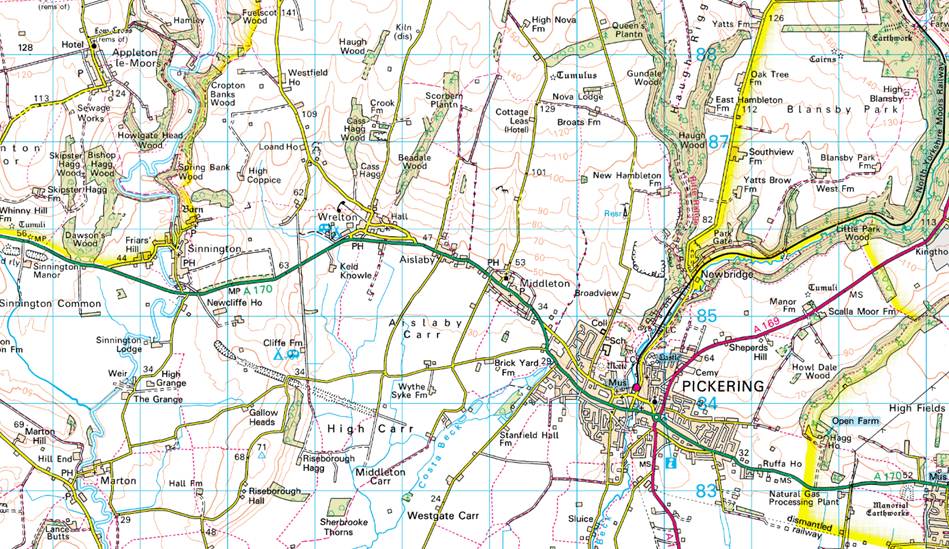
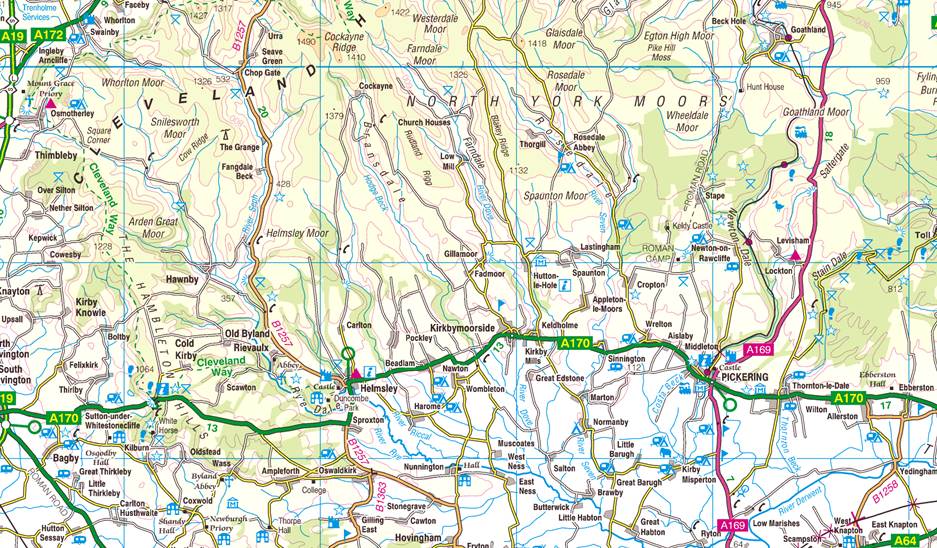
Pickering is a market town
and civil parish in North Yorkshire on the border of the North York Moors. It
overlooks the Vale of Pickering to the south. Picheringa (eleventh and twelfth century); Pikeringa (twelfth century cent.); Pikering (twelfth to sixteenth centuries).
Many have been the attempts
to fathom the derivation of the name ; a legend of a pike swallowing a ring, a
" pike-ring," for tournaments with that primitive but effective
weapon, amongst others; but in all probability the terminal "ing" simply denotes the town of someone whose name
resembled Pickering in its sound ; thus Piper, Pickard, or any similar one
might in process of time become Pickering. (Ryedale and North Yorkshire antiquities, George Frank,
1888, page
167).
Within Pickering are
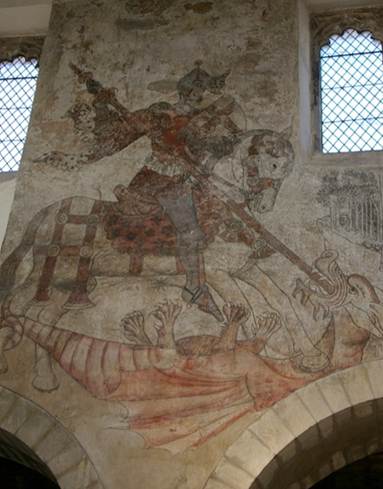
Pickering Parish Church, with medieval wall paintings; Pickering Castle; and
the North Yorkshire Moors Railway.
Pickering Timeline
Prehistory
Positioned on the shores of a glacial lake at the end
of the last ice age, Pickering was in an ideal place for early settlers to
benefit from the multiple natural resources of the moorlands to the north, the
wetlands to the south, running water in the beck and the forests all around. It
had wood, stone, wildfowl, game, fish, fresh water and fertile easily worked
soils. The east–west route from the coast passed along the foothills of the
North York Moors through the site at a place where the beck could be forded.
Many remains of the Neolithic, Bronze and Iron Ages
have been found at Pickering.
The earliest antiquity assigned to this town is given
in the Saxon chronicle, which states it was built by Perdurus,
a British king, who reigned 200 years before the Roman invasion
; it once returned two members for Parliament. (Ryedale
and North Yorkshire antiquities, George Frank, 1888, page
167).
Roman and Anglo Saxon
Period
There is evidence of Celtic and Roman era habitation
in the areas surrounding Pickering but little remains
in the town. Legendary sources suggest an early date for the establishment of a
town but traces of earlier settlements have been
erased by subsequent development.
The town probably existed throughout the Anglo-Saxon
period of British history.
By 1066 the
territory of Piceringas had developed into a royal
estate, loaned out to the Northumbrian Earl Morcar. The earliest hint of an
ecclesiastical presence in Pickering is from tenth century sculpture.
Middleton, which clings to the edge of the sedimentary stone of the Tabular Hills
immediately above the north edge of the Vale, has an eighth to early ninth
century cross carved on a stone set into the church tower; it has features
common with a Lastingham cross head and the cross carved on the Kirkdale grave
cover; it may have been cut from a Roman sarcophagus. The mother parishes of
Pickering and Middleton interlock, suggesting they are divisions of a once
unified territory, though how and when the two parish centres emerged is not
known. (Northumbria AD 367-867,
Max Adams and Colm O’Brien, 2025, page 144).
The Victoria County History – Yorkshire, A History of the County of York
North Riding: Volume 2 Parishes: Pickering, 1923: The market town of Pickering is built along part of
the road from Scarborough to Helmsley. According to legend the British prince Peredurus in 270–61 b.c. built
'the Towne of Pickering in the North parts of Yorkshyre';
but unless Pickering was 'Dic', the earliest
historical mention of the place as opposed to the 'manor' is that of the visit
here of Henry I.
Before the Conquest the important 'manor' of Pickering
was held by Earl Morcar.
1069
When William the Conqueror claimed the crown of
England after defeating King Harold and his Saxons at the Battle of Hastings,
the north of the country rose in revolt. William's response was swift and
ferocious; his armies laid waste to the north of England, destroying crops,
razing villages, and decimating the population. It was said that the pall of
smoke rising from the north could be seen in London.
This was William's Harrying of the North, and it left
the land devastated for generations and crushed any hint of rebellion from the
local population.
But William wanted to make sure that the north stayed
under control, and one of the ways he did that was to establish strongly
fortified castles throughout the region.
Pickering Castle was one of these, a royal castle
erected either during the Harrying of the North or shortly after, probably
beginning in 1069. It was erected on a hilltop site overlooking Pickering
Brook, on the main route between Helmsley and Scarborough on the coast.
No doubt the town will have grown
to service the Norman castle.
The Vale
of Pickering is a fertile countryside, watered by many streams and by the
rivers Rye and Derwent, between the Yorkshire Moors and the Yorkshire Wolds.
The woods were said, in the Domesday Book, to be 16 miles by four miles in
extent, presumably lying under the shelter of the moors with the castle of
Pickering at their centre. The forest was reputed to be a great place for wild
boars: medieval records contain frequent royal instructions to send boards, or
in some instances, boars’ heads, from Pickering for the kings
table. (Historic forests of England, Ralph Whitlock, 1979, page
160
to 161.)
1086
According to the Domesday Book there was enough arable
land for 27 ploughs, meadows and extensive woodlands.
Domesday records that in the time of Edward the
Confessor, it was the Lordship of Morcar, Earl of
Northumberland. It is not clear to whom it was granted after the Conquest, but
" St. Quintin," mentioned in the roll of Battle Abbey, had large
grants of land in the East Riding (Ryedale and
North Yorkshire antiquities, George Frank, 1888, page
168).
1140
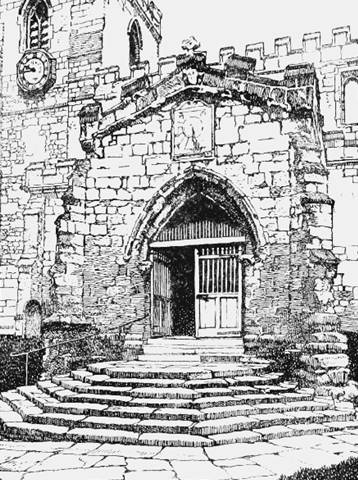
The original church was Anglo Saxon
but the present Pickering Parish Church was rebuilt in about 1140 with later
alterations.
1248
The earliest reliable historic account commences in
1248, when Lord Dacre was appointed Sheriff of York, with the custody of the
Castle of Pickering. Shortly after it was committed to the charge of William
Lord Latimer, after which Henry III. granted it to his son, from which time it
has been reckoned amongst Royal possessions under the style of the "Manor,
Castle, and Forest" of Pickering. (Ryedale and North Yorkshire antiquities, George Frank,
1888, page
169).
1267
In 1267 the
manor, castle and forest of Pickering were given by Henry III to his youngest
son, Edmund, 1st Earl of Lancaster.
1291
Since
1291 the town has held a charter for an annual fair, "upon the eve, day,
and morning, of the exaltation of the Holy Cross (Ryedale and North Yorkshire antiquities,
George Frank, 1888, page
169).
1598
In 1598 the
streets of Pickering were: East Gate, Hall Garth, Hungate, Birdgate,
Borrowgate (the present Burgate)
and West Gate.
1857
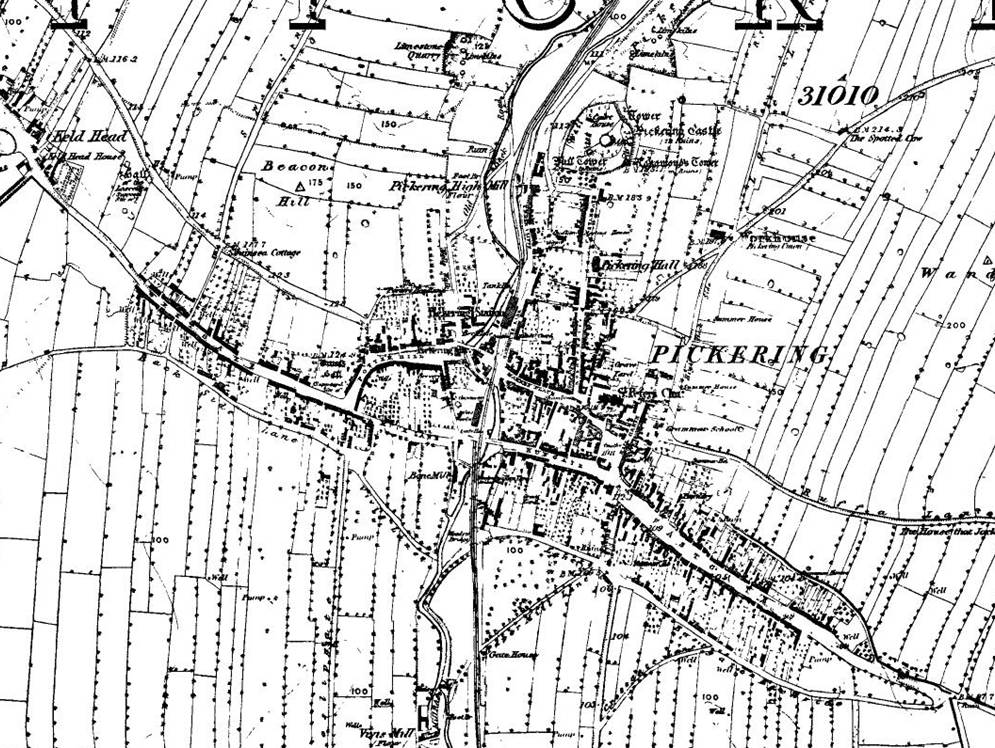
Pickering
1857
Pickering Castle
1068
In early 1068 northern England ignited into rebellion
against William I. To suppress the revolt the Normans embarked on the 'Harrying
of the North', a punitive campaign during the Winter of 1069/70 aimed at
destroying all farms and settlements between York and Durham. After this
devastation, William seized huge swathes of territory across Yorkshire and
built castles to secure the newly conquered lands.
1069
Pickering was chosen for one of these fortifications due
to its strategic location with roads running north/south between Whitby and
Malton and east/west between Scarborough and Northallerton. This made it a key
nodal point and accordingly construction of the castle occurred in late 1069 or
early 1070 whilst the Norman campaign was still underway. Although its primary
role was invariably to suppress internal resistance against the Normans, it
also served as an anchor against any Danish incursion and/or Scottish
expansionism. The latter was particularly important as England and Scotland had
yet to settle the matter of ownership of the Earldom of Northumbria.
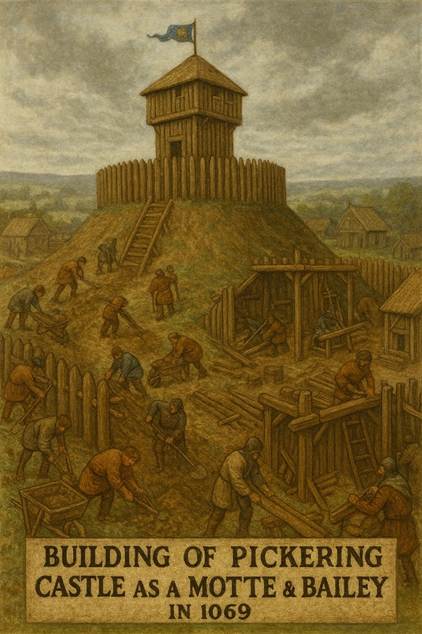
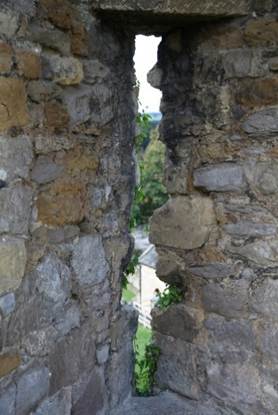
The original structure of Pickering Castle was built
by the Normans in 1069 to 1070. Little is known about the construction of the
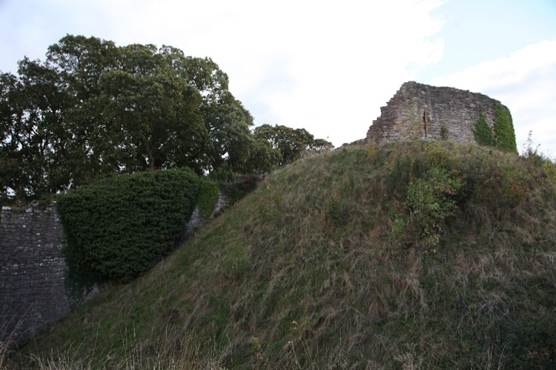
early castle. It was probably built of earth and timber, with a mound or motte
at the centre. It was raised on the eastern banks of the Pickering Beck which
provided strong natural defences. The motte, which would have been topped with
a wooden palisade, was surrounded by a deep ditch. To the west, sandwiched
between the motte and the slope down to the beck, was the bailey which would
have hosted the Great Hall and ancillary buildings. The outer bailey was
located to the east.
The early building probably comprised a large, central
mound (the motte); the outer palisades (enclosing the bailey) and internal
buildings, particularly the keep on top of the motte. Ditches were also dug to
make assault on the walls difficult. The main purpose of the castle at this
time was to maintain control of the area after the Harrying of the North.
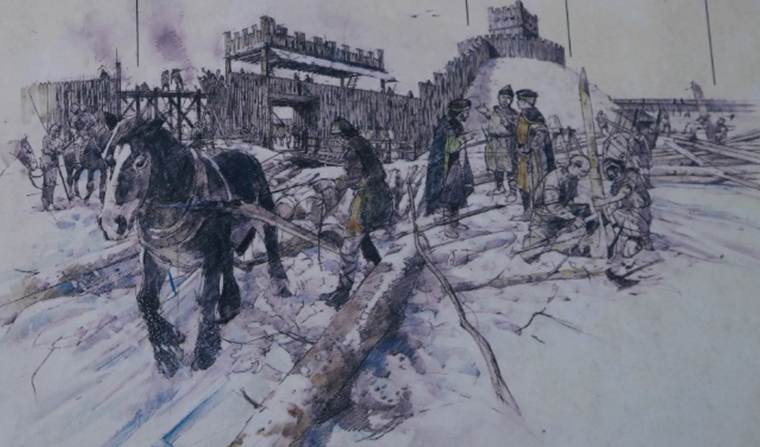
Construction of the original castle in about 1069
There are two unusual features to Pickering Castle.
The first is that it has been so little altered in shape since the original
wooden castle was rebuilt in stone. The second unusual feature is the layout of
the site. Most early Norman castles followed a similar motte and bailey plan,
with a timber palisade atop a high mound, or motte. The base of the motte was
surrounded by a large earthwork enclosure, usually with a further timber
palisade on top of the earthen banks. This enclosed area was called the bailey.
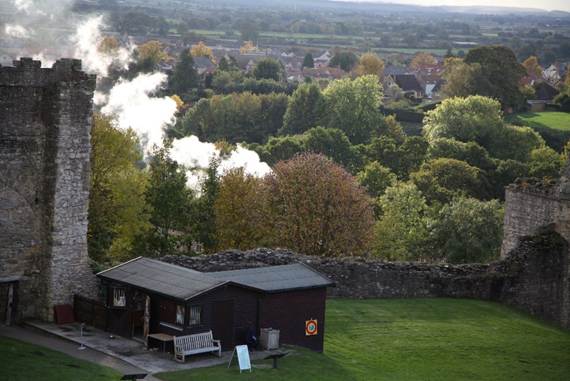
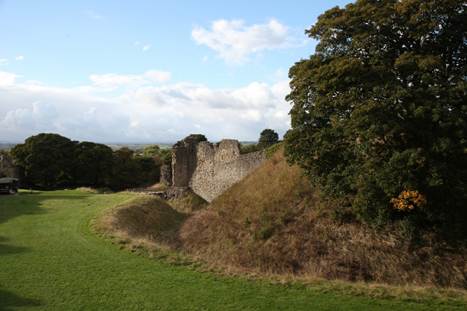
At Pickering the layout is different; there is not one
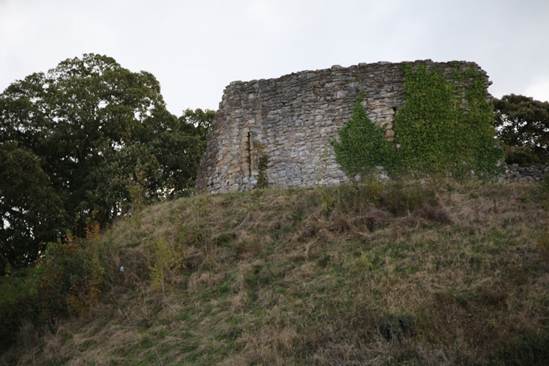
bailey but two, and the motte with its stone keep stands between the two. The
motte is striking, standing 20 metres high, with a base 60 metres in diameter.
There is no record of what role, if any, Pickering
Castle played during the Anarchy, the civil war between Stephen and Matilda
over the English succession. However, on the other side of Pickering Beck is an
earthwork fortification known as Beacon Hill. Although yet to be precisely
dated, this is generally presumed to be a siege-work dating from this conflict.
The extent and outcome of the siege is unknown.
Significant modifications were made to Pickering
Castle in three distinct phases during the late twelfth and early thirteenth
centuries.
1180
The first of the upgrades was made by Henry II who
replaced the former timber palisade on top of the motte with a stone shell keep
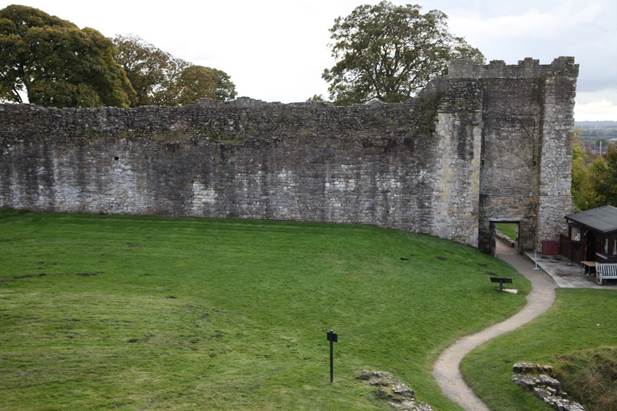
between 1180 and 1187. He also constructed Coleman Tower, a formidable gateway
into the Inner Bailey.
1201
The charter of King John to the nuns of Wykeham was
also signed here on February 1st, 1201
(Ryedale and North
Yorkshire antiquities, George Frank, 1888, page
169).
1207
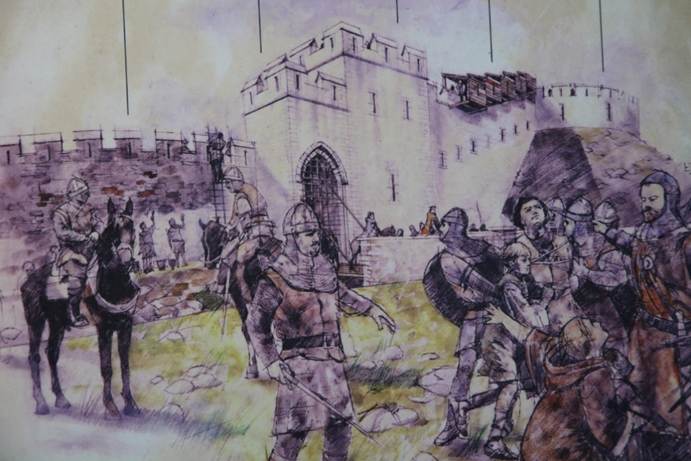
A second phase of construction occurred between 1207
and 1210 during the reign of King John.
1218
It was the third phase of upgrades that was the most
extensive. This was initiated in 1218 by the government of Henry III who sought
to secure the north after the end of the First Barons' War. Under the direction
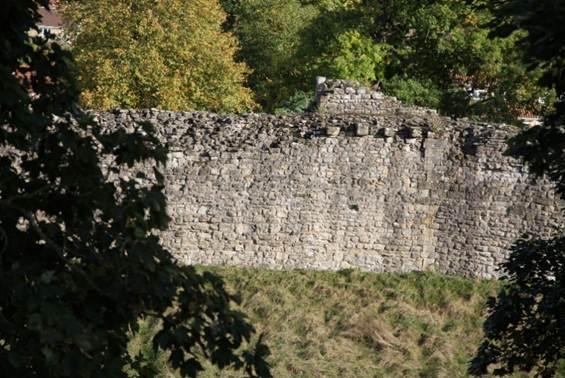
of Geoffrey de Nevill, Sheriff of Yorkshire the curtain walls of both the Inner
Bailey and the shell keep were rebuilt and strengthened although the defences
of the Outer Bailey remained in timber. Geoffrey also made substantial upgrades
to Scarborough Castle and York Castle at this time which, when paired with
Pickering, facilitated complete control of Eastern Yorkshire.
1255
In 1255 responsibility for maintaining Pickering
Castle shifted from the Sheriff of Yorkshire to the King's Justiciar, Roger
Bigod.
1264
He still had control of the castle in 1264 upon the
outbreak of the Second Barons' War and prepared Pickering and Scarborough
castles for action.
1265
However the death of Simon de Montfort, the rebel leader, at
the Battle of Evesham in 1265 defused the war and there is no record of the
castle ever being attacked.
1267
Henry III granted Pickering Castle to his younger son,
Edmund Crouchback, Earl of Lancaster in 1267.
1296
When he died in 1296 the castle passed to his son,
Thomas whose marriage to Alice de Lacy brought vast estates into the Earldom of
Lancaster.
1314
Thomas used his power and wealth to challenge Edward
II and was key in engineering the downfall of the King's favourite, Piers
Gaveston. Thomas further opposed Edward when he refused to march north with him
on the campaign that ended in the decisive English defeat at Bannockburn in
1314. The aftermath of that battle destabilised the north of England as Robert
the Bruce of Scotland led his forces into Cumbria, Northumberland and Yorkshire
attempting to force Edward II to recognise an independent Scotland. This
prompted Thomas to make improvements to Pickering Castle both for defensive
purposes and to make it a suitable residence for himself and his wife.
1321
However, Thomas continued to have a stormy
relationship with the King and entered into open
rebellion against him in 1321 only to be defeated at the Battle of
Boroughbridge in 1322.
1322
Edward II, keen to avenge the harsh treatment meted
out to Piers Gaveston, imprisoned him at Pontefract Castle and had him executed
there in March 1322. Pickering, along with all other estates of the Earldom of
Lancaster, were seized by the Crown.
With war still raging between Edward II and Robert I
(the Bruce) of Scotland, the latter invaded northern England again in 1322
hoping to bring the English King to terms. Pickering must have been a tempting target but bribes were paid to the Scots to leave the castle
and town untouched. Nevertheless, Edward II funded upgrades to Pickering Castle
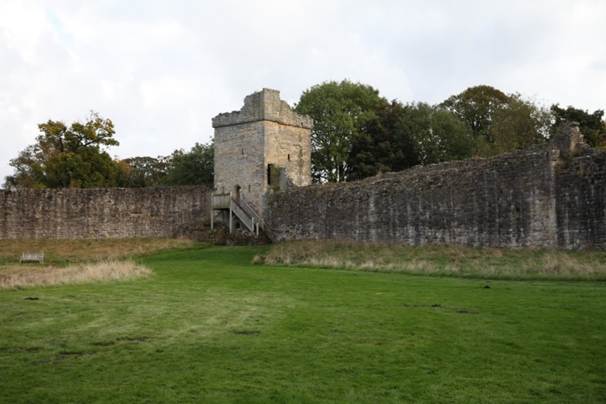
and this included rebuilding the curtain walls of the outer bailey in stone.
1326
Following the accession of Edward III in 1326,
Pickering Castle was restored to the Lancastrian dynasty when Henry, brother of
the executed Earl, was granted the title of Earl of Lancaster. His son, another
Henry, was created Duke of Lancaster and through his daughter, Blanche, it
passed by marriage to Edward III's third surviving son, John of Gaunt. His own
son, Henry Bolingbroke, was exiled by Richard II and later dispossessed
prompting him to invade. Passing by Pickering Castle on his way to intercept the
King, he ultimately forced Richard to abdicate and took the Crown himself. The
newly created Henry IV granted the Duchy of Lancaster to his son, Henry of
Monmouth. When he became Henry V the Duchy reverted to the Crown albeit run as
a separate entity.
By an inquisition taken at Pickering in 1327, the extensive
Liberties of the forest, extending northwards to Goathland, were confirmed as
belonging to the Castle. The farmers of Goathland held their lands by the
ancient tenure, of protecting the breed of hawks
peculiar to " Killing Nabb Scarr " in Newton Dale, for the Royal use ; it is somewhat singular that this large species of
hawk has but recently become extinct.
The early history is involved in some obscurity, but
the Fothergill family, still associated with Kingthorpe,
furnished one of its earliest governor.
The family of Bruce, from whom the King of Scotland
was descended, were also connected with this place, as indicated by monuments
in the church bearing their arms.
Pickering Castle has long been Crown property ; it was from this place that the charter of Henry
I. bears date, in which he granted leave for the Hermitage at Goathland.
(Ryedale and North
Yorkshire antiquities, George Frank, 1888, page
169).
Late fifteenth century
The use of
the castle was in decline by the late fifteenth century although it served
periodically as accommodation for royalty who used the adjacent forest for
hunting deer and wild boar. However, the defences were neglected
and it took no part in the Wars of the Roses. By the Tudor period it was being
plundered for its materials and quickly descended into ruin.
1642
Although in
no fit state to be garrisoned during the seventeenth century Civil War, it was
seized by Parliament after the conflict along with the rest of the Duchy of
Lancaster.
1660
It was
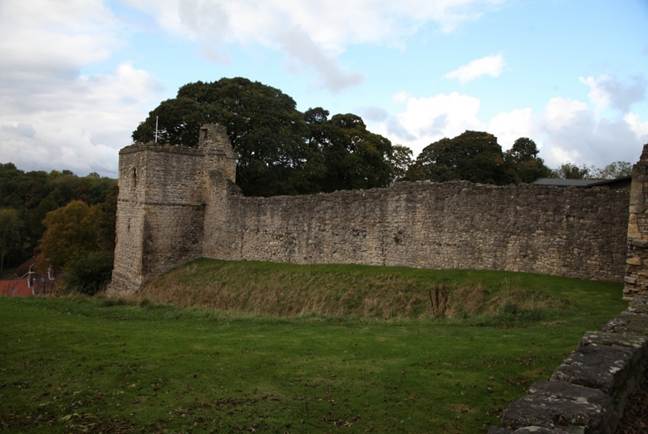
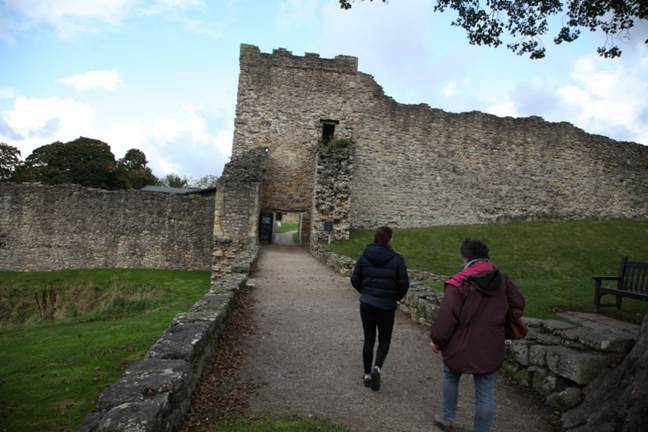
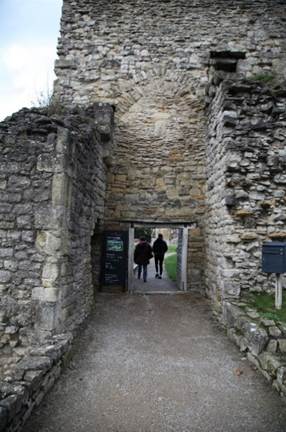
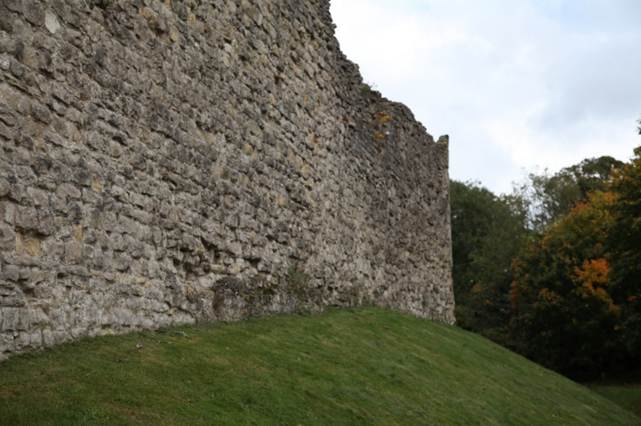
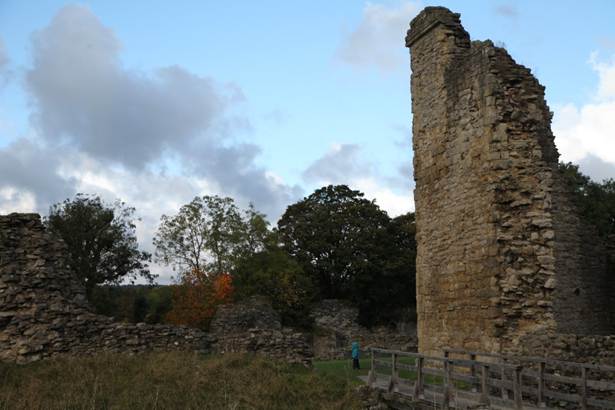
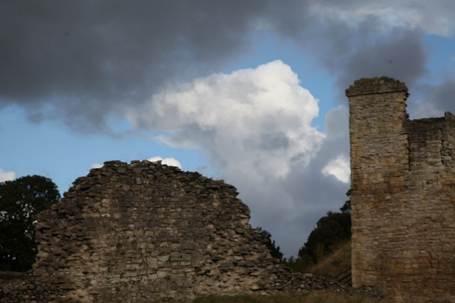
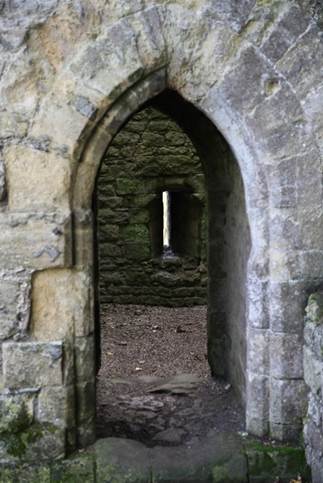
returned to Charles II upon the restoration of the monarchy in 1660 but the castle was never rebuilt
and, with the exception of the chapel, it remained an
abandoned ruin until taken into the care of the Office of Works.
Pickering Forest
Dalby Forest
was once the Royal Hunting Forest of Pickering. The Forestry Commission
purchased land around Low and High Dalby in 1919 from the Duchy of Lancaster
Estate. They began planting trees in 1921.
Pickering
Forest lay to the north of the castle and was reserved for royal hunting.
Special laws applied and penalties for encroaching into the forest or poaching game could be harsh.
In 1298, the income from Pickering Forest was £21 9s
10 ¼ d from rents for intakes in the forest; £4 9s 4d for rents of the forest
serjeants; £4 for courts of the forest and charges for pigs in the woods; £2
for dog licences; £15 for meadows and pastures in the deer hays, laudes and parks; and £2 4d 10 ½ d for freemen’s work
maintaining the outer timber wall. This totalled £49 6s ¾ d. The total income
from all sources including fines was £185 4s 10 ½ d. The present
day value would be £ ½ M.
The Victoria County
History – Yorkshire, A History of the County of York North Riding: Volume 2
Parishes: Pickering, 1923:
In 1086 the woodland belonging to the 'manor' of
Pickering was 16 'leagues' long by 4 'leagues' wide, and 'was co-extensive, if
not coterminous, with the soke.' This area afterwards formed the West Ward of
the forest of Pickering, the East Ward being the tract known before the
formation of the honour as the forest of Scalby. The forest of Pickering thus
extended from the River Seven to the sea. It followed the descent of the
honour.
Down to the early 17th century the following courts
were held for the forest: an attachment court, a swainmote
three times a year, a justice in eyre court, a court at Owdon
on Whit Monday to give oaths to all 'fee men or forest walker,' a court on St.
Cecilia's Day for receiving presentments in the East Ward, a court at Pickering
on St. William's Day for giving oaths, and a court on St. Thomas's Day for
receiving presentments. Every town throughout Pickering Lythe that had common
in the forest had four sworn 'Bilawemen' 'to make
good orders with the consent of the moste parte of the Towne, and to make no lawe
to punish any faulte wheare
there is anie other lawe to
punish that offence.' They committed their 'paines
and lawes' to writing, and these were generally put in to the court leet at Pickering or else in
to some mesne lord's court leet to be presented and sued.
In 1494–5 the 'king's tenants, burgesses and
inhabitants' of Pickering complained against the foresters in fee, Lionel
Percehay of Ryton and Roger Hastings of Roxby, for breach of these rights. A
further privilege, mentioned in 1651, was that the tenants of Pickering and Newtondale had the right to dig stone in the common
quarries for the repair of their houses.
Pickering and
poaching
Trespassers
or poachers in the Royal Forest of Pickering were hauled back to the castle and
could have their eyes gouged out and their foreheads branded. The royal
officials of the castle were responsible for enforcing just it's over Pickering forest. Their courts would have been held inside
the principle public building of the castle, it's Great Hall. Records of their
proceedings showed that they were most commonly concerned
with charges of poaching and assortment, the clearing of forest for
cultivation. At times several buildings within the castle served as prisons. In
1323 mention is made of a prison in the Coleman tower, and by 1621 another
probably existed in the mill tower.
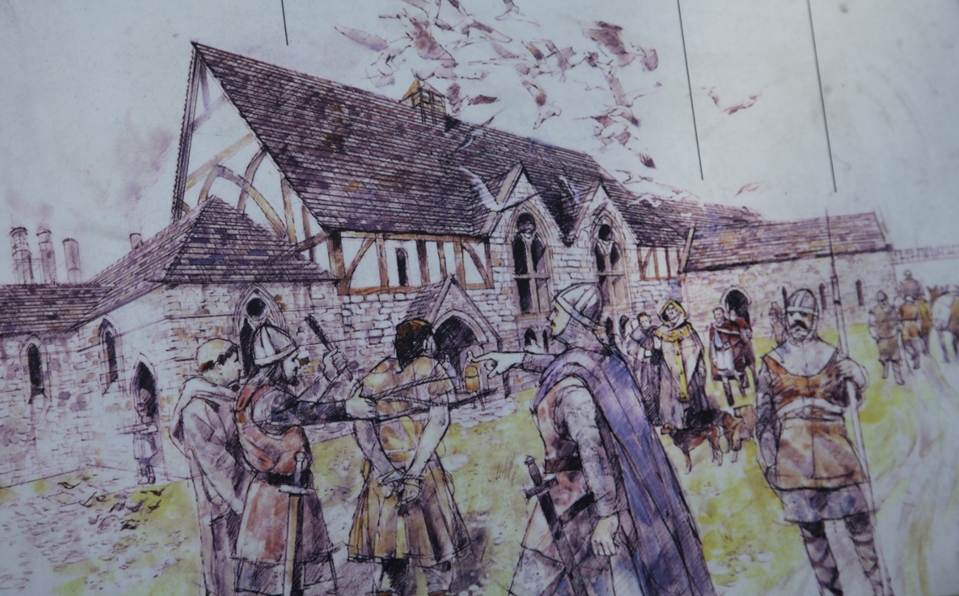
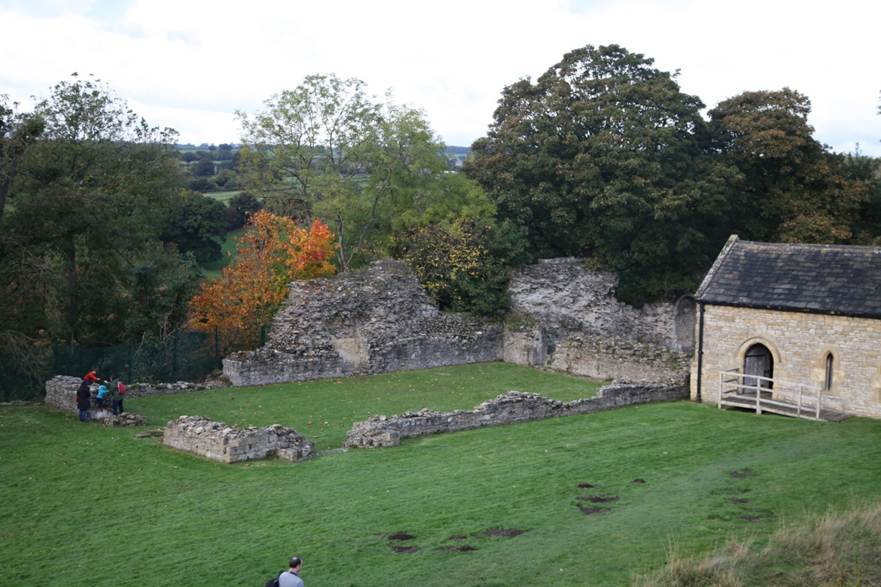
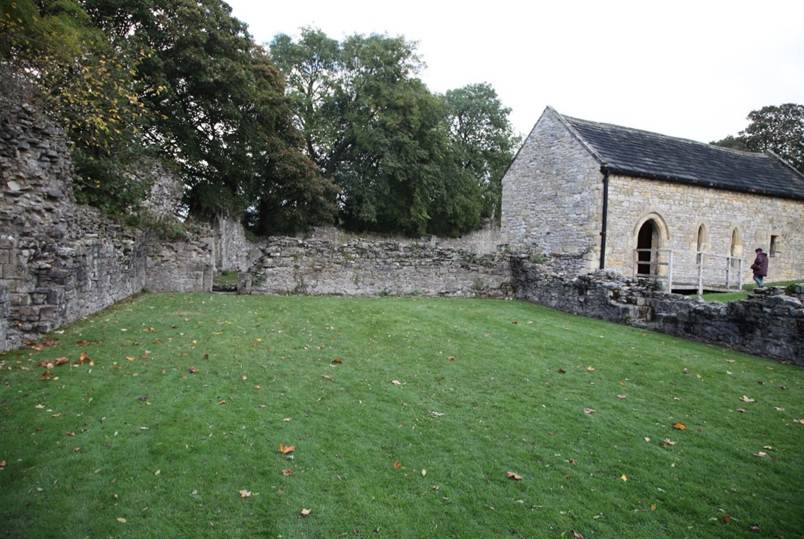
A prisoner being brought to justice in the New Hall.
The remains of the New Hall today. It was originally built as a
residence for Countres Alice, wife of the Earl of Lancaster.
Punishment for breaking the rules of the forest was
brutal. The King began to find that it was more profitable to impose fines
rather than to mutilate offenders. The royal forest thus became an additional
source of revenue and profit for the King through fines.
Bibliography
English
Heritage site Pickering Castle.
Gordon Home's Pickering:
The Evolution of an English Town (1905).