Lythe
Historical and geographical information
|
Return to the Home Page of the Farndale Family
Website |
The story of one family’s journey through two
thousand years of British History |
The 83 family lines into which the family is divided.
Meet the whole family and how the wider family is related |
Members of the historical family ordered by date of
birth |
Links to other pages with historical research and
related material |
The story of the Bakers of Highfields, the Chapmans,
and other related families |
Introduction
Dates are in red.
Hyperlinks to
other pages are in dark
blue.
Headlines of the
history of the Lythe are in brown.
References and
citations are in turquoise.
Contextual
history is in purple.
This webpage about
the Lythe has the following section headings:
· The Farndales of
Lythe
· Lythe, an overview
·
Timeline of
Lythe
The Farndales of Lythe
Those associated
with Lythe, near Whitby were: Thomas fyndaille (FAR00057)
(about 1484 to 1554) who was referred to in the Lay Subsidy for Lythe in 1524;
Mary Farndale (FAR00142)
who married William Broderick at Lythe Parish Church in 1743; William Farndale
(FAR00152)
who married Hannah Toes at Lythe Parish Church in 1761 and then moved to Loftus; Ann Farndale (FAR00165) who
married John Butcher in Lythe Parish Church in 1769; Hannah Farndale (FAR00174) who
married James Jackson in Lythe Parish Church in 1775; Mary Farndale (FAR00186) who was
baptised in Lythe Parish Church in 1763 and was buried there the following
year; Mary Farndale (FAR00190)
who was baptised at Lythe in 1765 and then moved to Loftus; Elizabeth Farndale
(FAR00193)
who witnessed a marriage in Lythe in 1808; Hannah Farndale (FAR00211) who
married Adam Temple in Lythe in 1812; and Wilson Farndale (FAR00227) who
was an agricultural labourer in Lythe by 1841.
Lythe
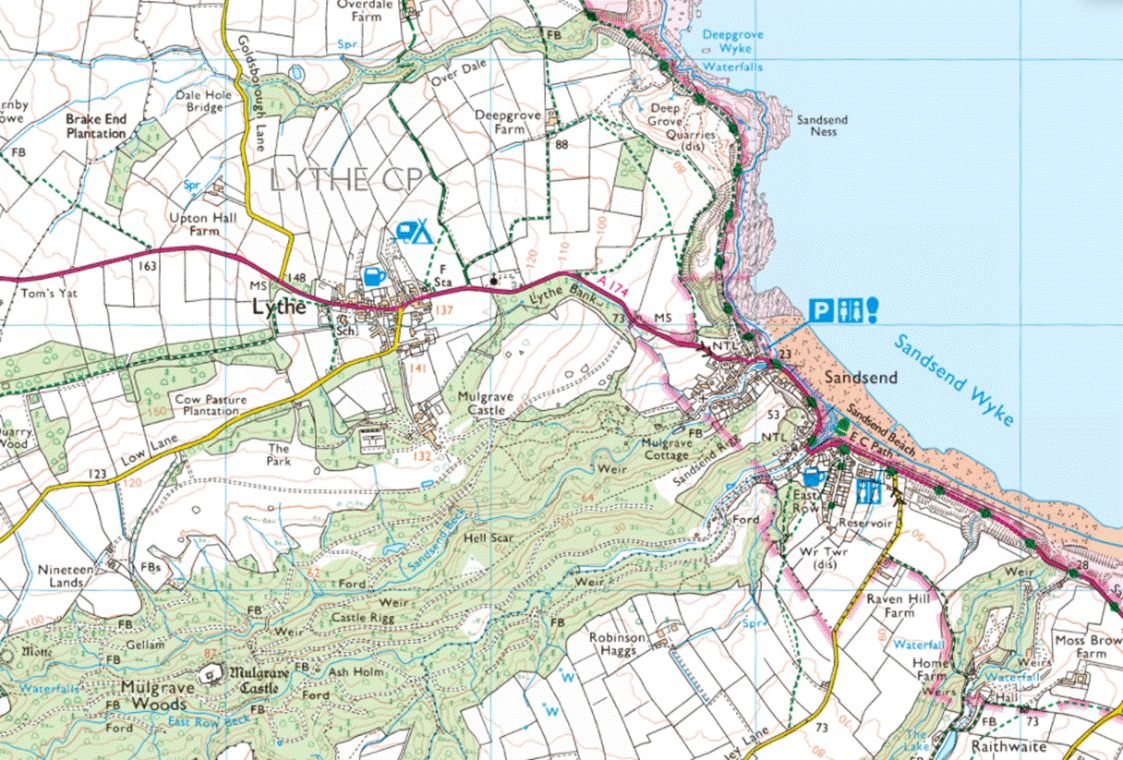
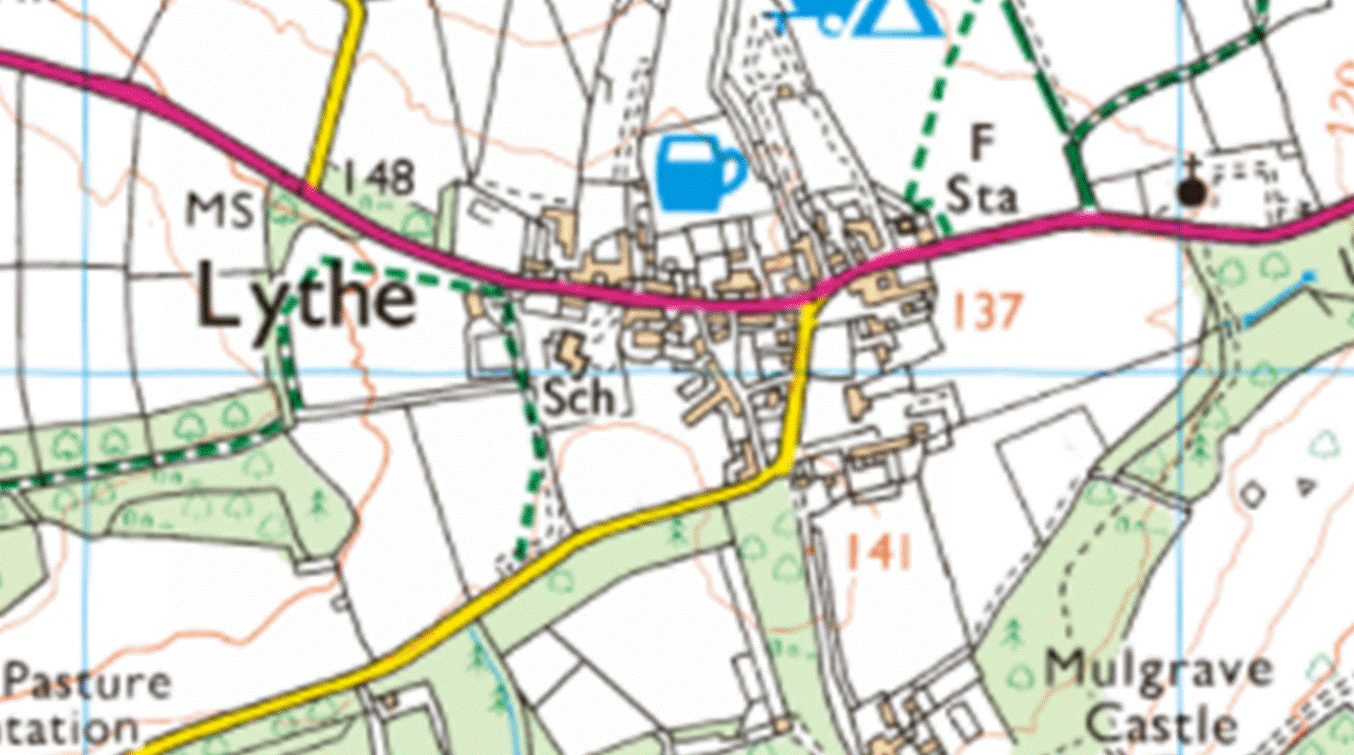
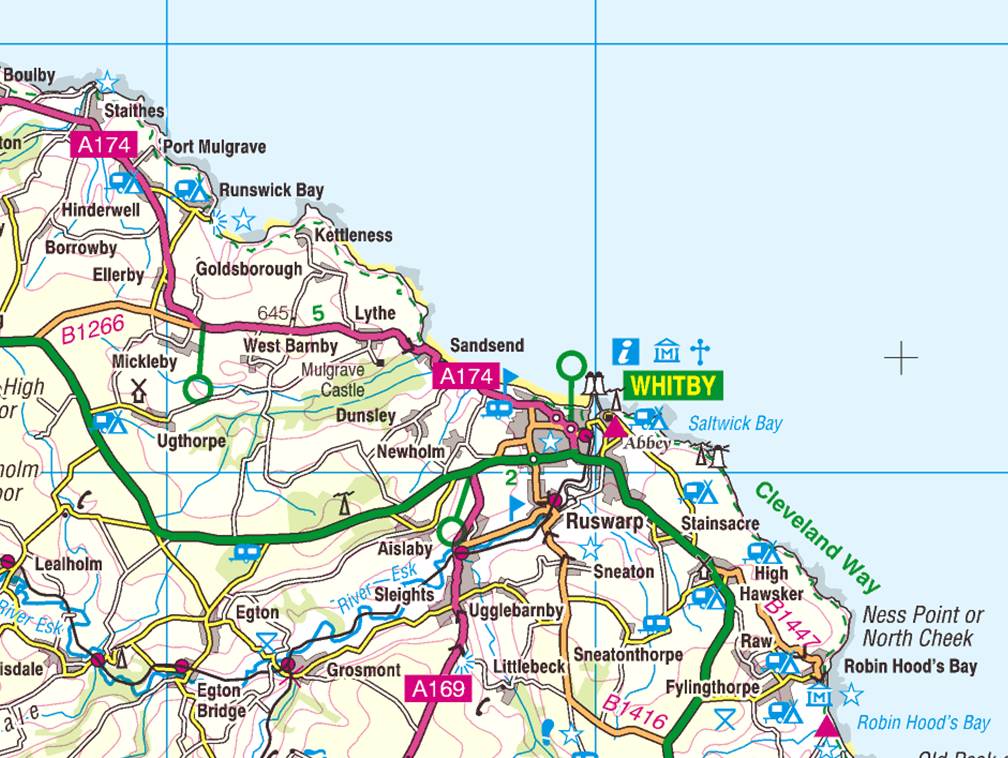
Lythe is a
small village and large civil parish, in
the Scarborough district of North Yorkshire,
near Whitby and North York Moors. The name of the village
derives from Old Norse and means hill or slope. It was
in the old North Riding and in
the wapentake of Langbaurgh East.
St Oswald’s
Church is a plain stone building in the Early
English style. The stained glass east window is a memorial
to the Rev. William Long, who was vicar from 1813 to 1858. Inside the church
are memorials to the Phipps family, and to the Marquess of Normanby. The
register dates from 1634. There is also a Wesleyan
Methodist chapel.
Mulgrave
Castle is the seat of the Marquess of Normanby. The estate also
contains the ruins of a former residence known locally as Mulgrave Old Castle,
which was an earthwork motte and bailey fortress. It was built by
Robert de Turnham in 1200 and converted to a Hunting Lodge in 1600. Mulgrave
Castle has a varied history, in 1858 it was leased to Dalip Singh Sukerchakia the Last Maharajah of the Punjab, rumour has it
that he had the Sandsend to Whitby road constructed because his elephants
didn’t like sand between their toes. Charles Dickens has holidayed there, as
have members of the present royal family.
Within the parish
are the villages of Mickleby, Ugthorpe and Sandsend,
and the hamlets of Barnby, Ellerby, Goldsborough, Hutton
Mulgrave, Kettleness and Newton
Mulgrave.
Timeline of Lythe
1086
The Victoria County History – Yorkshire, A History of the
County of York North Riding: Volume 2 Parishes: Lythe, 1923: The
'manor' and 2 carucates at Lythe belonged to Swen before the Conquest, and were
in 1086 held of the Count of Mortain by Niel Fossard, who is said to have been
a tenant 'before the Conquest.
1253
The Victoria County History – Yorkshire, A History of the
County of York North Riding: Volume 2 Parishes: Lythe, 1923: The king
granted Peter de Mauley the second in February 1253–4 a weekly market on Wednesday
at his manor of Lythe and a yearly fair there on the eve and feast of St.
Oswald and for six days following.
The church of St
Oswald stands at a little distance to the east of the village about 350 ft.
above sea level on the edge of the high ground, where it begins to fall rapidly
towards the coast. The east end of the chancel is of 13th-century date,
together possibly with some portions of the north aisle wall. The churchyard
was enlarged in 1887 at the west end and a lych-gate erected on the south side.
With the exception of the north wall and the east end of the chancel the church
was entirely rebuilt in 1910–11. The registers begin in 1637.
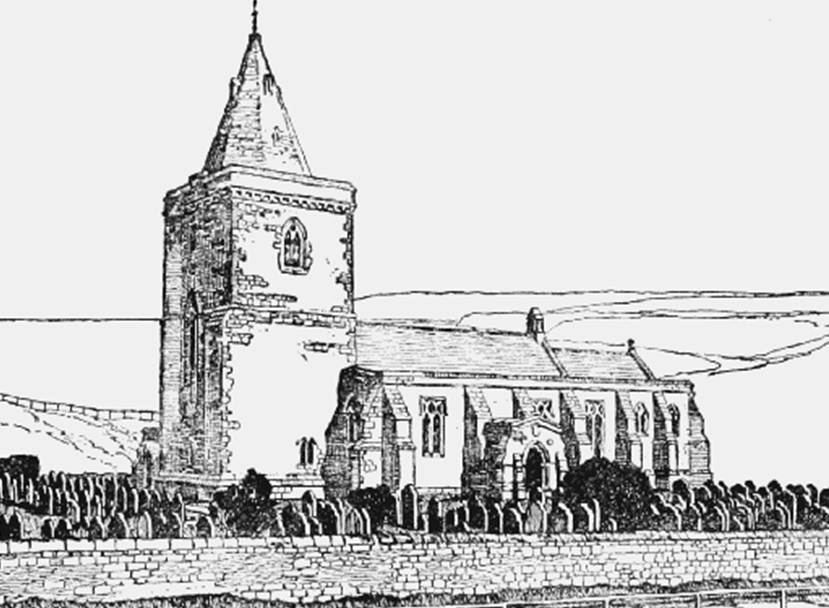
St Oswald’s after
its restoration
1625
The Victoria County History – Yorkshire, A History of the
County of York North Riding: Volume 2 Parishes: Lythe, 1923: Alum
mines at Mulgrave (probably Kettleness) and Sandsend were
leased by the Crown with those of Guisborough to Sir Paul Pindar and others in
1625, but all rents from the lessees of the alum and all mines and quarries
were in 1634 granted to the Earl of Mulgrave with Mulgrave Manor.
1831
The Victoria County History – Yorkshire, A History of the
County of York North Riding: Volume 2 Parishes: Lythe, 1923: In 1831
there were 120 men employed in the alum works, but this manufacture, almost
disused in 1874.
1857
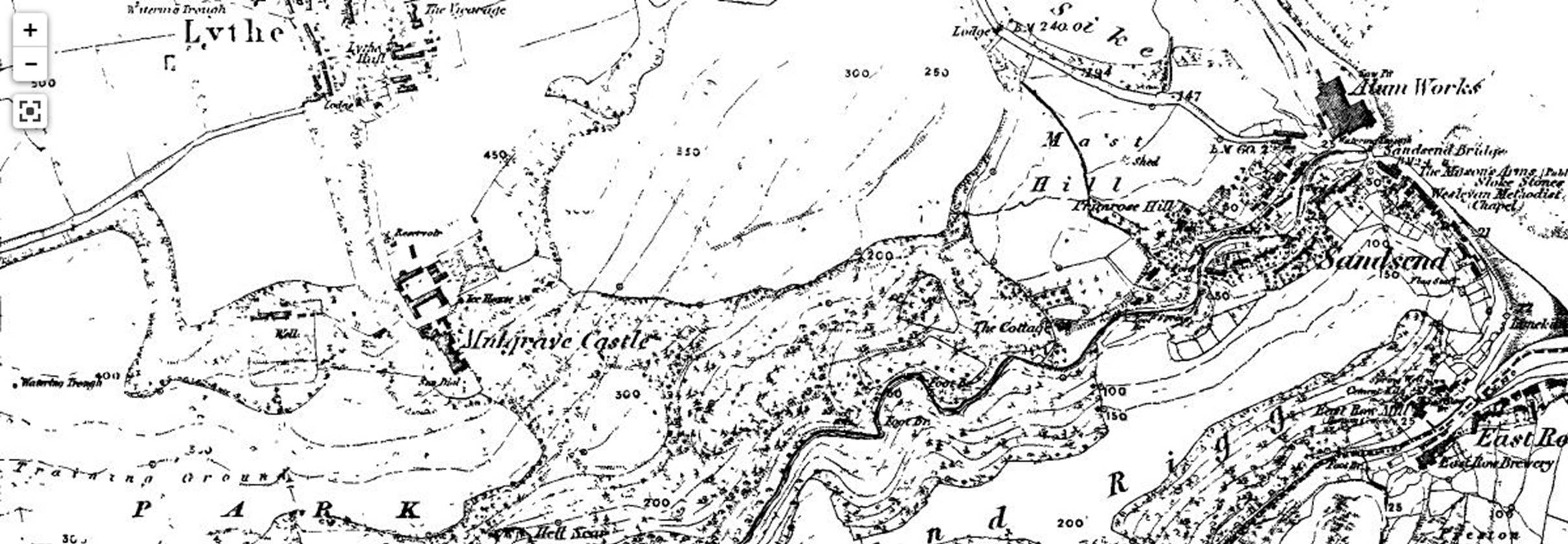
1923
The Victoria County History – Yorkshire, A History of the
County of York North Riding: Volume 2 Parishes: Lythe, 1923:
The village of
Lythe, which has a station on the Whitby and Saltburn branch of the North
Eastern railway, is about a mile inland on the High Street, a road from
Guisborough to Sandsend.
Jet, the great
object of Whitby industry, is found all along the coast, and there are cement
works and a cement mill at Sandsend and near East Row Bridge.
Bibliography