Anglo-Saxon-Scandinavian Kirkdale
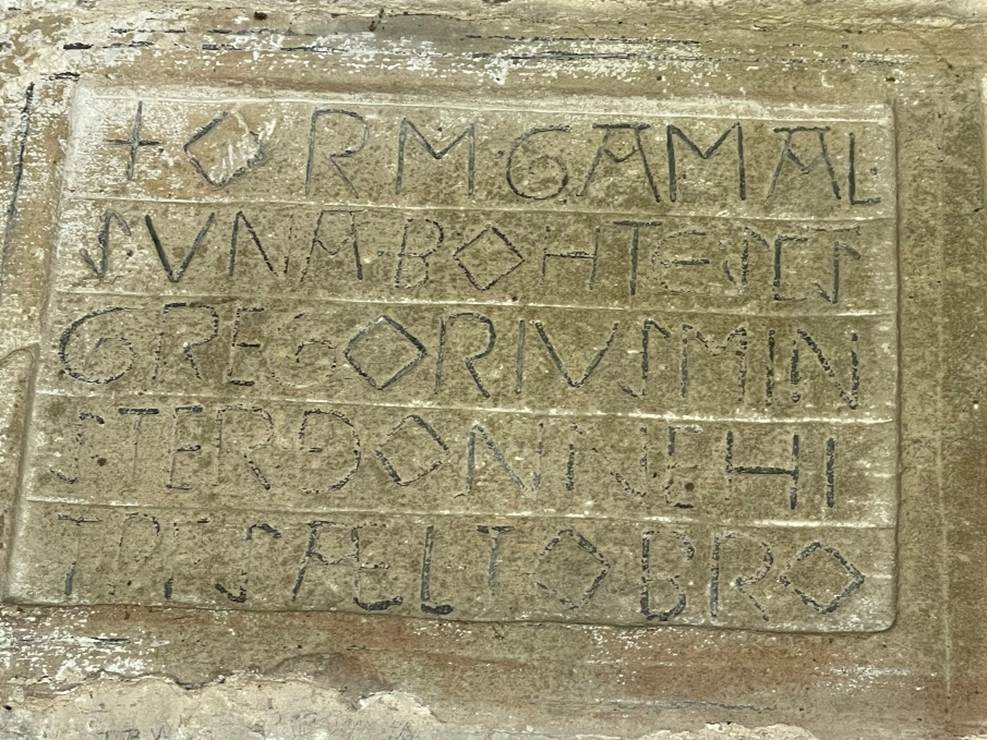
Kirkdale from the beginning of the
Scandinavian period in about 800 CE to the Norman Conquest in 1066
Then a short summary of its history
after 1066
|
Return to the Home Page of the Farndale Family
Website |
The story of one family’s journey through two
thousand years of British History |
The 83 family lines into which the family is
divided. Meet the whole family and how the wider family is related |
Members of the historical family ordered by date
of birth |
Links to other pages with historical research
and related material |
The story of the Bakers of Highfields, the
Chapmans, and other related families |
Dates
are in red.
Hyperlinks
to other pages are in dark
blue.
Headlines
are in brown.
References
and citations are in turquoise.
Context
and local history are in purple.
The history
of Kirkdale is told across six webpages.
· The Kirkdale Anglo Saxon
artefacts
·
Anglo-Saxon
Scandinavian Kirkdale
Scandinavian
disruption
It had been
suggested that the minster fell into ruin, perhaps as a result of Danish raids,
long before the sundial tells us that Orm Gamalson rebuilt it. Recent
interpretation suggests this was not the case.
How
Kirkdale navigated the transition from the Anglo Saxon to the Anglo
Scandinavian period is opaque. Its placename incorporating the Scandinavian dalr suggests that it assumed a Scandinavian
identity. The name Kirkdale, the church of the dale, would have been no
guidance in a landscape with multiple valleys flowing down from the moors,
which implies there was a continuation of it being a well known centre.
Whilst there
is little evidence from the period of transition from the Anglo Saxon to the
Anglo Scandinavian period, archaeologists have found the presence of graves
which appear to be from the early Anglo-Scandinavian period.
There may
well have been unrest, disruption to religious observance and bursts of
violence during the early Anglo Scandinavian period. Yet Kirkdale was nested
away at the edge of the dales, far from the places where Viking upheaval is
known to have occurred. It is possible that there was a relatively smooth
transition in culture and leadership at this time. It seems possible that the
church at Kirkdale might have assumed greater responsibility for a dispersed
population around it, while a larger concentration at the settlement of
Kirkbymoorside may have become disconnected from the inhabitants around
Kirkdale.
There was
certainly a process of sub dividing previously extensive estates into smaller
units and Kirkdale’s place in that process is not
known. The ninth century was a period of fresh feudal ownership by a new elite
and the gradual reestablishment of settlements focused on manors.
When the
Scandinavian government was exercised from York,
Kirkdale might have found itself in more regular contact with York. The elite
associated with Kirkdale in time acquired property in York. This was likely to
have increased its connection to York.
|
The
Scandinavian centre of northern England |
The
Scandinavian dominance was the beginning of a period of more profound change.
It began a new sense of northern-ness, as a counterpoint to the southern
English court.
(St Gregory’s Minster, Kirkdale, North Yorkshire,
Archaeological Investigations and Historical Context, Philip Rahtz and Lorna
Watts, 2021, 298 to 300).
1014
Fears for the end of
the world
Whilst
Kirkdale might have escaped the worst ravages of the early Scandinavian period,
by the turn of the first millennium in the Common Era, there was a widespread
heightened anticipation and fear of apocalypse. As the year 1000 passed, the
anticipation did not wither, only the uncertainty about the precise date when
it would occur.
Wulfstan was
appointed Archbishop of York in 1002 during
the turbulent times of fresh waves of settlement from the wicinglas,
the people of the fjord settlements. By the end of the tenth century, England
had become a sophisticated state on the European stage. Wulfstan assumed a
sophisticated model of society. However 1014 was a year of crisis. King Aetheraed had been driven into exile, expelled by Sweyn
Forkbeard who was accepted as King of the English before dying in 1014. His
young son Cnut then became King.
Wulfstan had
long served in Aethelraed’s administration. It was in this context that he
wrote his sermon to the English people, Sermo
Lupi ad Anglos (Lupi being the Latin for wolf, Wulfstan’s pen name).
The sermon provided a contemporary definition of morality and foreboding.
The sermon
began with a sense of foreboding. Beloved people, know that this is true.
This world is in haste and it approaches its end. And so, because of the
nation’s sins, things must of necessity grow far more evil before Antichrist’s
advent: and then indeed they shall be appalling and terrible widely throughout
the world.
It
continued, the devil has too much led astray the nation. If we are to expect
any cure, then we must deserve it of God better than we hitherto have done.
God’s houses are too cleanly despoiled. Nor has anyone been faithful in thought
towards another as duly he should. People have not very often cared what they
have wrought by word or by deed.
He then
recounted that there was a historian in the days of the Britons called
Gildas, who wrote about their misdeeds, how they by their sins so overly much
angered God that in the end he permitted the army of the English to conquer
their lands and destroy withal the Britons power.
He therefore continued and let us do as our need
is, submit to what is right and in some measure abandon what is not right.
|
Archbishop Wulfstan’s Sermon to the English People
Wulfstan’s
ominous warnings as the Millennium turned. |
Kirkdale in the late
Anglo Saxon period
The
church appears to have been destroyed by fire, most evident in excavations on
its south side. There is archaeological evidence of burning and interior
fittings of wood and cloth were inflammable.
Burials
suggest that the building continued to be in use. Any such fire must have been
before it was rebuilt by about 1055, but might not have been so long before as
has previously been interpreted.
The
archaeologists suggest that St Gregory’s minster might have reached its most
extensive size before it was rebuilt in about 1055. However the nave, the
central part of the church which accommodates most or all of the congregation,
was not larger, so this does not necessarily mean that there were more
parishioners. It probably continued in its original Anglo Saxon form and not
Anglo Scandinavian in form. It has been suggested that we might get some idea
of the church at that time by comparing it with St Mary’s, Deerhurst in Gloucestershire.
The building therefore probably
continued to attract considerable patronage, and the most obvious candidate is Orm Gamalson of the later sundial
inscription or his family. The sundial does not make clear how long before its rebuilding Orm Gamalson had purchased the church.
We are told that he acquired St Gregory’s Minster when it was completely
ruined and collapsed. If, as seems likely, the fire occurred shortly before
it was rebuilt, then although he appears to have been an extensive feudal
landowner including of the Kirkbymoorside estate since shortly after the
invasion of Sweyn Forkbeard and Cnut in 1016, his interest in the church itself
would have been acquired towards the middle of the century.
Orm
and his father Gamal were descendants of a family that gained power when the
Scandinavian King Cnut rewarded his followers for their help in the conquest of
England in 1014 to 1016. Their forebears probably included Thurbrand
the Hold (died 1024). Thurbrand was a Northumbrian
magnate in the early 11th century. Perhaps based in Holderness and East
Yorkshire, Thurbrand was recorded as the killer of
Uhtred the Bold, Earl of Northumbria. The killing appears to have been part of
the war between Sweyn Forkbeard and Cnut the Great against the English king
Æthelred the Unready, Uhtred being the latter's chief Northumbrian supporter.
The family were likely players in multi generational
Northumbrian politics and feuds. They were known political figures in the
north. They had the wealth to rebuild the church on a significant scale.
If the fire
occurred a little earlier, say in the 1020s, then Orm might have had ownership
of the church for a period of time in its late Anglo Saxon form. It is possible
he would have exercised significant patronage in the last years of development
of the ancient church. Perhaps it was the activity of extensive rebuilding work
by Orm that caused the fire.
Alternatively
the minster might already have burned down before Cnut’s invasion and before
the Orm family interest.
1055
The church rebuilt
by Orm - The Phoenix emerges
We do know
that there is archaeological evidence of burning. The church appears to have
been destroyed by fire, most evident in excavations on its south side. The
interior fittings of wood and cloth were inflammable and it seems most likely
that the fire occurred in the early to mid eleventh
century, shortly before it was rebuilt and may just have been an accident.
When Orm
rebuilt Kirkdale minster, with its
sundial created by Hawarth, and served by the
priest Brand, this was an ancient, ruined, minster church whose cemetery was
still used by the local people for the burial of their dead.
|
The
powerful figure at the heart of the aristocracy, who rebuilt Kirkdale and put
our ancestral lands firmly onto the national political stage |
|
A unique treasure whose secrets transport us into the
world of the eleventh century upon which you can stare today, imagining
direct ancestors who did the same a thousand years ago |
Disturbed
graves at the west exterior of the church reflect the chaos of the fire and its
aftermath. The area of Trench II of
the archaeological excavations in the North Field became a builders yard. Debris from the church was taken to
this area and later components of the new building programme were prepared
within the shelter of a shed like building. The destruction of the old church
was so extensive that much of the previous structure required to be rebuilt,
but the previous church seems to have been used as the basic template for the
new foundations.
No evidence
has been found of a residence at this time, so we don’t know where the priest
lived.
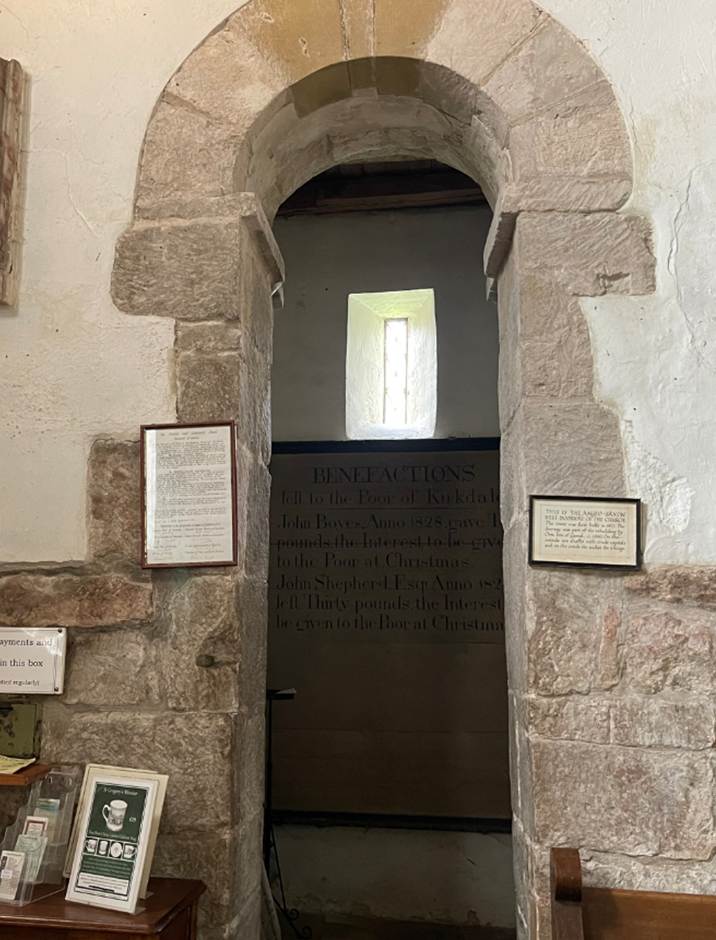
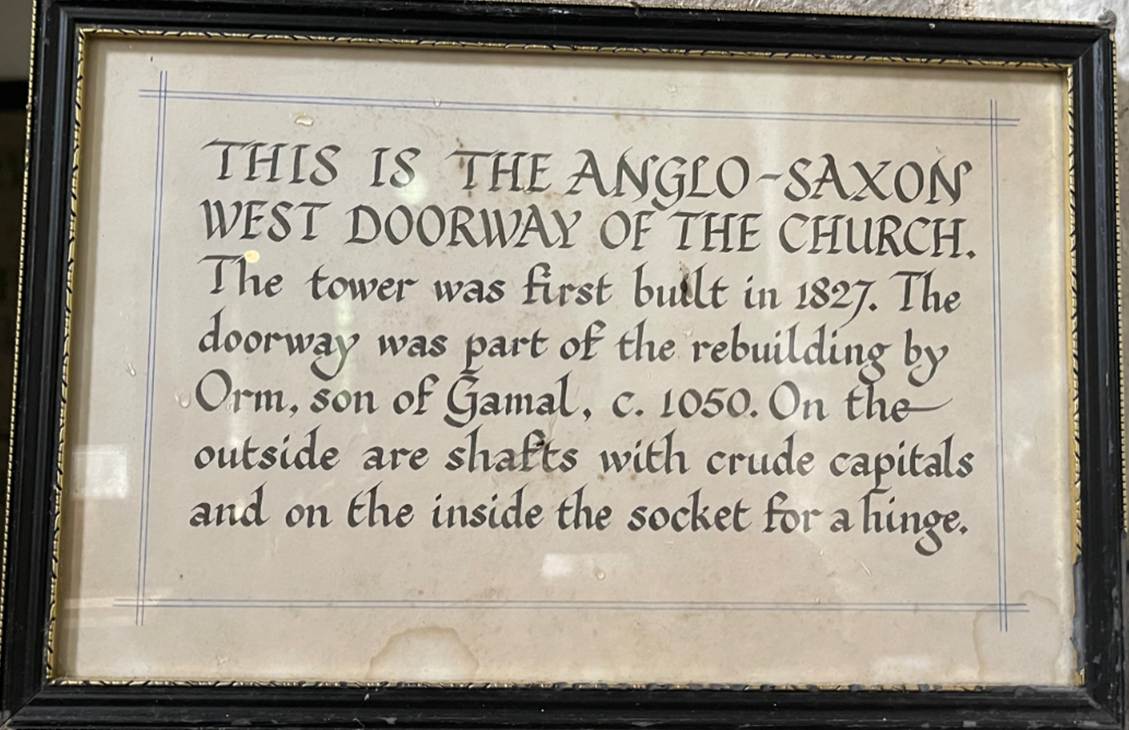
What
survives of Orm's church in the existing visible fabric appears to be the
south, west, and what remains of the east walls of the nave; the archway in the
west wall of the nave (now opening into the much later west tower) which
probably formed the original entrance to Orm's church; and the jambs,
angle-shafts, bases and capitals of the arch which leads from the nave into the
chancel. The latter archway is some four centuries later than Orm's church, but
it appears that the masons who were responsible for it re-used what they could
of an earlier chancel arch. It is therefore reasonable to infer that Orm's
church had a chancel, though not all Anglo-Saxon
parish churches did. It was probably a great deal smaller than the existing
one.
Much of the
present nave in undoubtedly Orm’s building. The western entrance arch and the
responds of the chancel arch belong to that period. Old masonry including grave
slabs and crosses, was later used in the west and south walls.
It was the
Scandinavian named Orm who rebuilt the minster. Kirkdale does not appear to
have suffered Viking destruction, but Scandinavian reconstruction.
Sir
Herbert Edward Read, art historian, poet and critic was born at Kirkdale
and wrote a poem about Orm’s church in his collection, A World within a War:
|
I, Orm,
the son of Gamal Found
these fractured stones Starting
out of the fragrant thicket The
river bed was dry |
The
rooftrees naked and bleached, Nettles
in the nave and aisleways, On the
altar an owl’s cast And a
feather from a wild dove’s wing |
There
was peace in the valley; Far
into the eastern sea The foe
had gone, leaving death and ruin And a
longing for the priest’s solace |
Fast
the feather lay Like a
sulky jewel in my head Till I
knew it had fallen in a holy place Therefore
I raised these grey stones up again |
The
new
church as rebuilt by Orm, embellished with its sundial by Hawarth, and served by the priest Brand, was where the old,
ruined, minster church had stood in days gone by, the ruined church whose
cemetery was still used by the local people for the burial of their dead.
The Parish of
Kirkdale
It seems
likely that the parish of Kirkdale, as opposed to the church itself, originated
in a process of fragmentation of a once much larger unit of ecclesiastical
administration, which had its hub in Kirkbymoorside.
The pastoral
organisation of the Anglo-Saxon church within each diocese was focused upon the
institution of the minster. Our modern word Minster is derived from the Old
English mynster, itself a derivation from the
Latin term monasterium, which is also of
course the ancestor of our word monastery. By monastery we
usually understand something like a community of monks vowed to living
according to a monastic rule, cut off from the world the better to devote
themselves to prayer and worship. The Anglo-Saxons sometimes used mynster in this sense, but more often they
understood something rather different by it. The typical Anglo-Saxon minster
was a community of clergy who discharged pastoral functions over a wide area
round about which could embrace many square miles and several villages or
hamlets. It was an institution ideally adapted to the early days of English
Christianity when there were limited resources. These early minsters were more
like mission stations.
By the early
eleventh century, there was a period of fragmentation into smaller parishes, as
the landed classes built village churches for their tenants staffed by
individual priests whose pastoral responsibilities were restricted to the
territory of the particular village itself. These smaller units became the
parishes which in most rural areas were retained from the shape and boundaries
which they acquired in the eleventh and twelfth centuries.
This
evolution was complicated in much of the north and east of the country by the
disruption caused by the Viking attacks and subsequent Scandinavian settlements
of the ninth and tenth centuries. Whatever status Kirkdale might have enjoyed
as a pastoral centre in the Anglo Saxon period, it appears that by the eleventh
century the main ecclesiastical centre in this area was at Kirkbymoorside.
Orm's great estate with its nucleus at Kirkbymoorside had a number of outliers
attached to it. Some of these settlements evolved into separate parishes, for
example Kirby Misperton. Kirkdale seems to have shared this evolution, but
unlike places like Kirby Misperton, its church was not built at a nucleated
village because none existed in the dale.
The wider
parish came to consist of a scattering of small hamlets and isolated farmsteads
including Welburn, Skiplam, Nawton, Muscoates, Sunley Hill, Wombleton,
and others. Others such as Walton and Hoveton have
since been lost.
Anglo-Saxon or
Scandinavian, or mixed?
The
old English of the sundial reflects the late Anglo Saxon period. There is a
single Old Norse work, solmerca, or sundial.
It has been suggested that this might have been a loanword from the Norse
language, but Bradley suggests that it is more likely that Old Norse borrowed solmerca from English. As above, the Scandinavian
names, particular Orm, have been Anglicised from the Norse Ormr.
Orm
might therefore be seen as a rebuilder and a re dedicator of the ancient ruined
church to St Gregory, who thereby symbolically stepped back from the disorder
of the Viking centuries, back to the pre Viking Christian traditions.
So
the sundial might reflect a rejection of Scandinavian culture and a recovery of
the earlier Anglo-Saxon Christian period.
However
we cannot ignore the clear evidence of Scandinavian culture on the local
community.
Orm
and Gamal are common personal Scandinavian names.
Orm’s
name appears in three other texts of the period – the Domesday Book and De Obsessione Dunelmi, On the Siege of Durham which states
that after the Norman Conquest, a thegn of Yorkshire, called Orm, son of Gamel,
married Aetheldryth, one of five daughters of Earl
Eadred, and they had a daughter called Ecgfrida, wjho
by Aelsfsige of Tees, had a son, Waltheof, two other
sons and a daughter, Eda. Symeon of Durham’s Historia Regum recorded
that Gamal, the son of Orm, was killed by Earl Tosti in York in 1063 or 1064.
Brand
is likely to have been the priest responsible for the design of the sundial.
Brandr weas a common personal name in Viking Age Denmark and Iceland.
Hawaro was
probably the craftsman, responsible for the inscription. This is also a
medieval Scandinavian name, as in the Icelandic saga, Havaroar
saga.
The
inscription provides the names of an elite landholder, Orm Gamalson, a priest
called Brand and probably an artisan called Hawaro.
Whilst not describing the local peasantry, this provides a cross section of
middle and upper ranks of society.
The
Anglo Saxon Chronicle records that a great army of Vikings arrived in England
in 865. In 876, the Anglo Saxon Chronicle records “Healfdene shared out the
land of the Northumbrians, and they turned to ploughing and making a living for
themselves.” Place name evidence of settlement, especially in North
Yorkshire, is plentiful.
In
1016 the Danish King Cnut followed his father Swein
Forkbeard and granted many of his followers estates in England. It is possible
that Orm’s father Gamal was a recipient of such estateland
and in marrying Ealdred’s daughter Aethelthryth, Orm was certainly well
connected into the Scandinavian and English elites. By the tenth century there
was extensive interaction between England and Scandinavia.
The
preferred model is not of a transplanting of Scandinavian culture into England,
but rather of continuing and developing practices.
In
this context a Scandinavian name could, on the one hand, have been evidence of
Scandinavian descent, but on the other, might be evidence of an increased use
of fashionable Norse names. However Townend argues these were more than just
fashionable Norse names, but rather evidenced links with prominent Scandinavian
families in England. Names were used as a means to slot into a social network,
bringing familial and communal obligations. Naming practices were therefore
carefully controlled and constrained. Orm Gamalson may well have been named
after his grandfather.
There
was a frequent use of Scandinavian names in Yorkshire. The Domesday book shows
a very high proportion of 70 Old Norse to 30 Old English names, that is English
names outnumbered two to one. The highest of all such names was in Yorkshire
and the Ryedale Wapentake including Kirkdale had a higher than country average,
Townend calculates this as 92 to 8. The sheer quantity of Scandinavian names is
striking.
He
also points out that whilst there was a similar quantitative adoption of Norman
names after the conquest, the total number of different names adopted from the
Normans was very small. However the evidence of Norse names is of a large
number of different names which were used. So it is not a case of a small
number of popular names being widely used.
Old
Norse continued to be spoken in Viking Age England, particularly in Yorkshire
and there was a rich tradition of Old Norse poetry for English audiences. It is
evident that over time Old Norse speakers were continuing to enter the country,
particularly as a result of Cnut’s 1016 invasion. The Old Norse language
flourished in Cnut’s court in England. In the north of England there was an
audience for elite poetry in the Old Nose language.
The
contrary evidence to a strong Scandinavian culture is the language of the
Kirkdale inscription itself, which is in Old English. There are four other
examples of similar inscriptions which are quite similar:
· Aldbrough: Ulf
ordered the church to be erected form himself and for Gunnwaru’s
soul.
· Great
Edstone: Looan
made me. The Traveller’s Clock.
· Old
Byland: Sumarleoi’s house servant made me.
· St
Mary Castlegate, York: … and Grim and
Aese raised this church in the name of the holy Lord
Christ and to St Mary and St Martin and St Cuthbert and All Saints. It was
consecrated in the … year in the life of …
However
Townend points out that Old Norse had never become a written language in the
Roman alphabet. The two traditions of Roman literacy were Latin and Old
English. Since Old English and Old Norse were related languages, the
Scandinavian elite were content to continue to existing traditions of Old
English and Latin as the written languages of record.
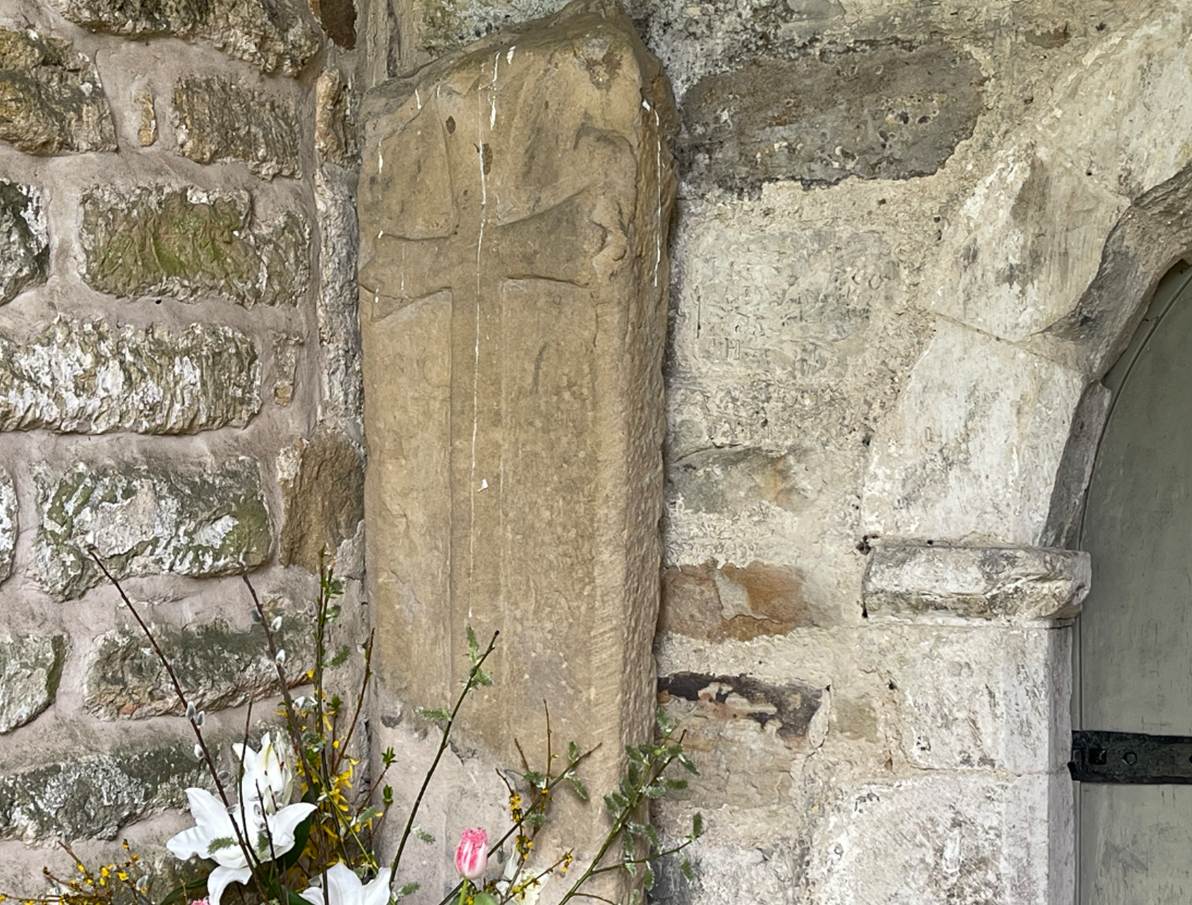
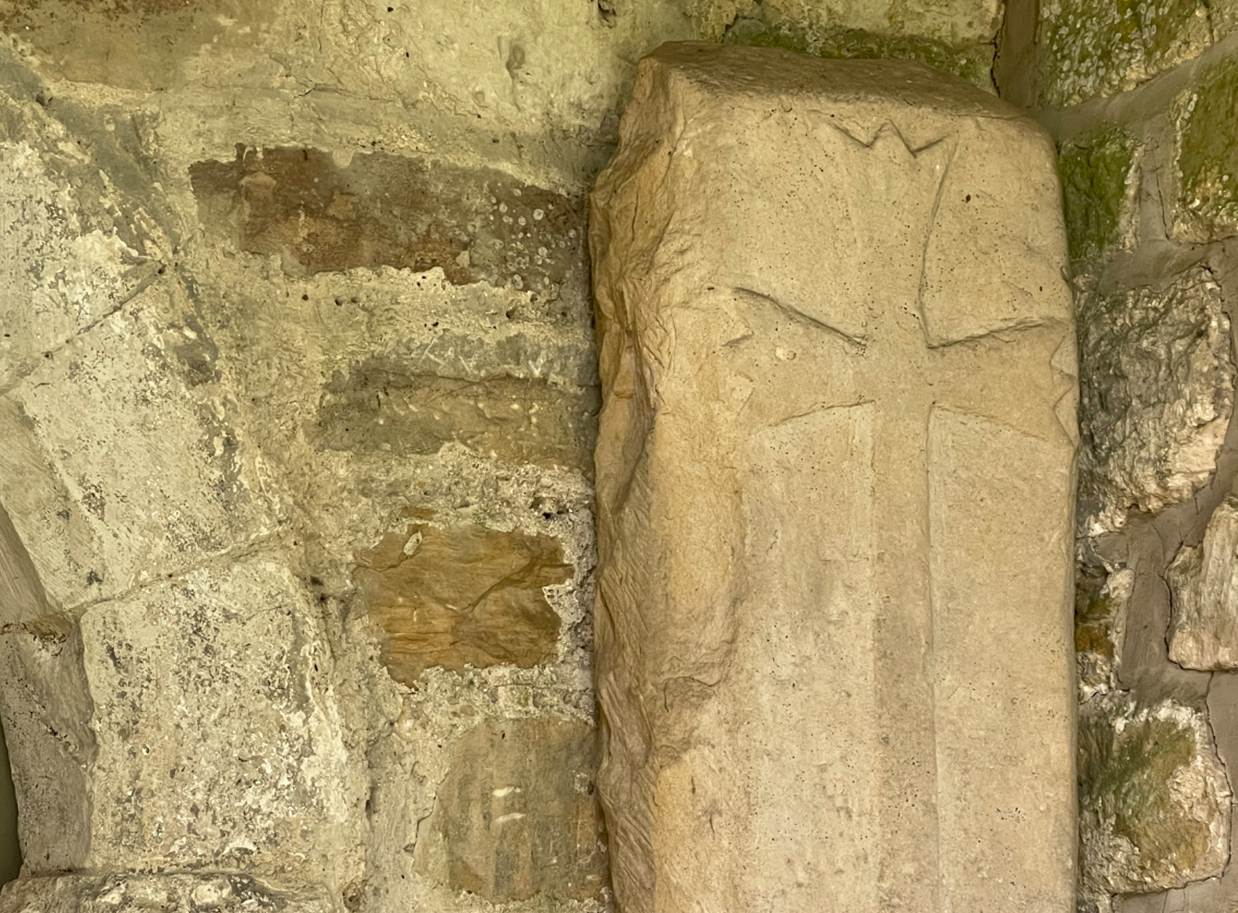
The
Vikings were originally pagan but from the tenth century there is extensive
evidence of religious piety particularly through Scandinavian inspired stone
sculpture. James Land in Corpus of Anglo Saxon
Stone Sculpture 1991, catalogued 9 items of sculpture at Kirkdale,
apart from the sundial. These sculptures seem to be funerary monuments for the
new Scandinavian elite of the area.
Kirkdale
is a place where Scandinavian, Latin and English traditions meet and find
expression.
Orm
Gamalson was the holder of the complex estate of Kirkbymoorside, evidenced in
the Domesday Book. When his family came into possession of the estate, isn’t
known for sure. In 1066 he held land across the Vale of Pickering and beyond.
He might have held land not surveyed in the Domesday Book as far as the Tees.
Orm Gamalson was clearly a substantial
figure, and the place he chose to articulate his power was Kirkdale.
York
was a centre for Tostig Godwinson (1029 to 1066)’s later career, a member of
the major West Saxon house under which his brother Harold Godwinson had gained
his kingship. Tostig’s initial role in Yorkshire, as Anglo Saxon Earl of
Northumbria on the death of Earl Siward, was to strengthen the king’s influence
in this unruly land.
Tostig was the third son of the
Anglo-Saxon nobleman Godwin, Earl of Wessex and Gytha Thorkelsdóttir,
the daughter of Danish chieftain Thorgil Sprakling.
So he had parental associations with both Godwins and
Scandinavians.
It was during this period that the son
of Orm Gamalson was murdered in his house at York, probably part of the ongoing
multigenerational feud. This might have been the start of a period of disorder,
during which Tostig changed his allegiance in 1066 from the West Saxon housed
in favour of the Scandinavian side, to die soon afterwards at Stamford Bridge.
Kirkdale clearly had political significance in
this historical episode.
During this period Viking colonials
from Ireland settled in north Yorkshire, where it is possible that they
constituted a ruling elite, but still subject to Anglian influences. In
consequence some sculptured stones from this period, including sundials, may
properly be described as Anglo-Scandinavian. It is this circumstance which
accounts for words with Scandinavian roots occurring in otherwise Old English
inscriptions, such as those which accompany the most important of the Ryedale
group of Anglo-Saxon sundials.
(Anglo Saxon Sundials in Ryedale, John Wall, Yorkshire Archaeological Journal, Volume 69,
1997, page 93).
The years after the
Conquest
Although the
story of our family’s journey, of which this website tells, departs in its
direct interest with Kirkdale after the Conquest, the family shares much of its
story over the following centuries.
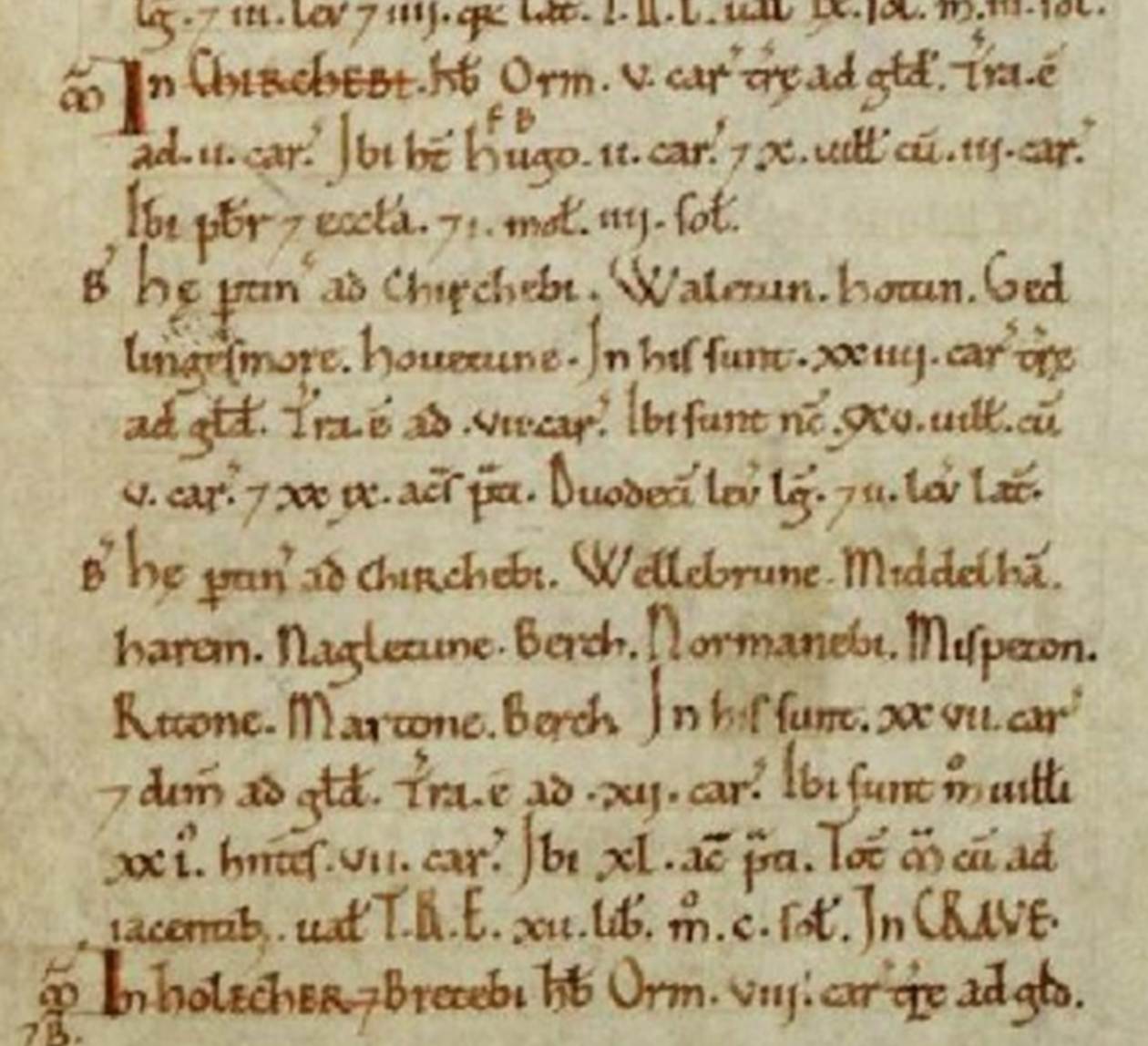
1086
The Domesday
book evidences that Kirkdale by about this
time comprised ten villagers, one priest, two ploughlands, two lord’s plough
teams, three men’s plough teams, a mill and a church. Orm seems to have held
five carucates of land at Chirchebi (Kirkbymoorside) So presumably this
area of land described the five carucates of cultivated land around Kirkdale.




There
was a nearby settlement at Hoveton,
a settlement listed by the Domesday Book of 1086 and believed to have been
somewhere between Fadmoor
and Kirkbymoorside.
The
Domesday Book records two churches at Chirchebi,
with one (clearly Kirkdale) in the manor of Orm and the other in the manor of Torbrand (now Kirkbymoorside Parish Church).
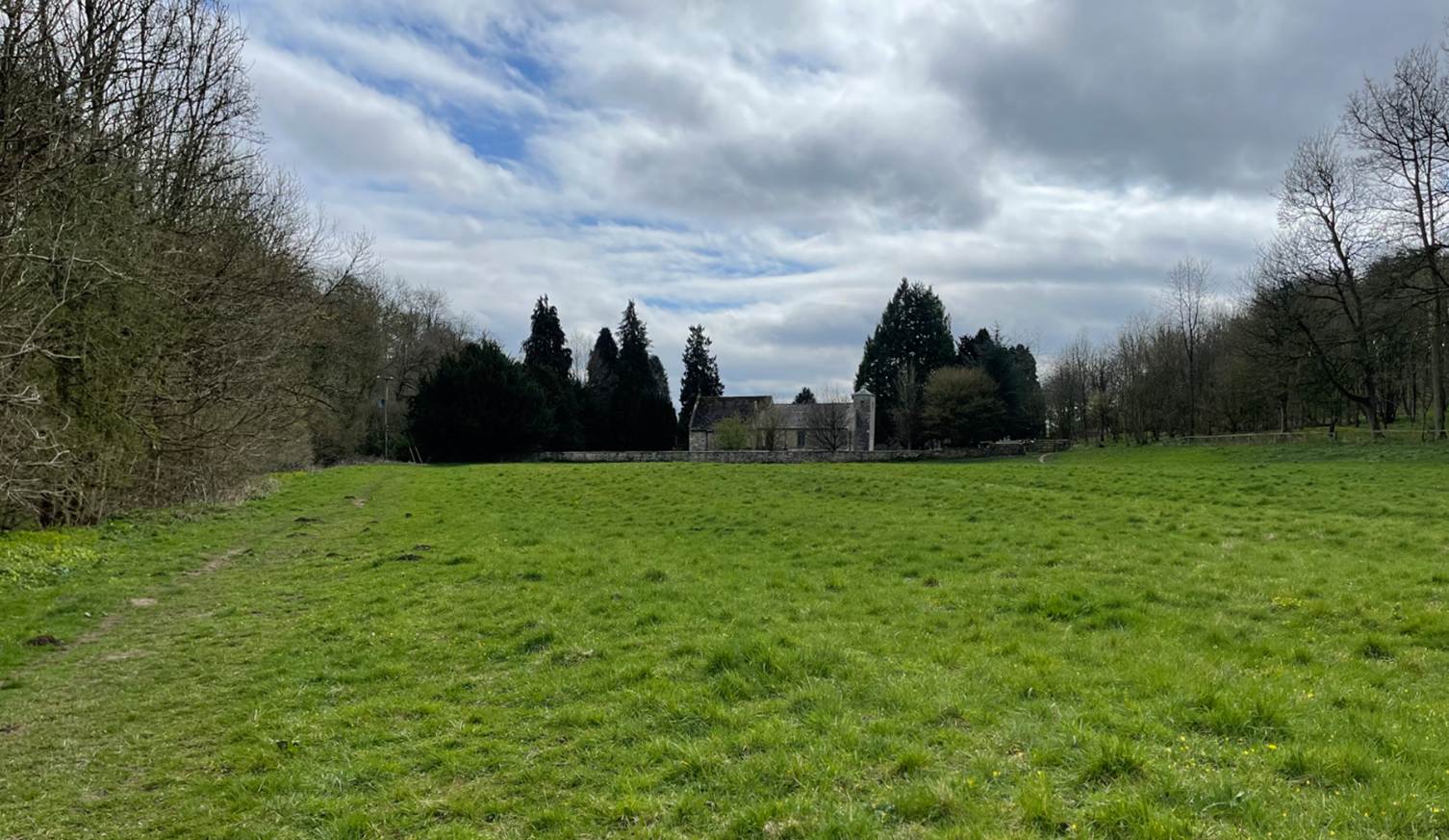
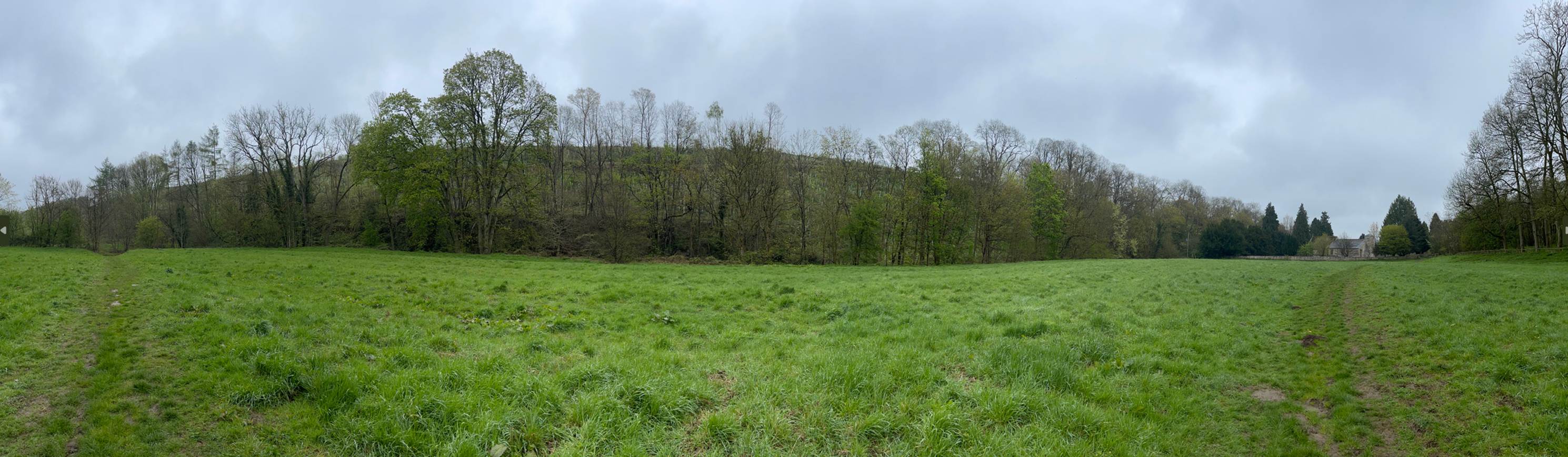
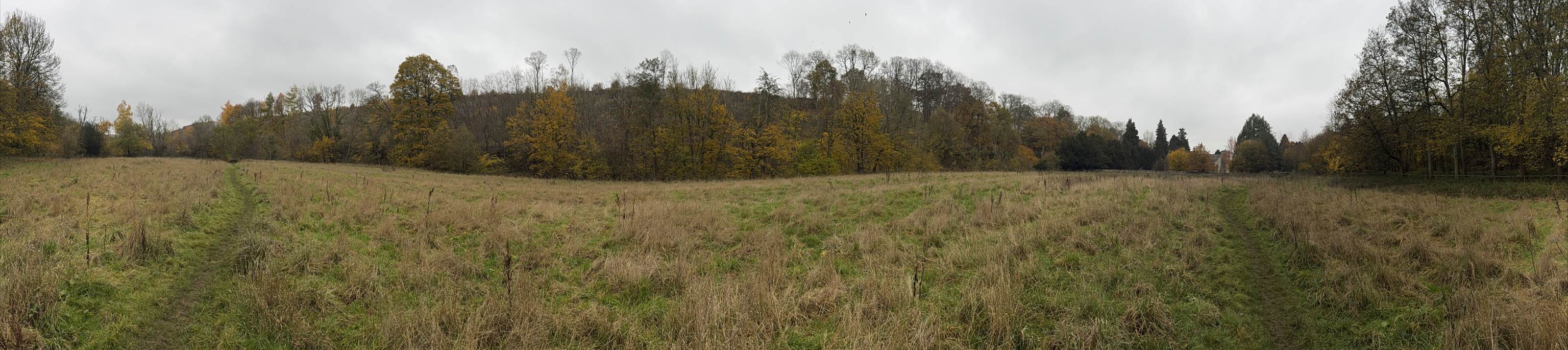
The
north field beside Kirkdale Minster, which shows clear evidence of ridge and
farrow patterns, evidencing medieval farming
1131
Walter Espec
encouraged the founding of the Cistercian abbey at Rievaulx
in 1131. These austere monks sought detachment from the world, in contrast to
the Benedictines and the Augustinians.
A
breakaway group from St Mary’s Abbey in York
established Fountains Abbey and Kirkham Priory.
Walter Espec
encouraged the founding of the Cistercian abbey at Rievaulx in 1131. These austere
monks sought detachment from the world, in contrast to the Benedictines and the
Augustinians. A breakaway group from St Mary’s Abbey in York established
Fountains Abbey and Kirkham Priory. The twelfth century boundaries of Rievaulx
suggest that Kirkdale was an island amidst abbey land. By this time
Kirkdale was clearly attached with Welburn, a section of the Kirkbymoorside
estate. Kirkdale was by then surrounded by abbey lands.
1145
Roger
de Mowbray granted the church to Newburgh Priory, who
held it until the dissolution.
The field to the immediate north of Kirkdale
Church retains prominent earthworks of ridge and furrow, which suggest that
this field was in arable use by the twelfth century, although we
have already noted its arable use long before that. (Archaeology at Kirkdale,
Supplement to the Ryedale Historian No 18 (1996 to 1997), Lorna Watts, Jane Grenville and Philip Rahtz, 2).
1150
There
was some association in the twelfth century with Rievaulx and the Cistercians.
A scheduled site at the farm still named Skiplam
Grange, situated above Hodge Beck not far north-west of St Gregory’s
Minster, preserves an earthworks, associated buried remains and some
above-ground remains of buildings from the grange maintained there by Rievaulx
Abbey up to the date of the Dissolution. Skiplam was part of the large grant of
land given to Rievaulx Abbey by Gundreda d'Aubigny between 1144 and 1154 and later confirmed by her
son Roger de Mowbray. This grant included some land
in cultivation along with previously unexploited land which the abbey was
allowed to assart, or improve and bring into
productive use, as they wished. By the time of Abbot Ailred (1147-1167) Skiplam
was operated as a grange.
1154
At about the
same time as the
Farndale grant in 1154, Roger granted the whole of the vil
of Welburn with six bovates of land (but excepting the Church of Kirkdale) to Rievaulx. This land had been in the
possession of the Augustinian priory of Newburgh.
A scheduled
site at the farm still named Skiplam Grange, situated above Hodge Beck not far
north-west of St Gregory’s Minster, preserves an earthworks, associated buried
remains and some above-ground remains of buildings from the grange maintained
there by Rievaulx Abbey up to
the date of the Dissolution. Skiplam was part of the large grant of land given
to Rievaulx Abbey by Gundreda d'Aubigny
between 1144 and 1154 and later confirmed by her son Roger de Mowbray. This
grant included some land in cultivation along with previously unexploited land
which the abbey was allowed to assart, or improve and
bring into productive use, as they wished. By the time of Abbot Ailred of
Rievaulx (1147-1167), Skiplam was operated as a grange.
1292
Under Pope
Nicholas’ taxation of 1292, Kirkdale was taxed at £23 6s 8d.
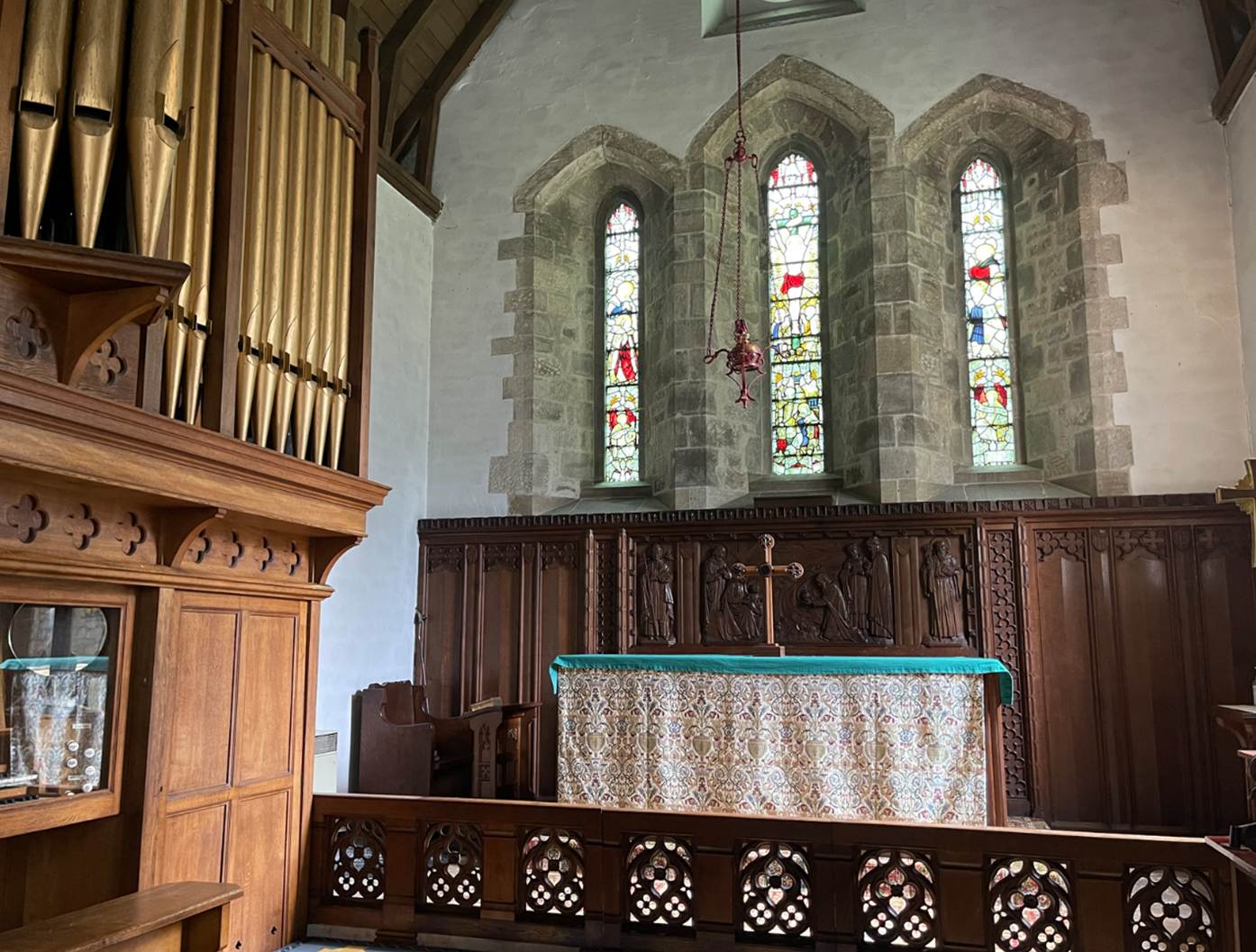
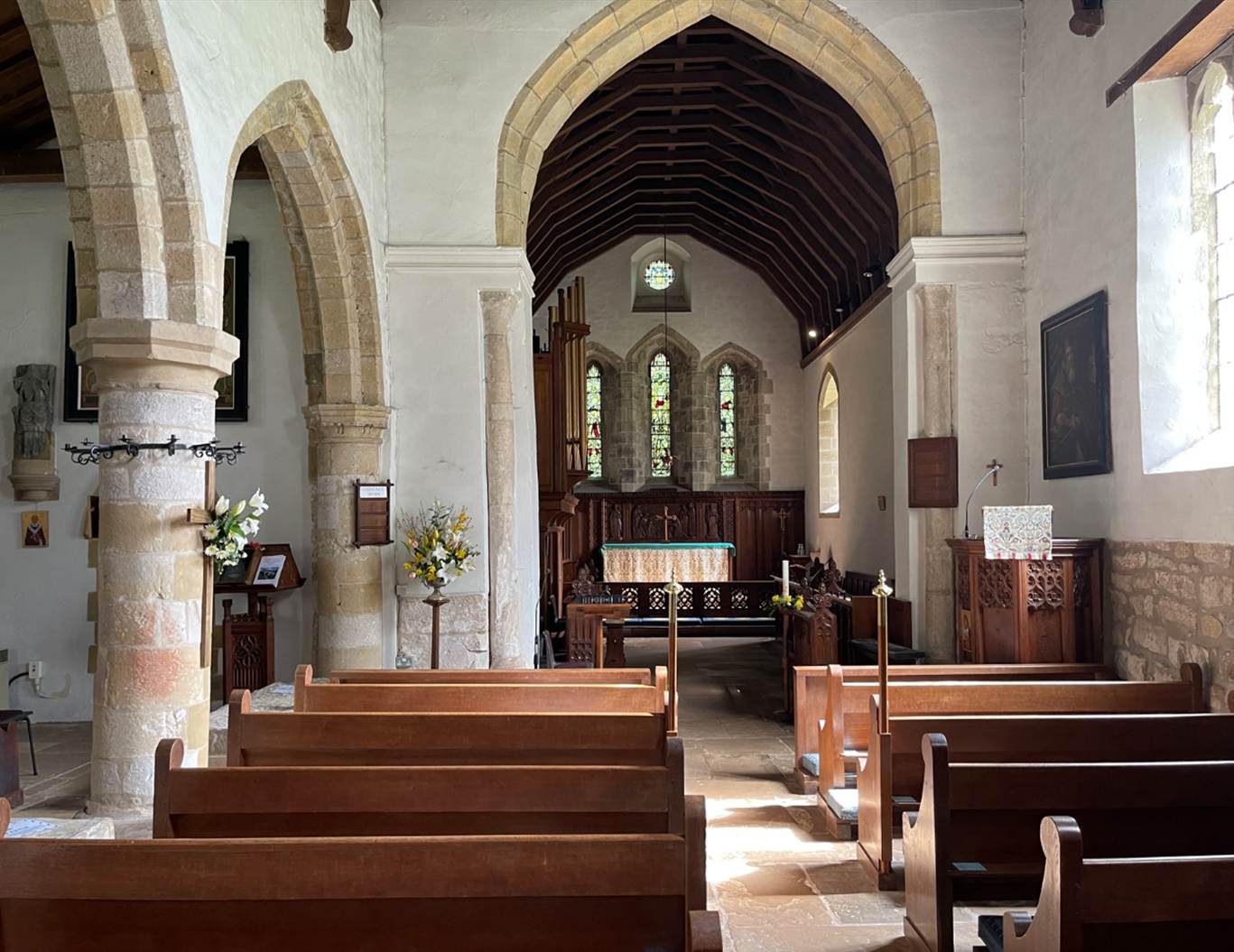
The
Cistercians obtained papal freedom from payment of tithes on land which they
cultivated themselves. The Cistercians tenaciously maintained their tithe
privileges.
1432
In 1432, the
prior and convent of Newburgh brought a case in the consistory court of York
against Robert Hewlott and Richard Page for non payment
of tithes of coppice wood, by virtue of their possession by that time of the
parish church of Welburn. The records of the case provide a description of the
parish church at Kirkdale at that time:
The
parish church of Welburn, otherwise known as Kirkdale, built and dedicated in
honour of St Gregory, of the said diocese, which has been canonically united,
annexed and appropriated to their said priory [Newburgh] to their own uses.
He
submits and intends to prove that for the whole periods stated above there was,
was accustomed to be, and is, in the said diocese of York, a certain parish
church with the cure of souls, universally and commonly known as Welburn or
Kirkdale. It has well known boundaries by which it is distinguished, divided
and separated from the other neighbouring parishes. It has a goodly number of
parishioners of both sexes, a baptismal font, cemetery, and other attributes of
a parish church.
He
submits and intends to prove that the right to take an enjoy tithes of whatever
kind, both personal and predial, and great and small, and especially tithes of
coppice wood issuing from whatsoever places within the parish of the said
church [of Welburn] otherwise
known as Kirkdale, and the boundaries, borders and places liable to tithe
located within the parish belonged and belongs under common law, by sufficient
legal right and praiseworthy custom, which has been observed peacefully and
inviolately, to the parish church of Welburn, otherwise known as Kirkdale, and
the said religious men, the prior and convent, and their monastery or priory in
the name of the said church.
On 23
January 1539, Newburgh was dispossessed of Kirkdale. This was no doubt part of
the Reformation redistribution.
(Monasteries and Parishes in Medieval Yorkshire, Janet
Burton FSA FR Hist S, Professor of History, University of Wales, 2010 Kirkdale
Lecture)
1539
On
23 January 1539, Newburgh was dispossessed of Kirkdale. This was probably part
of the Reformation redistribution.
1944
Sir Herbert Edward Read,
art historian, poet and critic was born at Kirkdale and wrote a poem in his
collection A World within a War:
|
Kirkdale I, Orm, the son
of Gamal Found these
fractured stones Starting out of
the fragrant thicket The river bed
was dry |
The rooftrees
naked and bleached, Nettles in the
nave and aisleways, On the altar an
owl’s cast And a feather
from a wild dove’s wing |
There was peace
in the valley; Far into the
eastern sea The foe had
gone, leaving death and ruin And a longing
for the priest’s solace |
Fast the
feather lay Like a sulky
jewel in my head Till I knew it
had fallen in a holy place Therefore I
raised these grey stones up again |
Now you can read about The Kirkdale Sundial.
The history of Kirkdale is told
across the following webpages.
· The Kirkdale
Anglo Saxon artefacts
· Anglo-Saxon Scandinavian Kirkdale
There are related webpages:
· Alcuin and the birth of modern
education