The Kirkdale Sundial
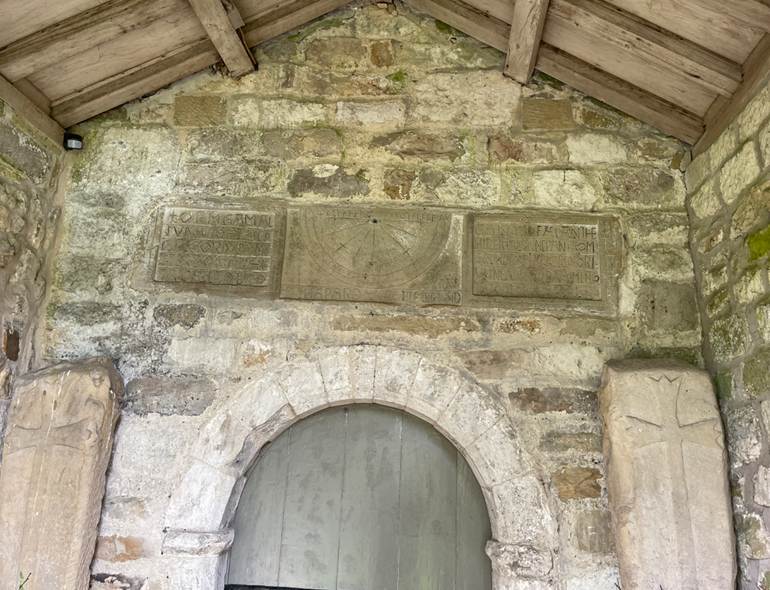
A unique treasure whose secrets
reveal an extraordinary insight into the world of the eleventh century upon
which you can stare today, imagining our ancestors who did the same a thousand
years ago
|
Return
to the Home Page of the Farndale Family Website |
The
story of one family’s journey through two thousand years of British History |
The
83 family lines into which the family is divided. Meet the whole family and
how the wider family is related |
Members
of the historical family ordered by date of birth |
Links
to other pages with historical research and related material |
The
story of the Bakers of Highfields, the Chapmans, and other related families |
Dates
are in red.
Hyperlinks
to other pages are in dark
blue.
Headlines
are in brown.
References
and citations are in turquoise.
Context
and local history are in purple.
The history
of Kirkdale is told across six webpages.
· The Kirkdale Anglo Saxon
artefacts
· Anglo-Saxon Scandinavian
Kirkdale
Visiting Kirkdale
About a mile
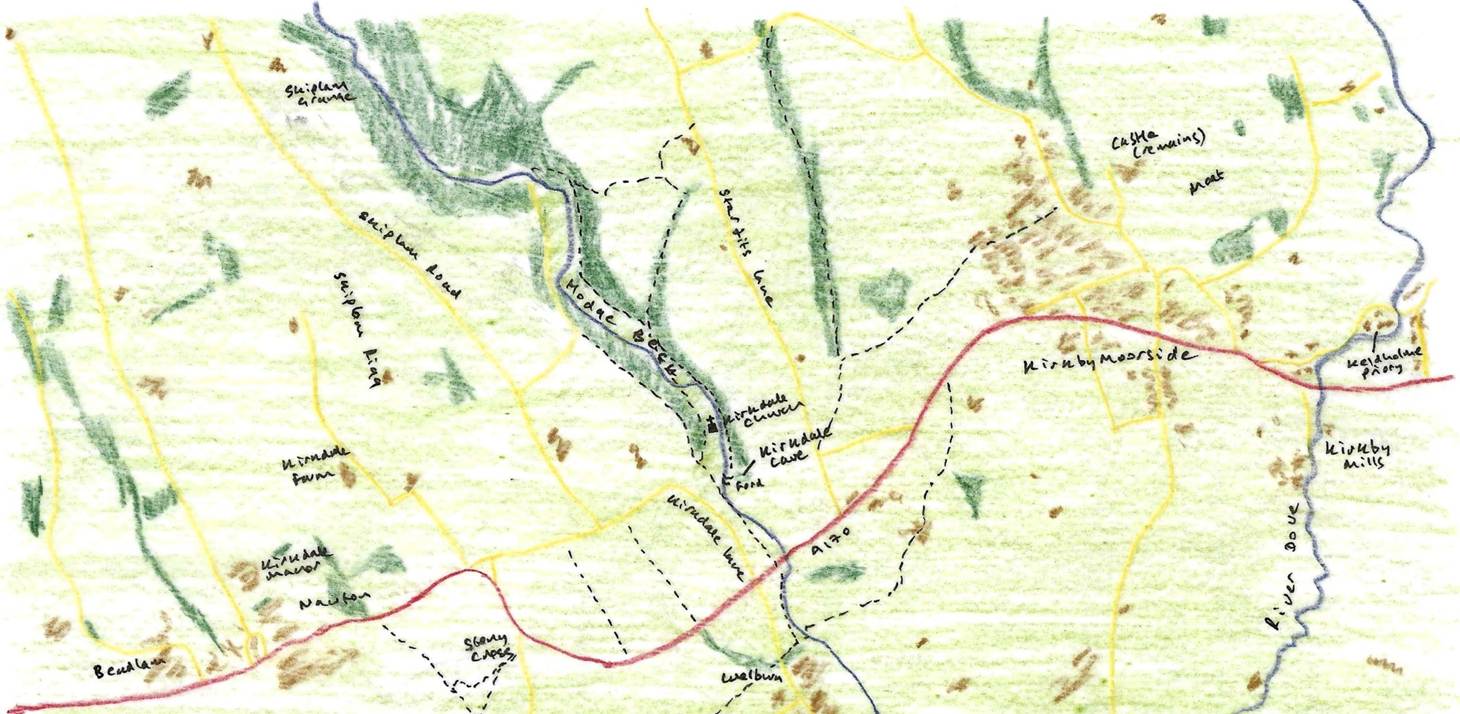
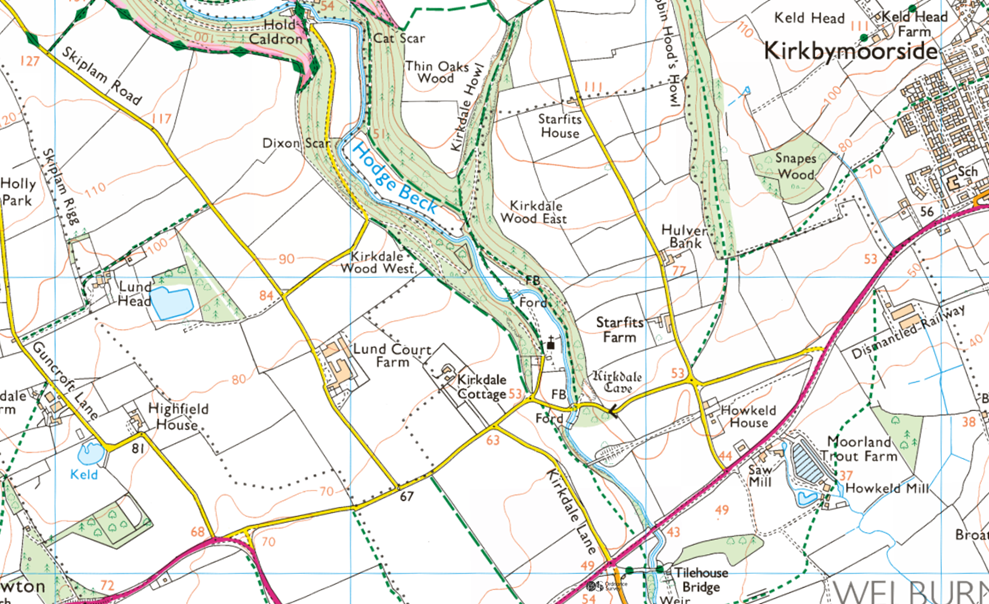
west of Kirkbymoorside, south of the North York Moors, there is a treasure of
the history of England, Yorkshire and of Ryedale. It is a portal to a distant era
of geological time in the heart of the family’s ancestral land. From the road
towards Helmsley on the A170 and then on towards Kirkbymoorside, there is a
turn northwards at the Welburn junction (SE 679850) on Kirkdale Lane. A right
turn at the crossroads leads to a large carpark beside the minster (SE 676857).
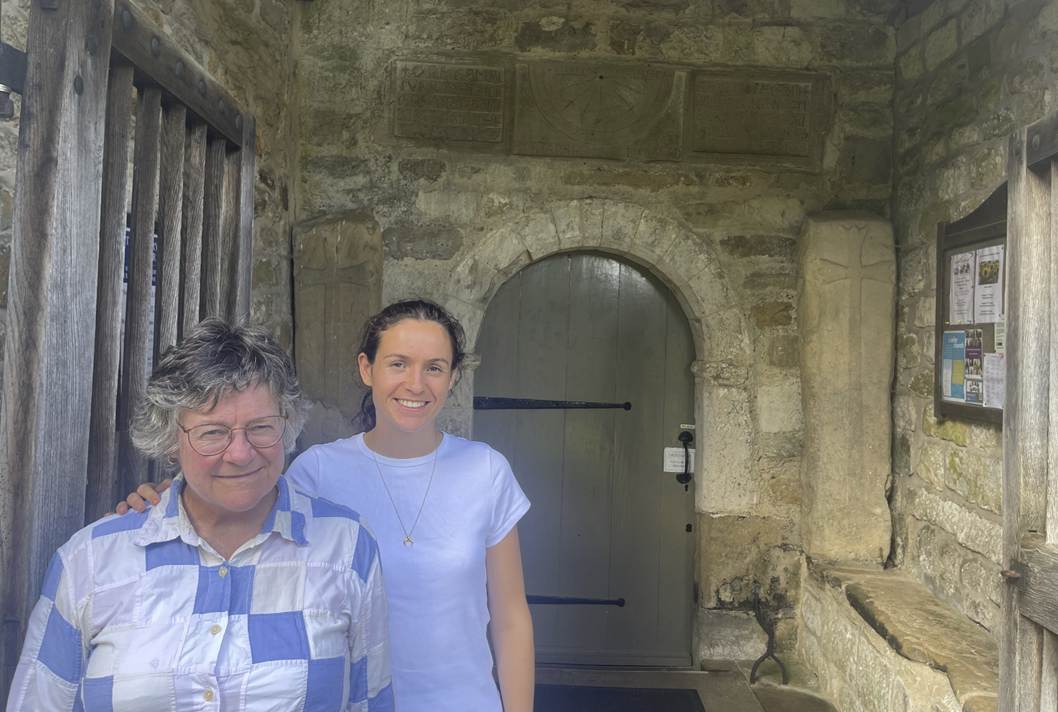
The approach
to the church passes through the metal gate, across a short path to the porch
at the west door which is now the main entrance to the church. Look up and you will
find a Yorkshire treasure, which will transport you back a thousand years to
the decade immediately before the Norman Conquest in 1066.
The Sundial
Above the
south doorway within the porch, is the remarkable sundial from the
Anglo-Saxon-Scandinavian period, which bears the inscription, Orm the son of
Gamal acquired St Gregory’s Minster when it was completely ruined and
collapsed, and he had it built anew from the ground to Christ and to St Gregory
in the days of King Edward and in the days of Earl Tostig.
The sundial
itself bears the inscription This is the day’s sun circle at each hour
and then The priest and Hawarth
me wrought and Brand.
As you look
at the sundial, you might glimpse, from the corner of your eye, the shadowy
figure of a direct ancestor who shares the genes we have inherited, also
looking at the same inscription. Give some thought to how that ghostly spirit might
have interpreted the sundial, and what significance might once have been drawn
from it.
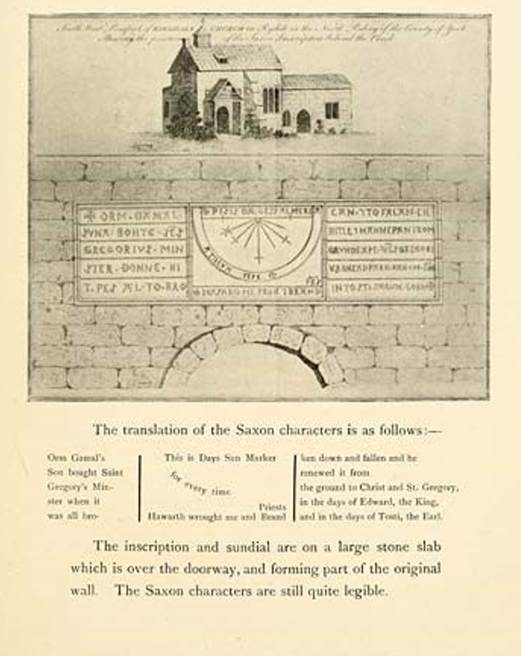
The
inscription refers to Edward the Confessor and to Tostig, the son of Earl
Godwin of Wessex and brother of Harold II, the last Anglo Saxon King of
England. Tostig was the Earl of Northumbria between 1055 and 1065. It was
therefore during that last relatively peaceful decade, immediately before the
Norman conquest, that Orm, son of Gamal rebuilt St Gregory’s Church.
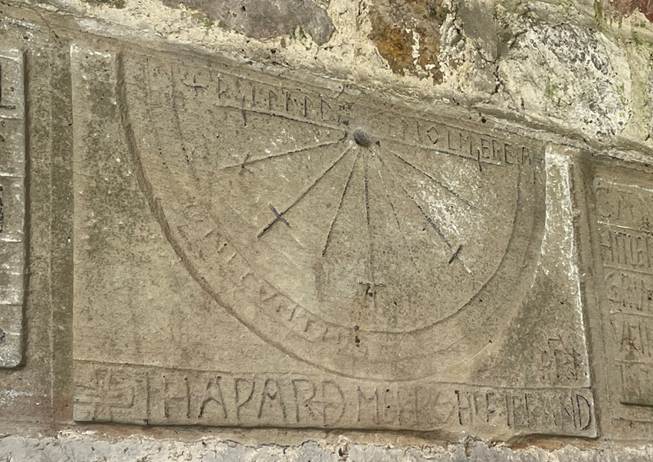
The sundial
consists of a stone slab nearly eight feet long (236 cm) by about twenty inches
wide (51 cm), divided into three panels. The central panel contains the dial,
and the Old English inscription above it may be translated as This is the
day's sun-marker at every hour.
The panels
to left and right contain the further inscription in Old English which
furnishes precious information about the early history of the church.
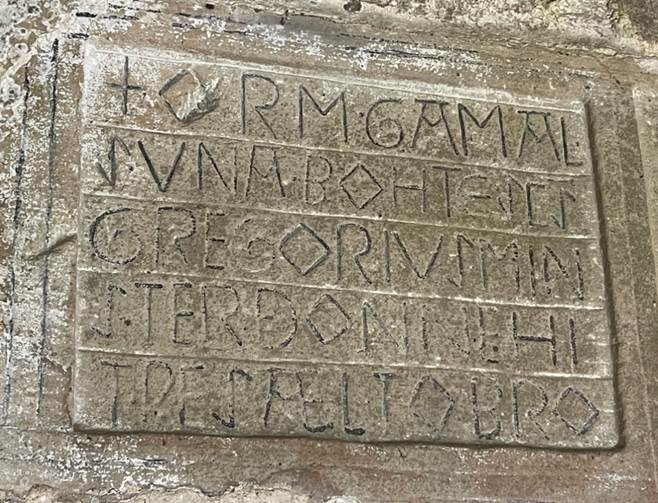
The
left-hand panel provides the first half of the main inscription: Orm the son
of Gamal acquired St. Gregory's Minster when it was completely ruined.
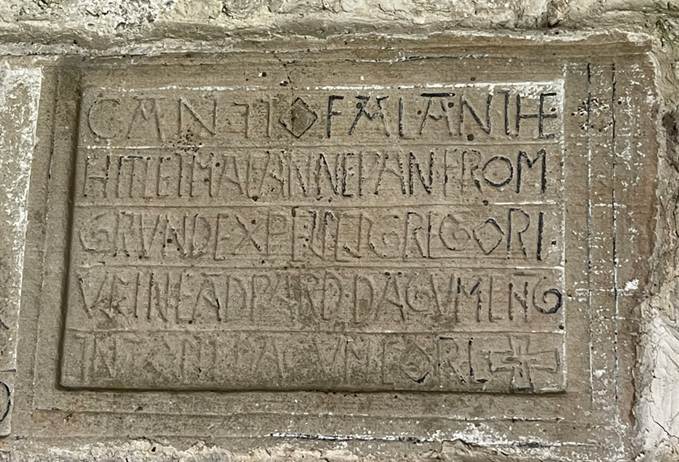
The
right-hand panel completes the information: and collapsed, and he had it
built anew from the ground to Christ and to St. Gregory, in the days of king
Edward and in the days of earl Tosti.
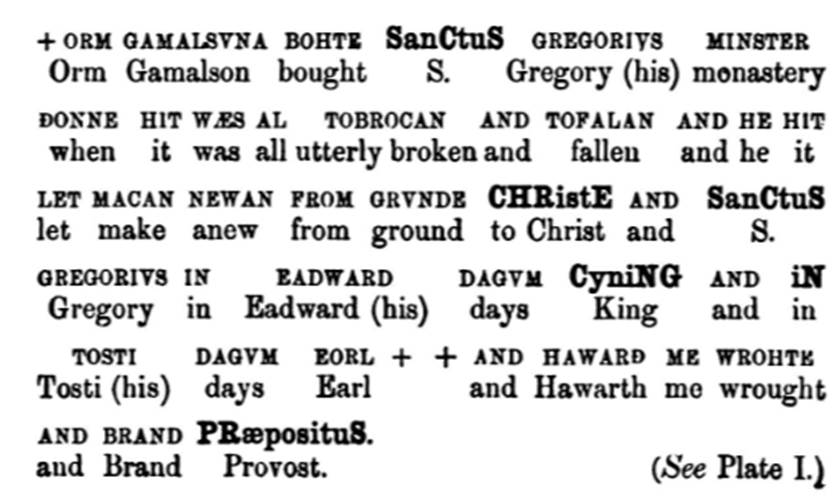
At the foot
of the central panel a further inscription reads: "Hawarth
made me: and Brand (was) the priest."
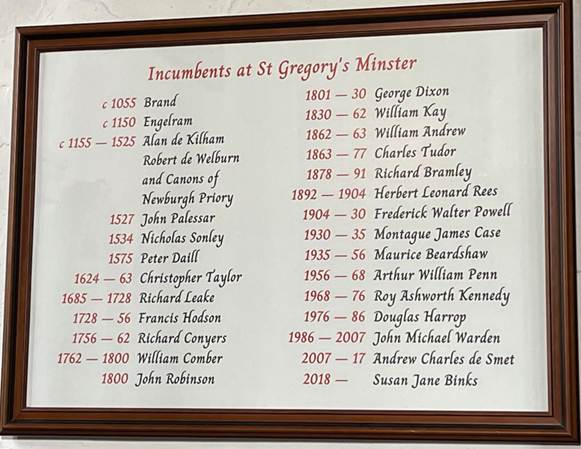
Short
though it is, this inscription provides us with a wealth of information. It enables
us to date the earliest phase of the existing fabric with some precision.
Tostig, the son of Earl Godwin of Wessex and the brother of Harold II the last
Anglo-Saxon king of England, was earl of Northumbria from 1055 to 1065. It was
therefore during that decade that Orm
the son of Gamal rebuilt St. Gregory's church. It is very rarely that we
can date the construction of an early medieval church so precisely.
The sundial was
preserved in a coat of plaster until it was discovered in 1771.
What
survives of Orm's church in the existing visible fabric appears to be the
south, west, and what remains of the east walls of the nave; the archway in the
west wall of the nave (now opening into the much later west tower) which
probably formed the original entrance to Orm's church; and the jambs,
angle-shafts, bases and capitals of the arch which leads from the nave into the
chancel. The latter archway is some four centuries later than Orm's church, but
it appears that the masons who were responsible for it re-used what they could
of an earlier chancel arch. It is therefore reasonable to infer that Orm's
church had a chancel, though not all Anglo-Saxon
parish churches did, though it was probably a great deal smaller than the
existing one.
Much
of the present nave in undoubtedly Orm’s building. The western entrance arch
and the responds of the chancel arch belong to that period. Old
masonry including grave slabs and crosses, was later used in the west
and south walls.
So the Scandinavian
named Orm rebuilt the minster – not Viking destruction, but Scandinavian
reconstruction.
Characteristically
Anglo-Saxon architectural features are (1) the size and manner of laying of the
qunins of the south-west and north-west outside
corners of the nave; (2) the height and narrowness of the western arch; and (3)
the simplicity of the bases and capitals of the angle-shafts of the western and
chancel arches.
It
is possible to discover a little bit about Orm from the slender documentation
which survives from the eleventh century. Both Orm and Gamel are Scandinavian
names. Orm Gamalson is an Old Norse name which roughly translates as Dragon
Oldson.
The sundial
was placed over the south doorway. There can be no certainty that the sundial
was built into the new church as it was constructed, but the general dating of
the fabric suggests this was so. It was probably built into the new church at the
time of the rebuilding in about 1055. At that time the main entrance to the
church was the west doorway so another possibility is that it was originally
housed there.
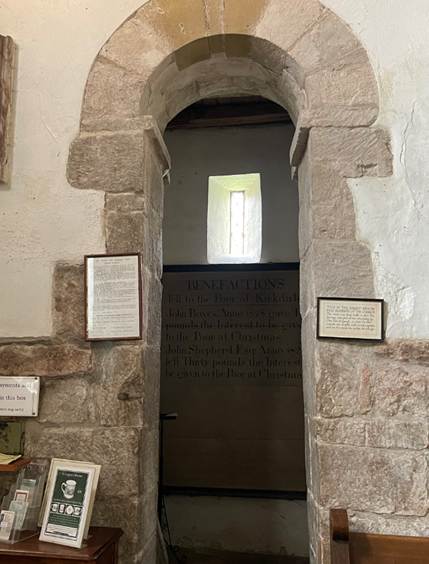
We cannot be sure that its present position is its
original position … The sundial could even have originally been separate from
the church structure itself; but there is a strong probability, given the
dedicatory nature of the associated inscription … that it always comprised a prominent
display on the face of Orm’s rebuilt church – on the south side of the
building, that is, in order the catch the sun. (S A J Bradley MA FSA, Professor
Emeritus, University of York).
It is not unlike the seventh century inscription of St
Paul’s Church, Jarrow, which reads In hoc singulari signo vita redditur mundo, “In this
singular symbol, life is restored to the world”.
The characters of the inscriptions are mostly in the Latin
alphabet. They are in Old English, apart from the conventional Latinate forms
of sanctus (which is abbreviated to SCS), Christus
(christe, abbreviated to XPE), and Gregorius. Otherwise the wording is of late Old English.
The inscription introduces us to a
number of individuals. Orm is Orm
Gamalson, but his name is not written in its Norse form of Ormr, but in anglicised form. Tosti is Earl Tostig
of Northumbria. Eardward refers to Edward the
Confessor. It is likely that Hawarth was the sculptor
who undertook the work. Brand was the priest, perhaps custodian of the science
of the computus which may have lain behind the
conception of the sundial.
It
is possible that Provost Brand, who was elected abbot of Peterborough in 1066,
and the maker of the Kirkdale sundial, were one and the same; so that a colony
from Peterborough were involved in the reconstruction of S. Gregory's minster.
(Yorkshire Archaeological Journal, Vol 5, page 151).
It happens
that there was a Provost Brand, who was elected abbot of Peterborough in 1066.
Perhaps the Kirkdale Priest moved south in the following decade, at the time of
the Conquest.
Kirkdale is
now recognised to have been at the forefront of contemporary English
architecture, with comparisons to St Mary’s
Deerhurst and even to Westminster
Abbey, the masterpiece of Edward the Confessor. There may have been
influence from Ealdred Archbishop of York from 1061 to 1069, who had also been
bishop of Worcester and who later crowned William the Conqueror at Westminster
on Christmas Day 1066. Orm Gamalson
held property in York, and may well have been subject
to Ealdred’s ideas. It might have been Ealdred who influenced Orm Gamalson to
commission the inscription. Ealdred was a diplomat, almost a ‘prince bishop’.
The stone
for the rebuilding was from local sources and reused material. If the stone
came from the quarry of North Grimston near Wharram Percy, 27km south east of Kirkdale, this might have been an asset of Orm
Gamal’s family.
Symbolism
had continued in its importance from the Anglo Saxon into the late Scandinavian
period. The sundial itself is a relic of sophisticated allusion, with symbolic
and liturgical meaning. It provides a continuity of experience to the period
when Ryedale was a part of the empire of Rome and Romanitas, the
treasuring of Roman concepts, was important.
The sundial
provides an extraordinary wealth of information conveying Scandinavian, Latin
and English associations. It links to an antique past, Roman, Anglo Saxon and
then Scandinavian.
It is the first
known reference to the dedication of the church to St Gregory, but the
inference is that the church was already dedicated to Gregory. The inscription
reaffirms the importance of Kirkdale’s connections
with Rome.
Earl Tostig,
referred to in the inscription, with Archbishop Ealdred of York, had been on a
pilgrimage to Rome in 1061.
The
inscription is the first surviving reference to the church being a minster, but
it is likely that the church was founded as a minster, though the meaning and connotations
of that definition was likely to have changed over time.
SAJ
Bradley sees some parallel with the seventh century dedication inscription of
St Paul’s Church, Jarrow, In hoc singulari signo vita redditur mundo, “In this
singular symbol, life if restored to the world”.
SAJ
Bradley observed that the characters of the inscriptions are mostly in the
Latin alphabet, they are non runic. They are in Old
English, apart from the conventional Latinate forms of sanctus
(in the abbreviation SCS), Christus (christe,
abbreviated to XPE), and Gregorius. Otherwise
the wording is of late Old English.
There
are several personal names within the inscription:
· Orm.
Orm, though a Scandinavian word, is stripped of its Norse form of Ormr, but appears in anglicised form. Orm is almost
certainly Orm of the Domesday book.
· Gamal.
· Tosti.
Earl Tostig of Northumbria.
· Eardward.
Edward the Confessor.
· Hawarth.
It has been speculated that Hawarth may have been the
sculptor who executed the work.
· Brand.
Brand was probably the priest, perhaps custodian of the science of the computes
lying behind the sundial.
Kirkdale
is now recognised to have been at the forefront of contemporary English
architecture, with comparisons even to Westminster and comparisons with Deerhurst. There may have
been influence from Ealdred
Archbishop of York from 1061 to 1069, who had also been bishop of Worcester
and who later crowned William the Conqueror at Westminster on Christmas Day
1066. Orm Gamalson held property in York, and may well
have been subject to Ealdred’s ideas. It might have been Ealdred who influenced
Orm Gamalson to commission the inscription. Ealdred was a diplomat, almost a
‘prince bishop’.
The
stone for the rebuilding was from local sources and reused material. If the stone
came from the quarry of North Grimston near Wharram Percy, 27km south east of Kirkdale, this might have been an asset of Orm
Gamal’s family.
There
was a continued importance of symbolism and the
sundial was replete with sophisticated allusions, with symbolic and liturgical
meaning, and resonances of Romanitas.
The
sundial provides an extraordinary wealth of information conveying Scandinavian,
Latin and English associations. It provides information about the past both
distant and more recent,.
· It
is the first known reference to the dedication of the church to St Gregory, but
the inference is that the church was already dedicated to Gregory. The
inscription reaffirms the importance of Kirkdale’s
connections with Rome.
· Earl
Tostig, referred to in the inscription, with Archbishop Ealdred of York, had
been on a pilgrimage to Rome in 1061.
· The
inscription is the first surviving reference to the church being a minster,
probably an age old title, but whose meaning and
connotations might have changed over time.
Where
the priest lived is unknown as no evidence has been found of a residence of
this date.
Some 38 Anglo-Saxon sundials have so
far been identified in England, the majority (24) in the north. Of these no less than 14 are
located in Yorkshire, and nine of them in Ryedale District alone. Of the important group of seven
Anglo-Saxon sundials with inscriptions nationwide, no less than four are located in Ryedale.
Before
we deal with each of the Saxon sundials in detail, it is necessary to
distinguish the different systems of time measurement which they represent.
Using this criterion we can identify six types of sundial,
of which four are found in Ryedale, a remarkable circumstance
in itself. All Saxon sundials can be allocated to one or other of these
six basic types, although some exhibit slight modifications.
The
customary Saxon method of reckoning was to divide our 24-hour ‘day’ into eight
equal periods called ‘tide’. The word is derived from the Saxon term for time
or hour. It has persisted in our archaic words ‘noon-tide’,
‘morning-tide’, ‘evening-tide’. It was not until long after the Norman Conquest
that it came to mean the periodic rise and fall of the sea. A typical sundial
would consist of a semi-circle marked out on the stone block with an incised or
raised outline, horizontal at the top. The gnomon would be a metal or wooden
peg projecting at right angles to the face of the sundial and fixed in a hole
in the centre of the semi-circle.
No
original gnomon now remains in situ. They have all perished through time, and
only the hole remains.
There
were at least six methods of time telling used by Anglo Saxon sundials of the
region.
In
its simplest and most basic form (Type 1) the Saxon sundial has three equally
spaced lines radiating from the centre which serve to mark out the four tides of
day, each of three hours. That is from 6.00 a.m. to 9.00 a.m.; 9.00 a.m. to 12
noon; 12.00 noon to 3.00 p.m.; and 3.00 p.m. to 6.00 p.m.
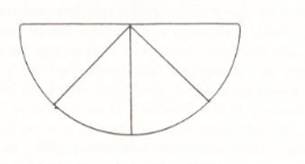
The
next step was to ‘interpolate’ secondary lines to mark the beginning and the
ending of the tides, half way between the major lines
(Type 2).
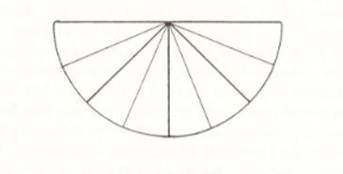
Taken
together, therefore, these nine lines mark out divisions of one-and-a-half
hours. Such composite dials can be seen at Kirkdale and Great Edstone in Ryedale.
The
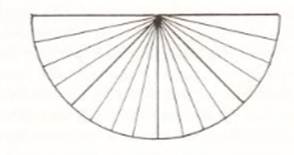
next logical step in an octaval system is to divide the half-tide into quartertides (Type 3). Two such semi-circular sundials with
16 divisions have been observed in the past at Sinnington and at Lockton.
In
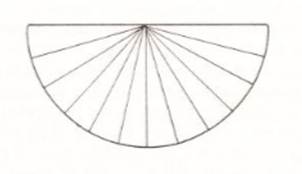
a duo-decimal system in which the ‘day’ (nominally from 6.00 a.m. to 6.00 p.m.)
is divided into 12 periods each of one hour, and the ‘night’ also (from 6.00
p.m. to 6.00 a.m.). However, the Saxons did practise, in parallel with the octaval
system, a duo-decimal system which no doubt they inherited from their
antecedents in the Roman empire, where it was the norm. (Type 4) Duo-decimal
sundials are found in Ryedale at Bulmer, and in a modified form, at
Kirkbymoorside and Weaverthorpe.
Other
methods included Octaval and Duodecimal combined and a decimal system.
All
known Saxon sundials, with the exception of the one at
Bewcastle, were fixed to the walls of churches which
were aligned east-west. This meant that the sundials correctly faced due south,
the shadow of the gnomon falling on the noon-mark in the middle when the sun
crossed the meridian. However, with the possible exception of
Kirkdale, none of our Saxon Ryedale sundials is now in its original position.
St
Gregory’s Minster is situated remote from any habitation in the valley of the
Hodge Beck, which is here known as Kirkdale, one-and-a-half miles south-west of
Kirkbymoorside. It has the distinction of housing what is acknowledged to be the
finest Saxon sundial remaining in Britain, still in situ immediately over the
south door of the church. It is also the largest of the important group of
sundials with accompanying inscriptions. Despite the passing of so many
centuries, both the sundial and its inscription are in a remarkable state of
preservation - clear and distinct. This is due in no small part to a coat of
plaster which protected them from the elements until their discovery in 1771,
and then by the erection of the present porch.
We
can date this sundial and the church building of which it is a part, from
evidence which the inscription itself provides. The Northumbrian Earl Tosti or
Tostig was banished by his brother Harold Godwinson, King of England, in 1064,
for the murder of Ulf, Grandson of Earl Siward, and one Cospatrick
and others. Eventually there were two Orms, one the father of Gamal, and the
other Gamal’s son who built the church. Since this was ‘in the days of Tosti the
Earl’, the date must be after he became Earl in 1056, and before he was
banished in 1064. The Domesday survey of 1086 recorded that Chirchebi
(Kirkbymoorside) had two churches, one of which was in the manor of Orm, a
considerable local landowner. If this refers to Kirkdale, as seems probable,
the other church, in the manor of Thorbrand, would be Kirkbymoorside parish
church.
The
stone minster was evidently the rebuilding of an earlier church which had fallen
into ruin when Orm bought it. There is evidence of a general rebuilding of
churches in the area immediately prior to the Conquest. According to the
inscription it was known in his day as St Gregory’s Minster.
The
fact that the sundial features so prominently on what amounts to the dedication
stone of the rebuilt church indicates the importance attached to sundials and
their function at this time.
The
five primary hour-lines extend almost to a double semi-circular border, except that
which carries the daegmael (in the form of a
saltire), which is also extended almost to the border.
The
St Gregory of the inscription was that Pope Gregory (590-604) who despatched St
Augustine on his celebrated mission to convert the English to the Roman
(Catholic) observance of Christianity in 597. If the sundial of 1064 is a copy
of an earlier dial it raises the possibility that the
wording of the dedication ‘to Christ and holy Gregory’ was also copied from a
dedication stone on an earlier building. That would reinforce other evidence
for a cult of St Gregory in the late 7th/8th centuries.
The
last sentence of the inscription occurs below the sundial: ‘and Hawarth me wrought and Brand PRS’. Although this is a
common Anglo-Saxon maker formula, it can be construed as referring either to
the sundial itself - that is it was ‘signed’ by its makers - or to the entire
minster.
Recent
literature on the Kirkdale inscription has read PRS for an abbreviation of the Old
English PR(EO)S(T), priest, or the Latin PR(E)S(BYTER).
Brand
is perpetuated in Brandsdale, the name of the valley
for some miles upstream of Kirkdale. The Hodge Beck was known as the River Bran
until comparatively modern times. The root of patronage
or presentation to a living, called dominium under the feudal system because it
originally belonged to the Lord of the Manor, could be bought and sold. The
Kirkdale sundial has been described as ‘a unique record of the purchase of the rights
over a church’ when it declares that Orm the son of Gamal ‘bought’ St Gregory’s
Minster. It has justly been described as the most remarkable and complete
pre-Conquest sundial to survive, ‘not least because its inscription names its
carver, the patron saint, the priest, the landholder, and the earl’.
(Anglo Saxon Sundials in
Ryedale, John Wall, Yorkshire
Archaeological Journal, Volume 69, 1997, page 93).
Other Sundials
Great
Edstone
Great
Edstone is three kilometres southeast of Kirkdale.
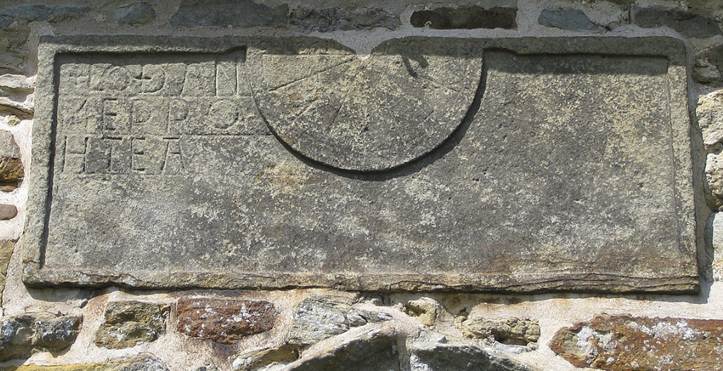
The church is thirteenth century, but has an eleventh
century sundial over the south door. It is weathered. The short inscription
reads Lod an me Rohte A … or Lodam wrought me a(nd) … The formula is similar to
Kirkdale’s Hawarth
me wrought. This suggests that they came from the same hand and originated
in the same workshop.

There
is an additional inscription above the sundial, which reads orlogium
viattorum, wayfarer’s day mark or wayfarer’s
clock.
Kirkbymoorside
The
sundial at Kirkbymoorside is not found in its original location but inside the
church built into the east splayed jamb of a window-opening in the south aisle.
No
doubt this sundial derives from a Saxon church on the same site, for which
there is additional evidence in the presence of an assembly of Anglo-Saxon
sculpture now housed in the Ryedale Folk Museum, Hutton-le-Hole.
(Anglo Saxon Sundials in Ryedale, John Wall, Yorkshire Archaeological Journal, Volume 69,
1997, page
113).
Old
Byland
Cistercians
settled at Old Byland, near Rievaulx in 1143 and later moved to Byland in 1177.
The
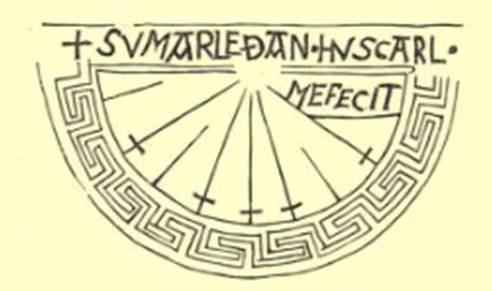
sundial at Old Byland church was commissioned by 'Sumarled
the housecarl', another Scandinavian name. The housecarls were the elite troops
who formed the backbone of Cnut’s armies. The inscription reads Sumarledan Huscal me fecit, Sumarled the housecarl
made me.
There
was certainly an early Norman church here, but the sundial cannot have belonged
to that. It is not now in its most probable original position over the south
door, but most inappropriately re-located upside down as a quoin, facing east,
in the south-east corner of the tower which was built onto the church in the
18th century. (Anglo Saxon
Sundials in Ryedale, John Wall,
Yorkshire Archaeological Journal, Volume 69, 1997, page
106).
The
outer circle is formed by a well-executed Greek pattern, the face of the stone
shewing five divisions, representing the day as divided into ten parts ; the inscription in Saxon characters runs across the
top, a width of eighteen inches, and is continued below for half a line on the right hand side. The Inscription was found most difficult to
decipher, owing to the breaking away of the stone in the centre where the
gnomon had been fixed, and also from the stone not
having been worked to a smooth face, but showing marks of the mason's chisel.
The
dial was discovered by the Rev. D. H. Haigh in 1846.
It
was later interpreted by Rev JT Fowler: SUMARLETHAN HUSCARL ME FECIT.
As
to the word " Huscarl," it appears under the Danish rule to have
designated the household bodyguard of kings and nobles, and
is used in this sense in one of the ancient manuscripts thus
: — " All the thegens in Eoforwicscire (Yorkshire) went to Eoforwic,
and there slew all the 'huscarls' of Earl Tostig." From all these
considerations the note assigned to this dial is about the ninth century.
(Ryedale and North Yorkshire antiquities, George Frank, 1888, page
114).
The
sundial has been dated to 1065, contemporary with the Kirkdale sundial.
Weaverthorpe
Weaverthorpe
is in the Yorkshire wolds, about 15 kilometres east of
Malton.
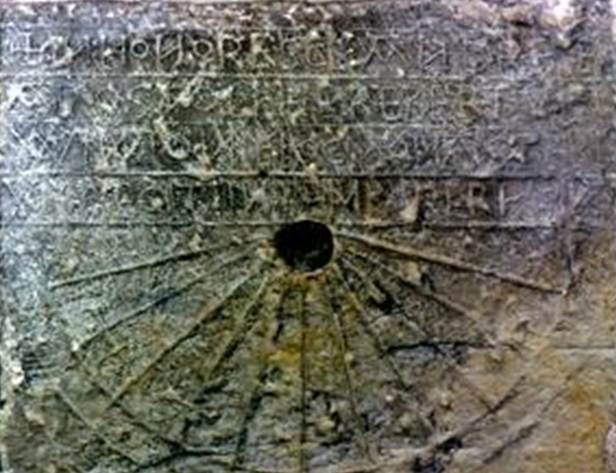
The
parish church of St Andrew, which overlooks the village from an isolated site
to the north, is largely Norman in style. However, there are two features which
indicate that it was built very early in the Norman period, during the
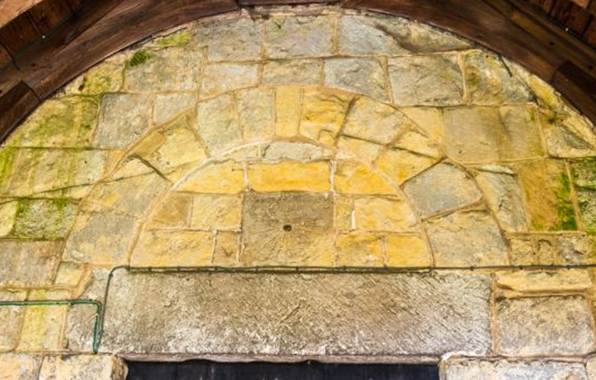
so-called Saxo-Norman overlap. One is the tall, narrow arch from the nave to
the tower. The other is the celebrated ‘Saxon’ sundial in the tympanum over the
south door.43 As at Kirkdale it has been sheltered from the elements by a later
porch. (Anglo Saxon Sundials
in Ryedale, John Wall, Yorkshire
Archaeological Journal, Volume 69, 1997, page
108).
Its
inscription reads In honore
Sclandrea apostoli herebertus
winntonie hoc monasteri um fecit in tempore re, translated as In
honour of St Andrew the Apostle, Herbert of Winchester made this monastery (or
church) in the time of King …
In
1108 the manor of Weaverthorpe, together with a large
amount of land in the district, was sold by the Archbishop of York, Thomas II
(1109 to 1119), to Herbert the Royal Chamberlain during the former’s visit to
the court of King Henry I (1100 to 1135) at Winchester. No doubt the church was
built soon after Herbert purchased the estate.
Bulmer
Bulmer
lies two miles south-west of Castle Howard and for long formed part of its
extensive estates. The parish church which serves the village and the mansion alike
is dedicated to St Martin. Much of the present fabric is Saxo-Norman overlap of
the 11th century, that is the nave with herringbone masonry, the tall narrow
blocked north doorway, two small south windows, and the lower part of the
chancel north wall. Of this date also is the head of a 12th century wheel
cross, and the sundial. The nave south wall presents a confusing picture of a
variety of window shapes and tracery, haphazardly arranged. There are no less
than three sundials, situated in relation to these windows.
(Anglo Saxon Sundials in
Ryedale, John Wall, Yorkshire
Archaeological Journal, Volume 69, 1997, page 113).
Wharram
le Street
Six
miles east of Malton, the church of St Mary once included a sundial which was
poorly described before it was lost.
Other
sundials
Other
sundials have been found at Sinnington, about 4 kilometres east of Kirkbymoorside,
and Lockton, about 5 kilometres northeast of Pickering.
It
is notable that so many different systems of time-measurement occur within
such a comparatively short period of architectural history and in such a
comparatively limited geographical area. It has been suggested that they
represent the different systems of time measurement practised in their
homelands by the diverse communities of Anglo-Saxons and Vikings who settled in
Ryedale, or at least the practises of their overlords. For example, the only
decimal sundial is also the most ‘Scandinavian’ in its inscription.
We
have seen that Saxon sundials always occur in association with churches: they
were a religious phenomenon. Both the octaval and duodecimal systems equally
served the liturgical practises of the time. After the Synod of Whitby in 664
the ‘Celtic’ observance gave way to the ‘Roman’ observance in Britain, and it is
no coincidence that this title expresses the powerful and determinative
influence which the practises of the Roman Empire exercised over the Early
Church. By the time of Constantine it was the
duodecimal system of time-measurement which had become the norm throughout the
Roman Empire. It was natural therefore that this system should ultimately be
adopted by the (Roman) Catholic Church wherever it took root, in preference to
the Saxon octaval system, however great its utility in earlier times. We are
fortunate that in Ryedale, because of the rich diversity of its Saxon sundials,
we can observe this crucial transition of time-measurement to the system which is universal today, actually
taking place.
(Anglo Saxon Sundials in Ryedale, John Wall, Yorkshire Archaeological Journal, Volume 69,
1997, page
116).
Time, the Computus and the sundial - A Short History of Time
The
Kirkdale sundial includes the inscription This is the day’s sun circle at
each hour (or tide).
S A J Bradley has observed that whilst sundials were
already old in England by the mid eleventh century, Orm Gamalson’s community
were not equipped to create sophisticated gadgetry for time telling. So the community at Kirkdale would have been as well off
using such things as the shadow of hill tops or other features of the landscape
as natural shadow clocks. He therefore suggests it is highly likely that
Kirkdale would have used natural; features for time telling and its steep sided
valley would have offered good opportunities for such methods. This is
consistent with such records as the Prologue to Chaucer’s Canterbury Tales,
in which the narrator was able to calculate that it was foure
of the clokke by a calculation based on his own
shadow.
Bradley
surmises that religious symbolism might be an alternative explanation for the
sundial.
· The
faithful dead were buried on the south side of the churchyard, so the exterior
of the south wall was a logical site for such symbolism.
· The
adoption of an octaval division for the sundial matches the division of the 24 hour day into eight sections in the New Testament, with
daylight divided into four period each corresponding to three hours starting at
6am.
· The
sundial might have been intended as a symbolic reminder of temporal progression
or pilgrimage. Time was perceived as the linear temporal space within which the
world moved towards its final judgement and dissolution.
· By
the fourth century CE, the Christian fathers had moved away from eschatology
(focused on the ending of the world and the last things) towards a focus on
history, and God’s plans for how life on earth was lived.
· Orm’s
octaval sundial might have been a reminder to those who passed to keep watch of
the day and night against Christ’s Second Coming, but also as an incentive to
live life as a pilgrimage through time.
· There
were ideas that people were in temporary exile from the heavenly homeland
through this world so there was a place for a symbolic reminder to every
pilgrim in spirit. This was a subject that later ran through English
literature, such as John Bunyan’s Pilgrim’s Progress. The Seafarer
written in about 1000 CE described the seafarer who, despites the dangers, was irresistibly
drawn to journey onwards over the oceans.
The
Kirkdale sundial might have originally been painted in strong colours. It might
have been intended for those who set eyes upon it, to think upon Time.
Consciousness of time was growing through awareness of history. Bede was the
national historian of the English people and in Alfred of Wessex, the English
people understood the need for civilised people to keep historical records. After
the Conquest in 1074, the Benedictine missionary Aldwin came to Jarrow,
inspired by Bede to see whether the centres of monastic life were still
thriving as recorders of history. Perhaps on his journey from York he might have come across Kirkdale. If so, Kirkdale
would have reassured Aldwin that there was already a revitalisation of ancient
religious sites.
There
was a striking investment of wealth at this time into church buildings, often from
secular patrons, which characterises the revised English church of the late
tenth and eleventh centuries. It is all the more
striking that in this period when losses of the period of Scandinavian
domination were being made good, Kirkdale was rebuilt by so Scandinavian
sounding a patron. It seems likely that these men were inspired by an awareness
of history.
It
is also of note that this was an uneasy generation of the period just after the
end of the first millennium. In 1014, Wulfstan, Archbishop of York, had
published his sermon addressed to the English nation. He anticipated the coming
of the Antichrist and found moral decline in the nation. There was always some
uncertainty about the exact span of the thousand years. There was uncertainty
of the precise date, but not of the fact of a Second Coming. So
it is possible that Orm’s sundial was recording the passing of the last of
days. It is uncertain whether it was a symbol of foreboding, or whether it was
a more optimistic symbol.
Orm’s
sundial was also likely to have reflected a central and arcane ‘science’,
focused on the searching for a knowledge of the Creator and his universe, and
his purposes, through the interpretation of the calendar, through the
calculations of the computus.
· In
325 CE the Council of Nicaea ruled that Christians should hold Easter on the
same day, always a Sunday, and referenced to the Jewish means to determine the
date of the Passover.
· The
computational method involved complex cycles of years and never worked
satisfactorily.
· Bede’s
De temporum ratione was a resource to help
calculate the dates of Easter up to the millennium and beyond.
· There
was a renewal of computes learning in the late tenth and early eleventh
centuries.
· Aelfric’s
De temporibus anni was largely based on Bede’s
earlier work.
· It
had become possible for a reasonably educated cleric to make his own calculations.
There was likely to have been a network of ecclesiastical connections, leading
to the restored library at York.
· There
was also an idea that the sun in its daily course was appointed to declare
mystical truths of God’s creation. The sun and moon were understood to mirror
God’s purposes and the destiny of humankind.
In
this context a sundial on the south wall of the church might have aspired to
turn light into knowledge, as it charted a shadow of this great continuum. Orm’s
ornate sundial might have been intended to offer a glimpse into the divine
order of things.
It therefore
seems more likely, particularly given its position over the doorway into the
minster, that the real purpose of the sundial was not practical and secular, but
religious and profound. Indeed the practice was to
bury the dead who had been faithful on the south side of the church, so the
exterior of the south wall was a logical place for such symbolism.
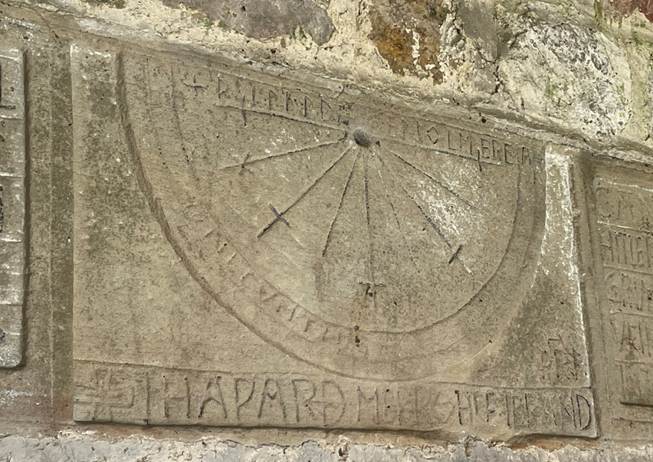
The sundial
has eight divisions. This matches the division of the 24 hour
day into eight sections in the New Testament, with daylight divided into four
periods each corresponding to three hours starting at 6am.
It has
therefore been proposed that the sundial was intended to be a symbolic reminder
of temporal progression or pilgrimage. Time was perceived as the linear
temporal space within which the world moved towards its final judgement and
dissolution.
By the
fourth century CE, Christian theology had focused on God’s plans for how life
on earth was lived. This brought with it a conception of history and the
passage of time.
Orm’s
octaval sundial might have been a reminder to those who passed underneath it,
to keep watch of the day and night against Christ’s Second Coming. It might also
have been an incentive to live life as a pilgrimage through time.
The
contemporaneous belief was that people were in temporary exile in the world
from a heavenly home. A symbolic reminder to follow a life of pilgrimage
therefore had a place. This was a subject that later ran through English
literature, such as John Bunyan’s Pilgrim’s Progress. The Seafarer
written in about 1000 CE described the seafarer who, despites the dangers, was
irresistibly drawn to journey onwards over the oceans.
The Kirkdale
sundial might have originally been painted in vibrant colours. It might have
been intended for those who set eyes upon it, to think upon Time. Consciousness
of time was growing through awareness of history. Bede was the national
historian of the English people and Alfred of Wessex had instilled in the
English people an understanding of the need for civilised people to keep
historical records.
The
rebuilding of Kirkdale represents a striking investment of wealth by Orm, which
reflects a revision of the English church of the late tenth and eleventh
centuries. It seems likely that the Scandinavian named Orm Gamalson was
inspired by an awareness of history.
This was an
uneasy generation of the period just after the end of the first millennium. In
1014, Wulfstan, Archbishop of York, had published his sermon addressed to the
English nation. He anticipated the coming of the Antichrist and found moral
decline in the nation. There was always some uncertainty about the exact span of
the thousand years. What was in doubt was the precise date, but not of the fact
of a Second Coming. So it is possible that Orm’s
sundial created not so long after the turn of the millennium, was recording the
passing of the last of days. If that is so, it is difficult to tell whether it
was created with a sense of foreboding, or whether it was a more optimistic
symbol.
There was
also an idea that the sun in its daily course was appointed to declare mystical
truths of God’s creation. The sun and moon were understood to mirror God’s
purposes and the destiny of humankind. Perhaps the sundial on the south wall of
the church might have aspired its onlookers to gain some knowledge from the
passage of light as it charted the shadow of a perceived continuum. Orm’s
ornate sundial might have been intended to offer a glimpse into the divine
order of things.
Orm’s
sundial was also likely to have reflected the main thrust of ‘scientific’ consideration,
focused on the searching for a knowledge of the Creator and his universe, and
his purposes, through the interpretation of the calendar. This comprised the
calculations of the computes, which had caused such division within the church
until a resolution was reached at the Synod of Whitby in 664 CE.
In 325 CE
the Council of Nicaea ruled that Christians should hold Easter on the same day,
always a Sunday. Its calculation was linked to the Jewish method to determine
the date of the Passover. The computational method involved complex cycles of
years. It never worked well. Bede’s De
temporum ratione was an attempt to help
calculate the dates of Easter up to the millennium and beyond.
There was a
renewal of computus learning in the late tenth
and early eleventh centuries. Aelfric’s
De temporibus anni was a development of
Bede’s earlier work.
With
guidance from texts such as Bede’s and Aelfric’s, it had become possible for a
reasonably educated cleric to make his own calculations. There was likely to
have been a network of ecclesiastical connections, leading to the restored
library at York. Kirkdale’s
likely associations with York would probably have given access to Kirkdale’s priest, Brand, to these works.
So Brand
may have been a priest who, with Orm’s patronage, was able to articulate
complex ideas of the passage of time, reinforcing the correct calculation of
time through computus science, with a
primarily theological symbolism, inspiring our ancestors to use their time
wisely and piously, particularly against the perceived threat of an ending of
time.
After the Conquest
in 1074, when Orm had lost his lands, but not so long after the rebuilding of
Kirkdale, the Monastery of St Paul at Jarrow was re-established in the 1070s by
Aldwin, the Benedictine prior of Winchcombe in Gloucestershire, inspired by
reading Bede’s Ecclesiastical History to visit the holy places of
Northumbria. He had been inspired to see whether the Bedean centres of monastic
life were still thriving as recorders of history. Perhaps on his journey from York he might have found Kirkdale. If so,
Kirkdale might have reassured Aldwin of a local understanding of theological
direction.
So when you
look at the sundial today, it is worth reflecting on what it might have meant
to a person who might be a direct but distant relative. If he or she was
contemplating time, the sundial might now be a portal across a thousand years,
to provide some linkage to our ancestral past.
Deciphering Britain's most
important Sundial for 1066's untold story, St Gregory's Minster, Kirkdale, Church Searcher
The history of Kirkdale is told across the following
webpages.
· The Kirkdale
Anglo Saxon artefacts
· Anglo-Saxon Scandinavian Kirkdale
There are related webpages:
· Alcuin and the birth of modern
education