A
guide to the history of Tidkinhow
|
Return to the Home
Page of the Farndale Family Website |
The story of one
family’s journey through two thousand years of British History |
The 83 family lines
into which the family is divided. Meet the whole family and how the wider
family is related |
Members of the
historical family ordered by date of birth |
Links to other pages
with historical research and related material |
The story of the
Bakers of Highfields, the Chapmans, and other related families |
Introduction
Dates are in red.
Hyperlinks to other pages are in dark blue.
Headlines of the history of Three Hills are in brown.
References and citations are in turquoise.
Contextual history is in purple.
The Farndales of Tidkinhow
First, please
visit the Farndales of
Tidkinhow page.
Then please go to
the Tidkinhow Line and then to
the page of Martin Farndale (FAR00364).
The History of Tidkinhow
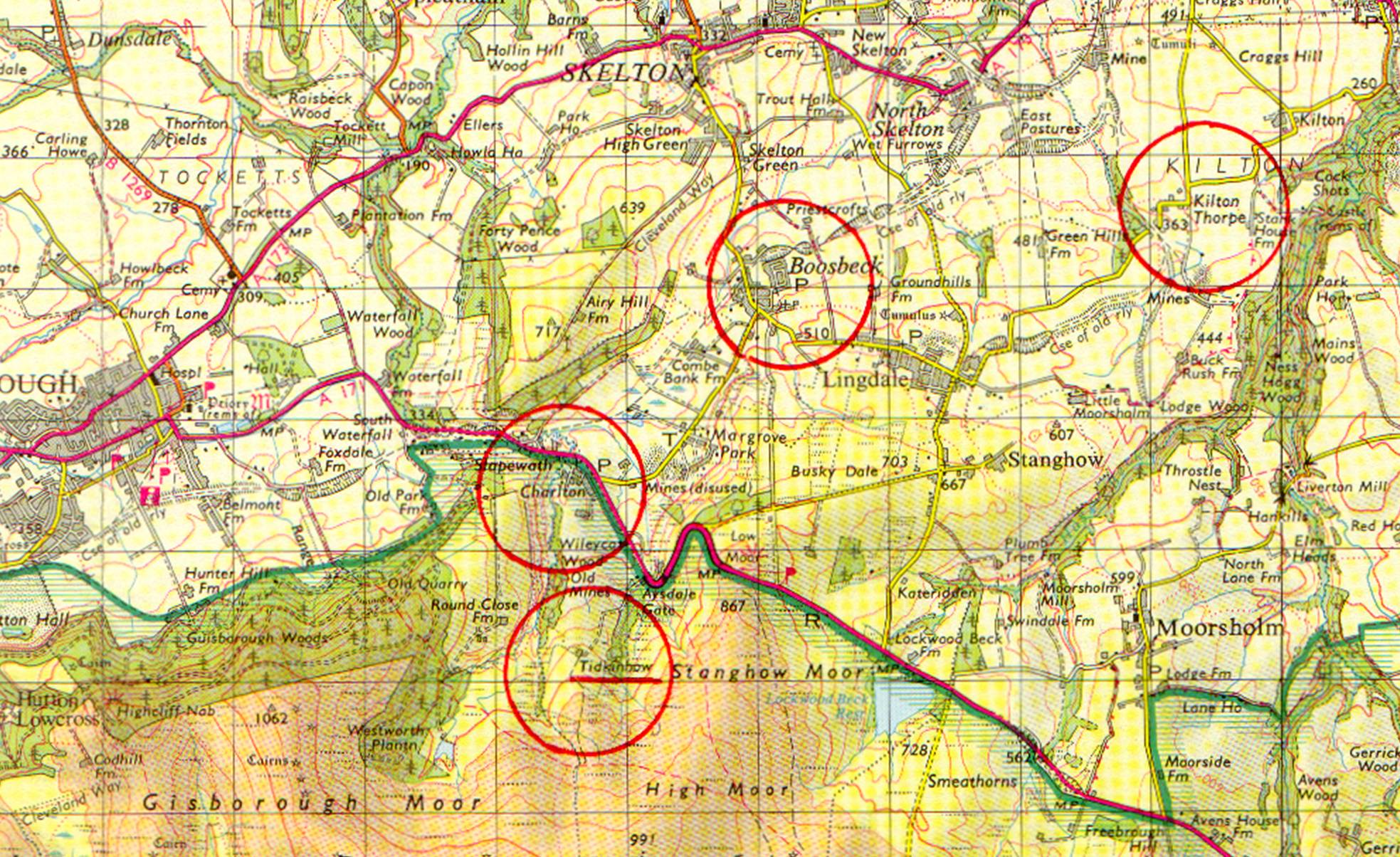
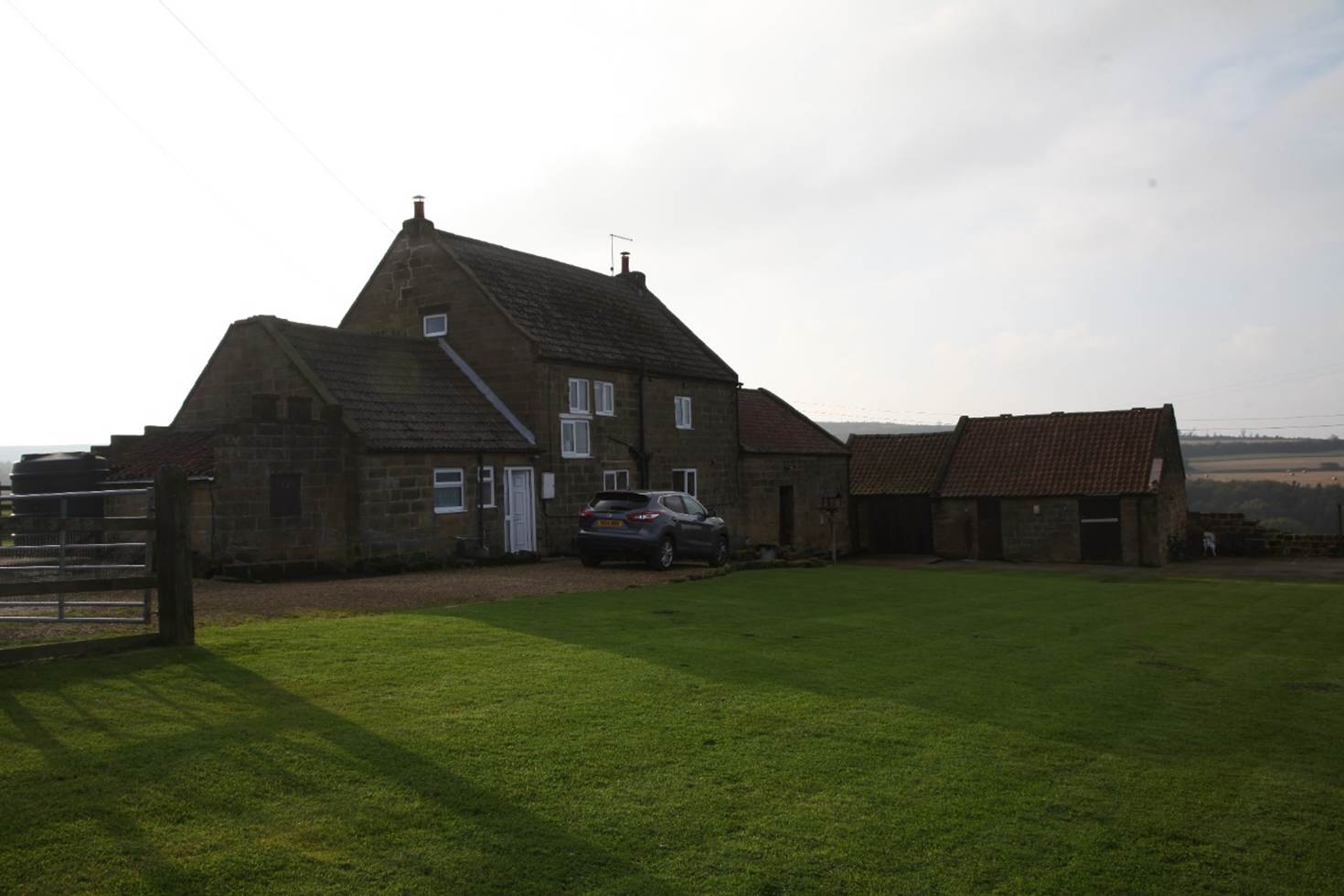
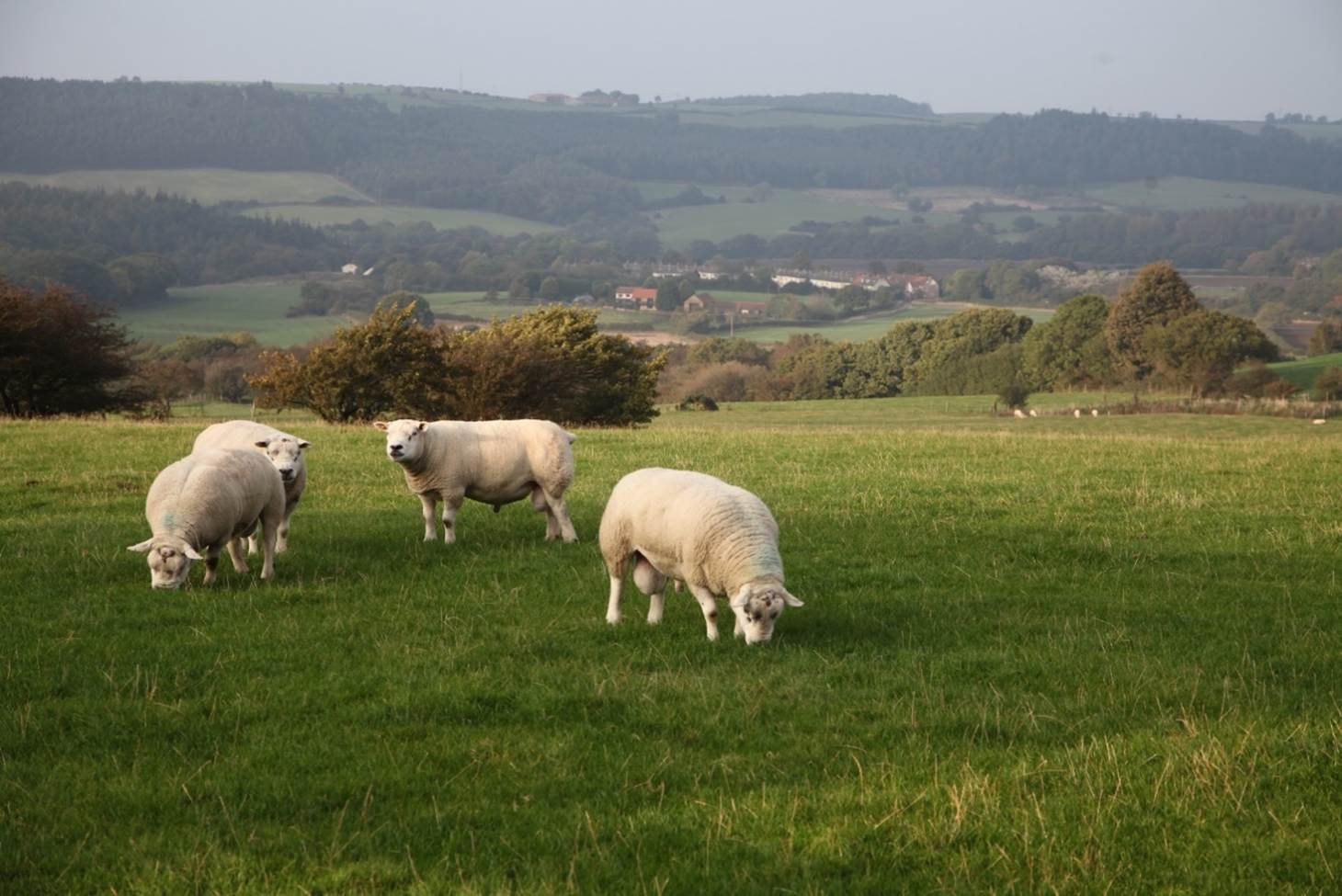
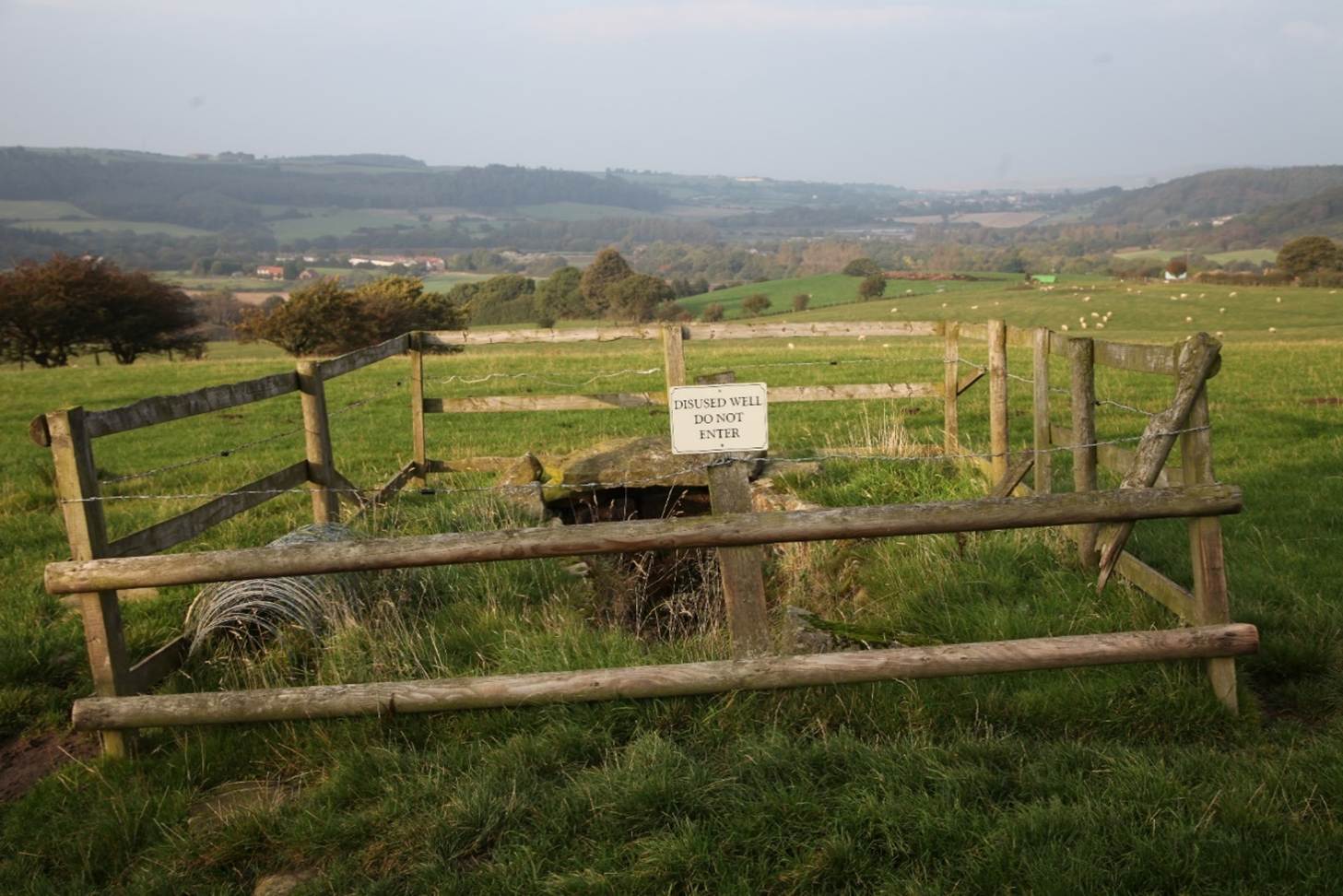
Tidkinhow Farm is located 4 miles southeast of
Guisborough in the County of Cleveland. It consists of grassland and large
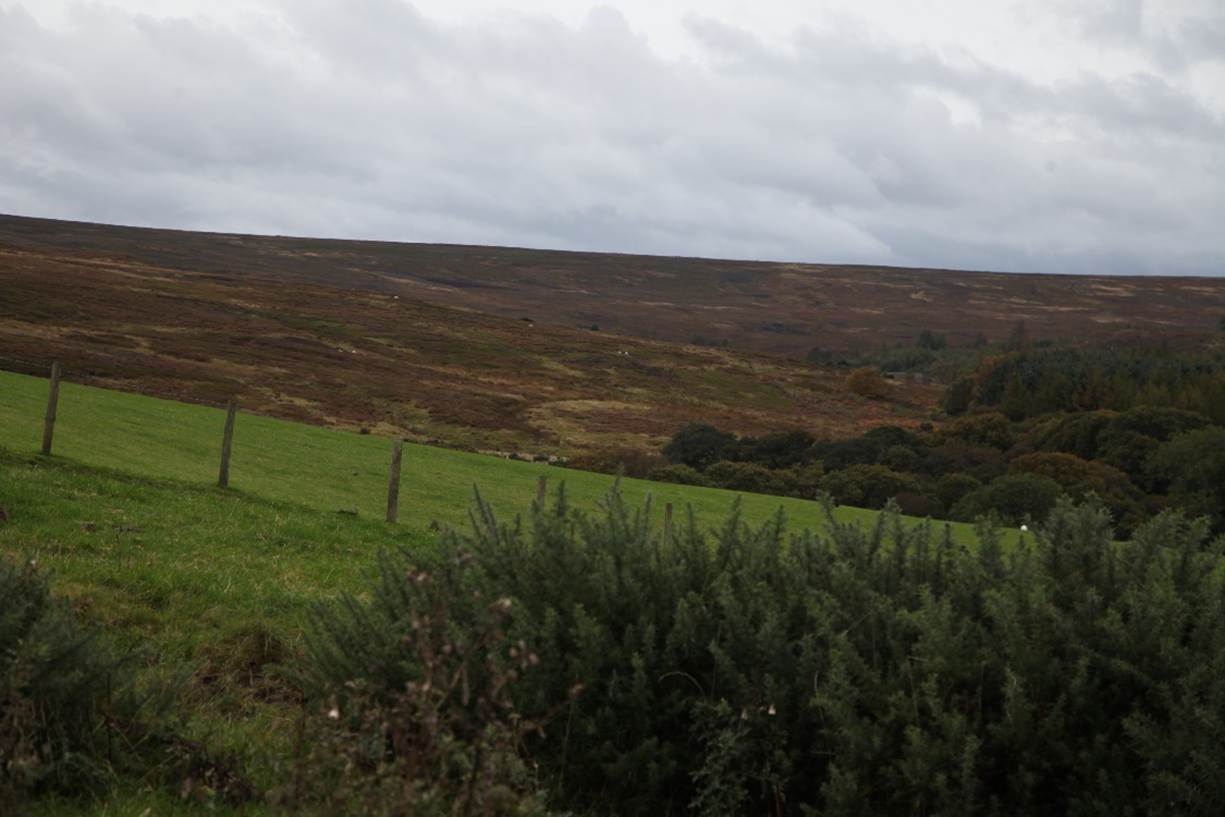
tracts of Guisborough moor.
The name Tidkinhow is probably derived from an old
Saxon word describing ownership of the hill upon which the house now stands. How
meant hill or mound and it probably belonged to a man called Tydi and his kin. So it meant, literally, "Tydi's How".
Prehistoric
There are
prehistoric remains on the moors edge at Tidkinhow. There is a stone alignment
of probable Bronze Age date at Grid NZ645127, incorporated in a cross ridge
dyke of Bronze Age or Iron Age date. The monument extends from Tidkinhow Slack
on the north side of the ridge to North Ings on the south. From the north the
first 275m is only visible as a slight outer scarp on the west with a ditch
almost completely infilled. The next 410m section is the best preserved with a
bank 5m wide and 1.2m high and a line of standing stones on its east side and a
ditch 3m wide and 1m deep on its west side. The stones are about 1m high, 0.5m
long and 0.3m thick. For the last 85m the rampart and ditch have completely
disappeared with only a few standing stones marking its course. Most of the
elements were mapped from air photographs as part of the North York Moors NMP,
and are extant on the latest 2009 vertical photography. The middle and southern
sections to North Ing Slack are scheduled.
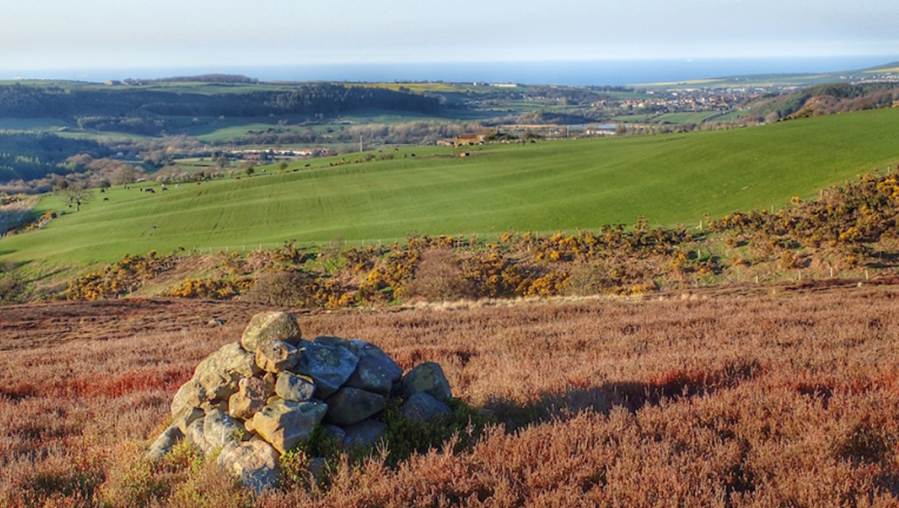
Tidkinhow
Stack
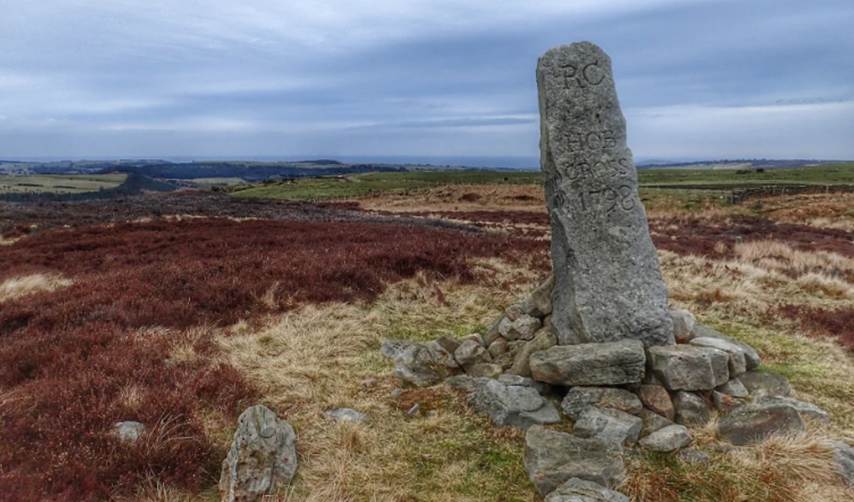
Hob Cross at Tidkinhow Head
28 May 1422
‘At Westminster. Order given to William Nevyll
and Joan his wife, seisin of the castles, manors, lands, saltworks, knights
fees etc, herein after mentioned….(long list of places)….and a
close called Tydkinhowe.’ (Patent Rolls). See FAR00055.
Historical monuments
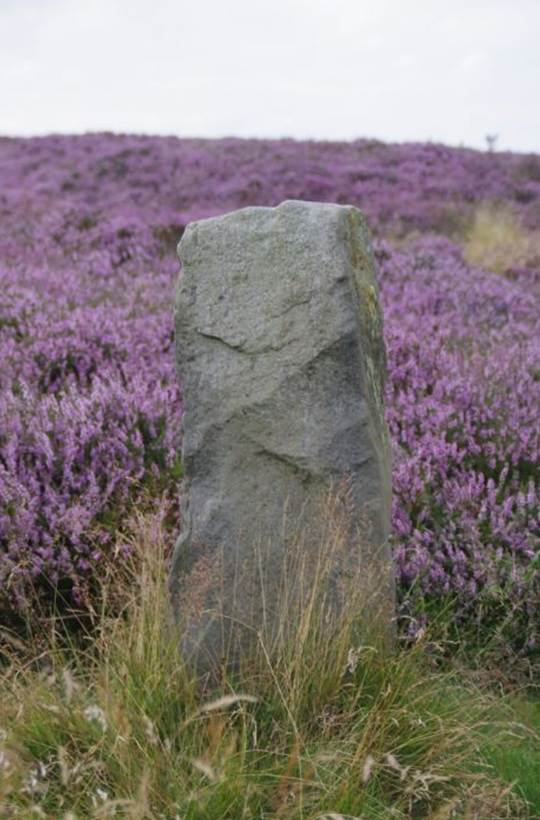
There is a boundary stone at NZ646133, which is
listed.
The Times, 3 September 1836: To be
peremptory sold, pursuant to the orders of the High Court of Chancery, made in
a cause Harker v Brigham, with the approbation of William Braham Esquire, one
of the masters of the said court, at the Buck Inn, Guisborough, in the county
of York, on Tuesday the 27th day of September 1836, at 3 o’clock in the
afternoon, in one lot, a FREEHOLD ESTATE consisting of two
farmhouses, and requisite outbuildings, and 272 acres 2r 3p of arable pasture,
meadow, and woodland, called Aysdale Gate and
Tidkinhow, situate in the parish of Skelton, in Cleveland, in
the county of York, late the estate of John Harker deceased. Printed
particulars may be had at the said masters chambers, in Northampton buildings;
of Messrs Perkins and Frampton, Greys Inn square; Messrs Bell, Broderick, and
Bell, Bow church yards, London; Of John Page Sowerby, solicitor, Stokesley, at
whose office a plan may be seen; Messrs Garbett, Blackett and Fawcett,
solicitors, Stokesley and Yarn; And Messrs Thomas Simpson and sons, land
agents, Nunthorpe, at whose office is also a plan may be seen; and at the place
of sale.
This had clearly followed a court case regarding a
disputed will. There aree papers relating to the case
Harker v Brigham in which the plaintiffs were: Thomas Harker, Mary Harker,
Rebecca Salome Harker, Benjamin Willis Harker and Ellen Elizabeth Harker,
infants by said Thomas Harker their father and guardian and the defendants: George
Brigham and Robert Brigham. The dispute related to the estates of William
Powell, testator in Didderhow [Didderhowe],
Stokesley, Yorkshire, Middleton St George, Durham and estate of John Harker,
testator in Tidkinhow [Tidkinhow Farm], Aysdale Gate,
Yorkshire. There is a list of tenants and rents, receipts and disbursements.
The Receiver was Thomas Simpson. The Chancery Master was William Brougham. The
full record of the case are held by the National
Archives, Document Reference C 101/3540.
1843
John Farndale (FAR00217) gave an account of wild celebrations at Brotton after the battle
of Waterloo in 1815. Robert Stevenson, a local merchant built Stephenson’s Hall
in Brotton and provided barrels of ale and a band of musicians (headed by John
Farndale), who then sang and danced till dawn. When Robert Stevenson died in
1825, everything went to his daughter, Mary, who had previously married Thomas
Hutchinson, a master mariner from Guisborough. Mary and Thomas settled in
Stephenson’s Hall which soon became Brotton Hall and over the years they bought
various properties in Brotton. Thomas was a close friend of John Walker Ord,
the historian and poet of Cleveland, and in 1843, Thomas invited Ord to join
him on a picnic to Tidkinhow which was then part of Hutchinson’s dispersed
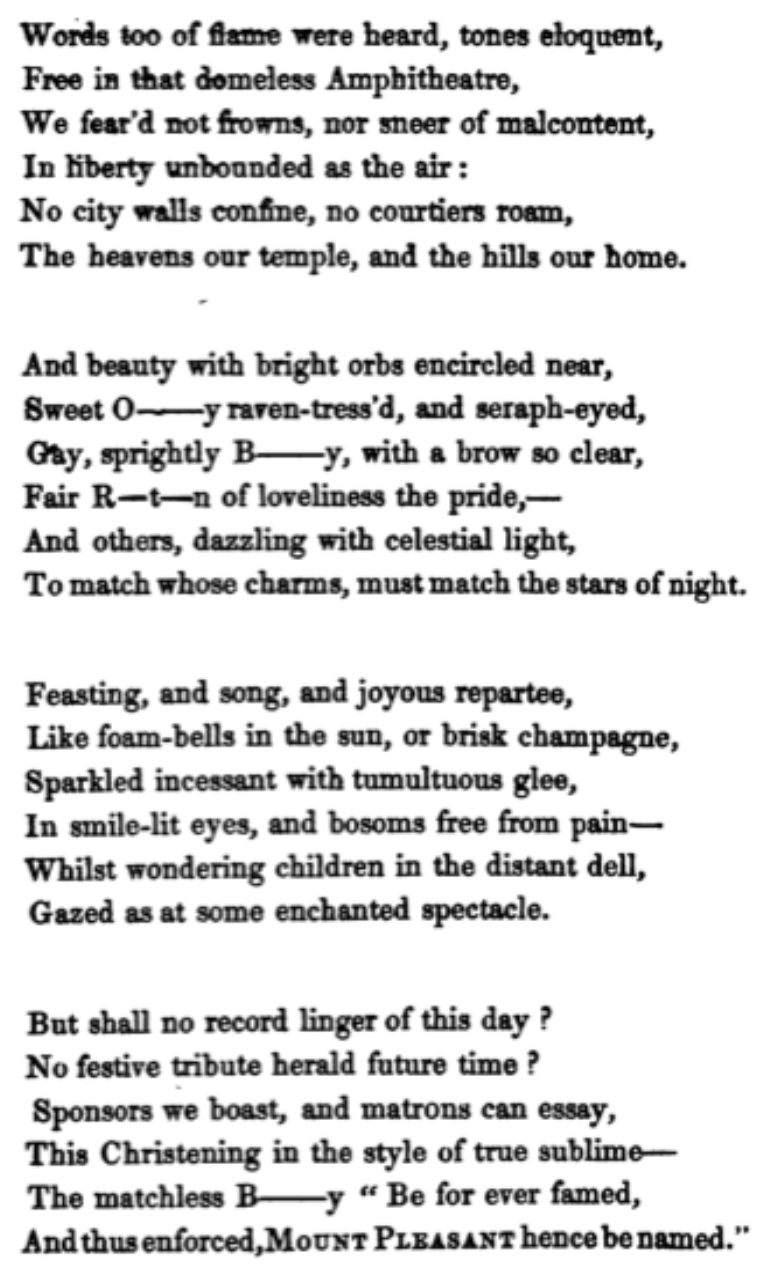
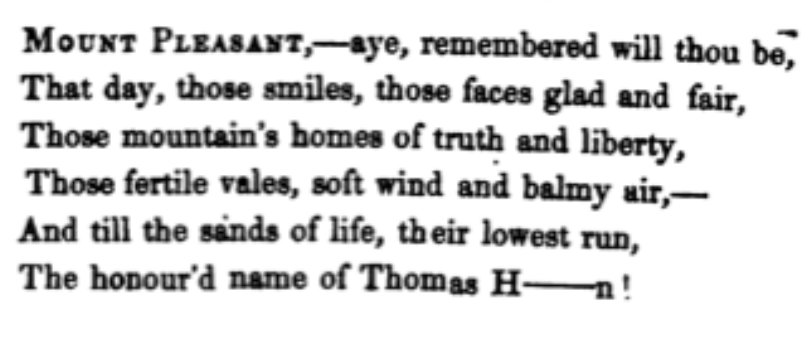
property. Ord composed a poem in honour of that day, which is shown below,
with thanks to Dr Tony Nicholson for passing a copy to me:
CLEVELAND SKETCHES
Tidkinghow (sic).
The following lines are written to commemorate a Fete Champetre
furnished to his friends by Thomas Hutchinson Esq of Brotton Hall, and his
amiable lady, on Monday, September 18th, 1843:
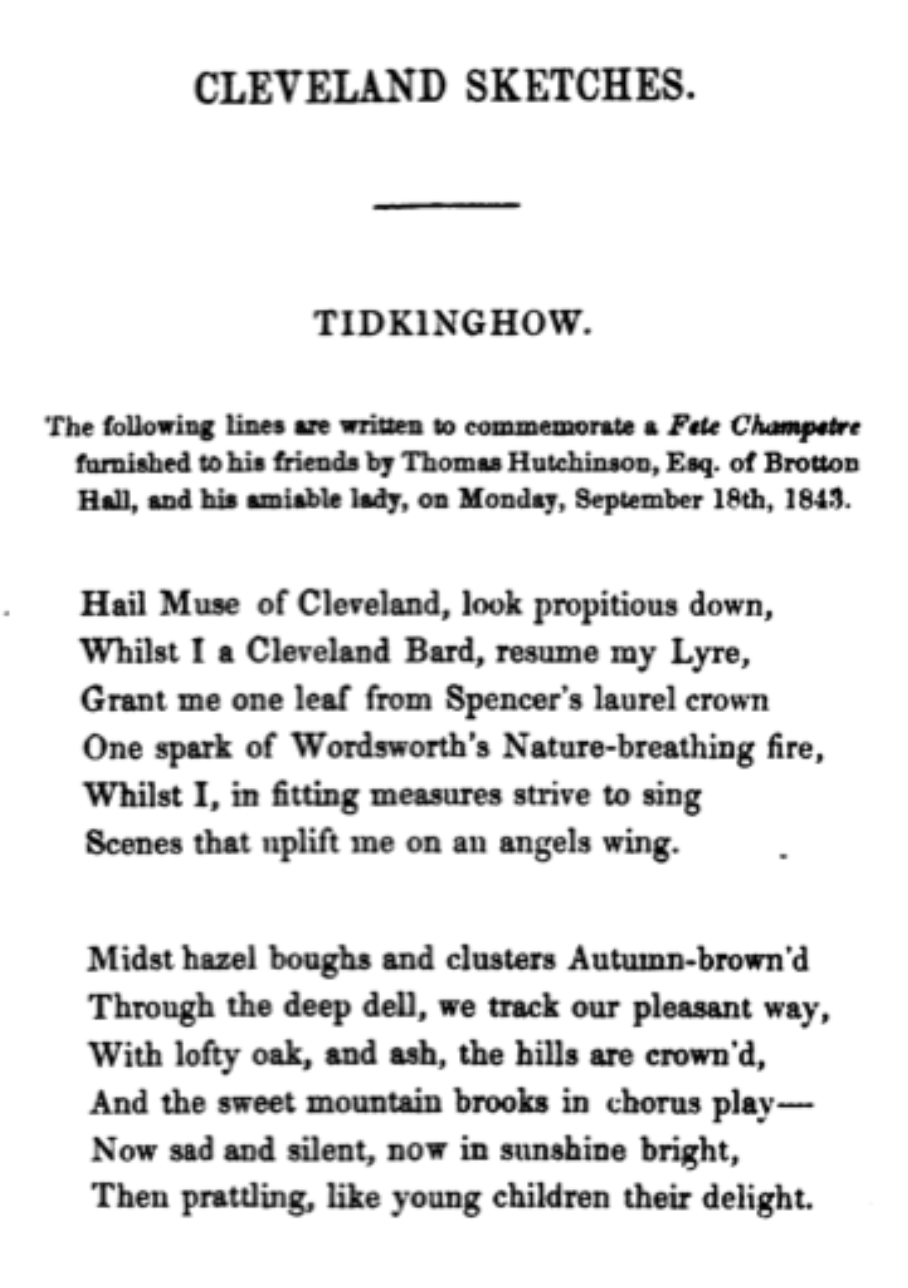
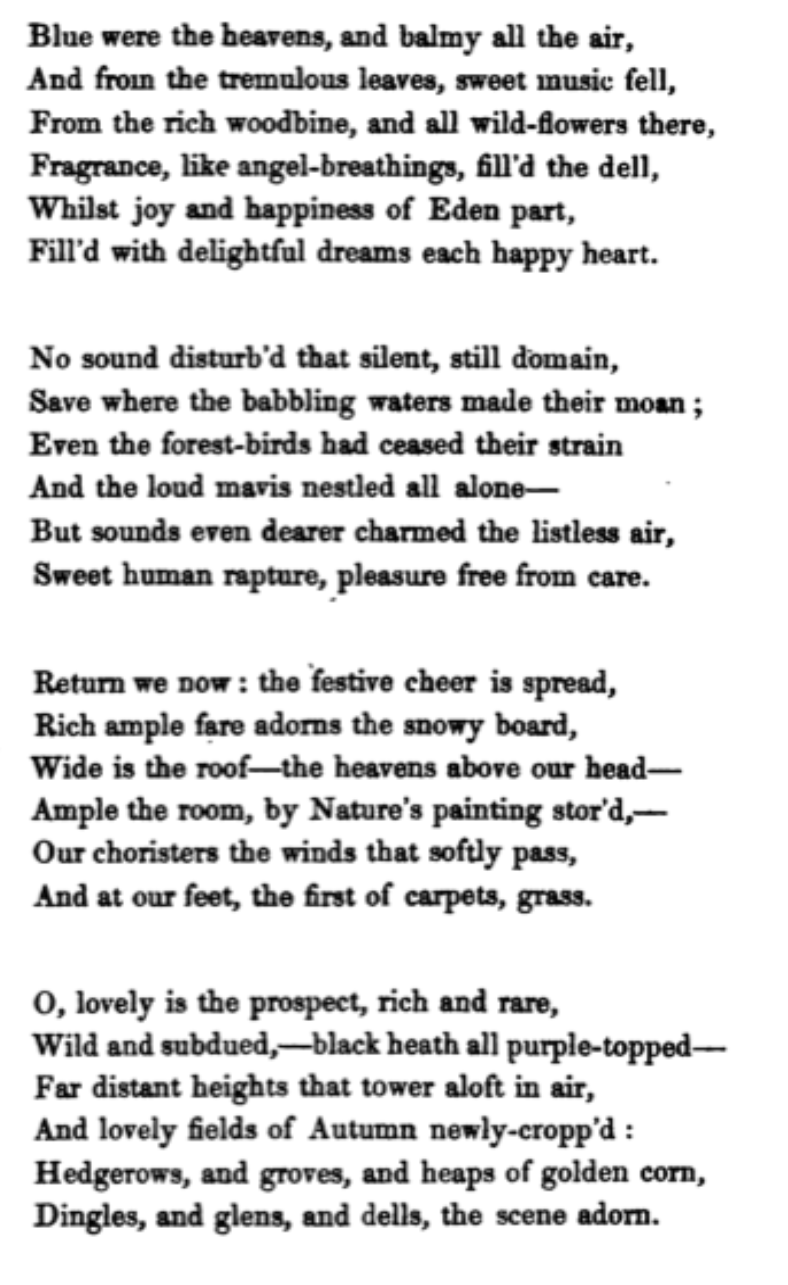
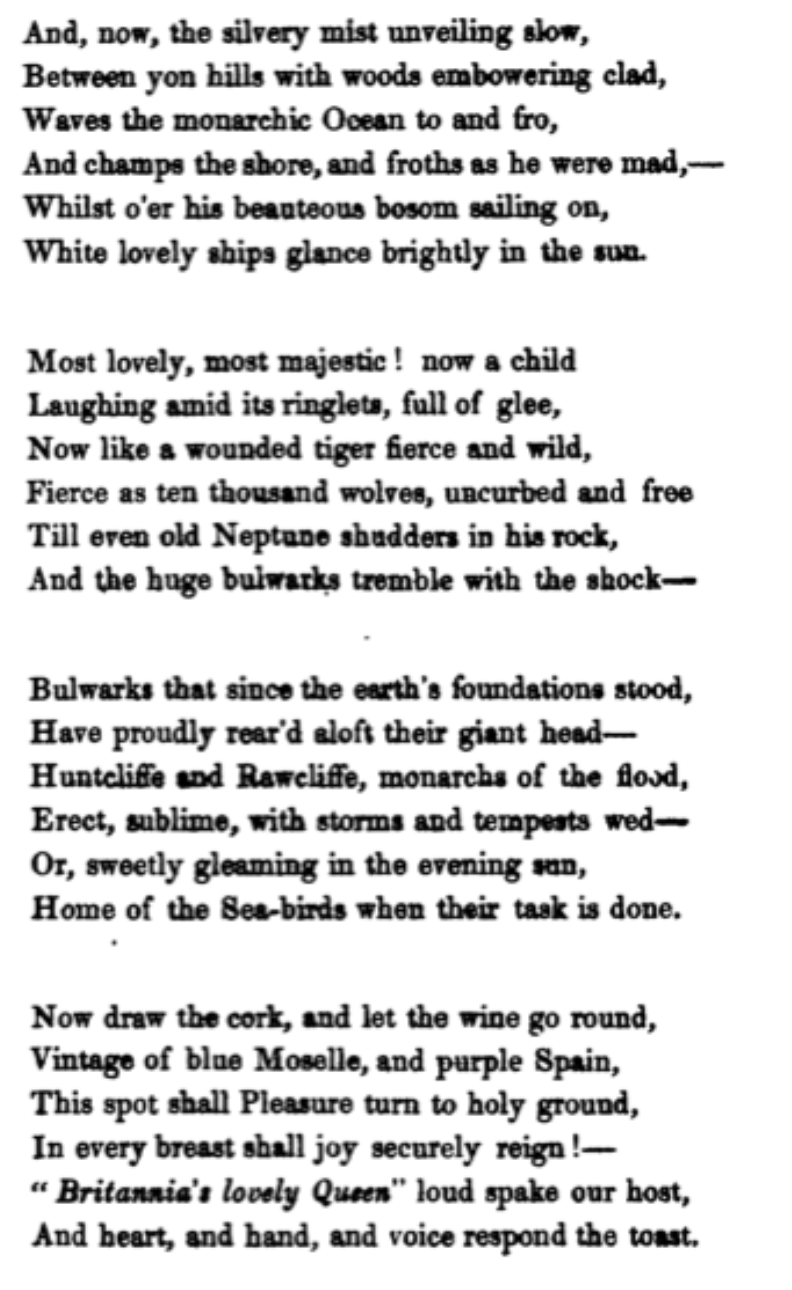
A Fete Champetre
is an outdoor entertainment such as a garden party.
1857
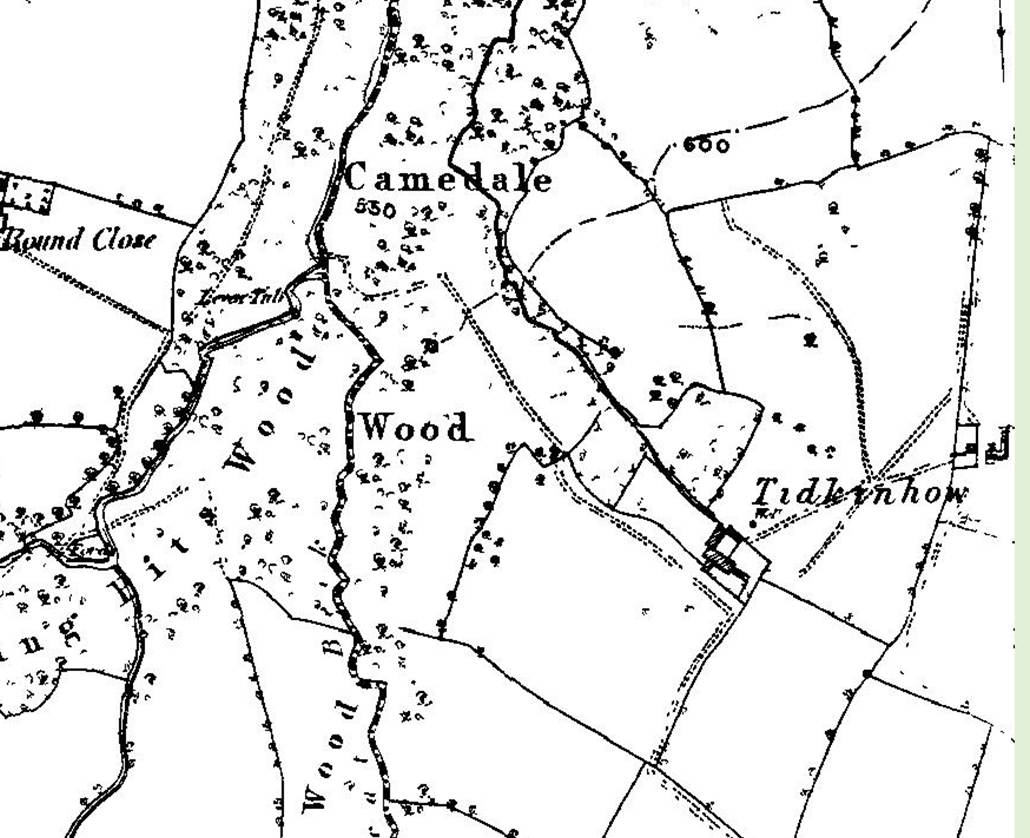
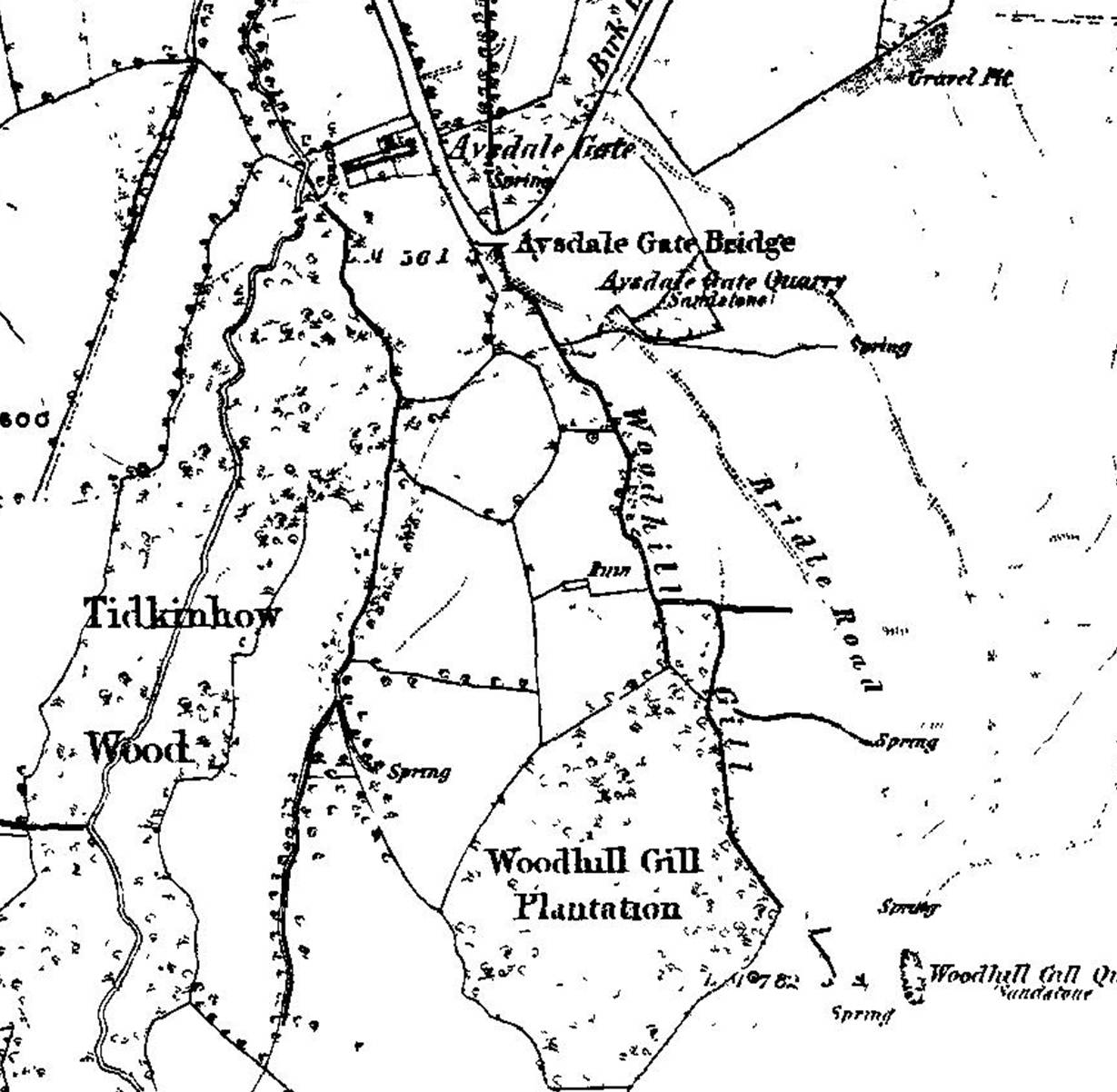
There is a plan of two farms called Aysdale Gate and Tidkinhow in the parish of Skelton, with
section showing the depth of ironstone, by Richard Cordner Stanhope, 20 Dec.
1862; and draft memorandum of agreement between John Bainbridge of Aysdale Gate Farm, Slapewath,
farmer, and W.H.A. Wharton of Skelton Castle, Esq, Aug. 1893 held at Teeside Archives.
1863
The Yorkshire Herald and
York Herald, 14 February 1863: Skelton, near Guisborough, in the
Ironstone District of Cleveland. VALUABLE FREEHOLD ESTATE. To be sold at
auction, that the House of Mr Henry Watson, the Buck Inn, in Guisborough, on
Tuesday, the third day of March 1863, at 2 o’clock in the afternoon, Mr Henry
Watson, auctioneer, all that valuable FREEHOLD
ESTATE, consisting of two farm houses and requisite
outbuildings, and 273 acres 3 Roods and 2 Perches of arable, meadow, pasture
and woodland, called “Aysdale Gate” and “Tidkinhow”,
situated in the parish of Skelton, in the county of York, and now in the
occupation of Mr Elisha Pegg. The celebrated Cleveland Ironstone has been
proved in this Estate, and there is a valuable quarry of freestone. The
ironstone mines of J T Wharton and T Chaloner, Esquires, immediately adjoining
the above a state, are now in full operation. The estate is 3 miles from the
market town of Guisborough, and within 700 yards of the Cleveland Railway. All
the above premises are subject to a tithe rent charge of twenty shillings,
variable according to the Tithes Commutation Acts, and also the annual payment
of 13s 6d for land tax. The tenants will be shown the premises, and further
information, with printed particulars and lithographed plans may, after the 5th
of February next, be obtained on application to...
A history of the Aysdalegate
Mine Shaft records that
William Barningham took out a lease on Aysdalegate
Farm and Tidkinhow Farm in 1864. Progress was very slow with the 268ft shaft
still being sunk in March 1868. Production started in 1877 and ended in 1880.
William Barningham died in 1882.
Extracted from Anne Weatherill's diary: Guisborough 1863. The diary of Anne
Weatherill of Guisborough was written when she was 22 years old, in a small
notebook, measuring six inches by four inches and records her activities
between January and September 1863.
It was written twenty years before the Farndales moved to Tidkinhow. She began
the little diary soon after returning from a visit to London. Back at home in
Guisborough, she records attending impromptu dances and invitation balls, she
visited Redcar and stayed with friends in Stockton and Carlton-in-Cleveland.
She took part in a choir festival and lent a hand in local festivities. A
constant feature through the months is her descriptions of the changing seasons
and the beauty of the countryside. Anne lived in Northgate in Guisborough with
her family; her father Thomas, a prosperous brewer, landowner and businessman,
her mother Margaret, her 20 year old sister Kate, and her brothers William and
Herbert, aged 18 and 14. On Friday
August 14th she wrote about Mr Morgan's picnic. Mr Atkinson
opened a tumulus in the moor near Tidkinhoe
[Tidkinhow] and found two urns, the date at least one thousand five hundred
years before Christ. Canon Atkinson of Danby was a natural
scientist and archaeologist, much engaged on the Skelton and Guisborough moors
that summer. Go
to the website which records Anne's diary
1876
The Northern
Echo, 19 June 1876: SALES BY PUBLIC AUCTION. Tidkinhow Farm, near
Guisborough - To timber merchants, mine owners etc. MESSRS
HODGSON AND FARROW are favoured with instructions to sell by auction, on
Thursday, June the 22nd, 1876, at the house of Mr G Storey, the Fox and Hounds
Inn, Slapewath, at Two O’clock in the afternoon, the
following timber
in three lots, comprising 152
prime larch trees, 40 prime ash trees, 80 prime oak trees, new standing marked
in the above named wood. The Wood Agent will attend at the Tidkinhow Farmhouse,
to show the timber, on the 20th of June. If required, part of the whole timber
can remain standing until next February. For further particulars apply to the
auctioneers, Stokesley.
1881
The Northern
Echo, 22 February 1876: Tidkinhow Farm, near Guisborough - To
timber merchants, mine owners etc. MESSRS HODGSON AND FARROW are favoured with
instructions to sell by auction, on Thursday, March the 10th, 1881, at the
house of Mr G Storey, the Fox and Hounds Inn, Slapewath,
at Two O’clock in the afternoon, the following timber, comprising 400
larch trees, felled and laid in lots of 20 each, 316 oak trees, new standing
marked in the above named wood. Terms cash. Mr Jacon Russell, of the Tidkinhow Farm
will show the timber. If required, part of the whole timber can remain standing
until December 24th, 1881. For further particulars apply to the
auctioneers, Stokesley.
1882
The Northern Echo, 17
March 1882: FOR SALE, large quality quantity of seed potatoes, Magnum
Bonums, Myatts and Scotch
Roughs, Jacob Russell, Tidkinhow Farm, Guisborough.
1885
The Yorkshire
Herald and York Herald, 28 November 1885: AYSDALEGATE AND TIDKINHOW
FARMS, Slapewath, near Guisborough. The Trustees of the late Wm Barningham
are prepared to receive tenants for the letting of the whole of these valuable Old
Grass Land Farms, comprising together about 2300 acres, with all their
buildings. A grand opportunity either for sheep farmers or dairy keepers.
Immediate possession can be given. For particulars apply to JOHN WOODFIELD,
Springfield, Darlington.
The Farndale Era
Martin Farndale (FAR00364) and his family moved into Tidkinhow in 1885. As
tenant farmers.
It was at Tidkinhow that eight further children were born. In 1889
their seventh child, William, died aged two. He was buried at Skelton on 21
July 1889.
·
Catherine Jane born
Tidkinhow 16 June 1884
·
James born Tidkinhow 22
December 1885
·
William born Tidkinhow 22
June 1887 (died 19 July 1889)
·
Mary Frances born
Tidkinhow 22 January 1889
·
William born Tidkinhow 29
January 1892
·
Grace Alice born Tidkinhow
21 April 1893
·
Dorothy Anne born
Tidkinhow 24 May 1895
·
Alfred born Tidkinhow 5
July 1897
Tidkinhow was a small farm, but it had large tracts of moorland
for sheep grazing. It produced most of what the family needed while money was
made from the sheep, their wool and lambs, together with a small milk round.
The house was small - a kitchen, a dining room, a sitting room and
four bedrooms. The children all went to school at Charltons,
a small hamlet about a mile away towards Guisborough.
As the eldest grew up, they went away to work on neighbouring
farms or in the mines.
Later, seven of the twelve were to go to western Canada and USA to
make their lives there.
Martin's two brothers lived nearby; John the next lived at Loftus
and worked on the LNER and Matthew farmed at Craggs Hall near Brotton. There is
a story that, while living at Tranmire, Martin asked Matthew to go and take
Craggs Hall for him. On his return Matthew said that he had taken it, but for
himself! Martin however always spoke highly of his brother who helped him to
get to Tidkinhow, a farm on Wharton estate.
1891
The North
Star (Darlington), 26 September 1891: IMPORTANT STOCK SALE IN CLEVELAND. The first of what is
intended to be an annual sale of sheep at Kildale in Cleveland was held
yesterday afternoon, and proved a great success. The farmers of this
important sheep breeding district have hitherto sent their sheep to
Goathland, near Whitby, but, owing to the great distance between the two
places, it was decided at a meeting of farmers two months ago to start a sheep
sale at Kildale. No fewer than 1,200 sheep were entered, the drafts being from
the following farmers: -... Farndale, Tidkinhow ...
1900
The freehold of Tidkinhow was sold in 1900. The North Star, 13 October 1900: To be sold by auction by Messrs Robert Imeson and
son at the Grand Hotel, Middlesbrough, on Tuesday, the 23rd day of October 1900
… All that Freehold Estate, consisting of two farm houses, with the
requisite outbuildings and 273 ¾ acres, or thereabouts, of arable, meadow,
pasture and woodland, called AYSDALEGATE and TIDKINHOW, situate in the
parish of Skelton in Cleveland, in the county of York. The celebrated Cleveland
Ironstone underlies the estate, and two well finished shafts have
already been sunk to the main scene at a depth of 50 fathoms each, and of
respective diameters of 13 1-3 and 10 feet, and competent authorities estimates
that the seam will yield an output of about 4 ¾ millions
tonnes of Ironstone. There is also a serviceable bed of clay for brick
making, and a free stone quarry on the estate, also a spring from
which a free and ample supply of excellent water can be obtained for the
boilers and other purposes. The buildings consist of engine house,
containing 18 inch cylinder winding engine, with drum complete, and an 8 inch
cylinder winding engine; boiler house, blacksmith’s and joiner’s shops,
containing machinery for Smith’s Earths etc; store rooms, cottage, offices etc.
The mine has been opened out to the extent of about 192 yards by the said
William Barningham to prove the ore, several hundred tonnes of which are now
lying in adjoining heaps, which, however, do not belong to the Vendors. For a
comparatively small additional expenditure operations for working the iron ore
could be commenced at a very early period. The property is 3 miles from the
town of Guisborough, within about 750 yards from the North East Railway
Company’s mainline to Middlesbrough, with which it is connected by a railway
track over adjoining land belonging to the trustees of Lady Hewley’s Charity,
of which the vendors have agreed to take a lease for a term of 21 years from
the 1st July, 1899, at a fixed wayleave rent of £100 per annum, a further rent
of ½ d per ton for each ton carried over the said railway track beyond 48,000
tonnes,...
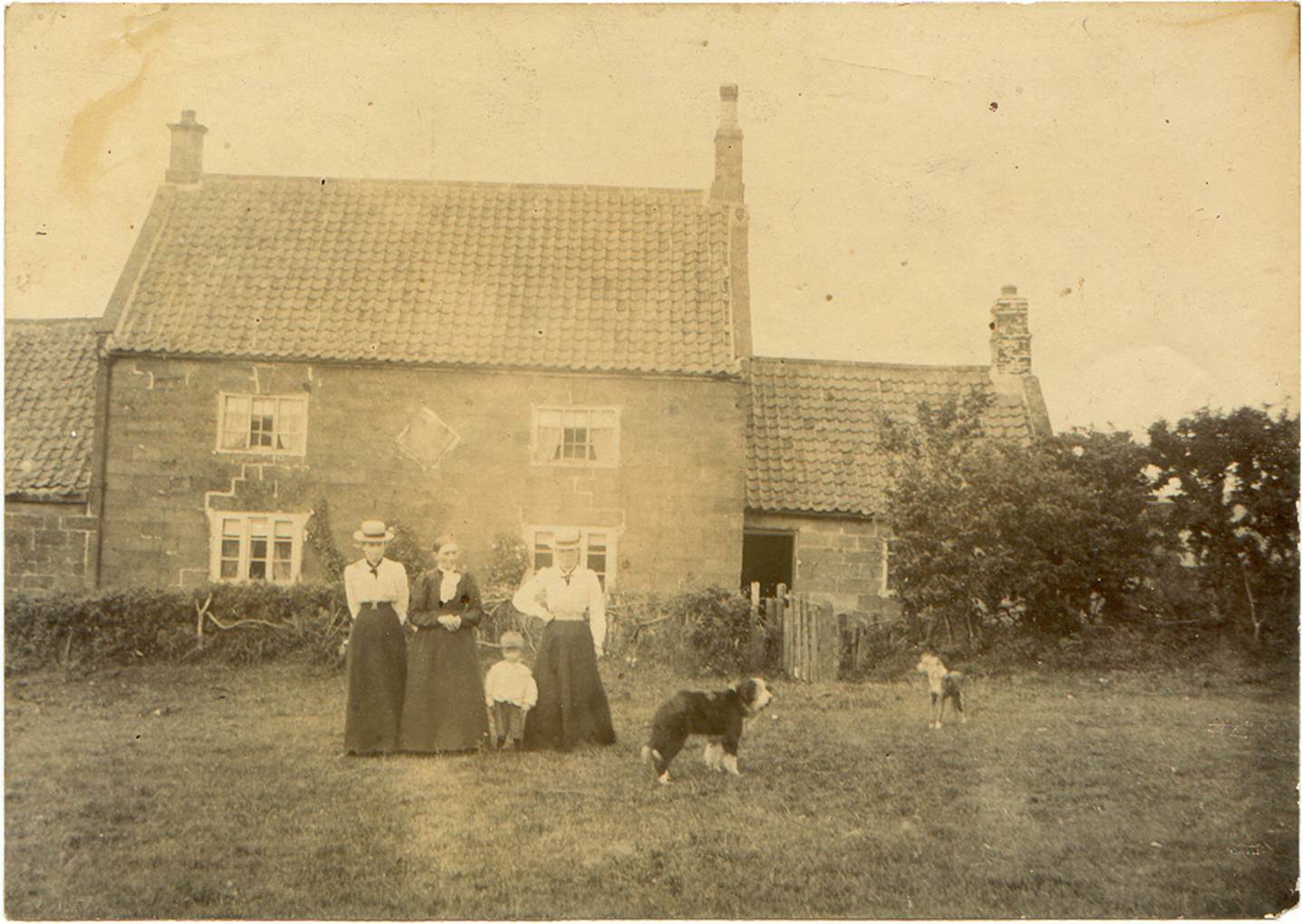
Tidkinhow Farm in about 1900
1903
Lynn was the first to marry. She was
working at Tancred Grange and on 22 August 1903 she married the owner, George
Barker. She was 24. She was to have six children and her descendents were still living at Tancred in 1982. Two
days after, she was married, her mother wrote to her. This letter survives:
"Tidkinhow,
Aug 24 1903
My
Dear Daughter
I
received your letter and was glad to hear you arrived all right. I hope you and
your husband are enjoying yourselves and that you are having fine weather. It
is raining here today. John will take your luggage and leave it at Darlington
tomorrow as he is going back to Newcastle. I posted all the boxes on Saturday
night that were addressed and I will send the others to you with the cake. I
gave the postman 2/6 this morning and he was very pleased. We have to wish you
much joy & happiness for him. You must write after you get home and let me
know if you get the luggage all right. I now conclude with kind regards to you
both.
I
remain your affect mother
C J
Farndale"
Meanwhile life at
Tidkinhow continued. Weekly shopping expeditions by pony and trap to
Guisborough to buy groceries were followed by elder members of the family going
out on Saturdays in Guisborough. They went for lots of walks and met
neighbours. There were horse drawn and later motor buses and from time to time
a 'break' would take them on an outing to a sow somewhere. John was working
down the mines, Lynn was married, Martin was a bit delicate as a boy and spent
much time at home helping his father. George was working on a local farm. Kate
was at home and James was a butcher. His younger brother, William, was an
apprentice butcher at Saltburn and Mary soon went away to learn confectionary.
Grace, Dorothy and Alfred were at home.
1905
Catherine Jane frequently wrote to her children when
they were away. She often visited members of her family at Bishop Auckland.
There are two postcards written to Grace, one from Bishop Auckland (25 Sep
1906) simply saying "Will be at Bishop Auckland Wednesday by train"
and the other from Etherley
Schools where Catherine Jane had been (6 Mar 1905), saying "This is
where I went to school a long time since. I hope you are keeping well."
But life was not easy and it was becoming more difficult to make a living, let
alone realise ambitions. Martin was the first to want to spread his wings. Many
young men in the district were going abroad and there was great pressure to
colonise the western provinces of Canada. He was, however, concerned at the
effect on his mother on leaving and this concern is clearly reflected in two
letters written from SS Tunisian after he had left without saying
goodbye. Clearly this was done to avoid the worry and concern of his departure.
He left Liverpool on Thursday 16 June 1905.
June 16th 1905, Friday morning
Dear Sister
Just a few more lines. I left Liverpool on
Thursday night for Canada on SS Tunisian. I have had a good night's sleep. I
have booked second class on board and is very comfortable. We are passing by
the north of Ireland this [ ]. The ship makes a call here to take on more
passengers. This letter will be sent on from here. I shall not be able to post
any more letters till I land at yond side. I am enjoying the trip well so far.
I hope mother will not fret is she get to know before I write. I will send a letter
to her as soon as we land. I am going to do best . I am going a long way up the
country. I am to Calgary in Alberta. It is chiefly cattle farming there. There
is several more young men on ship that are going out from there can catch. But
I have not meet any lady that is my way yet. You must try and cheer mother up.
There is nothing for her to trouble about. I am as safe here as riding on the
railways in England. I shall be about other 7 days on the water. I will send a
few letters off before I start my land journey. I have not time write more. I
want to up on deck. We are just about to land at Londonderry I believe.
I must leave hoping you are all well.
M Farndale.
And five days later:
Letter cannot be
posted for England till we land so you will know if you get this that I landed
all right.
Wednesday June 21st 1905
Dear Sister
I shall soon get my sea trip over now. Land was
sighted today Newfoundland I believe. Every body is
beginning to lighten up now. But it will be Saturday morning before we land at
Montreal.
I have enjoyed voyage up to now. I had one day sea
sick. It was awful. I don't want that any more. We have had few very cold days.
It is always cold n this part of the Ocean. We saw a great iceberg this
morning. It was a great sight. This is a great rock of ice. So you must know we
were passing through a cold front. This is a big vessel about two hundred yards
long I should think. Every body seem quite happy.
There is a smoke room and a music room. And the best of everything to eat.
Third class seems to be rough quarters. But they are in another part of the
ship. There will be about eight hundred passengers on board all together. Some
men pulling long faces when the vessel left Liverpool. I never thought anything
about it. But I was like the rest. I watched England till it disappeared out of
sight. I hope mother will not trouble about me. I will be all right. I thought
it was my best thing to do. I had nothing to start in business with in England.
I shall be able to get about £50 per year and board with the farmers out here.
If I can stand the climate. And I can settle. I shall be able to start farming
for my self in about two years.
Thursday
All letters are to be posted tonight on board so
that they will get away as soon as we land. They don't [ ] to a few hours when
they land. So all has to be ready.
First and Second class are having a Grand On Board
tonight. We shall be quite lively.
I now finish. Hoping you are all well. And remain
your affectionate Bro.
M Farndale.
Martin was 24 years old. These letters start a whole branch of the
Farndale family who emigrated to Alberta.
George followed his elder brother to Canada fairly soon afterwards
and already Kate wanted to go to look after them, but they all knew that their
mother was ailing. Jim also wanted to go, but did not want to leave
1910
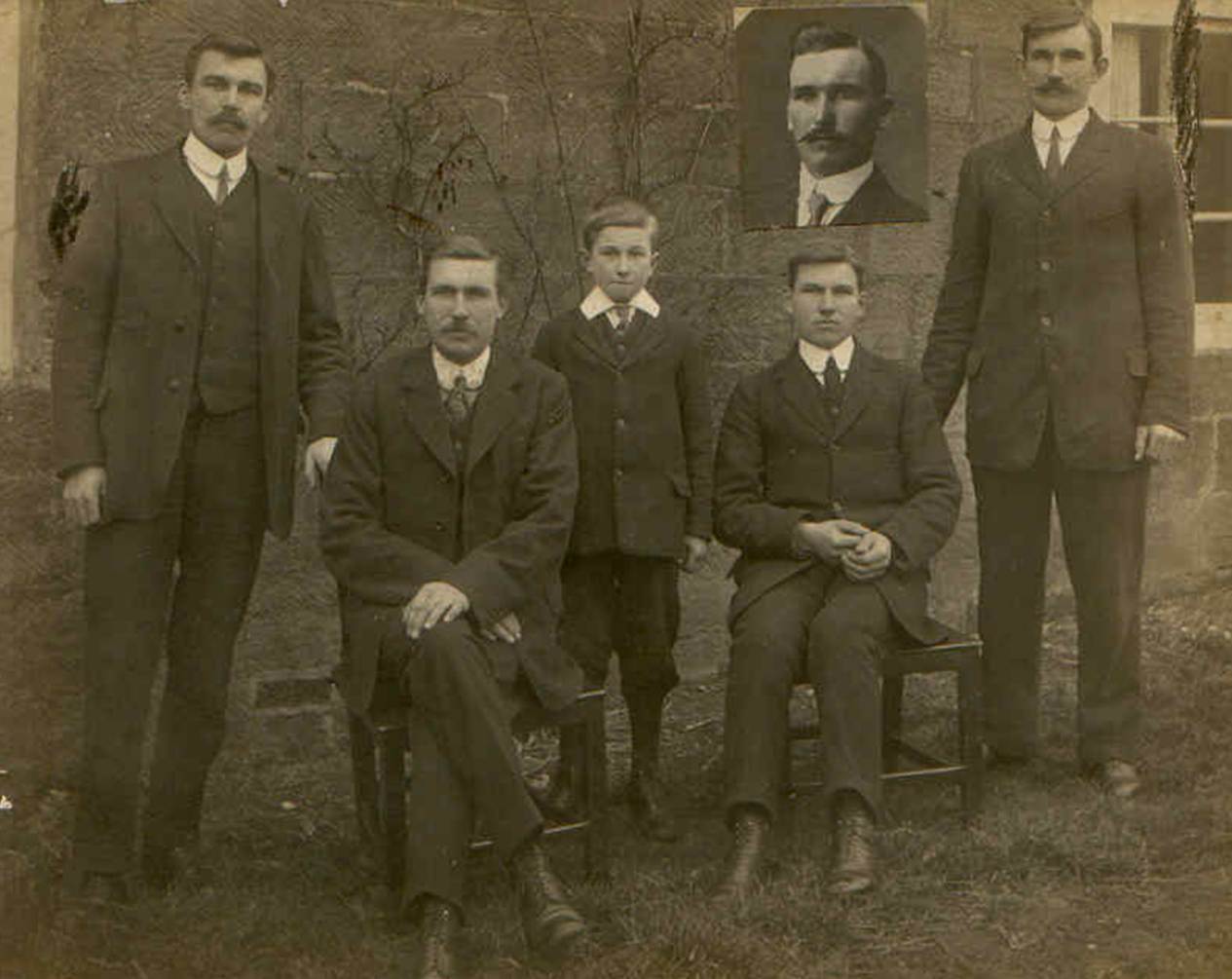
The boys of Tidkinhow in about 1910 – John Farndale, James Farndale, Alfred
Farndale, William Farndale, George Farndale, Martin Farndale (inset)
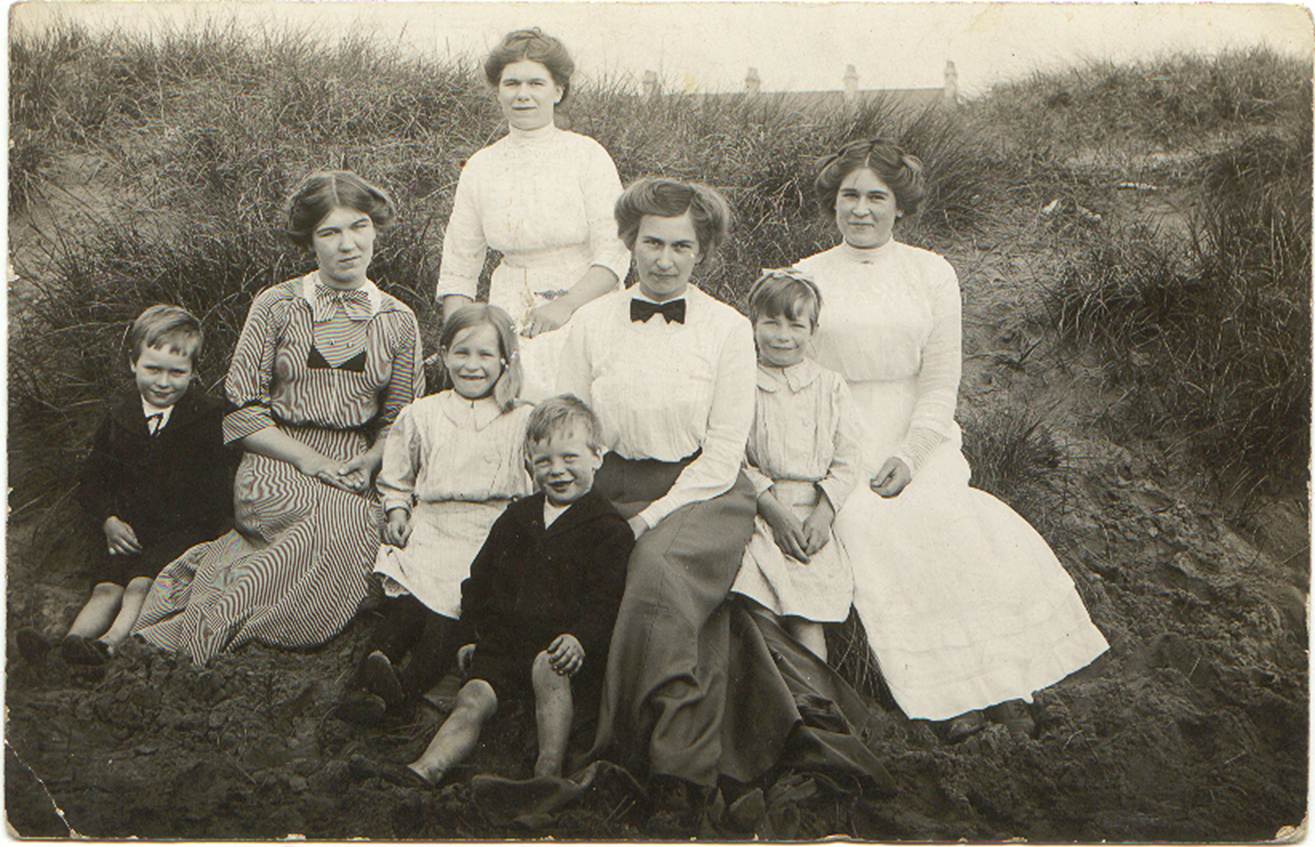
The girl Farndales of Tidkinhow with Barker children -
Willie Barker, Dorothy Farndale, Mary Farndale, Mary Barker, Kate Farndale,
Grace Farndale, Margaret Barker, John Barker - about 1910.
1911
The Whitby
Gazette, 13 January 1911: PLOUGHING AND HEDGECUTTING COMPETITIONS. The
Leadholm and Danby ploughing and hedge cutting competitions, which were
established a year or two ago, and are the only competitions of the kind which
are held in the immediate district, took place on Wednesday afternoon, at
Egton. There was a large attendance and considerable interest was manifested by
agriculturalists and others in the various events. Dyking was dropped out of
the programme this year. The district includes the parishes of Danby,
Glaisdale, Egton, Ugthorpe, Westerdale and Commondale, and competitors and
spectators attended from most of the villages comprised in the area, and also
from other places... The ploughing competitions were held on the land of
Messrs M Farndale, W Jackson, Tynedale, and W Pearson and, and the hedge
cutting on Mr Thomas Hutchinson 's land. The weather was favourable, and rain
held off till the evening, when a heavy downpour took place. A luncheon was
afterwards held at the Horse Shoe Inn.
The 1911
Census for
Tidkinhow Farm, Boosbeck, Stanghow listed Martin Farndale, 65, farmer,
head, born Charlton; John Farndale, 33; Catherine Jane Farndale, 26;
William Farndale, 20, butcher; Grace Alice Farndale, 17; and Alfred Farndale,
13.
Gradually Catherine Jane
weakened until on 14 July 1911 she died at Tidkinhow. Her death certificate
shows that her husband, Martin, was with her and that she actually died of
fibroid pathesis, cardiac failure, but she almost certainly had TB. Alfred later
remembered his distress at her funeral in Boosbeck and being comforted by his
nearest brother William on the way back. There is no doubt that her untimely
death at the age of 56 was a great blow to the family. She is remembered by
them all with the greatest affection. Her life had been hard but she had
clearly cared for them all. She is remembered also as kind, intelligent, firm
and determined. There was now a great gap at Tidkinhow and the family had to do
their best to fill her place.
Soon after their mother's death William and Kate followed their
two elder brothers to Canada. James had already sailed on 31 March 1911. There
is a diary
of his voyage which has been transcribed. Their
stories are told elsewhere. Kate and George were never to return to England,
but Martin did twice and William as a soldier. Jim returned as a soldier and
visited again in the 1950s.
John Farndale would have increasingly taken over
farming from his father at about this time, although Martin continued to farm
until he died in 1928.
1915
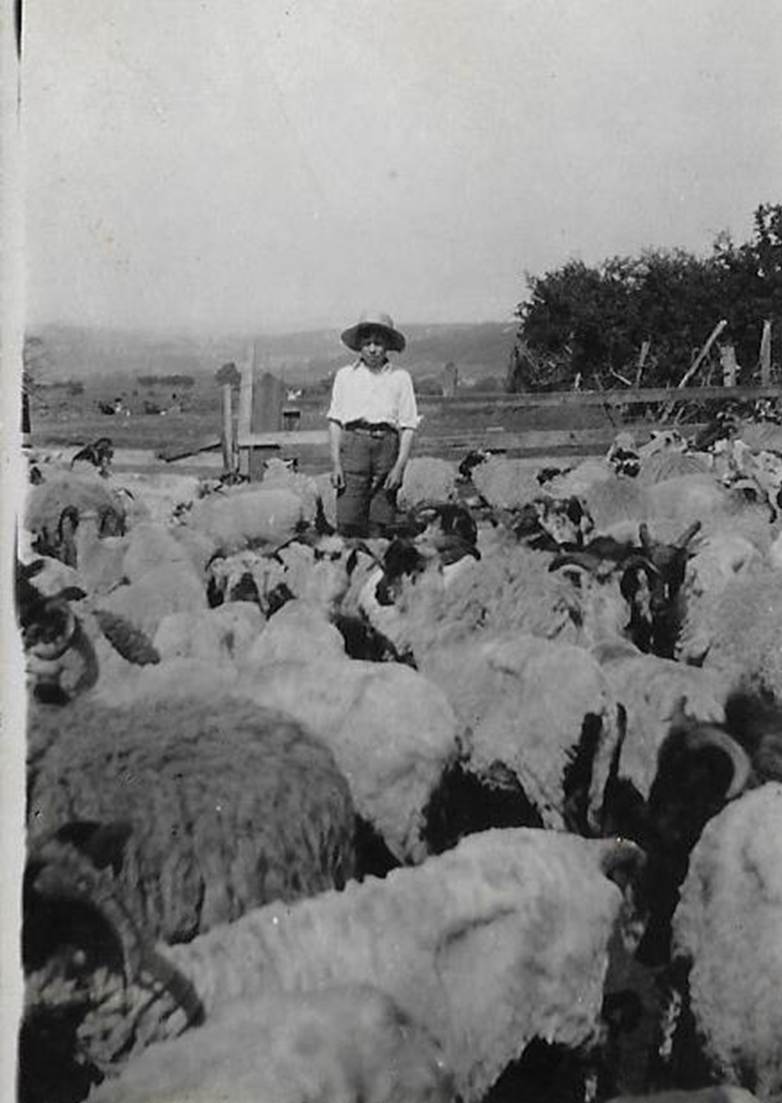
Willie Barker at Tidkinhow about
1915
By the end of the war, the family were well scattered. John was
still working locally; Lynn was still at Tancred Grange near Scorton; Martin
was still a bachelor in Canada, as was George, both in Alberta. Kate had
married William Kinsey and was living near her brother in Alberta. James had
married Edna Adams and was living in San Antonio, Texas; William was dead and
Mary was working in Leeds. Grace, Dorothy and Alfred were at home, but Alfred
spent much time at Scorton with his eldest sister Lynn since her husband had
died in 1919. Martin, in 1920, was 75 and still living at Tidkinhow.
1920
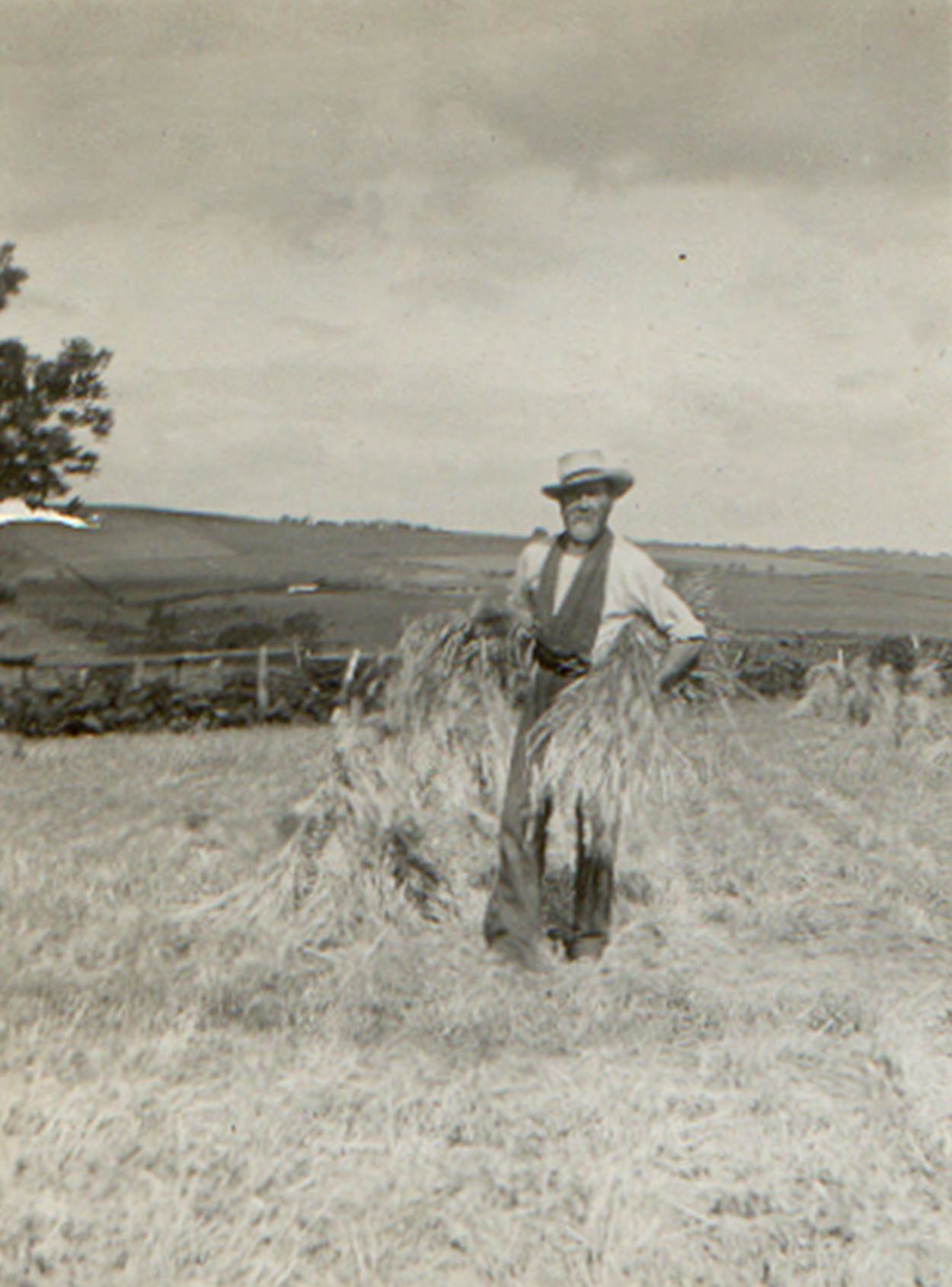
Martin harvesting at Tidkinhow about 1920
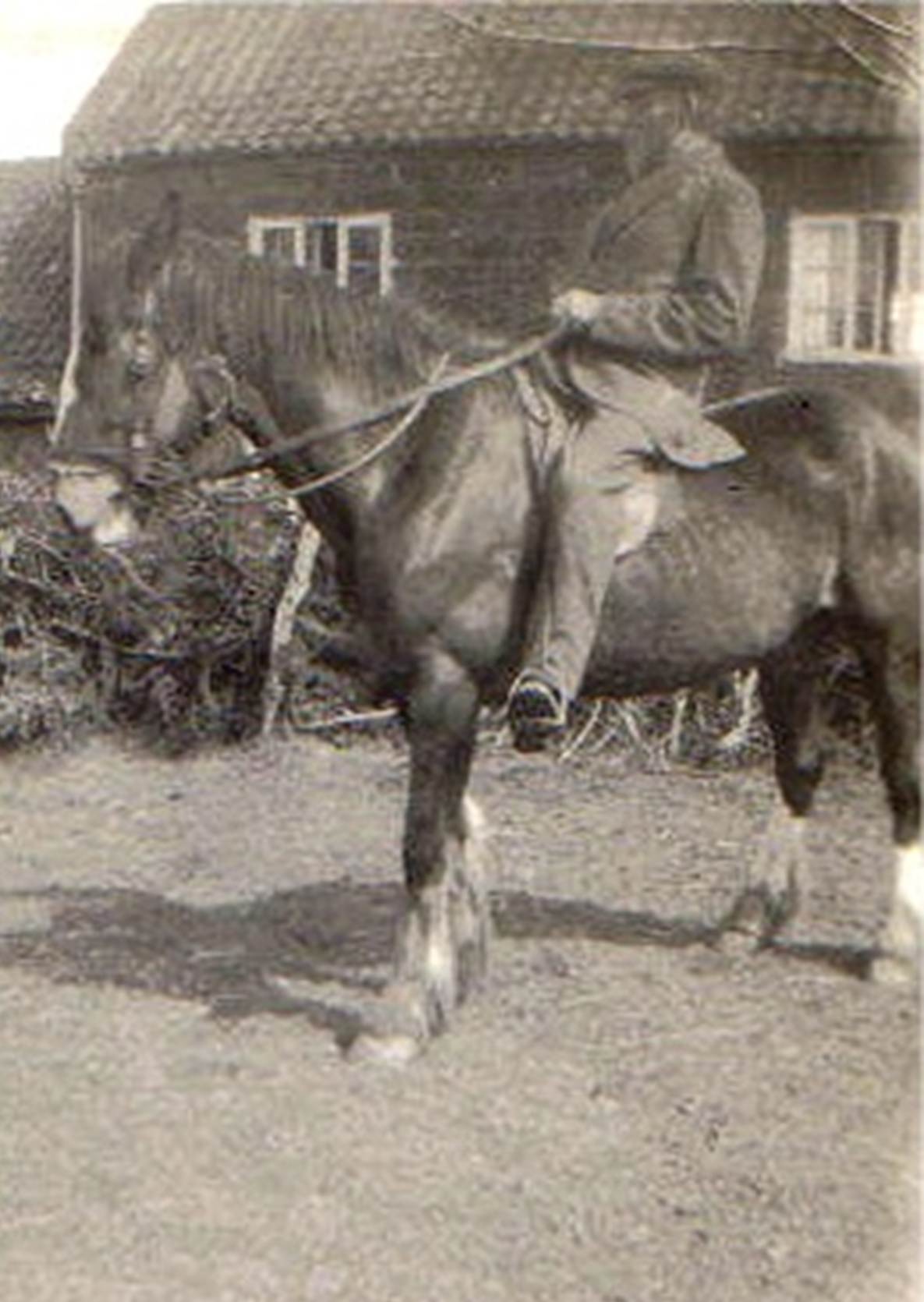
Martin Farndale mounted at Tidkinhow in
about 1920
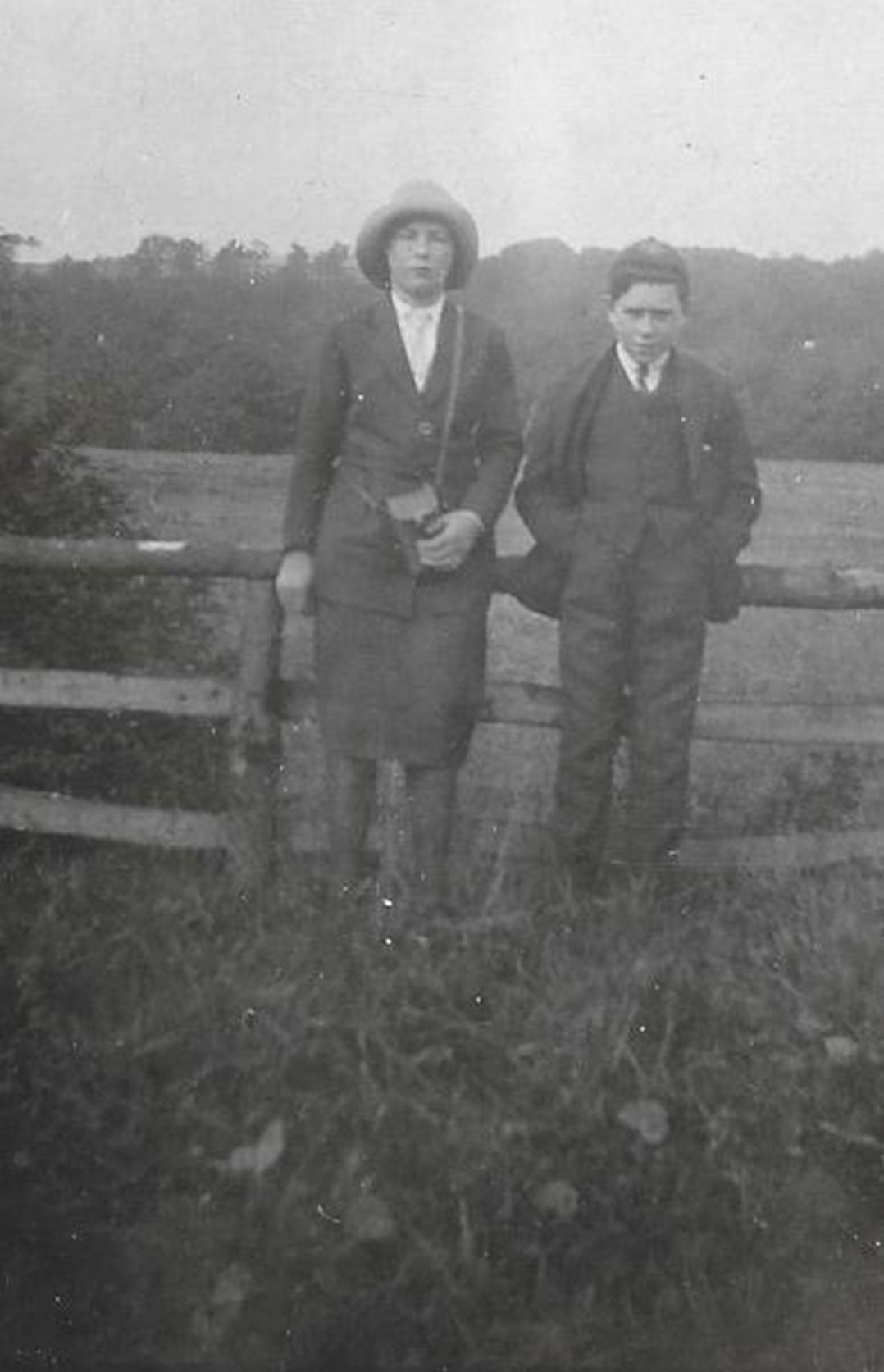
Margaret and Willie
Barker, 1920
1924
"Dear Grace
I am doing well. Not much time to write. Father
wishes you a very happy new year & Peggy write her. Quite well myself.
Wanting to get up and abscond from here. ... from your
? father"
1925
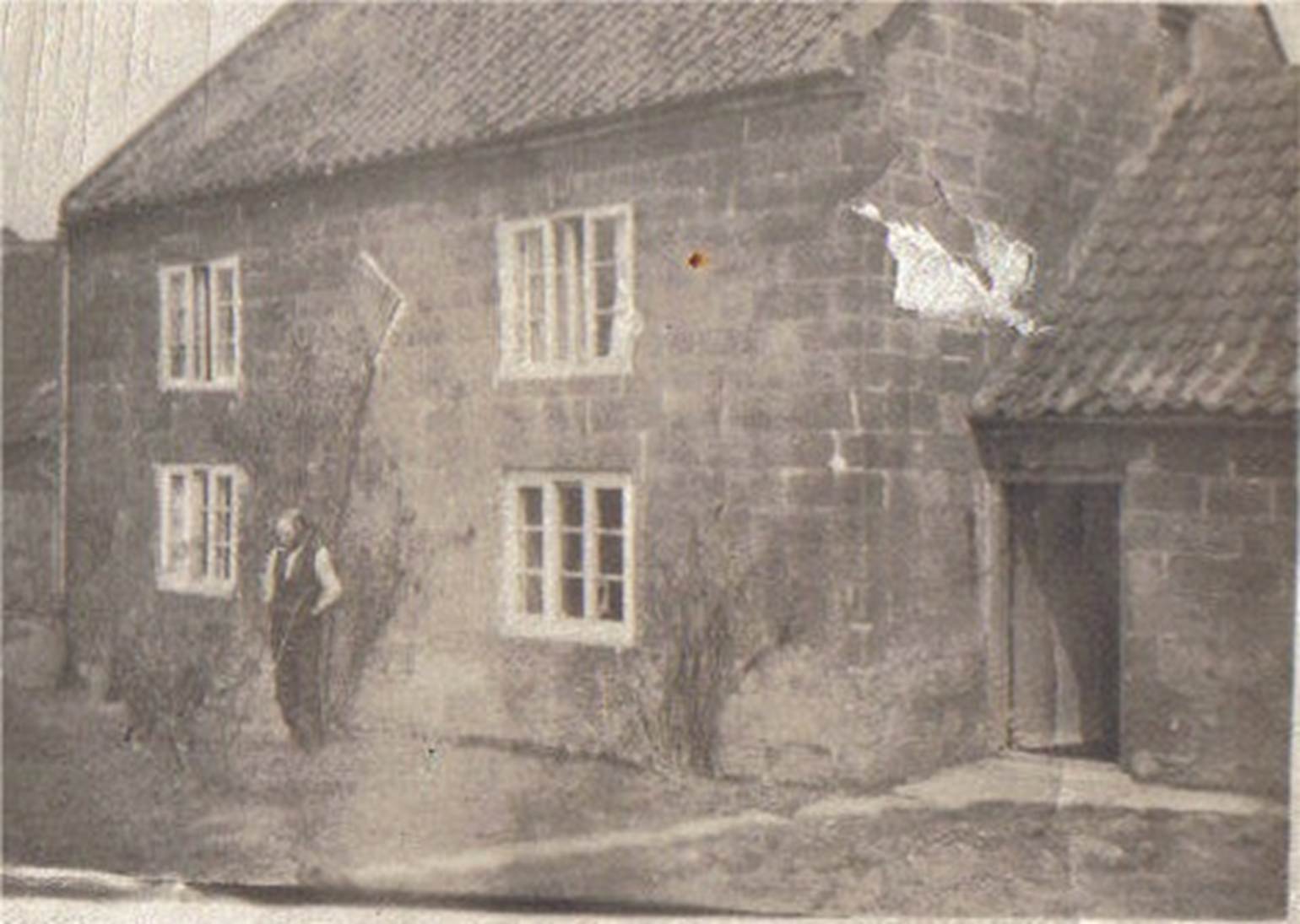
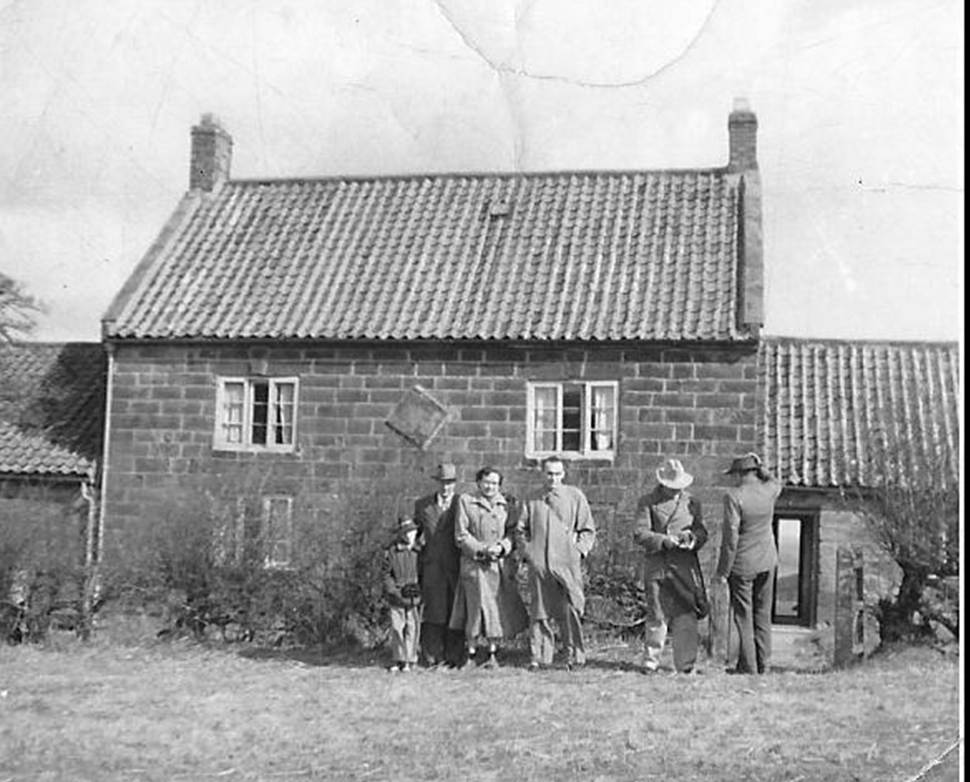
Martin Farndale at Tidkinhow about 1925, note the sundial between
the windows
1928
Martin Farndale died on 17 January
1928 and is buried at Boosbeck Church. His son John Farndale (FAR00553)
continued farming as tenant on Tidkinhow Farm.
Grace
Farndale’s diary touches on Tidkinhow, before her emigration
to Alberta.
1937
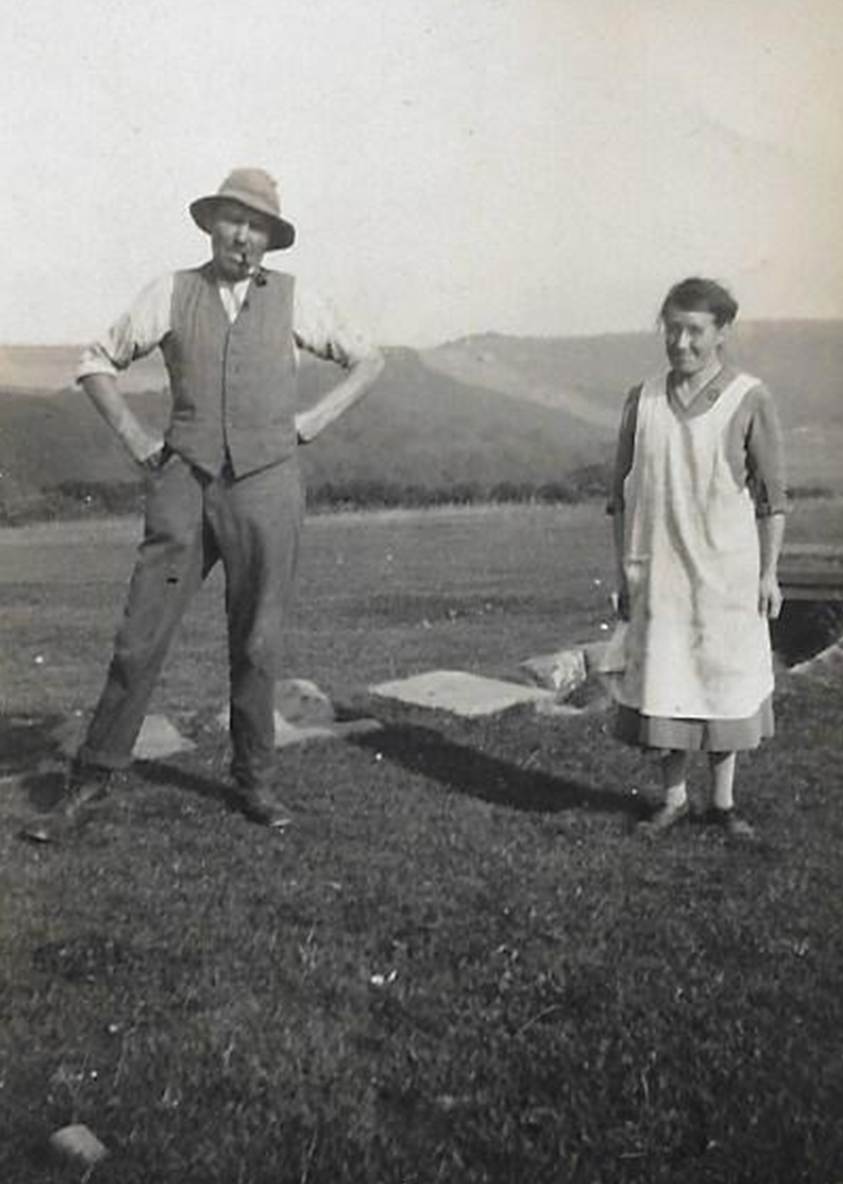
John and Elsie Farndale at
Tidkinhow in about 1937
1939
The 1939 Register for Stranghow,
Skelton and Brotton listed John Farndale, farmer, married, born 24 December
1877; and Elsie M Farndale, unpaid domestic duties, born 16 December 1893.
1940s
A biography of a musician,
Graeme Miles (born 1935) tells that As a
boy, he found recreation on the Tees marshes and in the wild, lovely moorlands
of the Cleveland hills – another fertile ground for his works. As a young man he and friends would spend
weekends camping at the ruined Tidkinhow Farm, off the main Guisborough to
Whitby moor road near Charltons. No late-night bus to Guisborough from
Middlesbrough in those days (hence the song Along The Guisborough Road). They would get off at Nunthorpe and walk the
several miles to Guisborough and then another three to Charltons
and along to Tidkinhow.
1954
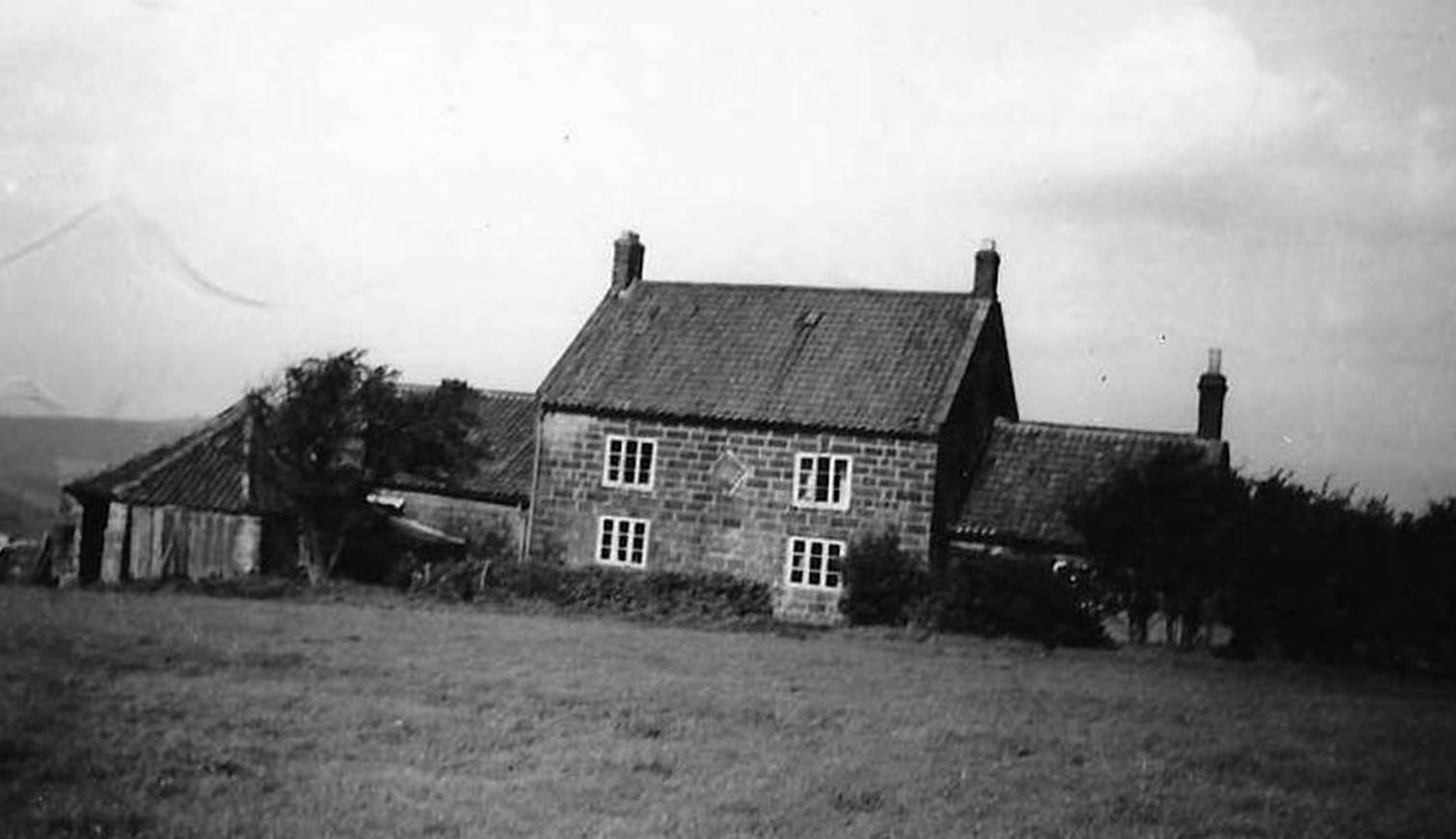
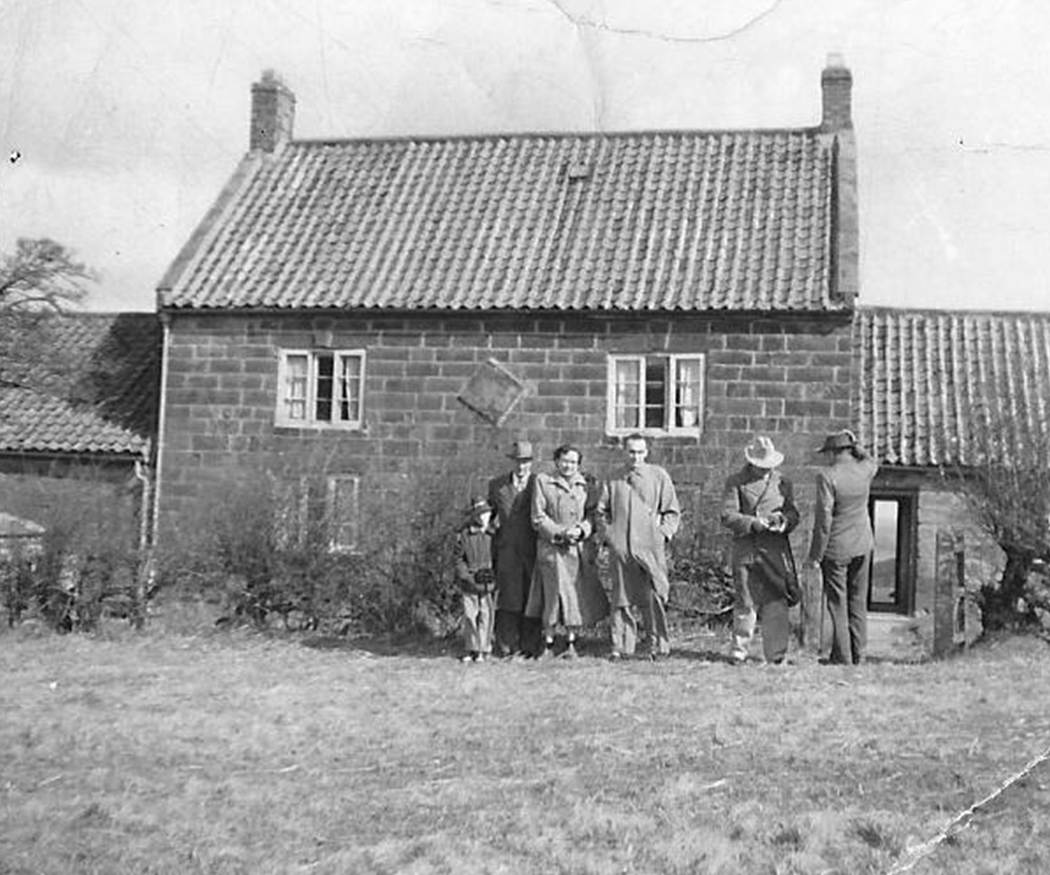
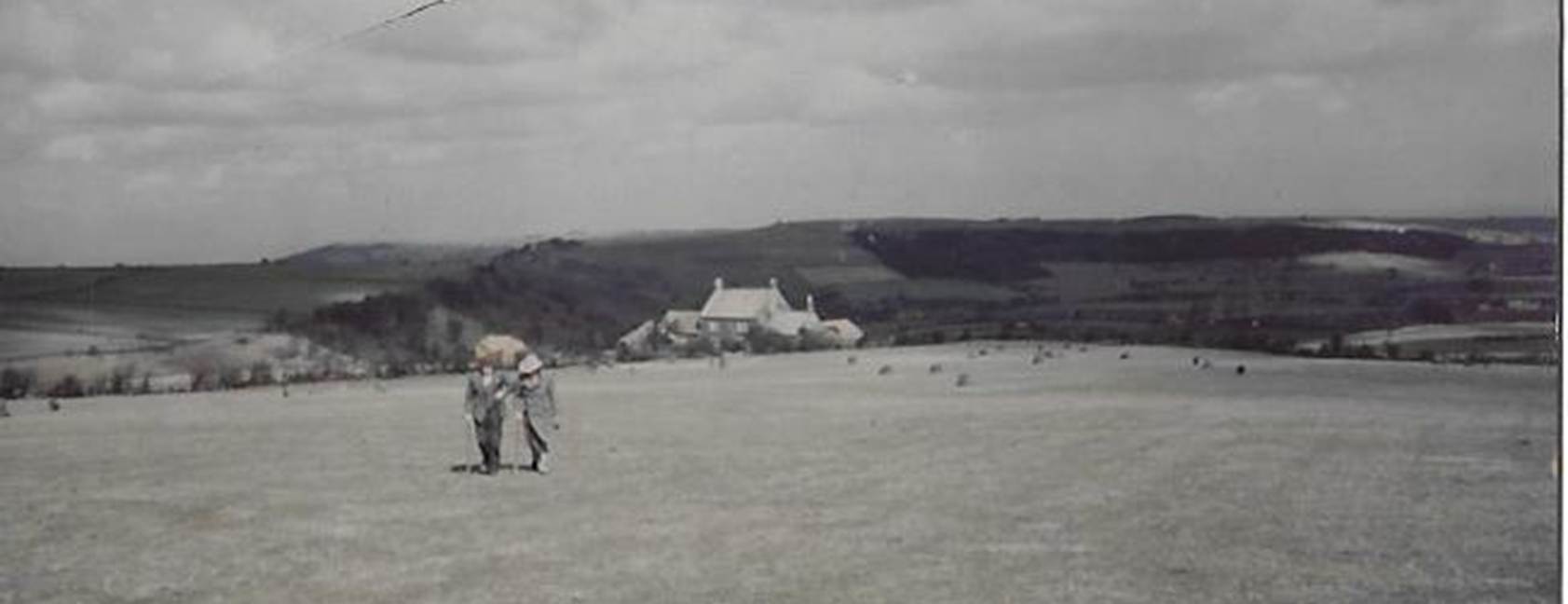
1960s
The End of the Farndale Era
John Farndale farmed at
Tidkinhow until he retired in the 1960s.
1987
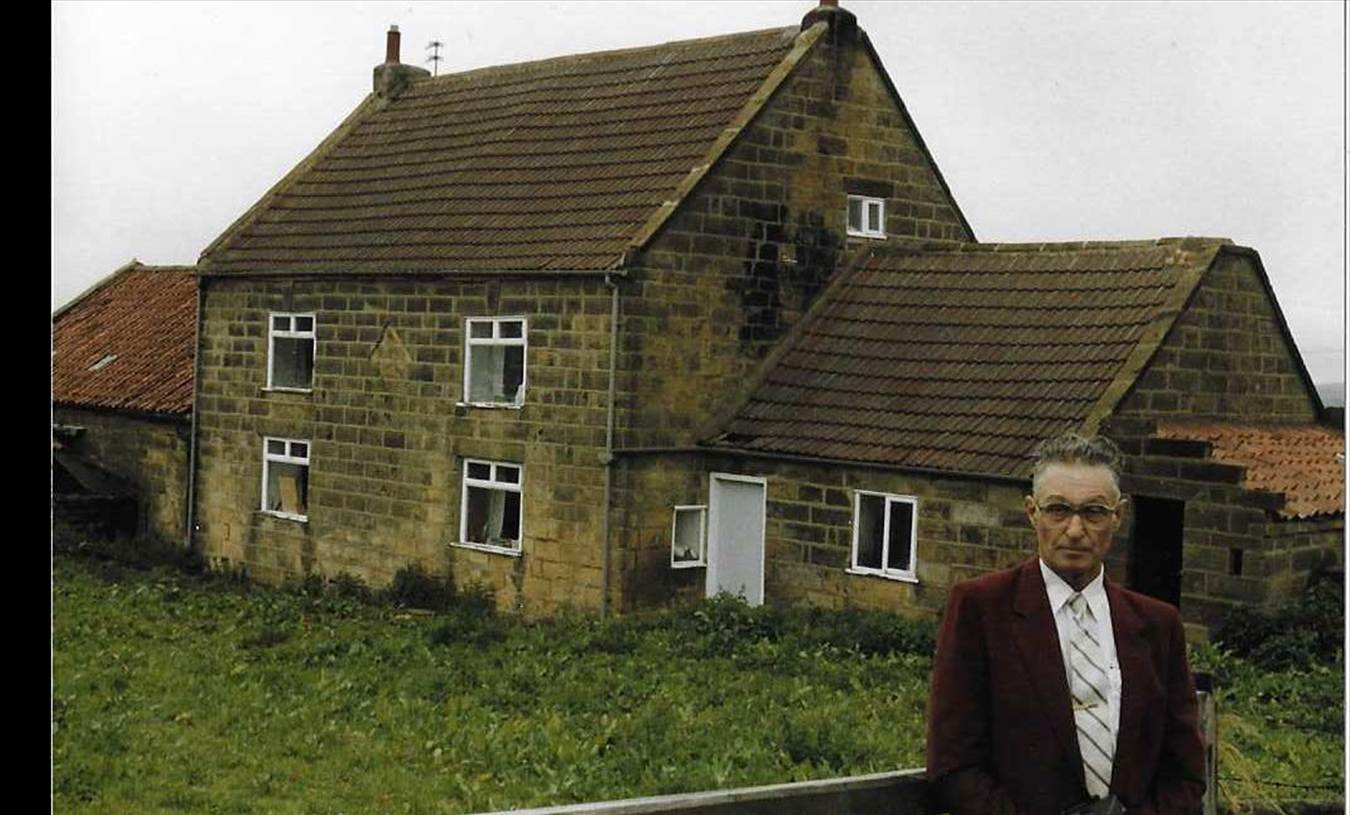
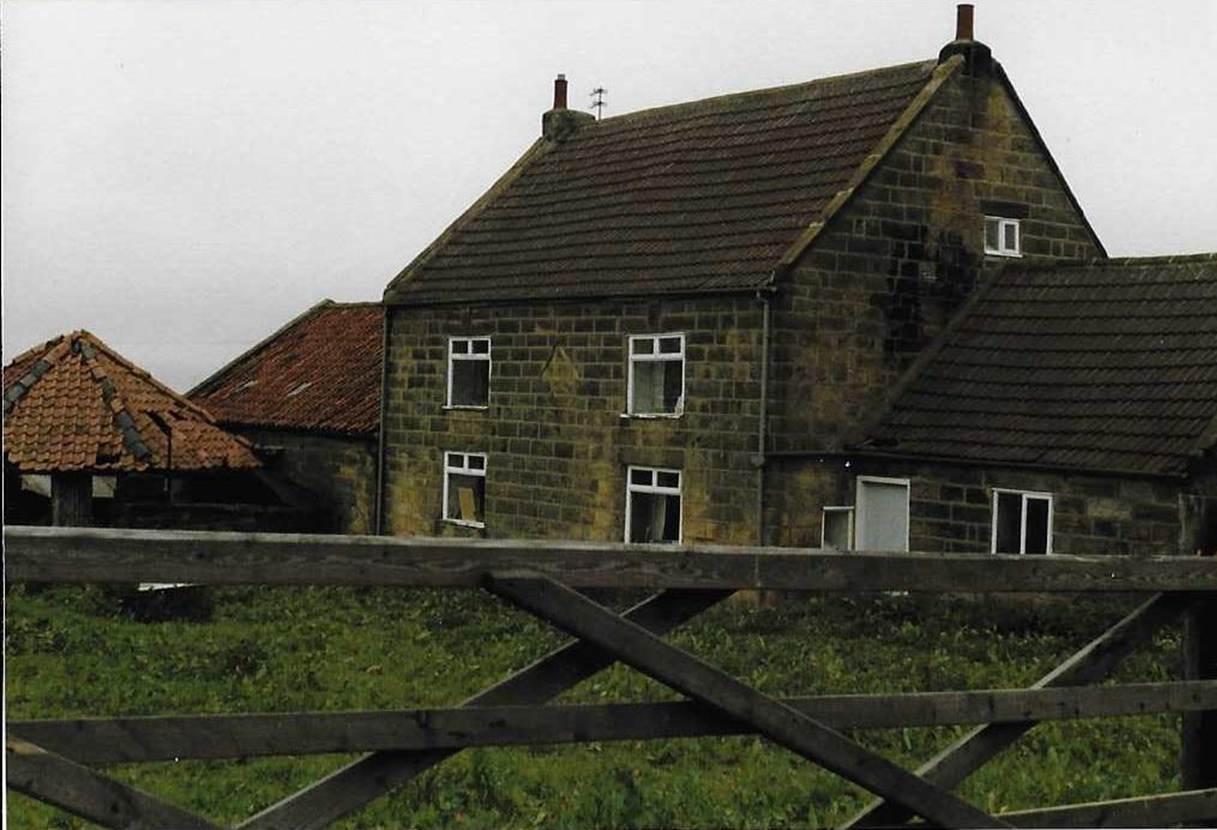
Tidkinhow in 1987 during the visit of
George and Margery Kinsey of Alberta Canada
2016
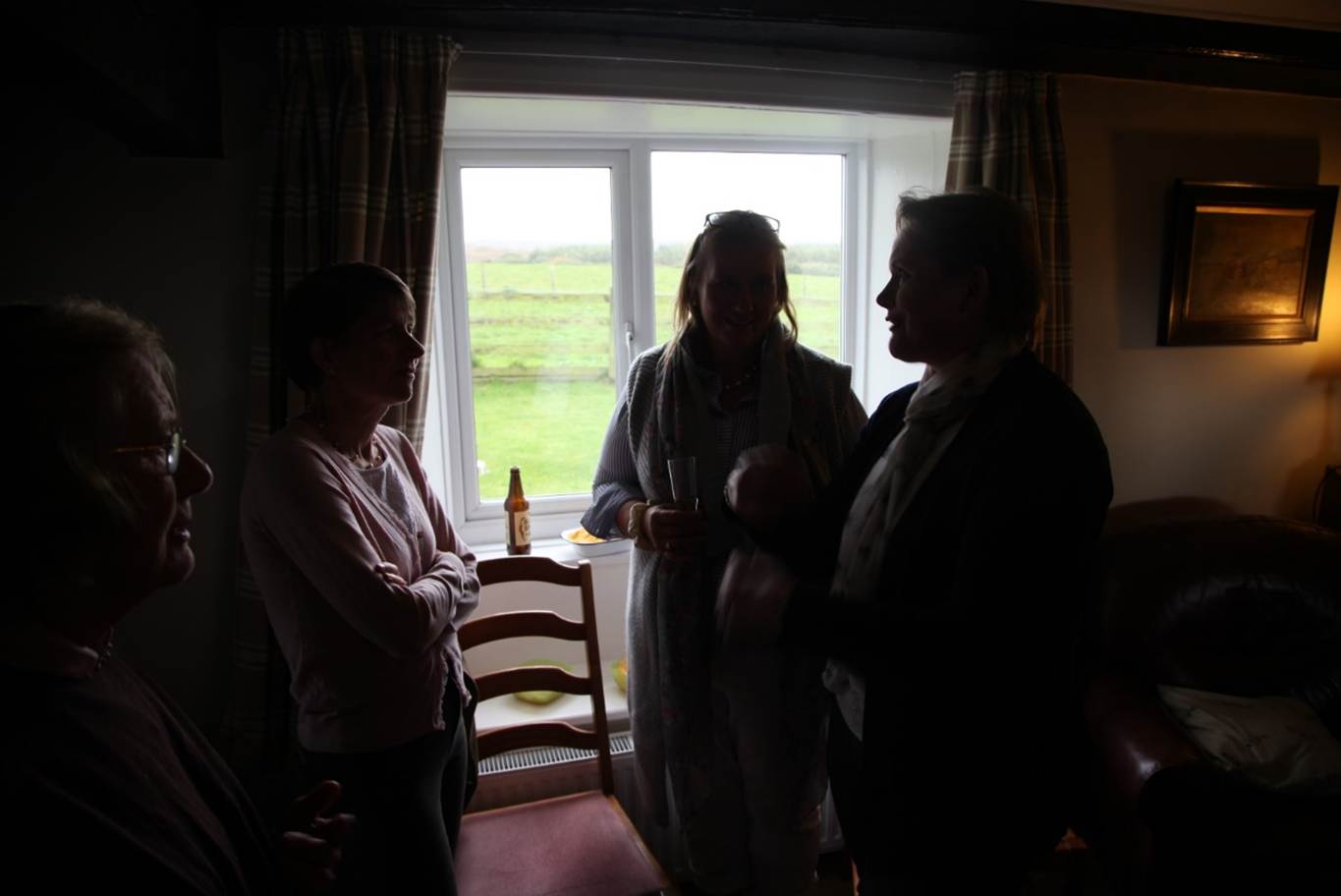
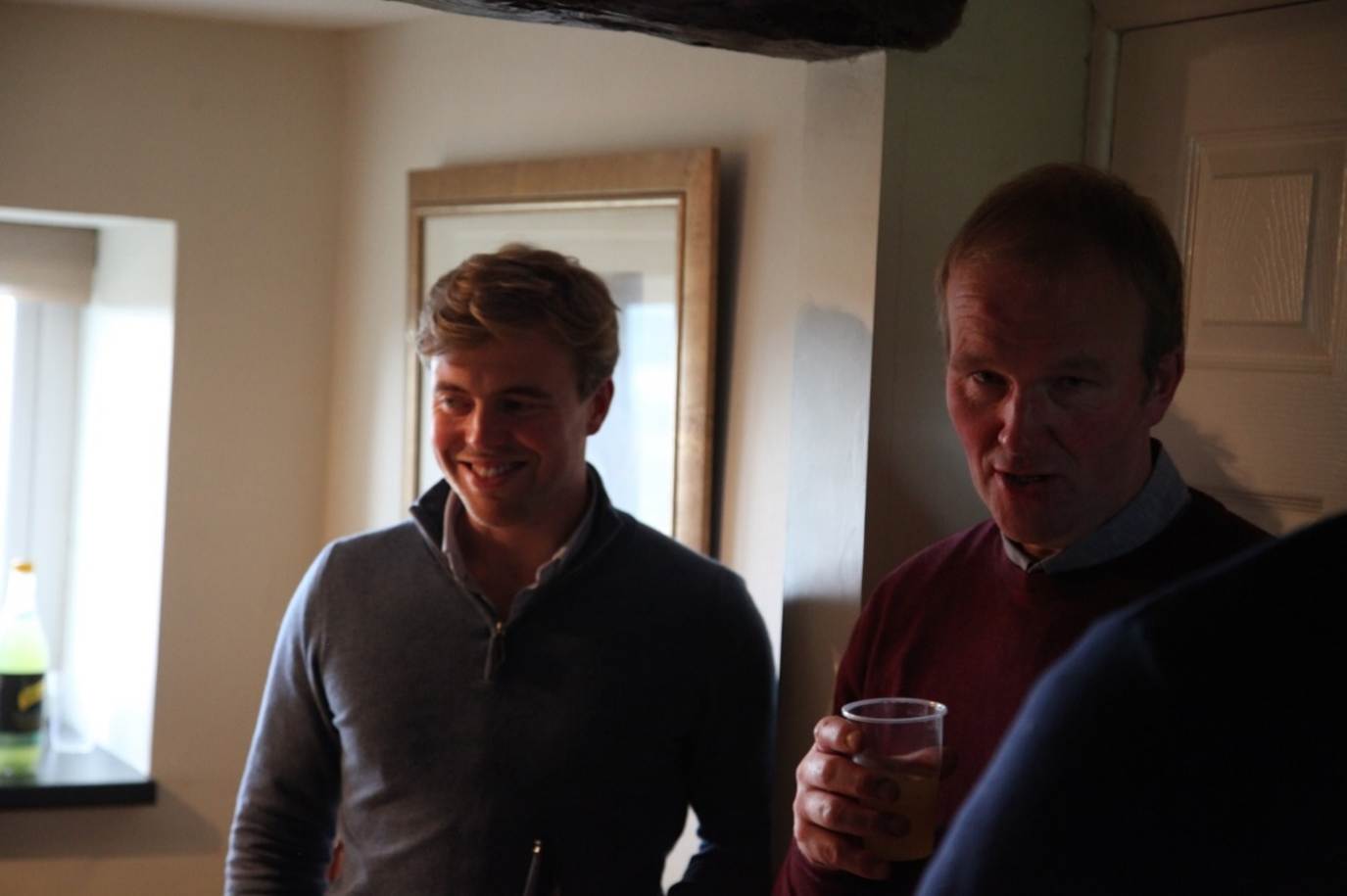
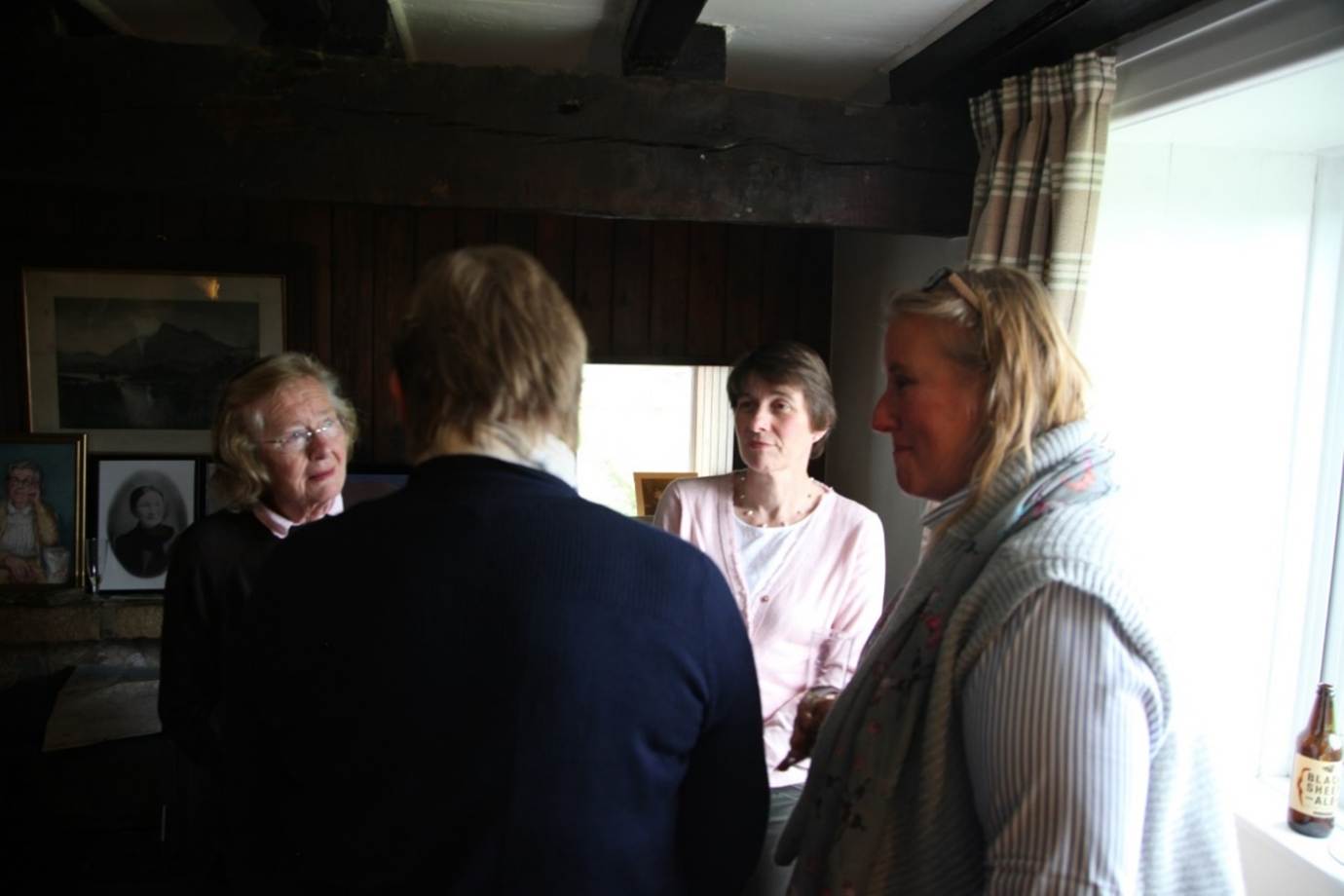
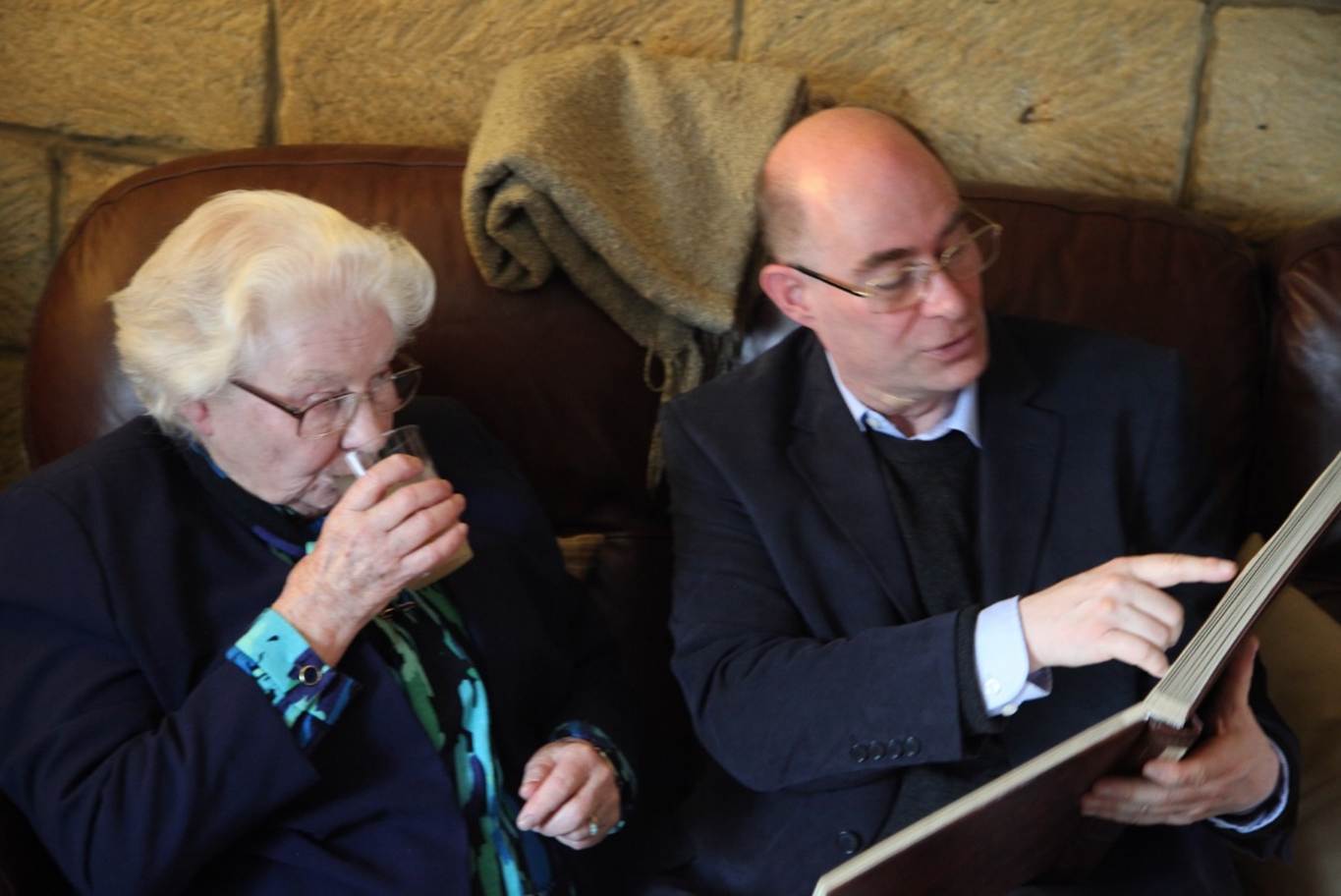
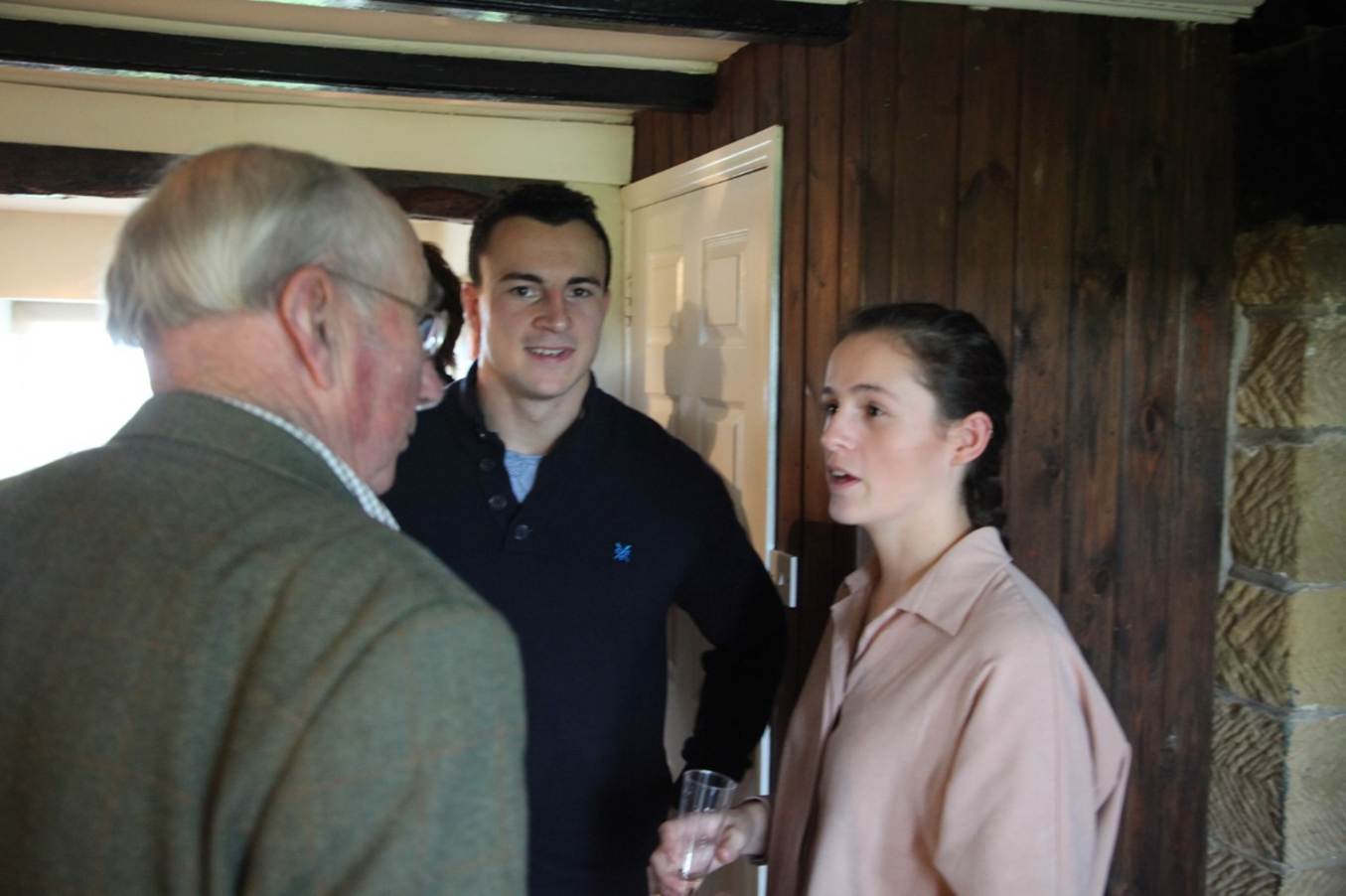
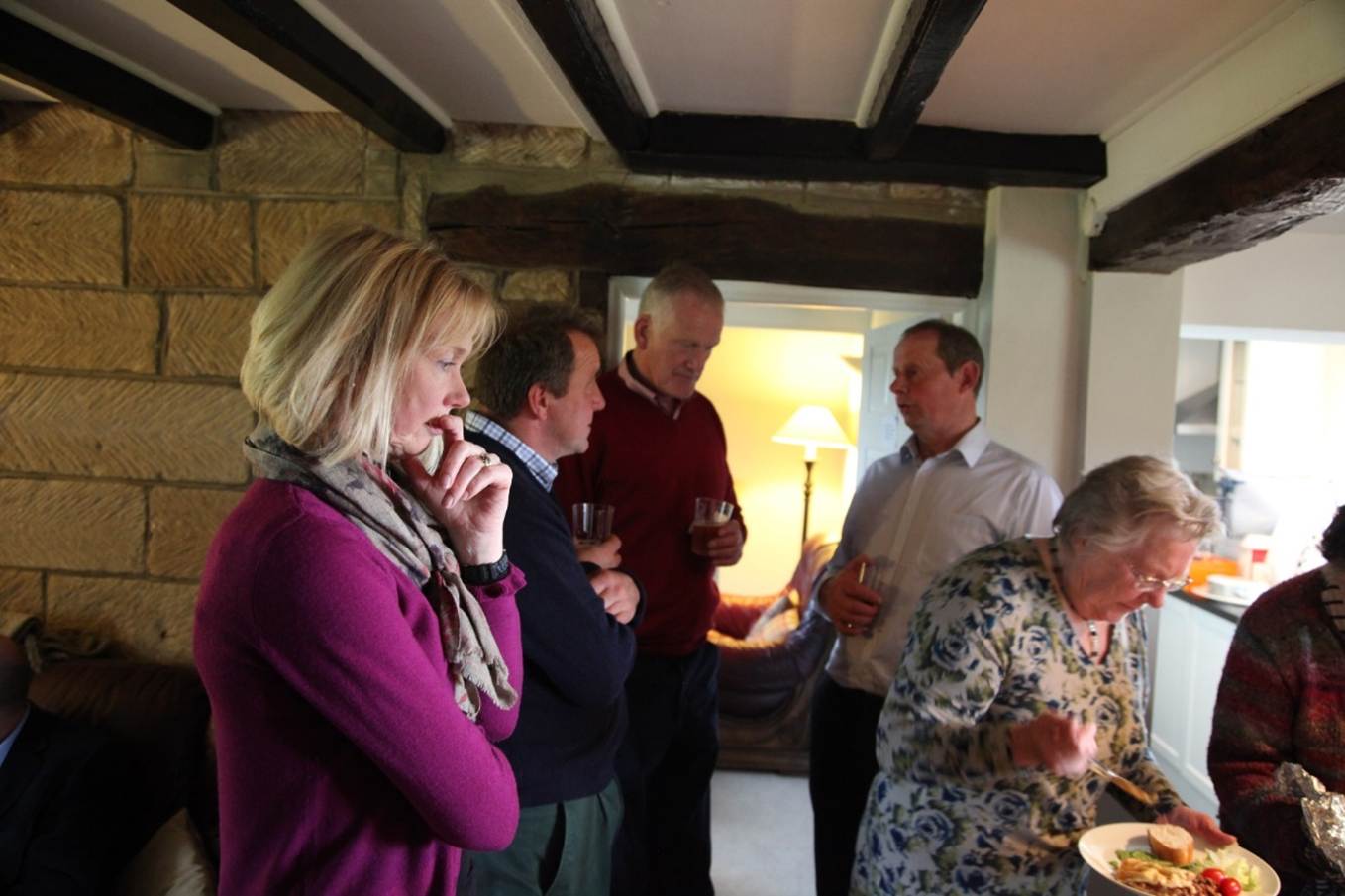
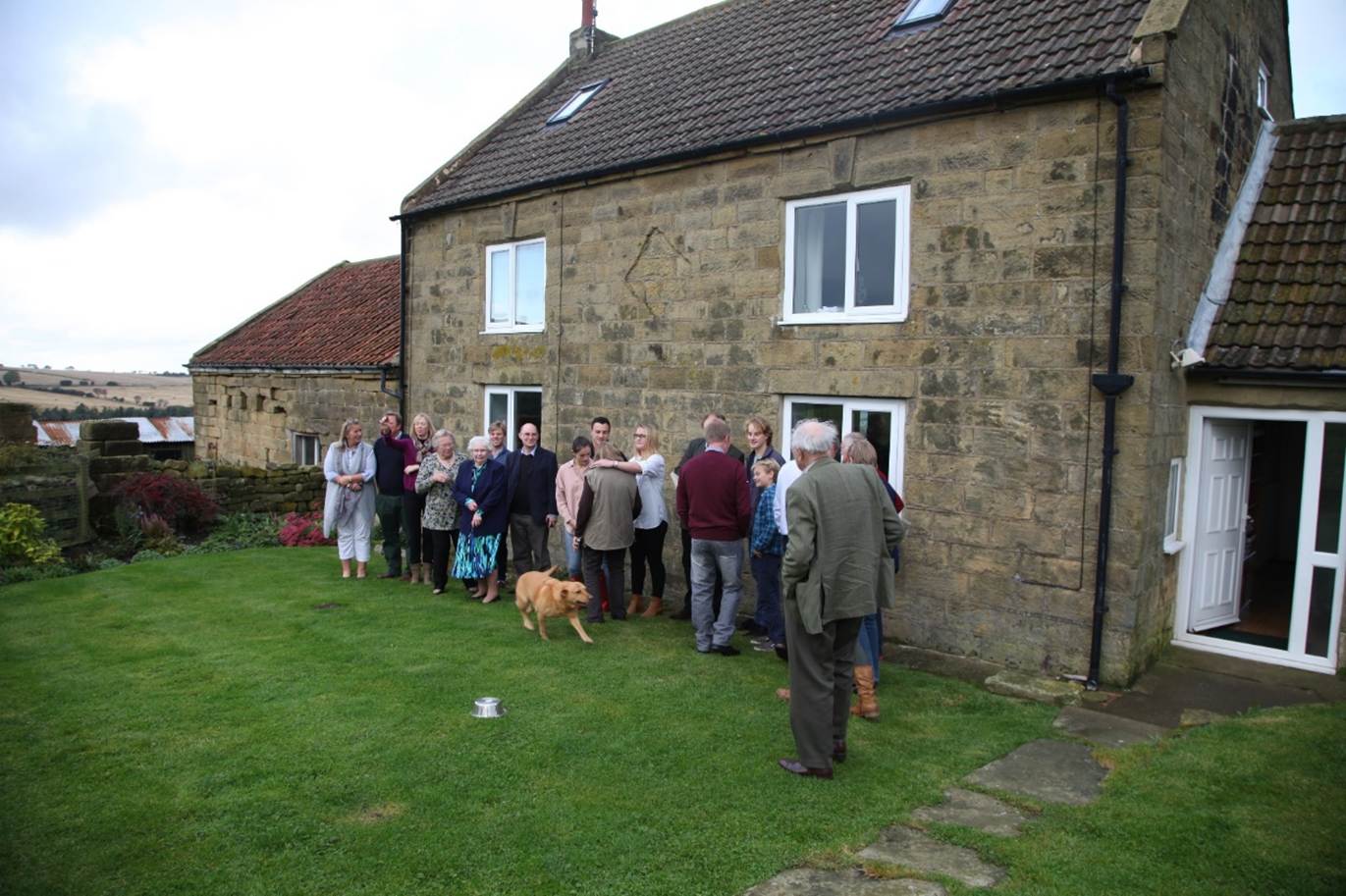
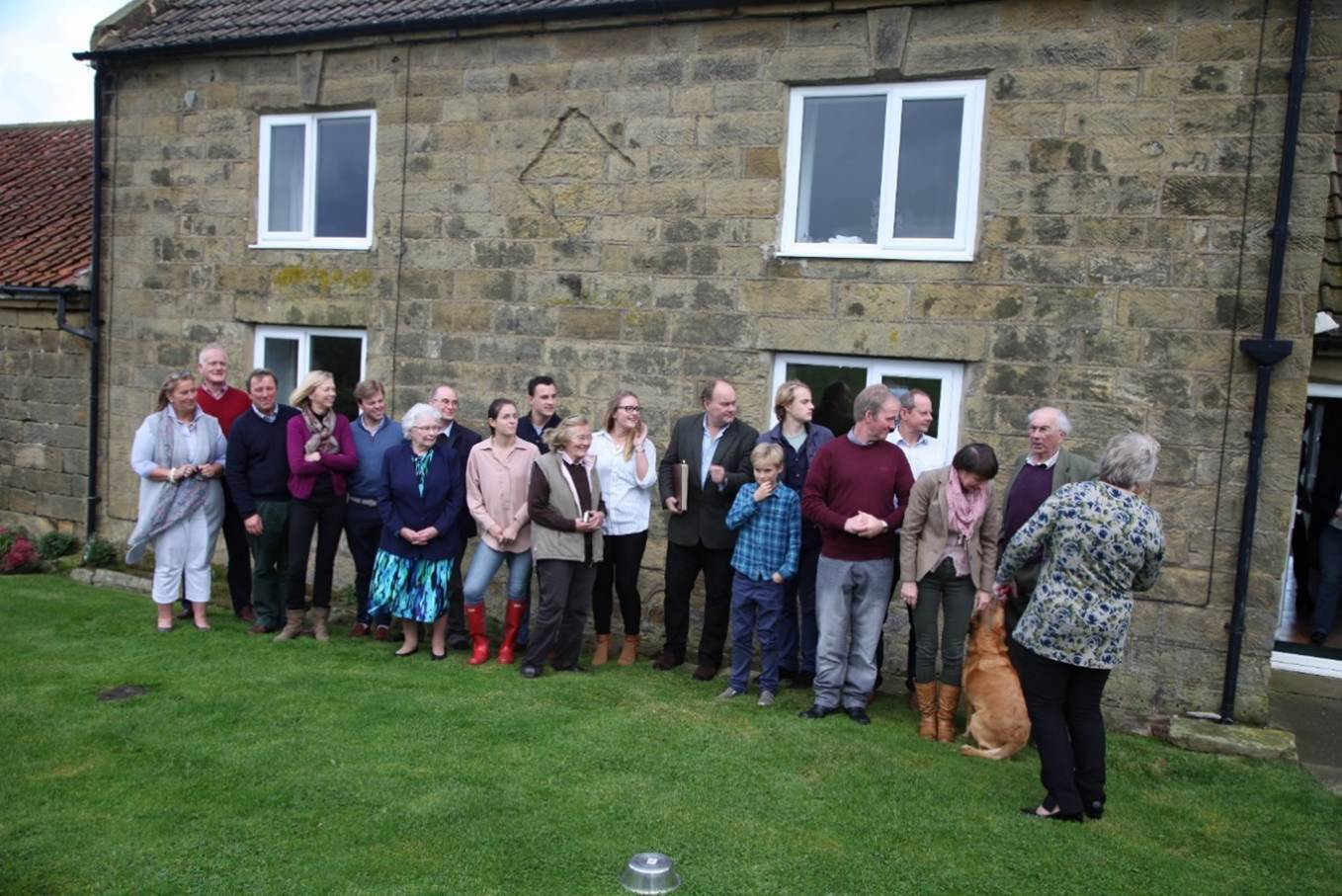
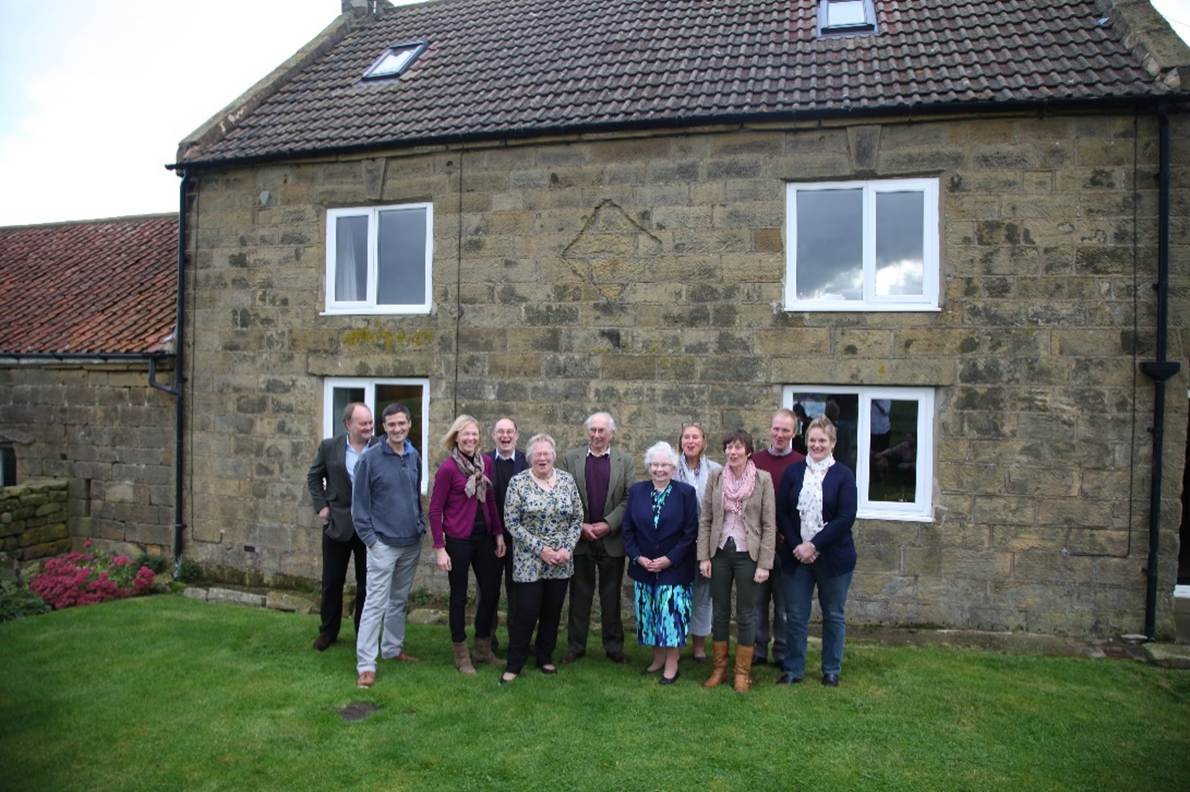
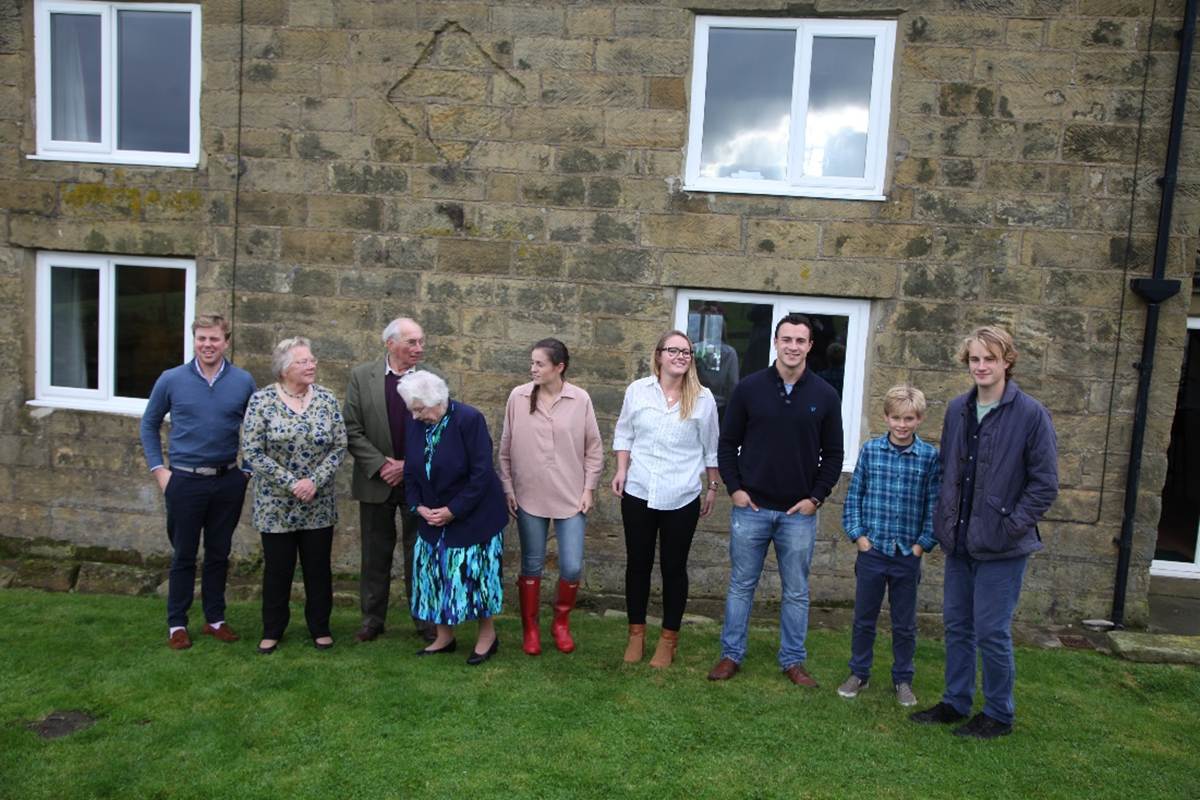
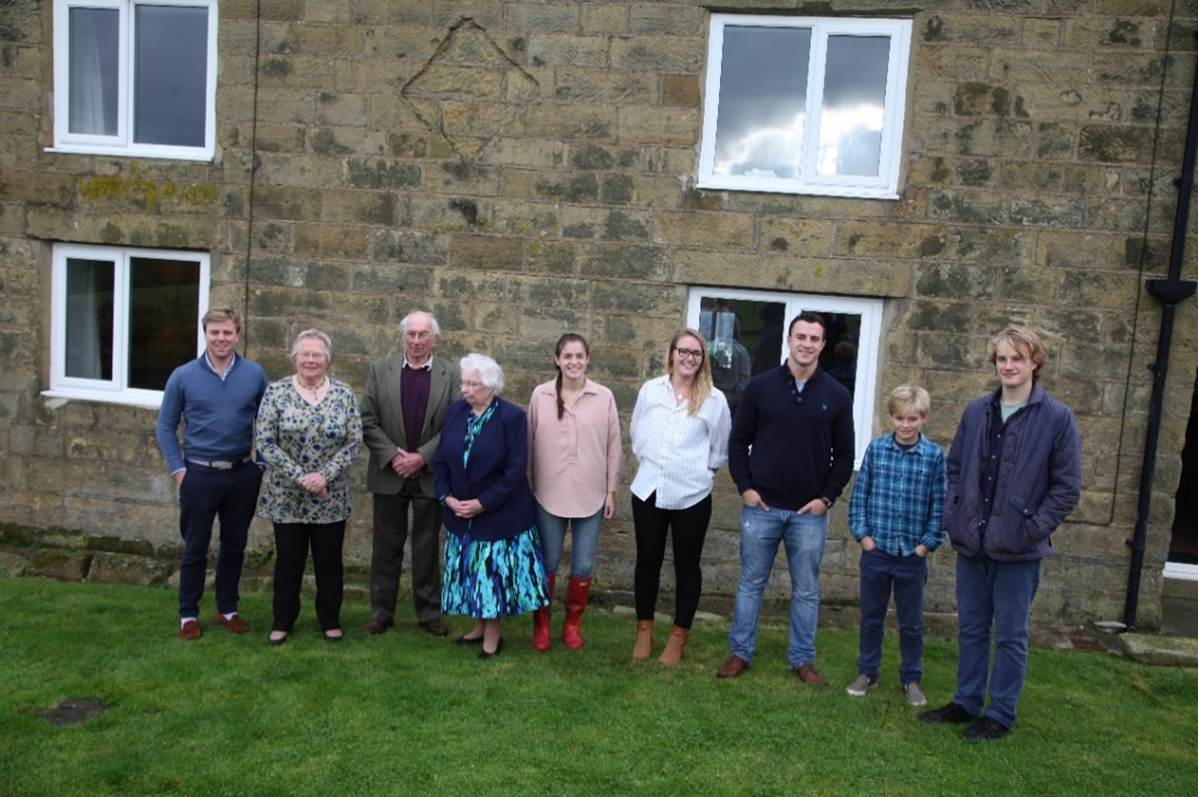
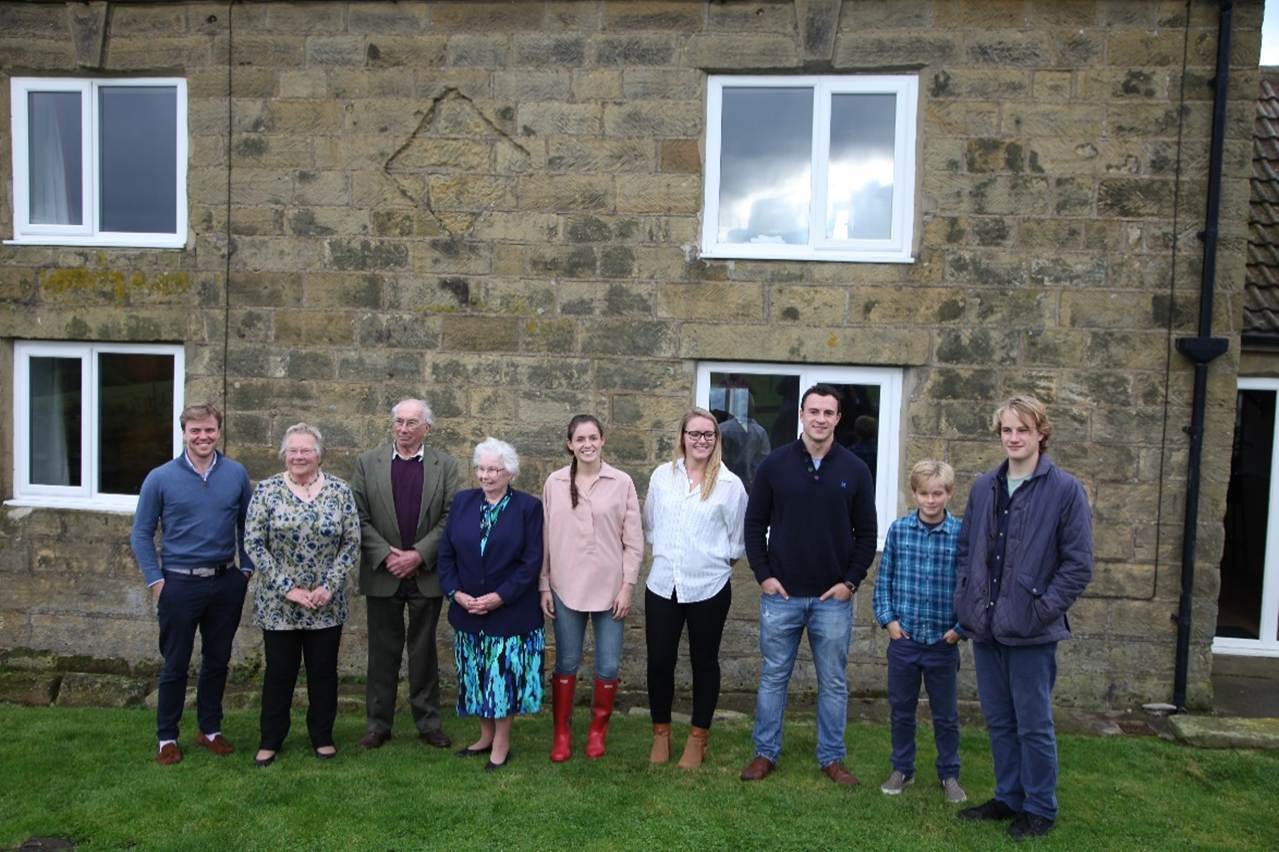
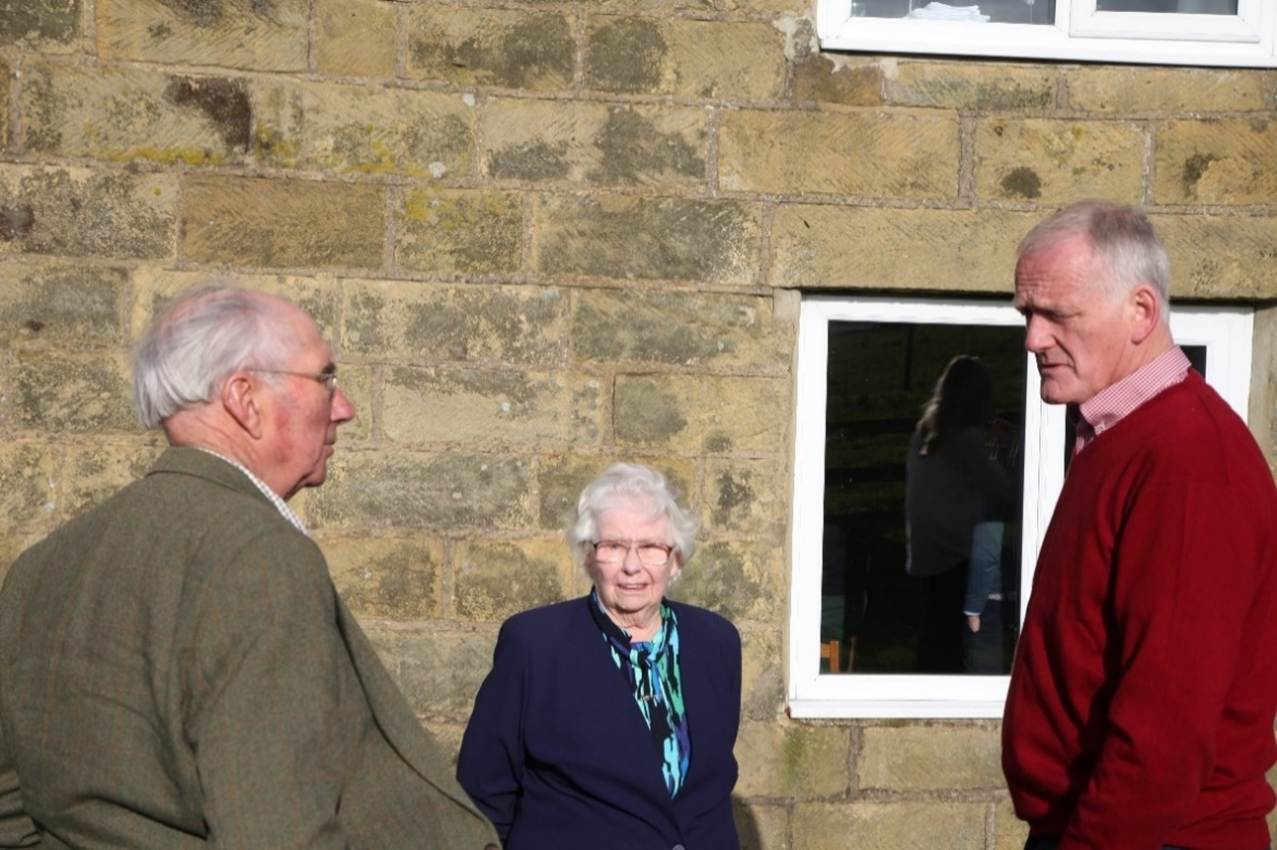
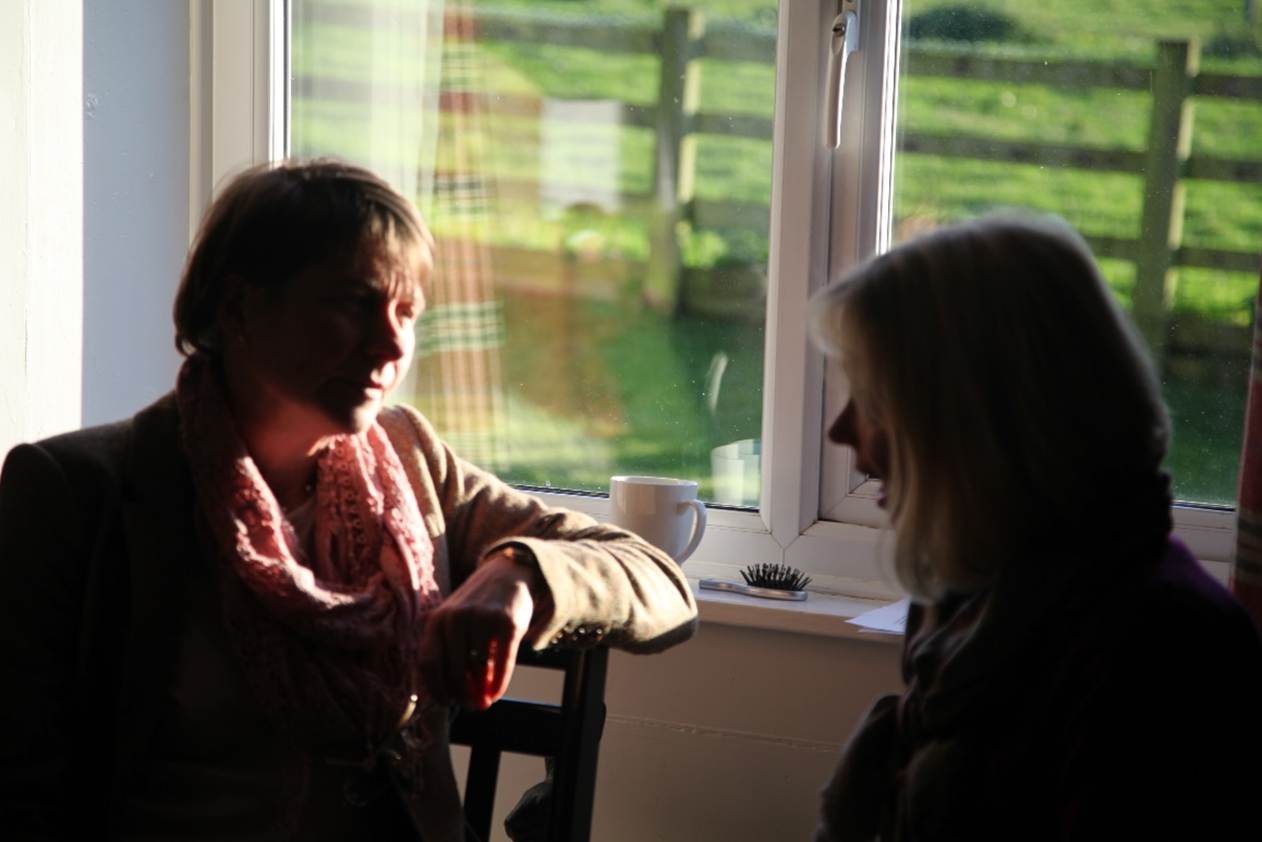
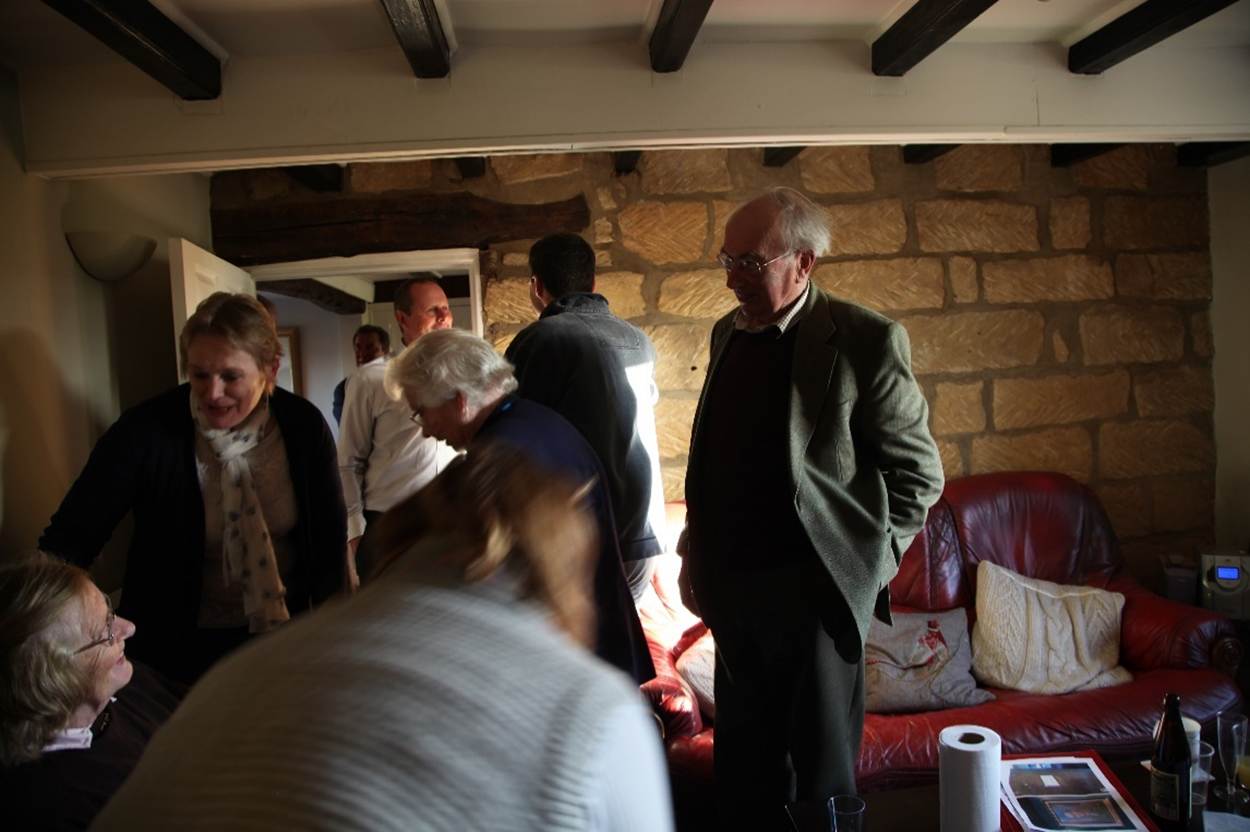
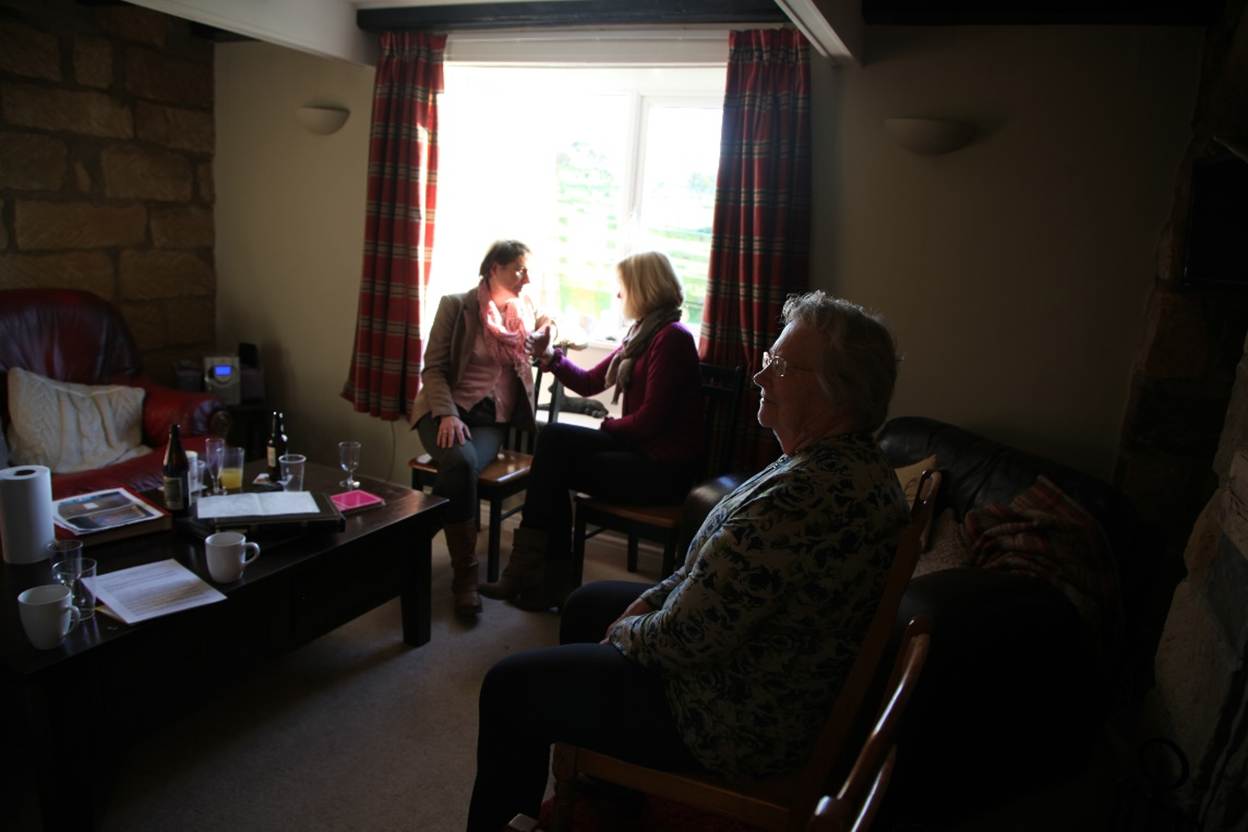
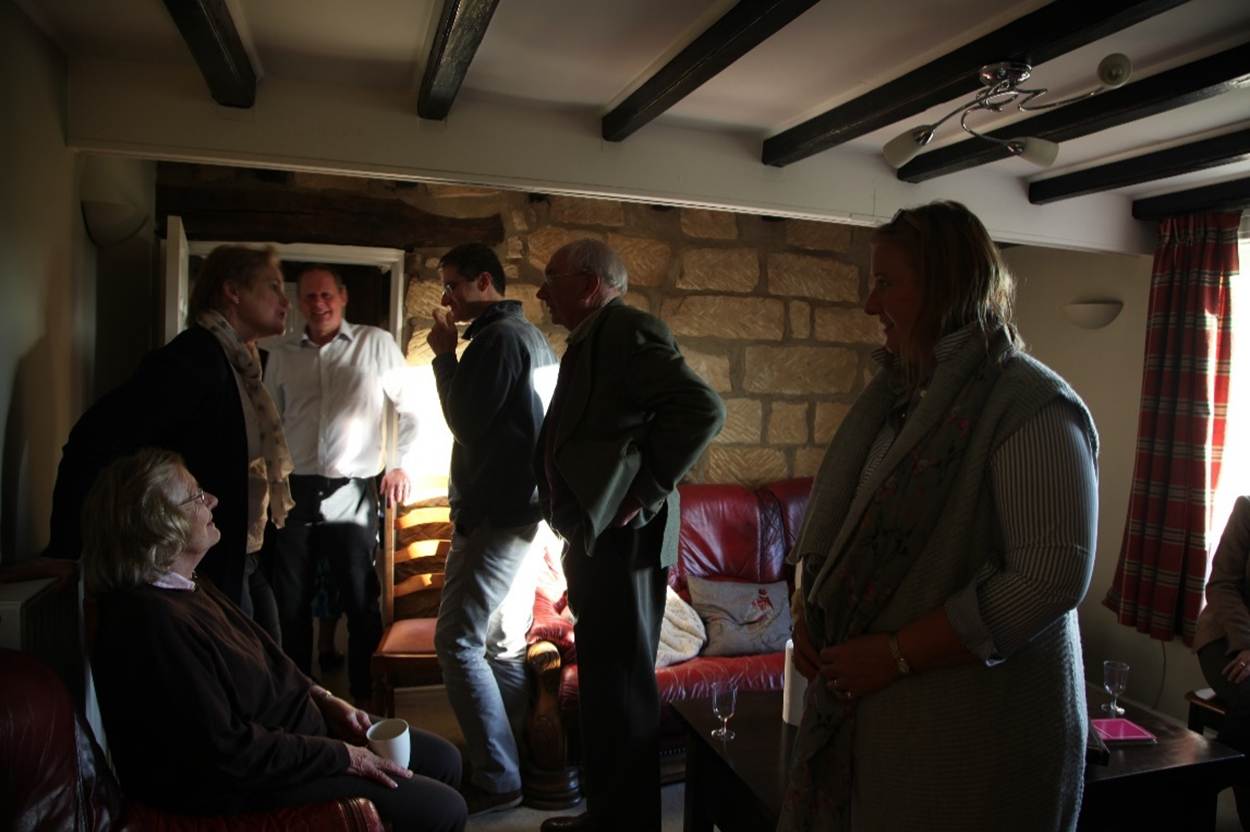
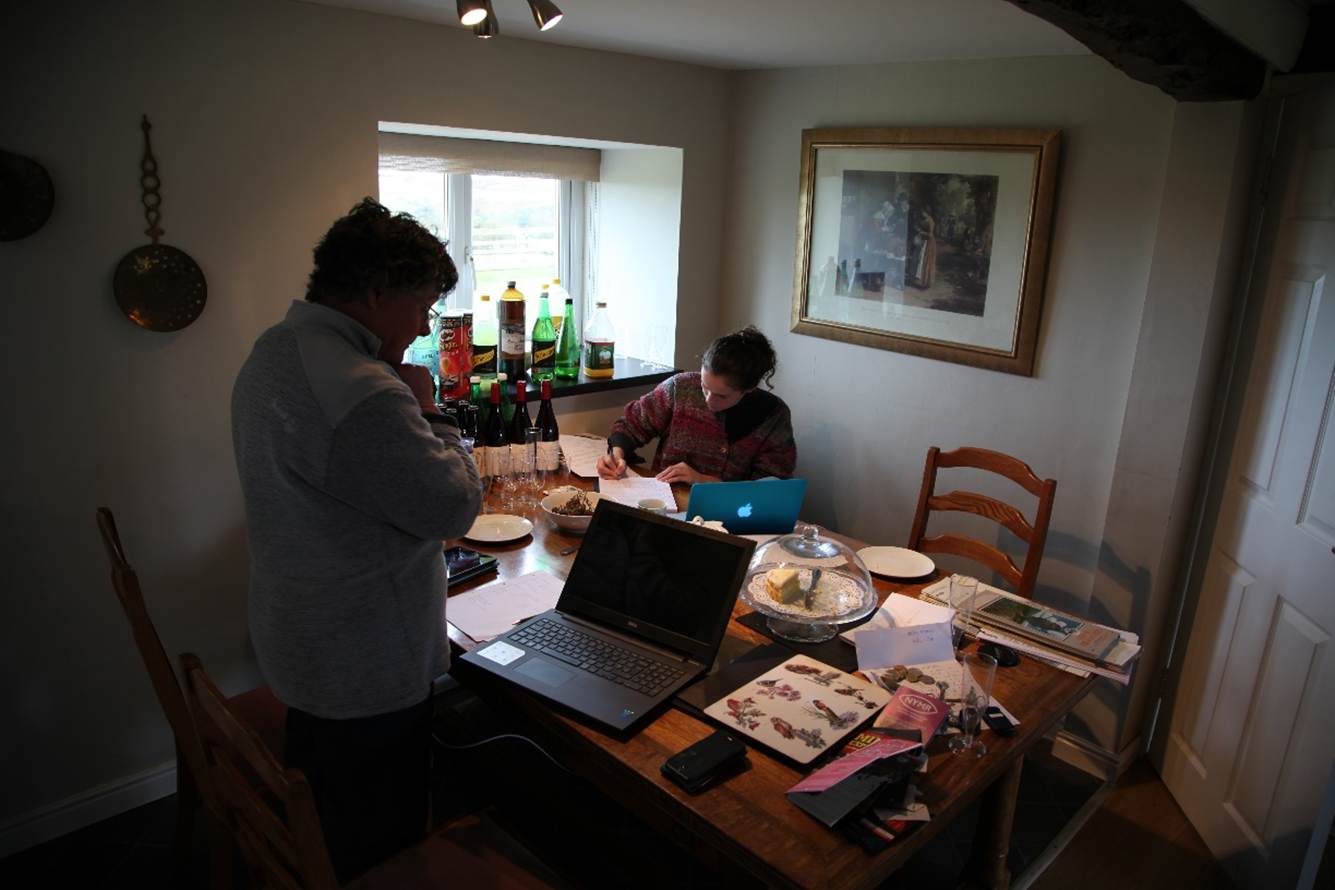
There was a reunion of the descendants
of Alfred Farndale in 2016 at Tidkinhow.
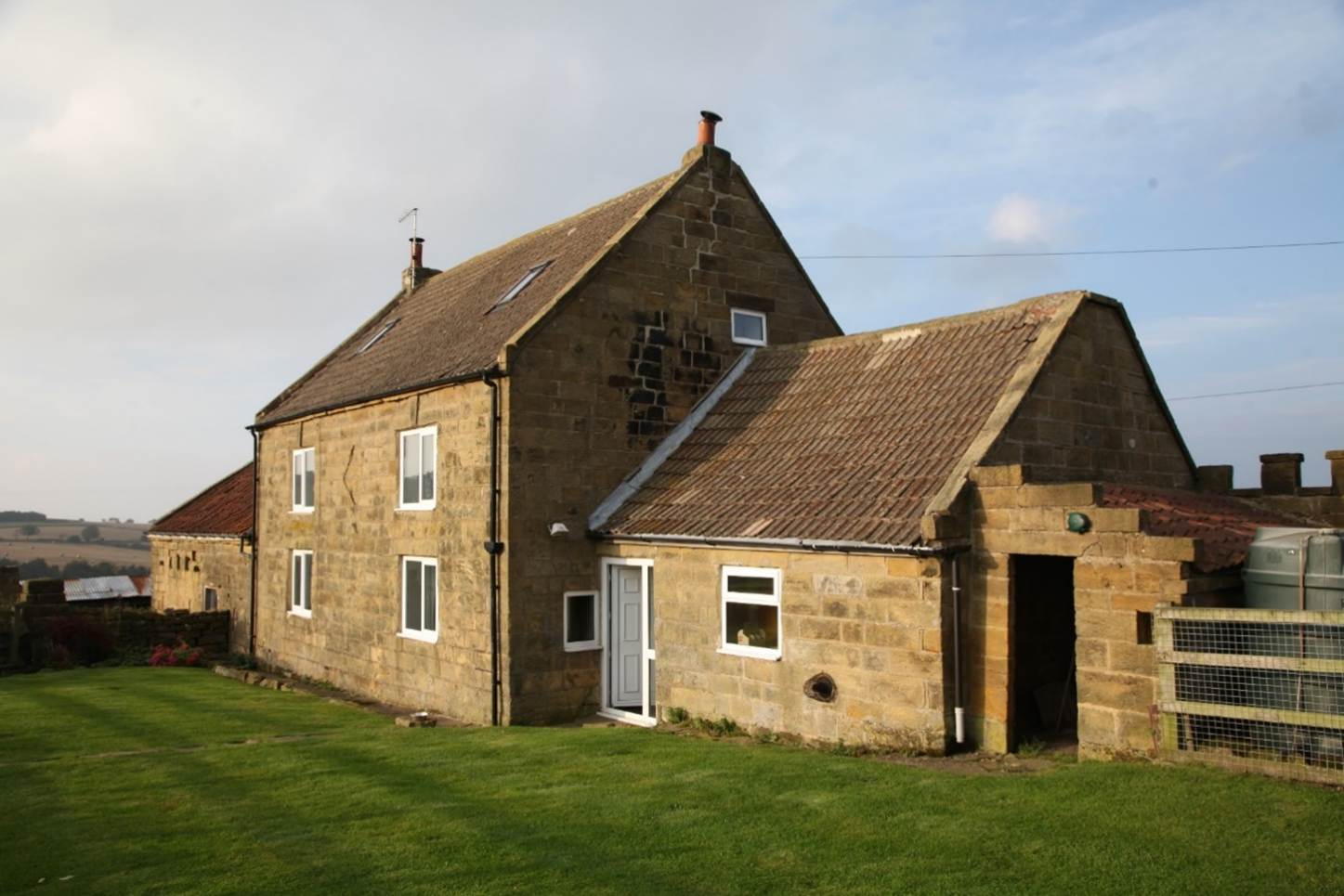
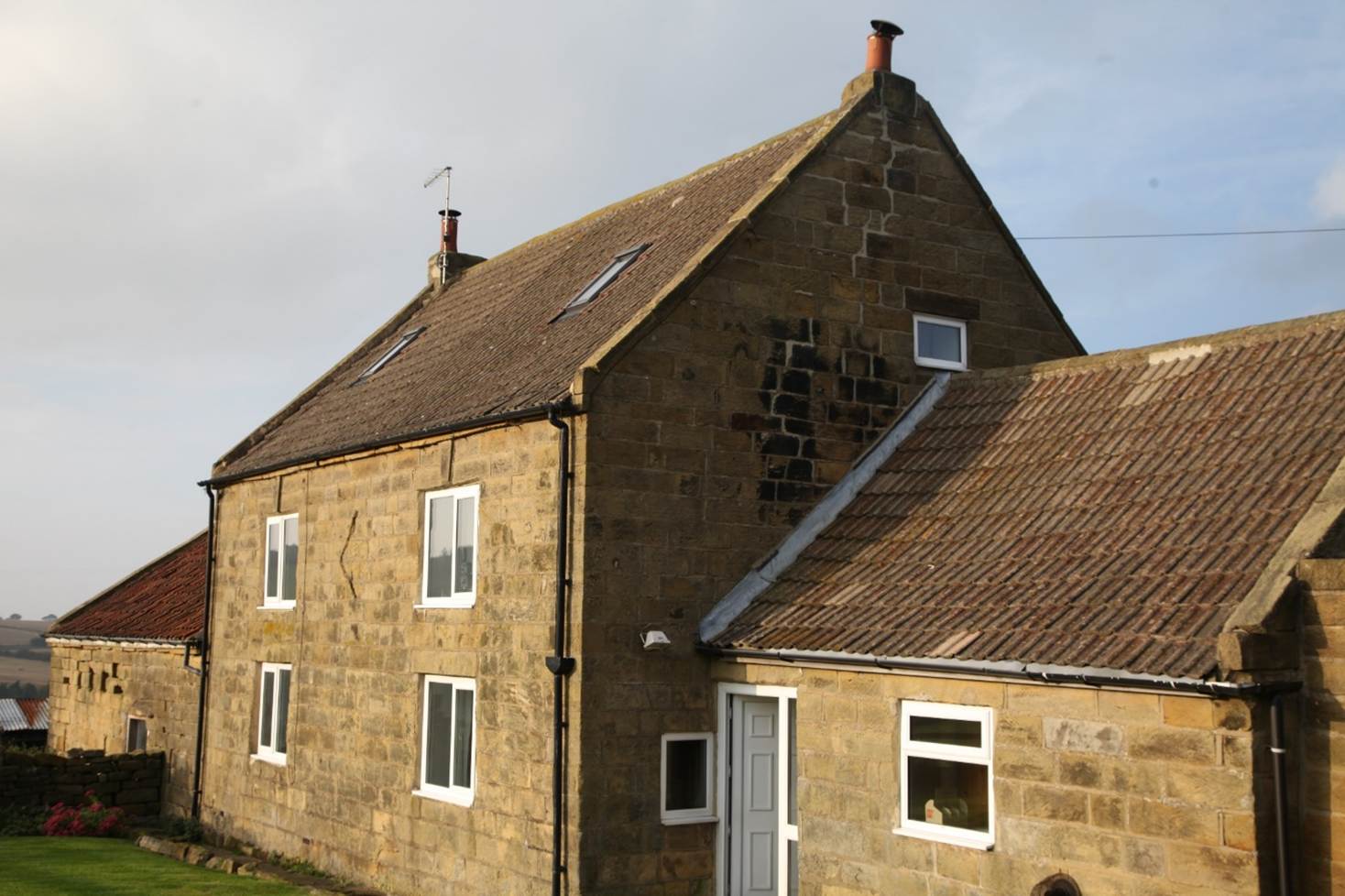
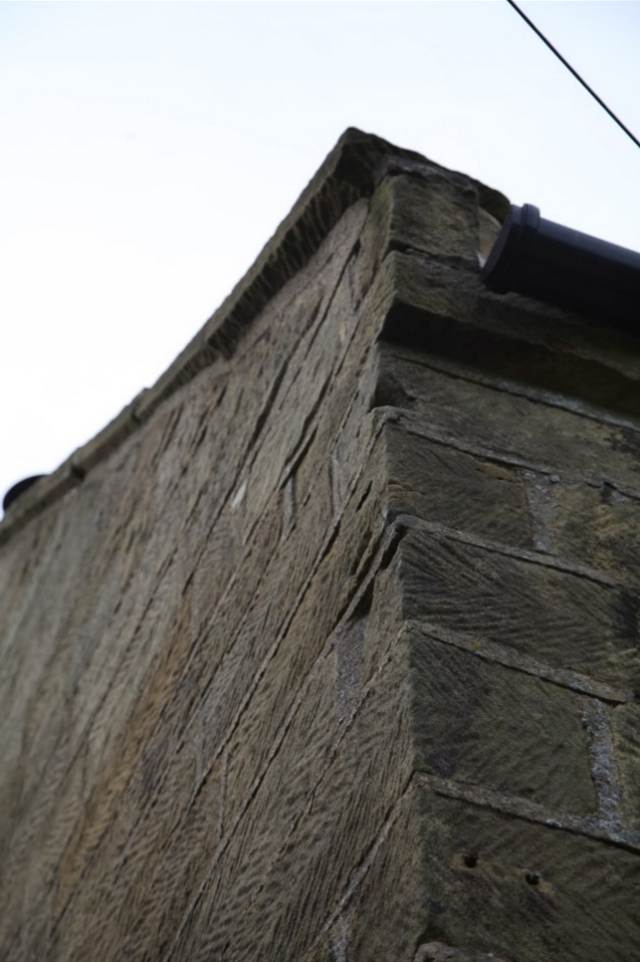
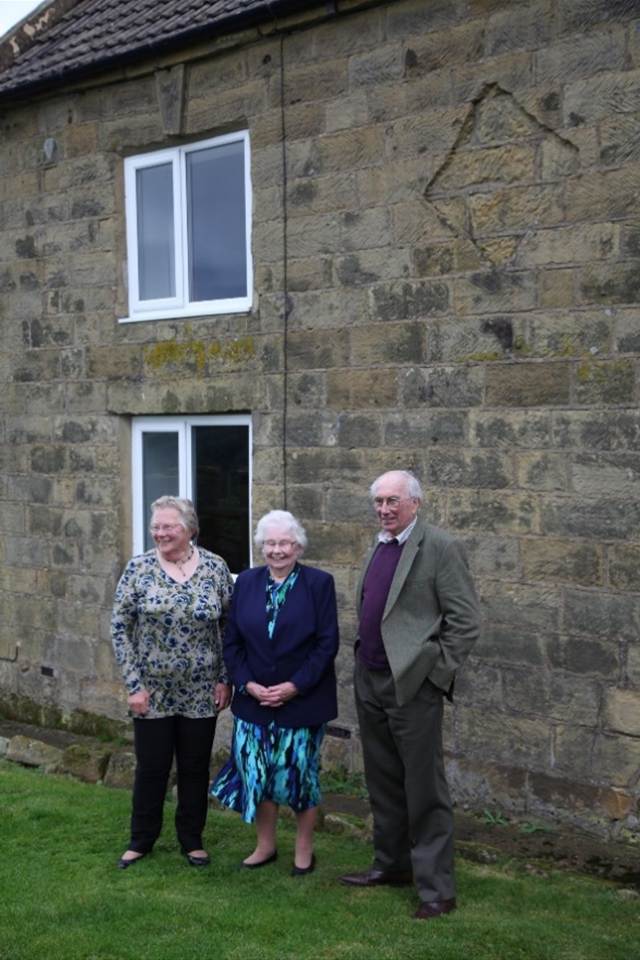
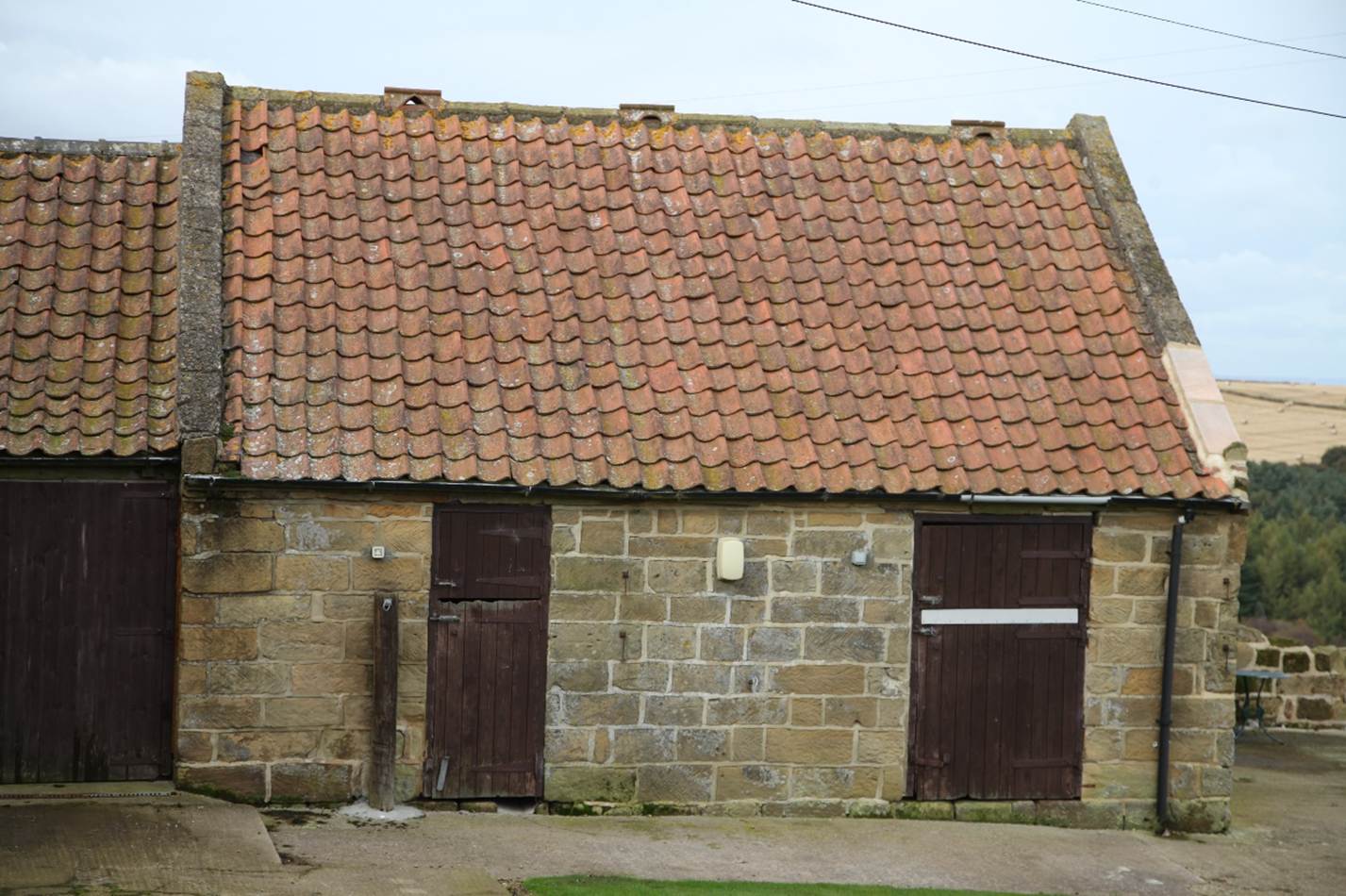
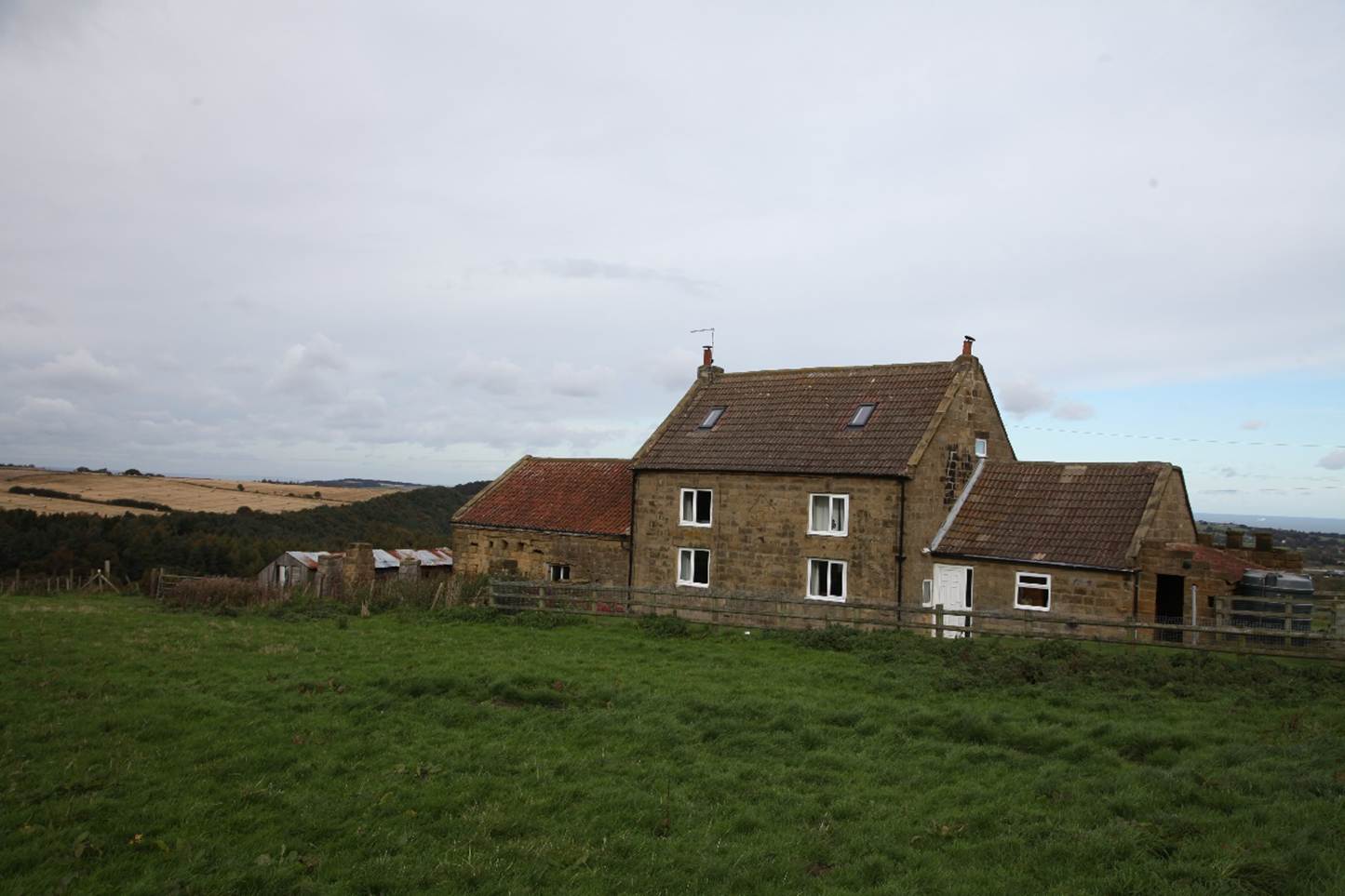
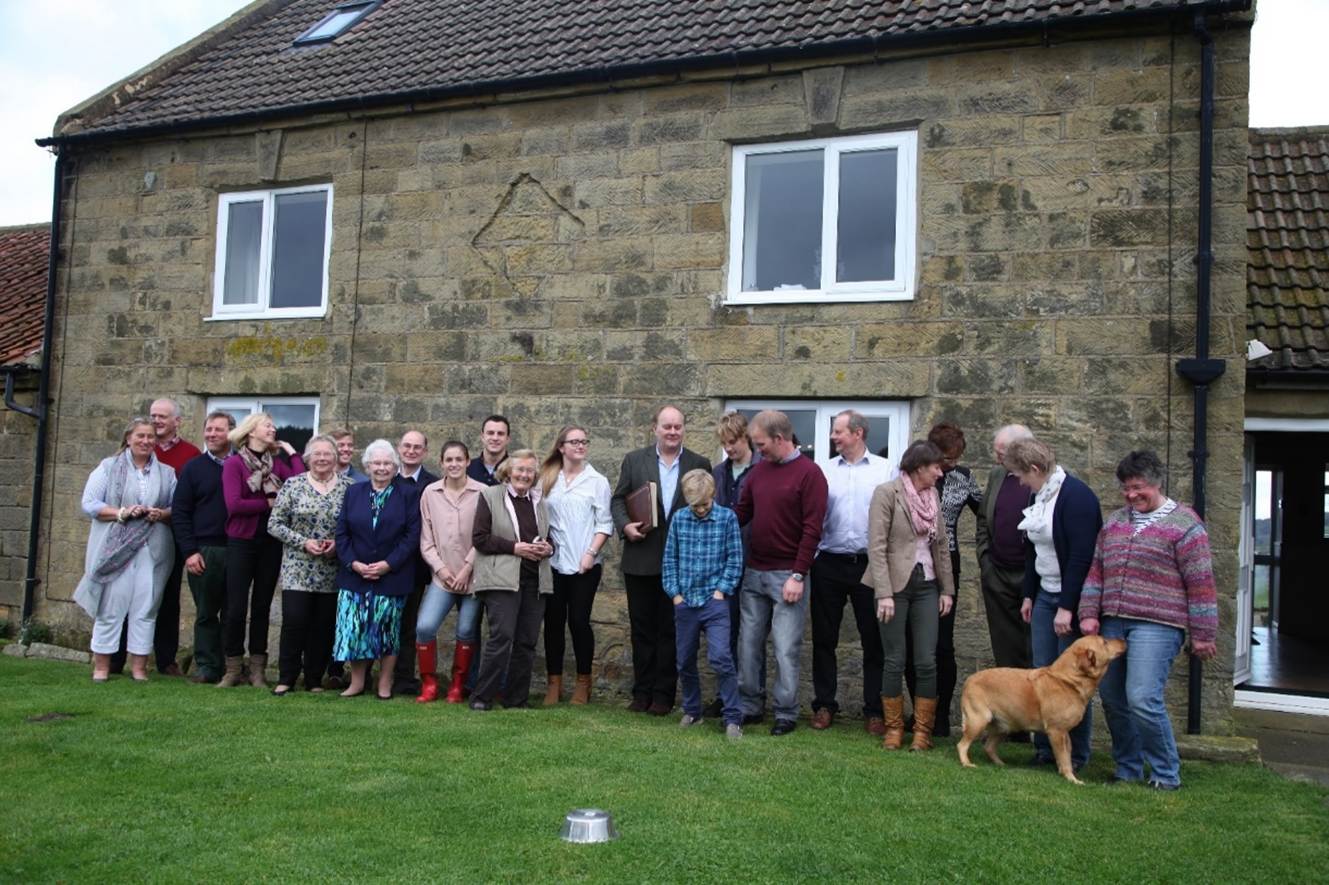
Martin Farndale’s descendants
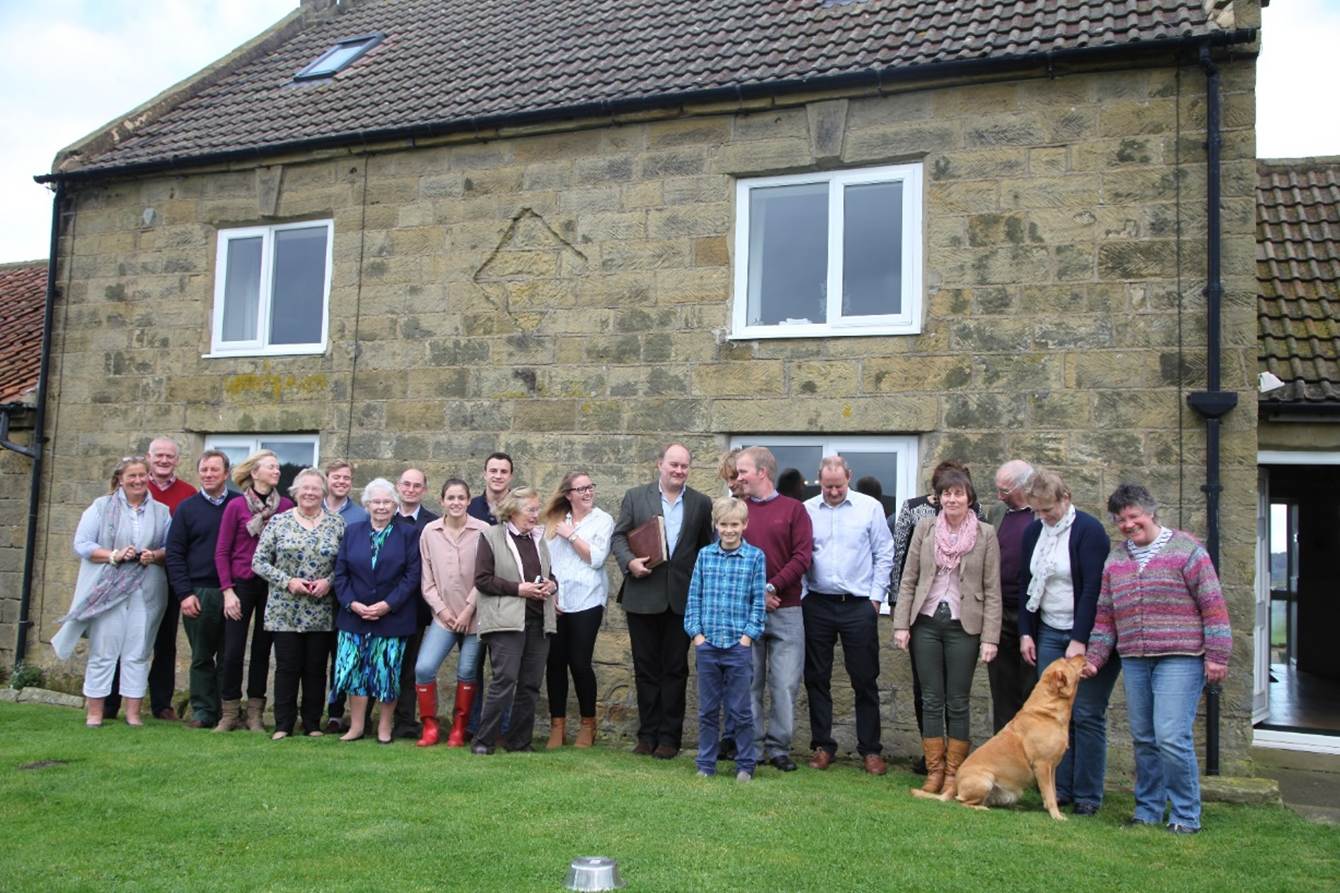
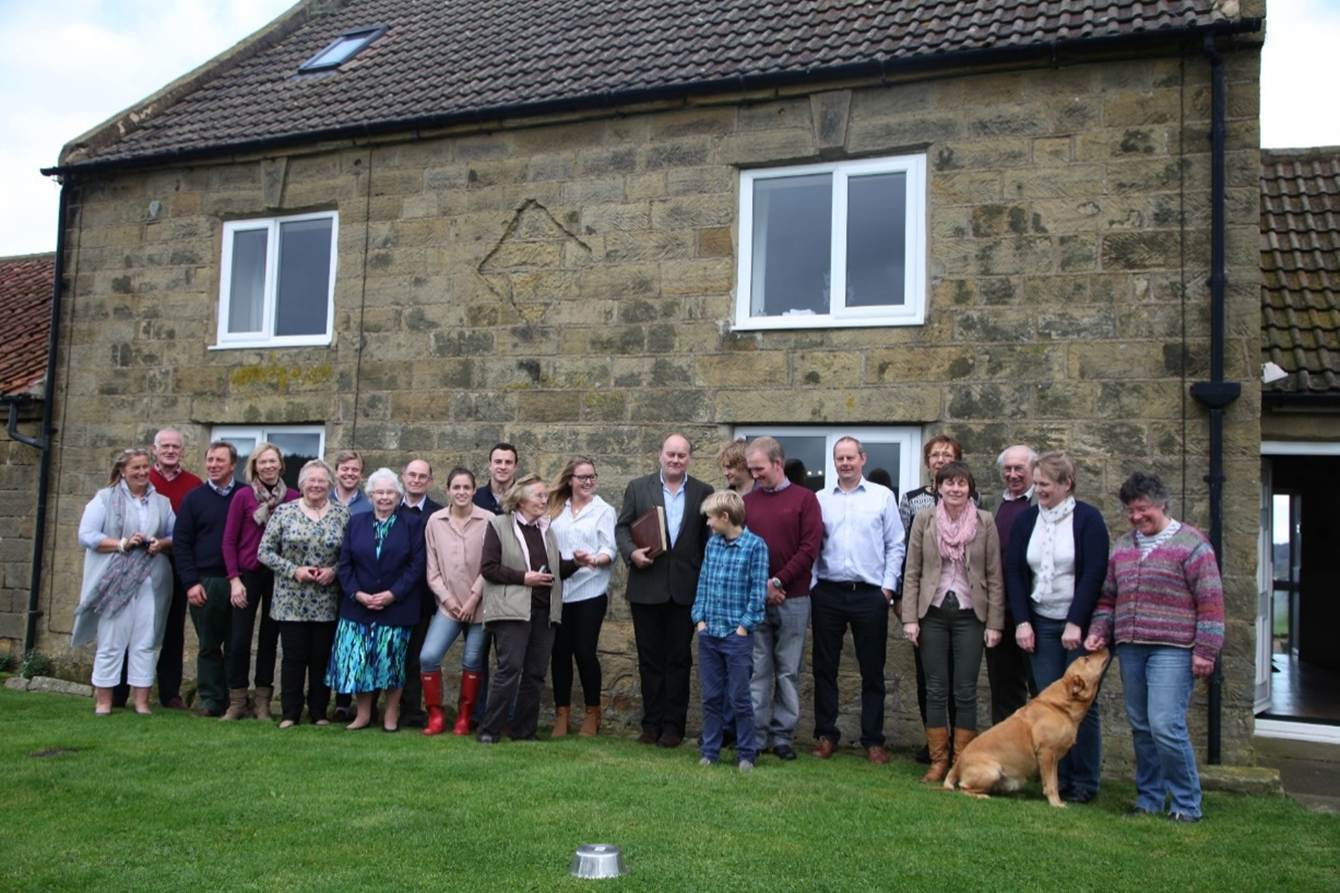
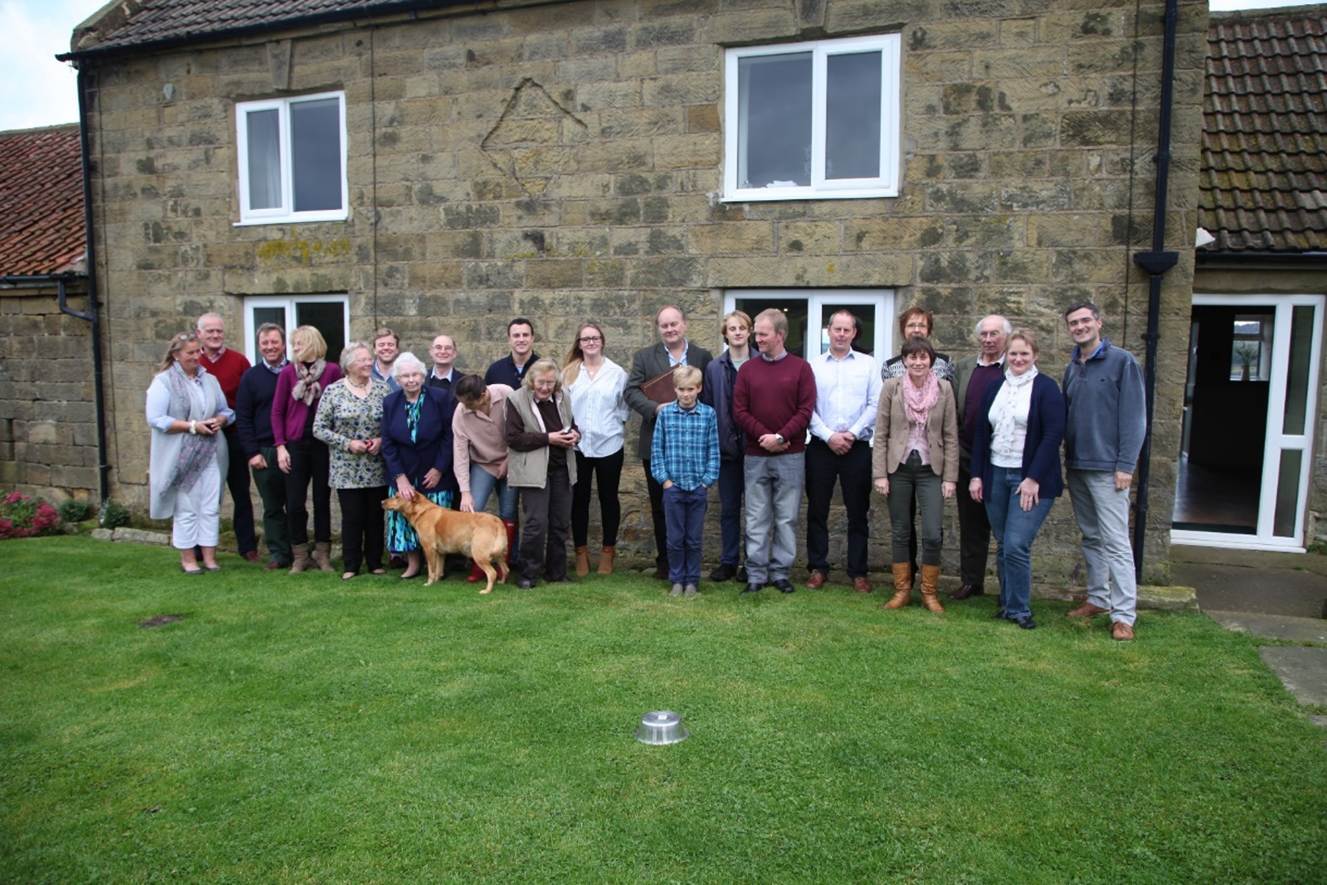
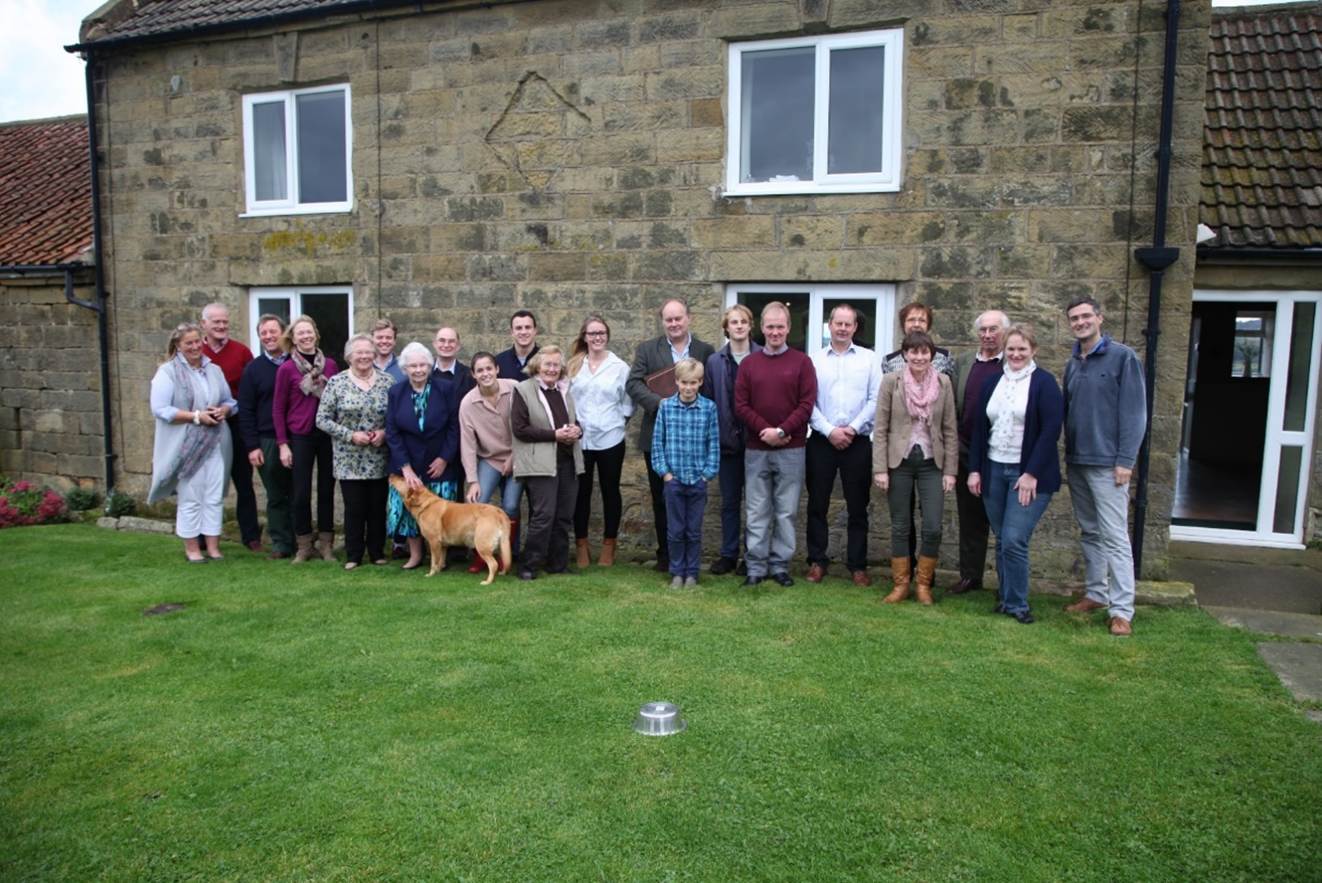
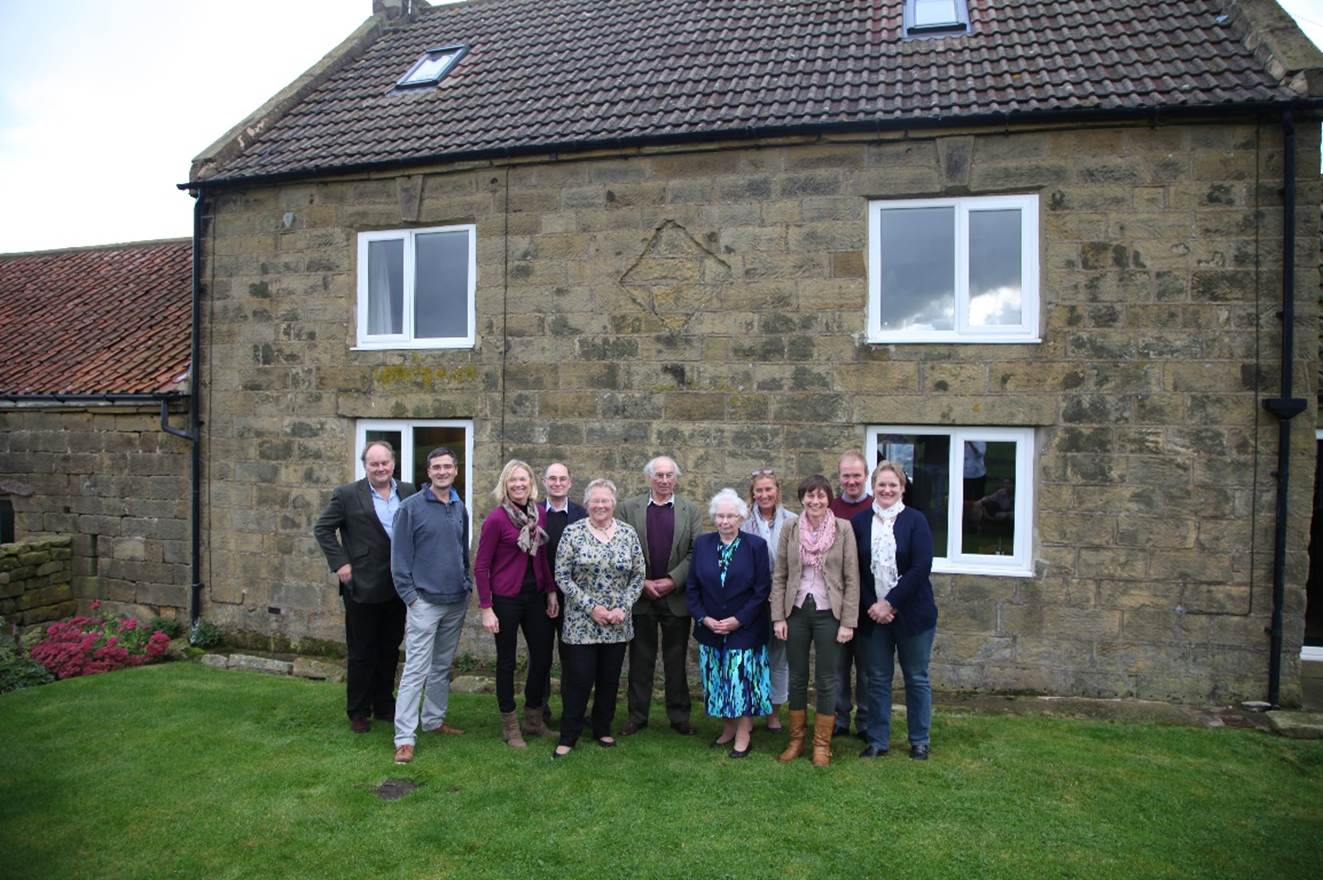
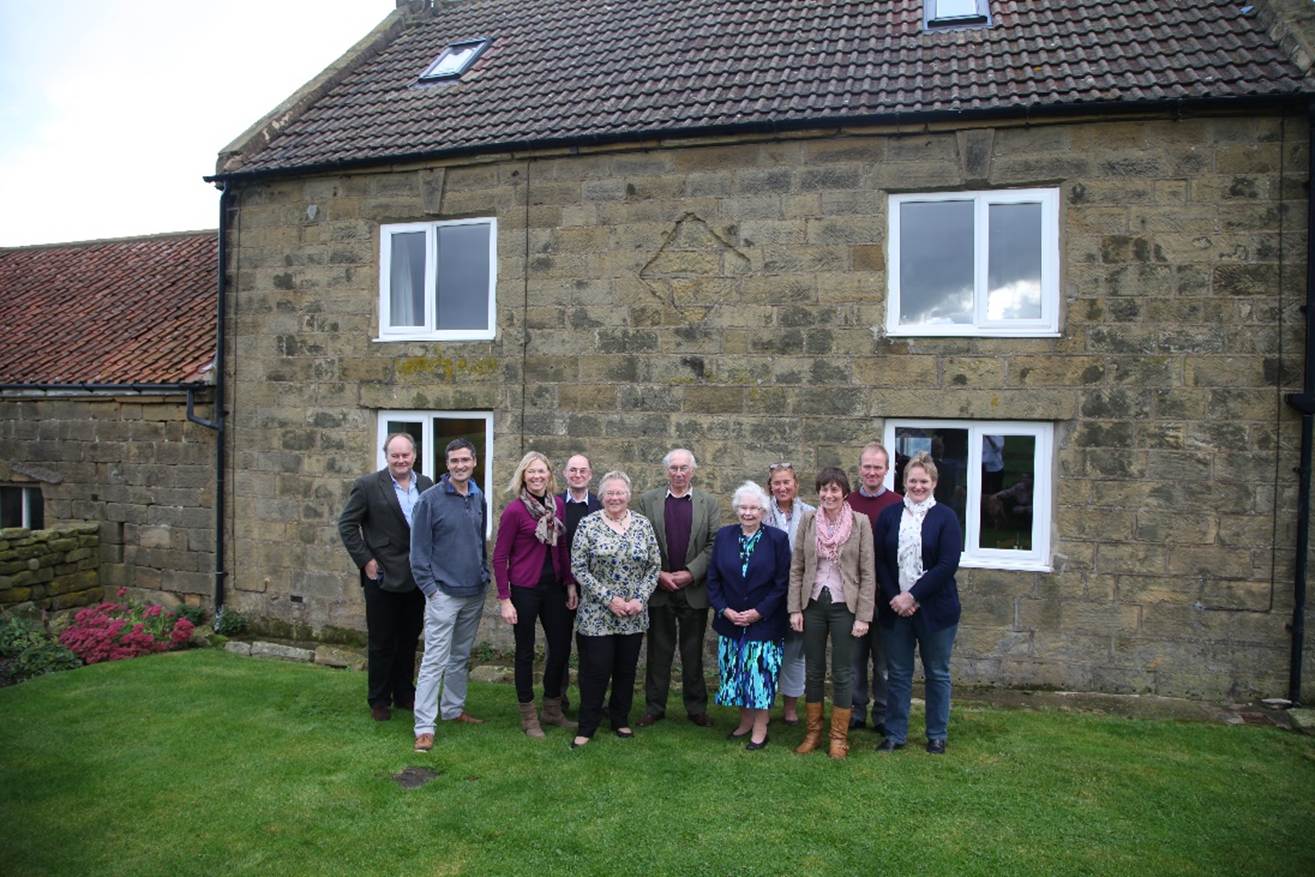
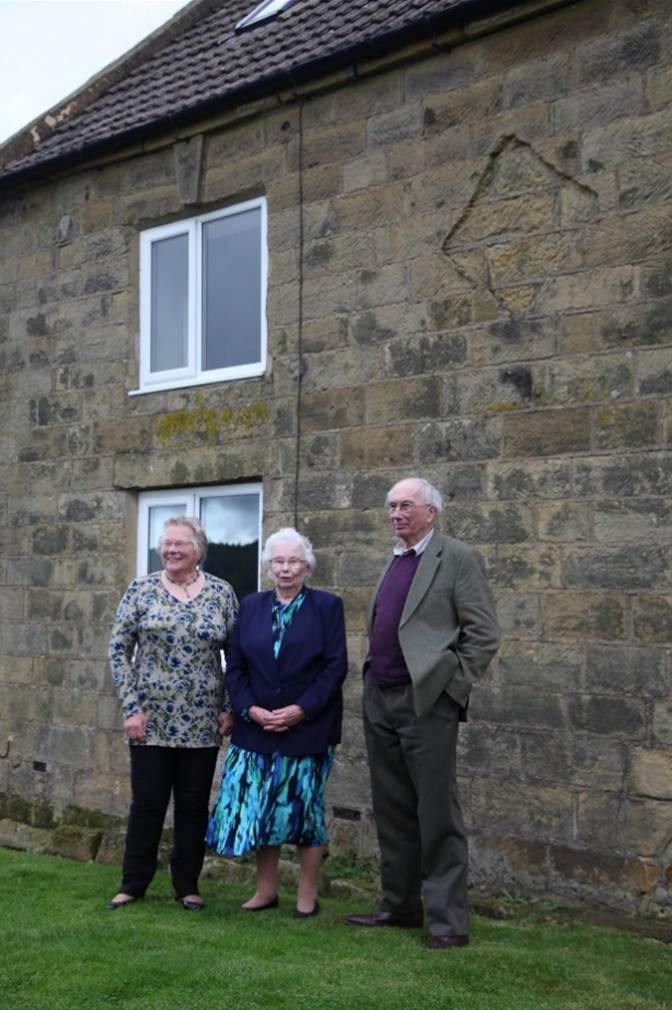
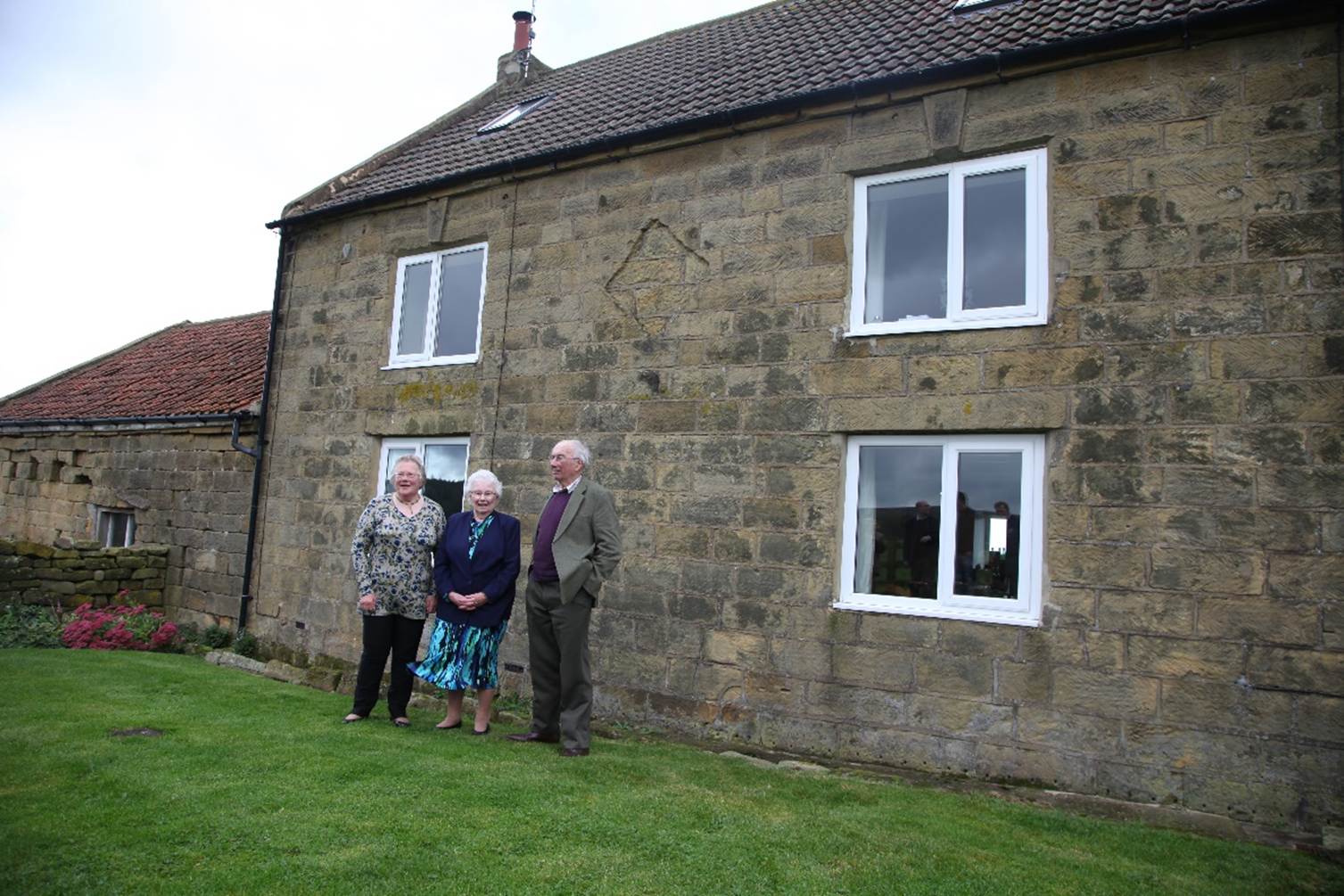
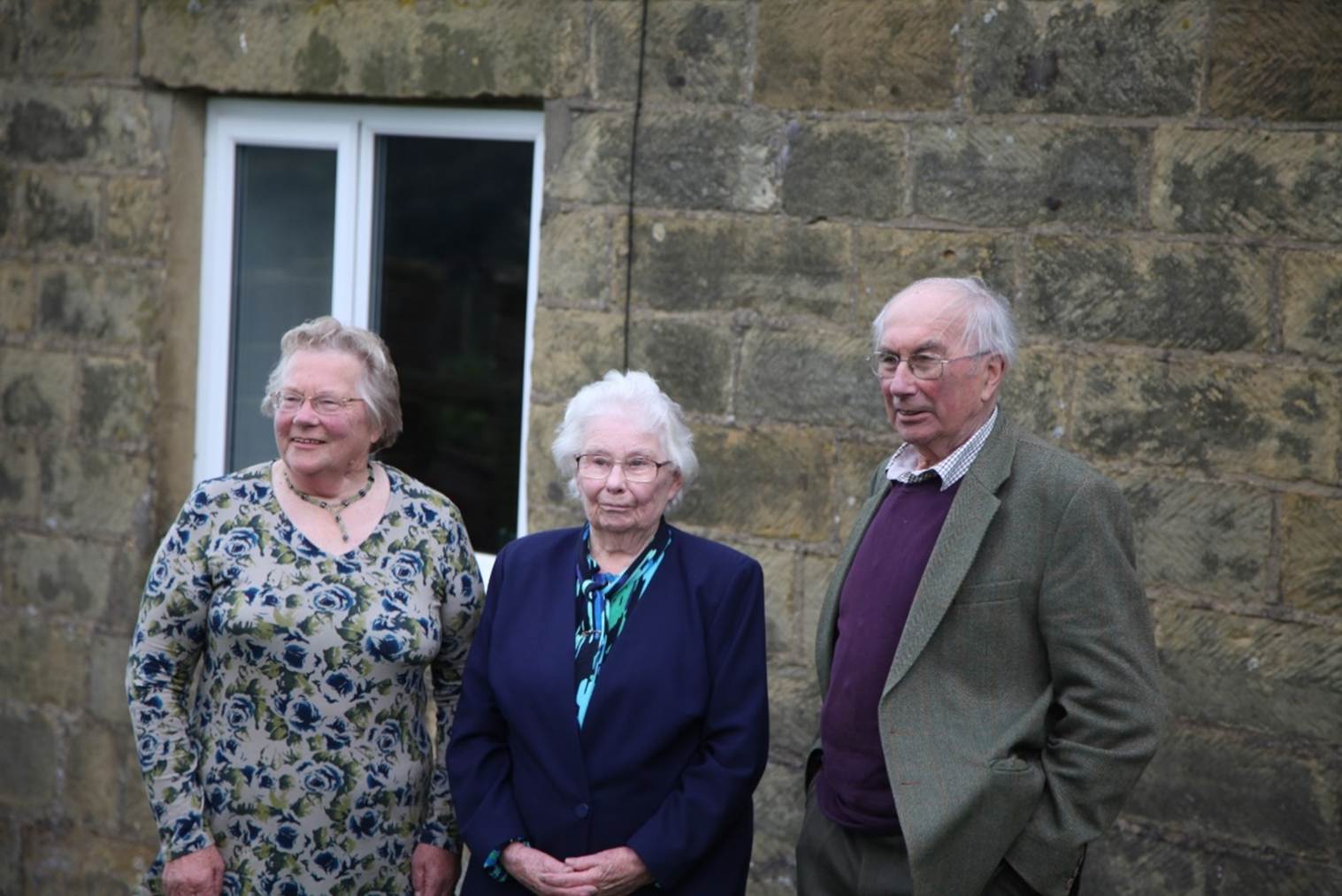
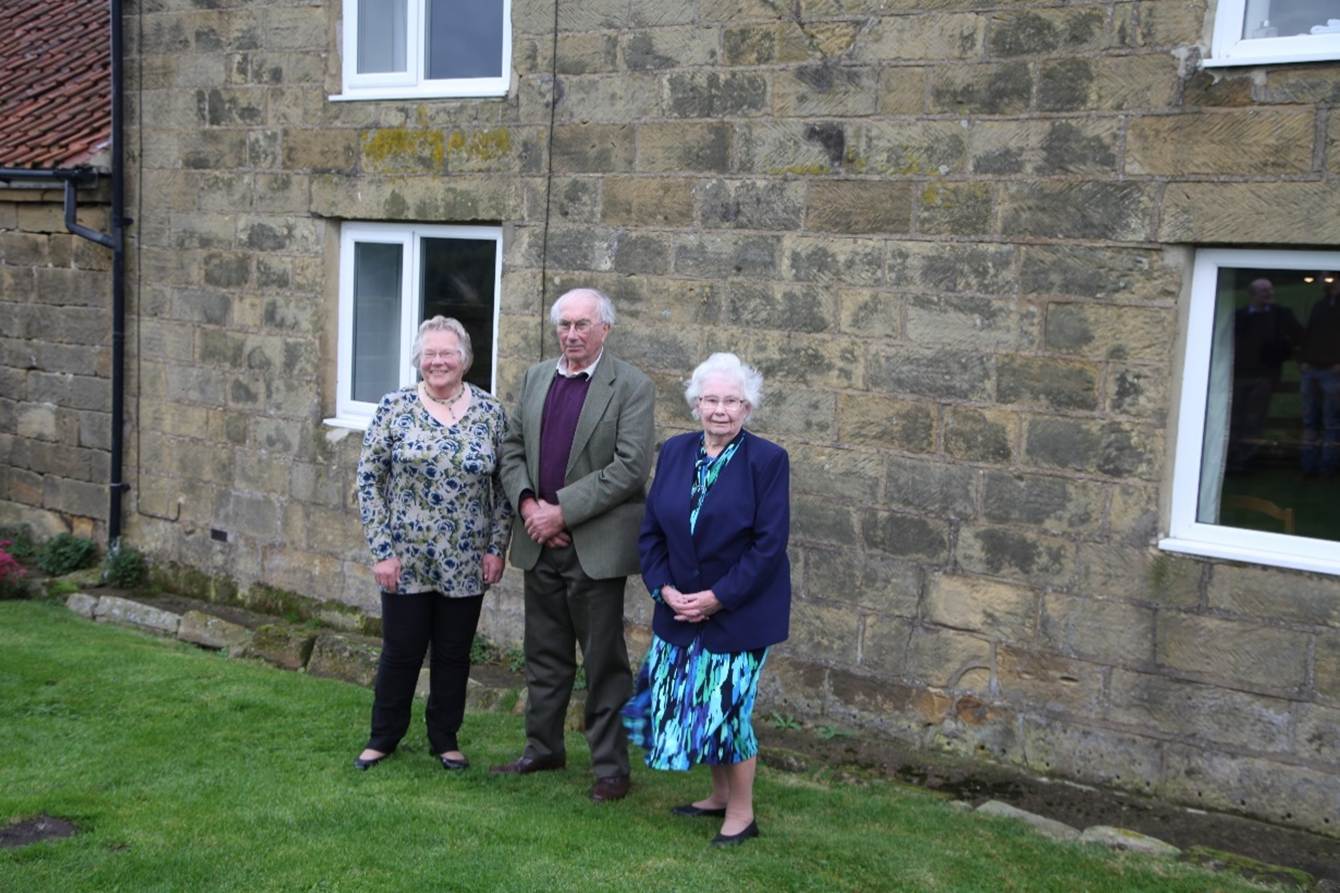
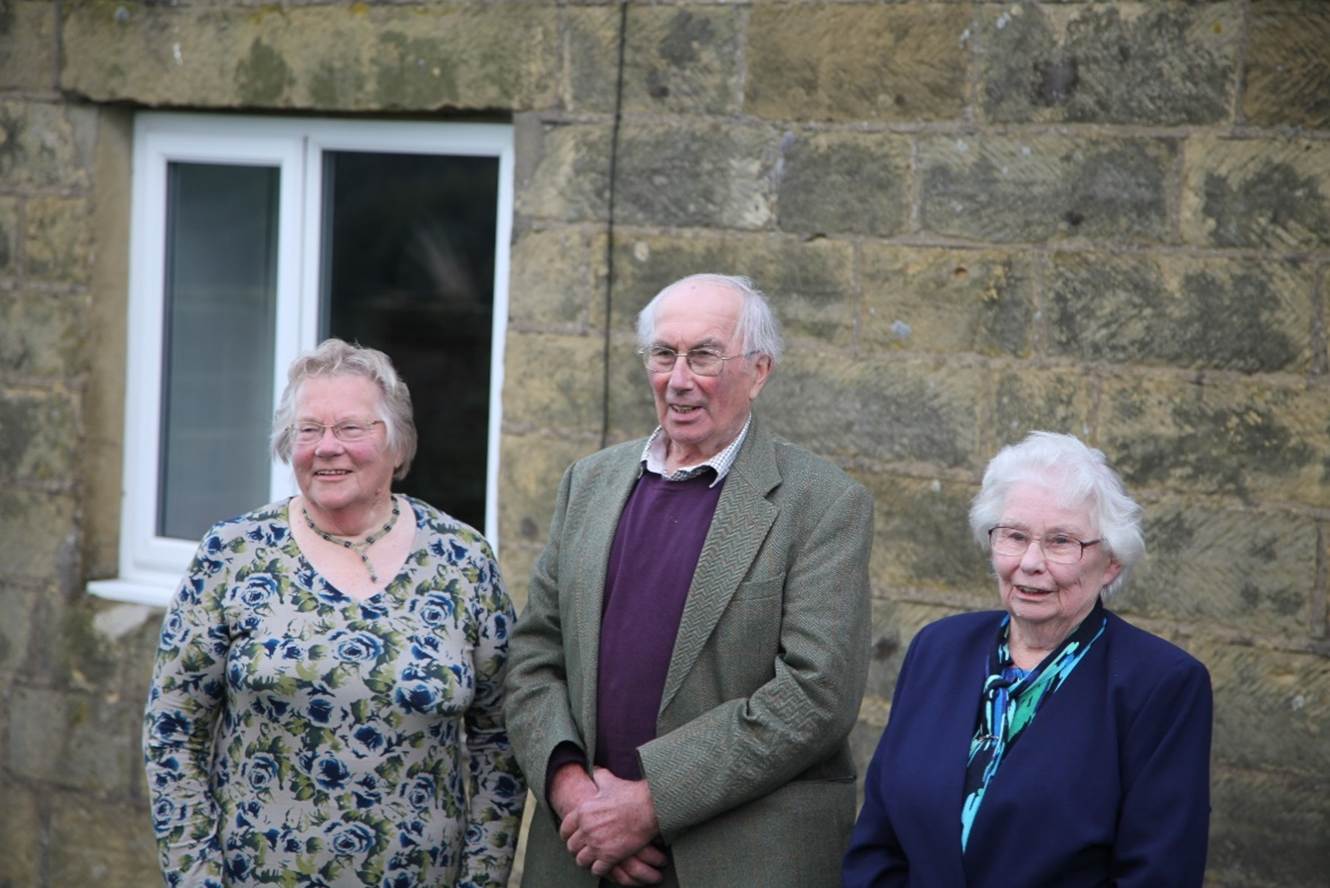
Martin Farndale’s grand children, Margot
Atkinson, Anne Shepherd and Geoff Farndale.
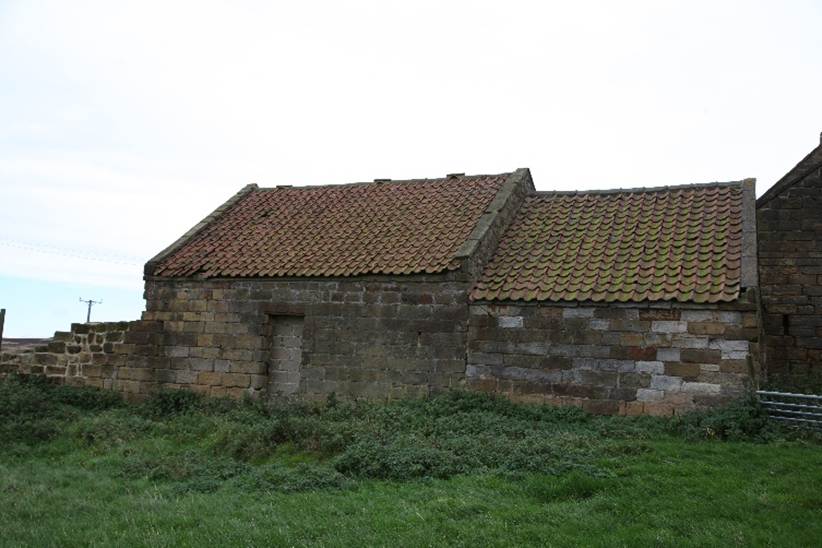
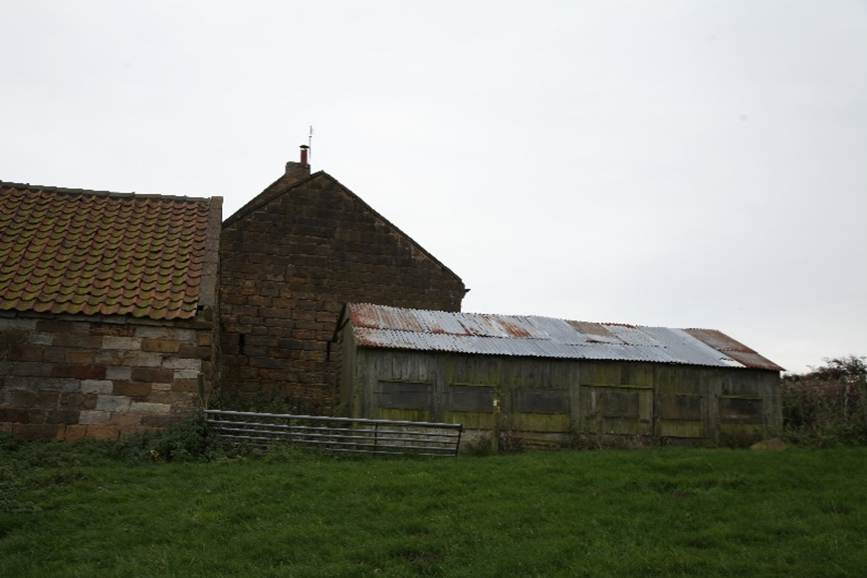
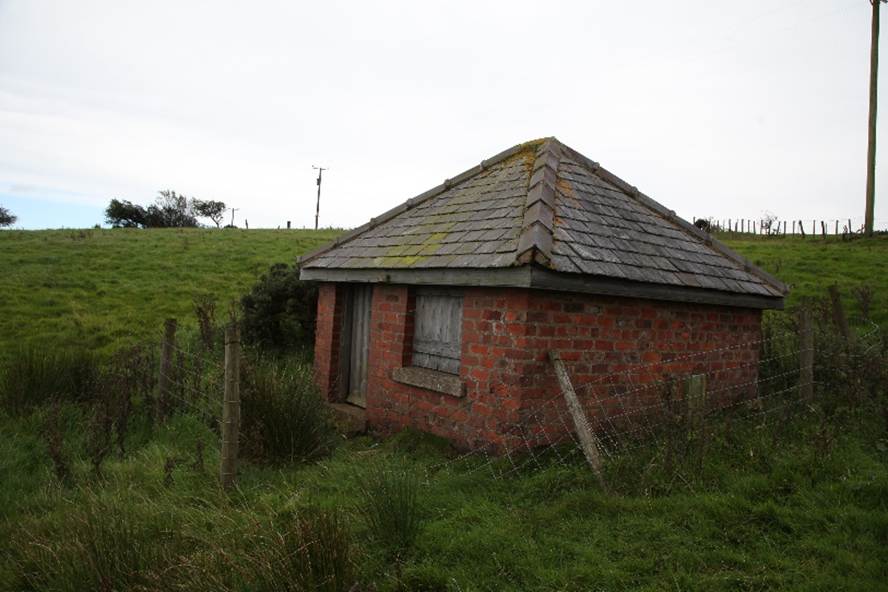
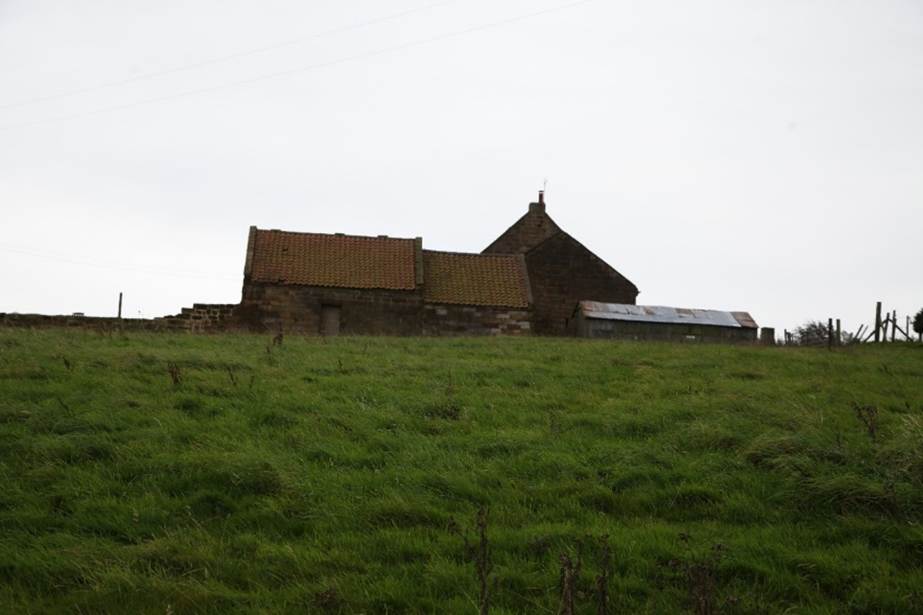
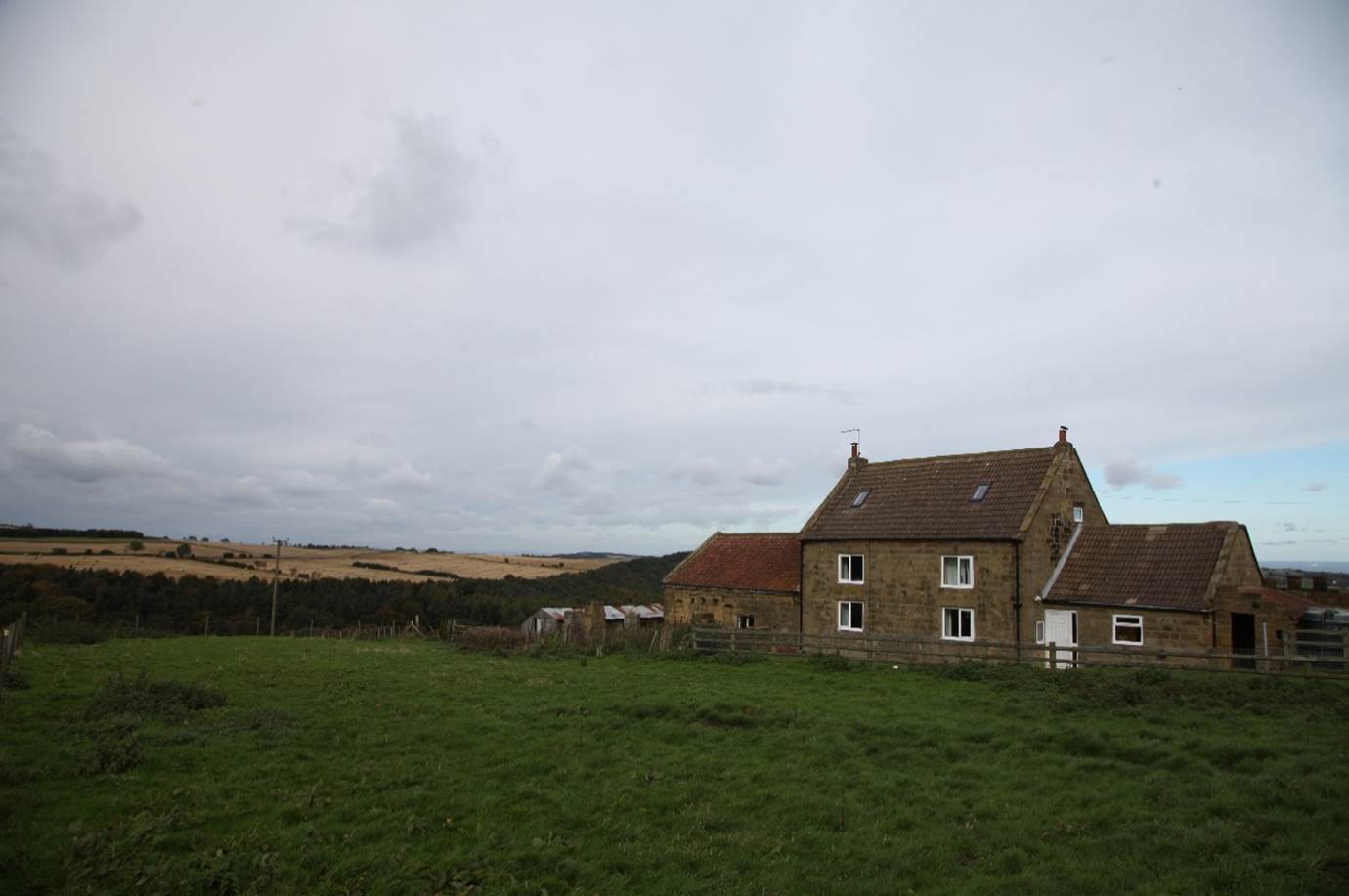
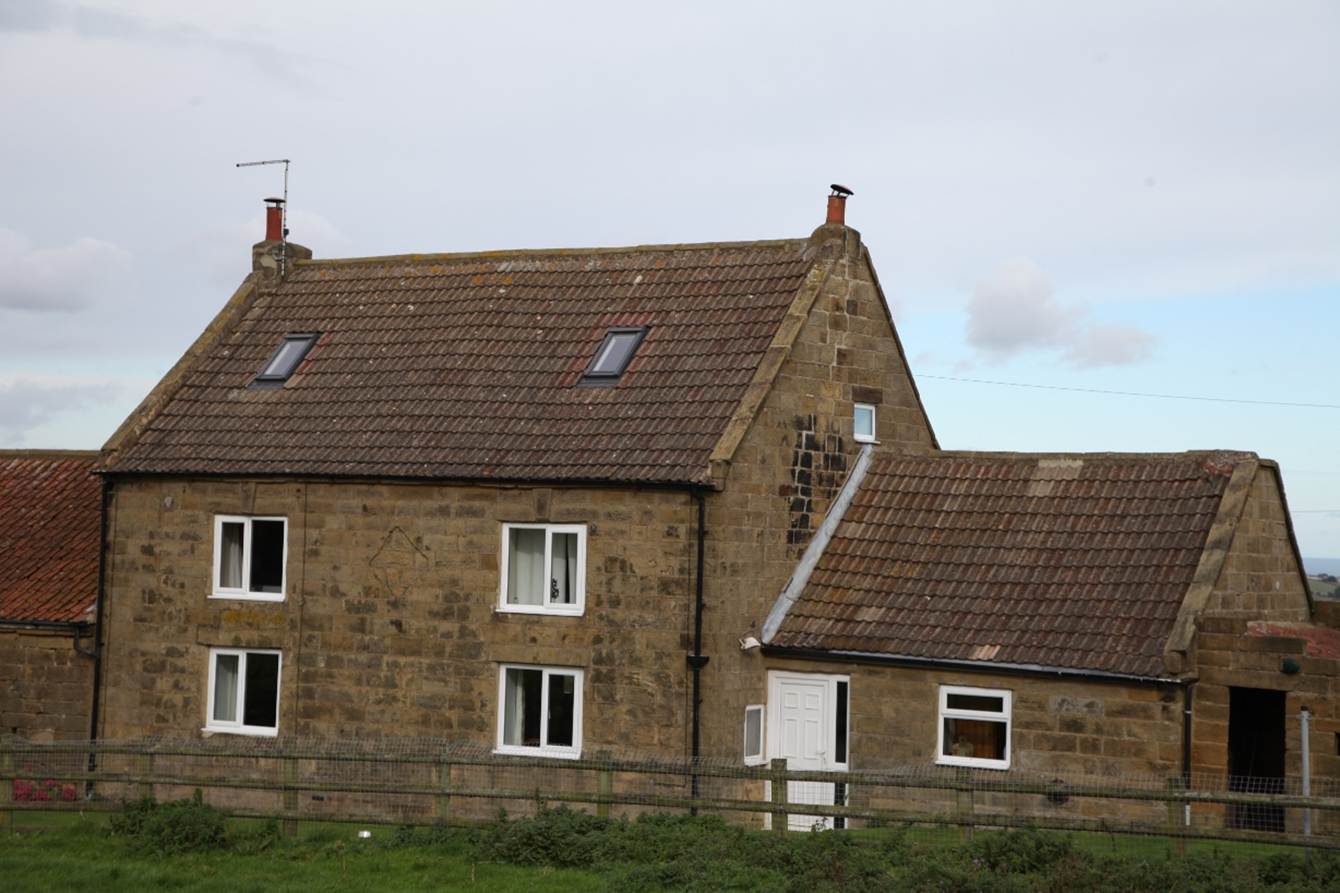
2024
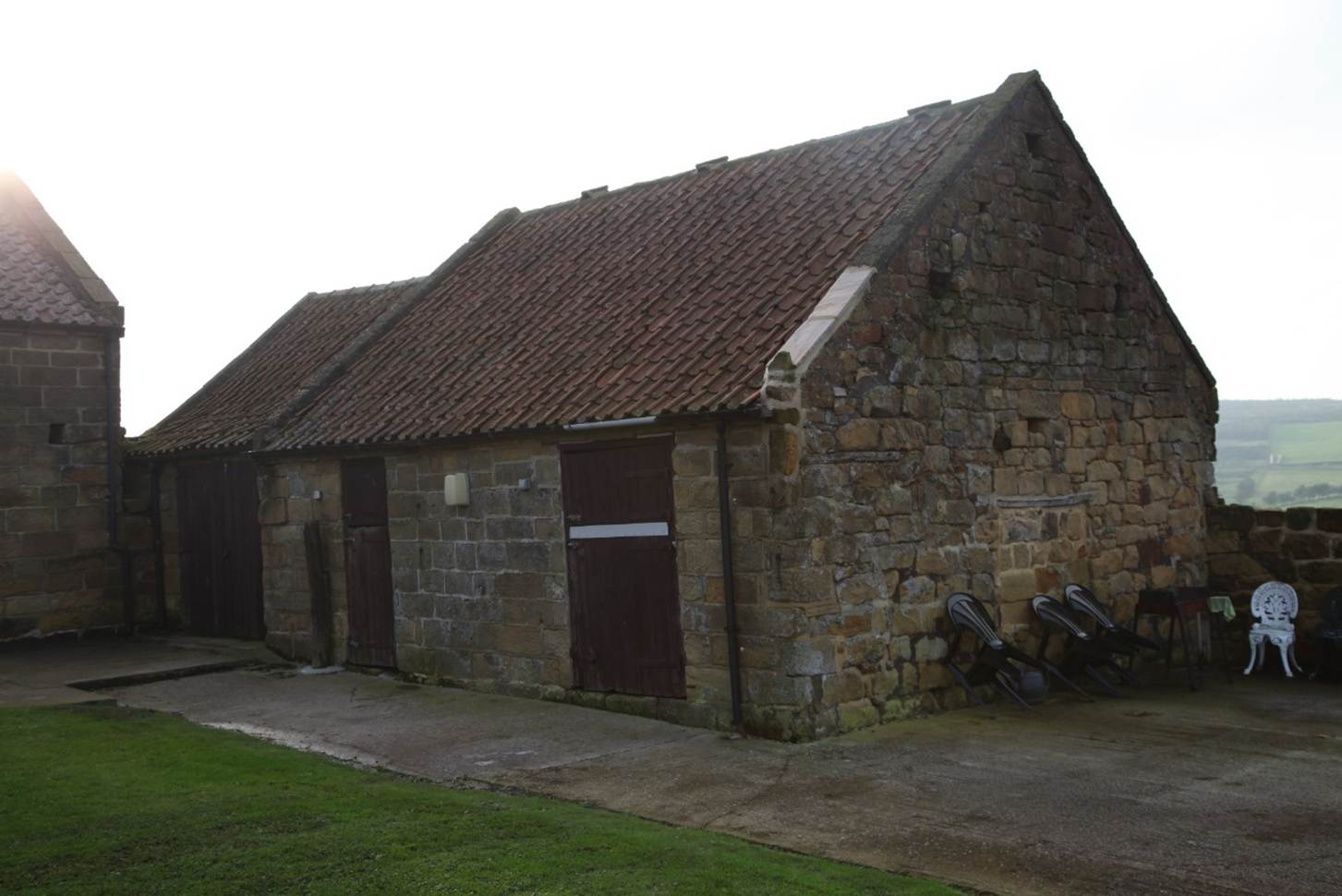
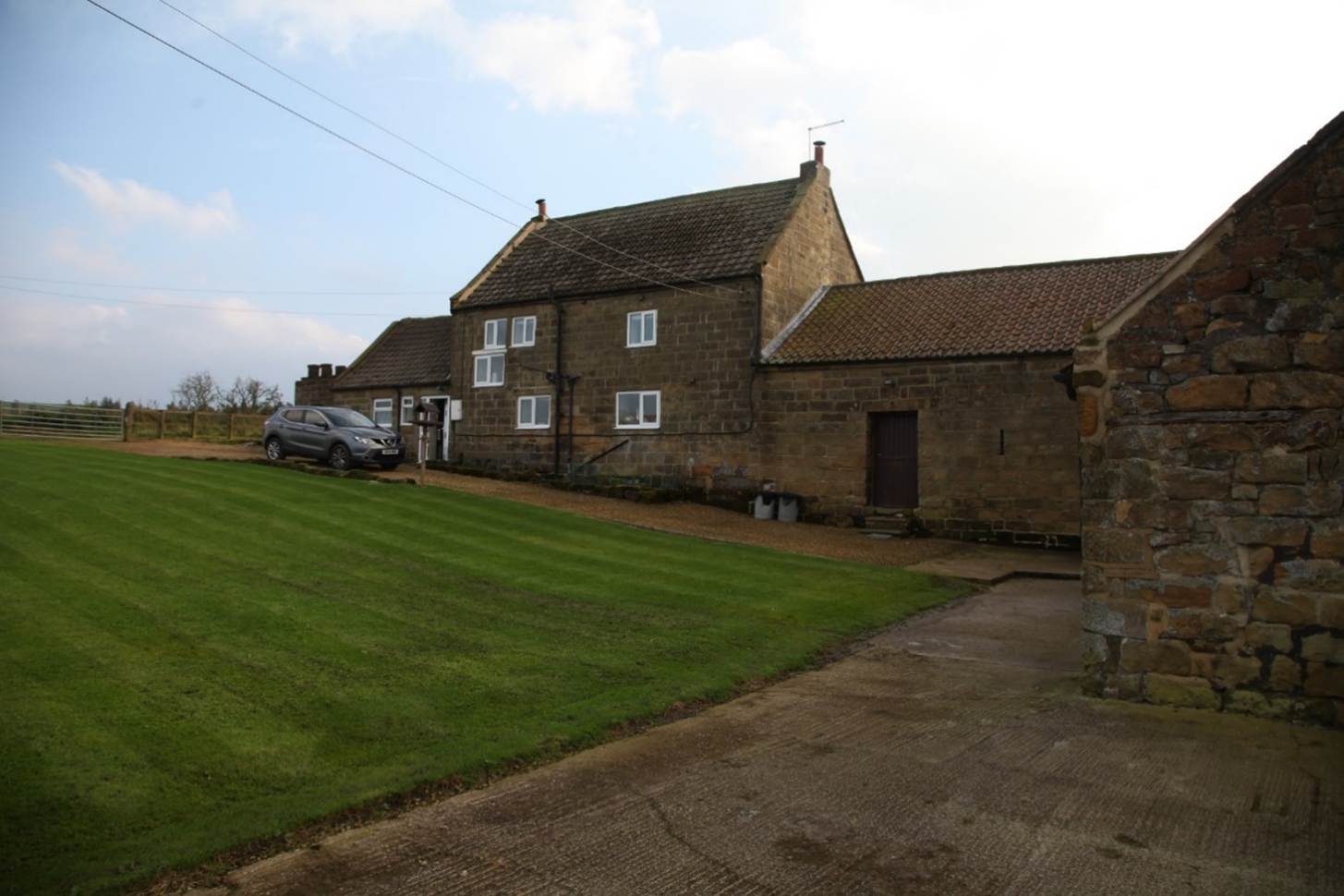
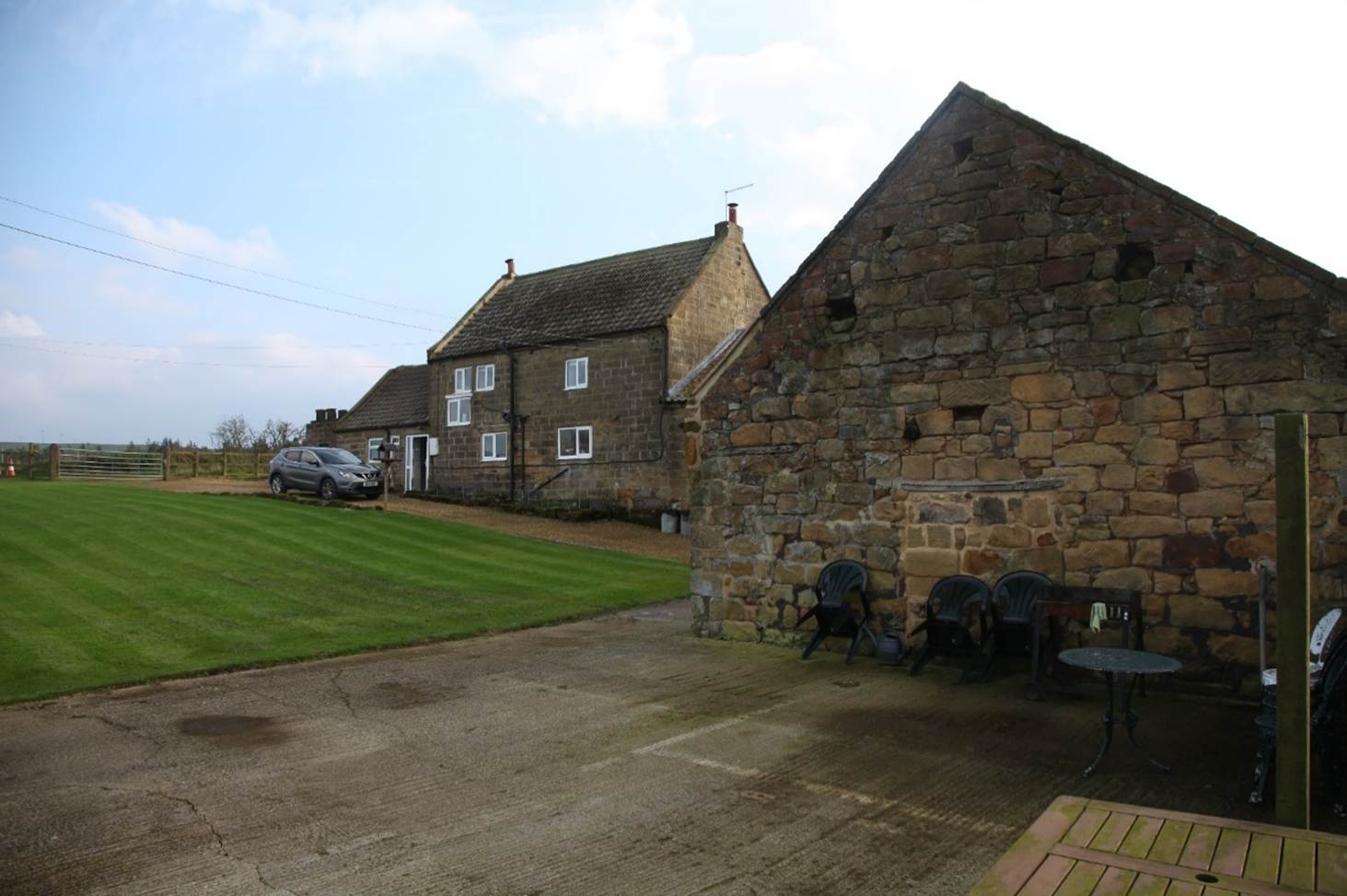
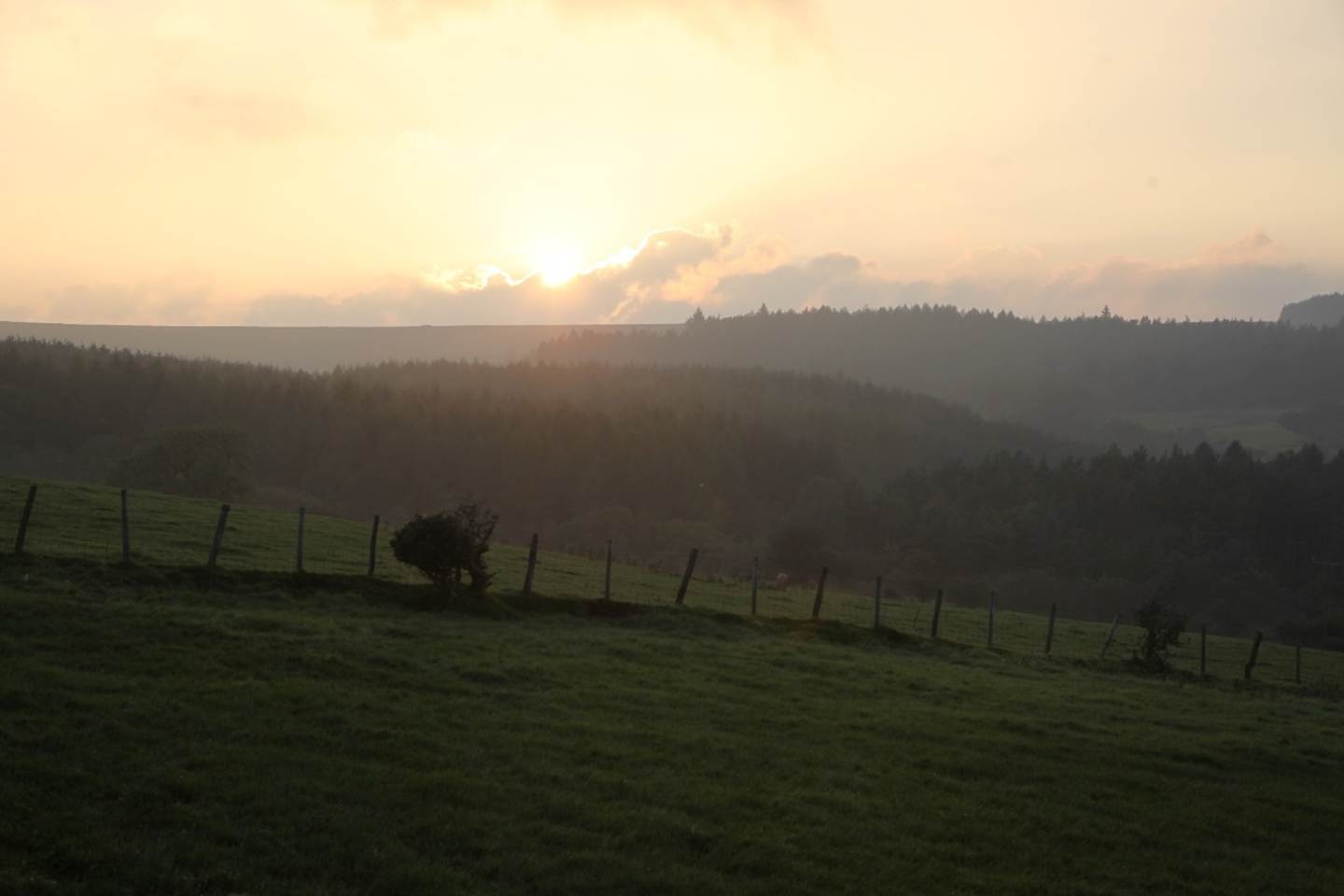
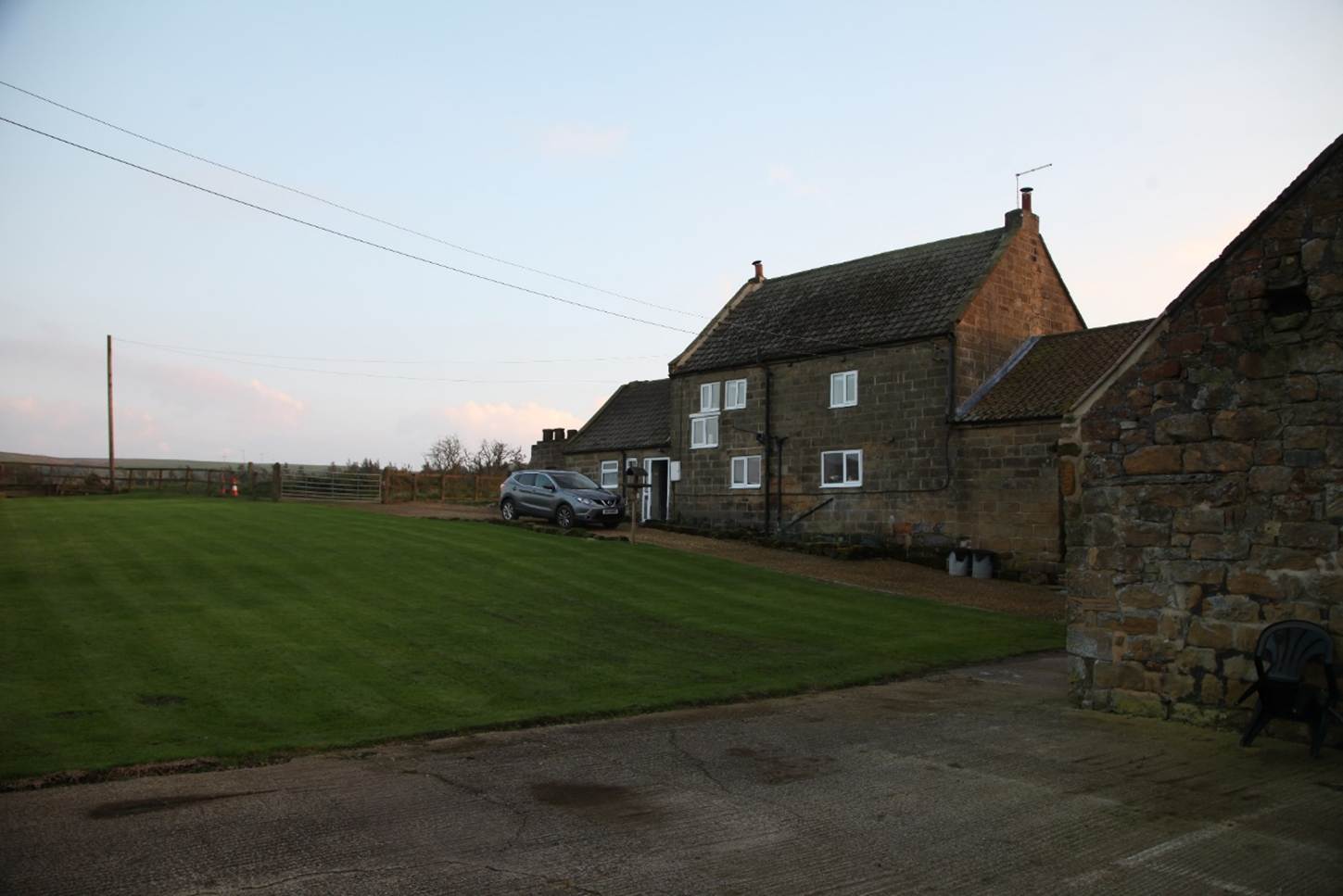
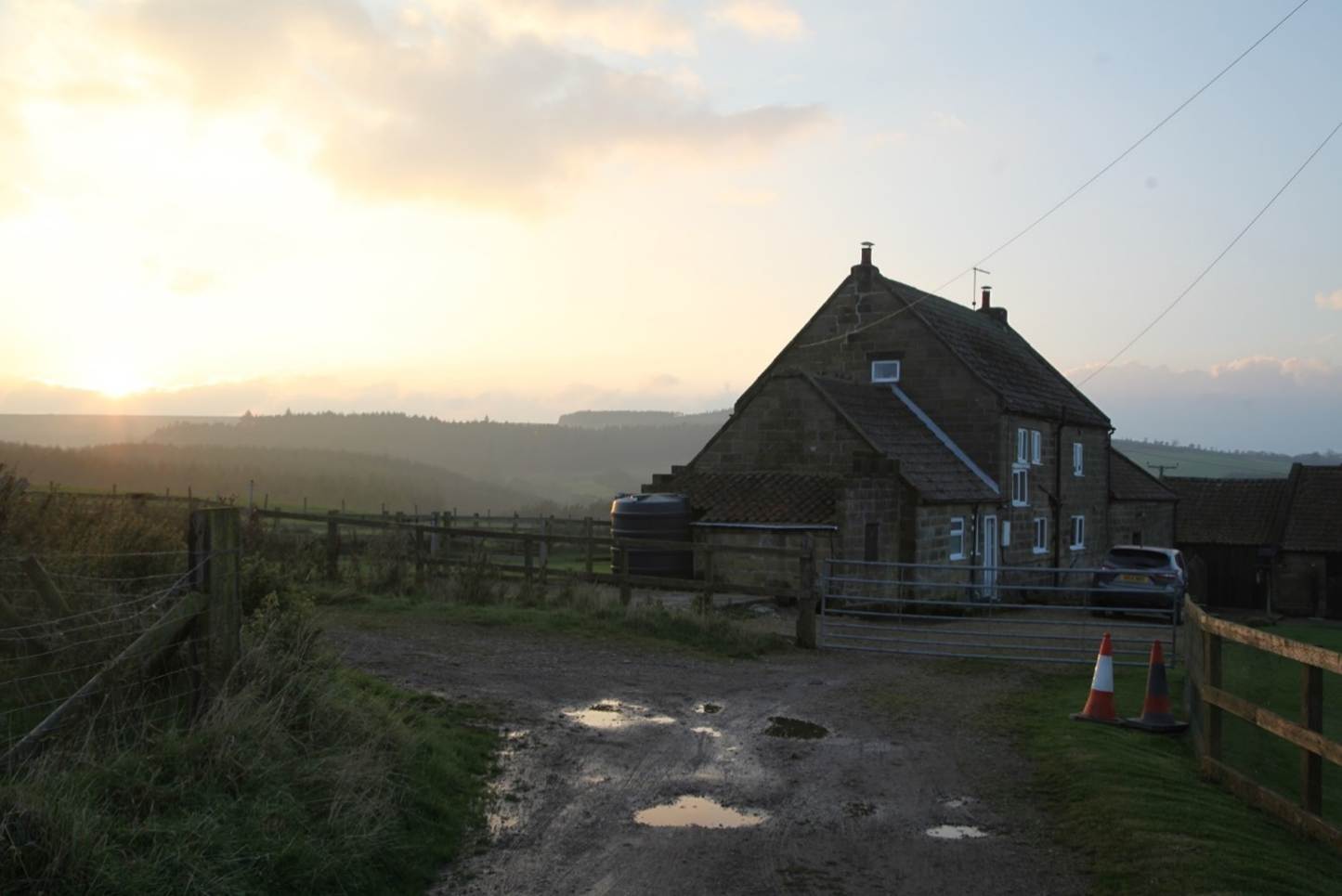
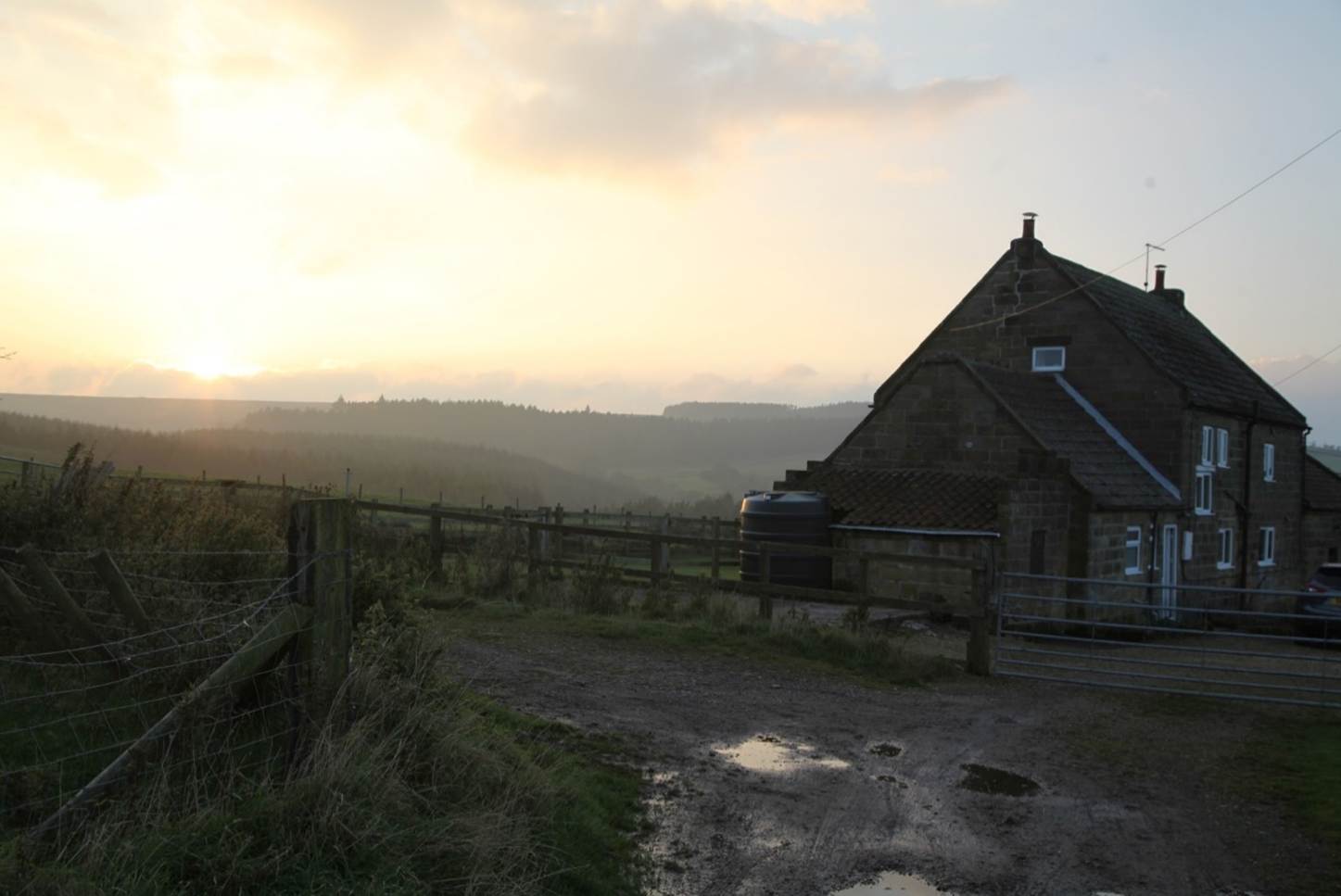
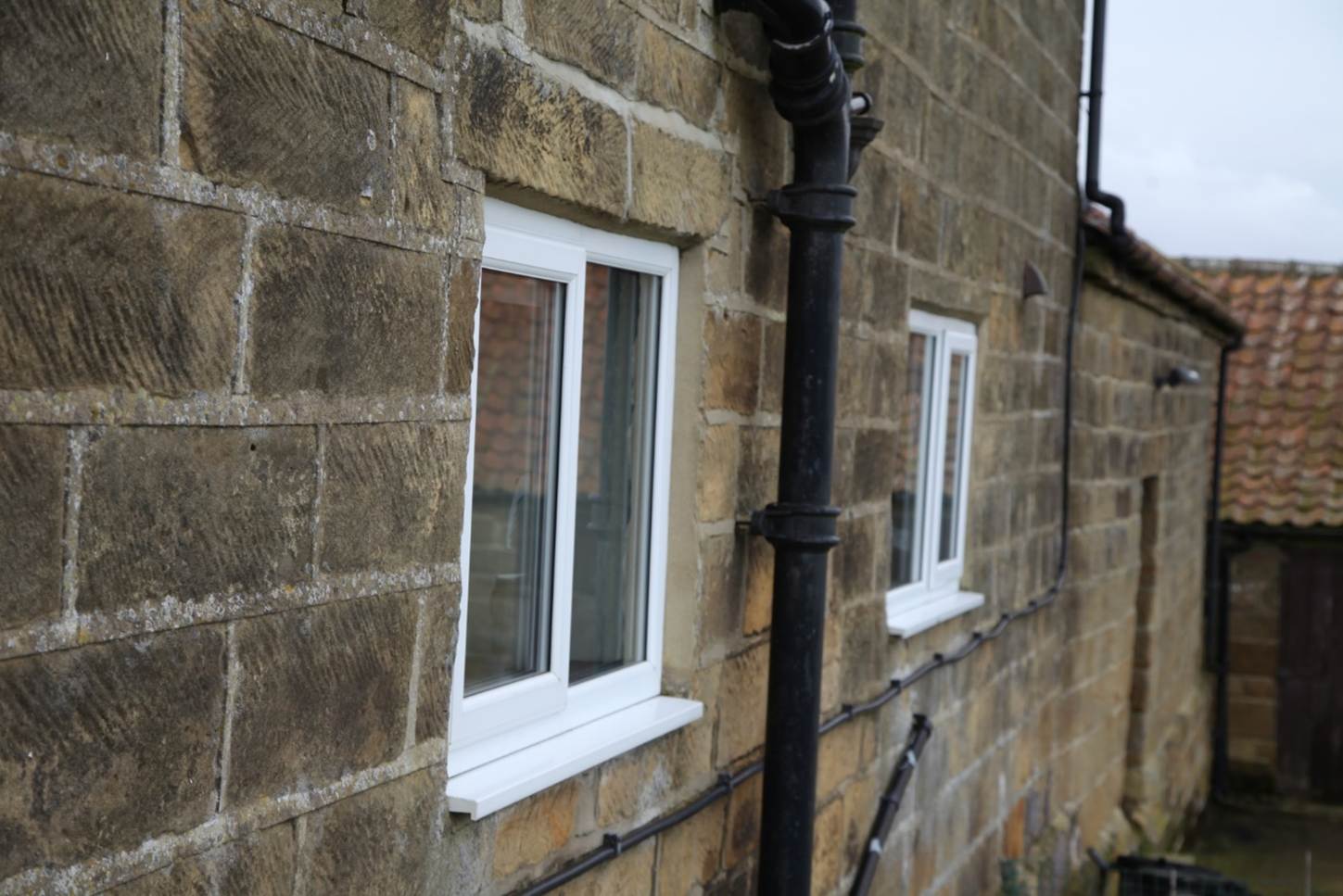
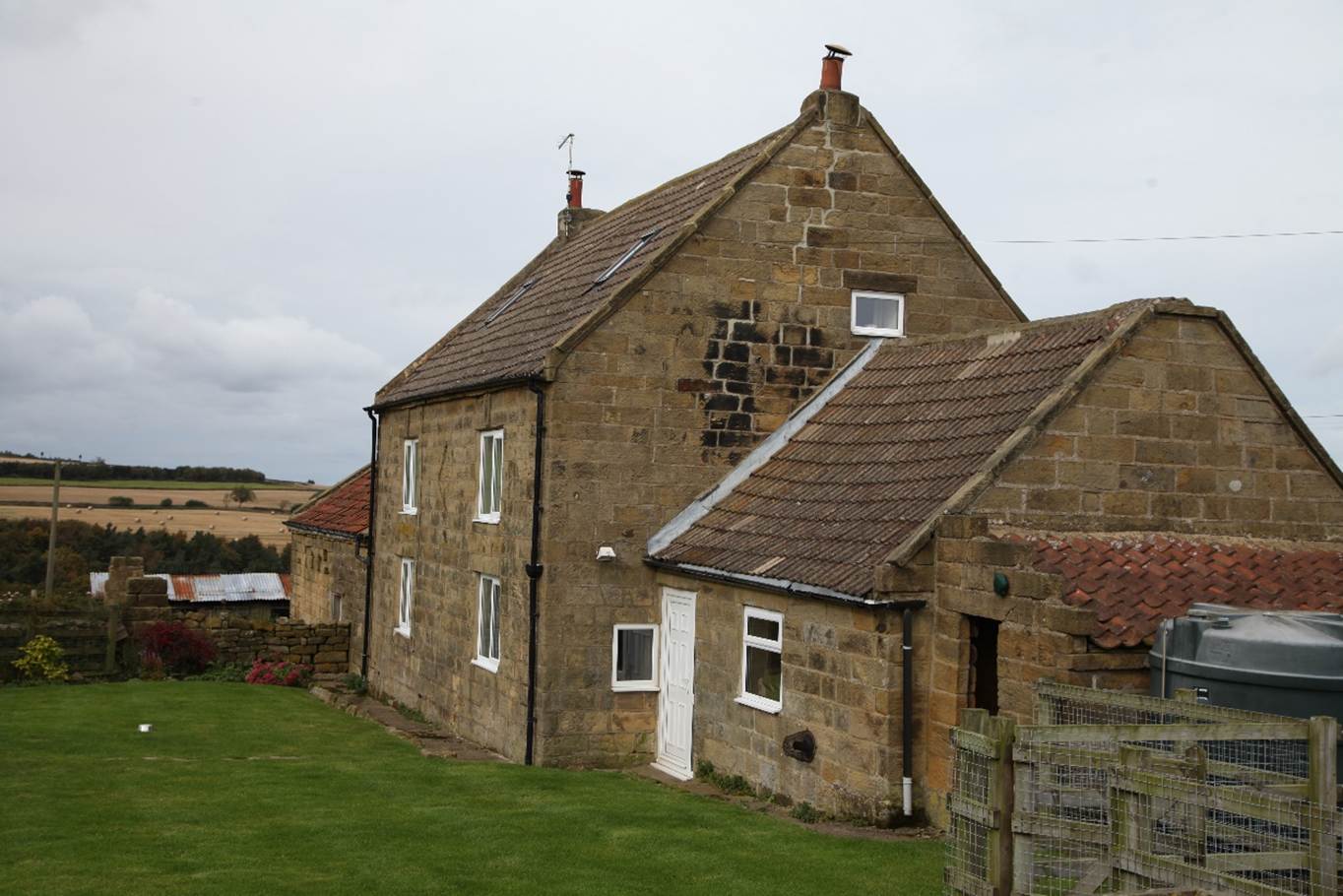
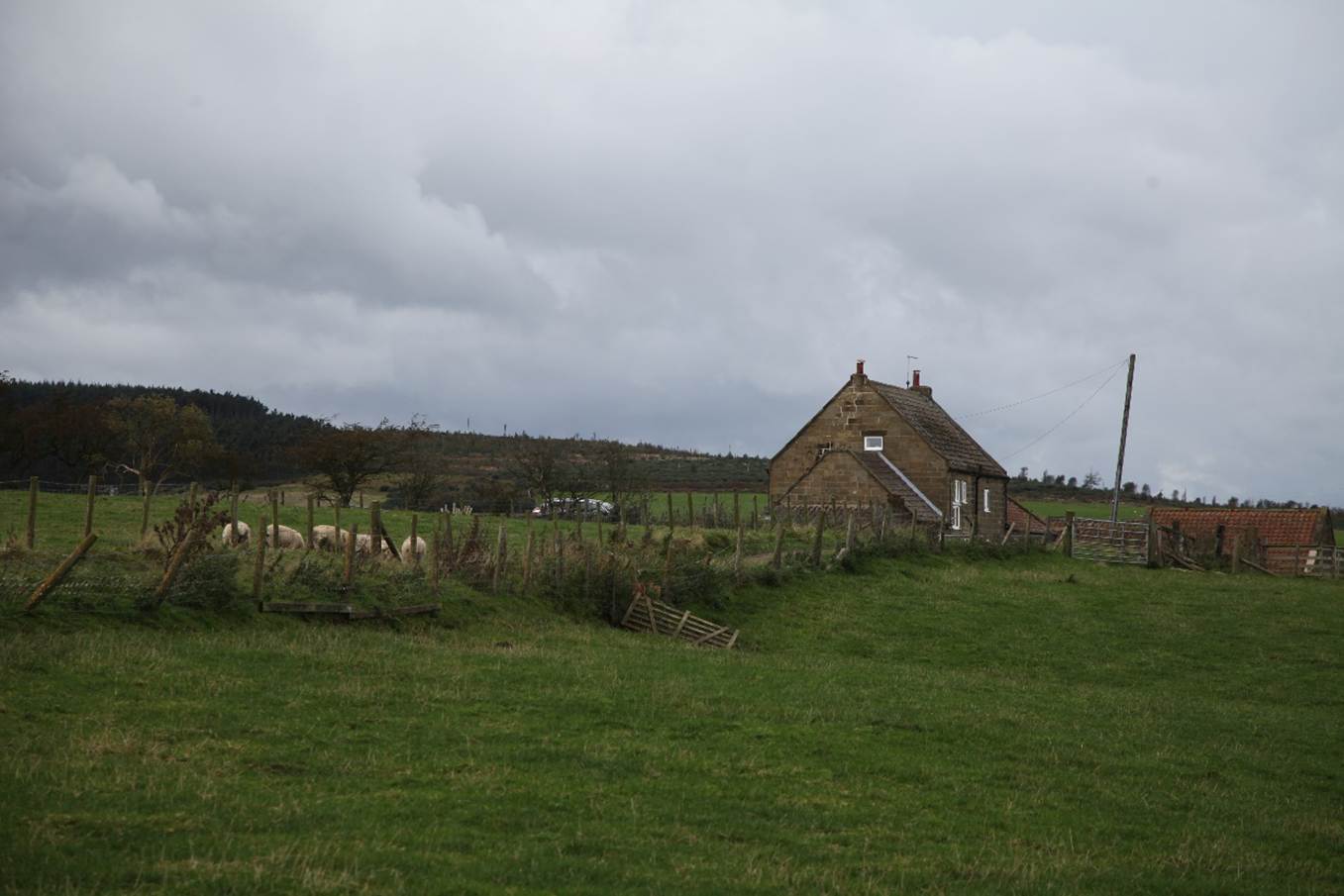
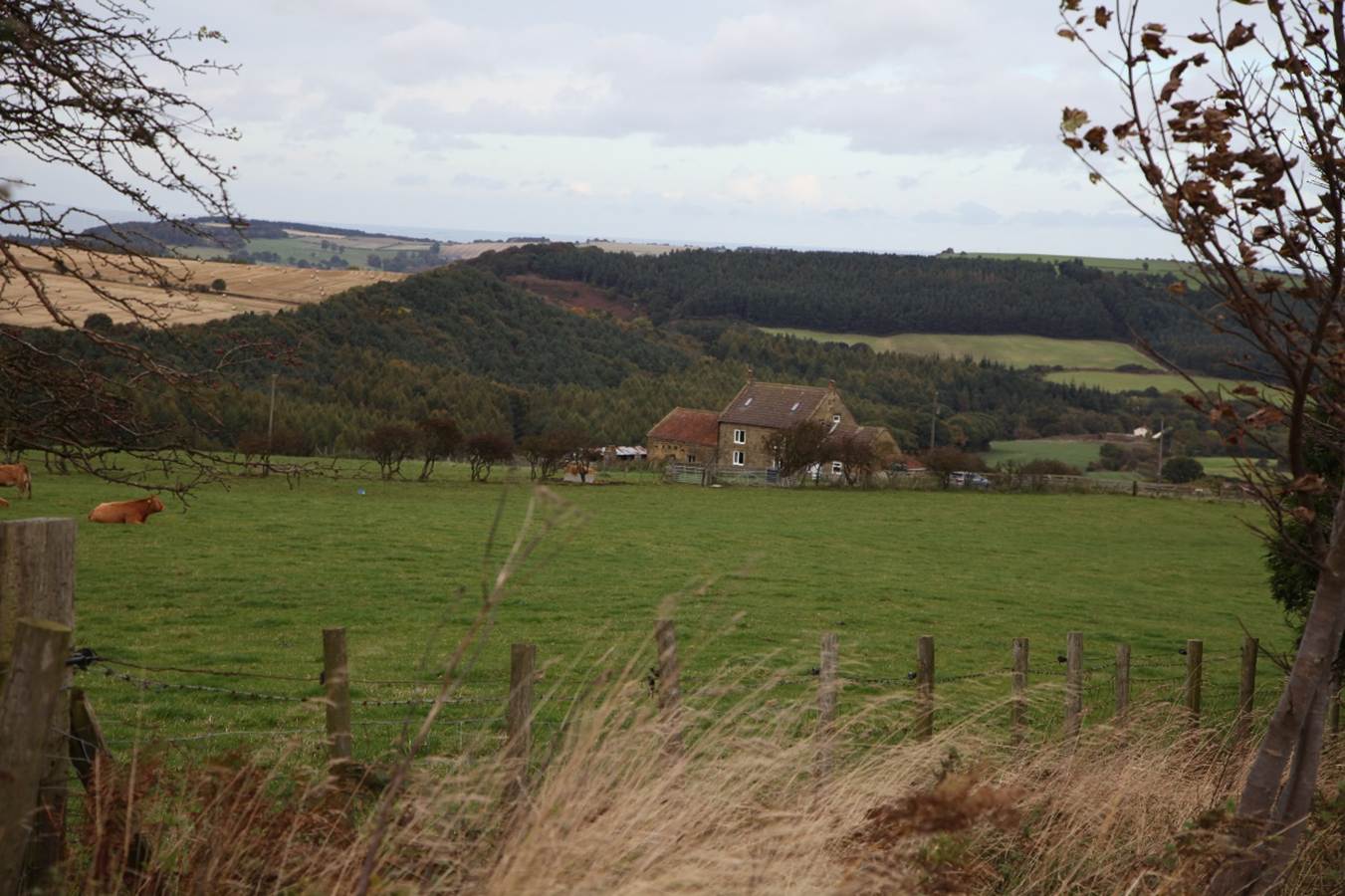
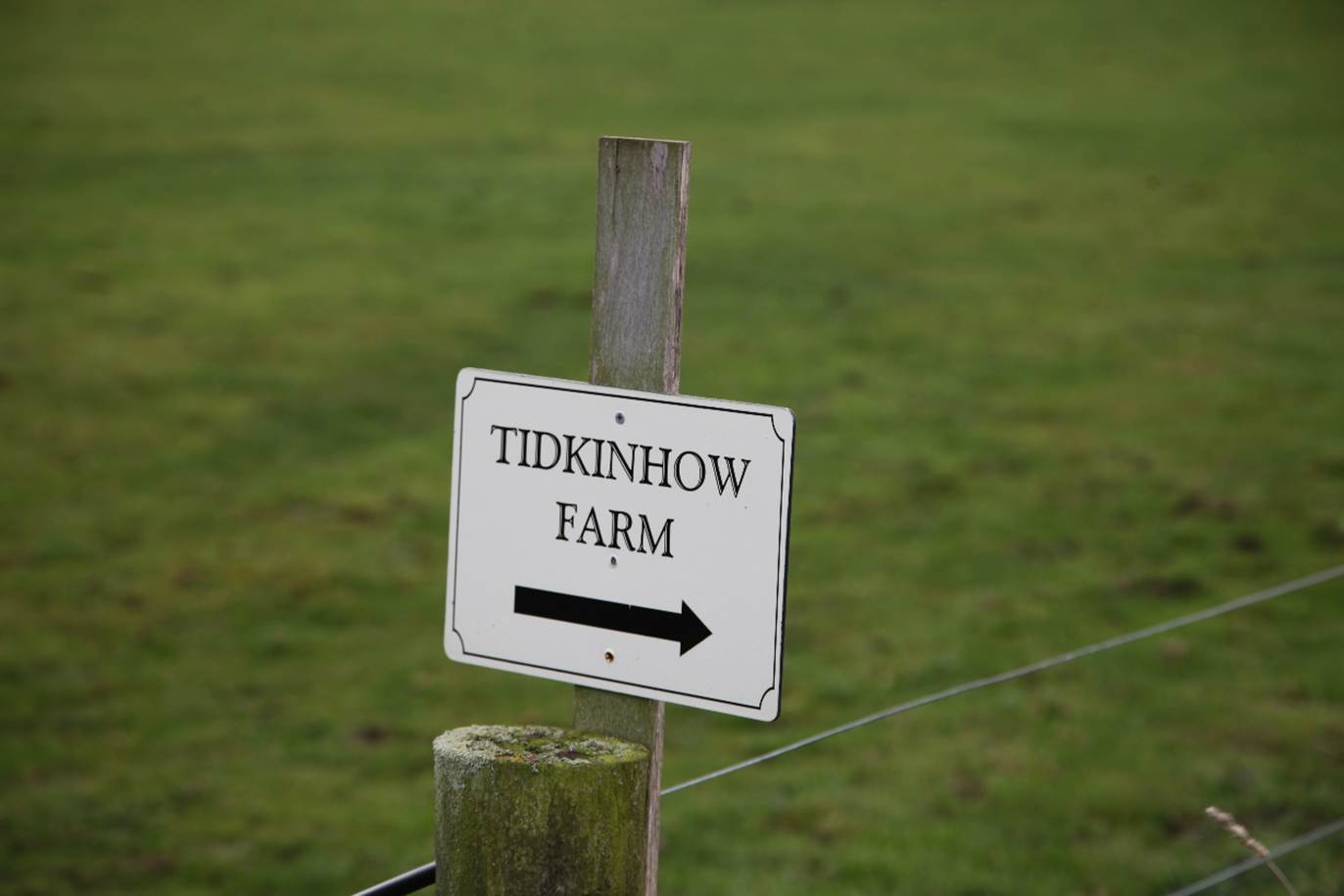
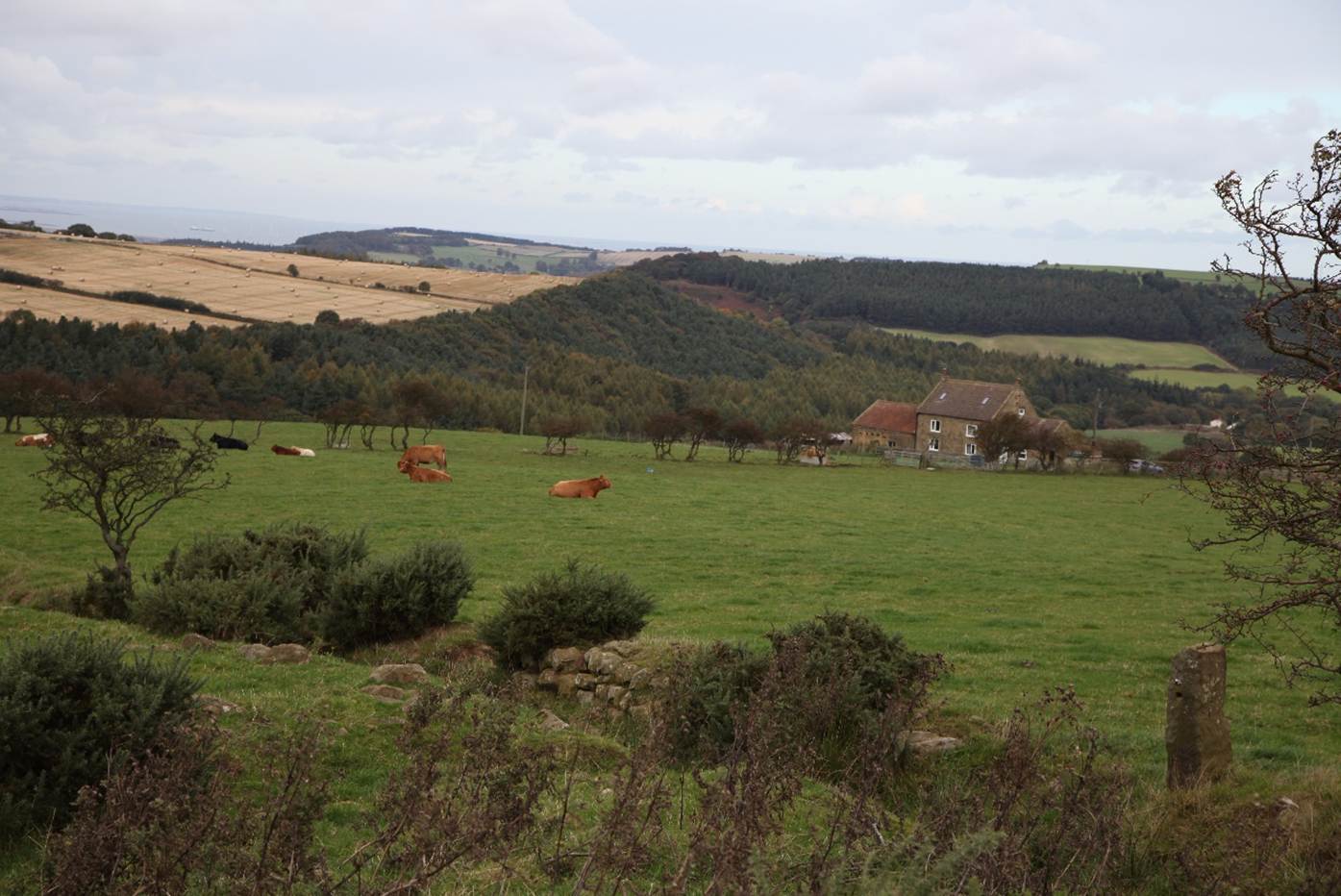
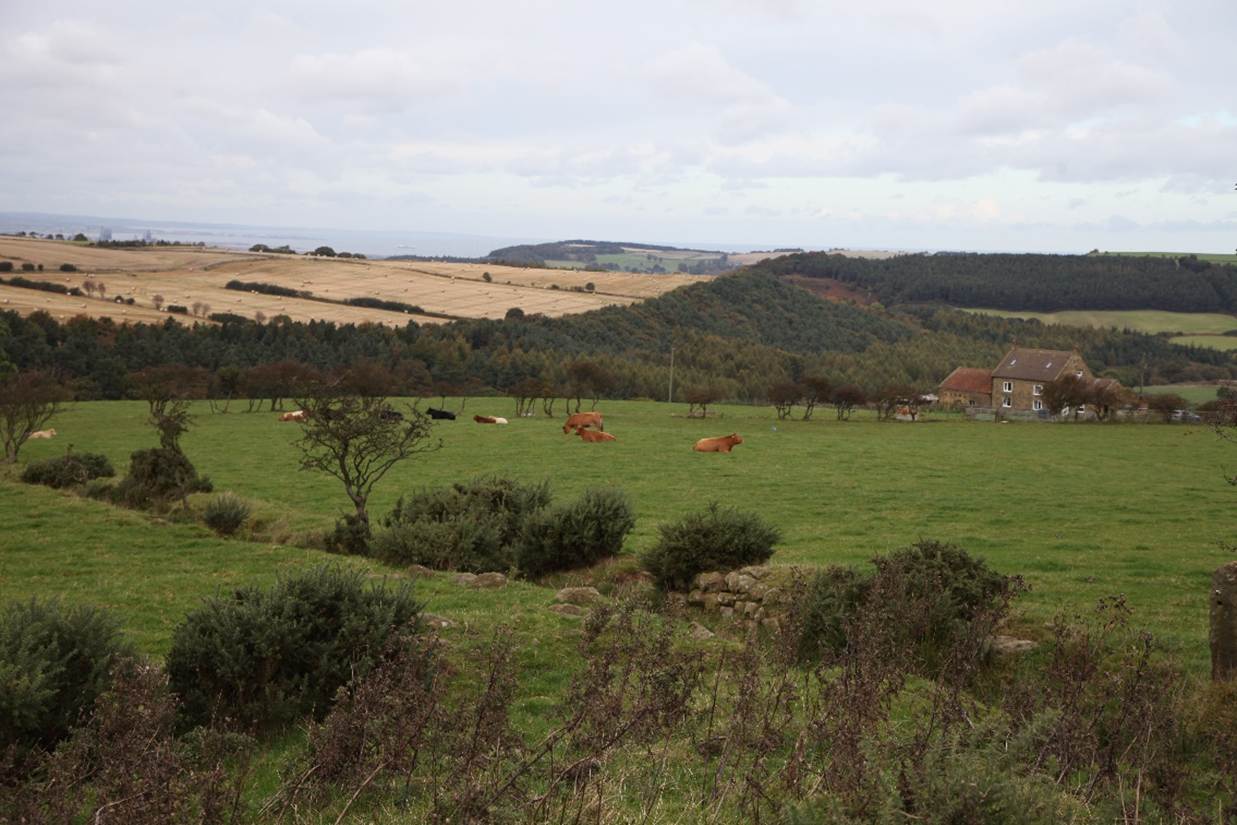
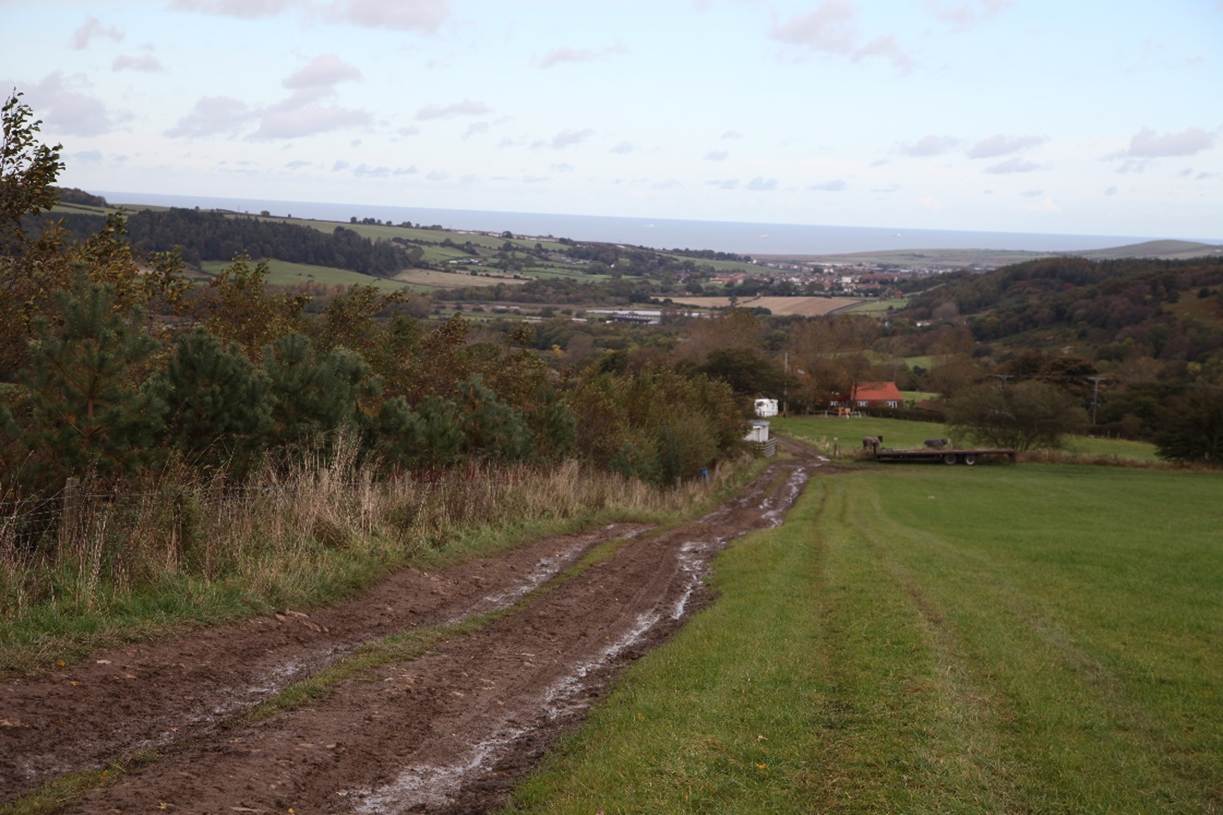
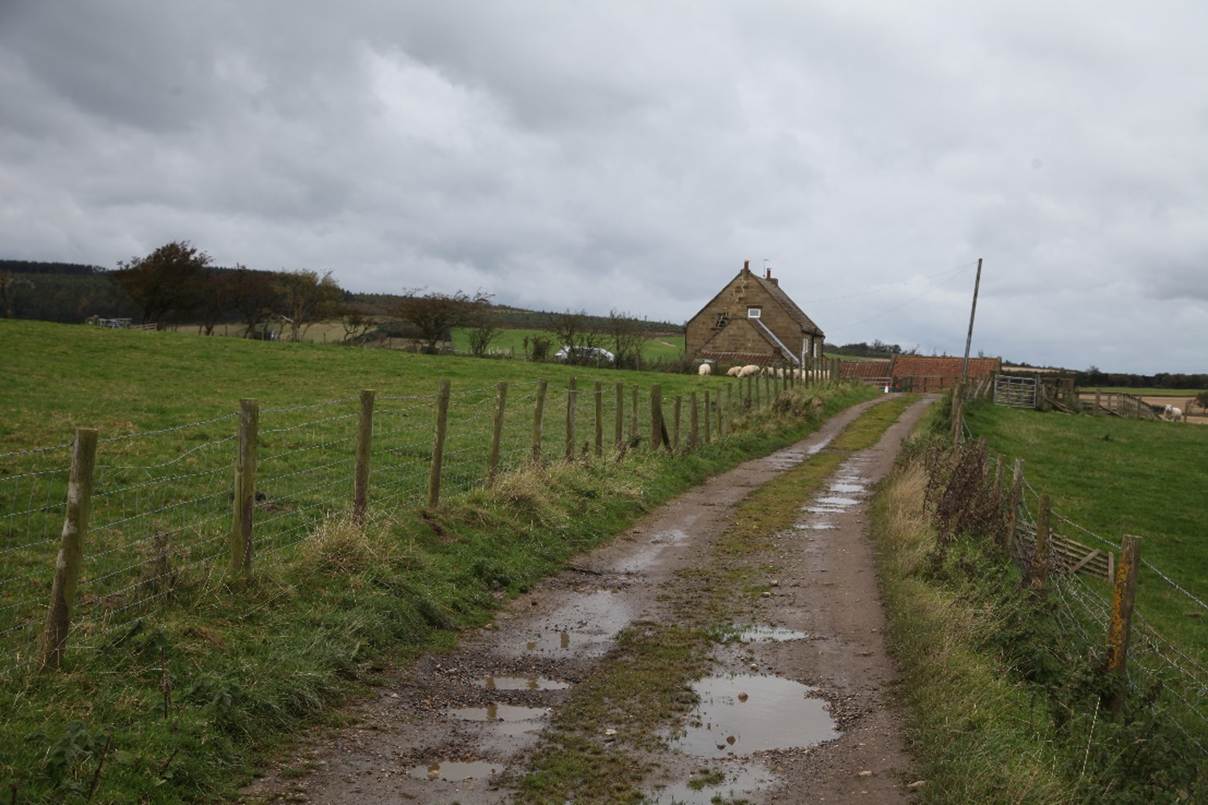
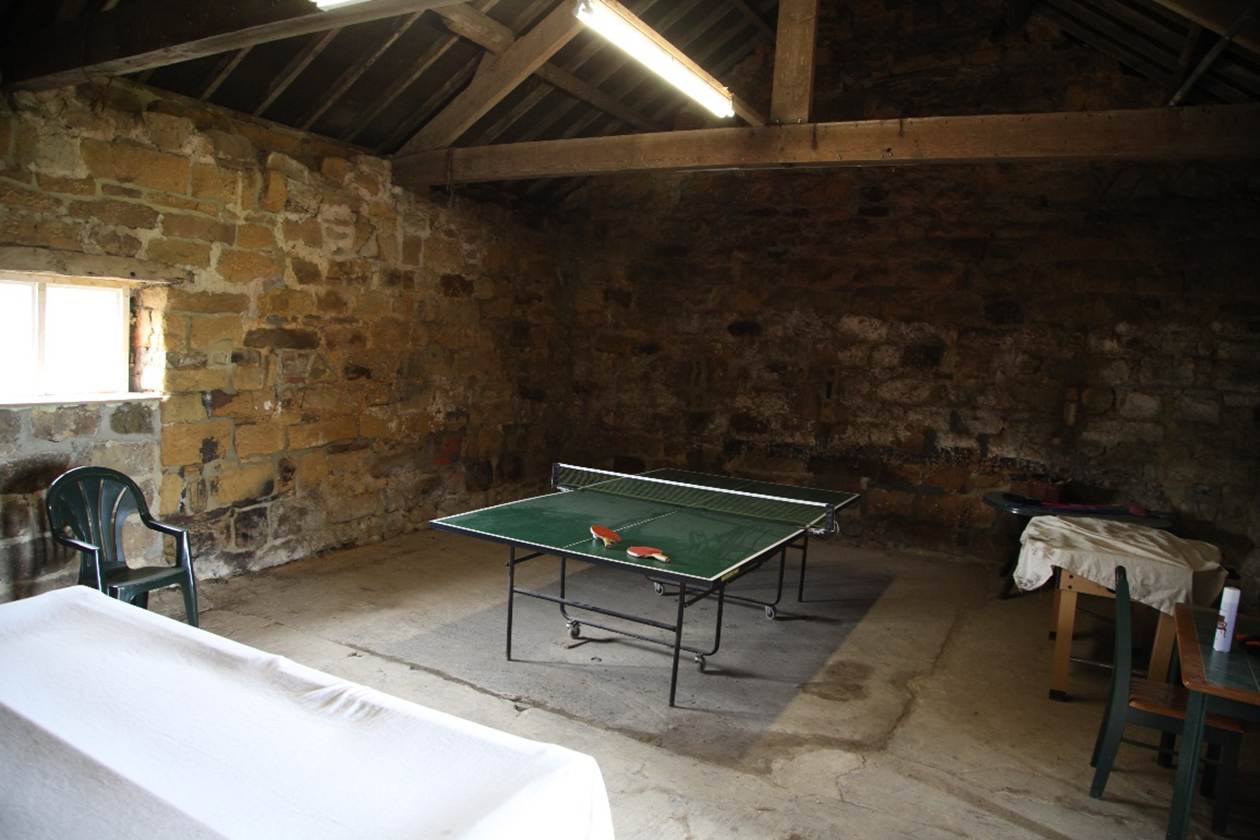
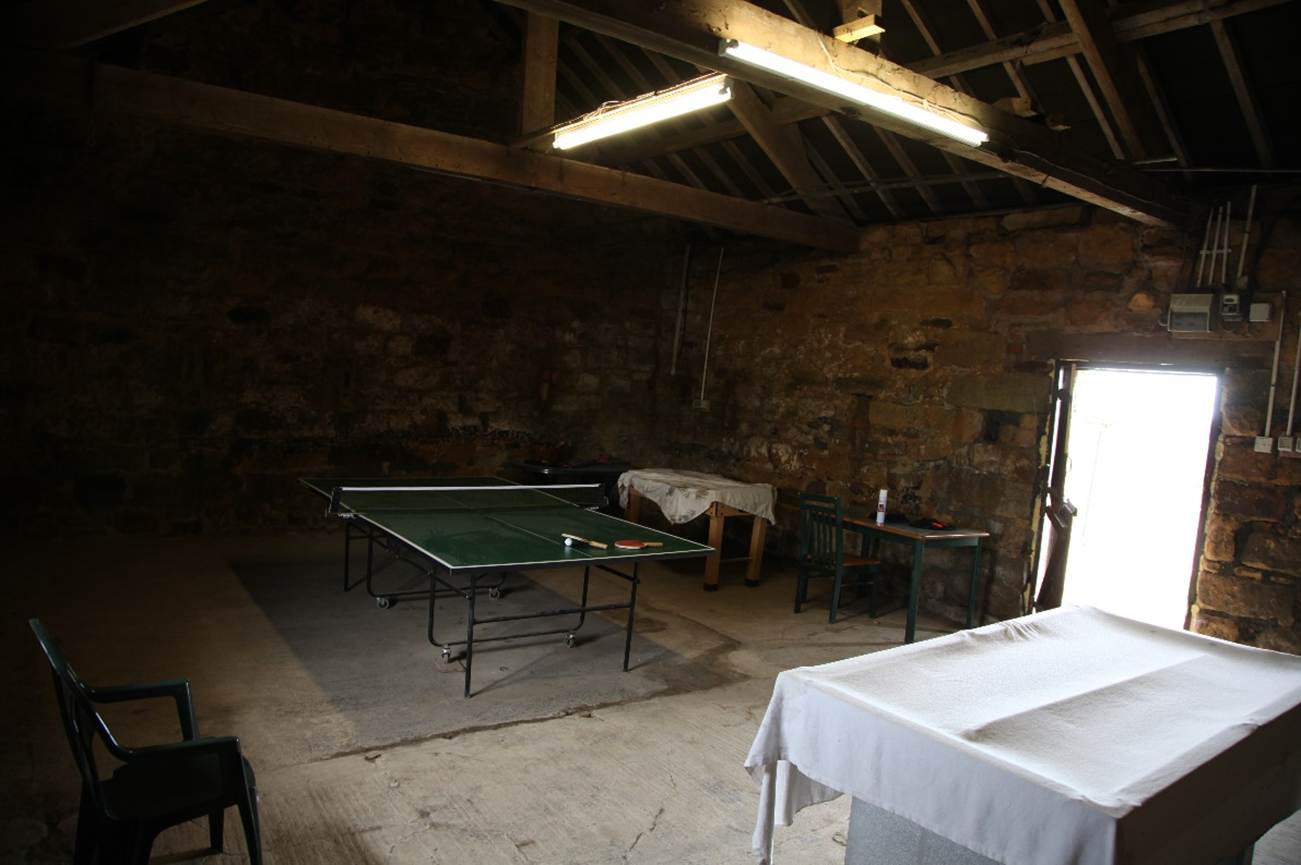
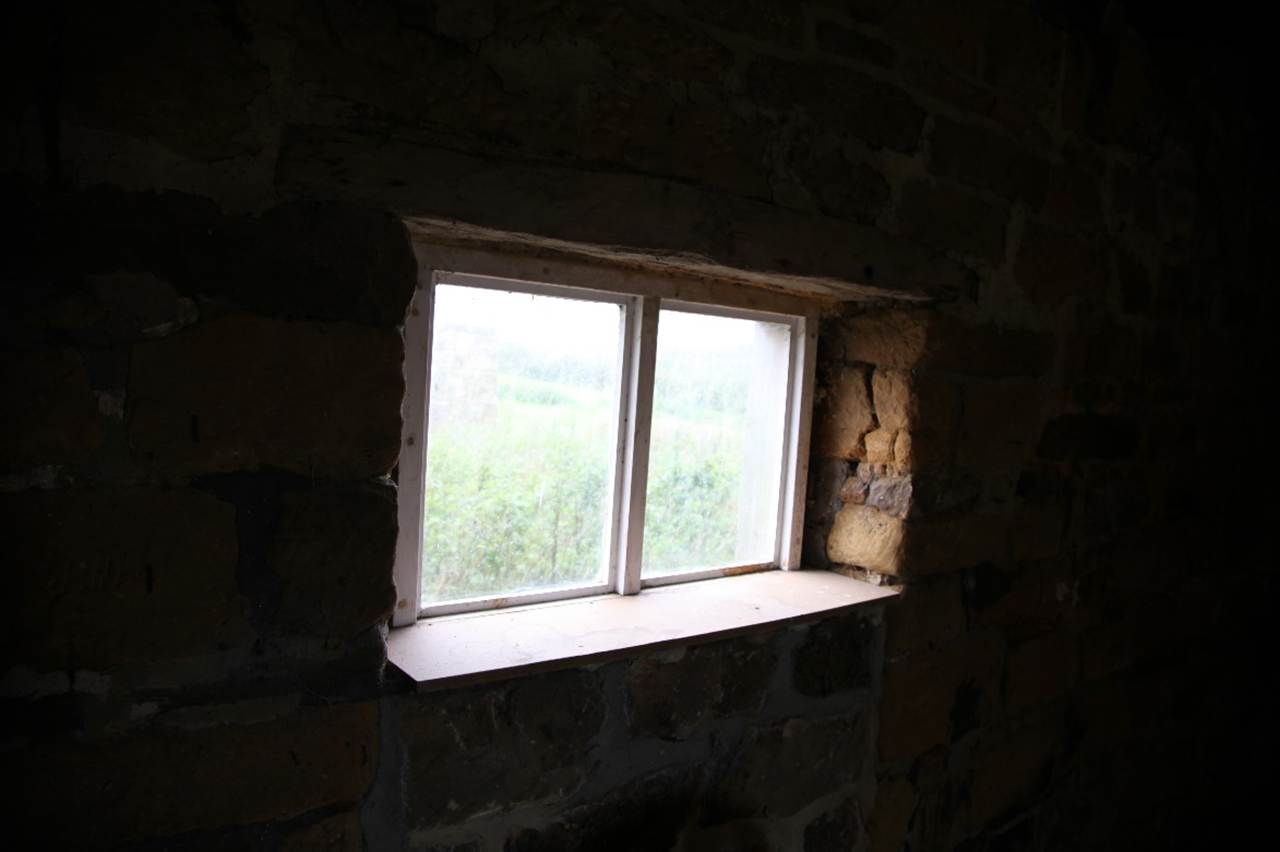
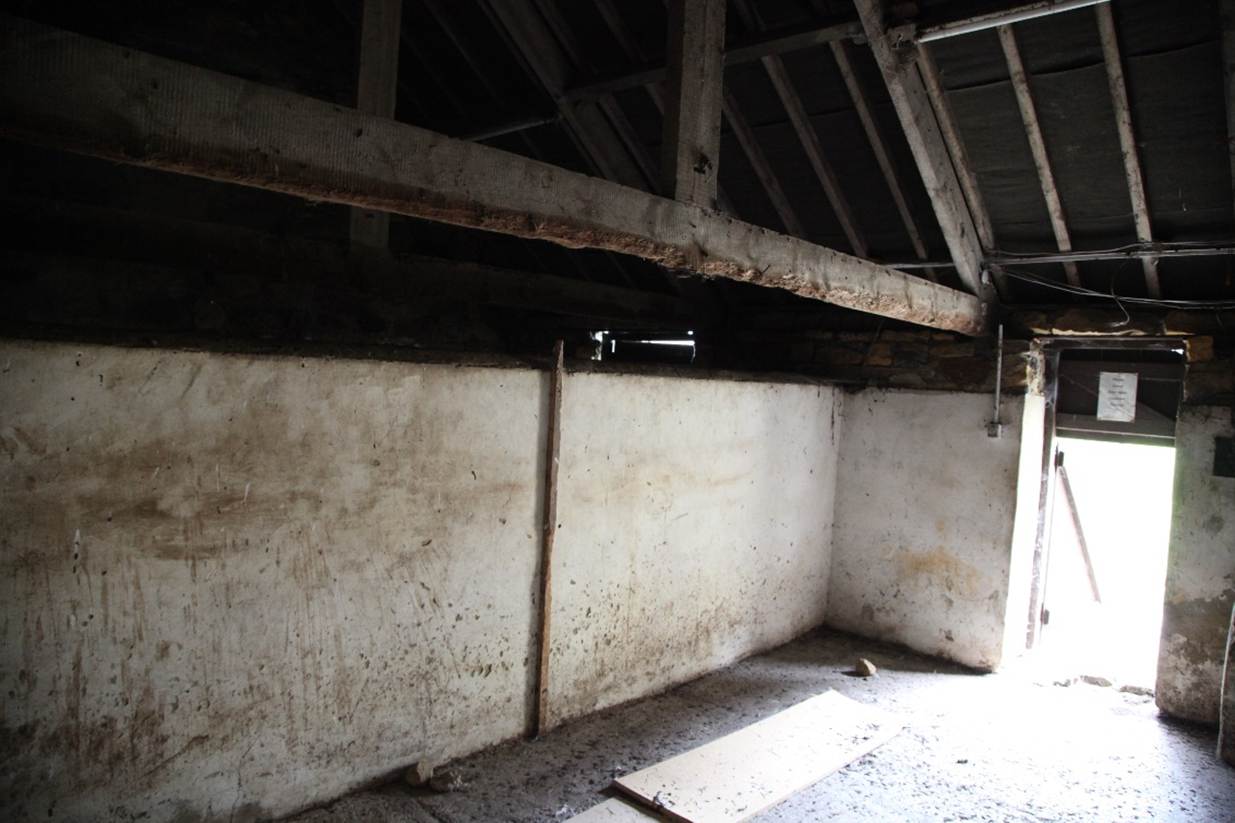
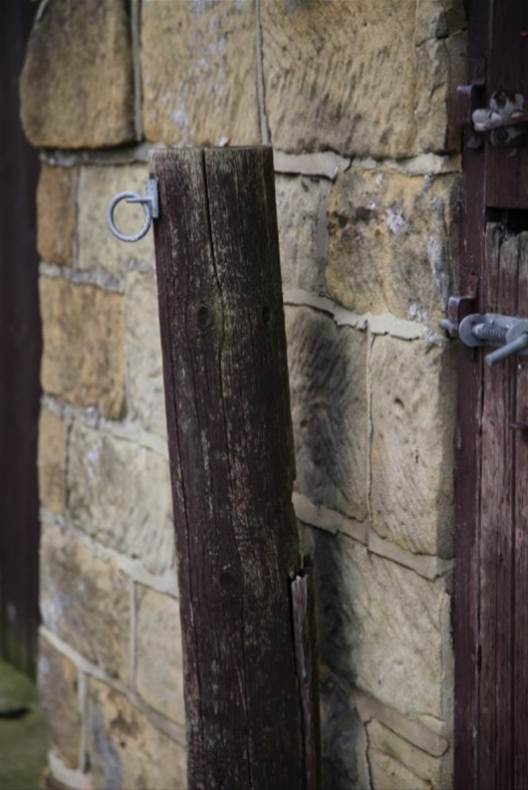
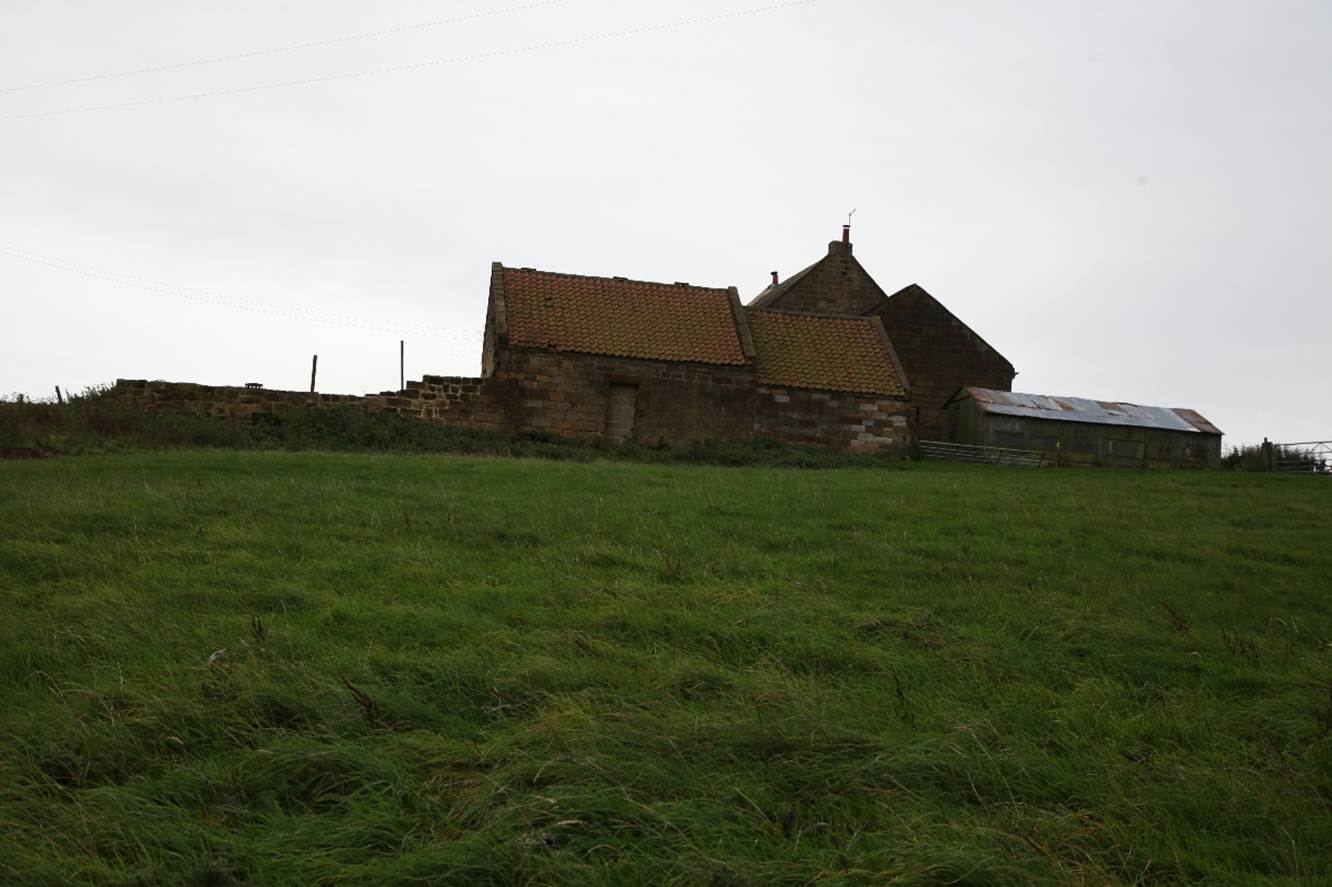
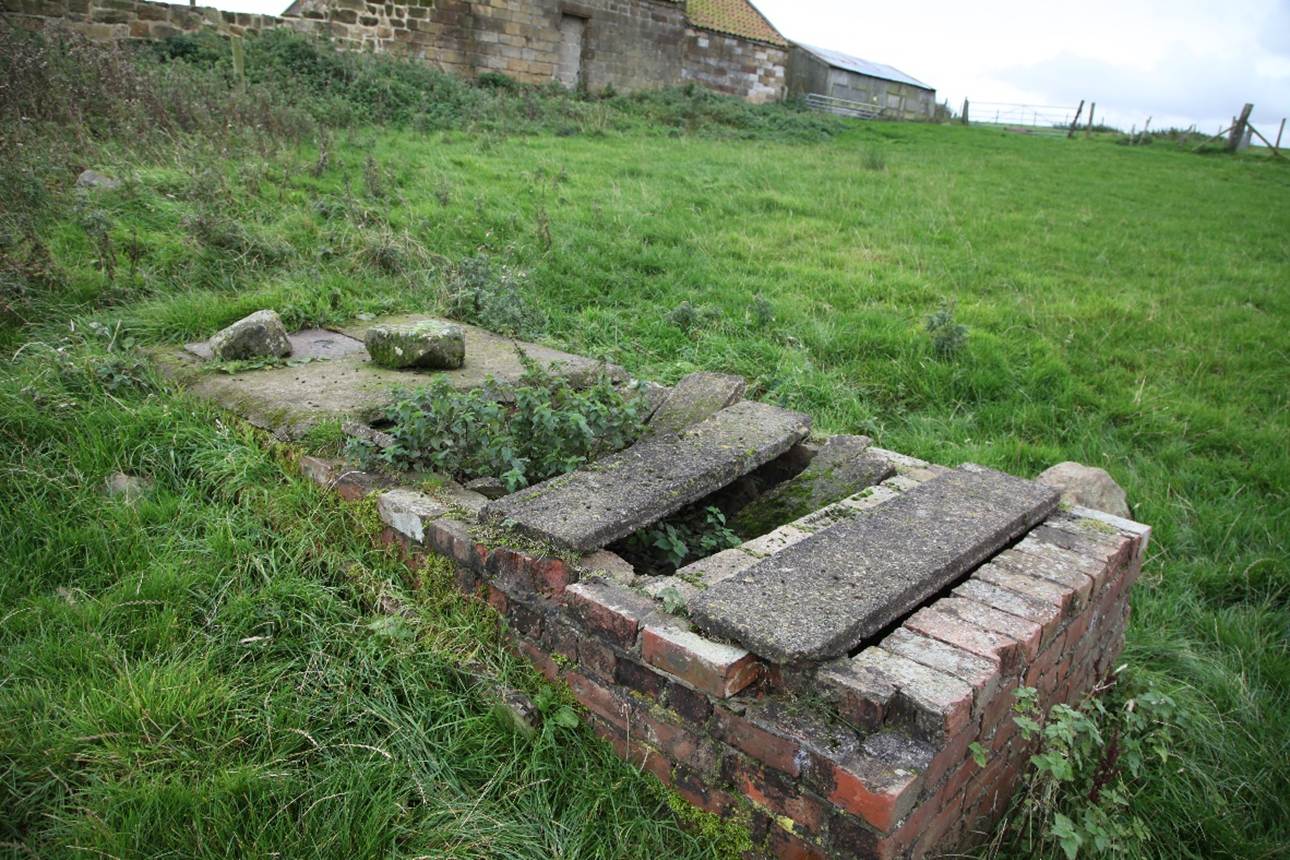
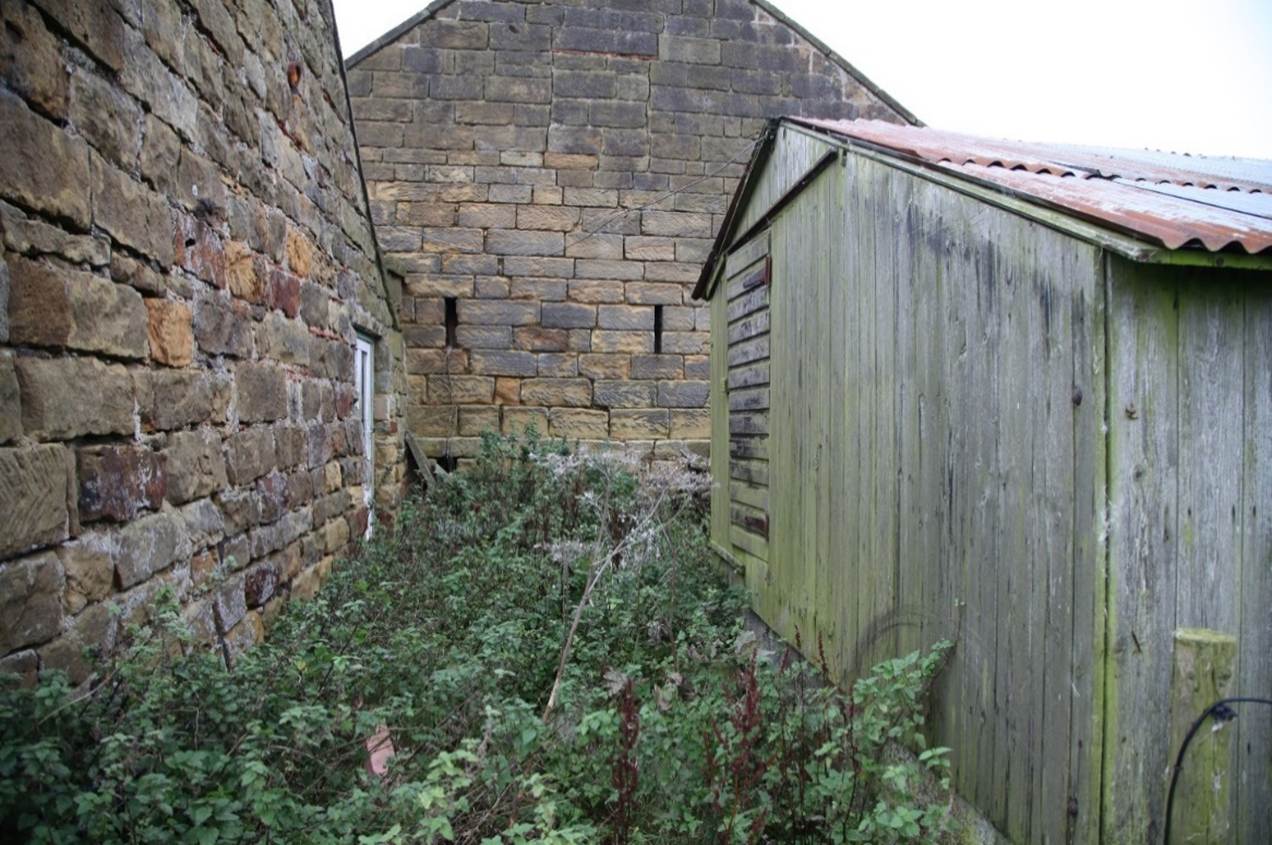
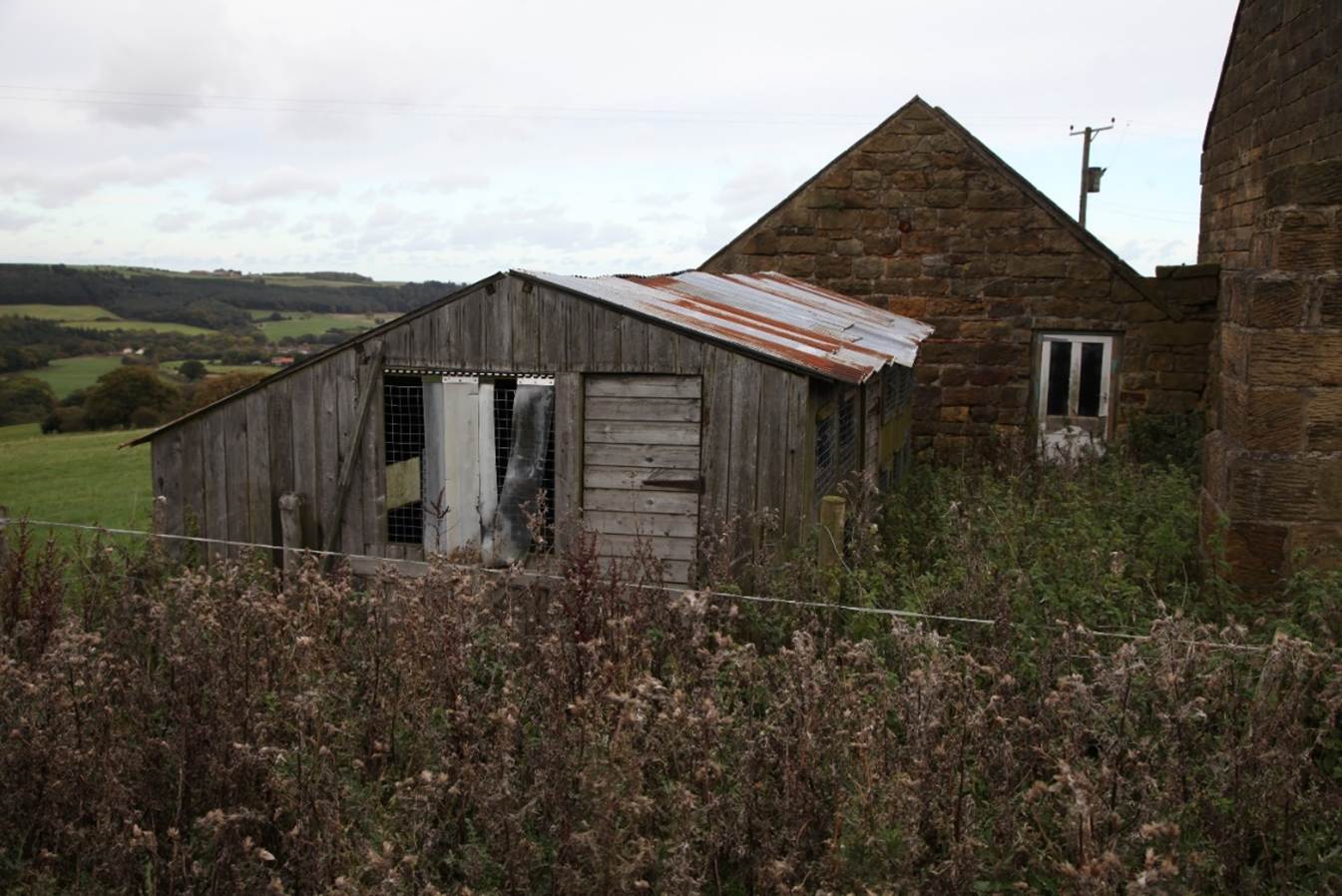
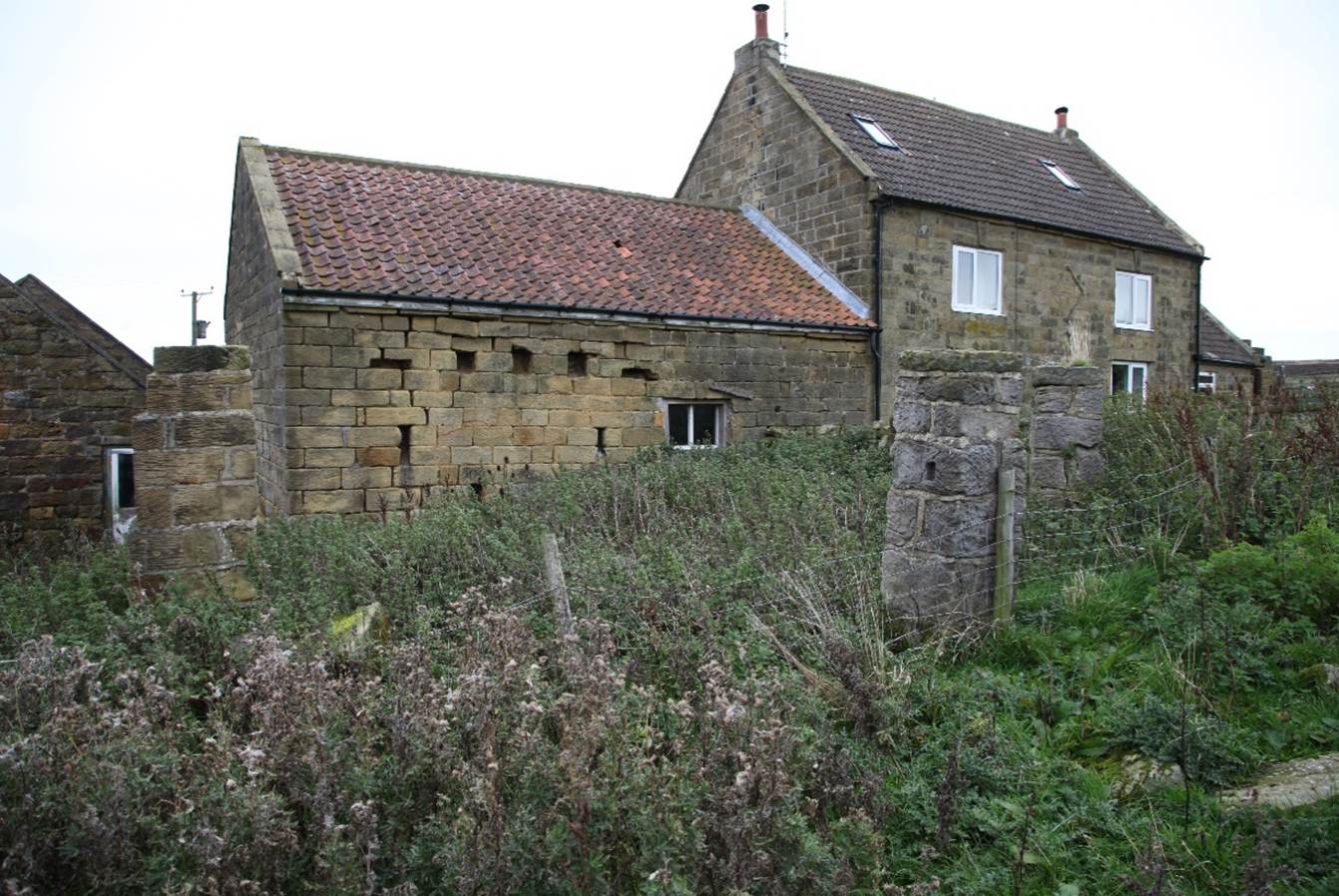
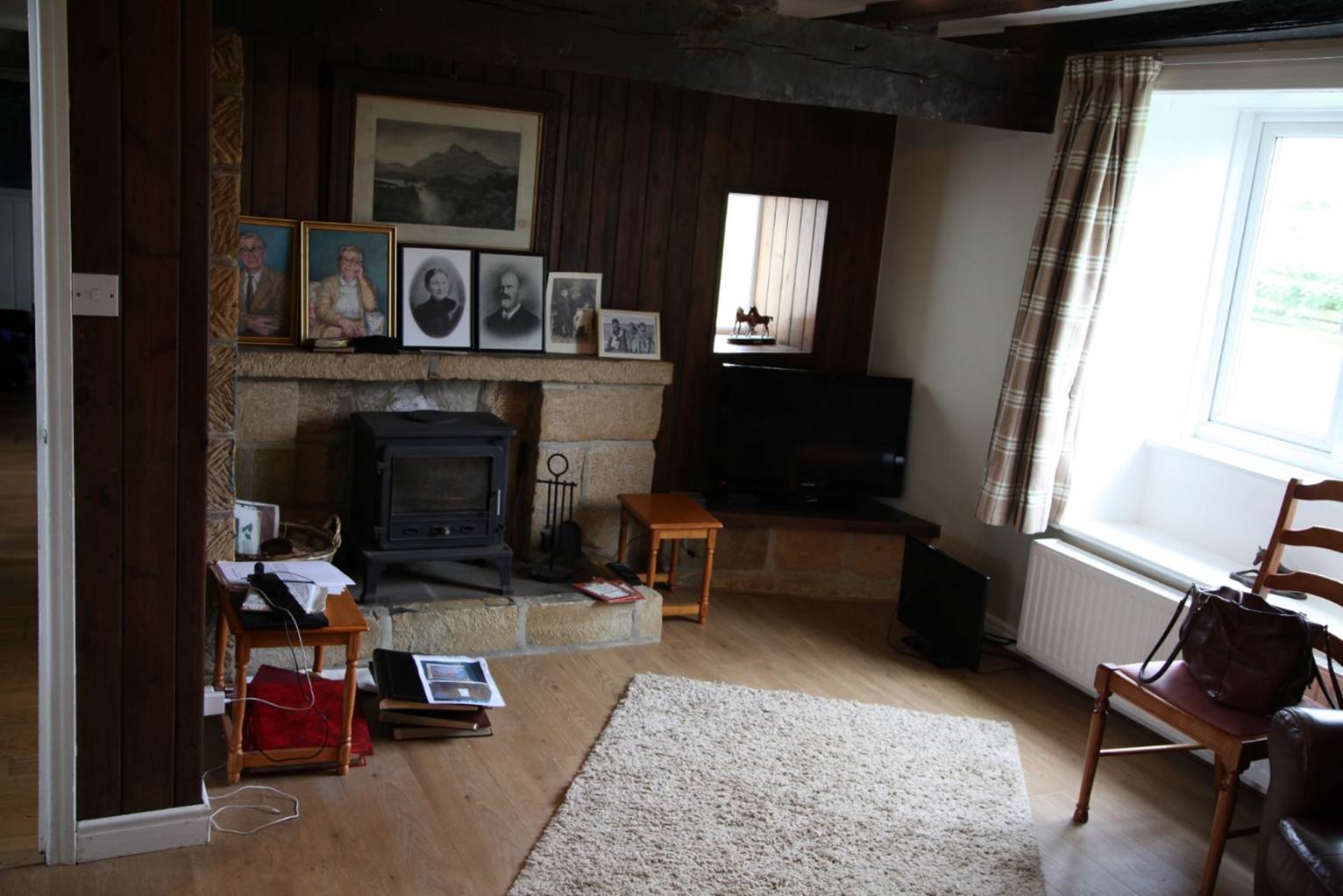
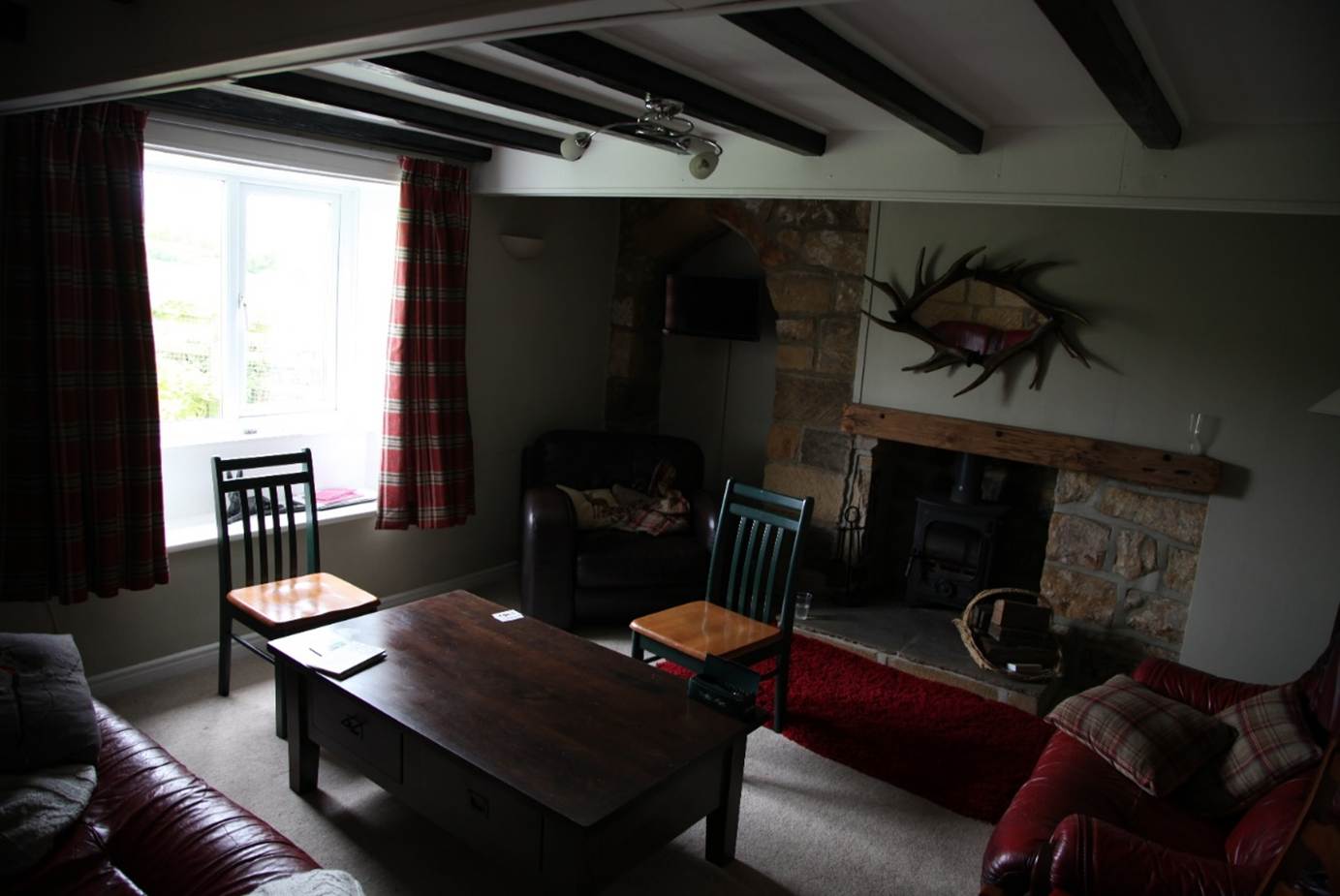
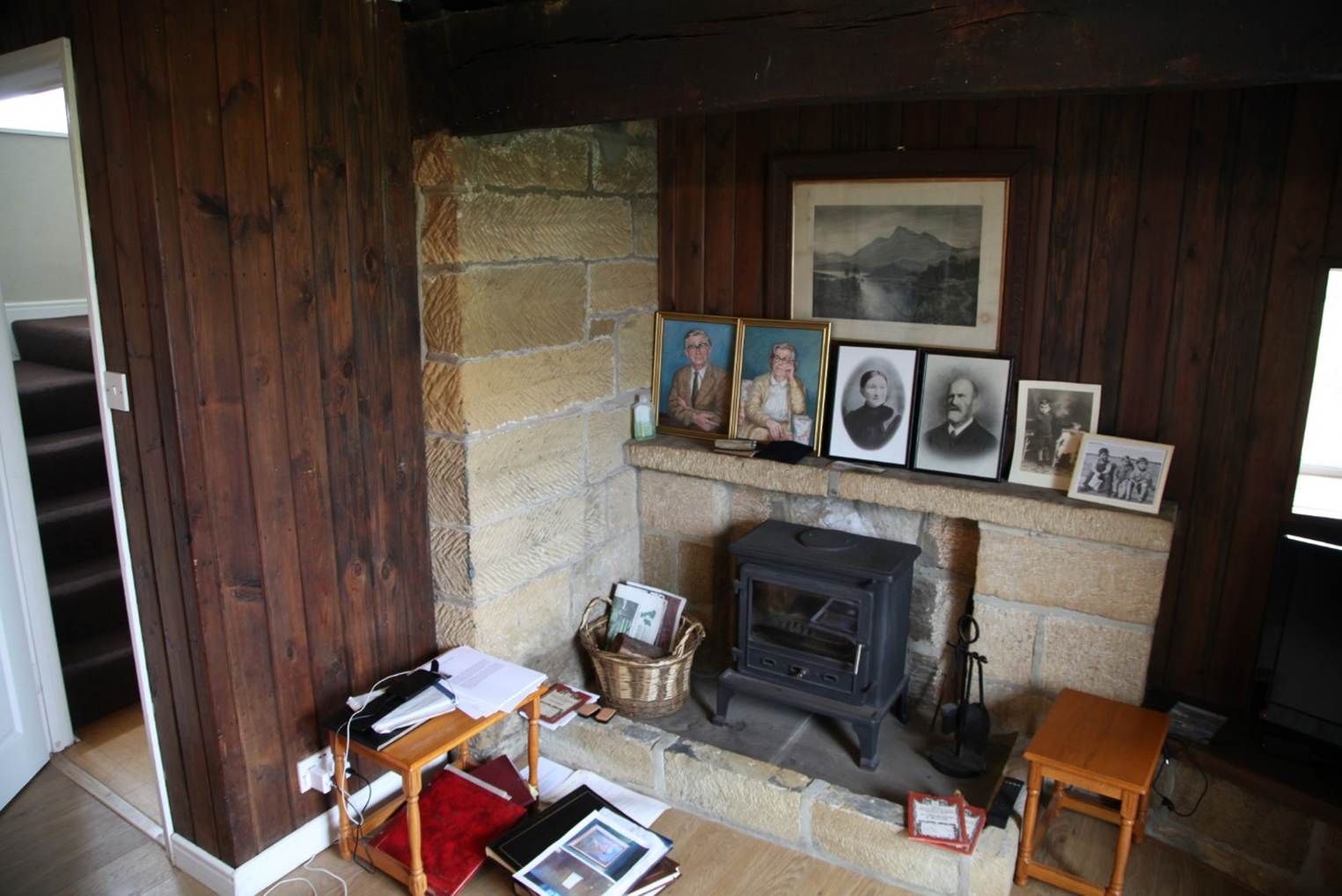
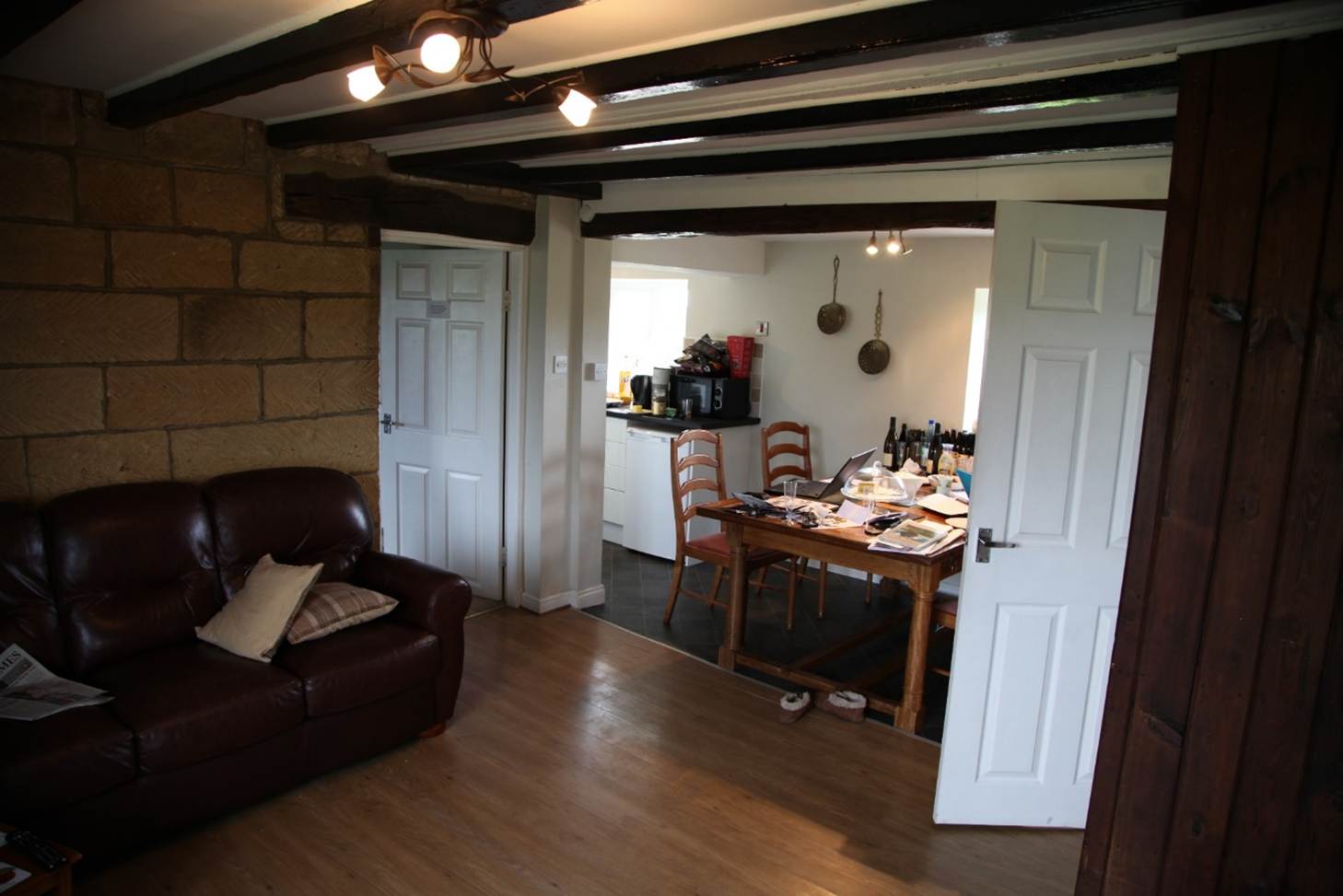
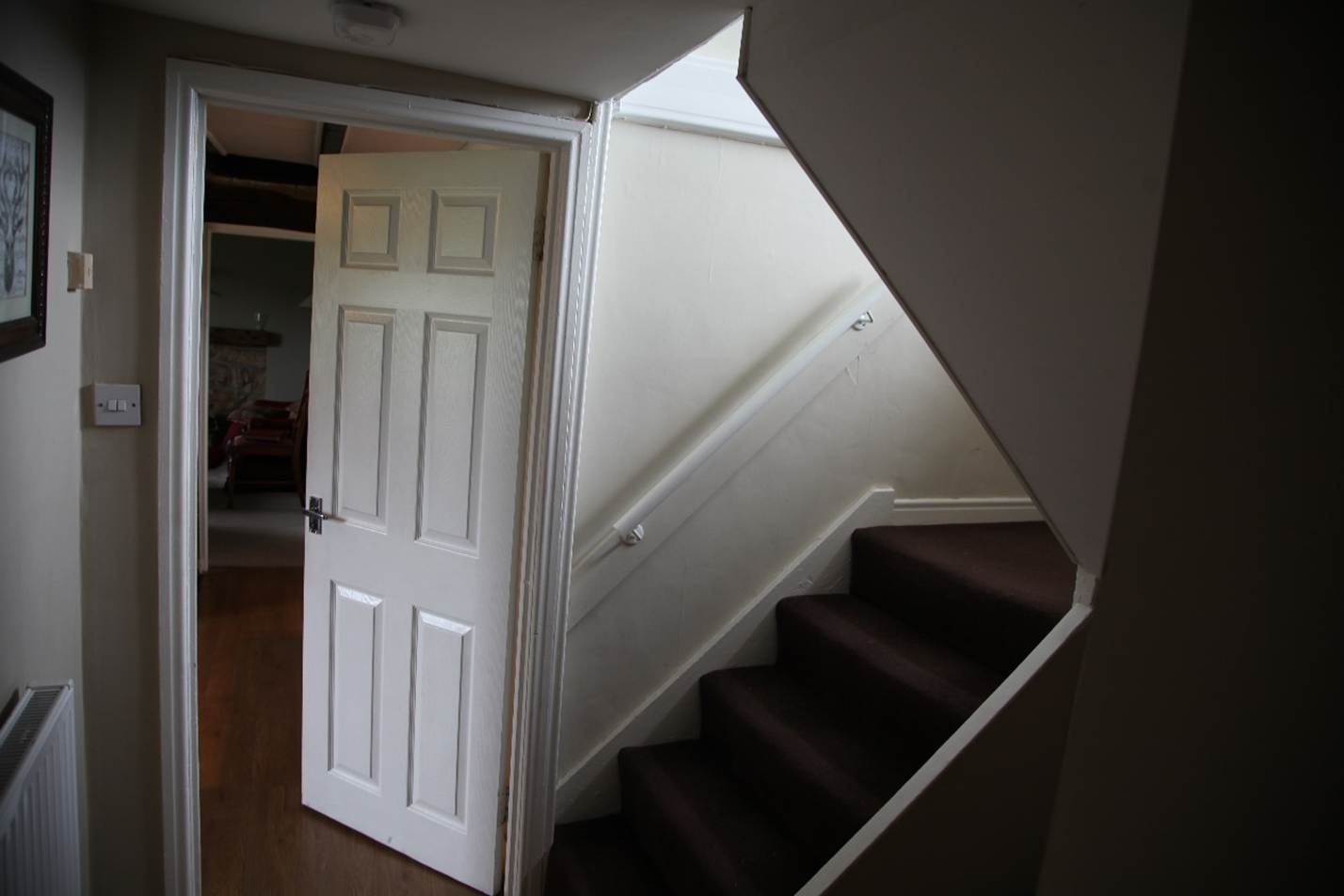
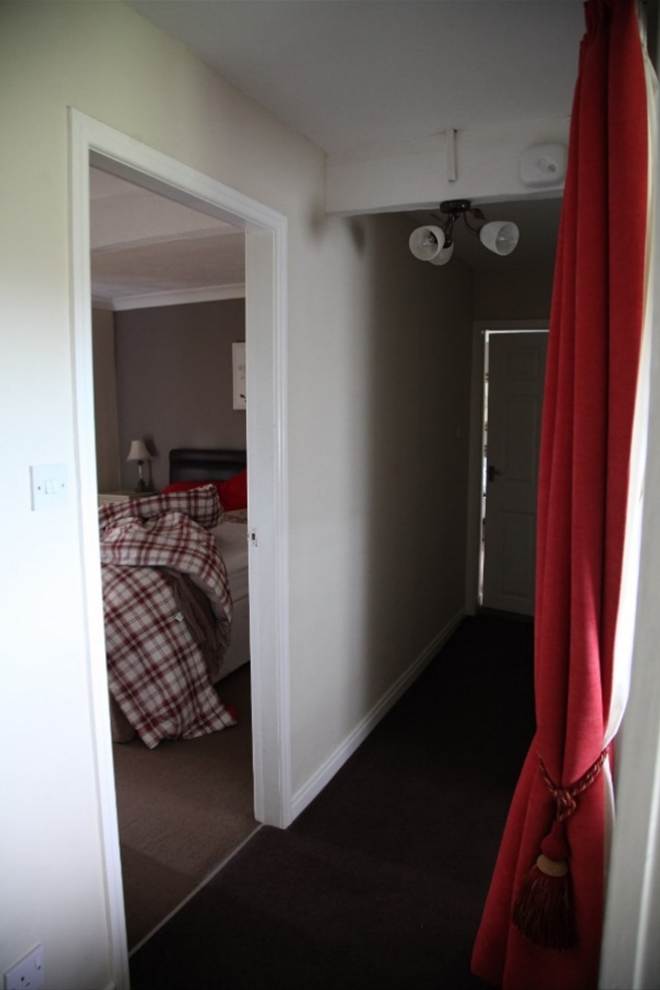
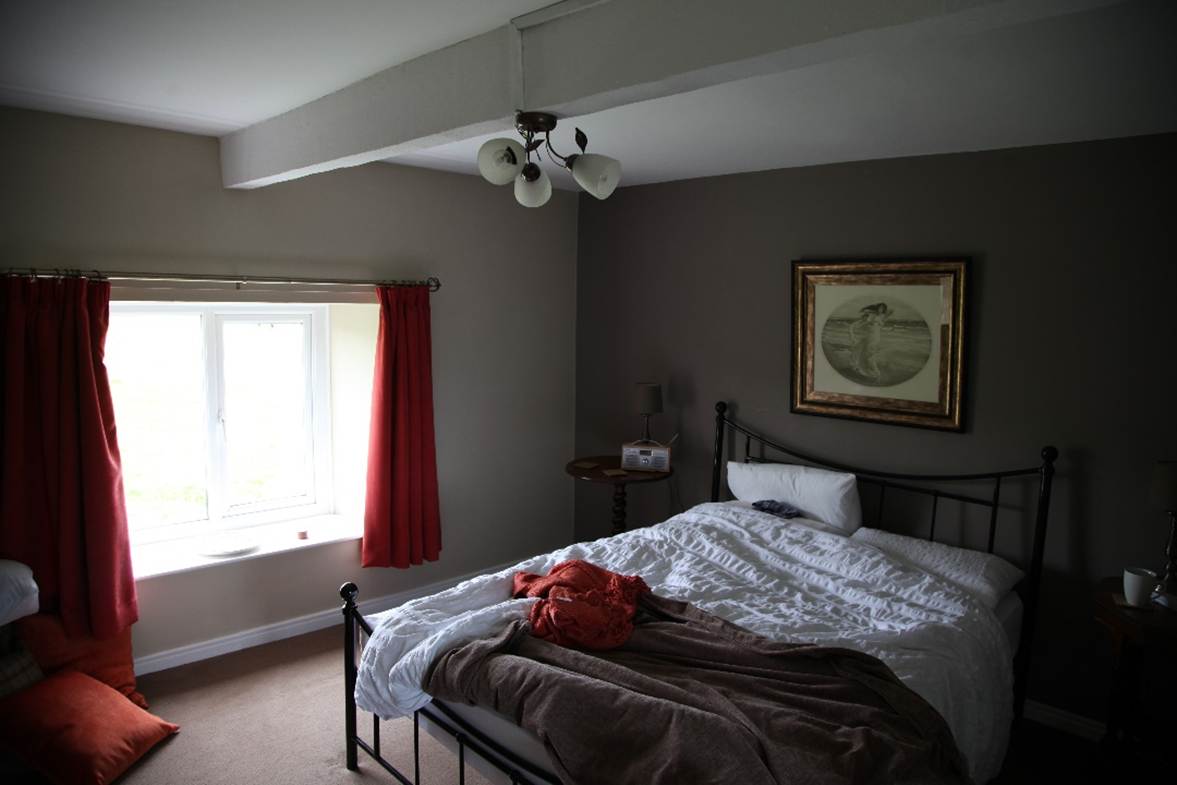
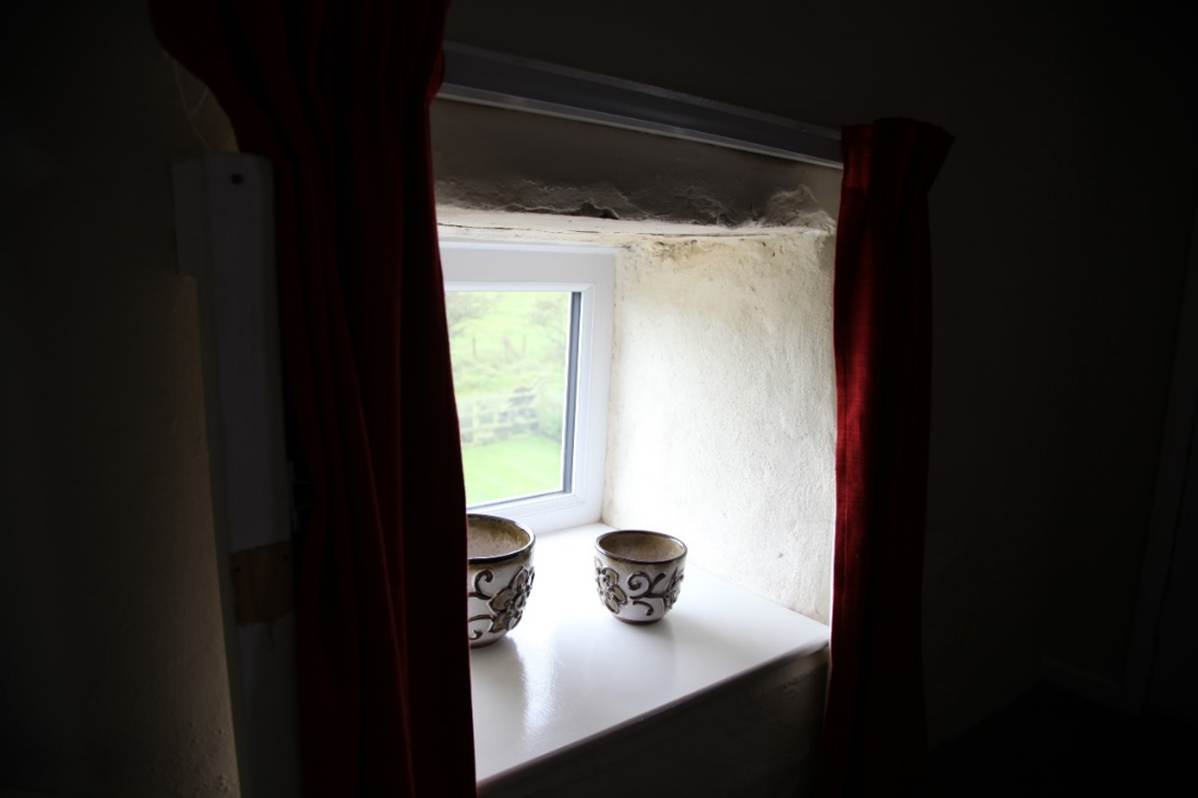
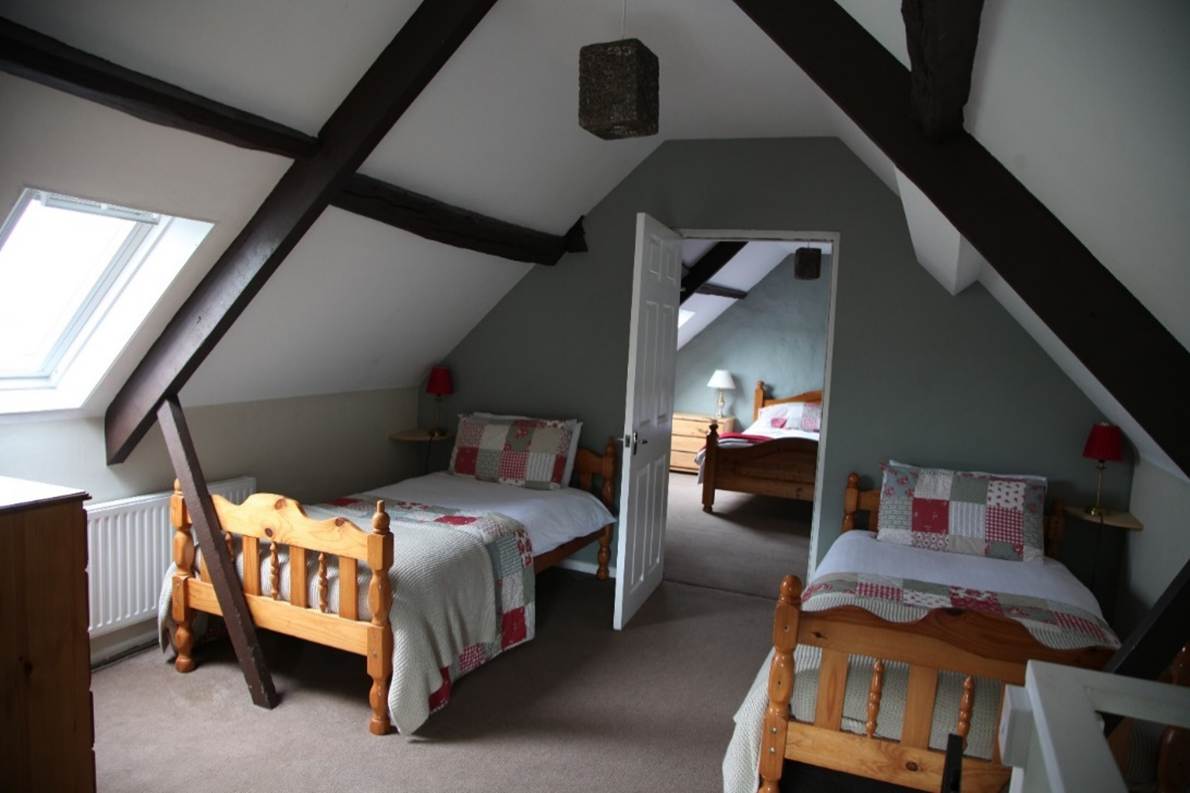
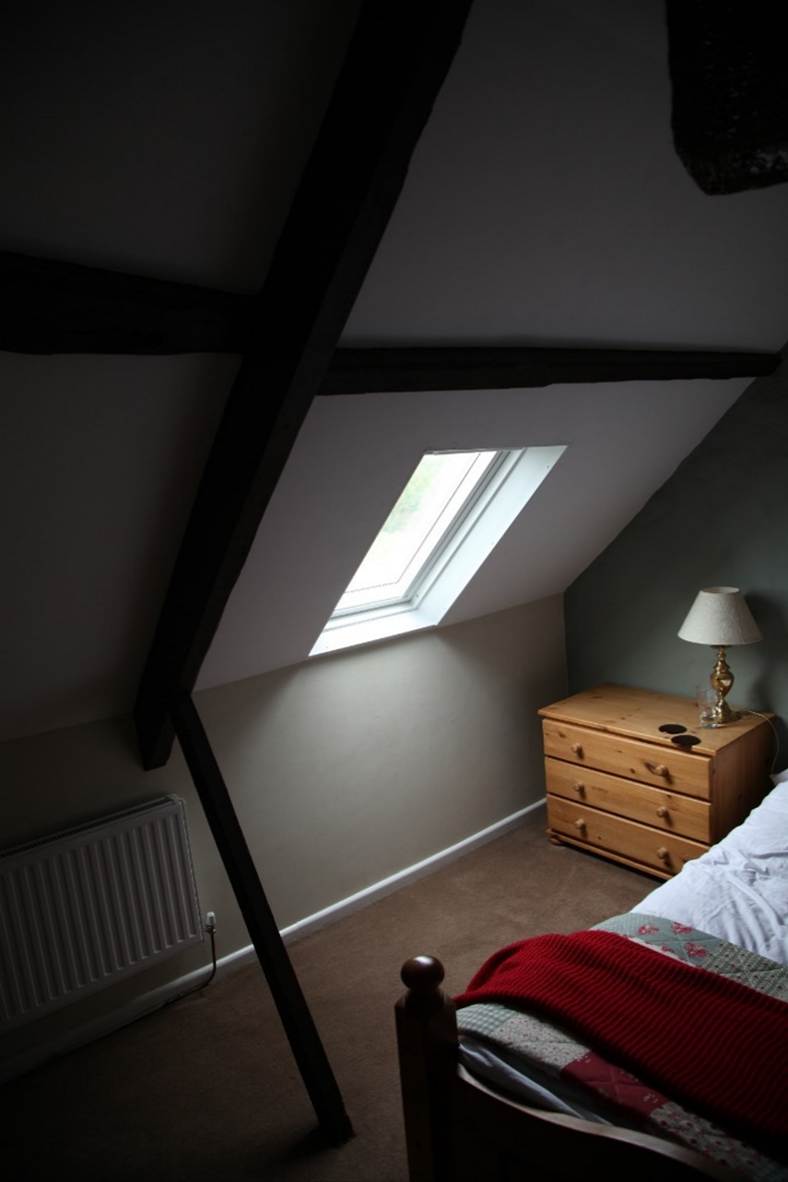
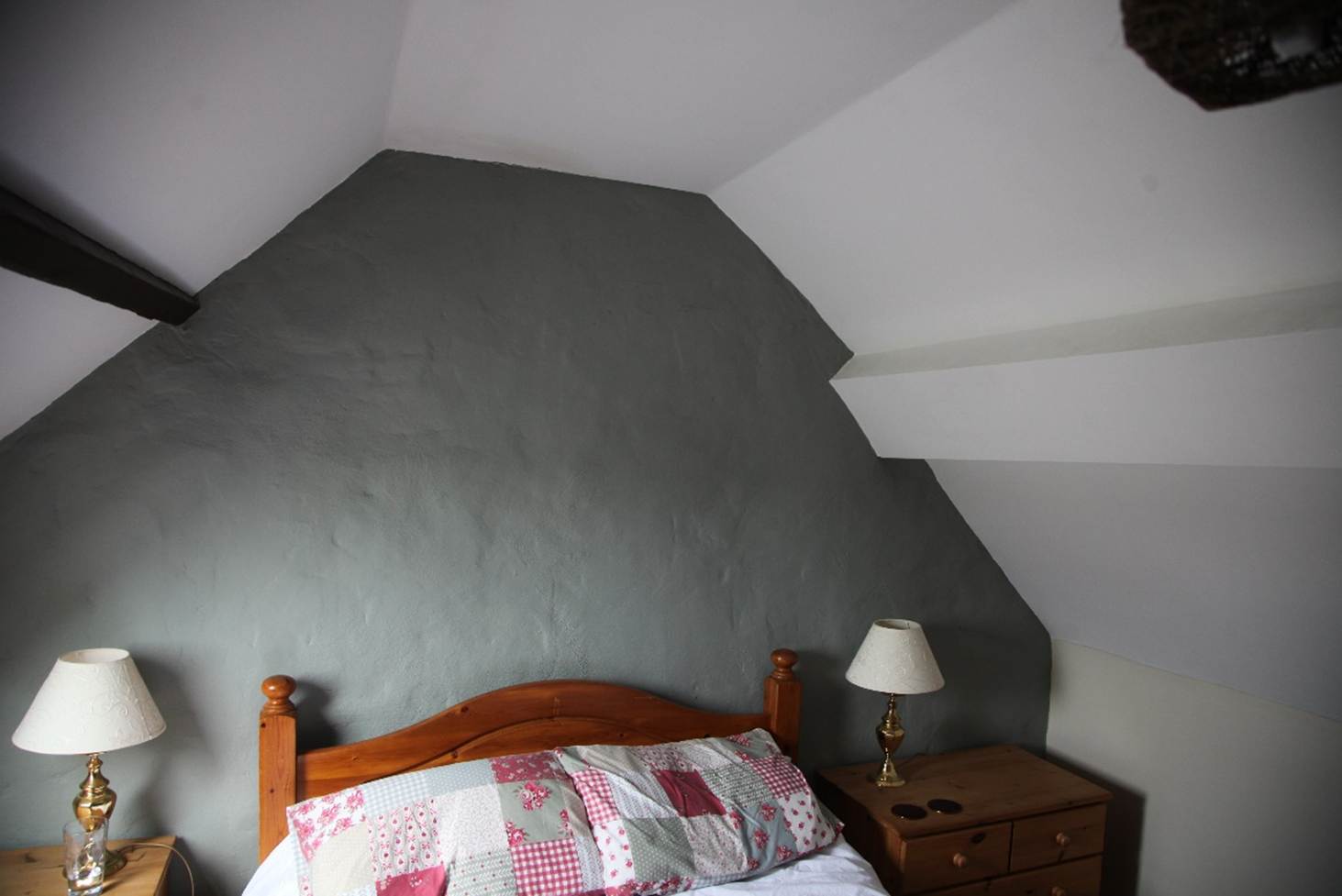
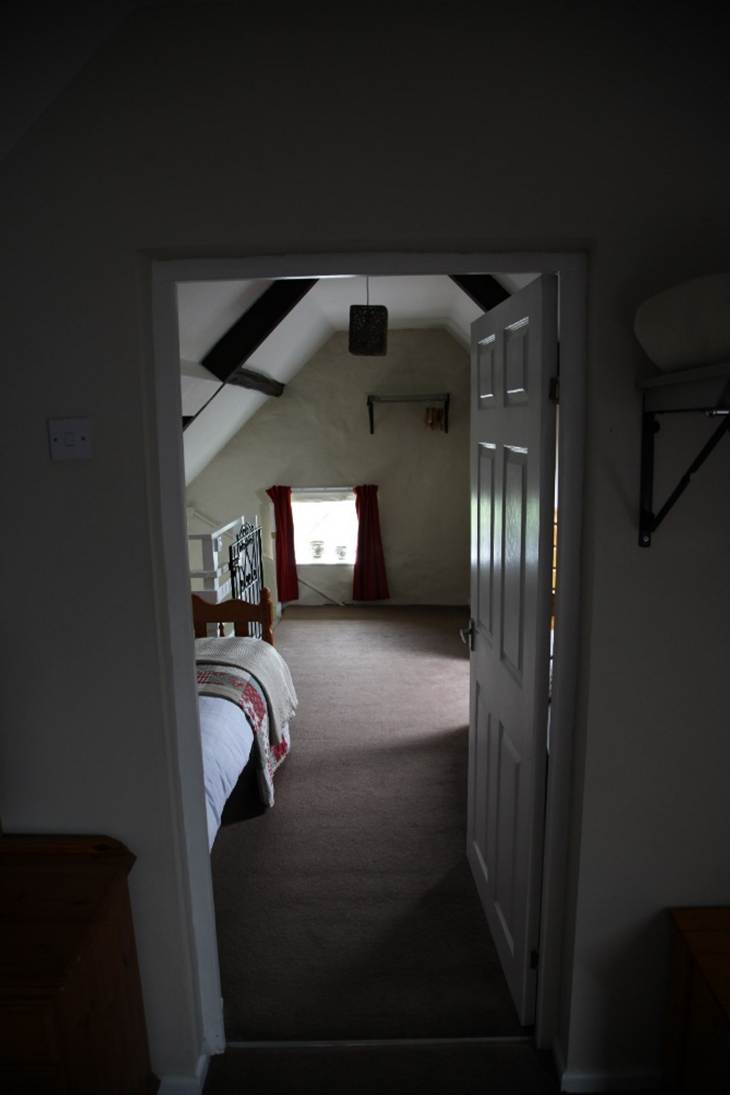
Tidkinhow Farm is
a holiday
cottage today.