Notes on Research
|
Return to the Home Page of the Farndale Family
Website |
The story of one family’s journey through two
thousand years of British History |
The 83 family lines into which the family is divided.
Meet the whole family and how the wider family is related |
Members of the historical family ordered by date of
birth |
Links to other pages with historical research and
related material |
The story of the Bakers of Highfields, the Chapmans,
and other related families |
I thought it would be helpful to record here some notes on my
primary sources for research and the methodology which I have evolved since I
started working on my family history in about 2000. This might be particularly
helpful to others who wish to research their family histories. It might be
particularly helpful to those exploring Yorkshire families and their history.
At this stage this page is still being worked on. I’ll do a bit
more work to this over time. I’ve used a lot more research sources than I’ve
currently listed here, but still need to add these.
Introduction
A genealogist hits the jackpot where a family descends from noble
and aristocratic lines. For then the records are extensive and pave a course
well back in time. Sometimes families can find a ‘gateway ancestor’, a link to
a relative of pedigree, whose ancestry has already been studied and recorded in
detail and which might provide a direct route to medieval noblemen and perhaps
royalty. There the Farndale family are not fortune. But it would be no fun if
we were, as the work would already have been done for us.
The Farndales, like most British families, are the ordinary folk.
Families like these bind and explain the social fabric of society through the
ages. Such families are the bedrock of society, and it their graft and
experiences which provide the engine room of society. So if we can take a
family, and explore it through time, this provides us with a unique insight
into British social history.
However, having accepted that we fall into the class of the
ordinary folk, in another respect the descendants of the Farndales have some
privileged opportunities to explore their past, which is not shared by many
other families.
Surnames, which I explore in a bit more detail on another page, are generally of four types. Occupational
surnames derive from historical jobs, like Baker (which was my grandmother’s
name), until the names become fixed over time. Patronymic names allow a fellow
with a Christian name to link himself to his father, providing more continuity
to who he is, like Orm Gamalson, who we meet in the early Anglo Saxon history
of Farndale, the Saxon/Viking feudal lord of Kirkbymoorside. Descriptive names
originated in nicknames until they became fixed as surnames, like Whitelock
from the complexion of hair, or Pybus from pikebush
describing a prickly character, both being examples of families who have
married Farndales.
The fourth type of surname is a locative name. Those fortunate to
have a locative name have an advantage in genealogy, because as the records dim
over time, there is still a route to find more about the people who lived in
the place, and about the place itself. Where that placed is relatively small,
and easy to place in time, particularly a rural spot which is nevertheless
identified and described in history, then it becomes possible to build up the
fullest history back to the earliest of times.
For a genealogist exploring a name lijke
Farndale, all the tools of research are available, including some tools which
may otherwise be quite tricky to benefit from, in exploring medieval history.
For genealogists of English history, life becomes easier for all
from 1538, when parish records started to be made, and even easier as births
deaths and marriages were recorded more formally and centrally, and census
records started from 1801.
For that reason, I, like most genealogists, have taken a very
different approach to research after 1538 to that before 1538.
I was fortunate because my father, Martin Farndale, had
extensively researched the family’s history before me, though in pre computer
days when remarkably he had to work painstakingly through written records in
different parishes and the like. So when I took over responsibility for the
work at about the turn of the Millenium, the structure was already well in
place. But as a rule, it is always best (indeed it is essential really) to work
backwards, from what is known with certainty, into the unknown past. So the
work can only start in the modern age, and trails followed backwards into the
Middle Ages. That is always the best approach – when trying to solve a problem,
start with what is known for certain in more modern times, and work back to try
to use records to fill in what happened in earlier times. That said, there are
occasions when a scattergun approach can help – with a name like Farndale, it
is certainly worth finding a medieval record set, and just searching the name
to find what comes up. That will help with some building blocks, then to be
slotted in.
Medieval Records (1066 to 1538)
Before the Norman Conquest
There is no realistic source for bureaucratic records before the
Norman Conquest, at least regarding ordinary folk. However for a family with a
locative surname, there are still opportunities to understand the family’s
roots. If the family comes from a place, then there is real value in exploring
the place, which is more of a possibility. Potentially archaeological records
might help, but there are records which help to build a picture of a place in
Anglo Saxon Britain. For instance my family’s story starts with the
Saxon/Viking nobleman, Orm Gamalson, who married in to the family of the Earls
of Northumbria.Theer are historical records about him
and some clues about the estate of Kirkbymoorside, of which the dale of
Farndale is a part. For instance there is a church of St
Gregory at Kirkdale. The sundial at Kirkdale is one of a number of late
Anglo Saxon sundials and is particularly intricate in its design. The central
panel contains the sundial and an Old English inscription above it which reads
“This is the day’s sun-marker at every hour”. The left panel reads “Orm the
son of Gamel acquired St Gregory’s Church when it was completely ruined.”
The right hand panel reads “and collapsed, and he had it built anew from the
ground to Christ and to St Gregory in the days of King Edward and in the days
of Earl Tostig”. Tostig, the son of Earl Godwin of Wessex and brother of
Harold II, the last Anglo Saxon King of England was the Earl of Northumbria
between 1055 and 1065. It was therefore in the course of that decade that Orm,
son of Gamel rebuilt St Gregory’s Church.
So although Farndale the place was deep forest and an unknown
place in Saxon times, it was part of an estate whose community was developing
no doubt around Kirkdale.
So we catch a glimpse of the place and the community around it, in
Saxon times, just before the Norman Conquest.
The Norman Conquest
William the Conqueror was victorious over King Harold at Hastings
in 1066. The south of England was quickly subdued. But the land was divided at
that time, so the north was not so easily controlled and a painful period of
about twenty years ensued when our poor ancestors must have suffered the
harrying of the north, particularly during the winter of 1069–1070 to subjugate
Northern England. But gradually the land fell under the dominance of the
Normans and the land was redistributed to those who had fought with William.
The bureaucratic tool to record the conquered lands and which
described who owned the land before the Conquest and to whom the land was
transferred, is The Domesday Book. The
hyperlinks on this page will take you to other pages to explore the topic in
some more detail, or to other webpages. Kirkbymoorside is on the list. It was
transferred from Orm Gamalson to Hugh fitz Badric.
There were 10 villagers, 1 priest. 2 ploughlands. 2 lord's plough teams. 3
men's plough teams, 1 mill, value 4 shillings. 1 church.
Well we know that Orm Gamalson had just rebuilt St Gregory, so
that must be the church where the priest must have lived. The 10 villagers must
have lived around Kirkdale too. So that must have been the community living on
the Kirkbymoorside estate at or around Kirkdale at the time of the Conquest.
Medieval Society
Medieval society might broadly be described as hierarchical,
shaped like an inverted triangle with the King at the top, then the noblemen,
then knights and with the vast bulk of the population falling into the bottom
rung category of ‘peasants’, the villeins or the serfs. The Farndale ancestors
were firmly in the villeins camp.
Medieval society was feudal, with land handed down from the
monarch. The land of England was therefore organised into estates and manors.
Farndale lies in the estate called Kirkbymoorside. So that provides our first
important route marker to explore the history of the place, and the history of
folk settling in the place, and eventually emerging with the name.
Medieval society comprised very rural societies organised into
estates.
Land passed between aristocrats in various transactions. So in the
earliest time, it is very relevant to explore the history of the aristocratic
families who held the land. The ordinary folk who were placed on the land owed
service and rent in return for the privilege of being allowed to hold parcels
of land. The rules were also governed by custom. Different methods of holding
land emerged, freehold, copyhold and leasehold [expand].
Medieval Records
Surveys were sometimes undertaken, into rents, costs, customary
obligations. Roads might have been surveyed for upkeep purposes. For instance
terriers were detailed surveys of boundaries and ownership of land.
Many of the medieval records are ow available on line. A lot of
records are available and searchable through sites such as medieval genealogy and British History Online, but the
primary source, which is well structured, is the National Archives at Kew,
London (who use the abbreviation “TNA”). TNA also have plenty of
guidance pages to help.
For local manorial documents, a good starting point is the TNA’s Manorial
Documents Register.
The centre of administration was with the Crown, its royal
household, and the parliament.
Records of landholding
Landholding – deed or indenture – enrolments (feet of fines (The National Archives (“TNA”)
CP25/1 pre 1509 then CP25/2, close rolls (C54),
charter rolls (C53)
Chancery Records
Central government was primarily found in the Chancery (the office
of the Lord Chancellor), which was the bureaucratic centre of the Crown’s
government, its ‘writing house’. From there flowed royal authority, through
sealed writs, allowing stuff to happen around the Kingdom. Copies were made.
Bureaucracy was born from the late twelfth century.
Patent Rolls (TNA record set C66)
– open official business (letter patent, open for all to see, so more general
business) Key comms between Crown and locality
Close Rolls (TNA record set C54) –
closed official business – sealed – more for specific individuals –
instruction, appointment etc
Fine Rolls (TNA record set C
60) – transactions with the Crown – now on line in English searchable now
available
Liberate Rolls (TNA record set C 62) – payments and issues
Chancery Calendars
Exchequer Records
The Crown’s financial affairs were organised through the Exchequer
who were responsible for taxation and conducted audits. The King had to raise
money in order to be able to govern his realm.
The relationship between the Crown and localities was an important
feature. There were sheriffs and other officials at local level. Crown lands
had to be managed. Royal officials were appointed. There were a few semi autonomous jurisdictions, namely Durham and Lancaster.
Pipe Rolls – E 372 – government
transactions
Poll Tax – tax on people living somewhere
Lay Subsidies – tax on
wealth
Lay Subsidies and poll
taxes – TNA series E179 – search by date, place, name
Lay Subsidies– person’s
moveable wealth
Poll Taxes 1377, 1379, 1381 – all men and women over 14 less
beggars and hopeless impoverished, 4d from all regardless of income, names by
parish, town, borough, hamlet
C Fenwick, The Poll Taxes of 1377, 1379 & 1381, 3 vols, Oxford
1998 to 2005
Memoranda Rolls – E159, E
368 – debts
State Papers
Privy Council – Proceedings and Ordinances 1386-1542
State Papers online – eg Papers of Henry
VIII – academic institutions – subscription to access – good for civil war (eg those refusing to take oath)– calendars of state papers
at British History Online or institutional subscription
Crown Surveys
Governing the country and raising armies
Include the poorer manorial tenants
Book of Fees (Testa de Nevill), 1198-1293
Hundred Rolls listing landowners 1279-1280
Inquisitions post
mortem (IPM) 1235-1640 – assessors work out what land held for Crown and
what worth, so how much to take – find age when father died if under 21 taken
into wardship
Inquisitions Ad Quod Damnum – to what damage – local patronage –
support local church etc
Other Inquisitions
The legal justice system
Trial by combat or ordeal before c11/12th
Attorneys, trial by court
Crown take over more and more including local justice
Judicial system
Jurisdictions
· Crown
and forest – forest laws very distinct, own justice system
· Borough
and manorial
· Ecclesiastical
Civil and criminal cases
Legal codes - Common law – Canon - Equity
Criminal Justice and common law civil suits
King’s Bench – central criminal court – more serious cases –
Westminster – TNA KB26 (pre 1272) and then KB27
Court of Common Pleas – civil cases - Westminster – TNA KB26 (pre
1272) and then CP40
Itinerant justices, criminal and civil
General Eyre circuits – TNA
JUST 1 1194-1348
Assize circuits from 1274 – TNA JUST 1
Might refer up to the Westminster courts
Outlawry rolls – ‘outlaws’
Coroner’s rolls – unusual deaths – JUST 2
Separate courts for Durham, Lancaster, Chester, duchy of Lancaster
Royal justice – the equity courts
Equity v common law – private suits where no crime committed, but
some sort of wrongdoing alleged, so resolution by evidence rather than
precedent
Standard process – pleadings (bill of complaint, answer,
rejoinder, replication) – Interrogatories (list of questions) to depositories
(witnesses) and affidavits – master exhibits and reports – Decrees and Orders
Settlement out of court
Standard process for all equity cases
Variety of courts:
· Chancery
(c14th onwards)(Lord Chancellor) – wide ranger of litigants
· Exchequer
(c16th onwards), crown debtors or tenant law suits
· Star
Chamber (from 1485), emerged from Privy Council petitions
· Court
of Requests (from 1483 with records from 1485, court for the poor – much
cheaper
· Wards
and liveries, Court of Augmentation, Palatinate Courts
Cities and trades
Guild and Livery companies – Guild Halls – look at occupation if
lived in town
Freemen Freemen
of York
Mayorial Registers
Universities – own records – alumni lists
Schools
Lawyer archives
Military
Early military ancestors – navy lists, particulars of account
(archer lists) – good TNA search guide on early military resources
Church
CofE research centre
There is a useful graphic
produced by Family Search showing the various medieval sources and the periods
they cover.
Palaeography
Way documents are written – National Archives lessons on
palaeography
Documents rarely in English before late c14th – National Archives
Latin for beginners or just Google!
Dates
Regnal Year – 9 Henry III, ninth year of Henry III’s reign = 1225
Gregorian Calendar – in 1752, went straight from 2 to 14 September
1752
Cheney’s
Handbook of Dates can help
1538 to Date
Parish Registers – began 1538
Births, deaths and marriages
Census records
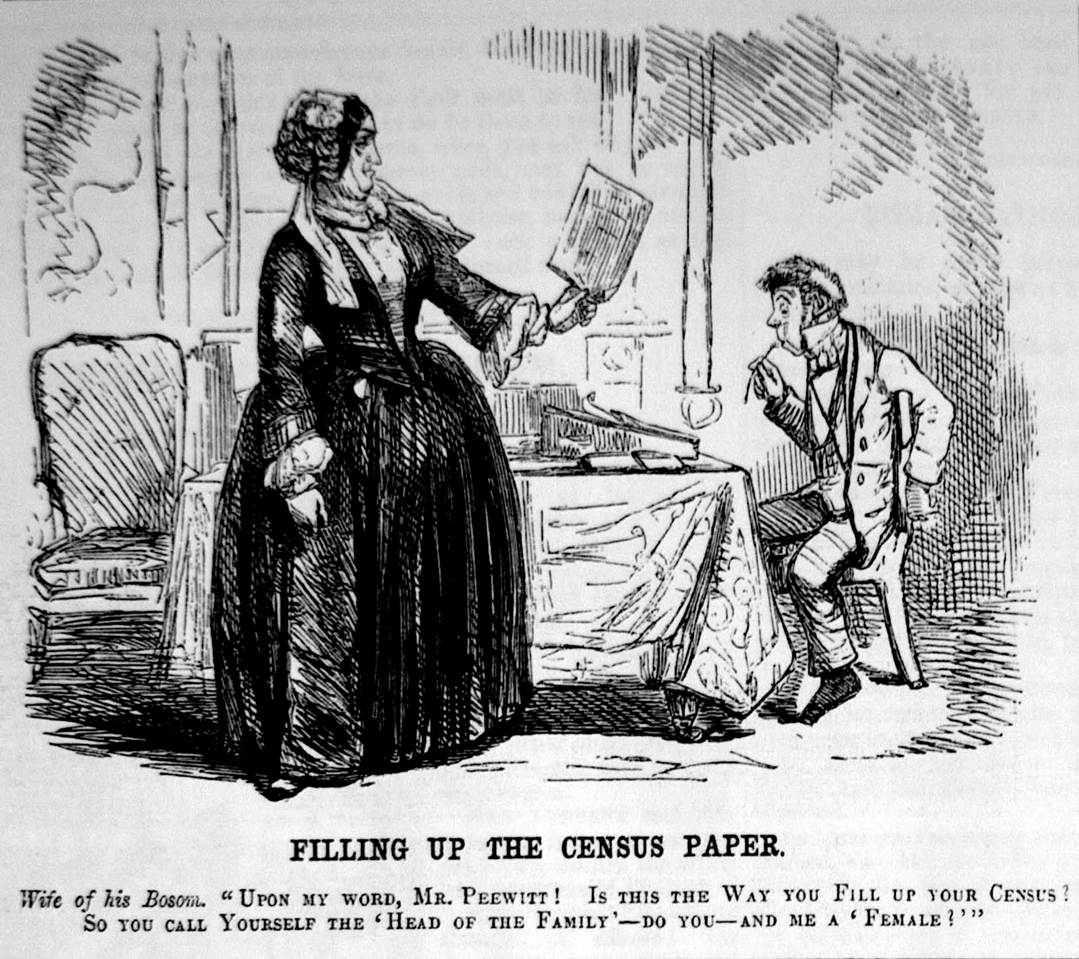
Official Gazette - The London (and Edinburgh and Belfast) Gazette
– free on line
International Genealogical Records (IGI)
Military Records
Texts
Early Man in NE Yorkshire 1930, F Elgee
History of the ancient parish of Lastingham – CD - Dedicated to
the Parishioners of the Six Townships of Lastingham, Spaunton, Hutton-le-Hole,
Appleton-le-Moors, Farndale East & Farndale West which formerly constituted
the ancient parish of Lastingham, many of whom are the descendants of those
mentioned in these pages
Kilton, a Survey of as Moorland Fringe Township, Robin Daniels in Medieval Rural Settlement in North East England,
Architectural and Archaeological Society of Durham and Northumberland, Research
Report No 2, edited by B E Vyner, Durham 1990
New Settlements in the North Yorkshire Moors, 1086 to 1340, Barry
Harrison in Medieval Rural Settlement in North East England, Architectural and
Archaeological Society of Durham and Northumberland, Research Report No 2,
edited by B E Vyner, Durham 1990
Family Records
Nothing more valuable
Collect from relatives, agree a strategy to preserve
Very extensive …
Keeping records
Photographs
Tape Recordings/video
Novels
Historical Novels can provide some gloss to context for rural
communities at the relevant times. Help to build up the story with relevant
extracts which are more descriptive of the times. They can help tell the story,
to bring life to the underlying historical evidence.
Thomas Hardy
David Copperfield,
Dickens
The Pickwick Papers,
Charles Dickens
Middlemarch, 1869, George
Elliot, set in a fictional English Midlands town in 1829 to 1832, distinct,
intersecting stories with many characters. Topics include the status of women,
the nature of marriage, idealism, self-interest, religion, hypocrisy, political
reform, and education, the 1832 Reform Act, early railways, and the accession
of King William IV, medicine of the time and reactionary views in a settled
community facing unwelcome change.
Lark Rise written in 1939,
Over to Candleford in 1941 and Candleford Green in 1943, Flora Thompson,
Descriptive of late c19th rural communities (Oxfordshire)
Cider with Rosie,
1959, Laurie Lee, a childhood in Gloucestershire in the period just after the
First World War.
Organisations
North Yorkshire County Record Office, Malpas Road, Northallerton,
North Yorkshire, DL7 8TB (Tuesday to Friday, 9.30am - 4.30pm), 01609 777585
Borthwick Institute, University of York - borthwick-institute@york.ac.uk
01904 321166
Genealogy resources
Find my Past (subscription)
Ancestry (subscription)
Yorkshire resources
Kirkleatham Museum
Museum of Yorkshire, York
Direct research
Churchyards (monumental records)
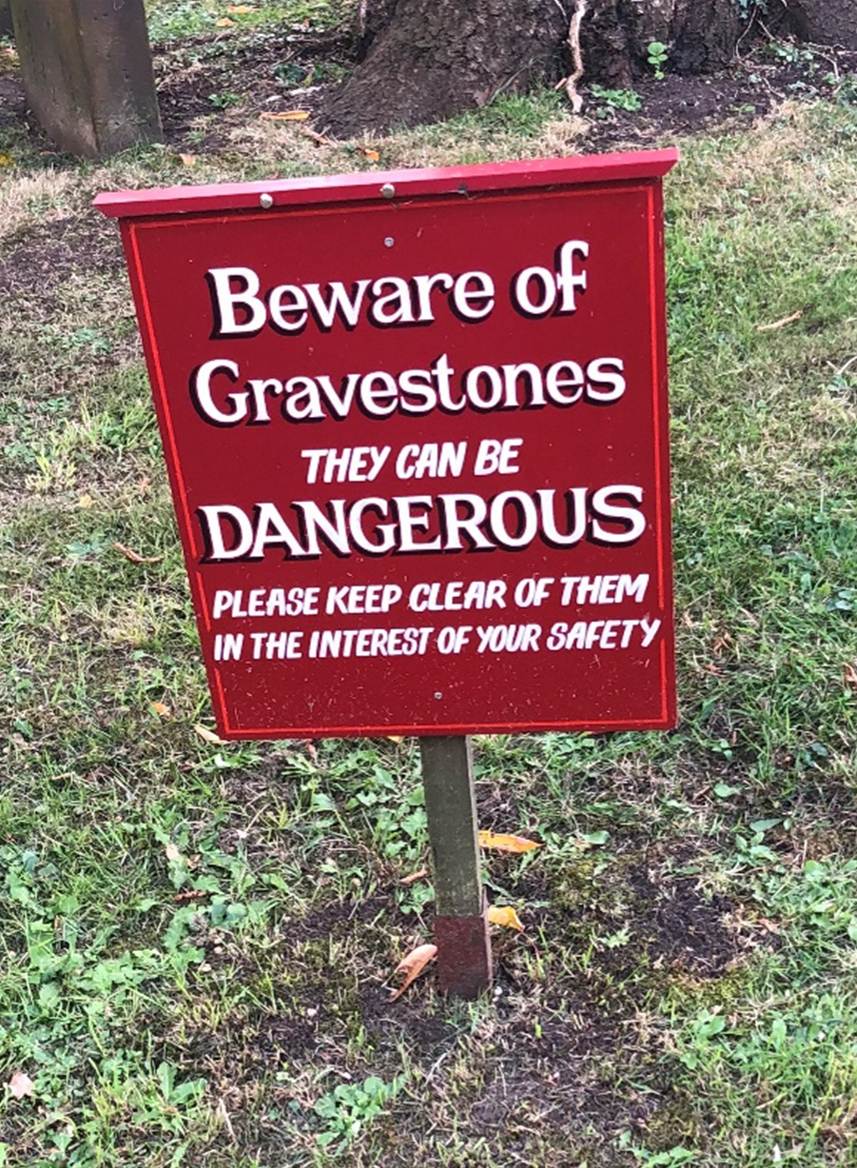
Brotton
Whitby
Compiling the website
Not genealogy programmes. Too restrictive.
MS Word.
Saved in word but as web page (html, not doc).
Separate page for every individual.
Hyperlinks
Directory
Build up Family Lines and trees.
Further pages to explain research and particular sources – places
– topics like military, mining etc.
Web host and web name.
Post up and it works!
For project with scope to develop indefinitely – by far the best
way.
Excel Chart
Not published, just research tool
Reference – FAR 00001 … (remember 000!)
Last Review Date
Name
Sex
Geographical locations
Comments
Family Line
Directory Volume
Occupation
Born, married died – dates
Mother’s surname
Wife’s surname – now going to belatedly add Christian names! –
good to fit an individual to family if you find MSN – needed Christian names as
eg media article for Mary Farndale could have been
born Farndale or married into the Farndale family – so find all the Mary’s to
work it out!
Where buried
Other categories
Significant emigration
Military service
Topics needing more work/resolution (notes)
Brilliant tool – find easily by searches or ordering. Newspaper
article for instance I can generally find who it is in seconds.
Family Lines
…
Martin Farndale’s Introductory Remarks to the Directory which he
started compiling in the 1990s and which has since been developed onine by
Richard Farndale
INTRODUCTION TO THE FARNDALE DIRECTORY
1. This document has been produced by me as a result of work which started in
1956. It consists of a chronological list of all references to the Farndale
family from all known sources. Each Farndale is given a serial number when his
birth is recorded or calculated and entered at his/her place within his/her
family. The same number is used to mark his own family and life in
chronological order. Thus by tracing a person’s serial number to his family at
the time of birth it is possible to pick up his father’s serial number and
similarly trace him back to his family and so on. Daughter’s marriages are
recorded, but not details of their families.
2. The Directory was built up from family knowledge, Parish Registers and
Bishops Transcripts, Burial Registers, Monumental Records and other Parish and
family documents. To these were added all entries in the General Record Office
for Births, Deaths and Marriages. All Farndale entries in the International
Genealogical Index and detail as a result of searches in the County Record
Offices for North Yorkshire and Cleveland and at the Borthwick Institute at
York. All Records of Wills and Administrations in the PRO and at York have been
searched. In addition all medieval records, Patent, Pipe, Curia Regis Rolls,
the Feet of Fines and manorial records and the hearth taxes have been searched.
All military/medal records and where relevant overseas records, returns of
votes, entries in directories and telephone directories, the documents at the
PRO and Society of Genealogists in London and more recently all relevant
entries on the Internet have also been searched. And there is still more to do.
3.
Abbreviations have been kept to a
minimum, but the following have been used:
PR = Parish Registers
BT = Bishop’s Transcripts
IGI = International Genealogical Index
Mon R = Monumental Records
BR = Birth Records
DR = Death Records
MR = Marriage Records
BC = Birth Certificate
DC = Death Certificate
MC = Marriage Certificate
September 1998. Sir Martin Farndale KCB
(Serial 00911).
To help you follow the directory:
All Farndales are recorded in date order of birth
Each Farndale is given a reference number
Reference is made under each record to parents’
reference numbers and children’s reference numbers. So although the Directory
is not organised as a tree, you can follow family links through the directory.
I have further information available to the
information currently available on line, but I am trying to upload most
information over time.
Other sources
Tracing your Yorkshire Ancestors, Rachel
Bellerby, 2006.