A History of Cleveland
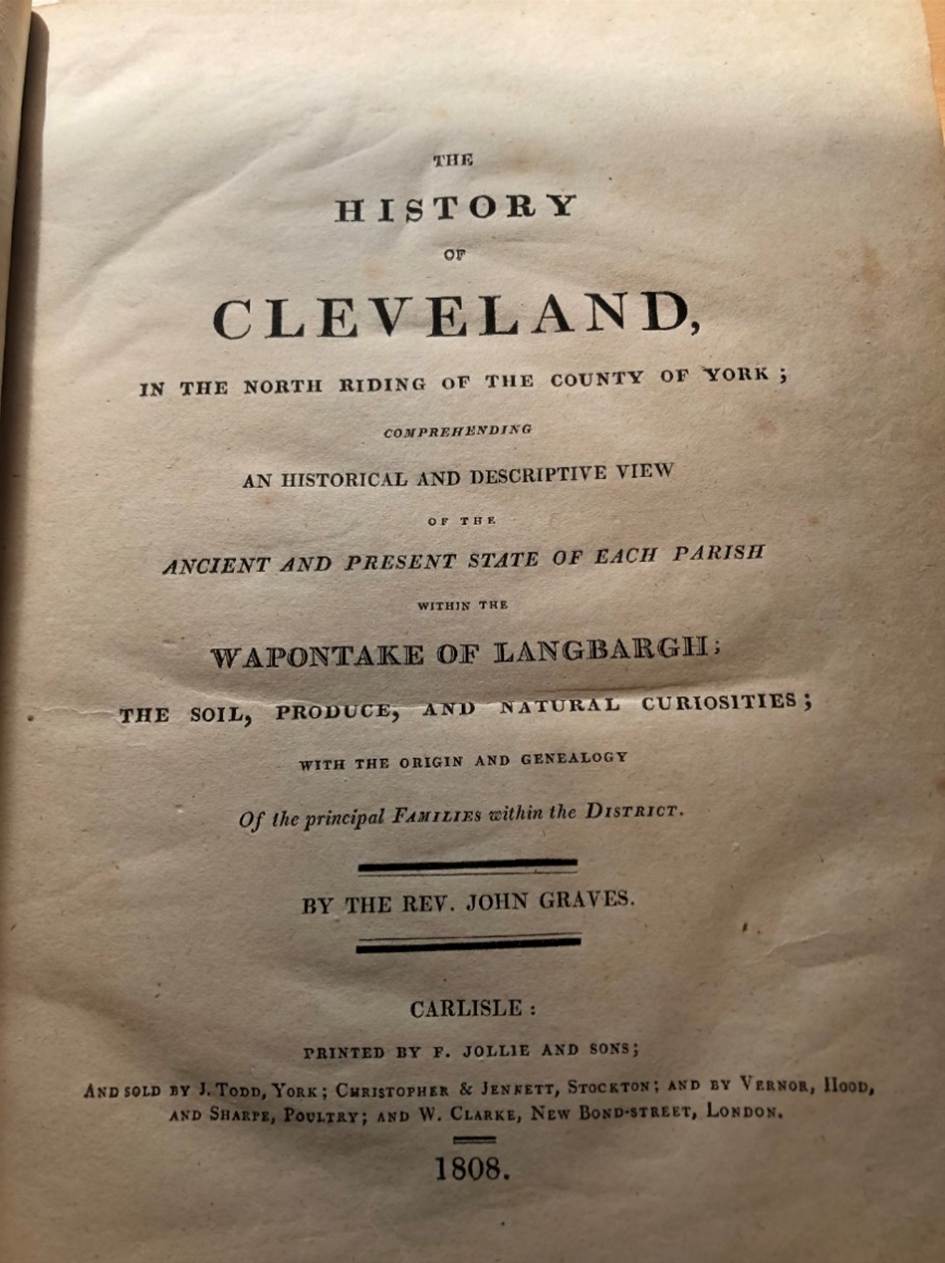
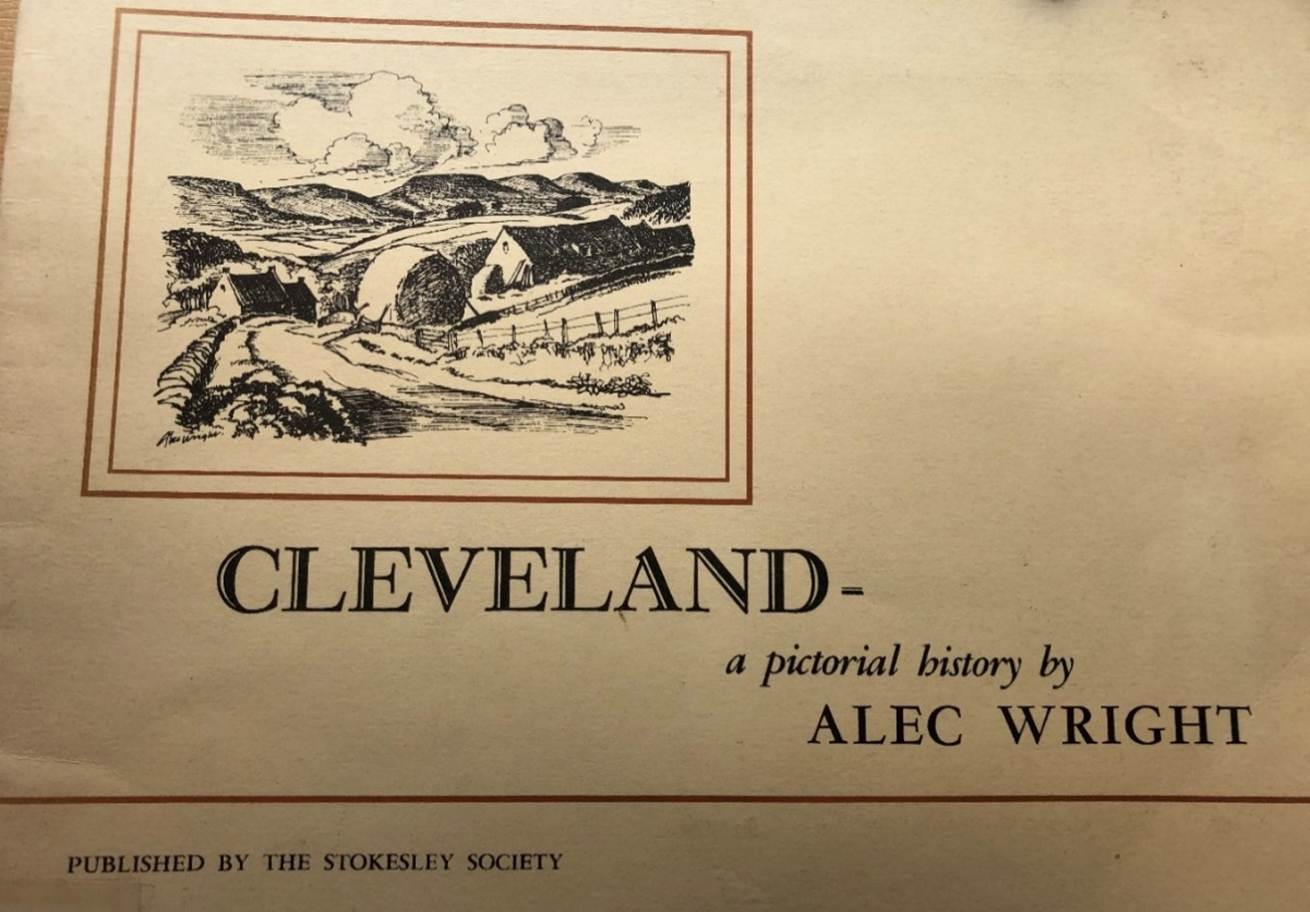
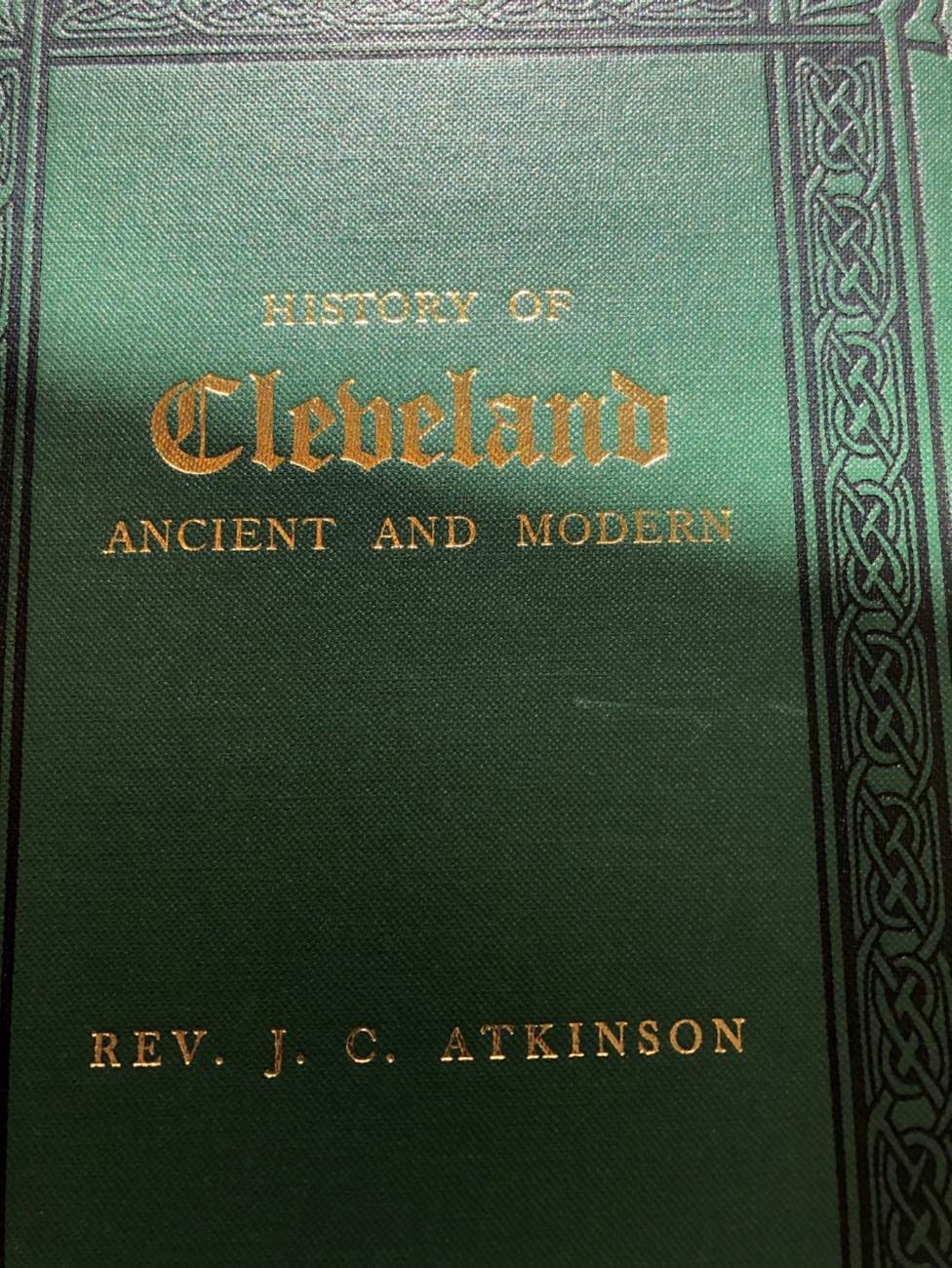
The history of Cleveland with a focus on the historical
information relevant to the history of the Farndale family
|
Return to the Home Page of the Farndale Family
Website |
The story of one family’s journey through two
thousand years of British History |
The 83 family lines into which the family is divided.
Meet the whole family and how the wider family is related |
Members of the historical family ordered by date of
birth |
Links to other pages with historical research and
related material |
The story of the Bakers of Highfields, the Chapmans,
and other related families |
Introduction
Dates are in red.
Hyperlinks to
other pages are in dark
blue.
Headlines of the
history of Cleveland are in brown.
References and
citations are in turquoise.
Contextual
history is in purple.
This webpage about
Cleveland has the following section headings:
·
The
Farndales of Cleveland
·
Cleveland,
Overview
· Cleveland Timeline
· People of Cleveland
The Farndales of Cleveland
We don’t find any evidence of Farndales in Cleveland
before 1572. After 1572, we find almost all Farndales, and all Farndales who
are ancestors of the Kilton lines from which I and most others descend, in
Cleveland. So we have to explain how the Farndales who had become concentrated
solely south of the North York Moors before the first record in 1572, came to
move into Cleveland, such that they were predominantly clustered north of the
North York Moors after 1572.
It is believed that Nicholas Farndale (FAR00059)
and Agnes Farndale (FAR00060),
who both died in Kirkleatham, were born in Campsall or thereabouts, around
Doncaster, perhaps in about 1512 and 1516 respectively. If so, they were likely
descended from William Farndale (FAR00038),
the Vicar of Doncaster, or at least from his wider family (his brother
perhaps). William Farndale junior (FAR00063)
was born in say 1538, and Jean Farndale (FAR00064)
in say 1540 to Nicholas and Agnes. William Farndale married Mary Atkinson at
the Church of St Mary Magdalene in Campsall in 1564. Between 1564 and 1567, the
family moved to Kirkleatham. We don’t know why. Maybe that was Agnes’ ancestral
home. Perhaps more likely Jean had met Richard Fairly, a relatively well
established fellow, whose family were Scottish, but who had more recently
become associated with Cleveland and Kirkleatham. Perhaps the family saw
opportunities by a move north. On 16 October 1567, Jean married Richard Fairley
in Kirkleatham. The family lived generally at Kirkleatham until Nicholas and
Anne’s death in 1572 and 1586, though William had by then realigned slightly
eastward, to Skelton. This established the family tree
for the Doncaster-Kirkleatham-Skelton
Line of Farndales.
Thus, in the mid sixteenth century, the family ventured north of
the North York Moors and became focused around Cleveland.
If there is a town in the early
recorded history of the modern Farndales, which is focal to the history of the
Farndale family, it is Kilton.
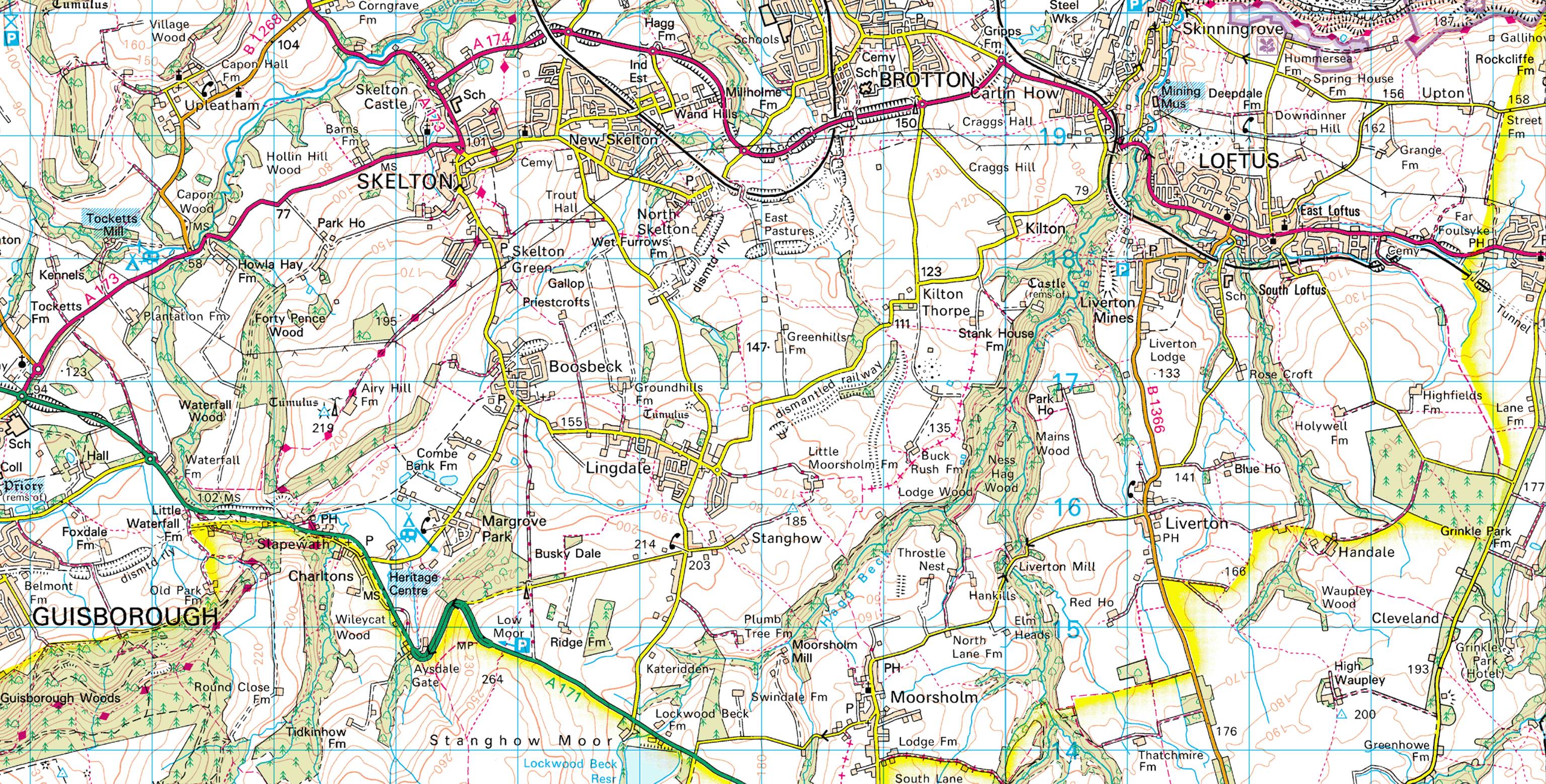
The family started to be associated with the Cleveland towns and
villages of Boosbeck, Brotton, Coatham, near Charltons, Great Ayton, Guisborough,
especially at Kilton,
Kirkleatham, Liverton, Loftus, Lythe, Middlesborough, Moorsholm, Redcar, Saltburn by the Sea, Skelton, Stokesley, Tidkinhow and Whitby.
Two Farndale
families emerged around Scarborough.
By 1733, a large
group of the family emerged around Ampleforth.
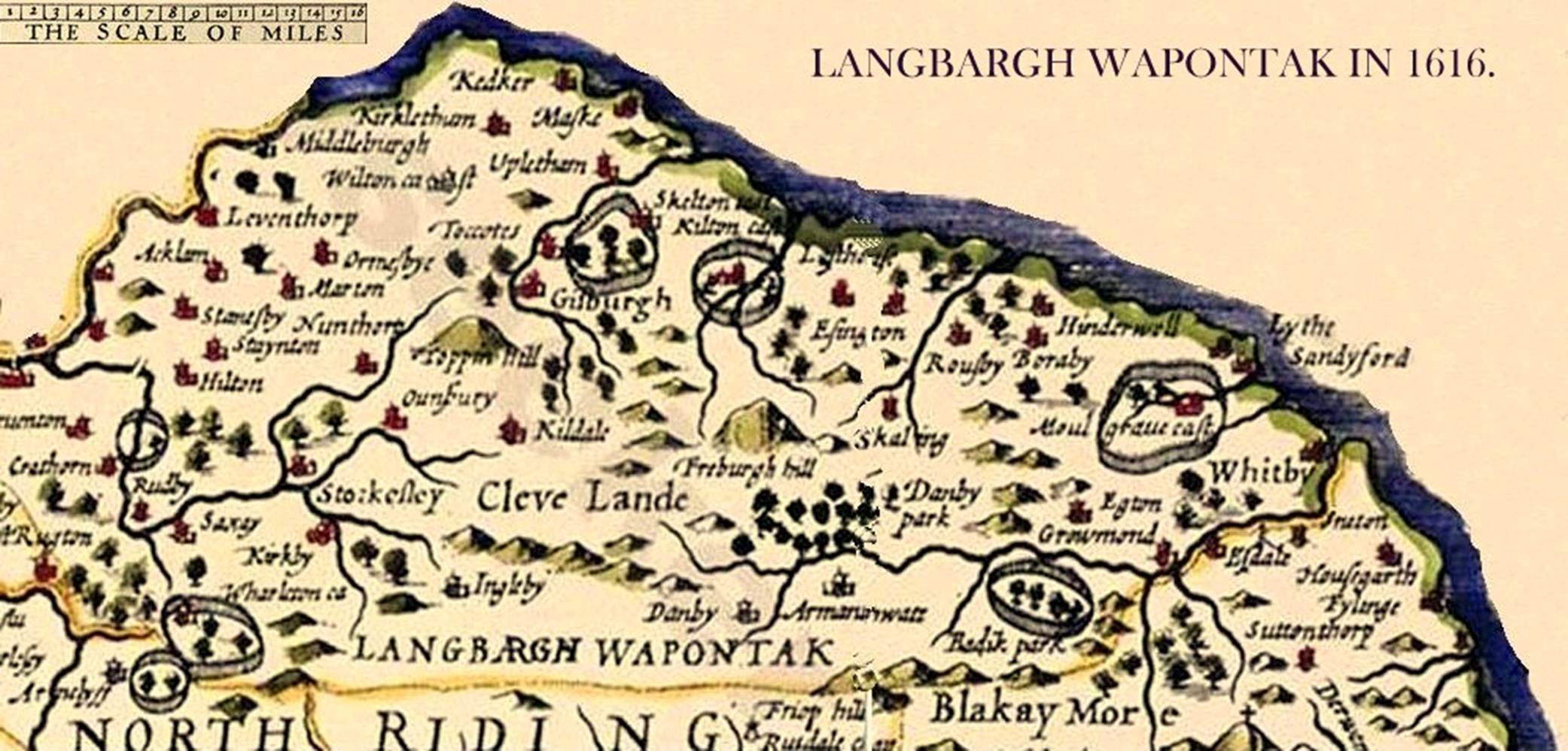
Cleveland
Cleveland is a
land of hills and dales from the River Tees to Vale of Pickering. The name
means “cliff-land”. The area corresponds to the former Langbaurgh Wapentake.
The North York Moors national park, established in 1952, covers part of it.
The Cleveland
Hills were key suppliers of the ironstone which was essential to running blast
furnaces alongside the River Tees. Cleveland’s rich ore has created a
significant industrial heritage arising from its central role in the nineteenth
century iron boom that led to Middlesbrough growing from a hamlet into a major
industrial town in only a matter of decades.
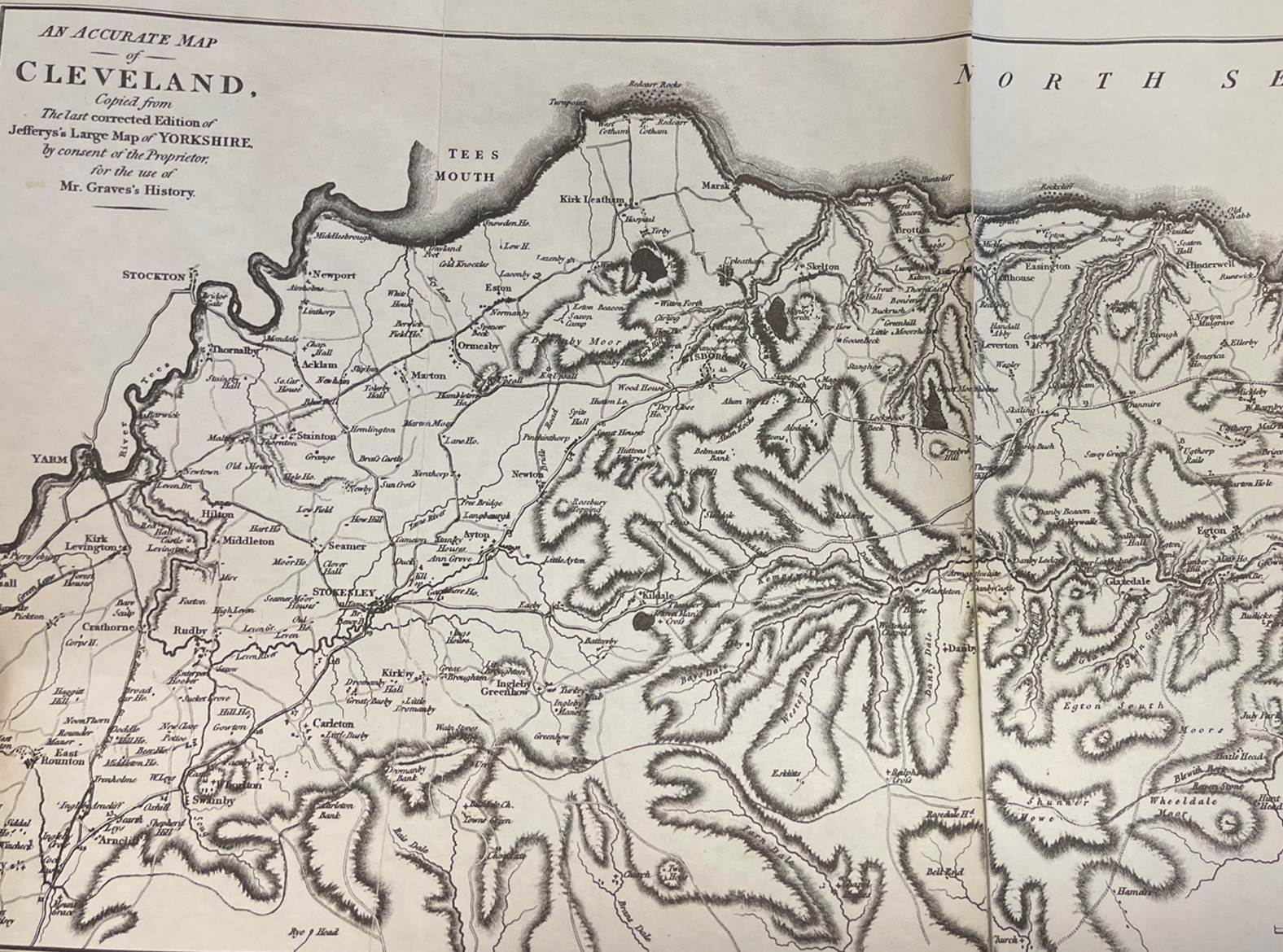
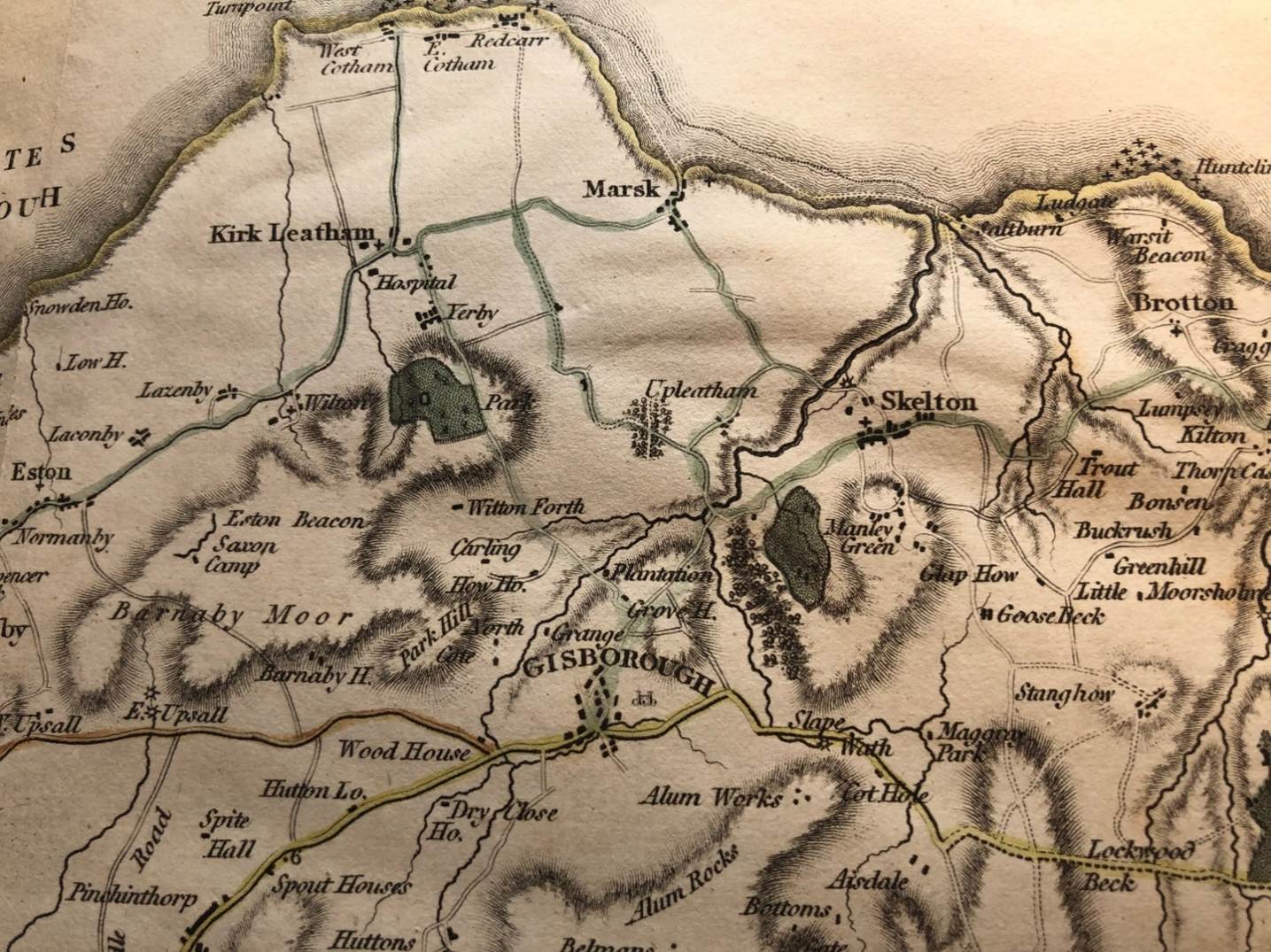
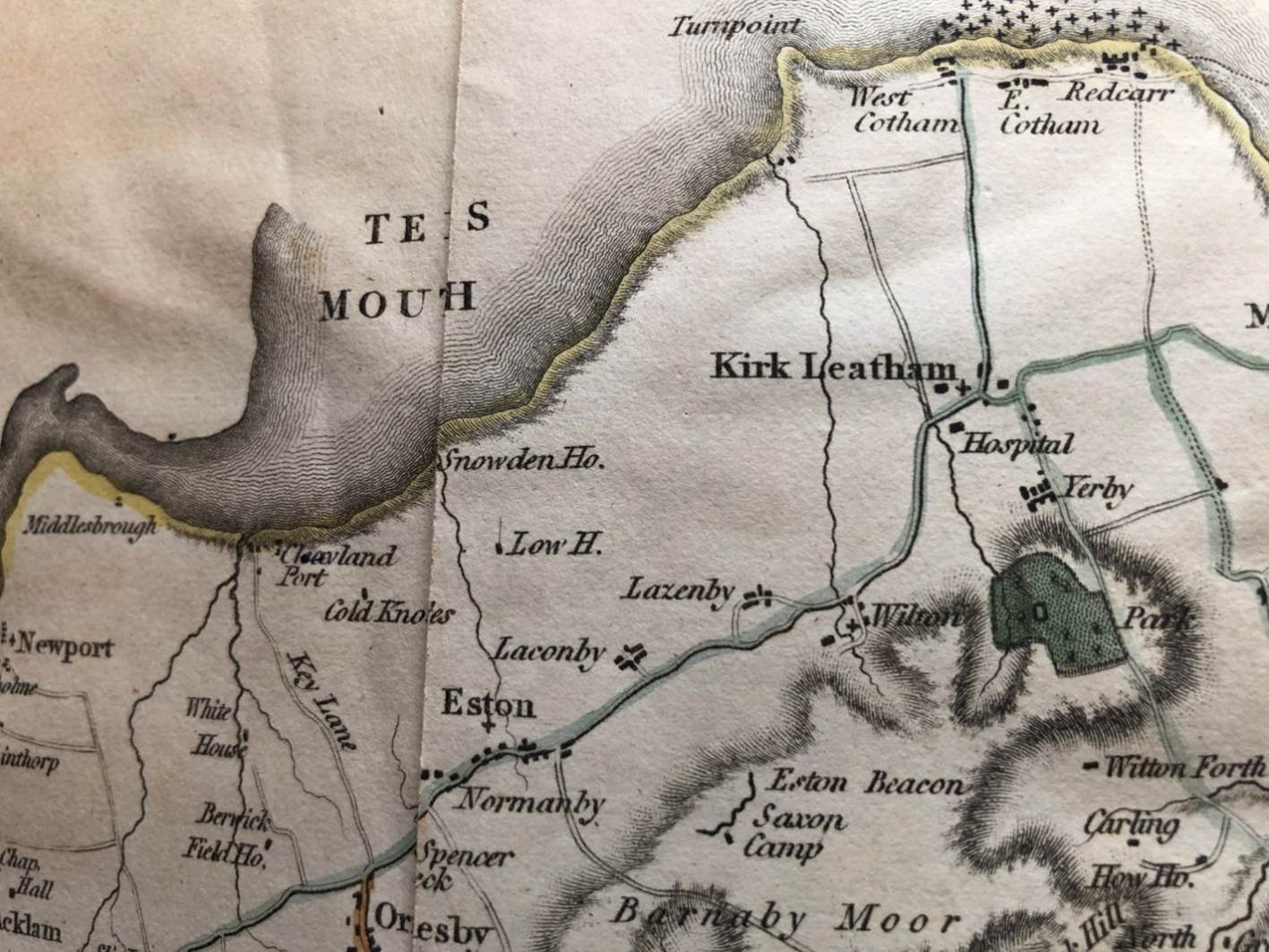
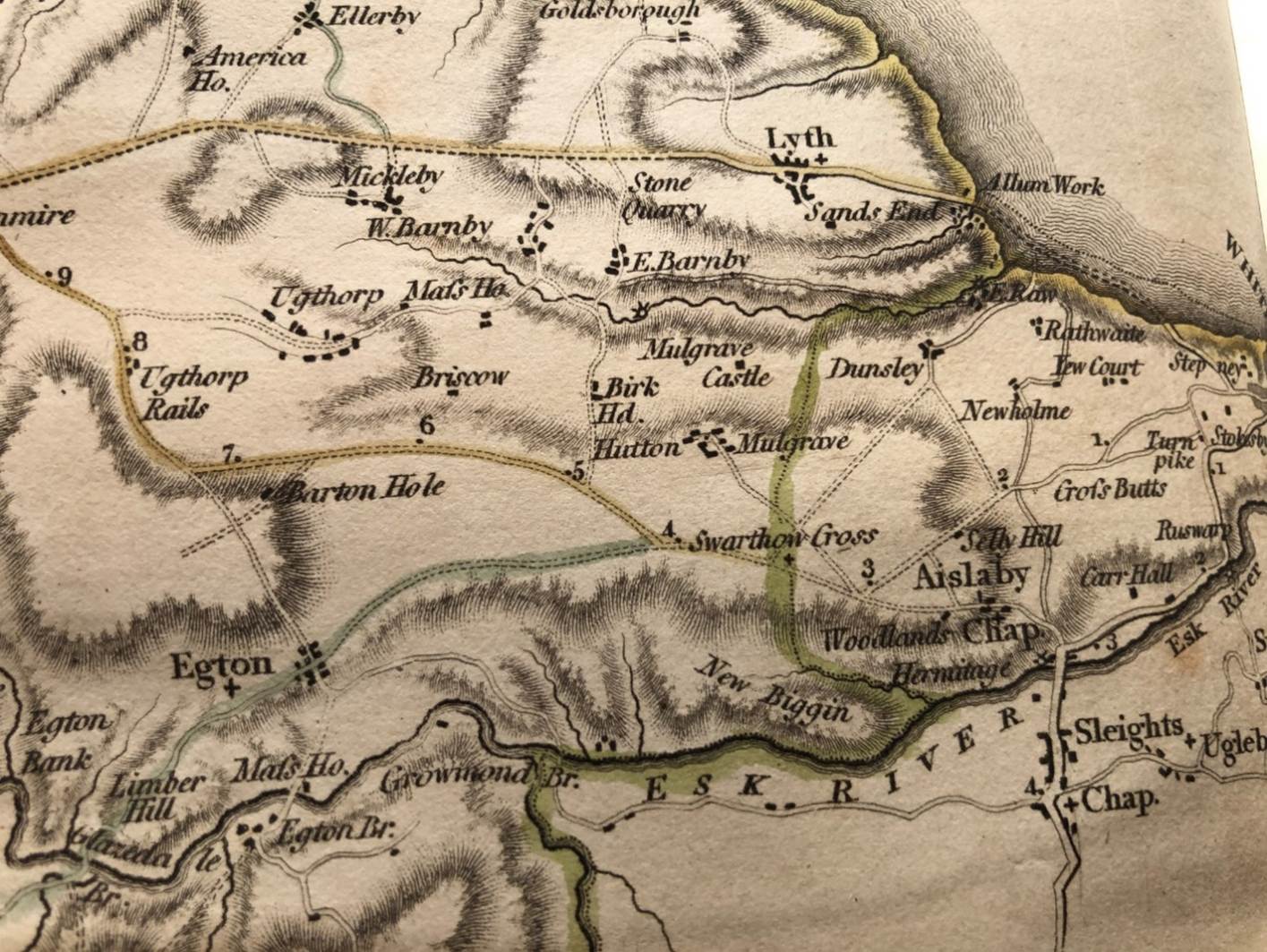
Cleveland from Jeffrey’s Large map of Yorkshire
Cleveland Timeline
1242
Danby
Castle and Park are mentioned in 1242. Danby Castle evolved to be the first
fortified house built around a central courtyard by Sir William Latimer. It was
once the home of Katherine Parr, who married Henry VIII.
1349
The
Black Death swept through Cleveland and killed two thirds of the population.
New graveyards were made at Ayton, Wilton, Seamer and other places.
1536
The
Pilgrimage of Grace was a rebellion in Yorkshire following Henry VIII’s
dissolution of the monasteries. Sir John Bulmer of Wilton was hanged and his
wife was buirnt at the stake. George Lumley of Kiltonj was executed.
1561
Guisborough
Grammar School was founded by Robert Pursglove, the last Prior of Guisborough.
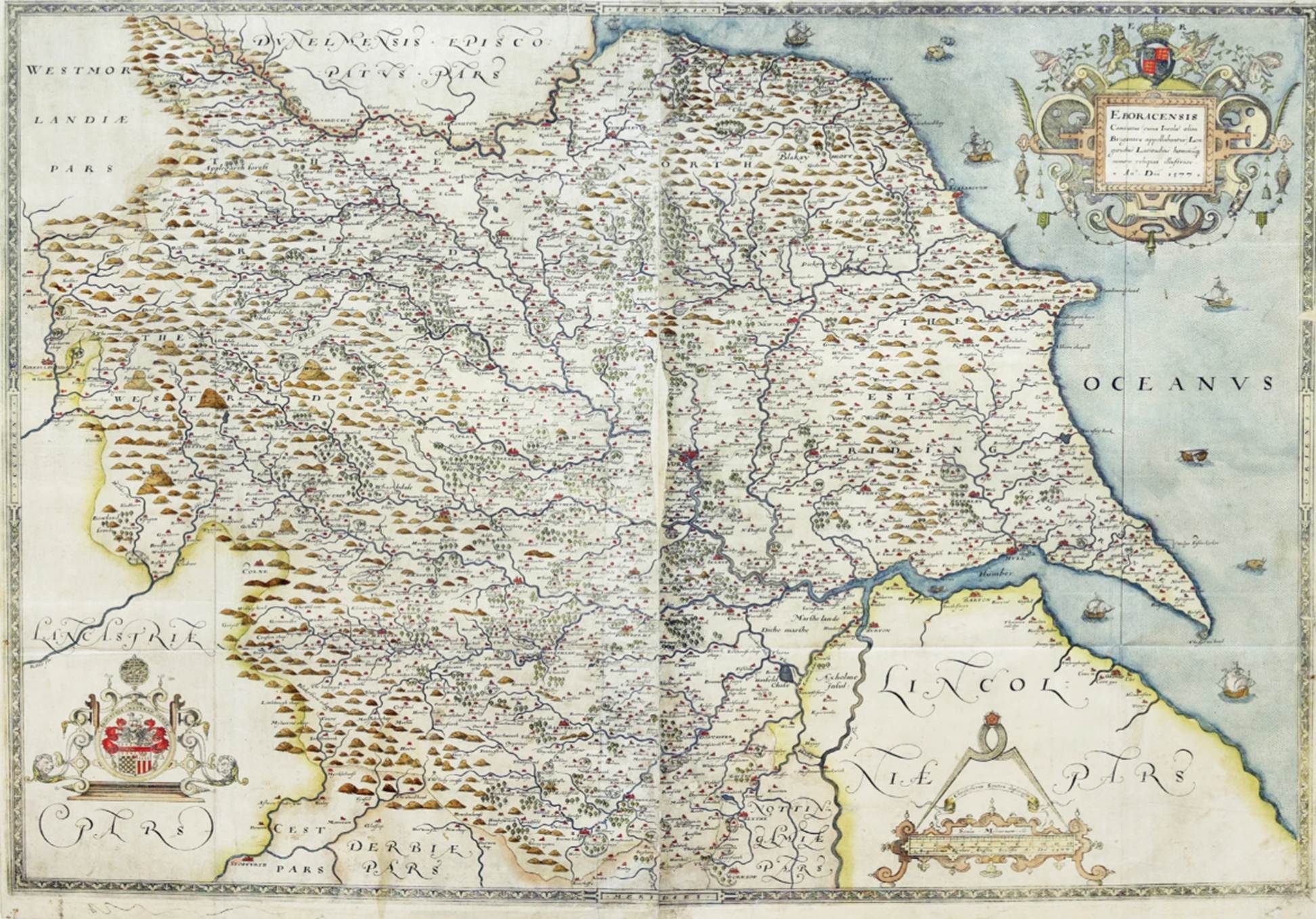
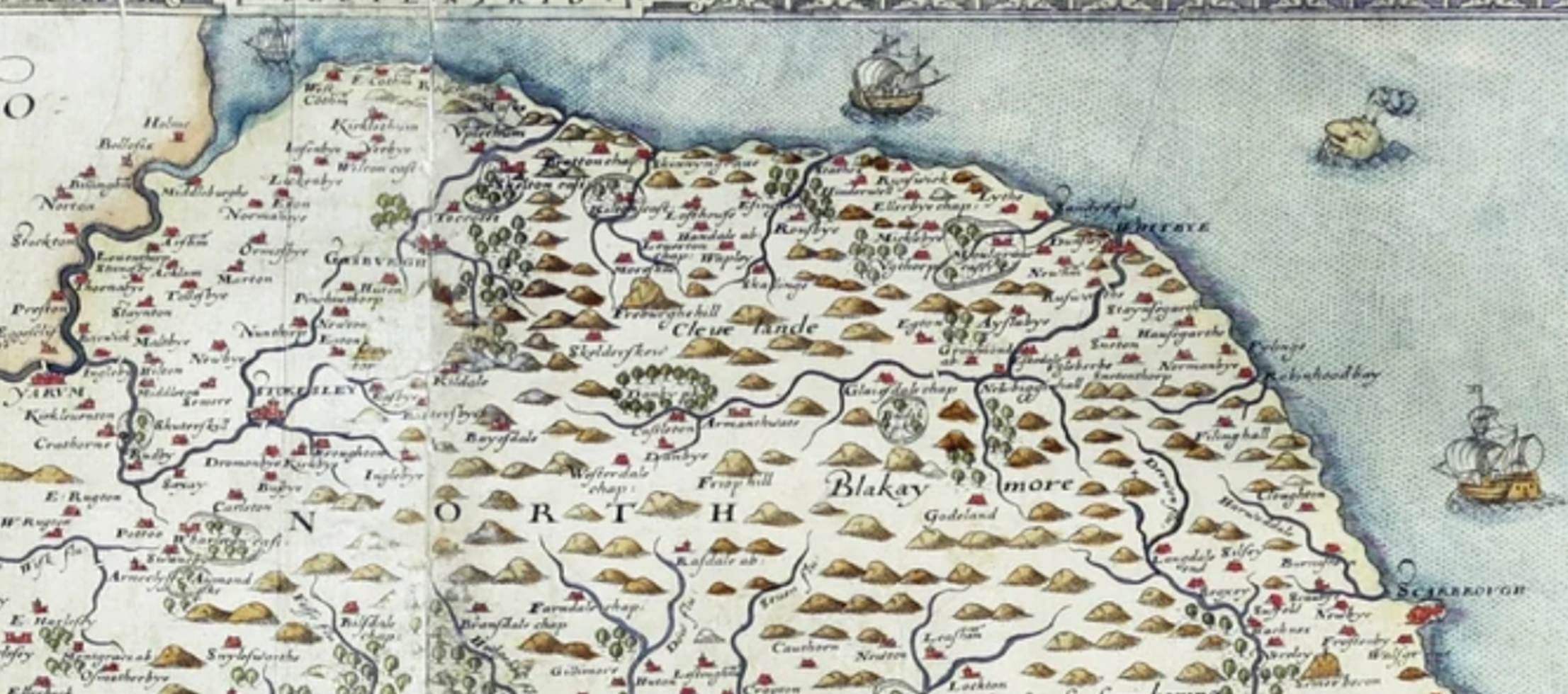
1577
Christopher
Saxton’s Map of Yorkshire, 1577
1590
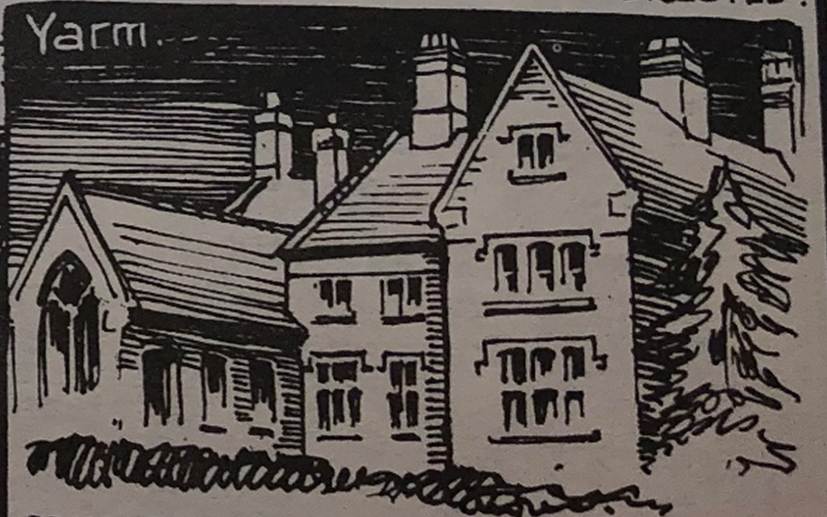
Yarm Grammar School was established.
1595
There
were signs of thje future industrial revolution in Cleveland by 1595. Sir
Thomas Chaloner established alum works at Belman Banks.
1616
1623
The
estate of Kirjkleatham and Kirtkleatjham Hall were purhcased by John Turner,
whop was the brother in law of John Pepys daughter, Jane.
1625
Marske
Hall was built by Sir William Pennyman who was a Royalist. He resisted the
landing ofg the Roundhead ship Rainbow, but later lost his estates as a
result.
1657
Roberyrt
Conyers, a gentleman of Guisborough, was charged with ‘certain detestable
arts called witchcraft’.
1832
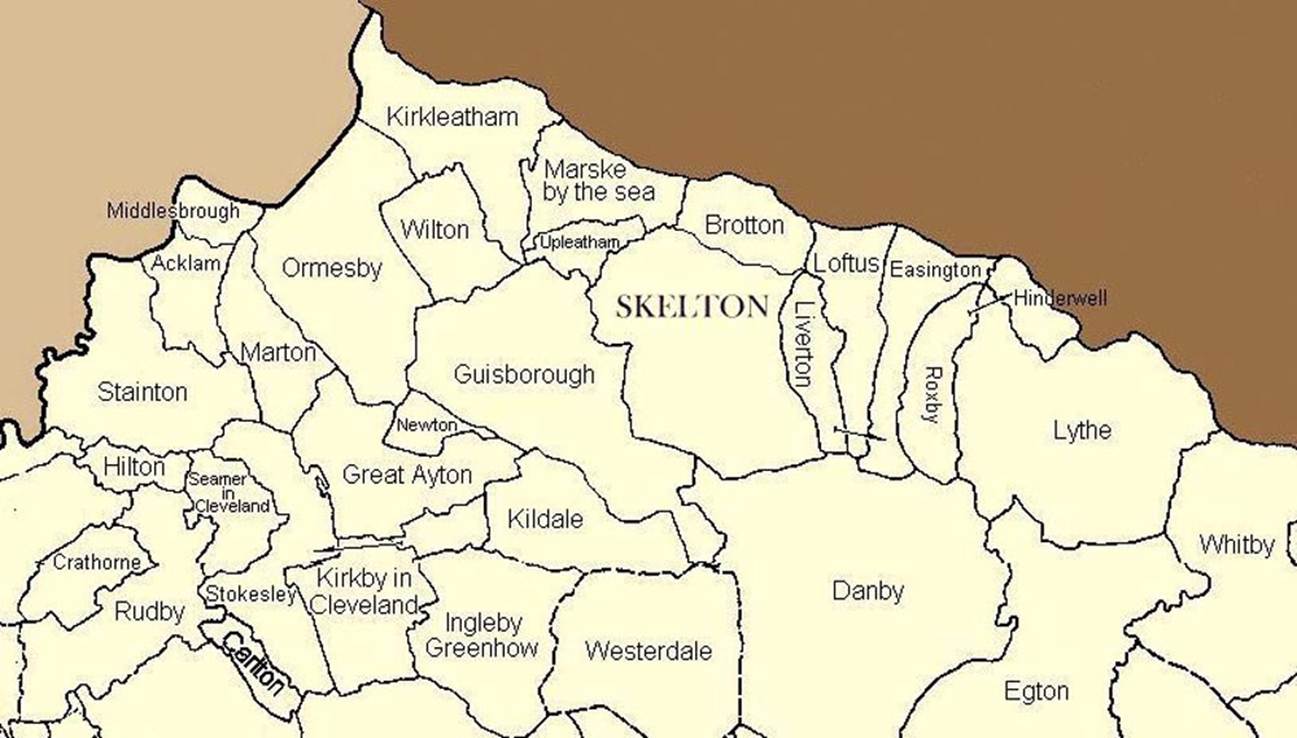
Local
boundaries in 1832
People of Cleveland
The Whartons
John Wharton was born John Hall-Stevenson (21 June 1765 – 29 May
1843). He was a British landowner and MP. He was born the eldest son of John
William Hall-Stevenson of Skelton. His father was the same John Hall-Stevenson
(1718 to March 1785), also known as John Hall, a country gentleman and writer,
who used to ride chariots on the Saltburn sands. John Wharton was educated at
the Royal School, Armagh, Trinity College, Dublin and Lincoln's Inn. He
succeeded his father in 1786, and inherited the ruinous Skelton Castle. In 1788
he took the surname of Wharton when he succeeded to the fortune and estates of
his aunt Mrs Margaret Wharton. He then demolished the old Skelton Castle and
between 1788 and 1817 built a similarly named Gothic country house in its
place. He served as the Whig MP for Beverley from 1790 to 1796 and again from
1802 to 1826. By 1829 he was in debt and spent the next 14 years in the Fleet
Debtors Prison, where he died childless in 1843. He had married Susan Mary
Anne, the daughter of General John Lambton of Lambton, County Durham. They had
two daughters who both predeceased him and was succeeded by his nephew, John
Thomas Wharton.
Bolcklow and Vaughan
Bolckow, Vaughan &
Co Limited was an English ironmaking and mining company founded in 1864 with
capital of £2.5M, making it the largest company ever formed up to that time.
It was founded as a partnership in 1840 by Henry Bolckow and John
Vaughan. In 1846, Bolckow and Vaughan built their
first blast furnaces at Witton Park, founding the Witton Park Ironworks. The
works used coal from Witton Park Colliery to make coke, and ironstone from
Whitby on the coast. The pig iron produced at Witton was transported to Middlesbrough
for further forging or casting. In 1850, Vaughan and his mining geologist, John
Marley discovered iron ore, conveniently situated near Eston in the Cleveland Hills.
Unknown to anyone at the time, this vein was part of the Cleveland Ironstone
Formation, which was already being mined in Grosmont
by Losh, Wilson and Bell. To make use of the ore being mined at Eston, in 1851 Bolckow and Vaughan built a blast furnace at nearby South
Bank, Middlesbrough, to make use of the ore from nearby Eston, enabling the
entire process from rock to finished products to be carried out in one place.
It was the first to be built on Teesside, on what was later nicknamed "the
Steel River".
Middlesbrough grew from 40 inhabitants in 1829 to 7,600 in 1851,
19,000 in 1861 and 40,000 in 1871, fuelled by the iron industry. The firm drove
the dramatic growth of Middlesbrough and the production of coal and iron in the
north-east of England in the nineteenth century.
By 1864, the assets of the business included iron mines,
collieries, and limestone quarries in Cleveland, County Durham and Weardale and
had iron and steel works extending over 700 acres (280 ha) along the banks of
the River Tees.
Vaughan died in 1868. The Institution of Civil Engineers, in their
obituary, commented on the relationship between Vaughan and Bolckow:
"There was indeed something remarkable in the thorough division of
labour in the management of the affairs of the firm. While possessing the most
unbounded confidence in each other, the two partners never interfered in the
slightest degree with each other's work. Mr. Bolckow
had the entire management of the financial department, while Mr. Vaughan as
worthily controlled the practical work of the establishment."
Chris Scott Wilson has written more about Bolckow, Vaughan & Co.
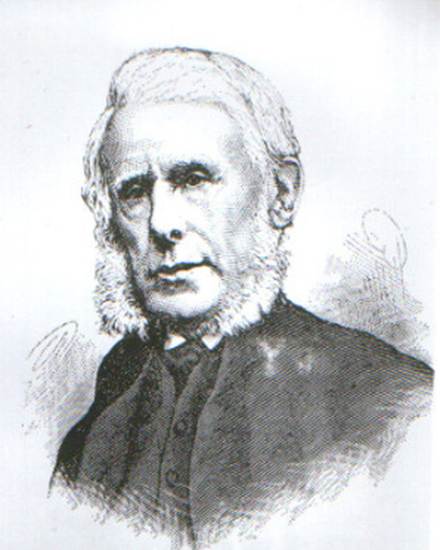
Joseph
Pease was a Quaker, born on 22 June 1799 into a wealthy family. He initially
worked in the wool factories at Darlington owned by his father, Edward Pease
who also partnered George Stephenson in his engine factory at Walker,
Newcastle, and was a board member of the Stockton & Darlington Railway
where he became known as the ‘Father of the Railways’.
Joseph
became treasurer of the Stockton & Darlington Railway at the age of
25. With the railway in need of expansion and a more convenient port necessary
to export the harvest of the Durham coalfields, the company sought a site for a
terminus on the lower Tees. Further up, the river was treacherous and almost
unnavigable, only small craft of shallow draught capable of reaching Stockton
and Yarm. The new port was to be called Port Darlington. In the face of heavy
opposition from Stockton and Yarm industrialists, who knew a new port lower
down the river would steal much of their business, it was Joseph Pease who
became prime mover in lobbying parliament to grant the necessary Act for the
Middlesbrough Railway Extension.
With
his five sons and his brother Henry, he formed a company called Pease &
Partners. By 1840 when Middlesbrough showed signs of stagnating, it was
clearly in his interest as one of The Owners and as a director of Pease &
Partners to attract alternative industry. The move he made was to offer
Henry Bolckow and John Vaughan land on easy terms and give them letters of
introduction when they started their iron business.
Joseph
was elected to Parliament in 1832, representing South Durham, and became the first
Quaker to sit in the Commons. He campaigned against corruption and
slavery while fervently supporting human rights and religious
freedom. He proposed and carried a clause in the Metropolitan Police Bill prohibiting
the common pastimes of bull and bear baiting, and also sat on many
committees dealing with industry. Re-elected in 1835 and 1837 he eventually
resigned from parliament in 1841 because of heavy business commitments.
As
the railways pushed east beyond Redcar, Pease & Partners expanded into
ironstone mining. In 1853 they opened the Hutton Lowcross mine near
Guisborough. Soon, they owned Upleatham, Skinningrove and Hob Hill (Saltburn)
mines, between them annually producing almost a million tonnes of ore. By 1875,
eight and a half million tonnes of ironstone, limestone, coal and coke were
being transported, most of which was used in Teesside’s iron industry.
Joseph
Pease was fond of the Cleveland coast. Shortly after retiring from parliament,
in 1844 he bought several fishermen’s cottages on the seafront at Marske,
demolished them then used the site to build Cliff House where his family
spent their summers.
It
was from there one afternoon in 1859 his brother Henry took a stroll over the
sandbanks to discover the old village of Saltburn. Returning breathless,
he stated his intention to build a new town on top of the cliff. With
some help from brother Joseph and the Stockton & Darlington Railway, he
succeeded, naming it Saltburn by the Sea.
Bibliography