The Ampleforth Area
The history of the Ampleforth with a focus on the locations
associated with Farndale family history
|
Return to the Home Page of the Farndale Family
Website |
The story of one family’s journey through two
thousand years of British History |
The 83 family lines into which the family is divided.
Meet the whole family and how the wider family is related |
Members of the historical family ordered by date of
birth |
Links to other pages with historical research and
related material |
The story of the Bakers of Highfields, the Chapmans,
and other related families |
Introduction
Dates are in red.
Hyperlinks to
other pages are in dark
blue.
Headlines of the
history of the Ampleforth Area are in brown.
References and
citations are in turquoise.
Contextual
history is in purple.
This webpage about
the Ampleforth area has the following section headings:
·
The
Farndales of the Ampleforth Line
·
Ampleforth,
an overview
·
Coxwold
·
Yearsley
·
Windgate
Farm
· Timeline of the
Ampleforth Area
· Links, texts
and books
The Farndales of Ampleforth
Elias Farndale (FAR00184) was a
Farmer of Windgate Farm and started the line of Ampleforth Farndales. The Ampleforth Line of
Farndales is a large grouping who generally continued to live in the area of Ampleforth for some time.
In addition to those directly associated with the
Ampleforth Line, other Farndales associated with Ampleforth are Ann Farndale (FAR00208), and John
Farndale (FAR00880).
Ampleforth, an overview
Ampleforth is a village and civil parish in
the Ryedale district
of North Yorkshire. It is 32 km north of York The village
sits on the edge of the North York Moors National Park.
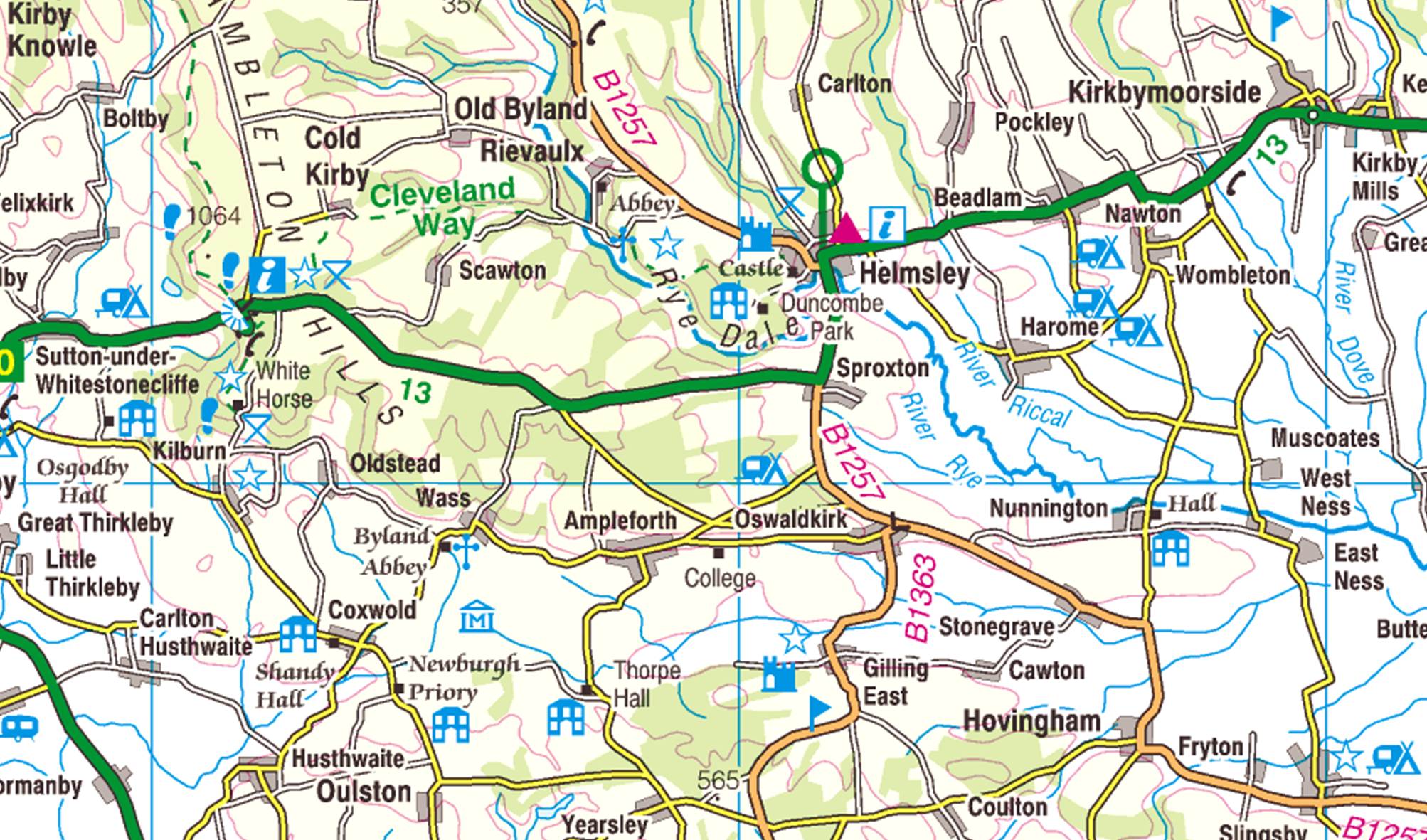
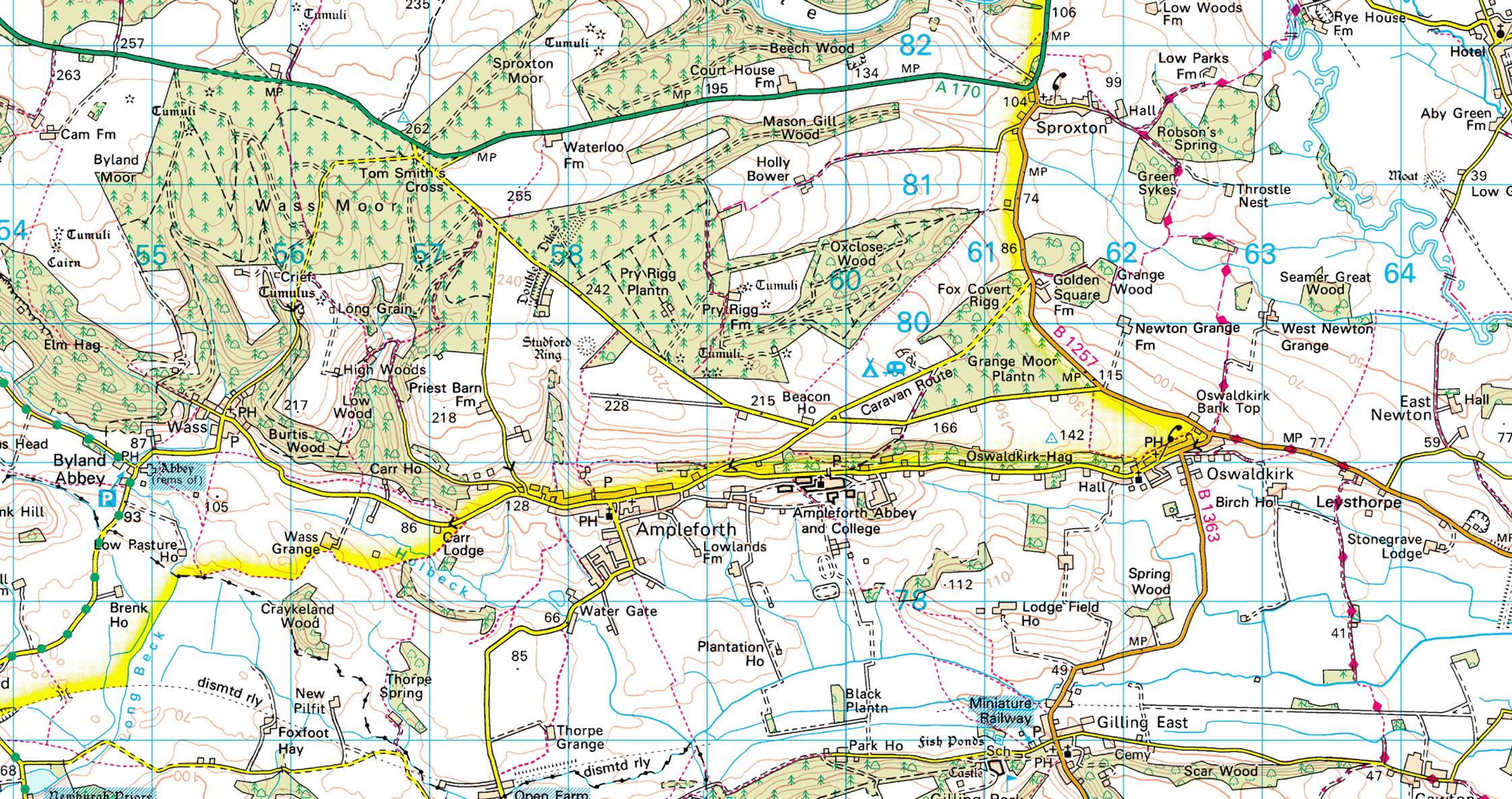
The name ‘Ampleforth’ derives from a combination of
the Old English words ampre (sorrel)
and ford meaning ‘(place by) ford where sorrel grew.’
Until immediately after the Second World
War Ampleforth mainly consisted of houses built along a principal
thoroughfare. Those buildings dated back to the ninbeteenth
century including the village's shop and the adjoining Coram Cottage,
constructed in 1856.
The Church of England parish
church is dedicated to St Hilda, an English abbess who
founded Whitby Abbey. The church dates back to Saxon times,
with elements from the 13th century.
Ampleforth Abbey is only 1.6 km away. Our
Lady and St Benedict's church is served by the monks of
Ampleforth and has been the parish church for the village's Catholic population
for many decades. Attached to the Roman Catholic parish is
the co-educational primary school, St Benedict's, which is run by
the Diocese of Middlesbrough .
There are two public houses in the
village, the White Swan and the White Horse. The latter takes its name
from the large white horse which was carved into the hillside a few miles to
the west.
Ampleforth had a Quaker settlement on the edge of the
village, in Shallowdale to the west. The sixteenth
century Carr House Farm was occupied by flax workers to weave flax into linen.
The village was the setting of the Ampleforth Sword Dance,
traditionally held at Christmas. The dance derived from the story of a
traveller killed by the six swordsmen. When a doctor was called for to revive
the dead traveller, a clown pushed him aside and brought the traveller back to
life through his dance.
The village used to have a railway station on
the Thirsk and Malton Line that was 2.4 km south of
Ampleforth. The station closed in 1950, some years before the rest of the
line did to passengers.
Coxwold
Coxwold is a village and civil parish in
the Hambleton district of North Yorkshire, and is located within
the North York Moors National Park. It is 28 km north of York.
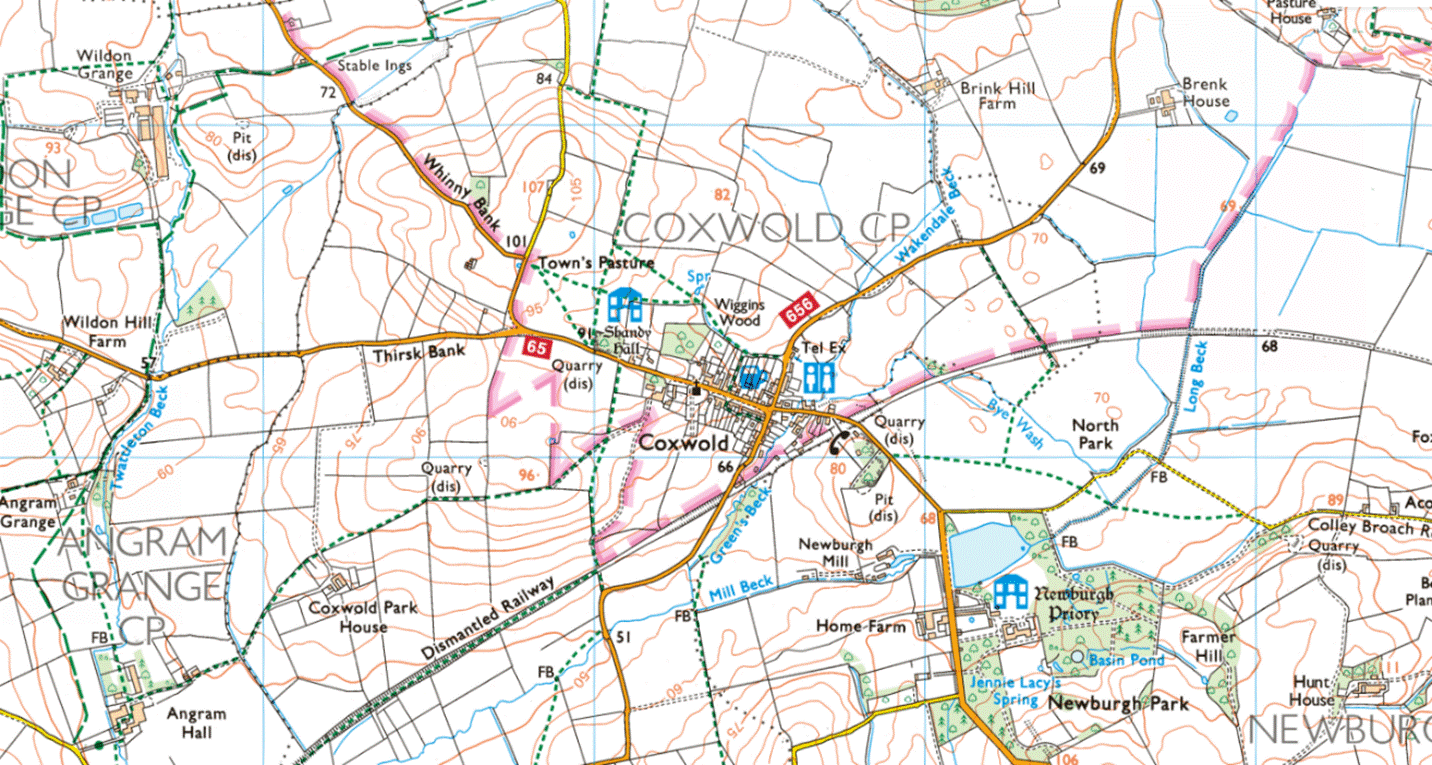
The village name is derived
from Saxon words Cuc, meaning cry and valt, meaning wood.
The village is mentioned in the Domesday Book as
part of the Yalestre hundred by the
name of Cucvalt. The
Lord of the manor at the time of the Norman invasion was Kofse, but title passed to Hugh, son of
Baldric and thence to Roger de Mowbray, tracing a similar history to Farndale
and Kirkbymoorside. By 1158, the manor and lands of Coxwold passed to Thomas
Colville.
The now ruined Byland Abbey,
north of Coxwold was founded in the 12th century by Savigniac
monks. Newburgh Priory was built in 1145 by Roger De Mowbray.
The Rev. Laurence Sterne who
wrote A Sentimental Journey lived at Shandy Hall from 1760 to
1768. At one time, the village had a station on the Thirsk and
Malton Line. It opened on 19 May 1853, but closed on 7 August 1964 as part of
the reorganisation of the national railway system.
Yearsley
Yearsley is a small
village and civil parish in the district of Hambleton in North Yorkshire. It
was part of the parish of Coxwold until it became an ecclesiastical parish in
1855 (although this was not sustained) and a civil parish in 1866. The population
of the civil parish was less than 100 at the 2011
Census.
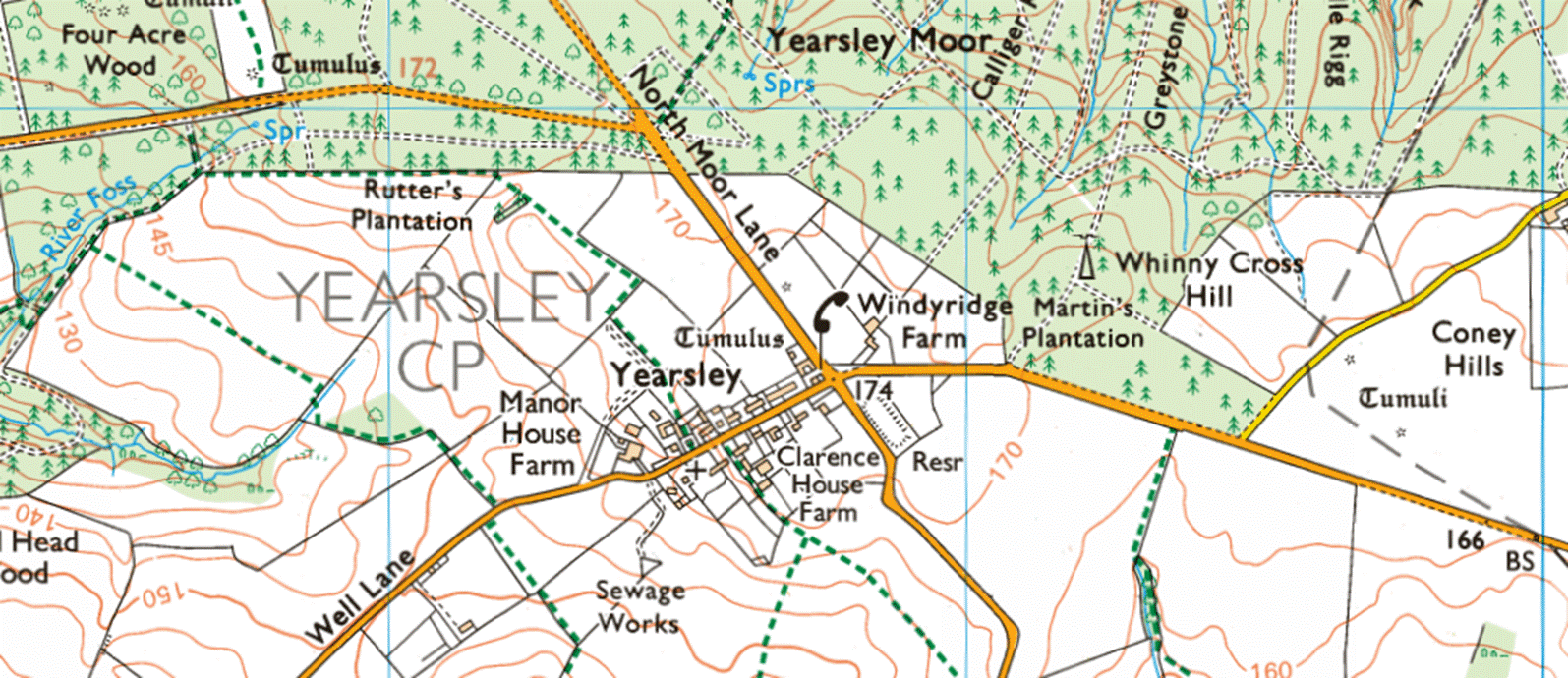
The entire parish of
Yearsley is within the Howardian Hills which is Area of Outstanding Natural
Beauty. It was, and remains, a predominantly agricultural village with
significant forestry on the moors to the north of the village.
The name 'Yearsley'
is recorded in the Domesday Book as 'Eureslage'
and then, in the Pipe Rolls of 1176, as 'Euereslai'. The origins of the name are probably
Anglo-Saxon, from a word meaning Boars' Wood.
As for Coxwold,
following the Norman invasion, the lands of Yearsley fell into the hands Roger
de Mowbray, who, by 1160, passed the estates to Thomas Colville. Yearsley was
the original residence of the Colvilles of Coxwold.
Yearsley is the site
of a number of barrows and other early earthworks.
Yearsley was also
the site of the pottery of William Wedgewood, a relation of the famous
Staffordshire Wedgwood family of potters. A mill at Yearsley belonged in the
late 16th century to the Fairfax family of Gilling
The village was part
of the Newburgh Priory estate of the Wombwell family until 1944.
The Pond Head
reservoir between Yearsley and Oulston is fed from
the nearby source of the River Foss.
The local church is
that of St Hilda.
Windgate Farm
Elias Farndale (FAR00184) was a
Farmer of Windgate Farm. Whilst we originally linked this to Wildon Hall Farm
near Coxwold, there was a later reference to Elisha’s land near Yearsley, so I
was looking at the farm now known as Windyridge Farm
on the northeast outskirts of Yearsley. However I have now found that there is
a detached modern property called Windygates, which
was originally a stone farmhouse. It is now a building in the same area as High
Lions Lodge in the map below. The modern building dates from the 1800s, but
might have existed in some form in 1788, when Elias/Elisha farmed there, or if
not was almost certainly the location of the farm of the early Ampleforth line
of Farndales.
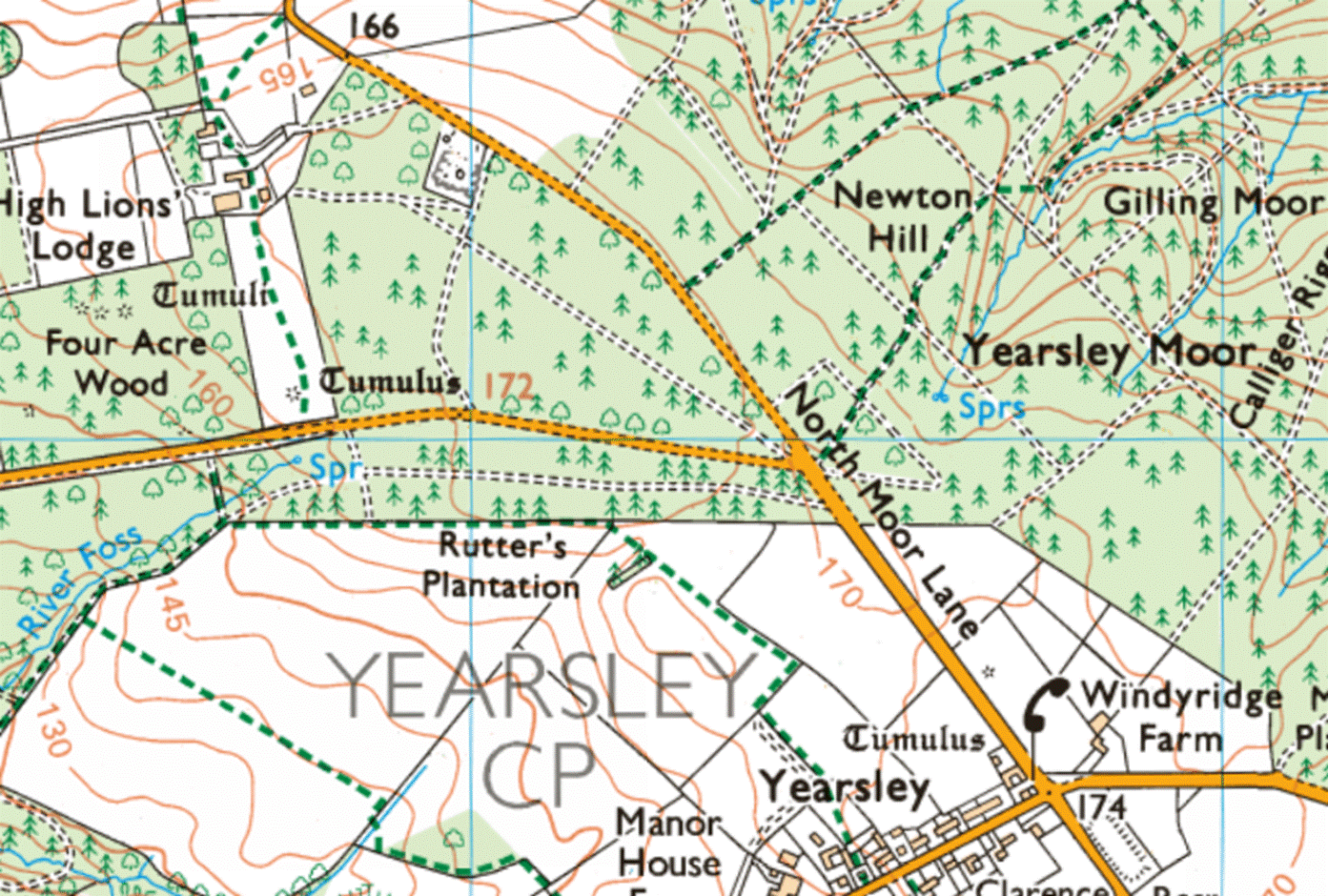
The location of the
old Windygates Farm
Timeline of the Ampleforth
Area
1066
The Lord of the manor of Coxwold at the time of the Norman
invasion was Kofse. Ampleforth had previously
belonged to Ulf.
1086
Title to the Coxwold lands passed to Hugh, son of
Baldric and thence to Roger de Mowbray, tracing a similar history to Farndale and Kirkbymoorside. In 1086 the
Archbishop of York held a 'manor' and 3 carucates of land in Ampleforth (Victoria County History – Yorkshire; A History of the
County of York North Riding: Volume 1, Parishes: Ampleforth). The Domesday Book showed that
it had a recorded population of
7.7 households in 1086. However there was a larger area at Ampleforth,
comprising 54 villagers and 15 ploughlands, 8 by 3 leagues of woodland and 4
furlongs of mixed land, which were Kofse’s lands
before the Conquest and fell into the hands of Hugh, son of Baldric, so these
were the lands which included Coxwold.
1135
The now ruined Byland Abbey, north of Coxwold was
founded in January 1135 by Savigniac monks. The abbey
was absorbed by the Cistercian order in 1147. The community which moved five
times before settling at New Byland, near Coxwold in 1177.
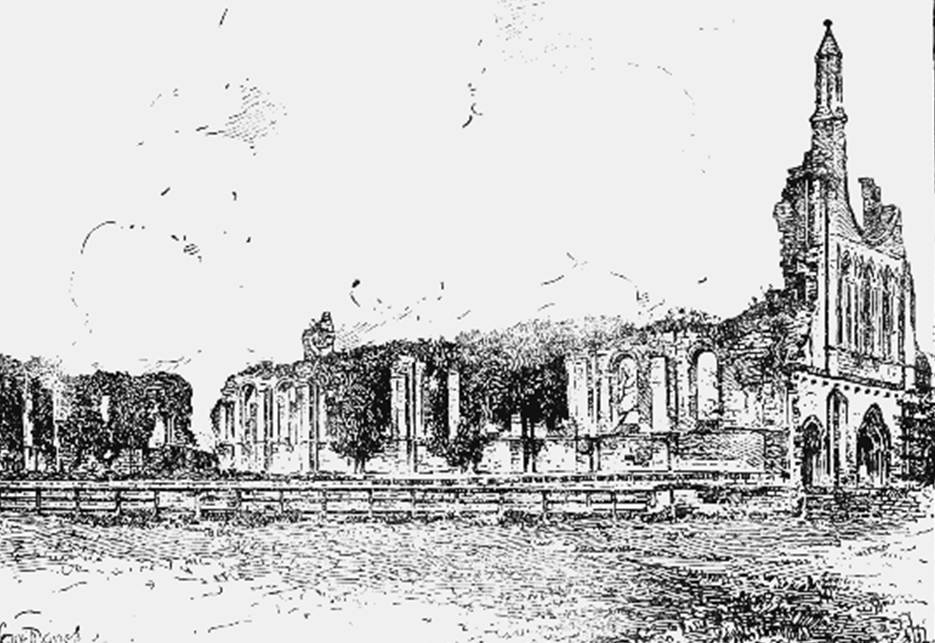
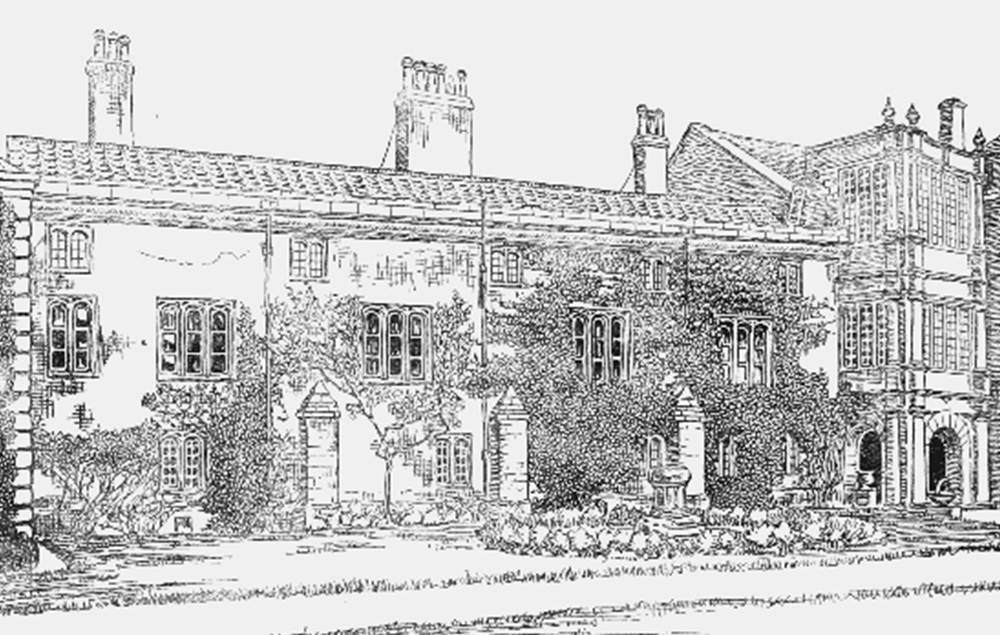
The Ruins of Byland Abbey
The house known as Byland Abbey
1145
To the south of the village is Newburgh Priory, today
a Grade I listed stately home built on the site of a former Augustine
Priory. The original Priory was built in 1145 by Roger De Mowbray, but
fell victim to the Dissolution of the Monasteries carried out
by King Henry VIII. The King sold the estate to Anthony de Bellasis, whose
family took the name of Fauconberg upon the creation
of the Baronetcy. The estate passed to the Wombwell family in 1825 at the end
of the male line, and remains in their possession today.
1158
By 1158, the manor and lands of Coxwold passed to Thomas
Colville. In return for the lands, Thomas had to swear allegiance to Roger de
Mowbray. Thomas de Colville's estate included the manors of Yearsley,
Coxwold and Oulston as well as other
properties and land in York, Thirsk, Everley, Nunwick, Kilburn and Upsland. The Colville shield is displayed at one of the
roof intersections in the twelfth century Norman church at Coxwold.
While in possession of the Coxwold estate, the Colville
family gave generous grants to Byland Abbey and Newburgh Priory.
1300
At the turn of the fourteenth century, there were disputes
between the monks of Newburgh Priory and
the Colvilles over rights to land around Coxwold.
1304
In 1304 Sir Thomas Colville the Fifth started a tradition
of a weekly market to be held in the grounds of the manor of Coxwold. He also
established a two-day annual fair to celebrate the Assumption, a tradition that
survived uninterrupted in Coxwold Manor for some five hundred years.
1346
Sir Thomas Colville the Seventh of Yearsley and Coxwold
became famous following a jousting incident before the Battle of Crecy in 1346
when he crossed the river to joust with a French knight who had been hurling
abuse at the English king. He later joined the retinue of John of Gaunt, the
Duke of Lancaster who was the third son of Edward III and the richest of the
nobility in England.
1405
Successive generations of Colvilles
held the estate and lands of Coxwold until 1405 when Thomas Colville the Eighth
was murdered, probably on the instruction of the Archbishop of York
Richard le Scrope, who was acting on behalf of Henry Percy, 1st Earl of
Northumberland. The bulk of the Coxwold estate was then granted to the
Uhtred-Neville family.
1600
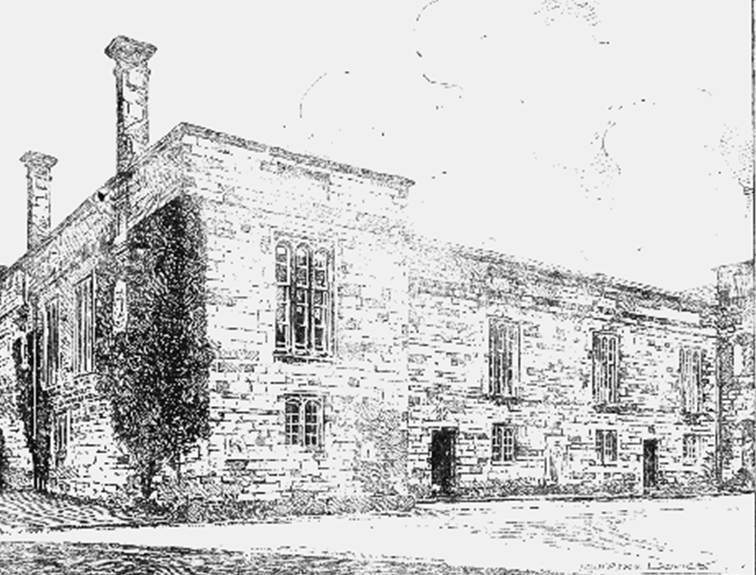
The house known as Newburgh Priory which dates from about
1600
1603
In 1603, Sir John Harte, who was born in
nearby Kilburn, North Yorkshire, built a Grammar School in the village,
which closed in 1894. He was also a Lord Mayor of London.
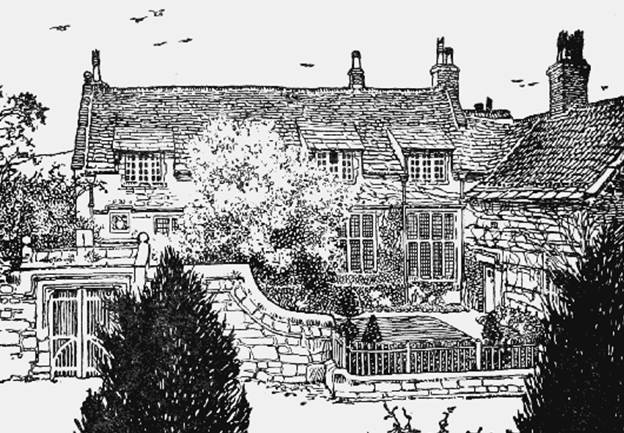
The Old Grammar School at Coxwold
1760
The Rev. Laurence Sterne lived at Shandy
Hall from 1760 to 1768, and the house was named by him. Shandy Hall is
located on Thirsk Bank at the north-western end of the village and was
originally built in 1430 as a parsonage for Coxwold's
village priest. It is a small brick building, with a mossy, stone-covered roof,
wide gables, and massive chimney-stacks. It was originally a timber-framed,
open-hall house but was considerably altered in the 17th century. The stone
tablet above its doorway states that Sterne wrote Tristram Shandy and A
Sentimental Journey at Shandy Hall. This is not entirely correct since
two of the nine volumes of Tristram Shandy had already been
published in 1759 before Sterne moved to Coxwold.
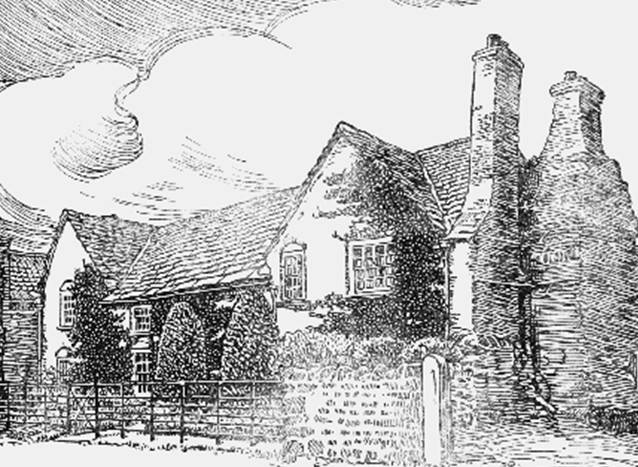
Shandy Hall
1853
At one time, the village had a station on
the Thirsk and Malton Line. It opened on 19 May 1853, but closed on 7
August 1964 as part of the reorganisation of the national railway system.
1889
Sir George Orby Wombwell, 4th Baronet, the last
surviving officer of the Charge of the Light Brigade is buried in the
village churchyard in 1889. When he had reached the guns at Balaklava, his
horse was killed under him and he was shortly after pulled off and taken
prisoner, his sword and pistols being taken from him by some Russian Lancers.
He managed to escape, catch another loose horse and ride back to the British
lines, hotly pursued by Russians. He retired from the Army as a lieutenant in
1855, when he inherited his title in Coxwold and Newburgh Priory. This was the
old seat of the Belasyses. Included in this estate
was Over Silton Manor, where Wombwell's initials (“GOW”) can still be seen on
one of the manor cottages, and High House, at Thornton-on-the-Hill. He was
appointed High Sheriff of Yorkshire in 1861.
1965
The Coxwold Pottery was a pottery studio based in the
village of Coxwold, North Yorkshire, England, launched by artist potters Peter
and Jill Dick in 1965, and in operation until 2012.
Bibliography