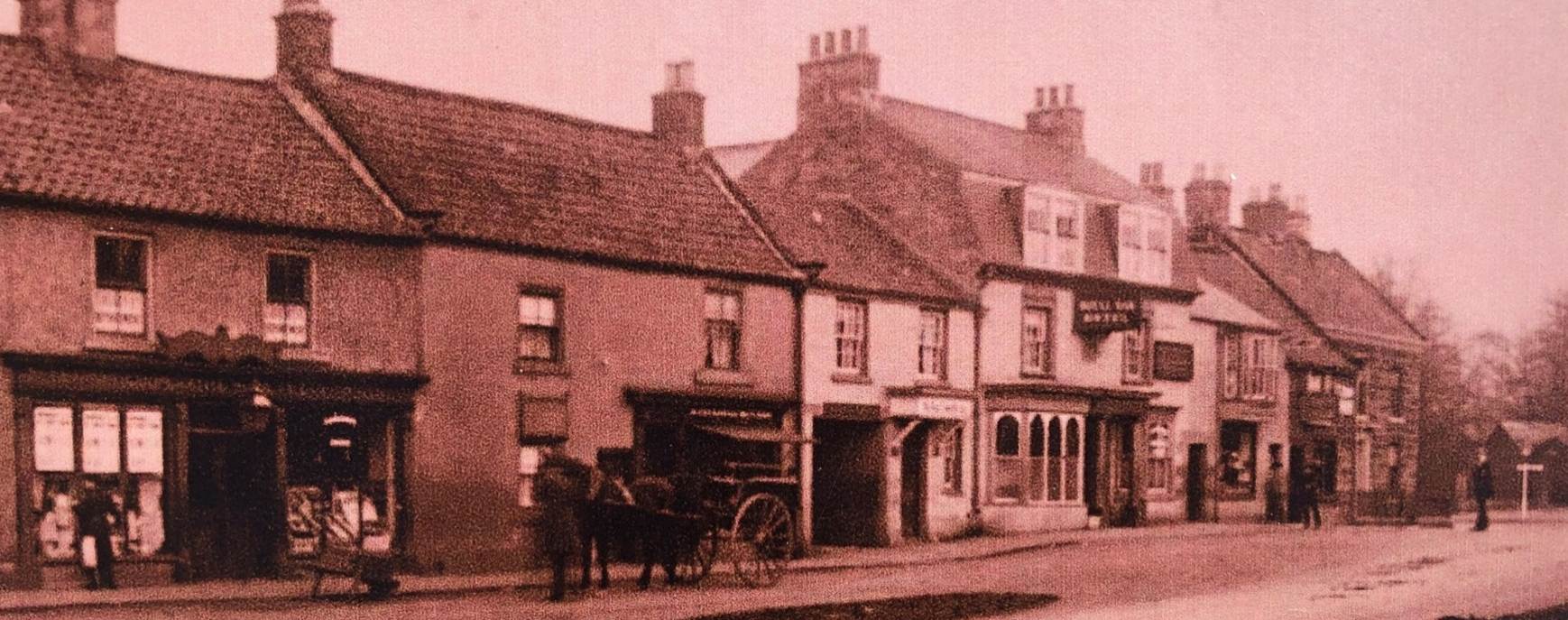
Historical and geographical information
|
Return to the Home Page of the Farndale Family
Website |
The story of one family’s journey through two
thousand years of British History |
The 83 family lines into which the family is divided.
Meet the whole family and how the wider family is related |
Members of the historical family ordered by date of
birth |
Links to other pages with historical research and
related material |
The story of the Bakers of Highfields, the Chapmans,
and other related families |
Dates are in red.
Hyperlinks to
other pages are in dark
blue.
Headlines are in brown.
References and
citations are in turquoise.
Context and local
history are in purple.
This webpage is divided into the following sections:
·
The Farndales of Great Ayton
·
Great Ayton
·
Great Ayton Timeline
·
Great Ayton People
·
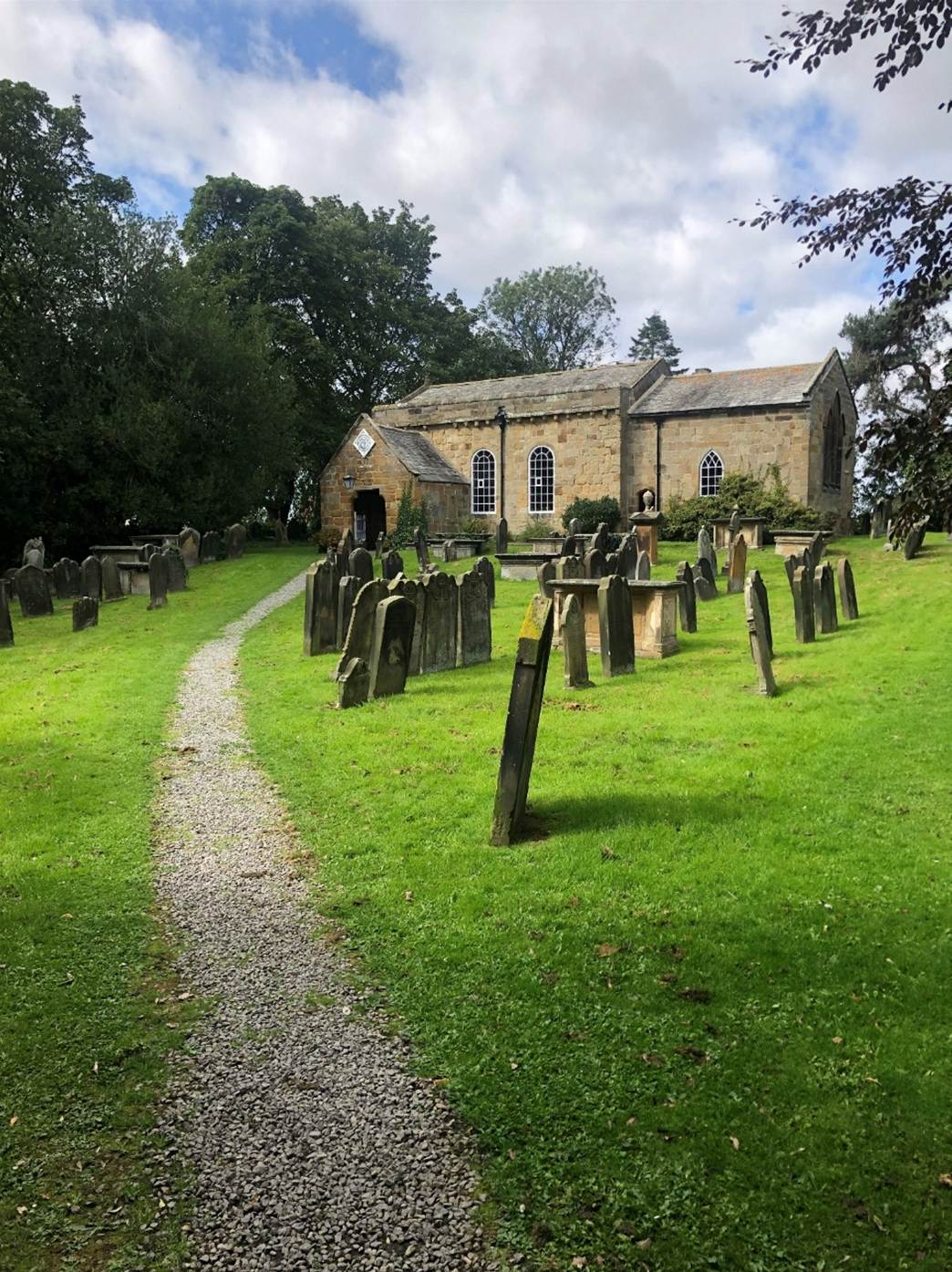
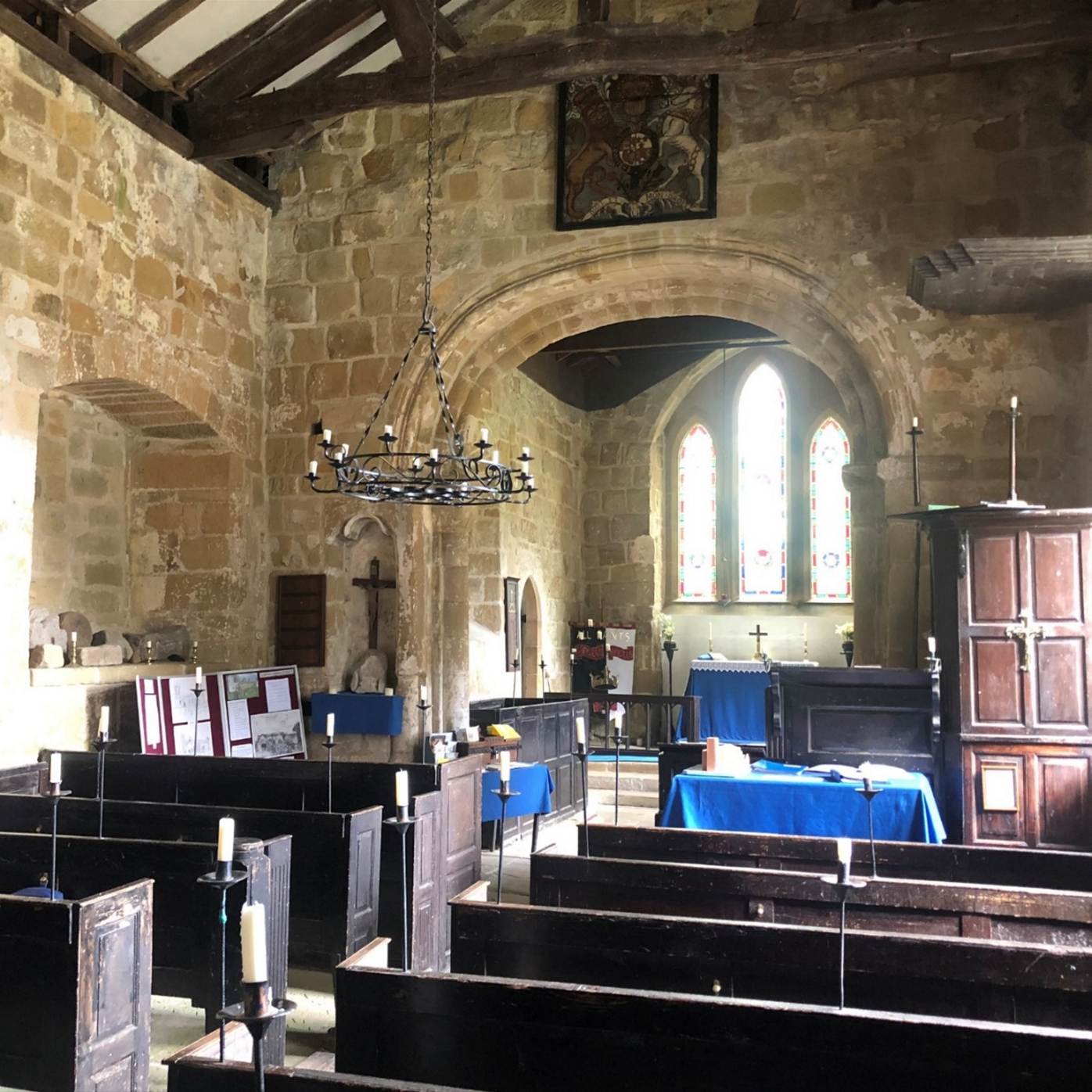
The twelfth century All Saints Church
·
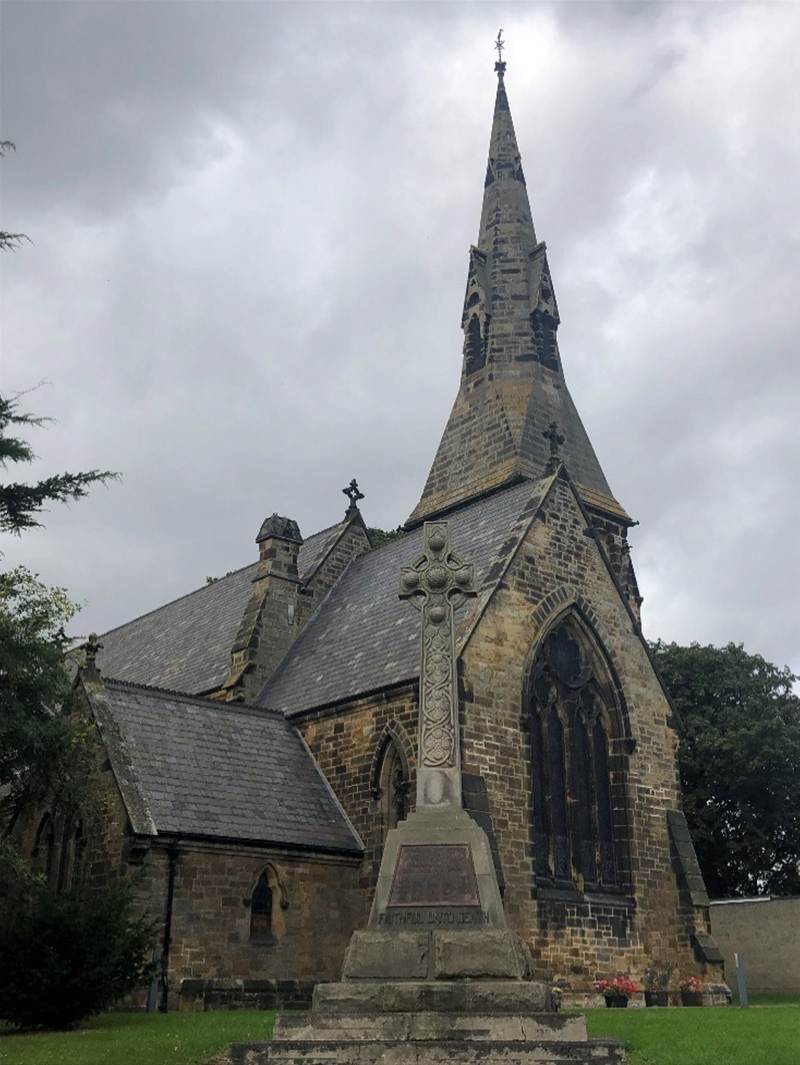
Christ Church, Great Ayton
·
Education in Great Ayton
·
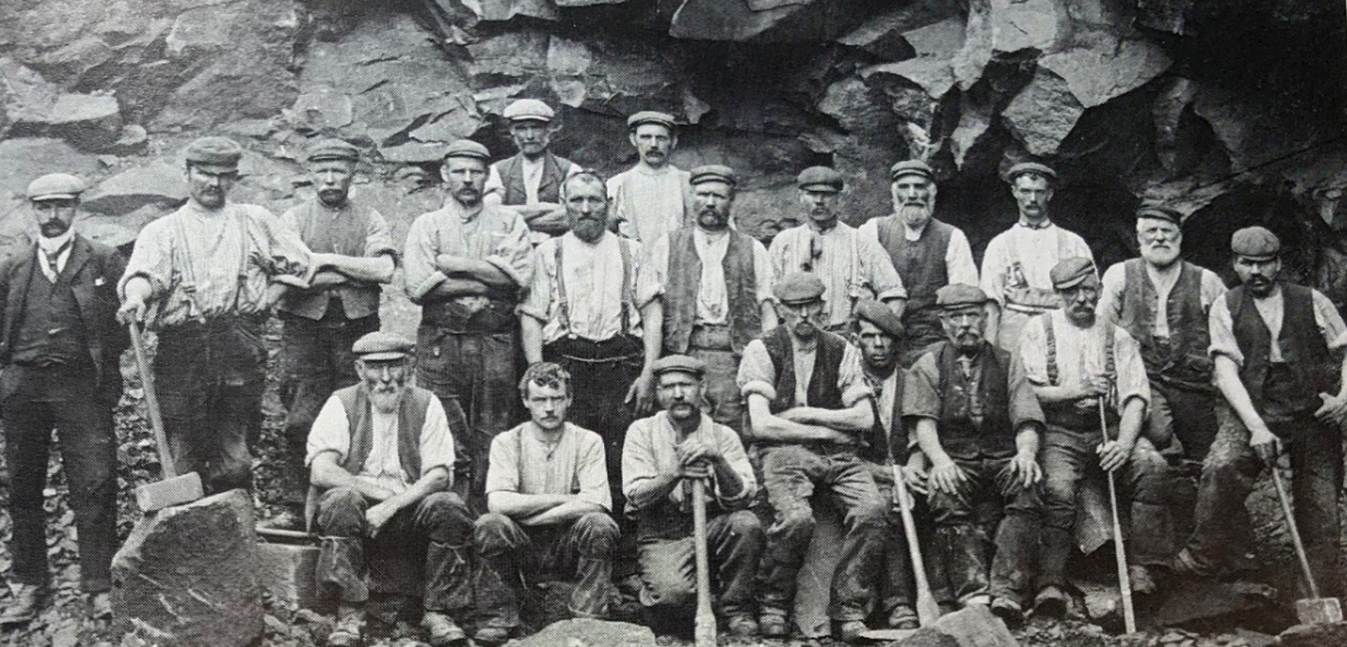
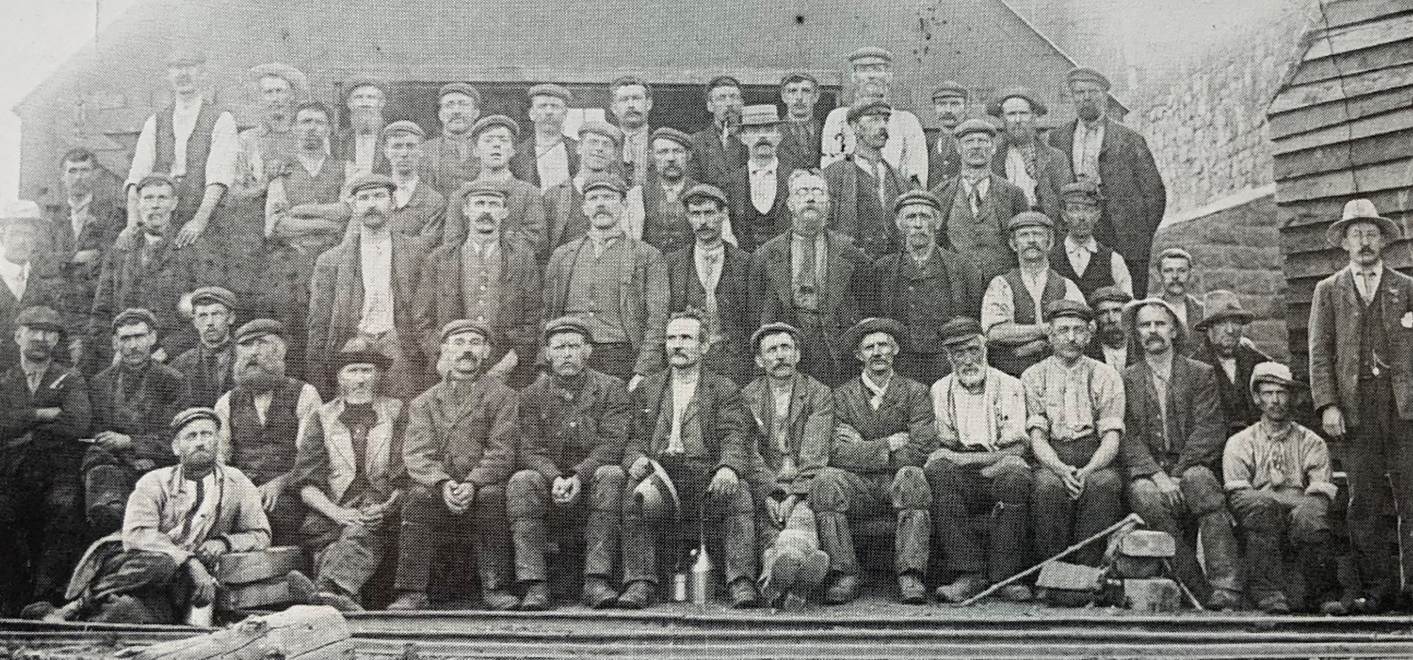
Great Ayton Industry
·
James Cook and Great Ayton
·
Bibliography
The Farndales of Great
Ayton
Great Ayton is
one of the places with a very significant concentration of Farndales who lived
there is the seventeenth and eighteenth century and in Victorian times. The
Farndales have a close association with the village of Great Ayton. There are
four Farndale Lines of Great Ayton. The Great Ayton 1 Line are the
descendants of Geogs Farndale (FAR00077)(1624
to 1677) who is himself descended from the Skelton 1 Line. He had a family of
eight who were born in Great Ayton between 1650 and 1660.. The Great Ayton 2 Line is a very
large line of descendants of Joseph Farndale (FAR00228)(1795
to 1877) who is himself descended from the Kilton 1 Line and from whom sprang
a very large family group including many cartwrights, joiners, agricultural
labourers, millwright apprentice, shoemaker, dressmakers of Great Ayton and
some who moved to other places. The gravestone of Joseph Farndale and some of
his immediate descendants can be found still in 2019 in the far corner at the
twelfth century All Saints Church at Great Ayton. The Great Ayton 3 Line is
another family descended from the Kilton
1 Line, being the descendants of Joseph’s twin, Henry Farndale (FAR00229)(1979 to
1857). The Great Ayton 4 Line
is a small family of Mary Farndale (FAR00431)
(born 1858) and her son William.
Other Farndales
associated with Great Ayton include William Farndal (FAR000078);
William Farndale (FAR00200);
Hannah Farndale (FAR00211);
Martin Farndale (FAR00264);
Ann Farndale (FAR00273);
George Farndale (FAR00271);
Elizabeth Farndale (FAR00294);
Elizabeth Farndale (FAR00306);
John Farndale (FAR00311);
Jane Farndale (FAR00322);
John Farndale (FAR00328);
Mary Ann Farndale (FAR00424);
Hannah Farndale (FAR00628);
George W Farndale (FAR00678);
and Rubina Farndale (FAR00873)
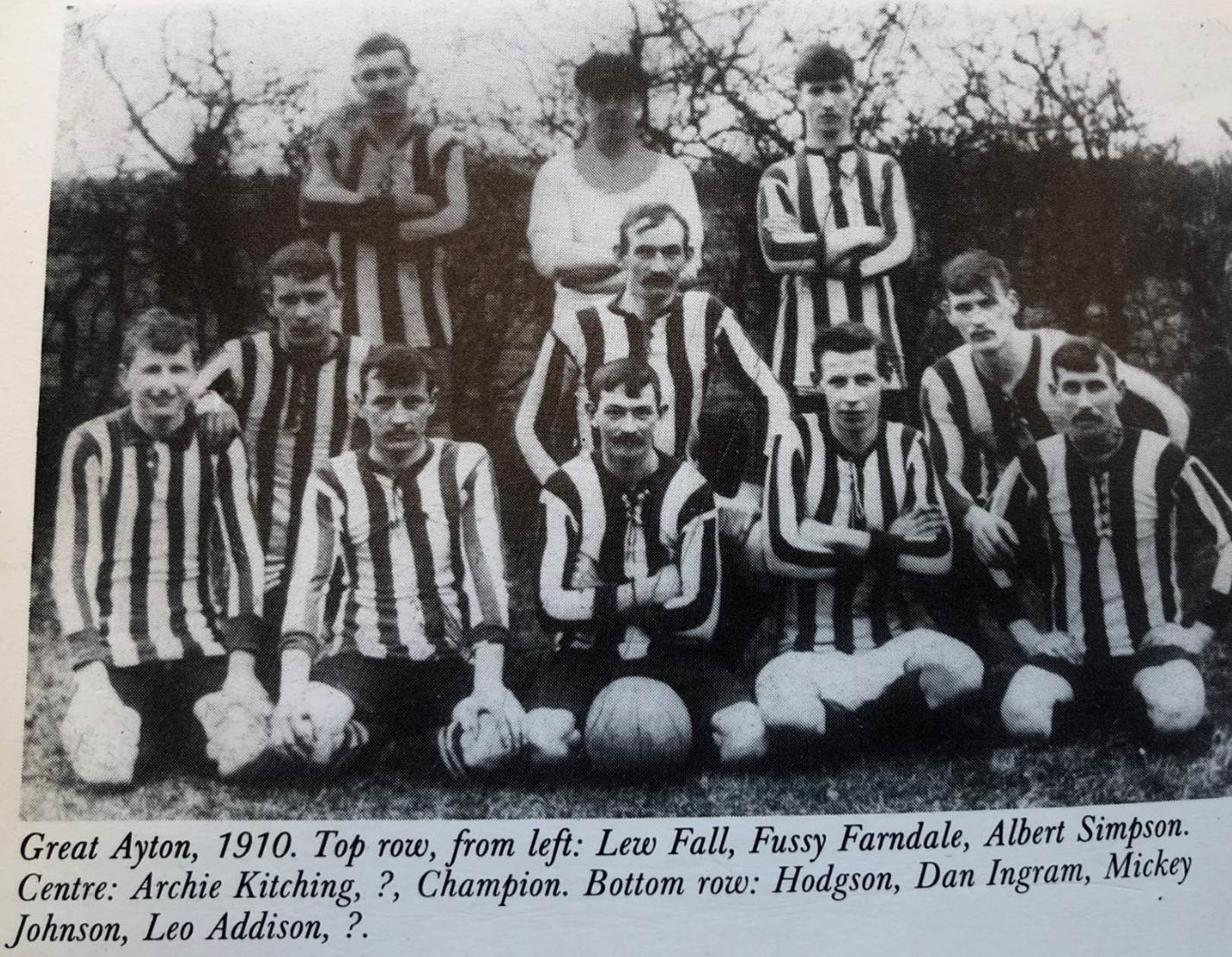
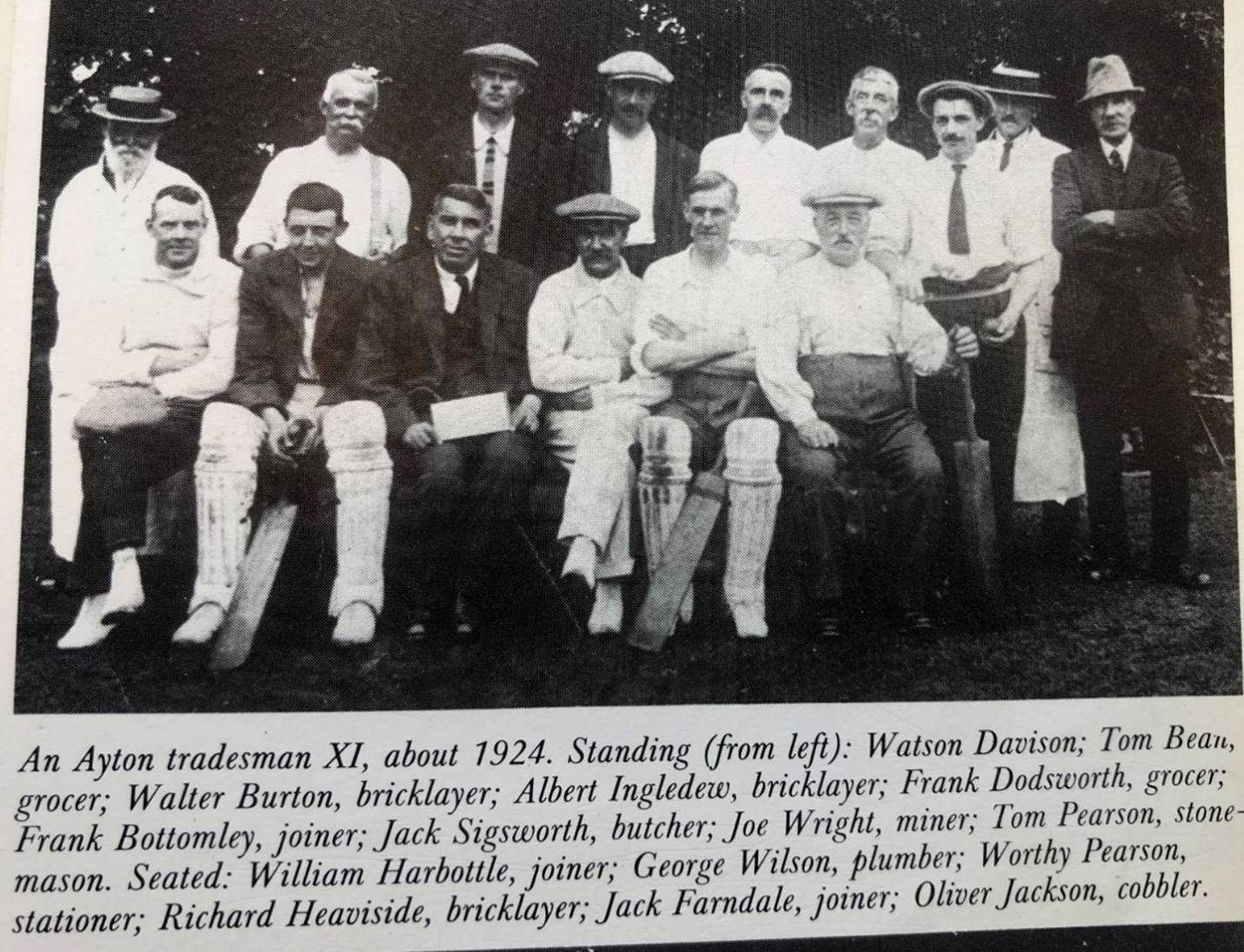
Great Ayton
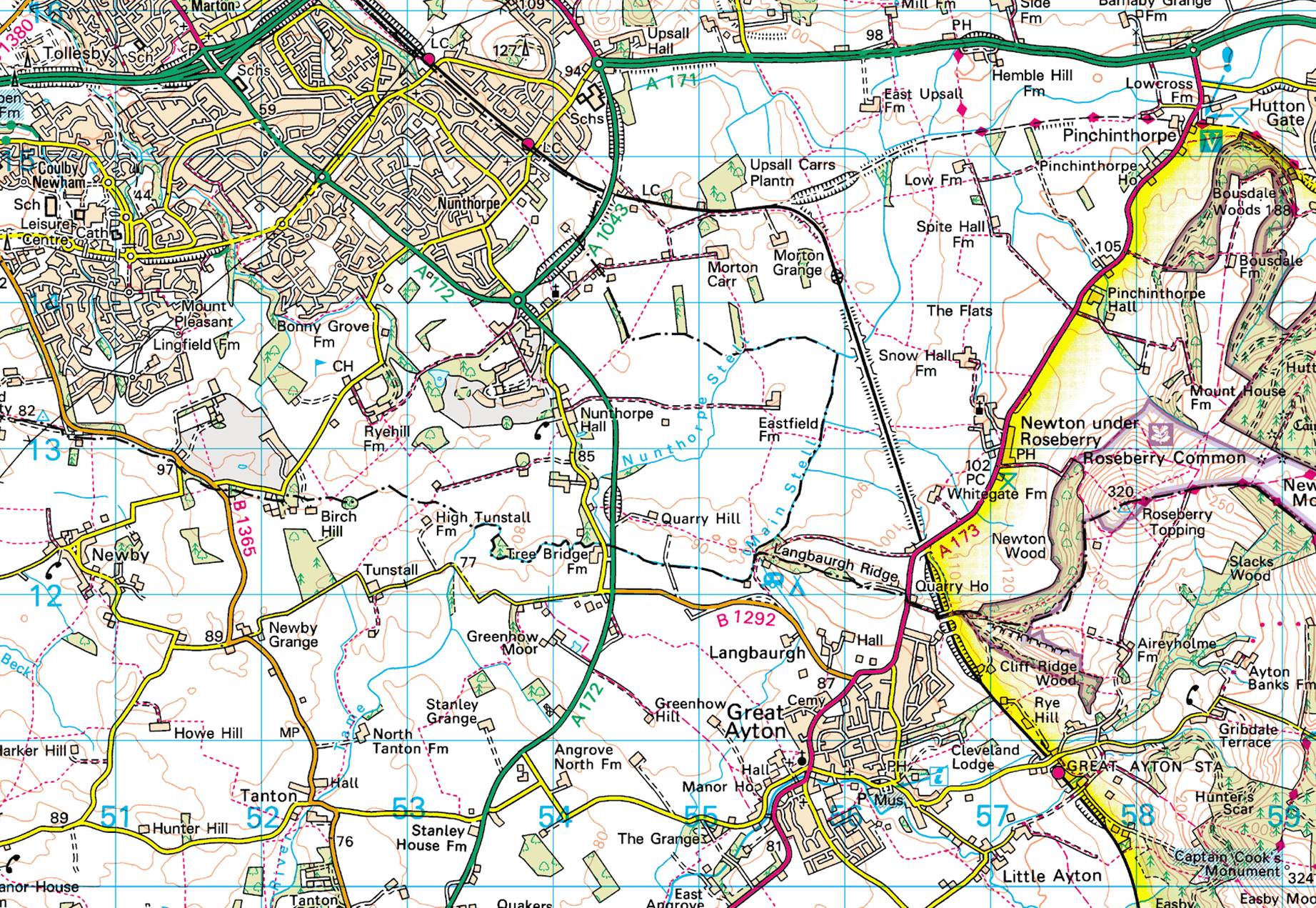
The Victoria County History – Yorkshire, A History of the
County of York North Riding: Volume 2 Parishes: Great Ayton, 1923: By
1923, This parish covers 6,394 acres on the western slopes of the Cleveland
Hills and to the south-west of the most notable hill in Cleveland, the coneshaped Roseberry Topping. It included in 1831 the
townships of Great Ayton, Little Ayton and Nunthorpe. In 1880 Easby was added.
The soil is loamy on a subsoil of Lower Lias; 1,935
acres are under cultivation, and wheat, oats, barley and beans are grown. Woods
and plantations occupy 461 acres, and 3,035 acres are laid down to permanent
grass. The population is now for the most part agricultural, though there are
several quarries and iron ore mines in the parish. At the beginning of the 19th
century Great Ayton was a manufacturing village containing three tanyards, a comb and horn manufactory, a common brewery, an
oil-mill, a water corn-mill, a tallow chandlery and a brick and tile kiln. The
tanneries were still in existence in 1849.
The village is of
considerable size and consists of one long street, with an open place at the
east end called the High Green. Here, no doubt, was held the market granted to
Robert de Stuteville and his heirs in 1253. There are no records of this
market, and probably the near neighbourhood of Stokesley soon made it
unprofitable. One of the small streams which go to form the Leven flows down
the middle of the street. Here in 1265 William de Stuteville granted to the
monks of Whitby the privilege of watering their flocks and herds. In the 18th
century the bridges and roads were found insufficient and inconvenient for the
traffic, and the townspeople subscribed to build the present good stone bridge
of two arches. There are also two foot-bridges of wood.
The church of All
Saints at the west end of the village is no longer in use, but has been
superseded by the new Christ Church. The village has also Wesleyan, Primitive
Methodist and Congregational chapels. The Society of Friends, whose
meetinghouse is on the High Green, has a considerable number of members in this
neighbourhood. The Quaker family of Richardson was settled at Great Ayton, and
Thomas Richardson with others founded in 1841 the school for the children of
Friends which stands at the east end of the village street.
The old
schoolroom of Great Ayton, now the parish council room, bears above its doorway
the inscription, 'Michael Postgate built this school house in the year 1704.
Rebuilt 1785.' It was here that Captain Cook was educated.
One of the
manorial corn-mills is still in existence. In 1281–2 Baldwin Wake, then lord of
the manor, possessed a water-mill called 'Westmulne,' and a fourth part of
another called 'Estmulne,' which has disappeared. In
1696 the mill of Great Ayton, which was described as very ancient, was in the
possession of Ralph Lowther. A poorly built capital messuage here is mentioned
in 1281–2, and the Earls of Westmorland had a dwelling-house here called Ayton
Hall, which in 1570 was held, with a garden and orchard, by Thomas Tedcastle.
The hall was granted with the manor to David Foulis. A 'common bakehouse' was
also included in this grant.
The small village
of Little Ayton lies a short distance to the east of Great Ayton, higher up the
same stream. On the moors to the east pasture was granted in the early 13th
century to Guisborough Priory by John Malebiche and Robert de Stuteville, lords
respectively of the two manors. John Malebiche gave the following boundaries:
'As the edge of the moor leads from Little Otheneberg
and divides the moor and the grove of Ayton, and so as the descent of the same
edge leads through the middle of the grove to the common way, which is in the
bottom of the valley, to the head of Golstaindale as
far as Etunes carth, and
thence to the boundaries between Kildale and Aton, and then as the stream flows
through the middle of the valley to the boundaries of the . . . canons of
Guisborough, with the whole moiety of the grove of Golstaindale
which belongs to me, according to the bounds formerly made between Sir Richard
Malebisse my father and Sir Robert de Stuteville.'
A farm called
Airy Holme, close under Roseberry Topping, is identified with the 'Ergun' of
the Domesday Survey, where the king had 2 carucates of land and a 'manor.' A
'plot called Ergum, which is sometimes ploughed and
worth 6d.,' appears in the extent of Baldwin Wake's manor of Great Ayton in
1281–2.
The small hamlet
of Langbaurgh, a quarter of a mile to the north of Great Ayton, is apparently
the place from which the wapentake took its name. It is not mentioned in the
Domesday Survey, however, and there has never been a manor here. The wapentake
courts were formerly held on the high ridge of moorland to the east of the
hamlet and then adjourned to an inn at Ayton, where constables were sworn in.
Nunthorpe,
north-west of Langbaurgh, is separated from Ayton by the little stream called
the Tame. In 1461 John Headlam, then lord of the manor, left 6s. 8d. to the
bridge between Nunthorpe and Ayton. The only important buildings in Nunthorpe
are the church of St. Mary and the Hall. The latter is generally said to have
been built by the Constables and bears their arms. But there was certainly a
'capital messuage' here in the time of the last Headlam. In 1623 Marmaduke
Constable was accused by the rector of Ayton of pulling down the chapel and
terrorizing the villagers into attending services in Nunthorpe Hall, his own
residence. Various witnesses testified, however, that he had only pulled down
part of the chapel to repair it 'better than it was before.' In 1717 part of
the hall was let to a farmer, as there was no other house for him to live in.
It is now the residence of Mr. G. F. S. Edwards. Grey Towers, a large modern
mansion to the north-west of the village, is the seat of Mr. A. J. Dorman.
In the north of
the township is Nunthorpe Grange, a farm-house. Here was the old 'Nunhouse' of the Basedale nuns.
Their mill was probably on the Tame. A tithe suit between the Prioress of Basedale and the Abbot of Whitby in 1231 ended in an
agreement that the nuns should pay tithe for this mill and 'Gugle flat,' while
the abbot renounced his right to tithe from 'Plumtre
flat' and their meadow-land.
The hamlet of
Tunstall, to the south of Nunthorpe, is a detached part of the township of
Little Ayton.
The parish has
stations at Great Ayton and Nunthorpe on the Middlesbrough and Battersby branch
of the North Eastern railway.
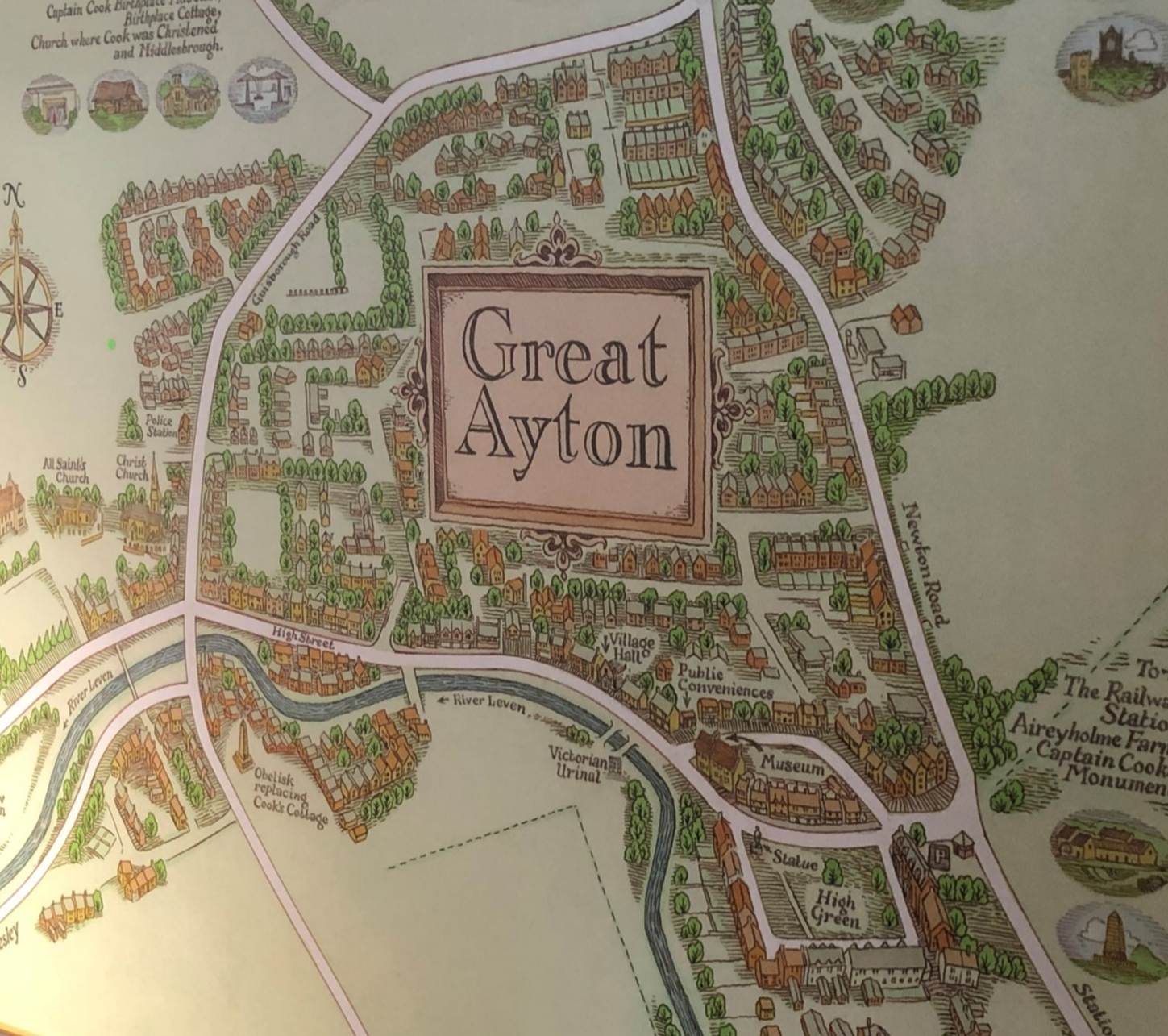
Great Ayton Timeline
1086
There were three
'manors' in Great Ayton at the time of the Domesday Survey. One was extended at
2 carucates and belonged to the king, having previously been held by Hawart. A second manor of 6 carucates, which had been held
before the Conquest by Norman, was in 1086 among the lands of the Count of
Mortain. It was held of him by Niel Fossard. A further 'manor' of 2 carucates
was held under Robert Malet by his man Robert (The Victoria County History – Yorkshire, A History of the
County of York North Riding: Volume 2 Parishes: Great Ayton, 1923).
1123
Robert de Meinell
gave the Church of All Saints at Ayton to the Abbot and Convent of Whitby.
Niel Fossard's
land in Ayton passed ultimately with the rest of his estates to the family of
Mauley, who had the overlordship here during the 13th and 14th centuries. Great
Broughton, Tunstall and Ayton were held of the Mauleys for one knight's fee by
the Meynells of Whorlton
and their heirs
The tenants of
the manor under the Meynells were the family of
Stuteville, who in all probability had a grant of that part of the vill which did not form part of the Mauley fee. This would
be in the king's hands in 1106, when Robert Malet forfeited his estates. In 1361 part of the manor was said to be held
in chief and part of the heirs of the Meynells.
The Stutevills probably held lands in Ayton from the early part
of the 12th century, but the first member of the family mentioned in connexion
with the place is William de Stuteville. He confirmed the grant of the church
of Ayton to Whitby Abbey in the reign of Henry II, and died in 1203, when his
lands in Ayton, Hemlington and 'Levinton' were worth
£10 2s. 3½d
(The Victoria County History – Yorkshire, A History of the
County of York North Riding: Volume 2 Parishes: Great Ayton, 1923).
1281
Baldwin de Wake,
lord of the manor at Ayton, died.
1658
Three open fields
and common land olf the parish were enclosed and
privatised. A few farmers now had their own farms, but most were tenants of
larger landowners. Thomas Skottowe of Ayton Hall owned about half a dozen farms
including Aireyholme, which was the largest farm in
the village.
The River Lever
was a significant feature for the inhabitants. From time to time it flooded and
burst its banks, or was difficult to ford and at other times it was reduced to
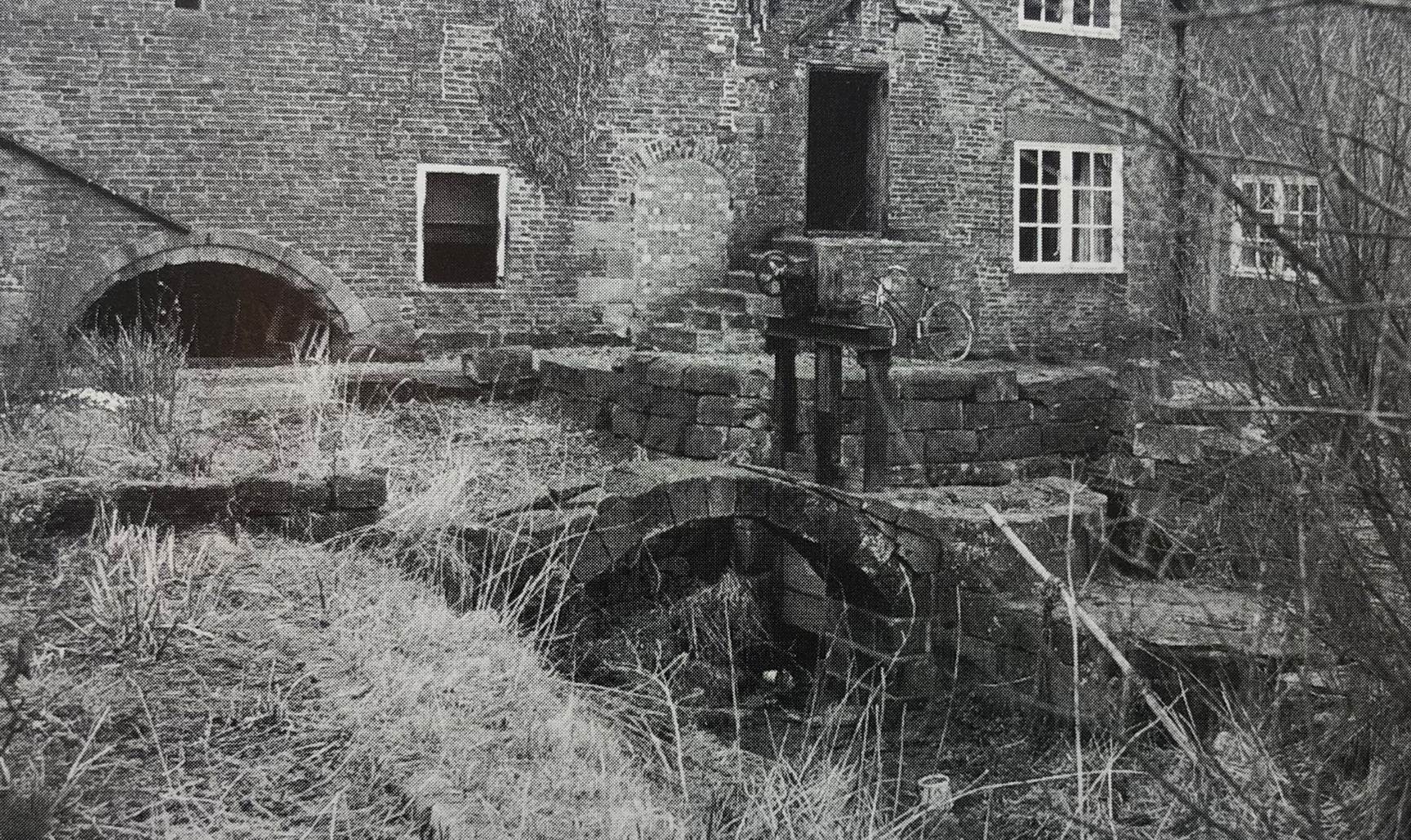
a trickle and most of the water went into the mill race which served the two village
mills. Ayton Mill was on the edge of Low Green and Low or Grange Mill was half
a mile to the west. Both mills were powered from water from the same mill race.
The river provided water for everyone in the village and was also needed for
the linen and tanning industries.
1666
The Parish
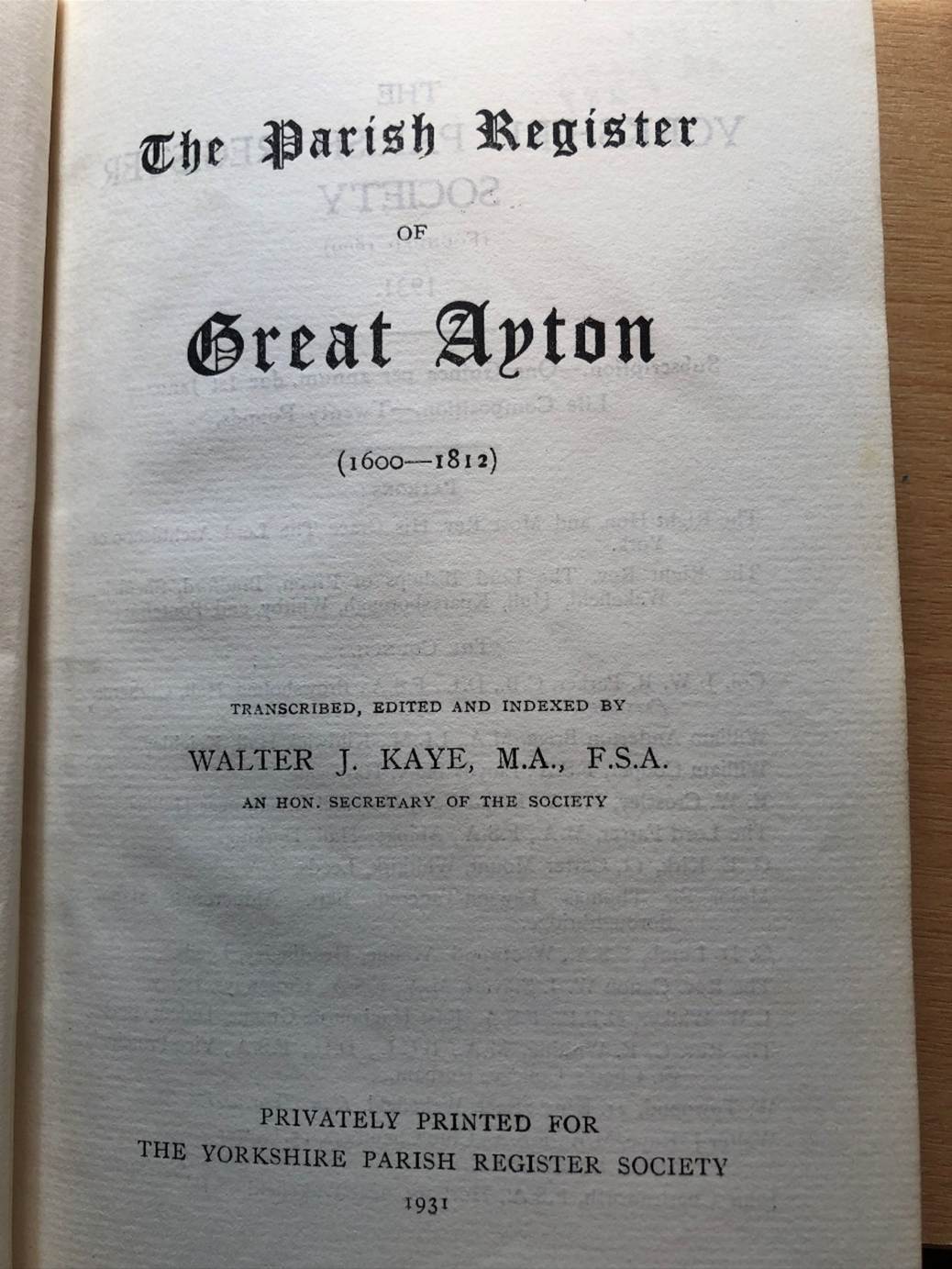
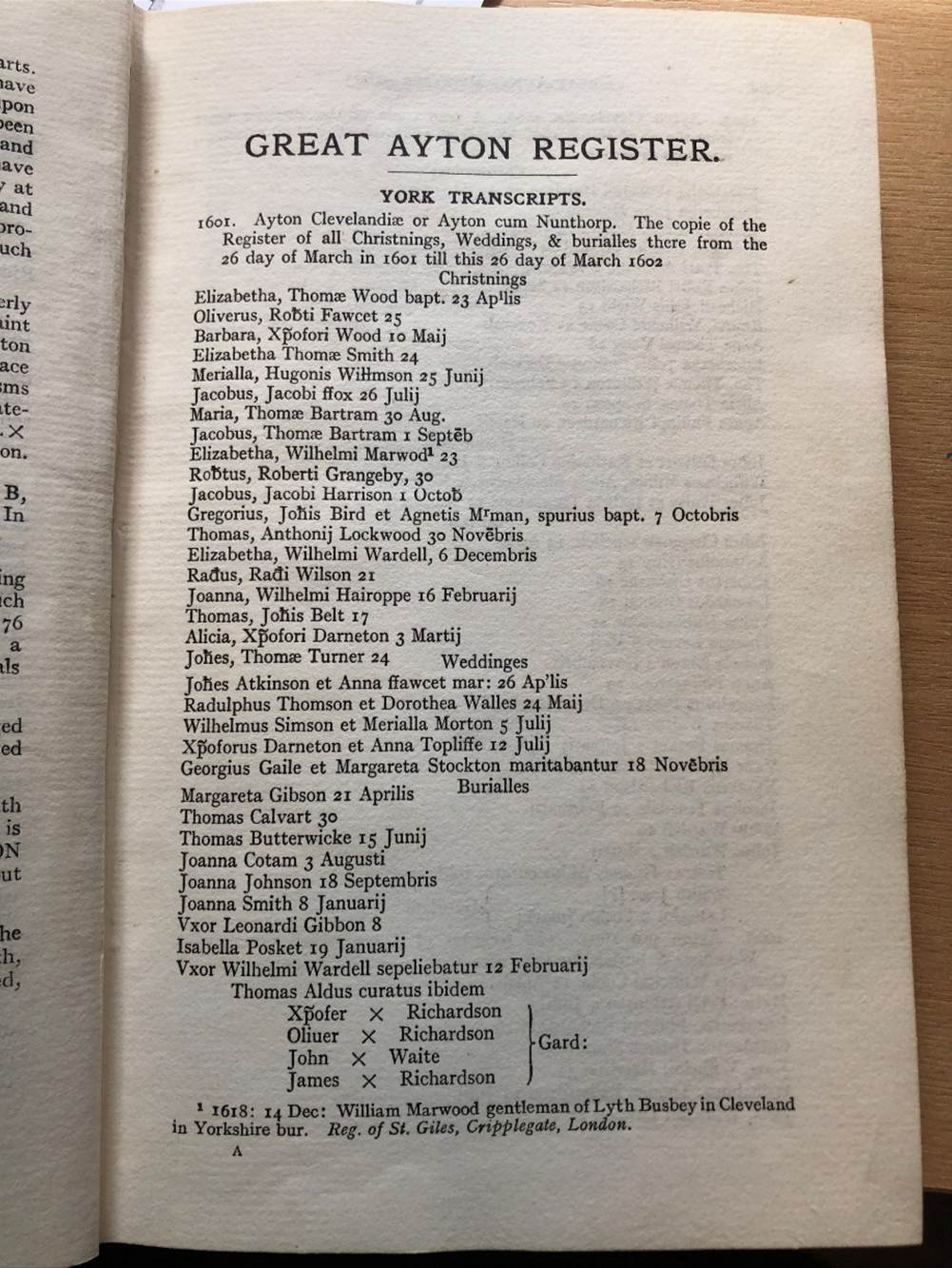
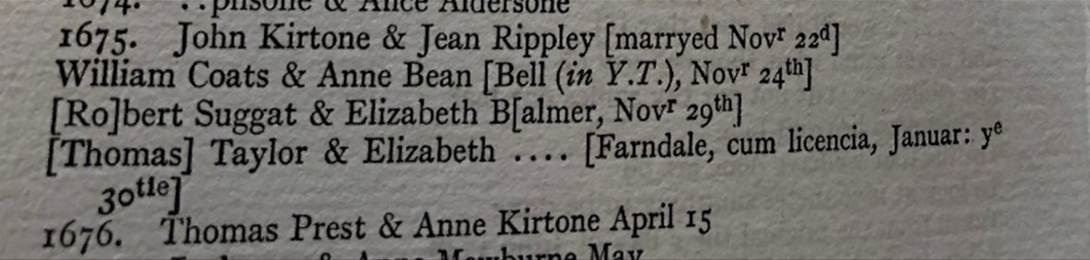
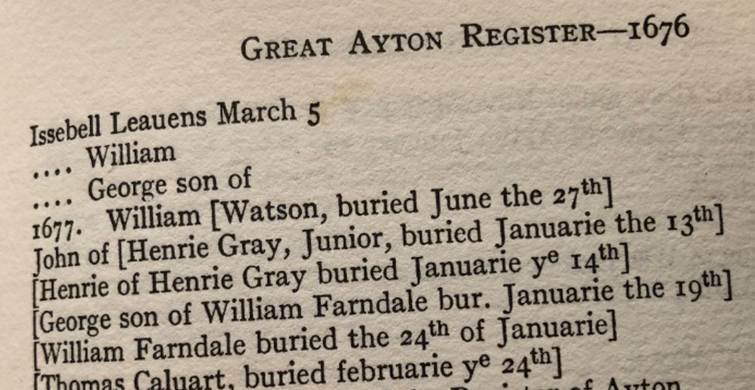
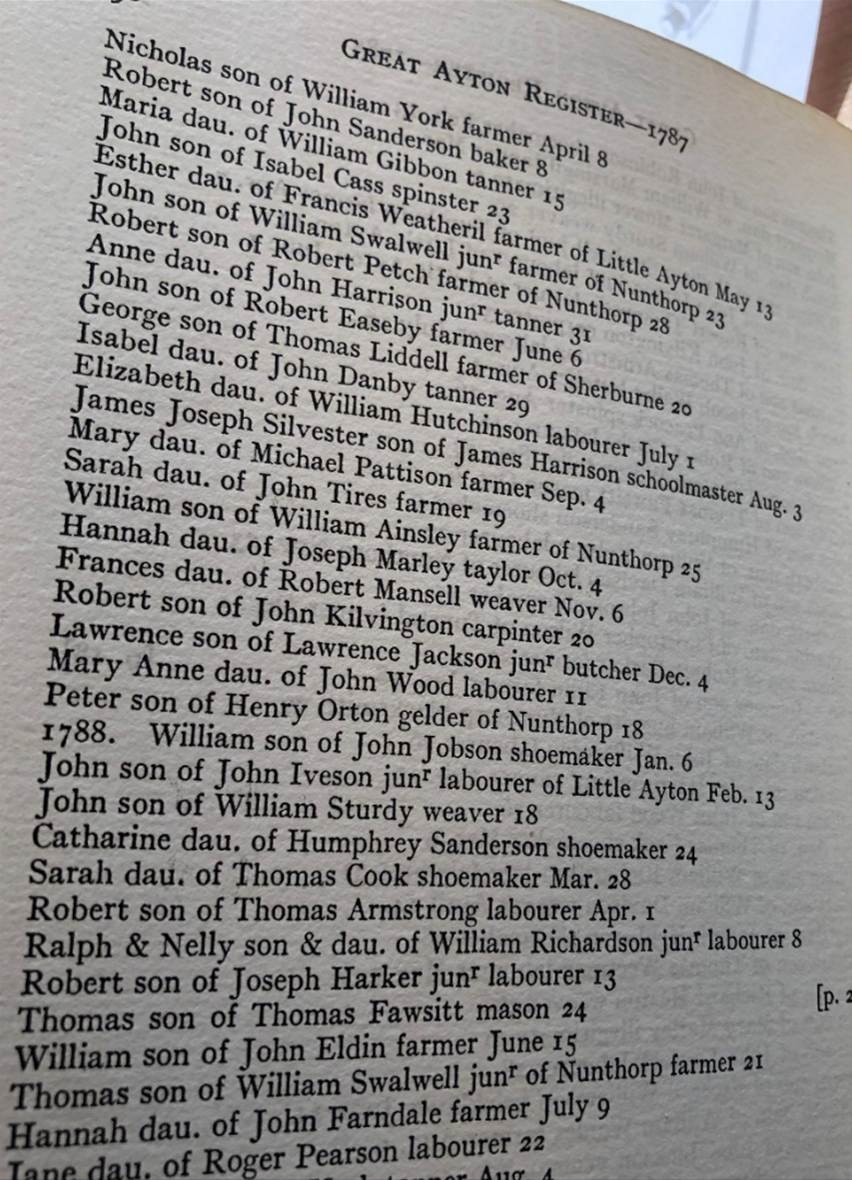
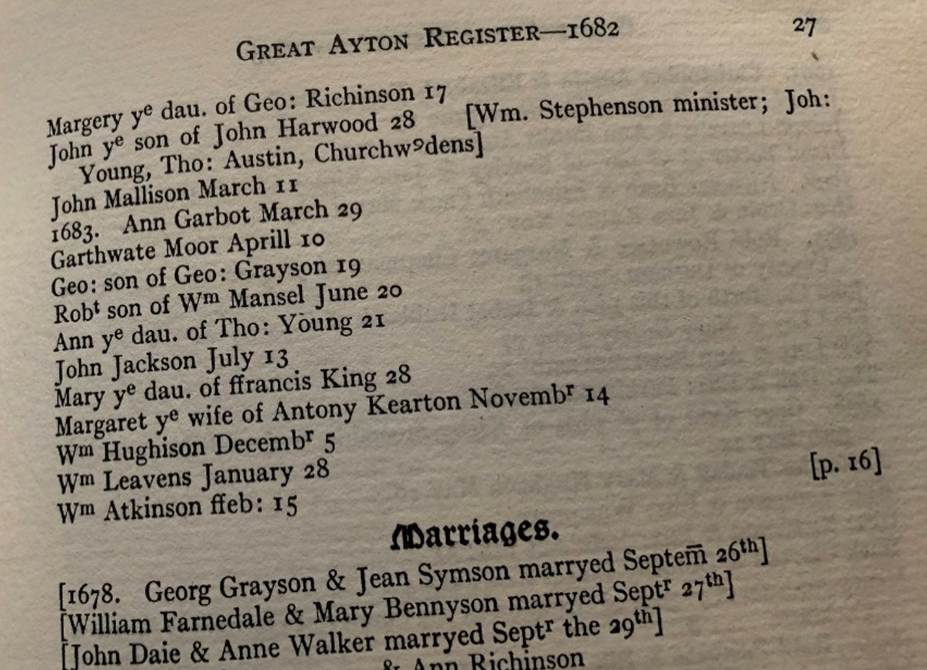
Register began.
1678
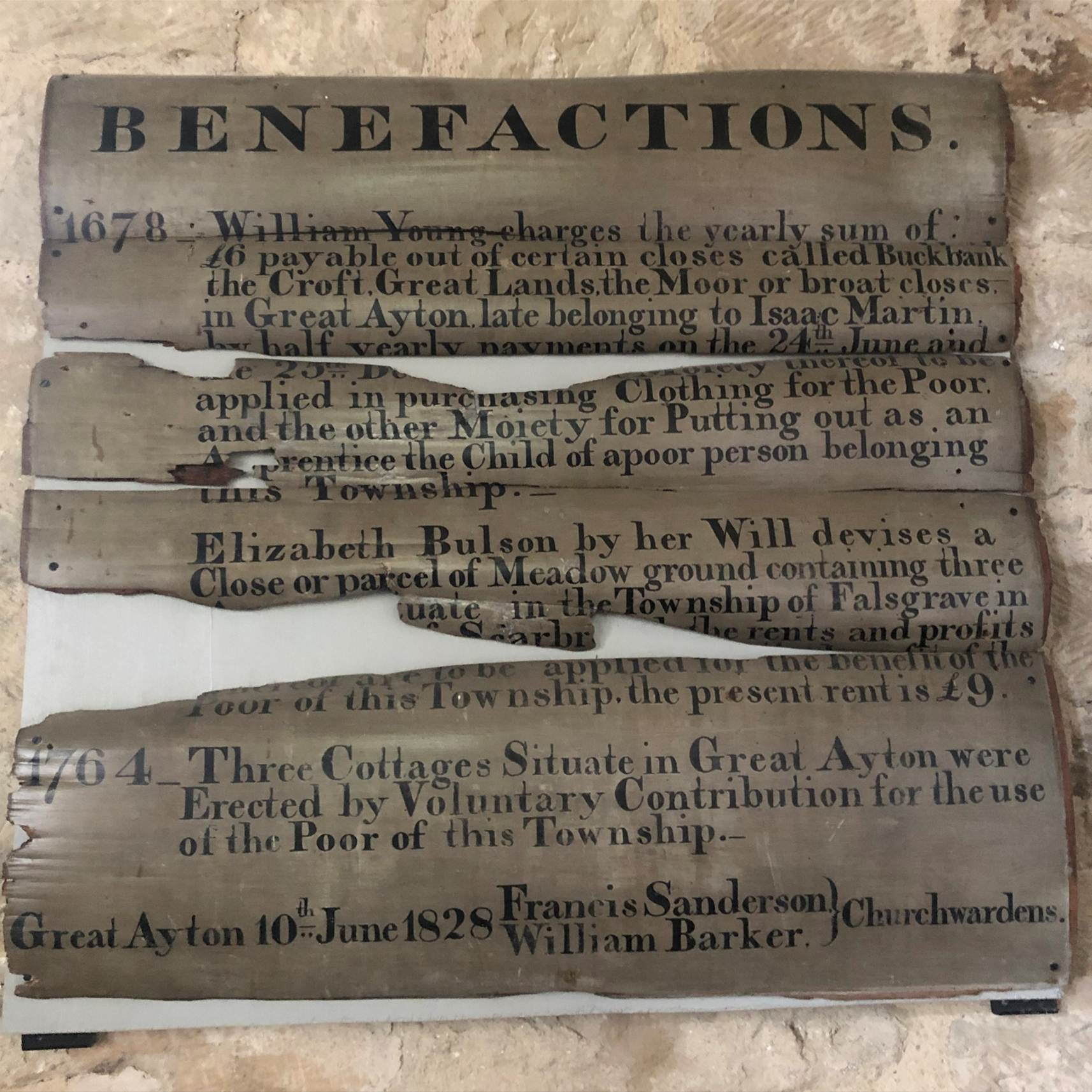
A charity was
left by William Young consisting of a rent charge of £6 per annum out of ‘Buckbank’. Half of this was for clothing the poor and half
for engaging poor children as apprentices.
1704
Michael Postgate
hired the school room where James Cook was
educated. It was rebuilt in 1785.
The population of
Great Ayton in the early eighteenth century was about 500 people. The houses
were almost all single storey and mostly at what is now the west end of the
village. There was a smaller cluster around High Green.
All Saints
Church, which was larger than it is today, with a tower, was the focal point of
the village, and most people attended services regularly. There were however
small groups of Presbyterians and Quakers who had their own meeting places. New
line the village then as now was surrounded by farmland.
1728
James Cook was born at Marton on 27 October 1728.
1764
John Coulson, the
Lord of the Manor died.
The poor houses
were erected.
1771
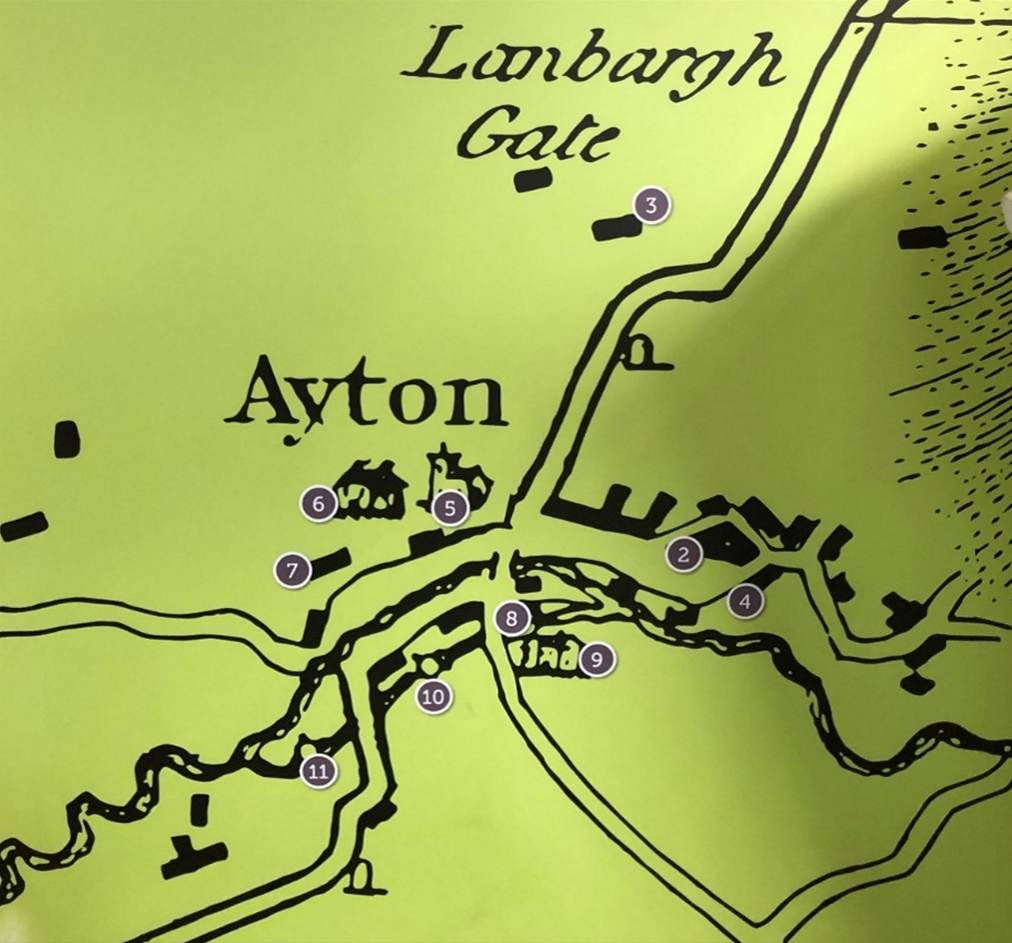
From
Thomas Jeffrey’s Map of 1771, 1 – Airyholme Farm; 2 –
Postgate school; 3 – Langbaurgh Hall and Tannery; 4 – Cottages around the High
Green; 5 – All Saint’s Church; 6 – Ayton Hall; 7 – Manor House; 8 – Cottage of
James Cook’s father; 9 – Ayton House; 10 – Ayton Mill; 11 – Low Mill
1785
The schoolhouse
was replaced in 1785 by the poor houses. The Postgate school then ran from an
upstairs room in the poor houses.
The area to the
north east of High Green is known as California. Houses were built there for
hundreds of men who came to the village to work as whinstone and ironstone
miners. This large scale immigration was likened to the American gold rush,
hence it became known as California. There was no street planning and anyone in
the village who owned land put up terraces of houses wherever they could, hence
the irregular street plan. Bricks for these houses were made in the brick and
tile works of Newton road, using local clay.
1827
The foundation
stone of the Captain Cook monument was laid on 12 July 1827.
1842
The Friends’
School was erected to combine teaching with agriculture.
1847
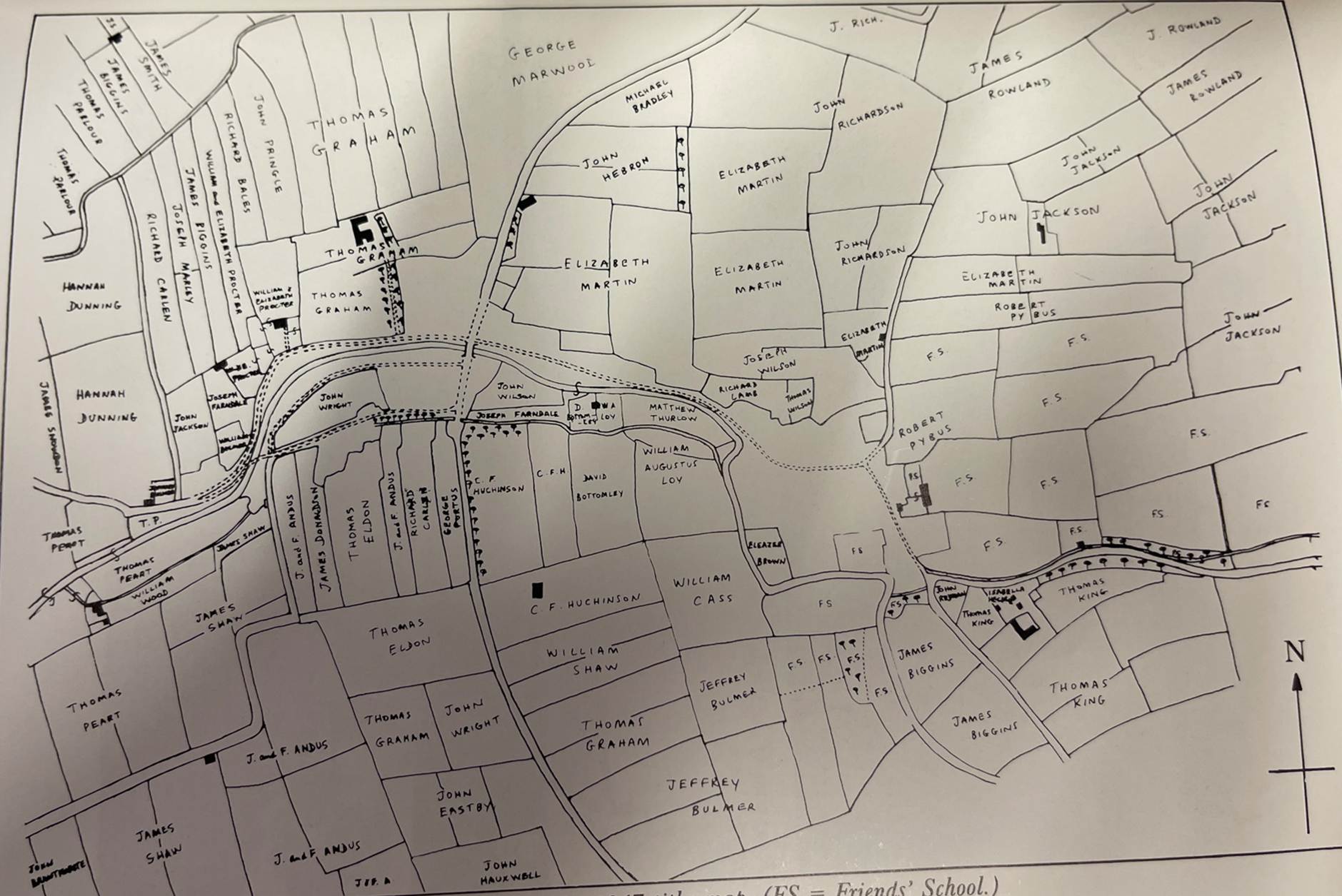
Land tenure, 1847
Tithe Map – note Joseph Farndale
1857
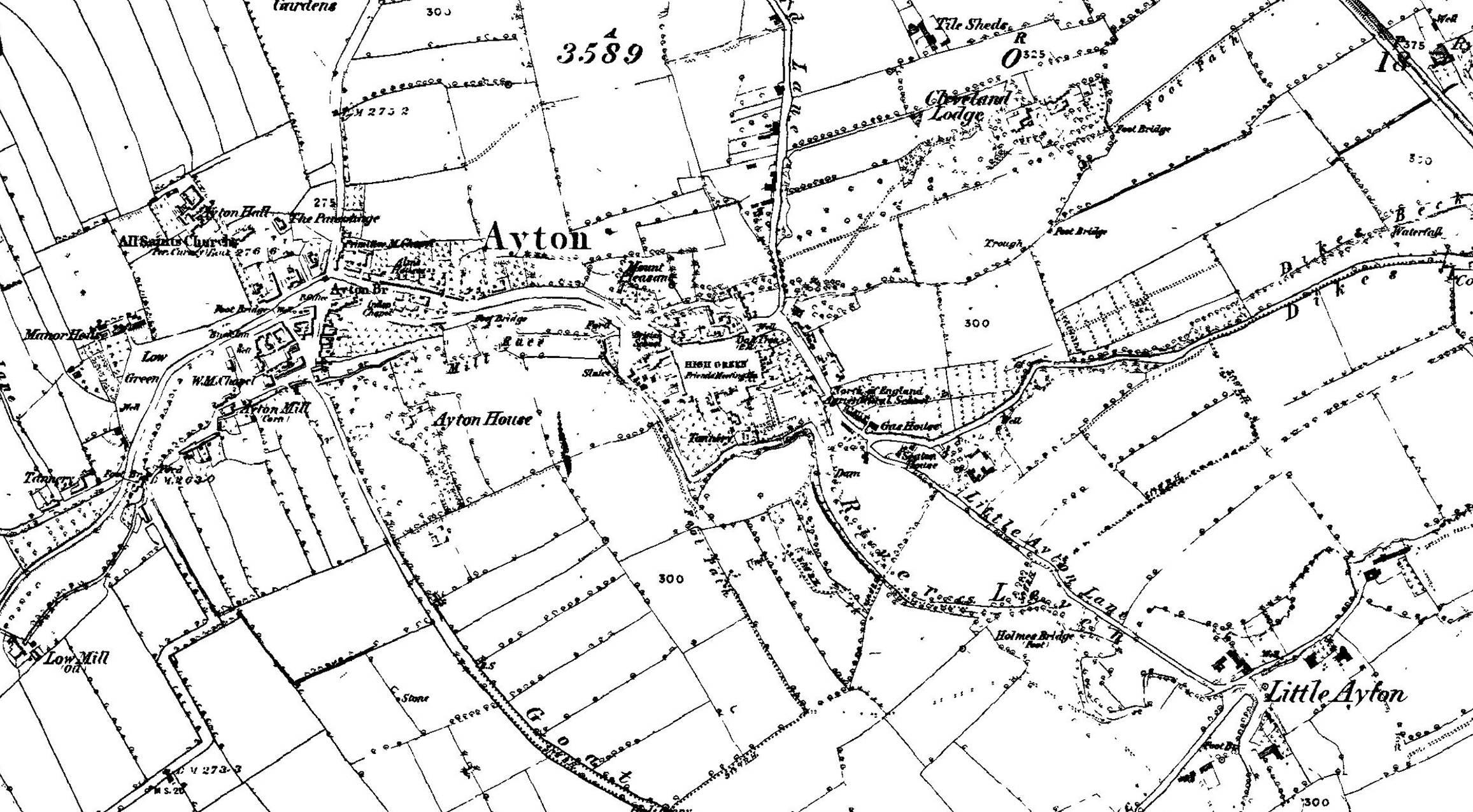
Great Ayton in
1857
1859
Thomas Richardson
endowed four alms houses for Poor Friends at Ayton.
1862
The Wesleyan
Methodist Church was erected.
1882
The cemetery was
opened, at a cost of £1,800.
1887
Four tubular
bells were installed in the church to mark Queen Victoria’s Jubilee.
1889
See the North
Yorkshire History Dark
nights in Great Ayton, 1889.
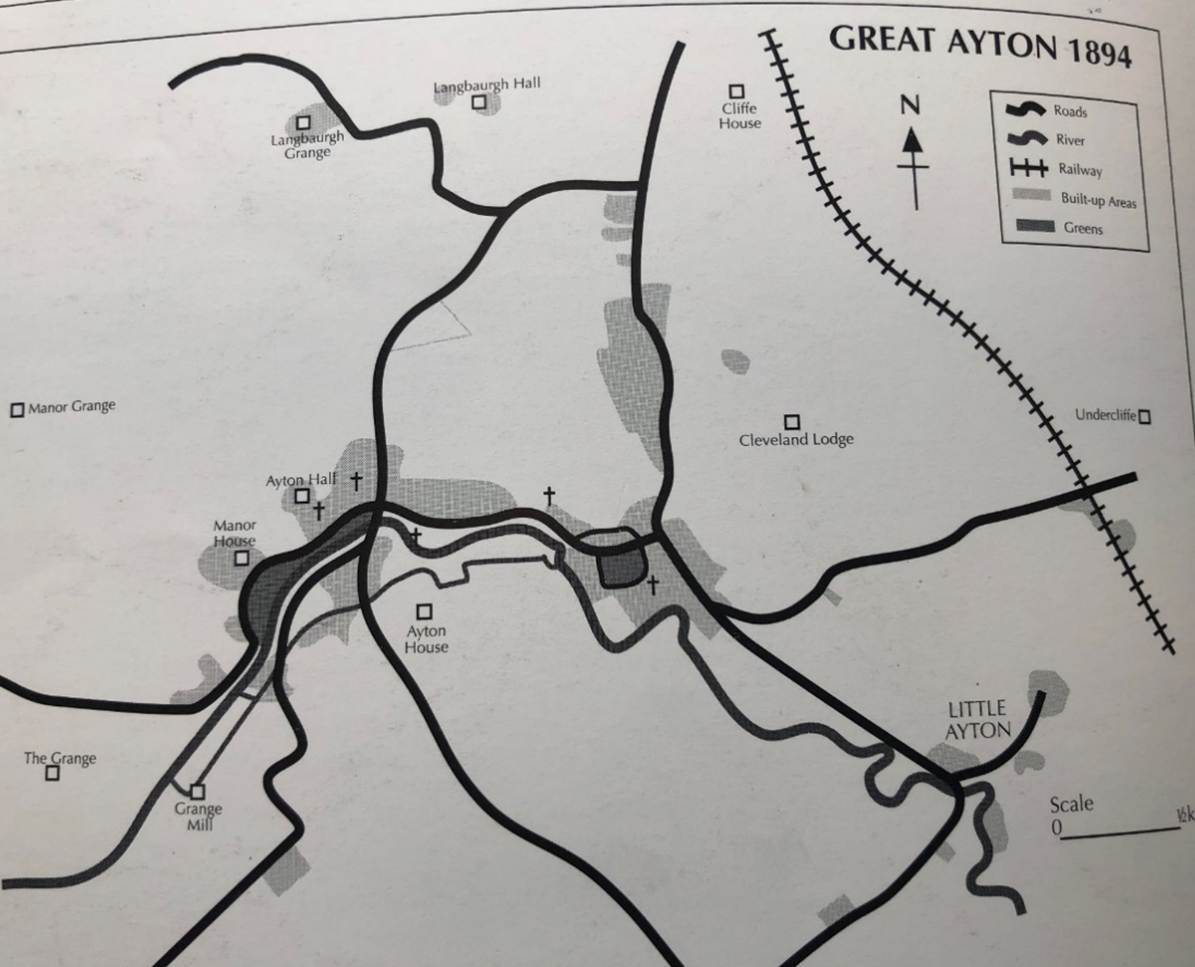
1894
The
Mill Race at Grange Mill
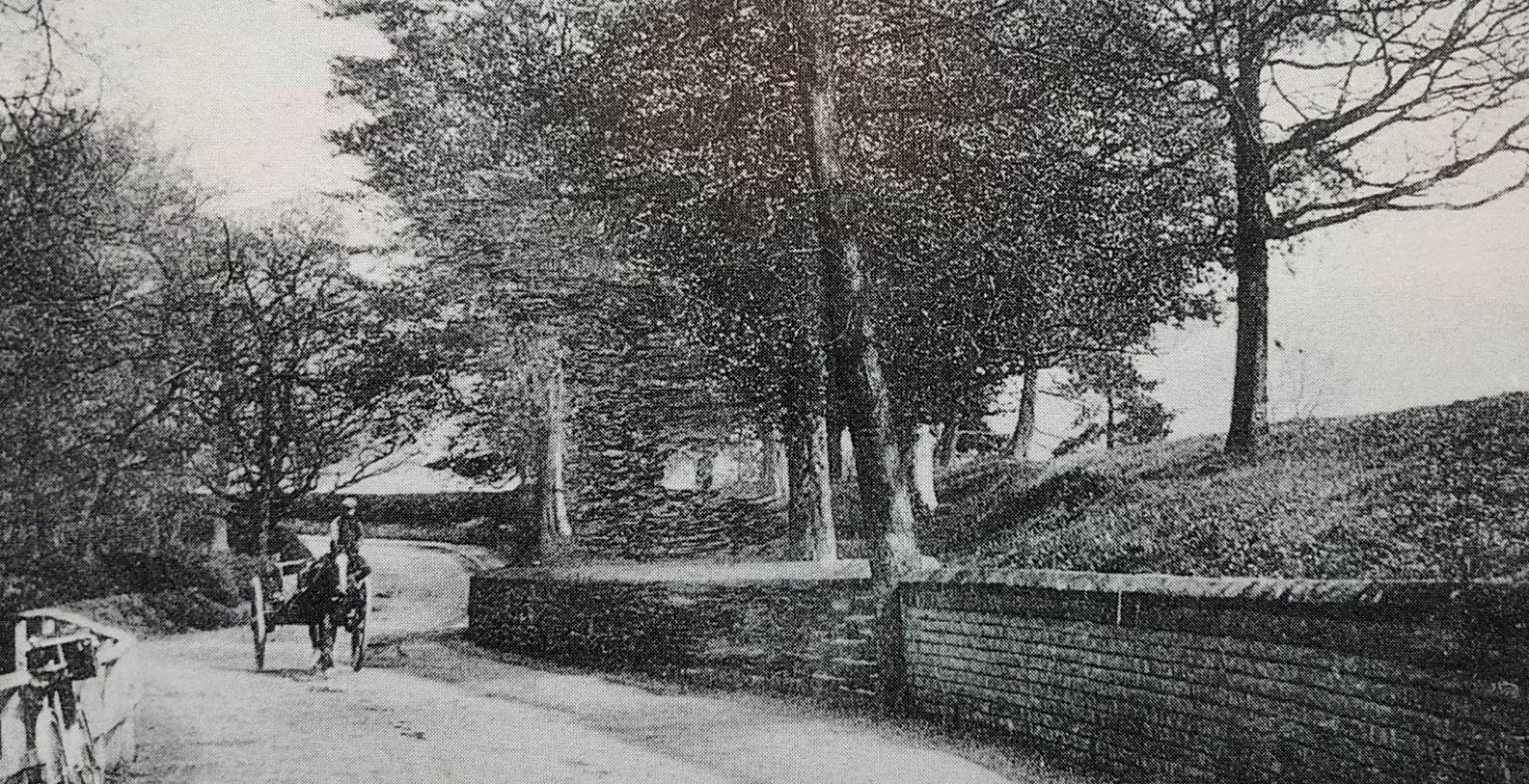
The roads around Great Ayton in the late nineteenth century
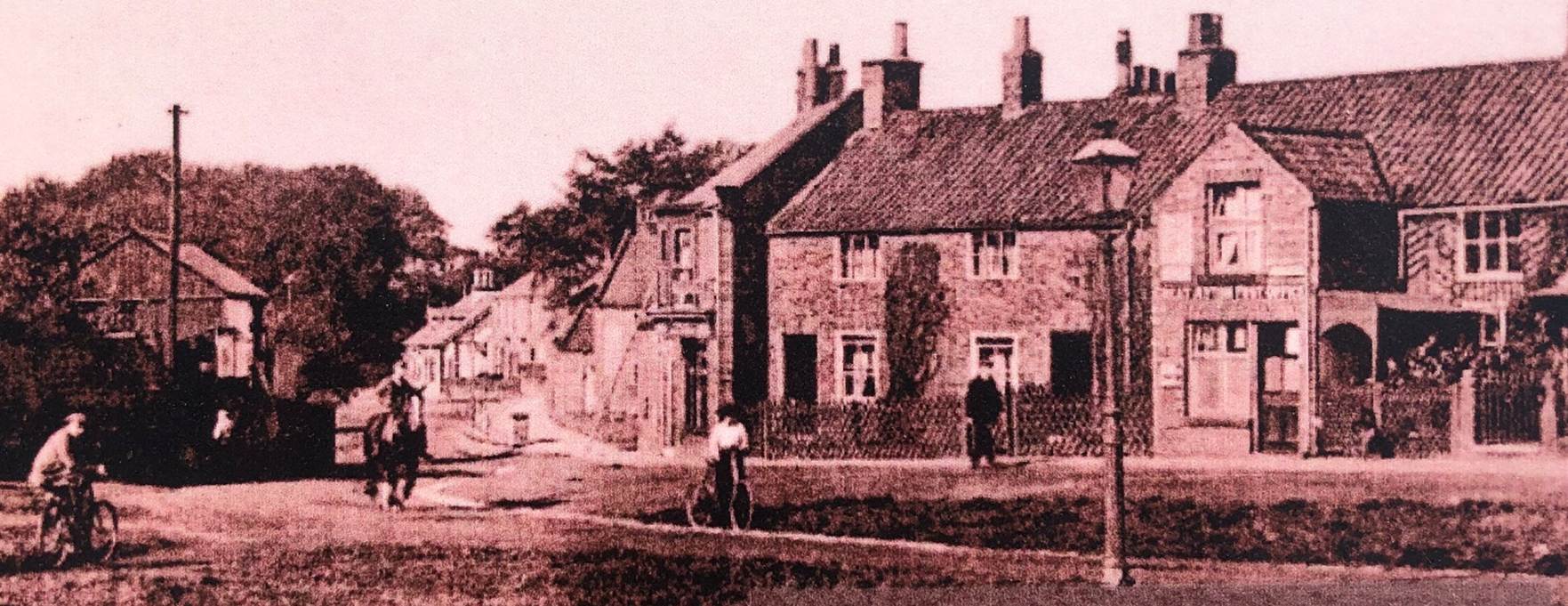
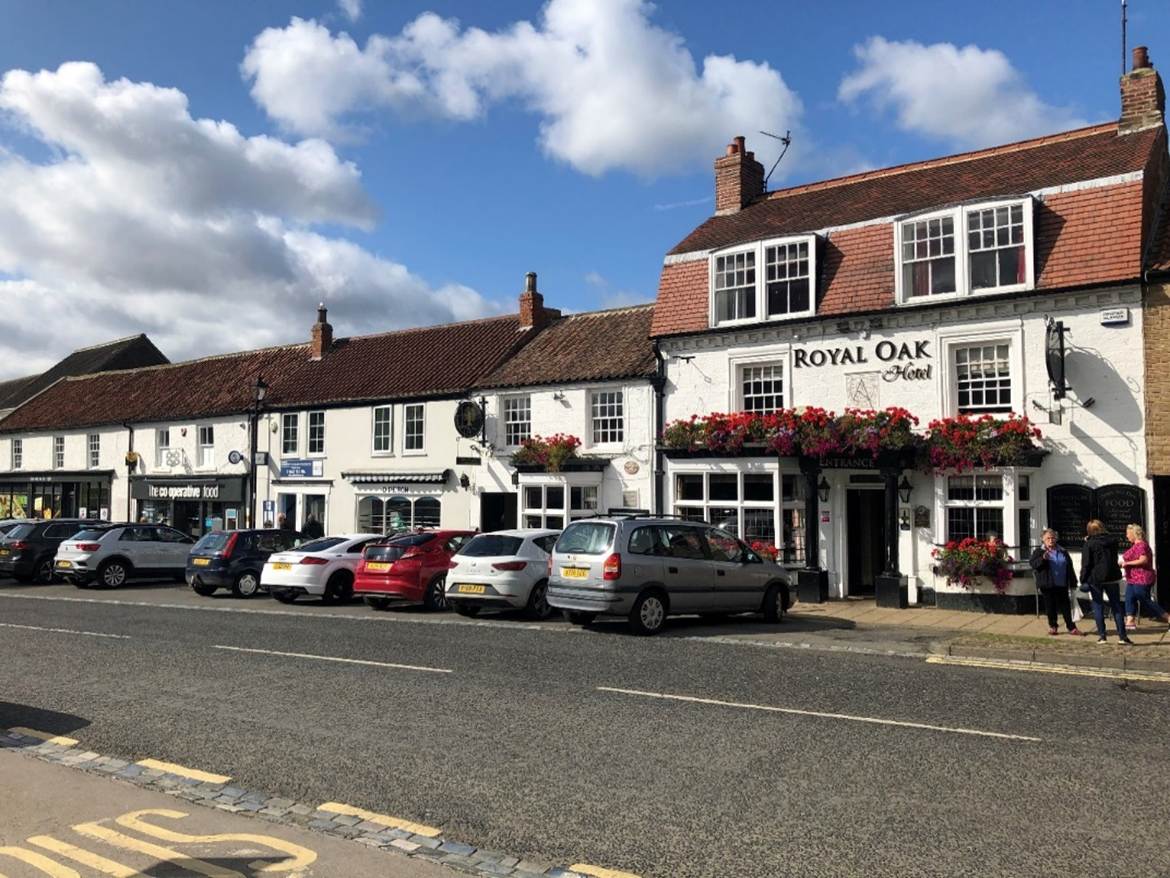
The
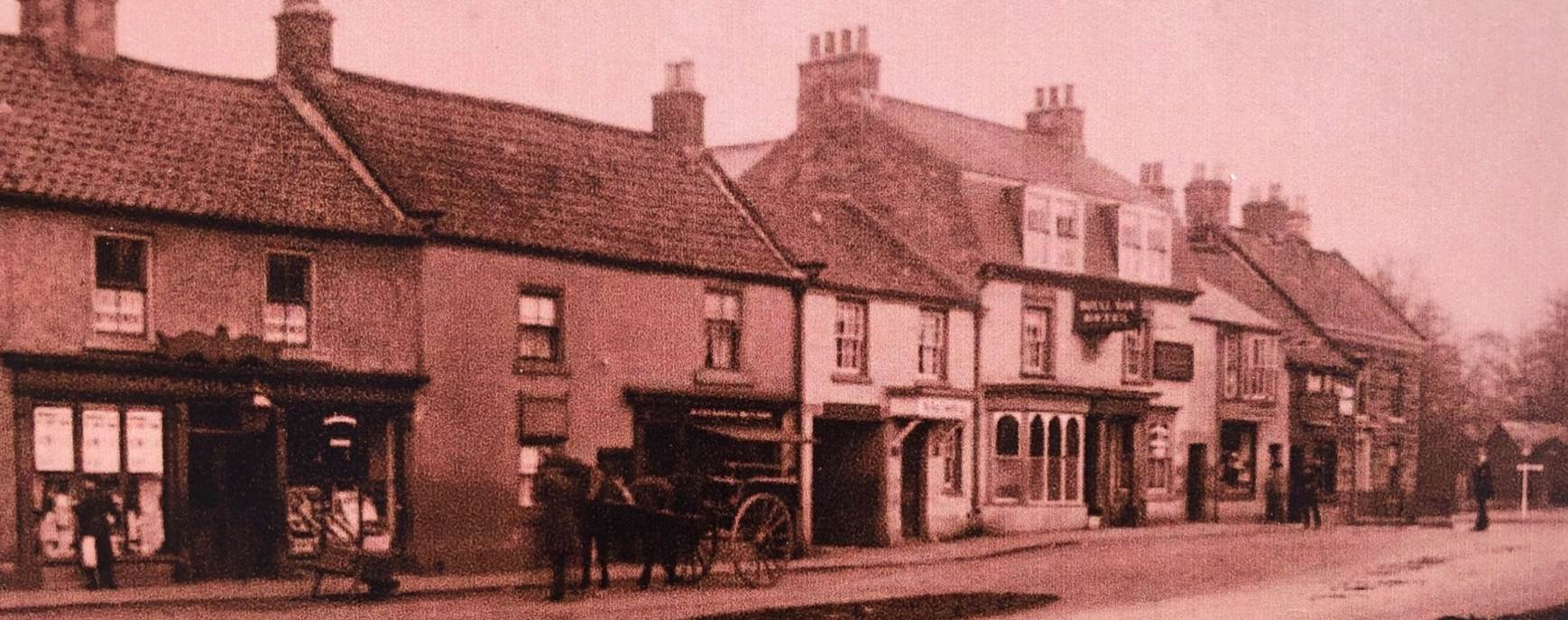
High Street and the Royal Oak
1915
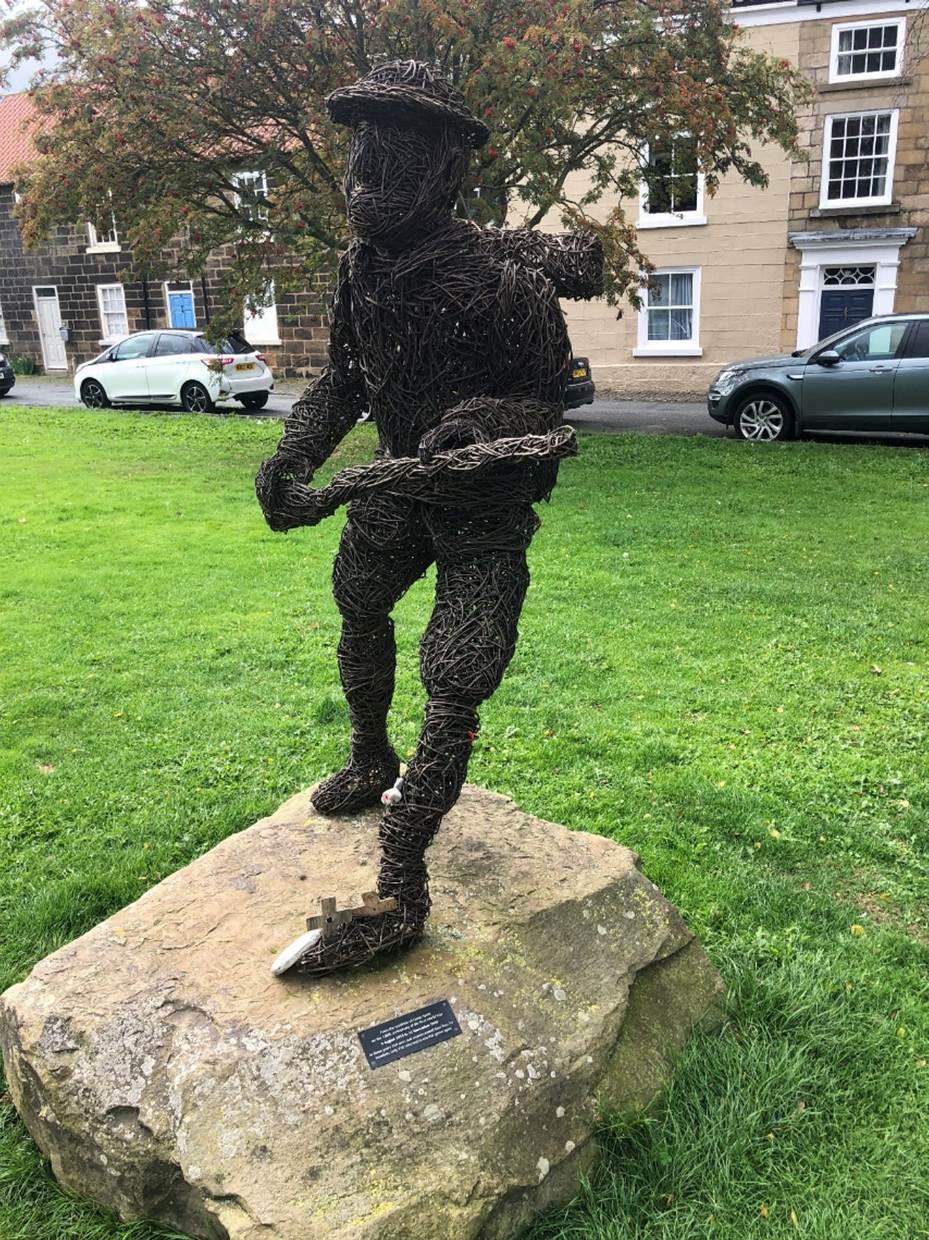
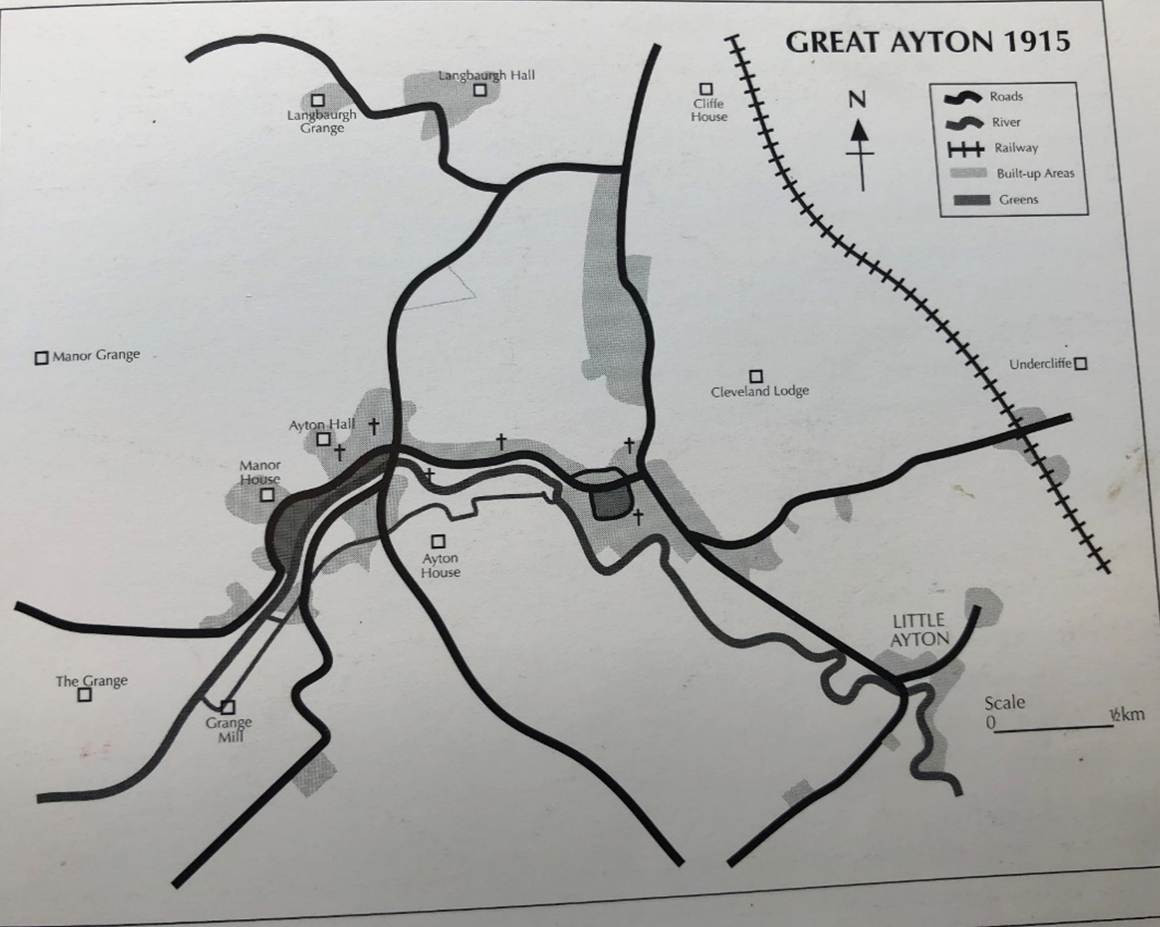
1923
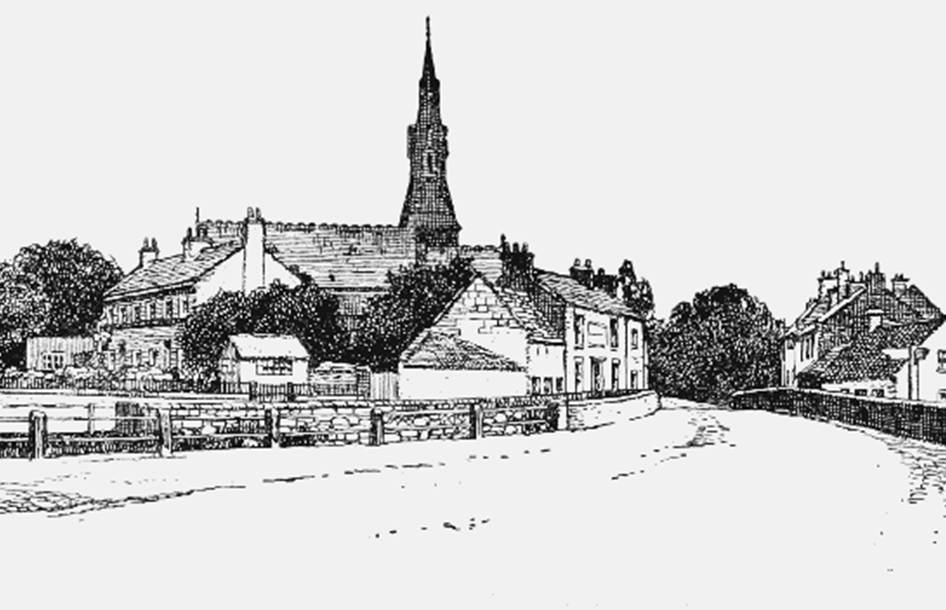
West
end of Ayton in about 1923
2019
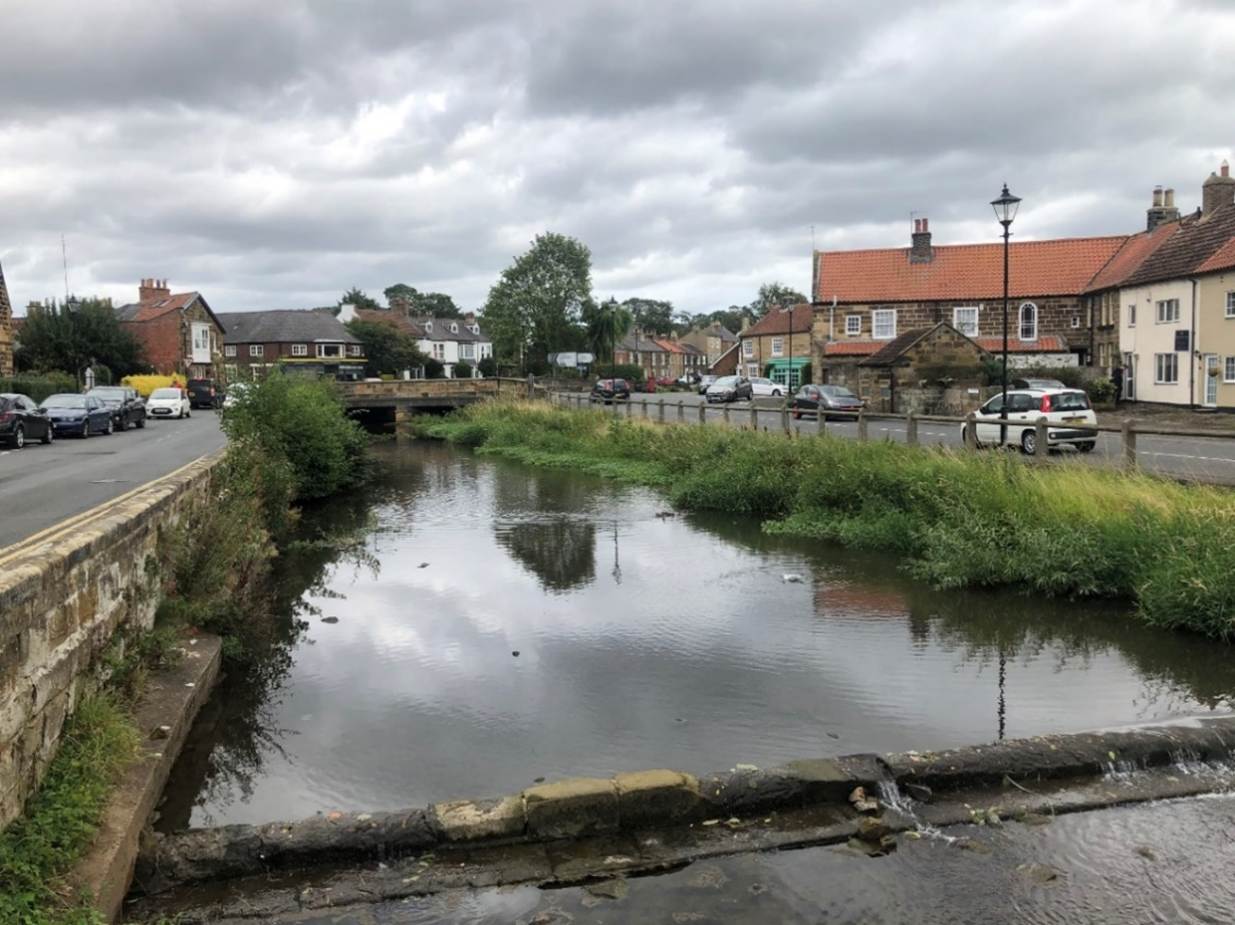

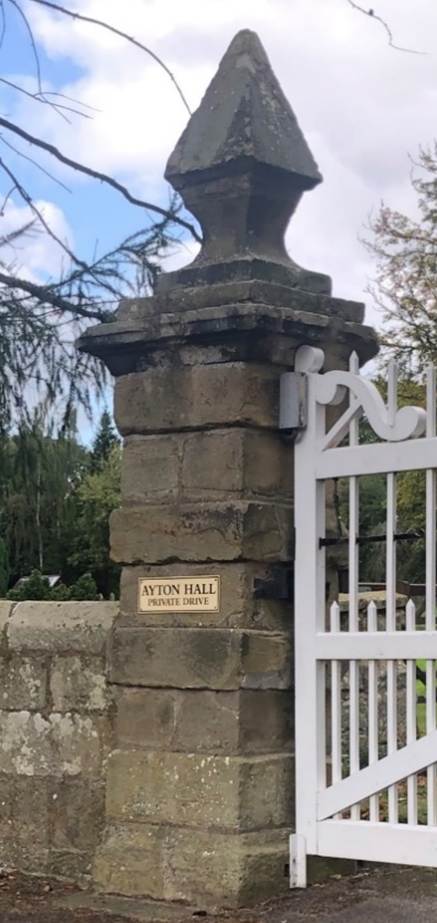

Ayton People
See also James Cook.
Commodore William Wilson was
a celebrated member of the town in the eighteenth century. He retired to Ayton
Hall in 1762 after a successful career in the East India Company. During the
Seven Years War, the three ships he command engaged two French Frigates and his
memorial in All Saints Church depicts a relief of the encounter.
Betsy Martin (1781 to 1867)
ran a large business at a time when this was a male preserve. When she was in
her 60s, she inherited the Cleveland tannery beside the high green, together
with offices in Manchester. She tried to let the tannery but eventually decided
to run it herself, and employed 8 men and survived a fire caused by a little
boy with a Lucifer match.
Rev John Ibbetson was the vicar of
Ayton for over 50 years from 1827 to 1878. He was a forceful character. One of
his achievements was the building of Christchurch, the new church, when All
Saints became too small for the growing village. Joseph and his wife Elizabeth
are buried together in the northeast corner of All Saints graveyard.
Thomas Richardson (1771 to 1853)
was a wealthy London banker and a partner with George Stephenson in the
Darlington works where the early locomotives were made. When he retired he
built he built himself Cleveland lodge. In 1841 he bought a large estate
fronting the High Green to set up a Quaker boarding school. Two years later
along with others he endowed the village with the British school for the
children at the village.
George Dixon (1812 to 1904)
was the first Superintendent of the Friends’ School. He also published books on
nature study and campaigned on Quaker issues such as teetotalism. After he
retired he spent 18 years in America teaching newly emancipated slaves before
he returned to the village where he remained until he died at the age of 92.
John Wright was a
self-taught poet. He moved to Great Ayton in 1855 and promoted his works
throughout the country and gave himself the title, the Bard of Cleveland. He
received a grant from the Prime Minister, Lord Palmerston and used the money to
design his dream cottage, basing the design on an open book. The house was
called the Bard's Recess, and it still survives today.
Jeremiah Thistlethwaite
(1826 to 1910) came to great Ayton in 1857 to start a grocery and drapery
business in Eagle Street which is now Station Road. He was a property developer
and bought farmland in the village on which he built houses to accommodate the
growing population. His son William Henry Thistlethwaite was a keen
photographer who left early records of the village.
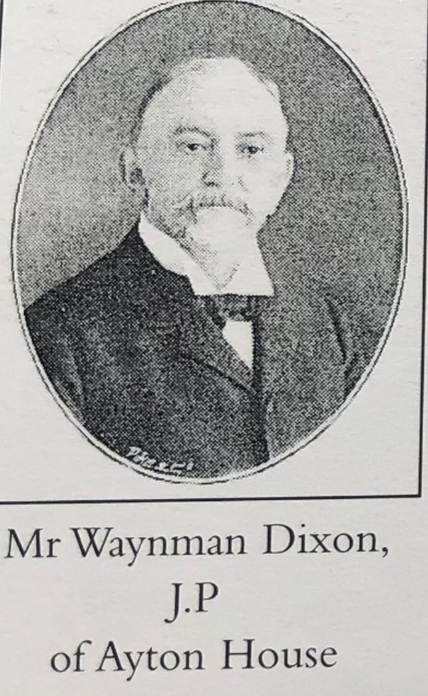
Waynman Dixon (1844 to 1930)
was a civil and engineer from Newcastle. When he was in Egypt he became famous
for working out how to transport Cleopatra's Needle from Alexandria to London.
He founded the Conservative Club in great Ayton and organised the War Memorial
and planted cherry trees on the High Green.
Dennis Blake was the flight
engineer in a Halifax bomber. On the night of 15 March 1944, the aircraft was
badly damaged by gunfire over Stuttgart, injuring all the crew to such an
extent that the pilot asked Dennis Blake, who had never piloted an aircraft
before, to take over flying and land when they reached home. For this act,
which saved the lives of his seven colleagues, he was awarded the Distinguished
Flying Cross.
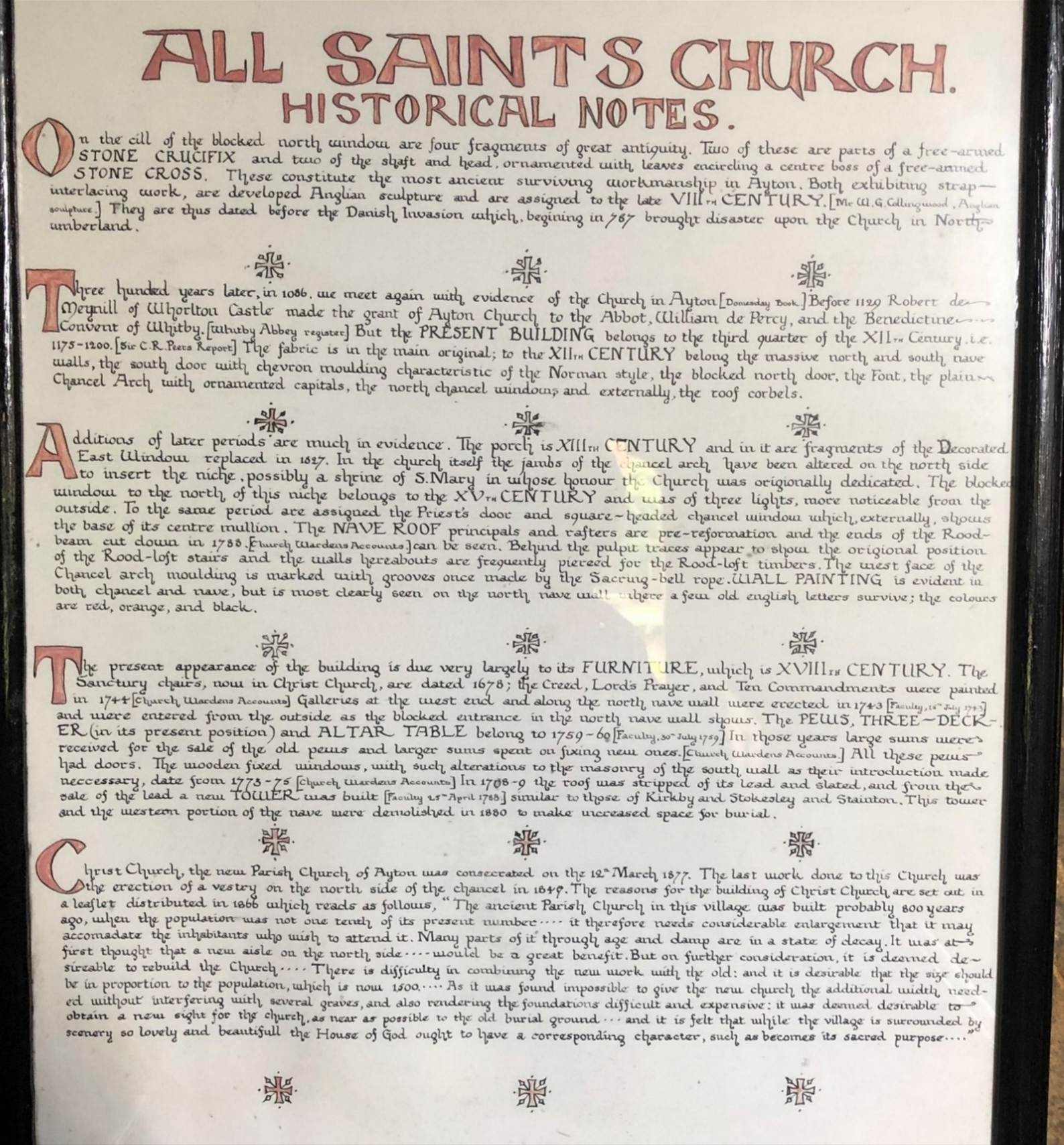
The Twelfth Century All
Saints Church
Christ Church, Great Ayton
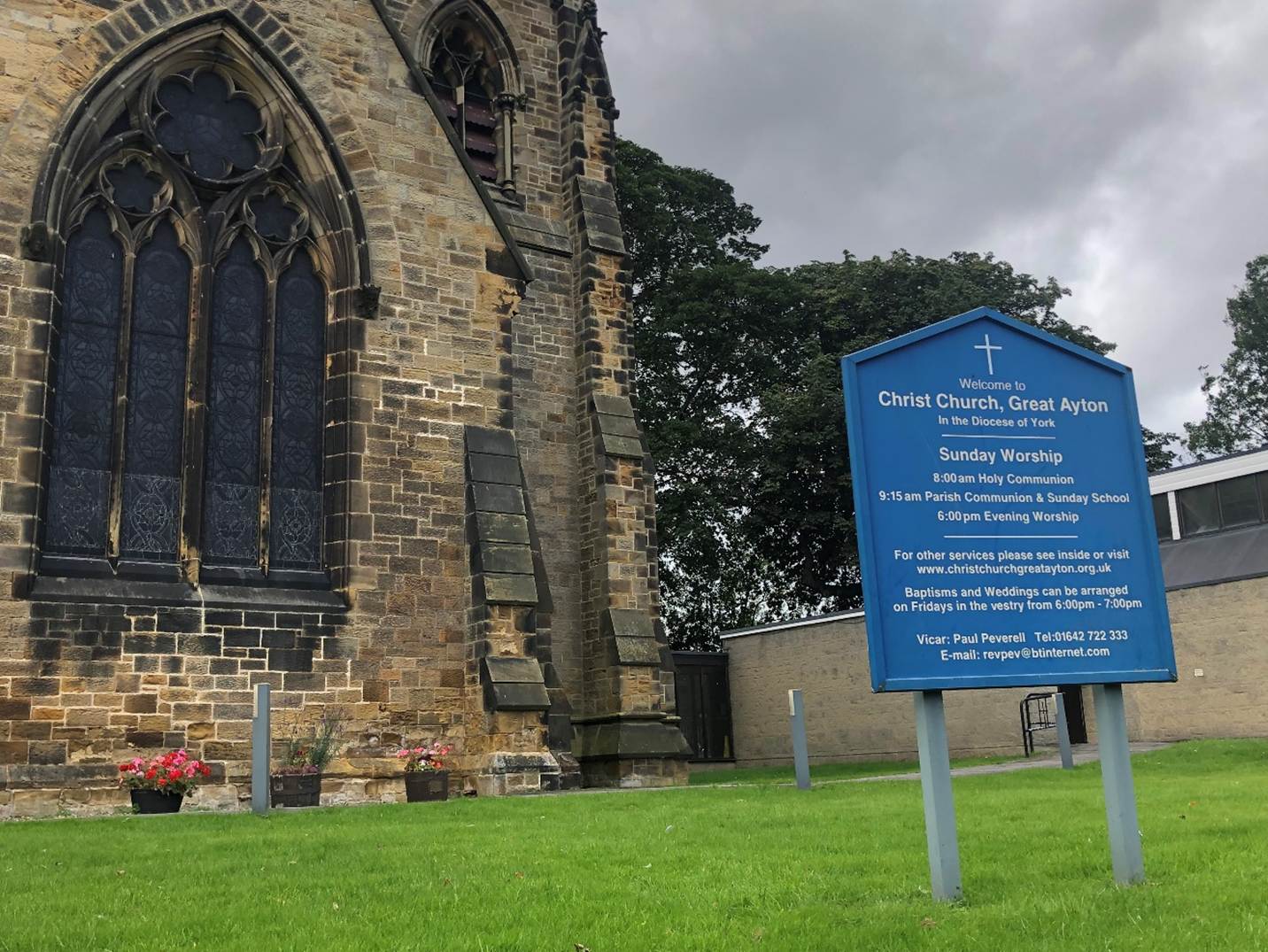
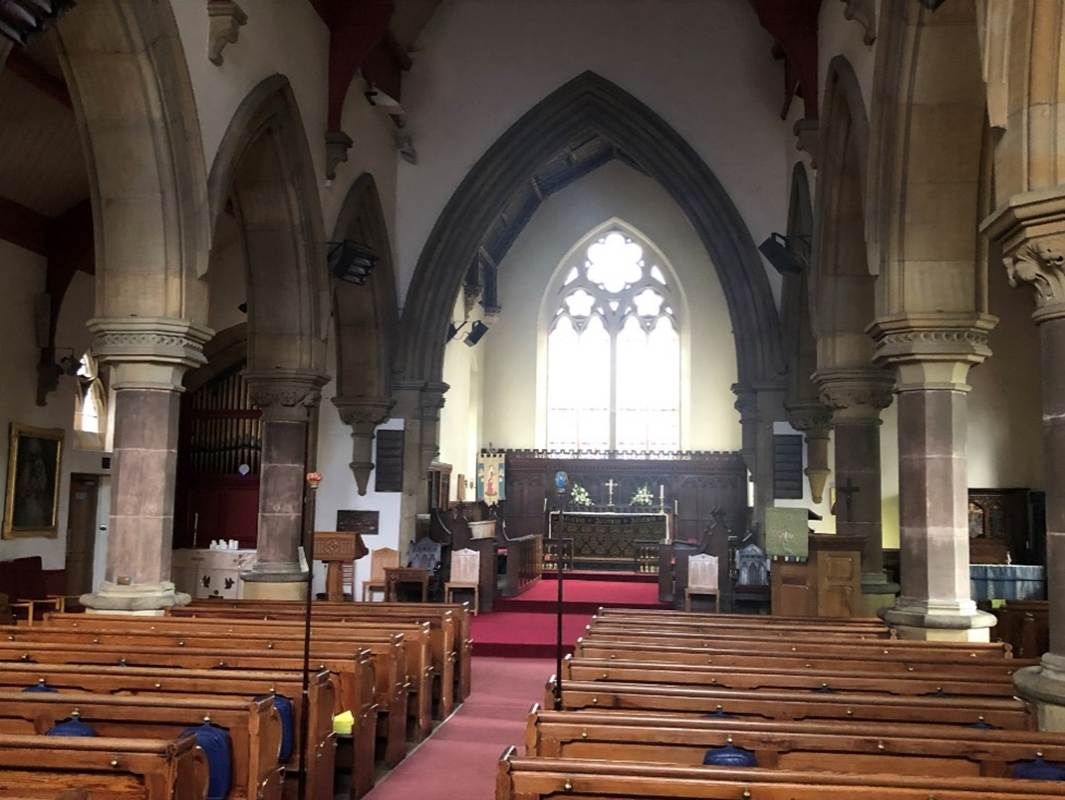
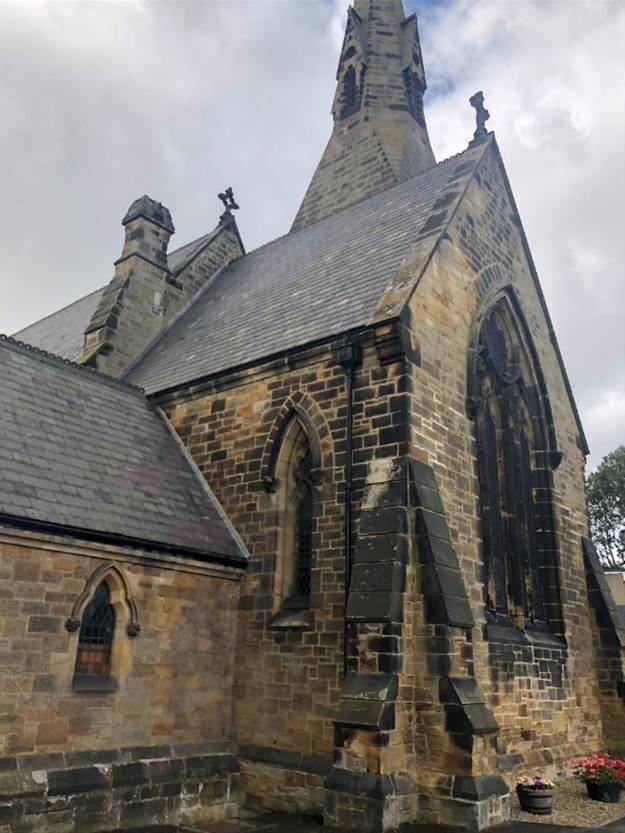
Education in Great Ayton
See Education.
Great Ayton Industry
See also the Farndales and
Mining.
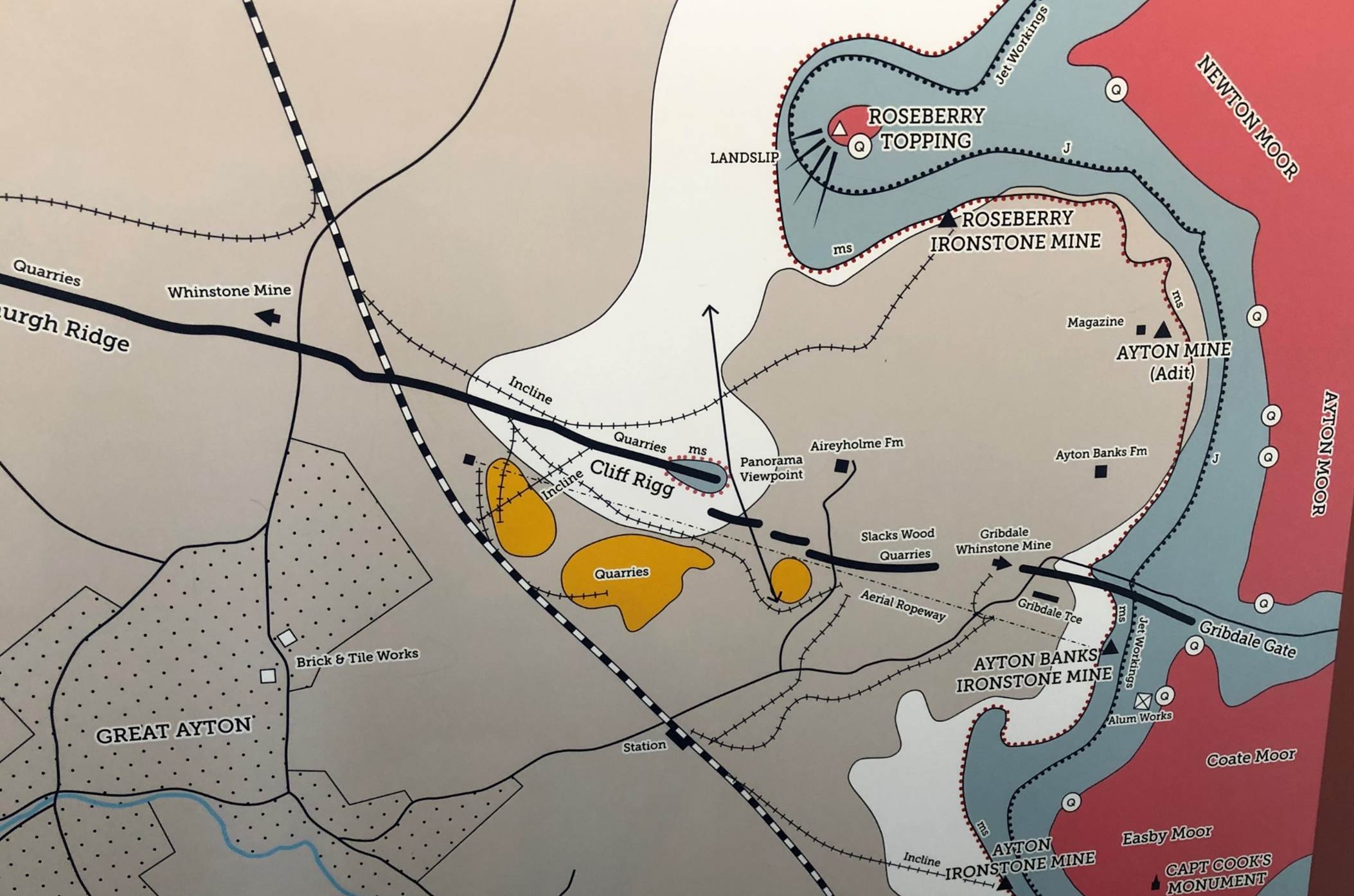
Ironstone
Sewage and drainage
In the areas of Wapping (now Bridge Street and
its vicinity) and the newly built California which houses recently arrived
whinstone and ironstone miners, sewage facilities were very primitive. Groups
of houses perhaps had an earth closet in the backyard which were empted at
night via a trap door opening to a back passage. The effluent or night soil was
taken in a large metal drum by horse and cart to a tip from where it dried out
and was later used as fertiliser for the fields.
Cotton
Linen
Tanning
Alum
The
Jurassic shales and sandstone of Cliff Ridge and Gribdale contain bands of
ironstone, jet and alum, as well as whinstone. The oldest of these industries
was alum. This mineral had been used since ancient times for many purposes
including medicinal (as cure for haemorrhages, nits and dandruff, and other
ailments). Its main uses since the middle gages were to increase the suppleness
and durability of leather and in the textile industry as a mordant to make
vegetable dyes fast. Alum mining has been a North Yorkshire industry since alum
was first discovered in the hills around Guisborough by Sir Thomas Chaloner the
younger in the 1590s. From the early seventeenth century until the 1860s it was
extensively mined at Guisborough and along the East Cleveland coast. The actual
extraction of alum from shale was a long and expensive process and it took an
average of 50 tons of shale to produce one ton of alum.
In the mid eighteenth century the price of alum was particularly
high and reached a peak of £24 per ton in 1765. It therefore became
commercially viable to mine in places where this had not been the case
previously. Several new mines were therefore opened including one east of Ayton
at Ayton Bank, just north of Hunter’s Scar.
Jet
Whinstone
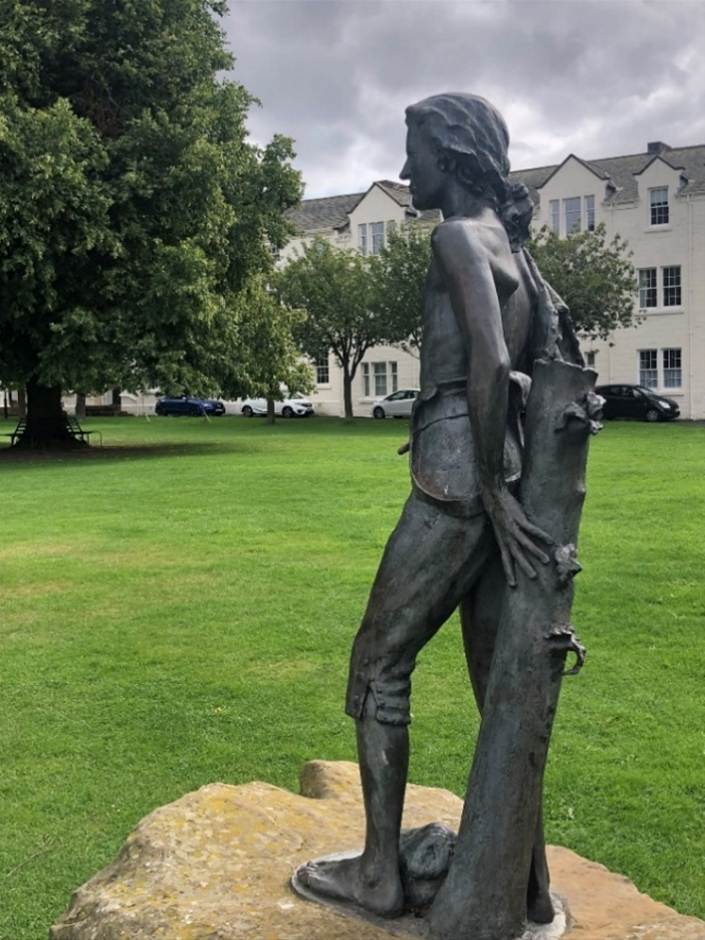
James Cook and Great Ayton
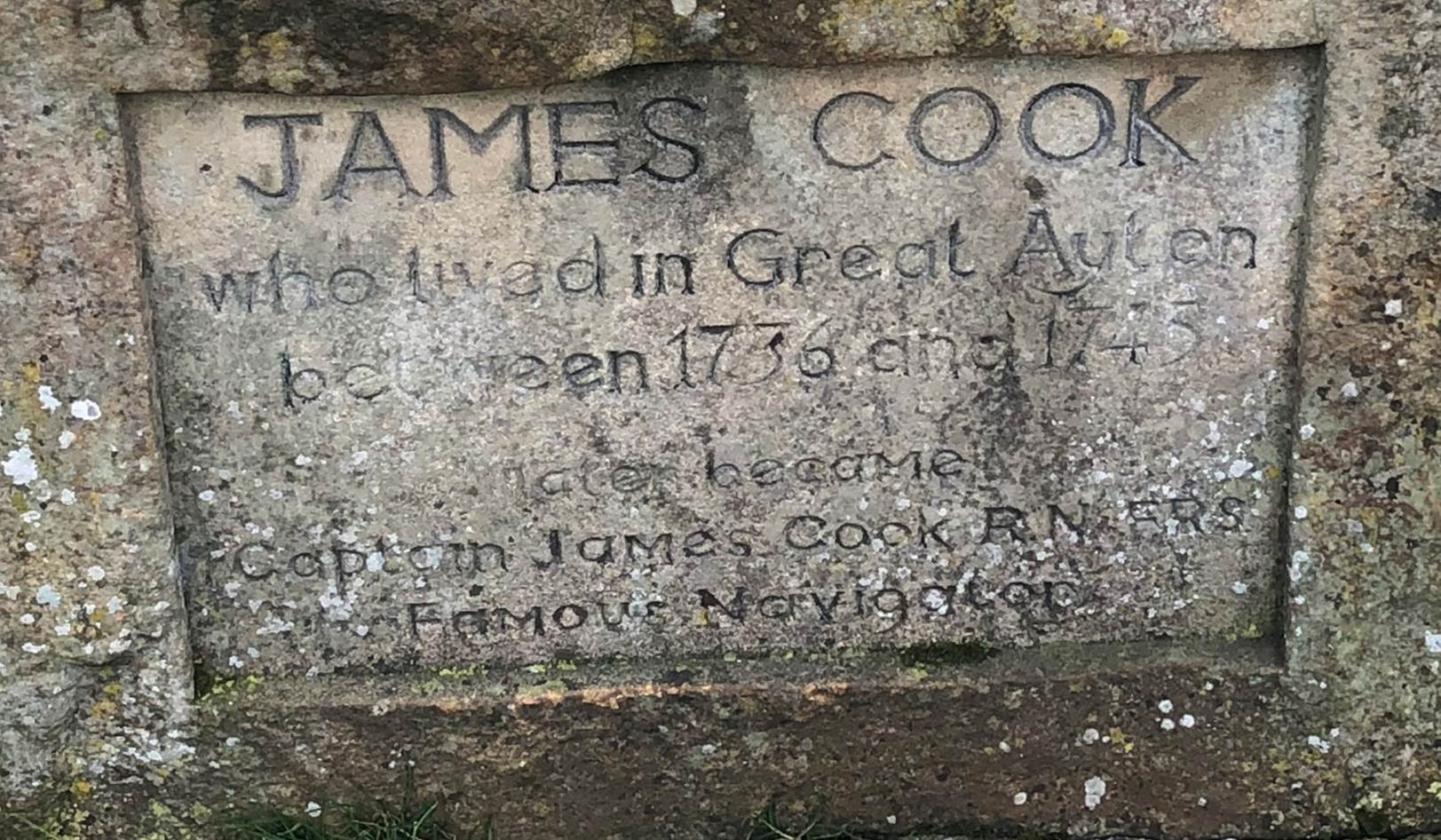
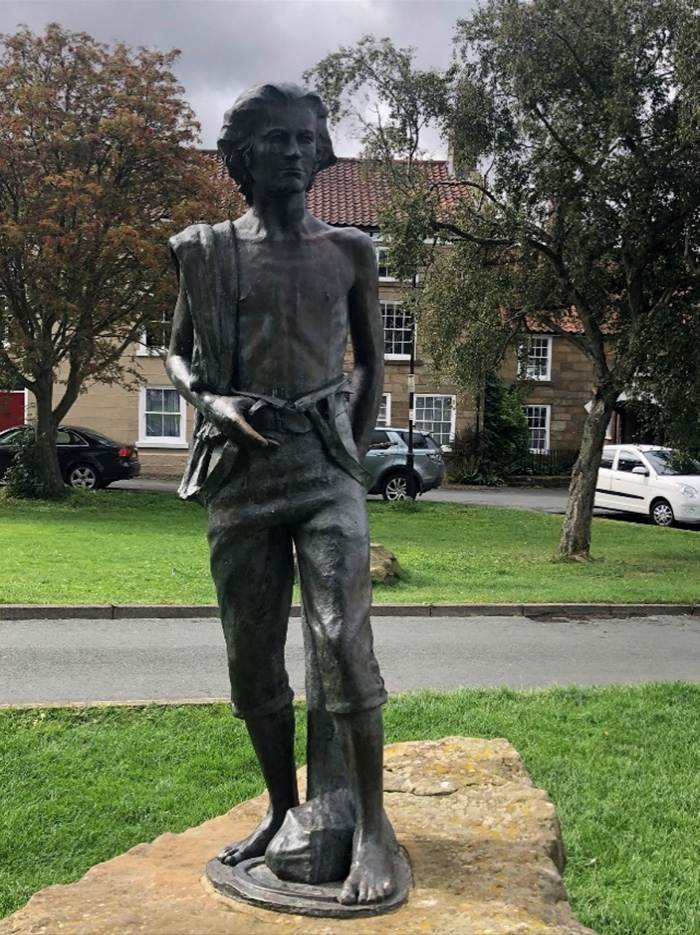
James
Cook’s Great Ayton years were from 1736 to 1745.
James Cook was born in Marton in Cleveland on 27 October 1728. He was born in a crowded and damp cottage with clay walls
and a thatched roof. His father was an agricultural labourer who had moved to
Cleveland from Scotland in search of work. His mother came from the nearby
village of Thornaby. When he was 5, James was sent to Dame Walker, a widow, to
learn his alphabet and how to read.
Just after his
8th birthday the family moved to Great Ayton. James Cook Senior, his father was
employed by Thomas Skottowe
on Aireyholme Farm about a mile out of
the village. By this time there were four children and four more were to
follow, although out of the 8, 4 died young.
After the Cook
family moved to Great Ayton, James was sent to the Postgate school. This was a one
storey cottage with just one school room, above which was a garret for the
master to live in. At this small village school the local children learnt their
letters and their sums. James 's school fees were paid by Thomas Skottowe.
James Cook's teacher was called William Rowland. We know this because he was
licenced to teach at great eight and by the Archbishop of York. Because William
Rowland was also employed to write the annual churchwardens accounts, we know
he had a stylish handwriting. James Cook stayed at school until he was 12. This
was the only formal schooling that he ever received and even this was probably
interrupted because throughout his childhood he would have been expected to
help his father with farm work. When he finally left school he went to work
with his father full time for a few years before leaving home at the age of 16,
when he set out for Staithes.
Bibliography
Parish Records