Ad Gefrin at
Yeavering
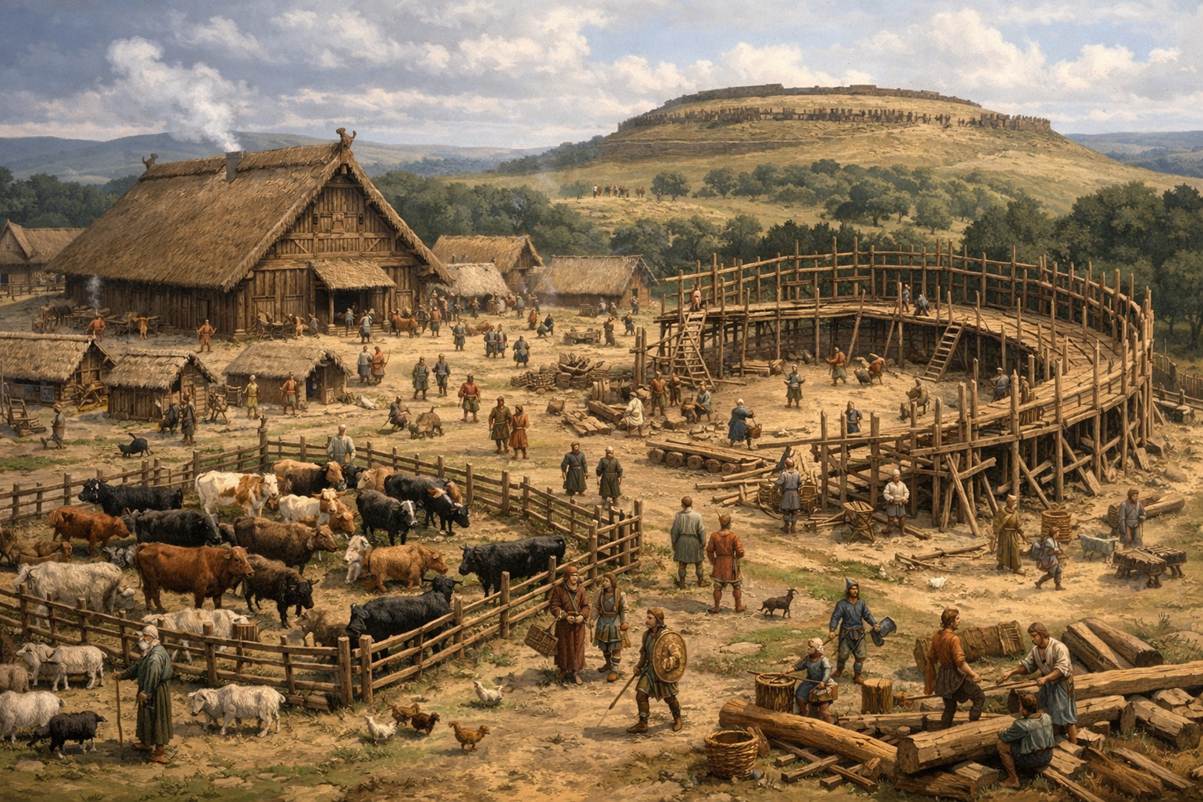
The sixth century royal tribute centre of the
Bernician Kings
|
Return to the Home Page of the Farndale Family
Website |
The story of one family’s journey through two
thousand years of British History |
The 83 family lines into which the family is divided.
Meet the whole family and how the wider family is related |
Members of the historical family ordered by date of
birth |
Links to other pages with historical research and
related material |
The story of the Bakers of Highfields, the Chapmans,
and other related families |
Dates are in red.
Hyperlinks to
other pages are in dark
blue.
Headlines of the
history of the Lythe are in brown.
References and
citations are in turquoise.
Contextual
history is in purple.
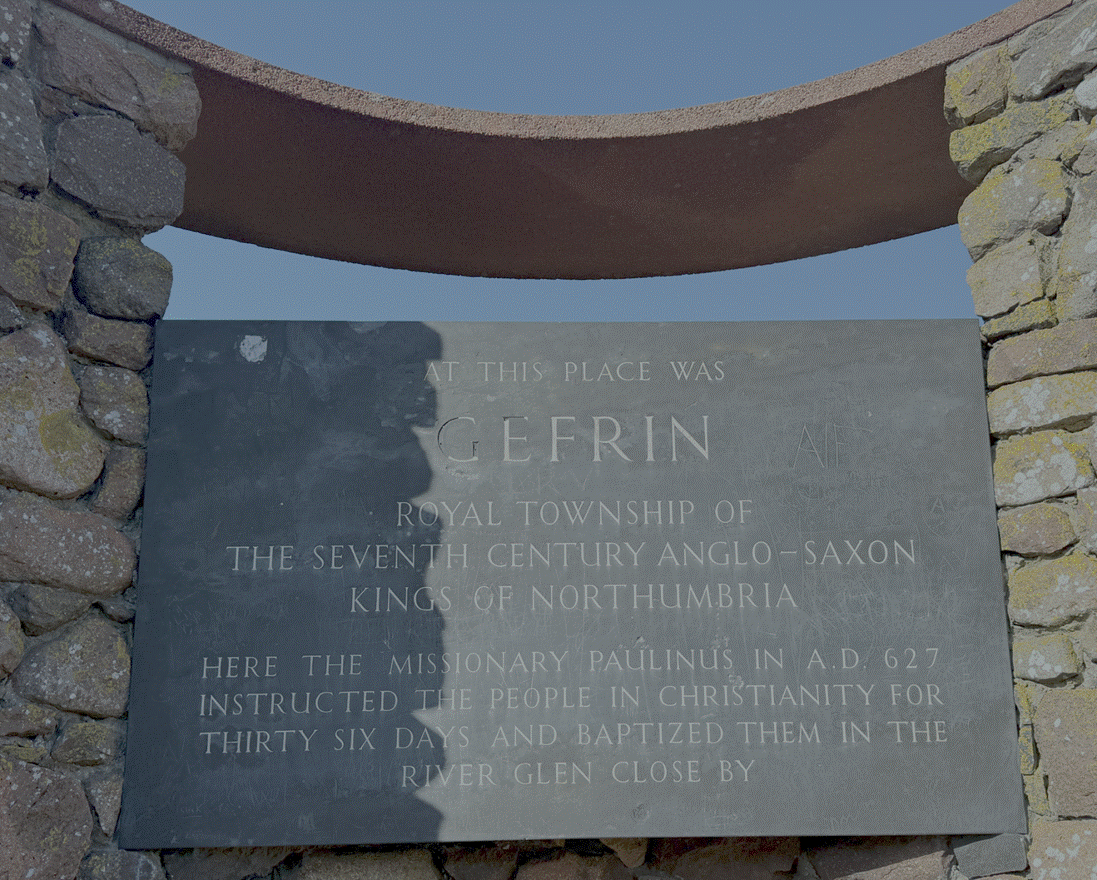
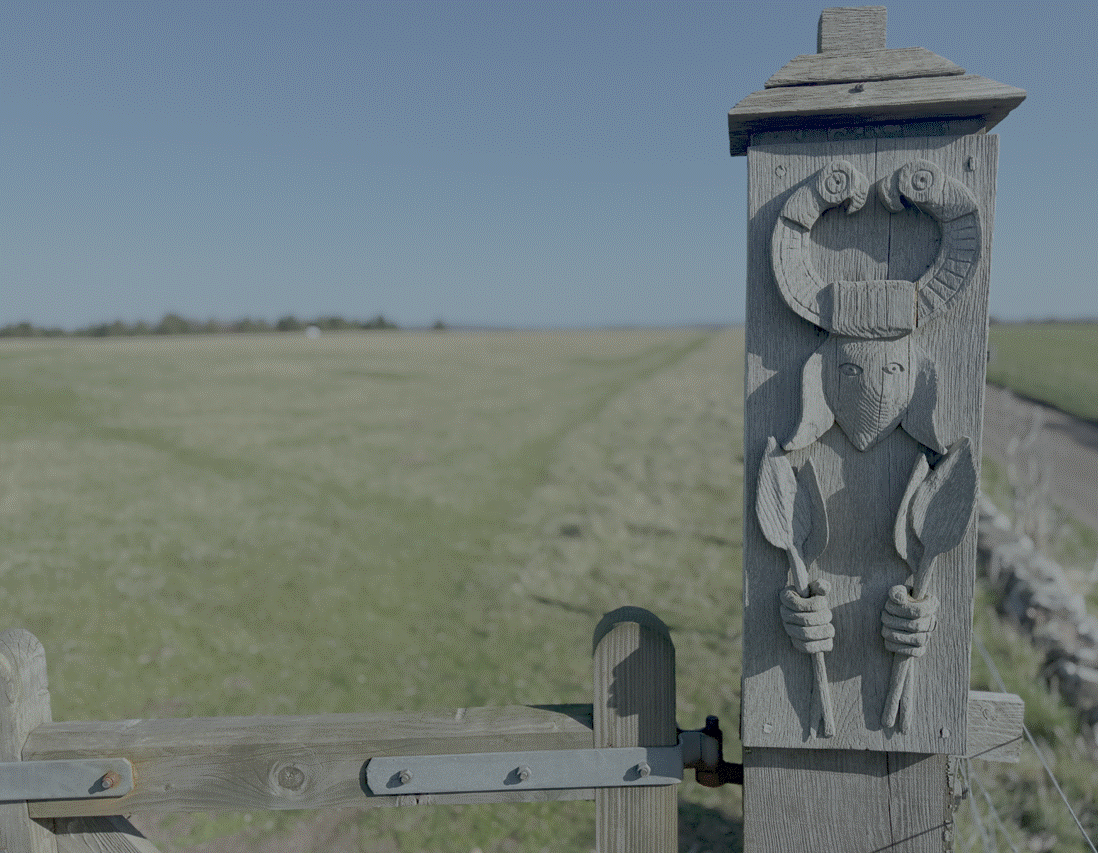
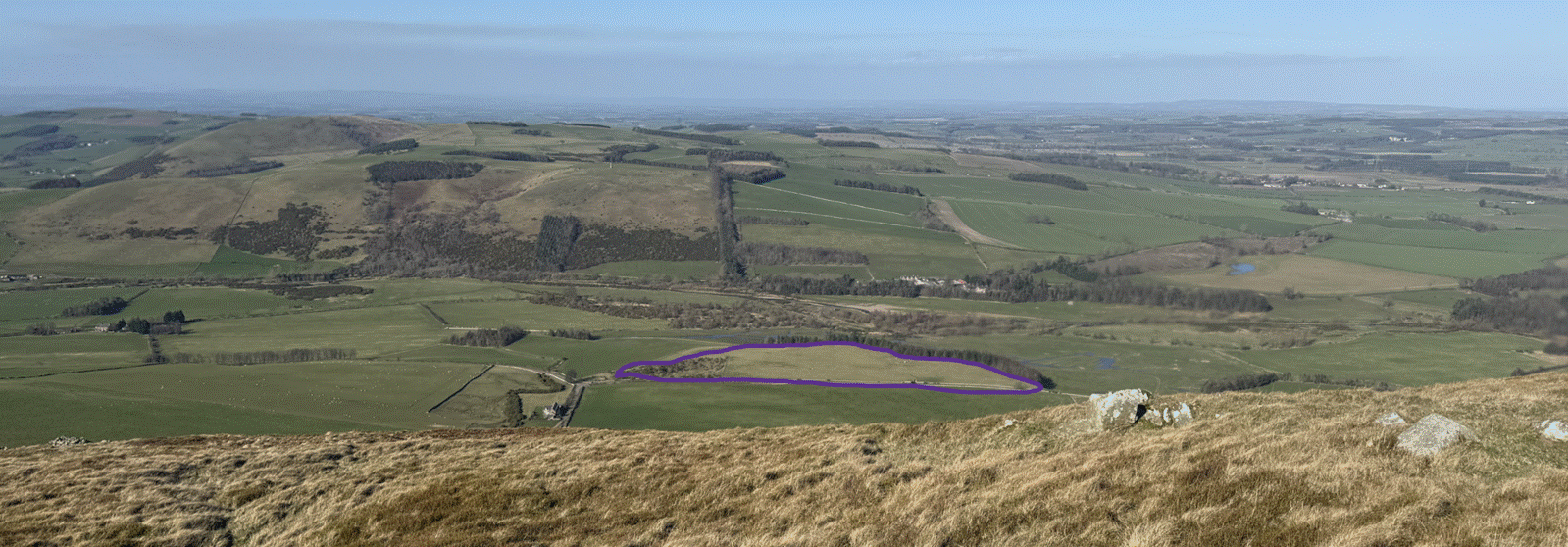
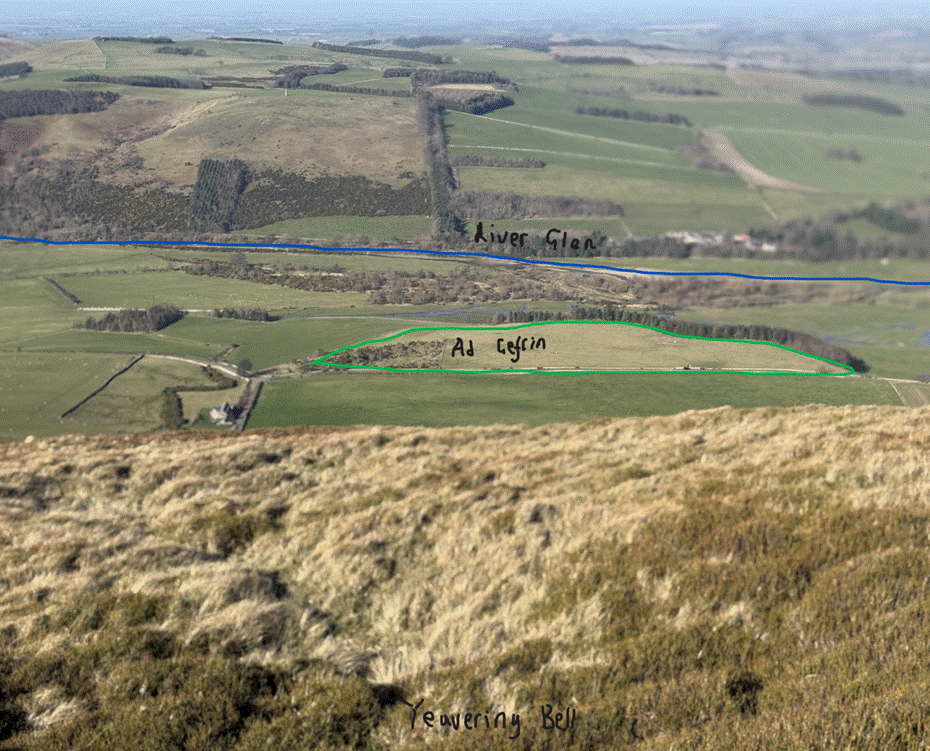
The site of Ad Gefrin
The site of Ad Gefrin from Yeavering Bell
The association
of a royal site at Yeavering referred to by Bede as Ad
Gefrin led to excavations led by Brian Hope-Taylor in
three phases beginning in 1952.
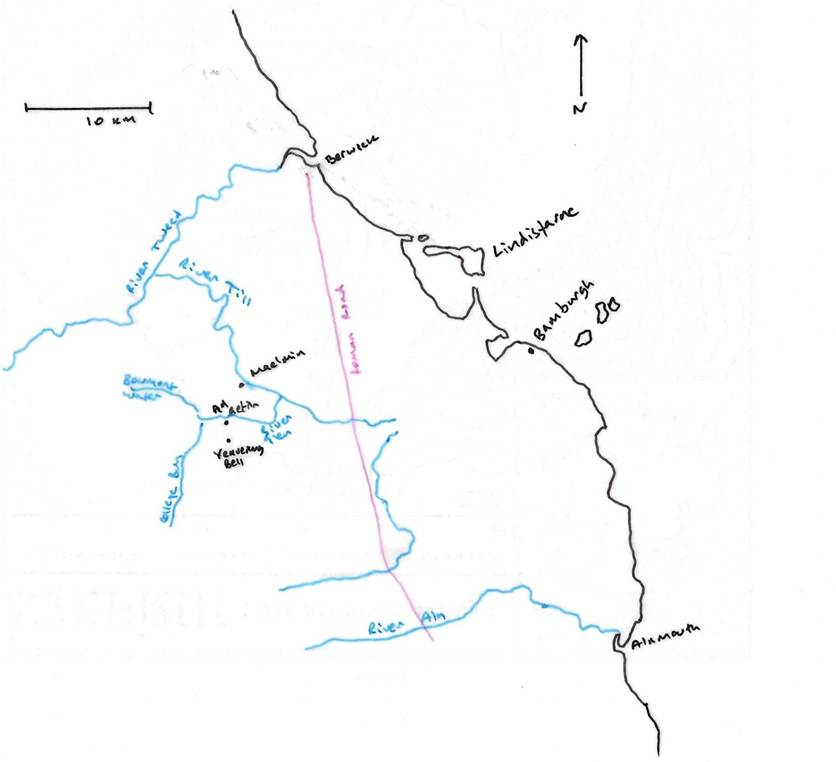
The site at Ad Gefrin and its proximity to Lindisfarne and Bamburgh and
the later site of Maelmin
For over 5,000
years people have been drawn to this prominent plateau of sand and gravel. They
came for religious ceremonies, to bury their dead and meet their rulers. Early
farmers built a temple and buried here, as did the earliest workers of bronze a
thousand years after them. During the Iron Age and Romano British, the ridge
lay under the shadow of Yeavering Bell, the greatest of Northumbrian hillforts. (Information at the site)
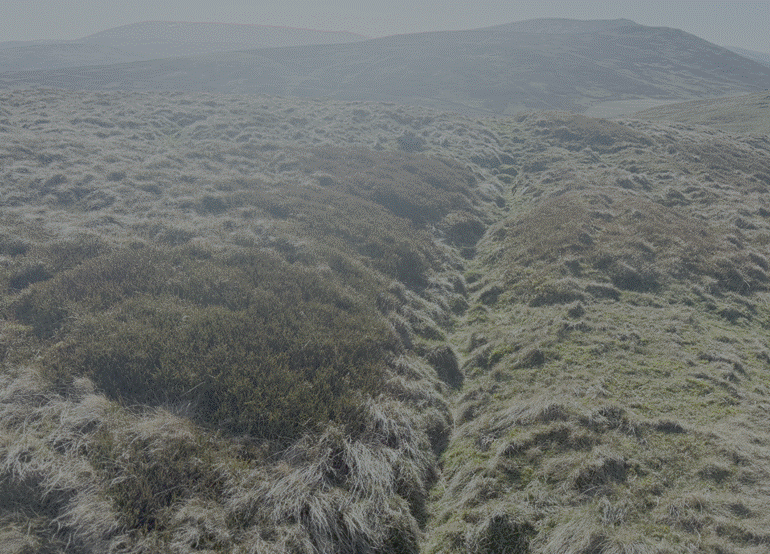
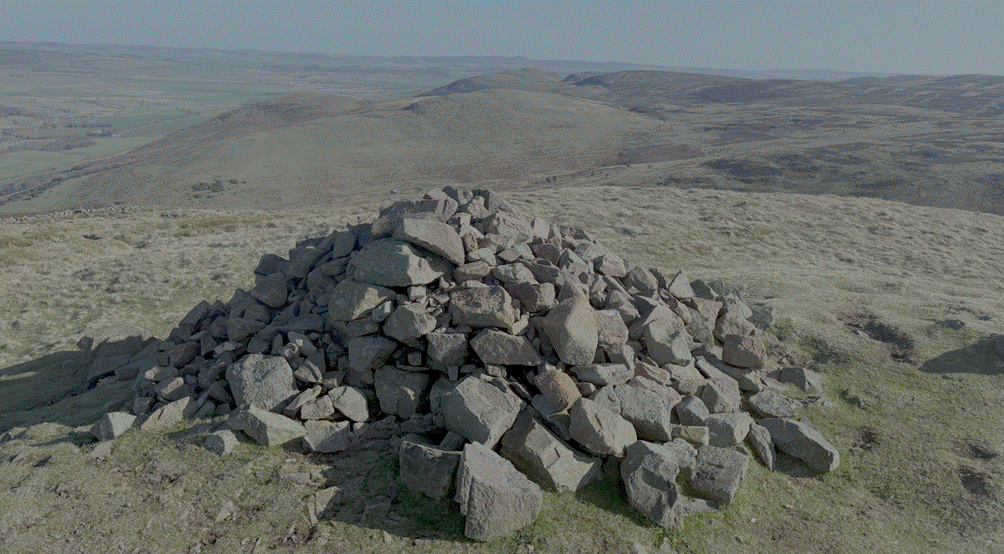
Ramparts on
Yeavering Bell Summit of
Yeavering Bell
From the fifth to
seventh centuries CE, the landscape around Ad Gefrin
was permanently inhabited by an expanding Anglo-Saxon population. By the
middle of the 6th century AD native administration fell under the control of an
immigrant Anglo-Saxon family ambitious to establish a royal dynasty founded
upon military conquest. (Information at the
site)
580 CE
About the middle
of the 6th century AD the British Kingdom of Bernicia is taken over by an
Anglo-Saxon, Ida. From the capital of Bamburgh, he and his sons rule an area
that probably extended from the River Tweed in the north to the River Tees in
the South. (site information)
Anglo-Saxon
Settlement began with rectangular wooden buildings of Anglo-Saxon form and a
larger timber enclosure, built at the eastern end of the site.
Ad Gefrin lay at the heart of the Anglo-Saxon Kingdom of
Bernicia. Built as a royal summer residence, the township sat at the foot of
Yeavering Bell. For over a century (c 550 to c 650 AD) the settlement underwent
careful rebuilding and rearrangement, eventually encompassing a great enclosure
at the east of the site, royal lodgings, great halls, a pagan shrine, and a
seated grandstand. Surrounding them were smaller buildings for industry and
production. The impressive complex provided the ideal location for the royal
court to interact with the people and exercise power. (Ad Gefrin Museum, Wooler).
592 CE
Æthelfrith Iding
Æthelfrith Iding was King of Berncia from
about 592 CE.
|
The wider history |
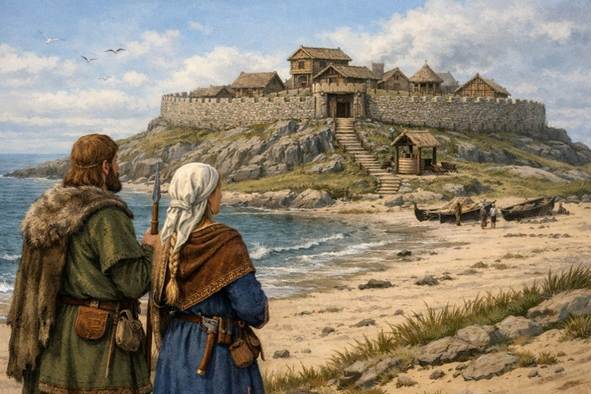
c 600
CE
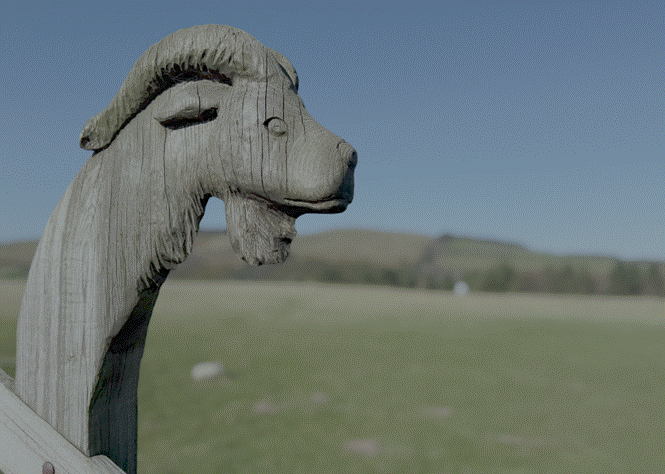
Ad Gefrin, By the Hill of the Goat,
at Yeavering was a royal Anglo-Saxon
settlement. The construction of a settlement at Ad Gefrin
reflected ideas of protection depicted in poems such as Beowulf. It lay at the foot of an imposing
iron age hill fort known as Yeavering Bell in Glendale. It was a Northumbrian
seat of power of Æthelfrith, Edwin and Oswald.

The site at Ad Gefrin
(March 2026)
Under the military leadership of Ida’s
grandson Æthelfrith
(593 to 616 AD), the extent and influence of the kingdom greatly expands. Ad Gefrin is now a royal township with apartments for the king
and his retinue. Tiered seating to hold around 150 persons is built and a
cemetery at the western end of the settlement expands. (Site information)
Yeavering lies 30 km
inland from Bamburgh, at the foot of the Cheviot Hills. It was a place of long
standing importance and ritual, and stood at the foot of the largest iron age
fort in Northumbria. Anglo-Saxon kings often adopted the power of ancient sites
to construct a deep seated root of power. Yeavering became a tribute centre,
where cattle and other animals were amassed. A raised earthwork has been
interpreted as an animal enclosure and about 94% of bones were of cattle and
oxen. It was presumably taken over by Eadwine’s predecessor and bête noir,
King Æthelfrith, in the course of his expansive wars against the Gododdin, for the earliest buildings on the site appear to
have dated from around 600. There were several halls constructed on the
site, succeeding each other as they were destroyed by fire or deliberately
demolished. (The Anglo Saxons, A
History of the Beginnings of England, Marc
Morris, 2021, page 70 to 71).
Yeavering was erected in a
straight line between a stone circle and a barrow suggesting the layout of the
seventh century villa regalis was determined by ancient and enigmatic
monuments. The settlement is on gently sloping ground at
the foot of Yeavering Bell, whose commanding presence is everywhere, and which
must have been the principal reason why the site was selected as a royal
centre. The inhabitants of Yeavering could claim descent and protection from
the ancestral figures who constructed the great hillfort. (Britain in the Middle Ages, An Archaeological History, Francis Pryor, 2007, page 27).
The
Bernician royal settlement, and I used that loaded word advisably, went through
a number of different phases. Great timber halls appear, are modified and
replaced. Cemeteries even grow, come and go. But throughout its developments,
the site shows the clearest signs of organisation and thought. Alignments
matter and symbolism is significant. Sometimes as I read Brian Hope-Taylor's
report, which I still consider the finest excavation report produced by a field
archaeologist working in Britain, I feel I am in the Bronze Age, where sites
like Stonehenge were about alignments almost more than anything else. Just as
the presence of the nearby hill fort had a political message, alignment on
celestial phenomena, such as solsticial sunrise, or sunset, was a way of
linking the world of the living to the power and authority of another world.
These things mattered in this Bronze Age, as in Saxon times, as indeed they do
today. Ceremony and ritual are methods that society uses to confer special
authority on those selected, by whatever means, to rule. (Britain in the Middle Ages, An Archaeological History, Francis Pryor, 2007, page 27).
The best wooden architecture of its day was at Ad Gefrin.
Brian Hope-Taylor identified five phases of post Roman settlement
at Ad Gefrin. The most elaborate was Phase
III, which ended in a catastrophic fire, possibly caused by hostile action, but
which may have been the result of an accident.
Stories such as Beowulf came to symbolise the new order.
There was large scale entertainment at Yeavering, with outsized halls and
elaborate ritual practices. These became sites of the consumption of
production. Whilst the lords stayed only so long as the food lasted, small populations
of slaves and reeves stayed through the years. Permanently settled slaves were
referred to by the Old English word wealas,
meaning foreigner, and later used to describe the Welsh and the Corn-Welsh.
This supported a growing myth of conquest and historical difference from the
people who were owned. Reeves were free and over saw the slave labourers.
Only two archaeological sites beside Yeavering and
Bamburgh of significant size have been identified in Bernicia – Sprouston
near Kelso where a crop mark site suggests a significant site; and Thirlings, with six halls (reconstructed
at Jarrow Hall), and rectangular post built structures which may have
stored grain or overwintered animals. Yet there must have been several tribute
centres, including Sprouston, Doon
Hill near Dunbar, and several others in the lands of the Deira. Cambodunum was probably at modern Doncaster (The Kingdom of Northumbria AD 350 to 1100, N J Higham, 1993, page
85 to 86) but has also been interpreted to Cleckheaton in the West Riding
and Loidis was Leeds. Both were important
sites of Paulinus’ baptisms (Ecclesiastical
History, Bede, Book 2, Chapter
14). Royal tribute centres focused on halls were an ephemeral feature,
lasting for the first half of the seventh century.
616 CE
Edwin Yffing
Edwin Yffing was King of Deira and Berncia from after 12 April 616 to 12 October 633 CE.
By Edwin’s reign, the settlement comprised the greatest
architectural feats since the end of the Roman Empire, symbols of royal power:
a palace complex, noble halls of great technical complexity and grandeur, and,
wonder of wonders, a grandstand unique in its period. In a pagan temple
offerings were made to the gods and tribal totems of the Bernicians; immense
herds of cattle, the surplus wealth of the land and the tributary tax of
subject kingdoms were corralled and counted; the family of Æthelfrith could take
comfort from the knowledge that the most powerful warlord in early Britain was
unchallenged by any other earthly force. So complacent were the Bernician kings
in their golden hall that no defences were ever constructed at Yeavering, a
place of tribal assembly, judgment and ritual. (The
King of the North, the Life and Times of Oswald of Northumbria, Max Adams, 2013, page 15).
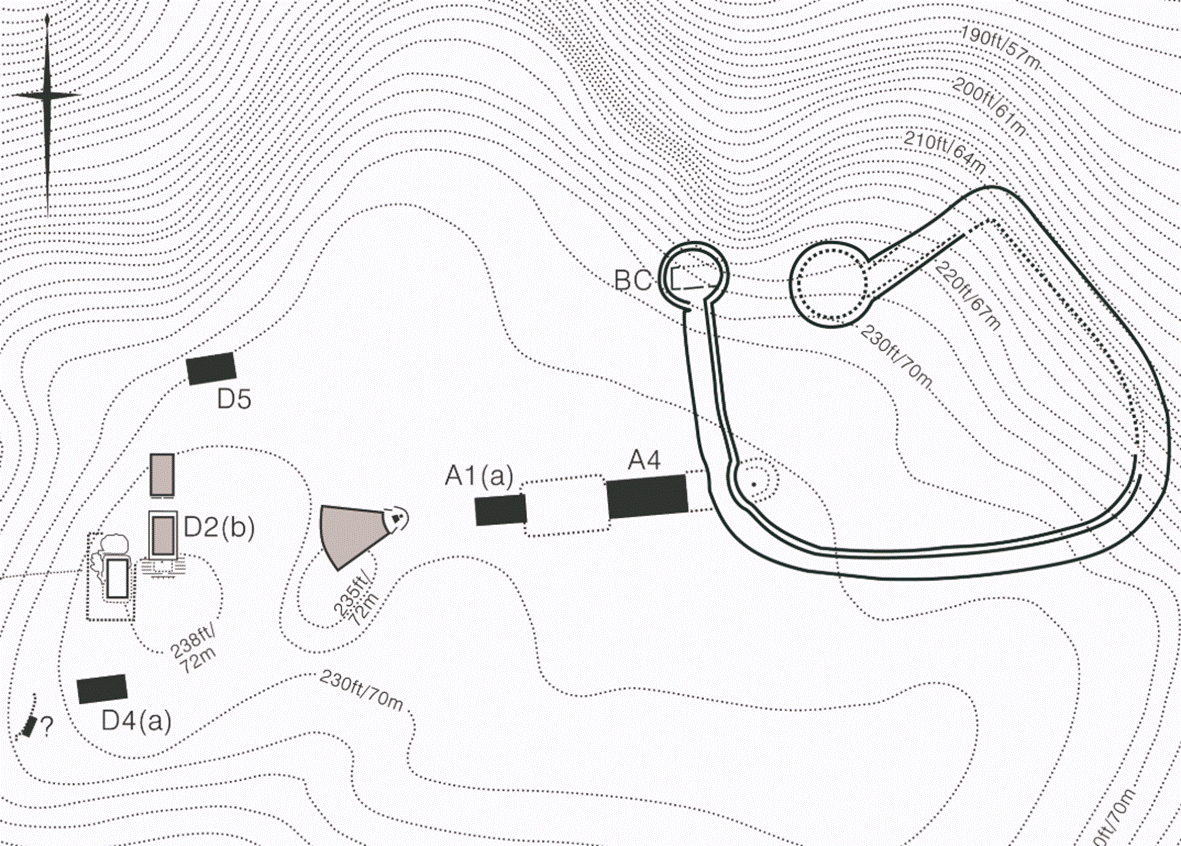
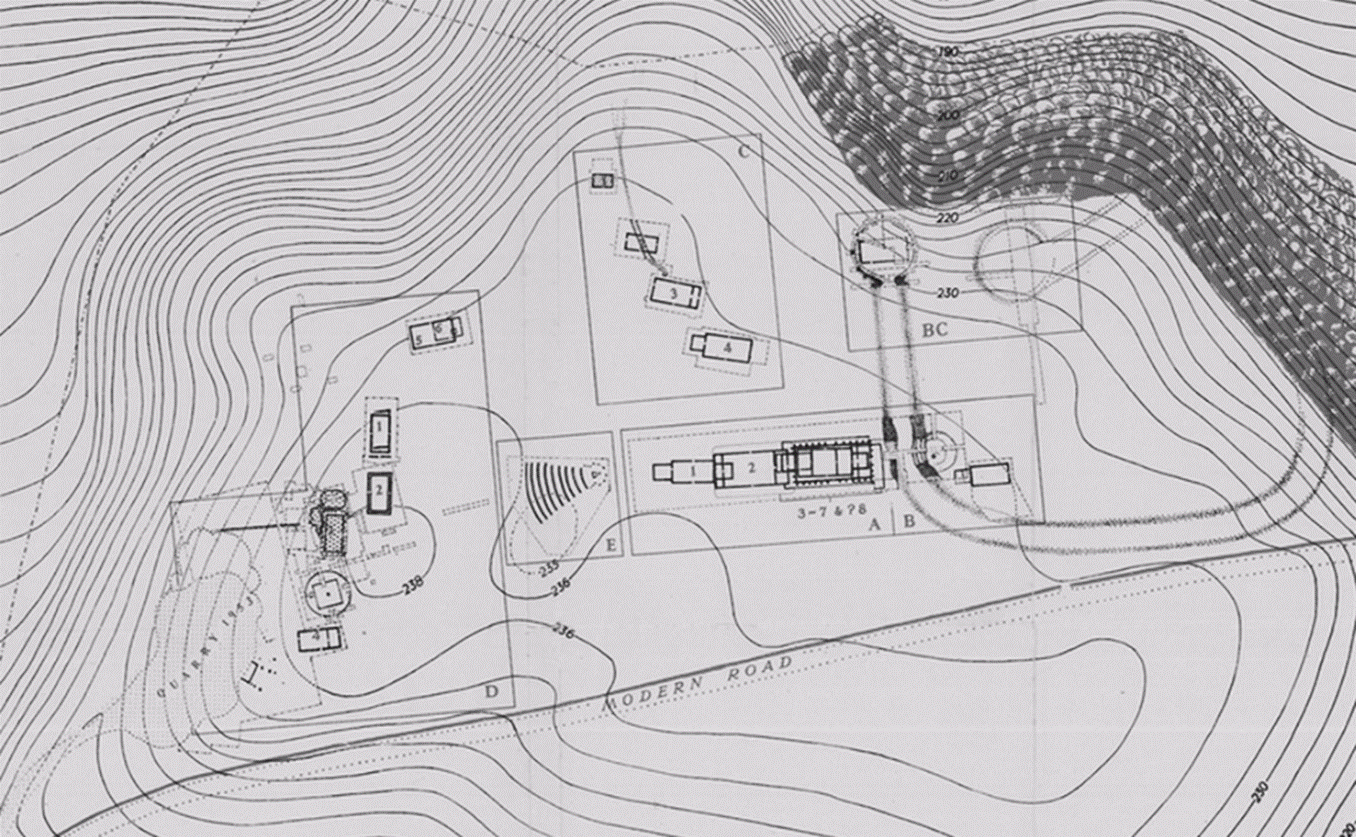
(Yeavering
Reconsidered, EXARC Journal, 15 May
2015)
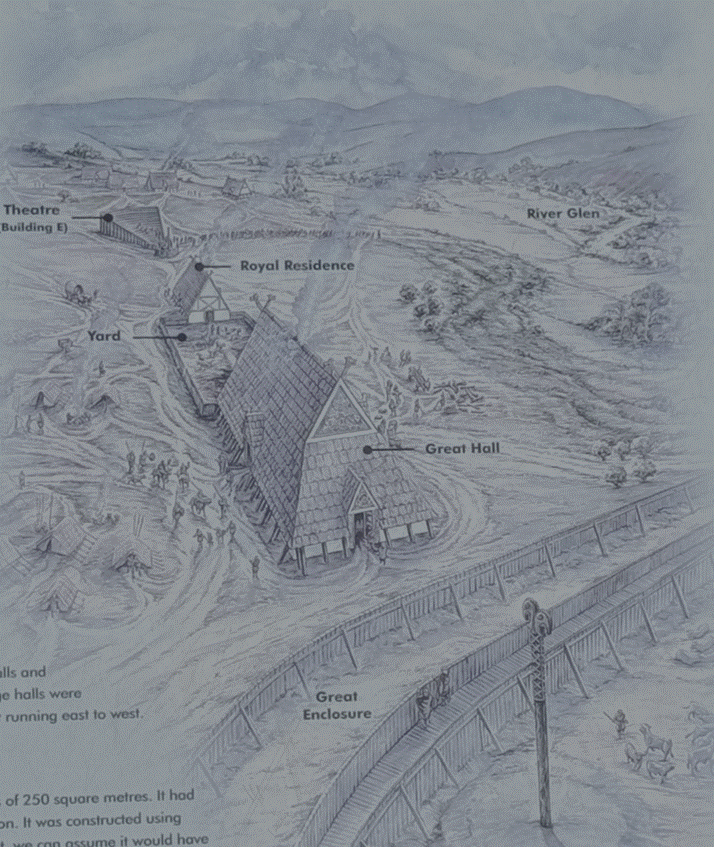
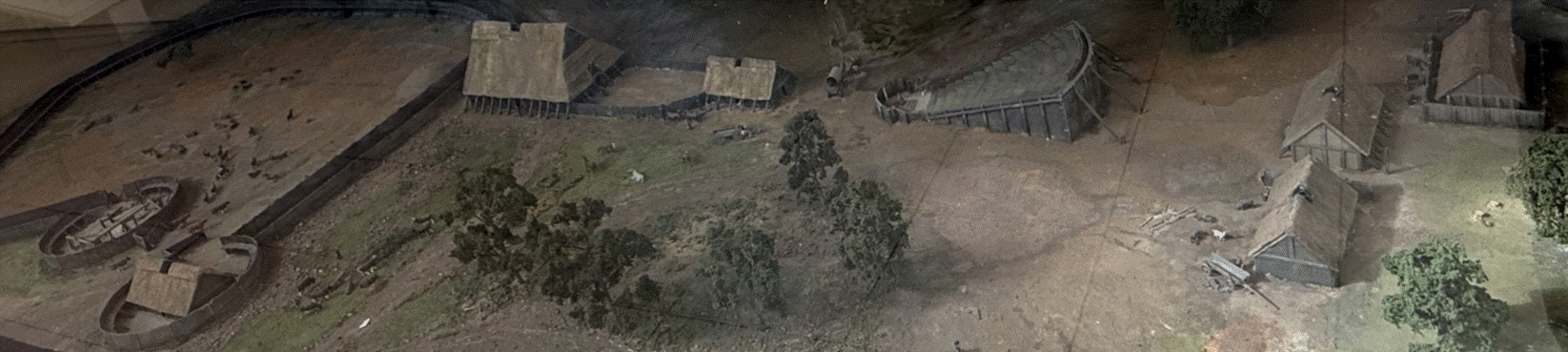
(Site information)
(Reconstruction at Jarrow House)
The
Great Hall
The
Great Hall provided the main focus, with a floor area in excess of 250 square
metres. It had entrances on all full sides, and may have had a ceremonial
function. It was constructed using a large quantity of timber, and while we
cannot estimate the height, we can assume it would have being carved with
elaborate designs and even painted. The hall was connected to a smaller western
building by a rectangular fenced enclosure. A special burial was also located
at its eastern entrance: an individual buried with an animal skull and a staff
or measuring instrument of some kind. (Site
Information)
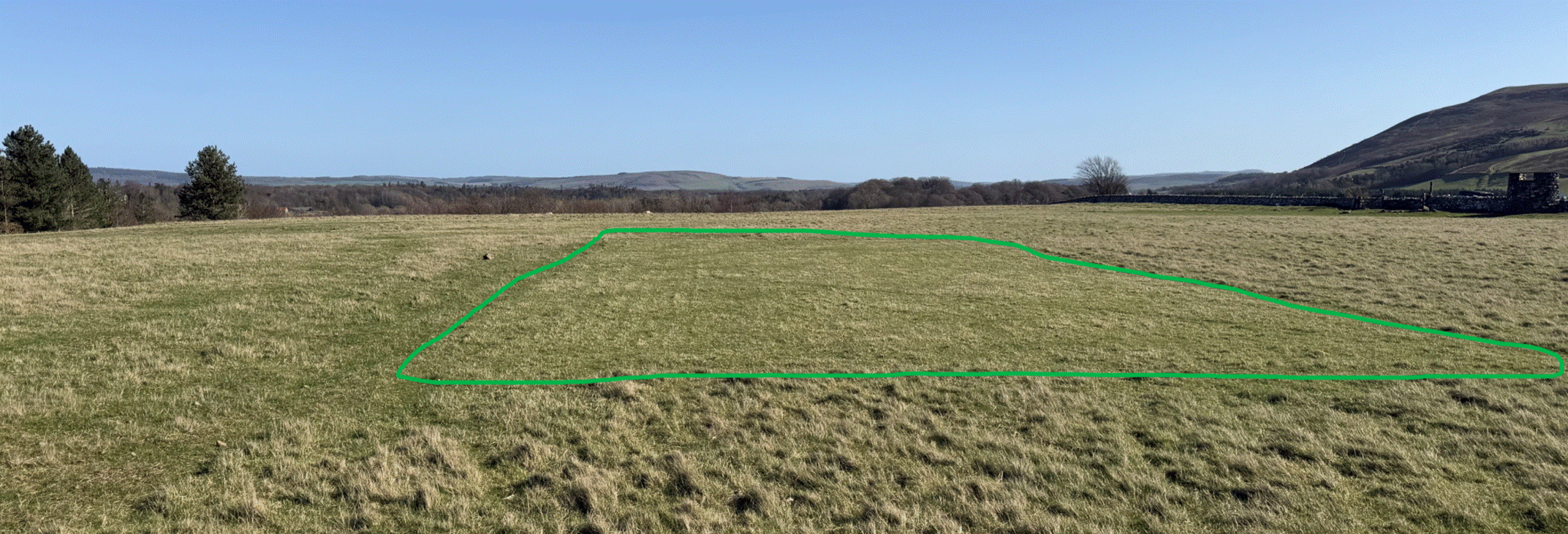
Site
of the Great Hall
The largest hall, from the
reign of Edwin, was about 75 metres by 35 metres and must have stood very high.
(The Anglo Saxons, A History of the Beginnings
of England, Marc Morris, 2021, page 70 to 71).
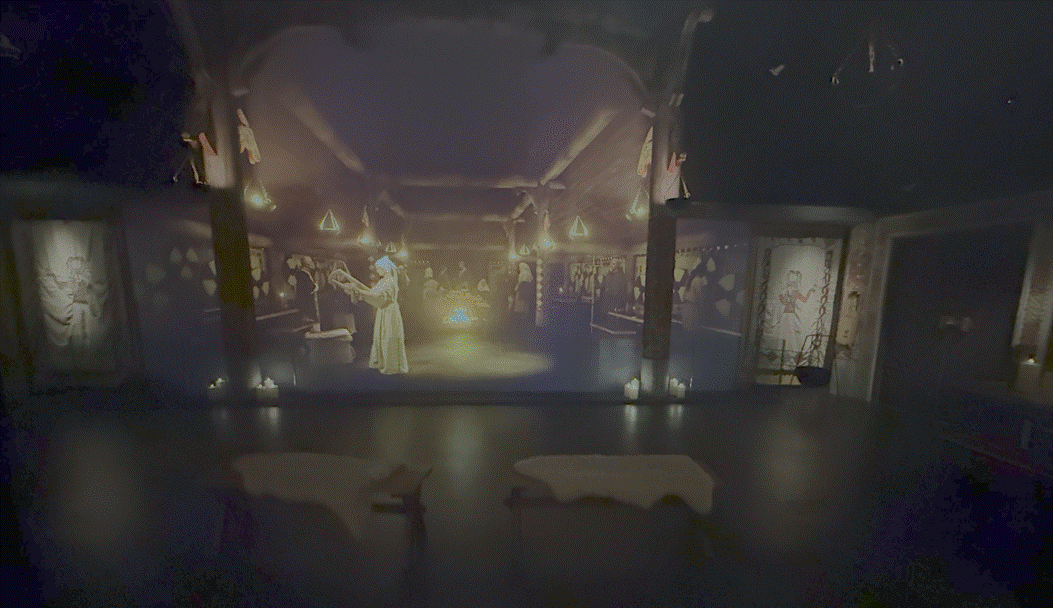
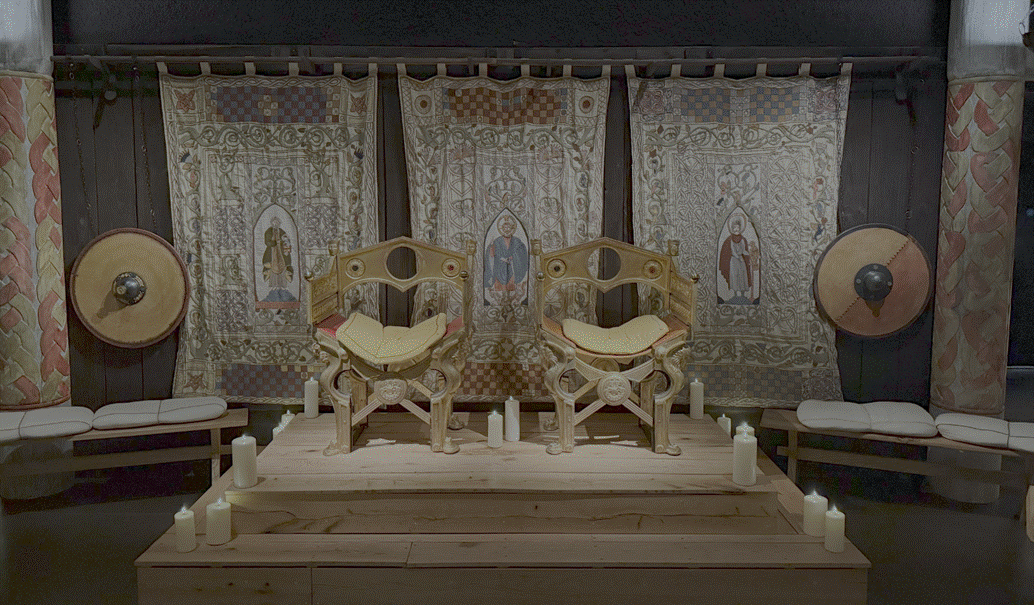
Reconstructed
Great Hall at Ad Gefrin from the time of Edwin, Ad Gefrin Museum,
Wooler
In
the first two halls, most of the interior was a single open space suitable for
a large gathering of people, with a withdrawing chamber partitioned off at one
end in the first hall and at both ends in its successor. Both had four doors,
set midway along the side walls and the end walls. These buildings, immediately
on their discovery, attracted attention as actual examples of the sort of
feasting hall described in the poem Beowulf. (Northumbria AD 367-867, Max Adams and Colm
O’Brien, 2025, page 79).
The Grandstand
The site included a unique and magnificent grandstand, with its
focal dias or platform aligned with a series of
magnificent timber halls like Beowulf’s Heorot, and an enormous cattle corral.
West
of the central complex as a feature still unique in the archaeology of this
period, a wedge shaped structure built from nine construction trenches in
concentric arcs. This is a tiered seating area, an outdoor auditorium or
theatre, capable of holding some 320 people, on the excavator’s estimate. At
the apex of the wedge a set of postholes supported a dais from which a speaker
or performer could address the seated audience; Hope-Taylor suggests there was
a throne here. Behind the dais is a single large standing post. Postholes mark
the positions of screens that formed a semi enclosed space wrapping around
behind the dias and post and at the sides towards the
seating. These screens would allow for processional entry and ceremonial
approach to the dais, and also for movement of performers within the space,
while the protagonist occupied a fixed position on the dais. Hope-Taylor
thought this structure was modelled on the theatre of the Roman world: the
wedge is a segment of the Roman semicircle. (Northumbria AD 367-867, Max Adams and Colm
O’Brien, 2025, page 79).
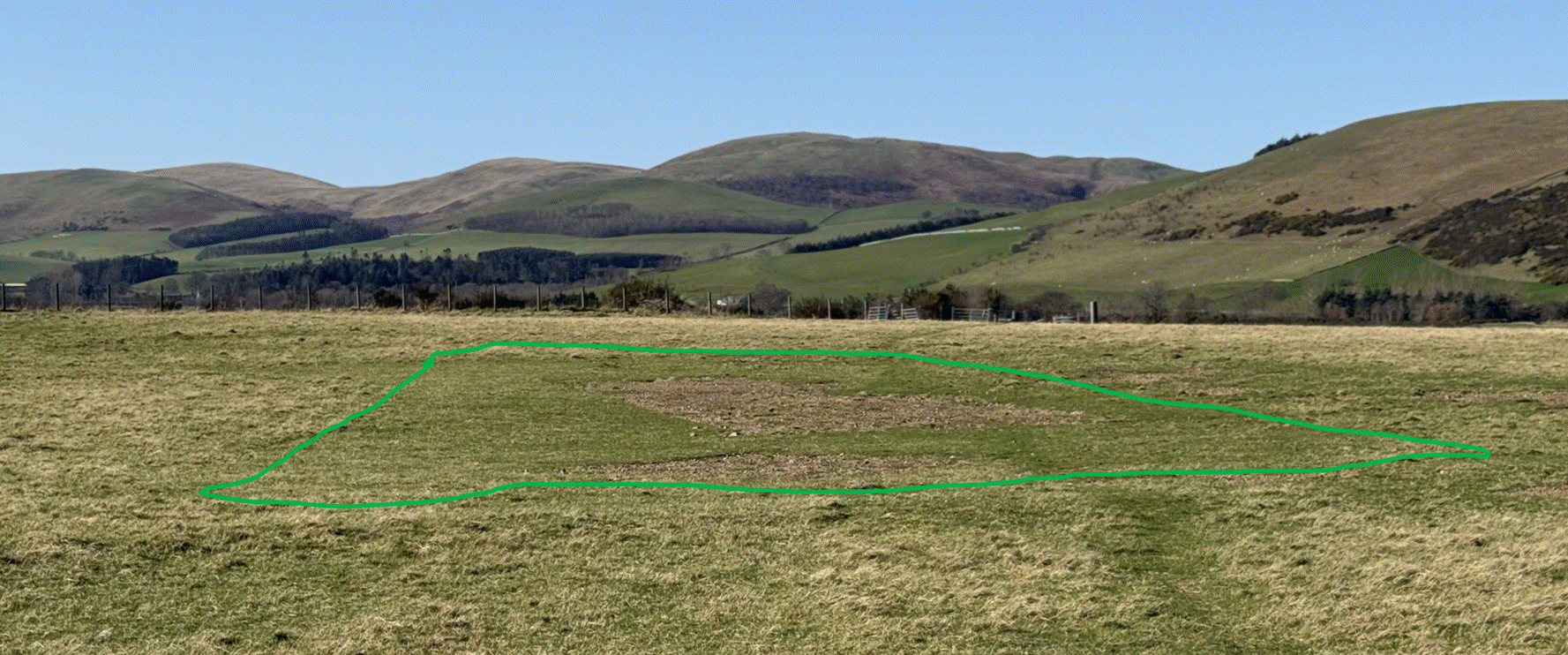
Site of the grandstand
The structure faced east, looking towards the
great halls, and measured some 22 metres from the rear wall to the central
focus: a small podium with a central post. If compared with Roman theatres, the
back wall would have stood some 6 metres above the ground; while the spacing of
the supporting posts indicates they carried 2 tiers of seating each. In total,
seating would have accommodated 150 persons. A later addition of three tiers to
the rear increased capacity to 320. Ad Gefrin is
mentioned briefly by Bede in the 8th century. He tells us that the site was
visited by kings, and by a Christian missionary Paulinus, who baptised many
people in the River Glen below. It seems likely that this theatre may have
allowed both kings and churchmen to address assembled populations. The large
quantity of timber used for building he and its Roman inspiration, demonstrate
the power and aspiration of the northern kings. (Site information)
Unparalleled In other Anglo-Saxon kingdoms,
the grandstand allowed the king to exercise authority by assembling and
addressing the people. The speaker’s platform was positioned so that the
audience, on raked seating, saw the impressive Great Hall and great enclosure
to the east. At its largest the grandstand had three tiers of seating and held
almost 350 people. (Ad Gefrin Museum, Wooler).
Enclosures
Ad Gefrin is the
only known Anglo-Saxon palace with a Great Enclosure. Archaeologist Brian
Hope-Taylor believed it to be a corral for managing cattle. Given as tribute to
the Royal Court, cattle would yield valuable hides, leather, milk and meat. (Ad Gefrin Museum, Wooler).
The
final feature in the suite making up this complex is the one known as the Great
Enclosure. This is a palisaded compound positioned at the edge of the terrace
above the river which, on Hope-Taylor’s analysis, went through several stages
of development culminating in a massive double palisade with bracing and
elaborate entrance terminals enclosing some 1.6 hectares. It is, in its first
stage of development, the first post Roman feature on the site, drawing
inspiration for its form on a regional tradition of palisaded enclosures that
reaches back to the pre Roman Iron Age. Its primary purpose however was not
military but public and communal for seasonal must rings of cattle and periodic
markets and festivals. (Northumbria AD 367-867, Max Adams and Colm
O’Brien, 2025, page 81).
Just to the east of the settlement was the
Great Enclosure, with two circular entranceways, one of which contained a hall.
The enclosure is a massive affair, perhaps resembling a lowland hillfort, and
was surrounded by two ditches and two sets of triple palisades of posts. This
has to be seen as a fortification of some sort, but at the same time it does
seem strange that the largest halls were positioned outside it. I think we're
looking here at some form of gathering place that was meant to instil confidence
in those who met. Maybe it was a market place that was given royal protection,
and the elaborate defences were also a way of reminding people that they were
only able to trade their safely thanks to a powerful ruler. (Britain in the Middle Ages, An Archaeological History, Francis Pryor, 2007, page 30).
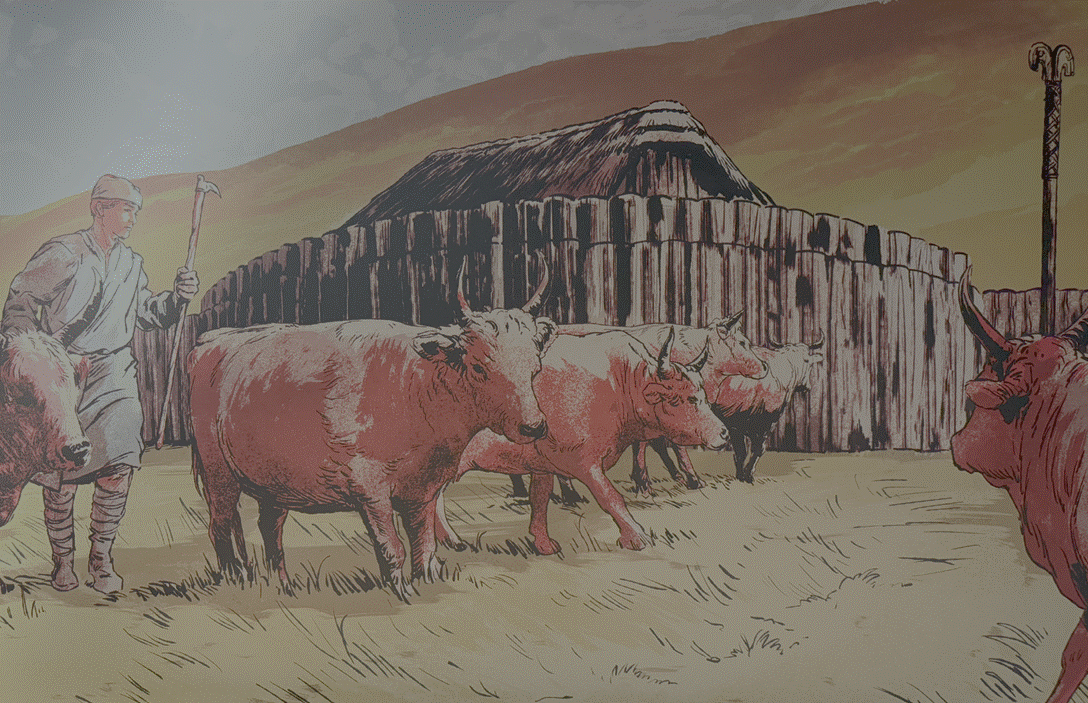
Illustration at Ad Gefrin Museum, Wooler
Sunken
buildings
Industrial
and creative activities would have occurred in sunken featured buildings, also
called Grubenhäuser. These had sunken floors and a
simple A-frame structure above, often covered with thatch. They were commonly
used for weaving, pottery making and metalworking. (Ad Gefrin Museum, Wooler).
In post Roman phase III, the settlement
consisted of at least six rectangular timber halls, one of which, Hall A4, was
truly huge: 80 x 37 feet (24.4 x 11.3 metres). This gives a floor area of 3,000
square feet (275 square metres), the largest known hall of the Saxon period.
The settlement also included a cemetery and a unique timber grandstand or
viewing platform. Hope-Taylor suggested that the shape of this structure would
fit with the focus being on some sort of throne. The curved wall to the rear of
the possible throne would have helped to protect the voice of anyone addressing
the audience from it. Perhaps a single post behind the throne carried some sort
of royal standard or emblem. (Britain in
the Middle Ages, An Archaeological History,
Francis Pryor, 2007, page 30).
The artefact
finds are less dramatic than the archaeology of the site which suggests a site
with its primary purpose to impress by the grandeur of its buildings.
Nevertheless the Ad Gefrin Museum
has collected an
impressive archive of artefacts from various sites in the wider area.
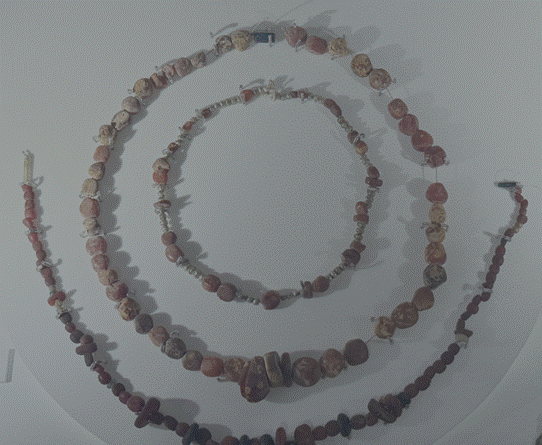
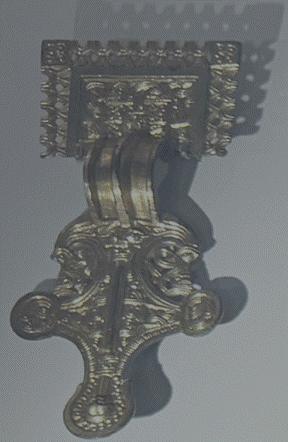
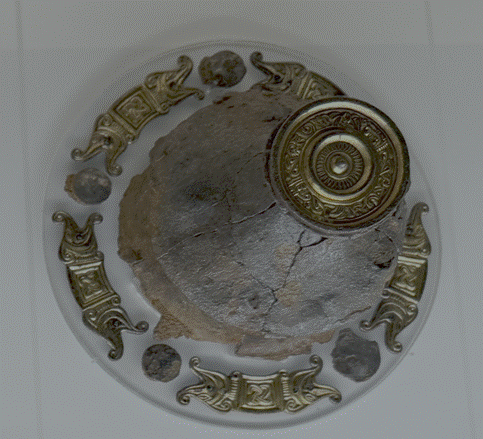
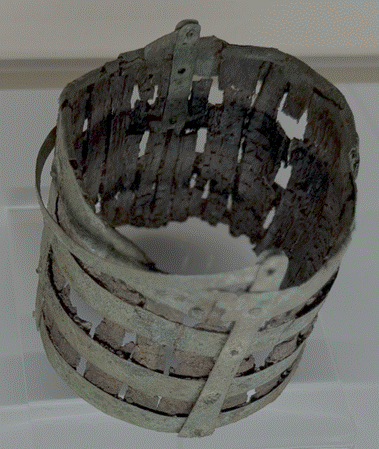
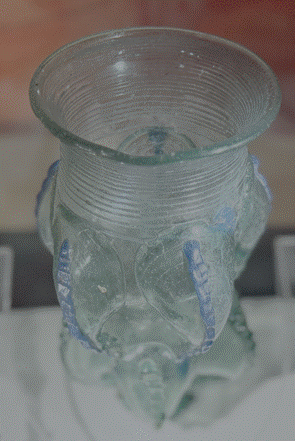
Bead necklaces
Square headed brooch Shield Boss Decorative wooden
bucket or cup Glass claw beaker
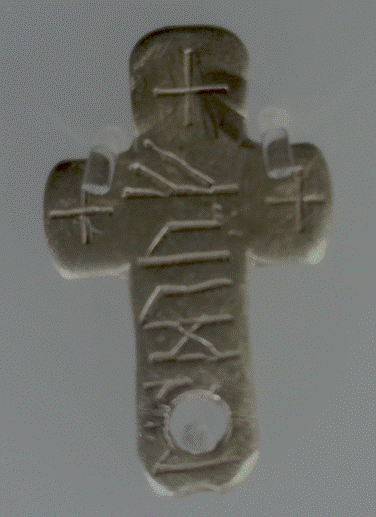
The Ord Cross was found by metal
detecting on the bank of the River Tweed in 2019. A Christian pectoral cross,
it was a personal piece of jewellery worn around the neck as a pendant. The
original suspension loop at the top has broken off, and a new hole has been
drilled through the face and inscription. The cross is 26 millimetres long by
16 millimetres wide. It is made of 12 carat gold, composed of 50% gold, 37%
silver, 11% copper, and 2% iron. The face of the pendant is inscribed with
three equal-armed crosses, representing the Holy Trinity, arranged around a
runic inscription of a personal name, either Eadruf
or Eardwulf, indicating that they were baptised or in holy orders. The small,
and precious, pectoral cross is evidence for the lasting change to the region
through distinctive Northumbrian Christianity. A small, possibly 9th century,
parallel to the 7th century cross of St Cuthbert, it shows the personal and
intimate ways that the Anglo Saxons in Northumbria or their faith.
The runic name on the cross could
be read as either Eadruf or Eardwulf. If this was the
cross of Eardwulf, then it could have belonged to Eardwulf, the last Bishop of
the monastery based at Lindisfarne. He led the community to the safety of Norham, near Ord, around 875 AD. This cross, confidently
having belonged to a leading churchman or woman in the 8th or 9th
century, could be a tantalising connection to the first steps of the movement
of the Community of St Cuthbert from their island monastery to their eventual
new home at Durham in the 10th century.
(Ad Gefrin Museum, Wooler).
627 CE
By 627 CE the
township reaches its greatest development. The capacity of the tiered assembly
in increased to 320 persons. (Site information).
Edwin held a
summit meeting at another great mead hall in a villa regalis somewhere
on the edge of the Yorkshire Wolds. It was probably a stage managed affair, and
may have been the beginning of the emergence of statehood and of an institution
which existed beside the person of the King himself. A witness recorded the
deliberations. You are sitting with your ealdormen and thegns in winter
time; the fire is burning on the half in the middle of the hall, and all inside
is warm, while outside the wintry storms of rain and snow are raging; and a
sparrow flies swiftly through the hall. It enters at one door and quickly flies
out through the other. For the few moments it is inside, the storm and wintry
tempest cannot touch it, but after the briefest moment of calm, it flits from
your sight, out of the wintry storm and into it again. So this life of man
appears, but for a moment, what follows, or indeed went what went before, we
know not at all. If this new doctrine brings us more certain information, it
seems right that we should accept it. (Ecclesiastical
History, Bede, Book 2, Chapter 13). The passage seems to have been a
metaphor suggesting man’s short life on earth between the mysteries of what
came before and afterwards, and the benefits of Christianity as vehicle for
better understanding.
Edwin converted
to the Christian religion, along with his nobles and many of his subjects on 12
April 627 CE and was baptised at Eoforwic
in the first wooden church amidst the Roman ruins which was later replaced by a
larger stone church. The site of this first church was probably beside the old
Roman principia or military headquarters, to the north of the current minster,
in the current Dean’s Park. The stone church was not completed before Oswald’s
day.
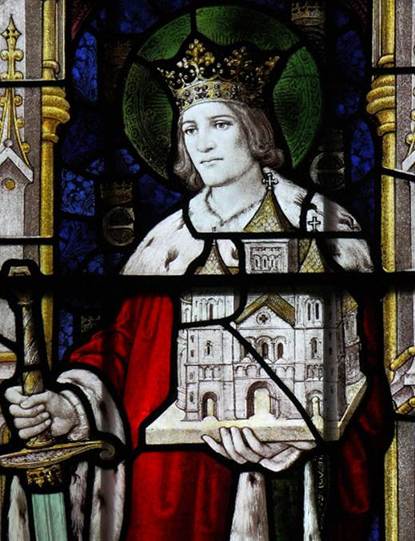
Edwin, depicted
in a Victorian window at St Mary, Sledmere, Yorkshire
After the
conversion of Edwin in York, Paulinus moved north to continue his work in
Bernicia and thousands were baptised at Yeavering. It has been suggested that
the magnificent grandstand at Yeavering was used for Paulinus’ mass
conversions.
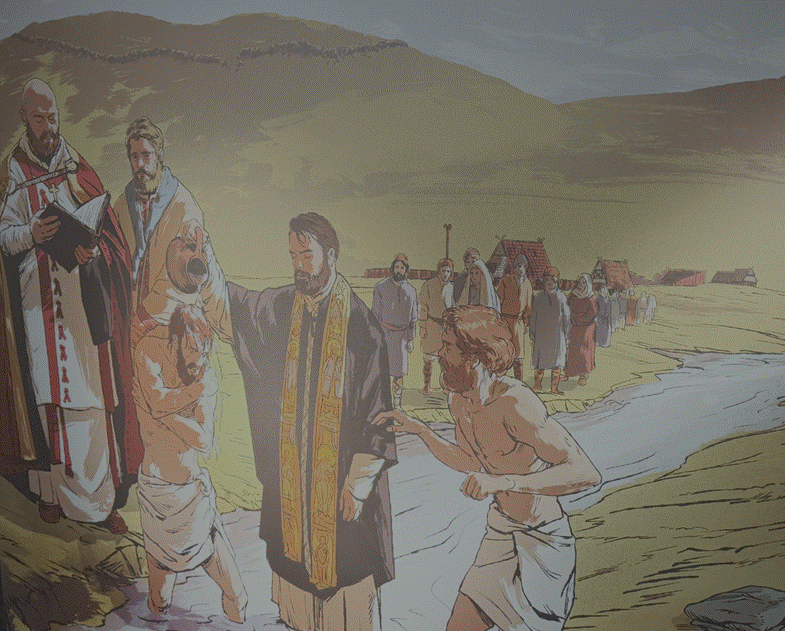
Illustration at Ad Gefrin Museum, Wooler
So great was then
the fervour of the faith, as is reported, and the desire of the washing of
salvation among the nation of the Northumbrians, that Paulinus at a certain
time coming with the king and queen to the royal country-seat, which is called
Ad Gefrin, stayed there with them thirty-six days,
fully occupied in catechising and baptizing; during which days, from morning
till night, he did nothing else but instruct the people resorting from all
villages and places, in Christ's saving word; and when instructed, he washed them
with the water of absolution in the River Glen, which is close by. (Ecclesiastical History, Bede, Book 2, Chapter
14)
Bede says that when Paulinus was
converting the Northumbrian nobility, he and the king spent 36 days at the
royal vill of Ad Gefrin -
Yeavering in Glendale on the north edge of the Cheviot Hills. Yeavering lies
some 20 miles inland from the Bernician ancestral seat at Bamburgh… The length
of the royal stay at Yeavering, 36 days, was not arbitrary, or a function of
ceremonial, but the tenth part of a year: that is to say that the hinterland of
Yeavering, rendered sufficient food and services to the royal vill that the King's household might be maintained for a
tenth part of the year: it contributed some 10% of the king's annual feorm. (Northumbria AD 367-867, Max Adams and Colm O’Brien,
2025, page 77).
633 CE
The Welsh King Cadwallon and Penda
of Mercia attack the kingdom. Ad Gefrin is destroyed
by fire. (Site information)
634 CE
Oswald Iding
Oswald
restored the Bernician line of Æthelfrith to power in 634 CE.
Aidan may
have had his own cell and church built at Yeavering, allowing him to associate
with royal power, but avoid its excesses. The journey from Bamburgh to
Yeavering could probably be undertaken in a day.
The
archaeological evidence does not suggest a period of violence in the aftermath
of Cadwallon’s victory at Hæthfelth in 633 CE. There is no evidence of ravaging the land at York
by Cadwallon and at West Heslerton. There is limited sign of disruption to
normal community life, though Yeavering appears to have been burned to the
ground at some stage. There doesn’t appear to have been a genocidal wasting of
the lands of Northumbria in the aftermath of Cadwallon’s victory.
640 CE
Ad Gefrin is rebuilt, now with an extensive cemetery and
church at the eastern end of the settlement. (site information)
The two
later phases of Brian Hope-Taylor’s report, (Phases IV and V) may have
continued into the 640s.
642 CE
Oswiu Iding
Oswiu was
King of Bernicia and later also Deira from after 15 November 642 CE to 15
February 670 CE.
651 CE
King Penda
attacks the kingdom. Ad Gefrin
is destroyed by fire. (Site information)
There had been at
least six ecclesiastical foundations established in Northumbria by about 650 CE
including royal churches at Bamburgh and Yeavering.
655 CE
Under King Oswiu,
Oswald’s younger brother, the township falls into decline and will shortly be
abandoned. Though rebuilt following the conflagration of 651 AD, the township
now consists of only a handful of buildings that are eventually abandoned to
rot in the ground. (Site Information).
Ealy
Anglo-Saxon Settlements of Northumbria
Thirlings
Thirlings, in the Milfield Basin, was another significant Early Medieval rural
settlement, excavated between 1973 and 1981. Dating to the sixth to seventh
centuries, it consisted of timber-framed halls and operated as a rural centre
for thegns supporting the nearby royal palace at Yeavering. While
Ad Gefrin was a, elite, central place, Thirlings appears to be a smaller, supporting settlement,
providing agricultural and social bounty for Northumbrian kings. A replica of
the Thirlings Hall has been built at Jarrow Hall.
Thirlings was extensively excavated between 1973 and
1981 by Roger Millet and Colm O’Brien.
When Thirlings
was abandoned, perhaps to make way for Mælmin, the 7th or 8th century successor to Yeavering
mentioned by Bede, the building seemed to have been disassembled, the site
emptied of reusable material culture and turned over to pasture. (Northumbria AD
367-867, Max Adams and Colm O’Brien,
2025, page 106).
The
Milfield Basin
In the
archaeology of settlement, the Milfield basin is
exceptional in every way: rich in deep time archaeology from the Neolithic
period onwards; enjoying well drained, tractable and fertile soils, attractive
to successive generations of farmers, monks and tribal chiefs. The same glacial
geology also makes the area attractive to quarry companies for its easily
winnable gravels, rendering the archaeology susceptible to a range of detection
techniques from aerial photography to geophysics. Is the early medieval
settlement density of the Milfield basin a function
of detection, or was it always a heavily populated area in a sea of sparsely
settled woods, pastures and unproductive moorland? (Northumbria
AD 367-867, Max Adams and Colm O’Brien,
2025, page 106).
Mælmin
The main royal site moved
about 3km to a new royal centre of Mælmin at modern Millfield after Edwin’s
reign. This palace was left deserted in the time of the kings who followed
Edwin, and another was built instead in a place called Mælmin (Ecclesiastical History, Bede, Book 2, Chapter
14).
In Yeavering and Milfield we
recognise the features that characterise a villa regia, the shire centre to
which the king processed his cuircuit and where
renders were collected for his periodic consumption (Northumbria
AD 367-867, Max Adams and Colm O’Brien,
2025, page 83).
Sprouston
Cropmarks
at Sprouston, 16 kilometres to the west, on the
opposite bank of the Tweed to Kelso, suggest a similar Anglo Saxon settlement. The
moment in July 1970 when these features were observed in all their detail was
reminiscent of the occasion just twenty one years
previously when the remains of Old Yeavering, and at Milfield
were first seen and photographed in a similar reconnaissance. The
settlements at Old Yeavering, Ad Gefrin, and at
Millfield, Maelmin, are mentioned by Bede: they were
judged by him of significance for the theme of his history. Sprouston
is not established as another villa regia; the evidence points to a settlement
of a more modest kind. That yet a third settlement should come to light close
at hand need occasion no surprise. But the number of such settlements in
Northumbria with buildings exhibiting the remarkably sophisticated techniques
of timber construction which are such a feature of Old Yeavering must surely be
limited. (Sprouston, Roxburghshire: an Anglo-Saxon settlement discovered by
air reconnaissance, J. K. S. St Joseph,
Anglo-Saxon England, Volume 10, 1982, pages
191 to 199).
Shotton
An important
Anglo-Saxon settlement dating from the 6th to 8th centuries was discovered at
Shotton Surface Mine near Cramlington, Northumberland, prior to open-cast
mining. The discovery includes rectangular post-built halls, sunken-floored
buildings (sunken-featured buildings or Grubenhauser),
along with associated fences and trackways, indicating a well-organized farming
community. The settlement at Shotton was
longer lasting, occupied to the late eighth century, with signs of
refurbishment and repair of buildings. Whilst Ad Gefrin
was a Bernician villa regis, and Thirlings an associated estate centre, Shotton was the home
of ceorls, dependent farmers owning food renders and services to their
thegn. (Anglo
Saxon settlement unearthed in Northumberland, 21
December 2010, BBC; Northumbria AD 367-867, Max Adams and Colm O’Brien,
2025, page 107).
Felton
Archaeologists
have discovered another significant Anglo-Saxon centre near Felton,
Northumberland, dating to the 7th century, similar to the royal palace at Ad
Gefrin. Finds include a unique oven (Archaeologists unearth
Anglo-Saxon oven and building, 1 March
2024, BBC), post-built structures, and loom weights. This site, probably
a bustling craft and trading hub, is another example of early Northumbrian
settlement activity.
Bibliography
Yeavering,
An Anglo-British centre of early Northumbria, Brian Hope
Taylor, 1977.
The Anglo Saxons,
A History of the Beginnings of England, Marc Morris, 2021.
The King of the
North, the Life and Times of Oswald of Northumbria, Max Adams,
2013.
Britain in the
Middle Ages, An Archaeological History, Francis Pryor, 2007.
The Kingdom of Northumbria AD 350 to 1100, N J Higham, 1993.
Ecclesiastical History, Bede, Book 2, Chapter
14.
Northumbria AD 367-867, Max Adams and Colm O’Brien,
2025, pages 77 to 88.