Brotton Old Graveyard
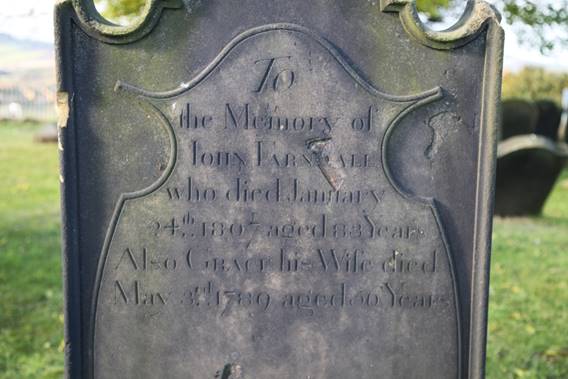
Seven generations of the Kilton
Farndales in relatively close proximity
This will be of most interest to
those descended from the Kilton 1
Line
But yonder on the high ridge stands Brotton Church; there was
to be seen his father’s tomb, when no time was lost ere he stood on the
sepulchre of his father. Reading words and figures chiselled out, near one hundred
years before, then moistening the green sward with tears of reflection, below
where his father’s ashes lay, then, with slow and solemn step, turned away, and
took the well known lane down to Kilton, when at Howe
Hill, and seeing a towering chimney above all; what misgivings now trouble his
unprepared, peaceful breast.
(John Farndale,
The Returned Emigrant,
1870)
Elegy
Written in a Country Churchyard
By Thomas
Gray
|
The
curfew tolls the knell of parting day, The lowing herd wind slowly o'er the
lea, The plowman homeward plods his weary way, And leaves the world to darkness and
to me. Now
fades the glimm'ring landscape on the sight, And all the air a solemn stillness
holds, Save
where the beetle wheels his droning flight, And drowsy tinklings
lull the distant folds; Save
that from yonder ivy-mantled tow'r The moping owl does to the moon
complain Of
such, as wand'ring near her secret bow'r, Molest her ancient solitary reign. Beneath
those rugged elms, that yew-tree's shade, Where heaves the turf in many a mould'ring heap, Each in
his narrow cell for ever laid, The rude forefathers of the hamlet
sleep. The
breezy call of incense-breathing Morn, The swallow twitt'ring
from the straw-built shed, The
cock's shrill clarion, or the echoing horn, No more shall rouse them from their
lowly bed. For
them no more the blazing hearth shall burn, Or busy housewife ply
her evening care: No
children run to lisp their sire's return, Or climb his knees the envied kiss
to share. |
On some
fond breast the parting soul relies, Some pious drops the closing eye
requires; Ev'n from the tomb the voice of Nature cries, Ev'n in
our ashes live their wonted fires. For
thee, who mindful of th' unhonour'd
Dead Dost in these lines their artless
tale relate; If
chance, by lonely contemplation led, Some kindred spirit shall inquire
thy fate, Haply
some hoary-headed swain may say, "Oft have we seen him at the
peep of dawn Brushing
with hasty steps the dews away To meet the sun upon the upland
lawn. "There
at the foot of yonder nodding beech That wreathes its old fantastic
roots so high, His
listless length at noontide would he stretch, And pore upon the brook that babbles
by. "Hard
by yon wood, now smiling as in scorn, Mutt'ring
his wayward fancies he would rove, Now
drooping, woeful wan, like one forlorn, Or craz'd
with care, or cross'd in hopeless love. "One
morn I miss'd him on the custom'd
hill, Along the heath and near his fav'rite tree; Another
came; nor yet beside the rill, Nor up the lawn, nor at the wood was
he; "The
next with dirges due in sad array Slow thro' the church-way path we
saw him borne. Approach
and read (for thou canst read) the lay, Grav'd on
the stone beneath yon aged thorn." |
THE
EPITAPH Here
rests his head upon the lap of Earth A youth to Fortune and to Fame
unknown. Fair
Science frown'd not on his humble birth, And Melancholy mark'd
him for her own. Large
was his bounty, and his soul sincere, Heav'n did a recompense as largely
send: He gave
to Mis'ry all he had, a tear, He gain'd
from Heav'n ('twas all he wish'd) a friend. No
farther seek his merits to disclose, Or draw his frailties from their dread
abode, (There
they alike in trembling hope repose) The bosom of his Father and his God. |
Introduction
and directions
Although
church graveyards are a favoured haunt of genealogists, we need not over do it. My own feeling is that it is the stories,
photographs and other relics from the past that we should remember our
ancestors by, rather than slabs of stone.
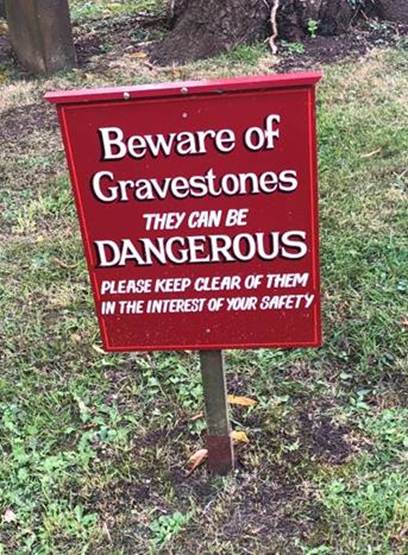
A warning
to genealogists at Stokesley Churchyard
However it
would be remiss not to point out some cemeteries in relative proximity where
you can visit seven generations of our family. My father restored the
gravestones at Brotton several decades ago.
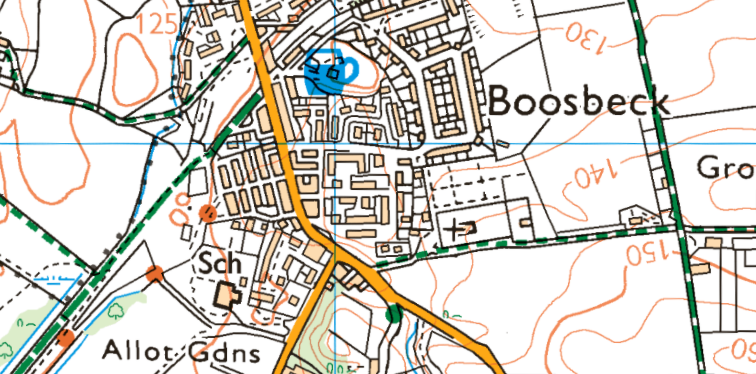
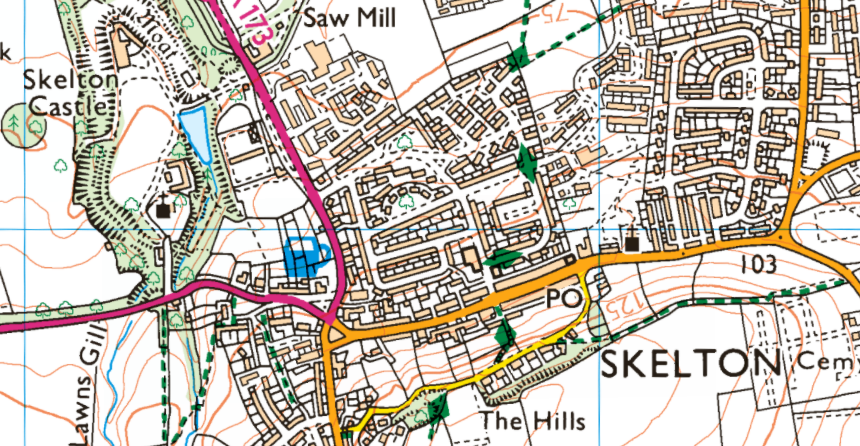
The churchyards at Boosbeck and Skelton are close by. For my
own cousins, the Wensleydale Line
all know that they can find their grandparents in the churchyard in Wensley.
I can drive
from Wensley to Boosbeck to Skelton to Brotton and visit all my direct ancestors in
turn, for seven generations.
If you want
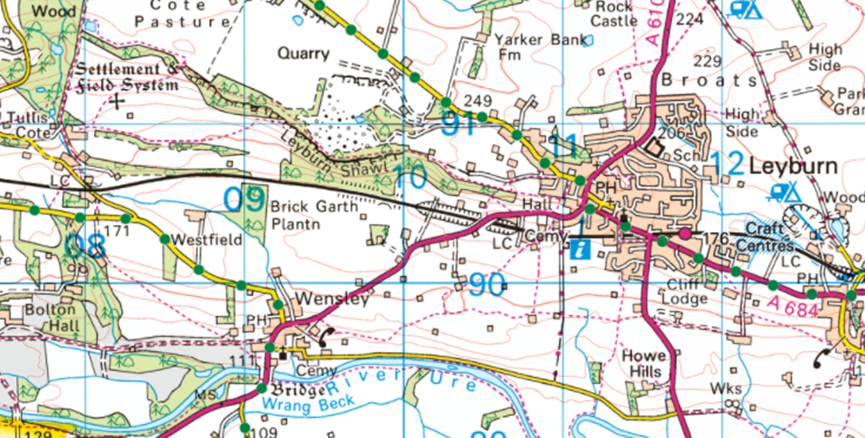
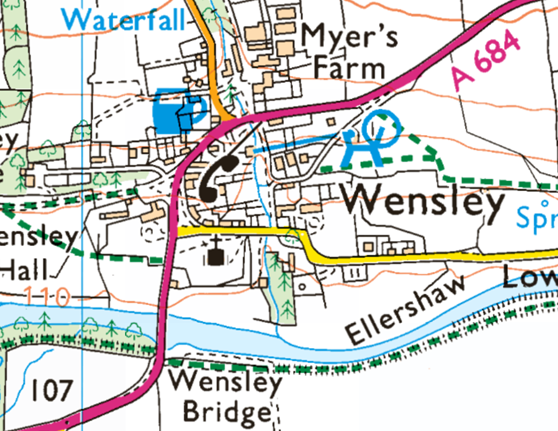
to go to Wensley you will find it southwest of Leyburn and the graveyard is not
at the church itself, but in a small enclosure about 50 metres east along the
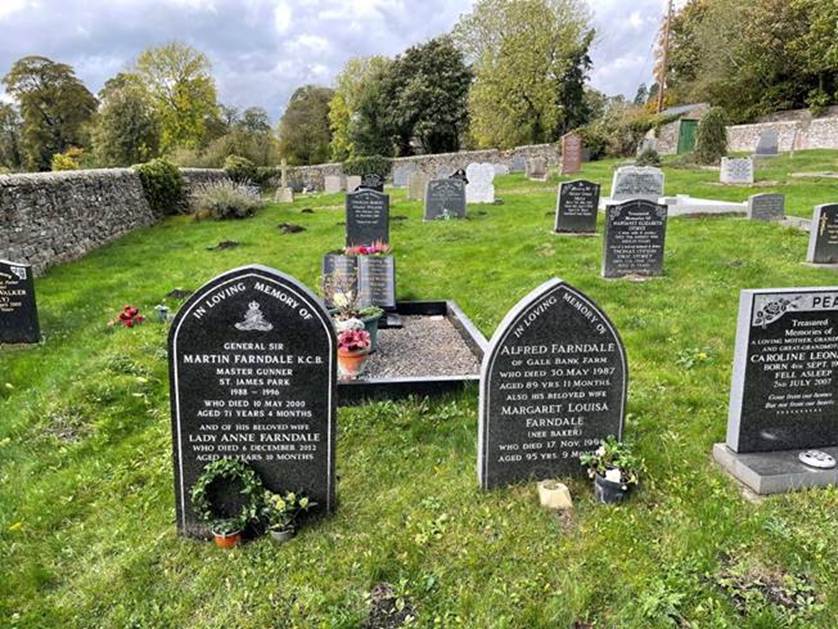
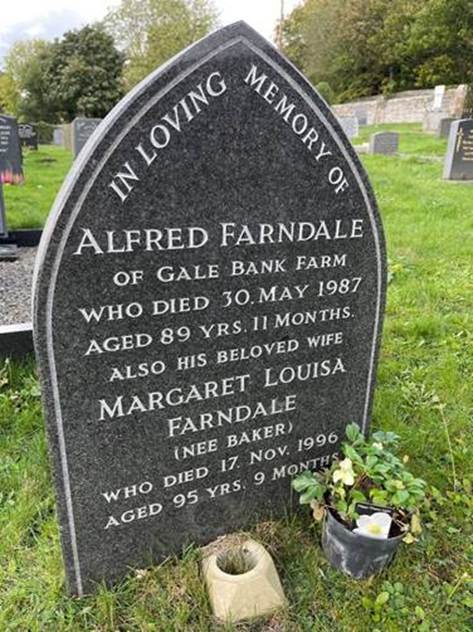
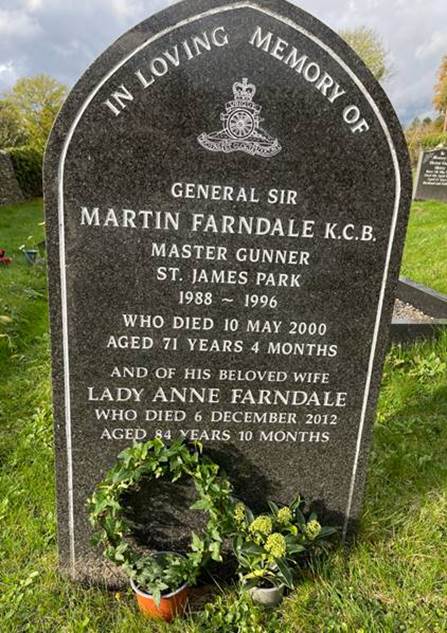
river Ure, and the memorials to Alfred
and Peggy Farndale and Martin
and Anne Farndale are to be found there, at grid SE 09424 89511. I don’t
suppose this will be of interest unless you are one of my cousins.

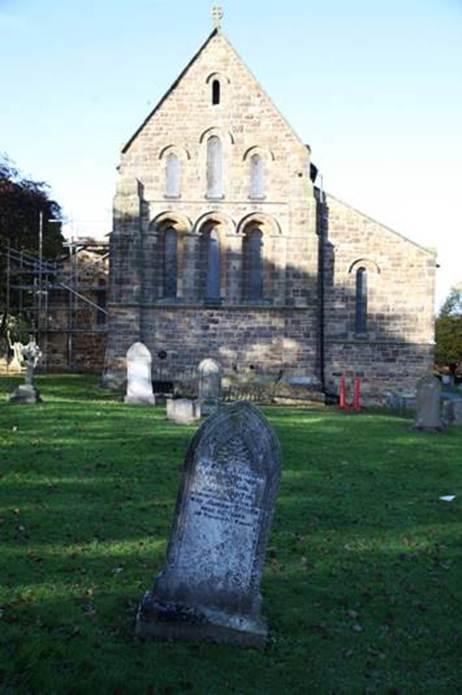
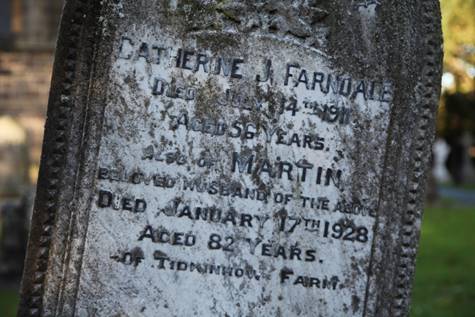
If you are
interested in the memorial to Martin and
Catherine Farndale of Tidkinhow, you will find the gravestone at Boosbeck church
at grid NZ 66213 16869. The gravestone stands alone at a spot facing the back
wall of the church. This will be of interest to those descended from the Tidkinhow Line.

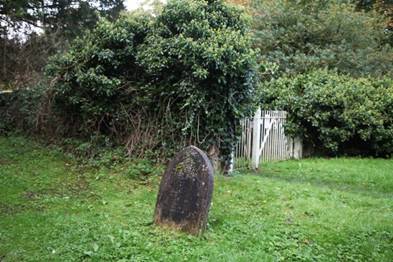
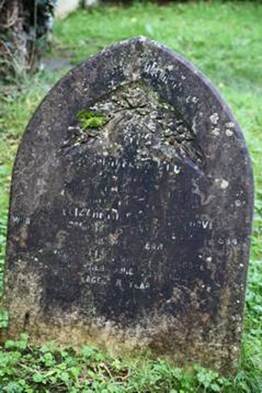
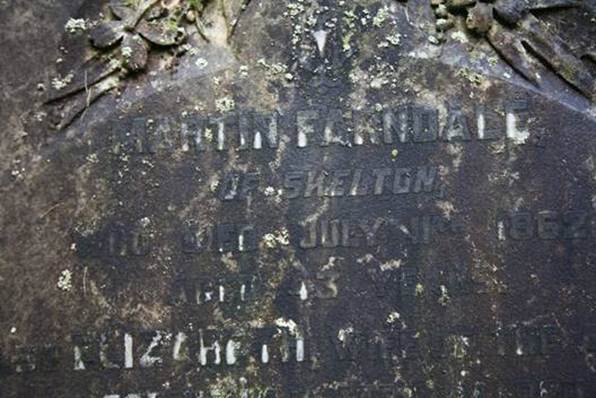
To find the
gravestone of Martin
and Elizabeth Farndale of Skelton, you should go to the old churchyard at Skelton and the memorial is the
first gravestone immediately to the right as you pass through the metal gate,
at grid NZ 65264 18989. This will be of interest to those descended from the Tidkinhow Line, the Loftus 2 Line and the Craggs Line.

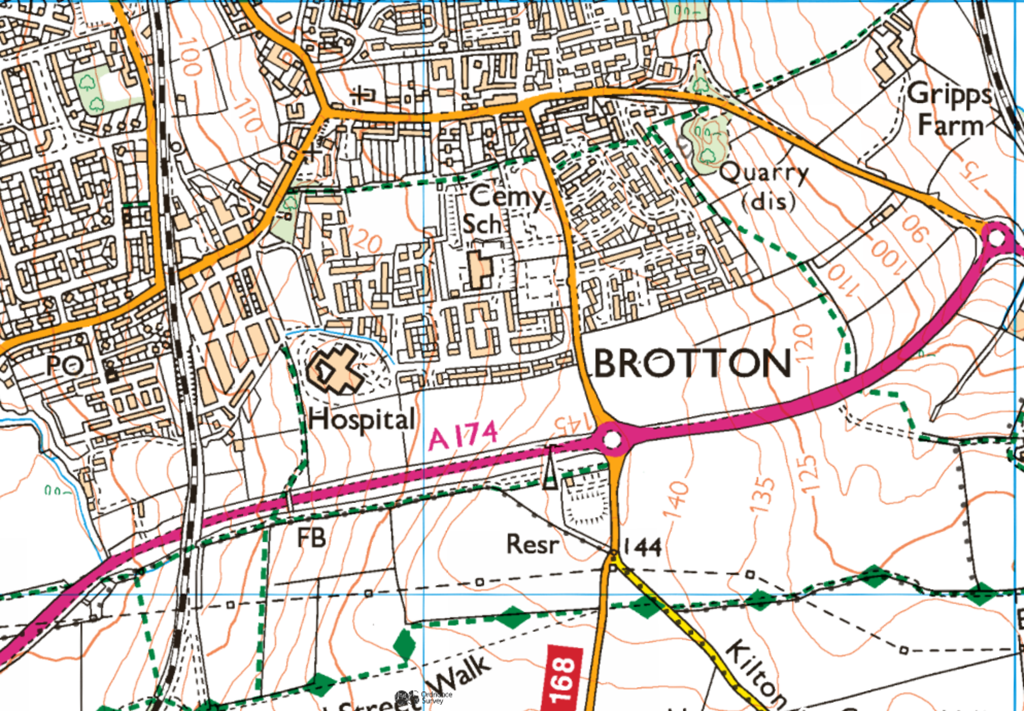
To find many
of the Farndales of
Kilton, including three generations of my own direct line, but many others
too, you should drive to the churchyard which stands alone to the south of the
town at Brotton where you will find a large graveyard, with most, though not
all, of the Farndale family at grid NZ 69172 19667. There is another cluster
closer to the entrance gate. This is the cemetery of most relevance to all those descended
from the Kilton 1 Line.


If you find yourself
visiting these memorials, I suggest that you click on the weblinks to their
stories below, so that rather than looking at a stone slab, you will have a
chance to meet them in person.
Brotton
Old Churchyard
This is a
cemetery where my Great x3, x4 and x5 grandfathers, and many of their siblings
can be found.
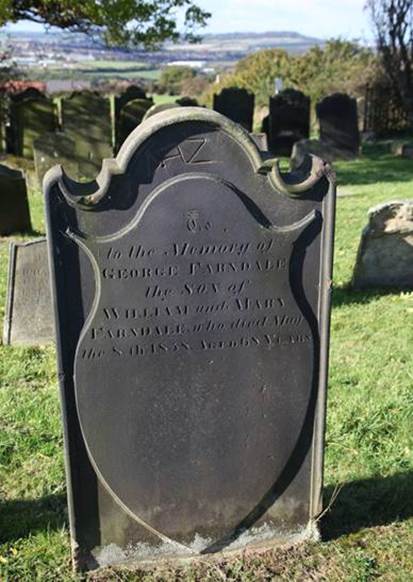
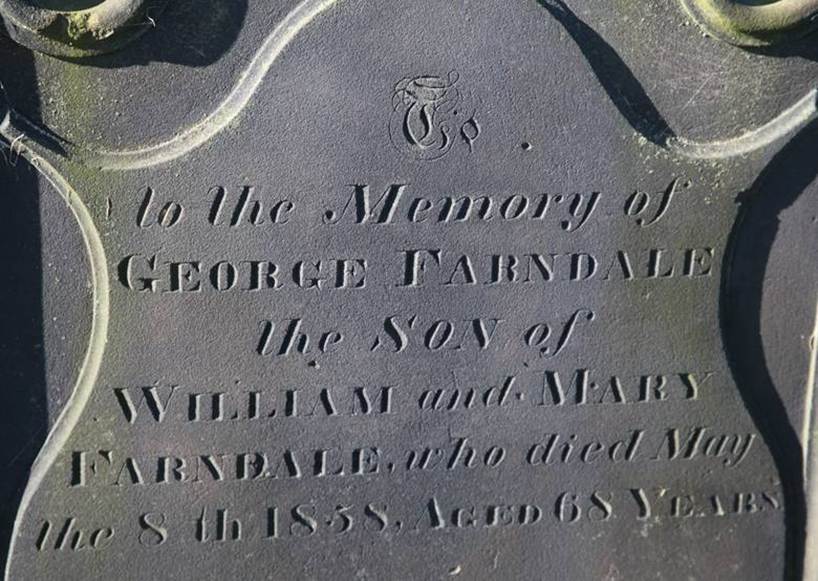
George Farndale
(1789 to 1858), the website author’s great x3 grandfather left Kilton and farmed
at Easby but later seems to have needed care, and he was looked after by his
brothers, living at Kilton later in his life.
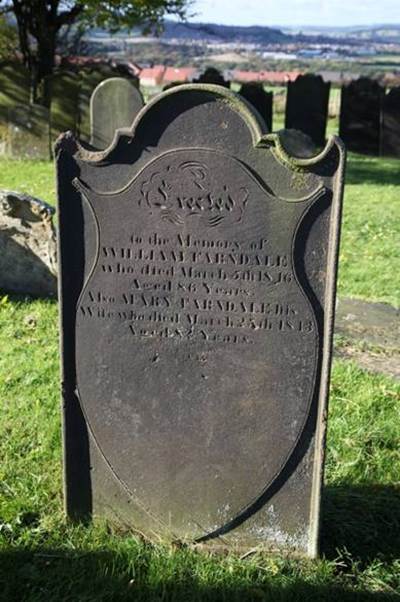
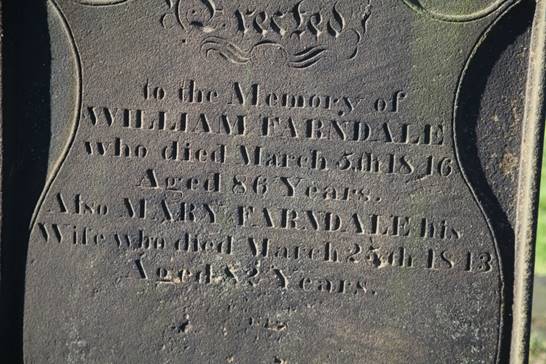
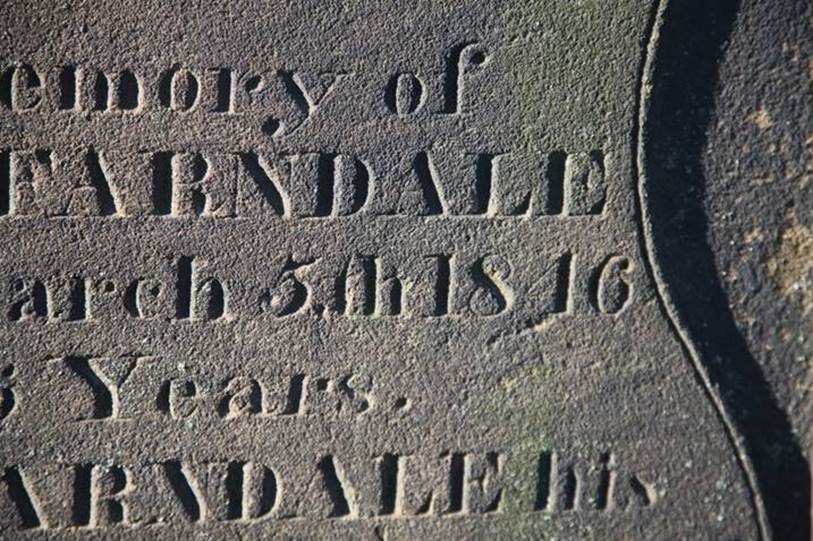
William (1760 to 1846)
and Mary Farndale are the website author’s great x4 grandparents. William
was an established Kilton farmer, a merchant of alum, wood, rods, coals, and
salting bacon, who pulled down Kilton Lodge to build a new house.
John (1724 to 1807) and
Grace Farndale, the website author’s great x5 grandparents, are buried
together. It was of John Farndale that the Squire once said, when you are
gone there will never be such another Johnny Farndale.
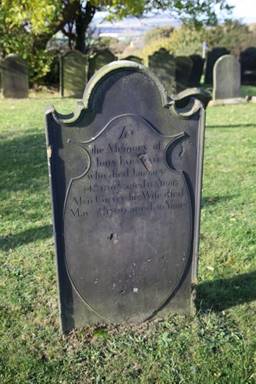

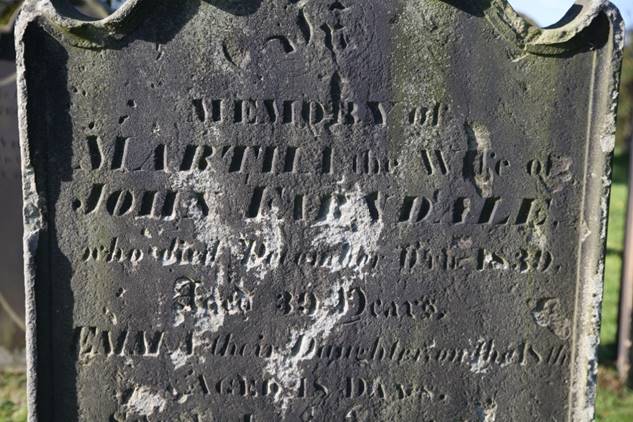
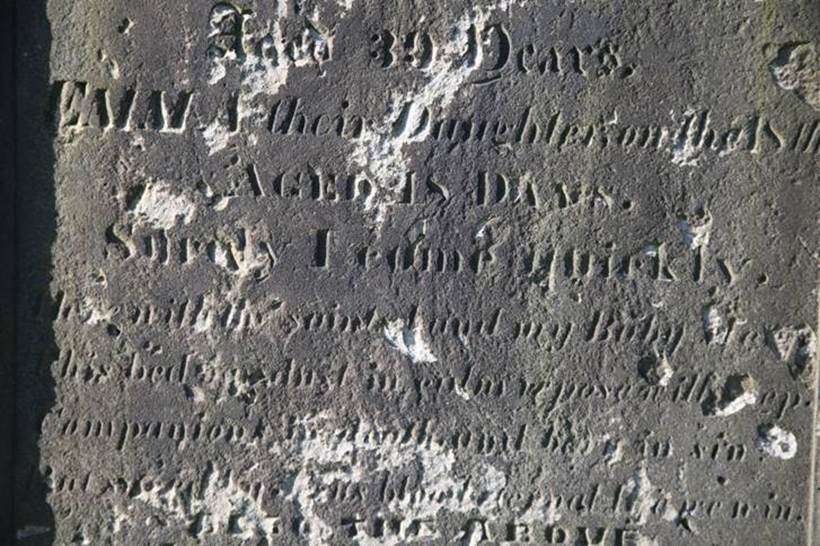
John (1791 to
1878, the author) and Martha Farndale and their daughter Emma Farndale are buried
together. John was a fascinating character and the author of many books,
witnessing industrial change.
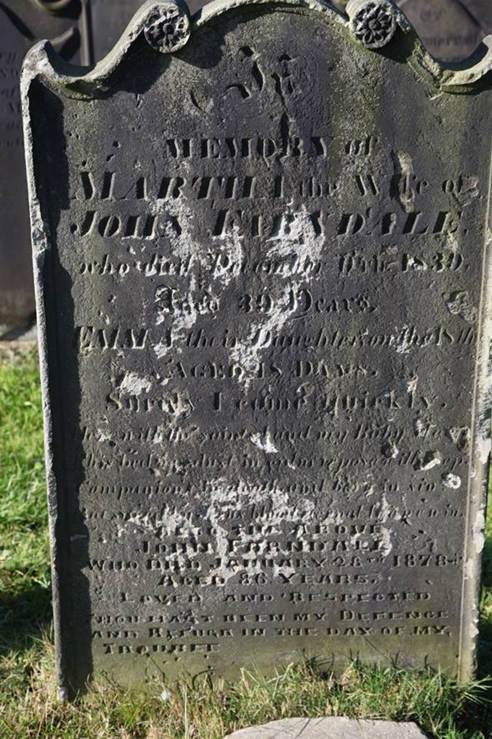
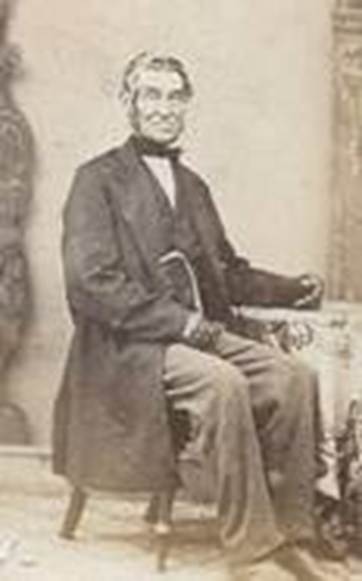
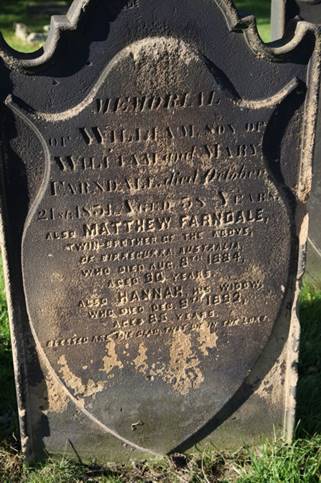
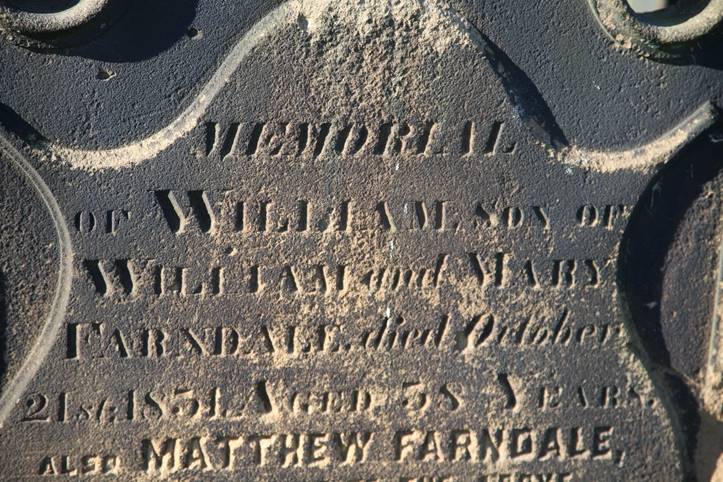
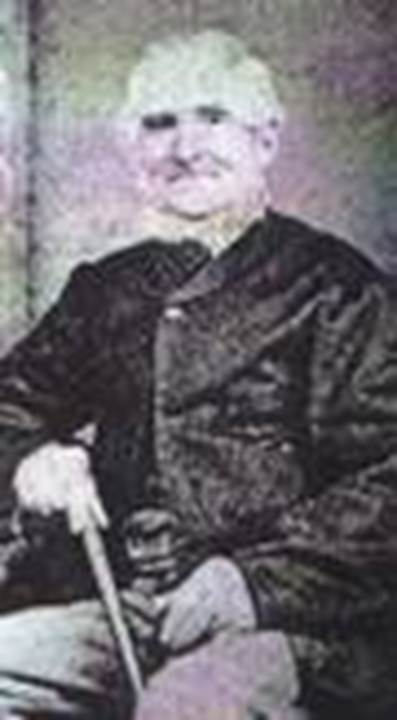
William Farndale
(1793 to 1831) also has a memorial shared his twin brother Matthew
Farndale (1793 to 1884) who died in Australia, but
was also commemorated here.
Martin
(1798 to 1885) and Elizabeth Farndale are buried together. Martin farmed
600 acres at Kilton.
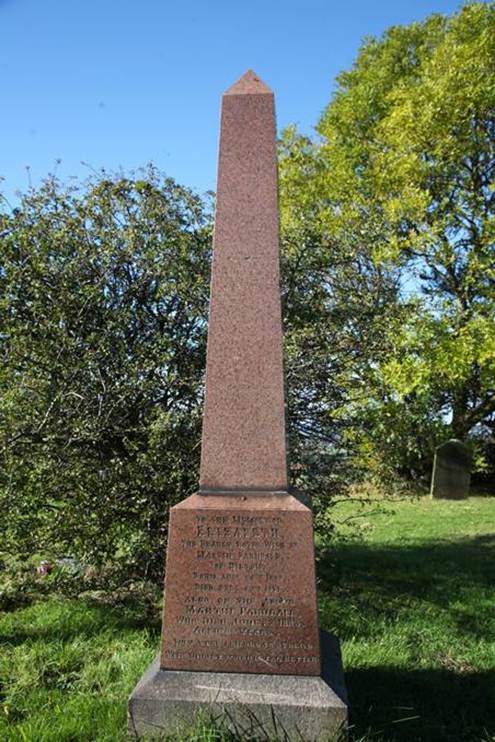
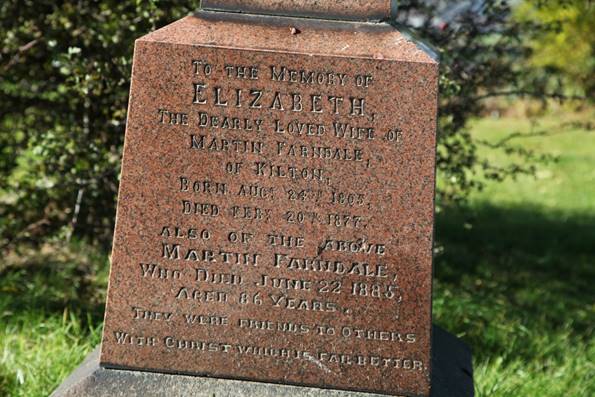
Charles (1838 to 1914)
and Ann Farndale continued to farm 600 acres at Kilton.
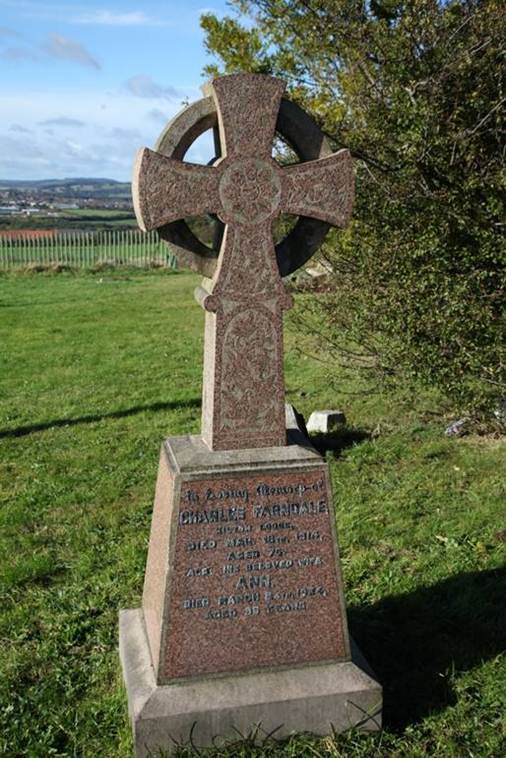
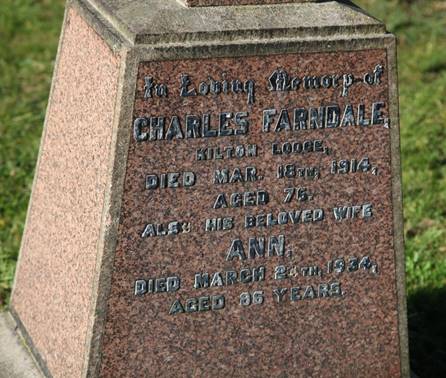
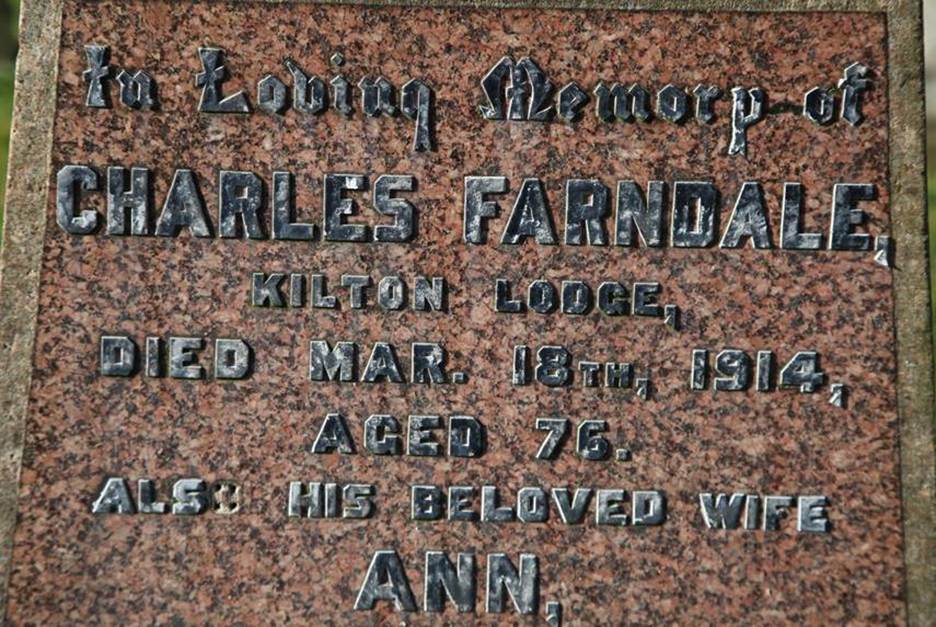
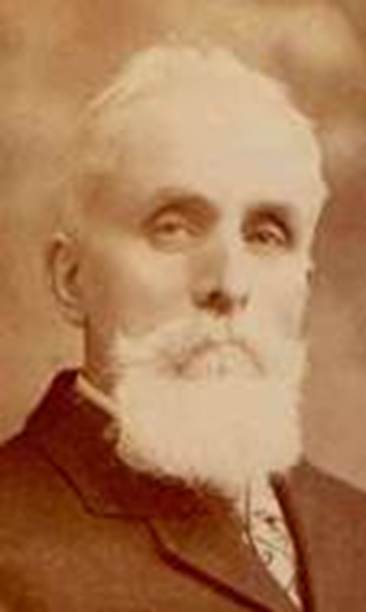
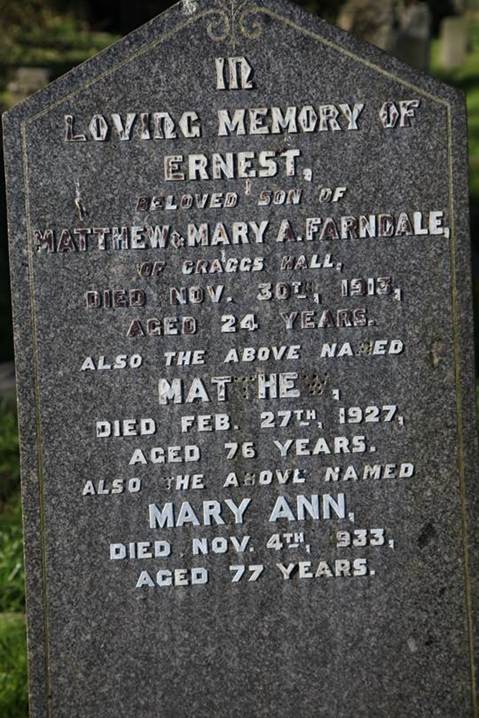
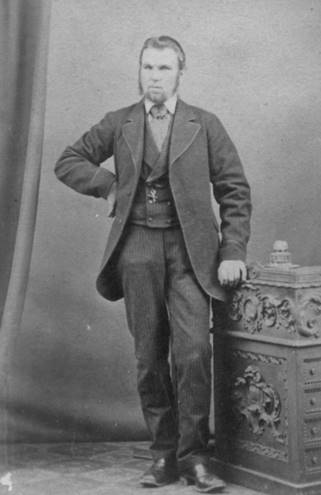
The Craggs Line of Farndales are also
commemorated at Brotton. Matthew (1850 to
1927) and Mary Farndale and their son Ernest Farndale
(1889 to 1913) are buried there.
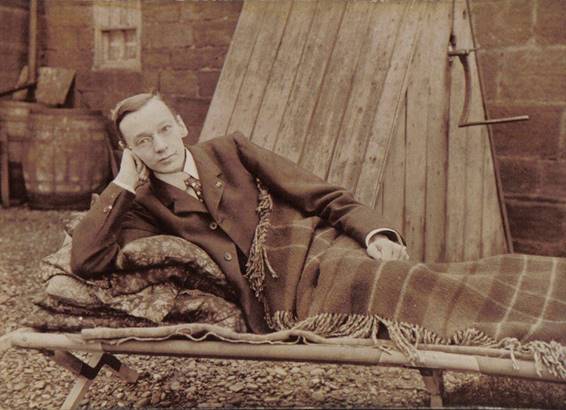
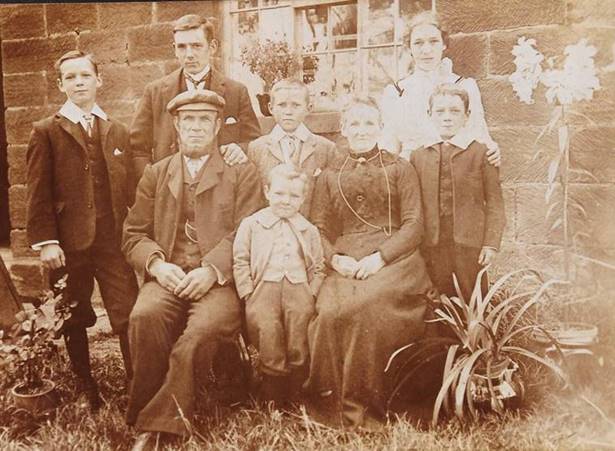
Skelton
At Skelton
Old Churchyard lay Martin
(1818 to 1862) and Elizabeth Farndale of Skelton. Elizabeth was the
granddaughter of the smuggler John
Andrew, who also lies in the south of this cemetery.
Boosbeck
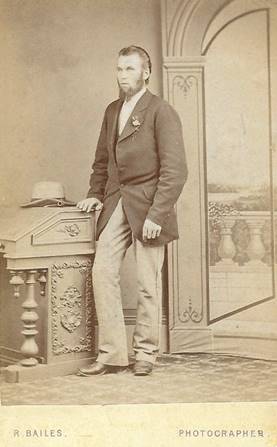
Martin (1845
to 1928) and Catherine Farndale of Tidkinhow are buried at Boosbeck Church.
Wensley
The
memorials to Alfred
and Peggy Farndale and Martin
and Anne Farndale are in the far corner of the separate walled cemetery at
Wensley Church, overlooking Gale Bank farm which Alfred farmed from the Second
World War.
or
Go Straight to Chapter
15 – the Lost village of Kilton