Farndale pioneers
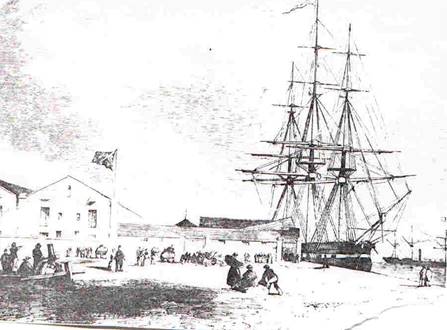
Migrants
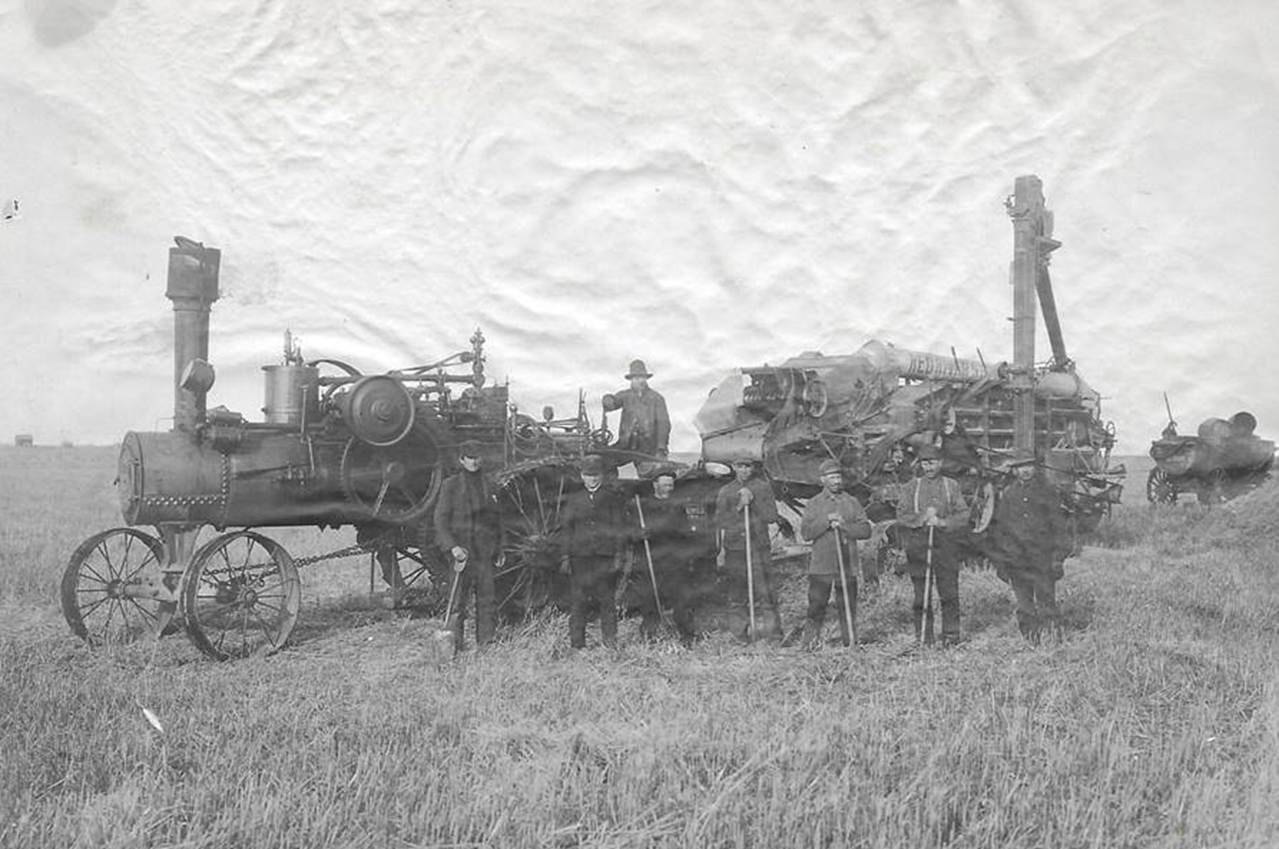
prepare to board the Bourneuf at Liverpool Emigration depot in 1852 Bill Kinsey’s threshing set in
about 1900 in Alberta, Canada
To boldly go …
|
Return to the Home Page of the Farndale Family
Website |
The story of one family’s journey through two
thousand years of British History |
The 83 family lines into which the family is divided.
Meet the whole family and how the wider family is related |
Members of the historical family ordered by date of
birth |
Links to other pages with historical research and
related material |
The story of the Bakers of Highfields, the Chapmans,
and other related families |
Whilst it is
perhaps misleading to over-categorise a family of the size of the Farndales, it
is possible to identify trends and a broad summary might define the Farndales
as farmers, pioneers and soldiers.
This web page
tells the story of the pioneer Farndales.
Nineteenth century
migrations
The vast
migrations of Europeans and Asians began in the 1500s and peaked in the
nineteenth and twentieth centuries.
New South Wales
was a tiny, starving and violent convict settlement in the 1790s, but in a few
decades had a convict designed church, a grammar school, university, cathedral
and parliament.
Of some 50m
emigrants from Europe between 1815 and 1930, there was a disproportionate
number of British (11.4M) and Irish (7M) contrasted to Germany (4.8M).
British and Irish
Migration
|
|
US |
% |
British North America (Canada) |
% |
Australia and New Zealand |
% |
Cape and Natal |
% |
Total |
|
1815 to 1830 |
150,160 |
40.2 |
209,707 |
56 |
8,935 |
2.3 |
|
|
373,338 |
|
1831 to 1840 |
308,247 |
43.8 |
322,485 |
45.8 |
67,882 |
9.5 |
|
|
703,150 |
|
1841 to 1850 |
1,094,556 |
65 |
429,044 |
25.5 |
127,124 |
7.5 |
|
|
1,684,892 |
|
1851 to 1860 |
1,495,243 |
65.4 |
235,285 |
10.3 |
506,802 |
22.1 |
|
|
2,287,205 |
|
1861 to 1870 |
1,424,466 |
72.4 |
192,250 |
9.9 |
280,198 |
14.2 |
|
|
1,967,570 |
|
1871 to 1880 |
1,531,851 |
68.7 |
232,213 |
10.4 |
313,105 |
14 |
9,803 |
|
2,228,395 |
|
1881 to 1890 |
2,446,018 |
70.8 |
395,160 |
11.4 |
383,729 |
11.1 |
88,991 |
2.5 |
3,455,655 |
|
1891 to 1900 |
1,814,293 |
68.2 |
328,411 |
12.3 |
131,629 |
4.9 |
215,590 |
8.1 |
2,661,532 |
|
1901 to 1914 |
3,449,173 |
51 |
1,865,807 |
27.6 |
540,557 |
8 |
447,120 |
6.6 |
6,764,310 |
|
Total |
134,714,007 |
62 |
4,213,362 |
19 |
2,359,961 |
10.7 |
761,504 |
3.4 |
22,126,047 |
Indigenous
populations, especially hunter gatherers though, saw an end of their world.
Indigenous populations collapsed from disease. A quarter of the population of
Fiji died from measles. In North America, the native population fell from about
10M to under half a million and in New Zealand from 100,000 to 40,000;
Australia from 750,000 to 60,000.
The settlers
believed that the inhabitants of undeveloped sparsely populated land could just
move on, but the nomadic peoples were spiritually and economically dependent on
their intimate knowledge of their territory.
Parliamentary
committees from 1814 began to consider the plight of the Aboriginal Peoples of
the British Empire and enacted laws to restrain British subjects. The Society
for the Protection of Aborigines was an international human rights
organisation founded in 1837, to ensure the health and well-being and the
sovereign, legal and religious rights of the indigenous peoples while also
promoting the civilisation of the indigenous people who were subjected under
colonial powers.
Gladstone hoped
that political responsibility would make settlers more moderate in their
actions, but in places like New Zealand and South Africa, British troops fought
wars with native peoples to secure land often destabilised by the settlers.
However the ambitions of 50M were probably uncontrollable.
(Robert Tombs, The English and
their History, 2023, 548 to 551).
Earliest migrations
Our early
ancestors were the inhabitants of Farndale.
We know of some of those who lived in Farndale in medieval times (see FAR00001 and
FAR00002).
We know a little of the forest of Farndale (FAR00003
and FAR00004). Edmund
the hermit was presumably not one of our ancestors. But perhaps William the
Smith of Farndale, 1240 (FAR00009),
John the Shepherd of Farndale, 1250 (FAR00010),
Roger milne (miller) of Farndale, 1265 (FAR00013A)
and Simon the miller of Farndale, 1282 (FAR00021)
were our early ancestors living in Farndale.
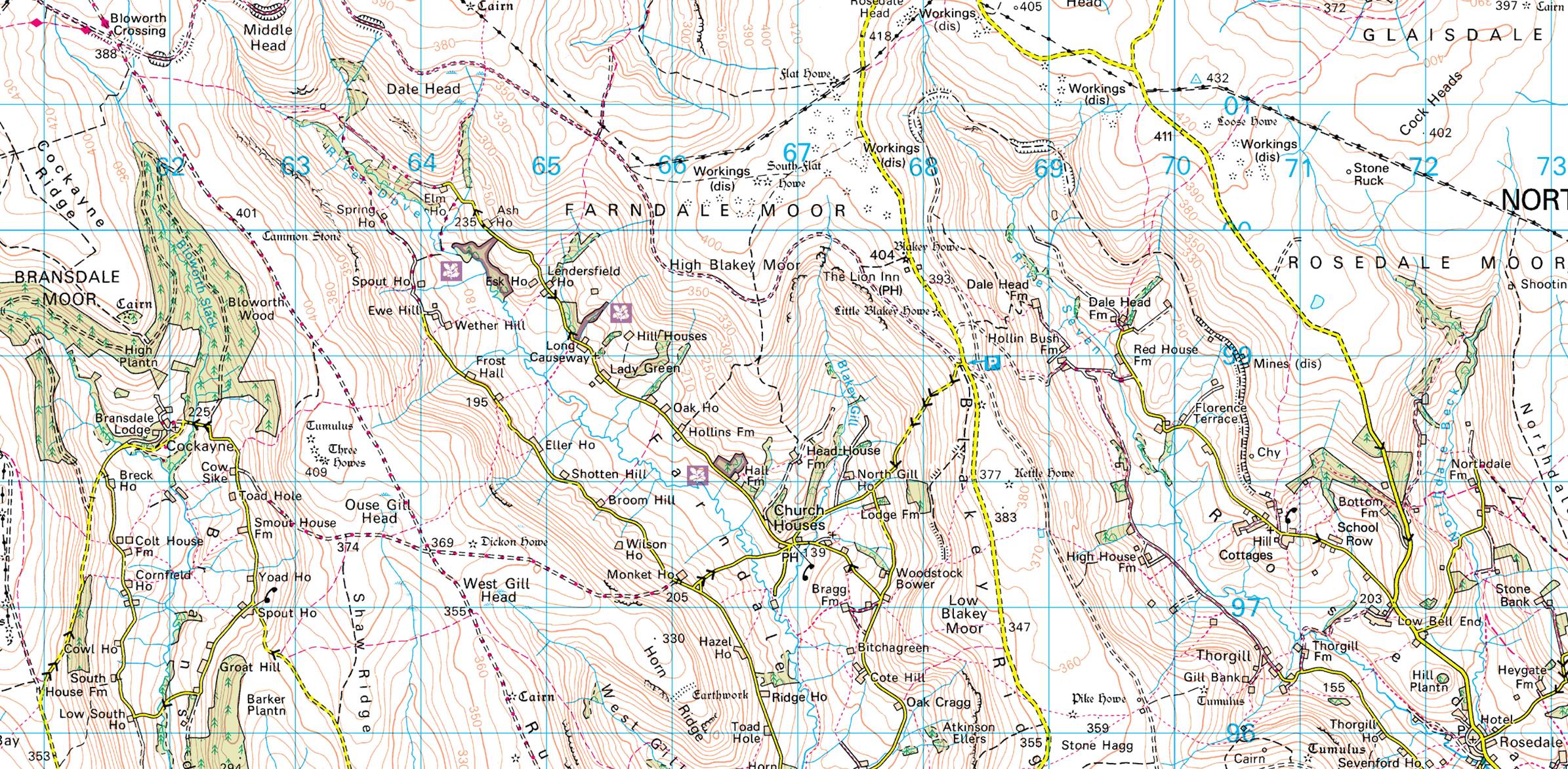
Over time, folk
started to adopt names which described them by place or occupation. Examples
are Nicholas de Farndale, the first personal name linked to Farndale (see FAR000006
and Farndale 1), Peter de
Farndale (see FAR000008
and Farndale 2), Gilbert de
Farndale (FAR00018
and Farndale 3), and Simon de
Farndale (FAR00021
and Farndale 4). So our
ancestors started to called themselves de Farndale, and in time just used the
Farndale name. That process signalled the start of a spread of our ancestors
out of Farndale to the surrounding lands. At that time, such movements were no
doubt as bold and significant as later emigrations to Australia, Canada and New
Zealand. We know for instance that De Johanne de Farndale, 1275 (FAR00014)
moved further afield to Egton.
Initially the
spread of the Farndales remained tight. They moved into the area of, or
adjacent to, the North Yorkshire Moors. For instance Walter de Farndale, 1275 (FAR00015)
was vicar who moved widely. Richard de Farndale, 1275 (FAR00016)
had a gift of land at Marton (now part of Middlesborough). Over time there
became established a large grouping of our ancestors to the north of the moors,
in Cleveland, around Kilton, Skelton
and Kirkleatham.
If Farndale was
‘the cradle of the Farndales’, Cleveland became the heart of the wider family
over centuries.
UK Migrations
From an early
stage, Farndales started to move beyond the bounds of the North Yorkshire
Moors. For instance William Farndale, 1342 (FAR00038)
became vicar of Doncaster.
There appear to
have been some early migrants to Sussex such as
Robert Farndale, born 1460, Rector (FAR00056)
and Essex such as William Farndale, born 1450 (FAR00056A).
There were many
Farndales who moved to London including
· the London 1 Line descended from Samuel
Farndale 1866-1936 (FAR000475) and
who became a clerk at Portsea near Portsmouth and then moved to London;
· the London 2 Line descended from James
Farndale 1911 to 1935 (FAR00778A)
who moved to Hammersmith;
· the London 3 Line descended from George
Farndale, born 1921 (FAR00871),
who moved to Lambeth and Greenwich; and
· the London 4 Line who were descended
from Joseph Farndale, 1931 to 1986 (FAR00919)).
Other Farndale
families moved to:
· Bradford (the Bradford 1 Line, descended from
Robert Farndale, 1909-1978 (FAR00755);
the Bradford 2 Line, descended
from Wilfred Farndale 1910 to 1965 (FAR00766); and
the Bradford 3 Line, descended
from Henry Farndale 1916 to 1945 (FAR00832))
· Leeds (the Leeds
1 Line descended from Joseph Farndale, 1896-1950 (FAR00675); and
the Leeds 2 Line descended from
Charles Farndale, 1906-1964 (FAR00738))
· Wakefield (the Wakefield 1 Line descended from
Thomas Farndale 1839-1919 (FAR00344) and
from whom descended Joseph Farndale (FAR00463) who
became Chief Constable of Birmingham)
· Bishop Auckland
(the Bishop Auckland 1
Line descended from Thomas Farndale 1822-1854 (FAR00280))
Farndales
migrated to Holderness, Cumbia (Carlisle and the
Lake District)
Others migrated
to Nottingham, Leicester, Cambridge, and Uxbridge
The Wales 1 Line and the Wales 2 Line moved to Wales.
The overseas migrations
The Victorian Era
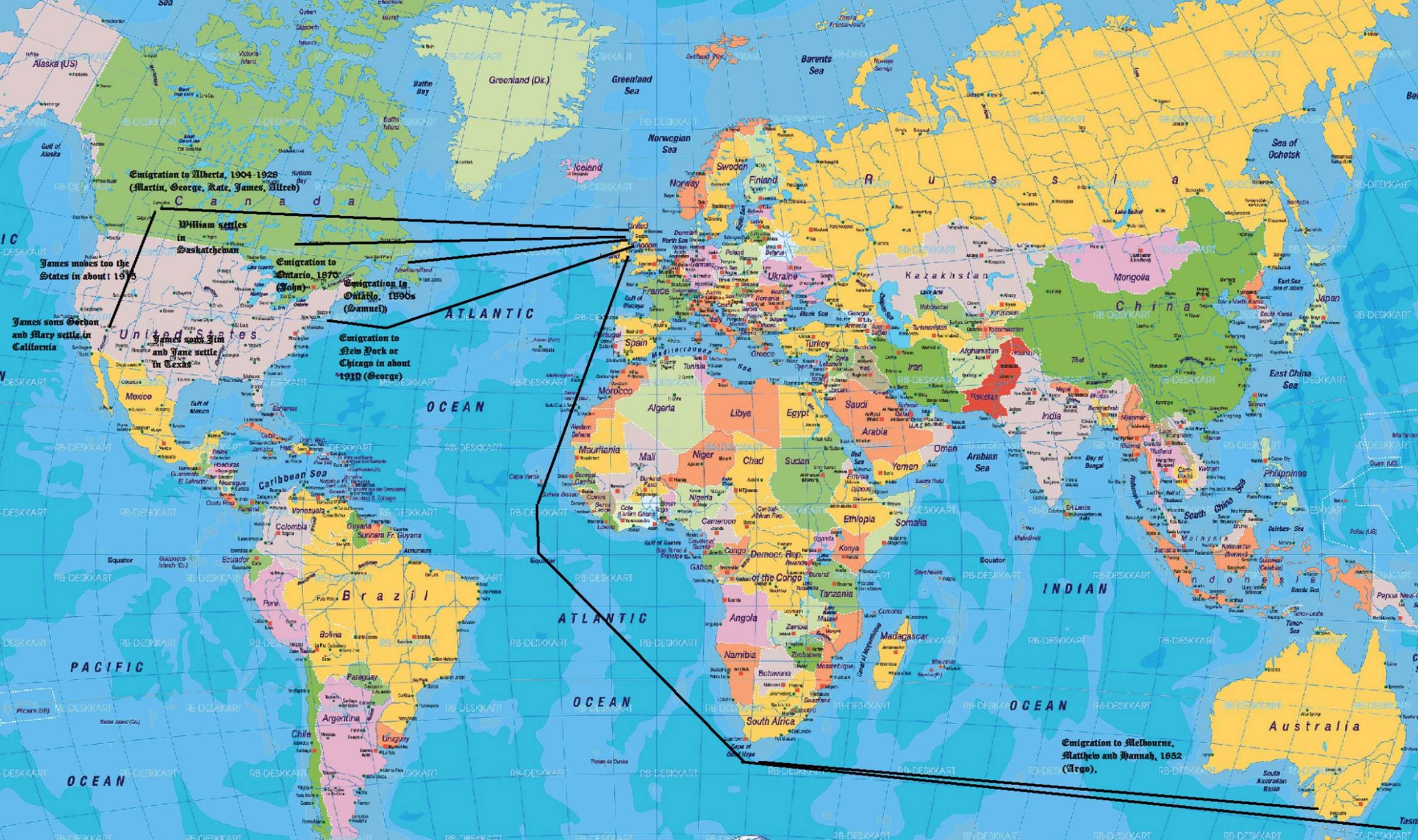
saw significant emigrations of Farndale families to Canada, Australia and New
Zealand. This was an age of large families which could not be supported on the
available land, whilst new opportunities beckoned across the British Empire.
The two
lineages of Australian Farndales
There were two
families who emigrated to Australia.
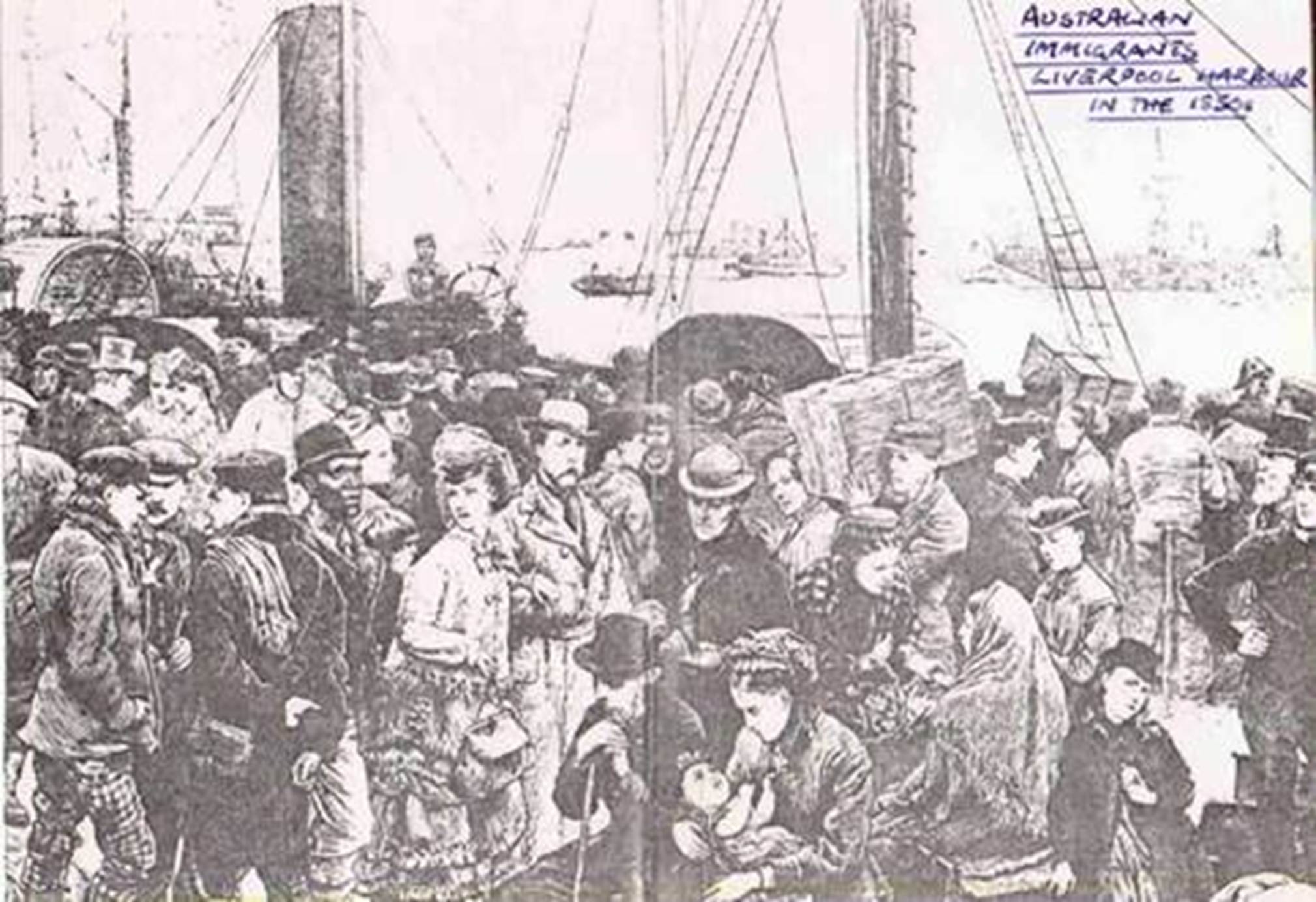
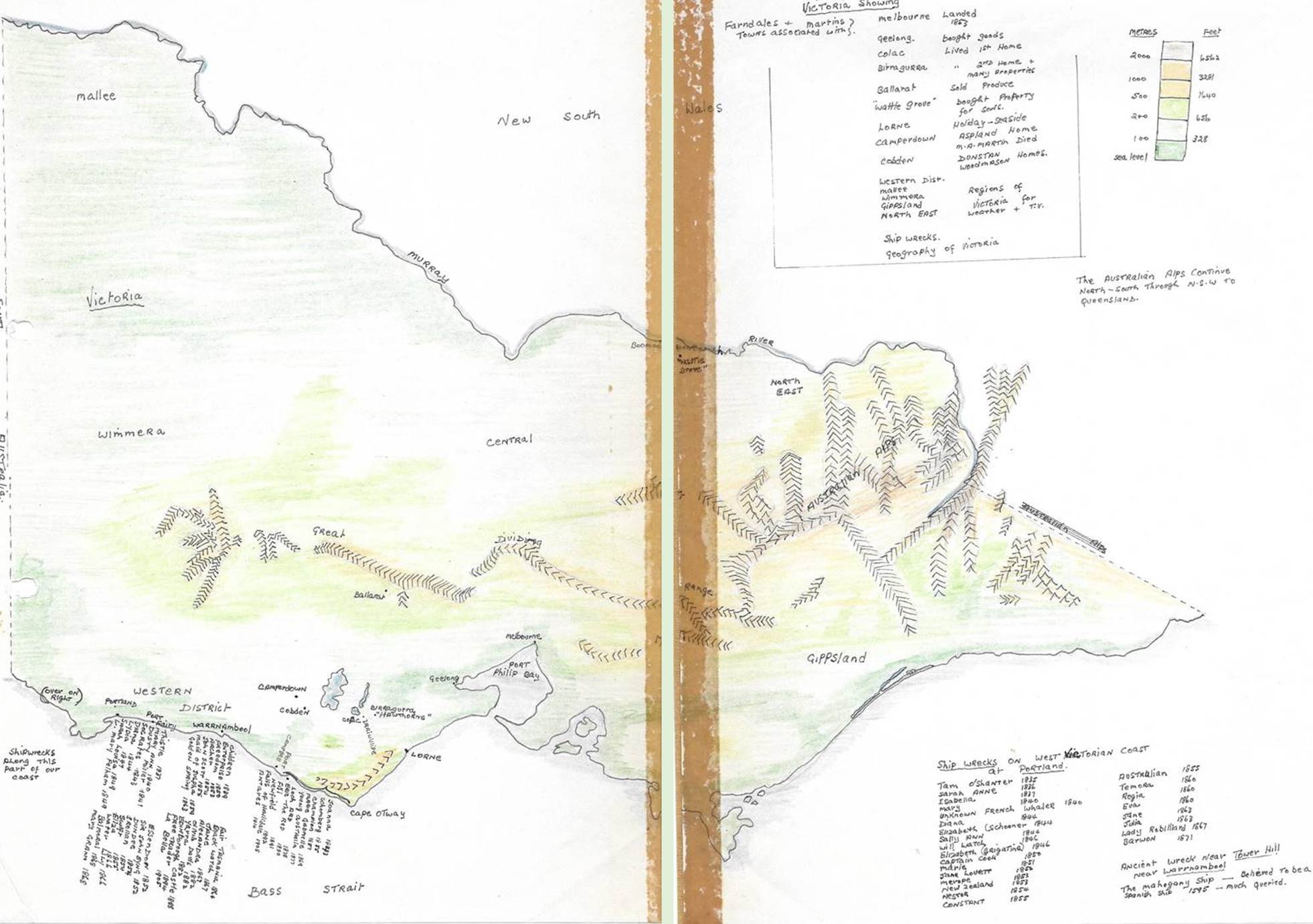
Australian Emigrants, Liverpool
Harbour in the 1850s
The Birregurra (Australia
1) Line were the descendants of Matthew Farndale 1793-1884 (FAR00225), the first Farndale to emigrate to
Australia on 8 October 1852. Matthew Farndale, aged 59, his wife Hannah Farndale,
formerly Thompson, aged 45, his daughter Elizabeth Farndale aged 19 (FAR00323) and his daughter Mary Ann Martin
(nee Farndale) (FAR00313) aged 23 left Southampton on ‘The
Argo’ (967 tons) on 8 Oct 1852.They arrived in Melbourne Australia on 19
January 1853, a journey of 103 days or some three months.
Although the name Farndale did not continue as Matthew had
two daughters, a large family was descended from Matthew – see Farndales and their descendants of Australia
and the Martin family.
The Australia 2 Line were the
descendants of Clifford Farndale born 1927 (FAR00903)
who also emigrated to south Australia and whose Farndale descendants still live
in Australia.
The Ontario
Farndales
The Ontario
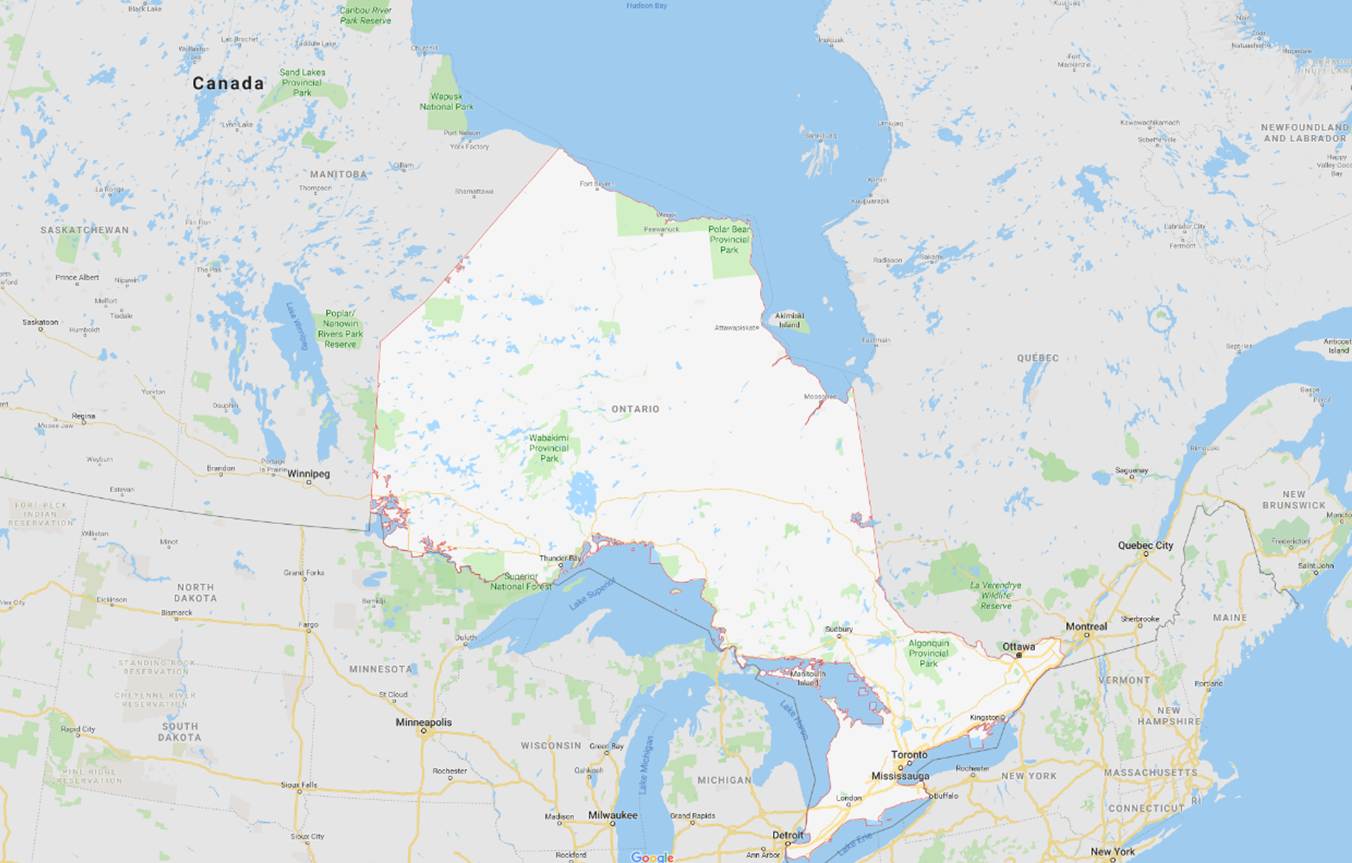
1 Line were the descendants of John Farndale (FAR00337),
1836-1909, who served about 1853-56 in the
Crimea in the 28th of Foot a Yorkshire Regiment, became a printer’s apprentice
before he emigrated to Ontario (possibly via Australia). His family still live
in Ontario, and some in Nova Scotia.
The Ontario 2 Line were the
descendants of Samuel Kirk Farndale, born 1871 (FAR00512).
The American
Farndales
The American
1 Line were the descendants of James Farndale (FAR00607) who sailed for Canada, aged 28 and
joined his brothers Martin and George and his sister Kate. He spent two years
in Canada and kept a diary of his journey out and of his first
year.
Given limited opportunities in
those early days in Canada, he decided to go on to USA in 1915. He managed to
get into Duluth High School from where he got himself a place
at Valpraiso University in Indiana. At the university he met Edna
Adams whom he married on 25 September 1917. When the USA declared war on
Germany in 1917, he joined the American Army and went to France.
In 1918, he was posted to San
Antonio where he left the army and he and Edna later went to live at Plymouth,
Indiana, but by then he had developed lung trouble. He began to make a living
at carpentry. In 1919, he moved to the west coast to try to get to a better
climate and to be near Edna's parents. Jim built them a house at Los Angeles
and then he built one for himself. At this time, Jim was working in an
architect's office and at the same time, he was attending the University of
California in Los Angeles. He did this until 1929 when his health began to give
him serious trouble and the doctors said he must live in a really
dry climate.
Their first child, Hazel Jane, was
born in Los Angeles on September 1922 and their second, James, on December
1923. Mary was born in 1926. The family moved to a ranch in the desert at Las Vegas in 1929. Life became a hard
struggle for Jim and he did the best he could as a 'finish
carpenter'. In 1930, they moved into Las Vegas and built a house.
In 1932, their fourth child,
Gordon, was born. Although still a finish carpenter, Jim had become Business
Agent for the Carpenter's Union. It was in this year that he first became
involved in the Boulder Dam project. In 1935 their fifth child and second
daughter, Doris, was born. Jim was now proving himself to be an efficient
administrator through his work with the Carpenter's Union and the Boulder Dam
Project. He developed a reputation for reliability and honesty. Accordingly, in
1936, he was elected to the Nevada State Assembly. After a four year period,
he was re-elected for a second term, in 1940. In 1942, he was elected
to serve in the Nevada State Senate and was to complete a four
year term, until 1946. He did much work on housing projects in the State
and never forgot the World War One veterans.
Tragedy struck in September 1955
when his daughter, Doris, was killed in a motor accident at the age of twenty.
Jim took this very hard indeed and never really recovered from it.
Jim's family were the first of a
new generation of Farndales. His son, Jim, had no family, but his son Gordon
had a son, Mark and a daughter, Linda.
Former Senator James Farndale died
in Las Vegas, Nevada, USA, 20 Jan 1967. Edna
Farndale (nee Adams), died, Austin Texas November 1979.
There is more information
about the Farndales of America
The American 2 Line were the
descendants of George William
Farndale (FAR00643) born
in Coatham. He emigrated to USA at the age of 17 in about 1907 and
established a Farndale line in USA. He married Frances Hilton in USA, either in New York or Chicago. Frances appears to have come from
England too. Frances appears to have died in late November or early December
1918 from swine flu. George appears to have married
Rose Cunningham in the 1920s in either Cedar Rapids
or Desmoines, Iowa and appears to have come back to Prophetstown about 5
years later. Arthur and Richard were being raised by the McFadden family of
Prophetstown, Illinois. George took Arthur, leaving Richard with
the McFaddens and moved to Milwaukee, WI. George Farndale died in
August 1984 at Thiensville, Wisconsin, USA, aged 94
The American 3 Line were the
descendants of John A Farndale (FAR00921),
born in the Croydon District. It was probably
John Alan Farndale who travelled on the Queen Elizabeth to New
York in 1957 (he would be aged 25). He later lived
in Santa Ana, California. He married Ardith Fay Gebben (US Citizen).
After a divorce, he later married Marion Dorothea Klaembt (US
Citizen) on 19 May 1984
Other Farndales
who emigrated to America include:
· William George
Farndale (FAR00492),
a clerk of Middlesbrough who went to USA in 1907;
· William Jameson
Farndale (FAR00677);
· Georgina Ann
Farndale (FAR00934)
who emigrated to USA;
· Anthony Reginald
Chesters Farndale (FAR00944)
who emigrated to USA;
The Alberta
Farndales
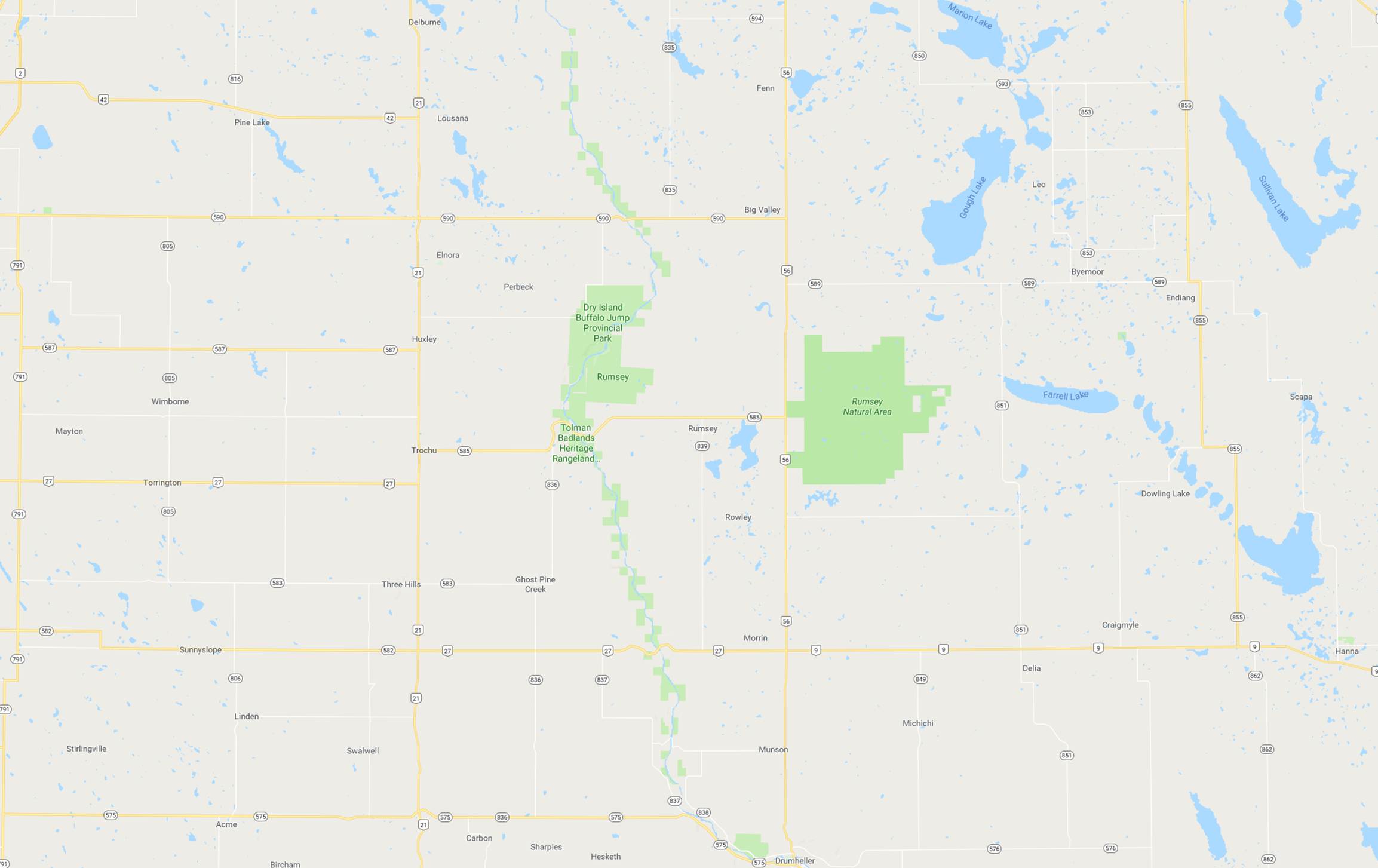
The Tidkinhow Line were the descendants
of Martin Farndale (FAR00364) and of
his family of twelve:
· Martin Farndale (FAR00571)
emigrated to Trochu and was a cattle farmer in Alberta;
· George Farndale (FAR00588)
emigrated to Three Hills Alberta
· Kate Farndale (FAR00601)
emigrated to Three Hills, Alberta, where her descendants, the Kinsey family,
still live;
· James Farndale (FAR00607)
emigrated to Alberta and later on to America;
· William Farndale
(FAR00647)
emigrated to Saskatchewan and served in the Canadian Army in World War 1, dying
shortly after that War from influenza;
· Grace Farndale (FAR00659)
emigrated to Alberta, married Howard Holmes and lived on a ranch there, before
returning later in her life to Alberta; She wrote a
diary.
· Alfred Farndale (FAR00683)
emigrated to Alberta, built his own house there, before returning to Yorkshire
after the Great Depression.
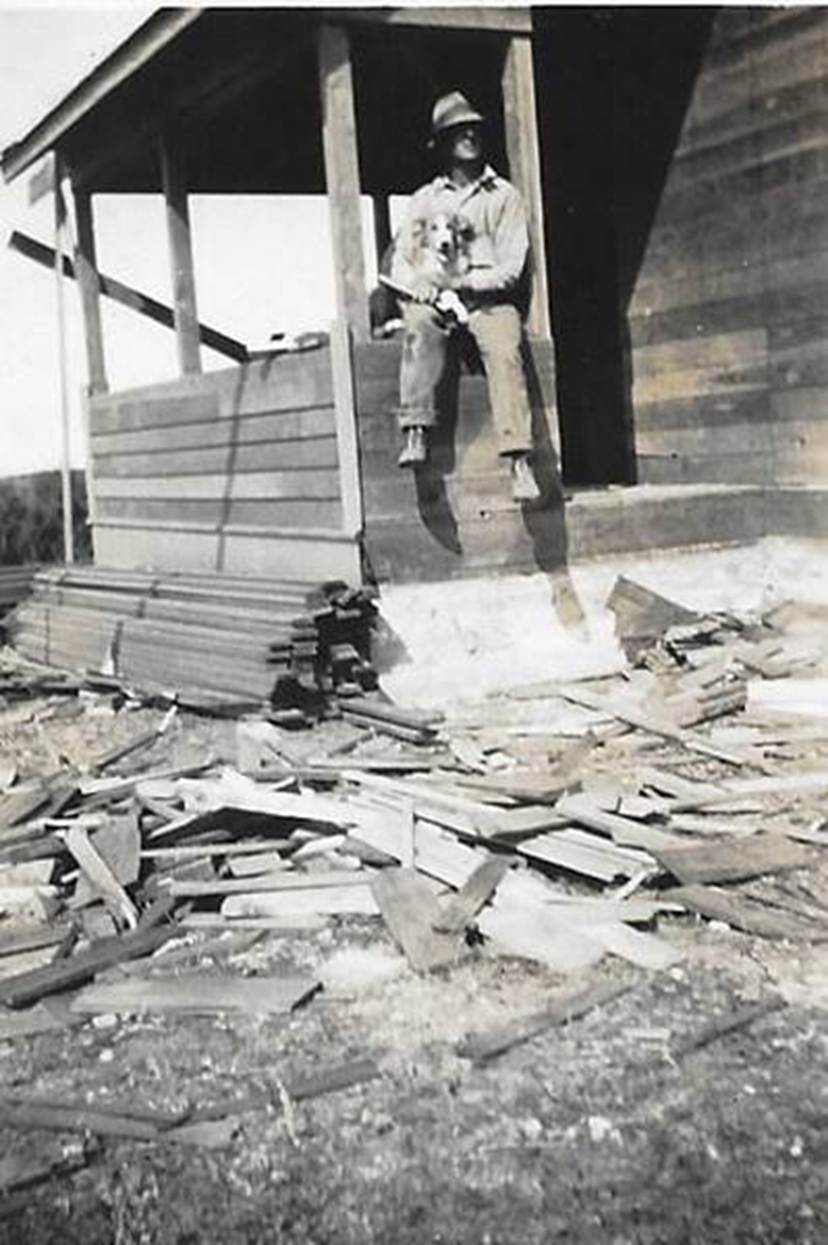
Alfred building
his house in Alberta in about 1928
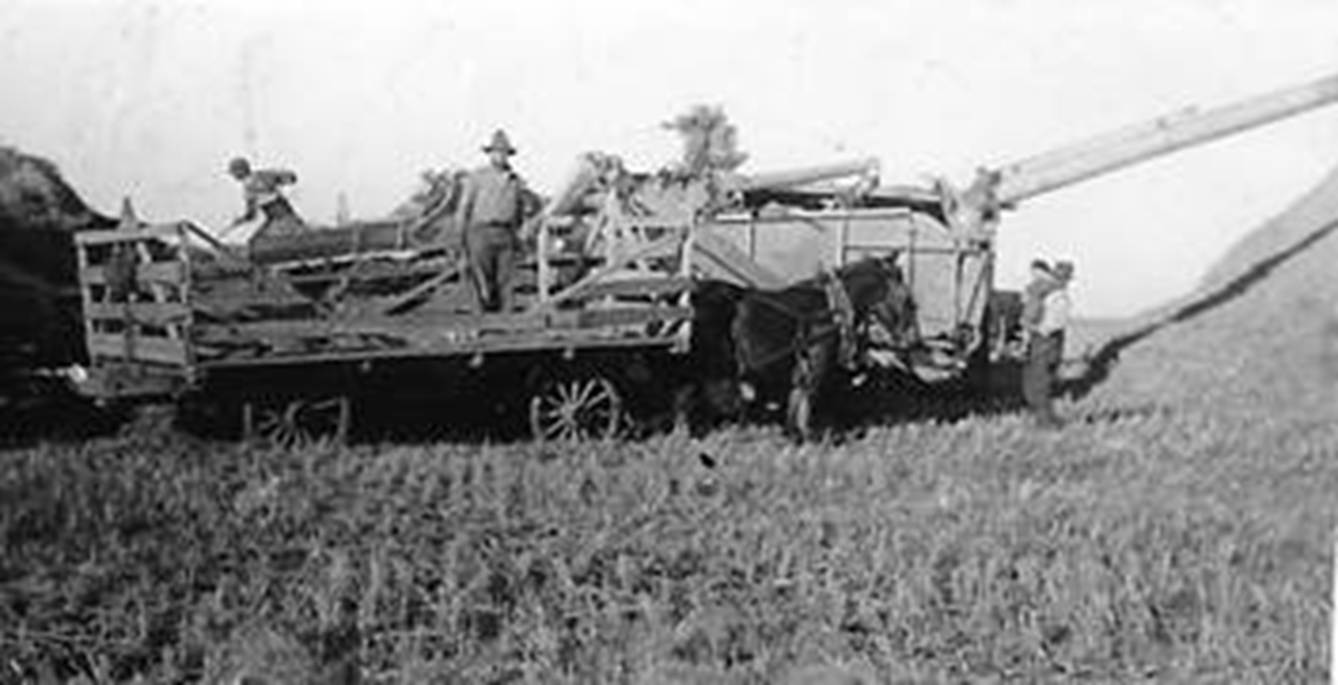
Harvesting on the
Prairies
The
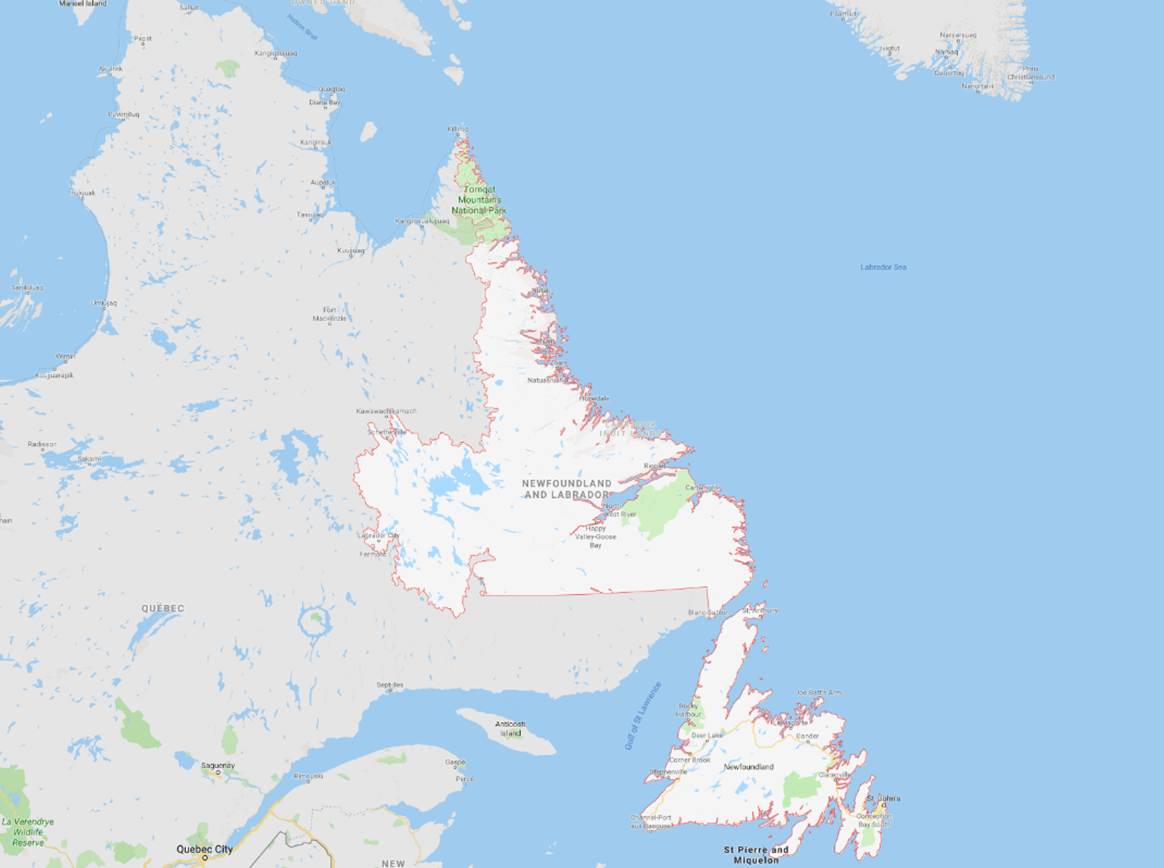
Newfoundland Farndales
The Newfoundland Line were the
descendants of John Farndale 1886 – 1966 (FAR00613)
who emigrated to Newfoundland.
The New
Zealand Farndales
The New Zealand Line were the
descendants of Ronald Farndale (FAR00852)
who emigrated to Masterton, near Auckland, New Zealand. See the New Zealand Farndales.
The New Zealand 2 Line are the descendants
of Wilf Farndale (FAR00769).
Others
In more recent
times of course Farndales have naturally found home in many places overseas.
For instance
Keith Farndale (FAR00976)
spent time in Paris.