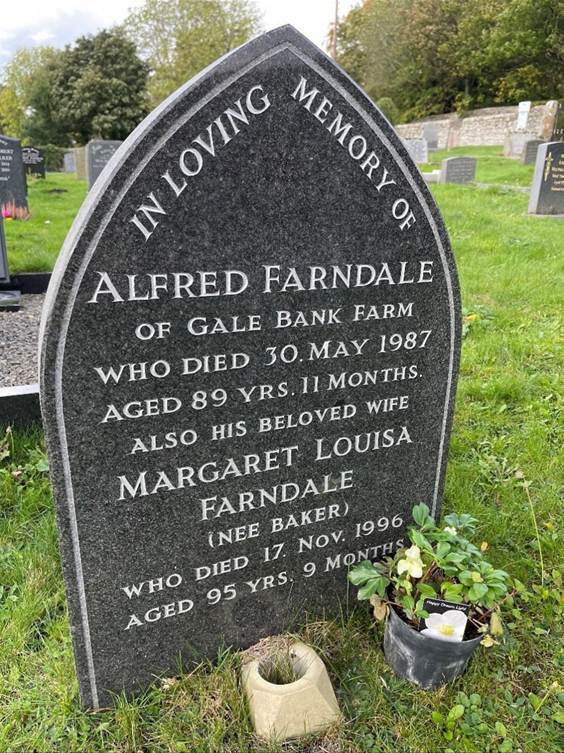
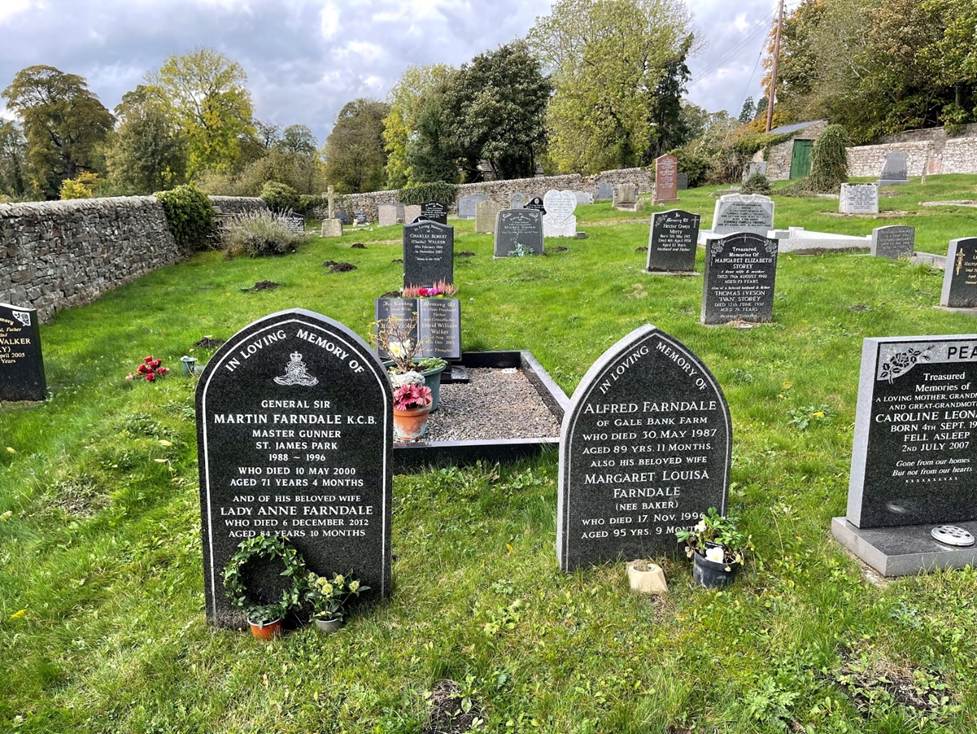
5 July 1897 to 30 May 1987
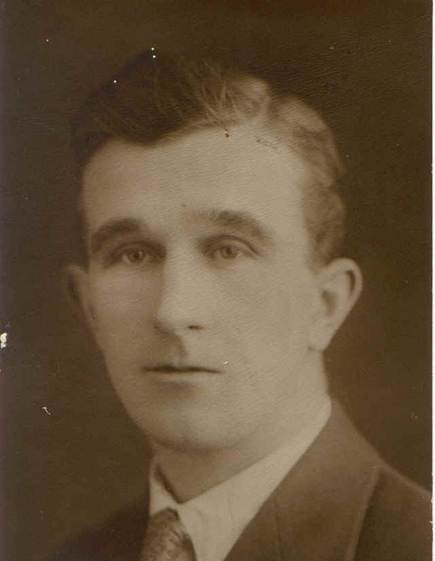
The World War 1 veteran, Alfred
Farndale married the independently minded Peggy Baker in 1929 and embarked
immediately for the Prairie of Alberta. Defeated by the Great Depression the
family returned to Yorkshire where they built a new life from the 1930s
FAR00683
|
Return to the Home Page of the Farndale Family
Website |
The story of one family’s journey through two
thousand years of British History |
The 83 family lines into which the family is divided.
Meet the whole family and how the wider family is related |
Members of the historical family ordered by date of
birth |
Links to other pages with historical research and
related material |
The story of the Bakers of Highfields, the Chapmans,
and other related families |


Alfred
Farndale led a long, varied and active life as a farmer, soldier and pioneer of
Western Canada. A Soldier in WW1 and farmer in Wensleydale
Dates are in red.
Hyperlinks to
other pages are in dark
blue.
Headlines of
Alfred’s life are in brown.
References and
citations are in turquoise.
Context and local
history are in purple.
Geographical
context is in green.
Tidkinhow
1897
Alfred Farndale, the son of
Martin and Catherine Jane (nee Lindsay) Farndale (FAR00364) was
born on 5 July 1897 at Tidkinhow Farm, Stranghow, Skelton (GRO
Vol 9d page 487, and family knowledge). He was the
youngest of twelve children.


1901
In 1901, when the census was taken, he was with his
mother Catherine in Newcastle, visiting the Heslop family. In the
1901 census he was registered at 105 Stanhope Street, Westgate, Newcastle.
Alfred Farndale aged 3 is shown with Kate Farndale (born 1955) and the Heslop
family from Alwick. He is shown as their nephew. So
presumably he was with his mother, Catherine (Kate) and perhaps her sister and
they were on a visit at the time of the census.
Kate
was showing off her latest child, Alfred, to her family.

1902
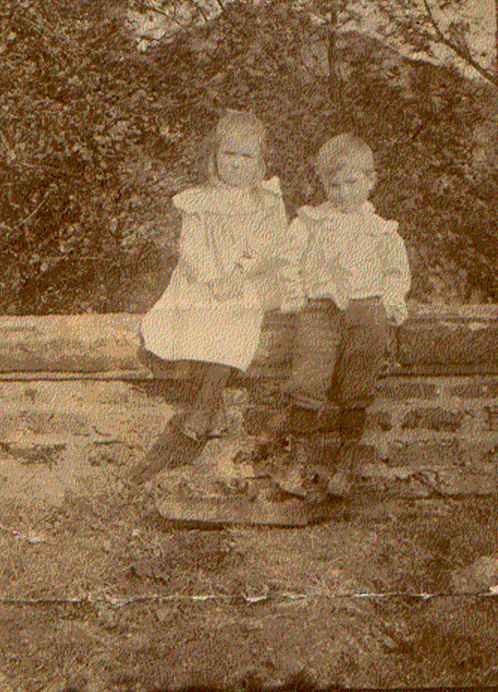
Alfred in 1902
Early
years
In a talk between Alfred Farndale and his son, Martin
on 29 July 1982, Alfred recalled, "I remember going to school
at Charltons
near Tidkinhow. We then went to
Standard 1 at Boosbeck. We stayed there
until we were 14. It was a two mile walk each day. The headmaster was Mr
Ranson. I remember Jim, my elder brother catching me fishing and playing
truant. He just said "Get in" (he was in a
pony and trap) and he took me to a days marketing at Stokesley. I remember the second
masters name was Ackroyd. I got a fork through my leg and he sucked it out. We
were always inspected as we arrived at school. We had to walk past the
Bainbridge place and people used to say that he had more sheep on the moor than he was allowed. I remember William looking after
me at mother's funeral. I was crying and very upset.”

His
mother, Catherine Jane Farndale, died in 1911.
He
continued to go to a local school and was working at home when the war broke
out in 1914.
1910


The boys of
Tidkinhow in about 1910 - John, James, Alfred, William, George and inset Martin
1911
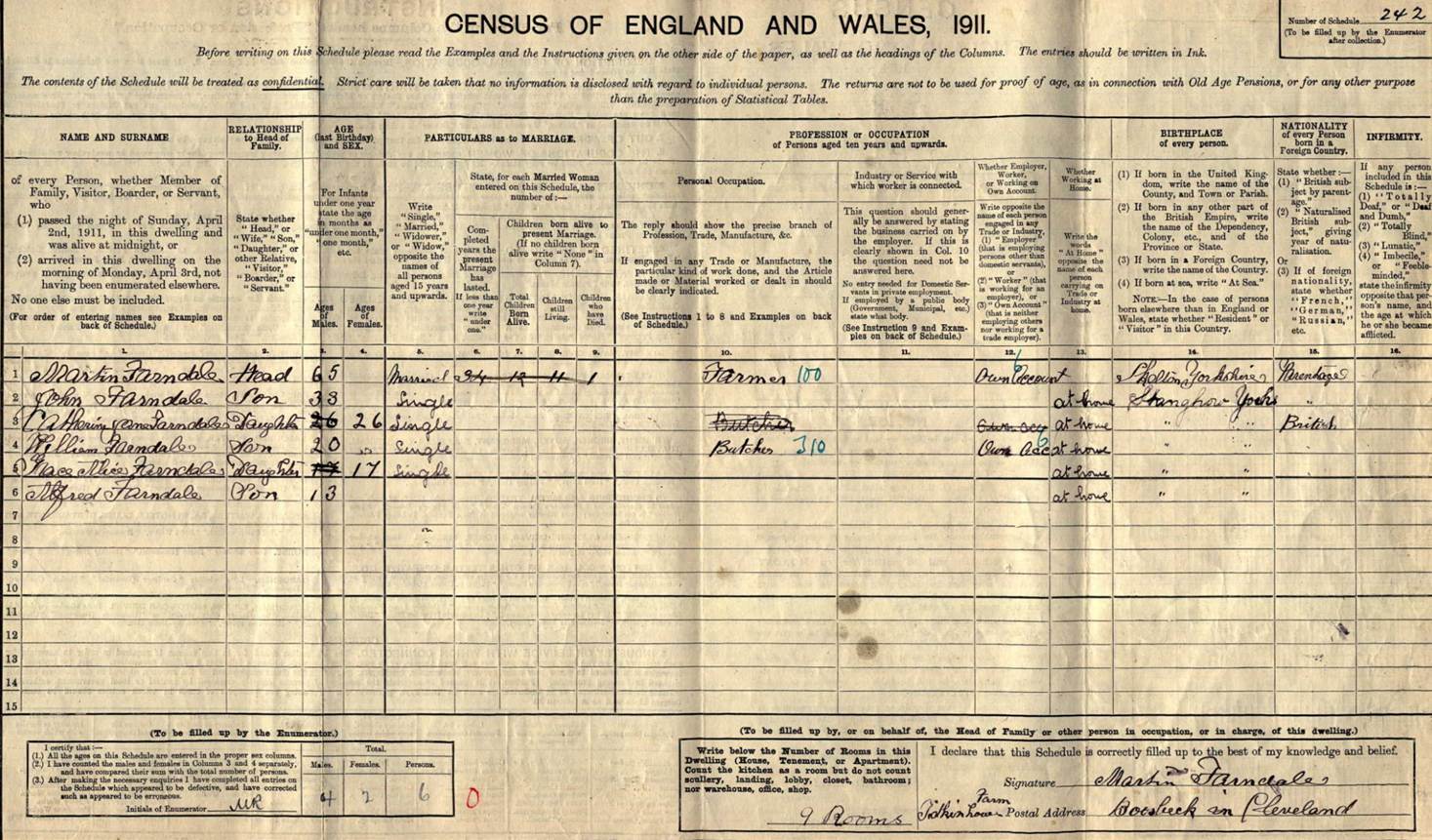
The 1911
Census for Tidkinhow Farm, Boosbeck, Stanghow listed Martin Farndale,
65, farmer, head, born Charlton; John Farndale, 33; Catherine Jane Farndale
(Alfred’s sister, not his mother), 26; William Farndale, 20, butcher; Grace
Alice Farndale, 17 and Alfred Farndale, 13, born 1898.
France and Mesopotamia
Military
Service from 1915 to 1920
Alfred joined
the West Yorkshire Regiment in 1915, and, being under age, reenlisted at the
end of 1916 when he volunteered for the Machine-Gun Corps and served on the
front line with 239th Company at Ypres in France until mid 1917 when he went to
Mesopotamia and served in action there until the end of the war. He served in
France, Iraq and India.
In a talk between Alfred Farndale and his son, Martin
on 29 July 1982, Alfred recalled, The war came in 1914 and I was just
17. I wanted to join up so I ran away and joined up at the local recruiting
office at Northallerton, somewhere in
South Parade I think. I joined the West Yorks but my father found out and said I was under age, which I was. The CO wanted me to stay on the
band, but father wouldn't hear of it and I came out. I remember being very
proud of my first leave in uniform. Then one day they called for volunteers for
the Machine-Gun Corps and I stepped forward.


Alfred West Yorks
1915
He was relegated
to the Army Reserve (under age) on 14 December 1915.
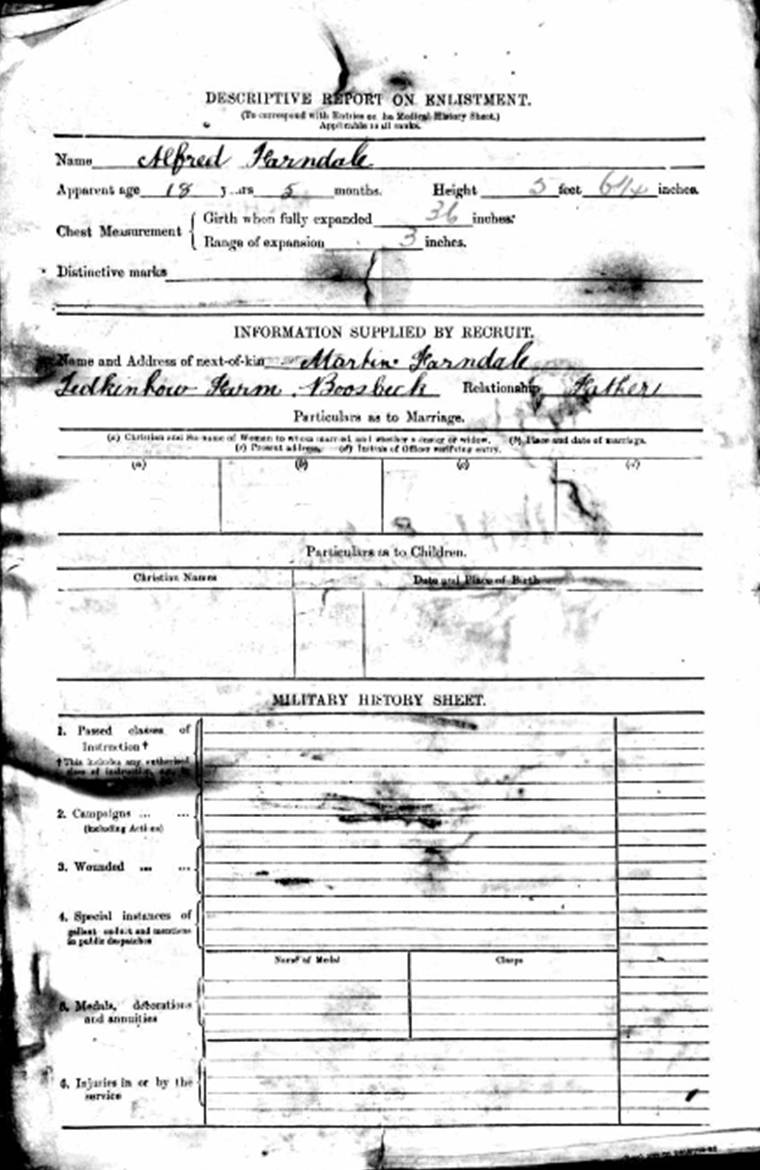
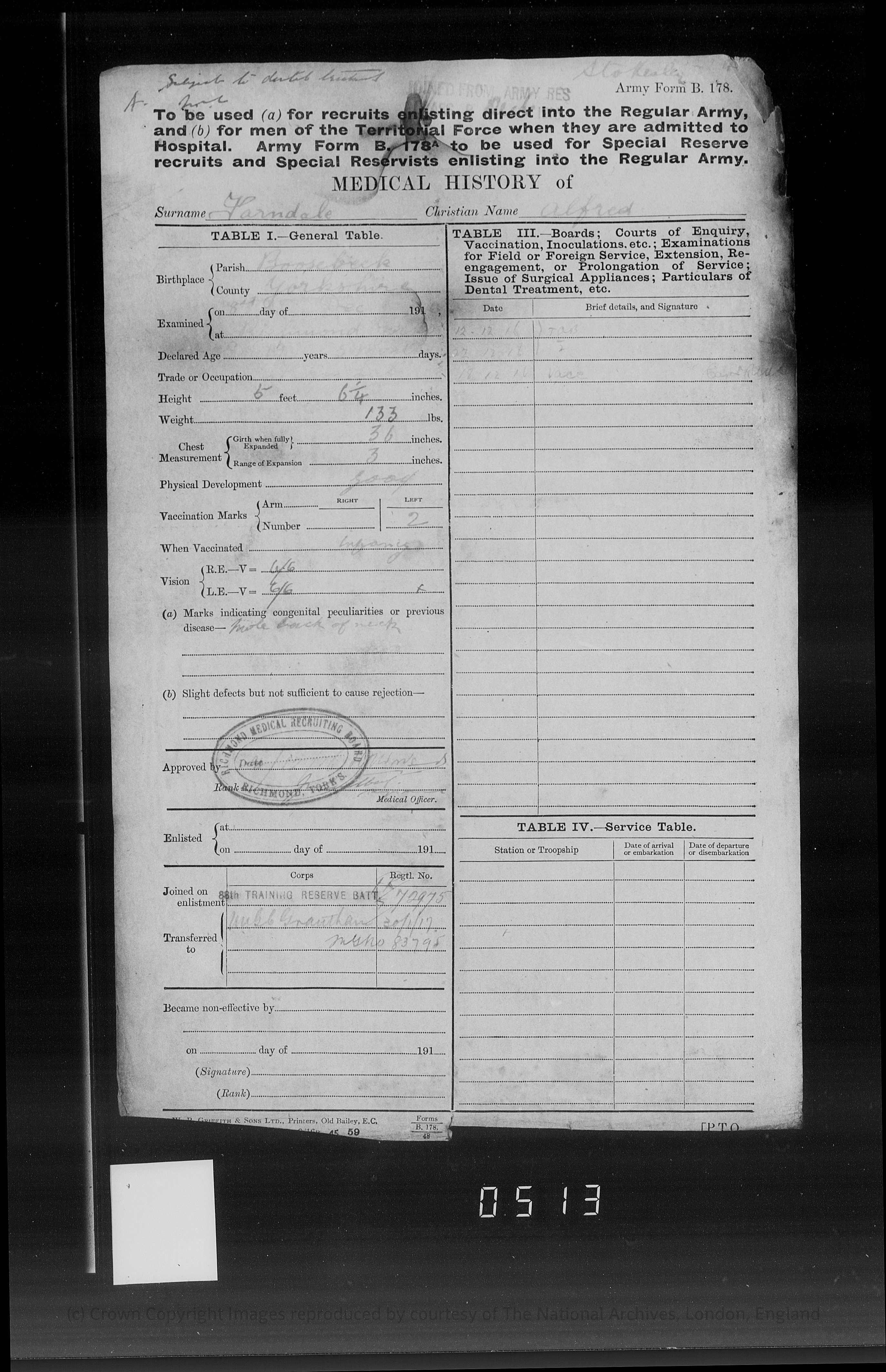
He re-enlisted on 5 December 1916. His Attestation on 13 December 1915 showed
his address at Waterfall Farm, Guisborough and he was a farm labourer. His age
was 18 years and 5 months. He went to the Army Reserve (88th
Training Reserve Battalion) on 14 December 1915 and was mobilised on 6 December
1916. He was posted on 9 December 1916. He transferred to the Machine-Gun Corps
on 30 January 1917.


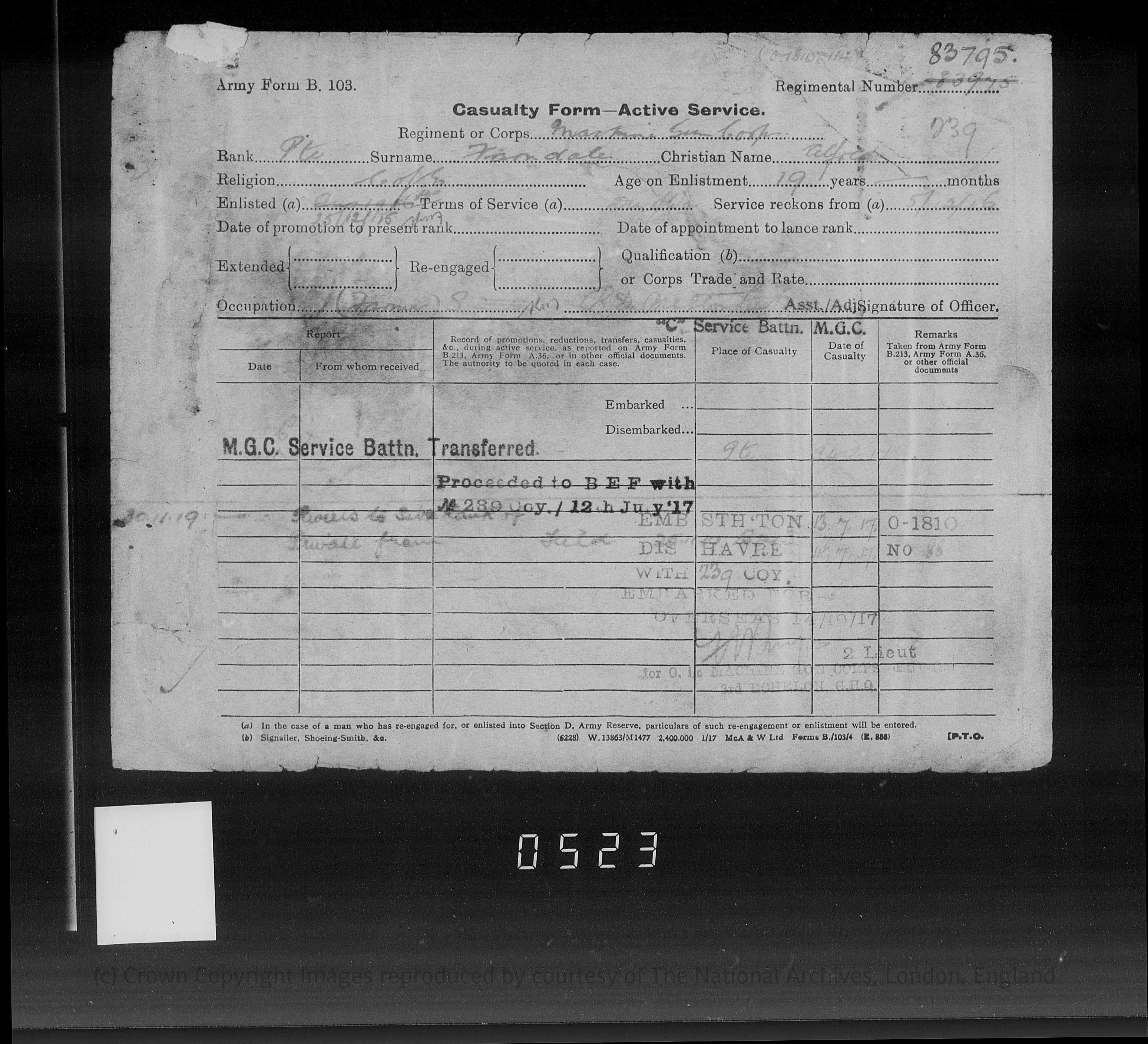
The
military records show that Alfred was a Private, Machine Gun Corps, 249th
Machine Gun Company. 83795 Private Alfred Farndale, Machine Gun Corps, enlisted
into 88th Training Reserve Battalion at Northallerton 13 December 1915.
A MGC
Transferral Oder showed him proceeding to the British Expeditionary Force (ie in France) on 12 July 1917. He embarked at Southampton
on 13 July and disembarked at Le Havre on 17 July 1917. He had been posted to
239th Company MGC BEF 13 July 1917. His Medical
History Record showed he was 5 ft 6 ¼ inches height and 133 lbs.
Alfred’s brother William Farndale, had
previously joined to Canadian Army. His brother James Farndale would later join
the American Army. Three brothers in three different but allied armies.
William had been
wounded at Vimy Ridge on 13 December 1916. In January 1917 he had written to
his sister Grace from hospital. Having by then seen the realities of the Front,
he had written, If my arm does not get better it is likely I will get sent back to Canada in the
Spring, but I will never see France any more. I am
awful sorry that Alf had to go. If he ever gets to France
I will want to go back again. He was worried for his younger brother. Back
in Canada by November 1918, the still weak William chose to transport influenza
patients to hospital, caught the bug himself, and died.
Six months later
Alf began his own journey to the Western Front.
We went to Belton
Park, near Grantham for training. I joined 239th Company MGC and we were
attached to the Middlesex Regiment.

Machine Gun Corps
at Belton Park, Grantham in 1917 (From Alfred’s photographs)
In 1917 we sailed
for Calais and went to "Dickiebush" Camp.
We were first in action at Westbrook and Polygon Wood.
We saw some action at Zonnebeke, Ploegstraat
and Arras.
The 239th
Machine Gun Company (“MGC”) was a unit in the British Machine Gun
Corps during World War I, attached to the 47th (2nd London) Division in France.
The Company joined the Division on 17 July 1917, and
had seen action in the Battle of the Somme in the closing days of the
engagement, before Alfred joined them. Its war diary, detailing the unit's
actions between 13 July and 31 October 1917, is available at the
National Archives or Amazon
and I have a copy. It was part of 47 Division Divisional Troops.
Western Front, July 1917
On 13 July 1917 at 0450 hrs, the Company was at Grantham and left
for overseas. Strength 10 officers, 177 other ranks, 7 horses and 47 mules
(139 MGC War Diary).
At 1800 hrs on 13 July the Company sailed for France on SS Huntscraft and landed at Le Havre at 0800 hrs on 14
July, when they marched to No 1 Rest Camp. At 1400 hrs they left the Gare des Marchandises for the Concentration Point. (139 MGC War Diary).

SS Huntscraft was later
torpedoed on 6 July 1918 by U-boat 57 and damaged
On 17 July 1917 the Company marched to join 47th (London)
Division at Westoutre and went to Curragh Camp. The Company was then training
in camp until 9 August 1917. Westoutre (now Westouter)
is close to the French-Belgian border en route towards Ypres. During this period a detachment of 2 officers
and 38 Other Ranks were immediately detached to support 142 Machine Gun Company
during their forthcoming operations on 29 July 1917
and they returned to 239 Company on 5 August 1917. (139
MGC War Diary)
Alfred may have been part of this group.
Alfred recalled that they were also at Dickiebush
camp. This camp was at the modern town of Dikkebus
and the location of the Dickenbusch Military
Cemetery.


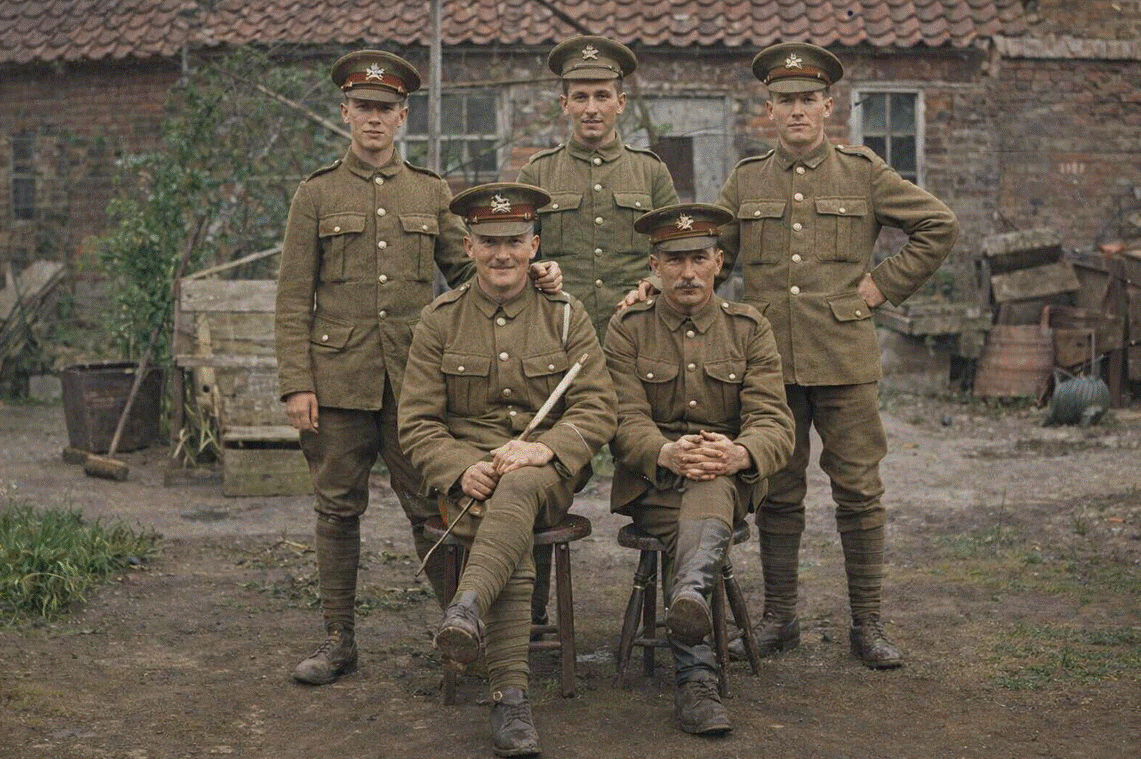
Ypres, France,
1917 (Alfred centre, rear)(and the same photo
recreated by AI in colour)
142 Infantry Brigade Machine Gun Company, 47
Division – the action at Caterpillar Crater and Hill 60, 31 July 1917
Of the detachment from 239 Company, Lieutenant J G Duncan was wounded
on 31 July 1917 and another man went to hospital.
On 29 July 142 Company were packing limbers
preparatory to love up to the line. They came under the command of 41st
Division and, on a wet day, were detailed to occupy barrage positions near
Caterpillar Crater. (142 MGC War Diary).
Caterpillar
Crater, adjacent to another crater known as Hill 60B, is a mine crater
about 4 km southeast of Ypres. It had featured in the battles of Ypres
throughout the War. It was captured and lost (after a chlorine gas attack) in
Spring 1915. It was the centre of deep mining operations and months of
underground fighting until 7 June 1917 when 24,200 kg and 32,000 kg of
explosives under the two hills were detonated. This was part of the Battle of
Messines (7 to 14 June 1917), which aimed to force German reserves to Flanders
from the Arras front to relieve the French and its objective was the German
defences on the ridge from Ploegseert Wood through
Messines to Mount Sorrel to deprive the Germans of the high ground south of
Ypres.
So 142 MGC were arriving about a
month after this detonation of explosives and at this place of intense
fighting.
On 30 July 1917, the weather was fine when at 1245 hrs sections of the
Company proceeded independently to take over barrage positions near Caterpillar
Crater. E Battery moved to I.35 a 70.55. F Battery moved to the lip of the
crater, commanded by Second Lieutenant Chambers. The Company was in position by
0400 hrs and 3 emplacements had been rebuilt, with
shelters. There was some shelling during the night mainly on Battle Wood and
Cord Lane. (142 MGC War Diary)
Unlike artillery Batteries, in the Machine Gun Corps, a Battery was a
tactical grouping of machine guns for a specific purpose such as a barrage or
mobile strike force. Although battery is usually an artillery term, it was
adopted for this more flexible tactical grouping to describe these operational
machine gun units.
On 31 July 1917 the weather was dull and the
wind came from the northwest. At zero hour, which was 0350 hrs, all guns
opened fire. At 0430 hrs the first objective was reported to have been
taken. By 0445 hrs all objectives were reported to have been taken. There was
an enemy barrage on the front line and at Battle Wood. E Battery were at I35 a 80.50, south of Caterpillar Crater and they had some
odd shells on the trench, but no damage done, at 0500 hrs. Then all guns
ceased fire. There was some slight shelling at the southeast of Caterpillar. E
Battery had fired 34,000 rounds and F Battery had fired 38,000 rounds.
At 0555 hrs verbal orders were received from DMGO to fire on J1 d 2
and 4; P1b 1,2 and 4; and P1d. At 05.59 hrs fire opened by all guns as
directed. At 0650 hrs the message came from DMGO, Counter
attack developing mainly against division on our left, but
slightly overlapping our front.
F Battery increased their rate of fire to 1 belt per 3 minutes for
12 minutes, then resumed normal rate. At 0730 hrs verbal orders came from
DMGO to drop on to P 1b 1 and 3 instead of P1b 2 and 4 and the message was
dispatched to Lieutenant Packenham to that effect three minutes later. At 0830
hrs they were ordered to slacken fire. Then, at 0842 hrs they were
verbally ordered to fire on P1c1 with one Battery. At 0845 hrs the guns opened
fire again. At 0900 hrs they were ordered to slacken fire and resume normal
rate of fire. At 0935 hrs SOS on left, all guns opened fire on SOS Lines.
E Battery had fired 40,000 rounds and F Battery 48,000 rounds since 0500 hrs. (142 MGC War Diary).
SOS Lines were pre-arranged emergency defensive barrage plans used by
artillery and coordinated with infantry units, including the Machine Gun Corps.
In case of a sudden enemy attack, a signal would be sent, via telephone or
flare, to trigger a pre-determined fire mission on specific areas where an
assault was expected. MGC companies would have been involved in planning these
defensive positions.
The Company was at Bluff Sector, Ypres from 1 August 1917. The Bluff
in the Ypres Salient was a man-made mound, a spoil heap from the Ypres-Comines
Canal, near Hill 60.
On 1 August 1917 eight guns were at I 35 a
80.80 and eight guns at I 35 a 32.60 in barrage positions. At 0420 hrs all guns
fired on SOS Lines a barrage running north and south through Mollebeke Chateau. Fire ceased at 0520 hrs,
48,000 rounds having been fired. At 0545 hrs all guns fired on square J 31 d,
with 14,000 rounds fired.
On each day of 2, 3 and 4 August the Company fired 10,000 rounds
harassing fire on SOS Lines. On 5 August 1917, in fine, hot weather, the
Company evacuated their positions and proceeded to Rosenhill
Camp near Rewinghelst and in the afternoon moved to
Ascot Camp at Westoutre, arriving at 1700 hrs. (142
MGC War Diary)
It was at this point that the detachment from 239 MGC returned to
their unit.
However before we return to the
chronology of 239 MGC, Alf recalled that his unit was first
in action at Westbrook.
Third Battle of Ypres (also known as the Battle
of Passchendaele) (31 July to 10 November 1917) and the capture of Westbrook (Westheok) on 10 August 1917
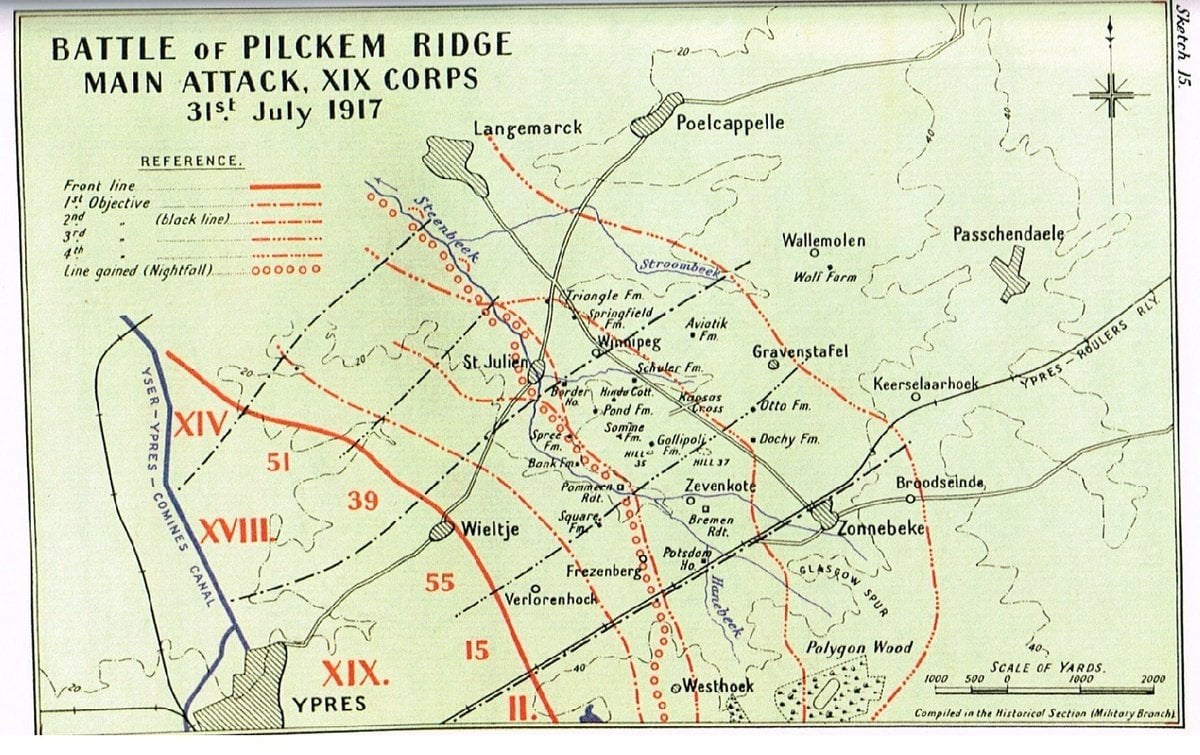
The Battle of Pilckem Ridge (31 July – 2
August 1917) was the opening attack of the Third Battle of Ypres and the map of
the battle also shows the location of Westhoek and Polygon Ridge. At this stage
142 MGC were at Caterpillar Crater southeast of Ypres and 239 Company were
still training in camp. However 239 Company were later
involved on 10 August 1917 in the action at Westhoek and probably at nearby
Polygon Wood.
In 1917, the village of Westhoek (often recorded as
"Westbrook" in British accounts) near Ypres was the site of intense
fighting during the Third Battle of Ypres. The village and the Gheluvelt Plateau on which it was situated were the scene
of a costly British attack and a swift German counterattack.
Following the initial Allied assault of the Third Battle of Ypres,
British forces pushed toward the high ground on the Gheluvelt
Plateau, which had been a German stronghold since 1915. An action on 10 August
1917 occurred after heavy rains had turned the battlefield into a quagmire,
severely hindering the British advance. The British 25th Division, supported by
the 18th (Eastern) Division, launched an attack to capture the village of
Westhoek and secure other positions on the plateau. The British 25th Division
captured Westhoek, but the German army quickly responded with heavy artillery
fire and a counterattack. Fresh German infantry, supported by a smoke screen,
retook the nearby Inverness Copse and much of
Glencorse Wood by nightfall. The British were left holding Westhoek, but at a
high cost, and the strategic German-held ground on the plateau remained largely
intact. Communication failures and the swamp-like conditions of the battlefield
contributed to the limited British success.
239 Machine Gun Company
On 6 August 1917, four officers and 46 other ranks under command of Captain
H J Dunsmuir proceeded to Abeele to take over anti aircraft
defences. They were joined by others from the Company on 8 August. Then on 9
August the whole Company moved by rail from Abeele station to St Omer before
marching to billets at Le Poivre, south of Acquin. There they were engaged in
training, and also at Fersinghem.
(239 MGC War Diary).
Abele (now spelt Abele) is back on the Belgian-French
Border west of Ypres. St Omer is back in France.
This period of training continued until 17 August (239 MGC War Diary).
On 17 August 1917, 239 MGC began a sudden move carried out by tactical
train to II Corps area. On 18 August 1917, they were at Busseboom
and orders were received for two sections to take over barrage positions.
(239 MGC War Diary). Busseboom
is due west of Ypres near Poperinge.
During the night of 18 to 19 August, two sections took over barrage
positions at I.12.b.1.4 under orders of 141 Infantry Brigade (239 MGC War Diary).
141 (5th London) Brigade was an infantry brigade of the Territorial
Army, having been in reserve at the Battle of Pilckem
Ridge and then in the line from 18 August to 2 September and 8 to 17 September
1917.
The action at Ballawarde
Ridge, Westhoek and Zonnebeke, 22 August 1917 during
the Battle of Passchendaele
On the night of 20 to 21 August 1917 two sections from 239 Company
worked on Bellawarde Ridge preparing positions for
barrage. Six other ranks were wounded, though two remained on duty. On 21
August two sections proceeded to Bellawarde Ridge for
barrage on Z day. (239 MGC
War Diary).
Bellewaerde Ridge is located in Hooge, just east of Ypres, and was a key
battleground, the site of fierce fighting. Alf saw action at Zonnebeke
and Westhoek which are in this area.


22 August 1917 was Z Day. The Company were in four batteries of four
guns each. The positions of two batteries were in open shell holes around
J.7.c.5.6 and the other batteries took up position in old enemy trench
positions at I.12.b.1.4. These positions were shelled at intervals during the
night and day and on Y to Z night the enemy sent over gas shells on two
occasions. From midnight on 21/22 to midnight on 22/23 August 1917 nearly
150,000 rounds were fired by all four batteries. 3 other ranks were killed
and 6 wounded. Second Lieutenant J R A Price was admitted to hospital.
At 11.30 on 23 August 1917 two batteries at J.7.C.5.6 were withdrawn
and two other ranks were sent to hospital, sick. On 24 August one other rank
was wounded. One gun and its tripod was destroyed by shell fire.
On both 25 and 26 August 1917, situation normal, casualties
nil.
On 27 August 1917 one battery from 1.12.b.44 moved to J.1.c.1.8 to
fire a special barrage to assist 15 Division on our left. 20,000 rounds
were fired by this battery. There was great difficulty keeping the guns
going owing to the wet state of the ground. There was only one dug out for belt
feeding. 4 other ranks were killed.
On 28 August 1917, inter company relief of
two sections in the line was carried out successfully but CQMS killed and
two other men wounded, bringing up rations. Two mules wounded. (239 MGC War Diary).


Hellfire Corner, 1917
Alfred Farndale was involved in this incident at Hellfire Corner.
Alf later recalled to his son, Martin, I remember an incident on the Menin
Road galloping up with two limbers of ammunition towards the gun positions at
Hooge. I was a Private but I was giving a lift to
Quarter Master Sergeant Zaccarelli. The Germans started to shell us. They could
clearly see us. I had one horse killed and I managed to cut him free and I then rode the other. Zaccarelli was killed; it
was quite a party when I reported it. My Captain asked if there were any
witnesses but there were none, otherwise I might have got something. I remember
an officer coming up to me when we were under bombardment at Ypres and saying "How would you like to be in Saltburn now,
Farndale?".
His grandson, Nigel, later recalled during a twenty first century
battlefield visit to Ypres, When we came to
the notorious spot known as Hellfire Corner, we remembered the story he told
us. He and Quartermaster Sergeant Zaccarelli had been galloping up to the Front
with an ammunition limber when the Germans started to shell them. Zaccarelli
was killed, along with a horse. My grandfather managed to cut the dead horse
free, drag Zaccarelli’s body into a ditch and carry on up to the Front on one
horse with his delivery of ammunition. It amounted to family legend because
there were no witnesses or dates, just this memorable surname. We came across a
small British war cemetery and there was the surname, only spelt slightly
differently. Company Quartermaster Sergeant John Zottarelli died on August 28,
1917, a month into the battle of Passchendaele.
Hellfire
Corner was a notoriously dangerous road intersection on the Menin Road in
the Ypres Salient, known as the most dangerous place on Earth during
World War 1, due to constant German observation and shellfire. It served as a
vital transport hub for the British army, leading to the front lines, and was
characterized by its exposed position and heavy enemy bombardment, forcing
troops to cross at speed. It was often mentioned in the Wipers Times, known
for its dark humour.
|
Footage
of Hellfire Corner during the Third Battle of Ypres, 1917
The scene that confronted
Alfred in August 1917 |

On 29 August 1917 positions for 4 batteries for barrage work was
reconnoitred at JIC and work began at once. A new officer, Second Lieutenant W
L Boyt joined the Company. On 30 August digging at JIC was found almost
impossible owing to the wet conditions of the ground. A mule wounded in the
incident involving Alf on 28 August died during the night. By 31 August work on
barrage positions was progressing well. An enemy aeroplane flew over battery
positions at 1530 hrs but was out of range. On 1 September two sections
were in barrage positions at about 1.12.b.0.5. On 2 September relief came from
195 Machine Gun Company and on 3 September the whole Company was in camp at
G.22.b.7.7 and then training for the following days. (239 MGC War Diary)
On 8 September 1917 three sections relieved 195 Machine Gun Company in
barrage positions at 1.12.b.0.5. On Sunday 9 September a church service was
held for the men at the depot.
During the night of 9 to 10 September 1917 Second Lieutenant A T
Sinclair and two other ranks were killed and one wounded. Barrage positions
were heavily shelled between 0230 and 0330 hrs and
24,000 rounds of small arms ammunition was fired in harassing the enemy. Three
spare parts boxes were destroyed by shell fire and 24
boxes of small arms ammunition was taken up the line by pack animals. On 11 September 6,000 rounds were fired
between 0230 and 0330 hrs and another 24 boxes of small arms ammunition taken
up the line by pack animals.
Alfred’s grandson Nigel recalled, He would tell me about the noise,
which was so loud, so deafening, it gave men mild concussion. They couldn’t
even remember their names, they weren’t able to count
to three. Alfred talked a lot about the mud. The drainage system on this
reclaimed marshland had been destroyed by shelling. It was a landscape of mud,
one big bog. As well as constantly dodging bullets, soldiers who slipped off
the slippery duckboard walkways, just 18 inches wide, were drowned in an orange
sea of bubbling, gas-poisoned mud. It was a death trap. In winter on the farm,
when we got stuck in deep mud, he would say this was like the dry bit in
Passchendaele, dry enough to sleep on.
During the night on 11 to 12 September 1917 the enemy shelled the 239
Company positions heavily with high explosive and gas shells. The Company fired
6,000 rounds in a harassing fire programme. 24 more boxes of ammunition were
taken up the lines by pack animals and two mules were
slightly wounded and a limber damaged. Another 6,000 rounds were fired the
following night. In the early morning on 14 September and gun and tripod were
destroyed by shell fire and 6,000 rounds were fired. During the night of 14 to
15 September another 6,000 rounds were fired and eight
guns fired a special barrage at 0400 hrs to assist an attack on a strong post
by a party of the right Brigade when 30,000 rounds were fired. On 16 September
a creeping barrage was carried out by twelve guns when 12,000 rounds were
fired. There was relief from 14 Machine Gun Corps at 1645 hrs, but the guns
and their equipment could not be got away owing to heavy shelling on the Ypres
to Menin road. On 17 September the guns and
equipment were got out by limbers and at 0500 hrs the Company prepared for a
move.
Alfred also recalled that he had been with the unit first in action at
Polygon Wood, which was in this area. Polygon Wood, Polygoonbos
in Dutch, Bois du Polygone in French, is a
forest located between Ypres and Zonnebeke. It was
the scene for several battles during the First World War and there are at least
two cemeteries of the Commonwealth War Graves Commission in the immediate
vicinity of the wood. The wood had been held by the Germans since April 1915
but was later captured by the Australian 5th Division in the Battle of Polygon
Wood in a battle a short time later between 26 September to 3 October 1917.
Much of the woodland had been destroyed by the huge bombardments from both
sides since 16 July and the area had changed hands several times. Assembled forward
of the artillery in that later battle were Vickers machine-guns of the
divisional machine-gun companies, 56 for the creeping machine-gun barrage and
64 SOS guns for emergency barrages against German counter-attacks
and to increase the barrage towards the final objective.
Alf also said he saw action at Ploegsteert,
about 16 km south of Ypres.
On 18 September 1917, the Company moved by road to Godewaersvelde
and the men were comfortable in a barn.
Godewaersvelde is
about 10km west of Ypres. The Company had a period of training and recreation
until 22 September, when they moved by rail to 1st Army Area. The
train finally departed at 0315 hrs on 23 September and arrived at Savy Berlette Station the following morning, and moved to Agnieres, west of Arras, where billets were very scattered.
Alfred later recalled that they saw some action at Arras.
On 28 September 1917 the Company were ordered to hold in readiness to
proceed overseas. They prepared on 29 September as they were inspected by Major
General G F Gorringe commanding the 47th (London) Division who in a
short speech expressed his pleasure at the behaviour and work of the Company
since joining the division. (239 MGC War Diary)

Later Lieutenant General Sir George Frederick Gorringe KCB KCMG DSO
had served during the Anglo-Boer War and in Palestine and on the Western Front.
He commanded the 47th (London) Division in France between September
1916 and March 1919. His nickname was Bloody Orange, from the rhyming slang. He
was said to have had a rude and unpleasant personality, but he obviously liked
239 Company.
239 MCG left 47 (2nd London) Division on 1 October 1917.
Then suddenly we
were ordered to Marseilles and got on a troopship for Basra in Mesopotamia.
After about 14 days we were in the Suez Canal and then the Red Sea. We landed
at Basra and marched to Kut-el-Amara as part of a
force under General Maud to relieve Townsend. About the middle of 1918 the
Turks surrendered. We hung around for quite a while. I cut my thumb on a bully
beef tin and it got poisoned. I was in hospital in Kut
when 239th Company left for England.
The Company entrained at Maroevil Station on
1 October and travelled to Marseilles over the following three days. On
arriving on 4 October, they marched to Fournier Camp and spent the following
days in preparation for their voyage. By 14 October, they sailed for Malta on SS
Minominee. (239 MGC
War Diary)

They arrived in Malta at St Paul’s Bay on 16 October
but no one was allowed to land. They spent the day at Malta on 17 October and
sailed on 18 October, arriving at Port Said on 22 October. Loading took place
there which made the whole ship very filthy, especially the horse decks.
They sailed from Port Said on 23 October and arrived in Suez on 24 October. The
Company went for a short route march, which did everyone good. They left
Suez on 26 October 1917. They continued at sea until 31 October and the Company
Western Fron War Diary ended there. (239 MGC War
Diary).
A new War Diary covered the period October 1917 to November 1919 for
239 Machine Gun Company’s service in Mesopotamia as part of 18 Indian Division
and 55 Infantry Brigade.
Mesopotamia
The Company continued at sea until 7 November 1917, when personnel and
a few limbers transferred to SS Ekma, with animals and most of the transport
transferring to SS Torilla.
Basrah, November 1917
SS Ekma arrived
at Ashar on 8 November 1917 (239 MGC War Diary).
Ashar is a port at Basrah on the Shatt Al Arab.
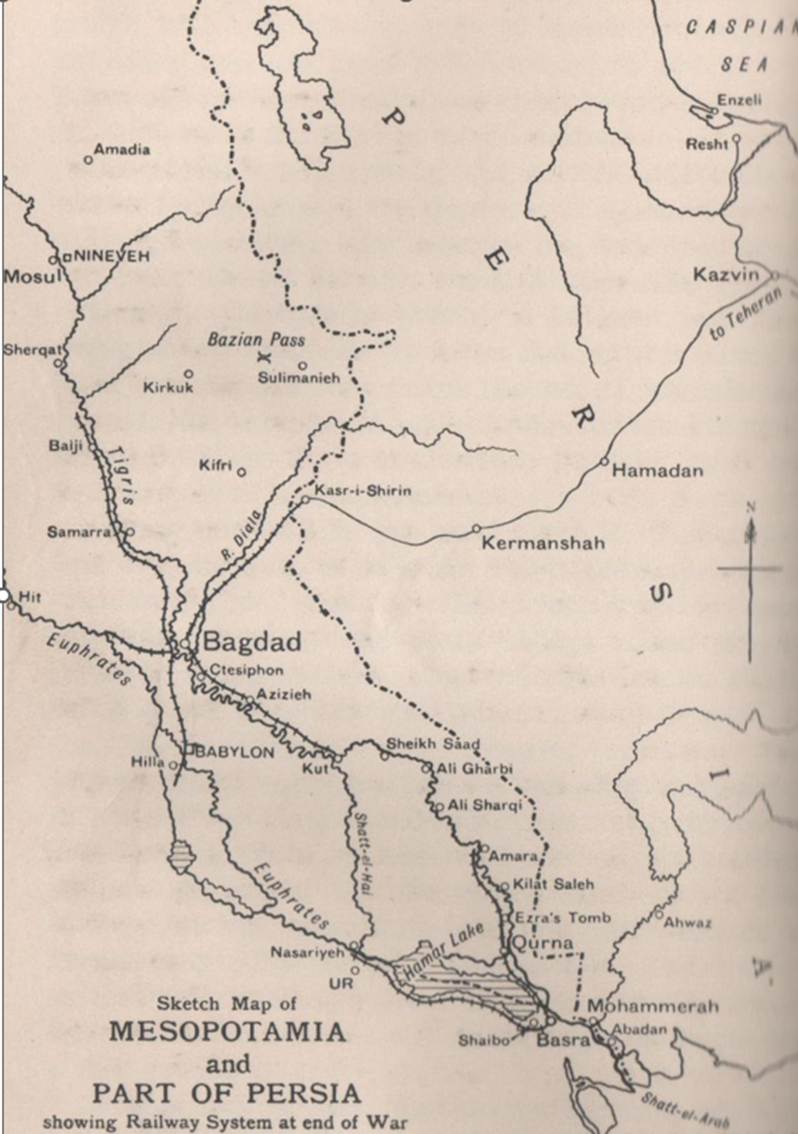
The personnel marched to No 3 Camp at Magil. Al Ma’Qil
is the region of Basrah adjacent to the port. Transport had not arrived so no cooking utensils were available. The animals
and most of the vehicles arrived at Ashar on 9 November. Almost every limber
had been tampered with on the journey. The next few days were spent
checking stores. They spent the next few weeks at Magil, with some hospital
admissions. On 25 November Second Lieutenant S G Moody proceeded to the advance
base at Baghdad. On the same day 4 riding horses and 2 light draught horses
were drawn as remounts.
Upriver on the Tigris, November 1917
On 26 November 1917, the Company embarked on PS 54 and barges to
proceed to Amara on the Tigris, where they arrived on 27 November 1917, with
the following weeks in camp there. (239 MGC War
Diary)
Amarah is about 100 kilometres north of Basrah.
The Company was at Amara on Christmas Day 1917, but
owing to rain no games or sports could be held, but the men had a
comfortable midday meal. No extra rations were issued but the ‘Petroliers’ gave a concert in the evening at which a
good many men attended. Boxing Day was spent in the improvement of camp.
On 2 January 1918, the General Officer Commanding 18th
Division inspected the Company. Owing to heavy rain during the night the
camp was very muddy. The following weeks were spent in more training,
church services, route marches, and lumber drill.
Then on 31 January 1918 the Company embarked on MPS 56 and barges 500
and 514 for Baghdad upstream on the Tigris river. The
accommodation on the barges was good and the
animals embarked without any trouble. The convoy then travelled to Baghdad
and the men were quite comfortable. On 2 February, the convoy stopped at
Kut for about four hours and on 3 February they picked up rations at Bghailan. On 4 February they passed Chesiphon.
Baghdad, February 1918
They arrived in Baghdad at 1300 hrs on 5 February 1918. Owing to the
high banks of the river it was very difficult to unload the limbers and the
baggage and limber were not clear of the barges until 1930 hrs. No extra
transport was available and the limbers had to be
unloaded in the dark. The company bivouacked outside the rest camp.
On 6 February 1918 the Company moved by road to 53rd
Infantry Brigade’s camp at Kadhimain. Kadhimaya is an area of northern Baghdad in a loop of the
Tigris.
The following days were spent working on the camp which was a
splendid site with lots of room and horse lines well away from the men’s
lines. On 15 February the Company Officer Commanding visited Samarra to
obtain information at the Divisional Headquarters regarding employment of
machine guns in this country. On 16 February the Brigade Major informed the
Officer Commanding that he wishes a barrage scheme of machine guns for anti aircraft work prepared and they were ordered to
relieve 176 Battery on 18 February. Gun pits were dug north of the camp for the
anti aircraft machine gun barrage. On 19 February the
Brigadier visited the camp and inspected arrangements for the anti aircraft barrage. He was very satisfied. Then a
warning was given to stand to at 5pm as two aeroplanes were said to be
approaching the direction of the camp; however nothing
transpired.
A football and cricket pitch was prepared south west
of the camp on 21 February 1918. On 23 February 1918 Alf was admitted briefly
to hospital in Baghdad with a knee issue (medical
records).
A demonstration of the barrage was prepared on 1 March 1918 and 1,559 rounds were fired in a registration scheme on
4 March. There was a rehearsal of the barrage scheme on 7 March
and a forward observation officer was used successfully, 2,327 rounds were
fired. Then orders were received to prepare to move
and stores and surplus were moved to Kadhimain
station on 10 March. They moved the following day with good road all the way.
They moved to Mashahidah on 13 March, to Sumaicha on 14 March, to Beled on
15 March, to Istabulat on 16 March and to Samarra on
18 March. The company were now at full war establishment. On 20 March,
delayed by a day’s rain, the Brigade moved to a bridge to cross to the left
bank, but had to return as the bridge was broken. They crossed successfully on
21 March and were then training again. (239 MGC War Diary)
On 25 March 1918, British forces achieved a decisive victory over the
Ottoman army during the Mesopotamian Campaign in the Action of Khan Baghdadi,
west of Baghdad. The strategic move involved a mechanized flanking manoeuvre,
which was highly unusual at the time, to encircle and capture the entire
Ottoman force. At the same time, 239 Company were engaged in an action at Quantaret north of Baghdad. This might have been at Owainat, further up the Tigris, on the approach to Tikrit,
near to Ad Dawr.
Action at Quantaret,
March 1918
On 24 March 1918 the Company received orders for an attack at dawn on
25 March on the Quantaret position. The Company left
for the Brigade Concentration Area at 1600 hrs and formed into their
distribution for attack. Two sections were with the right column attacking east
of the Nahrwan canal and one with the left column
attacking west of the canal, with a section in reserve. The assault began at
0520 hrs on 25 March with machine gun sections to the right and left in
position for covering fire. By 0700 hrs the Company then formed up and at a pow
wow, the Divisional Commander said that the noise of the limbers was not
heard, yet the limbers had come forward over stony ground to within 1,000 feet
of the enemy’s position.
On 26 March the Brigade then pushed on upstream in the direction of
Daur, with two sections of the company with the advance guard and two sections
with the main body. Before the main body reached the staring
point, advanced troops reported they had been driven back and were holding on
the line. The Brigade advanced to reinforce the advanced troops and to counter attack the enemy. A section of the machine gun
company was sent to 94th Infantry. Two sections with the advance
guard were cooperating with 10th JATS, and one section was in
reserve. The two sections with 10th JATS had only one opportunity to
provide covering fire, but then keeping up close with the infantry got into a
position to assist the advance from the line,. Another
section with 94th Infantry position twice gave covering fire and
this action demonstrated that limbers could be used over rough country and when
intelligently guided could be got very close to the enemy positions without
being seen. Had the limbers not been used, they could not have opened fire
until they reached a position to be able to assist the advance. At 1330 hrs the
company moved to its bivouac.
On 27 March the Company recced and marked out trenches for defence of
the line. Six guns were with 1/5 East Surrey Regiment, four guns with 10th
JATS, four guns were controlling the crossing of the canal
and two guns were in reserve.
The Brigade withdrew from Quantaret after
dark on 28 March. They rested the following day. The Brigade now became part of
the Division operating around Samarra and another attack was ordered for dawn
on 31 March. The Company left the starting point in the rain at 2115 hrs. The
attack was then cancelled due to heavy rain and the state of the ground.
Between 14 to 31 March the Company had marched a
distance of about 110 miles. No men fell out and only four men were
admitted to hospital. No animals also were sick. No difficulty was anywhere
experienced with the limbers.
Camp at Samarra, April to June 1918
It rained in the early days of April. The Company were now in camp at
Samarra. By 13 April 1918, they were preparing the camp for hot weather. On 16
April the Company moved to the bridge to cross to the right bank, but at 1630
hrs it was decided that the current was too strong to allow any more troops or
vehicles to cross the river and the Company returned to camp. On 17 April, they
received orders that they would form part of a 55 Brigade column marching to Istabulat via Sadiyah on about 17 April 1918. The Company
crossed to the right bank on 26 April and were in Istabulat
from 27 April.
On 2 May there was a Commanding Officer’s conference at Brigade
Headquarters and there was to be the formation of a column of Lewis guns.
Preparations were made for the despatch of the Company for operations in motor
vans. By 8 May the flies were very troublesome. On 17 May there was a
recce of a route to a new pontoon bridge over the Tigris which had just been
completed. On the same day an RAMC medic arrived, but this man has no
surgical kit. By 18 May the Company was new camp which was excellent on
high ground overlooking the river, although watering the animals was found
to be a difficulty owing to the steepness of the banks. On 19 May, they
moved again to a new camp on the left bank. The weather was getting hotter as
they worked on the new camp.
24 May was Empire Day and GOC 55 Brigade sanctioned a holiday after
8am. Subscriptions were collected for Red Cross donation from Company which
totalled 200 RS. On 28 May they were digging anti
aircraft emplacements.
No 2 Section was involved in operations using Ford Vans in May,
including at Fathah and the mountain slopes of Jabal Hamron.
The Company was still at Samarra during June. On 4 June 1918, it was
proposed that the Brigade machine gun companies would convert from draught to
pack transport during the month. (239 MGC War Diary)
Training, route marches and barrage drills followed over the following
weeks. The effective strength of the unit at the end of the month was BOs 4
(British officers), BORs 98 (British other ranks), followers 10. This total
gives a wholly erroneous idea of the number of men available on parade as
gunners for training. An analysis of a parade state on any one day is 7 NOCs
available for duty, 23 BORs employed on guards, 11 men as officers’ batmen,
grooms or mess sergeants, 10 specialists including signallers, 2 at the company
orderly room, 6 on courses, 3 cooks or tent orderlies, 7 reported sick and 22
involved with transport, leaving a balance of 9 for parade. It is extremely
difficult to get sufficient men to carry out proper training, for which the
summer should supply the opportunity, All ranks must
have leave but 58 men on leave as we have at present hits a small unit very
hard.
On 1 July 39 BORs and 1 BO were inoculated for cholera. On 18 July
field firing was carried out on the artillery range. A training scenario was
that a Turkish force has made an unsuccessful attack on the Samarra left
bank defences and is falling back on the canal and the British force of one
brigade has been sent to pursue the enemy.
Training and field firing continued through August and September.
Negotiation of an armistice between the Allies and the Ottomans began at the
turn of October, but a memo from the War Office ordered that every effort
was to be made to score as heavily as possible on the Tigris before the whistle
blew.
Training continued. There was a fresh case of Bombay fever on 17
September. There was a severe sandstorm on 3 October. On 9 October the Company
were employed in demobilising camp and dumping surplus kit. They moved to Qantarat on 12 October and Tekrit
on 13 October. In the second half of October, they were at Ain Nukailah. On 20 October a Turkish aeroplane flew over camp
but at great height and 2 guns came into action. (239
MGC War Diary)
On 30 October 1918, the Armistice of Mudros was signed
and both parties remained in position. General Marshall accepted the surrender
of Khalil Pasha and the Ottoman 6th Army on the same day
but Cobbe did not stand fast as the armistice required and continued to advance
on Mosul in the face of Turkish protests. British troops marched unopposed into
the city on the 14 November 1918.
On 1 November the Company was still training at Ain Nukailah. Communications are very bad, a wire apparently
takes 2 or 3 days and many appear to go astray. On
9 November 2 sections adopted tactical positions for defence against hostile
acts while maharattas look for water. Showers during
evening. Training and marches continued during November. There was no
mention in the War Diary of the general armistice on the Western Front on 11
November 1918.
On 24 November the Company moved to Laq Laq Island near Sift, which must have been an island on the
Tigris in the vicinity of Tikrit, as the Company were later at Shergat (Saqiyah) and later
upstream at Baiji. On Christmas day men given special dinner. Sports
followed on Boxing Day, a company medical inspection the next day, and Brigade
sports on 28 December.
At this stage, with only three officers being with the unit it will be
difficult to carry on as one section will shortly be going on detachment.
Lieutenant T A Pearson was acting Officer Commanding and Second Lieutenant W L
Boyt, Adjutant and Quartermaster, with Second Lieutenant W D Warner section
commander.
There was a short company parade on New Years Day 1919. Training,
parades and physical training continued. By the end of January
the Company were at Baiji. (239 MGC War Diary)
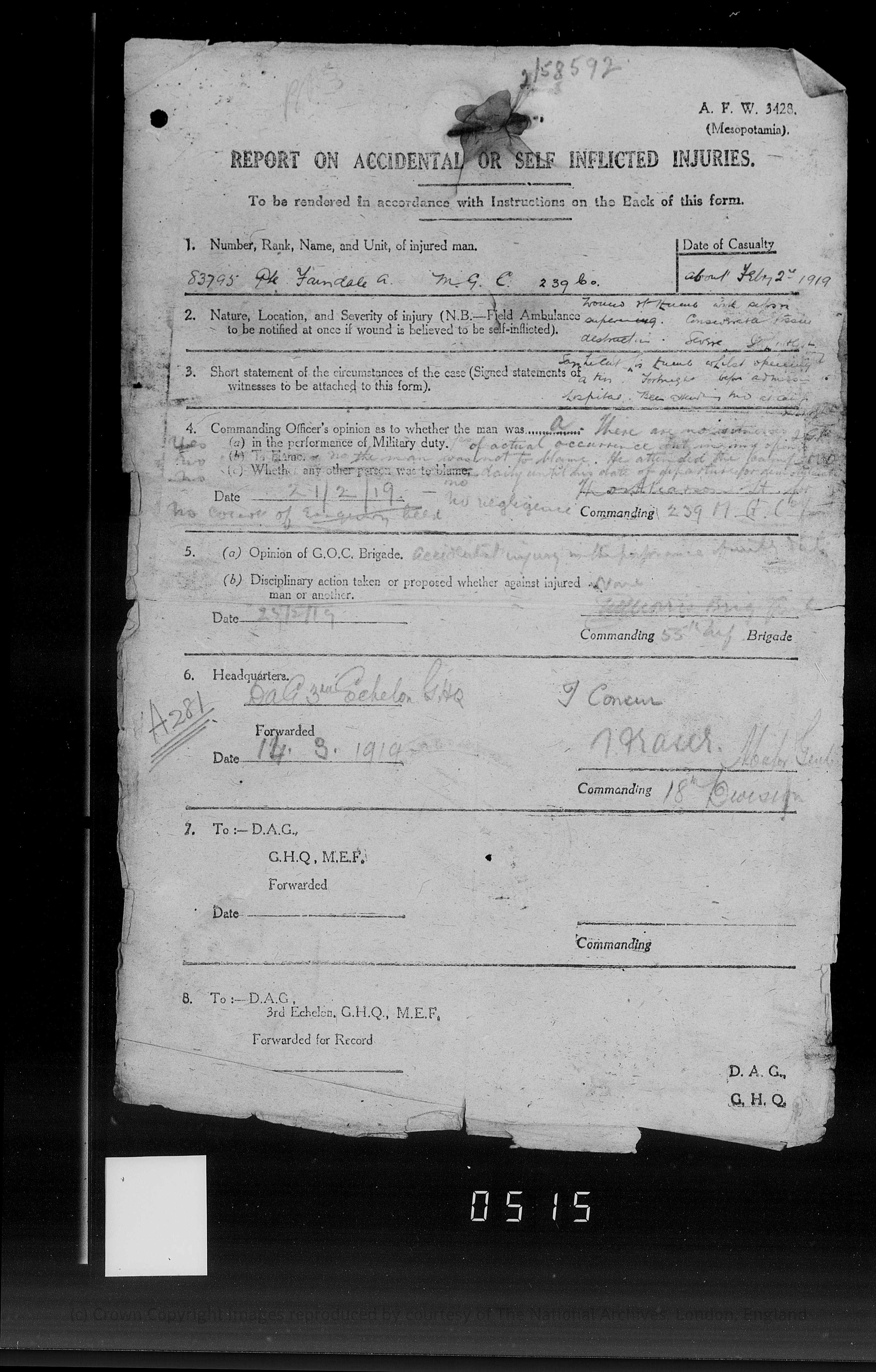
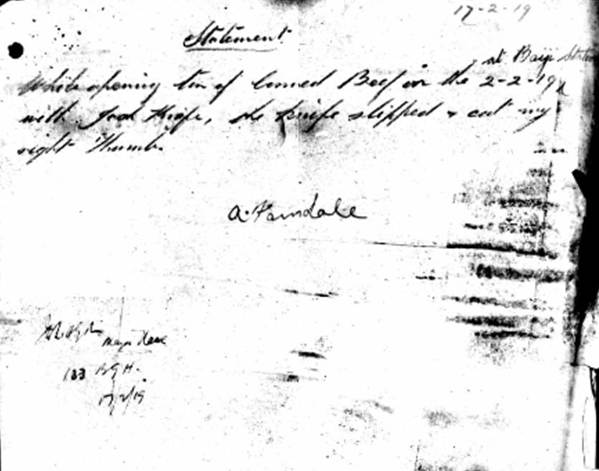
There is a record
of an accidental injury and in a separate statement, Alfred Farndale wrote While
opening a tin of canned beef on 2 February 1919 at Baiju Station with Jack
Knife, the knife slipped and cut my right thumb. A Farndale.


Engagements at
Qara Anjir during Sheikh Mahmud’s uprising in South Kurdistan, 31 May 1919
The Company were
still at Baiji on 25 May 1919 and were then moved to Fattah, Uthmaniyah, Manus, and Kirkuk. They were moving north where
they were involved in operations in South Kurdistan.
In May 1919,
Sheikh Mahmud Barzanji initiated a revolt against British rule in South
Kurdistan, proclaiming himself Ruler of all Kurdistan and clashing with
British forces to establish independence. This uprising began in Sulaymaniyah
with the expulsion of British officials and gained widespread tribal support,
culminating in the capture of Sheikh Mahmud by the British in mid-June. (239
MGC War Diary)


Sheikh Mahmud
Barzanji Sketch
Map of South Kurdistan
239 Company were
billeted in Kirkuk on 30 May 1919, with some sore feet, blisters and
headaches etc. Positions were allotted for six guns for defence of the
barracks on the roof.
Major AFV Jarrett
MC, Royal Garrison Artillery, came to Major Fraser’s assistance with a
relieving column at a critical moment on 31 May 1919. Jarrett’s 25th Mountain Battery accurately
engaged the Kurdish sangars forcing an enemy withdrawal towards Bina. Major Fraser later received a Distinguished
Service Order For marked gallantry and good leadership when in command of a
small force heavily attacked for twenty-four hours on 30th-31st May 1919 at
Qara Anjir. He inspired all ranks to
greater efforts, and maintained a stout defence until
the arrival of reinforcements.
On 31 May 1919 No
10 Section advanced to Kara Anjir (Qara Anjir) and towards Major Fraser’s Camp
with no opposition, but the camp was then surrounded by men and Lieutenant
Price ordered the men to choose targets to disperse them. Intermittent fire
lasted until 1630 hrs when the column was able to move into the camp. Private
Chubb was killed instantaneously and Ghulam Mohd
received a gunshot wound in the right wrist. Three guns took up defensive
positions guarding approaches to the camp. The estimated enemy strength was
300. The strength of Jarret’s column was 125 Rifles, 4 machine guns and 2 MB
Guns and the strength of the garrison was 100 British Rifles and 100 native cavalry. Morale was good. They were tired and sore from
long marches, but did not give in. They worked well.
On 31 May 1919
the strength of the Company was 7 BOs, 86 BORs, 1 IO (Indian officers), 49 IORs
(Indian other ranks) and 8 followers. The Company animals included 8 chargers,
60 gun and equipment mules, 8 section mules, four 1st Line cart
mules, 34 pack mules 3 field kitchen horses and twenty five
2nd Line cart mules. Vehicles included the field kitchen, 4 section AT Carts, two 1st Line carts and eleven 2nd
Line Carts. The health of the troops was fairly good,
feet trouble mostly. (239 MGC War Diary).
The British now
aimed to show the Kurds who had not yet joined the insurrection, especially the
powerful Jaff tribe, that Britain would win any confrontation and would heavily
punish rebel activity. General MacMunn ordered
Major General T Fraser CB, CSI, CMG (formerly Royal Engineers), the commander
of the British 18th Division, to take a strong punitive force of two brigades
to relieve Chemchamal, defeat Sheikh Mahmud’s
dissident Kurds, and to free British prisoners held in Sulimanieh.
On 1 June 1919,
239 Machine Gun Company marched again to Kara Anjir in South Kurdistan with
Brigadier Morris DSO’s Brigade. There was no sign of the enemy on march or on arrival.
They put out 4 guns in defence of the camp. There was no sniping day or
night, but two Kurds were brought into camp. On 2 June at 1700 hrs a Bhopal
Picquet reported sight of between 40 and 50 Kurds southwest of the camp. The
GOC ordered special defensive measures with strong outlying and inlying
picquets. Stand to was at 0330 hrs each day. On 3 June three guns were placed
out in the hills surrounding the camp, two guns were positioned on the extreme
right flank, two on the left flank and one on high ground, a total of eight
guns. Four of these were able to give covering fire to a retiring column. In
this incident, it is known that the enemy lost 12 killed and many wounded.
There were limited friendly casualties, but no machine gun casualties. There
was no attack that evening.
The Company
remained at Kara Anjir in mid June 1919. They were
visited by General Sanders and General Fraser and stand to continued
at 0330 hrs every day. Regular church services were held. On 15 June the
Company moved to Fraser’s Force Camp comprising 85 Burman Rifles, 116 Maharattas, 336 Brigade Royal Field Artillery, 25 Indian
Medium Battery, 239 Machine Gun Company, 39 CFA and 32nd Lancers
(“the Striking Force”). On 16 June they were at Chemchamal
where they were sniped at night about 2100 hrs in Cham Camp. After 10
minutes all quiet until 0200 hrs on 17 June when a little more sniping
went on. They marched at 0530 hrs and whilst there were no targets for
machine guns, the enemy dispersed after 2 hours. (239 MGC War
Diary).
In mid-June the Striking
Force was ready and General Fraser relieved Chemchamal
and by 17 June was confronting Sheikh Ahmed’s rebels who held the strategic Bayzan Pass.
The Battle of Bazyan Pass, 18 June 1919
On 18 June 1919,
they marched at 0215 hrs into position before Bazyan
Pass. The Striking Force under General Morris CB DSO consisted of the force
described previously. They deployed at 0315 hrs and
the Royal Field Artillery opened fire at 0400 hrs bombarding the near
approaches to the pass and the heights to the left. At 0407 hrs they ceased
firing. (239 MGC War
Diary).
The Battle of Bazyan Pass was a decisive engagement on 18 June 1919, that
marked the end of the first Kurdish rebellion led by Sheikh Mahmud Barzanji
against British rule in northern Iraq. The defeat crushed the nascent Kurdish
state and enabled the British to reassert control over the region. British
infantry scaled the mountains on either side of the pass, and with the first
light of dawn, they opened fire on the Kurdish position. The East Surreys and
116th Mahrattas, with 1st Battalion 87th Punjabis in support, then put in an
assault supported by artillery and machine gun fire that cleared the pass. Around 50 Kurds were killed, 120 were
captured and a large number were wounded.
The survivors fled towards Sulemanieh or the
Persian border. Sheikh Mahmud was
discovered amongst the wounded Kurds in the pass, shot through the liver. He
was medically treated and imprisoned to await trial.

The eight machine
guns opened fire at 0400 hrs with the artillery, sweeping the gap and the
slopes. They continued firing during the infantry advance, leading troops
through the pass. At 0440 hrs they were ordered to come out of action and
advance through the pass. On the southern slope of the pass
they took a Deutsch Waffen 1915 machine gun and tripod and some Turkish belts
of ammunition. The column were sniped from a ridge on
the left of the pass and at once 2 guns came into action to target about 20
enemy at a range of 2,000 feet. They could not observe the result clearly but
the enemy dispersed. The Striking Force halted at Point 15D at about 0830 hrs
and then continued a march at 1030 hrs, the cavalry (32 Lancers) having gone
forward to clear the road. They arrived at Tainal Su
at 1330 hrs and bivouacked for the night. 4,500 rounds were expended during the
day.
On the following
day one section under Lieutenant Warner marched at 0330 hrs for Sulaimaniyah and the remaining Company marched
with the main force at 0415 hrs for Kalisan Bridge,
three and a half miles west of Sulaimaniyah. It was a
trying march owing checks and halts owing to bad roads. It was about 20
miles to Kalisan and they
didn’t reach the bridge until 1600 hrs. Tashluja Pass
was a big strain on draught mules. They had tea with food for the men at
about 1000 hrs during a long halt. Not one man fell out. There was no
trouble at night.
On 20 June 1919,
it was now known that Sheikh Mahmud was wounded, a prisoner in our hands. He
received three wounds and is reported to have stated he came under machine gun
fire when on the slopes of Bazyan. A rum ration
was issued to the troops.
On 21 June
Fraser’s force marched through the town of Sulaimaniyah
as a demonstration. The GOC took the salute. The Company then remained at Kalisan for the rest of June. On 29 June 1919 news that
peace treaty signed received. There was another head count in the War Diary
at 30 June 1919 at Kalisan
Bridge and the health of the troops was reported as fairly
good.
The Company
remained at Kalisan Bridge during July 1919.
Operation Scale was still in force, which referred to control of rations
though jam and fresh vegetables were issued in addition to standard rations on
1 July 1919. On 19 July they were told that leave to
UK and India would open on 1 August. On 24 July the Company marched to Tashlutah using spare carts before proceeding back to
Bazian and Chamchamal and Kara Anjir and then to
Kirkuk where they occupied billets vacated by 207 Machine Gun Company. They were
in Kirkuk for the rest of July and through August. On 5 August 1919 at 0001 hrs
Fraser’s Force ceased to exist and became the South Kurdistan Force or SK Force
and Morris’ Brigade became 55 Infantry Brigade. Since arrival at Kirkuk health
of troops has been extremely bad. Kirkuk is a malarial district. Health of
Indian troops has been fairly good. It was very
hot during day, but nights usually cool.
The Company
remained in Kirkuk during September. Health of troops much better this month
(British), Indian ranks health still good. Rations were good and the
weather was cooler, but still hot during the day with nights fairly
cool. Very few men were available for parade owing to a reduced
establishment and camp duties. There was training in camp, one route march per
week and open drill. There was no opportunity for firing practice. (239
MGC War Diary).
On 7 September
1919, Alf was promoted to Acting Corporal, and later to Acting Sergeant.

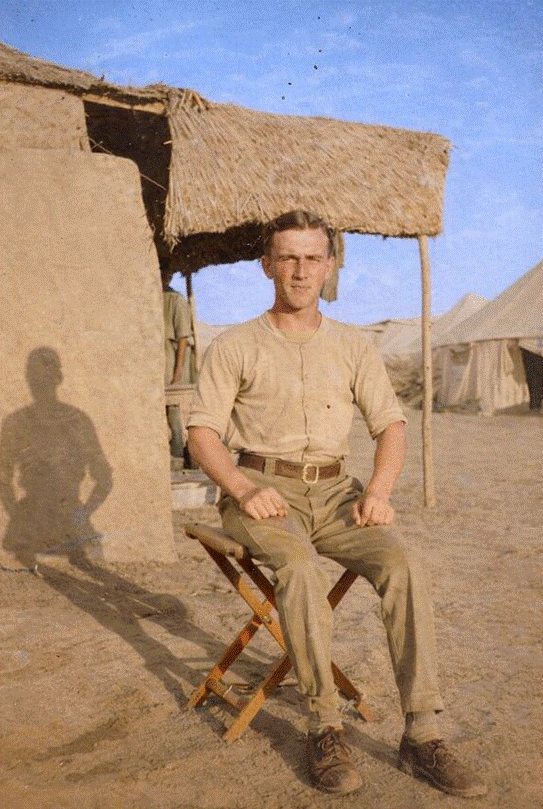

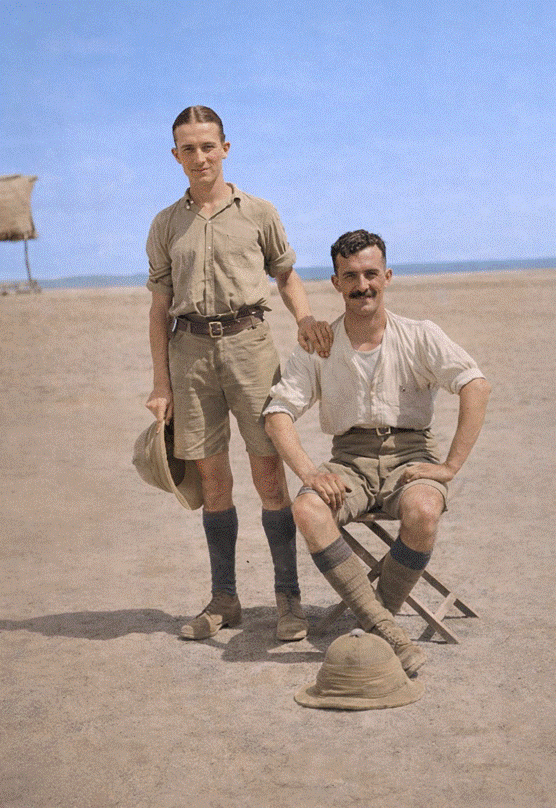
Alfred in
Mesopotamia A corporal
A sergeant (and the same photos recreated
by AI in colour)
Mosul
Alfred eventually
got to Mosul where I thought my unit was and met my platoon commander
Lieutenant Pearson. He asked me where I had been and put me in charge of the officers mess. We had some Punjabi officers at the time and they used to knock me up to try to get whisky!
Bombay, November
1919
He was posted to
18th Indian Divisional Battalion (who had served in the Mesopotamia Campaign)
on 10 January 1920 and to 17th Indian Divisional Battalion also on 10 January
1920. He may have served in the 17th Divisional Machine Gun
Battalion of 18 Indian Division Troops in India, part of the divisional troops
who were still in Mosul in January 1920 (17 Machine
Gun Battalion War Diary).
Later in 1919 we were
ordered to Bombay. I remember I had to take my stripes down on the troopship. (He reverted to
his substantive rank of Private on 25 November 1919). We were sent up to the
Afghan frontier for a while and we had quite a lot of
trouble in the local bazaars.
Return to
Britain, January 1920
On 10 January
1920, Alf embarked for UK.
Eventually we got a troopship to England. We
landed at Southampton. I remember we were told that we could keep our
greatcoats or take £1 when we were demobbed on Salisbury Plain. I took the £1!
I remember
arriving at Middlesbrough station
very late at night and sleeping on the platform. I got the first train next day
to Guisborough and actually arrived at Tidkinhow before they were up! This would be
in 1920. I know that I was clear of the army by the start of 1920. I wish I had
stayed in. I really did like the army life. But I had to come out.


Alfred’s Service
with the colours was from 6 December 1916 to 18 March 1920 (3 years and 3
months). His service Overseas with the British Expeditionary Force was from 13
July to 13 October 1917 (3 months). His service overseas in Iraq and India was
from 14 October 1917 to 9 January 1920 (2 years and 3 months). His later
service was recorded with 239 Company in Mesopotamia. See also here.
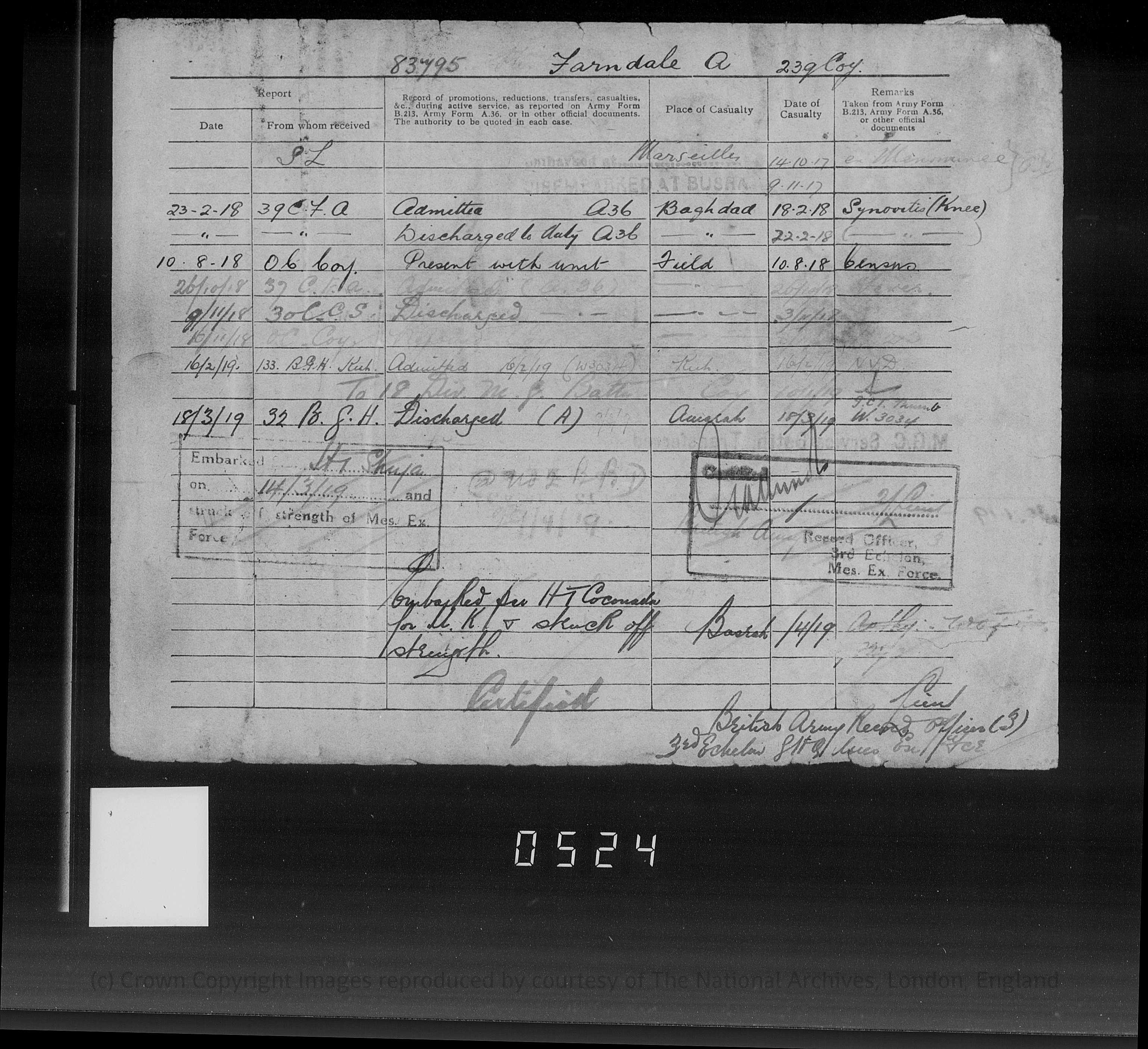
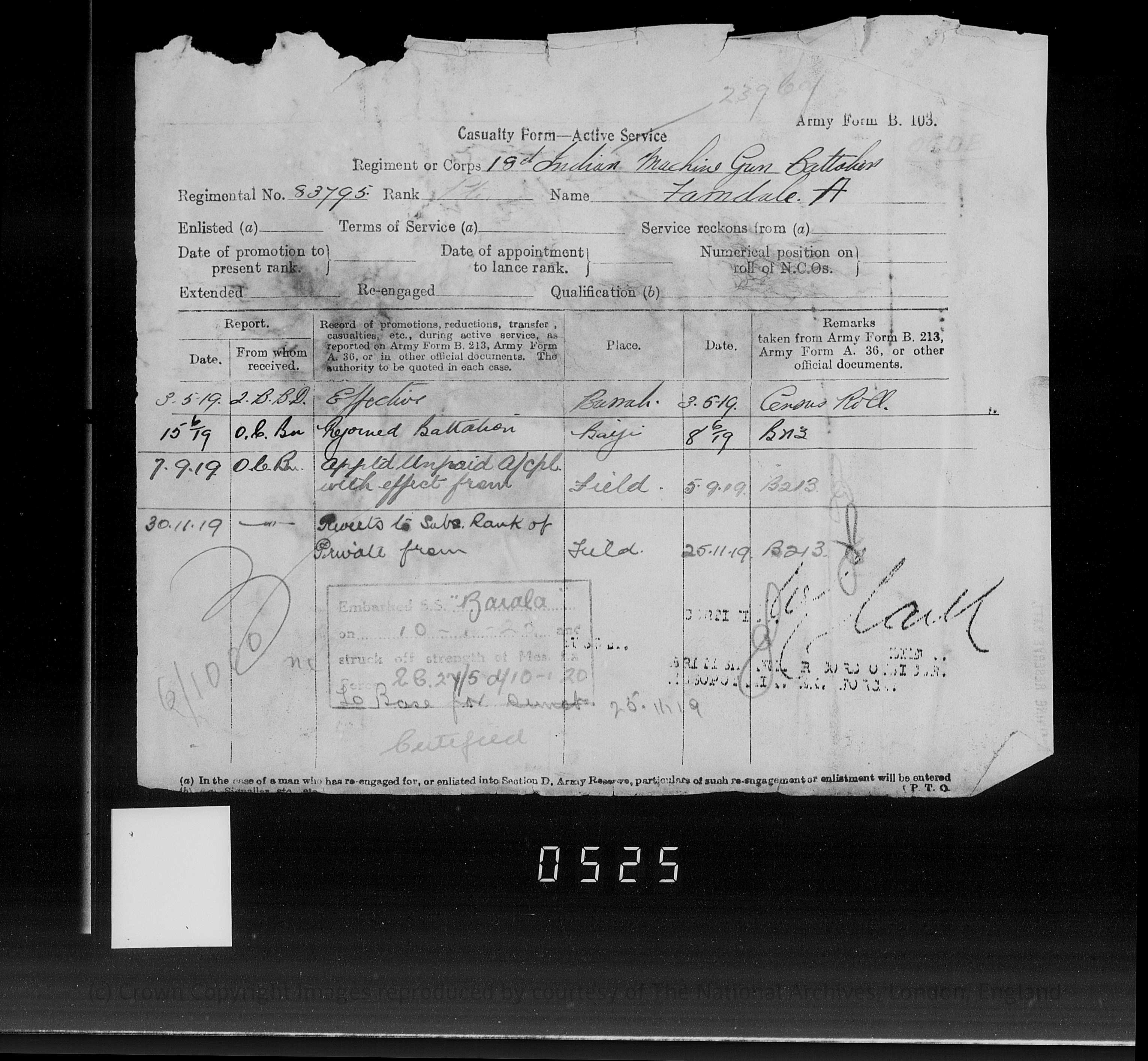
Alfred transferred to Class Z Army Reserve on
demobilisation on 19 March 1920. He was formally discharged on 31 March 1920 on
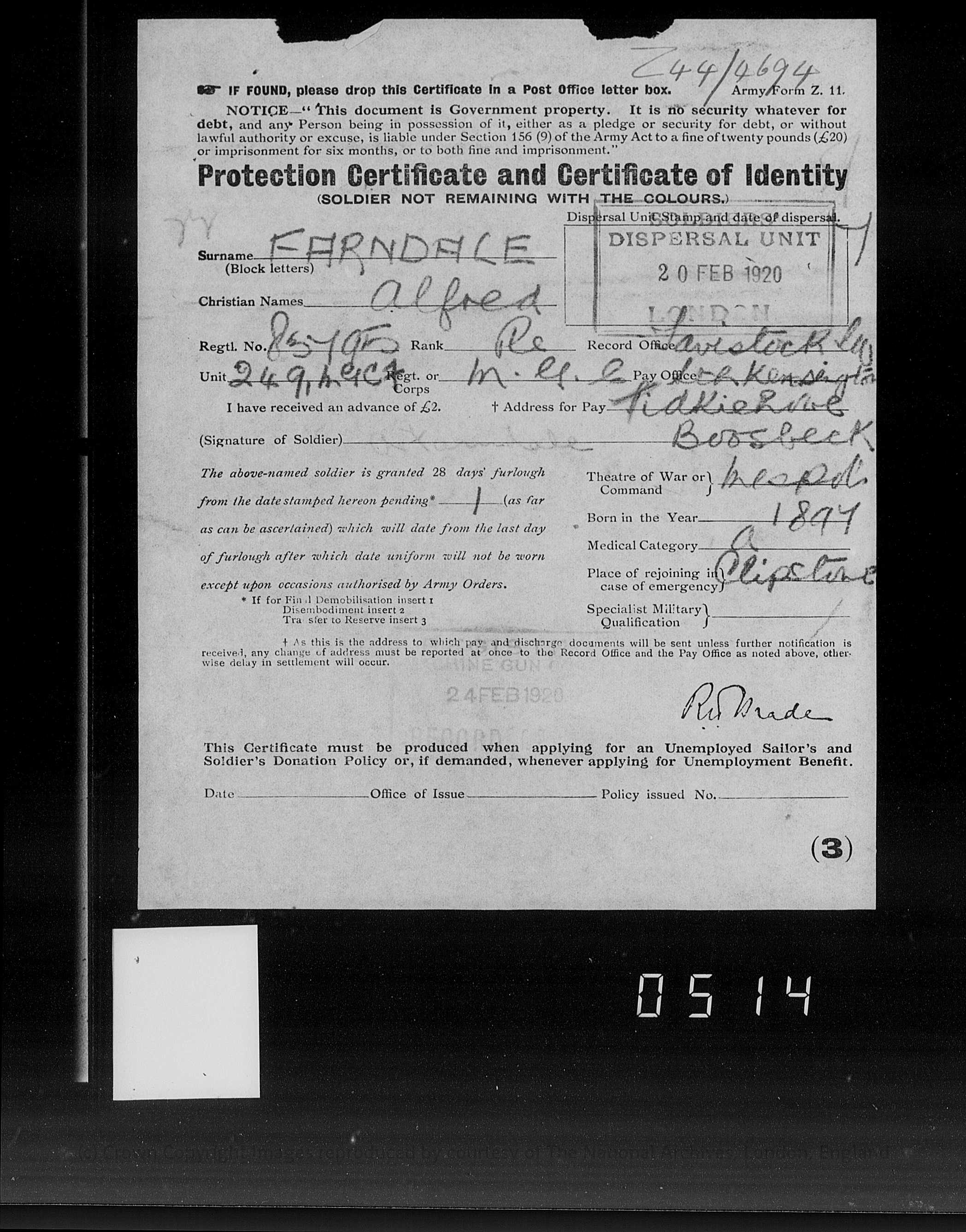
General Demobilisation. His Identify
Certificate was issued on his dispersal on 20 February 1920. His address
for pay was Tidkinhow, Boosbeck. His
(most recent) theatre of War was recorded at Mesopotamia. The place for
rejoining in case of emergency was Clipstone. He was granted 28 days furlough
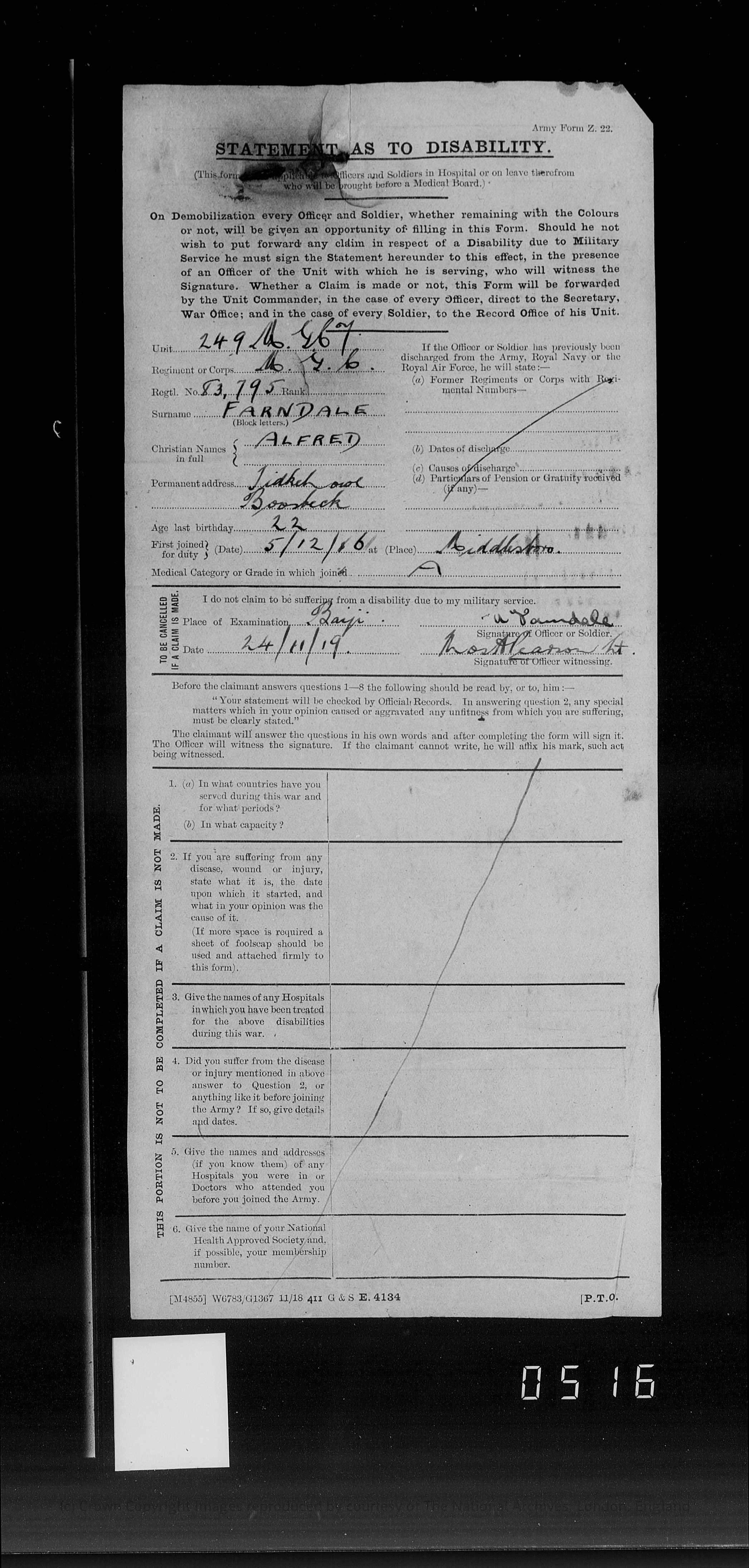
from the stamp date. The standard form
completed by all soldiers regarding any disability, showed that he had none
at the time of his discharge.
He was awarded
the British War Medal, issued 17 March 1922 and the Victory Medal, issued 17
March 1922.
The
Northern Echo, 8 November 2011 narrated:
Heroics in the
face of hell
Private Alfred
Farndale was an unsung hero of the First World War. As Remembrance Day approaches,
Ruth Campbell hears how this brave North Yorkshire lad went on to see his son
rise to the rank of general.
The moving
dedication at the beginning of Nigel Farndale’s novel hints at the hell his
grandfather, a young farm boy from North Yorkshire, experienced in the muddy,
blood-drenched trenches of the First World War: “For my grandfather, Private
Alfred Farndale, who died in the mud of Passchendaele, and again seventy years
later in his bed.”
In Farndale’s
view, every man died in that battle, even those who survived. For the dark,
life-sapping shadow that descended on them all snuffed out a vital spark. The
battle raged for 100 days. More than half a million Allied troops and a quarter
of a million German were killed. The dead would be buried under a deluge of
soil only to be disinterred by the next shell, and
reburied by the next.
In his novel, The
Blasphemer, partly inspired by young Alfred’s traumatic experiences, Farndale
vividly brings to life the horrors young men endured. As a boy, he had listened
to his grandfather’s tales of war as they worked together on the family farm near
Leyburn. But the silences were just as memorable: “He was an affable man but
prone to dark mood swings. There were long periods, maybe three weeks at a
time, when he wouldn’t talk. I had little doubt what lay behind it, having
grown up listening to his stories of life in the trenches. It deeply affected
him,” he says.
Alfred’s eldest son,
Farndale’s uncle, went on to join the Army against his wishes and rose to the
rank of general. The fact that a former private’s son was able to go on to
claim the title General Sir Martin Farndale, Commander-In- Chief of the British
Army of the Rhine is perhaps partly due to the social upheaval that followed
the Great War. Alfred’s beginnings were much more humble.
Born in Cleveland, he was the youngest of 12 children and in a reserved
occupation looking after the stock on his parents’ farm near Guisborough when,
against their wishes, he lied about his age at 17, signing up at the local Army
recruitment office in Northallerton. Despite being sent home because he was too
young, he volunteered again as soon as he was able. Alfred knew something of
the realities of life on the Front Line and would have been very aware of what
he was letting himself in for. “My grandfather had two older brothers fighting
in the trenches and one had been shot in the elbow. His cousin George had been
killed at Ypres in May 1917. There were widespread reports of the 20,000 men
killed and 40,000 injured on the first day of the Somme. It was quite a
frightening prospect.”
Alfred certainly
rose to the challenge. He was, undoubtedly, a hero, and an unsung one at that.
One of the stories he told his family, about a daring dash under fire to
deliver much needed ammunition to the Front Line, revealed an act of bravery
that had gone unnoticed in the chaos of battle. “My
grandfather was haunted by this incident,” says Farndale who, in 2007 visited
the battlefield with his father to mark the 90th anniversary of Passchendaele.
“It was a moving experience. When we came to the notorious spot known as
Hellfire Corner, we remembered the story he told us. He and Quartermaster
Sergeant Zaccarelli had been galloping up to the Front with an ammunition
limber when the Germans started to shell them. Zaccarelli was killed, along
with a horse. My grandfather managed to cut the dead horse free, drag
Zaccarelli’s body into a ditch and carry on up to the Front on one horse with
his delivery of ammunition. It amounted to family legend because there were no
witnesses or dates, just this memorable surname. We came across a small British
war cemetery and there was the surname, only spelt slightly differently.
Company Quartermaster Sergeant John Zottarelli died on August 28, 1917, a month
into the battle of Passchendaele. Until that moment we didn’t really believe it
had happened. He was a real person after all, not a myth, and when we stood
before his grave my father and I felt the hairs on the backs of our necks rise.
It was so arbitrary; this man happened to die and my
grandfather happened to live. This meant my father had been given life, and so
too had I.”
For Farndale,
visiting the site of the battlefield brought much of what his grandfather had
told him to life. He recalls Alfred explaining the complex trench systems and
the nicknames they used to describe them. As he stood there, Farndale could
even sense the smells his grandfather and comrades had to endure… “an acrid
combination of cordite, mustard, chlorine, sweat and putrefying horseflesh,” he
says.
“He would tell me
about the noise, which was so loud, so deafening, it gave men mild concussion.
They couldn’t even remember their names, they weren’t
able to count to three. During one particularly heavy bombardment, his first
commanding officer from the Yorkshire Regiment recognised him. “I bet you’d
rather be in Saltburn now, Farndale’,” he said.
Alfred talked a
lot about the mud. “The drainage system on this reclaimed marshland had been
destroyed by shelling. It was a landscape of mud, one big bog. As well as
constantly dodging bullets, soldiers who slipped off the slippery duckboard
walkways, just 18 inches wide, were drowned in an orange sea of bubbling,
gas-poisoned mud. It was a death trap. In winter on the farm, when we got stuck
in deep mud, he would say ‘This was like the dry bit in Passchendaele, dry
enough to sleep on’. We talked a lot. We would go round the stock together,
singing World War One songs. I don’t think I quite got the brutality of it when
I was young, but the War seemed very immediate to me.”
Inspired by his
grandfather’s story, Farndale, 47, did more in-depth research into the
experiences of young men in the First World War. In The Blasphemer,
which takes place partly in the present day and partly in the First World War,
he explores what happens when our courage is put to the test. “My generation
didn’t have the experience of war to test our courage. That is what I wanted to
explore,” he says.
He read letters
and diaries written by troops in the trenches, as well as personal accounts
written after the war. “Many of them left school at 14, but they wrote such
vivid descriptions, in such beautiful handwriting. The letters, written by 17
and 18- year-olds, were very humbling. When the last of the veterans died, our
remaining link with that war was broken. All we have now is empathy.”
Farndale, who was
born in Ripon and studied at Durham University, named his 13-year
old son after his grandfather, who enjoyed a lucky break after four
months fighting in Passchedaele. “He was among those British troops sent to
India. He ended up in Iraq and Basra for a short time. That saved his life,”
says Farndale.
When he returned
to England, aged 22, Alfred was offered the choice of taking £1 or keeping his
greatcoat. He took the pound. Other than that, he had nothing. With little work
around, he farmed for a while in Canada, before returning to Yorkshire.
“Things had
changed. There wasn’t the same deference,” says Farndale. “He was working in a
field once when a local aristocrat, who had managed to avoid fighting in the
war, came along and told him to open the gate. He told him to ‘open it
yourself’.” Alfred and his wife Peggy went on to have four children and he died
in 1987, just a few weeks short of his 90th birthday.
“As I said in my
dedication, he did survive Passchendaele. But he died then as well,” says
Farndale.


Tidkinhow and Tancred Grange
1920 to
1928
Returning to Yorkshire after the War in 1920, in a talk between Alfred Farndale and his son, Martin
on 29 July 1982, Alfred later recalled: I then went to Tancred Grange
to help my eldest sister Lynn whose husband had died in 1918. I spent my time
between Tancred and Tidkinhow till I
married your mother on 16 March 1928 at Bedale
Parish Church. Martin was over from Canada and he was best man. It was just
after my father died in January 1928. My eldest brother, John took over Tidkinhow. Peggy and I had already decided
to join the 'Canadians' [his brothers Jim, Martin and George and his sister
Kate] in Alberta. We went
to Huxley and rented a section of the CPR
and you three children were born. However we had bad
luck with crops and the slump and we had to go back to
England in 1935.


Alfred
about 1920
1921
In the 1921 Census for Tidkinhow,
Martin Farndale, 75, a widower, was farming, employed on his own account, and
living at home; John Farndale, his son, 43, single; Dorothy Farndale, his
daughter, 25, single; Alfred Farndale, 23, single, his son, farming;
and William Barker, whose father had died, 14 years old, full time at
school.


1926
A certain Peggy Baker (BAK00002)
was teaching at Malvern School for Girls and she became friendly with Grace
Farndale (FAR00659),
Alfred’s sister, who was a matron. We know that Peggy did not like the
Headmistress at Malvern. Grace and Peggy got so fed up that they decided to go
to Yorkshire and start a chicken farm near to where Grace’s elder sister, Lynn
(nee Farndale) Barker (FAR00564) lived,
at Scorton, near Richmond. After moving to Yorkshire, Peggy met Grace’s
younger brother Alfred Farndale.

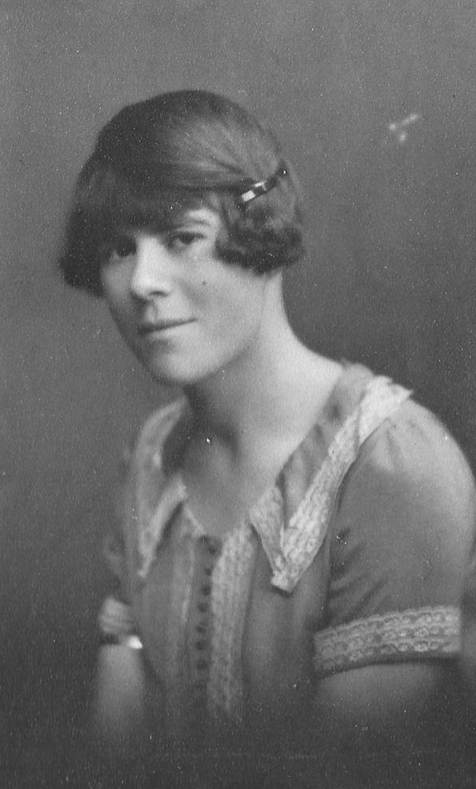
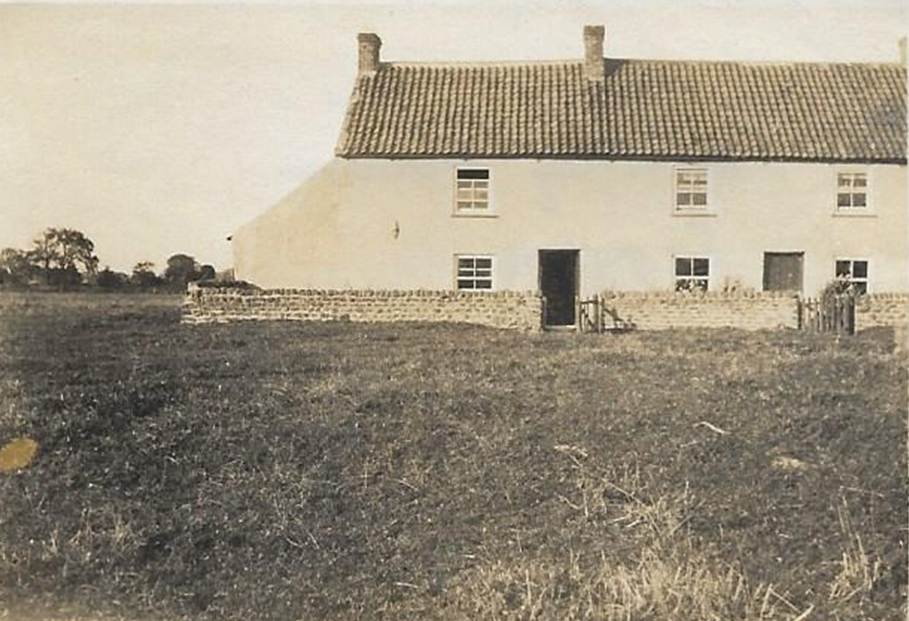
Margaret
Louise Baker (Peggy) in about 1925 The cottages at Scorton
where Grace Farndale and Margaret Baker (later married Alfred) had a poultry
farm in about 1926
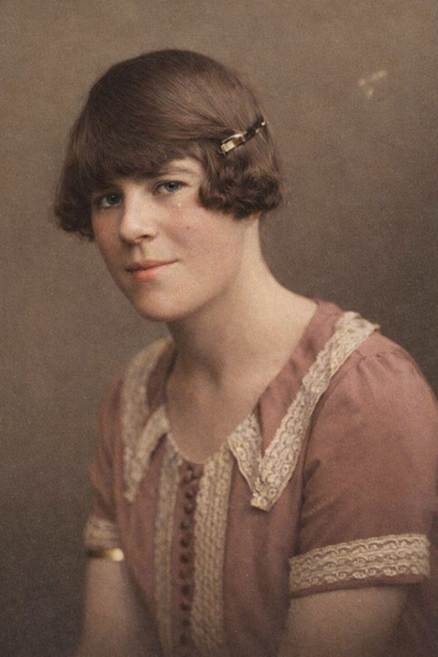
The
image of Peggy in 1925 recreated by AI in colour


1927
Peggy
Baker
became engaged to Alfred Farndale in 1927.


Alfred
at Scorton 1927
Alfred at Tidkinhow in 1927
1928
Alfred
Farndale married Margaret Louise Baker (of Audlem, Cheshire) at Bedale Parish Church on 16 March 1928.
Alfred Farndale, bachelor, farmer aged 29 son of Martin Farndale (deceased),
married Margaret Louise Baker (BAK00002),
spinster of Leeming Bar daughter of Arthur Baker JP (deceased) at Bedale Parish
Church, on 16 March 1928 (GRO Vol 9d page 945,
Bedale PR).
Martin was over from Canada and
he was best man. It was just after my father died in January 1928.
My eldest brother, John took
over Tidkinhow. Peggy
and I had already decided to join the 'Canadians' (his brothers Jim,
Martin and George and his sister Kate) in Alberta.
We went to Huxley and rented a section of the CPR and
you three children were born. However we had bad luck
with crops and the slump and we had to go back to
England in 1935.


Alfred
and Peggy’s wedding Bedale
Church in December 1986
For Margaret (“Peggy”) Baker’s ancestry see the Baker Family Tree.
The Prairies of
Alberta
Alberta, Canada
Immediately
after the wedding, they both went to break open Prairie in Canada,
where three of his elder brothers and two sisters were doing the same thing.


The
voyage to Canada


Alfred Farndale built a house for his family in
Huxley in 1928.
Alfred’s son Martin later recalled: Alfred
rented a section and a half near Huxley some 10 miles north of Trochu and built
a house there. The farm was almost entirely devoted to wheat but with some
cattle. I grew up at the farm and my first memories are of playing on the
prairie and around the slews (a kind of duck pond) near the farm. I remember
all the horses used for farm work, the box waggons with racks, threshing in the
fields and the hot summers. The winters were cold - well below zero, and I
remember the horse drawn sleighs and the bright sun on the snow. I remember the
village of Huxley, the annual sports day, the Legion parade and buying sweets
at Miss Hibbs’ store. I remember visits to the neighbours, the Hoggs, the
Saggers, the Morris’, the Wagstaffs, the Millers and I remember the postman, Mr
Hibbs whistling in his buggy as he came up the road to what is still today
called Farndale’s corner. But above all I remember the family. Uncle Martin and
Aunt Ruth lived near Trochu and he spoiled me a lot. Uncle George was a
bachelor, remote and living alone near Three Hills. Aunt Kate was strict and
austere, but kind and she lived between Trochu and Three Hills with her husband
Bill Kinsey and their children George, Alfred and Dorothy. I remember evening parties
and sitting waiting while the grown ups played bridge. I remember being well
looked after by our nannie, Gladys Grist who later married Aubrey, the son of
our nearest neighbour, Ralph Hogg.
Alfred and
Peggy’s life in Canada is also told in Act
27 of the Farndale Story.


Alfred
building the Farndale House on arrival in Alberta The porch of the Farndale
House
The House that Alfred Built


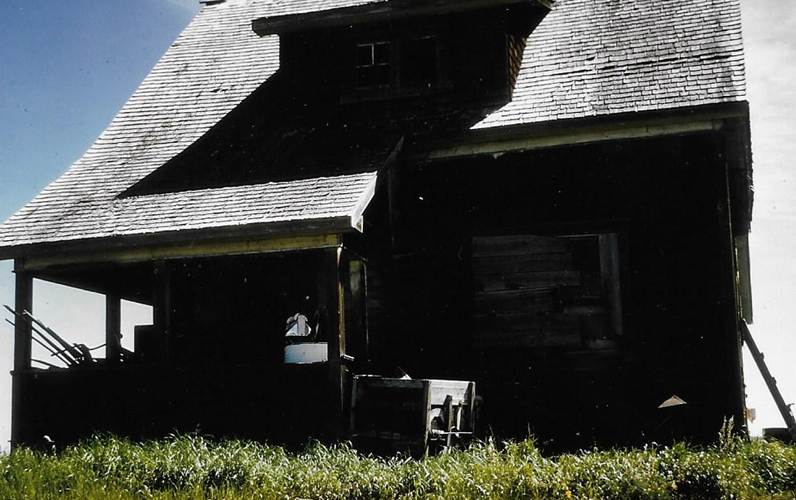
Alfred
Farndale’s House, Huxley in the 1970s (it no longer stands) Martin
Farndale in front of Alfred Farndale’s house in July 1973


George
Kinsey and Aubrey Hogg outside the Farndale house at Huxley in July 1973 The Farndale House, Huxley taken from
Hoggs’ Place in July 1973
The lilac hedge and the grain bins
Family
Alfred
and Peggy had four children.
Martin Baker Farndale (FAR00911)
was born on 6 January 1929 at Trochu,
Alberta. Marianne (“Anne”) Catherine Farndale (FAR00915)
was born on 30 October 1930 at Trochu.
Alfred Geoffrey (“Geoff”) Farndale (FAR00922)
was born on 10 April 1932 in Elnora in Alberta.
Margaret
(“Margot”) Lindsey Farndale (FAR00952)
was born on 8 October 1937 at Thornton-le-Moor in Yorkshire.
Huxley,
Alberta, 1928 to 1935
By the time the youngest
brother, Alfred, and his wife Margaret (“Peggy”) plus younger sister Grace,
arrived in Alberta in 1928, the family was well known in the District. These
two members of the Farndale family settled in the Huxley
district. They lived first with Alfred's elder brother, Martin, near Trochu
while Alfred built their house on Section 27, opposite Ralph Hogg's hill, and
was two stories, with white walls and a black roof, which stood out for miles
around. The chimney was the only part built of brick, and was made by Frank
Holmes. It still stood for many years into the 1990s, but was uninhabited from
1935. They built a wind pump and several barns and later Alfred took another
quarter section just east of Huxley on the Wickiser Place. In 1929, their
eldest son, Martin was born to be followed in 1930 by Marianne (Anne) and in
1932, by Geoffrey. In 1930 Gladys Grist from Trochu
came to help look after the children. She was later to marry Aubrey, son of
Ralph Hogg who was Alfred's nearest neighbour. Her son Philip later lived at
their house and farmed most of the Farndale farm.
Alfred had fought with the
British army in World War I and completed a unique team of three brothers who
had fought with the Canadian, British and American Armies in that terrible war.
He was a member of the British Legion and attended many an armistice parade in Huxley, by the War Memorial, outside the
Memorial Hall. In 1934, Grace married Howard Holmes, who farmed south-west of
Huxley until he died in 1955. Grace then moved to Calgary where she lived until
she returned to Leyburn in Yorkshire where she lived close to Alfred and Peggy.
1929
Martin
Baker Farndale (FAR00911)
was born on 6 January 1929 at Trochu,
Canada.
1930
Marianne
(“Anne”) Catherine Farndale (FAR00915)was
born on 30 October 1930 at Trochu Canada.


Alfred
in 1930
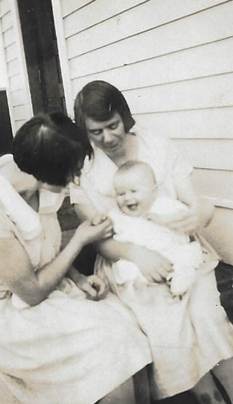
Family photos in Alberta:


Peggy
with Geoff
Martin
Anne
Geoff
Anne


Harvest
time on the prairie




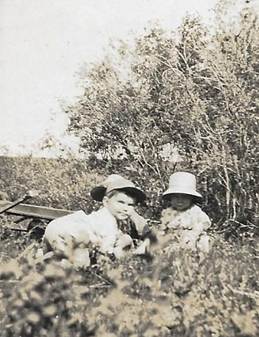
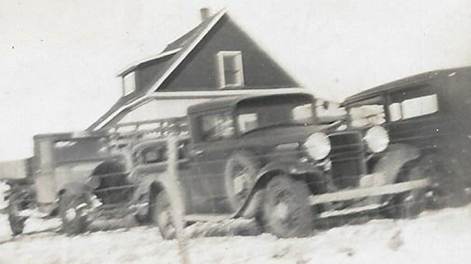
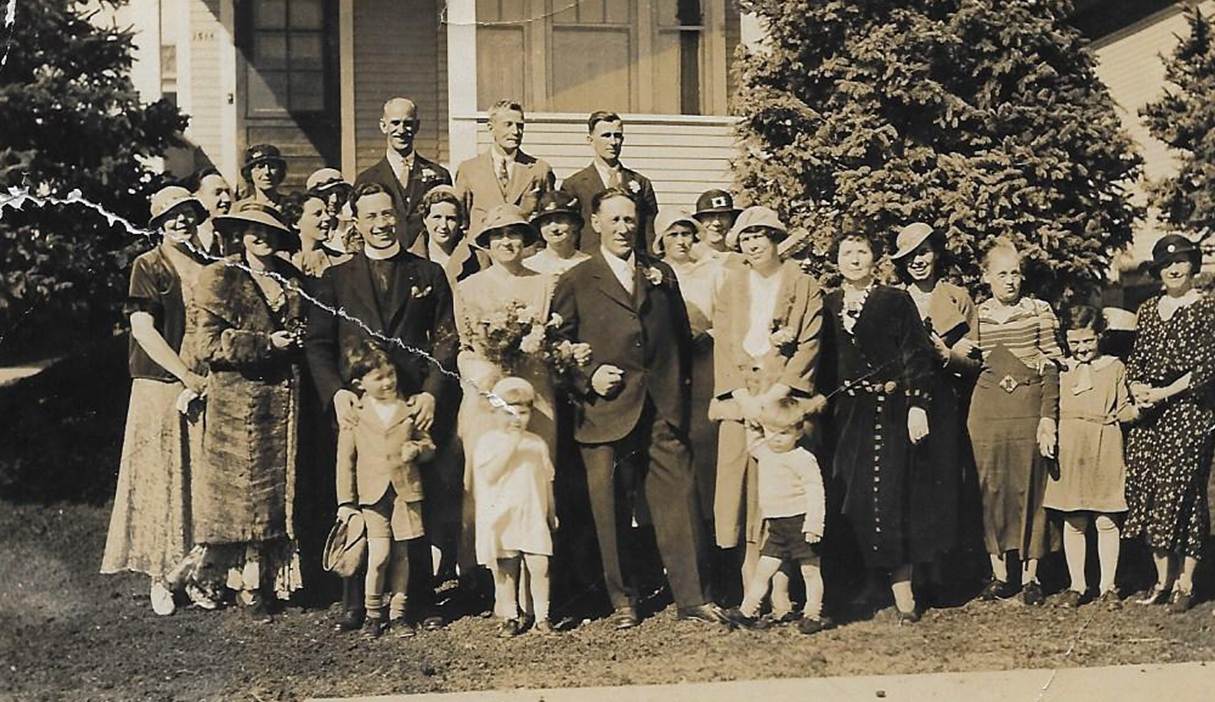
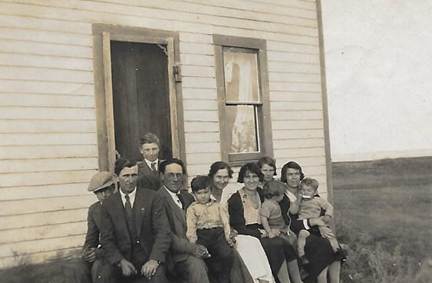
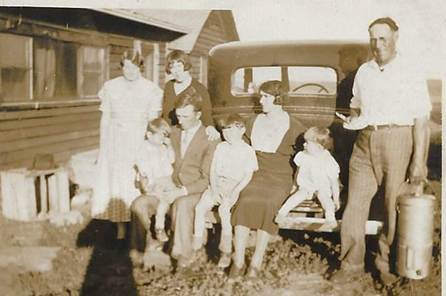
Life
on the Prairie
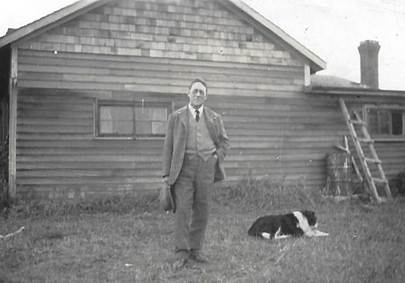
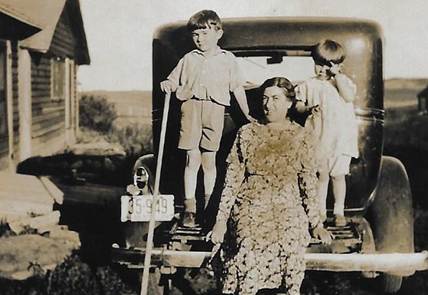
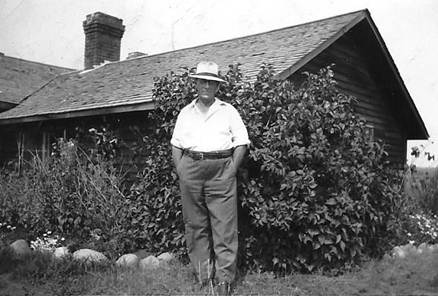
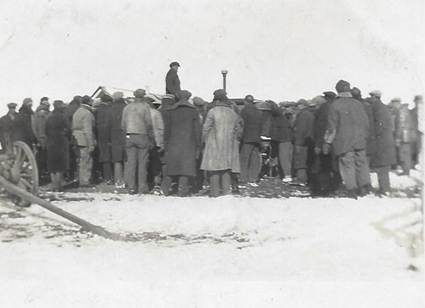
1931
1931 Census of Canada – Red Deer, Alberta
Alfred Farndale, 32
Margaret Farndale, 30
Martin Baker Farndale, 2
Marianne Farndale, 7 months
Grace Alice Farndale, 36

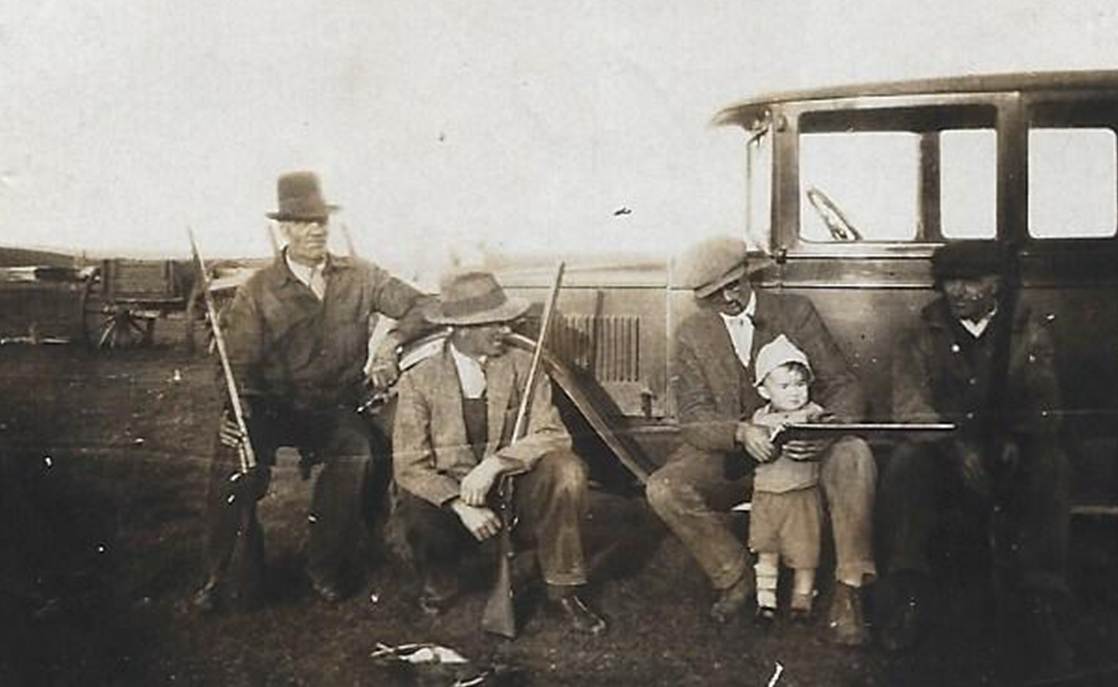
Shooting Party
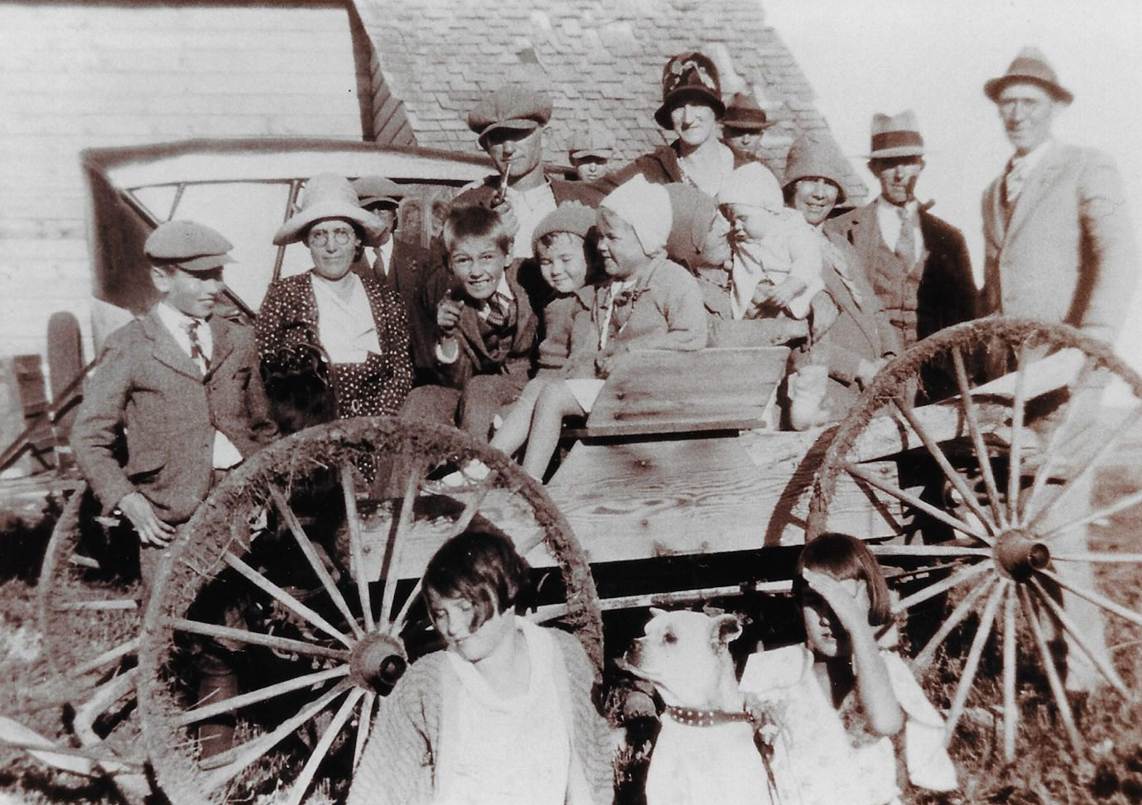
The
Kinseys and Farndales in about 1931 – Back Row: Martin Farndale, George
Farndale, Ruth Farndale, Will Kinsey, Alfred Farndale, Jim Farndale,
Middle Row: Alfred Kinsey, Edna Farndale, Jimmy Farndale,
Martin Farndale, Grace Farndale, Dorothy Kinsey, Janie Farndale, (Mary
Farndale, Anne Farndale)
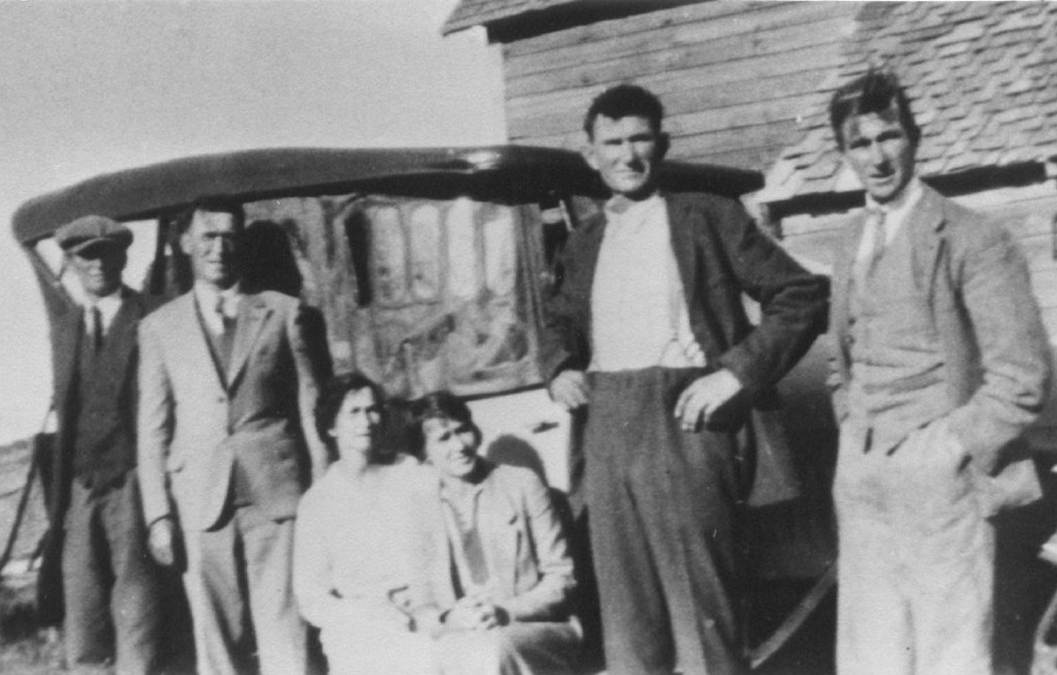
The Canadian Farndales at the Kinseys in about
1931, Martin, Jim, Kate, Grace, George, Alfred
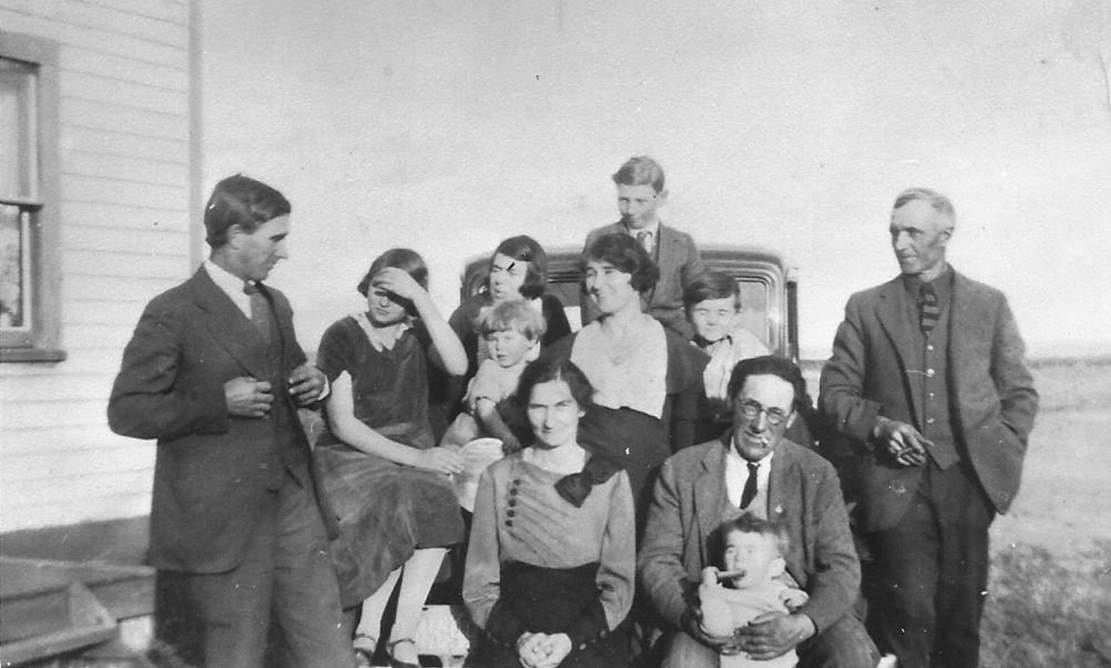
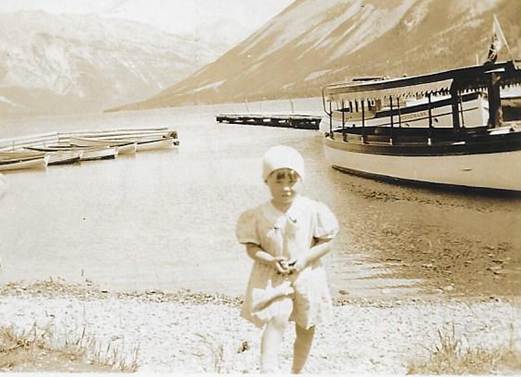
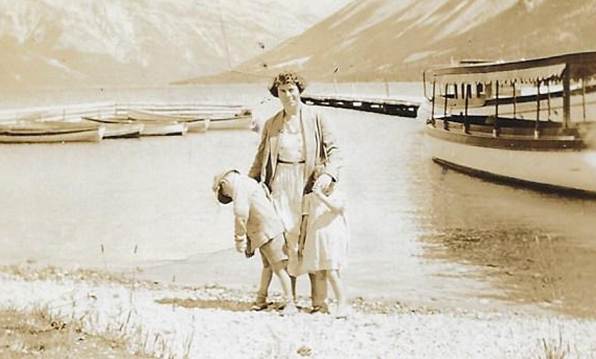
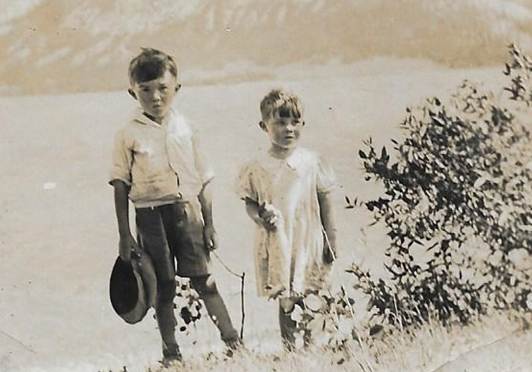
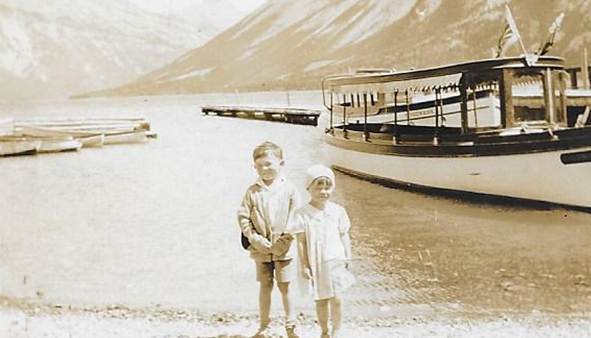
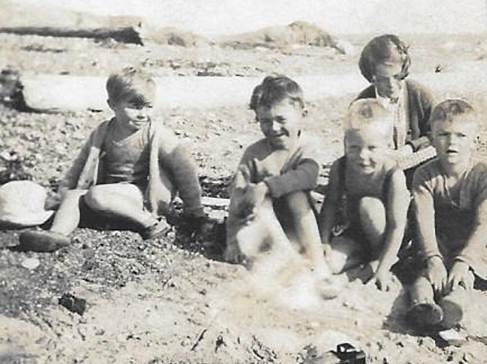
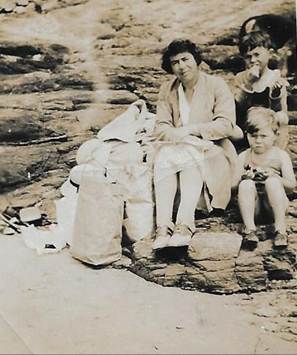
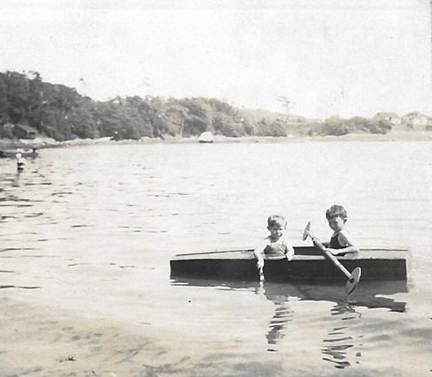
More holiday photos
Taken in Victoria, British Columbia
1932
Alfred
Geoffrey (“Geoff”) Farndale (FAR00922)
was born on 10 April 1932 at Elnora, Canada.
The Dominion Franchise Act, List of
Electors, 1935 for the Electoral District of Red Deer, Rural Polling Division No 49, Huxley,
comprising township 34, range 23, west of the 4th meridian included
a list for 35 Farndale, Alfred, farmer, Huxley and Farndale, Mrs Alfred (W),
Huxley.
But the early thirties were hard on the Prairie. It was hard to get
a crop at all, and when they did, the price was poor, often hardly paying the
elevator dues. The work was nearly all done by horses, but Allred bought one of
the first tractors in 1930.
During the long hot
summers, Peggy often took the family to the mountains at Banff, and to the
coast at Vancouver, and Victoria. Otherwise life consisted of hard work and
self made entertainment. Bridge parties were common in winter and picnics in
summer, with expeditions to the newly started Stampede in Calgary, or fishing
at Sylvan Lake. In winter life depended on the horse, either to ride or in a
sleigh. The 'rack' bodies were taken off their wheels and put onto runners to
get hay to the cattle. Meat was buried in the frozen ground to keep, but the
houses were always warm. On one occasion Alfred's dog ripped its tongue out by
licking the frozen railway line near Huxley, to which it had stuck, so intense
was the cold. He had to be shot. The call of the coyote was constantly heard
and returning late one evening skunk in the chicken house, which on being shot
left a pungent smell for a long time.
Looking back on those
days the family later remembered John Hibbs, the postman, driving his buggy up
to the farms from Huxley whistling and singing at the top of his voice. Other
neighbours well remembered, were Jake Miller, who farmed to the east, Wagstaffsrds,
and Billy Morris. On Huxley road were the Thongs. the
Shorts, by the slough; then the Delaneys. Huxley was a flourishing little
community in those days, with Roach's store and Miss Hibb's confectionary
store. There was Mr McMillan garage and even a Chinese restaurant! There were perhaps
a couple of hundred people in all. The grain elevator played its vital part in
prairie life, and still marked the little township from many miles away in the
1980s.
There were many excitements; hail storms, dust storms and the snow. The heat,
the mosquitoes, the fresh prairie air, the stillness, blue skies, bright stars
at night, brilliant sunrises, and sunsets, and always in the distance the
rockies often covered in snow even in summer. The startling cloud formations
and the sudden thaw with the arrival of the Chinook wind. Indians travelling
round to cut the brush; Sergeant Hammond of the Royal Canadian Mounted Police,
and the stories of the Mad Trapper. On one occasion, young Martin aged 4 or 5,
was lost on the prairie, causing great concern and a massive search for the
corn was high and he was small and the danger great. But finally he was picked
up, having walked almost all the way to Huxley, by one of the MacMillans.
The gophers and the jack rabbits were everywhere and the countryside was brown
with the plough in spring, and yellow with wheat as far as the eye could see in
Summer. These are the sights and memories which, once experienced, can never be
forgotten.
But the years of crop failure and poor prices took their toll. The money ran
out and Alfred was forced to return to England with his family in 1935. Sadly
came the farm sale in March, and the family went to spend the last days in
Alberta with Grace and Howard Holmes at their ranch near Huxley. It was well
below zero on 8th April 1935 when they caught the train to Edmonton where they
began the five day journey to Halifax to catch the Duchess of Atholl for
Liverpool.
Martin Farndale later recalled But things were
not well on the farm. Prices were bad in the slump years of the early 30s and
the weather was unkind so that my father, along with many others, soon lost all
his savings, and in 1935, he decided to return to England. I remember well the
excitement of the farm sale by our white house with a black roof, on the hill
overlooking Huxley. It was early April and it was cold with snow still on the
ground. We spent our last few days in Alberta with Aunt Grace and Uncle Howard
at their Ranch near Huxley and finally caught the train at Huxley for Edmonton
on 9 April 1935.
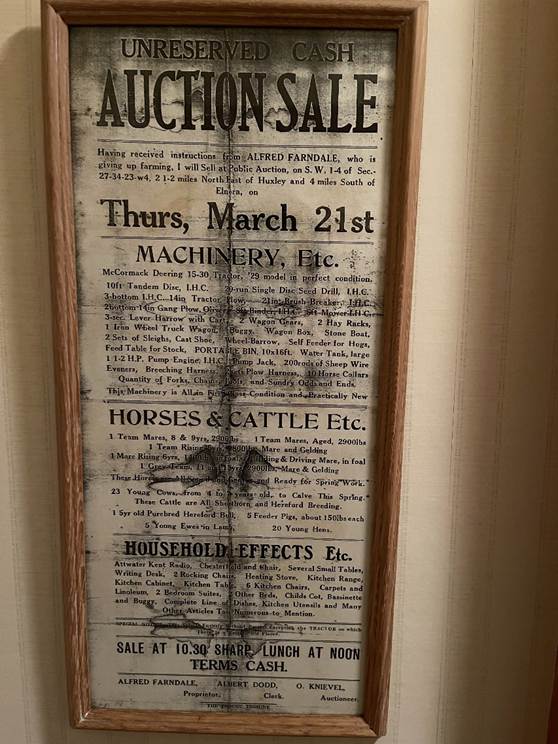
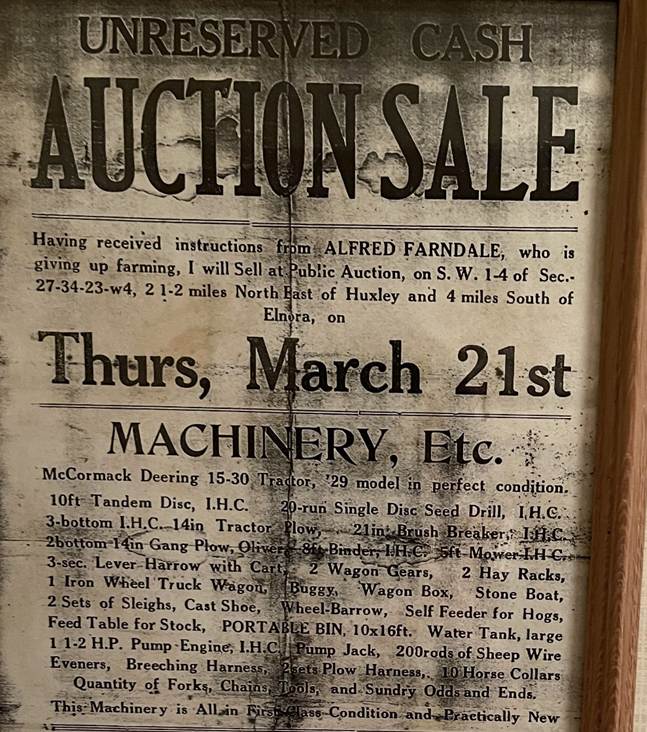
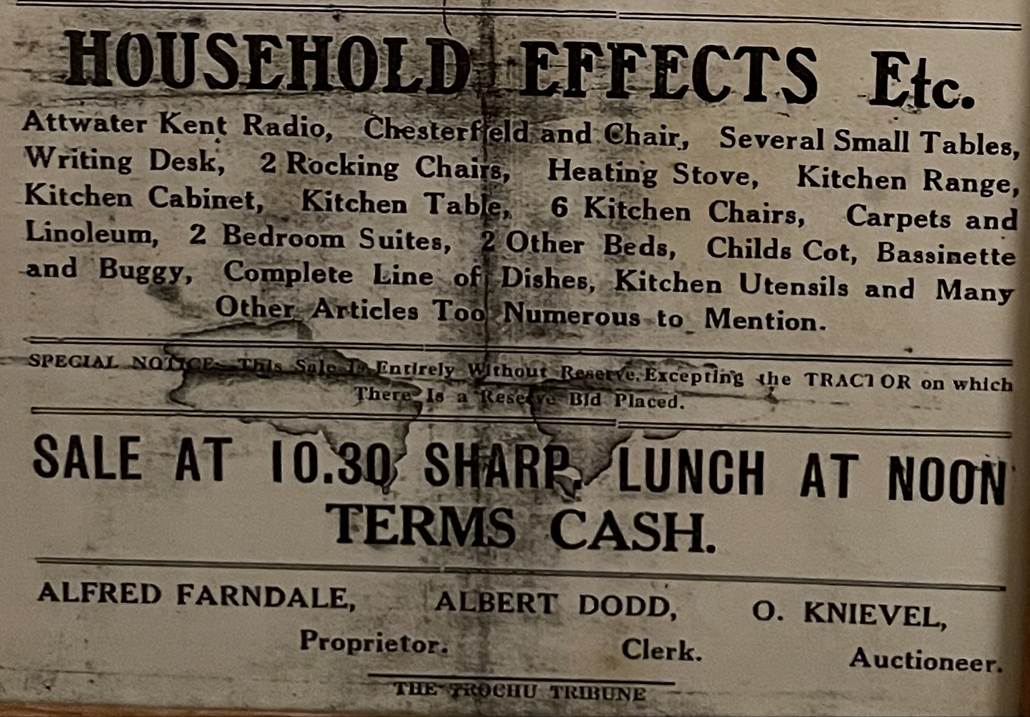
1935
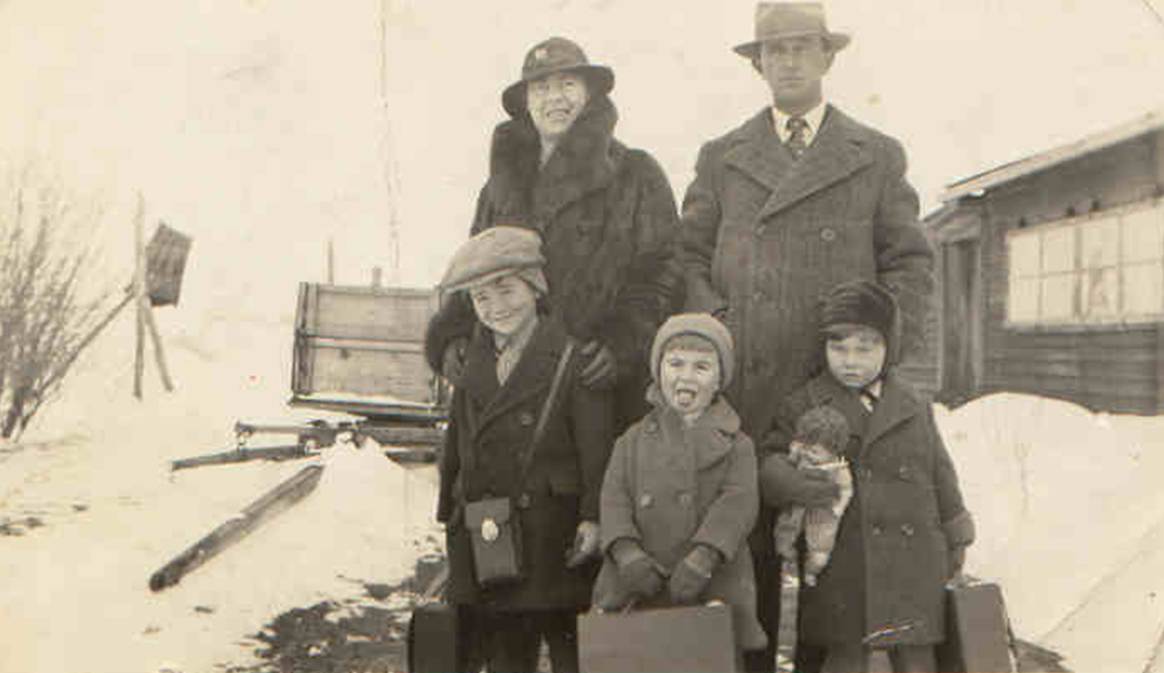
Thornton le Moor and
Northallerton
1935 to 1939
In a talk between Alfred Farndale
and his son, Martin on 29 July 1982,
Alfred recalled: We had a farm in Middleton-One-Row in 1936 and then we moved to
Sycamore Lodge at Thornton-le-Moor near Northallerton in 1937.
That was where Margot was born. It was too small though and we left it in 1940
after the war had started. We then lived at 117 Crosby Road, Northallerton. I was a farm contractor
doing ploughing and threshing. It was very hard work and very long hours.
I was Special Constable as well. Then, in January 1943, we moved to Gale Bank
Farm at Wensley.
We had been looking for farms for years and this was easily the best, so our
luck had changed. It was then about 400 acres, but now it is more. Peggy and I
retired in 1972 and we are now living at "Highfields", Eller Close
Road, Leyburn."
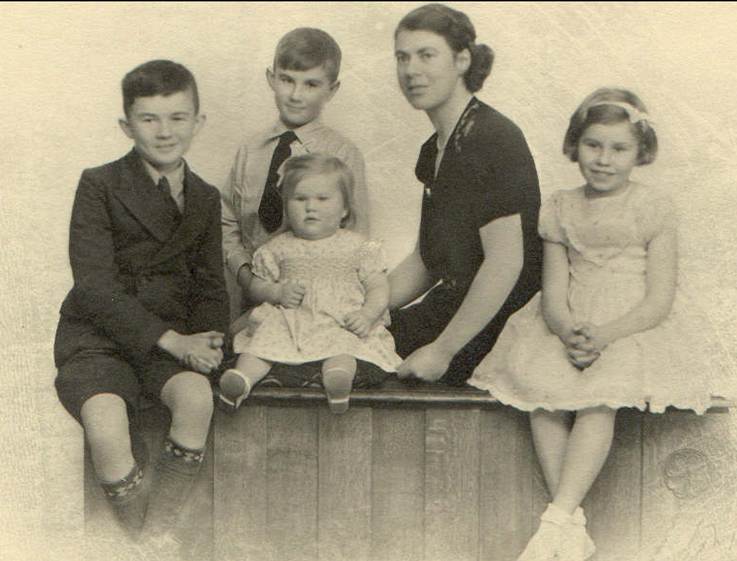
Alfred and Peggy’s family in the late thirties: Martin, Geoff, Margot (front), Peggy and Anne
Martin later recalled My parents both worked very hard and
times were not easy. My mother looked after us wonderfully well and set very
high standards. She taught us all how to behave, how to talk, to dress and
conduct ourselves in company.
My father was working very hard indeed at this time. It was
hard physical graft and very long hours, but there was plenty of work as
farmers grew all they could. Sometimes I went with him and I learnt how to
plough on his Massy-Harris tractor. We once ploughed in one of the fields from
our old farm at Thornton-Le-Moor where I remembered doing some ploughing with a
pair of horses some year before. Frequently on Thursdays I would cycle out to
an agreed point and await my father with his threshing crew to bring the men
their wages. But all this time my father
was trying to get another farm. He went to many, was short listed for some, and
turned others down. I went to some with him at weekends and I remember sharing
is hopes and disappointments. It was a difficult but exhilarating time. There
was not much money, and a lot of hard work. We had always had a car at this
time. We had a 1937 Morris 12 which, in 1942, my father exchanged for a
Standard 12 which he got from our doctor, Doctor Milne.
1937
Margaret (“Margot”) Lindsey Farndale ( FAR00952)
was born on 8 October 1937 at Thornton-le-Moor.
1939
In the 1939 Register,
Alfred Farndale, born 5 July 1897, a farmer (mixed) lived at Sycamore Lodge,
Thirsk with his wife, Margaret Louisa Farndale, born 24 February 1901; Martin,
Ann, Geoff and Margot records not yet open; and Lerna E Gerrard (later married
Hutchinson), single, born 6 February 1918, paid domestic duties.

In
World War 2 Alfred Farndale served as a Special Constable throughout the Second World War and was awarded
the Police War Medal.
1940
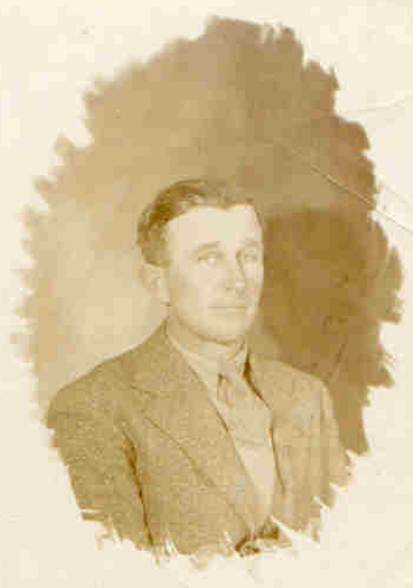
Alfred
in 1940
1943
After
Alfred farmed first at Middleton-One-Row, near Darlington, then at Thornton-le-Moor until
1940, the family moved to Northallerton until 1943 when they took Gale Bank Farm, Wensley.
Gale Bank Farm, Wensley, Wensleydale
Alfred later explained that then, in
January 1943, we moved to Gale Bank Farm at Wensley. We had been looking for
farms for years and this was easily the best, so our luck had changed. It was
then about 400 acres, but now it is more. Peggy and I retired in 1972 and we are now living at "Highfields", Eller
Close Road, Leyburn."
Martin recalled Towards the end of 1942, I came home from
school one day to be told by mother that it looked as if we had got a farm near
Wensley in Wensleydale.
I had
never been there, but I knew some children at school who came from up there. It
had always seemed a strange a remote land to me. However I was to cycle out to quickly give
the message to my father as he was wanted for an interview. Apparently
the existing farmer was not up to the standard demanded in war time by the War
Agricultural Committee and he was being turned off the farm. My father was to
be interviewed by the “War Ag” and by the Bolton estate on which the farm lay.
I remember to this day the excitement he showed saying in his quiet way,
“that’s splendid news”. It was indeed the best farm he had bid for and the one
he wanted most, some 450 acres between Wensley and Middleton, called Gale Bank
Farm. He knew it well and had already done some work on it. A few days later we
heard that he had got it, which was indeed wonderful news. It meant a lot of
changes. Anne and I were both at Northallerton Grammar School aged 13 and 12
respectively, Geoff was at Wensley House School aged ten, and Margot at home
but about to start school.
We moved to Gale Bank on 28 January 1943. I remember it all very well. The furniture van came and
everything was packed up. The rest of us went in our heavily overloaded
Standard 12. I remember it over heating just outside Bedale and my father going
into a farm and helping himself to a bucket of water! I remember our arrival
well, the house, and the buildings were quite empty and we children raced
throughout the empty house. There were strange smells everywhere, particularly
that of smoked bacon, which our predecessors had done for years. We raced
through all the farm buildings which were big and extensive compared to
anything we had known before. It must have been cold in January and apart from
a fire in the drawing room and kitchen in daytime only there was o heat. But I
don’t remember it being cold. With great excitement e all chose our bedrooms
and then the furniture van arrived and we all helped move our things into the
house. The beds were made – the same ones we had got out of that morning in
Crosby Road, and we were ready for bed in our new house. Little did we know
what a major step in our lives this day was to be for us all. Gale Bank was to
become our home, and a firm base for us all, for many years to come.
Geoff and
Margot started at Wensley school. Anne and I started at Yorebridge
Grammar School straight away. This meant a three mile walk or cycle across the
fields and roads to Wensley station, a 15 mile train
journey, and then s short walk to the school, then a return in the evening. It
meant an early rise, leaving the house in the dark at 7.15am and getting home
about 5.15pm.
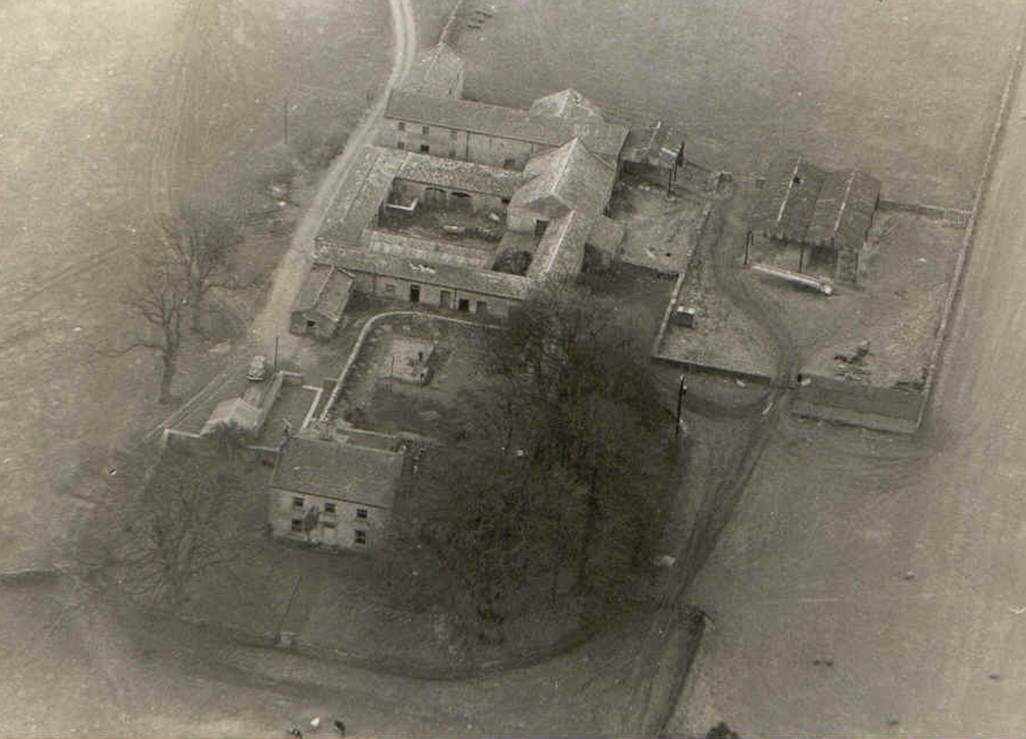
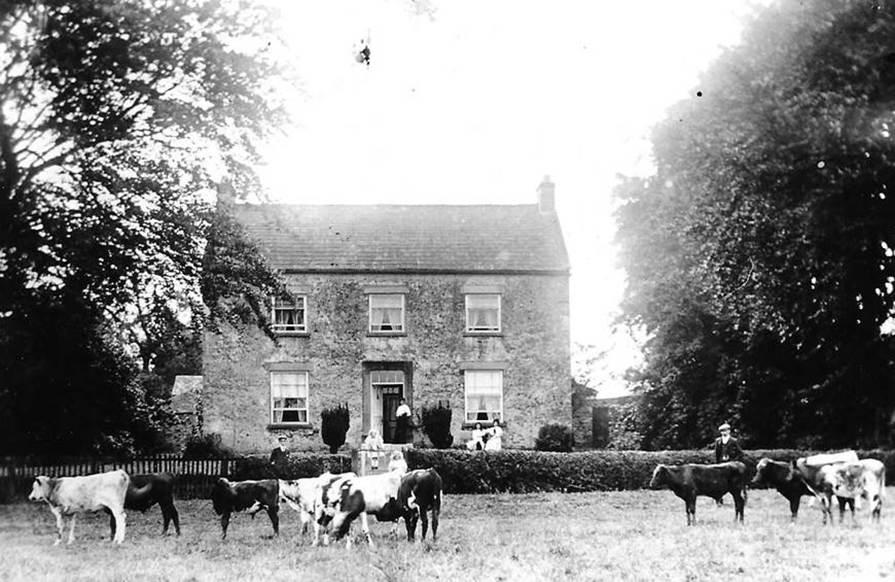
Gale
Bank Farm
The Farmhouse at about the turn of the
twentieth century
World War 2 came and went and
in 1946 their son Martin joined the British Army. He served in Egypt, Malaya,
South Arabia and Ireland and was involved in stopping the war in Rhodesia
(Zimbabwe). In 1955 he married Margaret Anne Buckingham and had a son, Richard.
Sister Anne married Norman Shepherd who worked for the BBC in Glasgow. They had
two sons and a daughter, Stephen, David and Catherine. Geoffrey continued to
run the family farm in Wensleydale with daughter, Christine, and son. Nigel. In
1937, Alfred and Peggy had a second daughter, Margot, who married William
Atkinson and they had a son, William, and two daughters, Susan and Judith. (Our
Huxley Heritage)
Gale Bank Farm was leased by the
Farndale family from 23 January 1943 to 30 September 1998, a period of 55
years. This was the longest tenancy in its history and by then the farm had
grown to 401 acres.
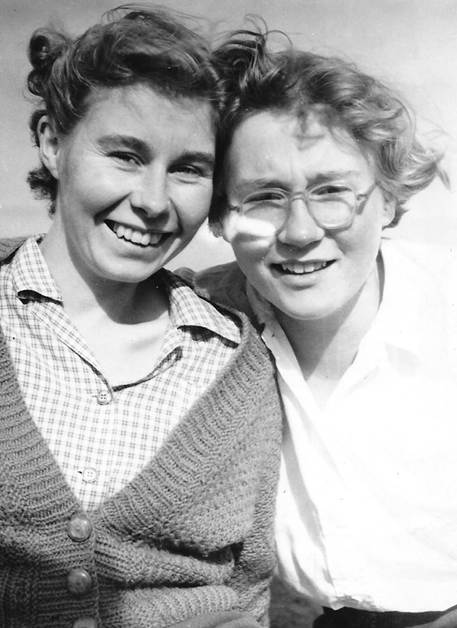
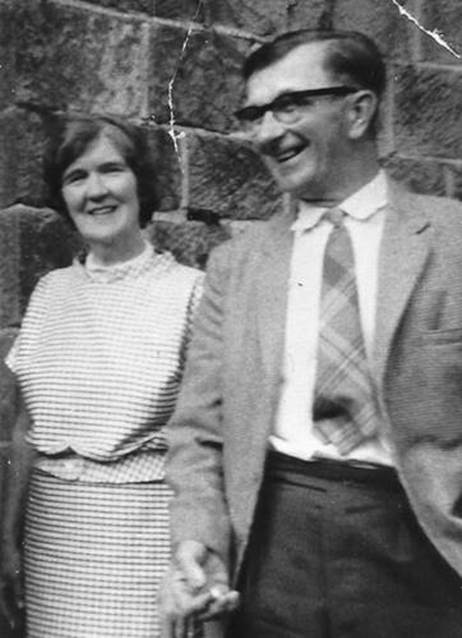
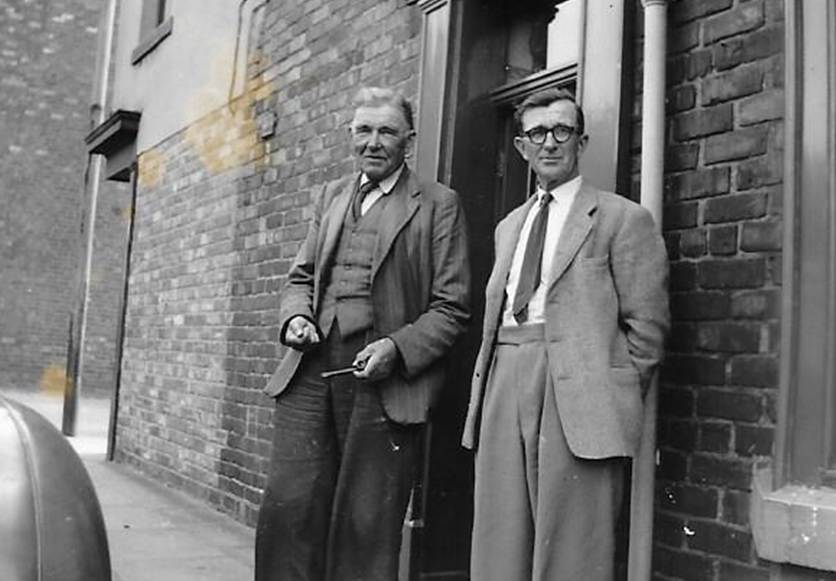
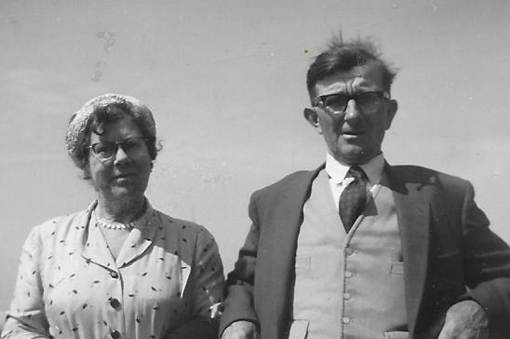
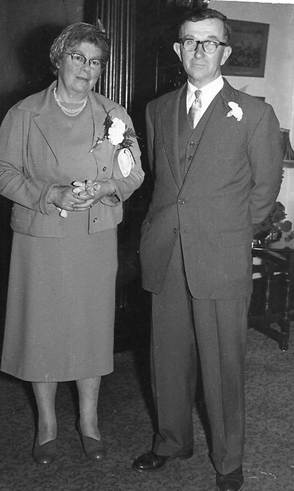
Alfred and Peggy travelled to Alberta again in
1958. The passenger list for those who landed
at Liverpool from Montreal on 29 September 1958 on the SS Empress of
England, included 337, Farndale, Alfred, M, 5.7,1897 and Farndale Margaret, F,
24./2/1901, both of Gale Bank Farm, Wensley, Near Leyburn, Yorks, Alfred a
farmer.
Leyburn, Wensleydale
1971
Alfred
farmed at Gale Bank very successfully until they retired in 1971 to Leyburn and
lived at Highfields,
named after the famous family home of Peggy’s family, the Bakers, on Eller
Close Road, Leyburn.
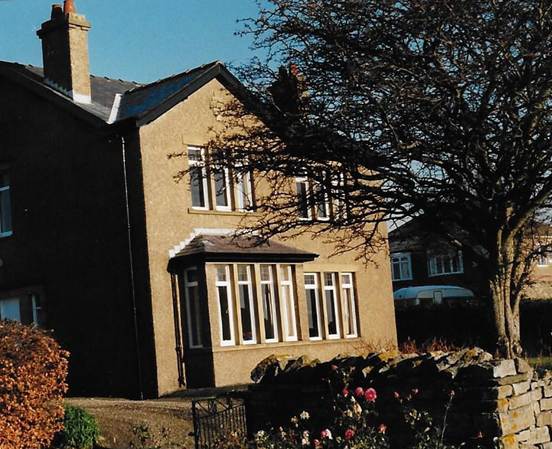
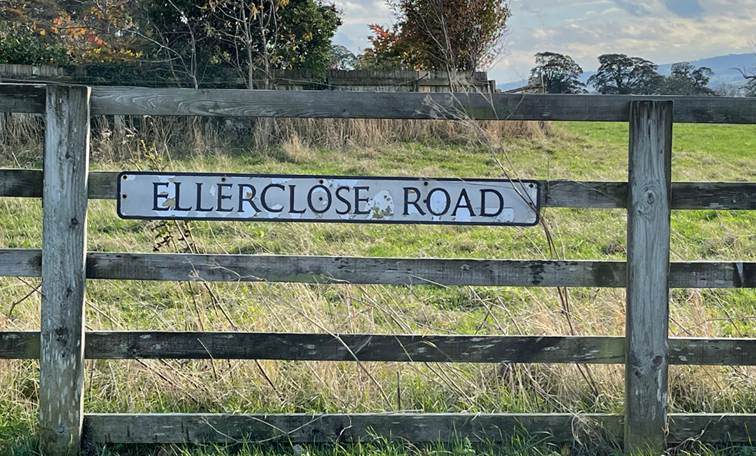
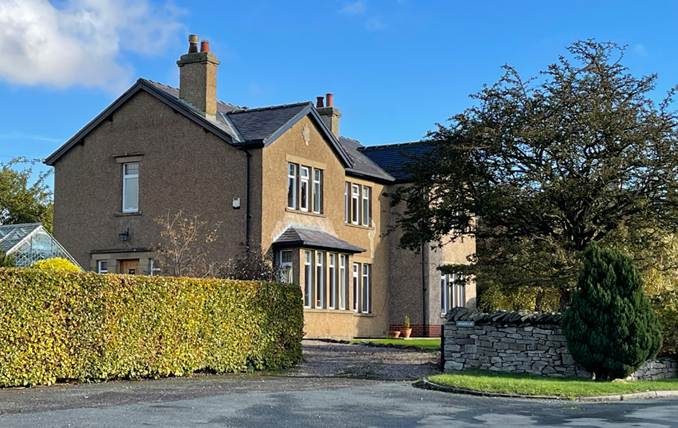
Highfields, Eller Close Road
Geoff
continued the Farndale tenancy of Gale Bank Farm. Alfred
continued to work on the farm almost until he died in 1987. Alfred was then known by all his
grandchildren as ‘Gran’ at Gale Bank Farm.
1973
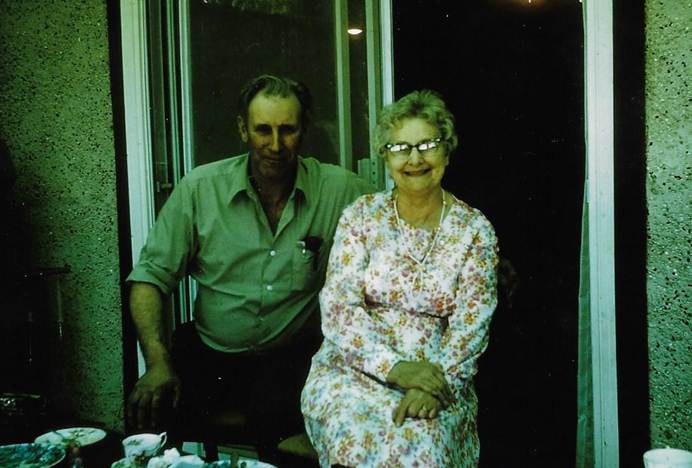
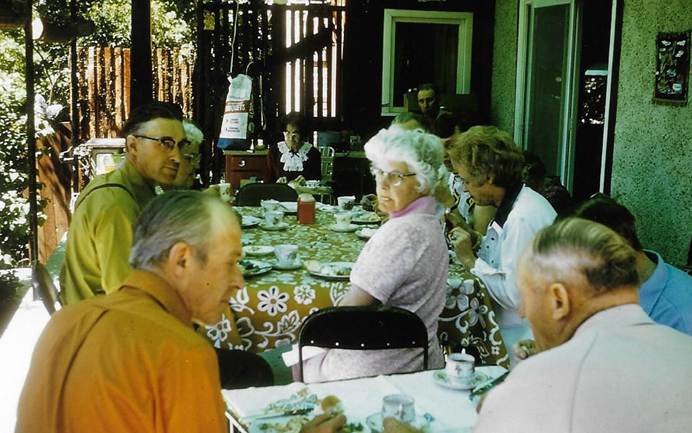
Aubrey and Glady Hogg who were the neighbours of
the Farndales at Huxley, during a visit by Martin Farndale
in July 1973 Lunch at the Hoggs in 1973
1970s and 1980s
Alfred
was then known by all his grandchildren as ‘Gran’ at Gale Bank Farm.
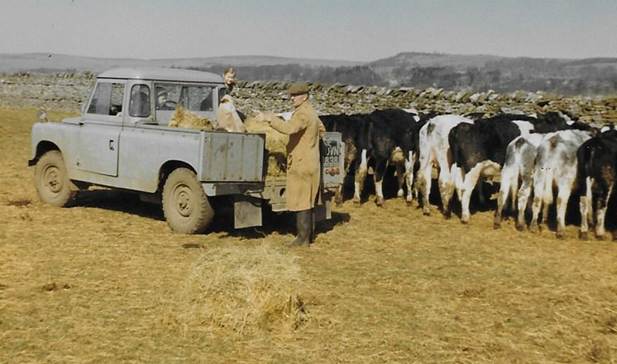
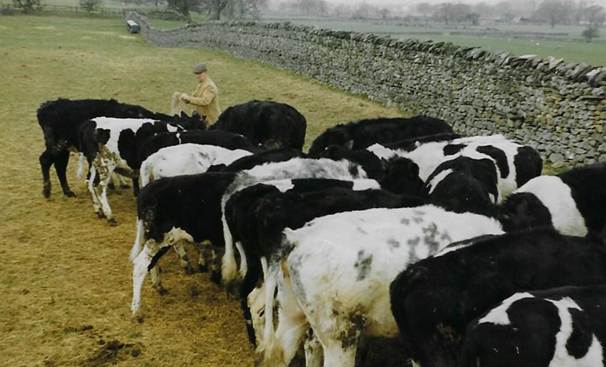
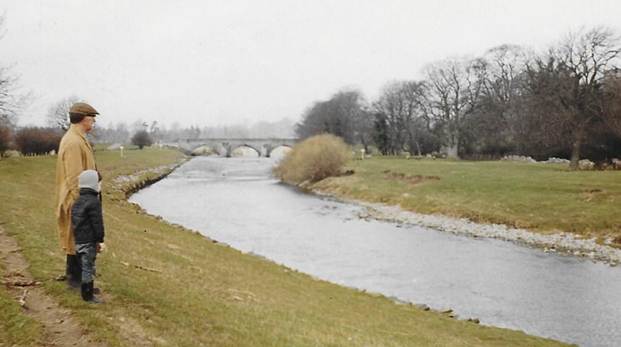
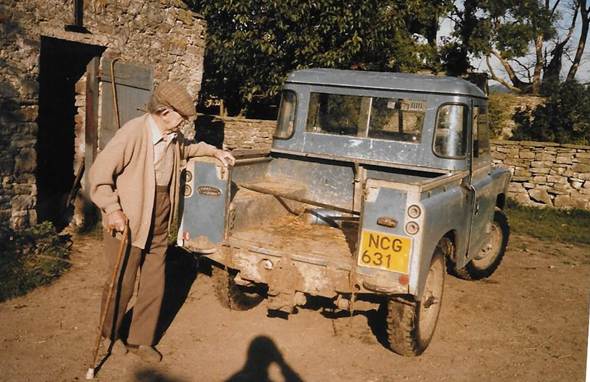
Gran
feeding the stock
The website author, Richard Farndale with Gran by the River Ure Gran and the landrover which he drove around
the stock
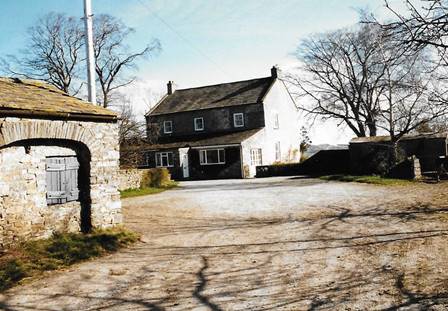
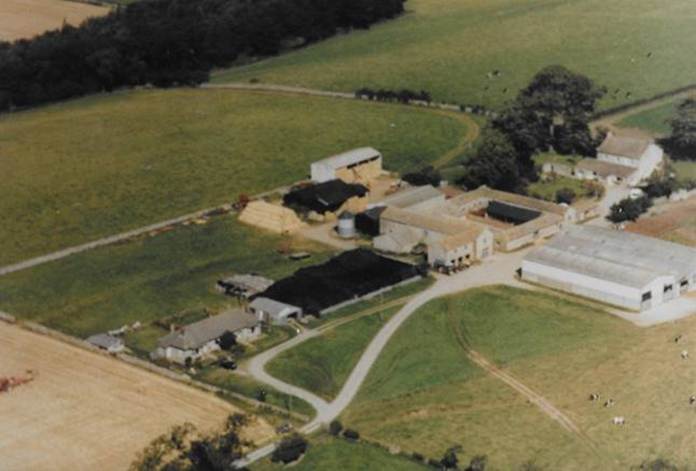
Gale Bank
in the 1990s
1978
Alfred
and Peggy had their Golden Wedding on 16 March 1978
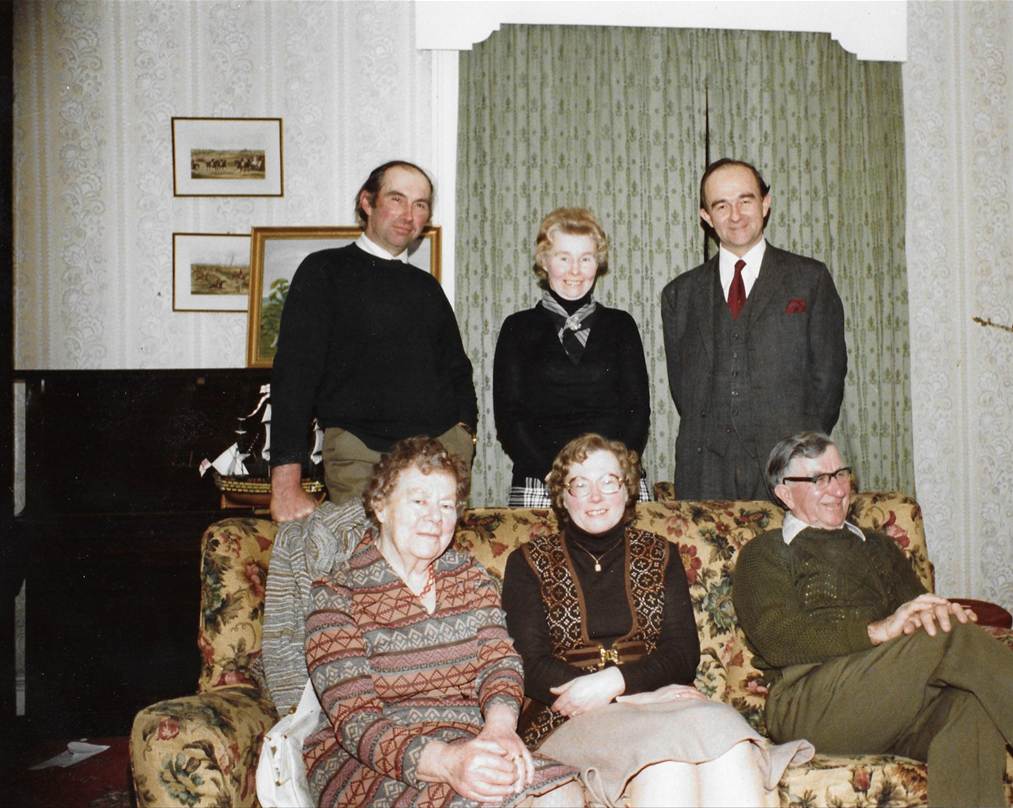
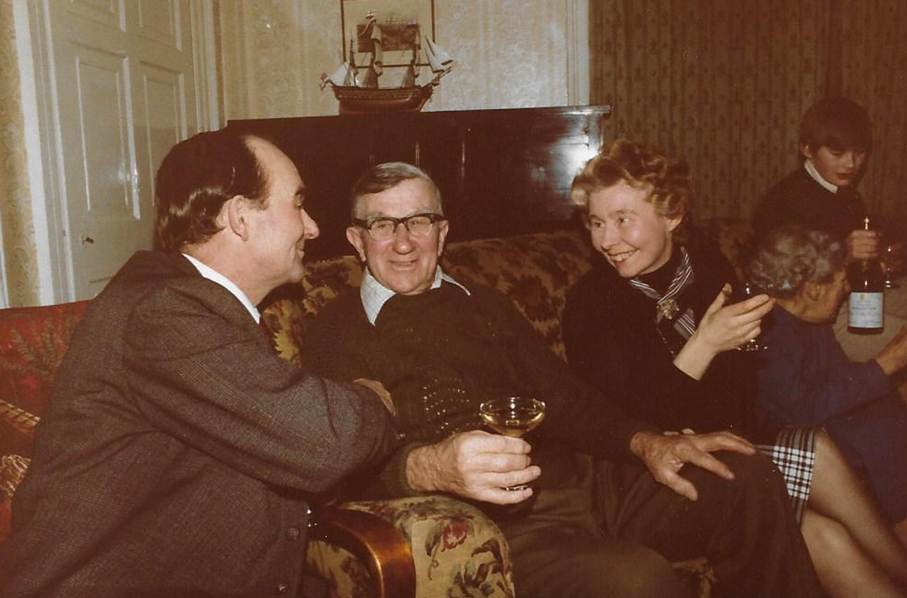
Back row: Geoff, Anne, Martin; Front Row: Peggy,
Margot and Alfred
Martin jokes with Alfred and Anne
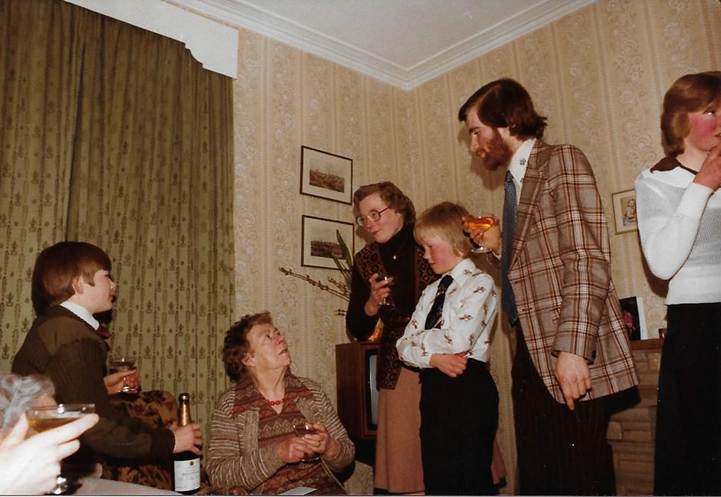
Peggy (Granny) amongst grandchildren Grace with
Stephen
Anne and husband Norman
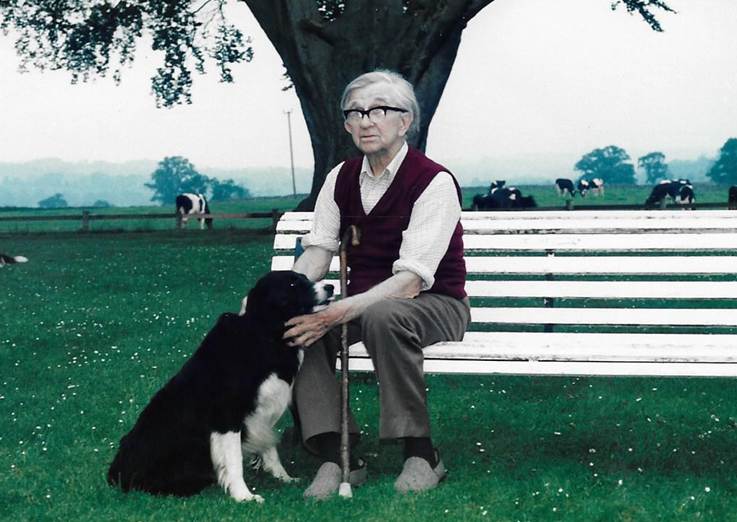
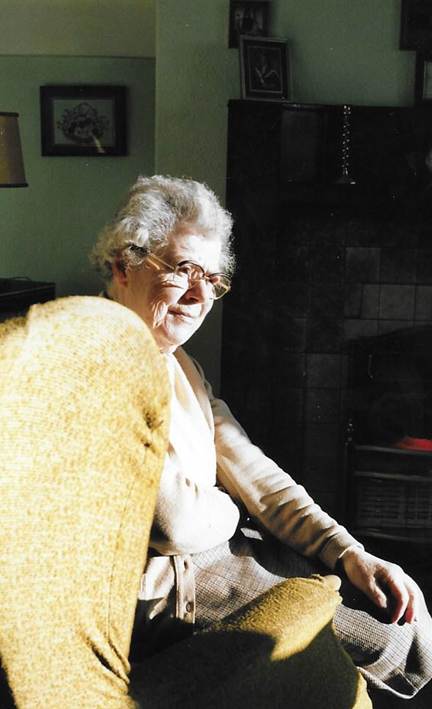
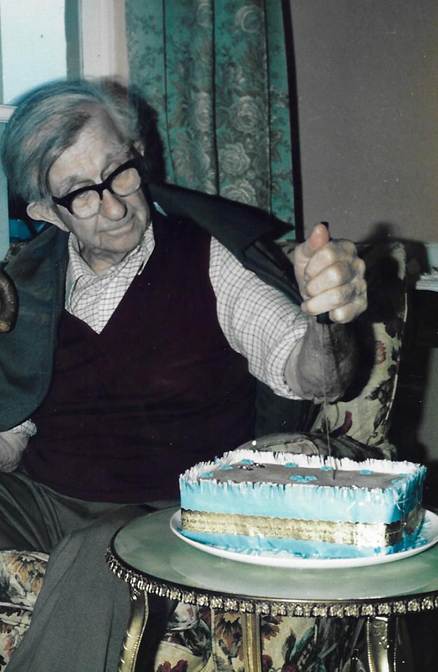
Gran under the tree at Gale Bank Farmhouse
Granny at Eller Close Road
Alfred’s
wider family in 1986
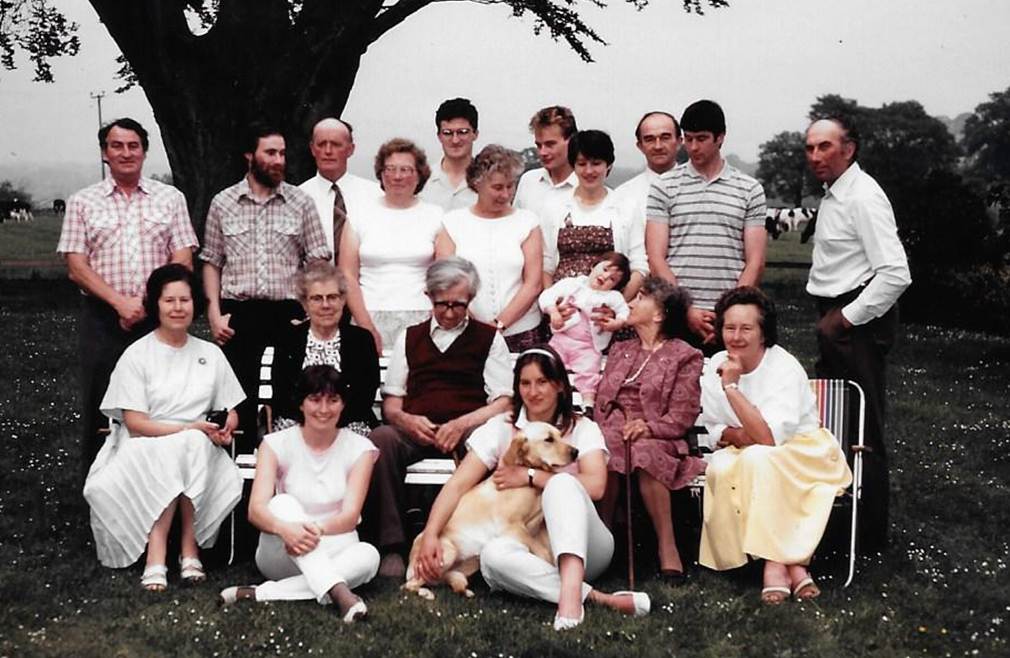
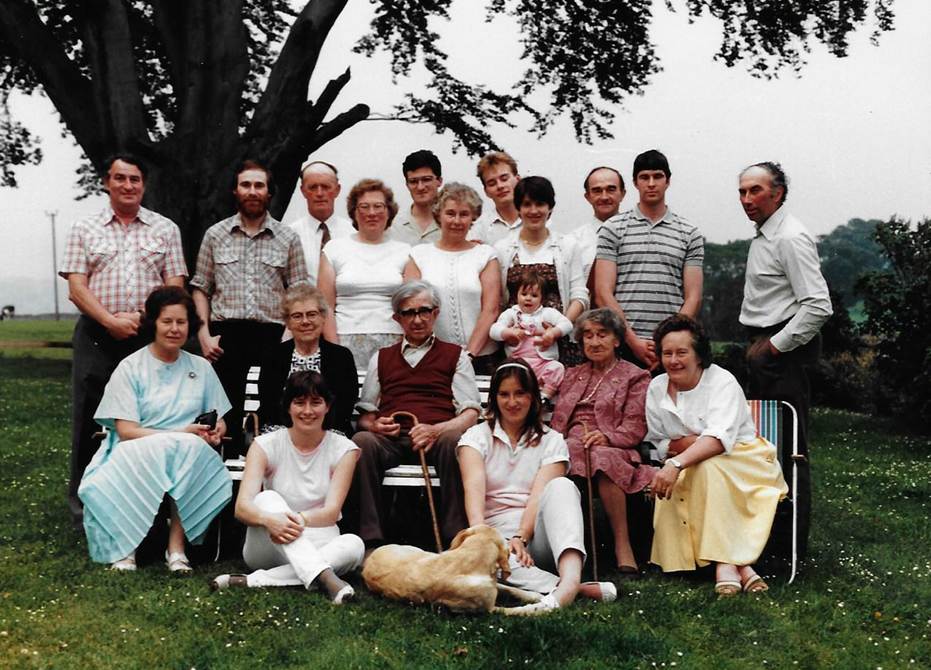
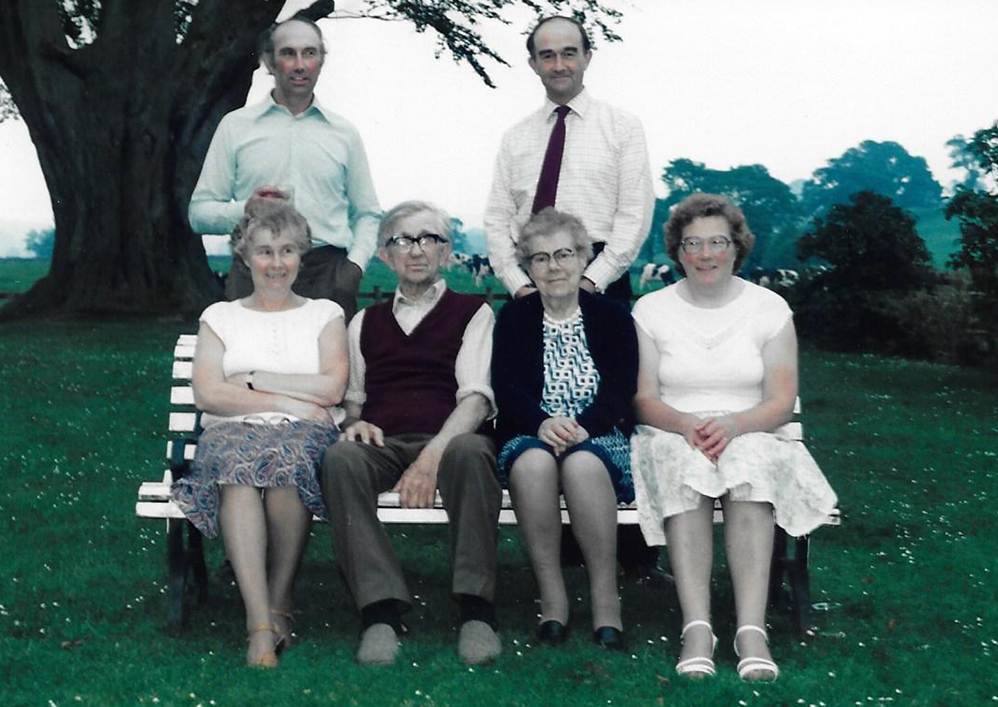
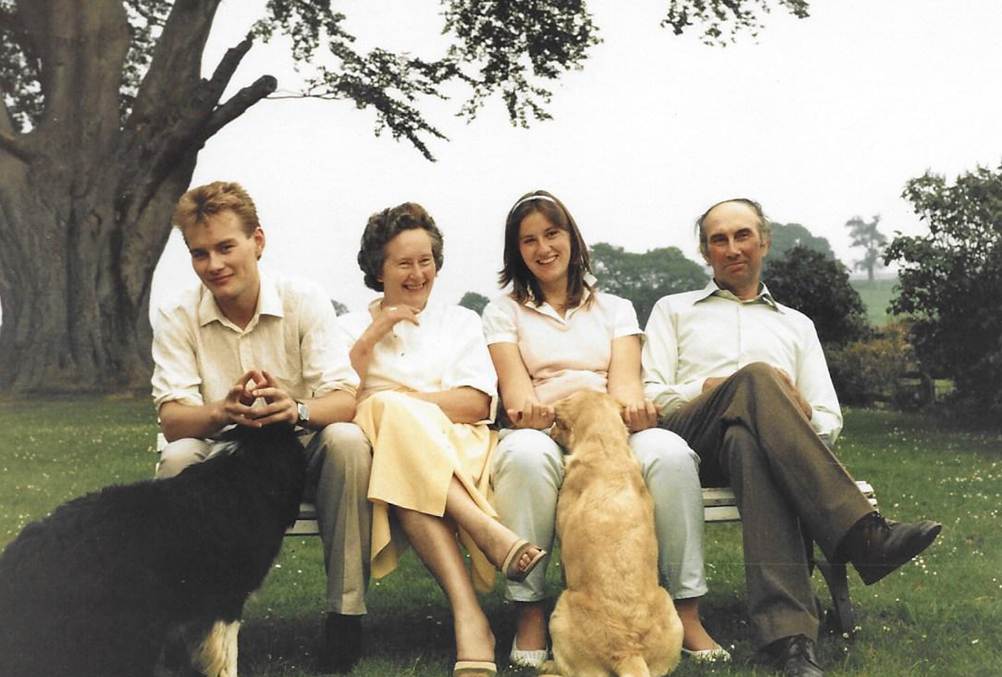
1987
Alfred Farndale,
died of prostate cancer, aged 89 years and 11 months on 30 May 1987 at Ruston
Hospital in Northallerton. He was cremated at Darlington and his memorial stands in Wensley Churchyard.
1996
Margaret (Peggy) Farndale died at Leyburn on 17th
November 1996 age 95. She was cremated at Darlington and
her Memorial is in Wensley
Churchyard.
(Most of above from
family knowledge)