Sarkless
Kitty
The Tale of Sarkless Kitty
|
Return to the Home Page of the Farndale Family
Website |
The story of one family’s journey through two
thousand years of British History |
The 83 family lines into which the family is divided.
Meet the whole family and how the wider family is related |
Members of the historical family ordered by date of
birth |
Links to other pages with historical research and
related material |
The story of the Bakers of Highfields, the Chapmans,
and other related families |


The tale of Sarkless Kitty
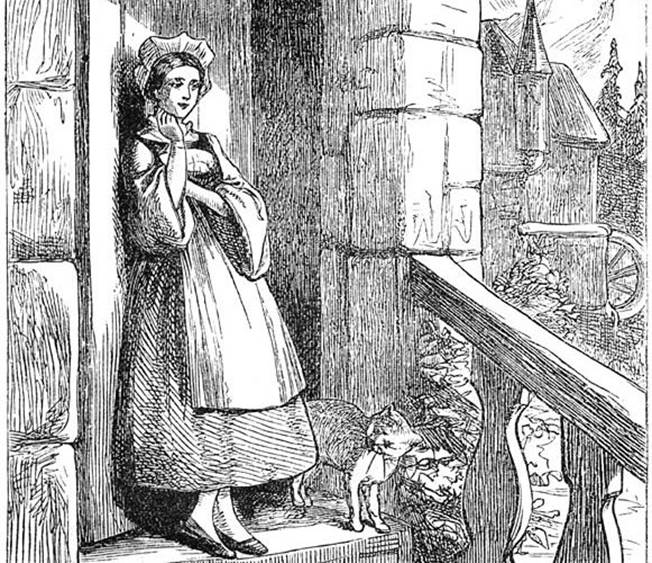
On Whit
Sunday 1809, in the evening, a funeral was held in Farndale. There was no coffin and no
body. After uttering the familiar words 'ashes to ashes, dust to dust,'
the priest paused meaningfully before adding 'water to water.' With a
profound 'Amen', the assembly murmured its assent.
The
water-burial without a body was to lay to rest the tormented soul of Kitty
Garthwaite or Sarkless Kitty as she had
become known. Only when Kitty was granted eternal rest would her spirit cease
to plague the ford in Farndale and claim the lives of men. Eighteen had died so
far.
The
tale of Sarkless Kitty opens with the courtship of a
girl from Gillamoor by Willie Dixon, of neighbouring
village of Hutton-le-Hole. A likeable lad, a good dancer and singer, Willie
attracted a succession of girlfriends. But he spent more time with Kitty than
most. As Hutton folk wryly observed he was often 'off ti
Gillimoor when there warn't
no need.'
Kitty
was keen to marry Willie. One September afternoon, she was gathering brambles
in Douthwaite Dale, on the southerly extension of Farndale that separates Gillamoor from Hutton-le-Hole, when she got a painful spell
(a splinter) under her thumb nail. As she tried to remove it, crying in pain,
up came Willie, on his way home from Kirkbymoorside market. He pulled out the spell,
comforted Kitty, and the chance meeting moved on tenderly from there. As a
Victorian account delicately put it: 'It was quite dark when the lovers
reached Gillamoor, but they were both perfectly happy.'
The
less-happy outcome was Kitty's pregnancy which put Willie under an obligation
to marry the girl. At first he seemed as pleased as she did. He often rode to
see Kitty, crossing the unbridged river Dove at the ford at Lowna.
Kitty often met him there, where she became a familiar figure, sitting on the
trunk of a sideways-grown alder tree.
But
Willie kept putting off the wedding day. And six or seven months after that
'happy' moment in Douthwaite Dale, he failed to keep a rendezvous at their
trysting tree. Returning to Gillamoor, Kitty heard
rumours that Willie had been seen that day with the daughter of a wealthy
farmer in Castleton, over the moors. Next time she saw Willie he was evasive
about where he had been.
On 29 May
1787, Whit Sunday, the pair met by the ford for the fateful last time.
A quarrel climaxed with Willie galloping off, leaving the distraught Kitty by
her tree. The next morning her body, clothed only in her white sark, a
kind of shirt or smock, was found in the pool below the ford. Her other
garments were strewn across four fields.
Aware
of the trouble between Kitty and Willie, villagers concluded that the jilted
girl had set off back for Gillamoor but had decided
to drown herself. Distraught, she had cast off her clothes as she ran to the
ford, where she plunged in naked except for her sark.
Kitty's
body was laid out in a barn at Lowna Mill, near the
ford. The miller's wife, Mrs Agar, removed and washed the sark and hung it by
the body, which was carefully covered with clean sacks.
Kitty's
burial posed a problem. With suicide still regarded as an offence against God,
the bodies of those who killed themselves were excluded from holy ground.
Moorland custom decreed Kitty would be buried at a crossroads, with a stake
through her heart. But even that cost money, and Kitty's mother insisted: 'By
rights Kitty was Mrs Dixon, and Willie must see to t' burryin.'
But
where was Willie? Absent since the row, he didn't reappear until Wednesday,
three days after Kitty's death. He said that after the row he had gone on the
moor to think things over. Deciding to make it up with Kitty he had galloped to
York to obtain a wedding licence. He had forgotten the office was closed on
Whit Monday. And although he obtained the licence the next day, his return was
delayed by heavy floods. Since Willie had the licence in his pocket, and floods
had indeed disrupted the district, this explanation was accepted.
Accompanied
by Mrs Agar, Willie went to see Kitty's body. But the body and sark had
vanished. Only the sacks, neatly folded in a corner, remained.
Willie
spent the rest of the day searching for the body. On his horse, he called on
Kitty's family and friends and the vicar of Lastingham, whose parish included
Farndale. At dusk he was seen riding along the old bridleway between Low Mill
and Lowna. But next morning his horse was found
grazing near Lowna Mill. His body lay in the same
pool in which Kitty had been drowned. 'Sarkless
Kitty', as she was henceforth called, had claimed her first man.
A few
weeks later two Hutton-le-Hole children, arrived home breathless, claiming to
have seen Kitty at the ford 'stark nakt'. They
said she was sitting on her usual tree, from which she smiled at them and waved
her sark. Accused of being 'dirty little leears',
the children were smartly packed off to bed.
But
in October, the horse of a well-known occasional traveller across the moors
trotted riderless up to the Royal Oak, Gillamoor. The
man's body was soon found in Kitty's pool.
Over
the next few years 16 more men, all but two of them strangers, were drowned in
the pool. Locals were convinced that Kitty's ghost startled the men's horses,
which reared up and threw the riders. Several local men claimed to have seen
Kitty's ghost as they were 'aiming fer to cross' the ford. Always
clutching her white sark, the 'nakt' Kitty was
sometimes sitting on her tree, sometimes running on the bank, and sometimes in
the ford itself. Understanding what this spectre foretold, the local men turned
back.
Of
the two who died, one was drunk. But it was the death of the other, Kitty's
18th victim, a popular and hardworking young farmer, that persuaded people
something must be done. Hence that extraordinary funeral cum exorcism which
occurred in 1809. Dressed in full robes the vicar conducted it with the
assistance of two surpliced choristers, one holding a lighted candle, the other
ringing a bell. Kitty's ghost has never reappeared.
The Wilf Crosland
Explanation
In 1947 Wilf
Crosland, a Hutton-le-Hole historian, unveiled a startling explanation of the
disappearance of the body. Recounting the saga in his book Yorkshire Treasure,
he said that among books he had purchased 'quite recently' at a local
sale was an old Bible. Against verse 60 of 28 Matthew was a cross, accompanied
at the foot of the page by a note in faded ink which said: 'X inside back.'
Between the paper lining and the board Crosland found a folded sheet of paper
covered in small, neat handwriting.
Consulting
a family tree in the Bible, Crosland worked out that initials on the paper, H.
A. were those of a Henry Armadale. Born in 1775, he was a son of Joseph and
Eliza Armadale, the Bible's original owners. The family tree also revealed that
Henry's elder sister, Mary, died on 24 May 1787, six
days after Kitty. Aged 18 she was buried in the Quaker burial ground at Lowna.
According
to Henry Armadale's detailed note, Mary's burial took place on the Friday
before the Monday on which Kitty's body was found. The note said that the day
after the funeral, the Armadale family, devout Quakers, sat down after supper
for their usual bedtime Bible reading. Selected at random, the passage happened
to be Matthew's account of how Joseph removed Jesus's body from the cross, and 'wrapped
it in a clean linen cloth and laid it in his own new tomb.'
In
bed that night, Joseph Armadale asked his wife: 'Art thou sleeping Eliza?'
She replied: 'Nay. That poor child under the sacks is on my mind.'
Joseph said: 'Dost thou think Joseph left the bodies of those two thieves
hanging? I think he must have covered them somewhere.' Turning over the
phrase 'his own new tomb,' he asked: 'Dost thou think it is a leading?'
- ie is it telling us something? Convinced it was he
sprang up and declared: 'There can be no delay. It must be done at once.'
Agreeing, his now sobbing wife said: ' I must go with thee.'
Loading
their mare with a pick, spade, ropes and a clean linen sheet, the couple made
their way to the barn at Lowna. There, Eliza
re-clothed Kitty's corpse in her sark and wrapped it in the linen sheet. She
and Joseph then took it the short distance to the isolated burial ground where
Joseph placed Kitty in their daughter's own freshly dug grave. Years later, he
related all this to Henry, who wrote it down.
So
said Crosland. But a list of all 114 Quakers buried at Lowna
between 1675 and 1854 includes no Armadale. Nor was the marked Bible among the
artefacts gifted by Crosland to found what has become the Ryedale Folk Museum.
A Cropton resident who recently unearthed these facts, and remembers Crosland
as an 'imaginative storyteller', believes he may have invented the
dramatic denouement, perhaps for fun or to present Quakerism, his creed, in an
appealing light. But would a serious historian wish to muddy history or a
devout Quaker to present fiction as fact?
Gordon Home’s Version
An
earlier version of the main story appeared in Gordon
Home's Pickering: The Evolution of an English Town
(1905).
In
this version, Kitty was a 'lewd hussey',
mysteriously drowned sometime after being deserted by her husband of four
months.
Then
there was the figure of "Sarkless Kitty";
but this spectre, we are told, "having been public laid will now be seen
never again and has the very mention of her name be now a thing forbid by all
it must soon come to pass that the memory of this lewd hussey
will be entire forgot and it of a truth be better so."
But
this only rouses one's curiosity, for the spectre must have been surpassingly
terrible to require the suppression of its very name.
It
was in August in the year 1807 or 1809 (the manuscript is too much soiled to be
sure of the last figure) that either the Vicar of Lastingham or his
curate-in-charge publicly laid this spirit, which had for many years haunted
the wath or ford crossing the river Dove where it
runs at no great distance from Grouse Hall.
The
ceremony was performed at the request of the whole countryside for there was a
widespread outcry over the last victim. He was a farmer's son who, having spent
the evening with his betrothed, was riding homewards somewhat late, but he
never reached his house. On the next day his cob was found quietly grazing near
the dead body of its master lying near the ford. There were no signs of a
struggle having taken place, there were no wounds or marks upon the body, and
his watch and money had not been touched, so every one
concluded that he had seen Sarkless Kitty.
In
the year 1770 the ford "had come to be of such ill repute that men feared
to cross after dark and women refused to be taken that way," although as
far as is known it was only men who came to harm from seeing Sarkless Kitty. The apparition was that of an exceedingly
lovely girl who appeared "as a nude figure standing upon the opposite bank
to that of the approaching wayfarer." Her beauty was so remarkable that
those who had the ill-luck to come across the spectre could not refrain from
gazing at it, and all who did so were believed to have died either at the same
moment or soon afterwards.
Calvert,
however, tells us that one Roland Burdon, who possessed a "Holy
Seal," came face to face with Sarkless Kitty,
but fortified by its virtues he survived the vision; then he adds: "This
same Roland did slay in single combat the great worm or Dragon which at one
time did infest Beck Hole to the loss of many young maidens the which it did at
sundry times devour. He slew it after a fierce battle lasting over half a day
throw the great power of the Holy Seal being about his person. This worm did
also infest Sneaton Moor."
If we
are to believe anything at all of this prodigious story we must place it among
those which have been handed down from the time of the Danes and have become
somewhat confused with later superstitions.
Coming
back to the story of the beautiful spectre we find that in 1782 a certain
Thomas Botran wrote down all the information he could find out in his time
concerning the story of Sarkless Kitty, and Mr
Blakeborough has added to it everything else that he has discovered relating to
it.
It
seems that there lived near Lastingham towards the close of the seventeenth
century a girl named Kitty Coglan whose beauty was so
remarkable that "folk at divers times come much out of their way in the
pleasant hope of a chance for to look upon the sweetness of her face." She
was, however, extremely vain, and her mother seems to have heard stories of her
bad conduct, for she began to worry herself over her daughter's behaviour.
Having had a curious dream she asked Takky Burton, the wise man of Lastingham,
to tell her what it meant. He told her that the wonderful gem of her dream was
her daughter Kitty, who like the gem had blemishes beneath the surface. Soon
after this Kitty married the only son of a small farmer, but after they had
lived together about four months he disappeared, and then Kitty seems to have
gone from bad to worse. How long after this it was that the tragedy occurred is
not known, but one day Kitty's naked dead body was found by the wath that her spirit afterwards haunted.
That
deaths occurred in the ford, and an exorcism took place there, is virtually
certain, for the first record of the service, obtained and described about 100
years ago by Richard Blakeborough, an assiduous collector of moorland
folklore, was in a manuscript of stories of the moors, written in 1823, less
than 20 years after the exorcism, by a man named George Calvert.
The old burial ground
Identified
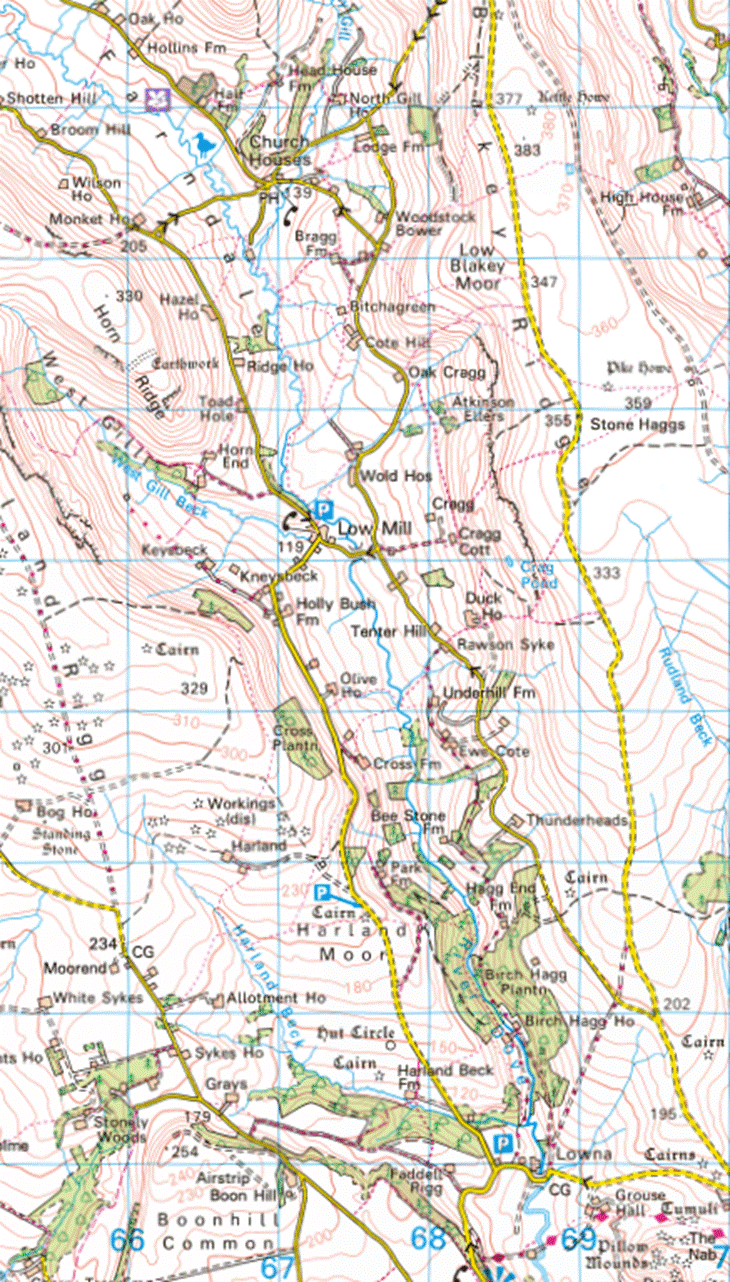
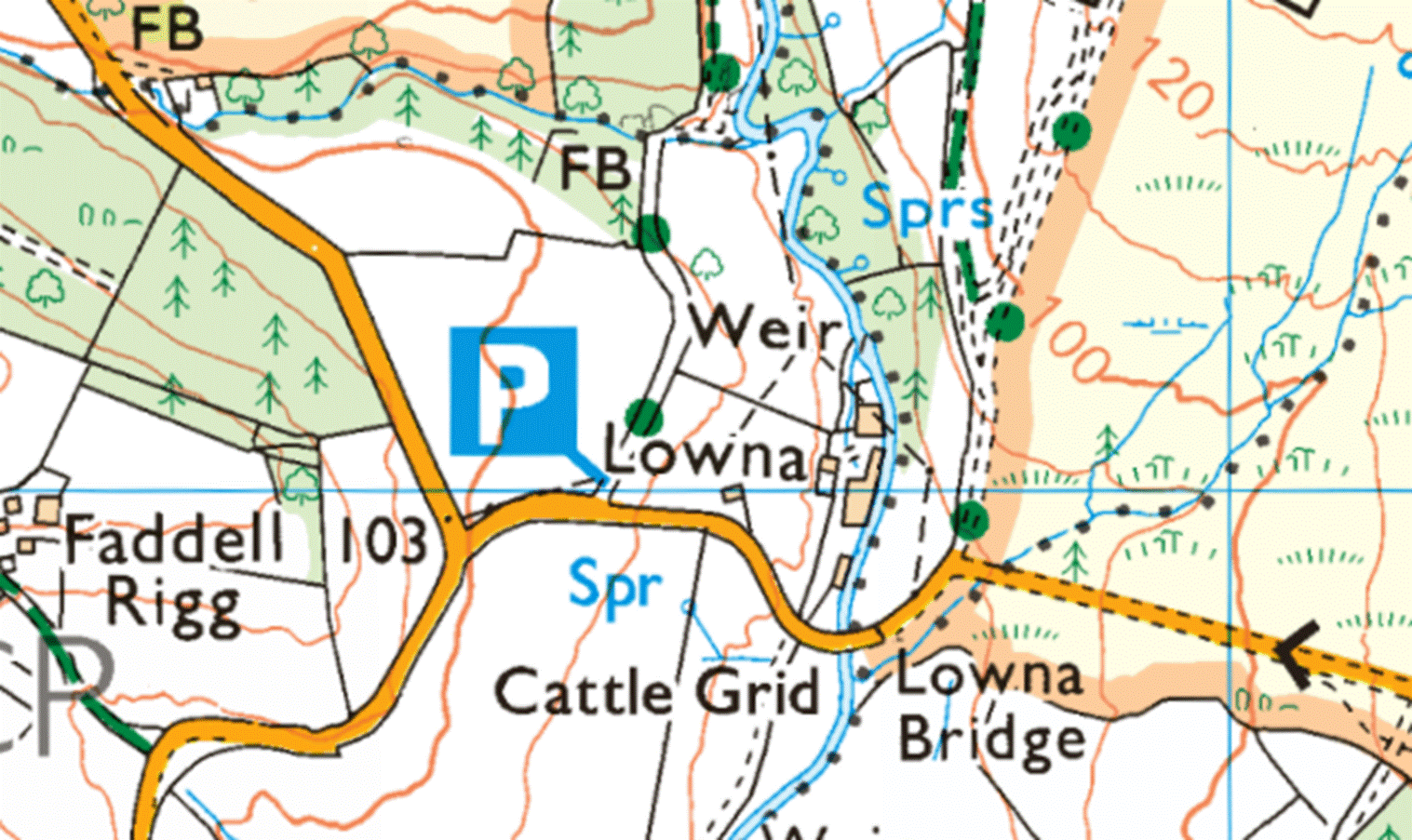
by a plaque on its boundary wall, the old burial ground, now host to large
trees, is just a five-minute stroll from a small car park at Lowna. No longer discernible, the ford itself was formerly
a notorious hazard, with very uneven footing. Like Willie Dixon, who had been
warned he would try to cross once too often in dangerous conditions, all its
victims probably died when the river was in spate.
The building of Lowna Bridge in 1826 finally
eliminated the danger.