Cockermouth
Historical information about Cockermouth focused on the history
relevant to the Farndale family genealogy
|
Return to the Home Page of the Farndale Family
Website |
The story of one family’s journey through two
thousand years of British History |
The 83 family lines into which the family is divided.
Meet the whole family and how the wider family is related |
Members of the historical family ordered by date of
birth |
Links to other pages with historical research and
related material |
The story of the Bakers of Highfields, the Chapmans,
and other related families |
Dates are in red.
Hyperlinks to
other pages are in dark
blue.
Headlines of the
history of the Cockermouth are in brown.
References and
citations are in turquoise.
Contextual
history is in purple.
The Farndales of
Cockermouth
The following Farndales are associated with Cockermouth:
Charles Masterman Farndale (FAR00429)
of the Kilton 1 Line
John William
Farndale (FAR00454)
of the Great Ayton 2 Line
Mary Ann Farndale
(FAR00465)
of the Great Ayton 2 Line
You can best see
the association through the Great
Ayton 2 Line.
Cockermouth
Cockermouth is
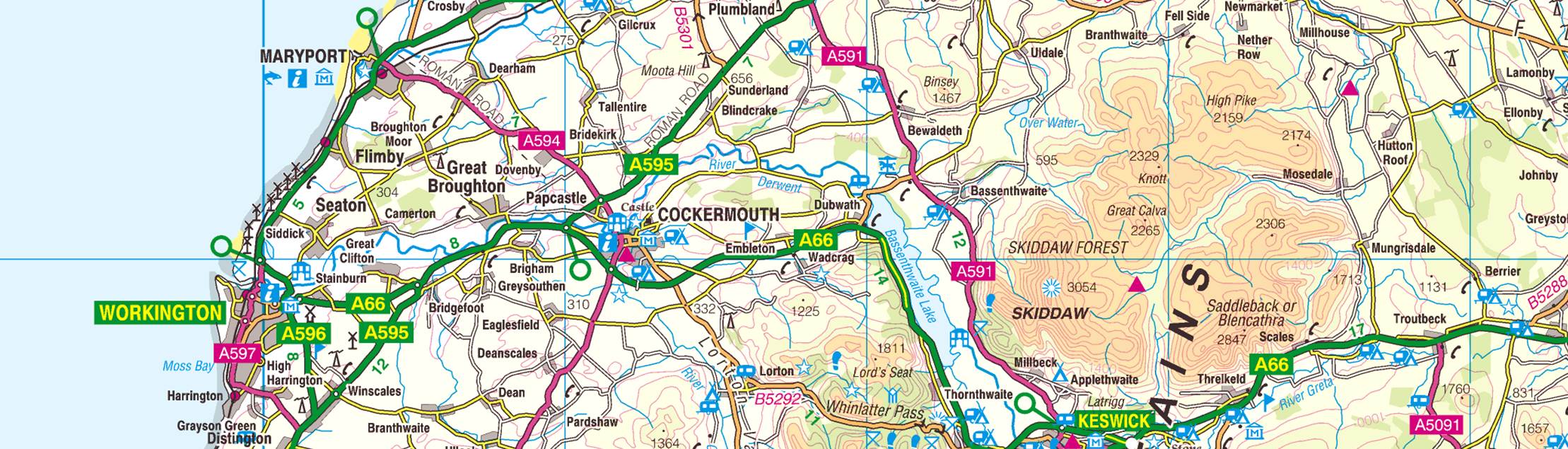
an ancient market town and civil parish in the Borough of Allerdale in Cumbria,
so named because it is at the confluence of the River Cocker as it flows into
the River Derwent. In 1823, it was described
as a considerable borough and market town, about 13 miles from Whitehaven,
26½ from Carlisle, and 314 from London (Magna
Britannia: Volume 4, Cumberland. Originally published by T Cadell and W Davies,
London, 1816).
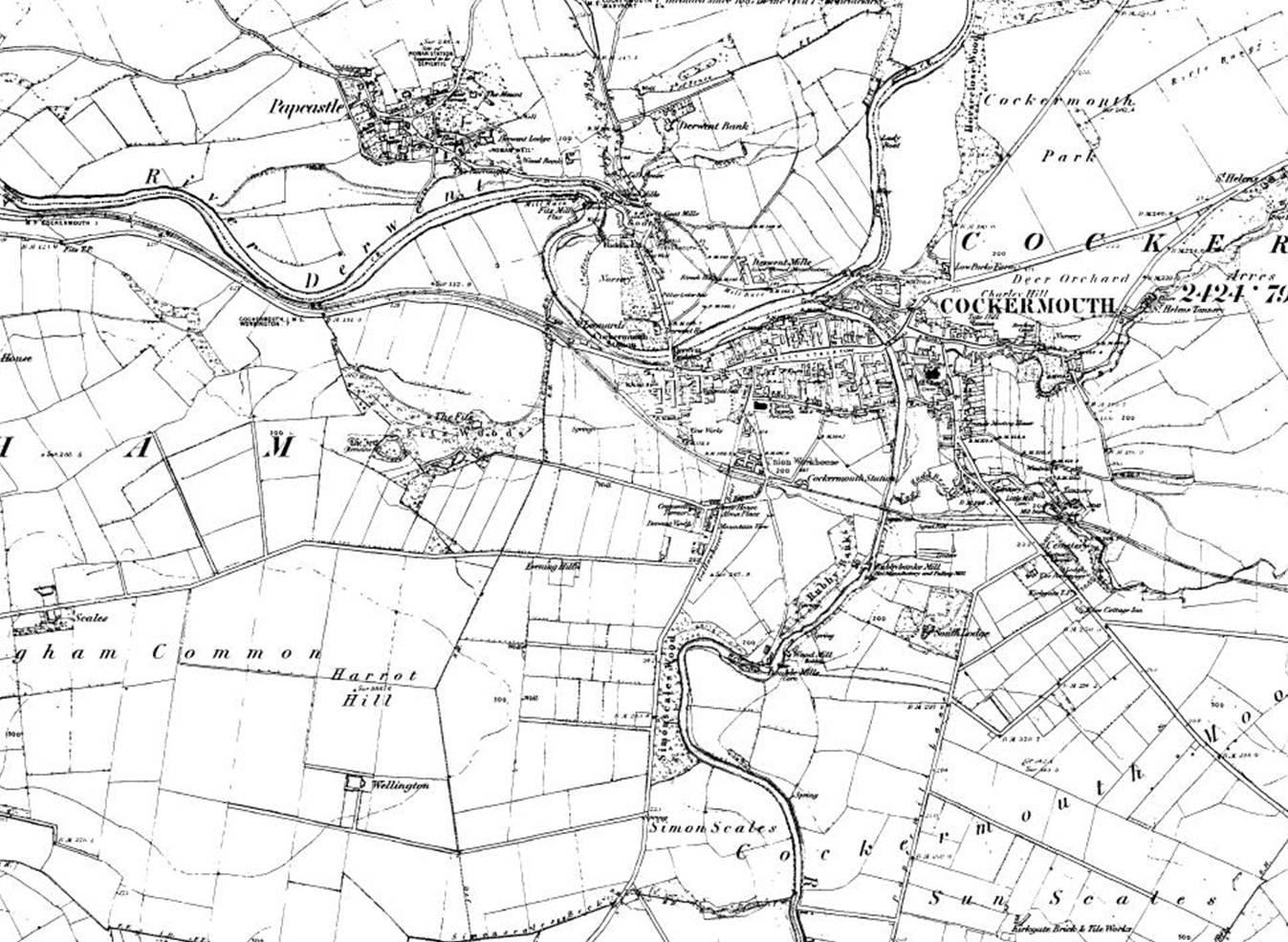
1868
Historically a part of Cumberland,
Cockermouth is situated outside the English Lake District on
its northwest fringe. Much of the architectural core of the town remains
unchanged since the basic medieval layout was filled in the eighteenth and
nineteenth centuries.
The Romans built
a fort at Derventio Carvetiorum,
now the adjoining village of Papcastle,
to protect the river crossing on a major route for troops heading towards Hadrian's
Wall.
The Normans
occupied the former Roman fort, and built Cockermouth Castle closer to the river
crossing.
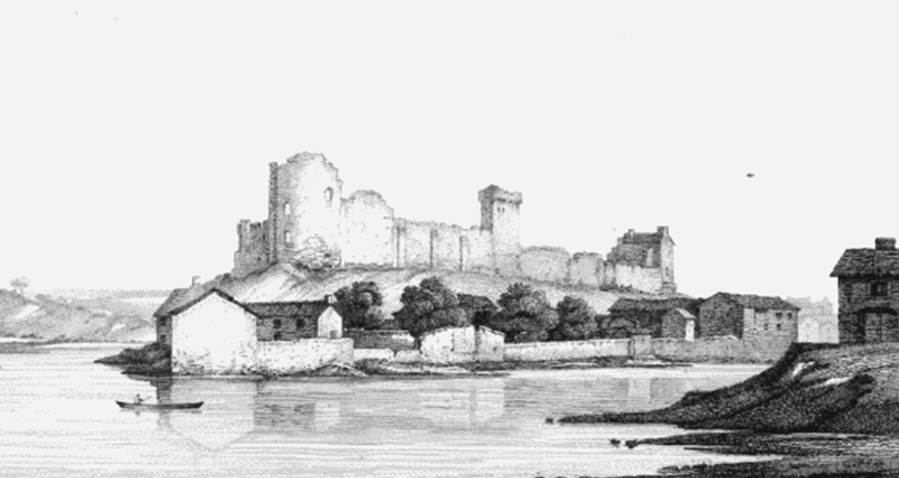
Cockermouth
Castle
The market town
developed its distinctive medieval layout, of a broad main street of burgesses'
houses, each with a burgage plot stretching to a "back lane": the
Derwent bank on the north and Back Lane (now South Street), on the south.
The town market pre-dates
1221, when the market day was changed from Saturday to Monday. Market charters
were granted in 1221 and 1227 by King Henry III, although this does not
preclude the much earlier existence of a market in the town.
By 1670s, Sir
Daniel Fleming called Cockermouth ‘the best Market Towne in this part of the
county’, with many fine buildings and ‘no small reputation’.
Water power led
Cockermouth’s transformation into industrial centre in eighteenth and ninenteenthh centuries, adding mills and factories to its
market function.
There was a paper
mill at Simonscales by 1760s, which became a flax
mill in mid-nineteenth century; a corn mill at Rubby Banks, which became
textile mill by mid-19th century.
By the later
nineteenth century, the mainstays of town were flax and woollen mills and
agricultural service industries.
Prosperity and
industrial growth were reflected in increase in population to 2,652 in 1785 and
2,865 in 1801, with doubling to 5,775 in 1851.
In first half of
nineteenth century there were over 40 industrial sites: 5 corn millers, 7
tanners, 14 textile manufacturers, 2 dyers, 4 hat manufacturers, 5 nail makers,
3 brick makers, 4 brewers and maltsters, as well as spectrum of smaller
businesses typical of a market town, from clog makers to clockmakers and
tinsmiths to tailors.
The arrival of
railways from Workington in 1847; and from Penrith and Keswick in 1864 saw the
town expand to the south of its medieval confines, with new housing on The
Moor.
The population
levelled at around 5,300 from 1861 to 1951.