Stockton
Historical and geographical information
|
Return to the Home Page of the Farndale Family
Website |
The story of one family’s journey through two
thousand years of British History |
The 83 family lines into which the family is divided.
Meet the whole family and how the wider family is related |
Members of the historical family ordered by date of
birth |
Links to other pages with historical research and
related material |
The story of the Bakers of Highfields, the Chapmans,
and other related families |
Dates are in red.
Hyperlinks to
other pages are in dark
blue.
Headlines are in brown.
References and
citations are in turquoise.
Contextual
history is in purple.
This webpage
about the Stockton has the
following section headings:
·
Farndale
family history and Stockton
· Stockton,
overview
· Timeline of
Stockton history
· The Stockton and
Darlington Railway
· Bibliography
The Farndales of Stockton
The Stockton
1 Line are the descendants of John
Farndale (FAR00230),
1796 to 1868, farmer, farm labourer, then iron foundry labourer in Stockton.
John Farndale (FAR00305)(born
1829) was a grocer’s warehouseman of Stockton. Peter Farndale (FAR00373), 1847
to 1895 was a solicitor’s clerk of Stockton. The Stockton 2 Line are the
descendants of Robert Farndale (FAR00254), 1814
to 1866, was a master grocer of Stockton (grocer's assistant in 1861). Robert
Edward Farndale (FAR00363)
1844 to 1875 was a plasterer and cement maker of Stockton who later lived in
Birmingham. The Stockton 3 Line are the
descendants of William Farndale (FAR00386), born
1851, was a footman of Hutton Ambro and later a labourer in a wine vault. James
Farndale (FAR00833),
1916 to 1941 was a private of the West Yorkshire Regiment who died of wounds on
16th March 1941 in Eritrea.
John Farndale (FAR00217), the
author lived in Stockton.
Stockton
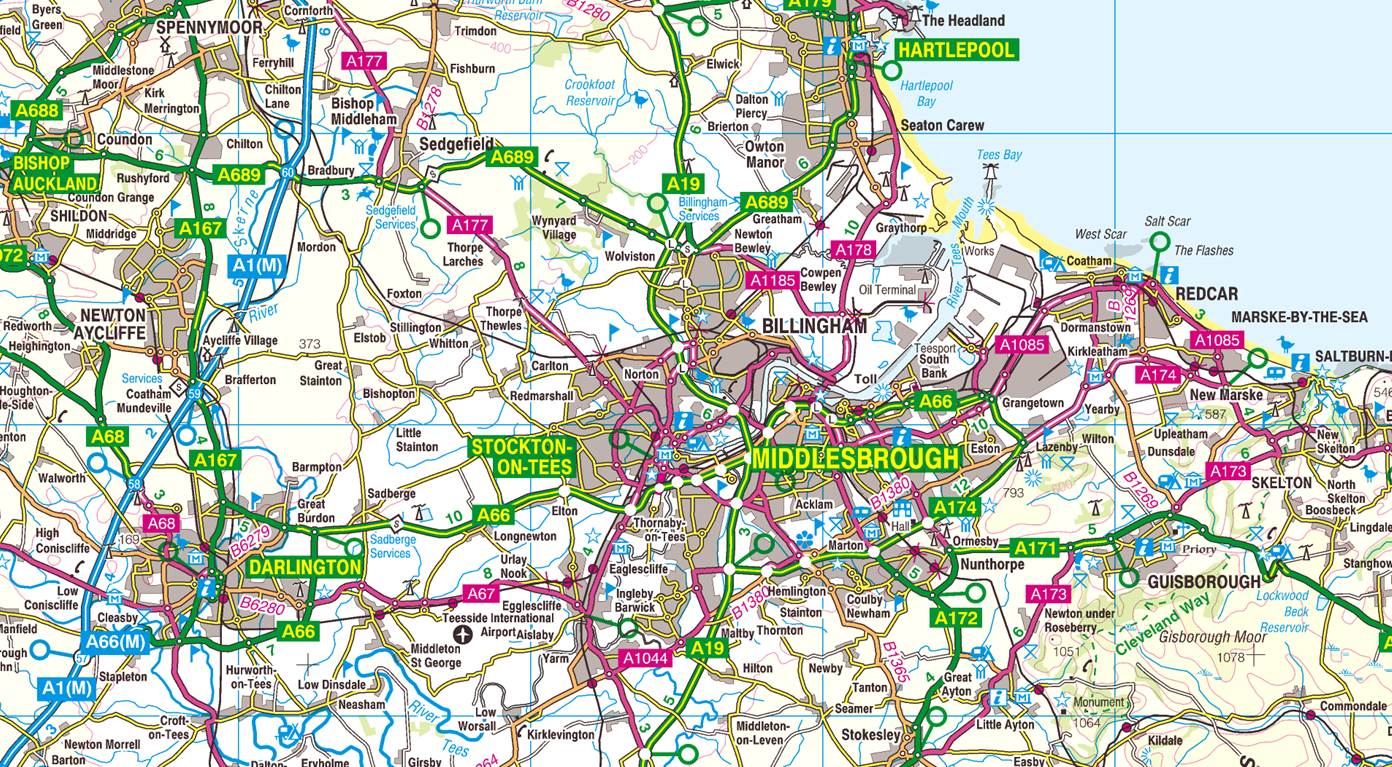
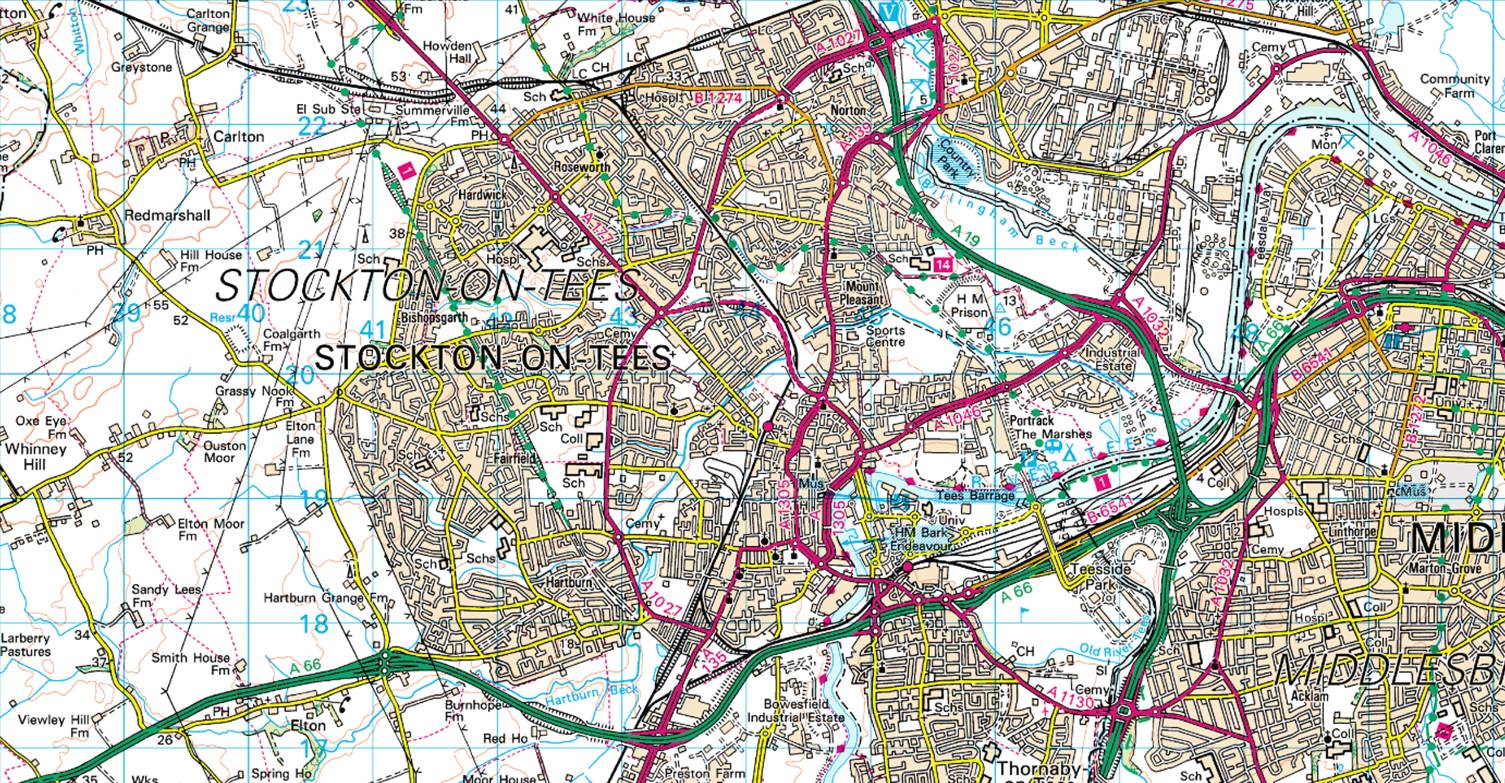
Stockton-on-Tees is
a market town in County Durham.
Stockton is an Anglo-Saxon name with the typical
Anglo-Saxon place name ending 'ton' meaning farm, or homestead. The name is
thought by some to derive from the Anglo-Saxon word Stocc meaning
log, tree trunk or wooden post. 'Stockton' could therefore mean a farm built of
logs. This is disputed, because when the word Stocc
forms the first part of a place name it usually indicates a derivation from the
similar word Stoc, meaning cell, monastery or place. 'Stoc' names
along with places called Stoke or Stow, usually indicate farms which
belonged to a manor or religious house. It is thought that Stockton fell into
this category and perhaps the name is an indication that Stockton was an
outpost of Durham or Norton which were both important
Anglo-Saxon centres. This is a matter of dispute, but Stockton was only a part
of Norton until the eighteenth century, when it became an independent parish in
its own right. Today the roles have been reversed and Norton has been demoted
to a part of Stockton.
Stockton Timeline
125,000
BCE
Stockton is known
to be the home of the fossilised remains of the most northerly hippopotamus ever
discovered on Earth. In 1958, an archaeological dig four miles north-west of
the town discovered a molar tooth from a hippo dating back 125,000 years ago.
However, no-one knows where exactly the tooth was discovered, who discovered
it, or why the dig took place. The tooth was sent to the borough's librarian
and curator, G. F. Leighton, who then sent to the Natural History Museum, London.
Since then the tooth has been missing, and people are trying to rediscover it.
Anglo
Saxon
Stockton began as
an Anglo-Saxon settlement on high ground close to the northern bank of
the River Tees.
The Victoria County History – Durham, A History of the County
of Durham: Volume 3 Parishes: Stockton on Tees, 1928: The early
history of Stockton is bound up with that of Norton. From the names it may be
surmised that Stockton was the original Anglian settlement formed upon a
defensible site beside the river, and that Norton afterwards grew up to the
north either as pleasanter to dwell in or more secure from attack. Later, while
the church was built at Norton, which thus gave a name to the parish, the bishops
preferred to establish their manor-house at Stockton, which provided a name for
the ward or administrative division of the county.
1138
The manor of
Stockton was created around 1138.
1189
The manor of
Stockton was purchased by Bishop Pudsey of Durham in
1189.
Thirteenth
century
During the 13th
century, the bishop turned the village of Stockton into a borough.
When the bishop freed the serfs of Stockton, craftsmen came
to live in the new town. The bishop had a residence in Stockton Castle,
which was just a fortified manor house.
1310
Stockton's market
can trace its history to 1310 when Bishop Bek of Durham granted a
market charter: to
our town of Stockton a market upon every Wednesday for ever. The town grew
into a busy little port, exporting wool and
importing wine which
was demanded by the upper class. However even by the standards of the
time, medieval Stockton-on-Tees was a small town
with a population of only around 1,000, and did not grow any larger for
centuries.
1376
The first
recorded reference to the castle was in 1376.
1569
The Victoria County History – Durham,
A History of the County of Durham: Volume 3 Parishes: Stockton on Tees, 1928:
According
to Sir George Bowes in 1569 'the best country for corn' lay around Stockton.
The district was in 1647 described as a 'champion country, very fruitful,
though a stiff clay'; there was no wood growing on the castle demesne or
elsewhere in that part of the country. In an official report of the end of the
18th century the soil was described as loamy or rich clay; the flat grounds
near the Tees, which were of considerable extent, were drained by means of wide
ditches commonly called 'Stells.' Wheat and other cereals are grown. A chamber
of agriculture was formed in 1888.
Seventeenth
century
Shipbuilding in
Stockton, which had begun in the 15th century, prospered in the 17th and 18th
centuries. Smaller-scale industries began developing around this time, such as
brick, sail and rope making, the latter reflected in road names such as Ropery
Street in the town centre. Stockton became the major port for County Durham,
the North Riding of Yorkshire and Westmorland during
this period, exporting mainly rope made in the town, agricultural produce
and lead from
the Yorkshire Dales.
1644
The Scots captured
Stockton Castle in 1644 and occupied it until 1646. It was destroyed at the
order of Oliver Cromwell at the end of the Civil War.
1735
The Town House
was built in 1735.
1740
The Victoria County History – Durham,
A History of the County of Durham: Volume 3 Parishes: Stockton on Tees, 1928:
In
1740 there was a great disturbance here; wheat was scarce, and in May and June
the populace refused to allow any to be exported from the town. Soldiers were
brought in to overawe them, some prisoners were made and sent to Durham, but
there the mob released them. Troops, this time Germans, were again brought to
Stockton in 1745–6 during the alarm caused by the early successes of the
Scottish Jacobites under Charles Edward the Young Pretender, and their advance
to Carlisle and Derby. Their final defeat at Culloden was celebrated in festive
manner; among other illuminations was that provided by a raft laden with
combustibles on fire and sent floating down the Tees. Wesley, who visited the
town many times, gives the following account of a press-gang raid in July 1759:
I
began near Stockton market-place as usual. I had hardly finished the hymn when
I observed the people in great confusion, which was occasioned by a lieutenant
of a man-of-war who had chosen that time to bring his press-gang and ordered
them to take Joseph Jones and William Allwood. Joseph Jones telling him, 'Sir,
I belong to Mr. Wesley,' after a few words he let him go; as he did likewise
William Allwood, after a few hours, understanding he was a licensed preacher.
He likewise seized upon a young man of the town, but the women rescued him by
main strength. They also broke the lieutenant's head, and so stoned both him
and his men that they ran away with all speed.
1766
The first theatre
in Stockton opened in 1766.
1771
In 1771, a five
arch stone bridge was built replacing the nearby Bishop's Ferry. Until the
opening of the Middlesbrough Transporter Bridge in
1911, this was the lowest bridging point on the Tees.
1779
The Victoria County History – Durham, A History of the County
of Durham: Volume 3 Parishes: Stockton on Tees, 1928: The wars with
the French in the latter part of the 18th century contributed in certain ways,
as in shipbuilding, to the material prosperity of the town, but alarm was
caused in 1779 by the appearance of Paul Jones, the American privateer, off the
mouth of the Tees, where he captured a sloop. A small band of volunteers
was raised about that time for the defence of the town, and another corps in
1798 called the Loyal Stockton Volunteers or 'Blue Coats.' These were disbanded
in 1802, but again enrolled in 1803, and finally disembodied in 1813.
Late
Eighteenth Century
From the end of the 18th century the Industrial Revolution changed Stockton from a small and quiet market town into a
flourishing centre of heavy industry. The town grew rapidly as the Industrial
Revolution progressed, with iron making and engineering beginning in the town
in the 18th century.
1807
Wordsworth wrote
part of the White Doe of Rylstone while on a visit to the Hutchinsons at
Stockton in 1807.
1851
The town's population was 10,000 in 1851. The discovery of iron ore in the Eston
Hills resulted
in blast furnaces lining the River
Tees from
Stockton to the river's mouth. In 1820 an Act set up the Commissioners, a body
with responsibility for lighting and cleaning the streets. From 1822
Stockton-on-Tees was lit by gas.
1825
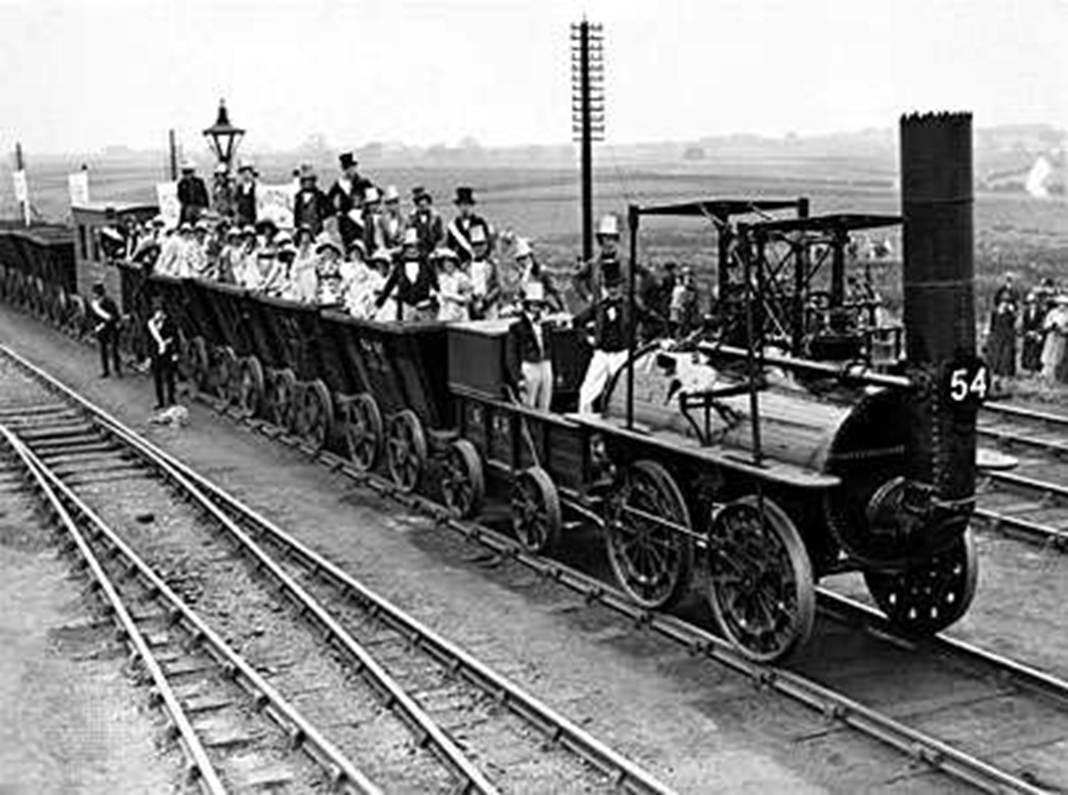
In 1825, Stockton witnessed an event which changed the face of the
world forever and heralded the dawn of a new era in trade, industry and travel.
The first rail of George
Stephenson's Stockton and Darlington Railway was laid near St. John's crossing on Bridge Road. Hauled
by Locomotion No 1, the great engineer himself manned the engine on its first
journey on 27 September 1825. Fellow engineer and friend, Timothy
Hackworth acted as
guard. This was the world's first passenger railway, connecting Stockton
with Shildon. The opening of
the railway greatly boosted Stockton, making it easier to bring coal to the
factories; however the port declined as business had moved down river to Middlesbrough.
1827
Stockton witnessed another discovery in 1827. Local chemist John Walker invented the friction
match in his shop
at 59 High Street. The first sale of the matches was recorded in his sales-book
on 7 April 1827, to a Mr. Hixon, a solicitor in the town. Since he did not
obtain a patent, Walker received neither fame nor wealth for his invention, but
he was able to retire some years before his death. He died in 1859 at the age
of 78 and is buried in the parish churchyard in Norton village.
1834
In 1833 the then
Bishop of Durham, William Van Mildert (1765 - 1836) gifted five acres and the
land of an existing burial site called "The Monument" (originally a
mass grave from a prior cholera outbreak) to the town of Stockton. Upon this
land, the process of building of and designing the gothic style Holy Trinity
Church began, using funds originally allocated for church building in the
Commissioners' church Act of 1818. It was designed by John and Benjamin Green,
and construction began in 1834. It was consecrated as an Anglican church on
December 22, 1835.
1856
The first bell
for Big Ben was
cast by John Warner and Sons in Norton on 6 August 1856, but became
damaged beyond repair while being tested on site and had to be replaced by a
foundry more local to Westminster.
1858
The Victoria County History – Durham, A History of the County
of Durham: Volume 3 Parishes: Stockton on Tees, 1928: A weekly
newspaper, the Stockton and Thornaby Herald, is published at Stockton on
Saturdays. It was founded in 1858. The earliest newspaper published here was
the Advertiser, begun in 1858, but lasting only a year. A local magazine called
the Stockton Bee began in 1793 and continued until 1795; it contained essays,
poems, puzzles and other miscellaneous articles. The Gazette was founded in 1859
by the efforts of Robert Spears, a Unitarian minister then stationed at
Stockton. It continues as the North-eastern Gazette, published at
Middlesbrough. The News and Advertiser, begun in 1864, and the Examiner, later,
did not succeed.
1867
1877
A hospital opened
in Stockton in 1862 and a public library opened in 1877.
1881
Steam trams began running
in the streets in 1881 and were replaced by electric trams in 1897. Buses
replaced the trams in 1931.
1901
Stockton’s
population had reached over 50,000 in 1901.
1928
The Victoria County History – Durham,
A History of the County of Durham: Volume 3 Parishes: Stockton on Tees, 1928:
The
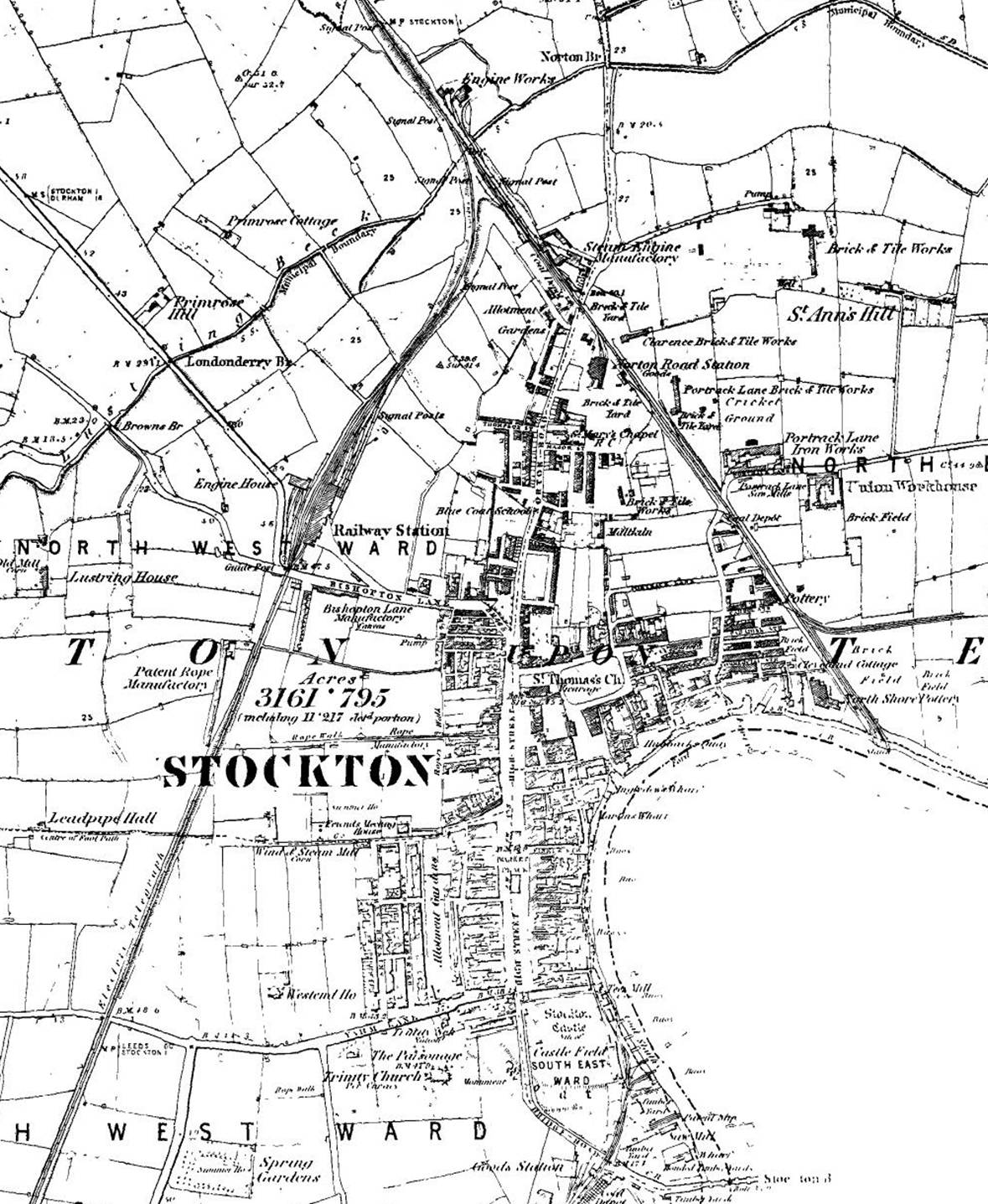
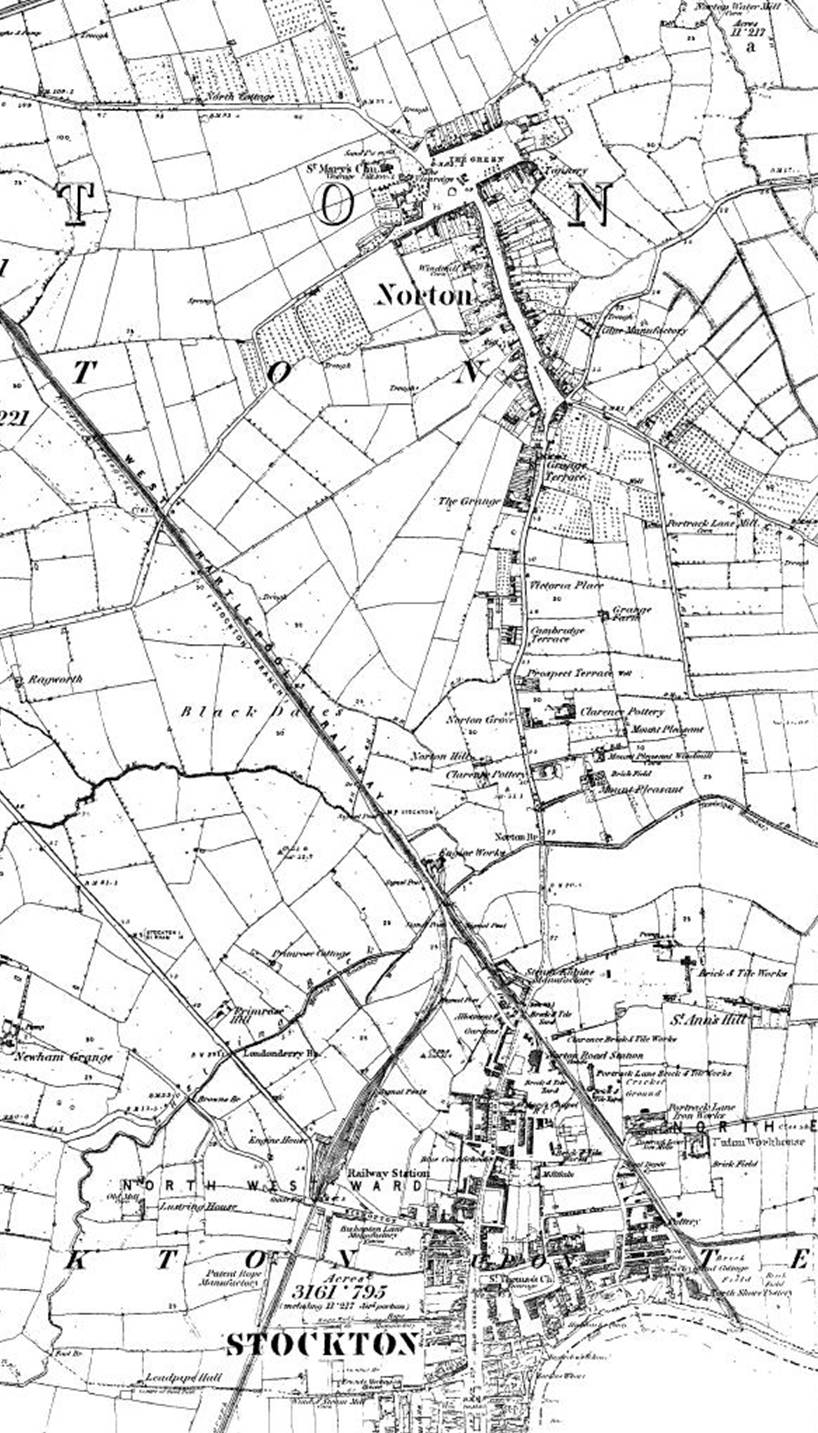
town of Stockton grew up on the elevated tongue of land between the Tees and
Lustring Beck, along the road going north from the Bishop of Durham's
manor-house or castle, long ago destroyed, to the old parish church at Norton…. Stockton is
now mainly urban, but it was formerly a rich agricultural district. … The
main part of the town of Stockton, centrally placed in its township, stands well
up above the river, here flowing north, whereas on the opposite Yorkshire bank
the land is low and flat; but to the east of the town is a large low-lying
tract of marsh land, and on the north and west is the valley of the Lustring
Beck. The winding course of the Tees to the east of the town caused serious
inconvenience to shipping even when sea-going vessels were very small compared
with their modern successors.
1930s
In the 1930s
slums were cleared and the first council houses were built. At this time,
Stockton was still dominated by the engineering industry and there was also a
chemicals industry in the town.
1933
On 10 September
1933 the Battle of Stockton took place, in which
between 200 and 300 supporters of the British Union of Fascists were taken to
Stockton and attempted to hold a rally in the town, but they were driven out by
up to 2,000 anti-fascist demonstrators.
1990s
In the late 20th
century manufacturing industry severely declined, although the service industries grew, and today are the
town's main employers.
The Ragworth district near the town centre was the scene of
rioting in July 1992, when local youths threw stones at buildings, set cars
alight and threw missiles at police and fire crews. The area later saw a
£12million regeneration which involved mass demolition or refurbishment of the
existing properties, as well as new housing and community facilities being
built.
The Stockton and
Darlington Railway
The Stockton and Darlington Railway (“S&DR”) was a railway
company that operated in north-east England from 1825 to 1863. The world's
first public railway to use steam
locomotives, its first line connected collieries near Shildon with Stockton-on-Tees and Darlington,
and was officially opened on 27 September 1825. The movement of coal to ships
rapidly became a lucrative business, and the line was soon extended to a new
port and town at Middlesbrough. While coal waggons were hauled
by steam locomotives from the start, passengers were carried in coaches drawn
by horses until carriages hauled by steam locomotives were introduced in 1833.
The S&DR was
involved in the building of the East Coast Main Line between York and Darlington,
but its main expansion was at Middlesbrough Docks and west into Weardale and
east to Redcar.
It suffered
severe financial difficulties at the end of the 1840s and was nearly taken over
by the York, Newcastle and Berwick Railway,
before the discovery of iron ore in Cleveland and the subsequent increase in
revenue meant it could pay its debts.
At the beginning
of the 1860s it took over railways that had crossed the Pennines to
join the West Coast Main Line at Tebay and Clifton, near Penrith.
The company was
taken over by the North Eastern Railway in
1863, transferring 200 route miles of line and about 160 locomotives, but
continued to operate independently as the Darlington Section until 1876.
The opening of
the S&DR was seen as proof of the effectiveness of steam railways and its
anniversary was celebrated in 1875, 1925 and 1975. Much of the original route
is now served by the Tees Valley
Line, operated by Northern.
.jpg)
The seal of the Stockton & Darlington Railway
The Victoria County History – Durham,
A History of the County of Durham: Volume 3 Parishes: Stockton on Tees, 1928:
Stockton has a prominent place in the history of railways, for the first
line on which locomotive engines were used is that from Stockton to Darlington.
This was begun in 1822 and formally opened on 27 September 1825. The station
was at the south end of the town and is now a goods station. The line was
continued along the line of quays. In 1830 a suspension bridge was thrown
across the Tees to carry a line to Middlesbrough; this had to be supported by
timber struts, and in 1844 was replaced by an iron bridge. Coals were delivered
at Stockton by the Port Clarence railway in 1833. A railway to Hartlepool was
opened in 1841, the station being in Bishopton Lane; the company was
incorporated in 1842. In 1852 it was amalgamated with the Hartlepool West
Harbour and Dock Company as the West Hart!epool
Harbour and Railway Company, and took over the Port Clarence line. In 1846 the
Leeds and Northern railway, now the North Eastern, obtained powers to make a
branch to Stockton by way of Yarm and Egglescliffe,
and the station in Bishopton Lane was opened on 15 May 1852. By amalgamation in
1854 and later all the lines have been united in the North Eastern system, and
the Bishopton Lane station has been enlarged and made the only passenger
station in the parish, that called Eaglescliffe Station being just outside on
the south. There is a branch goods line with a station in Norton Road, at the
north end, running to the river side; near this point there is a ferry across
to Thornaby. The Stockton and Castle Eden branch passes on the west through
Stockton and East Hartburn. The tramways through Stockton connect the town with
Thornaby, Middlesbrough and North Ormesby in one direction and with Norton in
another; they were first formed in 1882, and are owned by a private company.
Before that time there was an omnibus service to Norton.
Eighteenth
century
Coal from the inland
mines in southern County Durham was taken away on packhorses,
and then horse and carts as the roads were improved. A canal was proposed
by George Dixon in 1767
and again by John Rennie in 1815, but both schemes
failed. Meanwhile, the port of Stockton-on-Tees,
from which the Durham coal was transported onwards by sea, had invested
considerably during the early 19th century in straightening the Tees in order to
improve navigation on the river downstream of the town and was subsequently
looking for ways to increase trade to recoup those costs.
A few years later
a canal was proposed on a route that bypassed Darlington and Yarm, and a
meeting was held in Yarm to oppose the route. The Welsh engineer George
Overton was consulted, and he advised building a tramroad. Overton carried out
a survey and planned a route from the Etherley
and Witton Collieries to Shildon, and then passing to the north of Darlington to
reach Stockton.
1818
The Scottish
engineer Robert Stevenson was
said to favour the railway, and the Quaker Edward Pease supported
it at a public meeting in Darlington on 13 November 1818, promising a five per
cent return on investment. Approximately two-thirds of the shares were
sold locally, and the rest were bought by Quakers nationally.
1819
A private bill was
presented to Parliament in March
1819, but as the route passed through Earl of Eldon's estate and one of
the Earl of Darlington's fox
coverts, it was opposed and defeated by 13 votes.
1820
Overton surveyed
a new line that avoided Darlington's estate and agreement was reached with
Eldon, but another application was deferred early in 1820, as the death
of King George III had made it unlikely a
bill would pass that parliamentary year. The promoters lodged a bill on 30
September 1820, the route having changed again as agreement had not been
reached with Viscount Barrington about the line passing
over his land. The railway was unopposed this time, but the bill nearly
failed to enter the committee stage as the required four-fifths of shares had
not been sold.
Pease subscribed
£7,000; from that time he had considerable influence over the railway and it
became known as "the Quaker line".
1821
The Act that
received royal assent on 19 April 1821 allowed for
a railway that could be used by anyone with suitably built vehicles on payment
of a toll, that was closed at night, and with which land owners within 5 miles
could build branches and make junctions; no mention was made of steam
locomotives. This new railway initiated the construction of more railway
lines, causing significant developments in railway mapping and cartography,
iron and steel manufacturing, as well as in any industries requiring more
efficient transportation.
Concerned about
Overton's competence, Pease asked George
Stephenson, an experienced engine-wright of the collieries of
Killingworth, to meet him in Darlington.
On 12 May 1821
the shareholders appointed Thomas Meynell as Chairman and Jonathan Backhouse as
treasurer; a majority of the managing committee, which included Thomas Richardson, Edward
Pease and his son Joseph Pease, were
Quakers.
The committee designed
a seal, showing waggons being pulled by a horse, and adopted the Latin motto Periculum
privatum utilitas publica ("At private risk for public
service").
By 23 July 1821
it had decided that the line would be a railway with edge rails, rather than
a plateway,
and appointed Stephenson to make a fresh survey of the line. Stephenson
recommended using malleable iron rails, even though he owned a share of the
patent for the alternative cast iron rails, and both types were
used. Stephenson was assisted by his 18-year-old son Robert during
the survey, and by the end of 1821 had reported that a usable line could
be built within the bounds of the Act, but another route would be shorter by 3
miles and avoid deep cuttings and tunnels.
1822
Overton had kept
himself available, but had no further involvement and the shareholders elected
Stephenson Engineer on 22 January 1822, with a salary of £660 per year.
On 23 May 1822 a
ceremony in Stockton celebrated the laying of the first track at St John's
Well, the rails 4 feet 8 inches apart, the same gauge used
by Stephenson on his Killingworth Railway.
Stephenson
advocated the use of steam locomotives on the line. Pease visited
Killingworth in mid-1822 and the directors visited Hetton colliery railway, on which
Stephenson had introduced steam locomotives.
1823
A new bill was
presented, requesting Stephenson's deviations from the original route and the
use of "loco-motives or moveable engines", and this received assent
on 23 May 1823. The line included embankments up to 48 feet high, and
Stephenson designed an iron truss bridge to cross the River Gaunless. The stone bridge over the River Skerne was
designed by the Durham architect Ignatius
Bonomi.
In 1823
Stephenson and Pease opened Robert Stephenson and Company, a locomotive works
at Forth Street, Newcastle, from which the following
year the S&DR ordered two steam locomotives and two stationary engines.
1825
On 16 September
1825, with the stationary engines in place, the first locomotive, Locomotion
No. 1, left the works, and the following day it was advertised that
the railway would open on 27 September 1825.
.jpg)
The opening
procession of the Stockton and Darlington Railway crosses the Skerne bridge
The cost of
building the railway had greatly exceeded the estimates.
By September 1825
the company had borrowed £60,000 in short-term loans and needed to start
earning an income to ward off its creditors. A railway coach, named Experiment, arrived
on the evening of 26 September 1825 and was attached to Locomotion No. 1,
which had been placed on the rails for the first time at Aycliffe Lane station following the
completion of its journey by road from Newcastle earlier that same day. Pease,
Stephenson and other members of the committee then made an experimental journey
to Darlington before taking the locomotive and coach to Shildon in preparation
for the opening day, with James Stephenson, George's elder brother, at the
controls.
On 27 September
1825, between 7am and 8am, 12 waggons of coal were drawn up Etherley North Bank by a rope attached to the stationary
engine at the top, and then let down the South Bank to St Helen's
Auckland. A waggon of flour bags was attached and horses hauled the
train across the Gaunless Bridge to the bottom
of Brusselton West Bank,
where thousands watched the second stationary engine draw the train up the
incline. The train was let down the East Bank to Mason's Arms Crossing at
Shildon Lane End, where Locomotion No. 1, Experiment and 21 new
coal waggons fitted with seats were waiting.
The directors had
allowed room for 300 passengers, but the train left carrying between 450 and
600 people, most travelling in empty waggons but some on top of waggons full of
coal. Brakesmen were placed between the waggons, and
the train set off, led by a man on horseback with a flag. It picked up speed on
the gentle downward slope and reached 10 to 12 miles per hour, leaving behind
men on field hunters (horses) who had tried to
keep up with the procession.
The train stopped
when the waggon carrying the company surveyors and engineers lost a wheel; the
waggon was left behind and the train continued. The train stopped again, this
time for 35 minutes to repair the locomotive and the train set off again, reaching
15 mph before it was welcomed by an estimated 10,000 people as it came to
a stop at the Darlington branch junction.
Eight and a half
miles had been covered in two hours, and subtracting the 55 minutes accounted
by the two stops, it had travelled at an average speed of 8 mph. Six
waggons of coal were distributed to the poor, workers stopped for refreshments
and many of the passengers from Brusselton alighted
at Darlington, to be replaced by others.
Two waggons for
the Yarm Band were attached, and at 12:30pm the locomotive started for
Stockton, now hauling 31 vehicles with 550 passengers. On the 5 miles of nearly
level track east of Darlington the train struggled to reach more than
4 mph. At Eaglescliffe near Yarm crowds waited for
the train to cross the Stockton to Yarm turnpike. Approaching Stockton, running
alongside the turnpike as it skirted the western edge of Preston Park, it gained
speed and reached 15 mph again, before a man clinging to the outside of a
waggon fell off and his foot was crushed by the following vehicle. As work on
the final section of track to Stockton's quayside was still ongoing, the train
halted at the temporary passenger terminus at St John's Well 3 hours, 7 minutes
after leaving Darlington. The opening ceremony was considered a success and
that evening 102 people sat down to a celebratory dinner at the Town Hall.
The railway that
opened in September 1825 was 25 miles long and ran from Phoenix Pit, Old Etherley Colliery, to Cottage Row, Stockton; there was also
a ½ mile branch to the depot at Darlington, ½ mile of the
Hagger Leases branch, and a ¾ mile branch to Yarm. Most of the track
used 28 pounds per yard malleable iron rails, and 4 miles of 57 ½
lb/yd cast iron rails were used for junctions. The line was single track
with four passing loops each mile; square sleepers supported each rail
separately so that horses could walk between them.
Stone was used
for the sleepers to the west of Darlington and oak to the east; Stephenson
would have preferred all of them to have been stone, but the transport cost was
too high as they were quarried in the Auckland area. The railway opened with
the company owing money and unable to raise further loans; Pease advanced money
twice early in 1826 so the workers could be paid.
1827
By August 1827
the company had paid its debts and was able to raise more money. That month the
Black Boy branch opened and construction began on the Croft and Hagger Leases
branches. During 1827 shares rose from £120 at the start to £160 at the end.

The route of the
Stockton & Darlington Railway in 1827, shown in black, with today's railway
lines shown in red
Initially the
line was used to carry coal to Darlington and Stockton, carrying
10,000 tons in the first three months and earning nearly £2,000. In
Stockton the price of coal dropped from 18 to 12 shillings, and by the beginning of 1827
was 8 shillings 6 pence (8s
6d). Initially the drivers had been paid a daily wage, but after February
1826 they were paid ¼ d per ton per mile; from this they had to pay
assistants and fireman and to buy coal for the locomotive.
The 1821 Act had
received opposition from the owners of collieries on the River Wear who
supplied London and feared competition, and it had been necessary to restrict
the rate for transporting coal destined for ships to ½ d per ton per
mile, which had been assumed would make the business uneconomic. There was
interest from London for 100,000 tons a year, so the company began
investigations in September 1825.
In January 1826
the first staith opened at Stockton, designed so
waggons over a ship's hold could discharge coal from the bottom. A little over
18,500 tons of coal was transported to ships in the year ending June 1827 and
this increased to over 52,000 tons the following year, 44 ½
per cent of the total carried.
The locomotives
were unreliable at first. Soon after opening, Locomotion No. 1 broke
a wheel, and it was not ready for traffic until 12 or 13 October. Hope,
the second locomotive, arrived in November 1825 but needed a week to ready it
for the line. The cast-iron wheels were a source of trouble. Two more
locomotives of a similar design arrived in 1826; that August 16s 9d was spent
on ale to motivate the men maintaining the engines. By the end of 1827 the
company had also bought Chittaprat from
Robert Wilson and Experiment from Stephenson. Timothy
Hackworth, locomotive superintendent, used the boiler from the
unsuccessful Chittaprat to build the Royal
George in the works at Shildon and it started work at the end of
November. John Wesley Hackworth later published an account stating
that locomotives would have been abandoned were it not for the fact that Pease
and Thomas Richardson were partners with Stephenson in the Newcastle works, and
that when Timothy Hackworth was commissioned to rebuild Chittaprat it was "as a last experiment"
to "make an engine in his own way". Both Tomlinson and
Rolt stated this claim was unfounded and the company had shown earlier
that locomotives were superior to horses, Tomlinson showing that coal was being
moved using locomotives at half the cost of horses. Robert Young states
that the company was unsure as to the real costs as they reported to
shareholders in 1828 that the saving using locomotives was 30 per cent. Young
also showed that Pease and Richardson were both concerned about their
investment in the Newcastle works and Pease unsuccessfully tried to sell his
share to George Stephenson.
New locomotives
were ordered from Stephenson's, but the first was too heavy when it arrived in
February 1828. It was rebuilt with six wheels and hailed as a great
improvement, Hackworth being told to convert the remaining locomotives as soon
as possible. In 1828 two locomotive boilers exploded within four months, both
killing the driver and both due to the safety valves being left fixed down
while the engine was stationary. Horses were also used on the line, and
they could haul up to four waggons. The dandy cart was
introduced in mid 1828: a small cart at the end of
the train, this carried the horse downhill, allowing it to rest and the train
to run at higher speed. The S&DR made their use compulsory from November
1828.
Passenger traffic
started on 10 October 1825, after the required licence was purchased, using
the Experiment coach hauled by a horse. The coach was initially
timetabled to travel from Stockton to Darlington in two hours, with a fare of
1s, and made a return journey four days a week and a one-way journey on
Tuesdays and Saturdays.
In April 1826 the
operation of the coach was contracted for £200 a year; by then the timetabled
journey time had been reduced to 1 ¼ hours and passengers were
allowed to travel on the outside for 9d. A more comfortable coach, Express,
started the same month and charged 1s 6d for travel inside. Innkeepers
began running coaches, two to Shildon from July, and the Union, which
served the Yarm branch from 16 October. There were no stations. In
Darlington the coaches picked up passengers near the north road crossing,
whereas in Stockton they picked up at different places on the quay.
Between 30,000
and 40,000 passengers were carried between July 1826 and June 1827.
Bibliography