Act 32
Soldiers, Sailors and Airmen
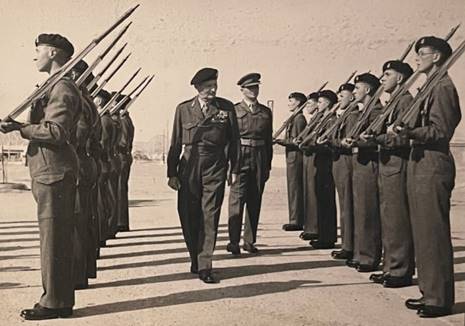
Field Marshall the Viscount
Montgomery (“Monty”) inspects the Troop of Lieutenant Farndale in 1950
The Farndales who took up arms from
the army of Henry V to the Gulf War
A millennium of military service
|
We few, we
happy few, we band of brothers Henry V, Act 4, Scene 2 |
|
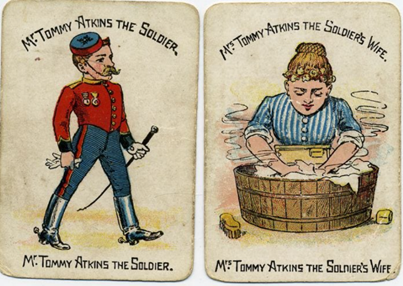
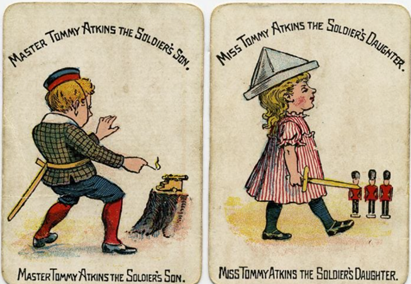
For it's
Tommy this, an' Tommy that, an'
Chuck him out, the brute!" But it's "Saviour of 'is
country" when the guns begin to shoot; An' it's Tommy this, an'
Tommy that, an' anything you please; An'
Tommy ain't a bloomin'
fool - you bet that Tommy sees! Rudyard Kipling |
|
Dulce
et Decorum est pro patria
mori
Wilfred Owen’s poem
drafted at Craiglockhart, Edinburgh, in the first half of October 1917 and
later revised, probably at Scarborough, in early 1918. |
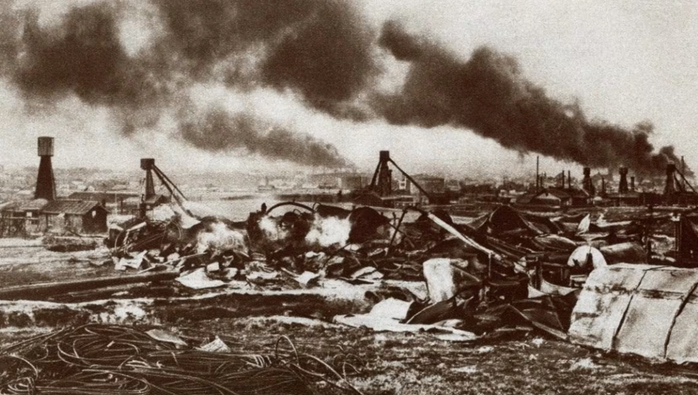
Scene 1 - Medieval Soldiers
You might
recall, in another age, in Act 10
of our Story, that we met John de
Farendale who served under Harry Hotspur and others with an expeditionary
force into Scotland in 1384, and that he was later joined by his probable
brothers Henry
Farendon and William
Faryndon, in another flurry north in 1389.
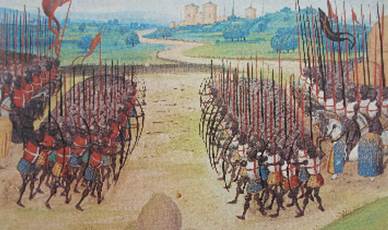
Then we met Richard
Farendale of Sherifhoton who served in the Hundred
Years War in Brittany in 1380 and was part of another expeditionary force to
Scotland in 1400. He served in the army of Henry V, perhaps in the Agincourt
campaign and certainly afterwards, at Harfleur and the Siege of Mantes. When he
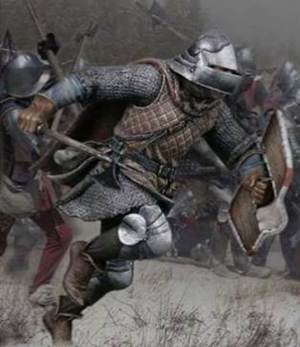
died he left an impressive catalogue of military
equipment including a horse, saddle and reins, and armour, comprising a bascinet,
medieval combat helmet, a breast plate, a pair of vembraces,
armoured forearm guards and a pair of rerebraces,
armour designed to protect the upper arms, with leg harnesses.
His three
daughters witnessed the Wars of the Roses from the heart of the Neville
homeland.
|
Tales of archers and men at arms who fought with
Richard II, Henry IV and Henry V and an observation post in the home of the
Nevilles and Richard III from which to view the Wars of the Roses |
|
The History of Sheriff Hutton to 1500
A
history of Sheriff Hutton which will take you to the lands of the Nevilles
and Richard III during the Wars of the Roses |
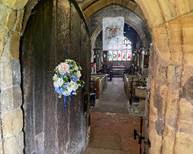
Scene 2 - The War of Jenkins Ear and
death on the Spanish Main
We have also
met Able Seaman
Giles Farndale, who served with the Royal Navy from 29 June 1740 until he
died at sea in the Caribbean on 9 May 1741. He was press-ganged at Whitby, when he would have been 27 years old.
He was posted to the HMS Experiment, a brig with a compliment of 130, as
No 101 Able Seaman.
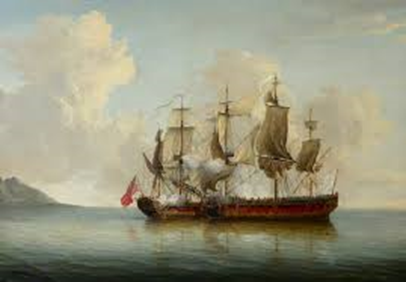
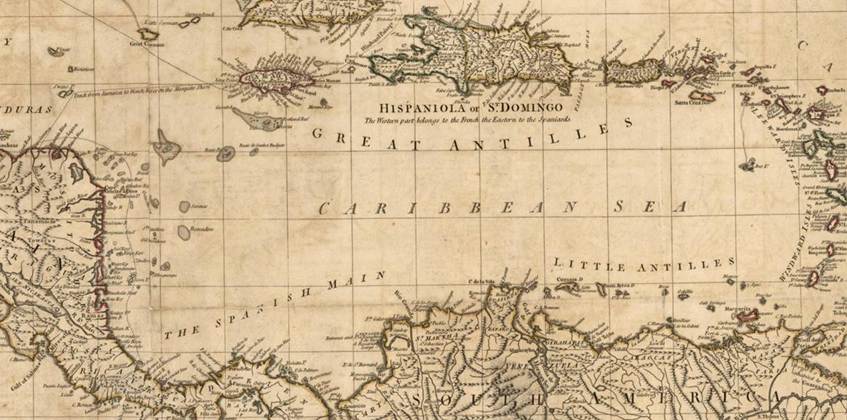
He almost
certainly took part in the War of Jenkins’ Ear in the Spanish Main under
Admiral Vernon and was probably involved in the Battle of Cartagena de Indias[1] in March 1741. No circumstances are
recorded of the reason for his death, but he probably died in the aftermath of
the disaster at Cartagena, when soldiers and sailors were crammed on ships,
rife with disease.
|
1713 to 1742
Press ganged into
the Royal Navy, Giles served on HMS Experiment
in the Spanish Main during the War of Jenkins Ear where he died and was
buried at sea |
Scene 3 – Victorian military
expeditions
The
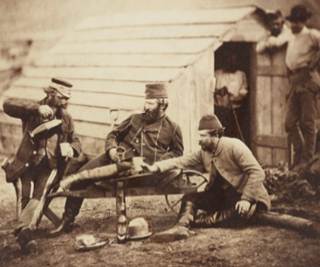
Crimean War
Private John George
Farndale saw service between 1853 and 1856 possibly first with the
Coldstream Guards and then with the 28th Regiment of Foot. In March 1852, the
Regiment was ordered to leave its headquarters in Newcastle, to send parties to
Woolwich for practice at the Royal Arsenal and in the Marshes. The Regiment was
soon making the privates proficient in military tactics[2].
The Crimean
War arose at a time of the decline of the Ottoman Empire and the expansion of
Russia in the preceding Russo-Turkish Wars. The British and French sought to
preserve the Ottoman Empire to maintain the balance of power in central Europe.
In July 1853 Russian Troops entered the Danubian
Principalities, now part of Romania, and in October, with promises of support
from France and Britain, the Ottomans declared War on Russia. The Ottomans led
by Omar Pasha fought a strong defensive campaign. Public opinion was hostile to
Russia and Austria and Napoleon III was ready for action against Russia. The
British and French both saw intervention as a struggle against tyranny. By
January 1854, the British and French were worried about an Ottoman defeat and
entered the Black Sea. The Allies decided that they would attack Russia’s main
naval base in the Black Sea at Sevastopol on the Crimean Peninsula. The Italian
Kingdom of Sardinia also sent an expeditionary force to Crimea to join the
French, British and the Ottomans.
By February
1854 the 28th of Foot was amongst 10 battalions of 1,000 strong
each, which were expected to embark immediately for the Mediterranean
stations[3]. On Thursday at noon, the 28th
Regiment of Foot left Leeds, en route for
Constantinople. Immense excitement attended their departure. From the barracks
to the railway station they were most enthusiastically
cheered by thousands of spectators, who filled the streets. It is estimated
that no not less than 60,000 persons assembled to see them off. So strong a war
spirit has never before been manifested in the town,
and it was with difficulty that the soldiers could pass through the streets.
The 28th went to Preston, and will embark probably on Saturday, on board the
Niagara, at Liverpool, for their destination. [4] Finally Wednesday
is fixed for the departure of the 28th Regiment from Liverpool in the Niagara.
28th Regiment of Foot left Leeds on Monday, en route
for Liverpool. Immense excitement attended their departure. The Cunard steamer
Niagara, Captain Leitch, will take her departure from the Mersey, in her new
character as one of her Majesty's troop ships, on Wednesday next, with the
gallant 28th Regiment, about one thousand strong, on board. She is now in the
river, her fittings having been completed, and received the approbation of the
Admiralty agents. The figurehead and cutwater of the Niagara have been removed.
On the exciting occasion of the embarkation, she will in all probability be
anchored in the Sloyne, and the troops will be taken on board by one of the
Cunard’s tenders, either from the Prince’s Pier or the Great Landing Stage. The
28th regiment is now at Preston. They will enter the town, it is thought, on
Wednesday, when we have no doubt they will receive in
enthusiastic reception from her Majesty's good lieges of Liverpool. The 28th
Regiment distinguished itself at Quartre Bras, and
has on its colours Corunna, Albuera, Vittoria, and Waterloo.[5]
On 14
September 1854, the Allies, comprising the British, French, Ottoman and
Sardinian Forces, landed at Calamita Bay. They planned to march immediately
upon Sevastopol, known as Sebastopol by the British, which was the capitol of
the Crimea. On 4 November 1854, John Farndale wrote to his father that he had landed
without opposition September 14th, and started for
Alma on the 18th[6]. John George Farndale took part in
the battles of Alma[7], Balaclava[8] and Inkerman[9] and was at the Siege of Sebastopol[10].
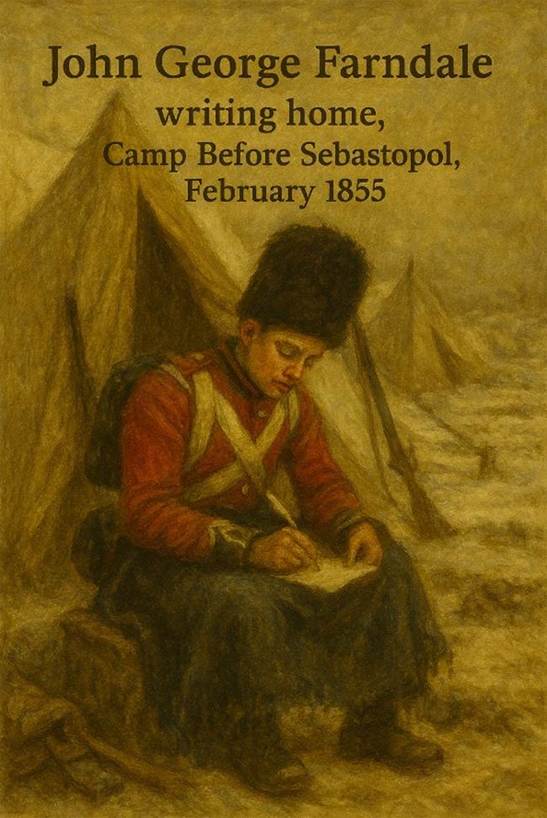
John wrote
home to his father in November.
Heights
of Sebastopol, November 4th, 1854.
Dear
Father.
I
received your letter of 26th of last month, and was
glad to hear that you were all well and in the enjoyment of health. I suppose
your papers in England say that Sebastopol is taken, but I can tell you very
differently. It is now seventeen days since we commenced the attack on the
town, and there is no sign of it being taken yet. I thought we should have had
it by now, but I assure you it is no easy task.
Since I
wrote last we have had great ravages in the army – the
first by sickness; then the cholera came amongst us and swept a great many
away.
We went
on board for Russia, in the latter part of August, and landed without
opposition September 14th, and started for Alma on the 18th. On the 20th we
were before Alma, and commenced the attack about
eleven o’clock against 50,000 Russians, and defeated them after three hours’
cannonading and musketry; and it took us two days to bury the dead, and send
our wounded on board ship for Scurati.
We then
started for Sebastopol, and reached it after eight or
nine days’ march; we had to go a great way round. As soon as we got in front
and settled, we commenced throwing up batteries and breast works, under fire of
the enemy. We finished them after about five days and nights’ hard working, and opened fire on them on the 17th of last month,
and have been battering away ever since, and are likely to continue doing so
for some time to come. We have greater opposition than we expected. There was a
faint attack made on our rear army a few days ago, which cut up our cavalry
fearfully, but were defeated in the end. Our loss is not so great, considering
all the circumstances of the case. I have escaped as yet,
thank God! I have had a narrow escape: one morning, as we were relieving guard,
two privates and a sergeant were shot close by me with one ball.
I think I
have given you all particulars up to the present. Next time I write, I hope
Sebastopol will have fallen.
Your
affectionate son.
John
George Farndale.[11]
John
Farndale was promoted to Lance Corporal, in about January 1855.
John was laid
up in my tent with frost bitten feet nearly all this month, but I am better
again and fit for duty[12] and in February 1855 he wrote another letter home.
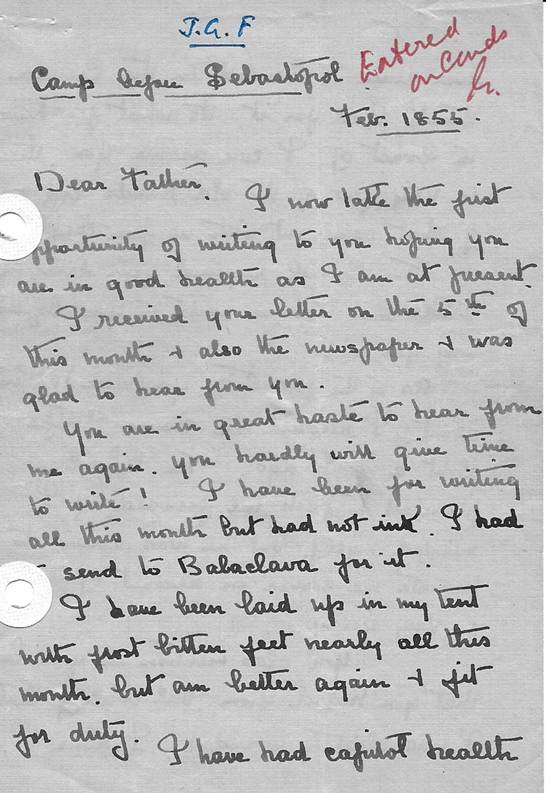
Camp
before Sebastopol.
I now
take the first opportunity of writing to you hoping you are in good health as I
am at present. I received your letter on the 5th of this month and also the newspaper and was glad to hear from you. You
are in great haste to hear from me again, you hardly
will give time to write! I have been for writing all this month but had not the
ink. I had to send to Balaclava for it. I have been laid up in my tent with
frost bitten feet nearly all this month, but I am better again and fit for
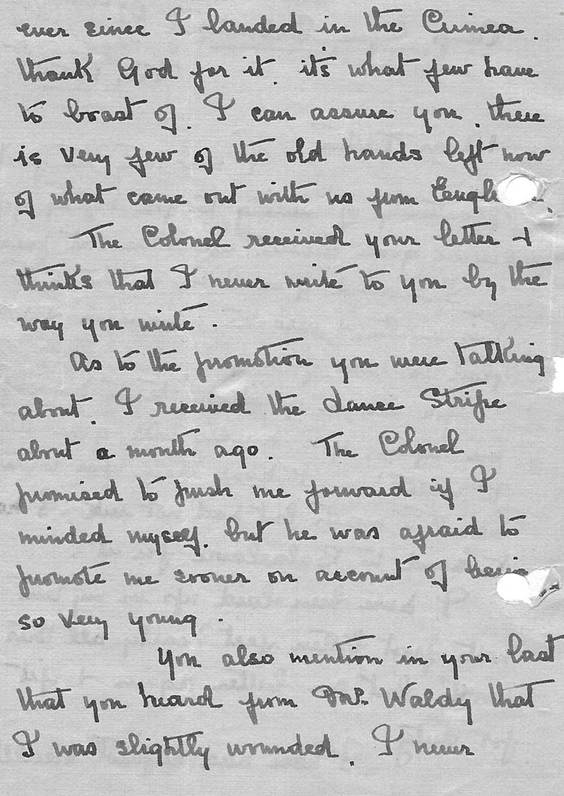
duty. I have had capitol health ever since I landed in the Crimea, thank God
for it. I can assure you there is very few of the old hands left now of what
came out with us from England.
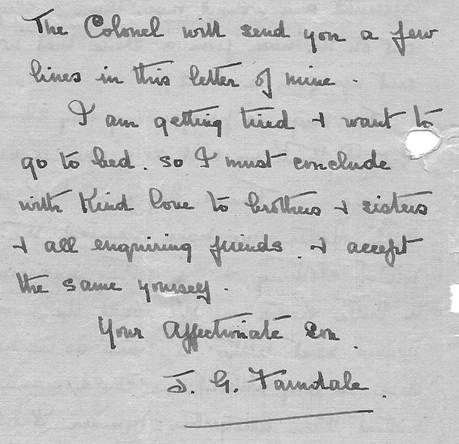
The
Colonel received your letter and thinks that I never write to you by the way
you write. As to the promotion you were talking about, I received the Lance
Stripe about a month ago. The Colonel promised to push me forward if I minded
myself, but he was afraid to promote me sooner on account of being so very
young. You also mention in your last that you heard from D W Waldy that I was
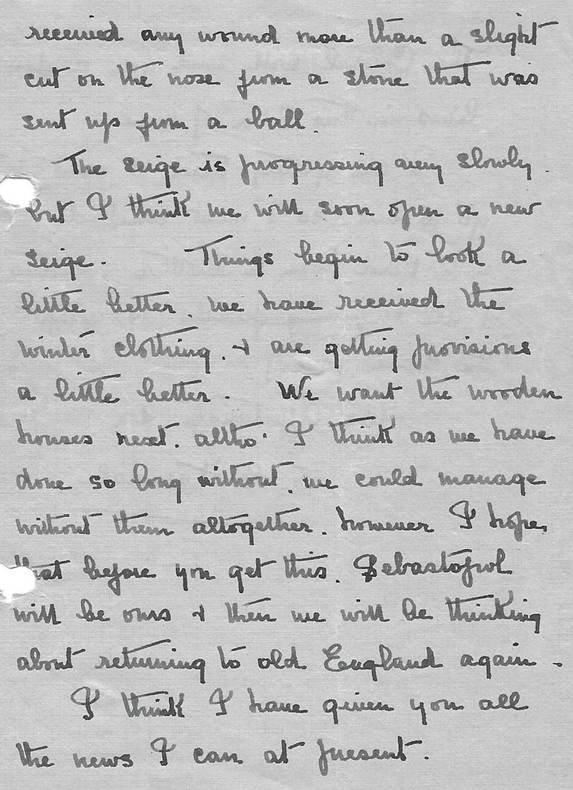
slightly wounded. I never received any wound more than a slight cut on the nose
from a stone that was sent up from a ball.
The siege
is progressing very slowly but I think we will soon
open a new siege. Things begin to look a little better. We have received the
winter clothing and are getting provisions a little better. We want the wooden
houses next, although I think as we have done so long without, we could manage
without them altogether. However I hope that before
you get this, Sebastopol will be ours and then we will be thinking about
returning to old England again.
I think I
have given you all the news I can at present. The Colonel will send you a few
lines in this letter of mine. I am getting tired and want to go to bed, so I
must conclude with kind love to brothers and sisters and all enquiring friends.
I accept the same yourself.
Your
affectionate son.
J G
Farndale.[13]
Edward
Garntonsvay Waldy was a gentleman appointed as Ensign[14] with the 28th Foot. He was the son
of T W Waldy, Esq of Eaglescliffe[15].
Reinforcements
came in February when ten infantry regiments including 28th Foot are
forthwith to have each a second battalion of 190 companies of 100 men each,
thus increasing their strength respectively by 1,000 bayonets[16]. Lord Raglan had summarised the
situation at the end of January in his Despatch home. There are severe
frosts at night; but the sun shines brightly through the day, and there is an
absence of wind, which , while it continued, added
considerably to the sufferings of the troops. Every exertion is made by public
transport and individually in getting huts up; but this is the most difficult
operation, and the ground is so rotten that it is a most arduous labour to pass
along it.[17]
The Allies
started to restore their supply lines after the winter ended. A new Grand
Crimean Central Railway was built by the end of March 1855 and brought supplies
to Balaklava and the siege lines, delivering over 500 guns and significant
amounts of ammunition. The Allies resumed their bombardment on 8 April 1855.
At about
that time, John wrote another letter.
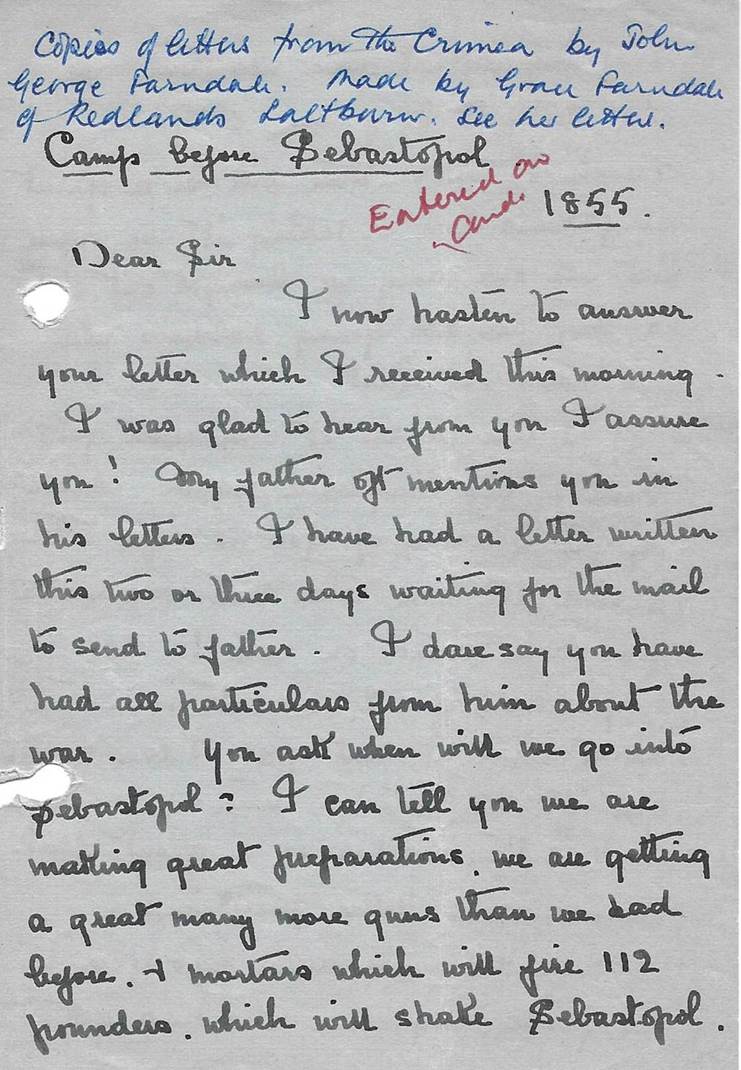
Camp
before Sebastopol. 1855
Dear Sir.
I now
hasten to answer your letter which I received this morning. I was glad to hear
from I assume you! My father oft mentions you in his
letters. I have had a letter written these two or three days waiting for the
mail to send to father. I have to say you have had all particulars from him
about the war. You ask when will we get into Sebastopol? I can tell you we are
making great preparations. We are getting a great many more guns than we had
before, and mortars which will fire 112 pounders, which will shake Sebastopol.
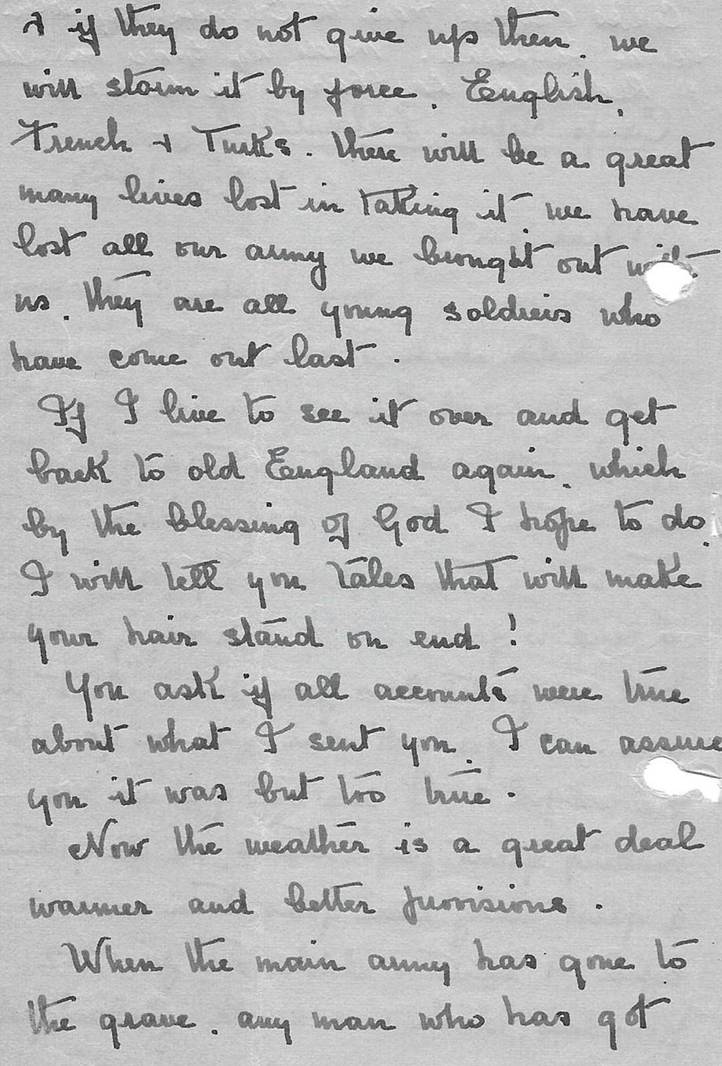
And if they do not give up then, we will storm it by force. English, French and
Turks. There will be a great many lives lost in taking it, we have lost all our
army we have brought with us. They are all young soldiers who have come out
last.
If I live
to see it over and get back to old England again, which by the blessing of God
I hope to do, I will tell you tales that will make your hair stand on end!
You ask
if all accounts were true about what I sent you. I can assure you it was but
too true. Now the weather is a great deal warmer and better provisions. When
the main army has gone to the grave, any man who has got …[18]
On 28 August
1855 the Russians abandoned the southern side of Sebastopol. The fall of
Sebastopol led to Russia’s defeat in the Crimean War, but
cost heavy Allied casualties. The Crimean War was one of the first campaigns
which used techniques of modern warfare including explosive naval shells,
railways and telegraphs. But the War showed significant logistical, medical and
tactical failures and led to the professionalism of medicine led by Florence
Nightingale. The Imperial Russian Army would take decades to recover
and the defeat would be a catalyst for social reforms and the abolition of
serfdom in Russia.
John George Farndale, went to Canada in 1870 and there is an un-substantiated
story that he went to Australia first. He lived the rest of his life in Ontario
Canada and we have already encountered his family’s
story there in Act 24.
|
Read
the full story of John Farndale’s experiences and his reports home from the
Crimean War |
The
Grenadier Guards
John Farndale
was discharged from the Grenadier Guards on 25 July 1872[19]. He received £10 compensation. He
had served for 3 years and 323 days. This was most likely to have been John Farndale of
Clerkenwell London.
The
Grenadier Guards spent most of the late nineteenth century on garrison and
ceremonial duties in London, Windsor and Dublin. The years following the Crimean War saw changes to the
uniforms and equipment and fundamental reform brought about mainly by two
Secretaries of State for War, Sidney Herbert and Edward Cardwell. Flogging was
phased out until it was abolished in 1881 and illiteracy was reduced by better
education. The practice of enlistment for life was also phased out and the
purchase of commissions ended in 1871. Military training was changed
drastically, and the Guards were housed near training areas outside London, at
Warley until 1877, then Caterham until 1959, and Pirbright from 1882.
This was the
time of the Franco-Prussian War[20] and the British Expedition to
Abyssinia[21], a rescue mission and punitive
expedition carried out in 1868 against the Ethiopian Empire. Emperor Tewodros
II of Ethiopia, often referred to as Theodore, imprisoned several missionaries
and two representatives of the British government in an
attempt to force the British government to comply with his requests for
military assistance. The punitive expedition launched by the British in
response required the transportation of a sizeable military force hundreds of
kilometres across mountainous terrain lacking any road system. The formidable
obstacles to the action were overcome by the commander of the expedition,
General Robert Napier, who captured the Ethiopian capital, and rescued all the
hostages. Historian Harold G. Marcus described the action as one of the most
expensive affairs of honour in history[22].
Steady
the Buffs
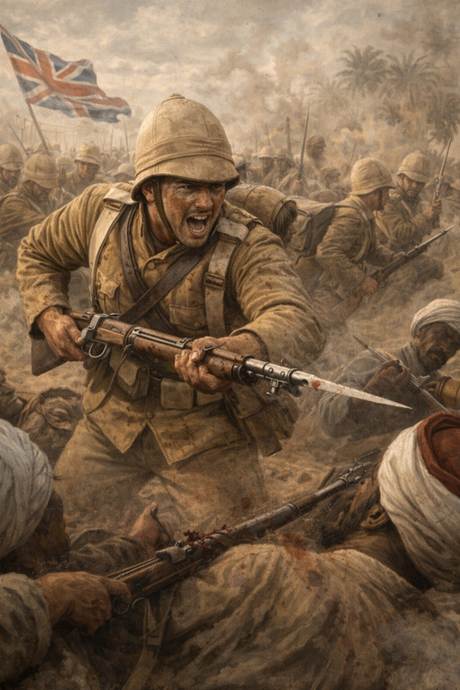
William George Farndale served as a soldier[23] with the Buffs, possibly in the Zulu
War 1879, the Anglo-Egyptian War 1882, the Mahdist War in Sudan in 1884, in
Malta and India.
William was
born in Brotton in 1857[24] brought up on the small 35 acre clifftop farm of Ladgates
near Saltburn. His father died in 1876 and his mother then struggled to keep
afloat with a grocery business that went into bankruptcy and then as a
laundress. William’s three elder sisters had all died young between 1871 and
1875 leaving their young children with their widowed mother.
William
attested into the army at Canterbury at the age of 22 on 13 May 1879 with
service number 1436. He joined the 45th Brigade, an infantry Brigade. William was a carpenter by trade.[25]
In 1879, the
45th Brigade Depot at Canterbury was associated with The Buffs (East Kent
Regiment), a historic infantry regiment[26]. The regimental depot for the Buffs,
which was already established in Canterbury Barracks under the Cardwell Reforms
for their two battalions. The Cardwell Reforms of the 1870s established
regimental depots, and The Buffs, already having two battalions, used
Canterbury as their base.
A couple of
decades earlier, in 1858 when the 2nd Battalion was stationed in Malta and
quartered with the 21st Royal (North British) Fusiliers, the Adjutant ensured
strict discipline on the parade ground from his raw recruits, shouting Steady,
The Buffs! The Fusiliers are watching you! This greatly amused the
Fusiliers who took to calling out Steady, The Buffs! on any occasion.
This continued after Malta whenever the two regiments met. The jaunt caught on
and was soon shouted whenever the Buffs marched by. It then passed into common
usage, even appearing in Rudyard Kipling's novel Soldiers Three and his
play Pity Poor Mama[27].
Shortly before
William’s attestation the Buffs (East Kent Regiment) were active with their 2nd
Battalion fighting in the Zulu War. The Anglo Zulu War began in January 1879[28]. As part of No. 1 Column (the Coastal
Column) under Colonel Charles Pearson, the Buffs were advancing toward the
missionary station at Eshowe when they encountered a Zulu force at the Inyezane River on 22 January 1879[29]. The Buffs successfully repelled the
attack, fighting the Zulus in a sharp engagement that lasted about an hour, and
continued their advance. Following the disaster at the Battle of Isandlwana
when 1,200 British soldiers were wiped out also on 22 January 1879, the central
British column was destroyed, leaving the Coastal Column isolated. The Buffs
were subsequently besieged at Eshowe for 67 days, from 23 January until they
were relieved in March 1879. Although not subjected to a direct Zulu attack on
the fortifications, the regiment endured the hardships of a prolonged siege.
After the siege was lifted, elements of the Buffs formed part of the relief
column's hodgepodge battalion which engaged the main Zulu impi at the Battle of
Gingindlovu on 2 April 1879. The British force, using
a well-fortified lager, inflicted a decisive defeat on the Zulu army.
We know that
William Farndale joined after this on 14 May 1879, at the Buff’s Depot in
Canterbury.
There was a
second phase of the Zulu Wars. After Eshowe was relieved, the Buffs were
assigned to Major-General Crealock's 1st Division.
During this period, they were primarily employed in escorting supply convoys
and did not see further major action, missing the final battle of Ulundi. Some
individual members of the Buffs served elsewhere, including with the 1st
Squadron Mounted Infantry at other key battles like Hlobane,
Khambula, and Ulundi[30].
The Regiment
was also involved in garrison duties across the British Empire.
There is no
sign of William George Farndale in the 1881 census, so he was probably still
serving at this time. Generally a British soldier
stationed overseas during census records of this period did not appear in the
census returns. The census was designed to enumerate the population present in
the UK on a specific night, with overseas military coverage only becoming consistent
in 1911. His non appearance
is therefore indicative that he may have been serving at the time.
The First
Battalion served during the Anglo-Egyptian War of 1882. The Anglo-Egyptian War
of 1882[31] was a brief conflict where Britain
invaded Egypt to suppress the 'Urabi Revolution, a
nationalist uprising challenging Khedive Tewfik Pasha's rule and European
influence. After bombarding Alexandria, British forces, led by Sir Garnet
Wolseley, defeated the Egyptian army at the Battle of Tel-El-Kebir, leading to
the capture of Cairo, exile of rebel leader Ahmed 'Urabi,
and the establishment of de facto British control and occupation of Egypt,
crucial for safeguarding the Suez Canal.
The Buffs
were involved in the second engagement at Kassassin
Lock on 9 September 1882, a vital position on the route to the main Egyptian
fortifications. The Battle of Tel el-Kebir[32] was the final and decisive battle of
the war, fought on 13 September 1882. The Buffs formed part of the 2nd Brigade
in the 1st Division, which executed a successful surprise dawn attack on the
heavily fortified Egyptian lines after a night march. The Egyptian army was
decisively defeated, leading to the capture of Cairo and the end of the
rebellion. For their distinguished service in the campaign, the 1st Battalion
was awarded the battle honours Egypt 1882 and Tel-El-Kebir. Following the war,
the battalion remained in the region for garrison duty in Cyprus before moving
on to India and participating in the Mahdist War in the Sudan.
The Regiment
served in the forces under General Graham, which were sent to the Red Sea port
of Suakin to suppress the Mahdist leader Osman
Digna's threat to the coastal area. They were involved in the Battle of El Teb[33] and the Battle of Tamai[34] in early 1884. At Tamai, the British
forces faced fierce, close-quarters combat against
determined Sudanese tribesmen.
The 1st
Battalion participated in the Battle of Ginnis on 30 December 1885[35], part of the Anglo-Egyptian force
that advanced to relieve the Dervish blockade of the Ginnis-Kosheh
area. This engagement is historically notable as the last battle in which the
British Army fought wearing its traditional red coats.
After their
service in the Sudan, the 1st Battalion was stationed in Malta and then moved
to India for garrison duties.
The
Second Boer War
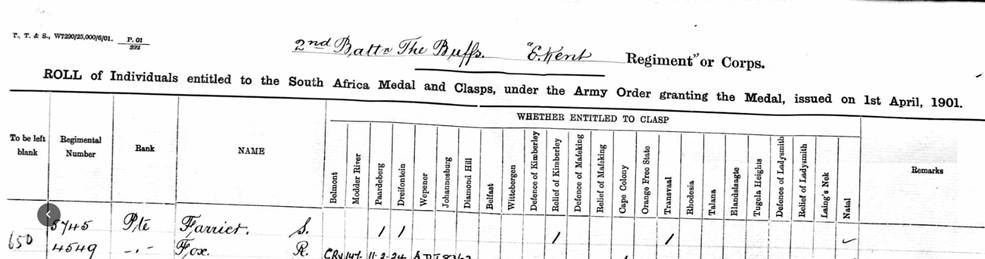
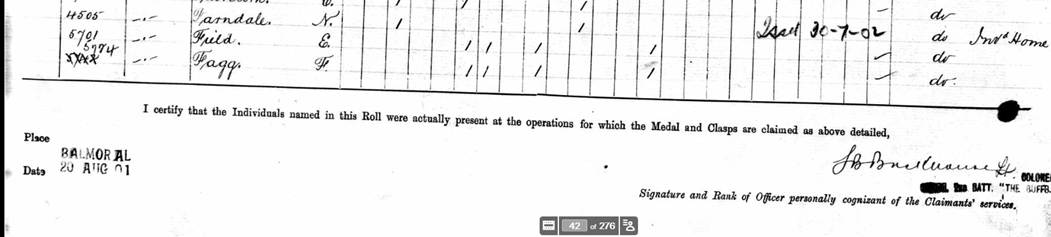
4505 Private N
Farndale, may have been a son of William George Farndale, possibly born out of
wedlock in about 1876. This is suggested by his military service and his
service in the Buffs, William’s Regiment.
N Farndale served during the Second
Boer War, with Second Battalion The East Kent
Regiment, the Buffs. He was in action at Paardeberg
and during the Relief of Kimberley. The war lasted from 1899 to 1902 and N
Farndale was listed on a Roll at Balmoral on 20 August 1901, as having taken
part in the campaign, so he had returned from South Africa by then.
He was still in Sussex on 22 August
1899 when, at a cricket match, the local team’s opponents on Thursday were
the Buffs, who, batting first, knocked up 151. The Buffs, Private Farndale,
caught Allen, bowled G A Hammond, 6 runs.
The Second Battalion saw action
during the Second Boer War with Captain Naunton Henry Vertue of the Second
Battalion serving as brigade major to the 11th Infantry Brigade at the Battle
of Spion Kop where he was mortally wounded in January
1900.
The Battle of Paardeberg
or Horse Mountain[36], was fought between 18 and 27 February 1900, during the Second
Anglo-Boer War. It was fought near Paardeberg Drift
on the banks of the Modder River in the Orange Free State near Kimberley. It
was part of the Relief of Kimberley[37]. Lieutenant General Herbert Kitchener had taken overall command of the
British force. Kitchener ordered his infantry and
mounted troops into a series of uncoordinated frontal assaults against the Boer
laager, although frontal assaults against entrenched Boers had cost the British
time and again in the preceding months. The British were shot down in droves.
It is thought that not a single British soldier got within 180 metres of the
Boer lines. By nightfall on 18 February 1900, some 24 officers and 279 men had
been killed and 59 officers and 847 men wounded. It was the worse reverse of
the war and became known as Bloody Sunday.
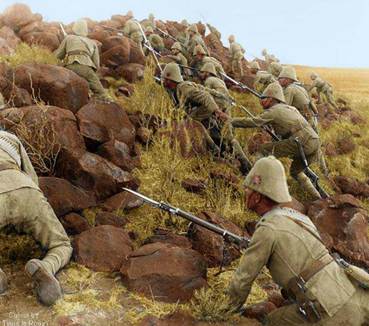
Canadian Troops at Paardeberg
Following the end of the war in South
Africa in June 1902, 540 officers and men of the Second Battalion returned to
Britain on the SS St. Andrew leaving Cape Town in early October, and the
Battalion was subsequently stationed at Dover.
Sergeant
William Leng Farndale was a Sergeant in the Northumberland Imperial
Yeomanry (Hussars) in 1902. They had also served in the Second Boer War, and
William may have taken part in that campaign.
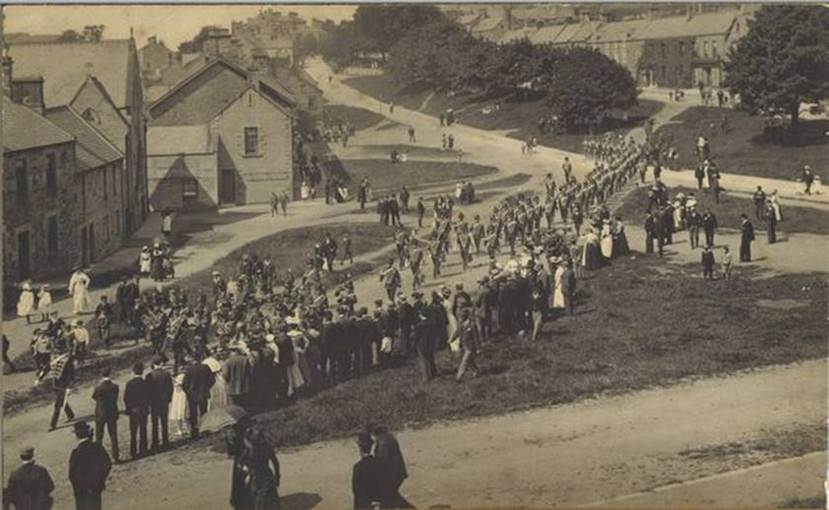
The
Hussars parade through Rothbury, William’s home town
in Northumberland, in 1900
The Yeomanry
was not intended to serve overseas, but due to the string of defeats during
Black Week in December 1899, the British government realised they were going to
need more troops than just the regular army. A Royal Warrant was issued on 24
December 1899 to allow volunteer forces to serve in the Second Boer War. The
Royal Warrant asked standing Yeomanry regiments to provide service companies of
about 115 men each for the Imperial Yeomanry equipped as Mounted infantry. The
regiment provided 14th (Northumberland) Company, 5th Battalion in 1900; 15th
(Northumberland) Company, 5th Battalion in 1900; 55th (Northumberland) Company,
14th Battalion in 1900, transferred to 5th Battalion in 1902; 100th
(Northumberland) Company, 5th Battalion in 1901; 101st (Northumberland)
Company, 5th Battalion in 1901; 105th (Northumberland) Company, 5th Battalion
in 1901 and 110th (Northumberland) Company, 2nd Battalion in 1901.
The mounted
infantry experiment was considered a success and the
Regiment was designated the Northumberland Imperial Yeomanry (Hussars) from
1901 to 1908.
William Leng
Farndale continued to serve with the Yeomanry until about 1907, regularly
organising social balls. He later became Rothbury’s brewer.
There was an
F A Farndale-Williams who was a second lieutenant with
the Moulmein Volunteer Rifles on 30 March 1907 who appeared under Indian Army
Orders. The double barelled name suggests that he may
have been descended from the Farndale family.
Scene 4 - First World War
The members
of the family whose fortune was to have been male and born between about 1880
and 1900 were, in all probability, destined for the horrors of industrial war
in the second decade of the twentieth century. Forty members of our
family served in the First World War.
George Weighill Farndale was a 24 year old warehouseman in Leeds in 1911[38], descended from the Bishop Wilton Line who we met
in Act 16 Scene 2. As the
war broke out, he was a member of the Colton Institute Cricket Club in Leeds[39] and he worked for wholesale woollen
manufacturers and merchants. By 1916, he served with 15th Battalion (1st
Leeds), The Prince of Wales’s Own (West Yorkshire Regiment), known as the Leeds
Pals[40]. He was wounded in 1916 after the
first attack at the Battle of the Somme. On Tuesday ten more wounded
soldiers arrived at Portal. They included Private G Farndale, 15th West
Yorks. The men's wounds are not of a serious nature. They are all most
cheerful. They were conveyed from Chester Station by motor cars, kindly lent by
the Honourable Mrs Marshall Brooks, Mrs Gordon Houghton, Mr Broughton, Mr G
Bebington. Sister Searl met them at the station.[41]
Private P M Jones, who was
buried in a frontline trench and was injured in the back, is in a French
convalescent camp. The latter, prior to enlistment, was employed by Messrs
Ashworth, Brown, and company. Another employee of the same firm wounded is Private
G W Farndale, whose home is at Colton. His wound is in the shoulder. He is in
hospital at Tarporley, Cheshire.[42] On the first day on the Somme, on 1
July 1916, the Leeds Pals were shelled in their trenches before Zero Hour at
07.30 hours and when they advanced, they were met by heavy machine gun fire. A
few men got as far as the German barbed wire but no further. The battalion
casualties, sustained in the few minutes after Zero Hour, were 24 officers and
504 other ranks, of which 15 officers and 233 other ranks were killed. Private
A V Pearson, of the Leeds Pals later wrote, the name of Serre and the date
of 1st July is engraved deep in our hearts, along with the faces of our 'Pals',
a grand crowd of chaps. We were two years in the making and ten minutes in the
destroying.[43] George was wounded in July 1916,
presumably in the Somme offensive. He seems to have been relatively lucky but
what horrors he witnessed can only be imagined.
A year later
15/319 Lance Corporal George Farndale was Killed in Action, aged 30, during the
Third Battle of the Scarpe, part of the Arras offensive, on 3 May 1917[44].
From 9 April
to 16 May 1917, British troops attacked German defences near the French city of
Arras on the Western Front. The British achieved the longest advance of the
quagmire of trench warfare, improving on the record set by the French Sixth
Army on 1 July 1916. However the British advance
slowed over the following few days and the German defence recovered. The battle
became a costly stalemate for both sides and by the end of the battle, the
British Third and First Army had suffered about 160,000 and the German 6th Army
about 125,000 casualties.
The British
effort was an assault on a relatively broad front between Vimy in the
north-west and Bullecourt to the south-east. After a long preparatory
bombardment, the Canadian Corps of the First Army in the north fought the
Battle of Vimy Ridge and took the ridge. The Third Army in the centre advanced
astride the Scarpe River and in the south, the British Fifth Army attacked the
Hindenburg Line (Siegfriedstellung) but made few
gains.
Third Battle
of the Scarpe lasted from 3 to 4 May 1917. The British launched their attack
near the Scarpe on 3 May. They were not able to make
any significant advances and the attack was called off
the following day after incurring heavy casualties.
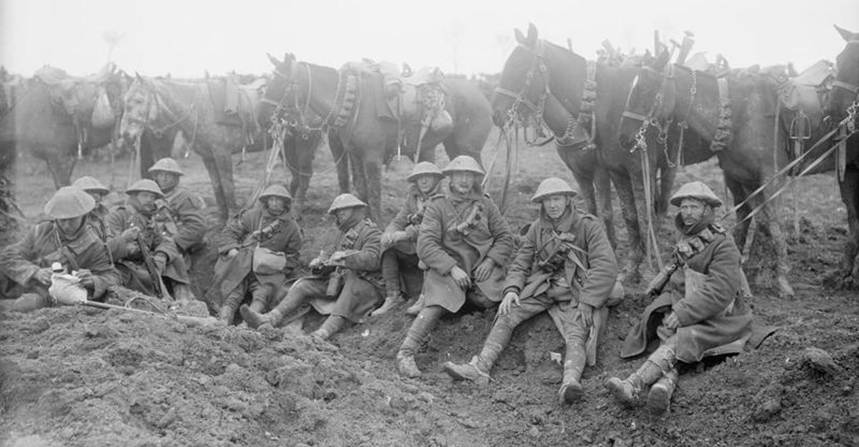
The Arras
Offensive
|
The Battle of Arras, Spring 1917
Personal
accounts of the offensive. |
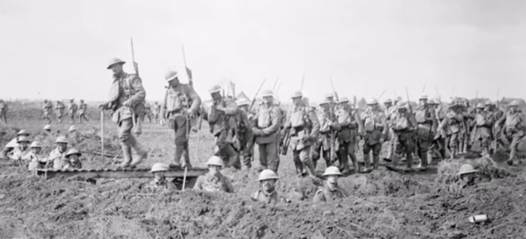
The quiet
and gentle boy who was very much liked by all who knew him
George Farndale
was a 20 year old blacksmith striker in 1911[45], living with his father John
Farndale, a miner’s deputy and his mother Susannah. He was part of the Whitby 5 Line and we met his family
in Act 15 Scene 3.
George was a
Private, Service No. 333852, in the 9th (Glasgow Highland) Battalion, Highland
Light Infantry, although he was originally Service No. 26456, Alexandra
Princess of Wales Own (Yorkshire Regiment)[46].
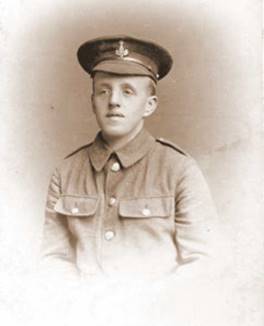
George
Farndale,
He was sent
to France on 8 April 1917. Waiting for embarkation at Folkestone, he wrote to
his sister, Annie
Farndale. Just a line to tell you that I arrived at Folkestone at 7 o
clock this morning and I am in a rest camp now waiting of a ship. It is quiet a
fine place here. I think we shall leave here at 10.45 am for the ship which I
think will take us to Boulogne where we will stay over night.
I got a very descent breakfast here and had an extra tea before we left
Catterick. They also gave us 20 packet of cigarettes
each. Well tat-ta for the present will write you
again as soon as possible. With Love Geo.[47]
From France
on 19 April 1917, he wrote to his sister again. Received letter on Tuesday
last and parcel today. I must say the parcel was extra. The cake is excellent,
also must say that you could not have sent a more suitable parcel. Well I must send you my sincere thanks for your kindness
also for writing to the Girl. I am sorry I had to send home for some money, but
I only get 5 francs here, and I want to get some of those French cards to send
you as I know you would like some of them. I am pleased to hear you are all
keeping well. I wrote to the Girl on Sunday so I am
expecting to hear from her anytime. Will you send me one of your photos as I
would like one with me out here, please put your name on it. Remember me to all
and Give them my best respects, also down John St. How
is Father keeping hope he isn't worrying about me as I am alright. Well I think this is about all I have to say so I must draw to a close thanking you once again for parcel also
hoping to hear from you again soon. Well tud-a-lu. With Love from Your
Loving Bro Geo. P.S. I am not afraid about the watch and parcel, as I know the
young man I left with is honest and straight in every way, and I told him he
wasn't to go down special with it, he was to post it anytime when he was going
to town. With Love again Geo.[48] In this correspondence he referred
to the Girl, who seems to have been his recent fiancée.
On 24 April
1917, he wrote to Annie again. Dear Annie. I am just sending you a line to
tell you that I am in a draft and expecting to go out any day. If you haven't
wrote and sent the things I asked for don't trouble, as I may be gone before
they arrive and I sharn't be able to take them with
me. If I should be here over the weekend I will write
you again on Sunday if not I will try and send you a line before I leave. I
have got all my kit ready for going but I don't think I shall go before
Saturday or Monday. Well be sure and don't worry
about me and tell Father not to, as I shall be alright, and I must say before I
go that you and Father have been very kind to me as I never wanted for anything
and I must say you have done more than your duty towards me. Of
course it may be weeks before I go into the trenches as am sure to be
kept at the base for a week or two. If I should send for anything when I get to
France, be sure and register it, as it will make it more sure
of me receiving it. Well don't write any more until you hear from me again and
don't think anything is wrong if you don't hear from me for a short time, but I
promise you to write you as soon as I possibly can. Well
this is all I have time to say just now, so I will now close, trusting this
finds you all well. Remember me to all. Well
be sure and don't worry about me, and look on the
bright side of it as I shall soon be back again. With Love, From Your Loving
Bro Geo. PS. If the writing pad comes I will give it
to some of the boys as it won't be worth sending it back. I shall very possibly
be sending some shirts home.[49]
On the same
day he wrote a proforma letter.
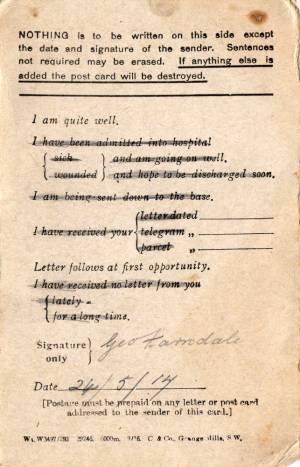
A month after
writing to his sister, on 20 May 2017, George was involved in an attack when we
went over and took the German front line trench, which we held for 2 days and
then were relieved. He was with his mate, Private R Sellers that day.
George was killed in action a week later on 27 May 1917, aged 26, in the same
Arras offensive that had killed his kinsman George Weighill Farndale twenty four days earlier[50].
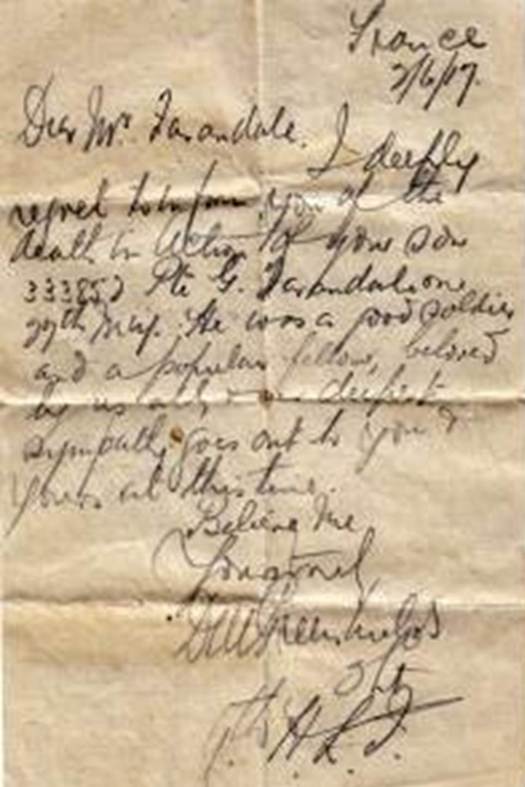
On 2 June
his platoon commander wrote to his father. France, 2/6/17, Dear Mr Farandale. I deeply regret to inform you of the death in
Action of your son 333852 Pte G Farandale on 27th
May. He was a good soldier and a popular fellow, beloved by us all and our
deepest sympathy goes out to you and yours at this time. Believe me, Yours
truly, D W Greenhulds, 2Lt, 9th HLI.[51]
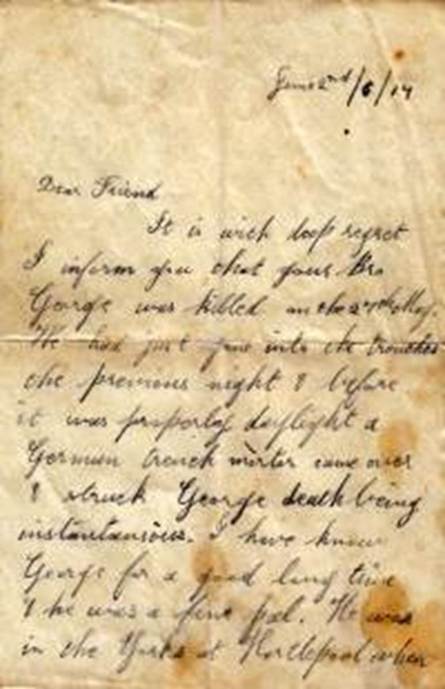
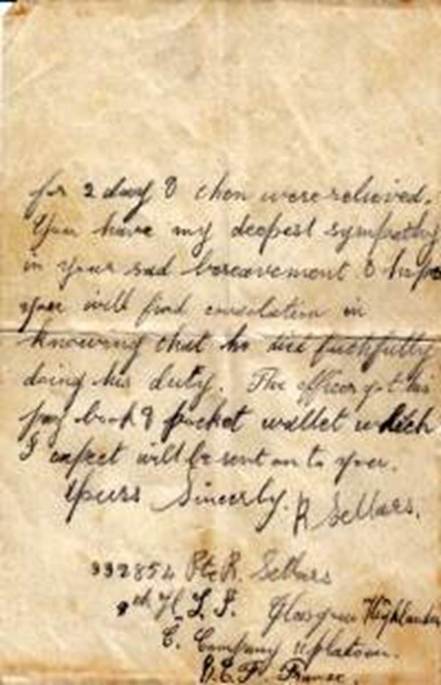
His pal
wrote to his sister Annie on the same day. June 2nd/6/17. Dear Friend. It is
with deep regret I inform you that your Bro George was killed on the 27th May. He had just gone into the trenches the previous
night and before it was properly daylight a German trench mortar came over and
struck George death being instantaneous. I have know George for a good long time and he was a fine
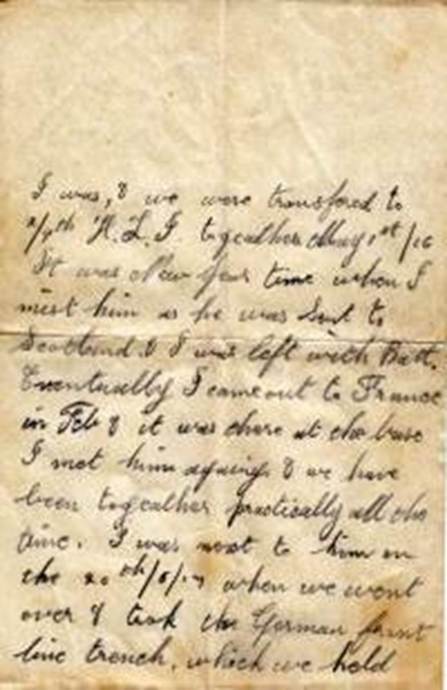
pal. He was in the Yorks at Hartlepool when I was, and we were transferred to
2/9th HLI together May 1st/16. It was New Years time when I mist
him as he was sent to Scotland and I was left with Batt. Eventually I came out
to France in Feb and it was there at the base I met
him again and we have been together practically all the time. I was next to him
on the 20th/5/17 when we went over and took the German front line trench, which
we held for 2 days and then were relieved. You have my deepest sympathy in your
sad bereavement and hope you will find consolation in knowing that he died
faithfully doing his duty. The officer got his pay book and pocket wallet which
I expect will be sent on to you. Yours Sincerely. R Sellars. 332854 Pte R
Sellars 9th H.L.I. Glasgow Highlanders. C. Company 11 platoon. B.E.F. France.[52]
On 19 April
1917, the Girl, who, it turns out, was called Dolly, wrote to George’s
sister. Shingle Hall, Sawbridgeworth, Herts. Thursday. Dear Miss Farndale:- I am deeply grieved on hearing from you yesterday
morning that dear George has been killed in action, and all at Shingle Hall
including myself wish to express our deepest sympathy with you all in this dark
hour of sadness. It was an awful blow to me dear, and
is one that I shall never forget. He was such a nice quiet and gentle boy and
was very much liked by all who knew him in Sawbridgeworth, and no fellow could
not think so much of a girl as your dear brother did of me, and had he been
spared to come back safely we intended getting married. I don't know if he ever
spoke about it to you. It will be awfully kind of you to copy those letters for
me and shall be most pleased to receive them. Yes dear, I will see about
another doz. p.cs. being copied and will write and
let you know, as I shall be only too pleased to do anything for you, for the
sake of the dear one I have just lost. He sent me the Yorkshire badge (as he
said no one else should have it but me) also the cap badge of the H.L.I. and
bought me a small regimental brooch of the H.L.I. so I shall always think of
the dear boy. Now dear Miss Farndale I will draw to a close
trusting you will all accept our deepest sympathy once more. With fondest love
hoping to hear from you again soon. I remain Your sincere Friend Dolly. P.S.
Please excuse pencil.[53]
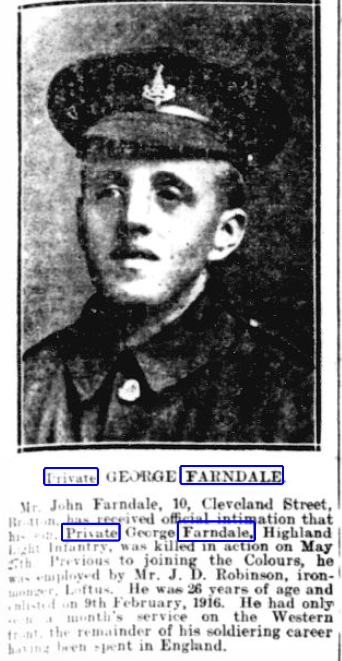
It was also
reported that Mr. John Farndale, 10, Cleveland St, Broughton, has received
official intimation that his son, Private George Farndale, Highland Light
Infantry, was killed in action on May 27th. Previous to
joining the colours he was employed by Mr J D Robinson, ironmonger, Loftus. He
was 26 years of age and enlisted on 9th February,
1916. He had only four month's service on the Western Front, the remainder of
his soldiering career having been spent in England.[54]
Brothers
in Arms
We have
followed the story of the Tidkinhow family,
who emigrated to Canada and to USA. Thus it
was that in the Great War of 1914 to 1918, three brothers joined three
different armies. William
Farndale was the first to join the Canadian Army in April 1916. His little
brother Alf,
tried to join the British army when under age, but was sent home and rejoined
in 1917, serving at Passchendaele and in Mesopotamia. Their older brother, Jim, who had
moved on from Canada to the United States, joined the US Army in 1917, shortly
after the USA joined to conflict. Three brothers, served in three different
armies, for a common cause.
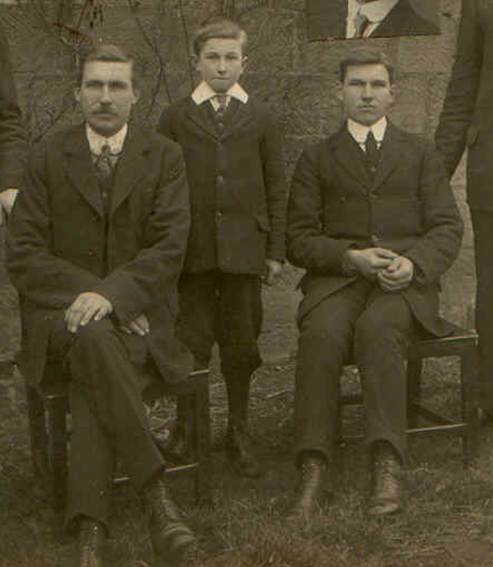
James, Alfred, William at Tidkinhow
in 1911 (brothers in arms)
The
Canadian
William Farndale
was born in Tidkinhow, but had
emigrated to Saskatchewan, where he was a butcher. He is my great uncle. We met
him in Act 25.
William
joined the Canadian Army on 19 April 1916[55]. William had consoled his younger
brother Alfred,
my grandfather, at their mother’s funeral in 1911. I remember William
looking after me at mother's funeral. I was crying and very upset.[56]
Only four years later Alf had joined
the British Army in late 1915, though he was a little younger than he should
have been, and had to wait to try again.
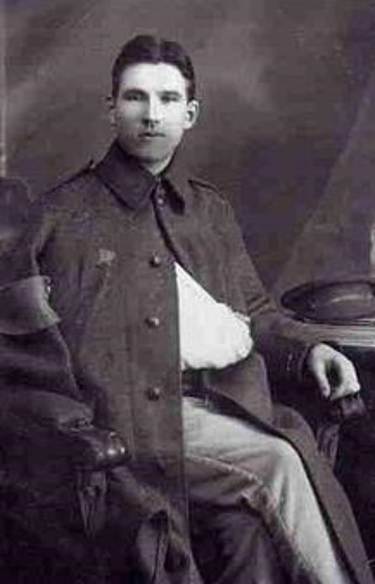
William
Farndale
William was
wounded in action at Vimy Ridge on 13 December 1916 while serving with the 28th
Battalion. He took a gunshot wound in the right forearm.[57] Loss of function, right arm,
penetrating gun shot wound at forearm with compound comminuted fracture of radius. Bbullet
entered inner surface of forearm, two inches below elbow, and passed directly
through the arm, coming out on the other side, and splintering the radius in
its passage. Severe inflammation of the arm followed, and inflammation, and
sequestrum formed and was removed. Had erysipilis
while in hospital, 23rd CC Station, 24th General Hospital (British) Etaples from 17 Jan to 23 April 1917, Reading War Hospital
from 23 April to 12 July 1917, MC Hospital Epsom, since 12 July 1917. Wounds
all healed. The wound and exit wound shows the remains of a sinus from the
radius not discharging now. Has wrist drop, and is
wearing a dorsiflexion splint. Flexion and extension of elbow are greatly
limited and pronation and supination are absolutely stopped, in a position of
partial supination. Is otherwise normal.[58]
From
December 1916 to March 1917, the Canadian Corps executed fifty
five trench raids. Competition between units had developed with units
competing for the honour of the greatest number of prisoners captured. The
policy of aggressive trench raiding was not without its cost. A large-scale
trench raid on 13 February 1917, involving 900 men from the 4th Canadian
Division, resulted in 150 casualties.
He wrote
from hospital to his sister Grace
during the following month.
Left hand
of course. Jan 12.
Dear
Sister.
I will
try and write to you. I find I am doing fairly well
but I have got a very bad arm. I was hit with an explosive bullet which made a
hole through two inches wide and broke both bones. They give me very little
hope of my arm being any good but I hope it will not
be so bad. I had an awful hard time in France. I had four operations in two
weeks. They could not get it stopped bleeding and I got so weak that I could
not feed myself. But I am alright now, but not able to get up yet for two weeks
or so. I may have to have another operation. Not sure yet. Going to have my arm
x-rayed shortly. I want you to write a letter for me to Sister Armstrong, 23
CCS, BEF, France. Give her my address and tell her I am getting along alright.
This is not a very nice hospital, but good doctors. If you send a parcel, send
me a toothbrush and hairbrush. I expect I will be here three months. I tried to
get into Yorkshire so you could come and see me, but this is as far as I could
get. If my arm does not get better it is likely I will
get sent back to Canada in the Spring, but I will never see France any more.
I am awful sorry that Alf had to go. If ever he gets to France I will want to go back again.
Your
affectionate brother W F.[59]
William was
discharged from the Army at Calgary on 18 February 1918. After his return to
Regina, he used his car to take patients to hospital during the great influenza
epidemic of 1918. He caught the ‘flu while still weak from his wound and died
at Earl Grey, Saskatchewan, Canada, aged 25 years on 23 November 1918. He was
buried in Earl Grey, Saskatchewan. William had been engaged to a girl in Earl
Grey at the time of his death.[60]
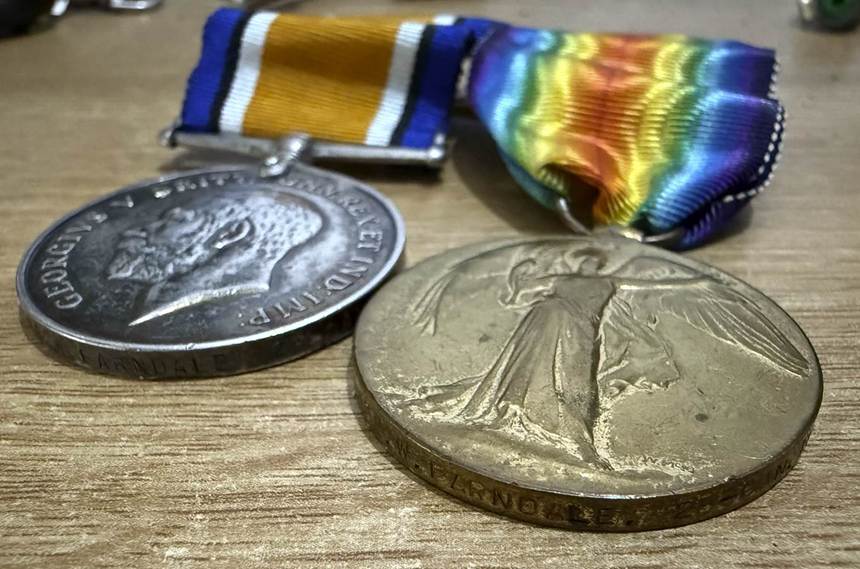
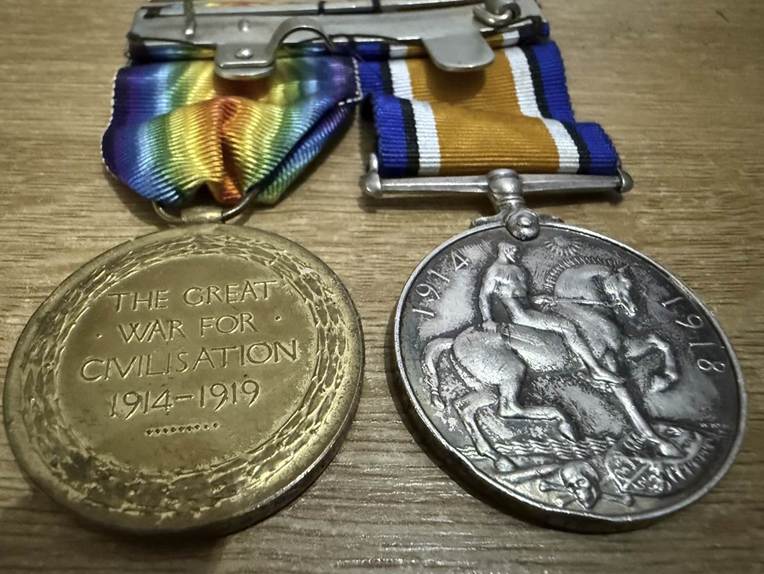
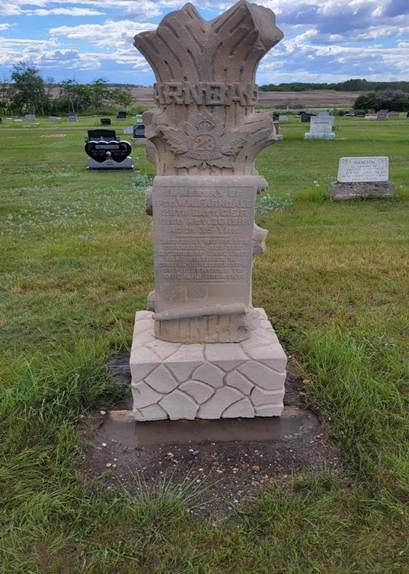
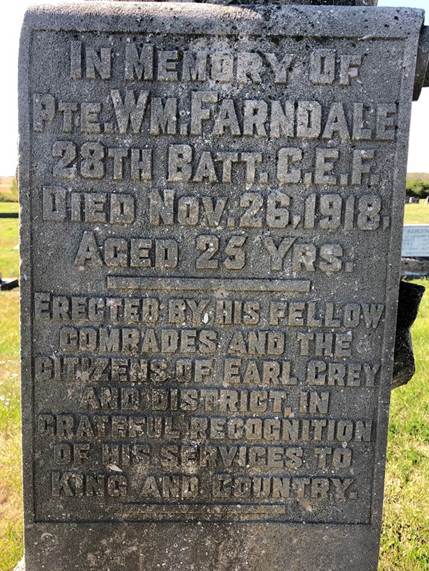
William
Farndale’s medals and his war memorial
Passchendaele
My
grandfather Alf
later recalled, the war came in 1914 and I was just 17. I wanted to join up
so I ran away and joined up at the local recruiting office at Northallerton, somewhere in South Parade I think. I joined the West Yorks
but my father found out and said I was under age,
which I was. The CO wanted me to stay on the band, but father wouldn’t hear of
it and I came out. I remember being very proud of my first leave in uniform.
Then one day they called for volunteers for the Machine-Gun Corps and I stepped
forward. We went to Belton Park, near Grantham for training. I joined 239th
Company MGC and we were attached to the Middlesex Regiment.[61]
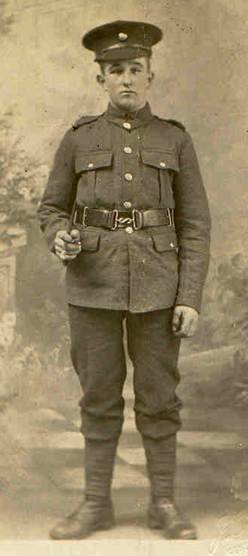
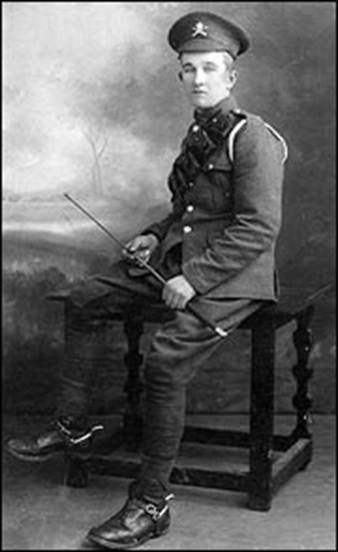
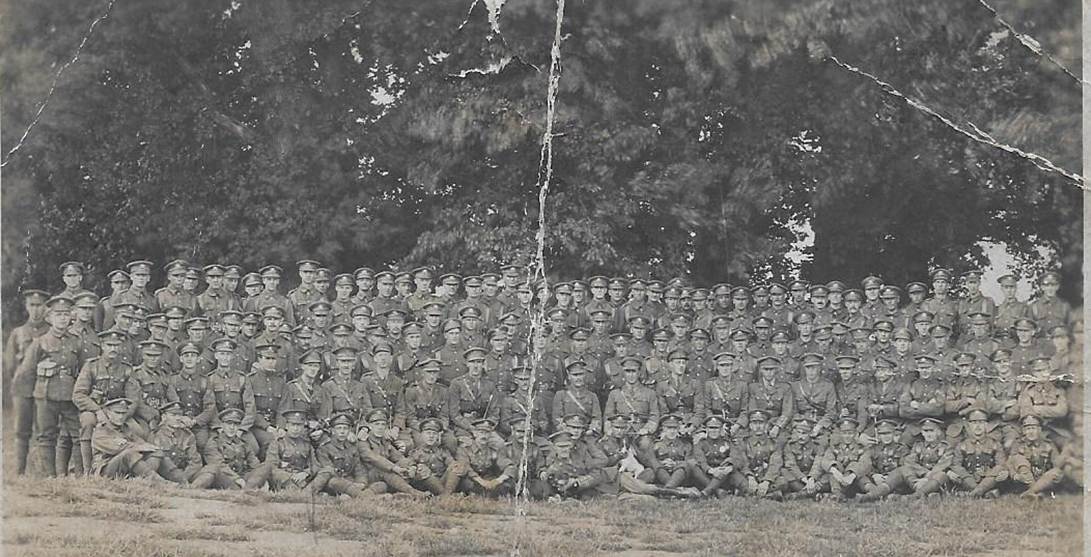
Alf
Farndale
Machine Gun Corps at Belton Park, Grantham in 1917
He joined
the British Expeditionary Force in France on 12 July 1917. He embarked at
Southampton on 13 July and disembarked at Le Havre on 17 July 1917. He had been
posted to 239th Company MGC BEF 13 July 1917. His Medical History Record showed
he was 5 ft 6 ¼ inches height and 133 lbs.[62]
The 239th Machine Gun Company
(“MGC”) was a unit in the British Machine Gun Corps attached to the 47th
(2nd London) Division in France. The Company joined the Division on 17 July 1917, and had seen action in the Battle of the Somme
in the closing days of the engagement, before Alfred joined them.[63]
On 17 July
1917 the Company marched to join 47th (London) Division at Westoutre and went
to Curragh Camp. The Company was then training in camp until 9 August 1917.
Westoutre (now Westouter) is close to the French-Belgian border en route
towards Ypres. During this period a
detachment of 2 officers and 38 Other Ranks were immediately detached to
support 142 Machine Gun Company during their forthcoming operations on 29 July
1917 during which time they were engaged at Caterpillar Crater. They returned
to 239 Company on 5 August 1917. Alfred may have been part of this group.
Alfred recalled that they were also at Dickiebush
camp. This camp was at the modern town of Dikkebus
and the location of the Dickenbusch Military
Cemetery.
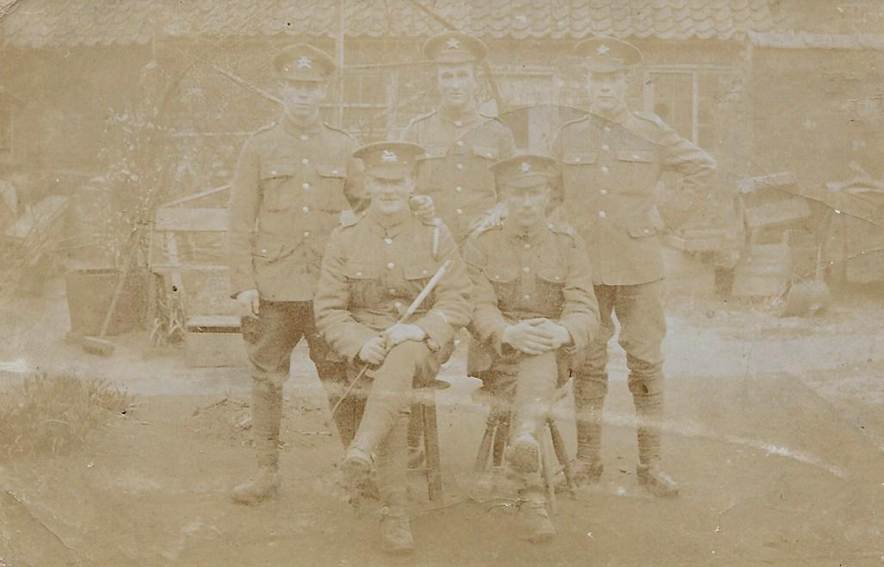
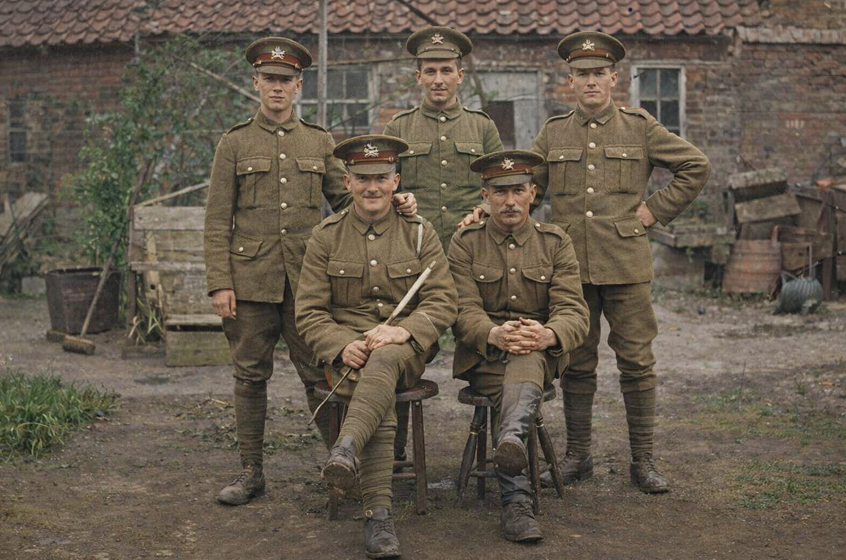
Ypres,
France, 1917 (Alfred centre, rear) and coloured by AI
The Third
Battle of Ypres, also known as the Battle of Passchendaele, began on 31 July
and continued to 10 November 1917. On 17 August 1917, 239 MGC began a sudden
move by tactical train to II Corps area. On 18 August 1917, they were at Busseboom and orders were received for two sections to take
over barrage positions. Busseboom is due west of
Ypres near Poperinge. During the night of 18 to 19
August, two sections took over barrage positions under orders of 141 Infantry
Brigade. On the night of
20 to 21 August 1917 two sections from 239 Company worked on Bellawarde Ridge preparing positions for barrage. Six other
ranks were wounded, though two remained on duty. On 21 August two sections
proceeded to Bellawarde Ridge for barrage on Z day. Bellewaerde Ridge is located in Hooge, just east of Ypres, and was a key
battleground, the site of fierce fighting. Alf recalled that he saw action at Zonnebeke and Westhoek which are in this area.
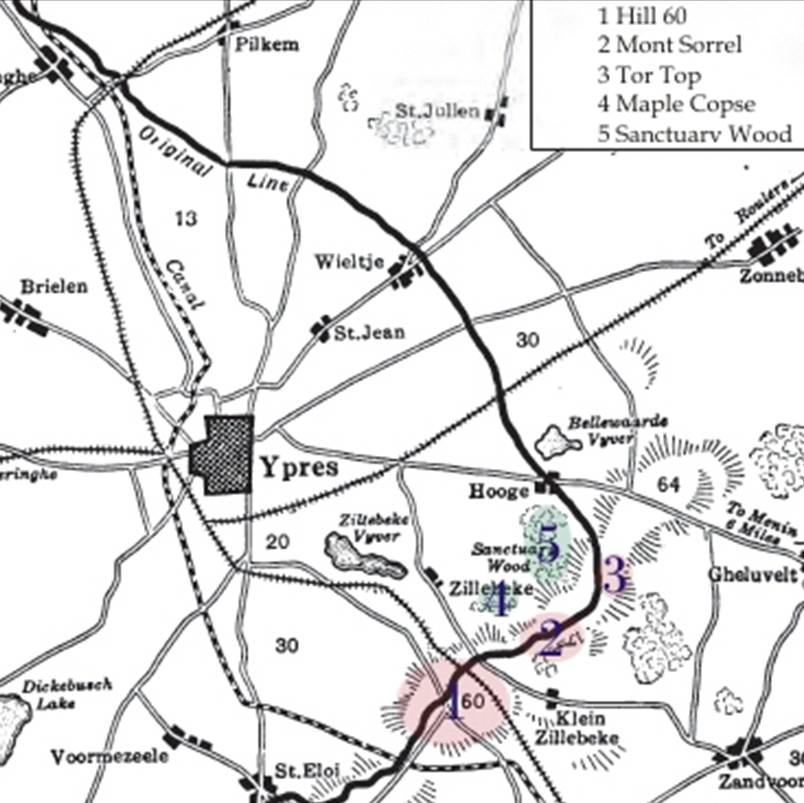
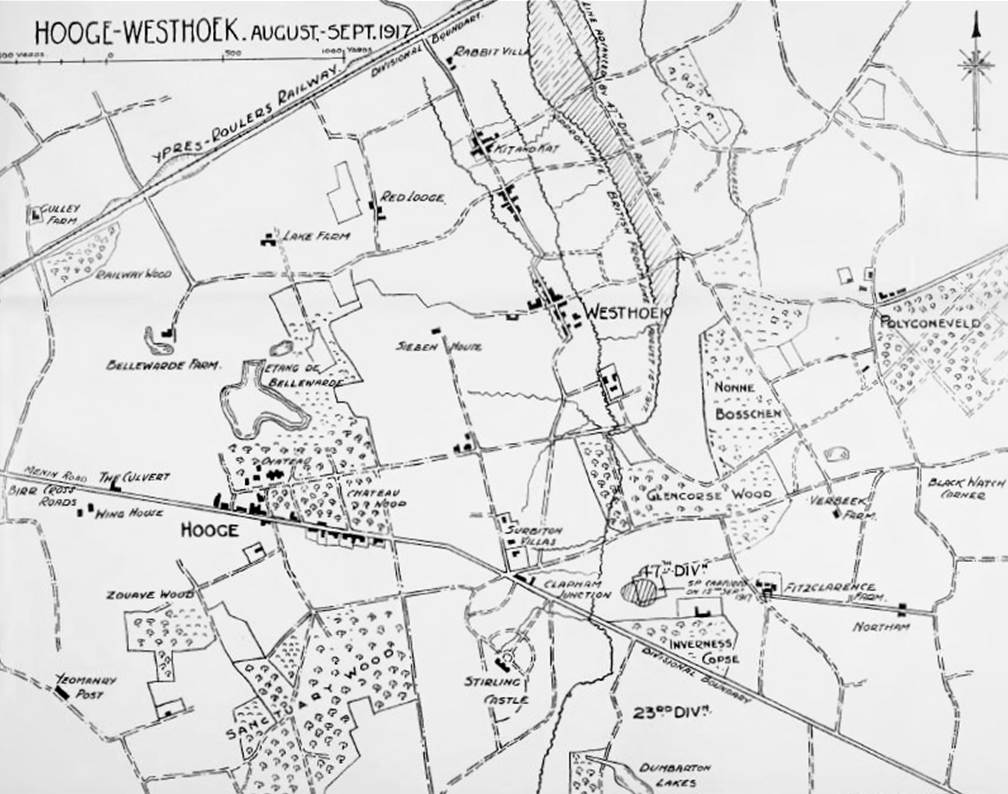
22 August
1917 was Z Day. The Company were in four batteries of four guns each. The
positions of two batteries were in open shell holes
and the other batteries took up position in old enemy trench positions. These
positions were shelled at intervals during the night and day and the enemy sent
over gas shells on two occasions. From midnight on 21/22 to midnight on 22/23
August 1917 nearly 150,000 rounds were fired by all four batteries. 3 other
ranks were killed and 6 wounded. Second Lieutenant J R A Price was admitted to
hospital.
At 11.30 on
23 August 1917 two batteries were withdrawn and two
other ranks were sent to hospital, sick. On 24 August one other rank was
wounded. One gun and its tripod was destroyed by shell fire. On 27 August 1917 one battery moved
to J fire a special barrage to assist 15 Division. 20,000 rounds were fired by
this battery. There was great difficulty keeping the guns going owing to the
wet state of the ground. There was only one dug out for belt feeding. 4 other
ranks were killed.
On 28 August
1917, inter company relief of two sections in the
line was carried out successfully but CQMS killed and two other men wounded,
bringing up rations. Two mules wounded. Alf was one of these men.

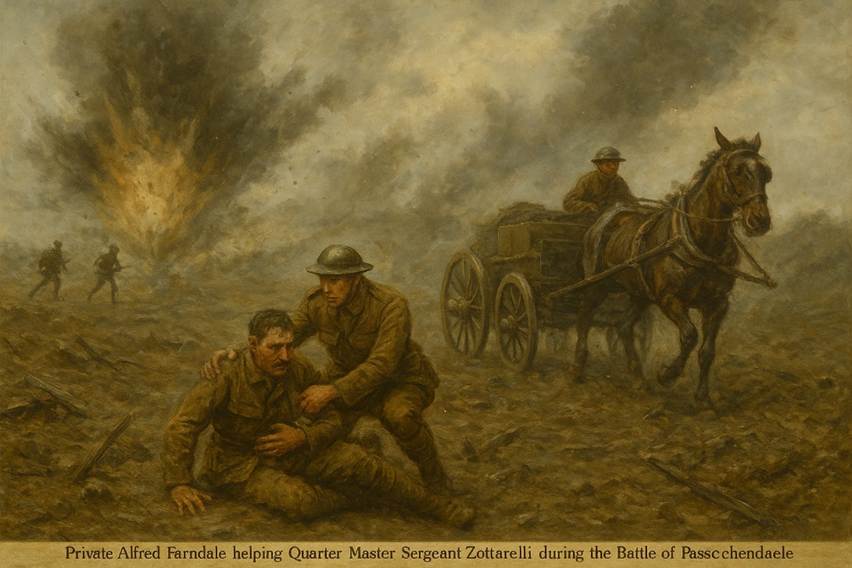
I
remember an incident on the Menin Road galloping up with two limbers of
ammunition towards the gun positions at Hooge. I was a Private
but I was giving a lift to Quarter Master Sergeant Zaccarelli. The Germans
started to shell us. They could clearly see us. I had one horse killed and I
managed to cut him free and I then rode the other.
Zaccarelli was killed; it was quite a party when I reported it. My Captain
asked if there were any witnesses but there were none, otherwise I might have
got something. I remember an officer coming up to me when we were under
bombardment at Ypres and saying “How would you like to be in Saltburn now, Farndale?” We saw
some action at Zonnebeke, Ploegstraat
and Arras.[64]
His grandson, Nigel, later recalled
during a twenty first century battlefield visit to Ypres, When
we came to the notorious spot known as Hellfire Corner, we remembered the story
he told us. He and Quartermaster Sergeant Zaccarelli had been galloping up to
the Front with an ammunition limber when the Germans started to shell them.
Zaccarelli was killed, along with a horse. My grandfather managed to cut the
dead horse free, drag Zaccarelli’s body into a ditch and carry on up to the
Front on one horse with his delivery of ammunition. It amounted to family
legend because there were no witnesses or dates, just this memorable surname.
We came across a small British war cemetery and there was the surname, only
spelt slightly differently. Company Quartermaster Sergeant John Zottarelli died
on August 28, 1917, a month into the battle of Passchendaele.
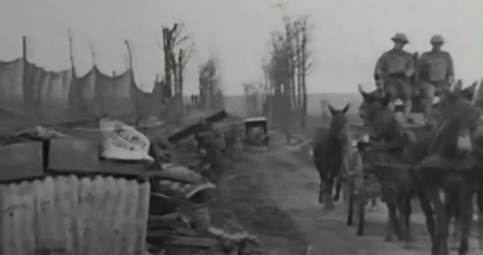
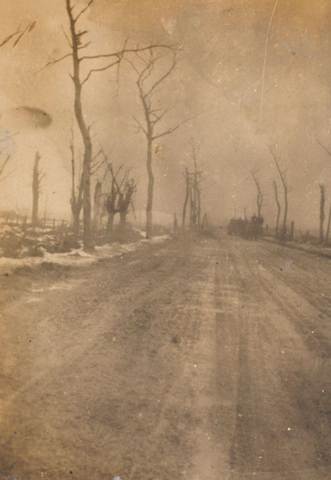
|
Footage
of Hellfire Corner during the Third Battle of Ypres, 1917
The scene that confronted
Alfred in August 1917 |
|
|
On 29 August 1917 positions for 4
batteries for barrage work were reconnoitred. A new officer, Second Lieutenant
W L Boyt joined the Company. On 30 August digging was found almost impossible
owing to the wet conditions of the ground. A mule wounded in the incident
involving Alf on 28 August died during the night. By 31 August work on barrage
positions was progressing well. An enemy aeroplane flew over battery positions
at 1530 hrs but was out of range. On 1 September two sections were in barrage
positions. On 2 September relief came from 195 Machine Gun Company and on 3
September the whole Company was in camp and then training for the following
days.
On Sunday 9 September 1917 a church
service was held for the men at the depot. During the night of 9 to 10
September 1917 Second Lieutenant A T Sinclair and two other ranks were killed
and one wounded. Barrage positions were heavily shelled between 0230 and 0330 hrs and 24,000 rounds of small arms ammunition was fired in
harassing the enemy. Three spare parts boxes were destroyed by shell fire and 24 boxes of small arms ammunition was taken up the
line by pack animals. On 11 September
6,000 rounds were fired between 0230 and 0330 hrs and another 24 boxes of small
arms ammunition taken up the line by pack animals.
Alfred’s grandson Nigel recalled that
Alf would tell me about the noise, which was so loud, so deafening, it gave
men mild concussion. They couldn’t even remember their names,
they weren’t able to count to three. Alfred talked a lot about the mud. The
drainage system on this reclaimed marshland had been destroyed by shelling. It
was a landscape of mud, one big bog. As well as constantly dodging bullets,
soldiers who slipped off the slippery duckboard walkways, just 18 inches wide,
were drowned in an orange sea of bubbling, gas-poisoned mud. It was a death
trap. In winter on the farm, when we got stuck in deep mud, he would say this
was like the dry bit in Passchendaele, dry enough to sleep on.
Nigel Farndale, later wrote For my grandfather, Private
Alfred Farndale, who died in the mud of Passchendaele, and again seventy years
later in his bed, every man died in that battle, even those who survived. For
the dark, life-sapping shadow that descended on them all snuffed out a vital
spark.
During the night on 11 to 12 September
1917 the enemy shelled the 239 Company positions heavily with high explosive
and gas shells. The Company fired 6,000 rounds in a harassing fire programme.
24 more boxes of ammunition were taken up the lines by pack animals
and two mules were slightly wounded and a limber damaged. Another 6,000 rounds
were fired the following night. In the early morning on 14 September and gun
and tripod were destroyed by shell fire and 6,000 rounds were fired. During the
night of 14 to 15 September another 6,000 rounds were fired
and eight guns fired a special barrage at 0400 hrs to assist an attack on a
strong post by a party of the right Brigade when 30,000 rounds were fired. On
16 September a creeping barrage was carried out by twelve guns when 12,000
rounds were fired. There was relief from 14 Machine Gun Corps at 1645 hrs, but
the guns and their equipment could not be withdrawn owing to heavy shelling on
the Ypres to Menin road. On 17 September the guns and
equipment were got out by limbers and at 0500 hrs the Company prepared for a
move.
Alfred also recalled that he had been
with the unit first in action at Polygon Wood, which was in this area. Polygon
Wood, Polygoonbos in Dutch, Bois du Polygone in French, is a forest located between Ypres
and Zonnebeke. It was the scene for several battles
during the First World War and there are at least two cemeteries of the
Commonwealth War Graves Commission in the immediate vicinity of the wood. The
wood had been held by the Germans since April 1915 but was later captured by
the Australian 5th Division in the Battle of Polygon Wood in a battle a short
time later between 26 September to 3 October 1917. Much of the woodland had
been destroyed by the huge bombardments from both sides since 16 July and the
area had changed hands several times. Assembled forward of the artillery in
that later battle were Vickers machine-guns of the divisional machine-gun
companies, 56 for the creeping machine-gun barrage and 64 SOS guns for
emergency barrages against German counter-attacks and
to increase the barrage towards the final objective.
Alf also said he saw action at Ploegsteert, about 16 km south of Ypres.
On 18 September 1917, the Company
moved by road to Godewaersvelde and the men were
comfortable in a barn. Godewaersvelde is about 10km
west of Ypres. The Company had a period of training and recreation until 22
September, when they moved by rail to 1st Army Area. The train finally departed
at 0315 hrs on 23 September and arrived at Savy Berlette
Station the following morning, and moved to Agnieres,
west of Arras, where billets were very scattered.
Alfred later recalled that they saw
some action at Arras.
On 28 September 1917 the Company were
ordered to hold in readiness to proceed overseas. They prepared on 29 September
as they were inspected by Major General G F Gorringe commanding the 47th
(London) Division who in a short speech expressed his pleasure at the behaviour
and work of the Company since joining the division. Later
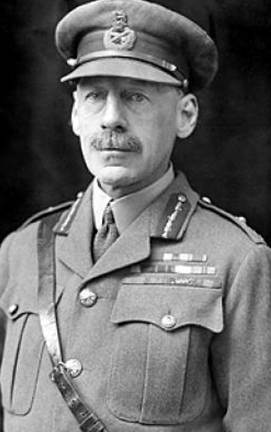
Lieutenant General Sir George Frederick Gorringe KCB KCMG DSO had served during
the Anglo-Boer War and in Palestine and on the Western Front. He commanded the
47th (London) Division in France between September 1916 and March
1919. His nickname was Bloody Orange, from the rhyming slang. He was said to
have had a rude and unpleasant personality, but he obviously liked 239 Company.
Mesopotamia
Alf then saw
service overseas in Iraq and India from 14 October 1917 to 9 January 1920.
Then suddenly we
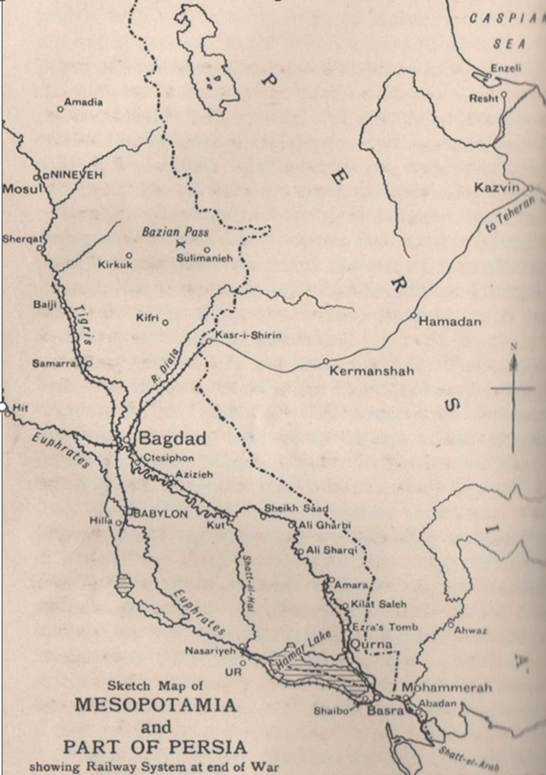
were ordered to Marseilles and got on a troopship for Basra in Mesopotamia.
After about 14 days we were in the Suez Canal and then the Red Sea. We landed
at Basra and marched to Kut-el-Amara as part of a
force under General Maud to relieve Townsend. About the middle of 1918 the
Turks surrendered. We hung around for quite a while. I cut my thumb on a bully
beef tin and it got poisoned. I was in hospital in Kut
when 239th Company left for England.[65]
The Company entrained at Maroevil Station on 1 October and travelled to Marseilles
over the following three days. On arriving on 4 October, they marched to
Fournier Camp and spent the following days in preparation for their voyage. By
14 October, they sailed for Malta on SS Minominee.
They arrived in Malta at St Paul’s Bay on 16 October
but no one was allowed to land. They spent the day at Malta on 17 October and
sailed on 18 October, arriving at Port Said on 22 October. Loading took place
there which made the whole ship very filthy, especially the horse decks. They
sailed from Port Said on 23 October and arrived in Suez on 24 October. The
Company went for a short route march, which did everyone good. They left
Suez on 26 October 1917. They continued at sea until 7 November 1917, when
personnel and a few limbers transferred to SS Ekma,
with animals and most of the transport transferring to SS Torilla.[66] SS Ekma arrived at
Ashar, a port at Basrah on the Shatt Al Arab, on 8 November 1917.
The Company
marched to No 3 Camp at Magil. Al Ma’Qil is the
region of Basrah adjacent to the port. Transport had not arrived
so no cooking utensils were available. The animals and most of the vehicles
arrived at Ashar on 9 November. Almost every limber had been tampered with on
the journey. The next few days were spent checking stores. They spent the next
few weeks at Magil, with some hospital admissions. On 25 November Second
Lieutenant S G Moody proceeded to the advance base at Baghdad. On the same day
4 riding horses and 2 light draught horses were drawn as remounts.
On 26
November 1917, the Company embarked on barges to proceed to Amara, about 100
kilometres north of Basrah, on the Tigris, where they arrived on 27 November
1917, with the following weeks in camp there. The Company was at Amara on
Christmas Day 1917 but owing to rain no games or sports could be held, though
the men had a comfortable midday meal. No extra rations were issued but the Petroliers gave a concert in the evening, which a
good many attended. Boxing Day was spent in the improvement of camp. On 2 January
1918, the General Officer Commanding 18th Division inspected the Company. Owing
to heavy rain during the night the camp was very muddy. The following weeks
were spent in more training, church services, route marches, and lumber drill.
Then on 31
January 1918 the Company embarked on barges for Baghdad upstream on the Tigris river. The accommodation on the barges was good and the animals embarked without any trouble. The
convoy then travelled to Baghdad and the men were quite comfortable. On 2
February, the convoy stopped at Kut for about four hours and on 3 February they
picked up rations at Bghailan. On 4 February they
passed Chesiphon.
The Company
arrived in Baghdad at 1300 hrs on 5 February 1918. Owing to the high banks of
the river it was very difficult to unload the limbers and the baggage and
limber were not clear of the barges until 1930 hrs. No extra transport was
available, and the limbers had to be unloaded in the dark. The company
bivouacked outside the rest camp. On 6 February 1918 the Company moved by road
to 53rd Infantry Brigade’s camp at Kadhimain, an area
of northern Baghdad in a loop of the Tigris.
The
following days were spent working on the camp which was a splendid site with
lots of room and horse lines well away from the men’s lines. On 15 February
the Company Officer Commanding visited Samarra to be briefed at the Divisional
Headquarters on the employment of machine guns. On 16 February the Brigade
Major informed the Officer Commanding that he wished a barrage scheme of
machine guns for anti aircraft work prepared and they
were ordered to relieve 176 Battery on 18 February. Gun pits were dug north of
the camp for the anti aircraft machine gun barrage.
On 19 February the Brigadier visited the camp and inspected arrangements for
the anti aircraft barrage. He was very satisfied.
Then a warning was given to stand to at 5pm as two aeroplanes were said to be
approaching the direction of the camp, though nothing transpired on that
occasion.
A football
and cricket pitch was prepared south west of the camp
on 21 February 1918. On 23 February 1918 Alf was admitted briefly to hospital
in Baghdad with a knee issue[67].
A
demonstration of the barrage was prepared on 1 March 1918
and 1,559 rounds were fired in a registration scheme on 4 March. There was a
rehearsal of the barrage scheme on 7 March and a
forward observation officer was used successfully, with 2,327 rounds fired.
Then orders were received to prepare to move and
stores and surplus were moved to Kadhimain station on
10 March. They moved the following day with good road all the way. They moved
to Mashahidah on 13 March, to Sumaicha
on 14 March, to Beled on 15 March, to Istabulat on 16 March and to Samarra on 18 March. The
company were now at full war establishment. On 20 March, delayed by a day’s
rain, the Brigade moved to a bridge to cross to the left bank, but had to
return as the bridge was broken. They crossed successfully on 21 March and were
then training again.
On 25 March
1918, British forces achieved a decisive victory over the Ottoman army during
the Mesopotamian Campaign in the Action of Khan Baghdadi, west of Baghdad. The
strategic move involved a mechanized flanking manoeuvre, which was highly
unusual at the time, to encircle and capture the entire Ottoman force.
At the same
time, 239 Company were engaged in an action at Quantaret
north of Baghdad. This might have been at Owainat,
further up the Tigris, on the approach to Tikrit, near to Ad Dawr. On 24 March 1918 the Company received orders for an
attack at dawn on 25 March on the Quantaret position.
The Company left for the Brigade Concentration Area at 1600 hrs and formed into
their distribution for attack. Two sections were with the right column
attacking east of the Nahrwan canal and one with the
left column attacking west of the canal, with a section in reserve. The assault
began at 0520 hrs on 25 March with machine gun sections to the right and left
in position for covering fire. By 0700 hrs the Company then formed up and at a pow
wow, the Divisional Commander was impressed that the noise of the limbers
was not heard, yet the limbers had come forward over stony ground to within
1,000 feet of the enemy’s position. On 26 March the Brigade pushed on upstream
in the direction of Daur, with two sections of the company with the advance
guard and two sections with the main body. Before the main body reached the
starting point, advanced troops reported they had been driven back and were
holding on the line. The Brigade advanced to reinforce the advanced troops and
to counter attack the enemy. A section of the machine
gun company was sent to 94th Infantry, two sections were with the advance
guard, and one section was in reserve. The two sections with the advance guard
had only one opportunity to provide covering fire, but then, keeping up close
with the infantry, got into a position to assist the advance from the line.
Another section with 94th Infantry position twice gave covering fire and this
action demonstrated that limbers could be used over rough country and when intelligently
guided could be moved very close to the enemy positions without being seen. Had
the limbers not been used, they could not have opened fire until they reached a
position to be able to assist the advance. At 1330 hrs the company moved to its
bivouac. On 27 March the Company recced and marked out trenches for defence of
the line. Six guns were with 1/5 East Surrey Regiment; four guns with 10th Jats, an infantry regiment with the British Indian army and
part of the Bengal command; four guns were controlling the crossing of the
canal; and two guns were in reserve. The Brigade withdrew from Quantaret after dark on 28 March. They rested the following
day.
The Brigade
then became part of the Division operating around Samarra and another attack
was ordered for dawn on 31 March. The Company left the starting point in the
rain at 2115 hrs. The attack was then cancelled due to heavy rain and the state
of the ground. Between 14 to 31 March the Company had marched a distance of about 110 miles. No men fell out and only four
men were admitted to hospital. No animals also were sick. No difficulty was
anywhere experienced with the limbers.
It rained in
the early days of April when the Company were in camp at Samarra. By 13 April
1918, they were preparing the camp for hot weather. On 16 April the Company
moved to the bridge to cross to the right bank, but at 1630 hrs it was decided
that the current was too strong to allow any more troops or vehicles to cross
the river and the Company returned to camp. On 17 April, they received orders
that they would form part of a 55 Brigade column marching to Istabulat via Sadiyah on about 17 April 1918. The Company
crossed to the right bank on 26 April and were in Istabulat
from 27 April.
On 2 May
there was a Commanding Officer’s conference at Brigade Headquarters
and it was decided to form a column of Lewis guns. Preparations were made for
the despatch of the Company for operations in motor vans. By 8 May the flies
were very troublesome. On 17 May there was a recce of a route to a new pontoon
bridge over the Tigris which had just been completed. On the same day an RAMC
medic arrived, but this man has no surgical kit. By 18 May the Company
was at a new camp which was excellent on high ground overlooking the river,
although watering the animals was found to be a difficulty owing to the
steepness of the banks. On 19 May, they moved again to a new camp on the left
bank. The weather was getting hotter as they worked on the new camp.
24 May was
Empire Day and GOC 55 Brigade sanctioned a holiday after 8am. Subscriptions
were collected for a Red Cross donation from Company which totalled 200 RS. On
28 May they were digging anti aircraft emplacements.
No 2 Section was involved in operations using Ford Vans in May, including at Fathah and the mountain slopes of Jabal Hamron.
The Company
was still at Samarra during June. On 4 June 1918, it was proposed that the
Brigade machine gun companies would convert from draught to pack transport
during the month.
Training,
route marches and barrage drills followed over the following weeks. The
effective strength of the unit at the end of the month was 4 British officers,
98 British other ranks, and 10 followers. However the
War Diary commented that this total gave a wholly erroneous idea of the number
of men available on parade as gunners for training. The true a parade state on
any one day was 7 Non Commissioned Officers available for duty, with 23 British
Other Ranks employed on guards, 11 men as officers’ batmen, grooms or mess
sergeants, 10 specialists including signallers, 2 at the company orderly room,
6 on courses, 3 cooks or tent orderlies, 7 reported sick and 22 involved with
transport, leaving a balance of 9 for parade. It is extremely difficult to
get sufficient men to carry out proper training, for which the summer should
supply the opportunity, All ranks must have leave but
58 men on leave as we have at present hits a small unit very hard.
On 1 July thirty nine British Other Ranks and 1 British Officers were
inoculated for cholera. On 18 July field firing was carried out on the
artillery range. The training scenario depicted that a Turkish force had made
an unsuccessful attack on the Samarra left bank defences and was falling back
on the canal and the British force of one brigade had been sent to pursue the
enemy. Training and field firing continued through August and September.
Negotiation
of an armistice between the Allies and the Ottomans began at the turn of
October, but a memo from the War Office ordered that every effort was to be
made to score as heavily as possible on the Tigris before the whistle
blew.[68]
Training
continued for the Company. There was a fresh case of Bombay fever on 17
September. There was a severe sandstorm on 3 October. On 9 October the Company
were employed in demobilising camp and dumping surplus kit. They moved to Qantarat on 12 October and Tekrit
on 13 October. In the second half of October, they were at Ain Nukailah. On 20 October a Turkish aeroplane flew over camp
but at great height and 2 guns came into action.
On 30 October
1918, the Armistice of Mudros was signed. General Marshall accepted the
surrender of Khalil Pasha and the Ottoman 6th Army on the same day, but Cobbe
did not stand fast as the armistice required and continued to advance on Mosul
in the face of Turkish protests. British troops marched unopposed into the city
on the 14 November 1918.
Meantime, on
1 November the Company was still training at Ain Nukailah.
Communications had become very bad, with a wire taking two or three
days. On 9 November 2 sections adopted tactical positions for defence against
hostile acts while maharattas look for
water. There were showers during the evening. Training and marches
continued during November. There was no mention in the War Diary of the general
armistice on the Western Front on 11 November 1918.
On 24
November the Company moved to Laq Laq
Island near Sift, which must have been an island on the Tigris in the vicinity
of Tikrit, as the Company were later at Shergat (Saqiyah) and later upstream at Baiji. On Christmas day 1918
the men were given special dinner. Sports followed on Boxing Day, a company
medical inspection the next day, and Brigade sports on 28 December. At this
stage, only three officers being with the unit, it became difficult to carry
on, and one section was shortly to go on detachment. Lieutenant T A Pearson was
acting Officer Commanding and Second Lieutenant W L Boyt, Adjutant and
Quartermaster, with Second Lieutenant W D Warner section commander. There was a
short company parade on New Years Day 1919. Training, parades and physical
training continued. By the end of January the Company
were at Baiji.
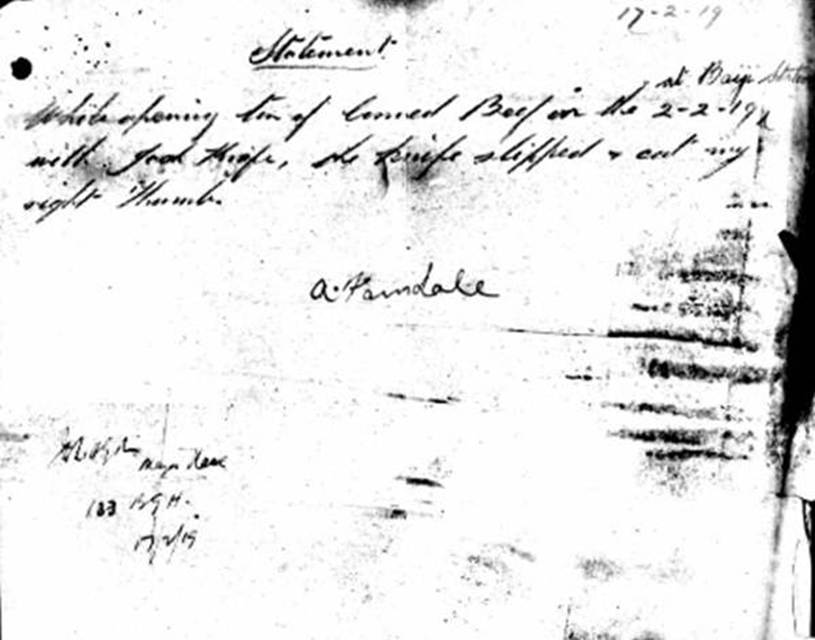
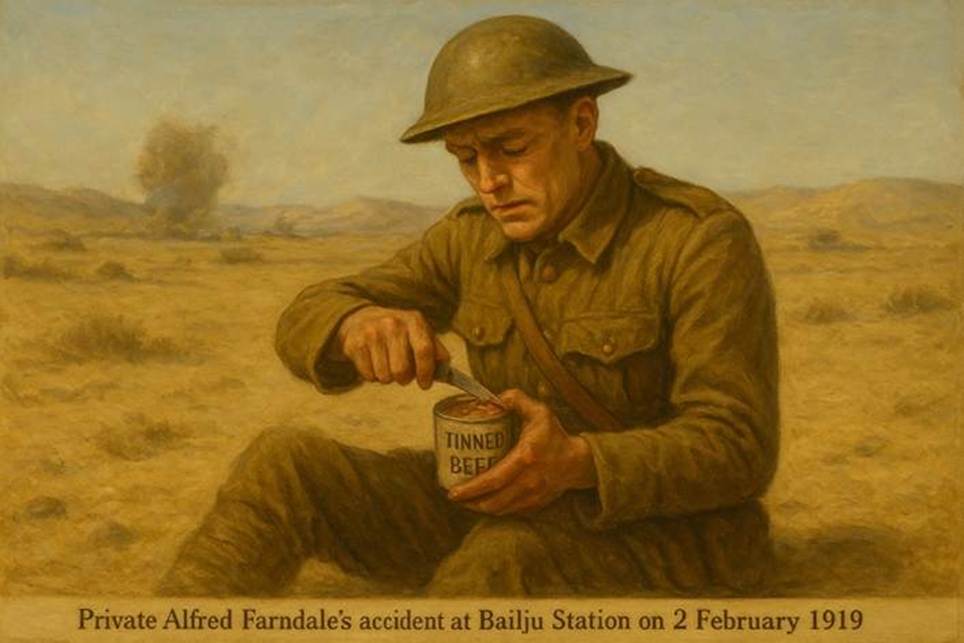
Alfred
Farndale had an accident while opening a tin of canned beef on 2 February
1919 at Baiju Station with Jack Knife, when the knife slipped and cut my
right thumb. A Farndale.[69]
The Company
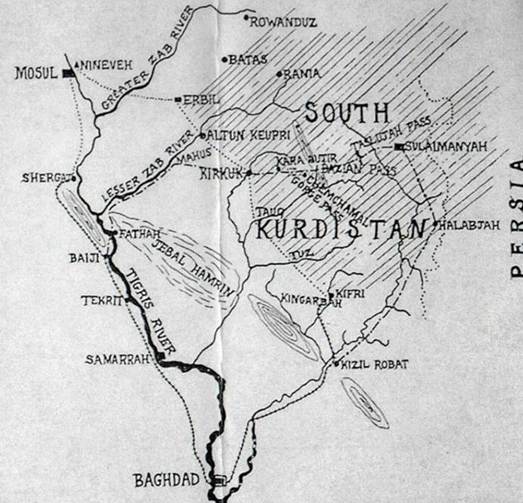
were still at Baiji on 25 May 1919 and were then moved to Fattah, Uthmaniyah, Manus, and Kirkuk. As the Company moved north,
they became involved in operations in South Kurdistan. In May 1919, Sheikh
Mahmud Barzanji initiated a revolt against British rule in South Kurdistan,
proclaiming himself Ruler of all Kurdistan and clashing with British
forces to establish independence. This uprising began in Sulaymaniyah with the
expulsion of British officials and gained widespread tribal support, culminating
in the capture of Sheikh Mahmud by the British in mid-June.
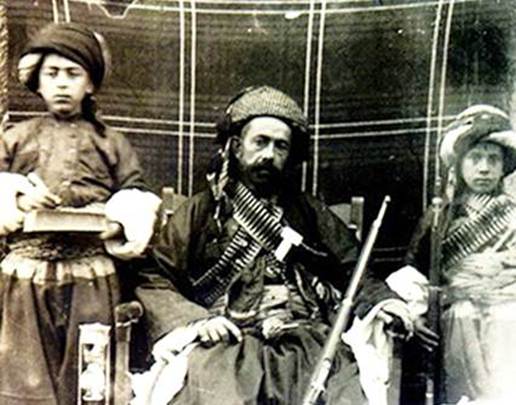
Sheikh
Mahmud Barzanji
Sketch Map of South Kurdistan
239 Company
were billeted in Kirkuk on 30 May 1919, with some sore feet, blisters and
headaches etc. Positions were allotted for six guns for defence of the barracks
on the roof.
Major AFV
Jarrett MC, Royal Garrison Artillery, came to Major Fraser’s assistance with a
relieving column at a critical moment on 31 May 1919. Jarrett’s 25th Mountain Battery accurately
engaged the Kurdish sangars forcing an enemy withdrawal towards Bina. Major Fraser later received a Distinguished
Service Order for marked gallantry and good leadership when in command of a
small force heavily attacked for twenty-four hours on 30th-31st May 1919 at
Qara Anjir. He inspired all ranks to
greater efforts, and maintained a stout defence until
the arrival of reinforcements.
On 31 May
1919 No 10 Section advanced to Kara Anjir (Qara Anjir) and towards Major
Fraser’s Camp with no opposition, but the camp was then surrounded by men and
Lieutenant Price ordered the men to choose targets to disperse them.
Intermittent fire lasted until 1630 hrs when the column was able to move into
the camp. Private Chubb was killed instantaneously, and Ghulam Mohd received a
gunshot wound in the right wrist. Three guns took up defensive positions
guarding approaches to the camp. The estimated enemy strength was 300. The
strength of Jarret’s column was 125 Rifles, 4 machine guns and 2 MB Guns and
the strength of the garrison was 100 British Rifles and 100 native cavalry. Morale was good. They were tired and sore from long
marches, but did not give in. They worked well.
On 31 May
1919 the strength of the Company was 7 British Officers, 86 British Other
Ranks, 1 Indian officer, 49 Indian other ranks and 8 followers. The Company
animals included 8 chargers, 60 gun and equipment mules, 8 section mules, 4
First Line cart mules, 34 pack mules, 3 field kitchen horses and 25 Second Line
cart mules. Vehicles included the field kitchen, 4 section
AT Carts, two 1st Line carts and eleven 2nd Line Carts. The health of the
troops was fairly good, feet trouble mostly.
The British
now aimed to show the Kurds who had not yet joined the insurrection, especially
the powerful Jaff tribe, that Britain would win any confrontation and would
heavily punish rebel activity. General
MacMunn ordered Major General T Fraser CB, CSI, CM, formerly Royal Engineers,
the commander of the British 18th Division, to take a strong punitive force of
two brigades to relieve Chemchamal, defeat Sheikh
Mahmud’s dissident Kurds, and to free British prisoners held in Sulimanieh.
On 1 June
1919, 239 Machine Gun Company marched again to Kara Anjir in South Kurdistan
with Brigadier Morris DSO’s Brigade. There was no sign of the enemy on the
march or on arrival. The Company put out
four guns in defence of the camp. There was no sniping day or night, but two
Kurds were brought into camp. On 2 June at 1700 hrs a Bhopal picquet reported
the sight of between 40 and 50 Kurds southwest of the camp. The GOC ordered
special defensive measures with strong outlying and inlying picquets. Stand to
was at 0330 hrs each day. On 3 June three guns were placed out in the hills
surrounding the camp, two guns were positioned on the extreme right flank, two
on the left flank and one on high ground, a total of eight guns. Four of these
were able to give covering fire to a retiring column. In this incident the
enemy lost 12 killed and many wounded. There were limited friendly casualties,
but no machine gun casualties. There was no attack that evening.
The Company
remained at Kara Anjir in mid June 1919. They were
visited by General Sanders and General Fraser and stand to continued
at 0330 hrs every day. Regular church services were held. On 15 June the
Company moved to Fraser’s Force Camp comprising 85 Burman Rifles, 116 Maharattas, 336 Brigade Royal Field Artillery, 25 Indian
Medium Battery, 239 Machine Gun Company, 39 CFA and 32nd Lancers (known as “the
Striking Force”). On 16 June they were at Chemchamal
where they were sniped at night about 2100 hrs in Cham Camp. After ten minutes
all was quiet until 0200 hrs on 17 June when a little more sniping went on.
They marched at 0530 hrs and whilst there were no targets for machine guns, the
enemy dispersed after 2 hours. By 17 June the Striking Force was confronting
Sheikh Ahmed’s rebels who held the strategic Bayzan
Pass.
On 18 June
1919, the Striking Force under General Morris CB DSO marched at 0215 hrs into
position before Bazyan Pass. They deployed at 0315 hrs and the Royal Field Artillery opened fire at 0400 hrs
bombarding the near approaches to the pass and the heights to the left. The
eight machine guns opened fire at 0400 hrs with the artillery, sweeping the gap
and the slopes. At 0407 hrs the artillery ceased firing, while the machine guns
continued firing during the infantry advance, leading troops through the pass.
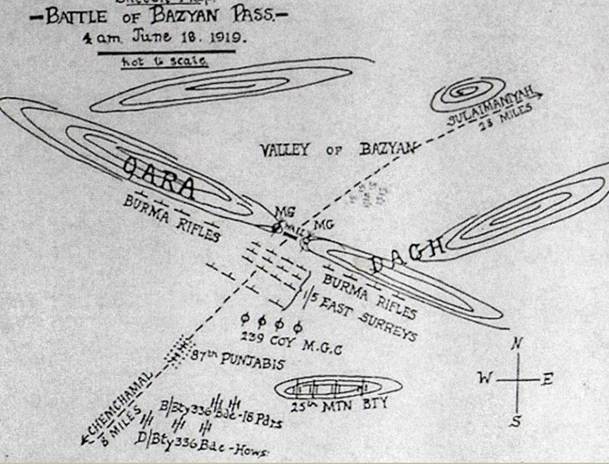
British
infantry scaled the mountains on either side of the pass, and with the first
light of dawn, they opened fire on the Kurdish position. The East Surreys and
116th Mahrattas, with 1st Battalion 87th Punjabis in support, then put in an
assault supported by artillery and machine gun fire that cleared the pass. Around 50 Kurds were killed, 120 were
captured and a large number were wounded.
At 0440 hrs
the machine guns were ordered to come out of action and to advance through the
pass. On the southern slope of the pass they took a
Deutsch Waffen 1915 machine gun and tripod and some Turkish belts of
ammunition. The column were sniped from a ridge on the
left of the pass and at once 2 guns came into action to target about 20 enemy
at a range of 2,000 feet. They could not observe the result clearly but the
enemy dispersed.
The Striking
Force halted at about 0830 hrs and then continued a march at 1030 hrs, the
cavalry (32 Lancers) having gone forward to clear the road. They arrived at Tainal Su at 1330 hrs and bivouacked for the night. 4,500
rounds were expended during the day.
The Battle
of Bazyan Pass was a decisive engagement on 18 June
1919, that marked the end of the first Kurdish rebellion led by Sheikh Mahmud
Barzanji against British rule in northern Iraq. The defeat crushed the nascent
Kurdish state and enabled the British to reassert control over the region. The
survivors fled towards Sulemanieh or the Persian
border.
On the
following day one section under Lieutenant Warner marched at 0330 hrs for Sulaimaniyah and the remaining Company marched with the
main force at 0415 hrs for Kalisan Bridge, three and
a half miles west of Sulaimaniyah. It was a trying
march owing checks and halts owing to bad roads. It was about 20 miles to Kalisan and they didn’t reach the
bridge until 1600 hrs. Tashluja Pass was a big strain
on draught mules. They had tea with food for the men at about 1000 hrs during a
long halt. Not one man fell out. There was no trouble at night. A rum
ration was issued to the troops.
On 20 June
1919, Sheikh Mahmud was discovered amongst the wounded Kurds in the pass, shot
through the liver. He was reported to have said he came under machine gun fire
when on the slopes of Bazyan. He was medically
treated and imprisoned to await trial.
On 21 June
Fraser’s force marched through the town of Sulaimaniyah
as a demonstration. The GOC took the salute. The Company then remained at Kalisan for the rest of June. On 29 June 1919 there was
news that a peace treaty had been signed. There was another head count in the
War Diary at 30 June 1919 at Kalisan
Bridge and the health of the troops was reported as fairly
good.
The Company
remained at Kalisan Bridge during July 1919.
Operation Scale was still in force, which referred to control of rations though
jam and fresh vegetables were issued in addition to standard rations on 1 July
1919. On 19 July they were told that leave to UK and
India would open on 1 August. On 24 July the Company marched to Tashlutah using spare carts before proceeding back to
Bazian and Chamchamal and Kara Anjir and then to
Kirkuk where they occupied billets vacated by 207 Machine Gun Company. They were
in Kirkuk for the rest of July and through August. On 5 August 1919 at 0001 hrs
Fraser’s Force ceased to exist and became the South Kurdistan Force or SK Force
and Morris’ Brigade became 55 Infantry Brigade. Since arrival at Kirkuk health
of troops has been extremely bad. Kirkuk is a malarial district. Health of
Indian troops has been fairly good. It was very hot
during day, but nights usually cool.
The Company
remained in Kirkuk during September. The health of troops improved. Rations
were good and the weather was cooler, but still hot during the day with nights fairly cool. Very few men were available for parade
owing to a reduced establishment and camp duties. There was training in camp,
one route march per week and open drill. There was no opportunity for firing
practice.
On 7
September 1919, Alf was promoted to Acting Corporal, and later to Acting
Sergeant.
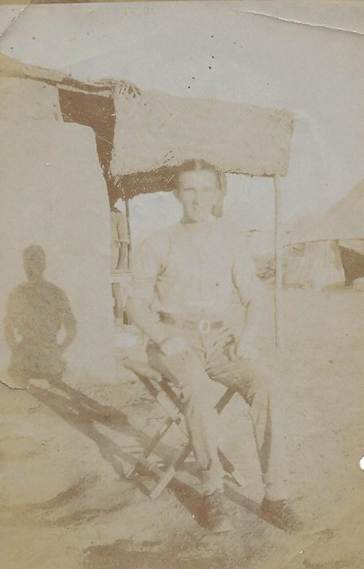
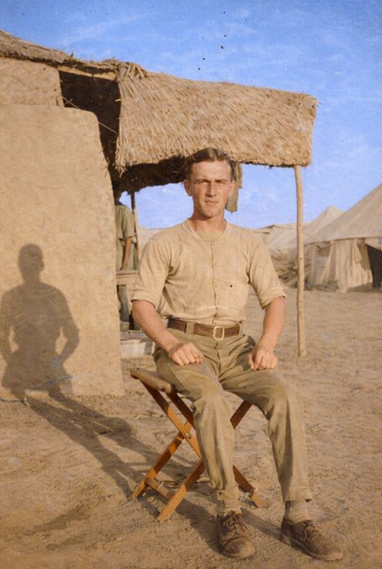
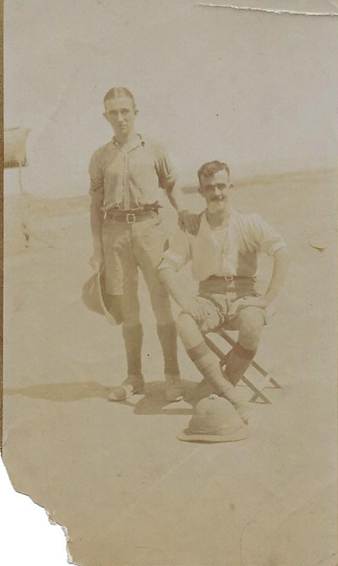
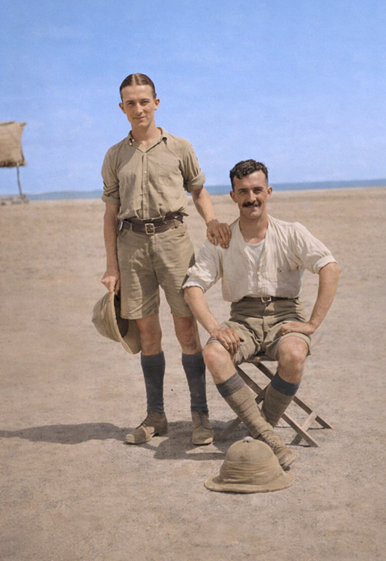
Alfred
eventually got to Mosul where I thought my unit was and met my platoon commander
Lieutenant Pearson. He asked me where I had been and put me in charge of the officers mess. We had some Punjabi officers at the time and they used to knock me up to try to get whisky![70]
He was
posted to 18th Indian Divisional Battalion, who had served in the Mesopotamia
Campaign, on 10 January 1920 and to 17th Indian Divisional Battalion also on 10
January 1920. He may have served in the 17th Divisional Machine Gun Battalion
of 18 Indian Division Troops in India, part of the divisional troops who were
still in Mosul in January 1920[71].
Later in
1919 we were ordered to Bombay. I remember I had to take my stripes down on
the troopship. He reverted to his substantive rank of Private on 25
November 1919[72]. We were sent up to the Afghan
frontier for a while and we had quite a lot of trouble
in the local bazaars.[73]
On 10
January 1920, after three eventful years’ service, Alf embarked for UK.
Eventually we got a troopship to England. We landed at Southampton. I remember
we were told that we could keep our greatcoats or take £1 when we were demobbed
on Salisbury Plain. I took the £1! I remember arriving at Middlesbrough station
very late at night and sleeping on the platform. I got the first train next day
to Guisborough and actually arrived at Tidkinhow
before they were up! This would be in 1920. I know that I was clear of the army
by the start of 1920. I wish I had stayed in. I really did like the army life.
But I had to come out.[74]
A
Military Medal for bravery on the Somme
Herbert Farndale
was born on 30 March 1892, into the Craggs
Hall Farm family[75]. On 11 August 1915, Herbert Farndale
joined the army at Middlesbrough, with medical grade A1. He was 23, a farmer, 5
feet and 6.5 inches tall and weight 140 lbs, of good
physical development.[76]
On 20 November 1915, 4857
Private Herbert Farndale joined 2/4th Battalion, Alexandra, Princess of Wales’s
Own (Yorkshire Regiment) and undertook training. The unit was part of 189
Infantry Brigade, 63 (Northumbrian) Division) based at Whitby and Long Benton
Camp. Whitby seems to have been a recruiting and holding depot and Long Benton
the training camp. The Battalion trained during September and October before
moving to Newcastle on 20 October 1915. He seemed to have been within the
Humber Garrison and his unit was a reserve Battalion.
He was
transferred to 10th Battalion the Yorkshire Regiment in 1916. There was a
suggestion that he sailed from Southampton to Le Havre on 29 and 30 June 1916
and joined the Battalion on 12 July 1916. However he
probably joined the Battalion before the first day of the Somme on 1 July 1916.
He was
awarded the Military Medal for gallantry and the British War Medal and the
Victory Medal. His Majesty the King has been graciously pleased to award the
Military Medal for bravery in the field to the under mentioned non commissioned officers and men:...
36143 Private H Farndale, Yorks Regt.[77]
His Military
Medal for bravery arose for service from 11 August 1915 to 30 June 1916 and
particularly on 1 July 1916, with the Expeditionary Force in France. He was
awarded the Military Medal for Bravery in the field.
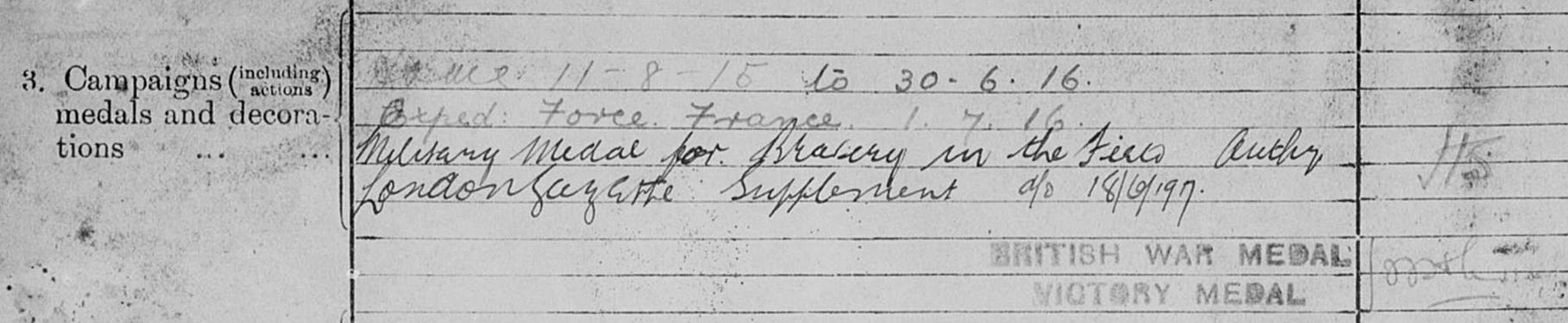
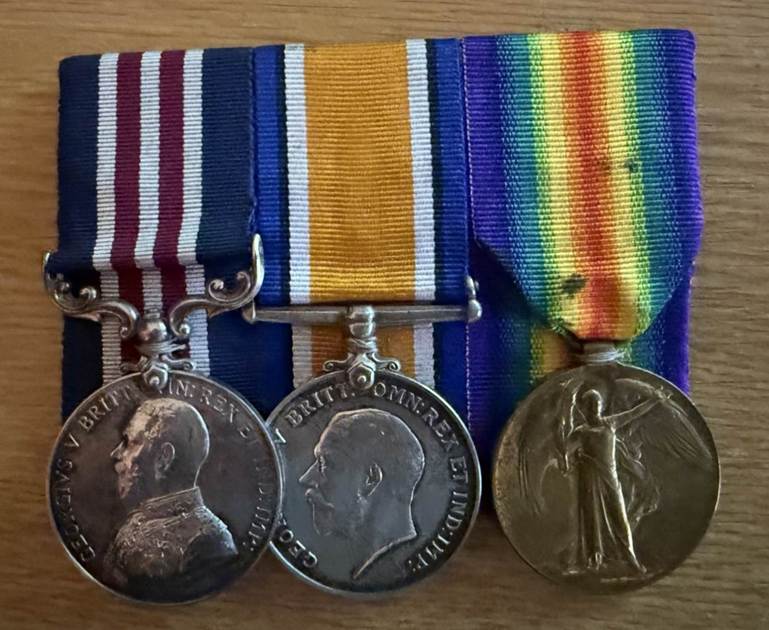
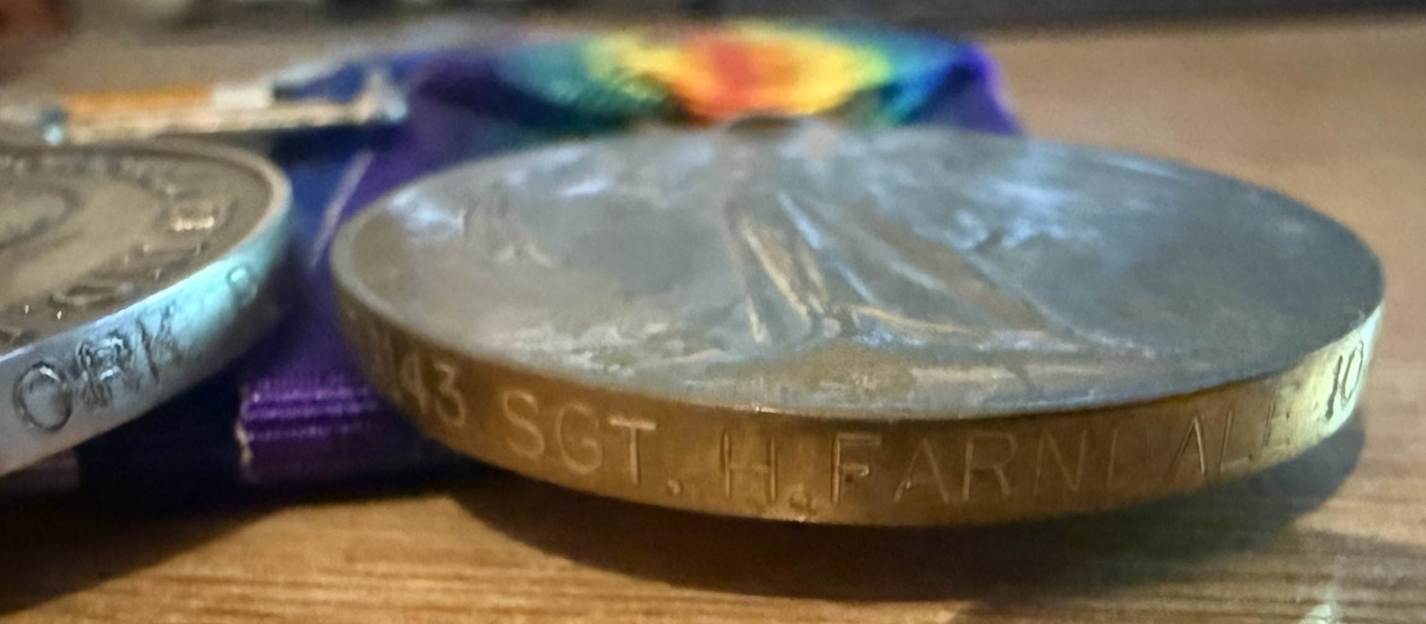
On 1 July
1916, the 10th Battalion East Yorkshire Regiment was part of the 92nd Infantry
Brigade in support of the 31st Division’s assault on the first day of the
Battle of the Somme. The Battalion saw action in and around the Hooge and Bluff
sectors and at Fricourt on 1 July, suffering enormous
casualties on the opening day of the Somme offensive in 1916. Eleven officers
and 299 other ranks were killed in total.
The village
of Fricourt lay in a bend in the front line, where it
turned eastwards for about 3 kilometres before swinging south again to the
Somme River. XV Corps was to avoid a frontal assault and attack either side of
the village, to isolate the defenders. The 20th Brigade of the 7th Division was
to capture the west end of Mametz and swing left, creating a defensive flank
along Willow Stream, facing Fricourt from the south,
as the 22nd Brigade waited in the British front line, ready to exploit a German
retirement from the village. The 21st Division advance was to pass north of Fricourt, to reach the north bank of Willow Stream beyond Fricourt and Fricourt Wood. To
protect infantry from enfilade fire from the village, the triple Tambour mines
were blown beneath the Tambour salient on the western fringe of the village, to
raise a lip of earth, to obscure the view from the village. The 21st Division
made some progress and penetrated to the rear of Fricourt
and the 50th Brigade of the 17th (Northern) Division, held the front line
opposite the village.
The 10th West Yorkshire Regiment, was required to advance close by Fricourt
and suffered 733 casualties, the worst battalion losses of the day. A company
from the 7th Green Howards made an unplanned attack directly against the
village and was annihilated. Reserve Infantry Regiment 111, opposite the 21st
Division, were severely affected by the bombardment and many dug-outs
were blocked by shell explosions. One company was reduced to 80 men before the
British attack and a reinforcement party failed to get through the British
artillery-fire, taking post in Round Wood, where it was able to repulse the
64th Brigade. The rest of the regimental reserves were used to block the route
to Contalmaison. The loss of Mametz and the advance
of the 21st Division made Fricourt untenable and the
garrison was withdrawn during the night. The 17th Division occupied the village
virtually unopposed early on 2 July and took several prisoners. The 21st
Division suffered 4,256 casualties and the 50th Brigade of the 17th Division
1,155.[78]
Although we
do not have Herbert’s citation[79], he probably earned his recognition
for bravery during the Somme offensive, probably on the first day.
Herbert was
promoted to Corporal on 20 September 1917.
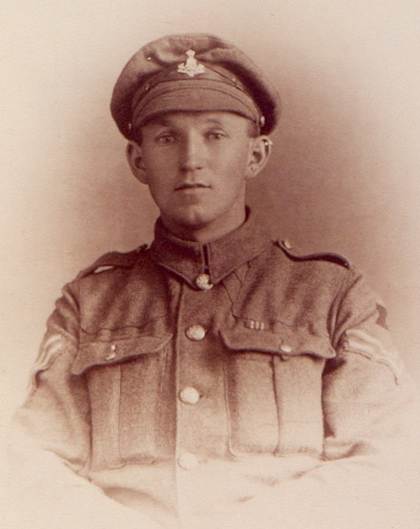
Herbert
Farndale wearing
the ribbon of his military medal
Herbert was promoted
to Sergeant on 11 January 1918. He was then commissioned on 5 March 1919[80]. His officer service number was
238221.
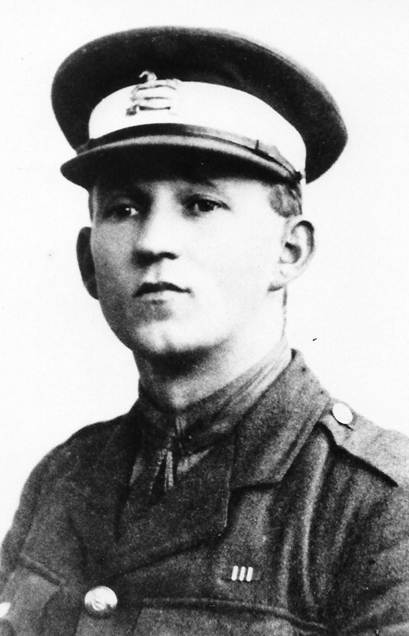
Herbert
at officer training unit in 1918
His Craggs
Hall farmhouse received a direct hit by a German bomb on 3 September 1940.
Herbert was away but two other people were killed. The house was later rebuilt.
The Green
Howard
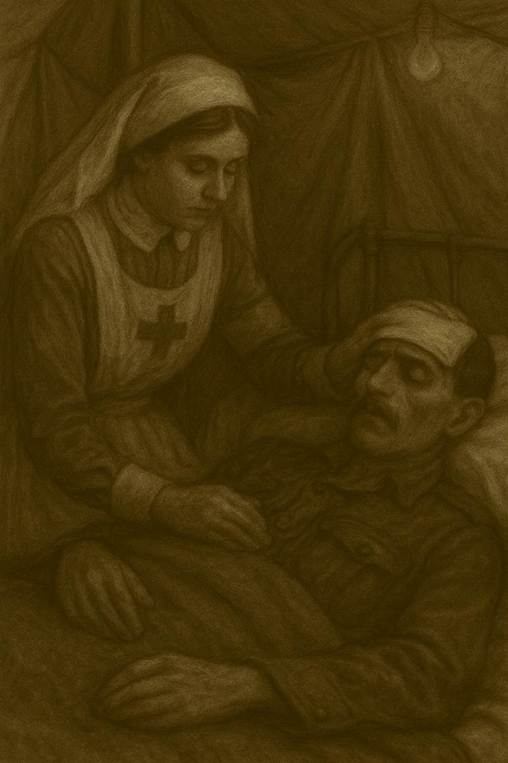
John
Richard (“Richard”) Farndale was born in Coatham where he was baptised on
30 May 1897[81]. He was part of the Coatham family
we met in Act 13
Scene 7. Richard joined the colours in May 1915, at the age of
eighteen having been released as unskilled labour in response for Lord
Kitchener’s request for release for munitions output[82]. He enlisted into the 1/4th
Battalion, the Princess of Wales’ Own Yorkshire
Regiment, also known as the Green Howards[83]. The Battalion served with the 150th
Infantry brigade.
On 11
January 1917 the Battalion moved to the front line at Hexham Road. It was on
the front line from 30 January to 11 February 1916 at Genercourt.
The battalion moved to Proyart on 19 February 1917.
Richard died
at 21st Casualty Clearing Station of broncho-pneumonia on 26 February 1917. He
was presumably badly wounded at Hexham Road, Genercourt
or Proyart and evacuated to the Casualty Clearing
Station at La Neuville, where he later died of pneumonia. Richard is buried at
La Neuville Communal Cemetery, Corbie, Somme and commemorated on the war
memorial at Coatham.[84] His parents received a war pension.
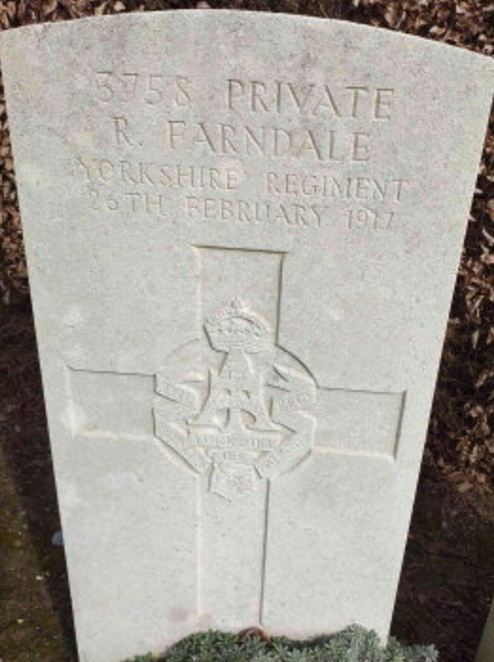
Bravery
at Arras
G/445 Lance
Corporal George James Farndale (later Sergeant) served with the Second
Battalion, The Royal Sussex Regiment[85] and went to France on 31 May 1915.
The Battalion took part in the Second Battle of Arras in August 1918. George
was awarded the Military Medal for bravery on 23 October 1918[86].
Gas
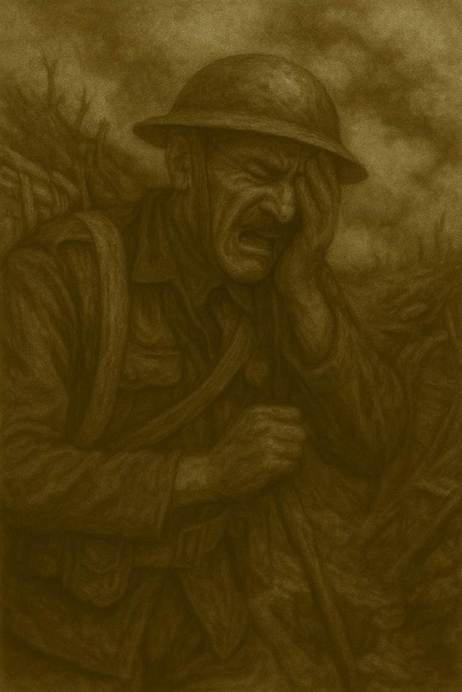
William Farndale
was born in Great Ayton on 20
January 1890, the son of a master joiner[87]. We met him in Act 22 Scene 2. A
joiner and carpenter himself, William joined the Royal Engineers, enlisting on
17 November 1915 and served in England from 17 November 1915 to 8 March 1916; with the British Expeditionary Force in France from 9
March 1916 to 28 July 1917, and then in England from 29 July 1917 to 19
September 1918.
William was
promoted to Corporal in March 1917. His Medical report shows that he was gassed
with a disability originating on 12 July 1917, but he appears to have been released
for coal mining. However a Memorandum from the
Eastern Command Discharge Centre to Chatham on 1 June 1918 said This NCO
having been placed in Grade II (which is equivalent to Military Category Bi) by
the Civilian Medical Board at this Centre, he is not now eligible for transfer
to the Army Reserve as a Coal Miner. AFW 3980 has accordingly been returned to
the War Office. Another Medical report confirms he was gassed in 1917. A
continuation shows he suffered 20% disability. Consequently, he received a
pension for his gas disability. His symptoms were described in another form. He
was less than 20%’ disabled by the gas attack. His pension was renewed.
This was also confirmed in an Award Sheet. Another document shows a weekly
pension of 6 shillings from 20 September 1918 to be reviewed in 52 weeks.[88]
Henry Farndale
was born on 4 January 1884 in Leeds[89], part of the Wakefield family. An accountant,
Henry initially joined the Army Service Corps, where he rose to Lance Corporal
by March 1915. He then served with the Royal Horse and Field Artillery. He
suffered severe gas poisoning in about November 1917 and admitted to 10 General
Hospital at Rouen on 14 November 1917. He seems to have been evacuated after a
gas attack in September 1918. He was on the casualty list as
a result of being wounded by a gas ‘B’ shell sev,
which may have meant severe. He was admitted to Rouen on 16 September and
later to the General Hospital at Leicester on 22 September 1918.
As Acting
Regimental Quarter Master Sergeant Henry sought his discharge by 21 July 1920
(Western Command, Chester). This had also been confirmed in a letter from the
Depot at Bowerham Barracks, Lancaster on 19 May 1920.
This followed an exchange of correspondence with the War Office. On 7 May 1920,
the War Office proposed the permanent transfer of Acting RQMS H Farndale RFA to
the Corps of Military Accountants, as Accountant Staff Sergeant. He would have
been required to complete seven years with the Colours less his mobilised
service since 4 August 1914. Another letter on 7 May 1920 also seems to confirm
this extension, also commenting that he should not be rejected on medical
grounds unless this would prevent him from sedentary duties. The Form for completion
for extension to the Corps of Military Accountants dated 7 May 1920 was sent to
Henry. However Henry’s reply on 11 May 1920 did not
accept this extension. His discharge on 15 August 1920 granted 28 days furlough
and graded him in medical category B11.[90]
The
Flying Ace
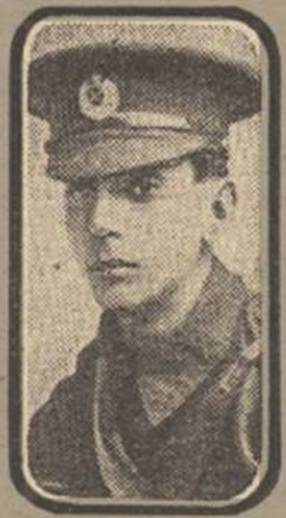
Graham
Price
The younger brother
of Florence Farndale, and the Presbyterian leader, Rev
William Edward Farndale’s brother in law, Lieutenant
Graham Price, was a World War One pilot of the Royal Army Flying Corps,
killed in action, in a duel with a German aeroplane at 8,000 feet.
He had
written a letter to his parents shortly before he died. If anything happens
to me do not grieve, but feel thankful that you had a son to give to the
country. In another letter, seeming to foresee his fate, he had written I
would not have been without my experiences for anything in the world, Au Revoir.
His
commanding officer wrote This letter is in confirmation of the telegram of
yesterday’s date notifying you of your son’s death. It happened in a flight in
which he was observing for one of our batteries over enemy lines. His machine
was attacked by a German aeroplane and after fighting for fifteen minutes at a
height of 8,000 feet, your son received a direct hit in the heart and was
killed immediately. It was a wonderfully plucky fight against heavy odds, and
although the result was fatal for him, I know that this was the end that he
would have chosen for himself, to die fighting, hot headed, in a great fight in
the greatest of all causes. He was a very fearless and gallant officer, so dead
keen on his work and so thoroughly efficient. I feel that his loss is
irreplaceable.
The Chaplain
had written Your son put up a most glorious fight, and
has sacrificed himself for his country and friends. Greater love hath no man
than this, that he lay down his life for his friends.[91]
The
Germans are on the run
William Farndale
was another of the Great Ayton clan. He served with the Yorkshire Regiment
(Green Howards), having enlisted on 12 October 1914, soon after the outbreak of
the war. In October 1915, in a letter to friends at Great Broughton, he
jocularly remarks that, now he has gone, he has got the Germans on the run.[92]
Private
Farndale enlisted soon after the outbreak of war, and
has served both in France and Italy.[93]
Soldiers’
Tales
Private Harry
Farndale was from Stockport, but had been a
cleaner with the United States Cotton Company, Foundry Street, Central Falls,
Rhode Island, USA shortly before the first world war. He served with the 7th
Battalion, The East Lancashire Regiment. Harry enlisted on 15 February 1915 at
Liverpool. He sailed from Plymouth to France on 25 and 26 May 1915. He served
in France and Belgium from May 1915 to July 1916 and from May 1917 to April
1919. He took a bullet wound to his left ankle on 1 July 1916 and was taken to
Brook War Hospital and Garden Hurst Hospital. His arm was out of place caused
by a broken arm, which didn’t trouble him until it twisted out of place
in 1917 by a fall at No 2 Rest Camp while playing football.[94]
Private Alfred
Farndale worked on a splitting machine in Leeds before the War[95]. He served with the 9th Queen's
Royal Lancers who landed in France as part of the 2nd Cavalry Brigade in the
1st Cavalry Division in August 1914. The Regiment participated in the final lance
on lance action involving British cavalry of the First World War. On 7
September 1914 at Montcel à Frétoy[96] Lieutenant Colonel David Campbell
led a charge of two troops of B Squadron and overthrew a squadron of the
Prussian Dragoons of the Guard.
Gallipoli
William
Claude Farndale was born in Long Wittenham near
Sutton Courtenay on 29 July 1897[97] and was part of the Norwich family
we met in Act 20 Scene 3. He was attested
into the Army on 16 September 1913, aged 17. He served with the 1/2 East
Anglian Area Field Ambulance Company, Royal Army Medical Corps who served in
Gallipoli. After the initial stalemate at Gallipoli, in August 1915 additional
regiments arrived from Britain, mainly raw recruits from Kitchener’s New
Armies. William’s Medal Records show he served in the Balkans from 16 August
1915, which indicates that he served in the Gallipoli campaign, as part of the
August reinforcement.[98] After the War he worked in a saw mill[99] and later as a tinsmith[100]
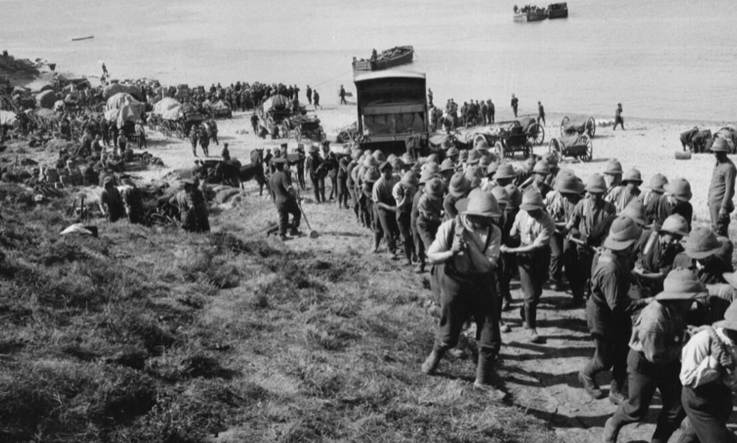
88th
Field Ambulance manhauling an ambulance wagon off 'W'
Beach, Cape Helles, Gallipoli, 27 April 1915
|
The full story of
the many soldiers from the family who took up arms in the First World War |
|
The
context of the First World War to the Farndale Story |
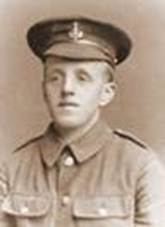

Scene 5 - The Inter War Years
Charles Farndale
was born at Huttons Ambo and became
a groom[101]. He enlisted into the Royal Tanks
Corps on 9 May 1924. He attested at Winchester. He served with the 13/18th
Royal Hussars (Queen Mary’s Own) and 15th/19th The King’s Royal Hussars
in 1924 and 1925.[102]
The 13th/18th
Royal Hussars (Queen Mary's Own) was a cavalry regiment formed by the
amalgamation of the 13th Hussars and the 18th Royal Hussars in 1922. It spent
three years at Aldershot. Lord Baden Powell was Colonel of the Regiment. The
Regimental Riding School ran a popular musical ride and performed a Cossack
display, and Sergeant Mennell won the All Arms at the Royal Tournament
at Olympia in 1924. The Regiment moved to Edinburgh in October 1925, to Redford
Barracks, which may have been when Charles transferred to the 15th/19th
Hussars. The 15th/19th The King’s Royal Hussars had amalgamated in 1922.
Scene 6 - The Second World War
Only twenty one years after the end of the First World War, the
nation called upon its population to take arms again, this time against the
aggressive Nazi war machine. Many of those who had witnessed the horrors of the
first war at first hand, became witnesses to a second period of total war. A
few took part in both wars, but generally it was the sons of the Great War
veterans who were called upon to serve their country this time.
Abyssinian
Campaign
James Farndale
was born in Stockton in late 1916[103]. We met his family in Act 19 Scene 3. James enlisted
into Second Battalion the West Yorkshire Regiment (Prince of Wales Own)
Regiment[104].
In March
1941, he deployed to East Africa in the operation to retake British Somaliland
from the Italians. Keren was the last Italian stronghold in Eritrea and the
scene of the most decisive battle of the war in East Africa in early 1941.
Guarding the entrance from the western plains to the Eritrean plateau, the only
road passing through a deep gorge with precipitous and well
fortified mountains on either side, Keren formed a perfect defensive
position. On these heights the Italians concentrated 23,000 riflemen, together
with a large number of well sited guns and mortars.
The Battle of Keren[105] took place from 3 February to 27
March 1941.
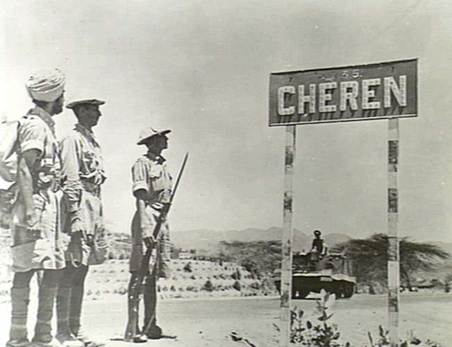
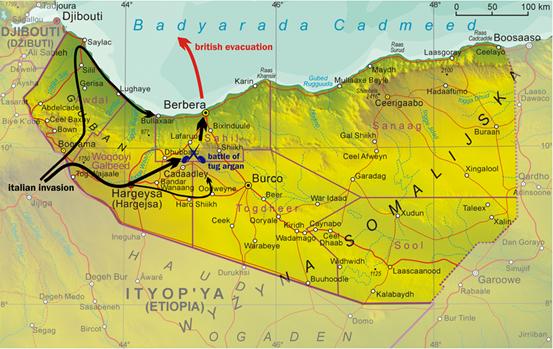
At 07.00
hours on 15 March 1941, the British and Commonwealth troops of 4th Indian Infantry
Division attacked the Italian defenders from Cameron Ridge. The 2nd Highland
Light Infantry led the attack on the lower features, known as Pimple and
Pinnacle. They were pinned down, suffering casualties, and without
supply until darkness provided the opportunity to withdraw. By moonlight that
evening, there was a two battalion attack on Pimple
and Pinnacle, with a third battalion ready to pass through and attack a
fort which had become an Italian stronghold. The capture of Pinnacle
that night by the 3/5th Mahratta Light Infantry led by Lieutenant-Colonel Denys
Reid, with the 3/12th Frontier Force Regiment less two companies under command
to take Pimple, was called one of the outstanding small actions of
World War II, decisive in its results and formidable in its achievement.
In the early
hours of 16 March 1941, the Italians counter-attacked Pinnacle and Pimple
for several hours. The defences at the fort were depleted and during the counter-attack, the 2nd West Yorkshire Regiment made their
way over a seemingly impossible knife-edge to surprise the defenders at their
fort, which was captured after a determined defence by 06.30 hours, with 40
prisoners taken.
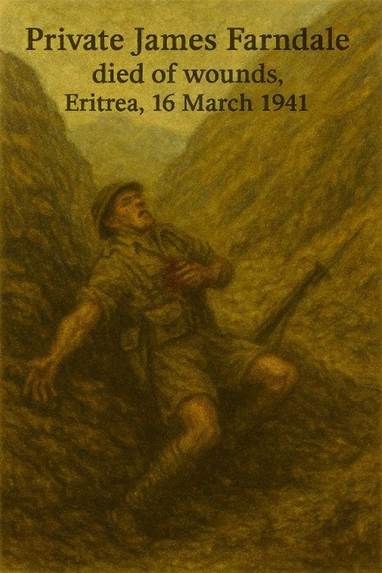
James died
of wounds on 16 March 1941 in Eritrea, aged 24[106]. That is all we know, but it
presumably occurred during this assault. He is buried at Keren War Cemetery[107] in Eritrea.
Lancaster
Airman
Bernard Farndale married Muriel Glenys Picton Swales in 1933 in Merthyr Tydfil[108] and their son, Brian Picton Farndale, was born in 1934.
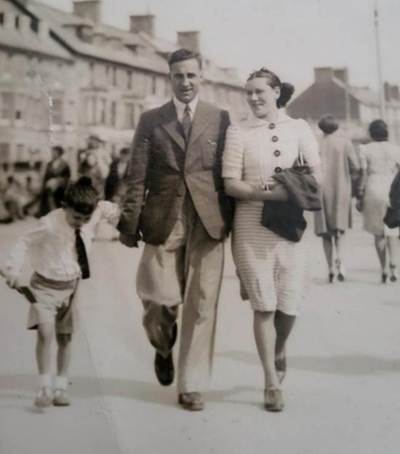
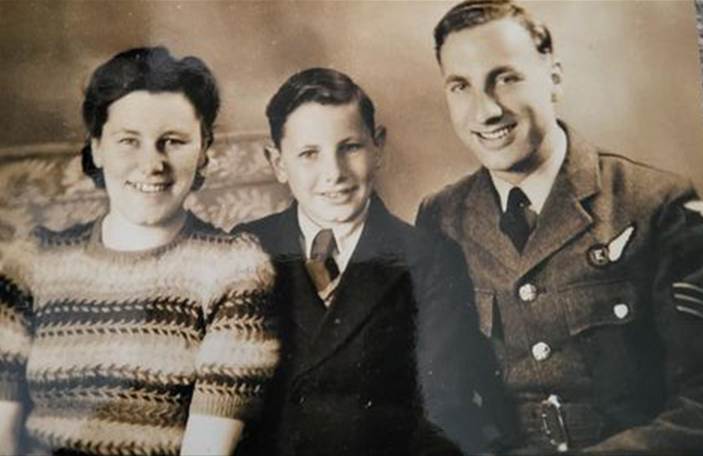
Young
Brian, with his parents, Bernard and Glenys[109]
By 1944,
Bernard was a sergeant with No. 115 Squadron RAF, operating from RAF Witchford
near Ely. The squadron served as a bomber squadron and took part in scores of
raids and also played an active part in gardening
or minelaying. In April 1940, flying Wellingtons, on temporary loan to RAF
Coastal Command, the Squadron gained the distinction of making the RAF's first
bombing raid of the war on a mainland target when it was sent on a mission to
the enemy held Norwegian airfield of Stavanger at Sola. Sixteen months later,
in August 1941, it undertook the initial Service trials of Gee, the first of
the radar navigational and bombing aid. As a result of its subsequent report on
these trials Gee was put into large-scale production for RAF Bomber Command.
The memoirs
of Sydney Percival Smith[110], a Royal Canadian Air Force
Wellington pilot, contain detailed personal descriptions of 115 Squadron
missions in late 1942 from its base in RAF East Wretham.
These were directed at targets in Germany including Bremen, Stuttgart,
Frankfurt and Munich and Turin in Italy, as well as mine laying in the French
ports of Le Havre, Brest, St. Nazaire, and Lorient and the Bay of Biscay.
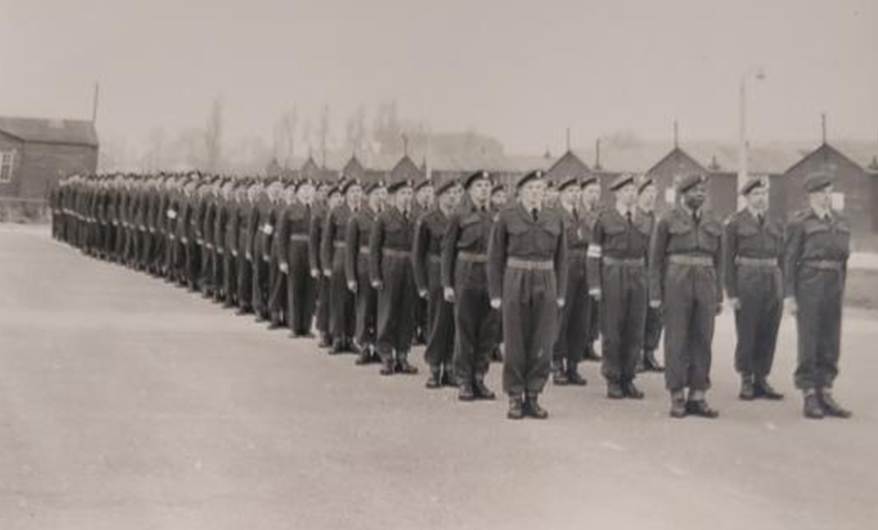
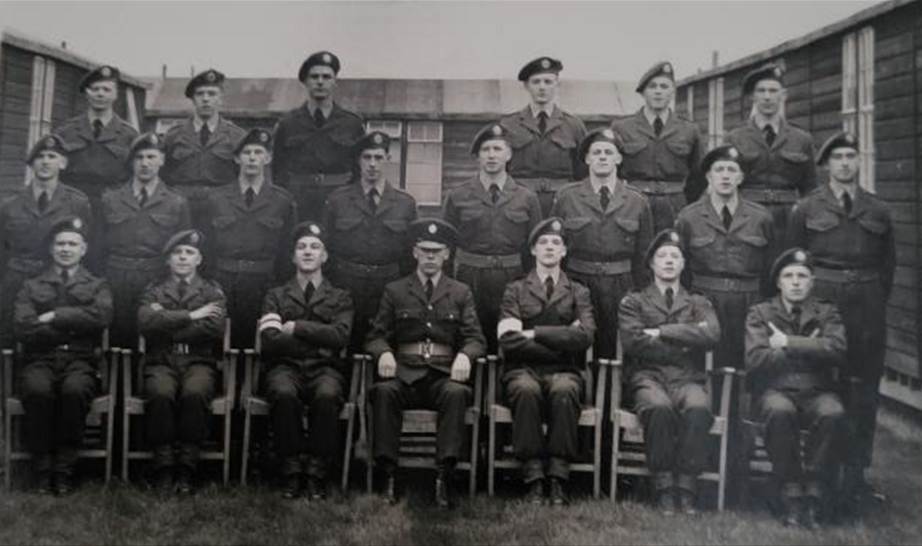
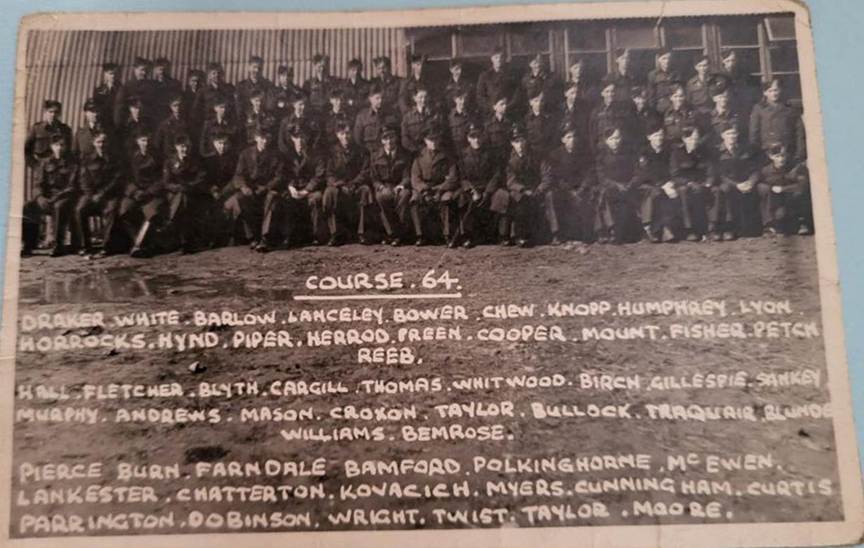
Hercules
engined Lancaster IIs replaced the Wellingtons in March 1943
and these were replaced by Merlin engined Lancaster Is and IIIs[111] in March 1944. Around this time the
squadron relocated from RAF Little Snoring to RAF Witchford near Ely and 21
kilometres north of Cambridge[112]. Bernard was a flight engineer.
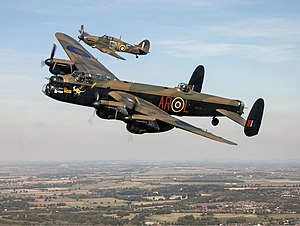
On the
evening of 29 August 1944 nearly six hundred RAF bombers flew over Denmark on
bombing raids to Königsberg and Stettin[113].
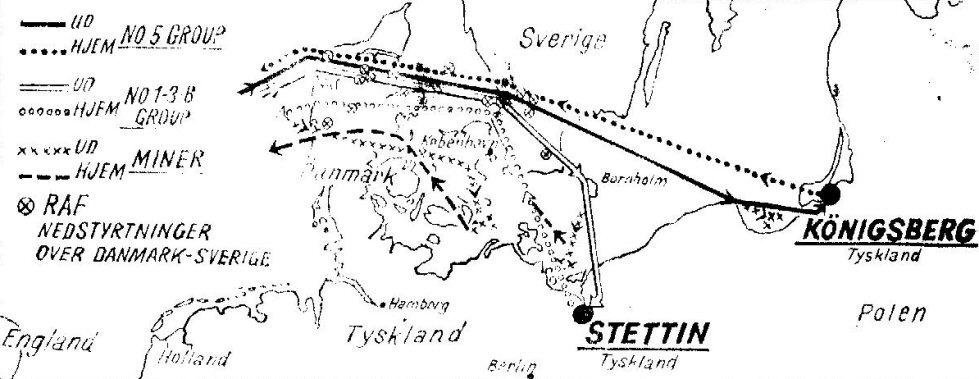
Bernard was
the flight engineer on LAN ME 718. The aircraft bound for Stettin were attacked
by German night fighters[114], when they were passing the northern
part of Jutland and the Kattegat.
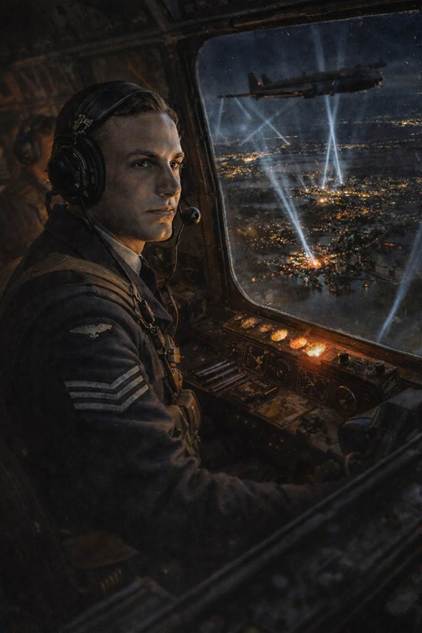
AI
generated images showing Bernard as part of the Lancaster crew
Bernard’s
aircraft, the Avro Lancaster I LAN ME 718, was hit over Denmark when it was
attacked by a German night fighter and caught fire[115]. At about 1 am, it crashed near Ove
northeast of Hobro, killing all onboard. The bomb load exploded when the
Lancaster hit the ground spreading wreckage and the remains of the crew over a
wide area. After being hit the Lancaster flew for a moment through the air
before it crashed like a burning torch at Ove, north of the Mariager Fjord in
Denmark. All of the bomb load exploded on impact. All of the crew were killed.
The Germans
did not want to collect the remains of the crew and left them in the field. The
locals were appalled and collected the remains in wickerwork baskets. The
Wehrmacht ordered the Danes to hand the baskets over, and these were thrown in
the crater at the crash site and covered. When the Germans had left the area,
the locals opened the crater and placed the remains in a coffin, which was
driven to Ove church. On 4 September 1944, unknown to the Wehrmacht, the airmen
were laid to rest in Ove cemetery. Vicar A. Bundgård officiated at a graveside
ceremony.
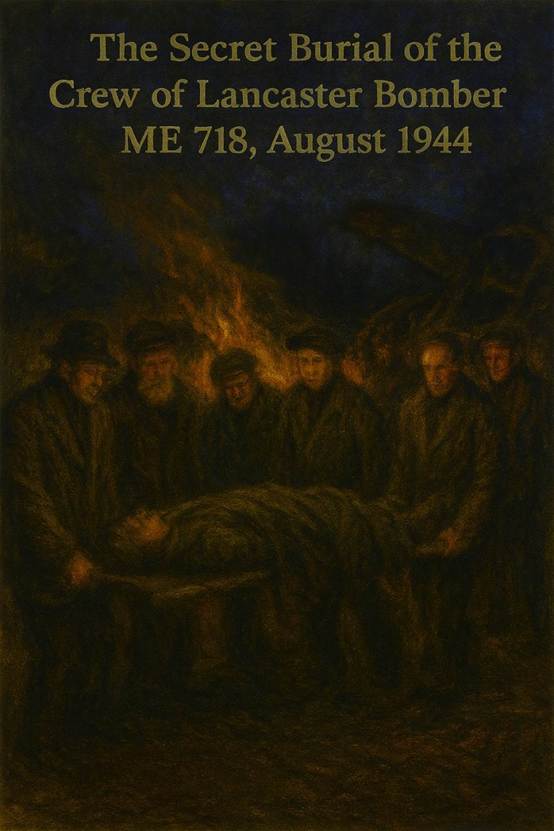
The coffin
was decorated with flowers, but there were only a few mourners. Apparently, the
German Wehrmacht knew nothing of this funeral.
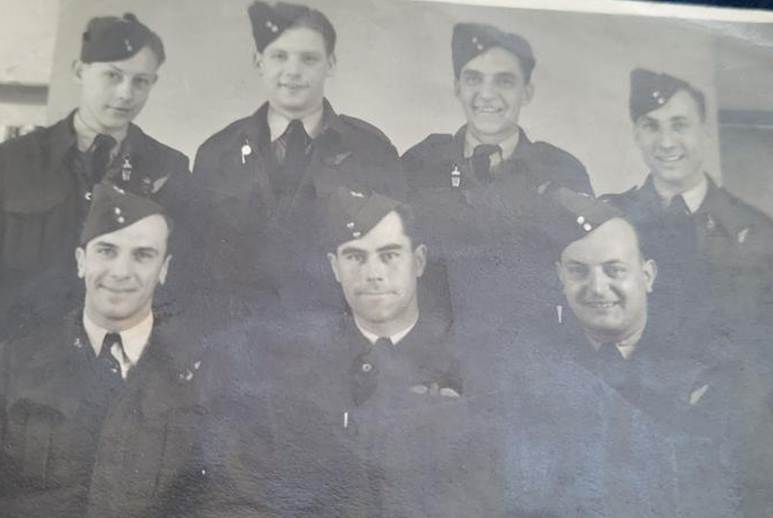
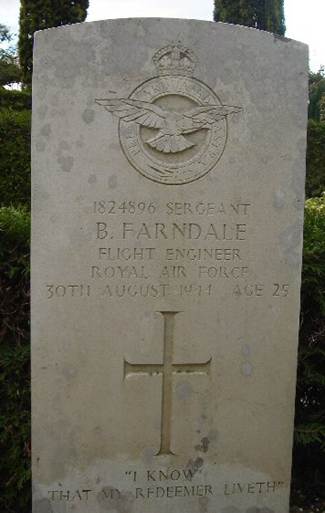
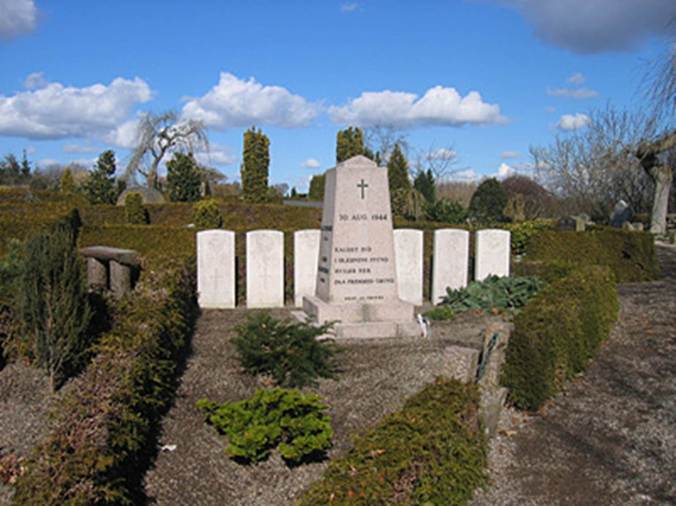
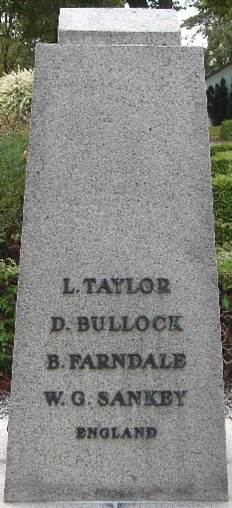
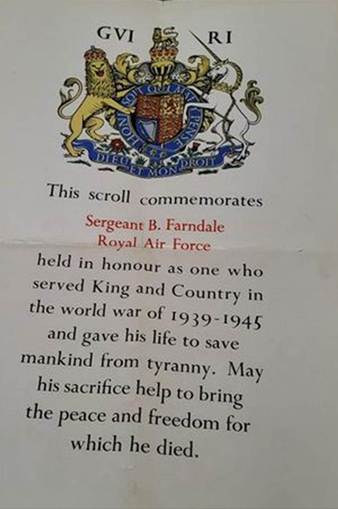
The Crew
of ME 718
|
1912 to 1944
The full story of Bernard Farndale and the fate of flight LAN ME
718 |
US Army
Air Corps
James
Noel (“Jimmy”) Farndale was the son of Jim Farndale who
was enlisted in the First World War and whose family we met in Act 28. Jimmy enlisted into the Army
on 15 December 1942 and served with the US Army Air Corps in World War 2 in USA
and in Europe[116]. He received his basic training
in Fresno, California, and received his radio trading at Scott Field, Illinois.
He was assigned to the ferry command in May 1944 and was then
engaged in delivery of aircraft to various theatres of war.[117]
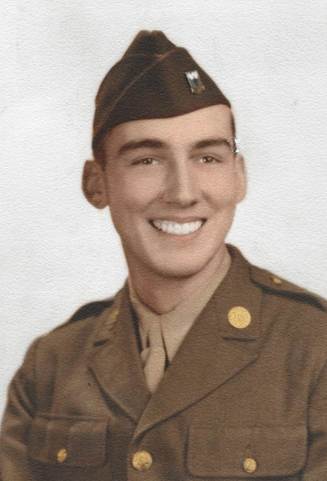
Jimmy
Farndale 15 April 1945, Taken at the Derby Club, San Francisco 22 April 1945, Taken at the Derby
Club, San Francisco
On 8 August
1944 and 16 October 1944 he flew missions for Air
Transport Command from Casablanca to La Guardia Airport, New York[118]. He was a Private and 21 years old, but promoted to Corporal by October 1944. On 14
November 1944, he flew a mission from Prestwick in Scotland to New York. Serving
as a radio operator aboard planes being delivered to all parts of the world,
Corporal James N Farndale of Las Vegas has touched every continent in the globe
except Australia in the past six months, and made a
forced landing in India. Corporal Farndale has been spending a furlough in Las
Vegas with his parents, State Senator and Mrs James Farndale, 922 S 2nd St, and
was scheduled to report back for duty today with the 4th Ferry Group at
Memphis, Tennessee.
The crash
landing occurred on a flight to India some time ago, but the pilot got the ship
down safely without injury to any crew member. The landing was made in a small
clearing in the jungle, near a native village, Corporal Farndale stated in an
interview here. “We camped right in the plane, and natives brought us food,
including breadfruit, bananas, coconuts, melons and water. Everything was free
except eggs, and we had to pay for them,” he said. A holiday was declared in
the village school so the children could see the plane. From daylight to dark
the natives crowded about the plane, just standing staring at the big machine.
The crew stretched ropes around the plane to hold the crowds back, because they
kept inching forwards closer and closer to the big
ship. The children behaved well but were very curious he said. “We visited one
day in a native home,” Corporal Farndale said. “An old man who had been reared
in a missionary school and spoke English very well was our host. He was a
landowner and very proud to show us all the things he raised on his land.
Almost everything grew bountifully there. The children of the household were
very well behaved,” he said. After three days in the grounded plane, the crew
was reached by a rescue party composed of American and British soldiers, who
led them back to camp.[119]
In March
1945, his father,
a US Senator for Nevada, wrote to his brother, Alf, two
veterans of the last War. I don't know whether or not
you have heard that Jimmy made one flight to England. He had your address but he said while he was in England they wouldn't
let him out of camp long enough to even try to telephone or visit. He came over
by way of Brazil, there crossed the Atlantic to the coast of Africa and up
north across Portugal and then landed I think in the Land's End area, where
they delivered the plane and then went through London and north to Scotland
crossing back to the US by plane. He had a great trip but was naturally
disappointed in being so close to you and yet not able to see you. But that is
the way with war as you both know from our experience in the First World War.
Jimmy made two flights to India, and was wrecked in
the jungles near Calcutta I believe, was stranded among natives for two days,
and they had to leave the plane. He has visited Cairo twice and has seen many
of India's important points. He now is in the Pacific, but he is still back in
the US. They make trips over into the various isles about every two or three
weeks. He is sure getting experience and is seeing the world. He is not
satisfied when he is not in the air. They are keeping him busy now.[120]
The Tiger
Moth pilot
Henry Stuart
Farndale was granted a commission as an Acting Pilot Officer on probation
in April 1941, for the duration of hostilities[121]. He had married Maria Pratchett in
1940 in Bradford[122], but she died, aged only 27, in late
1942. On 30 July 1943, Henry was a pilot under training with No 7 Elementary
Flying Training School, a Royal Air Force flying training school at RAF Desford[123].
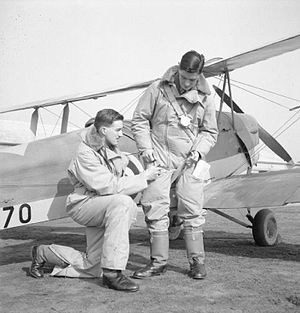
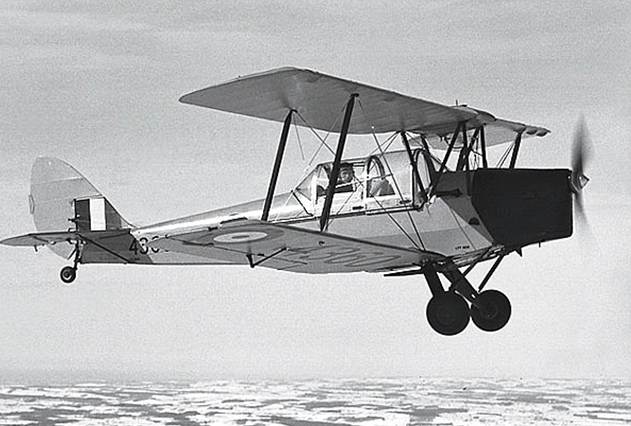
Instructor
and pupil in front of a de Havilland Tiger Moth at 7 EFTS, Desford. Both wear
1930 Pattern flying suits
521789
Corporal Henry Stuart Farndale, a pilot under training, flying Tiger Moth
T6910, died on 11 May 1945, aged 28. He was killed while flying out of Desford,
Leicestershire during formation flying practice. His DH 82A Tiger Moth T6910 collided
with T5982 and crashed Elmdon 11.5.45 DBF.[124]

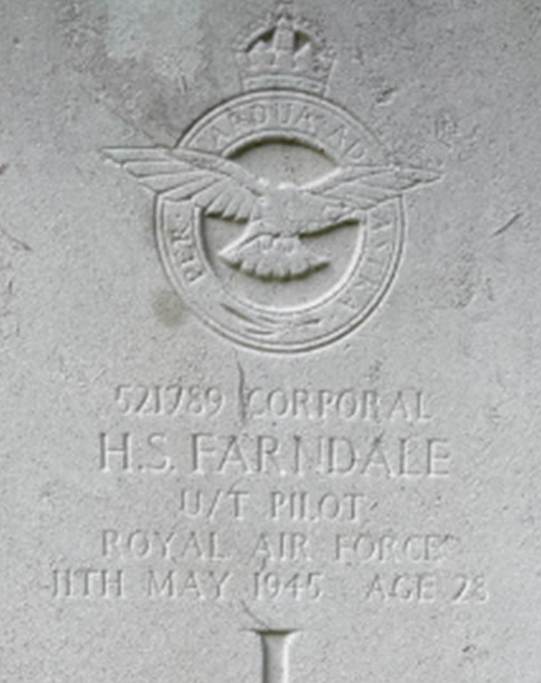
The Lucky
Engineer
John Horace
Thomas Farndale, known as Horace, joined the Royal Engineers initially
repairing searchlights. His daughter, Patricia was told that he then trained to
be a Spitfire pilot and he took her to a cemetery behind RAF Coltishall where he showed her the graves of his squadron,
killed in the Battle if Britain. There were many eighteen to twenty years olds, and many were Polish. John couldn’t fly on the day
when many members of his Squadron were shot down due to a heavy nose bleed.[126]
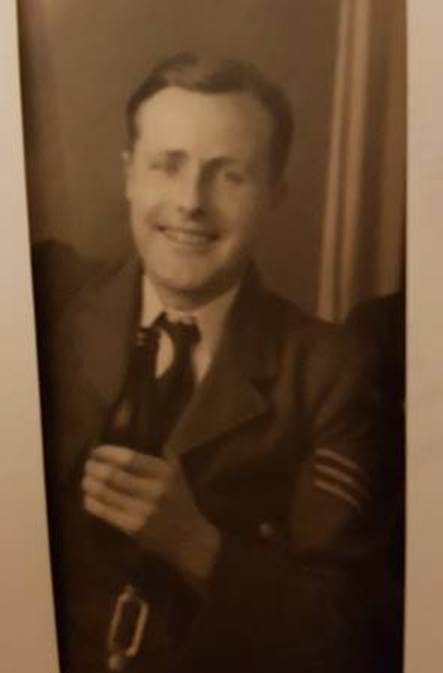
Horace
Farndale
He later
joined the catering branch, which he hated. He was later trained for the Far
East Theatre, and avoided being posted to Burma, where many of his friends died
on the construction of the Burma railway. John recalled seeing doddle bugs
decimate London. There was an occasion when his soldiers were training in a
gymnasium when it was hit, but John had not made it on time so was not there.
He was also trained in a secondary duty as a paramedic. On another occasion
Patricia was told that a bomb dropped next John and he
curled himself up in a ball and survived an explosion. He used to tell his
family my guardian angel was with me when that bomb exploded.
A
Prisoner of War in Italy after the Battle of Sidi Rezegh
Ronald
Martin Farndale was the ancestor of the New Zealand Line who we met
in Act 29.
Ronald
served with 6th Field Ambulance Royal Army Medical Corps (“RAMC”) in
Greece and Crete with the Second New Zealand Expeditionary Force[127]. He was captured at the Battle of
Sidi Rezegh[128] in 1941 and was a prisoner of war in
Italy for the rest of the war. The Battle of Point 175[129] was a military engagement of the
Western Desert Campaign that took place during Operation Crusader from
29 November to 1 December 1941.
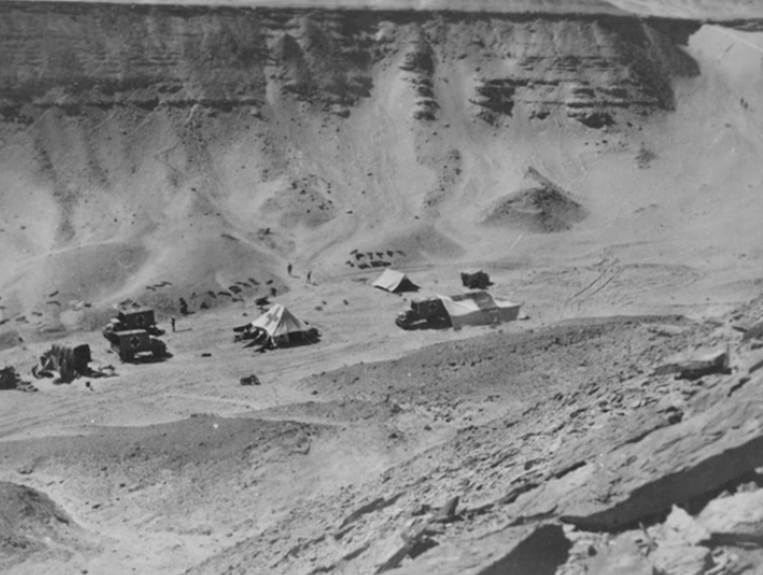
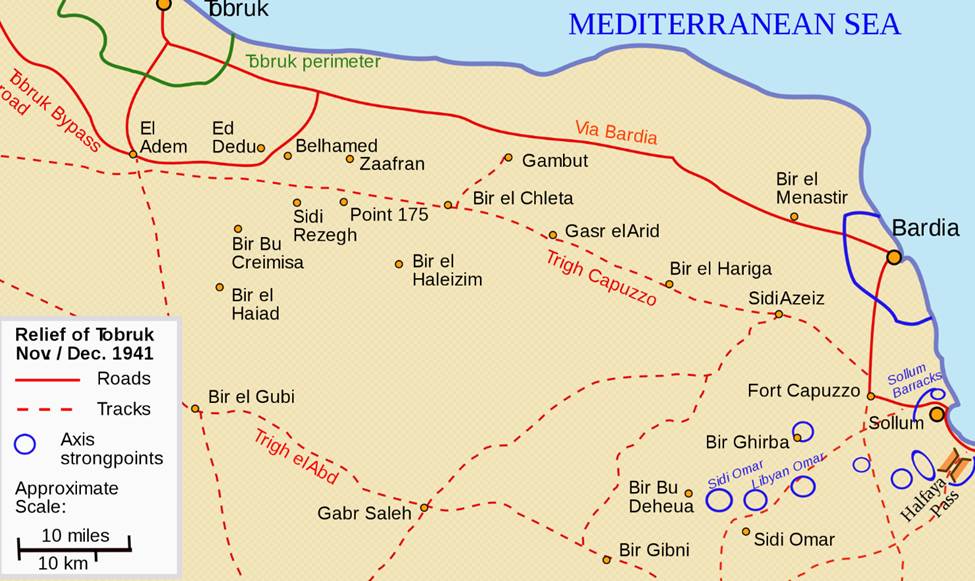
4th and
6th New Zealand Field Ambulance at overnight camp, North Africa, 1 October 1942
Maurice Muir[130] served as Regimental Stretcher
Bearer with 24 Battalion and was captured at Sidi Rezegh on 1 December 1941
with Ronald Farndale. Maurice was awarded the Military Medal for protecting his
Regimental Aid Post from friendly fire. The prisoners of war were transported
by German Ship from Tripoli to Naples, then to Capua and taken to Campo PG 66.
In March 1943, the PGN 66 camp in Capua was described as a sorting camp with a
capacity of 200 places for senior officers and 6,000 for non-commissioned
officers and troops. It was made up partly of barracks and partly of tents. It
began operating in April 1941. There is evidence of the ill treatment of
prisoners there[131].
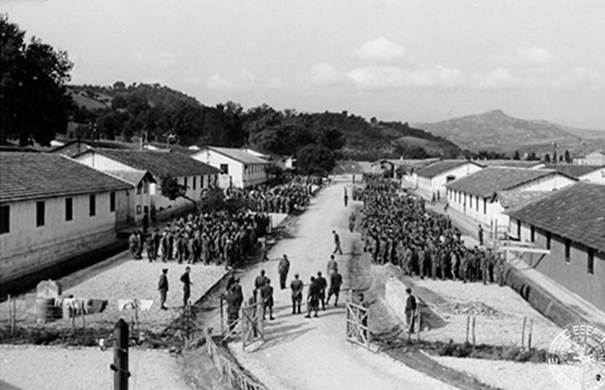
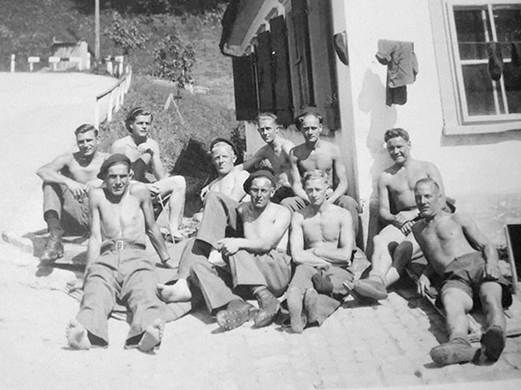
Camp 59, Servigliano
They were later
transported to Campo PG 59[132] in Servigliano[133], then to Campo PG 52[134] in Chiavari.
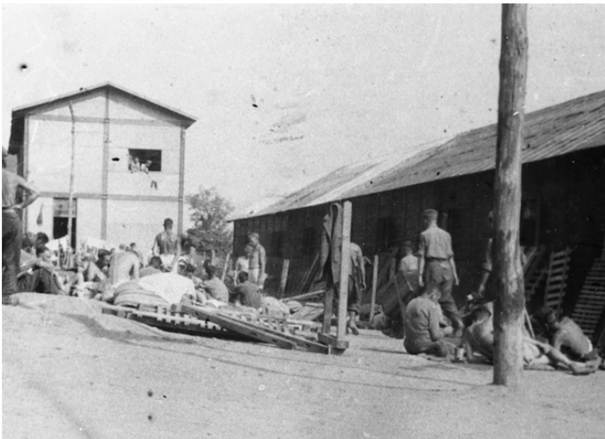
Camp 52,
Chiavari, Italy, 1942. Photograph taken by W A
Weakley. Note on back reads All beds and gear out for a search. Note where bed
slats have been taken off to provide fuel for brewing tea.
Maurice Muir
was later transferred to Lucca Hospital (PG202) in September
of 1942, and repatriated to the UK in April 1943 along with 400 or so British and 14 other
New Zealanders who had relatives in Britain. Ronald Farndale was with Maurice
Muir.
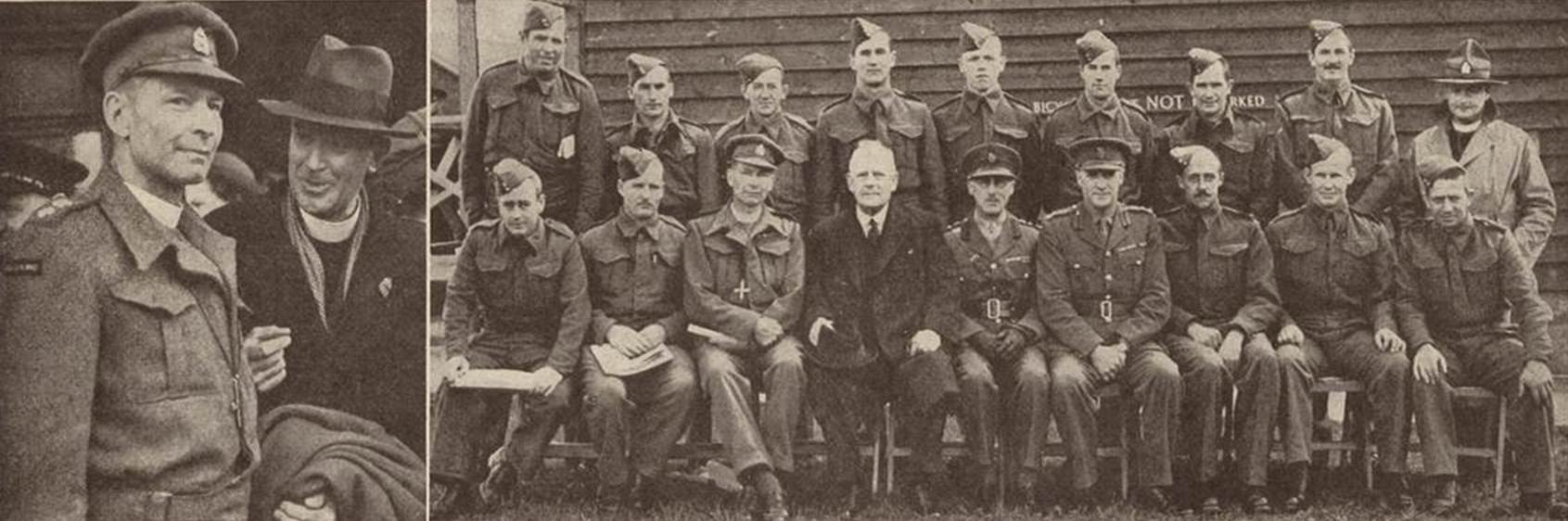
New
Zealand Prisoners of War on their repatriation in June 1943
Ronald Farndale
The
Newfoundland Artillery Officer who landed in Normandy in 1944
Raymond
(“Ray”) William Stainthorpe Farndale was born in St John’s, Newfoundland on
23 February 1914[135]. We met him in Act 26.
Ray served
in 59th (Newfoundland) Heavy Regiment Royal Artillery. Ray later recalled that a large number of my friends chose the Army, as I
did. The first contingent of volunteers from the West Coast left Corner Brook
on May 12, 1940. I was not amongst them, because it seemed unlikely that I
would pass the eyesight test. However, within two weeks I managed to pass, with
the help of a young Doctor who coached me in the eyesight requirements.[136] Ray left Halifax on 6 June 1940. He
was on the passenger manifest of the Nerissa on a voyage from Halifax,
Nova Scotia to Liverpool arriving on 6 July 1940[137]. When they arrived in England, the
new recruits were welcomed by their commanding officer, Lieutenant Colonel John
Nelson. Another recruit, Jack Wescott recalled that Nelson told them, You have listened to a lot of nice things being
said about you. My message is different. You’ll work so hard that you won’t
even hear the sound of the bombers when they fly
overhead during the German air raids[138]. The Newfoundlanders are said to
have responded with heavy cheering.
In 1943,
Raymond was chosen by his Commanding Officer J W Nelson to be a candidate for
Officer training. He undertook training with 23 Office Cadet Training Unit in
Yorkshire for six months from March 1943 and was then accepted for a commission
and became a second lieutenant in September 1943.
Ray was
posted to Tonbridge, Kent to join 23rd battery, 59th Newfoundland Heavy
Regiment, Royal Artillery. 20th and 23rd Heavy Batteries were given 155mm guns
and 21st and 22nd Heavy Batteries were given 7.2-inch guns. The Regiment
trained in Northumberland but by July 1944 it was at Worthing in Sussex.[139]
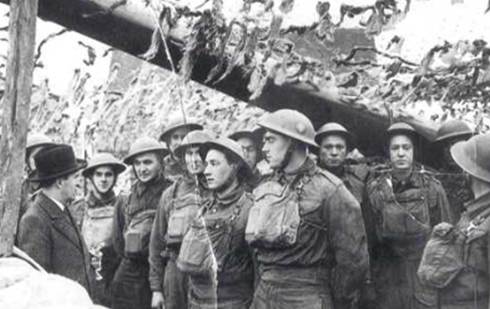
59th
during firing practice in Britain
Ray landed
at Juno Beach in Normandy on 5 July 1944, one month after D-Day. Jack Wescott
recalled, the 59th hit the beach at Courseulles-sur-Mer,
in southwestern France, better known as Juno Beach, on July 5, 1944. Within 24
hours the men were in action, firing their 7.2” howitzers and 155 mm ‘Long
Toms’ with their respective 200 lb and 95 lb shells at a concentration of
German tanks in a battle for a nearby airport[140]. The men of the 59th would remain in
almost continuous action for the rest of the war, often firing 24 hours a day
in support of Canadian, British and American troops as the Allies fought their
way through blasted out villages and ruins of towns in France, Belgium and
Holland on the way to Germany.
The Regiment
took part in the battles for Caen, when 23rd Battery provided
counter battery fire during the assault. The 59th took part in the grim
action at Caen, in the fierce fighting at Falaise, in the historic battle for
the closing of the gap (better known as the Battle of Bulge), at Esquay and Errecy, and its guns
also covered the crossing of the river Odon and the crossing of the River Seine,
wrote historian Allan M. Fraser[141]. Batteries of the 59th were among
the first soldiers to liberate the key supply port of Antwerp, where they were
greeted by the city’s mayor who presented each of them with a bottle of wine
and a pack of cigars. In many of the places they fought in Holland, the land
was flooded and dry places to camp were scarce. The Newfoundlanders made a name
for themselves by being able to cobble together the best shelters and for being
able to navigate their guns and trucks over the worst of the mud clogged and
troop packed roads as they shifted as much as 150 miles at a run to come to the
aid of infantrymen fighting pitched battles against the Germans.
The Regiment
suffered its first injuries on 17 July 1944, when enemy fire wounded 12 men,
causing one to lose a leg, and destroyed two guns. Following early Allied
successes in August 1944, the 59th Regiment pressed east and continued fighting
in Belgium and the Netherlands before proceeding on to Germany. The Regiment
took part in the Battle of the Falaise Pocket from 122 to 21 August 1944 and
Operation Market Garden in September 1944. During the Battle of the Bulge the
four batteries of the 59th Regiment repealed the German drive to the River
Meuse. In the Battle of the Bulge, which saw the Germans launch a desperate
surprise attack to cut off the British army from its supplies and separate them
from the American troops, the men of the 59th reinforced their reputation for
accurate firing, devising the best camps in the worst conditions, and for
manhandling their big guns and supplies over ice and snow blocked roads, all
with “exceptionally high” morale. While some American soldiers froze to death
in the harsh winter conditions, the men of the 59th gathered wood from the
ruins of bombed out houses to line the floors and walls of their two men tents,
jimmied stoves and heaters out of empty milk cans, and even, at times, rigged
up electricity to light their camps. Frustrated by their accurate firing – in one instance a
battery of the 59th snuffed out seven German observation posts in a row,
landing 26 direct hits on one position – the Nazis would order bombing raids
over the men of the 59th and their guns.[142]
On 2 May
1945, the Regiment fired all of their batteries at the
key Germany city of Hamburg, their last rounds of the war, two days before the
city’s German forces surrendered. For the next 8 weeks, the Regiment helped in
the administration and rerouting of refugees.
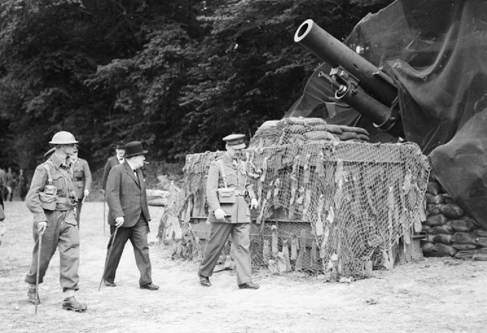
Winston
Churchill with the Regiment’s howitzers
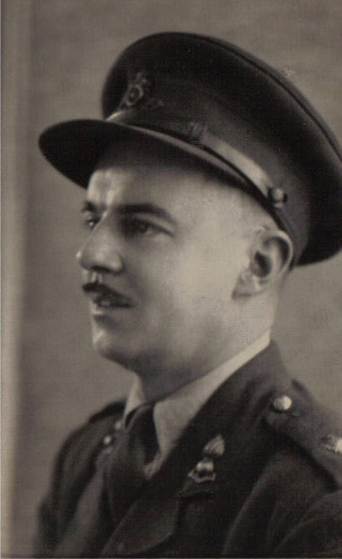
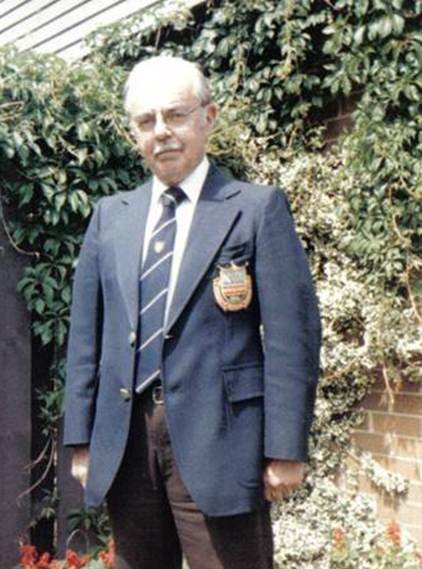
Raymond
Farndale, RCA, 1943
Ray in about 1974
Ray
continued to strongly support veterans’ affairs. He lived to be the oldest
living member of the Farndale family. In July 2015, 101 year
old Veteran, Raymond “Poppy” Farndale, sat with his medals and war
scrapbook in front of his portrait at Guelph Public Library to support the
Hundred Portraits and Hundred Poppies project. He said I thought it was
an important project to remember those who have served in the military or had
some association with the military. Not only do I feel strongly about the poppy
and what it symbolizes, my 2 grandchildren (Christopher and Emily) call me
“Poppy” so it is quite special to me. He added
that I was remembering the people I met during World War 2. I am one of the
few veterans left from my regiment and I felt I was representing all of the amazing men and women I worked alongside. He
advised, While a lot has changed since I was
born, 101 years ago, some things have remained the same. One thing I have
always lived by, treat others as you would like to be treated. If you do this,
you can never go wrong.[143]
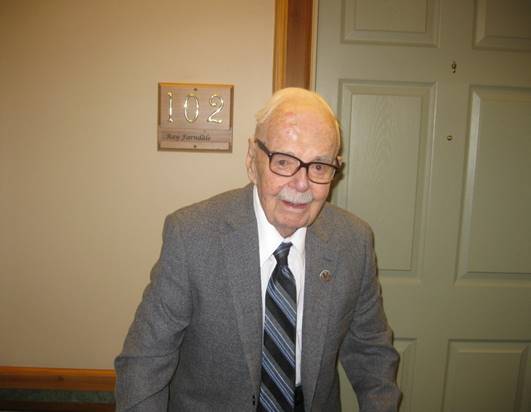
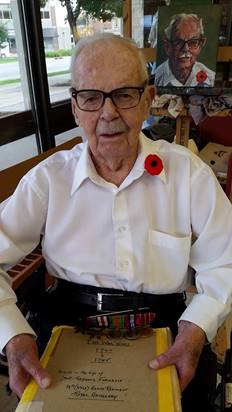
Brothers
in the Royal Canadian Air Force and the Royal Canadian Navy
Wilfred
Gordon (“Gordon”) Farndale was the grandson of John
George Farndale who had fought in the
Crimean War. He served as a Flight Lieutenant in the Royal Canadian Air
Force in World War 2 in Europe[144] and later became an accountant. Clarence
Edward (“Ed”) Farndale was Gordon’s brother, who served with the Royal
Canadian Navy[145]. Ed was torpedoed in the Atlantic
off the coast of Ireland in about February 1941. He was one of the last to
leave the ship, and in the lifeboat he gave his coat
to the cook and his toque, a knitted wool cap, and mitts to one of the
engineers.
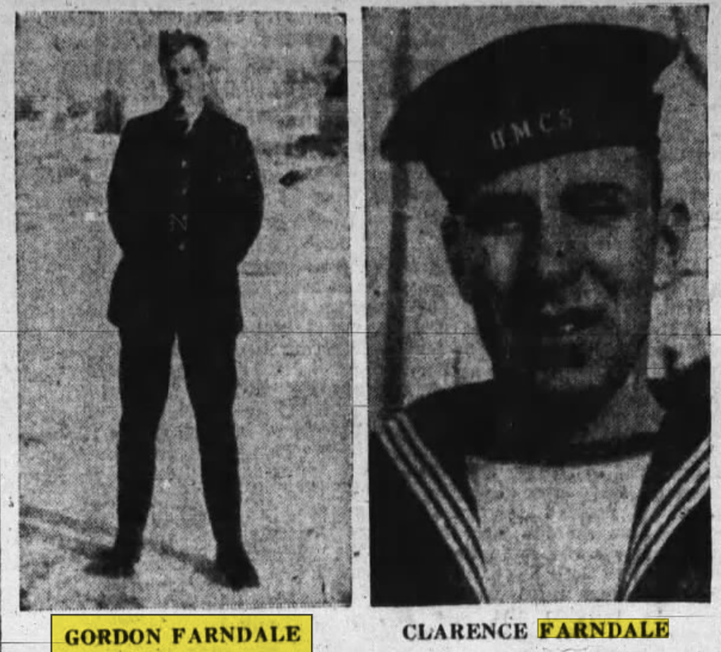
In March
1941, Clarence Farndale, aged 22, who is on active service with the Royal
Canadian Navy, will be home on leave in a few weeks. Clarence joined the Navy
when the war broke out. He crossed to England last October and returned to New
York in December, but he did not get home as he was recalled to England. The
trip back was made on a gun layer and it was torpedoed
off the coast of Ireland. He was one of the last to leave the ship, and in the lifeboat he gave his coat to the cook and his toque and
mitts to one of the engineers. Clarence is getting 14 days survivor leave. His
brother, Gordon, who is 25, is in the RCAF and is now on 14 days leave. He has
been stationed at No 2 Bombing and Gunning School at Mossbank,
Saskatchewan. When he returns he will be going to No 2
Wireless School at Calgary. The two boys are sons of Mrs W Archer and the late
Charles Farndale, of Churchville. They have lived in Peel
county all their lives.[146]
Ed Farndale
served from 15 March 1939 to 17 August 1945 and then from 25 February 1947 to
12 August 1966.
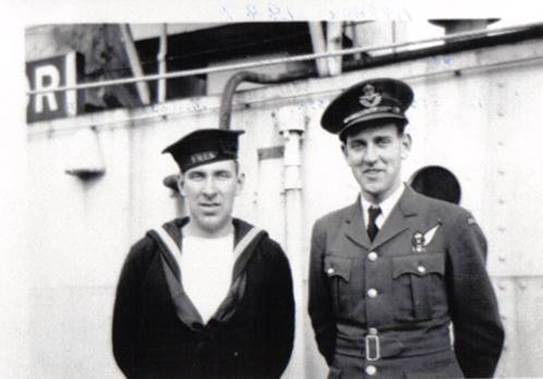
Gordon
Farndale, 1944 Clarence
Farndale, 1960 Clarence and
Gordon Farndale (Brothers in Arms)
Pacific
Operations
Richard
William (“Dick”) Farndale was born
in Prophetstown, Illinois on 6 August 1918. He was part of the America 2 Line and we met him
in Act 28 Scene 2.
|
Music from Sky Atlantic The Pacific |
Dick joined
the US Army on 28 March 1941 in Chicago, Illinois[147]. He began as a military policeman at
Camp Blanding in Florida[148]. The United States formally entered World
War II on 8 December 1941, one day after the Japanese surprise attack on Pearl
Harbor. Congress approved a declaration of war against Japan, and subsequently,
Germany and Italy declared war on the U.S. on 11 December 1941, drawing the
nation into a global conflict. Dick was later a Mechanic with the 43rd Division
for 32 months in the Pacific Theatre of Operations[149].
The 43rd
Division was mobilised on 24 February 1941. The 43rd Division was originally
sent to Camp Blanding, Florida where it was based before participating in the
Louisiana Manoeuvres of 1941 and the Carolina Manoeuvres later that same year.
The division relocated to Camp Shelby, Mississippi on 14 February 1942. On 19
February 1942, it was reorganised as a triangular division so that it had three
infantry regiments. The division prepared for overseas operations at Fort Ord,
California on 6 September 1942 and departed from San Francisco on 1 October
1942.
The division
arrived in New Zealand on 23 October 1942, before being committed to combat in
the South West Pacific Theatre under the command of
General Douglas MacArthur. It saw campaigns in New Guinea, Northern Solomons,
and Luzon. Rendova was the major staging point for the assault on the island of
New Georgia. The assault on New Georgia was met with determined enemy
resistance. The Japanese fought fiercely before relinquishing Munda and its
airfield on 5 August 1943. Vela Cela and Baanga were taken easily, but the
Japanese resisted stubbornly on Arundel Island before withdrawing on 22
September 1943.
Soldiers
of 4rd Infantry Division landing on Rendova Island in
the Solomon Islands on 30 June 1943
Dick
received his discharge from the Army in May 1945.
An Anti Tank Gunner
Cyril Ernest
Farndale was born at Darlington on 21 June 1921. He was part of the Great Ayton 3 Line and we
met him in Act 22 Scene
2. Cyril enlisted into the Royal Artillery on 30 August 1939 and served in
100 Anti Tank Regiment Royal Artillery[150].
100 (The
Gordon Highlanders) Anti-Tank Regiment RA (TA) was formed in November 1941 from
8th Battalion The Gordon Highlanders with four
batteries at Buckie, Banff. It was re-designated 100 Light
Anti-Aircraft/Anti-Tank Regiment in January 1944 and reverted to 100 (The
Gordon Highlanders) Anti-Tank Regiment RA (TA) in the September. The Regiment
disbanded in January 1947.
Stay
Behind Resistance
William Derrick Farndale was a descendant of the Whitby 5 Line and founder of the Holderness Line of the family. He was a tractor driver, and patrol member in the Withensea Patrol on the East Yorkshire Coast from 1942 until 3 December 1944. He was promoted to Sergeant and led the Withernsea Patrol of the East Riding Home Guard on the Holderness coast[151].
The Withernsea
Patrol was a highly secret unit of the British Auxiliary Units[152], formed to act as a stay-behind
guerrilla resistance force in the event of a German invasion of Britain. The
units, sometimes referred to as a part of the British Resistance Organisation,
were initiated by Winston Churchill in the early summer of 1940. He appointed
Colonel Colin Gubbins to found them. The Auxiliary Units answered to GHQ Home Forces, but were organised as if part of the local Home
Guard.
Operating
along the East Yorkshire coast, this Withernsea Patrol was a ‘secret army’,
prepared to sabotage enemy lines of communication, destroy equipment, and
assassinate key figures if the UK was occupied. The Patrol's Operational Base
was a square type shelter built out of pit props and
with a corrugated iron sheet roof. It was built on a hill near Little England
Farm to the west of the town. The higher ground gave a good all
round view of the coast and inland fields. The Patrol targets were the landing beaches
on the east side of Withernsea, Tunstall beach was an expected German target,
along with the road from the coast inland, Spurn Point Coastal Battery, Channel
Farm Search Light battery and the land drainage system to the west. The initial patrol members included
individuals named Thompson, Joy, Conner, Perry, Woodcock, and Grassam. Sergeant Farndale led the unit and may have
attended training at Coleshill House, the secret headquarters of the Auxiliary
Units. They trained in surveillance, sabotage, and guerrilla warfare, including
exercises with other local patrols. The unit was equipped with specialised
weaponry, including .22 sniper rifles, Remington/Winchester rifles, and Colt
.45 or Smith & Wesson pistols.
Marine
Commander
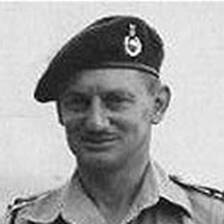
Cecil
Farndale Phillips
Lieutenant
Colonel (later Brigadier and Major General after the War) Cecil Farndale
Phillips commanded 47 (Royal Marine) Commando during the assault in the Le
Hamel area on 6 June 1944. After the War he was promoted to Major General and
became Chief of Amphibious Warfare. His middle name suggests he may have been
related to the Farndale family, but this is not certain.
|
The Second World
War soldiers, sailors and airmen
The full story of the Farndales who took up arms in the Second World War |
|
The
context of the Second World War |
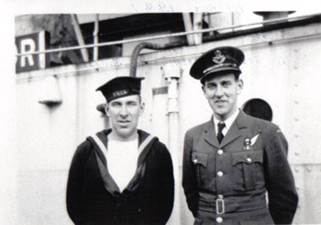
Scene 7 - The Cold War years
The New
Zealand Navy
Keith
Alan Farndale was from Gisbourne, New Zealand,
and we met him in Act 29 Scene 2.
Allan served as a Petty Officer in the Royal Navy and then transferred to the
new New Zealand Navy in about 1964.
In 1970, he
served on HMNZ Endeavour. On 5 October 1962, USS Namakagon
had been transferred to under the Military Aid Program, to the Royal New
Zealand Navy. She was commissioned as HMNZS Endeavour (A184), an
Antarctic supply ship. She delivered fuel to research bases on Antarctica,
bringing over 1 million gallons each year to McMurdo Sound. Endeavour
completed two Antarctic voyages south each season between December and March.
She then completed one each in her last two seasons. Her last voyage to the ice
was January to February 1971, returning to Auckland via Lyttelton on 18 March, 1971. Endeavour was decommissioned and
returned to U.S. custody in 1971.
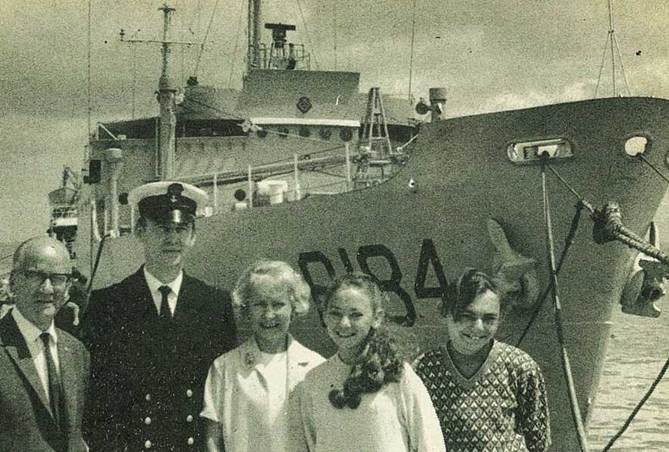
British
Army on the Rhine
James
Henry Farndale served with 1st Battalion Kings Own Scottish Borderers. Gary
R Farndale served with the British Army on The Rhine.
Commander
in Chief of the Northern Army Group of NATO
General
Sir Martin Farndale KCB joined Indian Army 1946 and was commissioned into
Royal Artillery October 1948 from the first intakes at the Royal Military
Academy Sandhurst. He served Egypt, Germany, Malaya, Northern Ireland, and
South Arabia. He was Commander in Chief of the British Army of the Rhine and
commander of the Northern Army Group (“NORTHAG”) of the North Atlantic
Treaty Organization (“NATO”).[153]
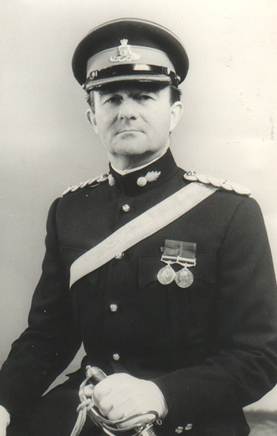
Martin
Farndale started his military career in 80th Light Anti-aircraft Regiment in
the Suez Canal Zone. In January 1949, he sailed by Troop Ship to Egypt with his
great friends, John Ansell and Bill Nicholas. Soon he was selected for the
elite Royal Horse Artillery and he joined First
Regiment Royal Horse Artillery in 1950.
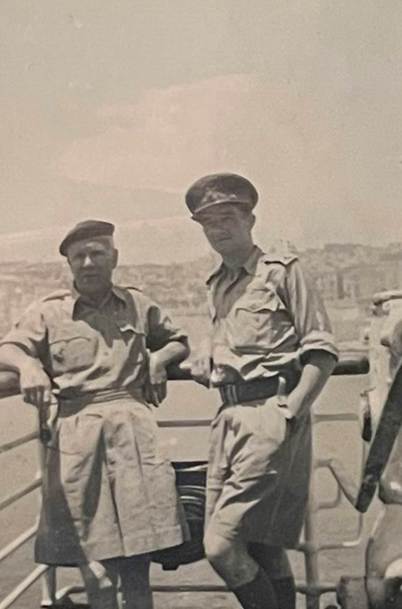
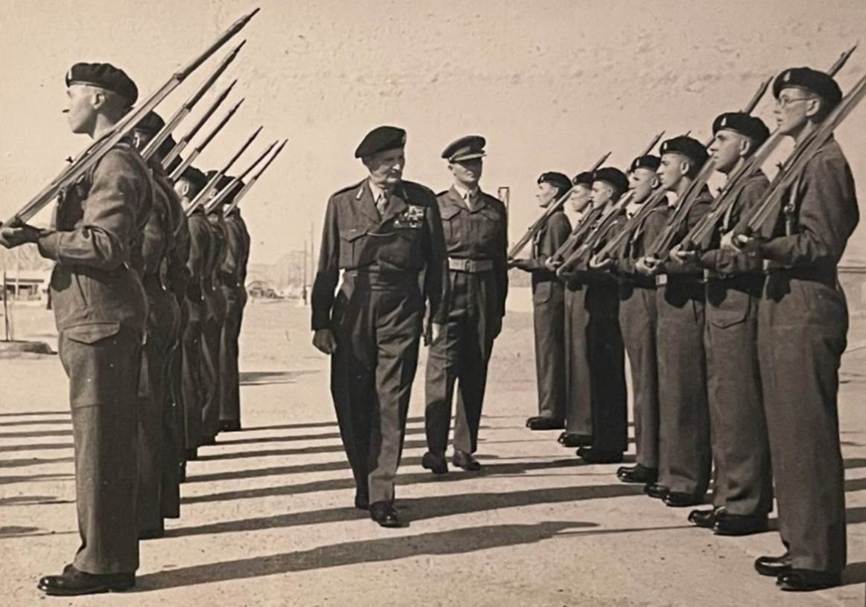
On the
Troop Ship to Egypt Field
Marshall Montgomery (“Monty”) inspects Martin Farndale’s Troop, Fayid, Egypt
He joined the Gunner Staff of 17th Gurkha Division in Malaya from 1960 to 1962, where he saw active service during the final phases of the Malayan Campaign.
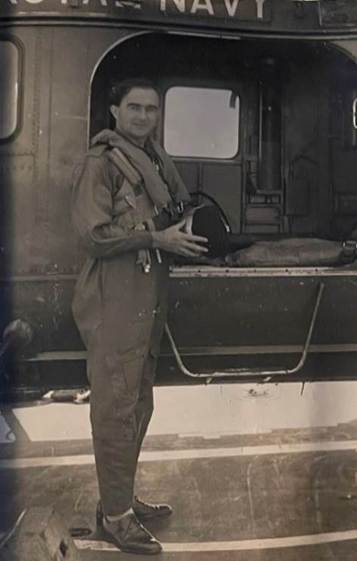
He was a
Battery Commander in Aden during the Radfan Campaign[154] in the arid mountains of the Protectorate.
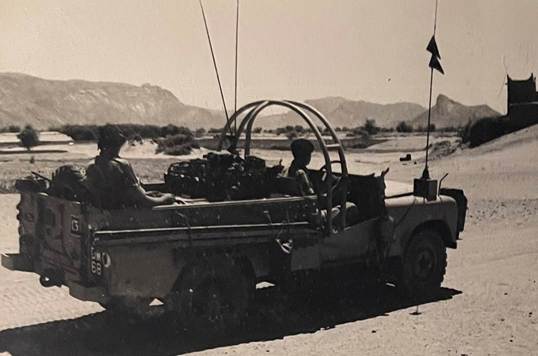
From 1969 to
1971, Martin was given command of First Regiment Royal Horse Artillery. He was
the first artillery commanding officer to take his regiment to Northern Ireland
and to serve in an infantry role on the streets of Belfast. He was also the
first Lieutenant Colonel to command a warship. Accommodation was sparse in
those early days, so HMS Maidstone, which was destined for the breaker's
yard, was instead sailed from Portsmouth to Belfast and acted as a maritime
barracks for the Regiment. His command included a hundred sailors, the
Maidstone's maintenance team.
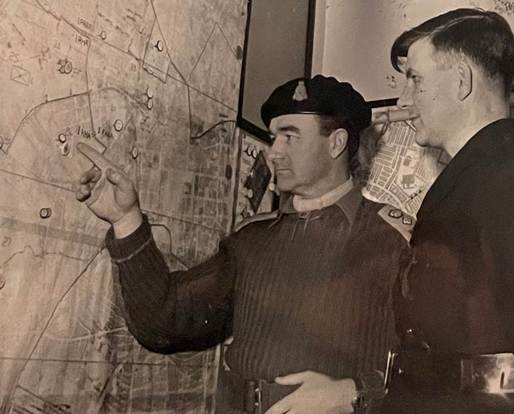
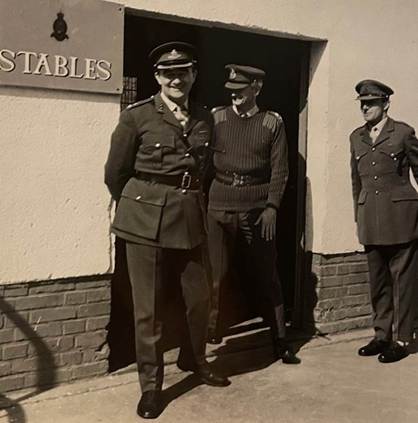
In his role
as Director of Operations at the Ministry of Defence Martin Farndale organised
the disarming of guerillas in order to facilitate the
creation of the new nation of Zimbabwe.
He was Colonel Commandant Army Air Corps. He learnt to fly
a helicopter and built up a considerable log of flying time, particularly
during his later commands in Germany.
Martin commanded 2nd Armoured Division as Major General from June 1980 to March 1983. He commanded the Division during Exercise Spearpoint in September 1980, during which the Division's 14,000 men and 150 tanks took the full weight of an enemy Orange simulated Soviet break-in. He also planned Second Division's Exercise Keystone in November 1982.
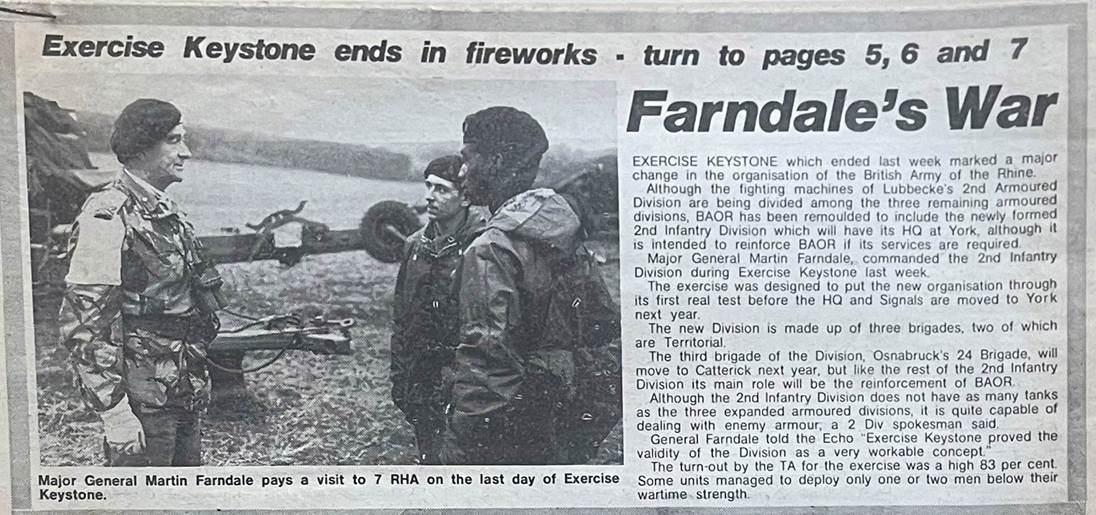
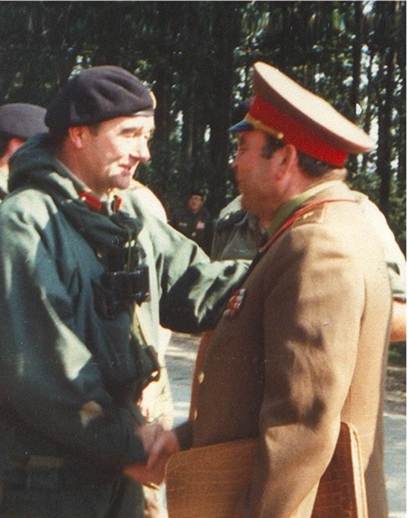
Major General Farndale meets a Russian General observer
during Exercise Spearpoint 1980
Martin commanded 1st (British) Corps as Lieutenant General
from March 1983 to 1985. This was the fighting component of the British Forces
in Germany, still during the height of the Cold War. The Headquarters was at Bielefeld and he lived at Spearhead House. In those days,
tests and demonstrations of ability to withstand an invasion from the east were
critical to keeping the peace and winning the Cold War. In September 1983, he
showed the Prime Minister, Margaret Thatcher, around his Corps during an
exercise, during which now infamous photographs were taken of the Iron Lady,
the later Lady Thatcher, riding in a Chieftain tank.
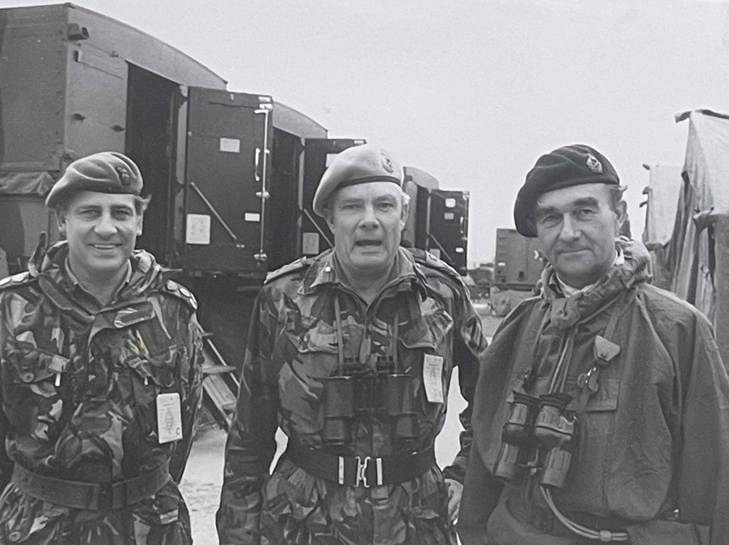
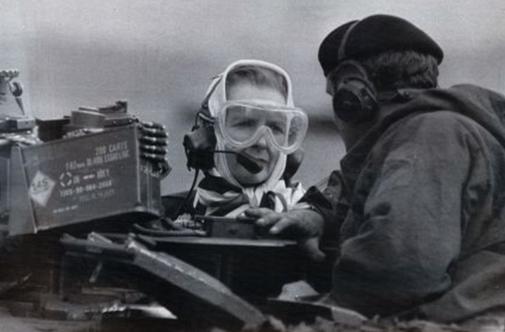
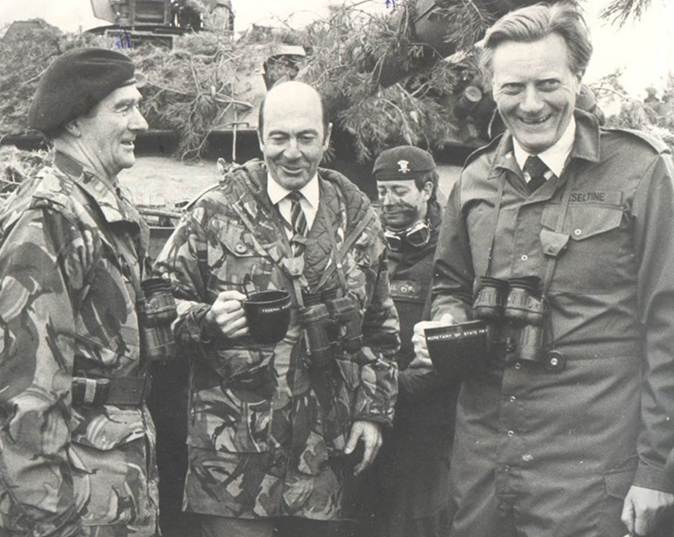
With the Prime Minster, Margaret
Thatcher
With
the Defence Secretary, Michael Heseltine
In 1984, he devised and oversaw the vast Exercise Lionheart, a show of strength of the height of the Cold War, which involved 131,000 British troops, including tens of thousands or Territorials and Army Reservists and which extended over 3,700 square miles. During a second phase a further 6,300 German, 3,500 Dutch, 3,400 American and 165 Commonwealth (from Australia, New Zealand and Canada) took part. It was intended to test BAOR's reinforcement plans and was the biggest military exercise to be held since the Second World War.
Martin
then commanded the British Army of the Rhine, at the time 55,000 strong, and also commanded the Northern Army Group, an Army Group
consisting of a British, Dutch, German, and American Corps, from its
headquarters at Rheindalen. This was from 1985
to 1987. He implemented a revised concept of operations for the Northern Army
Group. In the event of a Soviet invasion, the new plans would enable NATO
forces to bide our time and then strike viciously, at the time of our
choosing, at an exposed flank or sector. He invented a strategic
concentration of force and firepower, known as the Farndale Cocktail.
|
An explosive blend of Farndale
firepower |

NORTHAG
comprised five Corps - a Dutch, German, British, Belgian and French Corps, with
an American Corps (based in USA) to act as its reserve force and to arrive
(perhaps jet lagged) by air as the war started. Each Corps comprised about
77,000 soldiers.
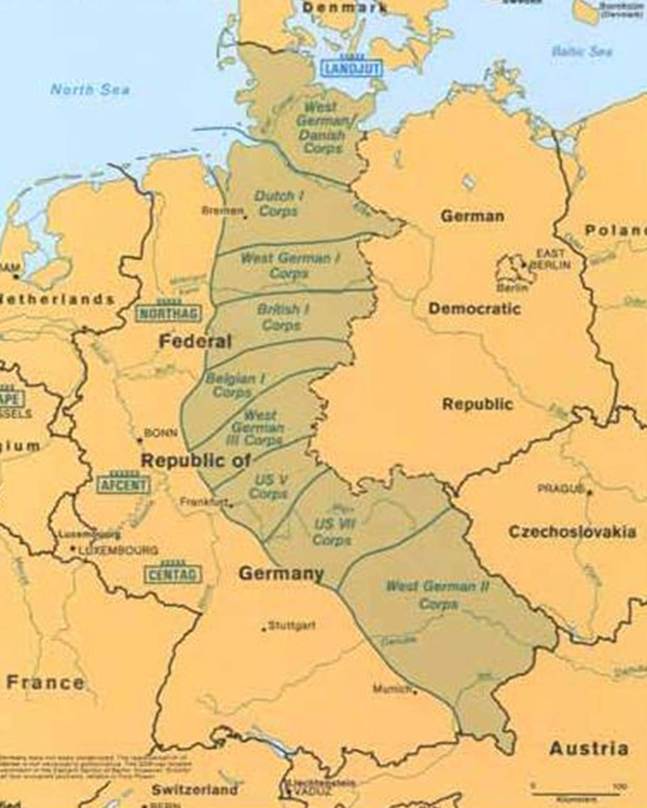
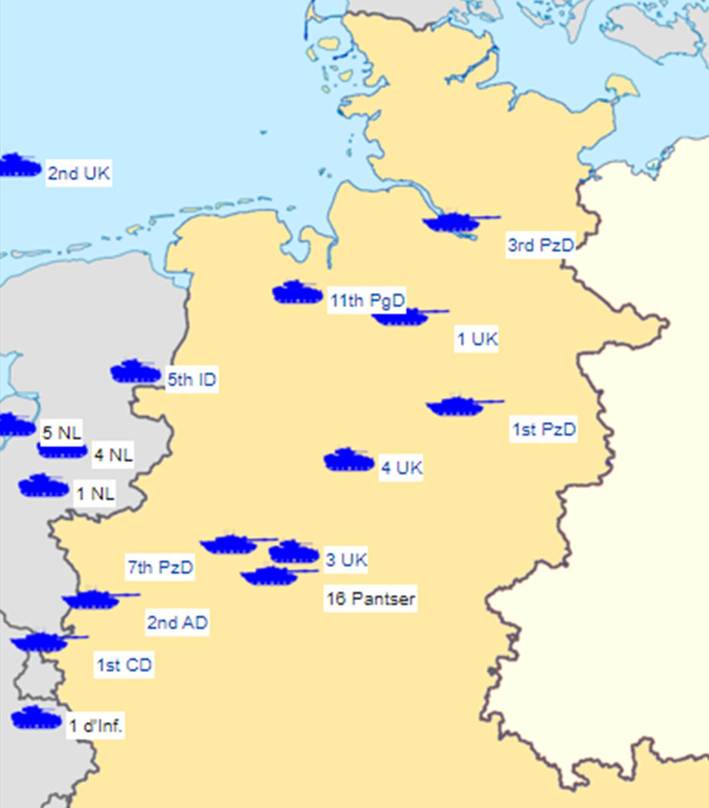
In
1985, the British Army had a regular strength of approximately 150,000 to
160,000 personnel, part of a broader UK armed forces regular personnel count of
over 326,000. During the mid-1980s, the army maintained a significant Cold War
presence, supported by a robust Territorial Army. The size of the entire
British Army in 2026 is circa 70,000 soldiers. The long-term strategy aims for 73,000 regular
troops and 30,100 army reserve personnel.
These
new plans were tested in 1987 during another major exercise, Exercise
Certain Strike, which proved itself to be the largest and most complex
field exercise of its type staged in Europe since the D-Day landings in 1944.
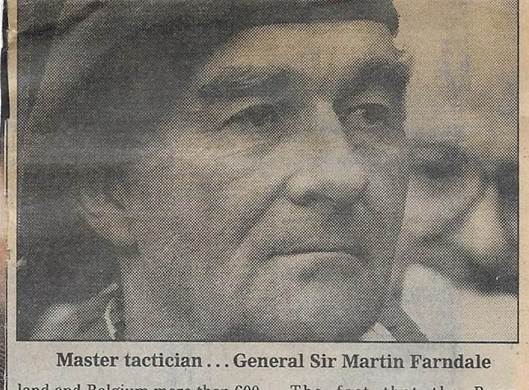
How
Nato would face a Russian invasion, Our most powerful man since Monty
At first
meeting, Martin Farndale, dressed in a pin-striped suit, has the quiet,
self-confident air of a successful and prosperous businessman. Relaxed,
articulate and wholly unpretentious, he is nothing like the popular conception
of a British Army general. Yet at 58, he is the Army's senior combat commander
in Germany. If a Soviet invasion were to be launched against Western Europe,
the task of blunting a huge, armoured thrust across the North German Plain
would fall firmly on General Sir Martin Farndale's shoulders.
Softly
spoken and with a slight lisp, he has an urbane, completely unmilitary
appearance that is misleading. Fellow Nato generals acknowledge him to be one
of the most gifted field commanders currently holding a senior position in the
Alliance. As the commander of Nato's Northern Army Group, consisting of more
than 200,000 troops and over 2,000 battle tanks, he would personally control
all Nato forces fighting to defend Germany north of the town of Kassel, roughly
a line with London. He would have more fighting power in his hands than any
British general in Europe since Montgomery.
This week
Farndale is overseeing the largest movement of Allied troops into Europe since
the 1944 D-Day landings: 35,000 American troops of the US Army's 3rd Corps have
already moved from Fort Hood in Texas to collect from storage in Germany. The
Nato corps will henceforth fight, for the first time, under the direct
battlefield command of Farndale, according to an agreed doctrine, and allowing
their individual reserve divisions to be committed to battle by the British
general "whether they can make an impact there than be frittered away in
penny packets."
A key
aspect is the acknowledgment by the five Governments that the Northern Army
Group cannot hope to stop a Soviet invasion by digging in on the inner German
border and fighting the Russians there. "That is a totally defensive
aim," says one of Farndale's divisional commanders, "that we will
slow and even stop a Soviet advance across Northern Germany. No, we must accept
a penetration of our front line, draw the lead Soviet elements along it, give
us a chance to strike at their exposed flanks. To do this, we must fall back
and trade ground for time." By standardising battle plans and procedures,
Farndale hopes that a division from any of his corps, be it German, Dutch,
Belgian, American or British, can be instantly deployed to support any element
of the Army Group. By fighting a fluid battle, he hopes, much as a smaller and
weaker boxer, to avoid the lumbering onslaught of a stronger opponent—and then
strike viciously, at the time of our choosing, at an exposed flank or
sector." He believes that if such a "counter-stroke"
were to be executed during a war, it would require a rapid concentration of
Nato reserves. "We may get one shot at it, and we must ensure that it is
effective."
The fact
that the Bonn Government has supported fully the adoption of a revised defence
plan for the Northern Army Group is due both to the hard work of senior
officers at the Group headquarters and a realisation in German political
echelons that while forward defence is politically imperative, religious
military adherence to it would minimise Nato's chances of winning a future war.
Farndale hopes that, by controlling the entire Army Group during battle from
his war headquarters, he can gain an overview of the wider battle which would
be denied to any of his corps commanders fighting in their own sectors of the
battlefield. He readily concedes that the inspiration for a Nato commander to
direct an entire army group from the back of an armoured vehicle in the late
1950s again has its roots in history. During the Wehrmacht's invasion of France
in 1940, Germany’s General Guderian controlled an army group from the back of a
half-track, assisted only by early coded communication systems and despatch
riders. The employment of four-star generals as combat-suited field commanders
rather than office-bound strategists was continued by the German Army
throughout World War II.
Farndale,
whose ability as one of the Army's best communicators has served to ease his
task of explaining the impact of the Northern Army Group's revised battle plan,
maintains that publicising this week's exercise is as important as its
execution. He is acutely aware that with current strains on virtually every
Nato defence budget, the chances for such a large-scale exercise in which to
practise his revised doctrine will be "few and far between."
Like most
of Britain’s current senior generals, the wars he has been caught up in are
small scale. The Suez Canal Zone, Malaya, Aden and Northern Ireland have
provided valuable personal lessons – but armoured battles between entire armies
have only ever been fought on paper. "I've never fought one," he
says, "but I imagine that fighting a major European war would be much
easier than organising and running this exercise." Let us all hope that in
that assessment he is right.[155]
Martin became Master Gunner of St James' Park, an office dating back to the seventeenth century, the honorary head of the Royal Regiment of Artillery, on 5 November 1988. His principal duty as Master Gunner was to keep the Queen, the Royal Regiment's Captain General, informed of all matters pertaining to the Royal Artillery. He was also Colonel Commandant of the Royal Horse Artillery, Honorary Colonel of First Regiment Royal Hose Artillery and of Third Battalion, the Yorkshire Volunteers, his home county. He was Colonel Commandant of the Army Air Corps. He also had a close interest in the South Notts Hussars.
Martin was
a passionate historian and as well as his genealogical work, he wrote
definitive histories of the Royal Artillery, a task which he started early in
his military career and continued until he died[156].
He was also
Chairman of the English Heritage Battlefields Trust[157] from 1993. The Trust preserves
battlefields and Martin succeeded in saving the site of the Battle of
Tewkesbury (1471) from developers. He became a Director of Short Brothers plc,
Defence Adviser to Westland Helicopters and to Deloitte & Touche in the
City. He was also a very active chairman of the Royal United Services Institute[158] from 1989-1993. He became a Freeman of the
City of London[159] and a member of the Wheelwrights Livery[160]. He was awarded an Honorary Degree of Doctor
of Letters at the University of Greenwich for his work on the history of the
Royal Artillery.
Martin was
described in an obituary as an innovative army commander whose leadership
qualities took him to Malaya, Northern Ireland and NATO, unquestionably the
most distinguished gunner officer of his generation. He had an outstanding
career both in command and on the staff, but was never
more at home than when among soldiers in the field. He was an example of what
can be achieved with a combination of leadership, intellect, personality, charm
and dedication.
Martin Farndale
was an exceptional man, who lived an exceptional life. He was generous of
spirit, an inspiring leader, a true comrade in arms and a firm friend. The
world is poorer for his passing but his achievements
will be remembered for many a year to come.
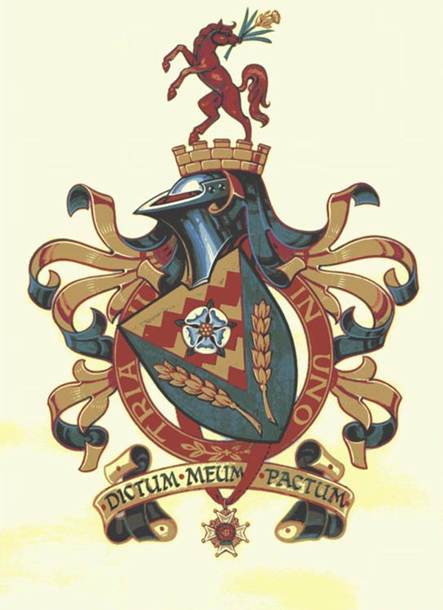
Martin Farndale’s
coat of arms
General Sir
Martin Farndale, who has died aged 71, was unquestionably the most
distinguished gunner officer of his generation. He had an outstanding career
both in command and on the staff, but was never more
at home than when among soldiers in the field. He was an example of what can be
achieved with a combination of leadership, intellect, personality, charm and
dedication. He was born in Alberta, Canada, and educated at Yorebridge
school, Yorkshire. He joined the Indian army in 1946 and, in 1947, transferred
to the British army, went to Sandhurst and was commissioned into the Royal
Artillery in October 1948. He served in several gunner regiments, but his heart
lay with the 1st Regiment, Royal Horse Artillery, with whom he served on and
off for 21 years. He saw service in the UK, Aden and the British Army of the
Rhine and, in 1964, took command of the Chestnut troop, the senior battery.
In 1969, to
his immense pride, Farndale assumed command of the regiment and, during this
period, took it to Northern Ireland, the first gunner regiment to serve there
in an infantry role. Later, he became the first honorary colonel of the
regiment. His infectious enthusiasm, his encouragement to those who needed a
helping hand, his sense of humour and his oratory skills made him a legend
within the regiment in his lifetime.
Farndale
would, I feel sure, see himself first and foremost as a commander. He was at
ease with soldiers and they, in turn, followed him without hesitation.
Nevertheless, he was an equally brilliant staff officer. After passing out from
the Camberley staff college in 1959, he served for two years in HQRA 17th
Gurkha Division, where he saw active service during the final phases of the
Malayan campaign, followed by a spell in military operations at the Ministry of
Defence. He became an instructor at Camberley in 1966.
After two
years on the defence policy staff, he returned to Germany to command 7th
Armoured Brigade at Soltau. This was followed by two years as director, public
relations, at the MoD, and a further two years as director of military
operations. He then commanded the 2nd Armoured Division in Germany for three
years. Farndale's grasp of the complexities of the all-arms battle, allied to
his inspirational leadership qualities, led to his being appointed to command
the 1st (British) Corps. Life was always exciting for those serving with him
during this period, as he was a constant source of innovative ideas that kept
all concerned on their toes. His success led to promotion to commander,
Northern Army Group, and commander-in-chief, British Army of the Rhine. As a
NATO general, Farndale earned the respect and loyalty of the national corps
under his command from Germany, Holland and Belgium, as well as the 1st British
Corps. This was fully tested on Exercise Certain Strike in 1987, the largest
exercise of its type in Europe since the second world war. Here, Farndale took
under his command a fifth corps, 3 (US) Corps, and established a rapport with
its commanding general that lasted the rest of his life.
In 1980, he
was appointed colonel commandant, Army Air Corps, continuing a line of
distinguished senior officers who had filled the post. This was a new area,
and, some might have felt, an added burden to his already full and demanding
military life. But it was typical of Farndale that, without hesitation, he
committed himself completely to his new role. He took a personal interest in
every aspect of this small but rapidly developing corps, unstinting with his
time and applying his huge capacity for work in an entirely selfless fashion.
There is no doubt that the Army Air Corps flourished under his hand.
He retired
in January 1988 after 42 years' service, and became a
director and senior defence adviser to Short Brothers plc, and defence adviser
to Deloitte Touche. He kept his links with the army, and particularly the Royal
Regiment of Artillery, when he assumed the appointment of master gunner, St
James's Park, on November 5 1988. During this period,
he was also colonel commandant, Royal Horse Artillery, colonel commandant,
Royal Artillery, honorary regimental colonel, 1st Regiment, Royal Horse
Artillery, and honorary colonel, 3rd Battalion, the Yorkshire Volunteers.
Farndale
was also a man of letters and a military historian of note. He wrote four books
covering the history of the Royal Artillery, an undertaking he was still
engaged in at the time of his death. He was chairman of the English Heritage
Battlefields Panel and, from 1989-1993, chairman of the Royal United Services
Institute for Defence Studies.
In his last
years, Farndale threw his energies into safeguarding the heritage of the Royal
Regiment of Artillery, particularly as president, and subsequently chairman and
chief executive, of its regimental museum project at Woolwich. He was an
inveterate and persuasive fund- raiser, to such an extent that some were said
to be suffering from donor fatigue. Thanks to his drive, vision and
determination to overcome manifold obstacles, the museum will open to the
public next year.
Martin
Farndale was an exceptional man, who lived an exceptional life. He was generous
of spirit, an inspiring leader, a true comrade in arms and a firm friend. The
world is poorer for his passing but his achievements
will be remembered for many a year to come. He was appointed CB in 1980 and KCB
in 1983. He married Anne Buckingham in 1955; she survives him, with their son
Richard. It was a source of great pride to Farndale that Richard too served in
1st Regiment, Royal Horse Artillery, his old regiment, to which he remained
intensely loyal.[161]
|
General Sir Martin
Farndale KCB 1929 to 2000
The original
author of this genealogy who led the British Army and Northern Command of
NATO in the crucial years of the Cold War |
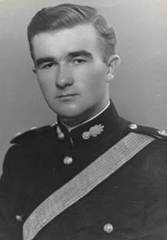
Scene 8 - Gulf War 1
Six hundred
years after his namesake was enrolled into the army of Henry V, Richard
Farndale was commissioned into the Royal Artillery in 1987 from the Royal
Military Academy Sandhurst and served in Germany; with the United Nations
Forces in Cyprus in 1990; and as an artillery forward observation officer
during the First Gulf War in early 1991. He was later Adjutant of First
Regiment Royal Horse Artillery, and after retiring from the Regular army, a
Battery Commander of 207 Battery, 105 Regiment (Volunteers) Royal Artillery
equipped with Javelin air defence missile system. He was awarded the UN Medal
for service in Cyprus, and the Gulf War Medal.
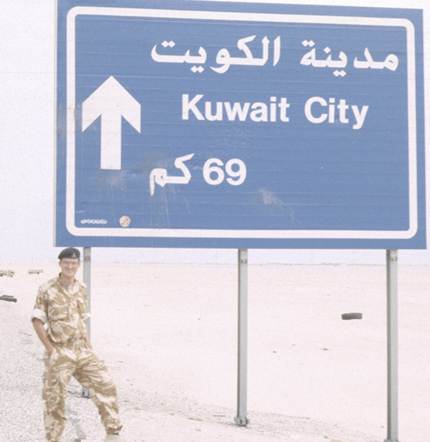
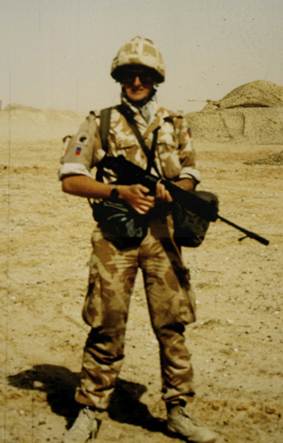
There are
still Farndales serving in the armed forces today.
or
Go Straight to Act 33 – the Modern
Family
|
The Military Farndales Podcast This
is a new experiment. Using Google’s Notebook LM, listen to an AI powered
podcast summarising this page. This should only be treated as an
introduction, and the AI generation sometimes gets the nuance a bit wrong. However it does provide an introduction
to the themes of this page, which are dealt with in more depth below.
Listen to the podcast for an overview, but it doesn’t replace the text below,
which provides the accurate historical record. |
|