Act 27
The Albertans
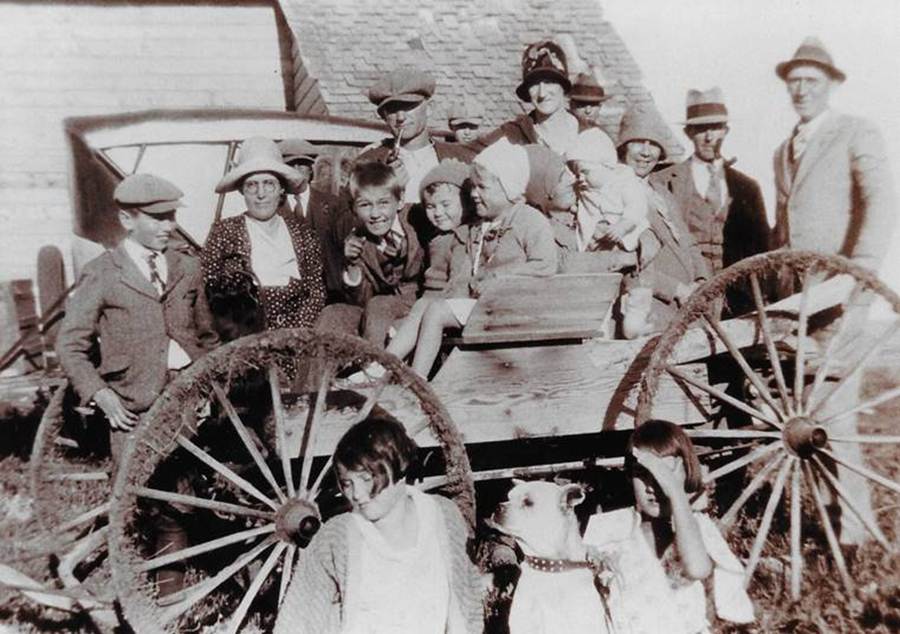
The Kinseys and Farndales in about
1931
Back Row: Martin Farndale,
George Farndale,
Ruth Farndale,
Will Kinsey, Alfred
Farndale, Jim
Farndale
Middle Row: Alfred Kinsey, Edna
Farndale, Jimmy
Farndale , Martin
Farndale, Grace
Farndale holding Anne
Farndale
Front Row: Dorothy Kinsey, Janie
Farndale
The story of the Farndales who
settled in Alberta
|
Go West! Settling Canada’s Prairies
An
introduction to the settlement of the Albertan prairies. |
|
A
musical introduction |
The
Blackfoot
Indigenous
peoples have inhabited Alberta for over 10,000 years, developing diverse
cultures adapted to regional landscapes. Northern areas were inhabited by Dene
and Cree, while the southern plains were dominated by the Blackfoot
Confederacy (Siksika, Kainai, Piikani)
and others who relied heavily on buffalo. For centuries, the Blackfoot
inhabited the area around Trochu, Alberta as nomadic hunters, relying on the
buffalo for food, clothing, shelter, and tools. At Dry Island Buffalo Jump Park
on the Red Deer River, just to the east of Trochu, the Blackfoot drove
bison over cliffs in huge bison drives or pishkuns.
The Blackfoot followed seasonal migration, wintering in sheltered, wooded river
valleys, such as the Red Deer River, and moving to the plains in the summer.[1]
Following
the 1750s fur trade, European contact brought disease and displacement, leading
to treaties and reserves by the late 1800s. Epidemics, particularly smallpox in the 1830s, severely
reduced the Blackfoot population, weakening their control over the territory.
The Blackfoot
were forced into treaty negotiations with the Canadian government as the
buffalo were nearing extinction. Treaty 7, signed in 1877, ceded much of their
traditional land, including the area around Trochu, and pushed the tribes onto
designated reserves, such as the Siksika and Blood
reserves.
Despite
displacement and the loss of their traditional way of life, the Blackfoot
maintain a strong, enduring connection to the area, recognising it as part of
their sacred original peoples land.
Breaking
the prairie
The
amalgamation of British North American colonies through a process called Confederation,
officially forming the Dominion of Canada on 1 July 1867 united the Province of
Canada (which was split into Ontario and Quebec), Nova Scotia, and New
Brunswick into a single, self-governing entity under the British Crown.
At the turn
of the twentieth century, Canada was a new nation with vast open spaces and was
looking to attract immigrants. The Canadian Government had passed the Dominion
Lands Act 1872[2] and the Homestead Regulations Act,
to make land available to settlers. The Minister of the Interior, Clifford
Sifton began a vigorous advertising campaign in Britain. People came streaming
into Canada between 1900 and 1920.[3]
The early
pioneers took up a homestead of land offered by the Canadian government.
This became known as homesteading. Any male who was the sole head of a
household and over 18, could pay $10 and file a claim for a quarter section of
land. He then had three years to meet particular requirements
before he could apply for the land. The requirements were that (1) a habitable
house was to be built on the quarter; (2) there was mandatory residence for at
least 6 months in three consecutive years; (3) land had to be broken each year
(usually 10 acres a year, but this was determined by the inspector), totalling
30 acres after 3 years and the land had to be fenced; (4) a barn for at least
four head had to be built.
The Farndales of Tidkinhow Line were the family
of twelve who were the descendants of Martin and Catherine
Farndale, who we met in Act 25. Five
brothers and two sisters left Yorkshire for Alberta, in search of a new life.
As Grace
Farndale later recalled One of our neighbours said he had never
seen such an exodus of a family. I guess it was Gran really, we all
stayed as long as he lived, though he never asked us to do that. We were to do
as we wished. After all we were all grown up and we were all very independent.[4]
Scene 1 - The Trochu Cattle Farmer
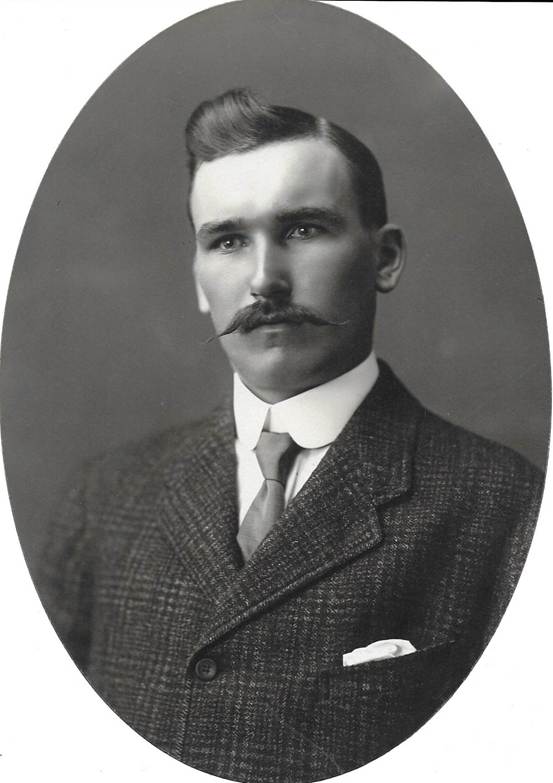
Martin Farndale
Martin Farndale was
the first to emigrate to Alberta in June 1905 and went first to Calgary, where
he took some land from the Canadian Pacific Railway near Trochu. He built a small wooden house, a shack,
and began farming.[5]
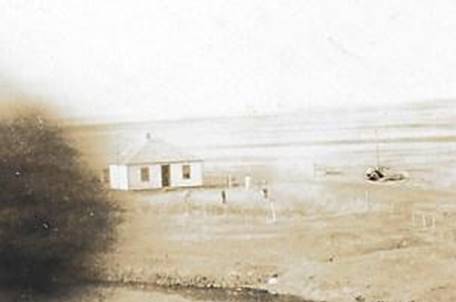
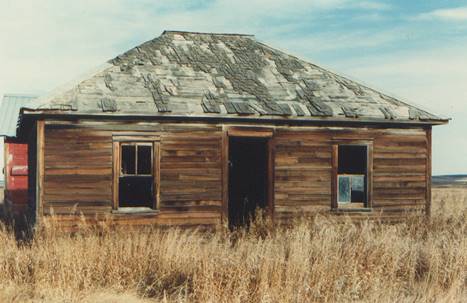
The
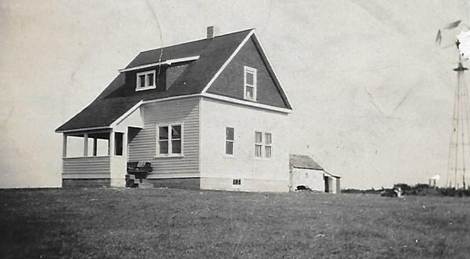
original house that Martin built Martin's shack
taken when it was still standing in 1981
Armand
Trochu had come to Calgary three years before Martin in 1902. He stayed with
friends in the city and heard about Alberta’s rich grasslands. While searching
for an ideal site, he heard from a native member of a survey crew about a
lovely valley, not far from Three Hills
and near the Buffalo Lake Trail. Armand was drawn to the sheltered coulee of
what was to become known as Trochu, by the
promise of bubbling springs that never went dry in the summer and did not
freeze in the winter.[6]
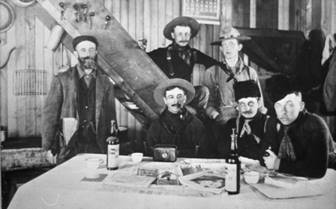
The
French cavalrymen, including Armand Trochu at far left
In 1904 the
de Beautrap brothers came to Calgary and visited some
friends near the new site of Trochu. They
had also heard about the ideal ranch site, and they decided to settle there.
They bought their first land from Hiram Letts. In 1905, the same year that Martin Farndale
arrived, Armand Trochu returned to Alberta after a fund raising campaign in
France, with two officers, Joseph Devilder, and Leon Eckenfelder. The French
aristocrats formed the St Ann Trading Company, which was incorporated in 1905.
The pioneer town of Trochu was born. Dr
Louis Sculier arrived in the district at about the same time
and he served the area as a doctor and interpreter. The St Ann Trading Company
added a stopping place to the cluster of buildings, and it served as a hotel
until 1908. The building was used as a dance hall and
the music was supplied by Jack Ross, George Walker and Dr Sculier. The dances
lasted all night and the people stayed for breakfast.
One end of the room at the stopping place became the first post office, which
was established in 1906. In those days it was the post office that was first
named, and it was named Trochu Valley. Armand Trochu was the first postmaster.
A creamery was established with remarkably modern equipment for the time and
operated for some years until it closed in 1912. It was hampered by the lack of
a railway at the time and was unable to ship out its butter. Frank Dorland
moved to Trochu Valley in 1906 from Horse Shoe Lake,
and he became the first blacksmith. Buildings were built at a new site in 1907.
The first town council were Herve de Reinach-Werth who was the first mayor, J C
MacGregor and J C Burns.
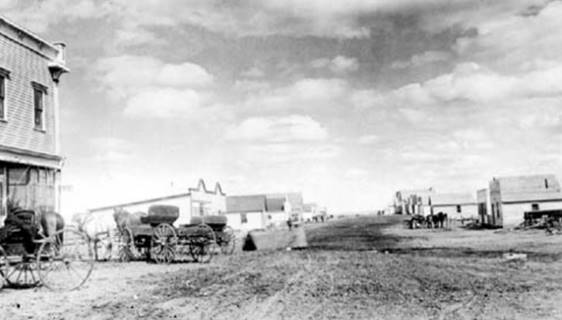
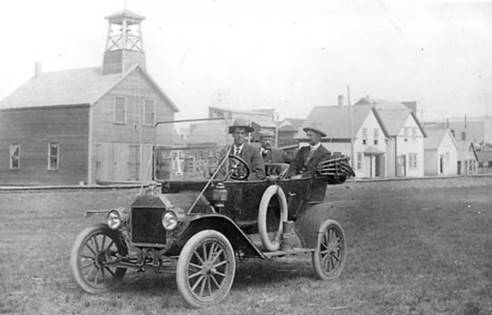
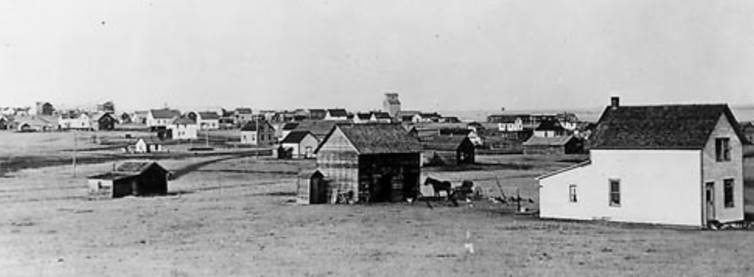
Trochu
1909
Trochu 1910
Trochu 1911
Trochu’s
enthusiastic reports soon attracted other French settlers, including Ernest
Frere who arrived in 1910. The Frenchmen brought the first garden, grain and
flower seeds to the area. They built all of the first
buildings, including a Stopping Place, the first Post Office, school, hospital,
Catholic church, and stores; and raised purebred horses and cattle. The large
Ranch house was built by Joseph Devilder. In 1911, the Grand Trunk Pacific
Railway surveyed a line to the east of this townsite, and like many other
Alberta communities, the town of Trochu was moved to suit the railroad.
The Roach
Municipal District was formed in 1913 in honour of Leslie Roach, the pioneer of
Huxley. The outbreak of the First World War
ended the first era of Trochu’s history. Most of the French officers returned
to Europe and many never returned. Armand Trochu was too old to serve and was
in ill health and he died in France in 1930. Xavier de Beaudrap,
Eckenfelder and Paillard were the only Frenchmen to return to Trochu after the
War, and the de Beaudraps were the only French family to settle for the longer
term.
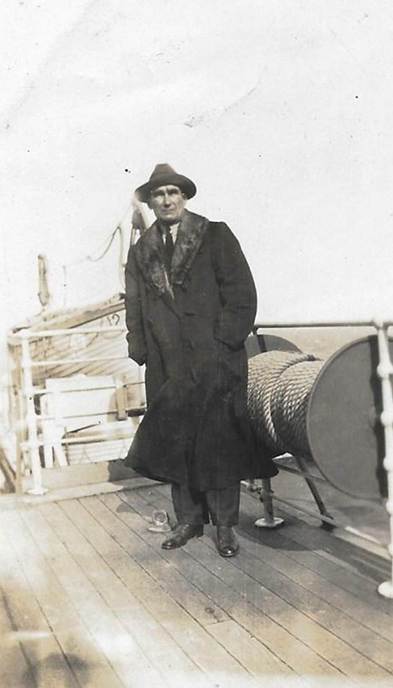
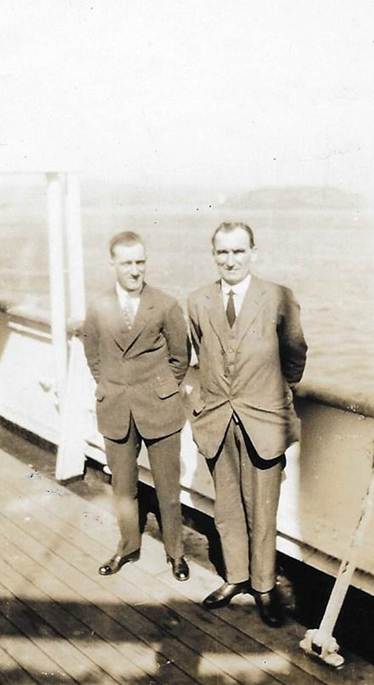
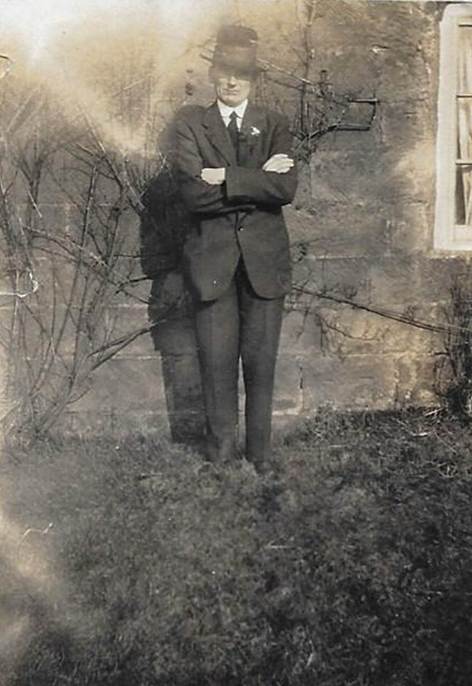
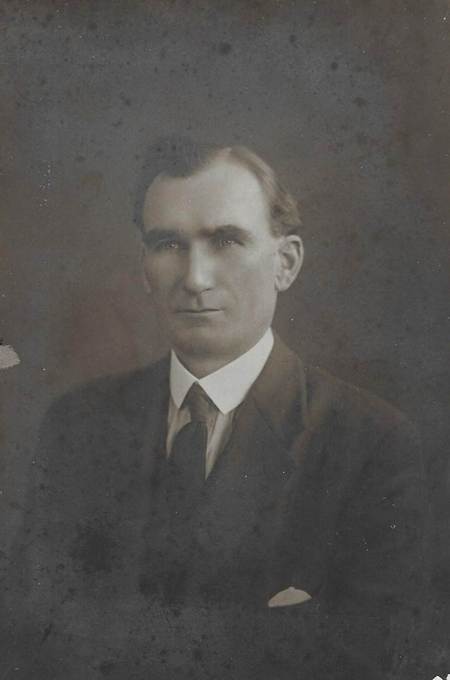
Martin at
sea on a journey to and from England in about 1920 Martin at Tidkinhow in about
1920 Martin Farndale on a visit
to England from Canada, taken about 1920 when he was aged about 40
In 1929
Martin’s cousin, Ruth
Farndale of Craggs Hall, 42, unaccompanied, travelled from Liverpool to
Montreal. There is a story that Ruth travelled all the way out to Alberta with
the express purpose to marry Martin. When Martin realised this, he is said to
have shrugged his shoulders and said, well, I guess I’d better marry her
then. They were married in 1929[7], and they had no children[8].
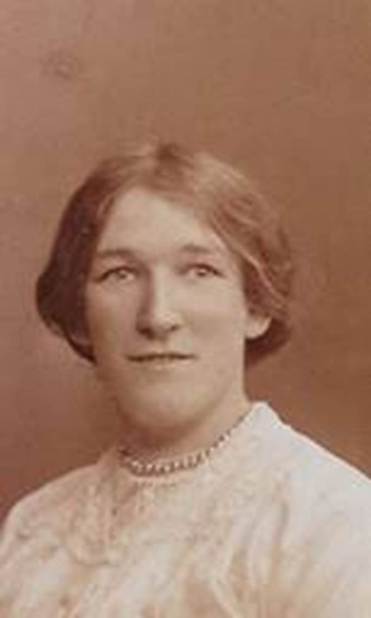
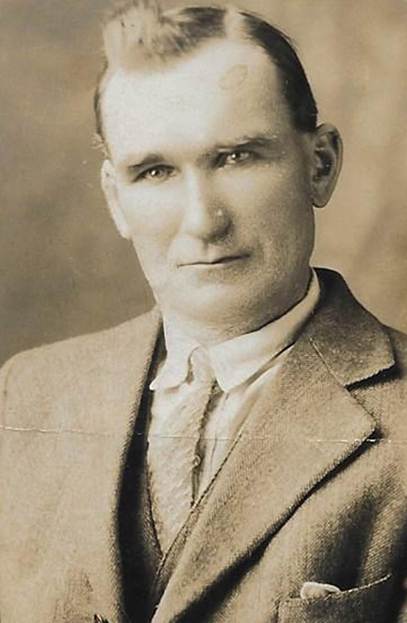
Ruth and
Martin Farndale
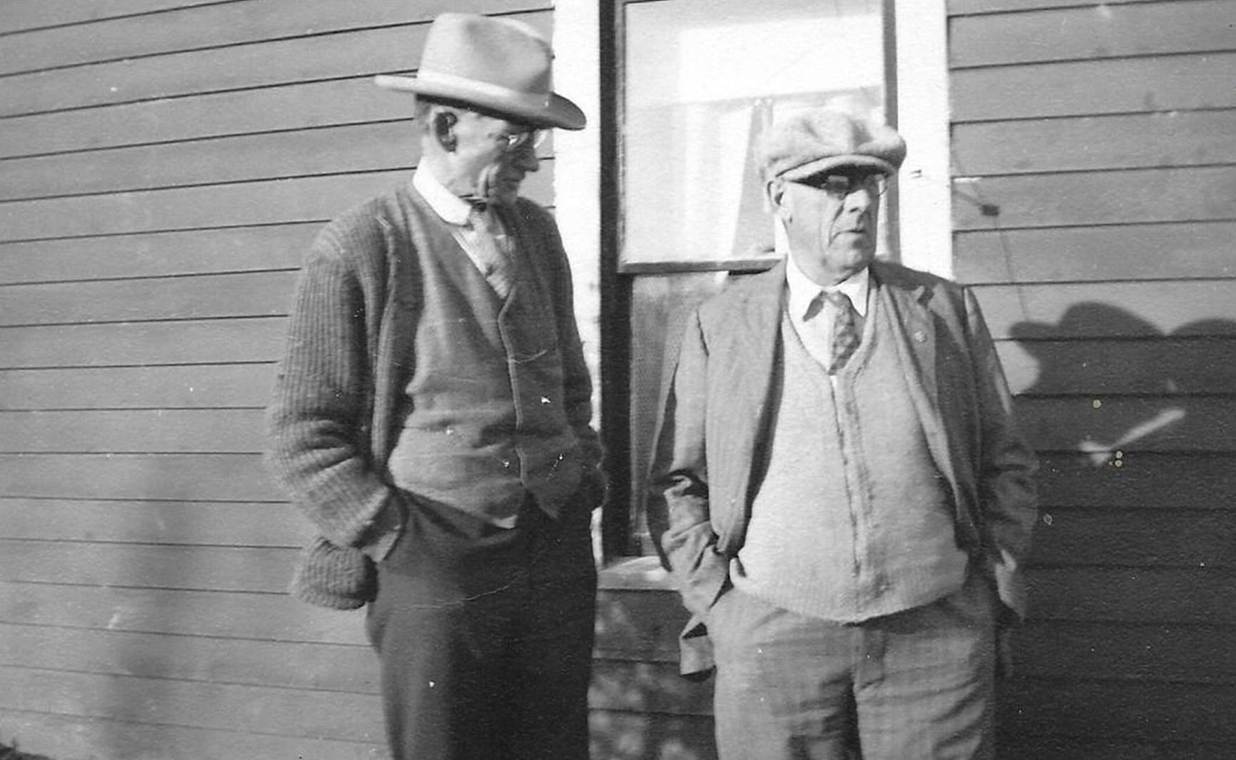
Martin Farndale
and Howard Holmes, husband of Grace (nee Farndale) Holmes at the Holmes Ranch
in Alberta in about 1940
Martin became
well known on Trochu Council and took a great interest in education, doing a
great deal for the community[9]. Martin died on 11 September 1943
and is buried at Trochu[10]. Ruth returned to Yorkshire and died
at Northallerton in 1974. The late Mr Farndale, who was one of the
district's real old timers, was born in Guisborough, Yorkshire in 1881. Coming
to Canada in 1905 he came West to Alberta, and settled in Trochu district,
taking up a homestead on the town line, which he has farmed ever since. His
marriage took place in 1929. Always taking a keen interest in public affairs,
he served as Councillor of Stauffer municipality for a number
of years and was active in school affairs serving as a trustee. Highly
respected by all who knew him his passing is a severe loss to the district.[11]
Scene 2 - The shy man of Three Hills
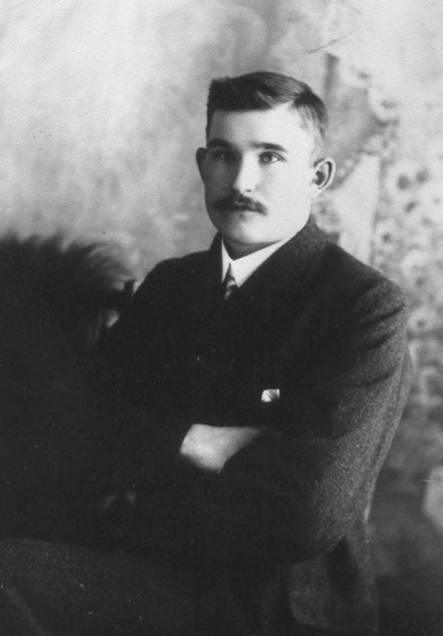
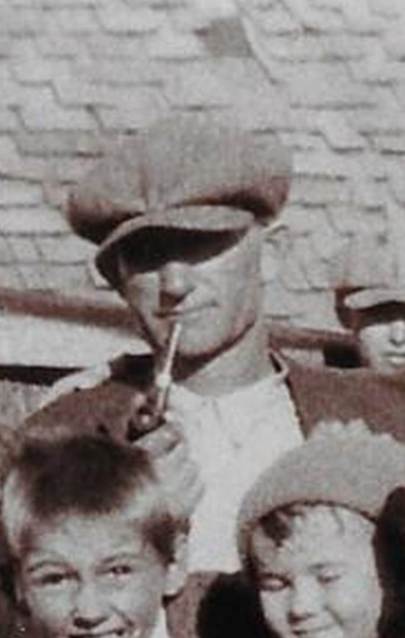
George
Farndale
George Farndale
emigrated to Alberta the following year, in 1906[12]. George
took a homestead near Three
Hills, not far from Trochu[13] and lived there all his life until
he retired, when he went to live in Calgary. He lived alone all his life,
remaining reserved and shy.
There are
many stories about him. Once he came to help his younger brother, Alfred
Farndale, to drill corn. He arrived and started and then, with the job only
half done, he drove himself and the drill home. Something said had annoyed him,
so he left. He was known as a very upright and honest man. His bank manager
used to say he was one hundred per cent reliable.
There is
also a story that he cared for a local girl, a nurse, who also liked him. She
knew he was shy and tried to help him propose. He thought she was trying to
pressurise him, so he never spoke to her again.
He never
married and remained alone and independent although well known in the District[14].
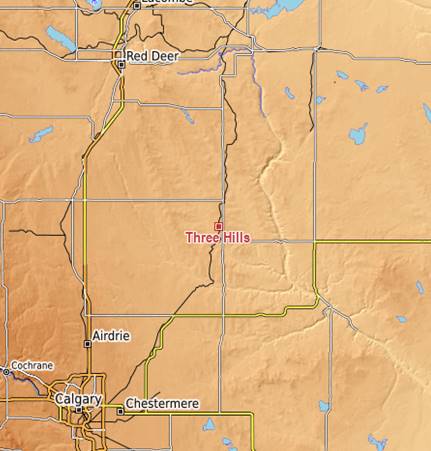
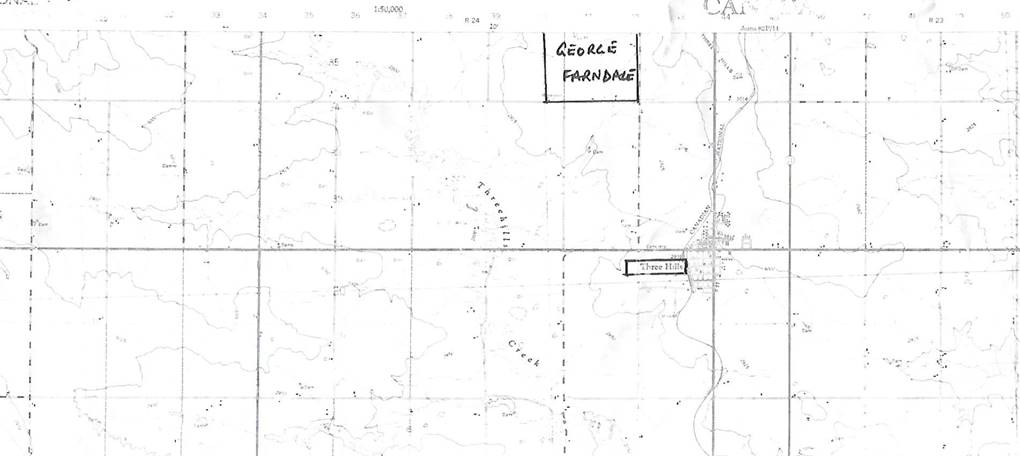
Three Hills was incorporated as a
village in 1912, the year it was moved to its current location on the Canadian
Northern Railway. With ranchers and farmers constituting its first residents,
it soon became a centre for the surrounding wheat-growing area.
George
spent the last years of his life in Calgary where he died in 1954 and where he
is buried[15].
Scene 3 - The American
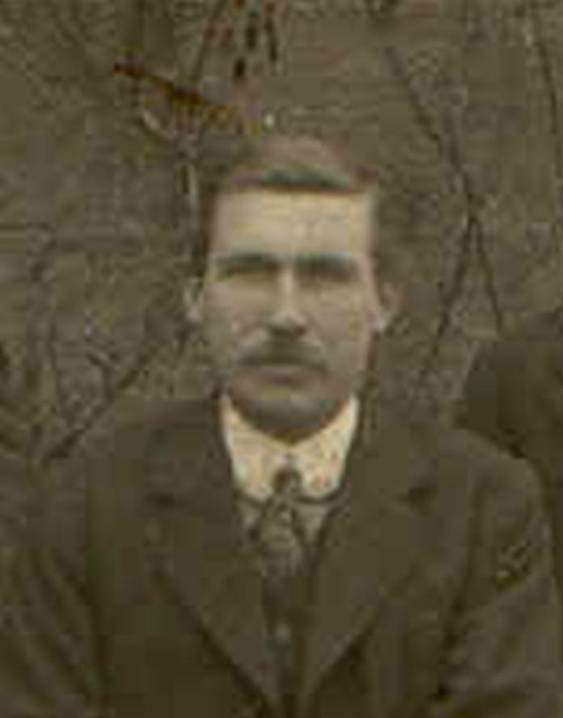
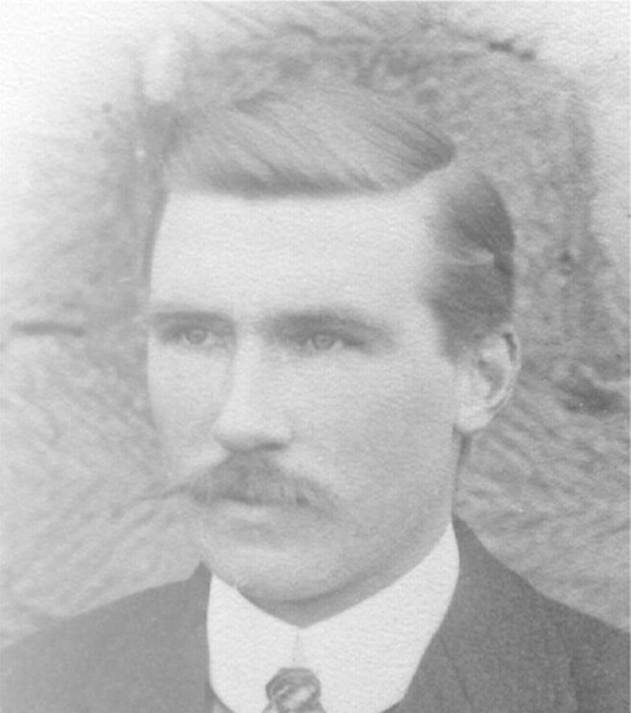
Jim
Farndale
James (“Jim”)
Farndale emigrated to Alberta in 1911 and later on
to America.
|
1885 to 1967
A pioneer who
played an important role in the construction of the Hoover Dam in Nevada and
later became a US Senator |
|
Atlantic crossings at the time of Titanic
The
story of five brothers and two sisters who crossed the Atlantic in the age of
Titanic to emigrate to Canada |
|
The
full transcript of Jim’s record of his trip top Canada |
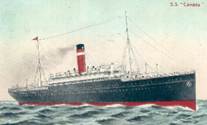
Having crossed the Atlantic, his diary picks up the
story of his railway journey across Canada to Alberta in April 1911.
The
trains do not come under shelter, but passengers have to
go outside and get in off the ground, there are no platforms, it is just same
as getting into a tram car and they are similar to tram cars inside. It was about two o’clock when the train
glided along, and there was quite a stampede and those first in got the worst
accommodation the train was already nearly full so many of us got in. Our party (5 of us) were unable to get together, we got seats here and there. We sat in train till five o’clock before we
started; it was such a messy business.
The cars we got in had no sleeping accommodation
so we of course just had to sit. The
prospect of sitting a week was not very becoming to us, but those were the best
hopes we had. One of our party had got a
tourist ticket, eventually paying about 4f more than we had, of course George
had his first class return ticket, were travelling same as us, and seemed not
too amiable but it is a decided mistake to get tourist ticket at this time of
year, they get no better fare to the crush.
I had tried to persuade George to travel ahead of us
but he travelled with us a day and half and left us and went by Montreal.
Before
starting they had to put more carriages to get all passengers in first as it
was breaking dawn when we started.
There was
a young man sitting next to me who we had noticed on the boat. He had been a solicitor in Sheffield, having
lost his hearing he had come out to Canada three years ago and worked at
farming, been back to England for a holiday.
He could only be spoken to by speaking tube, which he always
carries. He came along with us from
Halifax. He is well educated and most
interesting. George he and I fed
together, each have our own food. Our
grub which we brought from home is all very good and quite fresh. Everything is so very dear. We were fortunate to be prepared and owe much
to those that so well provided us. There
is in every coach a shower but it is a nuisance and
gets very dirty.
So many
people as usual want it at the same time but get tired of waiting. So my spirit stove
was most useful. We had a somewhat smoky
breakfast the first morning but we were glad our
eatables were all good. One mistake I
made in packing I had put too many things together.
Tuesday
10 April 1911
The
country through which we passed the first day was very broken a lot of timber
and bush with only patches of land cultivated or fit for cultivation. There was a good deal of snow for a good many
miles after leaving Halifax, but in getting further inland we found much of it
had disappeared. We stopped at most of
the small stations, but only for a few minutes and we travelled very quickly.
This part
of the country is not very interesting, it was so
rough. We reached St. Johns in good time
the first evening, but just before reaching it for a few miles we passed
through a better country. We had about
twenty minutes to wait, but were afraid to go very far
into the town. It was a nice place, very
similar to Halifax. Very hilly scenes
almost built on a hillside. It is
however quite an old fashioned place. The snow was all gone and streets quite
clean.
Trams, of
course, were running all over the town it seemed a very busy place and had many
large business houses. I cannot say much
about it, as I did not see a quarter of it.
Wednesday
11 April 1911
After
passing further it was through I think, the loveliest
country I ever saw, as far as one could see there were hills covered with green
spread trees. It looked just like the pictures at the lecture at Glasgow on the
Rocky Mountains. This part is well worth
seeing; there is also a shallow stretch of water runs about the town. I’m not sure whether it is the St. Lawrence,
it can hardly be that, but it certainly is a most beautiful sight
and the sight was very fine and certainly showed it up to advantage but could
see the hills towering up for ten miles and looks fine over such a stretch of
land. After passing away from that
lovely region we came to better land for some distance. We travelled all night at a fast speed. We could of course go from one end of train
to the other, to see who’s in, and we were on the look out
for sleeping apartments. The deaf Gent, who’s name is
Roberts found a place somewhere to sleep and I had a
seat to myself. He also found a lady
with three kiddies. She hadn’t got a
supply of bread. We gave her some of ours and bought her a supply at St.
Johns. She was going to Montreal, so we
arranged to take her place next day after she left train. She had good sleeping accommodation; after we
had made this arrangement someone else came along after same purpose, so we
were just in time. We had been hoping
all along to go to Montreal, when the officials informed us
they were going to branch us off at Montreal which is another six miles from
city itself we were so disappointed.
They had to take our car with other passengers and the “party of
women”. George another of our party (the
one with tourist ticket) decided to leave us to take the Montreal route and the
rest of us had to do as we were told for the time being anyhow. It was about noon said day when we reached
the “parting of the ways”. It was right
out on the prairie; no station; and the great powerful engines three in numbers
soon had the train separated after a lot of shunting about.
Everybody
had to look out for themselves, for they seemed to respect nothing, they go
right on whether people are ready or not.
So after travelling together for two weeks the
party was “split” up and folks get a little excided at these times.
The new
section of train slashed out at last, we were all at the windows waving etc.
until the Montreal party turned a corner and was out of sight. Many of us never to see each other again. On we go again racing over a very rough
country for many hours, there was a lot of land not fit for cultivation. This was to me rather surprising, finding so
much rough land in this settled old country.
There has so far been very little really good-looking
land, sometimes we travelled hours and never saw a decent farm.
There
seems to be lots of lumber yards and seems to be the chief industry if that is
the name for it, also I notice the fences are all wood and very clumsily put
together. I suppose they have a way of
putting up in a shape, with some nails, but takes about as much more timber as
fencing in English style.
Another
separation has taken place. The Toronto
passengers have been cut off, hitched to another train and have now left us and
of course we shall probably not see them again.
Thursday
13 April 1911
We are
now at a place called (Smith Falls) from Montreal it is a double track and
going straight on south of Toronto, but we must turn north again a little to
get to the Winnipeg track. After leaving
this place we have a very good run during the night of about 200 miles and
arrive at a place North Bay about four o’clock.
It is quite a centre on this line.
At this station, our friend Roberts left us, and so I’m left almost
alone, except for Beckwith, who spends most of his time with a rather rowdy
gang of men, not however far from me, but a little too near.
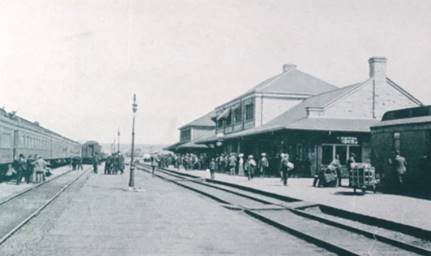
Train
station at North Bay on the Grand Trunk Railway, about 1910
Roberts
and I went round to a restaurant, as soon as the train stopped. We found that Roberts’ brother had been there
waiting since about midnight but had gone to a hotel in town and after saying
“goodbye” he left luggage and went off to the hotel. We were informed our train would stand twenty
minutes so that we were afraid to go far, however instead twenty mins: we were
kept waiting four hours. We never know
when we may be pushed into a siding for a few hours, as these are not regular
running trains, most of the line is single and they have to
get through when it is clear. Sometimes
we have a long wait, when a train whisks past us and away
we go.
North Bay
is quite a busy town of about 1200 inhabitants, and
seems a fine place. Last night a rather
amusing incident occurred. I was sitting
reading about midnight when the conductor came round to look at our tickets. One of them came a little ahead of the others
to wake us I suppose. It was such a
business, some of them did heap reproaches at the conductors, but they took it
all in good part.
Friday
14 April 1911
After leaving
North Bay we seemed to be getting along well and we
imagine we must be in front of Montreal party when we stopped at a small place
named Chaplan.
A few minutes following us another train drew up behind us and we were surprised to meet some of the other
party. We found they were all there,
but the train was running in two sections, their one soon went out and left us
once more. The other section drew up later and we found George and his
companion in it. They having spent 8
hours in Montreal and were now to go ahead of us. They soon left us waiting but we could not
help ourselves. George and tourist young
man were travelling first class. I
understand there are more colonist trains in front and two behind independent, of the two just passed on. Each train has about 14 coaches, I am all
crowded.
After
leaving this place about 6 o’clock we travel at good speed all night. By daybreak we are just coming to the coast
of Lake Superior. It is similar to looking over the sea, the scenery in many places
is very pretty, the waves are darting up round the coast, and against the huge
rocks. We pass quite near it for about
100 miles along the coast. Lake Superior
is, I think, over 300 miles long and about 160 in breadth. The C.P.R. has a stream boat service from
“Vault St. Marie”, on the east coast to Fort William west. There is a short
distance from the coast, a number of small Islands,
some of them covered with green trees and rocks which are exceedingly
pretty. We have also passed two
horseshoe curves and the track is close to the water
edge. It is a fine sight to view along a
long train such as this, gliding swiftly round such curves. It is most wonderful.
Much of
the Lake near the coast is still ice-bound and we were all much interested in
the sight, four dogs, during the day, were seen trotting leisurely along in a
sleigh, in which were two men. It was
most interesting.
This morning I was walking along the railway, whilst the train
was standing to get water, when I met a young man whom I knew quite well, but
was so taken by surprise, that I could not for the moment bring
to mind who he was. When I
remembered it was one of the Potters from Mosgrove Park. The whole family were on the train and
although I had walked the length of train inside and out
I had never noticed them and they had not noticed
me. They were in the front of the
train. They had been 13 days on sea and
landed St. Johns same day as we landed at Halifax.
The two
main places of interest we have passed today are Fort William and Port
Anstruther, which are practically near, quite busy places, just I believe,
divided by shallow river.
I
understand there are lots of works here and some mines. We of course have
passed away from the Great Lake.
Saturday
15 April 1911
Last
evening we travelled very fast 300 miles and arrived in Winnipeg about
4am. I was determined to see Winnipeg.
Beckwith was not inclined and would go along with his party,
their train was in waiting. I saw them
off and eventually went off alone. The
morning was very cold and frosty, the streets all frozen up, cars were running
and a few restaurants were already open.
I walked
out a little, but found it much too cold, and was obliged to return. I hurried back to station where hundreds of
people were waiting. I did a little
reading and writing to put on time.
About 7am I left my luggage at the office and went out for
breakfast. After which I had a long walk
right through the town. I arrived back
in time to see the people flock into “Eatons” famous
establishment, meaning of course the work people.
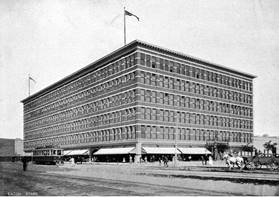
Eaton’s
department store, Winnipeg, 1910
The T. Eaton
Company Limited, later known as Eaton's and then Eaton, was a Canadian
department store chain that was once the largest in the country. It was founded
in 1869 in Toronto by Timothy Eaton, an immigrant from what is now Northern
Ireland. Eaton's grew to become a retail and social institution in Canada, with
stores across the country, buying-offices around the globe, and a mail-order catalog that was found in the homes of most Canadians.
There
were hundreds, seeing them go in gives one a better idea of what the place
is. It is a huge building and stands
eight storeys high and five floors are open to the public. I spent nearly two hours inside, looking
round. One may buy anything it is
possible to get here, and at a much cheaper rate than at ordinary stores. Winnipeg is a splendid place and is growing
very rapidly, wherever one goes, building and street developing is going on
very largely.
After
having had lunch, we resumed our journey leaving Winnipeg about 1.30pm. I was almost entirely amongst strangers this
time as most of those whom I’d travelled with had gone straight on. I had not seen George but concluded he’d gone
right on, however he had arrived in about midnight.
We were
now right out on the open prairie and a fine country too, by far the best
farming country I had seen the whole journey.
We are having a lot of stoppages now; people seem to be getting in and
out all along, hence the delays. We’re
not getting along half so quickly, a decided change in our speed, but we only
stop a few minutes. There are a few
small towns. I suppose they are all
called towns in this country. Shacks and
small farmhouses dotted here and there, but seem quite
a distance apart.
Before
dark we passed through Brandon, which is a decent little place and sometime
early in the evening we pass out of Manitoba into Saska Chewan,
at a place called Kinkella and have 400 miles before reaching Alba. We continually pass empty trains gong back east, they go at a terrific pace. There are, out here a lot of small lakes and
there seem to be a good many ducks and geese on them. It is quite a ranching
part also, as there is a lot of cattle.
Sometime
during the night we have passed Moore
Jaw which is quite an important place, the population I believe being
about 1200.
Sunday
16 April 1911 (Easter Sunday)
This my
third Sunday of travelling, I hope it will be the last. I had almost forgotten
it was Easter, until whilst reading papers I came across some Easter news and
it sort of reminded me. I travelled some
part with a Yankee today, but he got off at Medicine Hat about noon. This place has about 5000 population and I
understand is a fast growing place.
We are
now in Alberta our last province. They
took off some of the coaches today, we were rather crowded.
I met a
young man from Redcar today; he says I’m the first man he’s met from Cleveland, in the final years he’s been in this
country. He has homesteaded in Saska Chewan and was now seeking more land. I think he said his father had been in the
milk trade at Redcar, or had been, he was awfully pleased to meet me, and of course wanted to know all about Cleveland. We travelled together to Calgary,
we travelled through a fine country and reached Calgary at 6pm.
Roberts
and his friend were waiting for me.
Beckwith, who had promised to wait at Calgary after waiting a few hours
had already resumed his journey so that I did not see him again.
They took
me round to see my box, which was badly broken but we tightened ropes a little
and went off to the Hotel where we had dinner, had a stroll round town, which
was very lively and a great many people.
However, we soon made our way back to the Hotel, and got off to bed in
decent time, where we had a good nights
sleep, the first, almost, for weeks.
Monday
17 April 1911 (Easter Monday)
The next
morning, it came on to snow heavily but we heard Martin was
waiting at Olds, had come in on Saturday to meet us. We decided to take the first train out. However we slept
rather long and had to rush breakfast etc. as our train was due at 8am. On checking my box at Halifax, addressed only
to Calgary, also I was only booked to Calgary, so had tried to get luggage, but
failed to get it on train and only just got it checked in time to catch train
myself having to leave it behind. After
leaving Calgary, we were soon away from the snow, into a fine farming country,
I suppose very good land. This train was
very crowded, many having to stand. It
was a two hour journey up to Olds. Martin was
waiting on platform, he was the first man I saw standing with a dog by his side.
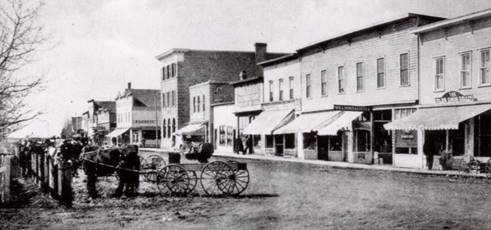
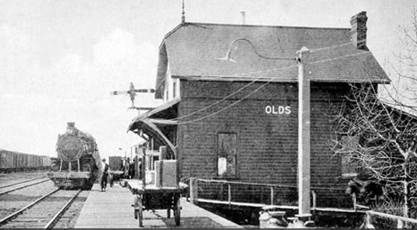
Olds,
late nineteenth century
Olds Railway station about 1920
He said
until the moment he saw me he had never been sure whether I was coming or not
as only George’s luggage had arrived, he naturally thought I had not come.
The next
problem to decide was whether to wait for my baggage for the next train was
probably bringing it but that meant staying overnight. We eventually however decided to set out
without it.
They
assured me this was the longest journey I’d ever make behind horses, and I
think it was. The roads were not very good being very wet. However the horses
were in good condition and we started out about 11am. On this rather tedious journey they informed
me it would take us till 9pm and would be very cold so we wasted no time. After driving at a good speed for nine miles
we unhooked the horses, in a “Goulee”, fed and
watered them. We had a great many good English cakes packed in a box, we did not starve.
After a little rest we again started out, but we could see the Rockies
quite plain, which was a beautiful sight when covered with snow. They are some miles from here, quite a
distance but are able to see so distinctly.
After
about 12 miles further we pulled into a stopping house, where we had supper and
fed and rested the horses. It was about
5pm when we started out once more to complete our long journey. It was a fine night but desperately cold.
The road
was quite straight, no turning, till we turn in at Martin’s gate,
it was 9pm when at last we did turn in.
Herbert
and Lang had intended staying out on this day but we’d
already heard on our way they had not done so.
We could see they were still there, by the lights in the Shack. They had
evidently heard us coming and were busily preparing for us.
The end
of the journey of 18 days and 5,500 miles
A few
more minutes and we were at last at our long journeys end. After travelling 18 days, night and day, were
really not sorry after travelling 5500 miles to know
it ended for a time.
I’m
afraid we all sat up rather later that night, “Five lonely old batchelors”.
Jim’s diary
continued by describing Martin’s
neighbourhood.
Tuesday
18 April 1911
The next
day after our arrival I had a good look round the immediate neighbourhood. Martin’s place
is very good land, the whole district seems to be good
and will doubtless become a good farming part.
But that which surprises me most is the irregularity of the land. I had heard it was what they call rolling but
that apparently means more than I expected, for I should call a lot of it
hilly, of course there are no big hills such as we are accustomed to in England
of course no trees, so that we can see a way in some places. Sometimes there is a hill, and we can only
see a few hundred yards but on reaching the hill top
we may look over a stretch of 10 yards then another and so on. I expect to see it much more level than it
is. These short steep hills also make
the roads much heavier than they would be in a really level
country, there are some parts much flatter than this.
Wednesday
19 April 1911
On the
second day Herbert and Lang wanted to drive to Trochu Valley a settlement 10 minutes
from Curlew Pass to see if they could learn anything of the fishing boat which
had been frozen in the river, as they wanted to cross to get to their
land. I drove with them to see the place.
Olds, Lochrin and Curlew are in a distinct line, east and
west. The road is quite straight all the
way. Between Lochrin
and Olds the distance is 40 miles. Curlew being 30 miles from Olds. There are telephone runs all along, between
the three towns and runs right along Martin’s fence which is on the road side. Lochrin is quite a busy little town, it is growing very
rapidly. Olds is the nearest station so
imagine hauling materials 40 miles by road to build a town, this is however,
what these pioneers had to do.
The
railway grade is cut right through it ready for the street, so they are sure of
getting trains through this year and then this will be a booming place. It is chiefly a French settlement and most of
the inhabitants around it are foreigners but they are
chiefly a go ahead people. We had got the information required and so
started on our homeward journey, but it was late when we finally did
arrive. The boys had information that
the ferry was washed down river, so decided not to wait for it, but go about 40
miles north to the bridge.
Saturday
22 April 1911
They
started out the following Saturday and Martin started off for Calgary, George
to his own place leaving me to my own resources. It was very quiet, after being
so lively for a few days of course George returned at night
and we had the weekend together. Some of
his horses got out on the road and escaped on the open prairie during the
weekend, we spent a lot of time looking for them, heard nothing until Martin
brought them in on Tuesday. He had
bought some in Olds, and found those that had got away
near Olds so he landed back with 6 horses riding on.
This
plainly shows you how far stock can wander without being stopped; they
travelled 30 miles and could have gone hundreds more. All through leaving a gate open.
The
following weeks, we saw one day a Coyote cross Martin’s place and on another occasion what is a rare thing an antelope cross within arm’s
length of us. We at first only thought
it was an antelope but our belief was confirmed by
several other people seeing it and had been much nearer to it than us. It is
very seldom one is seen in this part but one may cross occasionally. Badgers and Gofers are very numerous; they
are a sharp little thing similar to a ferret with a
kind of yellow coat in winter, which changes to dark brown in summer. There are
very pretty birds, small birds are very numerous, lots of ducks and geese in
some parts. Lots of fish too in the
creeks and rivers. There are lots of
other kinds of animals but are getting very scarce just now, besides those
mentioned.
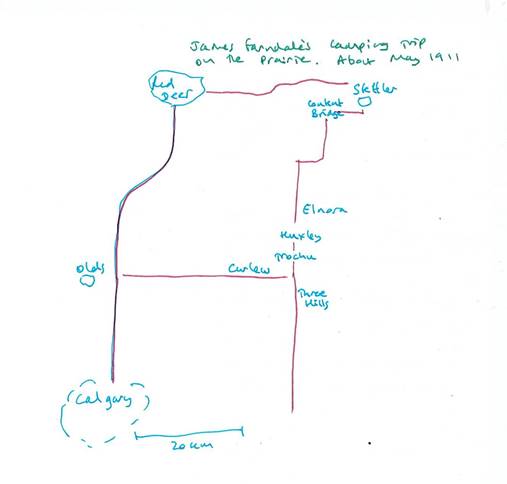
In May 1911,
Jim went on a camping expedition to explore the prairie.
I will
just try to give a short account of our trip east over the river, as it is
nearly a hundred miles over the open country.
Behind a team there ought to be something of interest although I don’t
think I am able to make it, it appears very interesting.
The river to
the east of Trochu is the Red Deer River
which heads eastward from Red Deer and then south passing about 5 kilometres
east of Trochu.
We had
been hurrying along with the work in order to start
out and it was not the first time we’d had all been ready for starting our
rather long journey. After doing,
however, a little extra baking and providing for our journey in various ways we
started out one very chilly morning with provisions and tent etc., as of course
it was our intention to camp. It was
about 7am when we pulled on to the road; the team was in good spirits and
jolted along at a decent speed. When
starting out a long journey it would not do to run the horses hard, it is
always wise to go slowly. We had to get
horses shod at Trochu so were delayed for a time. We got away again, and had a short run before
dinner, when we came to a creek, loosened our horses, fed them and had
dinner. By this time
it had come on to raining, so we knew worse luck was in store. We did not stay long, but some packed up
again and were off down the trail faster than before.
Rain soon
begins to tell on the earth and the wheels are soon
laden with mud, which makes it heavy for the horses. It rained perhaps two hours,
and again got out a little brighter and the roads dry when the rain
ceases.
For about
20 miles of our journey was over a good trail and quite open country. Presently we began to come to some bush, and
worse roads and to have more difficulty in finding the right trails. There is some land in this country called “Thistleback” so called on account of its being covered with
little mounds, similar to mole-hills
over there. This looks very curious, and also feels so when one is riding over it or
gallop in a wagon.
However there is a lot of speculation on the original cause of
this. Some say that it has been caused
by prairie fires, which have eaten away the holes and left the mounds,. I will not,
myself express an opinion, but this does not seem unreasonable in a dry country
like this.
After,
however, driving some 200 miles over the prairie it is not easily forgotten and
I just wanted to describe the condition of roads, in many parts. In a settled part, where the roads are well kept they are ploughed up and therefore become level. I think I have forgotten to say, that there
are no hard roads. In bad places they
are just ground, they plough up a lot of soil by the roadside and haul it along
by the side of a thing called a slip with two horses. They have some kind of a
thing called a grader which takes quite a number of
horses but as I’ve not seen one that is all I know, and I really dare not ask
our intelligent Canadian about a simple thing like this, they are really so very wise.
We had
anticipated doing really 50 miles of our journey the first day
but we were so greatly hampered by the rain and bad road that we had to be
satisfied with much less. We passed over
a few miles of country that looked just rather peculiar. It was all sloughs and knobs similar to the turtle back, on a much larger scale, looking
very much like the sea on a rough day.
After this we began to get further into the bush, which gradually gets
bigger, and thicker as we go north. The
land is very much cut up by sloughs and lakes, and it is swarming with
ducks. There are two items I will
mention here which made things a little more difficult.
We had
brought a gun and ammunition with us to shoot ducks of course to eat on the
way, but this is now the close season for ducks and chickens
and one is liable to be fined, they say ducks are getting scarce so have to be protected.
The other
is the Sabbath laws. I don’t
particularly wish any one to think that we travel on Sundays but as it was
Saturday when we started out I will leave you in the
dark. Well now – a man must not start a
journey on Sunday, if he is out on one then he may go ahead with it, but that
is all and do you know the reason for it?
Well – it is not a religious motive that has prompted the legislation to
pass this law. For nobody outside the
churches can say anything about Sunday over here and they are not in the
majority. But that is not the reason;
half the people would be working on Sundays and they
would be taking away work and money out of the hands of the others, the result
everybody would have to work to keep par with the rest.
Believe
if you like it will make no difference to me, but I have seen a little of
Canada and its people. Well now – you
see the ducks are protected against vicious men and what’s man protected
against? The only answer is: against himself. So you see this wonderful freedom loving people have to protect themselves against themselves. They are
truly a wonderful people. However I would not like anyone to think badly of them for
adopting protection for you might get it in England yet.
There is
another piece of law which is more sensible than either of the latter. For leaving a fire unextinguished we are
liable to a fine of $100 and no alternative.
It is said that a man who is the cause of a prairie fire may as well get
of the country without delay so we have
to be just most careful.
I’m
afraid I’ve wandered a long way from my subject but will now try to get
back. It was about 7pm when we drove our
team right into the thick bush, where it would have seemed almost impossible to
get them out, but as it was rather a damp, chilly night we needed shelter so we
drove them well in, unpacked and cleared a space in bush for camping and almost
had to cut the horses out. However we soon had our tent fixed, fire lit and supper
ready. We had much to do and darkness
coming in.
A few
willows made a good spring mattress and kept our bed from the damp ground. There was however a duck (a protected one of
course) to shoot, and before bedtime this was dressed and potatoes prepared for
food next morning, just imagine what a busy night we had. It was quite dark by the time all was done
and ready for bed, try and imagine yourself, lying on a bed made of willows,
amongst bush, which happens to be away on the boundless prairie but will be
nothing unless you can hear the Coyotes howling, ducks quacking, grogs chirping
and other pleasant noises but they soon drummed us to sleep, this was, I
believe my first night to sleep in a tent, but I’m quite certain I never had a
better night’s sleep.
The next morning we wished an early start so
it was very necessary to have the fire on in good time. You’ll remember there was a duck to roast
before breakfast; which was done all in good time.
Our
method of lighting a fire is of course very similar to that adopted by campers
and especially gypsies in England. There
were plenty of willow sticks which burnt very readily. So with a roaring
fire almost enough to roast a bullock, breakfast was soon ready. There were horses to water and feed and
harness so after breakfast we soon packed up and once more ready to start. It was a fine morning
and we were in the midst of some fine scenery. The roads were in good condition once more
after a dry night and the team jolted on at a good speed. After driving a while we somehow got off the
right trail, and went two miles too far east and found
ourselves on the riverbanks. This
delayed us for a time but we soon got to the right
trail. We reached the bridge about
3am. This was a fine spot surrounded by
lovely scenery. The hills and rivers are
splendid and the bridge making a fine picture.
Content
is a very small village situated by the river but was soon lost to view by the
hills, trees and bush. We could have
reached Stettler which was about 18 miles if we had cared to do so, but we
thought after travelling 70 miles in two days we were not doing so badly. We however went about six miles further and
from the road a little way pitched our tent.
We had intended going a little further but we
struck some “Yorkshire folks” and stayed right near their house. They simply would have us stay, when they
knew where we came from. They wanted us
to have supper and breakfast with them, but we declined, however they brought
us out tea. There was just the man and his wife; both
Yorkshire and they were the nicest people I’ve met in this country. They had a really
comfortable log house and seemed to be farming well and doing well and
his wife although she’d not been used to farming, knew almost as much as he did
now. The man had farmed near Scarborough
but knew quite a lot about Cleveland.
They kept us talking very late that evening. The next morning we
were not in such a hurry, as we knew we were but within a few miles of the
place we intended staying for a time. It
was nearly 9am when we finally left this place, we now came out into a much
better farming country and the land very good and of course the railroad runs
through it so that there is much more activity going on. We reached shelter about noon, got the
information we needed, unharnessed our horses and had dinner and started out
again four miles north. It came on
raining well next day, so we were delayed a few days as the roads were soon in
bad condition. We had intended going
further on to see more land, and probably have gone
back another way over the river, but owing to delay we finally decided to take
same route, so I need not say much about our return. We called upon and lunched with our Yorkshire
friends passing over the bridge in good time the first day.
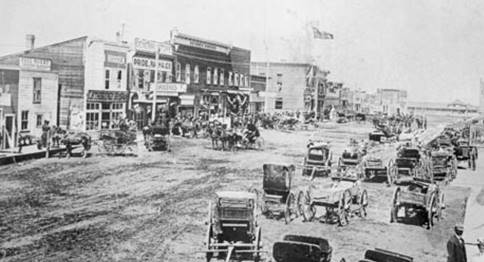
Stettler
The first
evening we camped in amongst the bush in a sheltered place, quite near a big
ranch. The next morning
we lit fire by roadside, where there is not so much grass so less danger of
spreading. We had just sat down by it
when a big drove of cattle came along. I
should think 200 head. They were driving
them away to be shipped. The drovers
looked very savagely at us as they knew the cattle would not pass the fire, the
only alternative was to drive them through a big slough, which they did with
much difficulty. I took a snapshot of
them, but the morning was not very bright so it did
not come out well. We drove back over
nearly same road, we enjoyed the scenery much.
We come
across some Yankees and they had closed the road up
over their land, which we wanted to be through.
They had a dog that had evidently been worrying a neighbours
poultry, they said they didn’t want to shoot it, would we have it? However we told them we had no use for it,
and they asked us if we would take it ten or twenty miles on our journey and
tie it up against somebody’s door and leave it, so in order not to offend them,
we agreed, after going about a mile we took off the rope and put on its neck a
ticket on which we inscribed; “quite unmanageable, kindly keep it till we come
again and we’ll have it”. We thought
we’d show Mr Yankee we would be a sharp as him for once.
Lang was
with us this time so more of us to do the cooking etc. We lunched just where we camped the first
night out, it was a swelteringly hot day so we had a
good rest, before starting again.
Strange to say it came on very cold during the afternoon and by
suppertime we found it advisable to run up our tent, it was as we thought
coming on a hailstorm. However it was not so very bad and
we went on again and by driving very hard, we eventually reached our journey
end. We drove from Stettler to Curlew in
two days near 100 miles. Whenever it was
possible we drove right through the prairie, open section and it was nearly
11pm when we surprised Martin’s housekeeper.
The night was very keen and frosty.
I really
did not intend returning to Curlew but going right down to Calgary from Curlew
by train. However
we decided to go right into Olds with first train that passed. We were up in good time,
but had to run with luggage only partly packed and just caught some
Germans going in so got started in good time.
It was a fearfully cold day and about noon came on a snowstorm. We expected these fellows would lunch at the
stopping house. So had brought no lunch
with us. They had their own lunch and
only stopped by roadside. We had to go
without food from breakfast till we reached Olds about 4pm. Though we had breakfasted early we were just
a bit hungry and cold when we reached town.
We got down to Calgary lake the same evening,
but the storm still continued all night, the stock were in bad condition.
When we
reached Olds we found we were in the hands of
rogues. It is usual when given a ride to
give them something to pay for their dinner but they charged us two dollars and
a half each, that being 19/- each, for a ride on a wagon and being about frozen
they said Martin had made a bargain with them, but I knew that was not so or he
would have told us. I at first refused
to pay so much but they took possession of my luggage refusing to give me it till I had paid it.
We finally had to pay up, but “Yankees” are all rogues.
Jim’s diary
then went on to describe Calgary in May 1911.
Well –
for about two days all was at a standstill in Calgary as is I supposed always
the case in the country. A wet day or
two and everything outside is drawn up to a standstill, but
gets going in a few hours when the rain ceases and it
beings to dry up.
I’m
afraid I’ve already written too much but I will fill up the few remaining pages
with something that might chance to be of interest to someone if not, well –
there’s only the wasted ink, and I will count nothing for the time.
Most
people who may chance to see this have doubtless heard a good deal about Canada
and this may probably only remind them of what they already heard before. However I thought I
would write a little on Calgary. as it is (thought
not a western capital) the largest of the prairie towns. I have now lived in it for over a month. I may claim to know a little about it, and
what I write here I shall never write in letters, so if there is anything
worthwhile remember it.
Calgary
may truly be taken as a type of the western towns, with however the exception
of one thing which is I think a great blundering oversight on the part of those
who had laid it out and planned it and will always be a great drawback. This is the extreme narrowness of the
streets, which are much narrower than those of Winnipeg which is of course
quite an old town compared to Calgary.
Many of the streets are not much old country streets in England (England
is always called the “old country” here and of course is so to us) but I will I
hope in spite of this drawback show you that it is a
long way ahead of England.
Many
English people, I believe, have a notion that what we call a town over here is
just a small insignificant place made up by a few hundred homesteads and
ranches and I may say if this is the idea you entertained of Calgary you may
dismiss it at once, but think of it as a very important city. It is always called the “City” and rightly
so.
At the
taking of the last census I believe Calgary had a
population of 32,000. The census is at present being taken, and it is rumoured
it will be 50,000. I am not sure how
often the census is taken, but it is not every 10 years as in the “old country” but I think every two or three. I believe Calgary had 7 or 8 years ago only
5,000 people. I may be wrong with these figures but I know it was a very low figure. Well now – I will try to describe to you what
Calgary is like. It is surrounded by
hills not very high but the city lies in a basin. If you climb up any of the hills, you look
down on it, and you can see almost every building and
I will leave you to imagine what a fine view this is. It is also surrounded on every side by a
river. It splits in two at I think the
west end of the town and runs right out into a very wide circle forming an
Island. This river, of course, accounts for the hills, the island has been
chosen as the town site.
She has
not been satisfied with the limited space inside the river, but has burst out
on almost every side and it is clambering over the hills at a rapid pace, in
spite of the fact that there is a lot of land still inside, yet to build upon,
most of which is held by speculators at a very high price.
The
river, is of course, only shallow, not however too much so for suicides etc. as
only a week ago a woman deliberately threw herself into it and a few days previous to that a horse was also drowned in it.
It is
bridged on all sides and the trains run over.
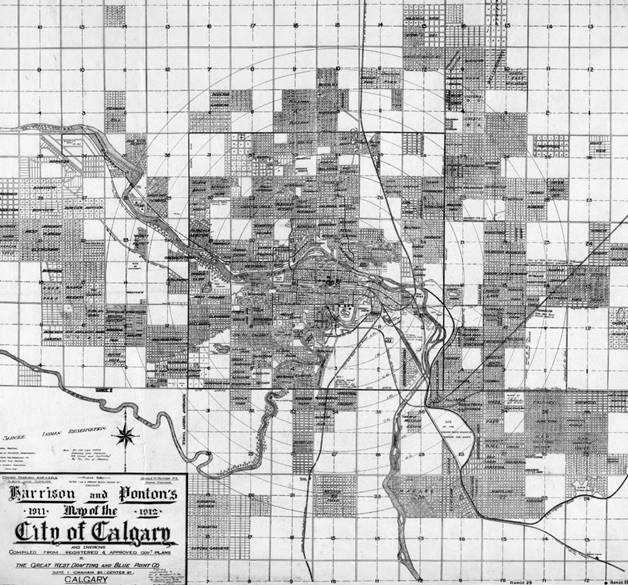
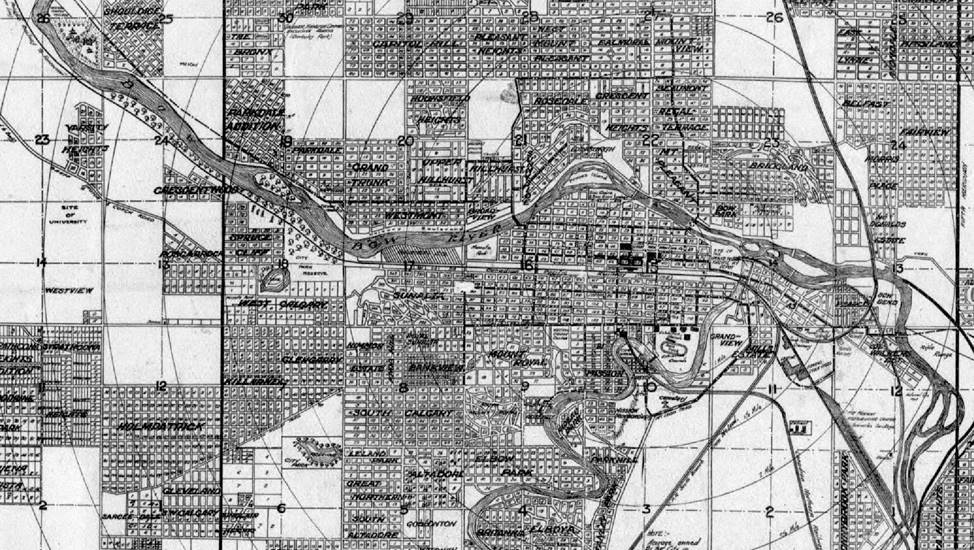
There are two sections over the river, which are almost like little
towns. East Calgary and “Crescent
Heights” are their names. The rivers
namely “Bow River” and “Elbow River”.
These are all laid out on a throw system, also named on a system. One part they are called “Avenues” and
another street the Avenues run east and west at site north and south. Beginning at the north side close to river
1st Avenue and counting up to something near twenty on
the south. Then we begin at Centre
Street of course in centre of town then 1st Street East and 1st West and so on
running into turns at each side of the centre. Well – this is hardly worth
mentioning for you probably know it all, however, this is the American system
all over, I think, and is adopted all over Canada at any rate in all the new
places
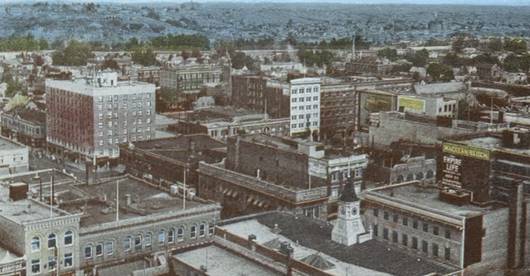
The
streets each way are perfectly straight, crossing each other at right angles
everywhere, so as you go through the streets, at a certain distance you come to
a crossroad, cutting the buildings into blocks.
In the main streets two rows of buildings are arranged back to back, and have a back road which is rather narrow,
through which the telephone and electric wires run, also much heavy traffic
which helps the main streets a good deal.
The
Avenues with the exception of the two chief ones, are
all lined with trees. Many have trees
inside gardens and a row outside the footpaths and in some parts the footpaths
are already overturning with trees and thick bush at this time of the year and
look simply splendid. Most of the
houses, have gardens also trees planted.
Lawns are well kept and the flowers look fine. It is quite a common sight to see ladies
gardening and in the evening watering their lawns and flowers with hosepipes,
water is very plentiful. There are in
Calgary some beautiful residences, gardens and grounds splendidly laid out.
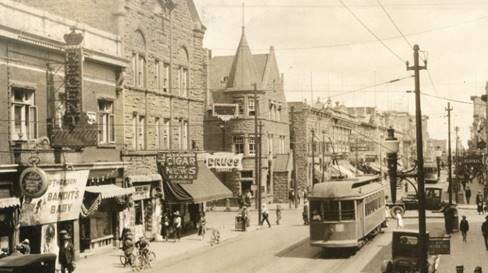
The first
three motor buses hit Calgary streets in 1907, and two years later the
municipally owned street railway system, with seven miles of track, opened in
Calgary. The immediately popular street railway system reached 250,000
passengers per month by 1910.
The
privately owned MacArthur Bridge (precursor to the Centre Street Bridge over
the Bow River) opened in 1907 which provided for residential expansion north of
the Bow River.
The
early-1910s saw real estate speculation hit Calgary, with property prices
rising significantly with growing municipal investment, CPR's decision to
construct a car shop at Ogden set to employ over 5,000 people, the projected
arrival of the Grand Trunk Pacific and Canadian Northern Railways in the city
and Calgary's growing reputation as a growing economic hub. The period between
1906 and 1911 was the largest population growth period in the city's history,
expanding from 11,967 to 43,704 inhabitants in the five-year period. Several
ambitious projects were started during this period including a new City Hall,
the Hudson's Bay Department Store, the Grain Exchange Building, and the
Palliser Hotel, this period also corresponded to the end of the "Sandstone
City" era as steel frames and terracotta facades such as the Burns
Building (1913) which were prevalent in other North American cities overtook
the unique sandstone character of Calgary
Nearly
all the houses have balconies and there with trees, lawns and flowers etc and
the neatness of houses look decidedly attractive. They are, of course, mainly of wood, with
shingled roofs. It would be quite safe
to say 80% are wood, but they are very nearly finished and painted chiefly
white and green.
At
present I am residing in 1st Street East and I can go
out and look away from this from the centre of town and miles away at each end,
land away out of town. At each side of road it is lined with trees which look extremely pretty;
viewing them along such a distances as this, but by
that I again wished to show the extreme straightness of the streets. Many people think streets don’t look so
straight as crooked (especially English folks) but I
like them much better and think they are much more convenient. And its most easy to
find ones way about.
Numbers are on Street corners and sometimes carved in cement under ones feet.
You will
understand that a town like this, which has grown in a few years from nothing,
owing to the lack of labour, street developing is a good deal behind and by no
means are the roads all paved, as it is only in the summer months that this
sort of work can be carried out to any large extent, but as you walk round the
town, you may perhaps pass half a dozen gangs of men at work, (as much as 100
in a gang) tearing up the streets, preparing them and laying tram lines. A week later, you may pass by again and find
them perhaps a mile away, or in the side street, having left behind them a
perfectly new fine street and line. This
is how the work is going on in whatever direction you take.
In order to show you how work is progressing I will try and describe to
you just one contraction I was interested in a little while ago and had the
opportunity of watching them for a few days and getting to know a little about
it. They were hauling gravel for the
city and also some private firms, the city is the
Council usually called the Corporation in England. They had when I saw them last about 30 teams
on and about 20 men to fill the wagon at the gravel pit. The man with team does but drive the horses
whilst the men fill it and are moving around in a rush all the time, and each
man drives right away to town as soon as loaded. Each one carries 1½ yards by measurement,
which I think is 2 tons in weight. This
firm had demand for more than 1000 yards per day. They build a large camp and have about 70
teams on now, I expect and camp them out of town, I don’t know how many men they
will have.
They mix
the gravel with cement and pour it down in cartloads and of course making it
perfectly level it is mixed by steam.
They next find some smooth composition on the top which makes the roads
like iron. The soft roads, which are not yet paved get as hard as some roads in
very dry weather but when a little rain comes, things
are in a very short time very muddy and almost impassable.
The tram
lines are very often laid before the streets are paved but I believe are torn
up as soon as paving operations being.
The roads when once paved, are not always needing repairs. The main streets are paved with bricks. There is also all the building going on in
the town on every street new buildings are being
raised and very rapidly and every important new building is an improvement on
the last. There is at present some very
large buildings on the way. The CPR is
building a very big hotel near the station, the Hudson
Bay Co. are building large stores that will take years to complete.
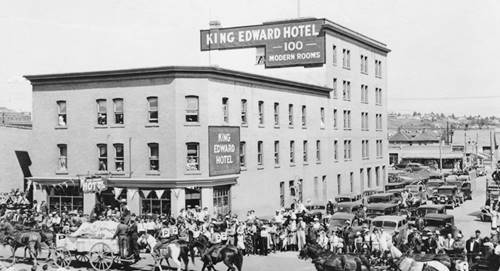
There is
a hotel quite near almost completed.
Seven storeys high, it is a brick building and has a lift. I’ve been dozen of
times up its winding stairway, only this morning I was standing on the roof, so
I know what its like climbing up the steps. The roofs are all flat, it is an exceedingly fine building, and entirely equipped with everything modern.
All the
centre of the town is built of stone and brick, the large business places,
banks which are very numerous and Post Offices etc. This morning from roof of building I’ve
referred to I had a splendid view of the whole town
and could see the Rocky Mountains very clearly.
The tram
service I think I ought to mention. They
do not run in every street but every other.
Cars are very similar to those of England but do not work on the same
reversible principle. They turn round or at least at points. They run in a circle and turn bodily round. I
think they usually run round and round the city.
Last week
was a week of tragedy for Calgary. I
have already referred to one and I think the same day a poor woman was killed
being run over with a car having got off one and stepped right in front of
another and was dragged along way under the fender of cars. A most horrible death. Only a few days afterwards a baby was found
in the river and a day or two before all this a man shot a policeman. This of course all fills up the newspapers.
The
station is very small for a place like this, but the Railway Companies are very
independent unless there is danger of another Company coming in and then
they’ll do anything.
Every
house has electric light, and when going to bed, we only have an electric lamp
to switch on; no fiddling with gas metres, or “penny in the slot” etc. also
telephones, we can phone from our own room door to any part of town.
There are
some very fine churches in Calgary. The
Methodists, Wesley and Dimitives are in this country
amalgamated.
The
Church of England is also a very large place and there are also lots of smaller
places all over the town. Presbyterians,
Baptists Congregationalists all have their own churches.
The
Canadian soldiers are at present camping a little way out of town. I saw this afternoon a large batch of them
pass through all mounted. I believe most
of them are mounted. They could never
get over the prairie on foot. There will
be a big parade on Coronation Day and I expect to get
a few snapshots. It will be a general
holiday in Calgary and there is lots of sport.
The
coronation of George V was on 22 June 1911.
The car
fares, I forgot to mention are rather different to England. The conductors I understand buy tickets and
sell them at a certain rate.
You can
purchase eight tickets for a quarter or 25 cents and with one of these you ride
as far as you wish. I do not exactly
know the price of one ticket but it will not be less
than five cents, as that is the least coin used in this part of the world. You cannot use a cent this side of Winnipeg
if you want a single stamp you pay five centres, of
course you can get five cent stamps with it.
Any kind of newspaper is five cents.
Although you can get any weekly sent for one dollar per year. That is less than two cents off each copy.
Motor
cars are very much used, on fine clear nights the
streets are full of them. When the
police have to conduct main corners. They are very numerous in the day and even in
bad weather when the roads are very muddy they go
running and splashing about. They travel
on roads English folks would say would ruin a car and big fine cars too. There are several big motor cars and many of
them hire their cars out.
Another
important item, I think I have not mentioned is the fire brigade. They are very numerous and are posted in
every part of the town and have every modern appliance and staff of men on the
spot always. They each have the horses
ready and motor cars. The Captain rides ahead in car which makes a loud whistling
noise which everybody understands and so makes a clear coast for it.
They have
everything fixed in three minutes, when the bell rings and they’re very often
out in less.
They are
of course, often being called out for the smallest outbreak as if it got a good
hold it might mean half the town being destroyed. The firemen are all drilled and thoroughly
trained and always in uniform.
The
horses, I am told, are so well trained that when the fire bell rings the stable
door is automatically opened, the horses walk immediately into their places
under their harness which is hanging on the roof and by the touch of a spring
the harness is lowered and just clasped on almost in one piece.
The men
are instantly in their places, therefore they are
easily away in three minutes.
The
stations are all open for one to examine. Of course I
know you have all these things in England.
One night
they were called out I was out in the street with my camera but although the
sun had not set it was cut off the scene by tall buildings. My films are now being developed but I don’t
expect anything.
Last
night I went to hear a London Congregationalist, principal of Hackney College;
he was an old gentleman, but delivered a good speech.
There are
lots of political meetings in town and all parties are represented, even the
socialists. I have not heard of the suffragettes but the women are organised in some way. Only tonight I noticed a meeting would be
addressed by a lady a social reformer and if I’d known where the church was I should have gone.
I should like to see the suffragettes out here!!!
There is all nationalities in Calgary but most are Chinese, or as
they are termed here “Chinks”. They have laundries, restaurants and some of
them stores. There is in one part
nothing but Chinks. They go about
hunting laundry and bring it right back. As I write this the “old fool” who
takes mine has just brought it in. He
comes every Saturday night somewhere about midnight. Sometimes everybody is in bed. However they are
useful in their way, especially since there is a scarcity of women.
There are
also a great many squaws of both sexes. With blankets and shawls tied about
them and beads hanging around their necks.
Some of them look very inhuman.
They go round amongst the dustbins sorting out all the rubbish.
I think I
have already told you how very smart the people of Calgary are, but a lot of
them talk as though they had a big crust in their throats and to see them going
about chewing you would really think something was wrong. I believe if you look in the dictionary you
will find I’m not far wrong when I say they “chew their cuds”. Every shop sells chewing gum and it is very largely used by those who
don’t indulge in the other sort.
I do not
know if I have already mentioned the cost of living here or not. But everything is just about twice as much as
in England and it is impossible to get room and board
under six dollars per week that being 25/- and at the Hotels two dollars per
day.
I notice
they are having on “Coronation Day” several different races, horse races, foot
races, and sports. It is going to be
quite lively and there is to be a big parade with the soldiers.
The
streets are full of soldiers every night from camp but
they are not the well disciplined
men we see in England, they have glorious fine uniforms, but the men are not
this. Some of them look more like
escaped convicts but I think they are mostly rescues or territorials or some
such. However I
suppose they are very brave fellows.
I have
been reading tonight in the overseas Daily Mail (so called but which is a
weekly printed specially in London for overseas) that you’ve had the finest
month in May, that you have had for a lot of years and I was thinking things
must have had a turn since I left for it has usually been a miserable month.
The
Editor speaks of a great heat wave and the pretty flowers that are blossoming
in the parks and gardens of London and I think perhaps
you must have had some April showers. I
suppose London will never have been so pretty as it is
going to be next week and I really feel as though I should like to be there,
but I’m afraid I’m too late. We get lots
of news and lies in the Canadian papers. If there is a by election in England or Lord
Roseberry makes a speech or Chamberlain sends a letter to the press, we have it
here next day, but we don’t often get the real thing I’m afraid. By the phoney papers the English public are
just about murdering (or as we say lynching) our Prime Minister, but whatever
they do they can’t get over the fact that Canada has been well ruled.
Since I
came out we have had all kinds of weather, snow,
frost, hail, rain and heat and it has not appeared to me so very much different
to the English climate but now it seems to be getting hotter every day and
today June 19 it is intense.
According
to reports, Canada is going to have what the papers term as a bumper crop and I
think the moist spring, must have been favourable to all kinds of crops. There is just off the lake, a large Indian
reserve been sold, somewhere in Calgary and district and land has been making
very high prices. I suppose the Indians
are being moved away to another part out of the way.
I met the
man who sat next me at table on board a few days ago, also another man who
travelled to Winnipeg with me and yesterday I met a painter who travelled on
the “Canada” on his next voyage and they had had a
similar voyage.
I have
now reached the last page so will not write any more. I think I have already too much, much of
which is not at all interest, but if one really wished to write more there is
plenty to write about but no doubt would take a lot if
time and would be necessary to look up facts regards the country and study a
little of its history.
There is
certainly plenty of scope for those who wished to take the trouble and had the
time. There is however lots of good
books on Canada but there is no reason why there should not be others
forthcoming.
Well – I
must say Canada will be a prosperous country in the future and it is quite up
to anything I expected of it. So I am quite satisfied.
If anyone should require further information
please let me know.
Calgary
is all bustle and hurry for the Coronation.
A big arch is being erected in Centre Street which is to be donated and
the City will be very smart. The Town Hall is already
decorated on the outside and looks fine.
Two huge guns standing in front.
George saw the King in very large letters. The shops are all full of Coronation goods
and “Union Jacks” and they say Canada is not loyal but all sane folks in Canada
are loyal to the “Old Country”.[16]
Jim did not stay long in Canada before he went to America
for the rest of his life[17]. Jim always wanted to improve his education and there wasn't much chance
in those early days in Canada. So he decided to go on
to USA. He 1915, he managed to get into Dulath High
School from where he got himself a place at Valpraiso
University in Indiana, USA. His story is picked up again in Act 28.
Scene 4 - The Kinseys of Three Hills
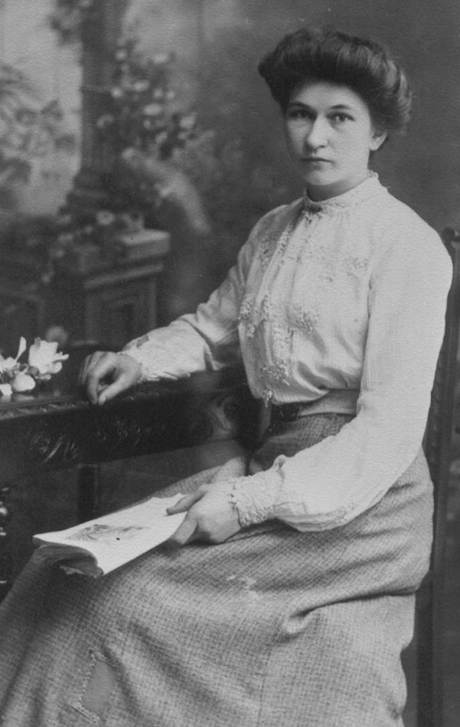
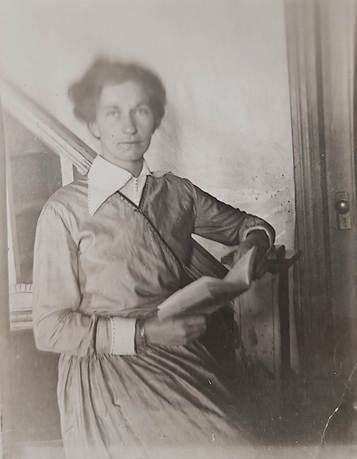
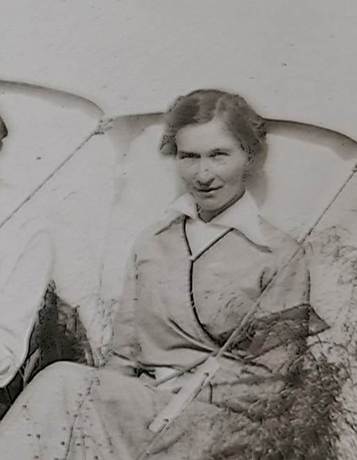
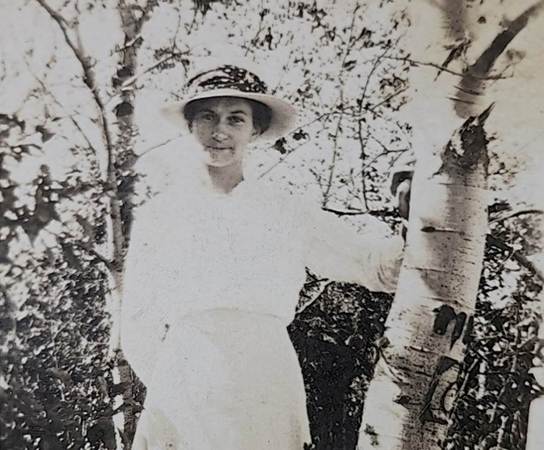
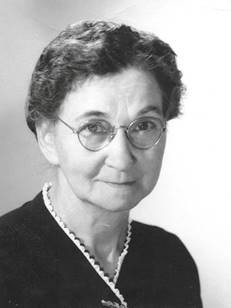
Kate (nee Farndale) Kinsey
Kate Farndale followed her brothers in 1913[18] and also
settled at Three Hills,
Alberta, where her descendants, the Kinsey family, still live. When Kate
Farndale arrived to look after Martin and George, a hard
life after the farm in Yorkshire, she met the Kinsey family of Cheshire,
already friends of her brothers. Then, on 28 June 1917, she married William
Henry Kinsey at Stettler[19]. Bill Kinsey had homesteaded 16
miles north west of Three Hills and extended an existing
prairie shack[20]. They had three children, George,
Dorothy and Alfred. They lived at Three
Hills where Kate’s brothers Martin, George and Alfred also lived.
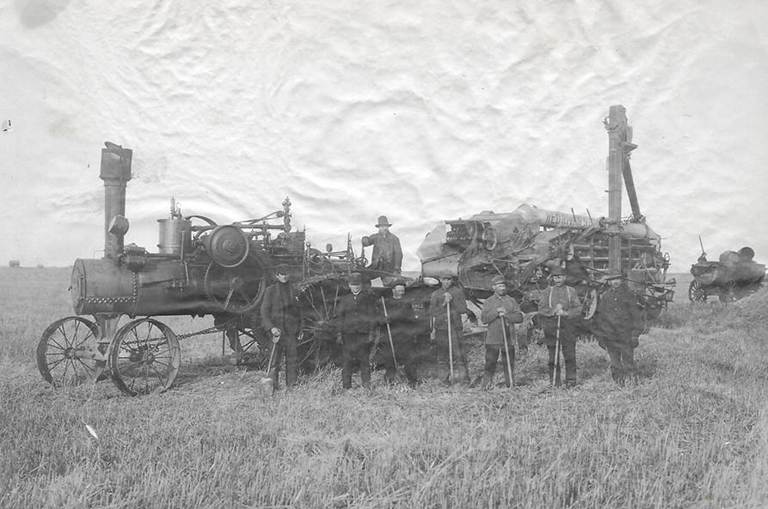
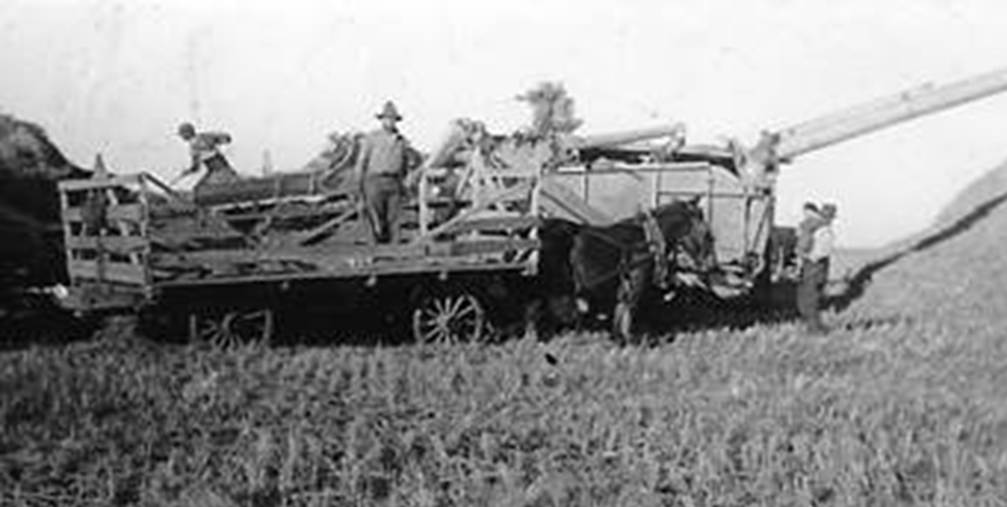
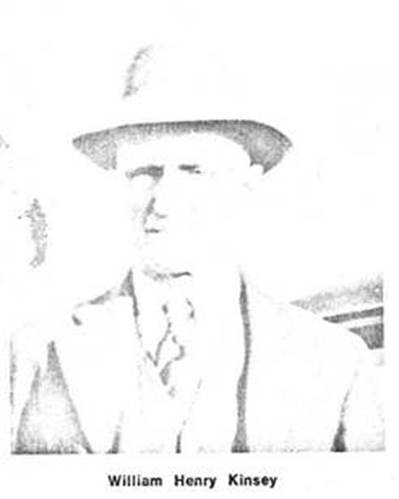
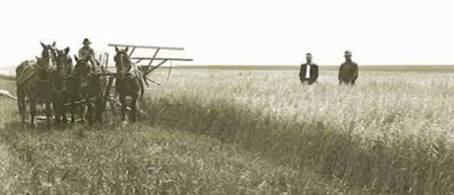
Bill
Kinsey’s threshing set in about 1900 in Alberta, Canada Harvesting on the Prairies
William
Kinsey was born on 13 February 1874 in Cheshire. For a number of years he lived on a dairy farm in the United States. In 1904
he homesteaded 16 miles northwest of Three
Hills. His brother John and he bashed in a 12 foot by 14 foot shack. Later they built a main room onto it. In June
1917 William married Catherine
Jane (“Kate”) Farndale. They had three children. George later farmed 15
miles northwest of Three Hills,
Dorothy Goodbrand lived southeast of Lake Am, and Alfred farmed 13 miles
northwest of Three Hills. William Kinsey was a trustee of Curlew School. He
joined the Council after Bill Hazel's death in 1938 and remained on until
amalgamation, a period of about 5 ½ years. His brother George Frederick Kinsey
was on the council in 1912 and resided on his farm. William Kinsey died in
February 1959 aged 83.[21]
Kate is
always remembered as very strict. She would not tolerate smoking or drinking
alcohol. She was deeply religious and set high standards of behaviour for her
own family. There are many stories of her family going out to the barn for a
drink or a smoke to avoid her displeasure.
In 1922,
Prairie College, originally founded as Prairie Bible Institute, was established
in Three Hills with L. E. Maxwell as
its first principal. The population of the town prospered in the following
years as did its adjacent settlements. The Maxwell Tabernacle was Canada's
largest religious auditorium before it was demolished in 2005. It operated from
1954 to 2005 as a local church, concert hall, and graduation auditorium of
Prairie Christian Academy and Three Hills
School high school classes.
Kate
Farndale
When her
husband died in 1959, Kate moved to a house at Three Hills, where she was close to her
family. George Kinsey married and moved onto his parents' farm. While growing
up on the farm west of Trochu, Alfred,
George and sister Dorothy attended Curlew School. Alfred worked on the farm
after school with his parents and alongside his brother as well as for various
neighbours and relatives in the local farming community. Alfred attended bible
college at Prairie Bible Institute and graduated in 1952. In 1958 he married Oneta Davis and they moved
to the farm where he had grown up. In 1960 they moved to Three Hills where they joined Prairie
staff for 5 years. Alfred worked there on the farm and in the milk pasteurising
plant. Kate died on 9 September 1966, aged 82 years, at Three Hills. She is
buried not far from her brother, Martin Farndale,
in Trochu graveyard.
Because of
development of the nearby methane fields, the food and lodging industries in Three Hills grew significantly in later
years.
Scene 5 - The Saskatchewan Butcher
Then in
1913 another brother arrived but he went to Earl Grey in Saskatchewan. This was
William[22]. William Farndale
emigrated to Saskatchewan and served in the Canadian Army in World War 1, dying
shortly after that War from influenza.
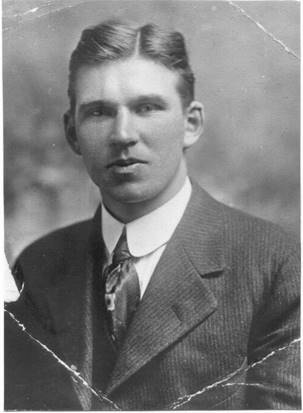
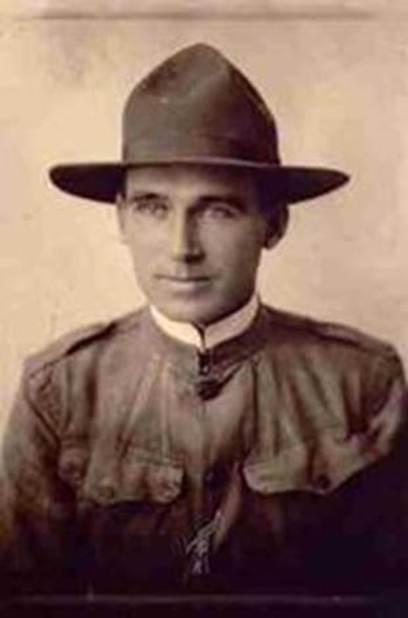
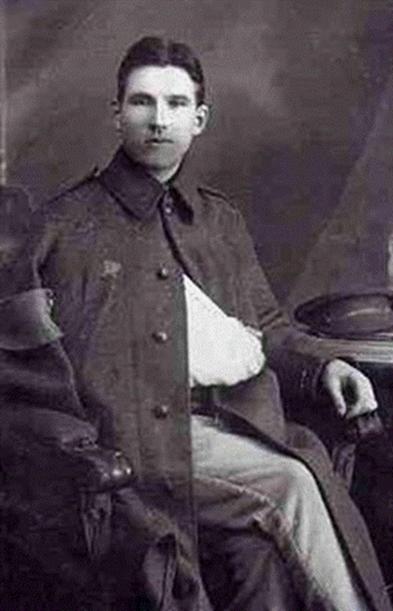
William
Farndale
He travelled
to Canada on the Victorian, a ship on the Allan Line, departing
13 August 1913 from Liverpool to Quebec, a labourer, aged 22[23].
He first
went to join Martin
Farndale at Trochu and got himself a job
there as an assistant butcher. What happened next is not clear, but it seems
that in about 1914 he moved to Earl Grey in Saskatchewan, presumably to
continue his trade as a butcher. He lived at Last Mountain, Saskatchewan, a
lodger, and butcher working on own account with a shop. He was unmarried.
At some
time, probably 1915, he joined the army and went to France. His enlistment date
was 19 April 1916 at Regina, Saskatchewan[24]. He was wounded in action at Vimy Ridge on 13 December 1916
while serving with the 28th Battalion. He had a gunshot wound in the right
forearm and was in hospital in Epsom, England. He was discharged from the Army
at Calgary on 18 February 1918.[25] We will meet him again in Act 32.
We know that
he returned to Earl Gray and that in the great flu epidemic of 1918 he drove
patients to hospital, caught flu himself and died. The wording on his memorial
in Earl Gray reads Farndale. 28th. In Memory of Pte Wm Farndale, 28th Batt.
UEF. Died Nov 26th 1918, aged 25 years. Erected by his
fellow Comrades and the citizens of Earl Grey and district, in grateful
recognition of his services to King and Country.[26]
William had
been engaged to a girl in Earl Grey at the time of his death. She wrote to some
members of the family but there was no trace of her since.
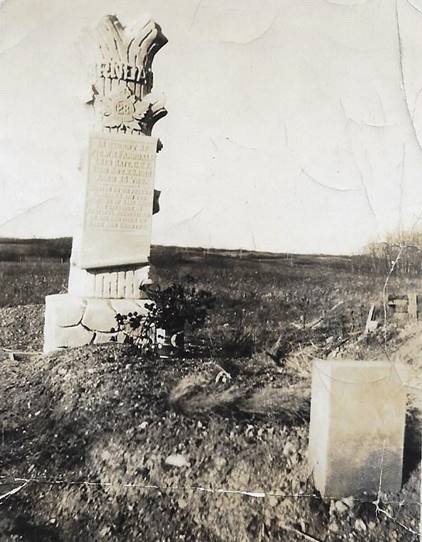
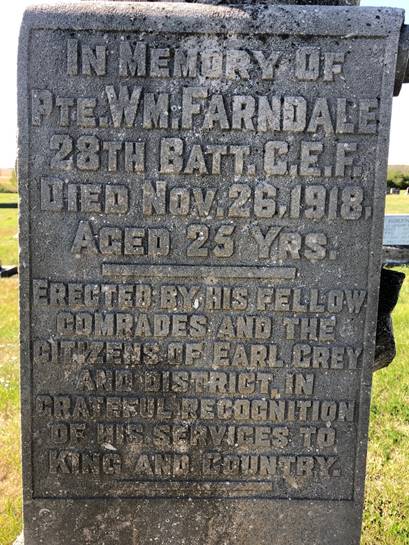
Scene 6 - Ranch Life
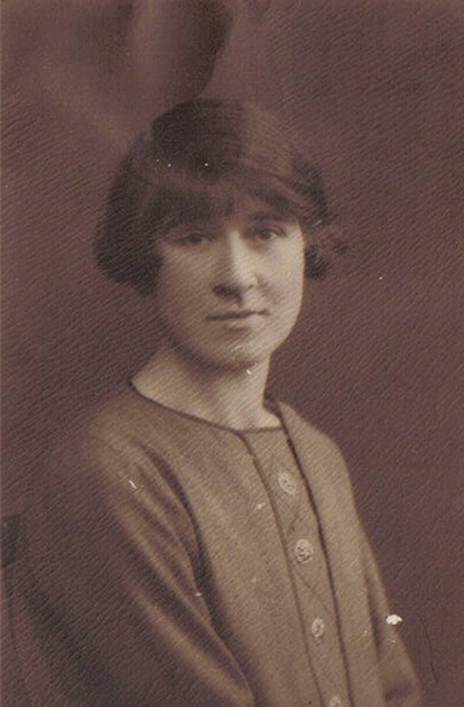
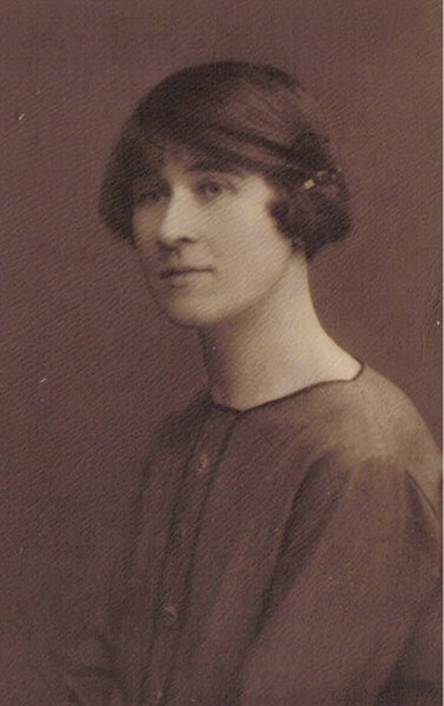
Grace
(nee Farndale) Holmes
Ten years
after the death of her brother William, Grace
Farndale emigrated to Alberta, married Howard Holmes and lived on a ranch
there, before returning later in her life to Alberta.
Grace
Farndale’s diary
touches on the thrills and trepidations of emigration to Alberta.
Brother Martin came over
from Canada during the Christmas of 1927. Father was very ill and he died in
January 1928 at the age of 82. It was the first and last illness of his life.
He had had prostate gland trouble and they wouldn't
operate in those days on the elderly. The doctor said he was as sound as a
bell, except for this trouble. So ended the worthwhile life of a fine old man.
One of the best in his upright, honourable life and outlook. At that time I was
only at home casually as Peggy and I were at the poultry farmer
Leeming Bar. She and Alf had got engaged to be married in
March so that was that! Both father and Martin had
discussed the possibility of my going back to Canada with Martin. I had
serious thoughts and I felt I knew I was going to do just that as I was at a
loose end. I had always wanted to go anyway. Then when Peggy
and Alf
decided to go that did it.
It was an
exciting and busy time. I was thrilled to bits. Dorothy and
Alf Ross got married. There was so much to do selling our poultry farm etc. ‘We
were all hell bent for election’, to use one of Howard's expressions. One of
our neighbours said he had never seen such an exodus of a family. I guess it
was Gran really, we all stayed as long as he lived, though he never asked us to
do that. We were to do as we wished. After all we were all grown up and we were
all very independent. John stepped into
Tidkinhow with the help of Lynn
and did very well for himself during the Second World War.
There was
a touch of sadness deep down about leaving the old place, for us all I think,
and England. One never does these things lightly. But for me the excitement of
going overseas counterbalanced all that. It had to be done
and I never tried to shirk difficulties. Sometimes I thought I rather enjoyed
the challenge in my quiet way. It made life more interesting. I had already
found out life was far from rosie all the time long
ago, just occasional little glimpses. I was always an optimist and felt that
there was a new life ahead of me. At the time of leaving for Canada, I said I
would stay five years or so.
Dorothy
and Alf got married, just family in a few neighbours and off they went. Peggy
and Alf were
the next. Ditto. A family quiet wedding and they were off to Canada. I was left
to pack up which was a big job. Martin was at
the bungalow with me. Lynn
and John were
ensconced at Tidkinhow and Martin went up
again. I took as much of our stuff packed in trunks and everyone packed solid.
This chap took me to the train and thought I had rocks in my baggage. Martin had asked
me to go alone to Liverpool on March 30th as he wanted to go to a big race at
Liverpool - The Grand National. I was a bit nervous really. However, he didn't
go to the race and met me at the train, was I ever glad to see him? I was a bit
of a ‘green horn’ travelling and I was terribly thrilled at going to Canada. I
would have got anyway, whether or not Peggy
and Alf had.
I had made-up my mind.
On arrival
in Trochu in 1928, Grace
Farndale wrote When we arrived at Edmonton, Alberta, which was 100 miles
from Trochu, it was even snowing more!
Outside it was much colder, somewhere below zero and after the hot train I
found it very cold when we alighted. We changed trains at Edmonton and boarded
a smaller local train to Trochu. It was getting exciting now; thoughts of
seeing Kate
and family and brother George. Kate I had not seen for 25 years, George had been
over on a visit. Peggy
and Alfred
would be there. It was still snowing a little at Trochu
and I was a bit dismal. No one had been able to get to meet us and Martin got a
taxi. It was below zero and the roads were frozen hard. What a ride! Before we
started Martin
had taken me to a hotel lounge to wait until he rustled up transportation. I
felt so strange. There were men sitting around and one spat into a spittoon
which rather disgusted me. They were dressed like working men in overalls and
windbreaks, no ties and had caps on. One of the men said there was a nicer
sitting room upstairs if I wished but I thanked him and said I was all right.
At last Martin arrived
so he came on he had persuaded a taxi man to drive us.
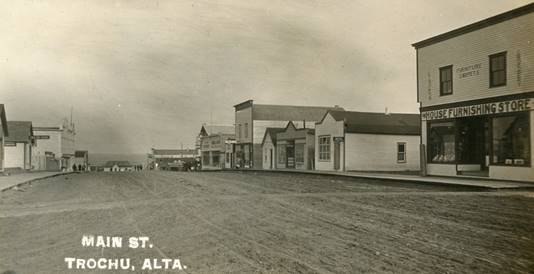
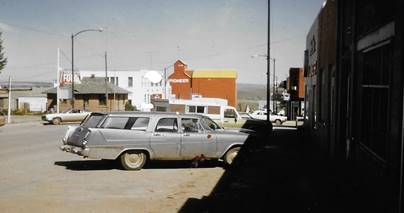
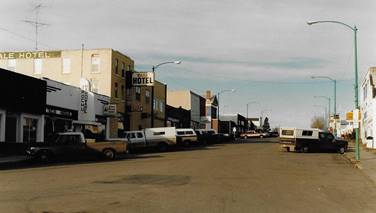
Trochu in
about 1930
The MainStreet, Trochu in 1973
Grace
remembered, I went for a buggy ride, borrowing Will’s buggy and horse. I had
a blue woollen dress on. This was May and it had warmed up considerably. The ‘gumbo’ (clay), did splash and
I never did completely get it off my dress. We started out to Three Hills from Martin's shack
joyously. A matter of 10 to 15 miles, I forget the exact distance, most likely
10. Well I can tell you it was a long way in a buggy
in Canada. The altitude, 3,500 feet above sea level affected one and there was
a harsh, dry wind, though not cold. We were so new to everything and had not
acclimatised. It wasn't the soft mellow climate of England. I remember we came
back sleepy and washed out and very quiet. It was a bit too far, for a start
anyway! However, we had to learn the hard way. We were what they called in
Canada, “green Englishman”.
Martin and Alf were busy scouring the country for land for Peggy
and Alf
and finally settled for a farm at Huxley.
There were more trees there, it was what they called “park land”. Then house
building began on the site and they had a builder and Martin and Alf
did the labouring part. I expect Martin was
experienced but not Alf.
It was amazing how quickly they got it up and they were soon in it, though a
lot had to be done both inside and out at least they were on their own. I
stayed alternately between them and Kate for a month or two and then I went to
British Columbia. Kate had got in touch with the Johnsons, Herbert and Evie,
and I had been invited to stay. Also some people in
Trochu had asked me to call and see their sister in Vancouver. Kate was against
this idea, saying Vancouver was a wicked city and I should on no count account
go alone. However I had different ideas and was sure I
could take care of myself. Nevertheless I was a bit
nervous being shy and of a sensitive nature.
However I set forth intending to visit these people and look for a
job eventually. It was June when I left the family in Alberta. There was Mr and
Mrs John Leng in Calgary. Kate had got in touch with them, wasn't she busy!
They were from Cleveland whom the elder ones in the family knew and they met me
at Calgary station and I stayed that night with them. They were kindness
itself. The next evening they saw me off the train to
Vancouver and I got a pressing invitation to go again whenever I returned.
Calgary is 80 miles from Banff in the Rocky Mountains. It was an impressive
journey through the mountains, 900 miles from Calgary to Vancouver. One had to
have a sleeper. It took all night on the train and all next day, till late
evening to arrive. After Banff it was soon dark but next morning
I woke up in not so much the granite towering Rockies as at Banff, but the
tapering of lesser ones and also beautifully green fir
trees, densely covered.
It was
much warmer than ever in Alberta and as we neared Vancouver the hills
diminished. There were fields, villages, it looked more like England
and it was, though I would say the climatic conditions were more like the south
of France. It was so much warmer than England. Coming through the Rockies from
Banff the altitude was 6,000 feet and it looked very precarious (the train had
two engines), looking from the train to the valley below. Field was the highest
point and a stop there it felt heady, one felt the effects of the altitude,
must have been 7,000 feet there. After that we descended till we got to sea
level at Vancouver. The guard who came through the train frequently seemed very
friendly and I found him interesting to talk to about the country etc. When we
approached Vancouver I asked him if he could recommend
a nice hotel for me to stay and he told me of one right opposite the station. I
didn't like the look of it and I met a lady, very
English, and asked her if it was alright. She said, “Oh no my dear, don't stay
there.” She walked with me until we came to a YMCA. She said that if you are
alone and a stranger that is the best place. Another impression. In England,
1928, one could have asked a Bobby or train people and been assured of reliable
advice, but not here apparently, though I never had another experience like
that in Canada, but I learned quick!
I had the
address of a lady whose sister I met in Calgary and a friend of Kate’s. Scots
folk. I called and nothing would do but to stay with them and they were most
kind. I stayed a few days then went back to the YMCA and looked for a job.
They all
liked people from the old land. They showed me Vancouver. At that time it was a beautiful seaport city as it was said in huge
letters strung up from one side of the street to the other, “Vancouver spans
the world”. One could see it for miles on Granville Street. There were
fascinating places on the outskirts of what I thought a huge city. Today it is
vast, all built up to such an extent that there's hardly a blade of grass to be
seen. There is Stanley Park, what a glorious place, it was beautifully wooded
and a tremendous acreage, 1,000 acres. In the zoo was every animal and bird in
the world, parks, lakes, playgrounds, it had everything. I've only seen one to
compare and that was San Diego in USA. The colouring of the trees in the Fall
was ravishing. I'd never seen the like. There were many lovely suburbs and
villages around Vancouver but they had all been taken
into Vancouver in a massive conglomeration of high rise
apartments etc, too numerous to mention. That is over the years. It was a
lovely spot until about the 1960s.
I spent a
couple of weeks in Vancouver, then went to Victoria where I had been invited to
stay at the Johnsons, old friends from Guisborough. Eva had a shop conveniently
near Victoria, ladies wear, where she and her mother lived. Previous
to this visit I first went to Duncan, British Columbia, to stay with Mr
Herbert Johnson and his wife Evie, an awfully nice girl who was the daughter of
a Mr Hind, super of police at Northallerton. They had a poultry farm and I stayed with them a month before I went to Mrs J
and Eva. Being interested in poultry, I enjoyed helping with all the work
around. I found Herbert J a strange man. He was spiteful and irritable
and he took it out on his wife. One day it was 100 degrees and over in the
shade and he took it upon himself to get up on the top of the hen house which
needed repair, hammering away, sweating, all hot and bothered and stayed there
sweltering for hours. Evie would go to bed with migraine headaches and no
wonder. We got along so well, I liked her. Herbert was the bugbear and could
make it very uncomfortable.
Duncan,
British Columbia, was considered the hottest place in Canada. It jostled at the
foot of the forests. There were massive timber camps. H and Evie took me up
many times that I was very thrilled to see these massive trees being cut down
and sawed up with the latest machinery in the world. It was a busy little town,
a lot of wealthy people lived there, retired etc. Probably the assets of the
timber. There was also poultry, fruit and dairy
farming. I was a girl just left school when the Johnsons went to Canada and
didn't understand or know them well, so I had to find out, and did so with a
vengeance! Next I went off to Courtney to stay with
Mrs. J and Eva and I got a very warm welcome. Eva had
a ladies’ wear shop in Courtney, very thriving business and a good sized shop. I got hold right into it whether I wish to
or not. I've never had such an experience. I was hauled from pillar to post and
we never stopped, there was no peace till one went to
bed. It was very hot but much cooler than Duncan, being nearer to the sea.
I was
allotted to help Eva in the shop immediately. Mrs. J was up with the lark
making tea every morning without fail. She was over 80 years old. Then we
hurried off to the shop. Eva went earlier than me and I went at 8 am. Sometimes
I would go into a cafe for a cup of tea or an ice cream, just to sit there for
a few minutes on my own. I was sleepy all the time as going from the high
altitude in Alberta to sea level in British Columbia took a lot of adjusting
to. I could scarcely keep my eyes open. The best of it was, Eva had a car. The
moment we got home in the evenings, Mrs Johnson was waiting with a picnic tea and we got in and went off to the beach as they said,
parked the car right in front of the water, I believe it was a lake. Once we
had our tea we just sat in the car till dusk and time to go and hopefully to
bed. I had been warned by H and Evie what it would be like at Courtney, and how
true it was. I must say they were all kindness itself to me
and all wanted to stay with me to stay with them. Eva soon offered me a job in
the shop, I must have stayed about six weeks. I went
on till I was nearly dead.
Eva said
I could even become a partner in her business. I knew I could never live with
people like that, it was impossible. Actually Mrs J was a positive slave driver. Of course they didn't like it when I wouldn't, but I know I
earned my keep and I was glad to do it. It was hard for me to refuse, they were done and nice. I never went back to
Courtney. I went to Duncan again after leaving Courtney and started to look for
a job at Queen Margaret school as matron and was there only a few months. From
there I went to Huxley to Alf’s
when Martin
was born.
Incidentally
both the Herbert Johnsons and Eva changed their attitude to me because I
wouldn't stay among them. I tried to be the same but
they wouldn't alter so I gradually saw less of them with Herbert and Evie. I
met s nice couple of friends of theirs, a very well educated
English woman, a nurse, a travelled woman who had married a lumberjack, a very
fine man but quite uneducated, so different. They kept up a friendship with me
and of course H and Evie resented that and would not ask me to visit which upset
me, it was so petty and small. I was disappointed in Evie because I really
liked her. These two other people were very normal and very kind to me. I was
most interested in the lumber mills and they took me
around a lot. They lived not far from the private girls’ school where I got
where I had a job, St. Margaret's.
The
school at Duncan was affiliated to Queen Margaret School at Scarborough, England, hence the name. At
Duncan the heat was intense during the day and the nights were warm. I can
remember being impressed by the stars at night, diamonds in an indigo sky. They
seemed to come closer. The visibility was as clear as crystal above the town
and into the forests. It was one of the sights that impressed me and I've never
forgotten. I love to go outside and walk around warm evenings, it's a wonder I
never met a bear because they came down from the mountains to invade the
garbage cans. We were that close to them. It was the same at Banff, Alberta.
In winter
in Vancouver it was traditional that it rained all
winter. I was told in Alberta that it rained so hard in winter that it bounced
back a foot or so. This I didn't believe but when I stayed there over winter I found that it was true. The winters were wet at
both Vancouver and British Columbia, very like England in temperature. I was
often homesick, but meeting different people and nationalities, scenery,
customs, Indians and timber lands, which greatly interested me, kept my mind
occupied and I never dwelt on it much, but it was always at the back of my mind
- homesickness.
When I
was at Duncan in January 1929, Martin
Junior was born and my brother Martin phoned
from Huxley for Peggy and Alf to ask if I would go and help them out as neither
had experience with babies and me having so much at Tancred. “Yes”, I said, “I
will come right away, if I can get leave of my job.” I made up a good story and they let me go next week. I was overjoyed to get
back to my own folk for a bit. I had not yet got a warm winter coat as British
Columbia was milder than Alberta. I had only a thin coat I had bought I had
brought to Canada from England. I had no rubbers which everyone had to wear
against it's cold in Alberta. First of all there was
some delay on the railway and the train was very late
at Calgary, around 2 am I had travelled with such nice people from Bavaria and
Serbia which triggered off the First World War. She was telling me all the
terrible things that happened in that little country. I found it quite interesting.
After
several hours delay we finally arrived in Calgary,
there was a nice quiet hotel opposite the station which I knew. This lady and I
preceded to it and we stayed the night. Unfortunately
there was only one double room left, which meant two beds, but we accepted it.
Upon settling in I notice this person looking at me searchingly. When we got
into bed she was clutching her handbag. I at once realised that she was
wondering if she could trust me. I honestly had never had any such thoughts of
her. I was, if anything, too trusting. But I immediately wondered about her and I put my handbag in bed with me. However
nothing happened and all was well next morning. We had breakfast together next
morning and went our own ways quite act amicably.
I boarded
the train for Huxley at 10 am and arrived at
about 3 pm. Although only 80 miles, it was a slow journey in those days.
Afterwards we got diesel engines which were quicker. It was very cold in Calgary and I had no rubbers on my feet crossing from the
hotel. I got my heel caught in the track and the train man came over to me and
asked me where I was going. He said I wasn't warmly enough clad and I should
have rubbers. He wanted to know if I was being met etc. When I assured him I was being met and would be ok, he put beyond the train
and said that in that case I would be warm on the train. He was most kind and I
was amused. They have to look after us out here, we
are what is known as ‘green Englishmen’ and it was
true too. When I got to Huxley there was Alf on the platform with Peggy’s
Aquascutum by now lined with fur, so I was ok. I'm sure the temperature was 50
below zero.
It was
great to be back with them all again. Peggy
and Alf
had their house so hot. Martin
Junior was just a month or so old and they were afraid of him getting cold.
The sides of the heater were red hot with heat. I wonder there wasn't a fire! Martin was there
also and I guess he knew how to bank a fire at night time.
I was roasted. The heat was hard to get used to, I felt prickly all over.
1929 was
very cold in Alberta. It was said it got to 60 below zero, which is very cold
indeed. In my 40 years in Canada I never knew a winter
so cold. 20 or 30 below was normal. In one page I mentioned the Chinook which
occurs during the winter. Warm winds from the Pacific blow through the
mountains from British Columbia to Alberta. When Dorothy Drake was staying with
me in 1965 in Canada it happened. It was 40 below zero when we went to bed and
during the night we had to throw off the bed clothes. I remember saying to
Dorothy I was glad she had experienced this as I always felt no one believed me
in England. It was a welcome change and we rejoiced in it.[27]
Grace met
Howard Holmes and they were married in Calgary on 3 April 1934[28]. Grace moved to his farm west of Huxley and they remained there until the early fifties when
they retired to Calgary. Howard Holmes farmed south-west of Huxley. They had no
children.
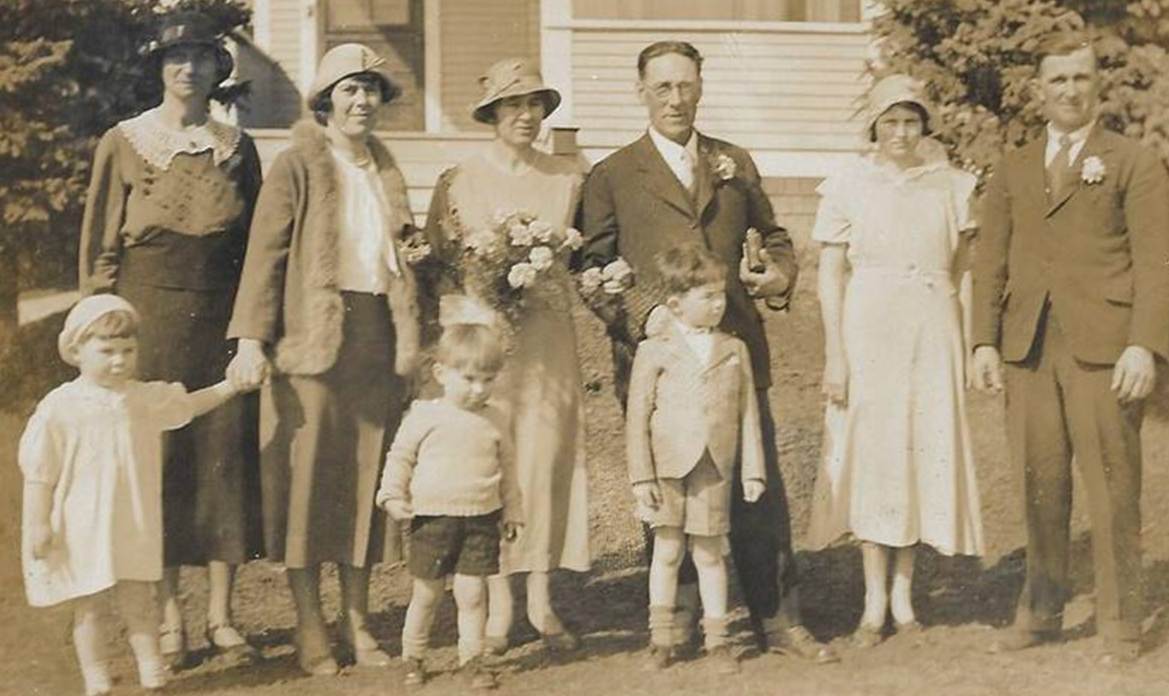
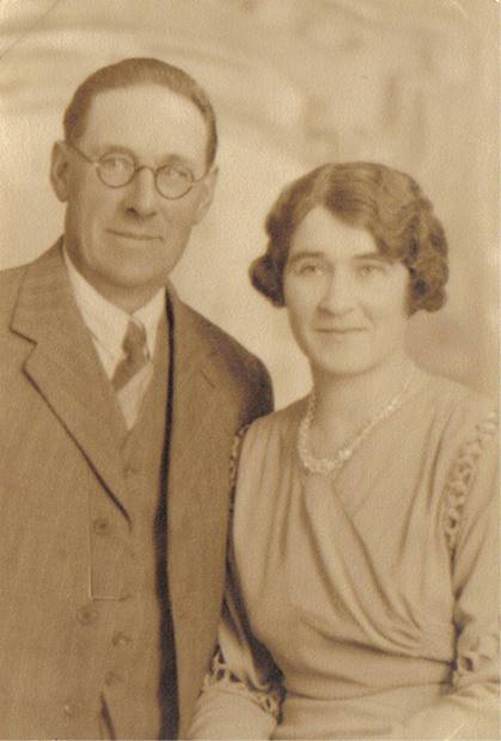
Wedding
of Grace Farndale and Howard Holmes in Calgary in 1934.
Grace and Howard - wedding photo
Kate
Kinsey, Peggy
Farndale, Grace
Farndale, Howard Holmes, Dorothy Kinsey, Alfred
Farndale
Anne
Farndale, Geoff
Farndale, Martin
Farndale
Howard was
educated in the International Boys’ School at Hampstead Heath, London. He was
expected to go into his father's business at the Baltic Grain Exchange, London,
but he wanted to be a farmer, so he came out to Canada in 1902. He hauled
freight from Calgary with a team to this area and often said the trail went
through where Irricana is today. In 1905, he went to the USA and joined the
Minnesota National Guard where he was a Sergeant. He returned to Canada in 1909
and bought the southwest quarter of section 12, west of Huxley and settled into
farming.[29]
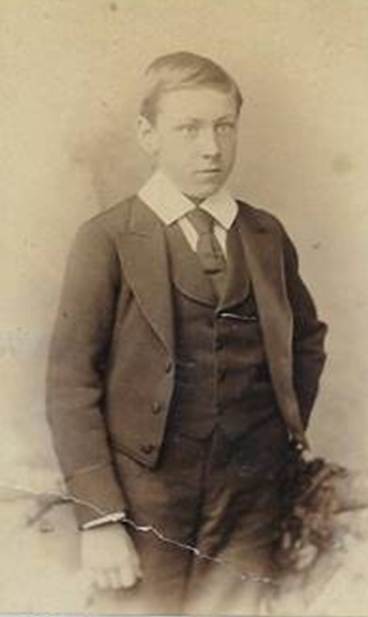
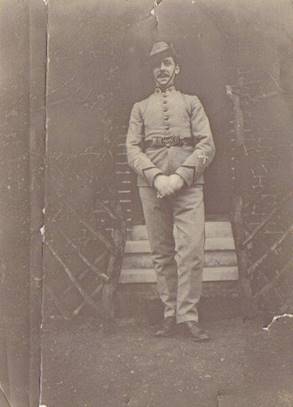
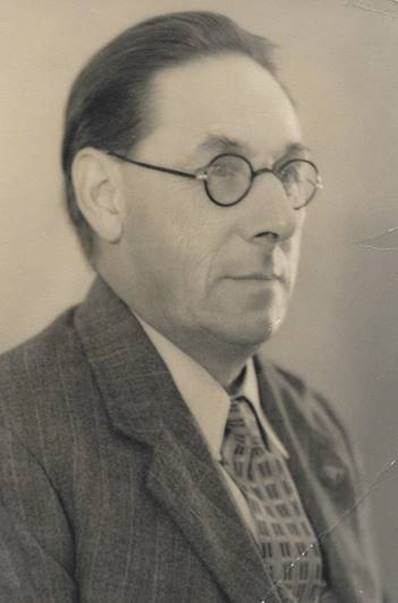
Howard
Holmes as a boy in the UK
Howard in the Canadian Army
In 1918,
Howard joined the Canadian Army, the 31st battalion at Red Deer and went
overseas. He returned around 1920 or later, owing to being in the hospital.
Howard then bought the Guy Shaw quarter which was the one north of his own and
again started farming. He was active in the Great War Veterans Association in
Huxley, which became the Royal Canadian Legion Number 2 branch, being a charter
member and a past president.
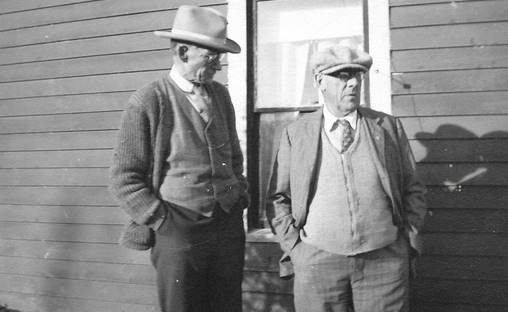
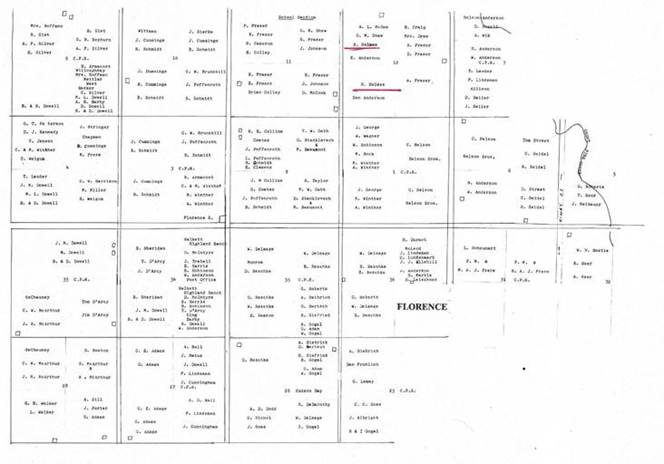
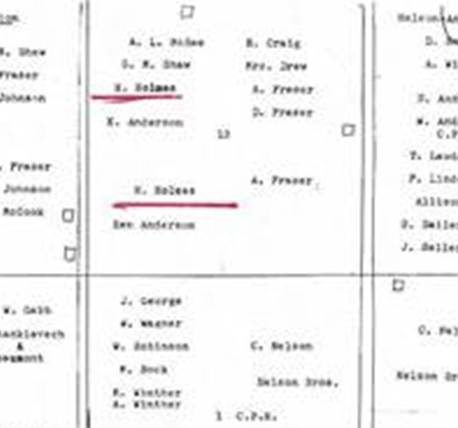
Martin Farndale
and Howard Holmes at the Holmes Ranch in Alberta in about 1946 Howard Holmes’ Homestead at Huxley
The Holmeses
lived on what had been Guy Shaw’s ranch and he likely built the house. It had
many rooms which seem to have been built on separately, all having their own
roof with a chimney protruding out of each, one or two rooms had a fireplace,
others a small coal and wood heater. Despite all those chimneys the house was
reported to have been very cold.[30]
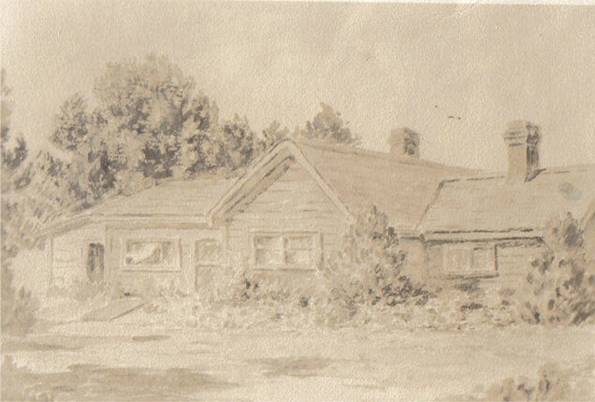
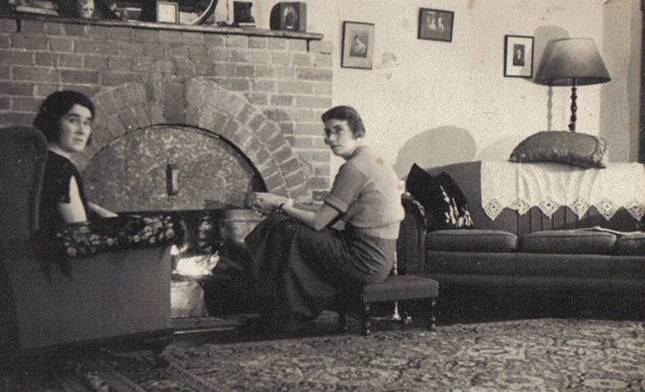
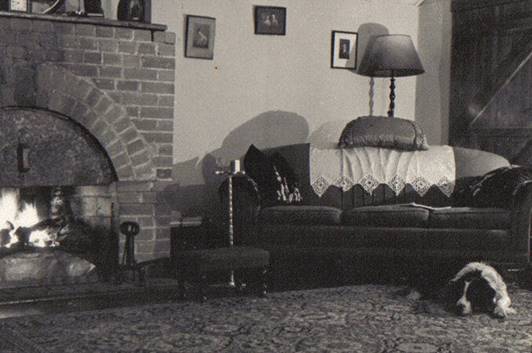
Grace's
ranch
Inside Grace's ranch - the drawing room - about 1935
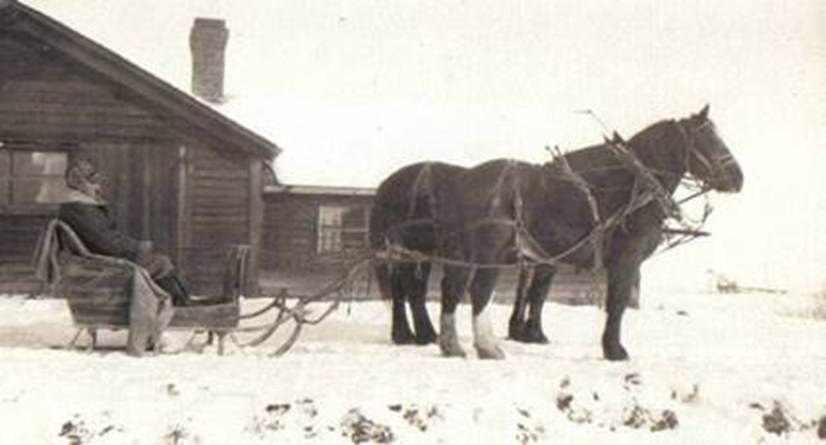
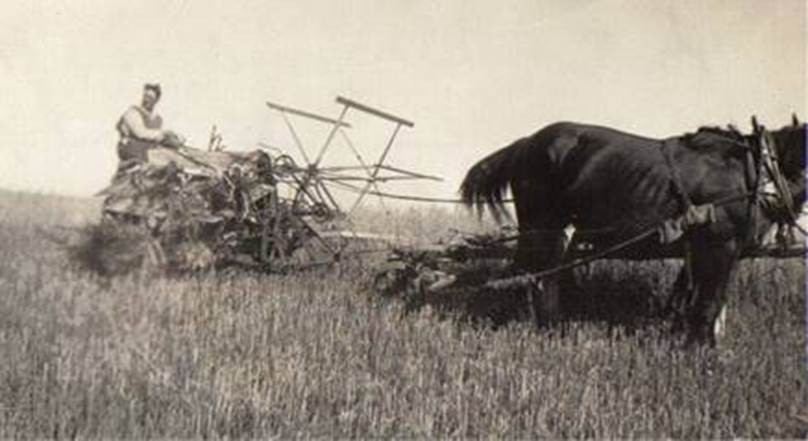
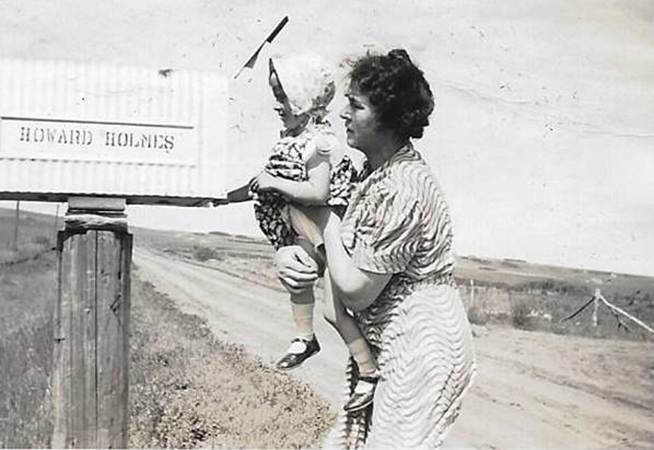
Howard
Holmes on sleigh on their ranch in about 1935 Howard Holmes cutting
corn in Alberta about 1935
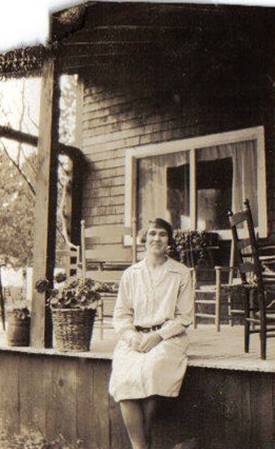
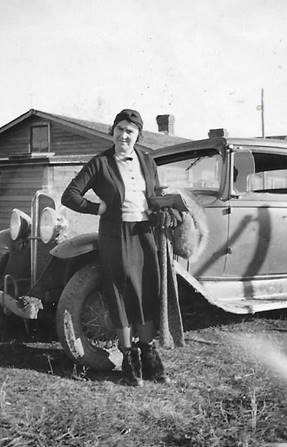
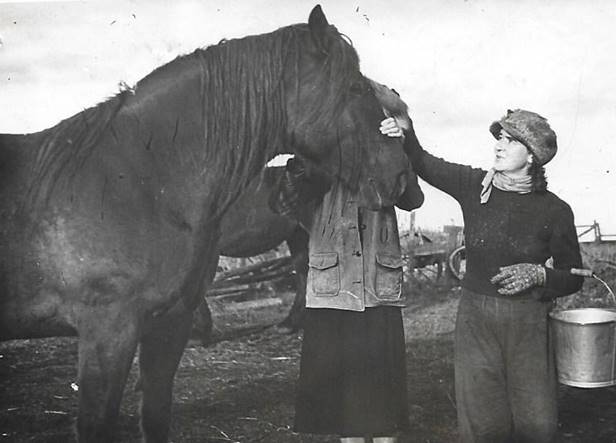
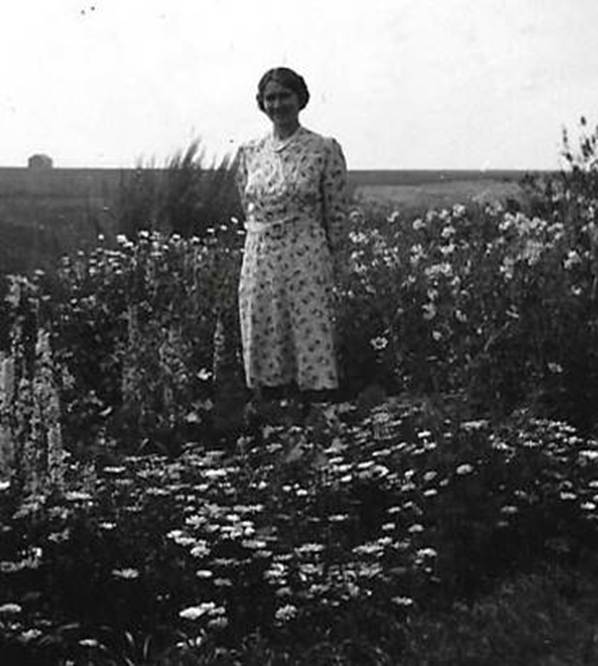
Grace on
veranda in Canada
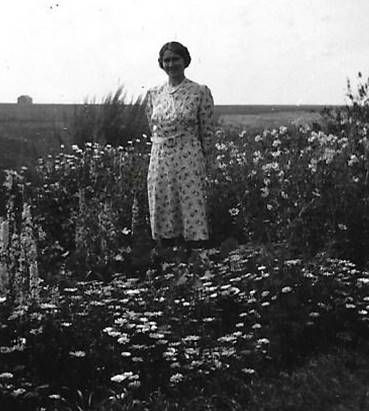
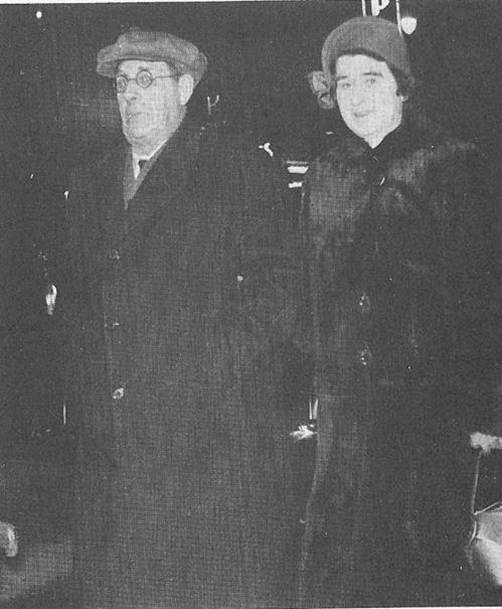
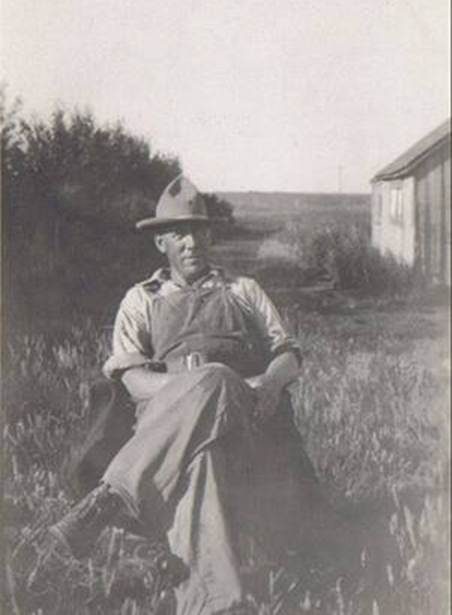
Grace,
Canada about 1940 Howard and
Grace Holmes Howard
Holmes at the ranch in Huxley in about 1955 Poem published when Howard died
After Howard
died, Grace
then moved to Calgary and Elmer Fraser rented the Holmes farm until she sold it
in 1961 to Walter Anderson.[31]
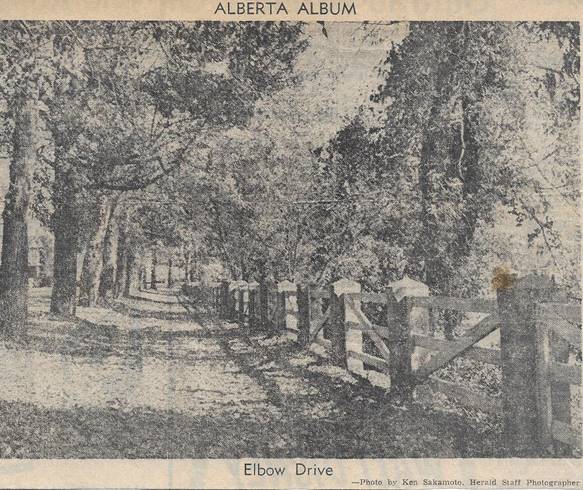
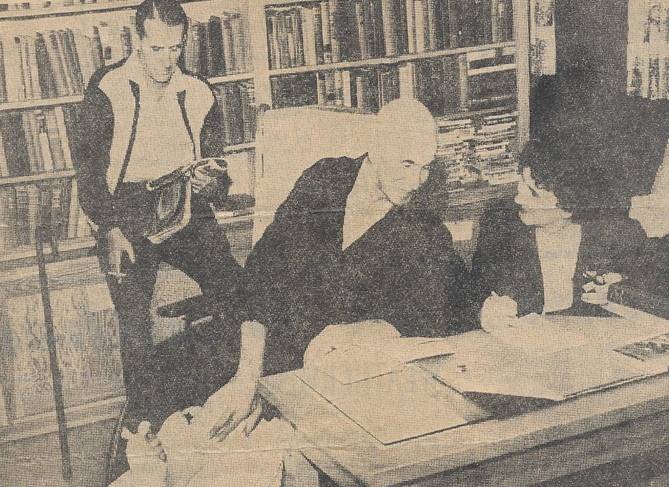
Grace
acted for patients in Calgary
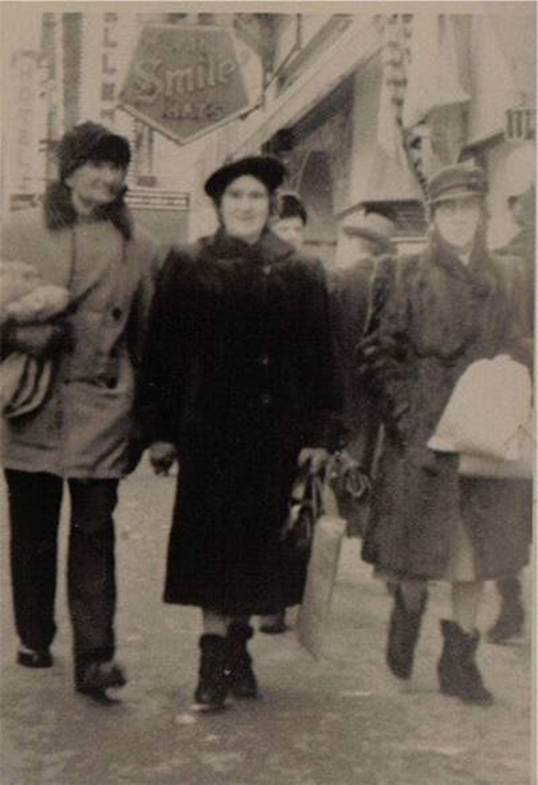
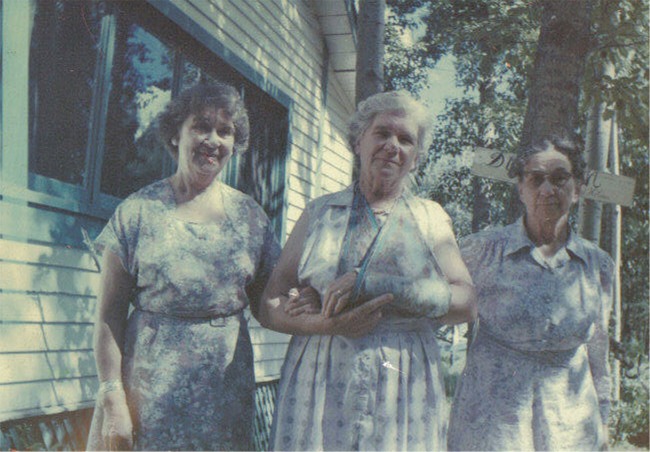
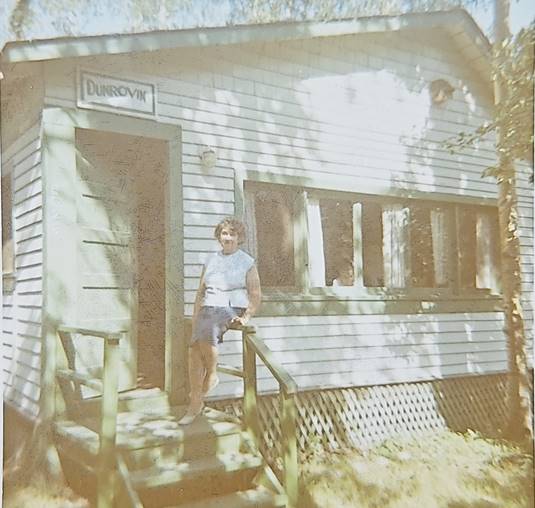
Grace and
brother George
Farndale about 1960 in Calgary Grace, Mary and
Kate,
The Farndale sisters at Sylvan lake in 1960s Grace
outside Dunrovin, Grace’s cottage on Sylvan Lake,
Alberta
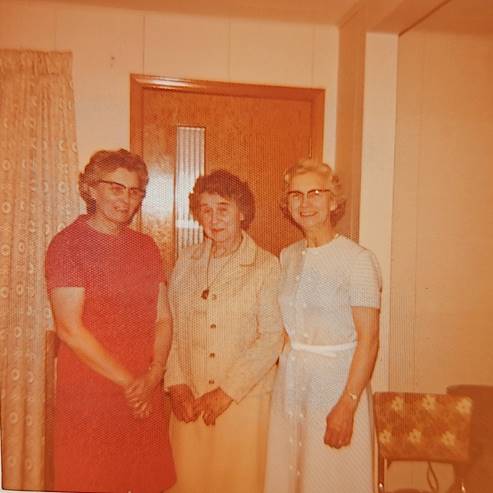
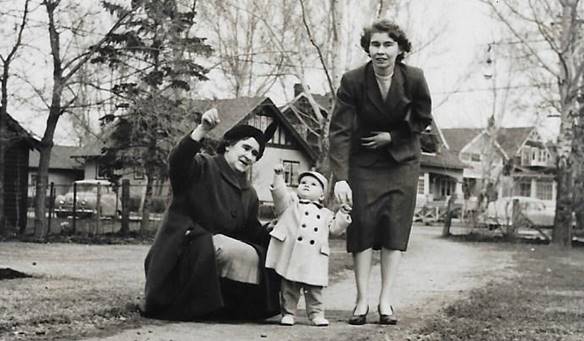
Dorothy
Kinsey, Grace
Holmes and Dolly at the Goodbrand Farm in Lacombe, Alberta Grace
with Anne
and Stephen Shepherd. The caption says ‘a kite was flying’
Grace lived in
Calgary until she returned to Leyburn in Yorkshire where she lived close to Alfred
and Peggy.
Scene 7 - The Huxley Farndales
Alfred Farndale
and Peggy
Farndale emigrated to Alberta on the day after they got married, sailing
out of Liverpool on 17 March 1928[32]. Their voyage to Canada is part of the Atlantic Crossings
story.
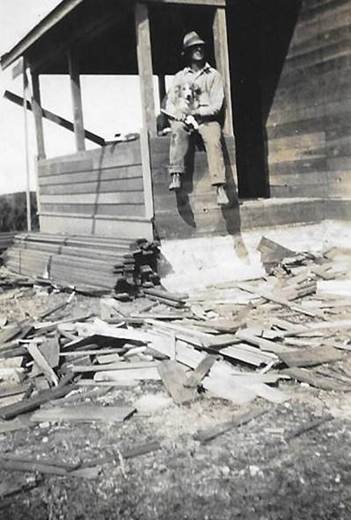
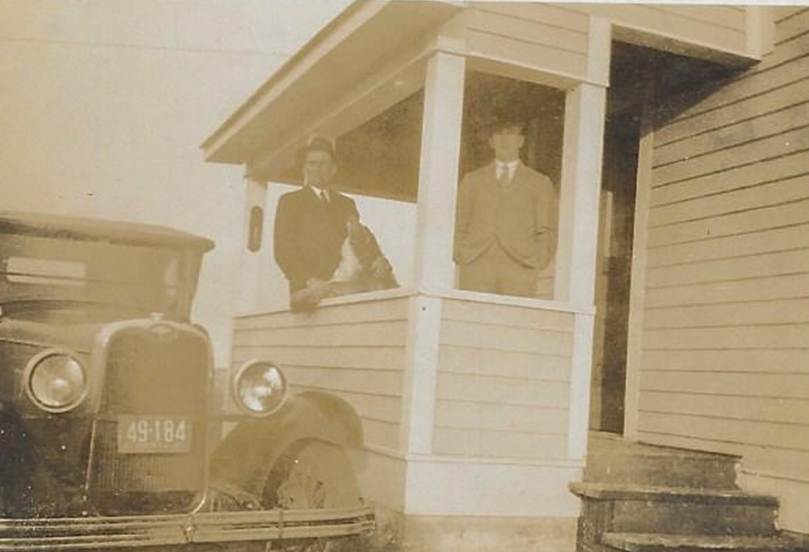
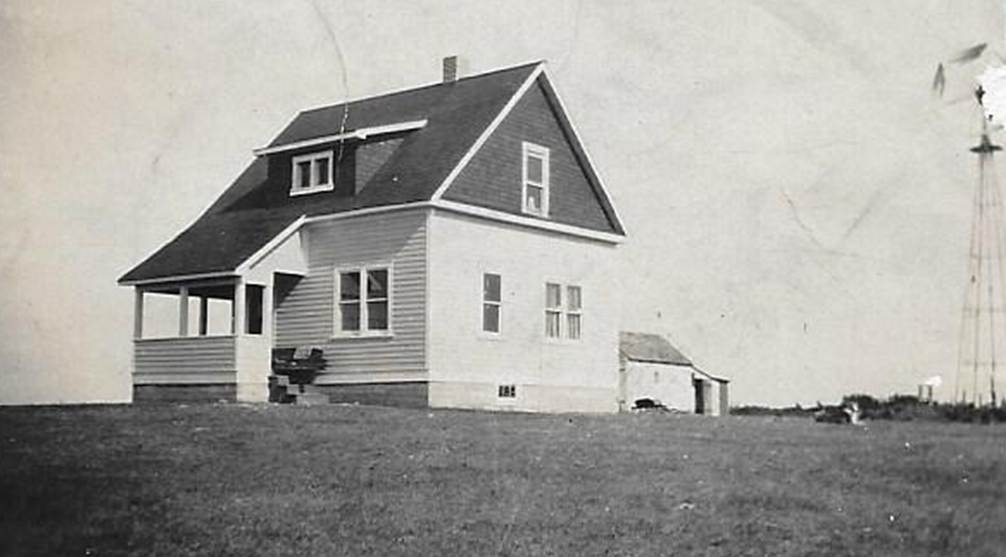
Alfred
building his house in Alberta in about 1928 The porch of the Farndale House
The House that Alfred Built
|
Alfred Farndale
and Peggy Baker
The World War 1
veteran, Alfred Farndale married the independently minded Peggy Baker in 1929
and embarked immediately for the Prairie of Alberta. Defeated by the Great
Depression the family returned to Yorkshire where they built a new life from
the mid 1930s |
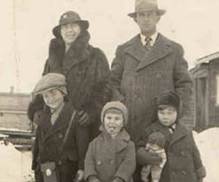
Their son Martin later recalled that Alfred
rented a section and a half near Huxley
some 10 miles north of Trochu and
built a house there. The farm was almost entirely devoted to wheat but with
some cattle. I grew up at the farm and my first
memories are of playing on the prairie and around the slews (a kind of duck
pond) near the farm. I remember all the horses used for farm work, the box
waggons with racks, threshing in the fields and the hot summers. The winters
were cold - well below zero, and I remember the horse drawn sleighs and the
bright sun on the snow. I remember the village of Huxley,
the annual sports day, the Legion parade and buying sweets at Miss Hibbs’
store. I remember visits to the neighbours, the Hoggs, the Saggers,
the Morris’, the Wagstaffs, the Millers and I
remember the postman, Mr Hibbs whistling in his buggy as he came up the road to
what is still today called Farndale’s corner. But above all I remember the
family. Uncle
Martin and Aunt
Ruth lived near Trochu and he spoiled me
a lot. Uncle
George was a bachelor, remote and living alone near Three Hills. Aunt Kate
was strict and austere, but kind and she lived between Trochu and Three
Hills with her husband Bill Kinsey and their children George, Alfred and
Dorothy. I remember evening parties and sitting waiting while the grown ups played bridge. I remember being well looked after
by our nannie, Gladys Grist who later married Aubrey, the son of our nearest
neighbour, Ralph Hogg.[33]
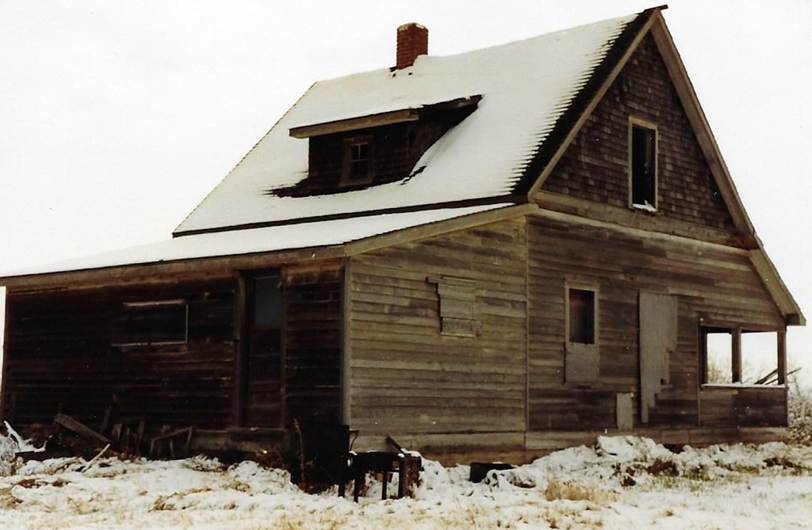
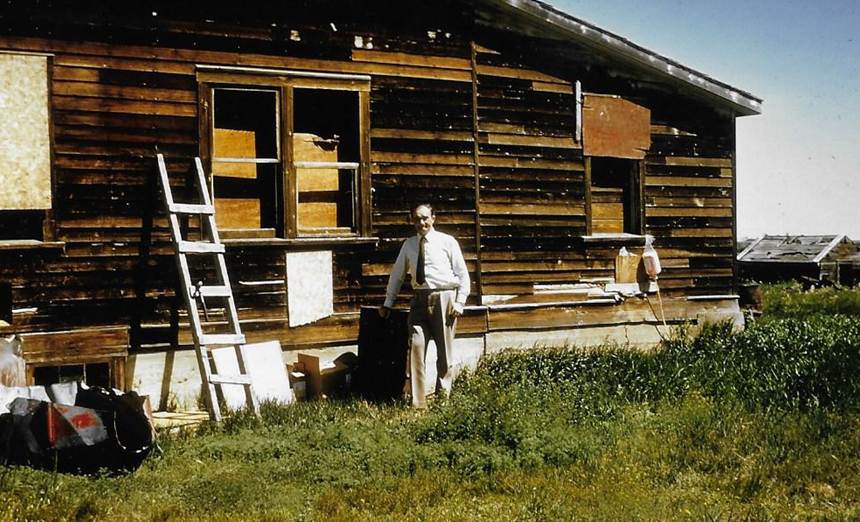
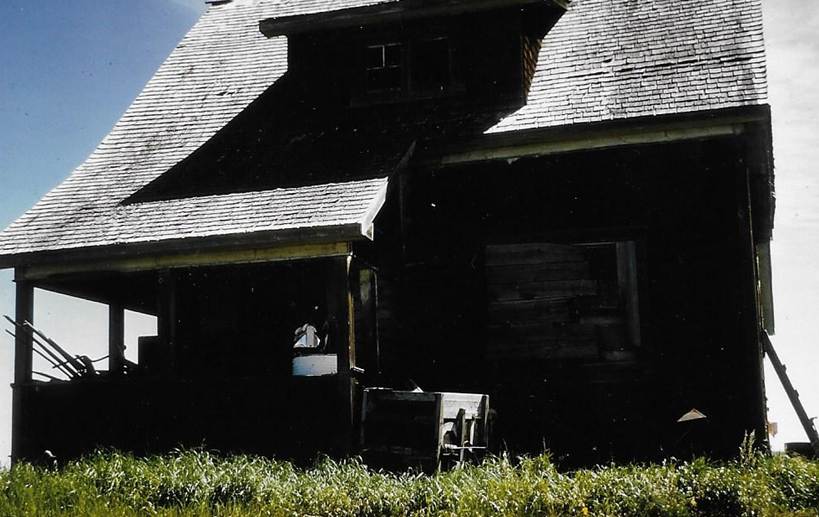
Alfred
Farndale’s House, Huxley in the 1970s
(it no longer stands) Martin
Farndale in front of Alfred
Farndale’s house in July 1973
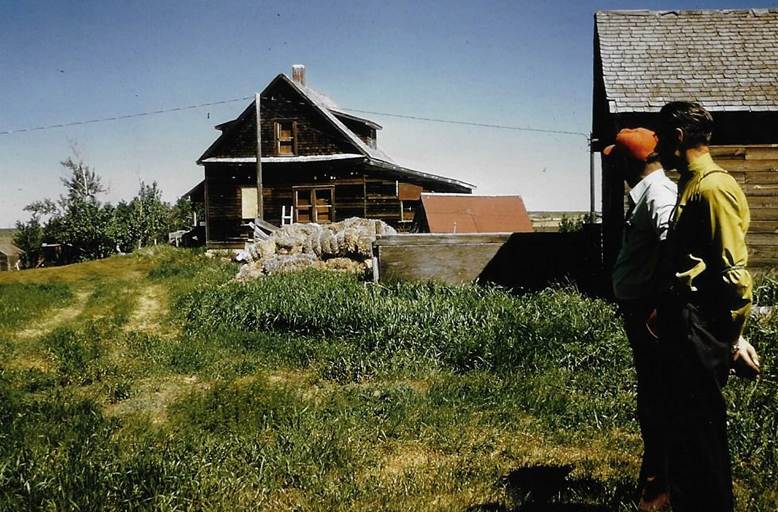
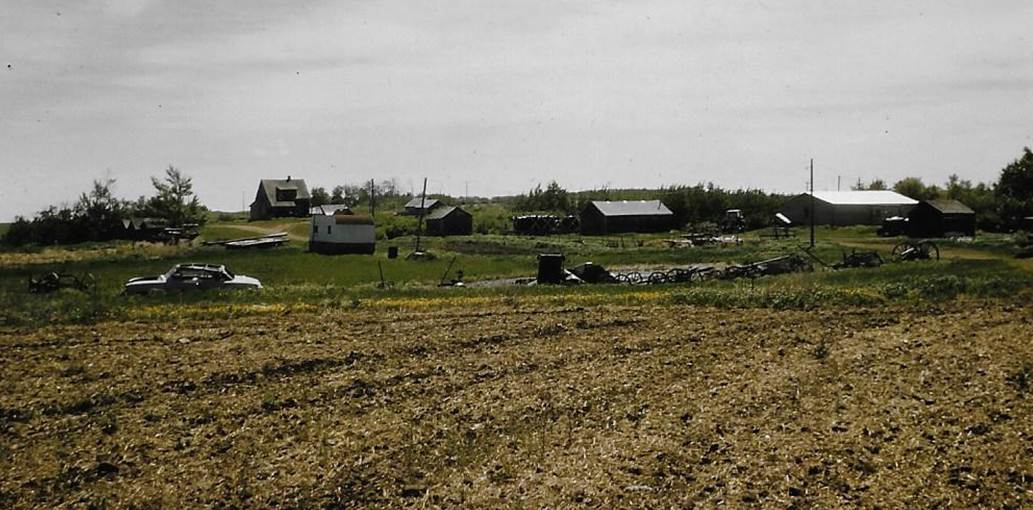
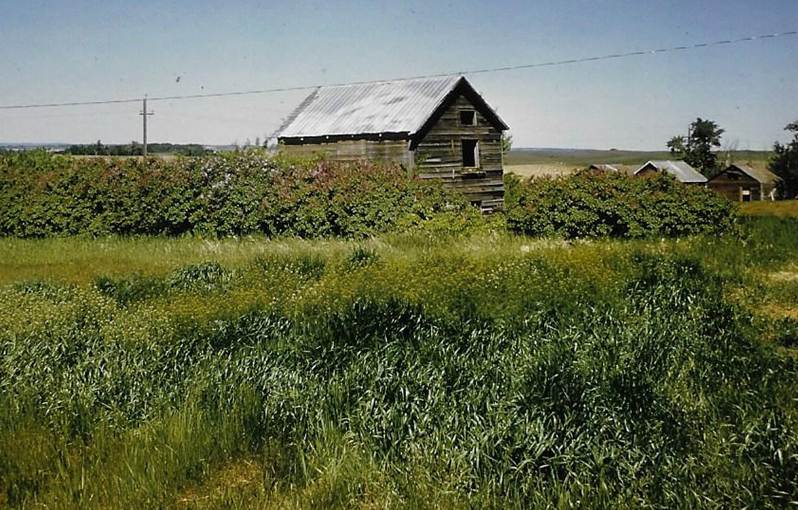
George
Kinsey and Aubrey Hogg outside the Farndale house at Huxley in July 1973 The Farndale House, Huxley taken from Hoggs’ Place in July
1973 The lilac hedge and
the grain bins
When the
first homesteaders came to the Huxley area,
Innisfail was the centre for all supplies and mail. There was collaboration
between families to bring mail and groceries. Soon Pickering’s Farm became the
local gathering place. Huxley began with the
granting of a post office in 1907. This was operated at the Pickering Farm to
the north of the later site of the town. The post office was granted by the
Government and named Huxley. The name Huxley was suggested by Leslie Roach in honour
of an English poet, Aldous Huxley[34]. The first school was built in 1907
and named Ashcroft for John Courtland Ash, the first rancher in the area.
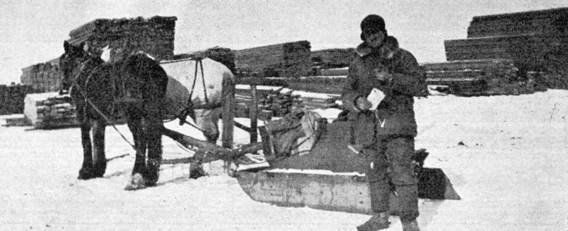
The mail
from Huxley to Perbeck in about 1909
The first
store on the present townsite was built by George Pickering in 1910. It was
operated by Wilton Brothers. The first blacksmith in Huxley was John Stevenson.
The railroad crew arrived in the Huxley district the summer of 1910. By 1911
the railway had ben surveyed. By 1915, Huxley had a newspaper, the Huxley
Recorder.
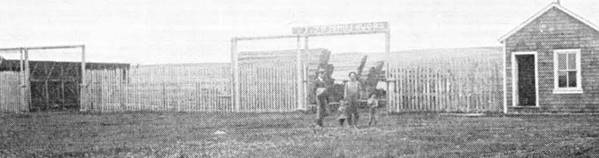
The
lumber yard at Huxley in 1916
The Merchants Bank was opened in Huxley
in 1919, with Fred Kell as manager. Later it was amalgamated with the Bank of
Montreal. The second branch of the Canadian Legion to be formed in Alberta was
established in Huxley in 1920.[35]
By the
time the youngest brother, Alfred,
and his wife Peggy
and sister Grace,
arrived in Alberta in 1928, the family was well known in the District. These
two members of the Farndale family settled in the Huxley
district. They lived first with Alfred's elder brother, Martin, near
Trochu while Alfred
built their house on Section 27, opposite Ralph Hogg's hill. It was a two storey structure, with white walls and a black roof,
which stood out for miles around. The chimney was the only part built of brick, and was made by Frank Holmes. It still stood for many
years into the 1990s, but was uninhabited from 1935.
They built a wind pump and several barns and later Alfred
took another quarter section just east of Huxley
on the Wickiser Place. [36]
Alfred
and Peggy’s
son Martin
Baker Farndale was born on 6 January 1929 in Trochu. Marianne
(“Anne”) Catherine Farndale was born in Trochu on 30 October 1930. Alfred
Geoffrey (“Geoff”) Farndale was born in El Nora on 10 April 1932.
In 1930
Gladys Grist from Trochu came to help look after the children. She was later to
marry Aubrey, son of Ralph Hogg who was Alfred's nearest neighbour. Her son
Philip later lived at their house and farmed most of the Farndale farm.
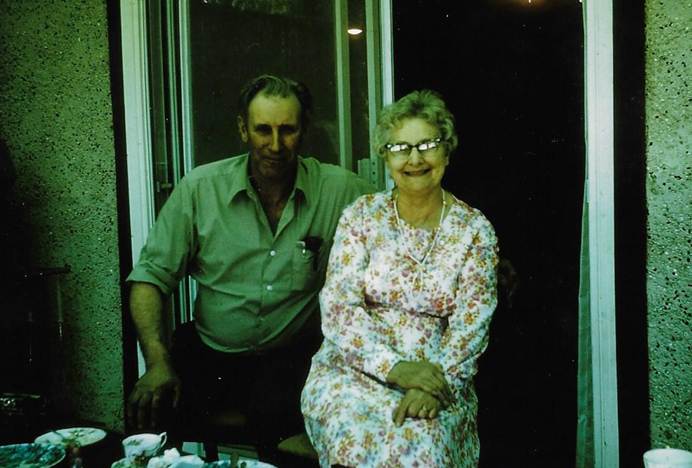
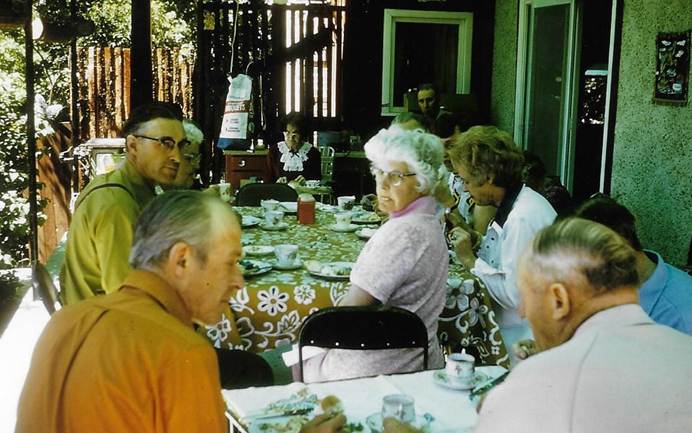
Aubrey
and Gladys Hogg who were the neighbours of the Farndales at Huxley, during a
visit by Martin Farndale in July 1973
Lunch at the Hoggs in 1973
Alfred
had fought with the British army in World War I and completed a unique team of
three brothers who had fought with the Canadian, British and American Armies in
that terrible war. He was a member of the British Legion and attended many an
armistice parade in Huxley, by the War Memorial, outside the Memorial Hall.[37]
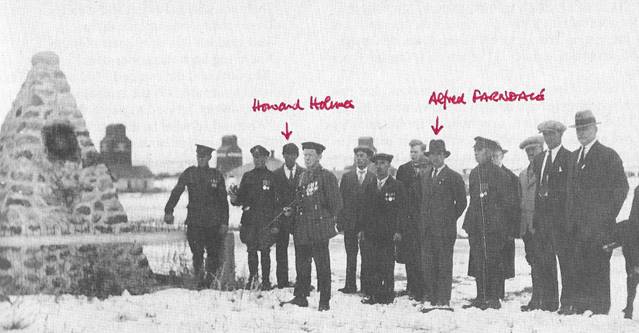
Both
Howard Holmes and Alfred Farndale were President of the Great War Veterans
Association. The photograph above shows the unveiling of the cenotaph on 11
November 1929.
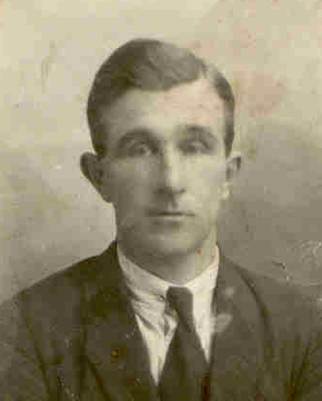
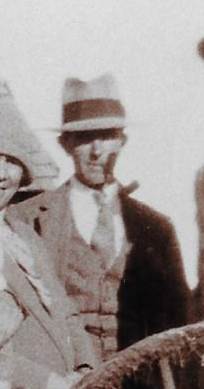
Alfred in
1930
In 1930
there was a fire which destroyed the Chinese café.
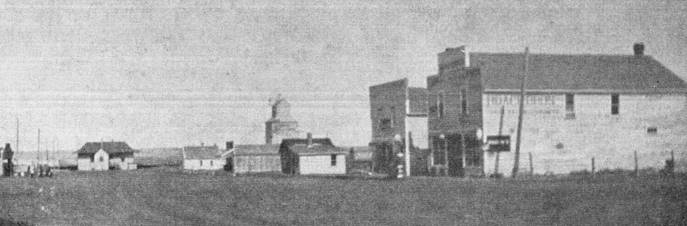
Huxley in
about 1930
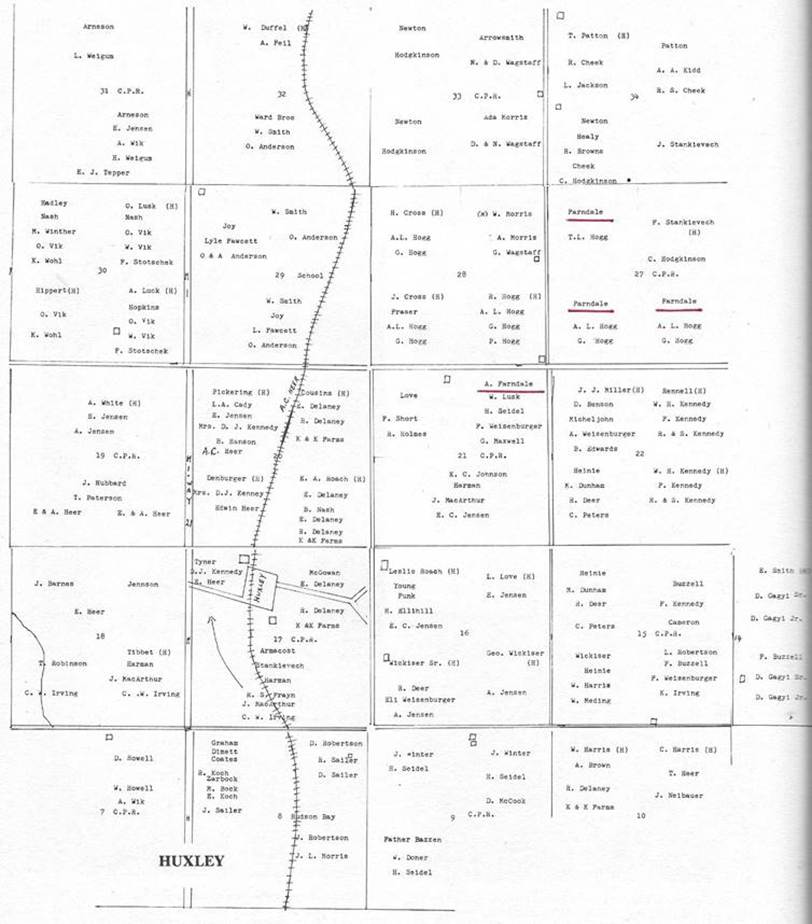
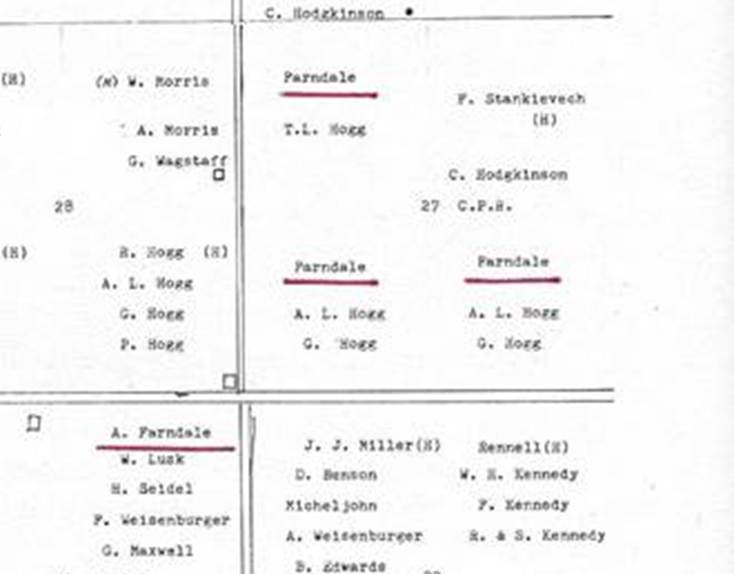
The
homestead map in about 1930 which shows the Farndale land
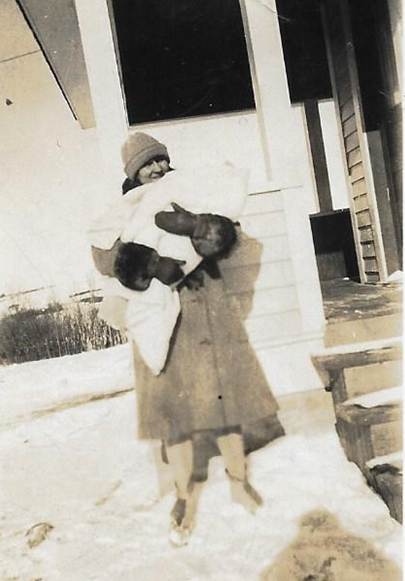
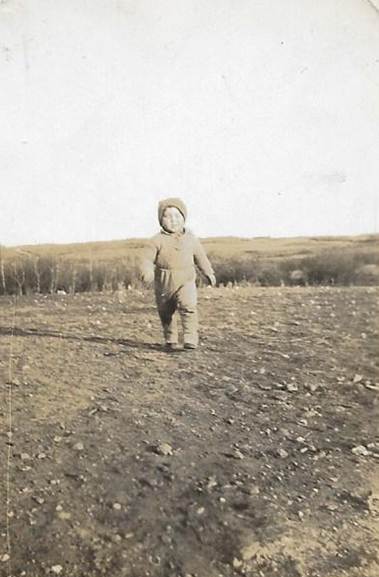
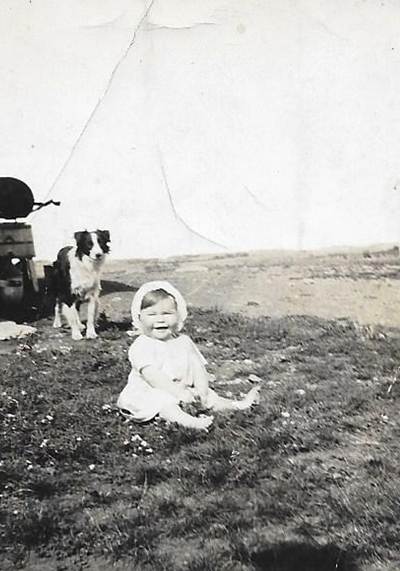
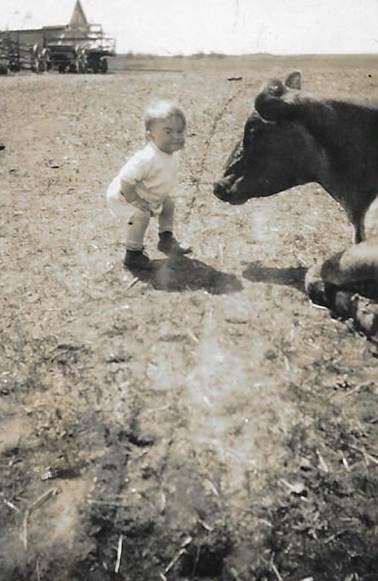
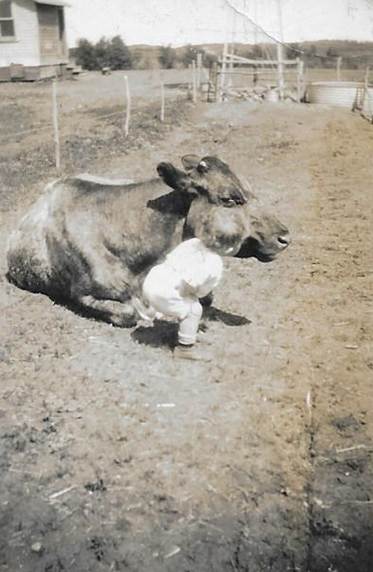
Peggy
with Geoff
Martin
Anne
Geoff
Anne
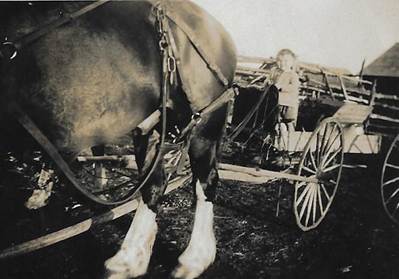
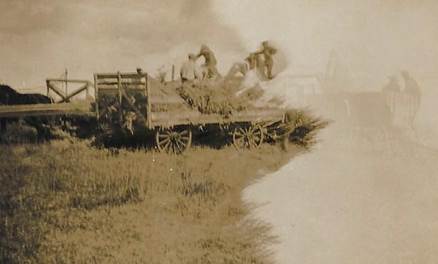
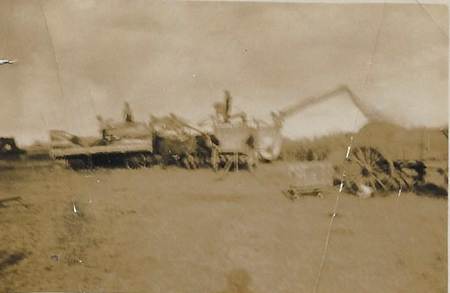
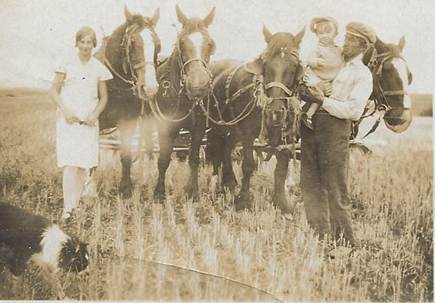
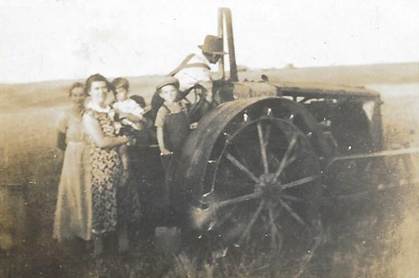
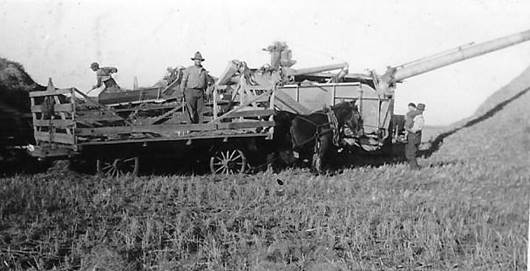
Harvest
time on the prairie
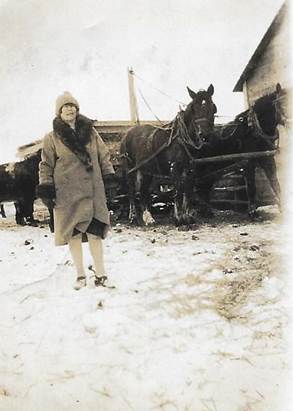
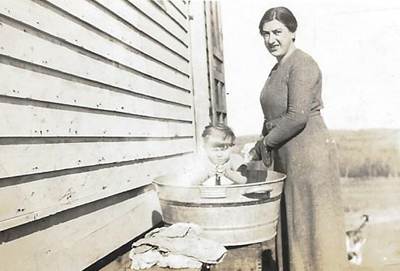
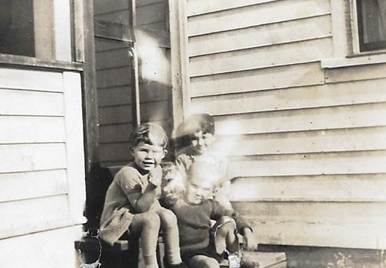
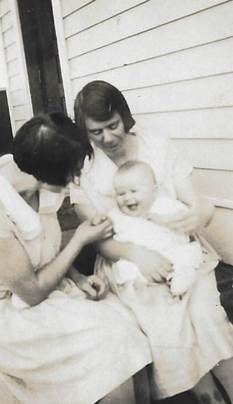
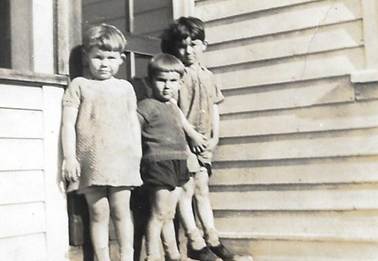
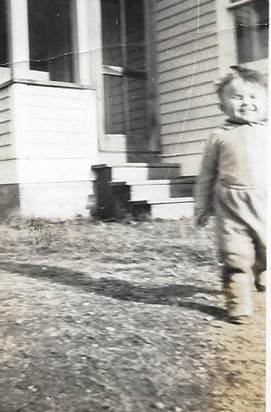
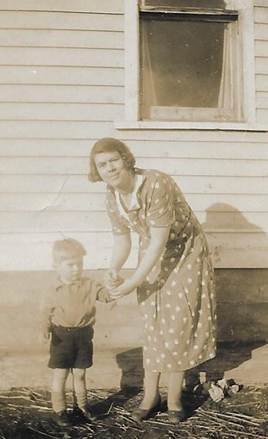
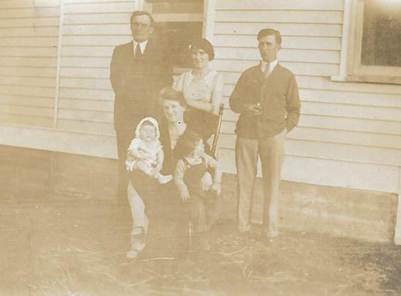
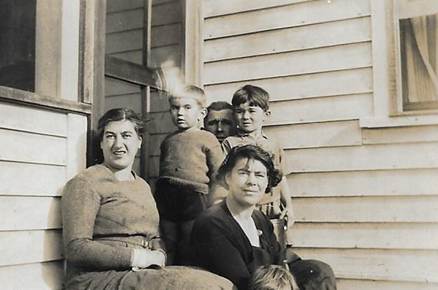
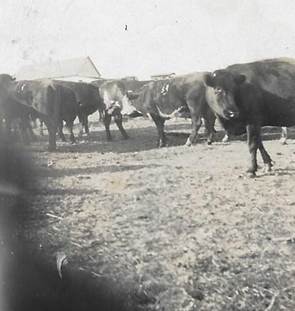
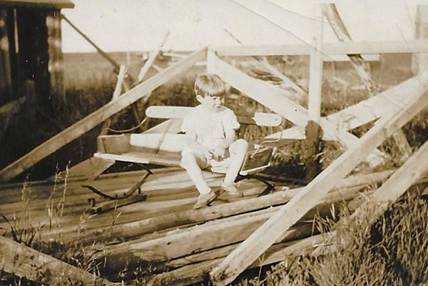
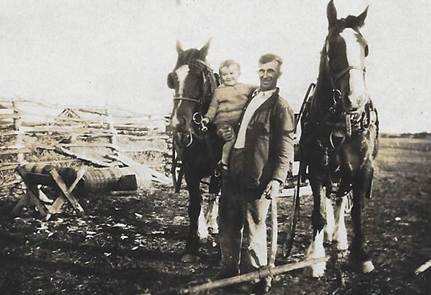
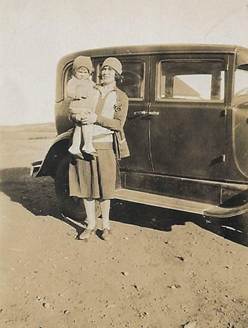
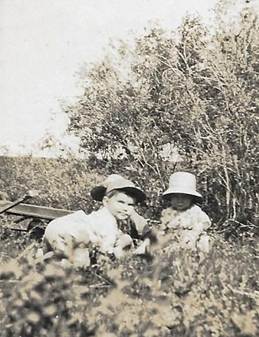
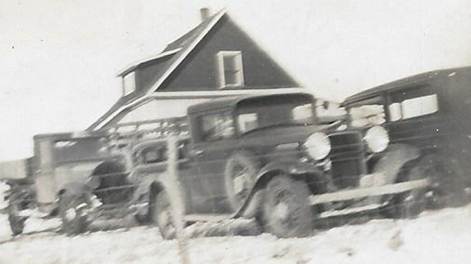
Life on the prairie
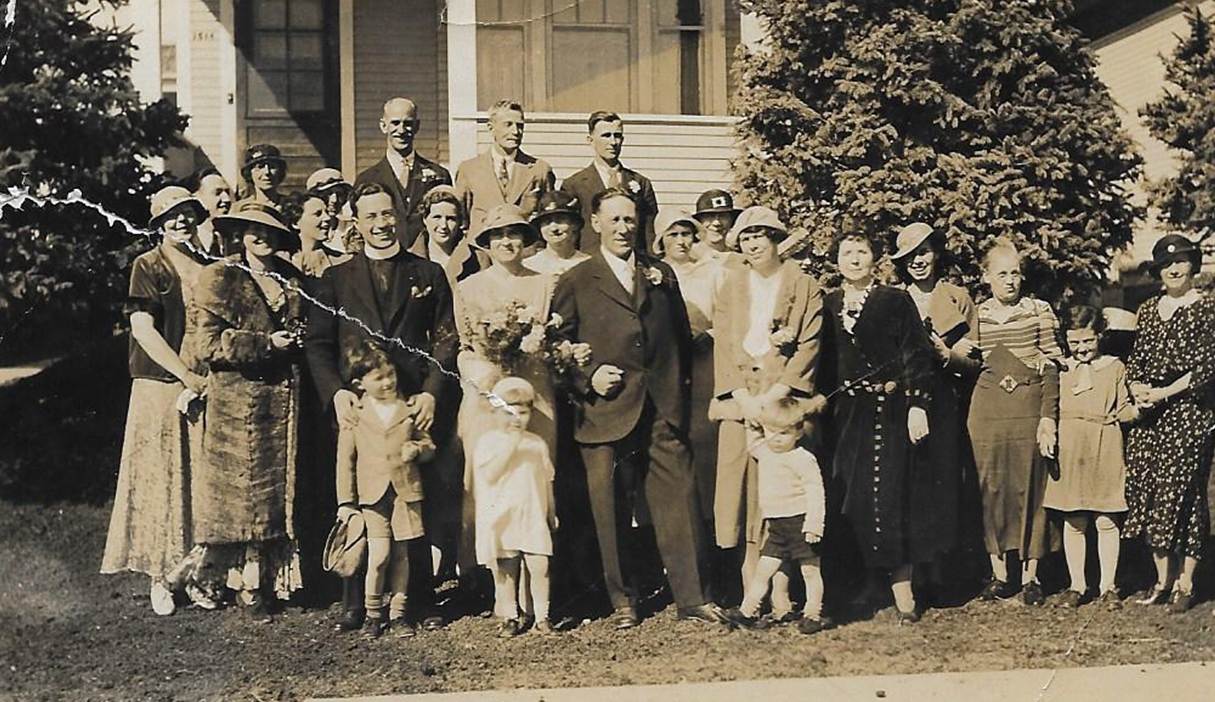
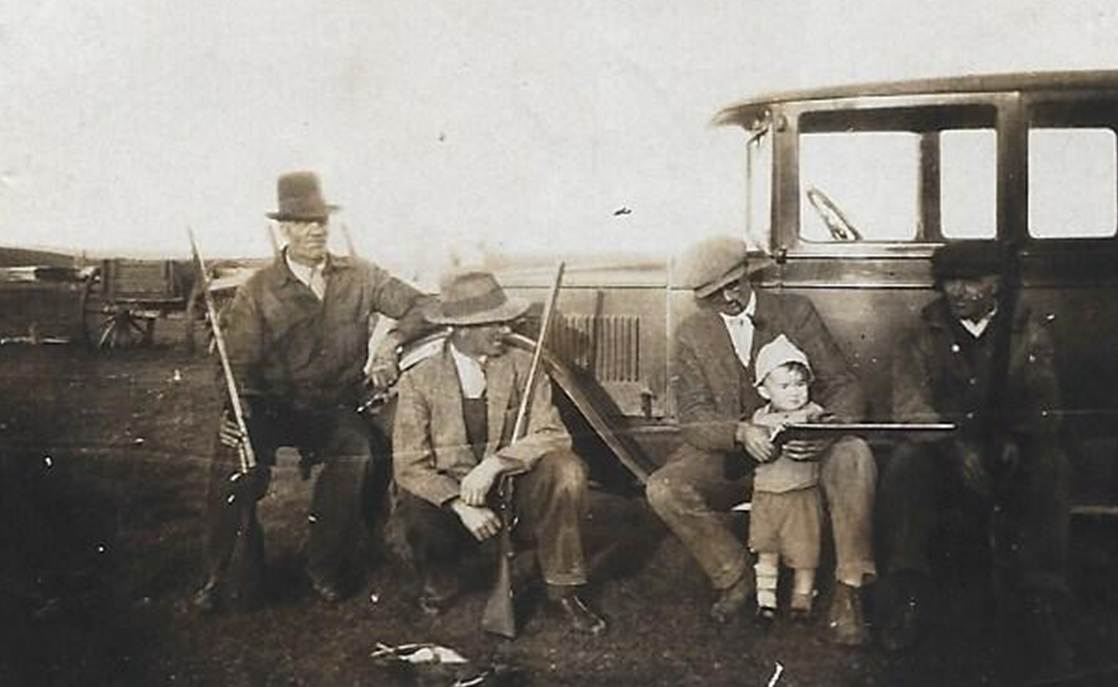
Shooting Party
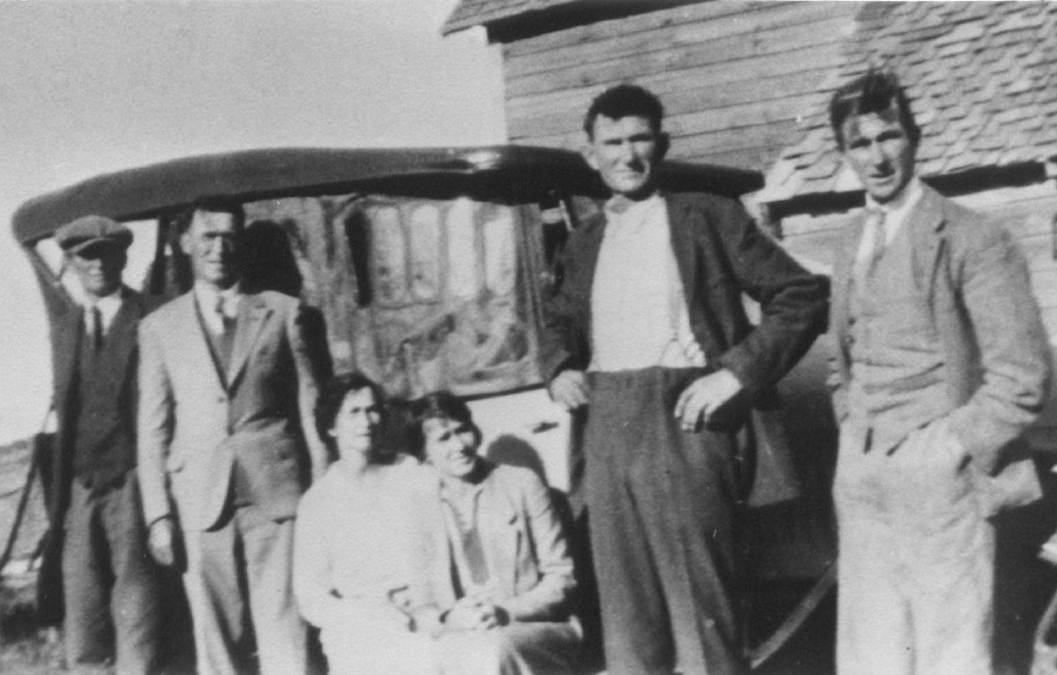
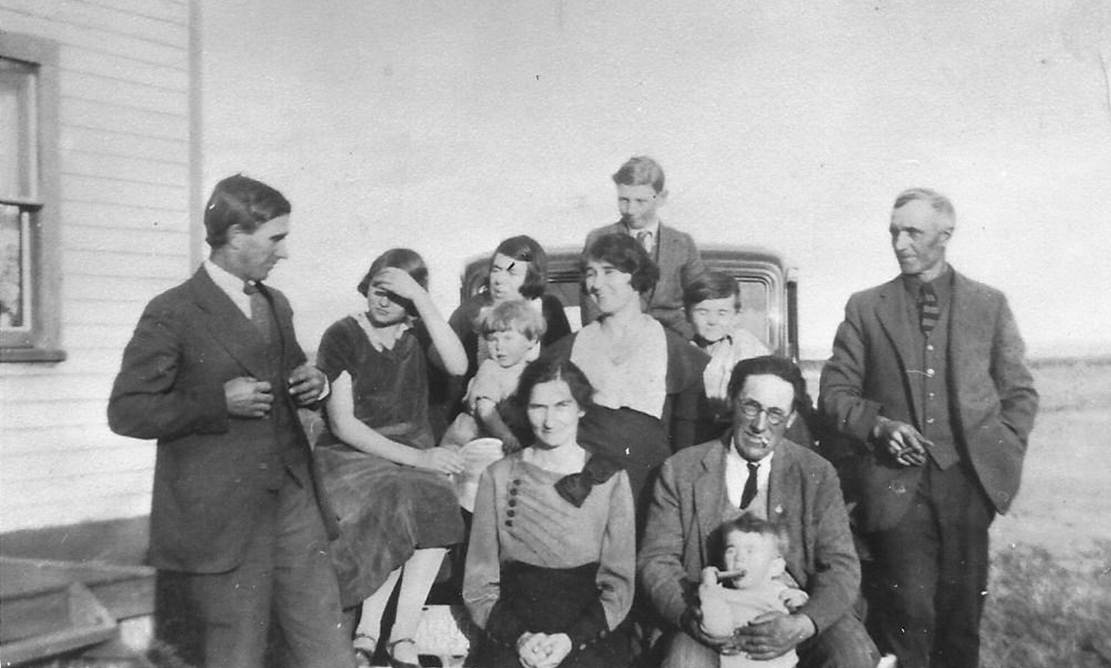
The American Farndales Visit in about 1931, Martin, Jim, Kate, Grace, George, Alfred At the Kinseys in about 1933
Back: Alfred Kinsey
Middle: Alfred,
Dorothy Kinsey, Peggy
(with Anne),
Grace
Holmes, Martin,
Bill Kinsey
Front: Kate,
Howard Holmes
The early
thirties were hard on the Prairie. It was hard to get a crop at all, and when
they did, the price was poor, often hardly paying the elevator dues. The work
was nearly all done by horses, but Alfred
bought one of the first tractors in 1930.
During
the long hot summers, Peggy
often took the family to the mountains at Banff, and to the coast at Vancouver,
and Victoria. Otherwise life consisted of hard work
and self made entertainment.
Bridge parties were common in winter and picnics in summer, with expeditions to
the newly started Stampede in Calgary, or fishing at Sylvan Lake. In winter
life depended on the horse, either to ride or in a sleigh. The 'rack' bodies
were taken off their wheels and put onto runners to get hay to the cattle. Meat
was buried in the frozen ground to keep, but the houses were always warm. On
one occasion Alfred's
dog ripped its tongue out by licking the frozen railway line near Huxley, to
which it had stuck, so intense was the cold. He had to be shot. The call of the
coyote was constantly heard and returning late one evening skunk in the chicken
house, which on being shot left a pungent smell for a long time.[38]
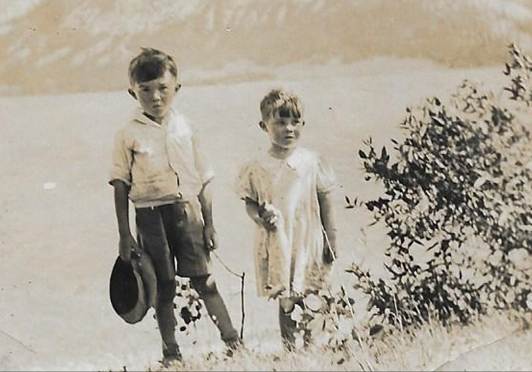
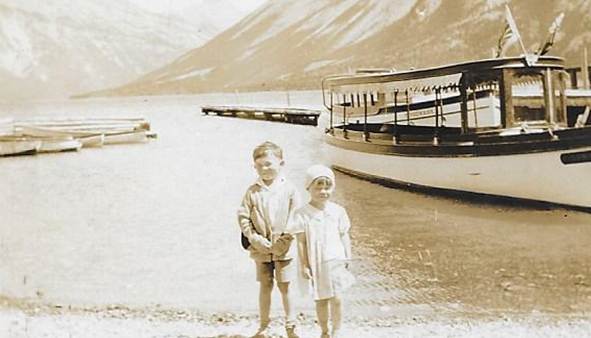
Holidays
in the Rockies and Sylvan lake (third photo is Martin and Anne taken by lake in
Rocky Mountains in 1934)
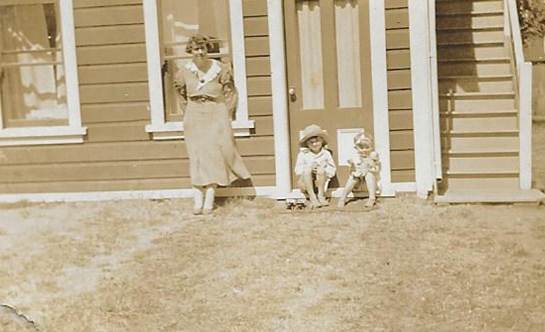
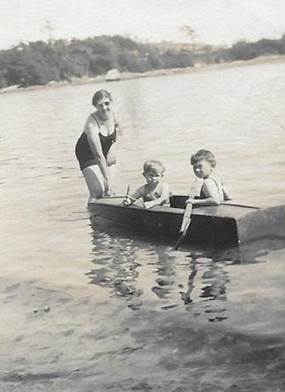
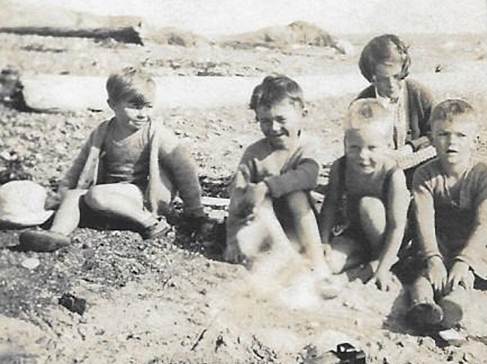
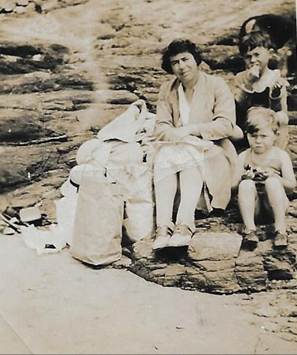
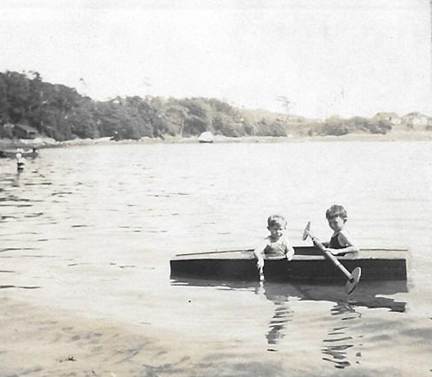
More
holiday photos
Taken in Victoria, British Columbia
The Dominion
Franchise Act List of Electors in 1935 for the Electoral District of Red Deer, for
Rural Polling Division No 49, Huxley, comprising township 34, range 23, west of
the 4th meridian included a list for 35 Farndale, Alfred, farmer, Huxley
and Farndale, Mrs Alfred (W), Huxley.
Looking
back on those days the family later remembered John Hibbs, the postman, driving
his buggy up to the farms from Huxley
whistling and singing at the top of his voice. Other neighbours well
remembered, were Jake Miller, who farmed to the east, Wagstaffs,
and Billy Morris. On Huxley road were the
Thongs, the Shorts, by the slough; then the Delaneys.
Huxley was a flourishing little community in
those days, with Roach's store and Miss Hibb's confectionary store. There was
Mr McMillan garage and even a Chinese restaurant! There were perhaps a couple
of hundred people in all. The grain elevator played its vital part in prairie life, and still marked the little township from many miles
away in the 1980s.
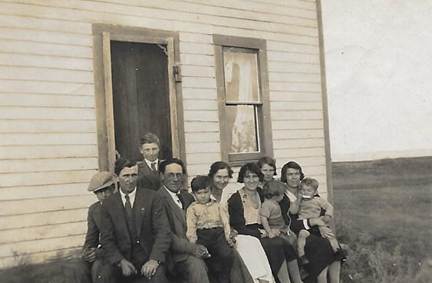
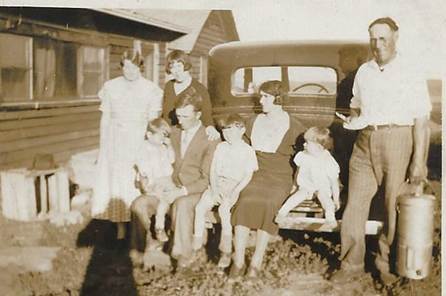
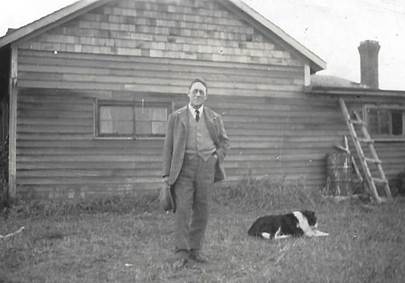
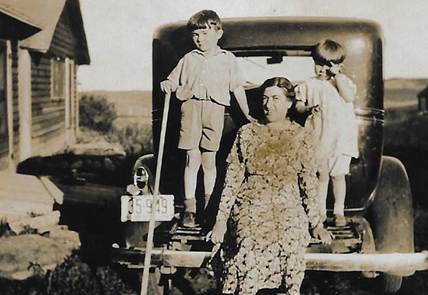
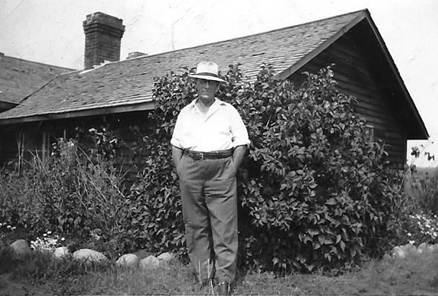
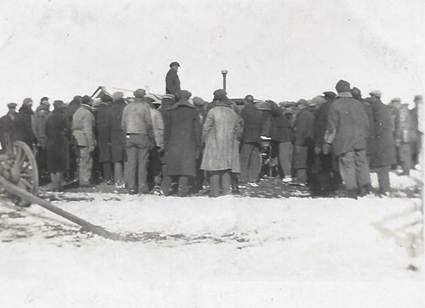
There
were many excitements, hail storms, dust storms and
the snow. The heat, the mosquitoes, the fresh prairie air, the stillness, blue
skies, bright stars at night, brilliant sunrises, and sunsets, and always in
the distance the Rockies often covered in snow even in summer. The startling
cloud formations and the sudden thaw with the arrival of the Chinook wind.
Indians travelling round to cut the brush; Sergeant Hammond of the Royal
Canadian Mounted Police, and the stories of the Mad Trapper. On one occasion,
young Martin aged 4 or 5, was lost on the prairie, causing great concern and a
massive search for the corn was high and he was small and the danger great. But
finally he was picked up, having walked almost all the
way to Huxley, by one of the MacMillans.
The
gophers and the jack rabbits were everywhere and the
countryside was brown with the plough in spring, and yellow with wheat as far
as the eye could see in Summer. These are the sights and memories which, once
experienced, can never be forgotten.
But the
years of crop failure and poor prices took their toll. The money ran out and
Alfred was forced to return to England with his family in 1935. Sadly came the farm sale in March, and the family went to
spend the last days in Alberta with Grace and Howard Holmes at their ranch near
Huxley. It was well below zero on 8th April 1935 when they caught the train to
Edmonton where they began the five day journey to
Halifax to catch the Duchess of Atholl for Liverpool.[39]
The slump of
the late twenties and early thirties was crippling and
the family was forced to return to England in 1935.
Martin
Farndale later recalled that things were not well on the farm. Prices
were bad in the slump years of the early 30s and the
weather was unkind so that my father, along with many others, soon lost all his
savings, and in 1935, he decided to return to England. I remember well the
excitement of the farm sale by our white house with a black roof, on the hill
overlooking Huxley. It was early April and
it was cold with snow still on the ground. We spent our last few days in
Alberta with Aunt Grace
and Uncle Howard at their Ranch near Huxley and finally caught the train at Huxley for Edmonton on 9 April 1935.[40]
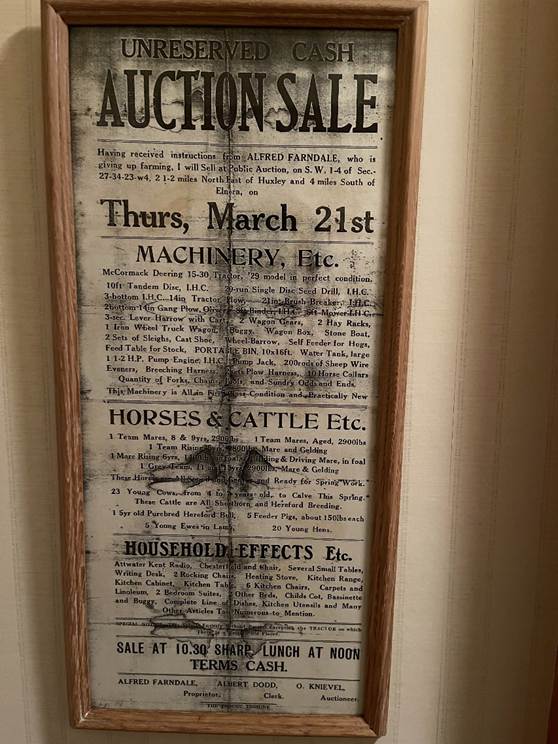
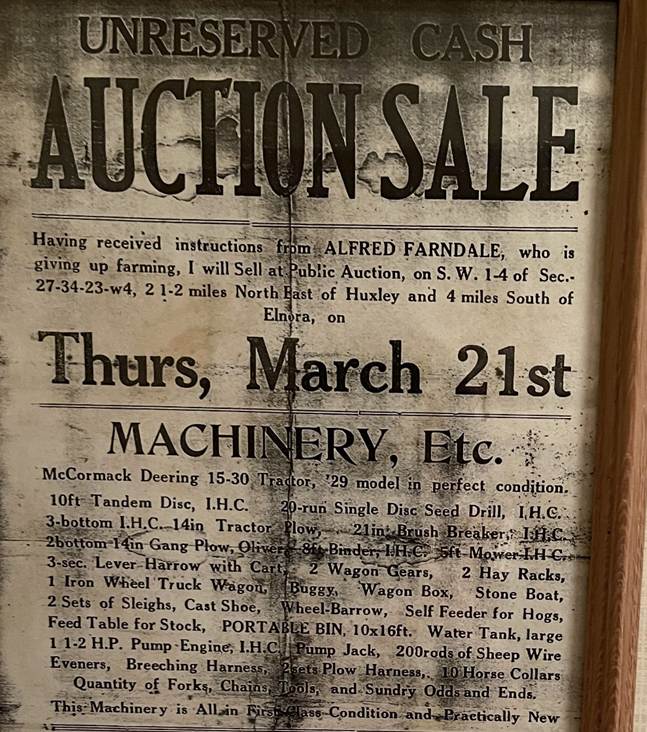
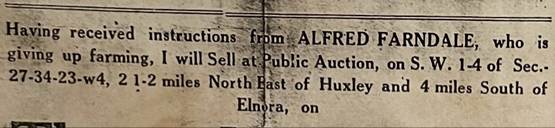
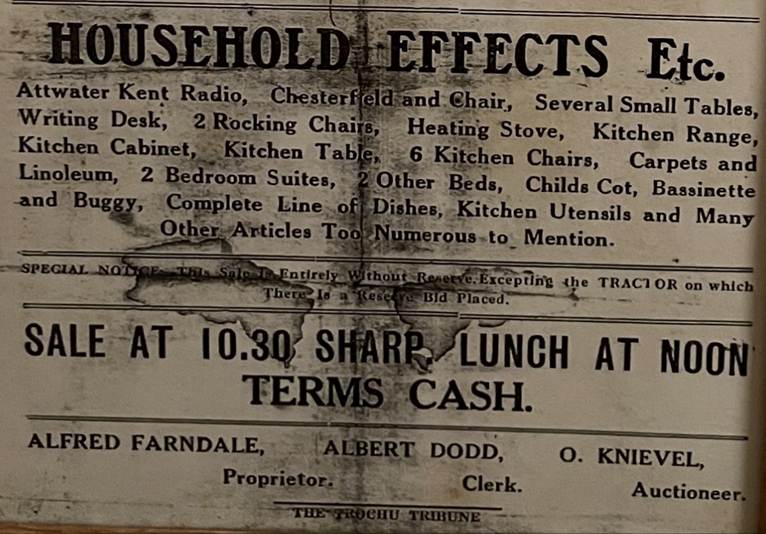
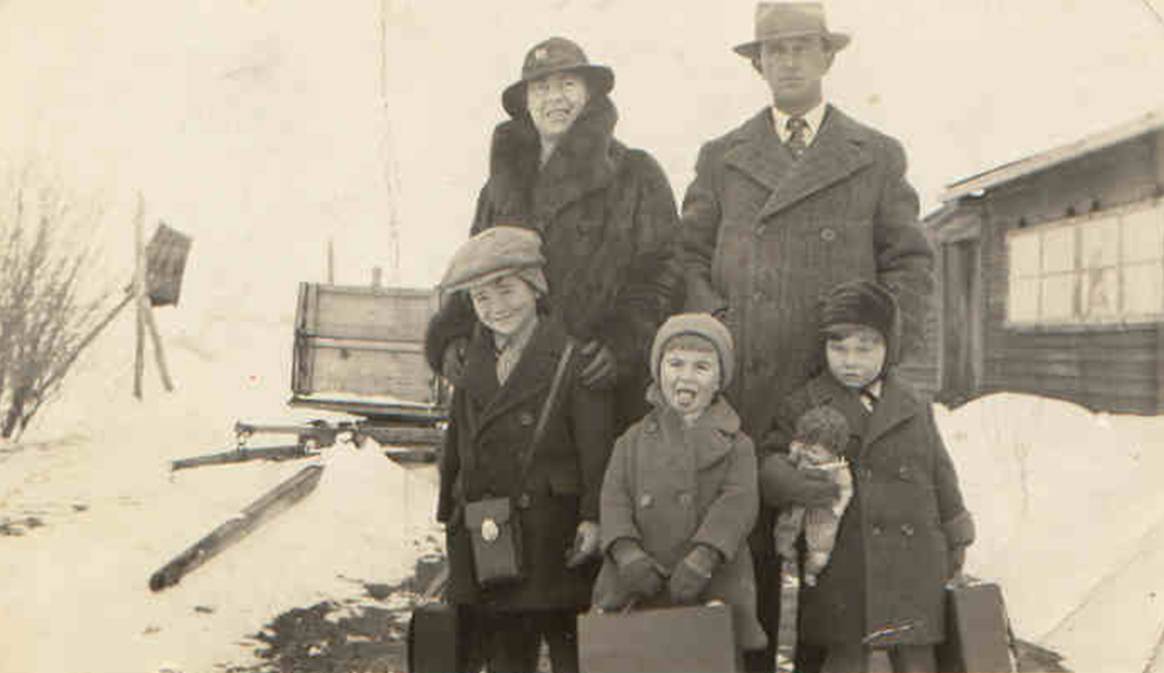
The
return from Alberta. Peggy
and Alfred
at the back and Martin,
Geoff
and Anne
in the front
The house
that Alfred built was unoccupied after they left but still stood until the
1980s.
There are
no Farndales in Huxley now, but there are many Farndales who remember Huxley
with great affection. It is now a name ingrained into the family history.
Photograph albums are full of pictures of it, conversation often returns to it,
and always with nostalgia. Many Farndales broke the virgin prairie in the
Huxley, Trochu and Three Hills Districts, and made their mark there. They were
among the first, and because of this, Alberta holds a special place in their
lives and their descendants’ lives.[41]
or
Go Straight to Act 28 – The Americans
|
This
is a new experiment. Using Google’s Notebook LM, listen to an AI powered podcast
summarising this page. This should only be treated as an introduction, and
the AI generation sometimes gets the nuance a bit wrong. However
it does provide an introduction to the themes of
this page, which are dealt with in more depth below. Listen to the podcast
for an overview, but it doesn’t replace the text below, which provides the
accurate historical record. |
|