Act 22
Great Ayton
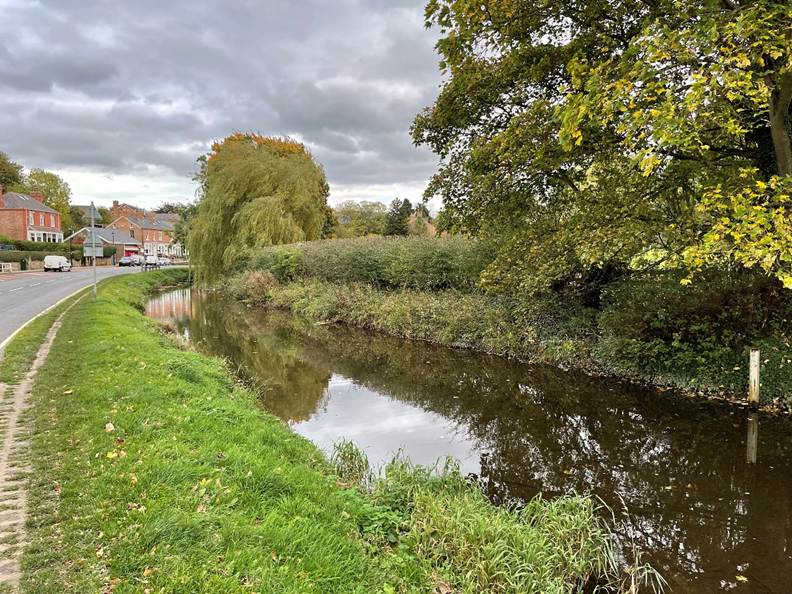
The story of three
large families who lived in Great Ayton
|
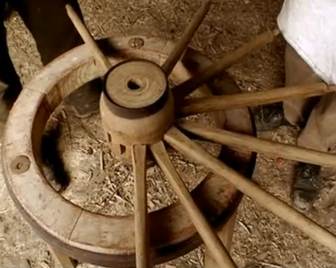
The
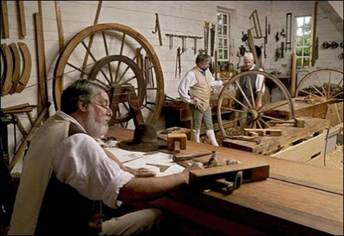
craft of the wheelwright. |
In the
seventeenth century, Great Ayton was an agricultural village. The open fields
were enclosed in about 1658, effectively privatising communally held lands.
Many smallholders and commoners lost their traditional rights to graze
livestock, collect firewood, and forage on communal land. This forced many to
become landless agricultural labourers or migrate to growing urban centres in
search of work. Enclosure allowed wealthy landowners to implement more
efficient farming techniques, such as crop rotation, controlled grazing, and
the use of new technology like the seed drill, improving the efficiency of
farms. Most farms were let to tenant farmers, and enclosure brought new wealth
to the gentry.
There was
also small scale industry in Great Ayton. Both linen
and cotton manufacturing were significant, with a cotton mill operating by
1795.
Michael
Postgate opened a school in 1704. The village became the boyhood home of the
famous explorer, Captain James Cook
when his family moved there in 1736, and he attended Postgate's school.
Whinstone
was quarried for road surfacing, and alum works were in operation at Ayton Bank
by 1765. The nineteenth
century brought significant growth and industrialisation to Great Ayton.
The Great Ayton Friends'
School, a Quaker school, was founded in 1841. The most transformative event was the arrival of the
railway in 1864, initially for freight traffic. This linked the village to the
wider network and facilitated the transport of locally sourced raw materials. A
passenger service began in 1868. The railway made the transport of ironstone, jet, and alum
commercially viable, leading to an expansion of these mining industries in the
Cleveland Hills and around Roseberry Topping. Ironstone mining continued to be
important into the early twentieth century, with three mines in operation
around the First World War before closing in the 1920s.[1]
Scene 1 - The Seventeenth Century
Great Ayton Family
George Farndale
was born into the Skelton 1 Line
and baptised on 3 October 1624, the son of William and Jane
Farndale[2]. George married Meriall
Young in about 1653[3]. It is likely that Meriall came from Great
Ayton and that is where they married[4]. Philip Farndale,
who was born in the 1650s, was probably their eldest son and he had a daughter Elizabeth
Farndale who was baptised in Great
Ayton on 28 February 1675[5]. Their second son was William Farndale
who was baptised in Skelton
in about 1654[6], so they were still living at Skelton in the mid 1650s. William later married Mary Bennyson of Great Ayton on 27 September 1678[7] and they had a daughter, Elizabeth
Farndale who was born there[8].
George and Meriall’s third child was their daughter, Elizabeth
Farndale, who was born in about 1655. It seems likely that by about this
time the family had moved to Great Ayton.
Elizabeth later married Thomas Taylor of Great
Ayton in 1675[9]. George and Meriall’s
fourth child Else
Farndale was born in about 1656. Richard Farndale
was born in about 1657, George Farndale
in about 1658 and Meriall Farndale
in about 1659.
It is not
clear what occupation George pursued in Great
Ayton, but a will was proved on 18
February 1679 of George Young[10], who was the older Meriall’s nephew. He left 10s to his cousin, Meriall
Farndale the younger and another 10s each to Meriall
and Alice who were her daughters. He also gave a share to the younger George
Farndale, who was an apprentice with James Peacocke, in a ship called the
James Peacocke.
It seems
likely that the family had some interest in the maritime trade which was
thriving in Whitby, and perhaps they were
involved in joinery, taking on some maritime related work.
This was the
first line of the family, the
Great Ayton 1 Line, who settled in Great
Ayton in the seventeenth century.
The more
substantial association of the family with Great Ayton came in the nineteenth
century, when two twin brothers, both born into the large extended
Farndale family of Kilton, sons of Samuel and
Elizabeth Farndale of Kilton, moved to
Great Ayton.
Scene 2 - The Cartwright’s Family
John Farndale wrote in 1870 that Samuel Farndale and
Betty, his wife, and their five children, one yet still alive, cabinet makers
and joiners, Wesleyans. They had some land, lived to be old and died at Kilton,
respected.[11]Two of the sons of Samuel and Betty settled in Great Ayton.
Joseph Farndale (1795 to 1877), the son of Samuel
and Elizabeth Farndale of Kilton was
baptised at Brotton on 25 October 1795[12]. On 10 April 1817 Joseph married
Mary Hill at Great Ayton[13]. By that time
they were both residents of Great Ayton,
so Joseph had moved to the Parish of Great Ayton by 1817. Their son Richard Farndale
was born on 15 February 1818 and baptised at Great Ayton[14], but the family lived at Nunthorpe,
now southern Middlesbrough,
about ten kilometres north of Great
Ayton. Richard died at birth. Nunthorpe at that time was a village, rather
than part of Middlesbrough as it now
is. Joseph apprenticed as a cartwright and later took his own cartwright
business to Great Ayton itself. At
this time, Nunthorpe was a small, quiet agricultural township of about 130 to
160 people, forming a chapelry within the Parish of Great Ayton. The community
was entirely focused on farming, with few houses and a population that remained
largely stable despite the growth of nearby industrial areas.
Joseph and Mary’s family grew. John Farndale was born 20 November 1819; Ann Farndale on 4 November 1821; Elizabeth Farndale on 12 October 1823; and a second Richard Farndale on 31 July 1825[15]. Joseph was still working as a cartwright at the time of his son
Richard’s birth in 1825 and when Richard was married in 1850. It seems likely
that the family lived in Nunthorpe until 1832, as that is where the children
were born until that date, but moved into Great Ayton itself by the end of 1834, when Jane
was born there. A younger Joseph Farndale was born on 21 October 1827; William Farndale on 28 November 1830; Thomas Farndale on 21 April 1832; Jane Farndale on 25 December 1834; and Mary Farndale on 12 March 1837[16]. This was the
Great Ayton 2 Line of the family.
As a
cartwright, Joseph would primarily have built and repaired wagons and carts in
the village. Great Ayton had become a bustling industrial village where trades
included weaving, tanning, and brewing. White’s Directory of 1840[17] recorded five wheelwrights operating
in the village: Joseph Farndale, John Hebron, Thomas Humphrey, John Pringle,
and Christopher Shepherd. The name Farndale’s Yard, near Bridge Street,
persisted into the early twentieth century, likely stemming from the
long-standing Farndale wheelwright business.
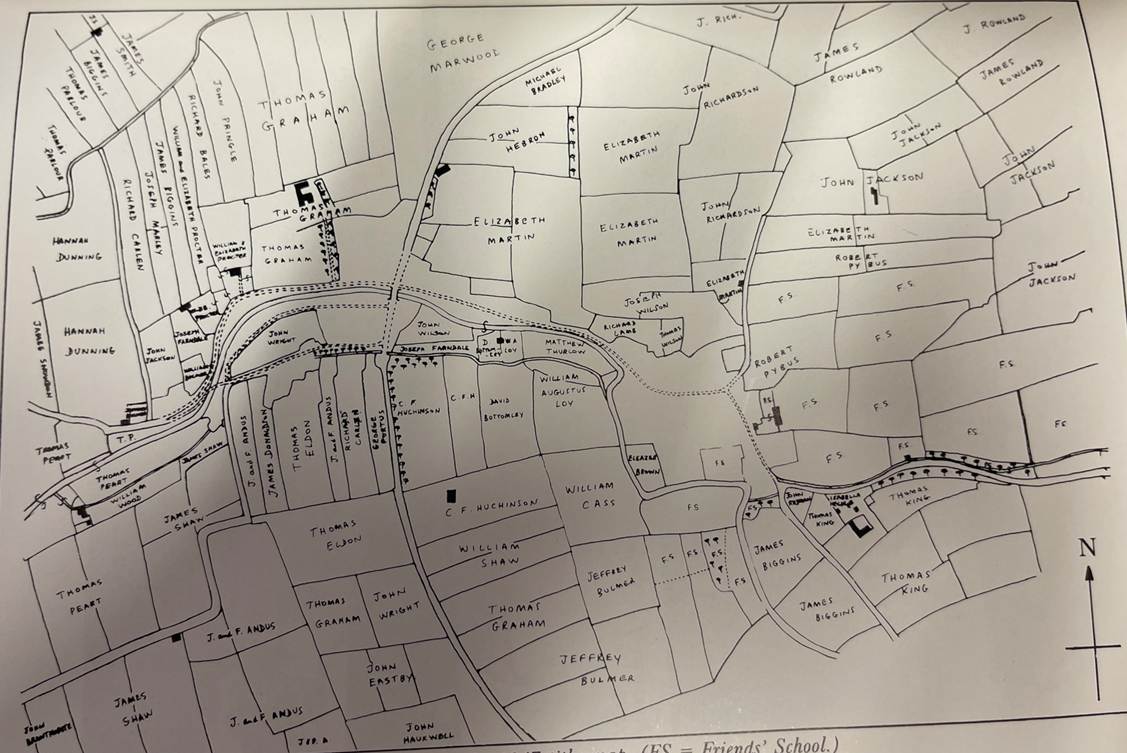
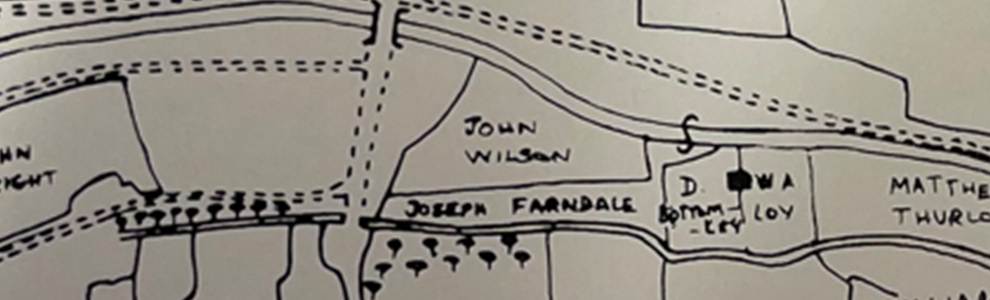
Land tenure, 1847 Tithe Map showing
land held by Joseph Farndale
So Joseph
and Mary Farndale had a large family of ten, though their eldest Richard had
died at birth. The family were living in Great
Ayton, where Joseph was working as a cartwright in 1841 and 1851[18]. It seems that as a cartwright,
Joseph also had woodland in his possession, which he presumably used to supply
his own cartwright business, but which operated itself as a substantial timber
supply business. He sold 2,120 oak trees along with ash and other timber to
timber merchants in 1851[19].
By 1861,
Joseph and Mary, by then 66 and 68 respectively, were living at Top Garth in Great Ayton with Joseph’s older
brother, William
Farndale[20], who had also worked as a
wheelwright and cartwright, though at Pinchthorpe
near Guisborough, but had reached the
age of 84. By this time Joseph was working as a joiner. By 1871, Joseph and
Mary had moved to Main Street at Great
Ayton and by then 77, Joseph had retired as a joiner[21].
Mary died on
28 February 1874 at the age of 81[22]. Joseph died three years later on 20 April 1877, aged 88[23].
|
The history of Great Ayton |
|
1795 to 1877 The father of a
large Great Ayton family, who was a cartwright |
A Century after Joseph Farndale’s death, his
kinsman General
Sir Martin Farndale KCB became a member
of the Wheelwrights Livery[24].
The
Second Generation
John Farndale
(1819 to 1862) was also working as a cartwright, alongside his father, by the
age of 20 in 1841[25]. By 1845 he moved to New Shildon
near Bishop Auckland where he married Ann Thompson Bainbridge, the daughter of
a shoemaker[26]. They had five daughters and they
settled in Bishop Auckland, where John worked as a joiner[27]. When he died on 1 September 1862,
an obituary appeared summarised his pious life. John Farndale, son of Joseph
and Mary Farndale, was born at Nunthorpe, near Ayton, in Yorkshire, and died at
New Shildon, Darlington Circuit, September 1st 1862,
aged forty three years, His parents were moral and his
mother has for a number of years been
connected with the Wesleyan Society. About eighteen years ago he removed
to New Shildon, and began occasionally to attend the chapel, but did not become
decidedly religious until about four years ago, when there was a gracious
revival. For some time he was under heavy conviction,
and could not find any rest for his soul, until one day when at work alone, he
realised a sense of sin forgiven, and was made happy
in God. He immediately joined our society, and remained a steady, consistent,
and devoted Christian up to the time of his death. He was a teacher in our
Sabbath school, and laboured with much earnestness in
our prayer meetings. He was emphatically a man of prayer, not only in his
closet, but he regularly conducted family worship, reading his Bible and
praying with and for his family. About three years ago the diseased which
terminated in his death commenced, but in all his affliction he was resigned to
the will of God. He was frequently visited by the friends who generally found
him with a Bible or Testament near him. Repeating such passages as the
following, “Many are the afflictions of the righteous, but the Lord delivereth him out of them all.” “our
light affliction, which are but for a moment,” etc. and “Though I walk through
the valley of the shadow of death, I will fear no evil.” In the last struggle
he was more than conqueror; death to him had lost its sting. He exclaimed in
triumph, “Glory be to God! Glory be to God!” About half an hour before he died,
he called his children to him and told them to love Jesus, and be good to their
mother, and then he softly fell asleep in Jesus.[28]
Ann Farndale (1821
to 1889) married Thomas Knaggs on Christmas Day 1847 at Great Ayton[29]. She was a dressmaker at the time of
her wedding and Thomas was a widower, and another cartwright. By 1851, Thomas
was a master cartwright, employing three men in Westgate, Guisborough[30].
By 1861, still living at Three Fiddles Yard in Westgate, Thomas had
become a broaching machine manufacturer[31]. Broaching can be traced back to the
early 1850s, with the first applications used for cutting keyways in pulleys
and gears. He later reverted to his trade as a cartwright[32].
Elizabeth
Farndale (1823 to 1848) married a tailor called William Rigg in Great Ayton in 1847[33], but she died the following year
aged only 24[34].
Richard Farndale
(1825 to 1915) worked for a farmer at Little Busby south of Stokesley by
the age of 18[35] and married Esther Thwaites in Stokesley in 1850[36]. They had three sons and a daughter,
all born in Great Ayton. Richard
continued to work as an agricultural labourer[37] until about 1881 by which time, at
the age of 55, he was working as a cartwright[38]. Esther died at the age of 68 in
1893[39]. Richard was retired by 1901[40] and lived to the age of 90 in 1915[41].
The younger Joseph Farndale (1827 to 1895) also became a cartwright in Westgate, Guisborough by the age of 25 in 1851[42]. He was unmarried and lodging with the Wilkinson family. On 10 May 1856,
then a joiner, he married Margaret Robson at the Parish Church at Great Ayton[43]. They had a very large family, though many of their children died at
birth or in infancy. The family moved to Middlesbrough by 1861[44], but by 1863, Joseph seems to have moved backwards and forwards between
the Lake District and Middlesbrough[45]. The family appear to have moved to Ulverstone, and then permanently to
Barrow-in-Furness between 1871 to 1873 and Joseph became a contractor builder
there. He died in 1895. We will explore his family of Barrow in Furness and
later Newcastle in Act 30.
William Farndale
(1830 to 1915) was also an unmarried apprentice cartwright in Westgate, Guisborough by the age of 20, in 1851. He
was apprenticed to his brother in law, Thomas Knaggs[46]. William married a blacksmith’s
daughter, Susannah Rodham, on 15 November 1855[47]. By 1861 he was back at Top Garth in
Great Ayton, a joiner employing
three men in his business[48]. By 1871 he was a master joiner with
two apprentices[49]. In 1876 he recovered £5 in costs in
damages from a nineteen year old clerk who had shot
his dog. In action to recover the sum of £10, the value of a dog which was
alleged to have been wantonly shot at great taken, on the 6th of march last,
was heard before Mr E R Turner, Judge, at Stokesley County Court on Friday. The
case, which was tried by a jury, excited to considerable interest, and the
court was crowded during the hearing of the suit. The plaintiff, for whom Mr
Dale, of York, appeared, was William Farndale, a joiner, living at Great Ayton
and the defendant was Thomas Hogg, a clerk, 19 years of age, residing at
Nunthorpe, who was represented by Mr Fawcett, of Stockton. The shooting of the
dog was admitted. The dog was described as a black and tan retrieve are, and a
quiet, docile, and harmless creature, much thought of by the plaintiff and
everyone who knew it. It was six years old, and had
never shown any symptoms of rabies. On the night of the 6th ult, it accompanied
its master to the Buck Hotel, where it remained an hour and a half, being
patted and fondled in the meanwhile by several persons in the house and it was
alleged that on its way home by itself, it was deliberately shot and had its
head nearly blown from its body. The defence was that the dog had shown it
ferocity on the road, which left no doubt in the minds of several persons that
it was mad. It attacked to Mr Hauxwell, who, however, was fortunate enough to
get out of the way, and it fell into a ditch by the roadside, where it lay frothing
at the mouth, and attempting to bite everything near it. This led to the
defendant, after a short consultation with several persons standing around, to
borrow a gun from Mr Hauxwell, and shoot the poor animal. A
number of witnesses were examined on both sides. A veterinary surgeon,
who examined the body of the dog, found no symptoms of rabies. His Honour held
that no one had a right to shoot a dog, even supposing it was mad, unless it
was necessary to do so to protect themselves. In the present case he thought
the dog had been shot unwarrantably, and he recommended the jury to return a
verdict for the plaintiff, but not for the amount claimed. The jury, after
deliberating for some minutes, returned a verdict for the plaintiff for £5 and
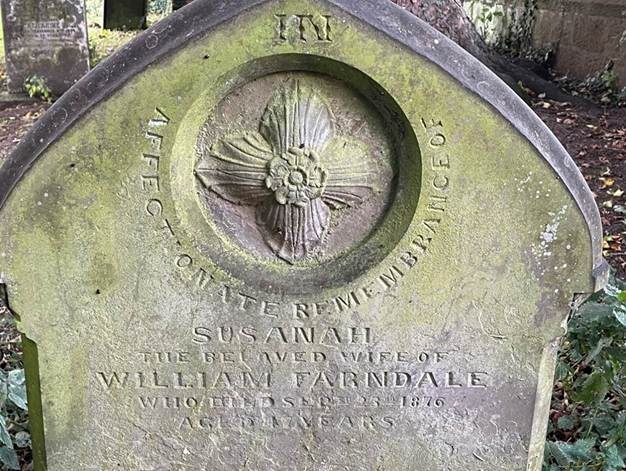
costs, to be paid at 8s per month.[50] William’s wife, Susannah Farndale
died on 23 September 1876 at the age of 47, and her gravestone is in Great Ayton churchyard[51].
In 1878,
William, a 46 year old widower, married 27 year old Mary Jackson who was a local farmer’s daughter[52]. They had a daughter and three sons,
though their eldest son died at birth. William was still working as a joiner in
the High Street, Great Ayton in 1901[53] and later also took on building
work, but he had retired by 1911 when he lived at Hazel House in Great Ayton, a property with five rooms[54]. William died on 15 April 1915 and
left an estate worth £1,380 10s 4d, equivalent to about £85,000 in 2026[55].
Thomas Farndale
(1833 to 1915) was a joiner apprentice to James Wood in Skelton by 1851, at the
age of 19[56]. In 1856 he married a farmer’s
daughter, Mary Ann Jameson, in York, by which
time he was working as a joiner[57]. They had three sons and a daughter and the family moved to Hopperton at Great
Ouseburn, about twenty kilometres northwest of York[58]. Thomas continued to work as a
joiner and the family eventually moved to Leeds
by 1871[59]. He seems to have done well for
himself as by 1891, Thomas and Mary was living on
his own means at Harrogate Road, Pannal, Knaresborough, aged 57[60]. By 1901 he was a widower and
retired joiner living at Moorfield Private House, Kirk Hammerton, Great
Ouseburn[61]. He was later referred to as having
been a master joiner. He died aged 82 on 26 May 1915, leaving an estate worth
£1,496 10s, worth perhaps £100k today[62].
Jane Farndale
(1834 to 1903) became an unmarried house servant to her brother in law , Thomas
Knaggs and sister Ann
Farndale in Westgate, Guisborough
by the age of 16 in 1851[63]. In Victorian Yorkshire, as in much
of England, the practice of an unmarried sister working as a servant for her
married sister was a pragmatically "respectable" solution to economic
and social pressures. This arrangement, often recorded in censuses as a kin
servant, allowed families to consolidate resources while preserving the
status of the unmarried woman. Working for a sibling provided a safer
environment than a stranger's house, where young maids were vulnerable to
bullying or exploitation. The unmarried sister performed menial tasks such as
lighting fires, scrubbing floors, and laundry. In 1855 Jane married a
millwright called George Shepherd at Great
Ayton[64]. They had two daughters and a son and George became a master millwright in Great Ayton[65].
Mary Farndale
(1837 to 1862) was also an unmarried servant, in Great
Ayton, aged only 14, in 1851[66] and she was servant to Elizabeth
Biggins, a 73 year old widow who was a landowner aged 24 in 1861[67]. Mary Farndale died on 5 March 1862
and was buried on 8 March 1862 at All Saints, Great Ayton aged only 25[68].
The Third
generation
Of the third
generation of the Great Ayton
2 Line, William
Farndale (1851 to 1915) was also a joiner in Great Ayton living in the high part
of the village by 1881[69]. He married Jane Atkinson, a
farmer’s daughter, in 1876[70] and they had two daughters. By 1887
he seems to have taken an interest in property dealing. In August 1887 he
advertised the let of a nine roomed house, pleasantly situated in Yarm between Great Ayton and Middlesbrough[71] and in May 1890, describing himself
as a joiner, he was advertised as the agent to show a two lot property of a
dwelling house and cottages near the High Green in Great Ayton[72]. By 1891 he was working as a
millwright[73], and as a joiner and was regularly
acting as an agent in property sales in Yarm and Great
Ayton[74]. He then started to work as a
builder and in 1899 he won a tender to build a footbridge. At the meeting of Stokesley Rural District Council, Mr T G
Fawcett presiding, the following resolutions were come to; That the surveyor of
the Ryedale District Council be asked to meet Mr Dixon with respect to the
approach to the Fangdale Beck Bridge; that a reward of £2 be offered for
information re the damage done to the Black Beck Bridge, Bilsdale; that the
clerk be instructed to write to Mr Moss asking him to remove the water that
flows up on the highway from the new garden recently made by Mr R B Turton at
Kildale. It was further unanimously resolved on the proposition of Mr. Wilson
that the Council undertake the work of repairing the footpath at Crathorne,
subject to Mr Dugdale bearing half the cost, estimated at £20. Tenders for a
new footbridge between Busby and Sexhow were received
as follows: Mr Farndale, Great Ayton, £7 17s 6d; Mr Wake, Carlton, £8 15s; and
Marmaduke Hebden, £9; and it was finally decided to accept that of Mr Farndale.
The following tenders were also received for the construction of a new stone
bridge over the stream crossing the highway between Stokesley and Broughton. [75] In 1901 he was described as a
property agent[76] and in 1911 he was described as a
millwright[77]. He had many business interests and seems to have juggled his roles as a millwright, a joiner,
and a property dealer. On 19 December 1914, John Lax of Mount Pleasant, Norton
left a substantial estate worth £23,809 and William Farndale was the
beneficiary of £500 if residing with him at his death[78]. When William died the following
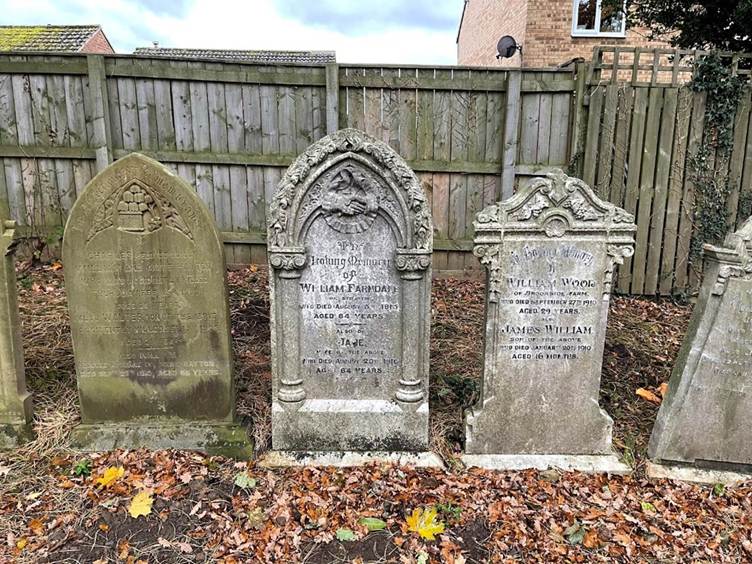
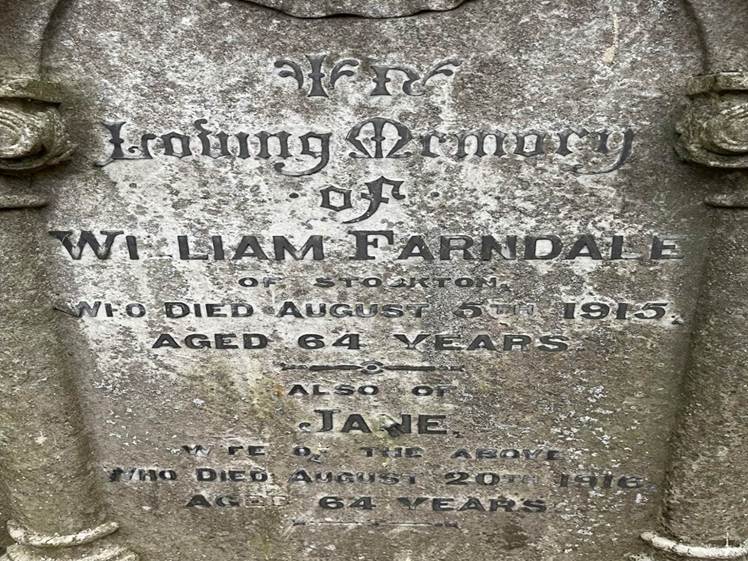
year on 5 August 1915, he left an estate worth £1,656 17s 11d[79]. His wife Jane Farndale, died on 20
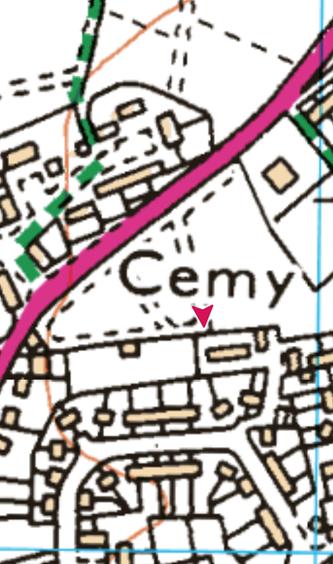
August 1916[80]. They are both buried at Great Ayton cemetery.
William’s
brother was George
Farndale (1853 to 1925). By 1871, unmarried and aged 16, George was a
millwright apprentice in the Main Street at Great Ayton[81]. In 1881 he was working as a
millwright, still single, boarding with the Easton Family at the Green Tree Inn
on the High Street at Yarm[82].
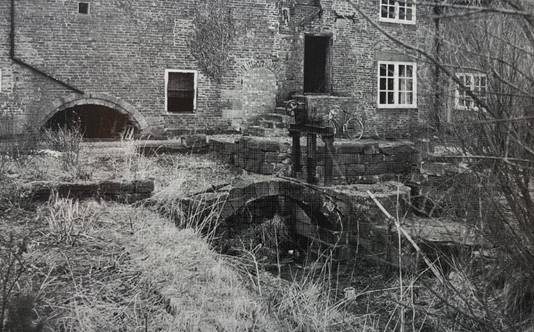
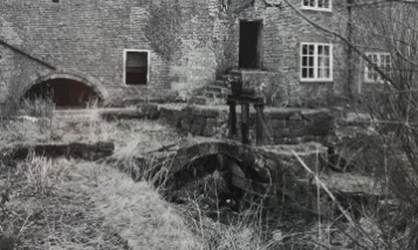
The mill
race entering Grange Mill at the west end of Great Ayton
He was still
a millwright in 1891 back in Great Ayton[83] and by 1901 had moved to Hull, where
he worked as a mill engineer[84]. He married in about 1903, but he
was a widower by 1911 when he was working as a millwright mechanic at the Old
Jolly Farmers, Sawmills, Crayford, Kent[85]. By 1921 he was at Ipswich, working
as a millwright for Thomas Robinson and Son Limited who were engineers from
Rochdale[86]. He was boarding with the Muttock family. He died aged 71 at Burton on Trent in 1925
when he was overcome by gas in a tragic accident. No further evidence being
available, the Burton on Trent Deputy Coroner yesterday recorded a verdict of
“accidental death” at the adjourned inquest on George Farndale, 71, the
Yorkshire millwright, who was found dead on Thursday in a gas filled bedroom at
a house in Horneglow Street, where he lodged. The
Deputy Coroner then took evidence with regard to the
death of Farndale's landlady, Mrs Sarah Burgess, 77, who was found unconscious
in the room and died in the Infirmary on Saturday. Inspector Haynes described
the gas bracket in the room where Mrs Burgess and Farndale were found as being
of an old fashioned type. The tap, he said, turned
around completely, having no “stop”. It was very loose, and the slightest touch
would turn it on. Also recording a verdict of “accidental death” with regard to Mrs Burgess, the deputy, coroner remarked: “I
think this case shows the great danger of having bad gas fittings. The fittings
in this room were particularly dangerous.[87]
William and
George had a brother, Joseph Farndale
(1855 to 1918). Joseph was working as a shoemaker by the age of 15 in 1871 at Great Ayton[88]. He married Sophia Housman in 1881
in Harrogate[89] where Joseph became a bootmaker[90] and Joseph and Sophia had six
children including Edith
Farndale, George
William Farndale who later became an entertainer and one of the Yorkshire
Mummers, Charles
Frederick Farndale, and Esther
Farndale. Edith, Charles and Esther
all worked in the clothing and drapery industry.
The fourth
sibling of this family was Mary
Elizabeth Farndale (1859 to 1891) who worked as a dressmaker in 1881 in Great Ayton by the age of 22[91]. She had a son born in Great Ayton out of marriage, in 1887, William Barnes Farndale[92]. Mary died aged 32 and is buried in Great Ayton. William Barnes Farndale
became the hotel manager of the White Horse Hotel in Ripon by the time of the
Second World War[93].
Of William
and Susannah’s family, John Joseph
(“Jack”) Farndale (1882 to 1946) won a free hand drawing prize in Great Ayton at the age of 11 in 1893[94]. By the age of 19 he was a joiner
working in the village[95]. He married Mary Ingledew on 2 July
1914, a few days after the assassination of Archduke Franz Ferdinad, and the
same month that Austria-Hungary declared war on Serbia. John worked as a
builder and joiner and they lived at Low Green House
in Great Ayton. In April 1916 he had given testimony in favour of a Great Ayton man charged with poaching,
whose charge was dismissed[96].
He was
mobilised as a wheeler in the Royal Garrison Artillery in May 1916[97]. Jack was mobilised on 30 May 1916
and posted to the Heavy Artillery Depot at Woolwich on 30 June 1916. His
character was very good. On 1 October 1917 he was appointed wheeler and posted
to RSG Sheerness Garrison. He was at Ripon in April 1918. There was a medical
board held in April 1918 and he appears to have been
transferred to the Reserve. He was certified a skilled wheeler.
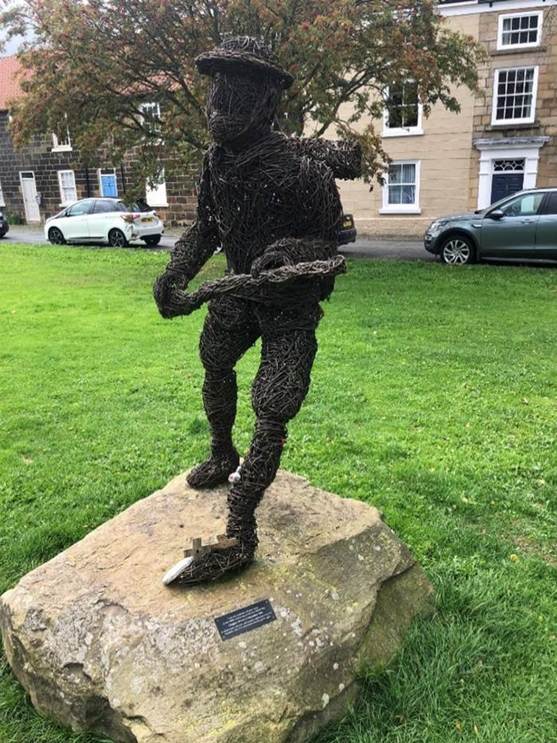
The
Memorial in the Square at Great Ayton to those who served in the First World
War.
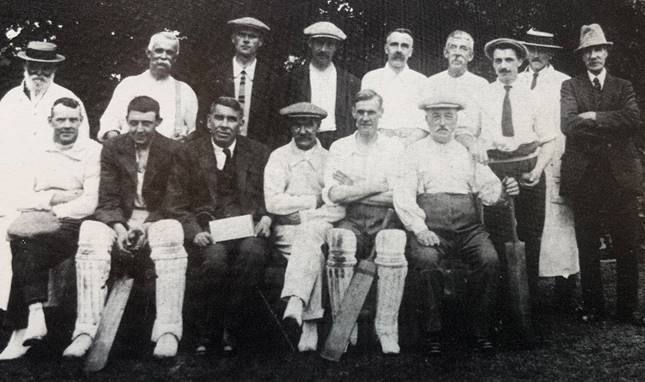
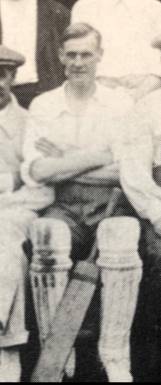
Jack played
for the Great Ayton tradesman
cricket XI by 1924[98].
He was
involved in the organisation of a carnival and motor gymkhana in 1930. Great
Ayton, with all its regrettable unemployment, is making a great effort to raise
funds to proceed with the repair of the fabric of the parish church. A carnival
and motor gymkhana is being organised to take place on Saturday, 14 June, when
it is anticipated that a record crowd will be present. The effort is in the
hands of the parochial church committee, who have been successful in enlisting
the services of Mr A K Cumbor, whose ability and
organising events of this character is so well known and highly appreciated,
and who is supported by the Vicar, the Rev W Lawson Smith, and Mr J Farndale.
The gymkhana has been specially arranged by Mr. Porter, of the Synthetic and
Nitrates Limited, Billingham, whilst the attractive and novel posters
advertising the event have been cleverly designed and executed by Miss Walsh, a
local 17 year old artist.[99] He served with the Observer Corps
with the Royal Air Force in World War 2[100]. He probably served as a civilian
volunteer serving as a ground based aircraft observer.
The Observer Corps, activated on 24 August 1939, provided the primary means of
tracking enemy aircraft over land once they had crossed the coastline,
complementing radar. Jack would have deployed to his a
post, often in a wooden hut or sandbagged pit, using binoculars to identify,
estimate the height, direction, and type of aircraft, both friendly and enemy.
He probably worked in a team on a windy outpost inland from the Yorkshire
coast, providing vital surveillance. He was classified Q3 which probably meant
he worked part time alongside his continued work as a joiner. Jack died in 1946
and is buried at Great Ayton[101].
Jack’s
brother William
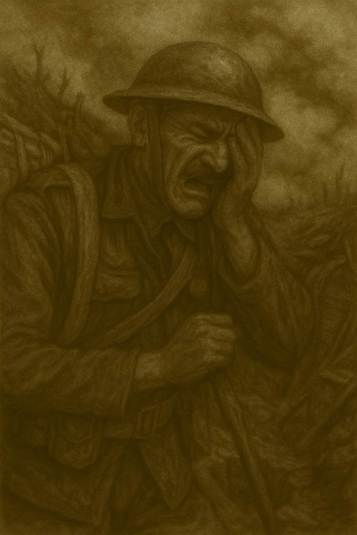
Farndale (1890 to 1947) was another joiner[102] in Great Ayton who was a Lance Corporal in
the Royal Engineers between 17 November 1915 to 30 December 1918 and eventually
honourably discharged for a disability possibly related to gassing[103]. He was promoted to Corporal in
March 1917 and was wounded in a gas attack in France in April 1917 when he was
transferred to England to 2 General Hospital. He married Florence Mary
Whitworth on 22 November 1923[104]. Florence worked at the Buck Inn on
Low Green[105]. William died in 1976 at the age of
86[106] and Florence died in 1977[107].
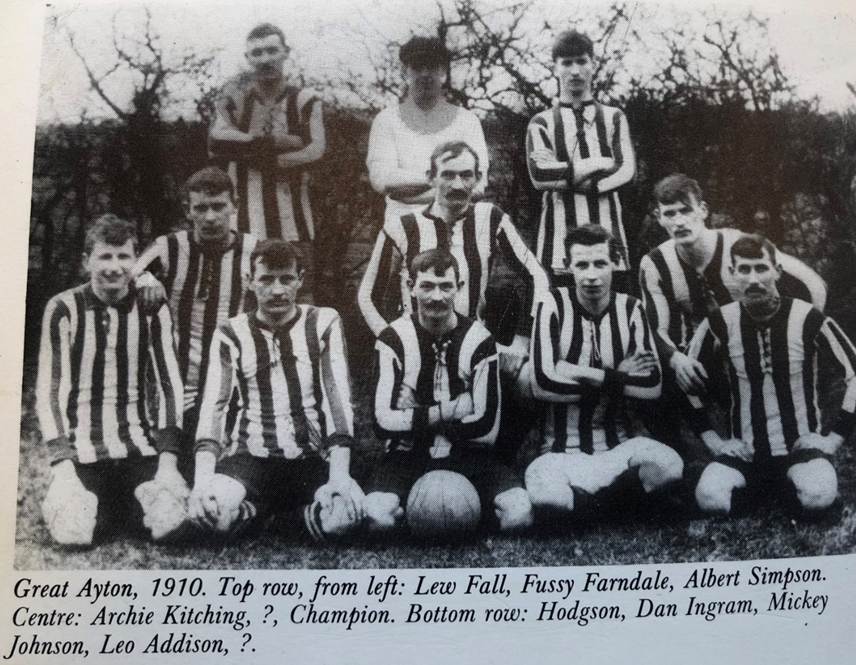
It is not
clear who Fussy Farndale was in the Great
Ayton football team of 1910[108], but he must have been from these
families.
The Farm
Worker’s Family
Joseph
Farndale’s twin brother was Henry Farndale
(1795 to 1857), the son of Samuel and Elizabeth
Farndale of Kilton was baptised at Brotton on 25 October 1795[109]. Henry’s first marriage was to
Elizabeth Appleton in Great Ayton on
20 May 1819, when he was 24 years old[110]. They had a family of four daughters
and three sons. We met John Henry Farndale,
who was killed in a mining accident in 1866, in Act 18. We met Robert George
Farndale, who was a bootmaker and moved to Hartlepool in Act 19 Scene 4. His family
became employed in the heavy industry of the shipbuilders of Hartlepool.
Henry was
still working as an agricultural labourer in 1841[111] and he was a widower by 1851[112] after Elizabeth’s death in 1846[113]. He married a 41
year old servant, Ann Richardson in Great
Ayton in 1854, when he was 49 years old[114]. He died three years later in 1857[115].
Henry and
Elizabeth had an older son, William Appleton
Farndale (1823 to 1908) who became a miller and married Jane Campbell, the
daughter of a shoemaker, in 1846[116]. He later worked as a farm labourer[117], a jet miner[118], and as a gardener[119] and they moved to nearby Great
Broughton. William and Jane had a family of five, but four died in infancy. The
surviving son was also called William Appleton
Farndale and he did farm and cattle work at Fir Tree Farm in Easby just
south of Great Ayton by 1911[120]. He joined the Yorkshire Regiment in
the First World War[121]. When in October 1915 Private W
Farndale was drafted out to France a few weeks ago. In a letter to friends at
Great Broughton, he jocularly remarks that, now he has gone, he has got the
Germans on the run[122]. He served in France and Italy. He
married Agnes Taylor in 1919[123]. He died in 1948[124]. William and Agnes had a son Cyril Ernest
Farndale (1921 to 1985) who served in the Anti Tank
Regiment of the Royal Artillery between 1939 and 1942[125]. Another son, Ken
Farndale (1922 to 1992), moved to Wetherby and his family were the Wetherby 2 Line. William and
Agnes’ daughter, Ethel
Doreen Farndale married James Hatfield in 1949[126] and they emigrated to Western
Australia in 1962[127]. William and Agnes’ youngest son was
Ronald
Farndale (1932 to 1956) who was disabled and cared for at the Claypenny Colony in Easingwold[128].
The Farndale
family were thus associated with Great
Ayton from about 1655 until the early twentieth century. In the Victorian
era the Farndales were a significant family in the village where they worked as
cartwrights, joiners and millers.
or
Go Straight to Act 23 – The Ontarians
|
This
is a new experiment. Using Google’s Notebook LM, listen to an AI powered
podcast summarising this page. This should only be treated as an
introduction, and the AI generation sometimes gets the nuance a bit wrong.
There are a some instances in this podcast where
there are mistakes about the exact relationships and an overlap of
generations. However it does provide
an introduction to the themes of this page, which are dealt with in
more depth below. Listen to the podcast for an overview, but it doesn’t replace
the text below, which provides the accurate historical record. |
|