Act 19
Dark Satanic Mills
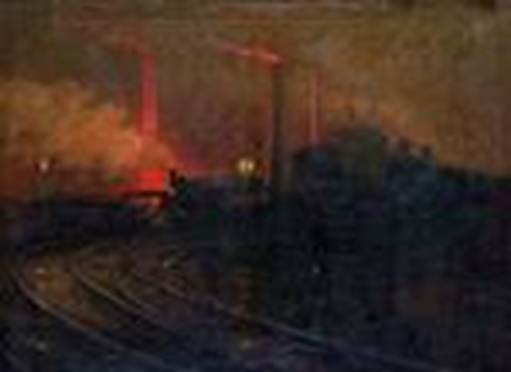
The Farndale Story met Leeds,
Bradford, Middlesbrough, Hartlepool and Stockton
through the period of industrial transition
|
A
flavour of Victorian innovation |
Industrial
Change
A demographic boom increased the
population of England from 5.2 million in 1701 to 17.9 million in 1851. A trend
in increased wages and new job opportunities started in the eighteenth century.
People married younger and had more children. Rev Thomas Malthus[1] wrote his Essay on the Principle of
Population[2] in 1798. A volcanic eruption of Mount Tambora[3] in present day Indonesia peaked on 10
April 1815. This disrupted the climate and caused widespread famine. In the
rest of Europe the consequence of this trend of population growth was sharp
deterioration, but this didn’t happen in Britain. There was no economic
disaster. Living standards were maintained at a relatively high level.
Prosperity focused on the growth of urban areas such as London, Birmingham,
Manchester and Liverpool. This was a period of the growth of new jobs, and a
degree of support for incomes through the Poor Laws.
From the
1850s there was a second stage of industrialisation, boosted by cheap energy
from the new mineral economy. A new clothing demand also drove the industrial revolution. Cotton
was adopted for its colour and brightness. Folk bought goods for enjoyment and self invention. This was a time of self
expression and ambition.
Proponents of change, such as David Hume[4] and Adam Smith[5] welcomed a new commercial society, and
saw a remedy to poverty, and provision of a more stable, peaceful and civilised
society, with new economic freedoms. Wages were already high, and people had
new aspirations and choices. Opponents of change criticised its moral, social
and aesthetic consequences. Skills were devalued and health deteriorated.
Infant mortality was high. People’s physical condition deteriorated, and
people’s heights declined. Real wages barely rose from their already high
levels, about 4% from 1760 to 1820, but food prices rose.
Charles Dickens characterised the new
age:
Coketown, to which Messrs Bounderby and Gradgrind now walked, was a
triumph of fact; it had no greater taint of fancy in it than Mrs. Gradgrind
herself. Let us strike the key-note, Coketown, before pursuing our tune.
It was a
town of red brick, or of brick that would have been red if the smoke and ashes
had allowed it; but as matters stood, it was a town of unnatural red and black
like the painted face of a savage. It
was a town of machinery and tall chimneys, out of which interminable serpents
of smoke trailed themselves for ever and ever, and never got uncoiled. It had a black canal in it, and a river that
ran purple with ill-smelling dye, and vast piles of building full of windows
where there was a rattling and a trembling all day long, and where the piston
of the steam-engine worked monotonously up and down, like the head of an
elephant in a state of melancholy madness.
It contained several large streets all very like one another, and many
small streets still more like one another, inhabited by people equally like one
another, who all went in and out at the same hours, with the same sound upon
the same pavements, to do the same work, and to whom every day was the same as
yesterday and to-morrow, and every year the counterpart of the last and the
next.
These
attributes of Coketown were in the main inseparable
from the work by which it was sustained.
You saw
nothing in Coketown but what was severely workful.
The jail
might have been the infirmary, the infirmary might have been the jail, the
town-hall might have been either, or both, or anything else, for anything that
appeared to the contrary in the graces of their construction. Fact, fact, fact, everywhere in the material
aspect of the town; fact, fact, fact, everywhere in the immaterial. The M’Choakumchild school was all fact, and
the school of design was all fact, and the relations between master and man
were all fact, and everything was fact between the lying-in hospital and the
cemetery, and what you couldn’t state in figures, or show to be purchaseable in the cheapest market and saleable in the
dearest, was not, and never should be, world without end, Amen.[6]
Between 1790
and 1850, the sudden industrialisation caused a loss of status for some and
sudden wealth and power for others. Many saw insecurity, disorientation, slum
living and disease. There was uncertainty as to whether the new era would end
in wide prosperity or mass starvation.
The dark
side of the industrial revolution was emphasised in Arnold Toynbee’s[7] Lectures on the Industrial
Revolution[8] in England and Engels’ anticipation
of a proletarian revolution. There was a bleak interpretation of the industrial
revolution trapping the poor in smoke and squalor.
William
Blake’s[9] Jerusalem contrasted
nostalgia for England’s green and pleasant land with the new industrial
landscapes.
|
And did
those feet in ancient time, Walk upon
England’s mountains green: And was
the holy Lamb of God, On
England’s pleasant pastures seen! |
And did
the Countenance Divine, Shine
forth upon our clouded hills? And was
Jerusalem builded here, Among
these dark Satanic Mills? |
Bring
me my Bow of burning gold: Bring
me my Arrows of desire: Bring
me my Spear: O clouds unfold: Bring
me my Chariot of fire! |
I will
not cease from Mental Fight, Nor
shall my Sword sleep in my hand: Till we
have built Jerusalem, In
England’s green & pleasant Land.[10] |
In reality
the famous hymn, written between 1804 to 1820, which became a great patriotic
song in the first world war, is difficult to comprehend. It was written in
consequence of the Napoleonic Wars and envisaged an ancient English order as
God’s chosen people rebuilding Jerusalem, harping back to the long debate since
the Civil War holding underlying rights held to have existed in Anglo Saxon
times before they were swept away by the Normans. Whilst dark satanic mills
have long been associated with the Industrial Revolution, there are
interpretations that the phrase was a criticism of the conformity of the
established Church of England, and that the phrase was an attack on ambitious
church building projects.
Scene 1 - Worsted Spinning in
Bradford
Worsted is a
high-quality wool yarn. The name derives from Worstead,
Norfolk which was a manufacturing centre for yarn and cloth in the twelfth
century, boosted by weavers from Flanders who moved to Norfolk. Worsted yarns
and fabrics are stronger, finer, smoother, and harder than more traditional
woollens. Worsted wool fabric is preferred in tailoring items such as suits,
whilst woollen wool tends to be used for knitted items such as sweaters.
John
Farndale was baptised in Bishop Wilton near York on 23 April 1849[11] and became a groom by the age of 21
in 1871[12]. He married Catherine Todd in 1872[13] and soon afterwards they moved to Clayton[14] in modern Greater Bradford.
John continued to work as a groom in Clayton, but his family all took work in
the worsted industry[15]. By 1891, Annie
Farndale, aged 19, was a worsted drawer and John Farndale, 15
and James
Arthur Farndale, 13, were working as worsted spinners[16]. Annie continued to work as a drawer
until she married Frank Robinson in 1902[17] after which she worked as a mill
hand[18] until the family emigrated to
Massachusetts[19], where Frank worked in a paper mill[20]. Cloth drawers, or finishers,
inspected the cloth and used a needle to make any necessary repairs to small
holes or blemishes in the fabric. They were paid relatively well, 30s a week
for a drawer compared to 18s a week for a hand loom weaver and 9s for a power
loom weaver, in 1858. Their sister, Mary Farndale was
working as a worsted spinner by 1901, aged 17[21] and her sister Maggie Farndale
was a mill hand by 1911, aged 25[22].
In the
eighteenth century there was a rich tradition of hand loom weaving and
spinning, as well as shoe making and mending, in the cottages of the village of
Clayton. The completed work was sold in Bradford
and at Piece Hall, Halifax. By the early nineteenth century Clayton had over
1,500 hand loom weavers working in their homes.
In 1760
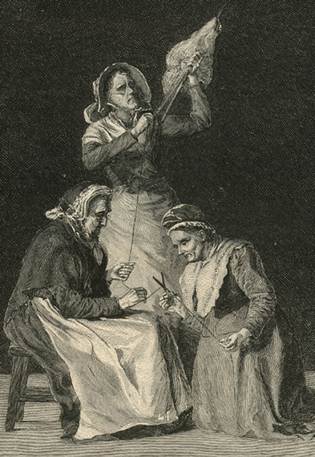
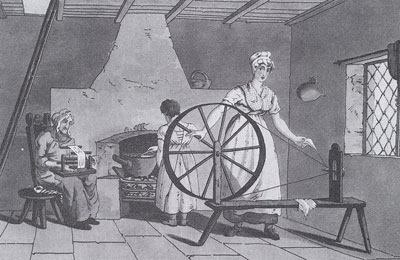
England, yarn production from wool, flax and cotton was a vibrant cottage
industry. Fibres were carded and spun by hand using a spinning wheel. As the
textile industry expanded its markets and adopted faster machines, yarn
supplies became scarce especially due to innovations such as the doubling of
the loom speed after the invention of the flying shuttle. High demand for yarn
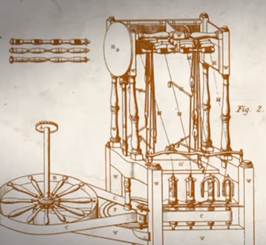
spurred the invention of the Spinning Jenny in 1765, followed closely by the
invention of the Spinning Frame, later developed into the water frame which was
patented in 1769. New technology increased the production of yarn so
dramatically that by 1830 the yarn cottage industry in England could no longer
compete and all spinning was carried out in factories.
The
mechanisation of the industrial revolution transferred Clayton’s industry
around a growth of new mills. The first mill to be built in the Clayton area
was Brow Top Mill. Alfred Wallis, Asa Briggs[23] and Joseph Benn were the principal
manufacturers at Oak Mills and later Joseph Benn and Sons at Beck Mill. Clayton was well served by public
transport from the late nineteenth century. In October 1874 the Great Northern
Railway opened to Clayton, followed in October 1878 by the Bradford and Halifax
lines.
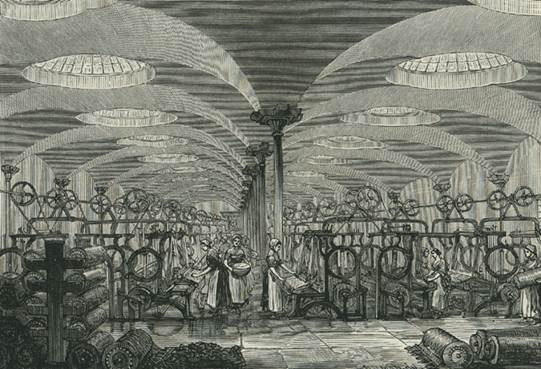
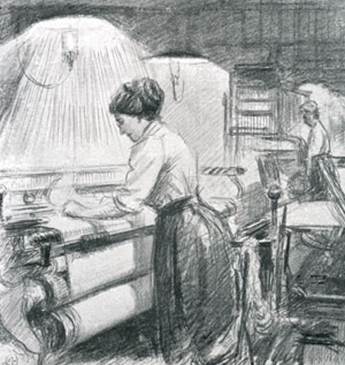
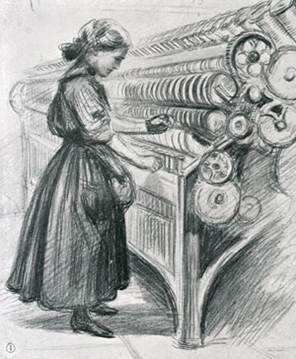
James Arthur Farndale (1877 to 1952) was baptised in Clayton[24]. As a boy Mr Farndale commenced
working at Messrs Joseph Benn and Sons, Beck Mills, Clayton, eventually
becoming an overlooker and after being associated with that firm for 26 years,
he was appointed drawing room manager at Saltaire Mills[25]. He married Florence Edith Greenwood
in 1905 at the Wesleyan Chapel in Clayton[26]. He was appointed drawing room
manager at Saltaire Mills in January 1914[27].
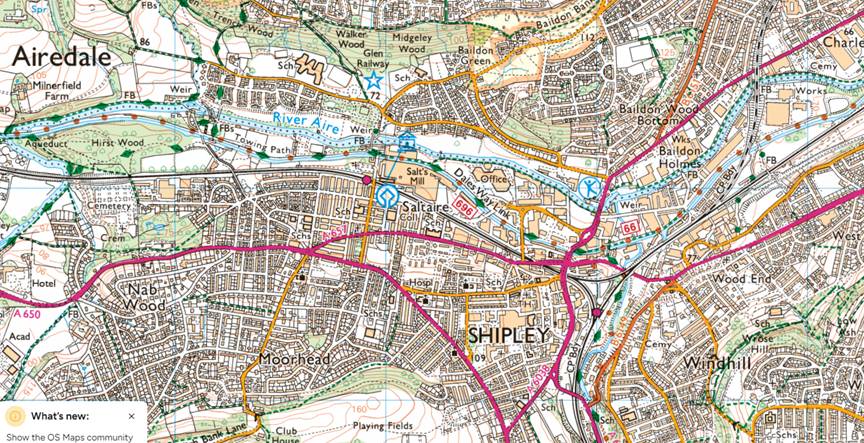
Salts Mill[28] was a textile mill in Saltaire[29], Shipley, to the north of Bradford, and about six kilometres north of
Clayton. It was commissioned and financed by the industrialist and
philanthropist, Sir Titus Salt and opened in 1853. Working conditions in
factories were appalling by the mid nineteenth century, with most workers suffering
disease, low wages and labour exploitation. Dangerous machinery and long hours,
sometimes exceeding sixteen hour working days, resulted in frequent accidents.
Titus Salt acknowledged this and built a factory and surrounding village with
which he intended to improve the working conditions for his employees. The mill
was, at the time, the largest industrial building in the world by total floor
area. It was built beside the River Aire. Salts Mill Mill
is now a UNESCO World Heritage Site.
James became
attached to Saltaire Cricket Club on coming to live in Albert Road in 1914, and
his keenness for cricket in general and this club in particular continued
unabated to the end[30]. During the First World War there
were a number of hearings of the Shipley Military Tribunal which excused James,
by then braiding manager, from military service[31].
On 31 May
1918, George V and Queen Mary visited Shipley and was welcomed amongst others
by the Chief Constable of Bradford, Joseph
Farndale, who we will meet in Act 21. The object of
their Majesties’ visit, for their three days tour of the West Riding of
Yorkshire - beginning at Bradford on
Wednesday morning and terminating to date today at Leeds,
was really an inspection of representative textile factories that are engaged
on work of national importance. Consequently, local interest could not have
been a greater stimulus, and, so far as circumstances permitted the residents
expressed their appreciation of the royal favour that was conferred on them.
They crowded the places of interests, displayed a large quantity of decorations
in street, shop and residence considering there was no organisation behind this
sort of compliment to their Majesties; and in in a variety of other ways they
indicated the warmth and sincerity of their welcome. It was the first time for
the visit of a King and Queen and the inspection of Saltaire mills was also
high testimony to the industrial importance of the town and to the eminence of
the enterprising spinning and manufacturing Firm, Sir Titus Salt, Bart and sons
and co limited.
Shipley's
association with Royalty began in 1882 when the late King Edward VII and Queen
Alexandra stayed two nights at Milner field, where, at the Prince as the Prince
and Princess of Wales, they came for the opening of the Bradford Technical
College. Coming to Saltaire Station by train, they were received by the
representatives of the town in the grounds of the Saltaire Congregational
Church, a roadway having been cut through the railway embankment. Next morning
they drove from Milner field through Saltaire and Shipley, being received by
the representatives of Bradford at the boundary of Frizinghall.
Among the decorations was an imitation gothic arch at the Frizinghall
entrance to Lister park, and the present permanent arch was afterwards erected
as a memorial of the visit. In May 1887, Royalty was again at Milner Field,
Princess Beatrice being the visitor. She had come to open the Saltaire Jubilee
Exhibition. The late Mr Titus Salt and Mrs Salt were on both occasions resident
at Milner Field. On September 27th 1916 her Imperial Highness the Grand Duchess
George of Russia came to Saltaire from Harrogate, accompanied by her two
daughters, the Princess Nina and Zenia, to open a patriotic bazaar.[32]
The King and
Queen arrived at Sir Titus Salt’s spinning and manufacturing mills at Saltaire,
where James
Farndale was the worsted drawing manager, at 3pm and stayed until 3.40.
Shortly after the War James was the worsted drawing foreman[33].
By 1925,
James’ family were established in Shipley’s Society. At Christmas in 1924 and
1925, Florence Farndale, James’ wife, handed out Christmas presents to children
of the Fire Brigade and James and Florence were active supporters of the Fire
Brigade, various galas and local sporting events[34]. As well as a keen interest in
cricket, he played bowls and won the gold medal and silver rose bowl in 1926[35].
Indeed, in
November 1936, their support of the Fire Brigade paid dividends when, after
a thrilling dash through the fog over frost bound roads a Bradford fire brigade
engine reached Baildon in the remarkable time of 11 minutes yesterday to deal
with an outbreak of fire at the home of Mrs James Arthur Farndale, of Oakley,
Sandals Road, Baildon. The fire appears to have originated in one of the
bedrooms and have been caused by an electric radiator becoming overheated. When
the brigade arrived on the scene the upper floor was filled with dense clouds
of smoke, and it was necessary to use oxygen apparatus in order to approach the
seat of the fire. The flames were quickly brought under control, but it is
thought that the damage may exceed £100. The house was “Oakley”, the property of Mr. James A
Farndale.[36]
James
retired in 1942 after having held the position of manager of the drawing
room at Saltaire mills for 28 ½ years, a good record of service. Mr R W
Guild, managing director, on behalf of the directors, presented Mr Farndale
with a cheque; the managers and staff also gave him a cheque; and all connected
with the drawing room gave him as a parting gift a beautiful electric clock. Mr
Guild in making the presentation on behalf of the directors spoke very highly
of the excellent services rendered by Mr Farndale in his capacity as manager of
the drawing room and assured him that he left with the best wishes of all those
connected with the firm. Mr O Dennison, spinning manager, who made the
presentation on behalf of the managers and staff spoke in a similar vein, and
of the high esteem in which he was held by everybody.
He has
been actively connected with the sports activities of the firm and was formerly
a playing member of the Salts Bowling Club, whilst he has been a member of the
Saltaire Football Club. Mr Farndale has also taken a keen interest in Saltaire
Cricket Club, of which he is vice president and an active member of the
committee. He is held in huge esteem by the directors, managers and work people
of Saltaire Mills, when on Friday everybody gave tangible expression of their
esteem. A life member of Saltaire Cricket
Club, he had voluntarily tended their Roberts Park ground for five seasons. [37]
On 1 March
1952, James collapsed in a bus while returning from Saturdays football match
at Park Avenue and died almost immediately[38].
We will meet
his son Wilfred
Farndale, who became a locally renown cricketer and Shipley’s sanitary
inspector, in Act 33.
James’
brother, William
Farndale started a plumbing partnership in Bradford[39] and his daughters, Edith
Farndale and May
Farndale were both bookkeepers at the Infant Clinic in Bradford[40]. Tom Farndale became
a machine moulder[41] and his daughter Minnie Farndale
was working as a cotton weaver in 1939 in Padiham in
Lancashire[42].
Robert
George Farndale (1909 to 1978) left Hartlepool
to marry Winifred Sibley in 1934[43]. He worked as a French polisher[44] in Bradford
and they had a family of six. His son, Peter
Farndale, was secretary of the Bradford
Rugby Central League[45].
Scene 2 - The Cordwainer of Leeds
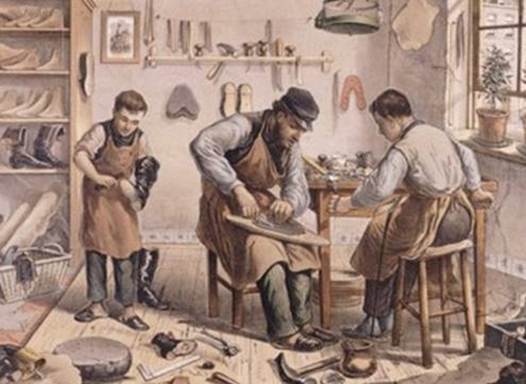
John Farndale was
a shoe maker’s apprentice at Crayke, a village east
of Easingwold, aged 14, in 1841[46]. In 1856 John married Sarah Ann
Brittain in Leeds[47] and they set up home in Bramley near
Leeds[48]. By then John was working as a
cordwainer, a craftsman of new shoes, distinguished at that time from the
cobbler who fixed them. John was still making shoes and boots in Bramley in
1901 by which time he was aged 68 and a widower[49]. He died in 1902[50].
As the
population of Leeds grew, so did the demand for meat,
and this meant a local supply of hides and skins for the leather industry.
The leather industry in turn
provided material for the footwear industry, which became an important trade in
Leeds from the 1830s, mostly making boots. A
major footwear producer in Leeds was Stead and Simpson who started out as
curriers and leather factors in 1834. In the 1840’s they began to make ready-made
boots, and shoes. Many footwear manufacturers remained as small firms, but some
like John Halliday outgrew his workshop in Harrison’s Yard, Bramley, and built
a large factory employing 450 people making strong boots for the home and
export market. Another large manufacturer was F & W Jackson.
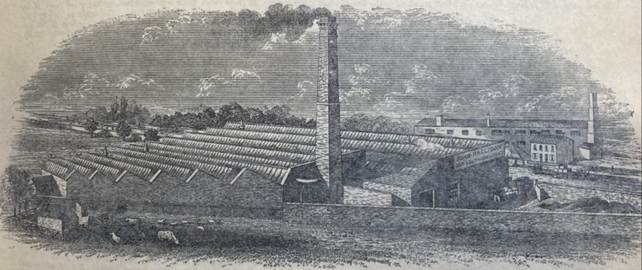
The
Halliday Factory in Bramley
John and
Sarah had a family of eleven. Their eldest son, Joseph Farndale,
was also working as a shoemaker by the age of 14[51]. He died, aged 34, in 1891[52]. Jethro Farndale
was also a shoemaker[53], and he too died young at the age of
32 in 1893[54]. Peter Farndale
was another shoemaker[55]. Mary
Farndale, Alice
Farndale, Elias
Farndale, and William
Farndale, all died in infancy. Elizabeth
Farndale worked as a shoemaker machinist by 1881[56] and continued to work as a boot
machinist[57] after she was married to an iron
miller, John Gall[58]. She died when she was 47. The
youngest son, John
Farndale, became a boot rivetter[59].
Scene 3 - Heavy Industry in Stockton
John Farndale (1796 to 1868) was a farm labourer at Brotton who married Elizabeth Wallace in
1827[60]. They had a family of ten, the Stockton 1 Line. The family then moved to Middlesbrough, where John was working as a
labourer and merchant in 1851, and he became bankrupt[61]. By 1861, John was working in the iron foundry in Stockton[62].
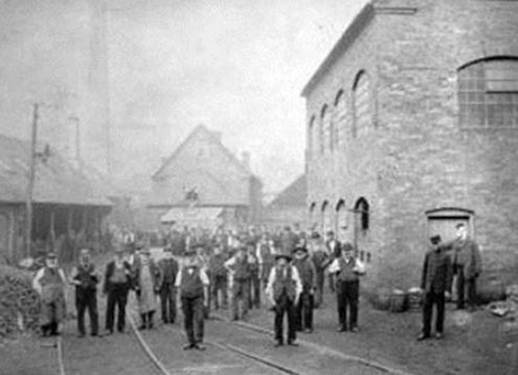
Iron Foundry, Stockton
We met his sons William Farndale and Peter Farndale, who were solicitors’ clerks in Stockton, and George Farndale, the grocer, in Act 14 Scene 2.
Robert Farndale (1814 to 1866) also became a grocer in Stockton[63]. He married Sarah Taylor of Saltburn in 1841[64] and they had a family of six. Robert Edward Farndale was an iron ship builder’s clerk[65] and later a plasterer and cement maker of Stockton[66] but his business was bankrupted[67], and he died five years later in Birmingham[68].
William Farndale (1849 to 1927) was a footman when he married Jane Gale at Bedale on 8 February 1870[69]. William and Jane had their own family of seven, the Stockton 3 Line. In about 1881, the family moved to Stockton, where William became a car man[70] and later a boilersmith labourer[71]. Their son William Farndale moved to Norwich[72], and we
will meet him in Act 20. Their
son, James
Farndale worked in an iron foundry[73] and for a time in steam engine works[74] in Stockton.
In 1909 James Farndale became a brother of the Order of Druids Friendly Society[75] and later joined the committee[76]. He joined the Royal Field Artillery
in the First World War[77]. Their son Tom Farndale became
a general and fitter’s labourer and machine helper[78] whose children included Wilf Farndale
who was an aircraft engineer[79] who later emigrated to New Zealand.
Scene 4 – Shipbuilding and heavy
industry in Hartlepool
Robert George
Farndale (1834 to 1900) grew up in Great
Ayton, part of the Great
Ayton 3 Line, and worked as a farm labourer[80]. In 1862, he married Mary
Butterworth in West Hartlepool, by which
time he was working as a shoemaker[81]. They had seven children, the Hartlepool Line. He was
still working as a shoemaker in 1892, when he was involved in the proposal of
Christopher Furness, a steamship owner and shipbuilder, as the liberal
candidate for West Hartlepool[82]. He became a master boot and shoe
maker[83]. He had a low point in 1898 when an
old man named Robert Farndale was summoned at the West Hartlepool Police Court
this morning for non payment of improvement and
highway rates amounting to £1 16s 10d. It was stated that great efforts had
been made to recover the money, but in vain. A distress warrant was issued, but
it had been returned endorsed “no goods.” Farndale was ordered to be sent to gaol
for 14 days in default of payment[84]. He died of pneumonia at 18 Benson
Street, West Hartlepool, on 14 January 1900[85].
When
Isambard Kingdom Brunel visited Hartlepool
in December 1831, he described it as a curiously isolated old fishing town –
a remarkably fine race of men. Went to the top of the church tower for a view.
In 1831 the population of Hartlepool was still only 1,300. In 1833, the council
agreed to the formation of the Hartlepool Dock and Railway Company (“HD&RCo”) to extend the existing port by
developing new docks, and link to both local collieries and the developing
railway network in the south. In 1835, a railway link was established from the
South Durham coal fields, and new docks opened in 1835. From 1836 there was a
gas supply for gaslight. This expansion led to the new town of West Hartlepool.
West Hartlepool grew out of a dispute between the owners of the railway and the
owners of the docks. The owners of the railway decided to build their own docks
south west of the town. The eight acres West Hartlepool Harbour and Dock opened
on 1 June 1847. Almost immediately the new town of West Hartlepool sprang up nearby. In 1878 the
William Gray & Co shipyard in West Hartlepool launched the largest tonnage
of any shipyard in the world. By 1881, old Hartlepool's population had grown to
12,361, but West Hartlepool had a population of 28,000. Ward Jackson helped to plan the layout
of West Hartlepool and was responsible for the first public buildings. He was
also involved in education and welfare. In the end, he was a victim of his own
ambition to promote the town, with accusations of corruption and legal battles,
left him in near-poverty. He spent the last few years of his life in London,
far away from the town he had created. In 1891 the two towns had a combined population of 64,000. By
1900 the two Hartlepools were, together, one of the
three busiest ports in England.
By 1913,
there were forty three ship-owning companies located in the town, with
responsibility for 236 ships. This made it a key target for Germany in the
First World War. One of the first German offensives against Britain was the
raid on the east Yorkshire coast on the morning of 16 December 1914, when the
Imperial German Navy bombarded Hartlepool,
West Hartlepool, Whitby and Scarborough.
Hartlepool was hit by 1,150 shells,
killing 117 people.
Robert and
Elizabeth’s oldest son, John George
Farndale was working as a labourer in Hartlepool,
at the age of 17, by 1881[86] and by the turn of the century he
was working as a cement trimmer in West Hartlepool[87]. He became treasurer of the
Hartlepool Branch of the Royal Antediluvian Order of Buffaloes[88], known as the Buffs to
members, one of the largest fraternal movements which started in 1822 and which
spread throughout the former British Empire. Henry Farndale
was working as a sailor in Hartlepool by
the age of 22, in 1891[89]. In 1892, he married Elizabeth Armin[90], and they had eleven children. By
1901 he was working as a barman in Middlesbrough[91], but had returned to West Hartlepool by 1911, then working as a
shipwright’s labourer[92]. He played football for local teams[93]. He was reported as a deserter from
the Royal Navy in 1916[94], but rejoined his ship, the
Pembroke, and was ordered not to be apprehended. He served as a stoker with
the Royal Navy Reserve. By 1921, he was an Able Seaman with the Mercantile
Marine, working for the Eagle Oil Transport Company[95]. Founded as the Eagle Oil Transport
Company in 1912, the Company was sold to Royal Dutch Shell in 1919. It was
renamed Eagle Oil and Shipping Company in about 1930, and remained a separate
company within the Royal Dutch Shell group until it was absorbed in 1959. William Farndale
was a hotel barman in Stockton[96] and by 1911 he was working on a
poultry farm in Darlington[97]. By 1921, he worked there as a
fitter’s labourer with J Finsley Limited[98] who were hauling engineers at
Westfield Engine Works. Robert Farndale,
a football back[99], was a hotel manager in West Hartlepool by 1906[100], and later like his two brothers, he
also worked as a barman[101]. Robert was wounded in the First
World War[102], and worked as a labourer in the
shipyards in Hartlepool after the War,
including with Irain Shipbuilding, but in 1921 he was out of work[103].
Of the third
generation of this family, Ethel Farndale
was a fish dealer’s assistant in Hartlepool
by 1911[104]. Hilda Farndale
and Olive Farndale
married two brothers, Fred Wager and Hezekiah Wager in 1920[105] and 1922[106]. Henry Farndale
was a general labourer with E A Fortlind Timber
Merchants of West Hartlepool[107] before he moved to Bradford by the Second World War where he
worked as a public works contractor[108]. John Armin
Farndale was a labourer working in Hartlepool
in December 1915 when at about two o’clock, he was in his own room on the
top landing, when he heard a child screaming. He ran downstairs, and at the
first landing he saw the little girl in flames. He started to tear the clothes
from the child, and whilst doing so a Mrs Hogg ran to his assistance. Someone
wrapped a blanket around the child, and carried her into a room. The room in
which the child was burnt was that of Mrs Mann, and not a room in her own
house. Mrs Mann, the wife of a soldier, said the mother of the child shouted to
her “Maudie, my bairn, has been burned.”[109] After the War, John was working as a
Coggie Tram Driver at plate rolling mills, at the
South Durham Steel and Iron Company in Hartlepool,
but he was out of work in 1921[110]. In 1854 John Pile, a shipbuilder,
founding the West Hartlepool Rolling Mills Company which based its business on
an iron works which supplied materials to build iron ships. He travelled to New
York on the Queen Elizabeth in 1957[111] and later settled in Bradford[112]. Doris Farndale
also moved to Bradford and by the outbreak
of World War Two, she was working as a fly frame spinner[113]. James
Armin Farndale also moved to Bradford
and worked as a labourer there[114]. William Farndale
became an engineer in Bradford[115].
William
Robert Farndale was an oiler with the North Eastern Railway Company, by
1921, working at Bank Top Railway Station in Darlington[116]. His sister Lily was a
hairdresser there at the outbreak of the Second World War[117] when brother Sidney was
working as a labourer[118] and Reginald was
working as a moulder’s labourer[119].
or
Go Straight to Act 20 – The Southerners
There is an
In Our Time podcast on the Industrial Revolution[120], on the
far-reaching consequences of the Industrial Revolution[121], which brought
widespread social and intellectual change to Britain and on Isambard Kingdom
Brunel[122], the Victorian
engineer responsible for bridges, tunnels and railways still in use today.
|
This
is a new experiment. Using Google’s Notebook LM, listen to an AI powered
podcast summarising this page. This should only be treated as an
introduction, and the AI generation sometimes gets the nuance a bit wrong.
There are a some instances in this podcast where there are mistakes about the
exact relationships and an overlap of generations. However it does provide an
introduction to the themes of this page, which are dealt with in more depth
below. Listen to the podcast for an overview, but it doesn’t replace the text
below, which provides the accurate historical record. |
|