Act 33
The Family in the Twentieth Century
and beyond
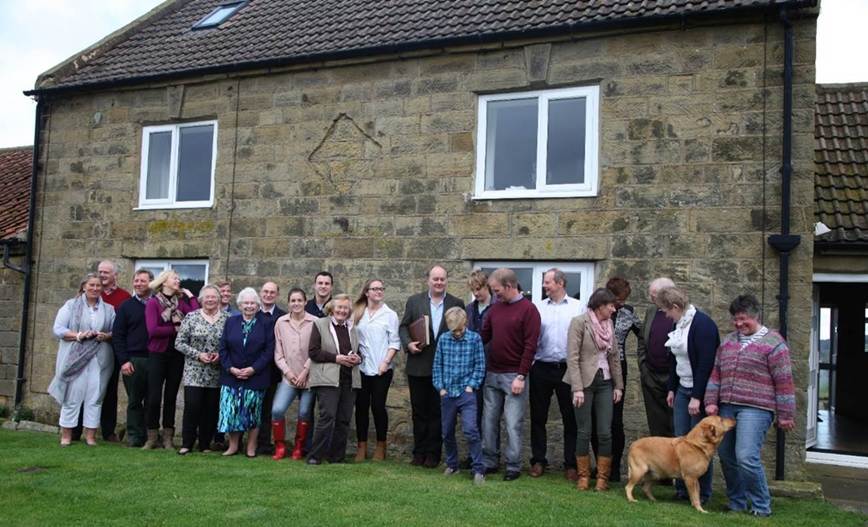
The family from the twentieth century
reaches into the twenty first
|
|
|
The
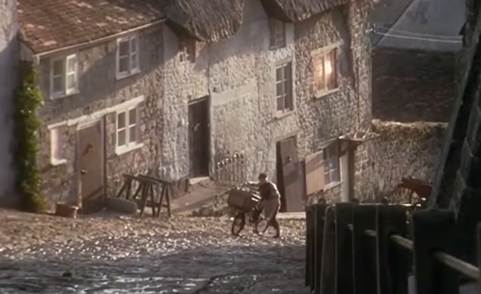
arena of Wilf Farndale’s cricket career |

After the
First World War, social change accelerated quickly. It was not therefore
surprising that the interests of the family started to diversify. We have
already met many of those who continued the family’s association with
agriculture, including in Act 25 and in
the lives of such as Alf
Farndale who ventured to the prairies of Alberta before returning to farm
in Wensleydale. There are many descendants of our family who still farm today.
We have met the pioneers who spread the family’s reach to Australia, Ontario, Newfoundland, the United States and New Zealand, where many
branches of the family still live today. We have met the soldiers of the family, and there
are members of the family in the armed forces today. There were policemen in the family
well into the twentieth century.
In this
final chapter, we take just a snapshot of the family as it continued its path
through the twentieth century, and reflect briefly on
how the family has spread its wings into the twenty first century.
Scene 1 – The Professionals
As the
twentieth century progressed, many members of the family took to the
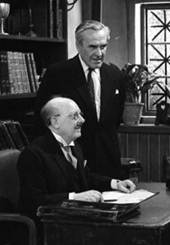
professions. Rather than meet them all, we might briefly follow the life of John Thomas
Farndale (1854 to 1930), who was the son of William and Ann
(nee Brown) Farndale, the Master
Mariner of Whitby,
who we met in Act 15.
By 1890, John was manager of the Thirsk Branch of the York Union Bank[1], who later merged with Messrs
Barclay and Company Limited[2]. This was a time when the Bank
Manager was the most trusted member of the local community and John embraced
the responsibilities and ambitions of Thirsk in the early twentieth century.
He joined
the local masonic lodge, and was their treasurer[3]. He was a member and active
participant in the affairs of Thirsk’s naturalist society who relished their
interest in botanical specimens[4]. He was actively involved in the
Thirsk Cycling Club[5]. He was a member of the Thirsk Chess
Club[6]. He was treasurer of Thirsk’s Golf
Club[7]. He was involved in the Church[8]. It was he who arranged the town
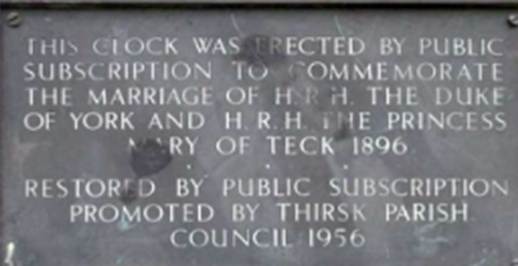
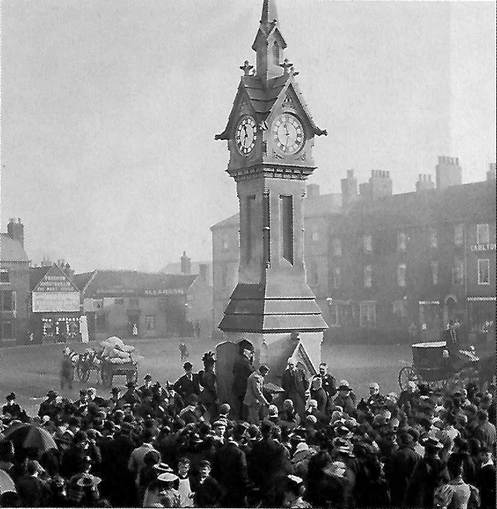
subscription to mark the Royal Wedding of the Duke of York, and Princess May of
Teck in 1893[9]. A public meeting was held to decide
on a suitable way of celebrating the approaching marriage of H.R.H. the Duke
of York to Princess Mary of Teck, later coming to the Throne as King George
V and Queen Mary. Proposals were made ranging from water troughs, fountains and
clocks. The final agreed design was for an illuminated turret clock and
drinking fountain which was costed at £200. The old Cross stump and steps were
removed and relocated to the left of The Hall where they can still be seen
today. John took the leading role in the administration for the commissioning
of Thirsk’s memorial clock in 1893[10]. He was regularly involved in other fund raising projects.
He was
involved in organising a pageant in Thirsk in 1907 to perform a historical play
to illustrate Thirsk’s history[11] and he later inspired his ancestral
home of Whitby to perform their
own pageant play[12].
He was
treasurer and district correspondent for the Thirsk branch of the National
Society for the Prevention of Cruelty to Children[13]. He was involved in the National
Service League in 1911, which advocated the introduction of compulsory military
training in response to the European arms race[14]. He participated in the activities
of the Thirsk and District Constitutional Club who opposed the disestablishment
of the Church of England in Wales and home rule in Ireland in the immediate pre war years[15]. He joined the Primrose League which
aimed to spread Conservative ideas[16].
In 1916, he
became a Commissioner of the Peace[17], a magistrate and justice of the
peace[18], for North Riding.
|
1854 to 1930
The Bank Manager
of Thirsk |
In the
modern family there are solicitors and surveyors, an auto test engineer,
electrical engineer, a finance coordinator, wealth manager, biologist,
Environmental Agency adviser, Geothermal energy manager, Cambridge professor of
biochemistry, general practitioners and home care professionals.
Scene 2 - The Sportsmen
Sport has
been a significant feature of the family’s history. There were many footballers
including many of the second generation of the Coatham line.
Wilfred Farndale
(1910 to 1965) was an exceptional cricketer who played with some Yorkshire
greats and used his sporting platform as a social influencer in his work as a
Sanitary Officer and advocate before his time of standards which later came to
be understood and accepted.
It was
his father who first instigated a love of cricket in Wilf’s heart, and on
moving to Saltaire, the pair soon became ardent supporters of the Robert’s Park
club. In those days Wilf recalls watching Sydney
Barnes and many other famous players. He also accumulated an immense
interest and passion for the “noble game” while at Salts
School, and was soon turning in fine performances there.[19]
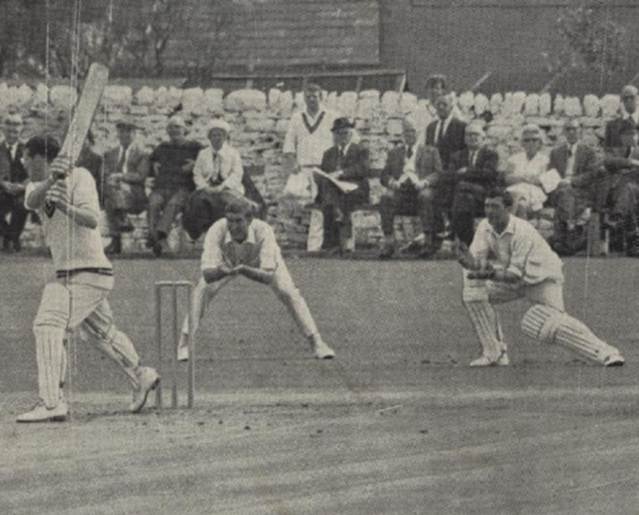
At an
early age Wilf
secured a regular place in the Saltaire 1st XI as “a promising opening
batsman,” and was playing with and against the best players of the time. Saltaire
Cricket Club was founded in 1869[20] and still operates today[21]. Its home has always been Roberts
Park where it has a scenic pitch and pavilion with a backdrop of the River
Aire, Salts Mill and the United Reformed Church. Among its more famous players
was the England bowler Sydney Barnes[22] who played for the club between 1915
and 1925 and helped Saltaire win the Bradford League three times. He also
played football successfully but after he suffered an injury which kept him
from playing sport for some time, he focused on his amateur cricket career.
In his first
spell with Saltaire which lasted from 1924 to 1938 Wilf played many hundreds of
games, and scores of fine innings, but undoubtedly the one which he and many
others remember best was the one he played in the “Marathon Game” at Baildon in
1938. The match was marked by a feat which to this day has not been equalled
to, there were four centuries scored, two on each side. Baildon made 259-1, and
the man out, George Senior, got a “duck”. Ronnie Burnett scored 152 not out and
Bob Edney 100 not out. Jim Laker the former Surrey and England bowler was one
of the most punished of all on this day of run getting.[23]
Wilf
played with and against such eminent players as Tom Goddard[24], Bill Copson[25], Bill Voce[26], Alf Coxon, all with Saltaire,
Arthur Mitchell[27], who was captain over Wilf at
Baildon and George Senior. The player whom he considers the best and most
feared he has played against in the Bradford league was Sandy Jack, the fast
bowler, who played with Saltaire and then Undercliffe.
The most
accomplished batsman whom Wilf played against was the renowned Len Hutton[28]. “You just couldn't get him out,”
said Wilf, who played often when Hutton and Edgar Oldroyd used to open the
Pudsey innings. Charlie Lee was another great batsman with whom Wilf played.[29]
He used his sporting
platform to promote his passionate advocacy of public health,
and had early involvement in rehousing schemes and clean air measures.
He regularly gave public lectures on the subject and became President of the
Rotary Club locally.
|
1910 to 1965
Wilfred was
brought up in the community of Sir Titus Salt’s Saltaire Mills. He was an
accomplished Cricketer who played with some Yorkshire greats and a social
influencer in his work as a Sanitary Officer |
The sporting
gene still sifts through the modern family.
Joe Farndale
is another successful cricketer who played for Marlborough Blues, where he was
the highest season scorer in 2022. As a left handed
opener Joe Farndale scored 1,007 runs in the 2022 season, including three centuries
and six fifties[30].






Jamie
Farndale signed with Edinburgh Rugby, where he became and is still the youngest
ever debutant for the club. He became a mainstay of the international under-20
side and played in three IRB Junior World Championships in 2012, 2013 and 2014.
He finished his final tournament as joint, all-time top try-scorer. He also
captained the youth commonwealth games sevens team in 2011 who finished 4th.
From 2015,
Jamie joined the Scotland national sevens team and played in every tournament
for the next two seasons, being awarded player of the season and making
selection for the wider Olympic training squad at the end of the first. He went
on to win fifty nine World series appearances and is
currently the second-highest try scorer of all time
for Scotland sevens. He co-captained Scotland in 2018 to 2019 with Robbie
Fergusson before taking over the captaincy in 2019 until the Scottish program
moved to a Great Britain setup. Jamie Farndale won Twickenham 7s in 2016 and
2017, scoring the winning try in the quarter-final victory over New Zealand to
become the first and still only Scottish side in history to beat a Kiwi side at
any level.[31]
He also
competed World Cup in San Francisco and the Gold Coast Commonwealth Games both
in 2018[32].
Jamie
captained Scotland at the 2022 Rugby World Cup Sevens in Cape Town and the 2022
Birmingham Commonwealth Games.
Jamie Farndale
was a World Series runner-up in 2021 with Team Great Britain, scored the World
Rugby Sevens Series try of the season in 2022 and was European Games silver medalist in 2023.
Jamie also
became a Cambridge Blue in 2024, with a record margin of victory in the varsity
match.
Jamie also
uses his sporting platform to advocate important issue, particularly the
challenges of sustainability and climate change[33]. He is Hong Kong China Rugby’s
general manager for club development and sustainability[34].
Scene 3 - The Entertainers
The artistic
gene has often remained dormant in our family story, but
has emerged from time to time with a flurry. In the early twentieth century, Sophia Farndale,
provided the entertainment at local events in Kilton.
Miss S Farndale was accompanist. Songs, duets and recitations were rendered by Miss Farndale.[35]
For the
entertainment to visitors there was Mrs Jolly’s waxwork, tableaux vivants by the Misses Farndale and others, a ping pong
tournament and a concert by the Loftus spring band[36]. A tableau vivant, a French
term for a living picture, was a static scene composed by actors who were
stationary and silent, usually in costume, carefully posed, with props and
scenery, and sometimes theatrically lit.
Samuel Farndale
(1866 to 1936) was the first comedian of the family and was appearing as a
humourist at soirees in Wakefield by
1889.
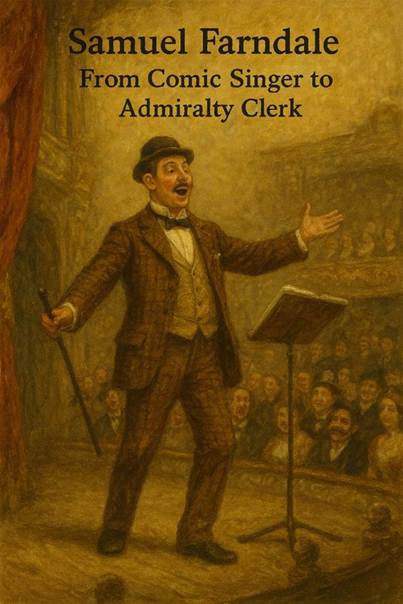
His
rendition that year of Quite English you know was irresistibly funny, and “brought
the house down”. The two original verses at the end, about Yorkshire and
Wakefield, created much amusement. An encore was inevitable, and on reappearing
Mr Farndale gave with equal success, “Only One”, a very laughable song.[37] At another soiree, comic songs
were sung by Messrs Speight (“Dear Me”), Farndale (“Nervous Nig”)[38]. At another soiree he gave a
rendition of another comic song, Mrs Mulligan's Homemade Pie[39]. By 1890, his renditions were
ambitious. In a very full programme that year Mr Farndale's comic songs
were, as they always are, highly successful, and kept the audience in almost
continuous laughter. They included “The Magpie said Come In”, “One More Folks”, “The Bulls Won't Bellow”, and “The Switch Back
Railway”.[40]
Gladys Farndale
(1907 to 1996) was a cotton weaver at the commercial mill at Great Harwood in
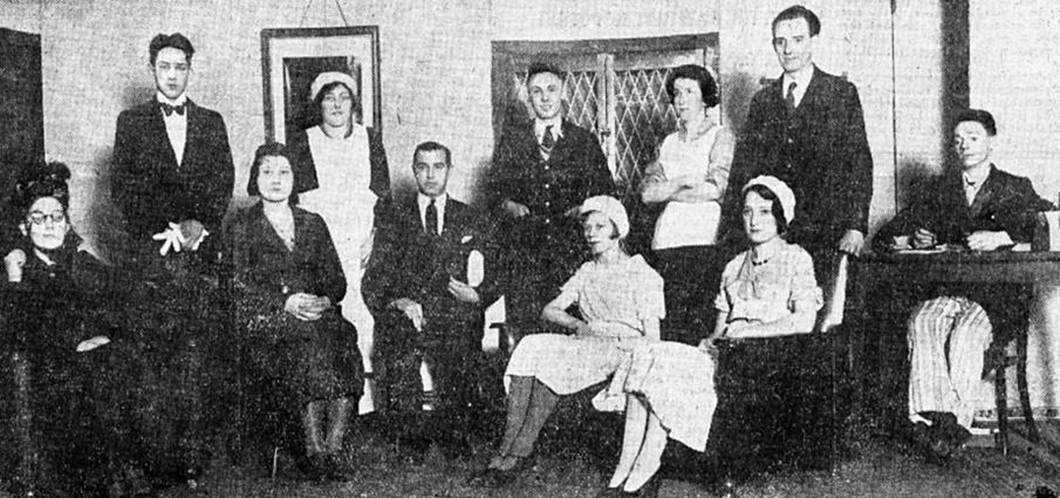
Lancashire by the age of 13 in 1921[41]. In 1933, she was part of the cast
of a comedy performed by the Orchard Street Players, Oh Susannah![42]
George William
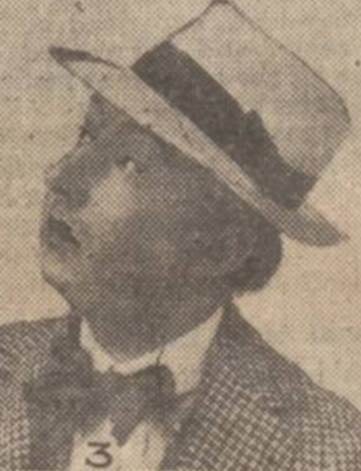
Farndale (1886 to 1948) was a very successful comic actor from Leeds who was described as Formbyesque[43]. He participated in a string of
operatic and theatrical performances and grew in stature as a comic actor. He
was also described as a humourist.
George
Farndale thoroughly grasped the spirit of the part of Peter the Butler.[44]
George
Farndale, as the lisping Chris, also inclined too much to the grotesque, though
the laughter they provoked may be held to justify the means.[45]
George
Farndale combined in a “riot” of fun.[46]
Mr G
Farndale, evidently a prime favourite, also gave a character song, “Come and
have a cuddle”. His impersonation was very clever, and his patter kept the
audience convulsed. I was rather sorry to notice that he was inclined to step
over the line a bit. It was a pity, as it was quite unnecessary, and rather
detracted from the performance.[47]
The
comedian, George Farndale, who, I think, may be considered a radio “find”
scarcely got enough to do. He has the sort of voice, Formbyesque,
which the assumption of age can wither excellently, and one of the brightest
items was a duologue between him and John Wood Smith as veterans of 90.[48]
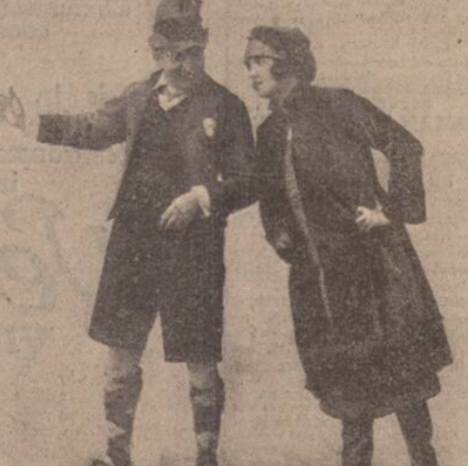
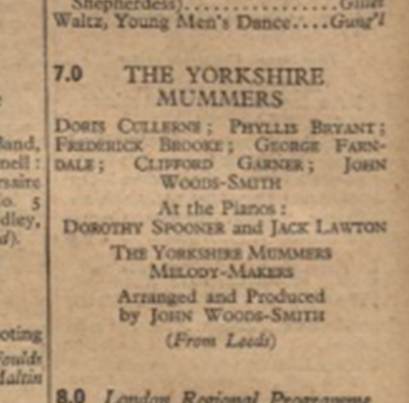
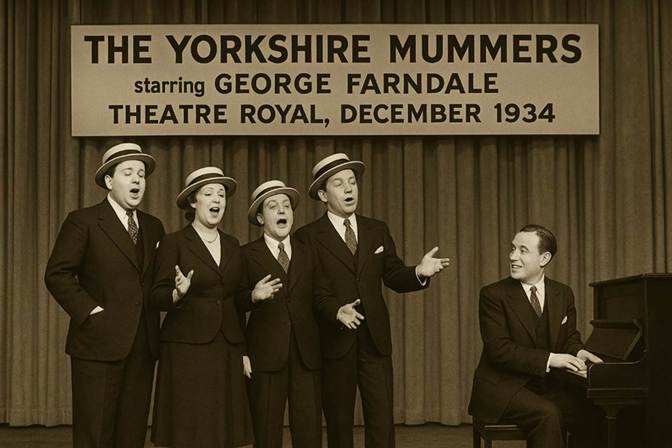
By 1931
George was part of a then well known group known as
the Yorkshire Mummers who performed humorous songs and other entertainment on
regular radio broadcasts[49]. In 1933, the popular Yorkshire
Mummers on Saturday evening again “take the air” with Phyllis Brandt, Dorothy
Lee, Millie Hodgson, Frederick Brooke, George Beaumont, George Farndale, and
John Woods Smith, who is also the arranger and producer. At the pianos will be
Billy Hobson and Jack Lawton. The programme which Miss Gracie Fields is to
broadcast from Rochdale tonight will comprise of the following songs.[50]
|
A Comic Actor who
joined the Yorkshire Mummers |
Scene 4 – A World of Multiple Parts
And so the family has blossomed to multiple roles.
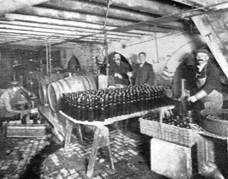
William Leng
Farndale (1876 to 1932) was a soldier
of the Northumberland Hussars and we met him in Act 14 Scene 8. He
settled in Rothbury in Northumberland, adjacent to the famous Cragside[51], built by the industrialist Sir William
Armstrong[52]. He became the town’s brewer
manager.[53] He continued the business of Brewers
and Wine Merchants trading as Geo Storey and Company of Rothbury from 1907 as
manager. He was actively involved in local social activities.
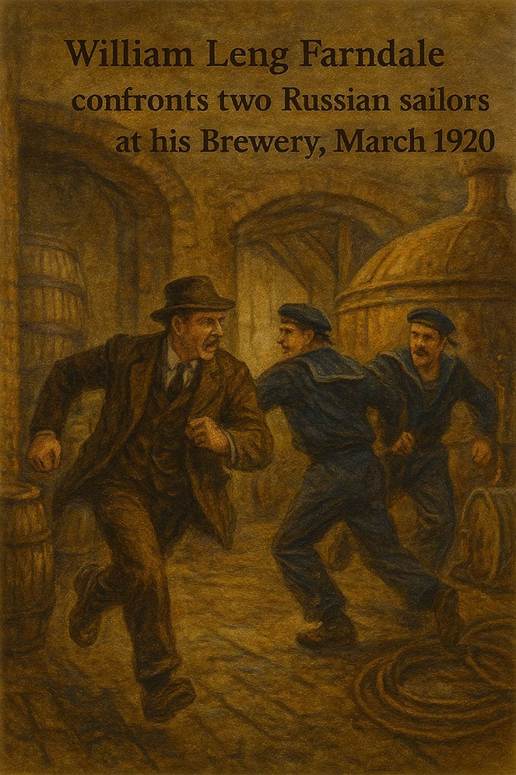
In March
1920, his brewery was the target of an armed robbery by two Russian sailors in
a notorious local incident. William told a court room what happened. I was
called from my home about 9:15 by Curry, who told me that he had been sent by a
policeman. I went to the firm's premises at the other side of the street in my
slippers. As I entered by the gate leading to the back premises a man came
running out, and I immediately tackled him. We struggled for a time, but when I
heard a shot fired behind me, I thought that I could do more
good in the fight which I thought the police were having. The man I was
fighting with escaped, leaving his white muffler in my possession, and I ran to
the back door of the premises. Curry followed, and we were surprised not to
find anyone there. We tried the door twice, and it was only when leaving that
Curry said to me ‘What is that in there?’. We went inside the shed. I found Constable
Sinton in a sitting position. He had his baton lying loosely in his hand, but
he was unconscious from a severe wound on the head. I at once thought that this
had been caused by the shot I had heard, but it is now clear that the constable
was struck by a heavy weapon. We had him conveyed to his home, and up to the
present he has been unable to give any information about the affair. He is
badly hurt, but it is expected that he will live. The Russian offenders
were sent to penal servitude for thirteen years.[54]
|
1876 to 1932
Brewer and
Northumberland Hussar of Rothbury, Northumberland |
Today the family
represents a multiplicity of interests. We even boast the obituary editor for
the Times[55], Nigel Farndale, the author of several
novels and historical works, including Haw-Haw: The Tragedy of William and
Margaret Joyce[56], the Blasphemer[57] the Road Between Us[58], and the Dictator’s Muse[59]. He was the first journalist to
expose Donald Trump’s hairstyle[60] to the limelight, about which the
later Presidential candidate responded to Nigel, People always comment on my
hair, but it’s not that bad, and it is mine, look.
The Farndale
Story is nearly at and The story has taken you from
medieval poachers in Pickering Forest to Donald Trump’s hair.
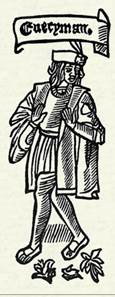
An Everyman Story
For those
who are descendants of this family, this has been a journey which has followed
our own family path, finding ancestral links to a first hand experience of British history. Genealogy
provides the means to follow a more direct and personal path through the
timeline of history, and provides the ultimate context to a historical journey,
because it is a personal journey, rather than a more generic study of events.
The story is
a unique one, yet it is also the story of so many families who followed similar
paths through time. The Farndales are an ordinary family, like the greater majority of British families. For most of our
history we worked on the land, and many of our ancestors were agricultural
workers, with small horizons over centuries of time. It is only in the last few
decades that we, like other families, have embraced the diversity of modern
lifestyles. We are a typical family, and so whilst this has been the story of
one extended family, it is also the story of families who have followed similar
paths.
It is a
story of changing lives through time in the area to the south and then north of
the North York Moors. Our story brings out the remarkable events that have
unfolded in such political epicentres as Whitby, York of its four names,
Kirkdale and Lastingham of their antiquity, to Sheriff Hutton of its
Plantagenet significance. Our story has been touched by the whims of such
monarchs as Henry V and Richard III and the political manoeuvres by such as the
Fair Maid of Kent, the most beautiful woman in all the realm of England, and Anne
and Cecily Neville. It is a family tale which provides a unique perspective on
the history of a remarkable place.
Notwithstanding
its uniqueness and locality, it has also followed the common path which most of
the folk of Britain followed, in parallel, encountering the same or similar
stimuli to the lives they chose to take. It is an everyman story. It provides a
route map to the similar tales of countless others.
|
Our
Story is the unique tale of one family travelling through two thousand years
of history. It is also a tale of ordinary folk, and as well as being unique,
it is a story shared with countless other families who travelled the path of
British history. |
Because the
Farndales derive from a locative name, rooted to a particular place in the
North York Moors, it has been possible to map our journey with unusual accuracy
to the sixteenth century when parish records began. The name has then provided
a beacon which has enabled us to identify large numbers of medieval records,
and then piece them together, to build up our story to the period in the
thirteenth century, when names started to be used. We have then found that the
lands of our origin were part of a relatively stable area, nestled in the
safety of the edge of the North York Moors, yet accessible to rich agricultural
lands, which was part of an estate which has its own rich history. The
stability, agricultural richness, and relative political unity of that area has enabled us to follow our path further back to the time
of the Roman Empire. As we have followed our ancient path
we found that our ancestors were front seat witnesses to momentous events in
the carving of the national story. We then find clues of the Iron Age, Bronze
Age and Palaeolithic folk, and the archaeological remains within a short radius
of our family home. We have even found a cave, with relics of hyena and
hippopotami, from a different era in geological time, only five hundred metres
from the Kirkdale church which was the likely spiritual centre of our
ancestors’ world for a millennium.
It has been
an epic journey, unique, but also an everyman tale.
|
The Epilogue - inspiration from our back story What
we can take from our journey through two thousand years of history |
|
The Last Act of the Farndale Story Podcast This
is a new experiment. Using Google’s Notebook LM, listen to an AI powered
podcast summarising this page. This should only be treated as an
introduction, and the AI generation sometimes gets the nuance a bit wrong. However it does provide an introduction
to the themes of this page, which are dealt with in more depth below.
Listen to the podcast for an overview, but it doesn’t replace the text below,
which provides the accurate historical record. |