Act 30
Newcastle
The many members of the family who
settled in South Shields and Jarrow
|
A
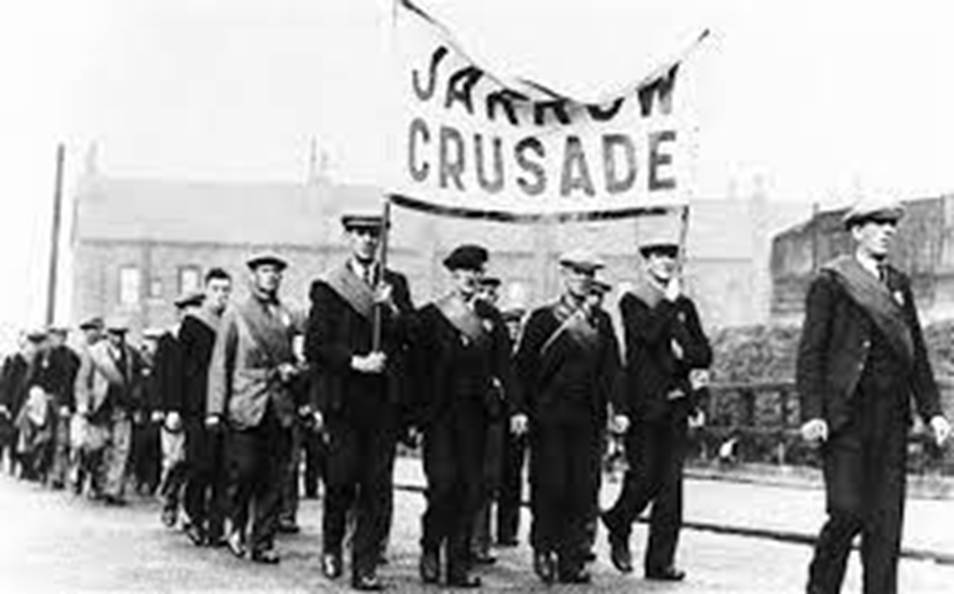
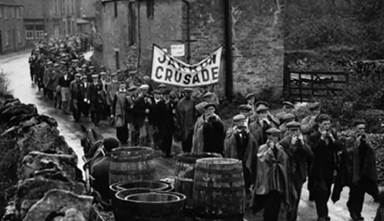
quick introduction to the Jarrow March of 1936. |
|
Barrow in
Furness
We met Joseph Farndale
(1827 to 1895) of the Great
Ayton 2 Line in Act
22. Joseph became a cartwright in Westgate, Guisborough by the age of 25 in 1851. He
was unmarried and lodging with the Wilkinson family. [1] On 10 May 1856, then a joiner, he
married Margaret Robson at the Parish Church at Great Ayton[2]. They had a very large family,
though many of their children died at birth or in infancy. The family moved to Middlesbrough by 1861[3], but by 1863, Joseph seems to have
moved backwards and forwards between the Lake District and Middlesbrough[4]. The family appear to have moved to
Ulverstone, about eight kilometres east of Barrow in Furness and then
permanently to Barrow-in-Furness between 1871 to 1873 and Joseph became a
contractor builder there[5]. He died at Barrow in Furness on 30
July 1895[6].
There are
fifteen children, associated with Ulverstone and Barrow in Furness who were
probably all Joseph
and Margaret Farndale’s family, but eleven died in infancy or in their
teens.
The oldest
of the family was Alice Esther
Farndale (born 1858) who married John George Cole, a boiler smith, in
Barrow in Furness in 1877[7]. Her sister Margaret
Louisa Farndale (1860 to 1927) lived with Alice and George Cole by 1881 in
Barrow[8]. Emily Ann
Farndale (1869 to 1952) was brought up in Barrow in Furness[9] and later moved to Jarrow[10] where on 18 March 1897, her brother
in law George Cole was fined 40s and costs for assaulting Emily Farndale, on
Saturday last. Complainant said the defendant who was under the influence of
drink came into her doorway, and struck her in a violent manner without the
least provocation[11]. Emily married
Charles Gourley in South Shields in 1900[12] and they later lived in Liverpool[13]. Rose
Beatrice Farndale (1878 to 1947) married George Henry Hadland in Barrow in
1895[14] and they brought up a large family
in Barrow[15], before moving to Darlington in
about 1921[16].
John Willie Farndale (1883 to 1931) was born in Barrow in Furness on 7 June 1882[17]. He was in some trouble at the
Barrow Police Court aged 11 in 1894, charged with stealing, but was discharged
under the First Offenders Act[18]. By 1901, he lived at 5 North Street
in Barrow, aged 19, living with the Hadland family, and her was working as a
telephone assistant[19]. John married Elizabeth Todd in 1903 in
Gateshead[20]. Elizabeth Ann Todd was the daughter
of John Todd (1852 to 1918) and Elizabeth (nee Wintrip)
Todd (1856), and Elizabeth had been born in South Shields in about 1887. By
1901 she was a 14 year old domestic servant.
Jarrow
John Farndale
settled with Elizabeth in Jarrow by 1905. It seems that John followed his
siblings, Alice
and John Cole, and Emily Farndale
there, who were clearly in Jarrow by 1897. John and
Elizabeth also had a large family, of twelve. Four died young. By 1911, the
family lived at 18 Pearson Place in Jarrow[21]. Life was hard in Jarrow and in
April 1914, John
then aged 31, a labourer pled guilty for stealing a quantity of scrap brass
at Durham Quarter Sessions and was committed to prison for three months[22]. The charge was the theft of six
brass tubes, the property of Wallsend and Hebburn Coal Company, on 9 March
1914. John Farndale was employed by Frederick Jackson, a hawker[23], so had presumably been influenced
by him, although Jackson blamed Farndale. They later sold the brass tubes for
£1 12s 6d and shared the money.
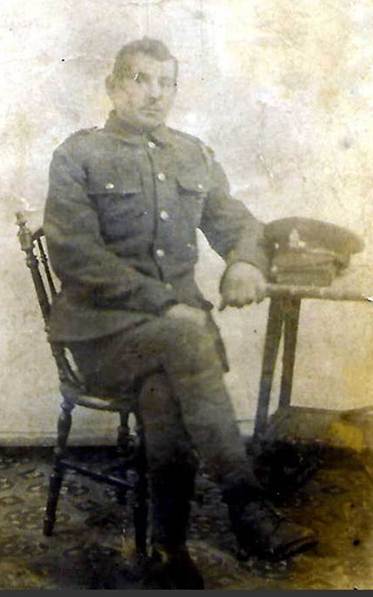
John seems
to have served during the First World War[24].
John was
a labourer aged 36 in Jarrow in 1921, living with Elizabeth, then 35 and Joseph, 14; Elizabeth,
11; James,
9; Margaret,
4; John
William, 2 and George, 3
months[25]. John and
Elizabeth Farndale’s family are the South Shields 2 Line.
In 1923, John,
then 40, was in trouble again for the theft of a quantity of copper cable,
valued at £3 11s 6d, the property of Jarrow Metal Company on 6 October 1923.
John said that he had found the cable near the Tyne dockyard. He was committed
to prison for four months. After he was sentenced, the man to whom the copper
cable had been sold said I can prove he is innocent. The guilty man is in
the Court at the back, but he was told by the Magistrate’s Clerk, You
have nothing to do with that. The case is finished.[26] Justice was harsh.
There was
another tussle with the law in October 1926 when John, 42,
had been charged with stealing a cabbage, the property of Oliver Pasking, from
a garden in the Corporation Allotments, but the magistrates at Jarrow dismissed
the case. John Farndale said that the real culprit was in court.[27]
These
stories of very petty theft allegations reflect the tragedy of Jarrow at the
time.
In the
period immediately after the end of the First World War, Britain's economy
enjoyed a brief boom. Businesses rushed to replenish stocks and re-establish
peacetime conditions of trade and, while prices rose rapidly, wages rose faster
and unemployment was negligible. By April 1920 this boom had given way to a
post-war slump, which ushered in an era of high unemployment.
Jarrow had
relied for its development on shipbuilding with the establishment in 1851 of
Palmer's shipyard on the banks of the River Tyne. During the brief postwar boom
of 1919 to 1920, orders remained plentiful and Palmer's prospered. However, the
firm's management had not anticipated the conditions that developed in the
1920s when, as Wilkinson says, every industrial country that had bought
ships from Britain was now building for itself. The firm made
over-optimistic assessments of future demand, and invested accordingly. The
anticipated demand did not materialise. By the mid-1920s, Palmer's was
incurring heavy losses, and was close to bankruptcy. It was temporarily
reprieved by a short-lived boom in 1929, when orders rose and the town briefly
enjoyed the prospect of an economic recovery.
The ordinary
folk of Jarrow suffered miserably at this time, and this led to the Hunger
Marches from 1921, with rising levels of unemployment and ultimately to the
famous Jarrow March in 1936.
We met Joseph Farndale
(1907 to 1987), whose descendants were the London 4 line and James Farndale
(1912 to 1998) whose descendants were the
London 2 line and George Farndale
(1921 to 2006) whose descendants were the London 3 Line in Act 20 Scene 2. Margaret
Louisa Farndale (1917 to 1996) was brought up in Jarrow and died,
unmarried, in Newcastle on 19 December 1996[28]. Barbara
Farndale (born 1922) married
Harry Taylor in 1941 in Heywood, Lancashire[29]. William
Farndale (1925 to 1949) married Ada Armstrong in 1947 in Newcastle upon Tyne[30], and they had a daughter, Denise
Farndale. Janet
C Farndale (1928 to 1954) died when she was only 27, in Newcastle, in 1954[31]. Catherine (nee
Ditchburn) Farndale (1919 to 1966) married a Farndale, but her husband has
not yet been identified. She had quite a large family.
John William Farndale (1919 to 1986) was born into in Jarrow on Tyne on 5 March
1919[32]. He was living with his parents and
six surviving siblings in Jarrow in 1921[33].
|
John William
Farndale (“Newcastle
Johnny”) 1919 to 1986
The Youngest
Jarrow Marcher in 1936 |
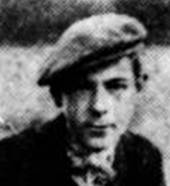
The
Jarrow Marches, October 1936
John
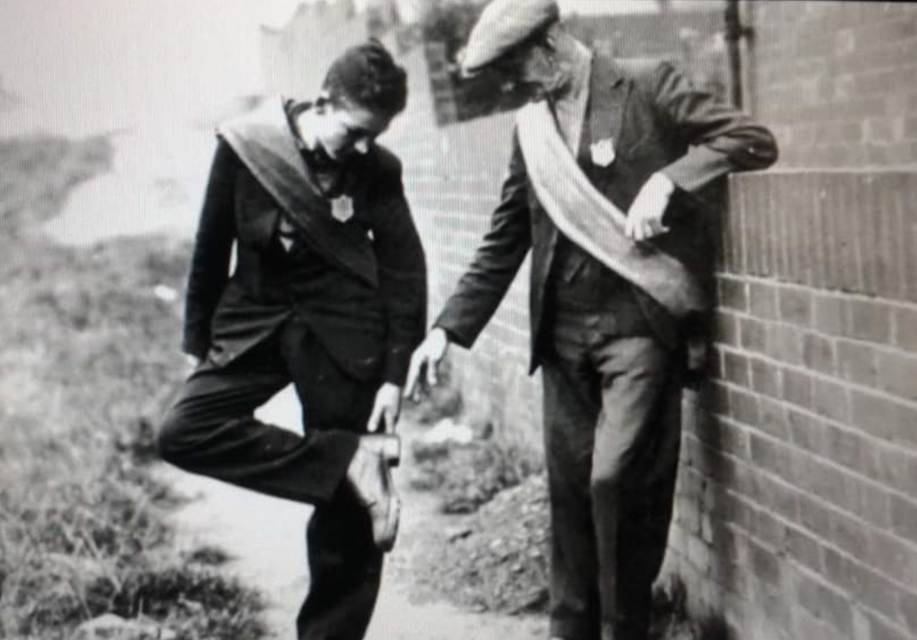
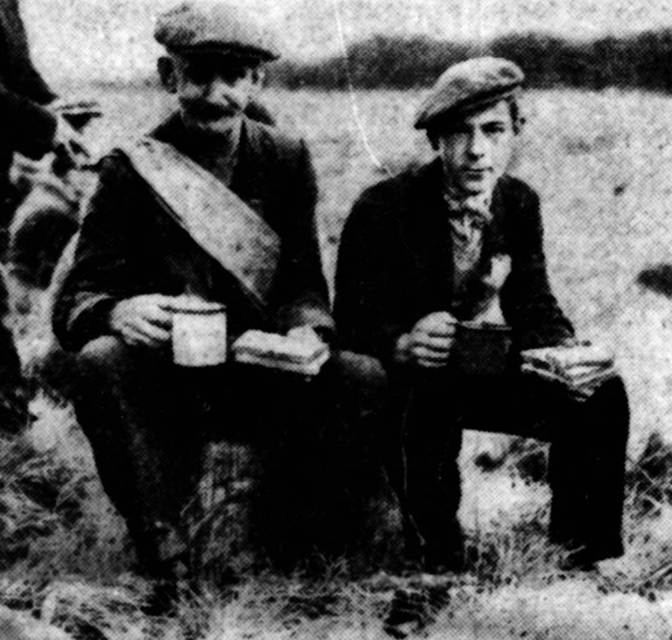
William was the youngest member of the 185 men who set off on the Jarrow marches in October 1936.
Boer War
veteran George Smith, aged 61, and 18 year old John Farndale, the oldest and
youngest member of the Jarrow band of workers[34].
In the South
Shields Museum, there is a sweet picture of the oldest and youngest marchers,
John Farndale who at 18 had worked two weeks since leaving school at 14 and
Geordie Smith, 62, a veteran of the Boer War. A suggestion that the youngest
marcher never came back, but stayed in London to work as a baker’s assistant is
not quite right, as although Johnny did stay for a while as a baker’s
assistant, he soon returned to Newcastle.[35]
On 5
November 1936 hundreds of people watched the departure of the special train
containing the Jarrow Marchers from Kings Cross station today. Mr P Malcolm
Stewart, formerly Commissioner for Distressed Areas, said goodbye to them, and
also on the platform was Miss Ellen Wilkinson MP, who had been with the men
during their crusade, and who presented the petition in the House of Commons.
The men expressed disappointment at the reception of their petition, but were
gratified at the general attitude of people in London towards them. Alderman J
W Thompson, Mayor of Jarrow, who returned with the men, said to a Press
Association reporter: “It was as I expected. I cannot say that I am
disappointed at the way the petition was received, but I feel now that the people
in the South have a more intimate knowledge of our plight in Jarrow, and from
that I expect some result.” One of the marches, John Farndale, of Clyde Rd,
Jared, has taken a job as a baker's assistant in London, and another, Thomas
Dobson, of Stanley Street, Jarrow, is staying at Hendon Cottage Hospital for a
few days for treatment before returning.[36]
|
The
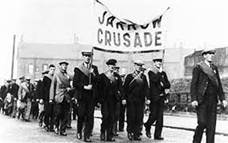
story of the Jarrow March of 1936, of which Johnny Farndale, was the youngest
member |
John worked
as a baker’s assistant in London for a short period of time.
Gateshead
Johnny soon
returned to Gateshead[37]. He was a successful bare-knuckle
fighter and came to be known as Newcastle Johnny.
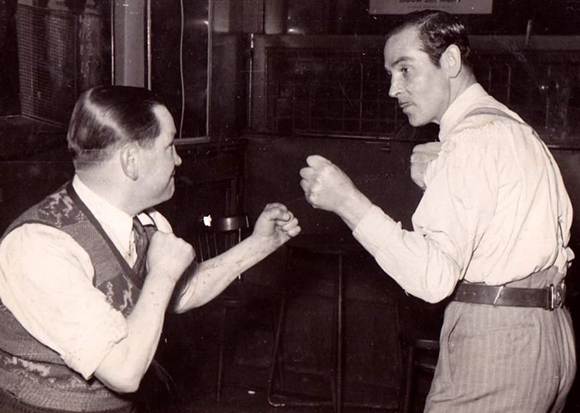
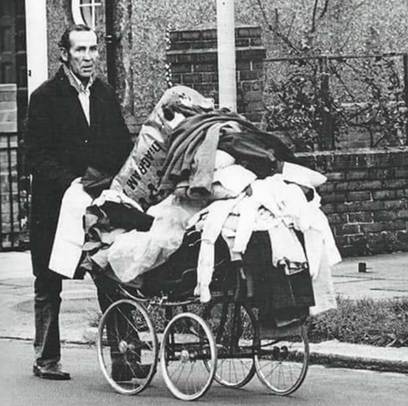
In 1939, he
lived at 9 Ross Avenue, Gateshead. He was single and working as a public works
labourer.[38] Johnny was a rag and bone man for a
time.
In August
1961 he lived at Westmorland Road, Newcastle. John William Farndale, married
Catherine Slater in 1947 in Newcastle Upon Tyne[39]. When he married Catherine she
already had 2 children to previous marriages which Johnny took on as his own.
Johnny and Catherine’s son, Raymond
Farndale was born in 1951.
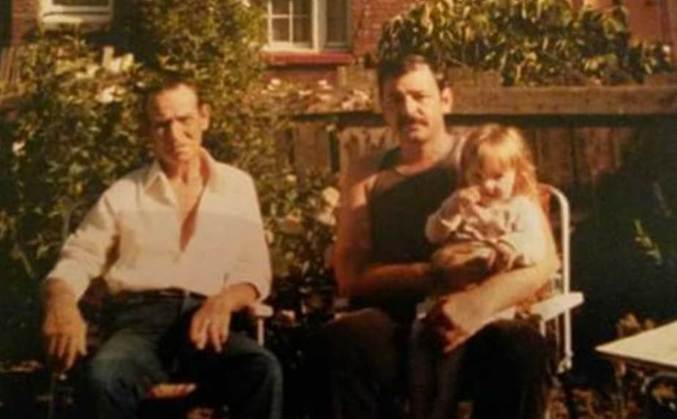
Johnny died
in Newcastle in April 1986[40].
or
Go Straight to Chapter 31 – The
Presbyterians