N Farndale
c 1876 to c 1905
FAR00421A
|
Return to the Home Page of the Farndale Family
Website |
The story of one family’s journey through two
thousand years of British History |
The 83 family lines into which the family is divided.
Meet the whole family and how the wider family is related |
Members of the historical family ordered by date of
birth |
Links to other pages with historical research and
related material |
The story of the Bakers of Highfields, the Chapmans,
and other related families |
Dates are in red.
Hyperlinks to
other pages are in dark
blue.
Headlines are in brown.
References and
citations are in turquoise.
Context and local
history are in purple.
Geographical context is in green.
c 1876
N Farndale may have been a son of William George Farndale
(FAR00421), possibly born out of wedlock in about 1876. This is
estimated on the basis of his military service and his service in the Buffs,
which Regiment William Farndale also served with.
1901
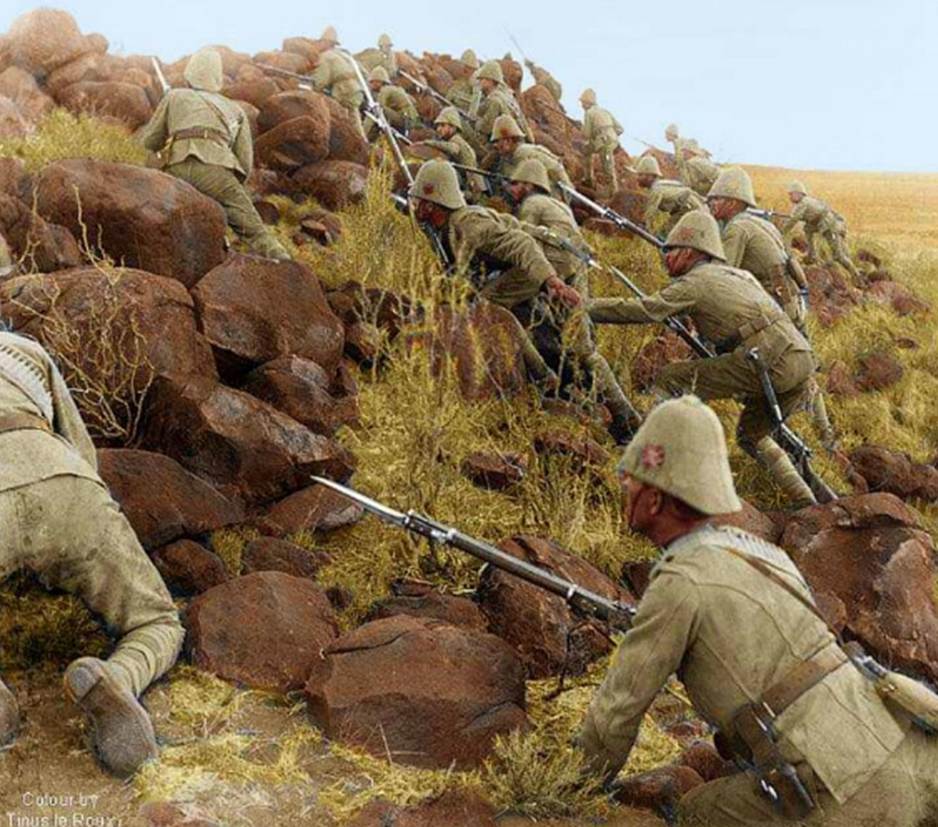
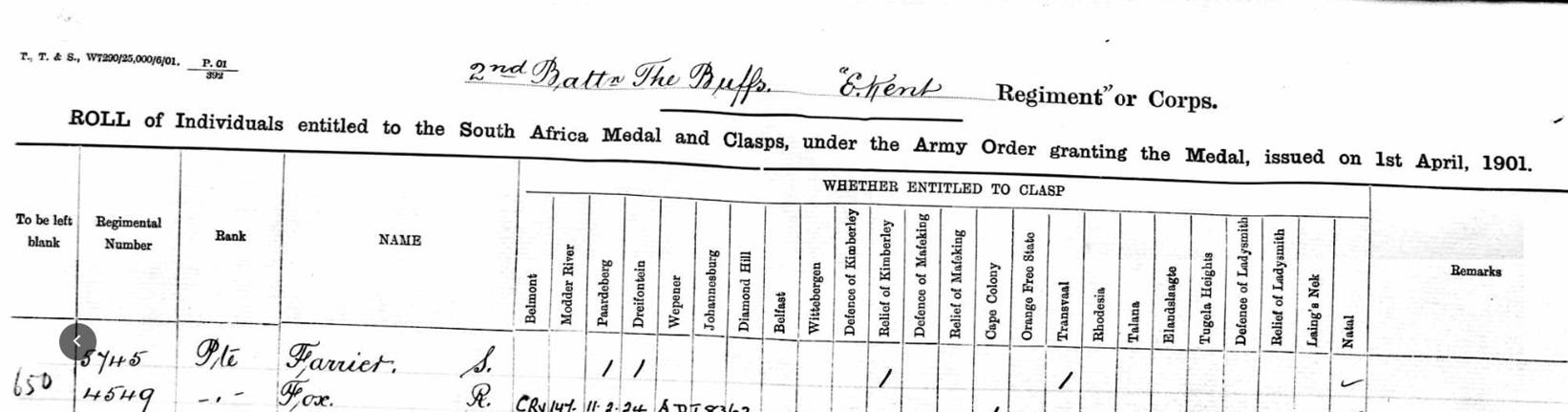
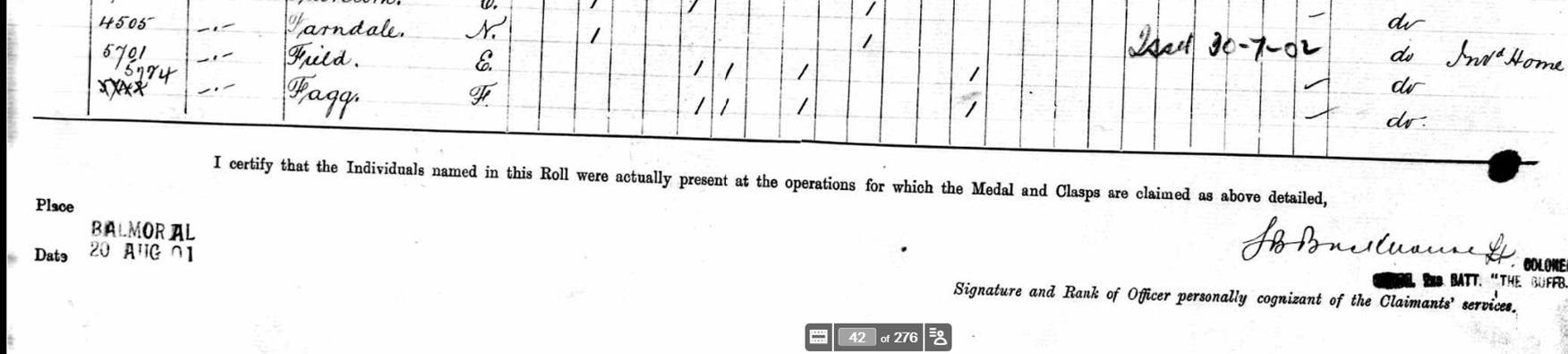
4505 Private N Farndale, served during the Second Boer War,
with Second Battalion The East Kent Regiment, the Buffs. He was in
action at Paardeberg and during the Relief of
Kimberley. The war lasted from 1899 to 1902 and N Farndale was listed on a Roll
at Balmoral on 20 August 1901, as having taken part in the campaign, so he had
returned from South Africa by then.
He was still
in Sussex on 22 August 1899 when, at a cricket match, the local team’s
opponents on Thursday were the Buffs, who, batting first, knocked up 151. The
Buffs, Private Farndale, caught Allen, bowled G A Hammond, 6 runs.
The Second
Battalion saw action during the Second Boer War with Captain Naunton Henry
Vertue of the Second Battalion serving as brigade major to the 11th Infantry
Brigade at the Battle of Spion Kop where he was
mortally wounded in January 1900.
The phrase Steady
the Buffs! was popularised by Rudyard Kipling in his 1888 novel Soldiers
Three. The origin of the phrase
came from Adjutant John Cotter during garrison duties in Malta, who encouraged
the men of the 2nd Battalion with Steady the Buffs! The Fusiliers are
watching you as he did not want to be shown up in front of his former
Regiment, the 21st Royal Fusiliers.
The Battle
of Paardeberg or Horse Mountain, was fought
between 18 and 27 February 1900, during the Second Anglo-Boer War. It was
fought near Paardeberg Drift on the banks of the
Modder River in the Orange Free State near Kimberley. It was part of the
Relief of Kimberley. Lieutenant General Herbert Kitchener, had taken
overall command of the British force. Kitchener ordered his infantry and mounted troops into a
series of uncoordinated frontal assaults against the Boer laager, although
frontal assaults against entrenched Boers had cost the British time and again
in the preceding months. The British were shot down in droves. It is thought
that not a single British soldier got within 180 metres of the Boer lines. By
nightfall on 18 February 1900, some 24 officers and 279 men had been killed and
59 officers and 847 men wounded. It was the worse reverse of the war and became
known as Bloody Sunday.
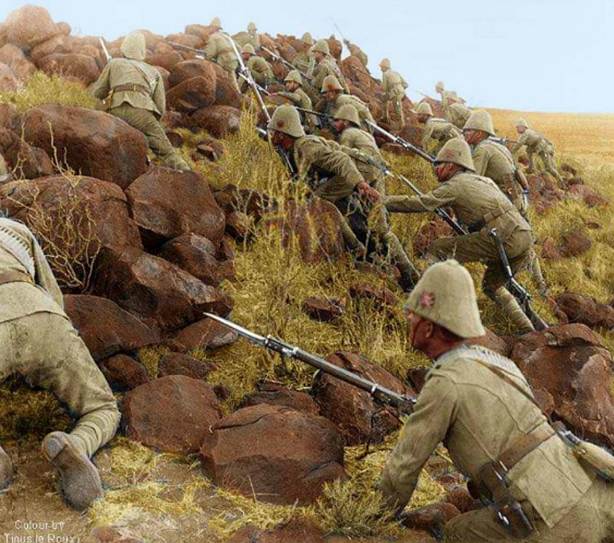
Canadian
Troops at Paardeberg
Following
the end of the war in South Africa in June 1902, 540 officers and men of the
Second Battalion returned to Britain on the SS St. Andrew leaving Cape
Town in early October, and the Battalion was subsequently stationed at Dover.
c 1905
Since there are no other records of N Farndale, it
seems likely that he died during or shortly after his military service.