Bernard
Farndale
18 November 1912
to 30 August 1944
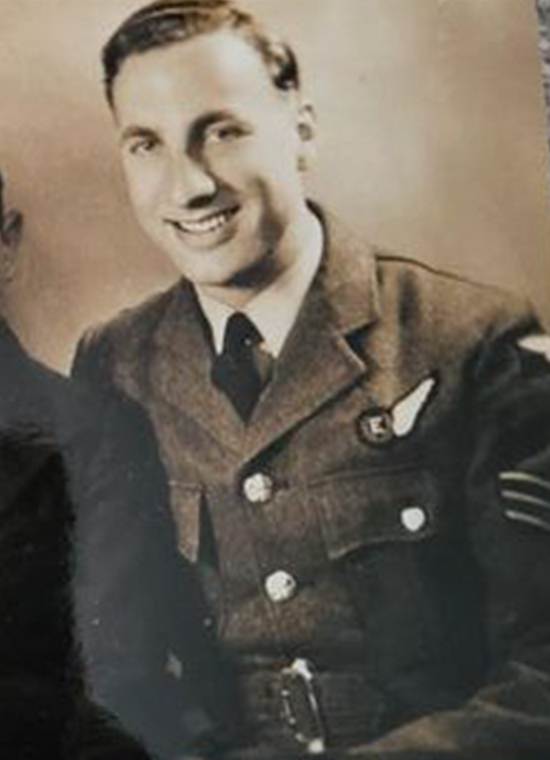
An RAF Sergeant shot down over Denmark after a bombing
raid in the Second World War, and secretly buried by the Danish resistance
FAR00783
|
Return to the Home
Page of the Farndale Family Website |
The story of one
family’s journey through two thousand years of British History |
The 83 family lines
into which the family is divided. Meet the whole family and how the wider
family is related |
Members of the
historical family ordered by date of birth |
Links to other pages
with historical research and related material |
The story of the
Bakers of Highfields, the Chapmans, and other related families |
Headlines of Bernard Farndale’s life are in brown.
Dates are in red.
Hyperlinks to other pages are in dark blue.
References and citations are in turquoise.
Context and local history are in purple.
Geographical
context is in green.
I am very grateful
to Nicola, Bernard’s granddaughter, for her help in telling Bernard’s story.
Liverton
1912
Bernard
Farndale, son of Arthur
Edwin and Mary Ann (nee Burns) Farndale,
was born into the Loftus 2 Line
at Liverton on 18 November 1912. By 1921,
the family lived in Middlesbrough
where Arthur Edwin Farndale, 46, was a railway clerk with the North Eastern
Railway Company. Mary Annie Farndale was 50. Brothers George William Farndale,
24, and Arthur Edwin Burns Farndale, 19, were both shipping clerks with George
Alder Limited. Alfred Farndale was an engine cleaner with the North Eastern
Railway Company. Dorothy Farndale was 11 years old, Bernard Farndale, 9 and
Albert Farndale, 6.
Bernard
Farndale, son of Arthur Edwin and Mary
Ann (nee Burns) Farndale (FAR00532), was born at Liverton on 18 November 1912 (1939 Register, Letter)
His birth was registered in Middlesborough
District in 1912 (GRO Vol 9D Page 1069).
Middlesbrough
1917
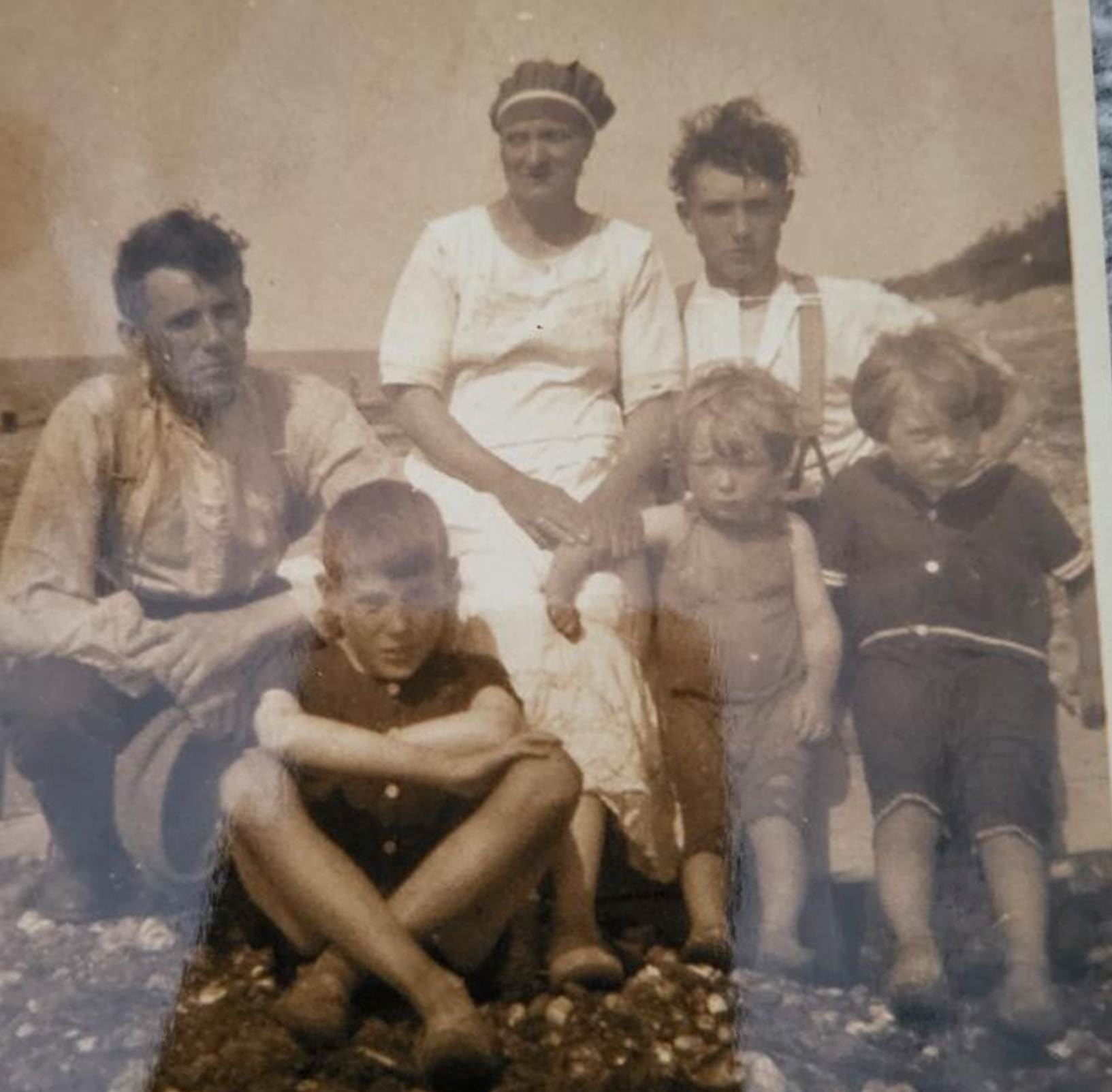
Bernard and his
family (kindly sent to me by his granddaughter,
Nicola)
If this was taken
in about 1917, this might be George William Farndale, Dorothy Farndale and
Arthur Edwin Farndale in the back row and Alfred Farndale, Albert Farndale and
Bernard Farndale in the front row.
1921
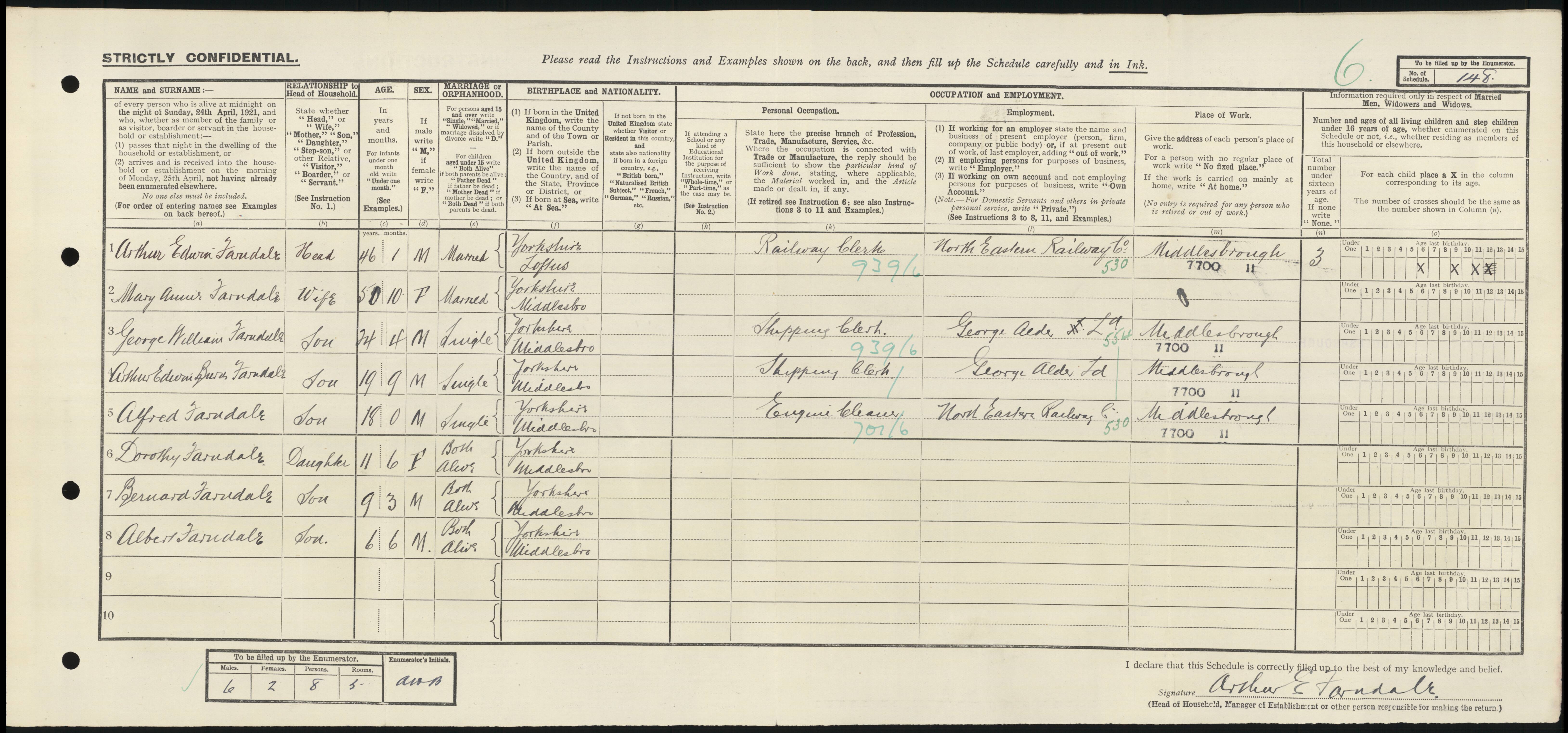
Arthur Edwin
Farndale, 46, railway clerk with the North Eastern Railway Company at
Middlesbrough
Mary Annie
Farndale, 50
George William
Farndale, 24, single, a shipping clerk with George Alder Limited at
Middlesbrough
Arthur Edwin
Burns Farndale, 19, single, a shipping clerk with George Alder Limited at
Middlesbrough
Alfred Farndale,
an engine cleaner with the North Eastern Railway Company at Middlesbrough
Dorothy Farndale, 11
Bernard Farndale, 9
Albert Farndale, 6
1933
Bernard Farndale,
a chemist laboratory assistant, married Glenys Muriel Picton Swales (1913 to
2002) on 19 October 1932 at St John’s Church, Fulham (St
John, Fulham PR).
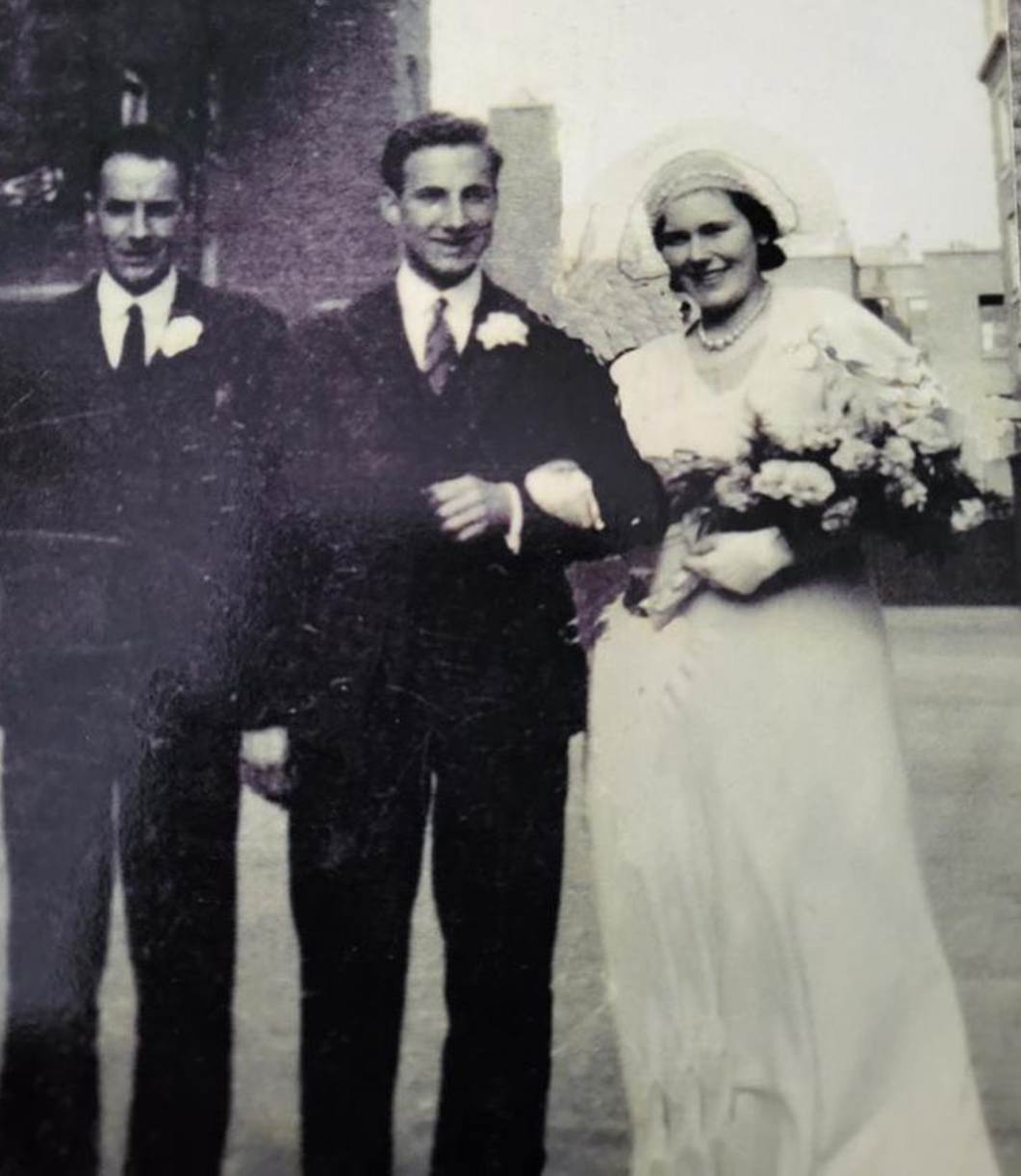
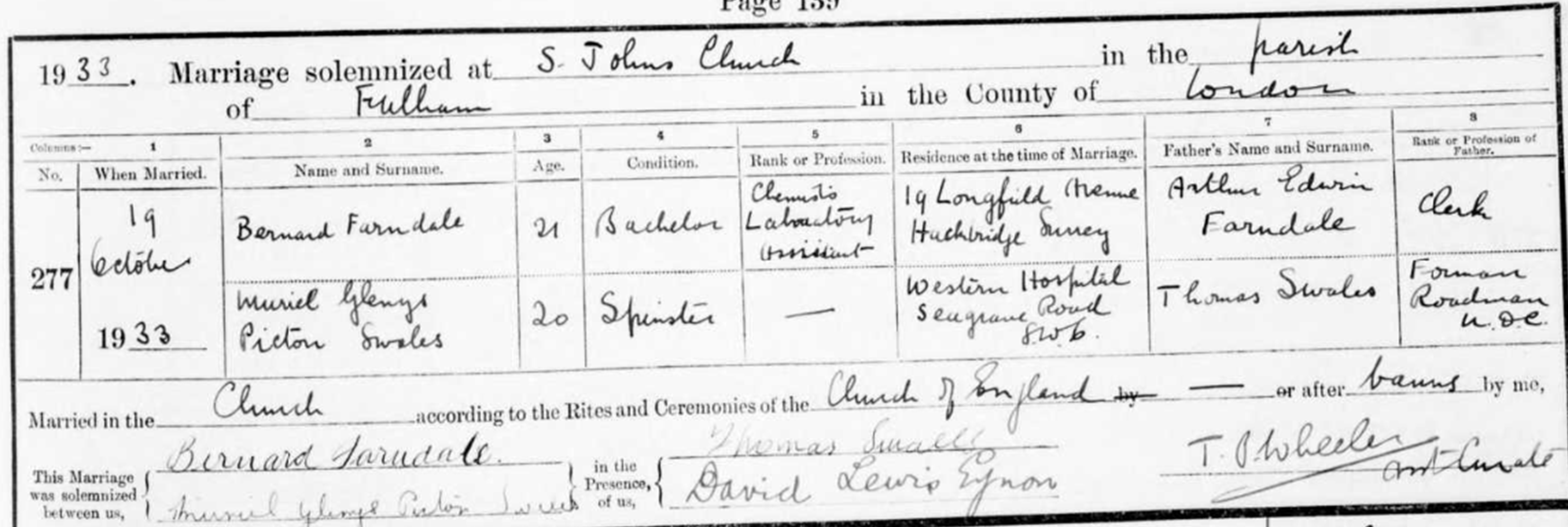
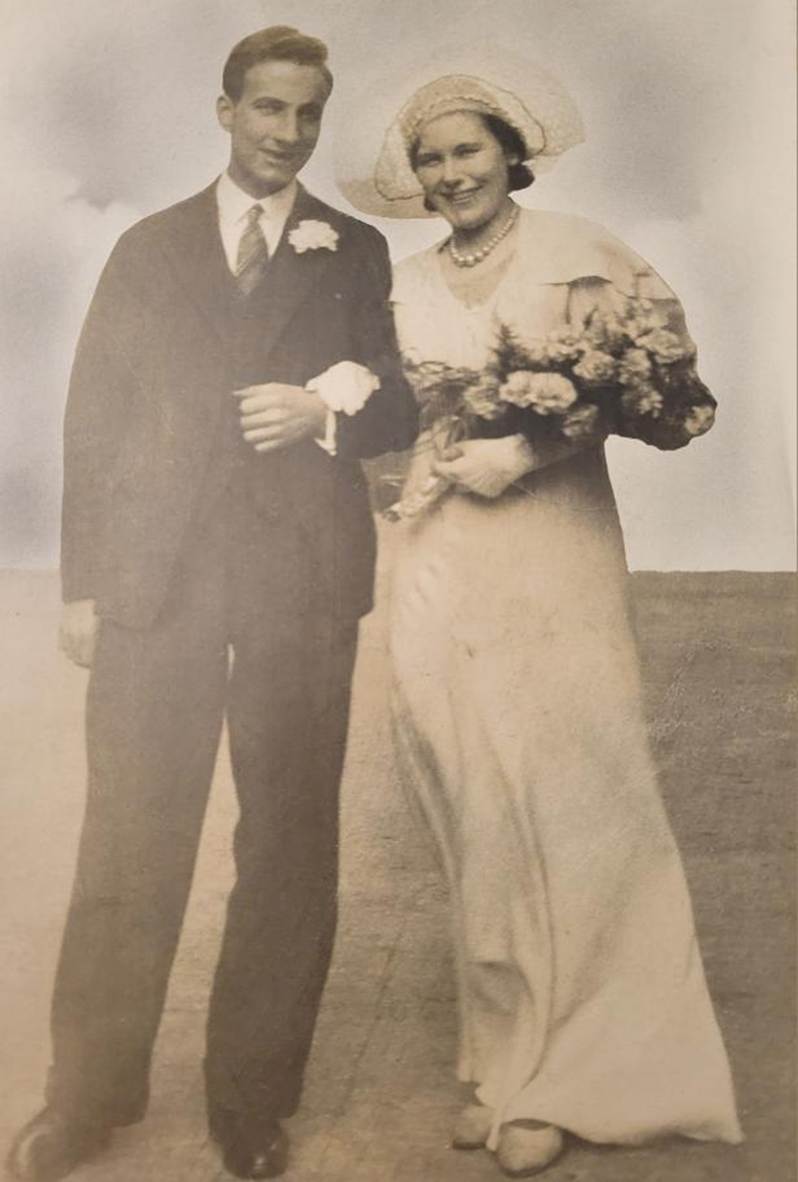
Bernard and Glenys’ wedding in October
1933 (kindly sent to me by his granddaughter, Nicola)
Merthyr Tydfil
1934
Brian Picton
Farndale (FAR00931)
was born in Merthyr Tydfil on 28 March 1934.
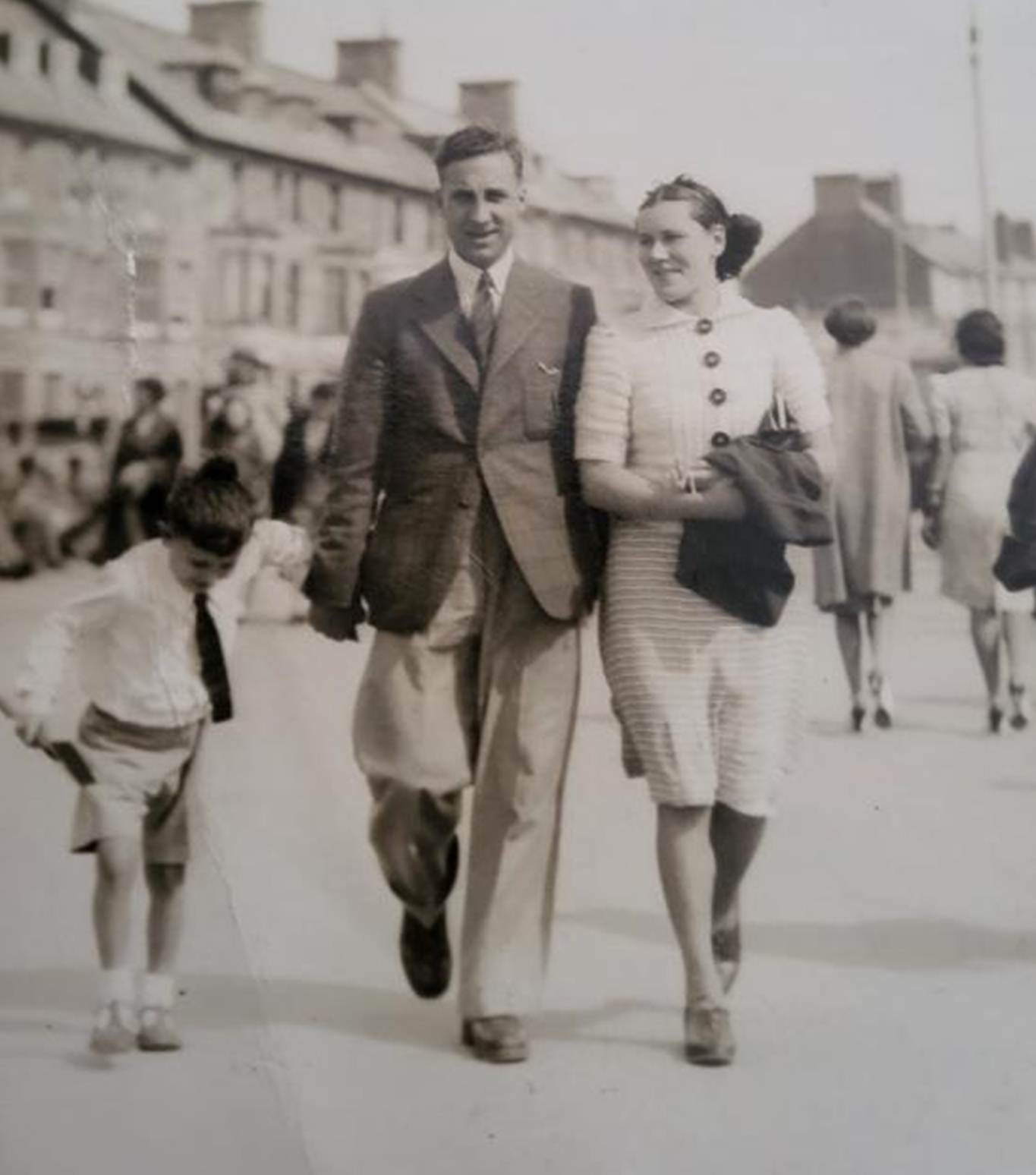
Young Brian, with
his parents, Bernard and Glenys (kindly sent to me
by his granddaughter, Nicola)
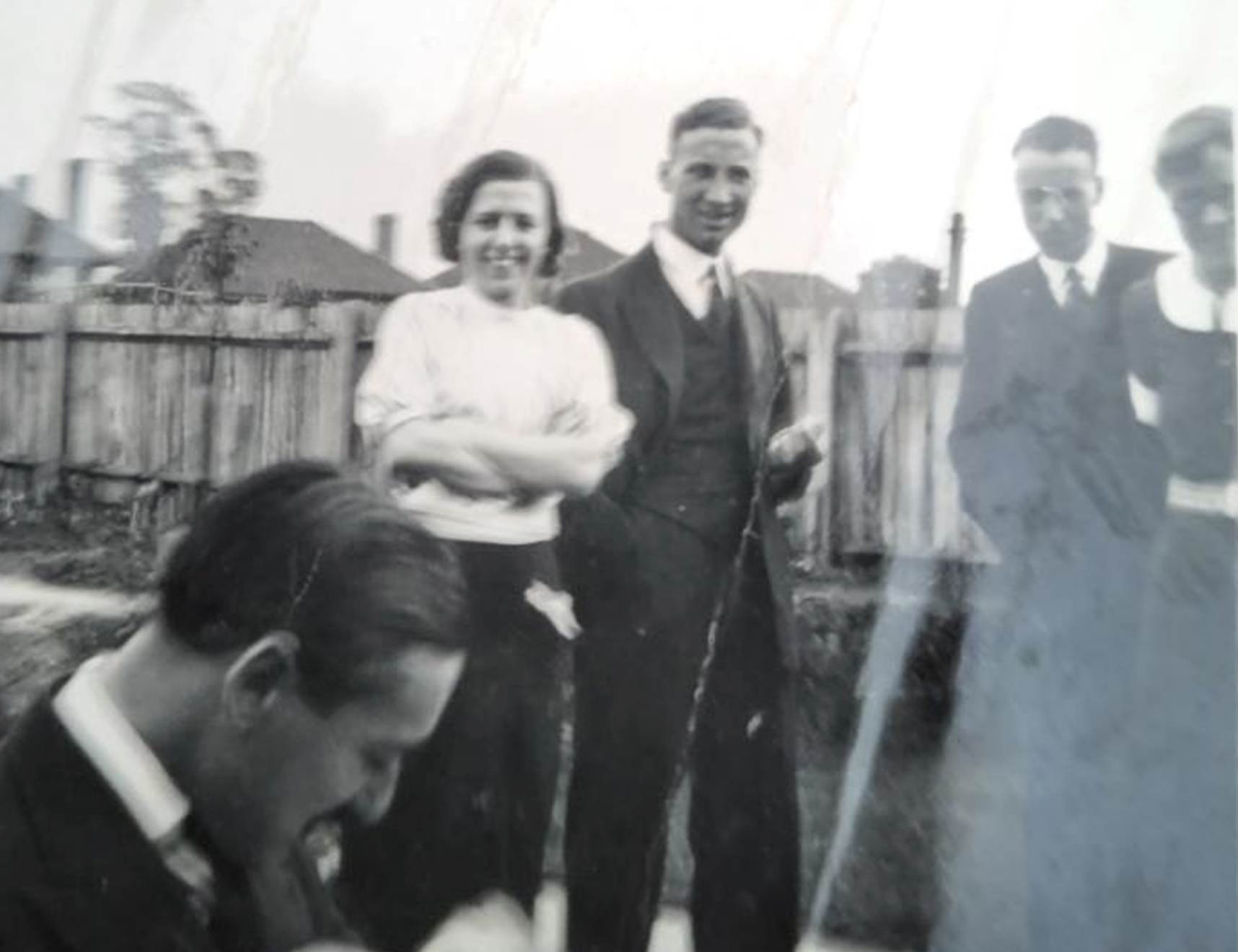
Bernard in the middle, taken at the family
house at Ingels Dean, Robin Hood’s Bay (kindly sent to me by his granddaughter, Nicola)
World War 2
Bristol
1939
By 1939
Bernard worked as a spot assembler for aircraft and he lived with Muriel and
Brian at 19 Charis Avenue, Bristol.
1939
Register – 19 Charis Avenue, Bristol
Bernard Farndale,
born 18 November 1912, spot assembler aircraft
Muriel GP
Farndale (later remarried Jenkins), born 10 July 1913.

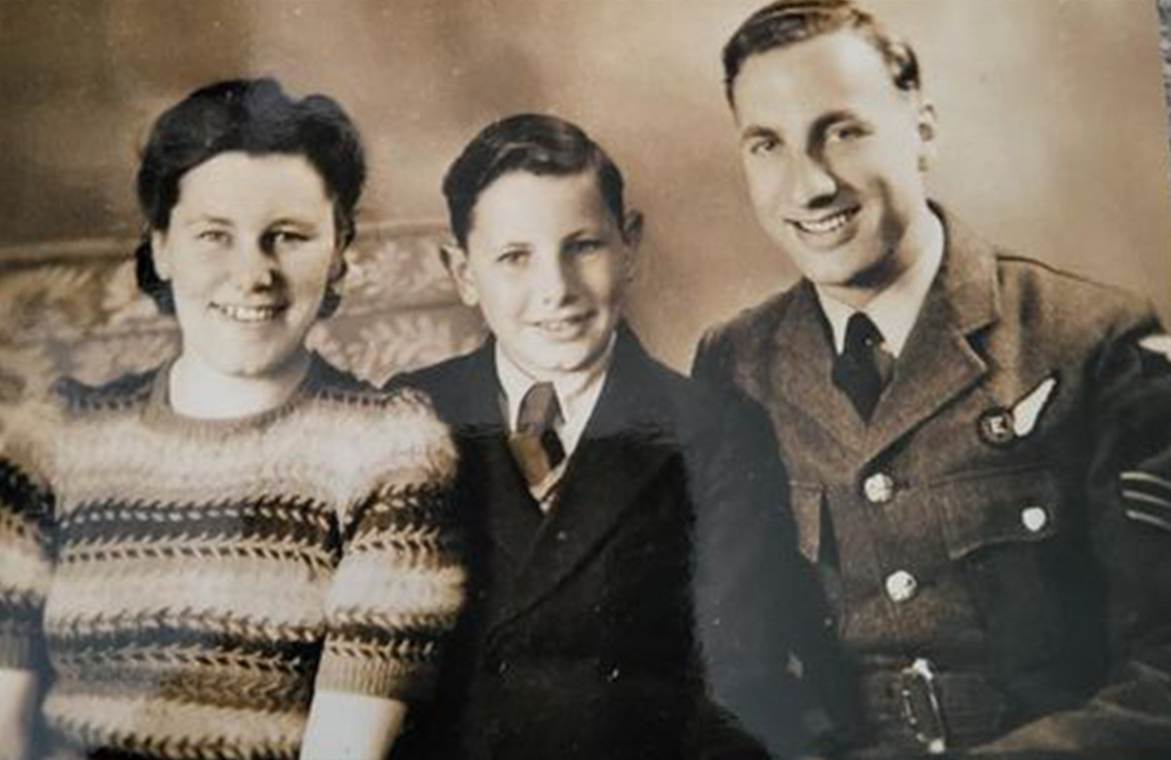
Muriel, Brian and Bernard (kindly sent to me
by his granddaughter, Nicola)
By 1944,
Bernard was a sergeant with No. 115 Squadron RAF which had been formed during
World War I. During the Second World War the squadron served as a bomber
squadron and took part in scores of raids and also played an active part in gardening
or minelaying. In April 1940, flying Wellingtons, on temporary loan to RAF
Coastal Command, the Squadron gained the distinction of making the RAF's first
bombing raid of the war on a mainland target when it was sent on a mission to
the enemy held Norwegian airfield of Stavanger at Sola. Sixteen months later,
in August 1941, it undertook the initial Service trials of Gee, the first of
the radar navigational and bombing aid. As a result of its subsequent report on
these trials Gee was put into large-scale production for RAF Bomber Command.
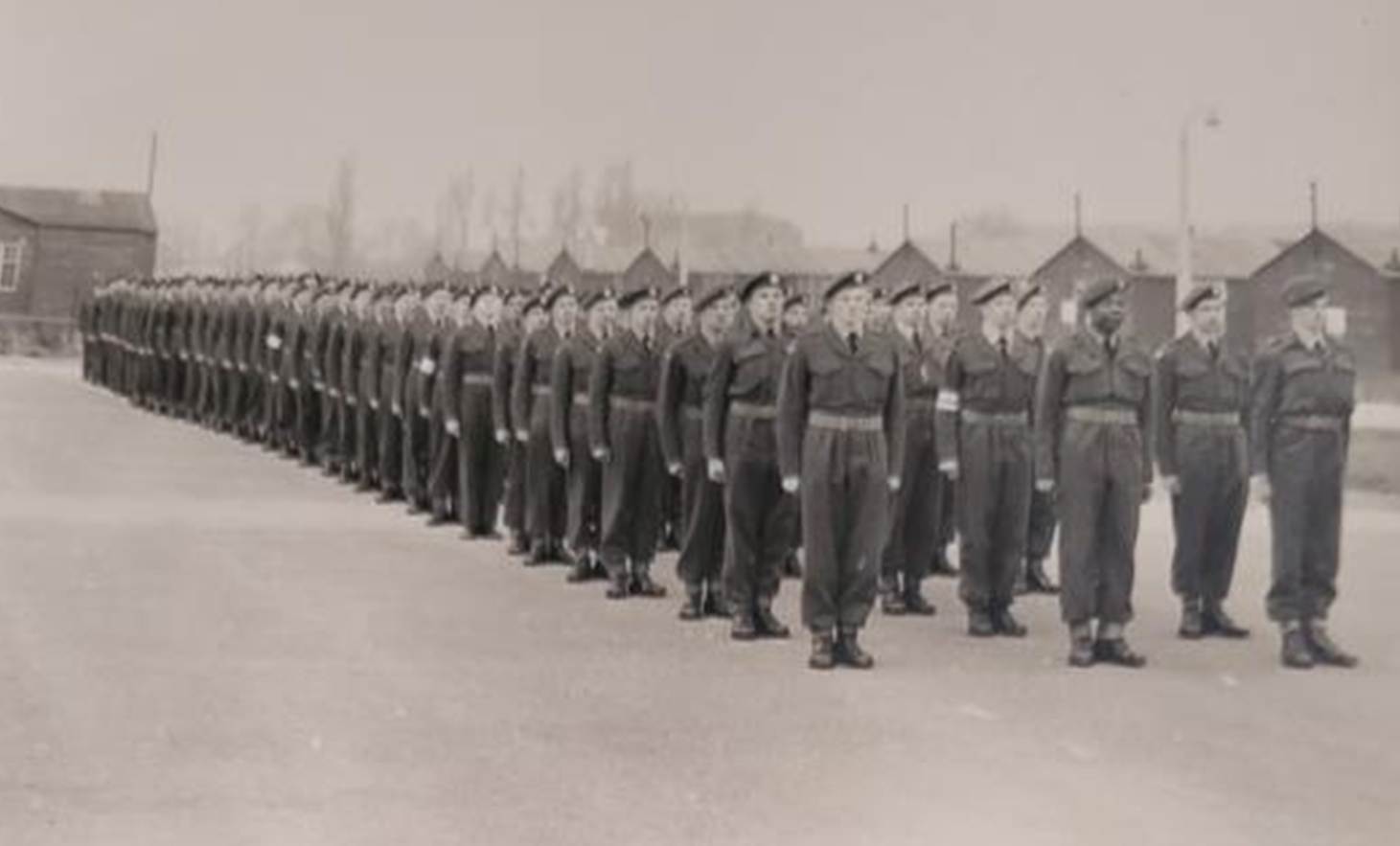
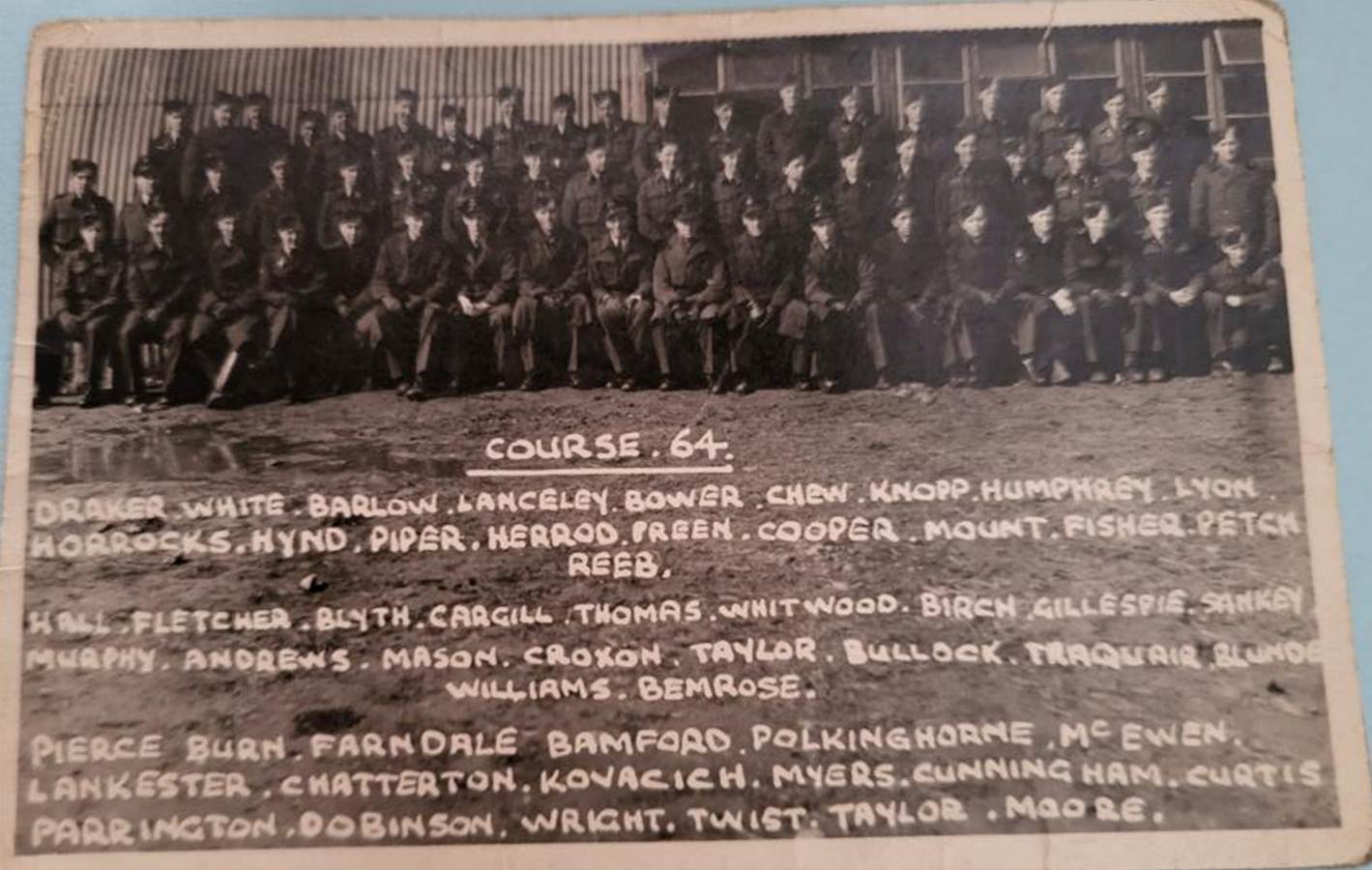
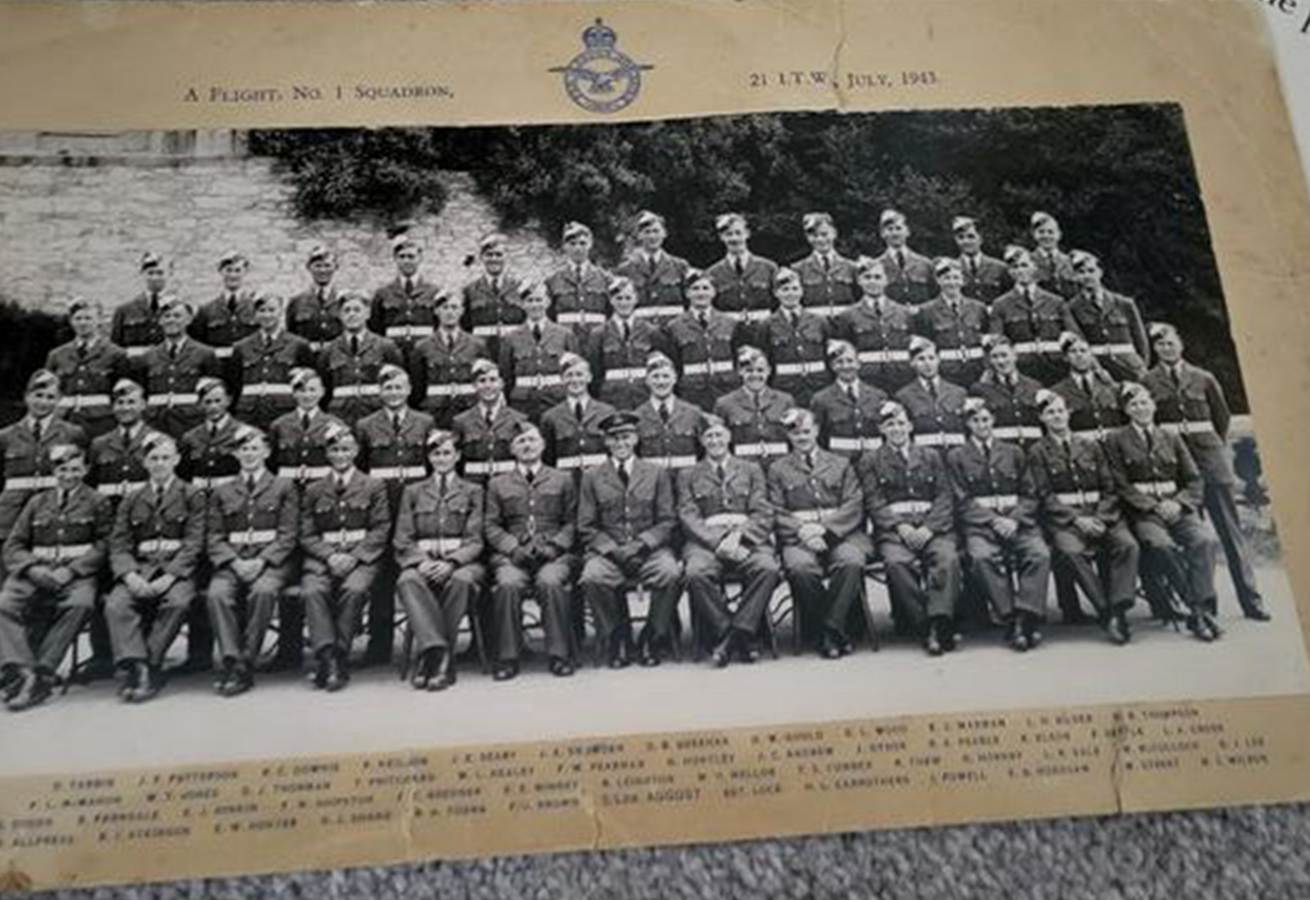
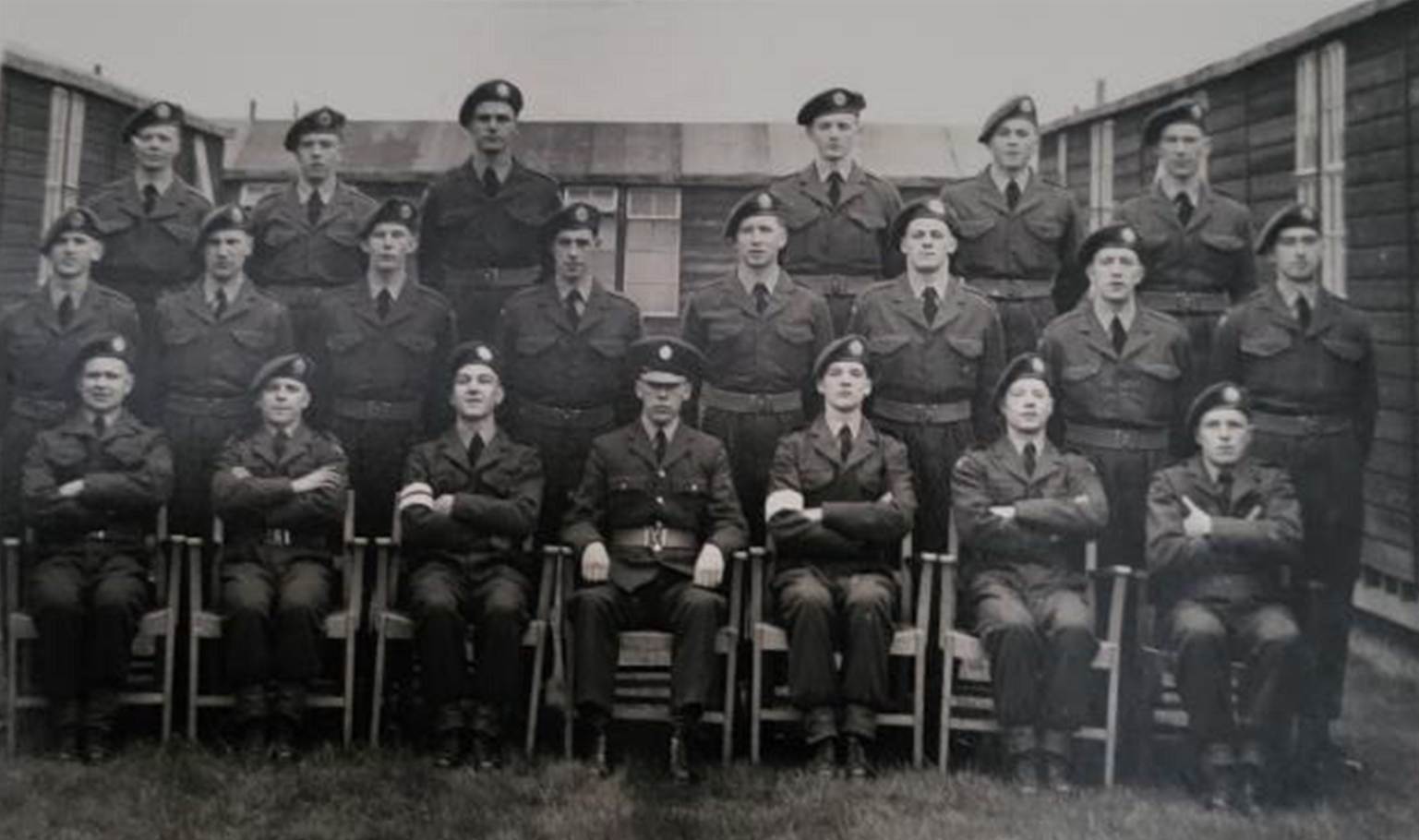
(kindly sent to me by his granddaughter, Nicola)
The
memoirs of Sydney
Percival Smith, a Royal Canadian Air Force Wellington pilot, contain
detailed personal descriptions of 115 Squadron missions in late 1942 from its
base in RAF East Wretham. These were directed at
targets in Germany including Bremen, Stuttgart, Frankfurt and Munich and Turin
in Italy, as well as mine laying in the French ports of Le Havre, Brest, St.
Nazaire, and Lorient and the Bay of Biscay.
Hercules
engined Lancaster IIs replaced the Wellingtons in March 1943 and these were
replaced by Merlin engined Lancaster Is and IIIs in March 1944. Around this
time the squadron relocated from RAF Little Snoring to RAF
Witchford.
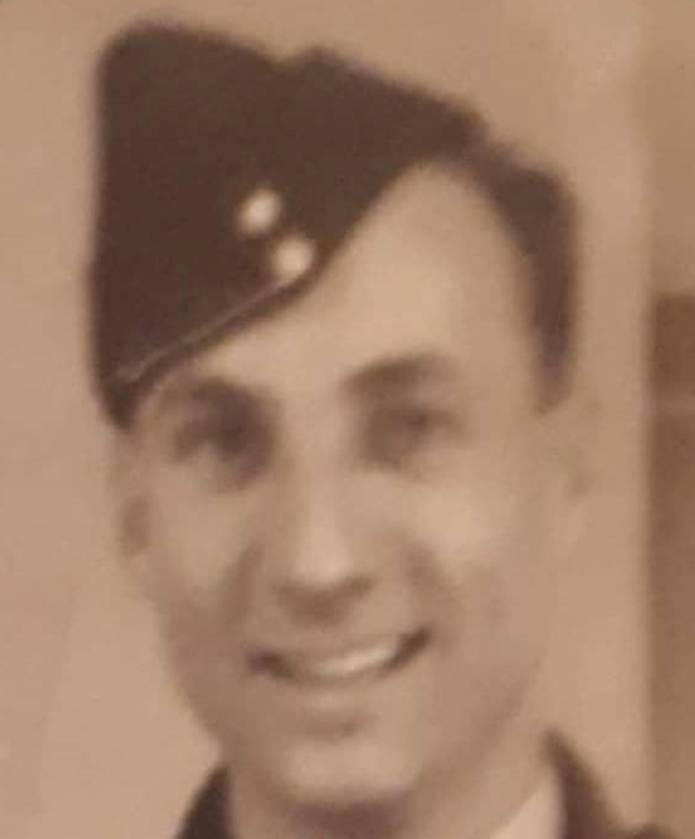
Bernard
Farndale
RAF Witchford, which is near
Ely and 21 kilometres north of Cambridge, was built in 1942 and opened in July
1943. 115 Squadron, 195 Squadron, 196 Squadron, 513 Squadron, and No. 29 Air
Crew Holding Unit were all based at RAF Witchford. 115 Squadron RAF first
started using RAF Witchford from 26 November 1943 with the Avro Lancaster II
before changing to the Mk I and III Lancasters in March 1944 before moving to
RAF Graveley on 10 September 1945.
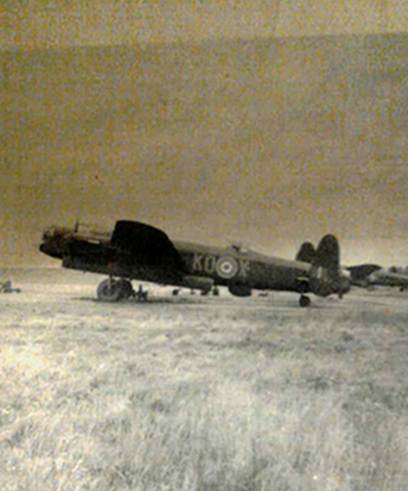
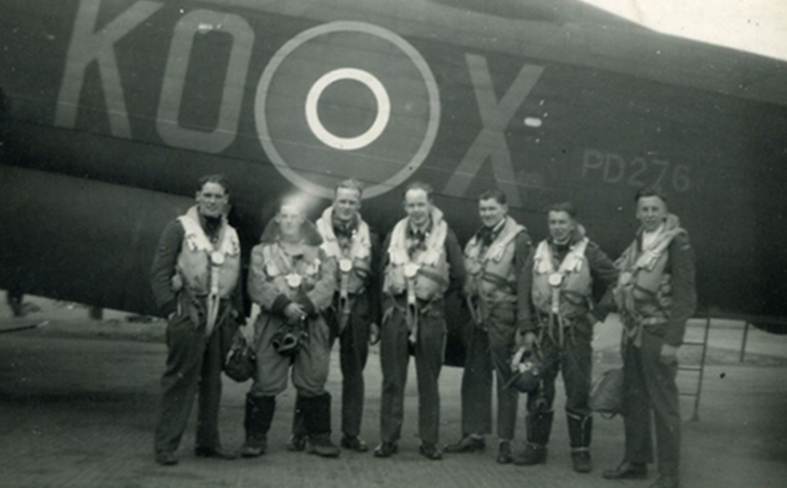
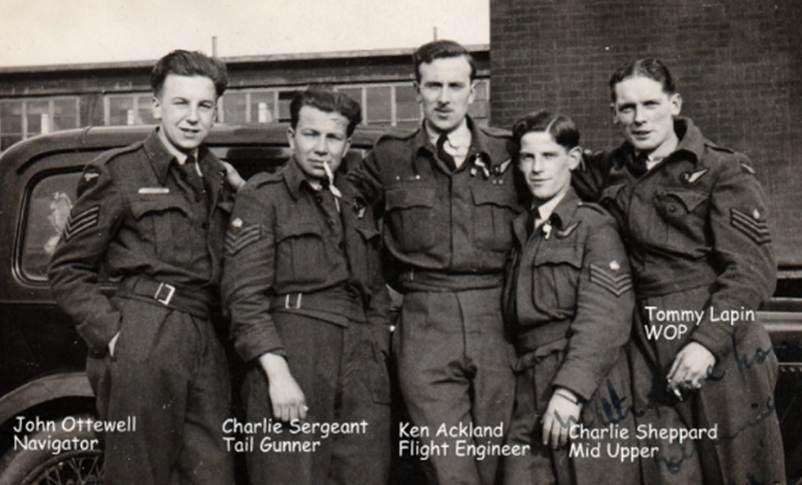
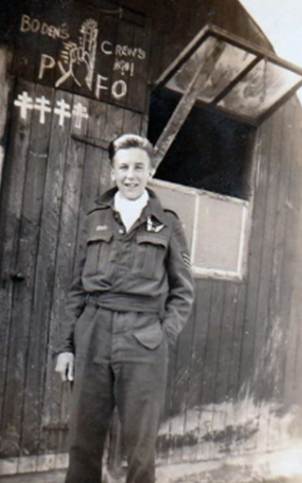
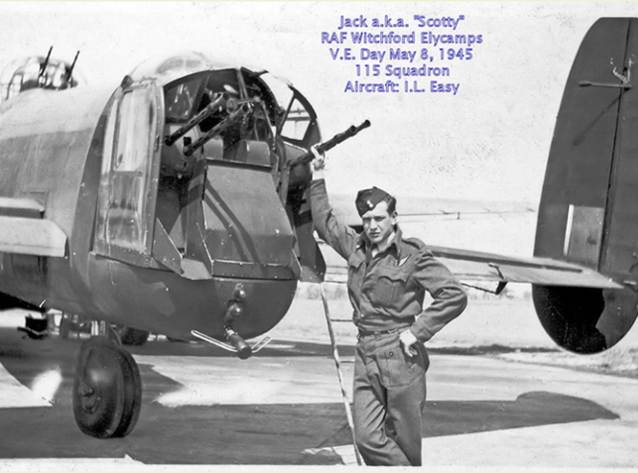
115
Squadron Lancaster crews at RAF Witchford
By the end
of the war, it had the distinction of being the squadron with the most
operational service, most losses by any one single unit and the most tonnage of
explosives dropped.
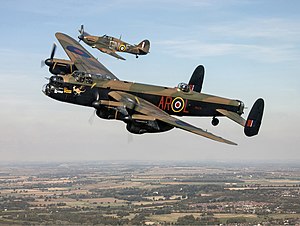
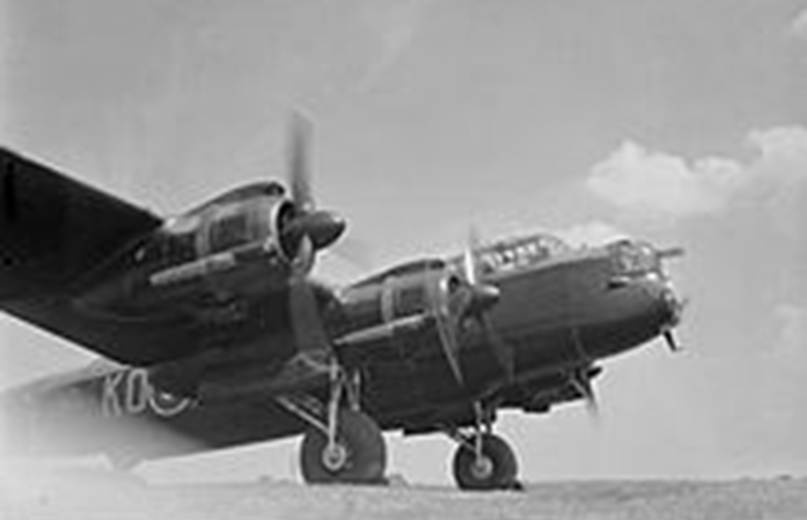
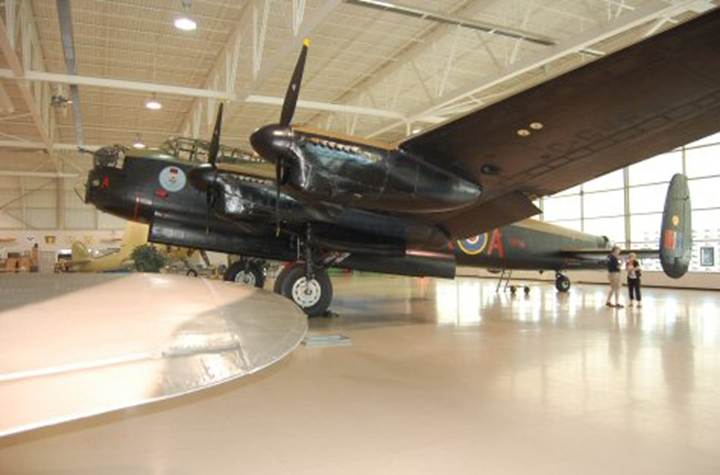
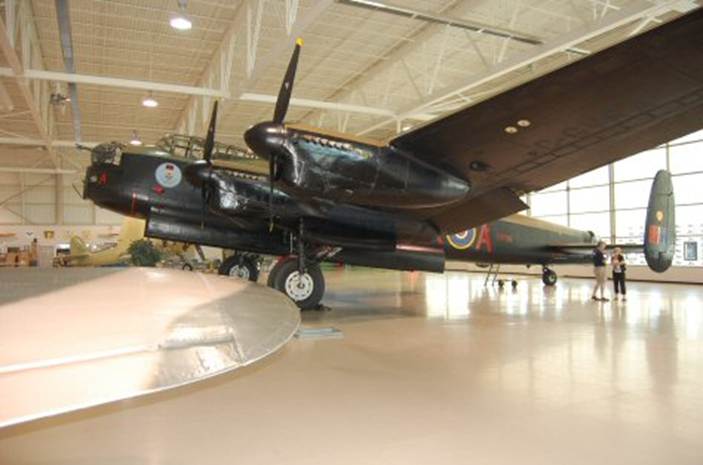
Avro
Lancaster Mark 1 bombers operated from RAF Witchford in August 1944
1944
Over Denmark
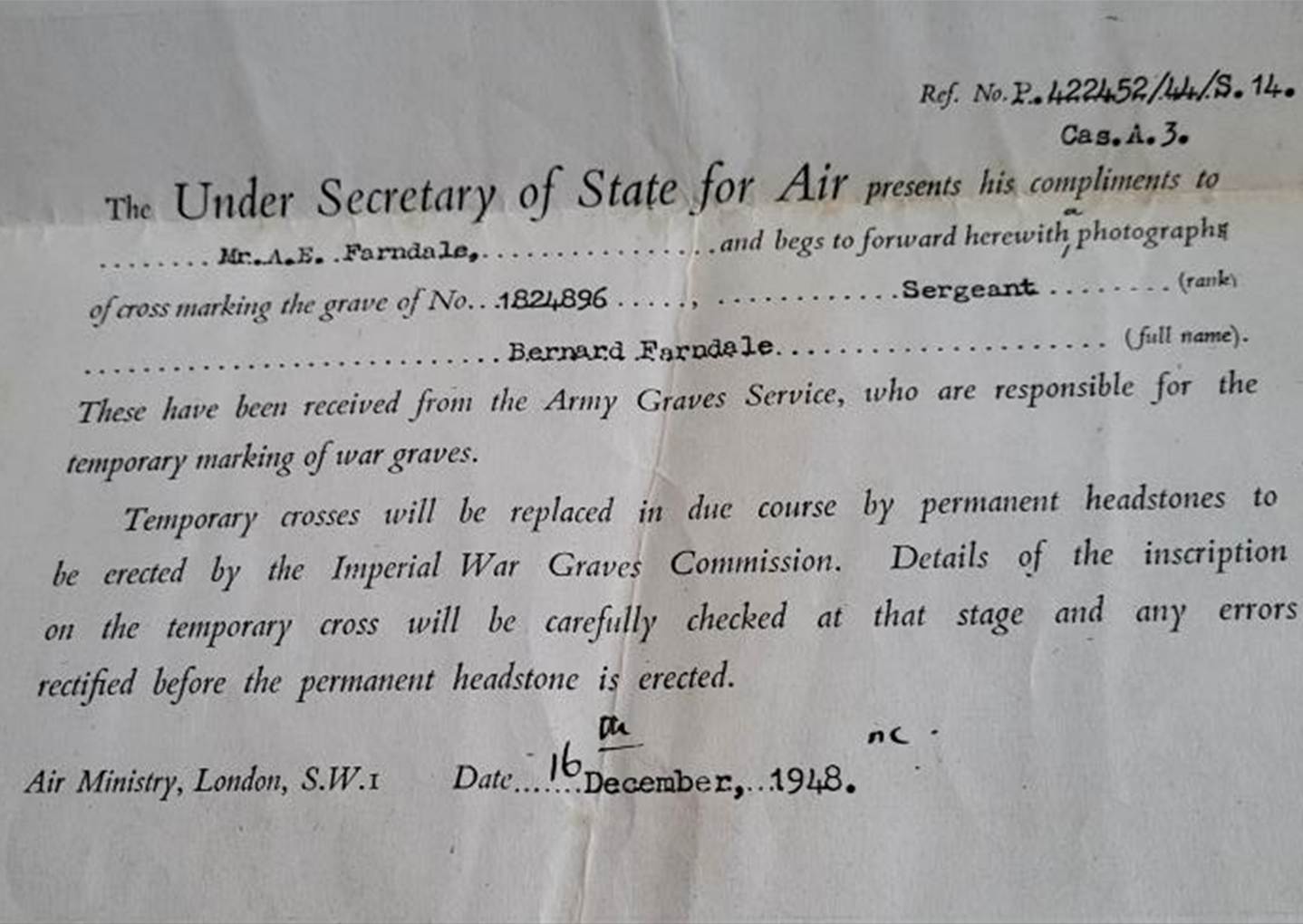
1824896
Sergeant Bernard Farndale, 115th Squadron RAF, went missing, believed killed in
action over Denmark, on
30 August 1944. He served as a flight engineer in the Royal Air Force Volunteer
Reserve of 115 Squadron. His records suggested he was associated by then with
Robin Hood’s Bay, Yorkshire. He was aged 25 when he died and is buried at Ove
Churchyard in Denmark.
The flight
engineer controlled the aircraft's mechanical, hydraulic, electrical and
fuel systems. He also assisted the pilot with take-off and landing. In an
emergency, the flight engineer would also be needed to give accurate fuel
calculations.
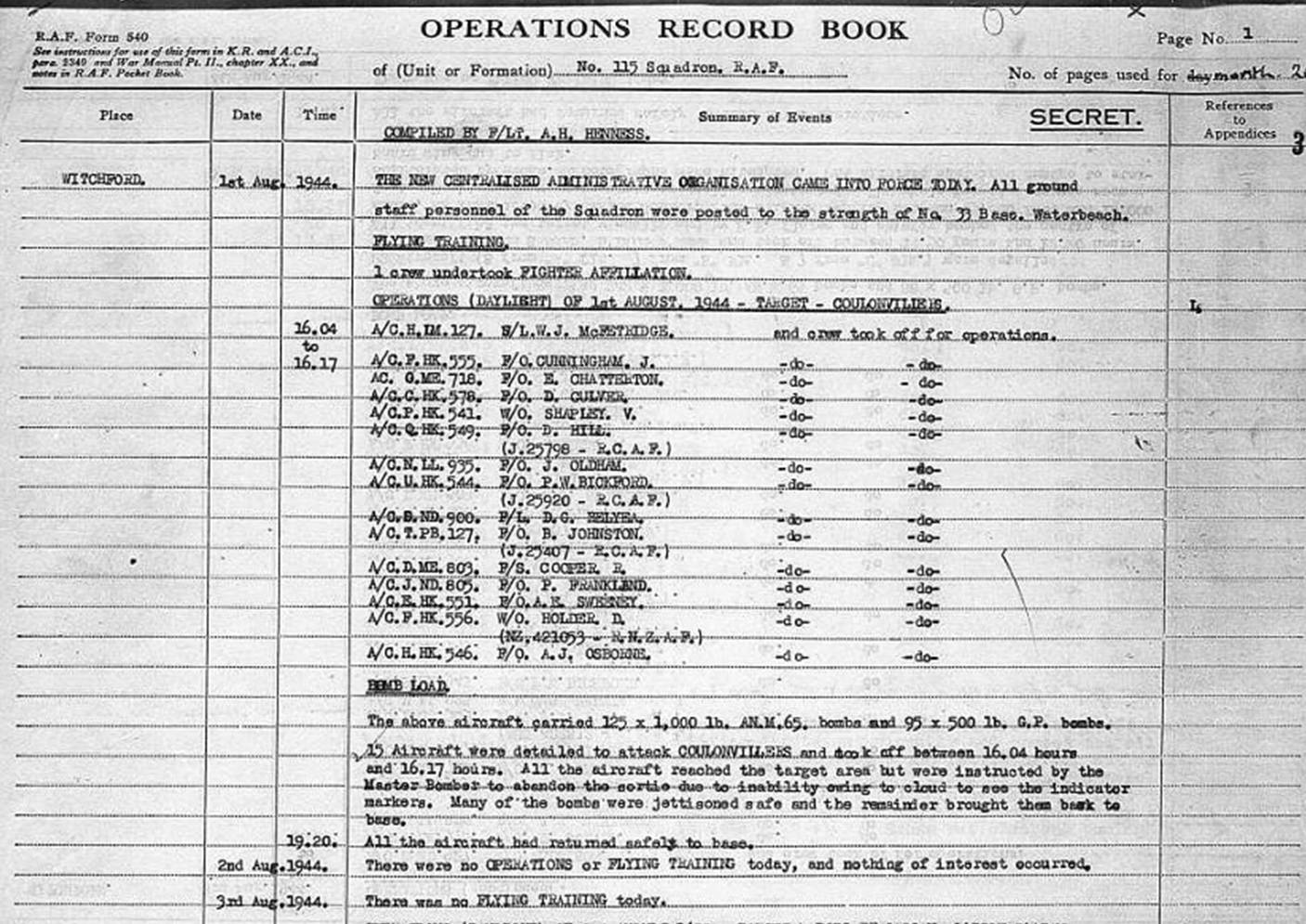
A new
centralised administrative organisation came into force at RAF Witchford on 1
August 1944 and the operational aircraft included Avro Lancaster Mark I LAN ME718.
Avro
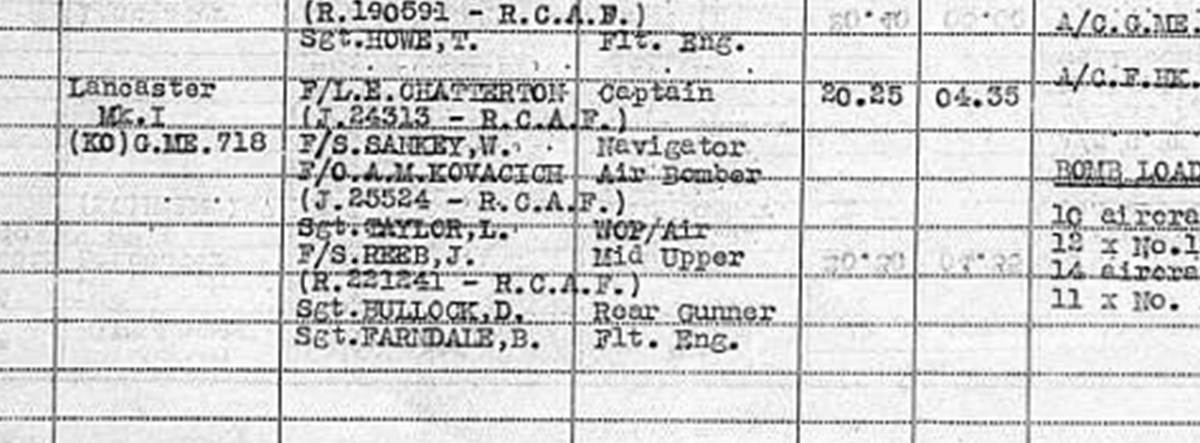
Lancaster Mark I LAN ME718 had
taken part in a number of raids in August 1944. For instance the bomber had
attacked Bremen on the night of 18 and 19 August 1944, but Bernard had not been
part of that mission. However Bernard had joined the crew of ME 718 by 25
August 1944 when the bomber had taken off at 20.25 hours to attack Russelsheim
and returned at 04.35 hours on 26 August.
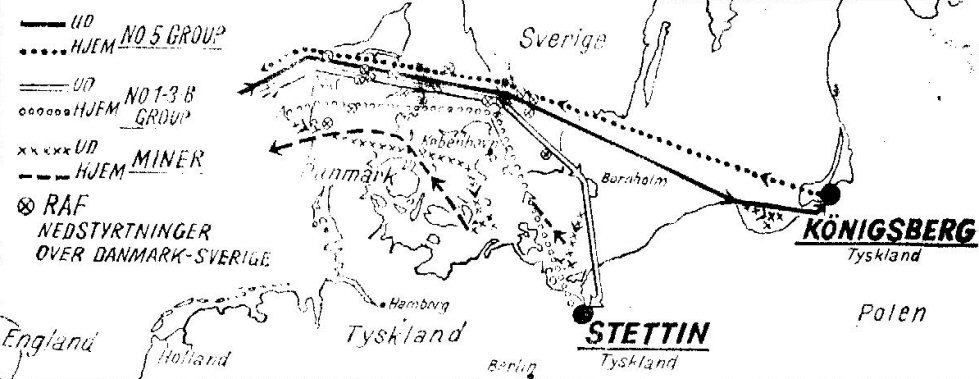
On the
evening of 29 August 1944 nearly six hundred RAF bombers flew over Denmark on bombing
raids to Königsberg and Stettin.
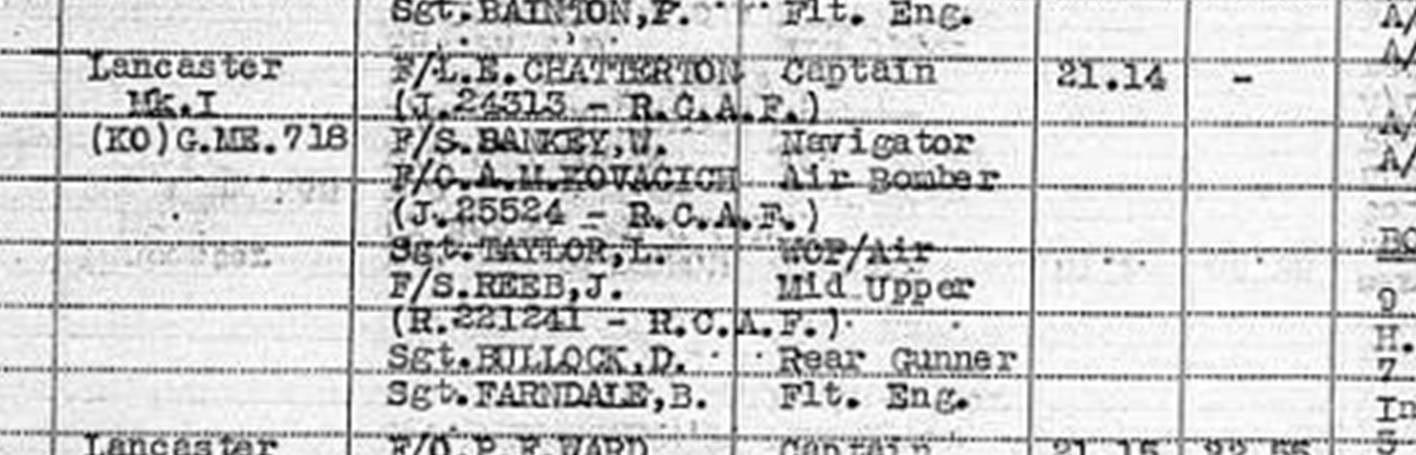
On its final
mission, the
operational record noted that Bernard’s aircraft took off at 21.14 hours on
the night of 29 August 1944.
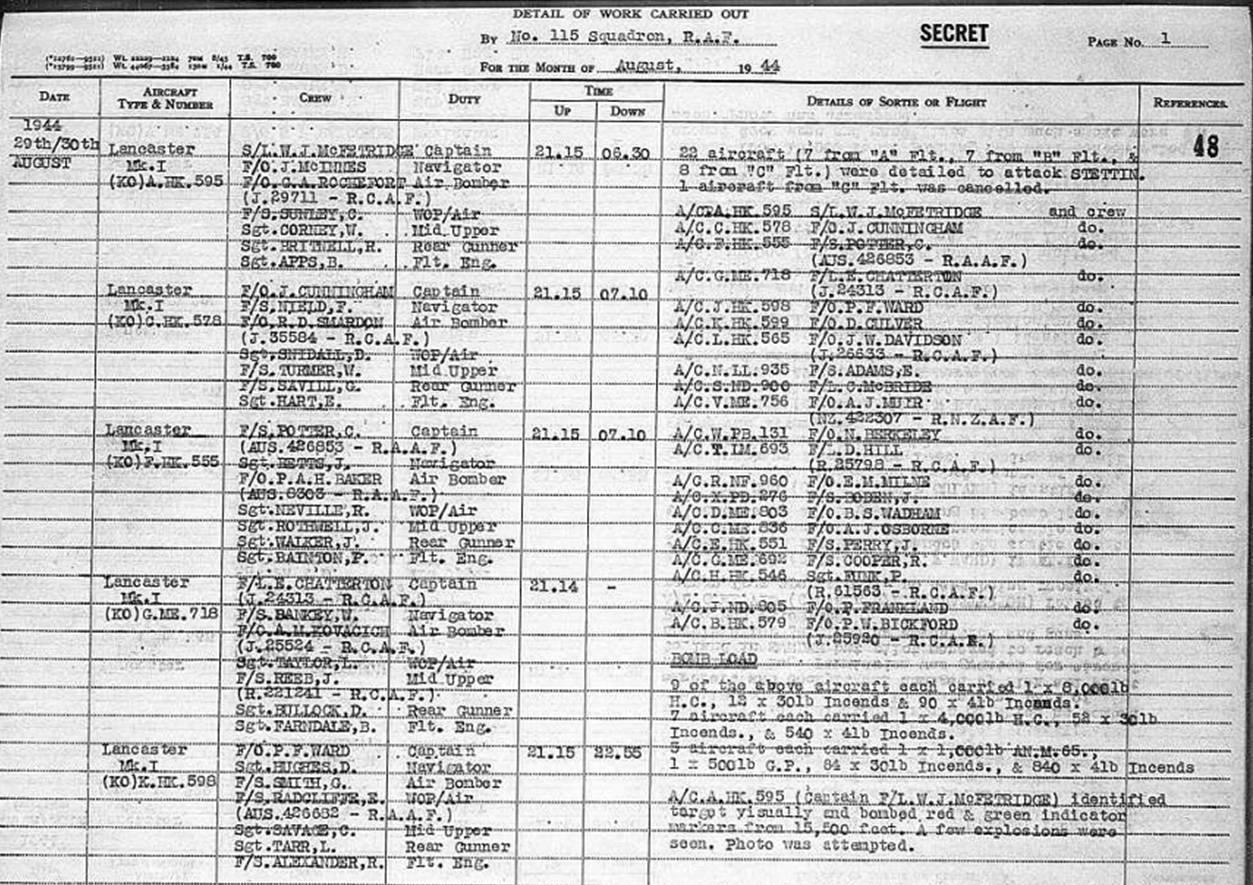
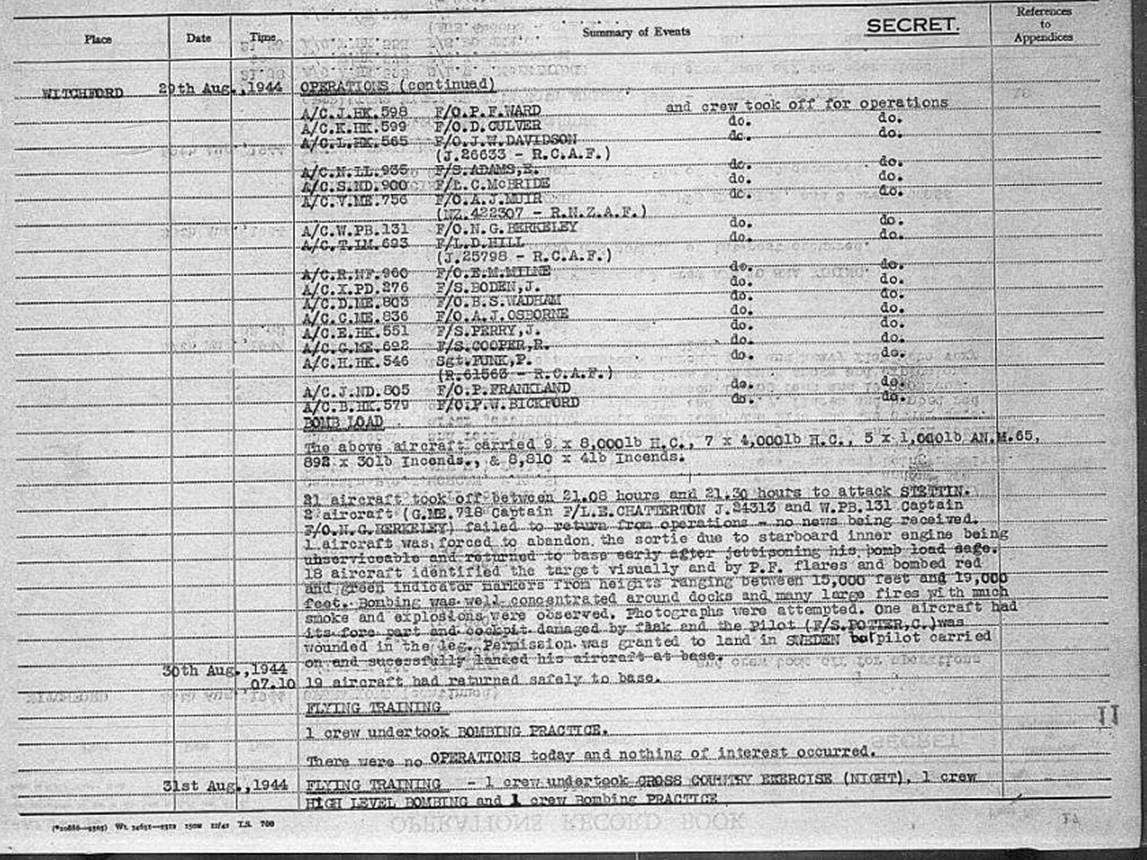
The daily
diary recorded that ME 718 failed to return from operations and no news had
been received.
The aircraft
bound for Stettin in particular were attacked by German night
fighters, when they were passing the northern part of Jutland and the
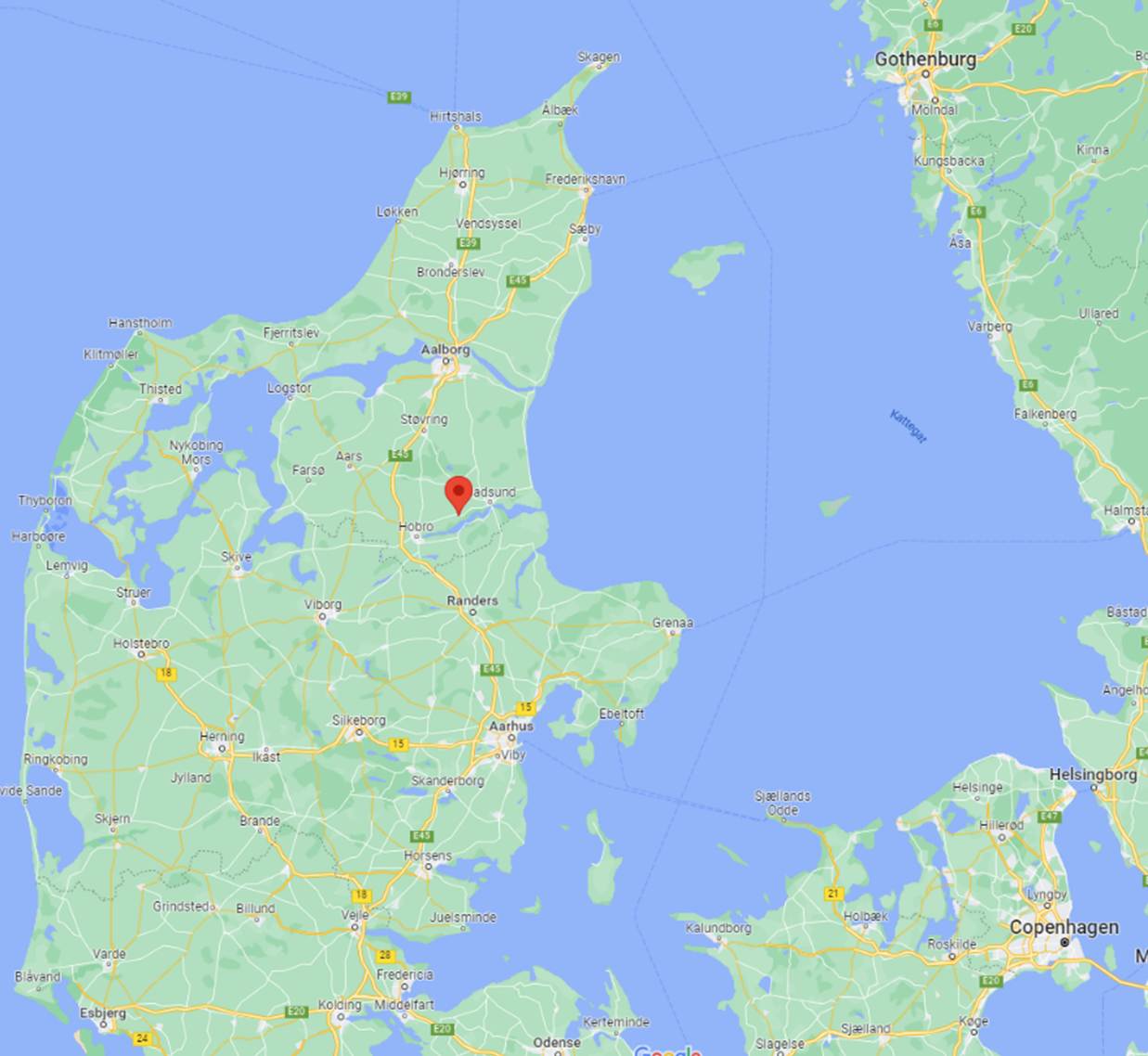
Kattegat. Bernard’s aircraft, the Avro Lancaster I LAN ME718, was hit over Denmark when
it was attacked by a German night fighter and caught fire. At about 1 am, it
crashed near Ove northeast of Hobro killing all onboard. The bomb load exploded
when the Lancaster hit the ground spreading wreckage and the remains of the
crew over a wide area. After being hit the Lancaster flew for a moment through
the air before it crashed like a burning torch at Ove, about 400 m west of Rinddalsvej, north of the Mariager Fjord in Denmark. All of
the bomb load exploded on impact. All of the crew were killed.
403 aircraft
were involved in the Stettin raid. Twenty three aircraft were lost, 5.7% of the
mission. It was declared to have been a successful raid, causing damage to
areas not bombed on previous raids. The local report states that 1,569 houses
and 32 industrial premises were badly damaged. One ship was sunk and seven
others damaged. 1,033 people were killed and 1,034 were injured.
The Germans
did not want to collect the remains of the crew and left them in the field. The
locals were appalled by this behaviour and collected the remains in wickerwork
baskets. The Wehrmacht ordered the Danes to hand the baskets over, and these
were thrown in the crater at the crash site and covered. When the Germans had
left the area, the locals together with members of the Civil Air Defence opened
the crater and placed the remains in a coffin, which was driven to Ove church.
On 4 September 1944, unknown to the Wehrmacht, the airmen were laid to rest in
Ove cemetery. Vicar A. Bundgård officiated at a graveside ceremony. The coffin
was decorated with flowers, but there were only a few mourners. Apparently the
German Wehrmacht knew nothing of this funeral.
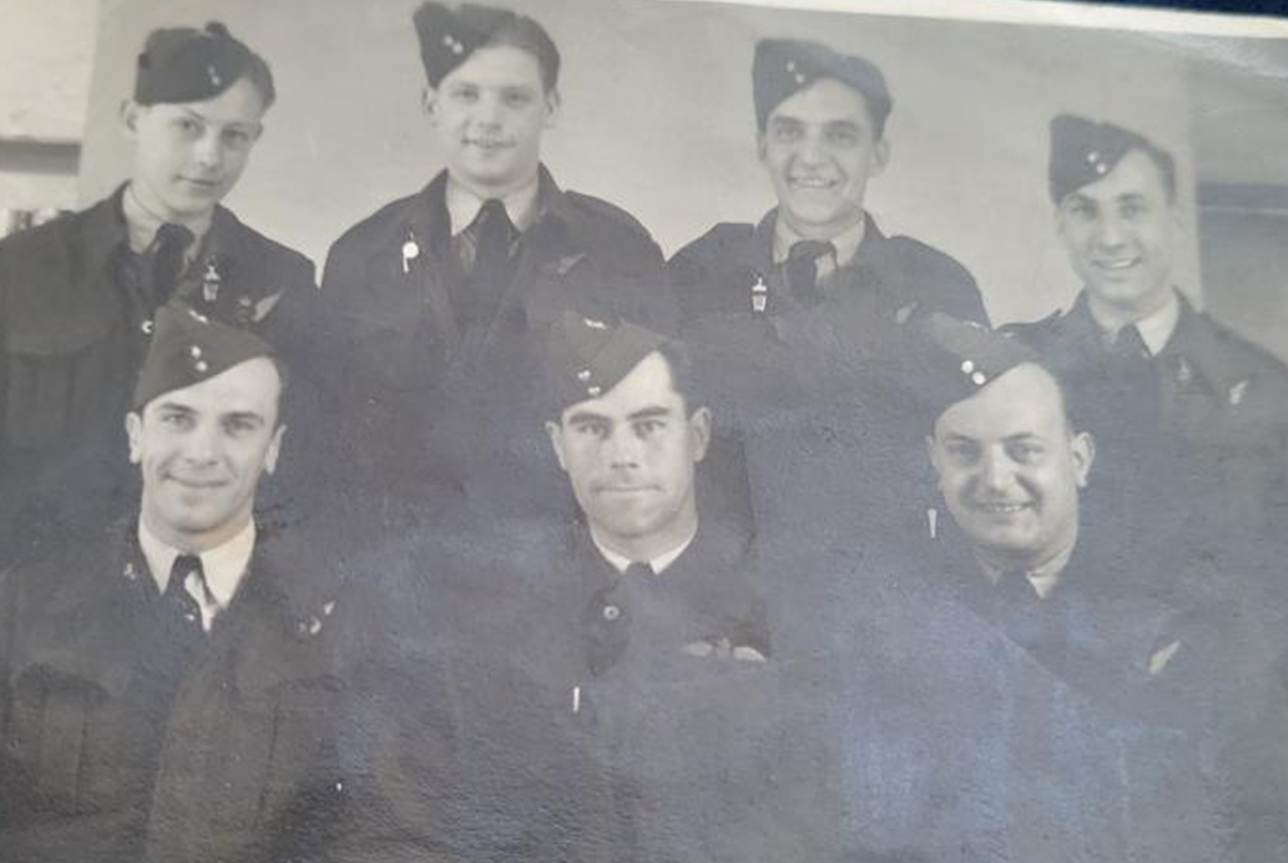
The Crew
of ME 718
The Pilot of
ME 718 was Flight Lieutenant Edward Chatterton of the Royal Canadian Air Force.
The Flight Engineer was Sergeant Bernard Farndale. The Air bomber was Anthony
Michael Kovacich of the Royal Canadian Air Force. The Navigator was Pilot
Officer William George Sankey. The Wireless Operator was Sergeant Leslie
Taylor. The first Air Gunner was Gunner Pilot Officer John Couzens Reeb. The
second Air Gunner was Sergeant Donald Bullock.
Bernard is
remembered on The
Walls of Names at the International Bomber Command Centre at Canwick Hill
in Lincoln, Phase 2, Panel Number 162.
1824896 Sergeant Bernard Farndale, 115th Squadron RAF, went missing
believed killed in action over Denmark, on 30 August 1944.
On the night
before 30 August 1944 nearly 600 RAF bombers flew over Denmark on bombing raids
to Königsberg and Stettin. Particularly the planes for Stettin were attacked by
German night fighters, when they were passing the northern part of Jutland and
the Kattegat. LAN ME718 was hit and flew for a moment through the air before it
crashed like a burning torch at Oue (about 400 m west of Rinddalsvej in
Denmark). All of the bomb load exploded on impact. All of the crew were killed.
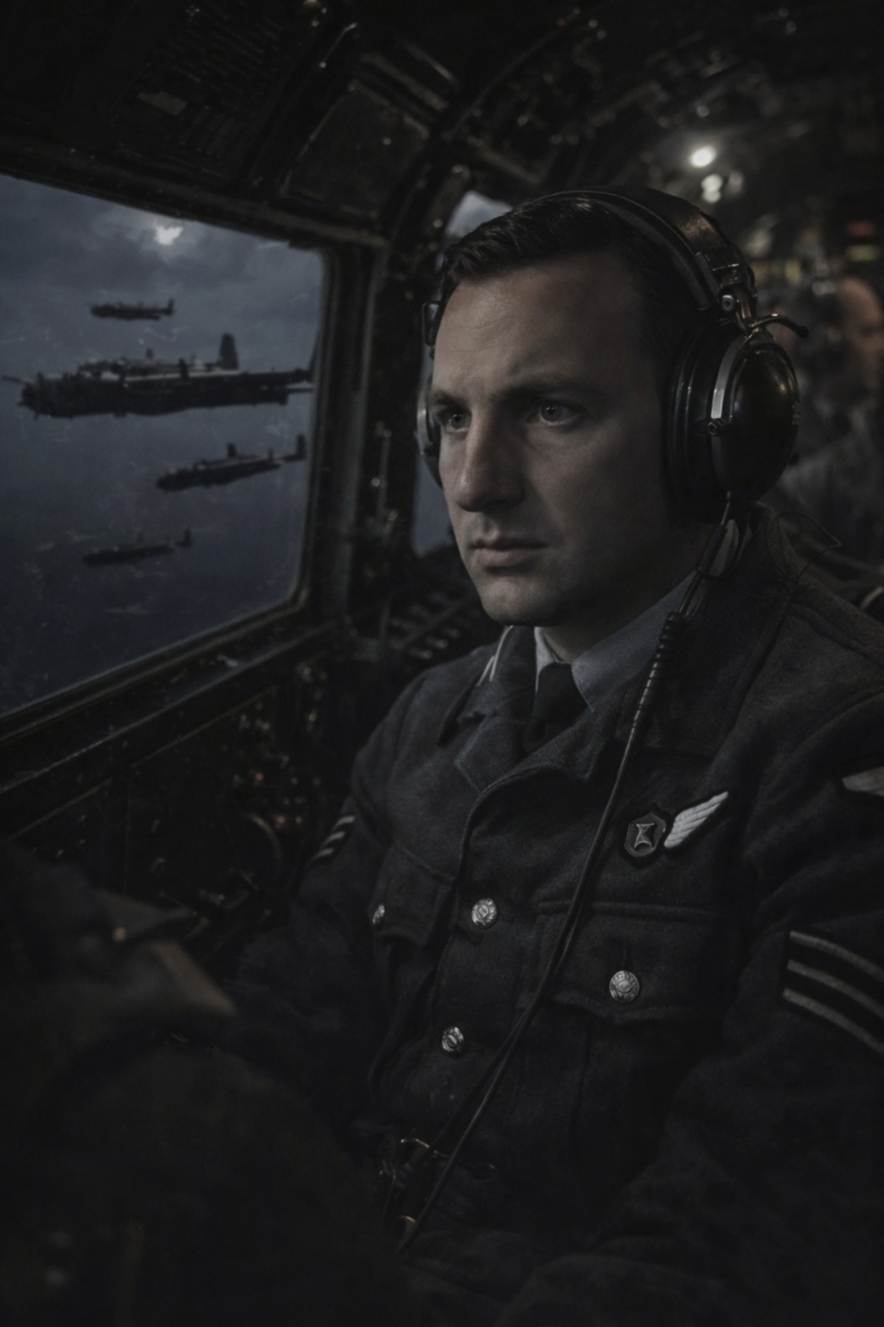
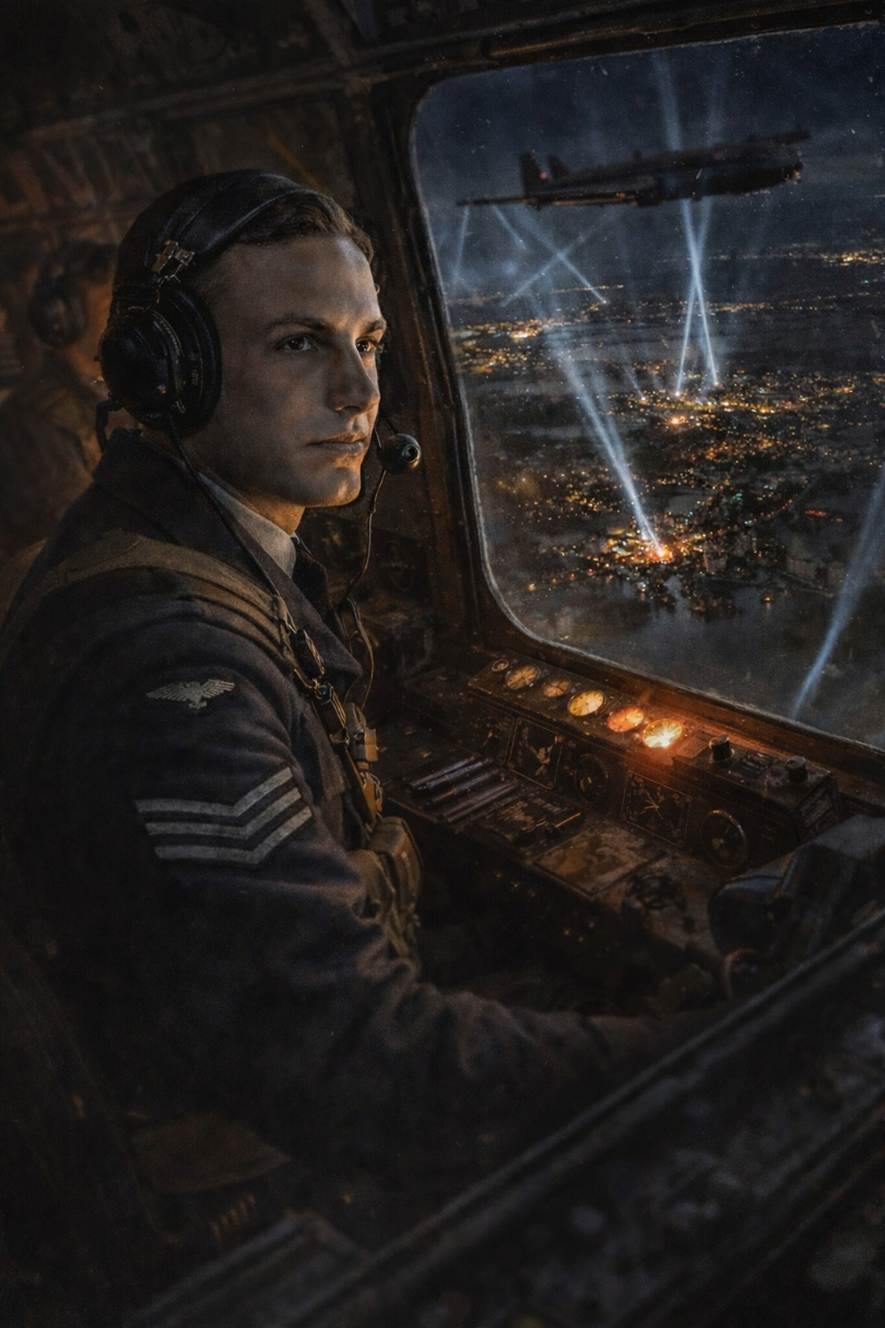
(AI generated images showing Bernard as part of the Lancaster
crew)
ME718 was
attacked by a German night fighter and caught fire. At approx. 00:10 hours it
crashed near Ove northeast of Hobro killing all onboard. The bomb load exploded
when the Lancaster hit the ground spreading wreckage and human remains over a
wide area. The Germans did not want to collect the human parts and left them in
the field.
The locals were
appalled by this behaviour and collected the remains in wickerwork baskets. The
Wehrmacht ordered the Danes to hand the baskets over, and these were thrown in
the crater at the crash site and covered. When the Germans had left the area, the
locals together with members of the Civil Air Defence opened the crater and
placed the remains in a coffin which was driven to Ove church.
On 4/9 1944 the
flyers were laid to rest in Ove cemetery unknown to the Wehrmacht, Vicar A.
Bundgård officiating at the graveside ceremony.
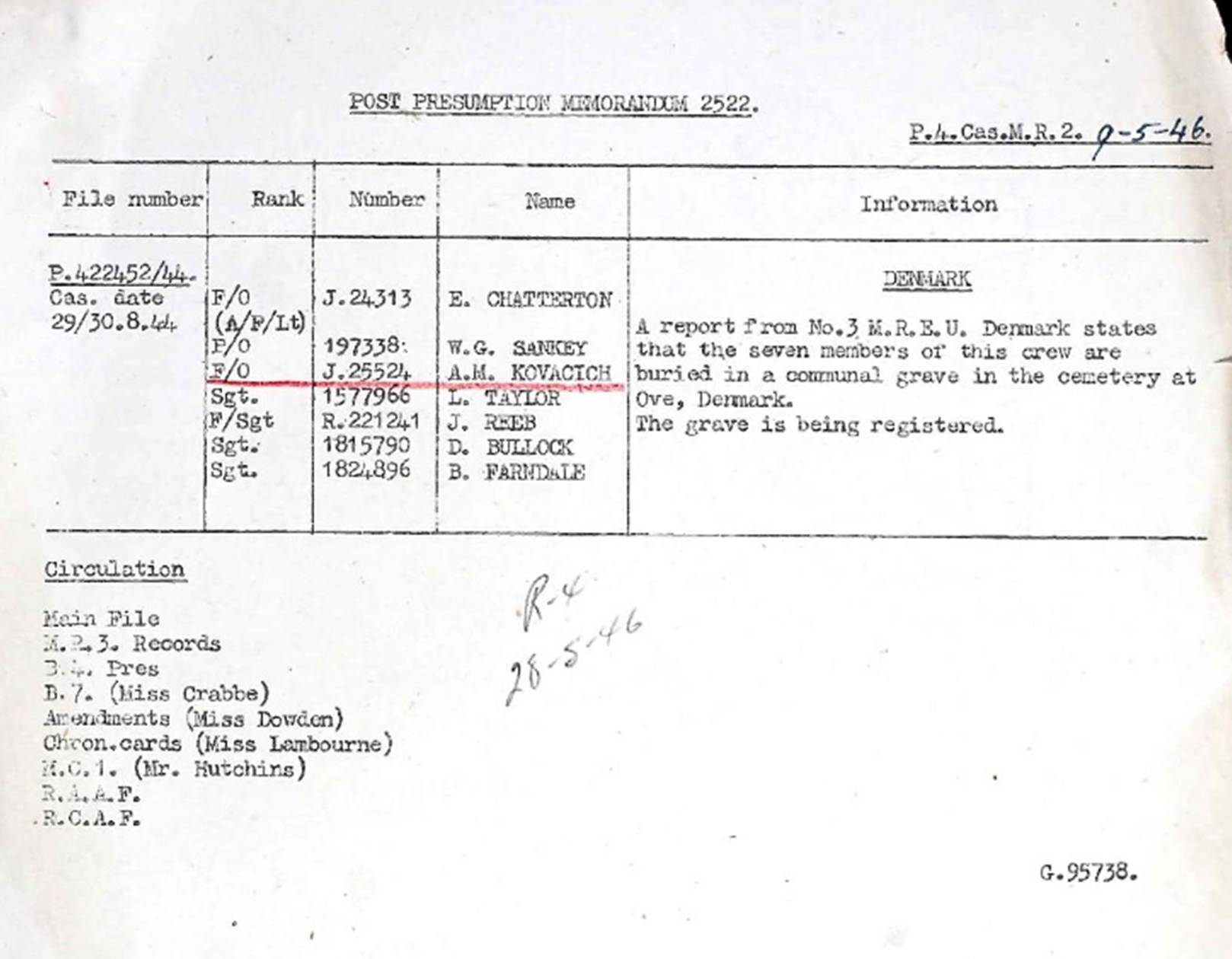
The crew was:
Pilot F/Lt Edward Chatterton RCAF, Flt. Engr. Sgt Bernard Farndale, Air
bomber Anthony Michael Kovacich RCAF, Navigator P/O William George Sankey, W/Op
Sgt Leslie Taylor, Air Gnr. P/O John Couzens Reeb, Air Gnr. Sgt Donald Bullock.
The German
Wehrmacht took no steps to bury the mortal remains of the 7 airmen in a decent
manner. This caused heart felt disagreements between the Danish bomb expert,
other Danes and the Germans. Later a coffin was procured. It was secretly
brought to the chapel of rest by the civil defence. On 4 November, 1944 the
vicar A. Bundgård carried out the funeral. The coffin was decorated with
flowers, but there were only a few mourners. Apparently the German Wehrmacht
knew nothing of this funeral. (Source: FAF)
As the German did
not want to pick up the many parts of bodies of the airmen, Danes picked them
up into baskets. The Wehrmacht ordered the Danes to hand over the baskets which
then were buried at the crash site. Danes later disinterred the bodies when the
Germans had left the area, procured a coffin and took it to the chapel of rest
at Oue Churchyard. (Source: Hjemmeværnets Historiske Samling i Himmerland about
this plane and its crew.)
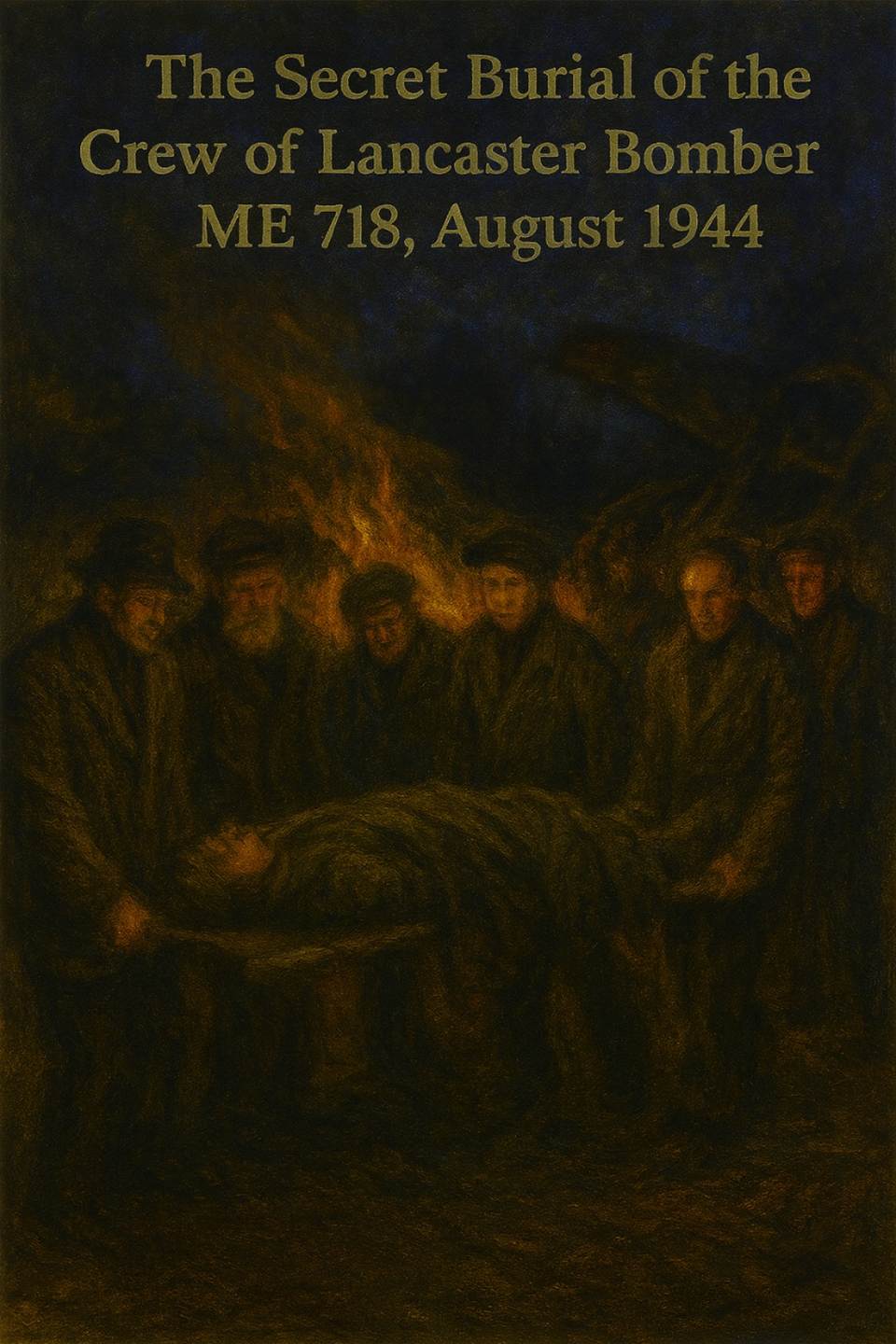
(AI generated image)
One
of those killed was Sergeant (Flight Engineer) Bernard Farndale, 25, was the
son of Arthur Edwin and Mary Annie Farndale, of Robin Hood's Bay, Yorkshire,
United Kingdom. (Source: CWGC)
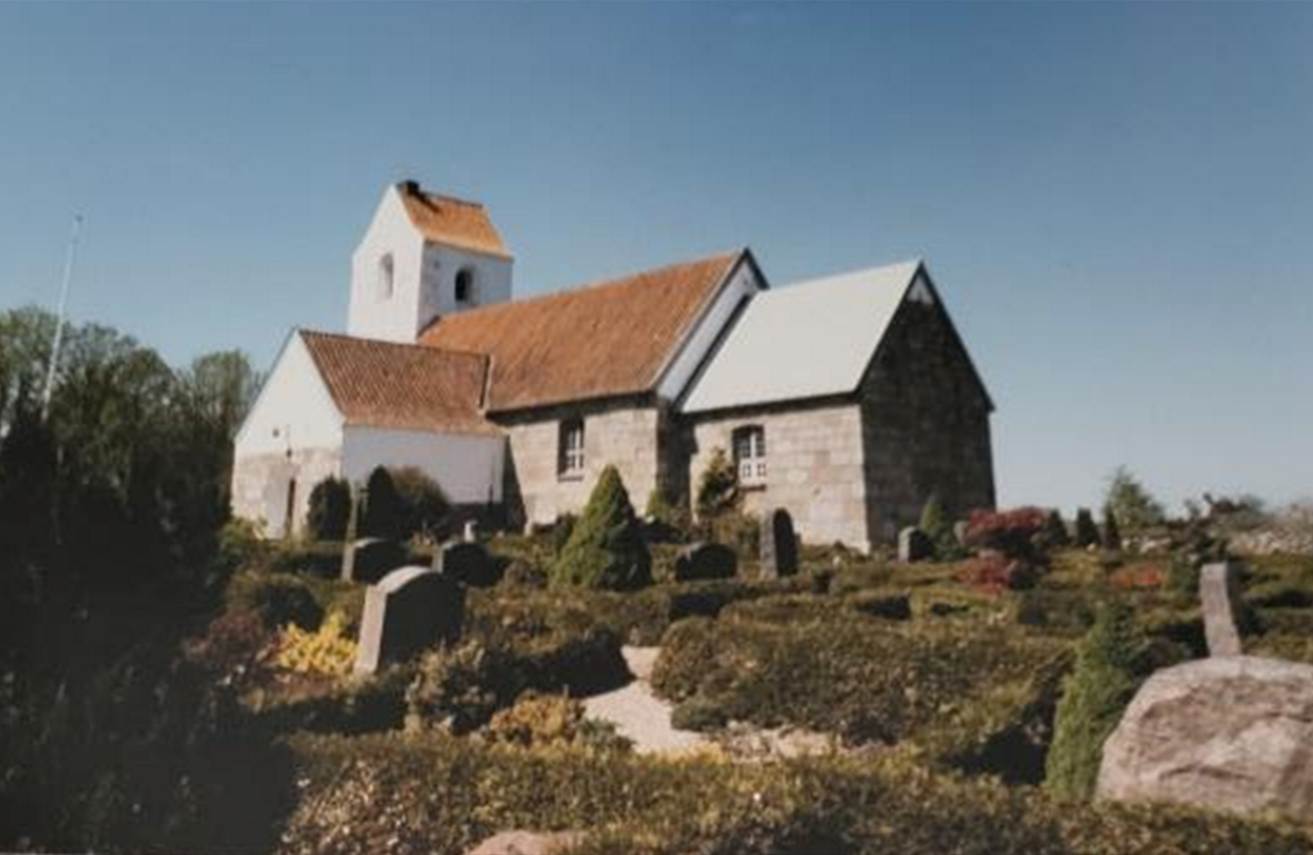
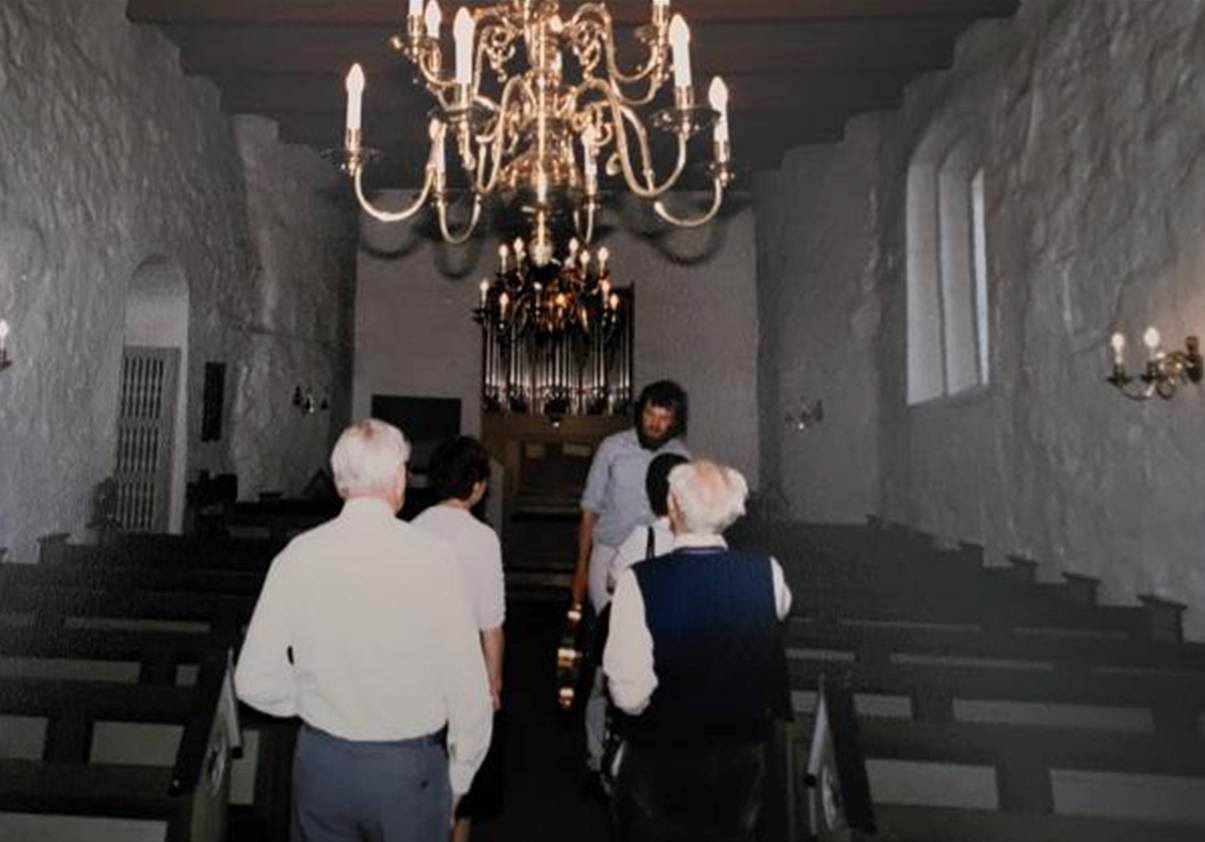
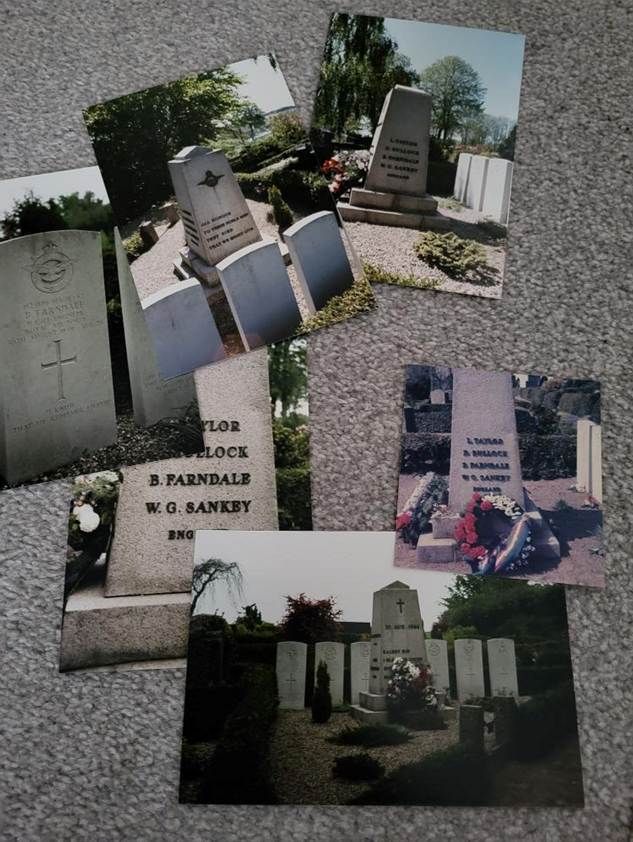
The
church at Ove, Denmark
"I know that
my redeemer liveth"
He is remembered
on The Walls of Names at the International Bomber Command Centre, Ph 2, P 162.
Parts of the
plane were found in 2008. The biggest parts of the plane had been taken away
very soon after the crash, but John Sørensen and Torben Juhl found these and
other parts at the crash site in 2008. See monument to the 7 airmen from LAN ME718 in Oue Churchyard. See
parts of the plane found 2008:
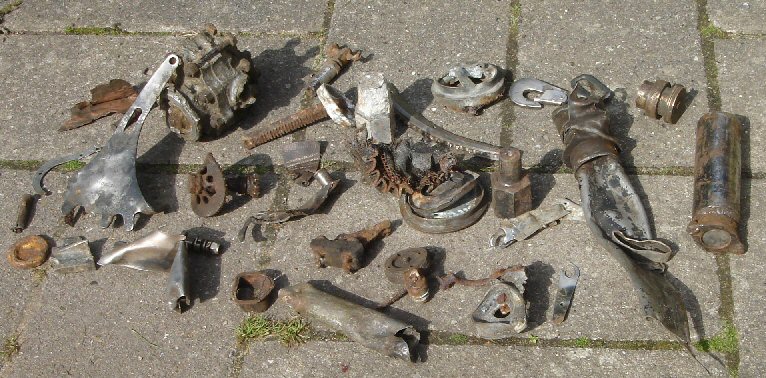
The biggest parts
of the plane were taken away very soon, but John Sørensen and Torben Juhl, Oue
in 2008 found these and other parts at the crash site.
Lancaster
I ME718 - Oue at Hadsund
Airman Surname Init Rank Service Sqdn P_link Plane Operation Crash_site Crash_d
Buried_d C_link At_Next
a072001.htm Bullock D Sgt RAF 115 p368.htm LAN ME718 Bomb
G Oue at Hadsund d300844 b040944 c072.htm Ove
or Oue
a072002.htm Chatterton E F/Lt RCAF 115 p368.htm LAN ME718 Bomb
G Oue at Hadsund d300844 b040944 c072.htm Ove
or Oue
a072003.htm Farndale B Sgt RAF 115 p368.htm LAN ME718 Bomb
G Oue at Hadsund d300844 b040944 c072.htm Ove
or Oue
a072004.htm Kovacich A
M F/O RCAF 115 p368.htm LAN ME718 Bomb
G Oue at Hadsund d300844 b040944 c072.htm Ove
or Oue
a072005.htm Reeb J
C P/O RCAF 115 p368.htm LAN ME718 Bomb G Oue at Hadsund d300844 b040944 c072.htm Ove
or Oue
a072006.htm Sankey W
G P/O RAF 115 p368.htm LAN ME718 Bomb
G Oue at Hadsund d300844 b040944 c072.htm Ove
or Oue
a072007.htm Taylor L Sgt RAF 115 p368.htm LAN ME718 Bomb
G Oue at Hadsund d300844 b040944 c072.htm Ove
or Oue
The Lancaster
took off from RAF Witchford at 2114 hrs on 29 August 1944.
DC, Letter - https://wartimememoriesproject.com/ww2/view.php?uid=236240
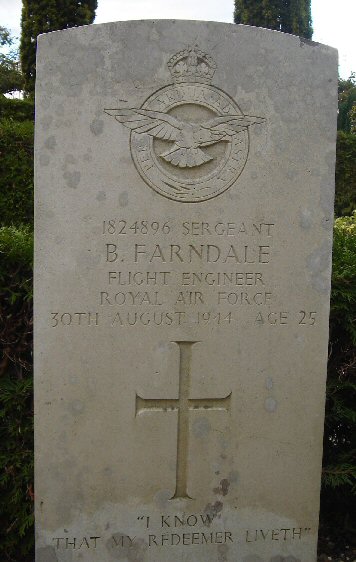
Sgt Bernard Farndale. Royal Air Force
Volunteer Reserve 115 Squadron. From: Robin Hood’s Bay, Yorkshire. Died 30
August 1944. Sergeant (Flight Engineer) Bernard Farndale was the son of Arthur
Edwin and Mary Annie Farndale of Robin Hood’s Bay, Yorkshire. He was aged 25
when he died and is buried at Ove Churchyard in Denmark.
No.
115 Squadron RAF is a Royal Air Force squadron
operating the Grob Tutor, training QFIs for the RAF's Elementary Flying
Training (EFT) squadrons and the University Air Squadrons, as well as
undertaking evaluation and standardisation duties.
115
Squadron was formed during World War I.
It was then equipped with Handley Page O/400 heavy
bombers. During World War II the squadron served as a
bomber squadron and after the war it flew in a similar role till 1958, when it
was engaged as a radio calibration unit. The squadron disbanded for the last
time as an operational unit in 1993, but reformed in 2008 at RAF Cranwell as
115(R) Squadron, part of 22 Group, operating the Grob Tutor before
moving to their present base
In
the Second World War the squadron took part in scores of raids and also played
an active part in Gardening (minelaying) for victory. In April 1940, while
flying Wellingtons (and while on temporary loan to RAF Coastal Command) it gained the distinction
of making the RAF's first bombing raid of the war on a mainland target-the
enemy-held Norwegian airfield of Stavanger Airport, Sola. Sixteen months
later, in August 1941, it undertook the initial Service trials of Gee, the
first of the great radar navigational and bombing aids. As a result of its
subsequent report on these trials Gee was put into large-scale production
for RAF Bomber Command.
The
memoirs of Sydney Percival Smith, a Royal Canadian Air Force Wellington
pilot, contain detailed personal descriptions of 115 Squadron missions in late
1942 from its base in RAF East Wretham. These were directed at targets in
Germany (including Bremen, Stuttgart, Frankfurt and Munich) and Italy (Turin),
as well as mine laying in French ports (LeHavre, Brest, St. Nazaire, and
Lorient) and the Bay of Biscay.[7]
Hercules engined Lancaster IIs replaced
the Wellingtons in March 1943 and these were replaced by Merlin engined Lancaster Is and IIIs in
March 1944. Around this time the squadron relocated from RAF Little Snoring to RAF Witchford.
The squadron was retained as part of the post-war RAF and received Lincolns in
September 1949. The squadron was linked to No. 218 Squadron RAF from 1 February 1949
until 1 March 1950, when the squadron was disbanded at RAF Mildenhall.
By the end of the war, it had the distinction of being the squadron with the
most operational service, most losses by any one single unit and the most
tonnage of explosives dropped.
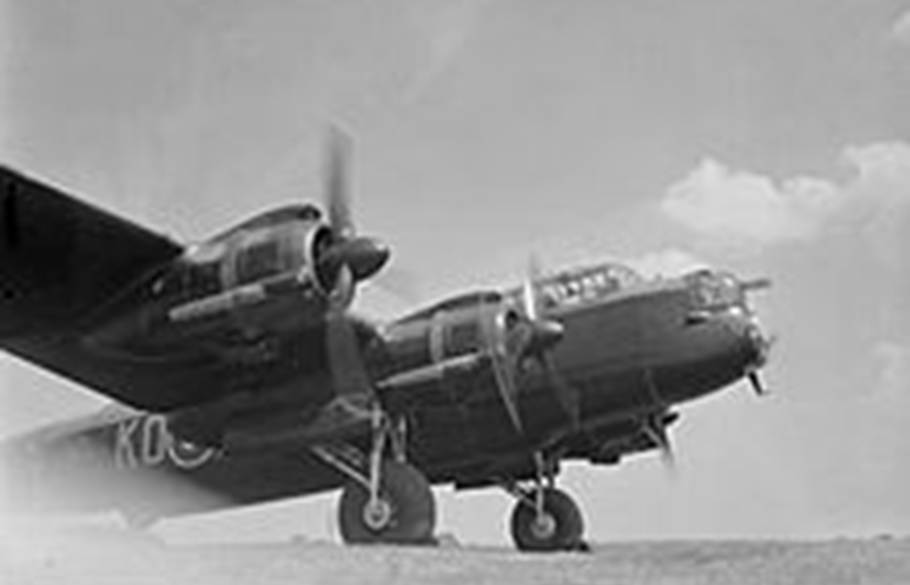
Aircraft
operated in August 1944 - Avro Lancaster
Operation 30 August 1944 From The
Strategic Air Offensive against Germany from Harly Munkholm:
586
LAN to Stettin/K-bg. 38 lost: 12 planes in www.airmen.dk, 8 in Sweden, 4 in
target areas, 10 at sea, 4 without trace. Google Map 30 AUG 1944.
From
the 12 planes with 85 airmen 54 were buried in Denmark, 6 in Sweden, 13 have no
known grave, 9 became POWs and 3 evaded to Sweden.
The
3 airmen were Wasik from LAN PA163 crashed into the Lovns Bredning and Wilson
and Loneon from LAN PB436 crashed near Trend.
He was buried at Oue Cemetery,
Oue, Denmark 1824896 Sgt B Farndale:
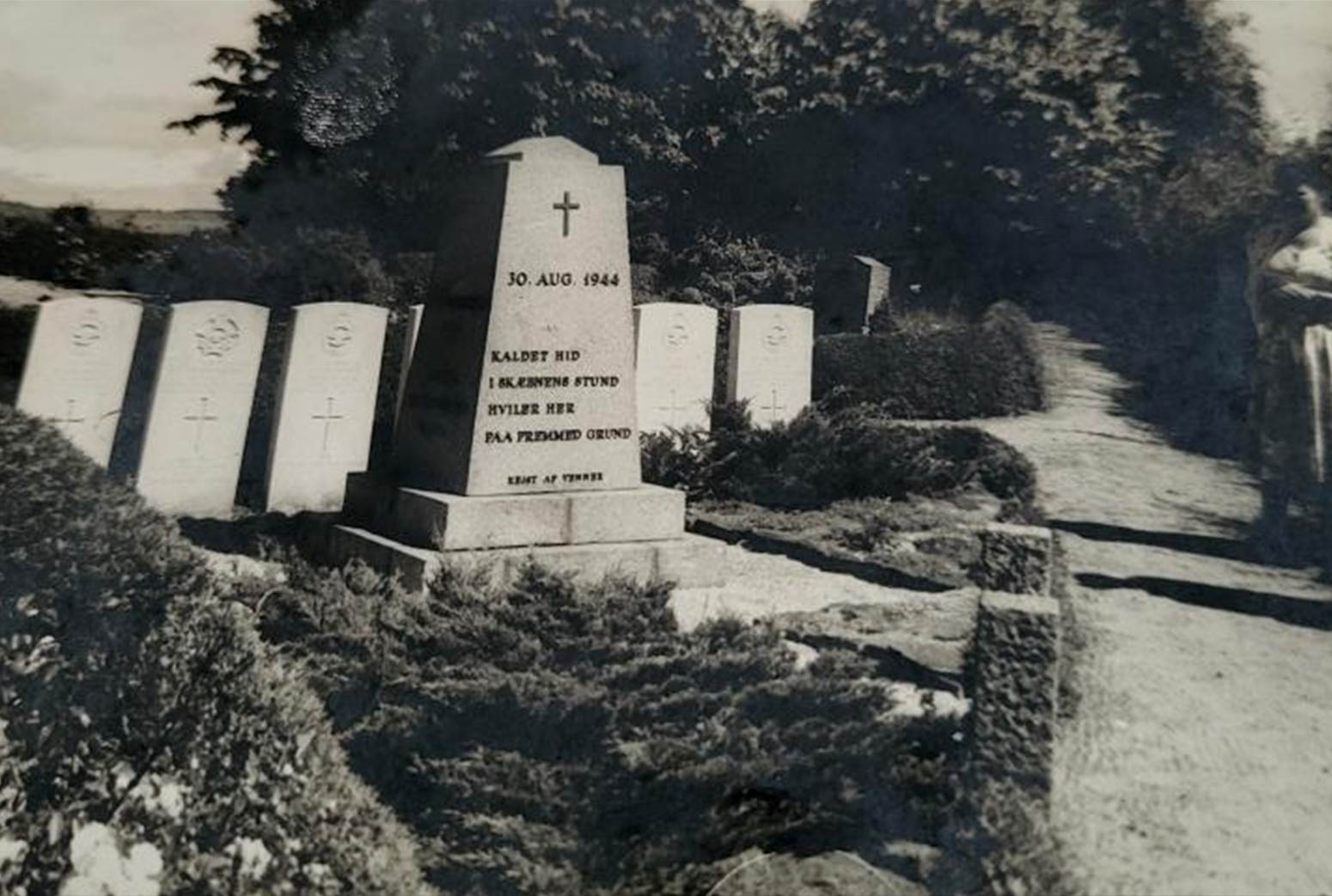
A monument
to the seven airmen from LAN ME 718 who rest in Oue Churchyard was unveiled 27
July, 1947.
Called
here in the hour of destiny, here rest in foreign ground. Erected by friends.
All
Honour to these noble men. They died that we might live.
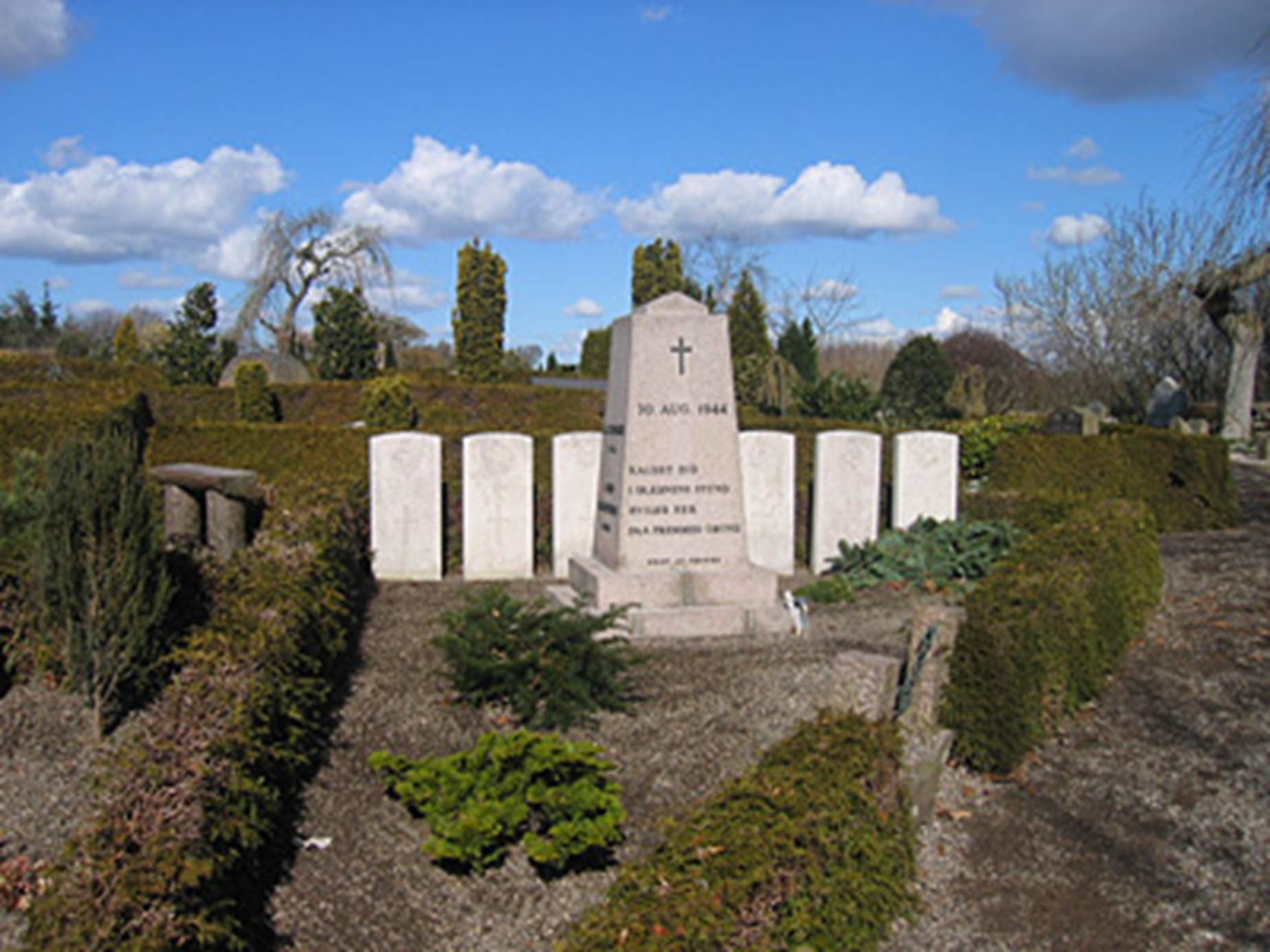
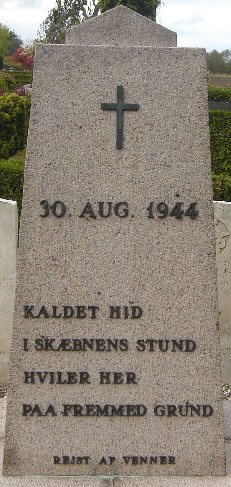
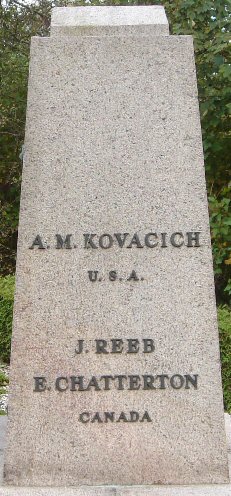
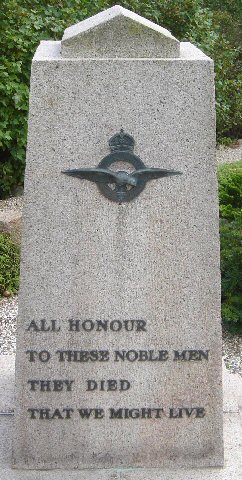
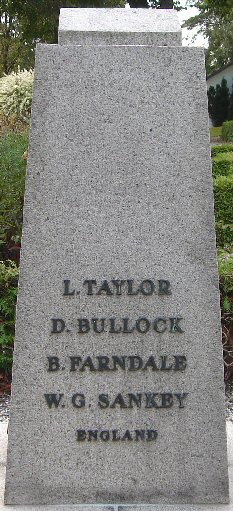
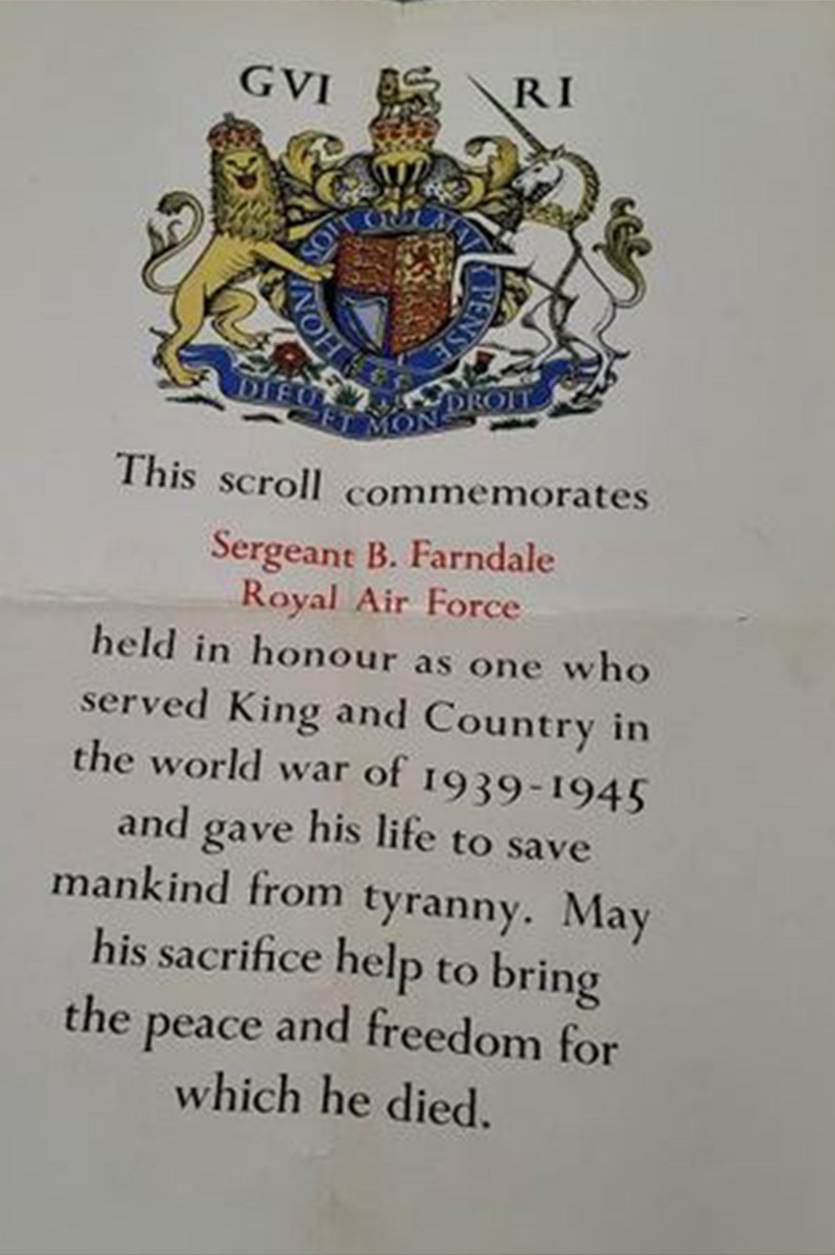
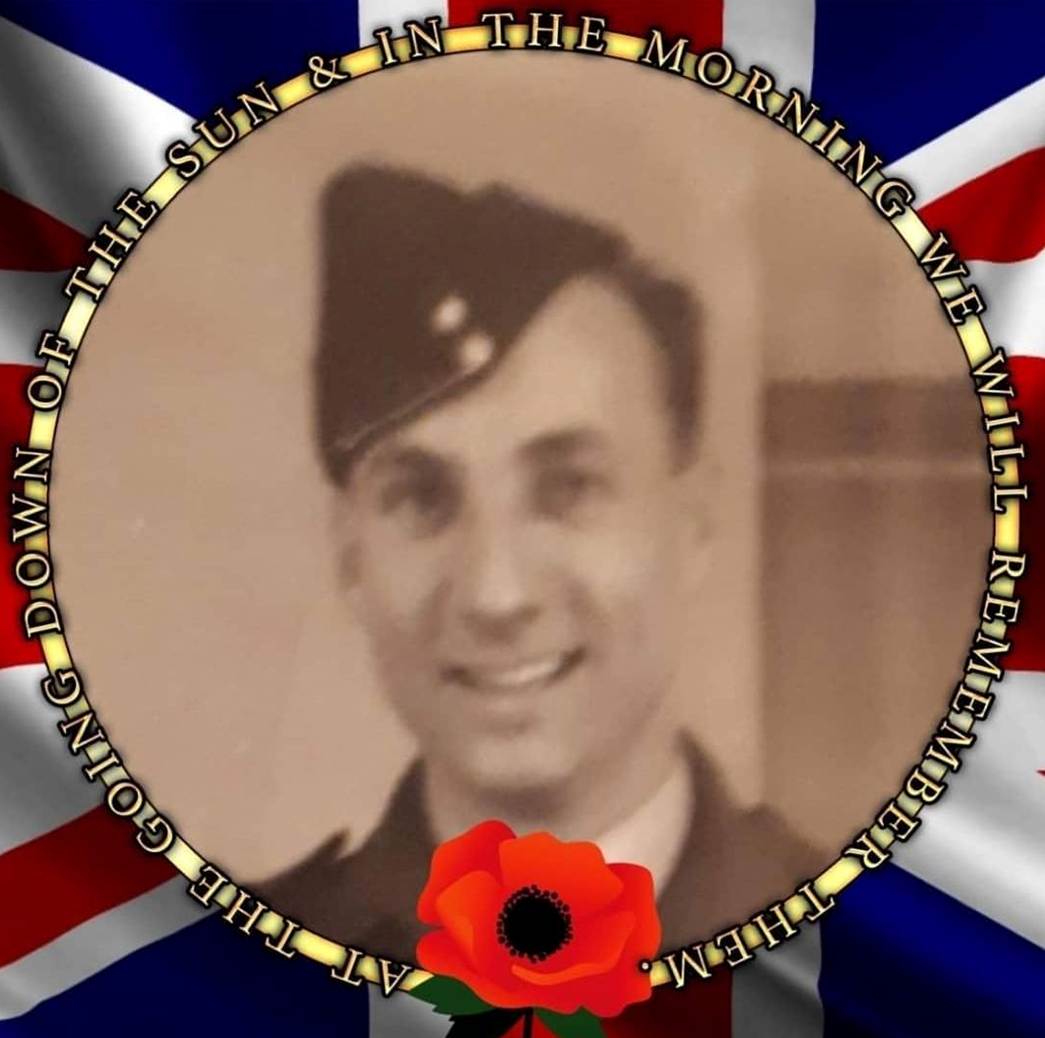
Oue, 7 airmen
from LAN ME718 who rest in Oue Churchyard - monument unveiled 27 July, 1947.
Called here in the hour of destiny, here rest
in foreign ground (7 names) Erected by friends.
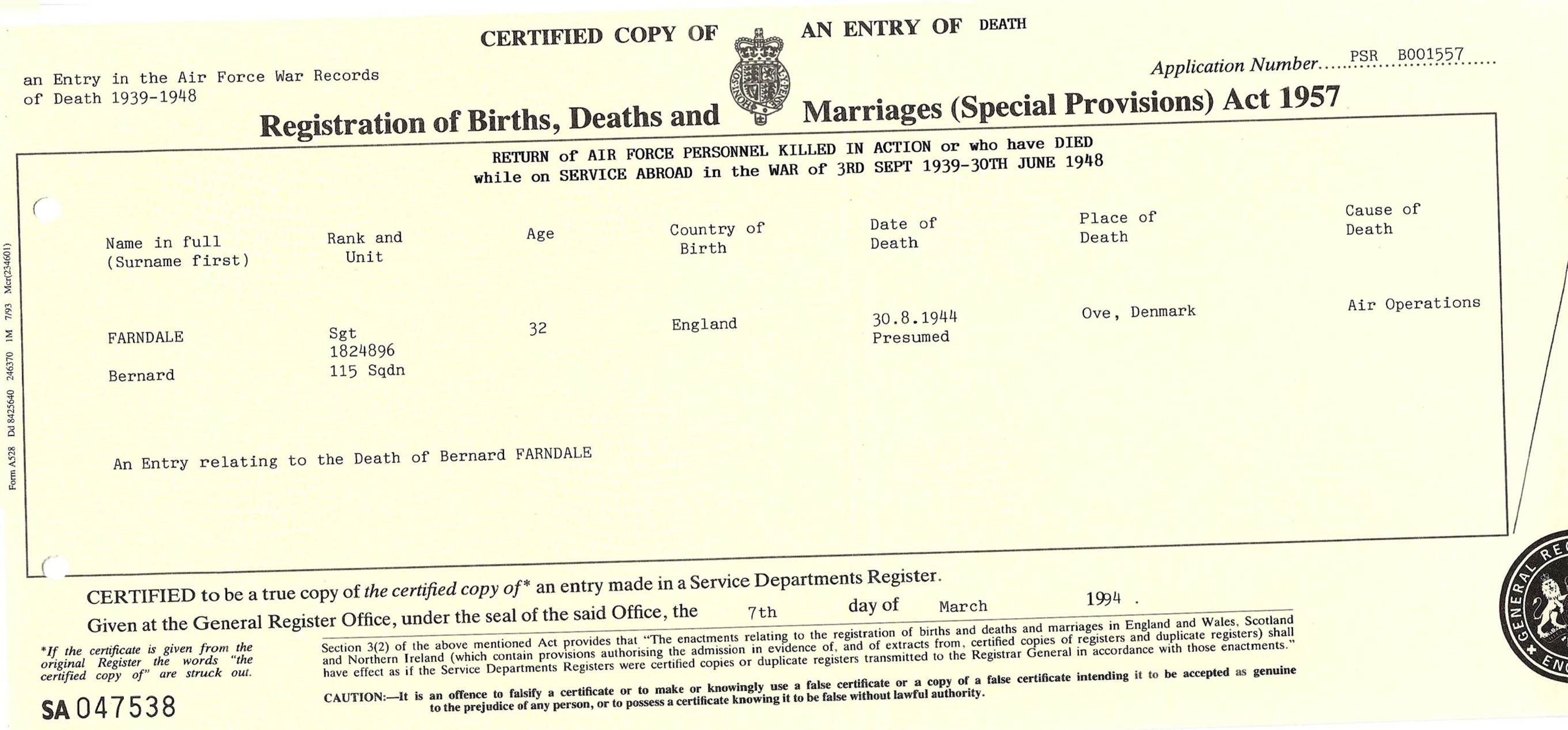
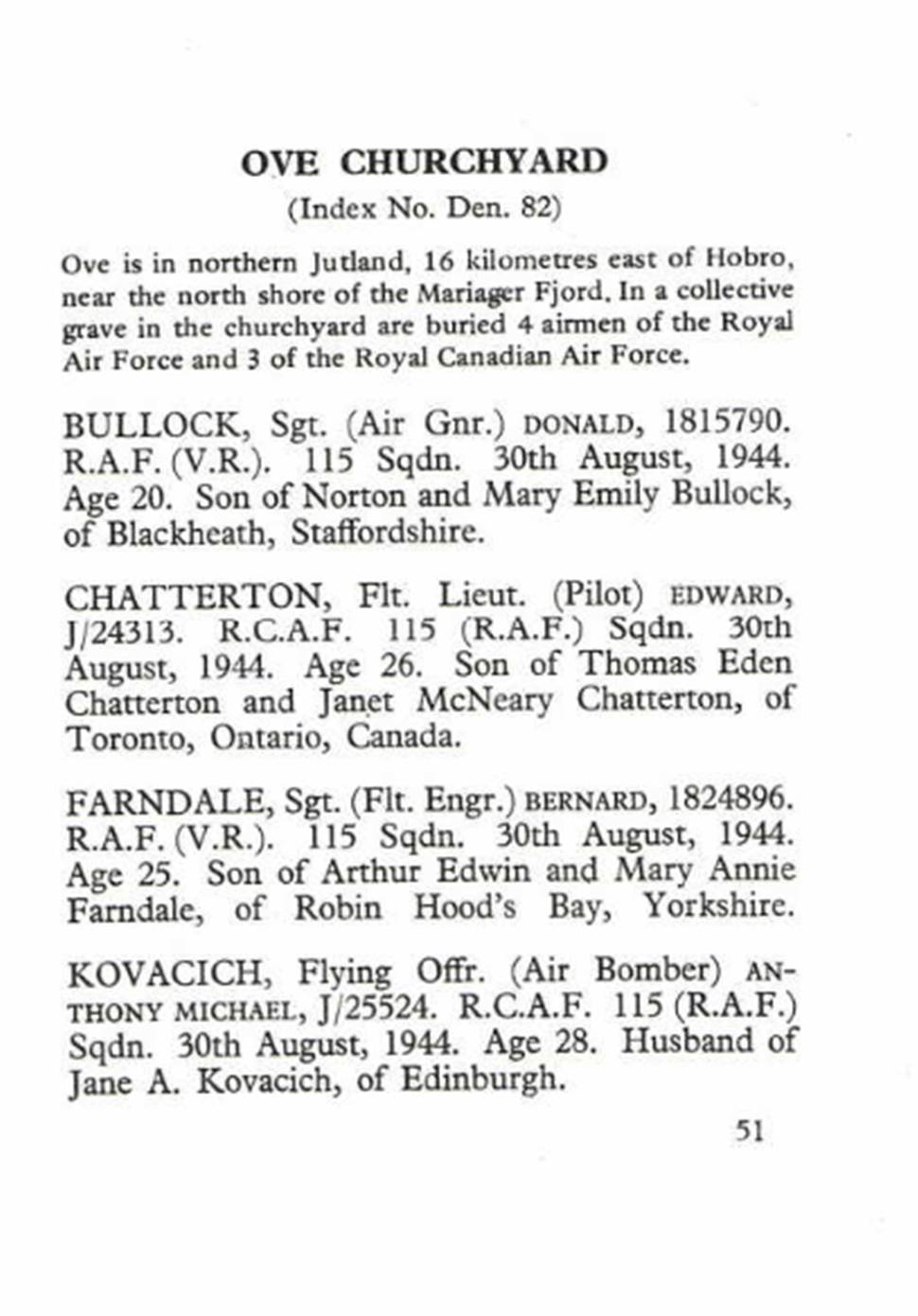
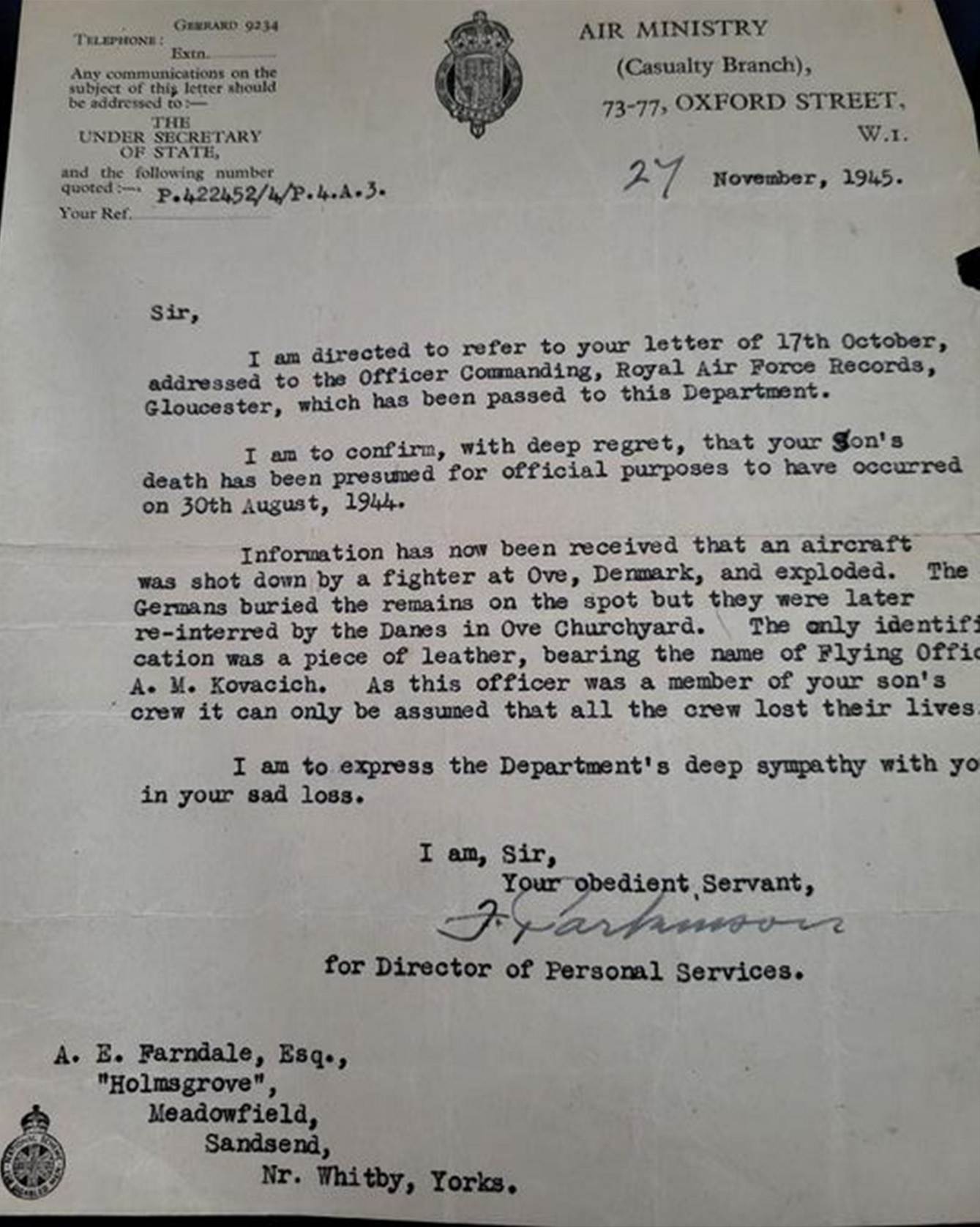
After the
War, given that the aircraft had exploded and there was not much left of it,
the only way the aircraft was identified as Lancaster ME 718 was because a
strap of the boot of the Canadian pilot was found with his name on it.
The airmen
were later formally buried at Ove Cemetery, Ove, Denmark.
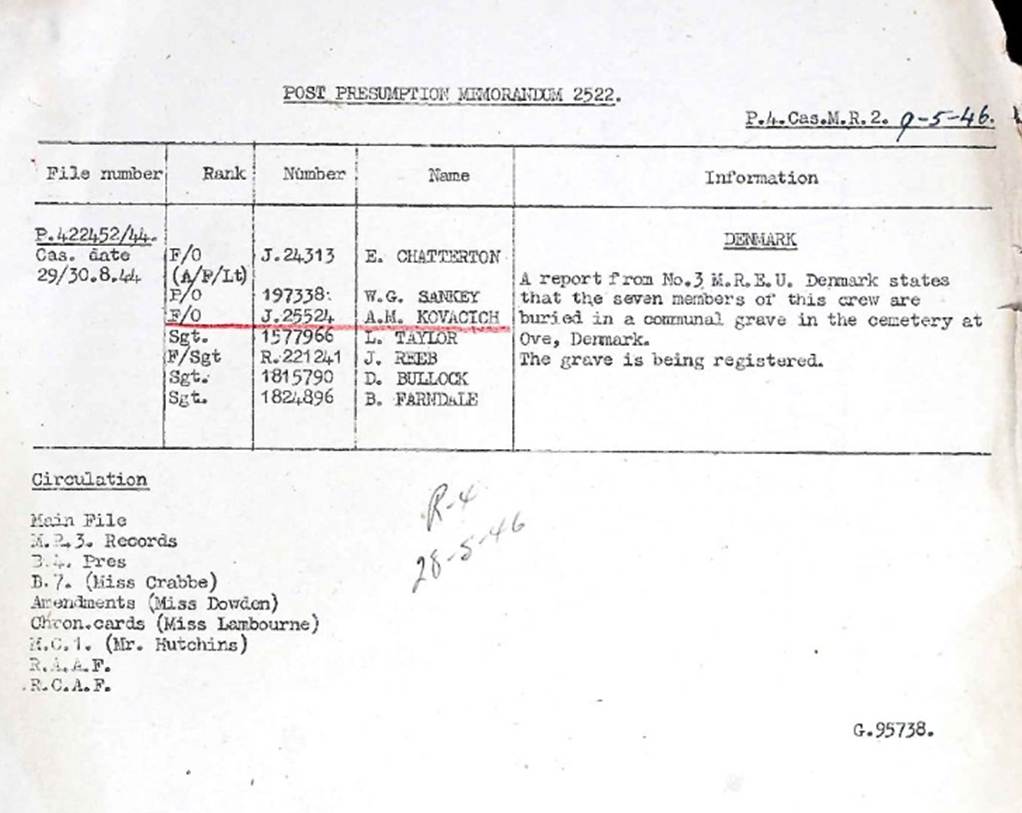
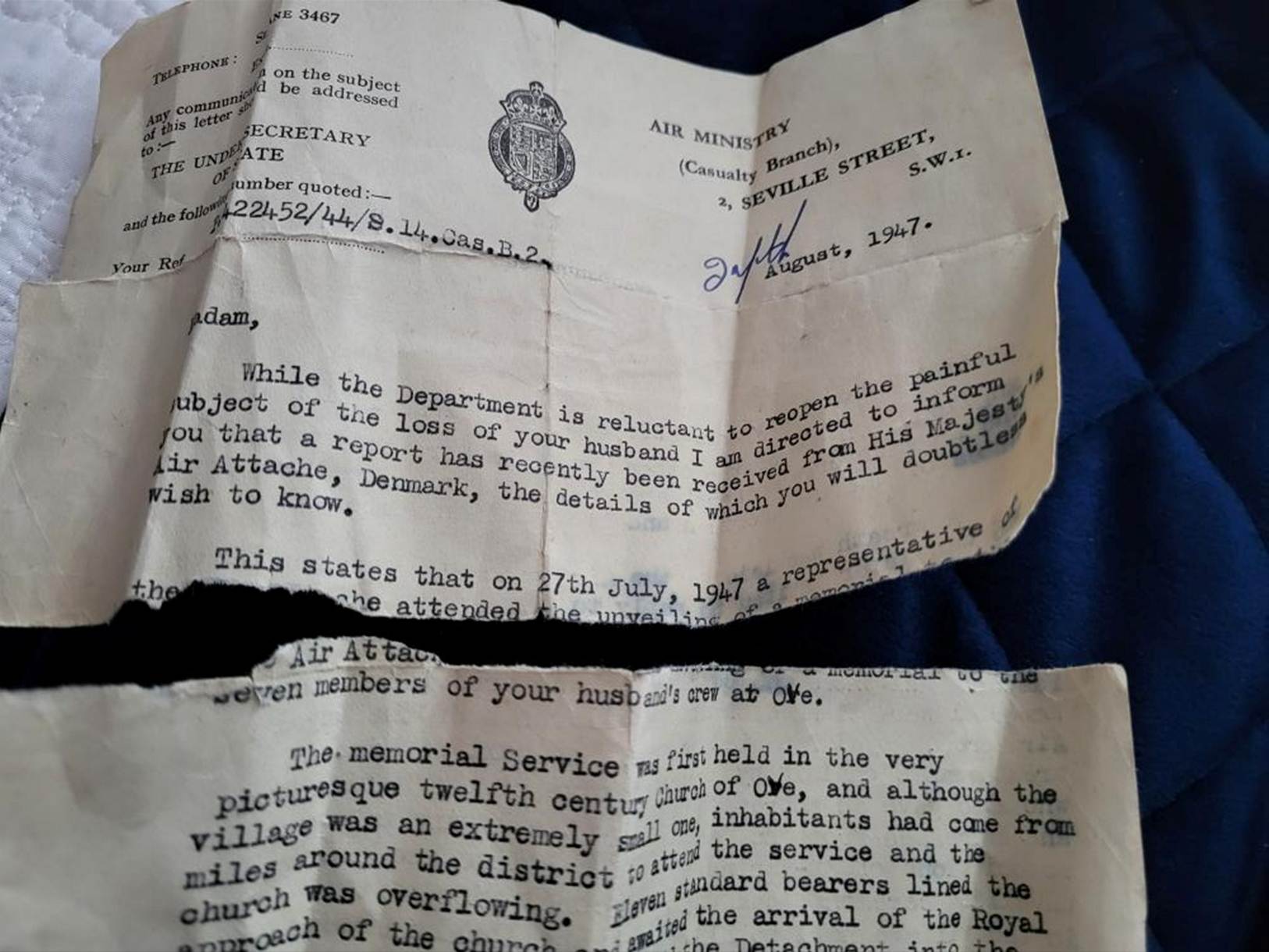
From
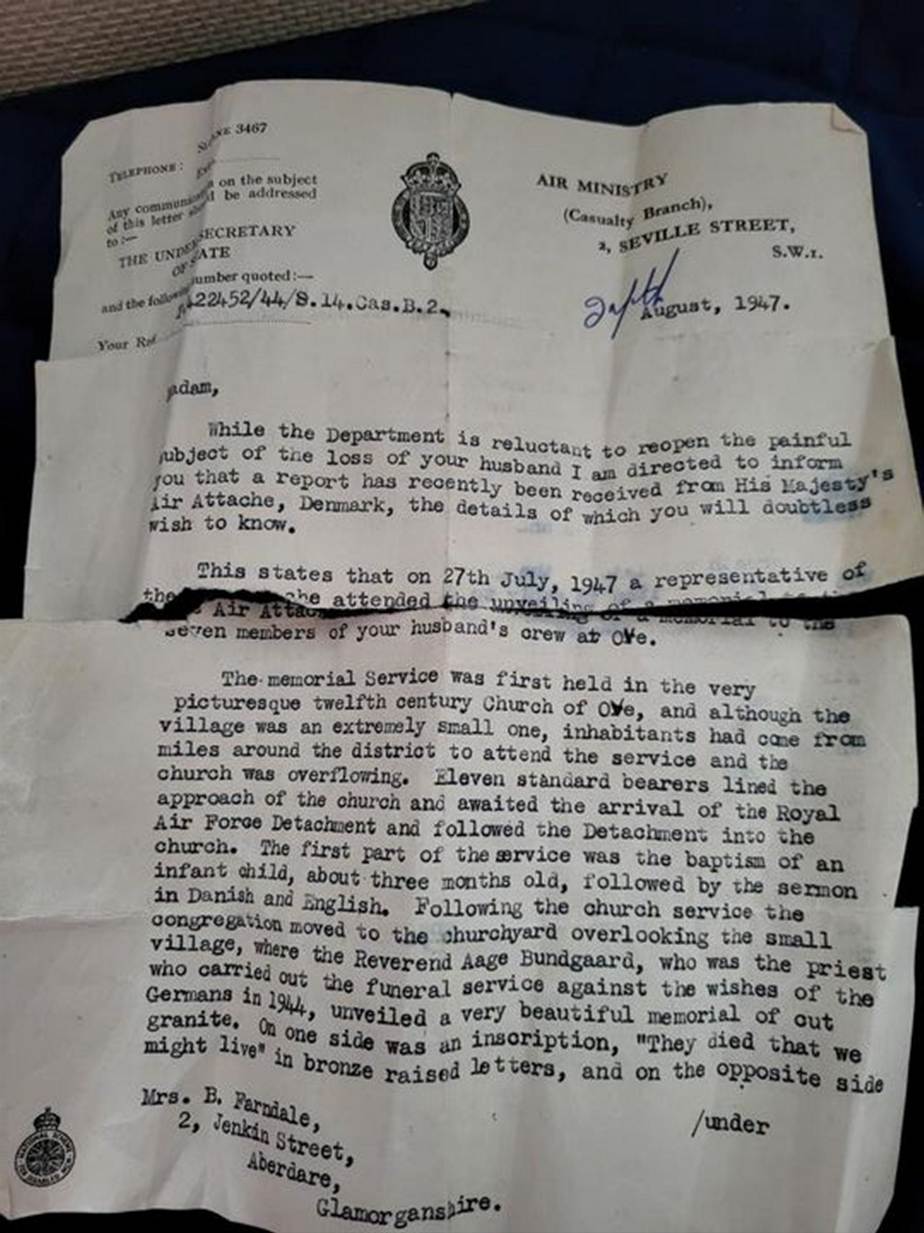
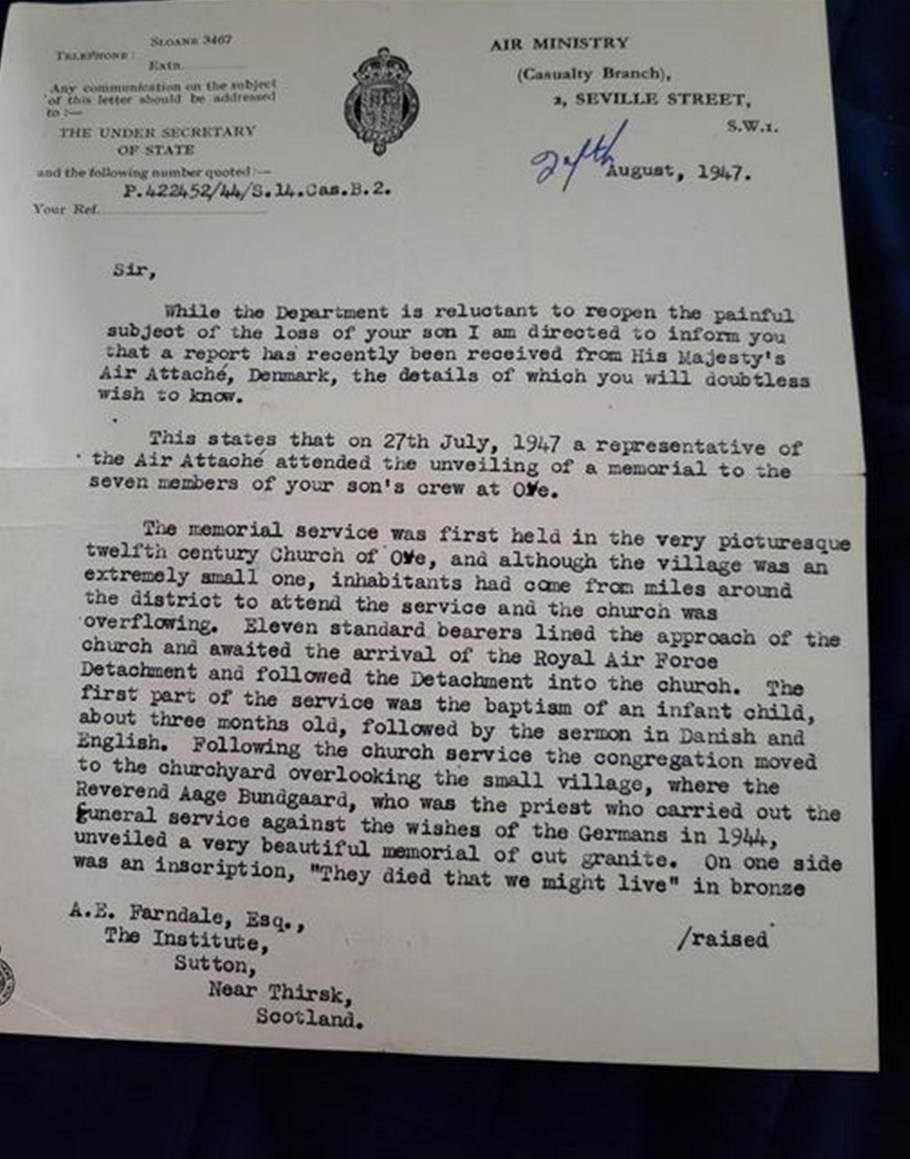
the Air Ministry, 24 August 1947.
Madam.
While the
Department is reluctant to reopen the painful subject of the loss of your
husband I am directed to inform you that a report has recently been received
from His Majesty’s Air Attache, Denmark, the details of which you will
doubtless wish to know.
This
states that on 27th July 1947 a representative of the Air Attache
attended the unveiling of a memorial to the seven members of your husband’s
crew at Ove.
The
memorial service was held in the very picturesque twelfth century church of
Ove, and although the village was an extremely small one, inhabitants had come
from miles around the district to attend the service and the church was
overflowing. Eleven standard bearers lined the approach to the church and awaited the arrival of the
Royal Air Force Detachment and followed the Detachment into the church. The
first part of the service was the baptism of an infant child, about three
months old, followed by the sermon in Danish and English. Following the church
service the congregation moved to the churchyard overlooking the small village,
where the Reverend Aage Bundgaard, who was the priest who carried out the
funeral service against the wishes of the Germans in 1944, unveiled a very
beautiful memorial of cut granite. On one side of was an inscription, “They
died that we might live” in bronze raised letters, and on the opposite side
under the Royal Air Force crest the same inscription in English. On one of the
other two sides were the names of the English crew members, and on the opposite
one the names of the American and two Canadian members.
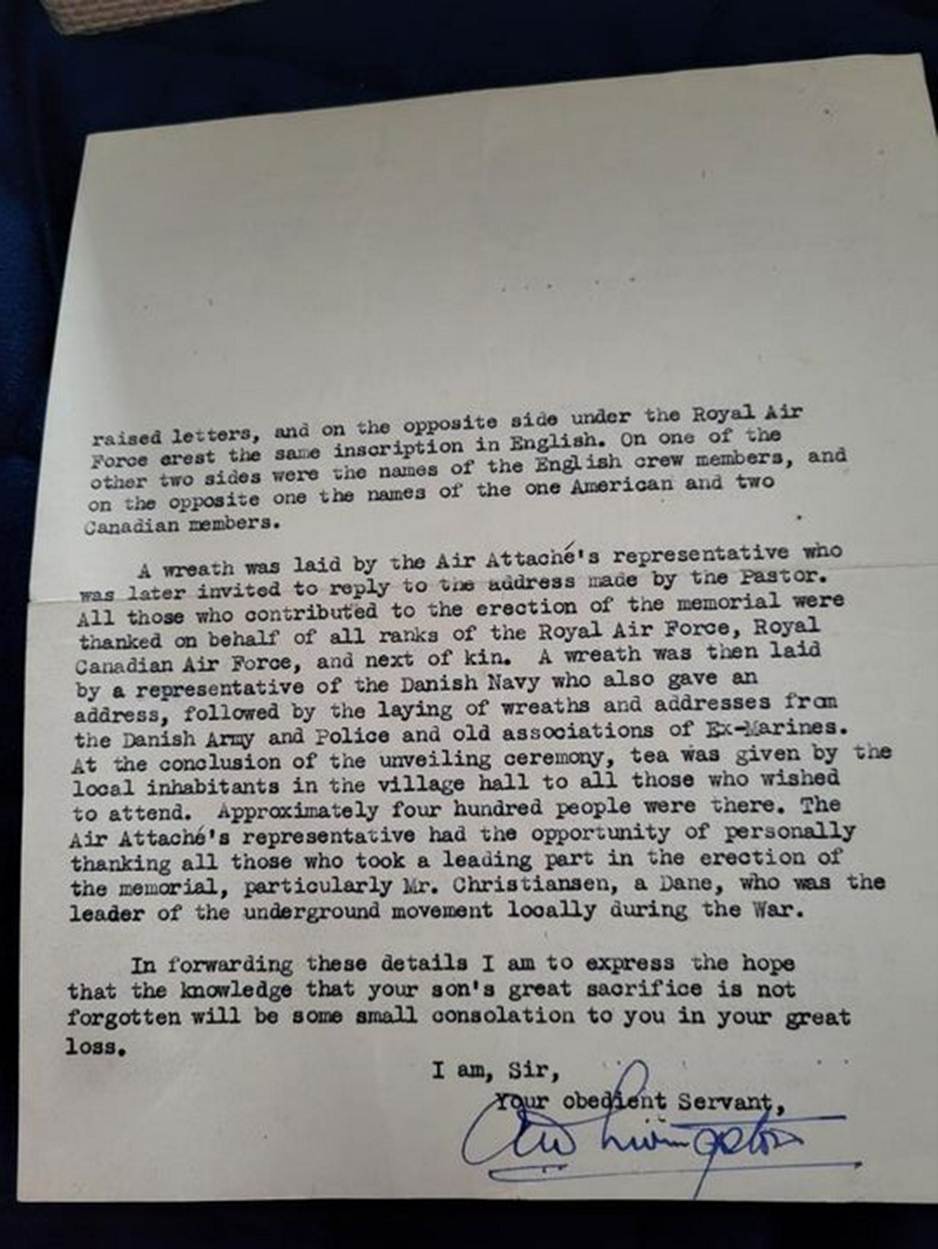
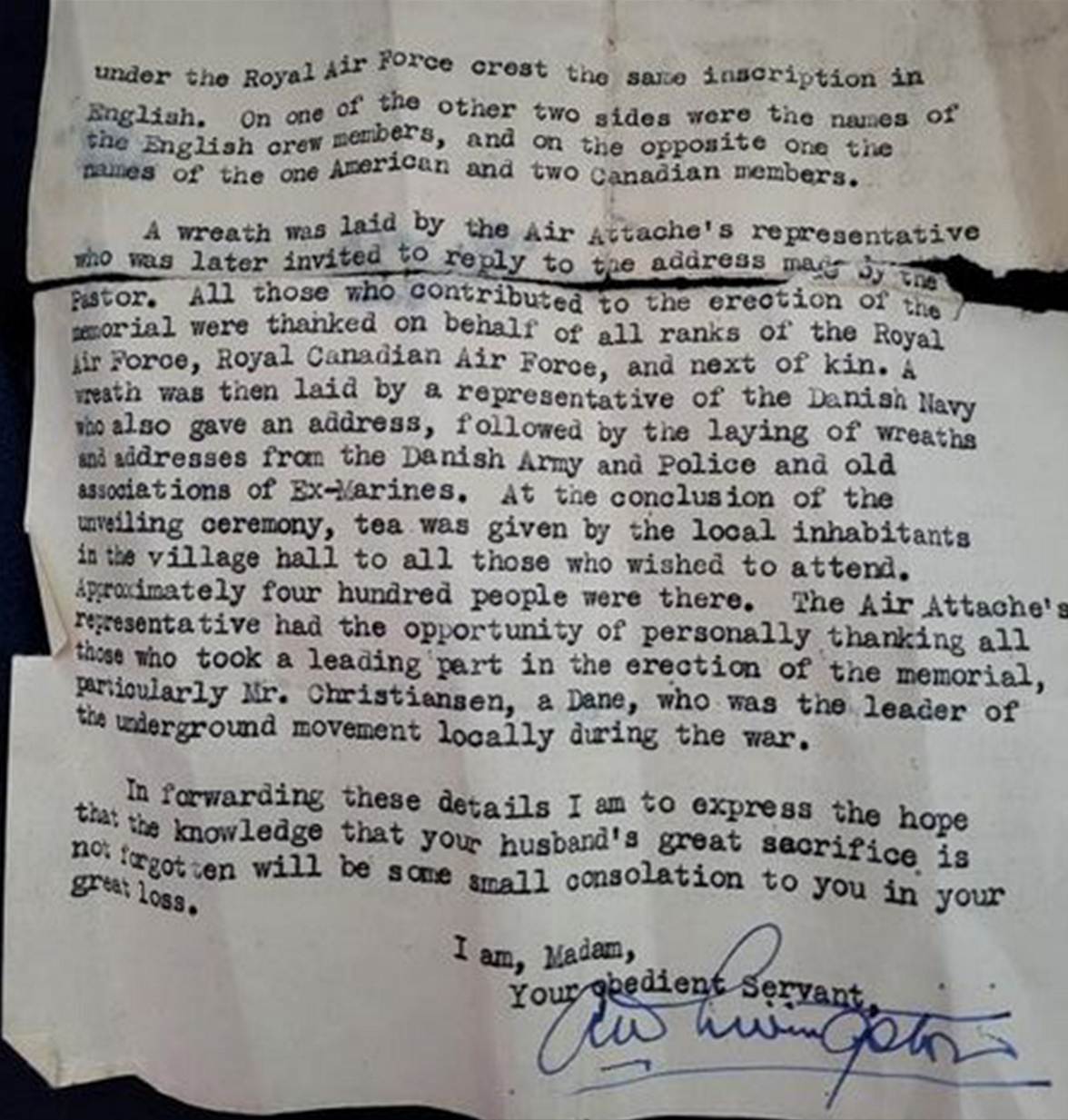
A wreath
was laid by the Air Attache’s representative who was later invited to reply to
the address made by the pastor. All those who contributed to the erection of
the memorial were thanked on behalf of all ranks of the Royal Air Force, Royal
Canadian Air Force, and next of kin. A wreath was then laid by a representative
of the Danish Navy who also gave an address, followed by the laying of wreaths
and addresses of the Danish Army and Police and old associations of Ex Marines.
At the conclusion of the unveiling ceremony, tea was given by the local
inhabitants in the village hall to all those who wished to attend.
Approximately
four hundred people were there. The Air Attache’s representative had the
opportunity of personally thanking all those who took a leading part in the
erection of the memorial, particularly Mr Christiansen, a Dane, who was the
leader of the underground movement locally during the war.
In
forwarding these details I am to express the hope that the knowledge of your
husband’s great sacrifice is not forgotten will come as some consolation to you
in your great loss.